Le Grazie

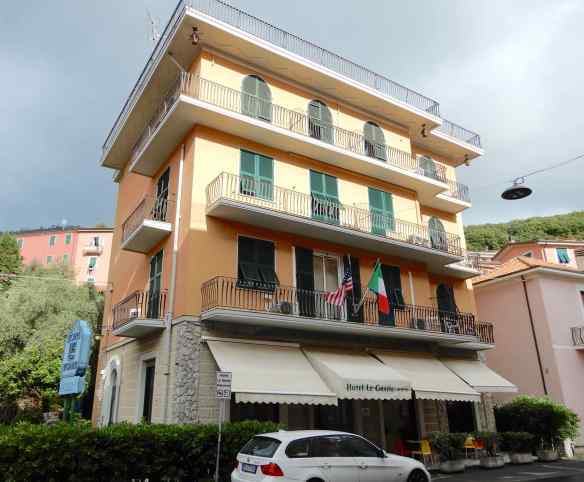
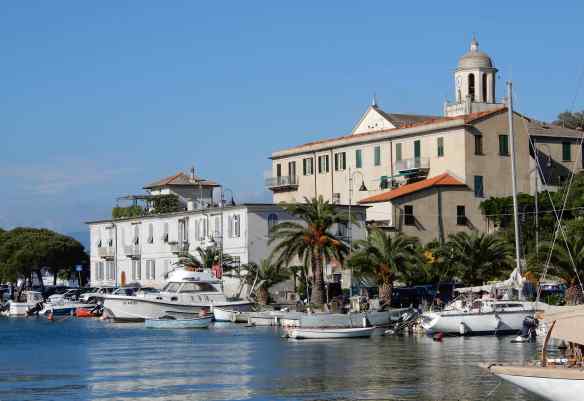
When we first travelled to Italy, we didn’t get the chance to see Cinque Terre so this time we were determined not to miss out. When I started planning, I soon realised that staying in the coastal villages was nigh on impossible with a car to park. Instead, I found a B&B in Le Grazie that suited our needs, or so I thought. After driving around for an hour trying to find the place, it turned out to be virtually inaccessible to anyone with more than hand luggage, down fifty or so very steep stone steps. With no Plan B, we were very lucky to find Hotel Le Grazie had a room available for two nights, a very nice room at that.

1.Hotel Le Grazie

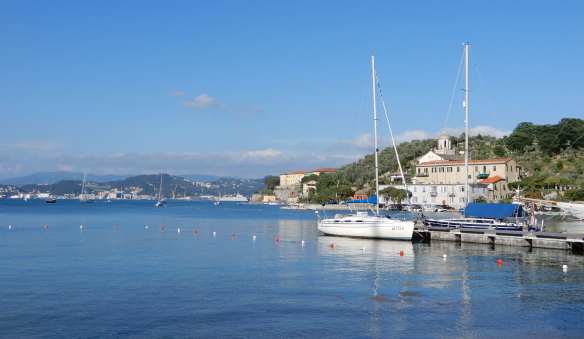
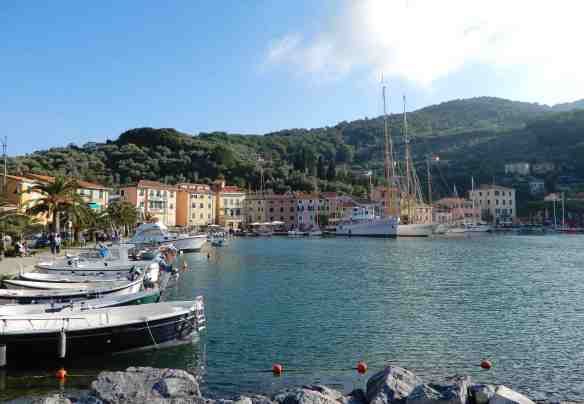
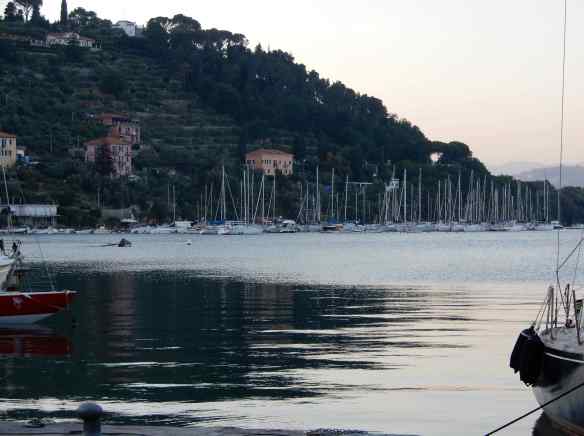
In need of solace after our ordeal, a short stroll around the corner rewarded us with the tranquil vista of Le Grazie harbour.

2.Le Grazie harbour3.Le Grazie harbour

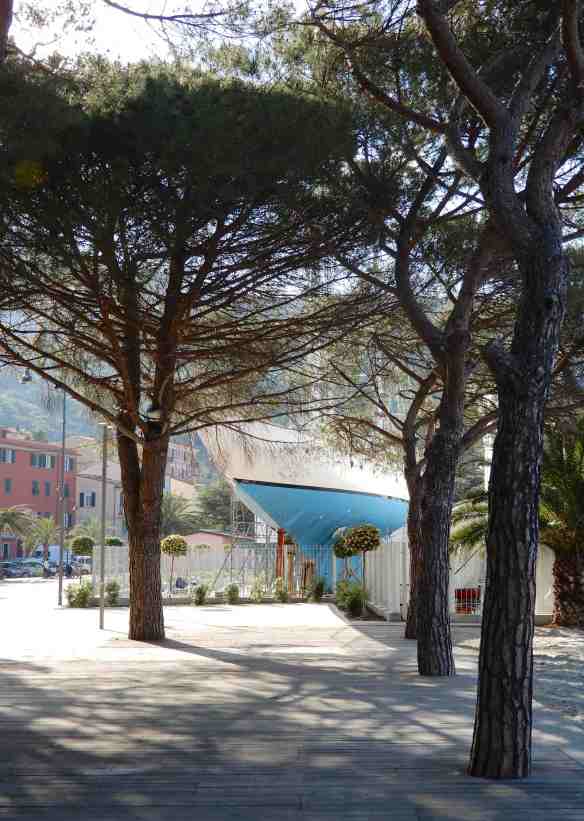
Nestled in a sheltered inlet between La Spezia and Porto Venere, this gorgeous village seems to have escaped the teeming tourist numbers of the neighbouring towns. The inhabitants have a reputation for being proficient divers and have thrived for centuries on boat building and fishing. Adjacent to the boat construction yard, the pine wood offers a shady meeting place for locals. A war memorial honouring  partisans, civilians and military personnel and an old cannon remind us of a less peaceful time.

4.pine wood

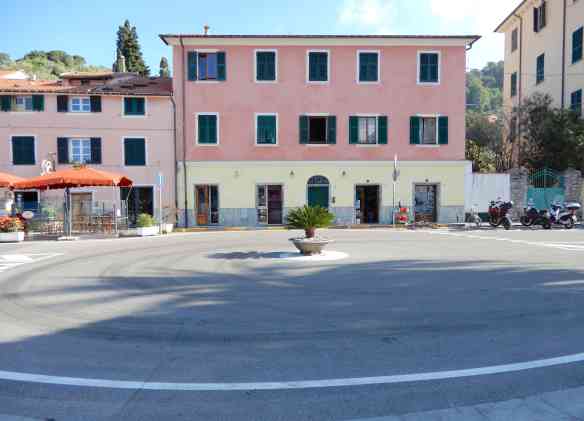
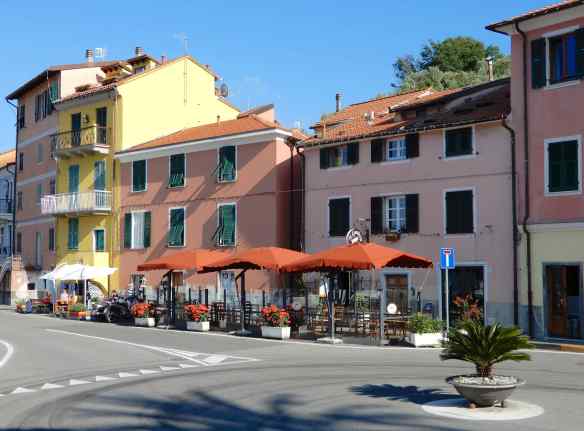
The roundabout, marked by a solitary cycad, seemed somewhat superfluous on a straight road.

6a.roundabout Le Grazie

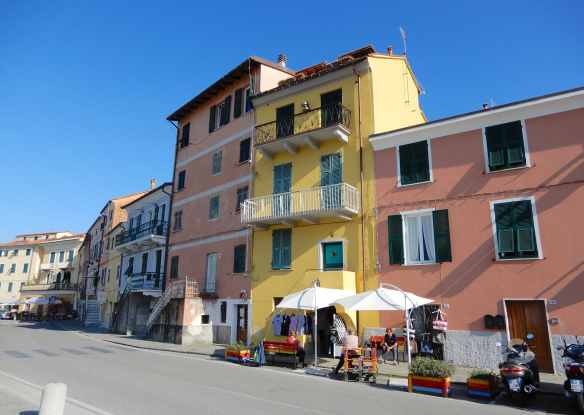
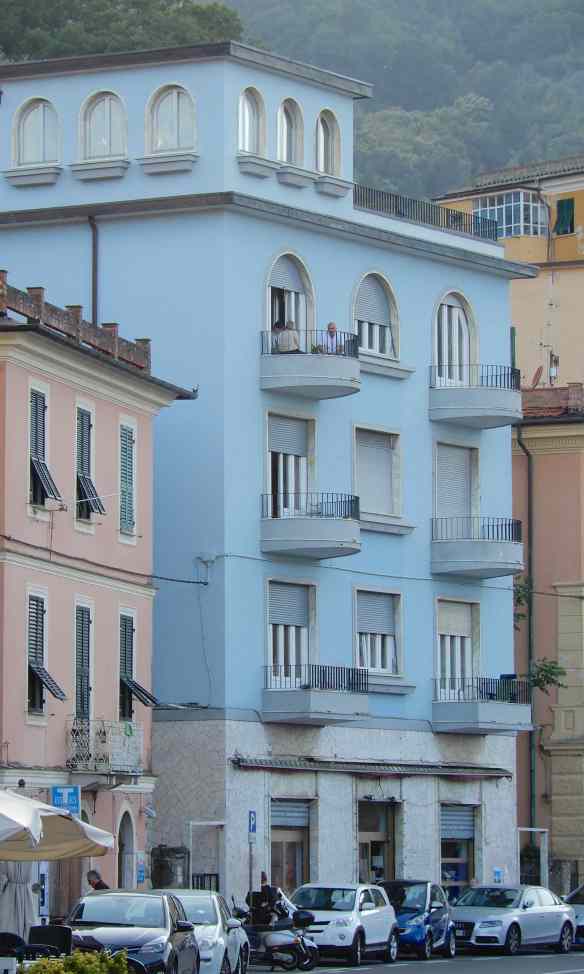
After a restorative Prosecco we wandered further, past colourful buildings

7.Le Grazie8.Le Grazie

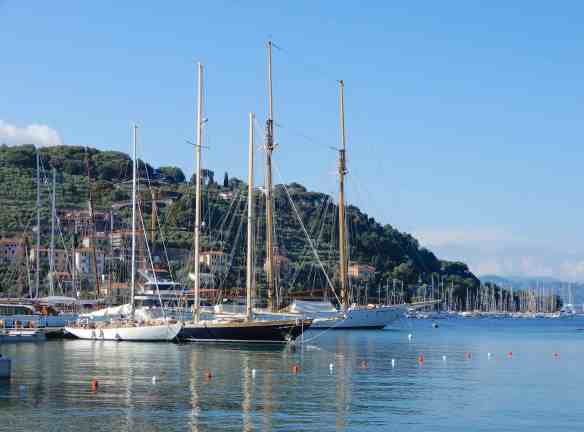
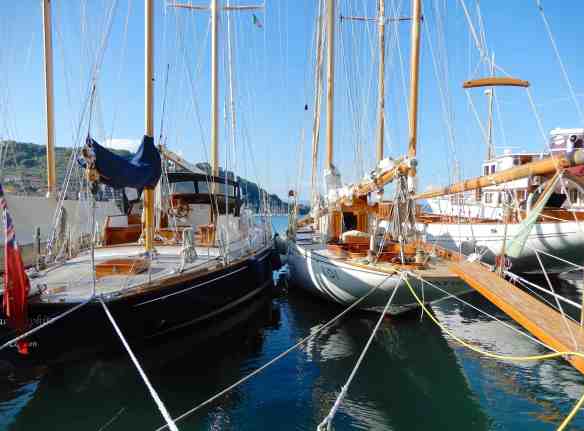
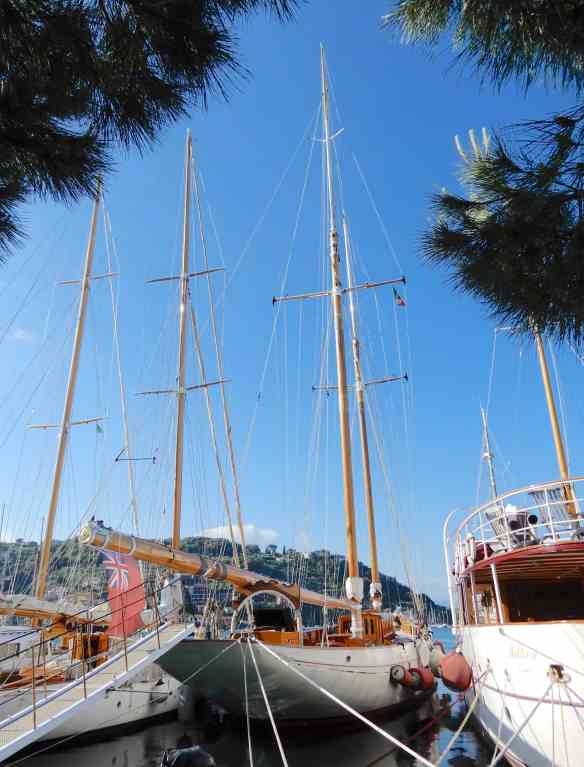
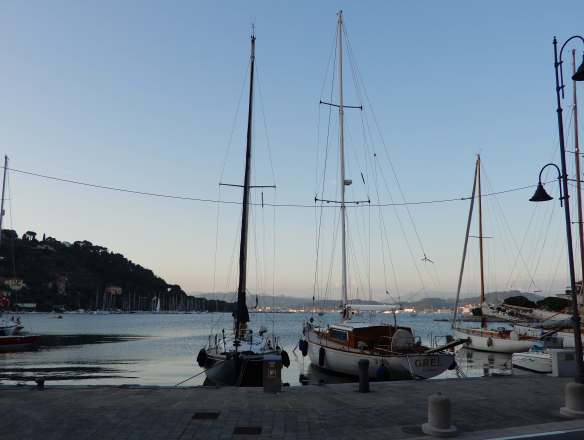
and beautiful boats moored in the marina.

9.yachts, Le Grazie harbour10.yachts, Le Grazie harbour

The village takes its name from the Santuario Nostra Signora delle Grazie (Sanctuary of Our Lady of Grace). The church dates back to the 11th century when a group of Benedictine monks came from the island of Tino. The present church and monastery were built in the 15th century, though the monks were driven out in 1798 and the church became a parish church. The ancient convent is now a private residence and I am lost for words.

11.Santuario Nostra Signora delle Grazie

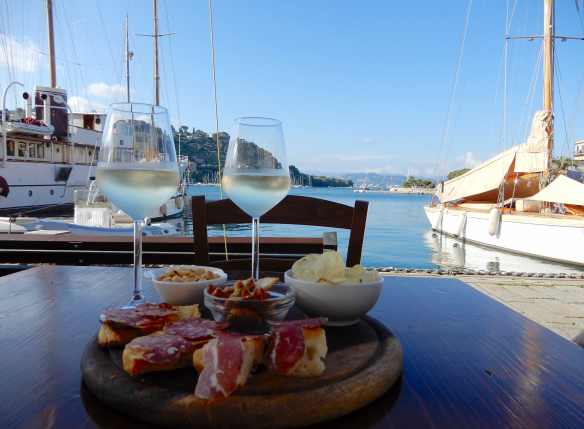
It seemed a good time to rest for aperitivo

15.aperitivo, Le Grazie

while soaking up the atmosphere and sunshine.

20.Le Grazie harbour

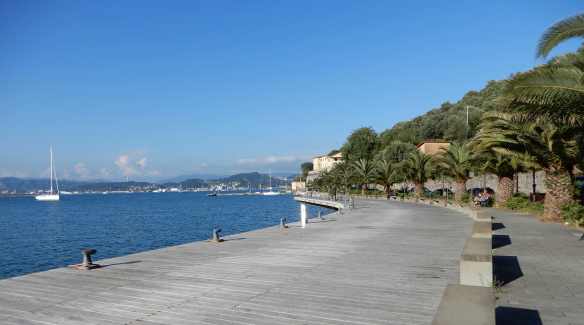
We continued along the promenade until we could go no further.

21.walkway

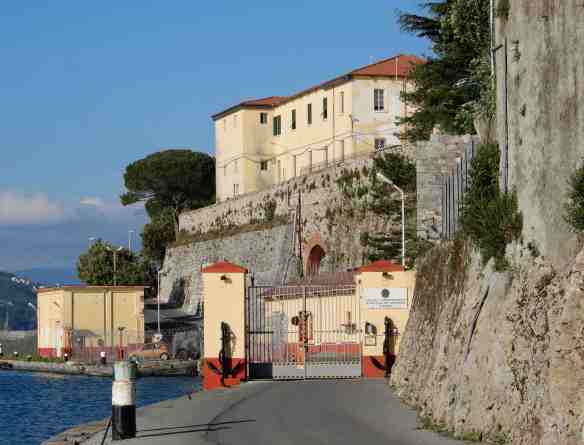
The Varignano Fortress, built in 1724, dominates the headland. Originally used as a storage facility and quarantine station, it then became a hospital before being taken over by the defence forces. Since World War II, it has been the headquarters of the Navy Divers and Raiders Group, named after Major Teseo Tesei who invented the human torpedo. No prizes for guessing how he died.

22.Varignano Fortress

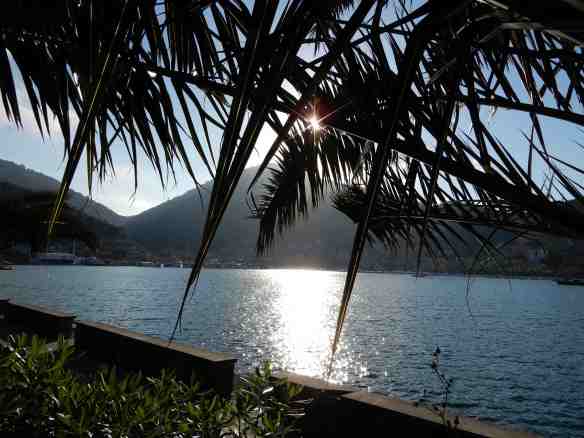
With the descending sun glistening on the water, we ambled back to seek sustenance.

23.Le Grazie harbour

Ristorante Il Gambero was the perfect setting

to observe life in the village and harbour

27.Le Grazie30.Le Grazie harbour

31.Le Grazie harbour

while enjoying delicious fresh seafood.

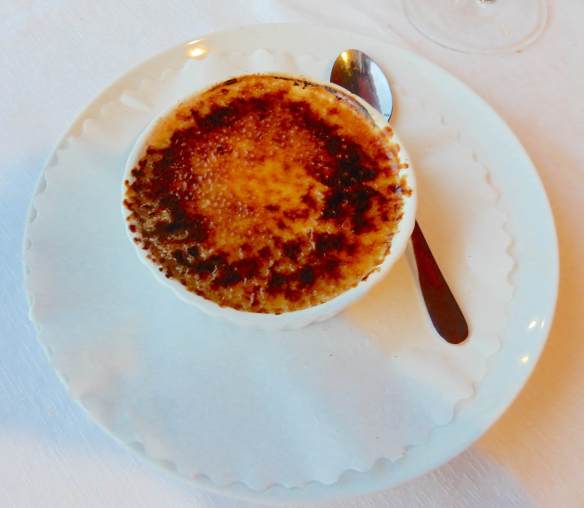
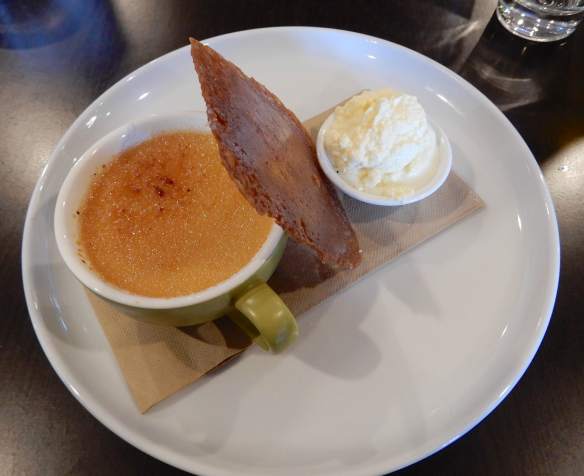
There is only one way to end a perfect day.

35.crème brûlée

Josef Chromy

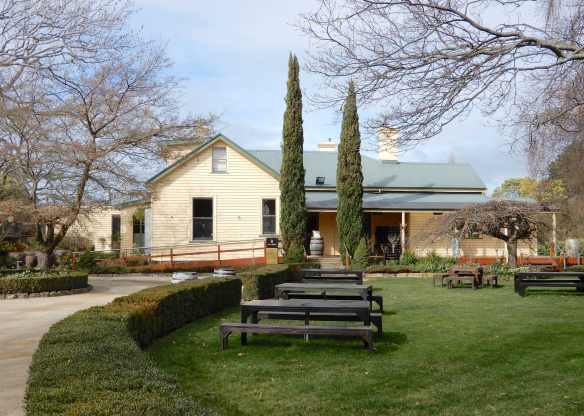
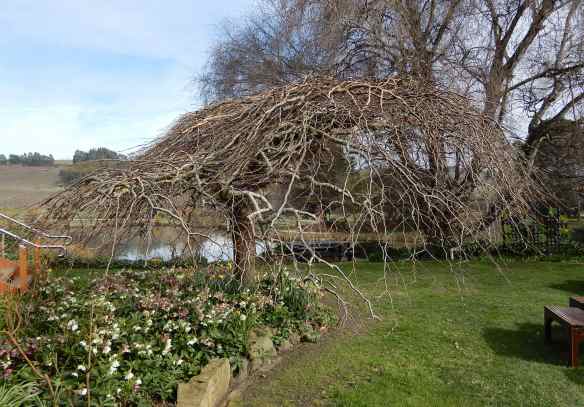
A couple of weeks ago we took Cooper to Launceston for a service, swapped her for a new BMW 120i courtesy car, picked up our lovely friend Deb and wended our way to  Josef Chromy for lunch. A picturesque 15 minute drive from the city, the winery at Relbia was launched in 2007. The cellar door is set within immaculate gardens where carefully trimmed privets, fountains and flowers mingle with majestic mature trees.

1.Josef Chromy Wines

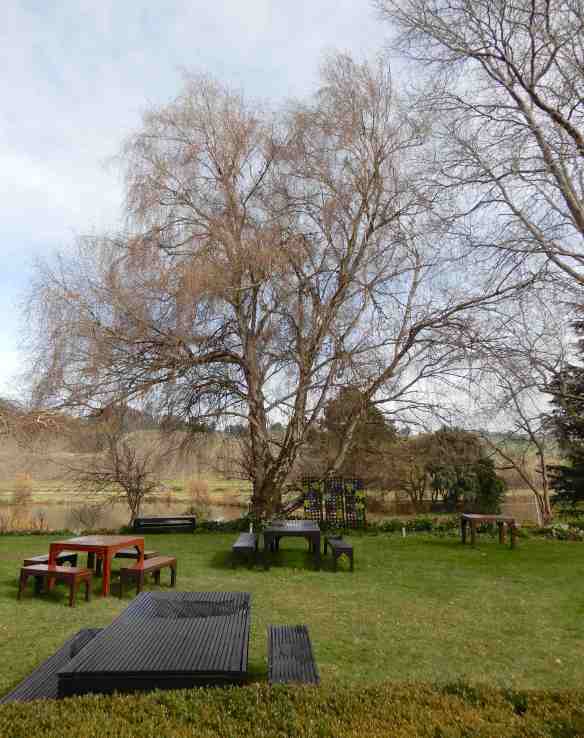
4.outdoor seating5.weeping elm

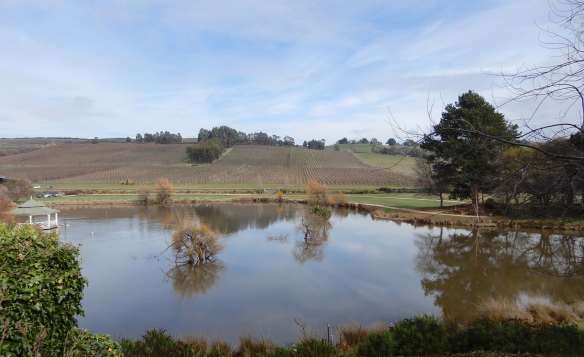
A popular venue for weddings, the lakeside pavilion is a perfect spot to exchange vows.

6.lake

The view across the lake to the vineyards beyond can be enjoyed whether eating outdoors

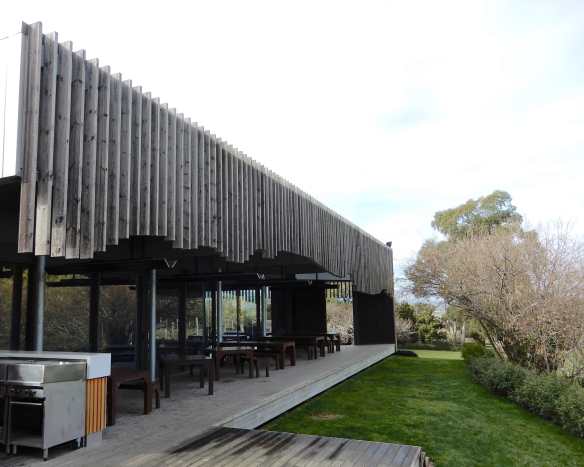
7.outdoor eating

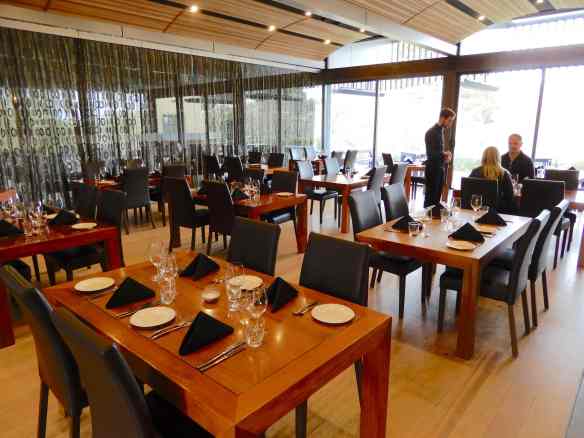
or inside the restaurant.

8.restaurant

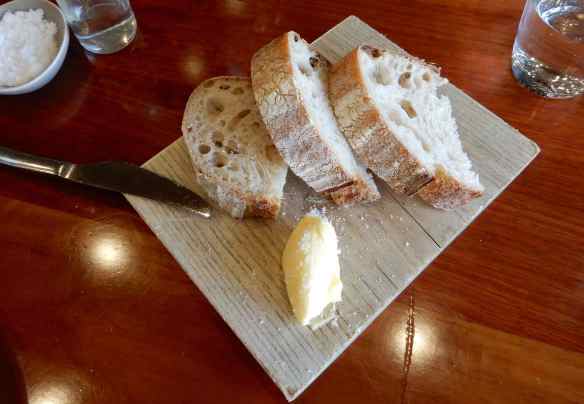
We took advantage of the week day Winter Lunch Special, two courses and a glass of wine for $45. The complimentary sourdough bread was delicious, as was the 2018 Pinot Gris.

9.sourdough

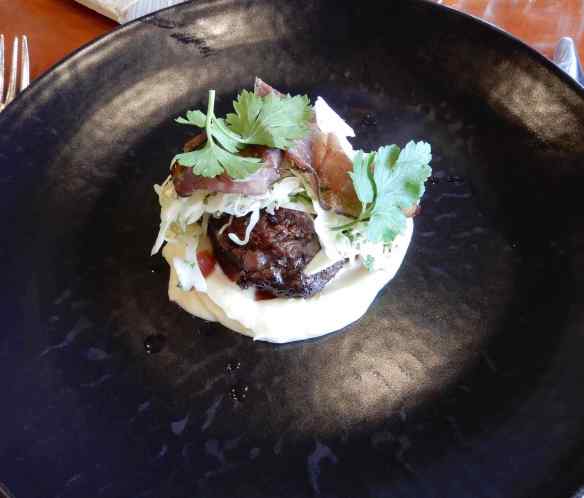
The main course for the special this day was the Baked Beef Cheek with cauliflower, rhubarb, shaved cabbage, parmesan, parsley & lemon. Coincidentally, it would have been my choice anyway.

10.baked beef cheek

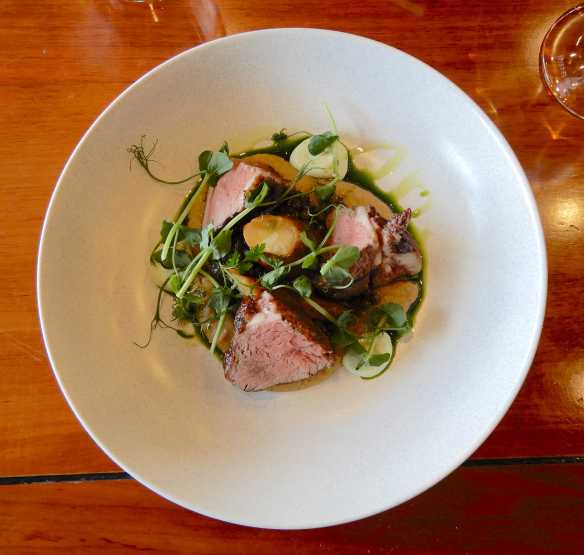
Michael opted for the Wood-Grilled Lamb Rump with baby lentils, baked Elphin Grove celeriac, spring onion & yoghurt. Not being a fan of celeriac, he requested the gnarled root be omitted. Graciously, chef replaced it with baked parsnip.

11.wood-grilled lamb rump

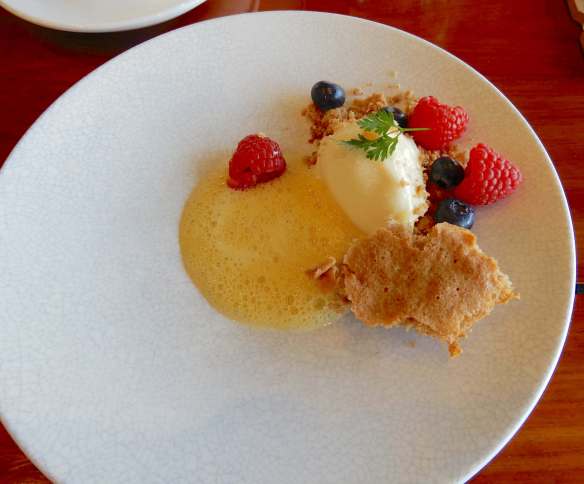
We all chose dessert instead of entrée as our second course, White Chocolate Bavarois was Chef’s special concoction.

12.white chocolate bavarois

The menu offered Hot Chocolate Mousse with leatherwood honey parfait, honeycomb, nashi pear and nib crumb.

13.hot chocolate mousse

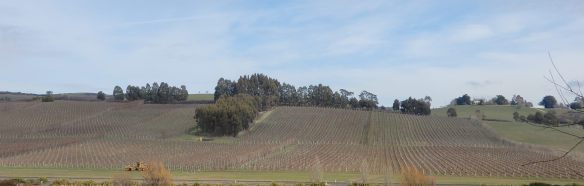
Finishing off with coffee, we watched the activity in the vineyard. With 61 hectares to prune and a vineyard stretching for 2km I was grateful to be merely observing.

14.vineyard

Barga

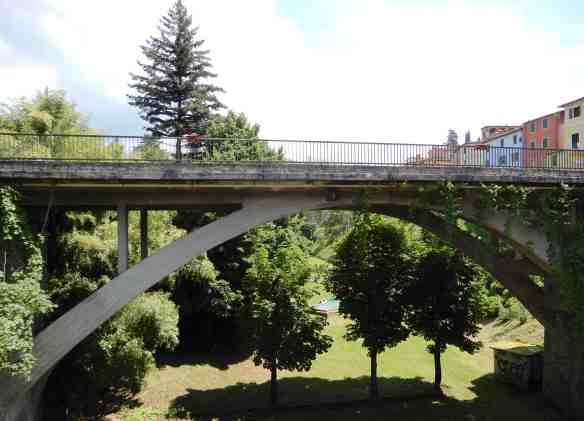
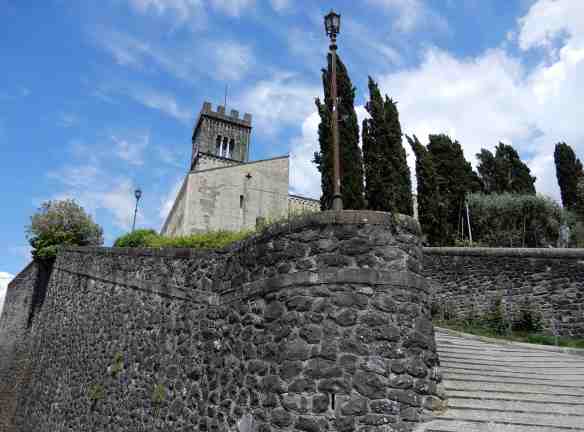
On a perfect sunny spring day, we drove to the medieval walled town of Barga, an easy 45 minute drive from Lucca. We had learned it was easier to park outside these ancient towns and walk in rather than risk inadvertently driving into a pedestrian zone or the wrong way down a one way street. Crossing the bridge, we passed Parco Fratelli Kennedy, named in honour of American President John F. Kennedy and his brother Robert, both of whom were assassinated.

1.Parco Kennedy

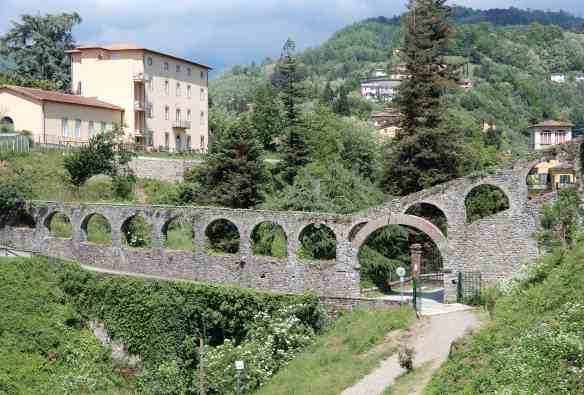
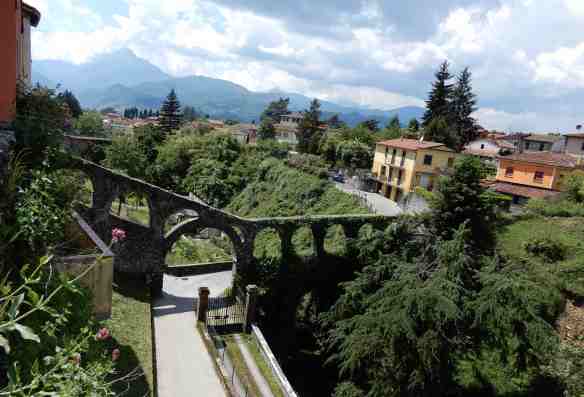
The old stone aqueduct was built in the 15th century to supply clean water for the fountains and crosses the original moat of the old village.

1a.aqueduct Parco Kennedy

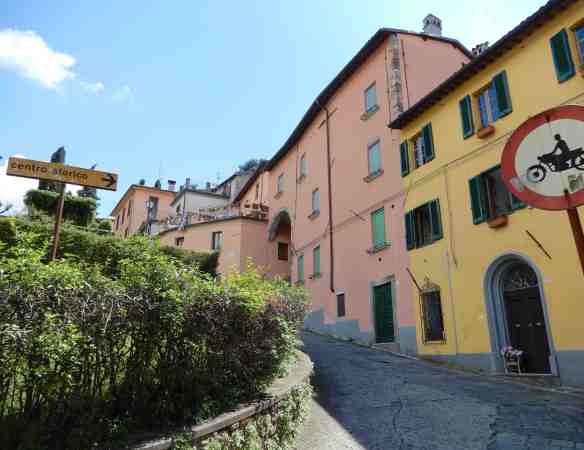
Narrow streets and steep steps hinted at what was to come once we were inside the walls.

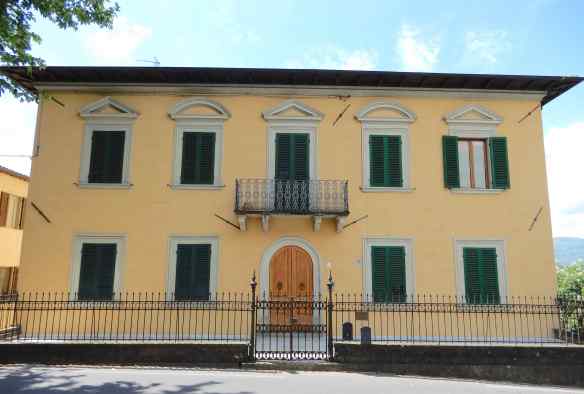
Beautiful buildings lined the main thoroughfare

4.beautiful building

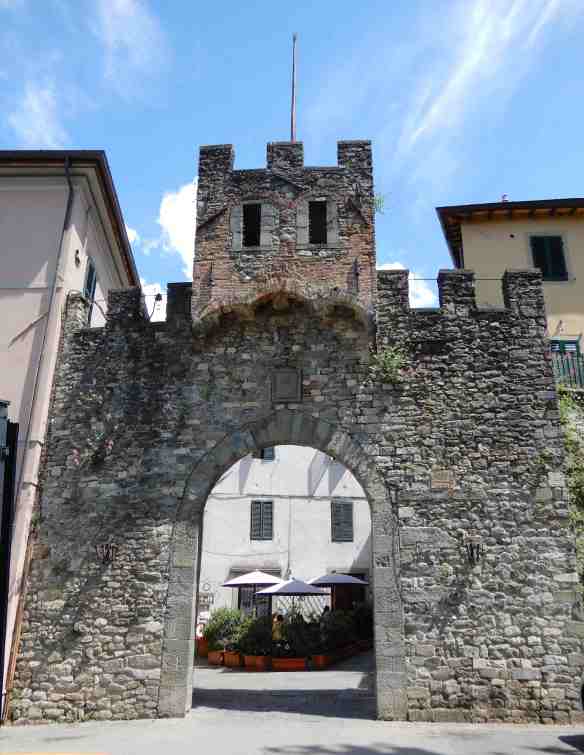
as we made our way to Porta Reale, one of the three gates in the medieval city walls. Below the observation tower, the gate still displays the ancient coat of arms of the city.

5.Porta Reale

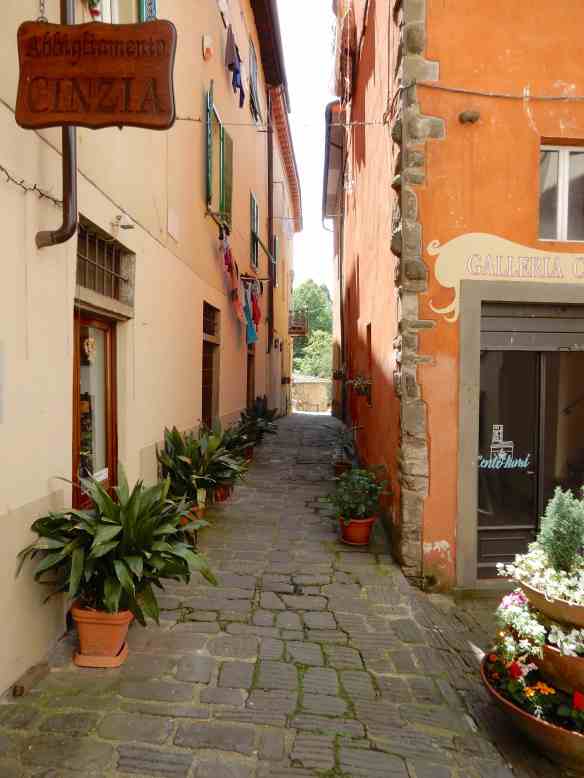
The layout of the town has remained virtually unchanged since the 8th century, buildings at impossible angles hug narrow lanes, mysterious alleyways and stone steps.

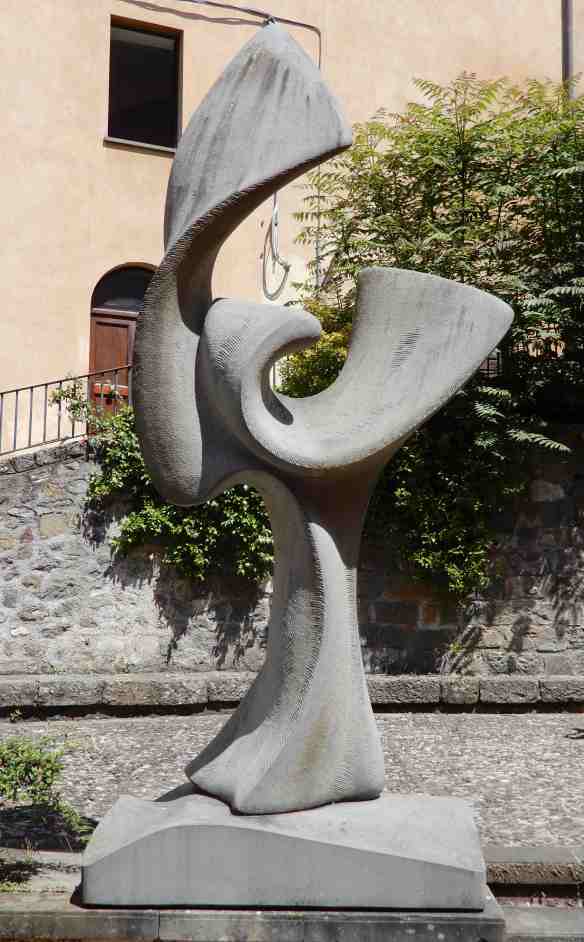
We set off through the web of streets with no real destination in mind, happy to amble randomly in the sunshine. An interesting sculpture caught our eye

10.sculpture

outside the Teatro dei Differenti, Barga’s main theatre. Constructed in 1668 it was deemed too small at the end of the 18th century, a new structure was built on top of the old one.

11.Teatro dei Differenti

Along with the theatre, the adjacent buildings have been beautifully restored.

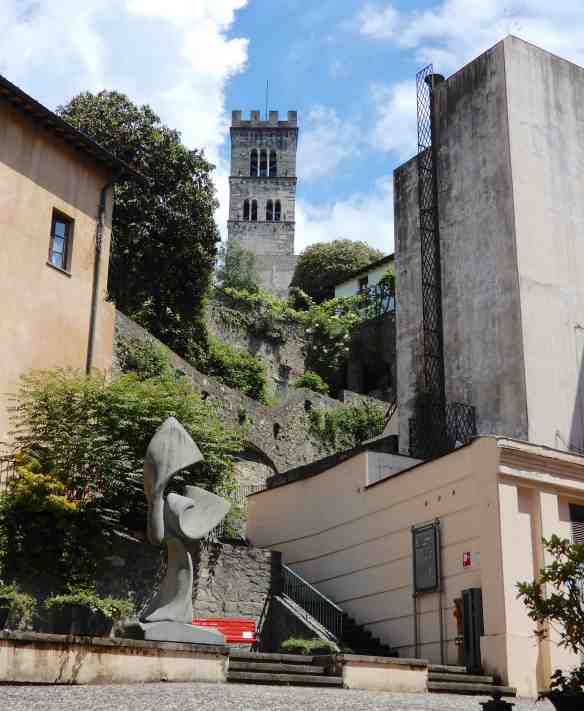
We decided to head to the highest point in the town once we spotted the bell tower of the Duomo di San Cristoforo.

14.Duomo di San Cristoforo

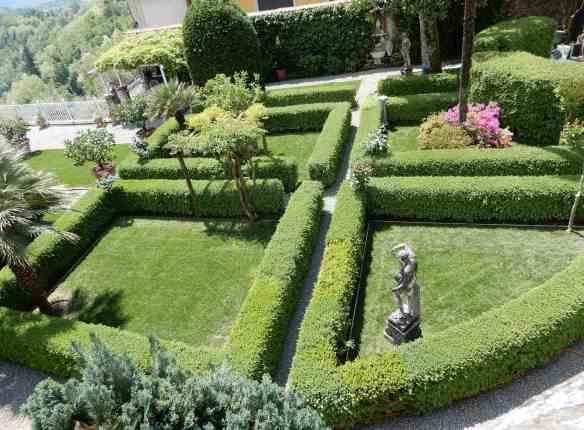
Our quest took us past the immaculate garden of the Palazzo Salvi,

15.Palazzo Salvi16.Giardino di Palazzo Salvi

less opulent but equally interesting plots

17.garden

and the myriad doorways we had come to expect.

We finally reached the cathedral, a spectacular edifice that I will need to cover in a separate post.

30.Duomo di San Cristoforo

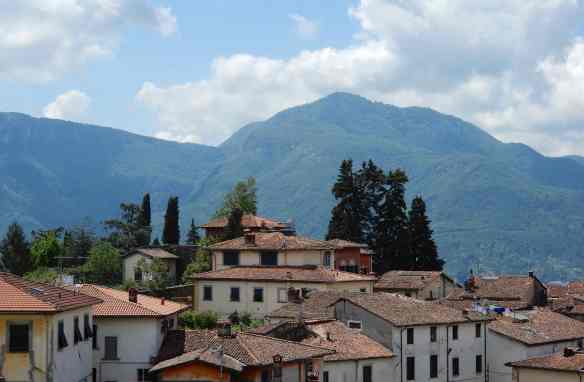
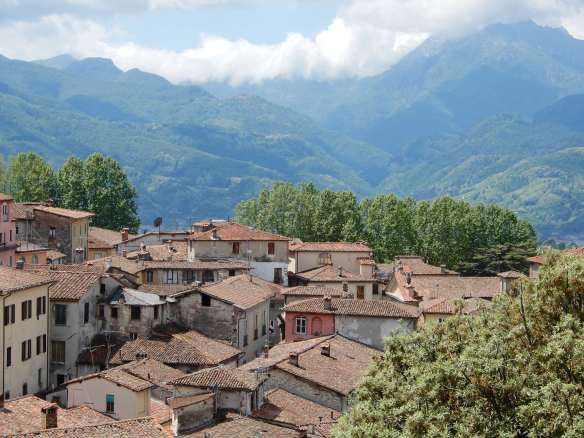
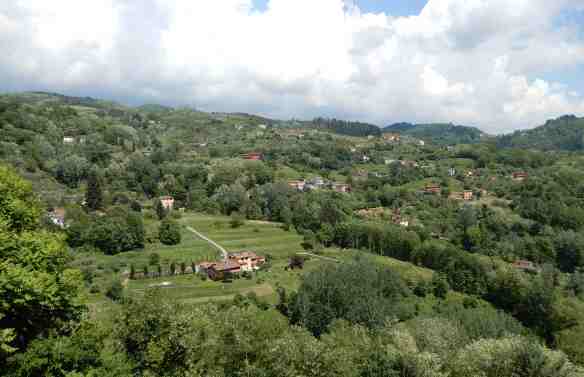
The views across the rooftops to the Apuan Alps and the shrouded peak of Pania della Croce were stunning.

31.view

33a.view

Tearing ourselves away, we meandered back to town in search of sustenance, discovering a memorial garden in Piazza Garibaldi, adjacent to the Museum of Memory. A large sculpture entitled La Vedette (in military terms meaning the forward observer) was unveiled in 2009 on the 4th November, a day celebrated in Italy as the anniversary of the end of  World War I.

We reached Piazza Angelio at lunch time, a popular place in summer for exhibitions and entertainment. The particular shape and almost perfect acoustics of the piazza make an ideal setting for international festivals such as “Opera Barga” and “Barga Jazz”.

16th century poet Pietro Angeli, nicknamed Bargeo, watches over the piazza from the corner of Palazzo Angeli.

The offerings on the blackboard at L’Osteria enticed us in, we weren’t disappointed.

41.L'Osteria

With much of the town still to see, we continued our wanderings in a different direction.

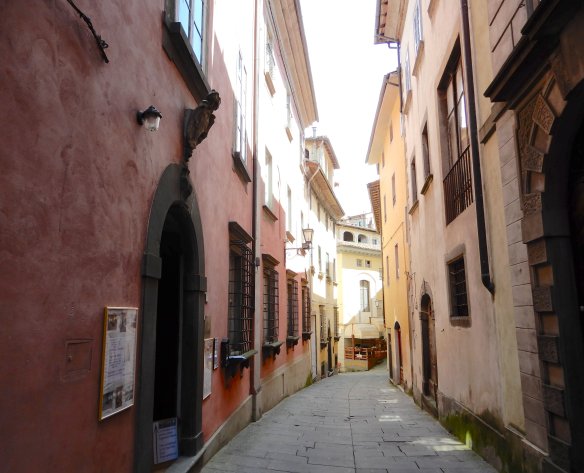
45.narrow street

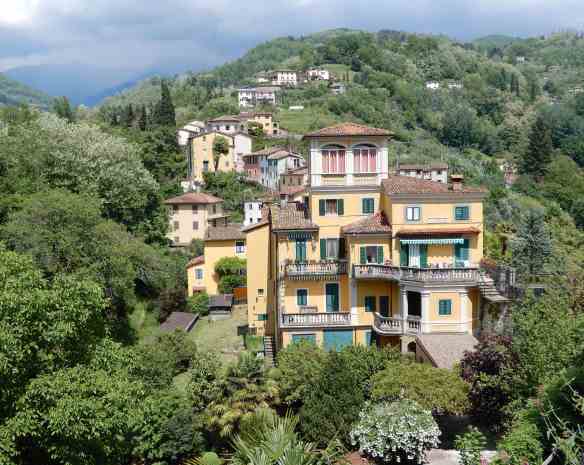
Colourful homes lined the street

48.colourful houses

and some clung precariously to the edge of the cliff.

49.fabulous homes

All had magnificent views of neighbouring hilltop towns and verdant countryside.

50.hilltop town51.views

The aqueduct and Kennedy Park were behind us

52.aqueduct

as the outskirts of town stretched in front.

53.Villa Buenos Aires

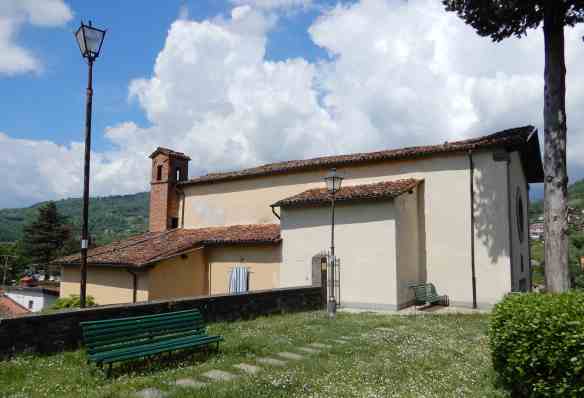
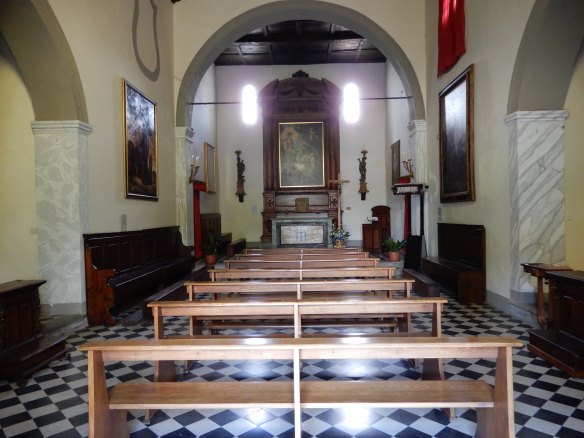
The 17th century Chiesa di San Felice, was quite small and understated when compared to others we had seen on our travels.

54.Chiesa di San Felice55.Chiesa di San Felice

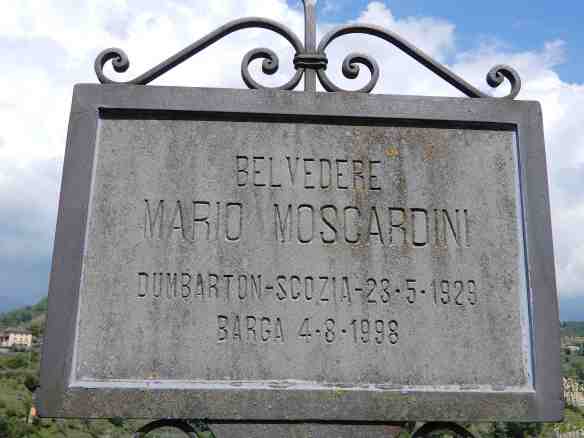
Outside the church was this memorial plaque, apparently dedicated to a Scotsman with an Italian name. It seems Barga has a strong connection to Scotland, with many residents emigrating there in the 19th century in search of work when industry in Tuscany suffered a decline. They won the Scots over with their gelato making skills and, coupled with a knack for cooking fish and chips, made great success out of their cafés and restaurants. Over the generations, some returned to Barga and now sixty percent of the town’s 10,000 residents have Scottish relations. The annual Festival of Fish and Chips, Sagra del Pesce e Patate, celebrates this connection for three weeks each July/August. I can’t find any clues as to the life of Mario Moscardini but I assume he made a considerable contribution to Barga.

61.memorial

Working our way along Via di Mezzo, we found an interesting little face peering out from the wall of a restaurant. It is known as a scacciaguai, a folk magic figure that protects from trouble and harm. Hopefully, the charm has worked for the restaurant of the same name.

62.scacciaguai

Three doors along, we paid a visit to Casa Cordati, a 17th century palazzo that was once the studio of local artist Bruno Cordati.

63.Casa Cordati

It is now owned by his grandson, Giordano, and offers rather sumptuous accommodation as well as an extensive gallery on the first floor. The rooms on this floor have been preserved as they were during Bruno Cordati’s creative years, the views were nothing short of inspirational.

Our exploration of this magical town had come to an end as we reached the Piazza della Santissima Annunziata and the 16th century church of the same name. The 19th century façade was badly damaged by artillery shells in World War II and was later restored.

72.Piazza della Santissima Annunziata

There was only one thing left to do to make the day complete.

73.gelati

Illume

Last Saturday brought the first day of winter, a perfect sunny day to drop the top on Cooper and take her for a drive to Boat Harbour for lunch. The restaurant at Killynaught Cottages has borne a few incarnations over the years and we hadn’t yet experienced the latest – Illume.

1.Illume Restaurant

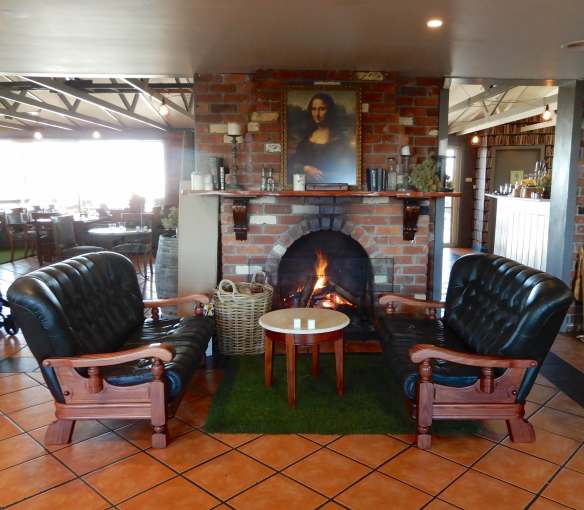
The open fire was welcoming as we stepped through the doorway,

2.fireplace

it wasn’t the only cosy niche to relax with something tasty.

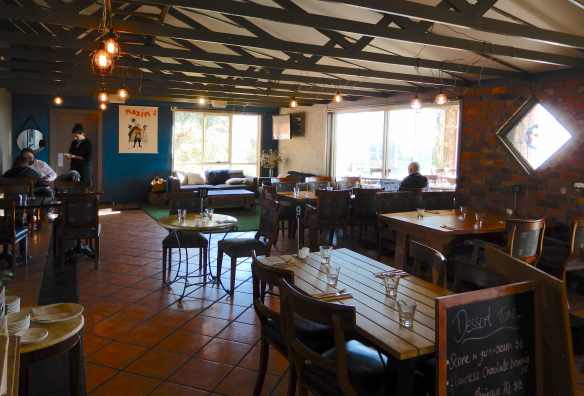
There are two large dining areas indoors,

5.dining area

one with an elegant leadlight window and quirky workstation.

The sun-filled patios are well protected from the elements

8.patio9.patio

and there are outdoor options for the warmer days.

10.outdoor seating

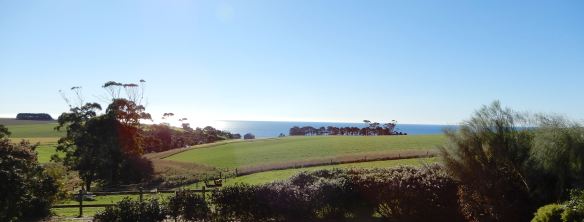
The views are absolutely stunning across rolling green farmland and the pristine waters of Bass Strait.

11.vista12.vista

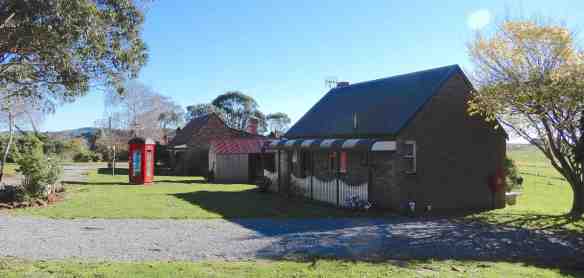
For those wishing to stay, there are five heritage themed cottages to choose from, all furnished with authentic antiques and memorabilia of the Victorian and Federation eras.

13.Annie's Cottage & Victoria's Cottage

There is a variety of Tasmanian wines on the list, we chose a favourite, Ghost Rock Pinot Gris. Michael ordered the Salt & Pepper Calamari with apple slaw and aioli, a little disappointed at the lack of accompanying fries. We remedied this with a side order. I couldn’t resist the Wood-Fired Braised Lamb with potato mash, sautéed vegetables and honey & ginger dressing. I expected something along the lines of ‘pulled lamb’ and was surprised to see a lamb cutlet centre stage. There were, however, shards of succulent lamb under the solitary chop and the dressing was delicious.

The dessert menu offered the traditional treasures, resistance is futile. The Flourless Chocolate Brownie and Sticky Date Pudding received high praise.

In the name of research (if Crème Brûlée is on the menu, I am obliged to appraise), I ordered Honey Crème Brûlée, not suspecting there was a salty element to the crust. I don’t know if there was a mix up between the salt and sugar shaker in the kitchen but, despite the perfect consistency, I was not enamoured.

19.honey crème brûlée

The presentation of the Lemon Meringue Pie was quite spectacular.

20.lemon meringue pie

Next time, we will try the wood-fired pizzas, they looked amazing.

Pumphouse Point

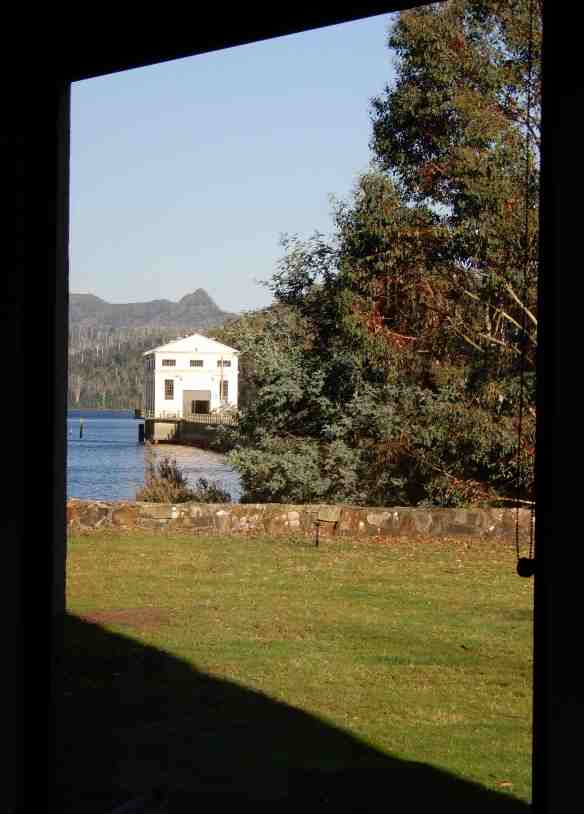
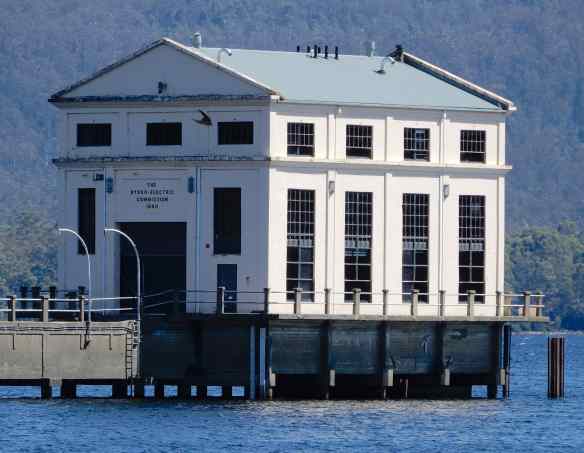
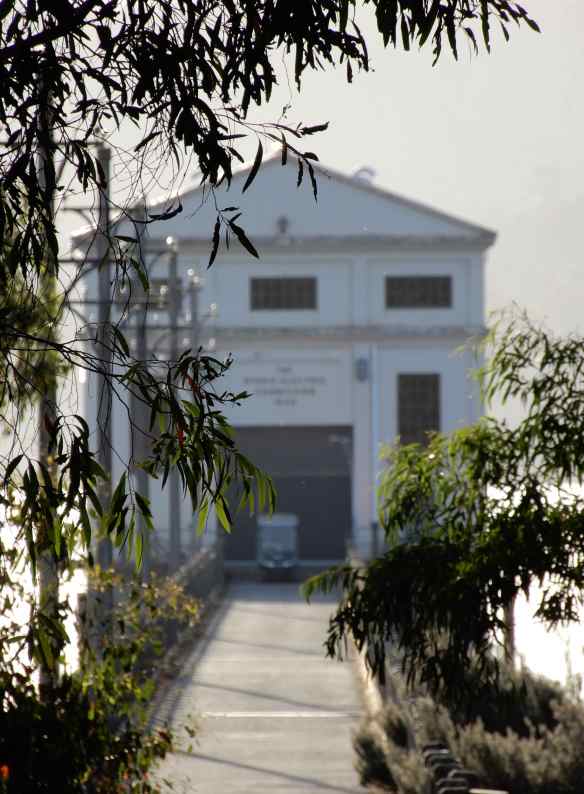
We recently ticked another item off the bucket list with a much anticipated weekend at Pumphouse Point. Here is a bit of history; Tasmania has relied on hydro-electricity since the early 1900s. In the 1930s, Lake St. Clair, the deepest freshwater lake in Australia, became the focus of a new pumping station. The water would be pumped from the lake and stored, to be fed to nearby Tarraleah Power Station as needed. Construction began on a 5-storey pumphouse, 900 feet out in the lake, to house four huge water pumping turbines and was completed in 1940. Sadly, after all this effort, the site was never used and after being decommissioned in the 1990s, was placed on the Tasmanian Heritage Register for its significant industrial heritage. Parks & Wildlife Service were appointed caretaker and thoughts turned to tourism opportunities. After unsuccessful tenders by two different developers, Simon Currant, a man with great vision, secured the lease in 2004 and a decade of hard work saw Pumphouse Point brought back to life in 2015. Our first glimpse of the pumphouse was thrilling, the imposing edifice was minified by the expanse of nature.

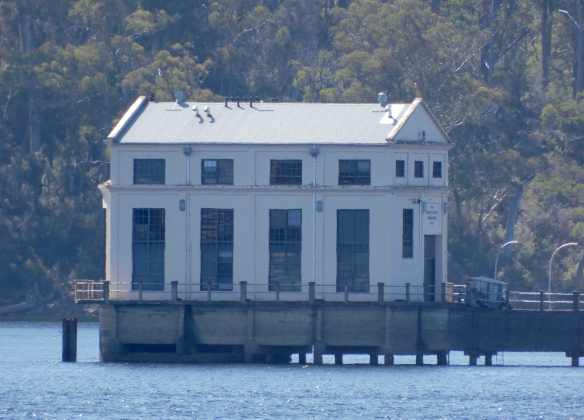
1.the pumphouse2.the pumphouse

Lake St. Clair is as pristine today as it was when Europeans first arrived in 1832. The original inhabitants, known as the Big River Tribe, called the lake Leeawuleena, meaning ‘Sleeping Water’.
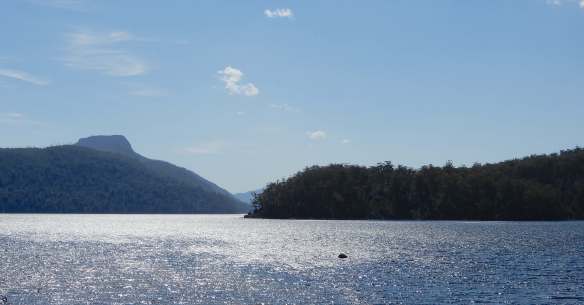
3.Lake St.Clair

We were greeted at the reception lounge with the question, “would you like a glass of Tasmanian sparkling wine?” Not a difficult decision to make. Our bags were then loaded onto a ‘flume buggy’, similar to a golf cart, and we were driven the 240 metres along the flume to the pumphouse. The drivers reverse all the way along (there is nowhere to turn around at the end) and we sat on the back with a perfect view of the approach.
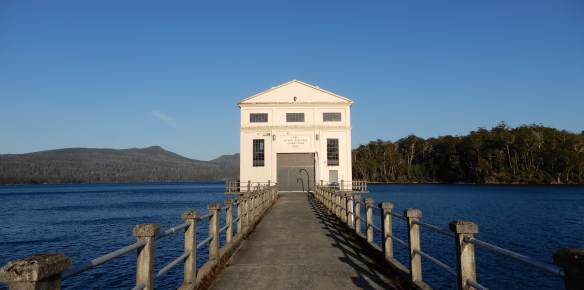
4.the pumphouse

Our room on the middle floor captured the afternoon sunlight

and had everything we could possibly need. The kitchenette (with two fridges and a coffee machine) was laden with sumptuous Tasmanian produce, beer, wine and cider, all at very reasonable prices.

Hidden behind what at first appeared to be a mirrored wardrobe was the ensuite with industrial tapwear, all natural Australian products and the biggest shower head I have ever seen. We discovered when we turned on the light, the mirror wasn’t a mirror at all.
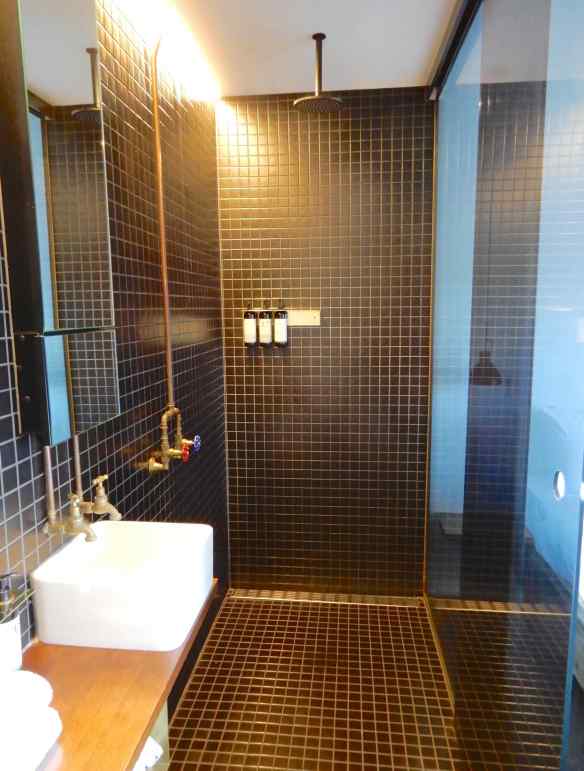
10.ensuite

The three floors of the pumphouse have four rooms on each, as well as options for lounging. The ground floor lounge has a bar and wood heater, one of the original turbines is visible through a glass panel in the floor. For some reason I didn’t take a photo so have procured one from the website.
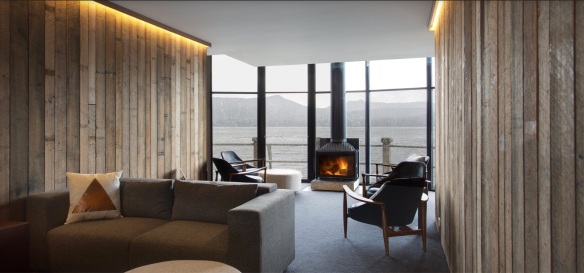
13a.ground floor lounge, pumphouse

The lounge on the middle floor was right next door to our room, almost an extension of our private domain. The walls of rough sawn Tasmanian Oak boards added to the cosy ambience,
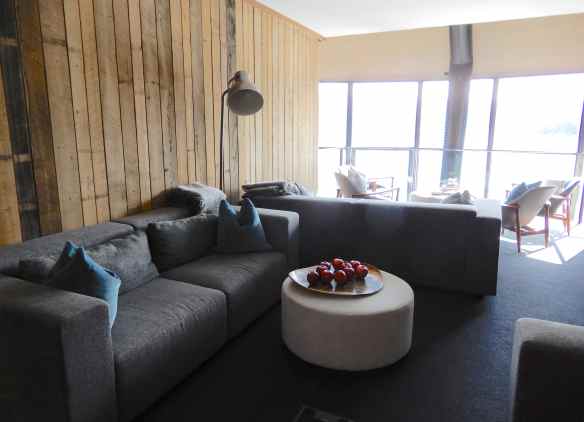
14.lounge, middle floor pumphouse

it was difficult to concentrate on reading with so much beauty just outside the window.
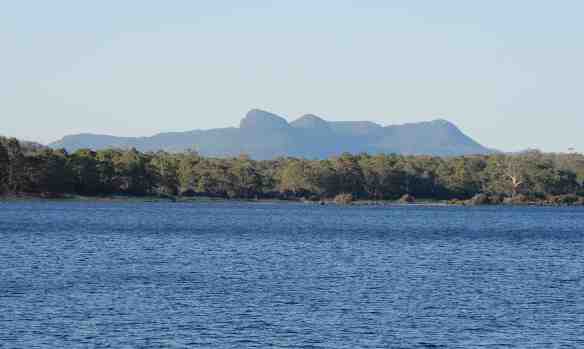
15.view from middle floor lounge

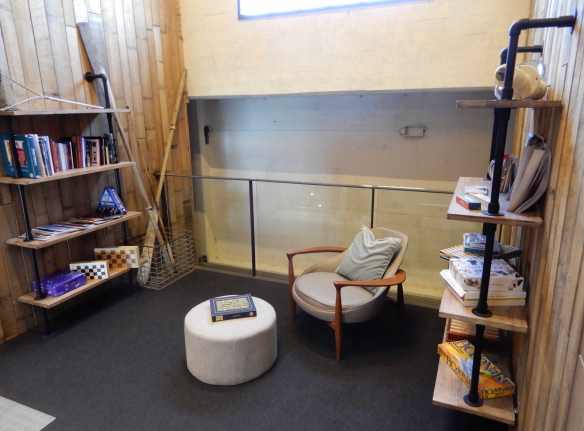
On the landing between the middle and top floors, there is a small library of books and board games.
16.library

There are another six rooms in the Shorehouse.
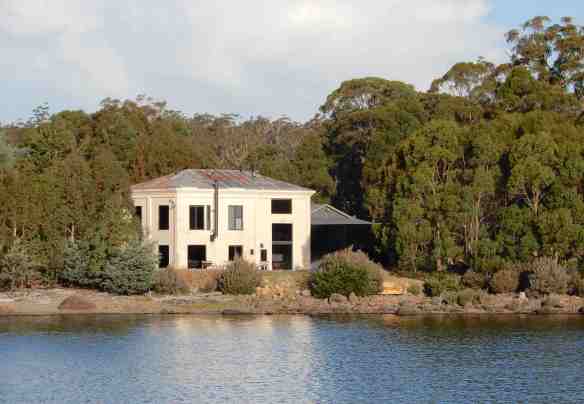
17.The Shorehouse

Formerly used as the substation for the facility, the art deco exterior has been preserved
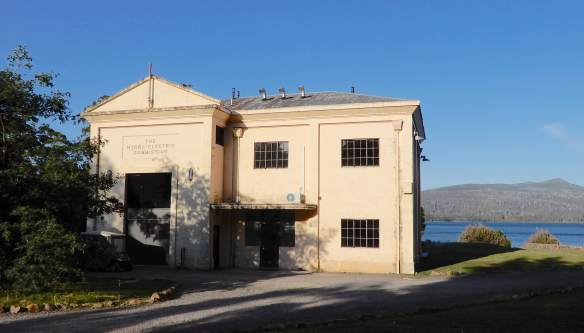
18.The Shorehouse

and some of the original features have been blended with the contemporary furnishings.

There is no shortage of seating in the ground floor lounge, all with stunning views across the lake. A perfect place to relax with a purchase from the bar.
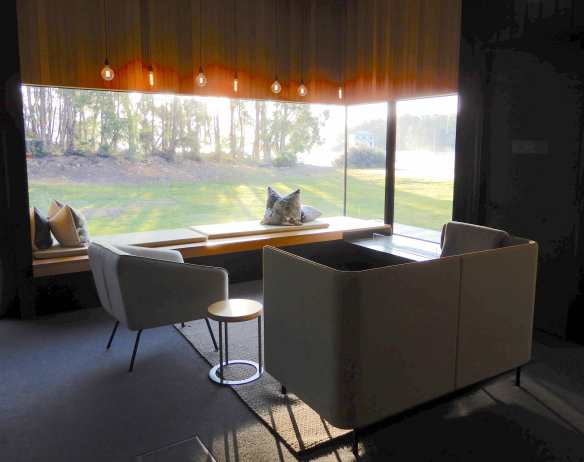
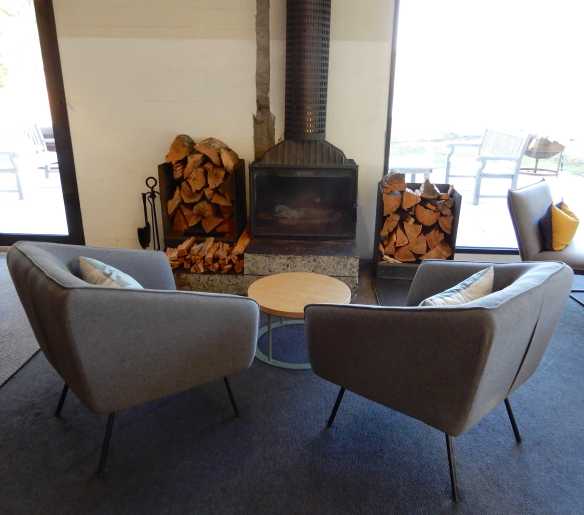
21.The Shorehouse22.The Shorehouse23.The Pumphouse

There are no bar staff, it works on an honesty system. You select your preferred tipple, write it on the list and settle the bill on departure. Once again, we found the prices surprisingly reasonable, certainly not the over-inflated dollars you find in a hotel mini-bar. A stylish extension to the Shorehouse sets the scene for a superb evening dining experience
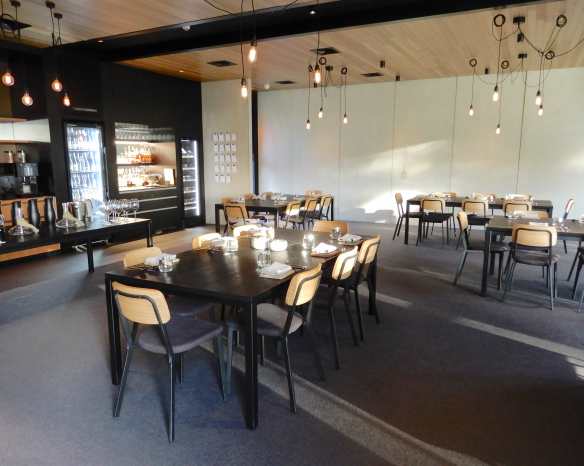
26.dining room, The Shorehouse

and, of course, another view of the Pumphouse.
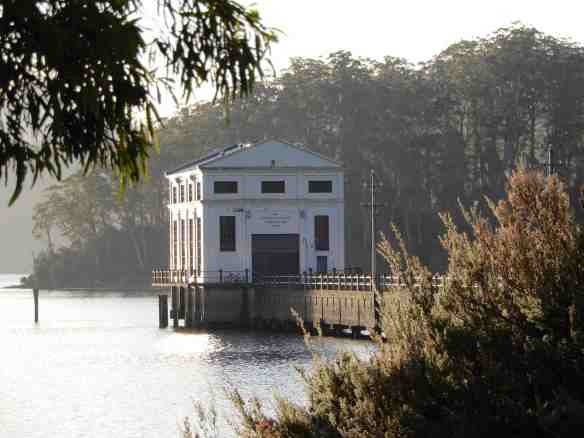
27.the pumphouse

Dinner is a wonderful opportunity to meet fellow travellers, tables of six or eight are filled at random and conversation never wanes. The menu differs each day but always fresh Tasmanian produce from Coal River Farm. We started our Friday feast with pumpkin, roast capsicum & paprika soup with thyme & parmesan flatbread. Soup and dessert are served individually, main course is a shared table experience. I was otherwise occupied, choosing another bottle of wine, when main course was served so you will have to imagine braised Cape Grim beef shin with rosemary & orange jus, confit baby potatoes, broccoli gratin and Tasmanian hot-smoked salmon with crème fraiche & capers. My apple & brandy cake with salted caramel walnuts came with a special embellishment and a rousing chorus of ‘Happy Birthday to You’.

Relaxed and replete, we strolled back to the Pumphouse under a clear, star-filled sky.
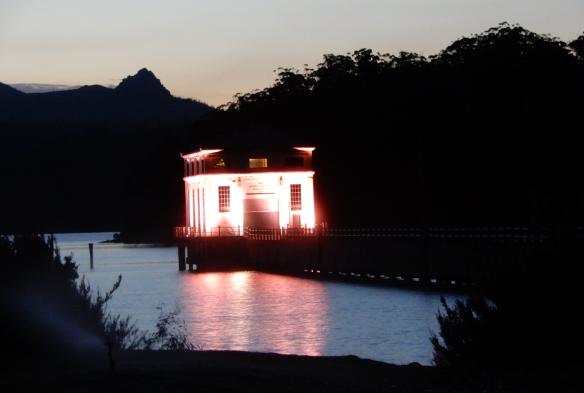
31.The Pumphouse at bedtime

I could happily have stayed in bed and watched as the rising sun created an ever changing palette across the water
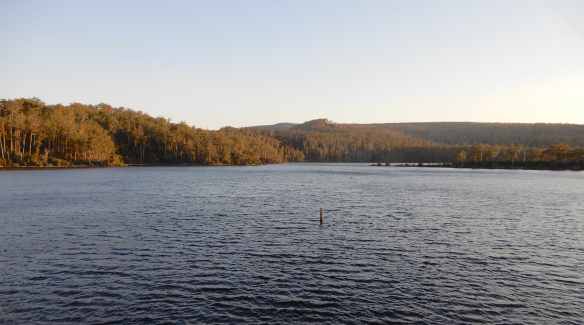
32.morning view from room

but breakfast beckoned. A self-serve affair, there was plenty to choose from including home-made baked beans, crispy bacon and a range of cheeses to make your own toastie. Or you can cook your eggs just the way you like them.

On the subject of food, you can order fresh crusty bread any time of day. We had a loaf delivered to our room for lunch which we devoured with cheese and olives while watching the world go by from the lounge.
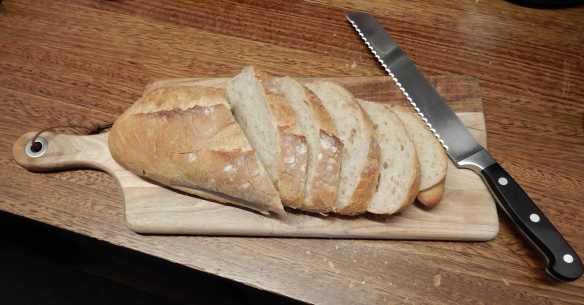
36.house made fresh sourdough

After lunch, we set off to discover some of the walking tracks around the property. Why walk when you can ride a bike?
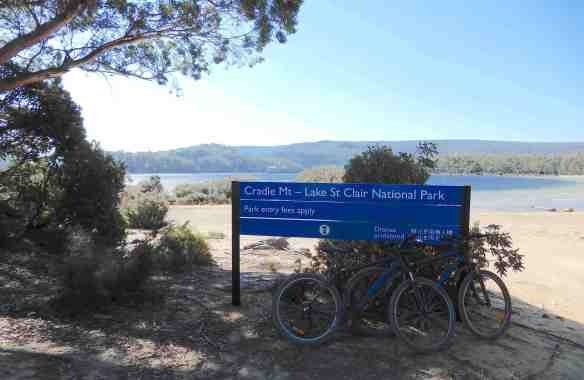
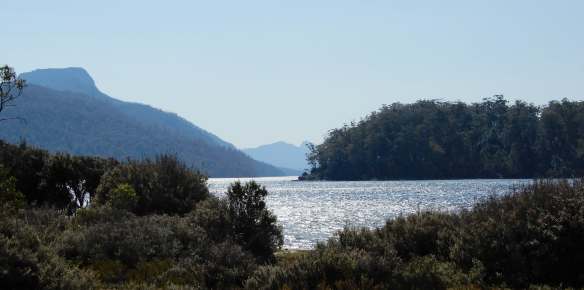
37.bikes38.view from Frankland Beach

Across the bridge near reception,

39.bridge

the trail leads to Sunset Seat, a secluded spot with a rustic bench to sit and enjoy the sunset.
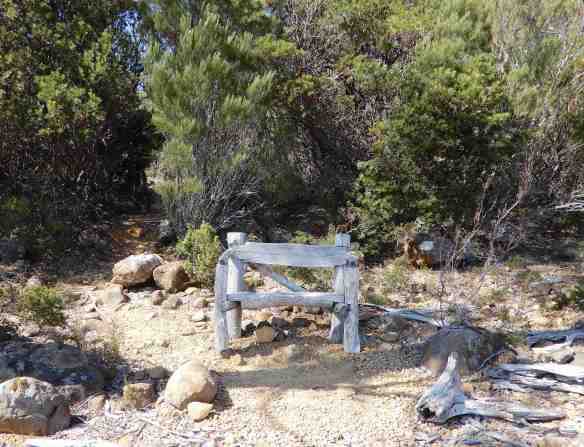
40.Sunset Seat

We were a little early for that but had a great view of the Pumphouse from a different angle.
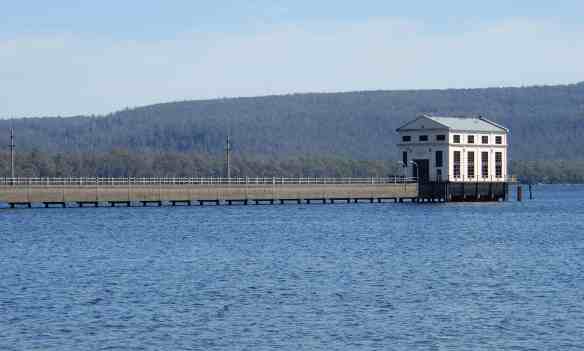
41.the pumphouse42.the pumphouse

Further along the trail, we found Basin Seats, another lovely spot to sit and contemplate,
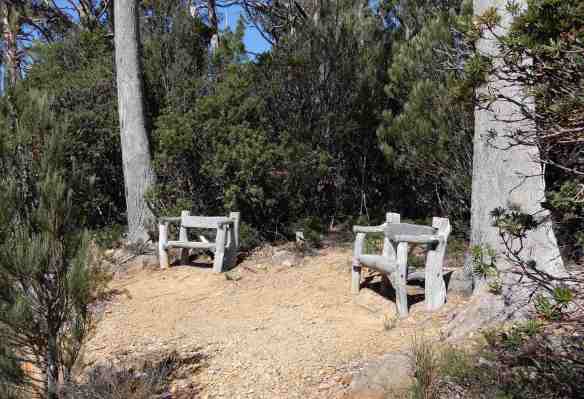
43.Basin Seats

overlooking Derwent Basin to Manganinni Island.
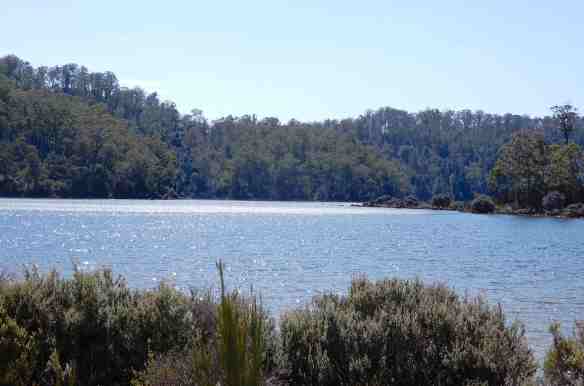
44.Derwent Basin & Manganinni Island

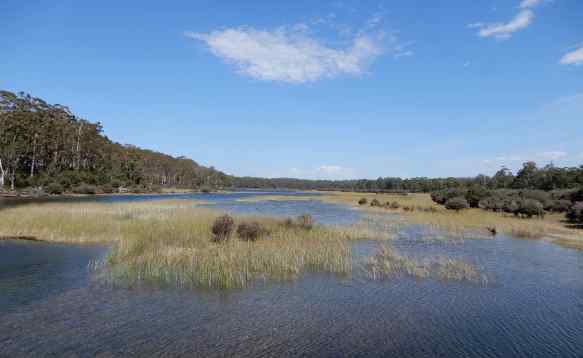
On the eastern side of the basin, a pontoon sits at the end of the track in St. Clair Lagoon. We had intended taking a dinghy out on the water but the wind had picked up and we weren’t too confident of our rowing prowess.
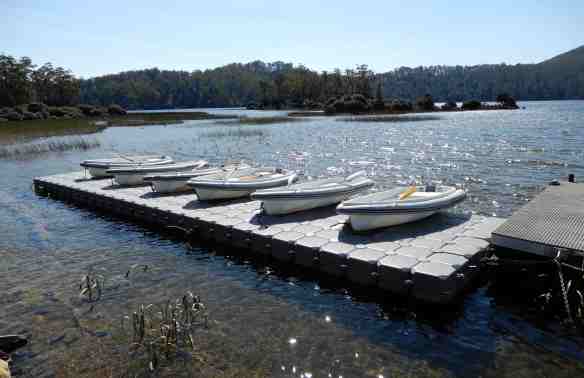
45.dinghies, lagoon

It would have been the perfect way to spend an hour or two, drifting around in the peace and quiet.
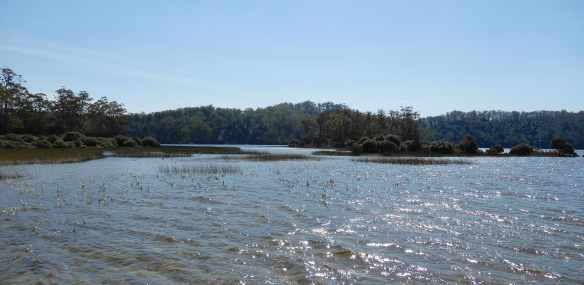
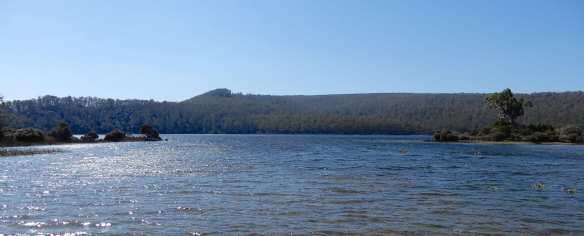
46.lagoon47.lagoon48.lagoon

Back in our room, we realised we could see Sunset Seat across the water.
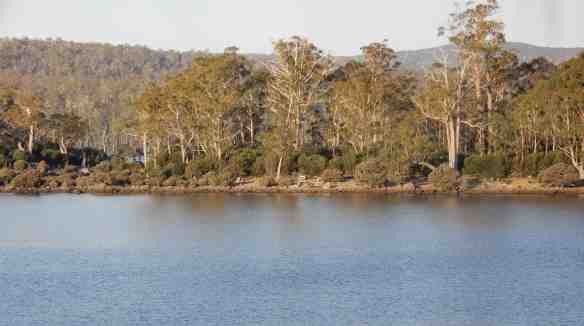
49.sunset seat from pumphouse

We returned to the Shorehouse for a beverage before dinner where we were, once again, presented with fabulous fare. Starting with chickpea & swede soup with parsley oil and thyme & parmesan flatbread. We shared plates of Coal River Farm pork belly with spiced apple puree & cider reduction, baked cauliflower with caramelised onion, tahini & sesame seeds, green beans & Coal River Farm feta and pressed Cape Grim beef terrine with green peppercorns & crème fraiche. Finishing with dark chocolate, raspberry & cocoanib crunch with raspberry ice cream.

We farewelled Pumphouse Point after breakfast the next day, vowing to return and experience the wonder in winter snow.
53.the pumphouse