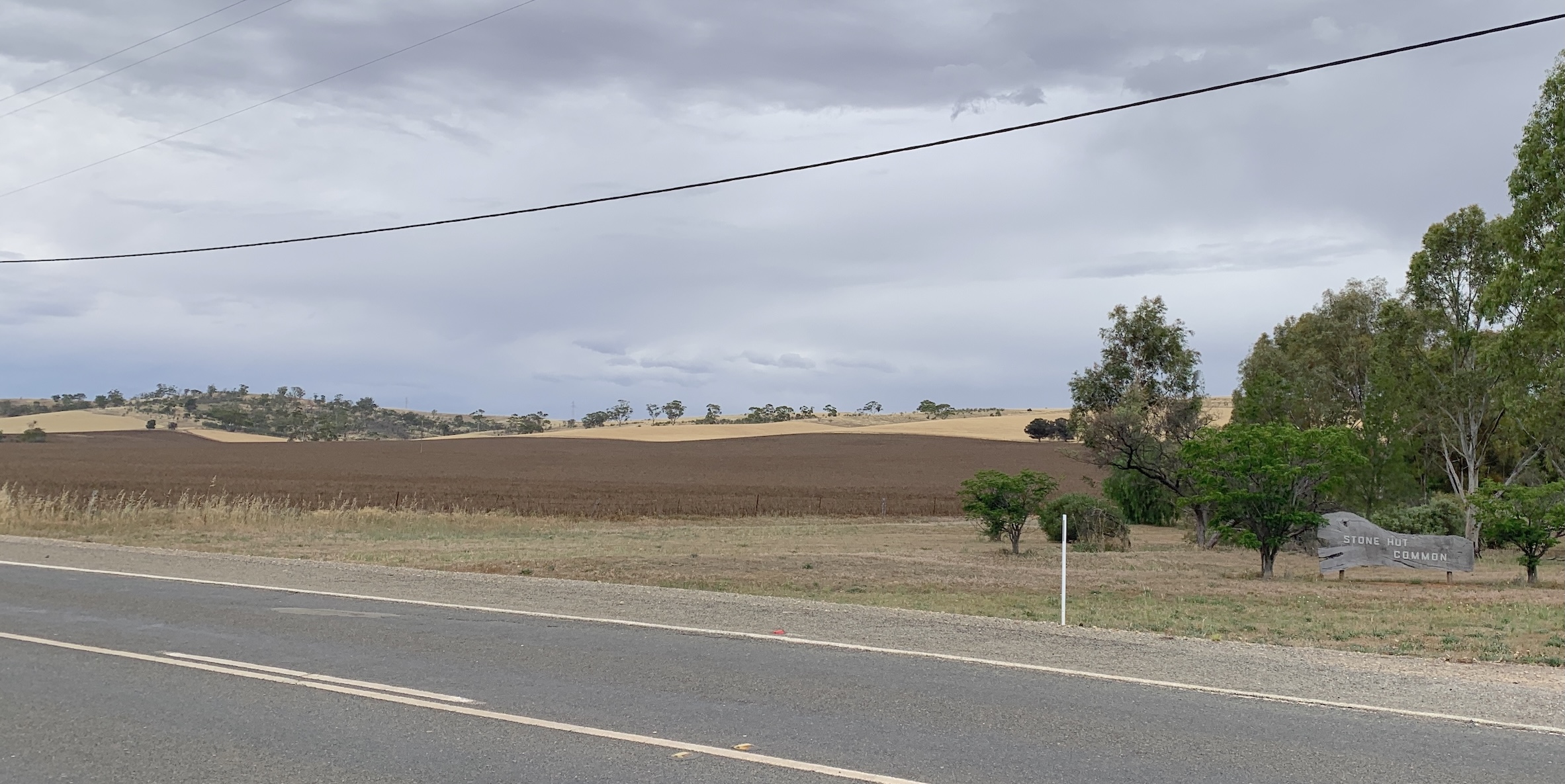
Following our wonderfully relaxing sojourn in Tanunda, we took the rural idyll to the extreme. A few years ago, my brother-in-law and his partner escaped the rat race to establish an off-grid property in a tiny town with a population of 26 . After driving for two and half hours through mostly flat, barren countryside, we arrived at Stone Hut, named for the old stone cottage built on the banks of the Rocky River in the 1850s by stonemason Thomas Long. Originally a stopover for Cobb & Co mail coaches, the next twenty years saw the village, surveyed in 1874, become a bustling pioneer settlement. There is a lot of history at Stone Hut but not much bustle these days.
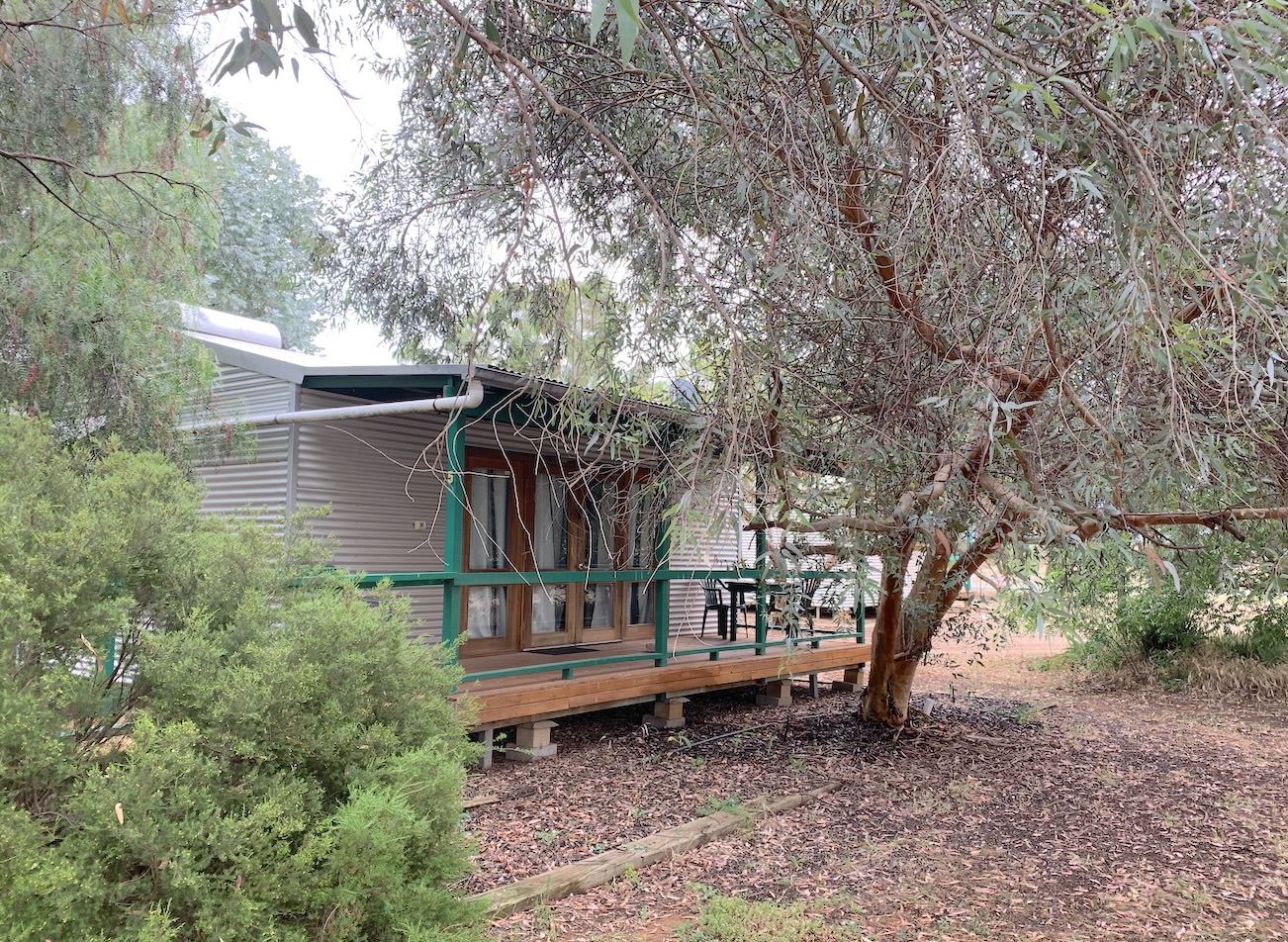
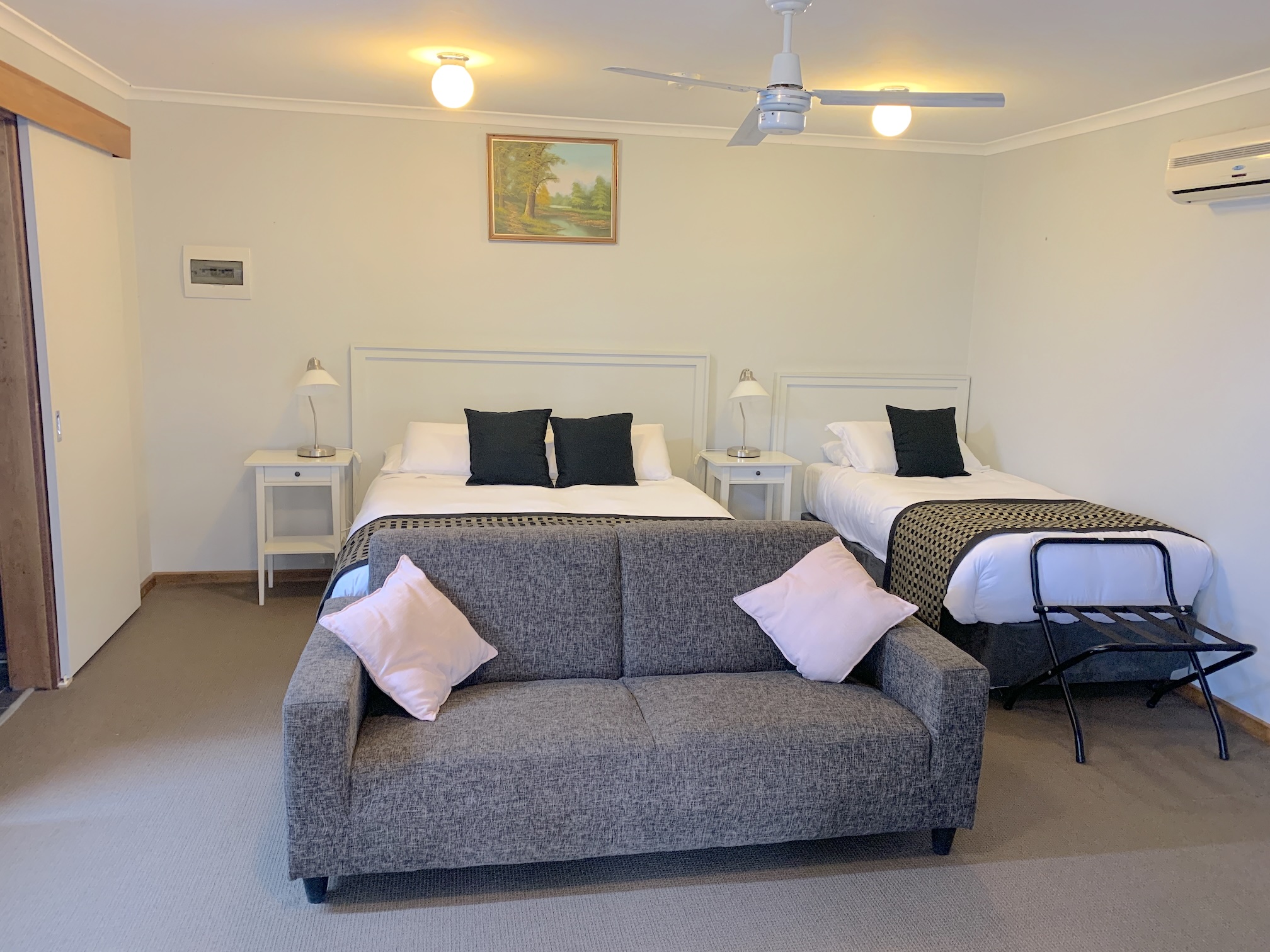
We had booked two nights at Stone Hut Cottages, adjacent to the famous bakery where, it is told, ‘visitors flock from miles to experience its delights’. We were so disappointed to find it was closed and, in a fine example of bad timing, re-opened under new management two weeks later. The cottages are scattered in a quiet bushland setting
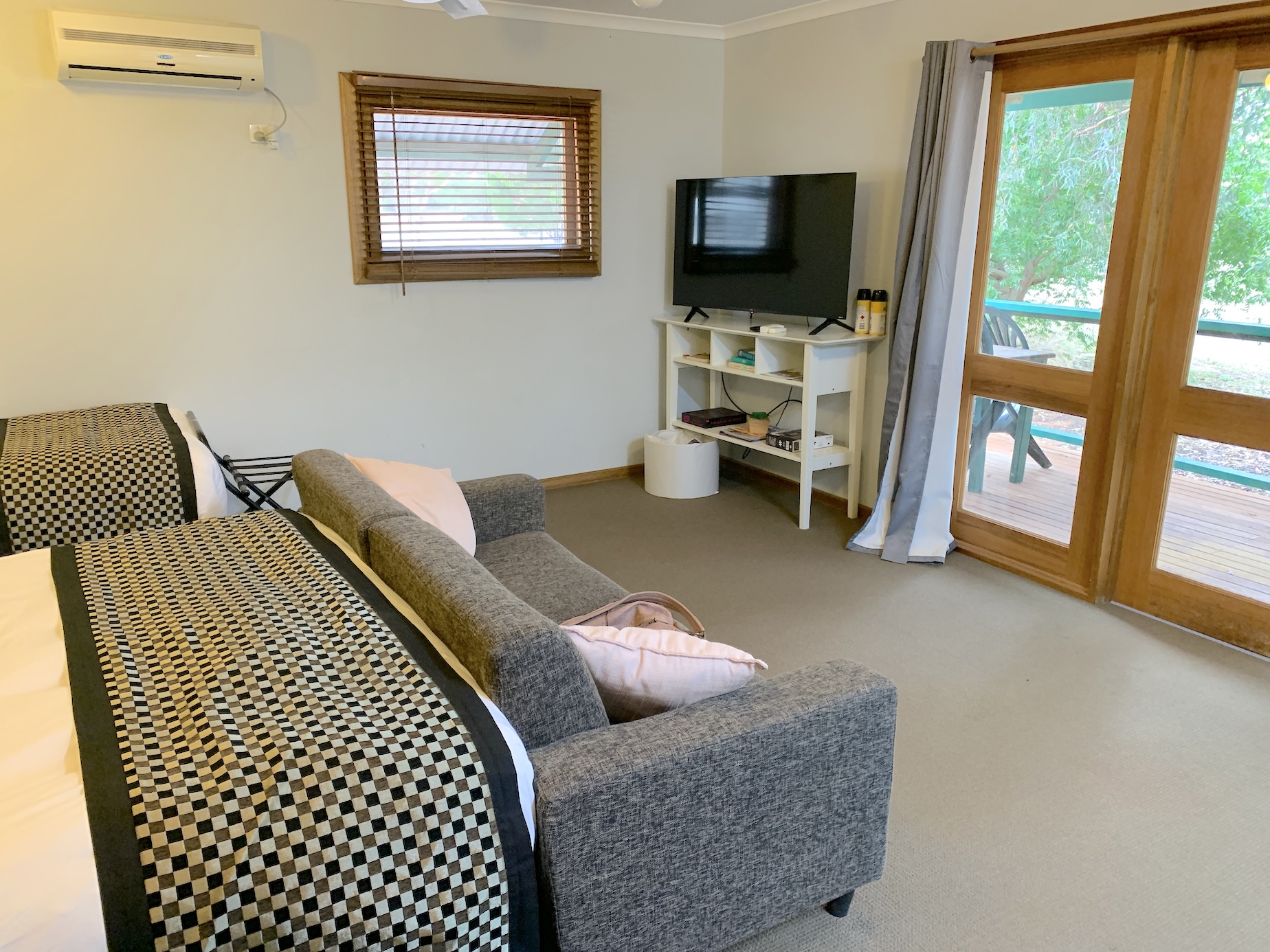
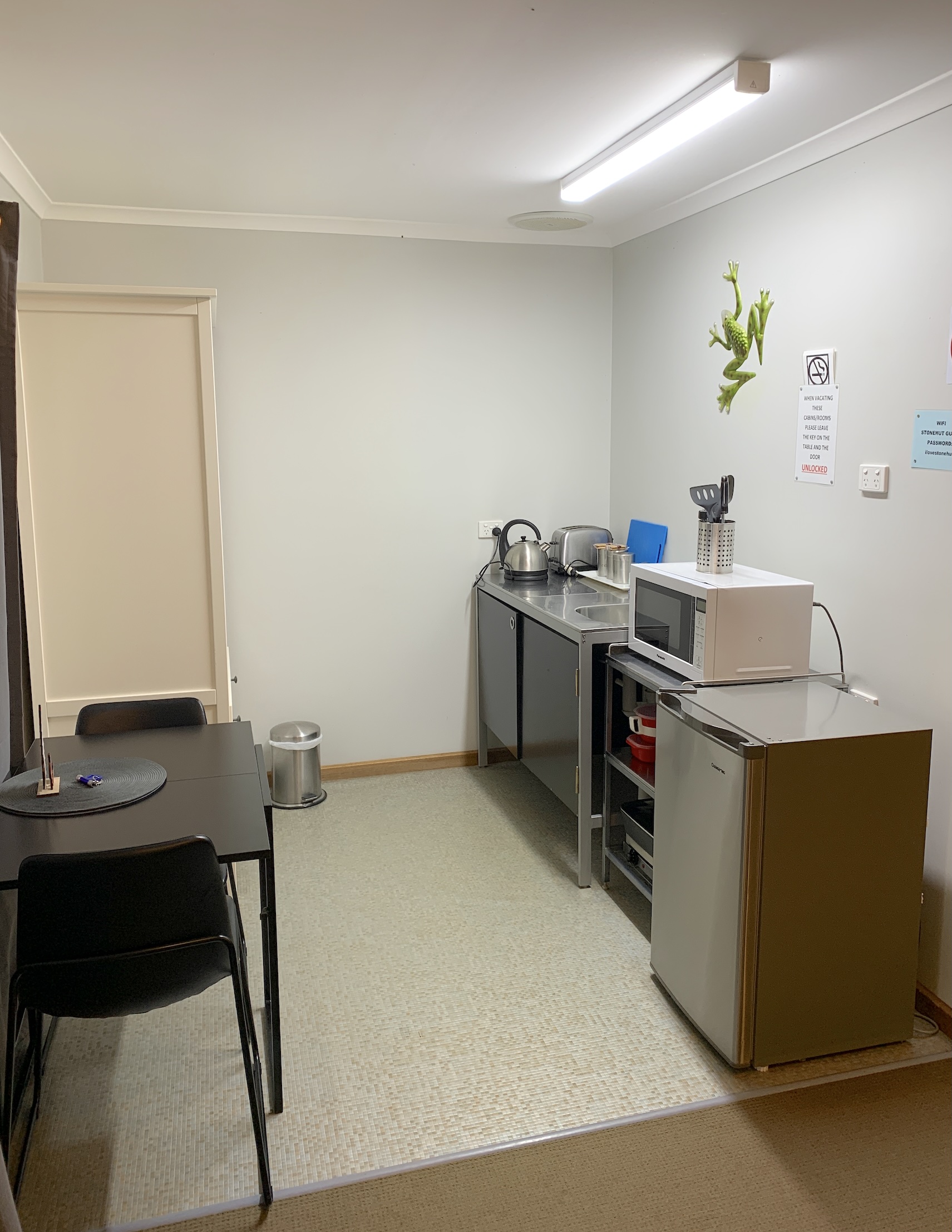
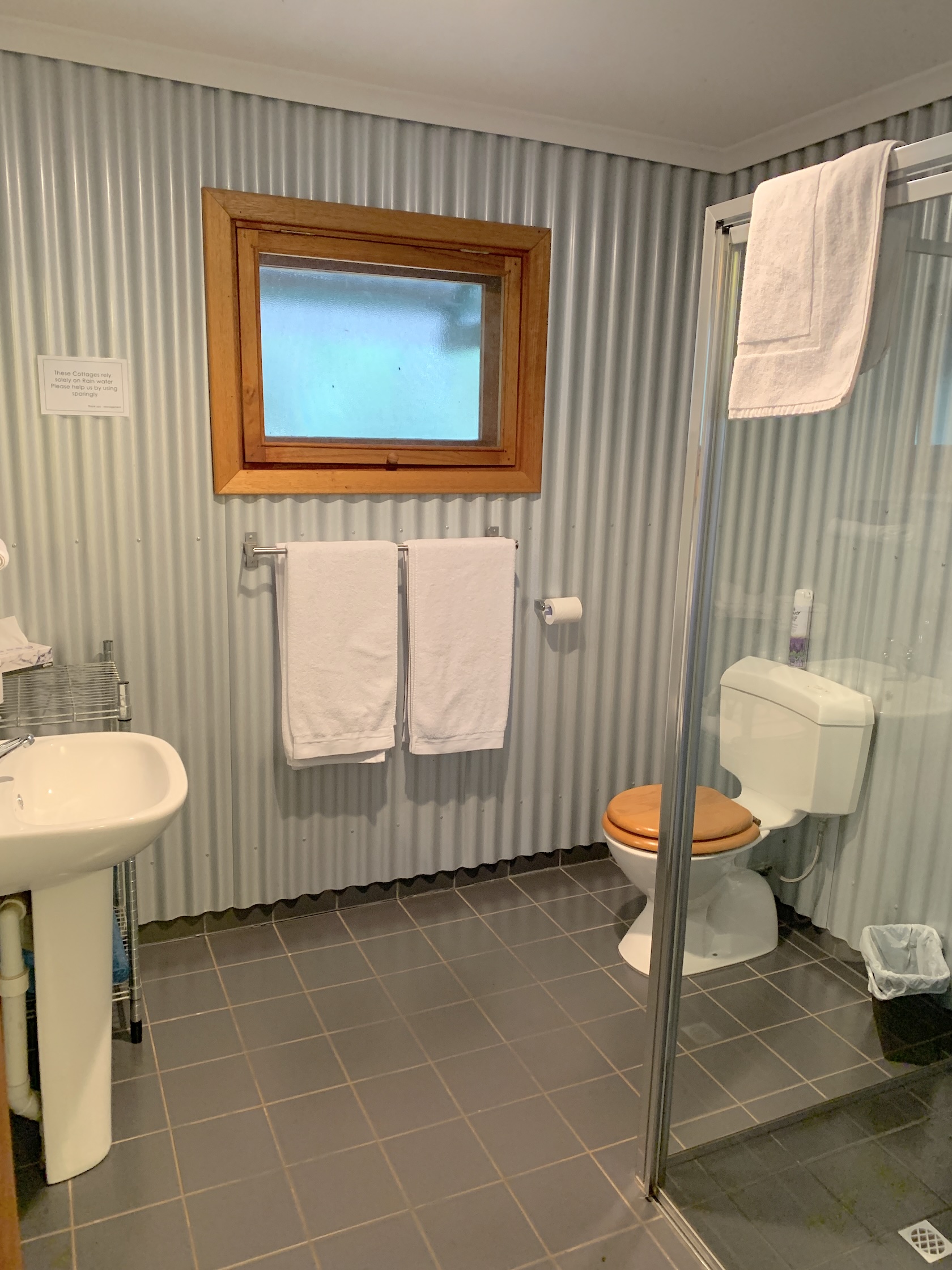
and ours was very comfortable, spacious and well-equipped.
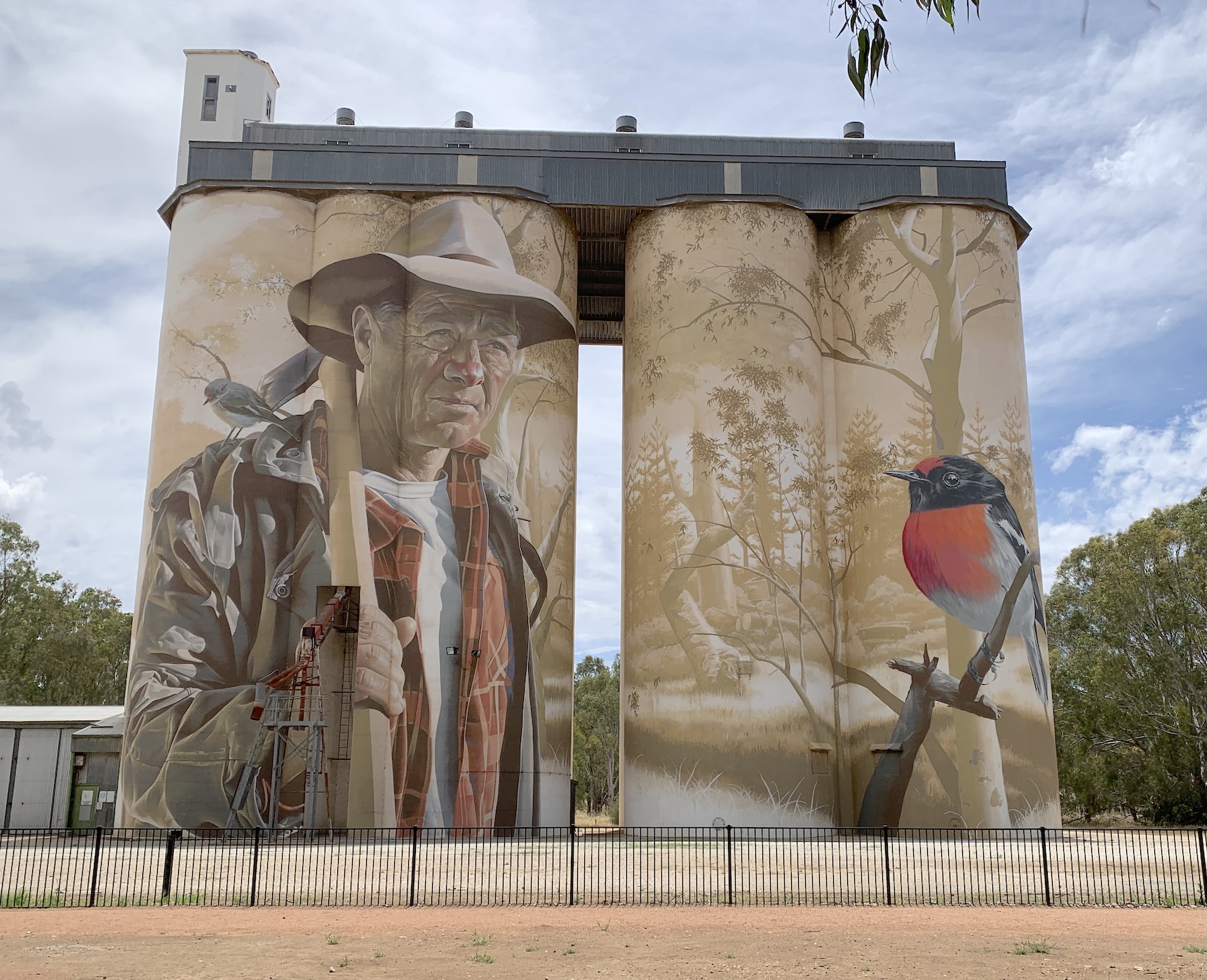
There are no convenience stores at Stone Hut but the town of Laura (population 552) is only 9km south and Wirrabara (population 353) the same distance to the north. Lunch at The Old Bakery in Wirrabara made up for our earlier dismay along with the discovery of a spectacular work of art painted on silos. To create a new tourist attraction for the town, the state Government offered an $80,000 grant to rejuvenate the non-operational silos, create a viewing area, car park, signage and lighting. In October 2018, Australian street artist Sam Bates (a.k.a. SMUG) created the forestry themed painting in twenty days.
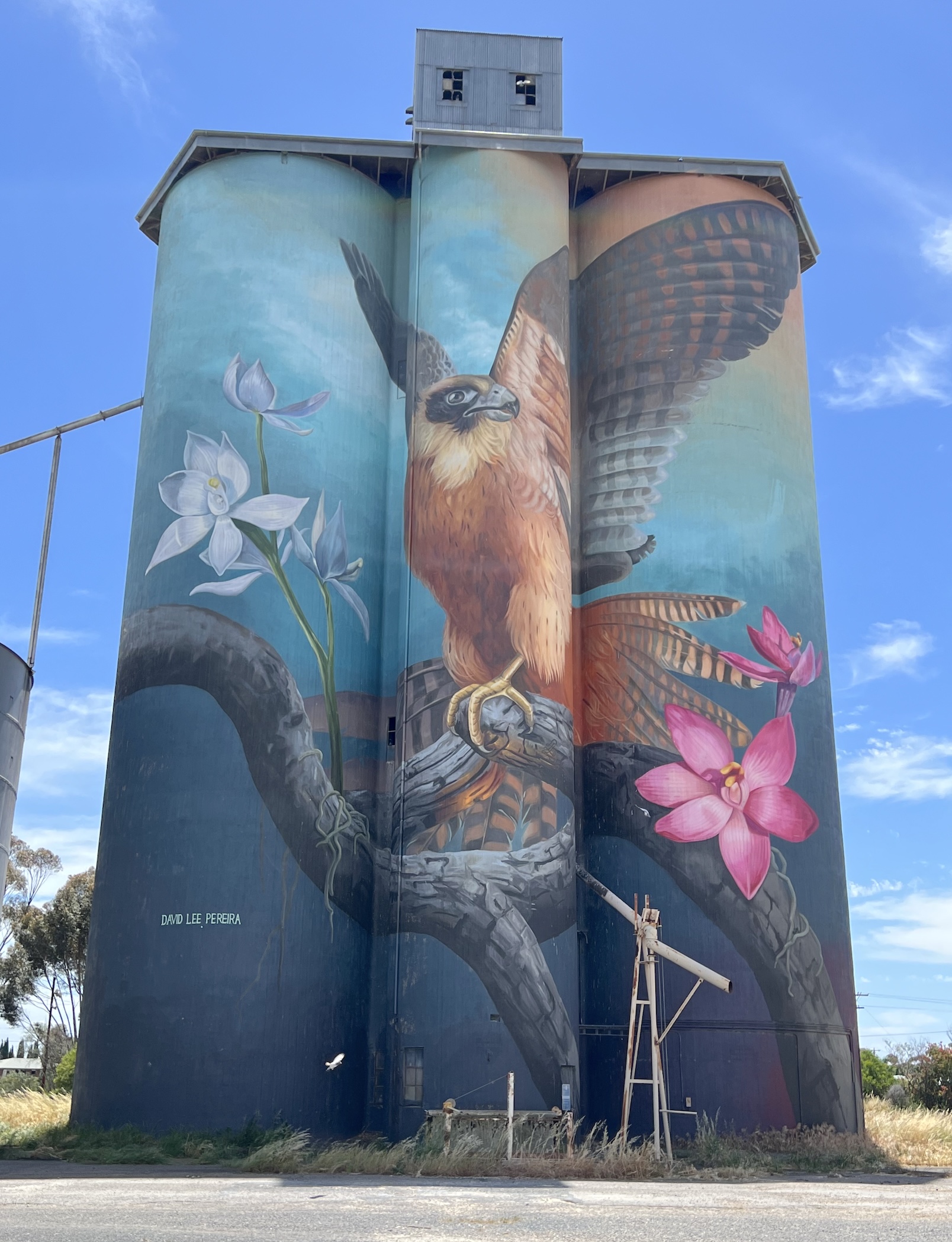
On a side note, when we drove from Geelong to Adelaide we stopped at a town called Kaniva to find a spot to eat our packed lunch. A shaded picnic table was perfect, with a beautiful backdrop of another painted silo. This one celebrates the plants and birds of Little Desert National Park in Victoria and was completed by artist David Lee Pereira in October 2020.
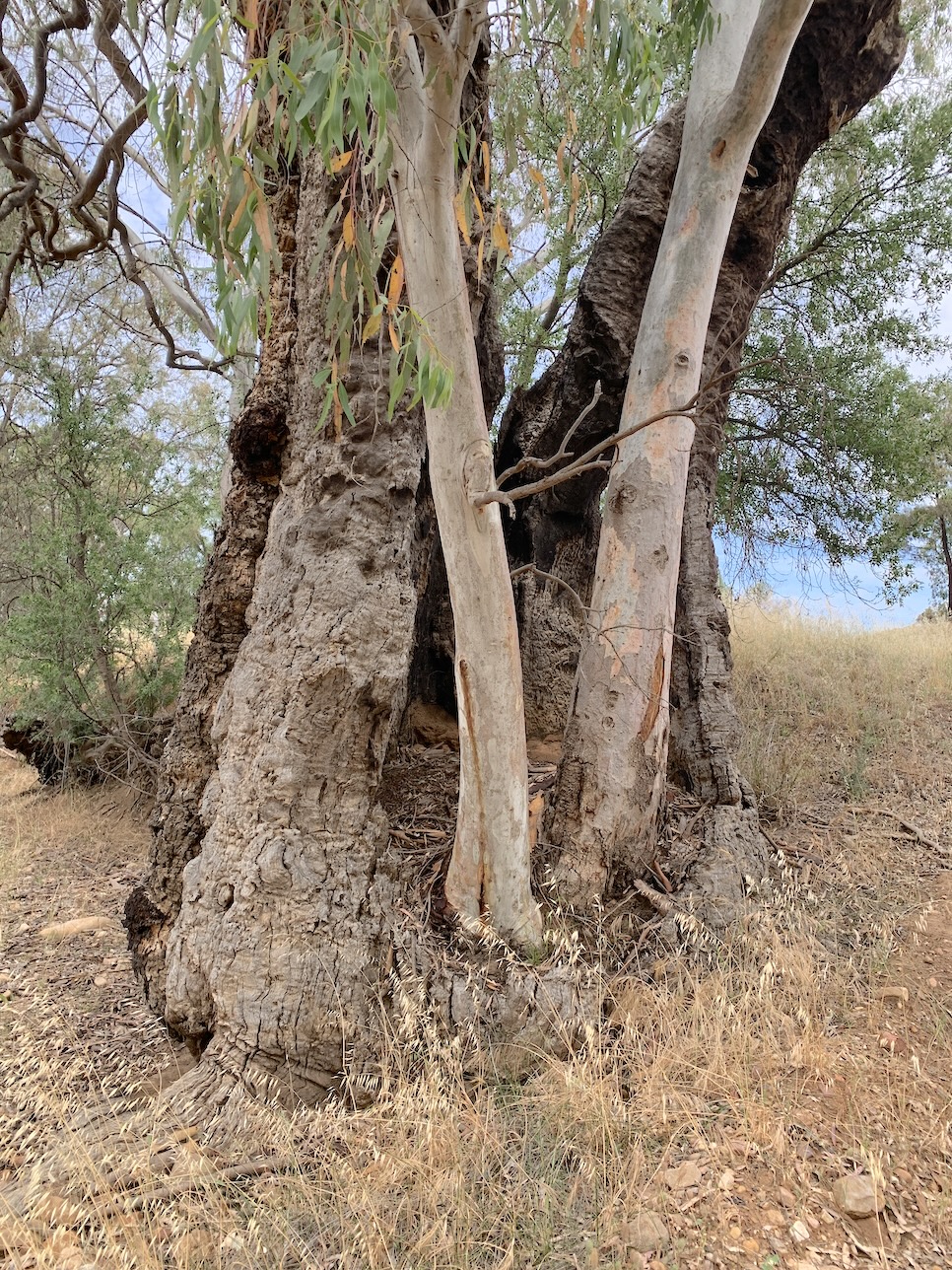
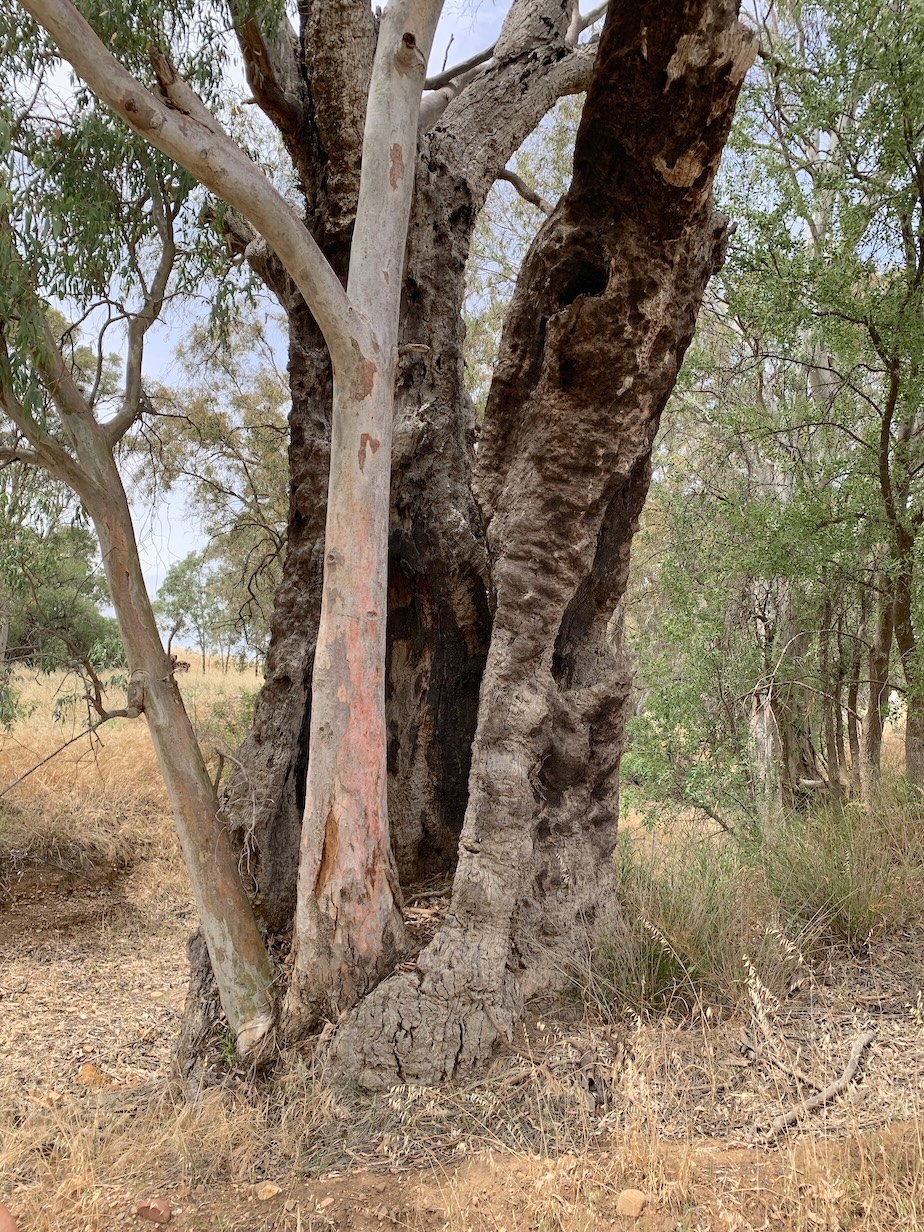
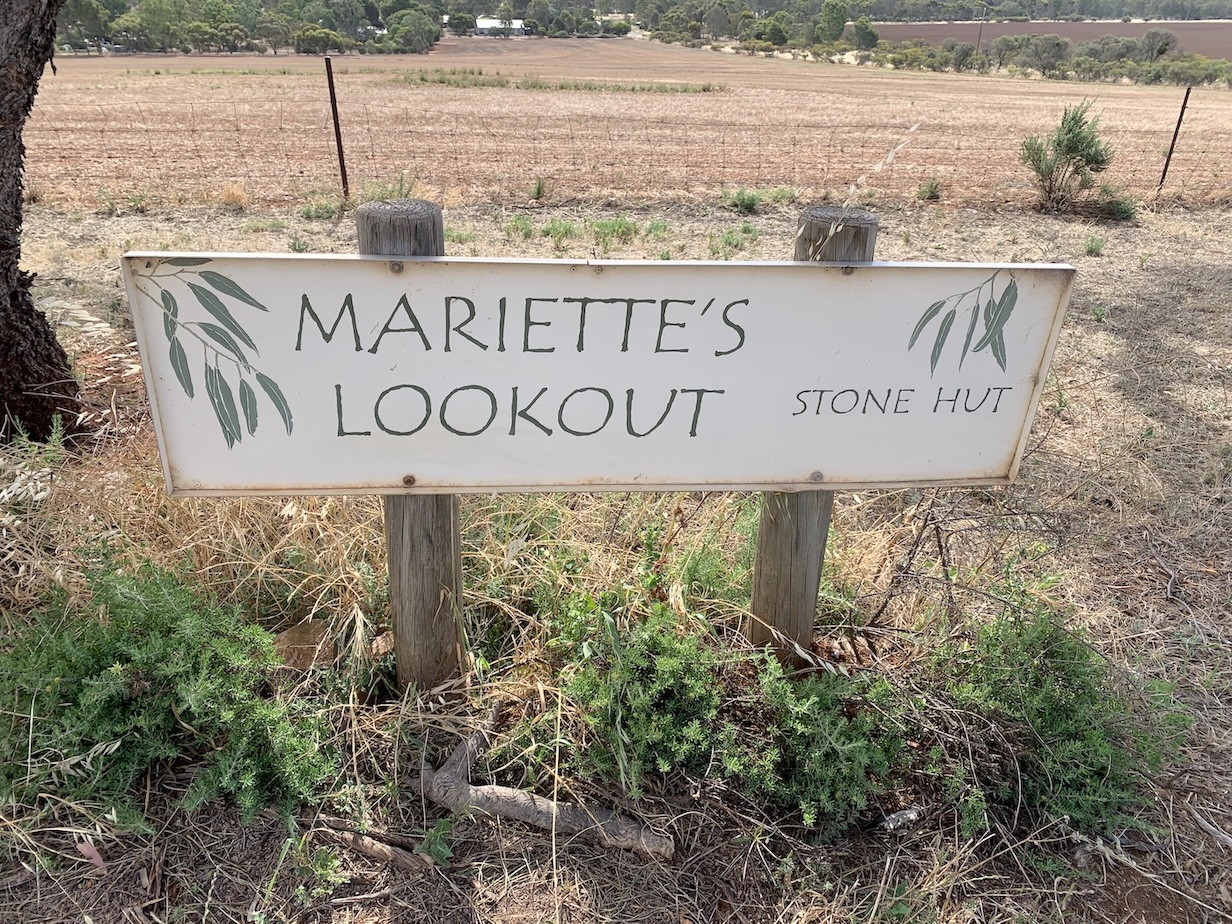
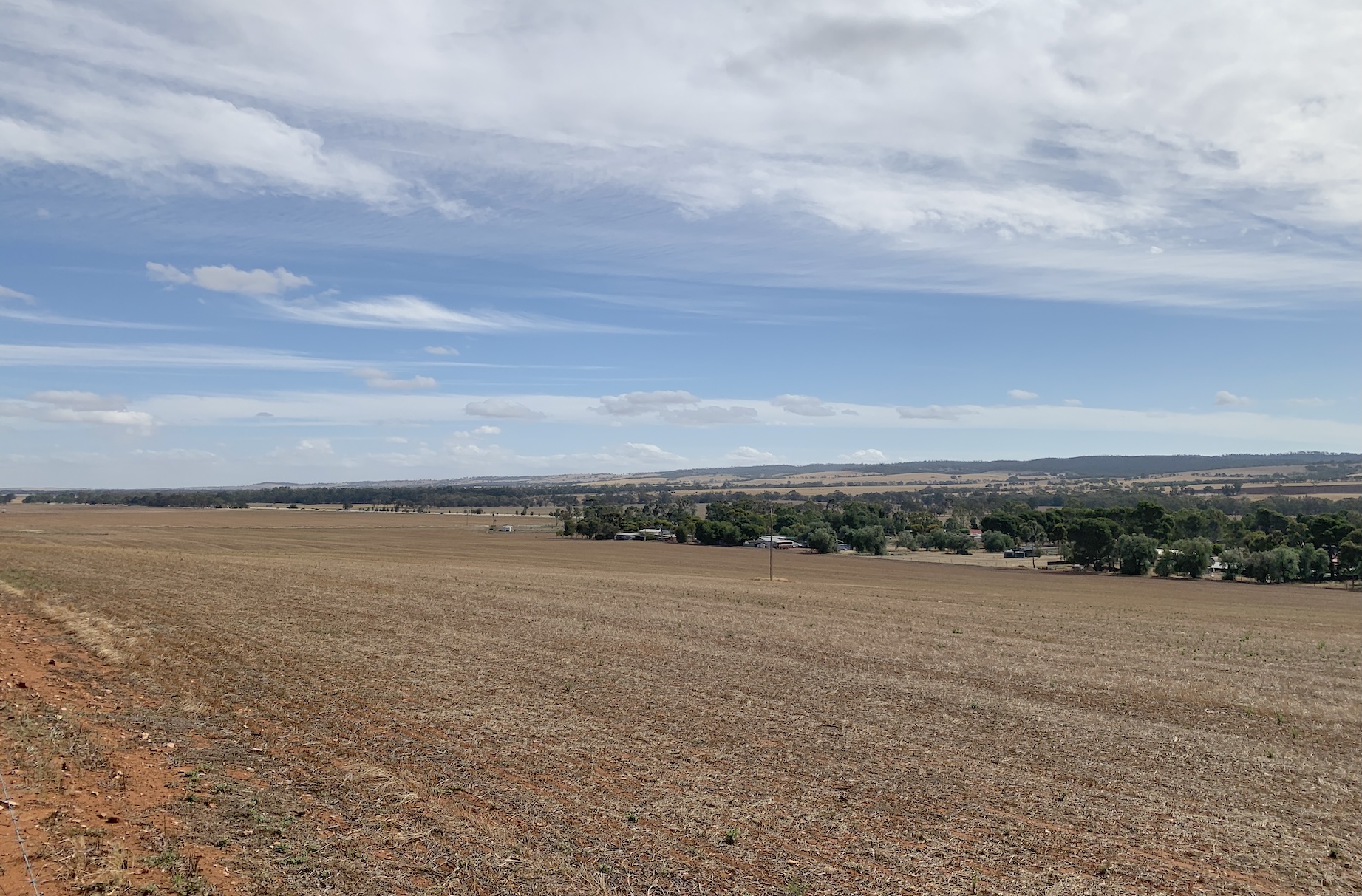
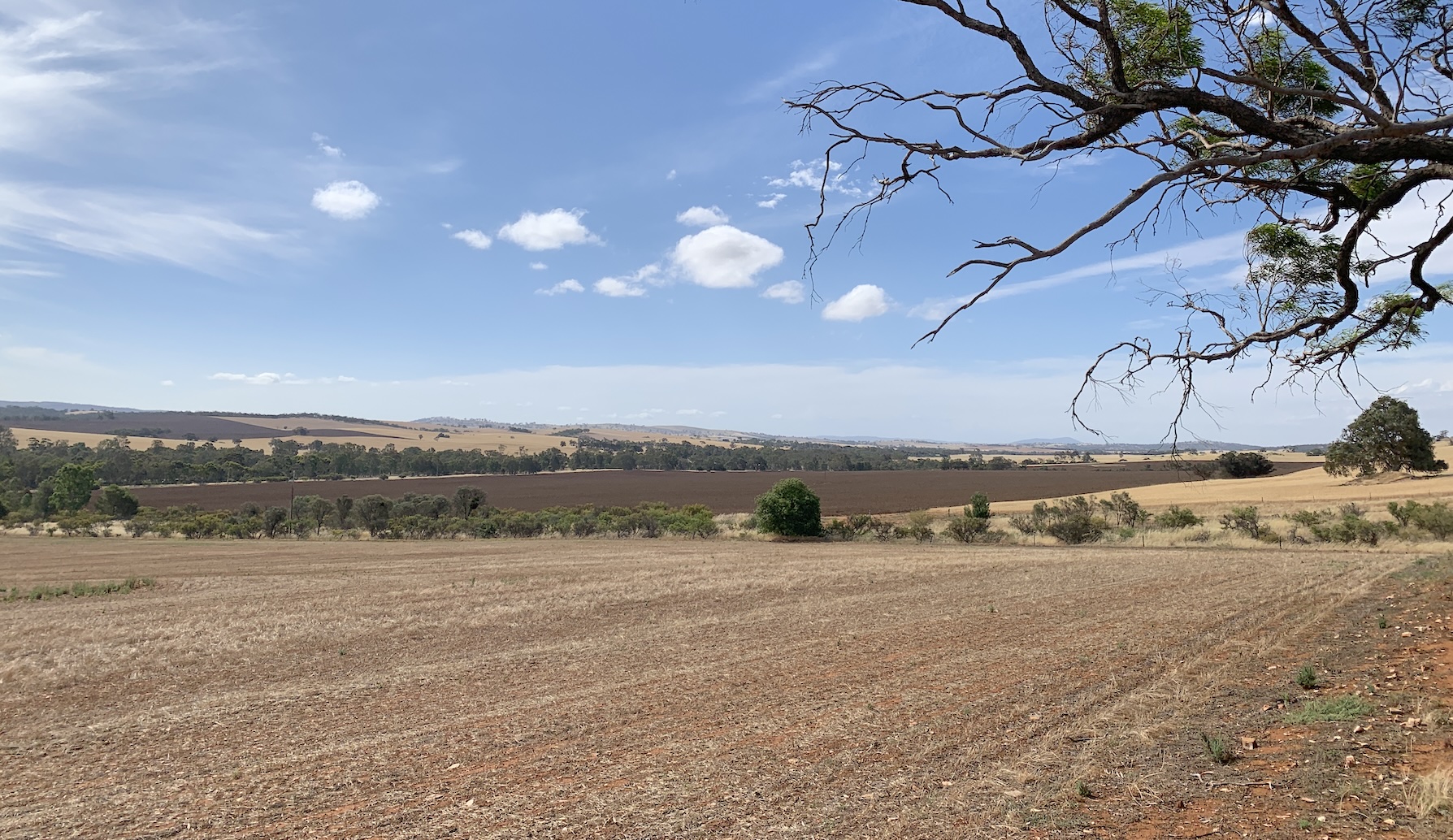
Back to Stone Hut. A post-prandial walk was just the thing to counteract the bakery lunch before an evening indulgence of home-made pizza and beverages. We climbed the dirt road to Mariette’s Lookout, passing aged trees existing symbiotically with a younger generation.
I haven’t been able to find out who Mariette was, presumably a former resident of the town.
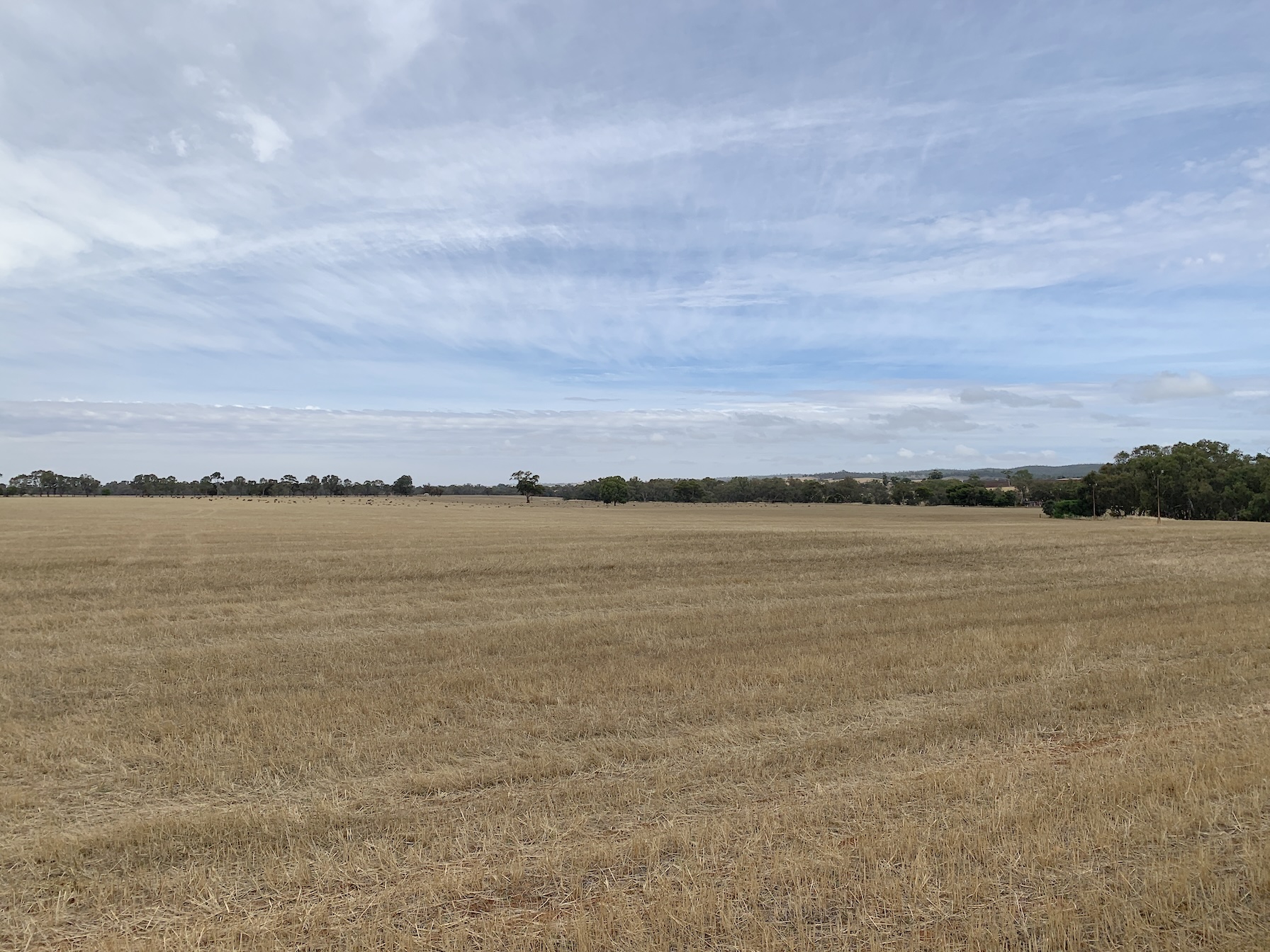
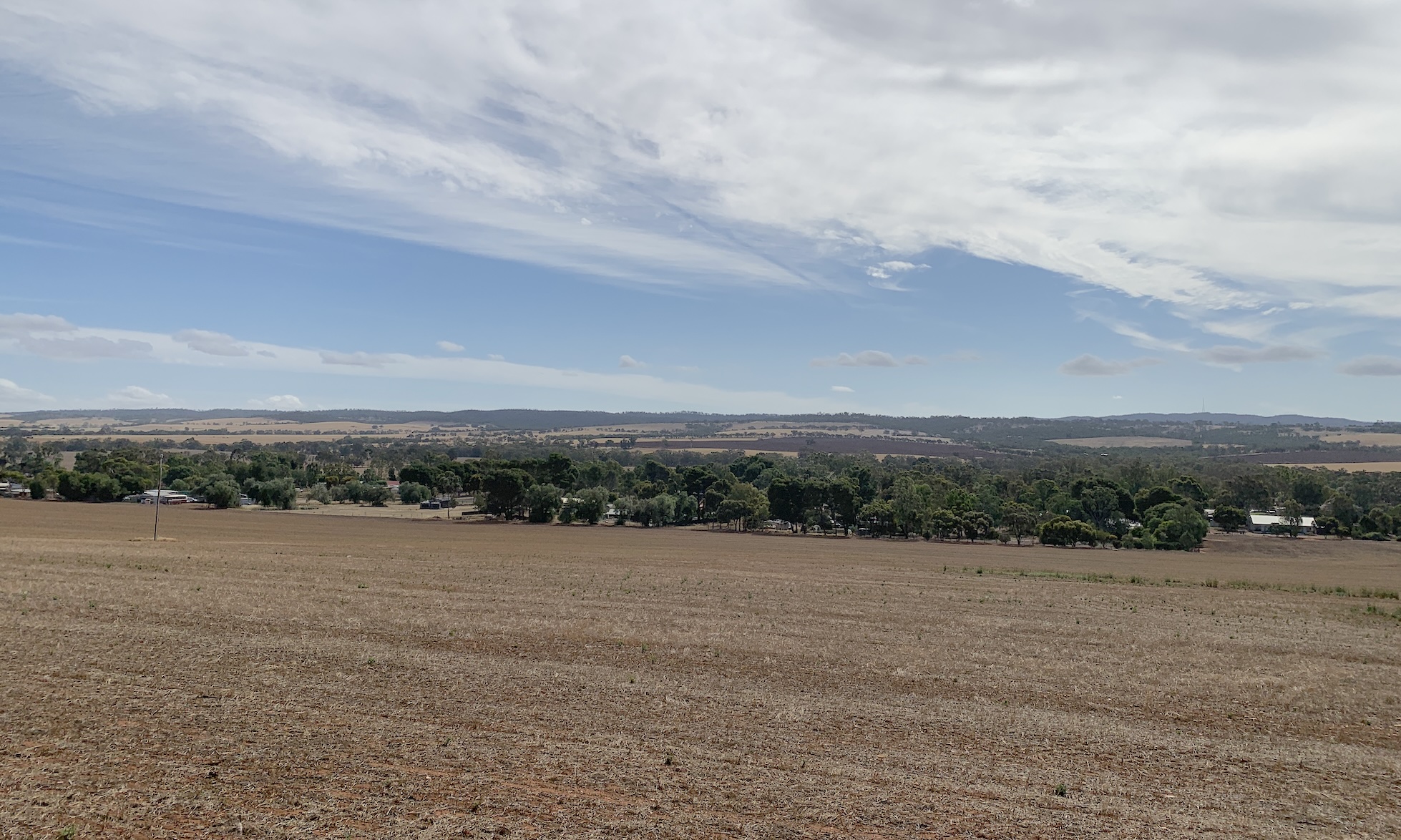
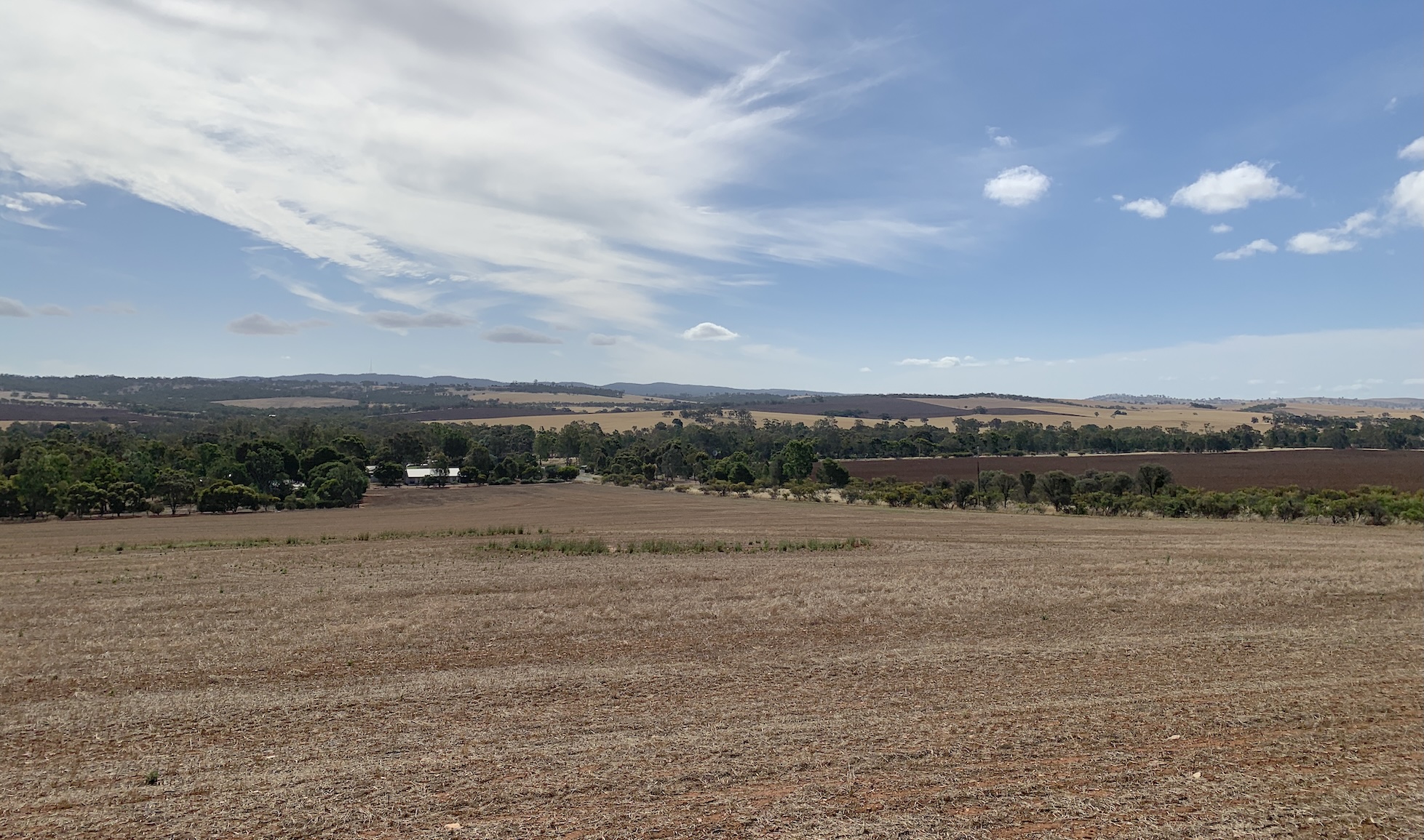
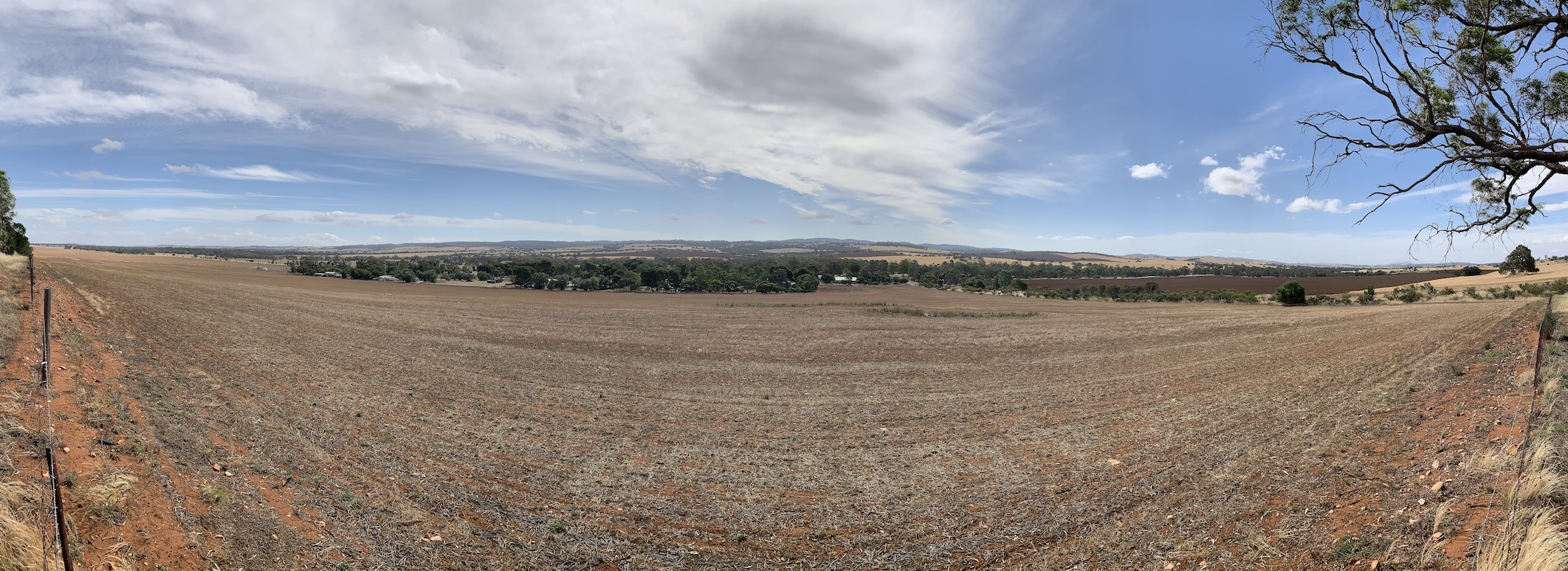
The views are expansive but at that time of year, the scenery was not particularly colourful. Being cropping and grazing country, the palette changes with the seasons ( I have seen photos of verdant pastures – really!)
A final attempt at a panorama before wine time called.
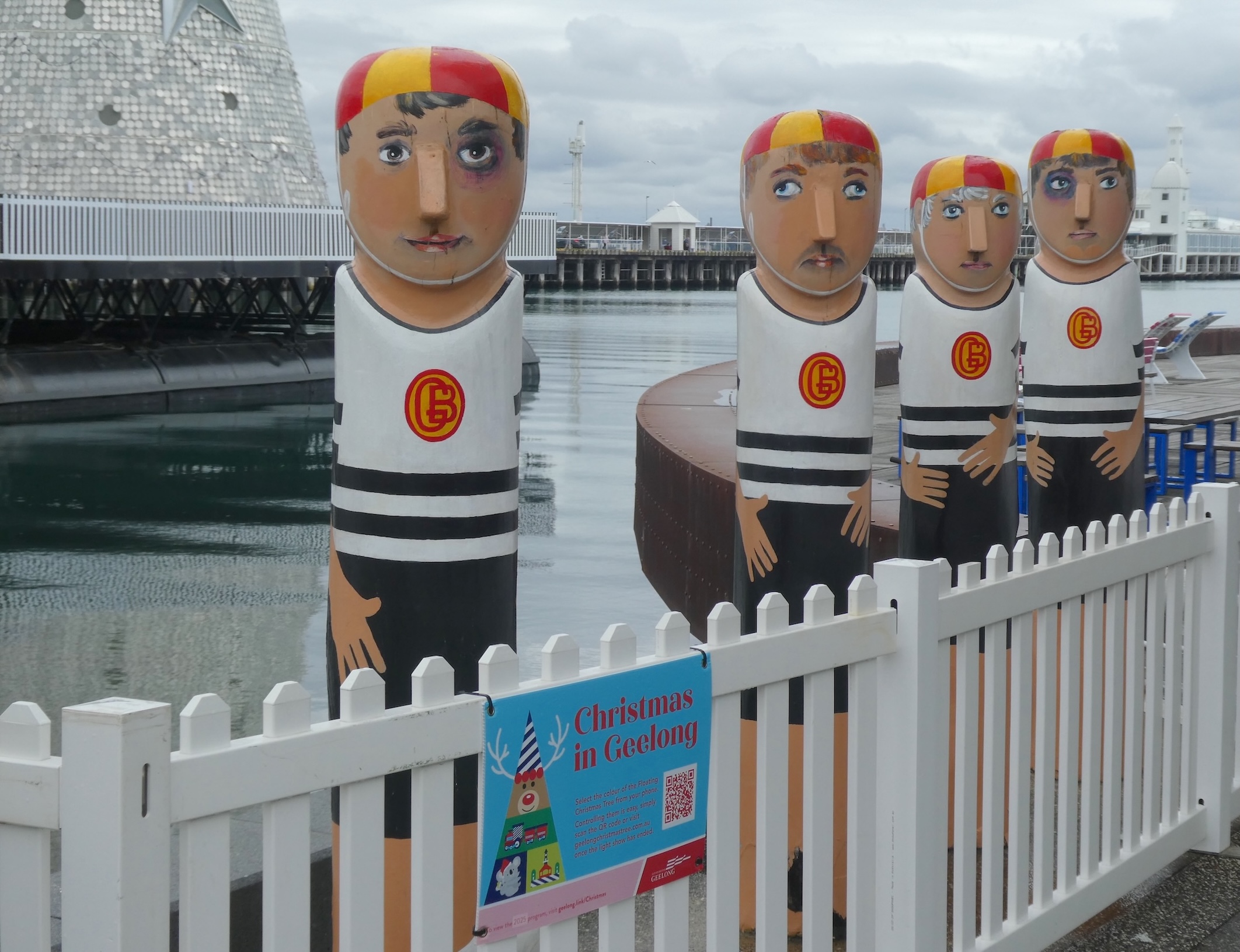
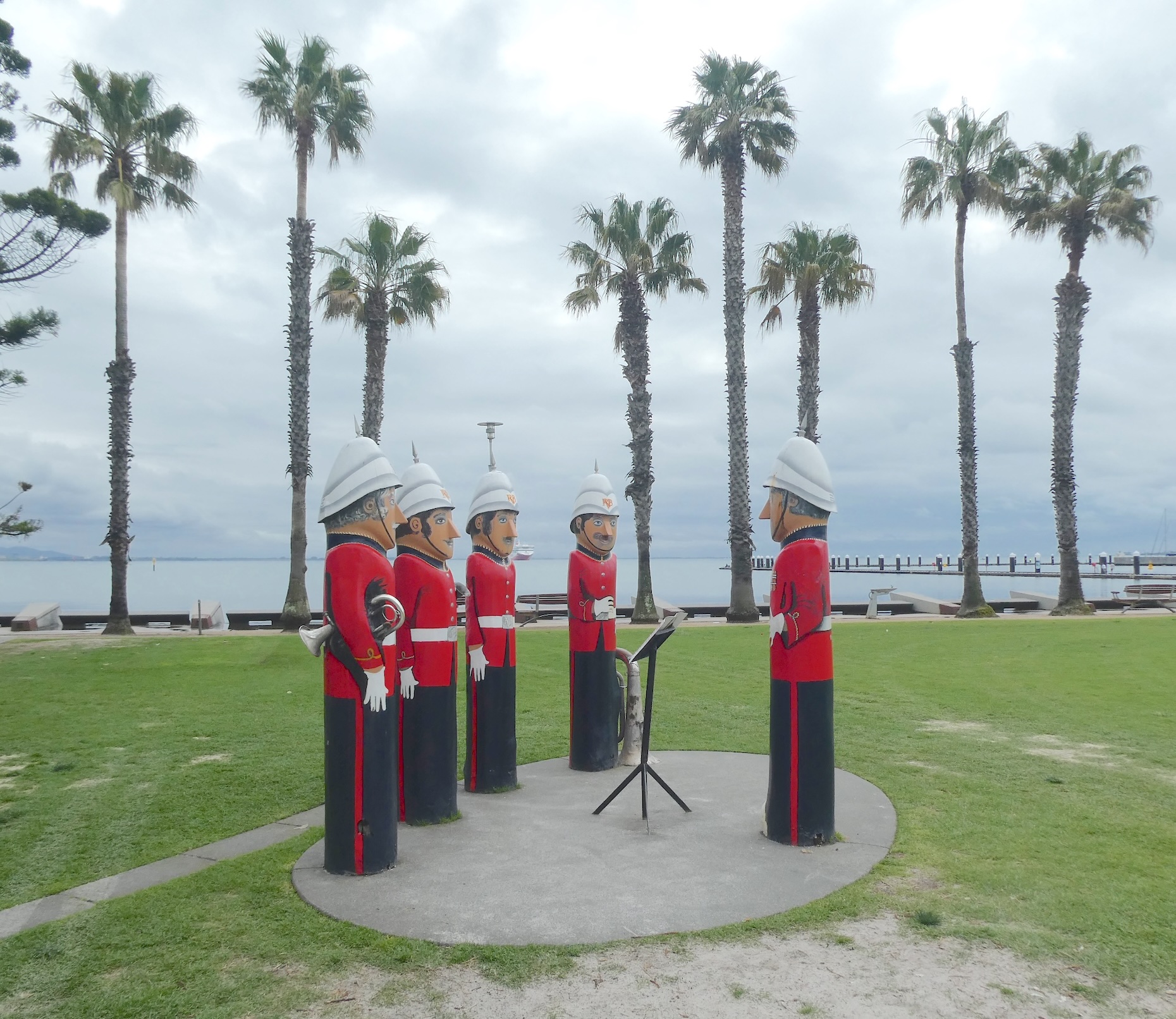
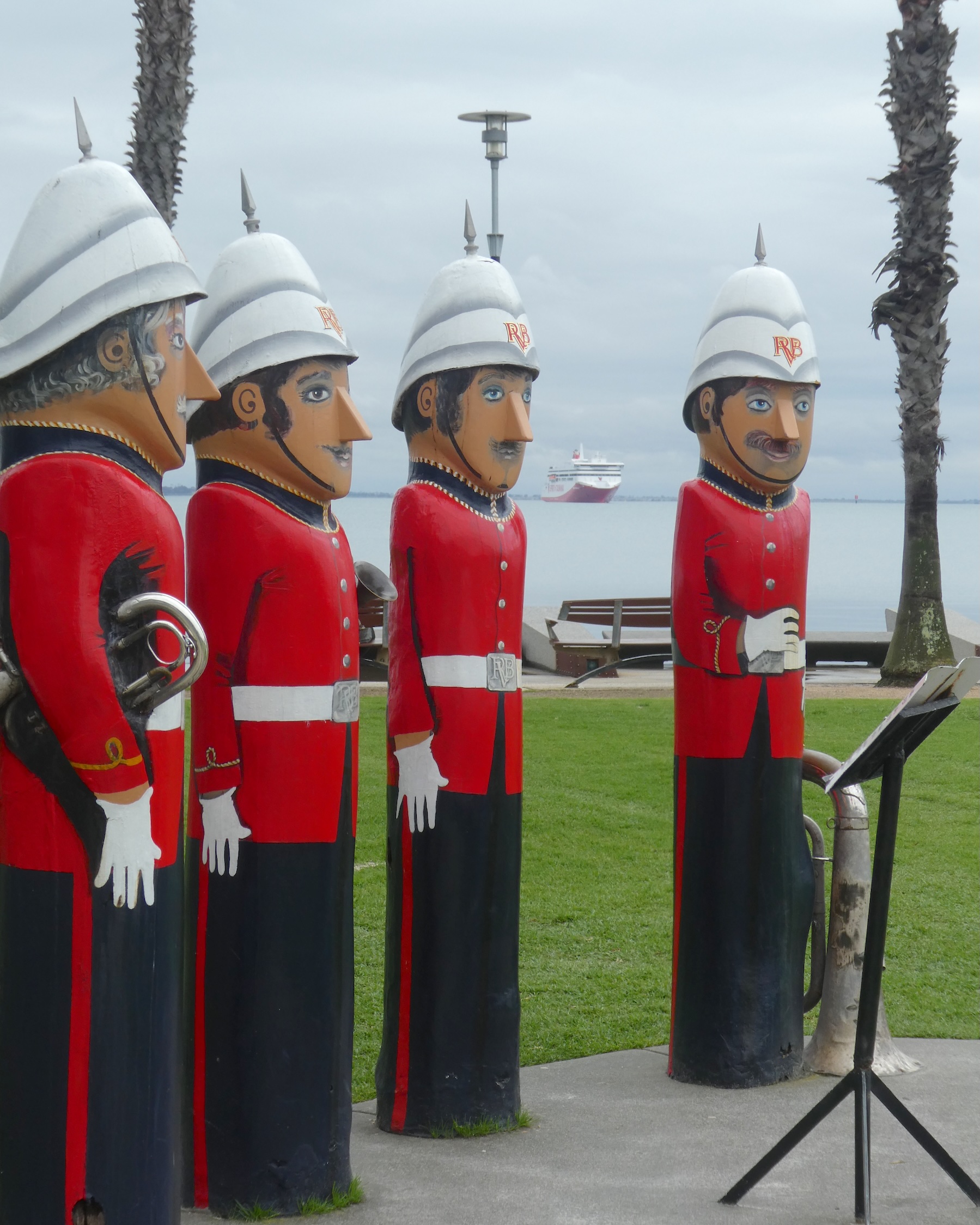
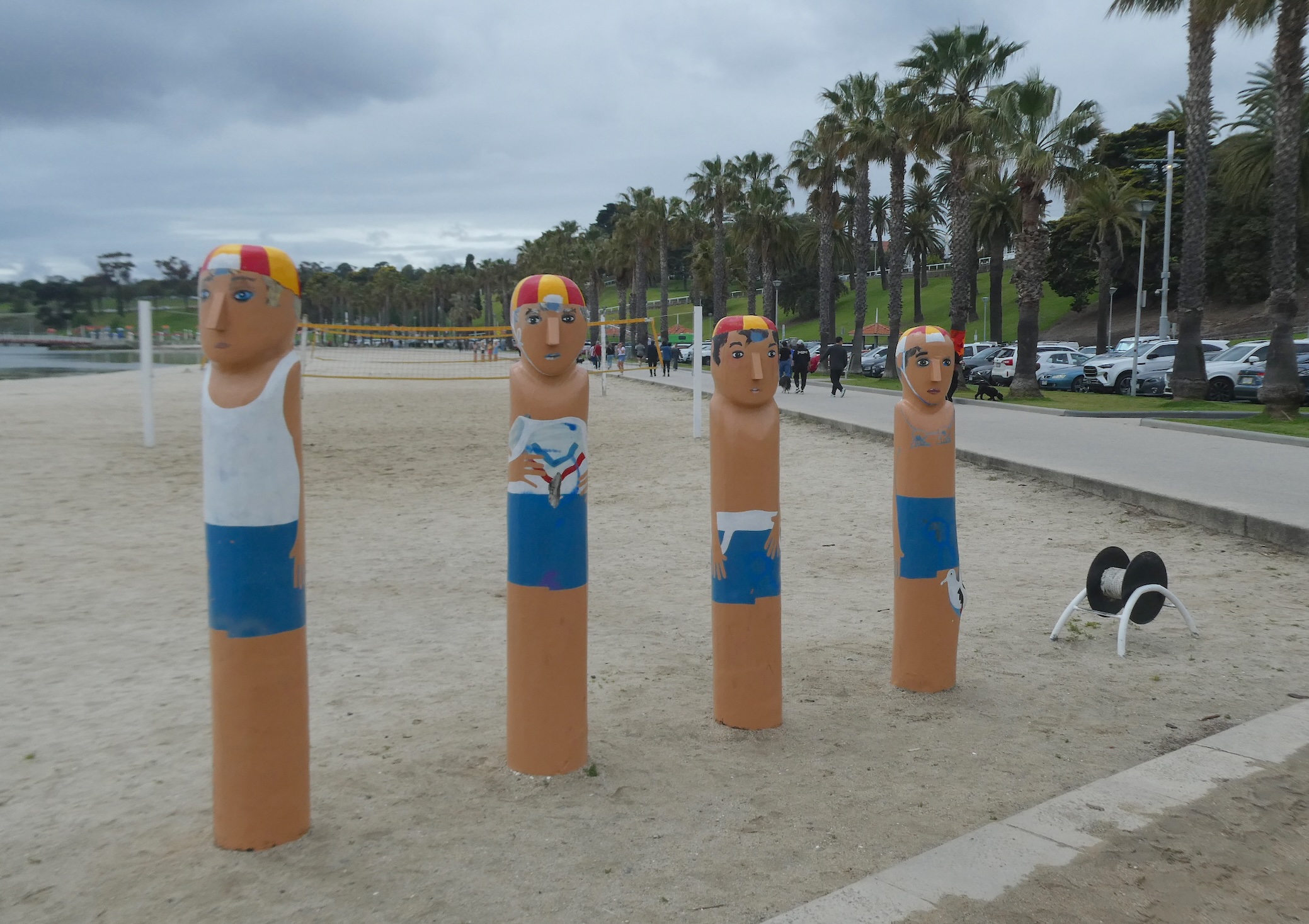
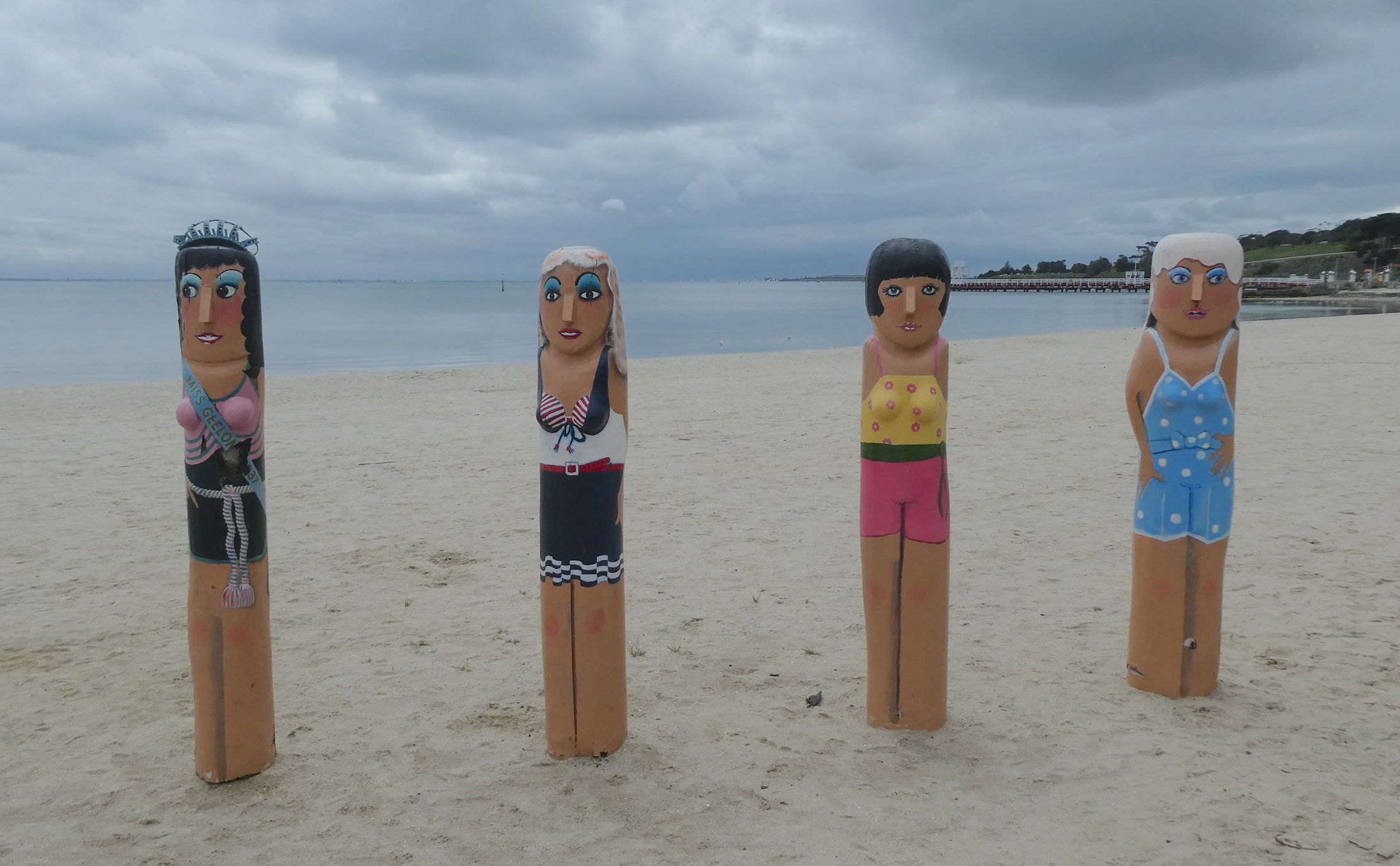
Soon after starting our walk along Geelong waterfront, we spied a group of likely lads dressed in vintage bathing costumes and later learned they are part of the Bollard Trail. Over a hundred reclaimed timber pier pylons were transformed into quirky art installations in 1995 by artist Jan Mitchell. The bollards represent notable characters who played a part in Geelong’s history and culture. Not realising the significance at the time, I didn’t photograph many but have delved into the history of the few I captured.
The Geelong Baths Swimming Club were an integral part of the community during the Victorian and Edwardian eras. Well known for their colourful caps and club initials on their costumes, they helped bring a carnival atmosphere to the early Geelong regattas with such contests as greasy pole climbing, bun eating and tub races.
First formed in 1854, Geelong’s Volunteer Rifle Corps is the oldest Victorian Militia unit. The Volunteer Rifle Band played its first recital in the Botanic Gardens in 1861, promoting the popular dance music of the day with the ‘The Geelong Polka’.
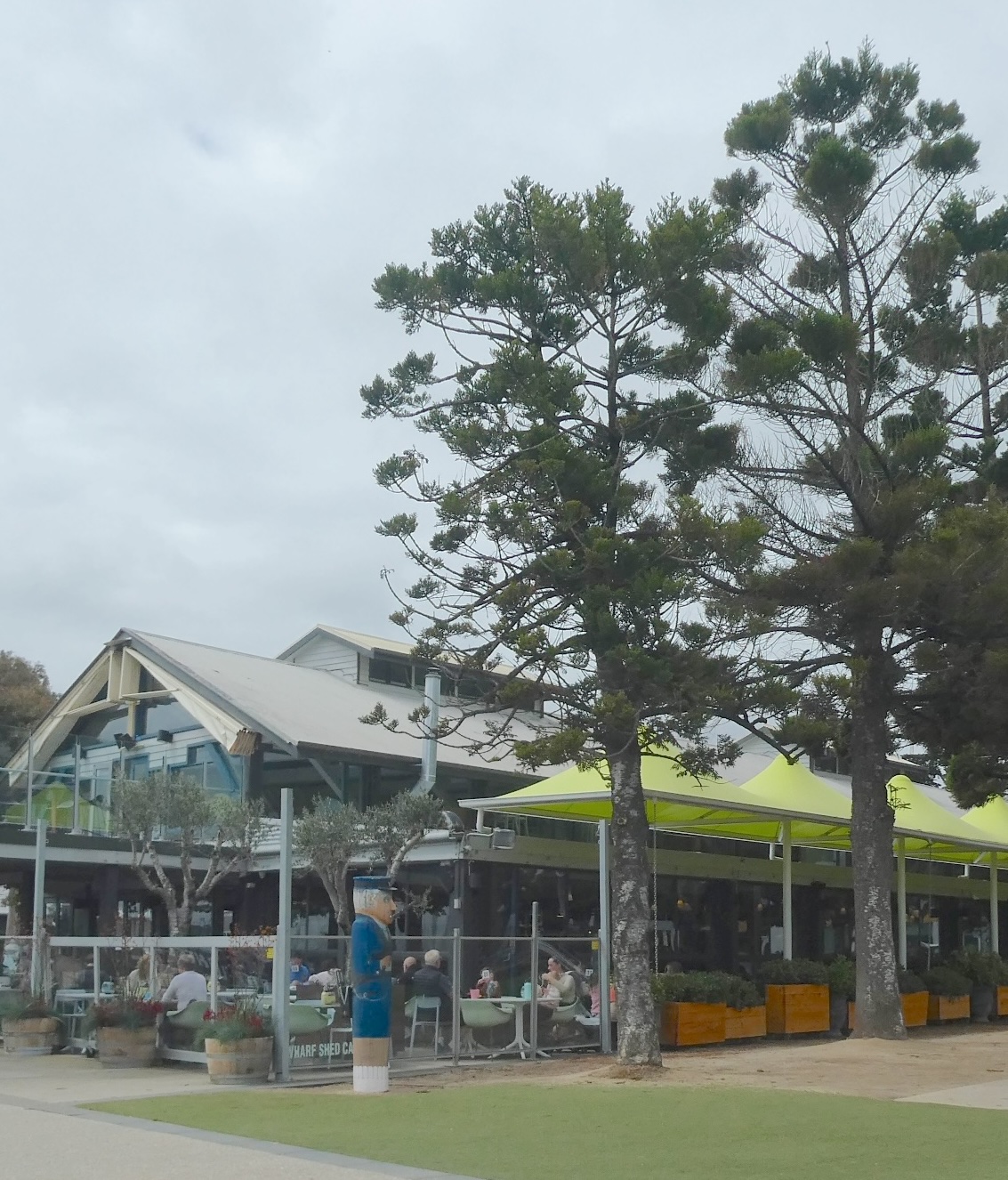
I was actually photographing the Wharf Shed cafe (unfortunately booked out for lunch) and noticed the Tram Conductress on her smoko break. She is a bit of an enigma from the 1940s being a smoker, not wearing a wedding ring and knitting a bootee for a baby.
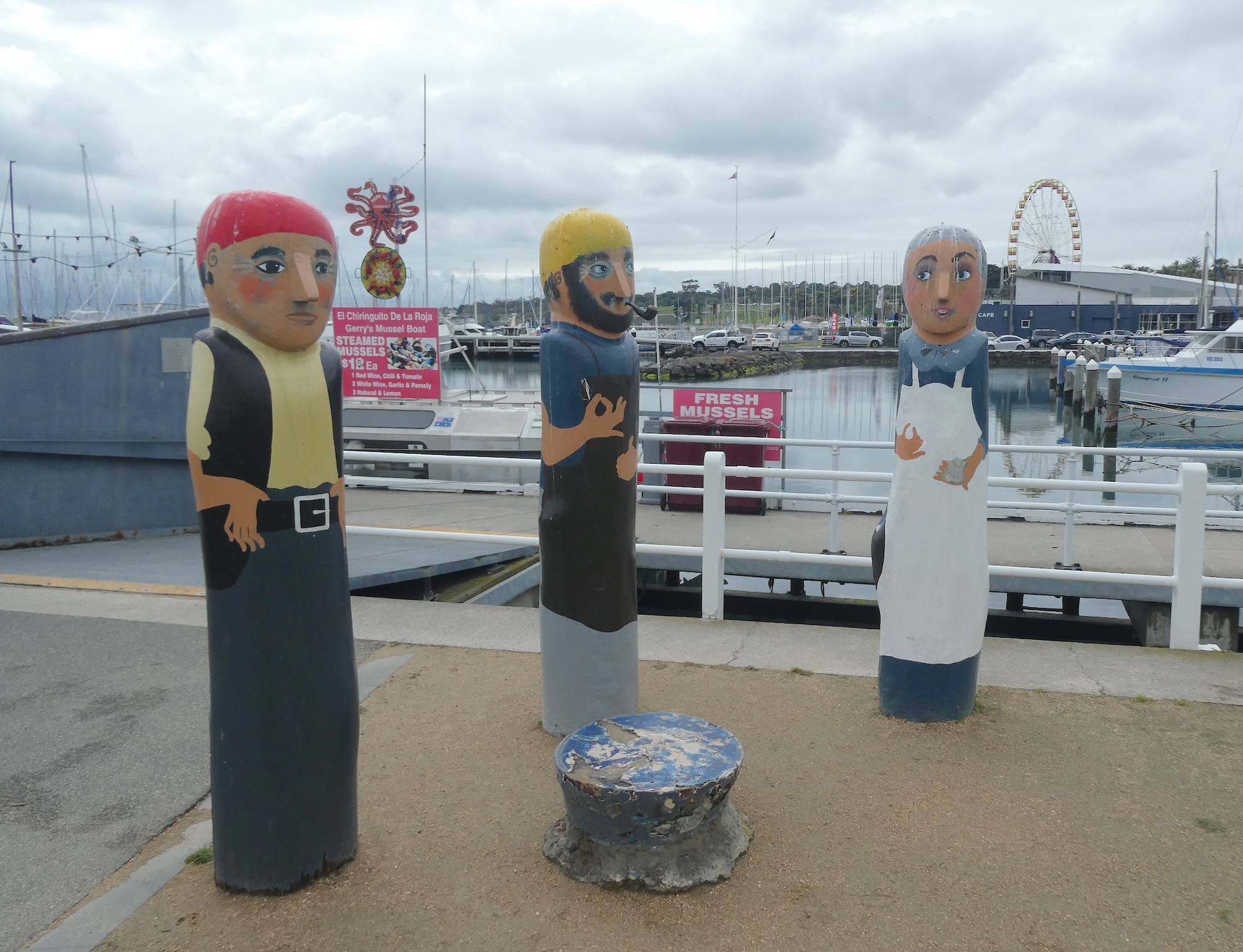
From the early 1800s, scallop fishermen sold their produce as far afield as Melbourne. Many boats dredged for scallops in Corio Bay until recently when it was stopped to prevent further damage to the seabed and other species of fish.
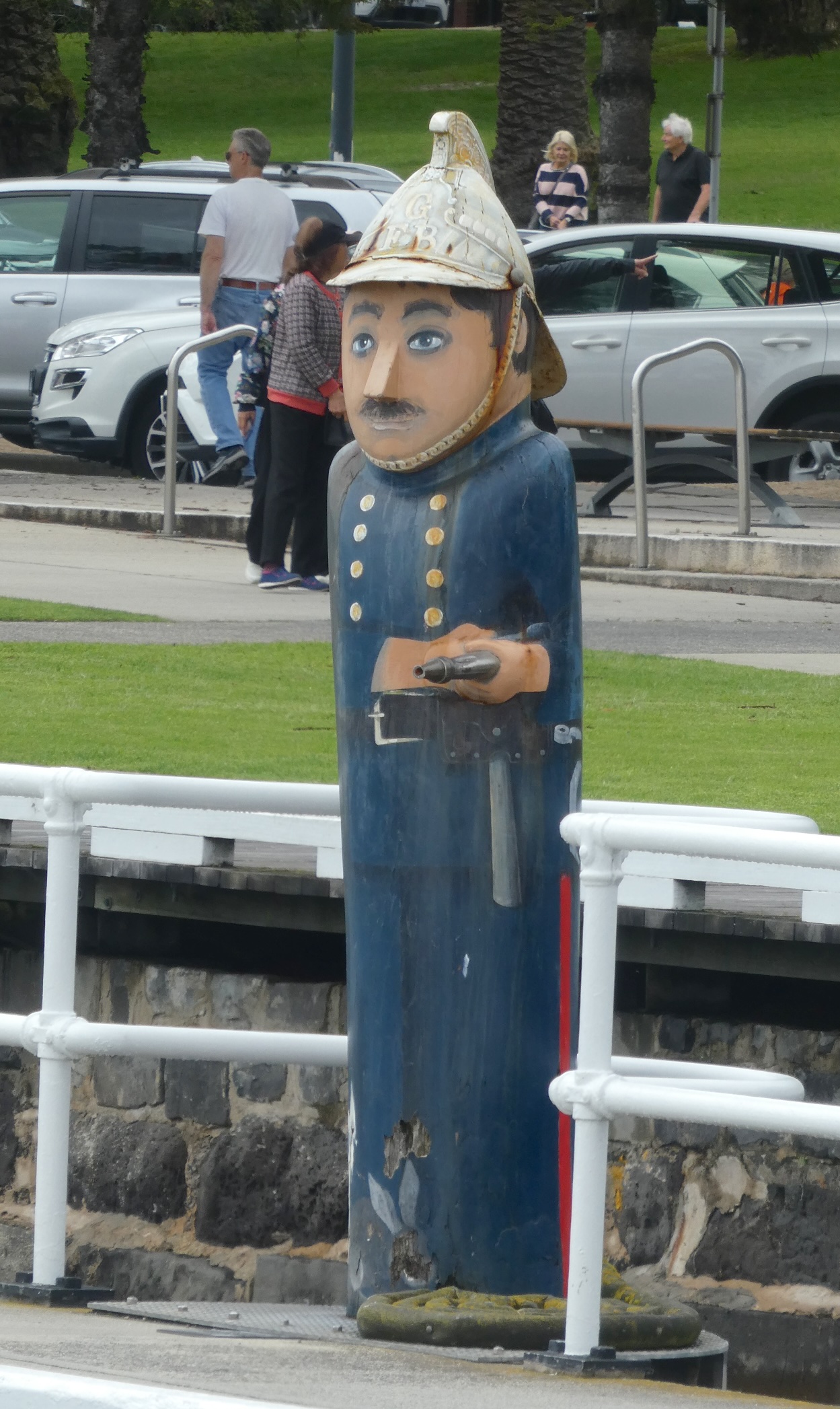
The Geelong Volunteer Fire Brigade was established in 1854 (it seems there was a lot of volunteering going on that year), coincidentally the same year the clipper ship ‘Lightning’ was built in the USA for a British firm. One of the fastest wooden ships ever built, it carried cargo and immigrants from England to Australia for the next fifteen years until it earned the accolade of being the worst shipping disaster in Geelong’s history. The ‘Lightning’ caught fire while docked and loading wool in the early hours of 31st October 1869 and the efforts of the volunteer firemen were in vain. The blazing ship was towed away from the wharf and eventually sunk with explosives, losing all cargo but no lives.
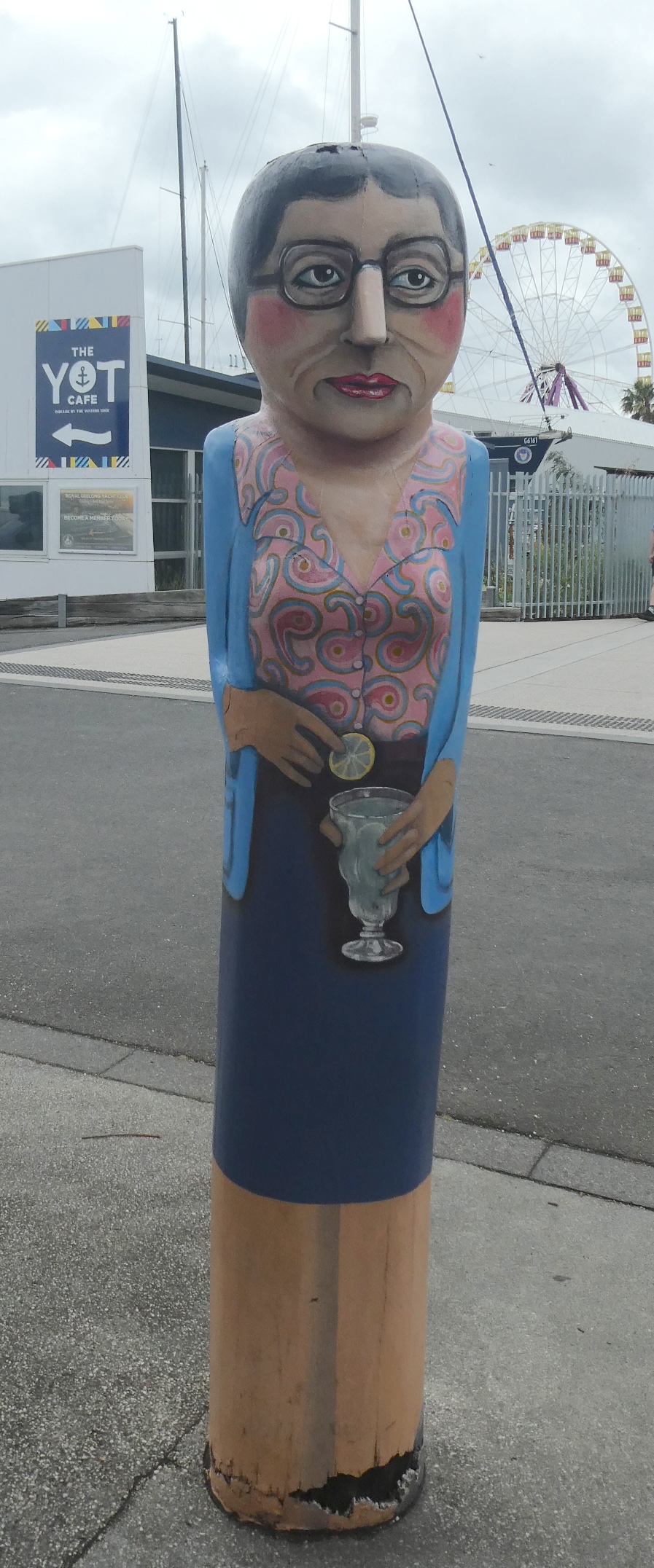
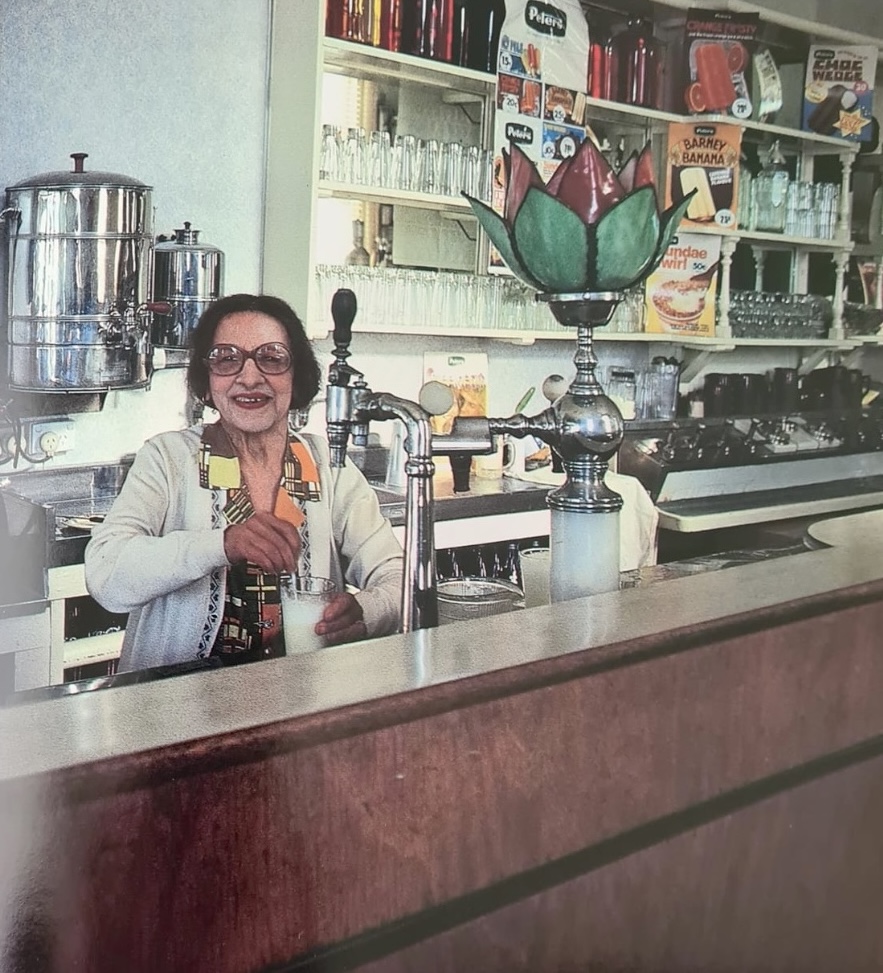
One of the much adored personalities of the town was Mrs De Carteret. Kitty was born in 1910 and was the proprietor of ‘La Cabine’ for thirty years where she was renowned for her fresh lemon squash. Apparently, the cafe did a roaring trade on Sunday mornings, refreshing those who had over imbibed the night before. The cafe closed after much popularity in the 1960s and 1970s and is now an office block. I found a photo of Kitty de Carteret whipping up a lemon drink behind the counter, I wonder if she would be flattered by her timber transformation.
From the book ” A day in the life of Victoria” 1983
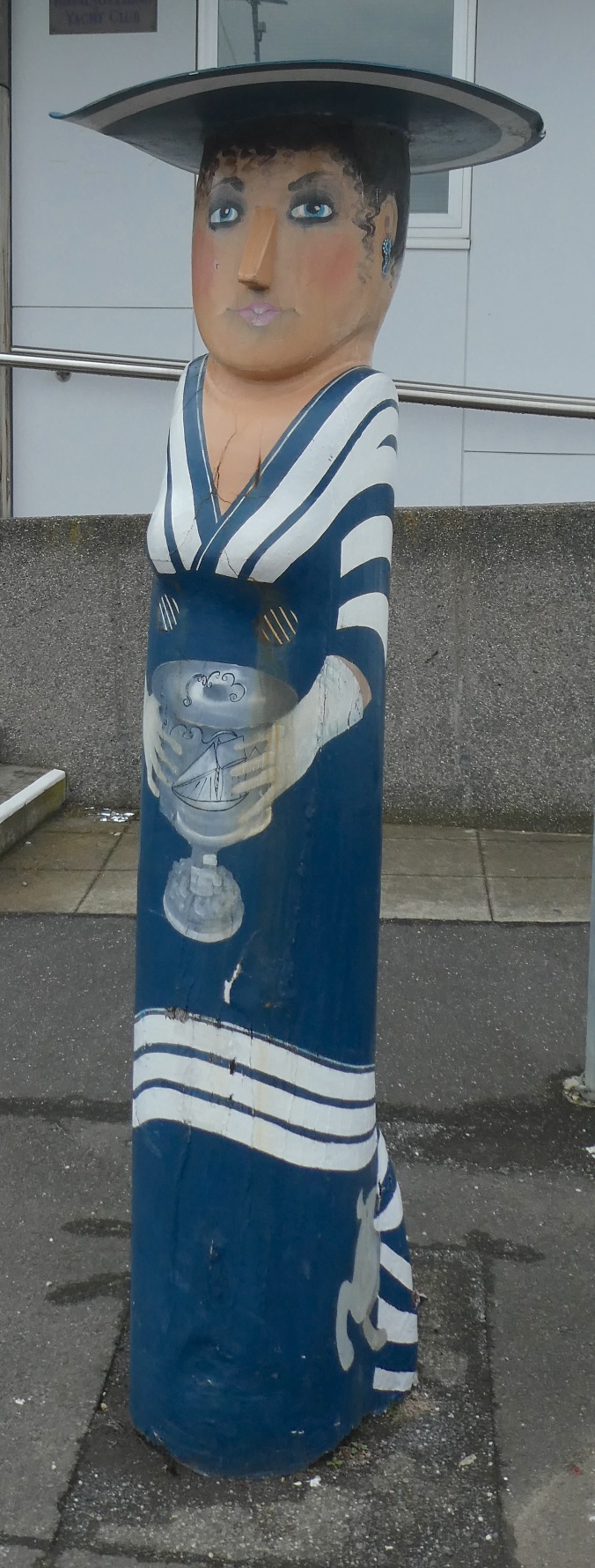
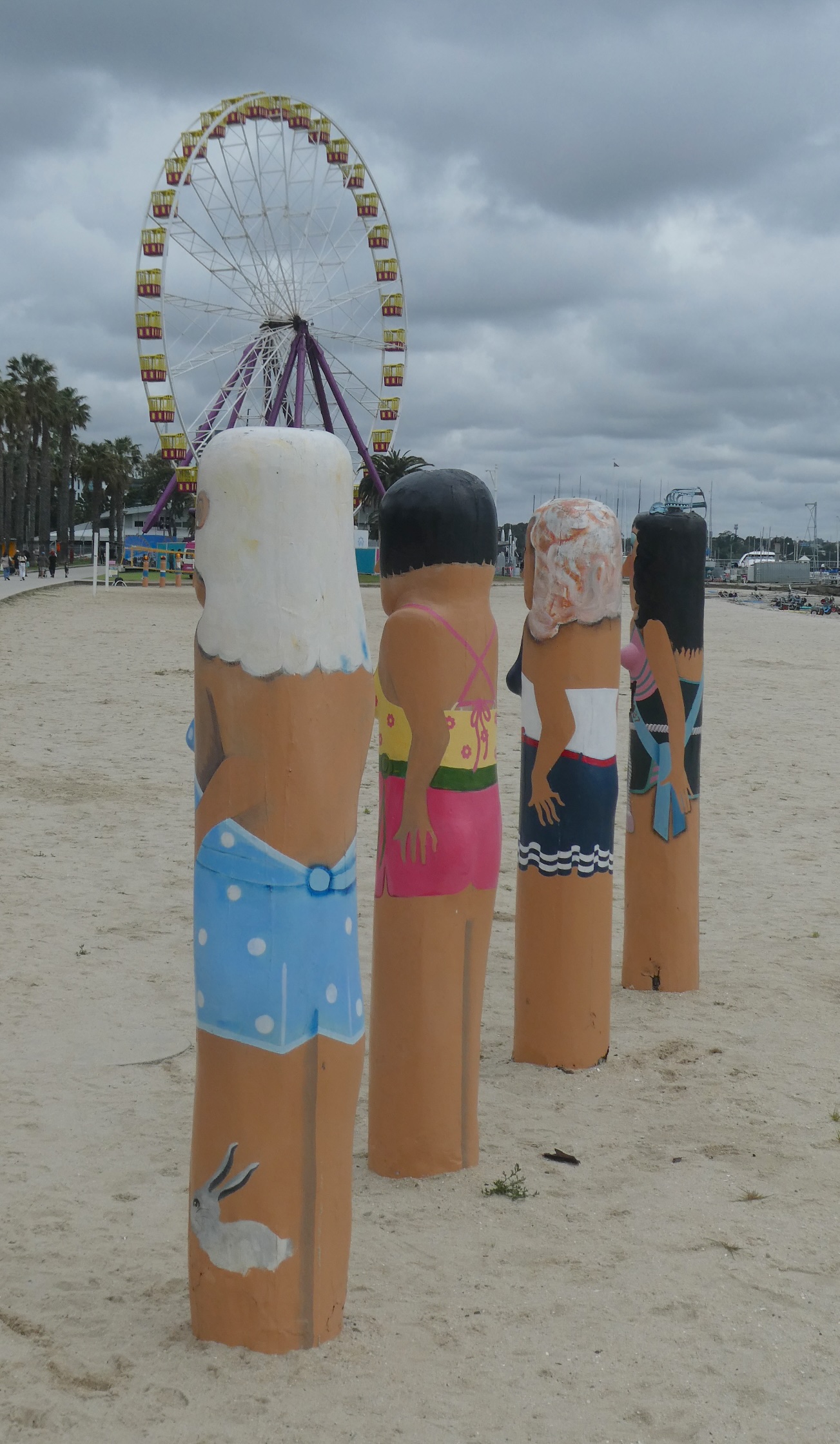
Outside the Yacht Club, a lovely lady holds the trophy awarded to the winner of the first Geelong Regatta in 1858, an Irish chap called ‘Paddy from Cork’ in his boat ‘Fair Kiss of Fand’. Regattas had actually been held since 1844 but it was only after a conversation over a few drinks that money was put up for a trophy and it is now recognised as Victoria’s oldest sporting event. You may notice a rabbit clinging to the bottom of her frock. Ten pairs of rabbits are depicted lurking around the base of some of the bollards, representing the introduction of wild rabbits to Australia. They arrived on the aforementioned ‘Lightning’, courtesy of farmer Thomas Austin from England, on Christmas Day 1859.
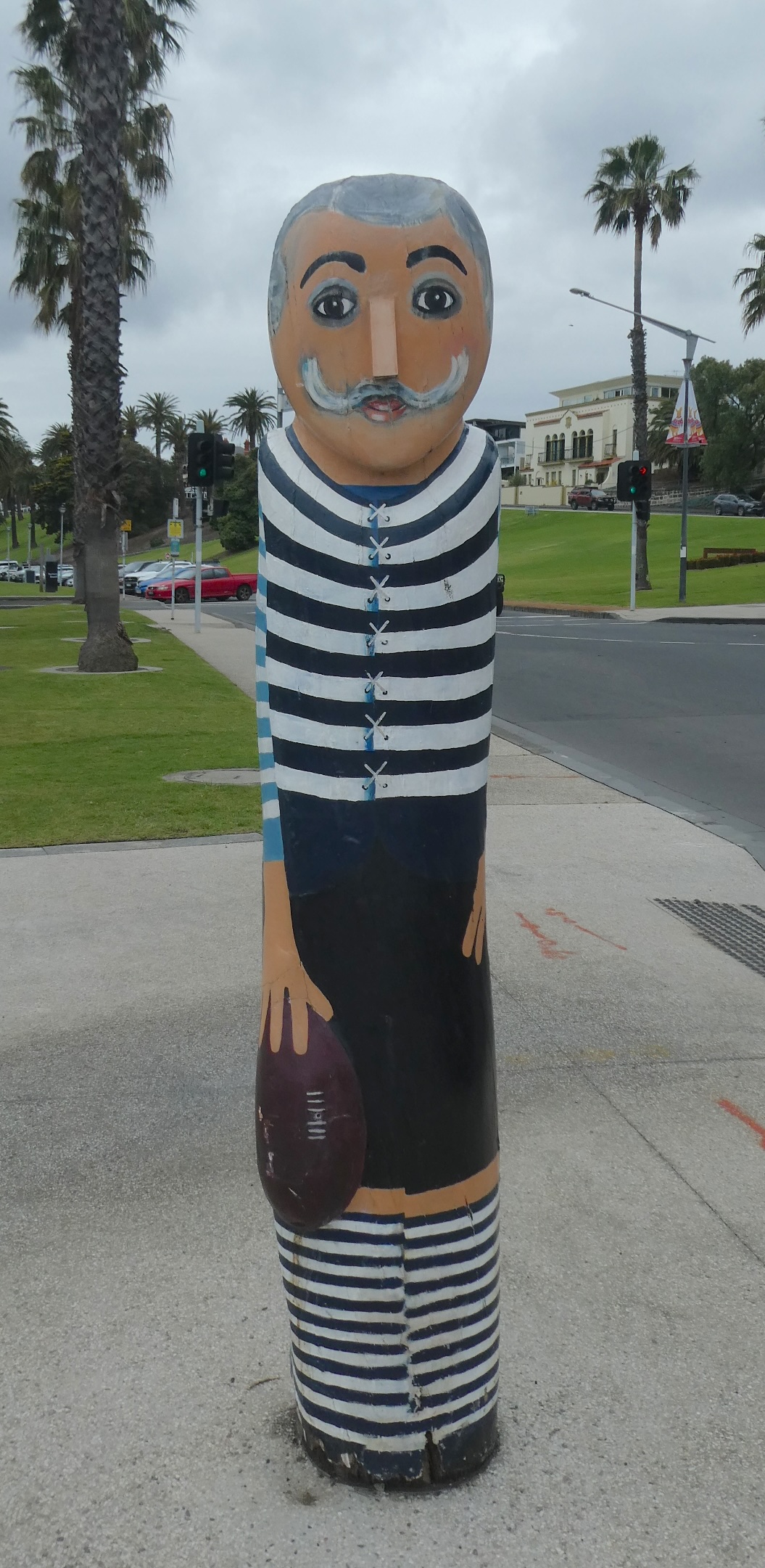
Earlier that same year, the Geelong Football Club was formed, making it the second oldest AFL side after Melbourne and one of the oldest football clubs in the world. The navy blue and white kit hasn’t changed much in the last 165 years, although the shorts are noticeably shorter these days.
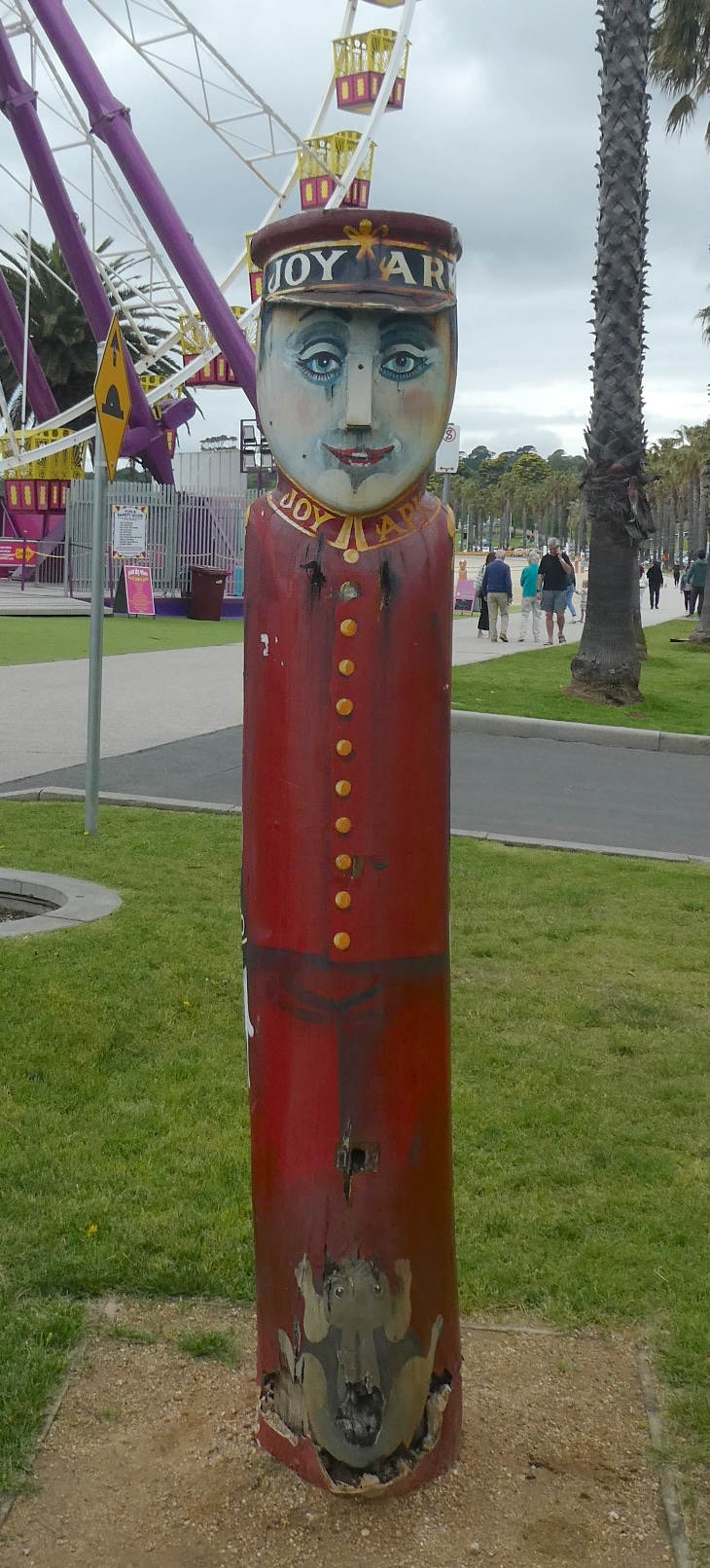
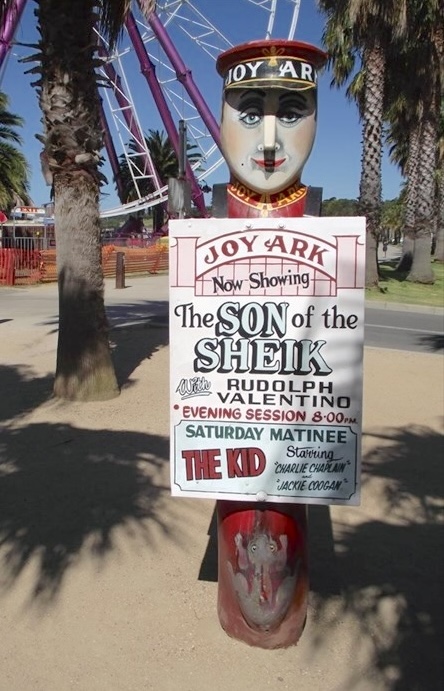
The Joy Ark Sandwich Board Man advertises the Joy Ark but he has lost his board. I found a photo with Board intact on waymarking.com
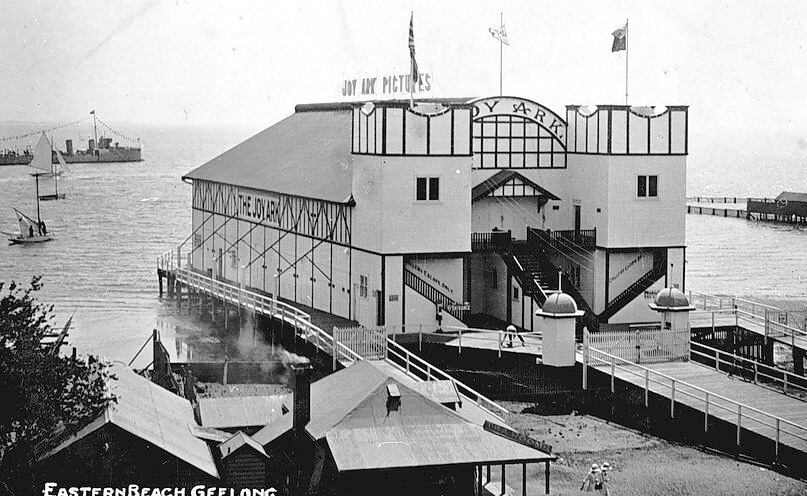
The Joy Ark was a silent picture theatre built in 1912 by two early Greek-Australian pioneers who already operated a cinema in Geelong. The construction extended over the water at Eastern Beach and was considered the most grandiose and unique movie theatre for its time in the British Commonwealth. Unfortunately, by early 1914, the owners were in financial trouble and filed for bankruptcy. The Joy Ark became a popular venue for dances and roller skating until it was demolished in the mid 1920s. The unusual name resulted from a competition run by the Geelong Advertiser asking readers to submit suggestions, the winner was rewarded with a ‘significant sum of money’. The site of the Joy Ark is now filled by a giant ferris wheel, it’s a shame the original building has been lost.
photo from Museums Victoria
Modelling the changing styles of men’s swimming trunks over the years is the Town Baths Swimmers Club. Not a budgie smuggler in sight.
Although frowned upon these days, bathing beauty competitions were a popular attraction from the 1930s. These lovely ladies are braving all weather – and the rascally rabbits.
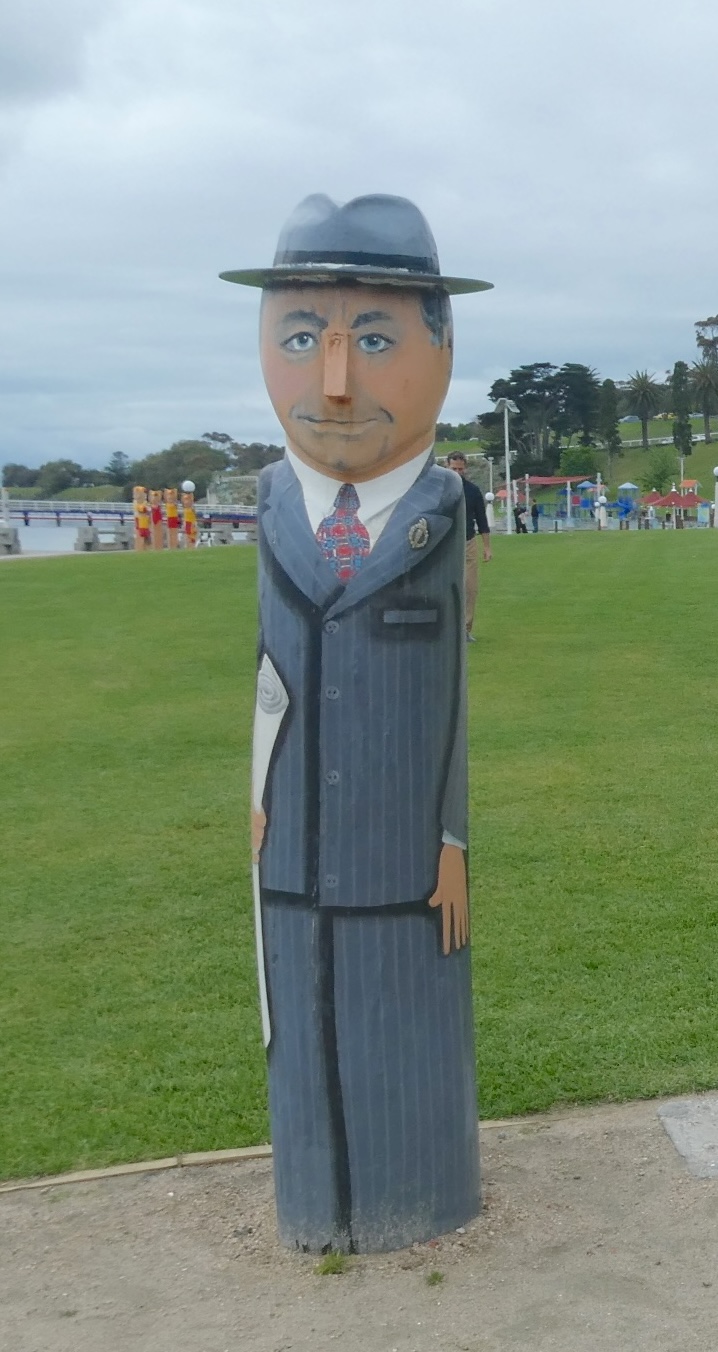
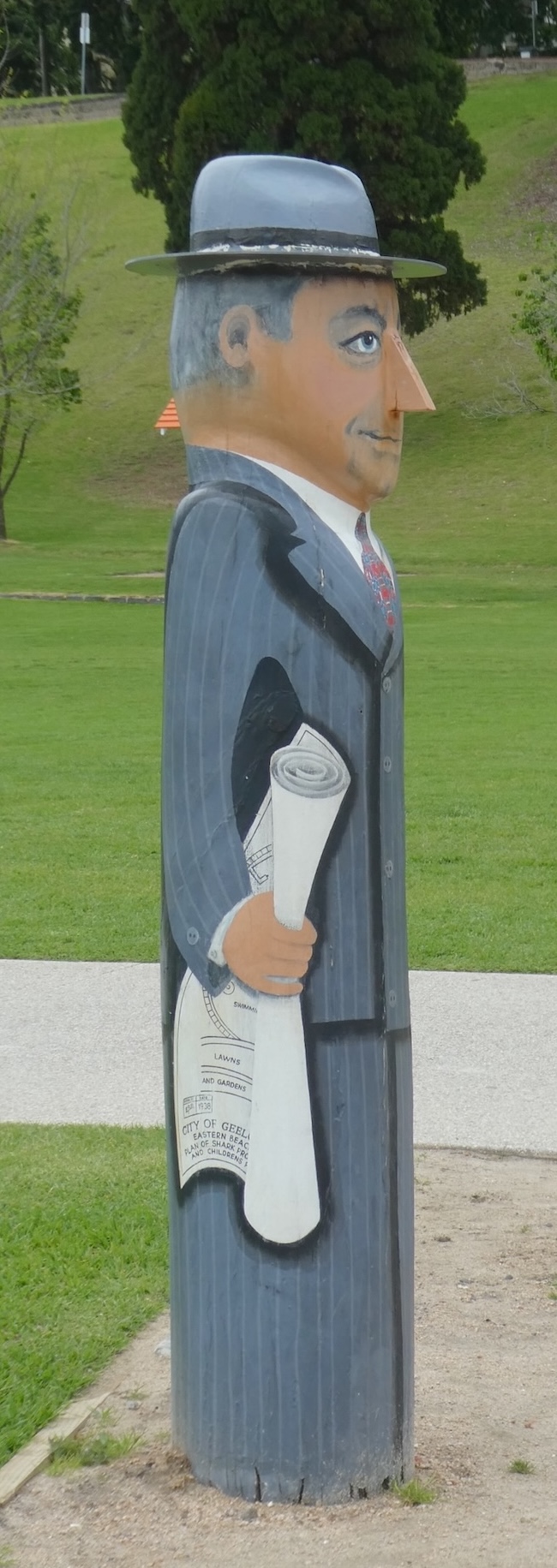
Ian McDonald was the Engineer and Surveyor of Geelong City in 1936. He saw a need to promote Geelong by beautifying the bay waterfront area and, hence, designed the Eastern Beach complex which was completed in 1939. He is proudly holding the plans in his hand.
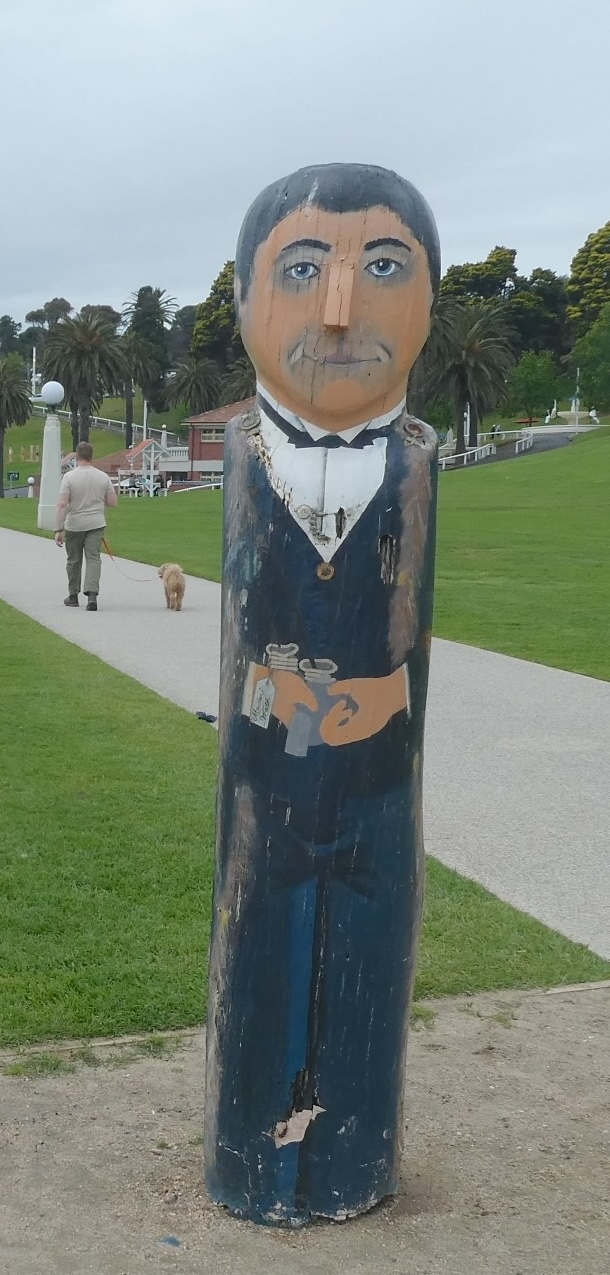
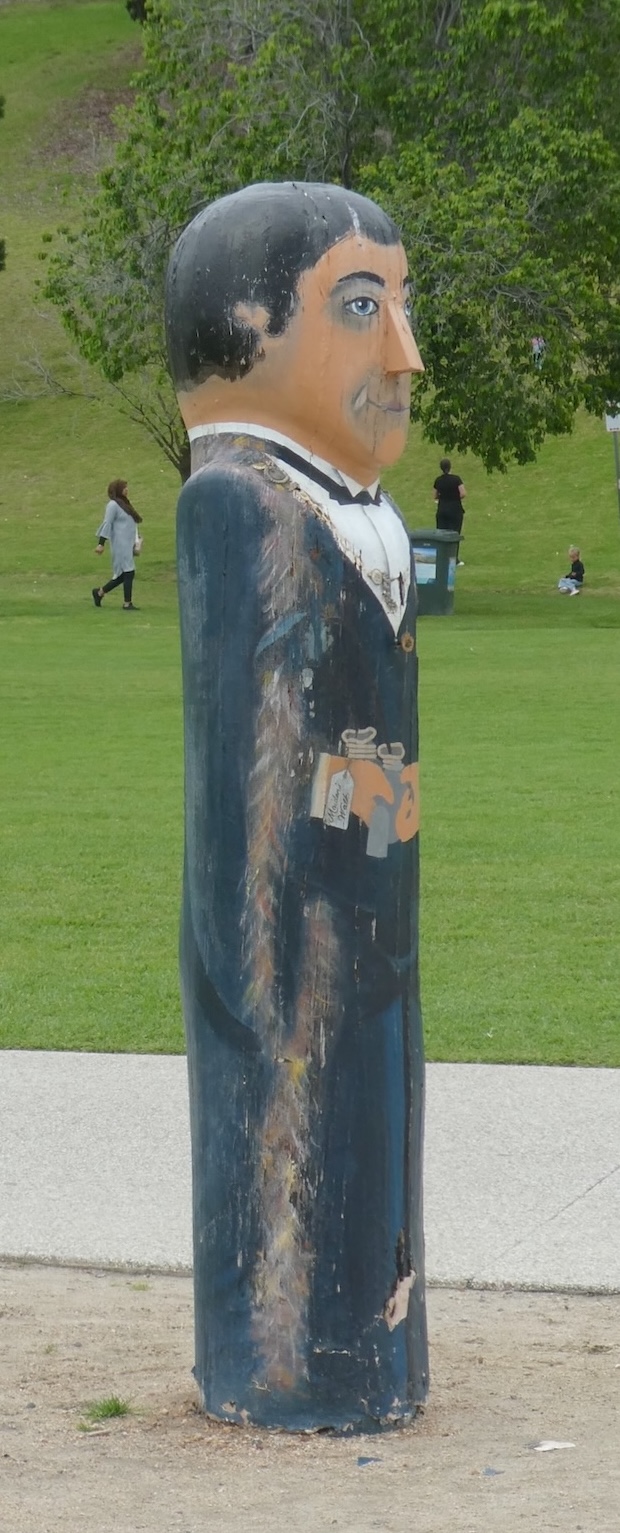
Another man with great vision for Geelong, Robert de Bruce Johnstone became a member of Geelong Town Council in 1859. He was elected mayor from 1865 to 1867 and became known as ‘the parks and gardens’ mayor for his lifetime support of the Geelong Botanic Gardens. His robes and chain of office are looking a little worse for wear and he has lost his pendant.
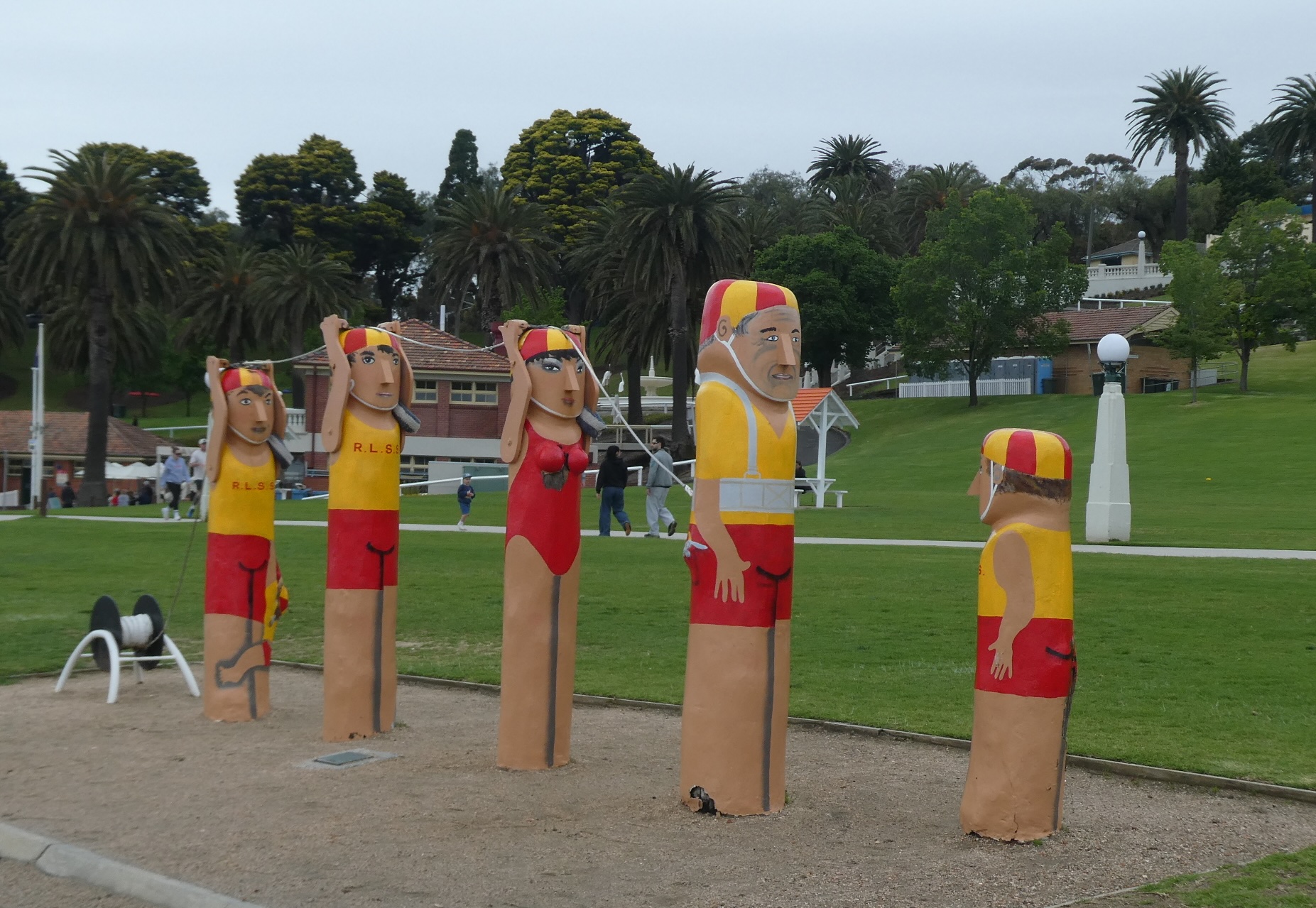
The chap second from the right in the line of Eastern Beach Lifesavers is a local icon called Bill Coyte. He is well remembered for giving his time to teach life saving and swimming to many generations of children.
I am pleased to report that the bollards are in the process of being restored. Those beyond repair are being reproduced using 3D printing and all are being re-painted by local artist Vicki Clissold who will replicate Jan Mitchell’s original work.
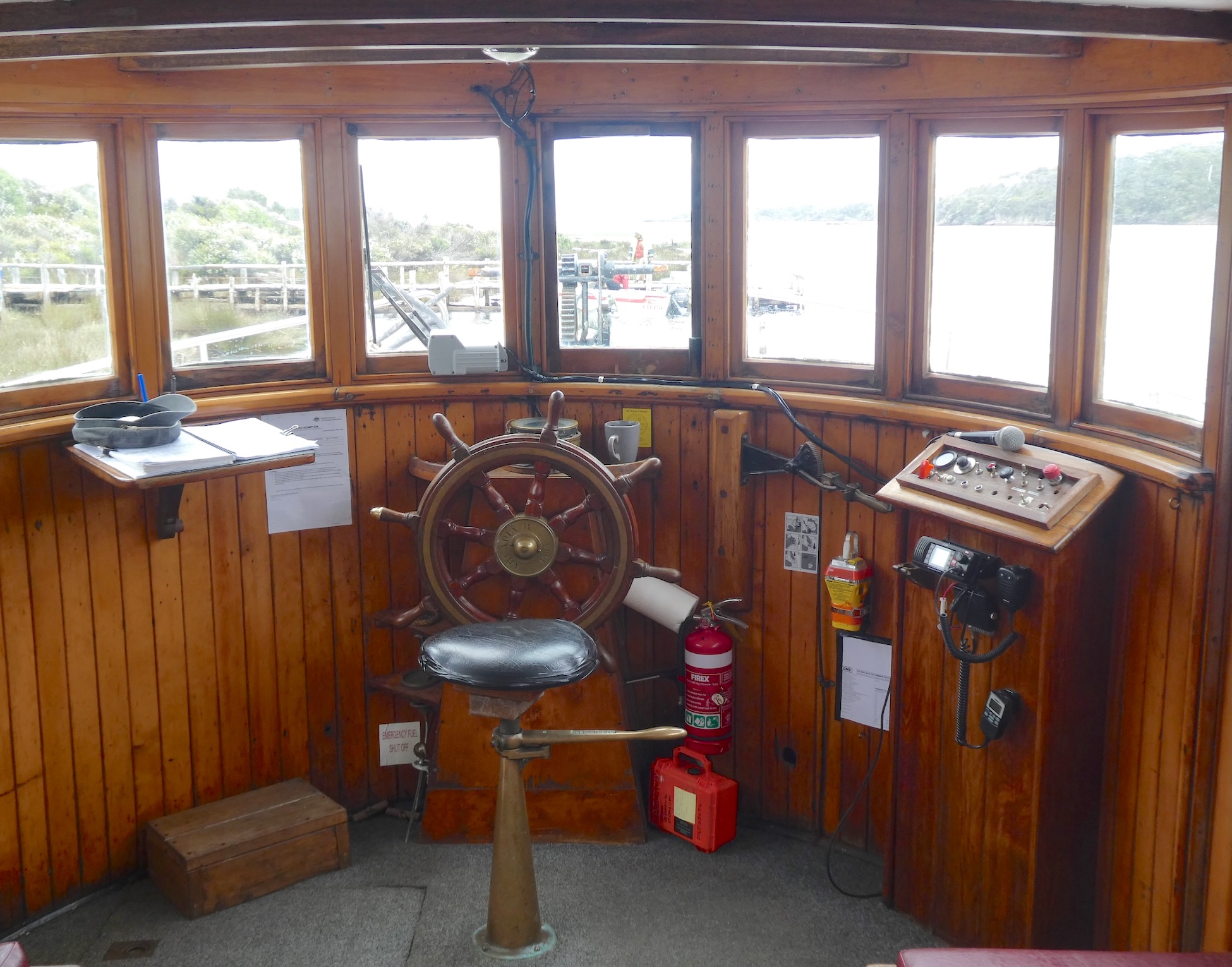
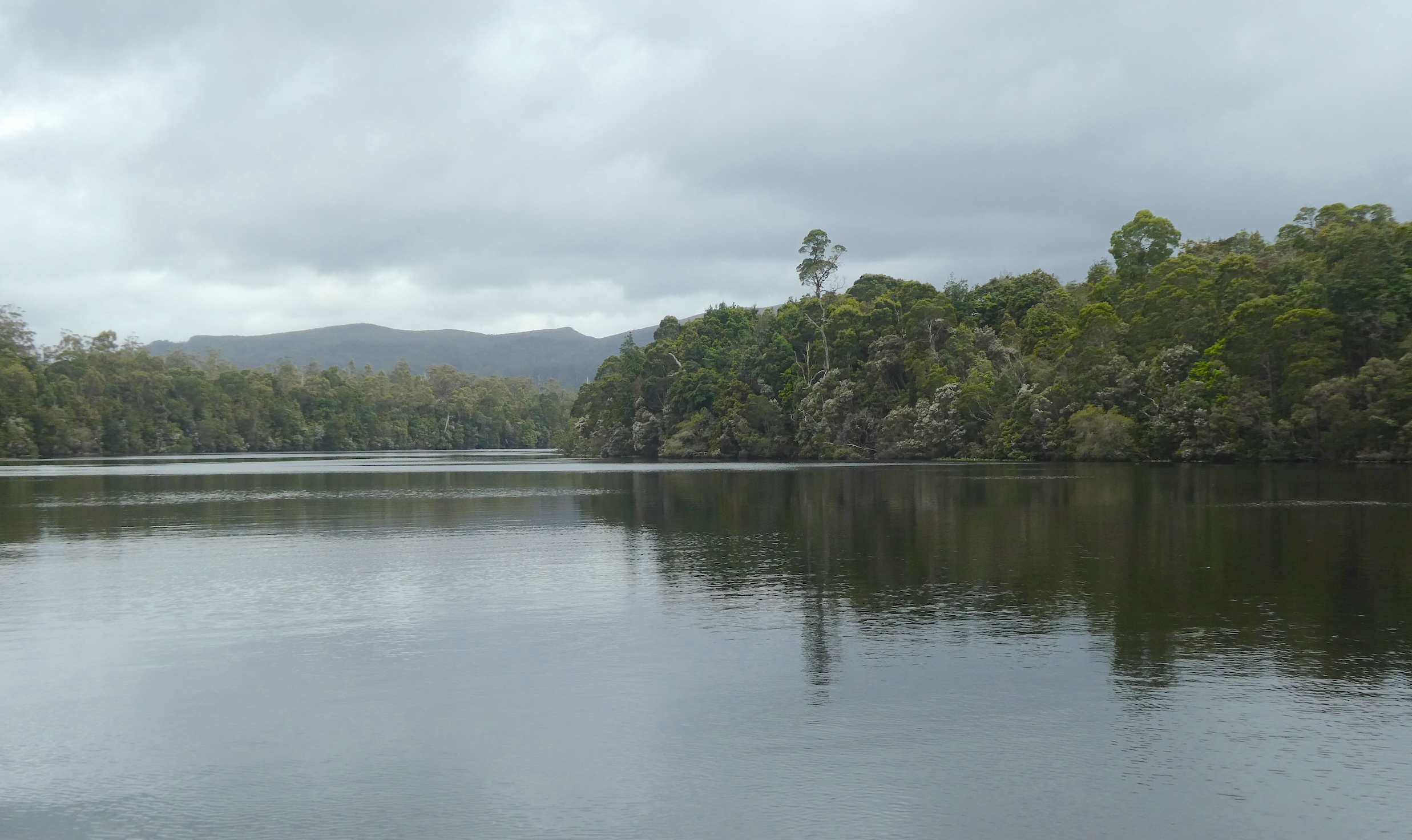
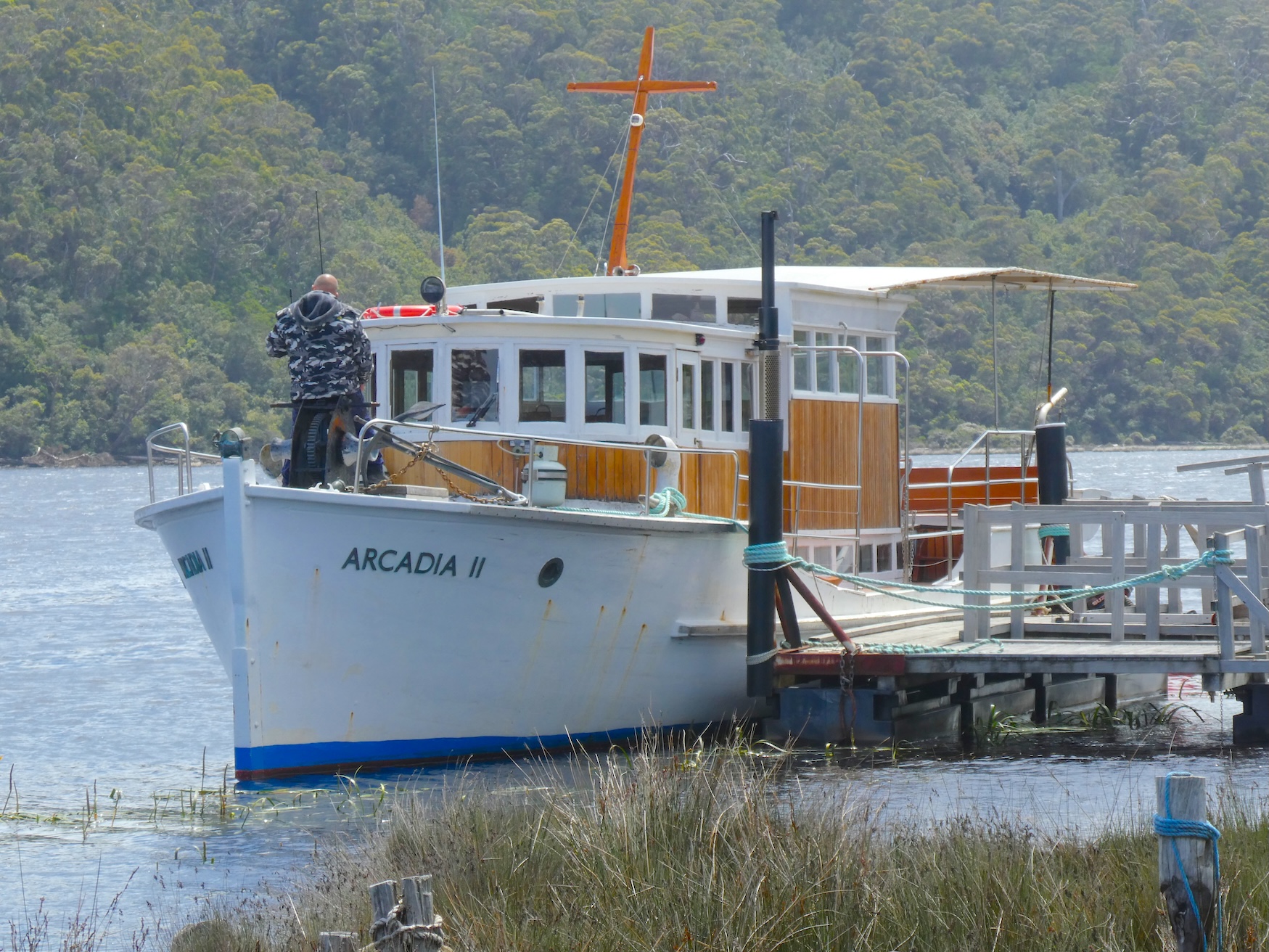
A leisurely way to experience the Tarkine Wilderness is to spend a few hours on the Pieman River aboard the heritage vessel, MV Arcadia II.
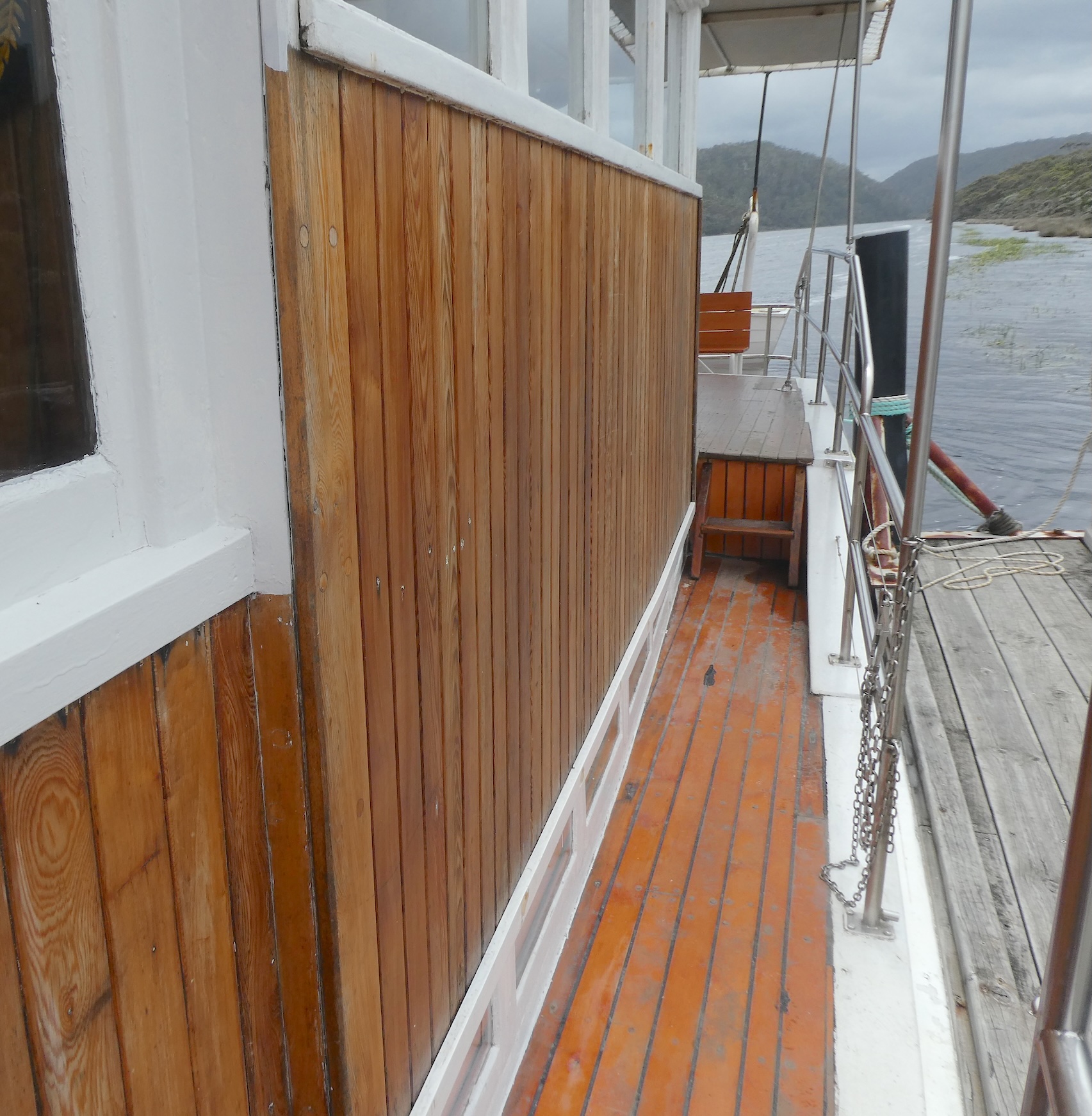
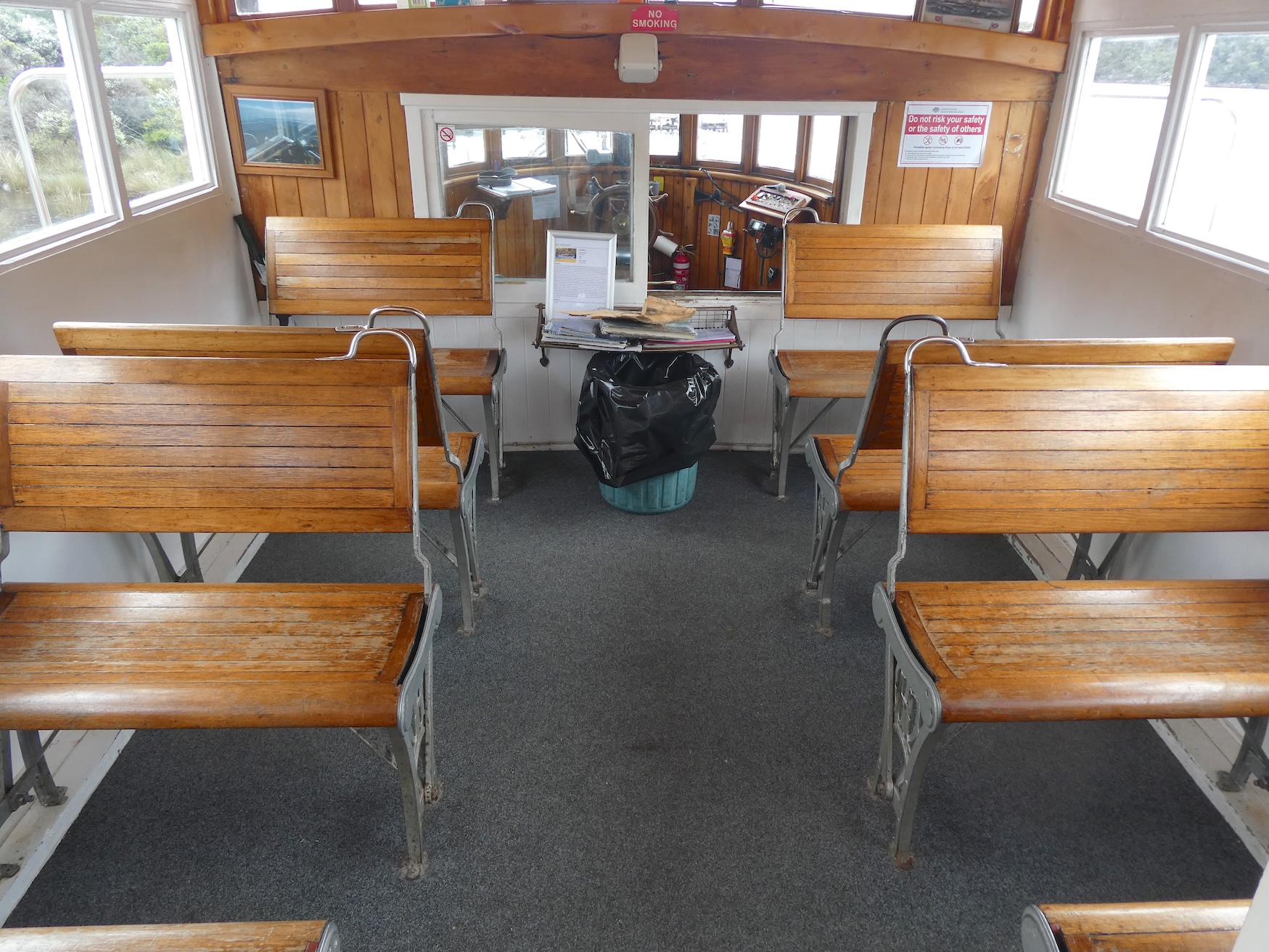
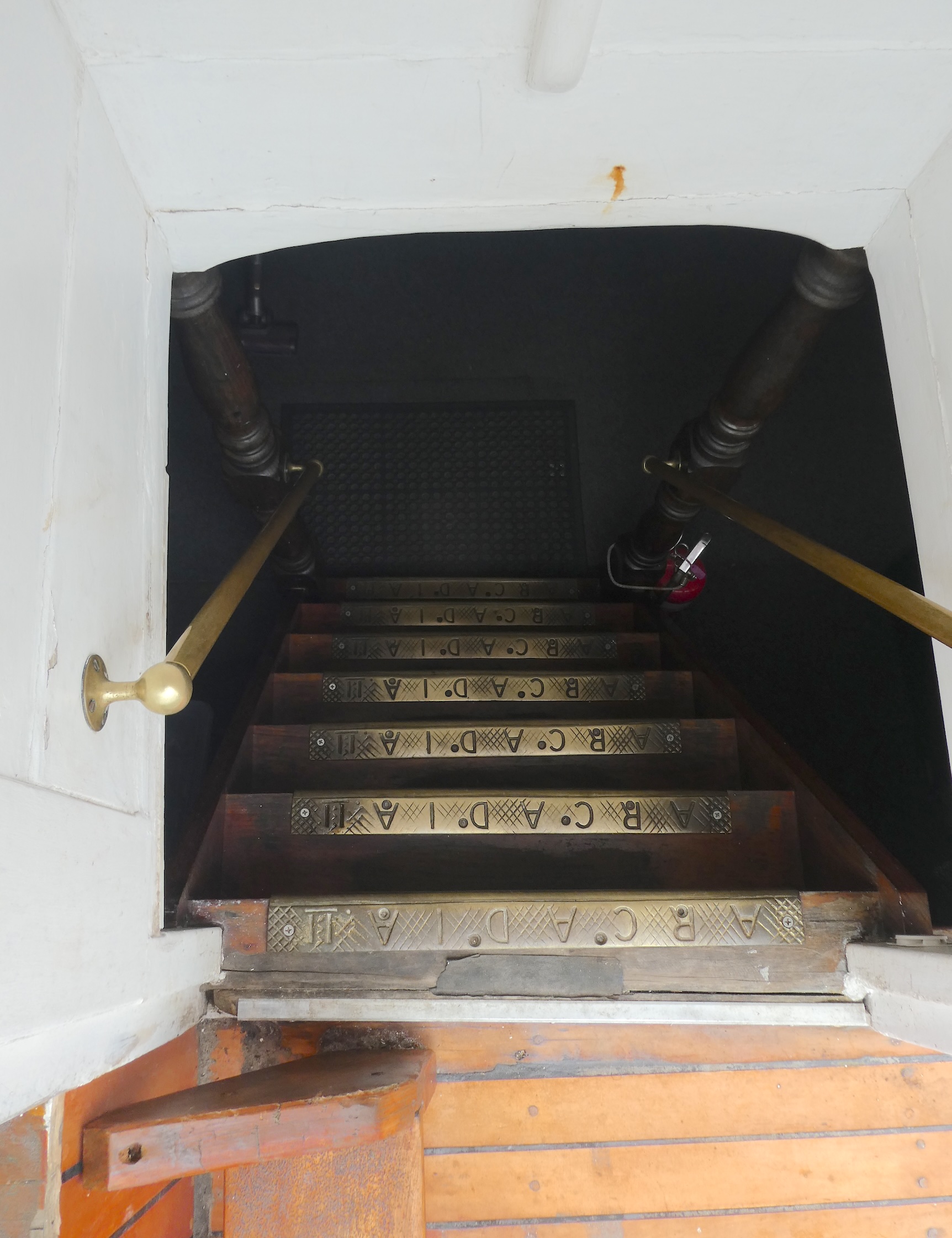
The 17 metre boat was built of Huon Pine in 1939 as a luxury pleasure craft based in Hobart. She was requisitioned to serve as a supply ship in New Guinea during the Second World War. Life became more peaceful as a scallop fishing boat on the east coast of Tasmania and then as a cruise boat on Macquarie Harbour and the Gordon River in 1961.
The Arcadia II has been cruising the Pieman River since 1970 and is the only Huon Pine river cruiser still operating anywhere in the world. A refurbishment in 2006 returned her to original pristine condition. I was hoping we had no need for the lifeboat.
We departed from Corinna at 10am on a moody, overcast morning.
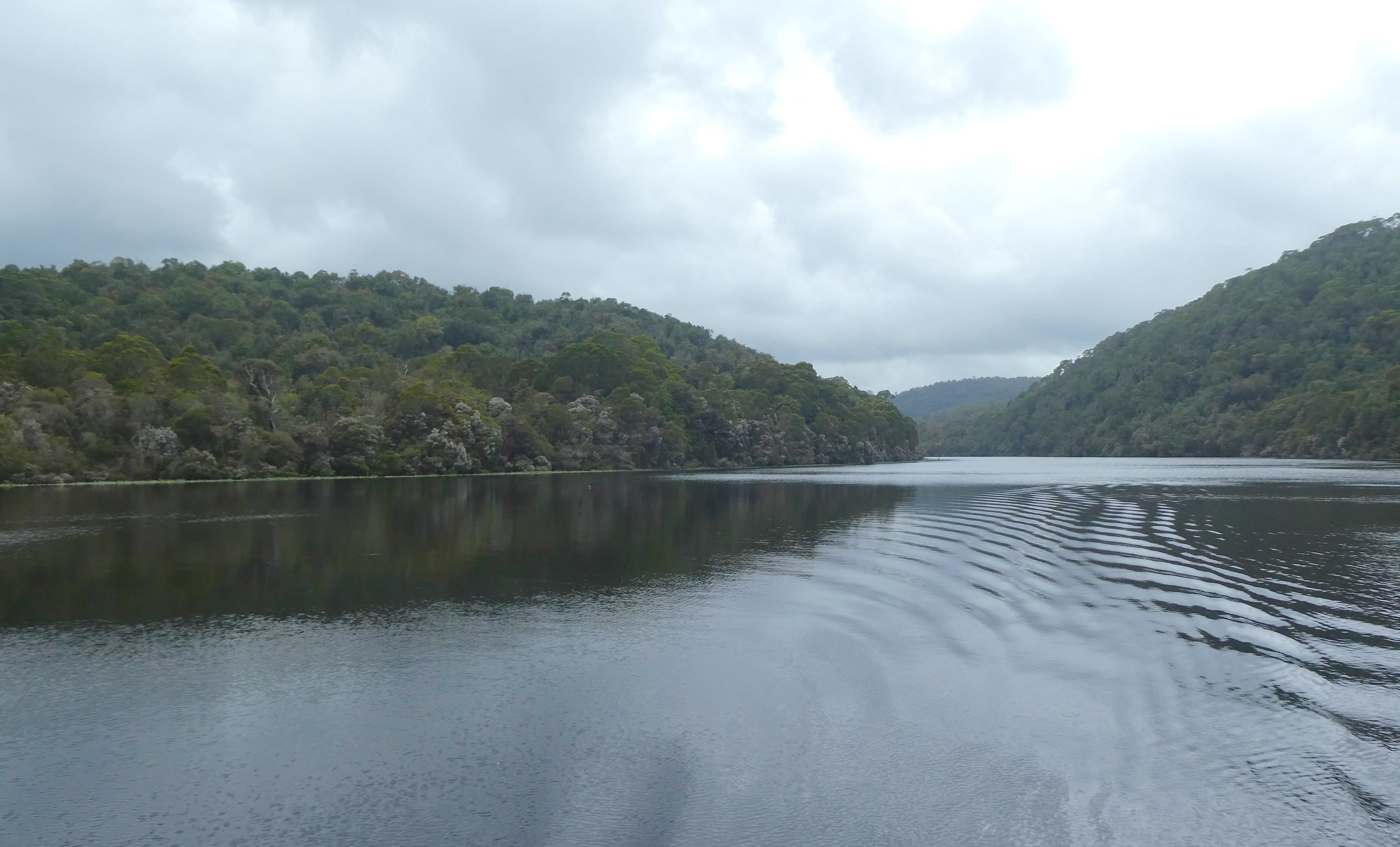
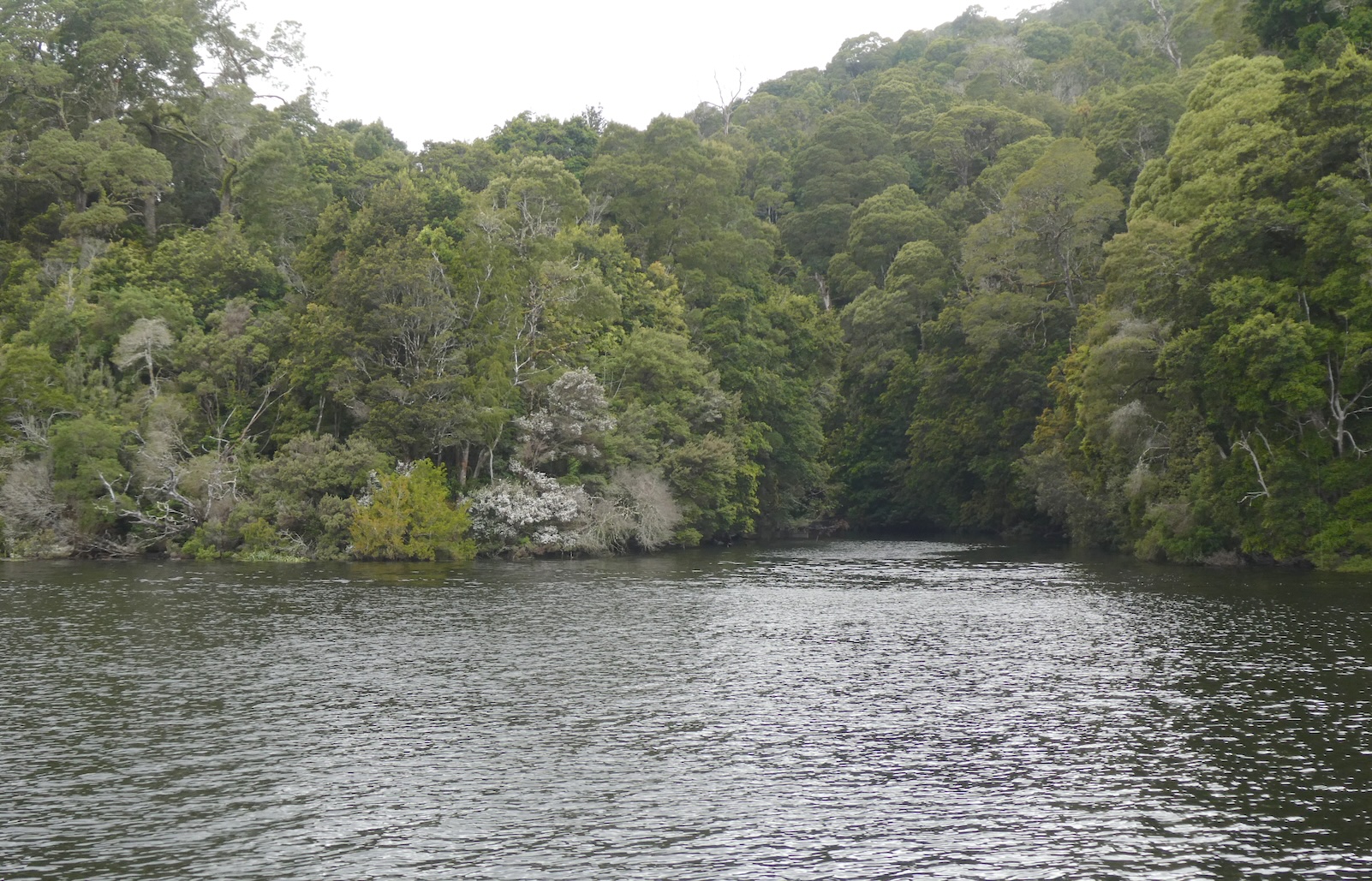
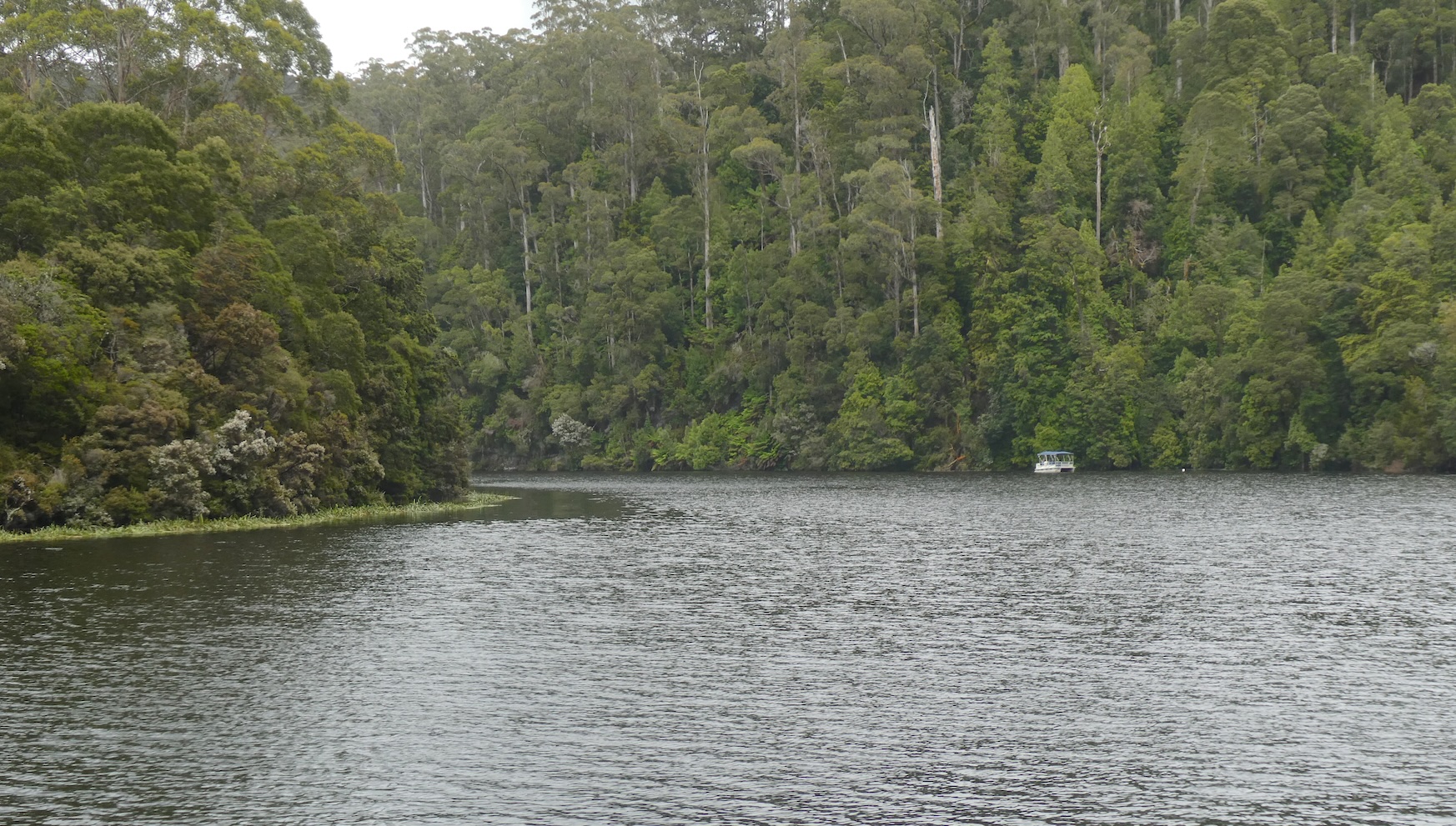
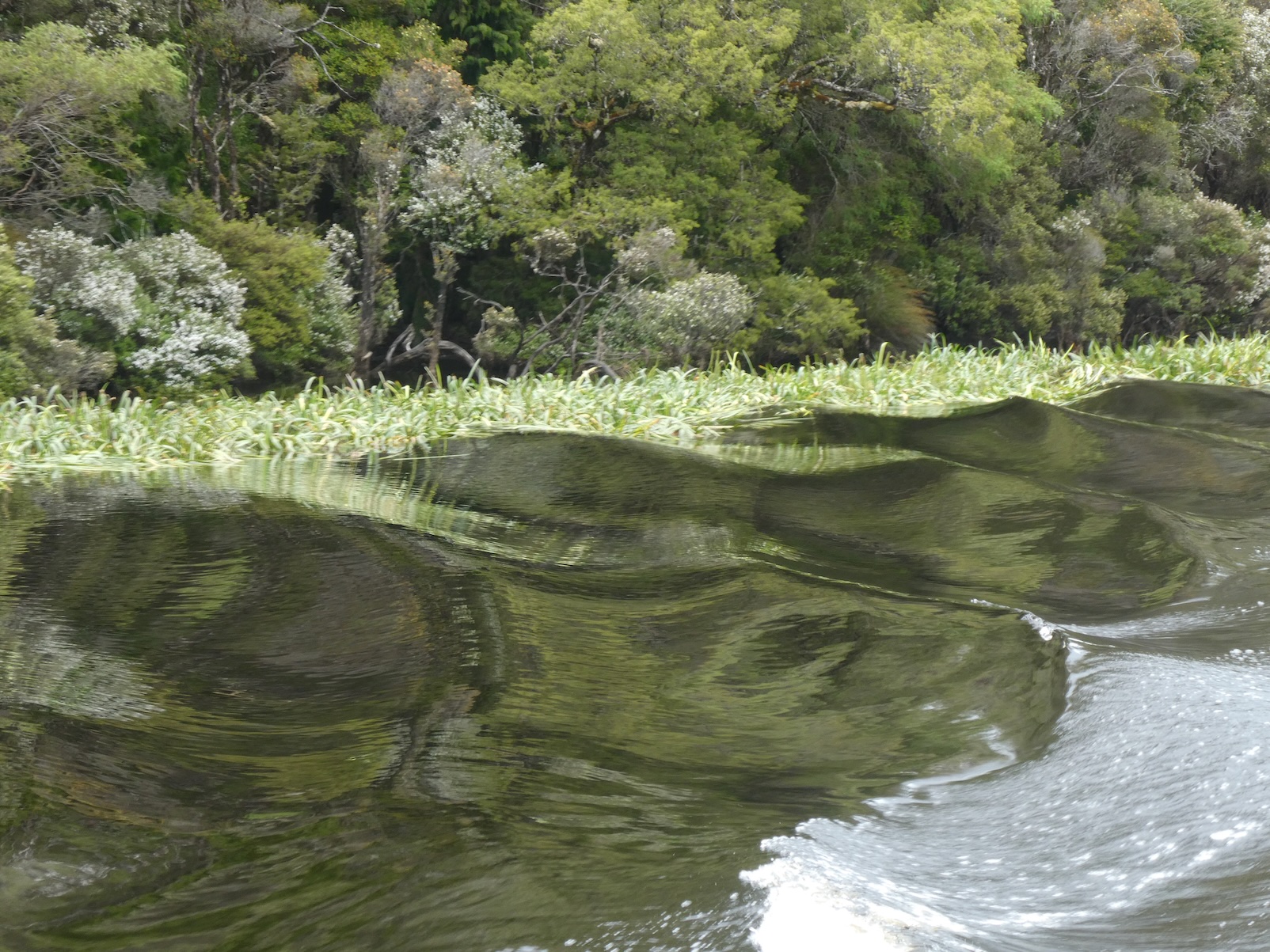
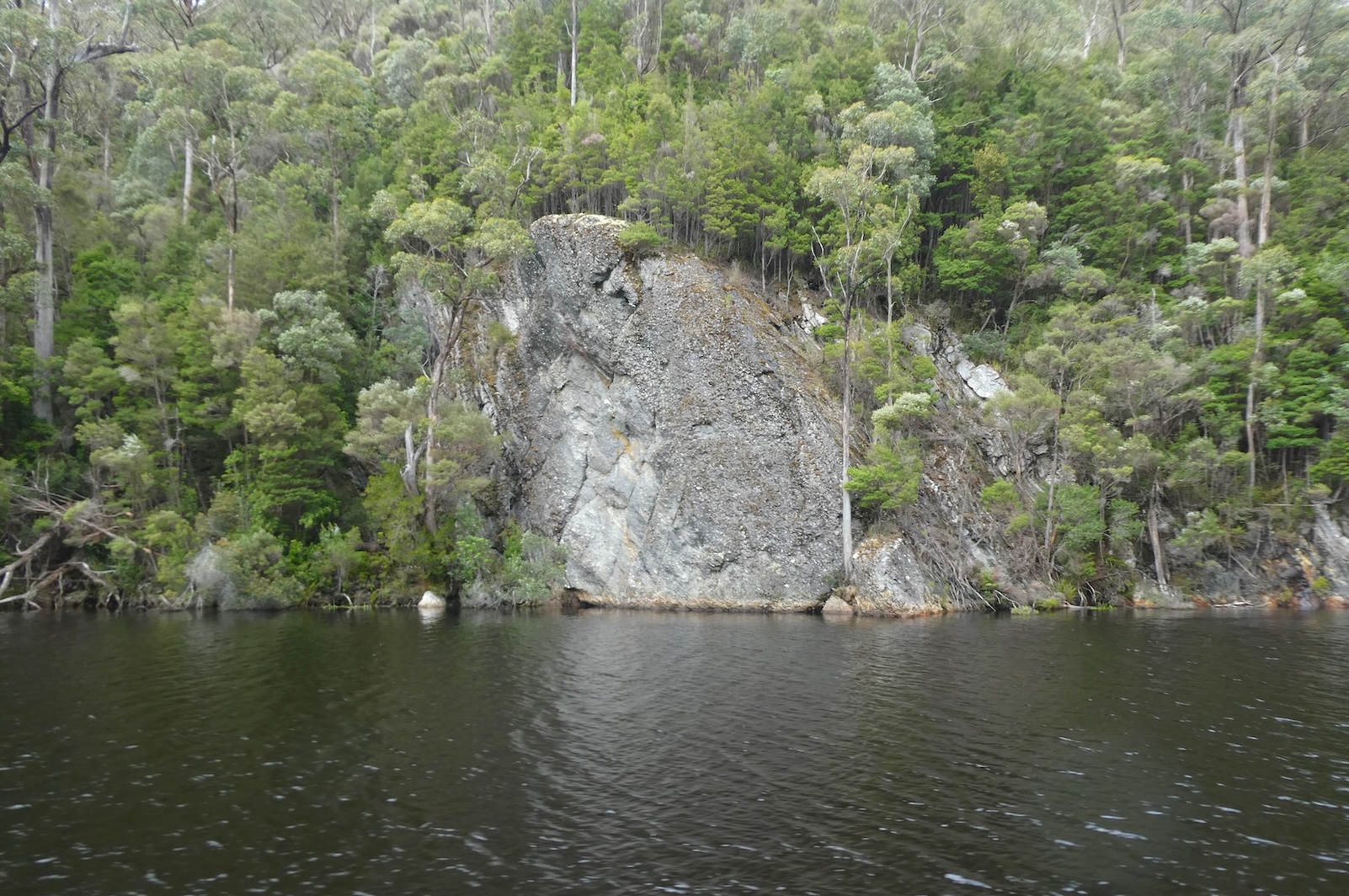
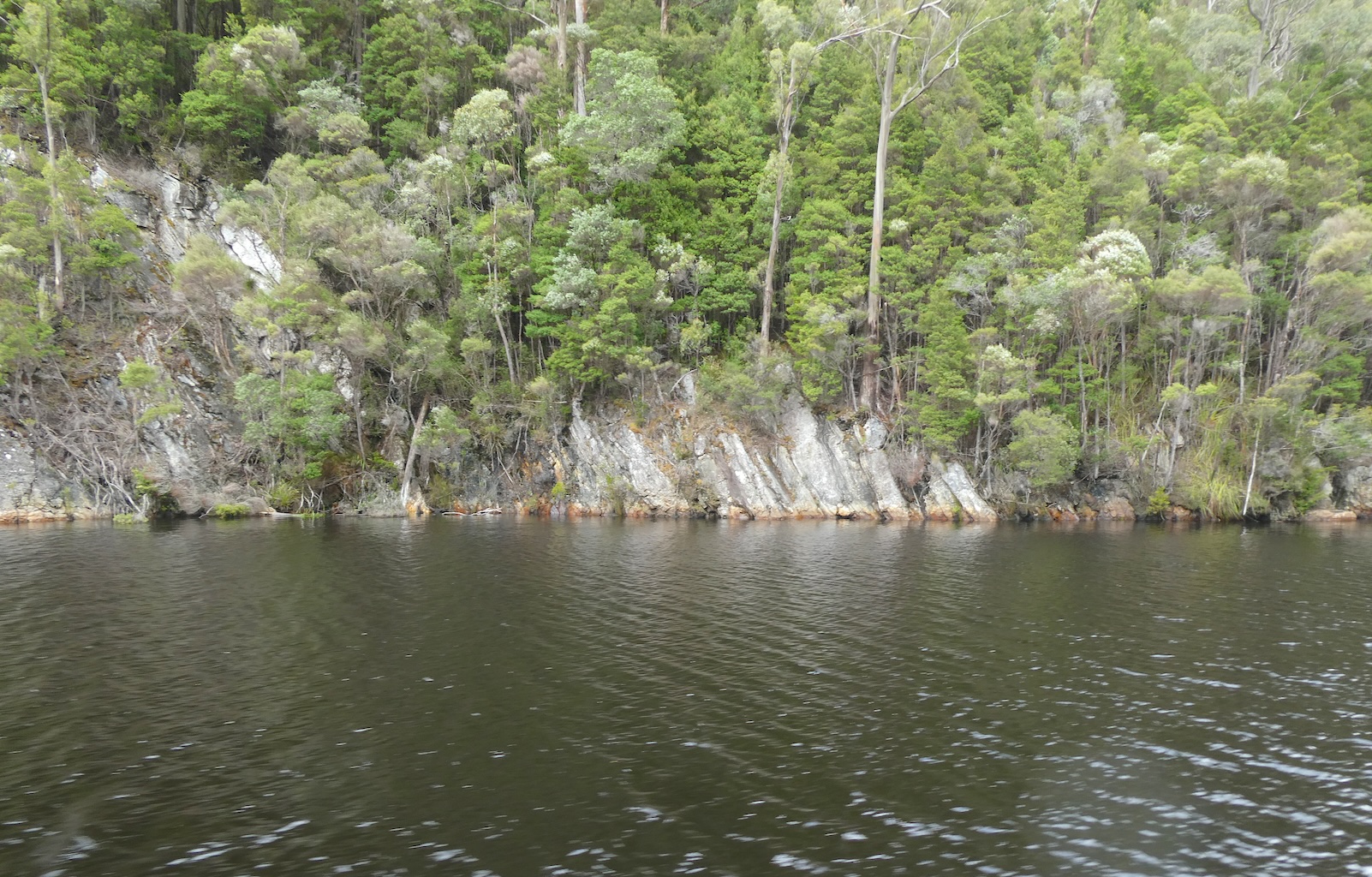
Huon Pines dipped their pendulous foliage in the tannin hued water
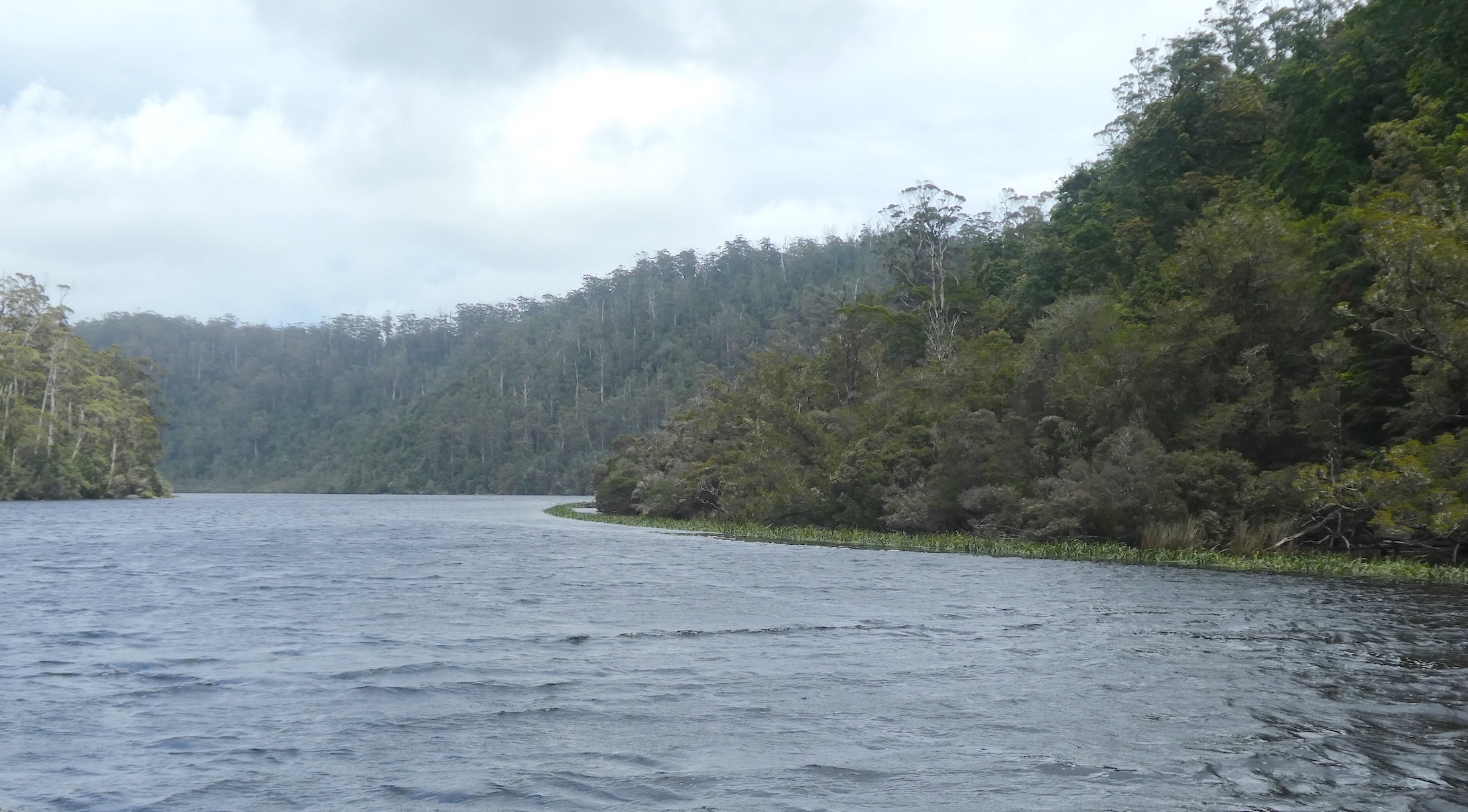
as we rounded a bend, leaving Corinna behind .
The 434 metre peak of Mount Donaldson, part of the Norfolk Range, loomed in the distance
as we passed the confluence of the Savage River, ending its 71.7km journey.
A little further downstream, the Donaldson River also flows into the Pieman after a 54km course from its source.
We were hopeful for a sighting of the ever elusive platypus and, keeping our eyes peeled, we weren’t disappointed.
We would have missed the sea eagles nest if it hadn’t been pointed out by the skipper.
Enjoying the tranquility, we were served hot chocolate, cake and biscuits – what could be better?
As the skies cleared and the forest vegetation changed, we soon arrived at our destination.
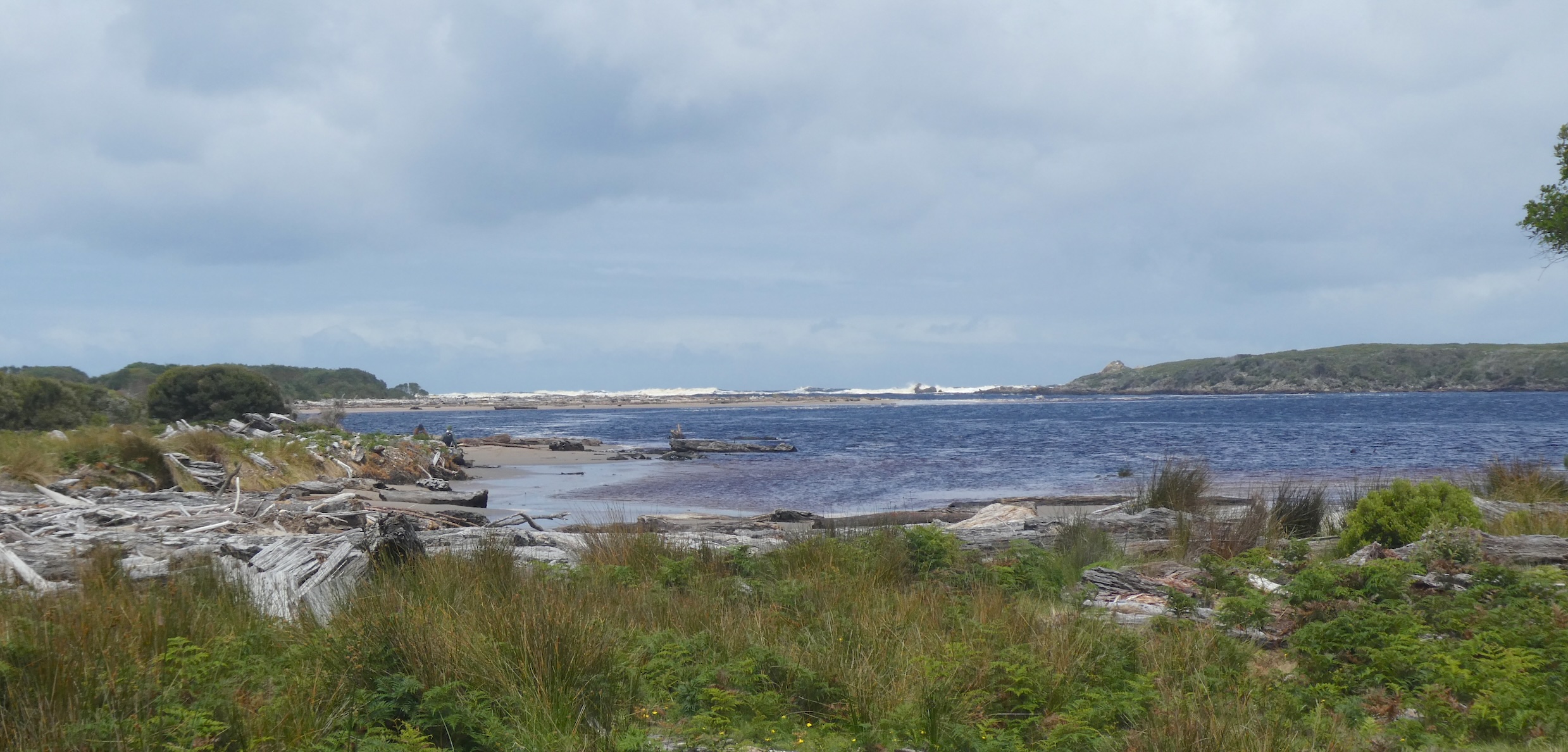
Pieman Heads, where the Pieman River meets the Indian Ocean, marks the southern extremity of the Arthur-Pieman Conservation Area.
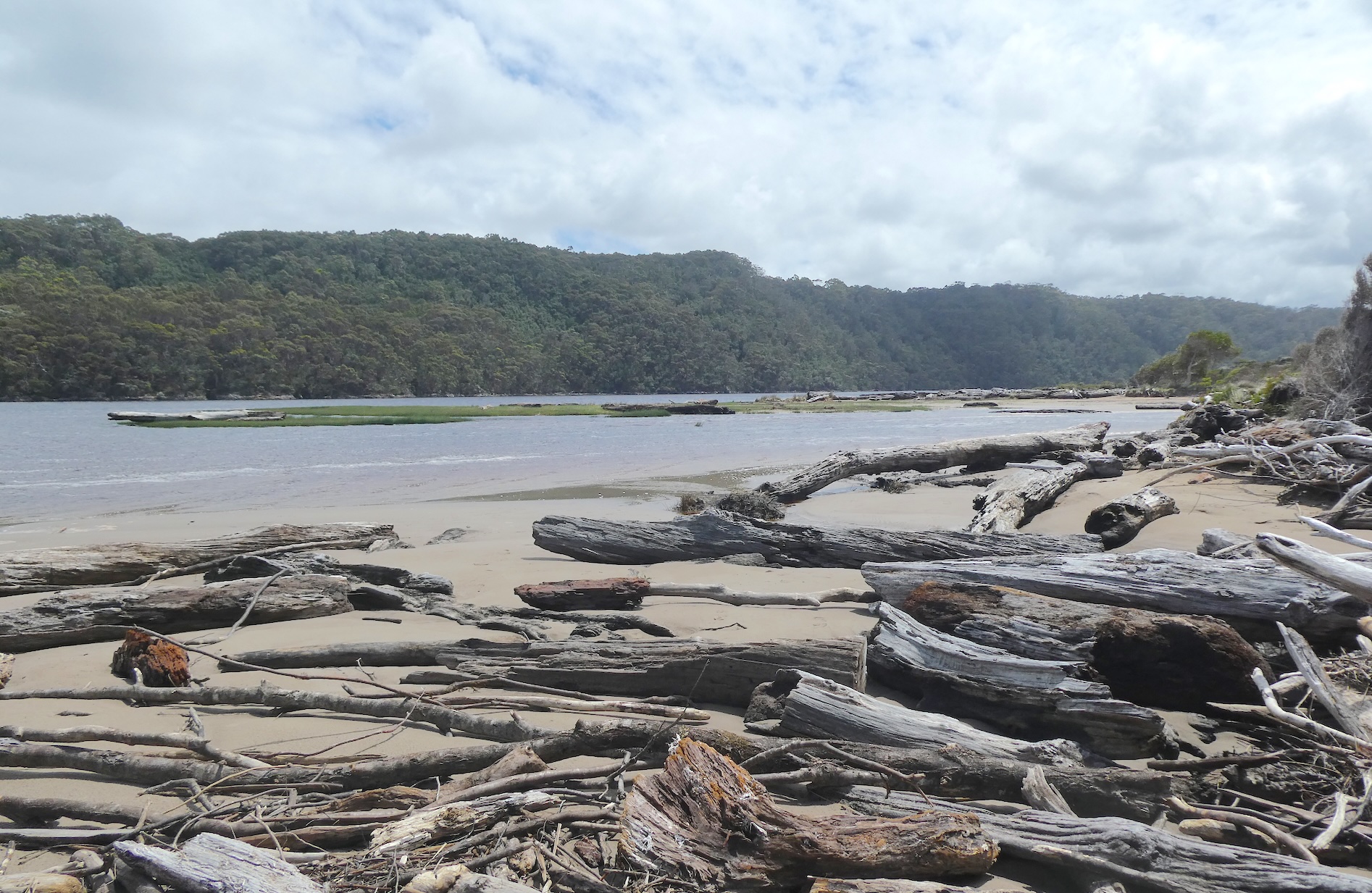
Breathing in the freshest air on Earth, we walked a few hundred metres from the boat and perched amongst the driftwood to savour our tasty packed lunch.
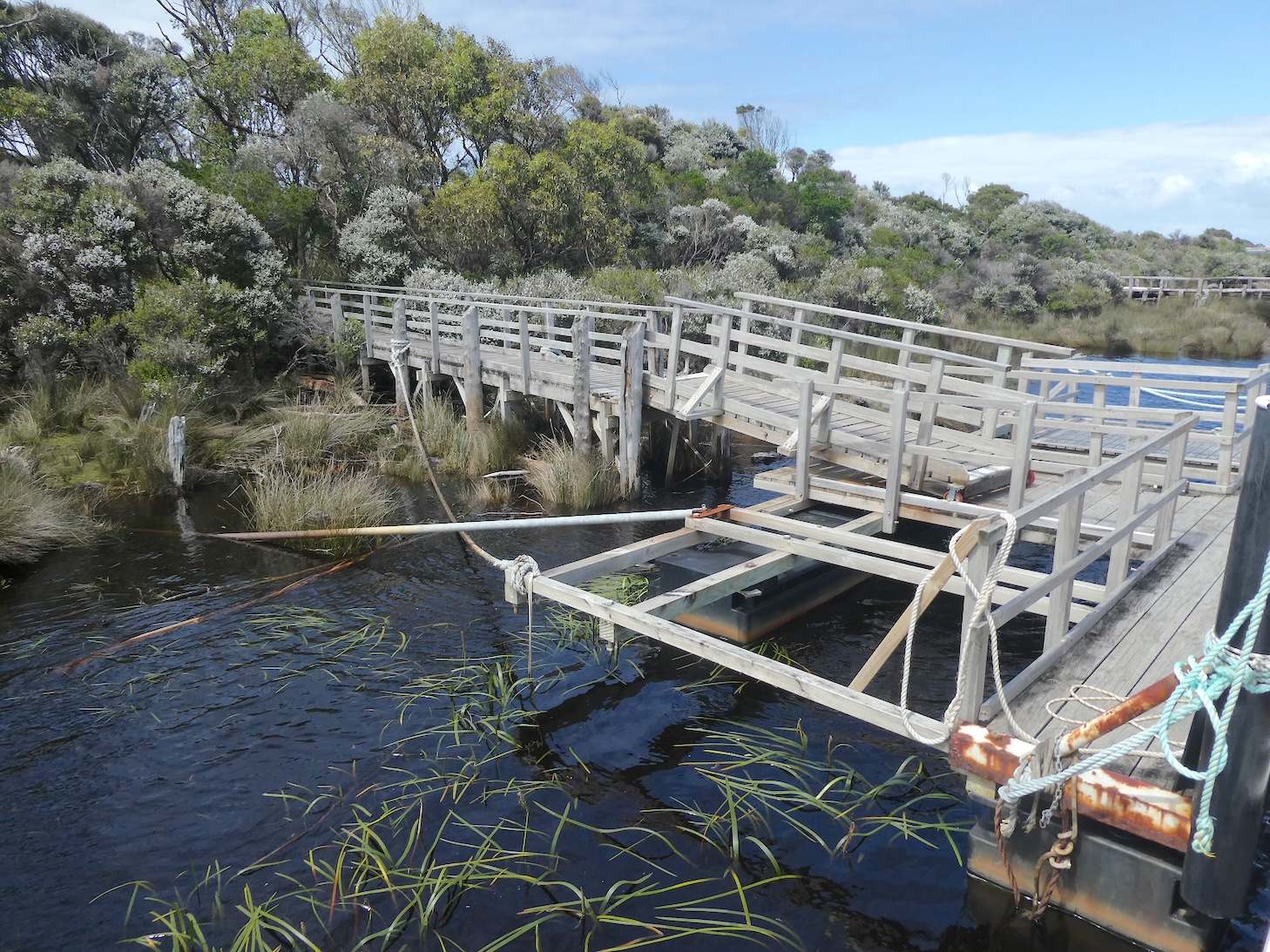
Strolling back an hour or so later, we came across an interesting structure. The Huon Pine timbers were recovered from the river in 2005 after spending forty years buried in silt and sand at the heads. They were part of the original Corinna barge, built in 1878, that transported prospectors, surveyors, livestock and general goods across the river using a cable and hand winch. From 1945, the barge plied up and down the river assisted by a power boat tied alongside. It’s life came to an end when, in 1964, it was washed away from its moorings in a flood and lost.
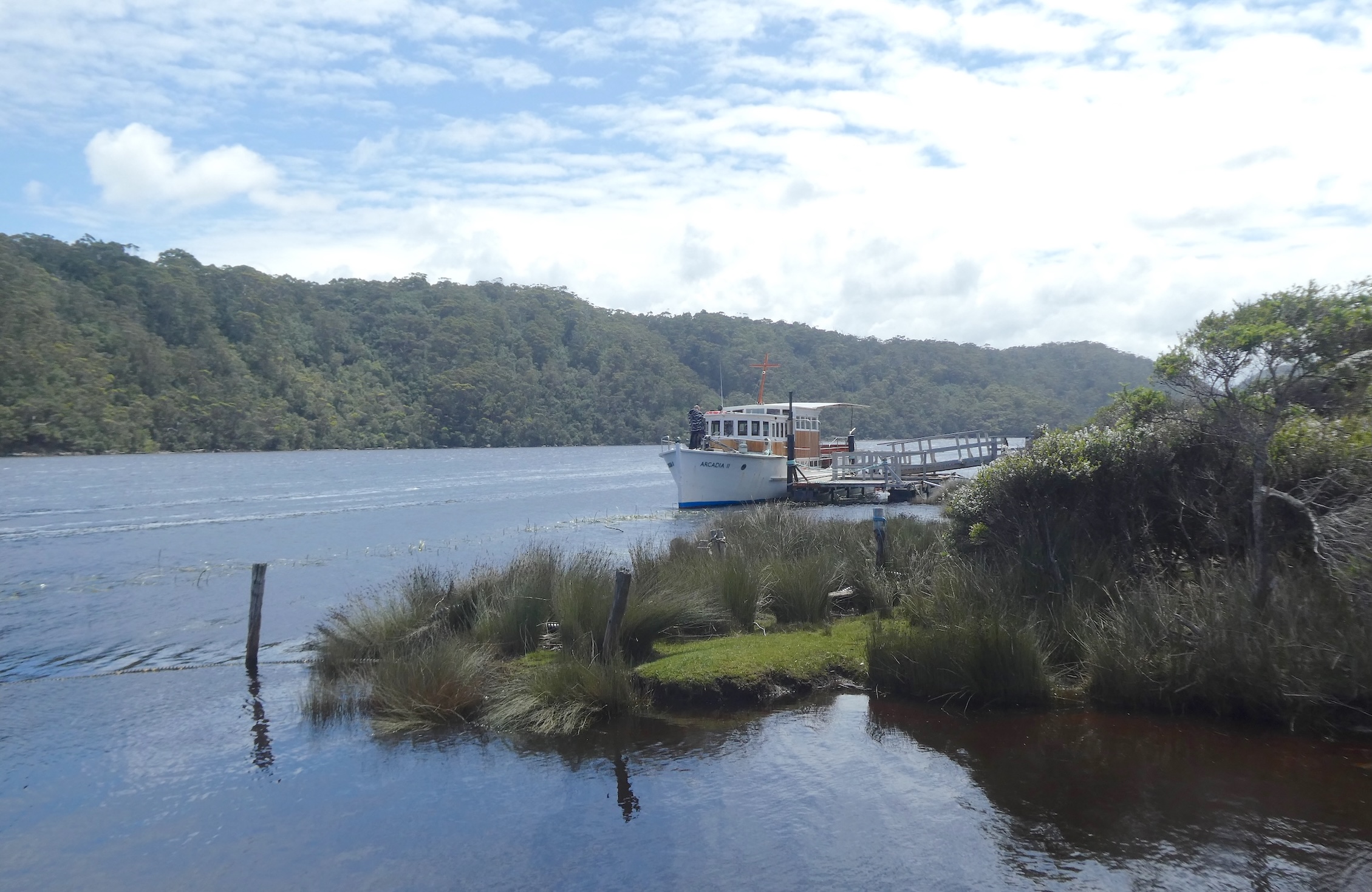
We returned to our more reliable form of transport
with nothing to do but relax and enjoy the ride.
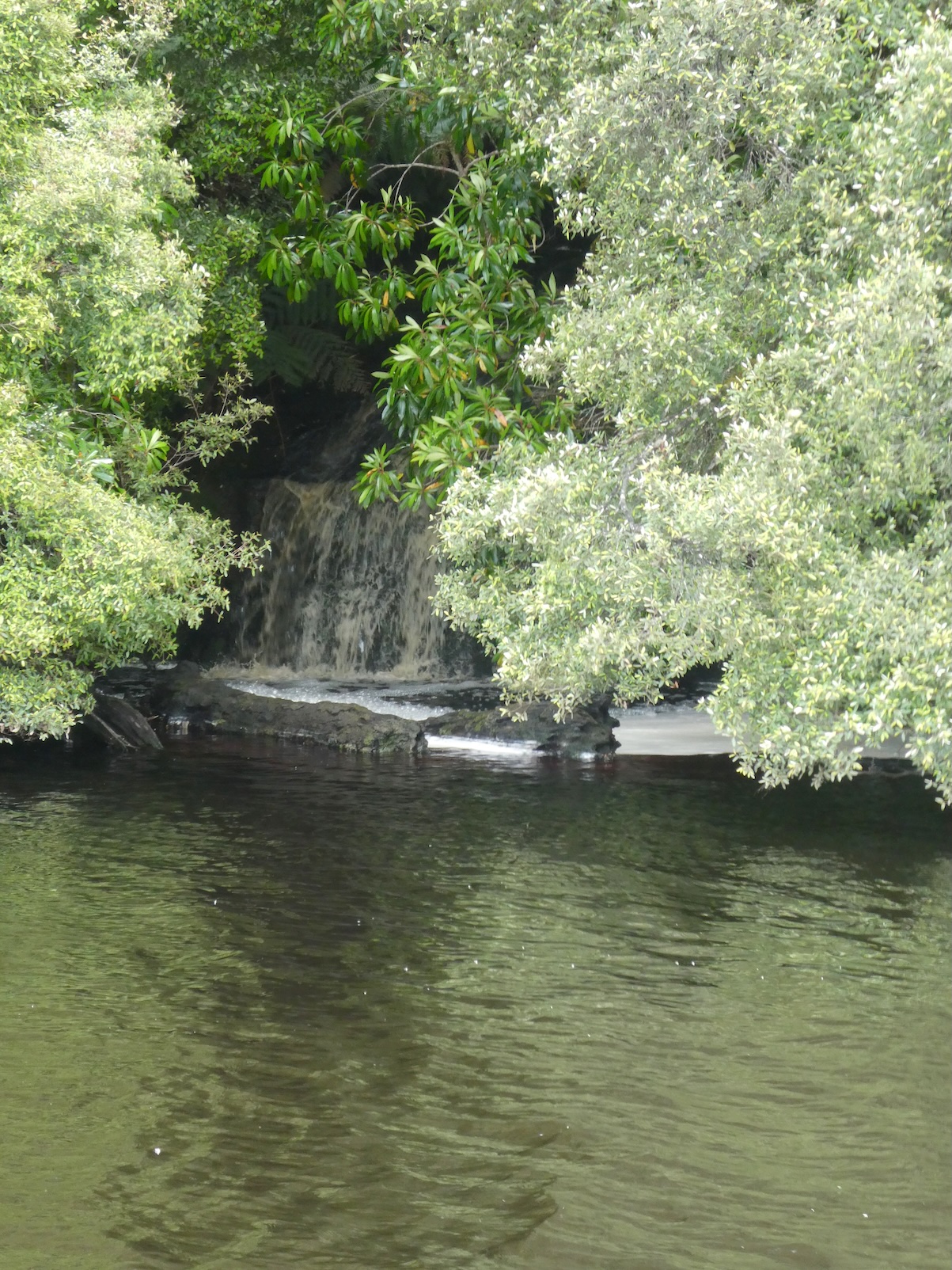
The mysterious stairway along the river, not far downstream from Corinna, leads to Lovers Falls.
There is a shorter cruise on a smaller craft, (Sweetwater Cruise) that ties up at the stairs to enable a walk to the waterfall. The only other way to reach them is by kayak.
Arriving back at Corinna at 2.30pm, we had time for a short walk before bevvies and a delicious dinner at the hotel.
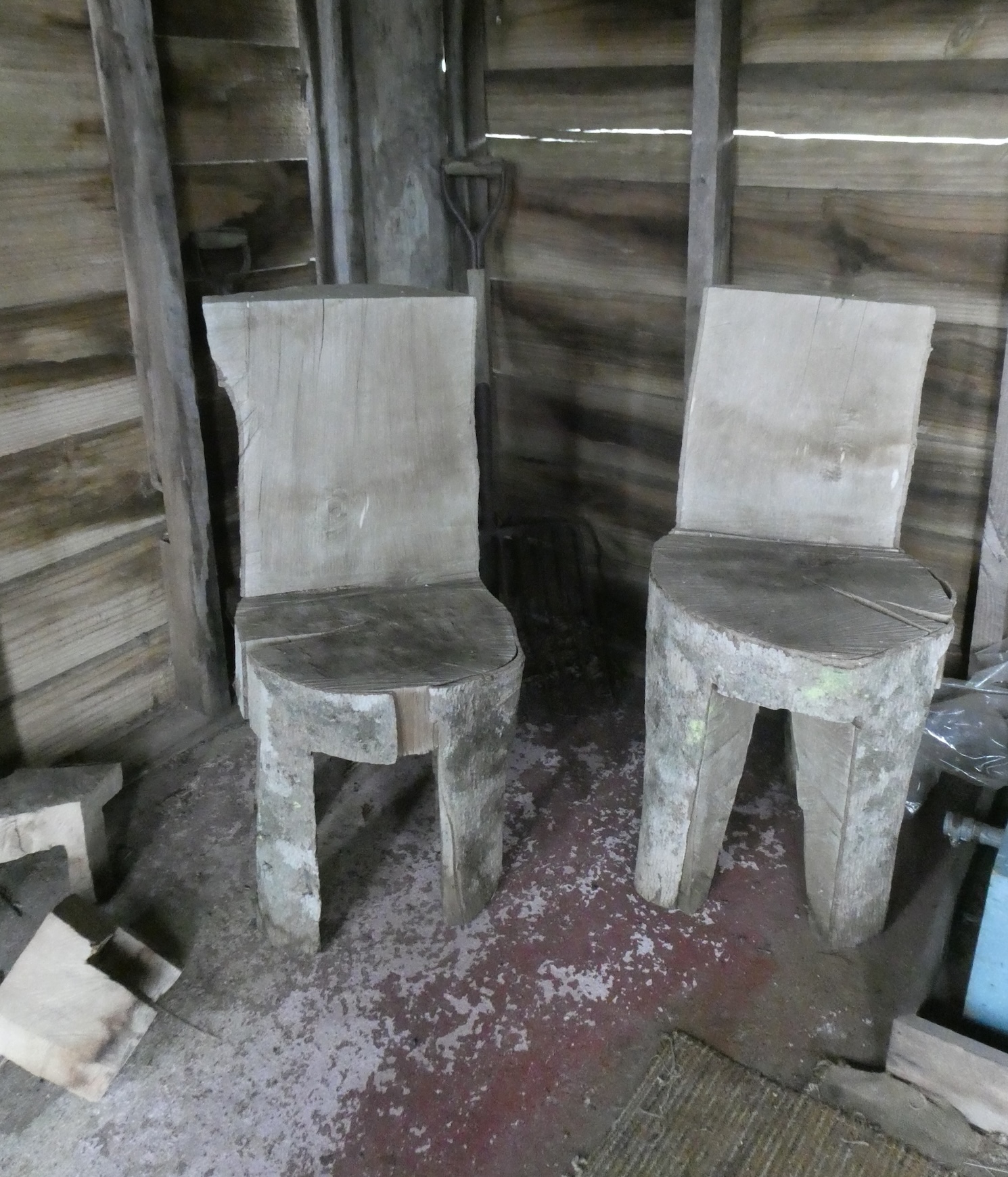
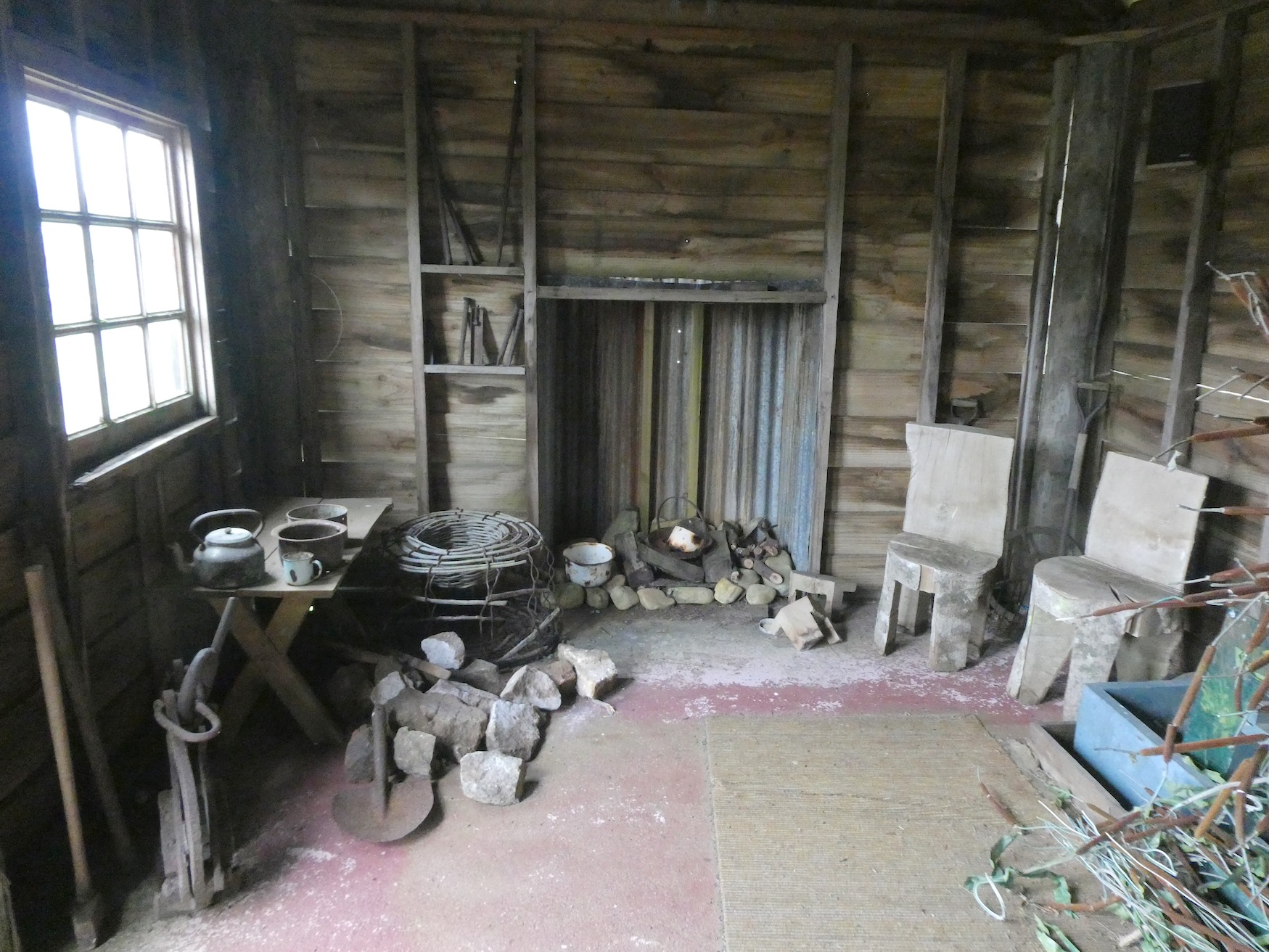
Driving through Waratah on our way to Corinna, we spied an interesting rustic cabin. We stopped to investigate and found Philosopher Smith’s hut, a replica of a typical miner’s hut from the late 1800s.
James ‘Philosopher’ Smith is credited with the discovery of tin at Mount Bischoff and the founding of Waratah in 1871.
The interior was less than comfortable and displayed the equipment a prospector would have used when searching for minerals in the 1870s.
With time to spare before lunch, we moved on to explore the adjacent museum.
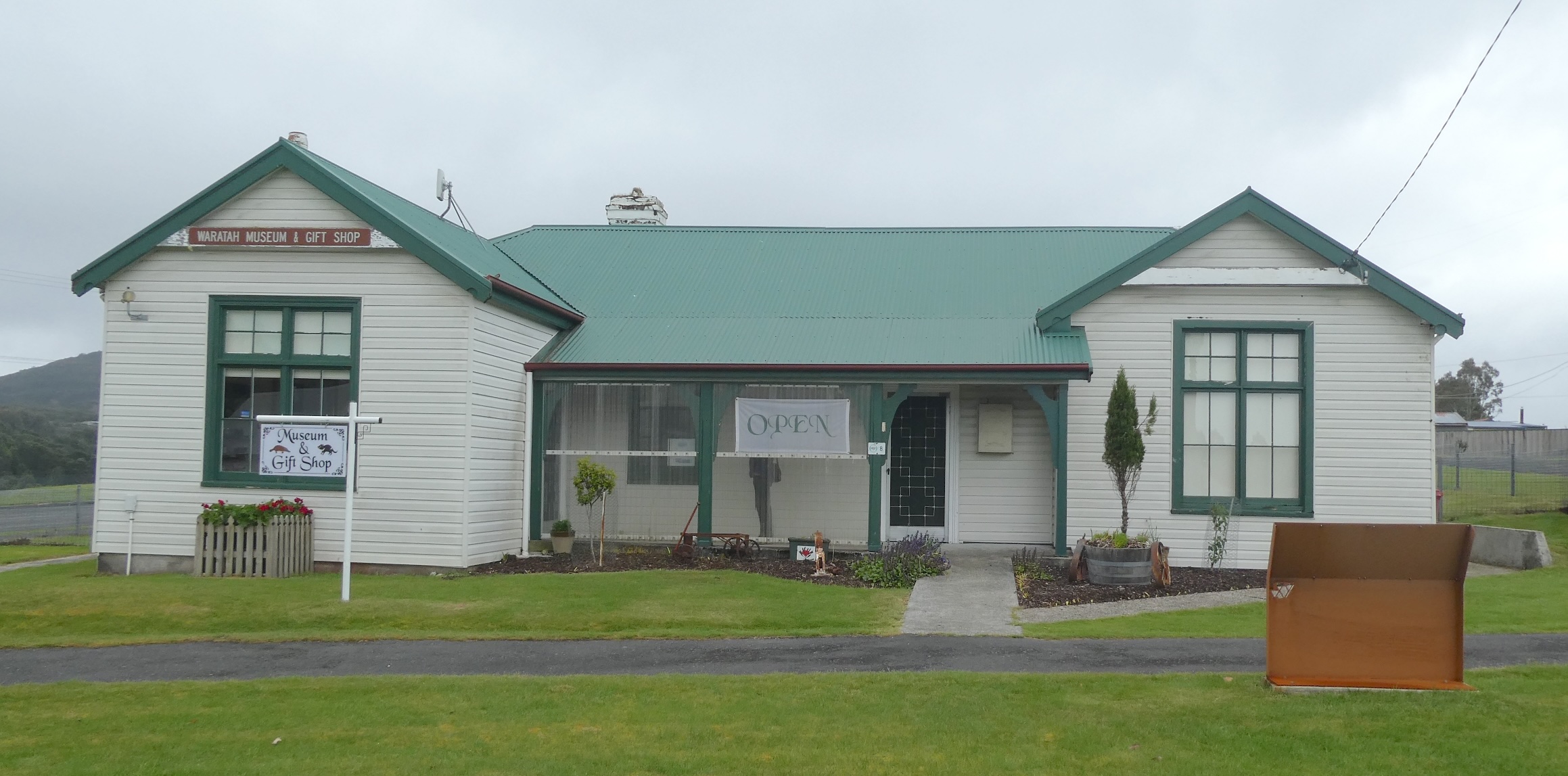
The former Courthouse building is now home to a collection of local historical photographs and artefacts. The main courtroom has retained the judge’s bench and witness box among other original features.
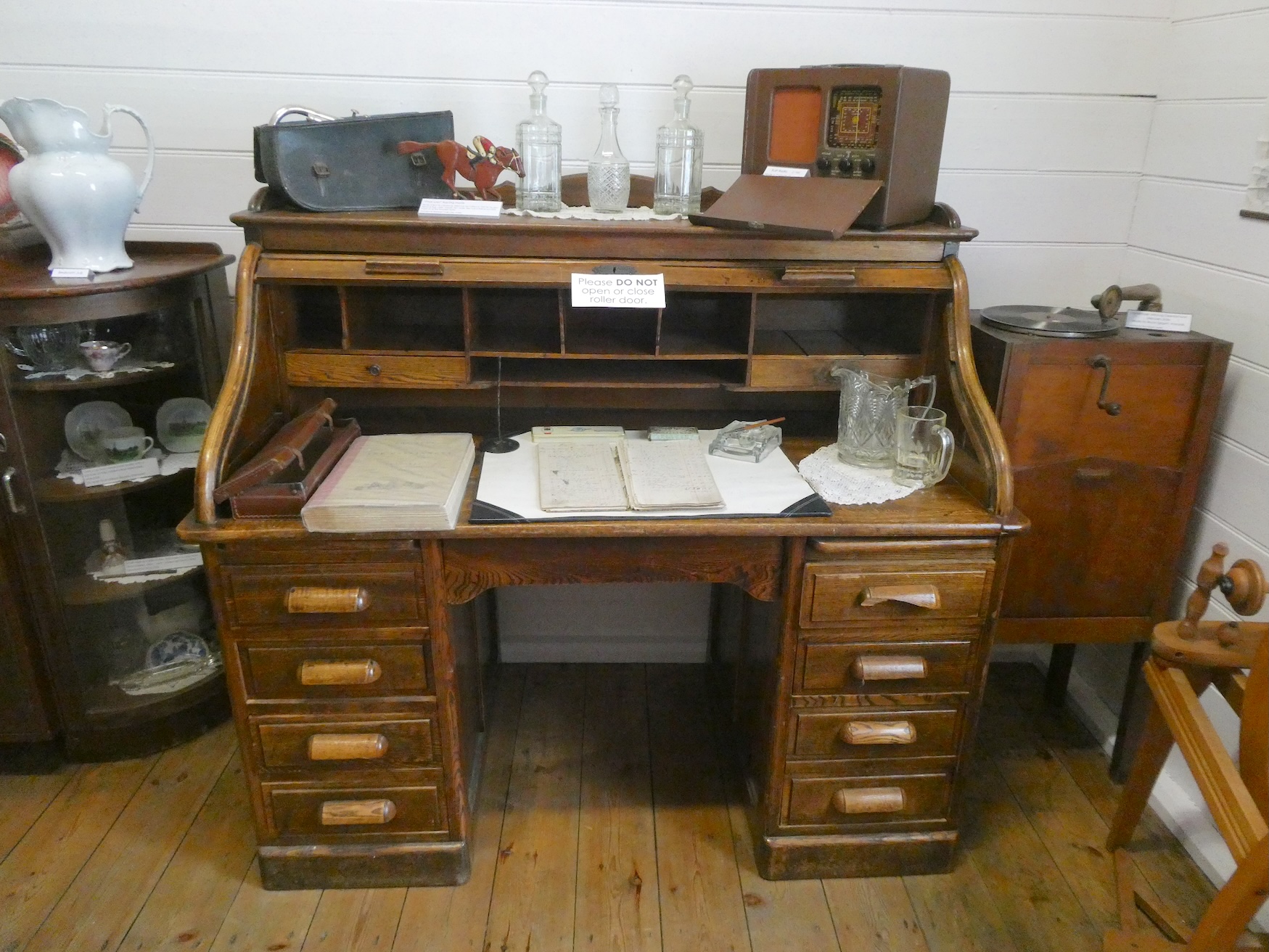
A roll-top desk has pride of place in an adjoining room with a neatly scribed ledger showing receipts and payments.
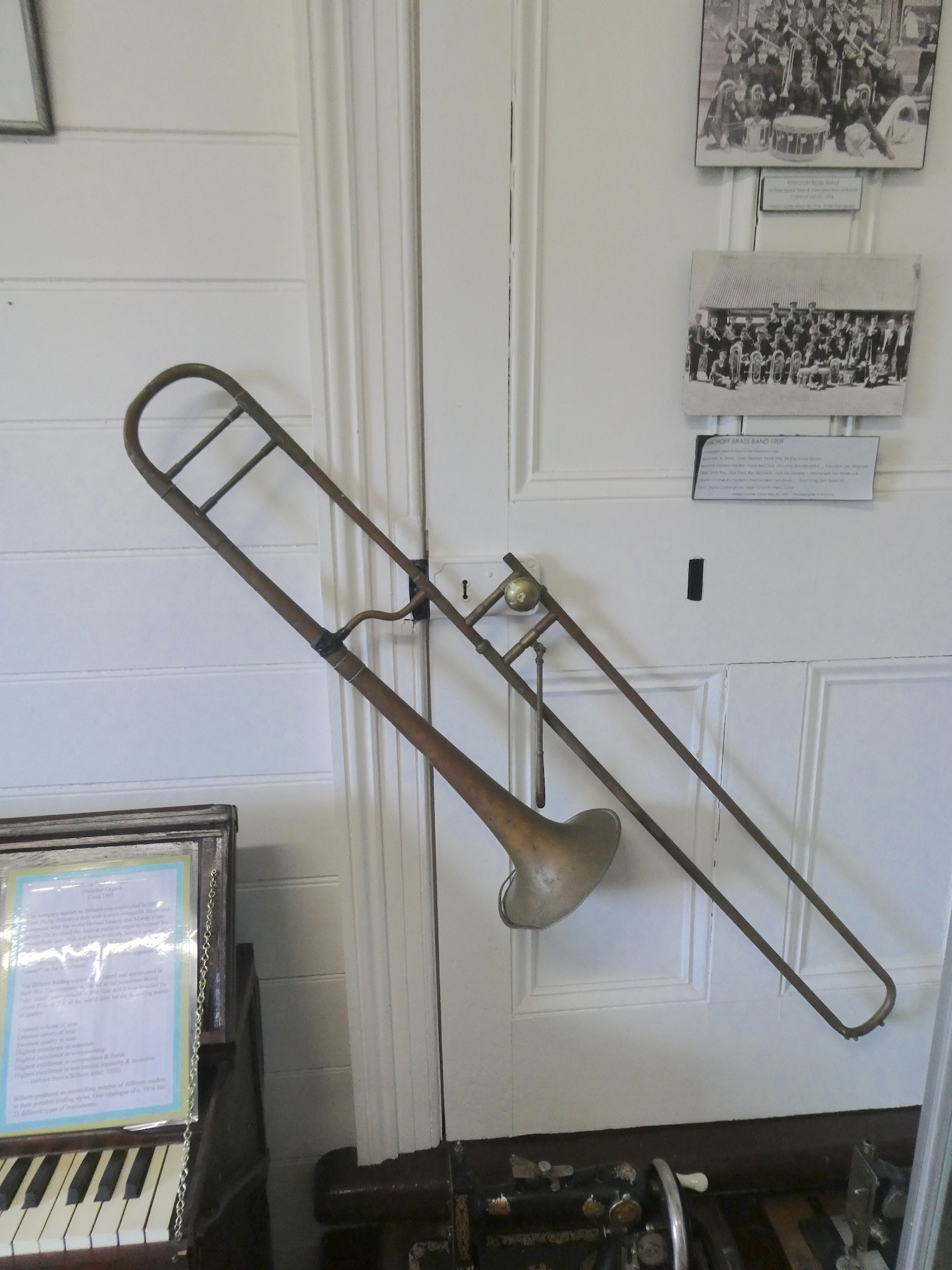
In the music room, vintage instruments, sheet music and old vinyl records reflect a time when music was an integral part of the social scene.
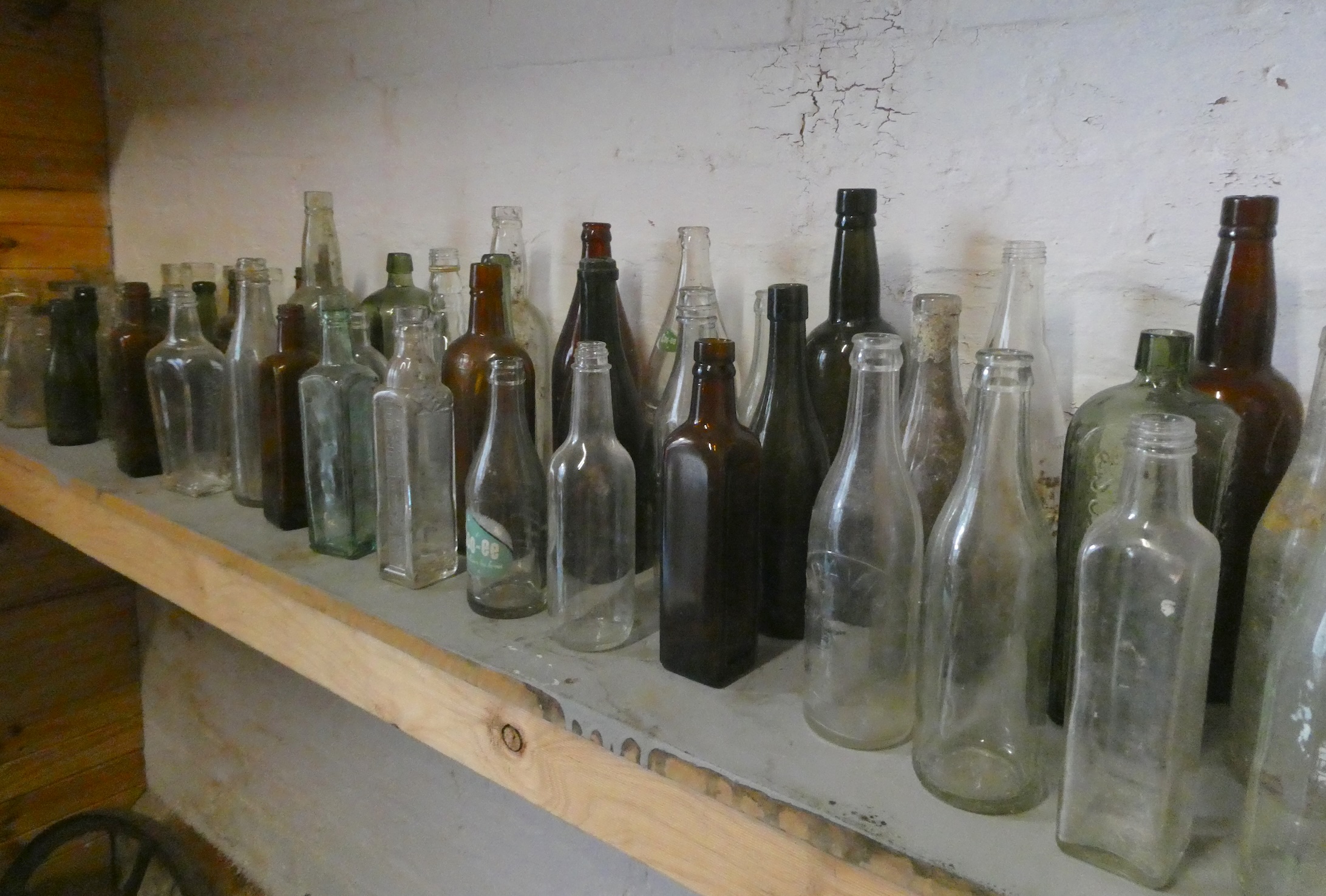
As expected, mining memorabilia abounds along with specimens of gemstones and minerals.
Among all the fascinating items, my favourite is this child’s dress. Despite the pretty trimmings, it does look a might scratchy.
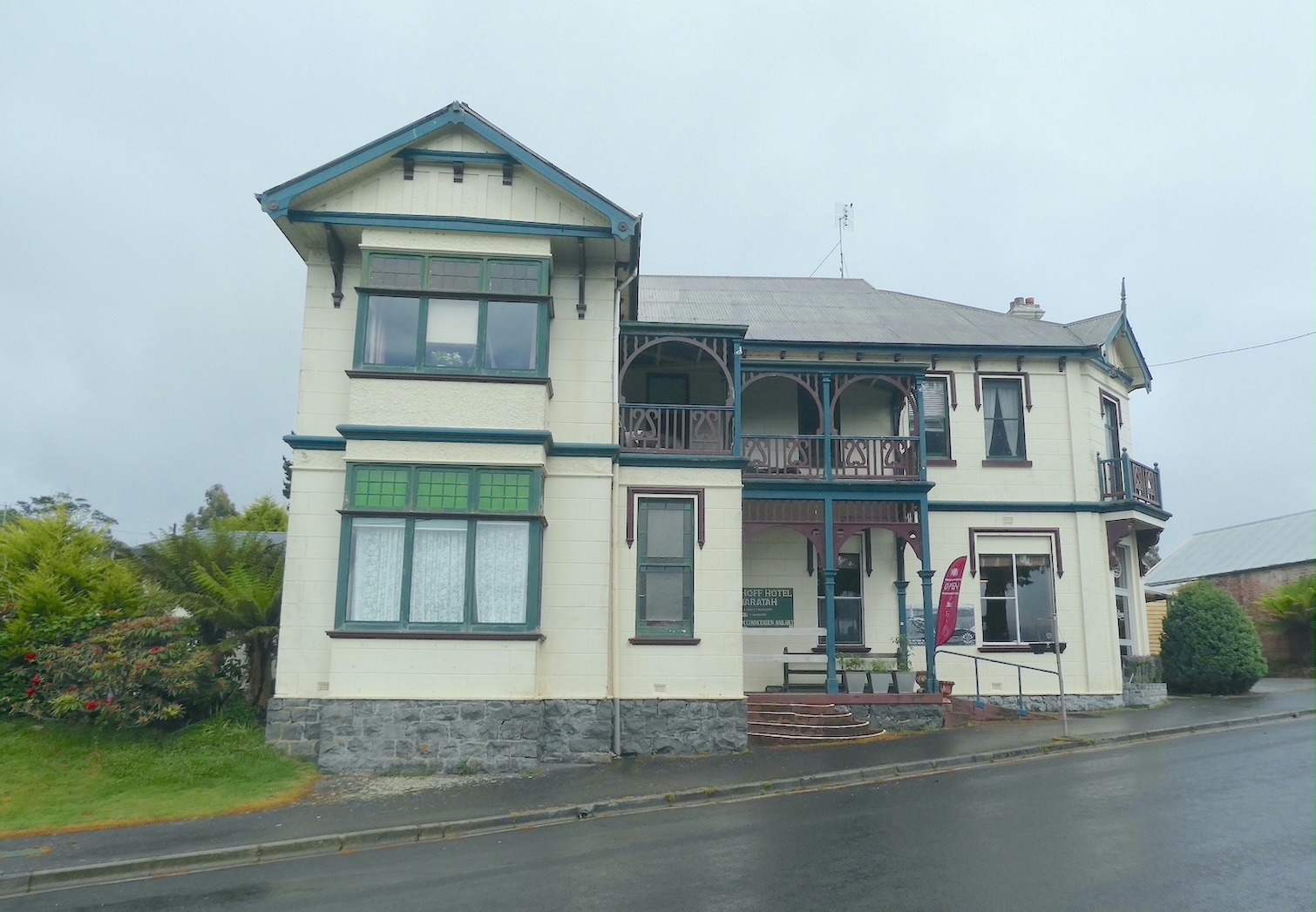
Our journey to Corinna took us through the former mining town of Waratah on the edge of Tasmania’s west coast wilderness. The plan was for lunch at the Bischoff Hotel, the only hotel remaining in the town. Originally built in 1879, it burned down in 1902 before being rebuilt and burning down again in 1909. The present Queen Anne style incarnation was completed later that same year.
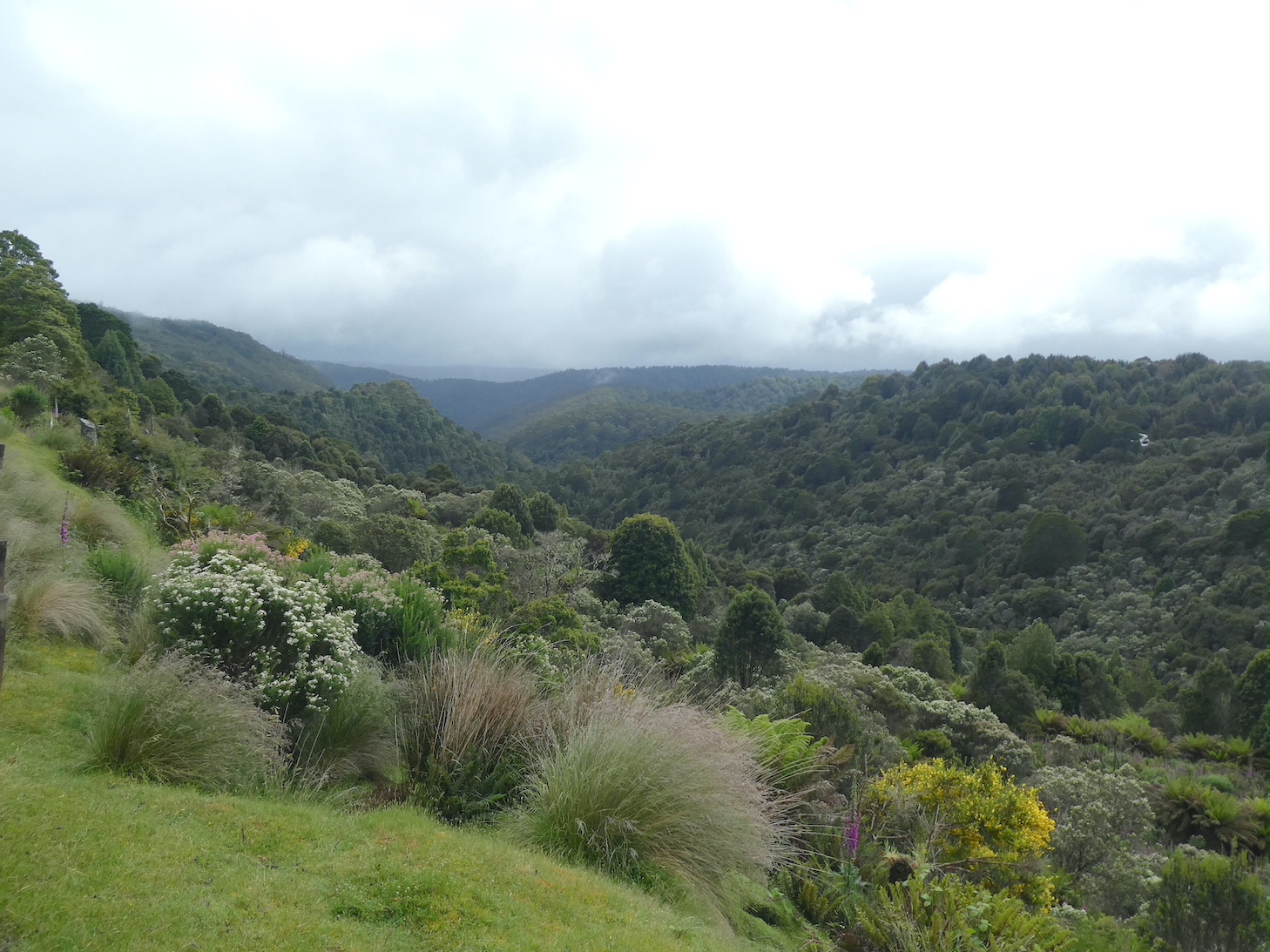
The view from the hotel is spectacular, even on a drizzly day
and the waterfall in the middle of town flows all year round. The water provided vital power to the mine directly through a series of seven water wheels and was later piped to the Waratah Power Station to produce hydro power.
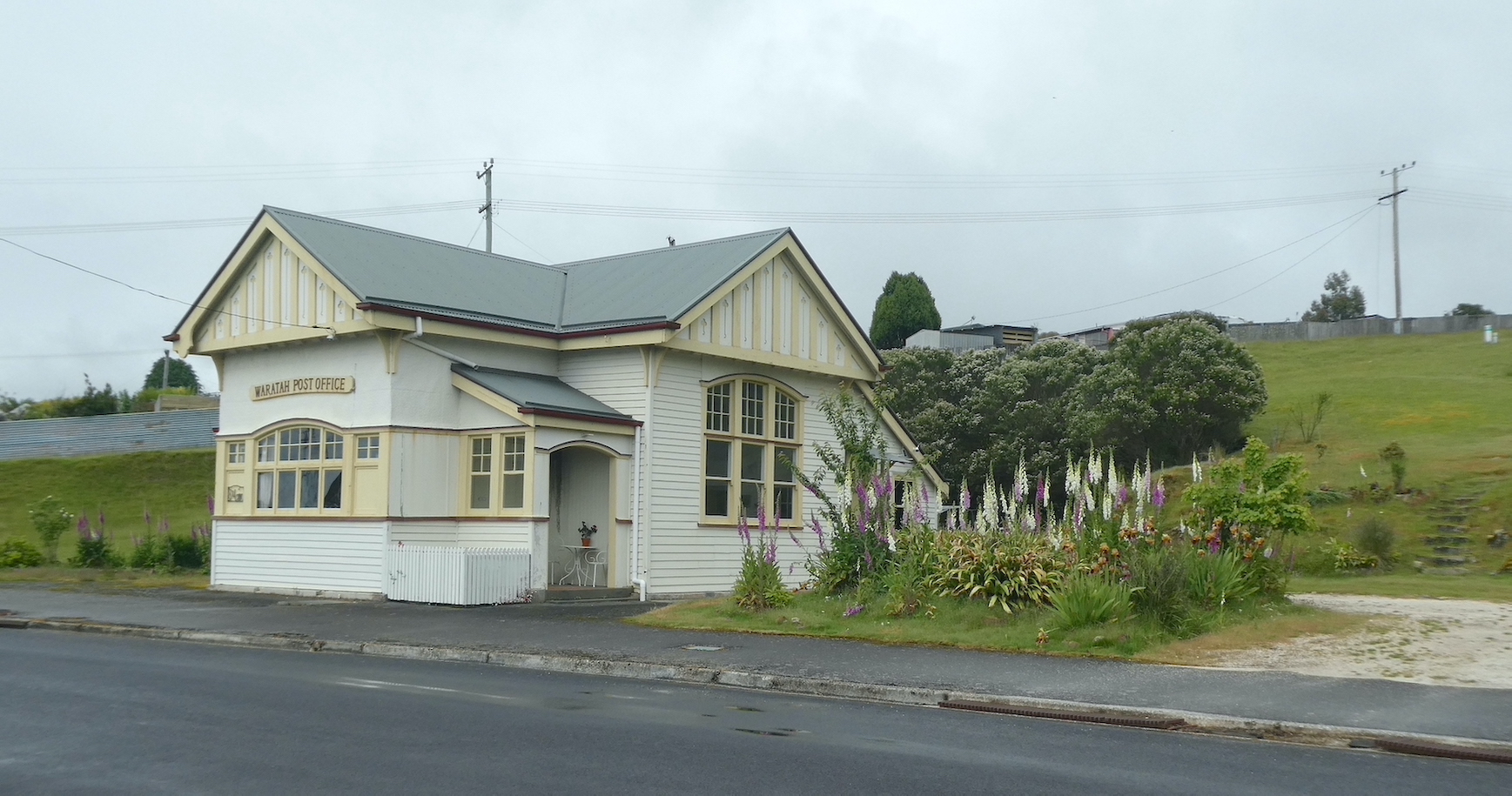
With some time to spare before dining, we set out to explore. The Waratah Post Office opened in 1882 and the current building replaced the original in 1913. It has been lovingly restored and is now available as luxury holiday accommodation.
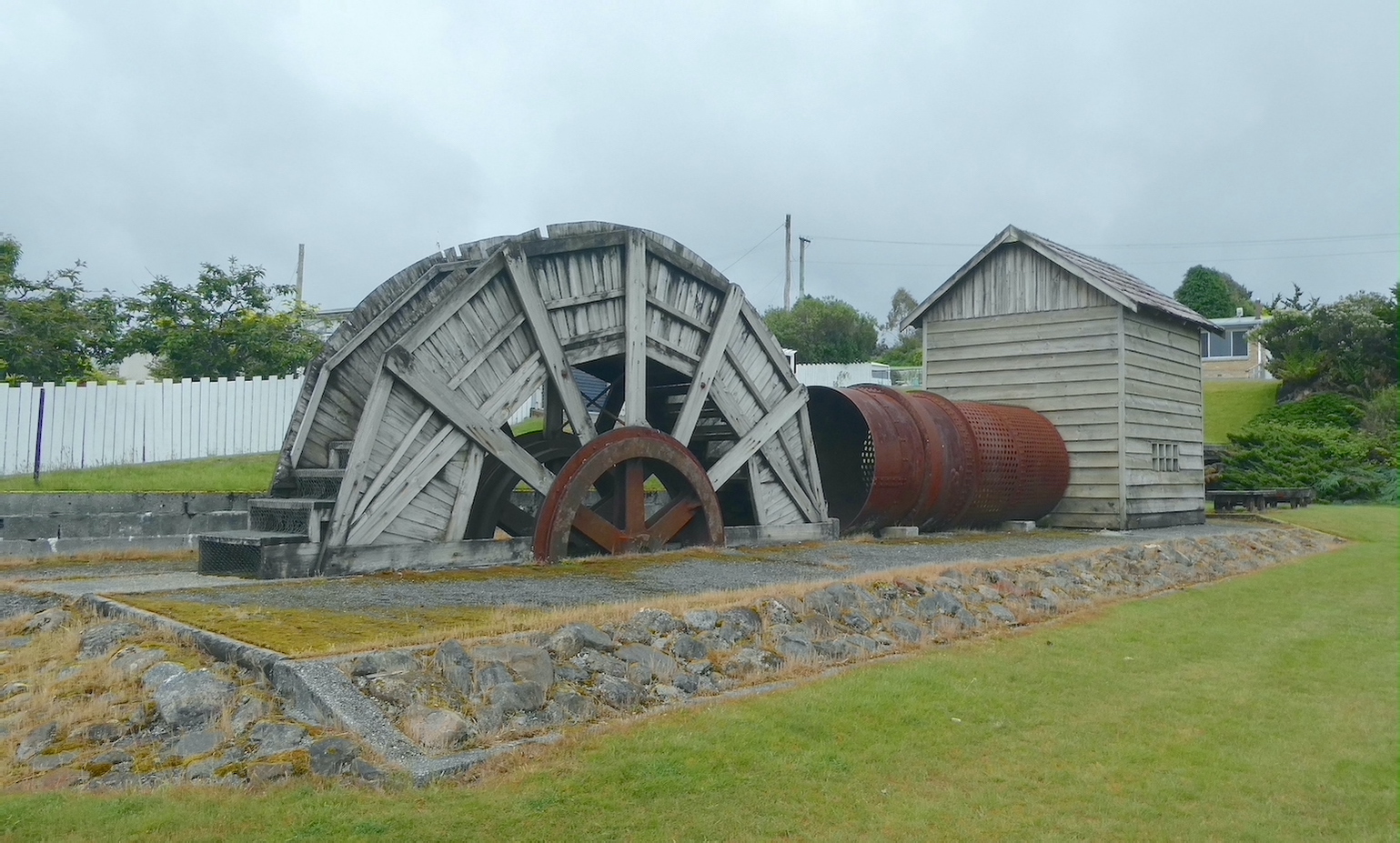
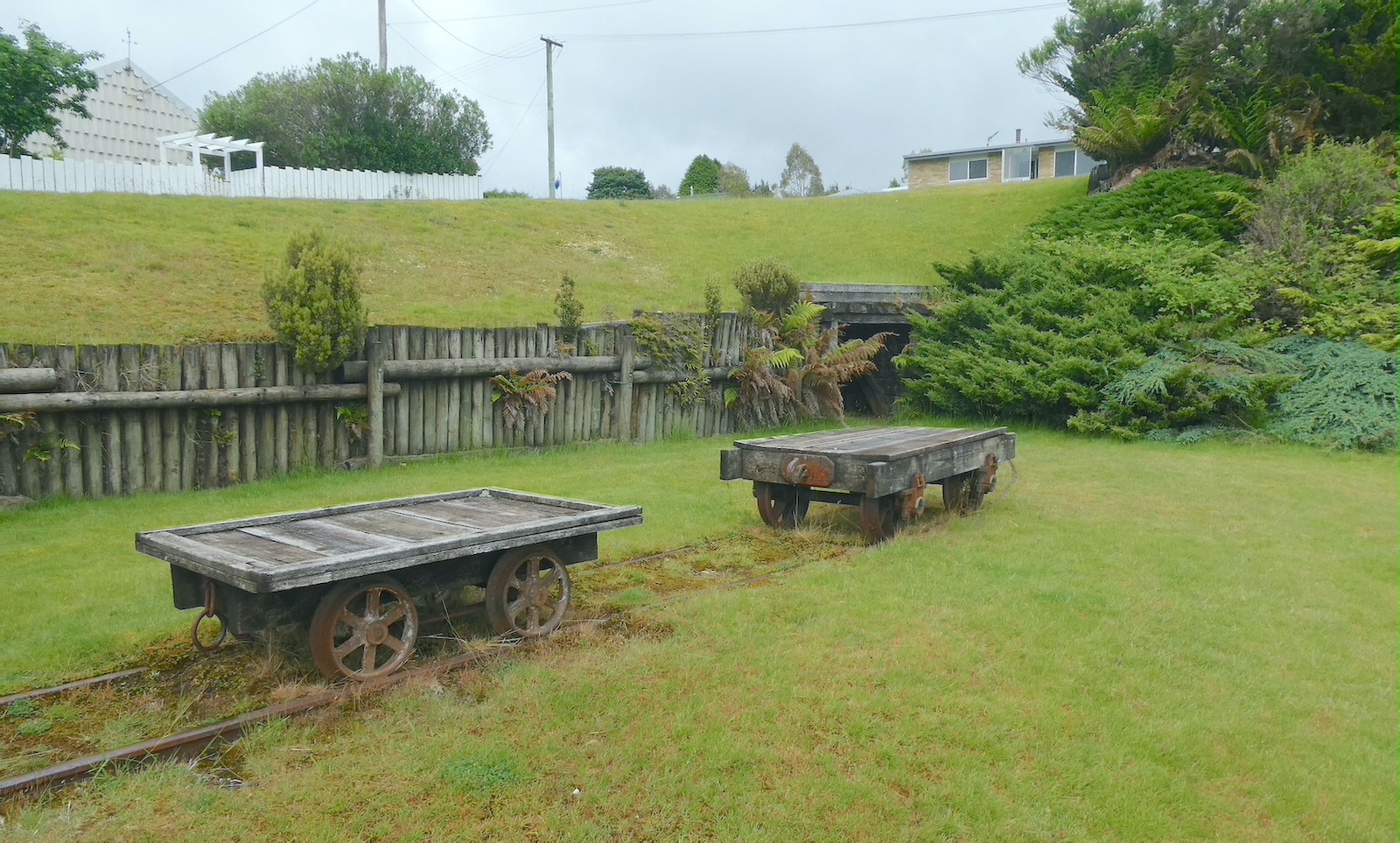
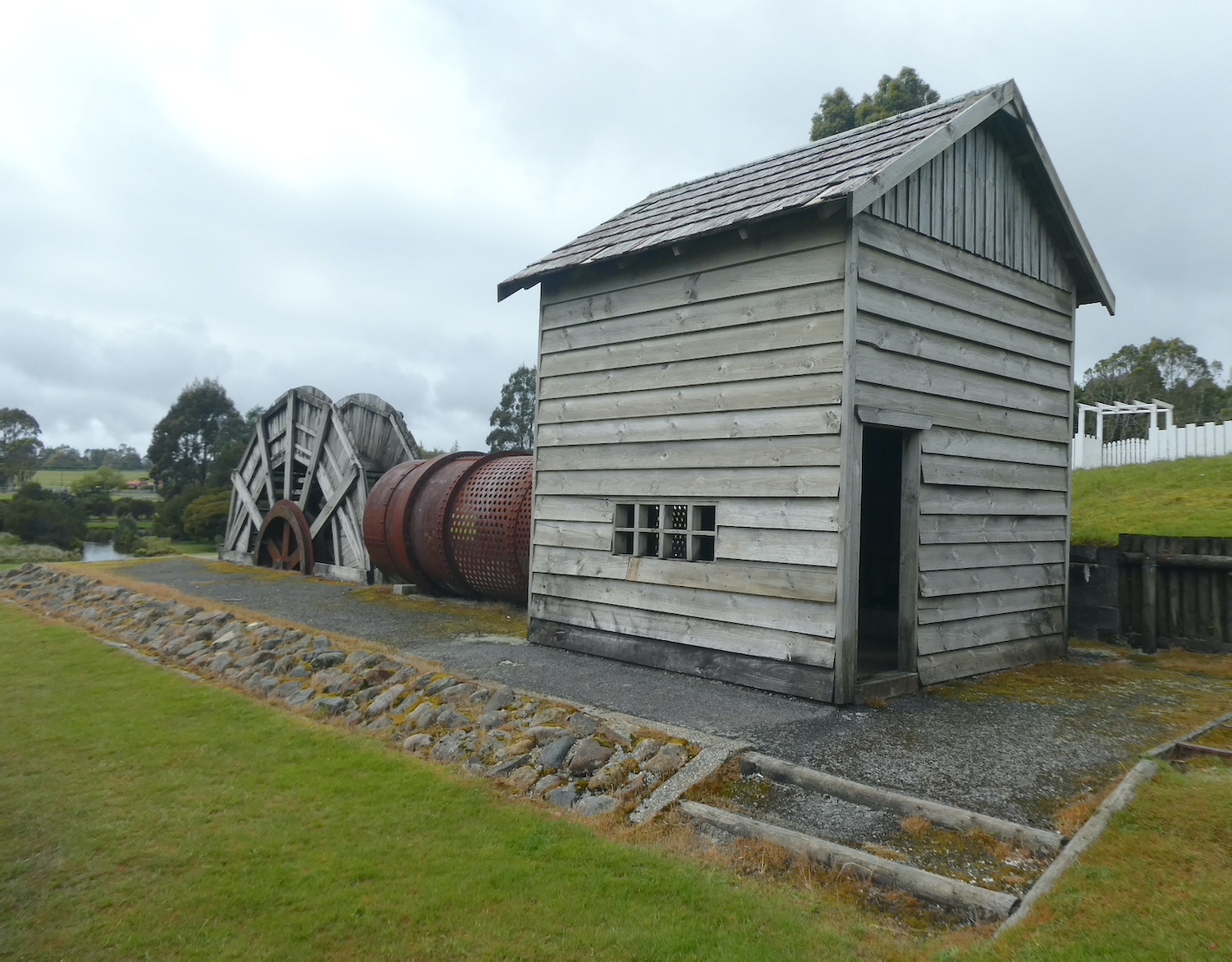
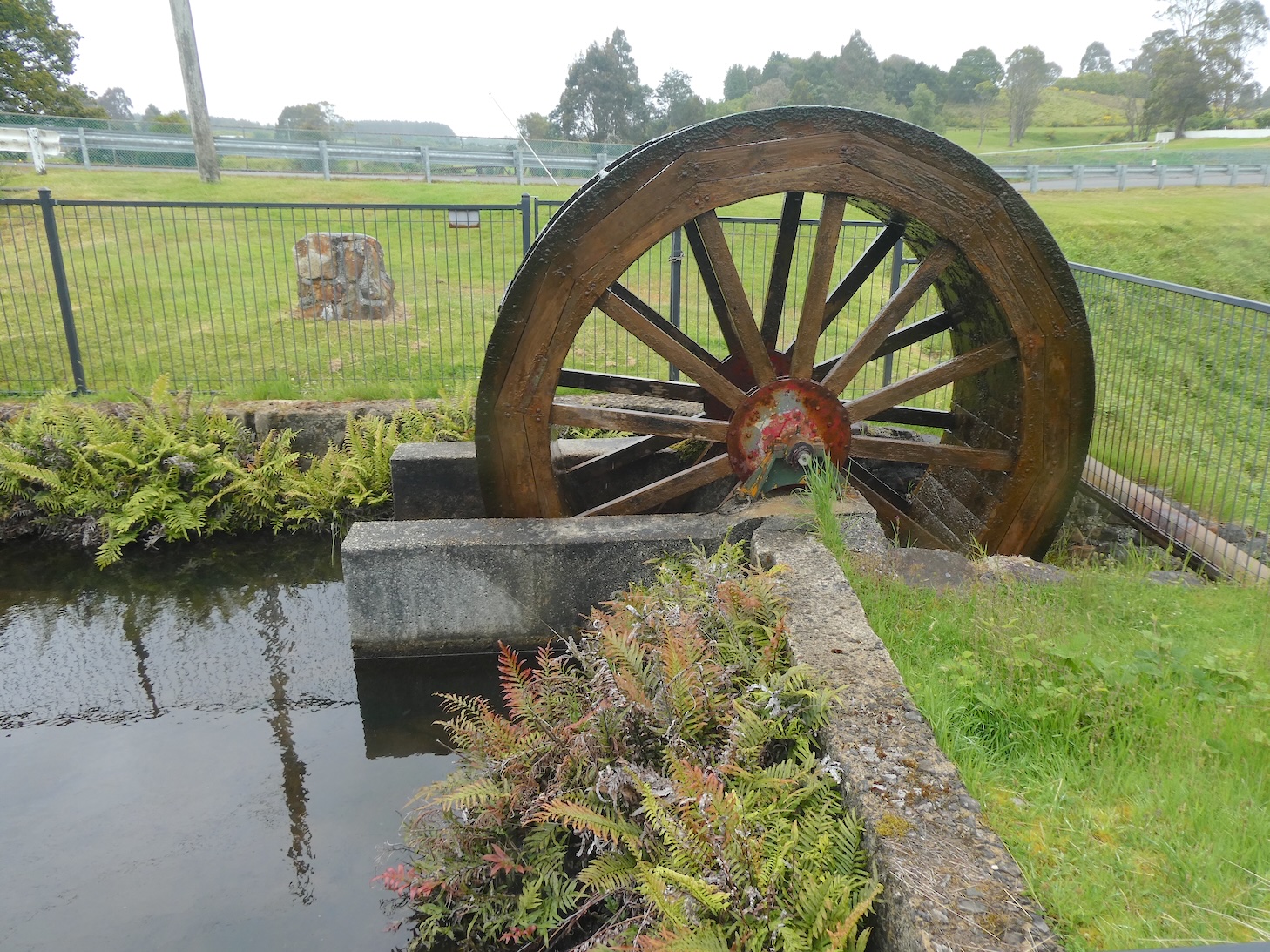
We made our way to the lake and came across an old waterwheel and pump house near what appeared to be an old entrance for the mine carts.
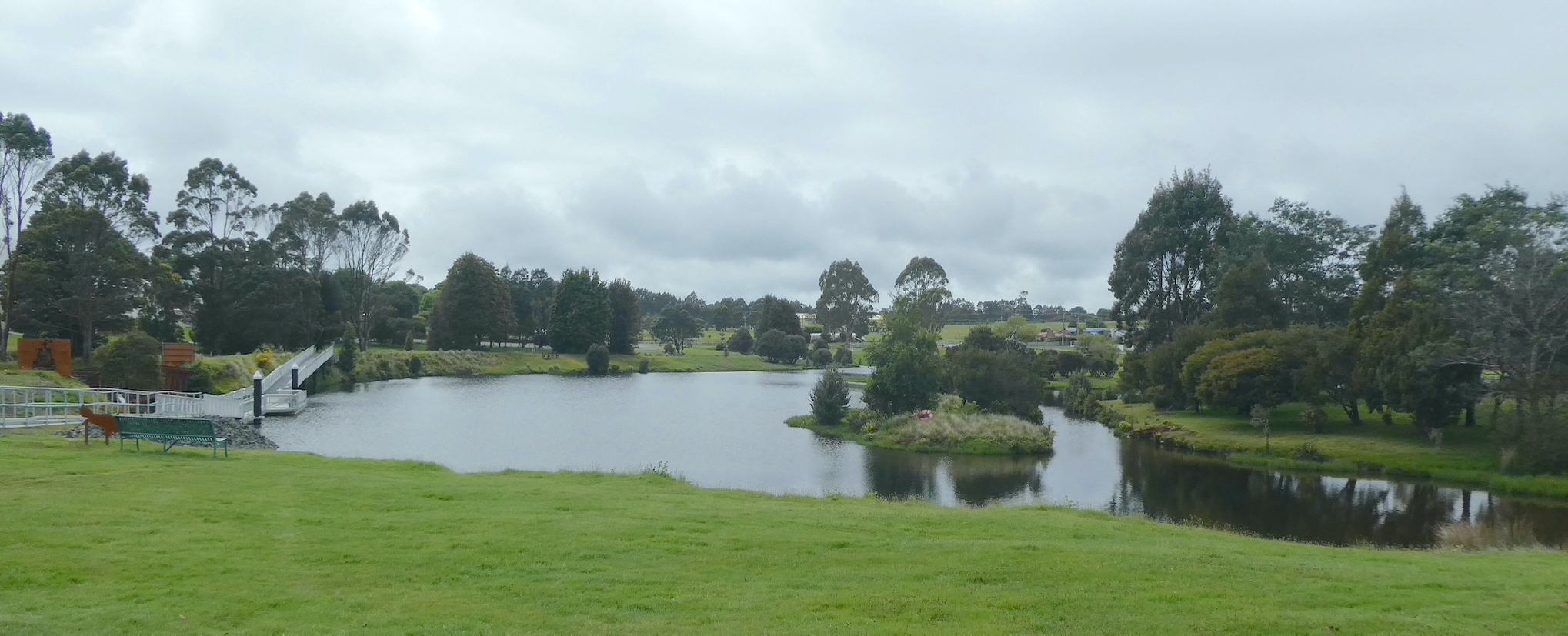
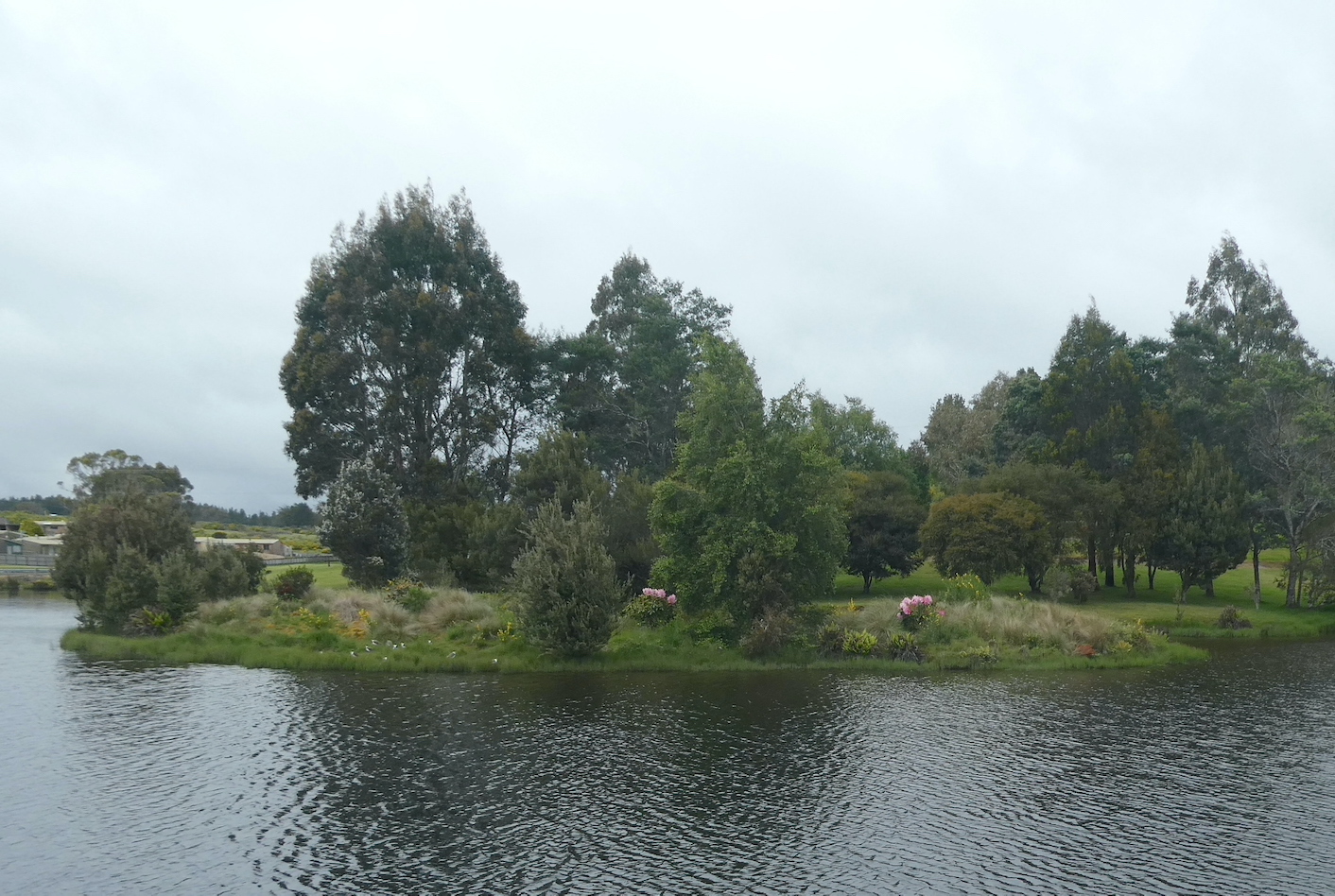
As we entered the town, we noticed how immaculate the public lawns and gardens were kept. Lake Waratah is a beautiful centrepiece.
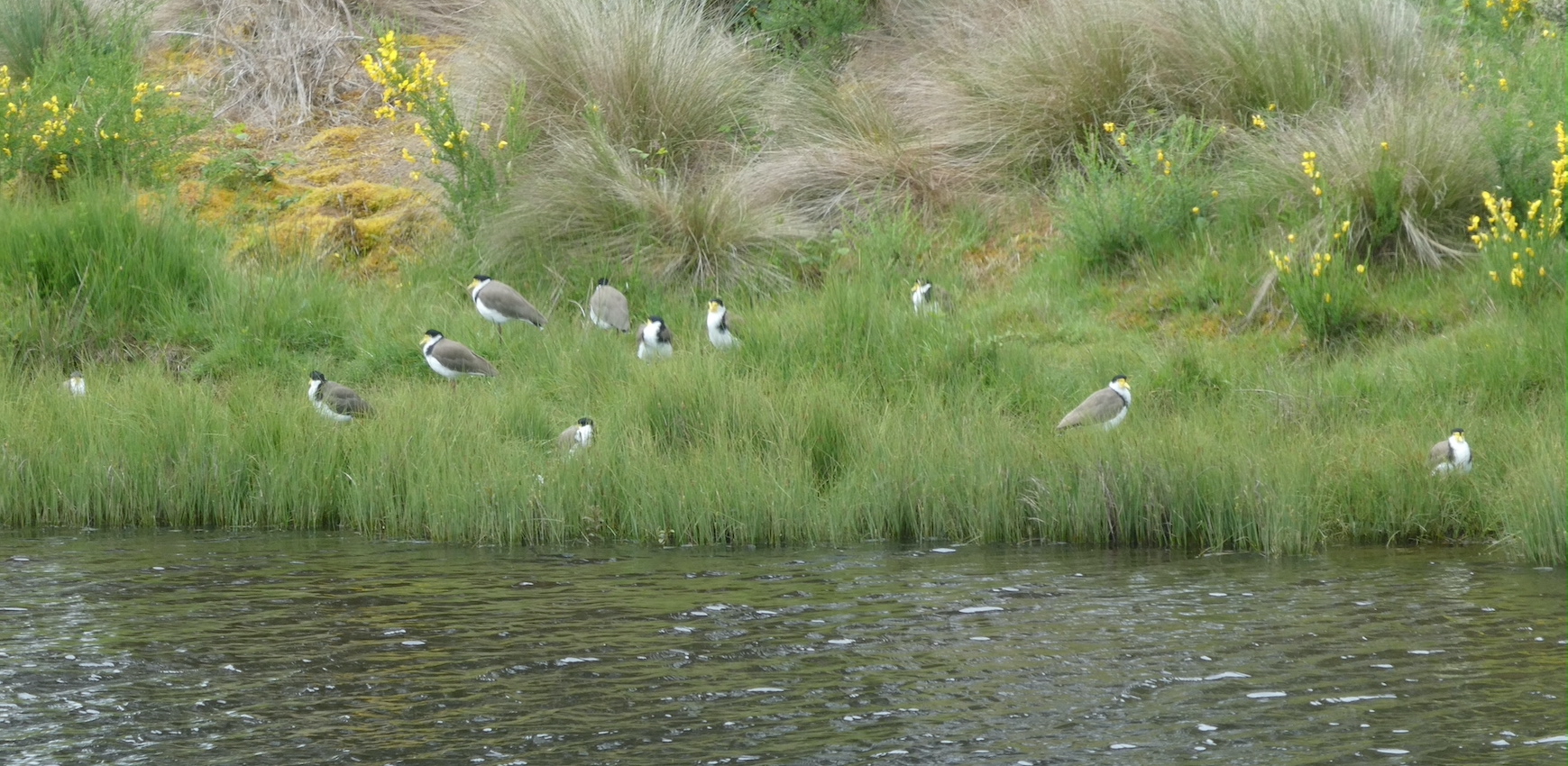
I have never seen a colony of masked lapwings in these numbers, they have chosen a lovely spot to call home.
We took a closer look at the iron truss rail bridge, built over the Waratah River in 1895, essential for getting people and supplies to Waratah and getting the ore out.
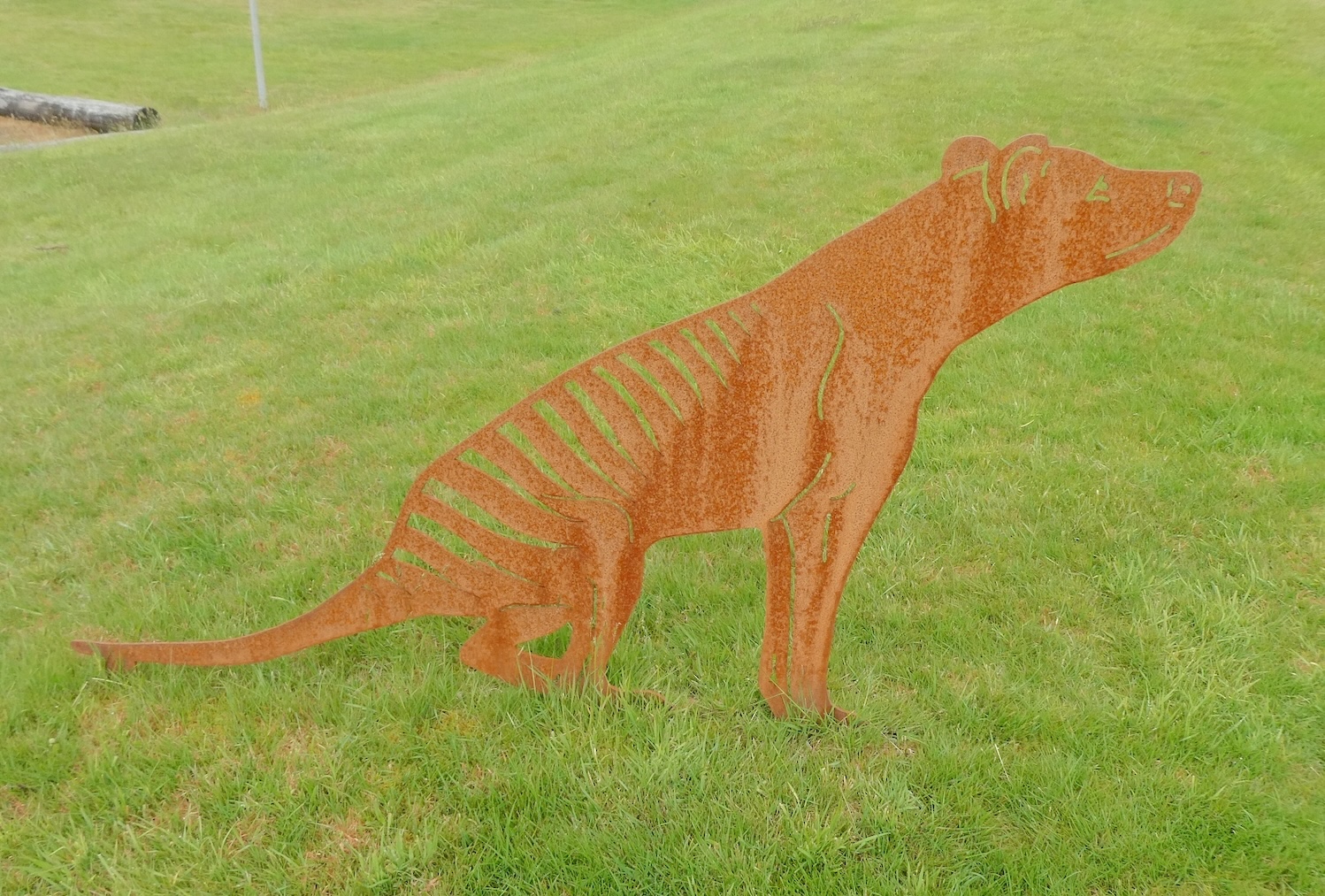
Waratah is known as one of the last bastions of the thylacine, thought by some to be extinct. We are ever hopeful of proving this theory wrong, it seems we are not alone.
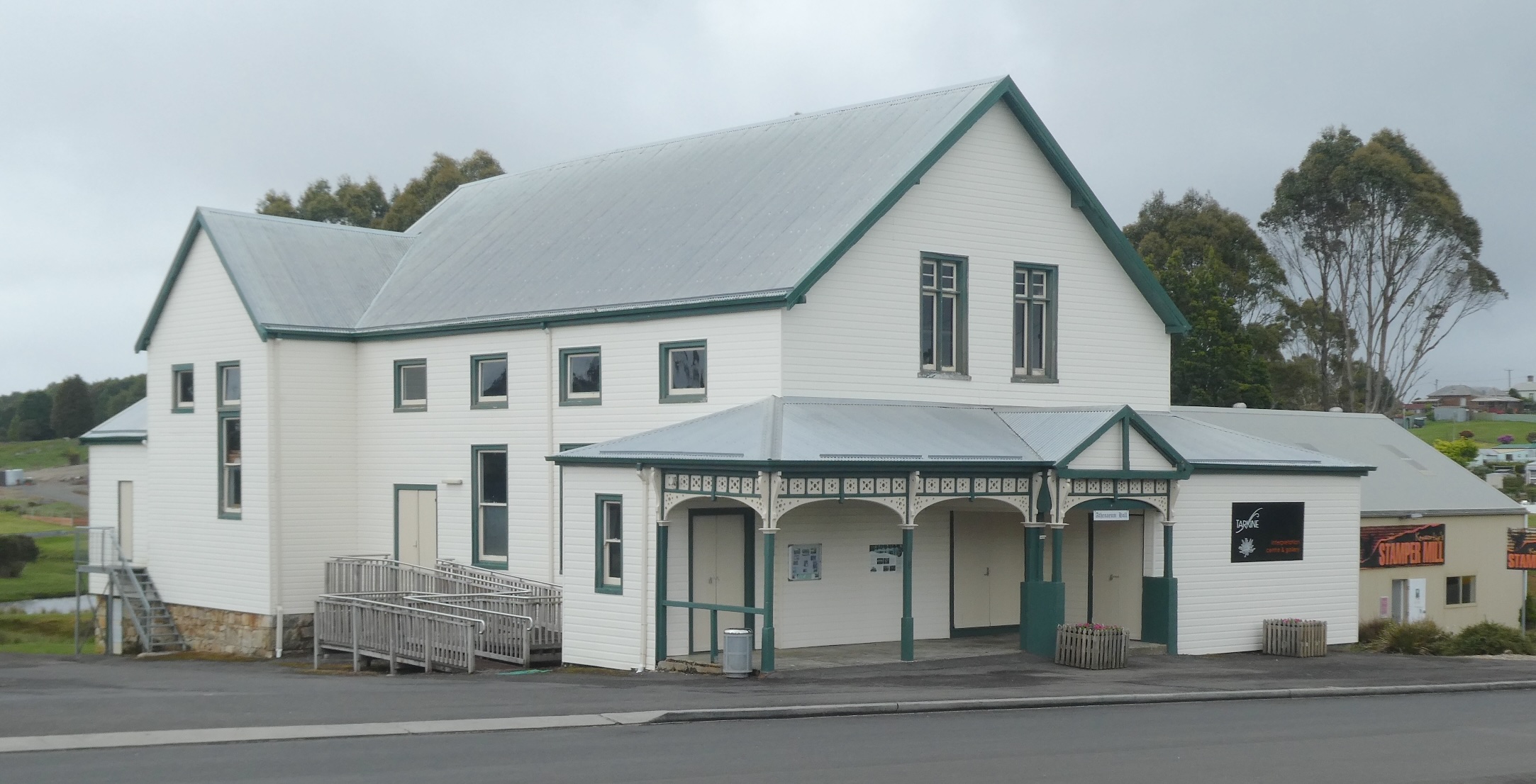
The Athenaeum Hall is a very impressive building completed in 1887 when the town was enjoying the economic prosperity provided by the tin mine. Built for the workers and families, it started as a library and later became the town hall and cinema. Today, it is home to the Tarkine Visitor Interpretation Centre and is still used for functions.
Across the road, the Waratah Museum occupies in the old Court House (that will be another post).
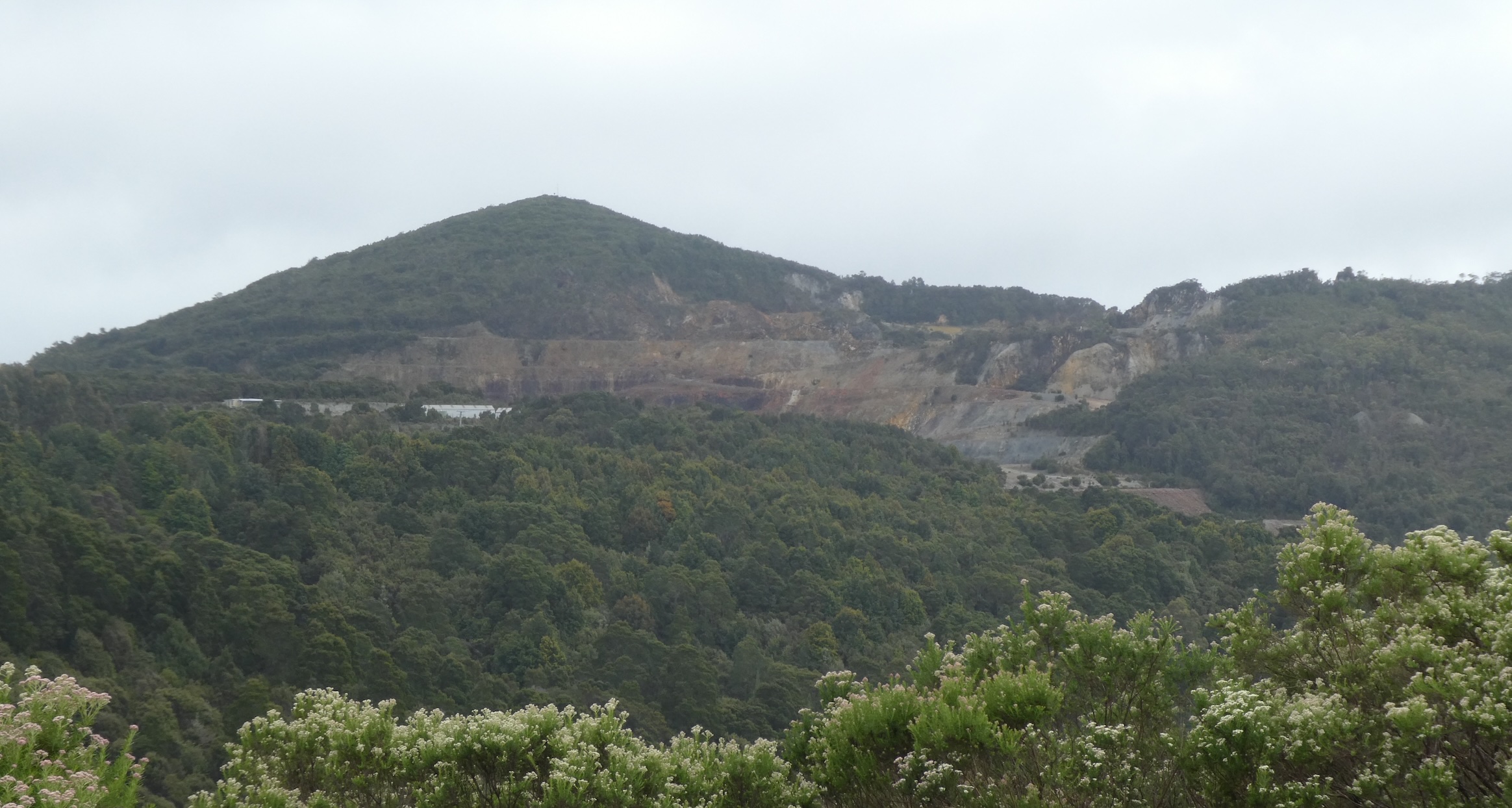
Despite a leisurely perambulation around the museum, we still had time for a walk to the bottom of the falls. The scarred landscape of the Mt. Bischoff mine loomed in the distance. Tin was discovered in the area in 1871 and by 1881, Mt. Bischoff was the richest tin mine in the world. The mine closed in 1947 after seventy years of continuous production but open cut mining resumed in 2008. Three years later, with resources depleted, it again closed and the pit is now flooded.
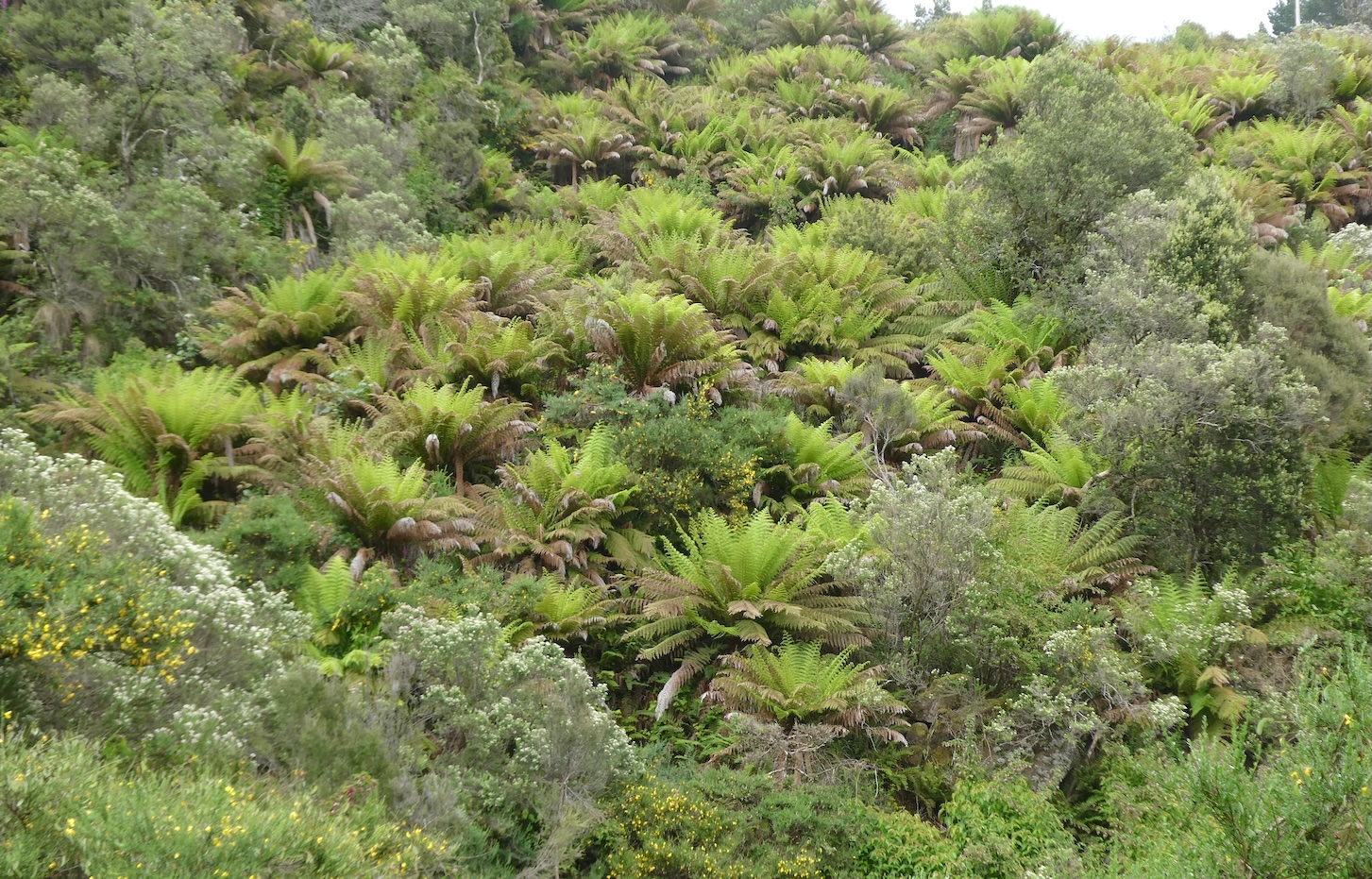
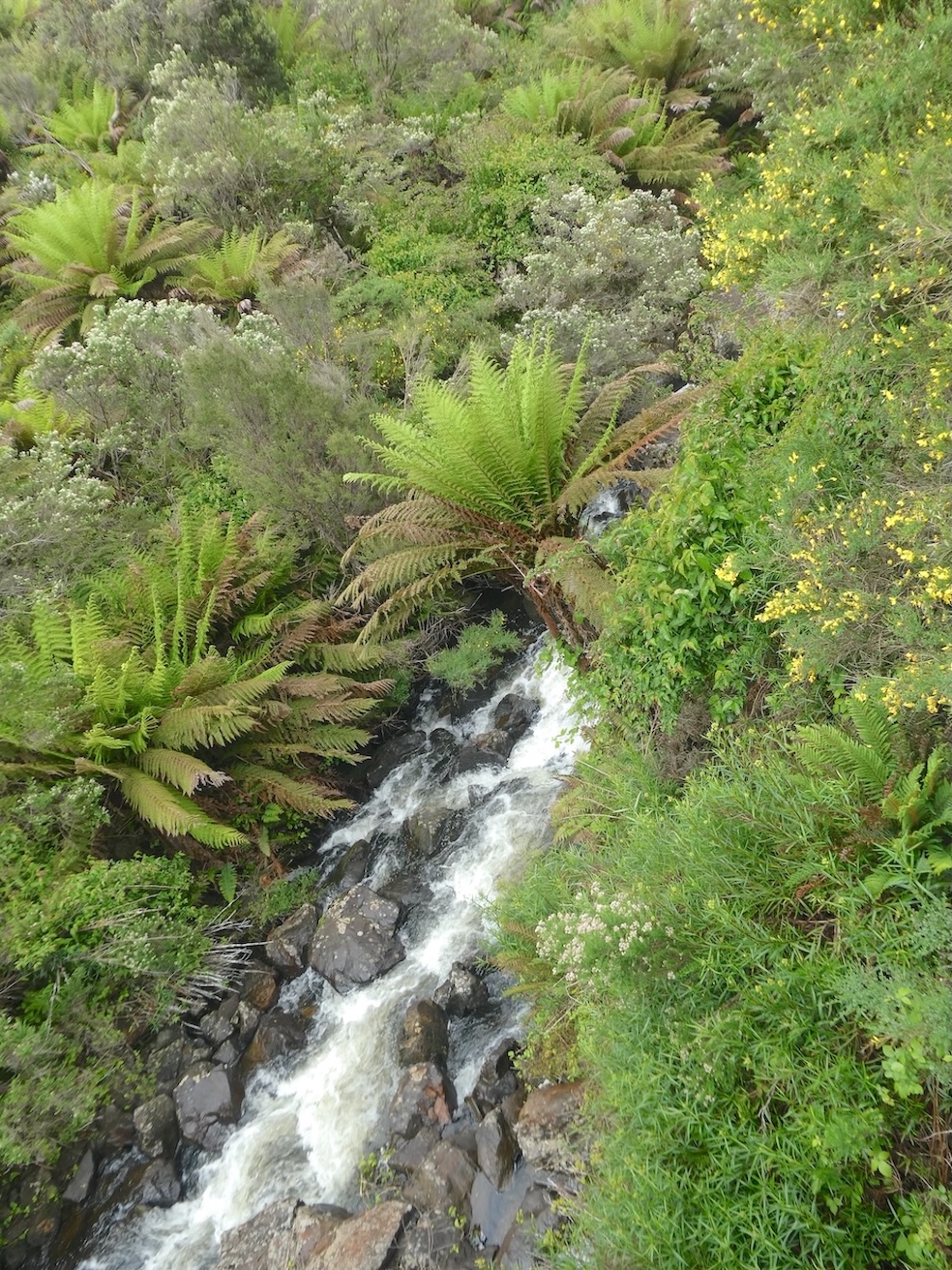
The walking trail was enveloped by tree ferns and verdant native vegetation
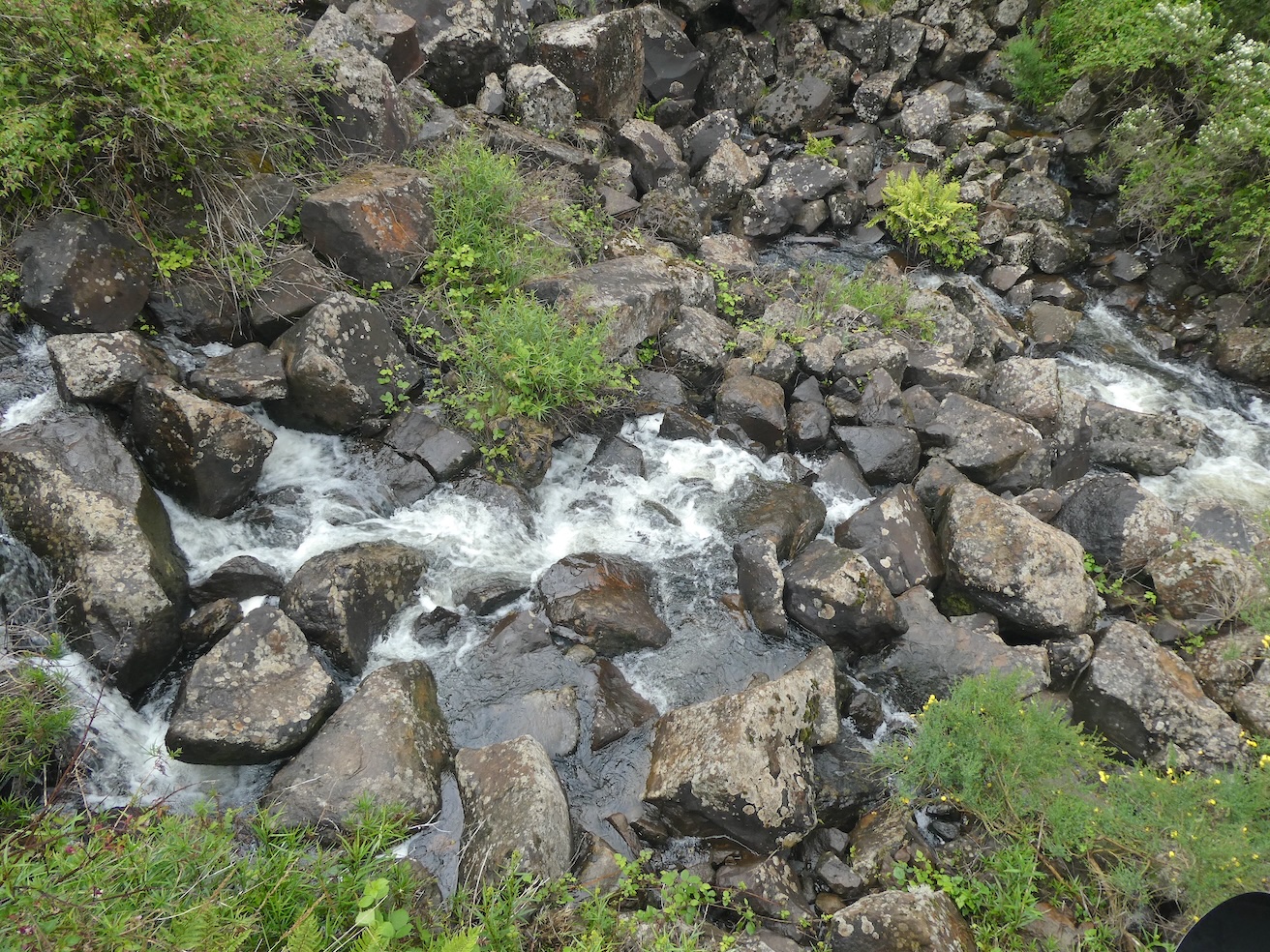
and the waterfall was magnificent after steady spring rain.
Returning to the top of the falls, the Waratah River wends its way over the cliff and continues ten kilometres before merging with the Arthur River.
The Dudley Kenworthy water wheel is named after the gentleman who recognised the potential to harness the year round water supply, making Waratah the first industrial site in Australia to be lit by hydro-electricity.
After a substantial lunch of delicious fish ’n’ chips and a schooner of stout, we were ready to tackle the long and winding road to Corinna.