classy classics

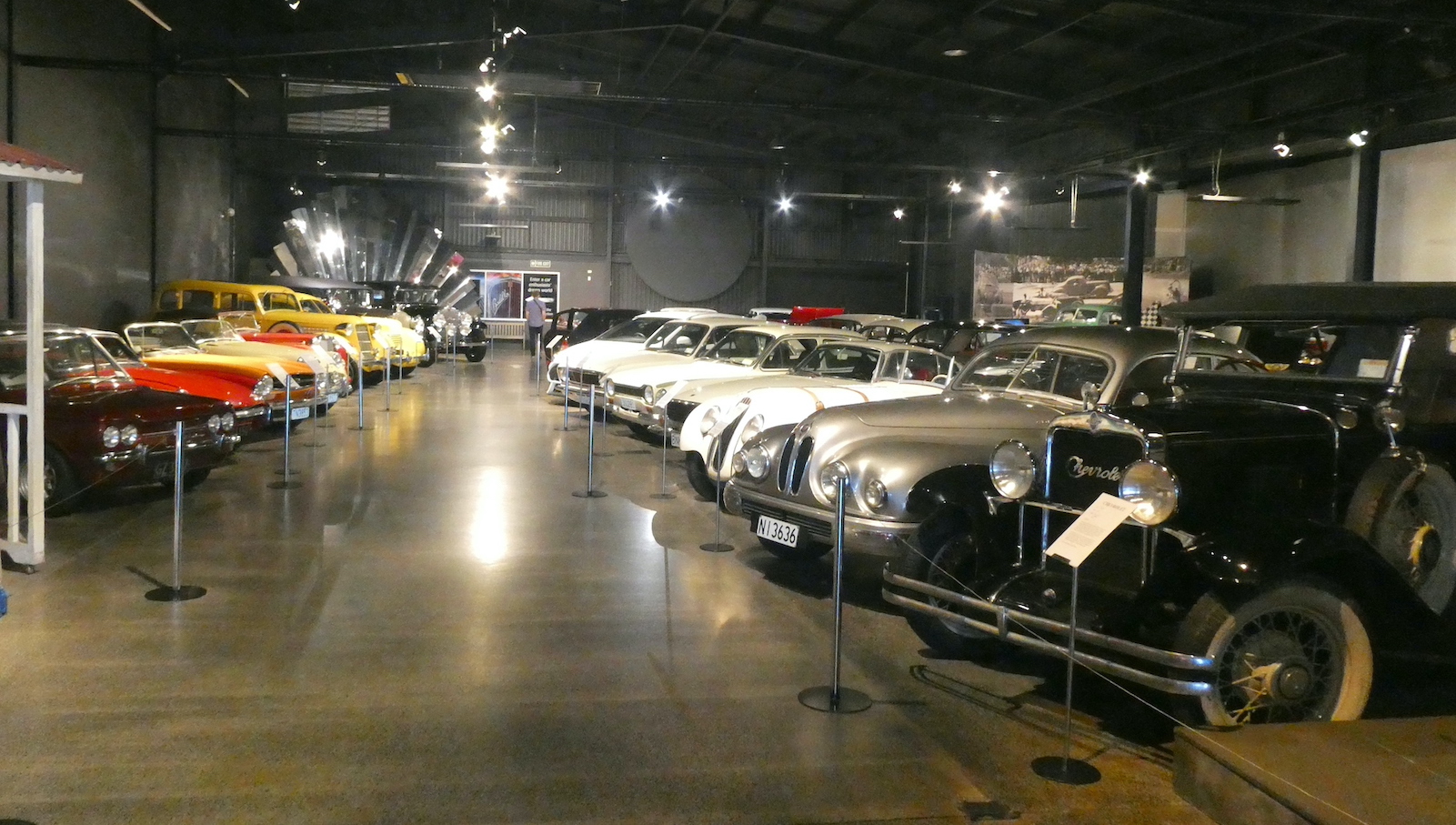
Following our sensory stimulation at the World of WearableArt Museum, we next ventured into the adjacent Nelson Classic Car Museum. I’m not really what you would call a ‘car enthusiast’, as long as it transports me from A to B in comfort I am happy. I do, however, appreciate the form and am of the opinion that when it comes to cars, and fashion for that matter, style and class are a thing of the past. The fabulous collection of vehicles began in 1967 and all have been fully restored and are presented in immaculate condition. Our attention was instantly drawn to ‘The Flamboyant Fifties’ section to our right

but we chose to traverse the museum in the other direction after spying an intriguing red Mini. It seems two blokes decided, over a beer, an attempt to break the land speed record in a 1964 Mini was a great idea. Guy Griffith and Garry Orton assembled a team, known as Project 64. Long story short, they did indeed set a new land speed record of 166mph (267kph) on Bonneville Salt Flats, Utah in 2016.

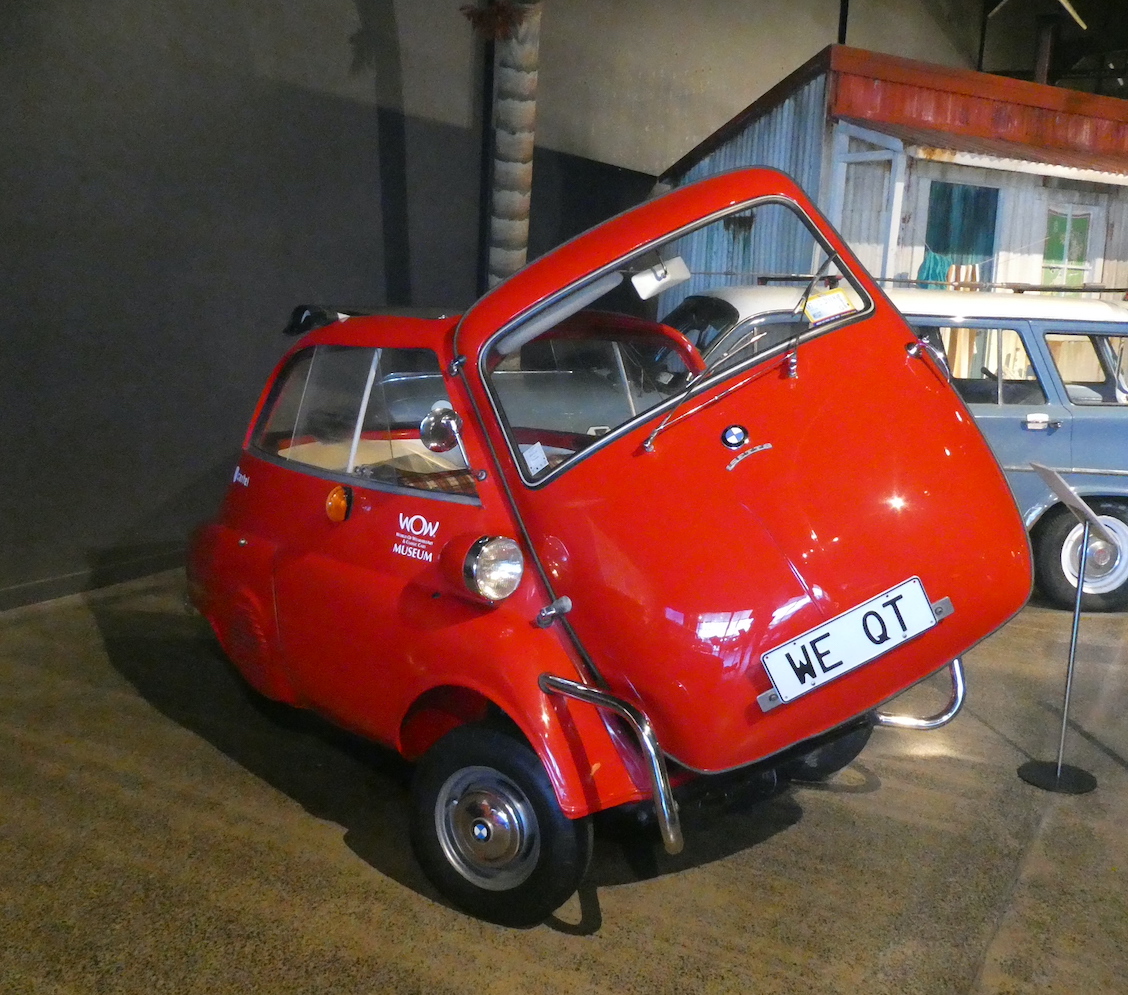
I suspect a more sedate history is attached to the cute little BMW Isetta parked in the next bay. The entire front end of the Italian-designed microcar opens out as a single door, along with the steering wheel and instrument panel. Driver and passenger were to exit through the canvas sunroof in the event of an accident. The right-hand drive version, produced under licence in England from 1957, meant the driver and engine were on the same side, so a 27kg counterweight was added to the left-hand side to compensate. Popularity waned until a three-wheeled version was introduced and it was therefore classed as a three-wheeled motorcycle, requiring only a motorcycle licence. Unfortunately, the three wheels made it more prone to rolling over.
Adding a touch of nostalgic ambience, some displays are accompanied by an innovative façade. A 1962 Holden station wagon has been packed for a beachside holiday

and a 1922 Hupmobile is parked suspiciously outside Luigi’s Barbershop.

The next section was aptly named ‘Visual Delights’.
A dazzling line-up of 1960s sports cars opened with a Sunbeam Stiletto. Despite lacking the pizzazz of the classic convertibles, the Stiletto was considered a rival to the Mini Cooper in its day. Only around 9,000 of these cars were manufactured between 1967 and 1972.
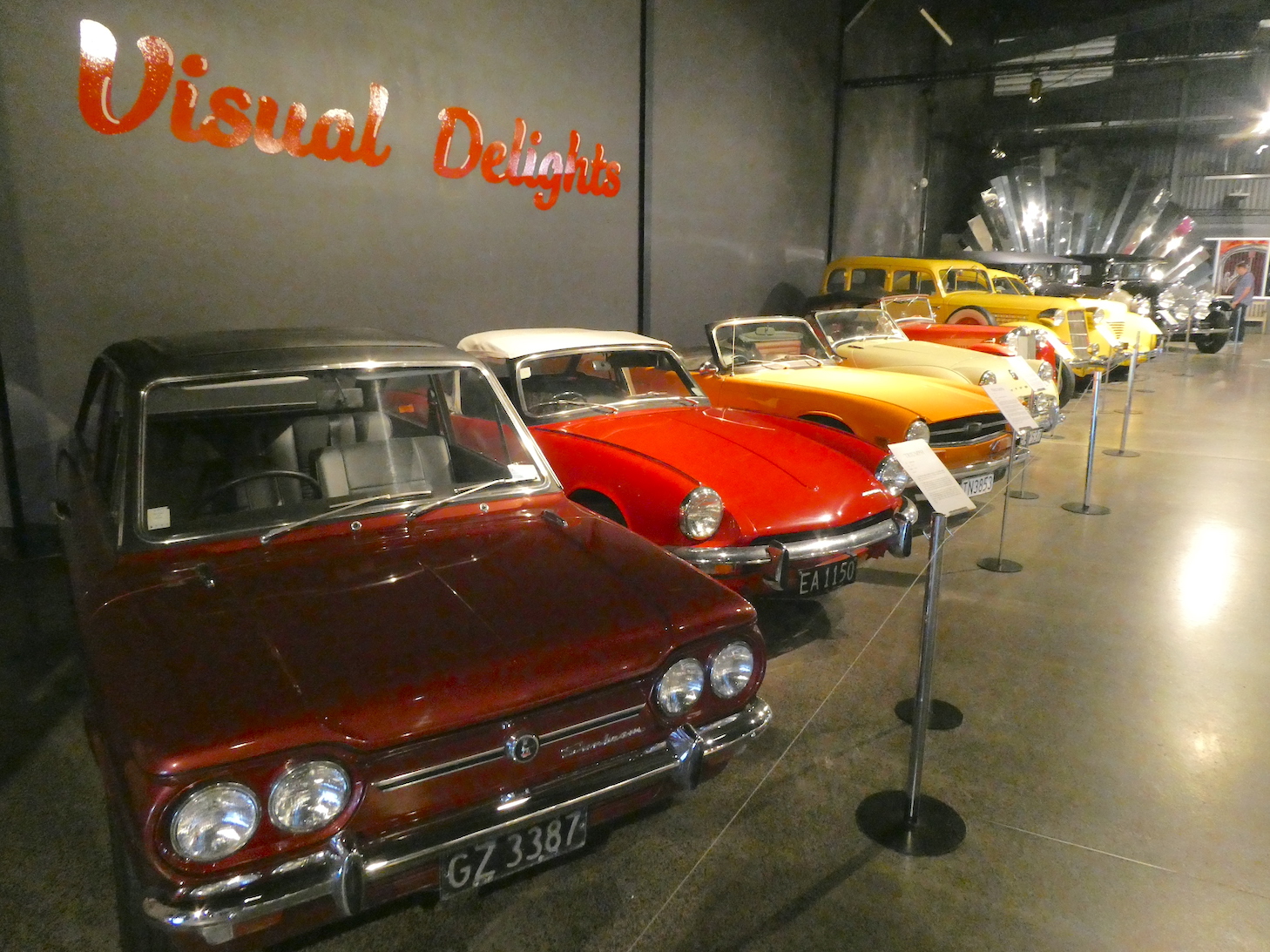
A trio of tantalizing Triumphs

terminate in a time warp, back to the 1930s. Auburn automobiles, produced in America from 1900 to 1937, were renowned for being fast, good-looking and expensive. Business declined following the Great Depression and the Auburn 653 was developed in 1934 to offer more affordable models. Re-styled in 1935, it still wasn’t enough to save the company and all vehicle business came to a halt in 1937.

BMW were more successful during the same era with the 328 sports car. Produced from 1936 to 1940, the BMW 328 won its first race at the Nürburgring in 1936 and went on to achieve more than 100 class wins the following year. Incidentally, Frank Pratt won the 1948 Australian Grand Prix driving a 328.

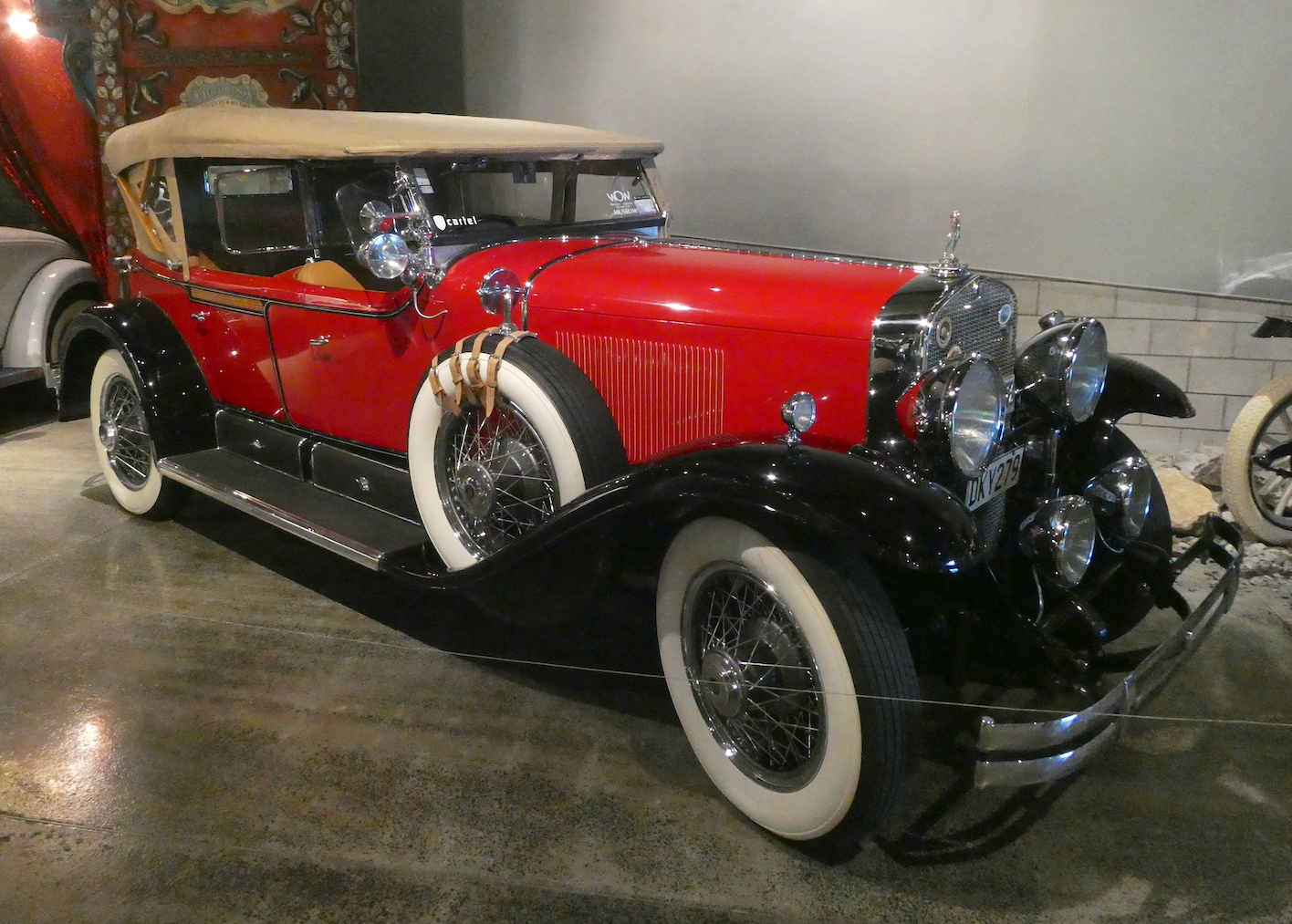
New innovations in the ‘sporty’ Cadillacs of 1929 included a synchronized 3-speed transmission, eliminating the need to double-clutch when changing gear, and four-wheel brakes requiring considerably less pedal pressure.
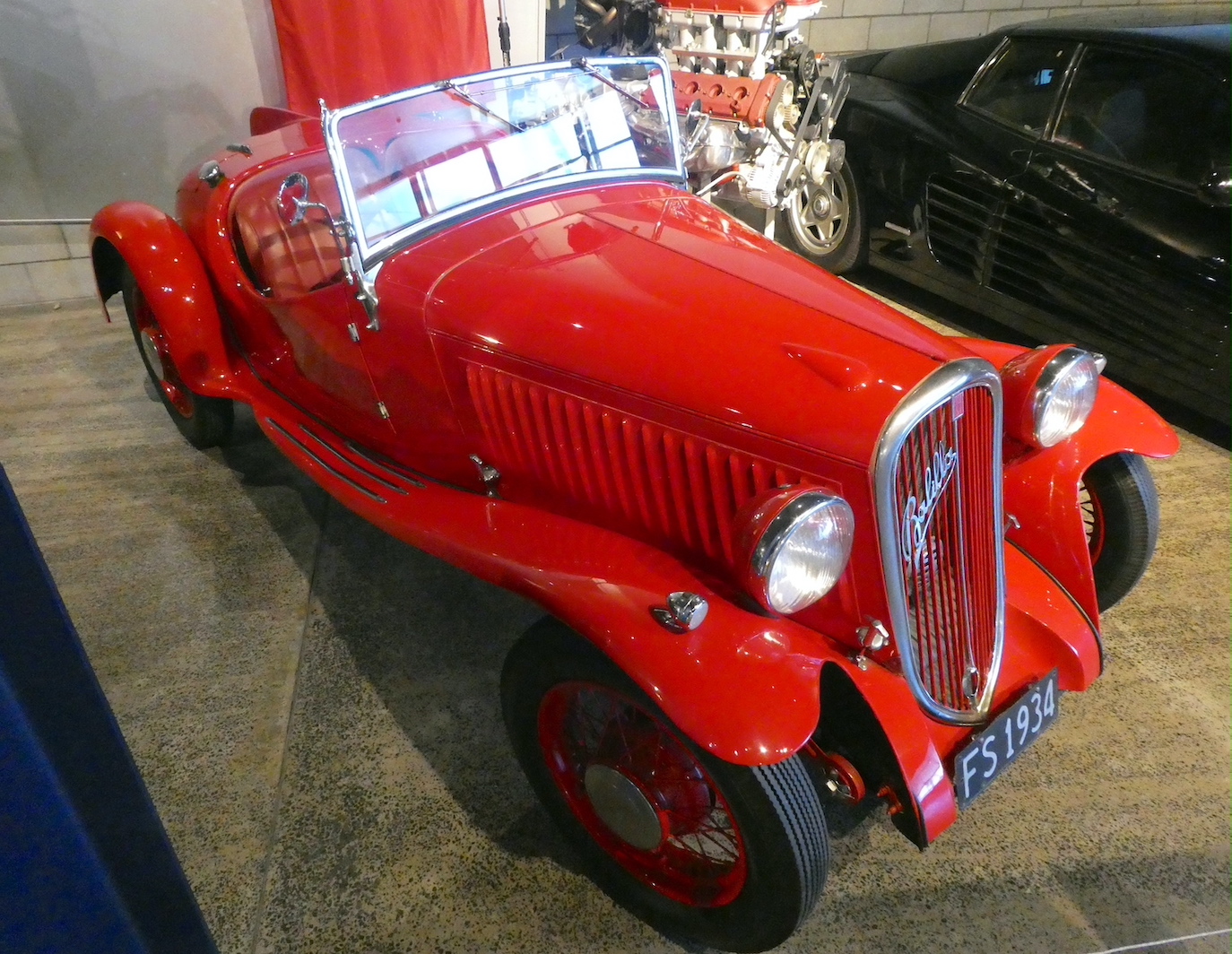
Looking a lot more ‘sporty’, the 1934 Fiat Balilla Spider, originally with the 3-speed ‘no-syncromesh’ gearbox, benefitted from an upgrade to a 4-speed transmission.
A recently restored 1900s Ford waited to find its place within the exhibition buildings.

On a completely different scale, the 1959 Cadillac Coupe de Ville boasts the world’s largest tail fins on a production automobile. At the time, Cadillac’s design philosophy was heavily influenced by jet aircraft and the tail light arrangement represents the exhausts of a jet.

Back to the more ‘classic’ form

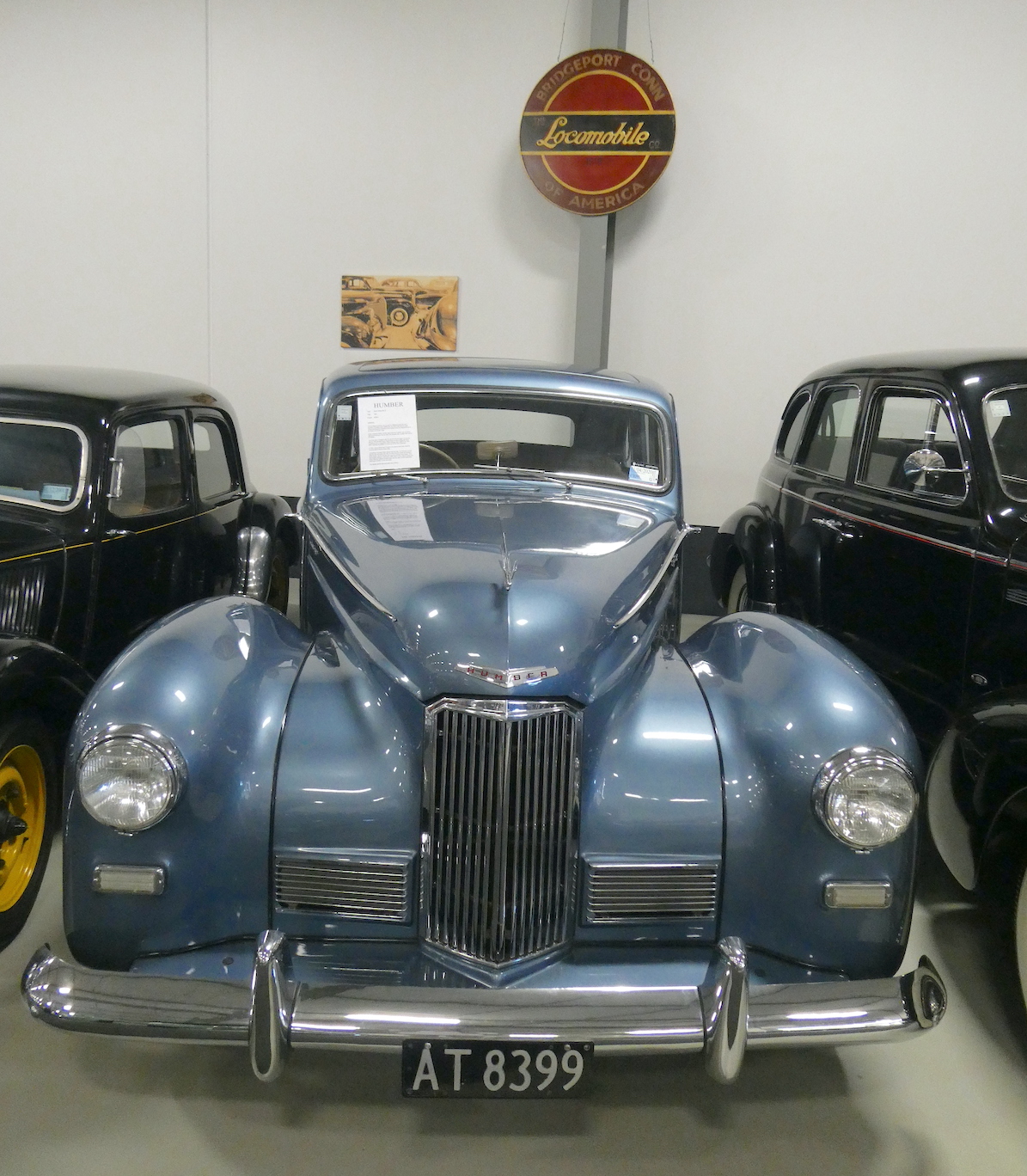
the Humber Super Snipe was produced by British-based Humber Limited from 1938 to 1967, the Mark III commenced in 1950.
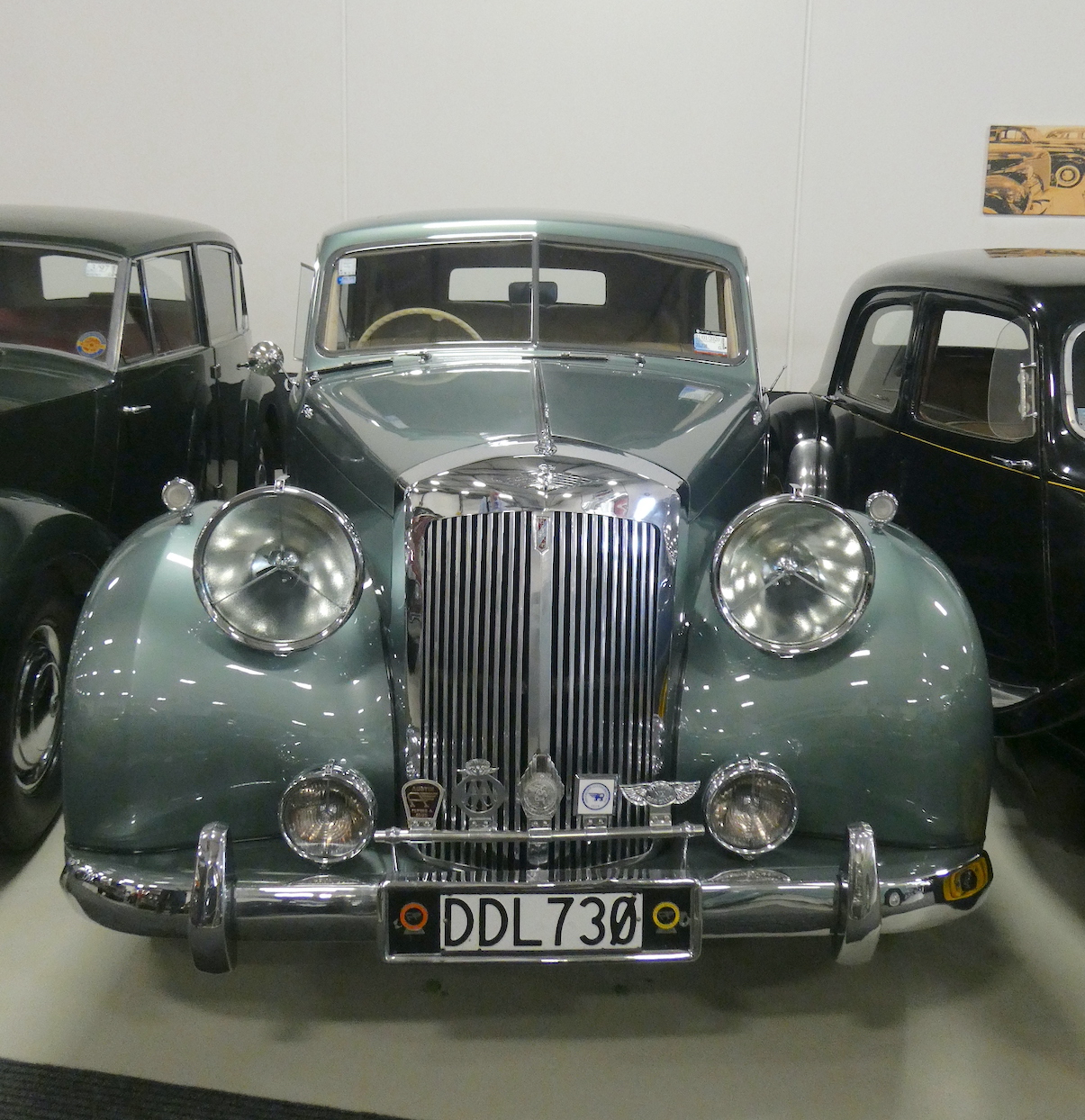
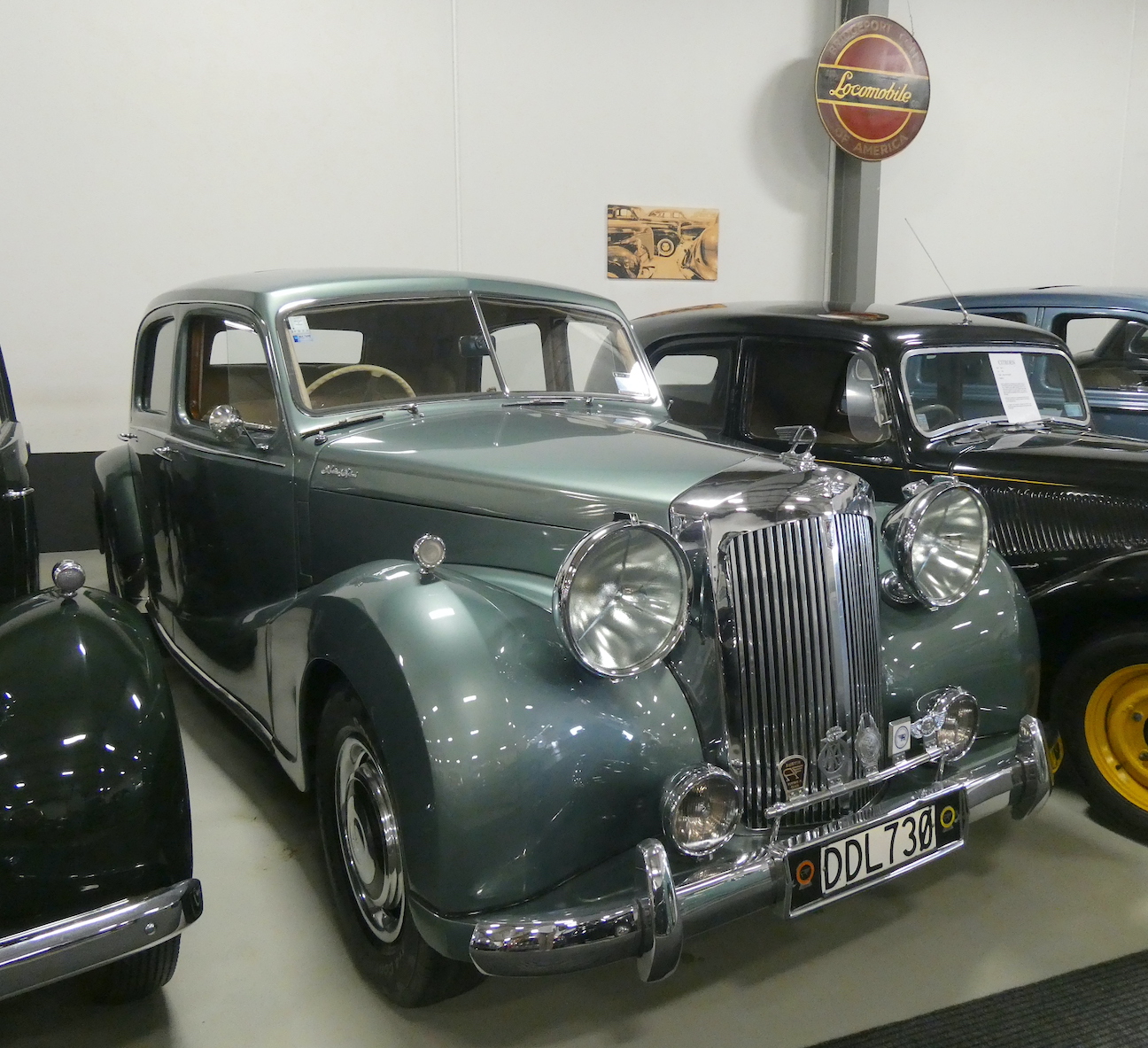
U.K. luxury car, the Austin Sheerline, was designed during WW II but production was delayed until 1947. The style was similar to the Rolls Royce or Bentley of the time but the Austin was around two-thirds of the price.
The Ford Motor Company introduced its De Luxe line in 1938 to bridge the gap between its base and luxury models. 1939 saw the first year of hydraulic brakes at Ford.

At the beginning of 1950, Britain was the leading exporter of cars, dominated by Morris and followed closely by Austin. These two companies merged to become the British Motor Company (BMC) in 1952. I have vivid memories of the drives home from primary school in Mum’s blue Morris Minor, affectionately known as Gertrude. If she didn’t have a clear run at top speed to tackle a particularly steep hill en route, we would slow to a halt before reaching the top, despite our verbal encouragement from the back seat. Encouragement turned to screams as mum juggled gear stick and clutch, my fear of careening rearward only allayed by the perfection of yet another hill start.

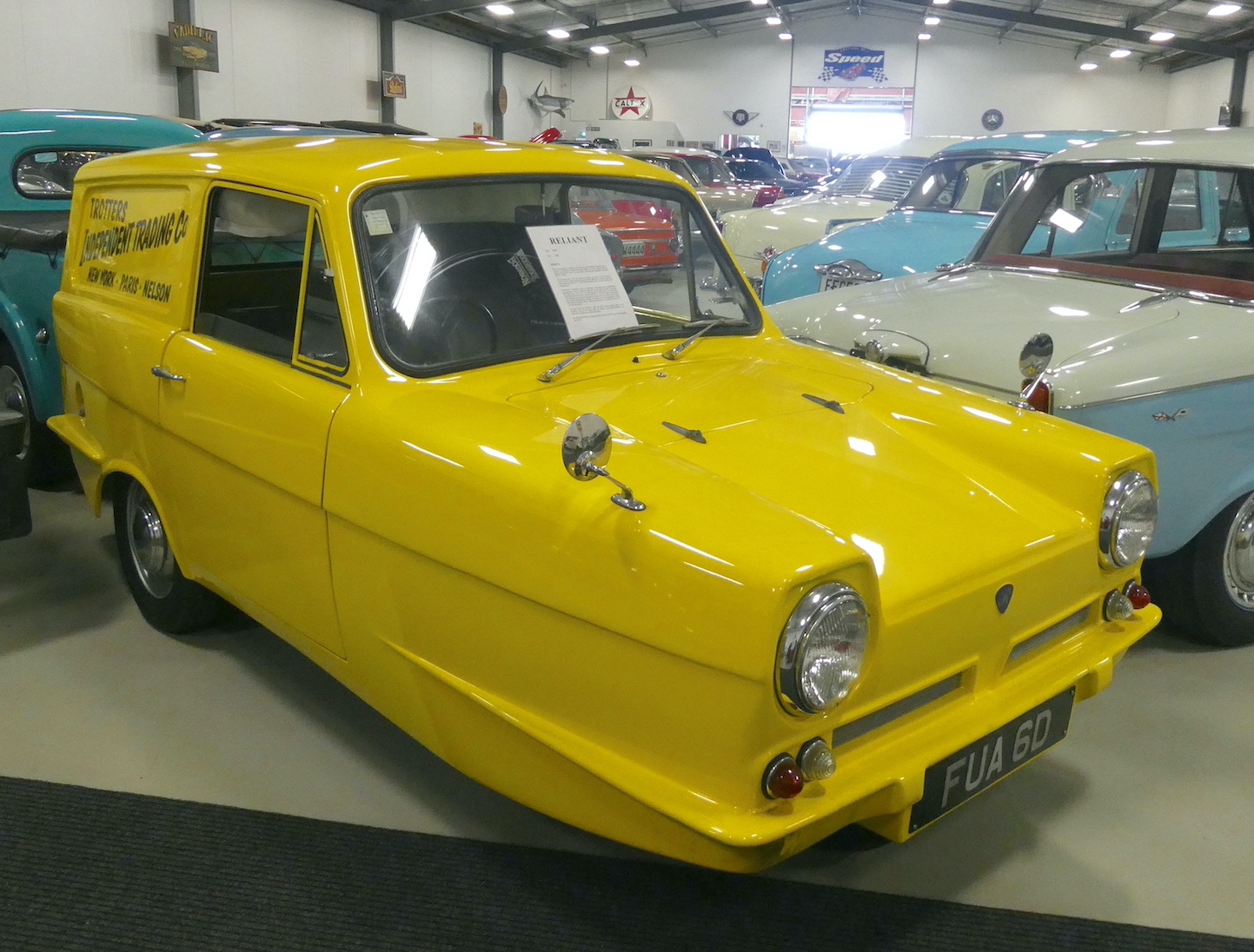
The Reliant Motor Company was founded in 1935 and are mostly remembered for their range of 3-wheeled vehicles. The Supervan III was introduced in 1956 and was the first to have a full fibreglass body. As I mentioned previously, 3-wheeled cars were popular as they didn’t require a car licence to drive. However, the EU changed this rule for vehicles over 550kg in 2001, severely affecting Reliant’s market share and they ended car production a year later.
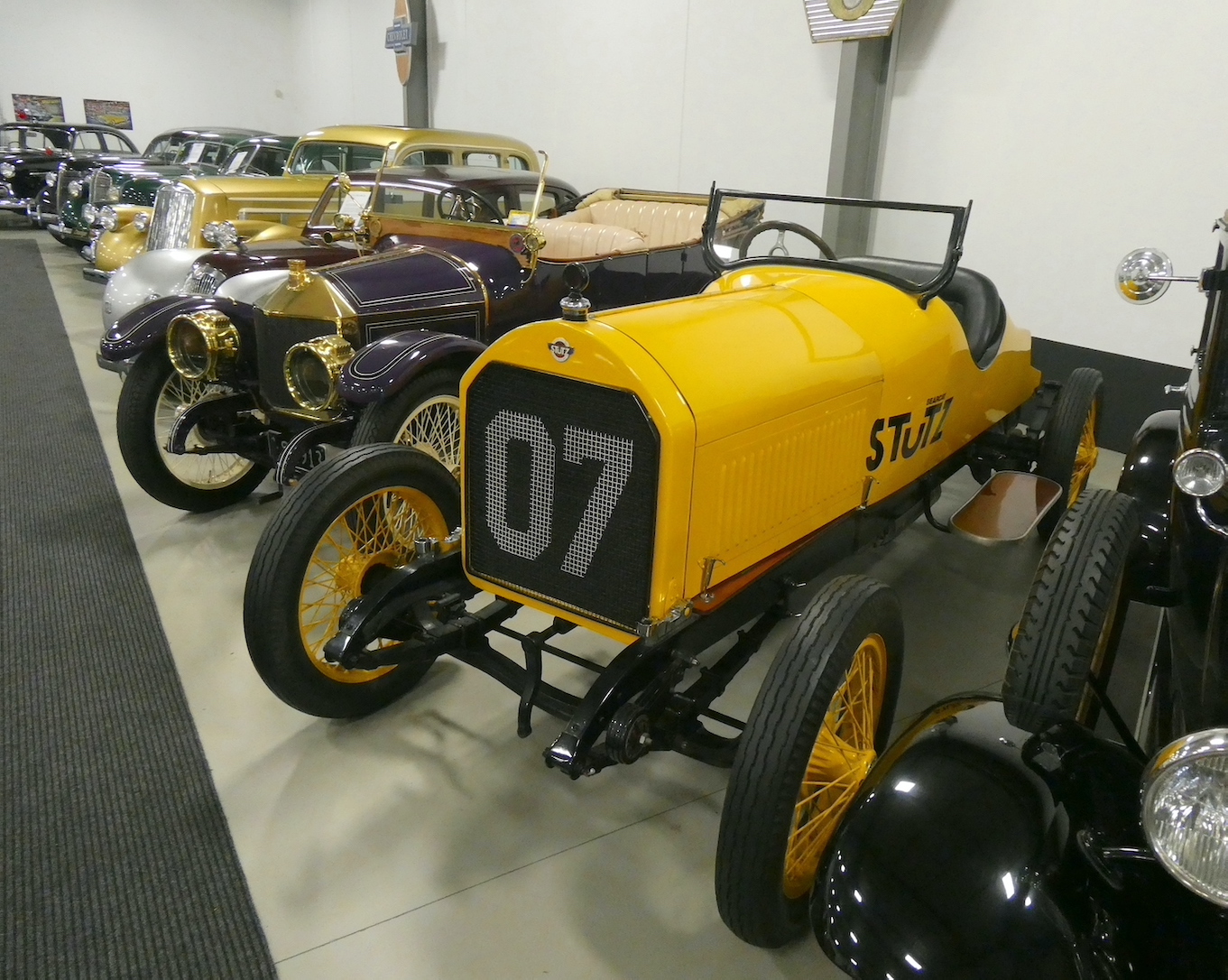
Winding the clock back to the World War I period, the Stutz Bearcat was named America’s racing champion in 1915. Although it was fast for the era, it was considered a ‘man’s car’ because the clutch was so stiff and the brakes required much force to operate. Supposedly, this prevented women from driving.
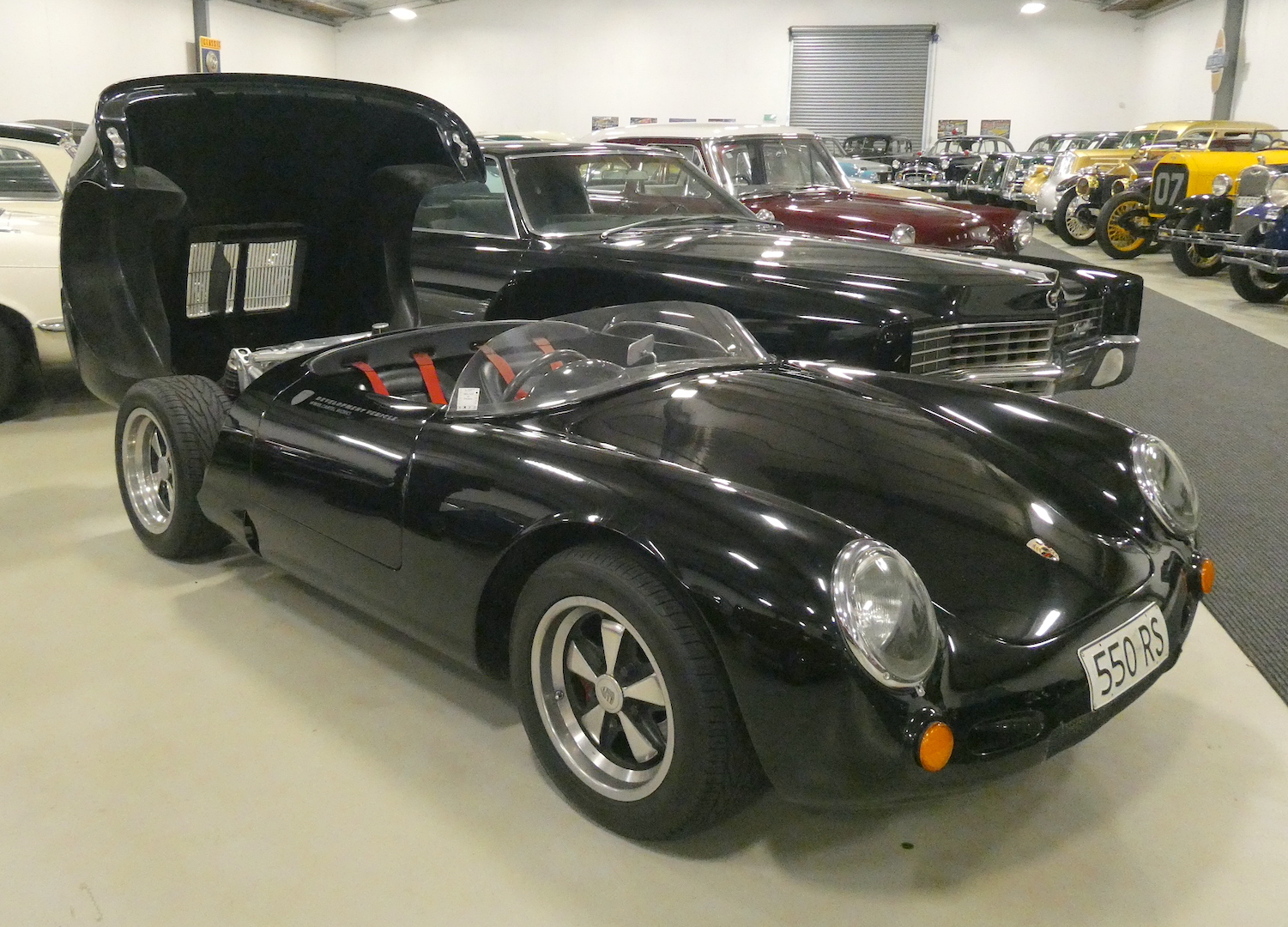
Porsche built only 90 of its first purpose-built racing cars, the 550 RS Spyder, between 1953 and 1956 and was the first car manufacturer to get race sponsorship. Apart from a successful race history, it is probably most famous for being the model James Dean was driving when he was killed. Avid Porsche collector, Jerry Seinfeld, sold his 1955 550 RS Spyder for $5,335,000 at auction in March 2016, a world record price for the model.
The Porsche 356 preceded the 550, with production starting in 1948. Although intended to be a road vehicle, the engineers couldn’t help themselves with a few tweaks to make it raceworthy.

The Jaguar XJS was unveiled in 1975 as a replacement for the iconic E-Type and, despite some initial market reticence with the new, angular lines, it went on to be one of British Leyland’s more successful ventures. A convertible model called the XJ-SC was introduced in 1983, the small rear seats were removed to make space for the removable soft top.

Surely one of the most beautiful cars of all time is the E-Type Jaguar (in my humble opinion). Produced between 1961 and 1974, it was surprisingly tasteful, unlike many fashions of that era. I would prefer a British racing green rather than Austin Powers’ psychedelic ‘Shaguar”.

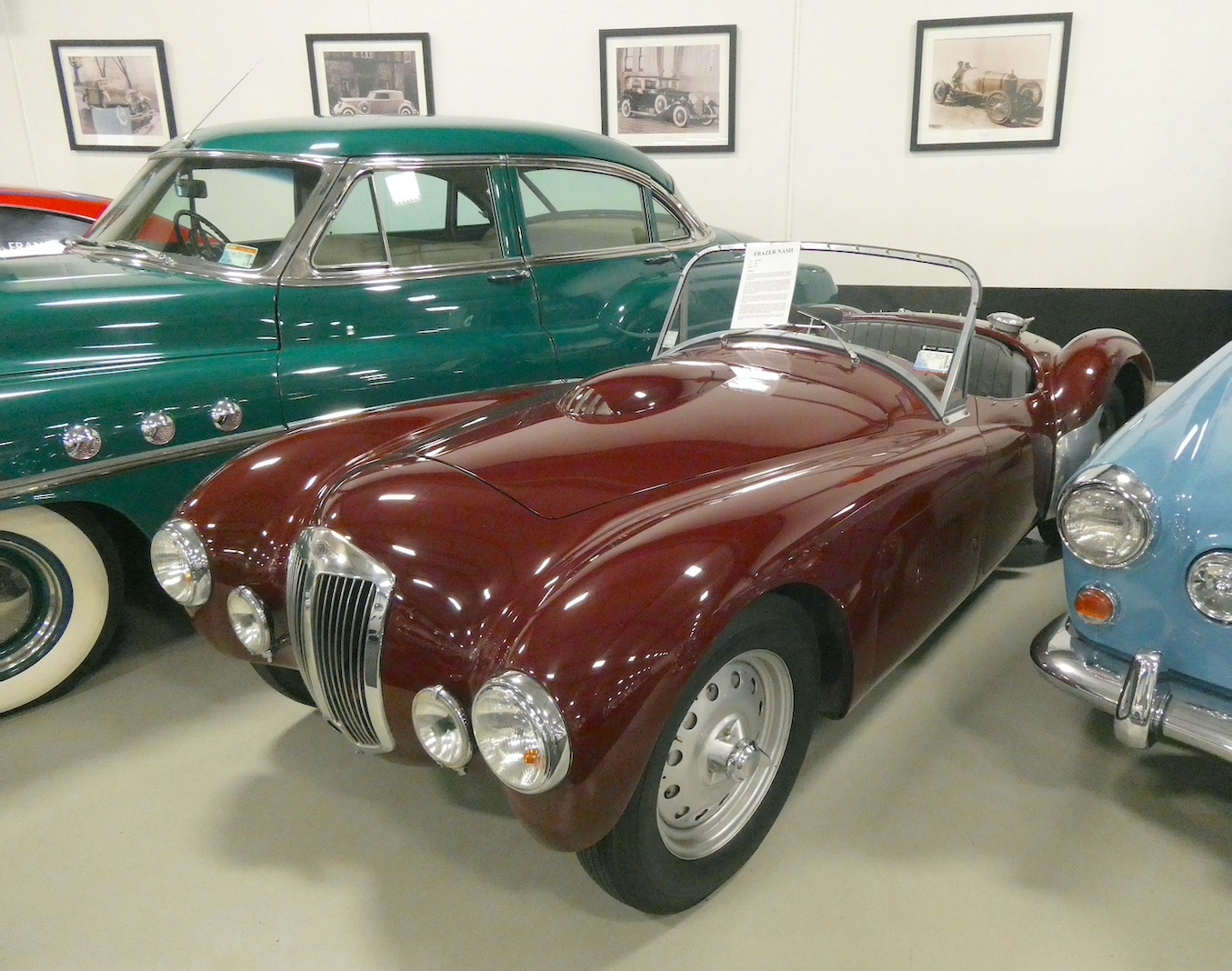
Frazer Nash sports cars were first manufactured in 1922, with the BMW 328 design used as the basis for the later models. All cars were built to order, meaning small numbers but many different models. Only 12 of the Frazer Nash Mille Miglia were made between 1948 and 1953.
GT Beetles were the only classic Beetle produced in Europe to be officially badged a ‘Beetle’. Built to celebrate the importation of Britain’s 300,000th Beetle, only 2500 were made in three unique colours – lemon yellow (1250), apple green (250) and tomato red (1000).

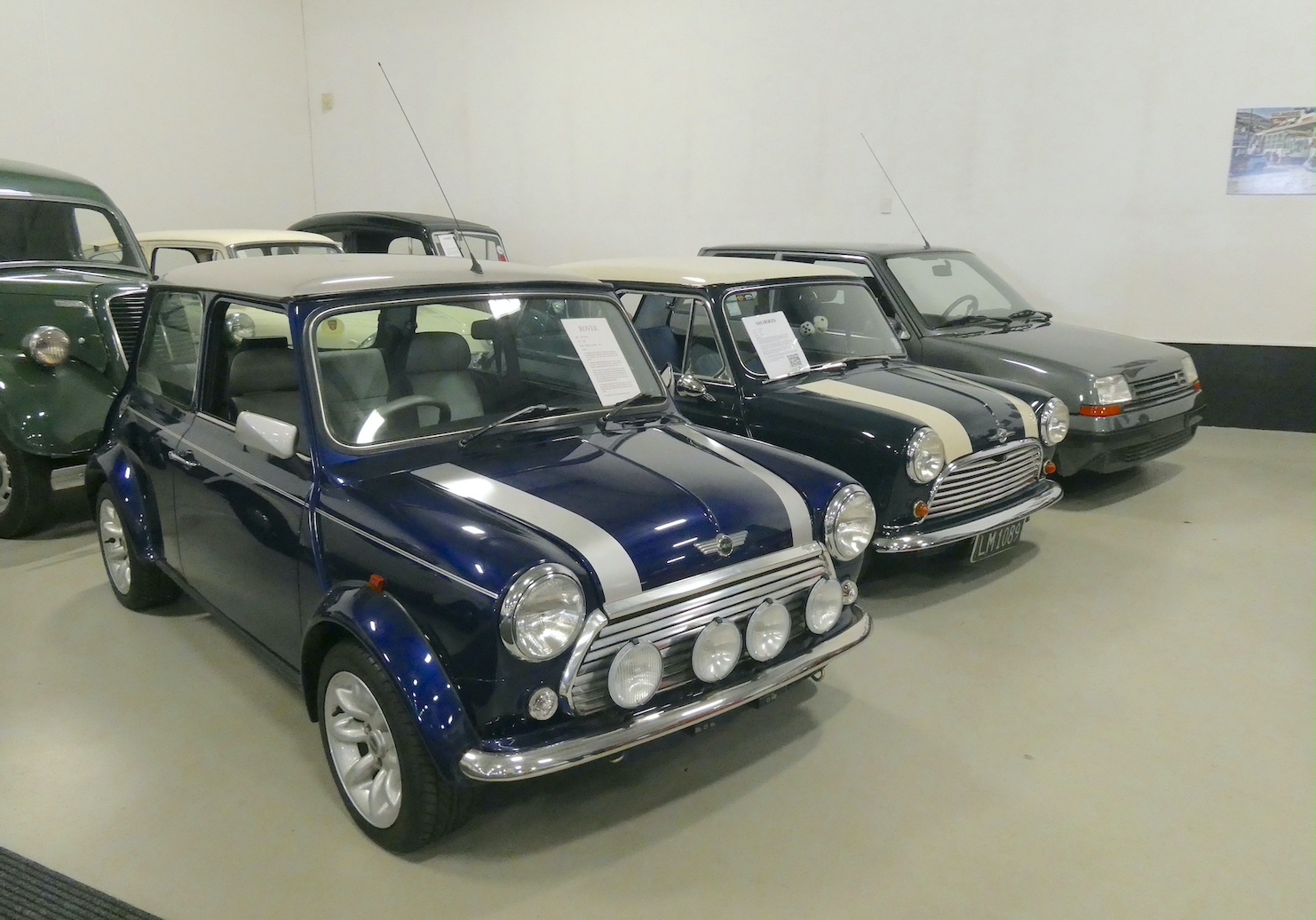
The Mini came about because of a fuel shortage caused by the 1956 Suez Crisis when petrol was rationed and sales of large cars slumped. The Mini was marketed under the Austin and Morris names until 1969 when the simple name ‘Mini’ replaced the separate brands. Rover Minis were the last of the original shape, built from 1996 until the end of production, after 41 years, in 2000.
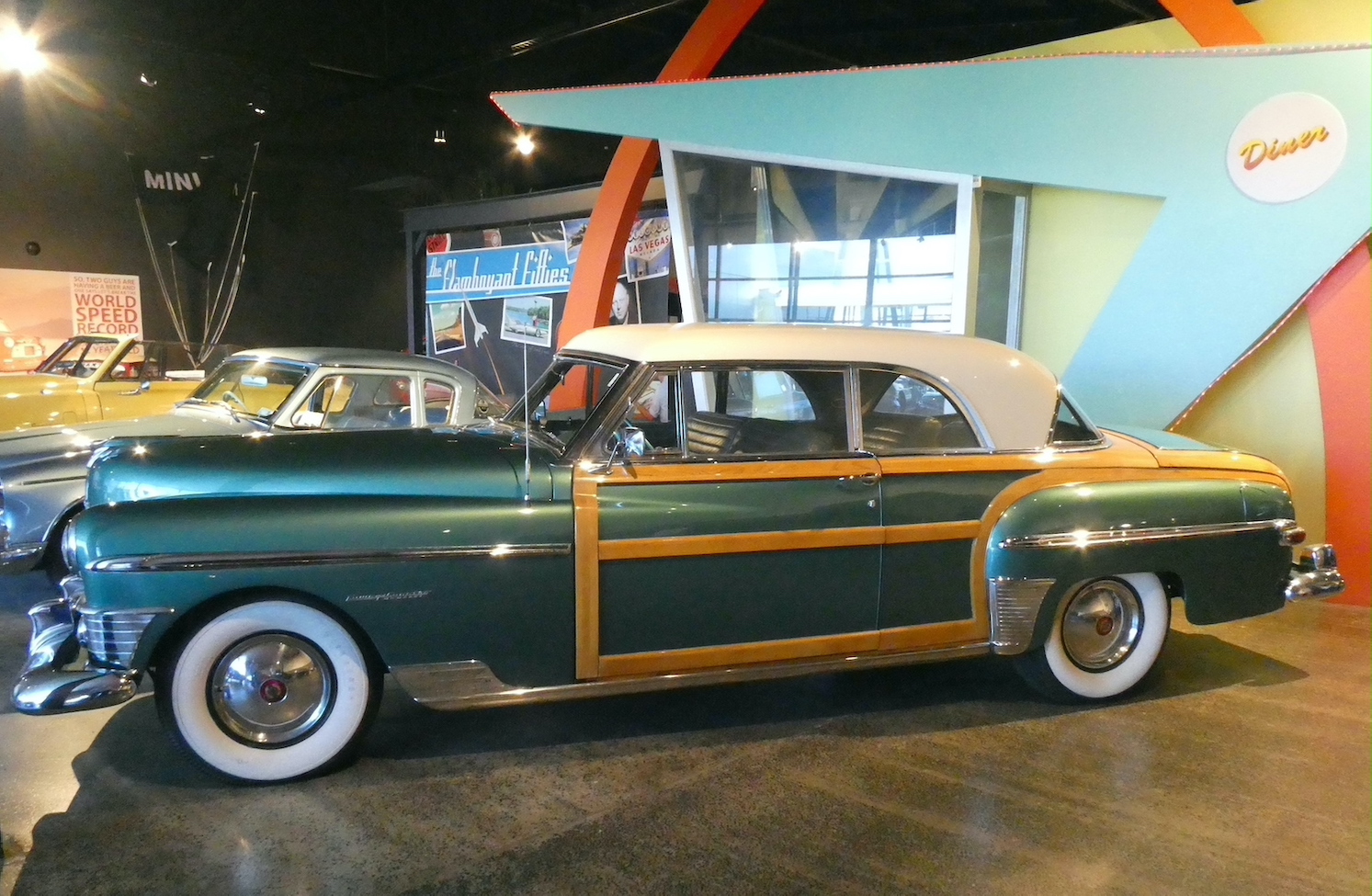
We finally made it back to our starting point, at ‘The Flamboyant Fifties’.
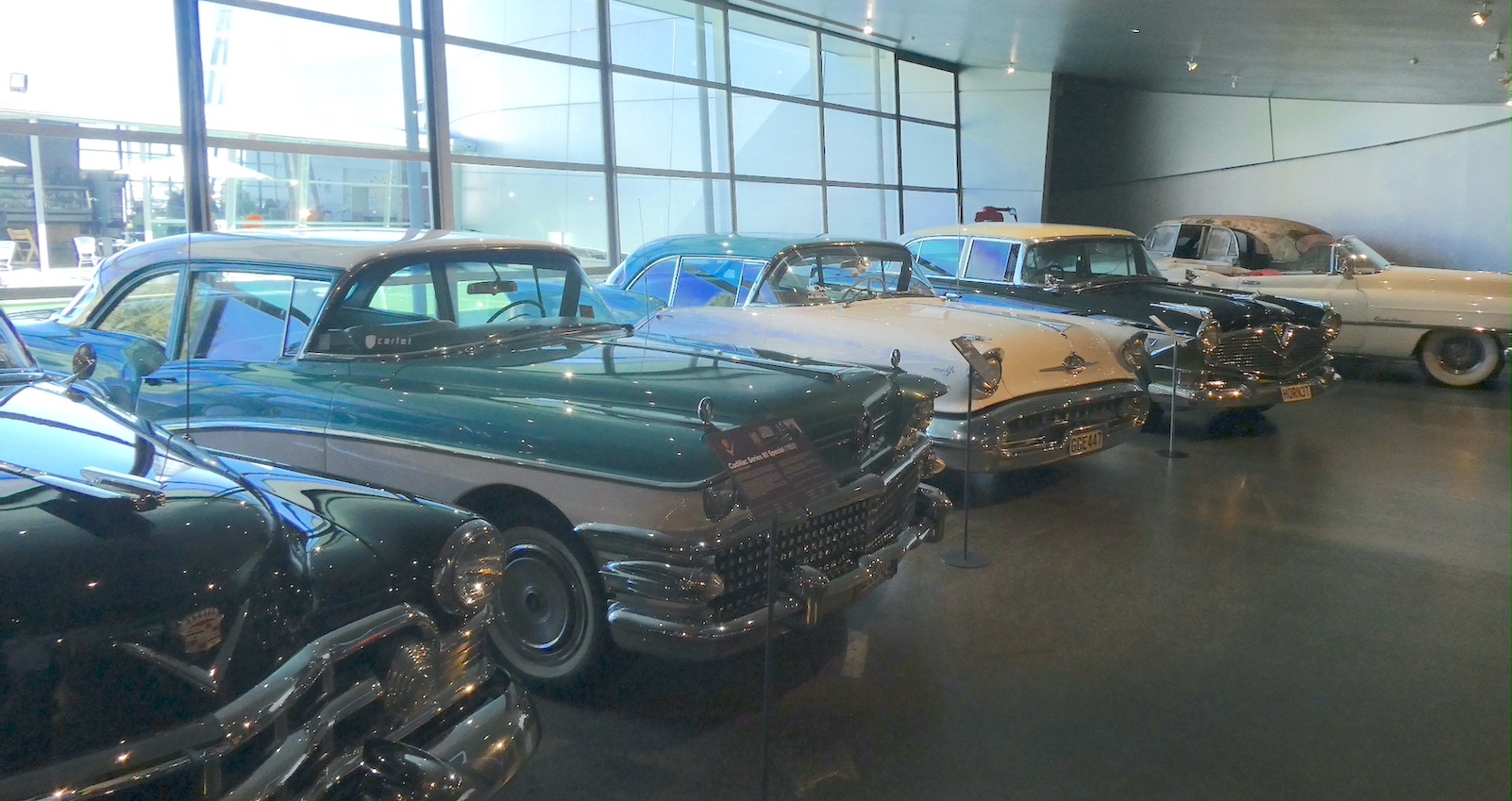
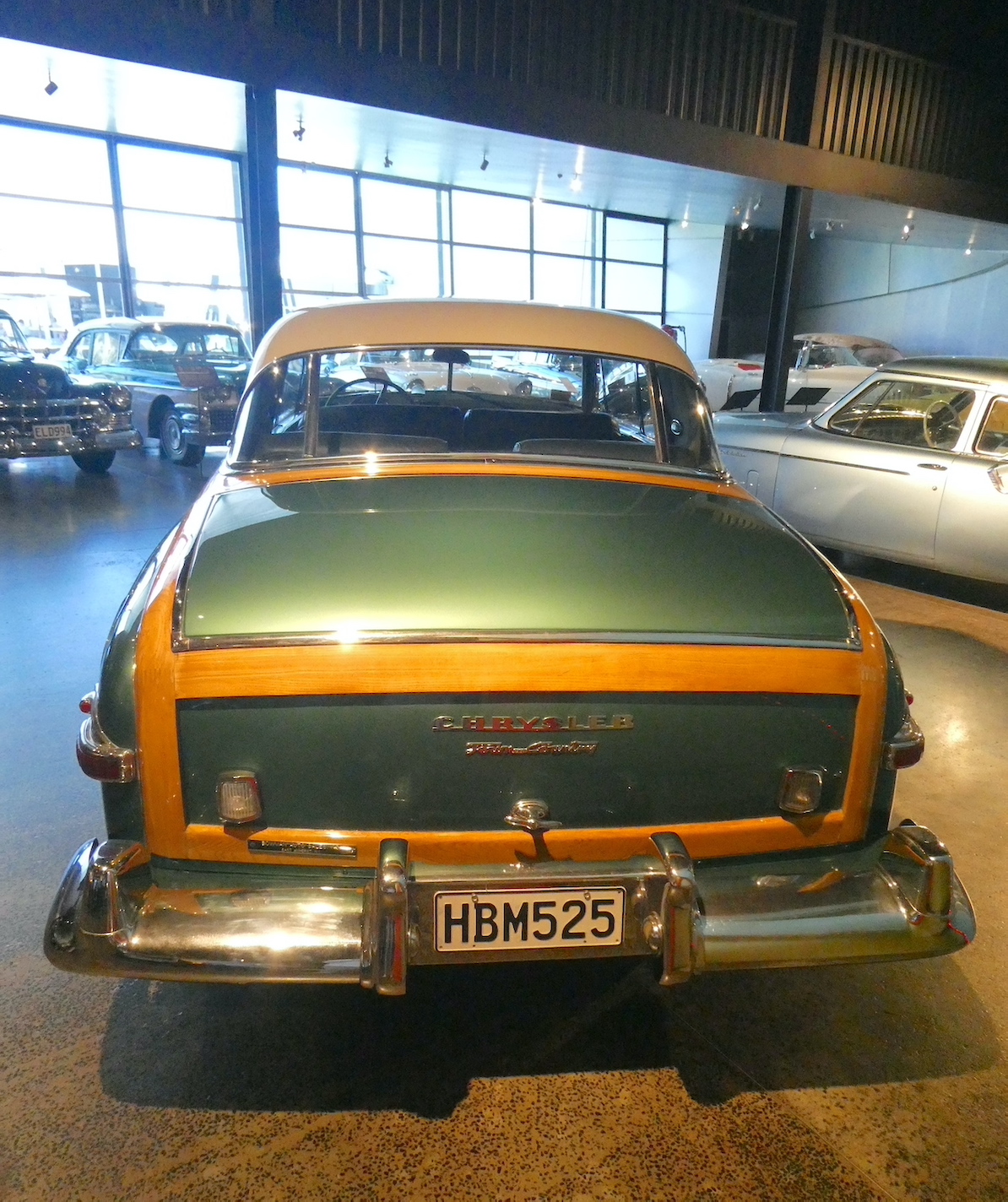
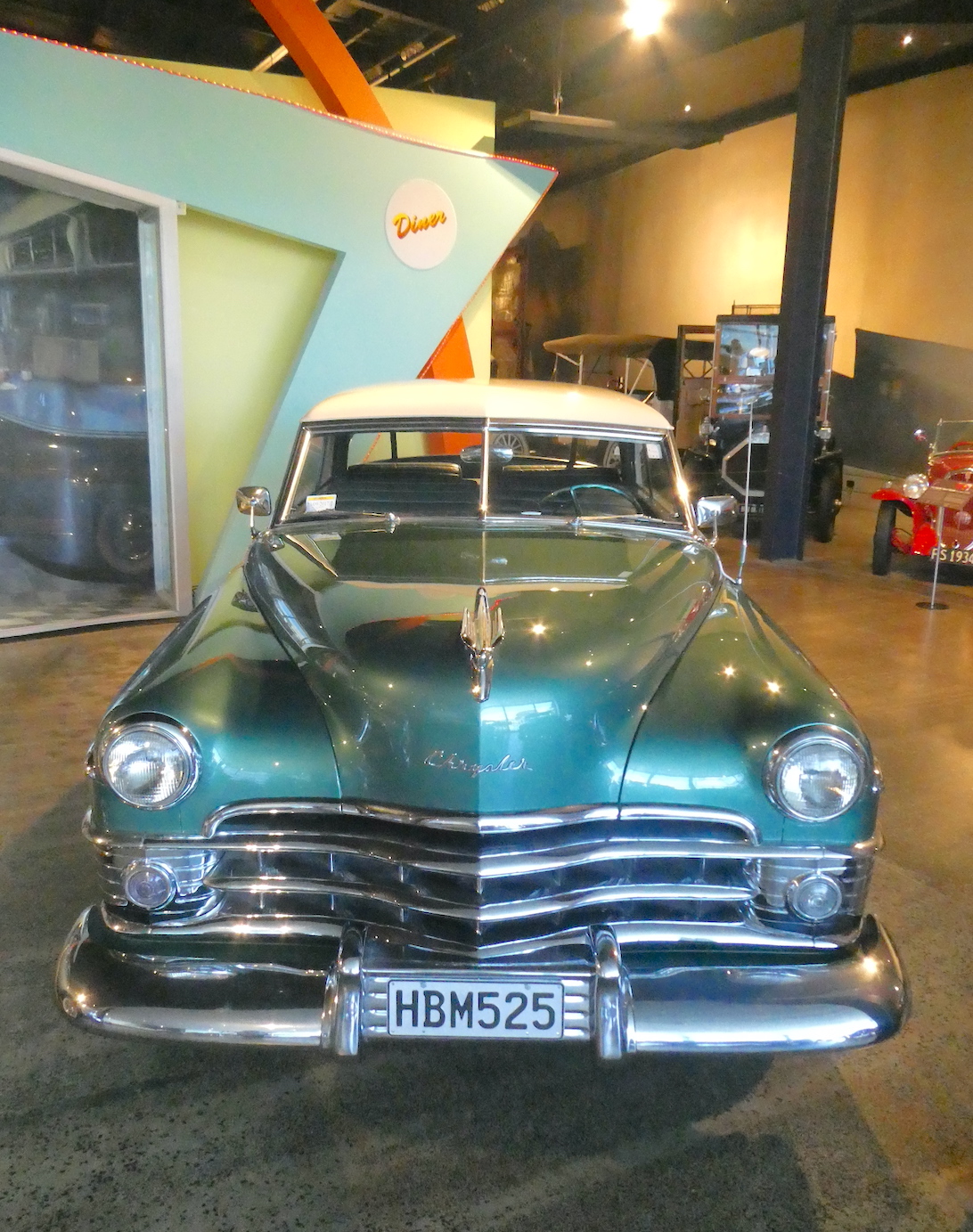
The scale of these extravagant American vehicles was boggling. I’ve always loved the old Morris Woody Wagons but Chrysler outdid themselves with the Town and Country Newport Coupe. Only 698 of these last true woodies were produced for one year only in 1950.

Built to celebrate Cadillac’s Golden Anniversary, a limited edition convertible version of the El Dorado concept car was released in 1953. More a method of testing the market, production was restricted to 532 vehicles.

Presumably beyond repair, a 1953 Buick has been laid to rest in a mock graveyard.

Charles Darwin National Park

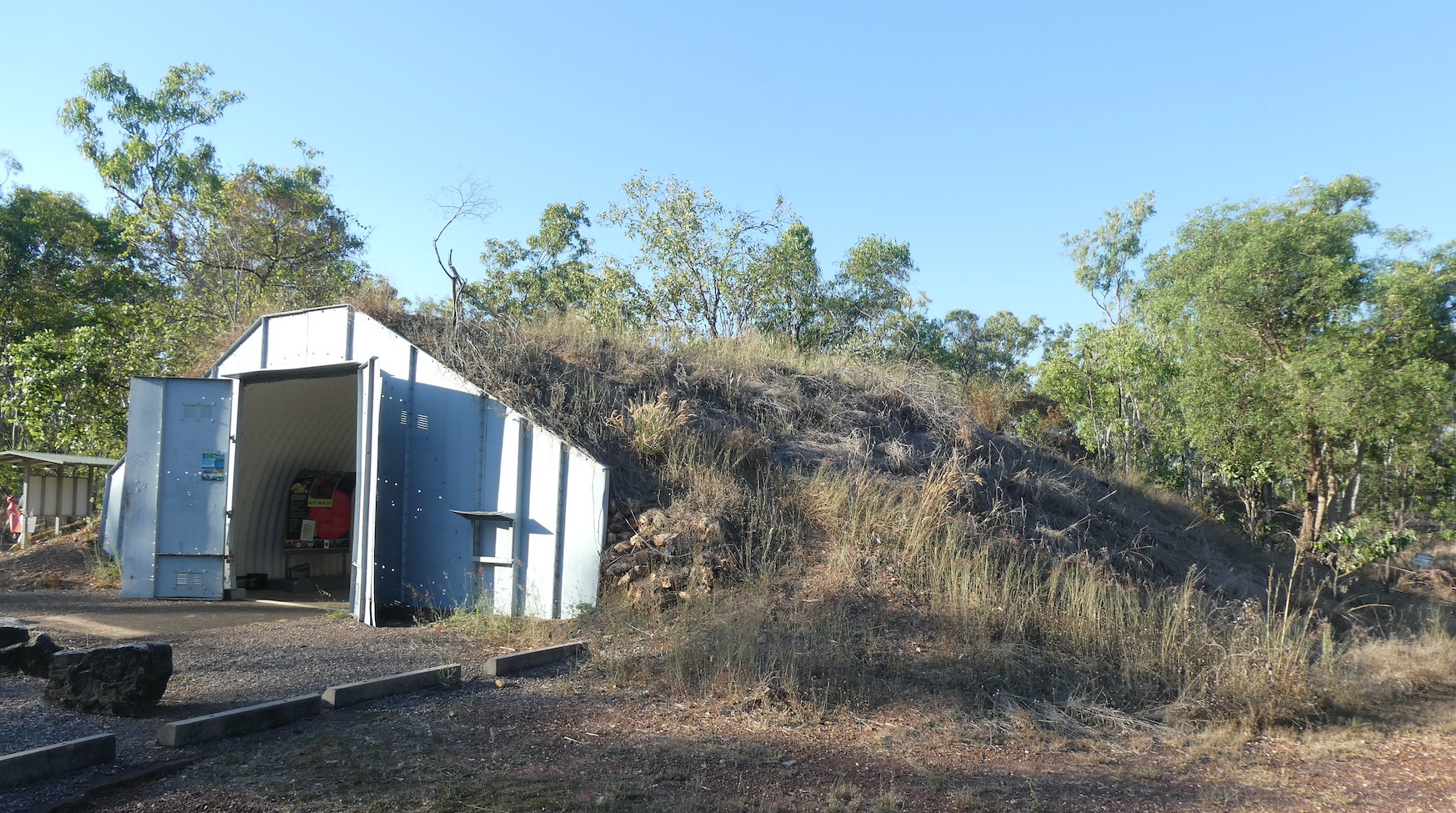
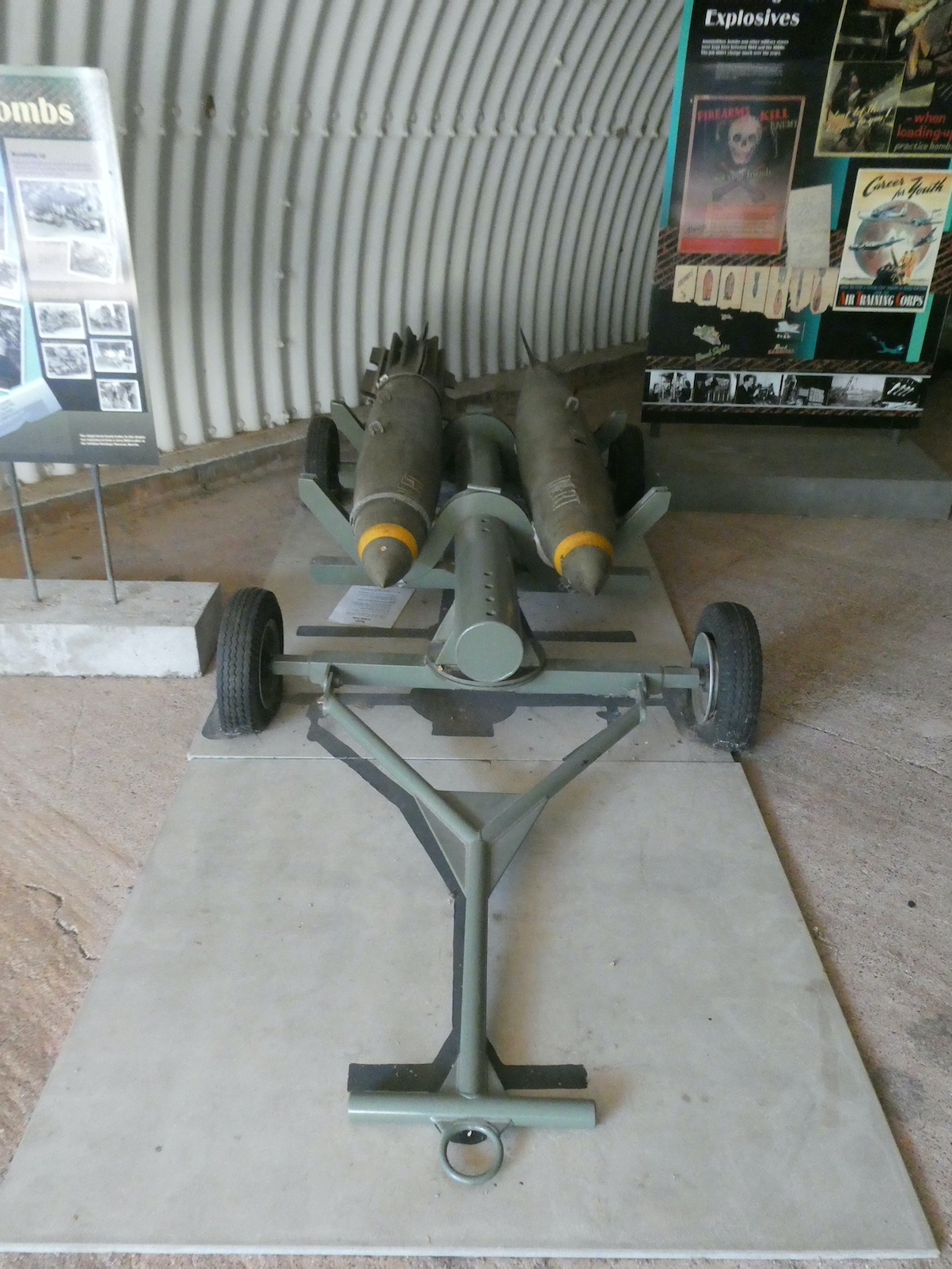
On the outskirts of the city named after the great scientist and naturalist, Charles Darwin National Park is full of surprises. Created in 1997, the five square miles provide a natural recreation area as well as protection for significant vegetation, Aboriginal and World War II history. Developed as an Explosive Ordnance Storage Area during World War II, eleven of the bunkers that housed the explosives during the war are still standing. Nine were set into the contours of the hills, the barrel vault constructions are covered with vegetated earth.

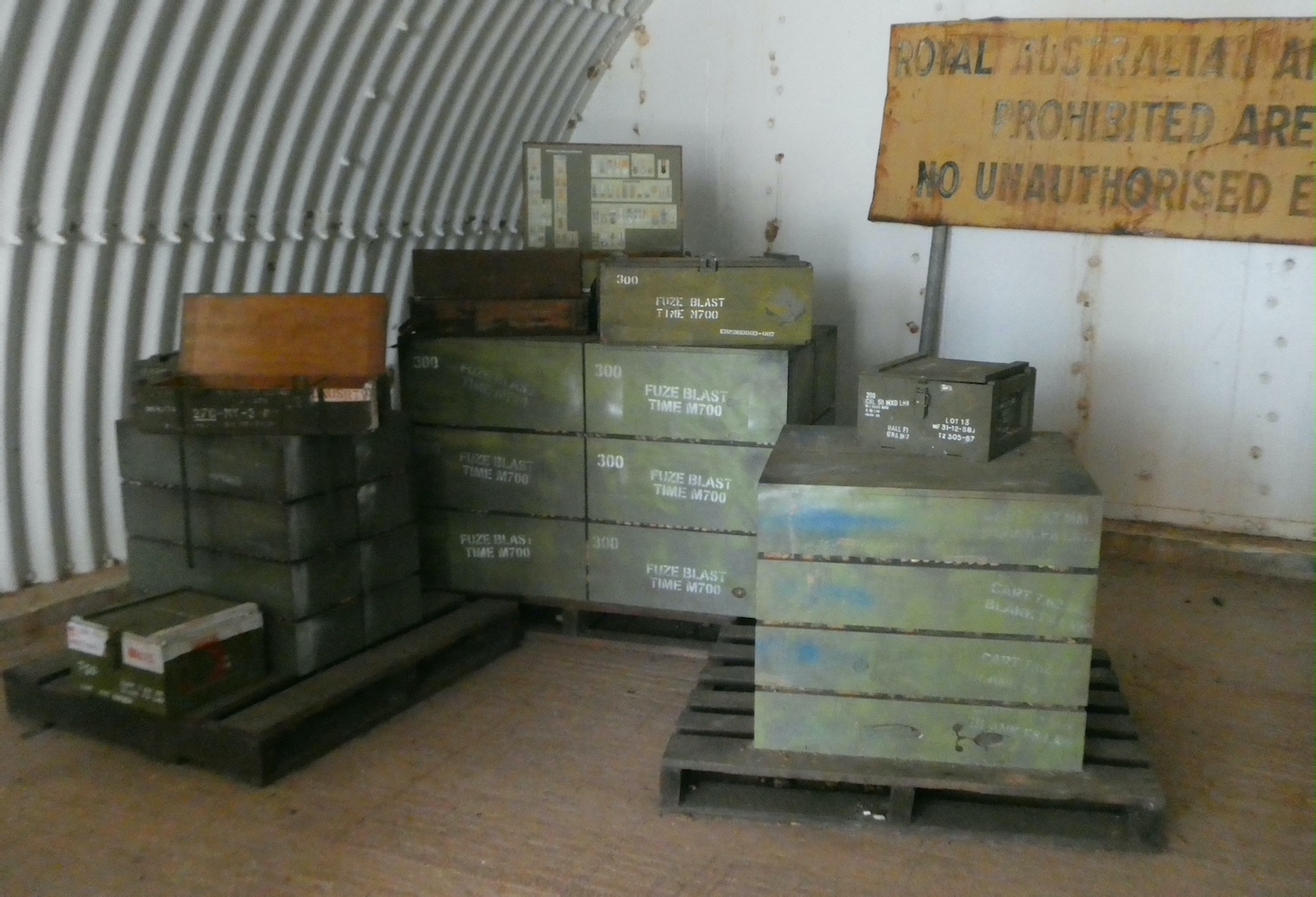
There is a display of memorabilia in one of the bunkers and a fascinating insight into Darwin’s role in the Pacific War.

Bomb trolleys were used to move bombs weighing up to 1,000 lb (that’s about 450kg) to be loaded into aircraft and were common at bomber bases in the 1940s.

There are two free-standing storage sheds, one of which is now adorned with a magnificent work of art.

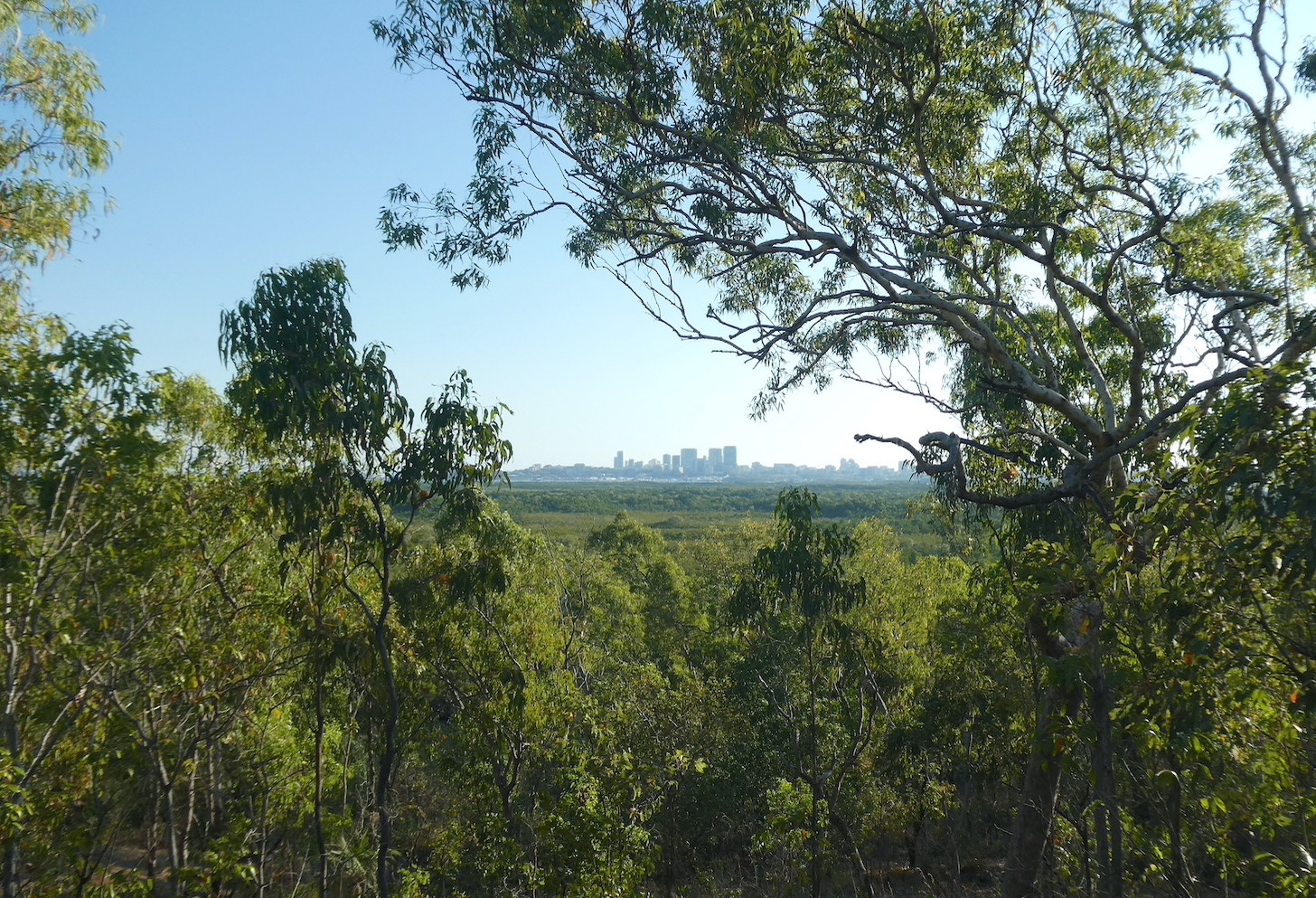
One of Australia’s most important wetlands is also protected by the park. The Port Darwin wetland comprises undisturbed mangrove forests, with 36 of the Northern Territory’s 51 mangrove species within its system of inlets, islands and bays. The vista from Charles Darwin Lookout is spectacular.

Darwin Military Museum

There are many reminders in the Northern Territory of Australia’s involvement in World War II and a visit to Darwin Military Museum gives a fascinating insight into just how close the Japanese invasion came. On 19th February 1942, the Japanese bombed Darwin, killing 252 people, destroying aircraft, sinking 10 ships and severely damaging the township. Over the next 21 months, the Northern Territory was subjected to a further 97 air attacks by the Japanese, including 51 bombing raids.

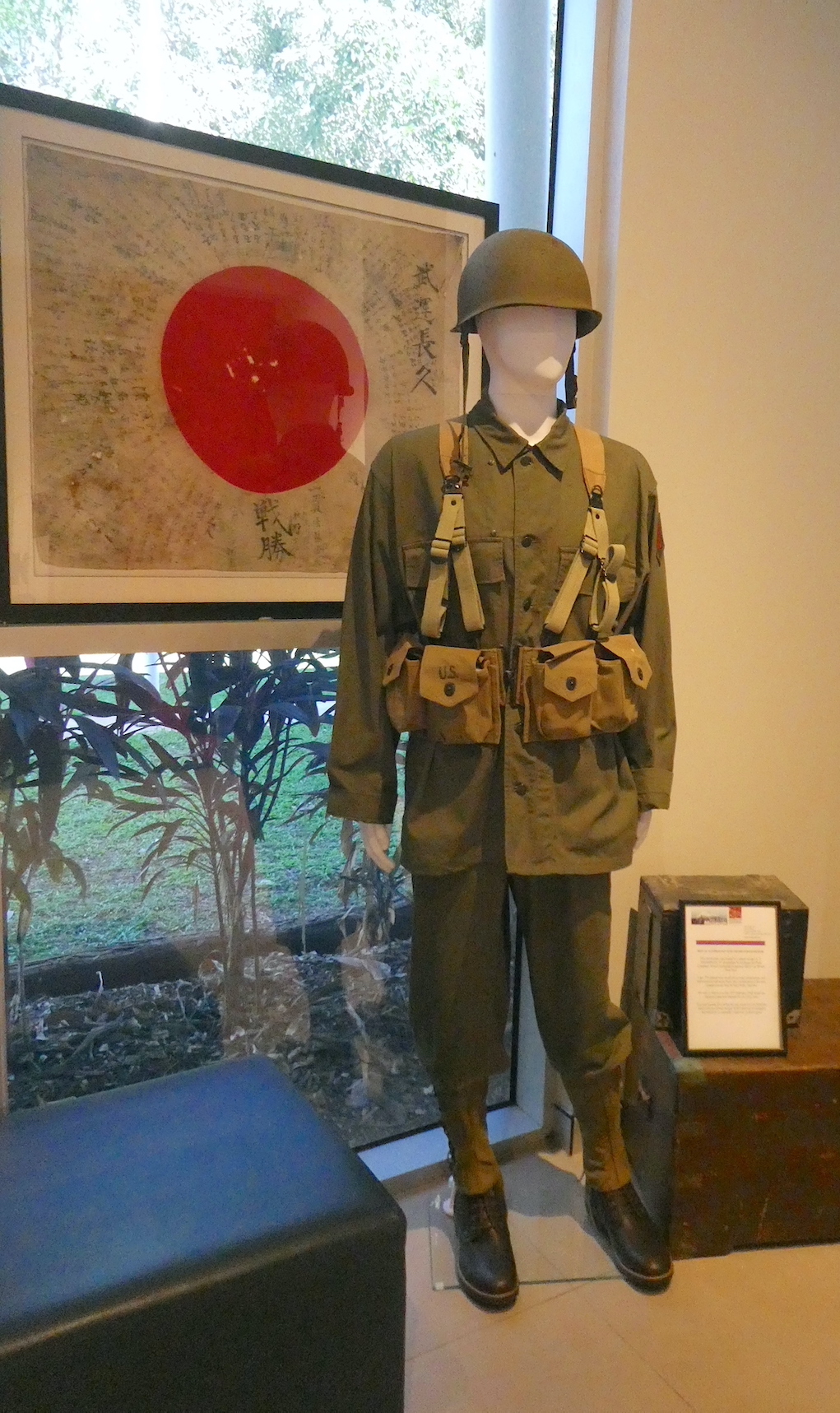
Since the mid-1960s, the Royal Australian Artillery Association has been accumulating war memorabilia and the vast collection includes artefacts from the Boer War to the present day. Once past the entrance display,

I realised there were far too many intriguing items to photograph, not least this painted feather. The MV Manunda was launched in 1929 as a passenger liner and souvenirs of voyages, such as this, were common. The vessel became HMAS Manunda and served as a hospital ship during World War II before returning to civilian life in 1946. Ten years later, in an ironic twist of fate, she was sold to a Japanese Shipping Company, broken up and used for scrap.

We continued our exploration outside, where larger artillery pieces and military vehicles are scattered through tropical gardens and various outbuildings. A memorial to the Australian Digger stands adjacent to one dedicated to Gunner, a kelpie credited with the ability to alert his squadron when Japanese aircraft were approaching.

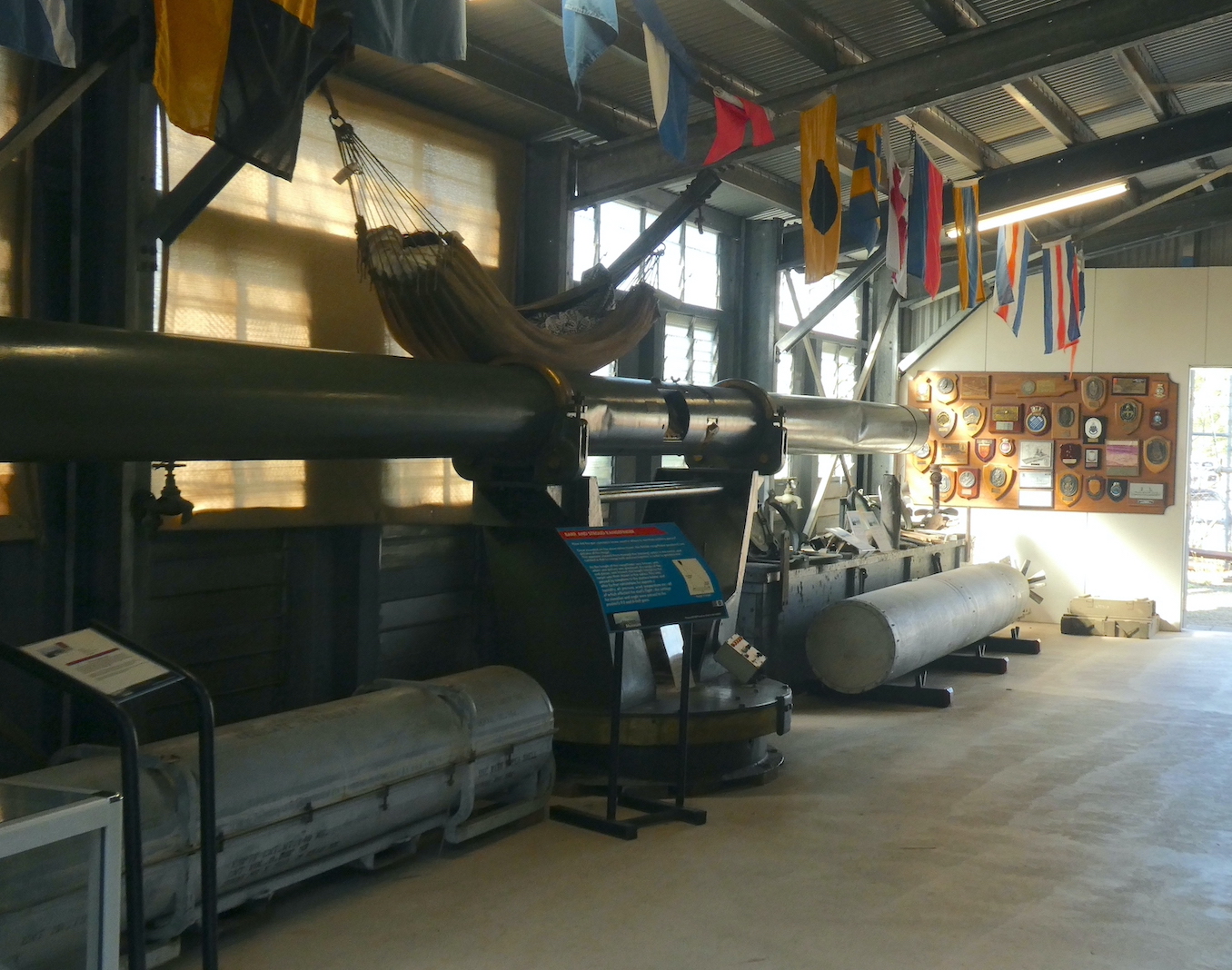
The sheer scale of some of the exhibits is boggling, it is difficult to fathom the logistics of deploying this equipment in the field. Boom net buoys were used to suspend the huge cable for the anti-submarine net stretched across Darwin Harbour. For added security, a massive metal detecting loop was laid on the floor of the harbour to detect any submarine activity.

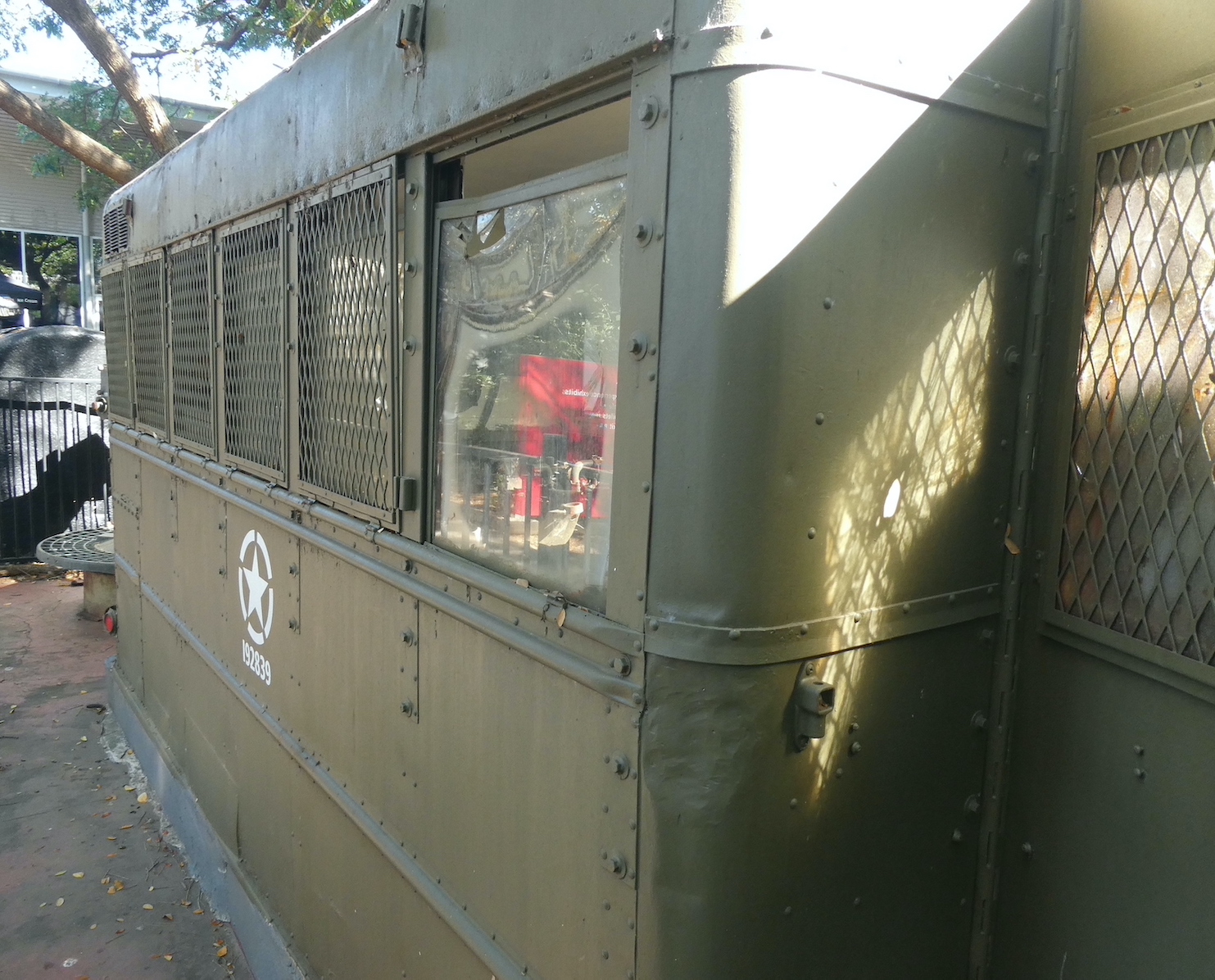
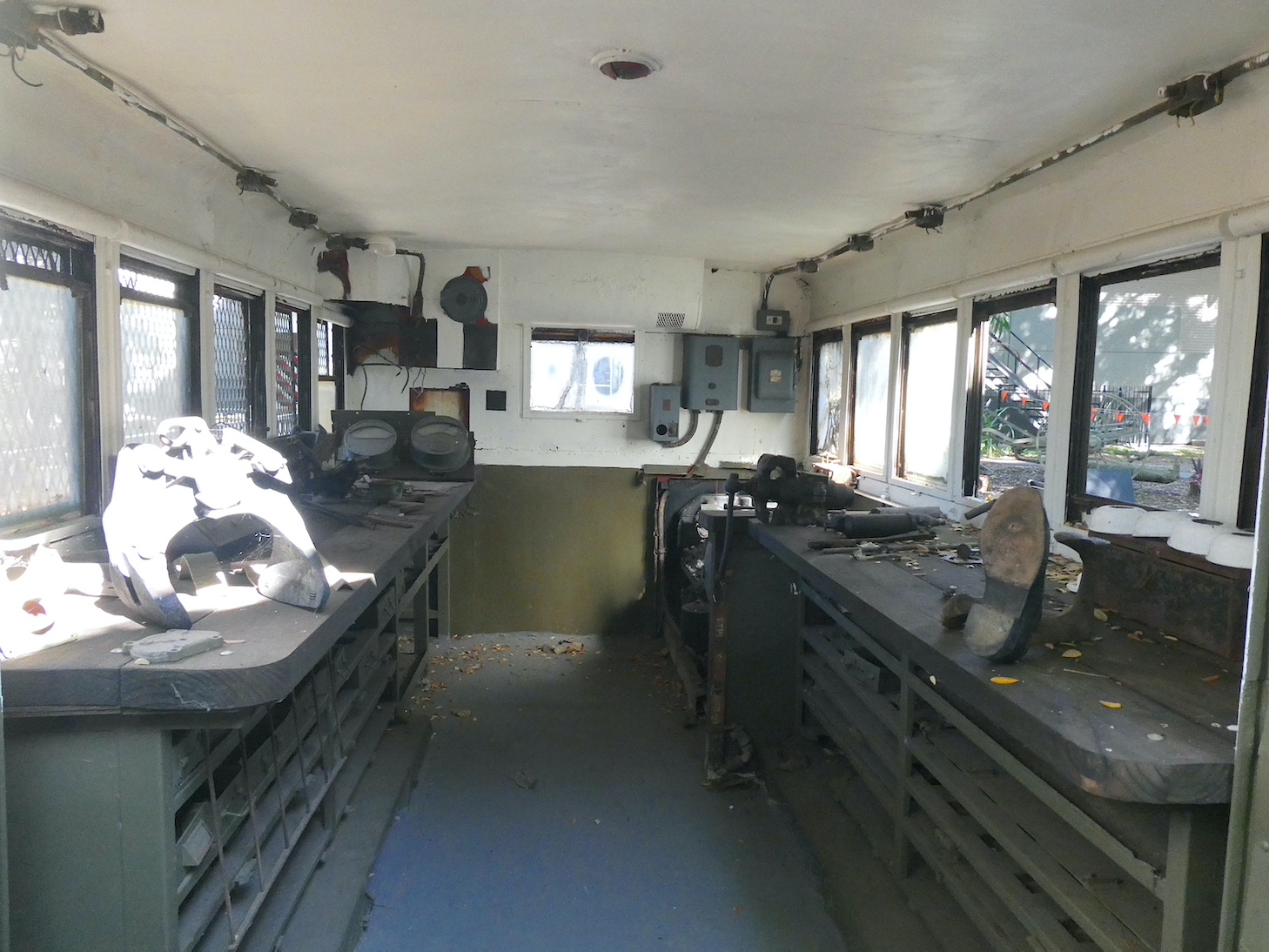
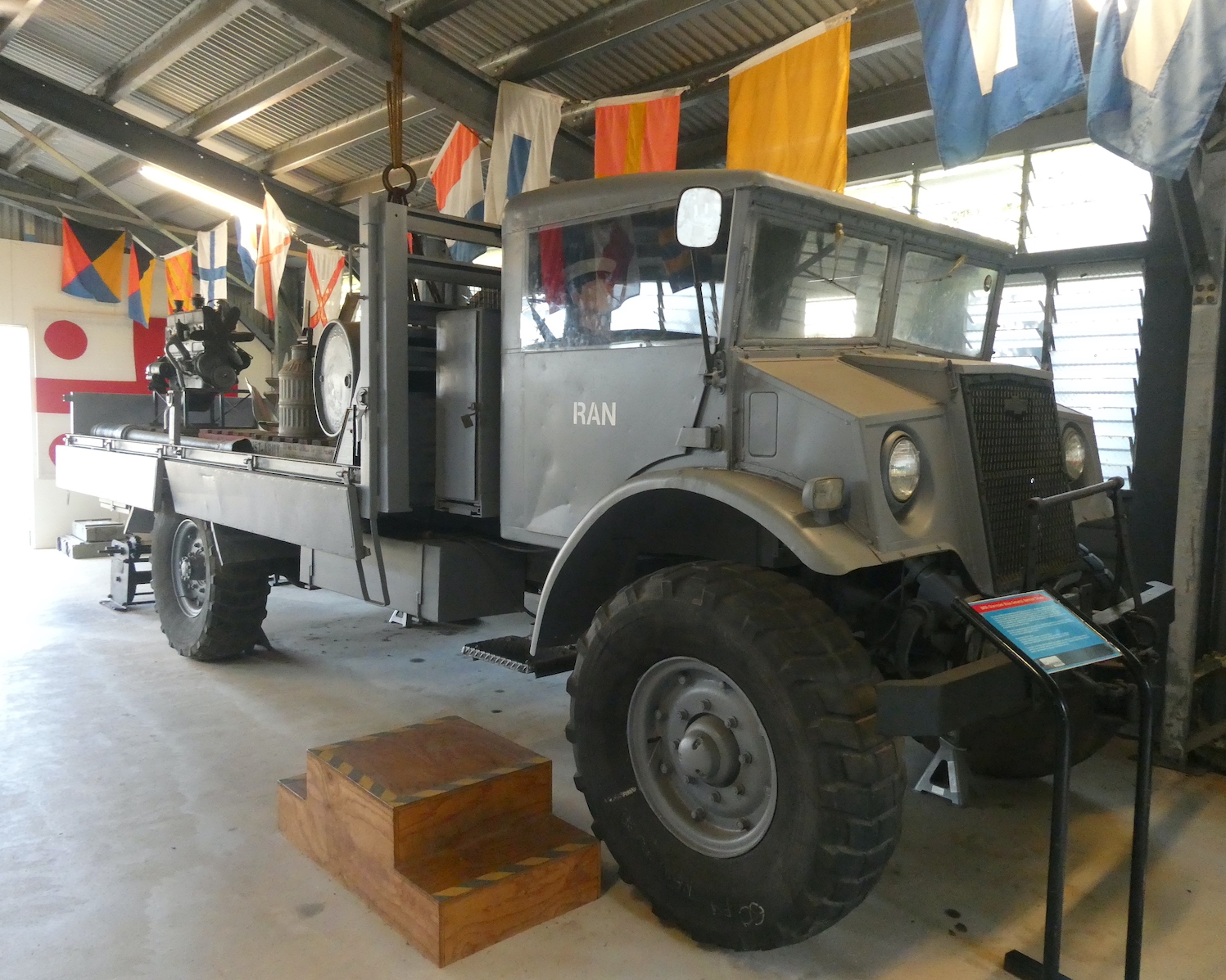
Vehicle-mounted workshops were primarily used for maintenance in the field, with small engines under the bench to run electrical items such as grinders and compressors.

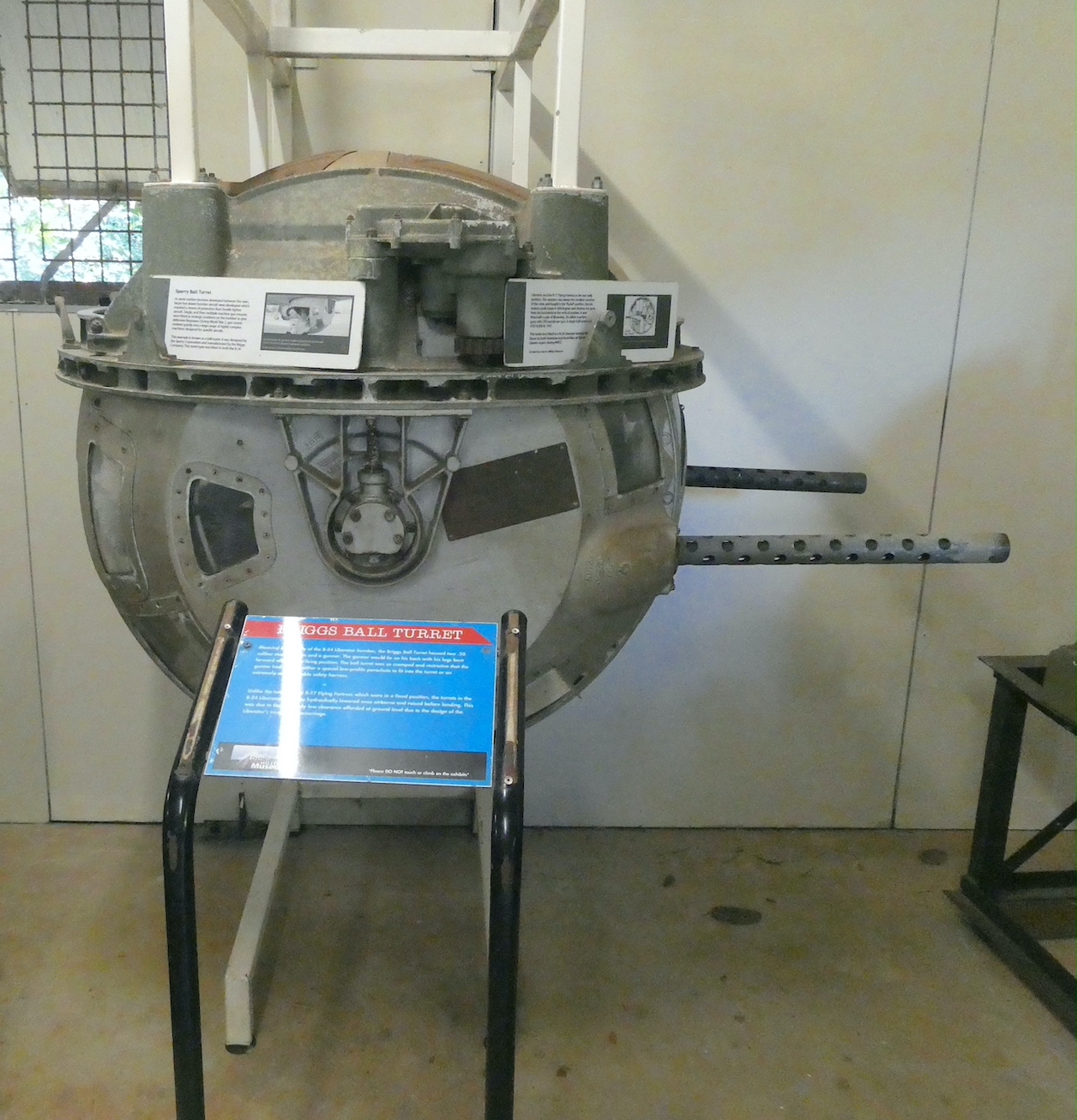
Probably the most terrifying place to be on the fighter planes was the ball gun turret. Suspended underneath the aircraft, the gunner, usually the smallest man in the crew, had to assume a foetal-like position on missions of up to ten hours.

Some remnants of wartime are still being found in the N.T., like this Japanese drop tank. The tanks carried extra fuel to extend the range of the aircraft and, once empty, could be released to reduce drag in combat situations.

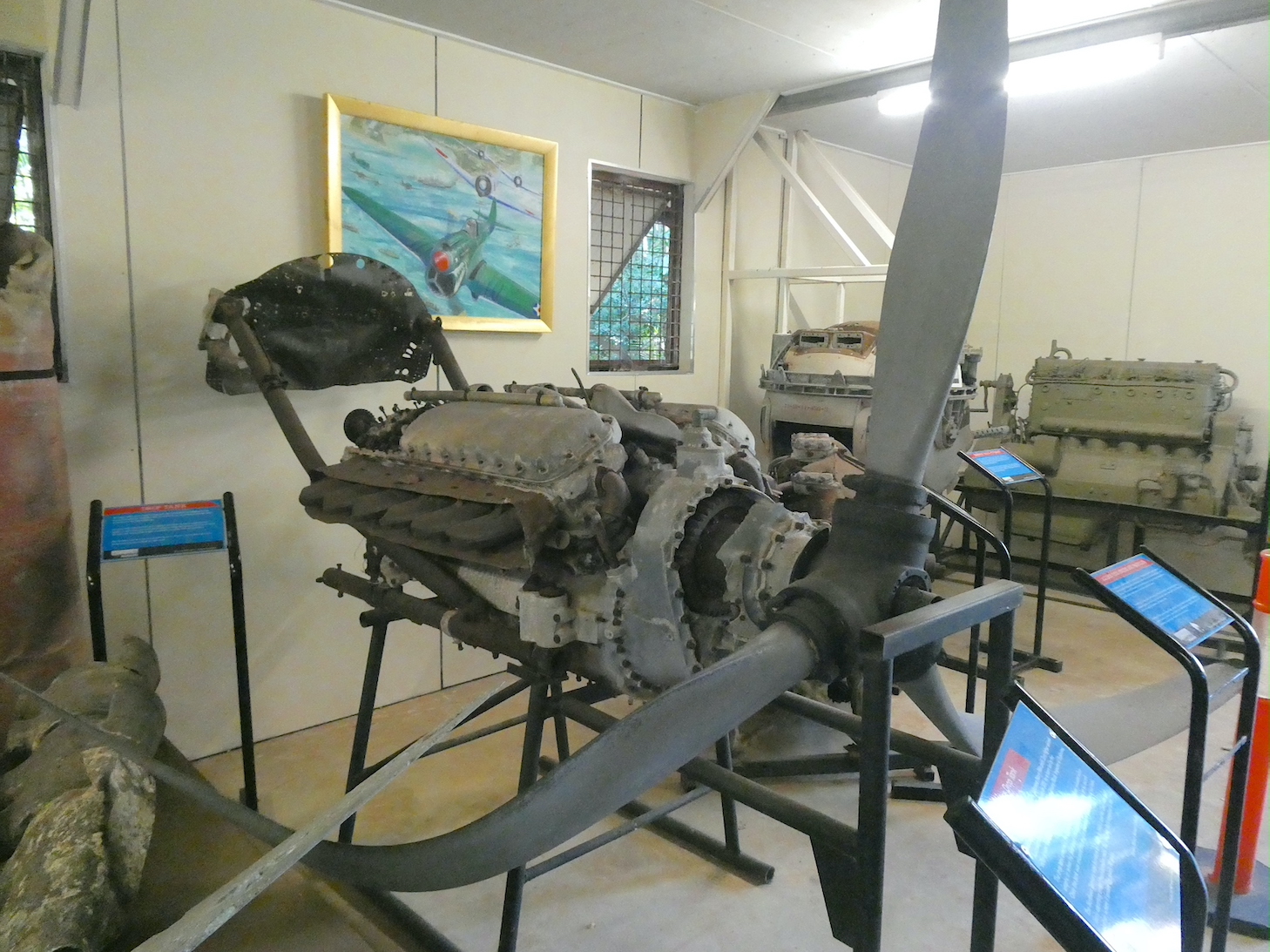
There are several engines and propellors on display, each with their own story. This one separated from the fuselage of a Kittyhawk during a forced landing in 1942. Fortunately, the pilot survived.

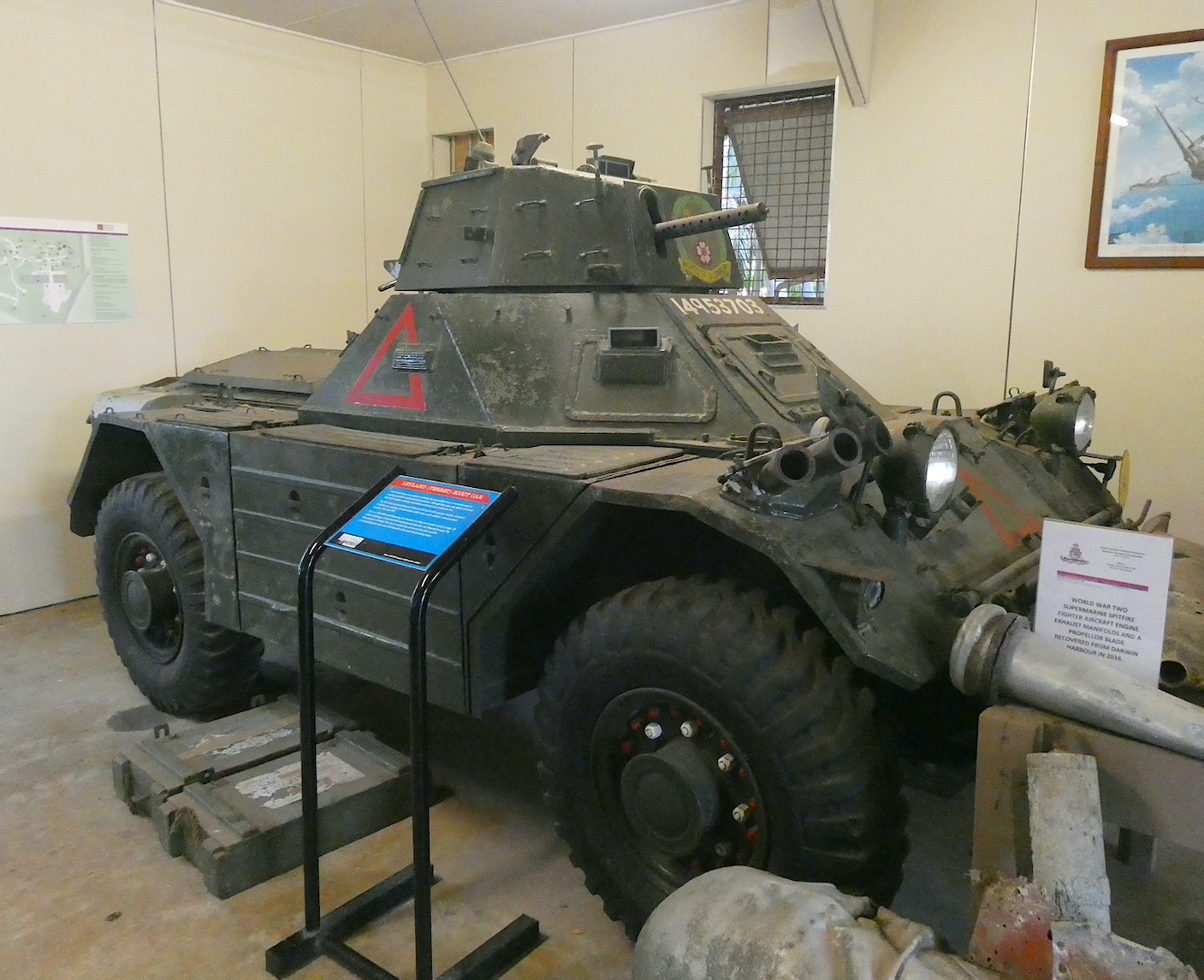
Almost as uncomfortable as the ball turret, two personnel would be squeezed into the hot, noisy cabin of the Ferret scout car. One would drive and the other would man the machine gun and grenade launchers.

On a much larger scale, the Buffalo was used as an amphibious transport vehicle, though its design meant it could only operate in the calmest of seas without taking on too much water.

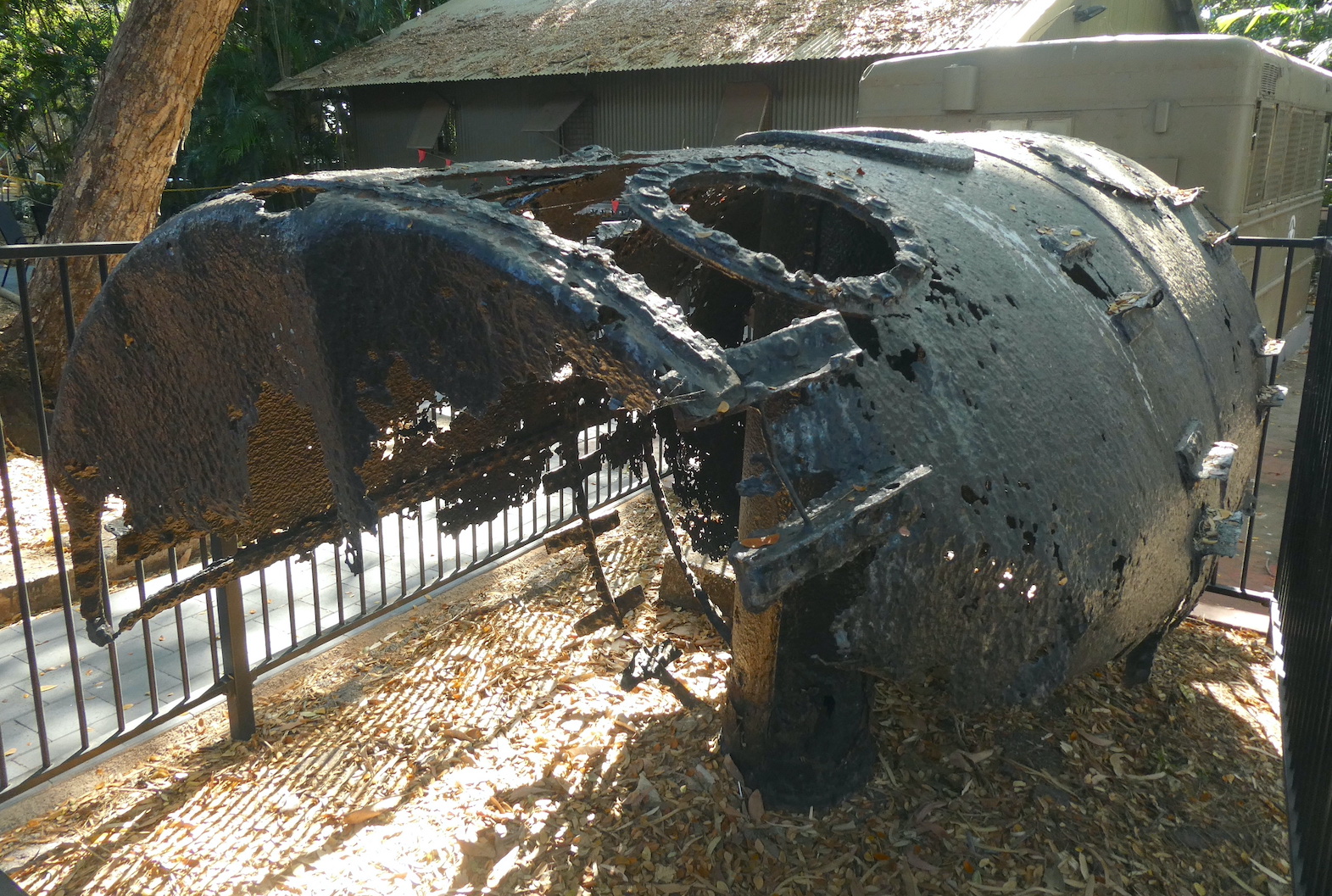
Looking suspiciously like a missile, paravanes were actually used in minesweeping operations. With a cutting cable attached, they were dragged behind a minesweeper at a pre-determined depth and, once the enemy mine was located and detached, it was destroyed by small-arms fire. Sometimes the paravane received collateral damage.

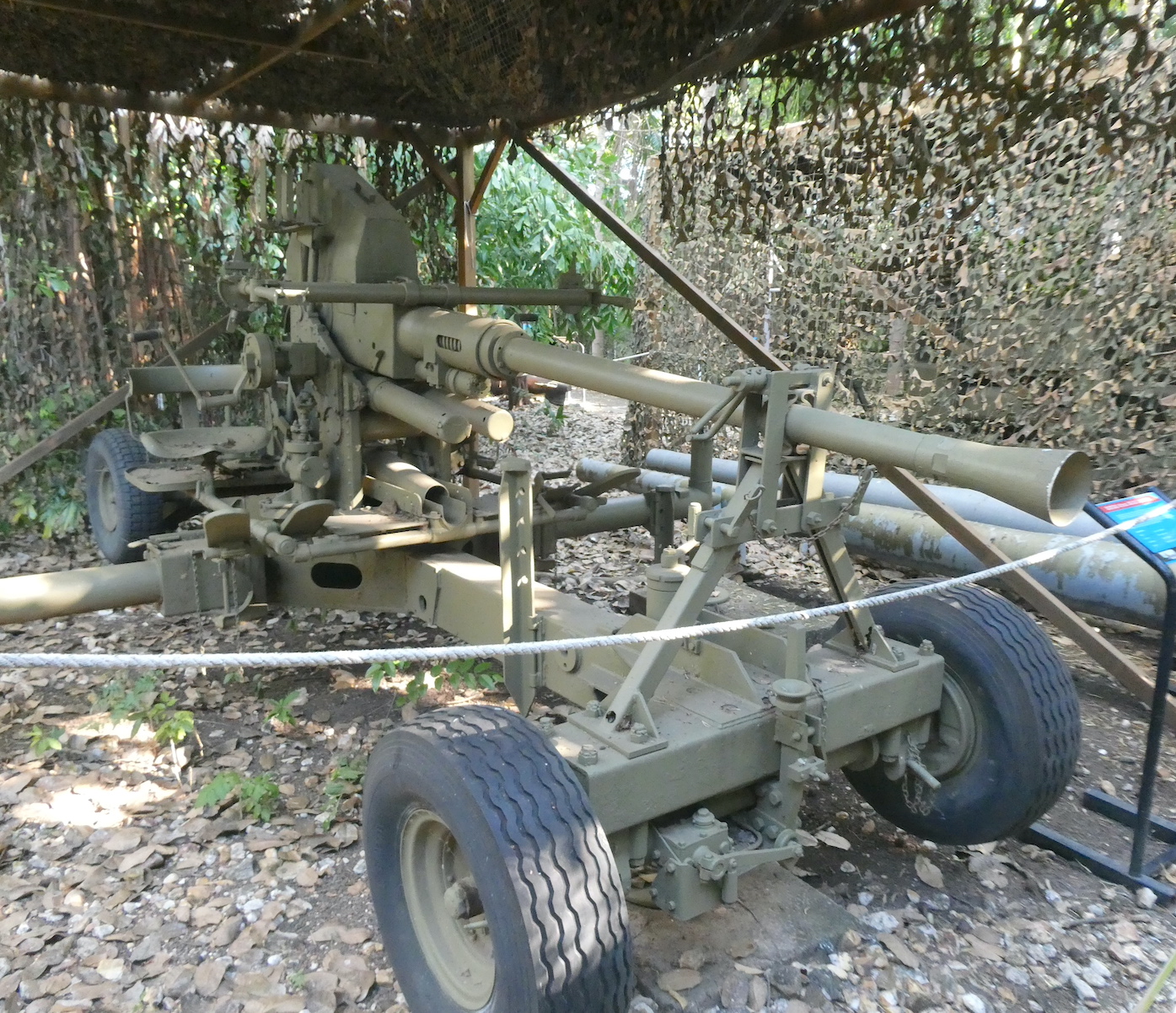
The big guns were just around the corner, an impressive collection of field and anti-aircraft guns, all of which must have been onerous to manoeuvre in battle.

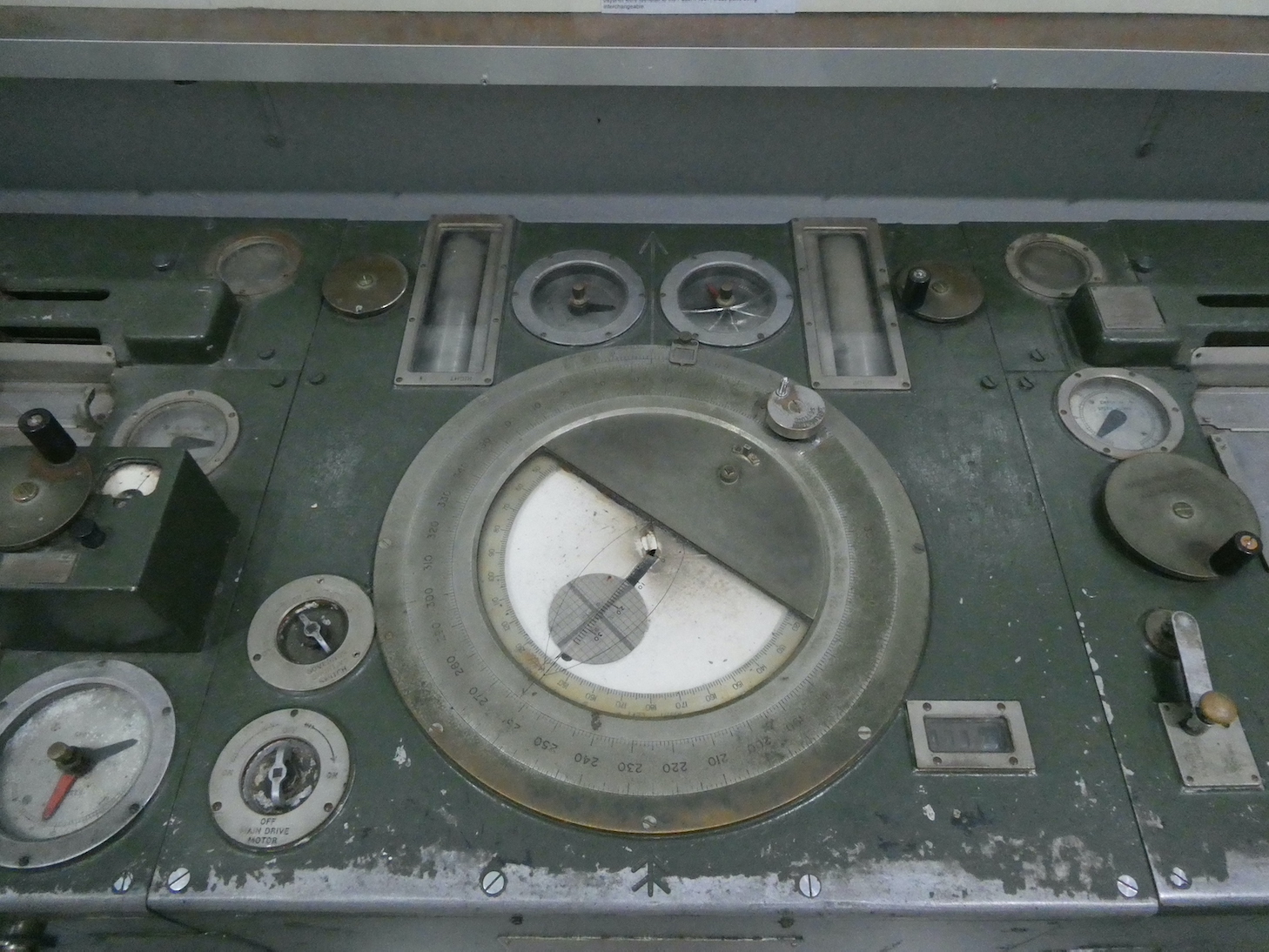
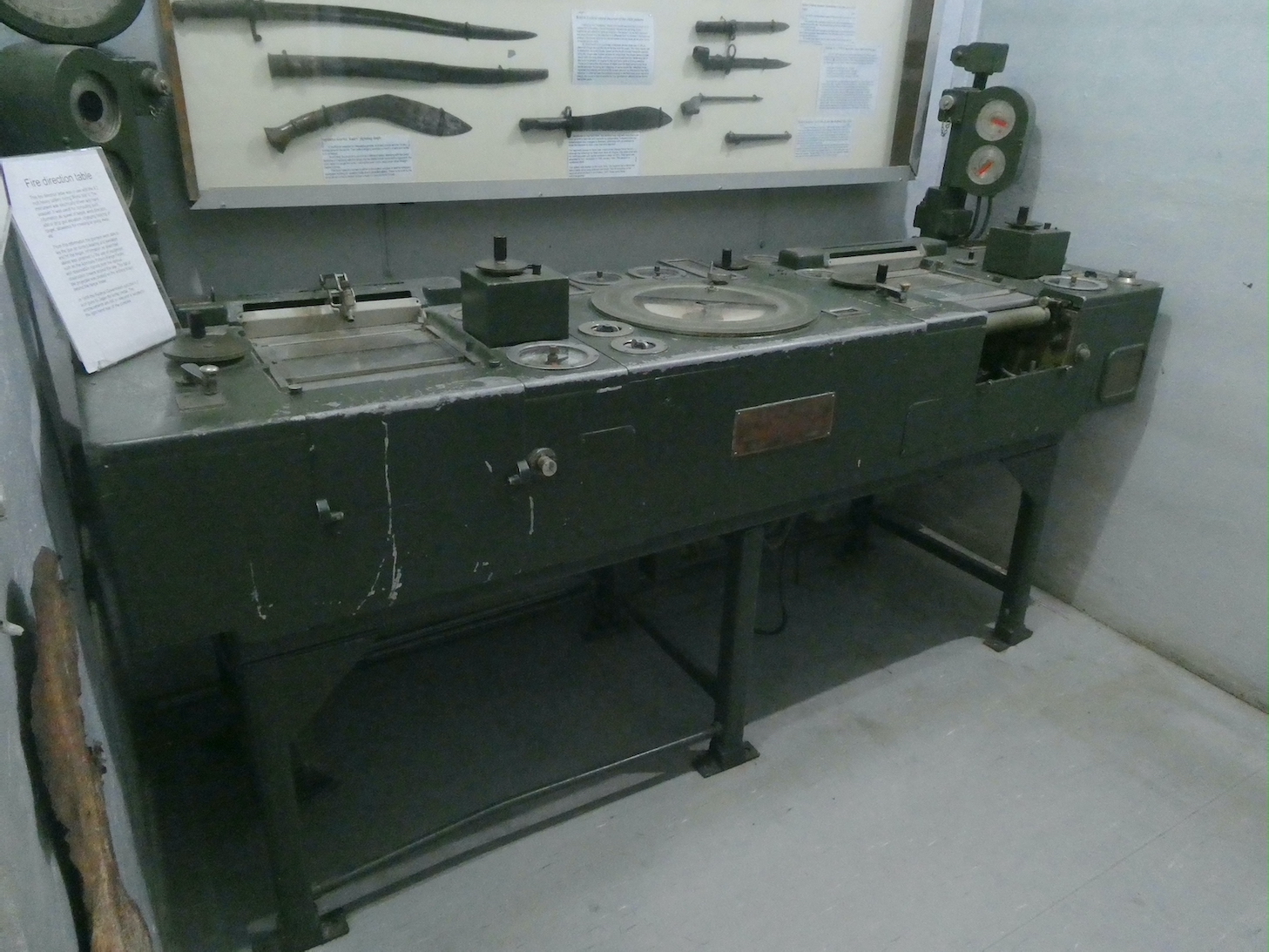
Knowing where to aim the artillery pieces was a little more complicated than it is these days. A rangefinder was used to determine the angle and distance to the target, this one is the largest in the world and was installed at the East Point gun emplacements.

The information was then passed via telephone to the plotters manning the ‘fire direction table’ where they computed such things as wind speed, air pressure, humidity and temperature, all of which affected the shell’s flight.

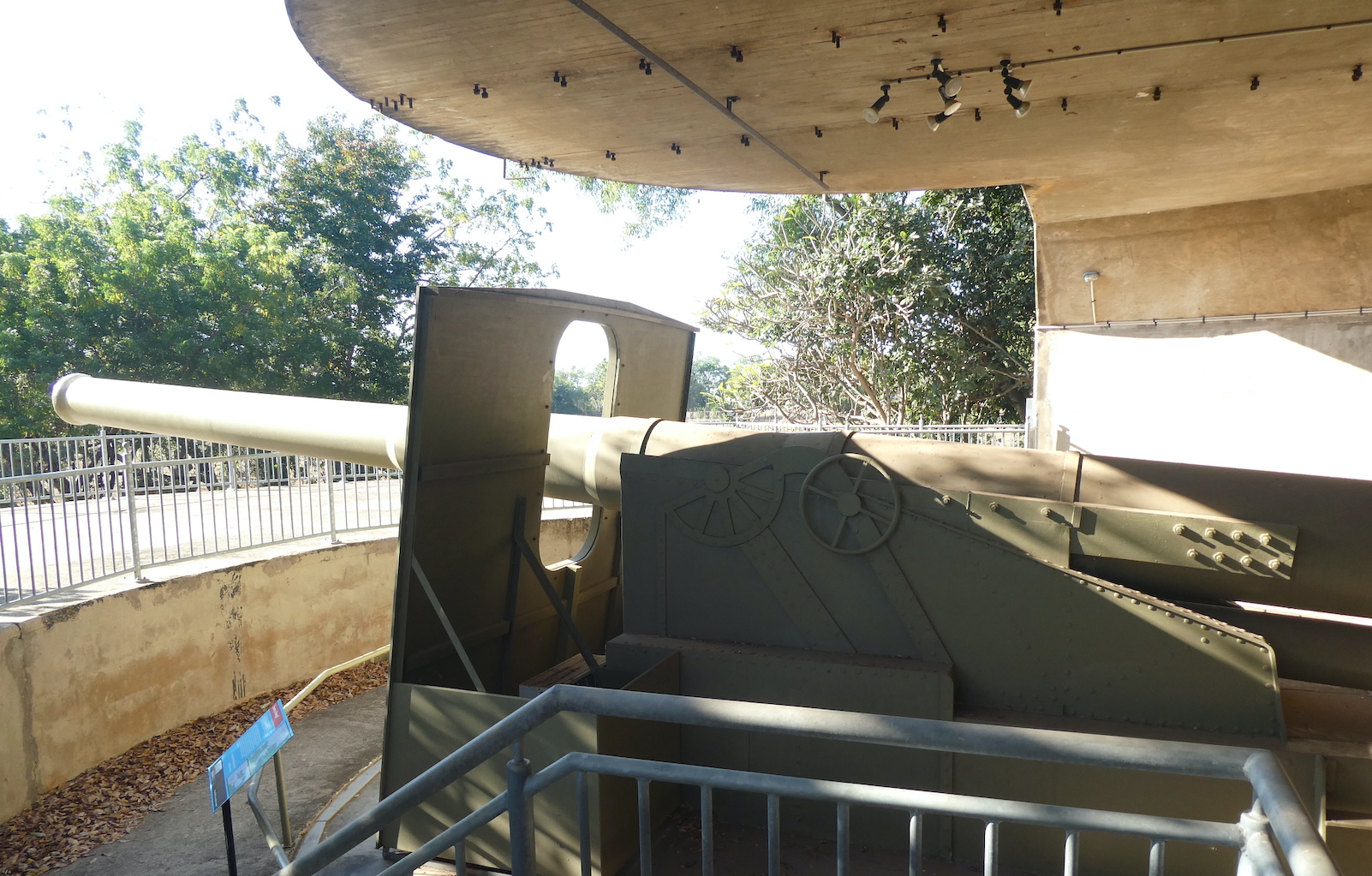
The gunners were then able to set the correct bearing and elevation to hit the target. The initial 6” guns were replaced by two 9.2” guns but they didn’t arrive until February 1944. Consequently, the only rounds fired from these were three proof rounds, the war ended and, in 1959, both guns were sold to a Japanese salvage firm and cut up for scrap metal. The replicas that now stand on the site are quite impressive.

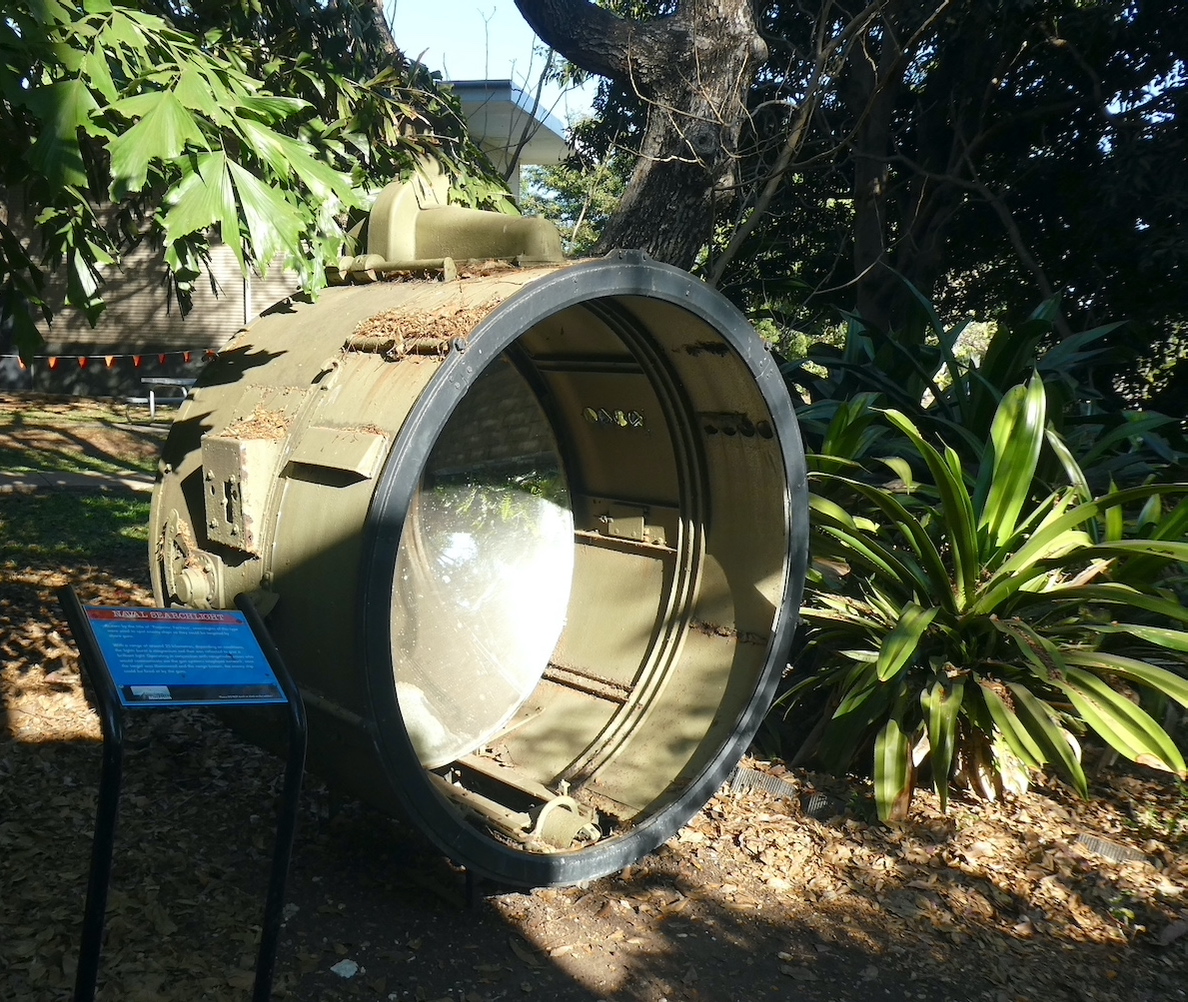
Operating in conjunction with the rangefinder crews, massive searchlights with a range around 25 kilometres were used to spot enemy ships.

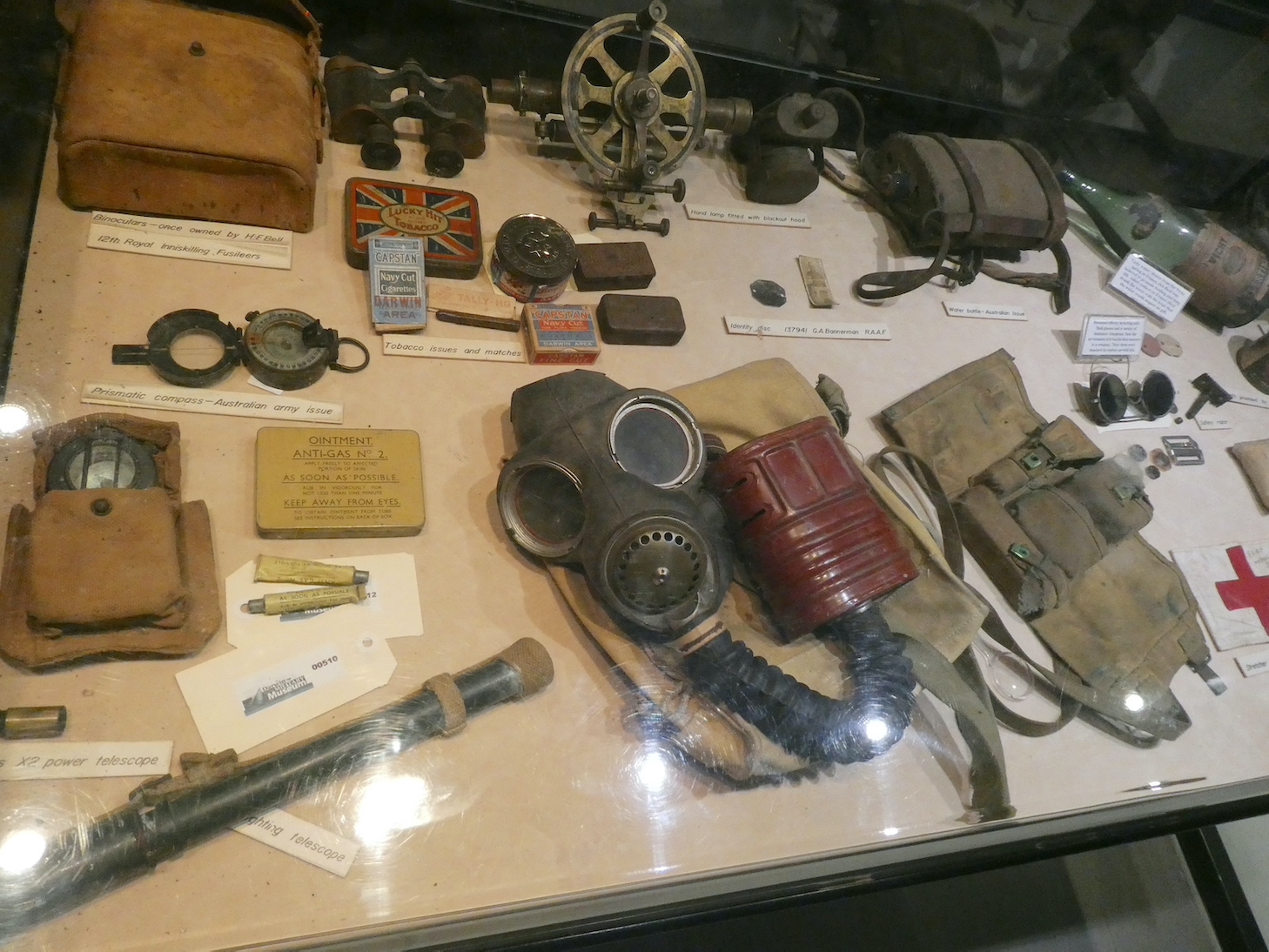
There are many displays of assorted paraphernalia

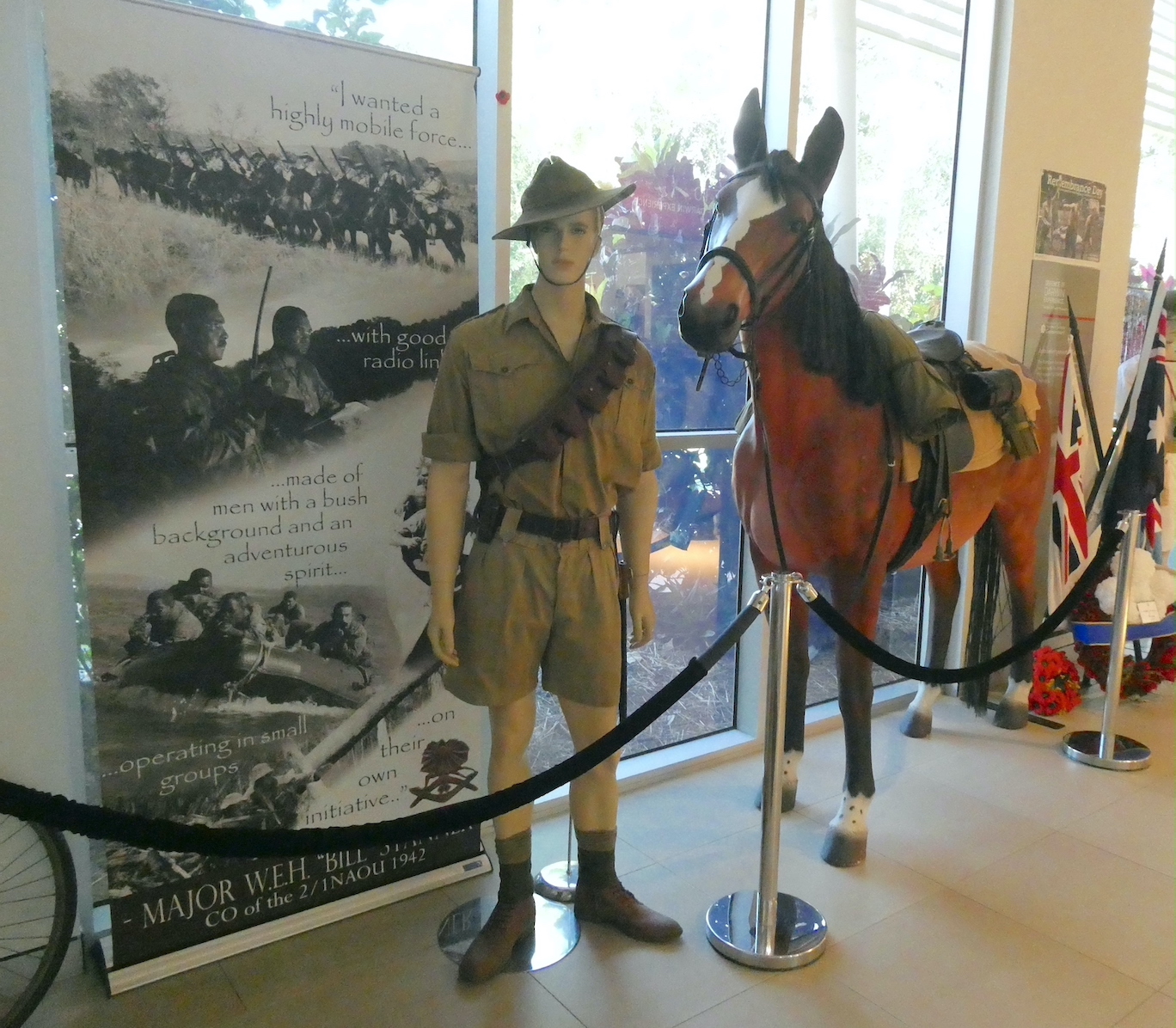
and a tribute to the military horse troops. Around 1500 horses and men of the North Australia Observation Unit, known as Nackeroos, were stationed in remote locations to watch for enemy activity.

The final outbuilding contained a wonderful array of service vehicles from trucks to Bren Gun carriers.

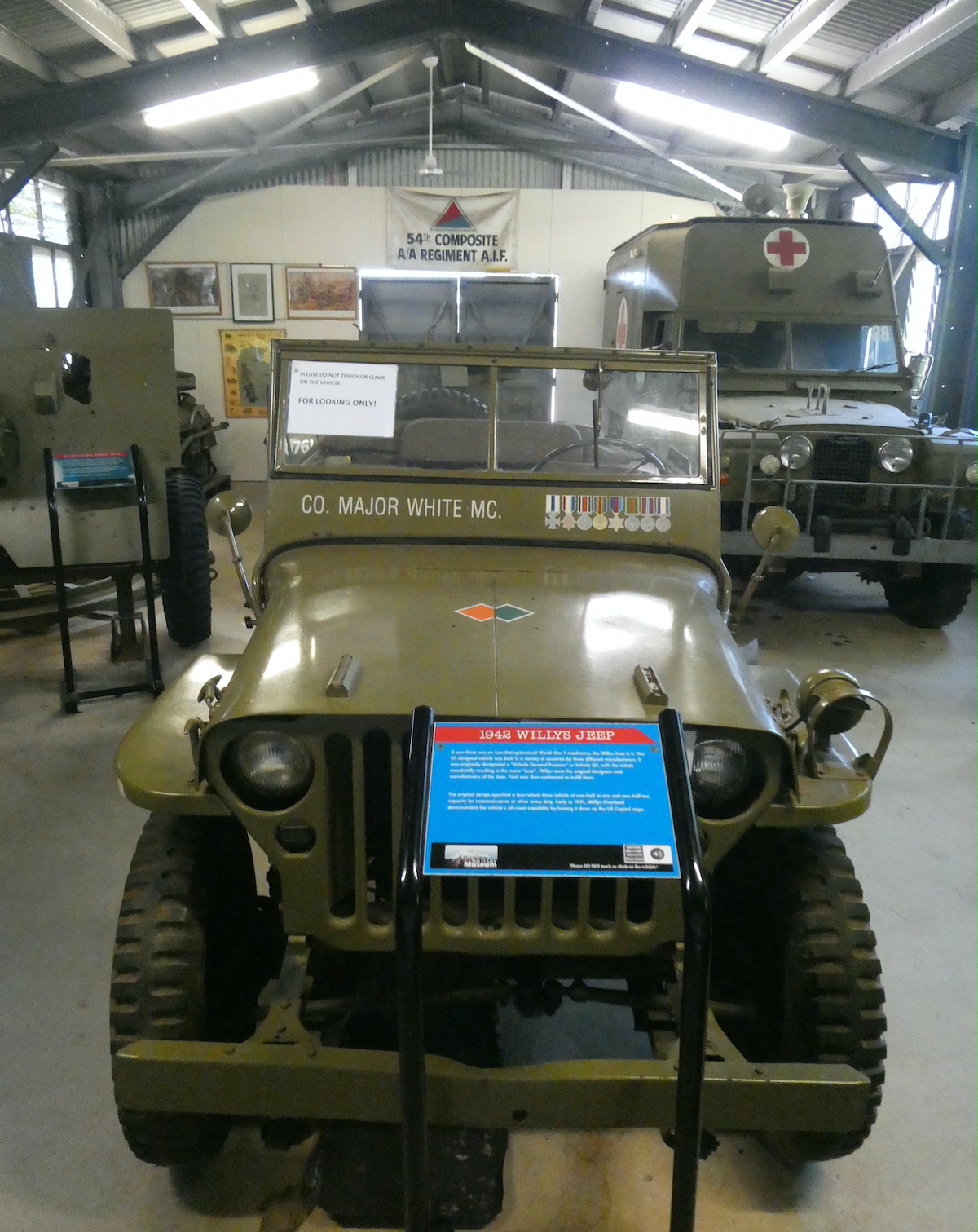
The most recognisable is the 1942 Willys Jeep. Originally designated a ‘Vehicle General Purpose’ or ’Vehicle GP’, the name resulted in the term ‘jeep’. Willys were the original designers and manufacturers of the Jeep and then contracted the building of them to Ford.
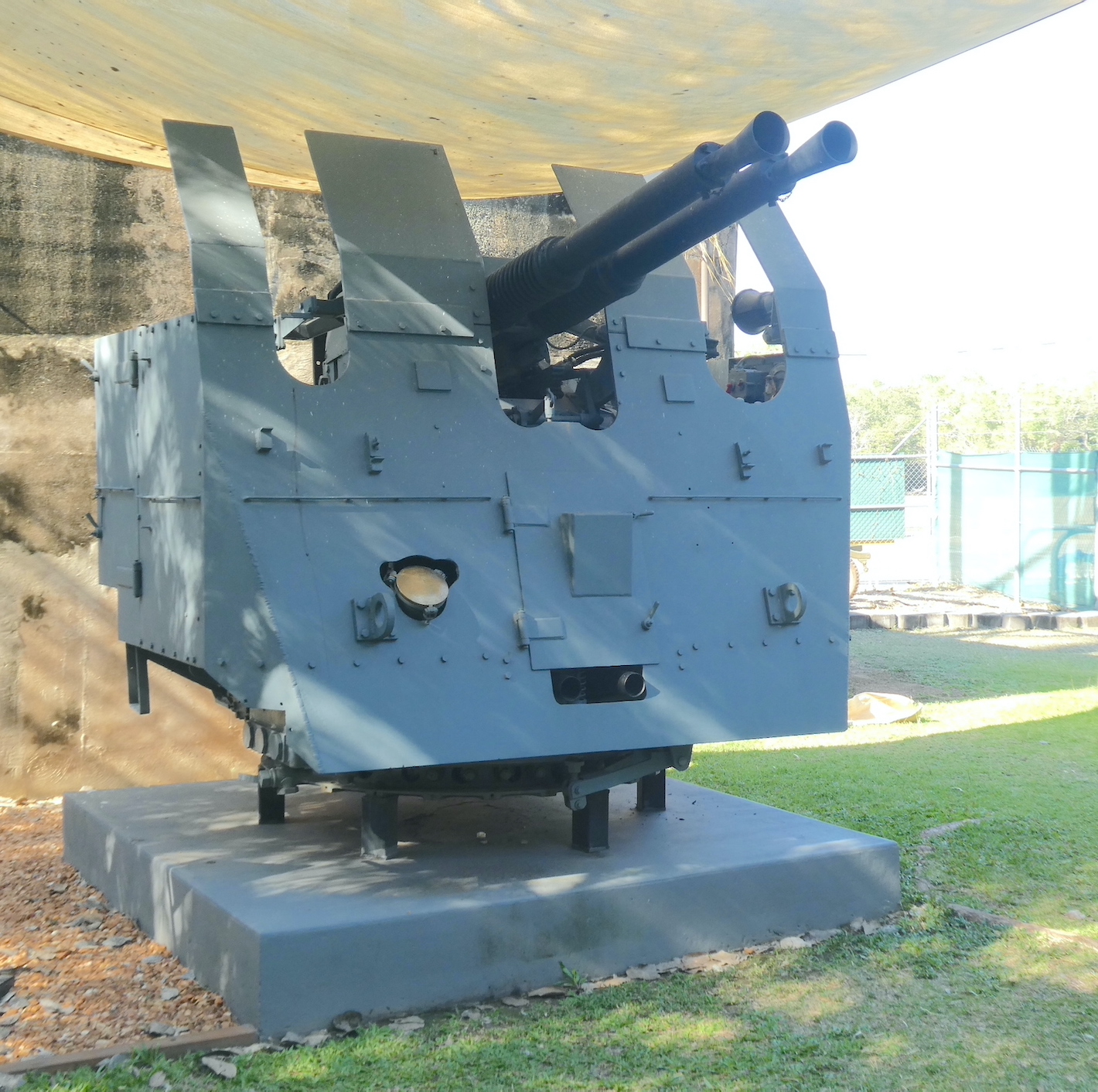
If you are planning a visit to the museum, allow plenty of time, there was so much more to see.

Zealandia

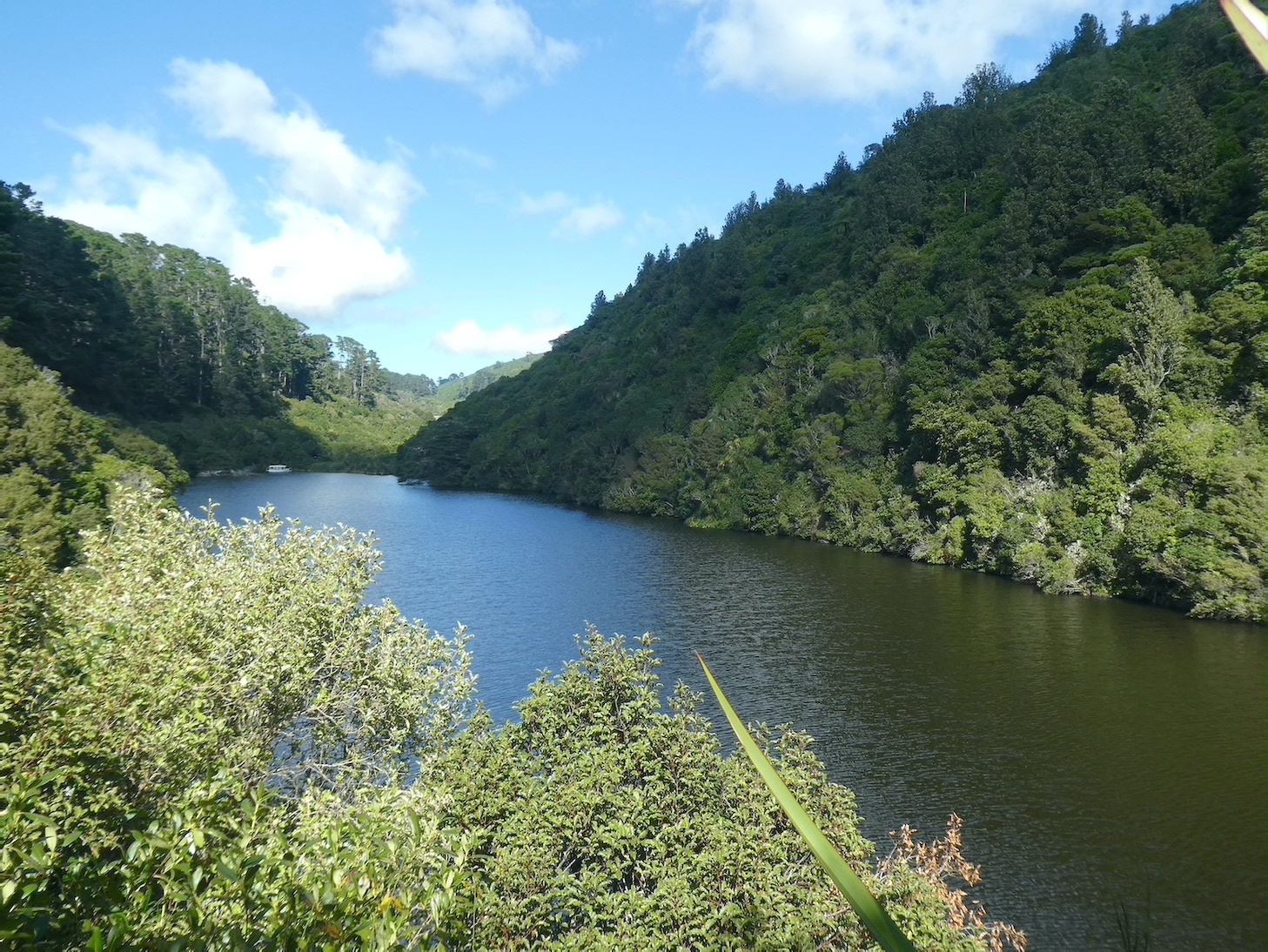
One of the places on our ‘must see’ list while in Aotearoa was Zealandia, the world’s first fully-fenced urban eco-sanctuary. For millions of years, native and endemic species had evolved without the need to defend themselves – until humans, and the mammals they introduced, managed to render at least 51 bird, 3 frog, 3 lizard, 1 freshwater fish, 1 bat, 4 plant, and a number of invertebrate species extinct. Formerly known as the Karori Wildlife Sanctuary, the 225 hectares (just under a square mile) of forest, surrounded by 8.6 kilometres of pest-exclusion fencing, has reintroduced 18 species of wildlife to the area after being absent for over 100 years. We exited the visitor centre to the magnificent view of Karori Reservoir.

Completed in 1878, the Karori Dam and valve tower hailed the beginning of the municipal water supply to Wellington City and continued to contribute until the late 20th century.

There are many kilometres of walking trails through the sanctuary, we headed up the main path that followed the lake.

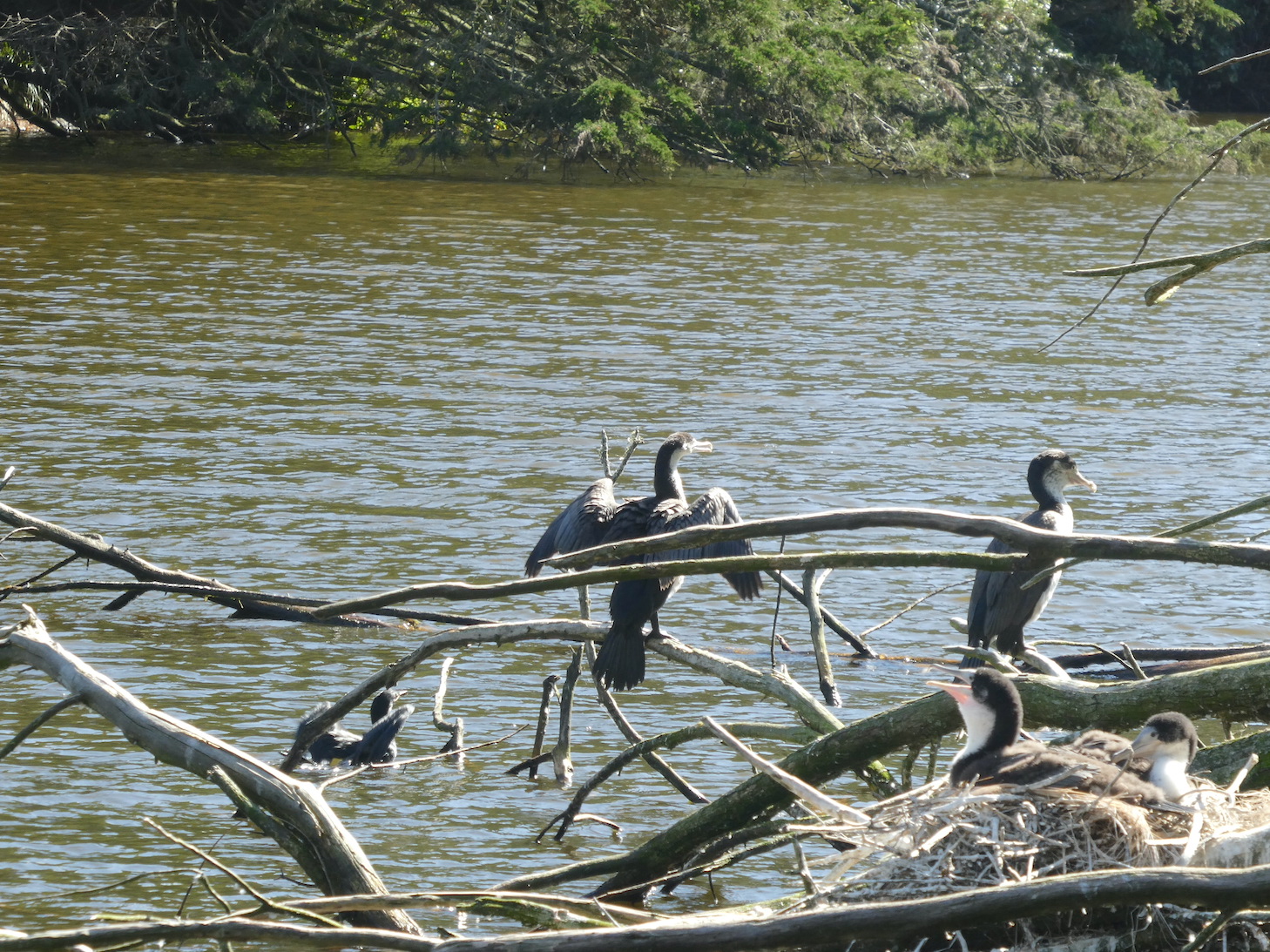
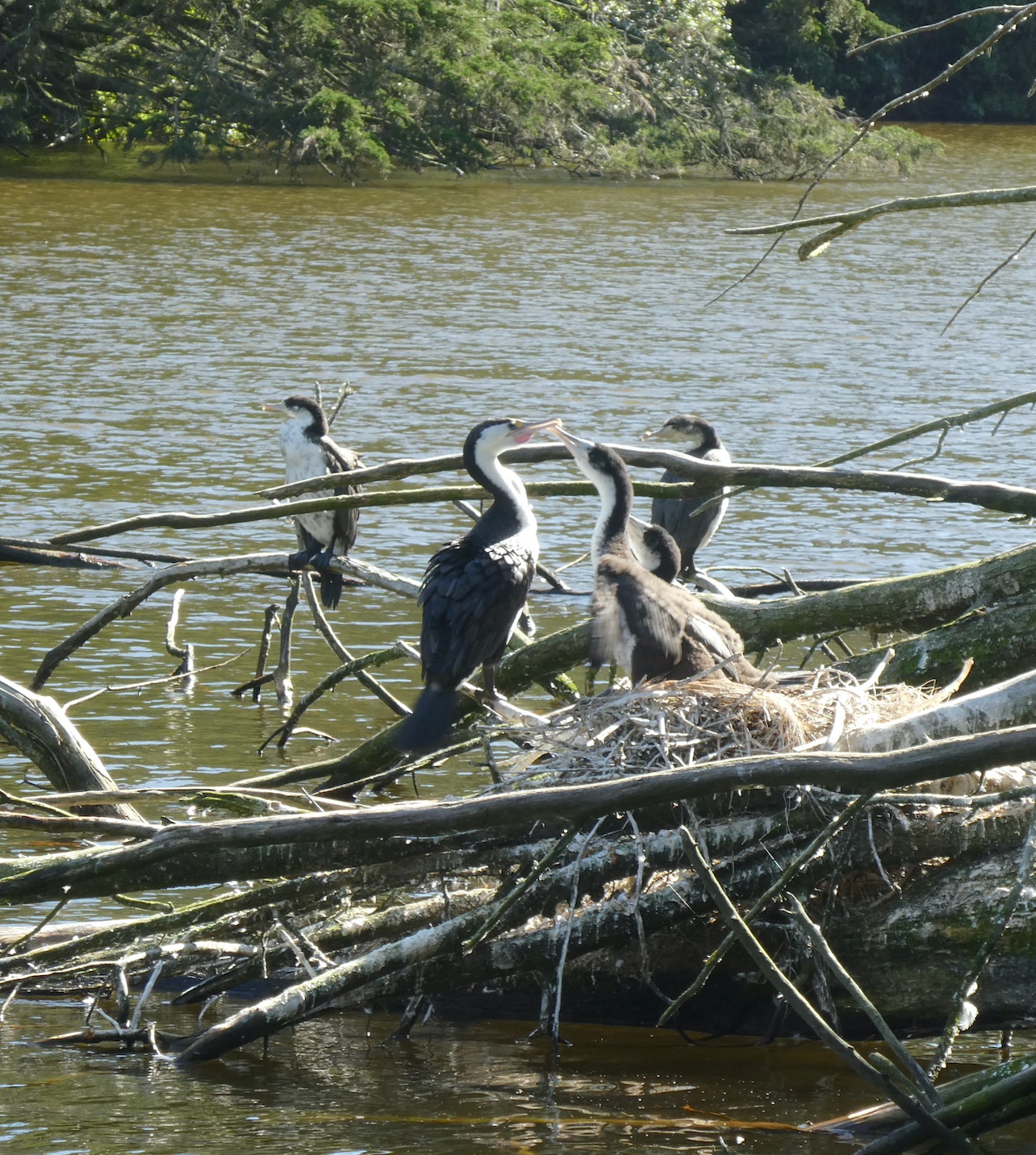
It wasn’t long before we encountered a gorgeous family of pied shags. Known in many countries as cormorants, they are brilliant swimmers and, because their feathers are not waterproof, can stay underwater for up to 30 seconds. Unfortunately, this means they get quickly waterlogged and cold and need to spend a lot of time preening and drying their feathers.

When a predator approaches a nesting colony, the chicks will jump into the water long before they can fly and are very good at climbing back up to the nest. Both parents build the nest, incubate the eggs and feed their adorable  young.

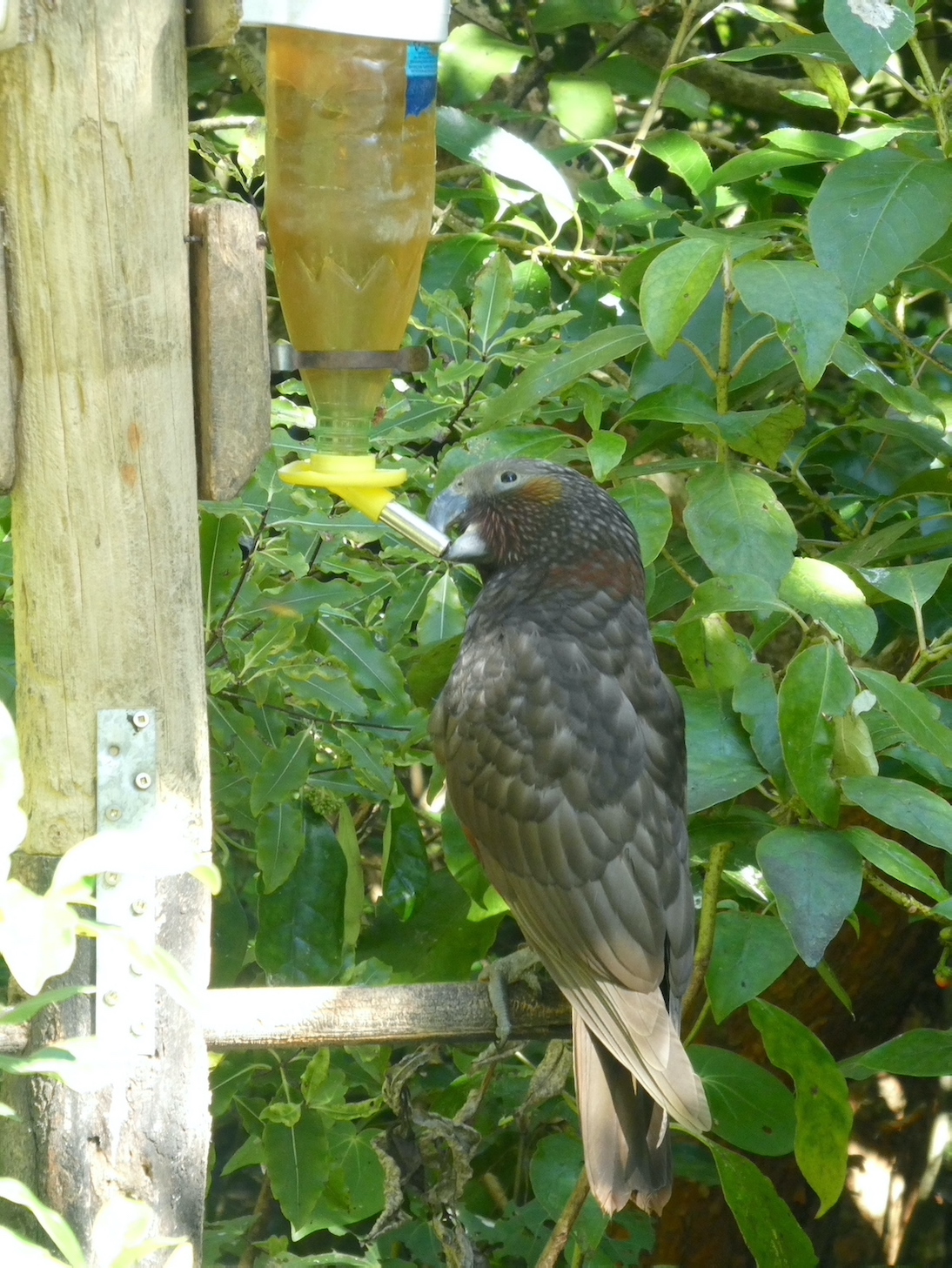
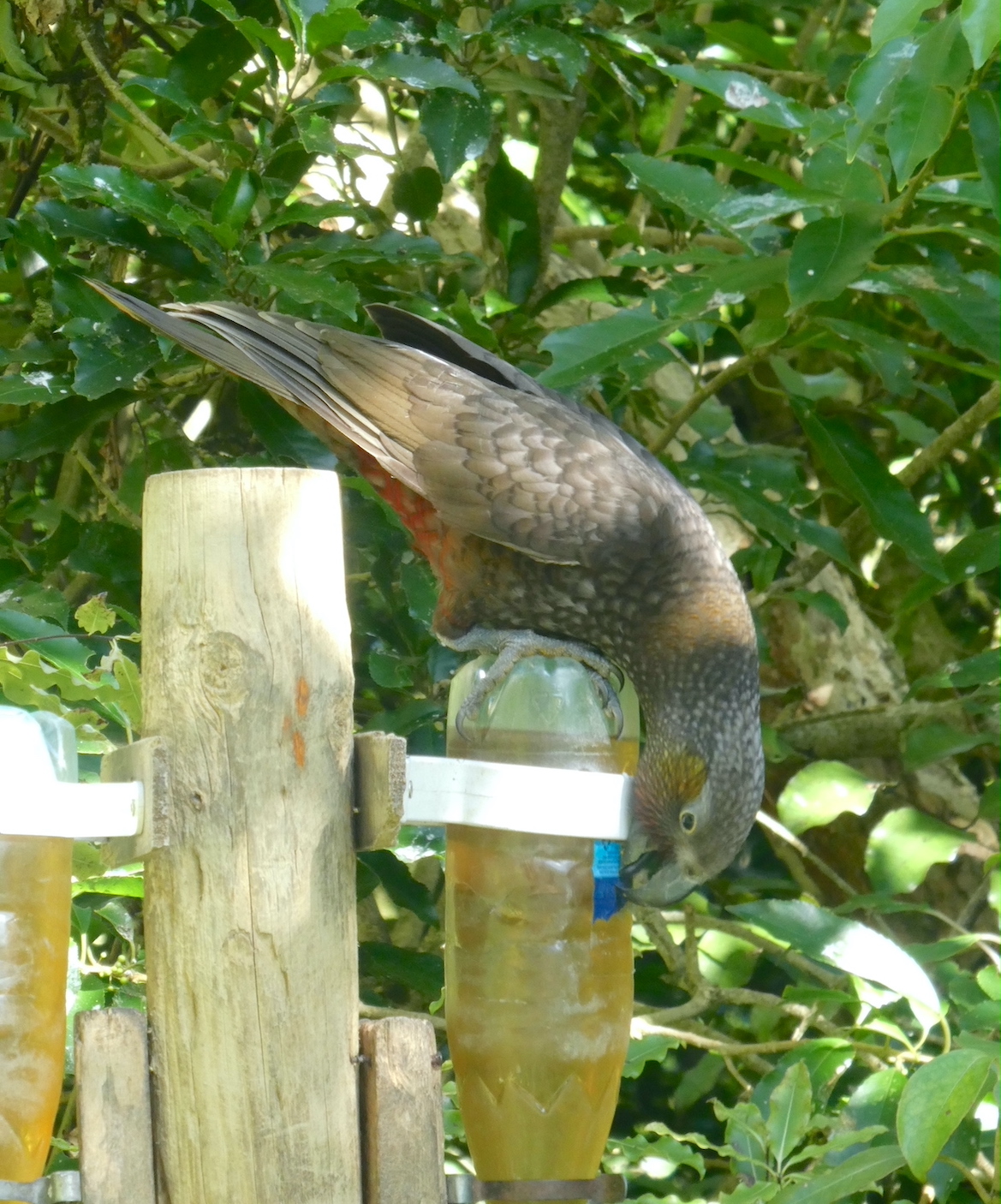
Further along the path, we encountered a pair of birds enjoying a drink at a sugar water bar.

The kākā is a large, olive-brown forest parrot with flashes of crimson and orange plumage under their wings. The word kā can mean ‘screech’ in Māori and so the name kākā is thought to be a reference to their loud call. Effectively extinct in Wellington since the early 20th century, fourteen captive-bred kākā were transferred from zoos between 2002 and 2007 and breeding has been very successful at Zealandia.

As the trail narrowed and foliage thickened,

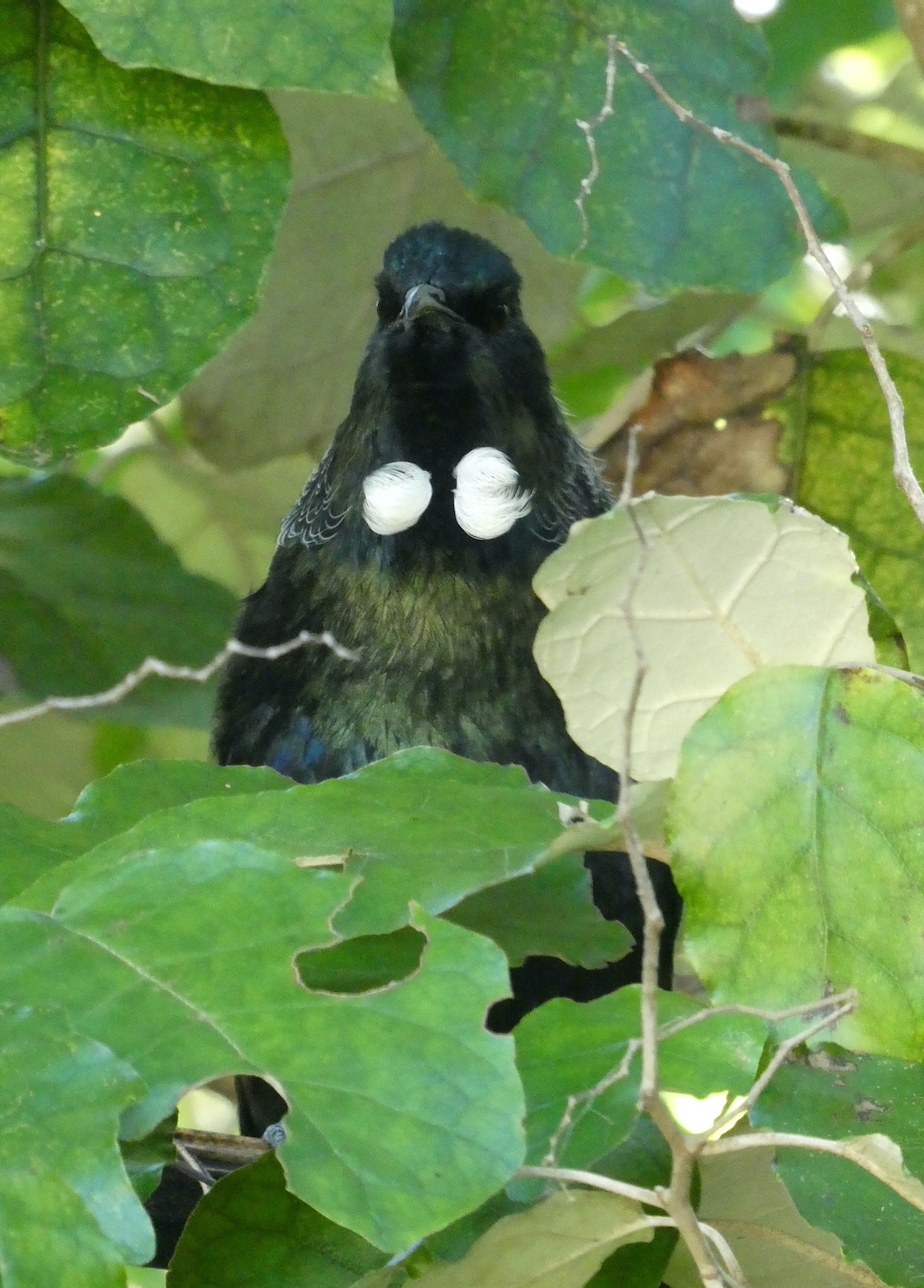
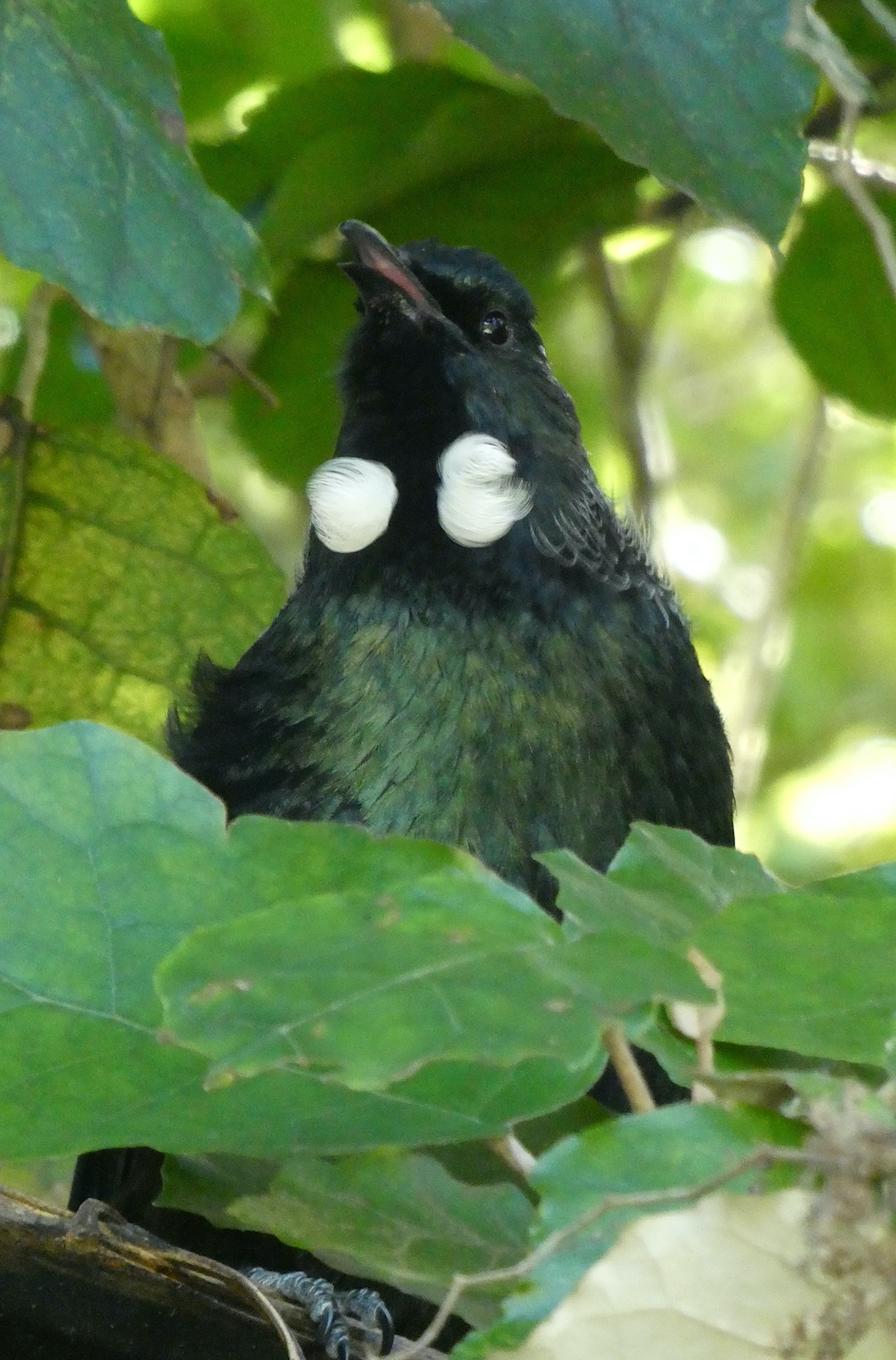
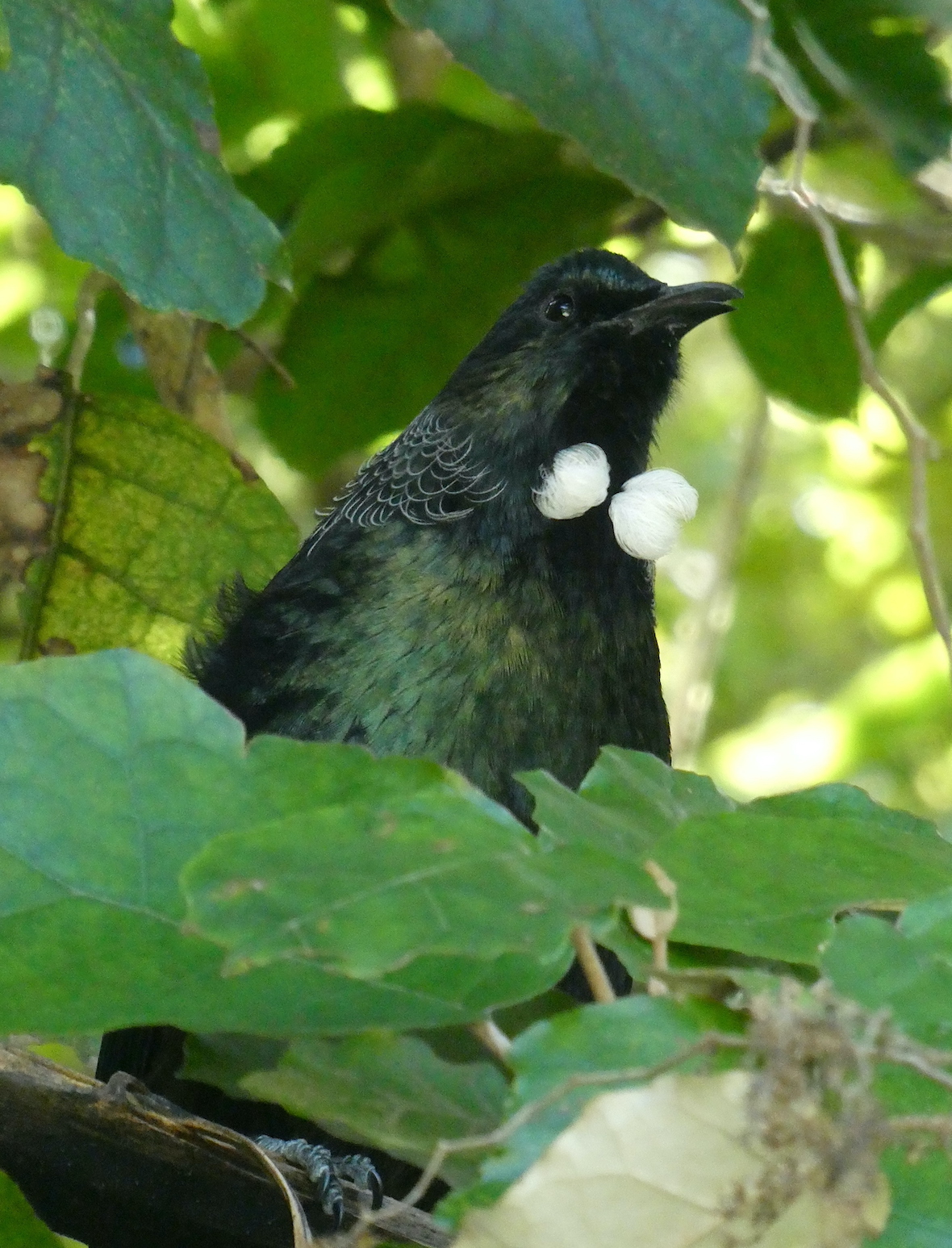
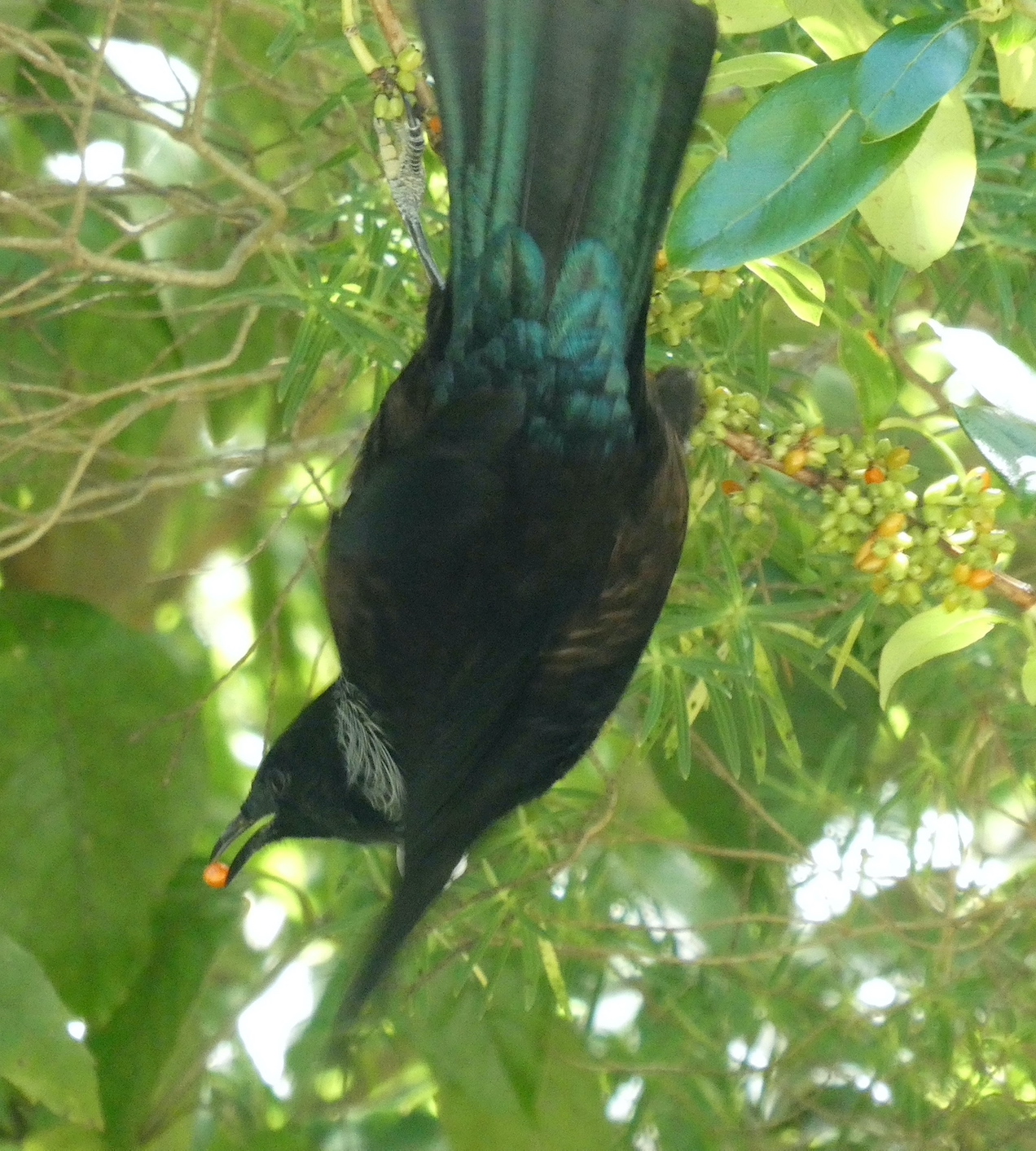
we could hear unusual clicks, croaks and bell-like sounds. Looking up, we spied a beautiful black bird with white pom-poms at its throat.

The tūī is known for its complex vocabulary and can mimic other birds, ringtones of phones, door chimes and even human speech thanks to its ‘double voice-box’. While watching and listening, mesmerised, it became evident in the sunlight that the dark plumage was actually a dazzling iridescent green.

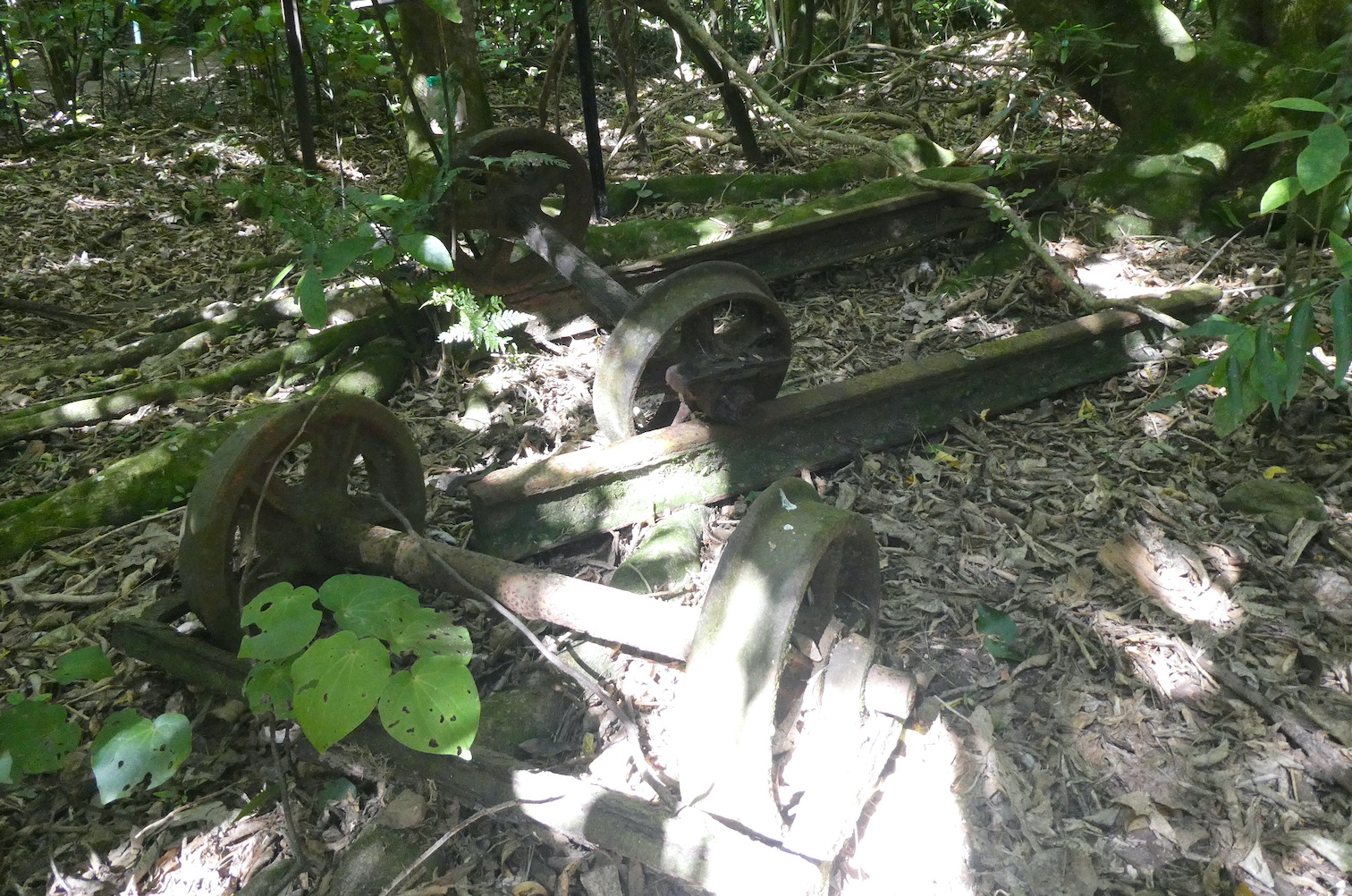
We stumbled upon what appeared to be old iron railway tracks in a clearing. Alluvial gold was discovered in the area in 1869 and local residents flocked to lay a claim. Two years later, quartz mining took its place with water wheels and crushing machinery installed. Presumably, these are remnants of the mine sites.
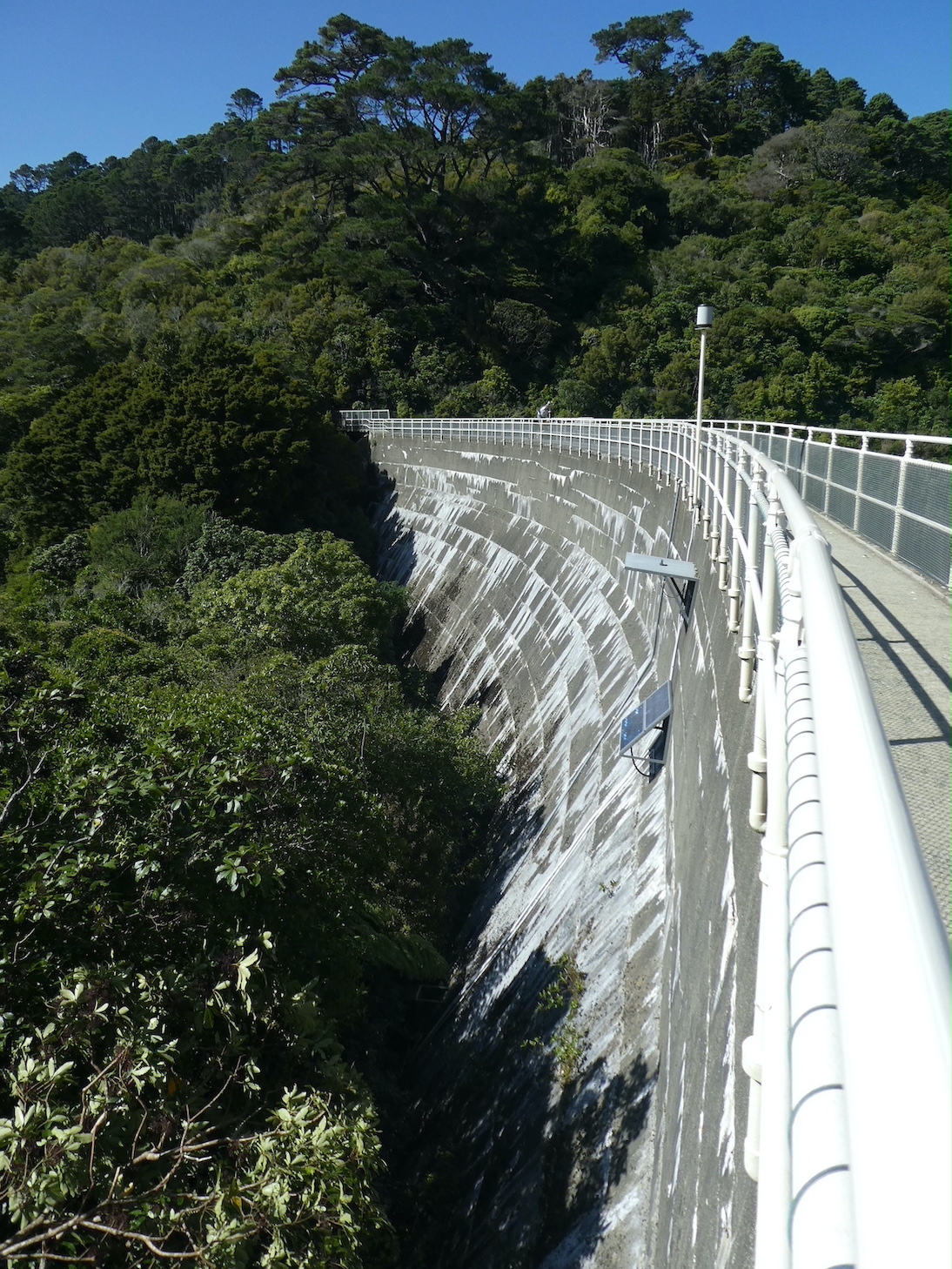
We traversed the upper dam wall, completed in 1908

and paused to take in the stunning vista across the upper reservoir toward urban Wellington.

We crossed a suspension bridge, enveloped by dense forest

to travel a different route back to our starting point. We didn’t expect to see the elusive tuatara but the mainly nocturnal creatures were basking in the sun.

Tuatara means ‘peaks on the back’ in Māori and they are considered to be messengers of Whiro, the god of death and disaster. Scientists refer to them as ‘living fossils’ because they are the only living members left of the Rhynchocophalian order. All other members became extinct around 65 millions years ago.

We first spotted these birds while staying at Motuoapa Bay. Though not a native species, the California quail is a welcome substitute for the now extinct New Zealand quail, helping to balance the ecosystem.

With a hint from this Tūī that lunch time was nigh,

we left Zealandia in search of sustenance.

boating bliss

Winter is the perfect time of year to visit friends in Darwin, especially when they own a boat.

No, not that one….this one.

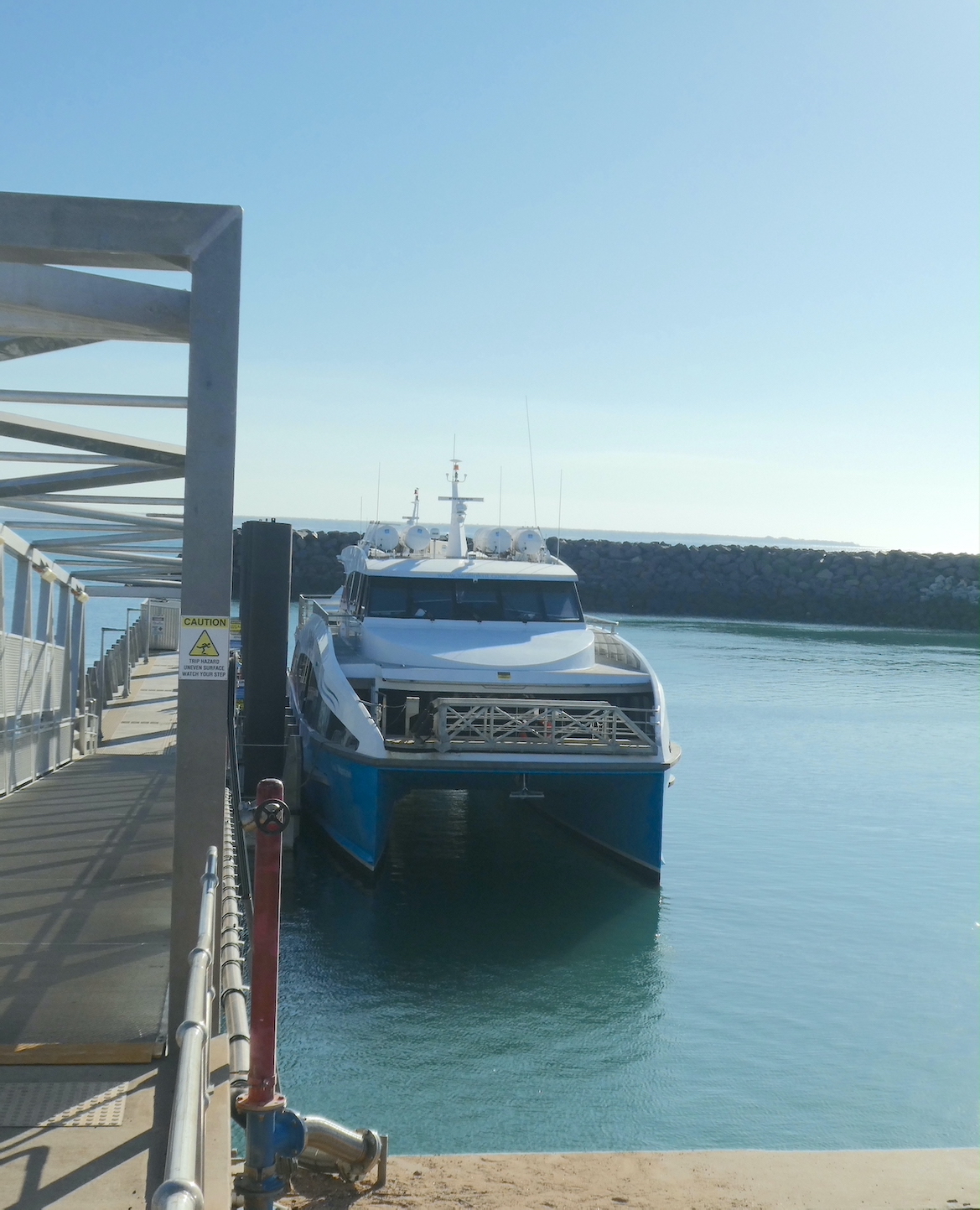
We set off on a sea of glass from Cullen Bay Ferry Wharf

and rounded the headland,

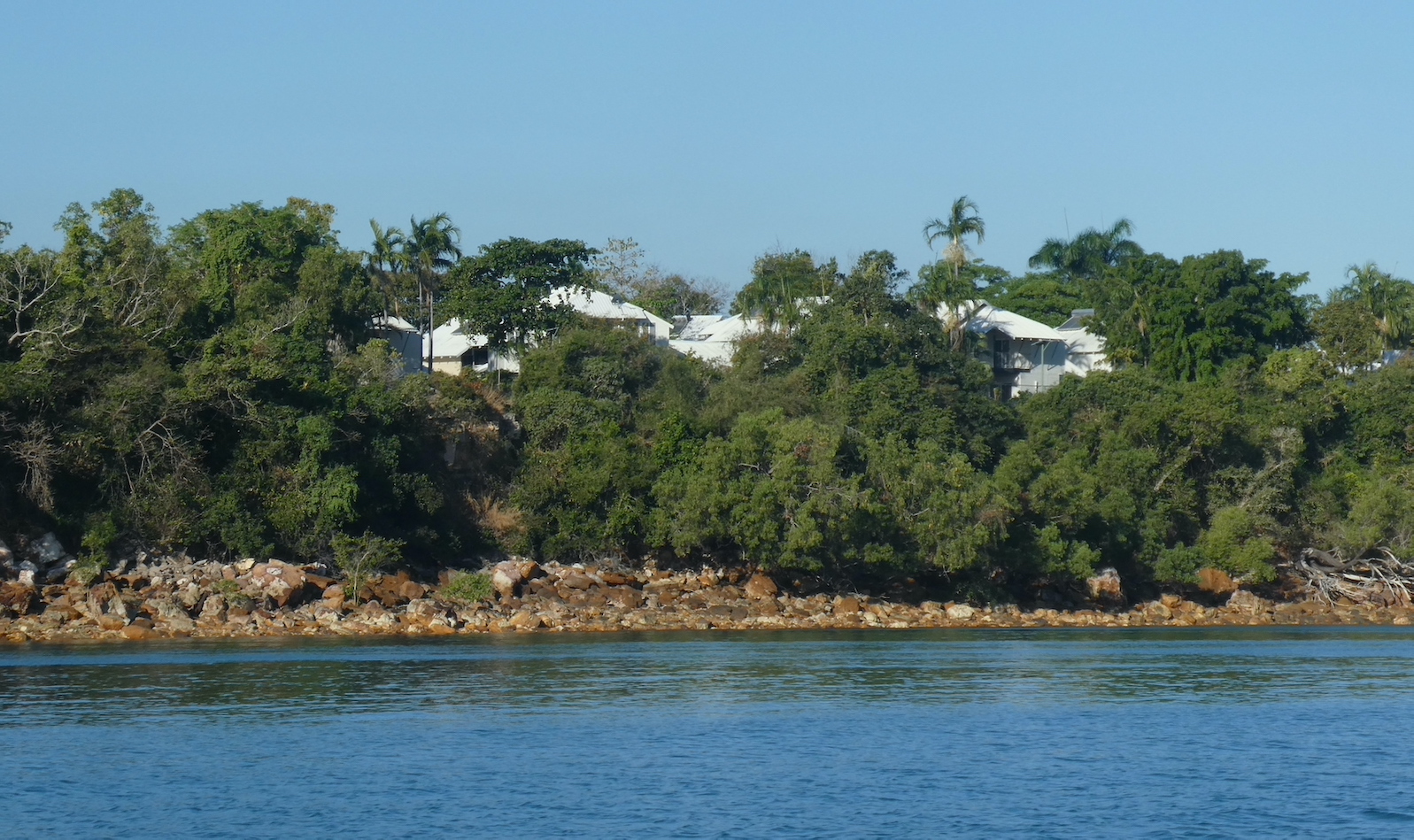
before the hint of tropical houses in the suburb of Larrakeyah peeked at us through the trees.

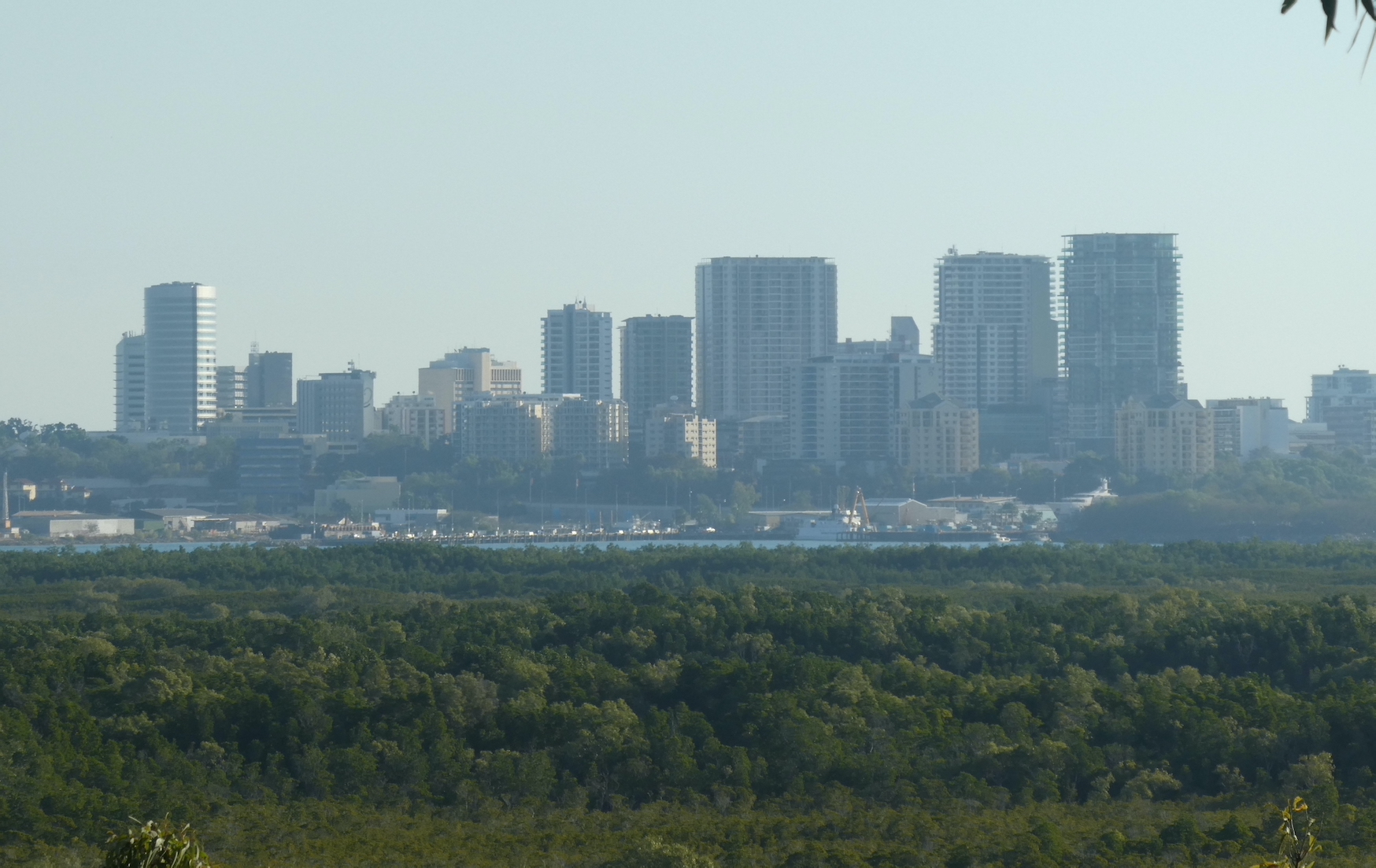
In the distance, Darwin city cut the colour blue with a swathe of silver and green.

Larrakeyah was one of the first parts of the city to be developed, with the colony’s first hospital built in 1874. It is named after the Larrakia people, the traditional custodians of the land.
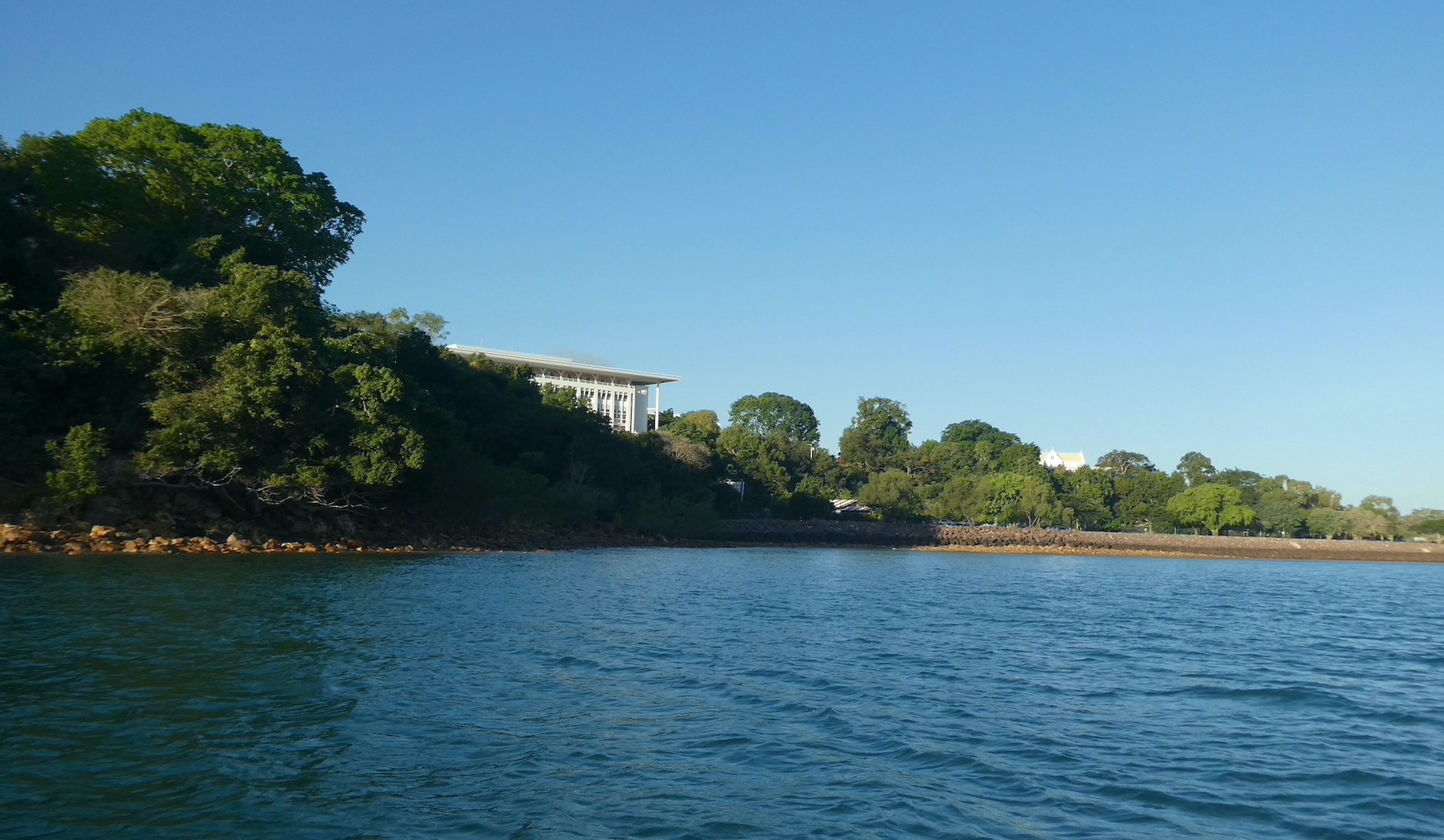
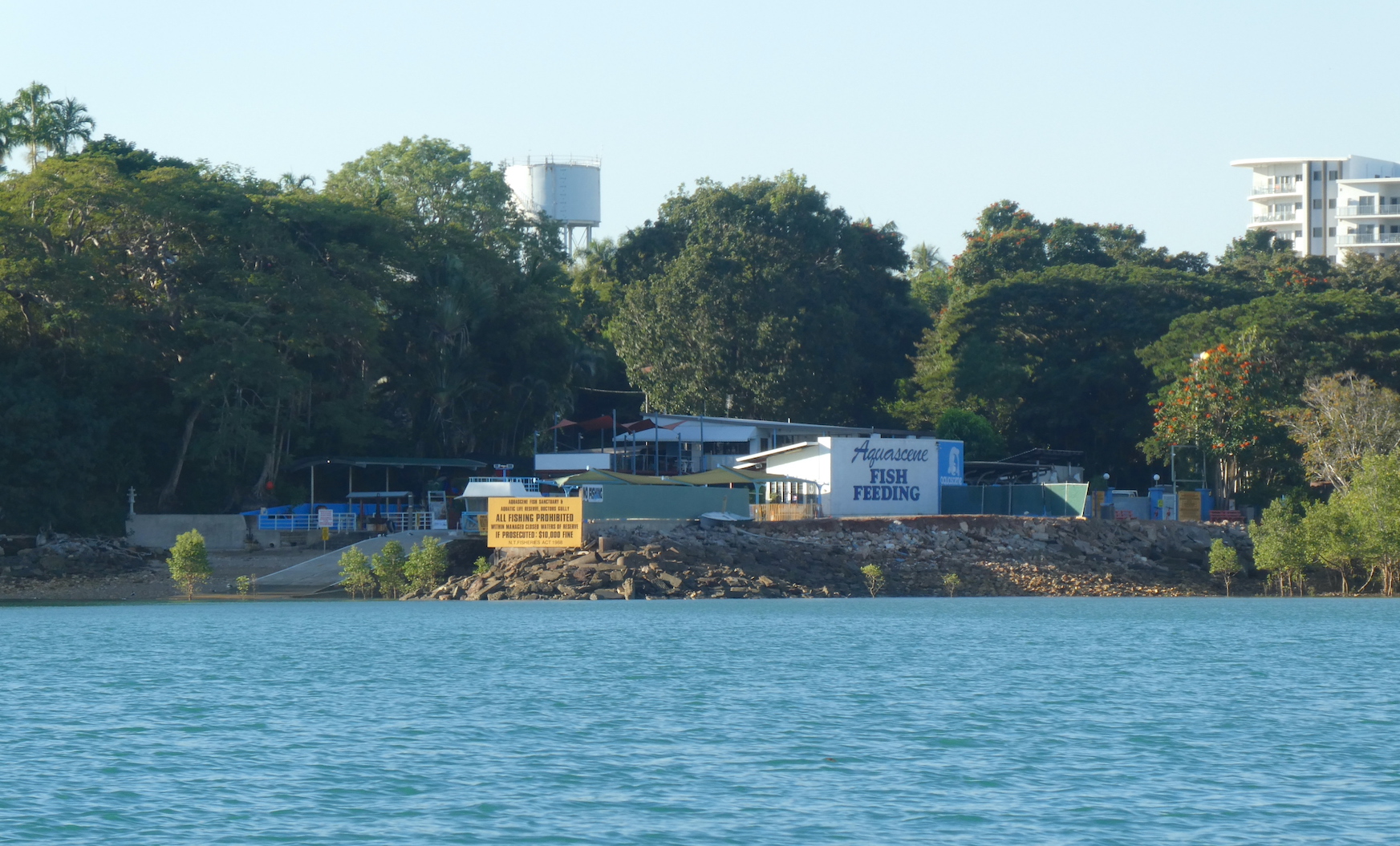
In 1869, Dr. Robert Peel, a surgeon with the first survey team, found water ‘…in a gully between Fort Point and Point Emery’. Aptly named Doctors Gully, it soon became a landing point. In the early 1950s, a nearby resident started throwing bread scraps to the fish that would gather at high tide and in 1981, Aquascene Fish Feeding was established. Visitors can now stand in the shallows and hand feed the fish in the waters of this official marine sanctuary.

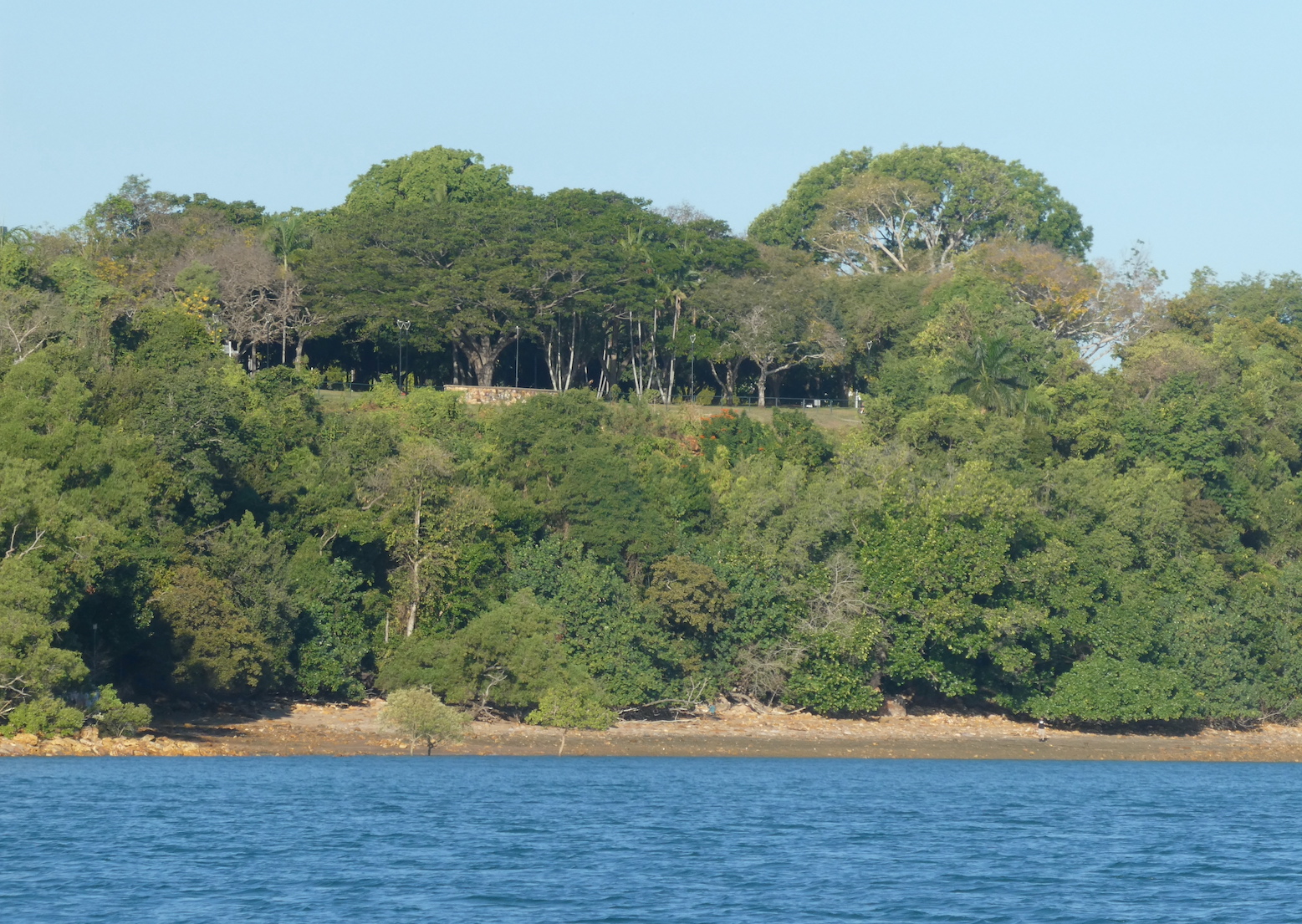
The Esplanade runs the length of the waterfront overlooking Darwin Harbour and alongside, Bicentennial Park is home to monuments and memorials as part of the WWII walking trail. Lookout Point is a good place to start.

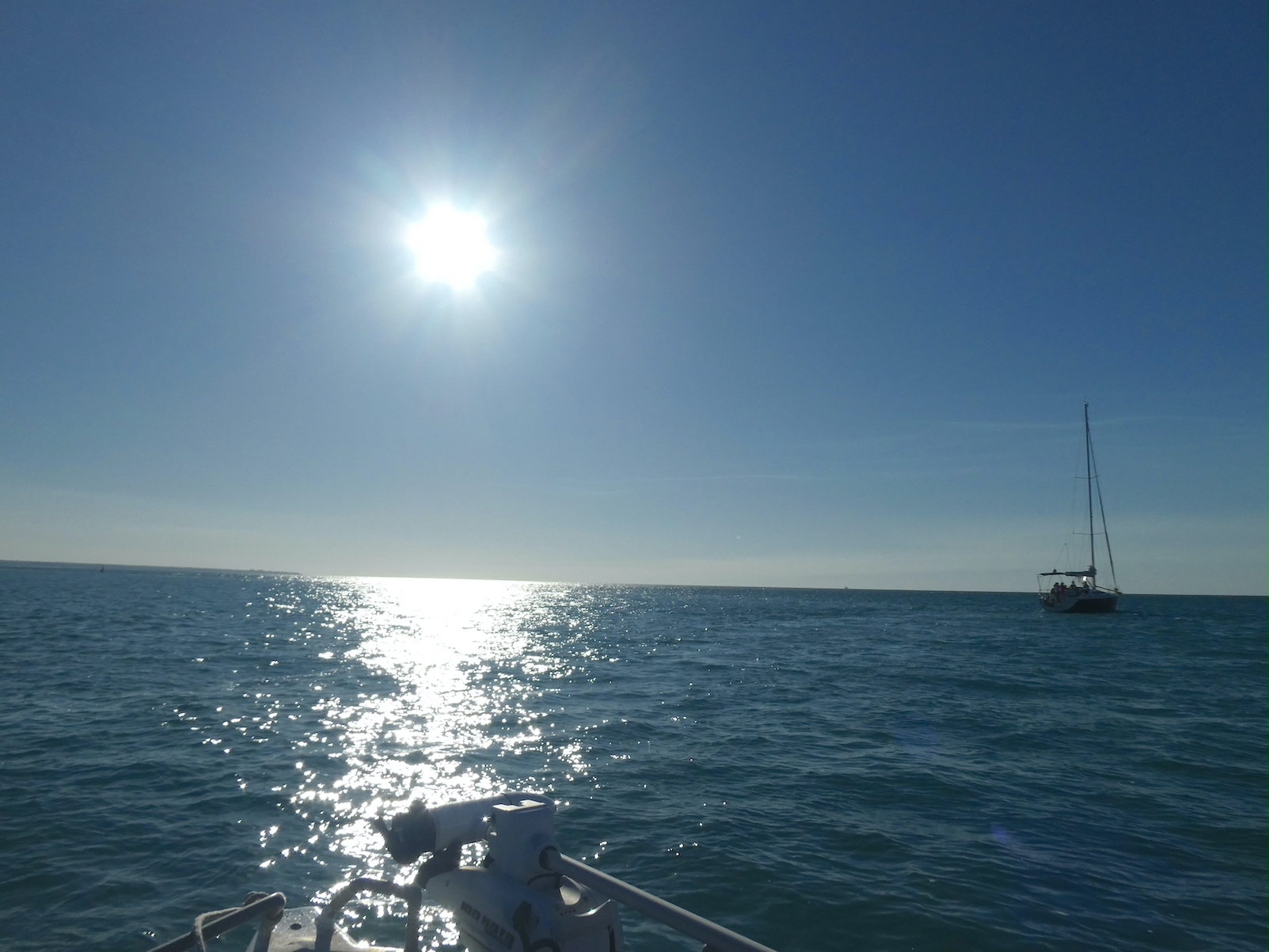
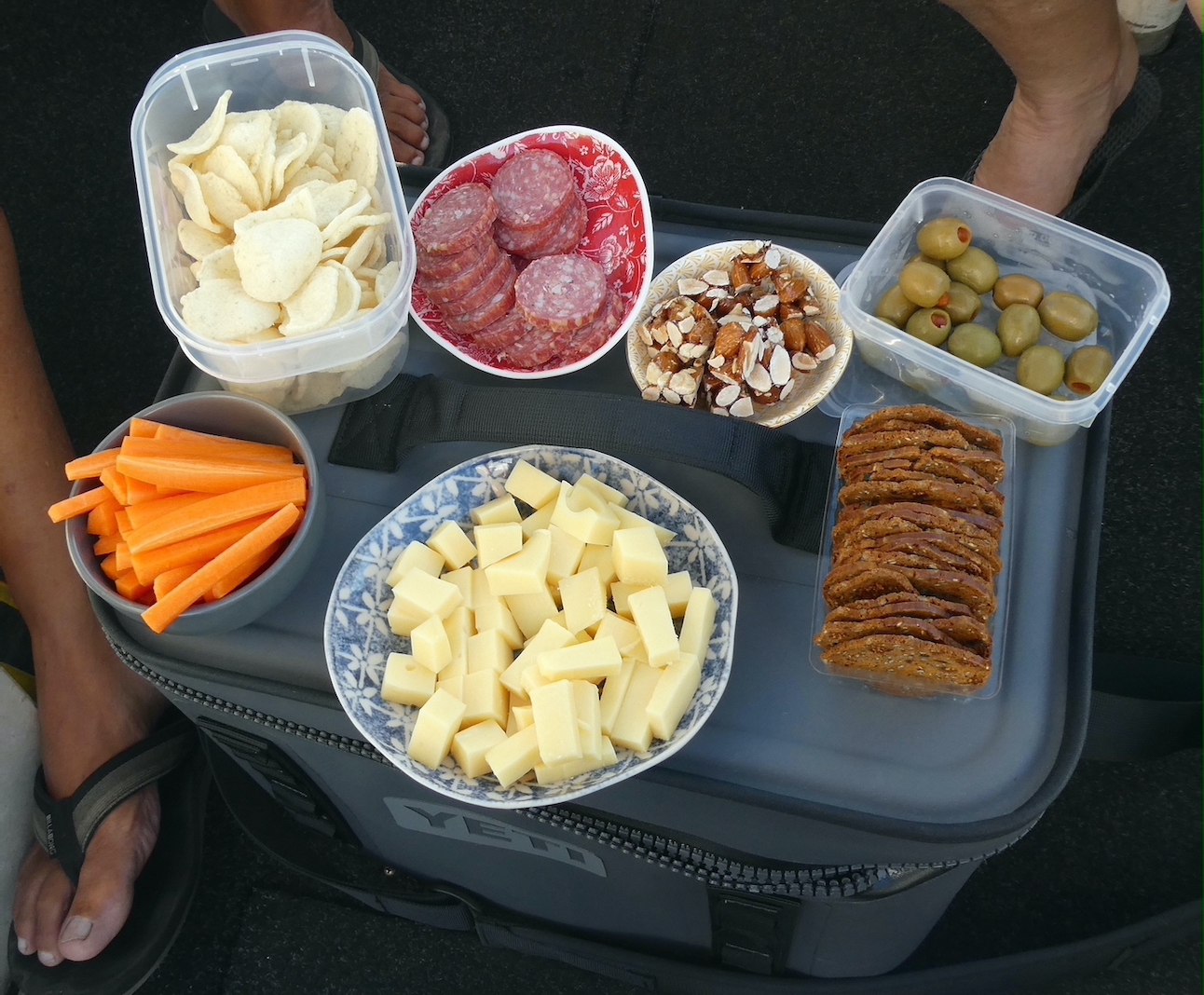
With calm waters and stupendous scenery, it was time to serve drinks and nibbles.

Continuing down the coast toward the end of the park,

the Deckchair Cinema operates seven nights a week in the dry season. Established in 1954, Darwin’s only independent cinema gives audiences the chance to watch a diverse range of movies that would otherwise go unseen on the big screen.

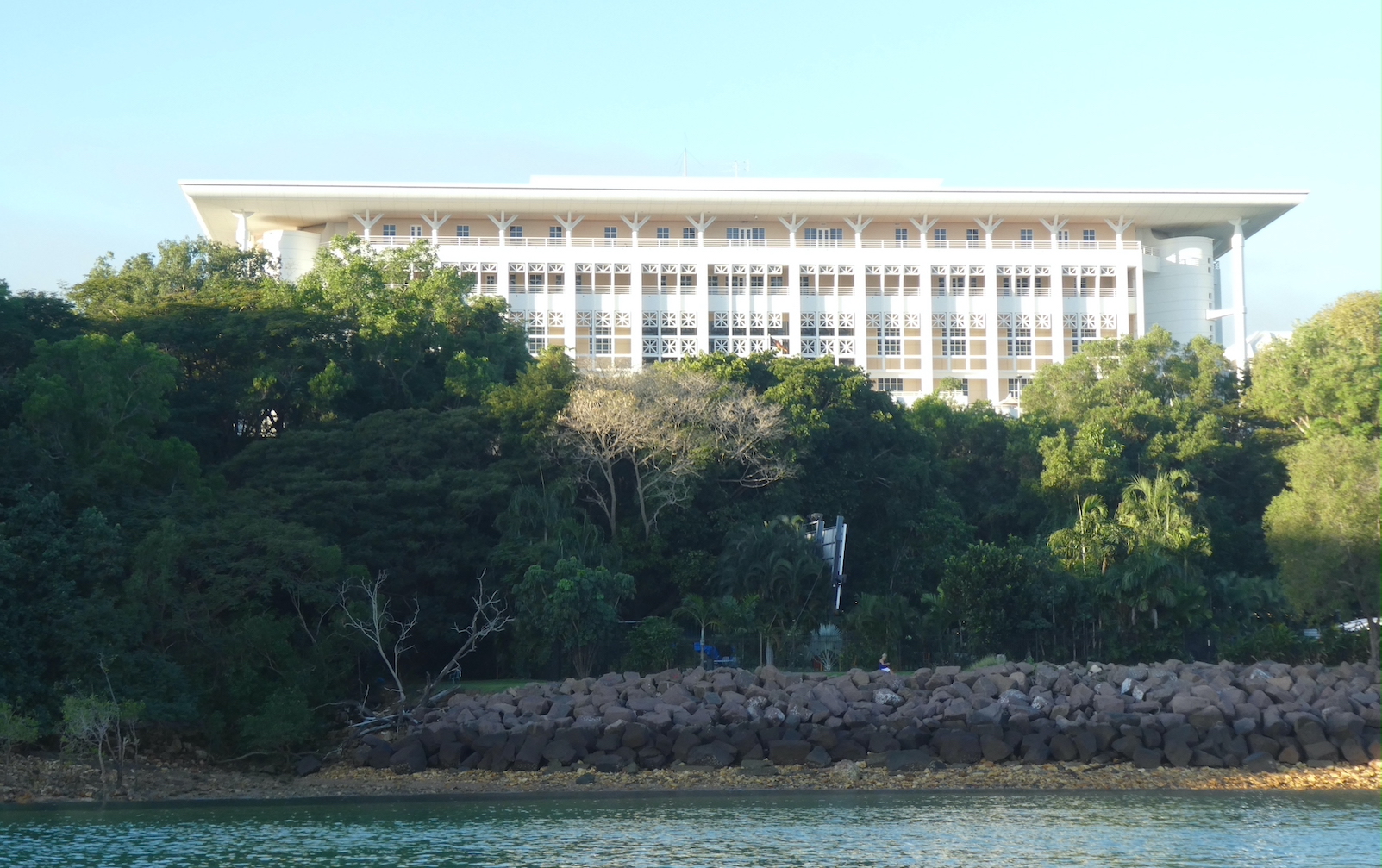
Adjacent to the cinema, Parliament House was opened in 1994 on the site of the Darwin Post Office that was bombed in February 1942.

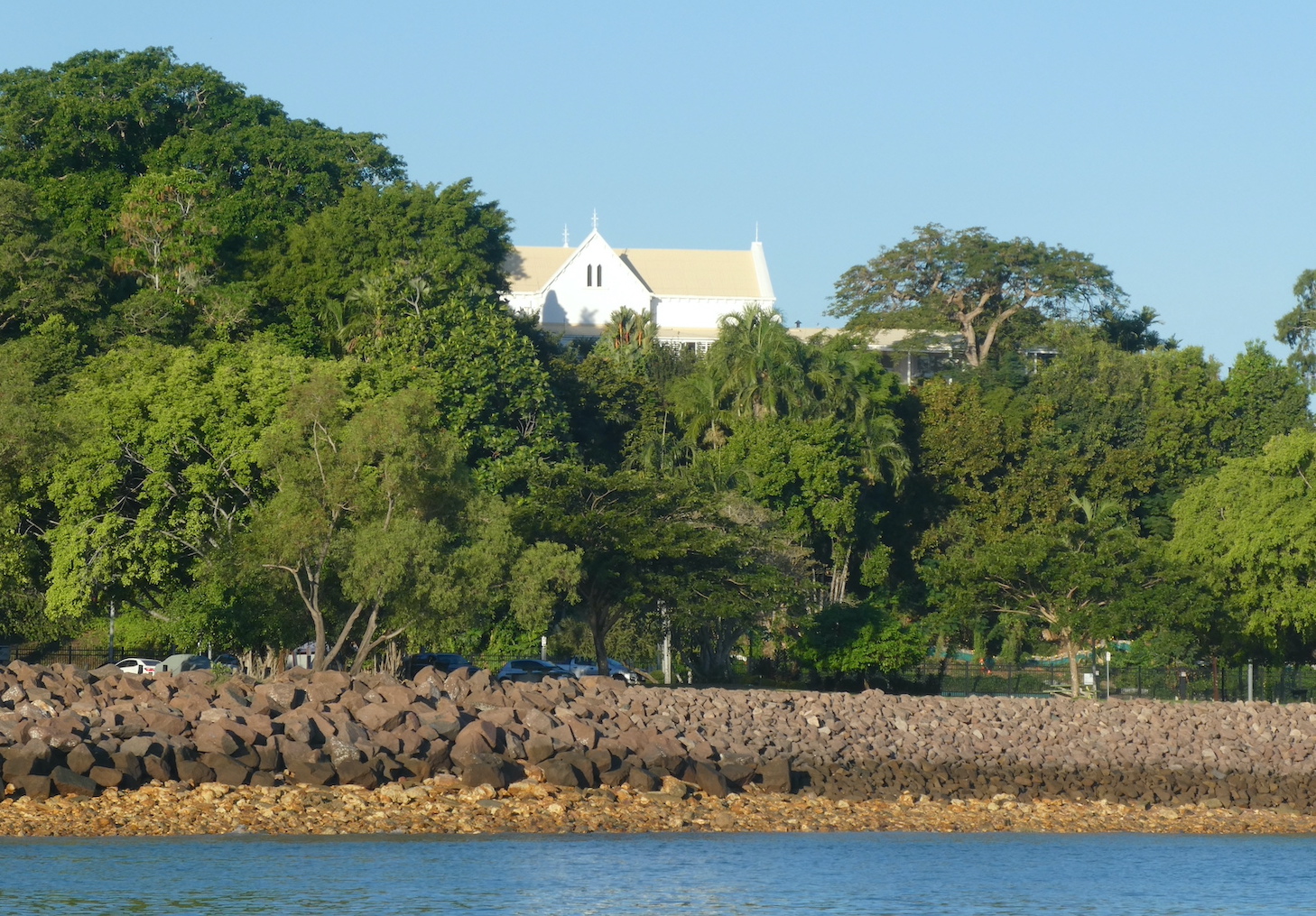
On the other side of the cinema, Government House is well hidden from view. It is the oldest European building in the Northern Territory and has been home to Government Residents and Administrators since 1871.

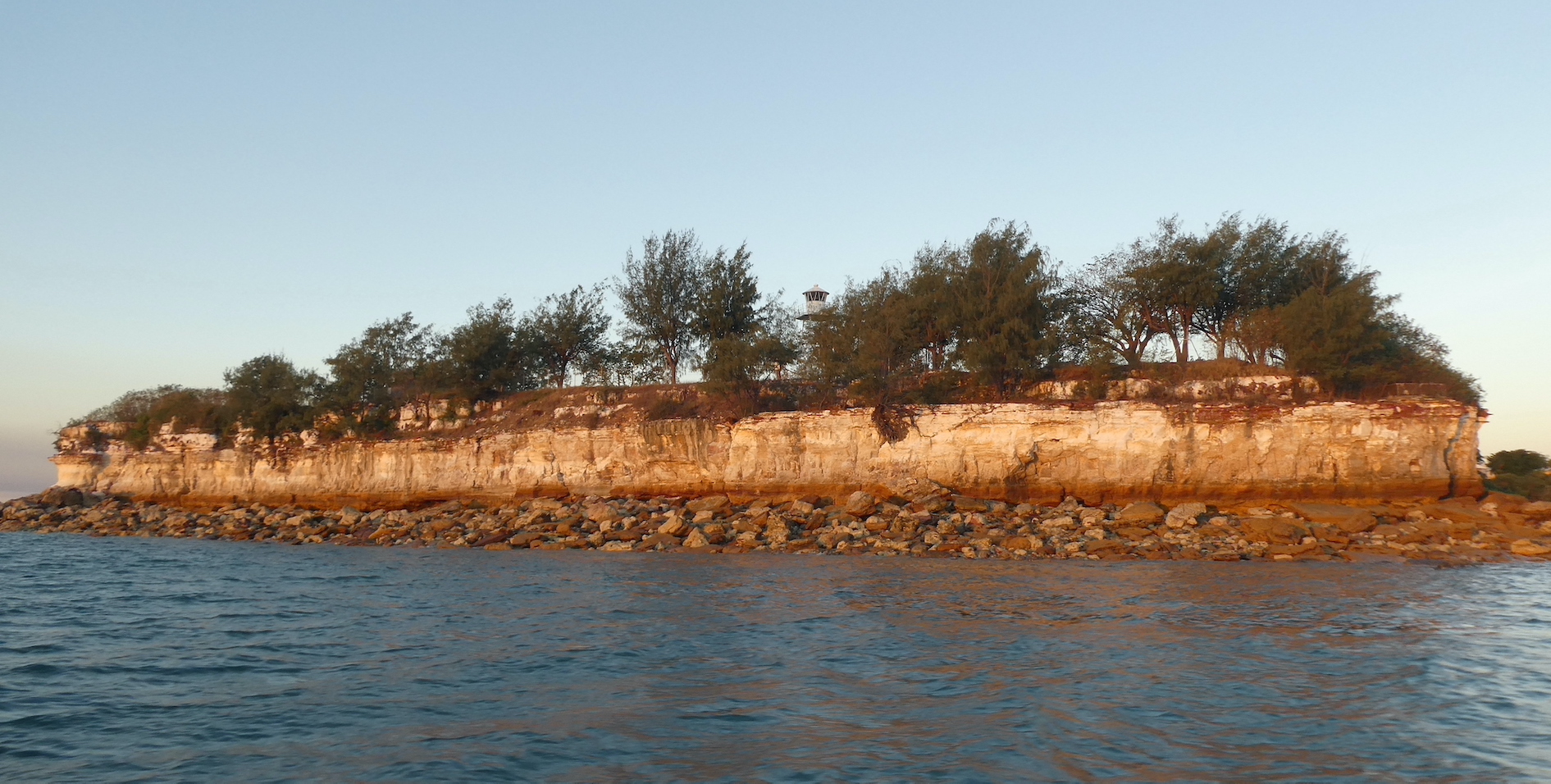
At the end of the Esplanade, Jervois Park marked our point of return

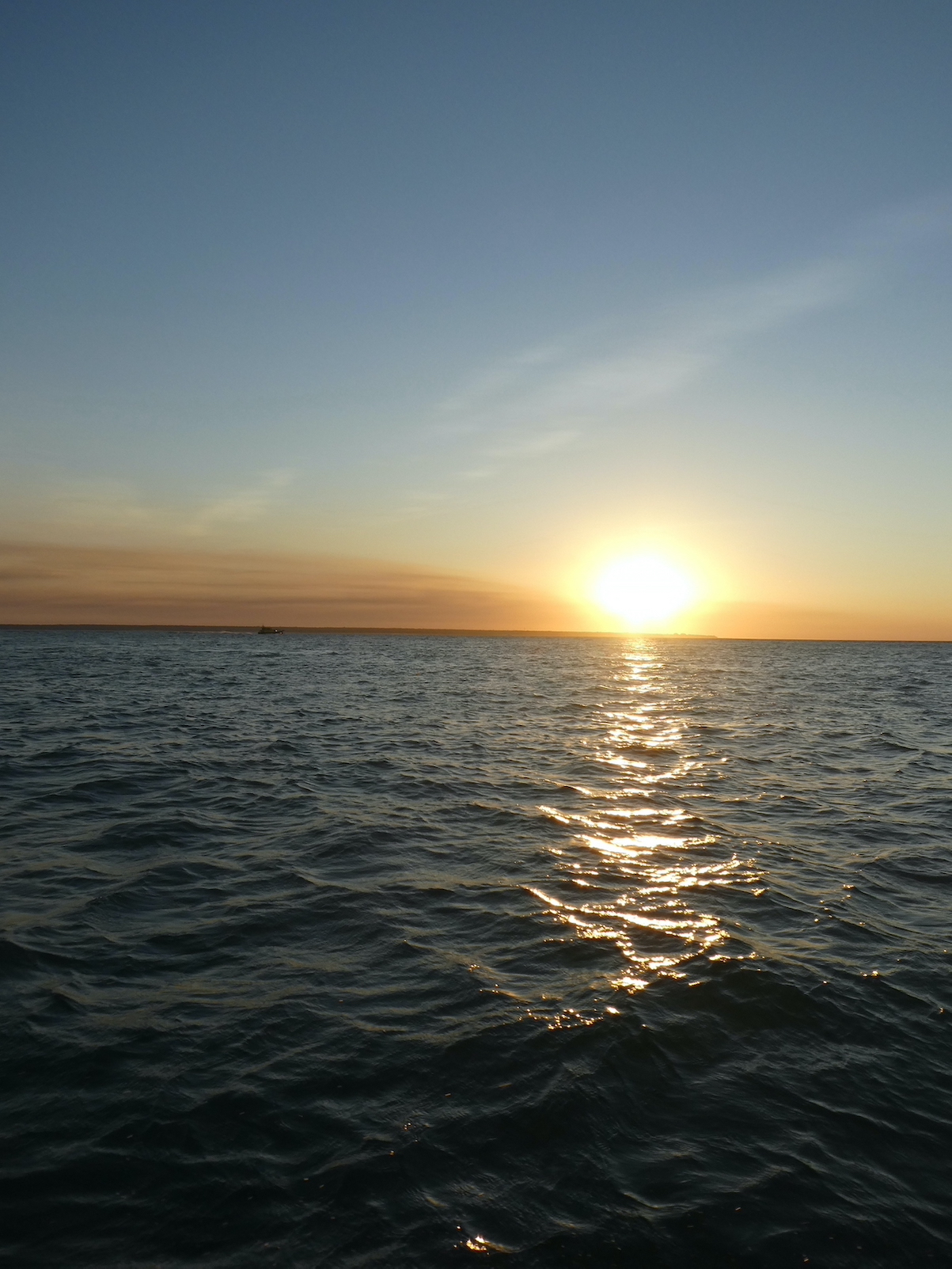
as the evening sun cast the cityscape in a new light.

The occupants of this fishing boat should probably have looked behind them.

On the horizon, eight jet skiers resembled the riders of the Apocolypse, fortunately not close enough to shatter the serenity.

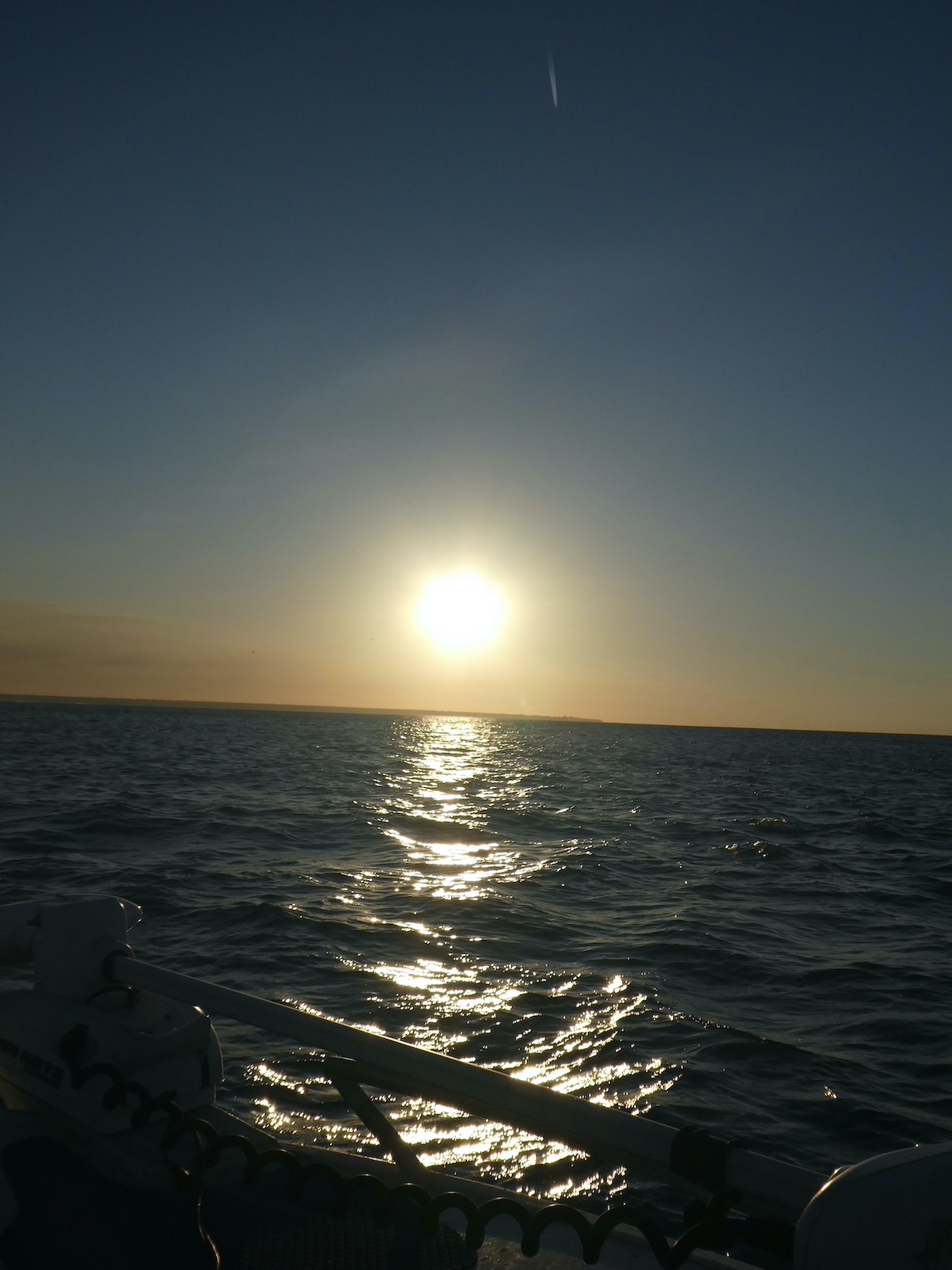
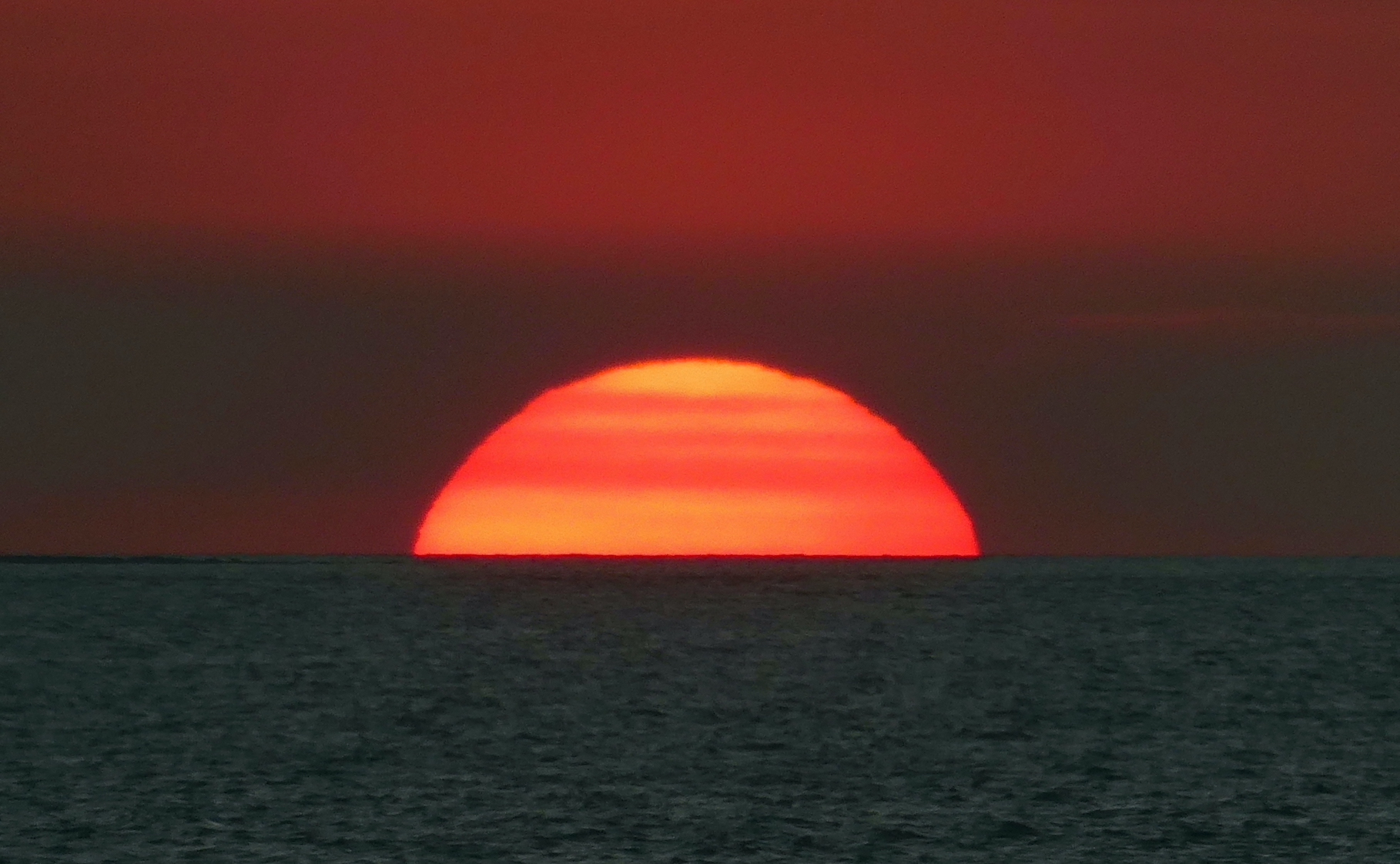
As Sol descended,

we returned to Cullen Bay

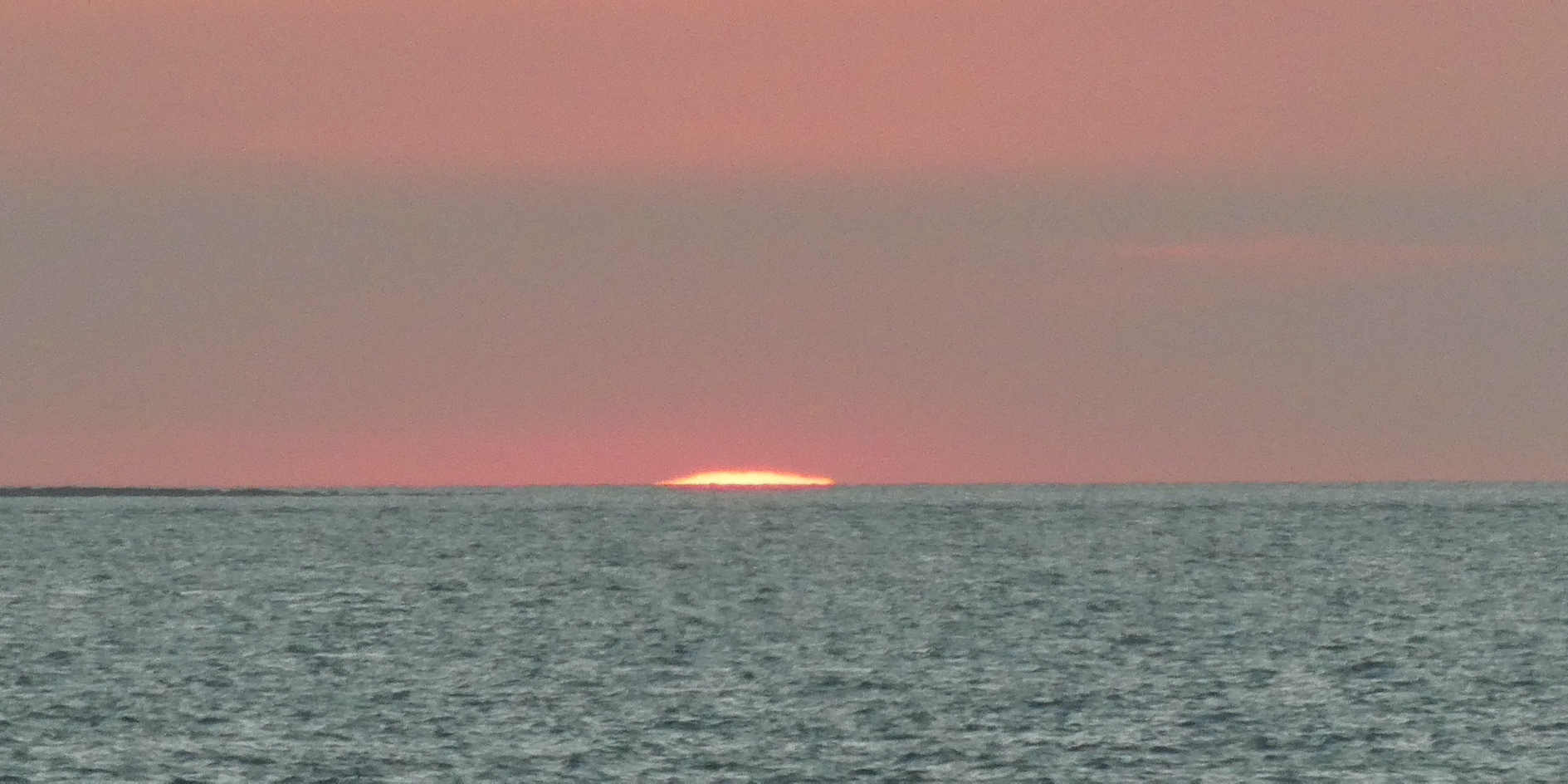
and another day came to a spectacular close.