Yarra vines

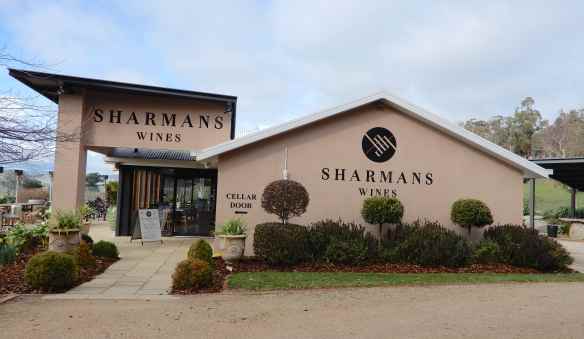
After the challenge of negotiating Melbourne peak hour gridlock, our tension slipped away as the traffic quelled and the road bisected a quilted landscape of farmland and vineyards. The Yarra Valley is renowned for its abundance of wineries and award winning wines. It seems June is the time of year to shorten opening hours to ‘winter time’ or to close doors and concentrate on maintenance but  De Bortoli didn’t let us down.

1.DeBortoli

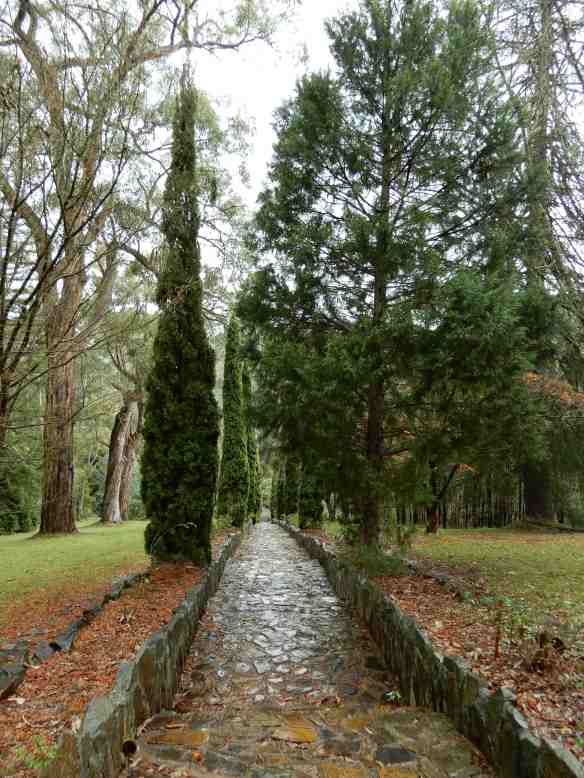
The family company spans four generations, established by Vittorio and Giuseppina who migrated from Italy in 1928 to settle in Bilbul, New South Wales.  The Yarra Valley Estate was purchased in 1987, the original plantings of 1971 make it one of the oldest vineyards in the Yarra Valley. The bespoke rustic gates at the entrance to the property open to a tree-lined driveway, the morning sun still low in the sky.

2.bespoke gate3.DeBortoli driveway

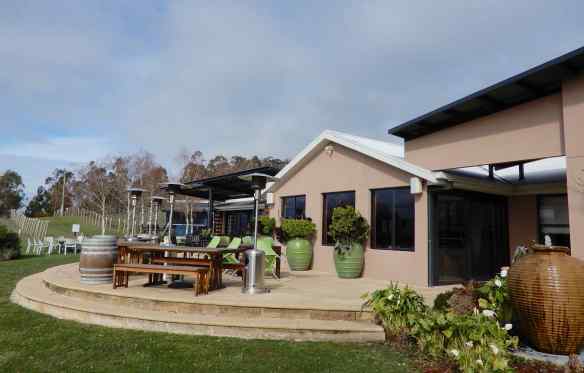
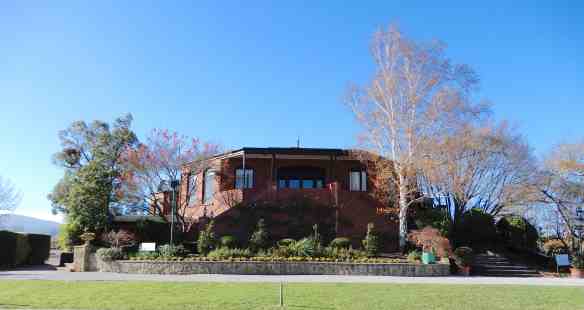
The Locale Restaurant upstairs serves authentic Italian dishes made with ingredients grown on the estate.

4.restaurant & cellar door

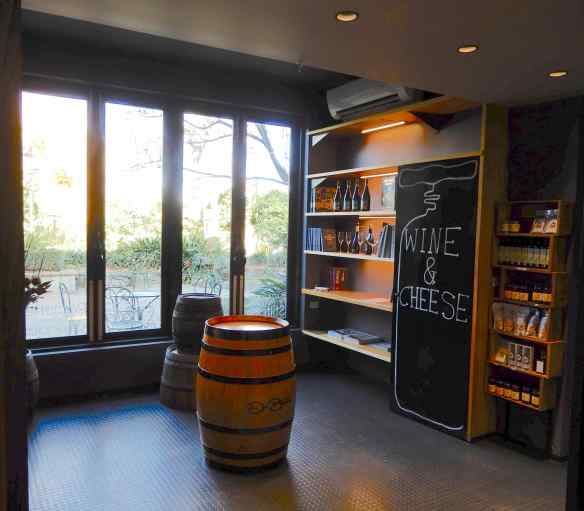
Too early for lunch, we made our way to the cellar door instead.

5.cellar door

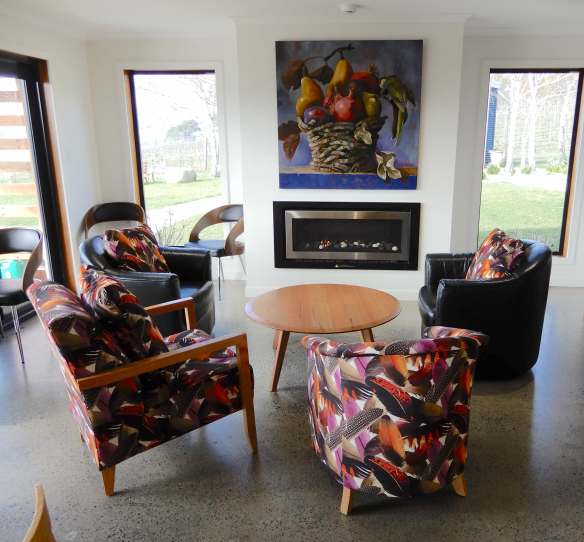
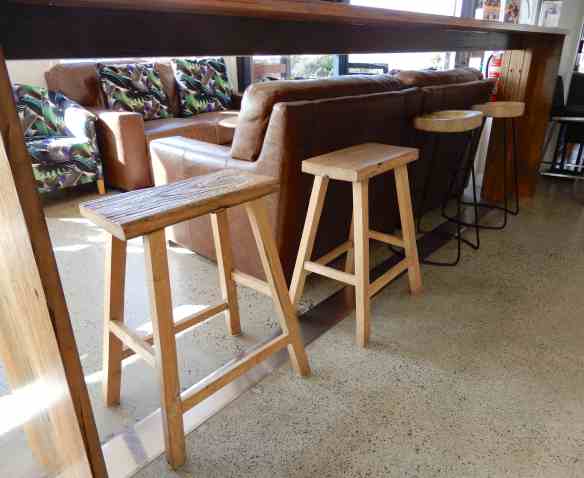
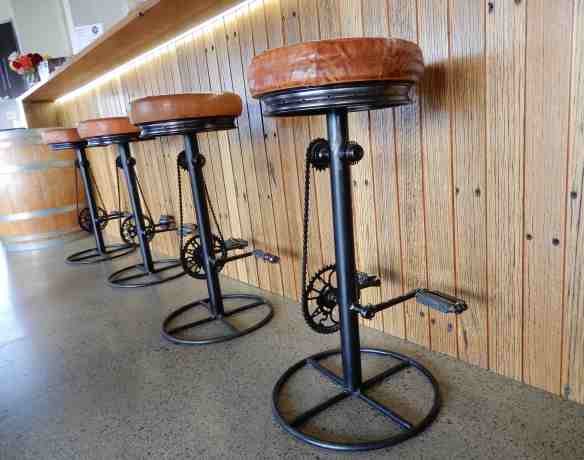
The space was warm and welcoming with interesting presentations of products.

There are a few tasting options, including a specialty gourmet selection combined with a cheese platter

8.cellar door

and private Trophy Room Tastings for those wanting to learn more about De Bortoli Italian wines.

9.Trophy Room10.Trophy Room

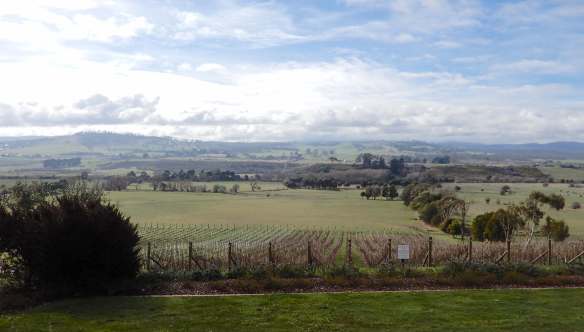
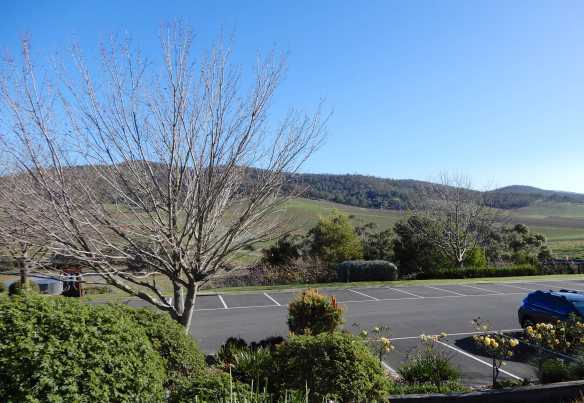
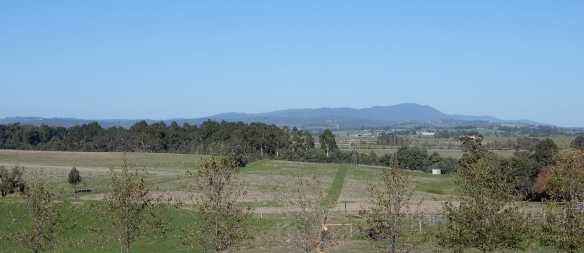
We opted for a tasting at the counter, the friendly staff happy to share their knowledge. A bottle of La Boheme, Act 1 Riesling accompanied us on our journey to enjoy later. The view is spectacular, 162 hectares of vines merge with rolling hills and distant ranges.

11.view from cellar door

We retraced our tracks to Yarra Glen for a life sustaining sausage roll at the bakery before continuing on to our next point of call. Zonzo Estate is set on 230 acres with stunning views across the valley.

12.view from Zonzo13.view from Zonzo

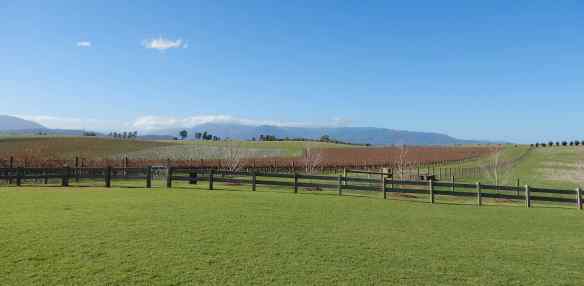
The 45 acres of vines were pruned and ready for spring,

14.vines

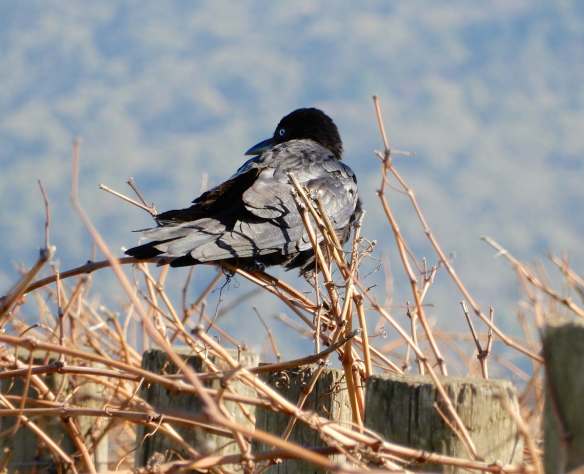
a comfortable perch for the local aves

15.raven

and the young olive trees were bearing fruit.

16.olives

We were disappointed to find the cellar door locked and deserted

17.Zonzo cellar door

but we had a quick nosey around. The old farm buildings have been cleverly resurrected and are a popular venue for weddings. I’d be happy just to sit with a glass of wine and absorb the wonderful vista.

18.Zonzo Estate

Queenstown

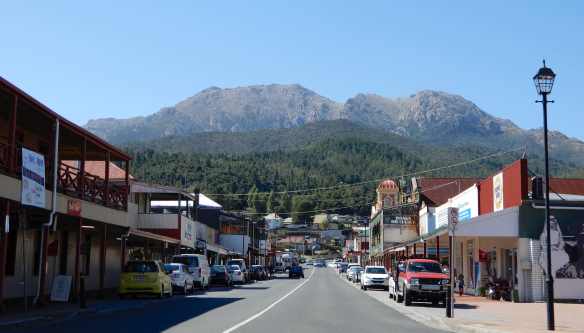
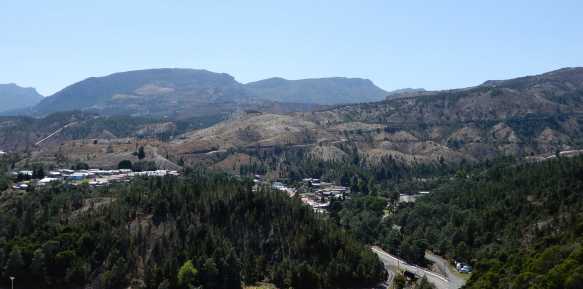
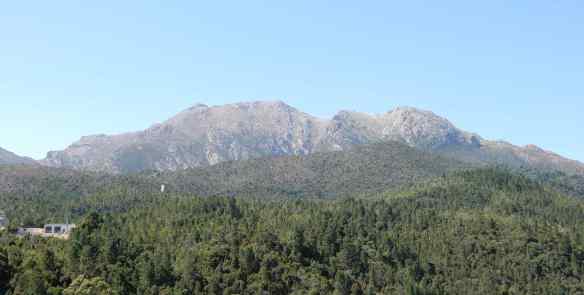
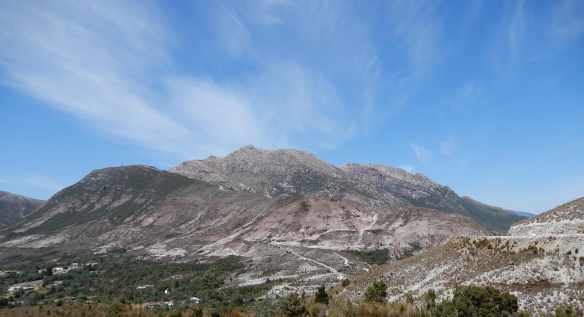
Queenstown has always been one of those places we passed through on our way to somewhere else. The first time was on holiday in 1998, the barren terrain and torrential deluge didn’t entice us to linger. The largest town on Tasmania’s west coast has changed considerably since then. The early 1900s saw mass logging as the mining town boomed and the expansion of the copper mines left an eerie, lunar landscape bereft of vegetation. The main street is reminiscent of a wild west movie set with Mount Owen towering above re-forested hillsides.

1.Orr Street

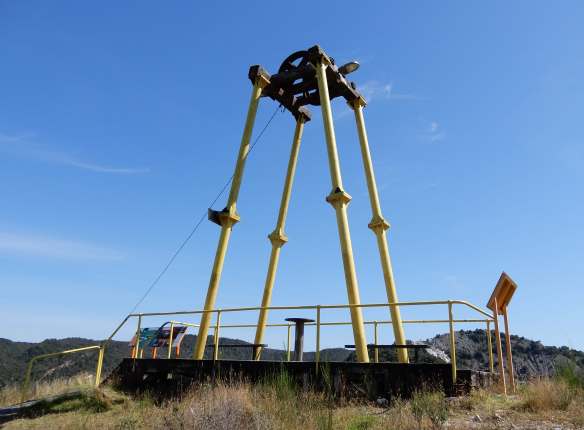
We made our way to Spion Kopf Lookout for a different perspective of the town. Tasmania was one of the first British colonies to send volunteers when the second Boer War broke out in 1899. The British suffered a humiliating defeat on a hill in Natal called Spion Kopf, meaning ‘Spy Hill’, and on returning home, the British survivors named stands at their local football grounds ‘the Kop’ to commemorate the fallen. I don’t know if Queenstown had a football ground, but this hill was named for the same reason. There is a poppet head made from materials from the old mine

2.poppet head

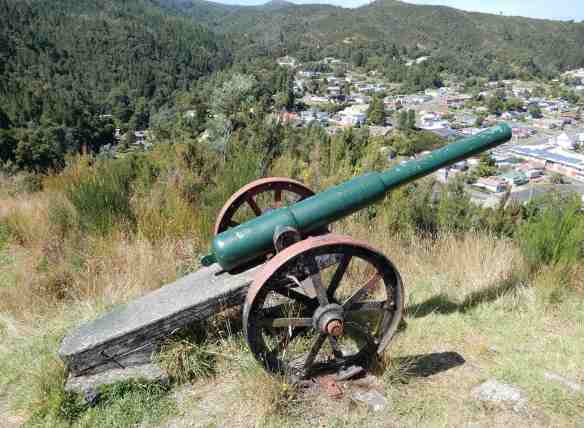
as well as a restored cannon, one of two cast at the Queenstown smelters in 1898.

3.cannon

The second cannon was transported to Victoria in 1910 where it was used to fire the royal salute on the coronation of King George V. It was used again in 1918 to celebrate the end of World War I but, unfortunately, it was overloaded with powder and exploded when it was fired.

4.lookout

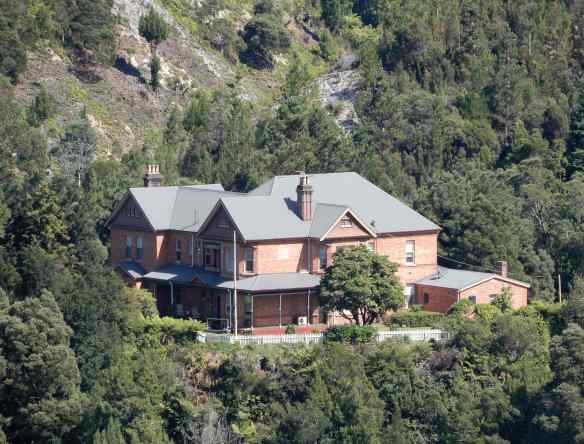
From our perch, we had a fabulous view of the rather impressive Penghana, built in 1898 for Mr. Robert Sticht, the General Manager of the Mount Lyell Mining & Railway Company. The home certainly reflects the power of a man in his position  and the wealth in the town at the time. Robert Sticht died in 1922 and ten more general managers and their families lived at Penghana until 1995 when the title was transferred to the National Trust. The house is now run as a unique bed & breakfast, I think we need to find an excuse to stay at Penghana.

5.Penghana Bed & Breakfast

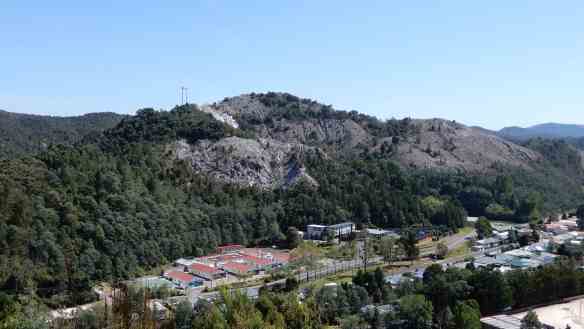
The hills surrounding the town still have some regenerating to do and the isolation is evident from this outlook.

6.lookout view7.lookout view8.Mt. Owen

We returned to ground level for lunch at the Empire Hotel, a beautiful, heritage listed building dating back to 1901.

The lobby is dominated by a stunning hand-carved Tasmanian Blackwood staircase. The raw timber was shipped to England, carved and shipped back to Queenstown.

13.Empire Hotel lobby

The tasteful furnishings echoed the era

15.Empire Hotel lobby

and the traditional dining room had a cosy ambience

16.Dining Room

with a beautifully restored ceiling rose.

17.ceiling rose

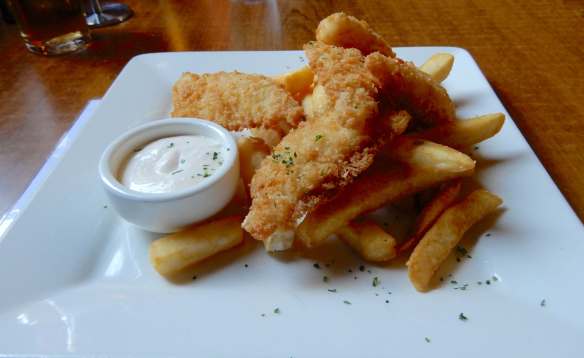
The menu was extensive but who can go past fish ‘n’ chips on a Friday?

18.fish & chips

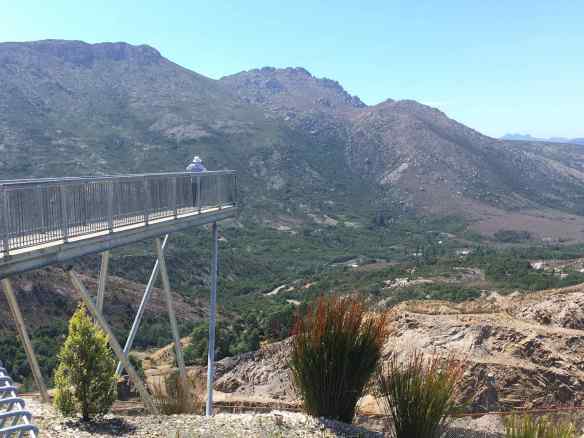
Fortified, we were ready to tackle the ’99 bends’, the infamous road between Queenstown and Gormanston that makes us appreciate the innovation of power steering. As the road straightened, we turned off to Iron Blow Lookout, an extended viewing platform over the former open-cut mine.

19.Iron Blow Lookout

Miners flocked to the area when gold was discovered in 1883 but they found the plentiful copper deposits more profitable. The colours were striking on this sunny day.

20.Iron Blow Lookout

The view across the Linda Valley to Lake Burbury was spectacular,

21.Iron Blow Lookout22.Lake Burbury

while the denuded landscape remains as a legacy from the past.

23.Iron Blow Lookout24.Iron Blow Lookout25.Iron Blow Lookout

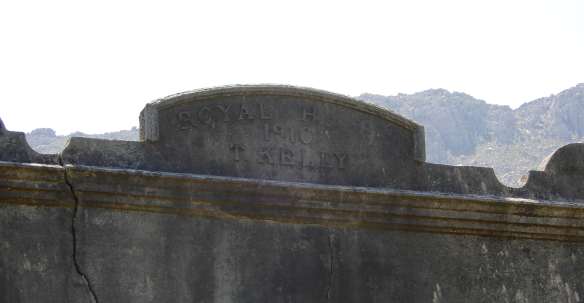
The nearby settlements of Gormanston and Linda were built for workers of the Iron Blow but both are now ghost towns. The only evidence of former lives in Linda is the haunting remnants of the Royal Hotel. The original structure burnt down in January 1910 and T Kelly rebuilt using concrete to avert any future disasters. The hotel finally closed in the 1950s and the shell still stands despite more recent flames.

26.Royal Hotel, Linda27.Royal Hotel, Linda

We left the west coast behind as we crossed the bridge over Lake Burbury, uplifted by the afternoon sun glistening on the pristine water.

28.Lake Burbury

TarraWarra

I recently spent a wonderful week in Victoria with my very special friend who I met many years ago in high school (she now lives too far away in Darwin). We arrived on flights within an hour of each other (quite a feat from opposite ends of the continent), collected a hire car and drove a circuitous route to our destination, Healesville. After a short visit to a couple of wineries (a little too early in the day for tasting, even for me), we stopped by for a look at TarraWarra Museum of Art. Philanthropists Eva and Marc Besen began collecting works of art in the 1950s and realised their vision of establishing their privately funded museum with the opening of TarraWarra in 2003. The elegant building is the result of a competition between five of Melbourne’s outstanding architects. Allan Powell’s winning design hugs the contours, complementing rather than imposing on the landscape.

1.Tarrawarra Museum of Art2.TarraWarra Museum of Art3.TarraWarra Museum of Art

The scenery is sublime, adjacent to the TarraWarra Estate vineyards

4.TarraWarra Museum of Art5.TarraWarra Museum of Art6.estate

and further afield to the ranges.

7.view

We wandered into the current exhibition, The Tangible Trace, immediately awestruck by the light and magnitude of the gallery. There were numerous glass display cabinets (I now know they are called vitrines) containing stones, tiles, bits of brick and cubes of termite clay.

8.Domino Theory, Simryn Gill

The materials have been collected by artist Simryn Gill from around her studio in Port Dickson, Malaysia, near one of the world’s busiest trade routes, the Strait of Malacca. The pieces are traces of the movement of capital and power and the title, Domino Theory, refers to the Cold War concept that if one country fell to communism, others in the region would follow like dominoes, a policy used by the U.S. to justify its involvement in the Vietnam War.

An abandoned seaside motel in Port Dickson was Simryn Gills inspiration for Passing Through. The series of monotypes were created by placing coloured inks on the small white tiles of the former dance floor and imprinting onto paper.

14.Passing Through, Simryn Gill

The distorted, partially collapsed outline of Australia, Shilpa Guptas Map Tracing #7 – AU, was somewhat disturbing. The copper pipe has been manipulated to change the shape of the border, inviting us to consider the, “porous relationship between inside and out”.

16.Map Tracing #7 - AU, Shilpa Gupta

The large concrete slab covering the floor nearby, another of Shilpa Guptas creations, is engraved with the phrase, “The markings we have made on this land have increased the distance so much” in English, Hindi, Arabic and Chinese. The slab was smashed into fragments on site with the intention that the audience will each take away a piece and at the end of the exhibition, only a trace will remain.

17.engraving on concrete, Shilpa Gupta

The huge paintings of Carlos Capeláns Implosions series filled the walls of the next gallery.

21.Implosion series, Carlos Capelán

Upon entering the gallery, we were asked not to touch the curtains in the hallway as they were, in fact, an art installation. Sangeeta Sandrasegar has created five panels of Indian khadi cotton over-hung with silk organza, hand-dyed with indigo and Australian native cherry. What falls from view covers the windows in the Vista Walk gallery, changing the Yarra Valley landscape outside as the material wafted gently in the breeze.

22.What falls from view, Sangeeta Sandrasegar

The picture framed at the end of the hallway showed nature at her best.

23.view

What could be more beautiful than autumn hues in the morning sunlight?

24.autumn colours

Illume

Last Saturday brought the first day of winter, a perfect sunny day to drop the top on Cooper and take her for a drive to Boat Harbour for lunch. The restaurant at Killynaught Cottages has borne a few incarnations over the years and we hadn’t yet experienced the latest – Illume.

1.Illume Restaurant

The open fire was welcoming as we stepped through the doorway,

2.fireplace

it wasn’t the only cosy niche to relax with something tasty.

There are two large dining areas indoors,

5.dining area

one with an elegant leadlight window and quirky workstation.

The sun-filled patios are well protected from the elements

8.patio9.patio

and there are outdoor options for the warmer days.

10.outdoor seating

The views are absolutely stunning across rolling green farmland and the pristine waters of Bass Strait.

11.vista12.vista

For those wishing to stay, there are five heritage themed cottages to choose from, all furnished with authentic antiques and memorabilia of the Victorian and Federation eras.

13.Annie's Cottage & Victoria's Cottage

There is a variety of Tasmanian wines on the list, we chose a favourite, Ghost Rock Pinot Gris. Michael ordered the Salt & Pepper Calamari with apple slaw and aioli, a little disappointed at the lack of accompanying fries. We remedied this with a side order. I couldn’t resist the Wood-Fired Braised Lamb with potato mash, sautéed vegetables and honey & ginger dressing. I expected something along the lines of ‘pulled lamb’ and was surprised to see a lamb cutlet centre stage. There were, however, shards of succulent lamb under the solitary chop and the dressing was delicious.

The dessert menu offered the traditional treasures, resistance is futile. The Flourless Chocolate Brownie and Sticky Date Pudding received high praise.

In the name of research (if Crème Brûlée is on the menu, I am obliged to appraise), I ordered Honey Crème Brûlée, not suspecting there was a salty element to the crust. I don’t know if there was a mix up between the salt and sugar shaker in the kitchen but, despite the perfect consistency, I was not enamoured.

19.honey crème brûlée

The presentation of the Lemon Meringue Pie was quite spectacular.

20.lemon meringue pie

Next time, we will try the wood-fired pizzas, they looked amazing.

tiger tenants

The seasons have turned here in Tasmania and our long days of summer are behind us. Once again, we shared the garden with our reptilian residents for a few months but they have now found cosy homes for the winter. We can’t blame the snakes for wanting to live here, after all, we have created a paradise for them.

1.pond paradise2.pond paradise

We named our first lodger Suzy. She was quite small and liked to try out a variety of spots to capture the warmth of the sun.

Strangely, our large goldfish liked to keep her company.

5.Suzy

After a while, she left to make a home for herself in the forest and someone else moved in. He was looking rather dull and spent a lot of time among the rocks.

He then took to burying himself in the mulch, a bit worrying as there were times he was completely hidden. We assumed he was preparing to shed his skin, I was hoping to witness the process but I think it was done in private, we never did find the evidence.

8.tiger in mulch

It was at this point we realised we had two occupants, with one under the mulch and another in the favourite afternoon dappled shade position.

9.sleeping tiger

A short time later, perhaps after shedding, one moved out and the other remained. We would see her every morning catching the sun on the eastern side of the pond and then on the rocks under the callistemon in the afternoon. We had visitors for a couple of days in January and there was no sign of our tiger tenant until the afternoon of their departure, when she moseyed across the lawn to resume her residency.

10.tiger returns

Supposedly, tiger snakes don’t stay in one place for long but it seemed as though it was the same snake. She knew our voices and routines and was quite comfortable to lie undisturbed by our presence, we had a mutual respect for personal space.

13.tiger

We had a couple of very hot weeks in February where we saw no snakes and assumed she had moved on to start a family in the forest. One evening, we saw her (we like to think it was her) making her way up the driveway straight to the low birdbath we have for the wrens. I have never seen a snake drinking before, she was very thirsty.

14.thirsty tiger

When she had finished, she once again curled up in the shadow of the callistemon. You can watch a video of her drinking here, you’ll see the shadows of the wrens flying around, they weren’t happy.