resplendent roses

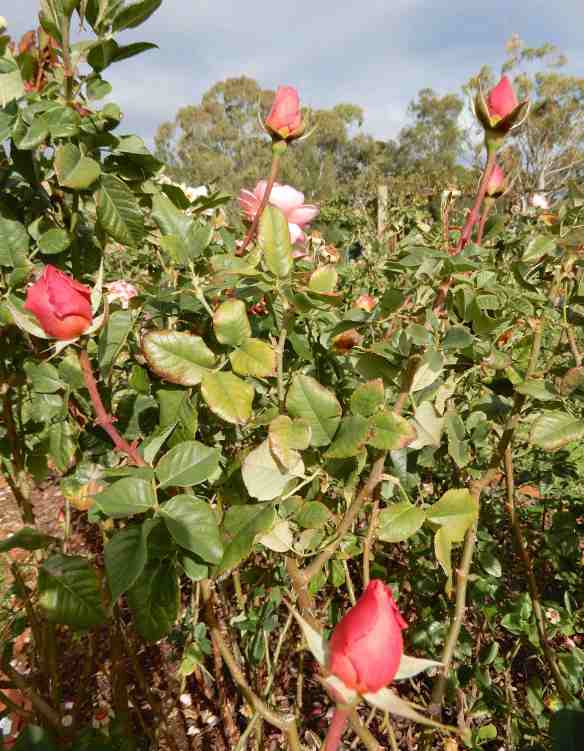
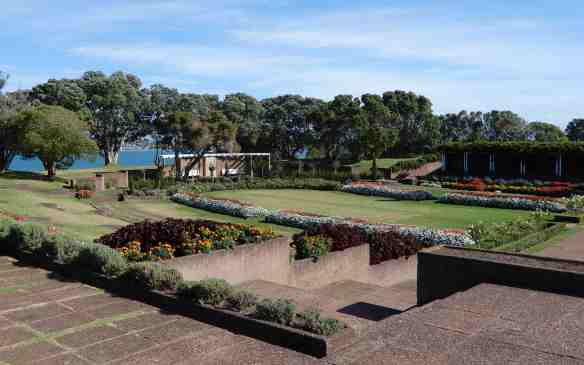
There is no better place to stop and smell the roses than Victoria State Rose Garden.

1.main entrance

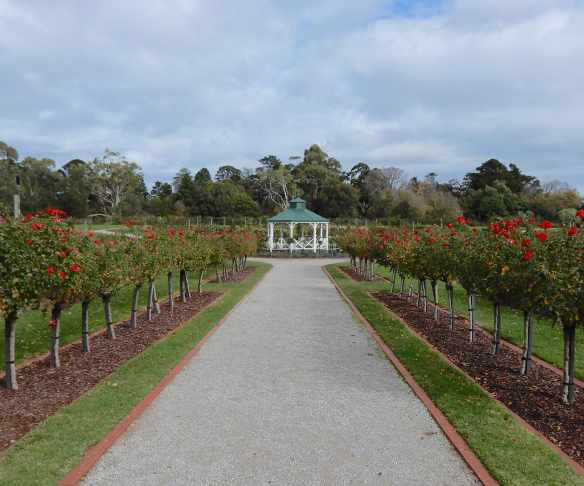
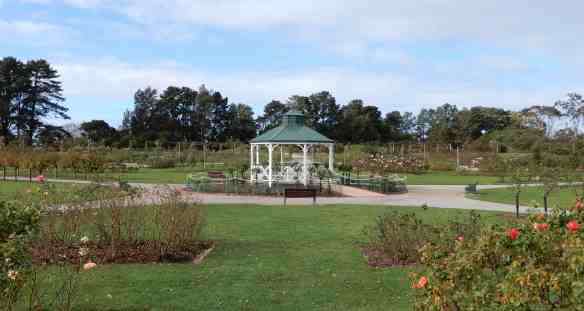
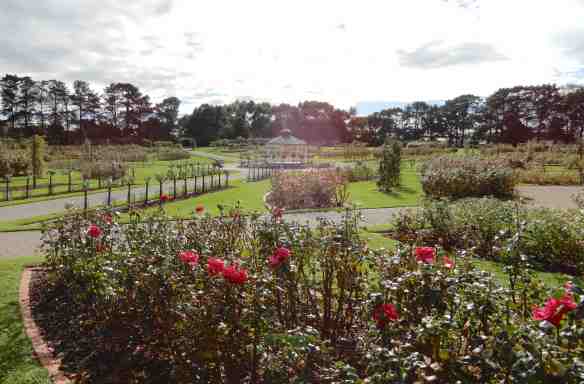
Developed in stages from 1986 to 2001, over 5,000 rose bushes flourish in the 5 hectare garden and are all tended by volunteers. The main part of the garden is set out in the shape of a Tudor Rose, wide paths separate the five petals and a gazebo marks the centre.

2.gazebo

We wandered amongst the blooms, boggled by the variety and colours.

13.gazebo

Beyond the Tudor Rose, there is an area shaped as a leaf and one as a bud. The leaf celebrates horticultural achievements of Australian rose growers since 1900 and comprises 50 bushes especially bred for Australia’s sunny conditions.

The bud-shape highlights over 60 cultivars of David Austin roses.

22.roses

A 400 metre long Heritage Rose Border contains 250 types of old and species roses.

31.roses

The best time to see the roses is during the summer months but we weren’t disappointed with the splendour on offer in the middle of June.

32.rose garden

Auckland

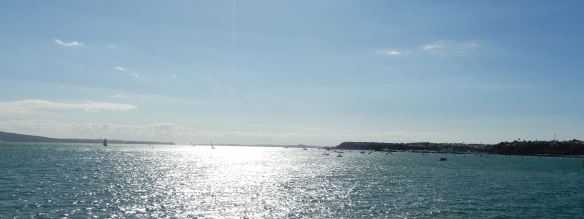
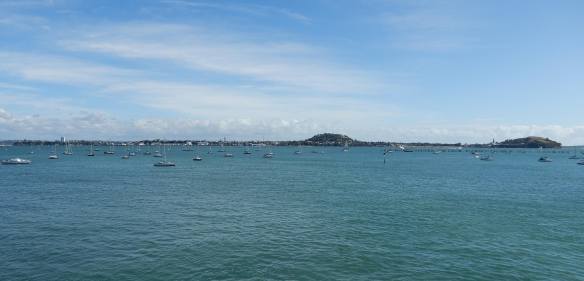
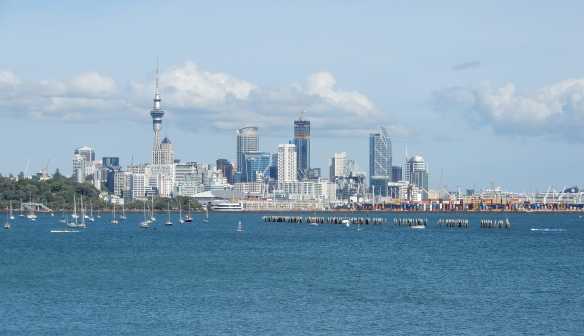
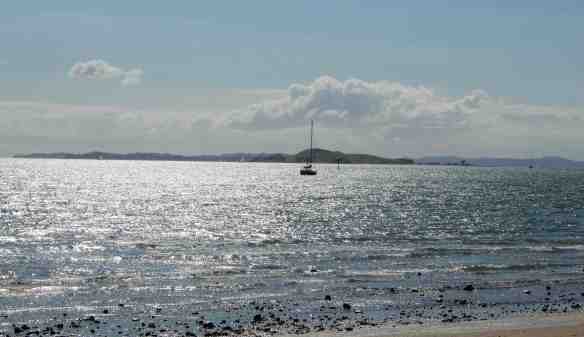
Our first day in Auckland dawned bright and sunny and we decided a ticket for the Hop On Hop Off bus was the best way to see the sights. Departing from Sky Tower, just down the road from our apartment, we were surprised by the amount of traffic and roadworks in Auckland. A huge extension to the waterfront precinct began last December, we weren’t enticed by the crowded construction site and remained on the bus as it travelled along Tamaki Drive on the way to Bastion Point. The views across Waitematā Harbour from the upper deck were breathtaking,

1.Waitematā Harbour2.Waitematā Harbour3.Waitematā Harbour

the city clearly visible, looking back across the water.

4.Auckland

The volcanic cone of Maungauika forms the headland that is North Head Reserve, adjacent to the harbourside suburb of Devonport. There are underground tunnels and old gun emplacements to explore at the former military defence installation.

5.North Head

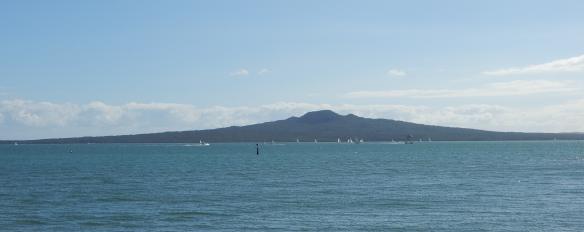
The symmetrical cone of Rangitoto Island is the youngest and largest volcano in the Auckland field, emerging a mere 600 years ago.

6.Rangitoto

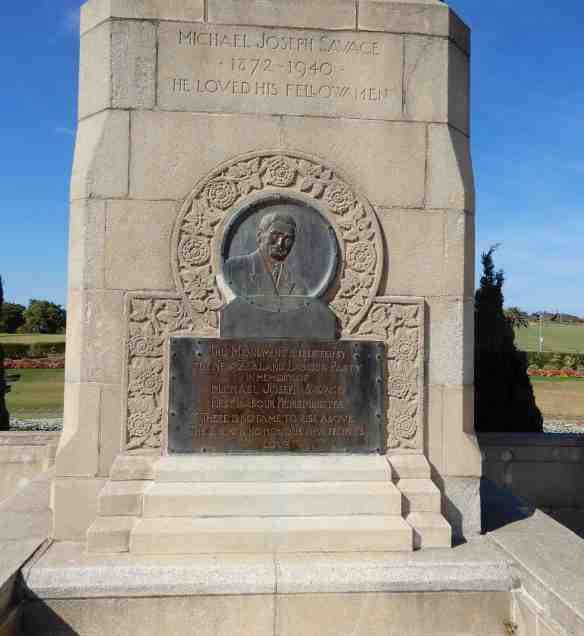
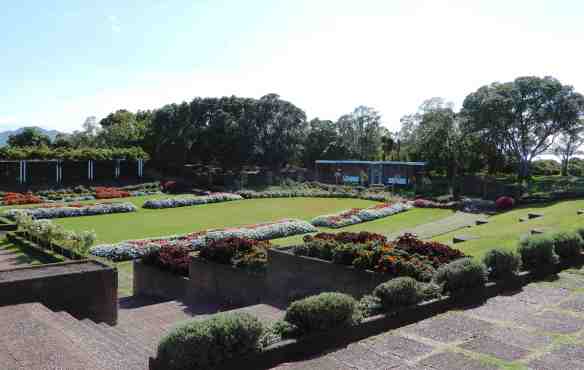
We alighted at Bastion Point to wander around the Michael Joseph Savage Memorial Park. Set on 49 hectares, the landscaped gardens, sunken pool and obelisk are a memorial to New Zealand’s first Labour Prime Minister.

7.Michael Savage Memorial

In office from 1935 until his death in 1940, Michael Savage is recognised as the founder of the Welfare State as well as creating a political alliance with the Māori Rātana movement.

8.Michael Savage Memorial

The gardens are immaculate, designed by two Auckland architects who won a national competition to design the memorial in 1941.

9.Michael Savage Memorial

10.Michael Savage Memorial

This site of a former gun emplacement affords a spectacular view of Auckland Harbour Bridge.

13.Auckland Harbour Bridge

We walked the steep path and steps from Bastion Point to Mission Bay, a popular beach with calm waters and plenty of cafes and bars.

14.Mission Bay

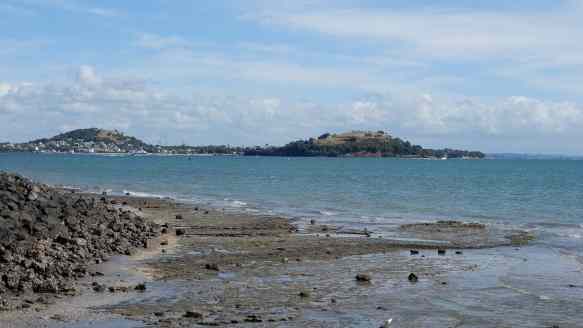
We had a different perspective of Devonport and North Head from the beach.

15.Devonport & North Head from Mission Bay

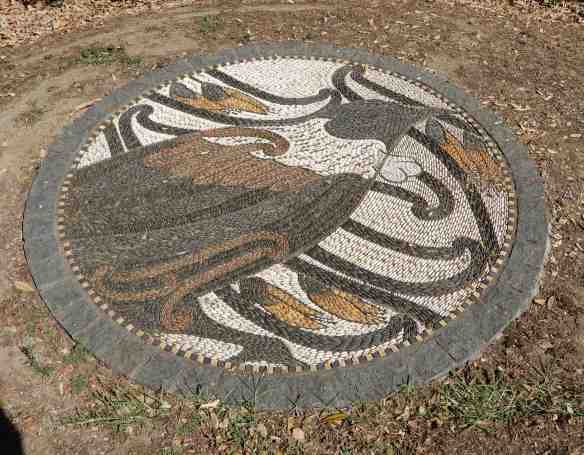
At the bottom of the steps, there are a series of beautiful pebble mosaics but no explanatory signage. I have since discovered the origin of this art, you can read about it here.

16.mosaic17.mosaic18.mosaic

Wrest Point

Michael’s gig at Cascade Brewhouse in January gave us the opportunity to stay in Hobart overnight and the perfect excuse for a belated wedding anniversary celebration. We hadn’t been to Wrest Point since a holiday in 2007 when we enjoyed a fabulous evening in the revolving restaurant, it was time to revisit. Not only did Wrest Point become Australia’s first legal casino in 1973, its fascinating history dates back to 1789 when a chap named Thomas Chaffey was transported for life to Norfolk Island. He married Maria Israel, was made a constable and given 39 acres of land. When the settlement on Norfolk Island was closed, he received 62 acres of land in Hobart and built a house on land at Queensborough which became known as Chaffey’s Point. Thomas’s son, William, built an inn on the site called the Traveller’s Rest in 1839 and it was later purchased in 1939 to create a prestigious international hotel, the Wrest Point Riviera. The current Wrest Point hotel was built on the same site and is still the city’s tallest building at 64 metres.

1.Wrest Point Tower

The complex has been extended over the years and now includes a conference centre as well as a range of bars and restaurants and three accommodation options depending on your budget. We had booked a Water Edge room but were upgraded to a newly refurbished Harbour View Deluxe  King on the sixth floor of the tower. The décor was tasteful

and the view stunning, although we didn’t have much time to spend admiring it.
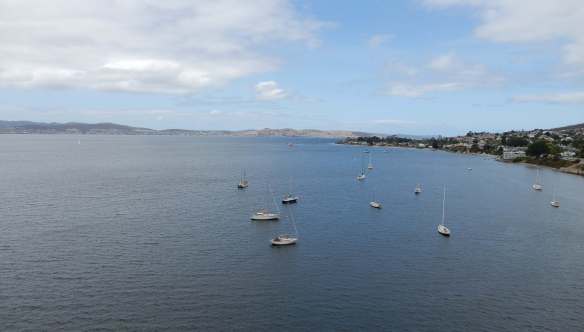
5.river view6.river view

After the Brewhouse, it was a quick freshen up and change for our reservation at The Point on the top floor of the tower. A selection of breads were presented, followed by a delicious venison taster.

For entrée, we both chose the Rannoch Farm quail breast, house made falafel, onion, Cygnet mushrooms, herbs & red wine jus.

11.quail

We differed on main course with Tasmanian slow cooked lamb rump & braised neck, cauliflower, sweet potato, snow peas, almonds, green raisins, herb salsa verde & dukkah seasoning and honey glazed duck breast, braised red cabbage, parsnip, bread dumplings, caramelised chestnuts, duck & orange jus.

Had we not opted for the table d’hôte menu, we would have declined dessert, not realising the meals would be quite so generous. We soldiered on. I had textures of rhubarb & berries, honey crème brûlée, elderflower, milk crumble, lemon sorbet, pistachio sponge & meringue, while Michael managed the walnut & maple syrup tart, buckwheat pastry, red wine poached pear, sauce Anglaise & yoghurt sorbet.

With no room for another morsel, we were presented with a mist shrouded platter bearing chocolates and a congratulatory anniversary note. How could we refuse?
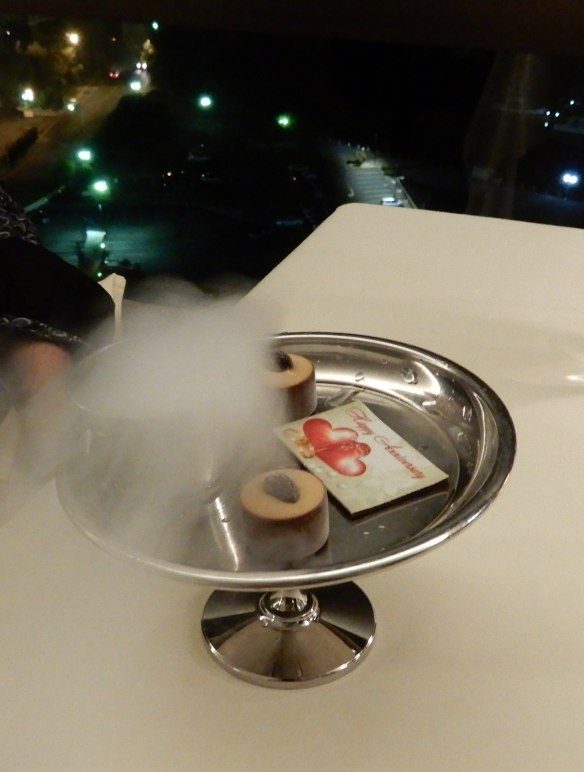
16.Happy Anniversary

The following morning, a spotlight of sun pierced the clouds, illuminating the Derwent River and the cast of players waiting in the wings.
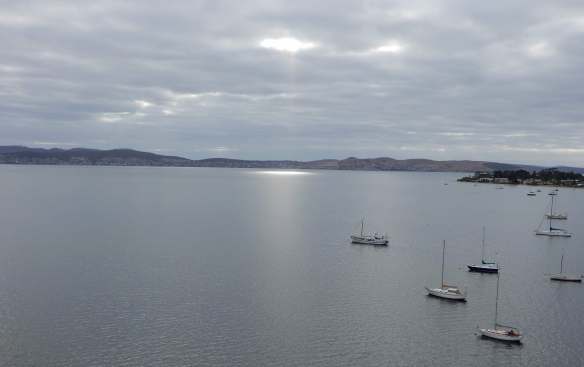
17.morning light18.rowers

A group of rowers appeared on the stage

followed by a lone paddle boarder, obviously confident enough to carry a backpack.

It wasn’t long before a seaplane landed then cruised downriver and disappeared from sight.

With the water entertainment over, we wandered through the venue to explore the immaculate grounds.

32.lawn31.pond

Cormorants preened on mussel crusted rocks,

with an enviable view of the Tasman Bridge and Mt. Wellington beyond.

35.Tasman Bridge

Vegetables and herbs are grown in the gardens, a ready supply to serve the patrons.

Boardwalk Bistro

39.Boardwalk Bistro

overlooks the marina.

40.marina

It is no surprise that Sandy Bay has the most expensive real estate in Hobart.
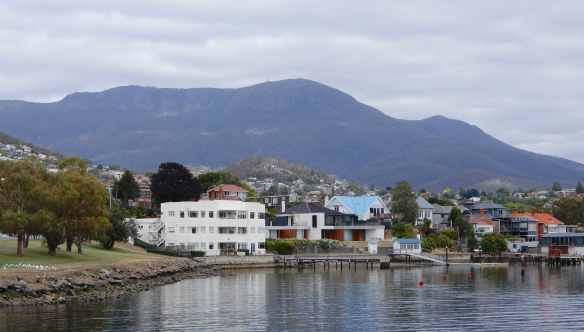
41.Sandy Bay

Our only disappointment was that we weren’t staying for longer but there is always a next time.

42.Wrest Point Tower

Hoopoe

One morning at Montepozzo, Michael spied an unusual bird in the garden. No-one else saw it so, of course, we didn’t believe him. The next day, he was sure to capture it on film, although the elusive creature seemed to be camera shy.

1.Eurasian Hoopoe

Our hosts informed us it was a Eurasian hoopoe, formally known by the adorable title Upupa epops. On further investigation, I have discovered some extraordinary facts about this little bird. Not only does it have a long, tapered bill for probing the ground in search of such delicacies as insects and small reptiles, the strong muscles of the head allow it to open its bill while inside the soil. If that fails, they will dig out the prey with their feet and beat larger victims against the ground or a stone to kill them and remove indigestible body parts before consuming.

2.Eurasian Hoopoe

Hoopoes nest in the cavities of vertical surfaces such as trees, cliffs and walls and have developed an effective deterrent to predators. Incubating and brooding females convert the oil from their preening gland into a foul smelling concoction with the aroma of rotting meat. Rubbing it into her plumage and that of the nestlings apparently does the trick. However, should that tactic fail, the young ones can direct streams of faeces at intruders, hiss like a snake and strike with their bill or a wing. I still think they are cute.

3.Eurasian Hoopoe

Shadowfax & sculpture

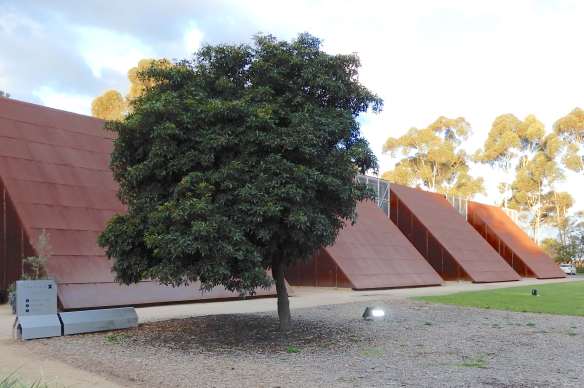
While exploring Werribee Park Estate, we wandered a little further to investigate Shadowfax Winery  The rusted sheet metal exterior glowed in the late afternoon sun,

1.Shadowfax Winery

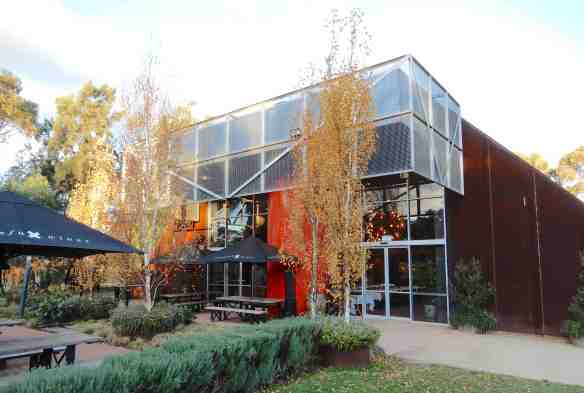
the unique architecture somehow blended with the surroundings.

2.Shadowfax Winery

Established in 1998, the unusual name was inspired by the magnificent silver-grey stallion ridden by Gandalf in Lord of the Rings. The wines are created from fruit sourced and hand-harvested from Shadowfax vineyards in the Macedon Ranges as well as those adjacent to the winery at Werribee.
3.Shadowfax Winery

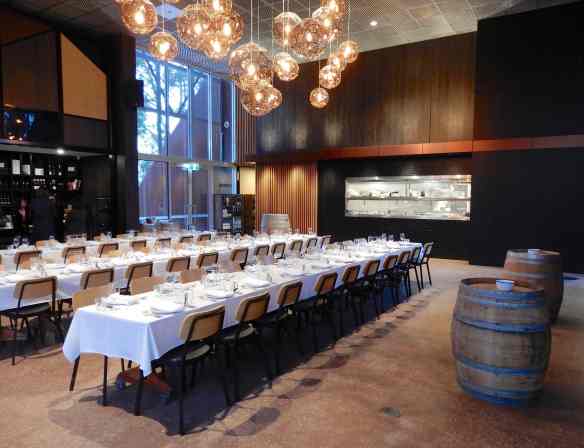
Although the cellar door was busy with a large group pre-dinner, we were welcomed and enjoyed our own pre-dinner tasting.

4.Shadowfax Winery

Not able to take too much in my hand luggage, I did leave with a bottle of 2018 Minnow red, a delicious blend of Mataro, Grenache, Carignan and Mondeuse grown right there at Werribee.

5.Minnow

Returning to the hotel, we spied an interesting sculpture and discovered the Werribee Park Sculpture Walk. Created in 2004 featuring works by Australia’s leading sculptors, there are thirty pieces installed along a trail from the rear of the mansion, through the gardens to the river. As daylight was fading, we only had time to see a small part of the display. Previous winners of the Helen Lempriere National Sculpture Award are homed here, including The Comrade’s Reward by William Eicholtz, winner in 2005. Described as a traditional 19th century garden sculpture with a camp twist on heroism, the solar powered lights shimmer after dark giving an impression of fireflies.

6.The Comrade's Reward - William Eicholtz, 2004

The monochrome steel ruin, Death of a white good by Alexander Knox, took the award in 2006.

Also from 2006, a commended work by Ian Burns & John Clark, Migration, is “concerned with the movement and relationship between the individual components and the mass they represent in formation”. (Sorry about the photo quality).

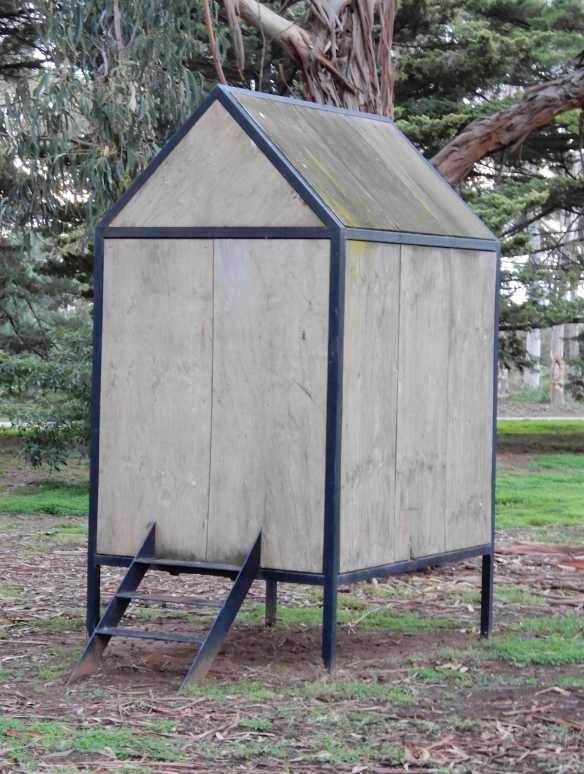
The inaugural winner in 2001, Hut by Karen Ward, is intriguing in its simplicity yet the symbolism is quite poignant. “Hut symbolises the house, the home, the shack, the cubby-house and the hermit’s retreat. It also alludes to the potential to dream that is inherent within all of these structures, yet dreaming is only made possible by the Hut’s inaccessibility.”

11.Hut - Karen Ward 2000