monochrome Melbourne

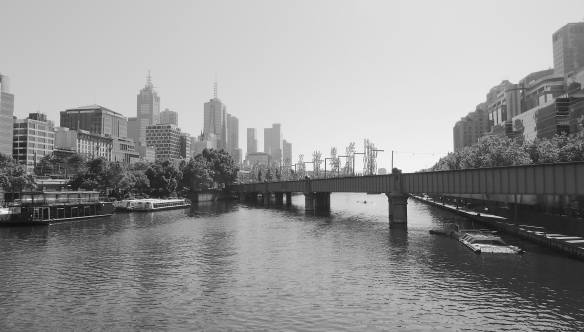
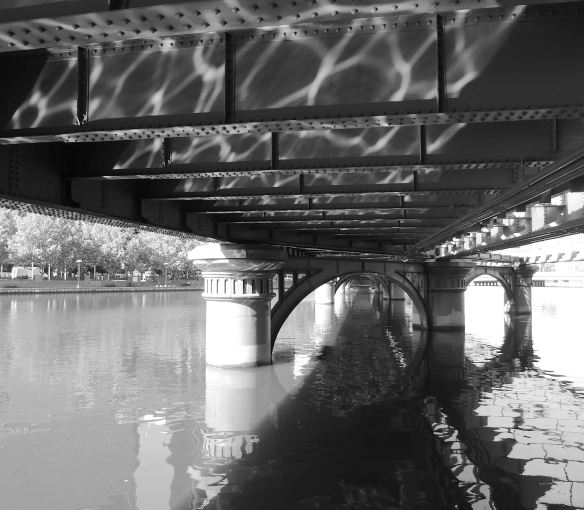
In 1973, Paul Simon released the song, ‘Kodachrome’ and I distinctly remember his notion that “…everything looks worse in black and white.” I decided to put this to the test on a recent trip to Melbourne. I have always found something fascinatingly enigmatic about monochrome photographs, perhaps it’s the invitation to look closer to discern images less obvious. The London plane tree below our apartment window does seem to lack something without the verdancy,

1.London plane tree

and the food looks a little less enticing.

2.ale & pork crackle

We wandered along Southbank, the late afternoon sunlight glinting off the water. The bar on Ponyfish Island seems to be perpetually crowded.

3.Southbank Pedestrian Bridge & Ponyfish Island4.Ponyfish Island5.Southbank Pedestrian Bridge

It was a perfect evening to be out on the Yarra

6.rowers

or to sit with a beverage and just observe.

7.wine

Friends, lovers and loners were enjoying the ambience,

as the sinking sun danced on the leaves of the plane trees.

The next morning, we crossed the pedestrian bridge

13.Southbank Pedestrian Bridge

pausing halfway to capture the view upstream.

14.Yarra River, Princes Bridge

The buildings are just as impressive without colour

15.Eureka Tower16.Melbourne skyline

and the reflections mesmerising

17.Southbank18.Southbank19.Southbank

as we strolled along Flinders Walk.

20.Flinders Walk

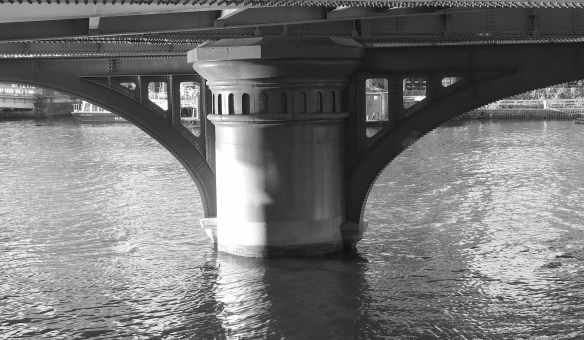
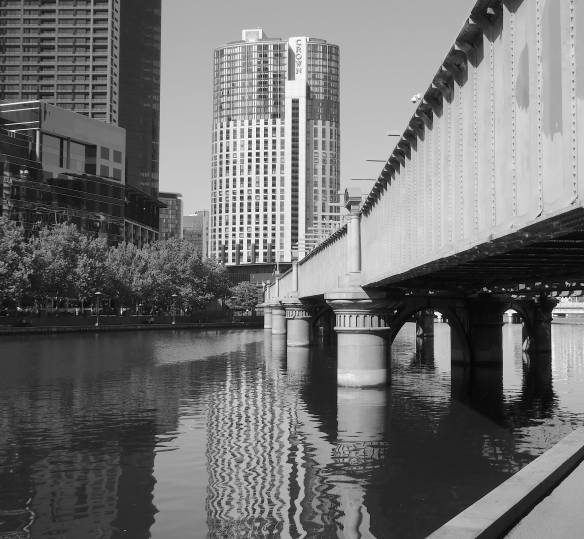
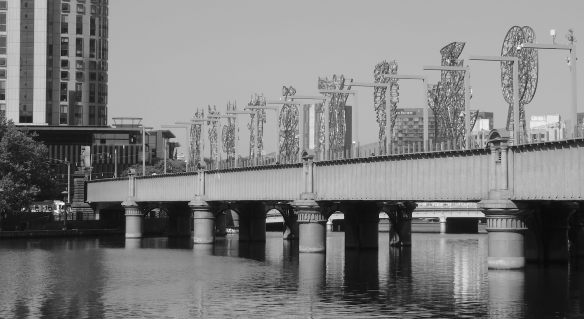
We passed Sandridge Bridge, The Travellers sculptures telling stories of past immigrants to Australia.

23.rowers24.Sandridge Bridge & skyline

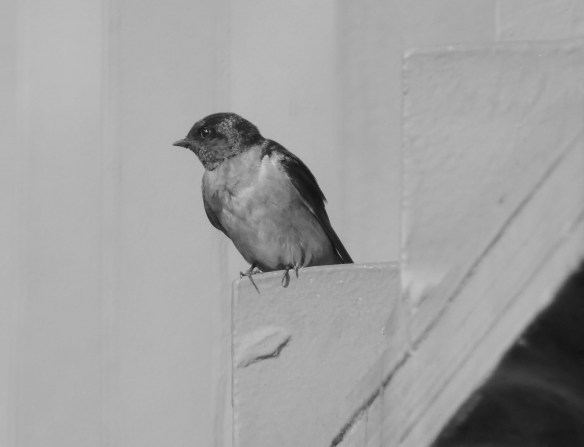
Someone had kindly left birdseed for our feathered friends.

25.birds

The rowers were being pursued by a lone gull – or so it seemed.

26.rowers

I wonder if this cormorant could smell the fish at the Sea Life Aquarium across the river. He looks like a statue against the abstract motion of the water.

28.cormorant27.Sealife

Not far past Seafarers Bridge

29.Seafarers Bridge

we reached our destination – DFO, South Wharf.

30. DFO South Wharf

Interestingly, when Paul Simon recorded his concerts in Central Park in 1982 and 1991, he changed the lyrics to “…everything looks better in black and white.” You can decide for yourself.

Lake Claremont

The last thing I expected in the middle of suburban Perth was the beautiful conservation area that is Lake Claremont. The reserve covers 70ha and hosts a variety of flora and fauna, including over 87 species of birds. Prior to 1831, the wetland area provided food for the Mooro people. With pressure from European settlement and rising waters, the last of the Aborigines moved away in the 1940s. It is now a recognised site of Aboriginal heritage.

1.Lake Claremont

Although spring had not yet sprung, the birdlife was busy with family raising duties. The Eurasian coot, though attractive, is not particularly colourful. The bright, fluffy chicks are absolutely gorgeous.

2.Eurasian Coot

Both parents share the rearing responsibilities, including teaching them how to dive for food.

5.Eurasian Coot chicks

The Aborigines weren’t the only victims of the rising waters. The once majestic paperbarks that dominated the central area couldn’t survive the permanent submergence.

6.Lake Claremont

The remnants provide nesting grounds for the waterbirds

7.nesting Black Swan

and add another dimension to the landscape.

8.Lake Claremont

The black swan is the official bird emblem of Western Australia, this majestic mother comfortable on her nest mound.

9.nesting Black Swan

Another swan family were out with their youngsters while the Australian shelducks seemed to walk on water.

10.Black Swan with cygnets & shelducks

Pink-eared ducks were resting nearby, they feed by filtering water and soft mud with their specially shaped bills.

11.pink-eared duck

Purple swamphens build nesting mounds among the reeds at the lakes edge,

12.nesting Purple Swamphen

the chicks have feeding lessons in the shallows.

13.Purple Swamphen with chick

The swamphens are mostly vegetarian but will also eat eggs and very young birds.

14.Purple Swamphen

The Australian white ibis is one of two ibis species at the lake. They forage for aquatic animals and are known to eat snakes.

16.Australian white ibis

As we continued our circuit of the lake,

17.Lake Claremont

we found some paperbarks still thriving on the shore.

18.paperbark

This lone Pacific black duck was taking some time out.

19.Pacific black duck

Another family of purple swamphens were enjoying breakfast

24.Purple Swamphen & chick

as we returned to our starting point.

25.Lake Claremont

What a wonderful way to start the day, thank you Jude.

Elizabeth Quay

While in Perth, I spent a perfect pre-spring day with a very special friend. We first met thirty years ago when we worked together and hadn’t seen each other for seven years. The wonderful thing about lasting friendships is the years just slip away when you are together again. After a morning coffee and shopping in the city, we indulged in a superb lunch at Zafferano, overlooking the beautiful Swan River. http://zafferano.com.au  Replete and relaxed, we could have stayed all afternoon but some exercise was required to ease the conscience. We made our way to Elizabeth Quay, a waterfront precinct created between the city and the Swan River. Officially opened in January 2016, public opinion was divided on the $440 million development. Making our way from the car park, our first vision was the eight-story high sculpture, Spanda, designed by WA artist Christian de Vietri. Spanda is a Sanskrit word that means ‘divine vibration’ and the artwork represents ripples or orbits, connecting to the ripple design of the pavement. Some have unkindly named it the Big Paperclip.

1.Spanda

At the river end of the 2.7ha inlet, a 20m high suspension bridge connects the western promenade to an island, which then leads to the eastern promenade and back to ‘The Landing’ (and Spanda).

2.suspension bridge

The ferry terminal incorporates another interesting work of art. The Blue Waves depict the motion of the wind billowing around the sky coloured canopy.

3.Blue Waves

A little further on, at the end of the quay, a 5m tall cast aluminium bird in a boat glistened in the sun. ‘First Contact’ was created by indigenous artist Laurel Nannup and was inspired by the local Noongar When the first European settlers arrived in Perth, the local Noongar people’s first visions of the European settlers. From a distance, the sailing ships looked like floating birds bearing the spirits of their ancestors.

4.First Contact

The design of the suspension bridge is even more impressive close up.

5.suspension bridge

Crossing the 110m to the island, the views of the Swan River

6.Swan River

and the city of Perth were stunning.

7.Perth8.Elizabeth Quay

The glass spire of the Bell Tower was built in 1999, long before the conception of Elizabeth Quay. There are 18 bells altogether, the largest 12 are from the church of St Martins-in-the-Fields in Trafalgar Square, London. Quite an interesting story. In the early 1980s, St Martins planned to melt down and recast the ancient bells. A Perth businessman, who also happened to be a bell ringer, found out about the plan and campaigned to bring the bells to WA. After much negotiation, St Martins were given enough copper and tin to cast new bells in exchange for the old ones, which arrives in Perth in the late 1980s. After refurbishment and the creation of six new ones to complete the set, there was no tower big enough to house the nine tonnes of bells. After ten years in storage, the tower was built as part of Perth’s millennium project. Unfortunately, the 30m high copper sails enveloping the bell chamber are now dwarfed by new construction. With three levels of dining and a rooftop bar, The Reveley has prime position when those bells start ringing.

9.Belltower & The Reveley

We returned to our starting point

10.Spanda

with one more mission in mind. What better way to end the day than a handcrafted gelato? Using traditional techniques learned in the Italian town of Bologna, everything is made from scratch in small batches. It was the best gelato I have ever had.

11.Gusto Gelato

Thank you, Hilary, for a fabulous day and wonderful memories. I hope it isn’t another seven years before we meet again.

Arimia

We had worked up an appetite with a morning walk along the spectacular Meelup Trail and lunch at Arimia had come highly recommended. Australia’s most westerly commercial vineyard, the unusual name is a blending of the owner’s daughters, Ariann and Mia. The cellar door and restaurant were airy and welcoming.

1.cellar door & restaurant2.restaurant3.restaurant

We chose a table on the sunny deck

4.alfresco

amid the relaxing atmosphere of the peaceful bushland setting.

5.garden

Accompanied by winery dog, Bess,

6.Bess

we took a pre prandial stroll around the immaculate grounds.

7.garden8.garden9.veggie patch10.garden11.garden12.garden13.alfresco

We enjoyed our delicious meals and superb wine

14.meal

under the watchful eye of Bess.

15.Bess

A perfect way to end our wonderful Margaret River experience before travelling back to Perth, a back seat snooze inevitable.

Meelup Trail

Our last day in the Margaret River region dawned clear and sunny, perfect for a morning walk. The Meelup Trail starts at Old Dunsborough beach

1.Old Dunsborough Beach

and follows the coastline for 11.5 kilometres to Eagle Bay. We fortified ourselves with coffee from the Silver Bullet Espresso van, a gorgeous Airstream caravan parked at the boat ramp.

2.Silver Bullet Espresso

The detail in this lovely sculpture doesn’t really show in silhouette. Sculpture by the Bay is an exhibition of works held on the foreshore each March as part of the Dunsborough Arts Festival. This was the winning piece from 2015, installed near the boat ramp.

3.Dunsborough boat ramp

We walked past some beautiful homes with stunning views

4.Geographe Bay

before the trail narrowed and we were embraced by dense coastal vegetation.

5.trail

It was a bit early for most of the wildflowers,

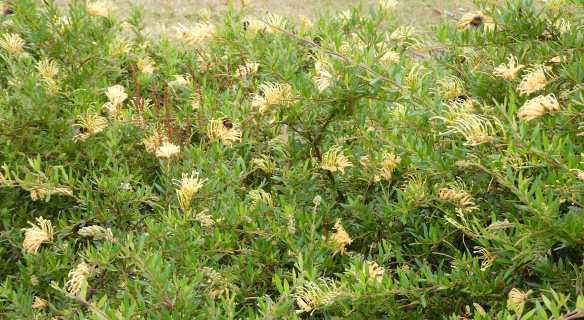
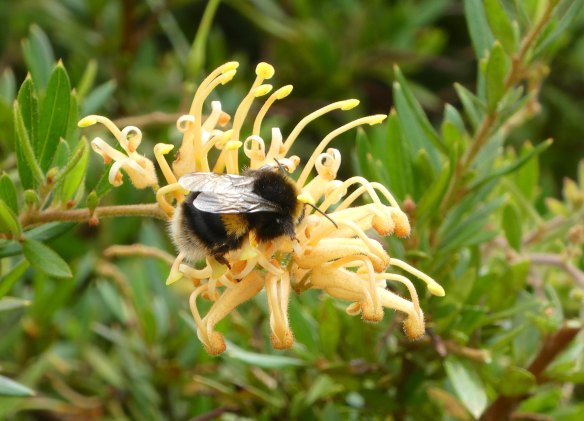
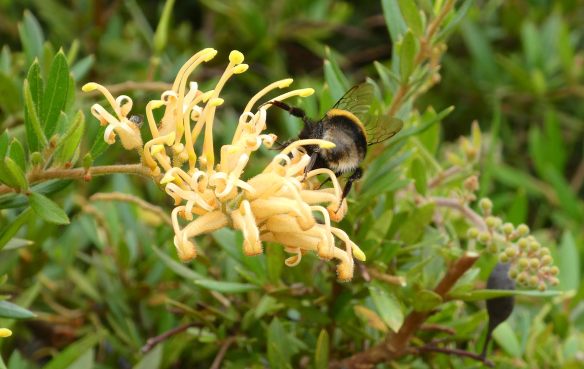
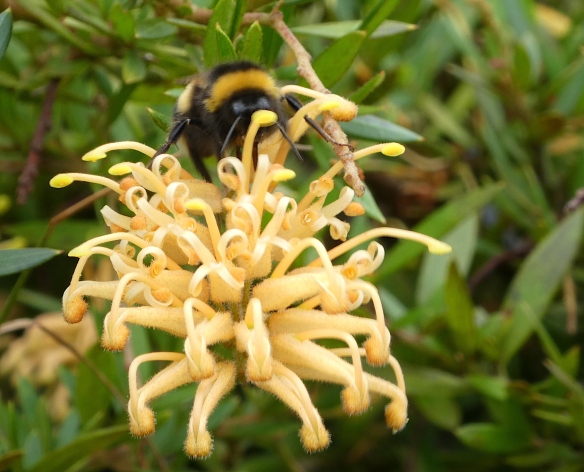
but the magnificent Barrens Clawflower was putting on a wonderful display. Endemic to the south-west of Western Australia, the name is from the location where it was found in 1920, West Mount Barren.

Further on, the trail opened up and the coastal views were spectacular.

13.trail14.Geographe Bay15.Geographe Bay16.shags on a rock

Strategically placed seating invited a chance to rest and take in the view and perhaps spy a passing whale.

17.whale watching18.Geographe Bay19.Geographe Bay20.Geographe Bay

Granite rock formations lay scattered throughout the landscape

and along the sheltered beaches.

26.beach27.beach28.beach29.Geographe Bay

Lunch time was approaching and there were more wineries awaiting us. We returned along the same path,

30.forest

encountering this Shingleback lizard basking in the dappled sunlight.

31.Shingleback lizard

Isn’t he handsome?

32.Shingleback lizard