Highfield House

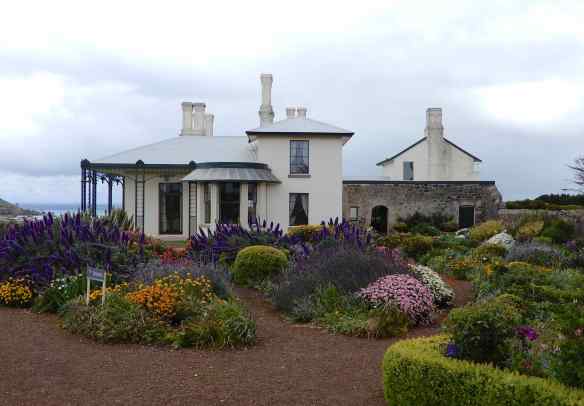
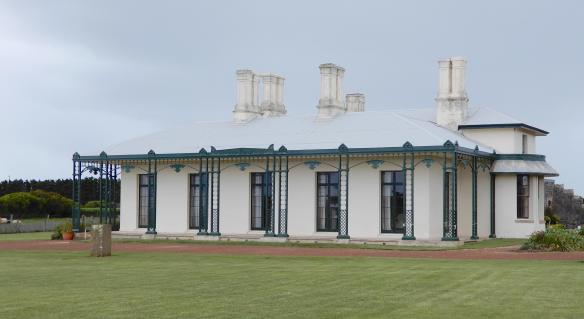
I know I’ve said it before but Stanley really is one of our favourite places and having guests from interstate is always a great excuse to return. The drive up the hill to Highfield House and the views as we descend back to the beach are quite spectacular. A few years have passed since we took the time to visit Highfield House so we welcomed the opportunity on a recent expedition. The Van Diemen’s Land Company was formed in 1826  by a group of London based businessmen to establish a wool growing venture on the island. Edward Curr, the chief agent of the VDL Company, arrived at Circular Head in the remote northwest with his family in November 1827. They lived in a small cottage until his new homestead, with twenty four rooms, was completed in 1835.

1.Highfield House

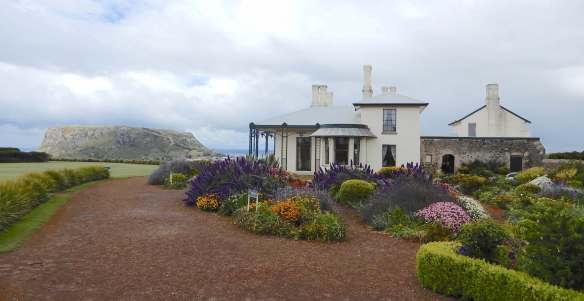
The garden is immaculate

and the house impressive even on an inclement day.

4.Highfield House

Through the front door, down the main hallway

5.hall

we entered the gallery where guests would be welcomed. Portraits and stories of those who lived and worked in the house and around the estate adorn the walls.

6.gallery

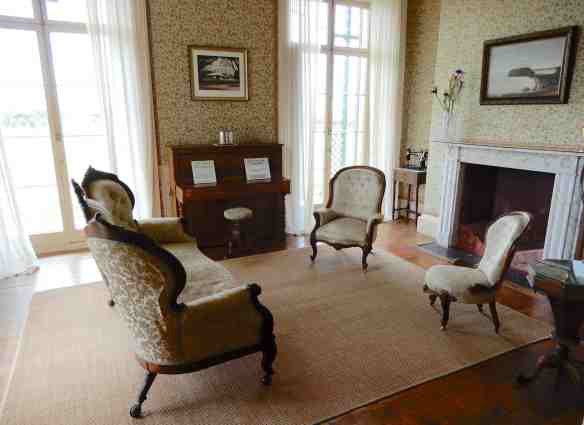
Storyboards in each room relate a different part of life at Highfield House, the history of the VDL Company and the settlement of Circular Head. First impressions of the settlers to the wild, rugged northwest are shared in the adjacent drawing room,

7.drawing room

while the failure of the planned fine wool enterprise and hefty financial losses are described in the study.

Across the hall, the china closet displays remnants of crockery that were found during restoration of the house

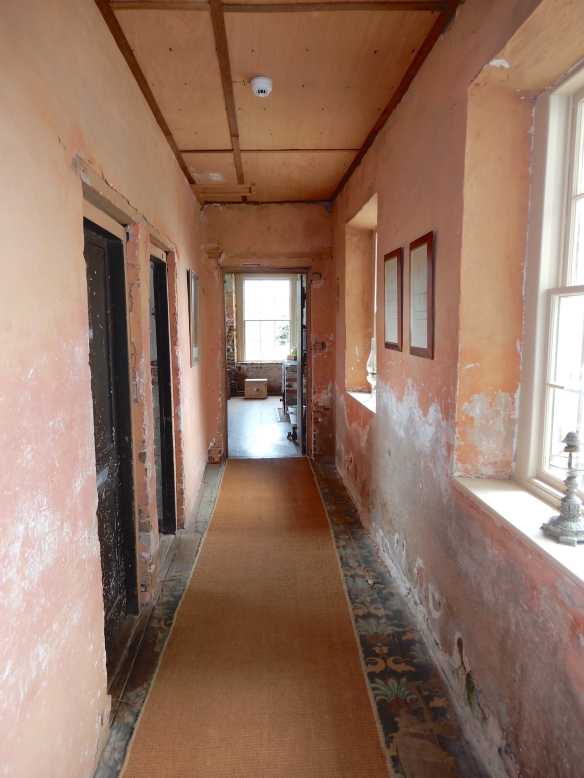
and parts of the original ceiling and walls have been exposed.

Henry Hellyer travelled to Van Diemen’s Land in 1826 as architect and surveyor for the VDL company. His explorations and mapping of the remote northwest opened up the area to settlement. In 1831, he began designing Highfield House but, sadly, he committed suicide in September 1832 and never saw his plans come to fruition. His adventures are told in the room set up as a nursery.

Beneath the staircase, two cellars provide ample storage for the plethora of goods imported on the Company ships. Detailed inventories indicate the residents of the house wanted for nothing.

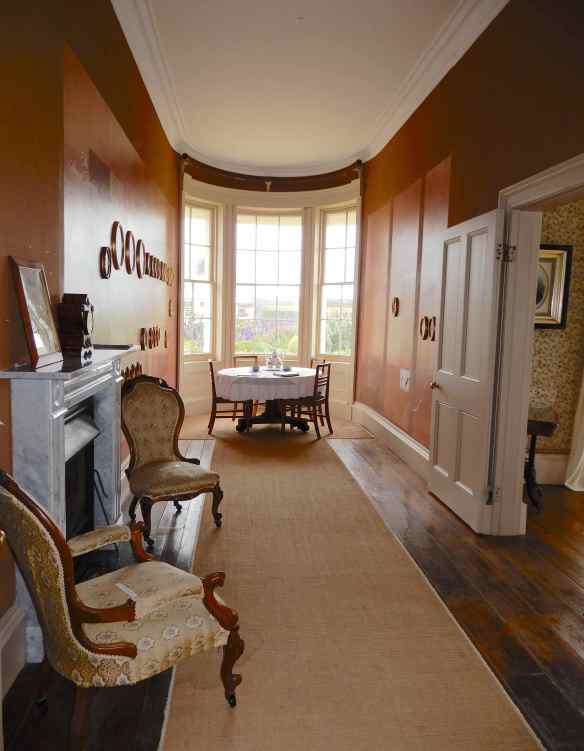
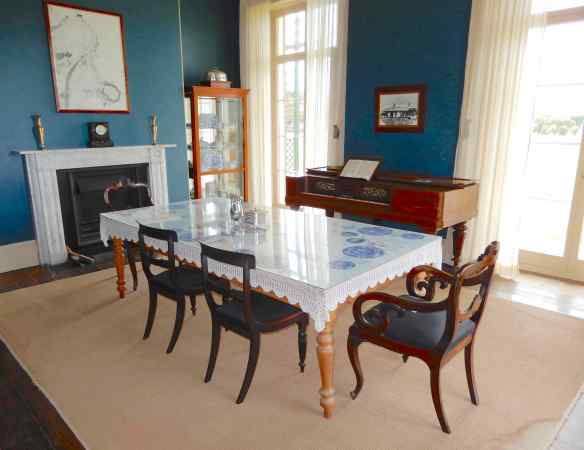
Places are set at the dining room table and snippets of conversation are written on the cloth. The clinking of glasses and cutlery accompany the gossip of the day.

22.dining room

25.dining room

Upstairs,

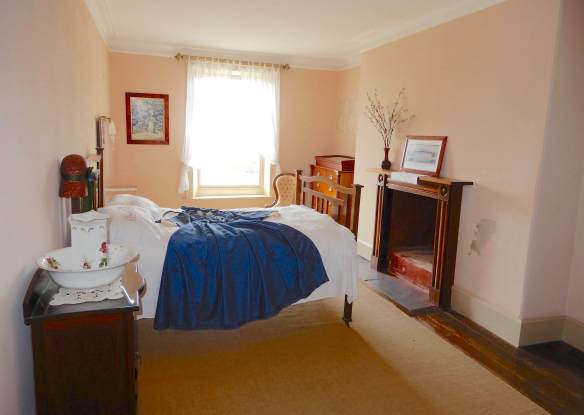
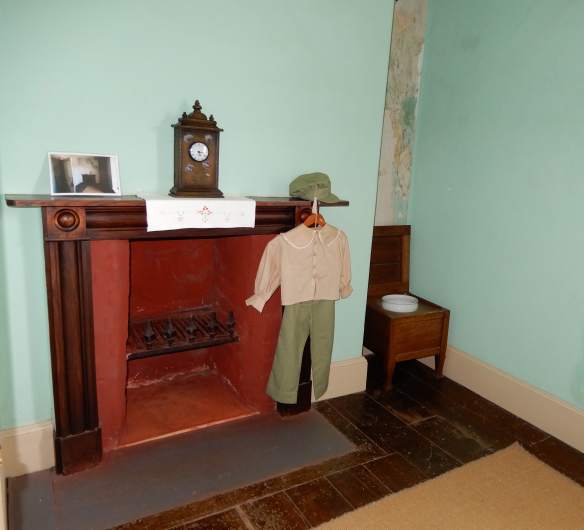
the master bedroom is set out beautifully, though it is shrouded in sadness with the sound of a woman sobbing. Presumably, Elizabeth Curr is mourning the death of her two year old daughter, Julia, in a tragic accident.

28.master bedroom

Conversely, there is a calm ambience with stunning garments laid out

and a surprisingly comfortable ensuite.

32.ensuite

Down the hall, the children’s bedroom seems a bit on the small side for fifteen children, nine sons and six daughters. Apparently, all were sent back to England for schooling around the age of four.

33.children's bedroom

The guest room has a spectacular view of the Nut, the ancient volcanic plug around which the town of Stanley has grown. Suitcases half packed (or unpacked) give the impression of visitors in residence.

Returning to the ground floor, through the Butler’s Pantry (which is now the Reception Office) there is another hall

36.hall

that leads past the larder and pantry ( with more exposed original ceiling)

to the kitchen.

40.kitchen

A collection of not-so-modern appliances make us aware of how arduous the simplest of tasks were at that time.

The kitchen leads to a rear courtyard

46.rear courtyard

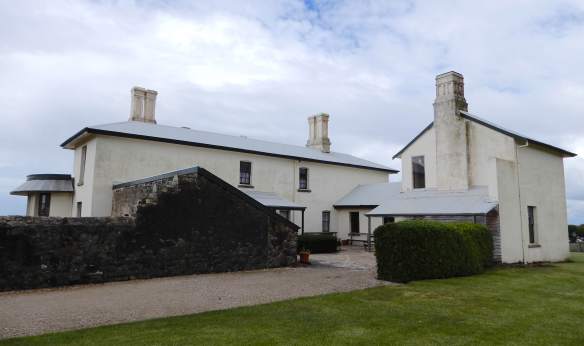
and we set off to explore the various outbuildings on the estate. A small stone building houses a chapel on the ground floor

and schoolhouse above.

51.chapel:schoolhouse

There are stables

52.stables

and a large barn that was divided up for separate uses.

56.barns

Through the straw barn

57.straw barn

there is a separate section that houses some old implements including a rather striking woolpress.

At the other end, on a mezzanine level, the original threshing barn is now a popular venue for weddings and functions.

65.threshing barn

Following Curr’s dismissal in 1842, Highfield House has had several owners until 1982 when the State Government acquired the estate. If you are planning on a visit to Stanley, be sure to take the time to explore Highfield House.

66.Highfield House & The Nut

Kangaroo Ground

On a crisp, clear winters morning, we left Healesville after another delicious breakfast at Cherry Tree Cafe to fortify us for the drive to Werribee. We had only been driving for half an hour when we passed a sign announcing Kangaroo Ground Memorial Lookout Tower. Executing a U-turn, we went to investigate. Kangaroo Ground is a tiny town about 26km from Melbourne and the tower is located on the highest hill in the area. Unveiled on 11th November 1926, the 12 metre tall edifice was erected in memory of local men killed in action in World War I.

1.memorial tower

The memorial now commemorates those who also lost their lives in World War II. A large bronze plaque above the doorway lists 107 names of the fallen. In 1974, the rather unattractive box on top was added for the purpose of fire watching and is still in use during the summer months.

2.memorial tower

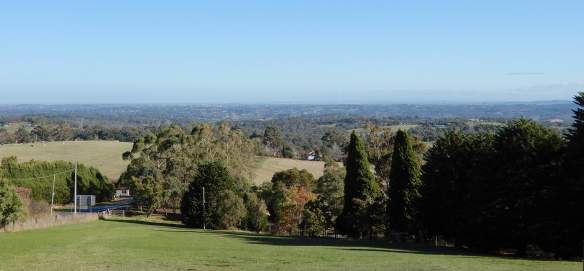
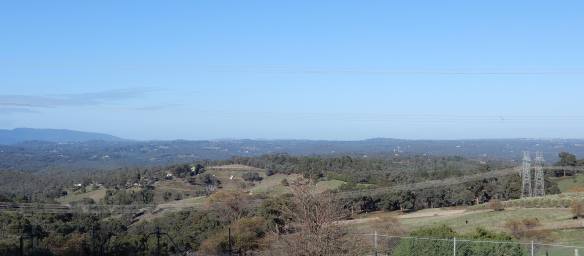
We didn’t climb the tower to take in the 360 degree views across Melbourne, the north eastern suburbs and the Dandenong and Kinglake Ranges. We were quite happy with the ones we had from ground level.

3.panorama4.panorama5.Melbourne city6.panorama7.panorama

A single pine tree near the tower, succumbing slightly to the prevailing winds, drew our attention. Planted as a sapling on 11th November 2005, it is a direct descendent of the original Lone Pine from Gallipoli.

8.lone pine9.lone pine plaque

The Great Divide

The Lyell Highway traverses Tasmania from Strahan on the west coast to the capital city, Hobart, in the south. Driving the 300km through the West Coast Range and Franklin-Gordon Wild Rivers National Park along the tortuous route is both tiring and exhilarating. On an unusually straight stretch of road, about 75km past Queenstown, we noticed a couple of cyclists taking a break at a small roadside rest area and stopped to investigate. We learned from the information board that this was the point of The Great Divide. Tasmania is divided into two distinct regions when it comes to climate, geology and vegetation and this divide is known as Tyler’s Line (named after Peter Tyler, a Tasmanian limnologist). The west has higher rainfall, poor acidic soil and the strong westerly winds of the Roaring Forties. The vegetation comprises rainforest, moorland and wet sclerophyll along with rugged mountain ranges.

1.westward2.westward

Frenchmans Cap is the highest peak in the West Coast Range, named because of the similarity to the shape of the Liberty Cap worn during the French Revolution.

3.Frenchmans Cap

To the east of the divide, conditions are much drier and warmer with lower rainfall and more fertile soil. From our vantage point, the King William Range rose majestically on the horizon, similar in shape and geology to the more famous Cradle Mountain.

4.King William Range

Made up of three separate peaks, named Mount King William I, II and III,

5.Mt King William I6.Mount King William II7.Mount King William III

the King William Saddle is equidistant from Tasmania’s three major cities – Hobart (190km), Launceston (186km) and Devonport (193km), each one a three hour drive. Fortunately, we were only 10km from our destination of Pumphouse Point.

Four Pillars

There was no better way to cap off our rainy day out than a visit to Four Pillars Distillery, just a kilometre up the road from our accommodation.

1.Four Pillars Distillery

The gin distillery started in late 2013 when three farsighted Aussie blokes, Cameron, Matt and Stuart, launched a crowdfunding campaign on Pozible, offering their first batch of Rare Dry Gin as incentive. Two years later, they completed a purpose built distillery in a former timber yard in the heart of Healesville. We couldn’t wait to get inside.

2.Four Pillars distillery door

The first thing we noticed was the enticing tasting table, all set up and ready to go.

3.tasting table

The light, airy space was warm and welcoming

4.distillery door5.retail

with plenty on offer for something to take home.

6.retail

The name Four Pillars relates to the four building blocks that are the foundation of successful distilling; the magnificent copper stills, pure triple filtered Yarra Valley water, a mixture of ten local and exotic botanicals and finally, a hearty helping of love.

7.spices

We didn’t have long to wait to join in a tasting, opting to share the samples between the two of us when we discovered we would otherwise be consuming 2.5 standard drinks during the 45 minute session.

8.tasting table

We learned the history of the distillery, including the purchase of the custom built stills from CARL, the oldest distillery fabricator in Germany, producing only twenty five stills a year. They really are a work of art. The first still was named Wilma after Cameron’s late mother who, apparently, enjoyed her gin. She was joined by Jude (Stuart’s mum) and Eileen (Matt’s mum) and finally, Beth (first full time employee Scott’s mum). Our vision of the distilling room was limited but I’m sure any mother would be proud to have such beauty stand in her name.

11.distillery

The five gins we tasted each had their own unique characteristics and in the past two years, they have all won multiple gold medals at international competitions. In 2015, Yarra Valley Shiraz grapes were added to the tanks of Rare Dry Gin, stirred daily for eight weeks, then pressed before blending with more Rare Dry Gin. A brilliant concept and very drinkable drop, three bottles of 2019 Bloody Shiraz Gin came home with us.

12.Bloody Shiraz Gin

Mount Gnomon Farm

We had been wanting to visit Mount Gnomon Farm for years but the timing was always wrong. Finally, last Sunday we drove the short ten minutes from Penguin along winding roads, through beautiful countryside, to experience the recently re-opened restaurant. The rustic simplicity of the exterior

1.restaurant

continues once inside.

2.interior

From quirky door handles and unique light fittings

to walls adorned with animal hides and ‘family’ photos, the ambience is warm and inviting.

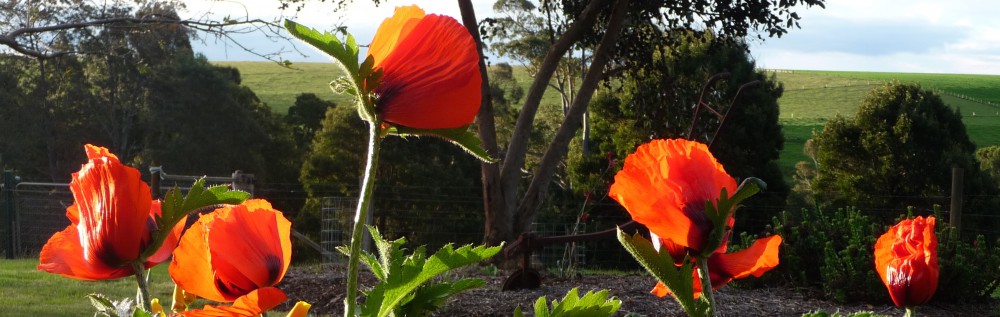
A colourful palette of wildflowers is framed by the dining room window.

8.view from dining room

The front verandah overlooks fields of grazing sheep,

9.view from front door

a charcoal spit and bespoke fire pits await the next big event.

10.spit

Resident pooches Cyril and Winston eagerly welcomed us, happy to accept attention without demanding it.

Agricultural scientist, Guy Robertson purchased this magnificent parcel of land ten years ago, principally to raise free range pigs and promote the end product of premium free range pork. Nestled against the forest reserve of the Dial Range, they certainly have no problem with neighbours.

19.Dial Range20.Wild garden & Dial Range

The estate has become much more than a pig farm but I’ll get to that after lunch. Unfortunately for Guy, but fortuitously for us, last minute cancellations meant the three of us were the only guests. Perusing the menu, it was difficult to make a choice, we wanted to try everything. With a little encouragement from Guy and his team, that’s exactly what we did. French chef, Madjid, specialises in charcuterie and so, at the top of the menu, we started with the impressive French Charcuterie shared plate. Ham hock terrine, wallaby terrine, pepperberry cured pork fillet, saucisson sec, saucisson a l’ail, smoked ham, apple puree, garden pickles and sourdough bread.

21.French Charcuterie shared plate

Mount Gnomon smoked chorizo with pumpkin puree & sage, Mount Gnomon smoked bratwurst with house sauerkraut & German mustard and a salad of borlotti beans, celery, fennel & orange followed.

24.salad

The roasted suckling pig leg with sausage stuffing, carrots, garlic crumb & jus convinced us of the superior quality and flavour of Mount Gnomon free range pork.

25.suckling pig

Next came free range chicken served with spinach, roasted pumpkin, burnt butter, lemon & toasted pine nuts.

26.free range chicken

Crispy Kennebec potato with smoked paprika mayo and local green vegetables with a herb dressing, Coal River Farm fetta, preserved lemon & mint completed the feast. (I missed a photo of the greens, trust me, they were incredible).

27.potatoes

I should point out, these dishes were shared between us, we hadn’t really succumbed to an attack of gluttony. The menu changes every week depending on the fresh farm produce available, what a great excuse to return and sample more. Local beers and ciders are also on offer, along with superb Ghost Rock wines. We were confident we could manage the one dessert on the menu with a pause for digestion and so, embarked on a Guy guided tour of the farm. A new lamb had joined the flock of Shropshire sheep that morning, I’m sure he grew more cute each time I looked at him (actually, not sure if he is a he).

The other lambs had a head start and for some, the grass was definitely greener the other side of the fence.

Across the paddock to the west, the traditional Dairy Shorthorn cattle enjoy far reaching views as well as luscious green pasture.

34.views to the west

To the north, the young apple trees of the cider orchard align with the pristine waters of Bass Strait.

37.view to the north

A wild edible garden

38.wild garden

occupies the space between the restaurant kitchen and the most spectacular raised vegetable garden I have ever seen.

39.vegetable patch

My hopes of cuddling a piglet were dashed when we learned the hundreds of Wessex Saddleback pigs that usually reside here had been relocated to enable regeneration of the pastures.

40.pig pastures

I’m sure they will be eager to return to their home beneath Mount Gnomon.

41.pig pastures

For the few that remain, the rich, red soil was irresistible for a spot of wallowing.

I imagine this would be a soothing respite

47.pig in mud48.pig in mud

from suckling twelve large offspring.

49.piggies

Back at the restaurant, I entered the inner sanctum to witness the cured meats awaiting their turn on the charcuterie board.

50.charcuterie

The exercise and fresh air had primed us for the delicious peanut butter chocolate mousse with raspberry coulis & crunchy topping.

51.mousse

If you can’t make it to Mount Gnomon Farm, you can find their products on menus around Australia as well as at farmers markets and festivals across Tasmania. If you can make it to the farm, next Sunday would be the perfect opportunity with a big day planned for the launch of Mount Gnomon Farms very own cider.
52.event