Festivale

The first weekend in February brings a very special event to Launceston in the form of Festivale. Our first experience was in 2009 soon after relocating to Tasmania and, even though we had good intentions, we hadn’t attended since. This year we couldn’t resist the drawcard on the music menu. Festivale was launched in 1988 as a big street party in the CBD as part of Australia’s bicentenary celebrations. After seven years in the CBD, the annual event moved to City Park, showcasing Tasmanian gourmet food, wine, beer, cider and spirits along with entertainment by local and interstate artists. Unfortunately, the weather gods did not cooperate this time. We arrived for the 10am opening armed with raincoats and umbrellas and, resisting the temptation at the myriad stalls, sought a hot chocolate starter.

The sounds of jazz filled the park as the Ross Challender Big Band defied the elements,

8.Ross Challender Big Band

their melodies accompanied our survey of produce on offer.

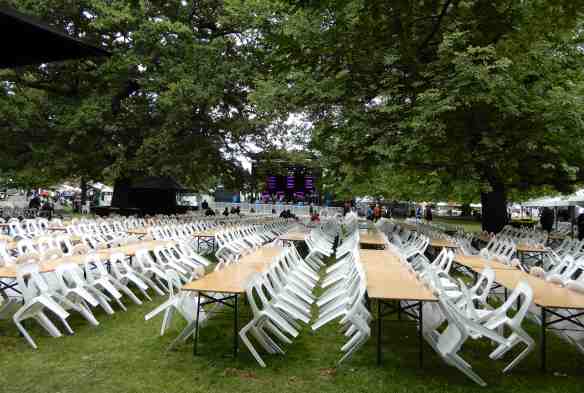
Ample seating, hoping to deflect the rain, awaited in anticipation of the crowds to come.

12.seating

I was more than a little disconcerted when the local constabulary accused me of having them under surveillance but with some smooth talking, I convinced the kindly Commissioner that I was merely there to enjoy the festivities.

15.Commissioner

With wine in hand, we secured seats as the big band concluded their last number.

16.Ross Challender Big Band

The Dave Adams Band changed the tempo and rocked for the next hour before Russell Morris took to the stage. Yes, Russell Morris, Australian rock legend, stirred the gathering with his stalwarts from the early years (I remember The Real Thing from 1969, how can it be that long ago?) as well as his more recent melodies. Natures canopy that had sheltered us from the rain earlier was now shielding us from the sun

17.tree canopy

as the crowd eagerly awaited the main attraction.

18.The Whitlams

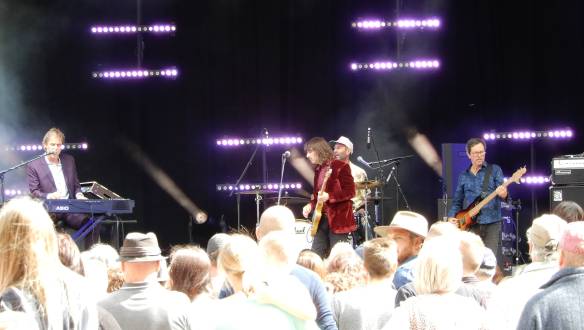
The Whitlams have been one of our favourites since their inception nearly thirty years ago yet we had never seen a live performance. They didn’t disappoint and hopefully we will have the opportunity to see them again soon (if you think there are a lot of photos of Tim Freedman, you are absolutely right).

23.The Whitlams

We left our empty friends

28.the last three

and strolled the short distance to our hotel to indulge in a nanna nap before dinner.

29.The Cornwall Hotel

Cascade Brewhouse

When Michael was recently invited to play at Cascade Brewhouse in Hobart, it was the perfect excuse for a short break and an overnight stay. Despite living in Tasmania for ten years, we have never visited Cascade Brewery. The gothic façade of Australia’s oldest operating brewery seems to dwarf the majesty of Mount Wellington.

1.Cascade Brewery

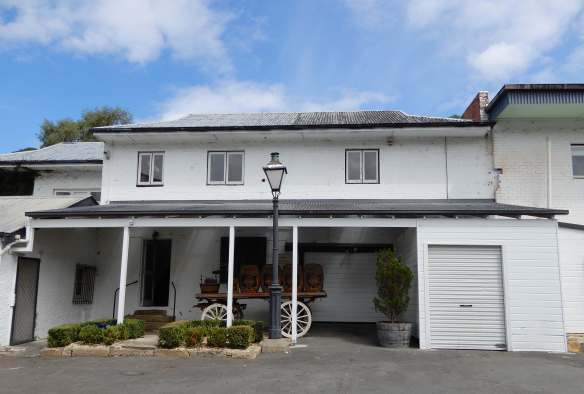
Across the road, the brewhouse is more than just the ticket office for brewery tours.

2.Cascade Brewhouse3.Cascade Brewhouse

Snippets of history await in the entrance hall

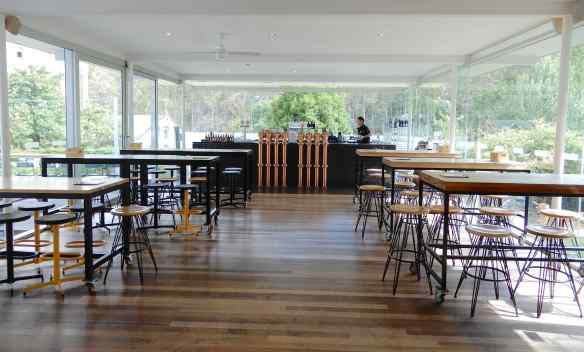
and in other rooms adjacent to the light, airy restaurant and bar.

7.restaurant8.bar

While Michael set up his paraphernalia,

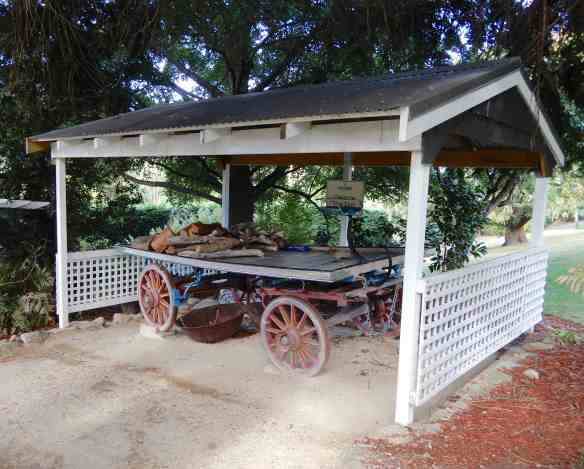
I ventured out to explore the three acres of immaculate heritage gardens.

12.fountain13.hop cart14.garden path

It’s easy to see why the venue is perfect for weddings and functions.

15.brewhouse garden

22.garden23.water feature

Needless to say, the afternoon entertainment was superb, as was the beer.

24.Michael

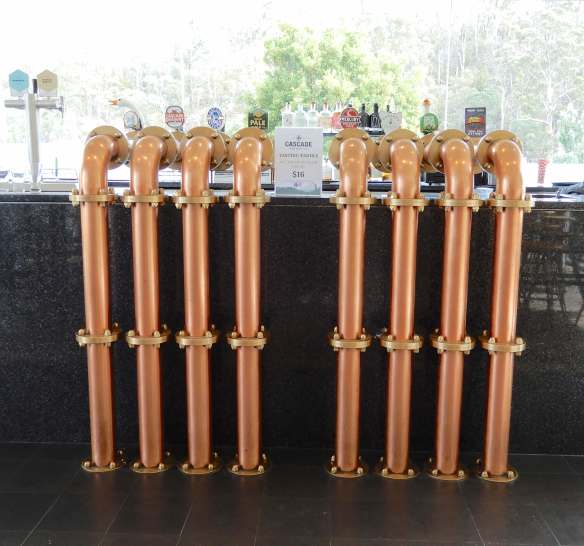
We returned the next morning to sample the new brunch menu, I don’t have photos but believe me, the offerings are amazing. I did take the opportunity of an empty bar

27.bar

to share with you the liquid delicacies on tap at Cascade Brewery.

28.bar

A big thank you to Kirk for your hospitality and generosity, looking forward to catching up again.

Highfield House

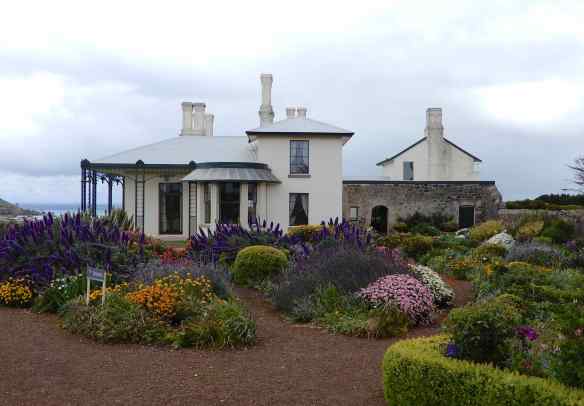
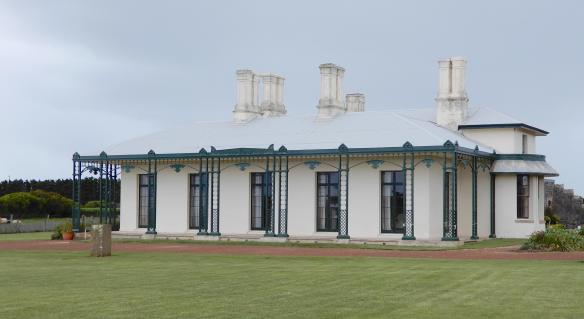
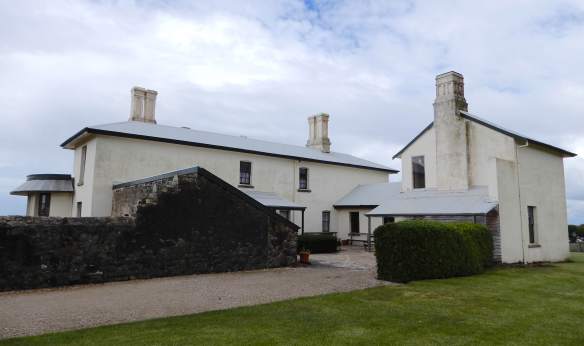
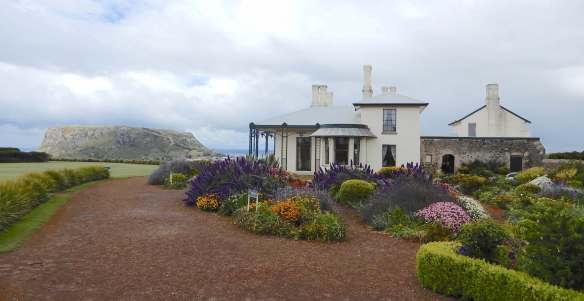
I know I’ve said it before but Stanley really is one of our favourite places and having guests from interstate is always a great excuse to return. The drive up the hill to Highfield House and the views as we descend back to the beach are quite spectacular. A few years have passed since we took the time to visit Highfield House so we welcomed the opportunity on a recent expedition. The Van Diemen’s Land Company was formed in 1826  by a group of London based businessmen to establish a wool growing venture on the island. Edward Curr, the chief agent of the VDL Company, arrived at Circular Head in the remote northwest with his family in November 1827. They lived in a small cottage until his new homestead, with twenty four rooms, was completed in 1835.

1.Highfield House

The garden is immaculate

and the house impressive even on an inclement day.

4.Highfield House

Through the front door, down the main hallway

5.hall

we entered the gallery where guests would be welcomed. Portraits and stories of those who lived and worked in the house and around the estate adorn the walls.

6.gallery

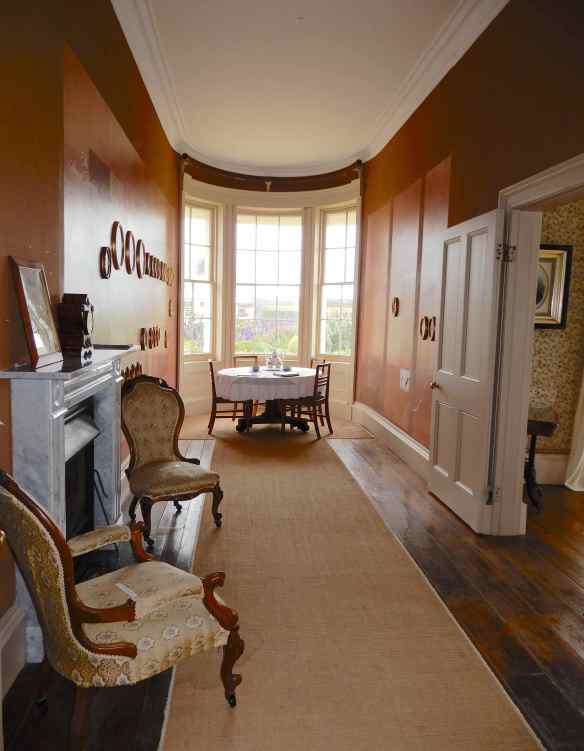
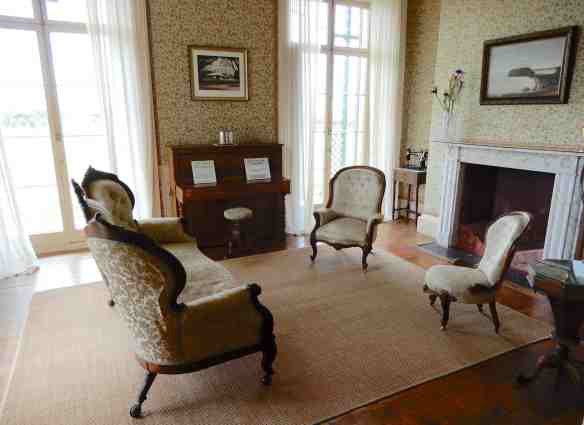
Storyboards in each room relate a different part of life at Highfield House, the history of the VDL Company and the settlement of Circular Head. First impressions of the settlers to the wild, rugged northwest are shared in the adjacent drawing room,

7.drawing room

while the failure of the planned fine wool enterprise and hefty financial losses are described in the study.

Across the hall, the china closet displays remnants of crockery that were found during restoration of the house

and parts of the original ceiling and walls have been exposed.

Henry Hellyer travelled to Van Diemen’s Land in 1826 as architect and surveyor for the VDL company. His explorations and mapping of the remote northwest opened up the area to settlement. In 1831, he began designing Highfield House but, sadly, he committed suicide in September 1832 and never saw his plans come to fruition. His adventures are told in the room set up as a nursery.

Beneath the staircase, two cellars provide ample storage for the plethora of goods imported on the Company ships. Detailed inventories indicate the residents of the house wanted for nothing.

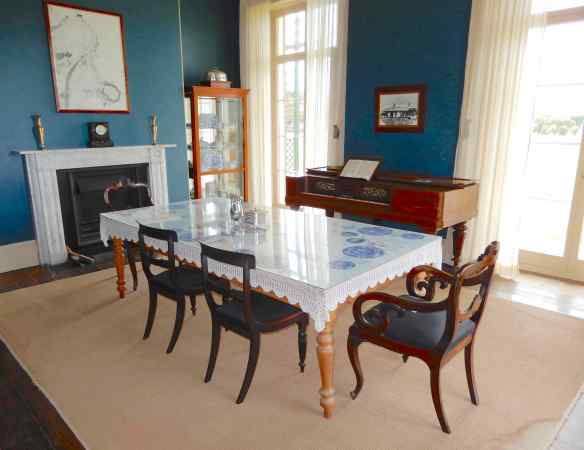
Places are set at the dining room table and snippets of conversation are written on the cloth. The clinking of glasses and cutlery accompany the gossip of the day.

22.dining room

25.dining room

Upstairs,

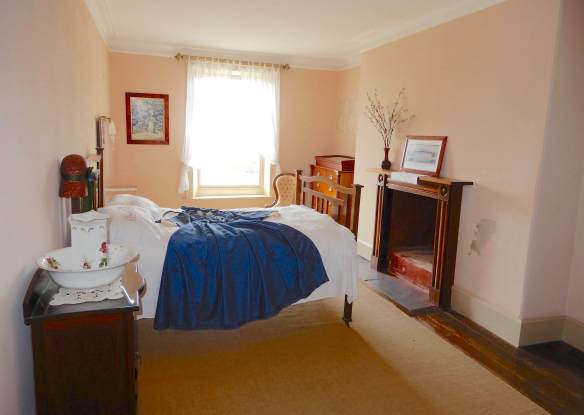
the master bedroom is set out beautifully, though it is shrouded in sadness with the sound of a woman sobbing. Presumably, Elizabeth Curr is mourning the death of her two year old daughter, Julia, in a tragic accident.

28.master bedroom

Conversely, there is a calm ambience with stunning garments laid out

and a surprisingly comfortable ensuite.

32.ensuite

Down the hall, the children’s bedroom seems a bit on the small side for fifteen children, nine sons and six daughters. Apparently, all were sent back to England for schooling around the age of four.

33.children's bedroom

The guest room has a spectacular view of the Nut, the ancient volcanic plug around which the town of Stanley has grown. Suitcases half packed (or unpacked) give the impression of visitors in residence.

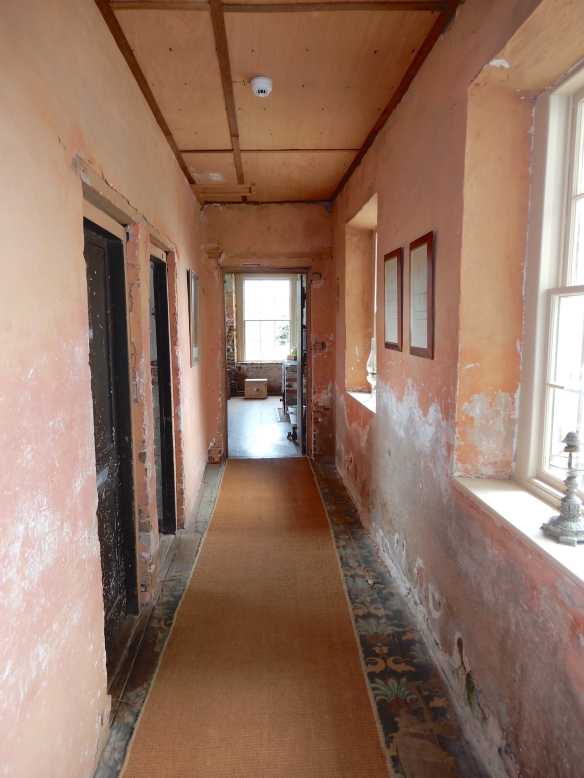
Returning to the ground floor, through the Butler’s Pantry (which is now the Reception Office) there is another hall

36.hall

that leads past the larder and pantry ( with more exposed original ceiling)

to the kitchen.

40.kitchen

A collection of not-so-modern appliances make us aware of how arduous the simplest of tasks were at that time.

The kitchen leads to a rear courtyard

46.rear courtyard

and we set off to explore the various outbuildings on the estate. A small stone building houses a chapel on the ground floor

and schoolhouse above.
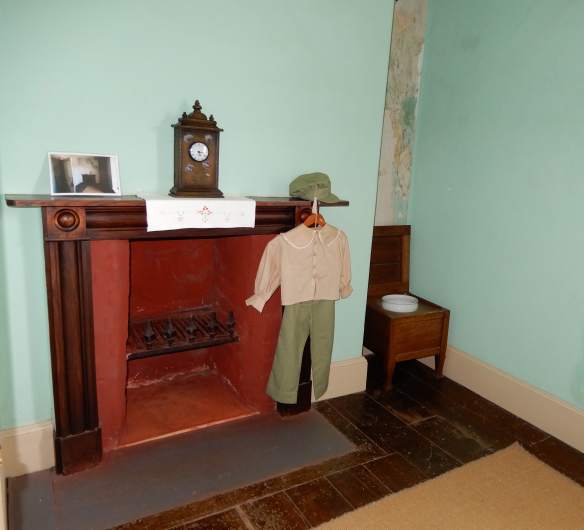
51.chapel:schoolhouse

There are stables

52.stables

and a large barn that was divided up for separate uses.

56.barns

Through the straw barn

57.straw barn

there is a separate section that houses some old implements including a rather striking woolpress.

At the other end, on a mezzanine level, the original threshing barn is now a popular venue for weddings and functions.

65.threshing barn

Following Curr’s dismissal in 1842, Highfield House has had several owners until 1982 when the State Government acquired the estate. If you are planning on a visit to Stanley, be sure to take the time to explore Highfield House.

66.Highfield House & The Nut

Christmas creativity

Whether we like it or not, there is a certain obligation to decorate our workplace for Christmas. Each year, the boxes of tinsel and baubles are dragged out of storage along with the increasingly dilapidated tree. To add a new dimension this year, we were each issued a challenge to decorate a door in the department. Everyone dug deep into their creative souls with astounding results. There are a few elves

3.elf

and a couple of Santas, one of which has decided to go for a swim.

6.Santa's gone to the beach

An enthusiastic llama

7.fa la la llama

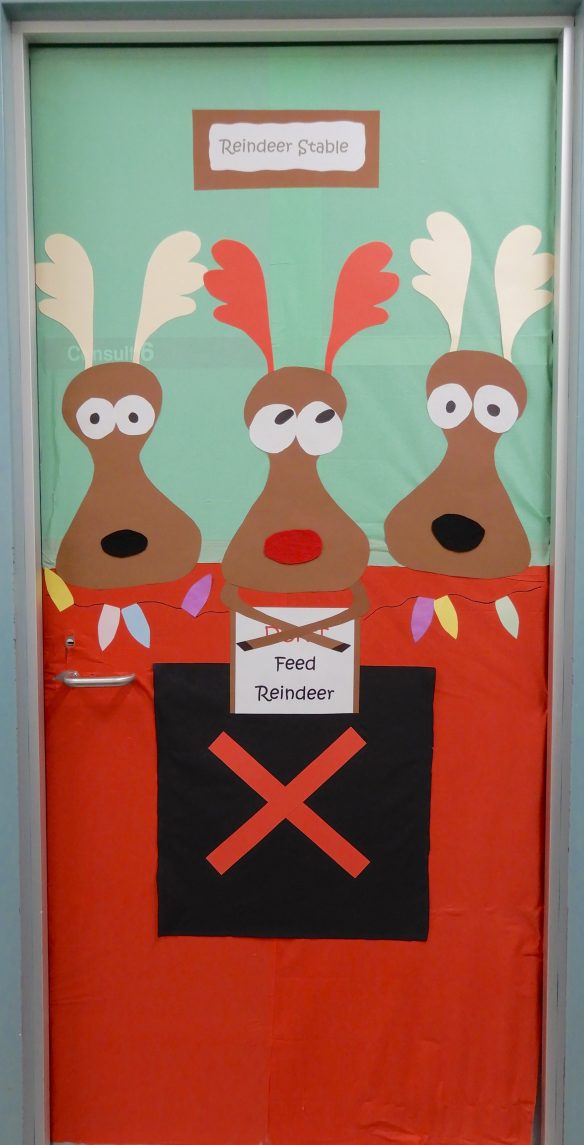
is inspired by the mischievous and musical reindeer down the hall.

8.reindeer stable

There is a happy snowman, a couple of Olafs and a penguin that looks as though he has had one too many egg nogs.

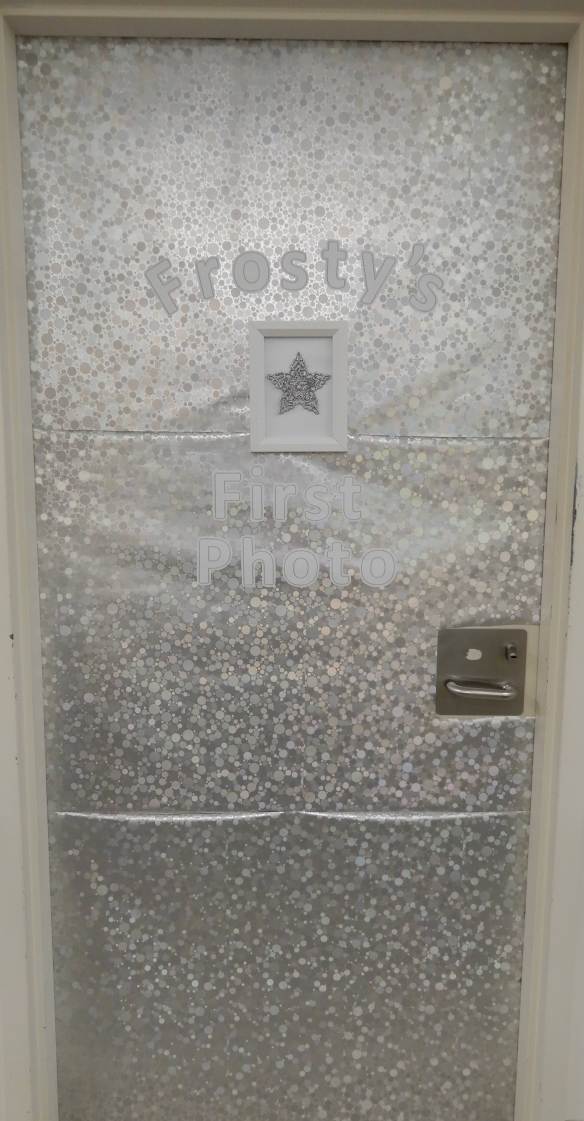
I think this wins first prize for imagination.

15.Frosty's first photo

A chocolate advent calendar is a must for counting down the days.

16.advent calendar

Some excelled with colourful creations.

17.gingerbread house18.fireplace

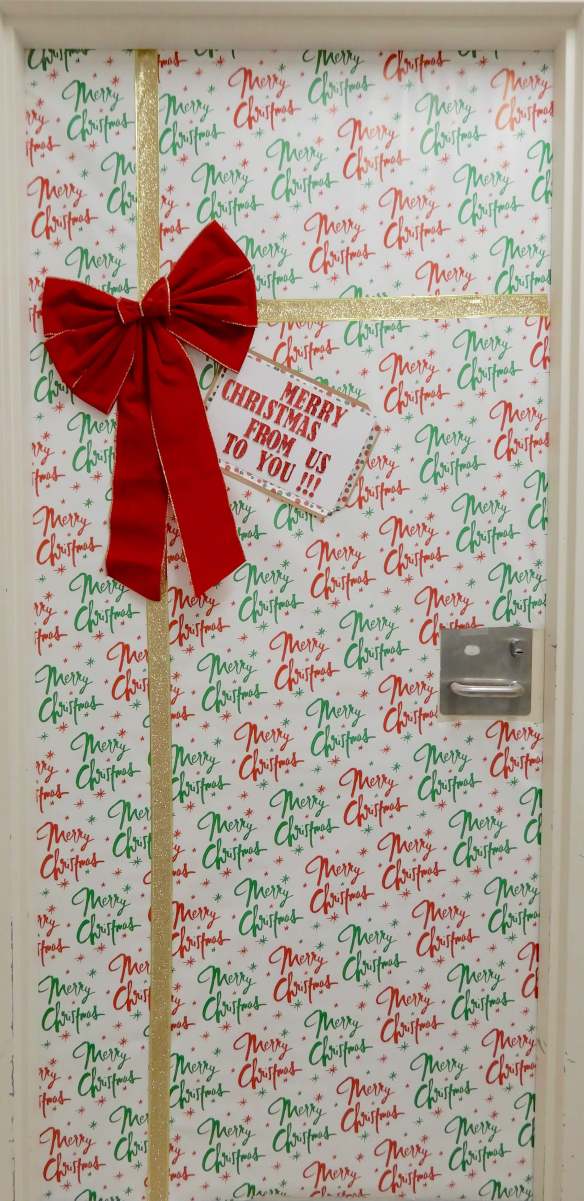
Christmas trees and gifts featured

21.gift

along with baubles

and a quirky, original night sky (sorry about the quality, looks like I had one too many egg nogs!)

24.night sky

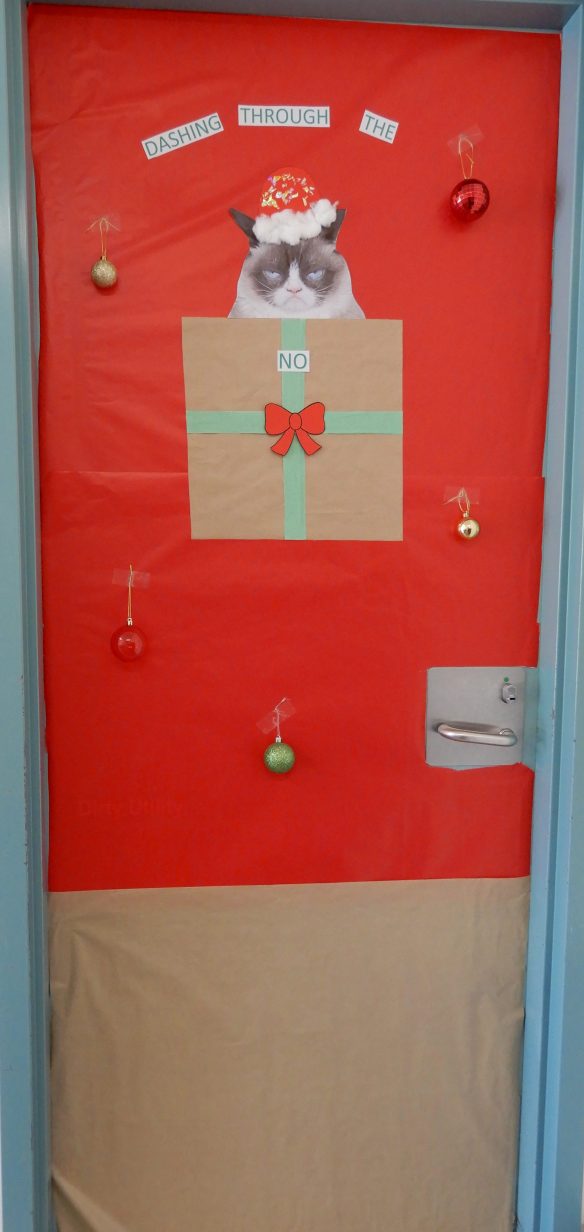
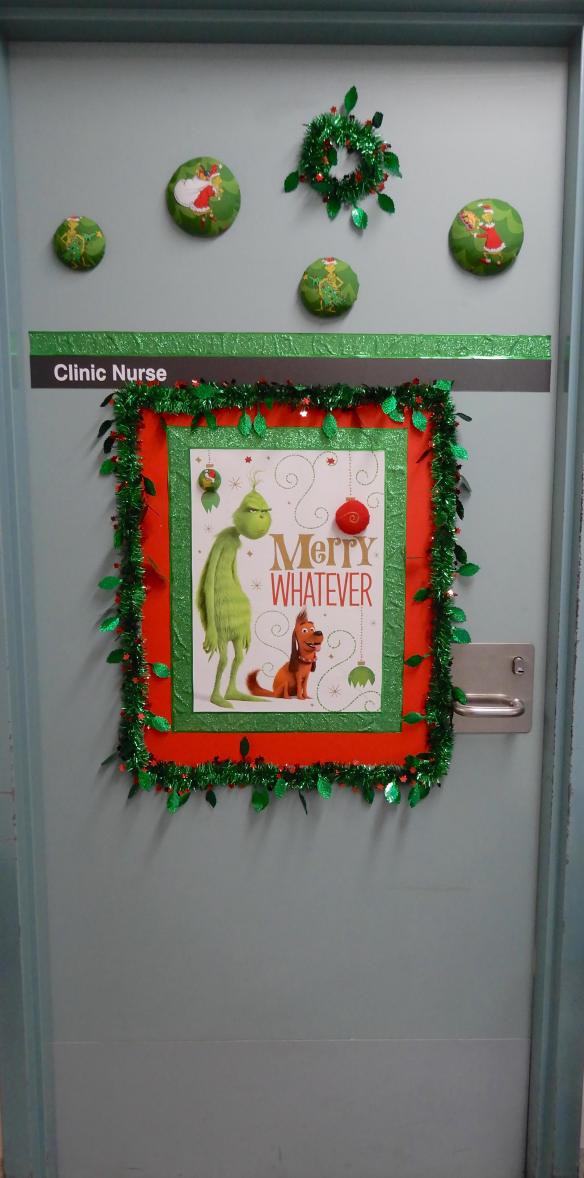
Of course, not everyone feels the joy of Christmas.

25.grumpy cat26.Grinch

Wishing you all a very happy and safe Christmas and everything you hope for in 2020.

The Great Divide

The Lyell Highway traverses Tasmania from Strahan on the west coast to the capital city, Hobart, in the south. Driving the 300km through the West Coast Range and Franklin-Gordon Wild Rivers National Park along the tortuous route is both tiring and exhilarating. On an unusually straight stretch of road, about 75km past Queenstown, we noticed a couple of cyclists taking a break at a small roadside rest area and stopped to investigate. We learned from the information board that this was the point of The Great Divide. Tasmania is divided into two distinct regions when it comes to climate, geology and vegetation and this divide is known as Tyler’s Line (named after Peter Tyler, a Tasmanian limnologist). The west has higher rainfall, poor acidic soil and the strong westerly winds of the Roaring Forties. The vegetation comprises rainforest, moorland and wet sclerophyll along with rugged mountain ranges.

1.westward2.westward

Frenchmans Cap is the highest peak in the West Coast Range, named because of the similarity to the shape of the Liberty Cap worn during the French Revolution.

3.Frenchmans Cap

To the east of the divide, conditions are much drier and warmer with lower rainfall and more fertile soil. From our vantage point, the King William Range rose majestically on the horizon, similar in shape and geology to the more famous Cradle Mountain.

4.King William Range

Made up of three separate peaks, named Mount King William I, II and III,

5.Mt King William I6.Mount King William II7.Mount King William III

the King William Saddle is equidistant from Tasmania’s three major cities – Hobart (190km), Launceston (186km) and Devonport (193km), each one a three hour drive. Fortunately, we were only 10km from our destination of Pumphouse Point.