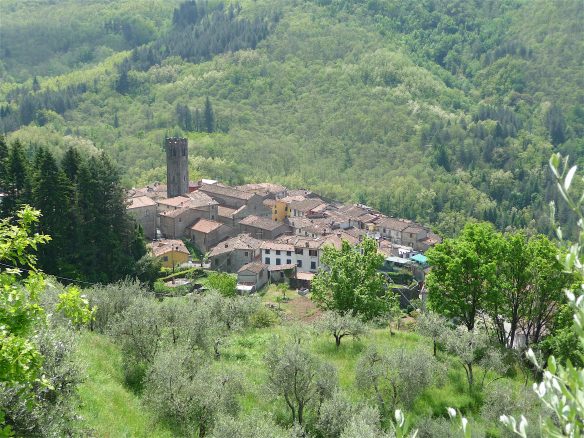
Launceston Castle

Following our adventure in Britain, our plan was to relocate to Tasmania and rent a house in Launceston while we searched for a property of our own. Little did we know, in the early 19th century, Launceston had been given the name of the town in Cornwall (although there it is pronounced ‘lawn-sten’). Known as the Gateway to Cornwall, Launceston is just across the border from Devon and so, to control the river crossing, a castle was built soon after the Norman Conquest of 1066.

2.Launceston Castle

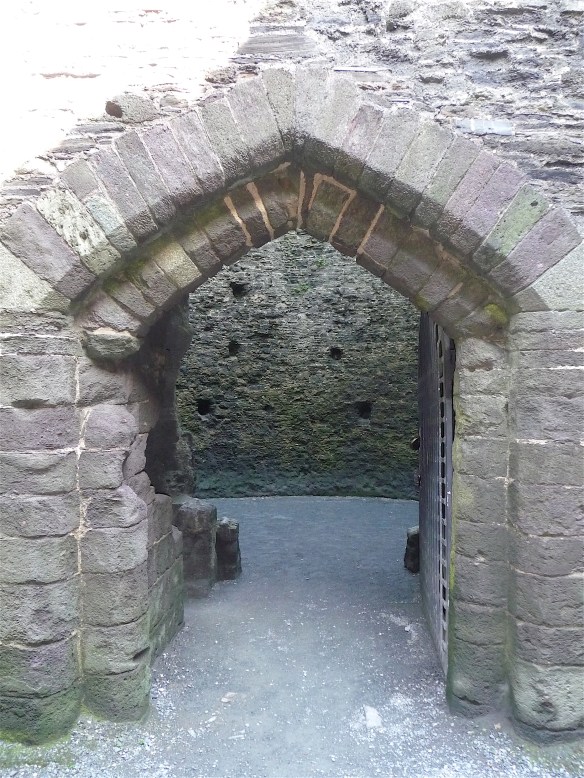
Originally a wooden structure, the castle is set high on a grassy mound and was replaced with a circular stone keep in the 12th century.

3.Launceston Castle

We wandered around the castle, marvelling at the stonework from so long ago.

4.Launceston Castle6.Launceston Castle7.Launceston Castle8.Launceston Castle9.Launceston castle

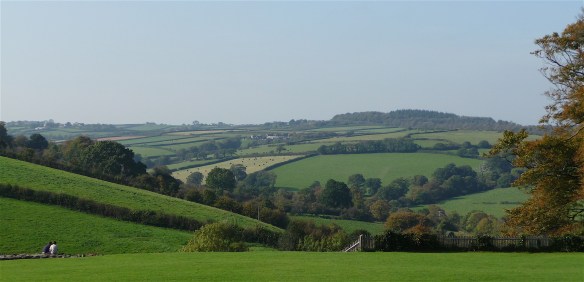
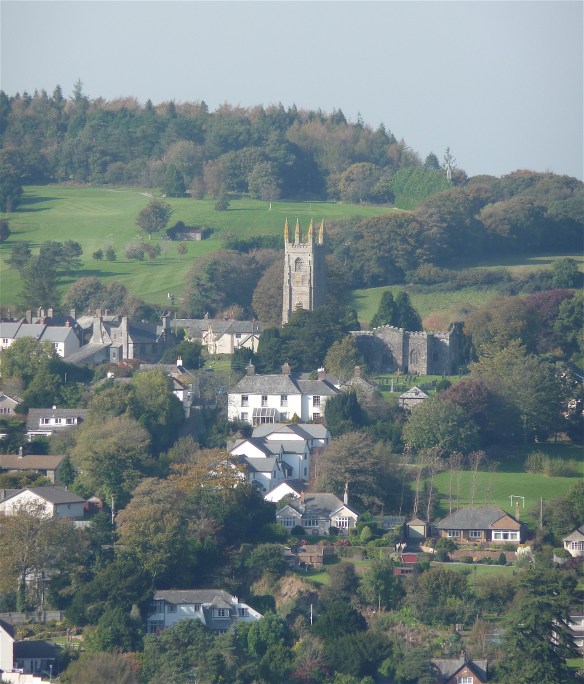
The views across the town and the Tamar Valley were breathtaking.

10.view11.view12.view13.view14.view

From the top, the remains of the moat are evident.

15.view

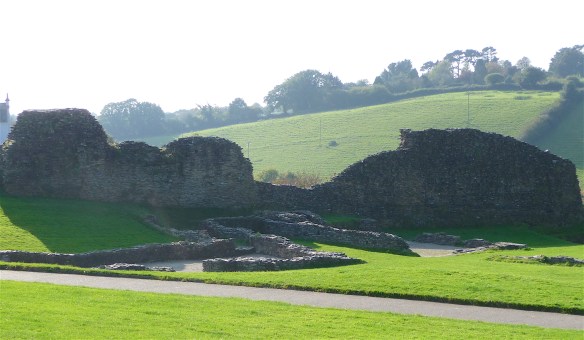
By the middle of the 17th century, after the Civil War, the castle was virtually in ruins

16.Launceston Castle17.Launceston Castle

and large parts of the wall are now missing.

18.view

In the 19th century, the castle area was landscaped and turned into a public park.

19.Launceston Castle

We ended our perfect day with a pint at the Bell Inn, a three storey 15th century Inn reputed to be the oldest public house in Launceston.

20.The Bell Inn

It doesn’t get much better than that.

Barrow Creek

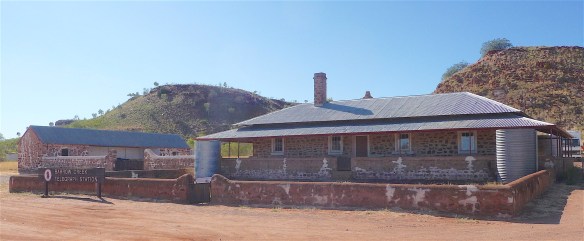
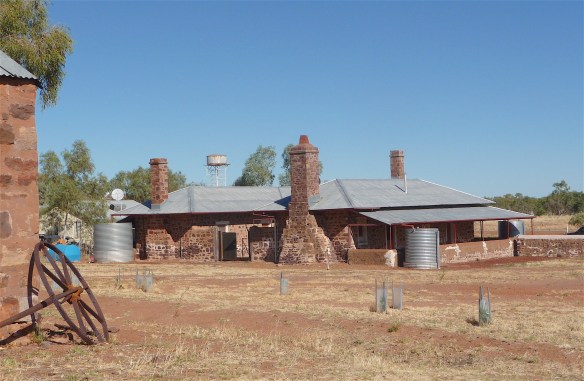
Barrow Creek is in the middle of nowhere. 1818km north of Adelaide, 1210km south of Darwin, there is a roadhouse/hotel and a telegraph station.

1.telegraph station

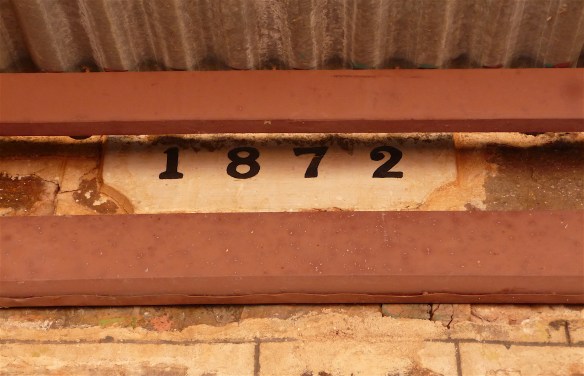
In 1860, John McDouall Stuart, on the return journey of his first attempt to cross Australia from south to north, named Barrow Creek after John Henry Barrow, the treasurer of South Australia. Dating back to 1871, the historic Overland Telegraph Station was one of 15 morse repeater stations across Australia and linking to Europe.

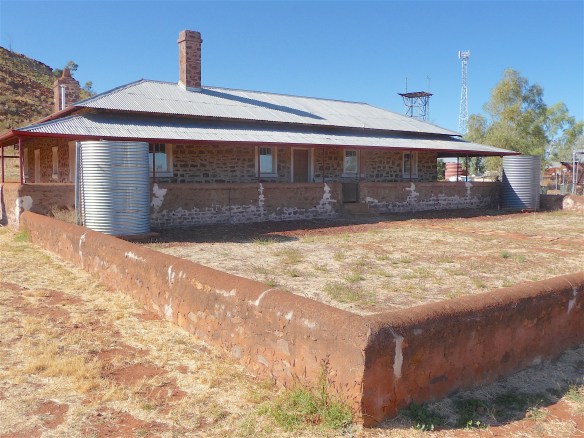
2.front

We spent some time wandering around the site that has been remarkably maintained.

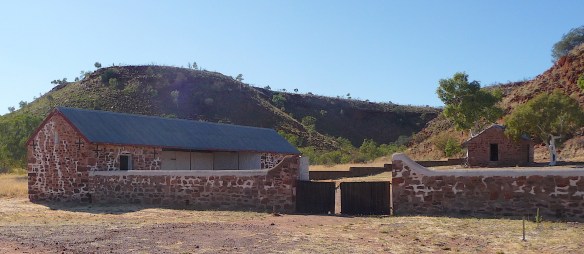
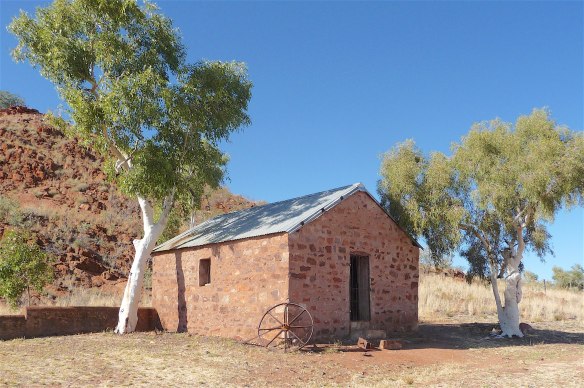
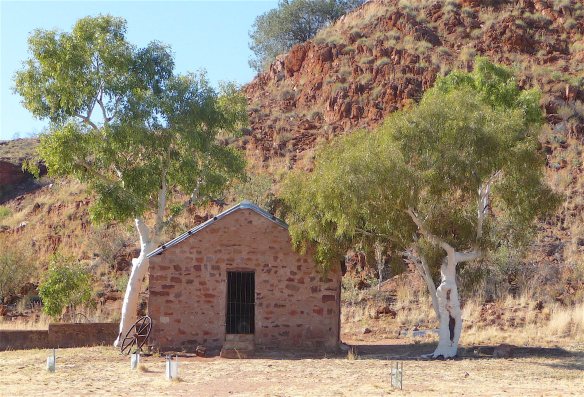
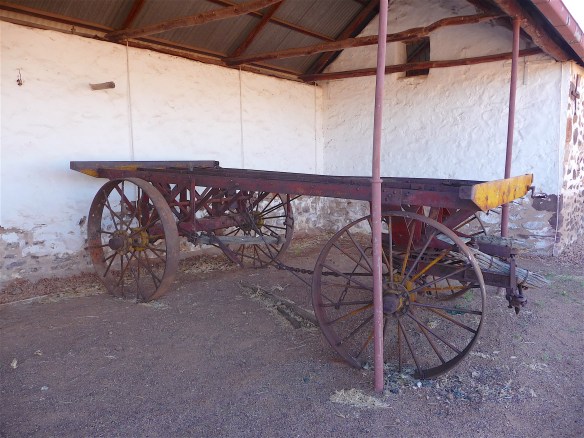
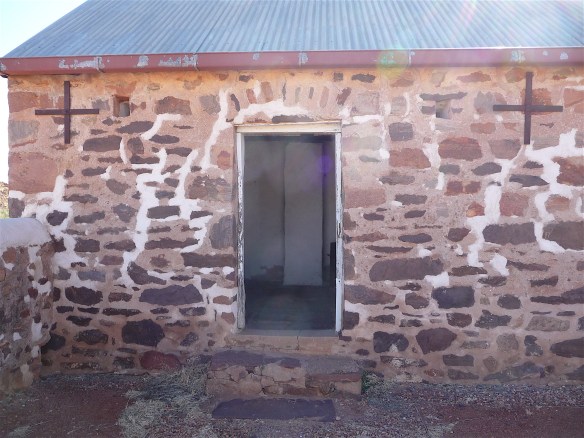
3.wagon shed & blacksmith's hut

The original roof was destroyed during a gale in 1941 and was subsequently replaced with a lower pitched roof on a steel frame but the original stonework remains.

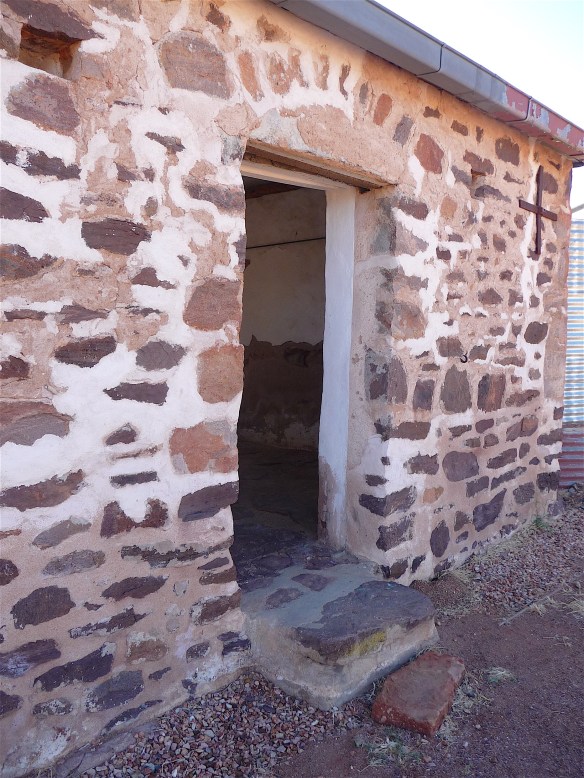
4.front door

The telegraph office at the front of the building

5.telegraph office

has views over the barren landscape.

These small windows were apparently for safely firing guns at the marauding aborigines.
8.telegraph office

In 1874, two telegraph station workers were killed by Aborigines and their graves are marked by a tombstone surrounded by a wall.

There is a central courtyard at the back of the building

9.back view

housing an underground cistern which collected rainwater from the roof.

10.cistern

Some of the windows reflect the need for protection from outside elements.

The blacksmith’s hut

14.blacksmith's hut15.blacksmith's hut

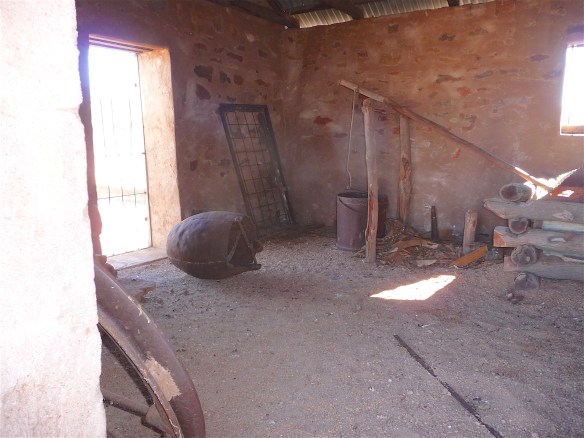
has a collection of blacksmithing tools

16.blacksmith's hut17.blacksmith's hut

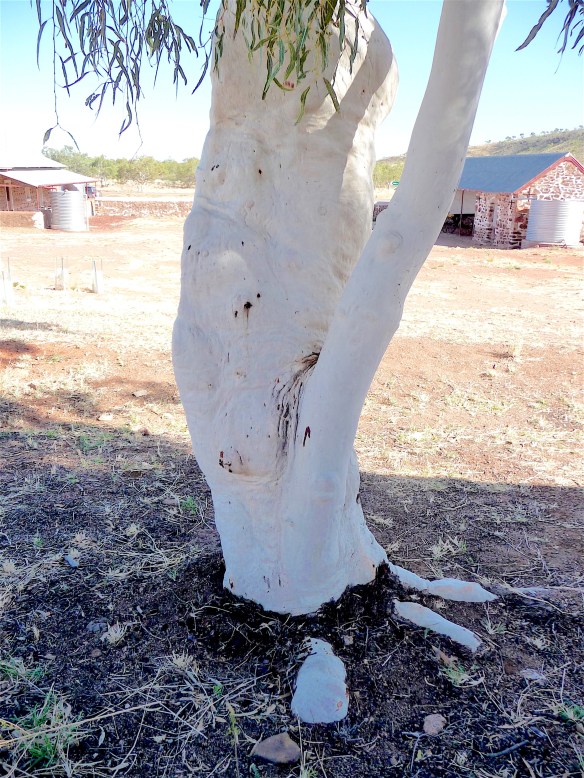
and this magnificent tree is a constant companion.

18.tree

The wagon shed was constructed in 1875

19.wagon shed

with an open central section

20.wagon shed21.wagon shed

and enclosed room at each end.

22.wagon shed23.wagon shed24.wagon shed

In 1980, a microwave telecommunications link made Barrow Creek Telegraph Station redundant.

25.sign

Tom Roberts, the last linesman to live at the Station, came for a week in 1952 and stayed as caretaker until 1986.

Benabbio

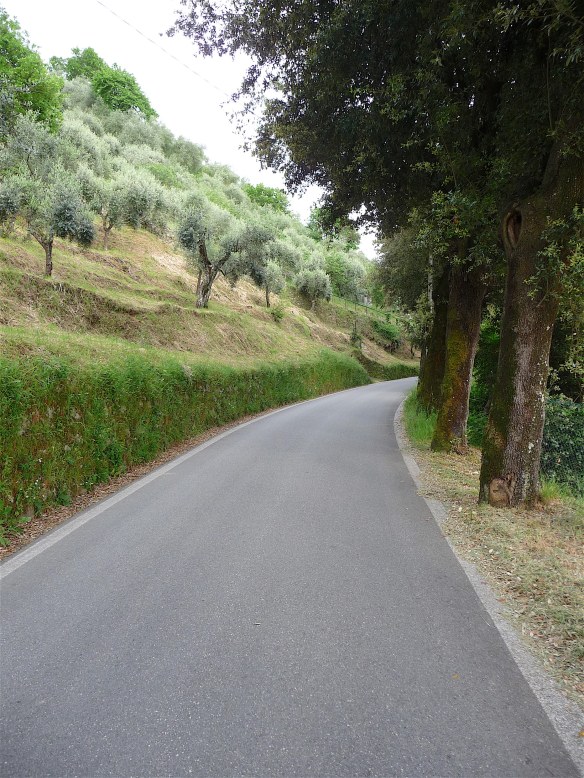
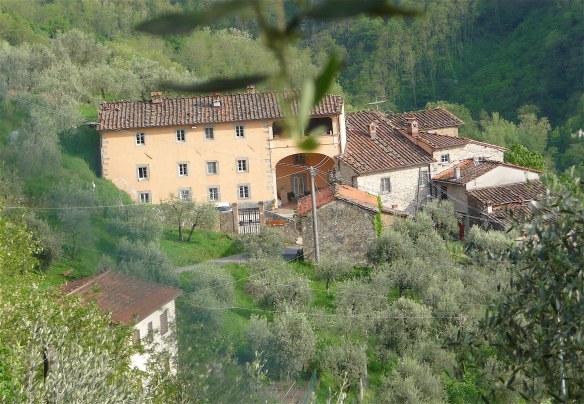
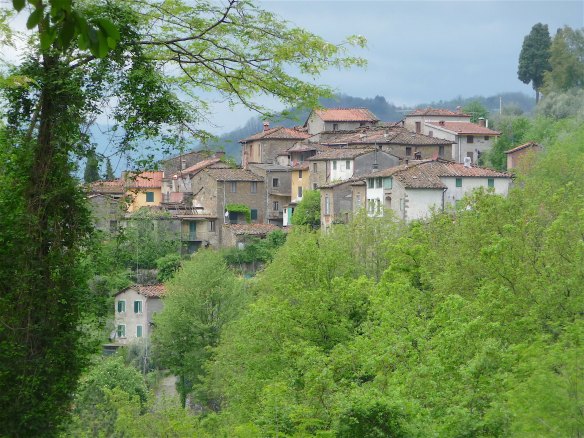
Benabbio is one of the mountain villages of Bagni di Lucca, dating back to 983AD. It was owned by the Lupari family and cousin Lupo swore to defend the Apennine Mountains against invaders. The drive to the village is narrow and winding with gorgeous views if you dare to look.

1.road2.road

Past the cemetery,

3.cemetery

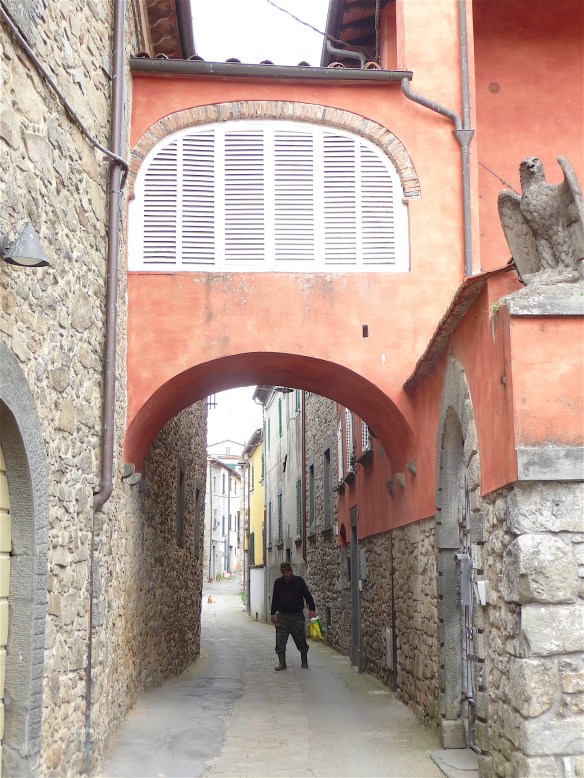
the houses at the entrance to the village give a hint of the history awaiting.

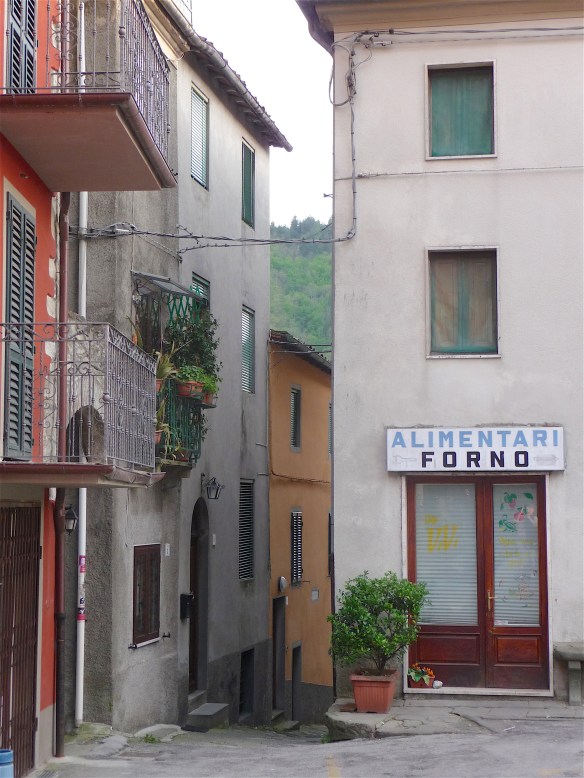
The road leads to the small Piazza Santa Maria, with a grocery store,

6.grocery store

newsagent,

7.newsagent

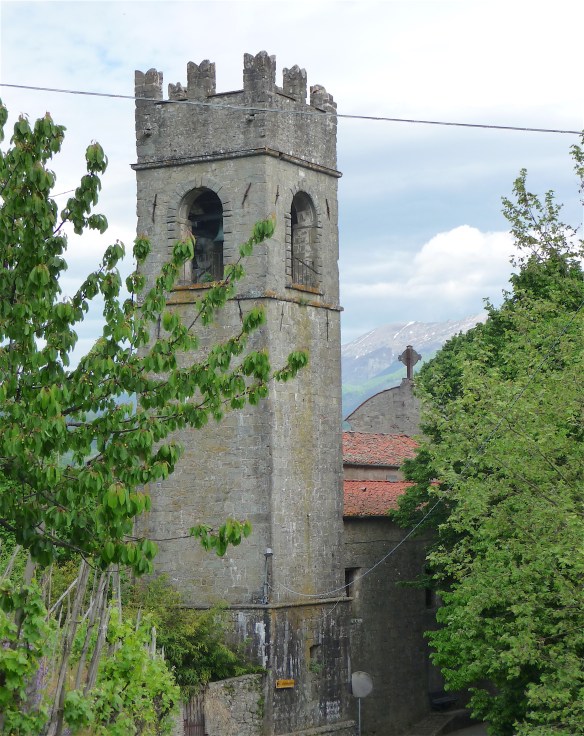
parish church and ristorante. We enjoyed some memorable evenings at Il Cavallino Bianco.

8.Il Cavallino Bianco

There were some intriguing alleyways leading off the piazza.

The stone steps took us further up the hill,

12.walkway steps

passing more rural properties

and the fabulous pizzeria, Acquolina in Bocca.

15.Acquolina in Bocca

Villa San Rocco was situated about halfway up the hill

16.Villa San Rocco

with much of the village to discover beyond.

18.P1090210

There was plenty of spring colour around, both wild and potted.

There were many walking paths through the surrounding hills

45.P1090814

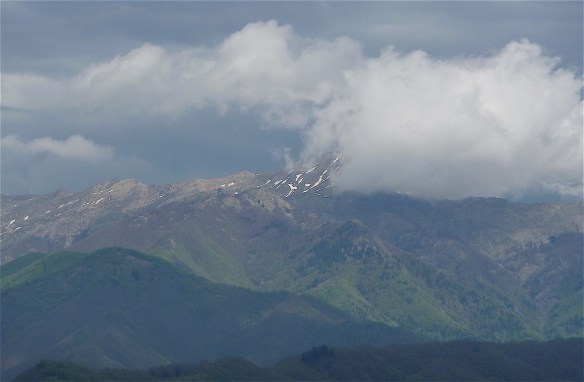
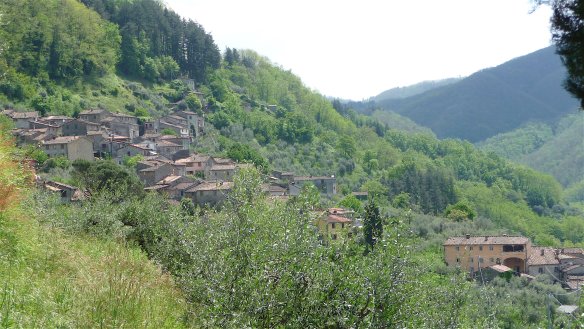
with magnificent views of the stunning landscape

48.P109080649.P1090809

and the village below.

50.P109080551.P1090813

There were so many fragments of history to be seen on our wanderings.

Even the four-legged inhabitants look contented to be living in this wonderful village.

67.P1090796

There are too many amazing things about Benabbio to cover in one post, there will be more to come.

Sidmouth

Continuing westward on our travels, we stumbled across Sidmouth, a seaside town on the coast of East Devon.

1.Sidmouth

It began to develop as a destination for ‘discriminating  visitors’ around 1800. Its popularity was a result of its climate and surroundings. We both remember the coffee and scrumptious cake we enjoyed at a café on The Esplanade.

2.Esplanade

We wandered along the seafront, past the Belmont Hotel, a gorgeous luxury reminder of the Regency era.

3.The Belmont Hotel

The South West Coast Path, a 630 mile walk along stunning coastline, passes through Sidmouth.

4.Sidmouth5.Sidmouth

The striking red cliffs, formed 240 million years ago during the Triassic period, form part of the Jurassic Coast.

6.Sidmouth7.Sidmouth

Once a 17th century lime kiln, the Clocktower Café is perched on the cliff with sensational views.

8.The Clocktower Cafe

The path around the cliff leads to Jacob’s Ladder beach, named after the series of wooden steps leading up to the cliff top gardens.

9.Jacobs Ladder beach

The 24  colourful beach huts at the base of the steps can be rented from April to September.

10.beach huts Jacobs ladder beach

The house on the cliff overlooking the beach was intriguing.

11.The Gazebo

The ‘Gazebo’ was built on Peak Hill in 1962 by playwright, R.F. Delderfield. You could have purchased it for £795,000 in February 2011.

11.The Gazebo copy

Not far from Sidmouth, on the edge of Dartmoor National Park, we discovered Castle Drogo.

12.Castle Drogo

Although it appears to be a medieval castle, it was built from local granite between 1911 and 1930 for self made millionaire Julius Drewe. It was the last castle built in England and was delayed with the First World War and subsequent economic downturn.

13.Castle Drogo

Above the entrance was a sculpted lion and the Drewe family motto, ‘Drogo is my name and valour gave me arms.’

14.Castle Drogo14.Castle Drogo copy

Beyond the chapel

15.Castle Drogo chapel

the views across Devon were breathtaking.

16.Castle Drogo

Wauchope

There aren’t a lot of options for somewhere to stay overnight through the middle of the Northern Territory, we fortunately found an oasis in the desert. Not far from the Devils Marbles is the tiny settlement of Wauchope, 375km north of Alice Springs. The hotel opened in 1930 to serve the needs of the local miners and cattle workers.

1.Devils Marbles Hotel

The accommodation wasn’t five star luxury

3.accommodation

but it was clean, comfortable and cosy

4.room

and I liked the sentiment found on the wall above the bed.

5.room

The garden was immaculate

6.garden7.garden8.garden

with a couple of quirky features

and a great spot to relax with a beverage

11.beer garden

by the pool.

12.pool

The locals were very friendly

13.boxer

and eager for a game of football.

14.dog

Adjacent to the dining room,

the winery offered a wide selection to choose from

17.winery

to accompany our sumptuous meals.

Before leaving the next morning, we had a closer look at the rusted wrecks garaged at the front of the hotel under the harsh desert sun.

21.cars

We were observed from on high by this magnificent creature.

33.bird

I hope he found a tasty morsel for breakfast.