Bomarzo Garden

I had read about the Parco di Mostri in Bomarzo before going to Italy and it sounded fascinating. The Park of Monsters is the creation of Prince Pier Francesco Orsini who, although living in a rather fabulous palace, had his share of bad luck. In 1552, he returned from a war in which his friend had been killed and he was taken prisoner and his thoughts turned to planning a special garden. Five years later, his beloved wife, Giulia Farnese Orsini, died. As an outlet for his sorrow, he pushed ahead with the project and for more than thirty years dedicated his life to finishing the garden. In 1579, he noted in his diary: “I can find relief only in my beloved forest, and I bless the money I have spent and still spend on this magic area”.

Six years later, Orsini died at the age of 62. Sadly, after his death, the garden was abandoned and swallowed up by the forest until 1951 when an estate agent, Giancarlo Bettini, stumbled across the hidden monsters when looking for land to buy. He bought the whole lot and proceeded to restore the garden for its intended purpose. A short stroll from the ticket office

we come to the entrance.
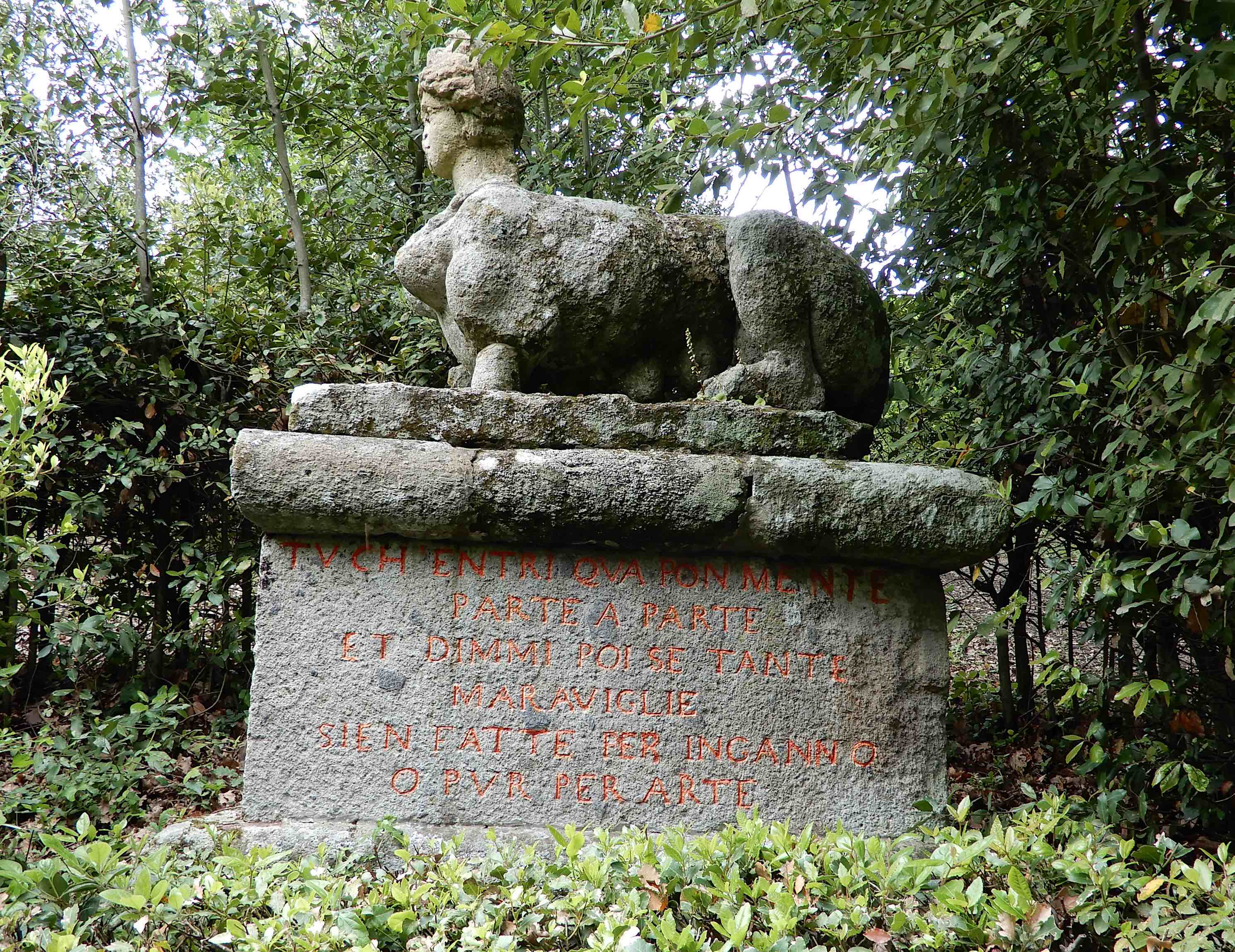
A pair of sphinxes await and each plinth bears an inscription; “He who does not go there with eyes wide open and lips sealed will not be able to admire the most wonderful marvels” and “You who enter here put your mind to it part by part and tell me if some many marvels were made by deceit or by design”.

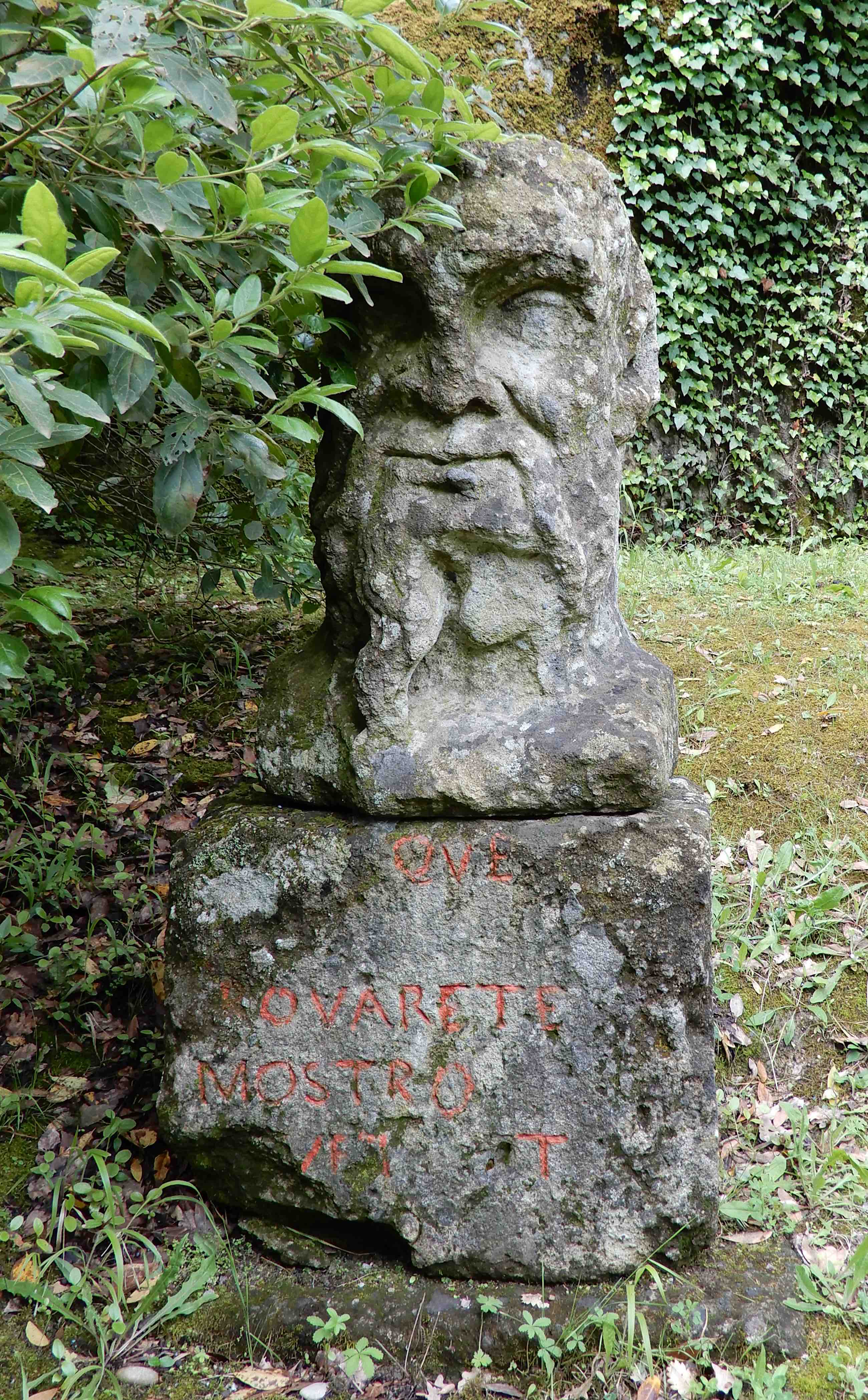
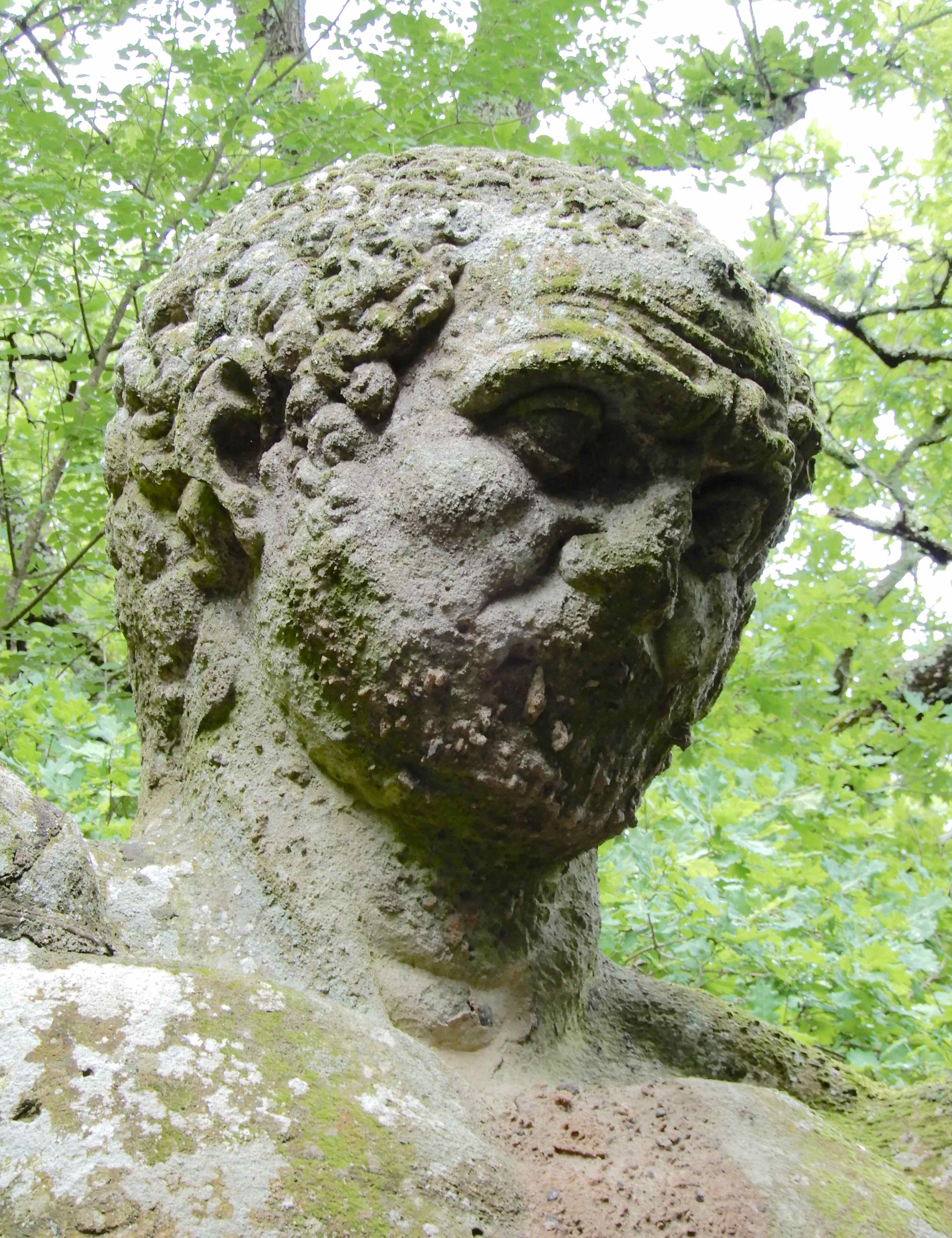
A series of heads depicting the Gods are scattered around, peering from shrubbery when you least expect it.

Proteus Glaucus represents the Greek God of the Sea, Proteus, and Glaucus, the fisherman who became a Sea God after eating a magical herb. The globe and castle atop the head are symbols of the Orsini family.

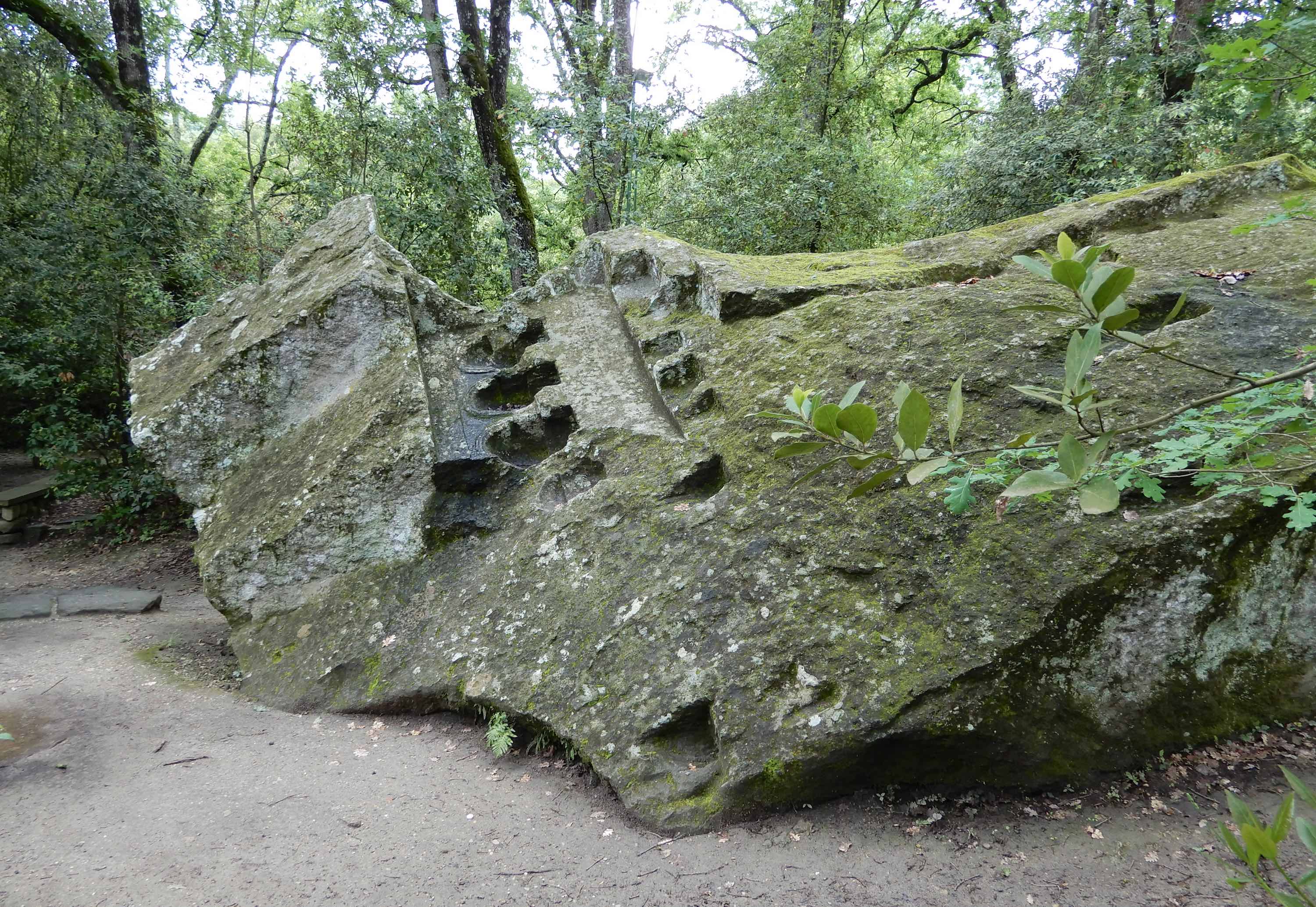
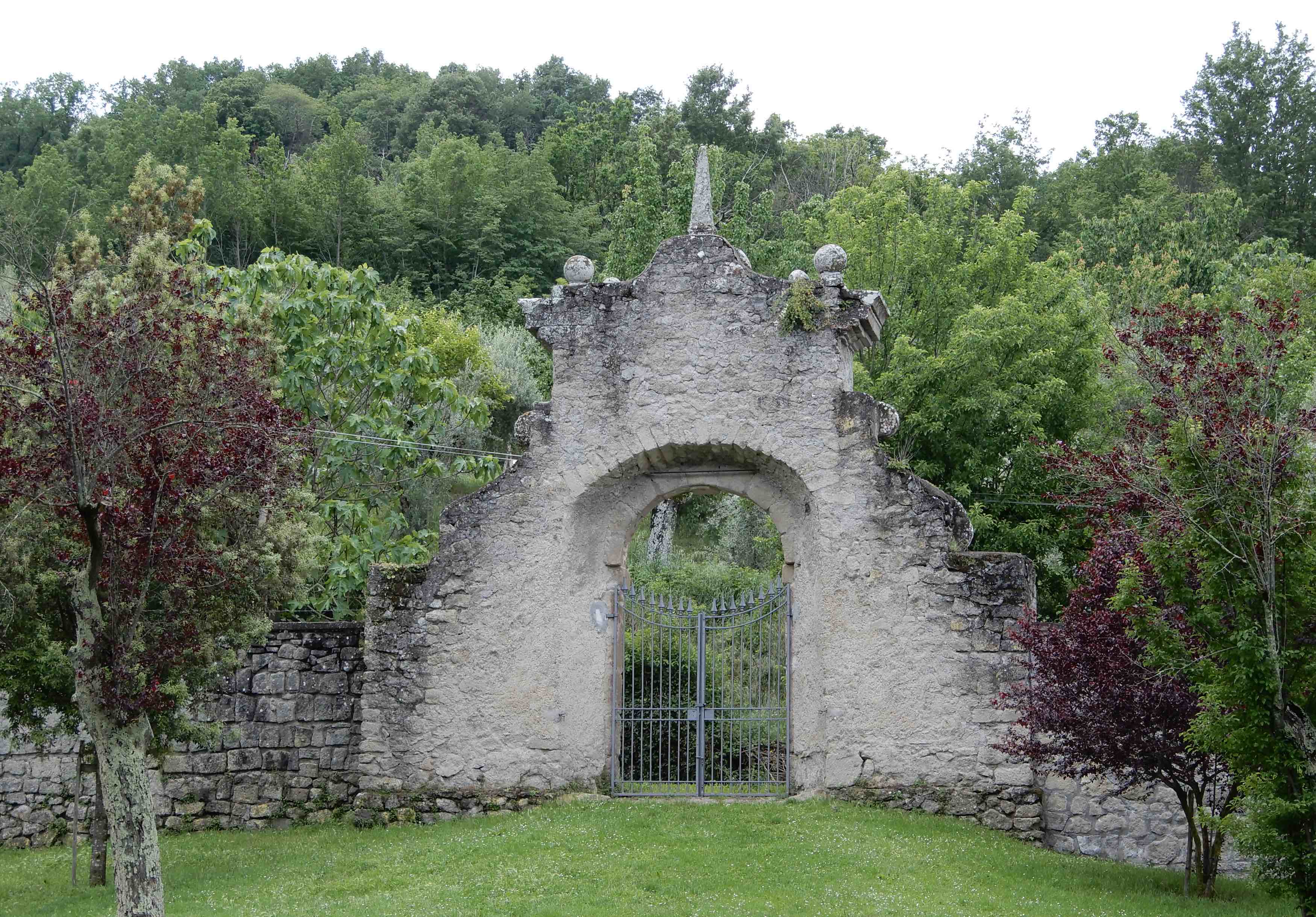
The ruined mausoleum is intentionally half destroyed and fallen over and we passed an intriguing gate in a stone wall.

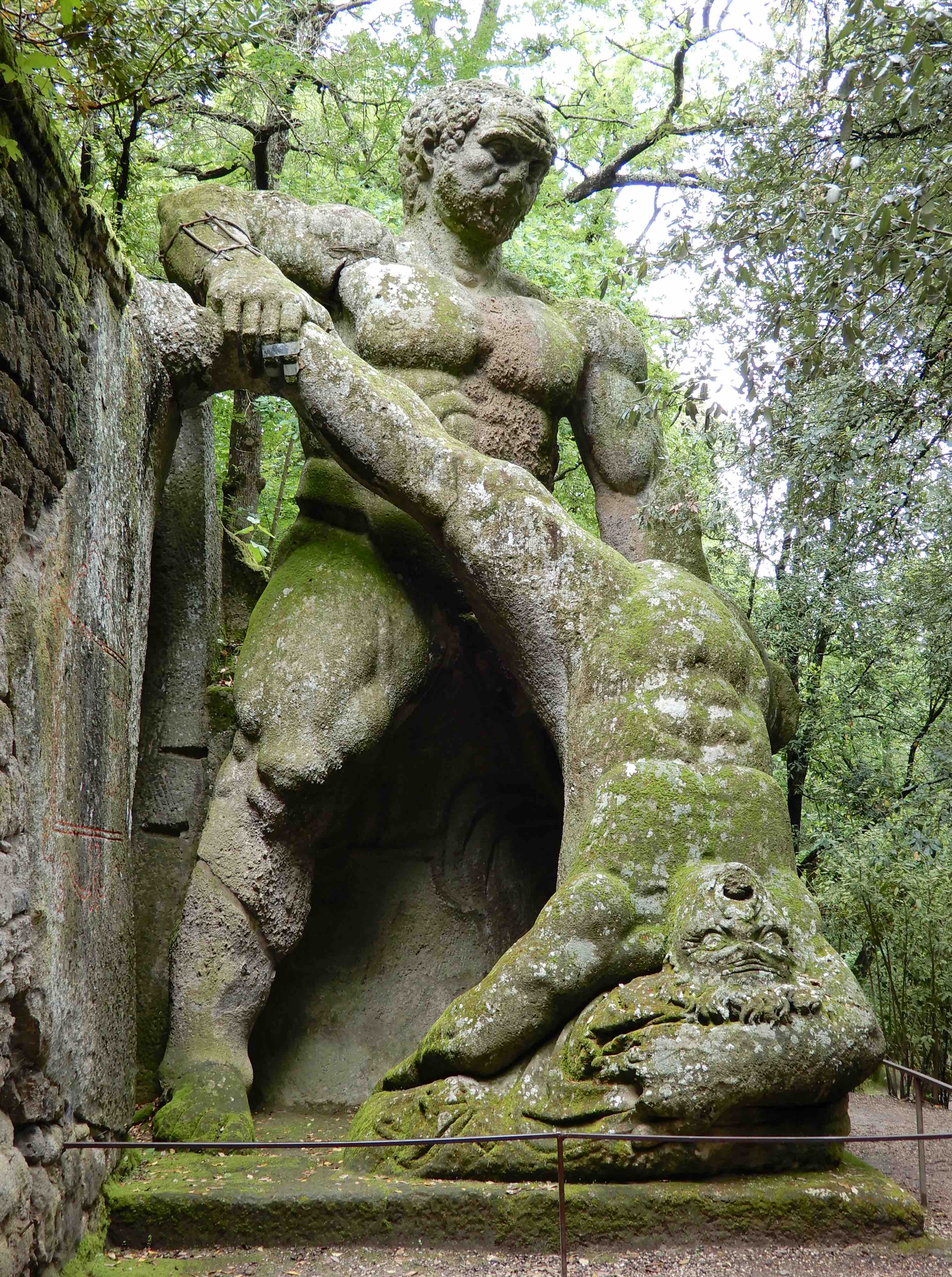
Hercules and Cacus are embroiled in a very one-sided fight.

Nearby, a stream soothes the tension as it tumbles over the rocks

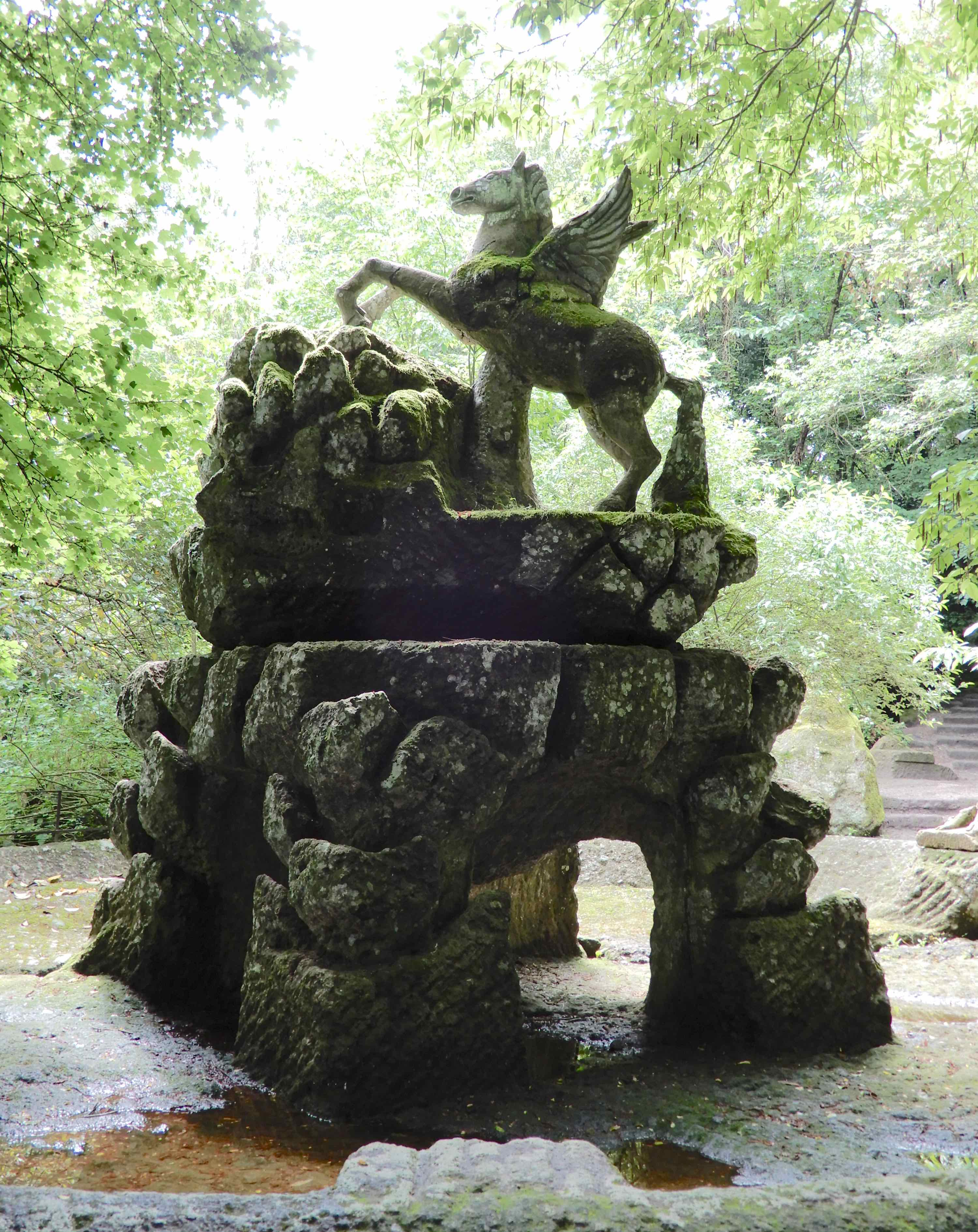
while the winged stallion, Pegasus, oversees the flow.

There is a turtle with a fairy on its back, both looking in the same direction as Pegasus.

Not too far away, a whale emerges from the water.

Dedicated to all nymphs, the aptly named nymphaneum seems to be guarded by a lion with a ball under his paw.

In front of it, there is a dormant fountain with dolphins each end

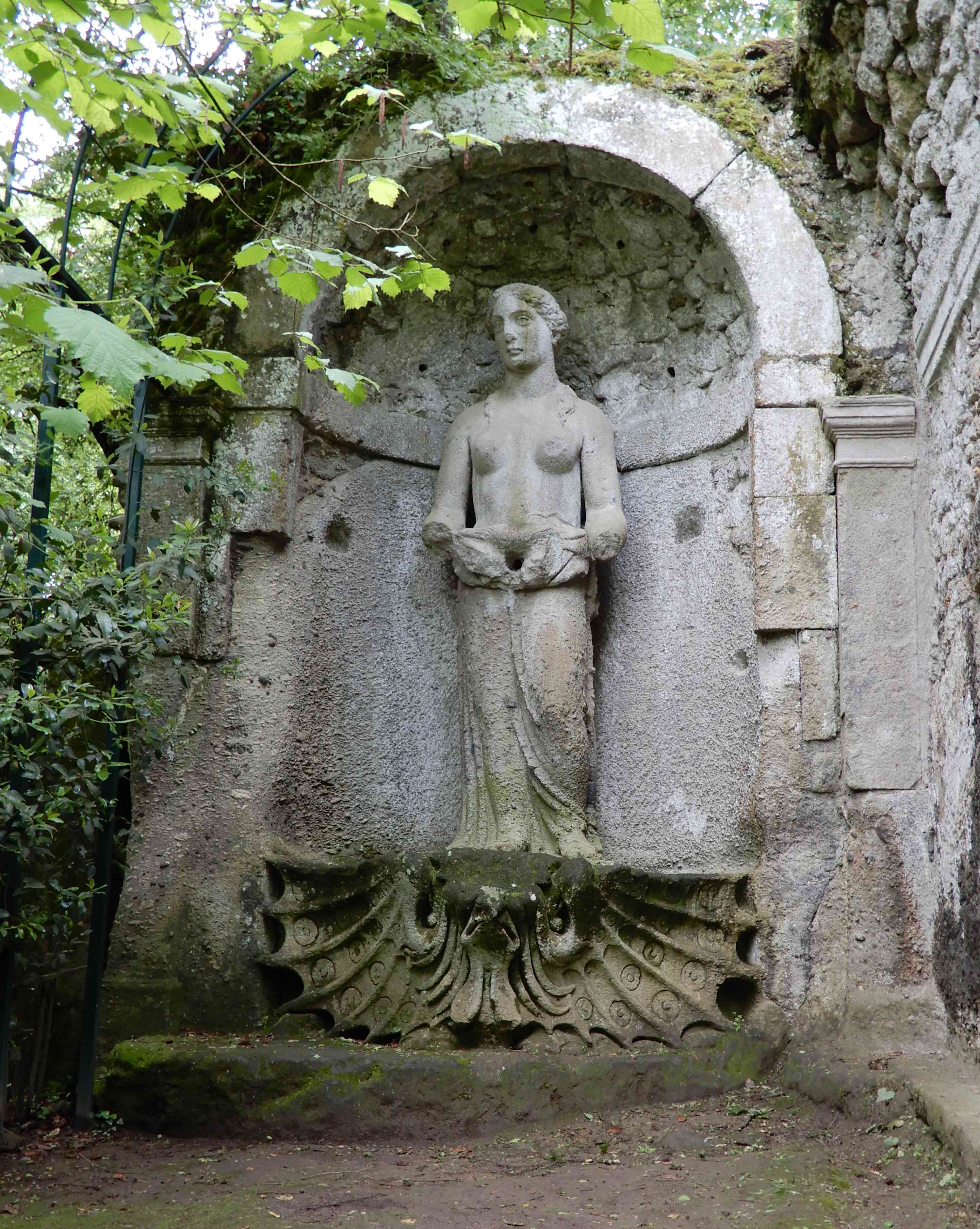
with Jupiter and Venus standing by.

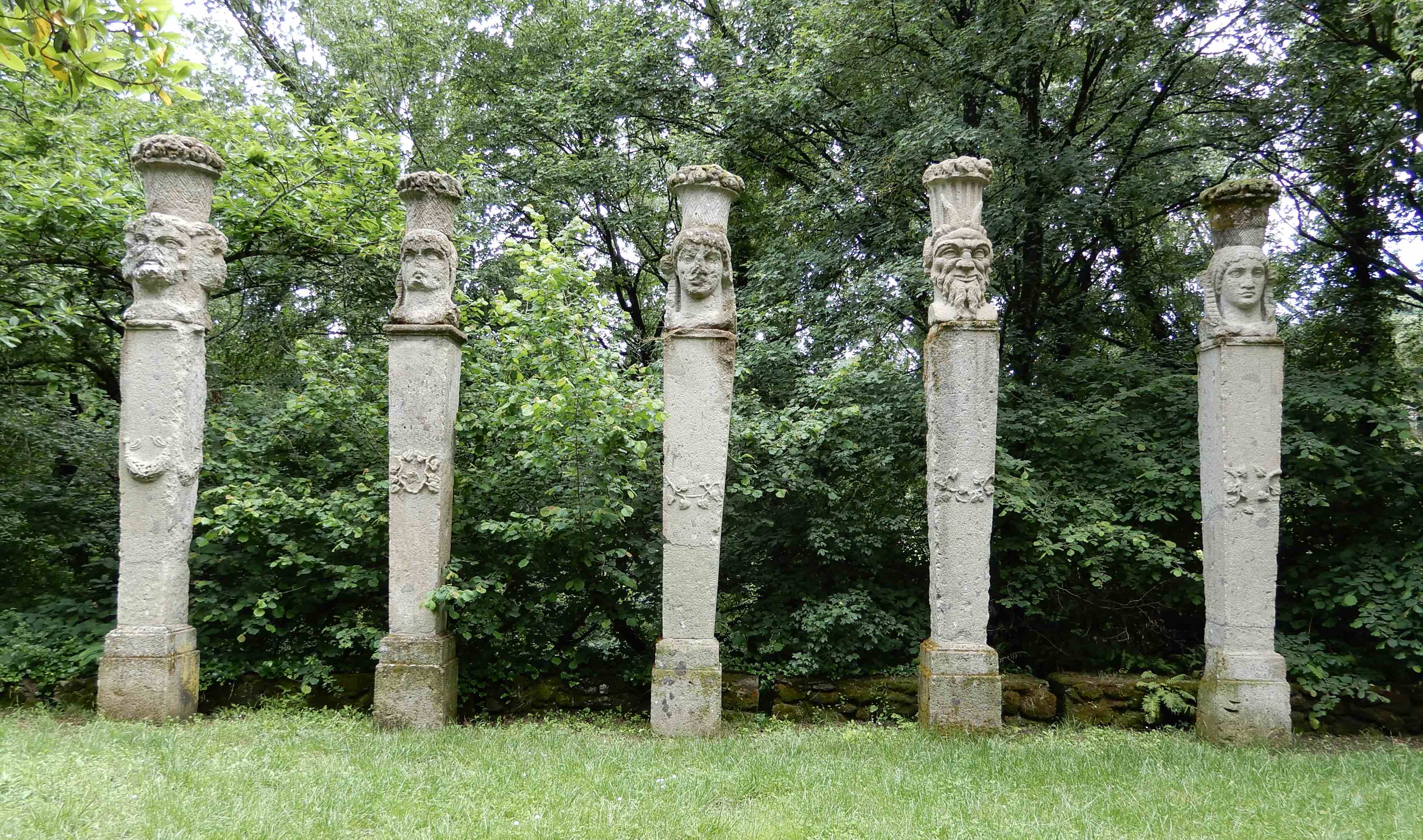
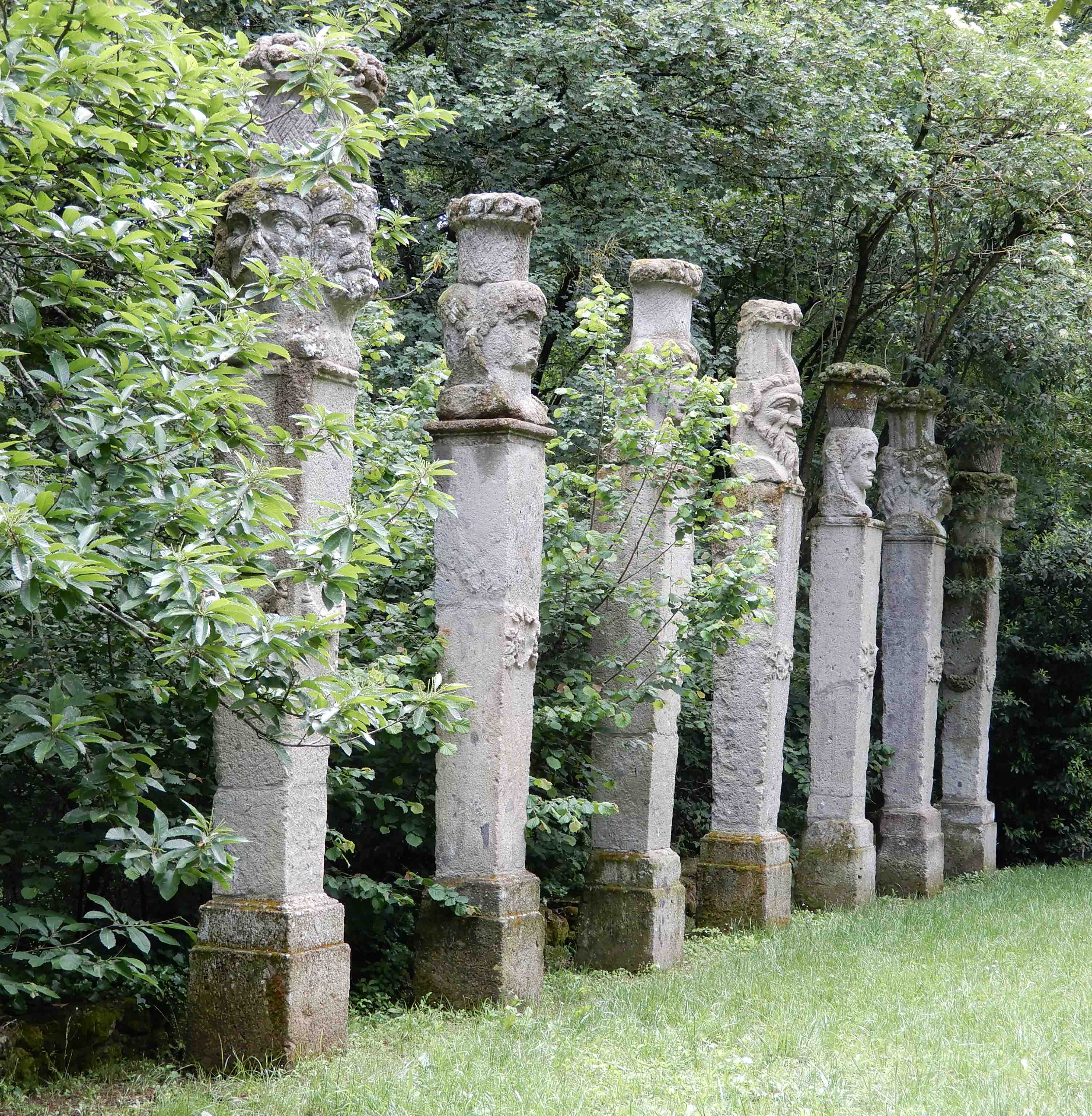
Seven obelisks topped with sculpted heads form the audience at the theatre,

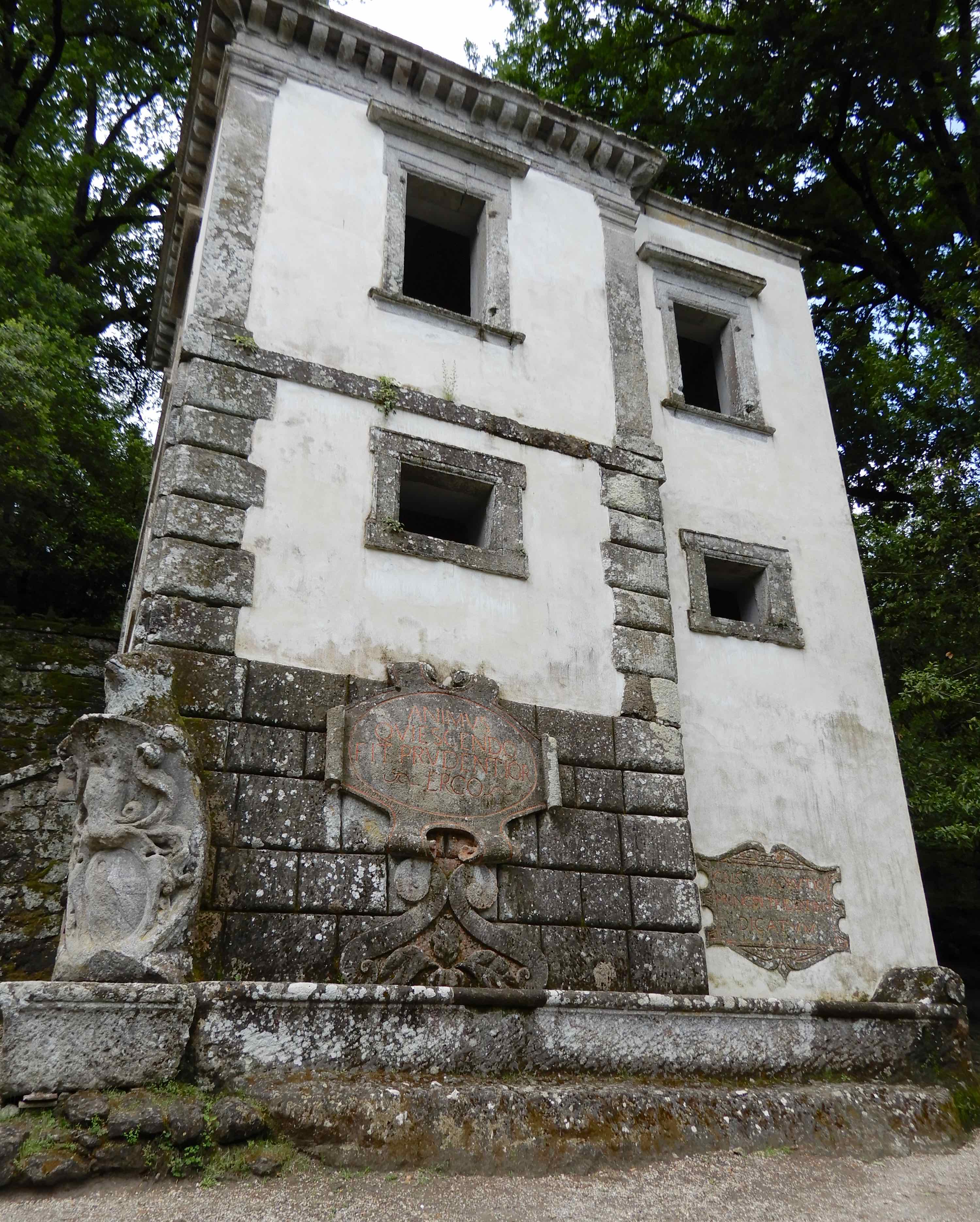
not far from the leaning house. One of the first constructions of the garden, it is thought to have been built at the request of Giulia.

We pass statues of Ceres, Roman goddess of agriculture and Neptune, Roman god of the sea.

An elephant carrying a castle appears, a symbol of strength and restraint, with a wounded or dead Roman soldier held in its trunk. 

Another fight is raging around the corner, this time a dog, a lion and a wolf are battling with a dragon. Three against one just doesn’t seem fair.

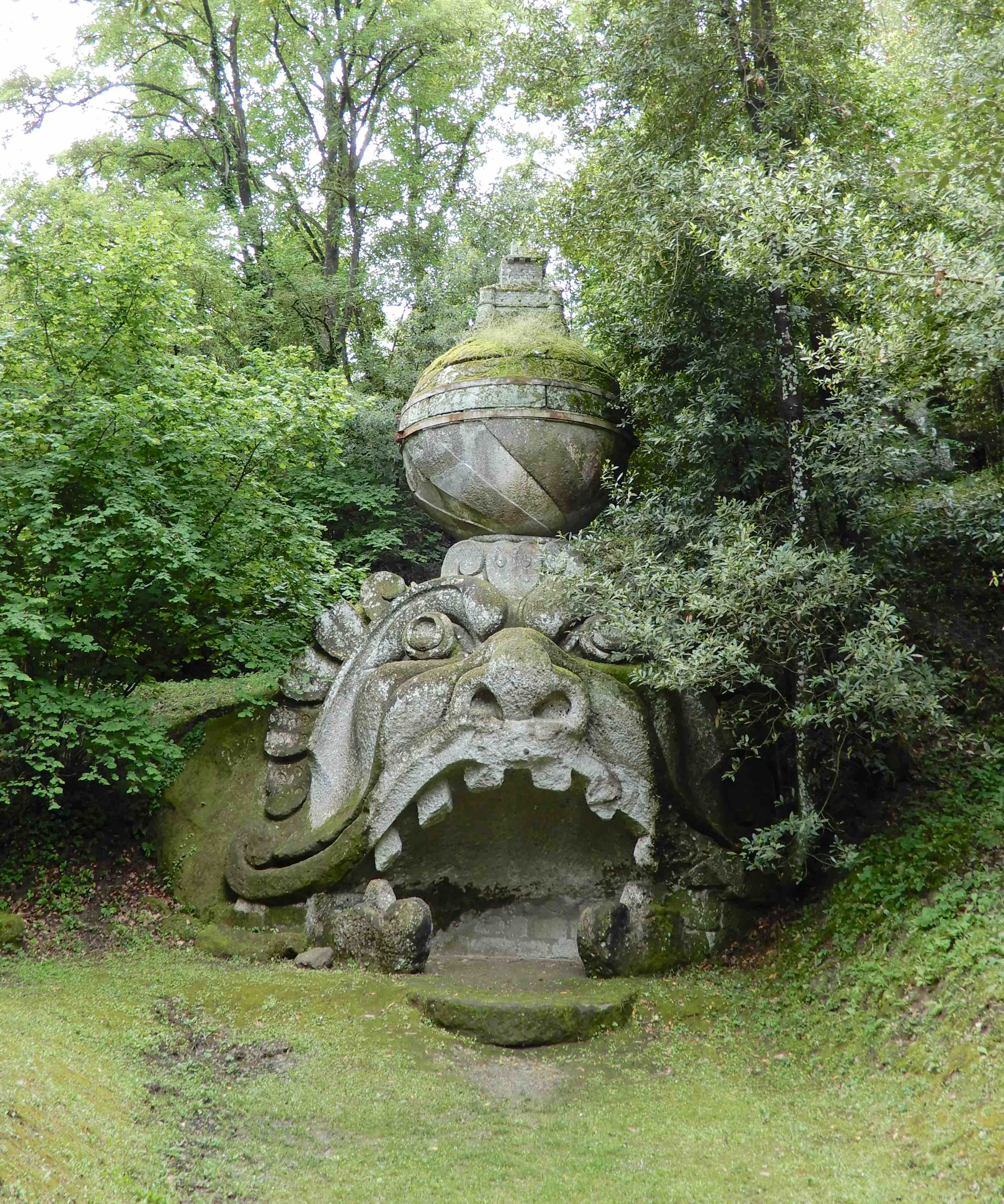
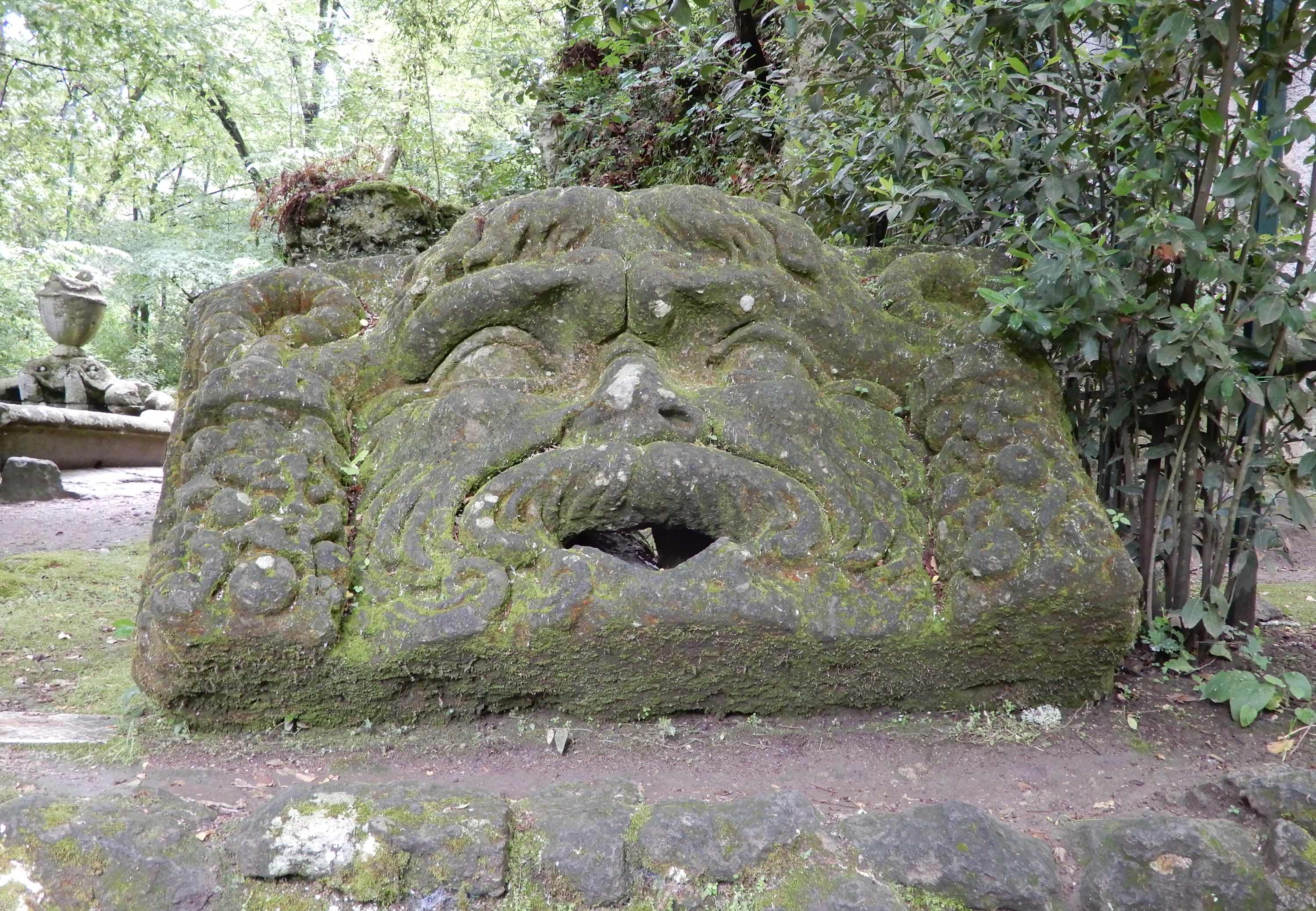
The Mouth of Hell, the Orc, the Ogre, whichever name you choose, it is nonetheless disturbing. The inscription on the top lip translates as, “all thoughts fly”. There is a picnic bench inside, not a very inviting setting in which to dine.

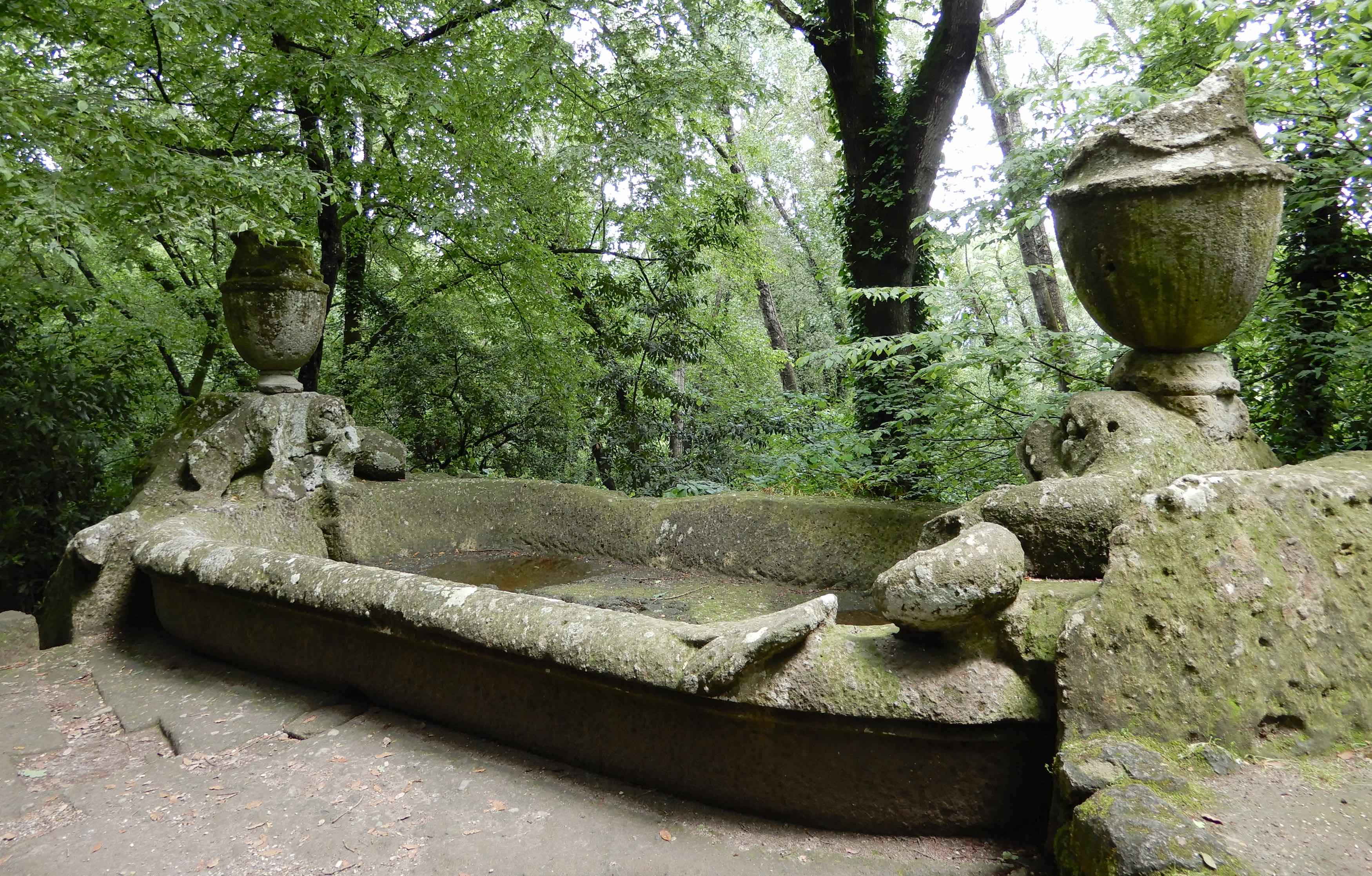
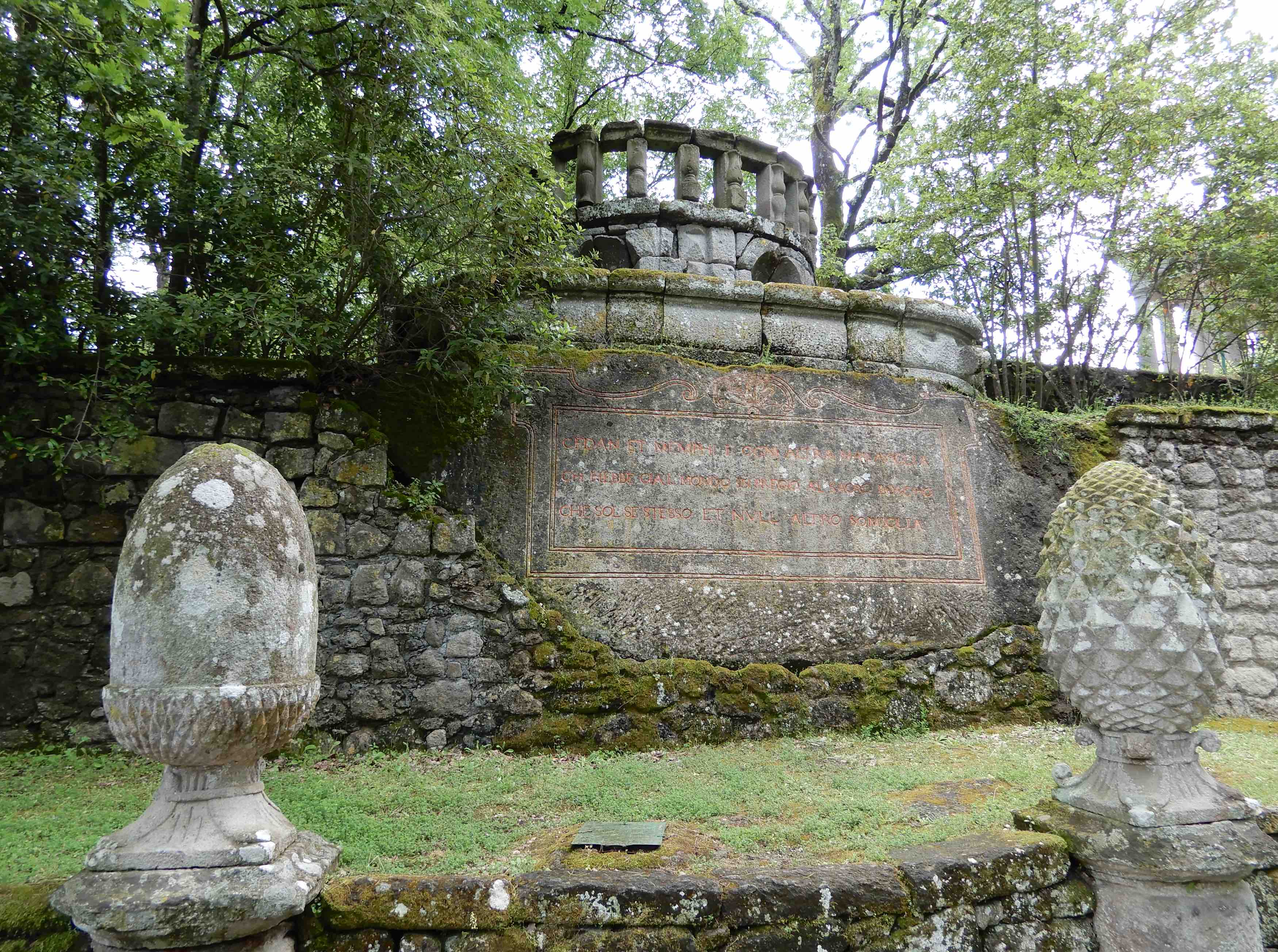
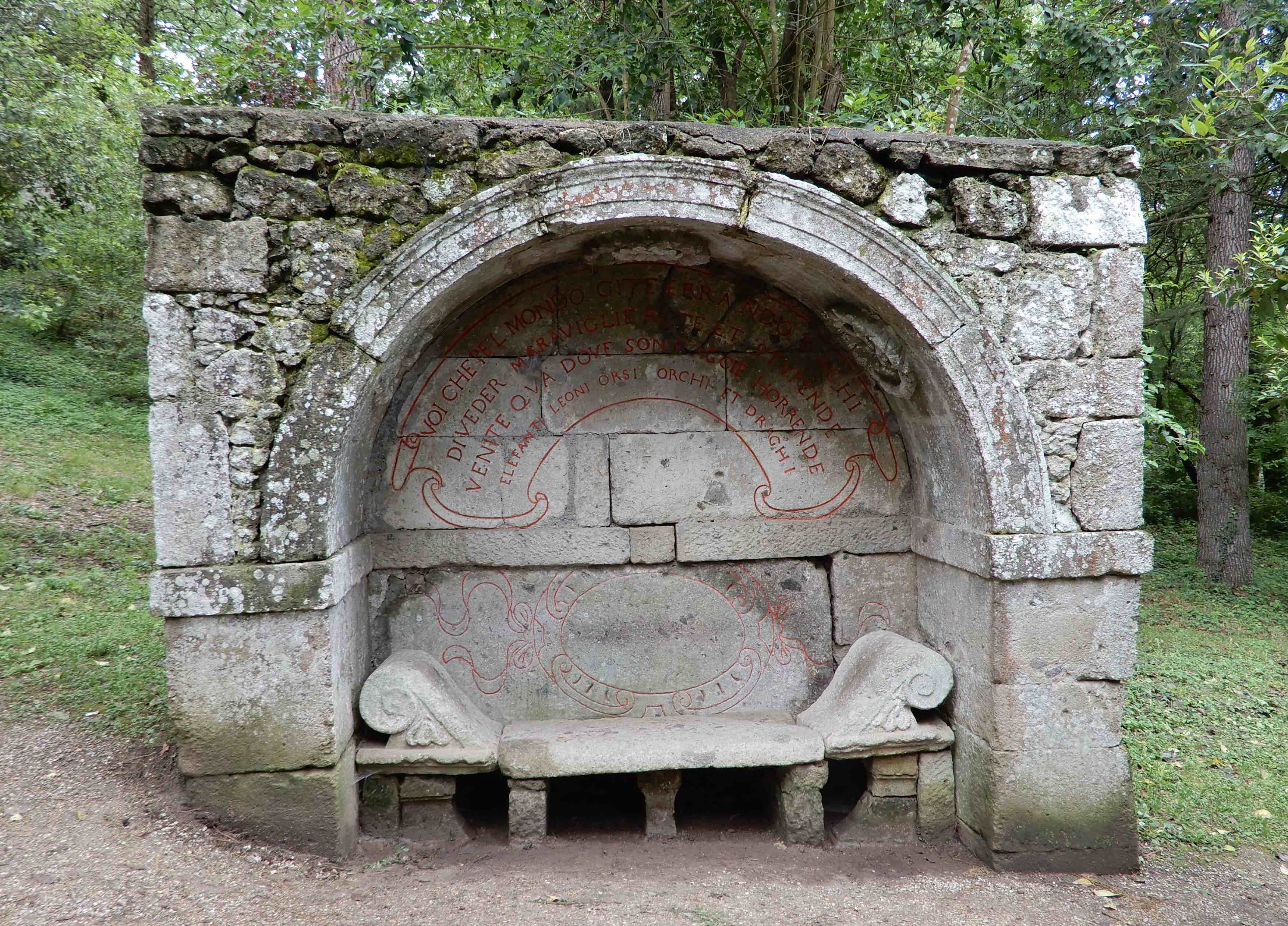
The Etruscan bench has a very well preserved inscription, “You who have travelled the world wishing to see great and stupendous marvels, come here, where there are horrendous faces, elephants, lions, bears, orcs and dragons”. Who can argue with that?

Continuing up some steps,

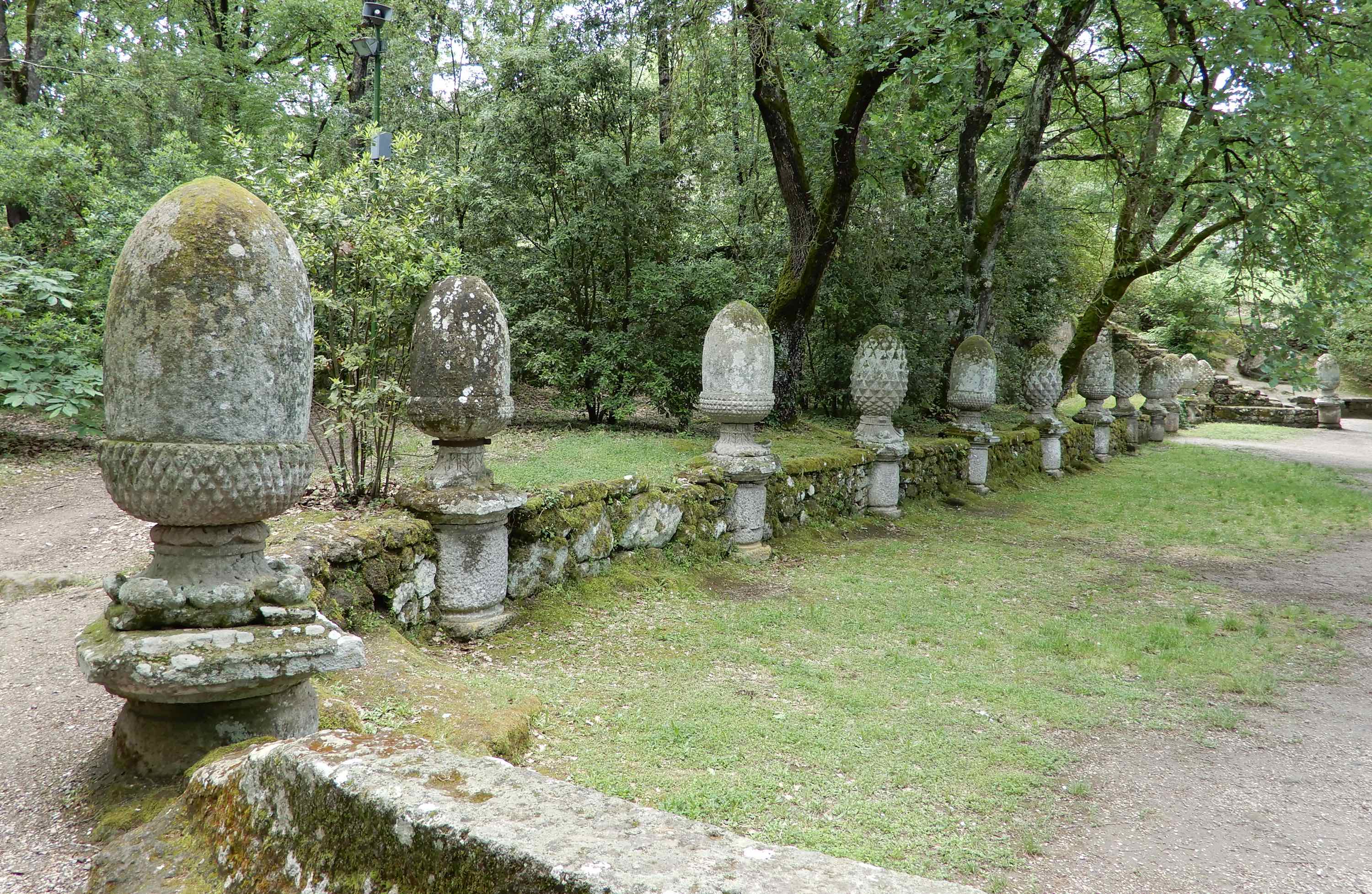
we come to the Hippodrome Garden, the perimeter is decorated with large pinecones and acorns.

At the near end, there is a bench surmounted by a female figure with a bifurcated fish tail

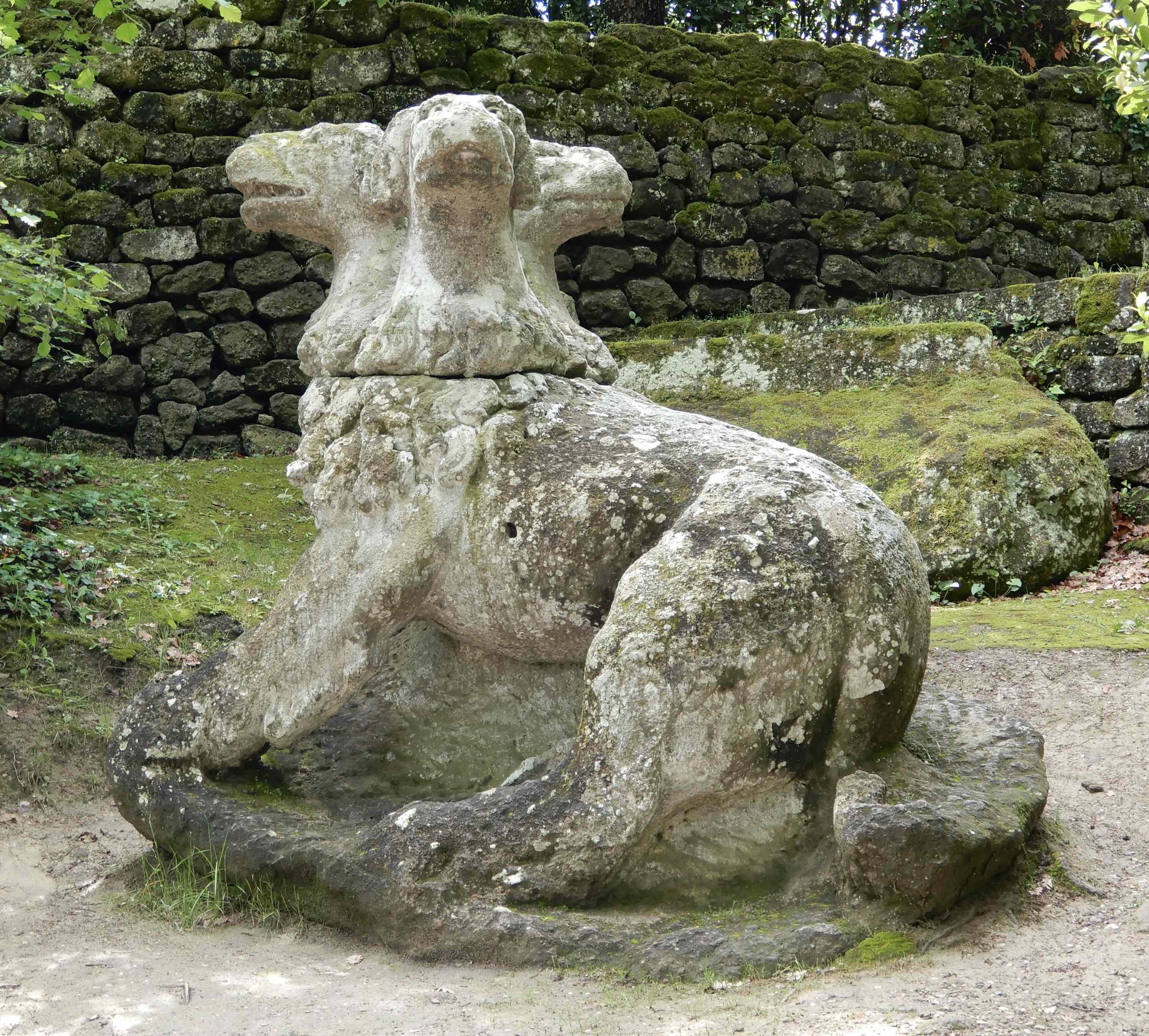
while the three-headed dog, Cerberus stands guard nearby.

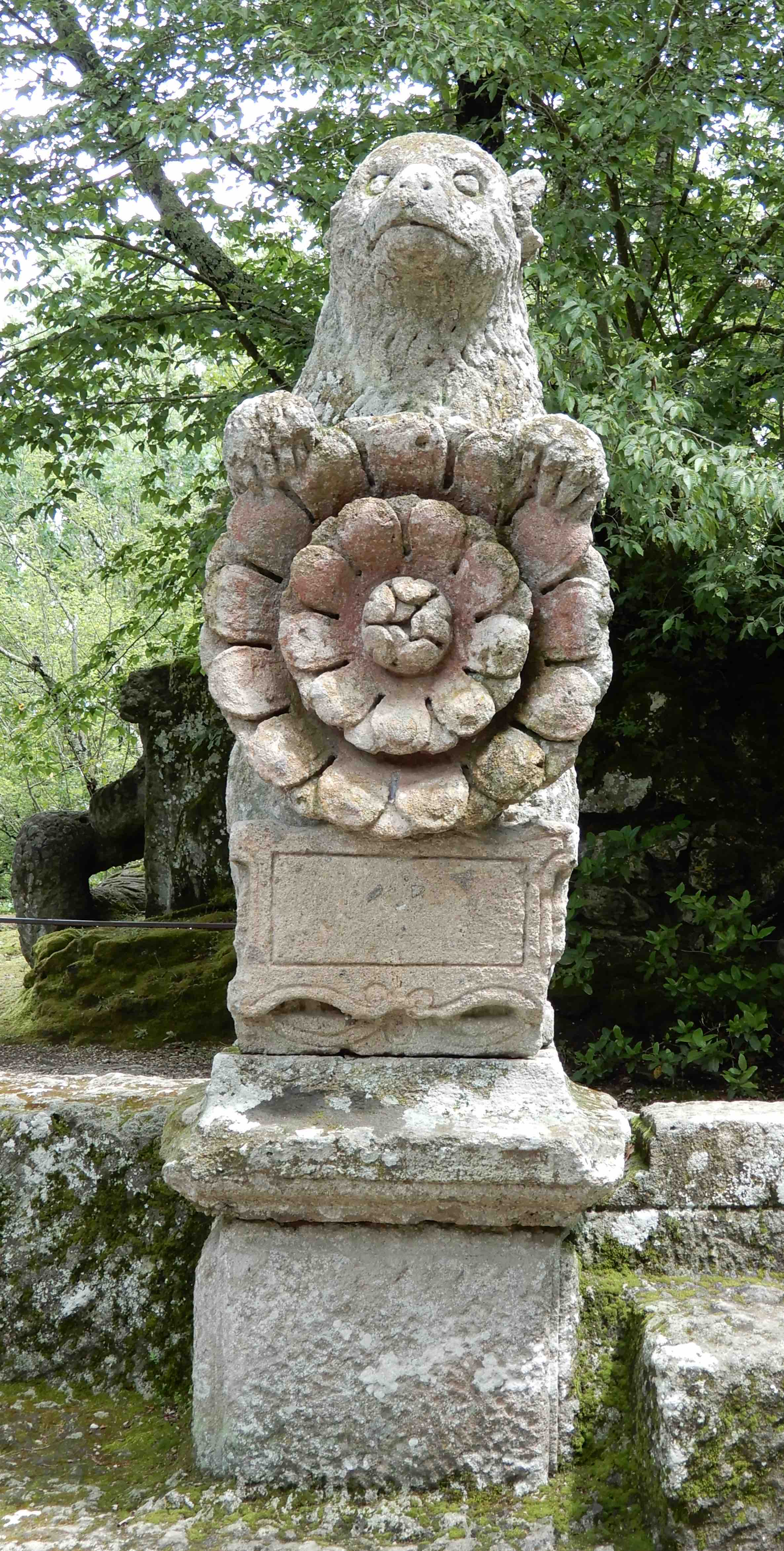
At the far end are two bears, one carrying the family coat of arms and the other, a Roman rose.

On the other side sits Echidna, the half-woman half-snake (mother of Cerberus) and Fury, the female winged creature with a dragon’s tail and claws with a pair of lions separating the two.

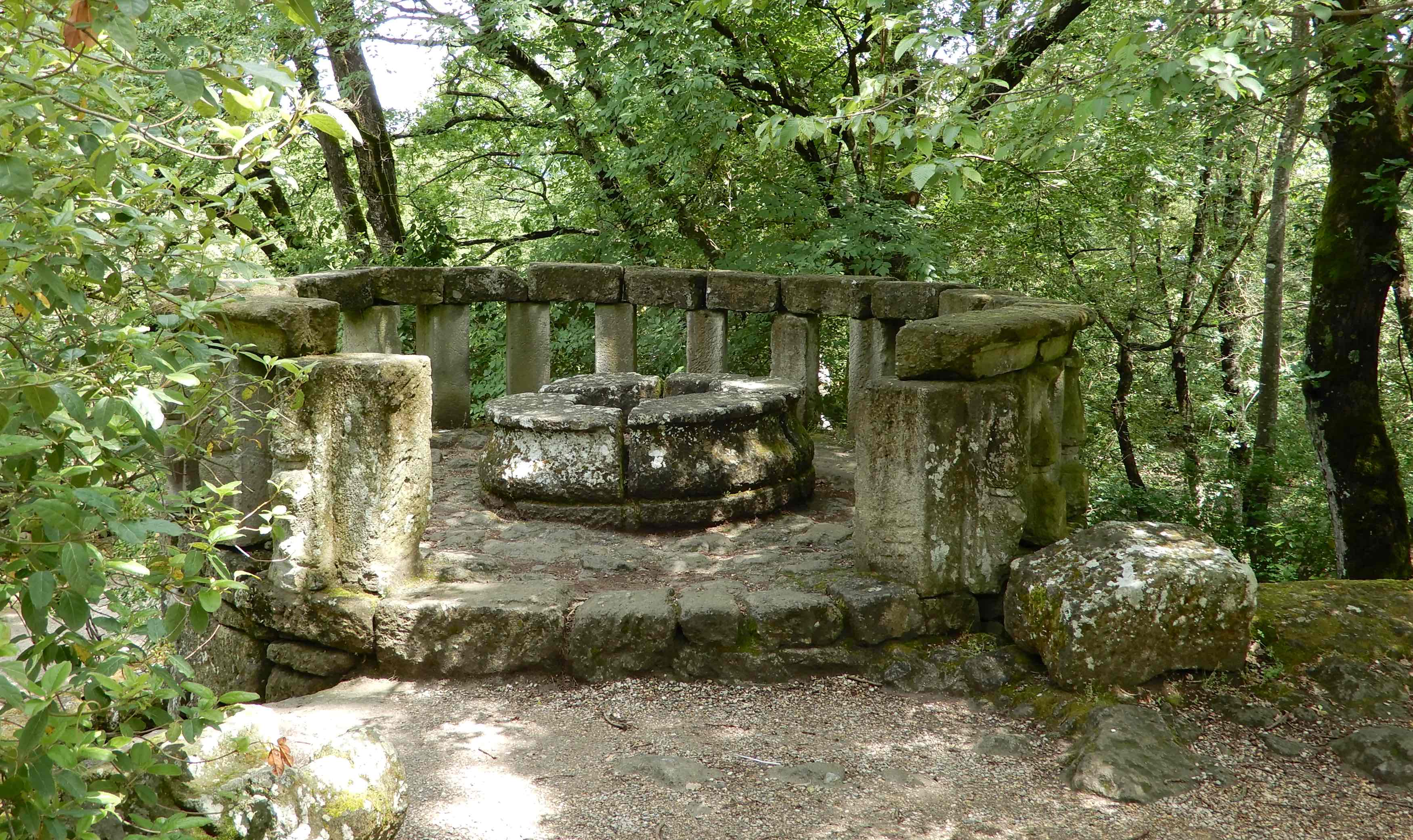
The Rotonda is a circular fountain at the top of a staircase leading to the Tempietto.

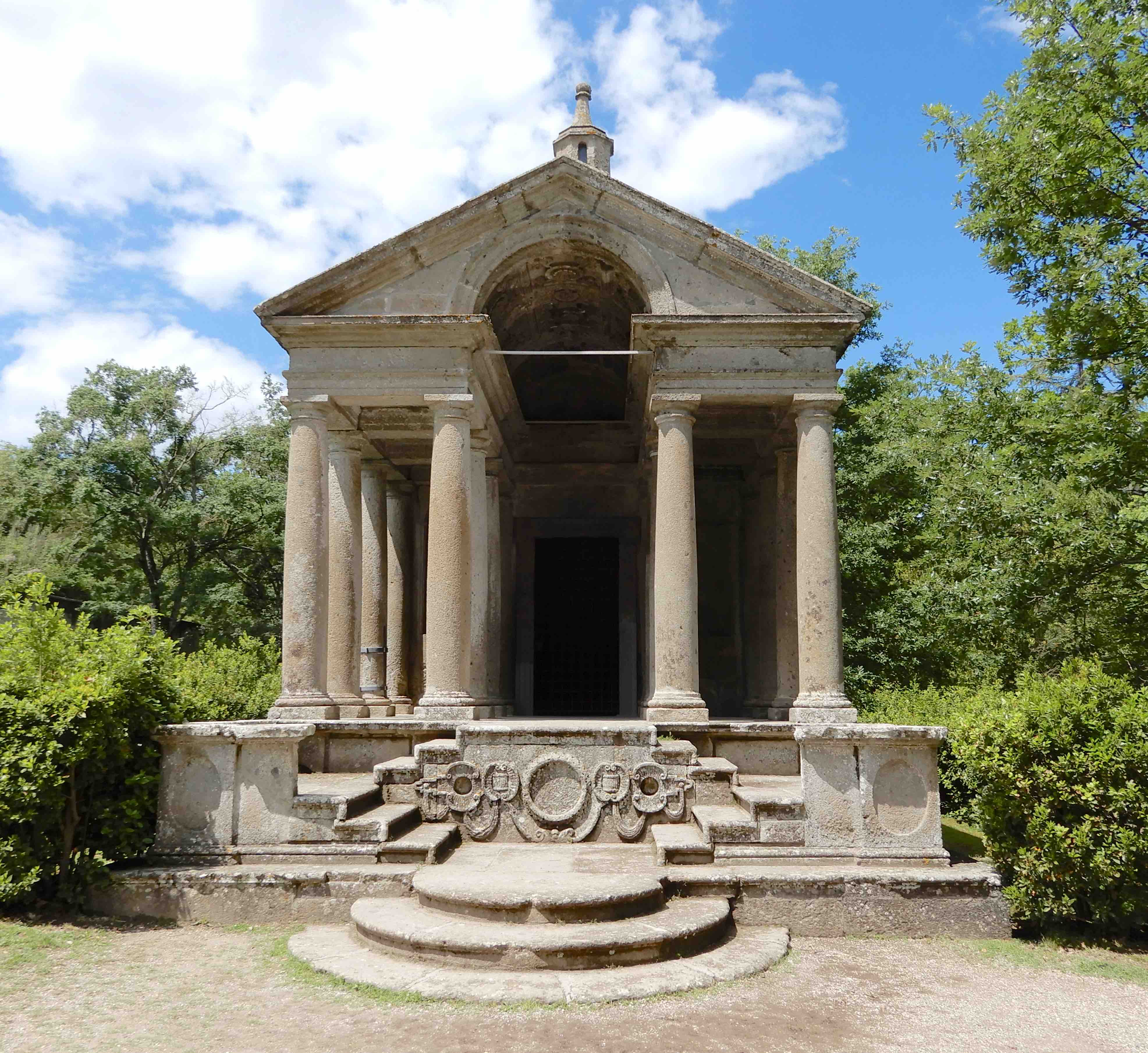
The ‘small temple’ was the last construction of the garden as a memorial to Giulia, a symbol of her constancy, having remained faithful to her husband when he was absent at war. The ceiling is decorated with lilies, symbol of the Farnese family and roses, symbol of the Orsini family. Giancarlo and Tina Bettini, who restored the garden in 1952, are buried in the Tempietto.

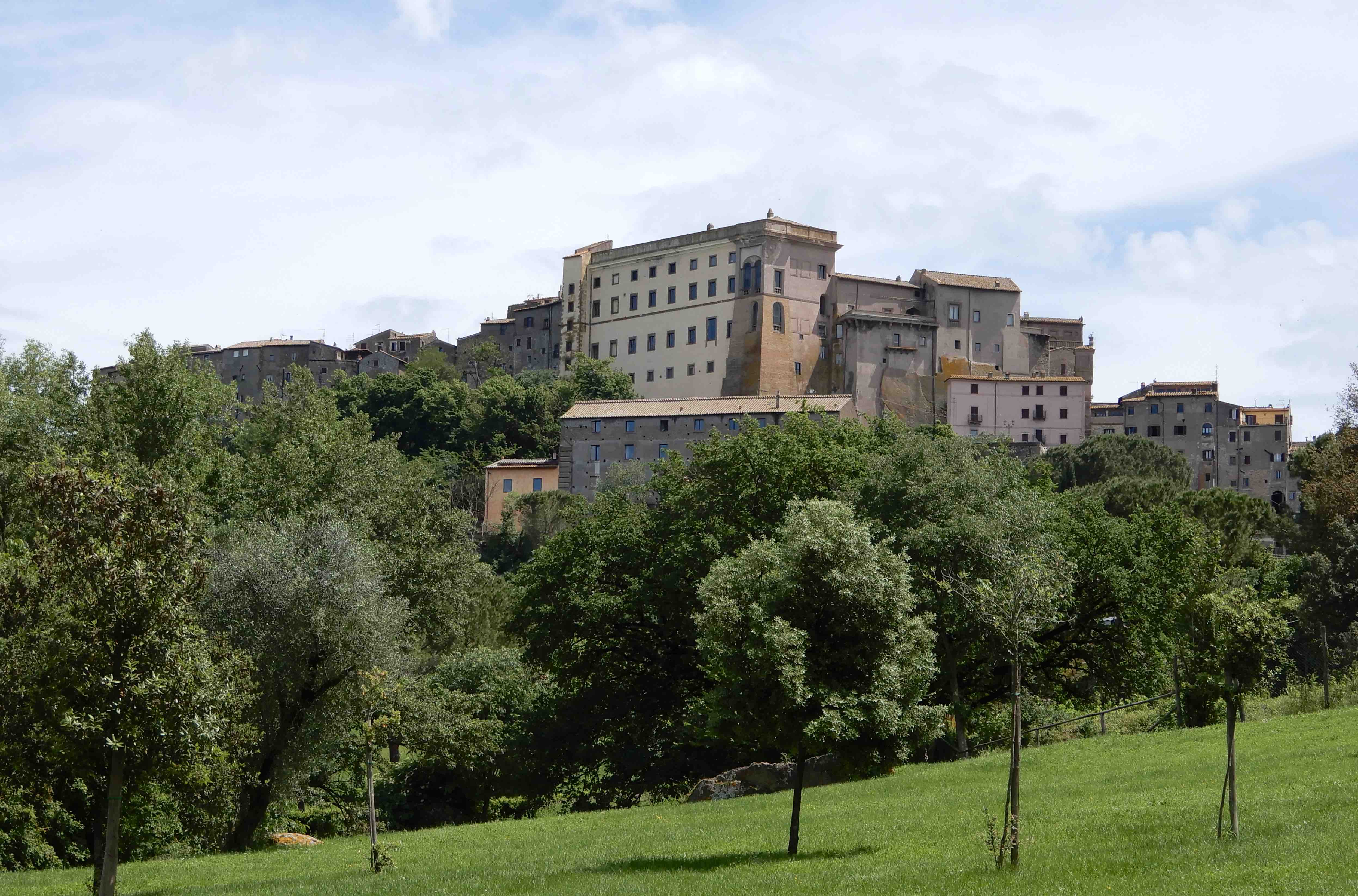
Stunned, shocked and amazed, with Palazzo Orsini in our sights, we returned to the car to seek lunch in Bomarzo.

back to Bolsena

On our first trip to Italy, we discovered Bolsena when we chose a place on the map to break our journey from Cortona to Rome. Our brief sojourn left us wanting to return and see more of this beautiful town as well as explore the magnificent Castello Rocca Monaldeschi.

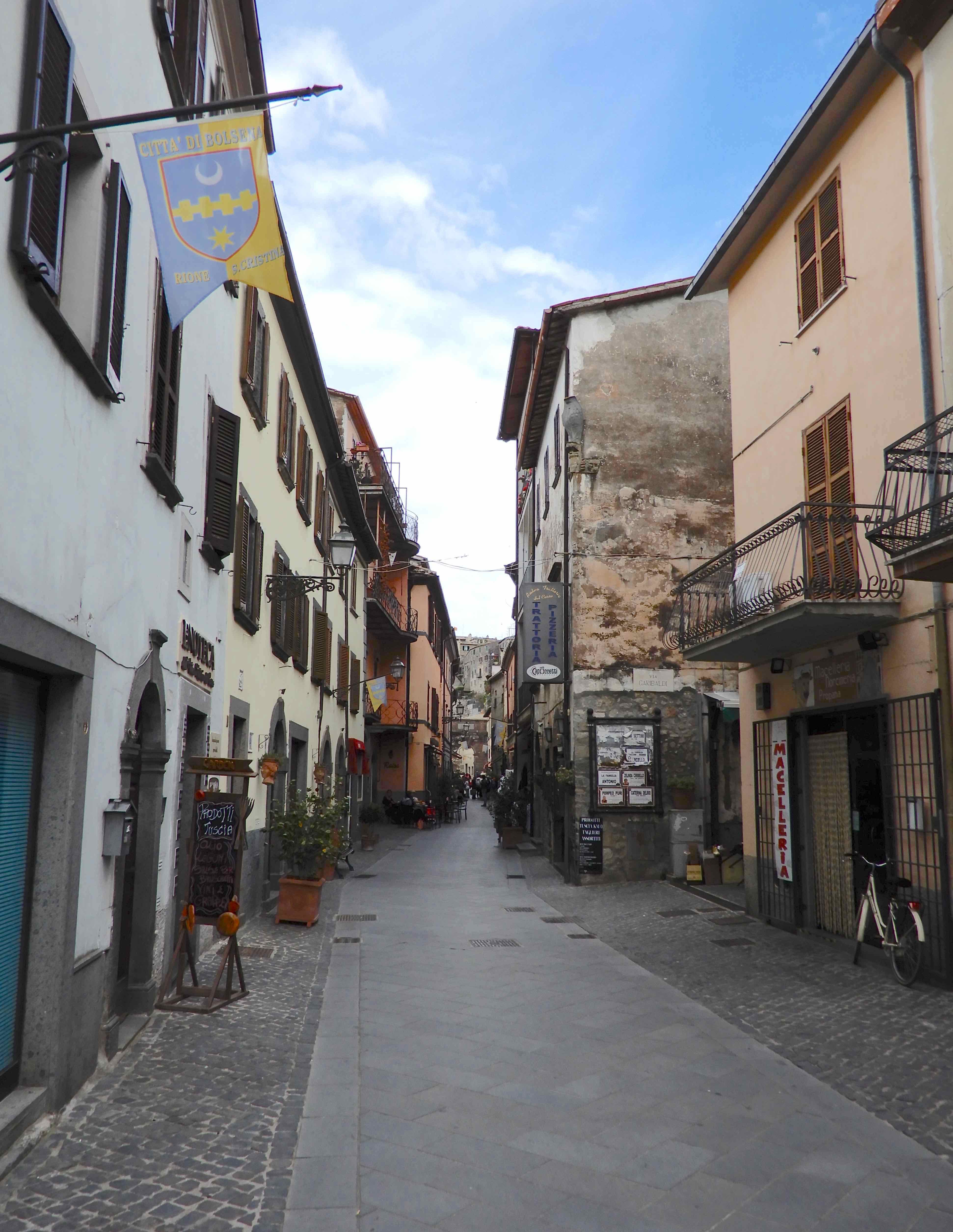
Refreshed from our sustenance at RetroGusto, we continued down Corso Cavour

to the medieval Fountain of San Rocco. Built in 1450, the spring water was deemed to be miraculous when San Rocco recovered from a thigh wound after drinking it.

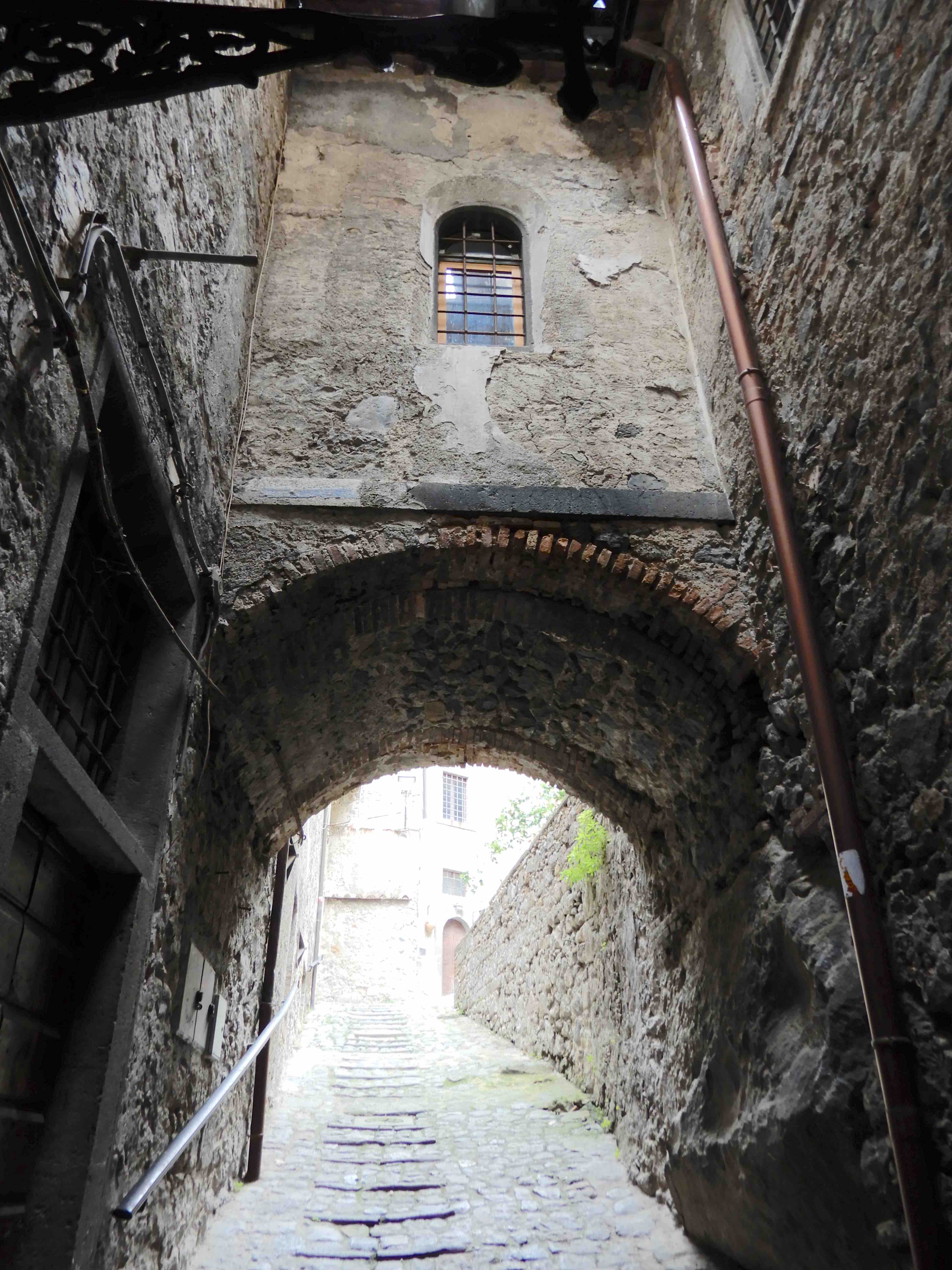
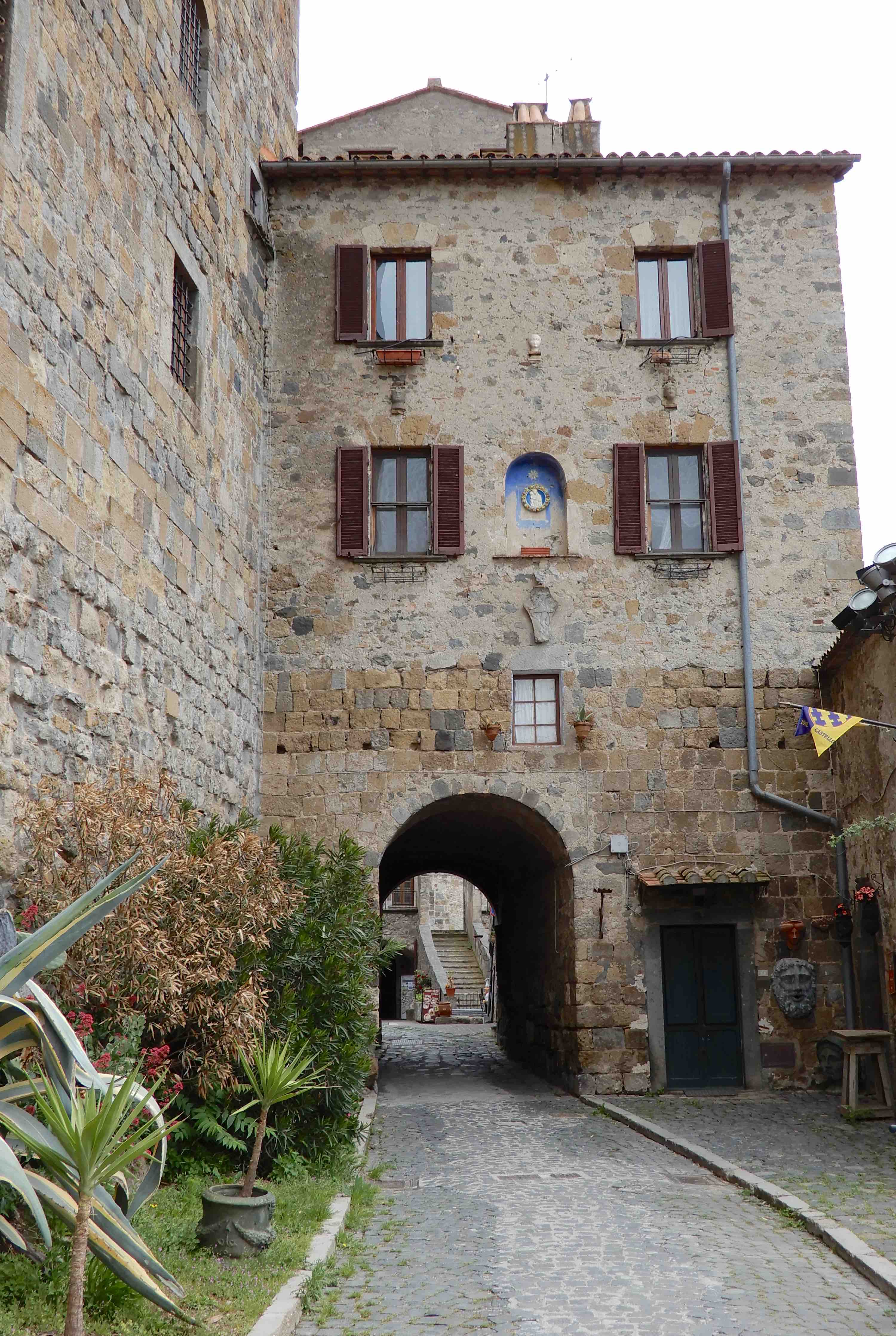
We made our way up ancient stone steps, along narrow alleys and through medieval arches to the castle.

A thoughtfully positioned bench beckoned us to rest awhile and admire the vista across rooftops to Lake Bolsena under the gaze of insentient eyes.

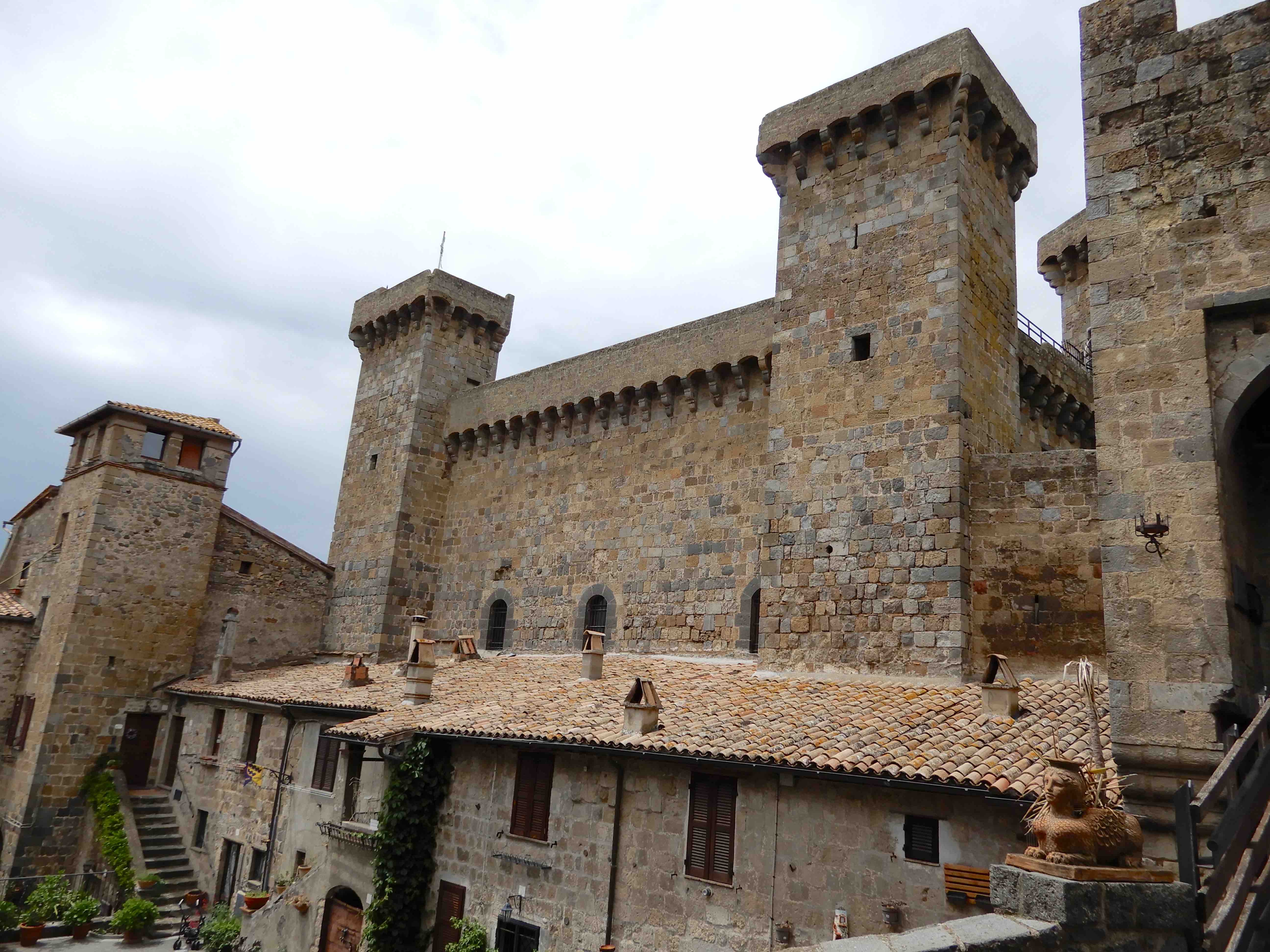
A fortress was originally built above the town in 1156 to protect from invasion. In 1295, the Monaldeschi family of Orvieto asserted their power and moved in. The walls were reinforced and the castle extended with the addition of three more towers. The Monaldeschi ruled until the mid 15th century and over the ensuing years the fortress was robbed, burnt, restored and used as a prison and warehouse. Renovation work began in the 1970s and the restored fort has been home to the Territorial Museum of Lake Bolsena since 1990.

Unfortunately, the museum was closed but the climb had certainly been worth it. On the opposite side of Piazza Monaldeschi,

the 15th century Church of San Salvatore was intended to look more like a fortress than a religious building.

We returned to the car

and parked lakeside for lunch at Trattoria del Moro, an experience we had been looking forward to since our first visit.

Lake Bolsena is the largest volcanic lake in Europe, formed 370,000 years ago following the eruption of the Vulsini volcano which was active until 104BC. The lake covers an area of 115sq km, has a circumference of 43 km and a maximum depth of 151 metres. Impossible to envision from photographs.

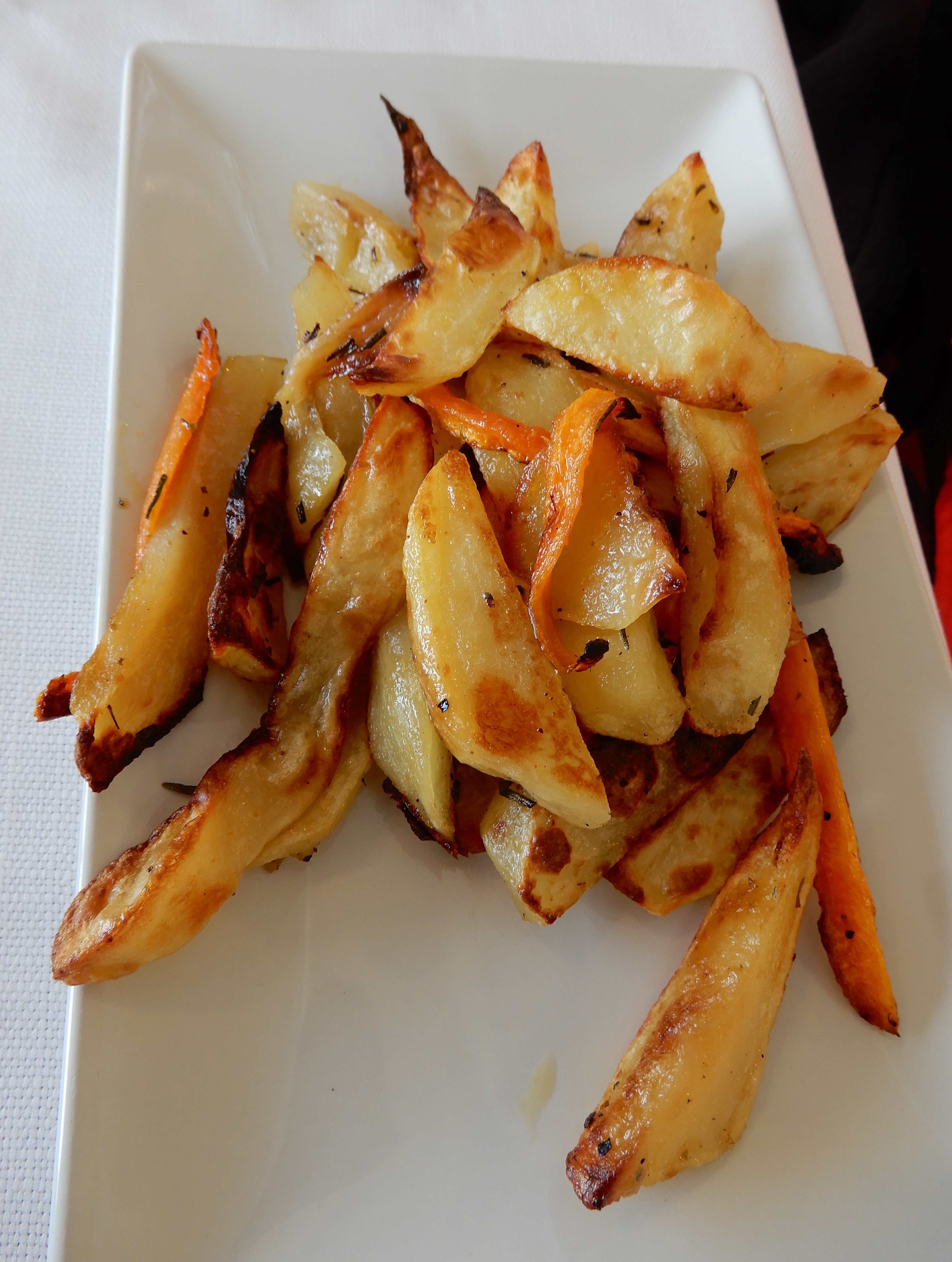
Our meals were equally as delicious, if not better, than we remembered.

The same can’t be said for the weather but the inclement conditions didn’t detract from the peaceful surroundings as we ambled back to the car.

I would like to think we will return again to Bolsena and Trattoria del Moro.

The Hotel Windsor

Our wonderful trip to Victoria was coming to an end and one of the things we had planned for our last day was Afternoon Tea at The Hotel Windsor. Established in 1883, this magnificent building was then known as The Grand Hotel and soon became recognised as the most stylish and luxurious accommodation in Melbourne.

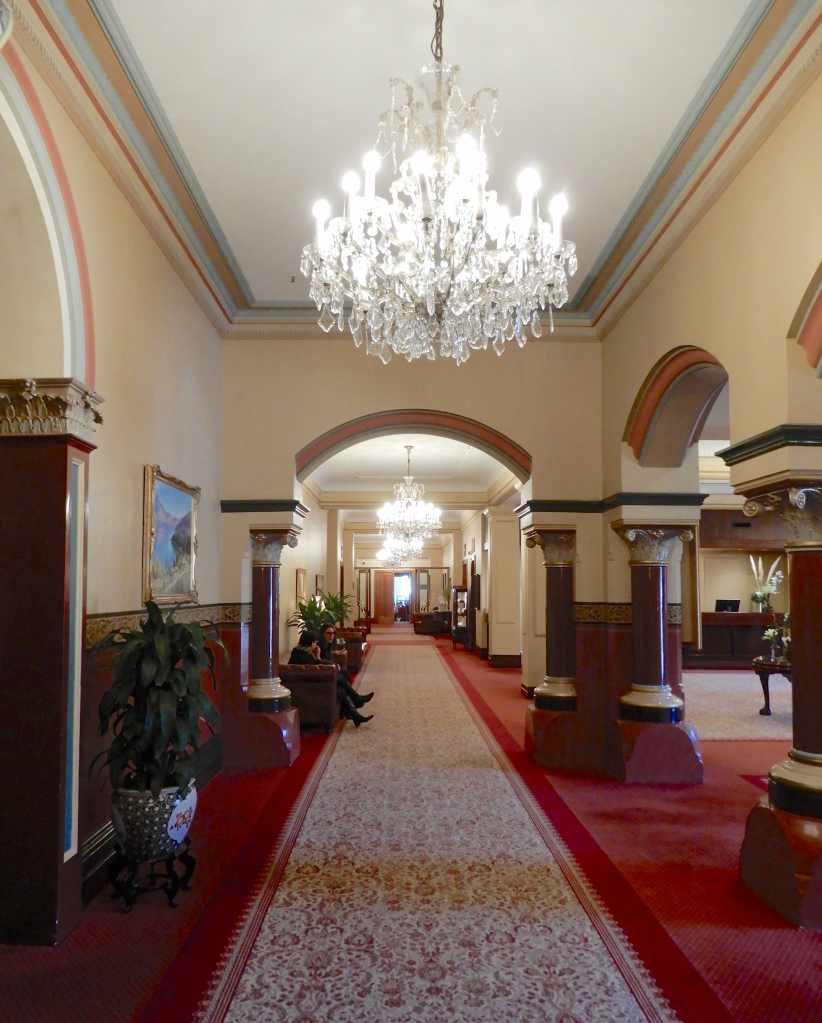
The property changed hands in 1886 and soon after, under the influence of the temperance movement’s teetotal ideals at the time, became The Grand Coffee Palace. Apparently, serving coffee isn’t quite as profitable as serving alcohol and ten years later, the liquor license was reinstated and The Grand Hotel was reborn. The name was changed to The Windsor following a luncheon attended by The Prince of Wales in 1923. Expansions, renovations and changes of ownership have ensued over the years and, under threat of demolition in 1976, the Victorian Government bought the hotel. As we stepped into the foyer, we were instantly transported to a time of elegance and etiquette.

The arched entrance to The Grand Ballroom features etched glass panes and cut ruby glass

and the cantilevered Grand Staircase, built of Stawell stone, rises 75 feet above the lobby.

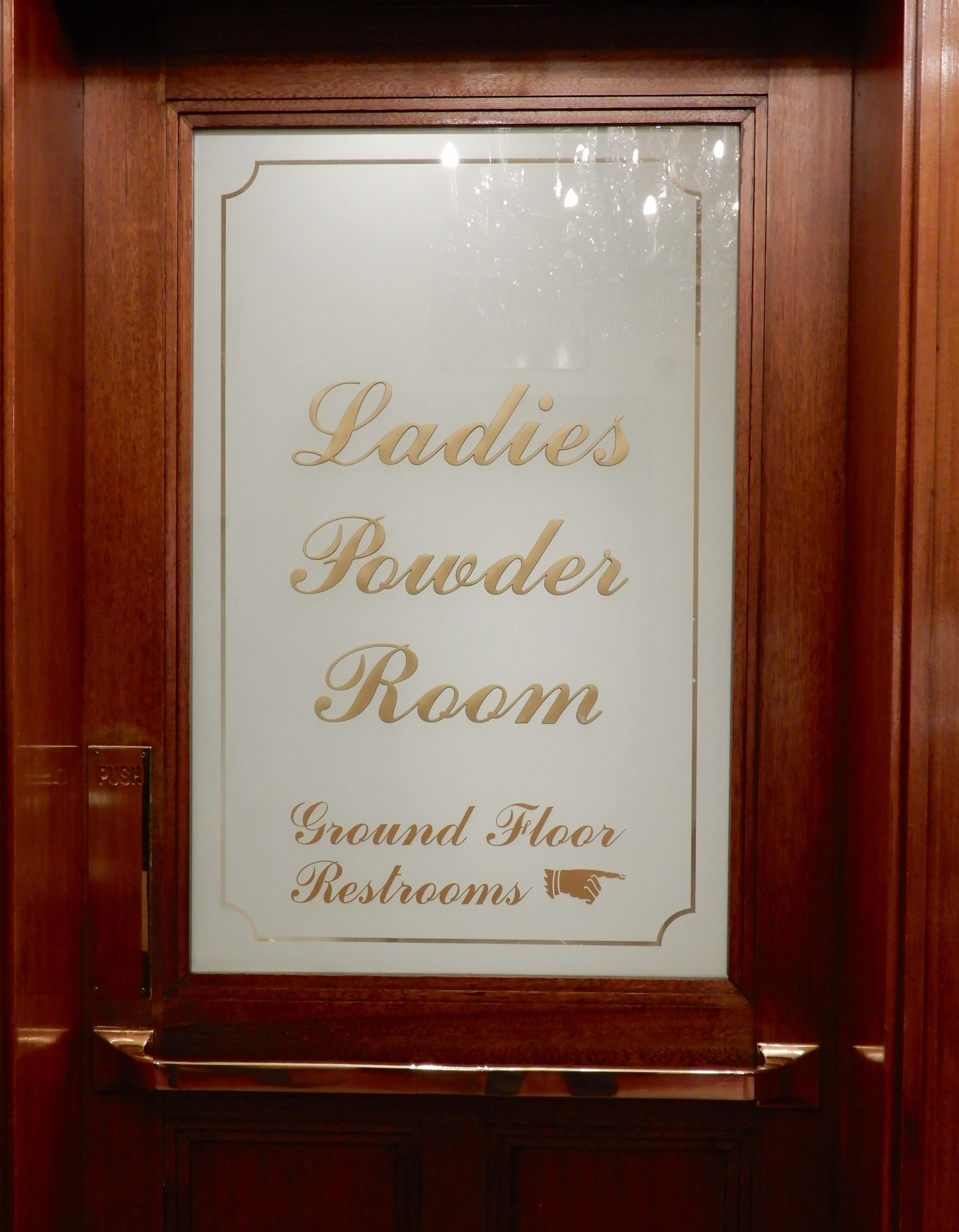
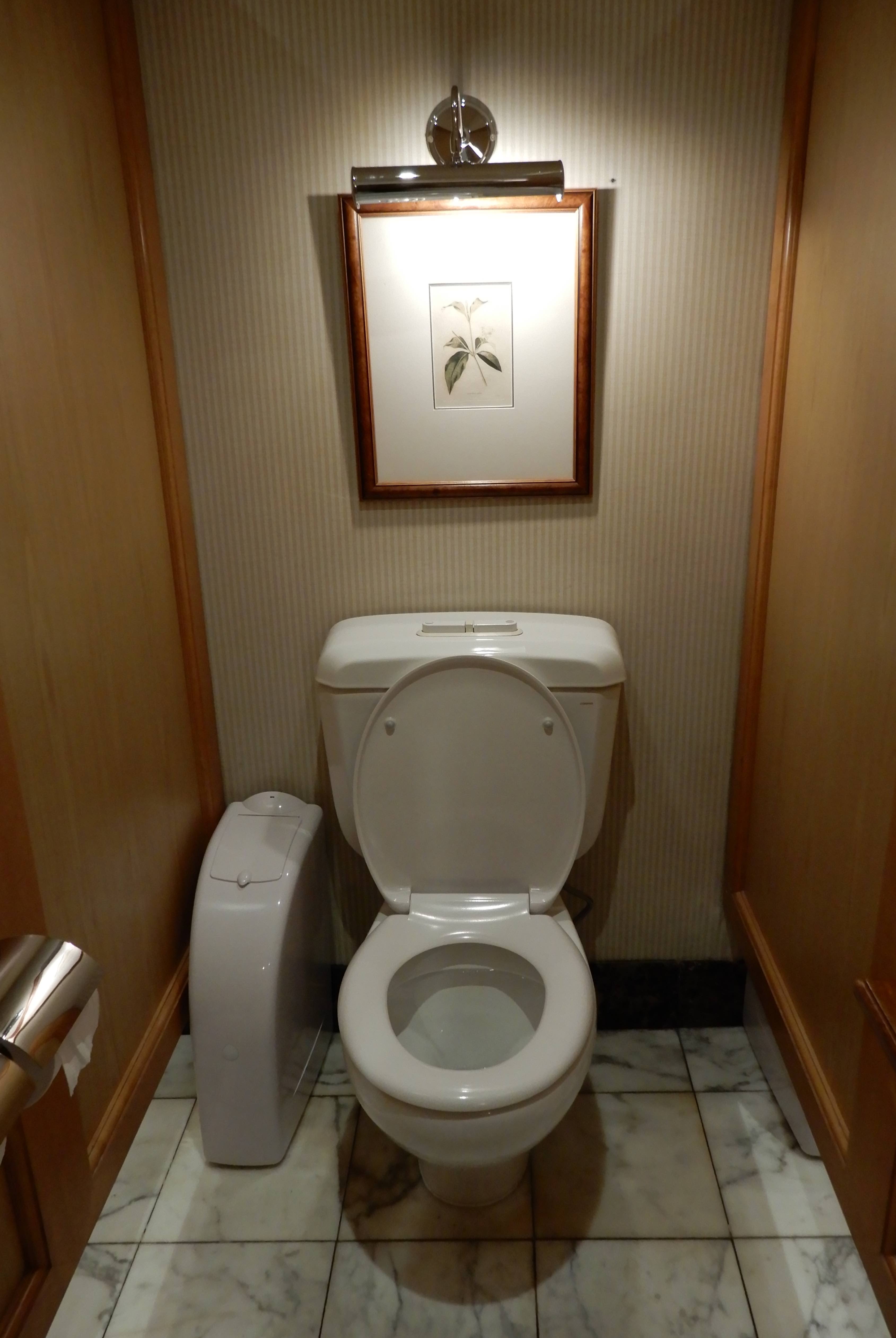
Even the Ladies Powder Room has an air of grandeur.

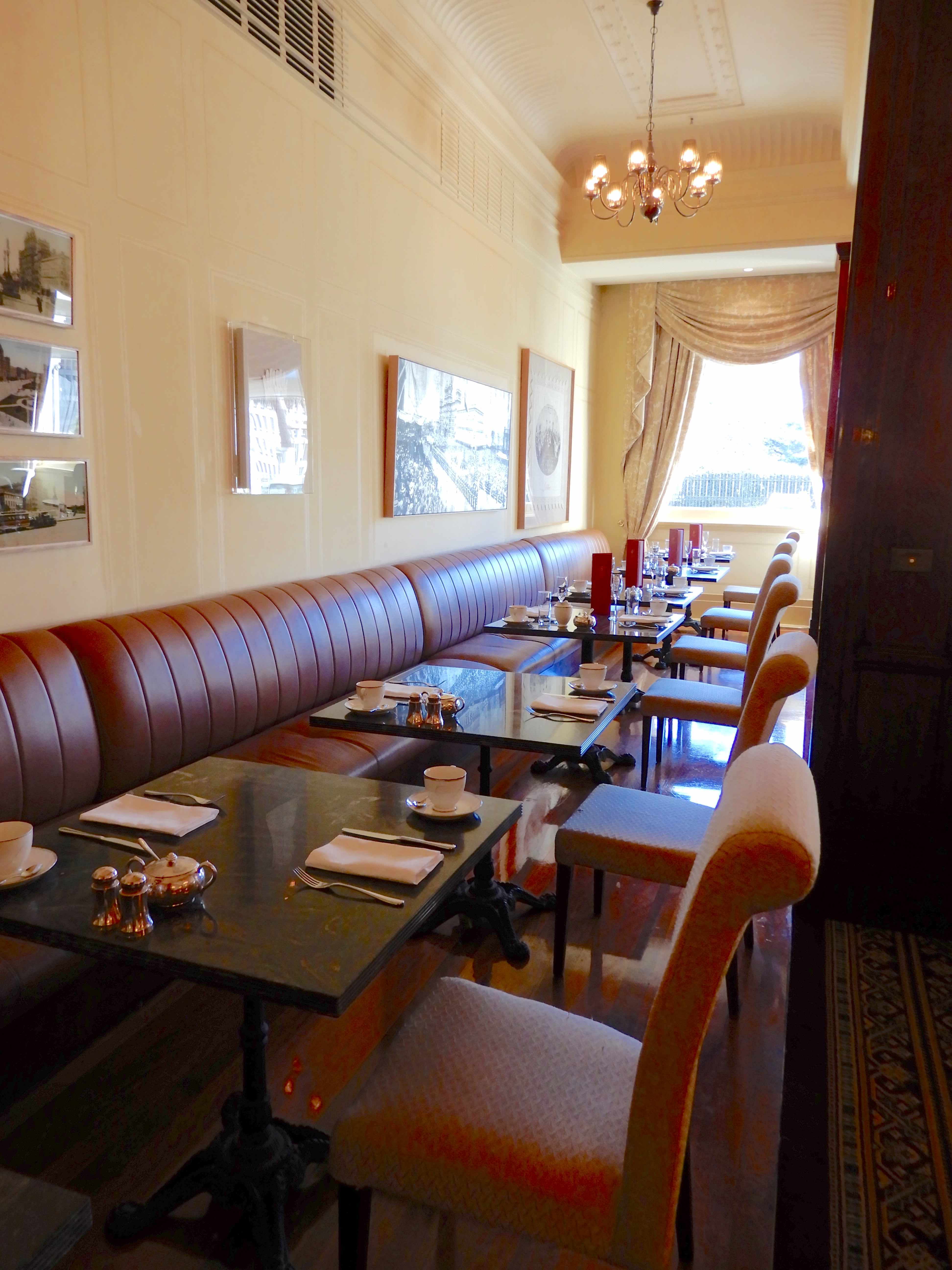
The sumptuous One Eleven lounge is the setting for The Windsor’s Afternoon Tea, a Melbourne institution served since 1883.

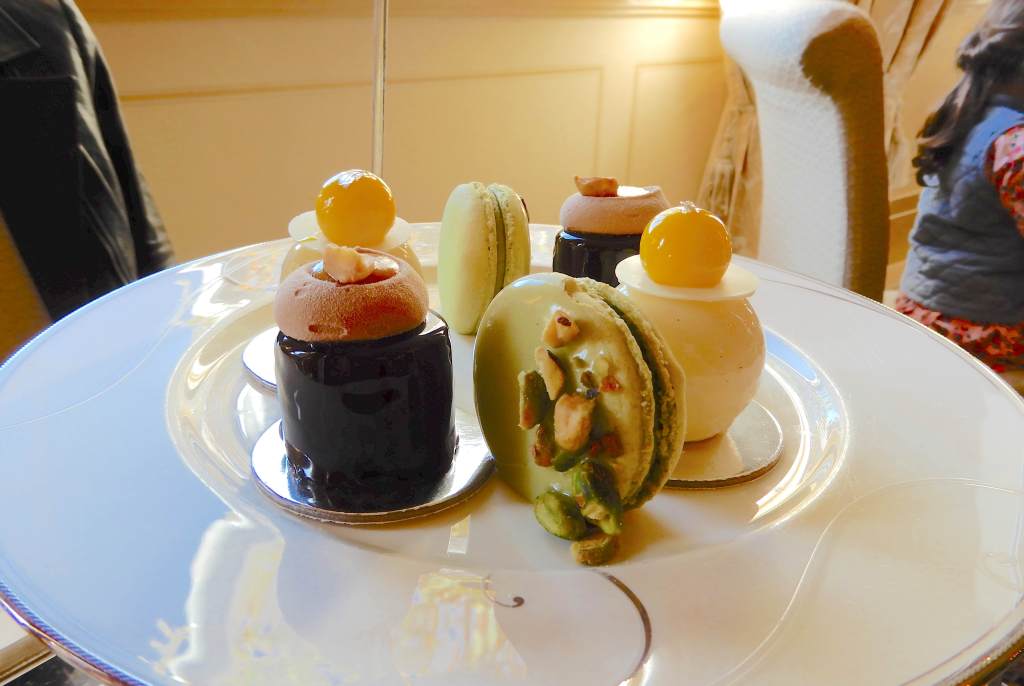
The custom of afternoon tea is said to have originated around the time gas lighting was introduced in the 1800s in Britain. This meant people could stay up later and eat their evening meal later, leaving a longer gap without food. One of Queen Victoria’s ladies-in-waiting is credited with the innovation when, in 1840, she began inviting friends to join her for afternoon beverages and delicious snacks. By 1880, the trend had spread to the homes of the upper classes and tea shops appeared across the country. After years of believing this to be called ‘High Tea’, I have discovered this is not the case. ‘High Tea’ was a substantial meal eaten at a high table by the working classes at the end of the day, around 5pm. What we were about to experience is known as ‘Low Tea’ in reference to the low drawing room tables the tea and delicacies were served from in upper class homes. By that definition, ours was probably ‘Middle Tea’. Greeted with a flute of sparkling wine, it wasn’t long before a three-tiered cake stand laden with mouthwatering morsels arrived.

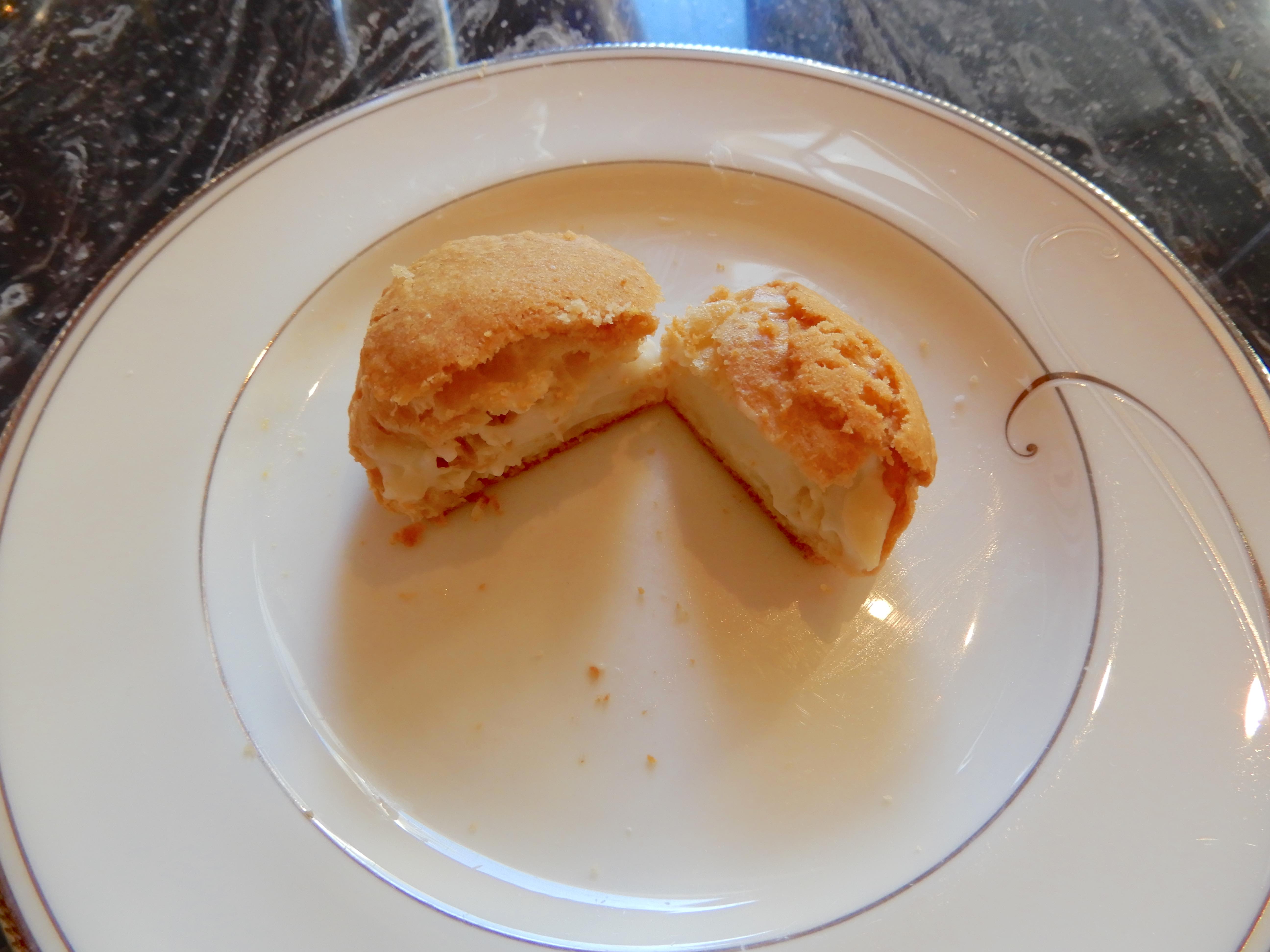
The menu changes seasonally, our winter warm savoury appetisers were roasted Jerusalem artichoke tart with ricotta, thyme & fine herbs and parmesan crusted gougere with a delicious Gruyere filling.

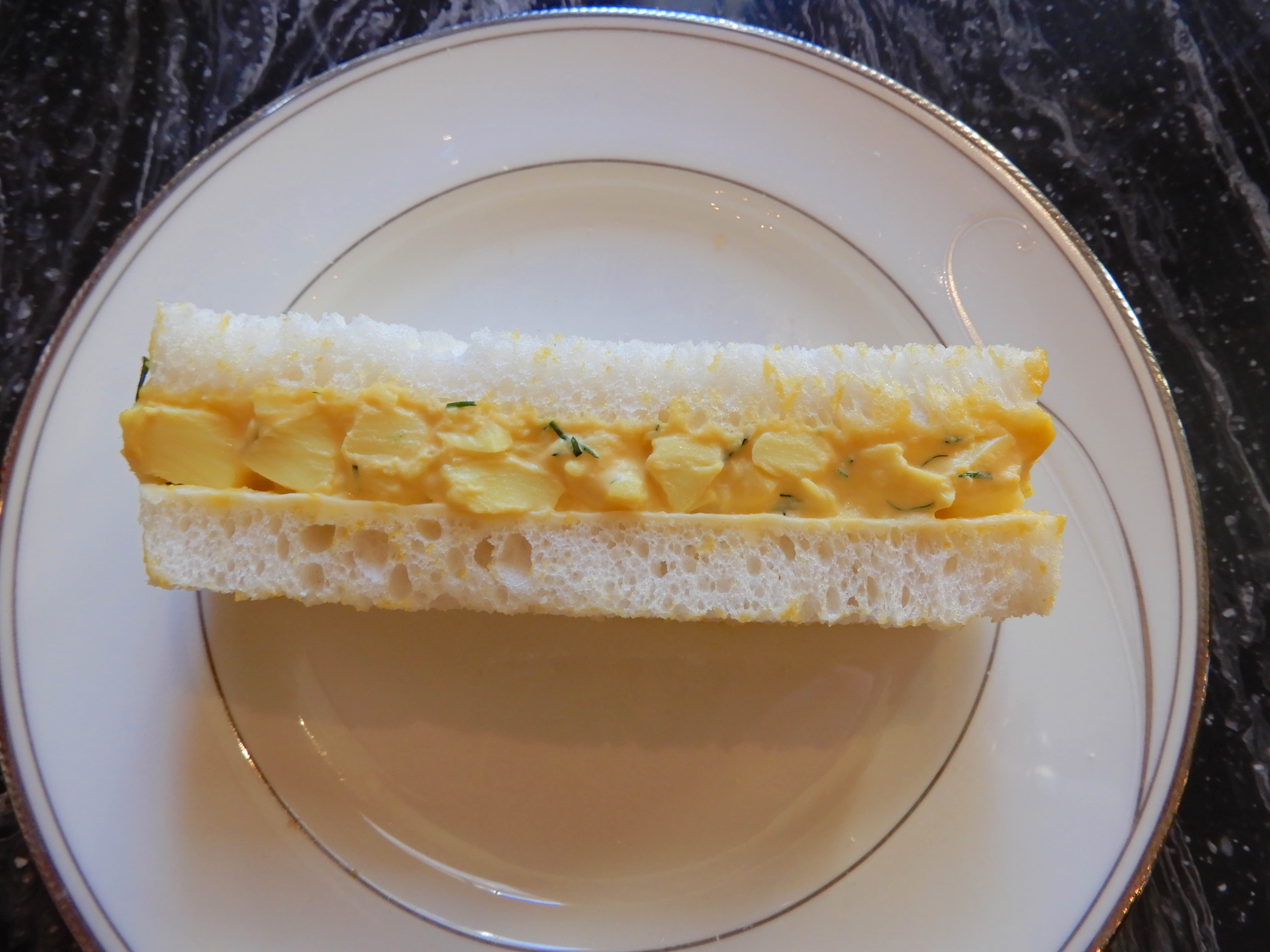
There were three varieties of melt-in-your-mouth ribbon sandwiches; free range egg with saffron aioli & mustard,smoked chicken Waldorf salad with Victorian walnuts and cucumber with peperonata & Yarra Valley fetta.

The patisserie presentation was exquisite, we couldn’t decide which to devour first; the pistachio macaron with roasted pistachio & Sicilian pistachio ganache, the vanilla and yuzu religieuse with vanilla bean mousse, yuzu sauce, cremeux & almond sponge or the longchamp with milk chocolate mousse & crispy hazelnut praline.

On arrival, we were asked to choose from a selection of eleven teas which were now served in individual silver teapots with an accompanying pot of hot water for those of us who enjoy our brew on the weak side. Freshly baked traditional and raisin scones with housemade jam and double cream completed the indulgence.

The two hour session seems ample when booking but we could happily have lingered all afternoon.

Orvieto underground

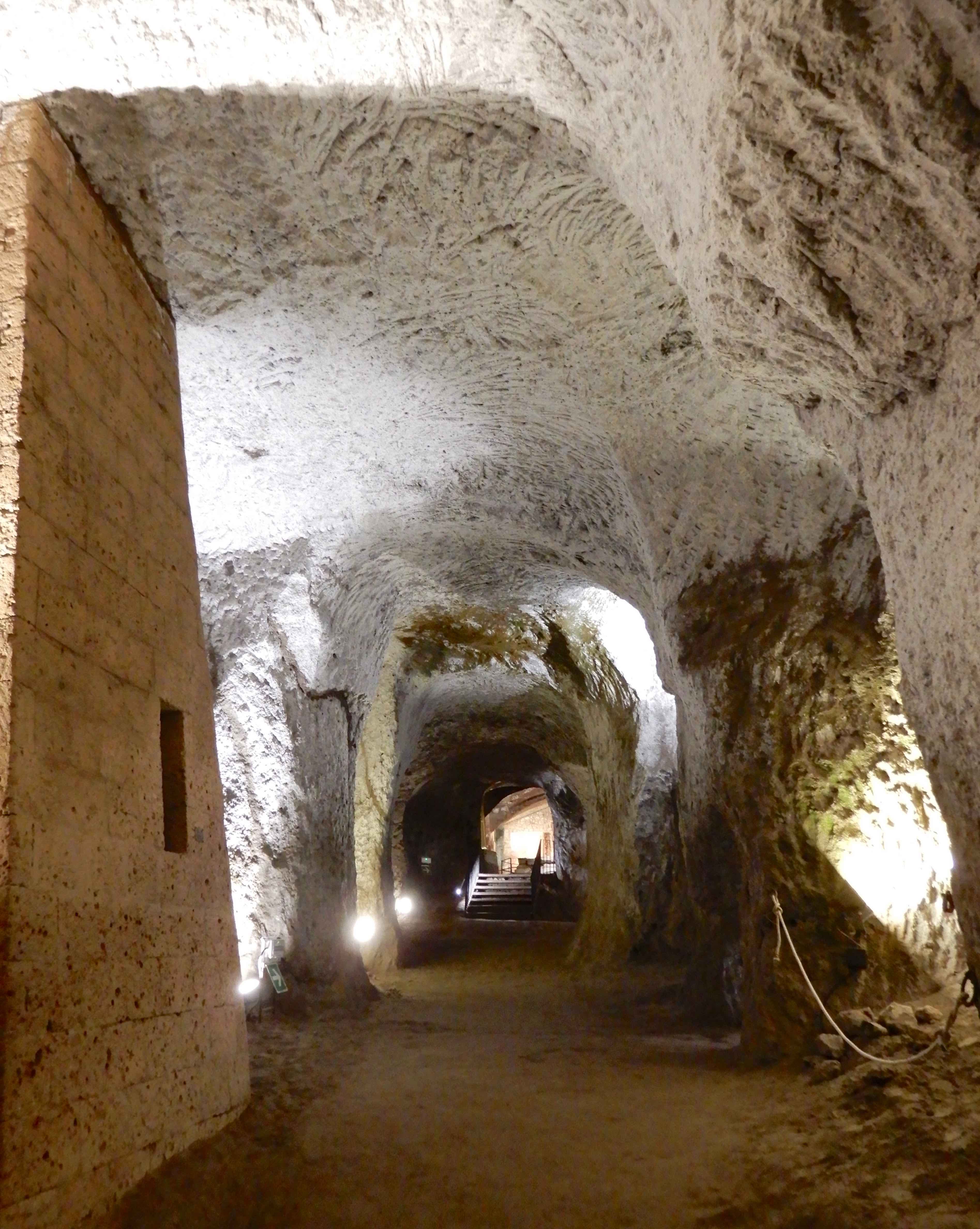
While in Orvieto, we signed up for the tour underground, a fascinating insight into the lives of the inhabitants thousands of years ago. At the end of the 1970s, a landslide opened up a large hole a few hundred metres from the duomo, tempting a number of speleologists (a new word I have learnt meaning someone who studies caves) to investigate. They found an incredible underground world, dug by hand out of the tufa beneath the town, that had been forgotten. The beautiful Umbrian countryside accompanied us as we made our way to the entrance of the caves.

1.Orvieto

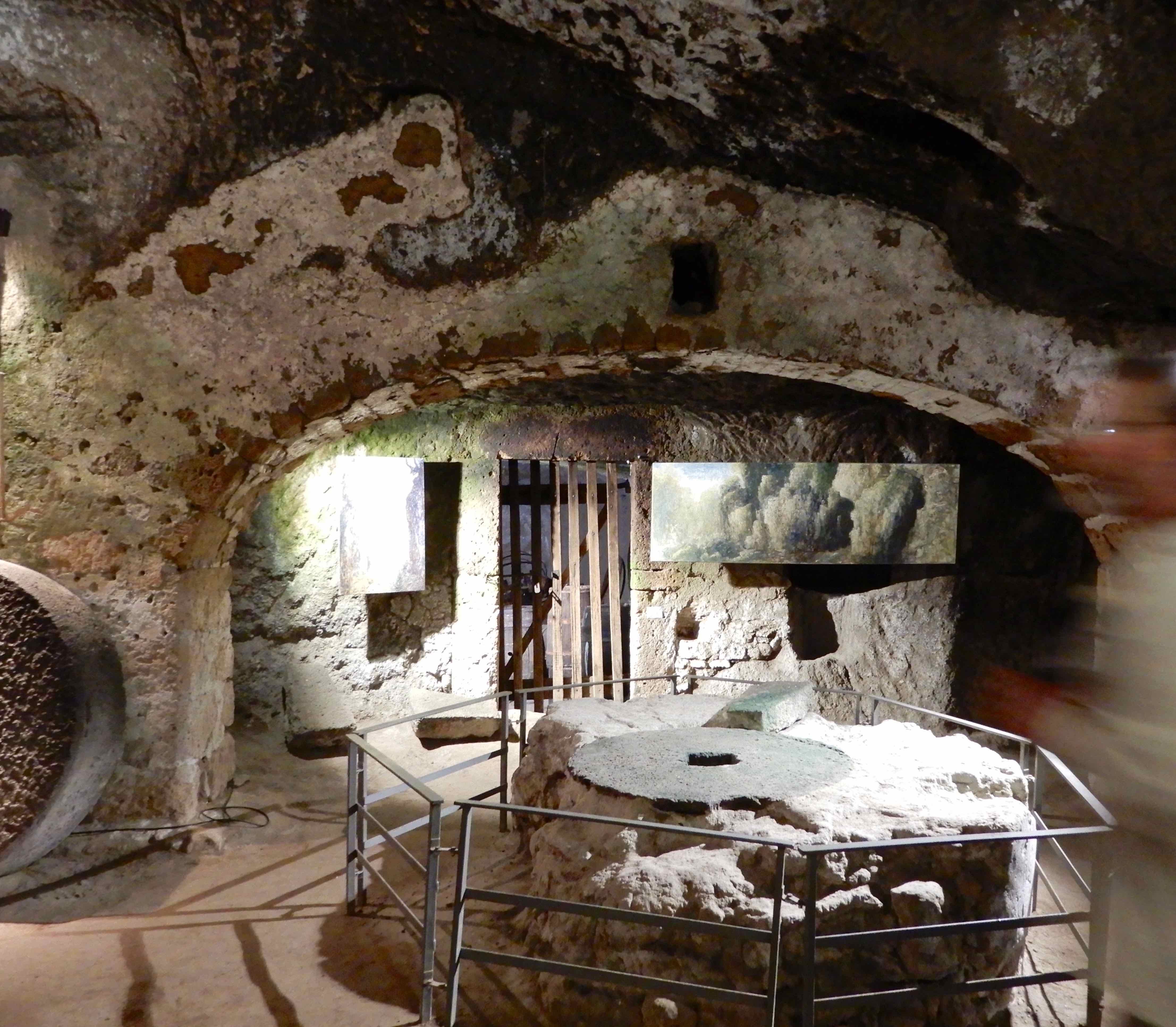
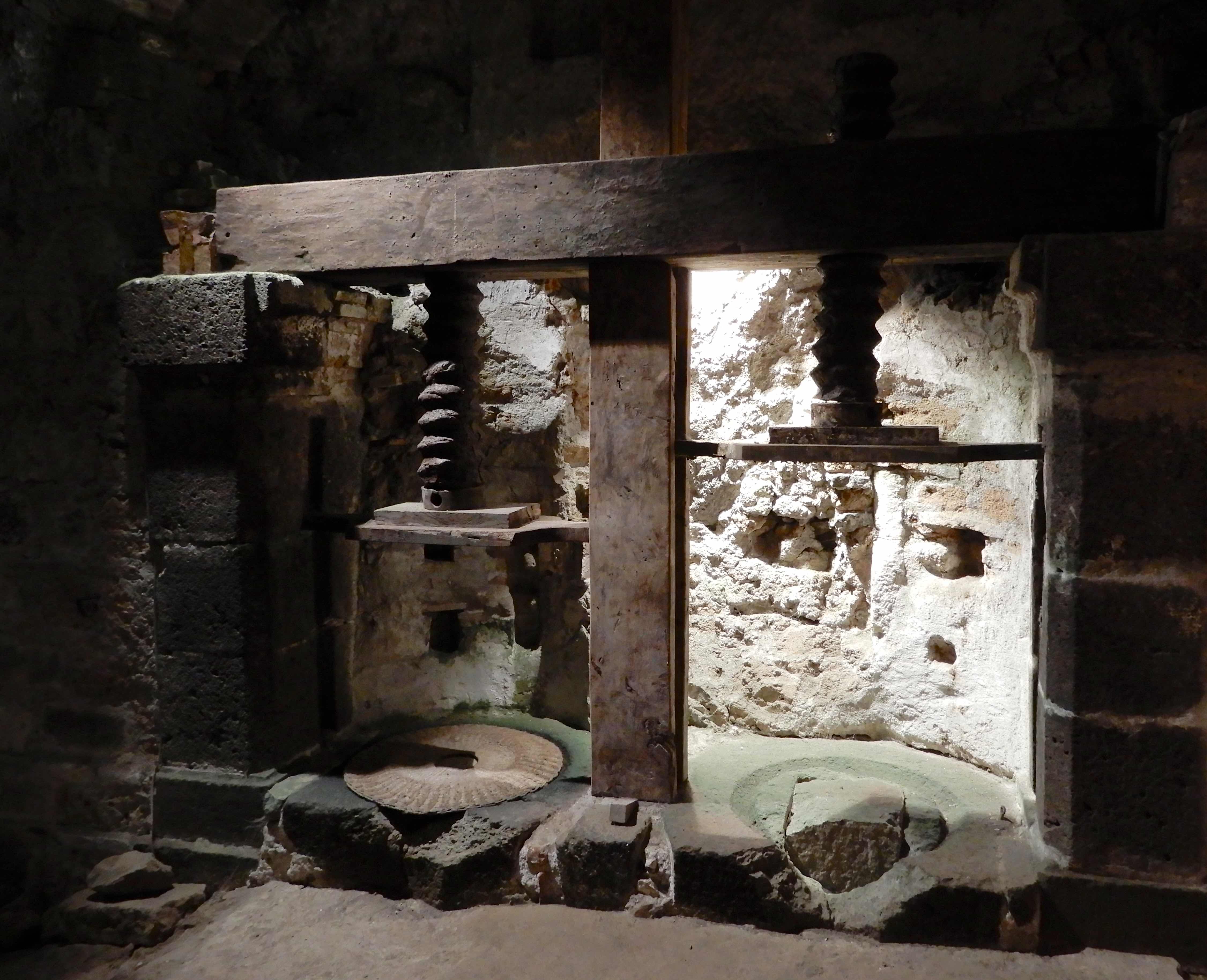
We found ourselves at the centre of medieval olive oil production, complete with millstones, a press, furnace and mangers for the animals working the grindstones.

2.grinding stone

3.olive press

Intriguing tunnels led in all directions, beckoning us to investigate further.

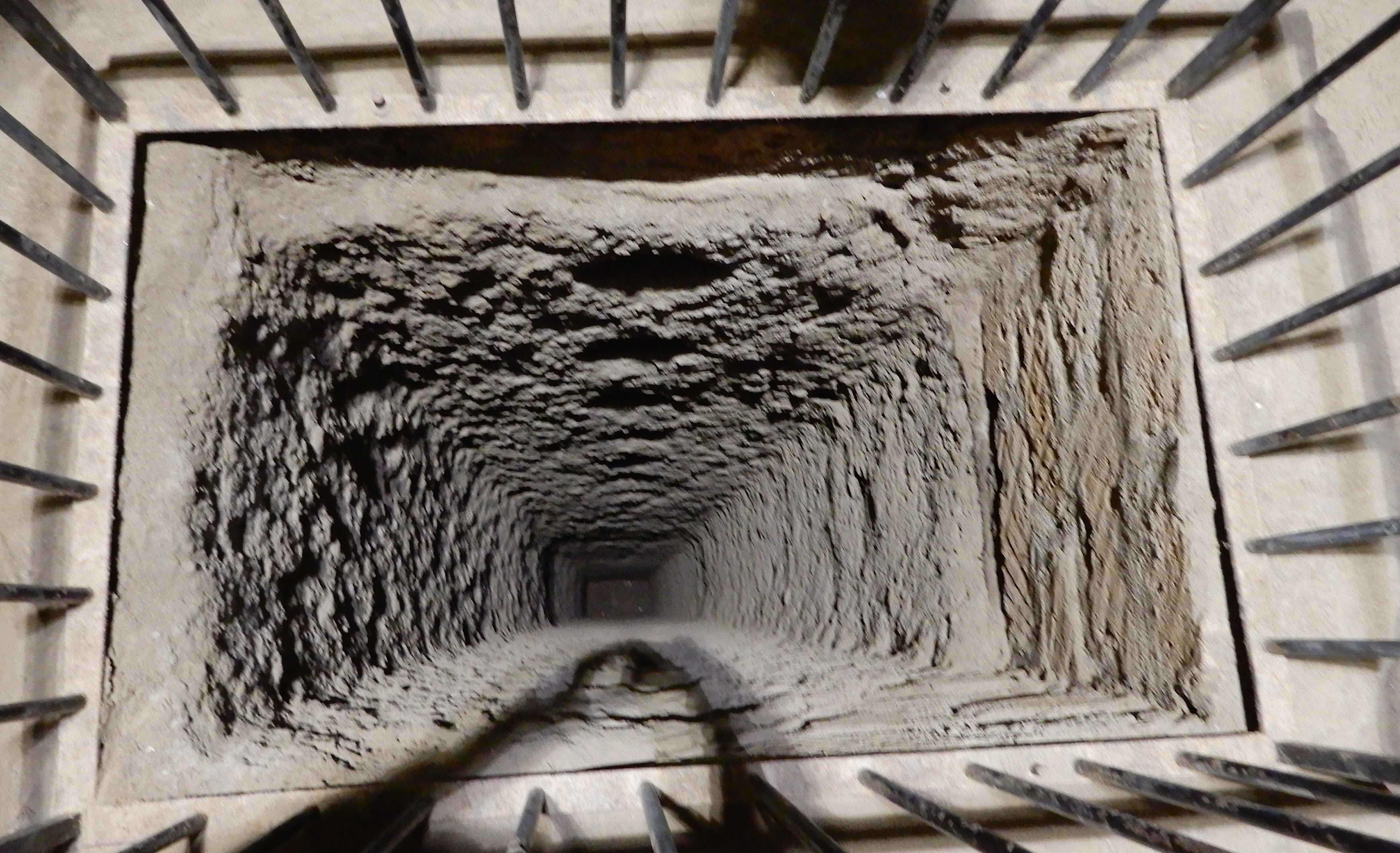
The Etruscans created cisterns for holding rainwater and very deep narrow wells in search of underground springs. There are small notches on the two longest sides called pedarole, footholds to enable someone to climb down and out again.

10.well

The tour continued, revealing more grottoes that had a variety of uses such as wine storage and pottery kilns, over twelve hundred have been discovered.

11.caves

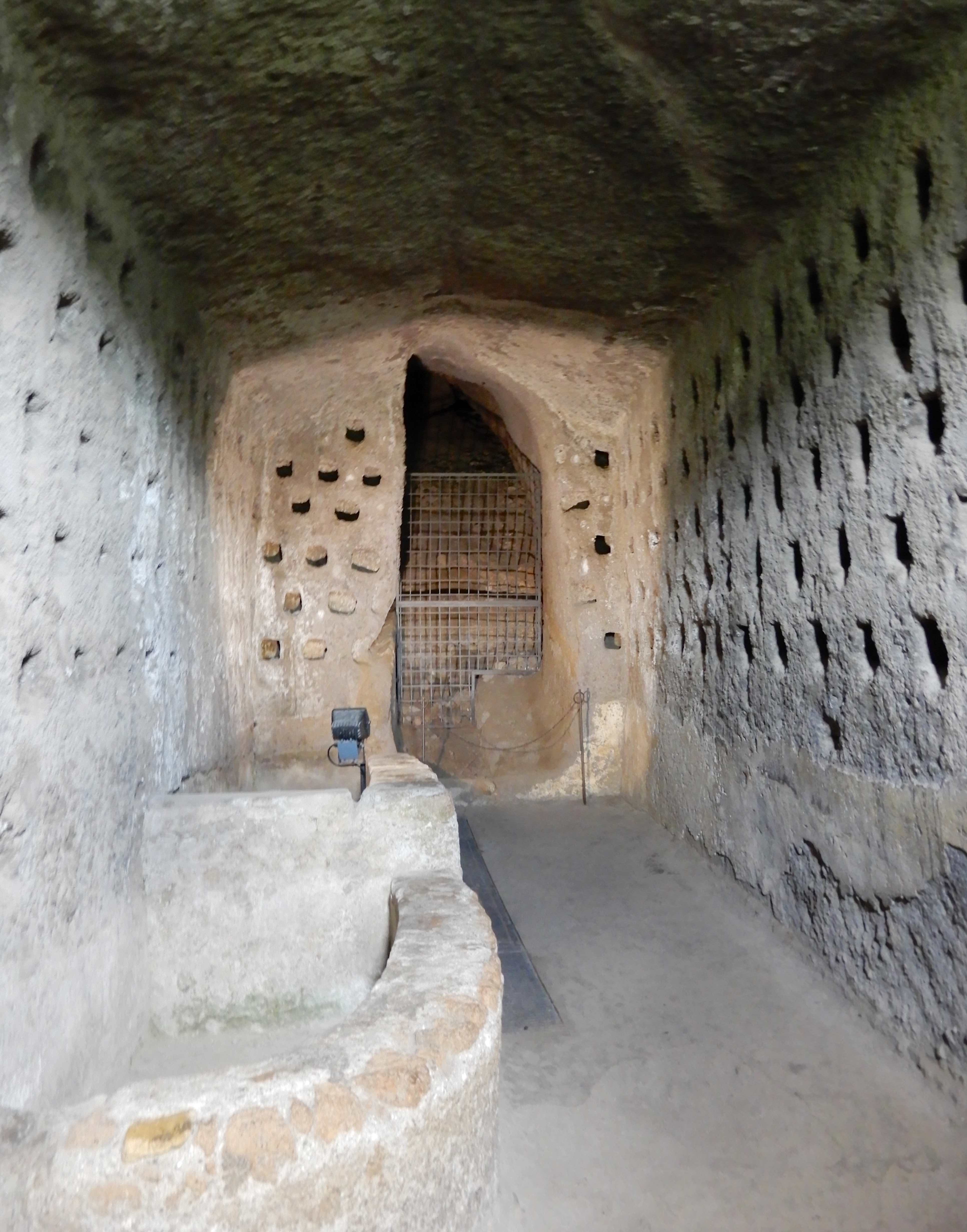
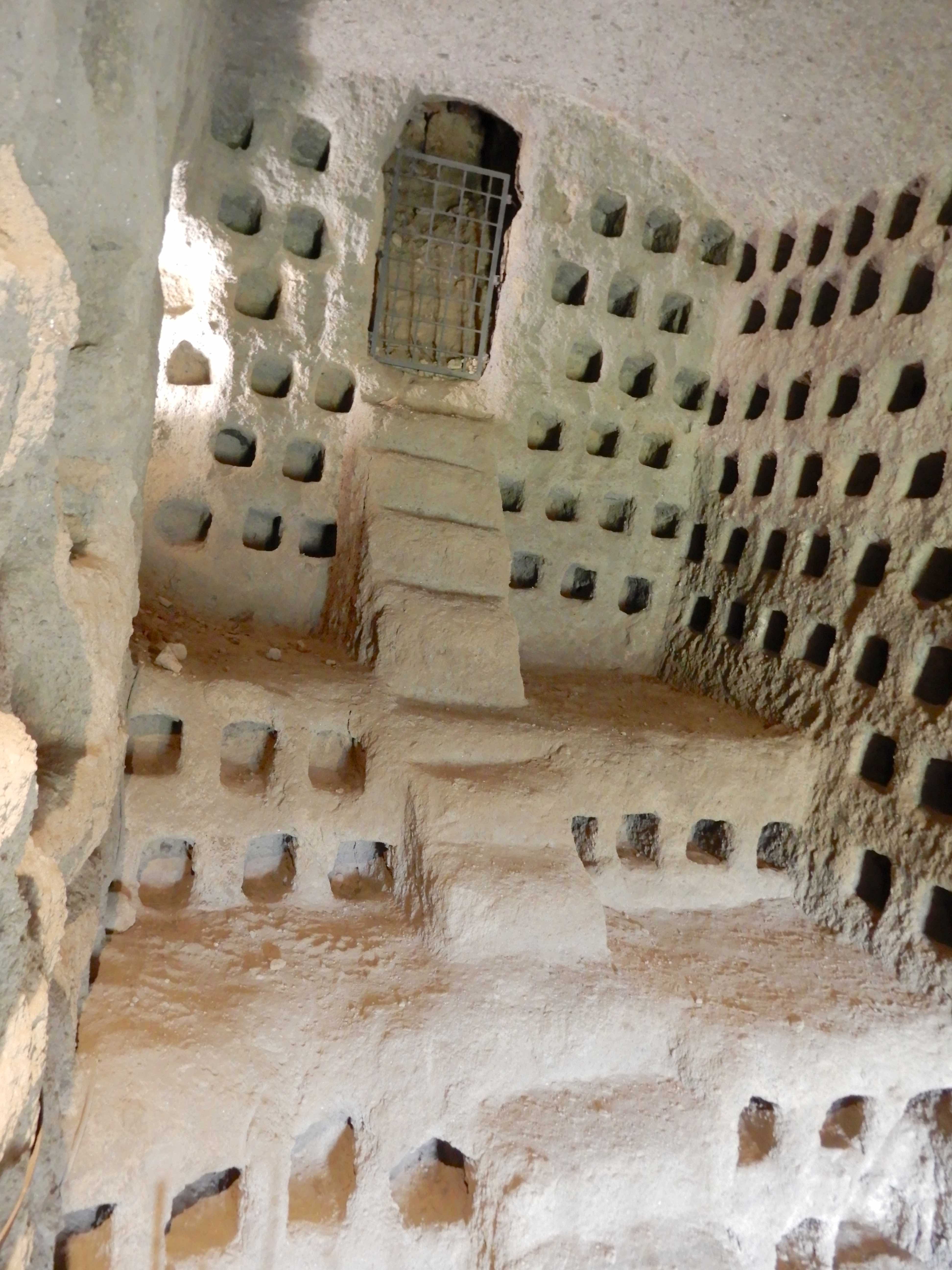
The walls of some were covered in small cubic niches created to breed pigeons, now a classic dish of the local cuisine.

12.columbarium

16.columbarium

There are narrow tunnels at the back of the walls, just big enough for a person to pass on all fours. Unfortunately, their destinations remain unknown, the mystery secured by centuries of landslides.

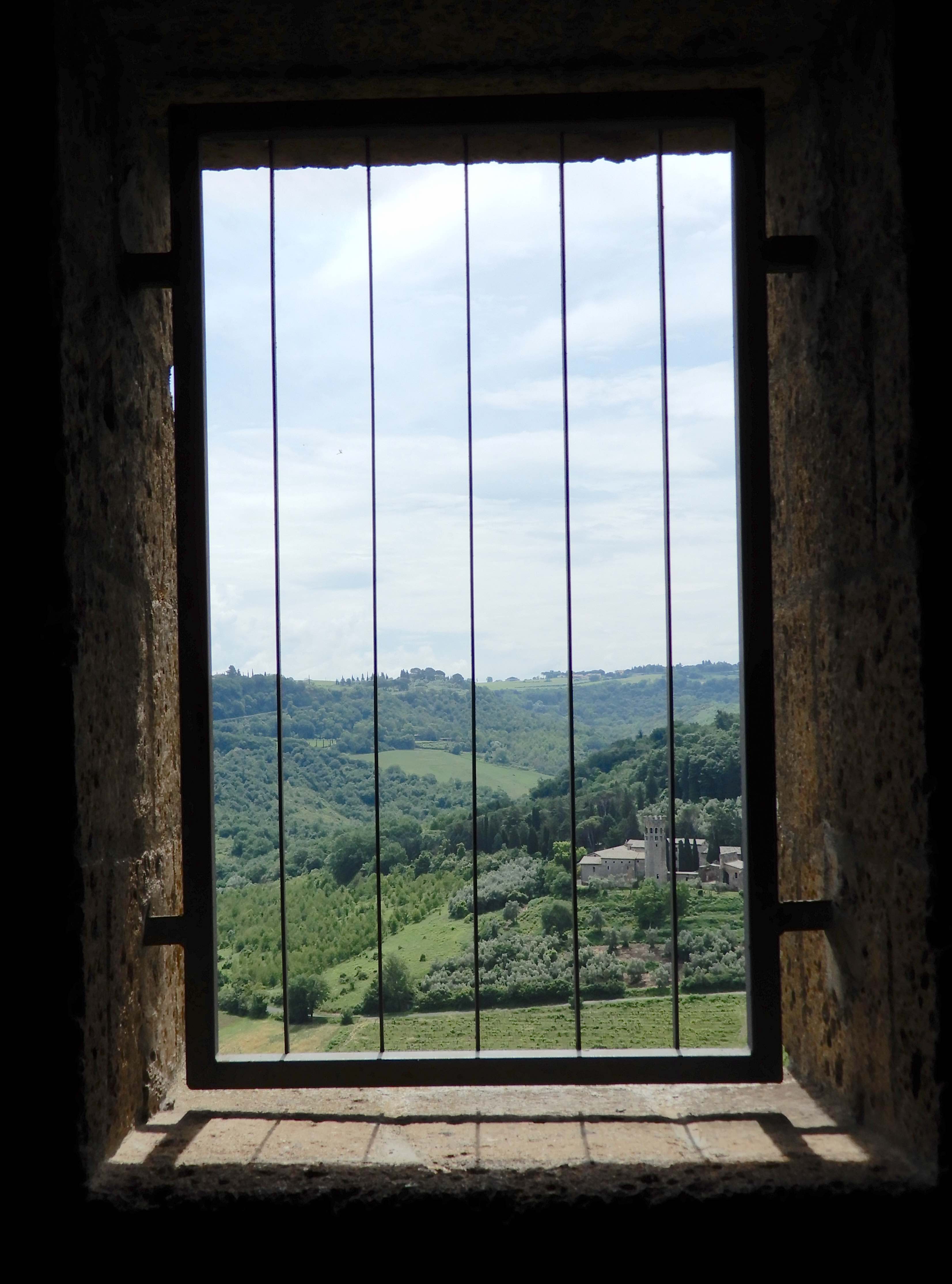
Every so often, light streamed in from openings in the cliff and we were treated to another glimpse of the spectacular vista.

19.view

There seemed to be an endless labyrinth of tunnels, stairs and passageways intersecting in all directions.

25.tunnels

Thank goodness we had a guide, we may never have made it back.

26.view

Grotte di Castro

On our way to Bolsena for a lakeside lunch, we stopped to explore the town of Grotte di Castro. The Etruscans lived here quite happily, even after the Romans conquered in the 3rd century BC. That all changed when the Lombards invaded in the 8th century and the inhabitants, deprived of all their possessions, were forced to live in the many caves around the cliffs. Fast forward to 1537 when the town was bought by the Farnese family and became part of the Duchy of Castro. Hence the name, meaning Caves of Castro. We parked on the outskirts and wandered along Via Vittorio Veneto

to the main square, Piazza Cavour. The colourful buildings added some brightness to the overcast day and the war memorial stands proudly as a centrepiece.

5.Piazza Cavour6.Piazza Cavour

We caught glimpses of Lake Bolsena between the houses,

10.Lake Bolsena

some of which must have magnificent views.

11.Grotte di Castro12.Grotte di Castro13.Grotte di Castro

This is the best way to traverse the narrow, cobbled streets.

We continued on foot through the older part of town

20.Town Hall

21.Grotte di Castro

before returning to the car for the short drive to Bolsena.

22.Grotte di Castro

The vision of Grotte di Castro from the road as we left was stunning

23.Grotte di Castro24.Grotte di Castro25.Grotte di Castro26.Grotte di Castro27.Grotte di Castro

along with another enticing scene of Lake Bolsena.

28.Lake Bolsena