parcheggio Italiano

It’s no secret that driving in Italy is not for the faint-hearted. It is fast, crazy and a lot of fun. Parking in Italy is something else, an art form that takes years to perfect. The rules are quite simple and the zones are colour coded to assist the unwitting tourist. Blue zones are for paid parking, you can buy your ticket from the machine, display it on your dashboard and be sure to return to your vehicle in the allotted time frame. Alternatively, you can purchase a disco orario, a blue disc that represents a clock, from a bank, tourist office, post office or tobacconist (except for the bank we went into, although the lovely ladies wrote a note in Italian for us to use in place of a disc). You set the hands to show the time you arrived and you can park for free, usually for 2 hours. Parking is free in blue zones during lunch time and on Sundays. Having said all that, it seems parking within the lines is optional.

1.Le Grazie2.Pienza

7.Grotte di Castro

White lines mean parking is free but there may be time limits. If this is the case, it is a good idea to display the time you arrived on your blue disc. Travel advice warns that it is essential to park within the lines to avoid a fine, however, free spaces are often limited and so, creativity prevails.

8.Seggiano9.Orvieto10.Orvieto

It seems to be universal that parking areas marked with a yellow line are reserved for handicapped drivers and delivery zones.

11.Acquapendente

Some towns have pink spaces especially for expectant mothers and those with infants. Parking is not permitted in green zones on working days between 8 – 9.30am and 2.30 – 4pm. Often, there are no parking squares marked and it seems to be a free-for-all.

12.Grotte di Castro

It only takes one to start a trend. Don’t let a roundabout on the main thoroughfare deter you, just follow where others have led.

13.Le Grazie14.Le Grazie15.Le Grazie

If there is no parking spot available, just leave the car in close proximity to your destination in the knowledge that passing motorists will avoid your vehicle.

16.Acquapendente

17.Pitigliano

If all else fails, don’t even pretend to look for a parking spot, just leave the Mercedes in the middle of the road while you go about your business.

22.Pitigliano

If your neighbour encroaches on your space, you are entitled to squeeze him out.

23.Orvieto

Sometimes there are zones that are just too confusing, the colours are random and there is no indication of time limits. This is what you do.

24.Acquapendente

Lake Plimsoll

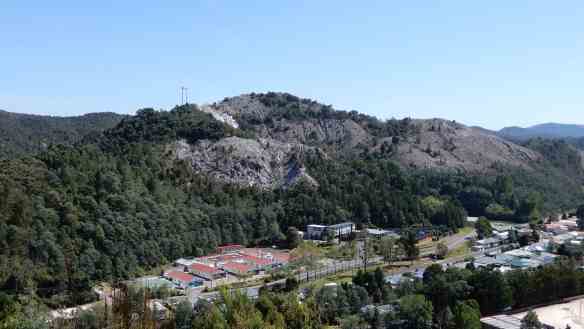
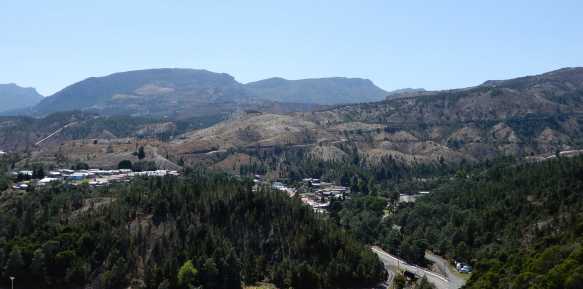
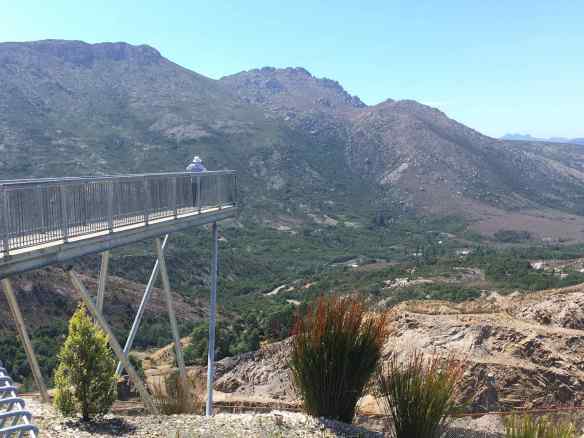
Our trip to Pumphouse Point earlier this year gave us the opportunity to travel a road we hadn’t been before. Anthony Road, built as part of the Hydro Tasmania scheme, leaves the A10 five kilometres south of Tullah and reconnects just north of Queenstown. I had been advised by a work colleague to stop at Lake Plimsoll lookout for some spectacular views, it was very good advice.

1.Lake Plimsoll

In 1994, the Anthony River was dammed by the Hydro-Electric Commission and the 340 hectare lake was created.

2.Lake Plimsoll

Named for Sir James Plimsoll, the Governor of Tasmania from 1982 to 1987, it was the last major dam constructed by the Commission.

3.Lake Plimsoll

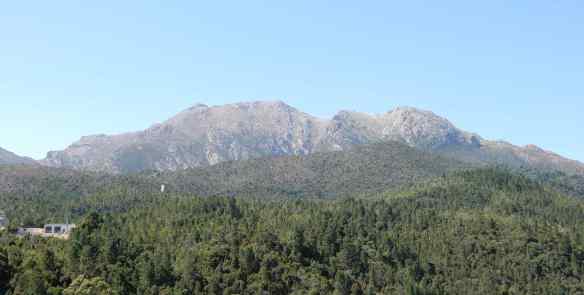
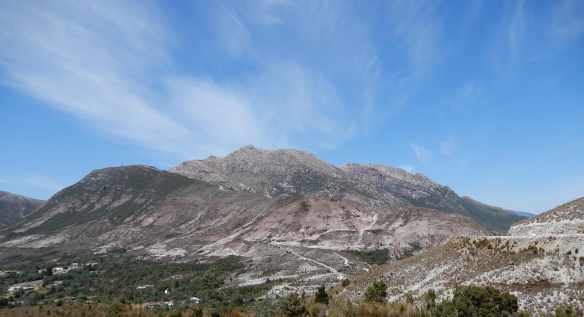
Beyond the lake lies the Tyndall Range, an area marked by the course of  glaciers in the last Ice Age. It seems fitting that it is named in honour of Irish physicist Professor John Tyndall, who had a special interest in glacier motion.

4.Tyndall Range

The sharp peaks of the range contrast with the gentle arch of Mount Tyndall, composed of Owen conglomerate from the Ordovician era, about 480 million years ago.

5.Mount Tyndall

We wandered down to the water’s edge, the sunlight sparkled on the surface. Stocked with brook trout, the lake is a popular fishing spot. I can imagine spending a few hours afloat, though I prefer the company of a good book to a fishing rod.

6.Lake Plimsoll

Ponte a Moriano

An easy walk from Villa Boccella, the lovely town of Ponte a Moriano had everything we could possibly need. A butchers shop,

1.Macelleria Pierotti

bakery with stupendous custard tarts

as well as another pastry shop we didn’t sample.

4.Pasticceria Furio

On the opposite side was a rather impressive gelataria that we again, sadly, didn’t try.

5.Gelateria Sauro

Further down the road was a bar next to a small supermarket

and heading out of town, the Melody Caffè advertised live music along with good food, beer and wine.

8.Melody Caffè

Of course, the collection would be incomplete without a $2 shop or, in this case, a €1 & €2 shop.

9.Uno,Due Shop

A very unassuming façade disguised the presence of a fabulous restaurant, Da Pinzo, where we enjoyed a delicious meal or two.

10.Da Pinzo

Tuesday was market day and we wandered down to Piazza Cesare Battisti on a beautiful, sunny morning to see what was on offer. There were colourful plants

and clothing

and more plants

and vegetables.

Satisfied with our purchases, we explored the town further and came across an old wall with steps that led to the other side.

21.old wall22.old wall23.old wall

From the top of the wall we could see the Ponte di Sant’Ansano. The bridge was built in 1828 to replace the original medieval wooden structure, built in 1115, that was destroyed by floods in 1819.

24.Ponte di Sant’Ansano

Ponte a Moriano means, ‘bridge in the Moriano locality’ but the actual bridge is named after Saint Ansano, the patron saint of Siena who died in 304 AD. In the centre of the bridge, there is a statue of the Virgin and Saint Ansano.

25.statues of the Virgin and Saint Ansano

The view downstream is peaceful, the gentle sound of water tumbling over rocks a salve for the soul.

26.Serchio River27.Serchio River28.Serchio River

This lovely home has prime position.

29.riverside house

Once across the bridge,

30.Ponte di Sant’Ansano

we could look back at the town and the riverside homes upstream.

31.Ponte a Moriano32.Ponte a Moriano33.potting shed

The magnificent Convento dell’Angelo was clearly visible, the white walls contrasting vividly with the green of the hillside.

34.Serchio River upstream

The church and adjoining monastery was built in the 1820s for the Passionist Fathers and is now home to the Academy of Montegral.

35.Convento dell'Angelo

There were so many things to appreciate in Ponte a Moriano, one that really stole our hearts was this little Fiat. I want one.

Guinness is good for you

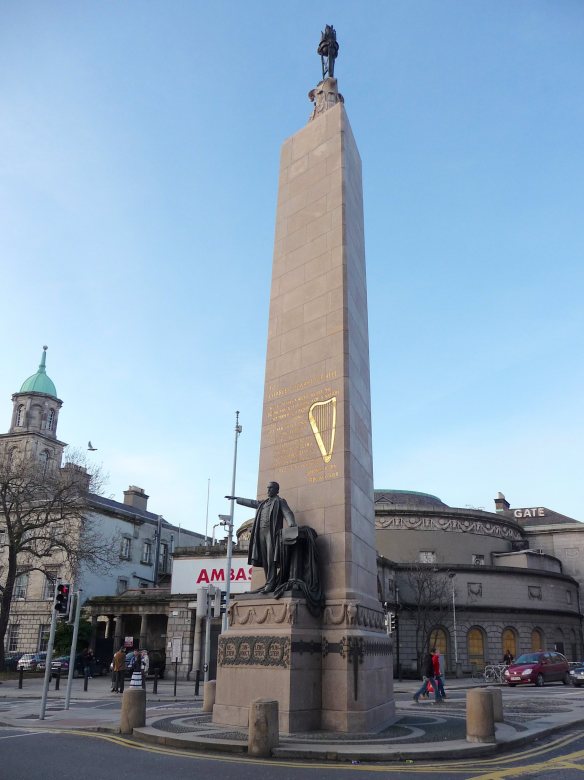
I was never really keen on Guinness before our trip to Ireland but I certainly developed a taste for the dark brew while I was there. To consolidate my learning experience, our first port of call in Dublin was the Guinness Storehouse. There was no shortage of signage to help us find the door.

The building was constructed in 1902 as a fermentation plant for the St. James’s Gate Brewery and was used for this purpose until 1988 when a new fermentation plant was completed.

2.nearly there

Converted to the Guinness Storehouse in 1997, there are now seven floors to explore surrounding a glass atrium in the shape of a pint glass. It is the largest beer glass in the world and would take 14.3 million pints to fill.

4.made it

Starting the self-guided tour on the ground floor, we were introduced to the four ingredients in beer; water, barley, hops and yeast. Contrary to popular belief, Guinness is not made from Liffey water even though the brewery is right there on the banks of the river. The crystal clear water is pumped from the Wicklow mountains to the south.

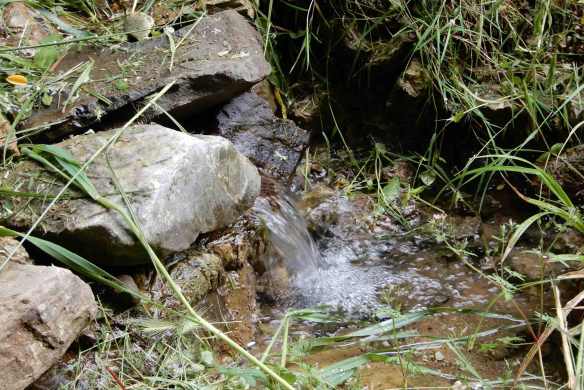
5.Wicklow waterfall6.Wicklow waterfall

Roasted malted barley gives Guinness its dark colour and unique flavours, along with a generous helping of hops.

7.hops

The extra ingredient in Guinness, the fifth, is the most important. In 1752, Arthur Guinness inherited £100 from his godfather and set up his own ale brewery in County Kildare. Seven years later, he moved to Dublin to try his luck, signed a 9,000 year lease on a property at St. James’s Gate and the rest is, as they say, history.

8.to Arthur

As our tour continued through the other floors, we passed copper fermenting tanks

9.Copper

and an old copper lid that was installed in the Guinness Park Royal Brewery when it opened in 1936.

10.Copper lid

Kegs travelled past on a conveyor belt

11.kegs on conveyer belt

and barrels were stacked, full of the famous brew.

12.barrels

A whole floor was dedicated to the world of advertising.

13.advertising

The Guinness harp was adopted in 1862 and is modelled on the 15th century Gaelic harp displayed at Trinity College in Dublin. It faces right instead of left to differentiate from the Irish coat of arms.

14.harp

We reached Nirvana on the seventh floor, the Gravity Bar, with fabulous views of Dublin and a free pint of nectar. We had heard that Guinness tastes better in Ireland, particularly in Dublin. Why is this so? One theory is that it is always fresh, the tap flows all day and it hasn’t sat in the pipes for long. Another is that the locals know how to serve it at the right temperature, in the right glass and with the right head. They have perfected the two-stage ‘double pour’ which should take exactly 119.5 seconds. So, what is the secret behind that creamy head? In 1959, Guinness began using nitrogen instead of CO2 which produced smaller bubbles and therefore, a smoother consistency. Whatever they have done, they have done it right. Cheers!

15.Gravity Bar

tiger tenants

The seasons have turned here in Tasmania and our long days of summer are behind us. Once again, we shared the garden with our reptilian residents for a few months but they have now found cosy homes for the winter. We can’t blame the snakes for wanting to live here, after all, we have created a paradise for them.
1.pond paradise2.pond paradise

We named our first lodger Suzy. She was quite small and liked to try out a variety of spots to capture the warmth of the sun.

Strangely, our large goldfish liked to keep her company.

5.Suzy

After a while, she left to make a home for herself in the forest and someone else moved in. He was looking rather dull and spent a lot of time among the rocks.

He then took to burying himself in the mulch, a bit worrying as there were times he was completely hidden. We assumed he was preparing to shed his skin, I was hoping to witness the process but I think it was done in private, we never did find the evidence.

8.tiger in mulch

It was at this point we realised we had two occupants, with one under the mulch and another in the favourite afternoon dappled shade position.

9.sleeping tiger

A short time later, perhaps after shedding, one moved out and the other remained. We would see her every morning catching the sun on the eastern side of the pond and then on the rocks under the callistemon in the afternoon. We had visitors for a couple of days in January and there was no sign of our tiger tenant until the afternoon of their departure, when she moseyed across the lawn to resume her residency.

10.tiger returns

Supposedly, tiger snakes don’t stay in one place for long but it seemed as though it was the same snake. She knew our voices and routines and was quite comfortable to lie undisturbed by our presence, we had a mutual respect for personal space.

13.tiger

We had a couple of very hot weeks in February where we saw no snakes and assumed she had moved on to start a family in the forest. One evening, we saw her (we like to think it was her) making her way up the driveway straight to the low birdbath we have for the wrens. I have never seen a snake drinking before, she was very thirsty.

14.thirsty tiger

When she had finished, she once again curled up in the shadow of the callistemon. You can watch a video of her drinking here, you’ll see the shadows of the wrens flying around, they weren’t happy.