Palazzo Davanzati

While staying at Villa Boccella our lovely friend, Deb (not the same lovely Deb that lives in Launceston), escorted us on a day trip to Florence to share the wonders of a city she knows well. Without her, we never would have discovered Palazzo Davanzati. Built by the wealthy merchant Davizzi family in the 14th century, the palace was purchased by the Davanzati family in 1578, their coat of arms is proudly displayed on the façade.

1.Palazzo Davanzati

They retained possession until 1838 after which the residence was divided into flats. In 1904, antique dealer Elia Volpi rescued, restored and furnished the property before opening it to the public as a museum in 1910. Ownership changed hands again in the 1920s and eventually the Italian state took over in 1951. The museum has undergone major restoration in recent years, the result is nothing short of spectacular. We entered into an internal courtyard, instantly boggled by the grandeur.

2.looking up from courtyard

The rooms on the upper floors are arranged around the central courtyard, gazing upward the architecture resembles a labyrinthine puzzle.
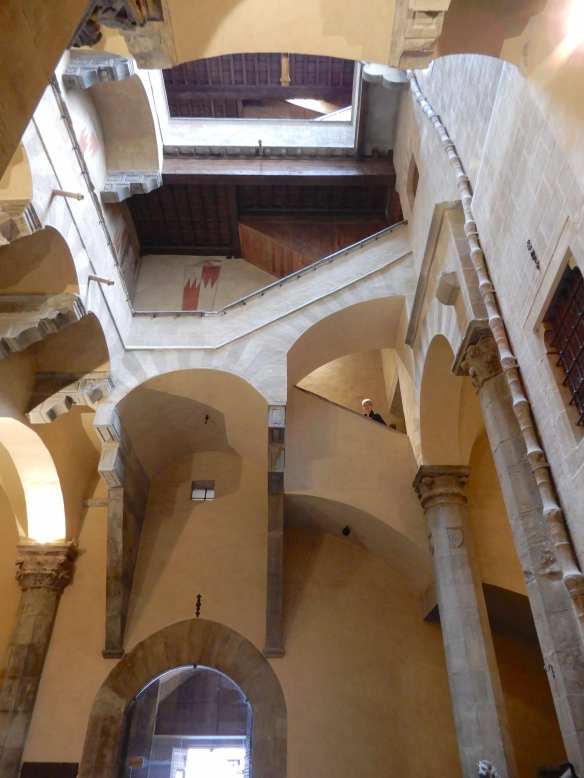
6.looking up from courtyard

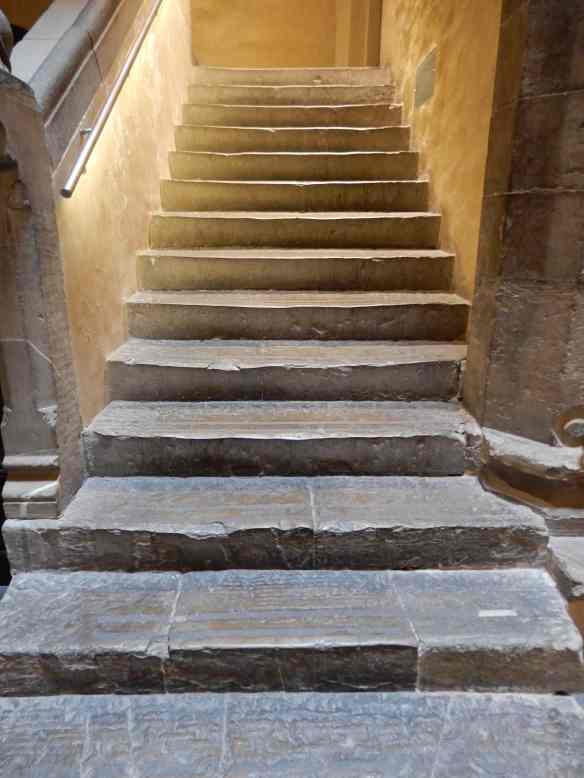
We climbed the worn stone steps to the first floor
7.steps

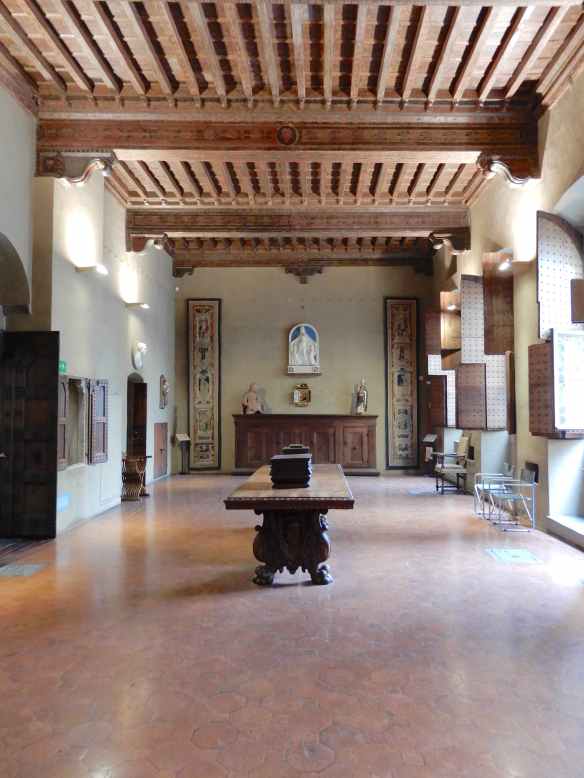
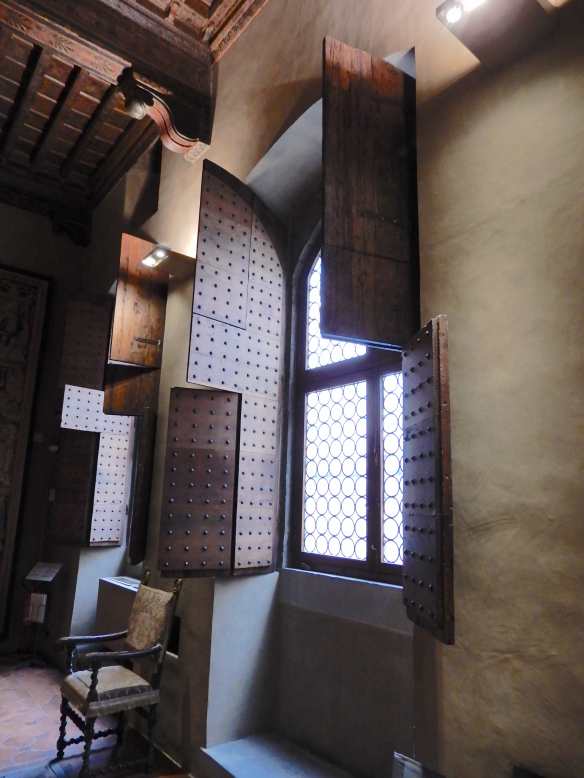
and entered the Great Hall, a room that would have been used for conducting business. The trapdoors in the floor in front of the windows open up to the loggia below so visitors can be identified before granting entry.
8.Great Hall9.Great Hall

The intricate ceiling detail is stunning, though I wondered about the comfort of the furniture.

Water can be hauled to all floors from the private well in the courtyard via pitchers on a pulley system.

On the same floor, the walls of the Parrot Room are decorated with a geometric patchwork design, motifs of the birds are painted in the lattice separating the blocks.

14.Parrot Room

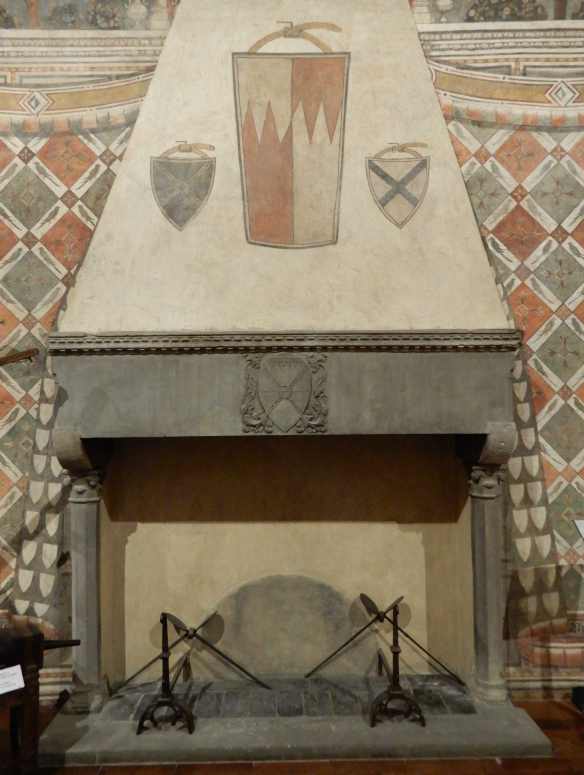
The huge fireplace is adorned with the red and white Davizzi coat of arms with emblems on either side representing the Ridolfo and Alberti families who married into the Davizzi family.
15.Parrot Room fireplace

The frescoed wall of the adjacent bedroom incorporates coats of arms of families allied with the Davizzi. The beautiful bed cover is a copy of the Guicciardini Quilt, the only known surviving example of medieval quilts. The original, made in Sicily in the second half of the 14th century, resides in The Bargello less than a kilometre down the road.

16.Peacock Room

Even though it would have been a luxury at the time, the ensuite bathroom is small and not conducive to a good long soak.

19.ensuite

There is a room displaying sewing and spinning implements as well as exquisite examples of lacework.

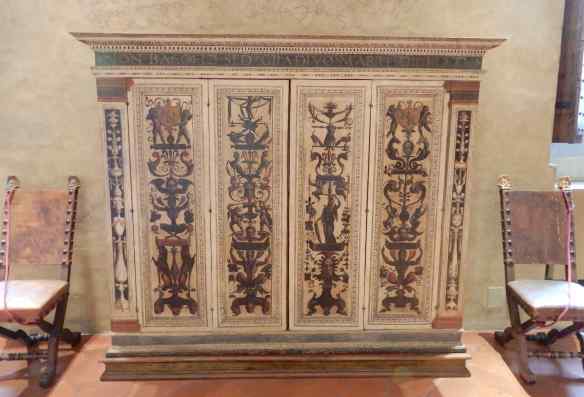
Another room exhibits furniture from the 14th to 19th century: delicate porcelain, timber cabinets, chairs and storage boxes fill the space.

24.cassone

30.chest

26.armour cabinet, Audience Room

A small water closet hides behind a very substantial timber door.

31.water closet

Obviously, there is indoor plumbing, these appear to be breather vents
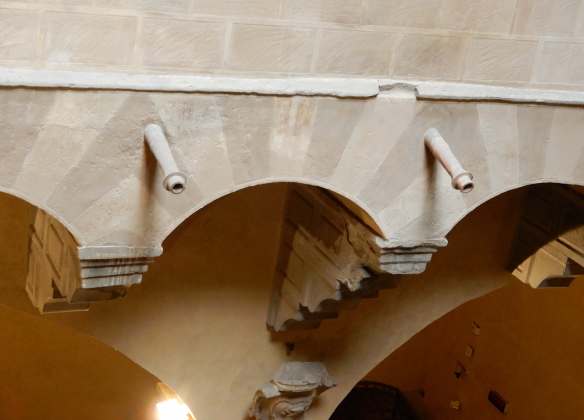
32.breather pipes

and the drainage pipe snakes its way down the internal courtyard wall.

On the second floor, the frescoes in the most sumptuous bedroom are inspired by the tale of the Chatelaine de Vergi (I love this version, I was enthralled), a tragic medieval story of friendship, love, loyalty, betrayal and the consequences of all the aforementioned. An unusual choice for a marital bedchamber or perhaps a constant reminder of the benefits of fidelity?

35.bedroom of the landlady

38.bedroom of the landlady

The addition of the ensuite bathroom was again unexpected.

39.bathroom

There is another bedroom on the third floor, as well as the kitchen, I don’t know why I haven’t got any photos of them. Interestingly, the kitchen is on the top floor to avoid cooking smells in the lower living areas and contain damage in case of a fire. Just when I thought we’d seen everything, a circular painting caught my eye. The timber platter is a birthing salver, circa 1450, originally used in Florence to bring food to pregnant women and then became symbolic gifts for a successful birth. The cherubs are engaging in a game of civettino where the players have to maintain a certain distance, the right foot of one touching the left of the other. The aim is to avoid being slapped by your opponent, although ‘slapping’ is probably not the most appropriate term to explain this depiction.
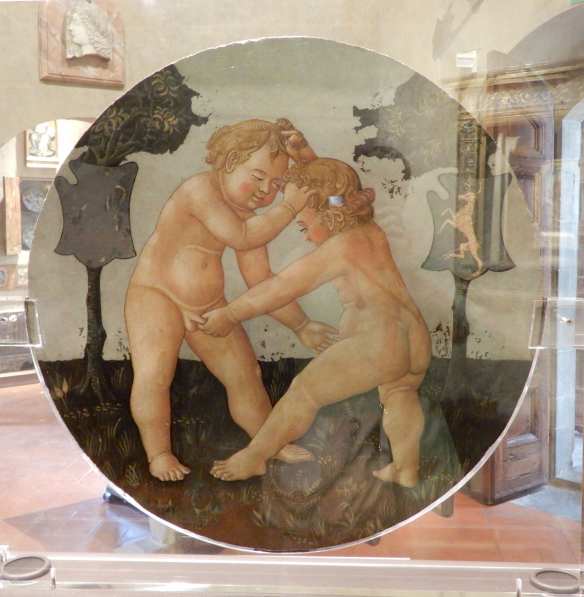
40.birth salver

Josef Chromy

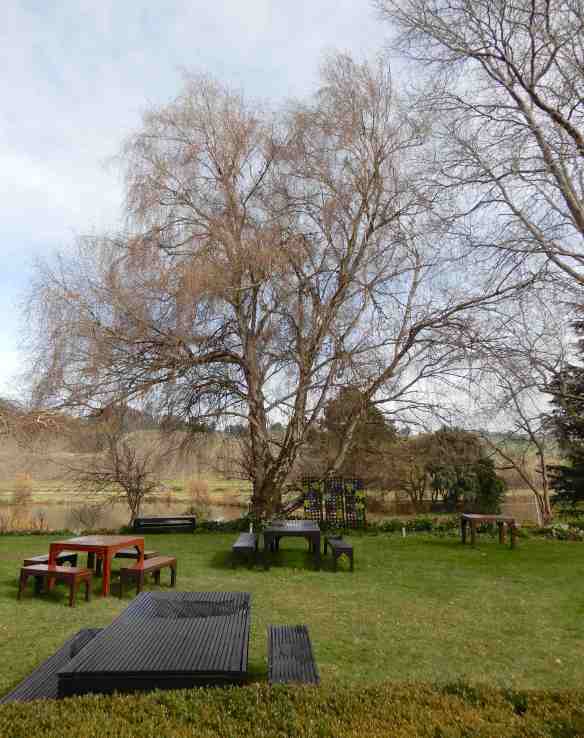
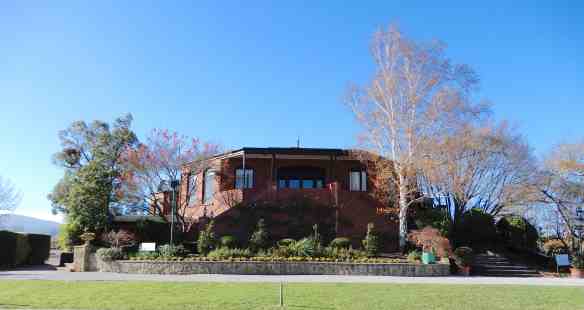
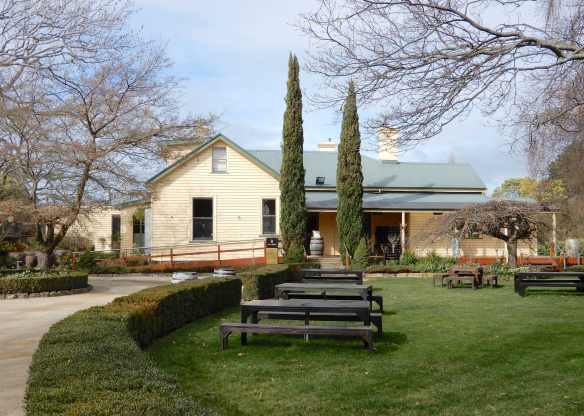
A couple of weeks ago we took Cooper to Launceston for a service, swapped her for a new BMW 120i courtesy car, picked up our lovely friend Deb and wended our way to  Josef Chromy for lunch. A picturesque 15 minute drive from the city, the winery at Relbia was launched in 2007. The cellar door is set within immaculate gardens where carefully trimmed privets, fountains and flowers mingle with majestic mature trees.

1.Josef Chromy Wines

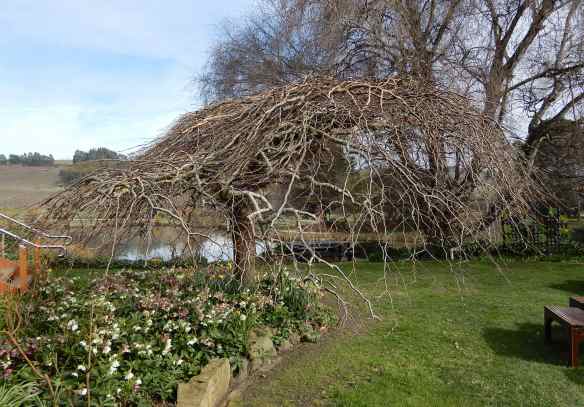
4.outdoor seating5.weeping elm

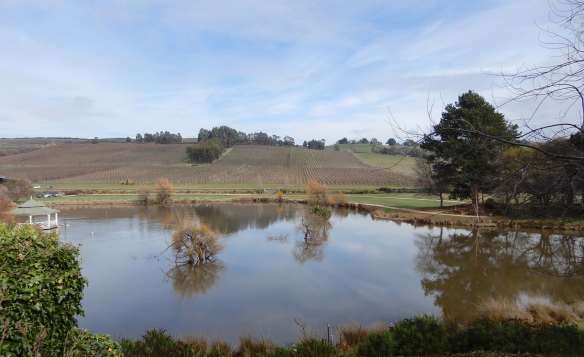
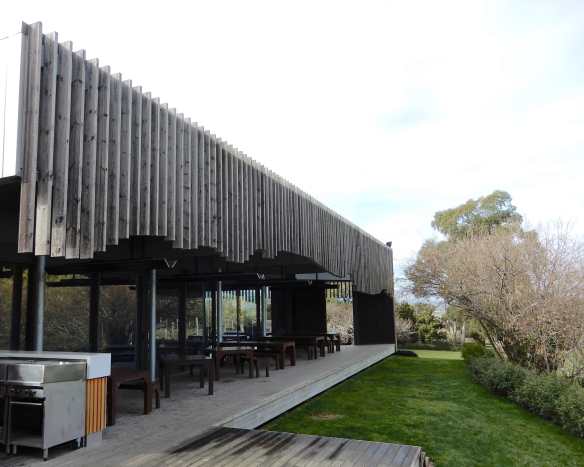
A popular venue for weddings, the lakeside pavilion is a perfect spot to exchange vows.

6.lake

The view across the lake to the vineyards beyond can be enjoyed whether eating outdoors

7.outdoor eating

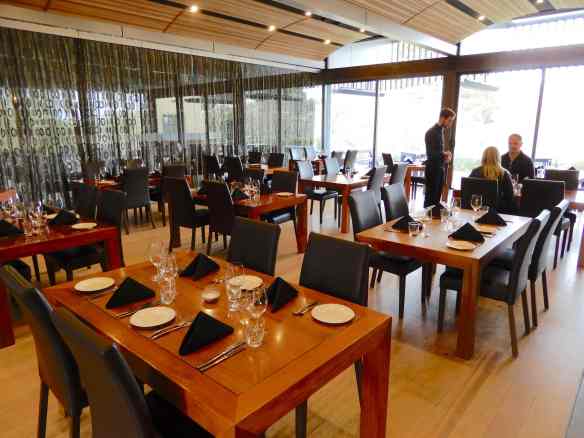
or inside the restaurant.

8.restaurant

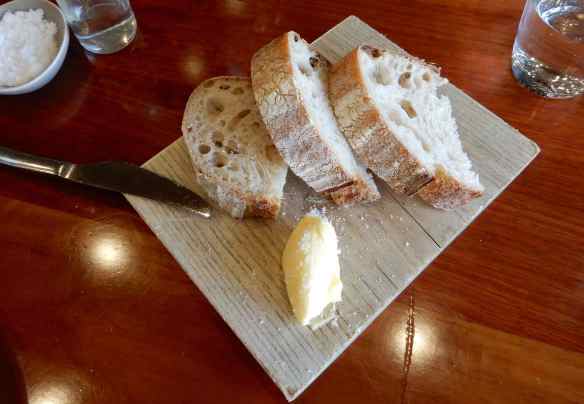
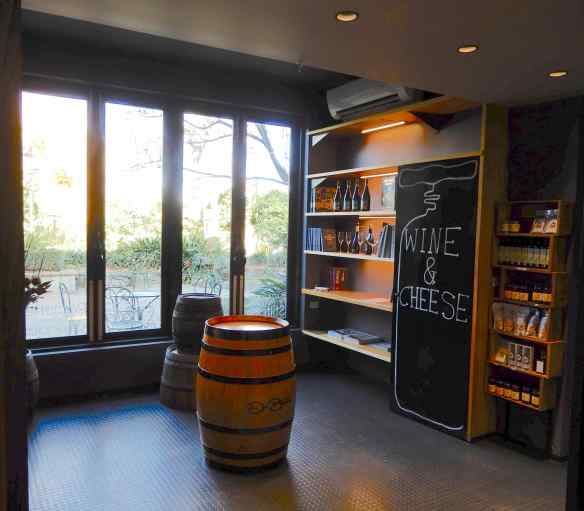
We took advantage of the week day Winter Lunch Special, two courses and a glass of wine for $45. The complimentary sourdough bread was delicious, as was the 2018 Pinot Gris.

9.sourdough

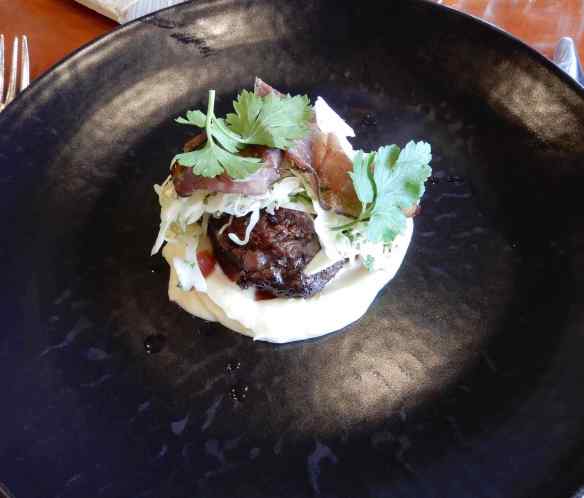
The main course for the special this day was the Baked Beef Cheek with cauliflower, rhubarb, shaved cabbage, parmesan, parsley & lemon. Coincidentally, it would have been my choice anyway.

10.baked beef cheek

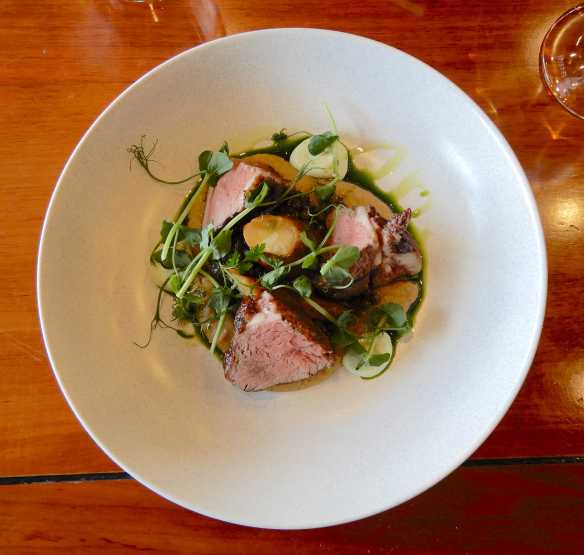
Michael opted for the Wood-Grilled Lamb Rump with baby lentils, baked Elphin Grove celeriac, spring onion & yoghurt. Not being a fan of celeriac, he requested the gnarled root be omitted. Graciously, chef replaced it with baked parsnip.

11.wood-grilled lamb rump

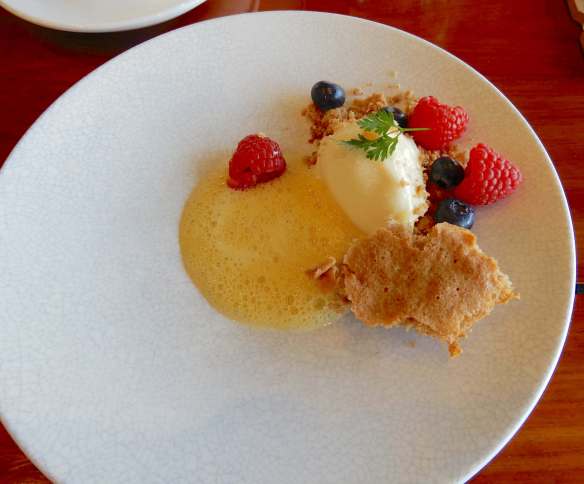
We all chose dessert instead of entrée as our second course, White Chocolate Bavarois was Chef’s special concoction.

12.white chocolate bavarois

The menu offered Hot Chocolate Mousse with leatherwood honey parfait, honeycomb, nashi pear and nib crumb.

13.hot chocolate mousse

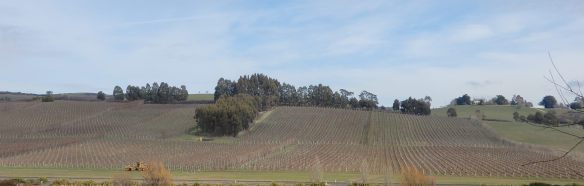
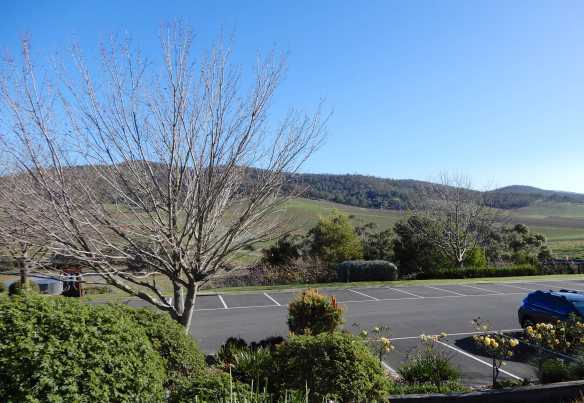
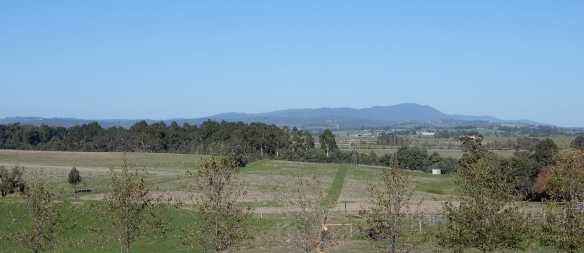
Finishing off with coffee, we watched the activity in the vineyard. With 61 hectares to prune and a vineyard stretching for 2km I was grateful to be merely observing.

14.vineyard

Nelson Falls

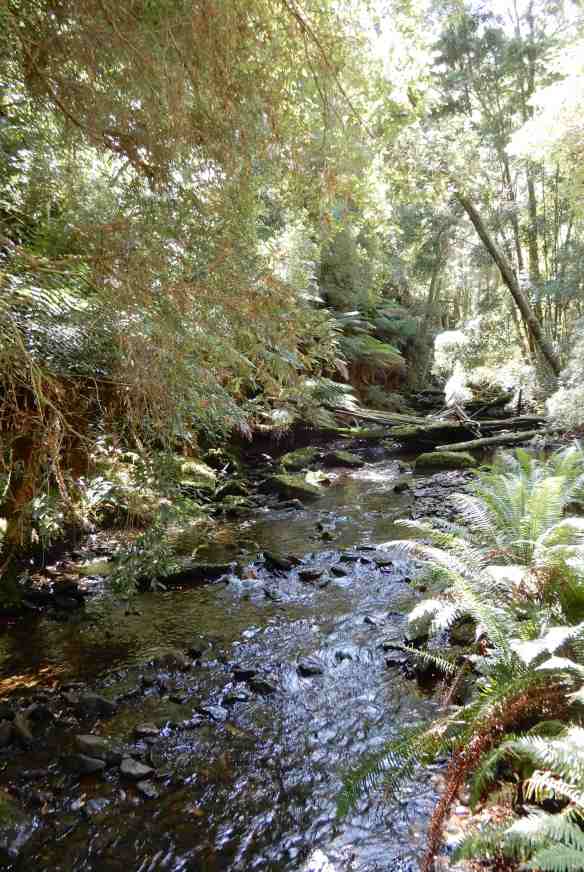
Half an hour from Queenstown, along the Lyell Highway, we parked at the start of the Nelson Falls Nature Trail. The falls are located within the Franklin-Gordon Wild Rivers National Park, four and a half thousand square kilometres of World Heritage listed wilderness. It’s an easy walk along a well maintained track

1.Nelson Falls Nature Trail

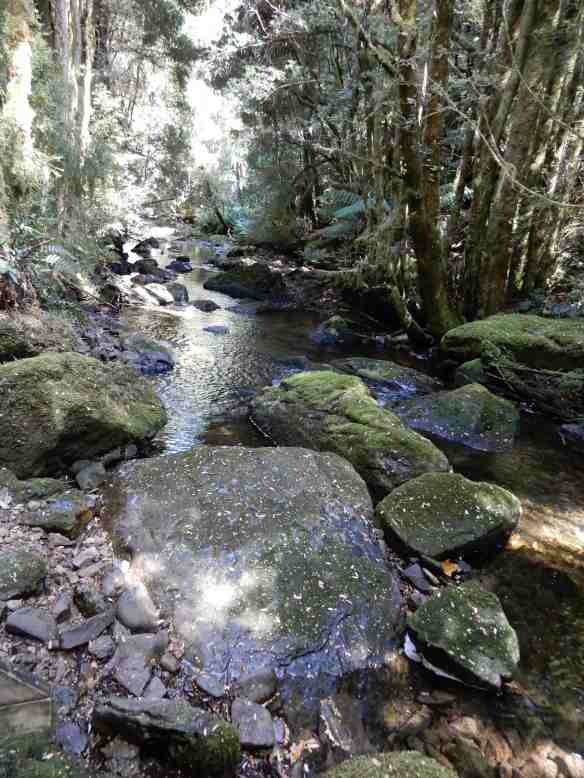
that follows the course of the Nelson River.

2.Nelson River3.Nelson River

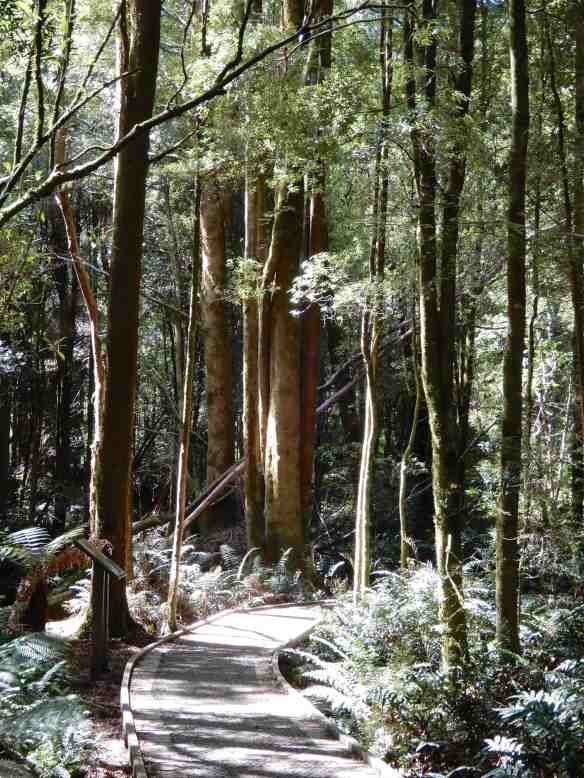
Majestic forest trees edge the path,

4.Nelson Falls Nature Trail

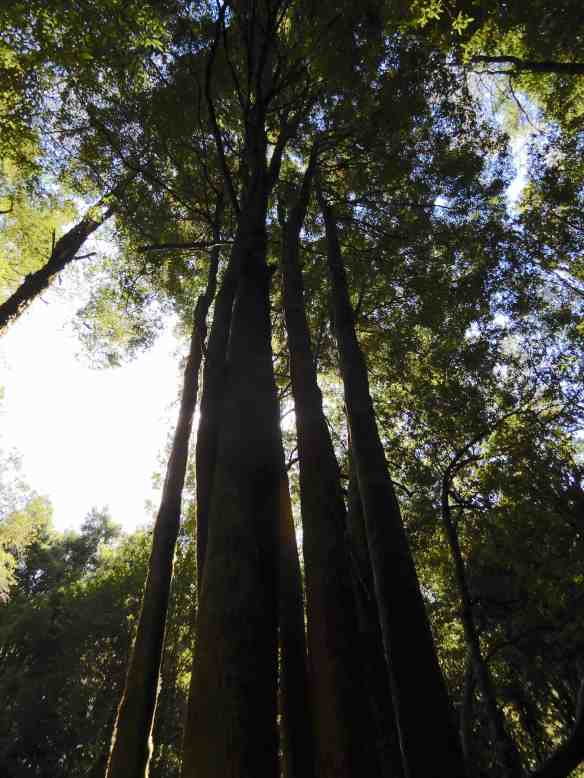
ancient species including myrtle, leatherwood and sassafras that thrive in the cool, temperate climate of the Nelson Valley.

5.forest

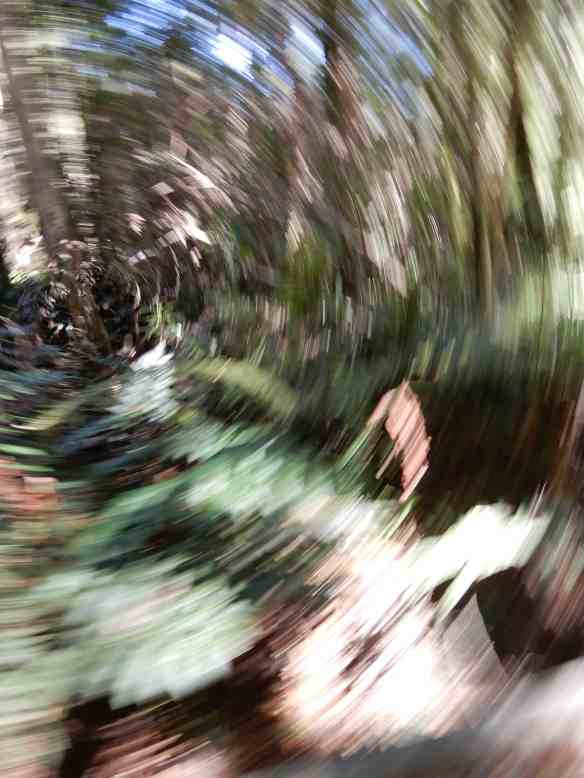
I’m not sure what happened here, perhaps a glitch in the camera that hasn’t happened before or since. Or has the lens captured the magic of the place?

8.magic

The ferns are magnificent, at least seven species flourish here dating back millions of years to a time when Tasmania was part of Gondwana.

9.ferns

At the end of a summer, the 30 metre high falls were still impressive.

10.Nelson Falls11.Nelson Falls12.Nelson Falls

I like the description of being shaped like an inverted wine glass.

13.Nelson Falls

The water was so clear,

14.Nelson River

we could see freshwater burrowing crayfish foraging among the rocks.

17.Freshwater Burrowing Crayfish

I noticed they had one claw smaller than the other. Apparently, this can happen naturally or it is the result of losing a claw and a new one regrows. Fascinating.

We retraced our steps along the river, leaving the coolness of the forest to continue our journey on the highway.

18.Nelson River19.Nelson River

Yarra vines

After the challenge of negotiating Melbourne peak hour gridlock, our tension slipped away as the traffic quelled and the road bisected a quilted landscape of farmland and vineyards. The Yarra Valley is renowned for its abundance of wineries and award winning wines. It seems June is the time of year to shorten opening hours to ‘winter time’ or to close doors and concentrate on maintenance but  De Bortoli didn’t let us down.

1.DeBortoli

The family company spans four generations, established by Vittorio and Giuseppina who migrated from Italy in 1928 to settle in Bilbul, New South Wales.  The Yarra Valley Estate was purchased in 1987, the original plantings of 1971 make it one of the oldest vineyards in the Yarra Valley. The bespoke rustic gates at the entrance to the property open to a tree-lined driveway, the morning sun still low in the sky.

2.bespoke gate3.DeBortoli driveway

The Locale Restaurant upstairs serves authentic Italian dishes made with ingredients grown on the estate.

4.restaurant & cellar door

Too early for lunch, we made our way to the cellar door instead.

5.cellar door

The space was warm and welcoming with interesting presentations of products.

There are a few tasting options, including a specialty gourmet selection combined with a cheese platter

8.cellar door

and private Trophy Room Tastings for those wanting to learn more about De Bortoli Italian wines.

9.Trophy Room10.Trophy Room

We opted for a tasting at the counter, the friendly staff happy to share their knowledge. A bottle of La Boheme, Act 1 Riesling accompanied us on our journey to enjoy later. The view is spectacular, 162 hectares of vines merge with rolling hills and distant ranges.

11.view from cellar door

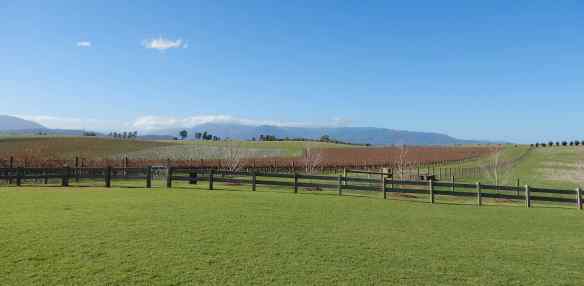
We retraced our tracks to Yarra Glen for a life sustaining sausage roll at the bakery before continuing on to our next point of call. Zonzo Estate is set on 230 acres with stunning views across the valley.

12.view from Zonzo13.view from Zonzo

The 45 acres of vines were pruned and ready for spring,

14.vines

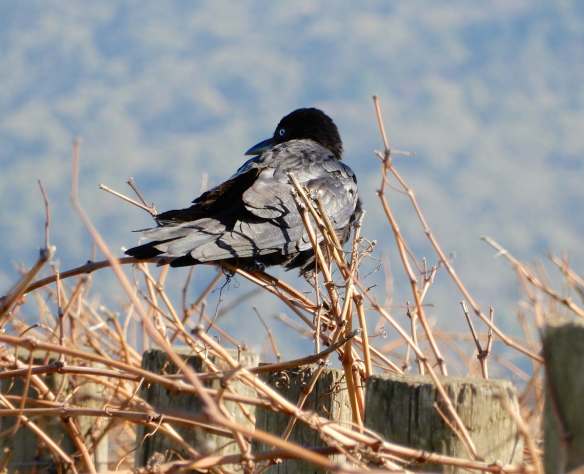
a comfortable perch for the local aves

15.raven

and the young olive trees were bearing fruit.

16.olives

We were disappointed to find the cellar door locked and deserted

17.Zonzo cellar door

but we had a quick nosey around. The old farm buildings have been cleverly resurrected and are a popular venue for weddings. I’d be happy just to sit with a glass of wine and absorb the wonderful vista.

18.Zonzo Estate

Kilmainham Gaol

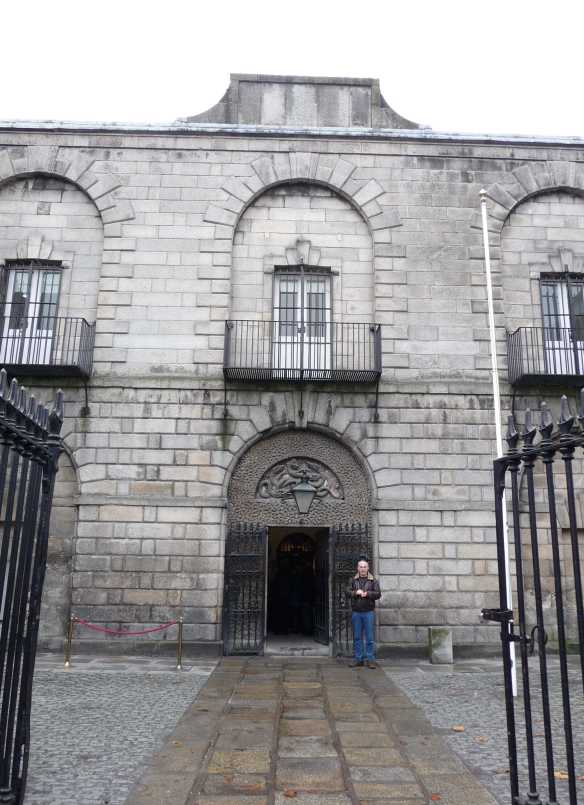
A suitably gloomy Dublin day accompanied our visit to Kilmainham Gaol, a prison built in 1796 and remembered for the incarceration and executions of the leaders of the 1916 Easter Rising. Decommissioned in 1924, the property was left deserted and neglected until 1960 when volunteers set about restoring the site to preserve it as a museum.

1.Kilmainham Gaol entrance

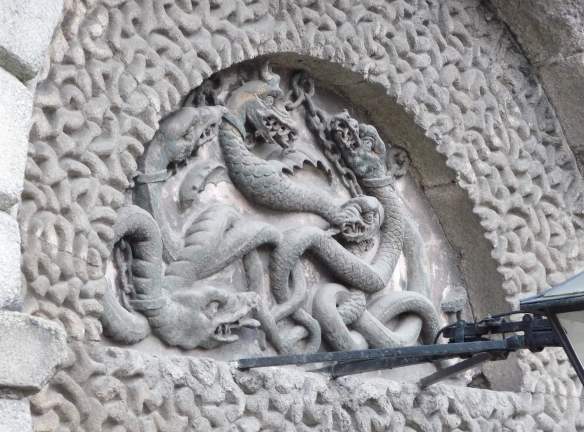
Above the entrance, a carving of five serpents in chains represents the five most heinous crimes: rape, murder, theft, piracy and treason.

2.Five serpents in chains above entrance

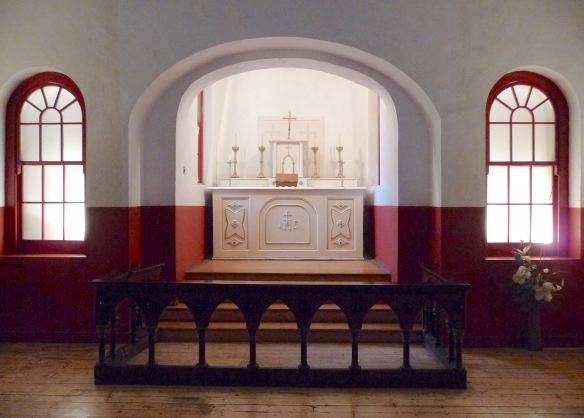
The restoration was completed in 1971 with the re-opening of the chapel after reconstruction of the altar. One of the leaders of the Easter Rising, Joseph Plunkett, married his fiancé Grace Gifford in the chapel just hours before he was executed.

3.Chapel

The West Wing is the oldest part of the gaol, the corridors are long, dark and cold.

4.West Wing5.West Wing

The limestone walls gave no insulation and the windows had no panes, an attempt to reduce the incidence of disease with the flow of fresh air.

Poor health and hygiene was inevitable with five prisoners sharing a cell built for one. There was no segregation between men, women and children and a single candle provided the only light and had to last two weeks.

9.cell

An inscription has been scratched by a former prisoner over a doorway , “beware of the risen people that have harried and held, Ye that have bullied and bribed”. The quote is from the poem, The Rebel by Patrick Pearse, one of the authors of the Irish Proclamation of Freedom and a leader of the Easter Rising.

10.Padraig Pearse quote

The Great Famine contributed immensely to the problem of overcrowding in the West Wing with more people found guilty of stealing food and those committing crimes deliberately so they would at least be fed regularly. Adding to the numbers were convicts awaiting transportation to Australia and people with mental illnesses.

11.West Wing

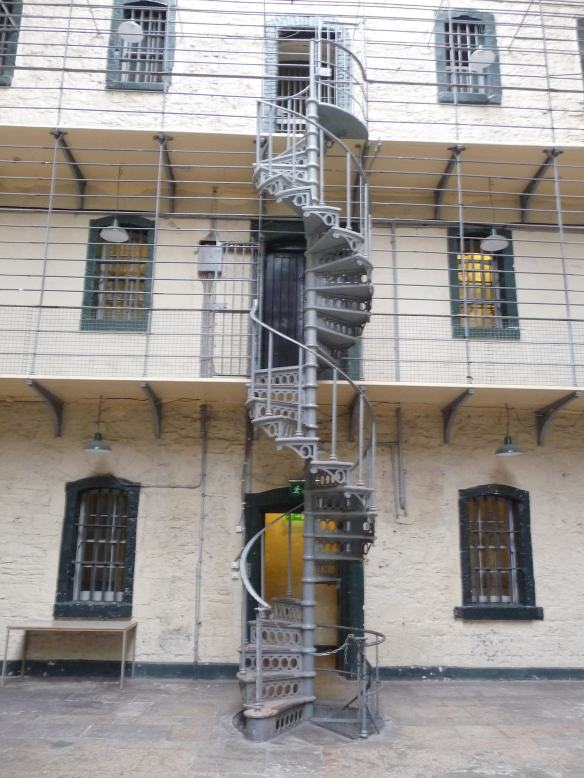
The situation was alleviated somewhat in 1862 with the opening of an additional ninety six cells in the new East Wing. The Victorian era brought different ideas on the reform of inmates and the new addition was more open and much lighter.

12.East Wing Main Hall13.East Wing16.East Wing

The cells didn’t seem to be any bigger but definitely less draughty, a bonus for the men who were moved to the East Wing. The women stayed behind in the dark, cold cells of the West.

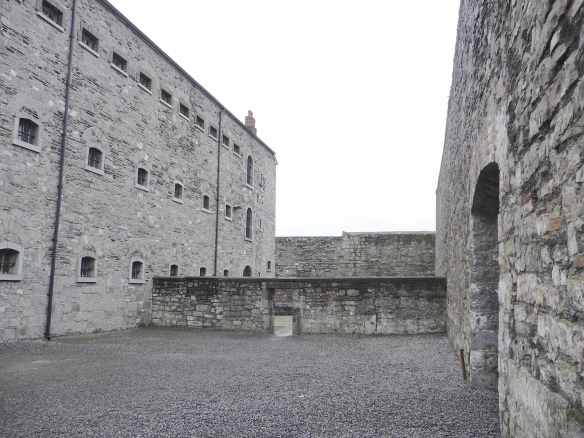
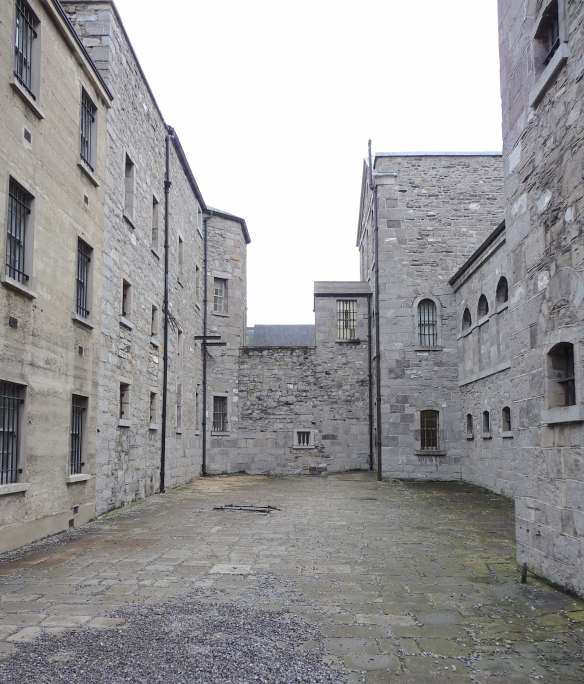
With the new wing came exercise yards where the prisoners spent one hour a day, silently walking in a circle. Another hour was spent in church and the remaining 22 hours confined to their cells.

19.exercise yard East Wing20.exercise yard East Wing21.exercise yard East Wing

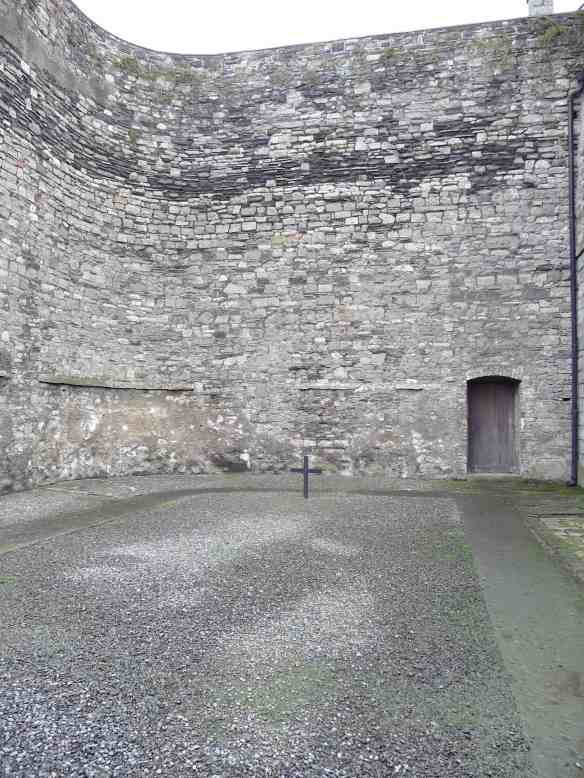
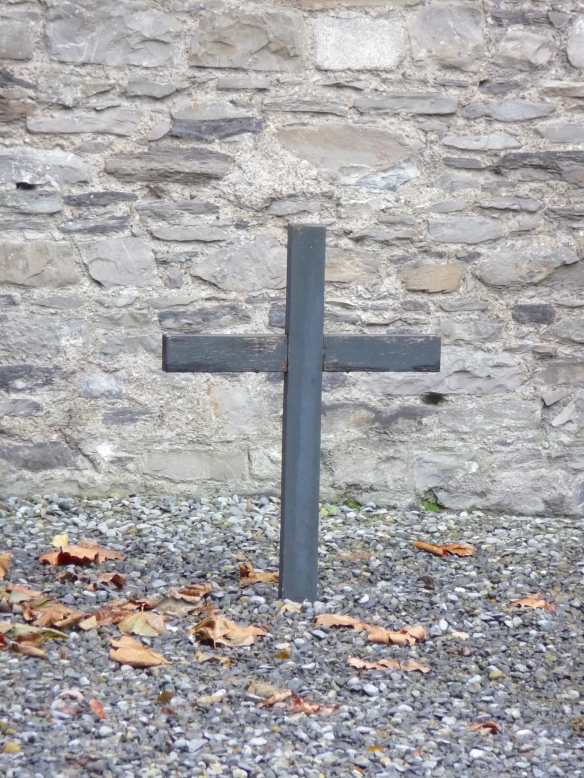
The Stonebreakers’ Yard was stunningly silent, a palpable ominosity hung in the air. Between May 3rd and May 12th 1916, fourteen men, leaders of the Easter Rising, were executed by a British firing squad. The first was Patrick Pearse, a cross marks the ground where he and the next twelve died.

22.Cross marking the place of execution of the leaders of the 1916 Rising

James Connolly was the last. He had been badly wounded in the uprising and, even though he only had a day or two to live, was brought to the courtyard on a stretcher, through the gate.

23.Stonebreakers' Yard gate where ambulance brought James Connolly

Unable to stand, instead of being marched to the other end of the yard for execution, he was tied to a chair and shot. A second cross marks the spot where he died.

24.Cross marking the place of execution of James Connolly

It seems fitting that the Irish tricolour flies between these two crosses, a symbol of the independence these men fought so hard for.

25.Irish tricolour between crosses in Stonebreakers' Yard