Grünthal

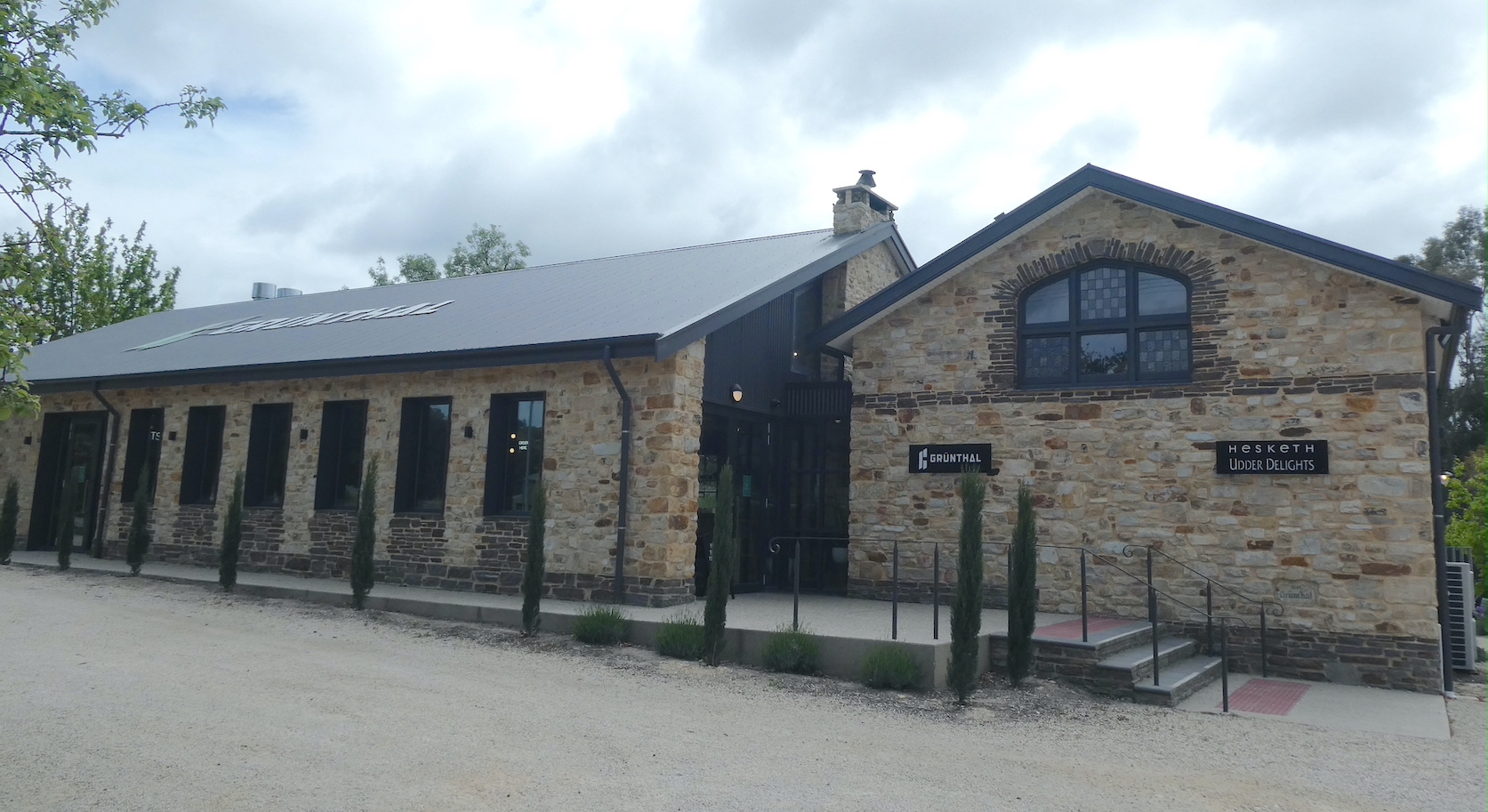
We have many fond memories of times spent in Grumpy’s Brewhaus at Verdun in the Adelaide Hills, not least the evening of our farewell in November 2008 before relocating to Tasmania. Tragically, fire gutted the restaurant in 2016 and, although the brewery survived, it was the end of Grumpy’s. The site remained undeveloped for nearly five years until new owners realised their vision for the historic venue.

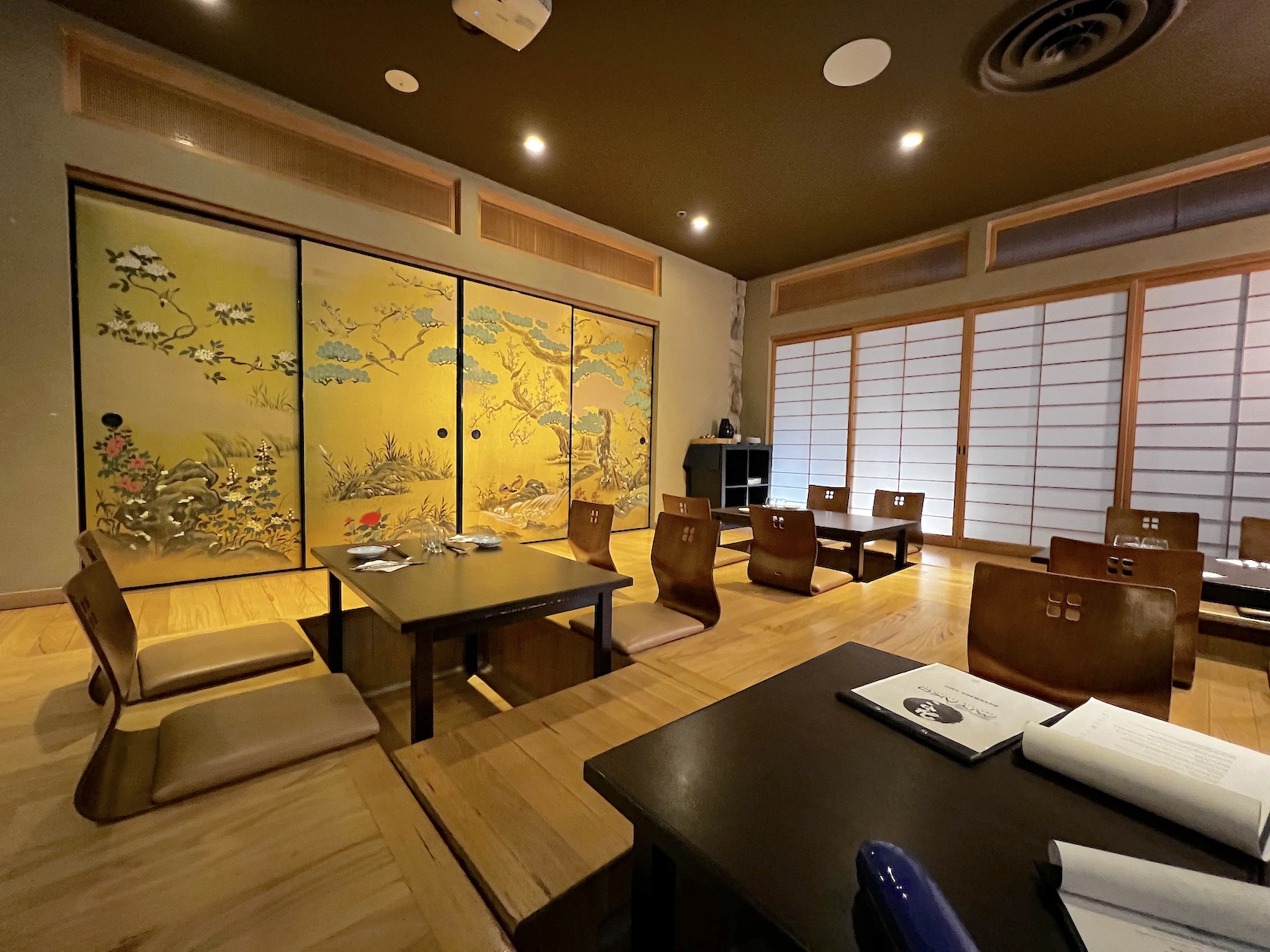
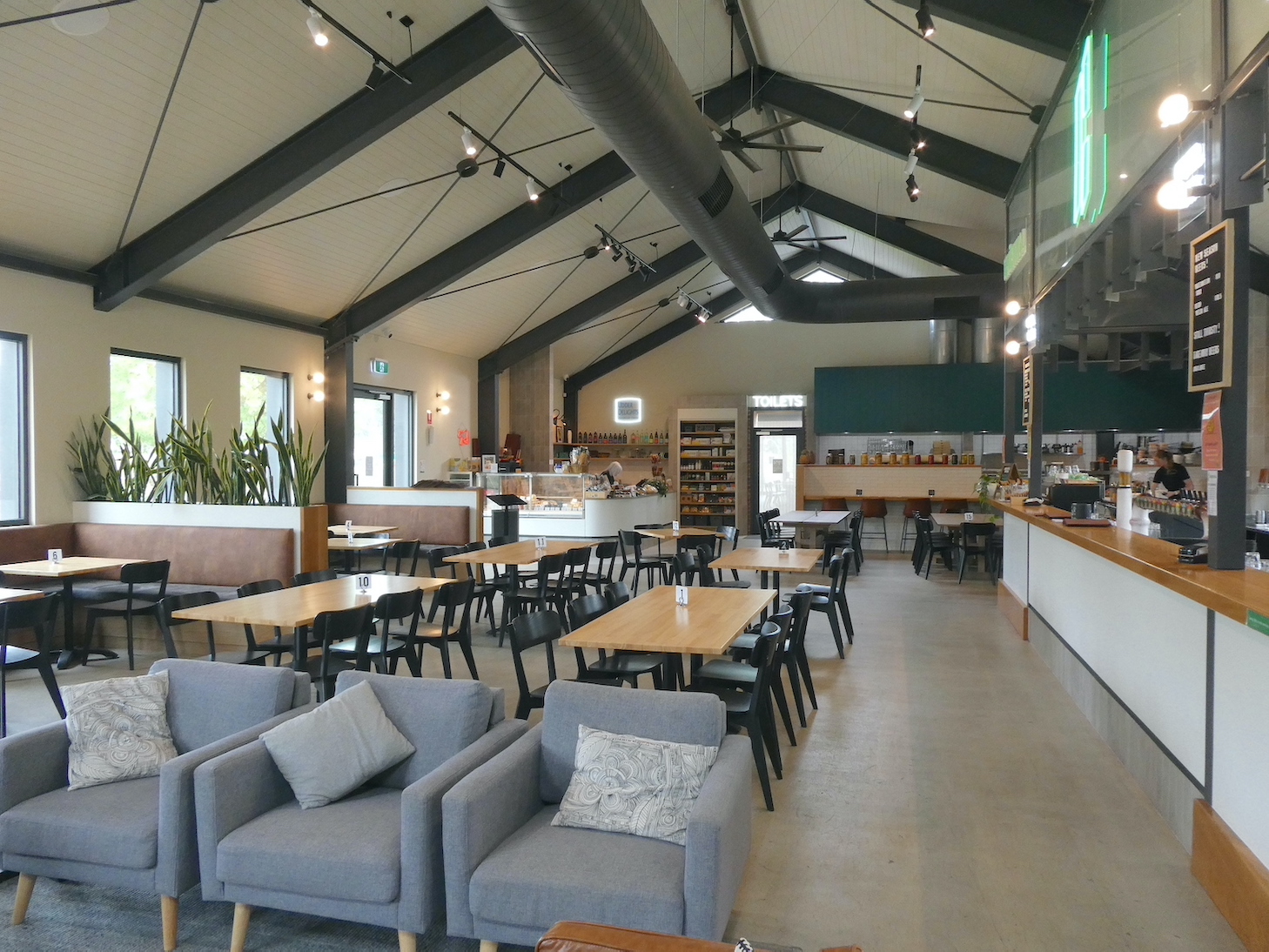
While in Adelaide recently, we visited the new incarnation, Grünthal, the name given to Verdun by the original Prussian settlers meaning Green Valley. The expansive restaurant space offers a variety of seating options as well as a conservatory for private functions.

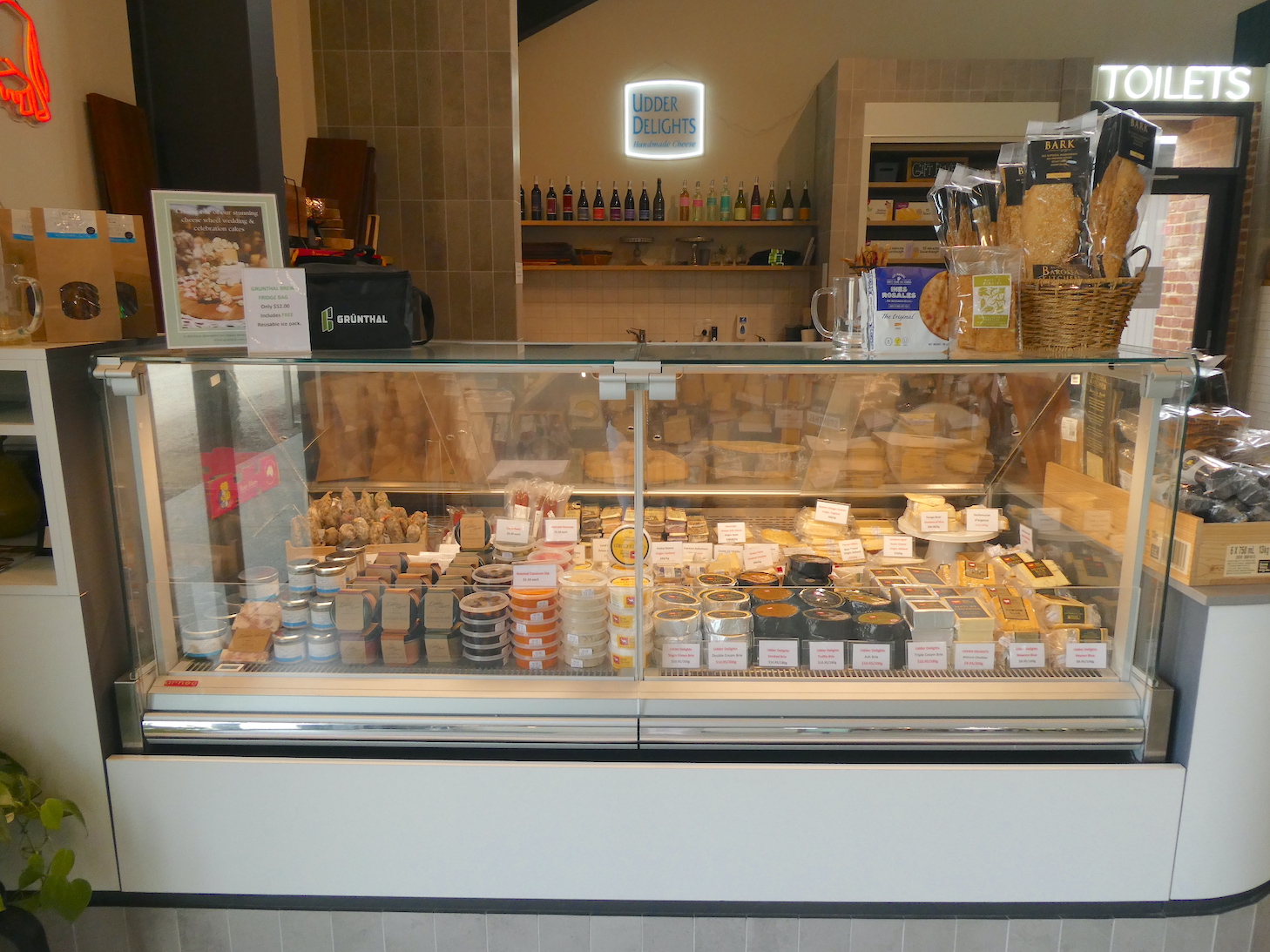
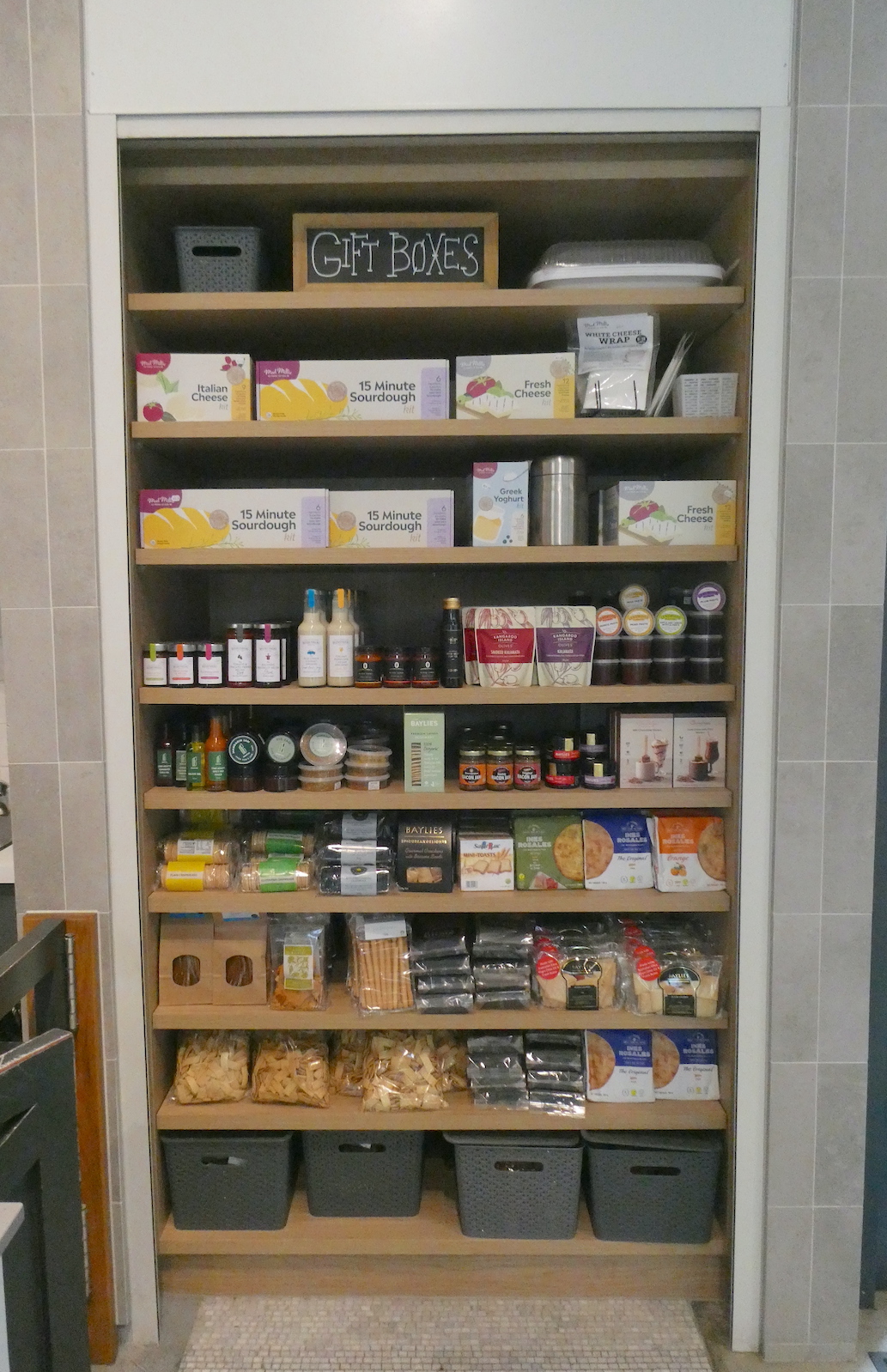
Saul and Sheree Sullivan already had years of experience creating specialty cheeses at their Udder Delights factory, also in the Adelaide Hills, before Saul decided to try his hand at the art of beer brewing. A wondrous display of local smallgoods, patés, terrines, crackers, honeys and delicious produce greeted us at the door.

Complimentary cheese tastings are offered daily and despite a looming lunch engagement elsewhere, we couldn’t resist a nibble and chat.

For those not enamoured with the amber brew, a comprehensive range of colourfully labelled Hesketh Wines are available at the bar. The family owned winery sources fruit from premium South Australian wine estates, making the most of the individual strengths of different growing regions.

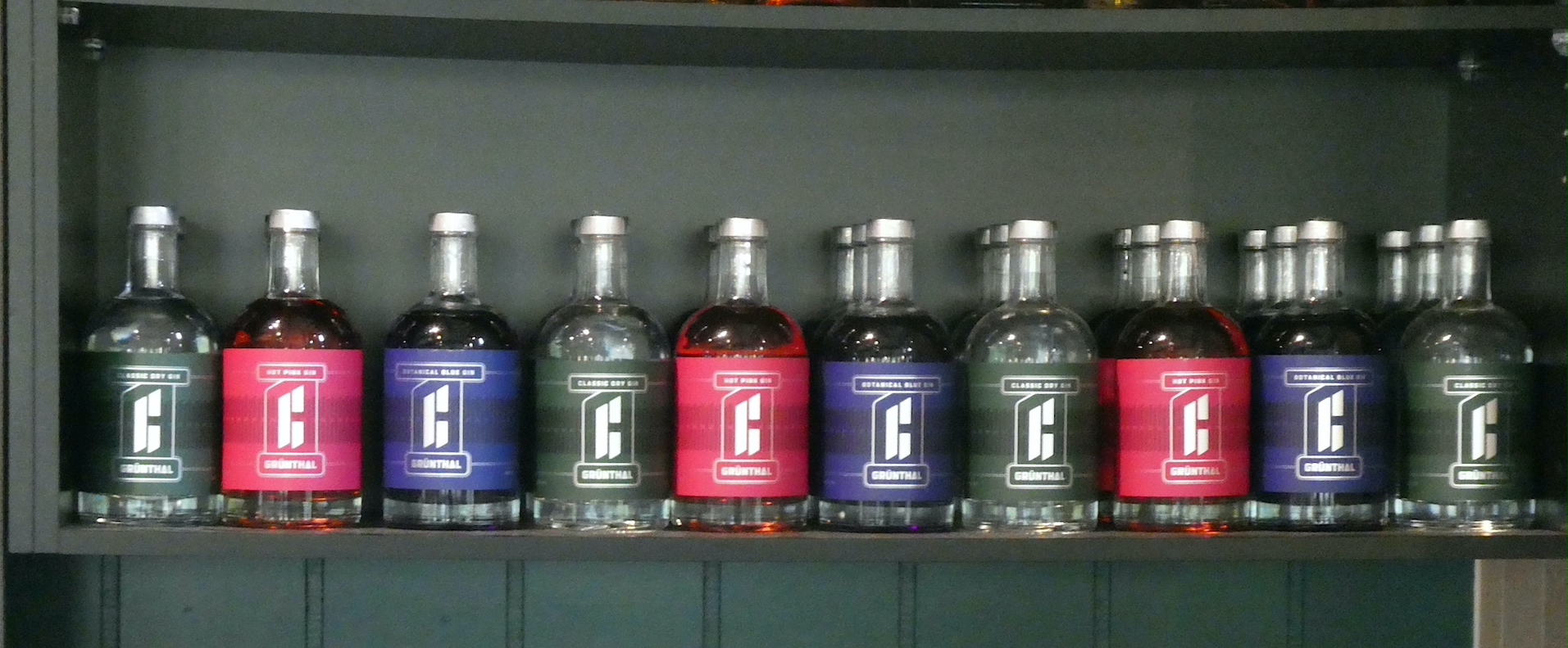
While Sheree works with an offsite distiller to produce Grünthal gins,

Saul’s dedication in the brewery can be found on tap.

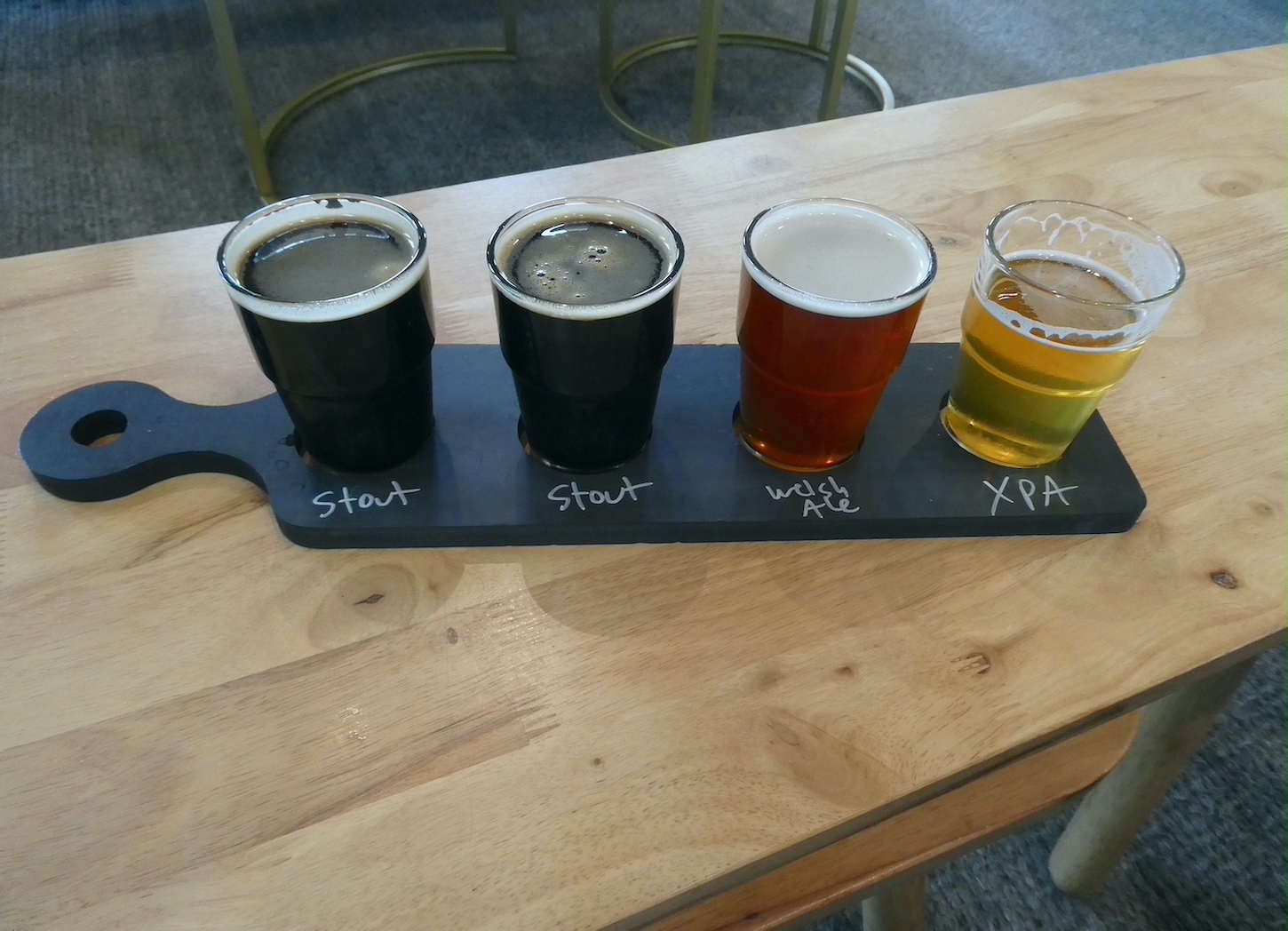
We selected a tasting paddle (with driving duty, I restricted myself to a small stout) and made ourselves comfortable.

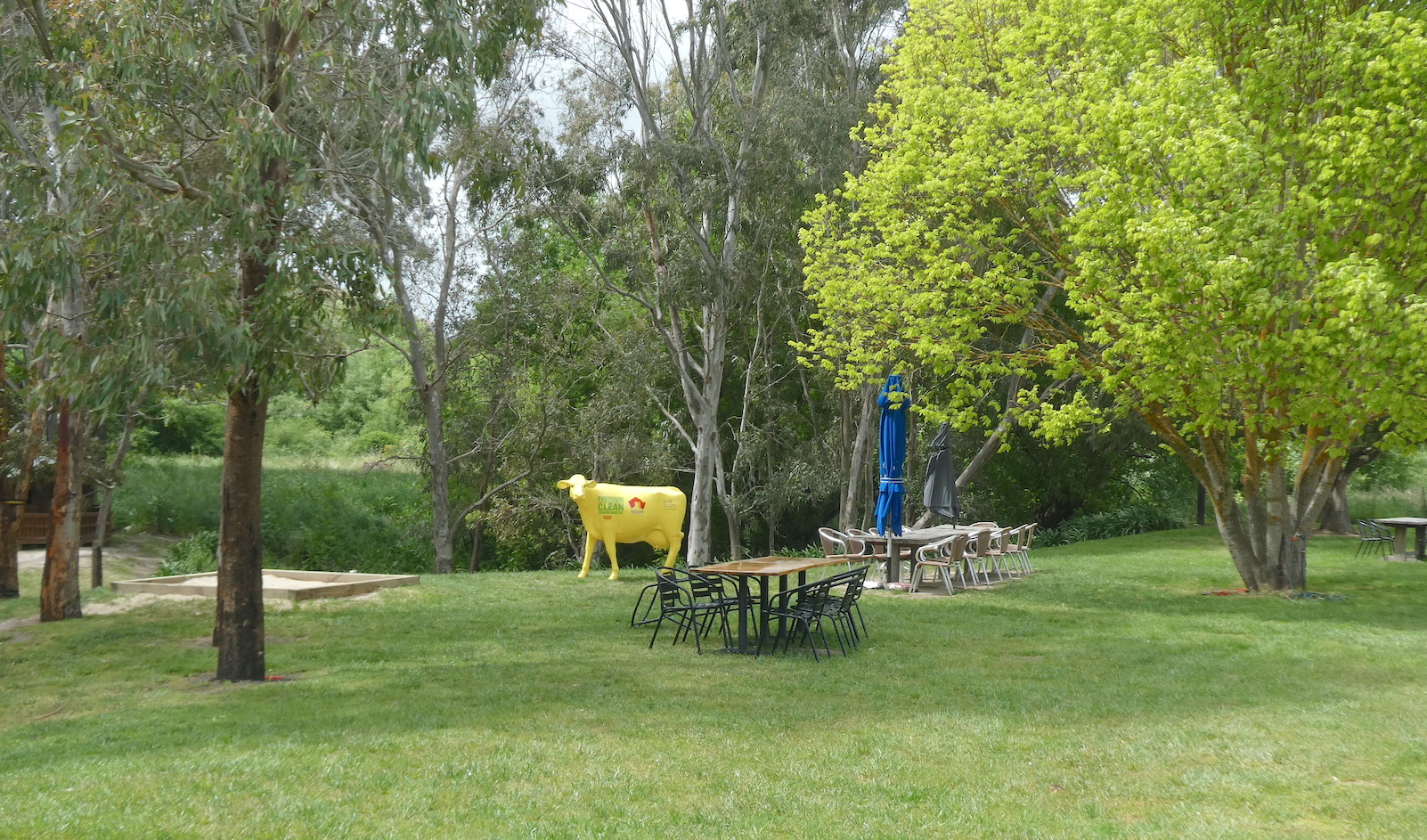
While Michael finished his breakfast, I wandered outside to peruse the grounds and outdoor seating options.

I’m so pleased we were introduced to Grünthal, they have done Grumpy’s proud.

precious Pinot

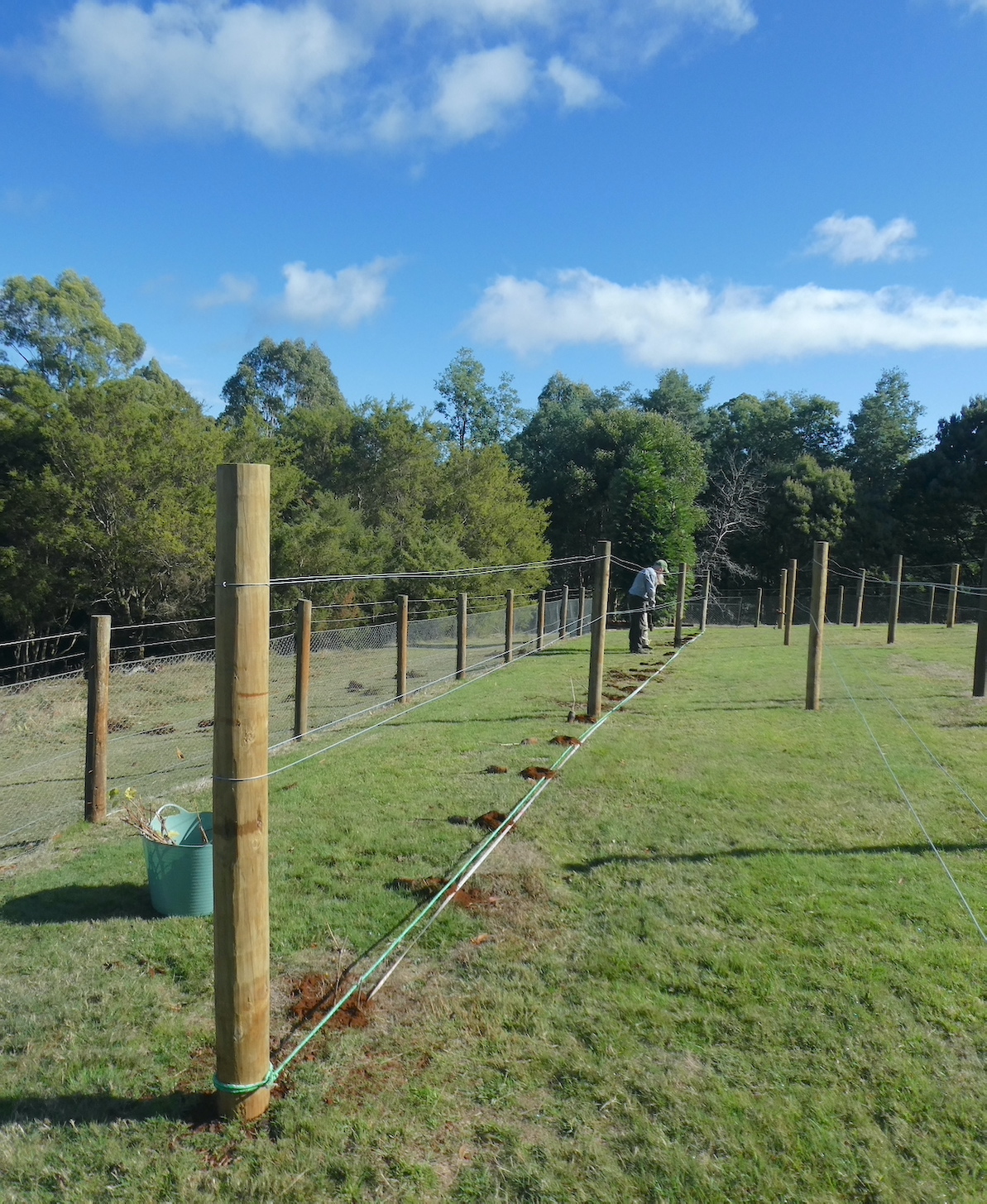
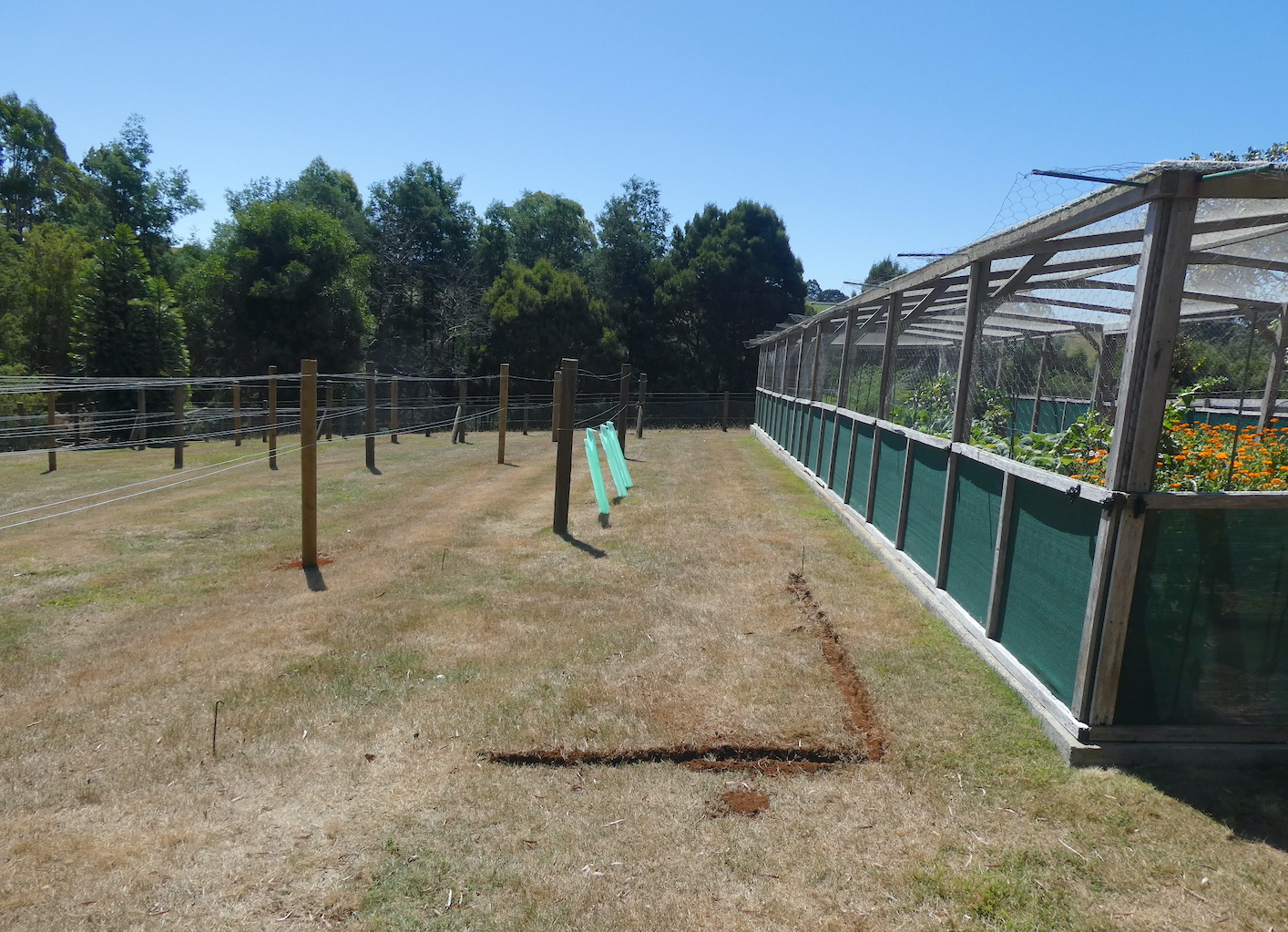
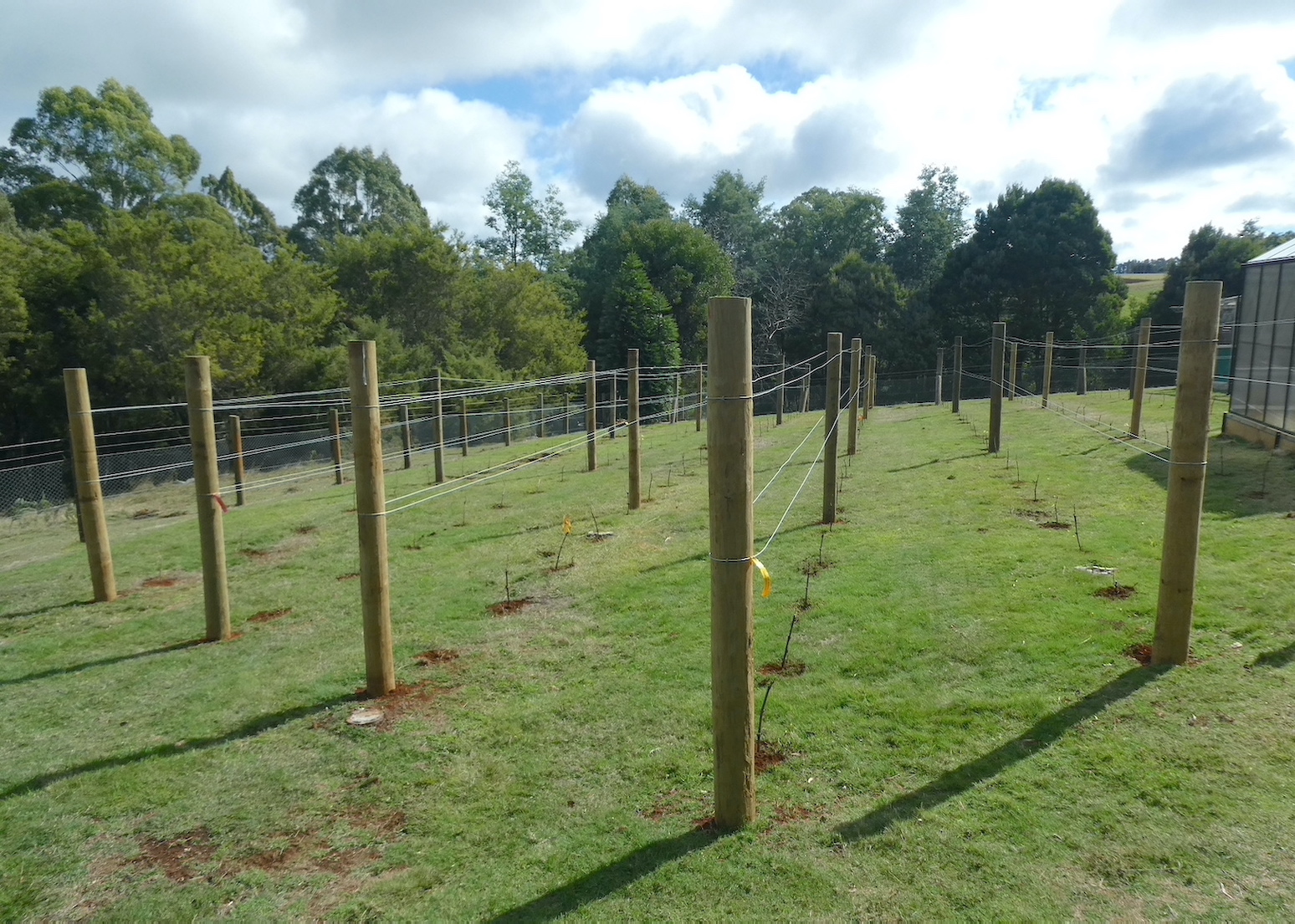
Last summer, a conversation over lunch with a friend revealed her desire to establish a micro-vineyard. However, finding the right parcel of land was proving difficult, at which point we offered a few options on our property. The area designated as ‘orchard’ when we moved here has, over the years, seen the demise of the aged fruit trees and we had intended moving the remaining plants. This plot was deemed perfect for the project. Posts were added to our already existing few just before the new year

and support wires were strung soon after.

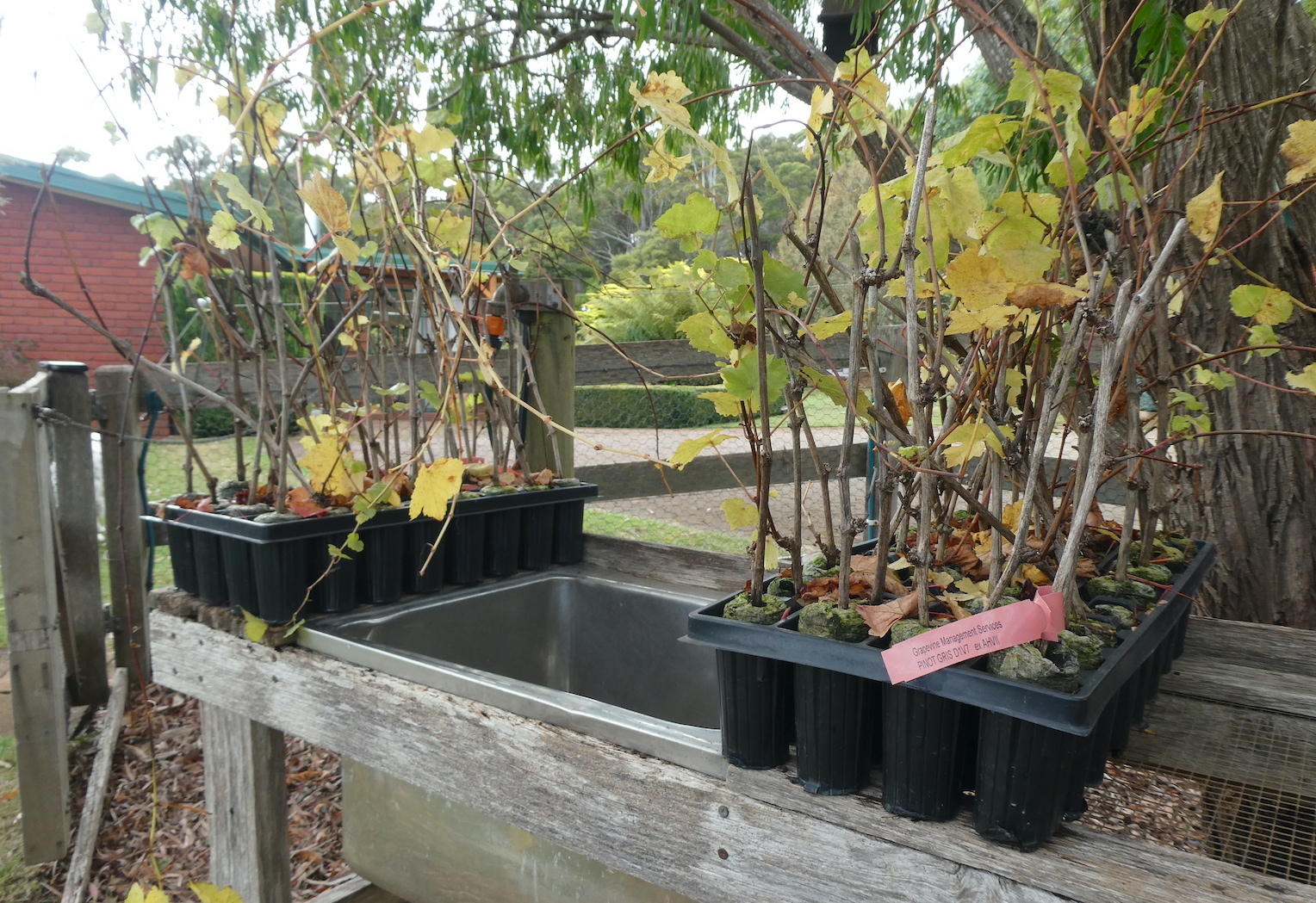
The vines were secured within the veggie enclosure through summer

until ready for planting in autumn.

Each vine was trimmed to the first two or three buds

while Michael took up the auger and embraced the arduous task of hole digging.

Each plant was placed into the precisely drilled holes, backfilled and watered

until 158 vines nestled in their new home.
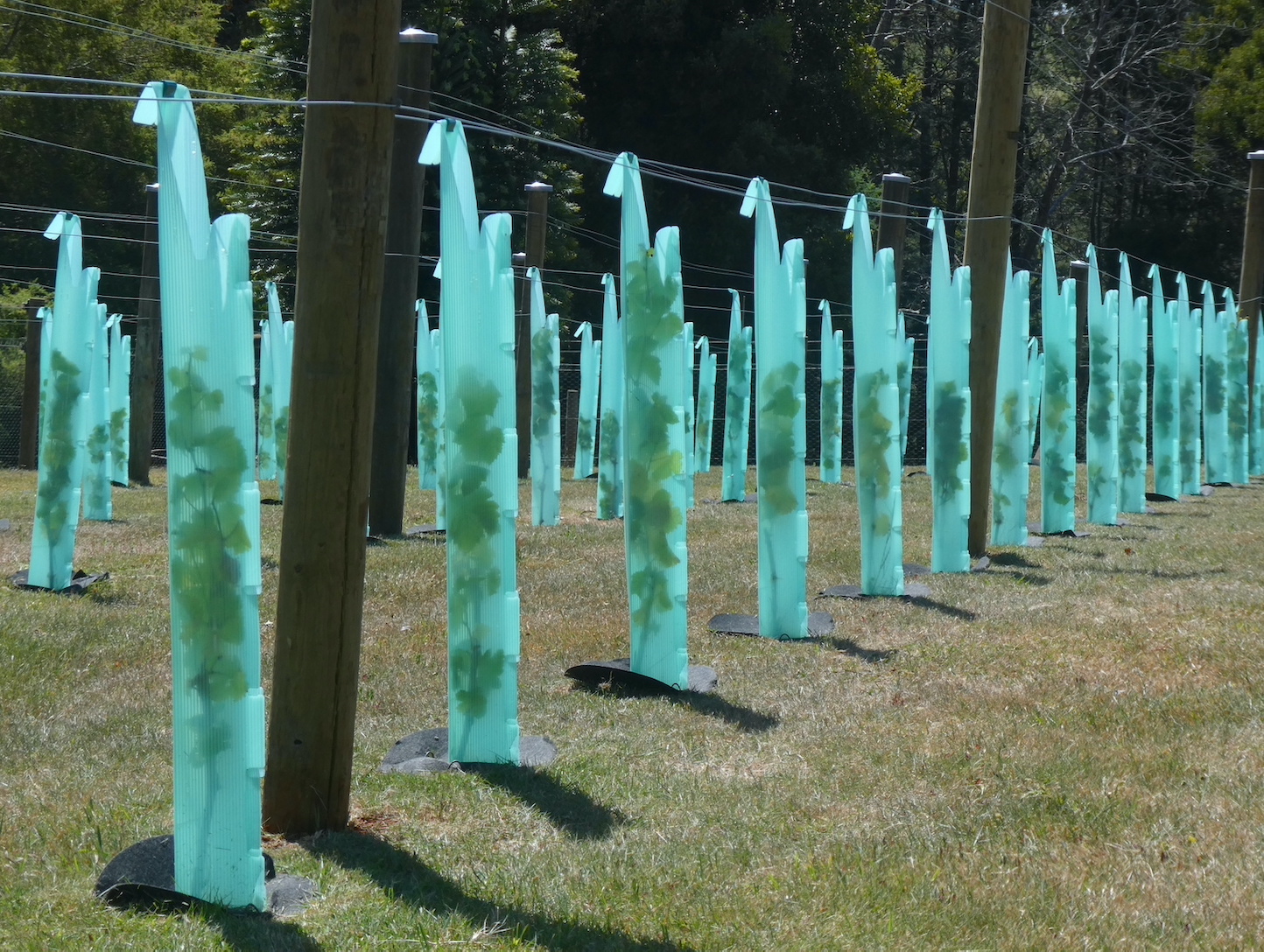
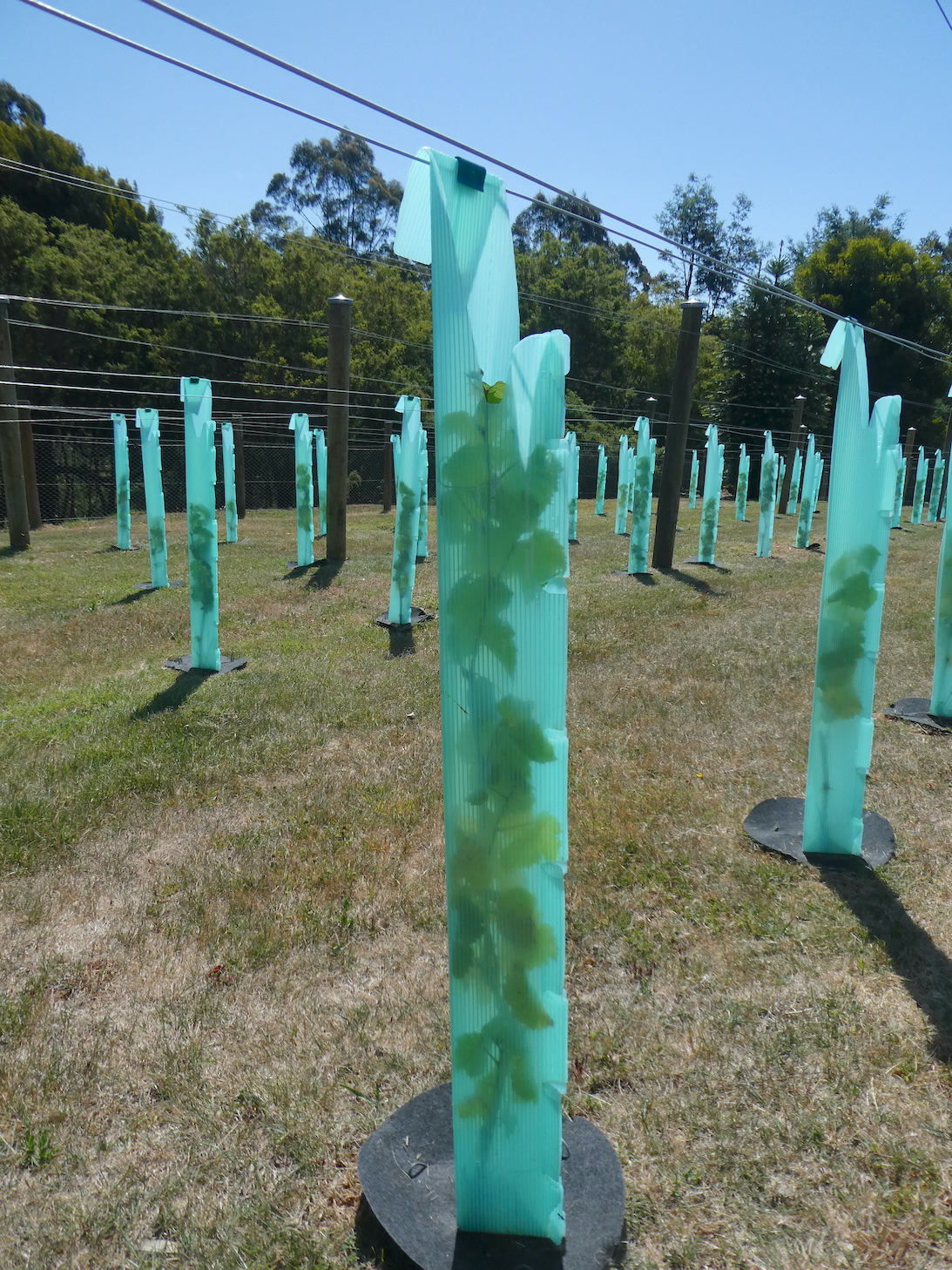
Tree guards would protect the youngsters through the winter months and stave off attacks by marauding wildlife.
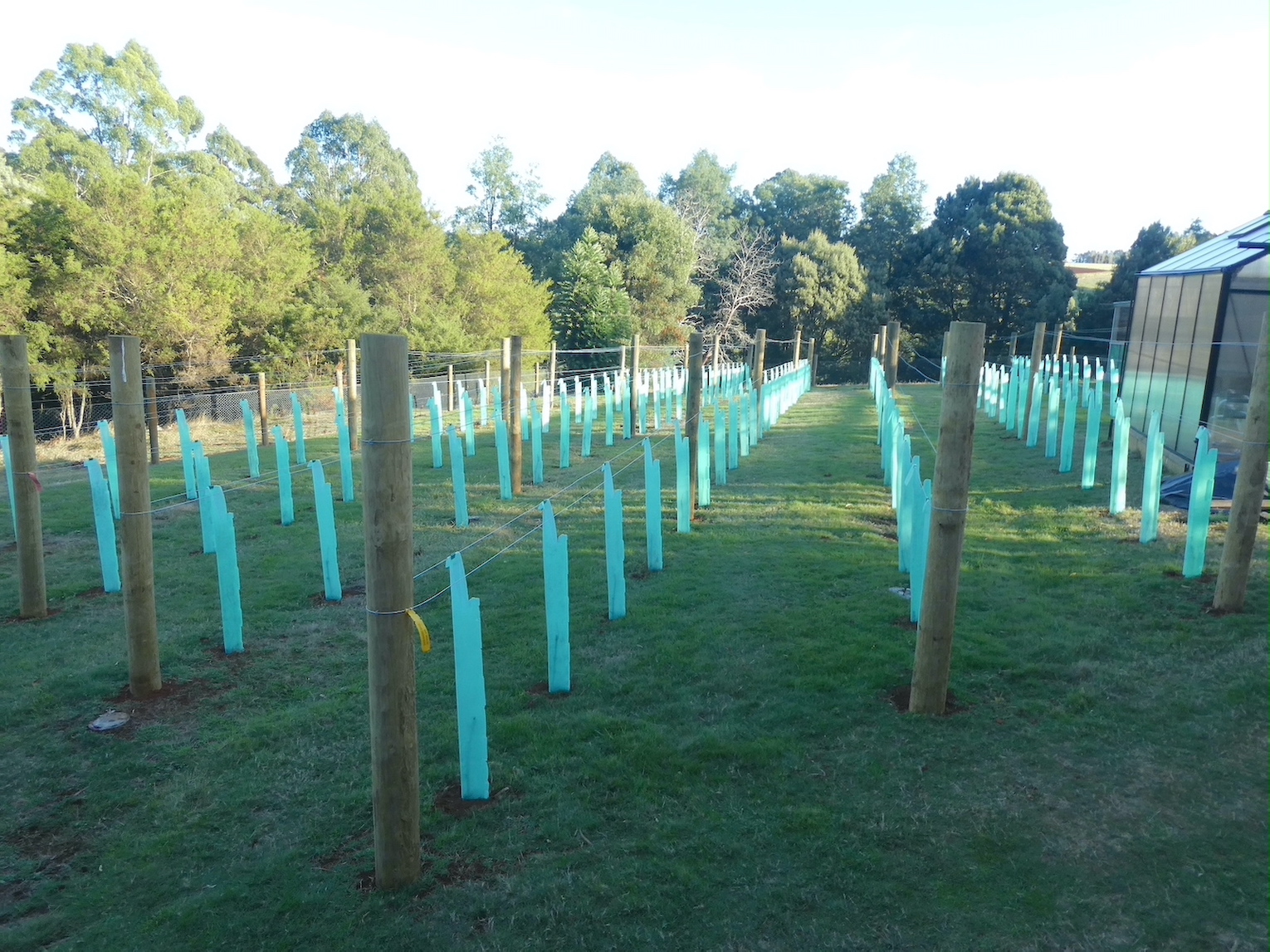
There was nothing left to do but wait and let nature work her magic. Seven months later, they are thriving, safe from the dreaded spring winds within their corflute cocoons.
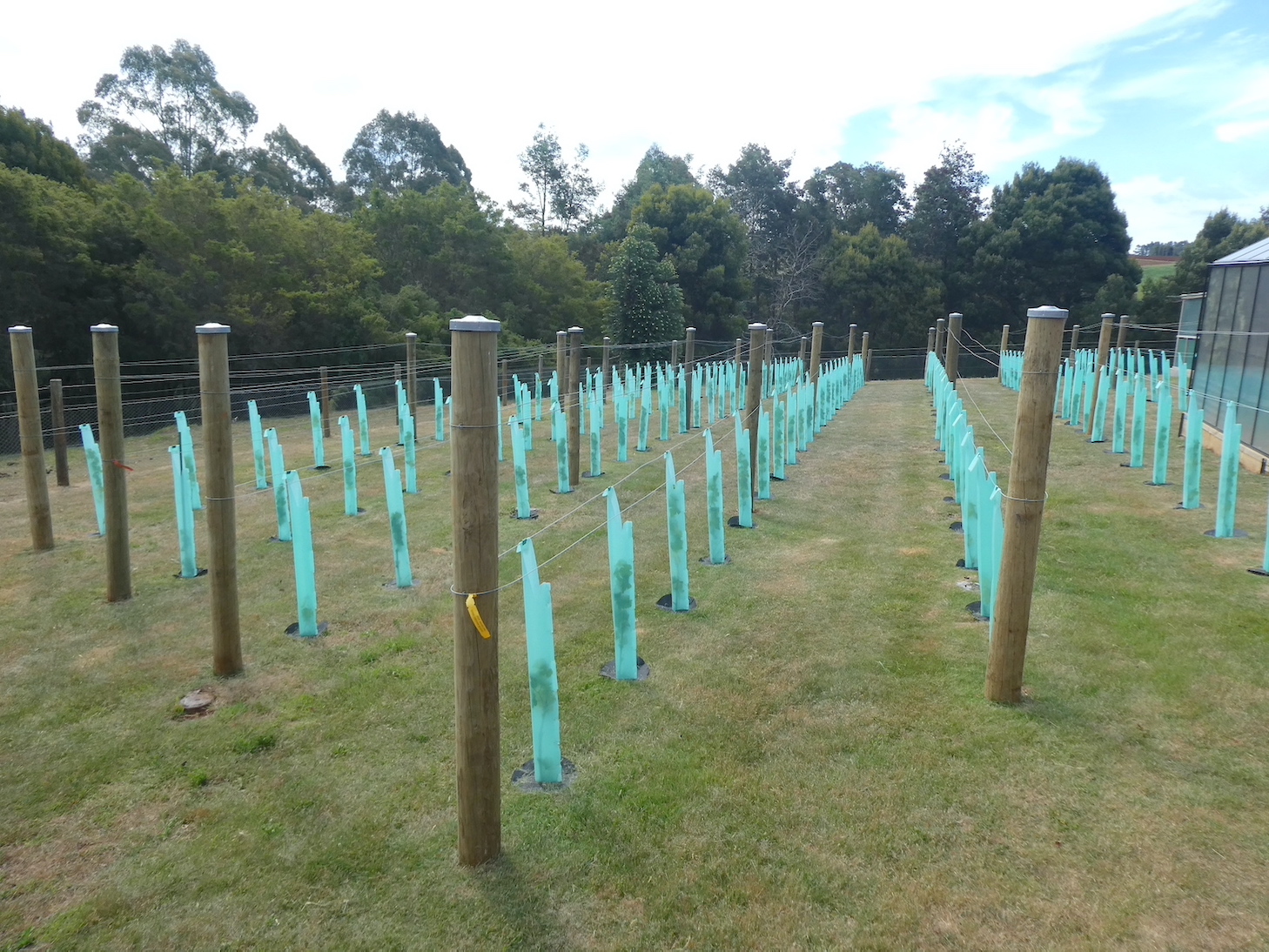
There are two rows of Pinot Gris and the rest are Pinot Noir, a few years away from the bottle yet but an exciting journey lies ahead.

grand greenhouse

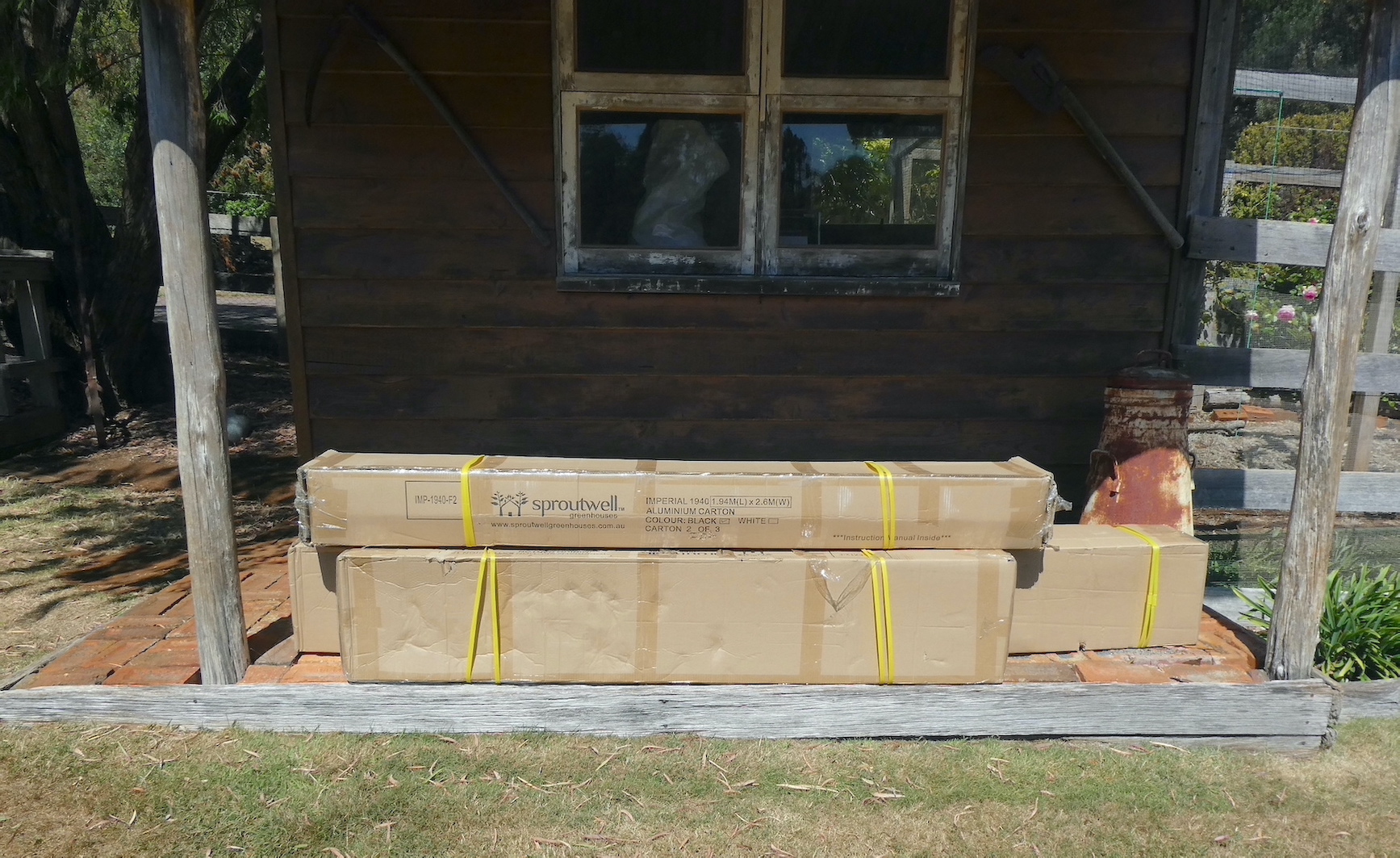
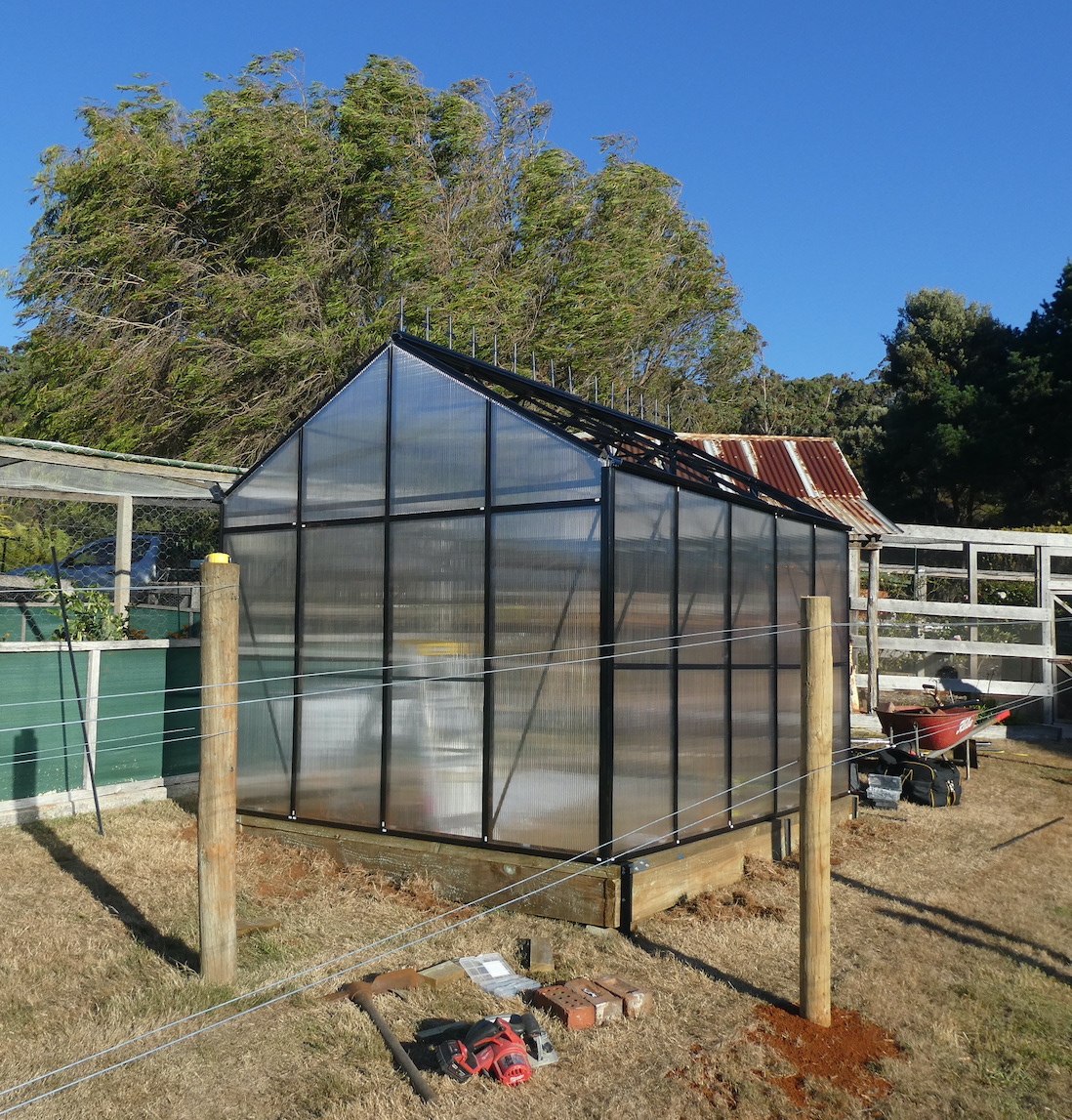
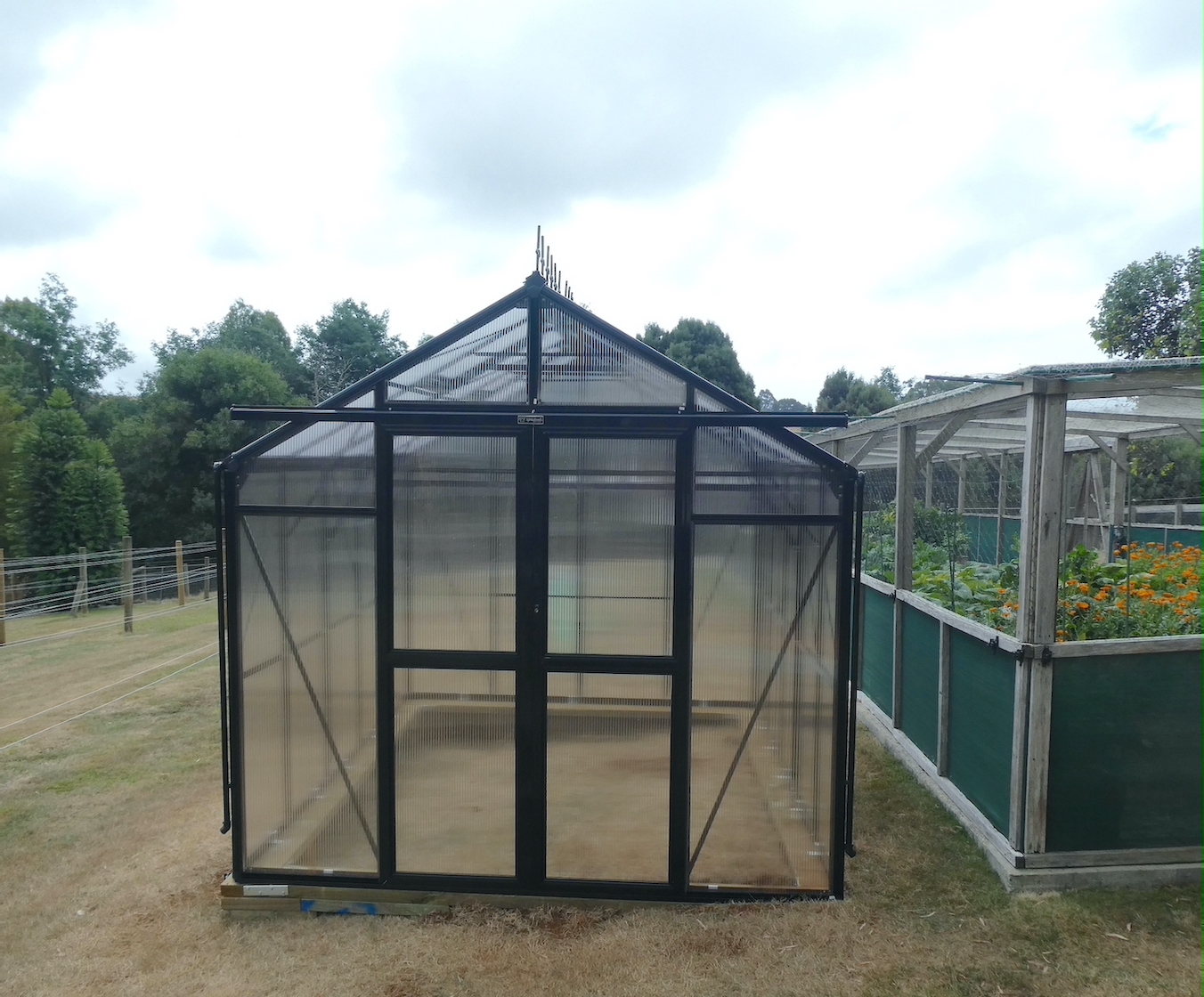
Although our veggie patch is prolific through summer, it tends to be somewhat limited once the colder months descend. After much contemplation, we took the plunge and ordered a greenhouse last February.

We chose a site adjacent to the vegetable enclosure with the potting shed and running water close by.

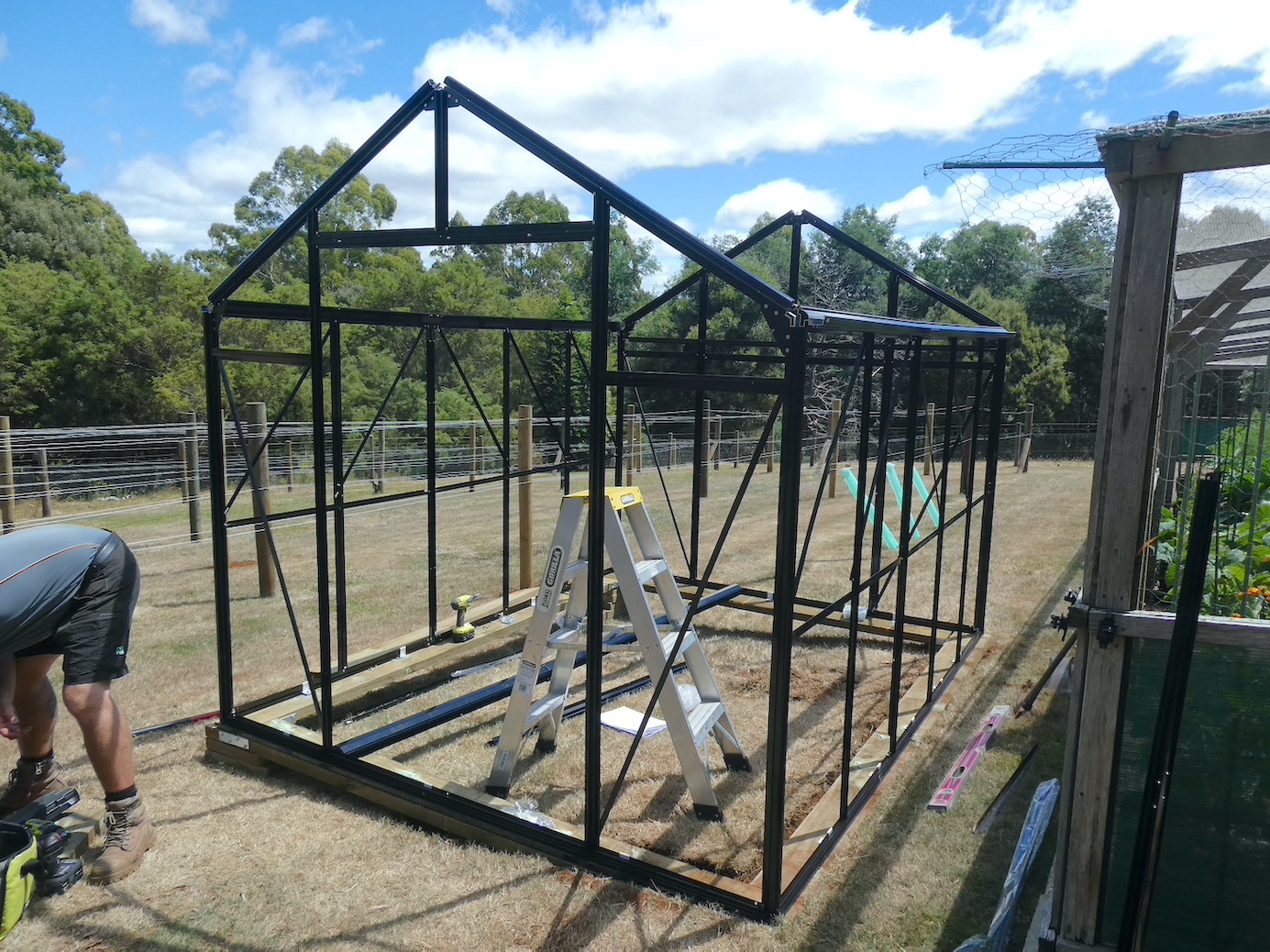
We have found that self-build is not always the easy option, with dubious instructions and missing pieces and so, we relied on those with prior experience. Even so, it took a little longer than the one day allocated to finish but the result was worth it.

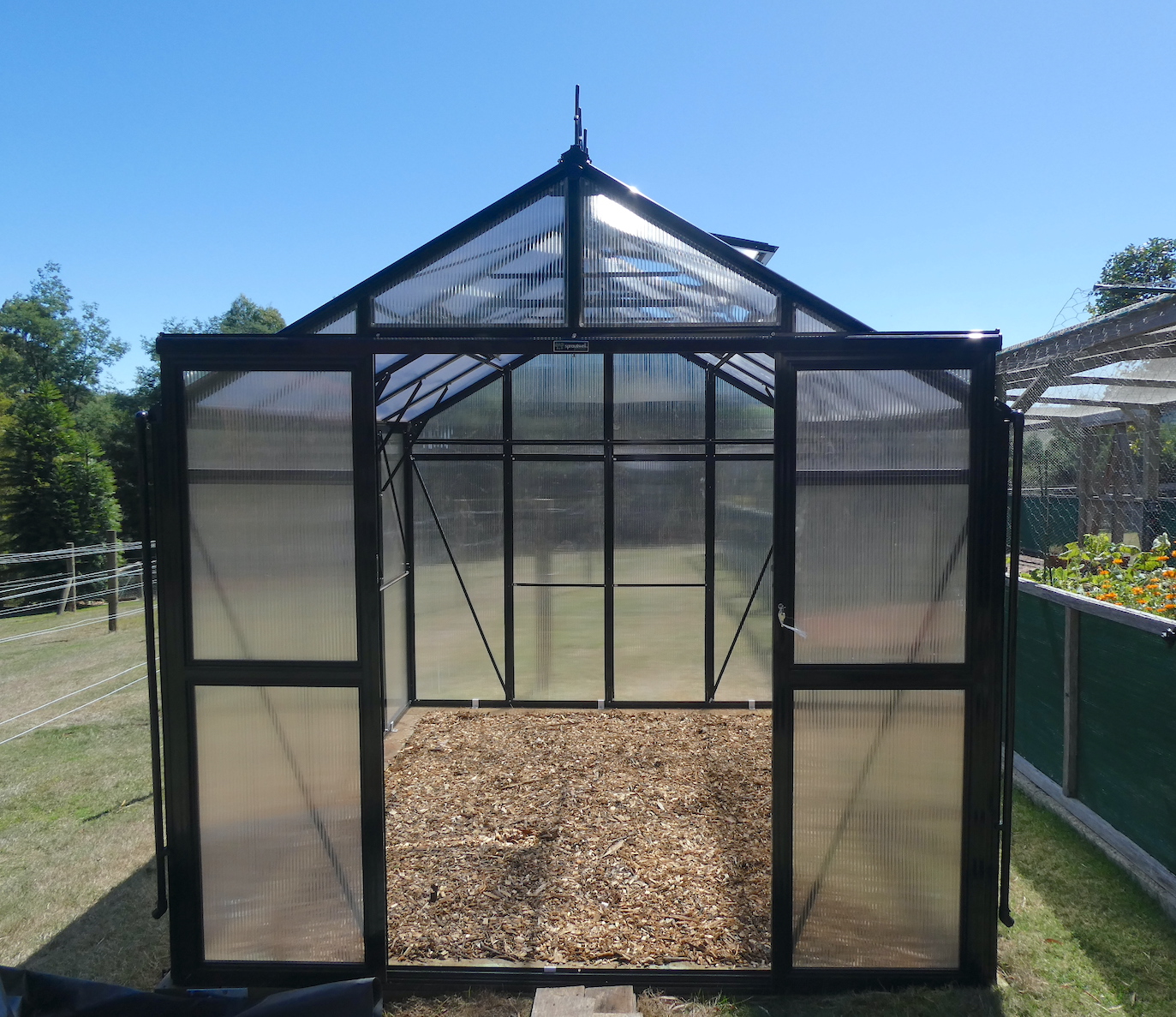
We brought in a couple of scoops of earth for the base followed by a layer of blue metal to assist with drainage and a topping of mulch that can be watered down to increase humidity.

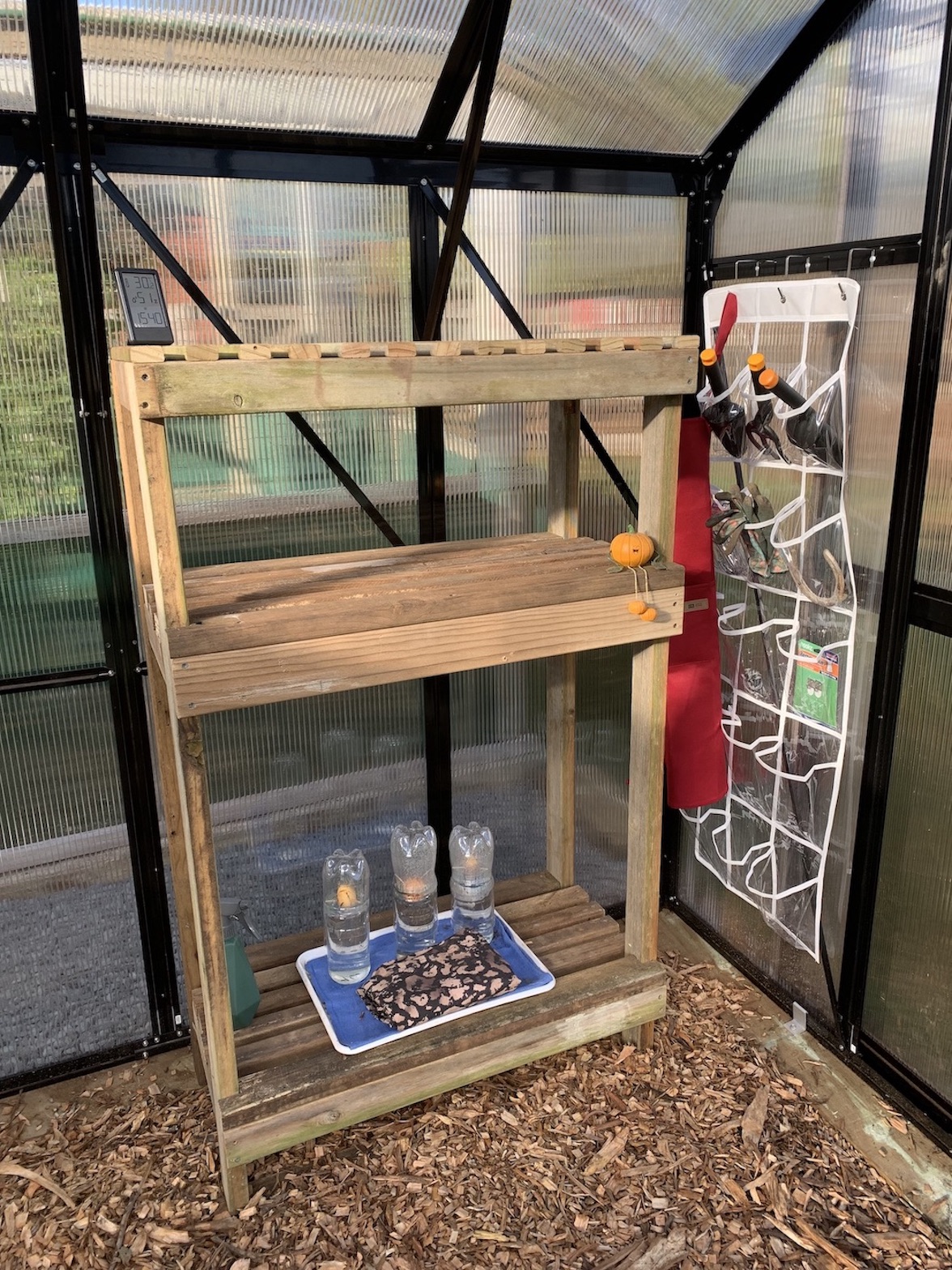
Michael constructed a staging shelf out of reclaimed timbers

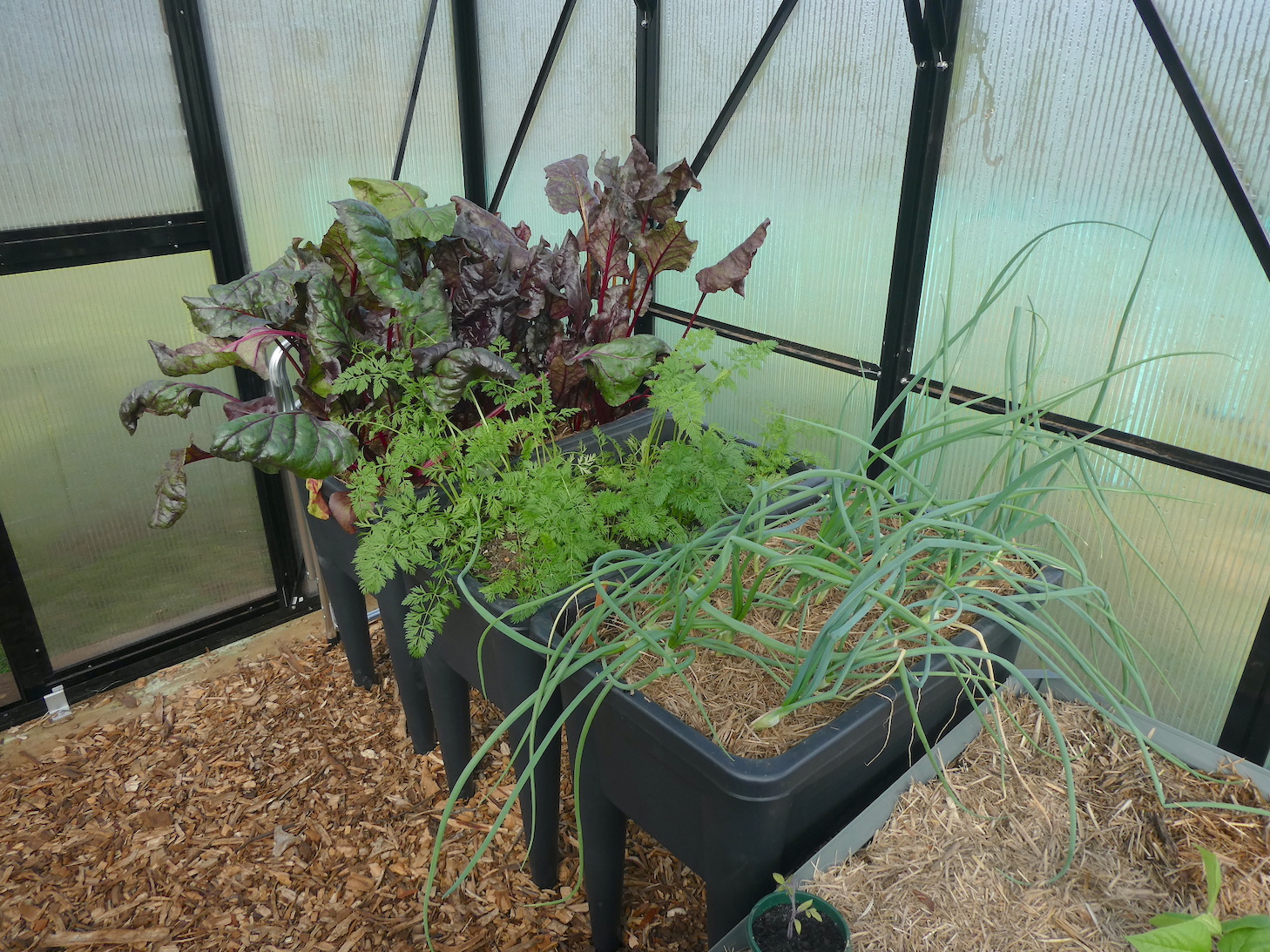
and we bought raised beds to fill the rest of the space. Once we realised how high the temperature reaches, we installed a sunshade on the northern side.

A temporary trestle provided the perfect environment to cure the butternuts in May. I then store them on a shelf high in the  potting shed where they last for a good six months.

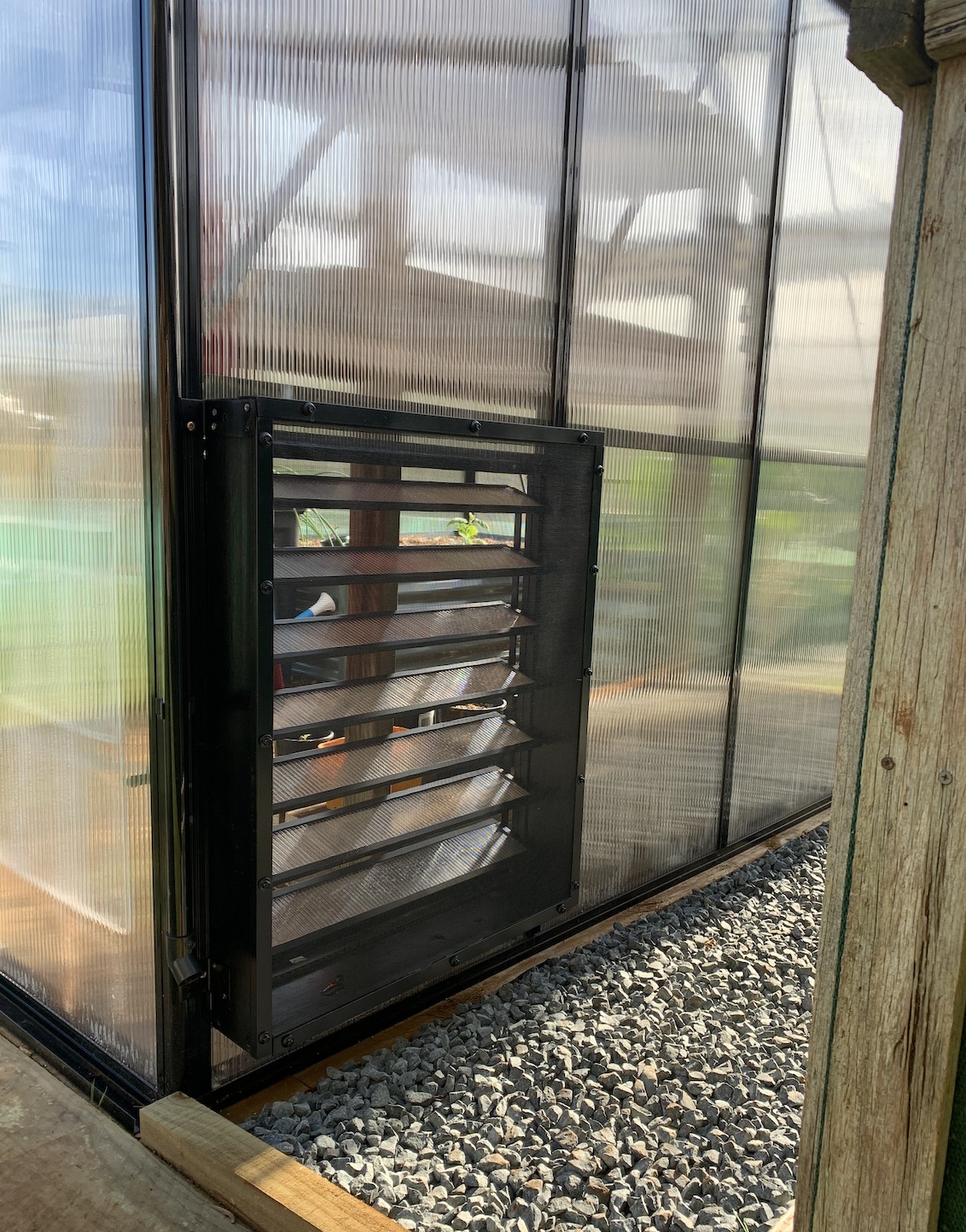
To help with temperature control, we added louvres to one of the panels and Michael cunningly created a screen to keep out creepy crawlies and resident reptiles.

Being in the apprentice stage of greenhouse gardening, we weren’t sure which plants would be successful. We started with brassicas, beetroot, carrot, onion, capsicum, butternut and bush bean.

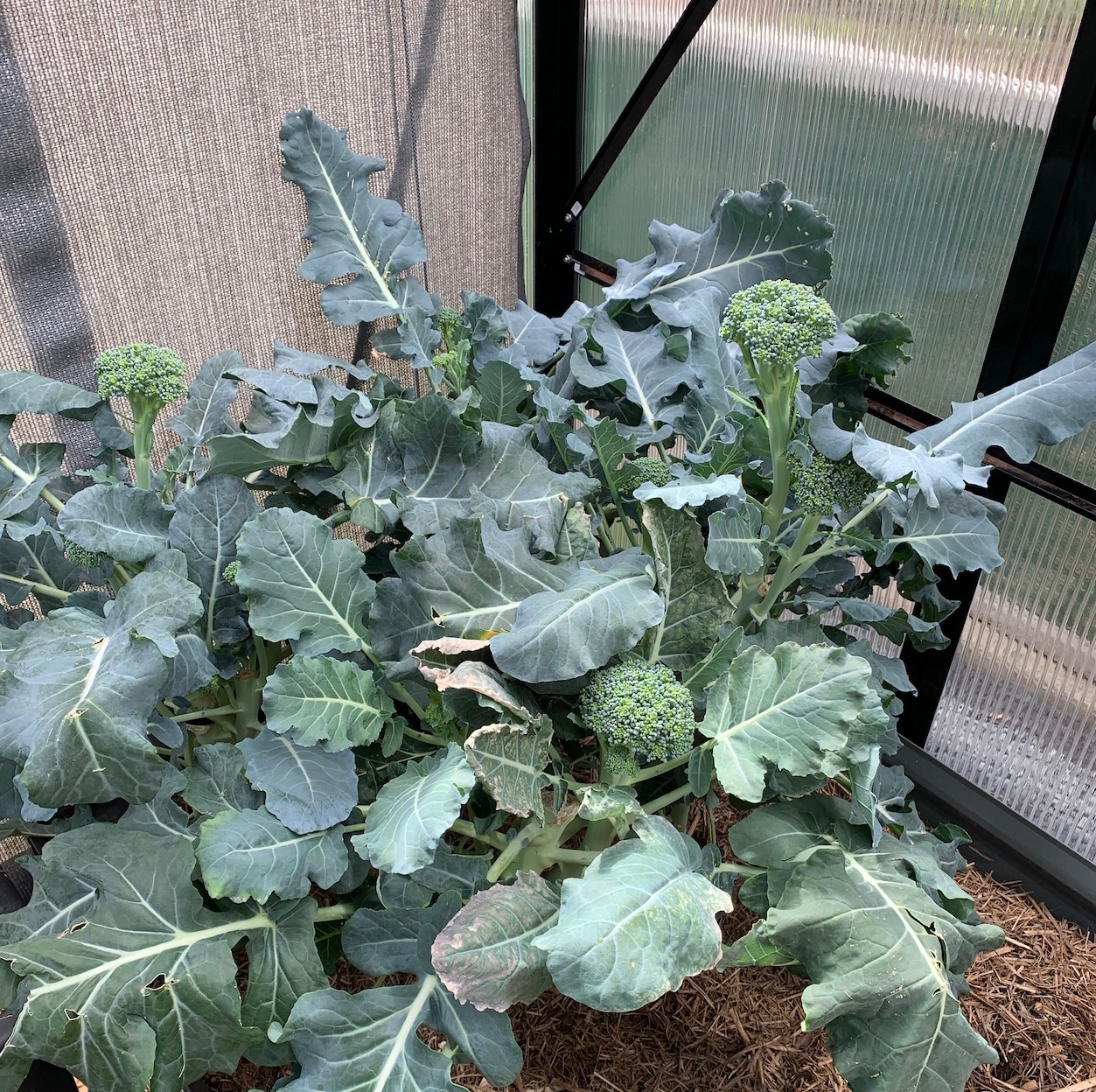
The first broccoli was very impressive and, three months on, we are still harvesting smaller florets.

The capsicum are thriving but yet to bear fruit.

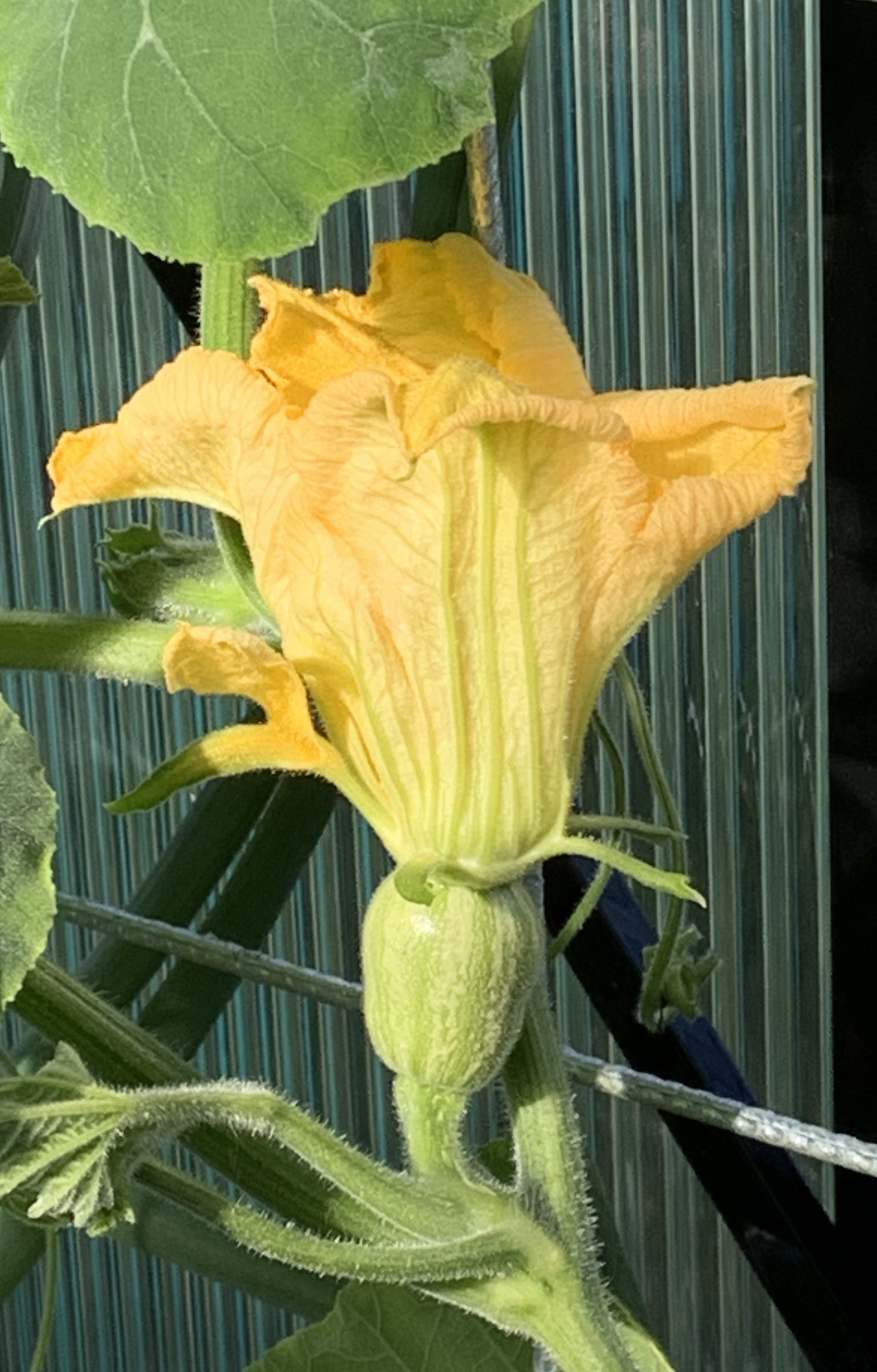
The bush bean and butternut are happy companions, we have harvested some beans but will have to be patient for the butternuts.

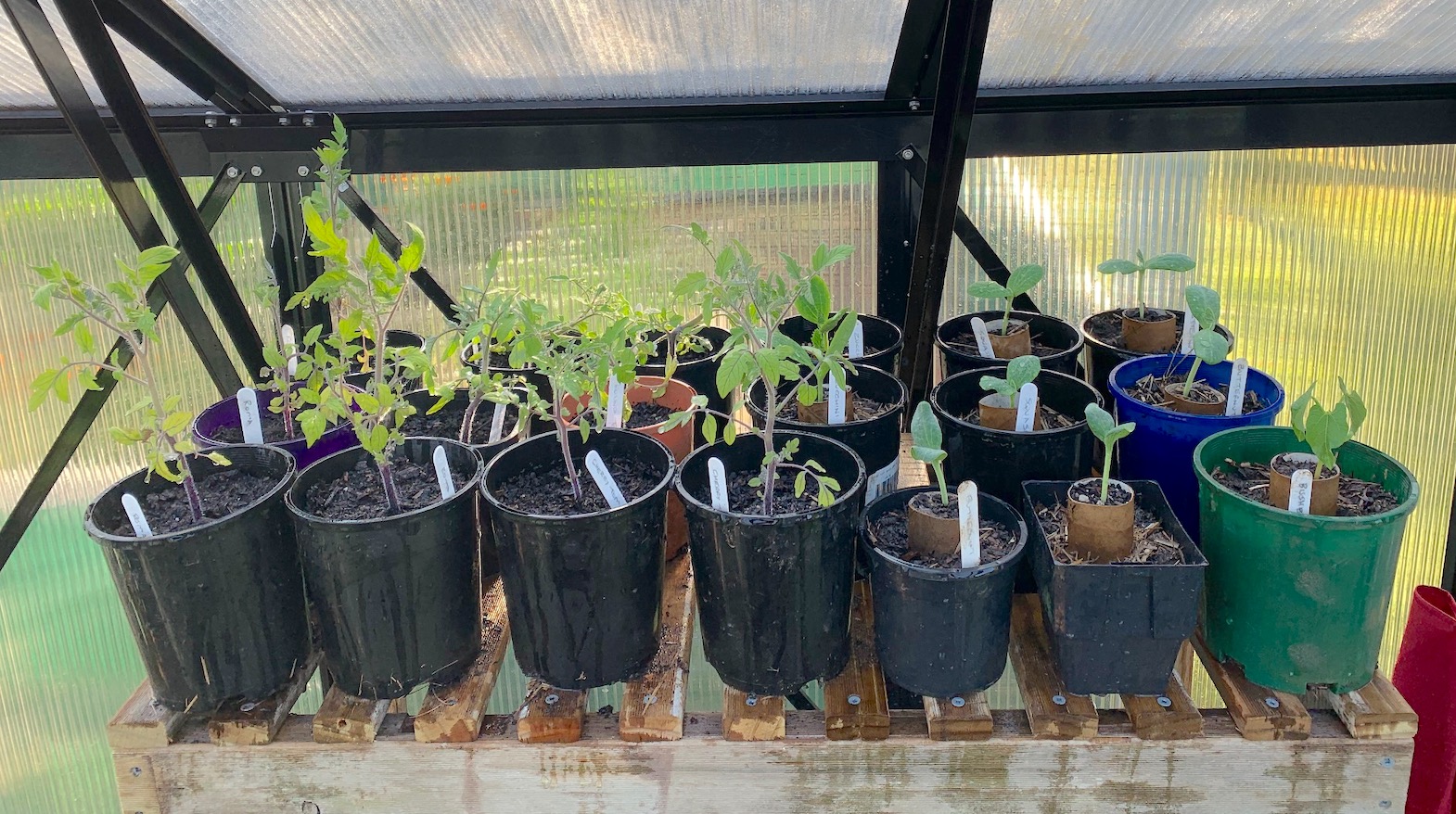
We have a plethora of seedlings ready to plant in another week or so, once the night time temperatures are a little more moderate.

My first attempt at striking Grevilleas from cuttings seems to be successful,

and after many months of coddling, the avocado stones have finally sprouted.

Michael has turned on the tap of creative juices once again and presented me with a stylish trug to collect the harvest

as well as a bespoke egg collecting box (the girls are giving us 5 to 6 eggs a day).

Of course, I needed a keyring befitting a fine greenhouse.

arboreal abscission

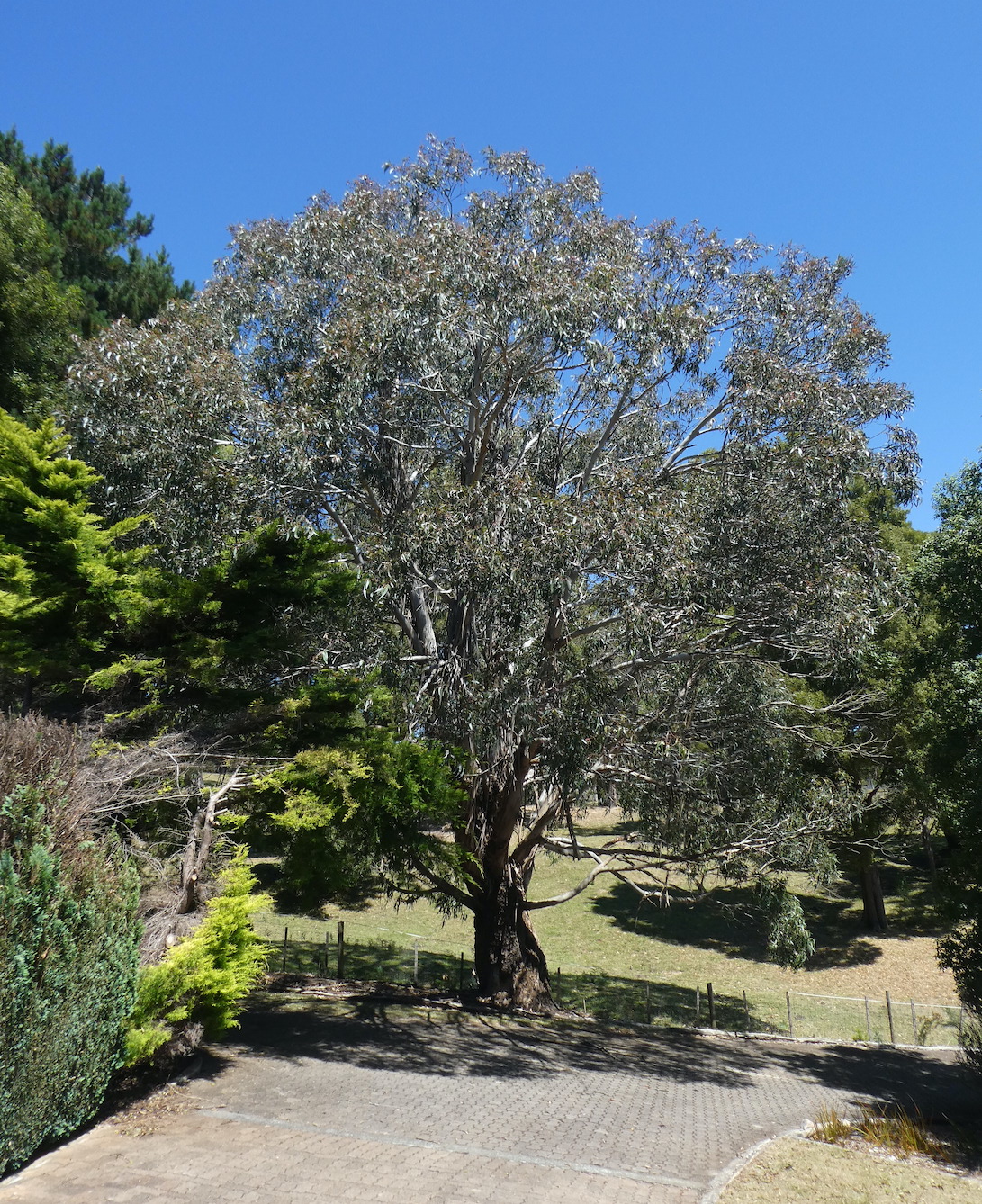
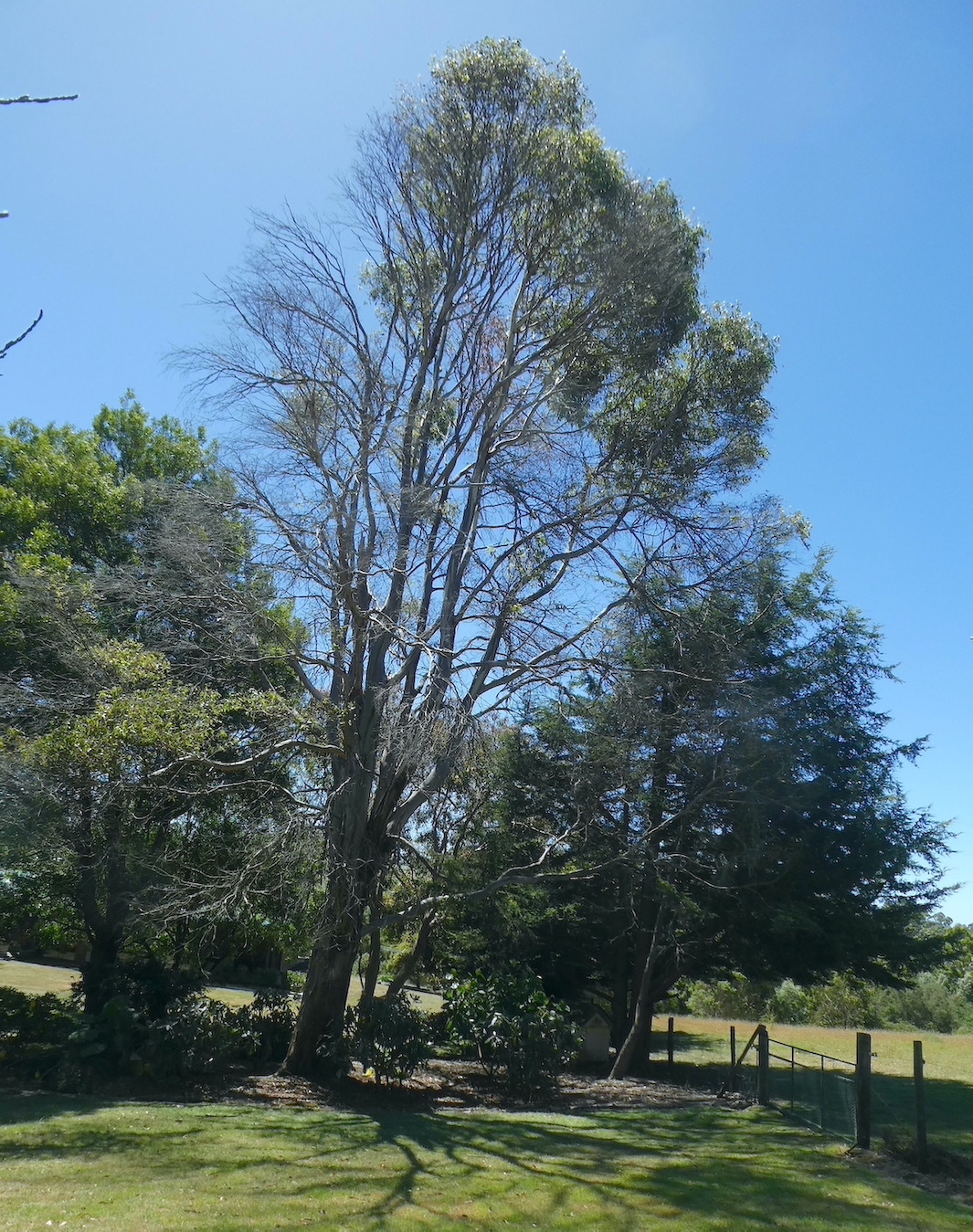
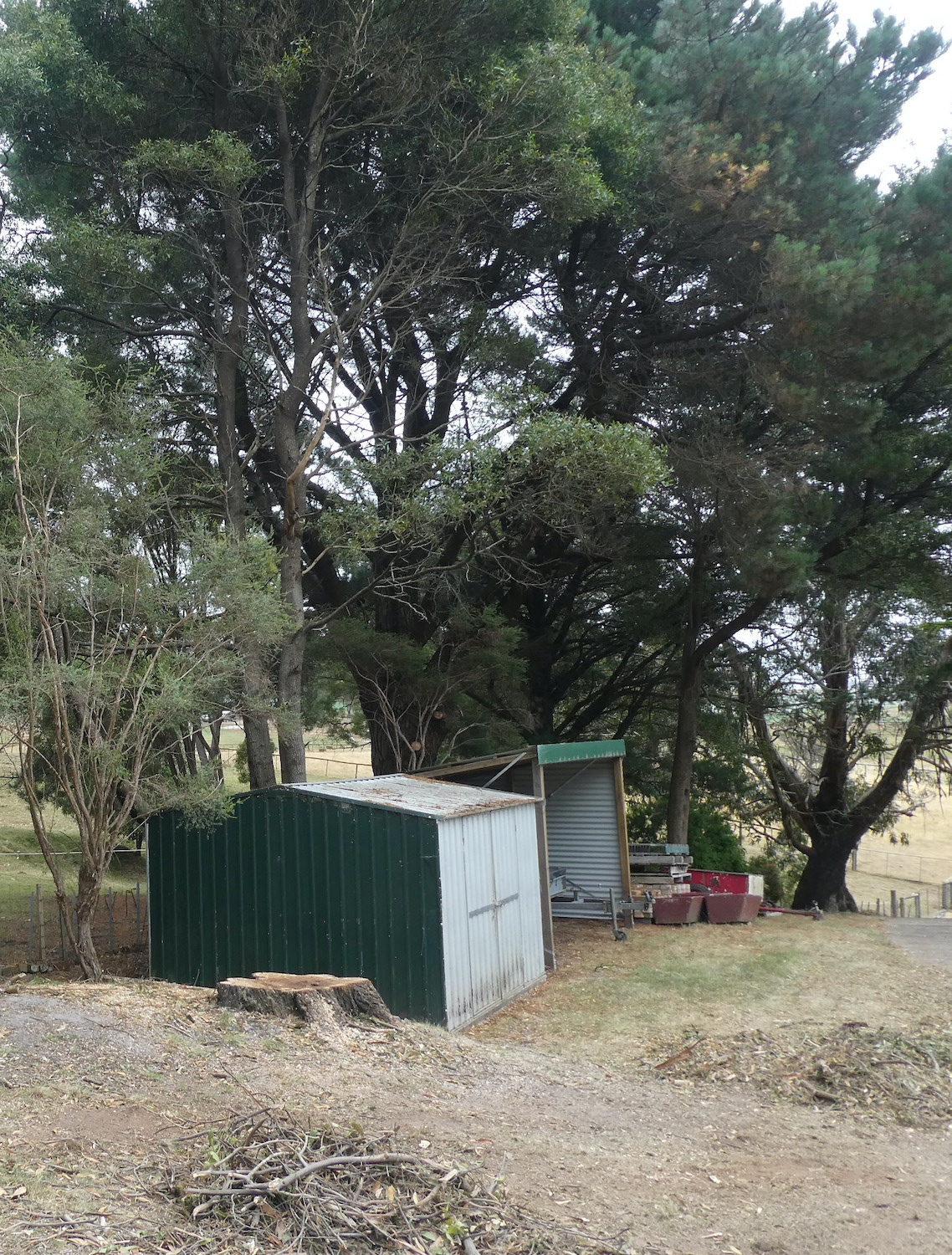
Being surrounded by forest makes for a wonderful peaceful setting, with verdant vistas and myriad birdlife. However, having these larger tree species within the garden can pose a bit of a problem. Like any living being, they have a life span and some had been shedding bark and limbs at an increasing rate with the potential to damage outbuildings. We called in the Tree Doctor to diagnose diseased, dying and dangerous specimens. A huge Eucalypt was deemed to be failing (I don’t miss cleaning up the frequent sheets of bark on the driveway).

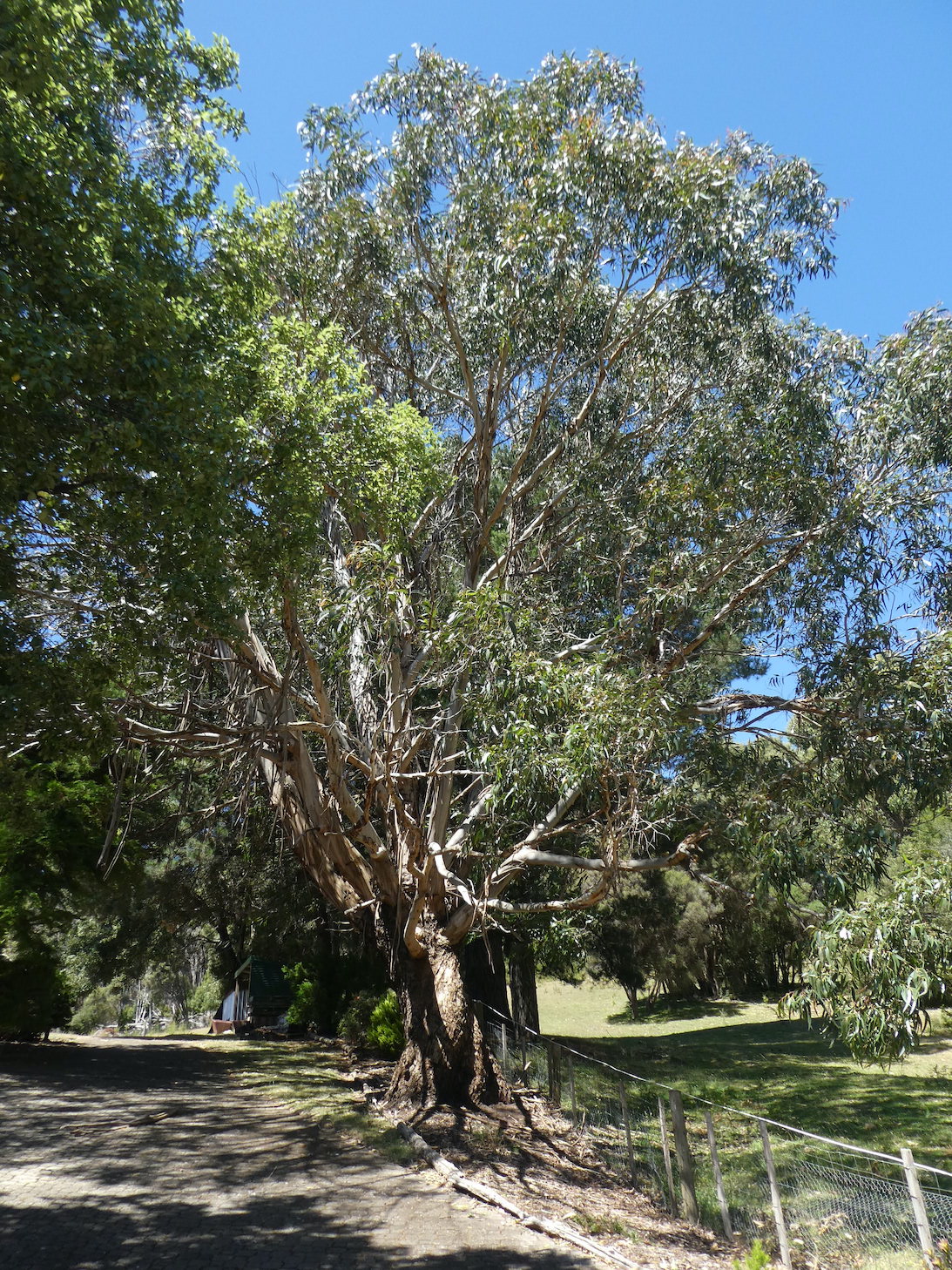
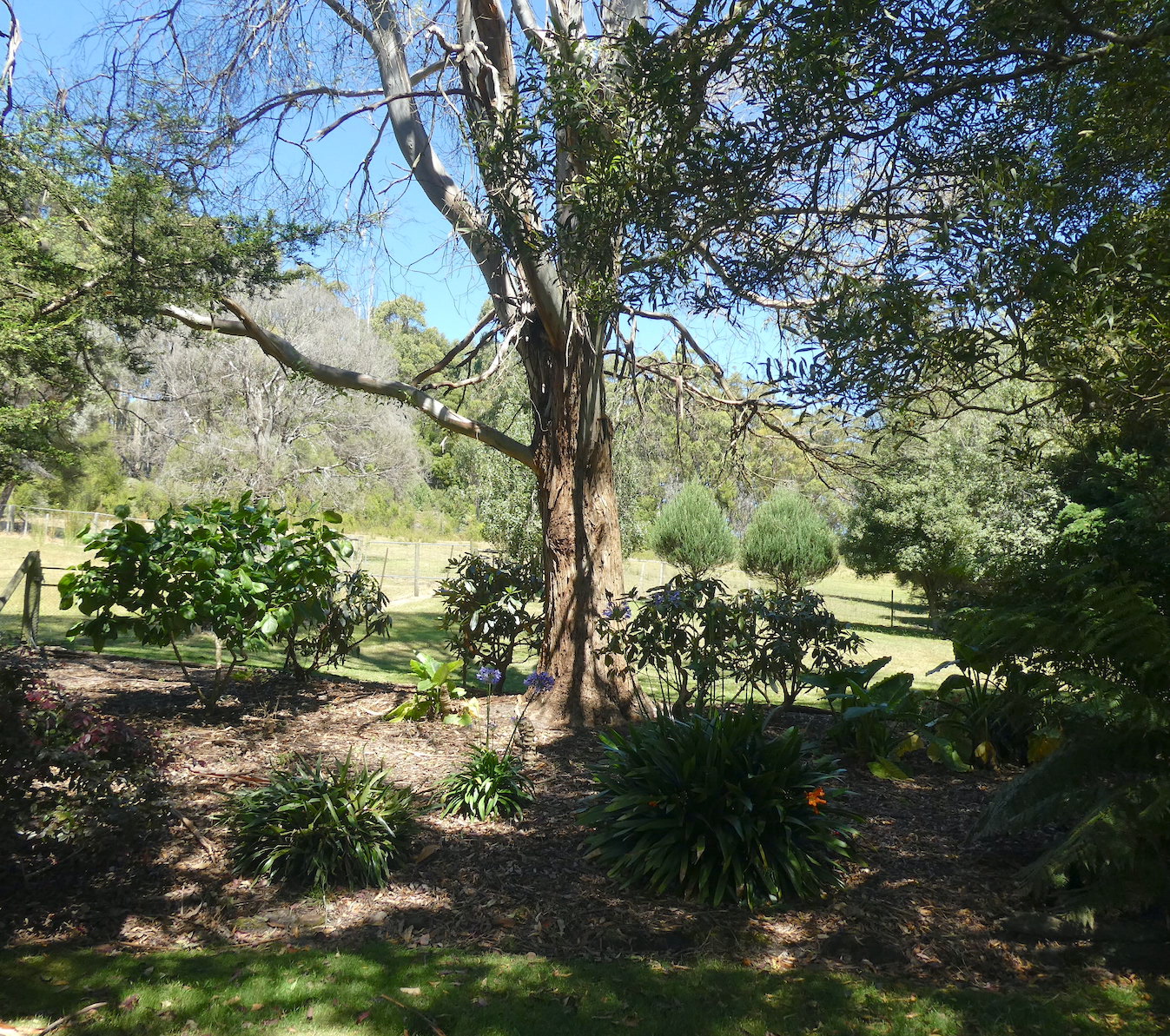
A second Eucalypt, with a distinct lean away from the prevailing westerlies, was displaying the same symptoms and awarded the same fate.

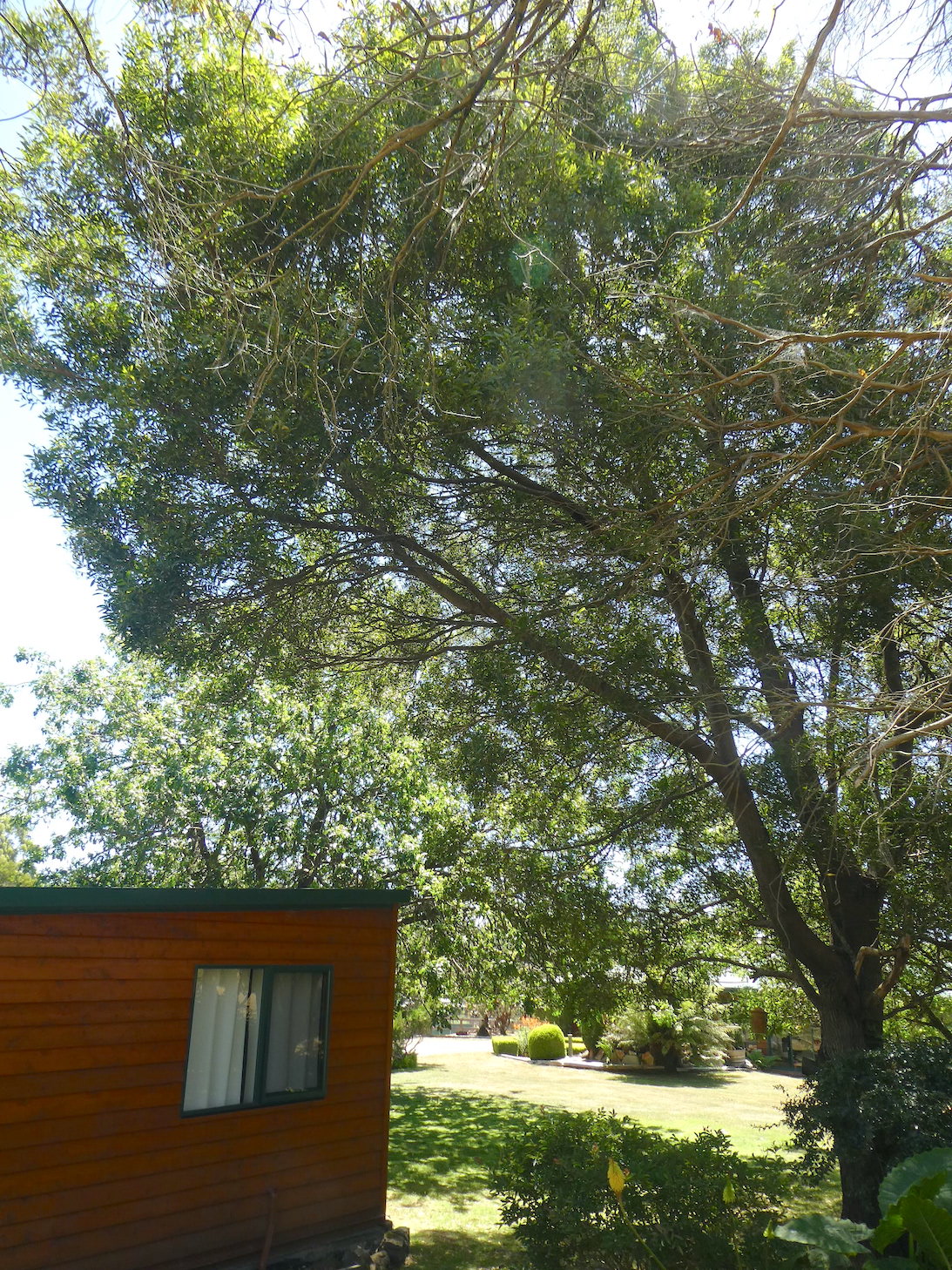
A healthy Tasmanian blackwood just needed an amputation of a rather large limb overhanging the studio

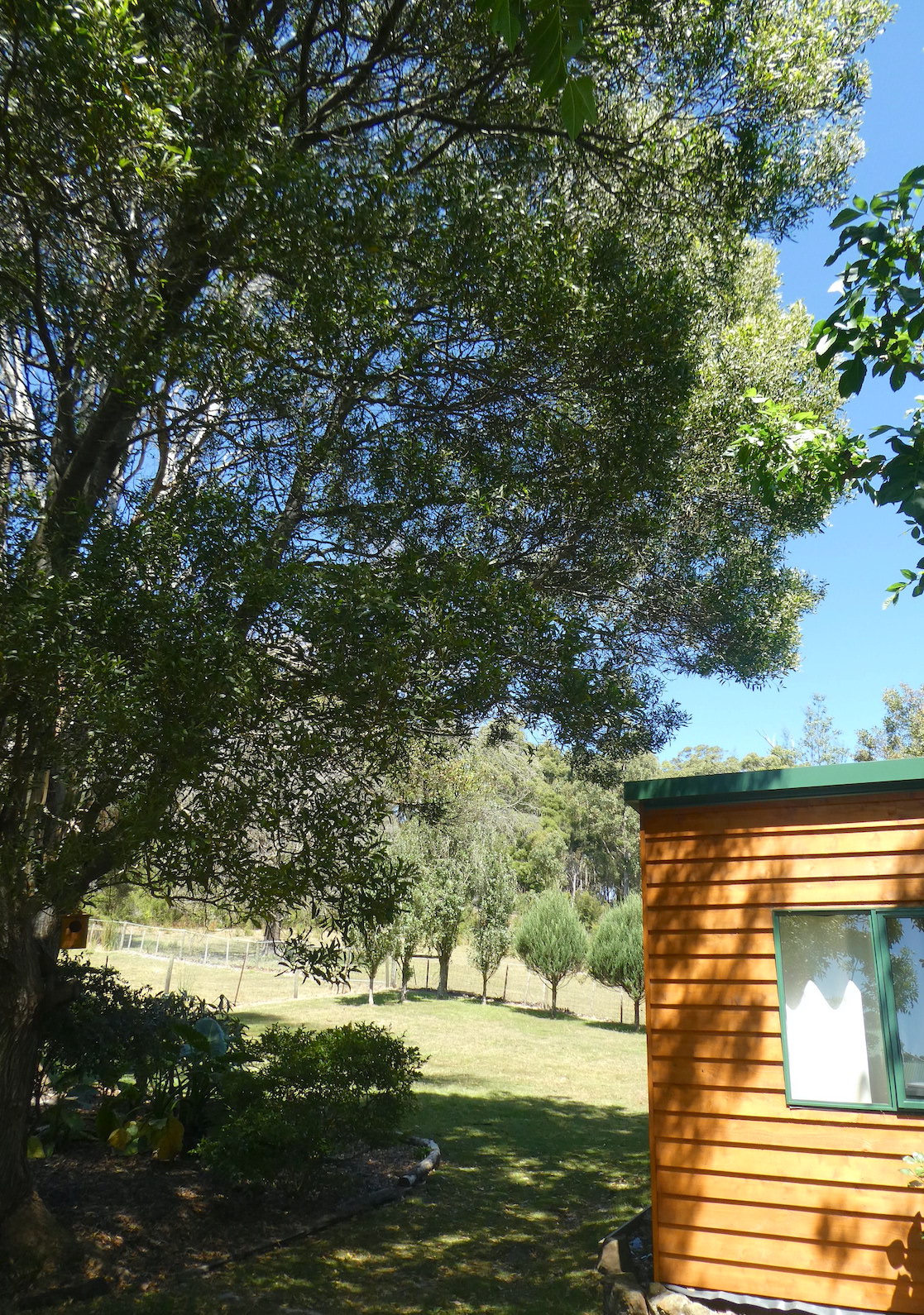
but another blackwood we thought in need of a trim was actually slowly dying.

A few weeks later the team arrived and wasted no time tackling the first blackwood.

The smaller branches were picked up and fed into the chipper

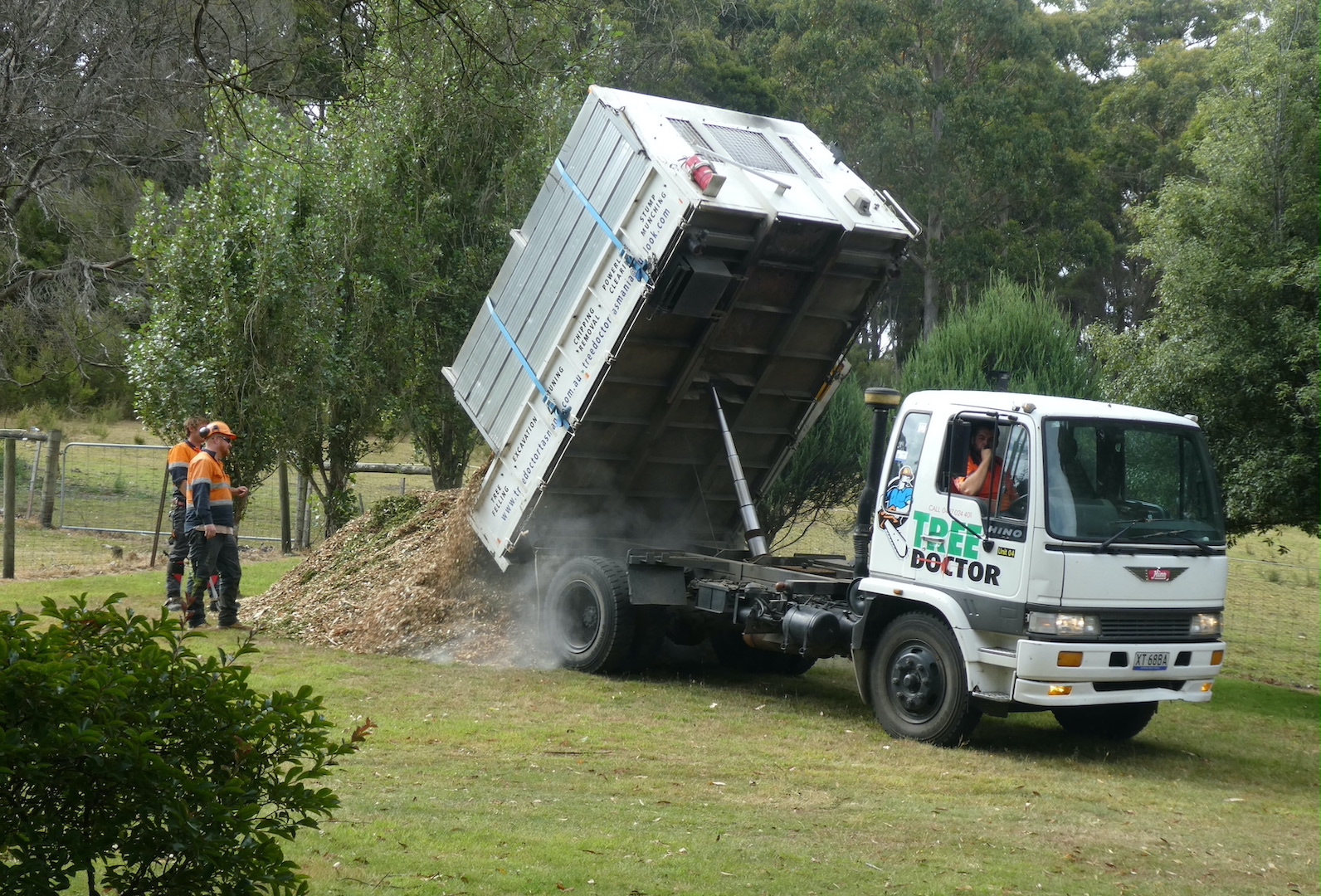
which was then emptied into an ever increasing mulch pile.

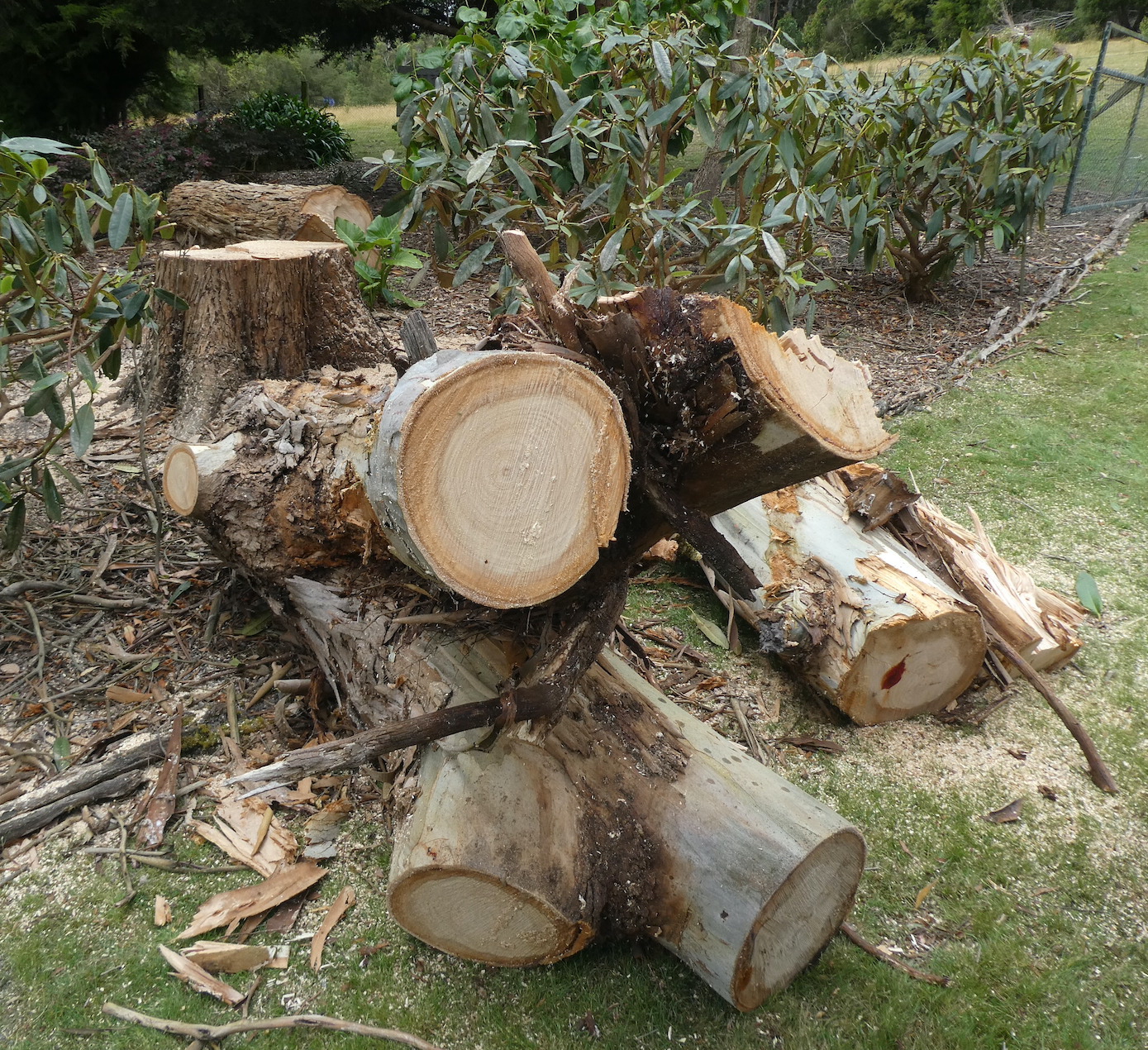
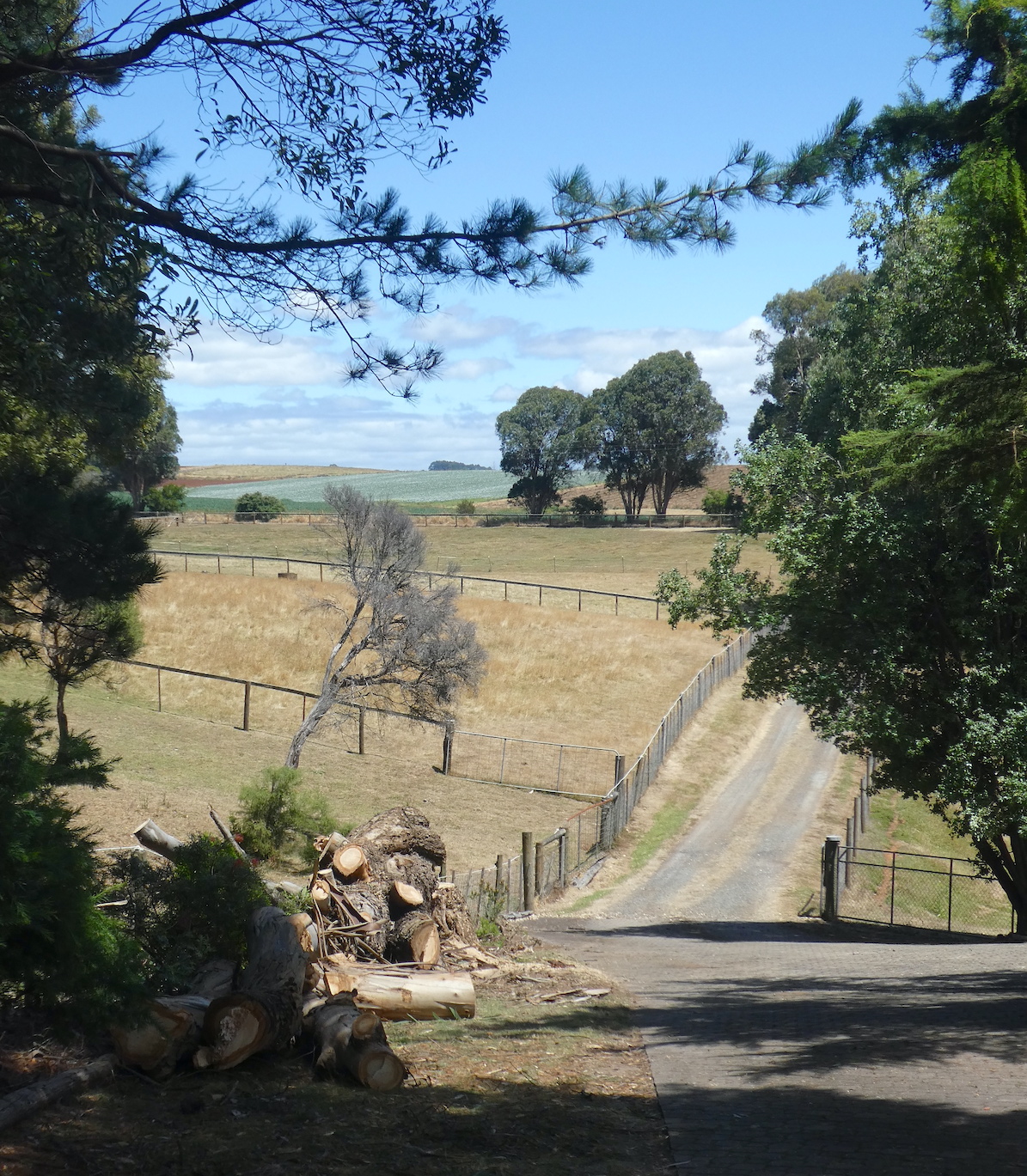
Before long, only a stump remained and a substantial stack of timber for future firewood.

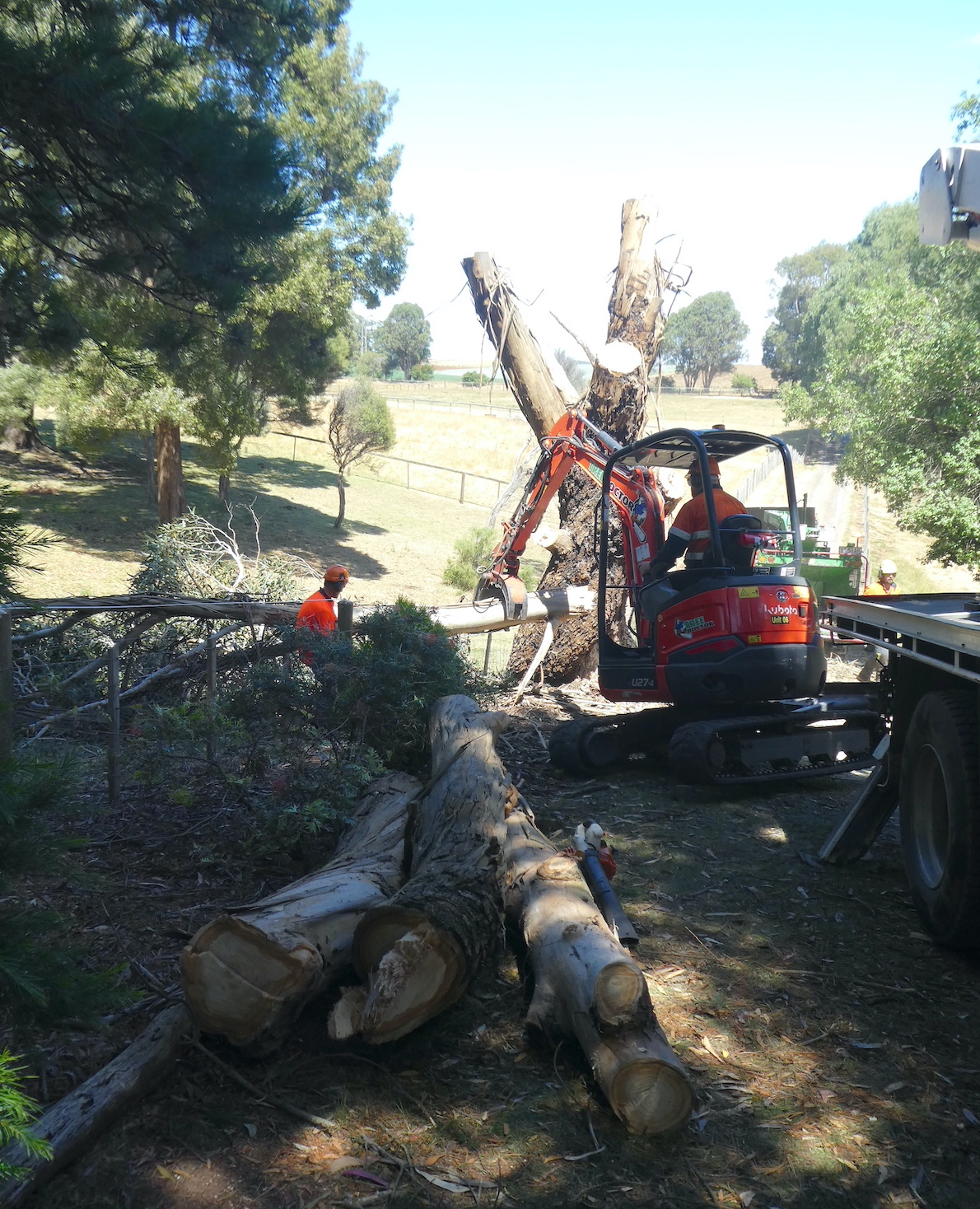
The razing of the leaning Eucalypt was a little more involved. A precise landing was in order to prevent damage to buildings, fences and established plants in the garden beneath. With ropes attached to guide the downward trajectory,

a hefty chainsaw took care of the rest and the giant was felled.

I was pleased to see the rhododendrons still upright on either side of the enormous trunk.

The mulch pile continued to grow, along with the firewood supply for the next few years.

A quick trim of a wayward branch from a pine tree on the neighbouring property

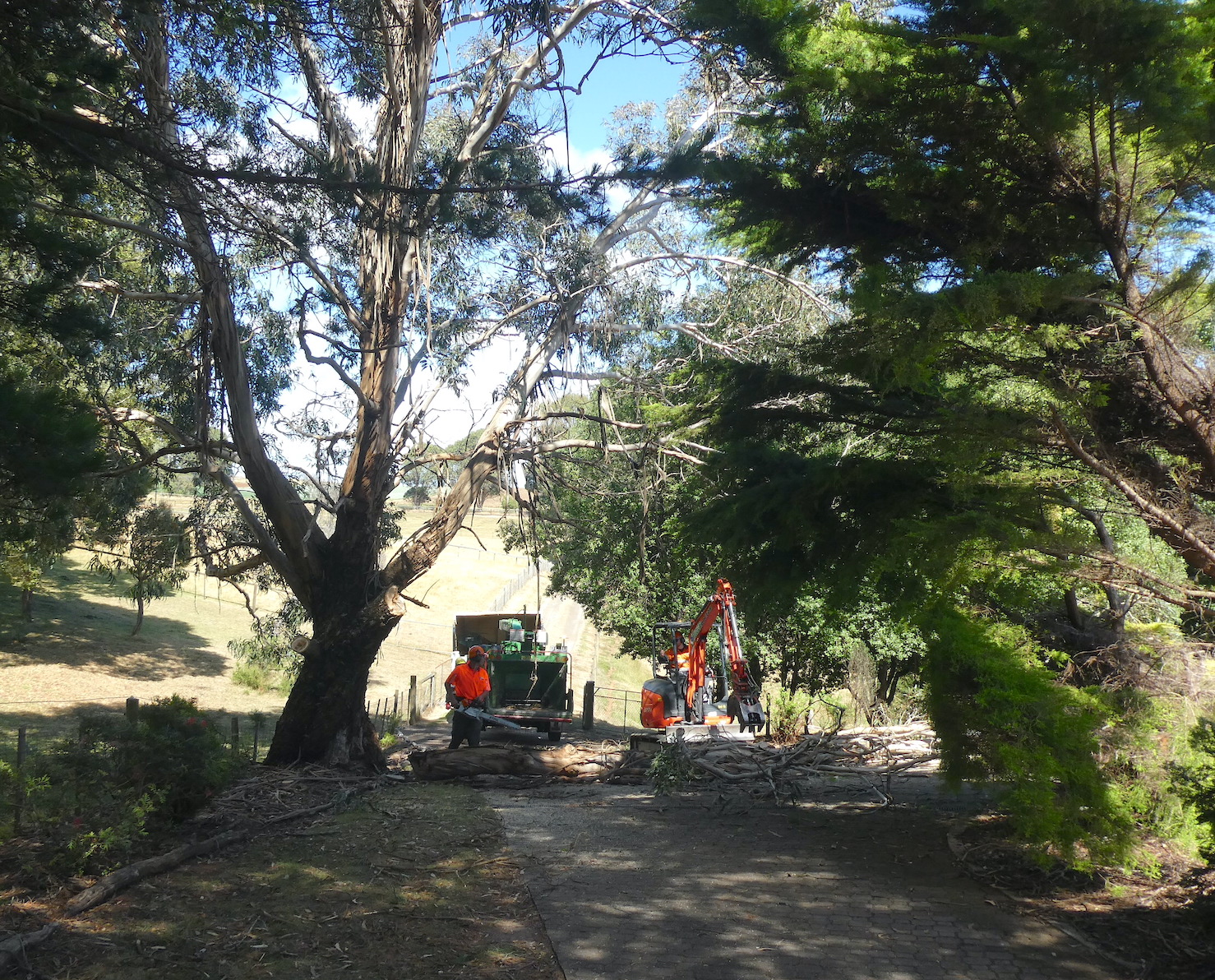
and the final Eucalypt was tackled.

Proximity to the fence was problematic but the skill of the experienced team overcame the hurdles for another successful outcome.

Now, where is that chainsaw……..

Charles Darwin National Park

On the outskirts of the city named after the great scientist and naturalist, Charles Darwin National Park is full of surprises. Created in 1997, the five square miles provide a natural recreation area as well as protection for significant vegetation, Aboriginal and World War II history. Developed as an Explosive Ordnance Storage Area during World War II, eleven of the bunkers that housed the explosives during the war are still standing. Nine were set into the contours of the hills, the barrel vault constructions are covered with vegetated earth.

There is a display of memorabilia in one of the bunkers and a fascinating insight into Darwin’s role in the Pacific War.

Bomb trolleys were used to move bombs weighing up to 1,000 lb (that’s about 450kg) to be loaded into aircraft and were common at bomber bases in the 1940s.

There are two free-standing storage sheds, one of which is now adorned with a magnificent work of art.

One of Australia’s most important wetlands is also protected by the park. The Port Darwin wetland comprises undisturbed mangrove forests, with 36 of the Northern Territory’s 51 mangrove species within its system of inlets, islands and bays. The vista from Charles Darwin Lookout is spectacular.