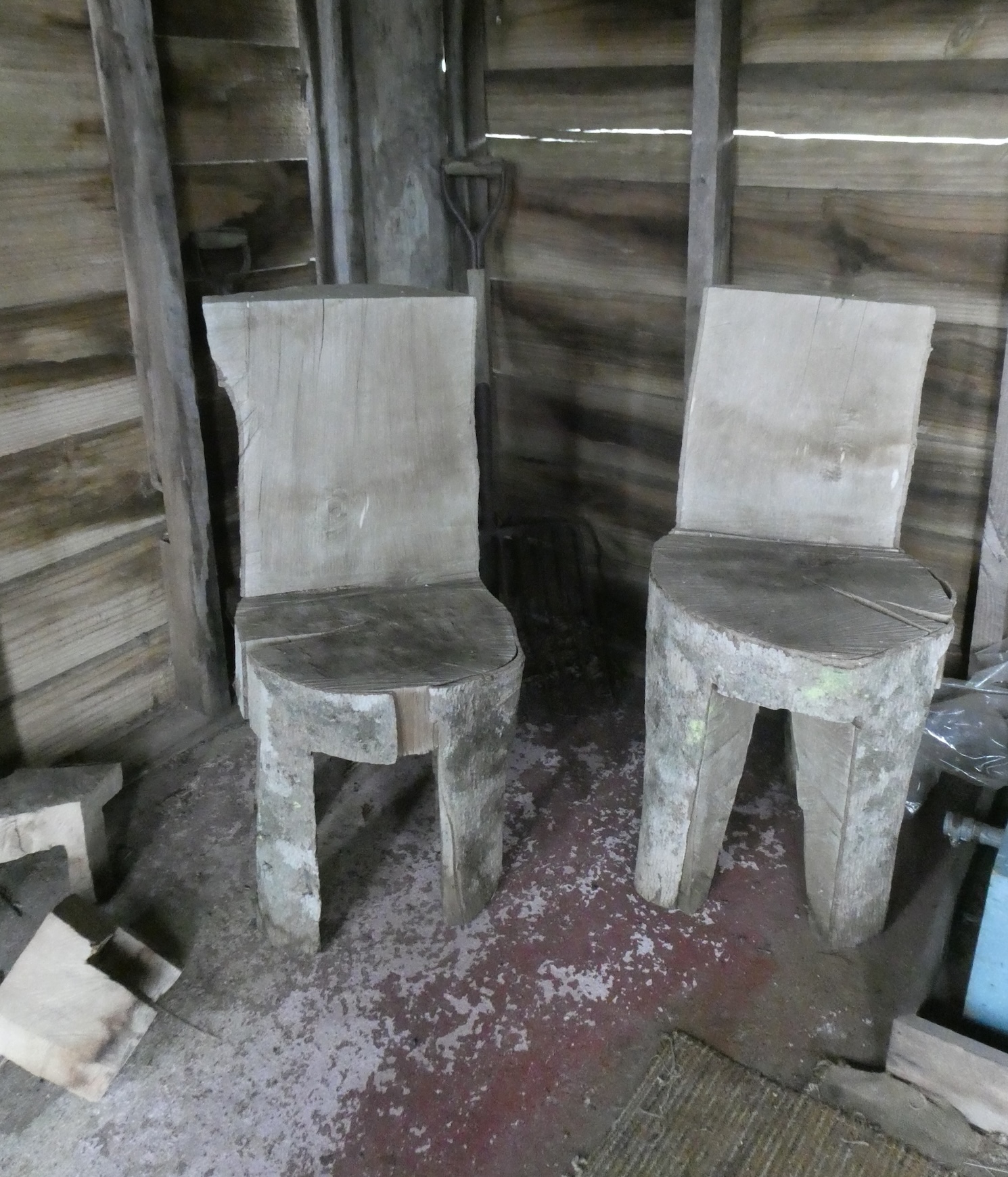
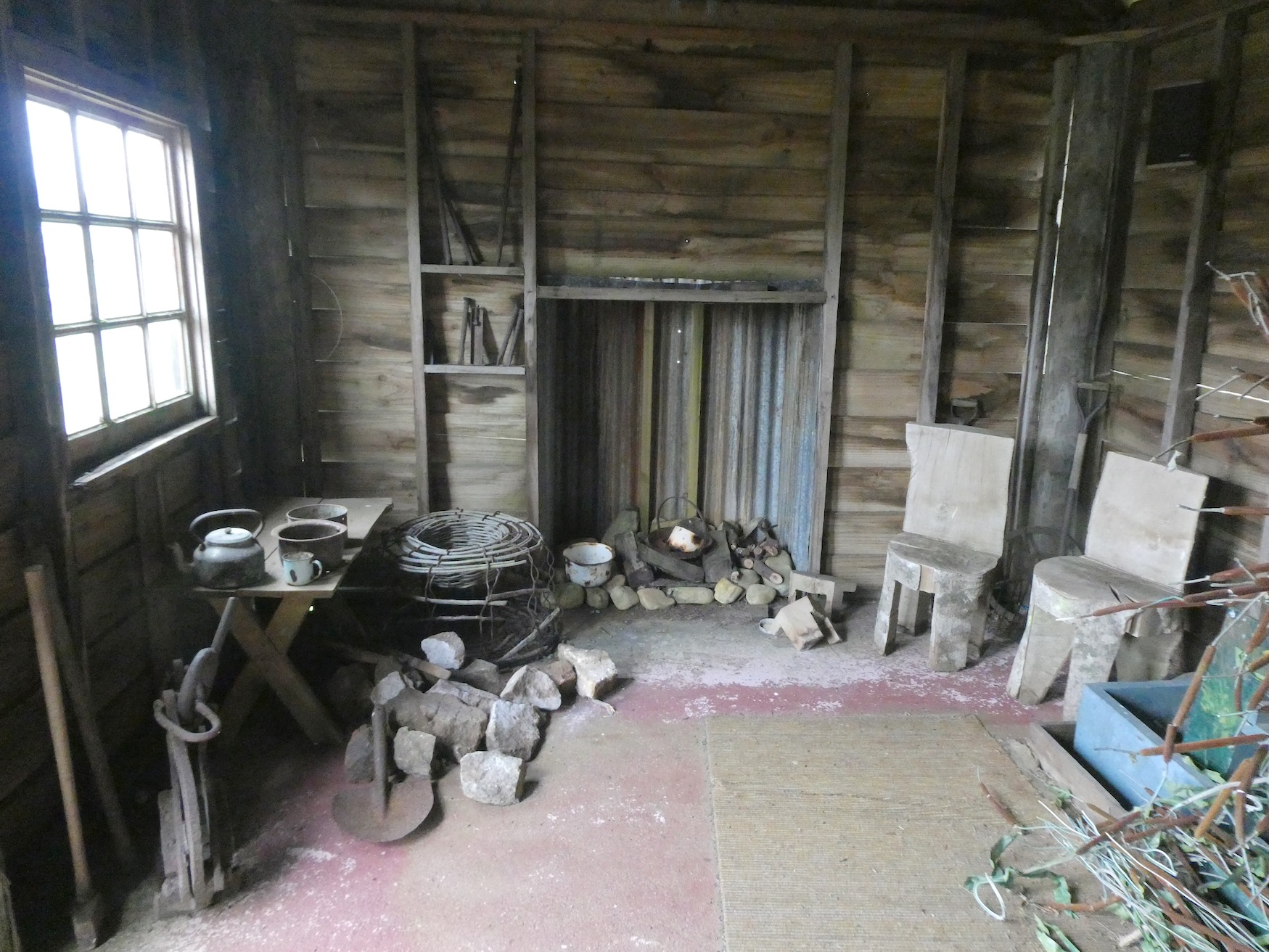
Driving through Waratah on our way to Corinna, we spied an interesting rustic cabin. We stopped to investigate and found Philosopher Smith’s hut, a replica of a typical miner’s hut from the late 1800s.
James ‘Philosopher’ Smith is credited with the discovery of tin at Mount Bischoff and the founding of Waratah in 1871.
The interior was less than comfortable and displayed the equipment a prospector would have used when searching for minerals in the 1870s.
With time to spare before lunch, we moved on to explore the adjacent museum.
The former Courthouse building is now home to a collection of local historical photographs and artefacts. The main courtroom has retained the judge’s bench and witness box among other original features.
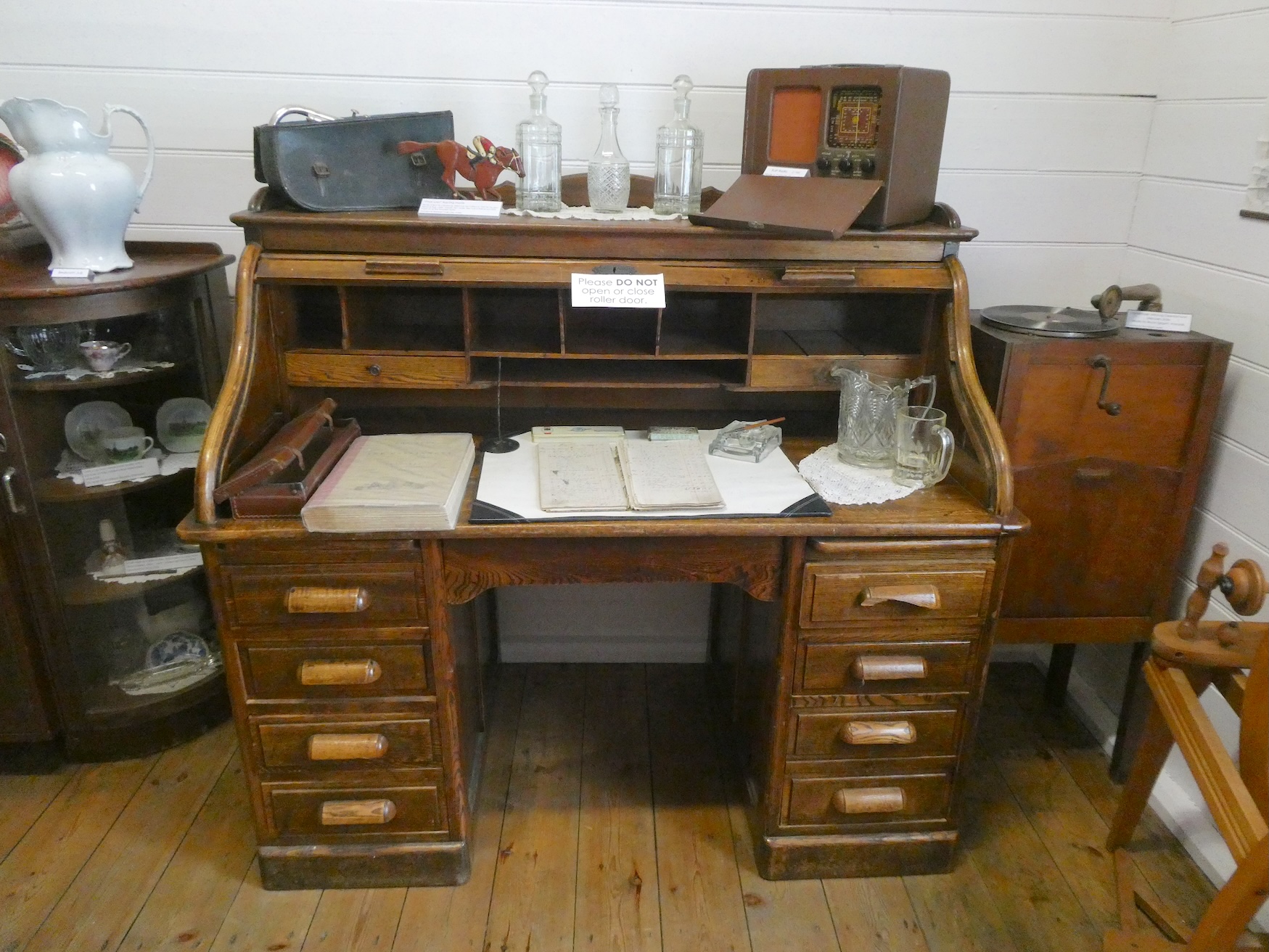
A roll-top desk has pride of place in an adjoining room with a neatly scribed ledger showing receipts and payments.
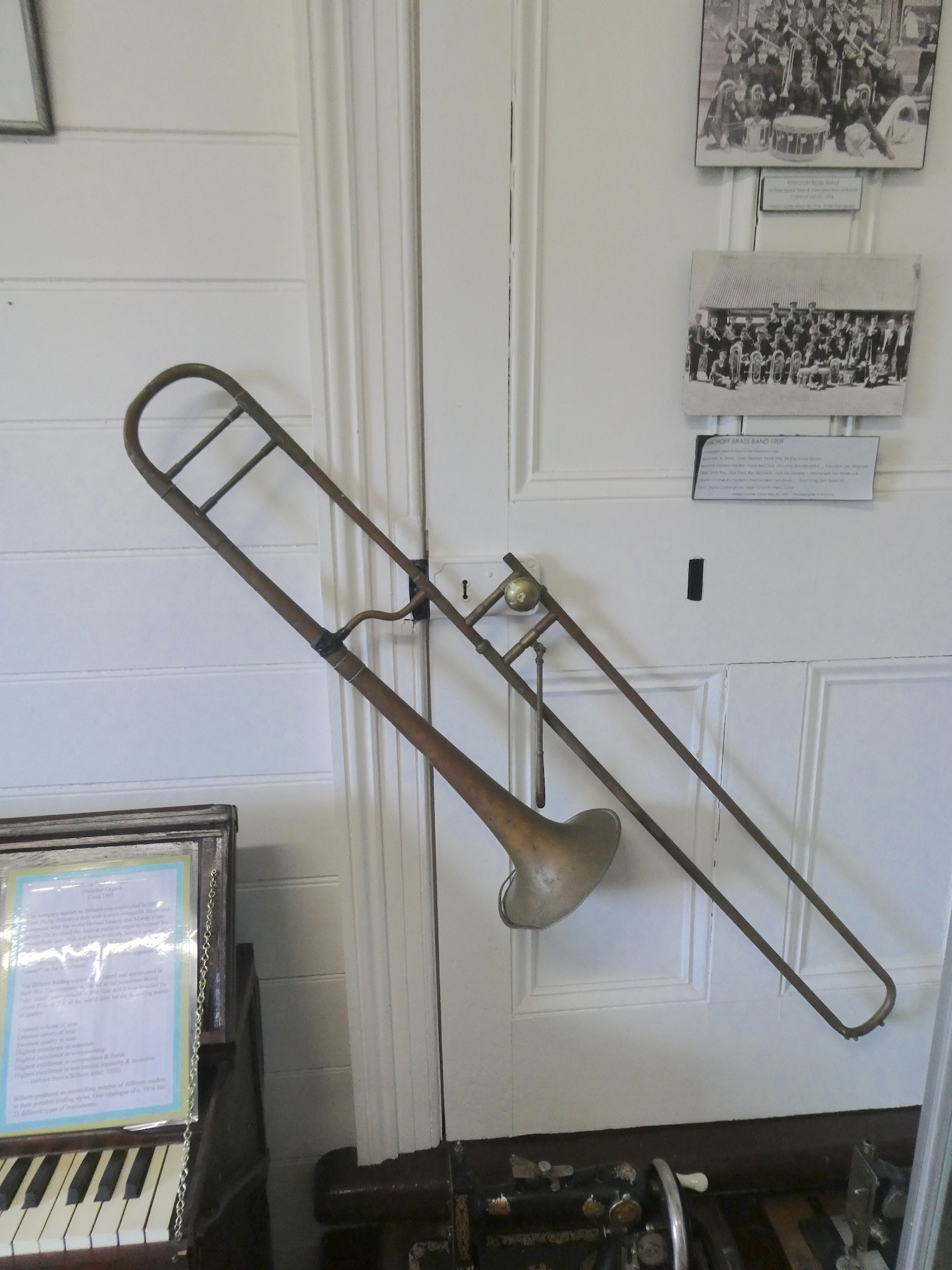
In the music room, vintage instruments, sheet music and old vinyl records reflect a time when music was an integral part of the social scene.
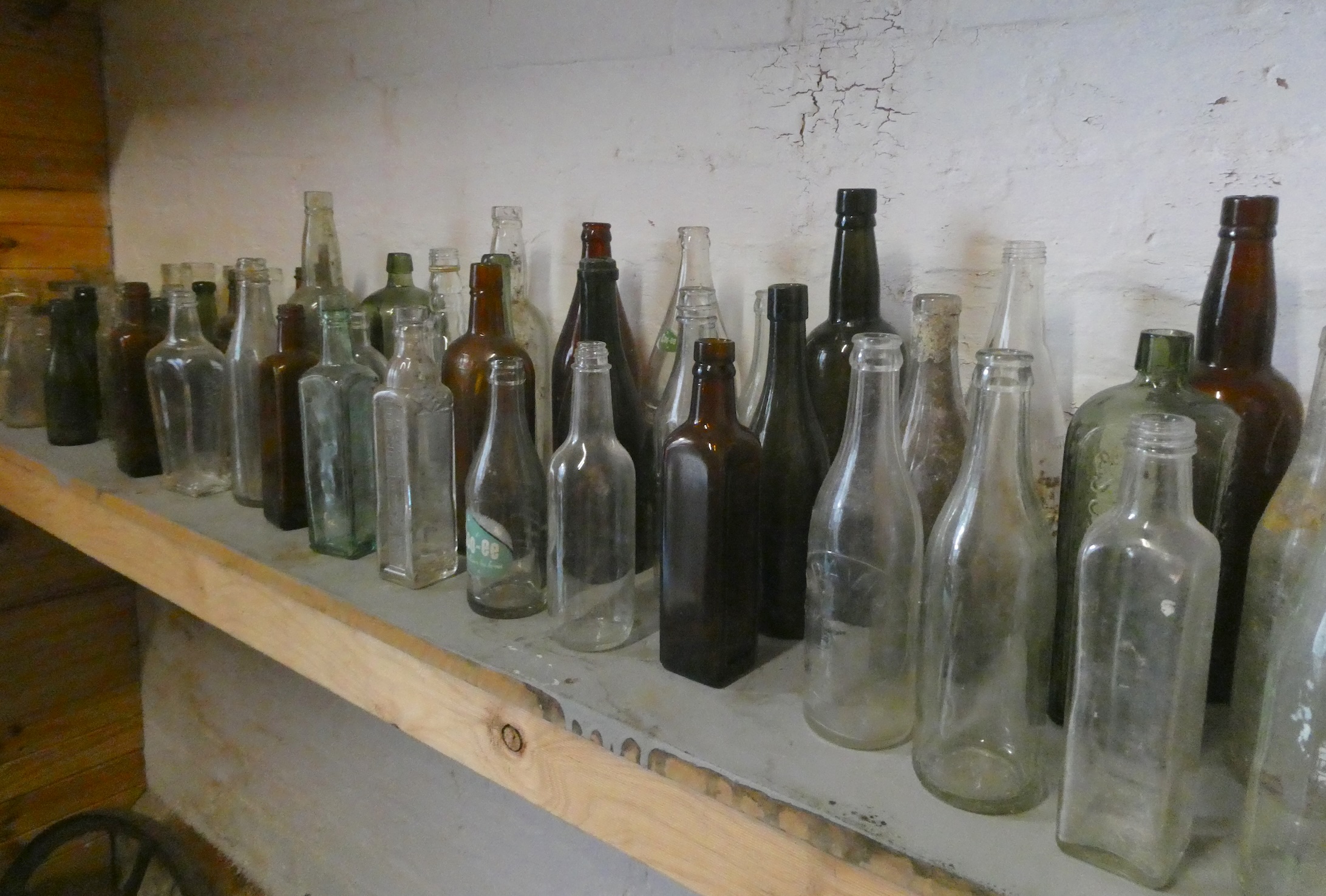
As expected, mining memorabilia abounds along with specimens of gemstones and minerals.
Among all the fascinating items, my favourite is this child’s dress. Despite the pretty trimmings, it does look a might scratchy.
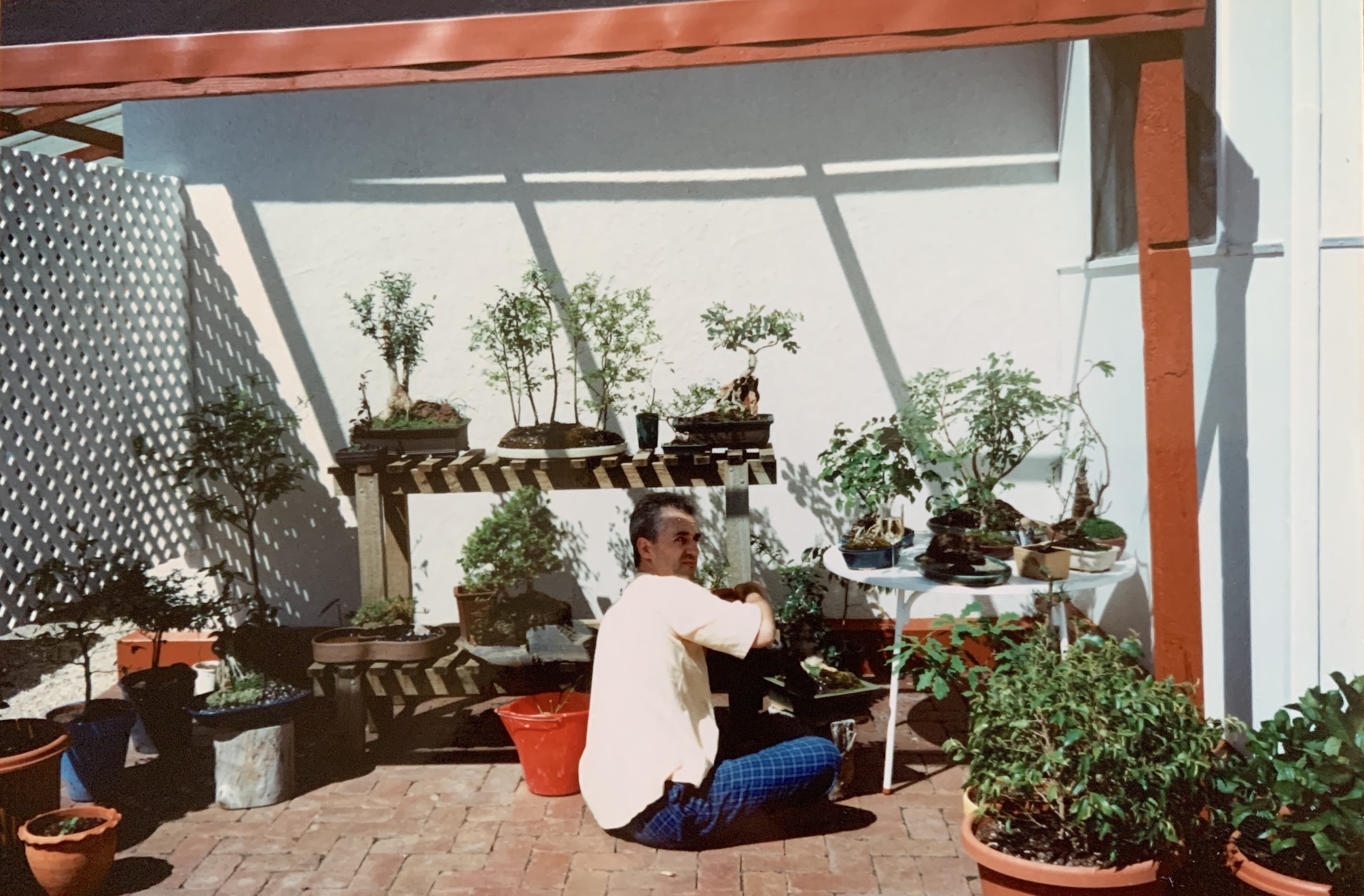
Michael developed a fascination with all things Japanese in his mid twenties and so began his interest in the art of bonsai. When we met, fifteen years later, he came as a package deal and his beloved bonsai found a home in a sunny spot under the pergola of our suburban backyard.
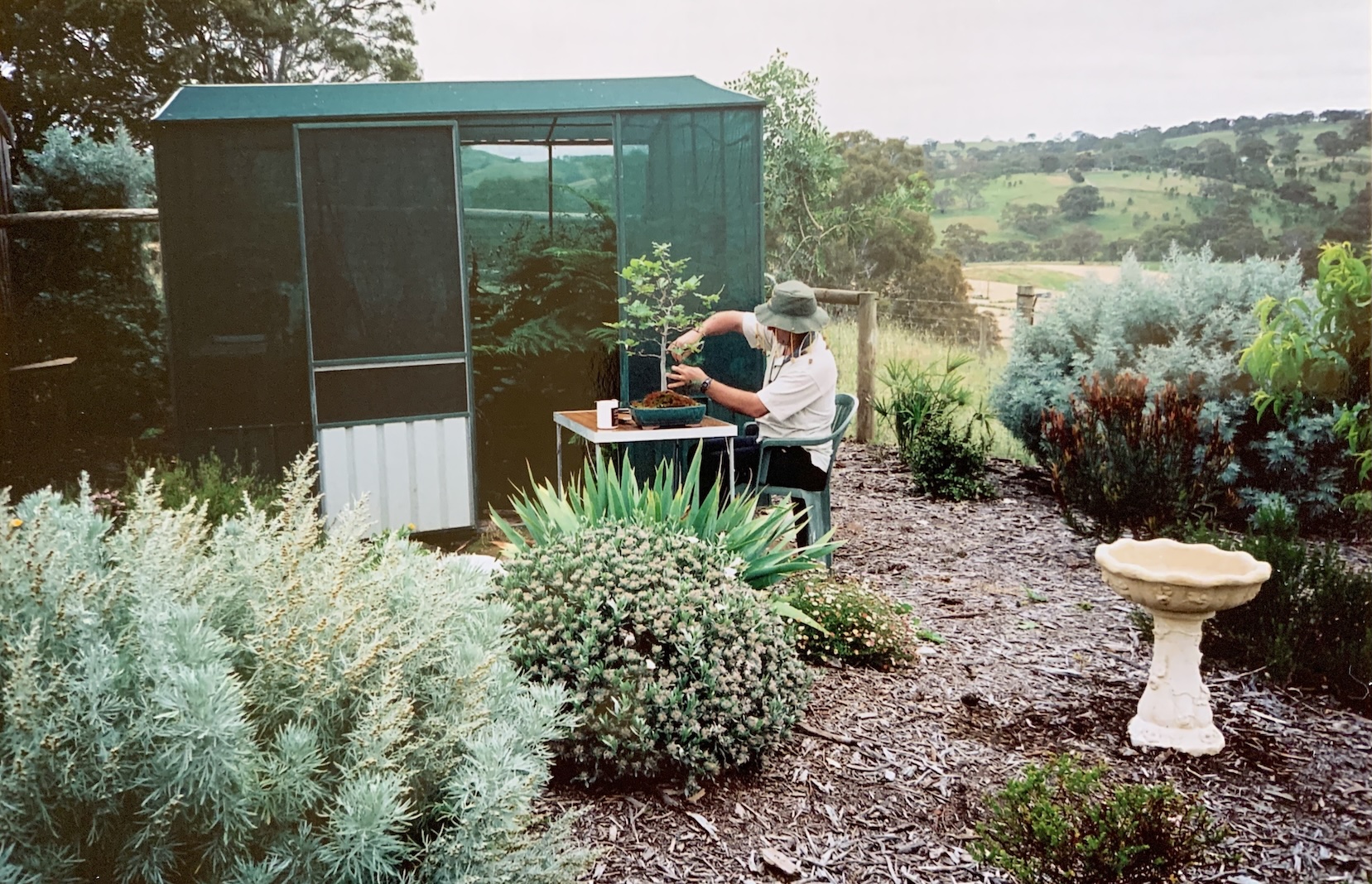
Five years on, we moved to a property in the Adelaide Hills and one of the first items we added to the garden was a shade house to protect the bonsai from unpredictable weather. (It did become airborne in one particular storm but, fortunately, no bonsai were harmed. We then concreted the corner posts into the ground.)
Fast forward another seven years and we made the bold decision to relocate to Tasmania. By this stage, there were over forty bonsai to consider in varying stages of evolution. There were strict biosecurity rules for entry into Tasmania, any potted plants had to be fumigated by a registered authority and sealed until arrival across the creek. Sadly, all but four were sold or given away and the remaining plants travelled with us on the Spirit of Tasmania to their new abode. More specimens have been procured and nurtured since our arrival but they have been somewhat “out of sight” in various spots around the garden.
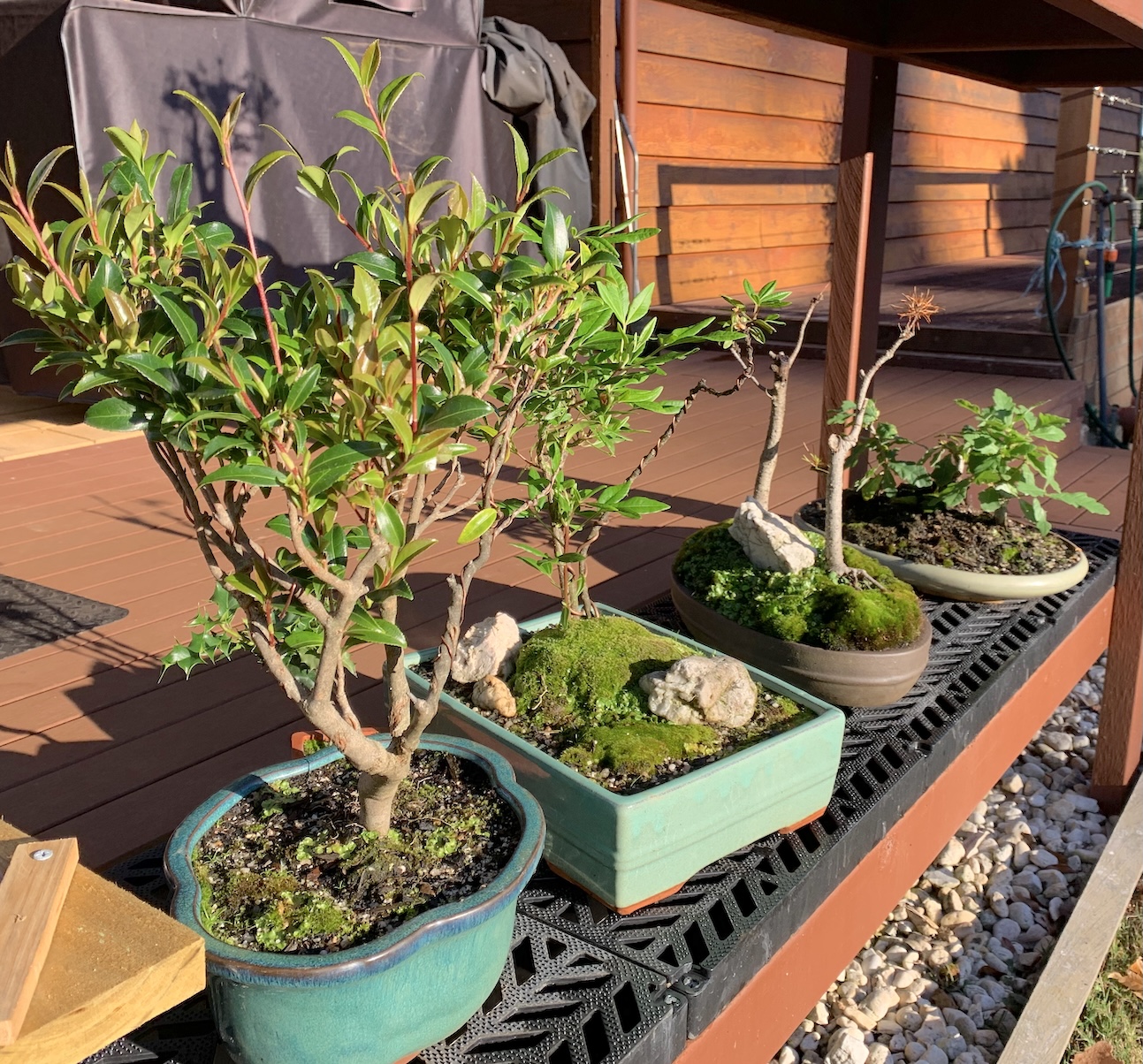
After years of planning and procrastinating, the new bonsai stand was finally created last winter.
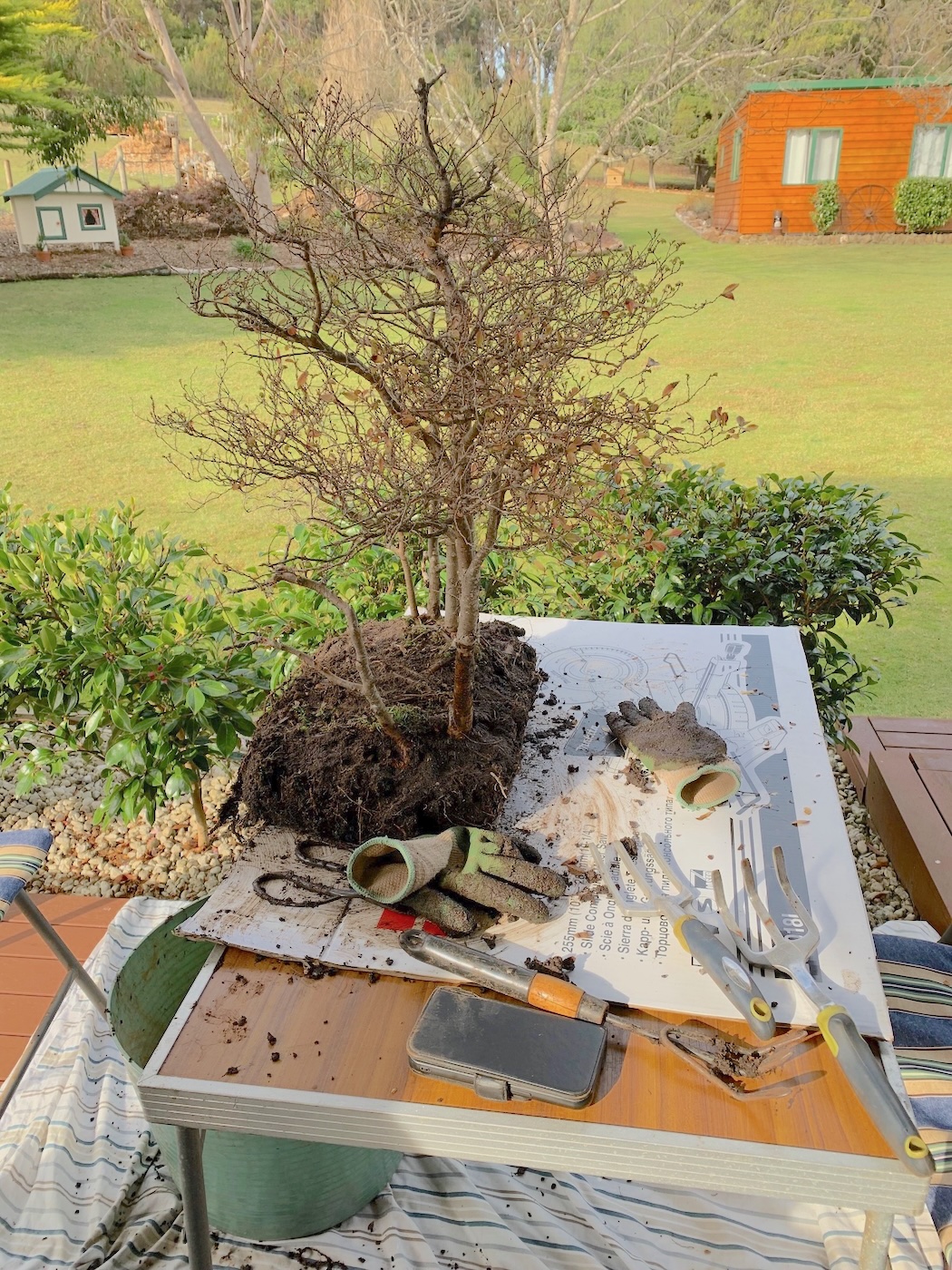
The little trees received some long overdue attention with pruning, root trimming and re-potting.
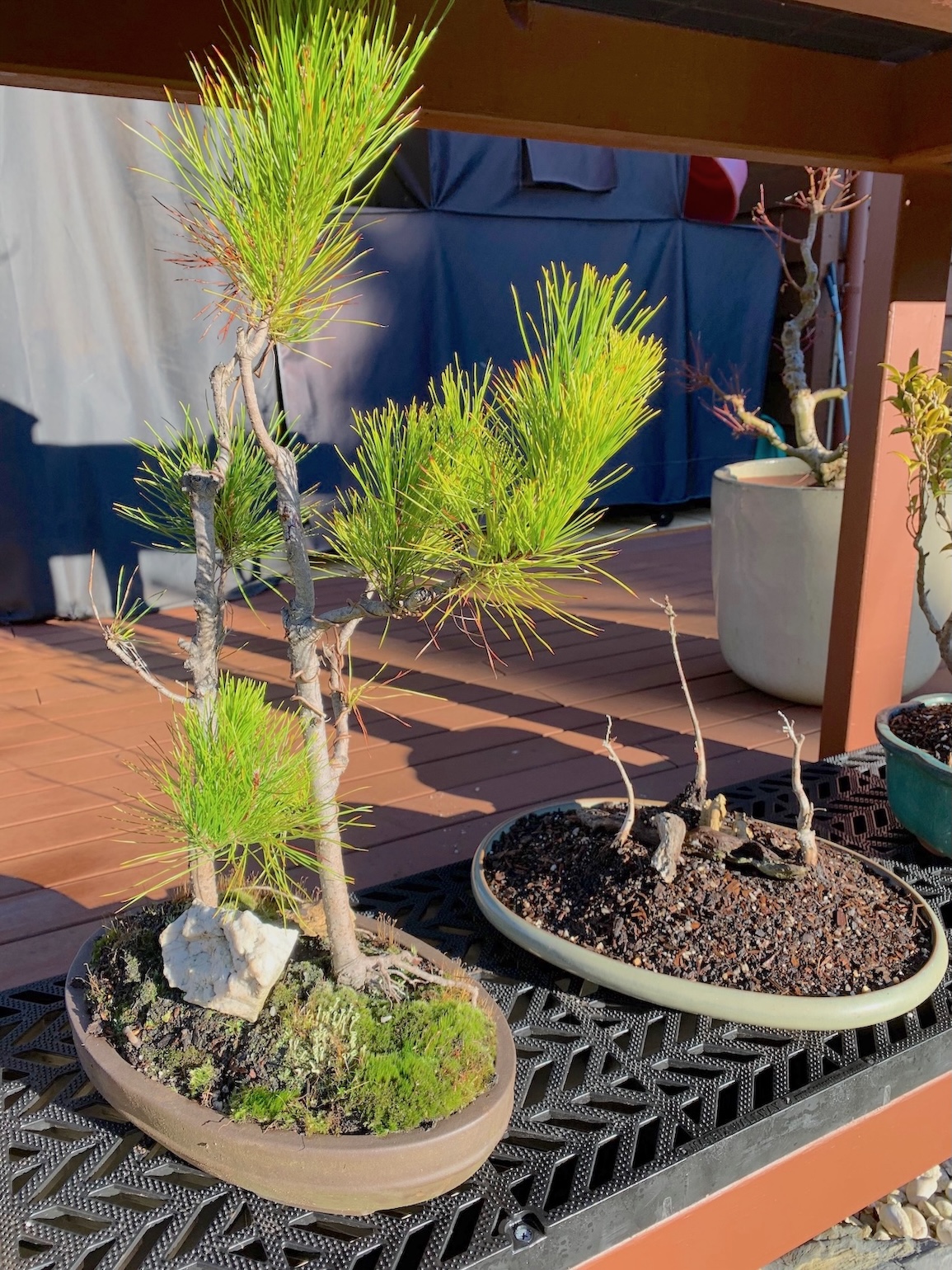
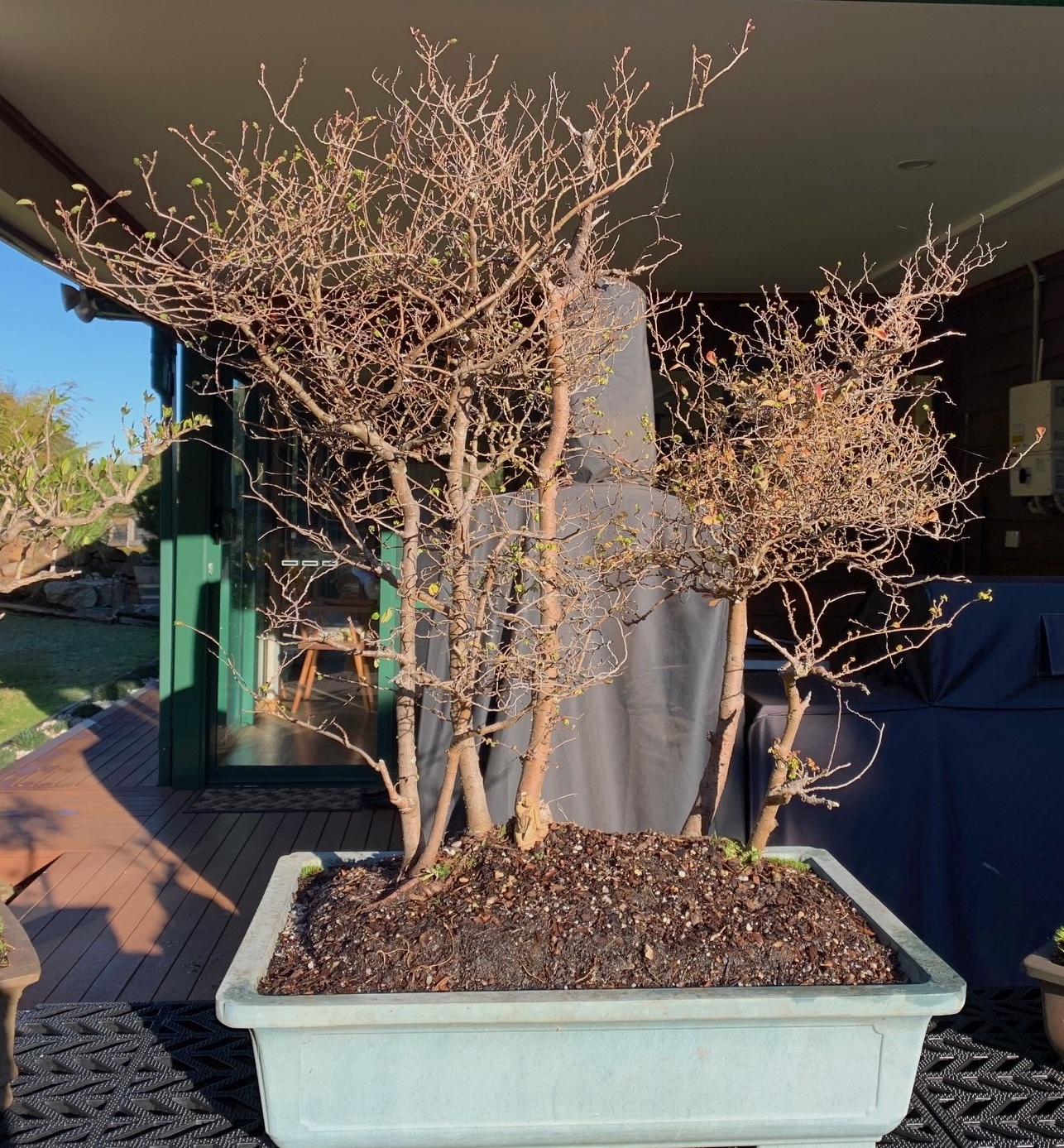
Let me introduce you to the collection. The radiata pine was given to Michael by someone who no longer wanted to continue with bonsai, and the three sticks on the right are English oaks that had self-seeded on a friends property at Table Cape.
Spring brought verdancy to the oaks but, regrettably, the radiata failed to thrive.
The origin of this liquidambar is uncertain (meaning forgotten) but, despite resembling a twig in winter, it perked up once the warmer weather arrived.
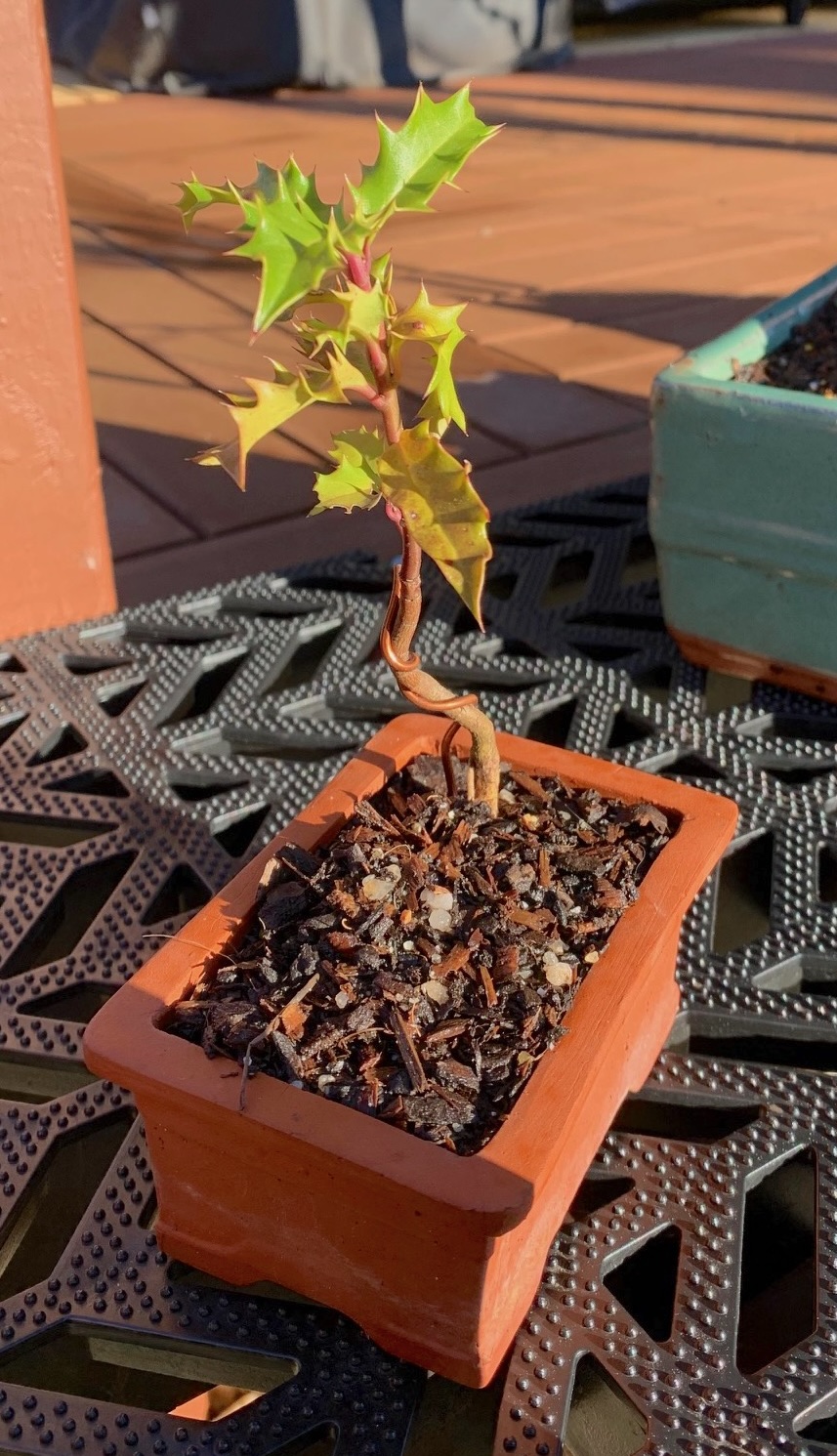
We have a huge holly tree in the garden from which we occasionally find young saplings, the perfect source to experiment with bonsai. So far, this one is a success.
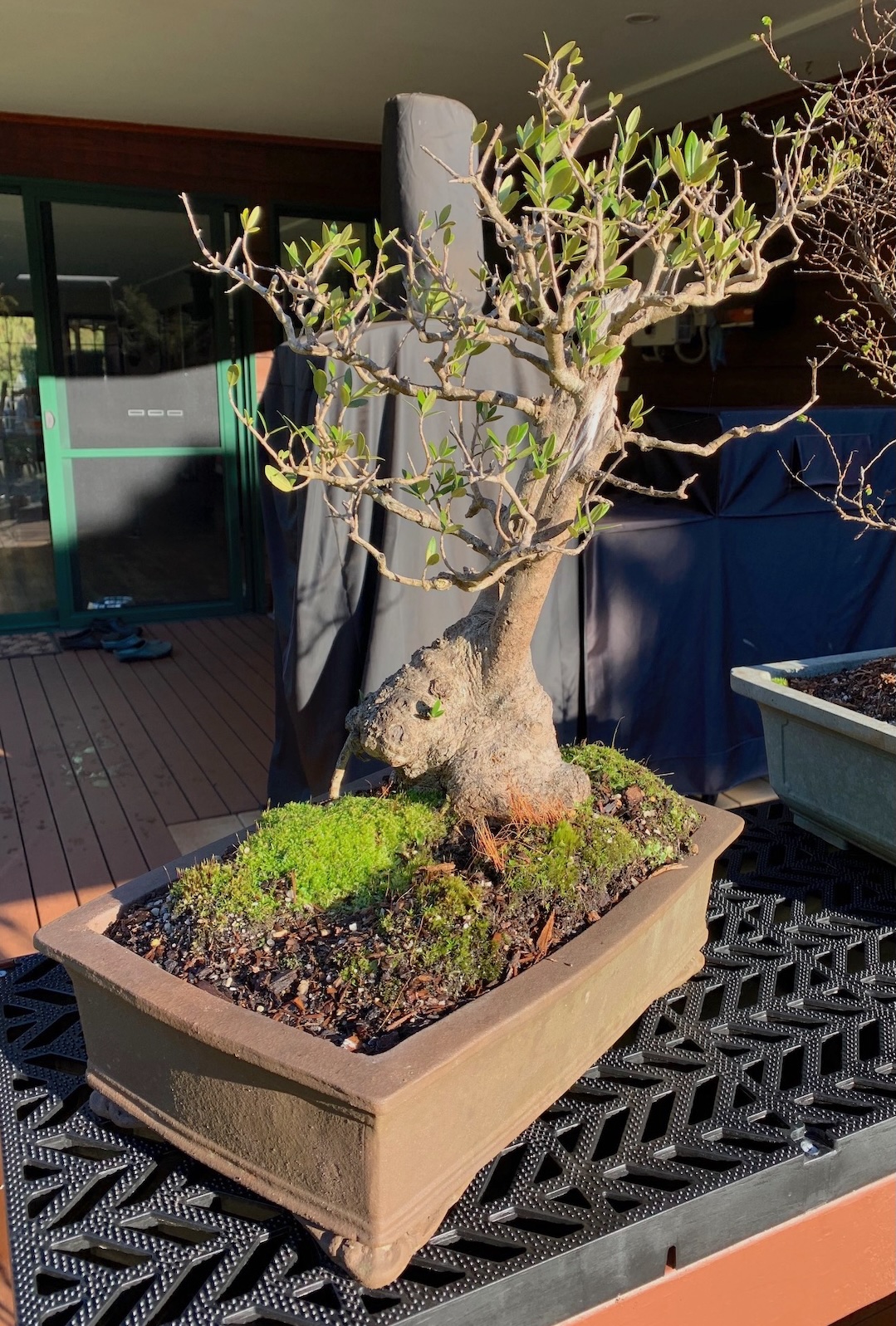
I bought Michael this olive as a gift nearly thirty years ago. He re-trained it and it is one of the chosen few who came from South Australia with us.
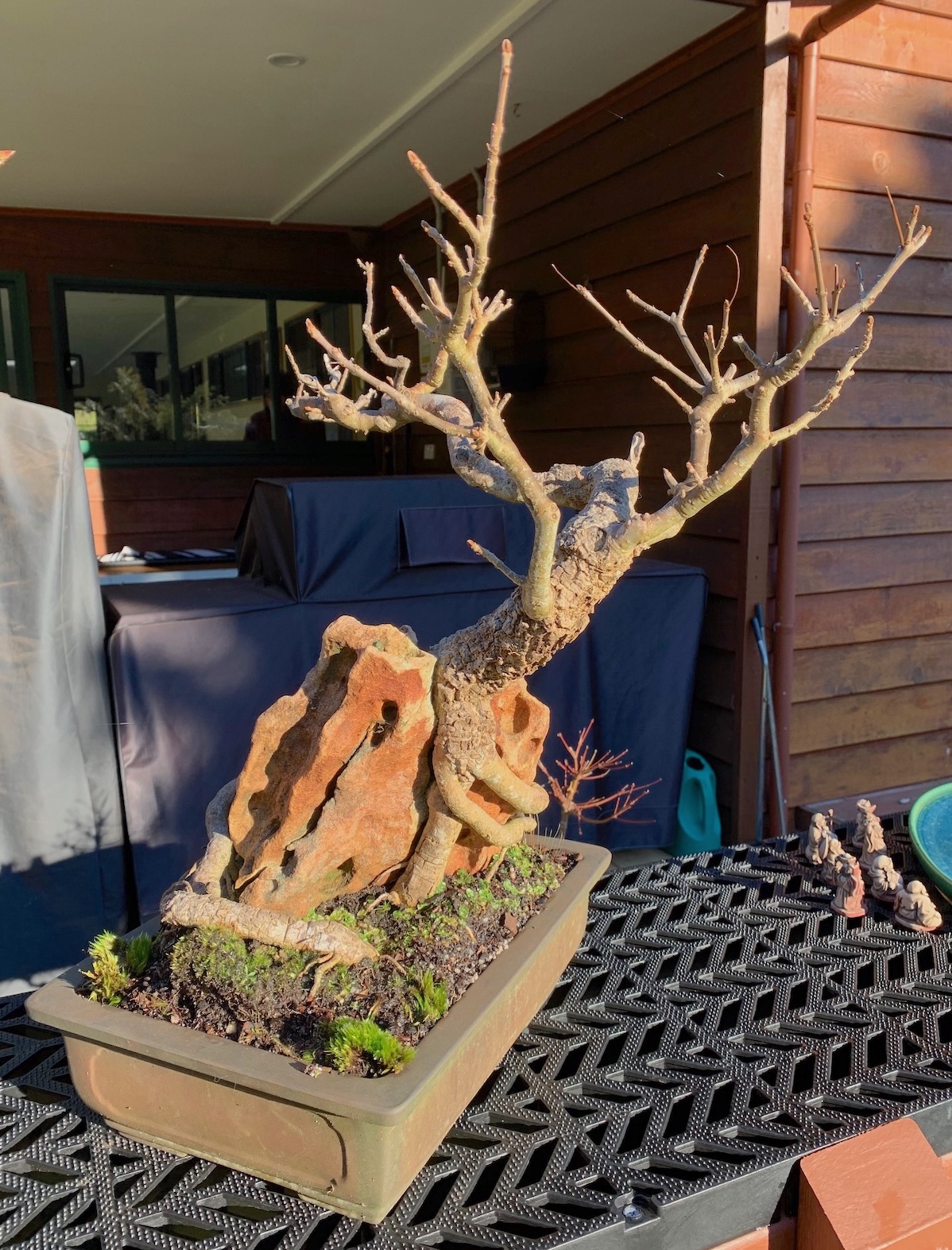
The ash tree is quite spectacular. Liberated from between two pavers on a suburban footpath in the mid 80s, Michael trained the roots around a rock before planting in a deep pot. The roots were then gradually exposed and this is the result.
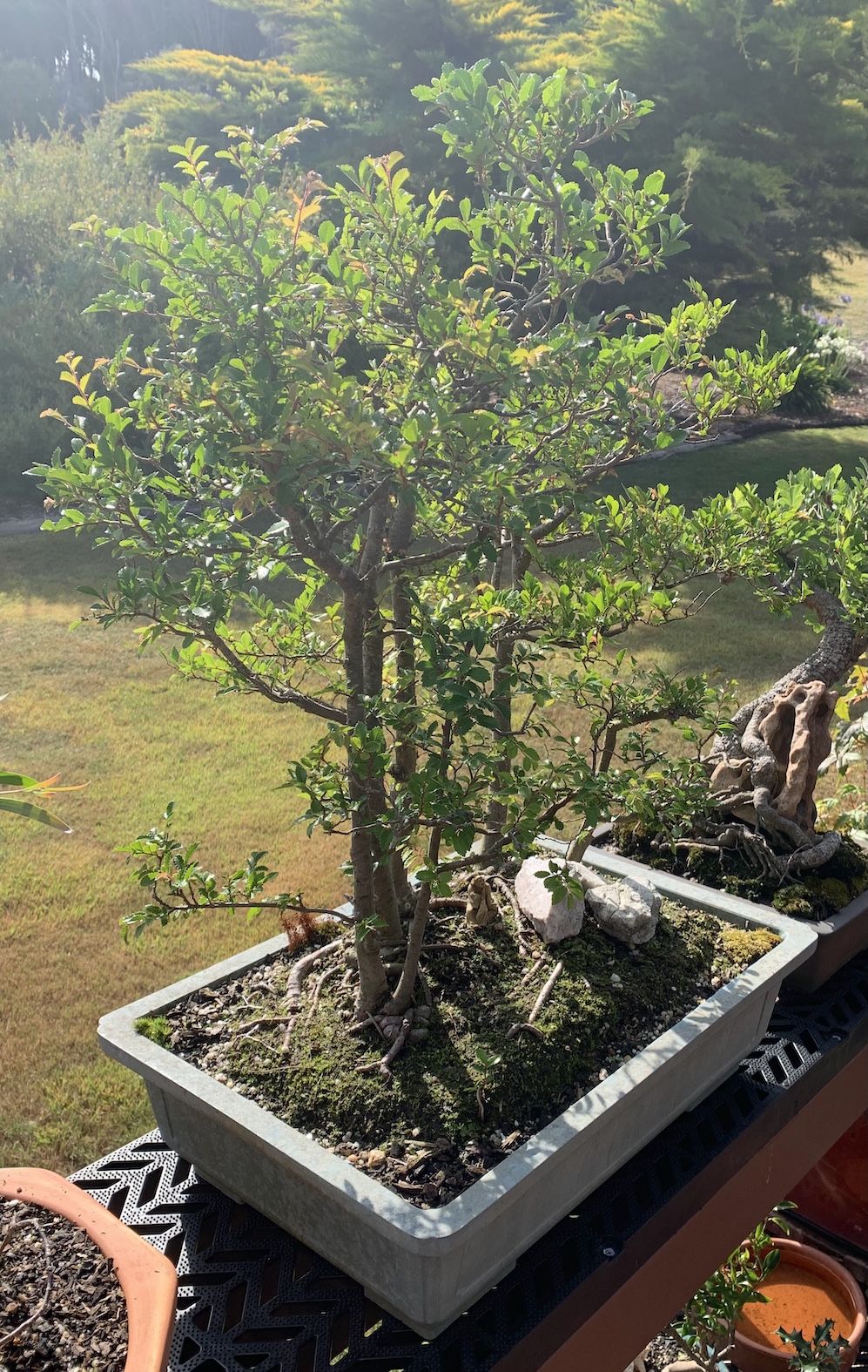
The oldest exhibit in the collection is a copse of English elms. One of the original seven died in transport to Tasmania but there are two new saplings growing in the grove and one will be nurtured to reinstate the preferred uneven number.
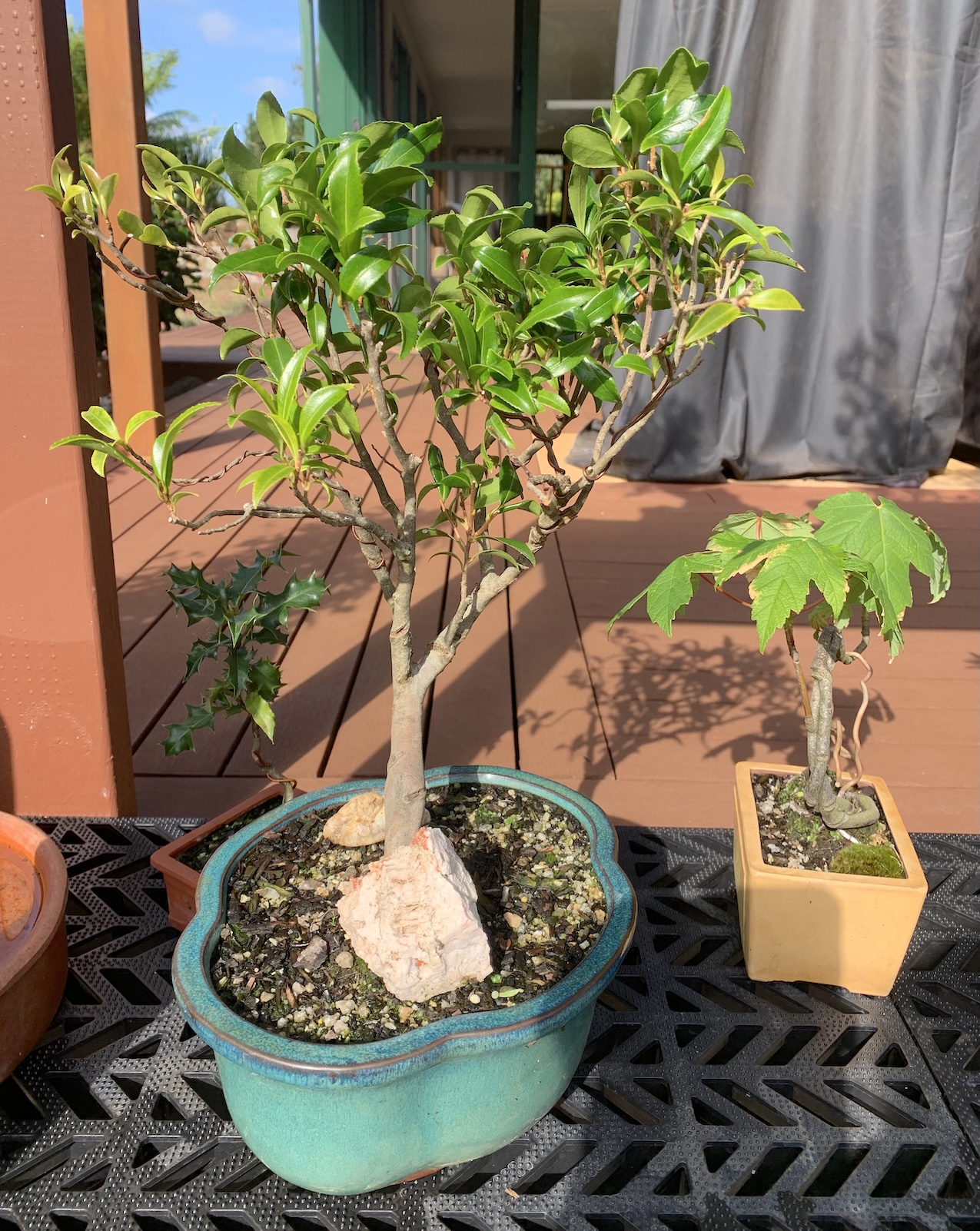
The dwarf camellia has done well and produced a beautiful pink flower last year.
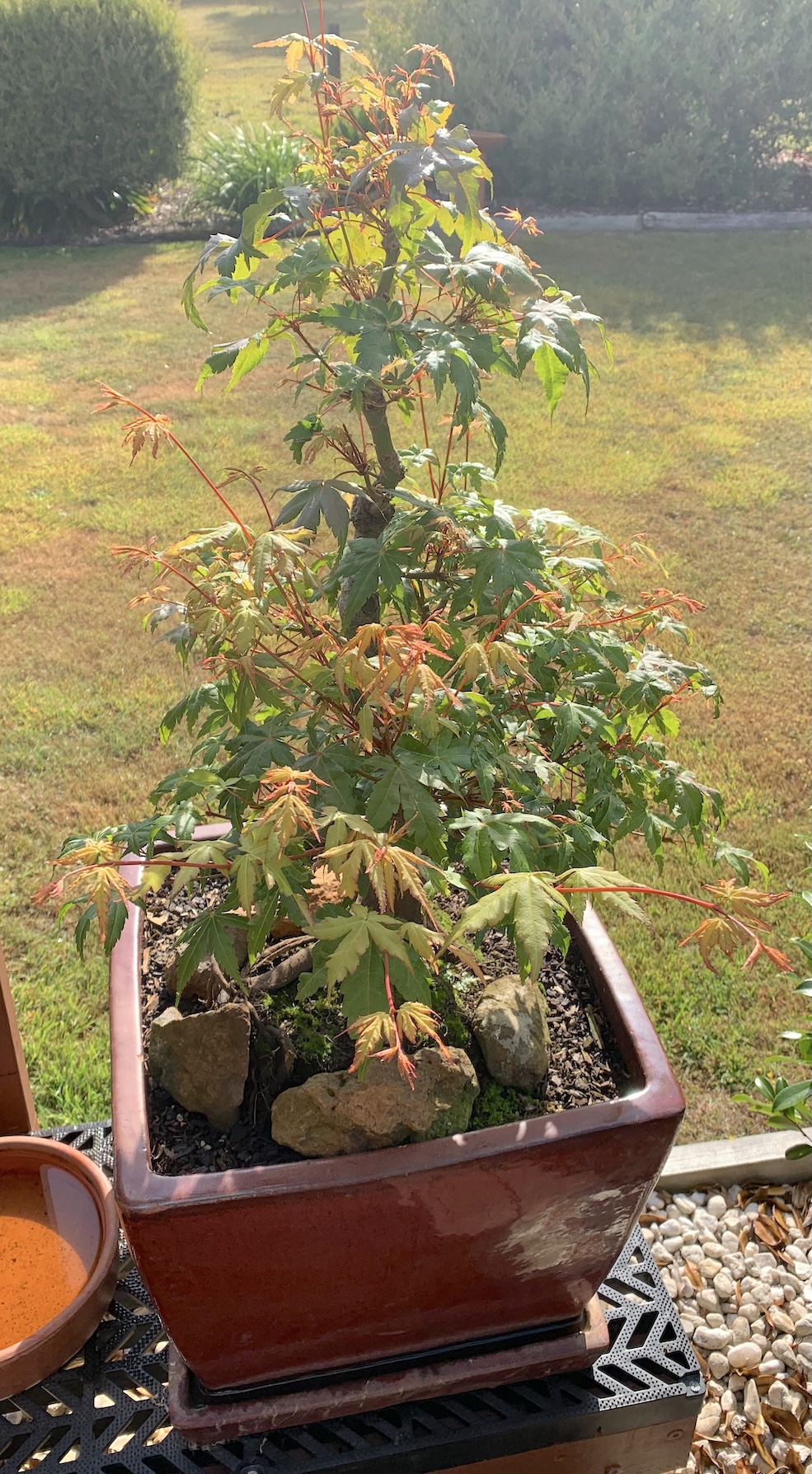
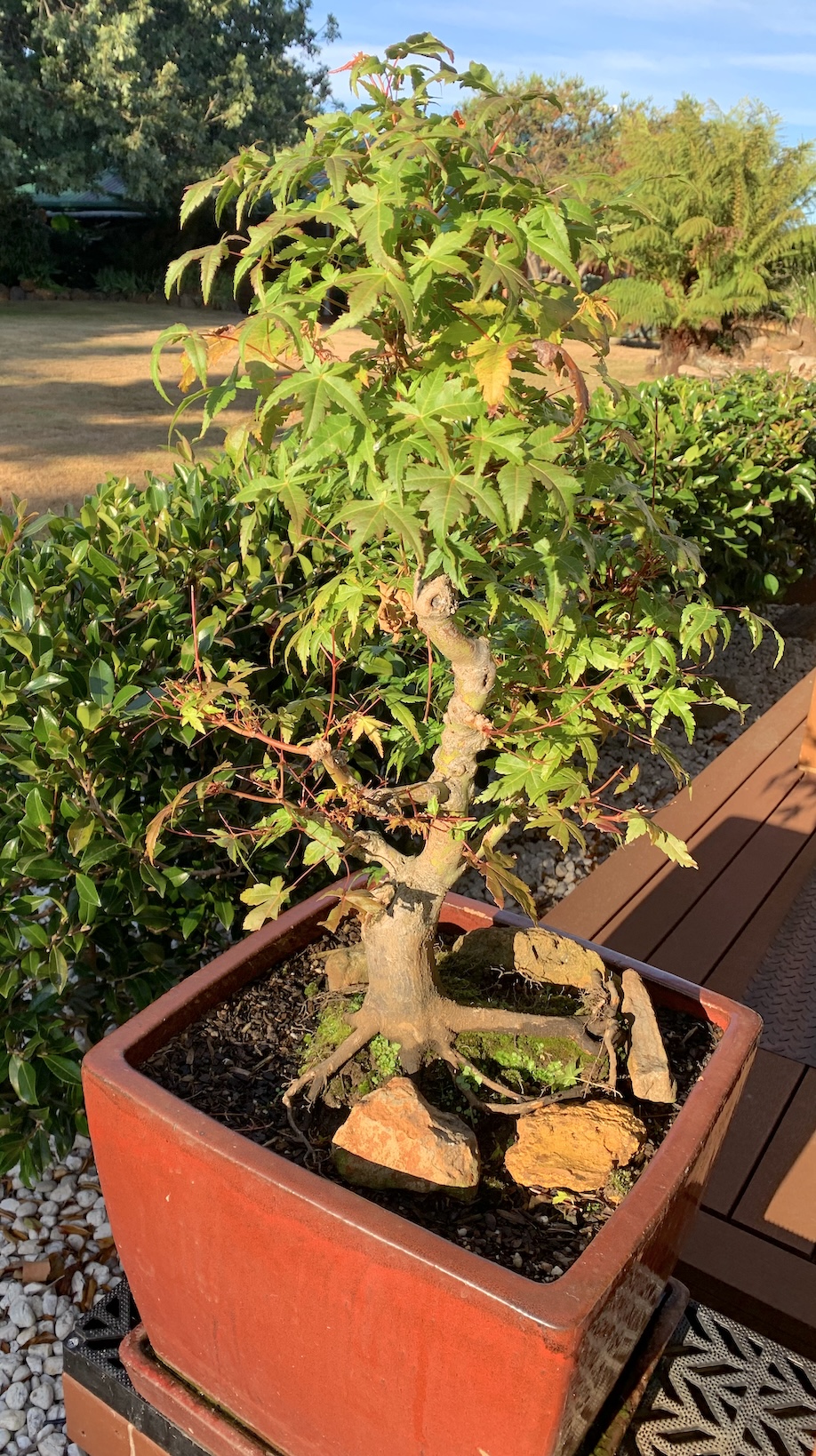
Perhaps the hardiest of them all is the Japanese maple. Firstly created as a bonsai, it was then planted in the garden to enable it to reach its full potential. That wasn’t to be when the neighbours horses reached over the fence and ate most of it. Reclaiming it into a pot seemed the kindest thing to do, now we just need to find a way to stop the nocturnal wildlife having a nibble.
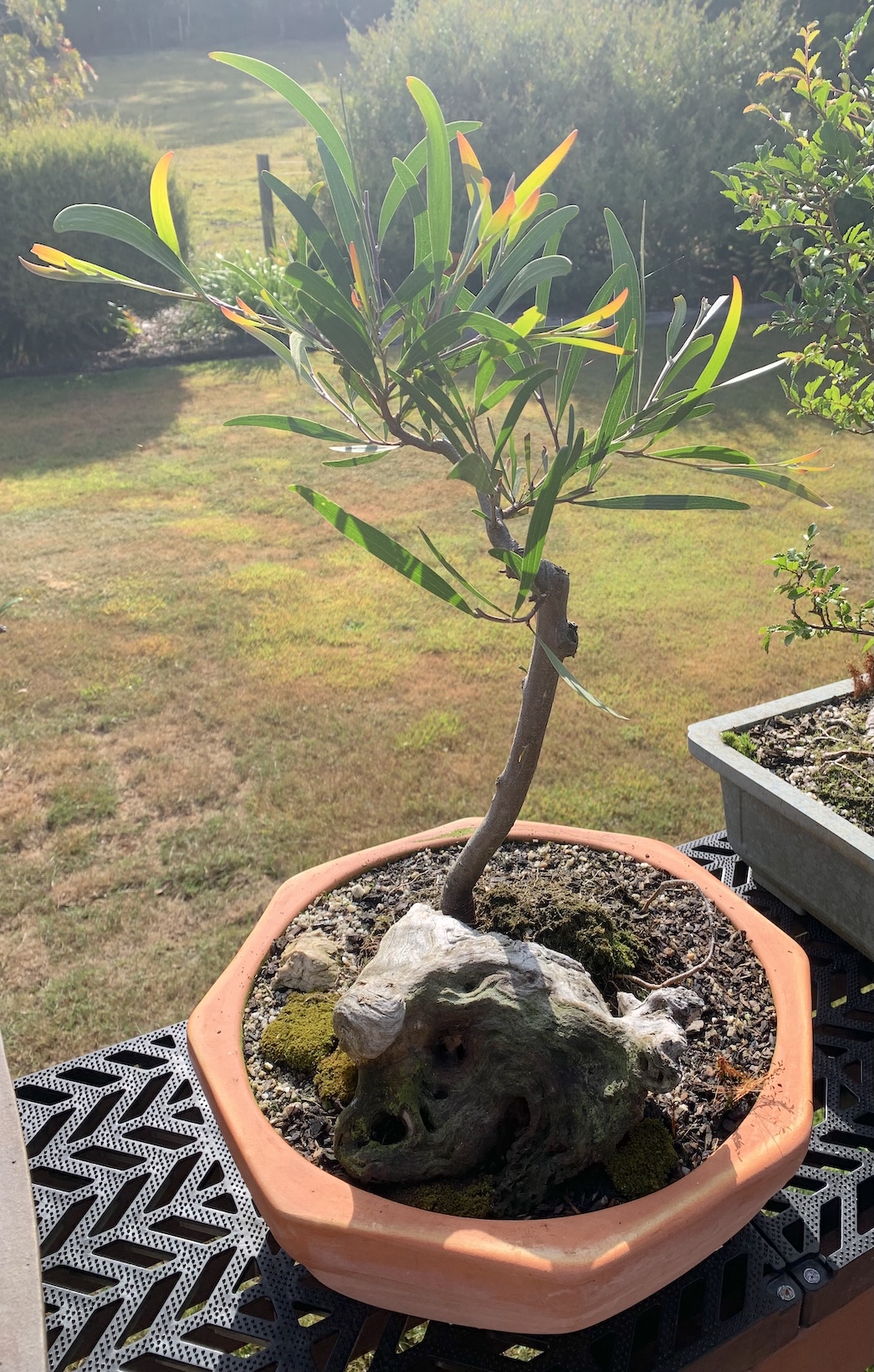
The Australian blackwood was gifted at the same time as the radiata but has fared considerably better. Several root suckers have emerged and will hopefully result in a miniature blackwood forest.
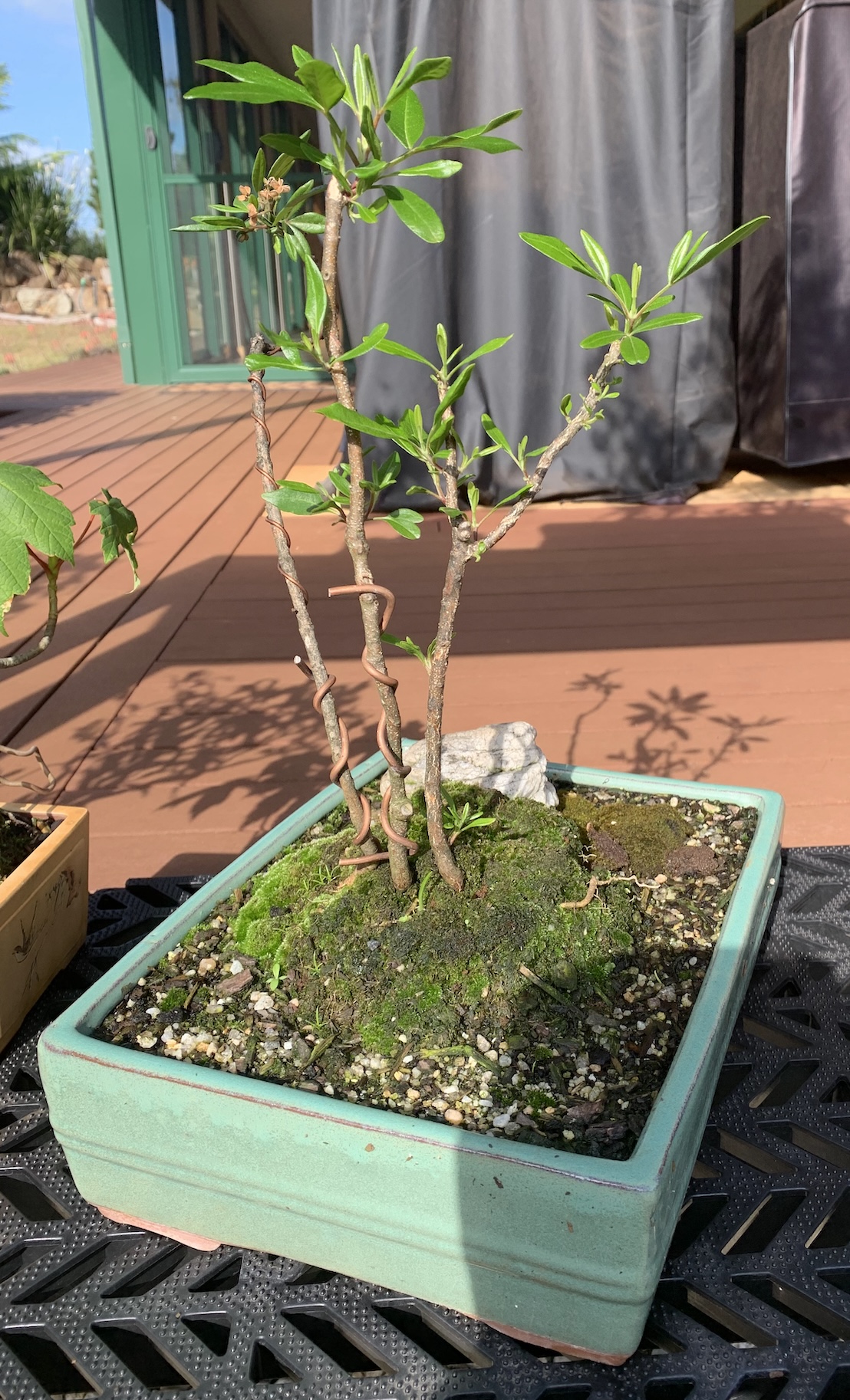
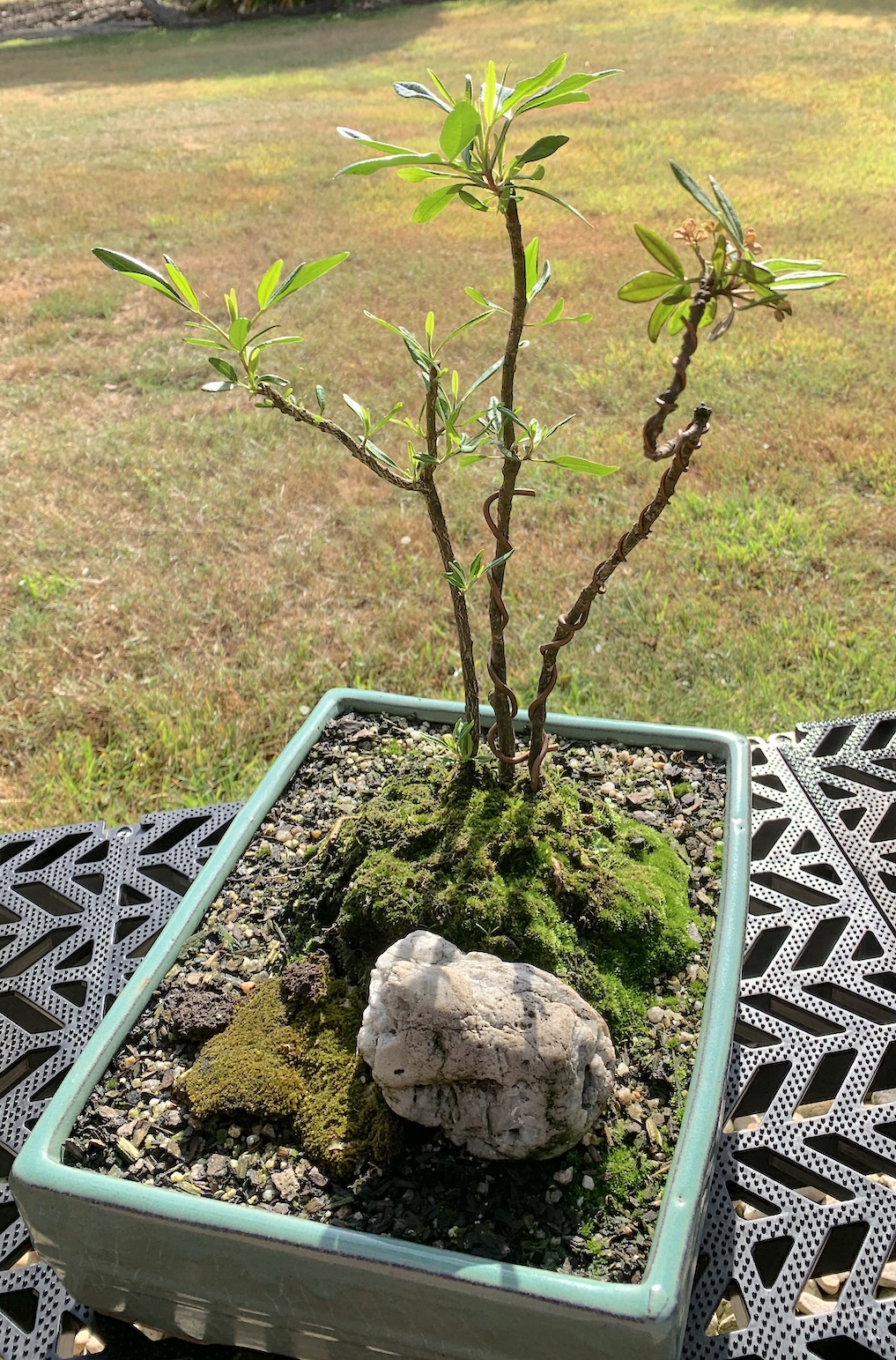
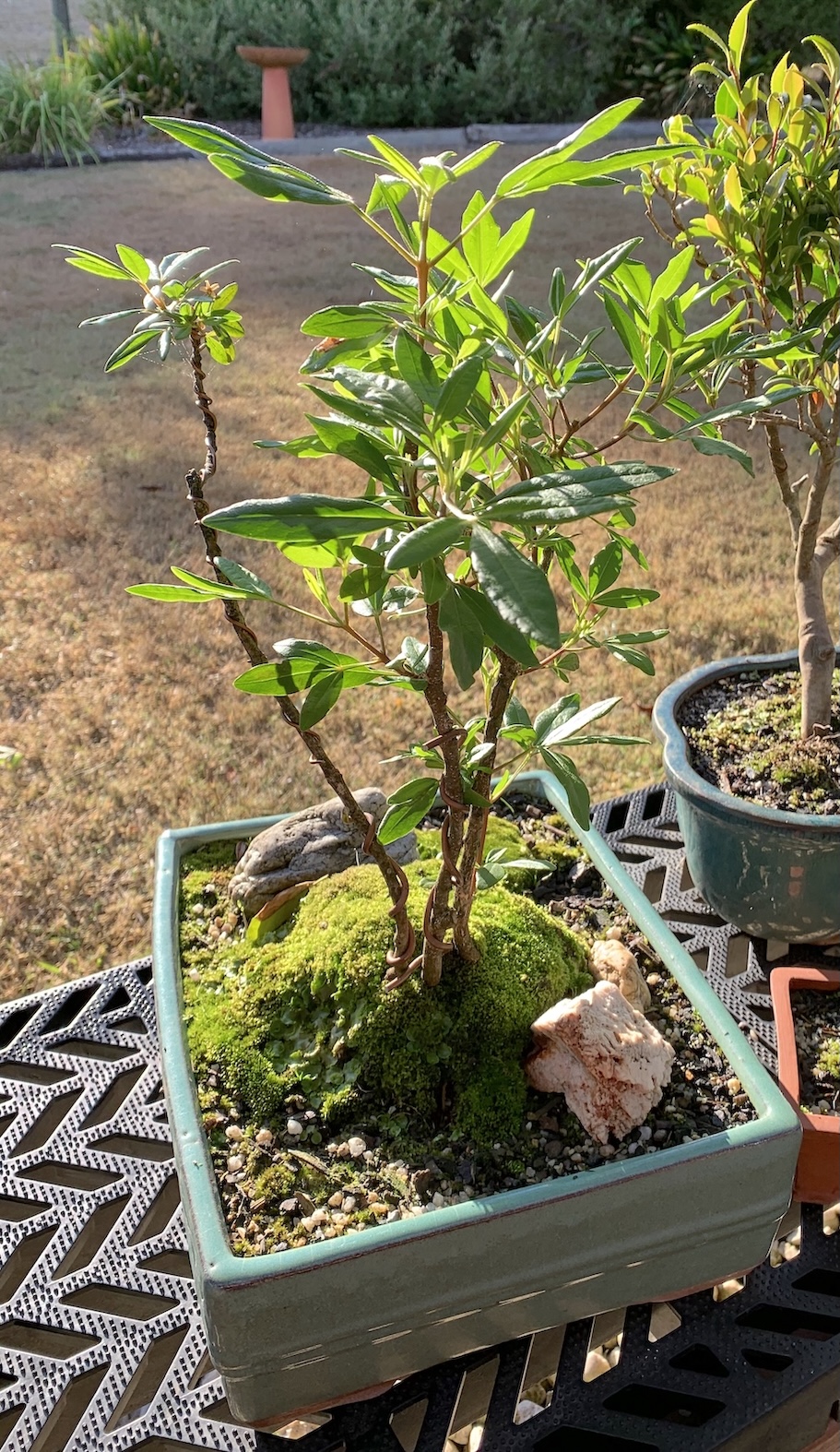
Dogwood trees are prolific in our forest and Michael took these three from the path to see if they could become bonsai. I’d say it was a successful experiment.
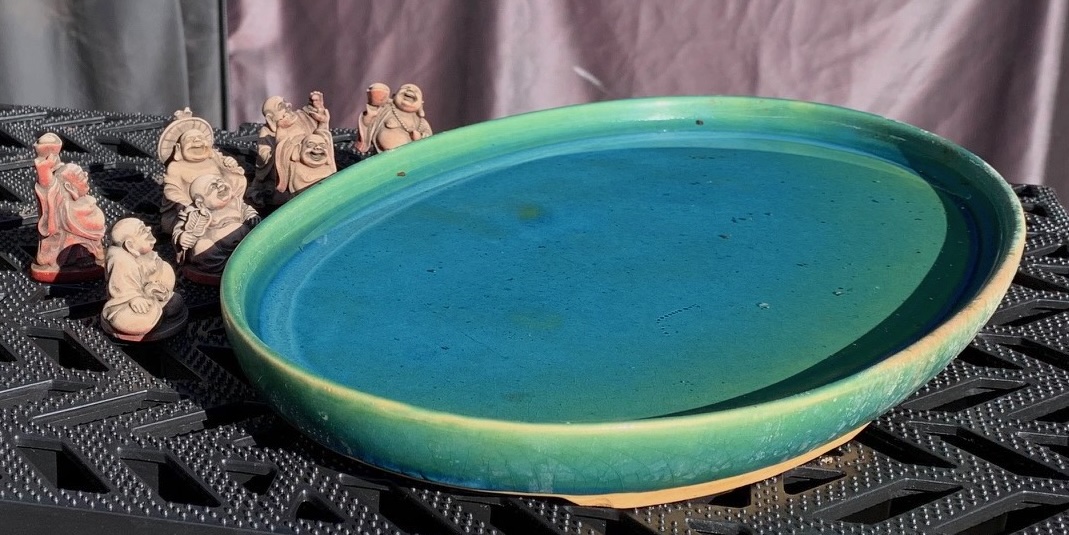
With the Japanese Buddhas enjoying themselves at the watering hole,
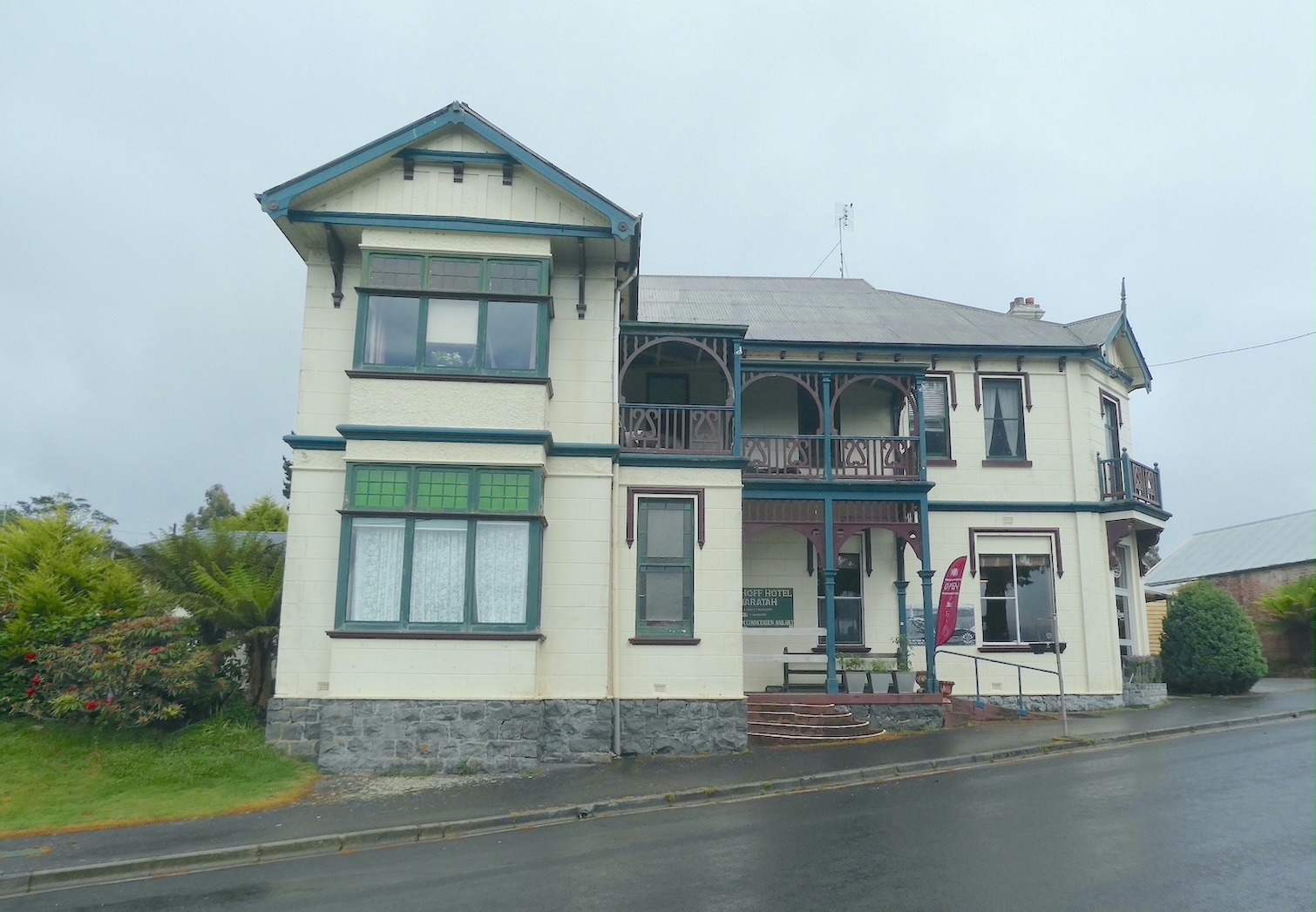
Our journey to Corinna took us through the former mining town of Waratah on the edge of Tasmania’s west coast wilderness. The plan was for lunch at the Bischoff Hotel, the only hotel remaining in the town. Originally built in 1879, it burned down in 1902 before being rebuilt and burning down again in 1909. The present Queen Anne style incarnation was completed later that same year.
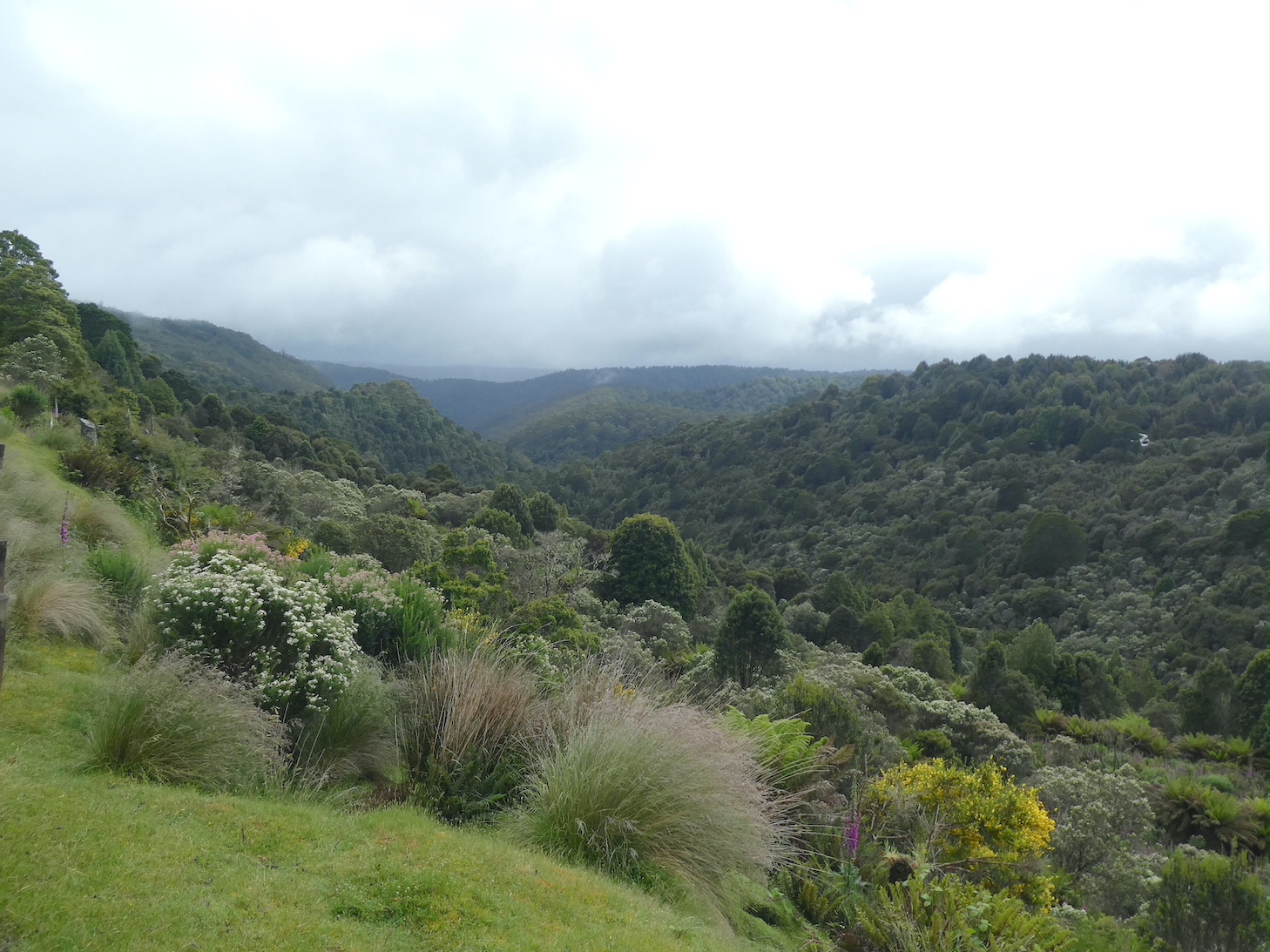
The view from the hotel is spectacular, even on a drizzly day
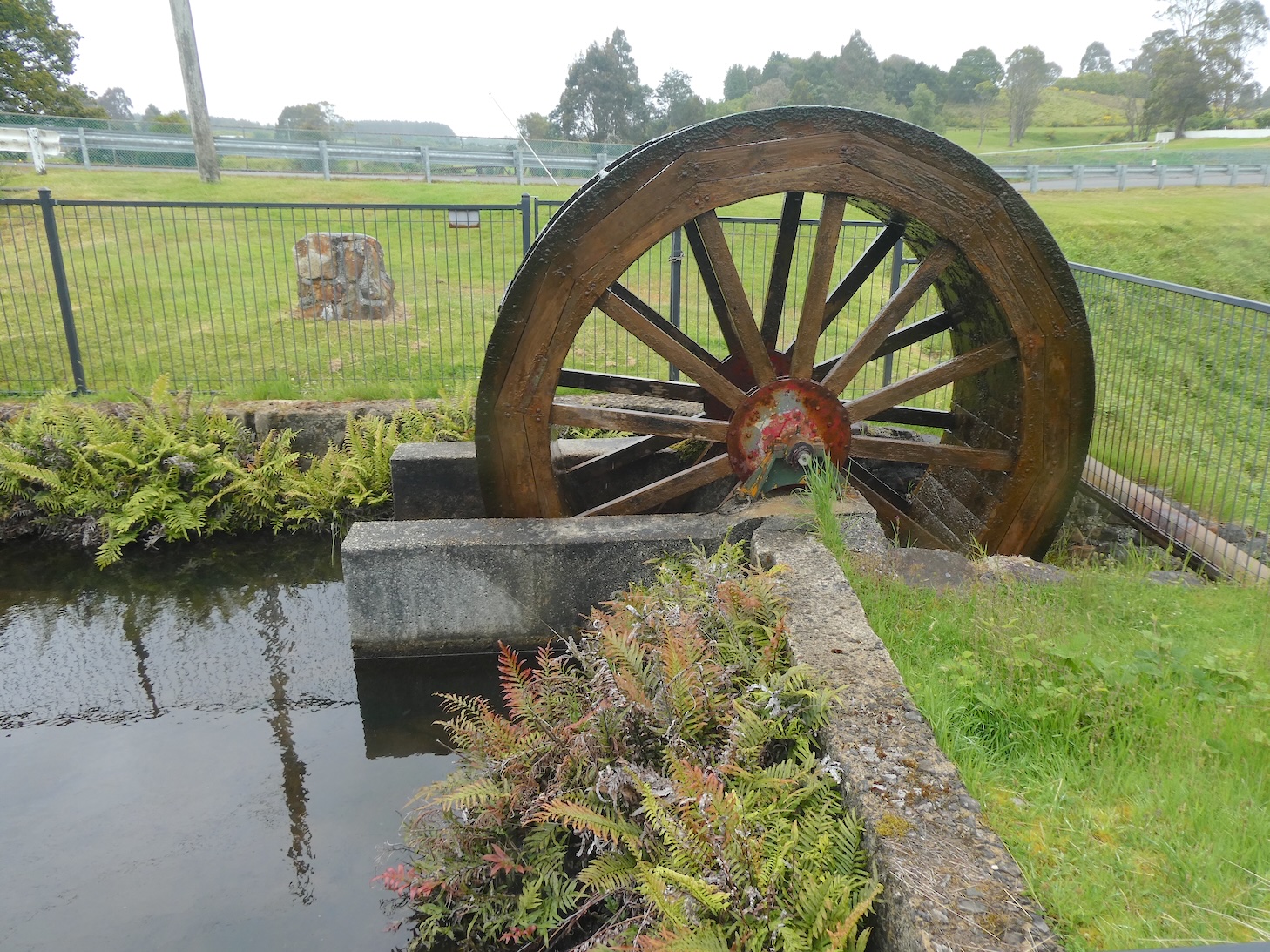
and the waterfall in the middle of town flows all year round. The water provided vital power to the mine directly through a series of seven water wheels and was later piped to the Waratah Power Station to produce hydro power.
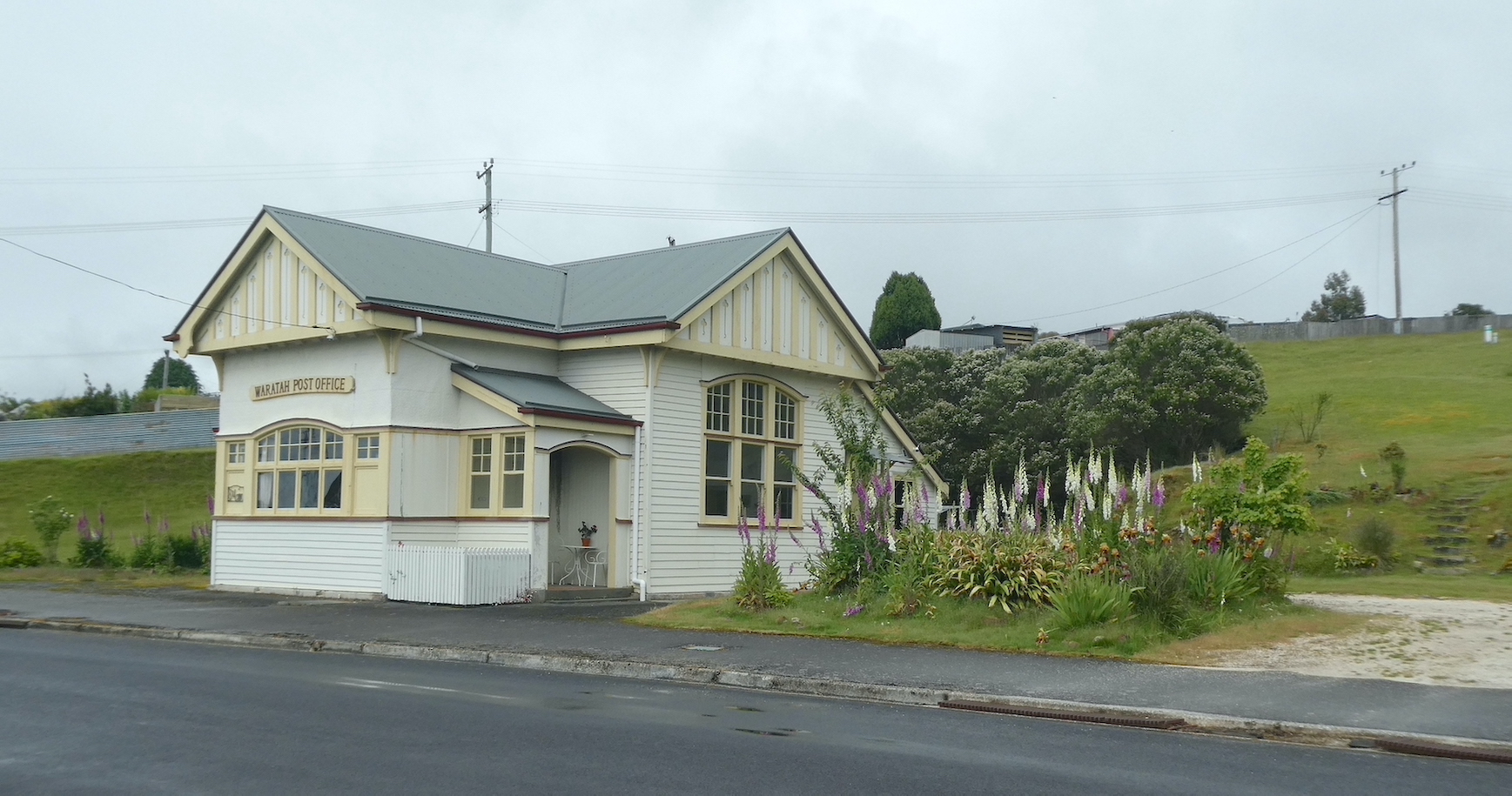
With some time to spare before dining, we set out to explore. The Waratah Post Office opened in 1882 and the current building replaced the original in 1913. It has been lovingly restored and is now available as luxury holiday accommodation.
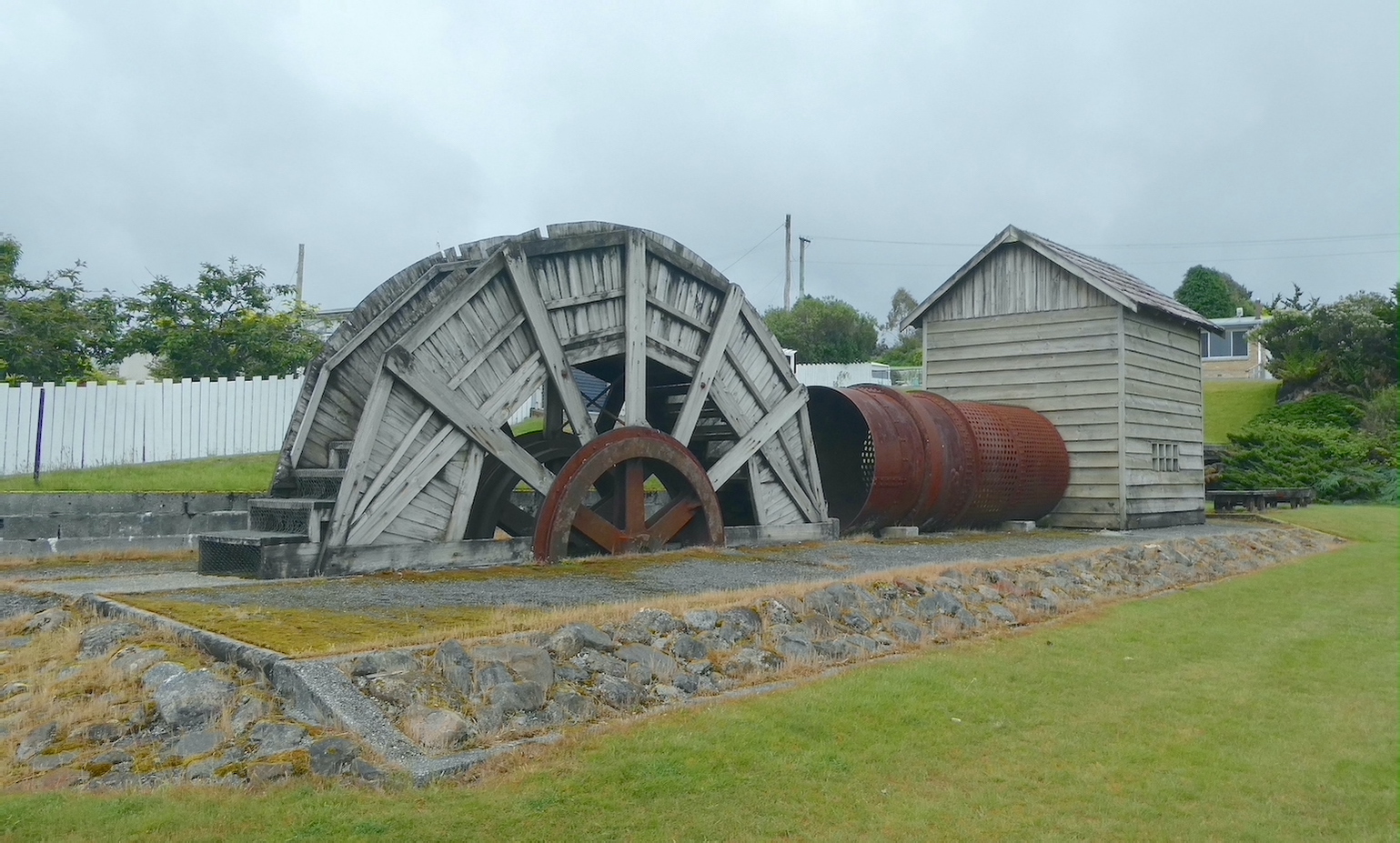
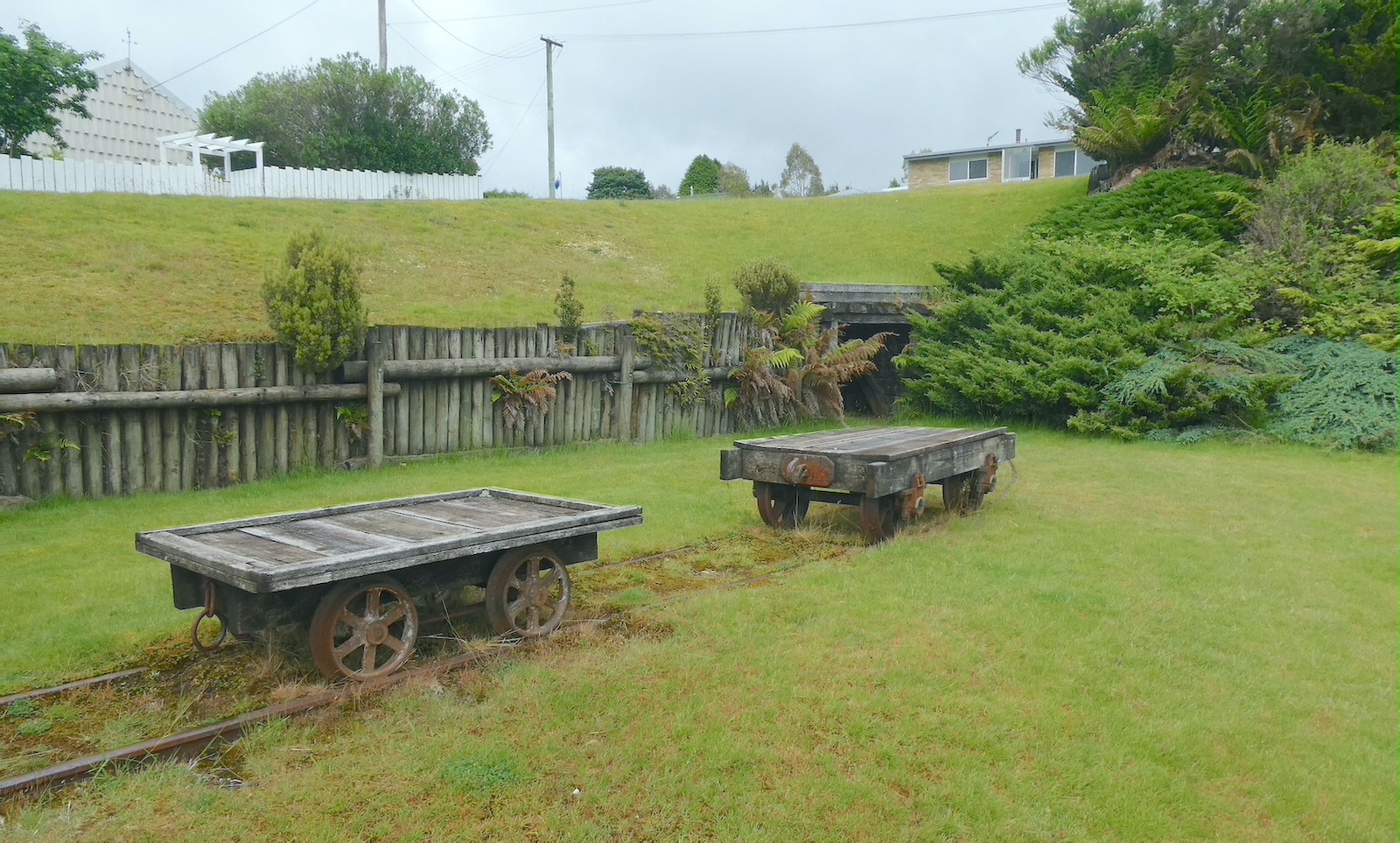
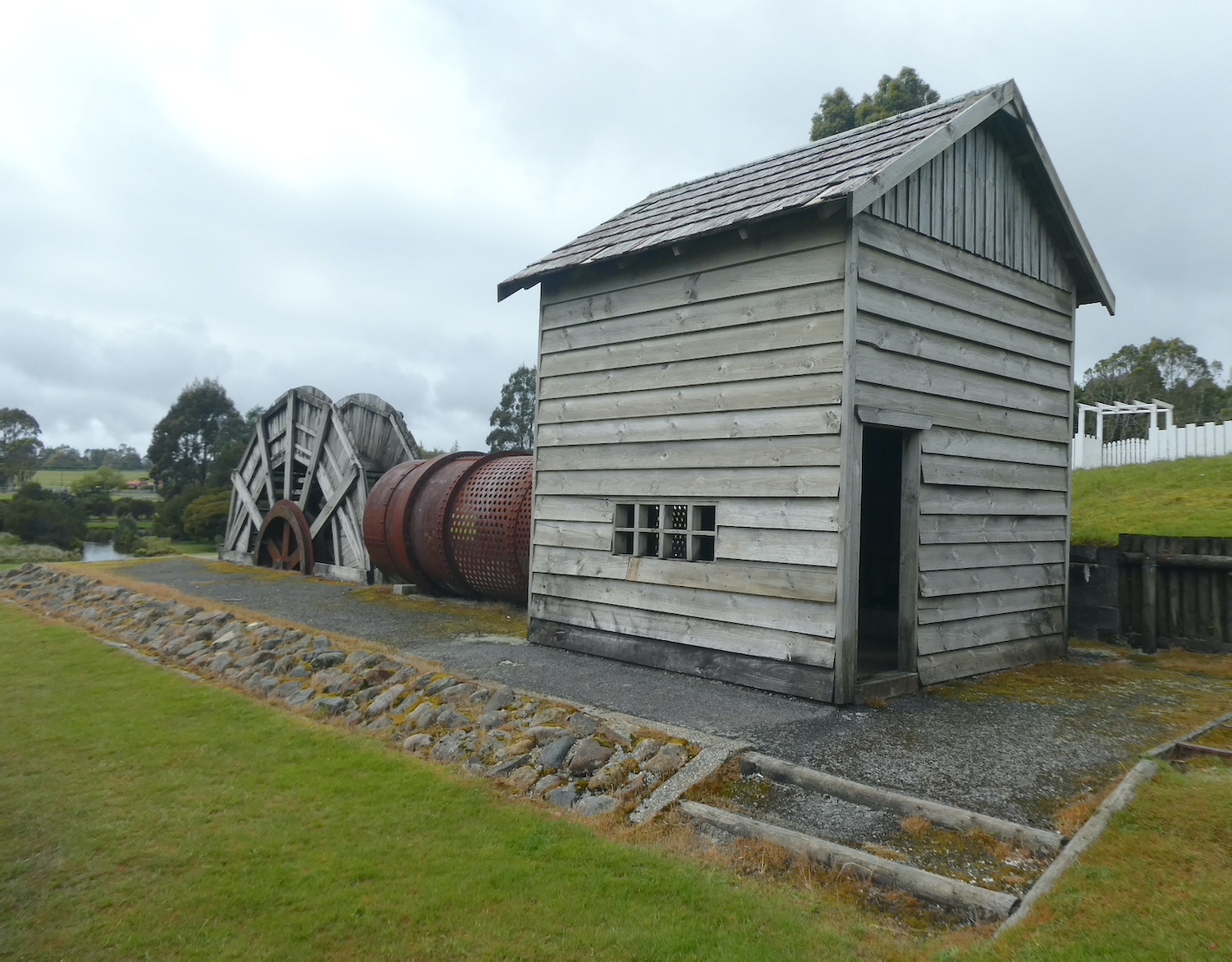
We made our way to the lake and came across an old waterwheel and pump house near what appeared to be an old entrance for the mine carts.
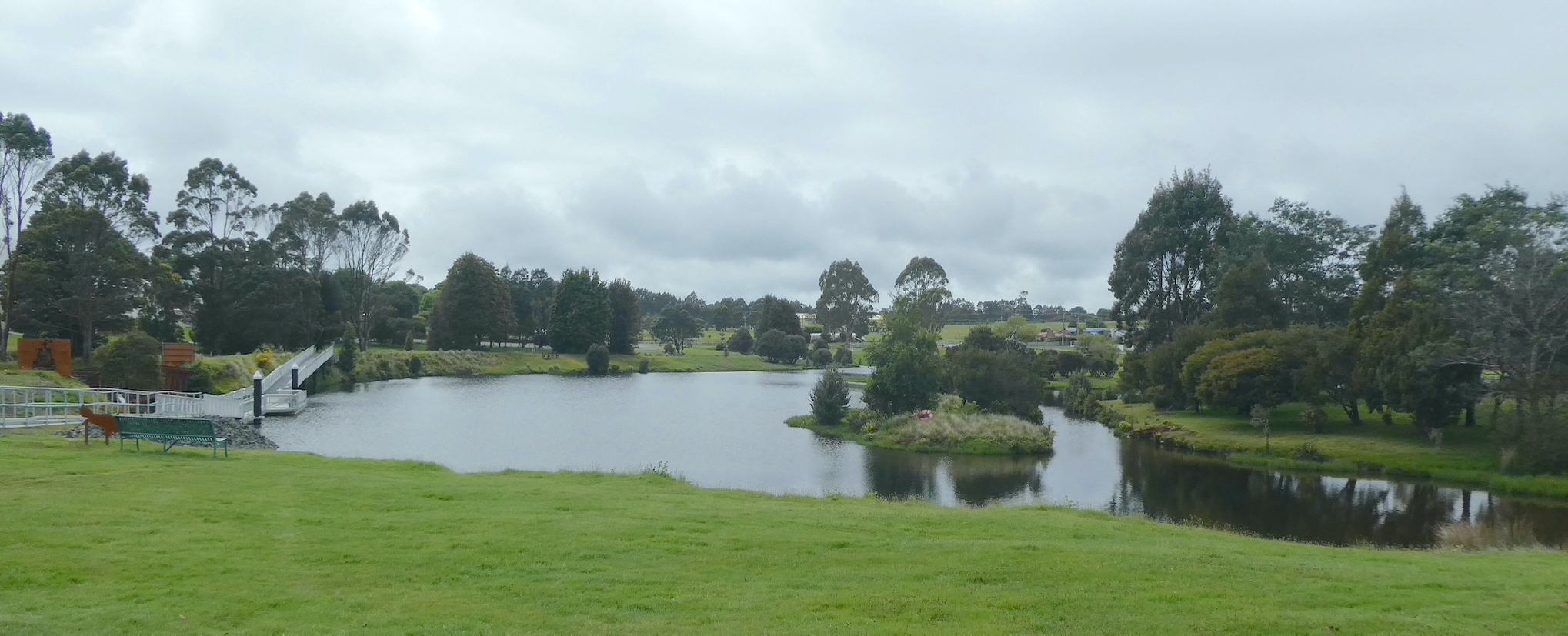
As we entered the town, we noticed how immaculate the public lawns and gardens were kept. Lake Waratah is a beautiful centrepiece.
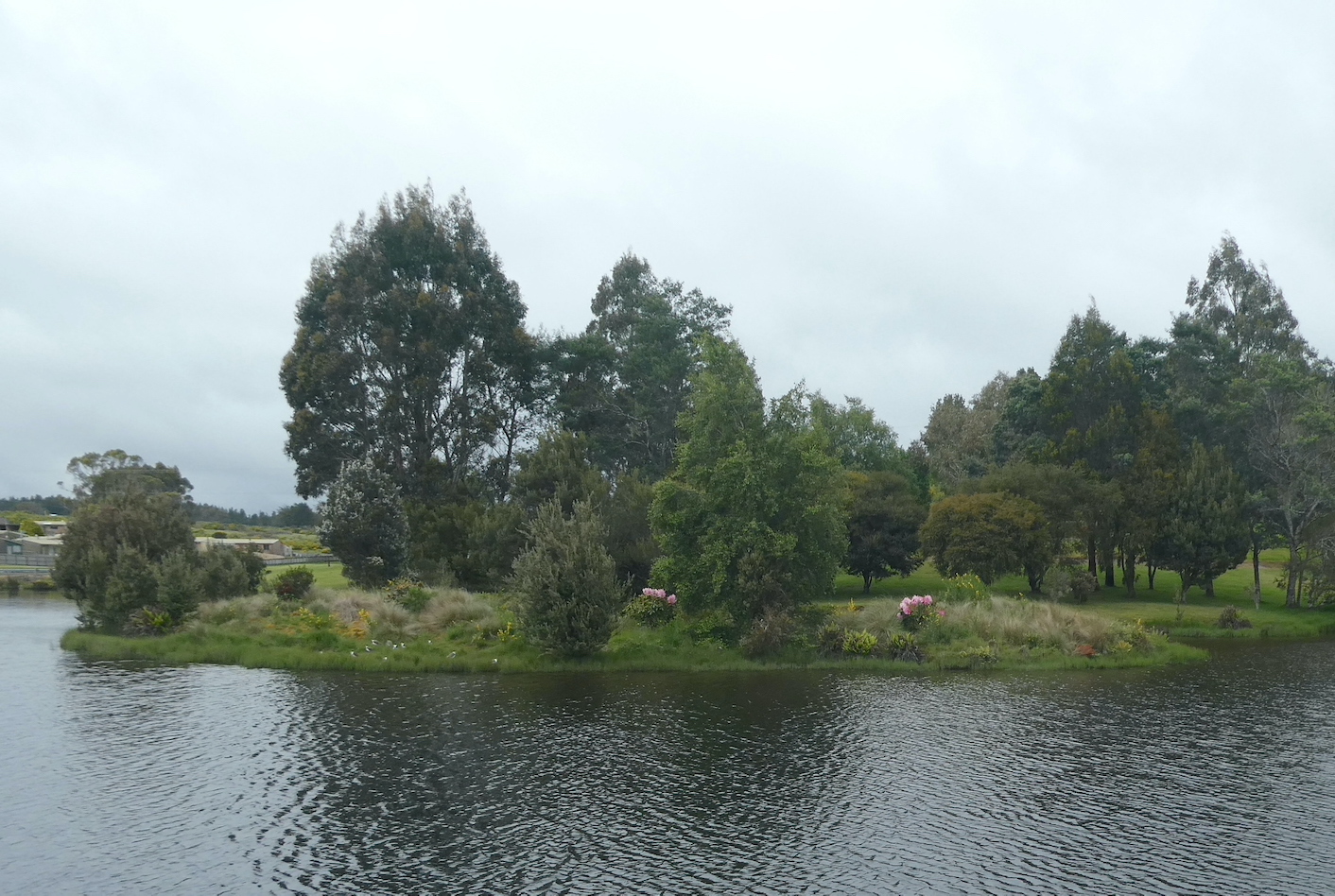
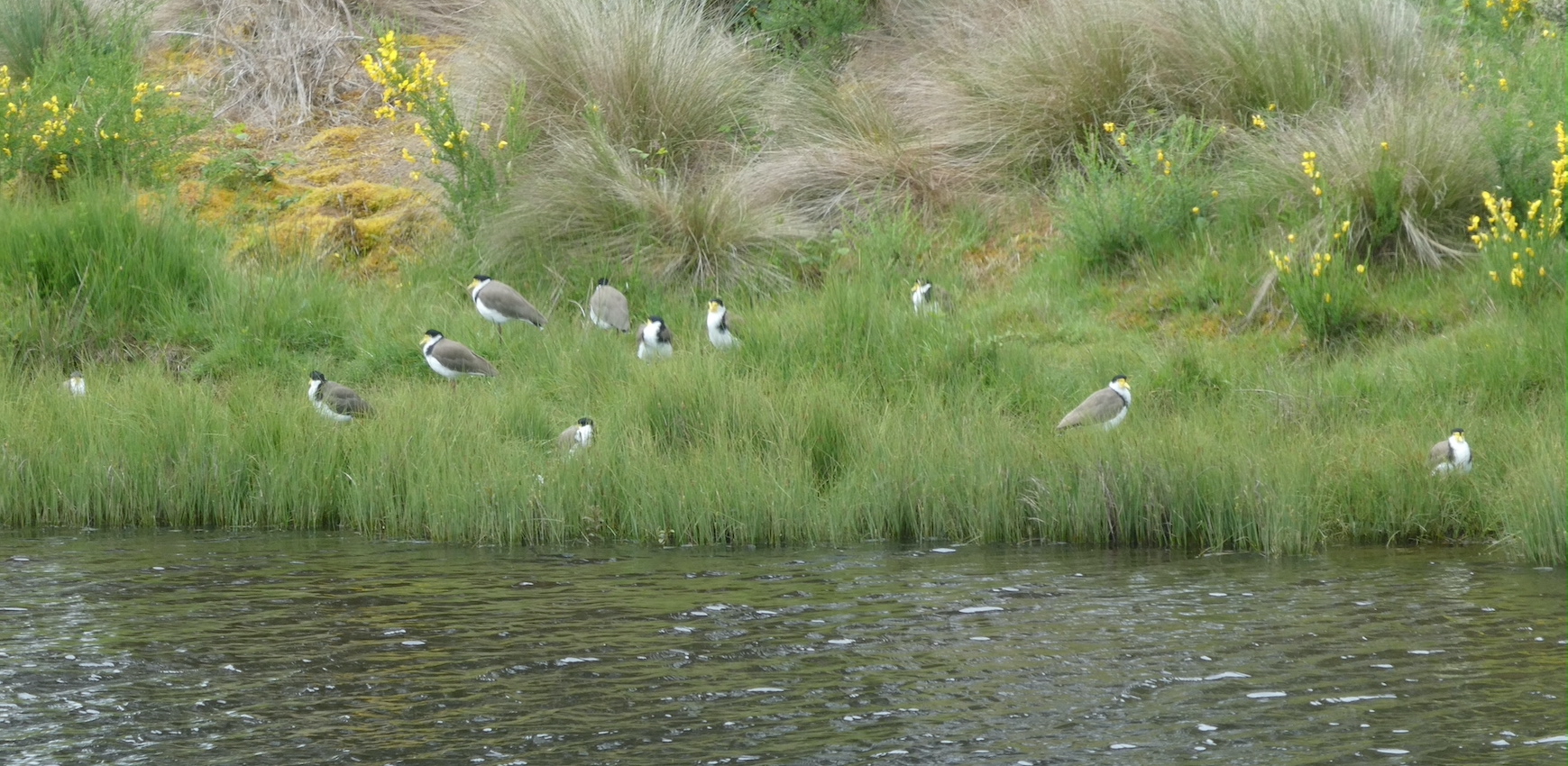
I have never seen a colony of masked lapwings in these numbers, they have chosen a lovely spot to call home.
We took a closer look at the iron truss rail bridge, built over the Waratah River in 1895, essential for getting people and supplies to Waratah and getting the ore out.
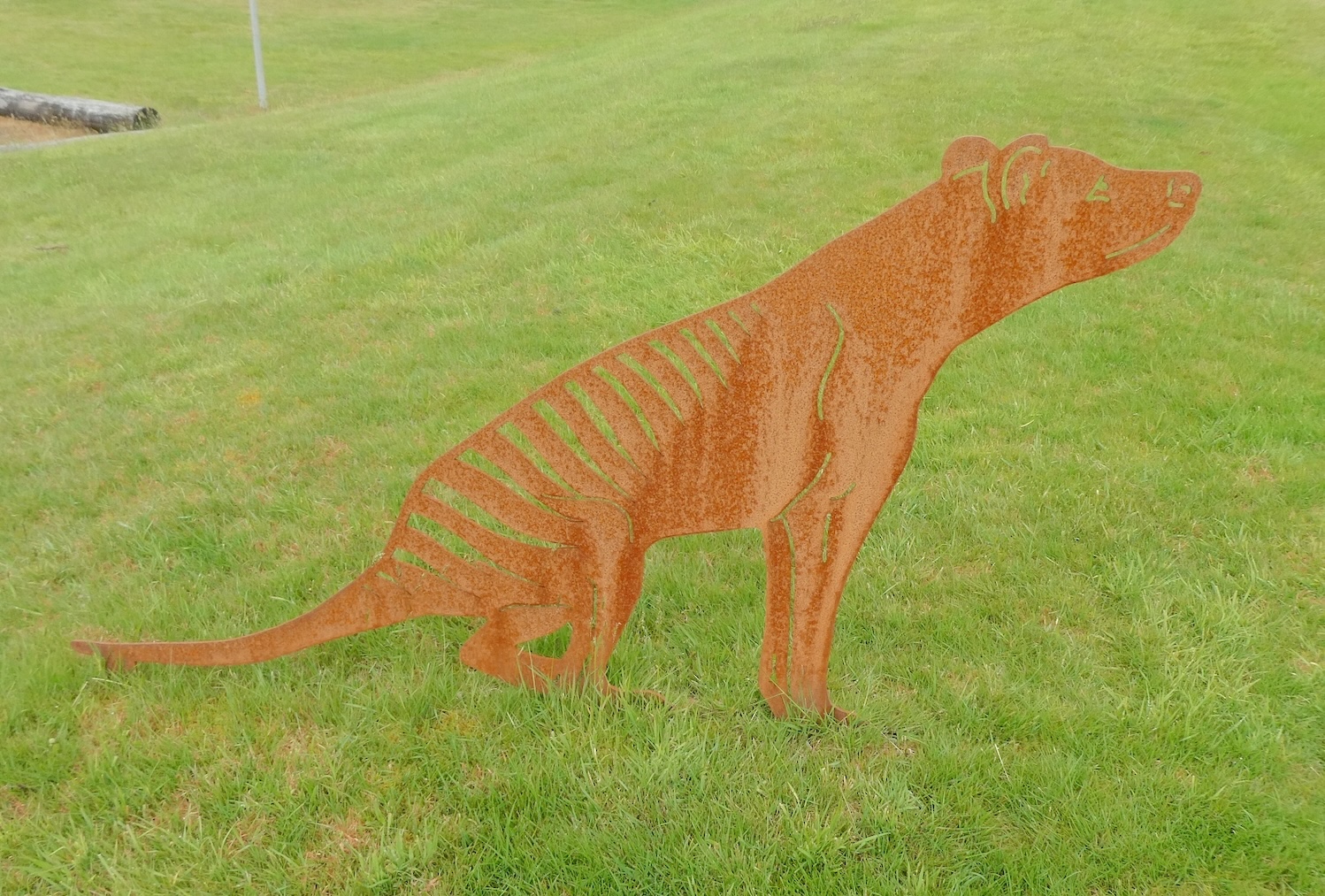
Waratah is known as one of the last bastions of the thylacine, thought by some to be extinct. We are ever hopeful of proving this theory wrong, it seems we are not alone.
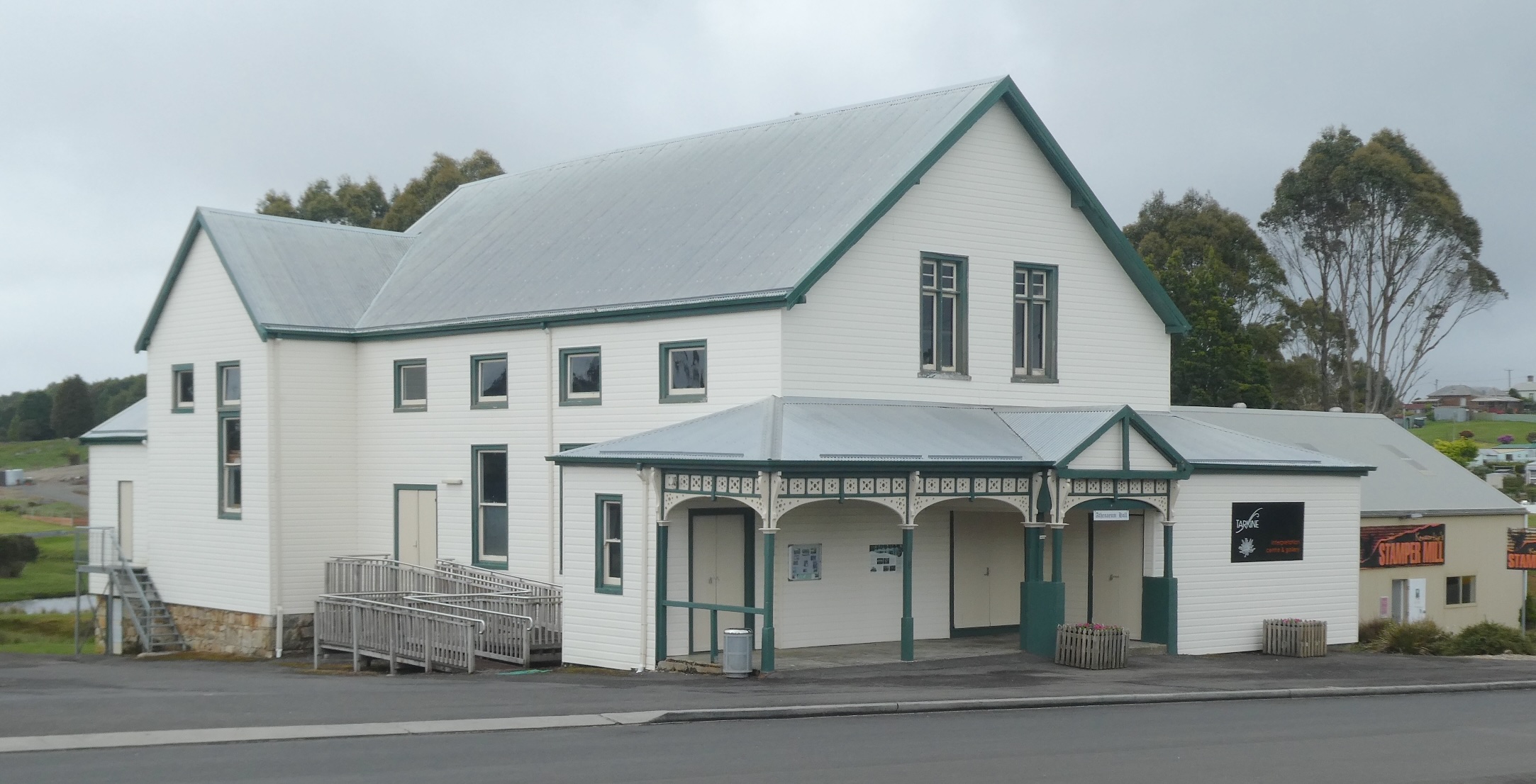
The Athenaeum Hall is a very impressive building completed in 1887 when the town was enjoying the economic prosperity provided by the tin mine. Built for the workers and families, it started as a library and later became the town hall and cinema. Today, it is home to the Tarkine Visitor Interpretation Centre and is still used for functions.
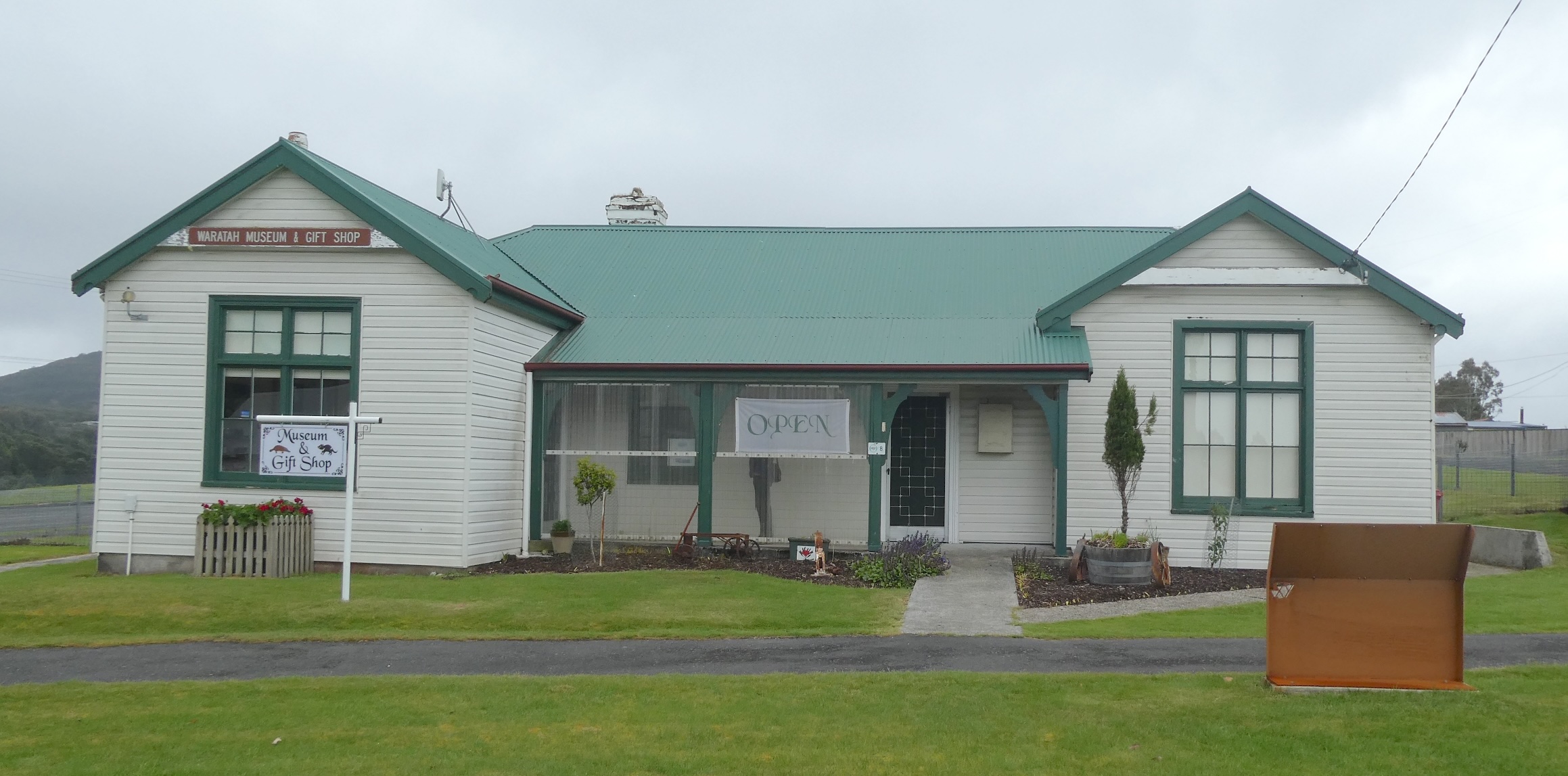
Across the road, the Waratah Museum occupies in the old Court House (that will be another post).
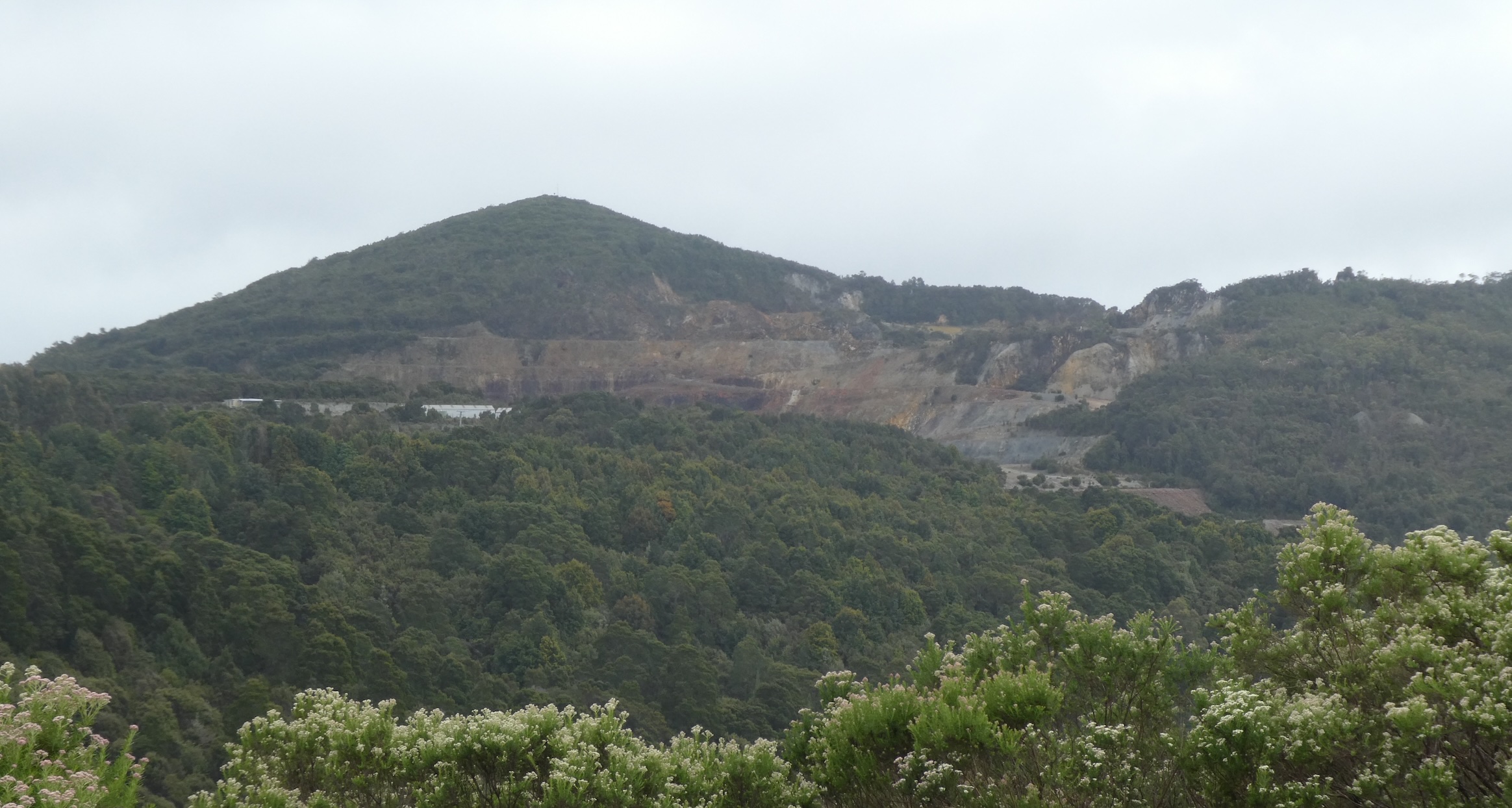
Despite a leisurely perambulation around the museum, we still had time for a walk to the bottom of the falls. The scarred landscape of the Mt. Bischoff mine loomed in the distance. Tin was discovered in the area in 1871 and by 1881, Mt. Bischoff was the richest tin mine in the world. The mine closed in 1947 after seventy years of continuous production but open cut mining resumed in 2008. Three years later, with resources depleted, it again closed and the pit is now flooded.
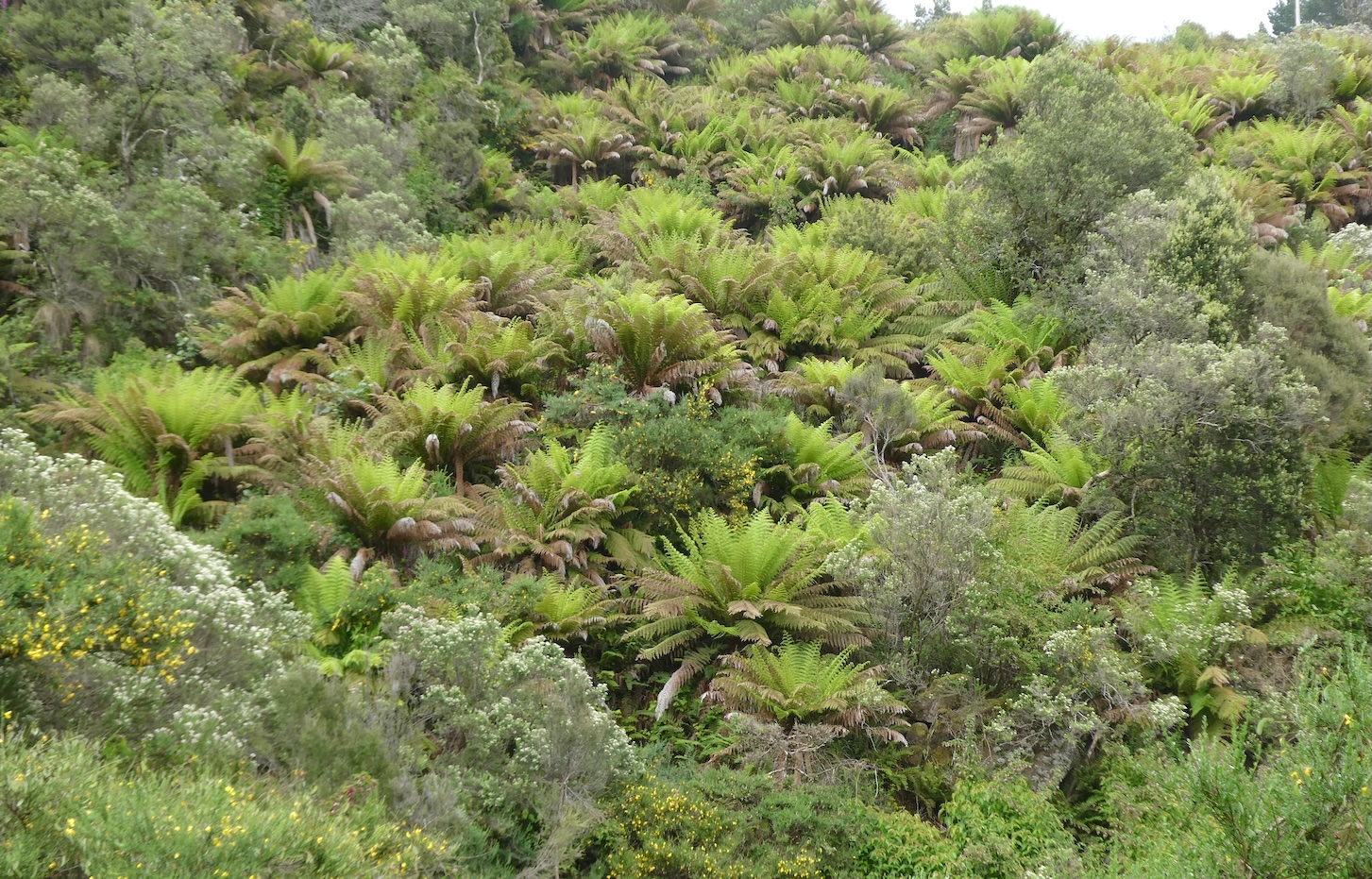
The walking trail was enveloped by tree ferns and verdant native vegetation
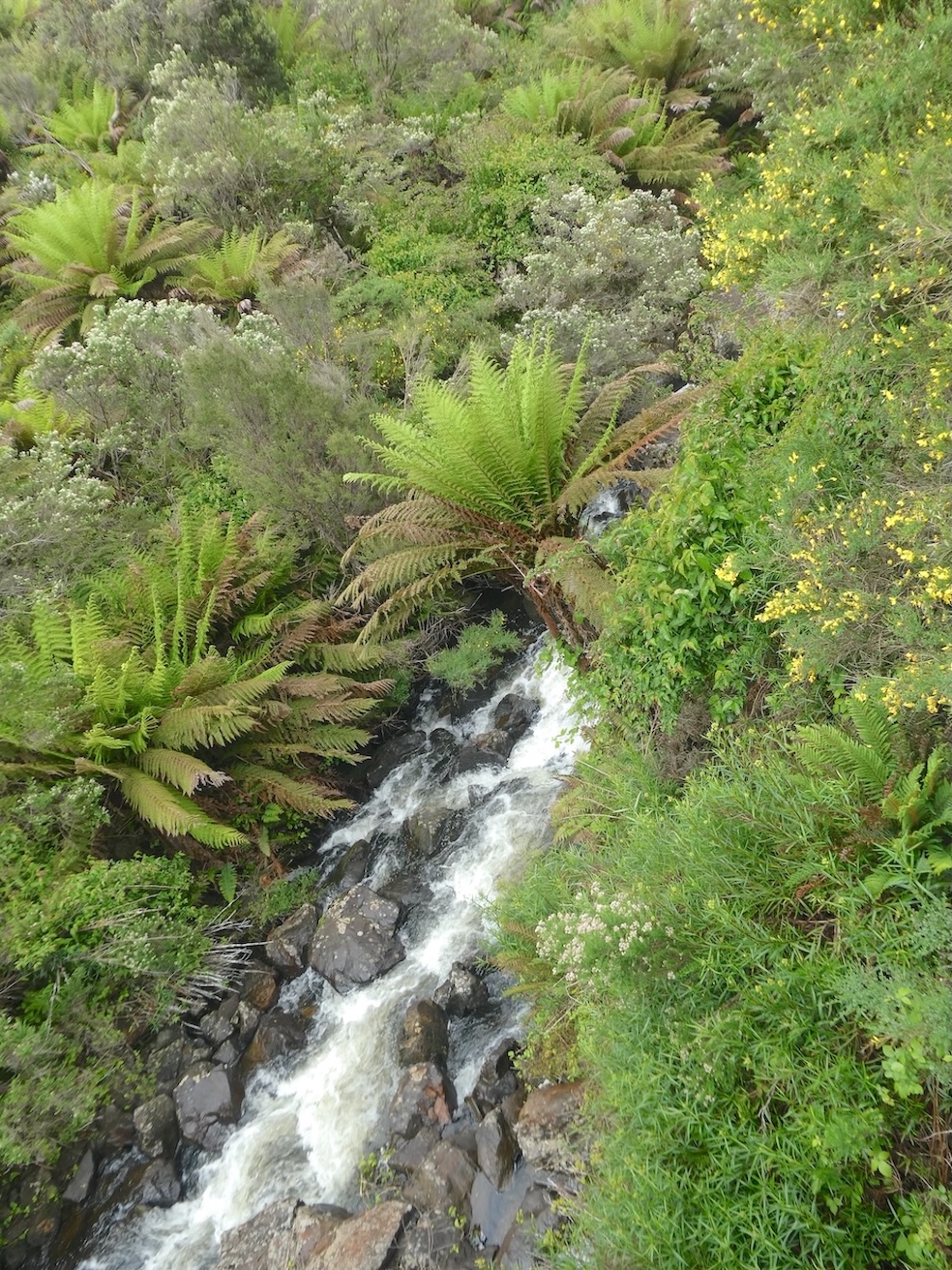
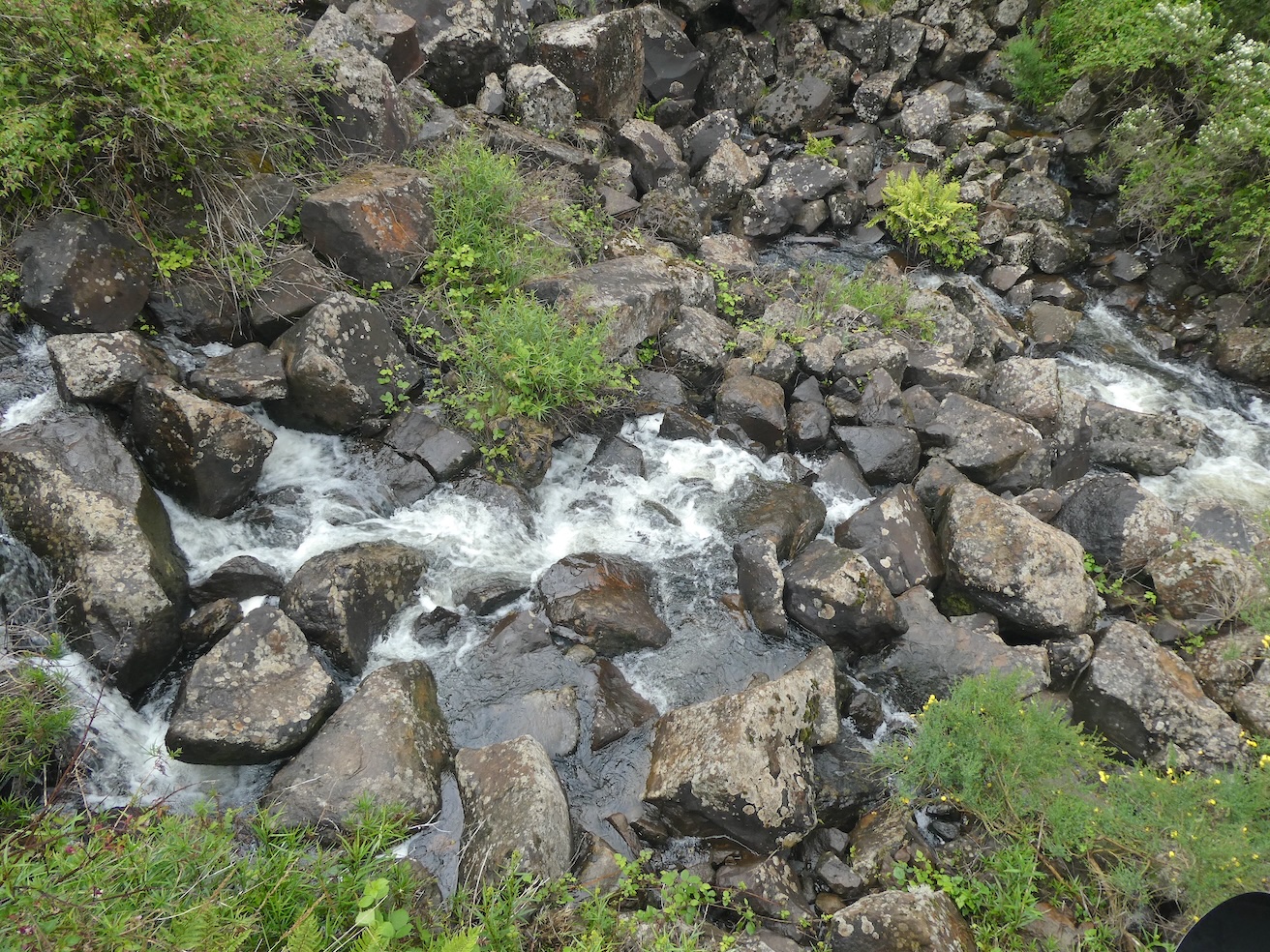
and the waterfall was magnificent after steady spring rain.
Returning to the top of the falls, the Waratah River wends its way over the cliff and continues ten kilometres before merging with the Arthur River.
The Dudley Kenworthy water wheel is named after the gentleman who recognised the potential to harness the year round water supply, making Waratah the first industrial site in Australia to be lit by hydro-electricity.
After a substantial lunch of delicious fish ’n’ chips and a schooner of stout, we were ready to tackle the long and winding road to Corinna.
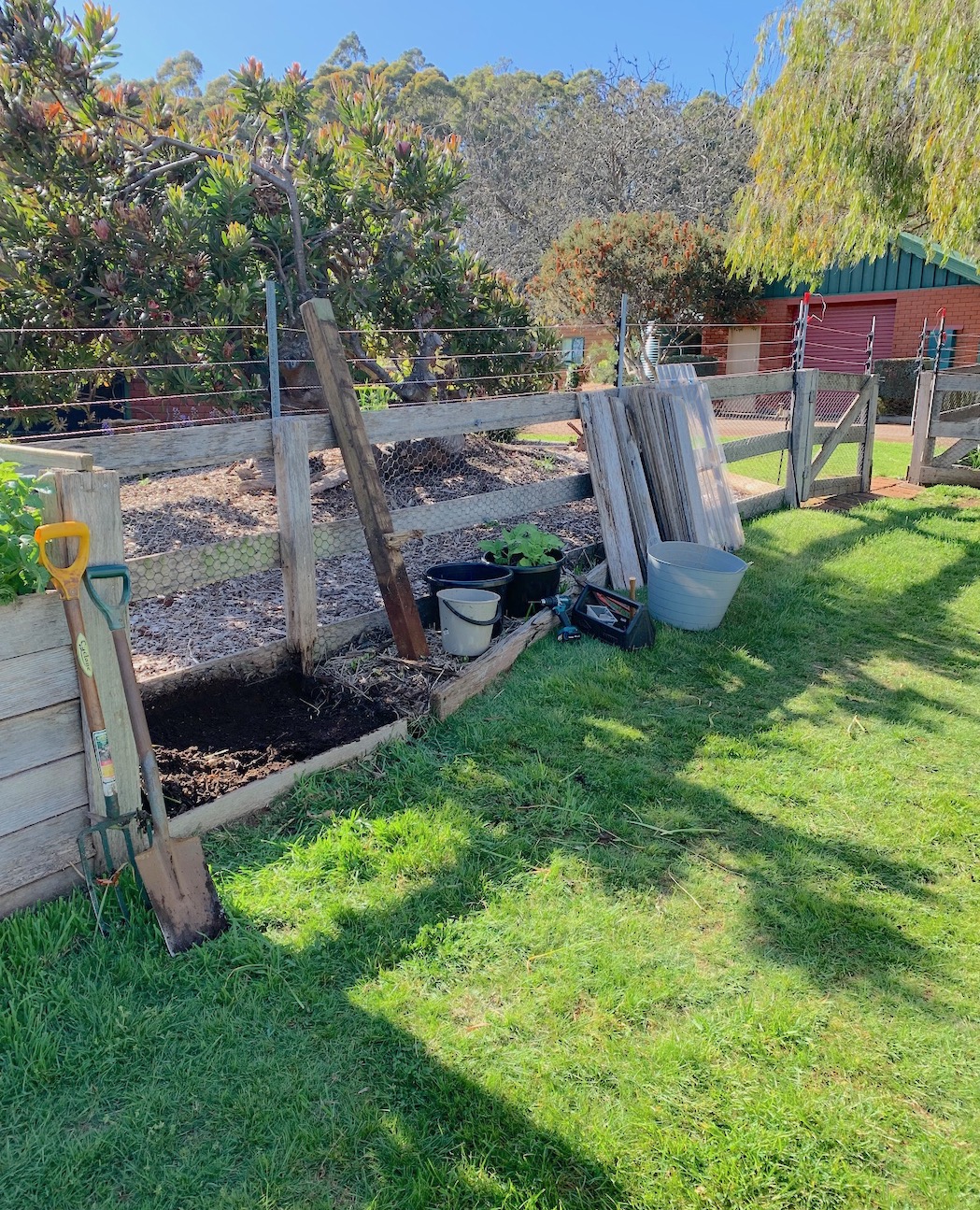
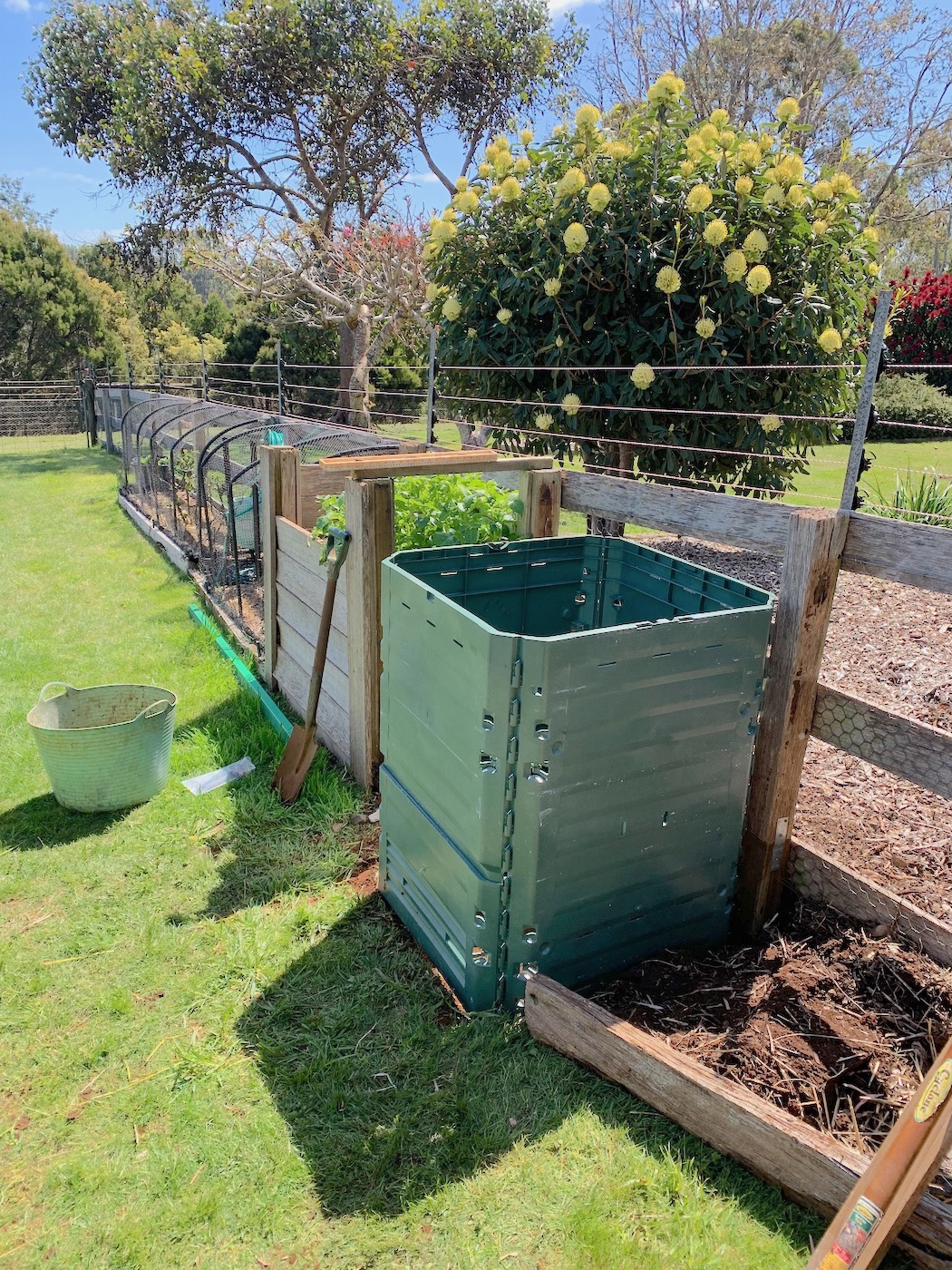
The compost bays we constructed when we created the veggie patch have slowly suffered the same fate as the raised beds. Two years ago we resurrected the beds to prevent further deterioration of the timbers and now it was time to do the same for these bays.
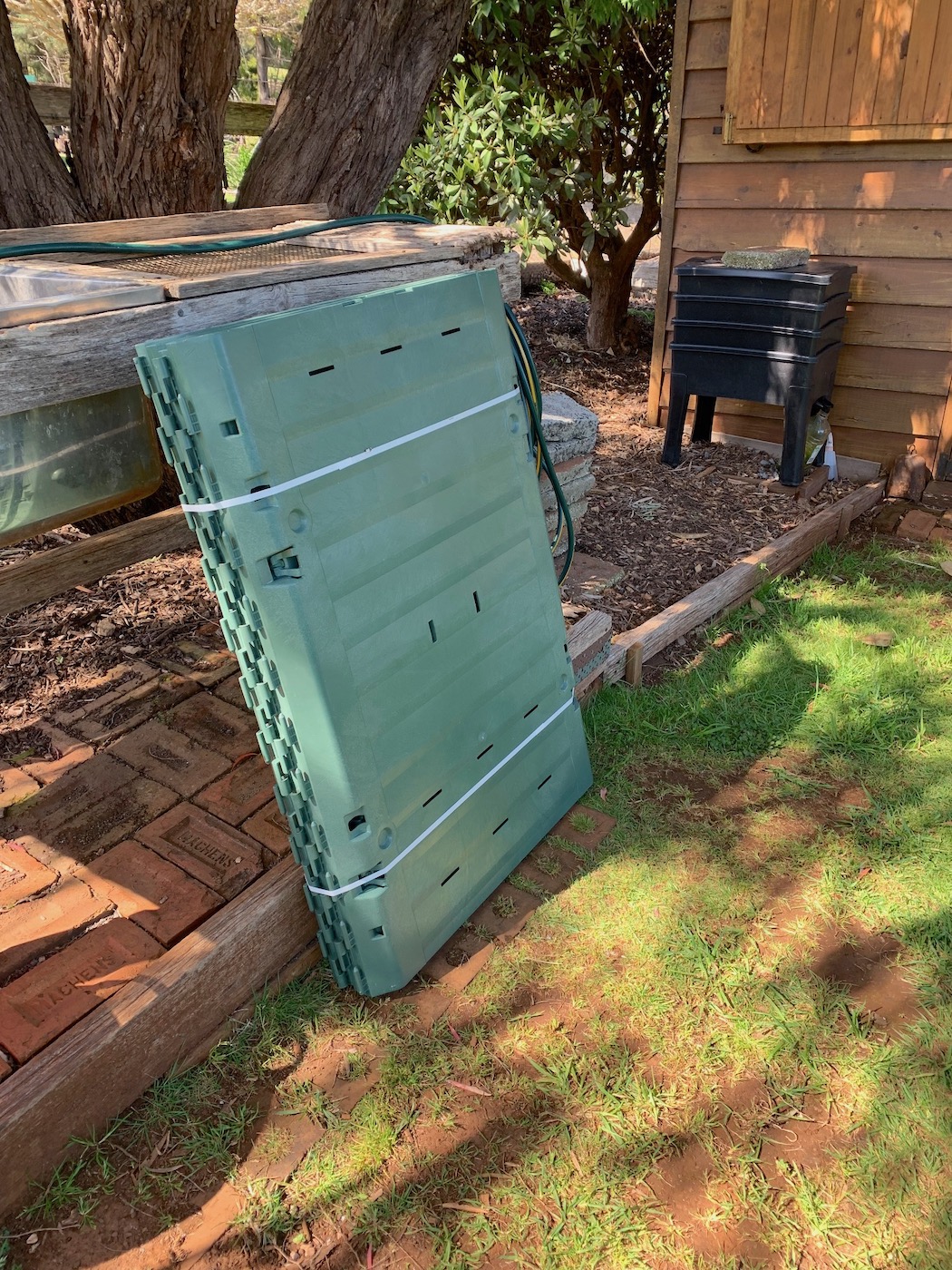
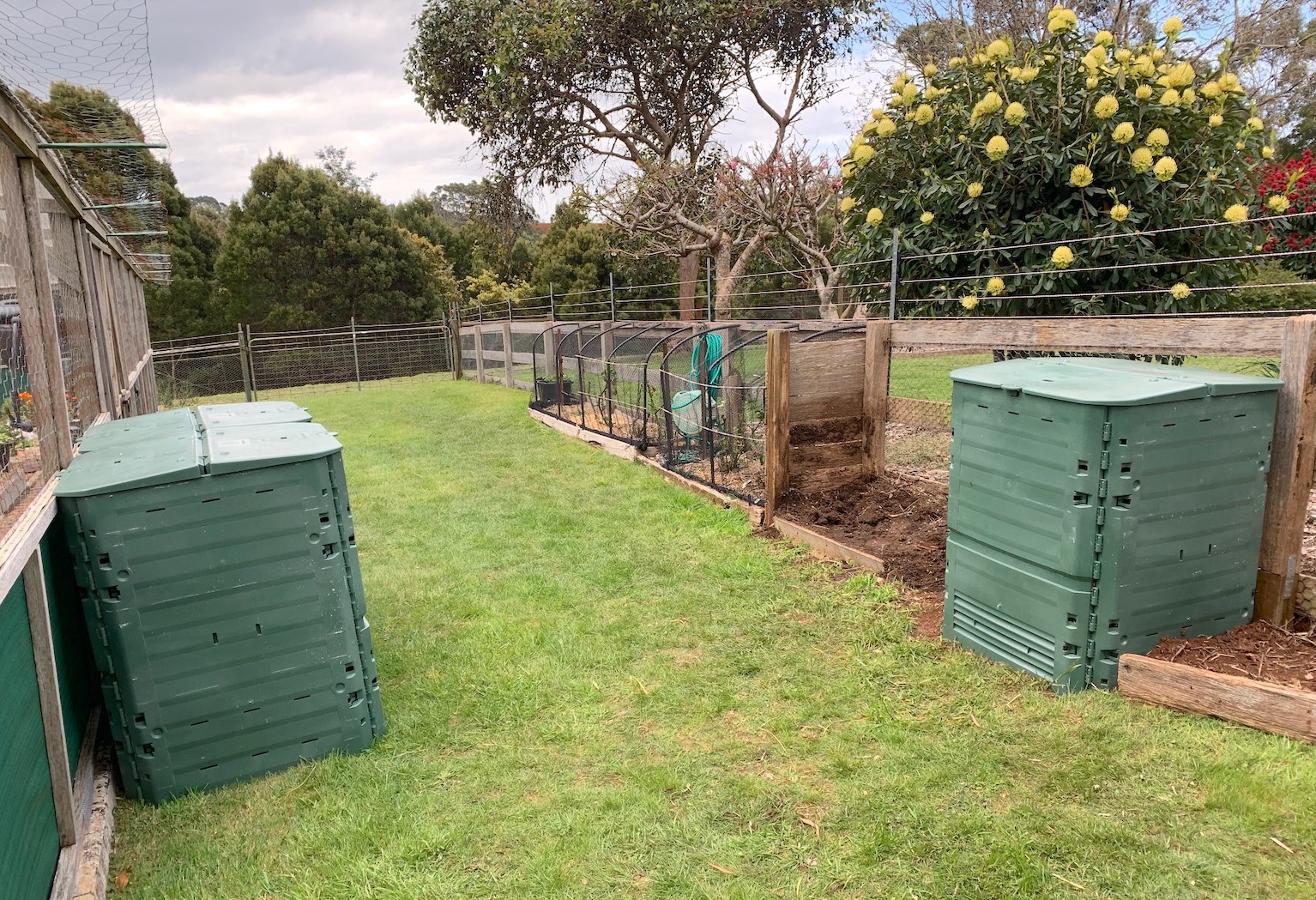
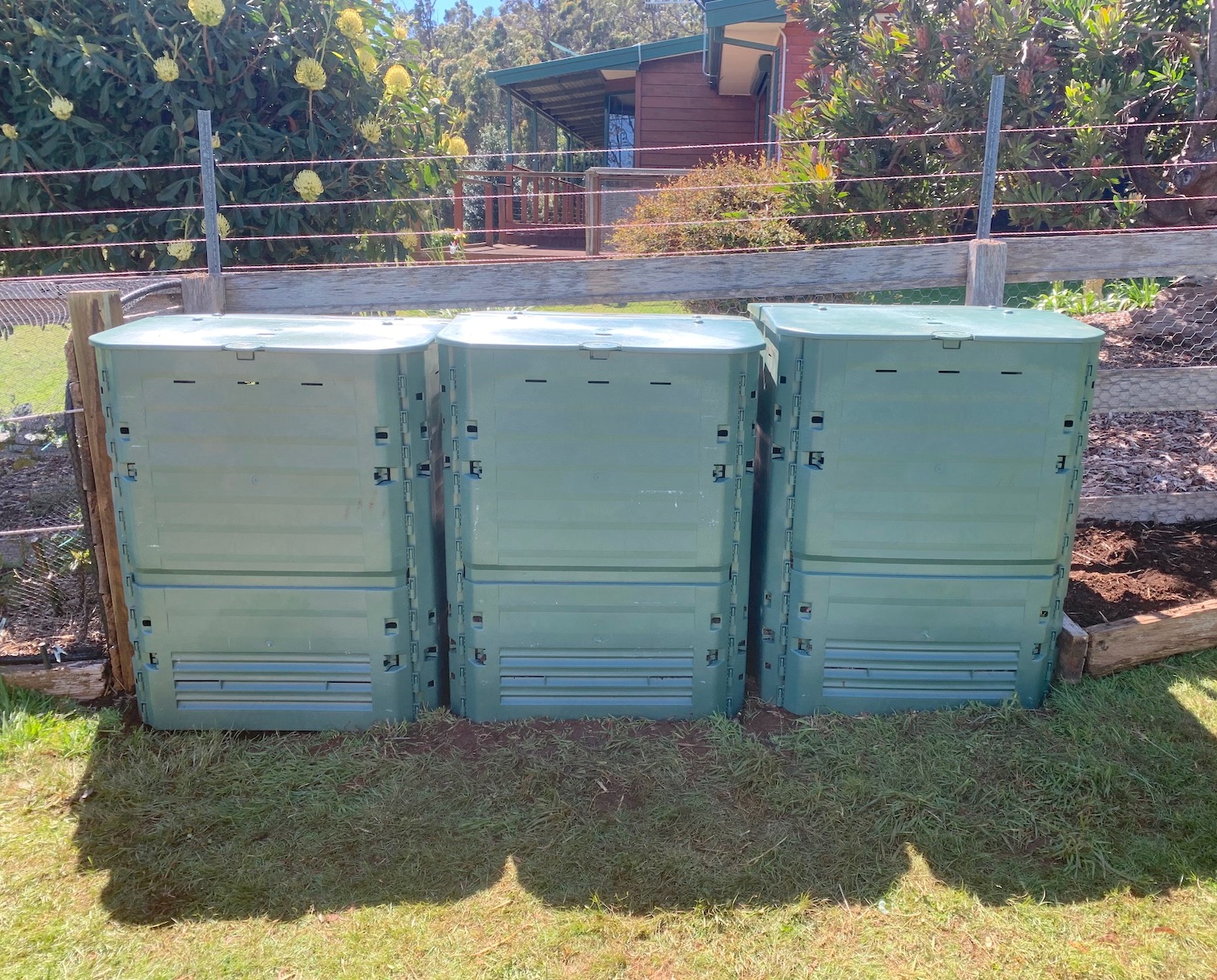
After much brainstorming, we decided the sensible thing was to buy ready made compost bins that would out live and look better than anything we could build. The three 600 litre bins were delivered and we wasted no time unpacking them.
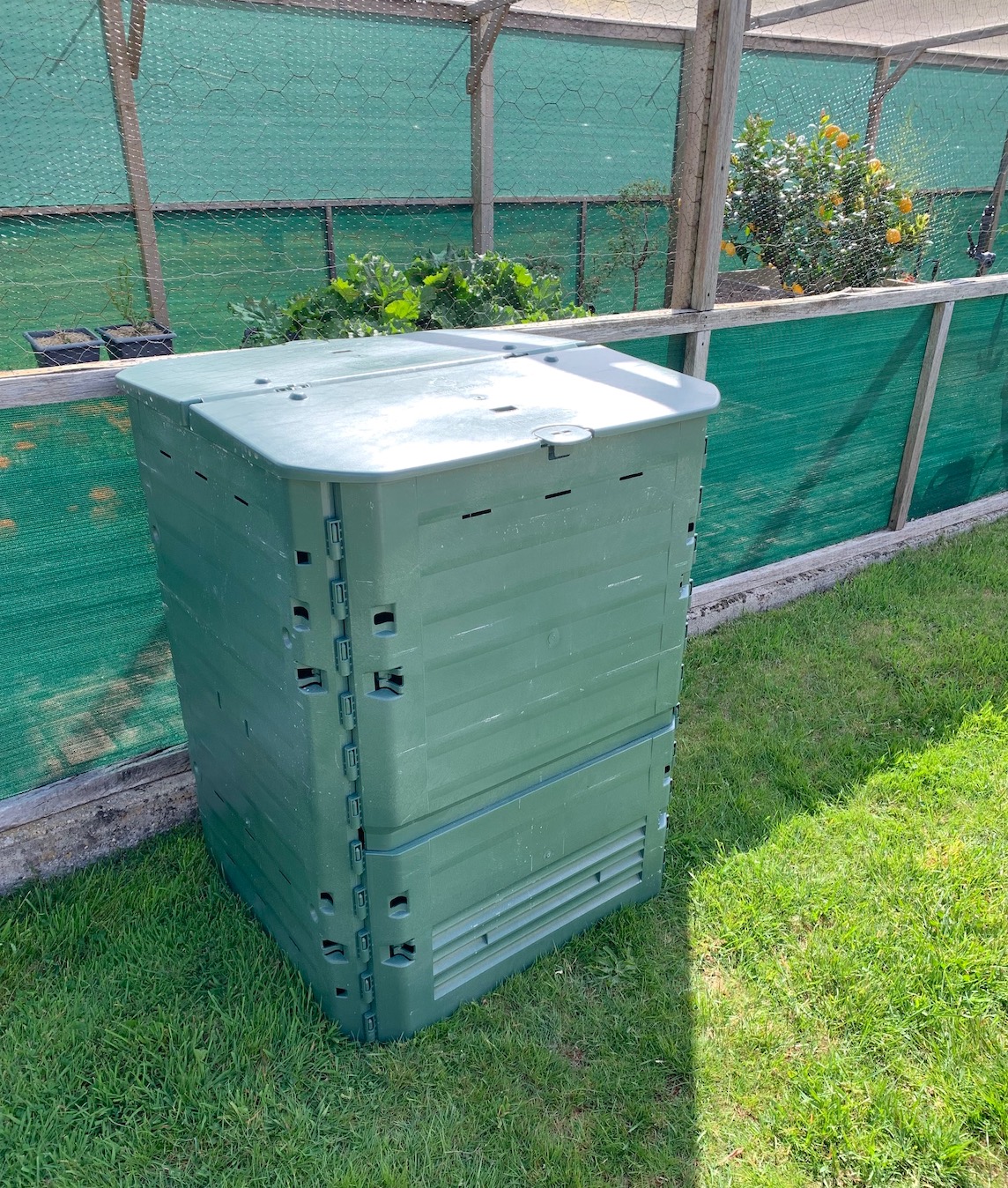
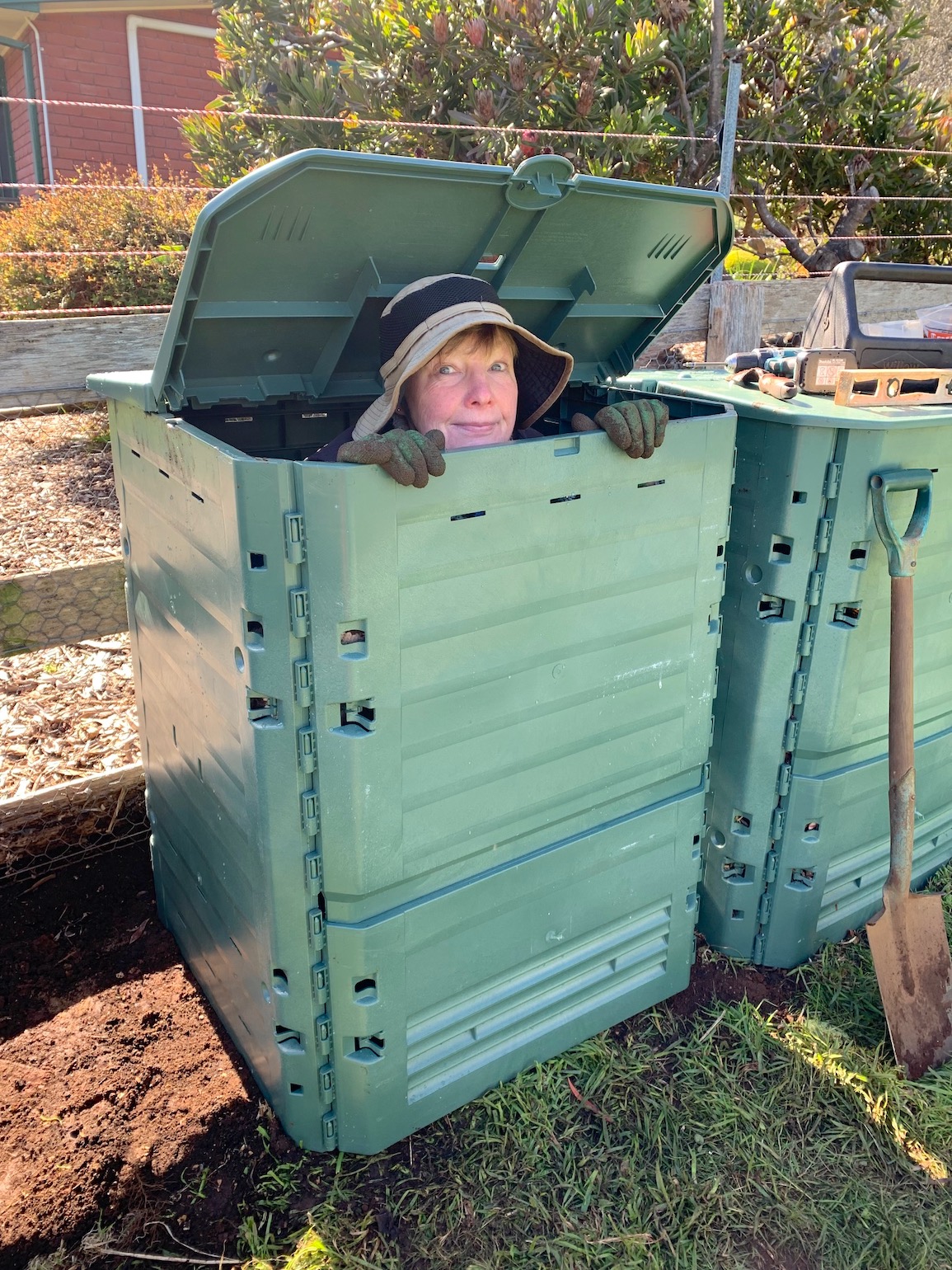
Assembly was ridiculously easy,
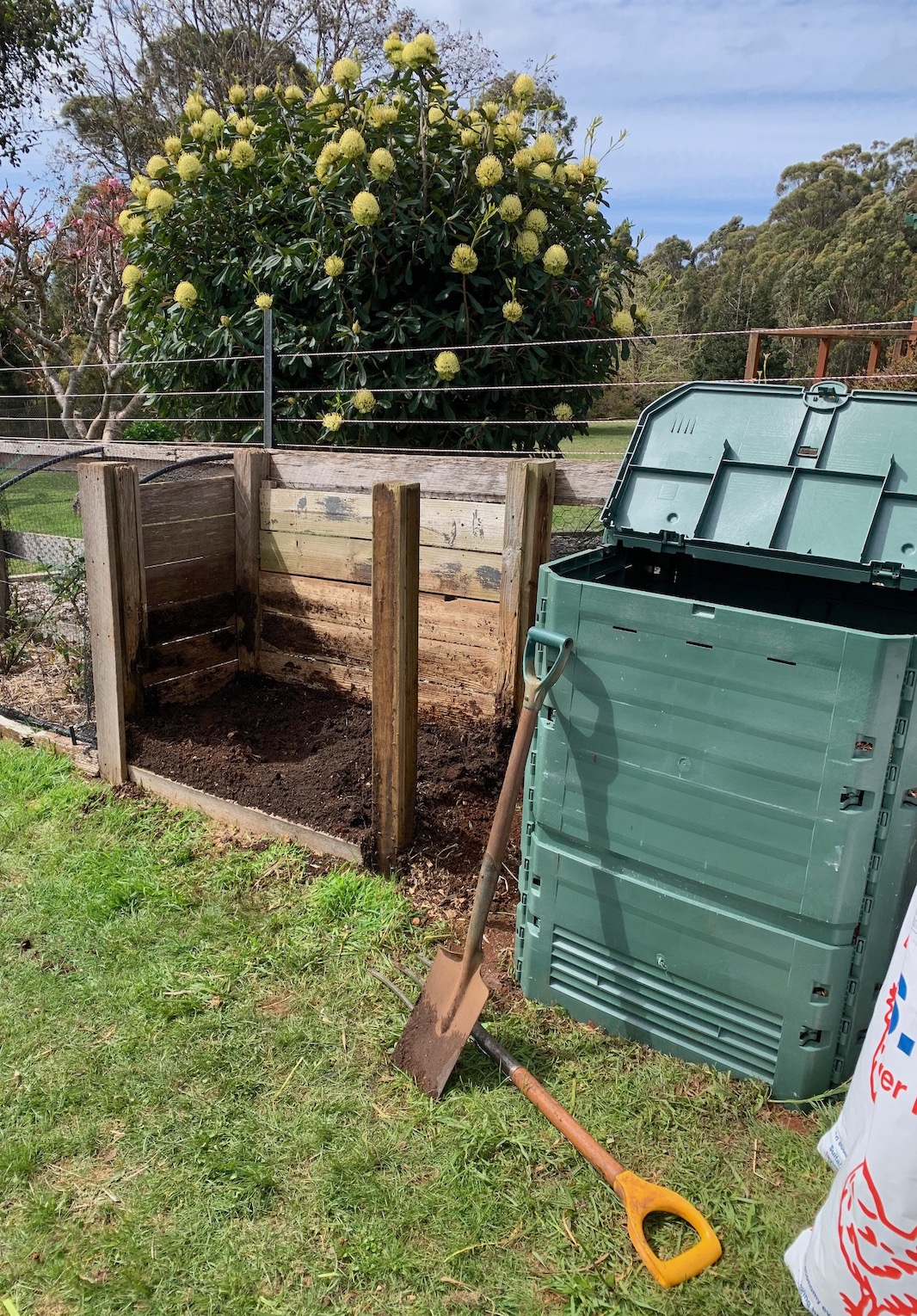
site preparation took a little longer. We emptied the contents of the first bay into wheel barrows and demolished the structure, saving any timbers worthy for future use.
The new bin fit the space perfectly and the half-composted material was shovelled in.
Potatoes were harvested from the random growth in the second bay before that, too, was emptied and demolished.
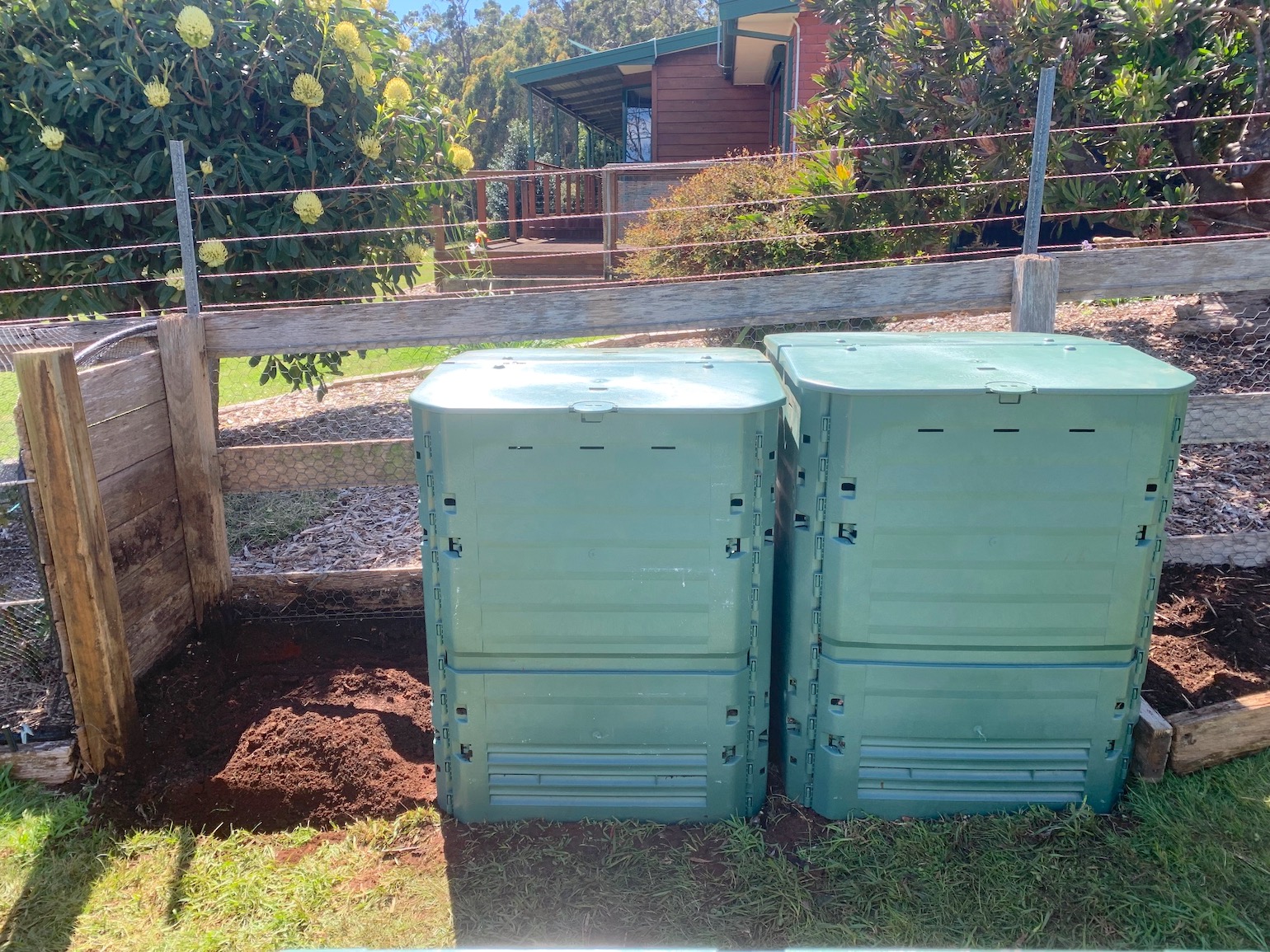
It didn’t take long to position the remaining two bins, replace the contents and admire our work.
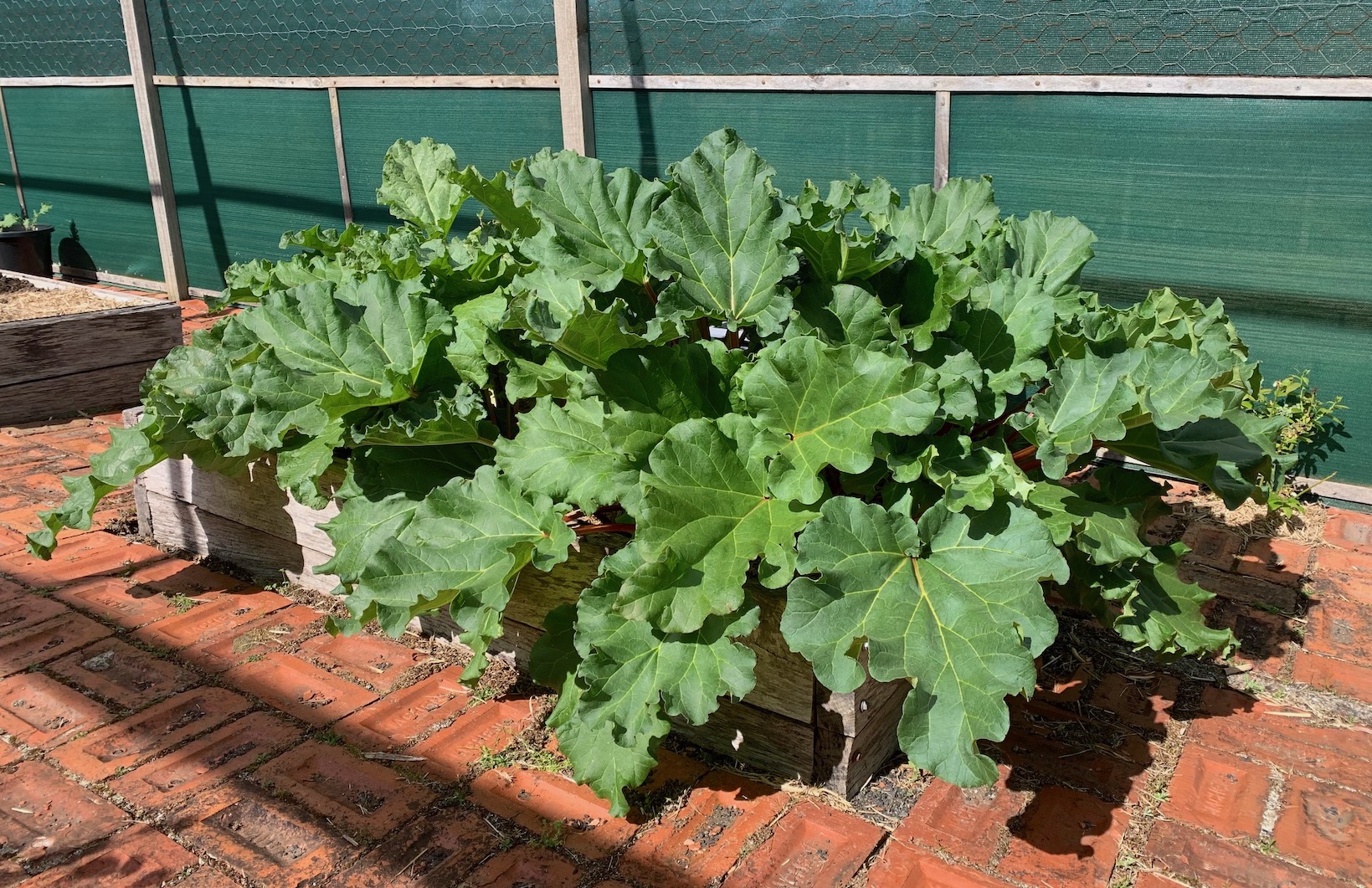
It’s that time of year when the veggie patch is transforming from winter weariness to summer surplus. Our robust rhubarb provides at a steady rate throughout the year but I am now digging deep into the repertoire of rhubarb recipes to keep up with the harvest.
One of my favourites is rhubarb champagne, the reward is definitely worth the effort. Start with 875g rhubarb, 875g sugar, a lemon (from the abundant lemon tree) and 11 tablespoons of apple cider vinegar.
Chop the rhubarb, slice the lemon
and place all these ingredients, along with 5 litres of cold water, into a food safe bucket (I use our beer fermenter). Cover loosely with a clean tea towel and leave for 48 hours.
Sterilise 10 PET bottles (I use Milton solution)
and strain 500ml of the mixture into each.
PET bottles are preferable as they have more ‘give’ and it is advisable to squeeze out as much air as you can before capping.
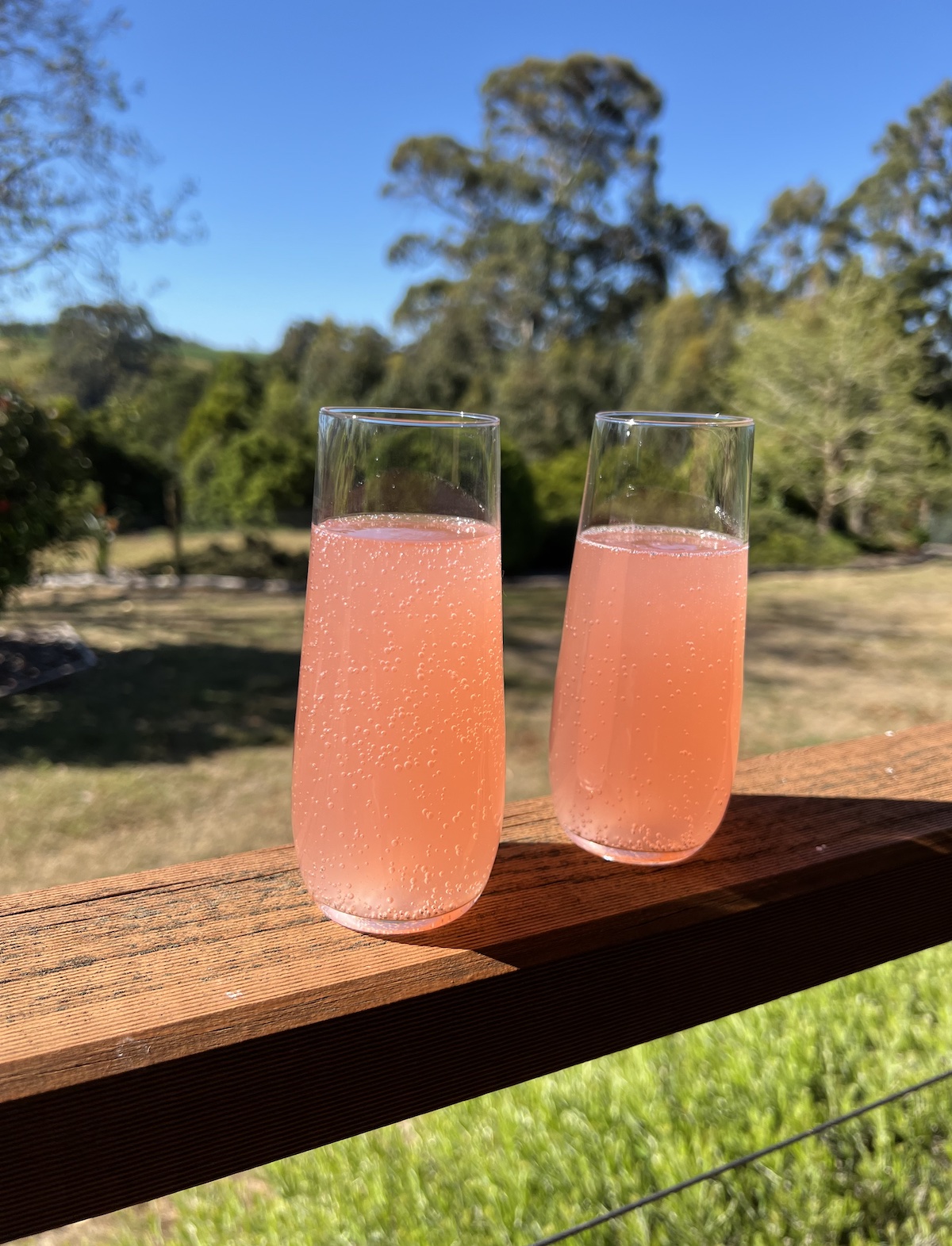
Pop the bottles in the fridge and try to refrain from sampling for at least two weeks. Deliciously refreshing as a sparkling beverage,
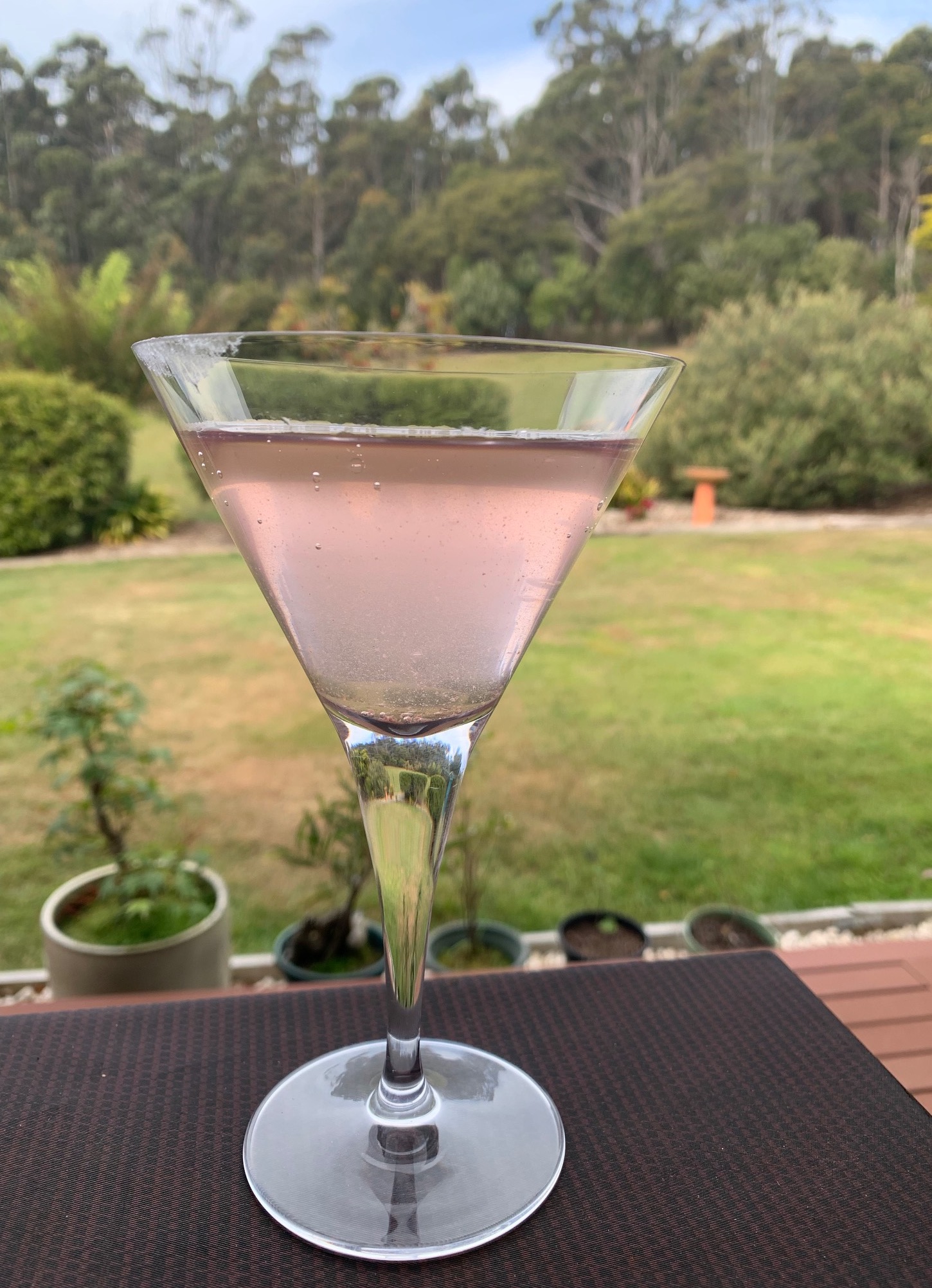
we recently discovered the benefits as a mixer. One and a half measures of gin topped up with rhubarb champagne, we have lovingly named it the ‘Stowport Stonker’. Cheers.