mellow monotreme

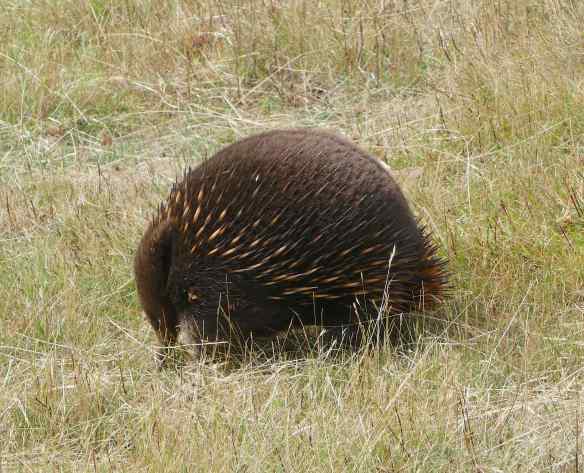
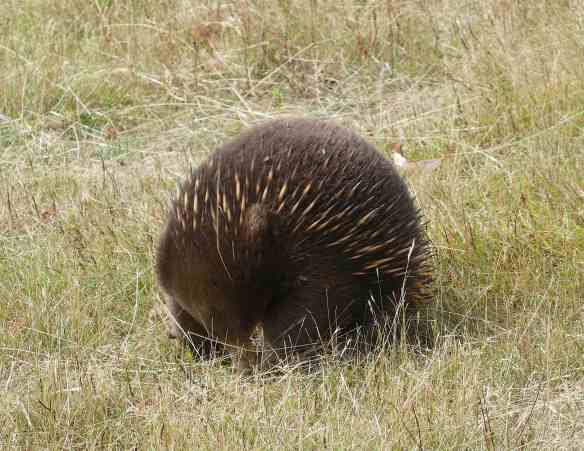
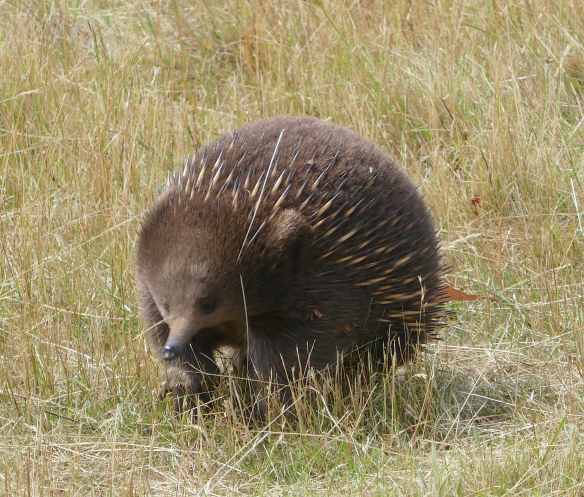
We rarely see echidnas in the wild and were very excited when, travelling back from lunch at a friend’s house, we spotted one foraging in the grass.

1.echidna

Echidnas are fascinating creatures. Along with the platypus, they belong to the order of monotremes, the only living mammals that lay eggs. Evolving between 20 and 50 million years ago, their ancestors were aquatic before echidnas adapted to life on land.

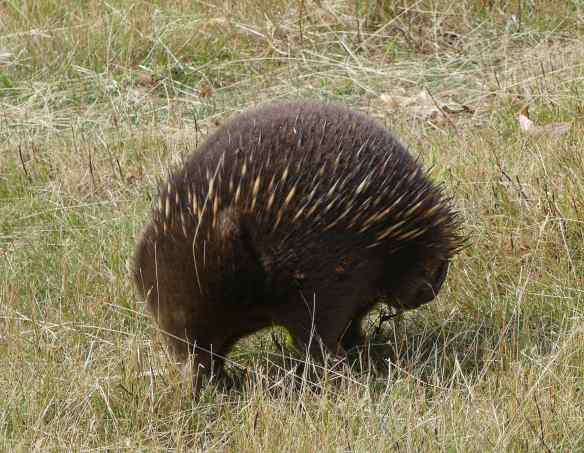
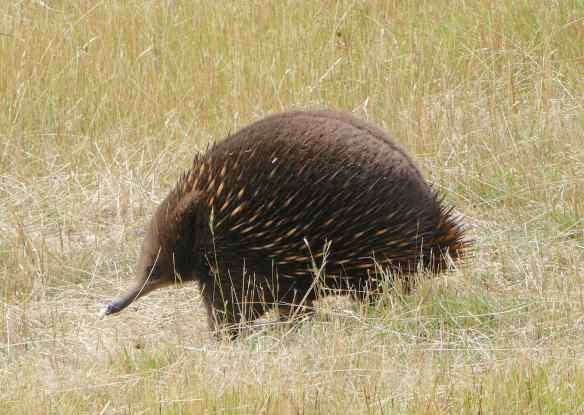
2.echidna

The cream coloured spines, around 50mm in length, are actually modified hairs. The fur between the spines provides insulation and ranges in colour from honey to dark reddish-brown and even black.

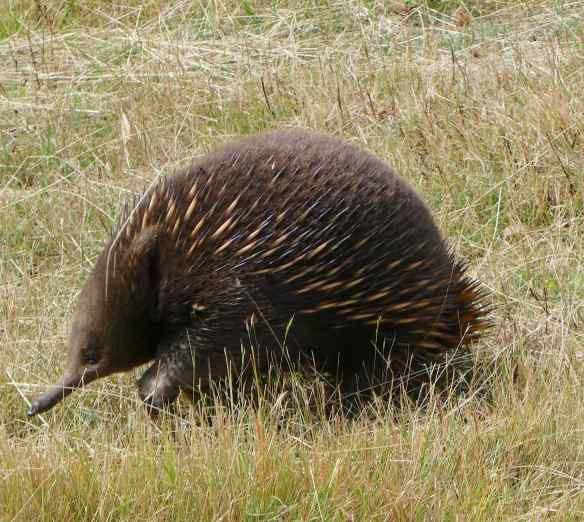
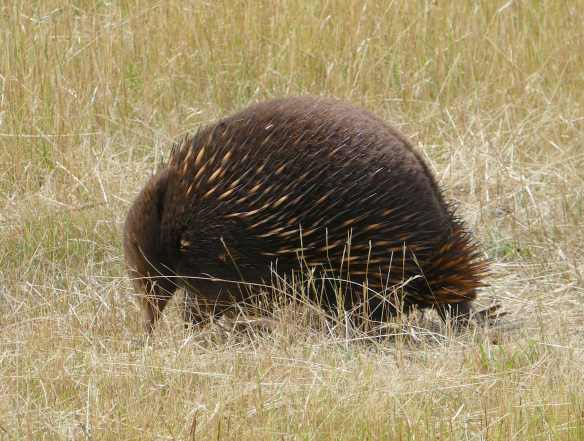
3.echidna

Long-beaked echidnas are only found in New Guinea, we have the short-beaked variety here in Australia. The Tasmanian ones are larger than those on the mainland and their fur is thicker and longer, concealing most of the spines.

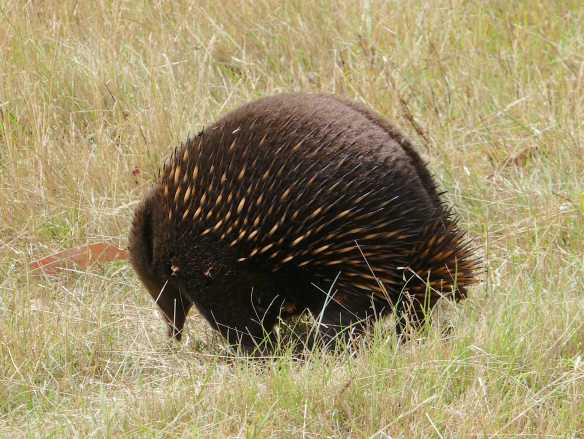
4.echidna

Their diet is mainly ants and termites but the echidna is also partial to grubs, larvae and worms.

5.echidna

The pointy snout is an amazing appendage. Not only can it sense the smell of its prey, it detects the electrical impulses from the insect’s bodies. Then, the long, sharp claws on strong forepaws are used to dig into the soil or open up ant’s nests, followed by the devoration of a meal with a sticky, 15cm tongue. They have no teeth, but grind their tasty morsels with horny pads in their mouths and on the back of their tongues.

6.echidna

Breeding season is between June and September. A single egg is laid into the backward facing pouch where it hatches after 10 days. Echidnas don’t have nipples, they secrete milk through two patches on the skin from which the young suckle. Around 3 months of age, the puggle (such a cute name for the baby echidna) leaves the pouch or rather, mother ejects it due to the growth of the spines. Mum leaves the puggle while she goes off to forage and returns every 5 days to suckle it, until it is weaned at 6 months of age. She then leaves it to fend for itself, never to return.

7.echidna

Echidnas do have natural predators, despite their spines, such as eagles and Tasmanian Devils. They were a favourite food of the early settlers and Aboriginal people. Fortunately, even though they are not considered endangered, they are now protected by law. After posing for a few photos, we left him (or her) to enjoy afternoon tea.

8.echidna

Swallows Welcome

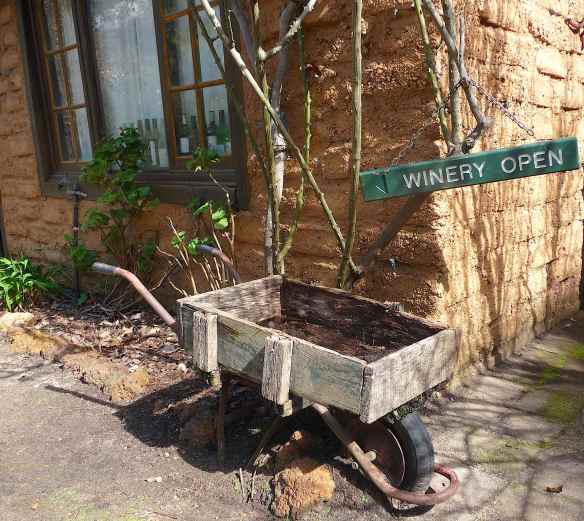
There are many fabulous wineries in the Margaret River region but Swallows Welcome, the smallest winery in the region, is really something special. Tim & Pat Negus first planted grapes in 1994 and the family run business has been producing wine since 1997. The rural setting is peaceful and the artistic influences are evident on arrival.

Patricia Negus is a well known watercolour artist, her illustrations of wildflowers and birds have graced the pages of many books. Tim & Pat built the mudbrick and timber Chapel of the Flowers, a serene gallery, to exhibit 102 of Pat’s works that are featured in Wildflowers of Southwest Australia (the plastic chairs were remnants of a recent social occasion).

9.Chapel of the Flowers

The beautiful leadlight windows create a subtle ambience.

The delights continue outside,

the garden is a testament to Pat’s love of nature.

31. honeyeater

We made our way, past the magnificent magnolia tree, to her studio, filled with stunning artwork, books and cards for sale.

We wandered through a gorgeous courtyard cottage garden,

inhabited by a few frogs

and the occasional snail.

45.snail

After all the distractions, we finally reached the tasting room,

46.tasting room

adorned with more colourful leadlight.

Pat guided us through the range of superb reds,

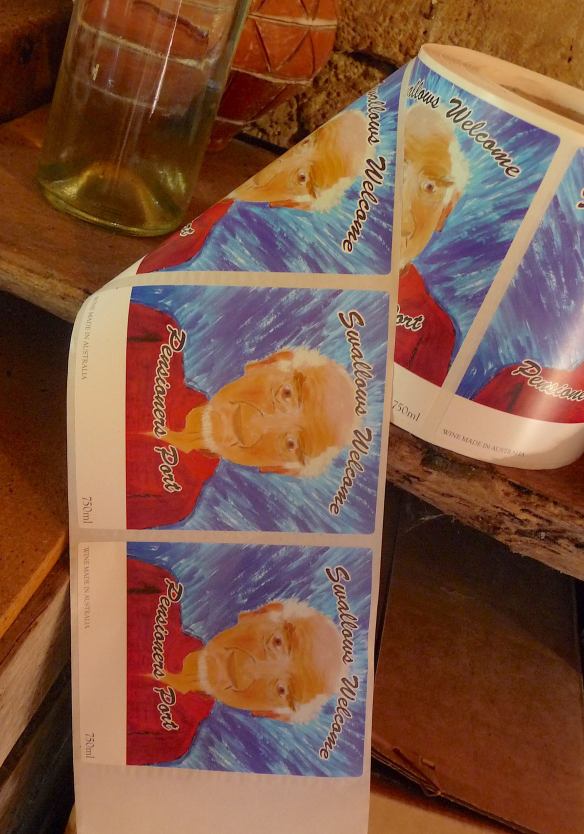
finishing with a nip of Pensioners Port. Tim’s self-portrait graces the label

51.tasting room

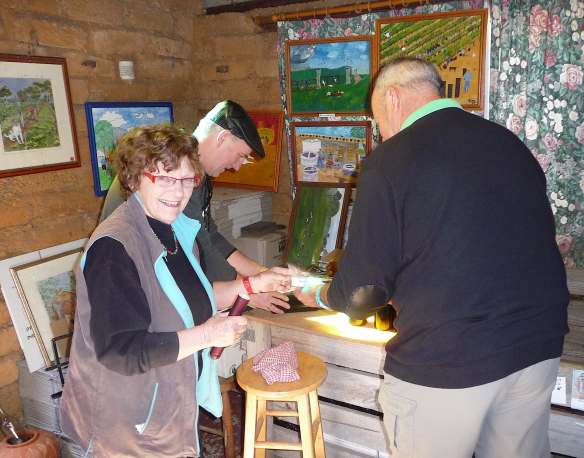
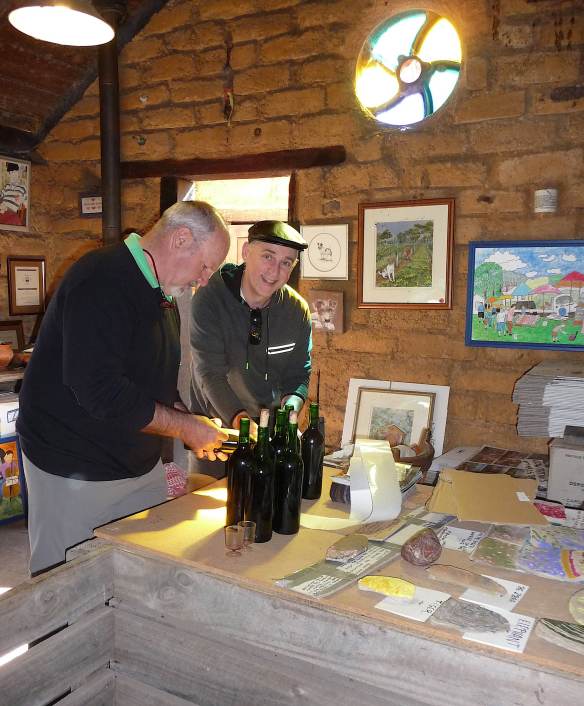
and his other works decorate the walls. Pat instructed the boys on the fine art of labelling

52.Pat, Michael and Dave

and they soon had a dozen ready to ship home.

53.labelling

I could have lingered in that garden all day but lunch was beckoning. It’s a good life for some……..

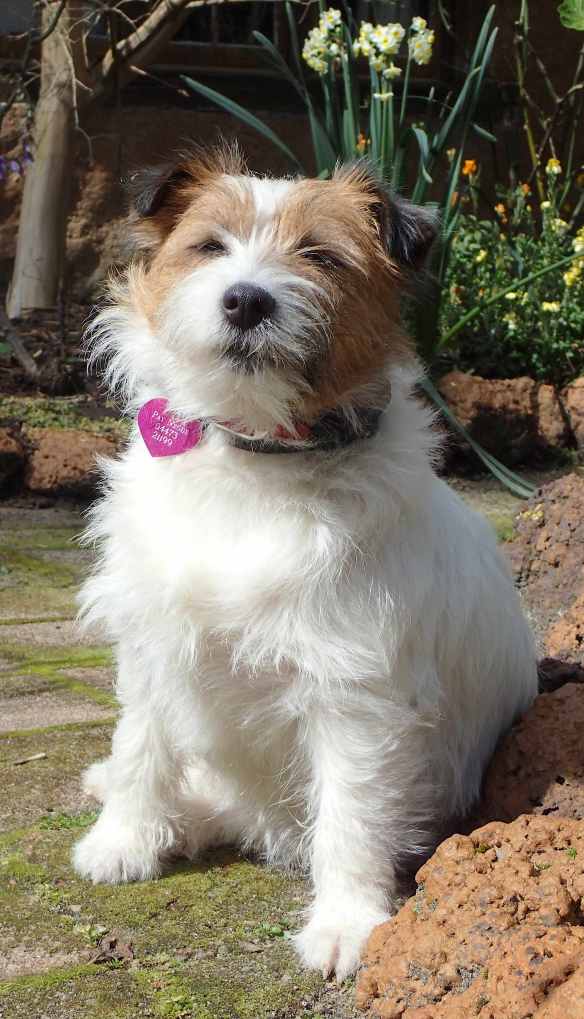
54.winery dog

Hay Shed Hill

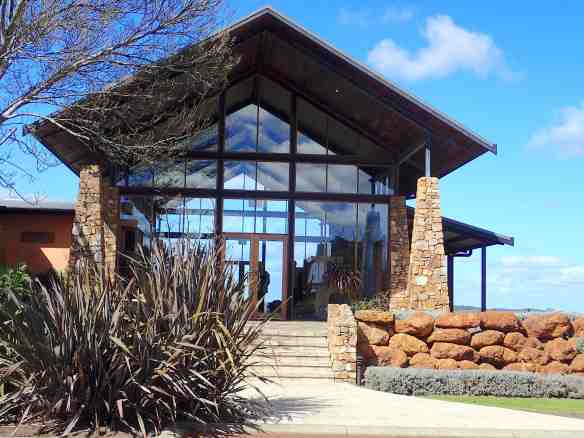
After a morning exploring the beautiful Margaret River region coastline, we had worked up an appetite. In the heart of the Wilyabrup Valley, Rústico at Hay Shed Hill vineyard was the perfect destination.

1.Hay Shed Hill

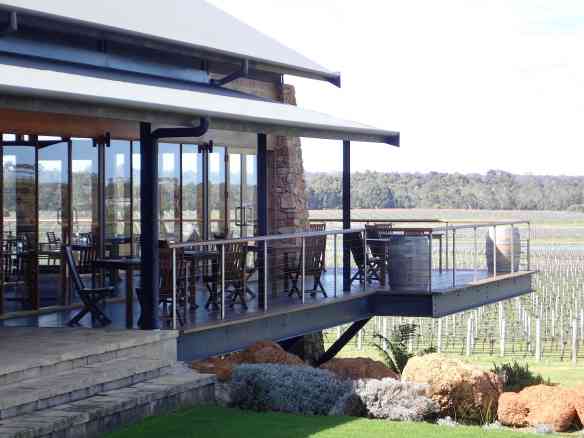
The setting was serene

2.Hay Shed Hill

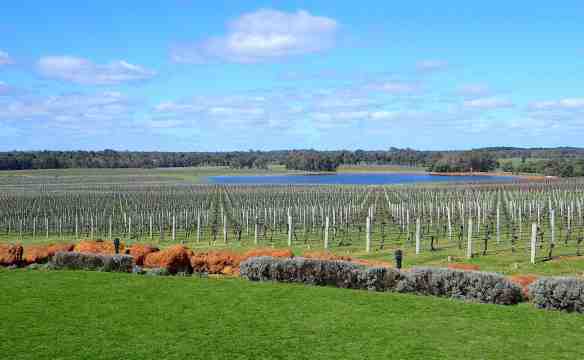
surrounded by vines

OLYMPUS DIGITAL CAMERA

and the 6 course degustation menu was irresistible.

4.6 course degustation

If you’re not into food porn, look away now. We started with Esperance Scallops: West Australian scallops in the shell, chorizo, pear purée, candied jamón.

Fried Goats Cheese with orange blossom honey followed.

8.Fried Goats Cheese

Salmon Bresaola: dill aioli, pickled ginger & cucumber was a fabulous third course.

9.Salmon Bresaola

After the Free Range Linley Valley Pork Belly with apple purée & sticky Pedro Ximinez,

10.Pork Belly

I wandered around the garden, admiring the rustic artworks

while the boys discussed the fine art of cigar box guitar making.

21.Hay Shed Hill

I returned in time for the Margaret River Black Angus Petit Mignons: beef fillet wrapped in bacon, sweet potato, asparagus, green peppercorn jus.

22.Petit Mignons

We decided to forego the dessert tasting plate in favour of the European cheese board with muscatels, honeycomb & house breads.

23.Cheese Board

Obviously, there was wine involved in this fantastic experience, I just can’t remember which one. Thank you, Dave, for a wonderful afternoon.

OLYMPUS DIGITAL CAMERA

The Old Coast Road

After a bitterly cold, overcast weekend recently, we were greeted on Monday by a perfect autumn day. I don’t work on Mondays and so, we decided to drive along the old coast road to Ulverstone for lunch. With the top down, Cooper took us on a magnificent journey, reminding us of the natural beauty we have so close to home. We turned off the highway at Sulphur Creek, apparently named because of the perceived smell of sulphur in the area when first explored by Europeans.

1.Sulphur Creek

Sulphur is associated with volcanic activity, which has determined the landscape of northwest Tasmania. There is no longer evidence of the offending aroma, just a stunning, sandy beach.

2.Sulphur Creek3.Cooper at Sulphur Creek

There used to be a fabulous restaurant at Preservation Bay, hopefully one day there will be another to make the most of this wonderful vista.

4.Preservation Bay5.Cooper at Preservation Bay

Soon, we were in the gorgeous town of Penguin.

6.Penguin7.Penguin8.Ocean Road

As we travelled the narrow, winding road, I was boggled by the reflections of the sun on the glassy water.

9.Ocean Road10.Ocean Road11.Ocean Road12.Ocean Road13.Ocean Road

There is a house along this road that fills me with more than a little envy.

14.house15.house

The Three Sisters are a group of three small islands (the third is almost hidden behind the headland at the right of the pic)

16.Three Sisters17.2 of the 3 sisters

and, along with Goat Island, they form the 37 hectare Three Sisters – Goat Island Nature Reserve.

18.Goat Island

Goat Island is a granite island and houses a breeding colony of little penguins.

19.Goat Island

It can be walked to at low tide, a lovely spot for a picnic.

20.Goat Island

As we reached Ulverstone,

21.Ulverstone

we spied Pedro’s across the river.

22.Pedro's23.Pedro's

The restaurant has a lovely, relaxed ambience

24.Pedro's

and we were shown to a table on the enclosed balcony, warmed by the autumn sun.

28.Pedro's

The Derwent Estate Pinot Gris came highly recommended. A delicious shade of pink, I certainly wasn’t disappointed.

29.pinot gris

The salt & pepper calamari and crumbed scallops were exquisite, the real flavor of fresh seafood.

Outside, the gulls were enjoying a bathe in the shallows of the river’s edge, soon the tide would be high and their chance would be missed.

33.gulls

The Leven River glistened

34.Leven River

as we left Pedro’s

35.Pedro's

and retraced our journey.

36.old ocean road37.old ocean road

Table Cape emerged in the distance

38.Table Cape

before disappearing behind the next headland.

39.old ocean road

We were surprised to see the masts of a tall ship in the bay, not a common sight in these waters. I read the next day, poor weather conditions had forced the UK ship, Tenacious, to stop in Burnie for a couple of days on its way from Melbourne to New Zealand. Tenacious is the world’s largest operative wooden hulled tall ship and offers opportunities for people with a disability to experience a sailing voyage.

40.Tenacious

What a marvelous way to end our day.