grand greenhouse

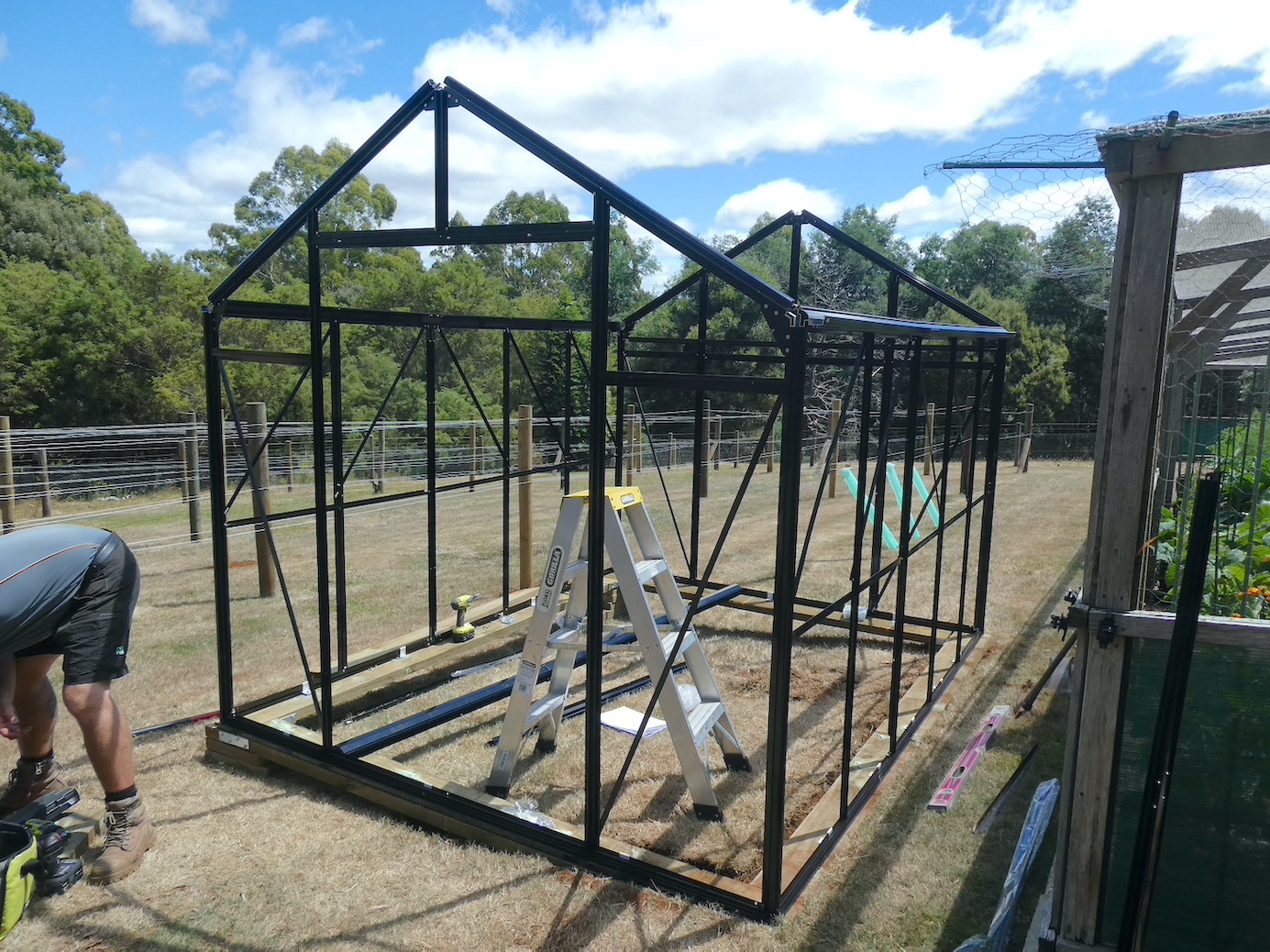
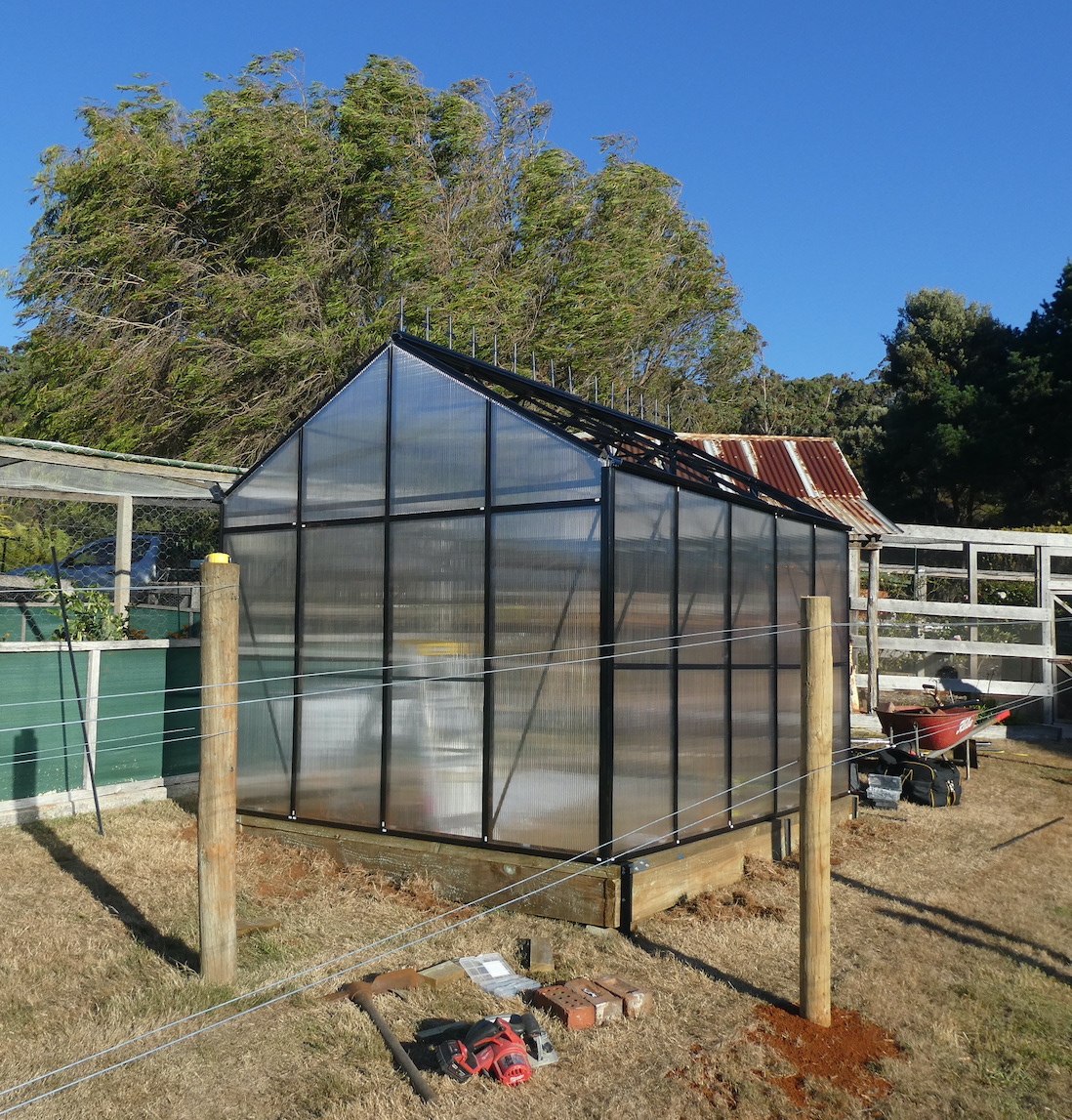
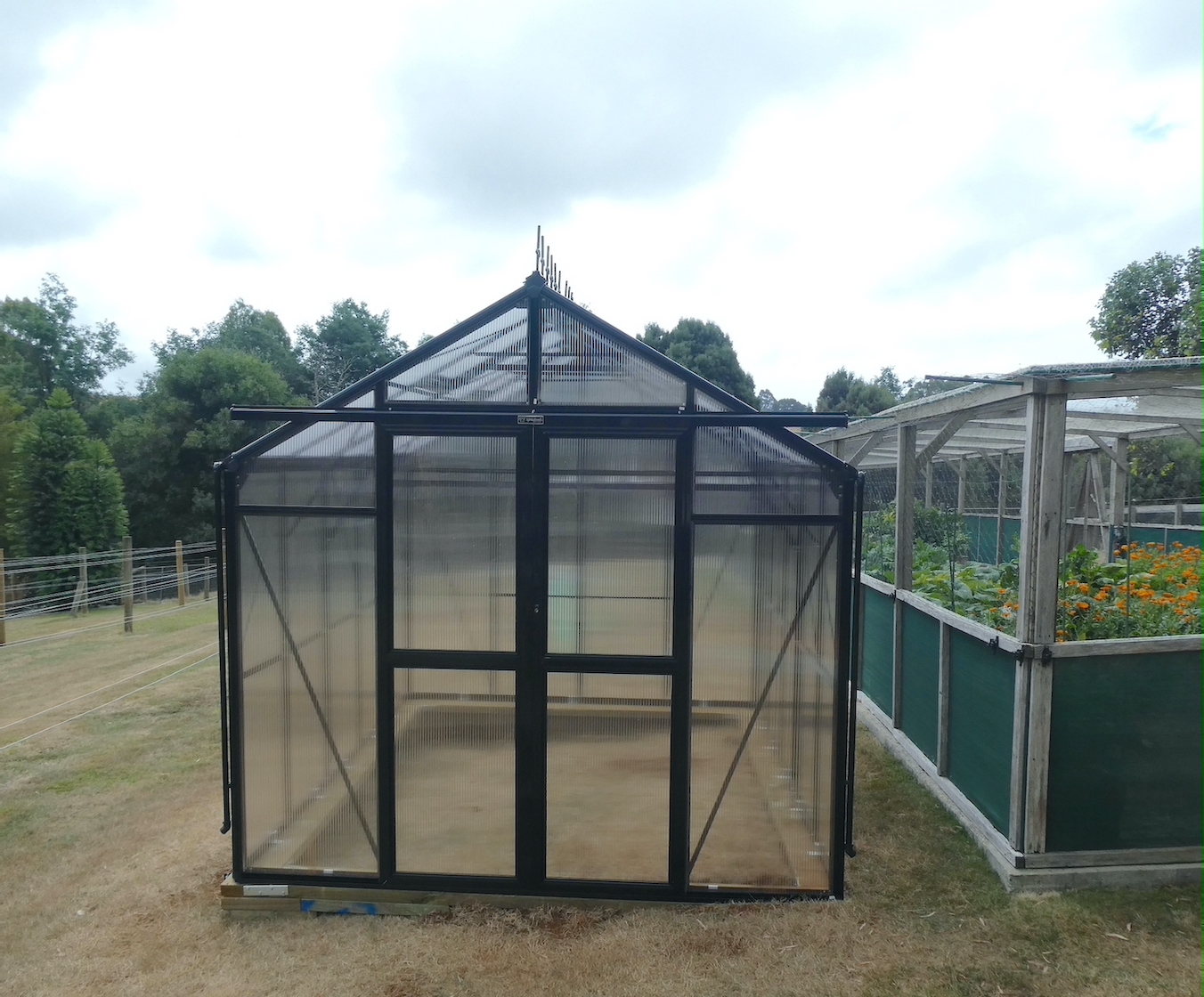
Although our veggie patch is prolific through summer, it tends to be somewhat limited once the colder months descend. After much contemplation, we took the plunge and ordered a greenhouse last February.

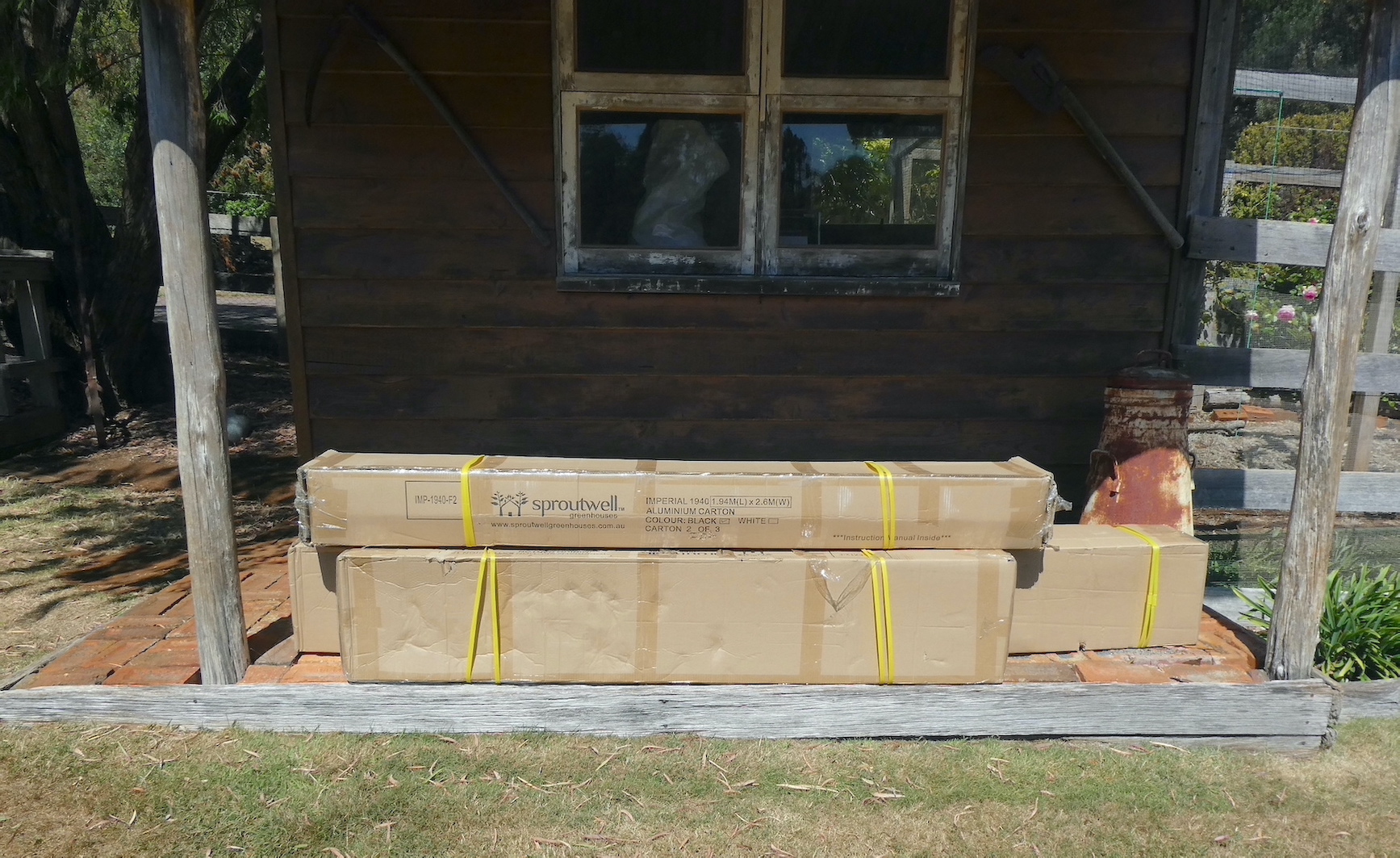
We chose a site adjacent to the vegetable enclosure with the potting shed and running water close by.
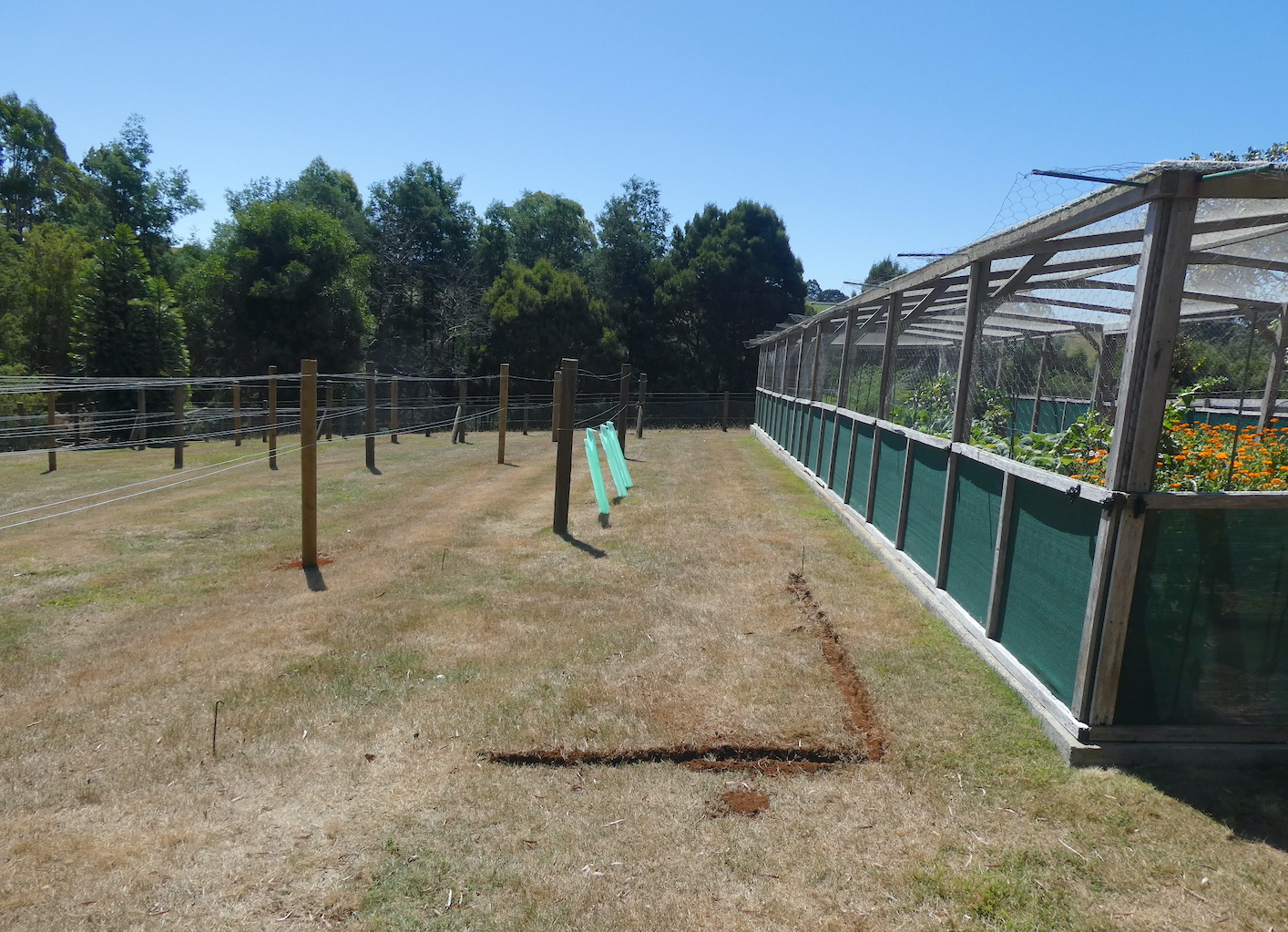
We have found that self-build is not always the easy option, with dubious instructions and missing pieces and so, we relied on those with prior experience. Even so, it took a little longer than the one day allocated to finish but the result was worth it.

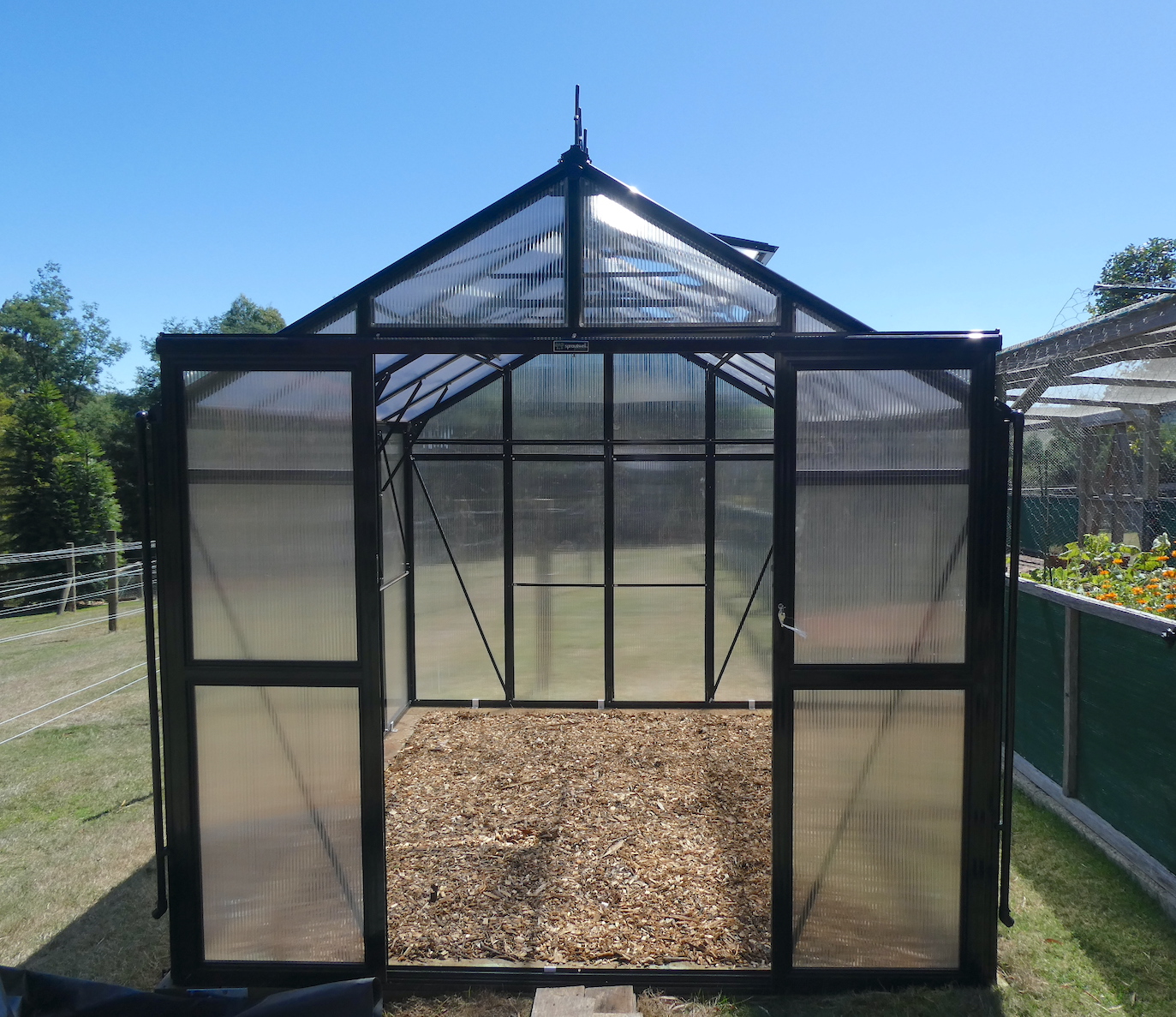
We brought in a couple of scoops of earth for the base followed by a layer of blue metal to assist with drainage and a topping of mulch that can be watered down to increase humidity.

Michael constructed a staging shelf out of reclaimed timbers
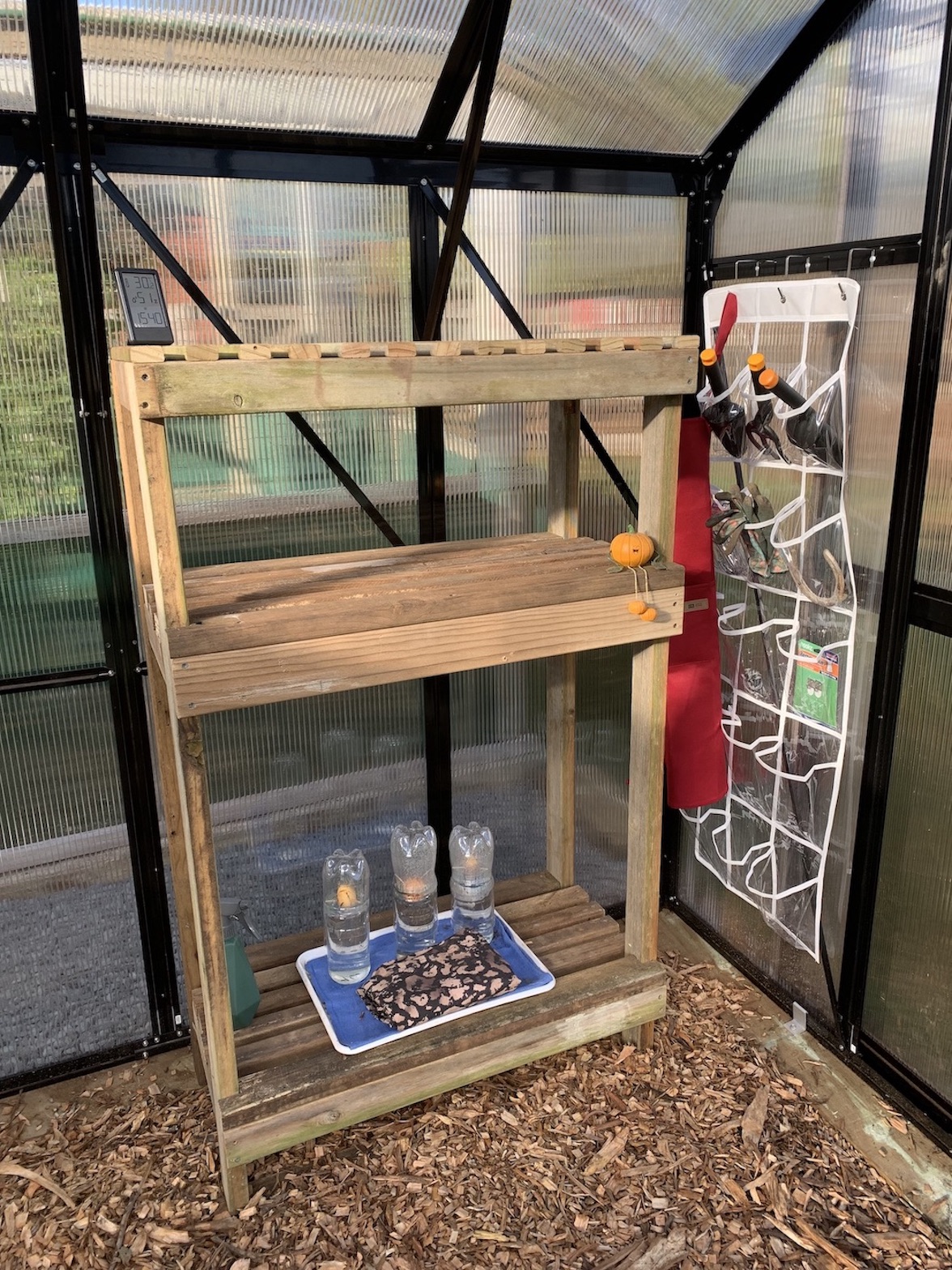
and we bought raised beds to fill the rest of the space. Once we realised how high the temperature reaches, we installed a sunshade on the northern side.

A temporary trestle provided the perfect environment to cure the butternuts in May. I then store them on a shelf high in the  potting shed where they last for a good six months.

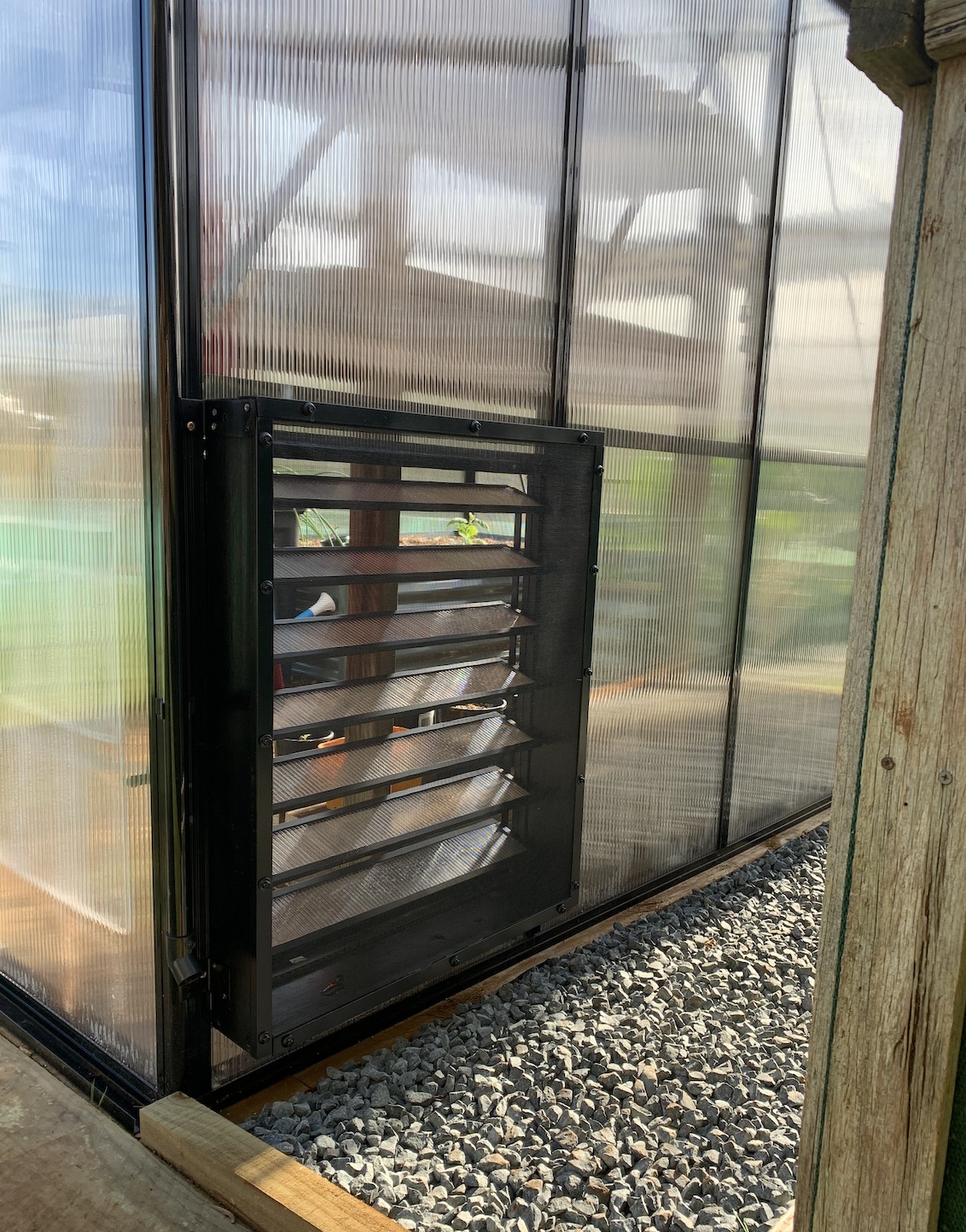
To help with temperature control, we added louvres to one of the panels and Michael cunningly created a screen to keep out creepy crawlies and resident reptiles.

Being in the apprentice stage of greenhouse gardening, we weren’t sure which plants would be successful. We started with brassicas, beetroot, carrot, onion, capsicum, butternut and bush bean.

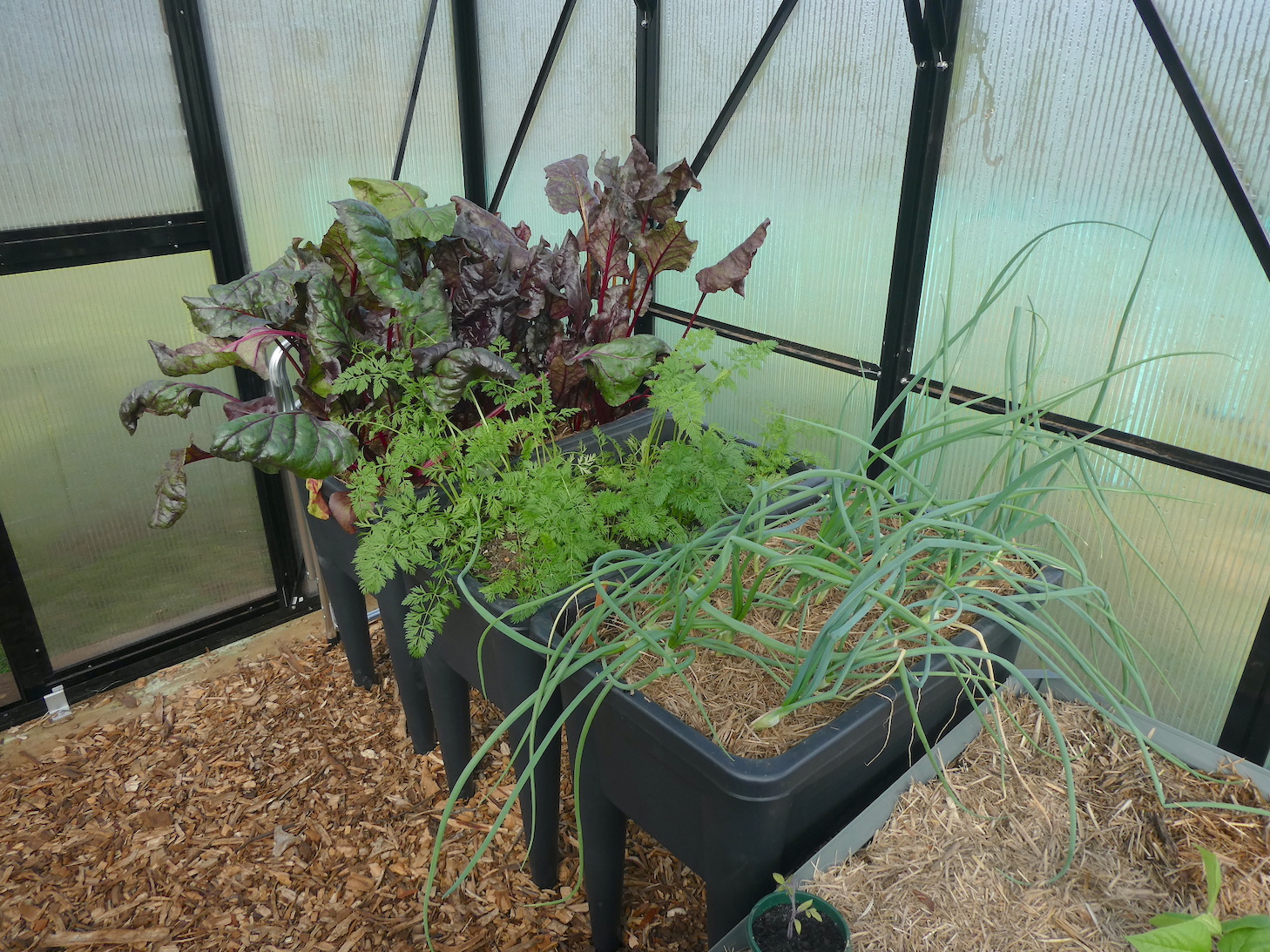
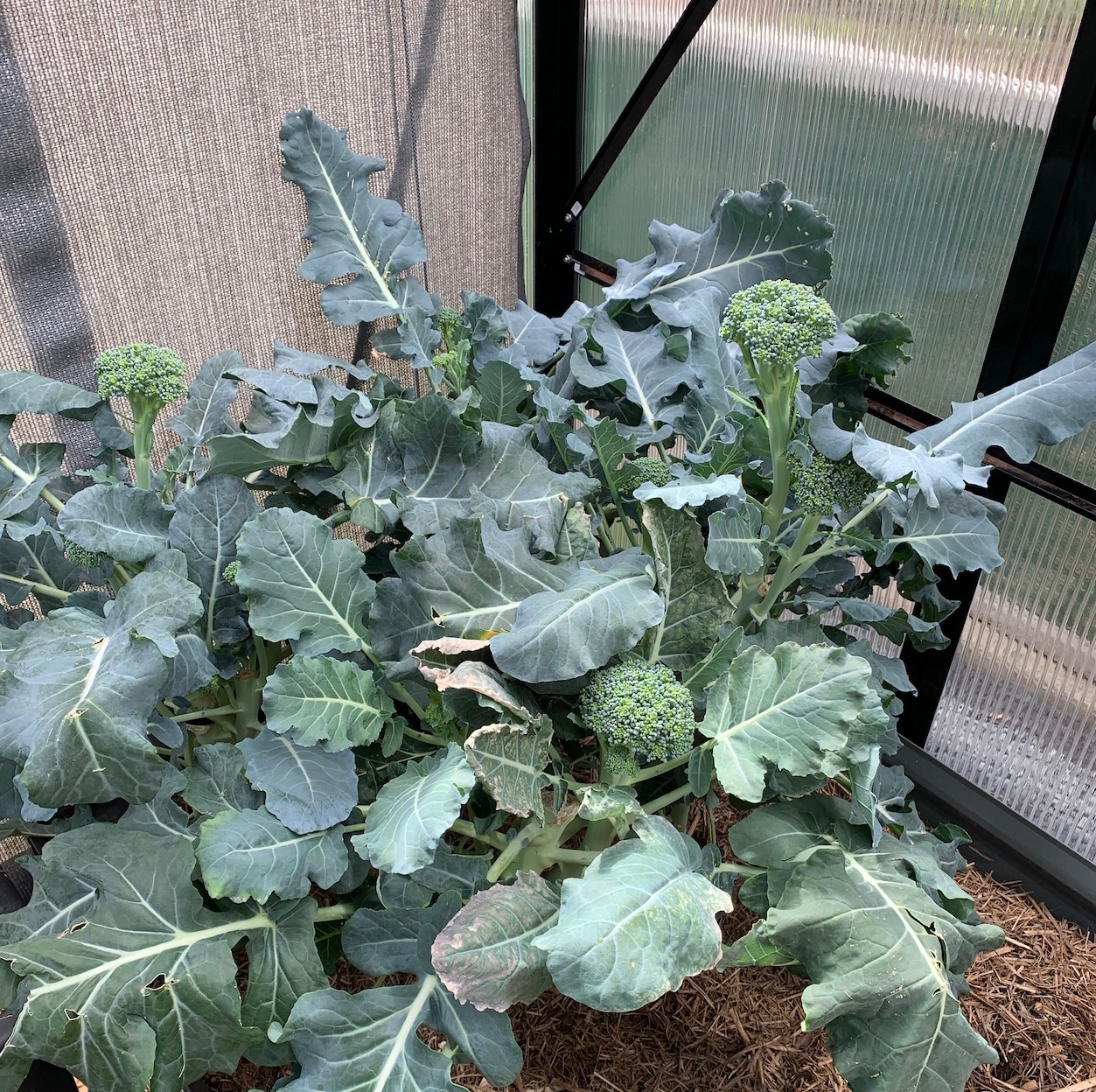
The first broccoli was very impressive and, three months on, we are still harvesting smaller florets.

The capsicum are thriving but yet to bear fruit.

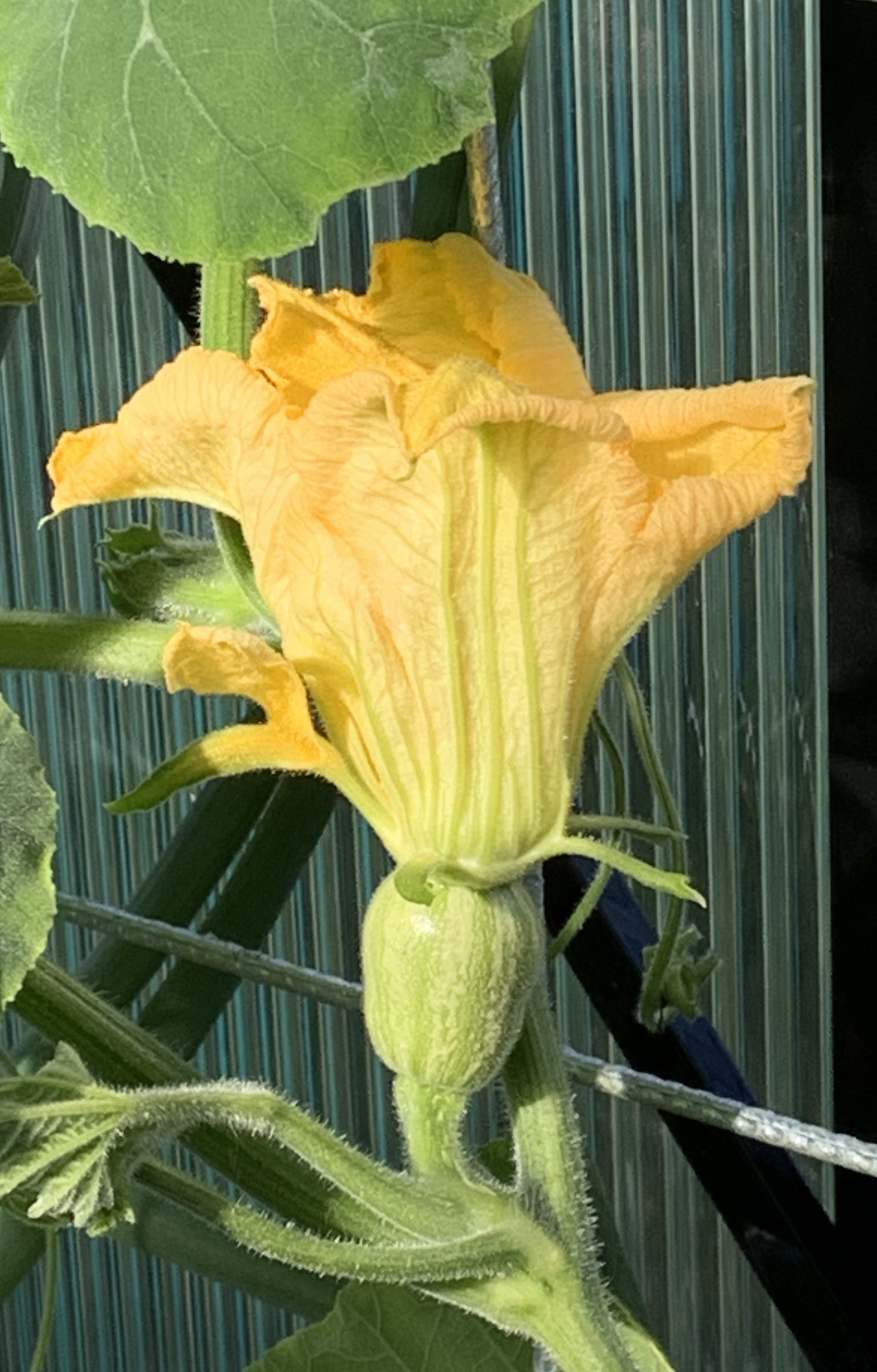
The bush bean and butternut are happy companions, we have harvested some beans but will have to be patient for the butternuts.

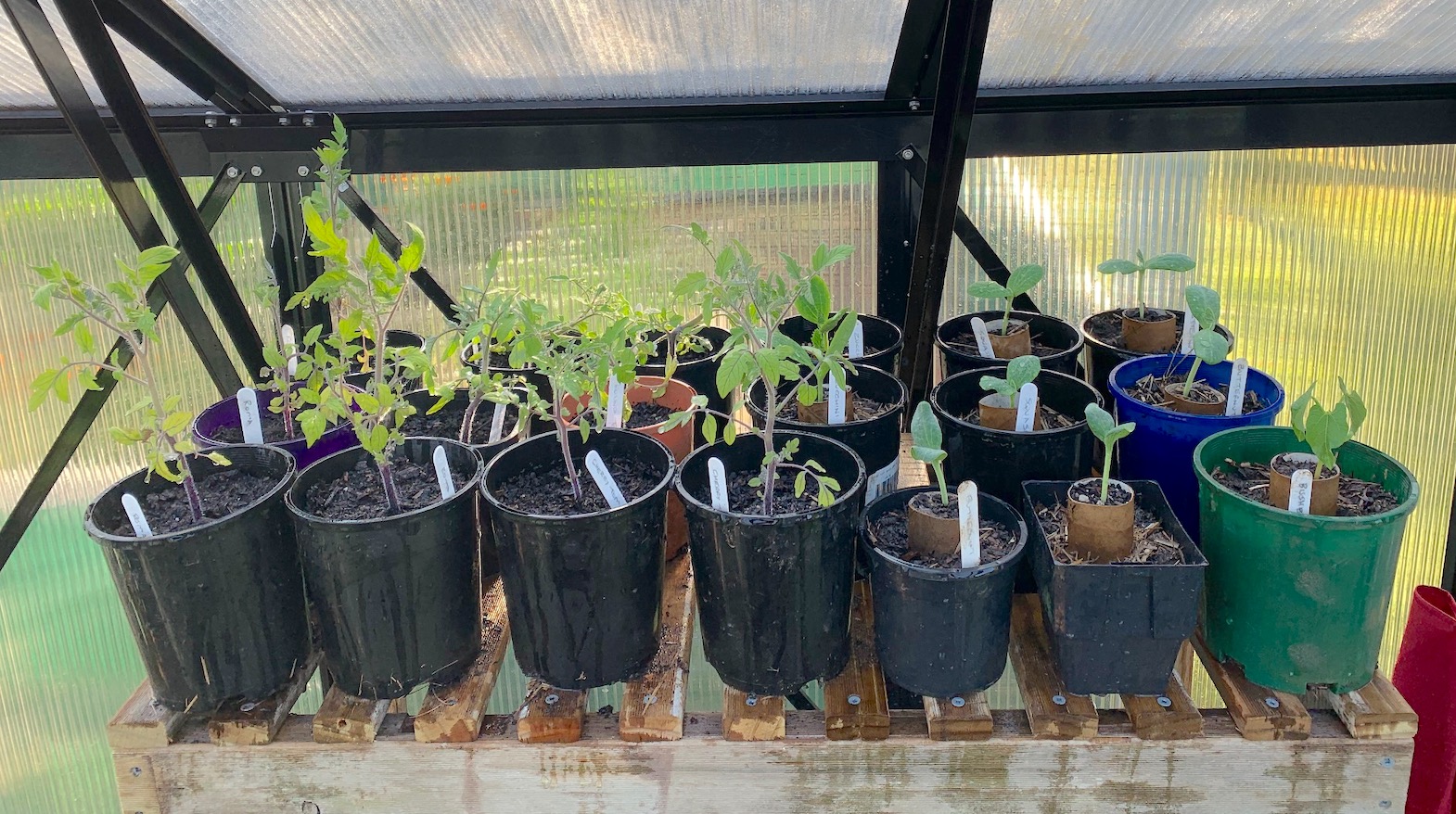
We have a plethora of seedlings ready to plant in another week or so, once the night time temperatures are a little more moderate.
My first attempt at striking Grevilleas from cuttings seems to be successful,

and after many months of coddling, the avocado stones have finally sprouted.

Michael has turned on the tap of creative juices once again and presented me with a stylish trug to collect the harvest

as well as a bespoke egg collecting box (the girls are giving us 5 to 6 eggs a day).

Of course, I needed a keyring befitting a fine greenhouse.

veggie patch revamp

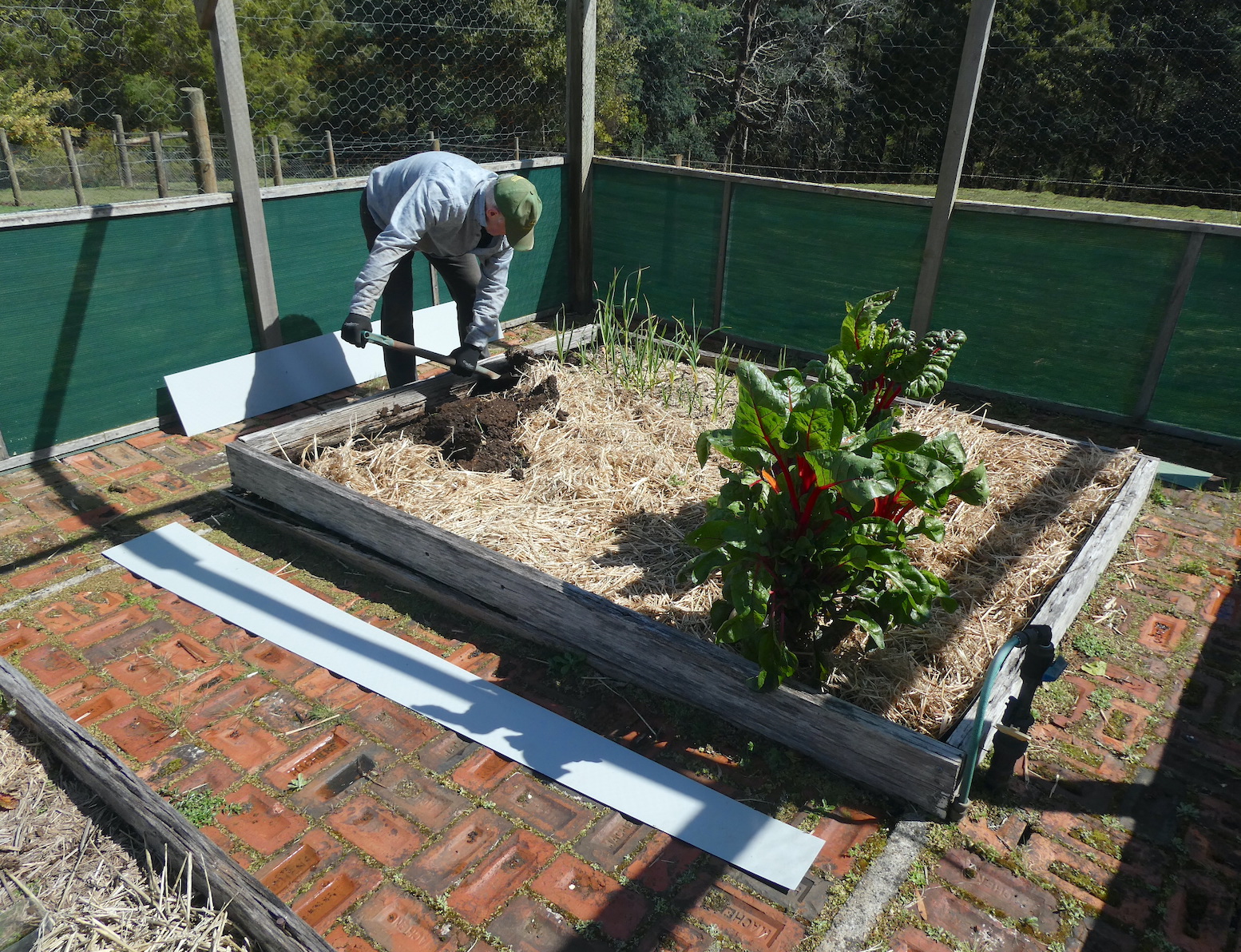
When we created our veggie patch, we used reclaimed hardwood roof trusses to make the raised beds, thinking they would outlast our time here. Eleven years of Tasmanian weather proved us wrong and the timber was starting to rot, the screws were no longer holding and the boxes developed all sorts of twists and turns.

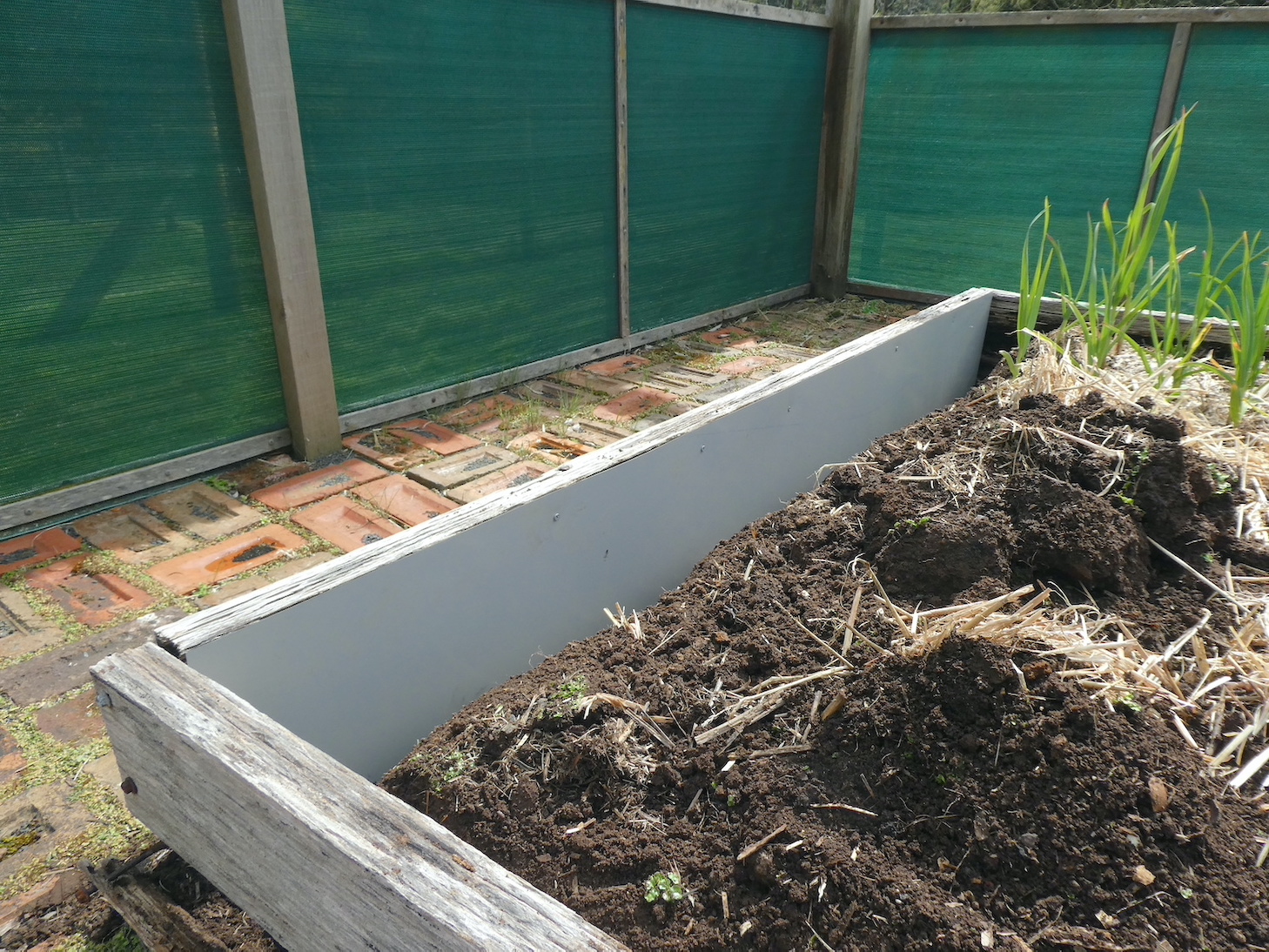
After weeks of mulling over possible solutions, we came up with the idea of reinforcing each box using metal sheeting on the inside. Our local Colorbond supplier was very helpful. We gave them the measurements of each piece required and they cut them from ends of rolls that would otherwise have been discarded (at a reasonable price). After digging away the soil at the edges,

the strips of steel were screwed to the timber with pond liner at the corners to avoid water seepage.

We were happy with the tidy result.

The rhubarb box was a bit of a challenge, just as well it needed thinning out.

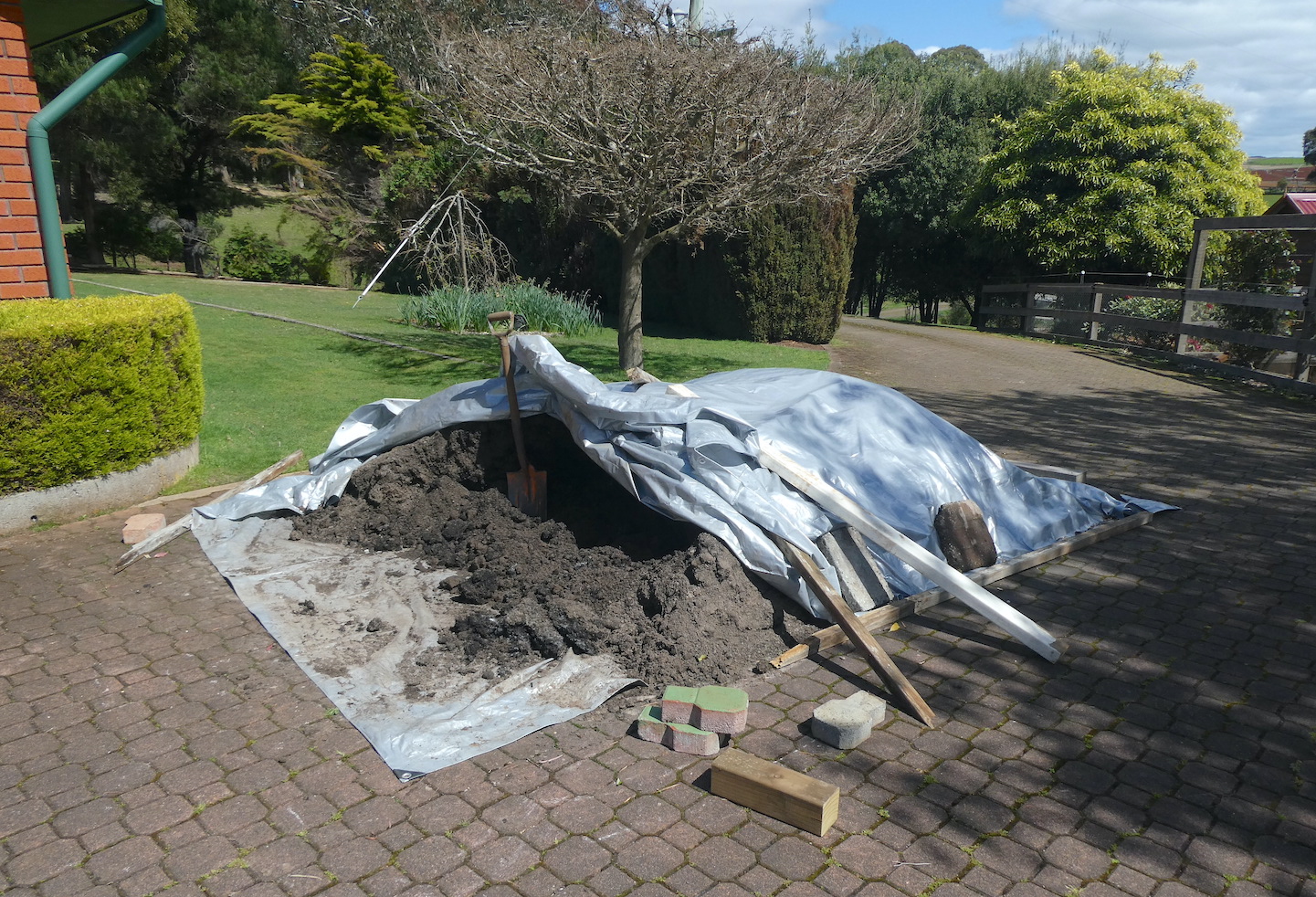
We had a truck load of loam/ compost mix delivered and topped up all the beds

just in time for spring planting.

The fruit salad tree box had to be completely demolished and rebuilt (I was too distracted to take photos of the process).

Our unpredictable spring weather meant I was constantly chasing sunlight and warmth for the seedlings

but I finally had success and planted out in summer.

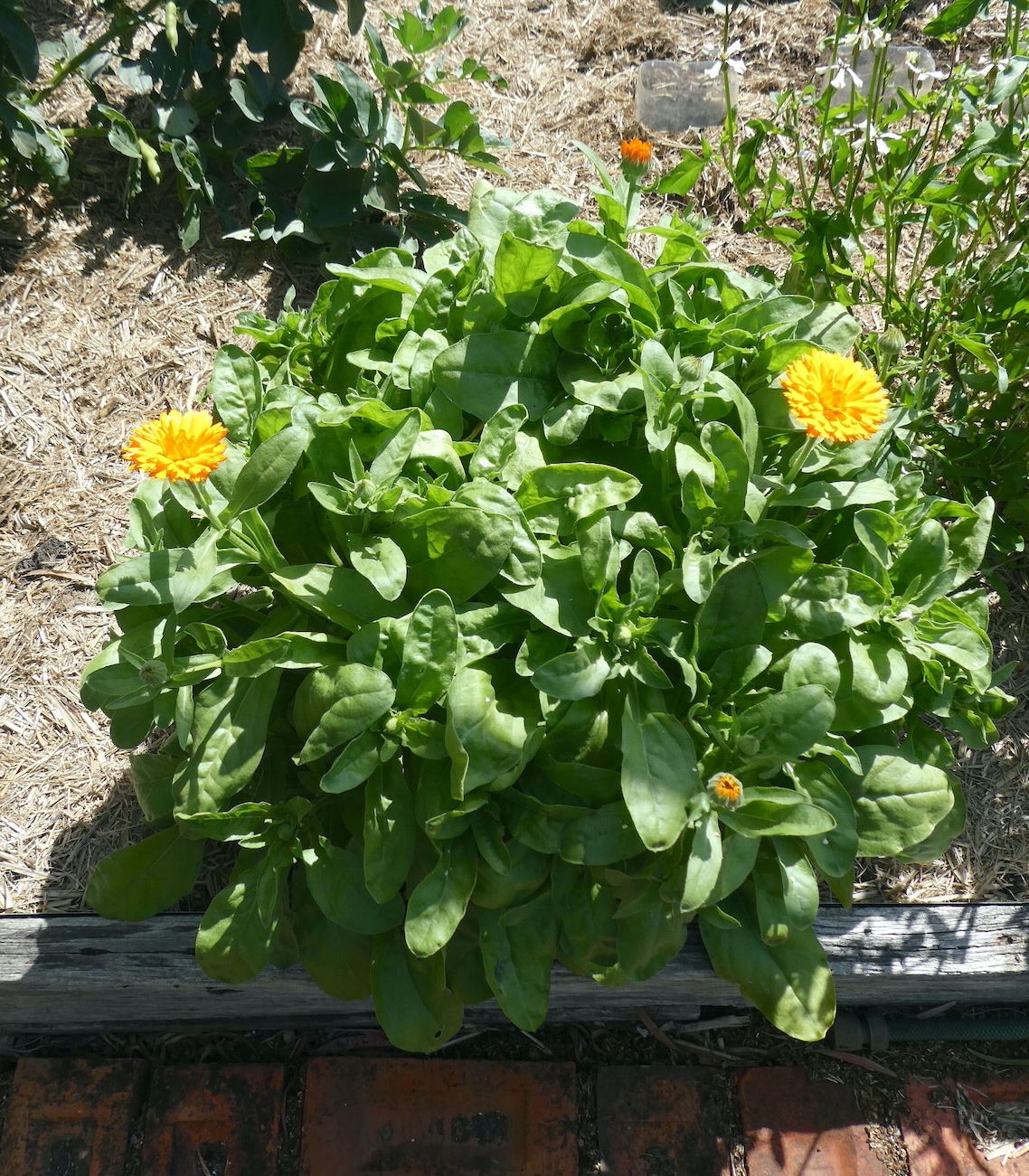
I threw some marigold seeds in for the first time, they supposedly deter pests as well as looking pretty.

By the end of January, there was no stopping the flow of produce.

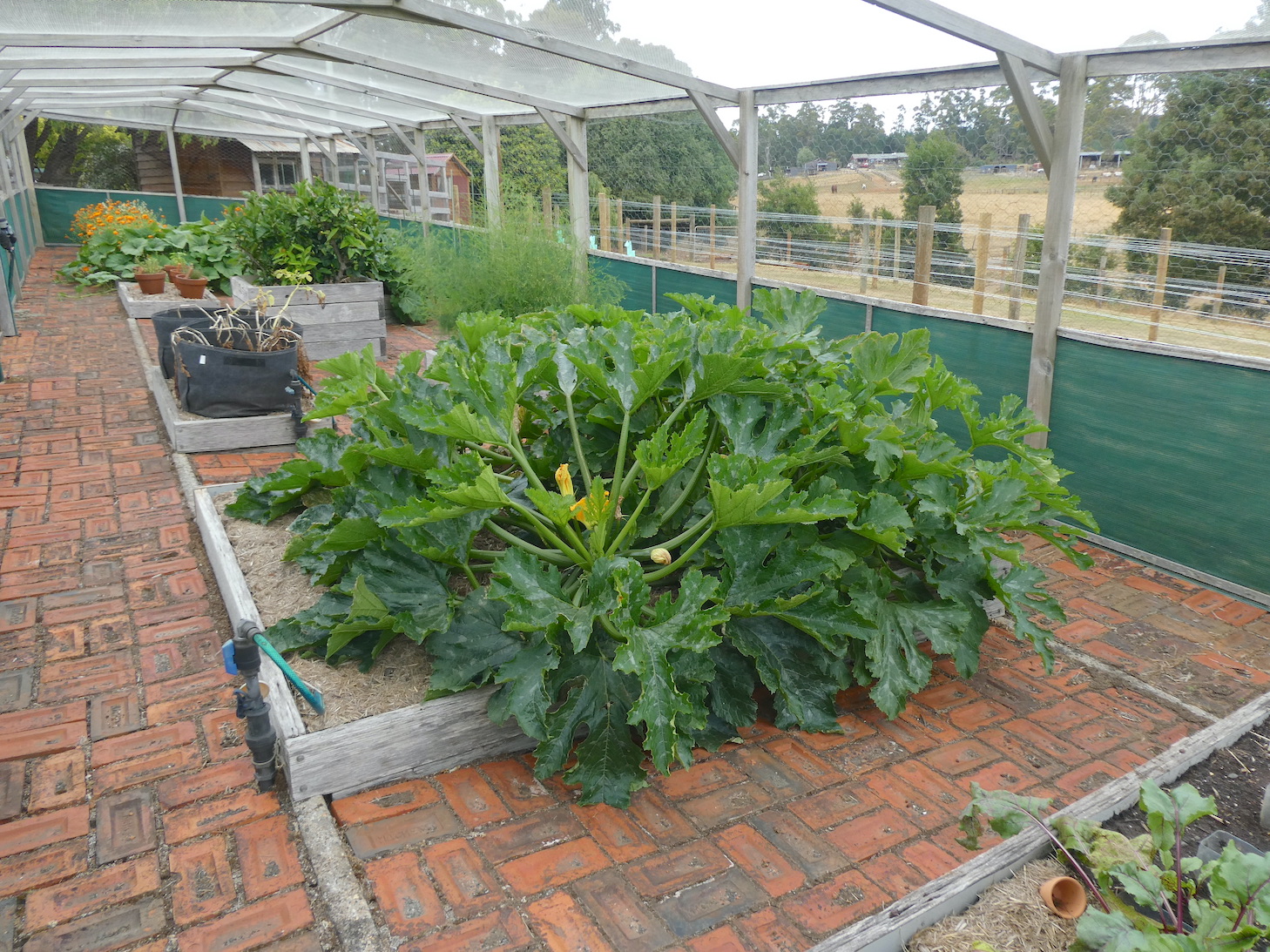
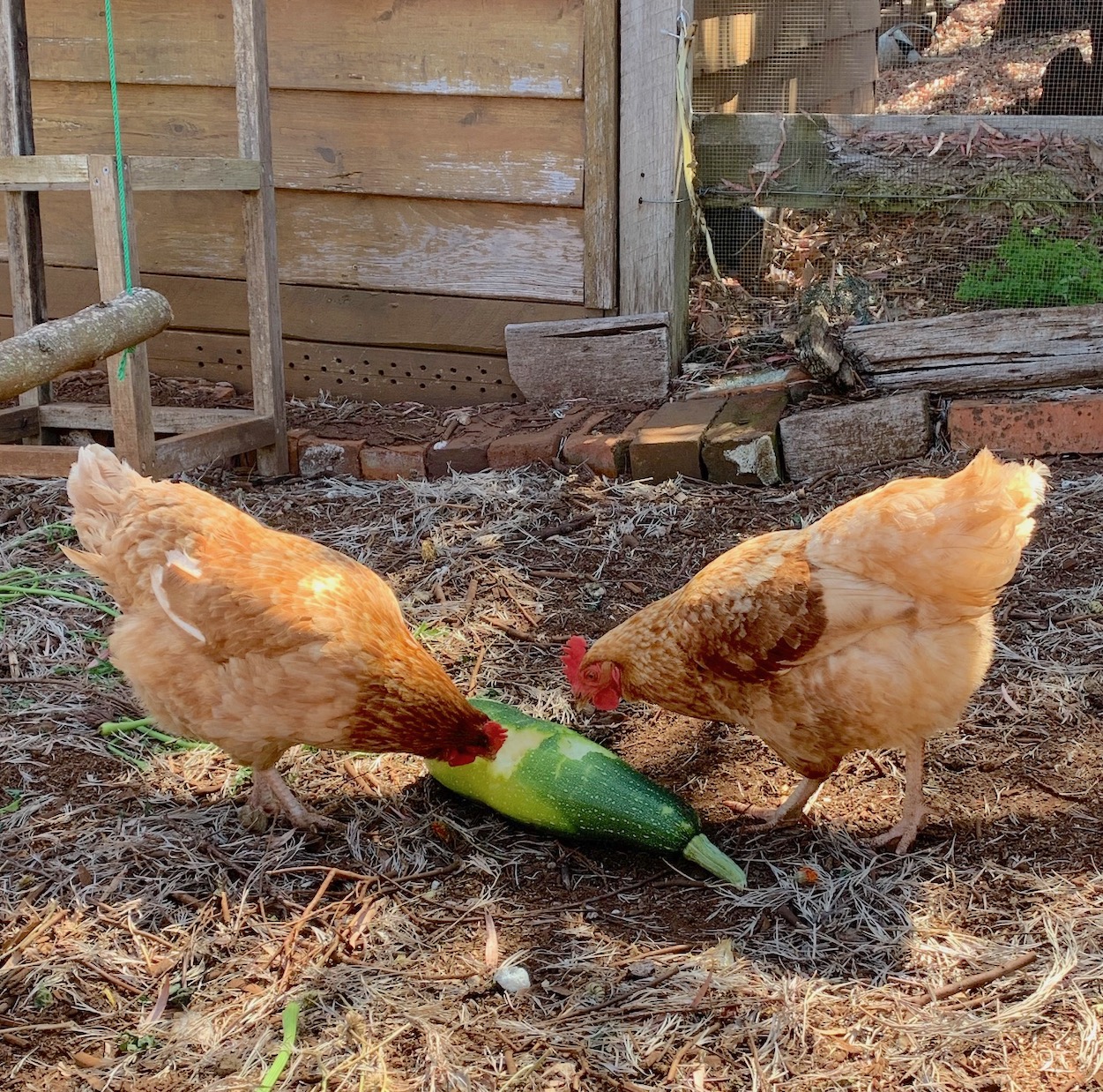
Thankfully, we found some willing recipients for the monster zucchini.

Hamilton Gardens – Productive

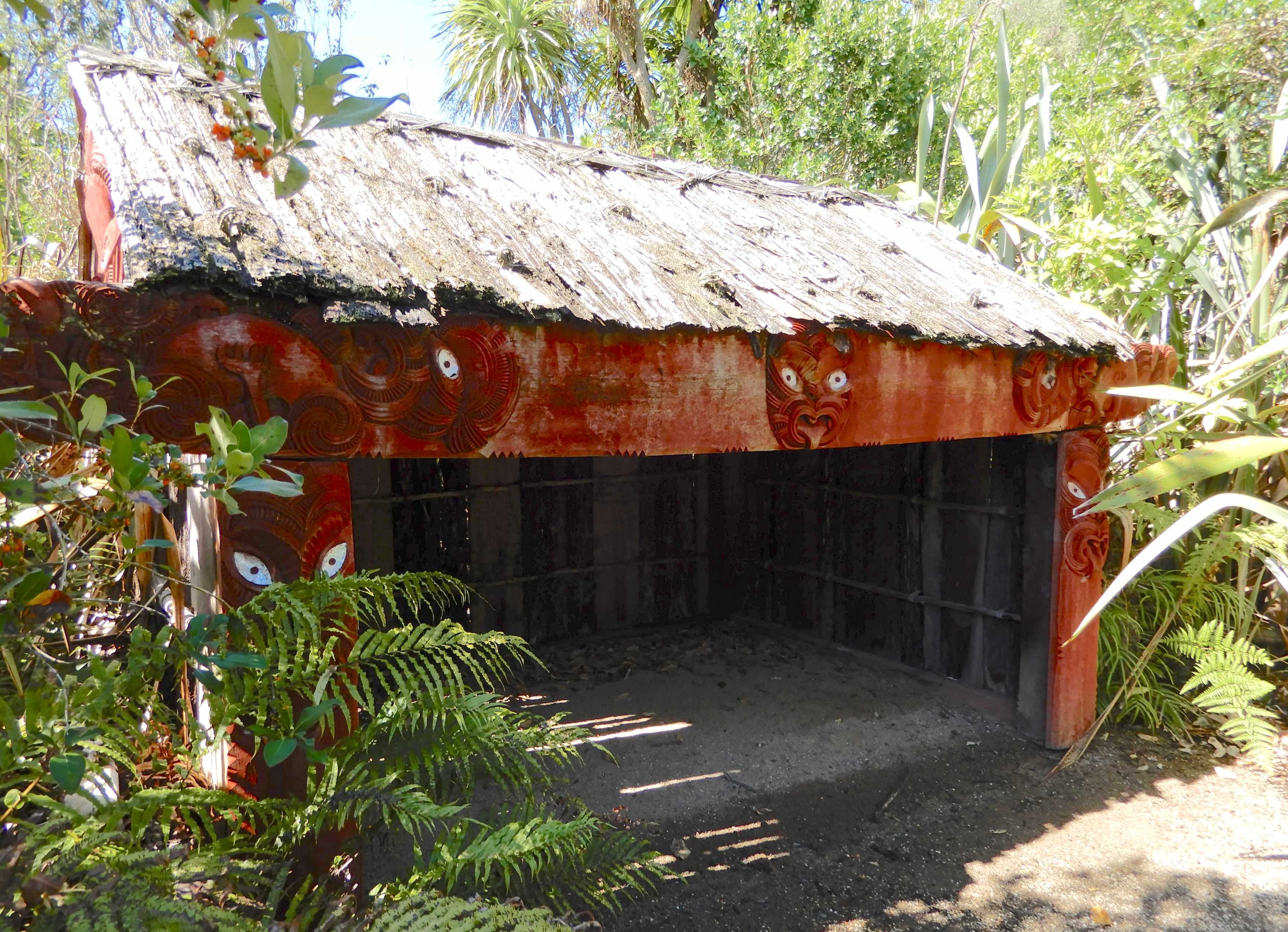
The third collection to explore at Hamilton Gardens was the Productive Gardens, representing different aspects of the relationship between people and plants. The area that is now the centre of Hamilton Gardens was once a Māori settlement known as Te Parapara. The garden of the same name was once home to Haanui, a famous Ngati Wairere chief, and the site was particularly renowned for sacred rituals associated with the harvesting of food crops. Te Parapara Garden is divided into two sections. The first surrounds the path from the main piazza  and comprises wild food plants from the forest and grassland. This is separated from the cultivated garden by an intricately carved waharoa or gateway. The designs are based on ancient carvings from a house called Te Urutomokia, built for Potatau Te Wherowhero who became the first Māori King in 1858.

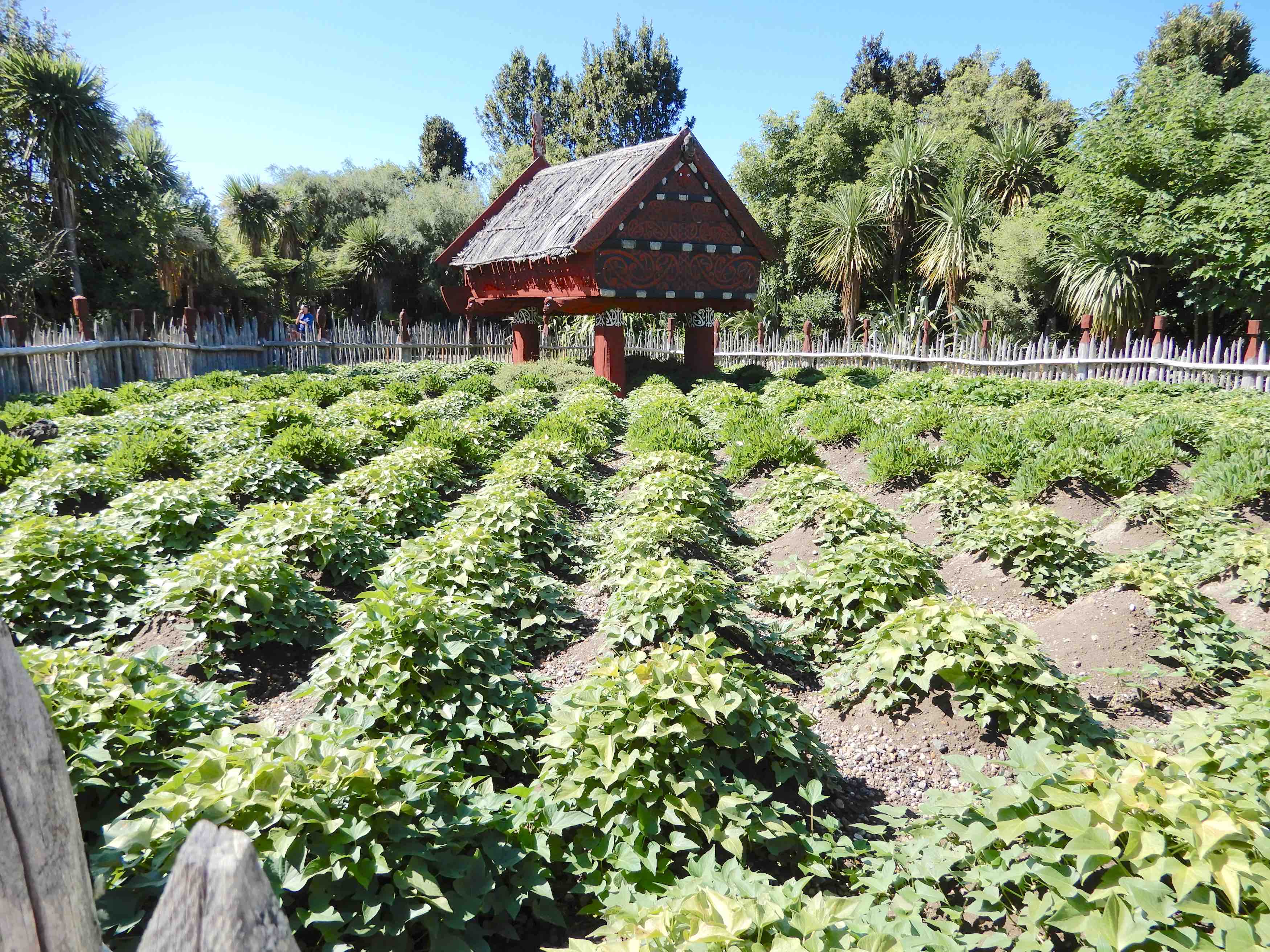
Beyond the gateway is an area for cultivated food plants, surrounded by a palisade fence with forty carved posts.

Six varieties of Kumara are grown in the garden and produce from the annual harvest is distributed to charities.

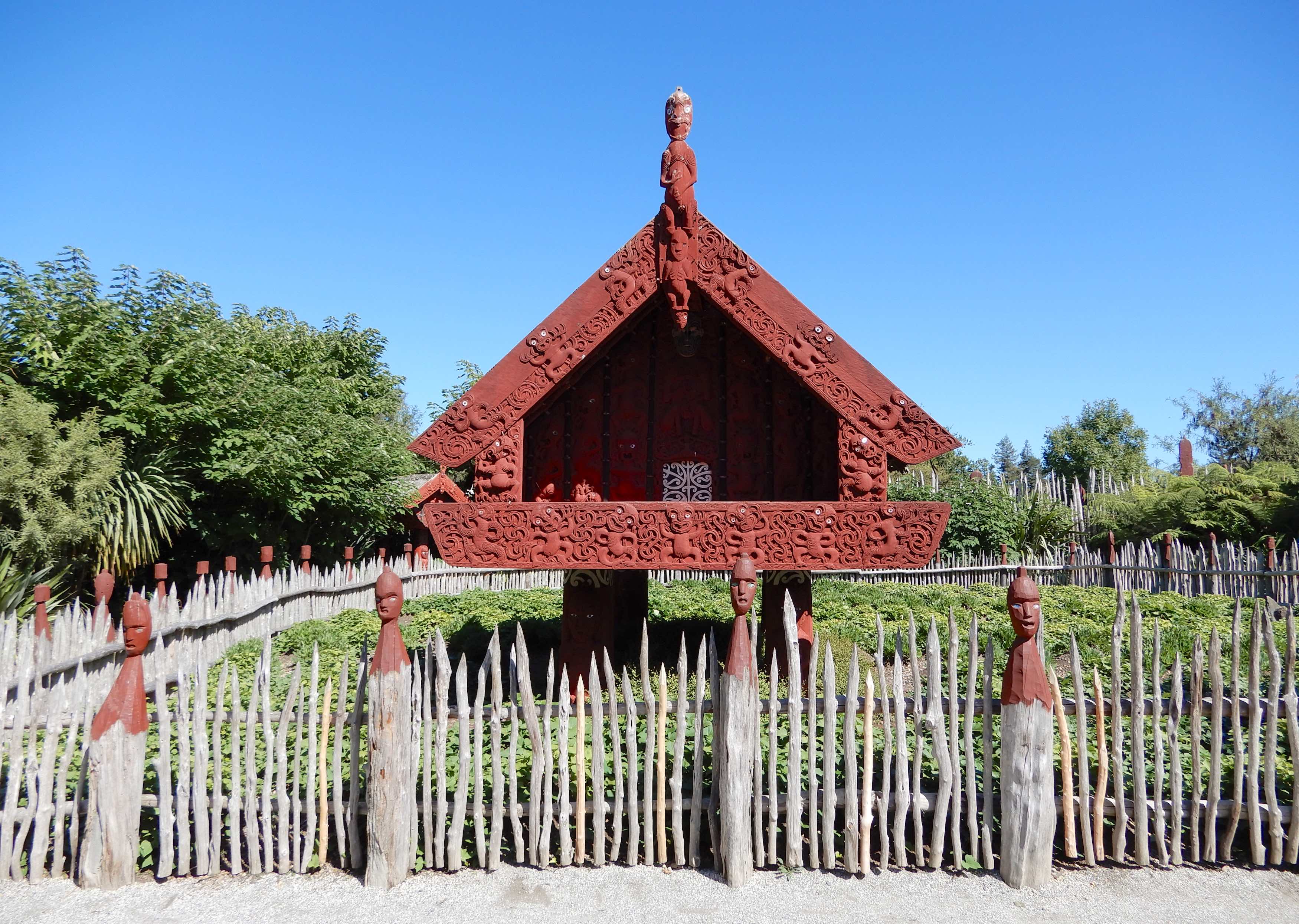
The path surrounding the fenced garden is edged with more food plants as well as beautifully adorned traditional Māori storehouses.

With the goal of producing enough to feed a family of four, the Sustainable Backyard Garden shows some of the ways in which the typical suburban backyard can be transformed into a productive and edible landscape.

There are some quirky sculptures to be found; a stone bench with some unusual inlays, a wild wiry scarecrow and a delightfully decorative adobe pizza oven.

Complete with hens, bees and a worm farm, the garden is managed and maintained by volunteers from the Hamilton Permaculture Trust.

The concept of herb gardens is a fairly recent one. In medieval times, all plants were believed to have medicinal value and all were referred to as a ‘herb’. It wasn’t until the 18th century that the word ‘vegetables’ was used to describe food plants and ‘herb’ was the name for practical plants. The Herb Garden at Hamilton follows the formula of early 20th century horticulturalist and garden designer, Gertrude Jekyll, with a framework of paving and four rectangular plots containing herbs defined by purpose – culinary, medicinal, cosmetic and perfume.

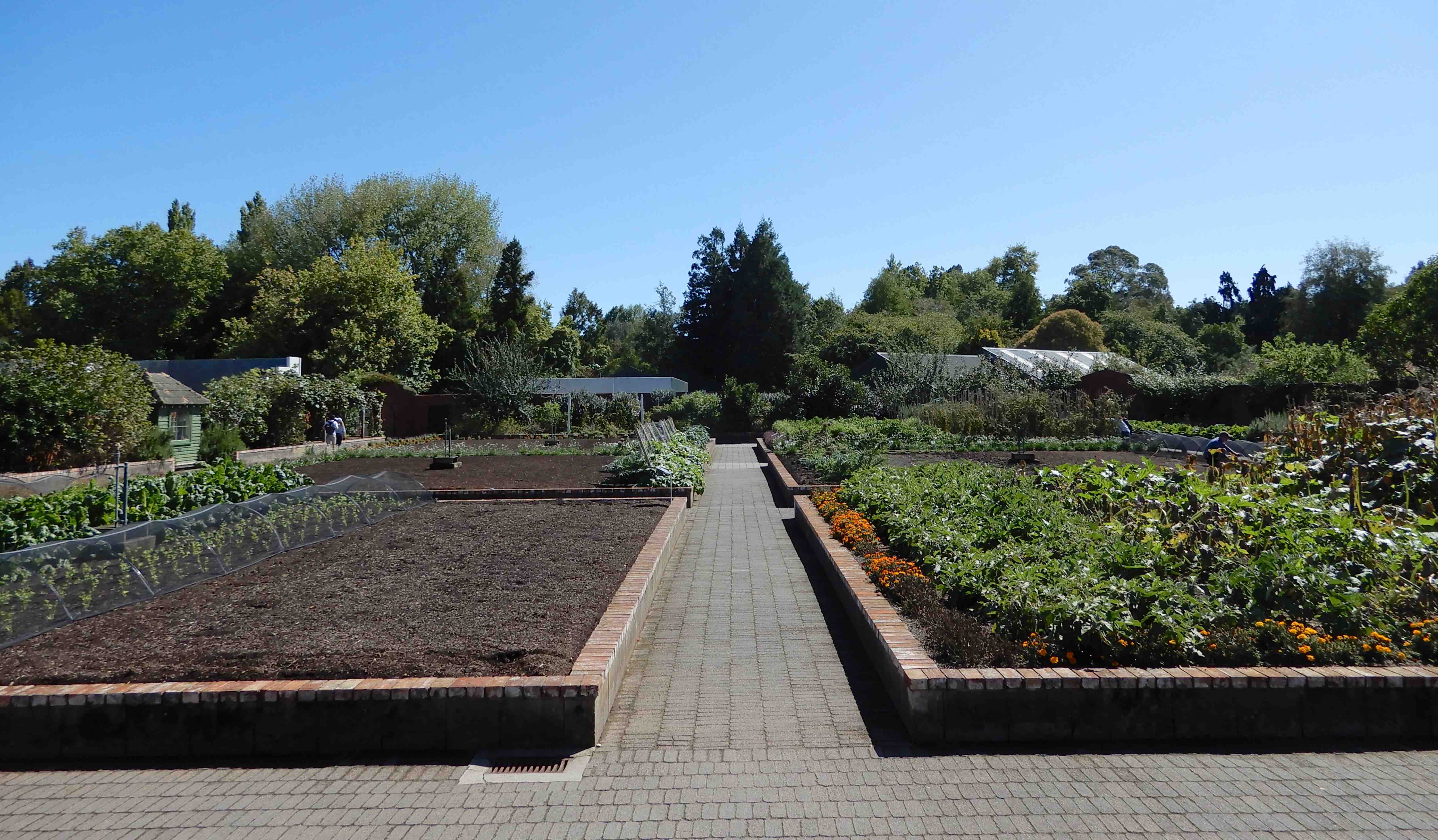
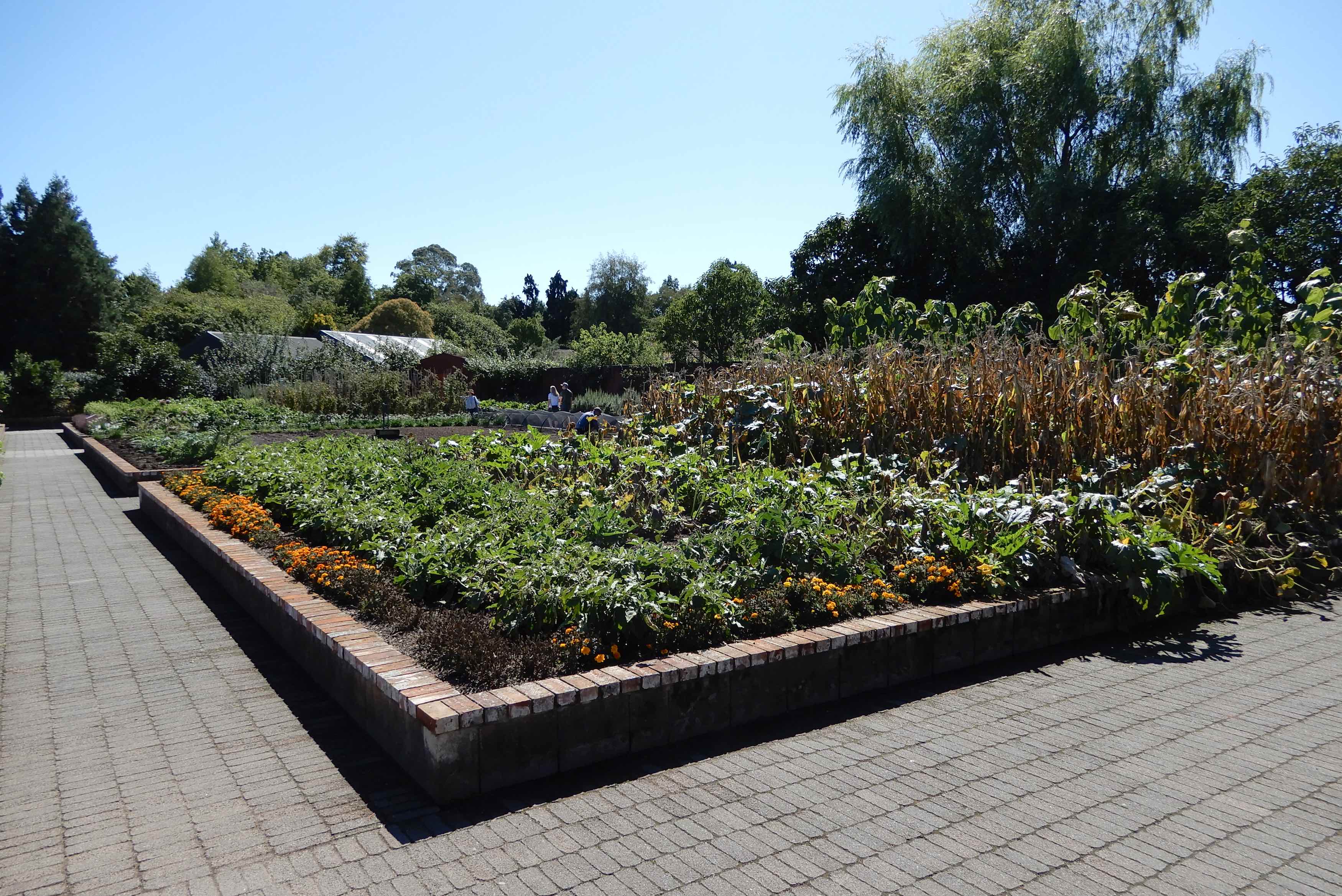
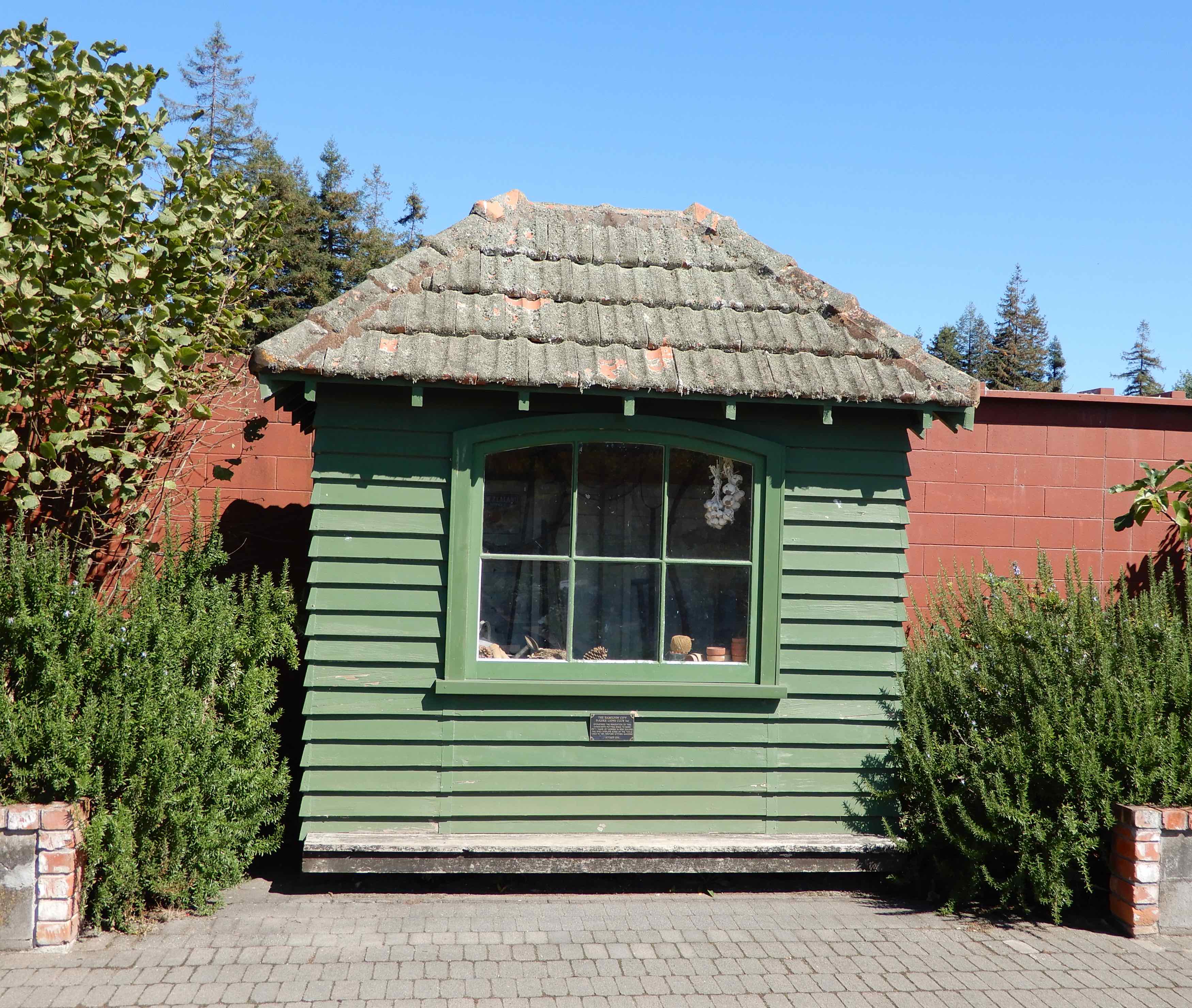
Like the herb garden, the adjacent Kitchen Garden is divided into four raised beds, though on a much larger scale.

The features are of a classic 18th/19th century garden used to supply the households of large European estates, with rows of crops mixed with displays of colourful flowers.

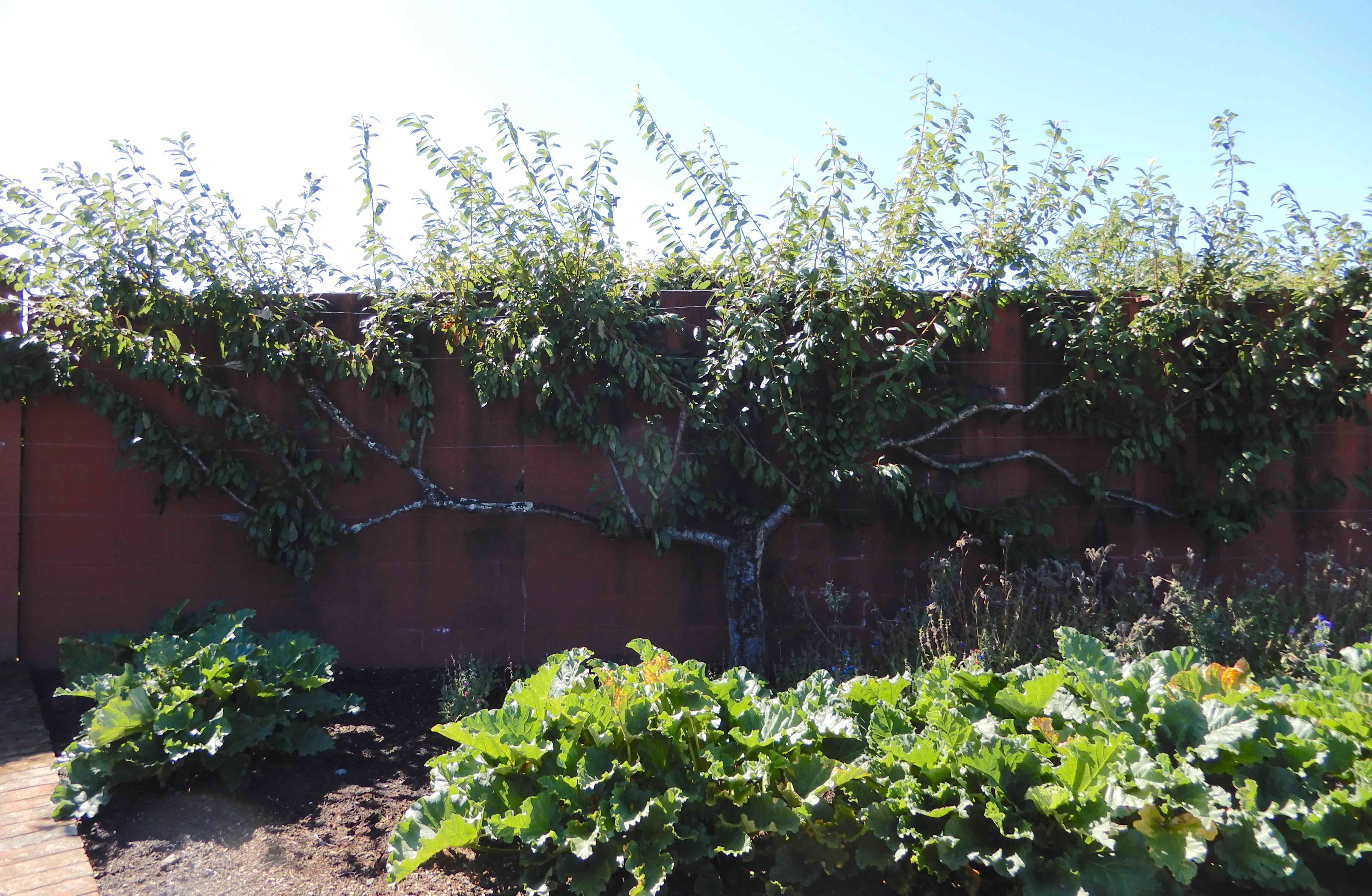
The walls of the garden not only create an atmosphere of mystery and security, they also hold the daytime heat. Research has shown that the amount of heat reflected close to a sunny brick wall can equal seven degrees latitude. As in northern Europe, the fruit trees are trained and espaliered against the wall, the result being that these fruits often ripen before others in the region.

There aren’t many gardens with a lovely bronze scarecrow. The Strawman was created by English sculptor, Lloyd le Blanc, and was installed in 2016.

All surplus produce from the Kitchen Garden is donated to Kaivolution, a local food rescue project that aims to stop edible food being thrown away. This is food, good enough to eat but not good enough to sell or is excess to producer requirements, that is diverted to those in need.

Mudbrick

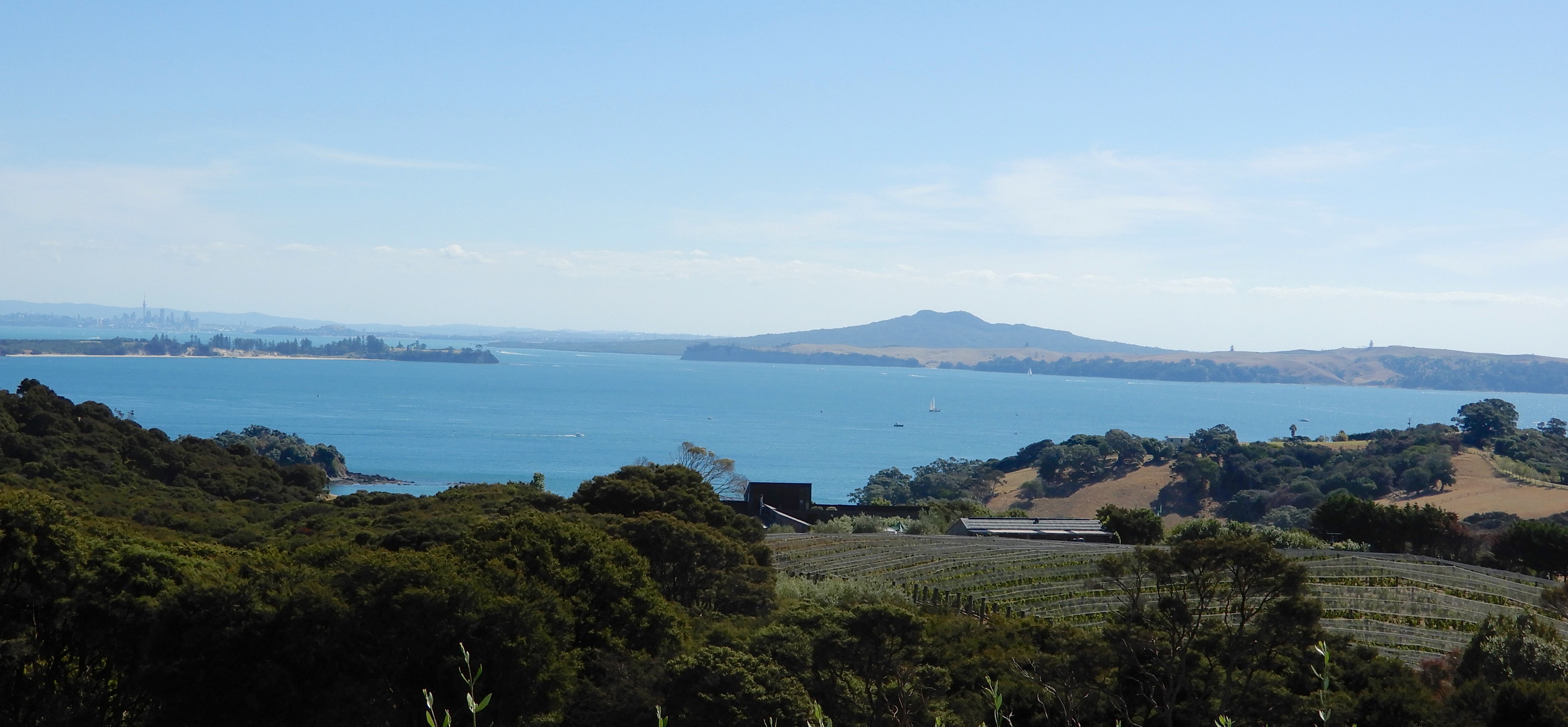
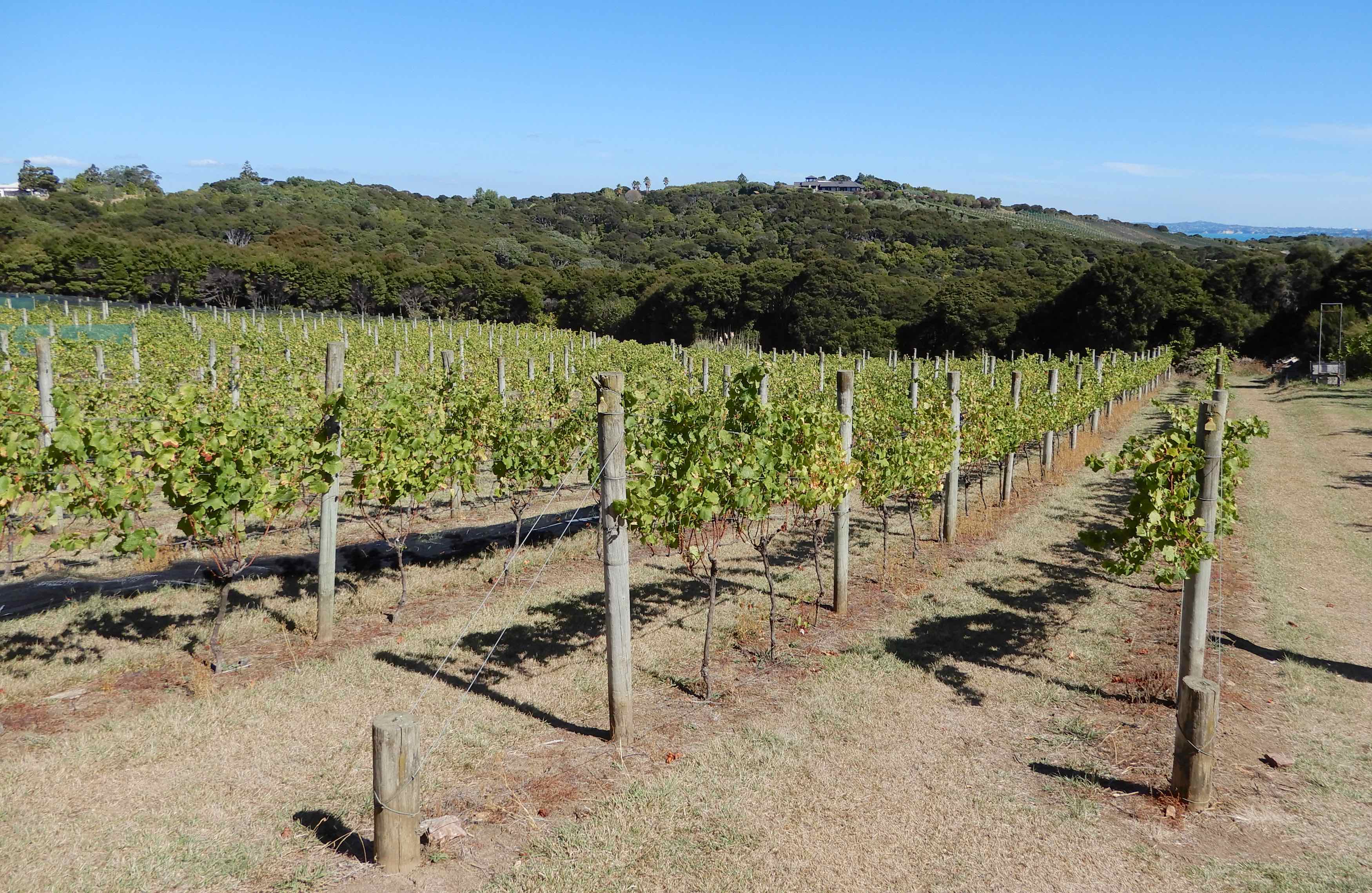
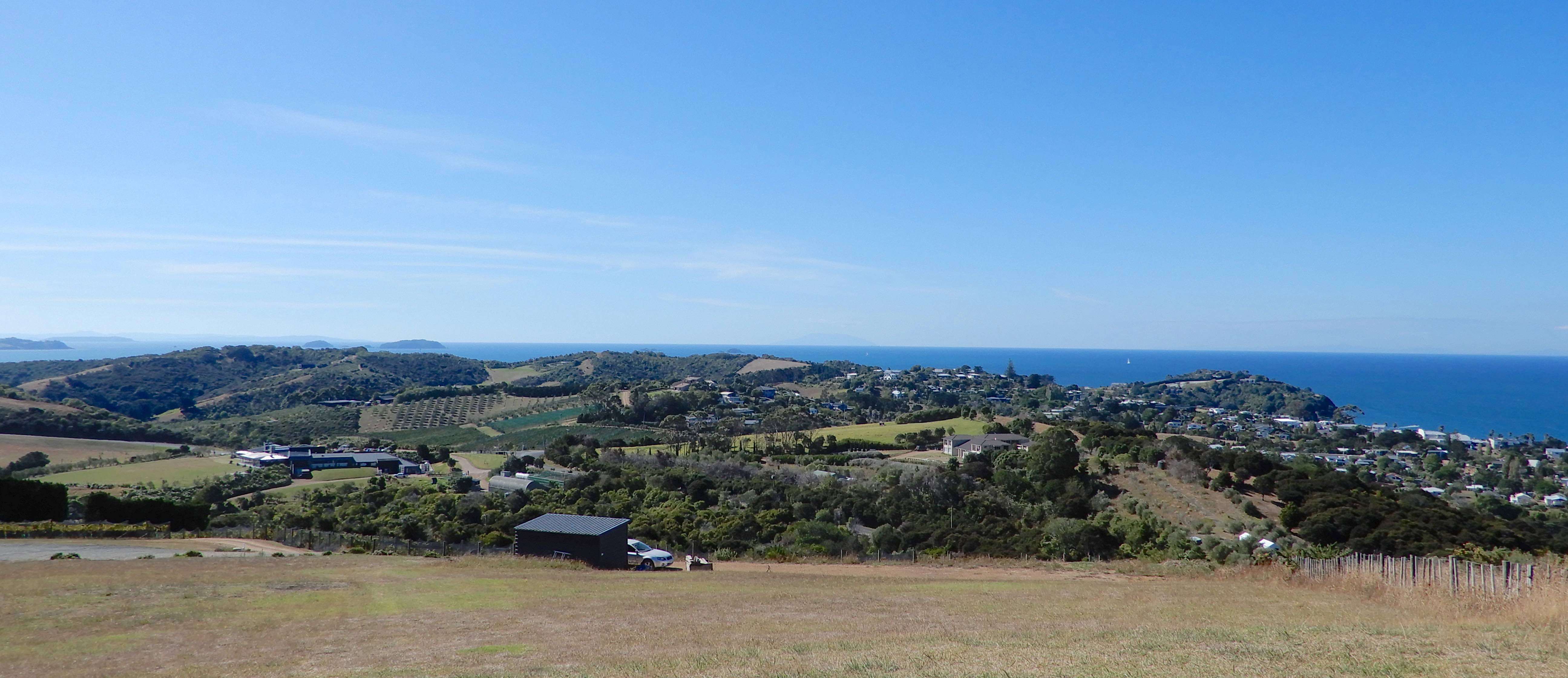
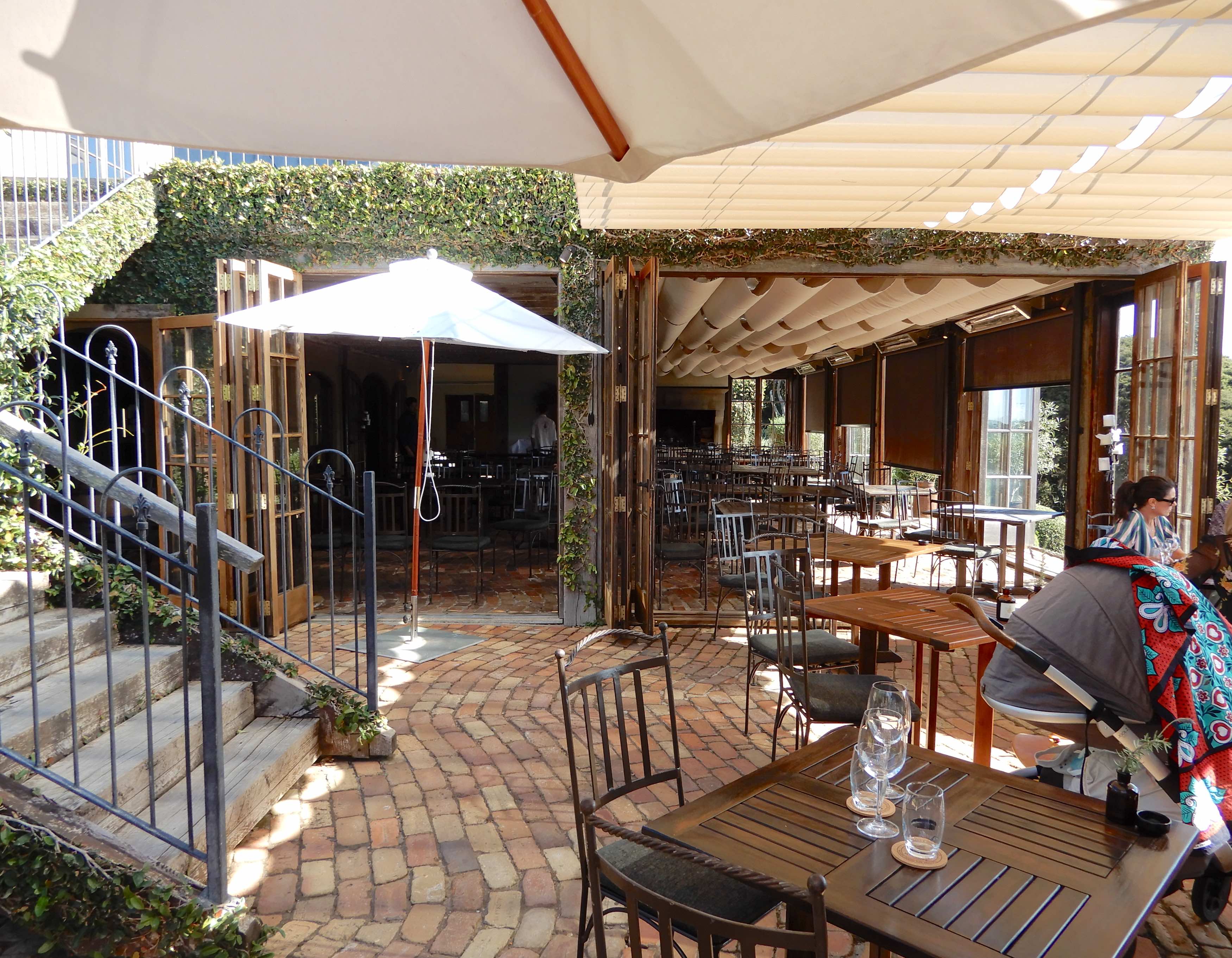
There was no shortage of spectacular views, along with magnificent food and wine, on our Taste of Waiheke Tour. Just when we thought we’d seen it all, our third and final winery, Mudbrick, delivered in spades. The initial vista was very impressive across the Hauraki Gulf, Rangitoto Island and Auckland in the distance but there was more to come.

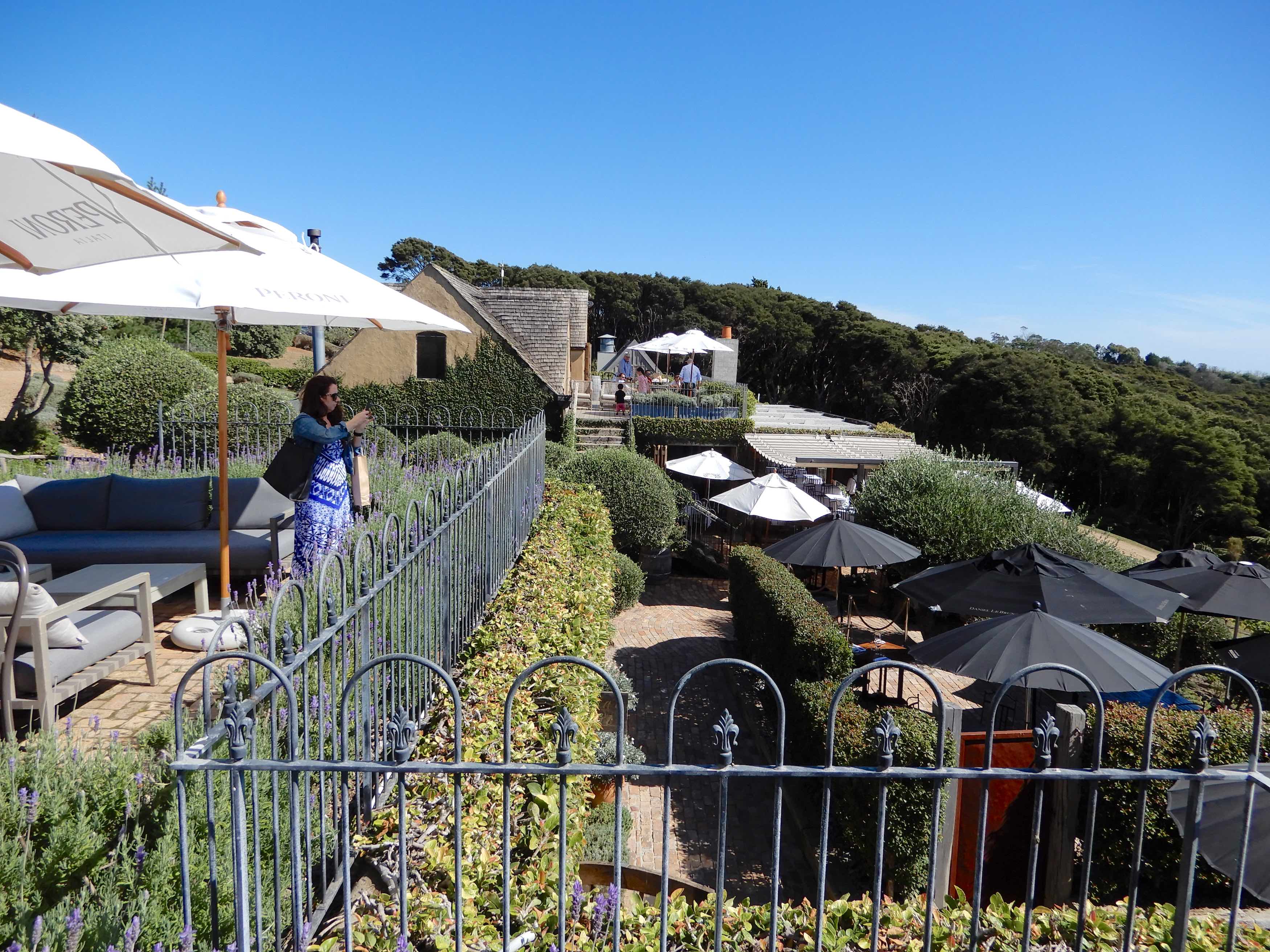
We made our way to the terrace for an introduction to the winery, its history and a spot of tasting.

Robyn and Nicholas Jones bought the land as a lifestyle block in 1992. Both accountants, they had no experience in winemaking or hospitality but obviously had incredible vision. They spent weekends at the property planting everything from shelter belts to vines on the bare block as well as completing a multi-purpose mud brick building. The café soon followed and, 18 years later, is now a world famous restaurant. With glass in hand, we embarked on a tour of the vineyard while learning more about Mudbrick and the process of making their award winning wines.

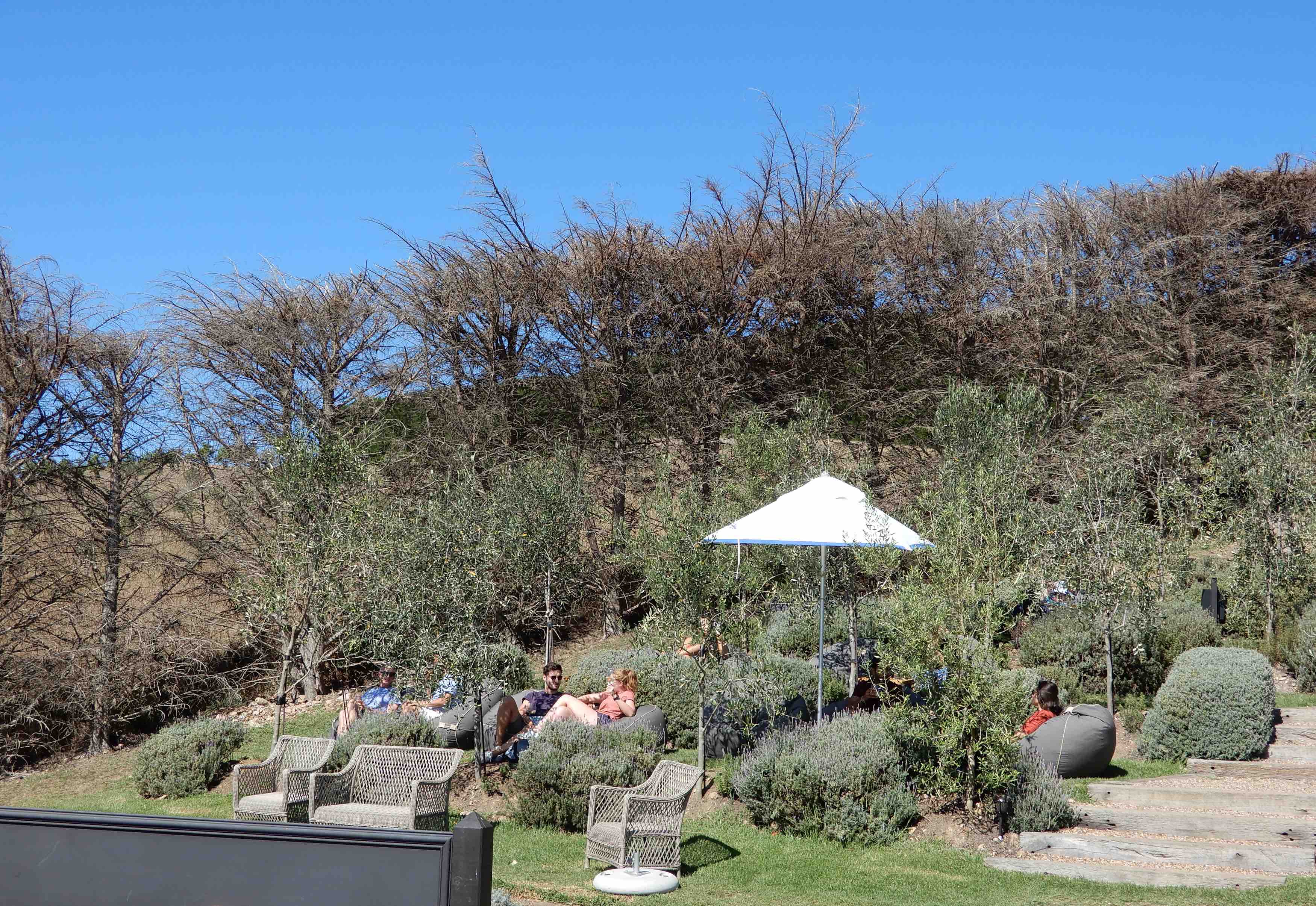
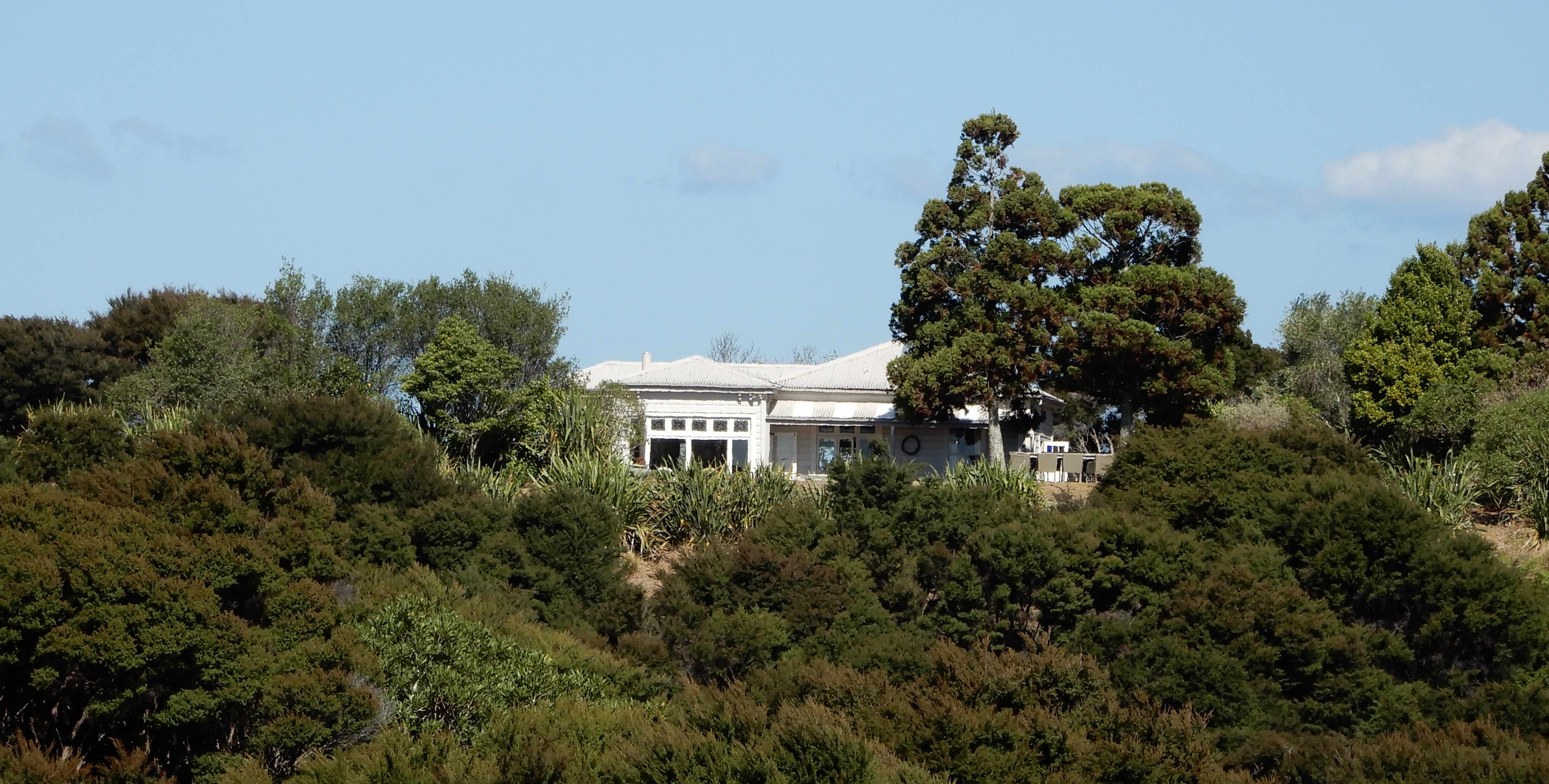
There wouldn’t be many better places in the world to have a house.

As we climbed higher, the views became even more stupendous.

At the top, we had a 360 degree view of Waiheke Island from the helipad. Yes, you can arrive and depart Mudbrick by helicopter.

We returned to the restaurant

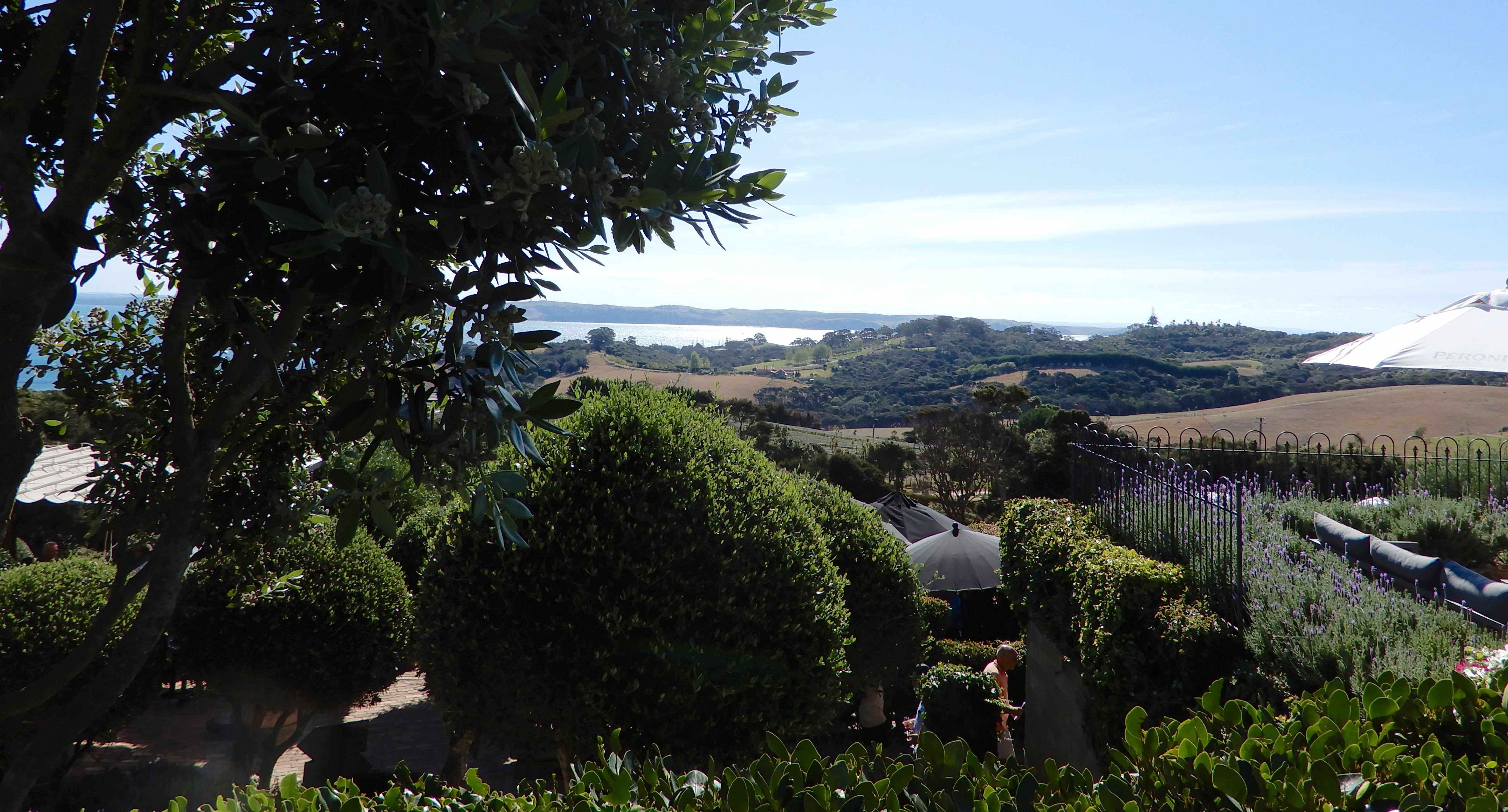
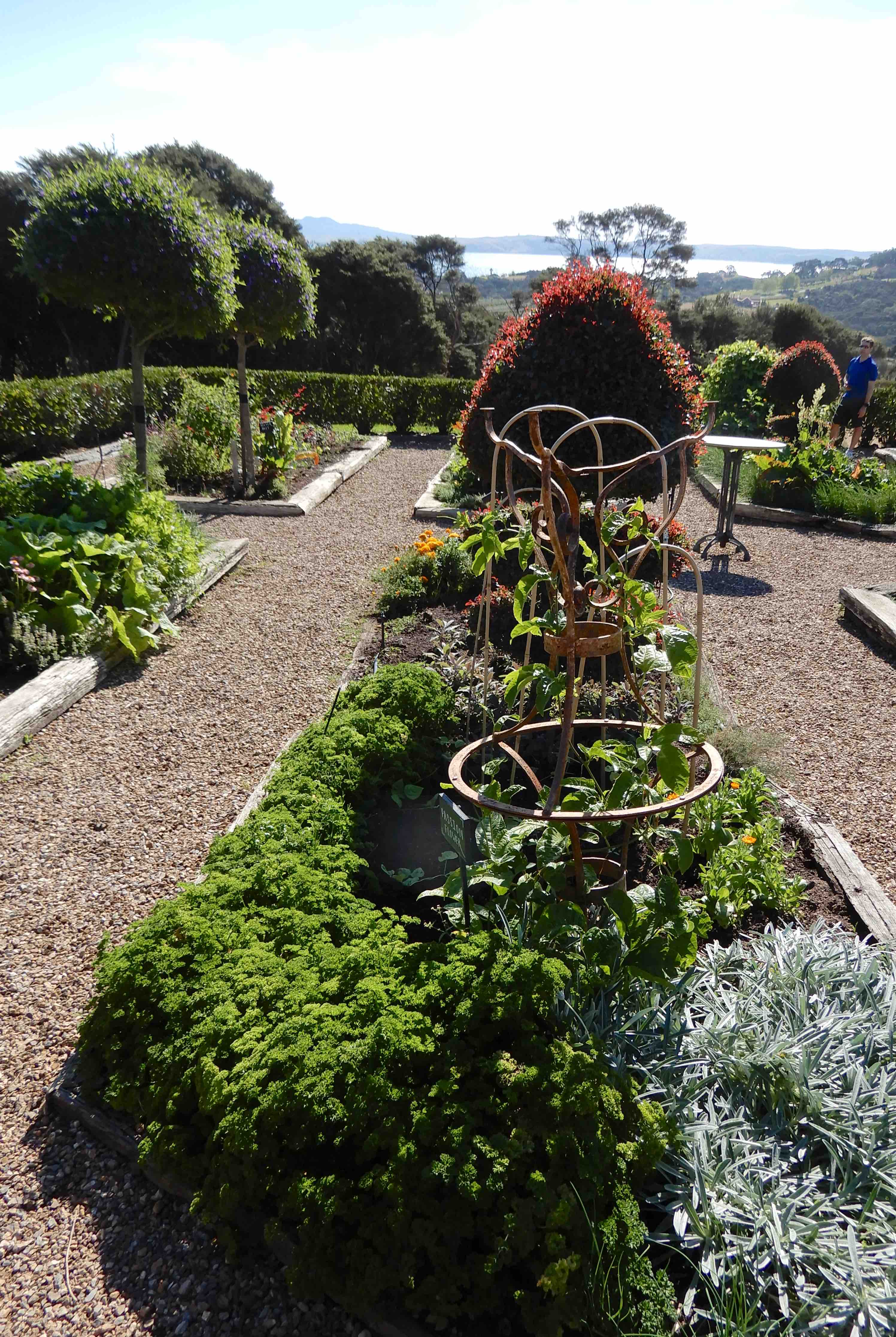
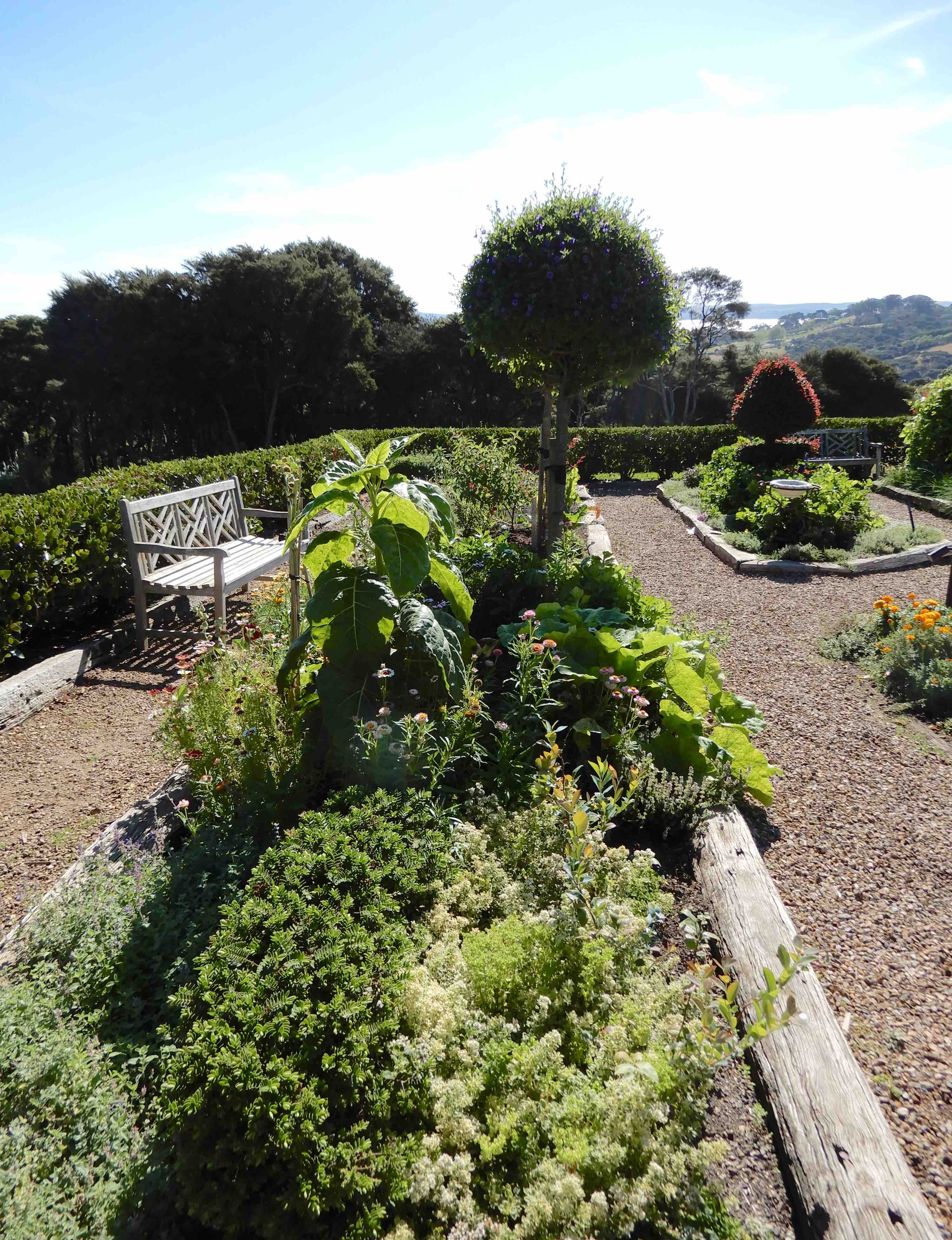
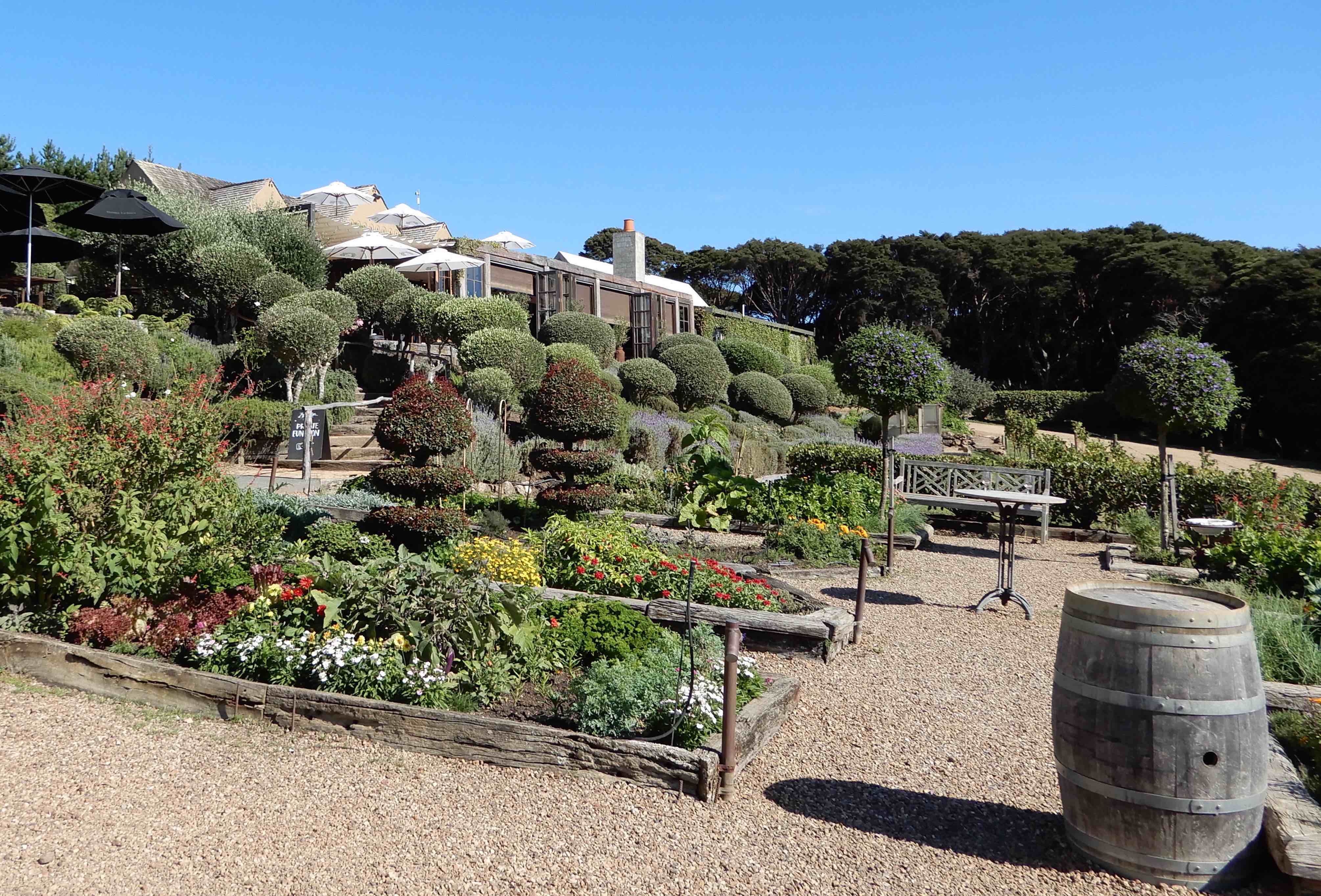
and wandered for a while around the flourishing potager garden.

Vegetables, herbs and edible flowers provide fresh ingredients each day to grace the plates presented to diners. Any organic waste from the restaurant is returned to the soil in the form of compost, recycling at its best.

Our day on Waiheke Island was almost over, what an exceptional day it had been.

venerable veggies

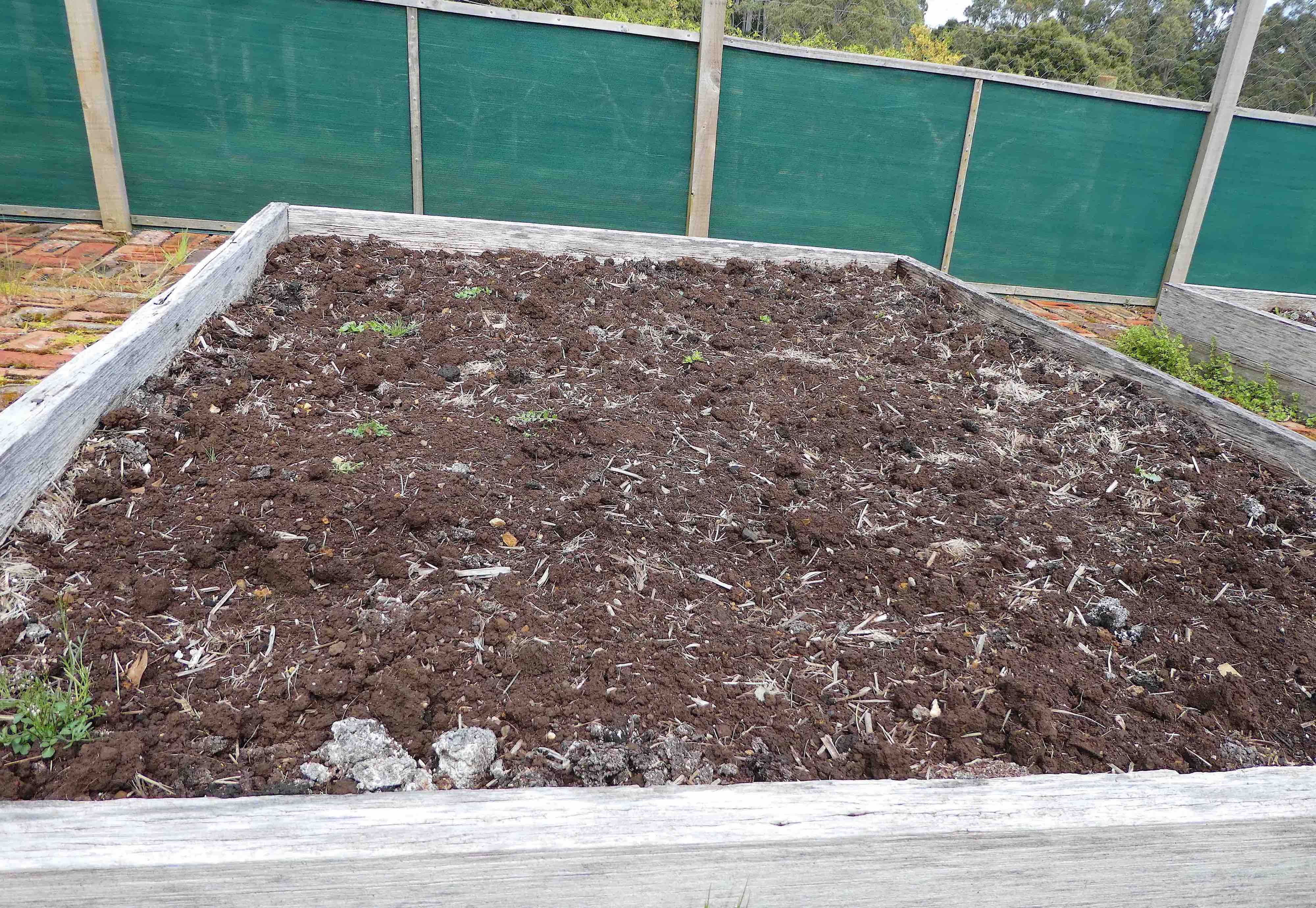
My poor veggie patch has lain sadly neglected for months. Normally resplendent with a winter crop, this year was just too wet for anything to survive. Apart from weeds. A hefty dose of mushroom compost was added somewhere between showers but even the mushrooms were few.

1-garden-bed

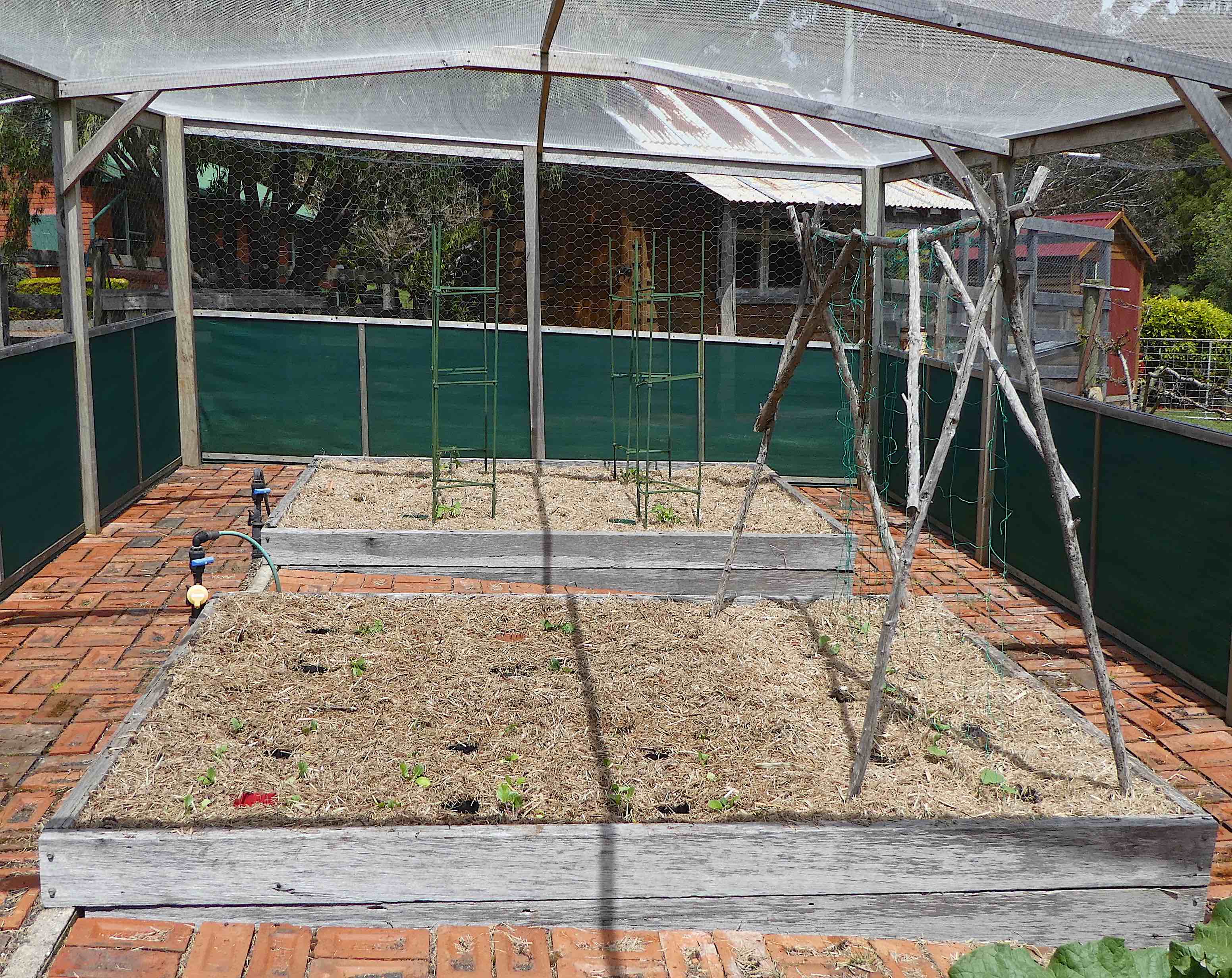
I am pleased to say, the weather has improved and I have been busy. Into bed one went the tomatoes.

The pots next to the plants are to allow for deeper watering (I stole the idea from a picture in a magazine). Onto bed two with some green beans,

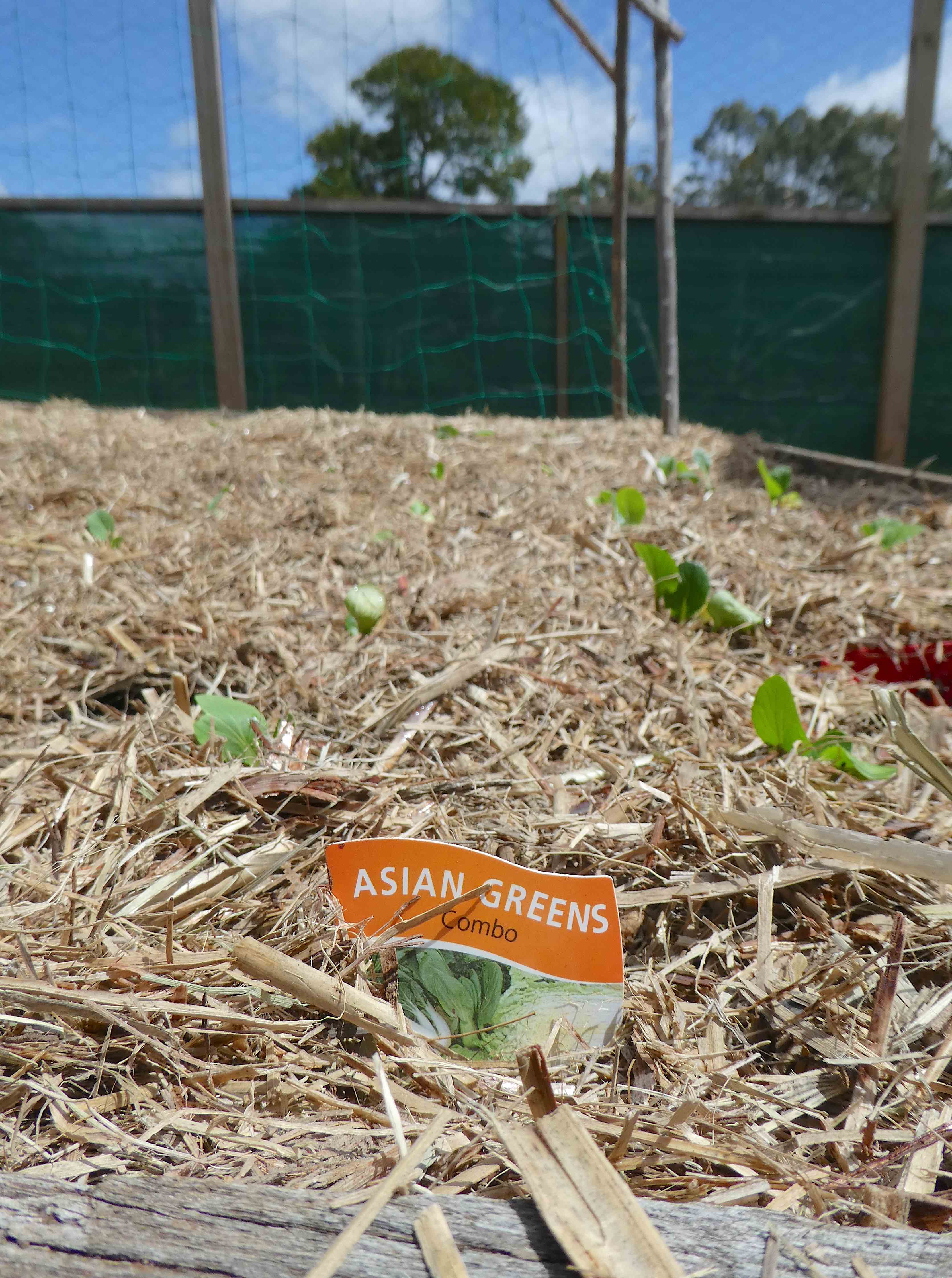
mixed Asian greens,

9-asian-greens

and Bloomsdale spinach.

10-bed-1-2

Beetroot went into bed three

along with carrots and garlic. I haven’t learnt from past experience and planted four zucchini and two pumpkin in bed four.

I was inundated with zucchini a couple of years ago and gave most of it away until I discovered it can be grated and frozen to be used for zucchini slice throughout the year. It just needs to be thawed overnight in a colander to drain the excess liquid. The Jalapeno chilli has a small box of its own

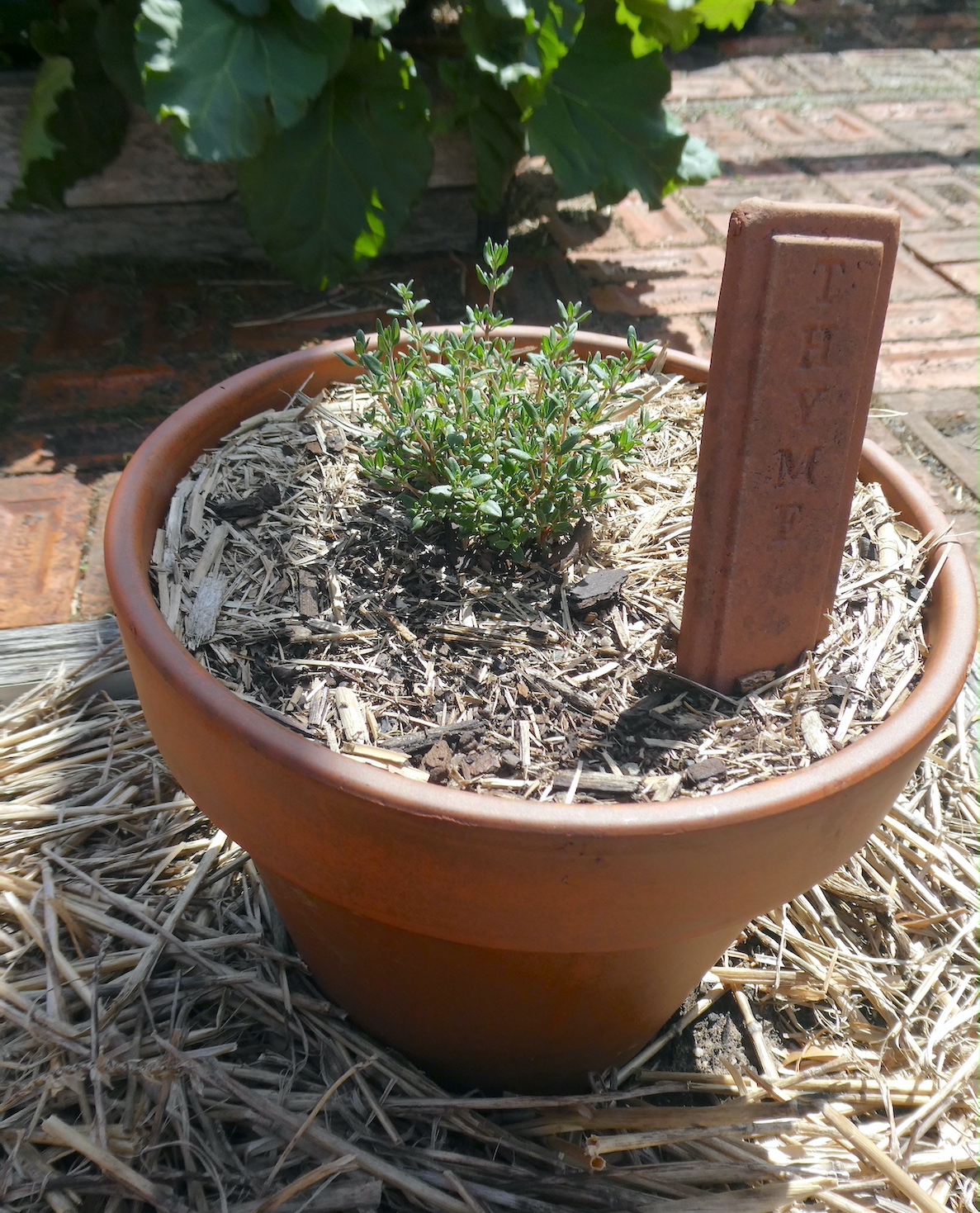
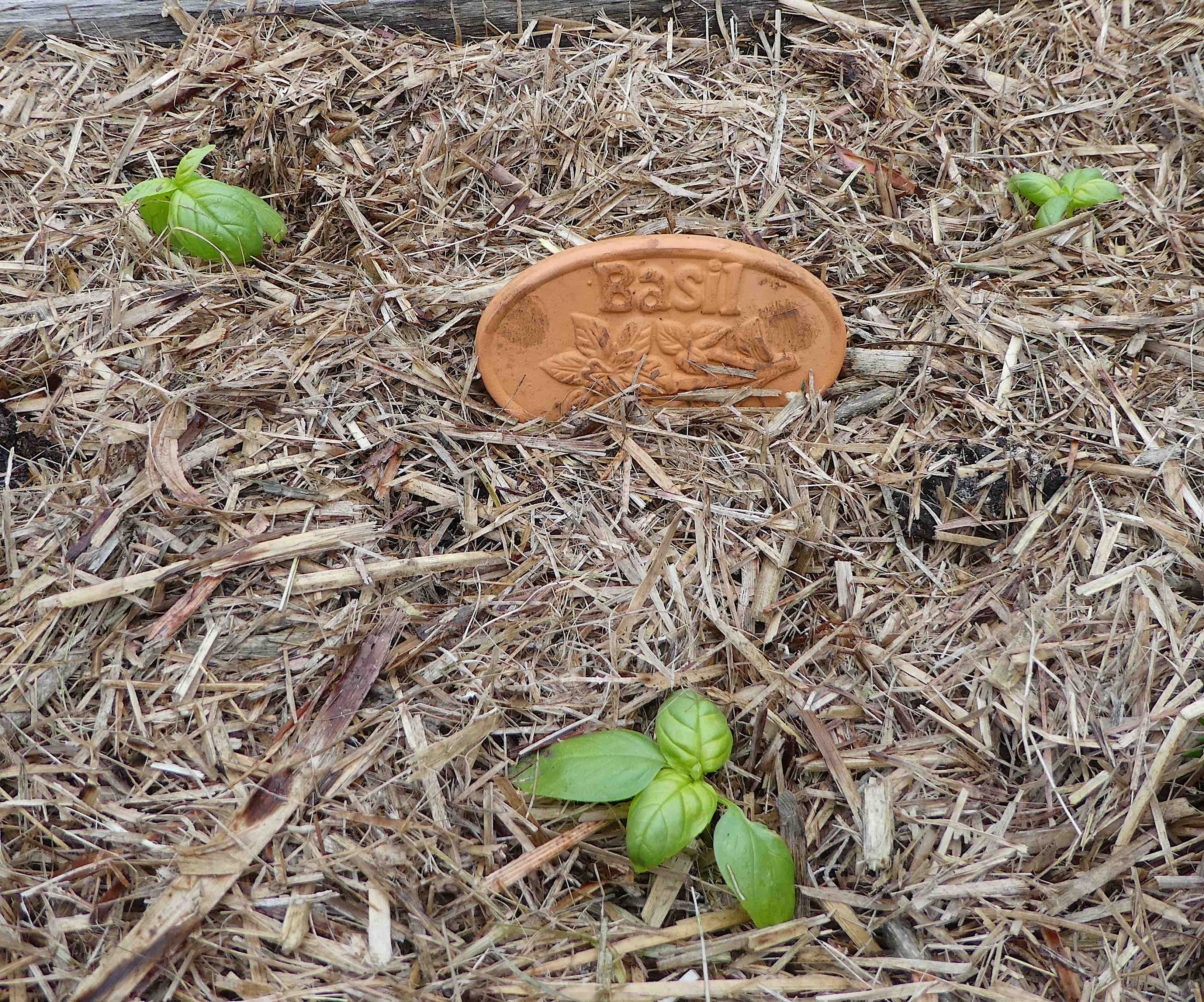
and I added basil

21-basil

to the herb bed.

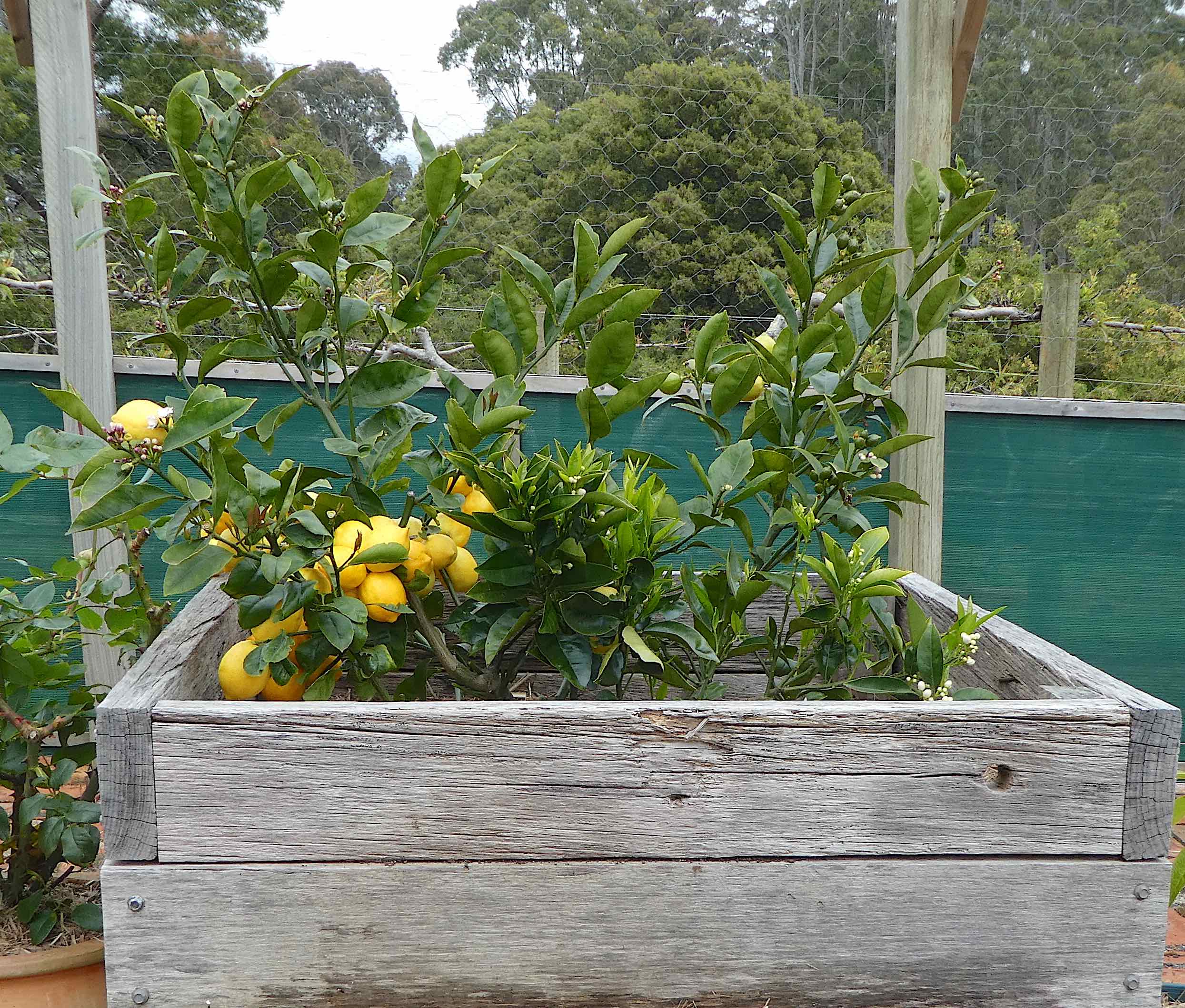
The fruit salad tree is doing well, producing an abundance of lemons.

25-fruit-salad-tree

Four weeks on and the growth has been astounding, we are already harvesting the Asian greens.

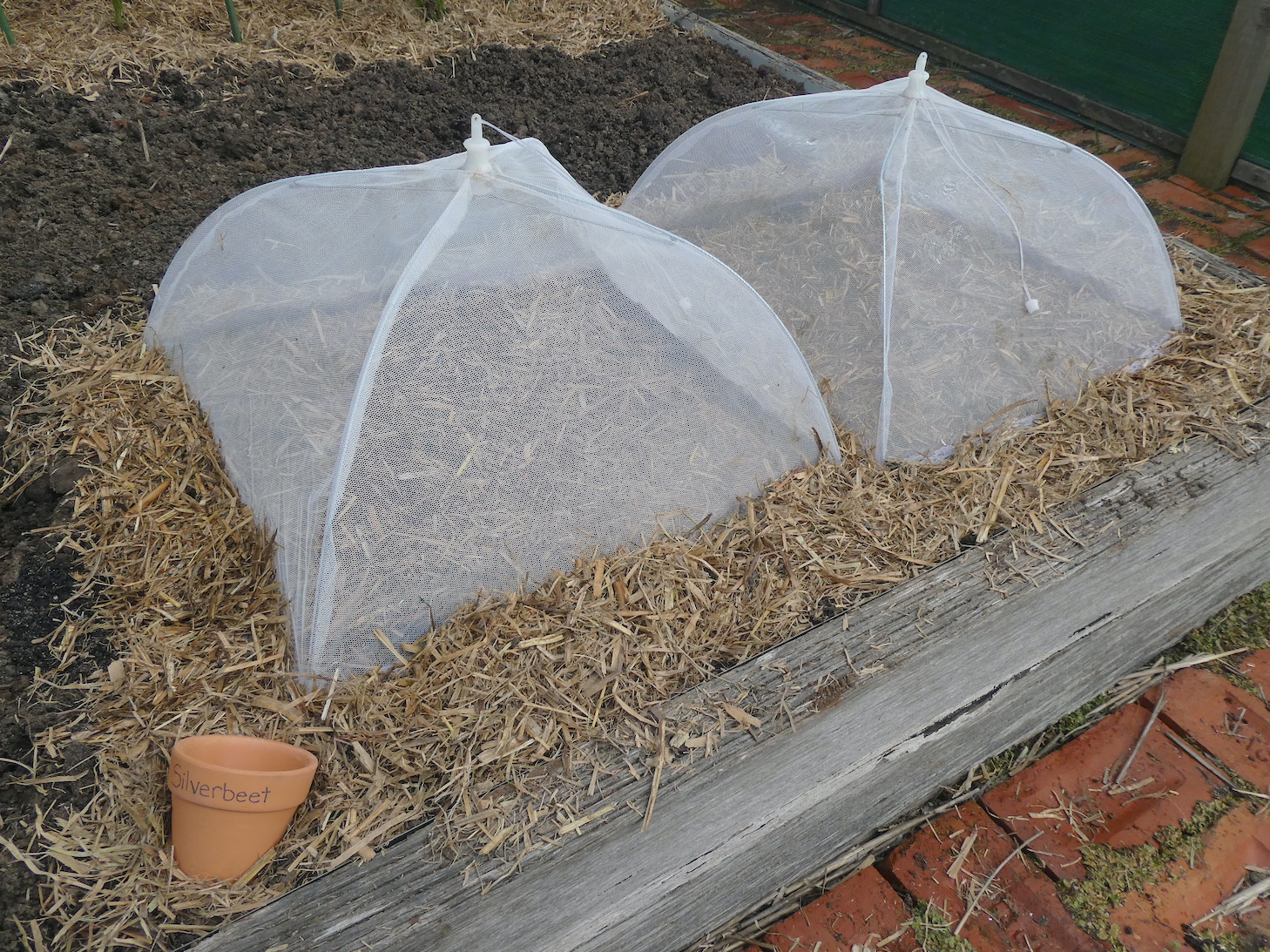
I forgot to mention the rhubarb. It has been prolific through all seasons and mostly is donated to various friends & acquaintances.

I’m looking forward to reaping the rewards in the coming months.

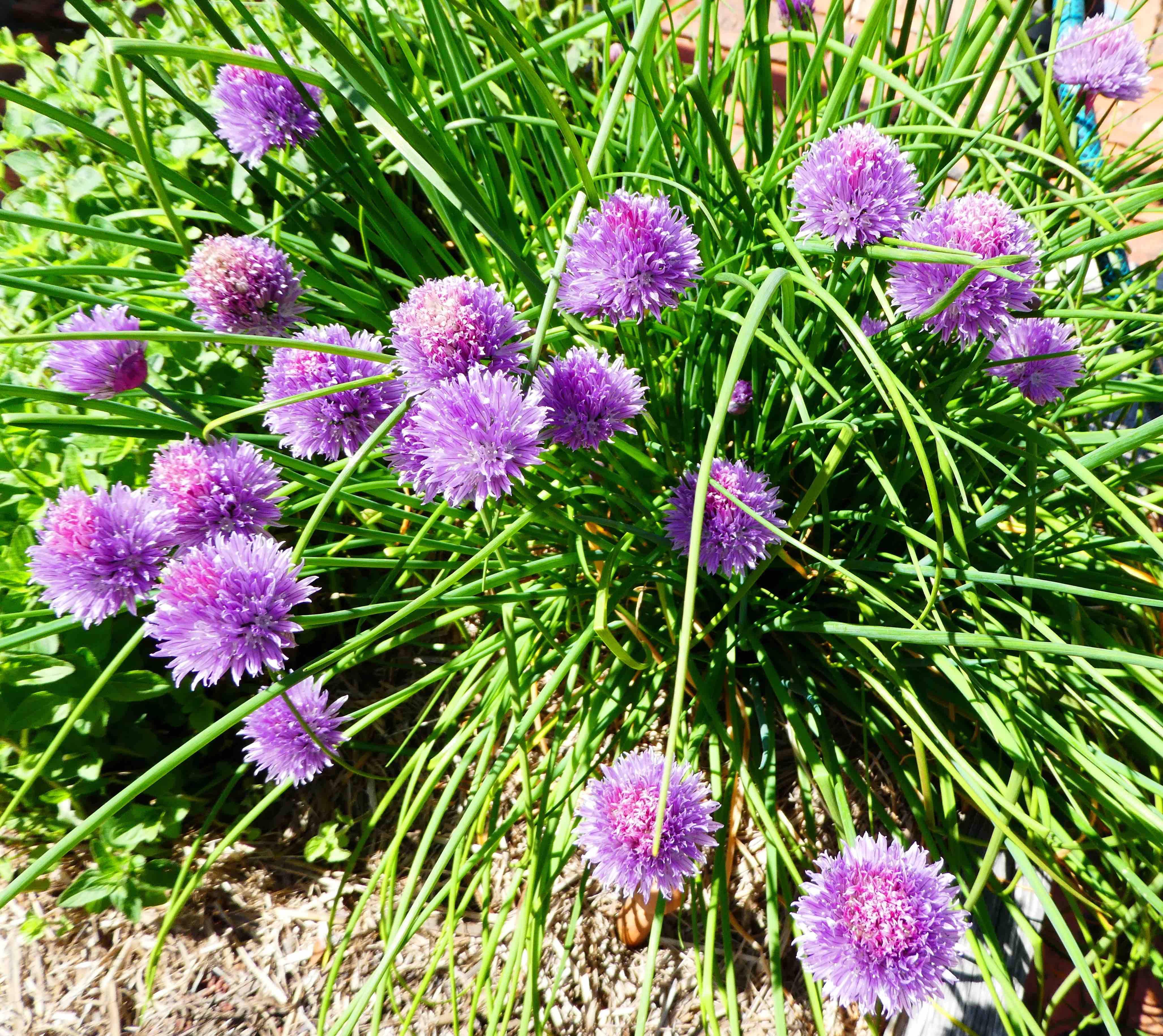
37-chive-flowers