The Samaya

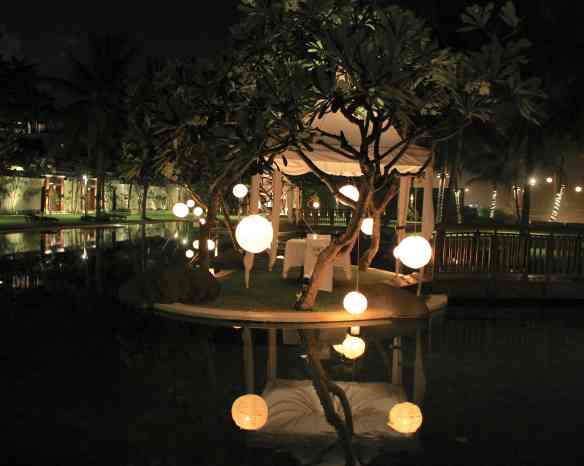
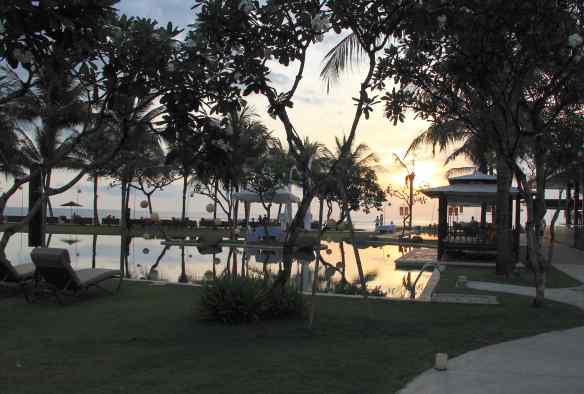
Bali is a fascinating paradox but one thing we could always rely on was the food. We had many fabulous dining experiences, the surroundings equally as impressive as the menus. Breeze at The Samaya at Seminyak was one of the most memorable. The sun was already low when we arrived, the palm trees reflecting in the calm waters of the pool.

1.Samaya2.Samaya

Our party of eight had a very special table under our own canopy.

3.dinner setting

We had wonderful views of the beachside diners, the ocean and the gorgeous sunset.

4.Samaya5.Samaya

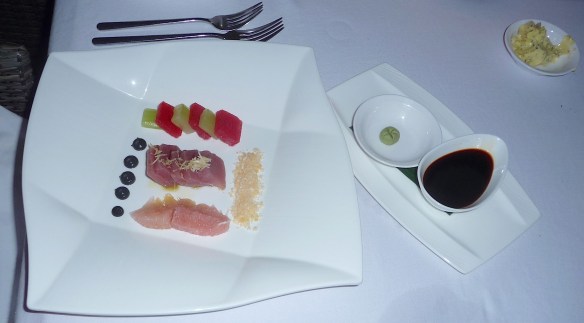
The food was beautifully presented, Michael started with his favourite sashimi and I opted to sample everything for the main course.

6.sashimi7.mixed plate

The resort is set in two hectares of tropical gardens, pools and villas inviting a state of ultimate relaxation. The setting of the sun certainly didn’t diminish the enchanting    ambience.

8.resort grounds9.resort grounds10.resort grounds

If we were ever to visit Bali again, it would be nice to stay at The Samaya or at least return and relive this lovely evening.

angels and martyrs

If I hadn’t been told about this amazing church by a work colleague before leaving for Italy, I’m sure we would have missed it. The façade is somewhat disguised amidst the opulence of the Piazza della Repubblica.

1.facade

The Basilica di Santa Maria degli Angeli e dei Martiri (St. Mary of the Angels and the Martyrs) was built in part of the remains of the Baths of Diocletian, the largest public baths in ancient Rome.

2.facade

It absolutely boggles me that this massive structure was completed in the year 306. It took them seven years but where is that talent and temerity in this technological age? I digress! The siege of Rome brought an end to the baths in 537 when the water supply from the aqueducts was cut off. A priest, wandering through the ruins in 1541, had a vision of angels which Pope Pius IV interpreted as a message from God. He thus ordered the building of the church on the site, dedicated to the Virgin Mary, the angels and the Christians who died during the construction of the baths. The old wooden doors were replaced in 2006 with a very impressive bronze pair by Polish sculptor Igor Mitoraj. The right hand one depicts the Archangel Gabriel and the Virgin Mary, while a risen Christ emerges from the left hand door.

In 1563, Michelangelo was commissioned to design the church but, unfortunately, he died the following year and the work was completed by his student, Jacopo Lo Duca. Stepping through the doors, the sheer magnitude and beauty of the interior was breathtaking.

5.transept

There was so much to take in, around as well as above.

6.dome

The dome originally had an opening in the top to allow rain to fall into the bath waters below but is now filled with a fabulous work of stained glass by Italian artist Narcissus Quagliata.

8.Light and Time

The church is built in the shape of a cross, a magnificent altar at the end of each section.

9.altar10.altar

One of these is the Chapel of St. Bruno,

11.Chapel of St Bruno

the left hand wall filled with a spectacular cherry, walnut and chestnut organ built by Bartélémy Formentelli. Inaugurated in the year 2000, the organ has 5,400 hand-made pipes and is often used for concerts.

12.organ

I can imagine listening to the incredible sounds while slowly dissolving into the ceiling.

13.ceiling Chapel of St Bruno

There was so much to absorb, from stunning stained glass windows

to statues, frescoes, ceilings and the 3D design of the marble floor.

23.marble floor

Following directions to the sacristy, we passed through a room with exhibits displaying the history of the baths before entering a tranquil courtyard. We were greeted by an imposing bronze statue of Galileo Galilei, a gift from China designed by Professor Tsung Dao Lee, winner of the 1957 Nobel prize in Physics.
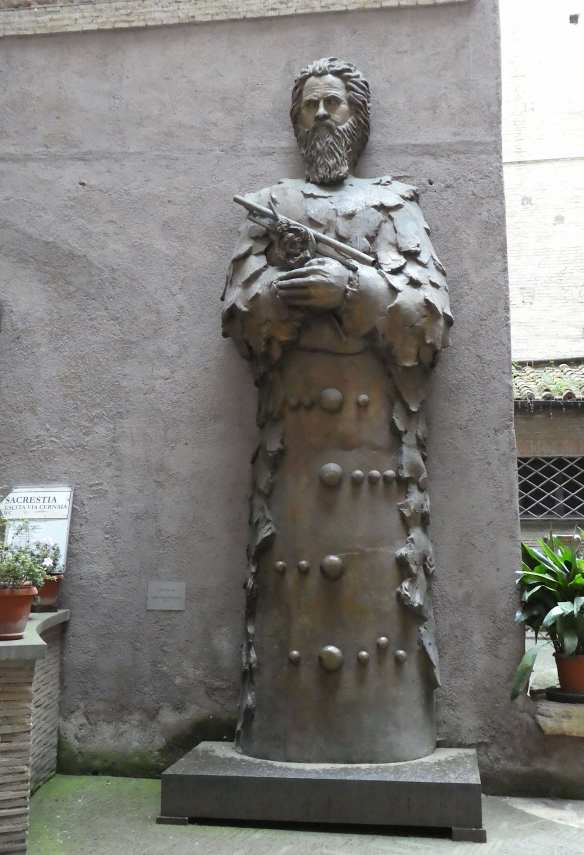
24.Galileo Galilei

On completion of the church, it was given to the Carthusian monks who built a monastery next door. It is thought that this courtyard may have been the garden and the back of their cells.

We were very happy to avoid the crowds and queues at the more well-known sites in Rome, very few tourists seem to be aware of Santa Maria degli Angeli.
autumn colours

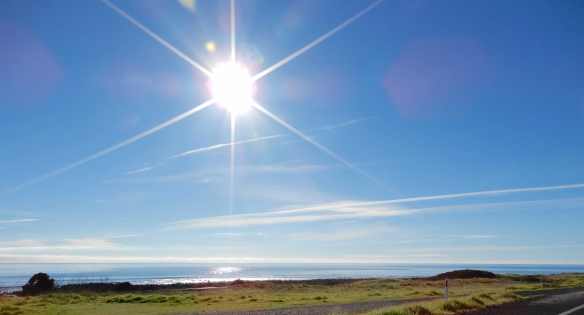
We have had some perfect winter days this year. Clear, blue skies; crisp, clean air; nothing but the slightest whiff of a breeze. One such Sunday, we put Cooper’s top down and took her for a spin along our favourite coast road.

1.Old Coast Road

Preservation Bay looked particularly stunning.

2.Preservation Bay

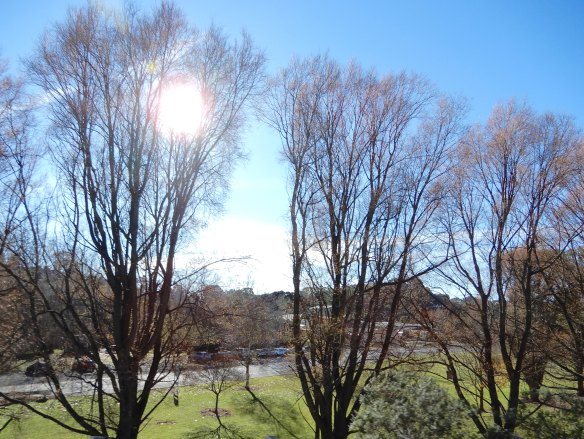
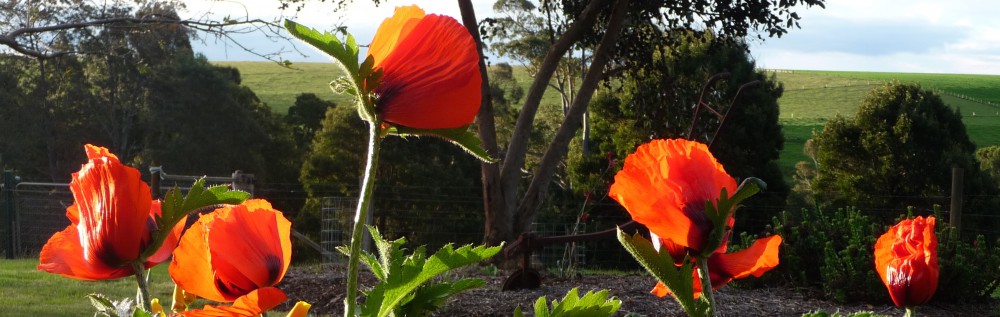
We joined the highway at Ulverstone and continued east. There is a park, just before the first exit at Devonport, that we have been meaning to investigate for years. The trees are beautiful any time of year but especially when showing their autumn colours.

3.Forth Road

This was the day for a closer look.

4.autumn colours5.autumn trees

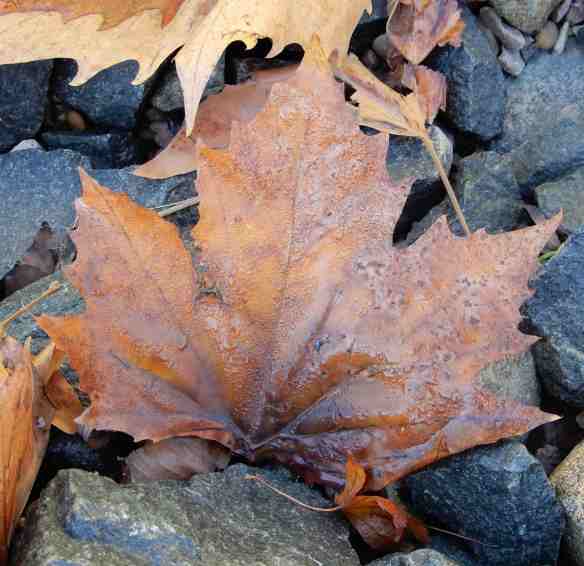
Fallen leaves, still damp from the morning dew, confirmed nature’s artistic talent.

11.autumn leaves

Straggly Eucalypts portrayed an elegant appeal in the morning sunlight,

12.swamp gums

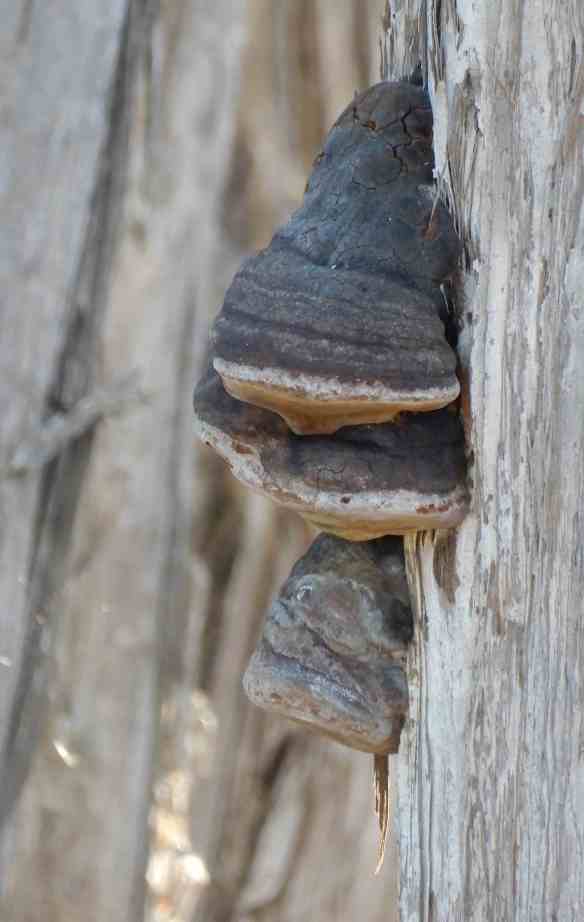
some fascinating fungi camouflaged in the shadows.

13.fungus

Our day out didn’t end there, but that’s another story.

Carrickfergus

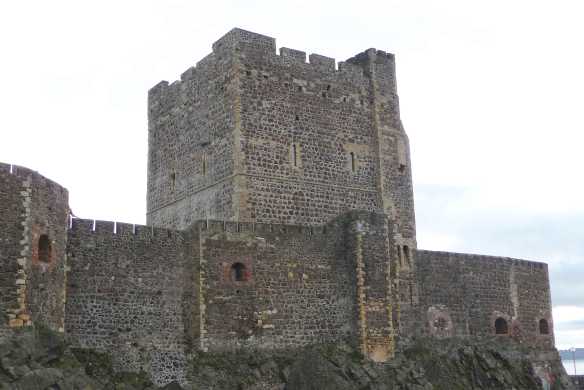
Travelling north from Belfast, we followed the coast to Carrickfergus, hoping to explore the magnificent Norman castle perched on the northern edge of Belfast Lough.

1.east side & keep

We were once again disappointed to find, not only was it closed for the winter season, the imposing entrance was covered, undergoing restoration.

2.entrance under repair3.west side

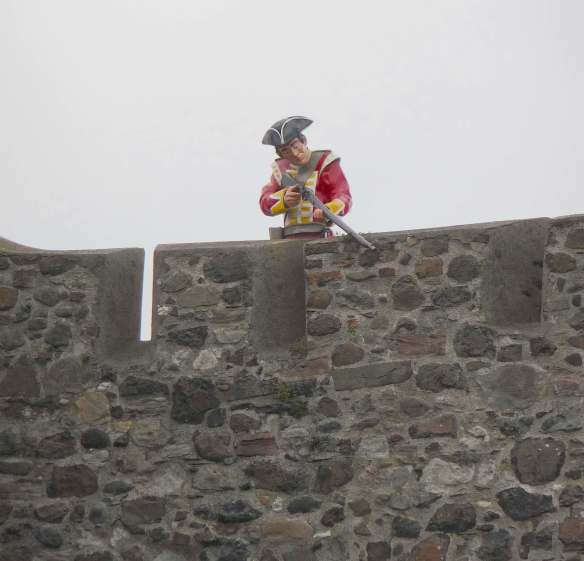
In 1177, Sir John de Courcy, an Anglo-Norman knight, decided he wanted some lands for himself. He gathered a small army and headed to northern Ireland. After a few battles along the way, he conquered eastern Ulster and built the castle as his headquarters. Strategically placed, surrounded almost entirely by water, the fortress has withstood invasion by the Scottish, Irish, English and French over the centuries. No wonder there is always someone on guard.

4.soldier

We would have liked to wander around the castle and the historical displays that are housed within. We had to settle for a glimpse of the 17th century cannons just visible along the battlements.

5.cannons6.cannon

Seseh village

Our villa accommodation on the west coast of Bali was nestled adjacent to the tiny fishing village of Seseh. One morning, we walked the short distance to have a closer look at our neighbours. The main street was quiet at that hour of the morning,

1.main road

the children heading off to school.

2.off to school

We passed colourful shrines

3.shrine

and regal roosters

4.rooster

on our way to the centre of the village. Like most villages in Bali, Seseh practices the daily rituals of the Hindu faith. We awoke each morning at 6am to the pre-recorded call to prayer, repeated again at 6pm. There appeared to be so many beautiful temples in the village, it was hard to discern if it was one very large temple or numerous smaller ones.

The detailed carvings and decorations were magnificent.

At the edge of the village, we reached the beach.

18.Seseh Beach

Revered by the Balinese as a sacred beach, Seseh had a relaxing sense of tranquility.

22.Seseh beach

If I lived in Bali, I would like to live in this house.

24.house Seseh Beach

We wandered back through the village, the landscaped gardens

25.village street

a sharp contrast to rural life.

26.village life

The imposing stone gateway at the entrance to the village marked the end of our excursion.

27.village gates