Waratah

Our journey to Corinna took us through the former mining town of Waratah on the edge of Tasmania’s west coast wilderness. The plan was for lunch at the Bischoff Hotel, the only hotel remaining in the town. Originally built in 1879, it burned down in 1902 before being rebuilt and burning down again in 1909. The present Queen Anne style incarnation was completed later that same year.
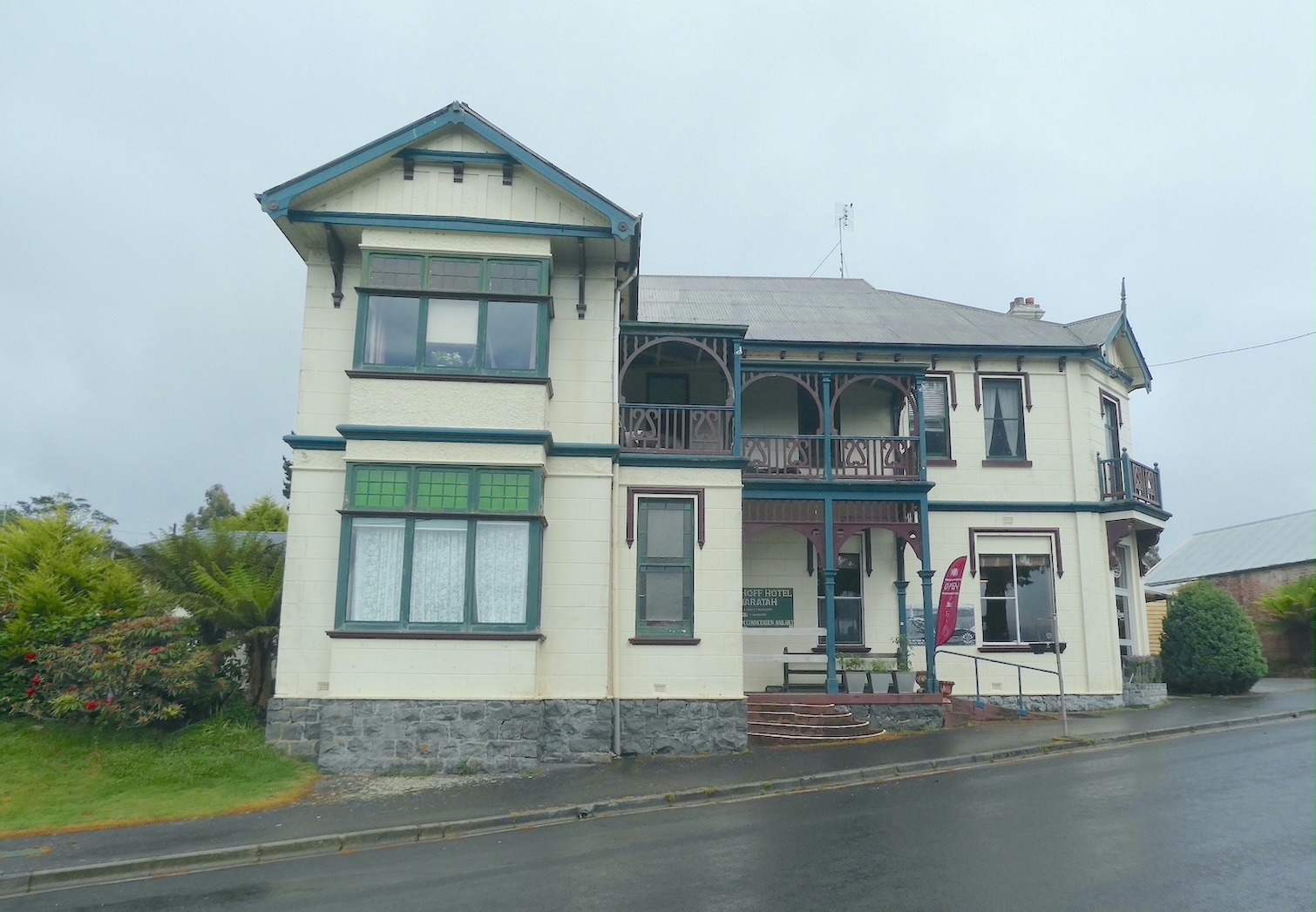
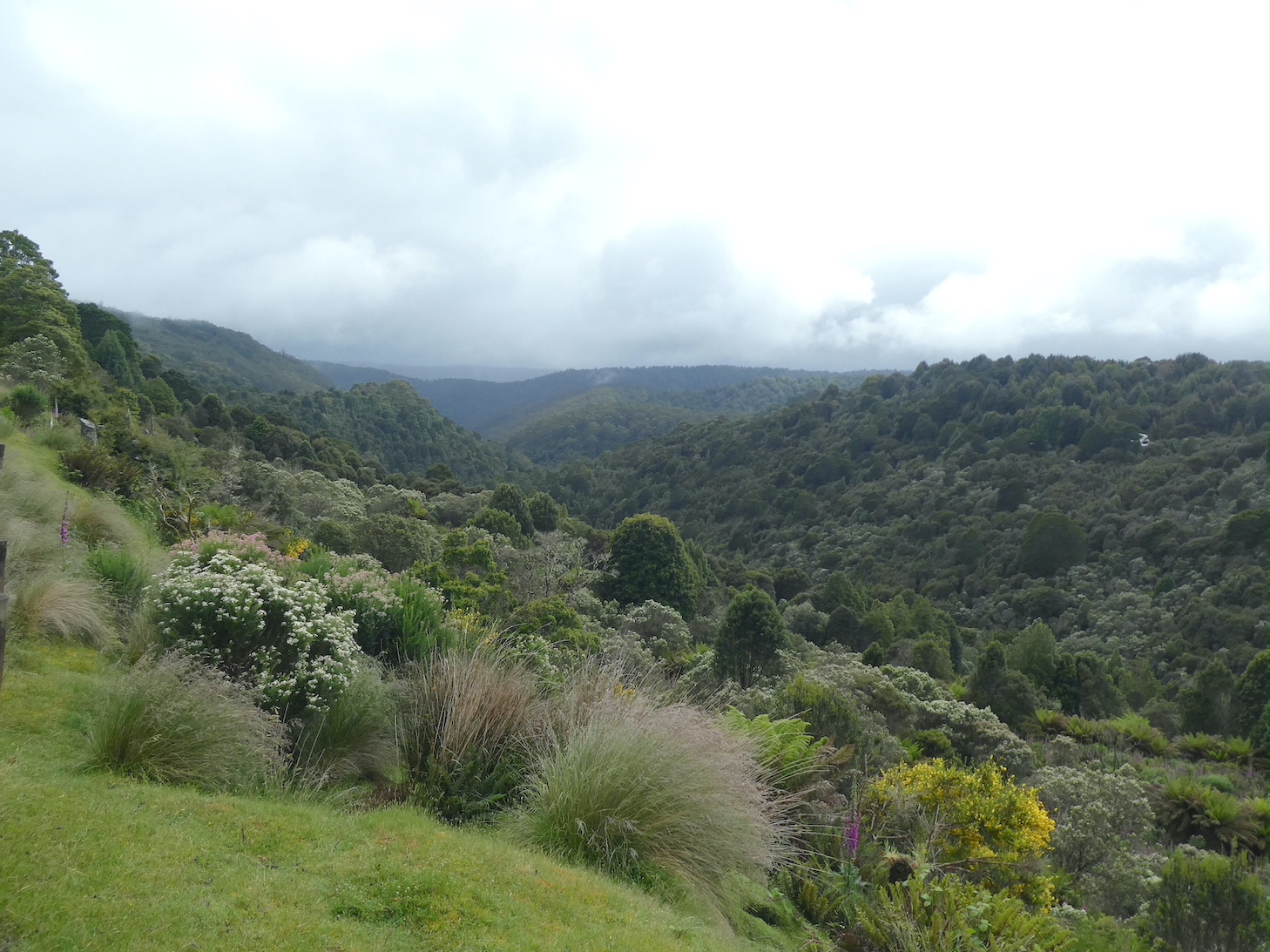
The view from the hotel is spectacular, even on a drizzly day
and the waterfall in the middle of town flows all year round. The water provided vital power to the mine directly through a series of seven water wheels and was later piped to the Waratah Power Station to produce hydro power.

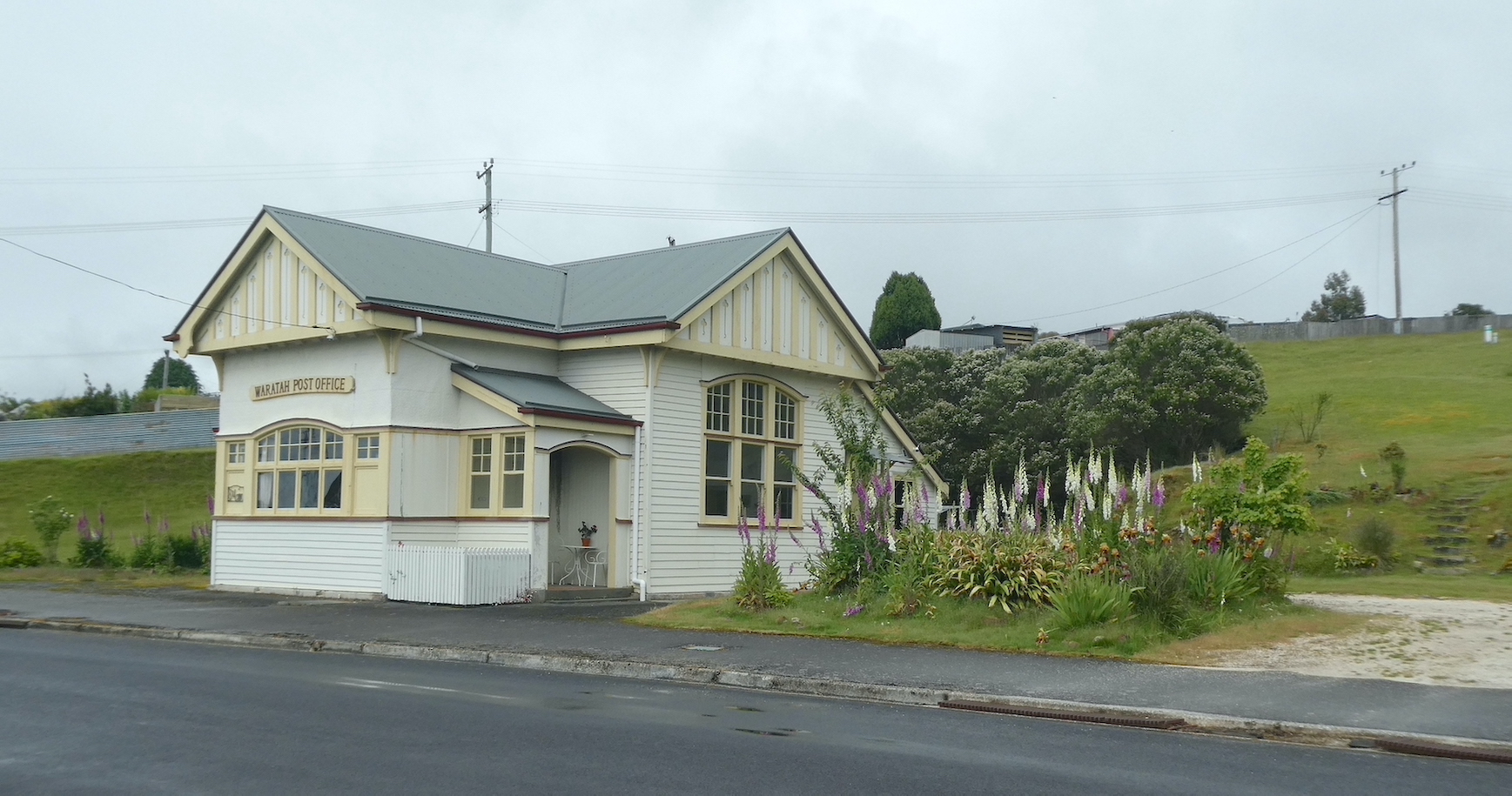
With some time to spare before dining, we set out to explore. The Waratah Post Office opened in 1882 and the current building replaced the original in 1913. It has been lovingly restored and is now available as luxury holiday accommodation.

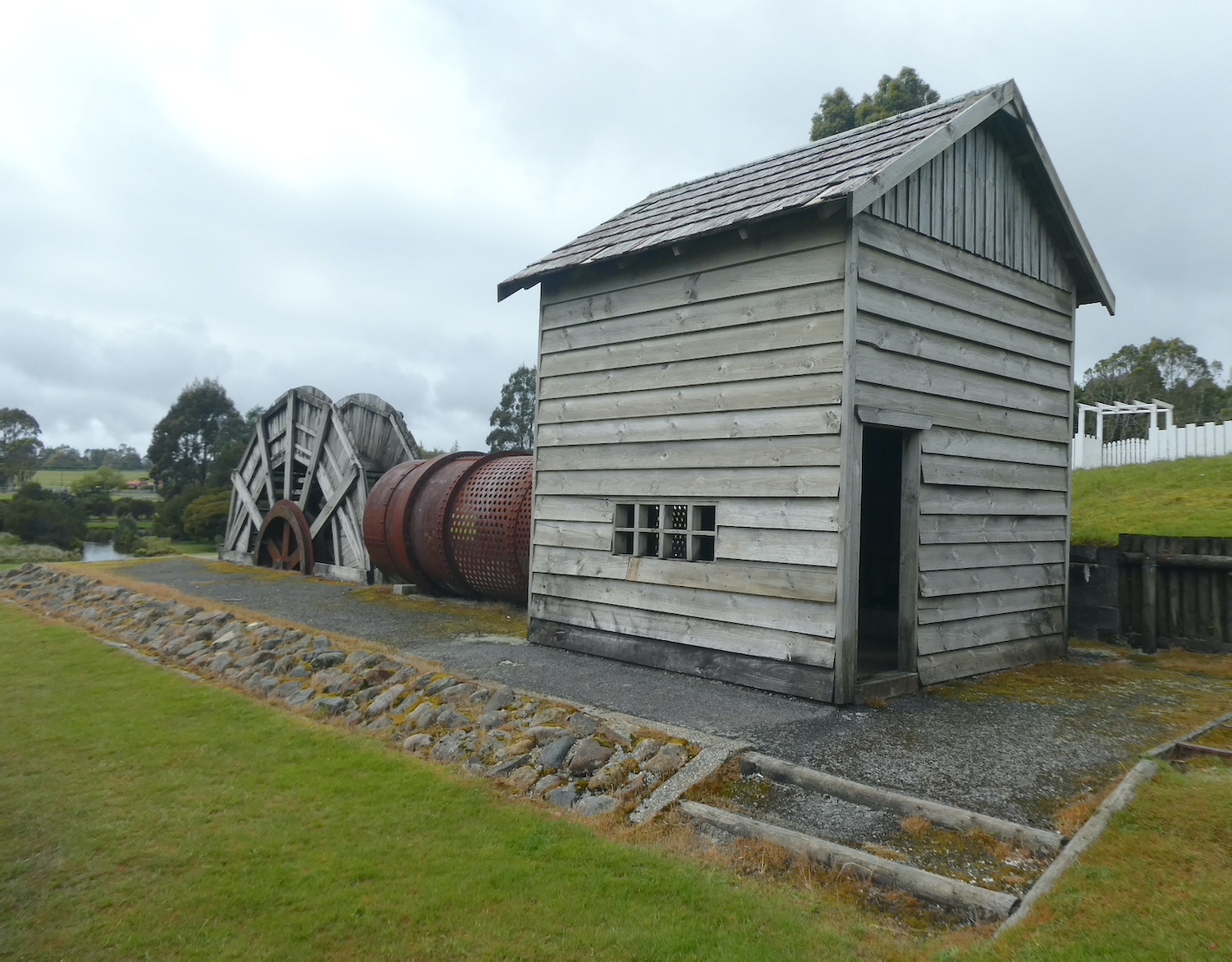
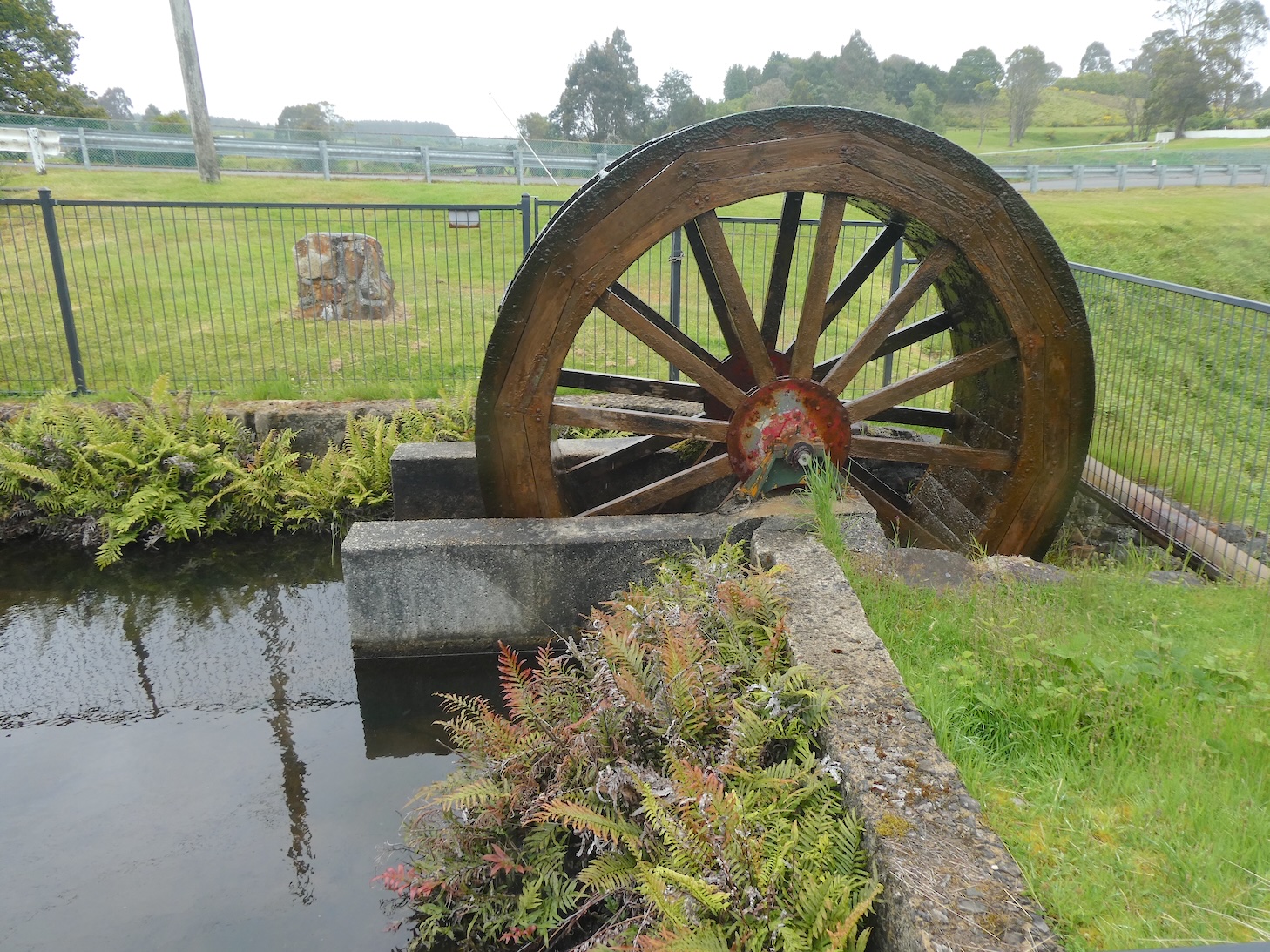
We made our way to the lake and came across an old waterwheel and pump house near what appeared to be an old entrance for the mine carts.
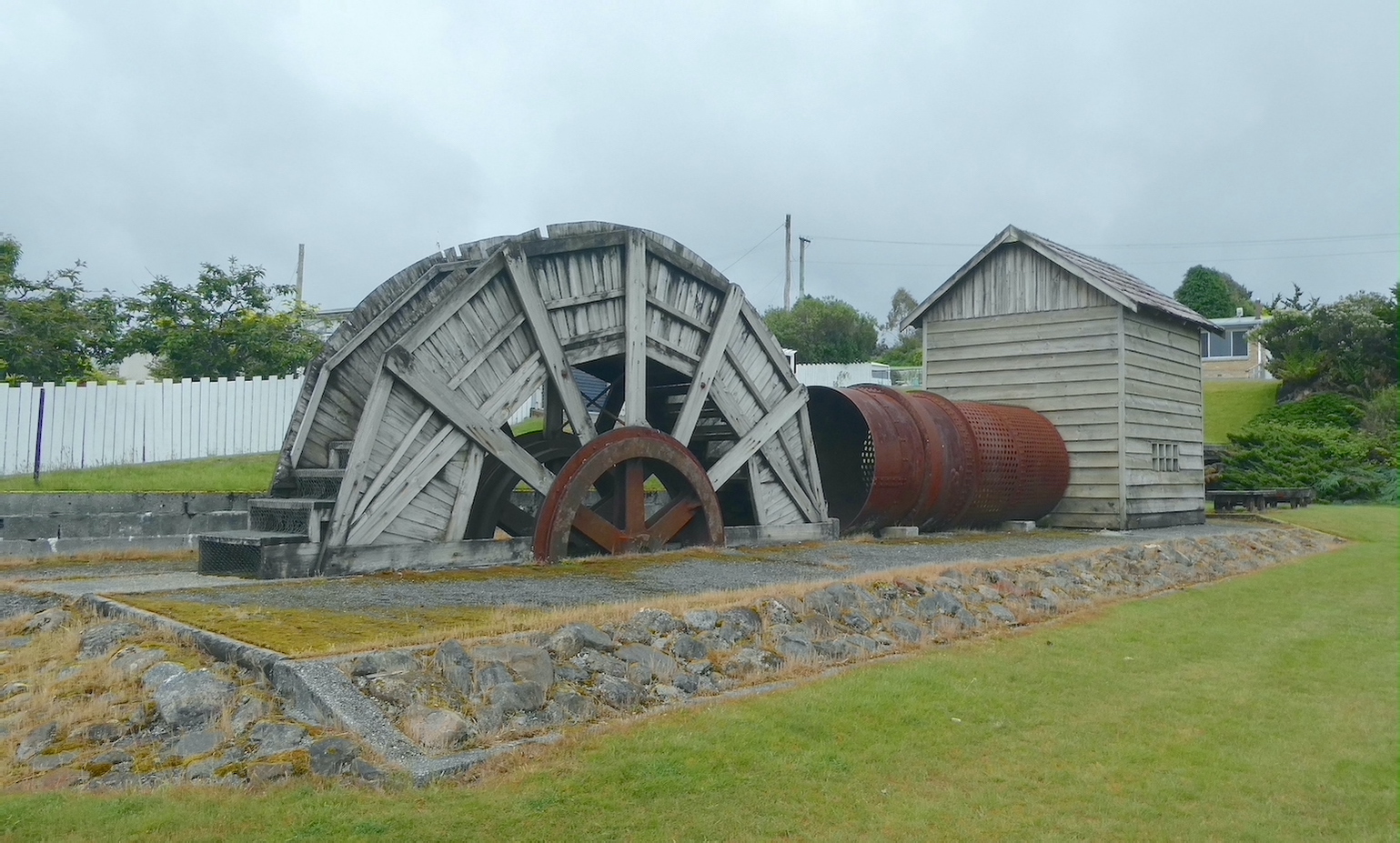
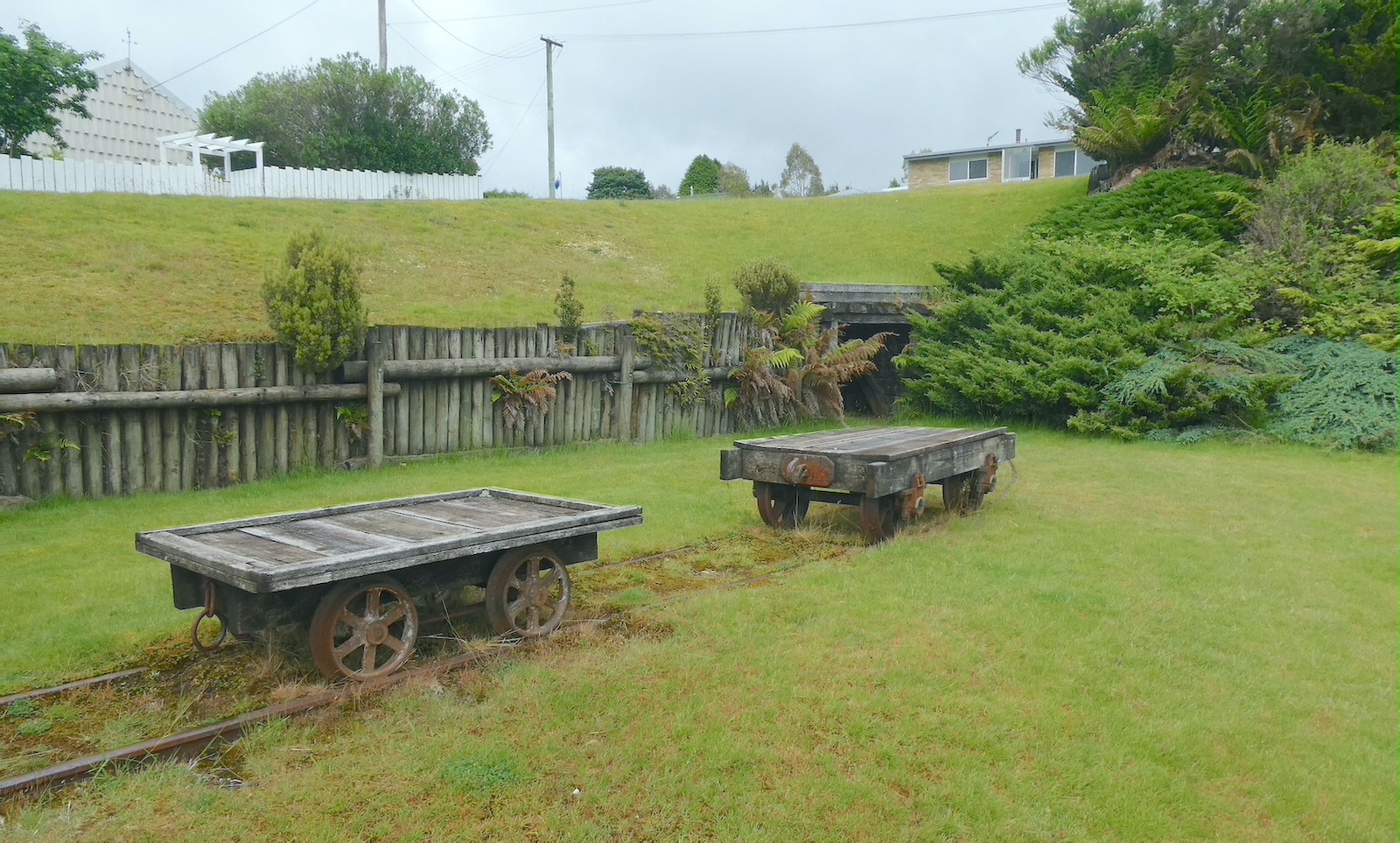
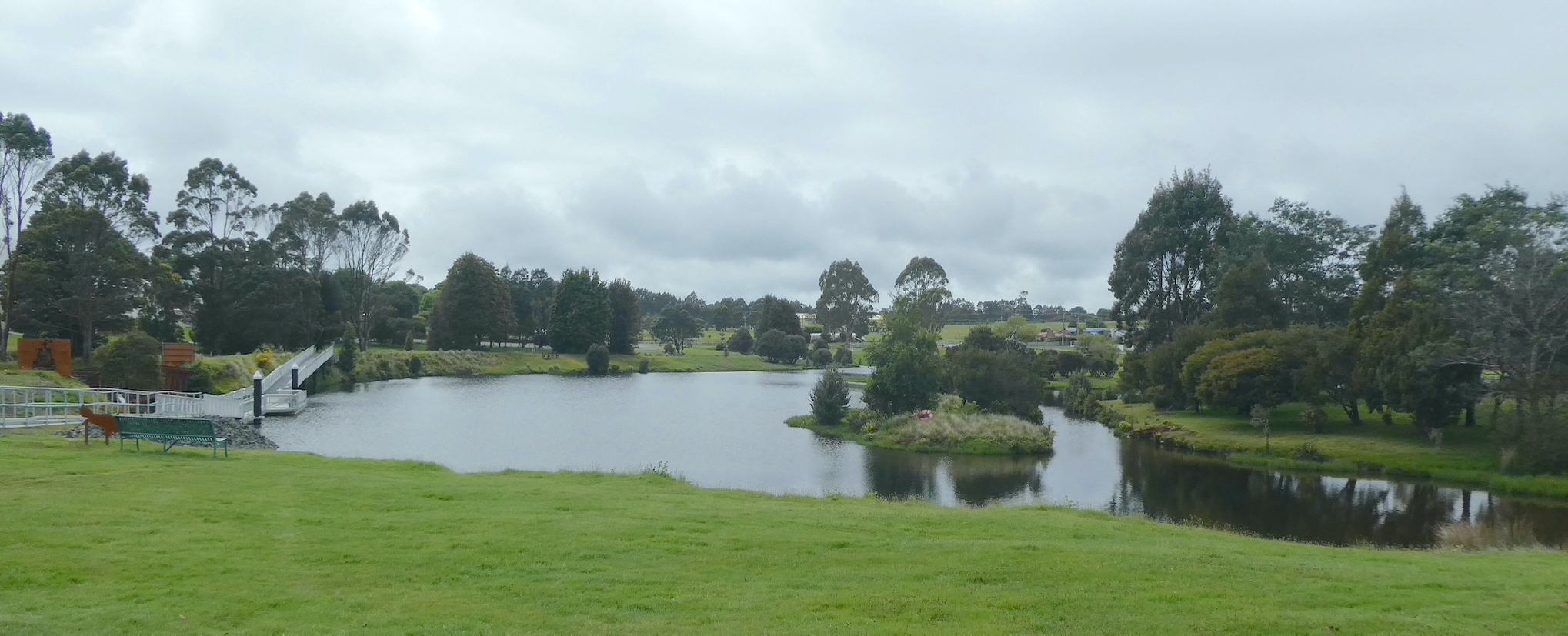
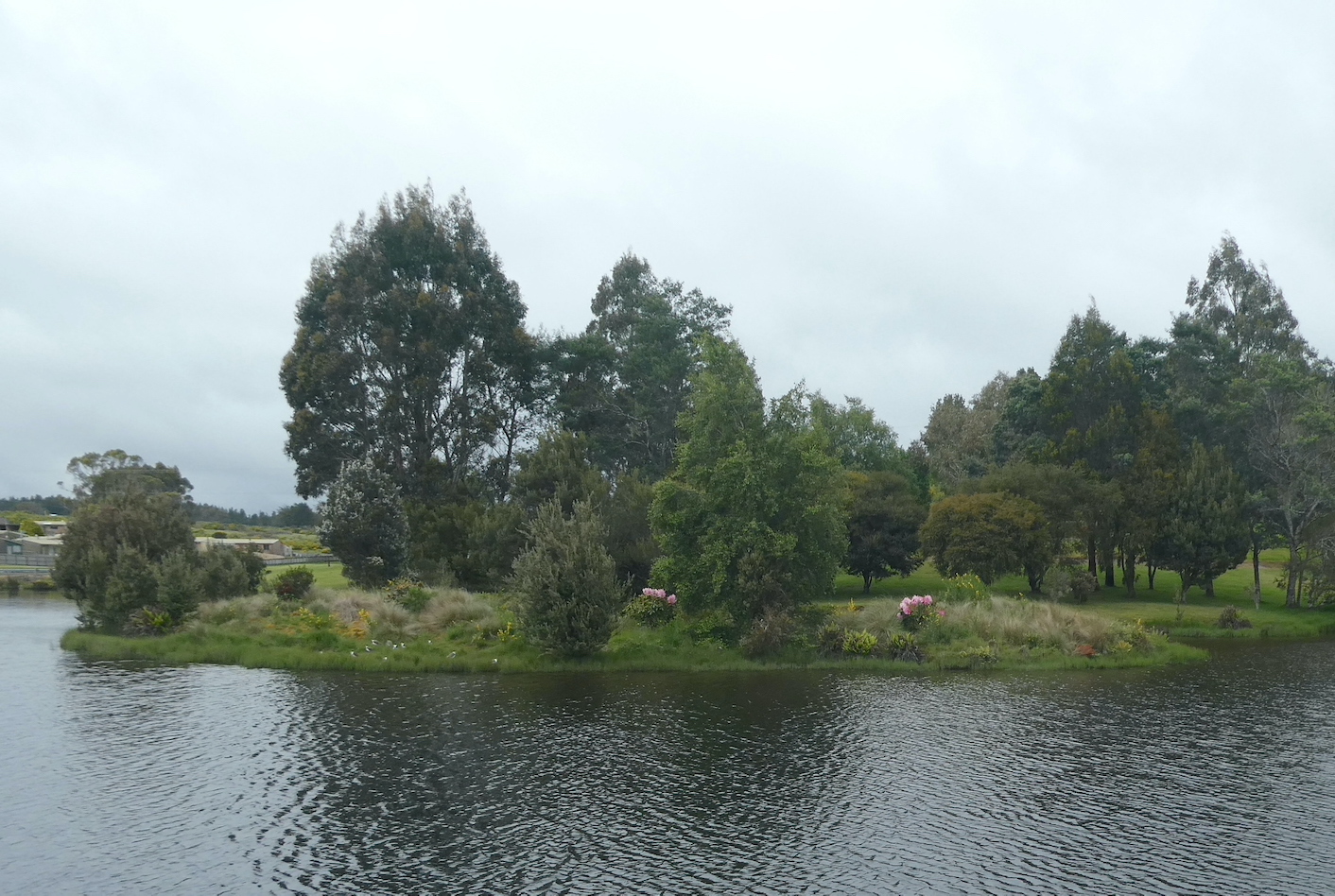
As we entered the town, we noticed how immaculate the public lawns and gardens were kept. Lake Waratah is a beautiful centrepiece.

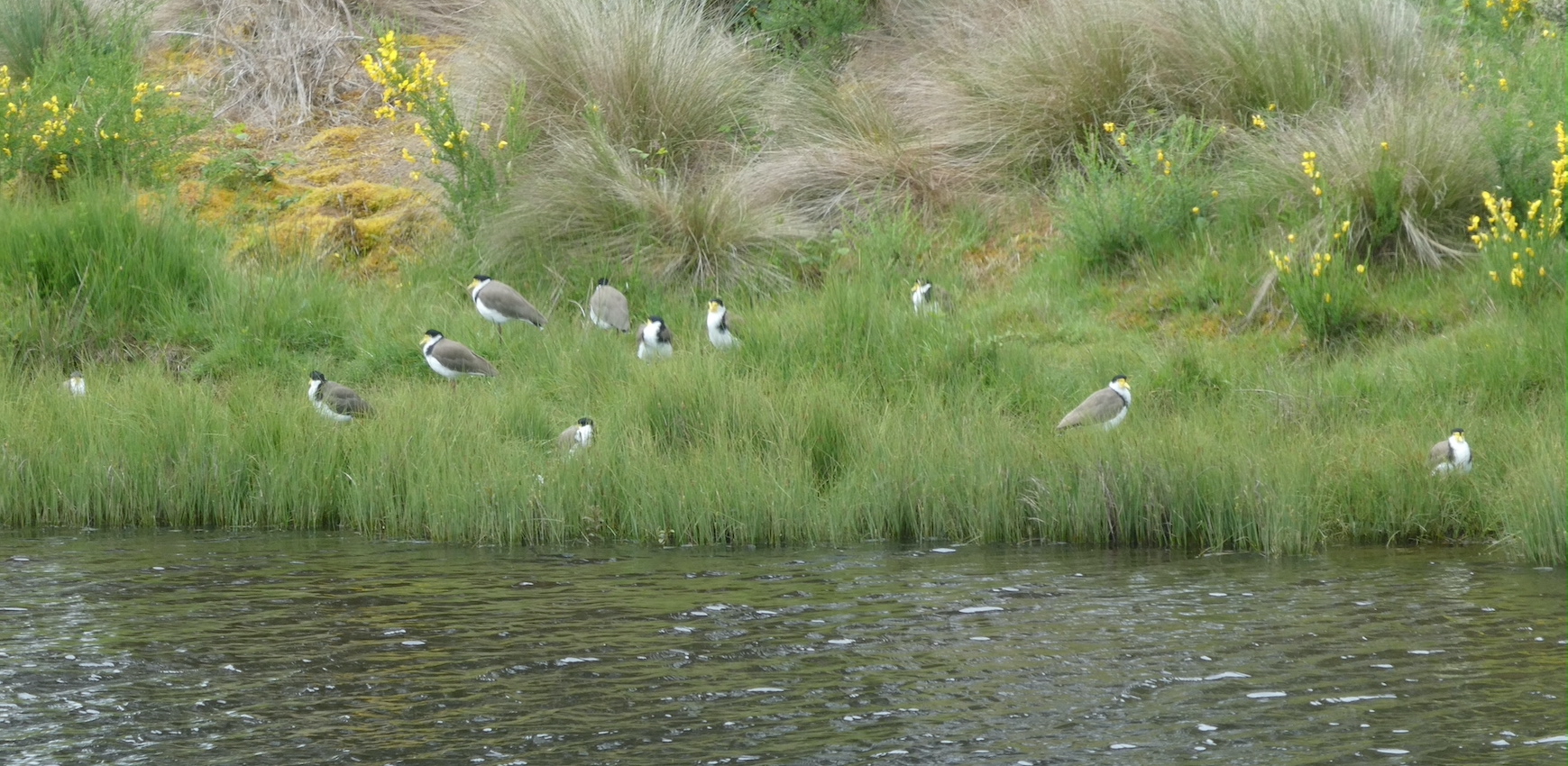
I have never seen a colony of masked lapwings in these numbers, they have chosen a lovely spot to call home.
We took a closer look at the iron truss rail bridge, built over the Waratah River in 1895, essential for getting people and supplies to Waratah and getting the ore out.

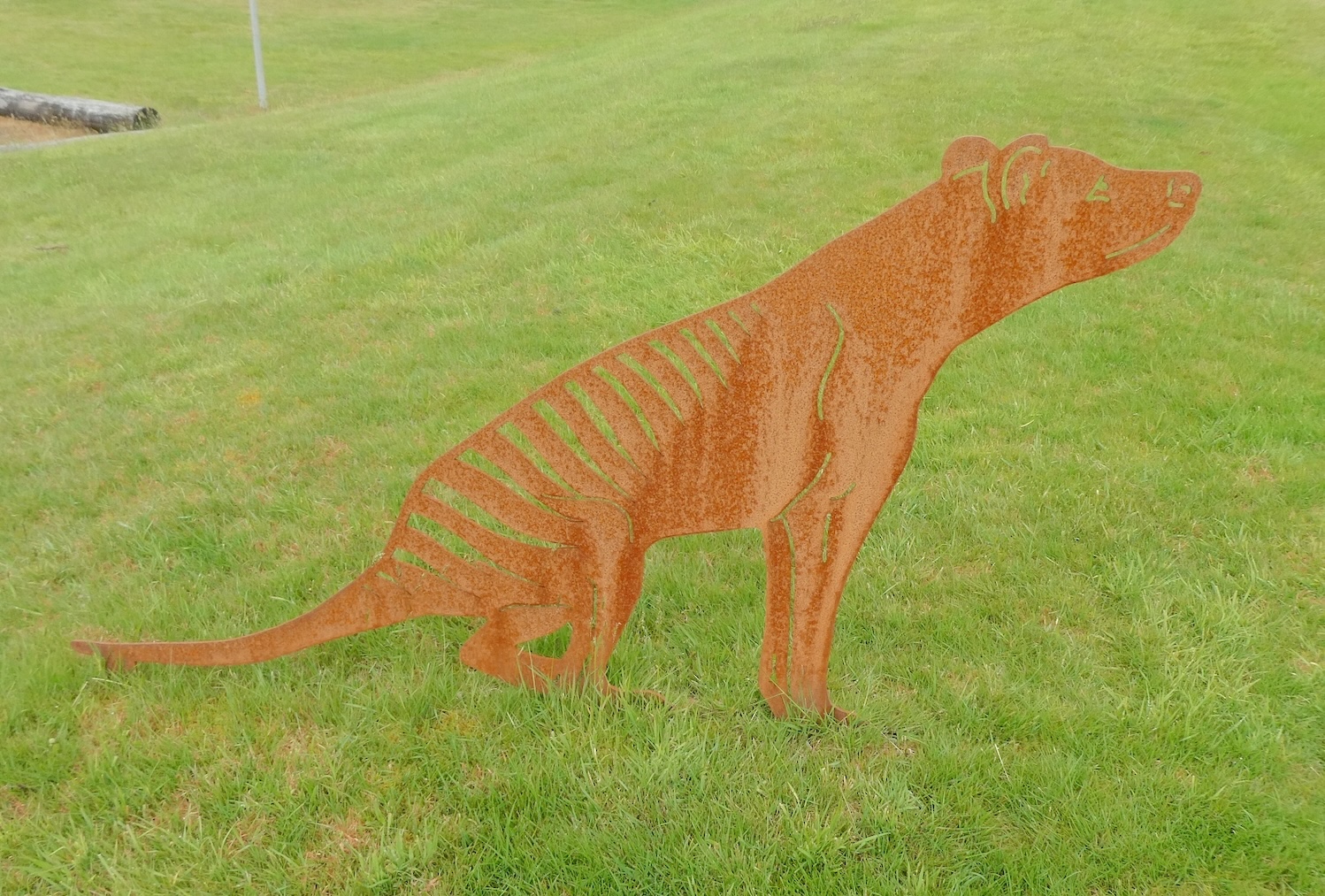
Waratah is known as one of the last bastions of the thylacine, thought by some to be extinct. We are ever hopeful of proving this theory wrong, it seems we are not alone.

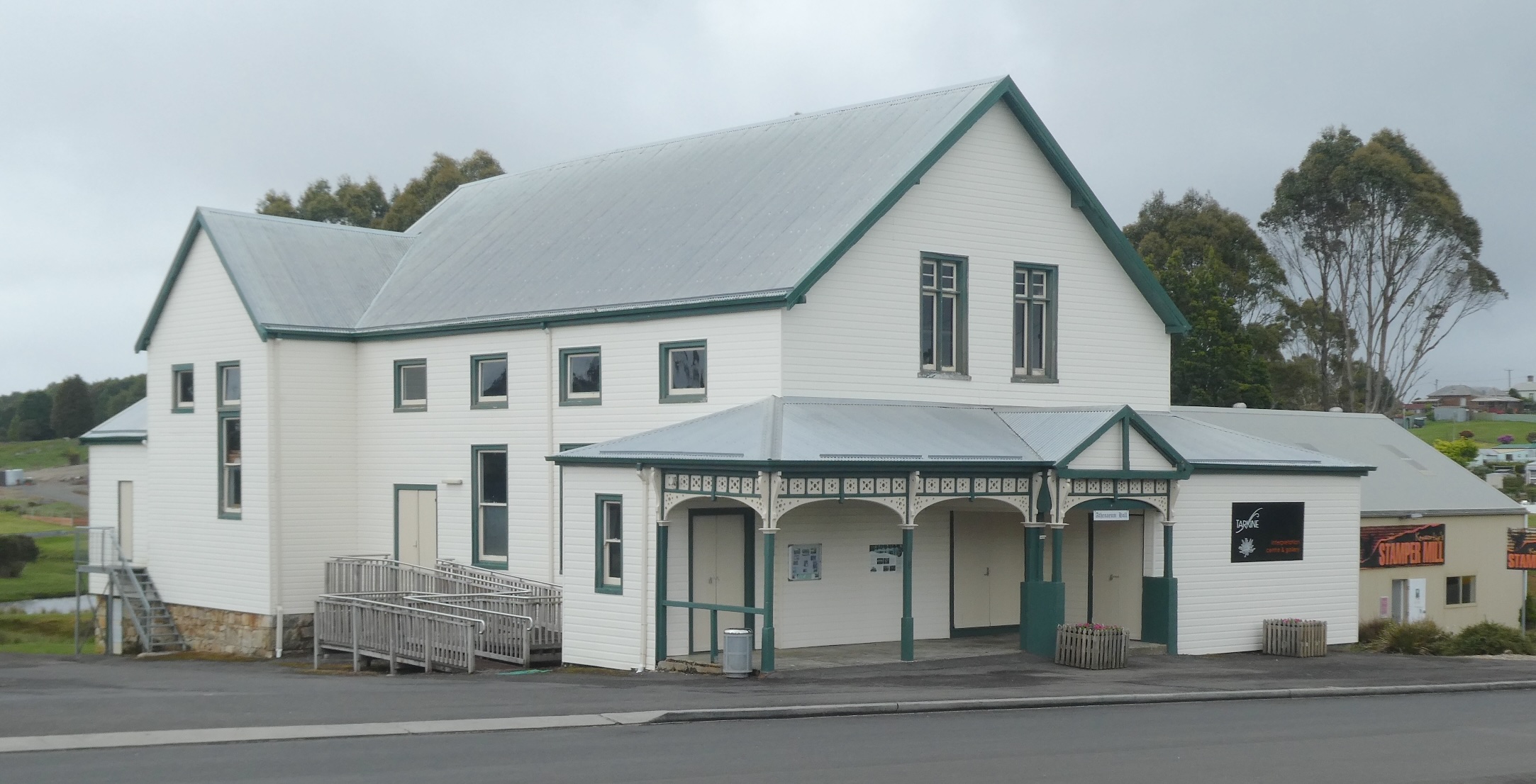
The Athenaeum Hall is a very impressive building completed in 1887 when the town was enjoying the economic prosperity provided by the tin mine. Built for the workers and families, it started as a library and later became the town hall and cinema. Today, it is home to the Tarkine Visitor Interpretation Centre and is still used for functions.
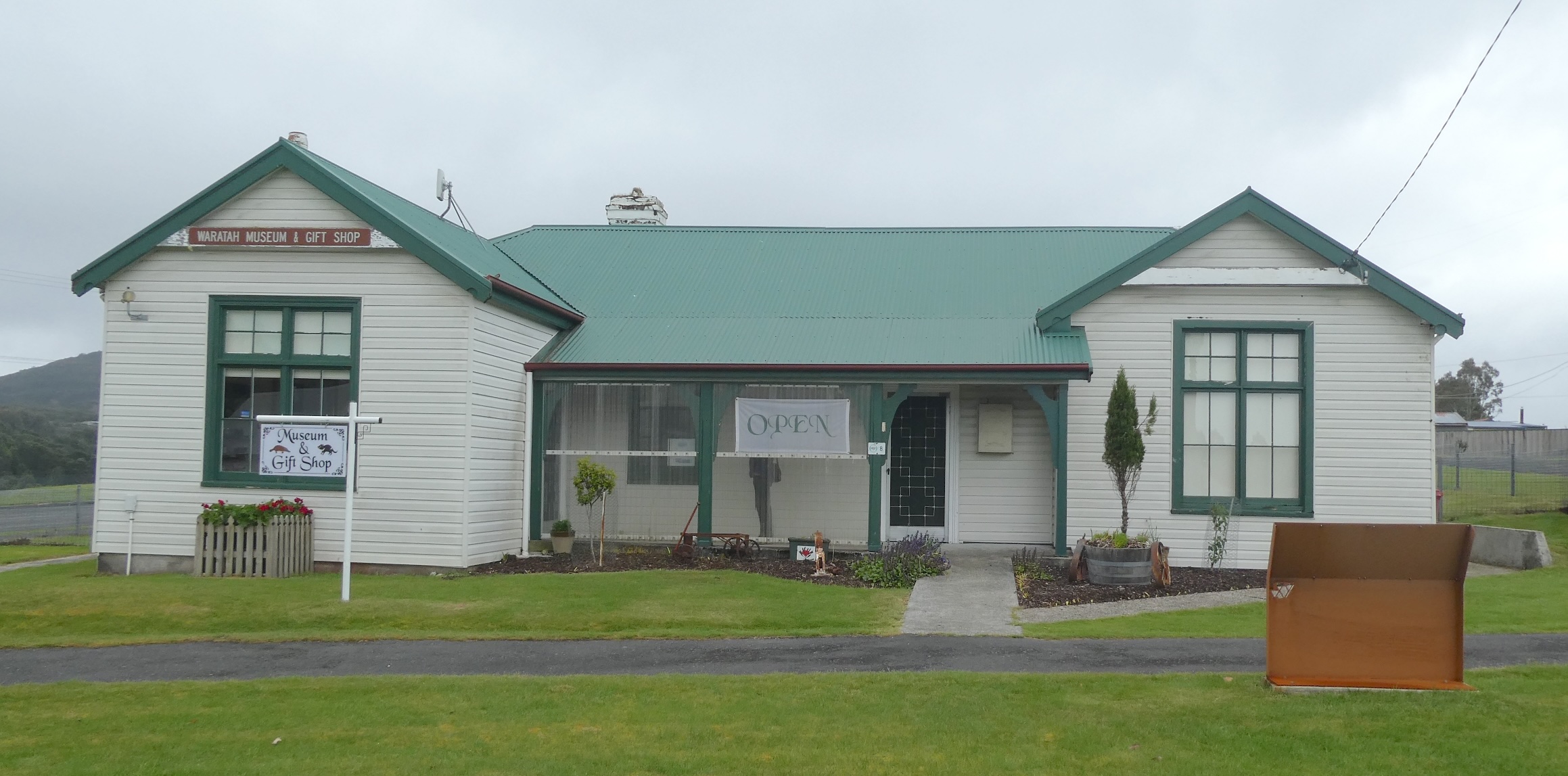
Across the road, the Waratah Museum occupies in the old Court House (that will be another post).
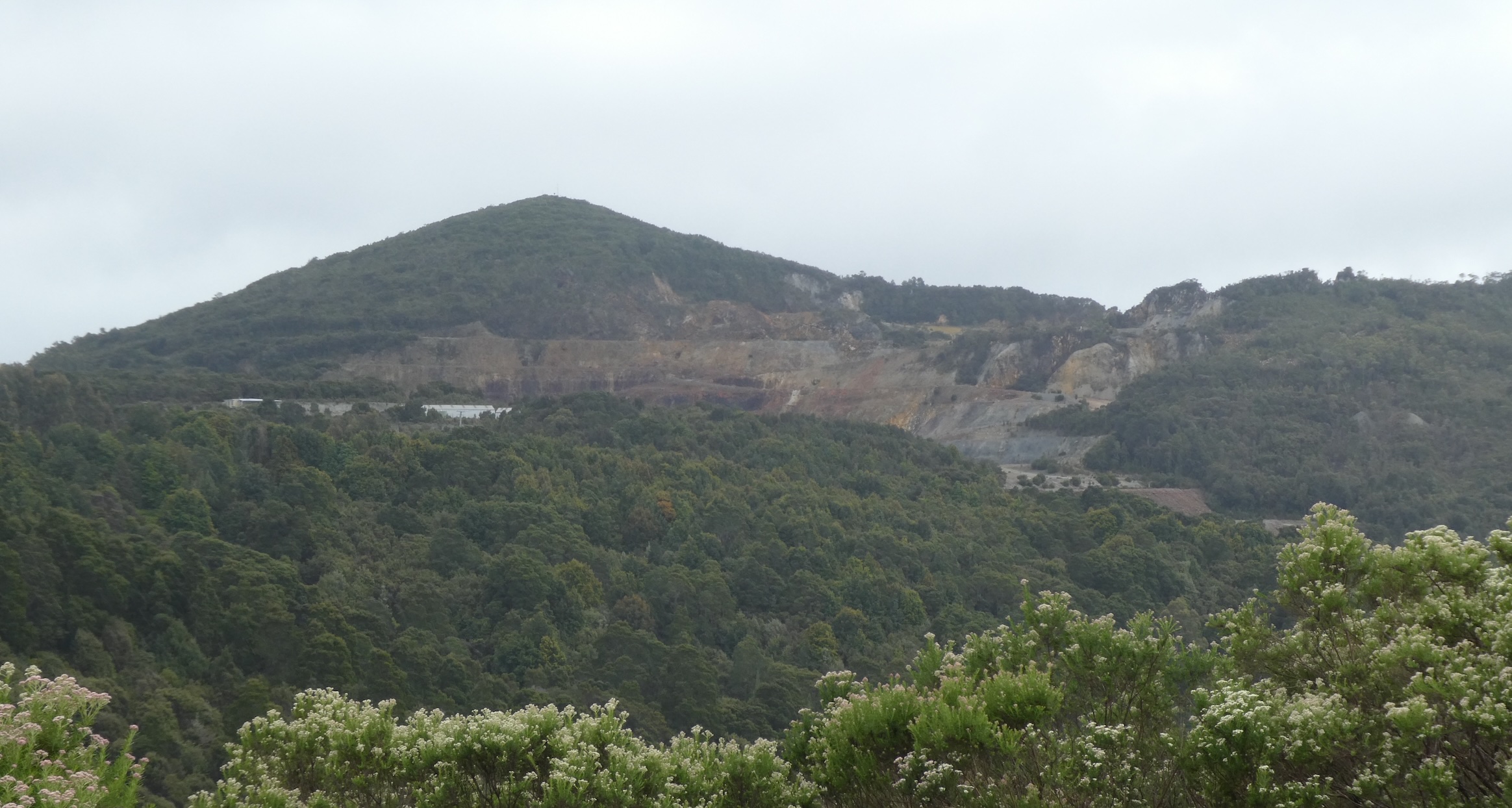
Despite a leisurely perambulation around the museum, we still had time for a walk to the bottom of the falls. The scarred landscape of the Mt. Bischoff mine loomed in the distance. Tin was discovered in the area in 1871 and by 1881, Mt. Bischoff was the richest tin mine in the world.  The mine closed in 1947 after seventy years of continuous production but open cut mining resumed in 2008. Three years later, with resources depleted, it again closed and the pit is now flooded.
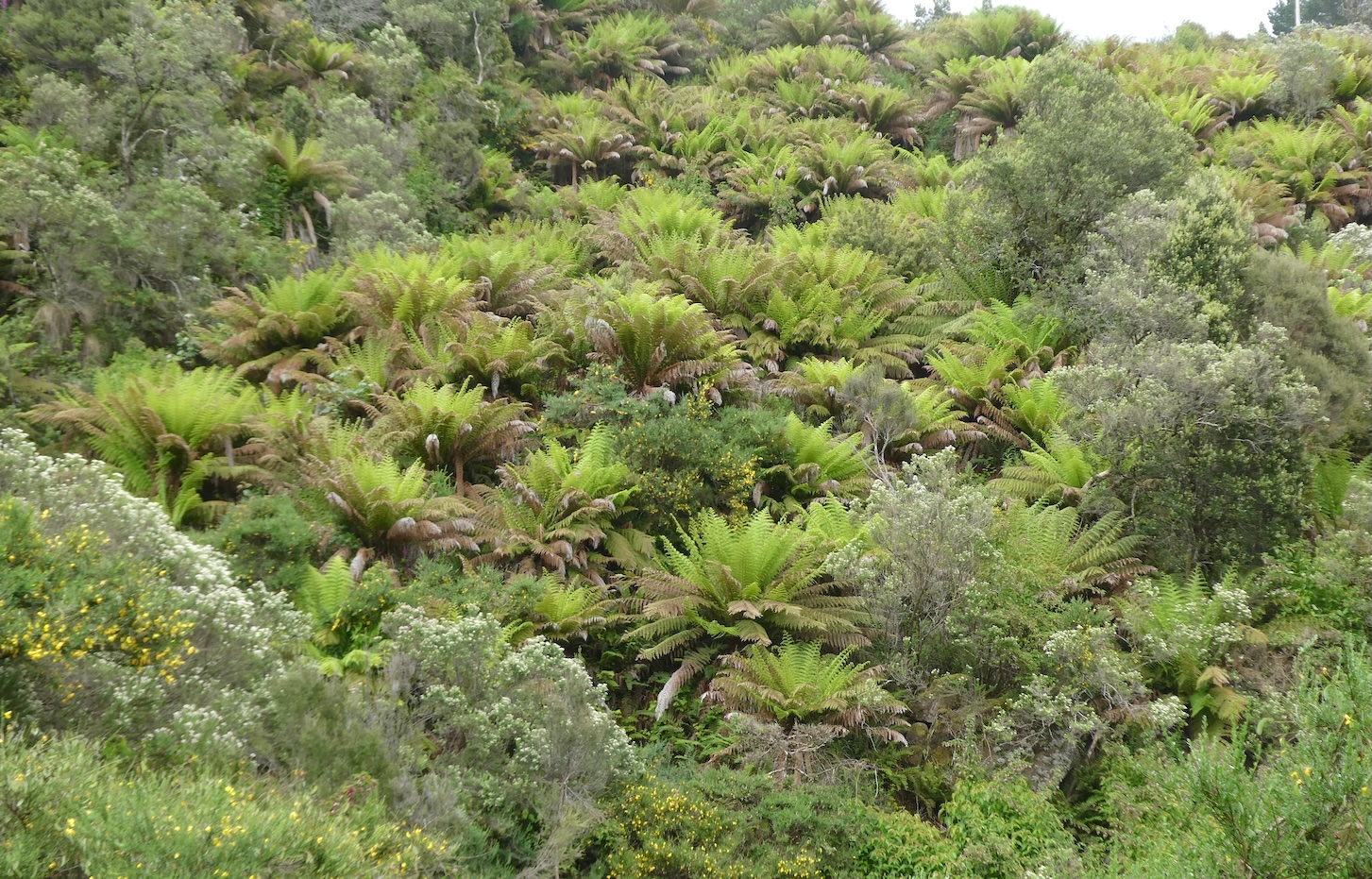
The walking trail was enveloped by tree ferns and verdant native vegetation
and the waterfall was magnificent after steady spring rain.

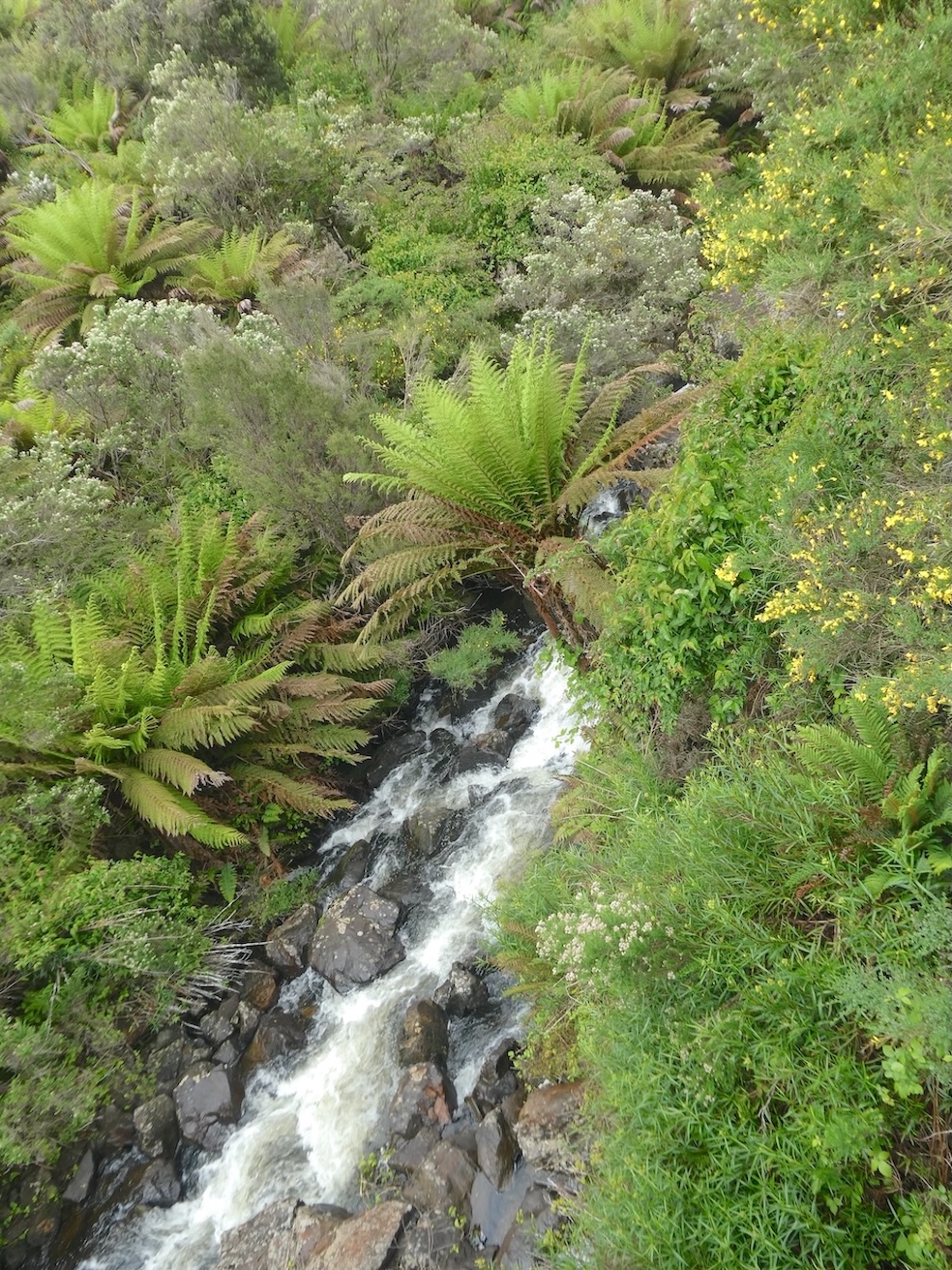
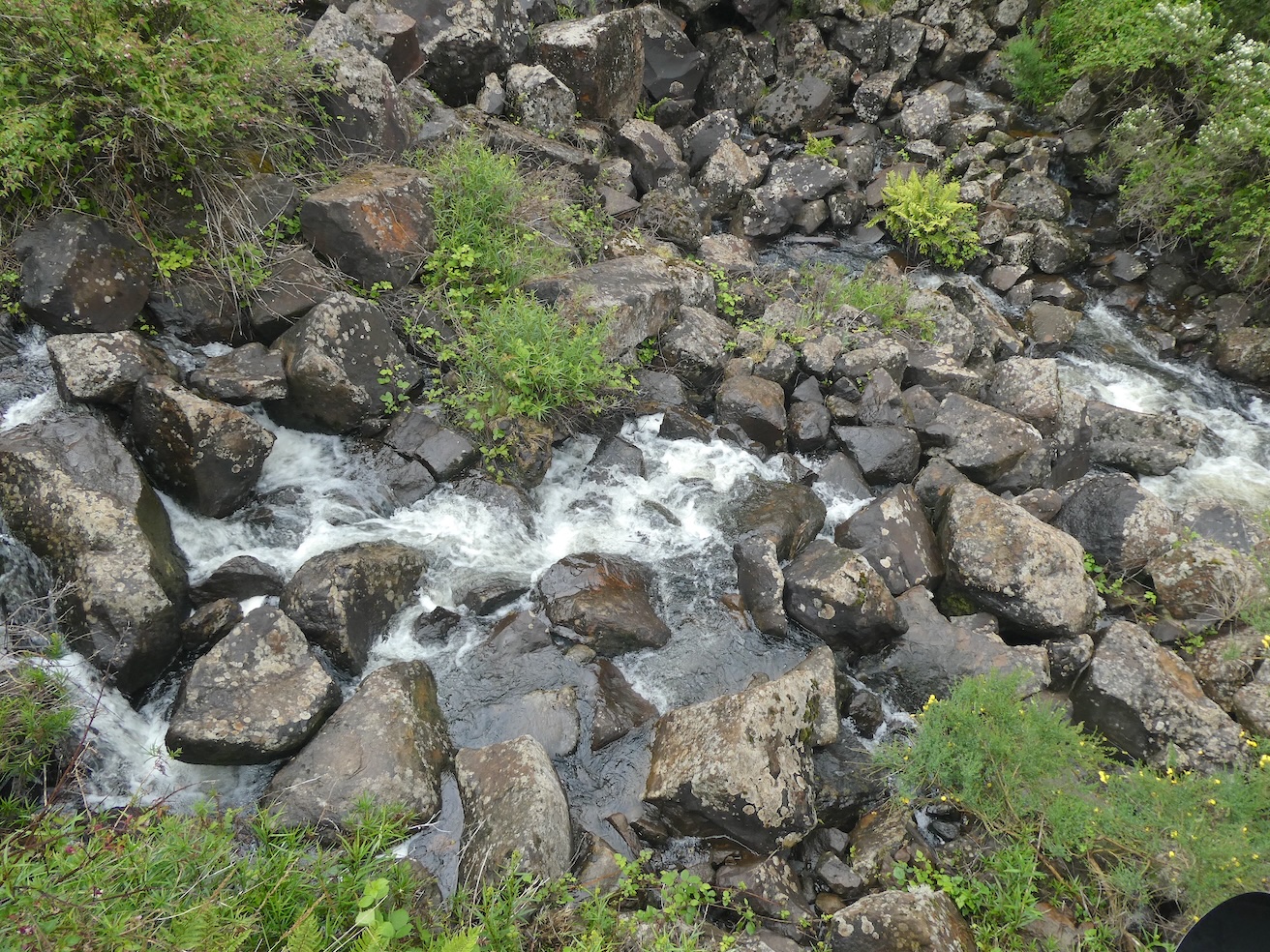
Returning to the top of the falls, the Waratah River wends its way over the cliff and continues ten kilometres before merging with the Arthur River.

The Dudley Kenworthy water wheel is named after the gentleman who recognised the potential to harness the year round water supply, making Waratah the first industrial site in Australia to be lit by hydro-electricity.
After a substantial lunch of delicious fish ’n’ chips and a schooner of stout, we were ready to tackle the long and winding road to Corinna.

Corinna

We recently ticked another item off our bucket list with a short stay at Corinna on the west coast of Tasmania. The gold rush of the early 1880s brought a flood of people to the area and Corinna was proclaimed a town in 1894 with a population of 2500. Within a few years, the gold deposits that could be easily worked were exhausted and the town declined in population when the Emu Bay railway to Zeehan was opened in 1900. The historic mining town is now a wilderness retreat set on three hectares surrounded by the Tarkine rainforest. The owners have restored and developed the buildings in heritage style to create a village atmosphere. We enjoyed a very comfortable three nights in “Hobbs” cottage.

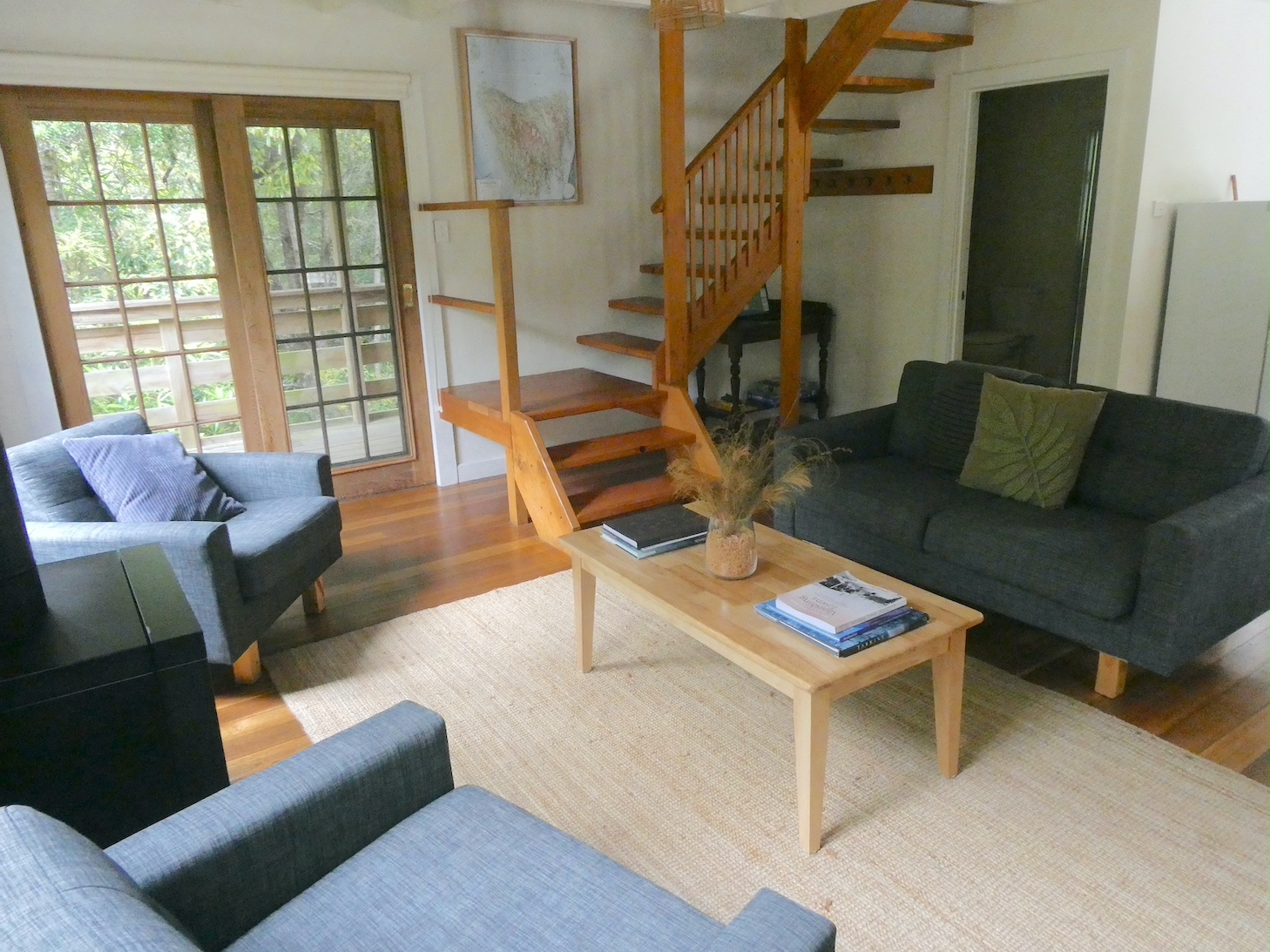
Named in honour of explorer James Hobbs who led a party to the west coast of Van Diemen’s Land in early 1824, our level of comfort far exceeded that of poor Hobbs. I am always prepared that photos on property websites are more enticing than in reality but we weren’t disappointed. The open plan living space downstairs

and bedrooms upstairs

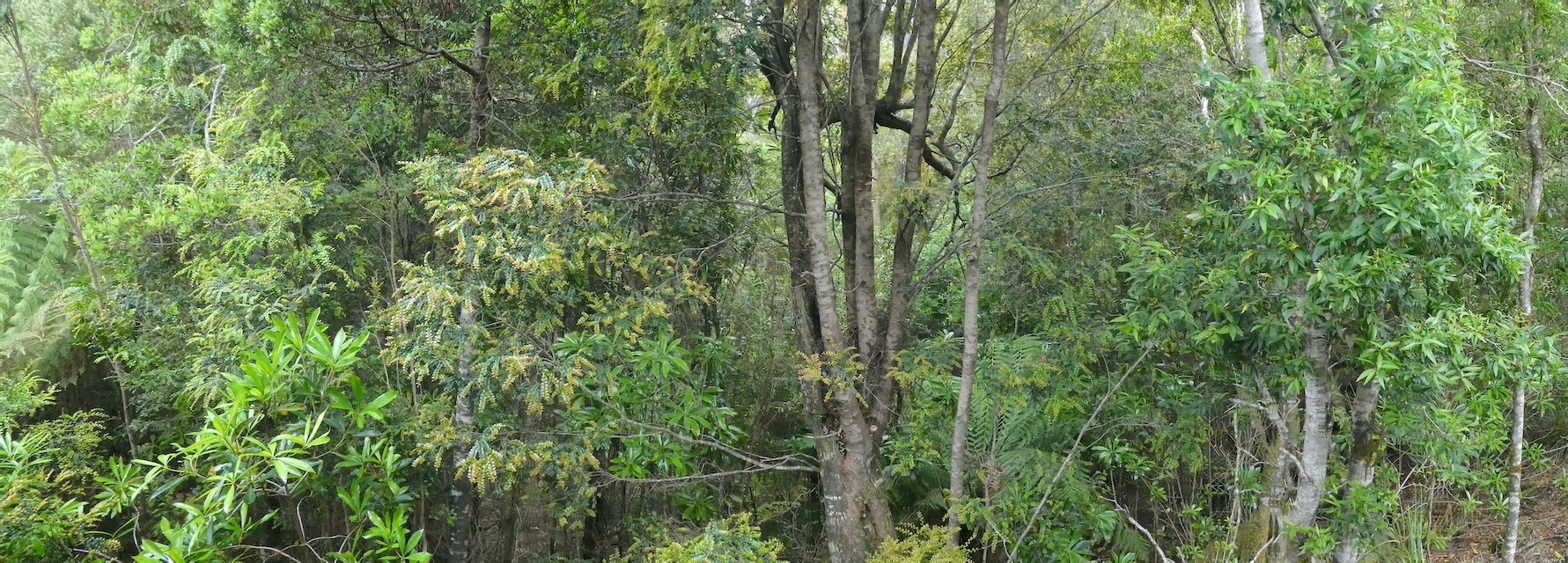
were even better than anticipated and the gas heater warmed the whole area without effort. The rainforest embraced the spacious back deck

and the front verandah was the perfect spot to share a platter and bottle.

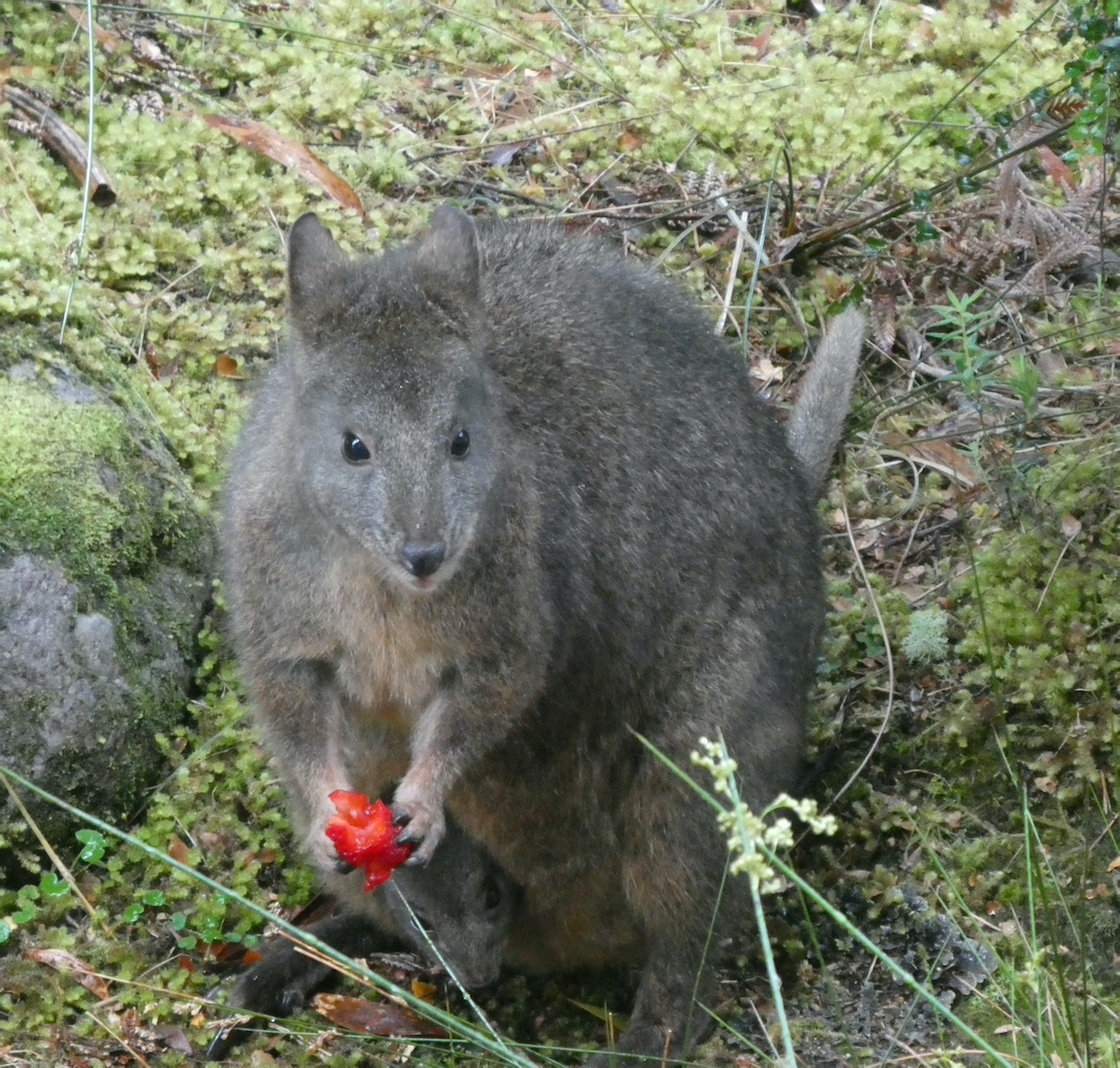
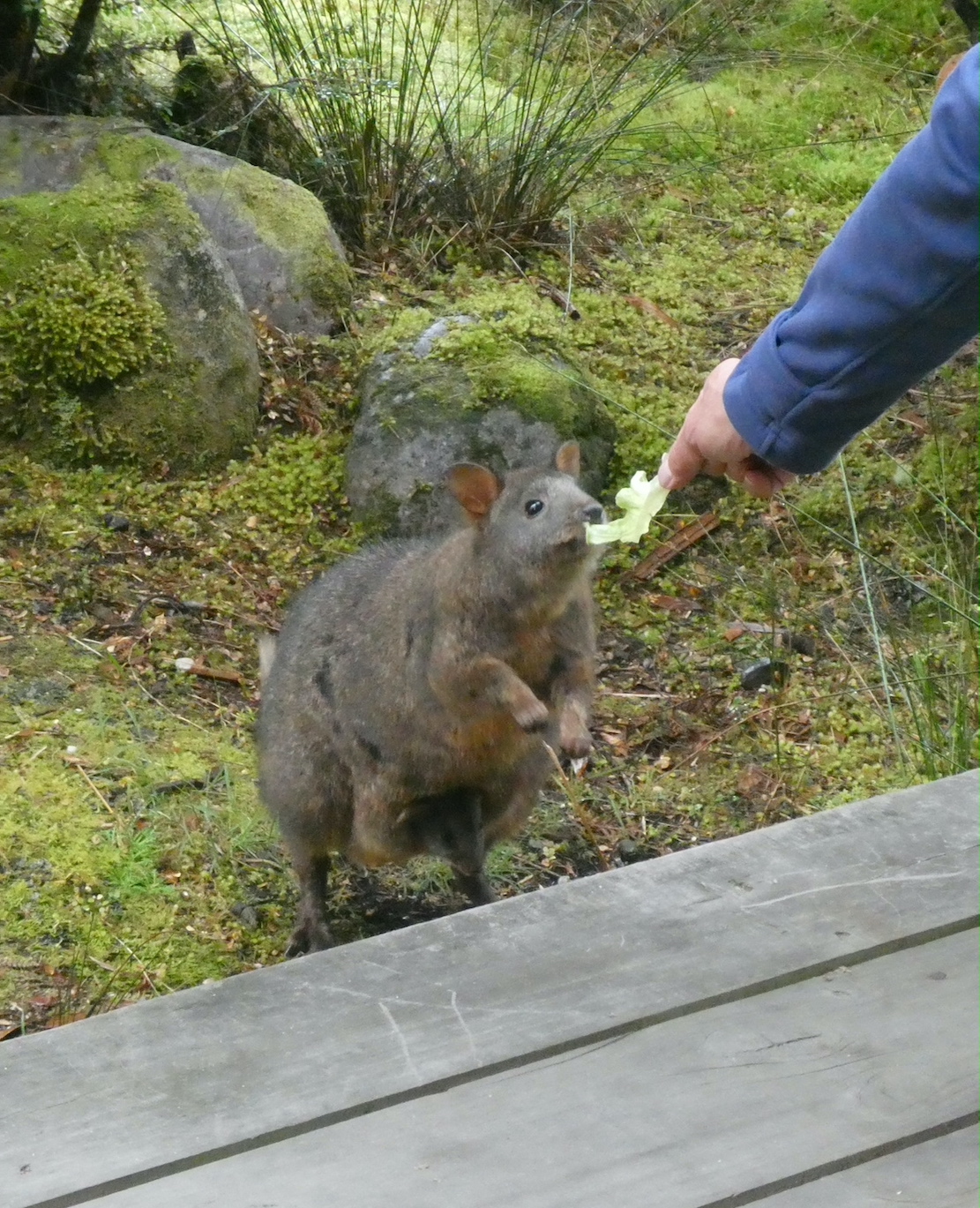
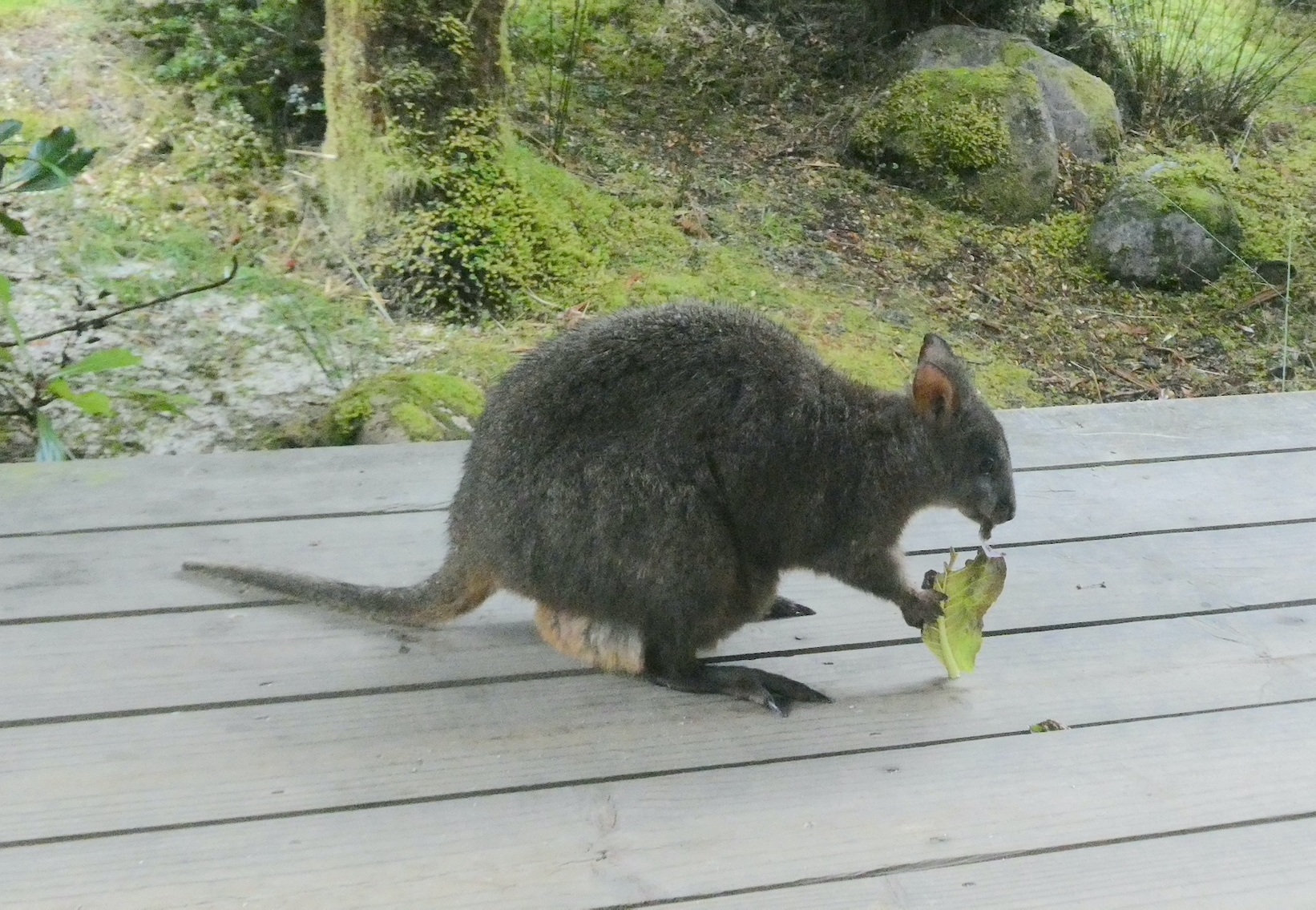
We were happy to share our food with the locals, especially when one had a baby on board.

Corinna is totally off grid with solar power, rain and bore water and chemical free sewage treatment. Cooking, hot water and heating are powered by gas cylinders. Visitors are requested to take any rubbish with them when they leave, not a big ask to maintain the pristine environment. After settling in, a stroll around the village revealed remnants of times past.

The old butcher’s shop is now guest accommodation.

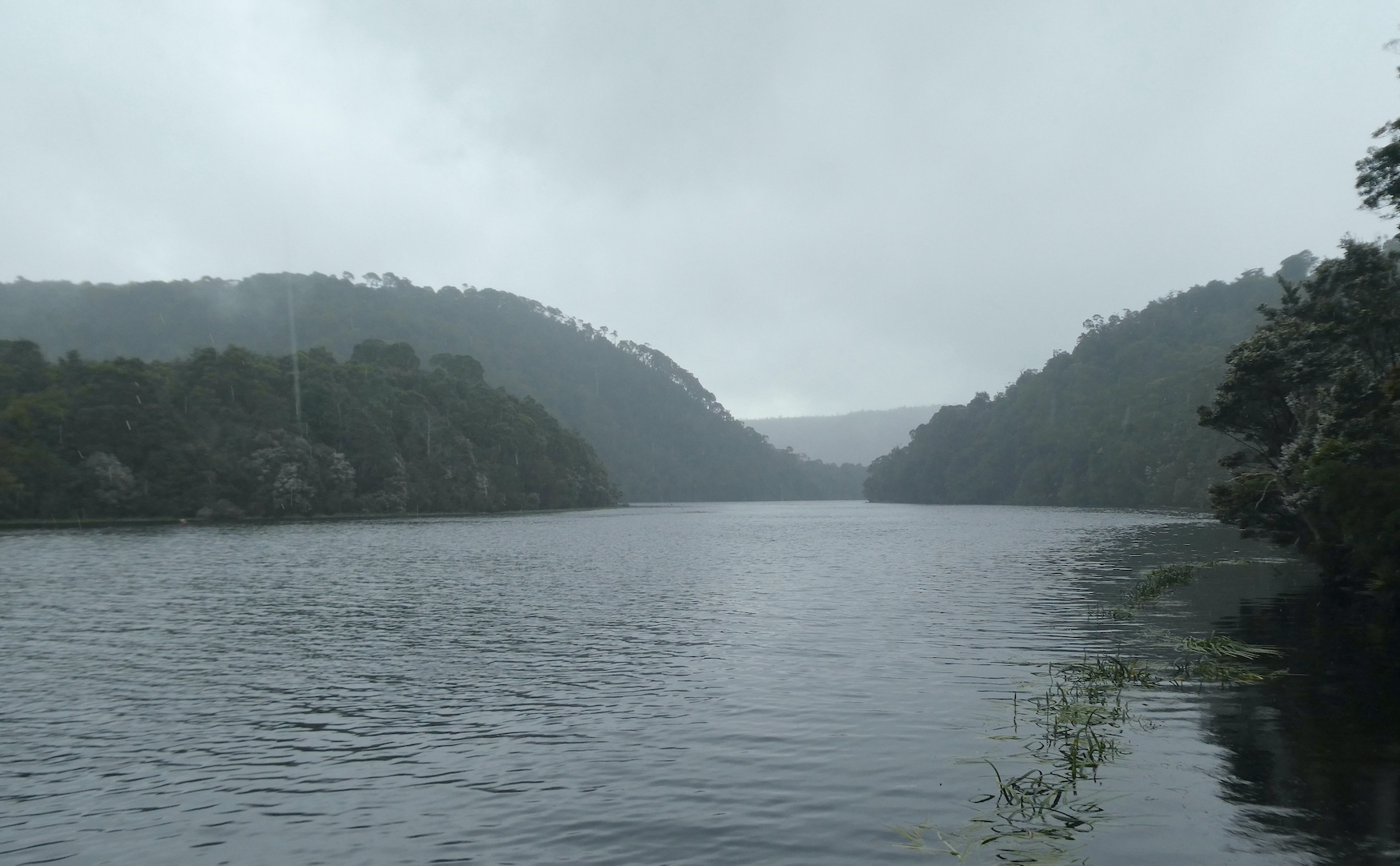
A light drizzle accompanied us as we wandered to the Pieman River at the edge of the property.

For those arriving at or leaving Corinna in a southerly direction, the Fatman Barge takes five minutes to cross the 130 metres to the other side of the river. It is the only cable driven vehicular barge remaining in Tasmania.

Although the cottage was equipped for self-catering, the Tannin Restaurant in the on-site Tarkine Hotel has a mouthwatering menu.

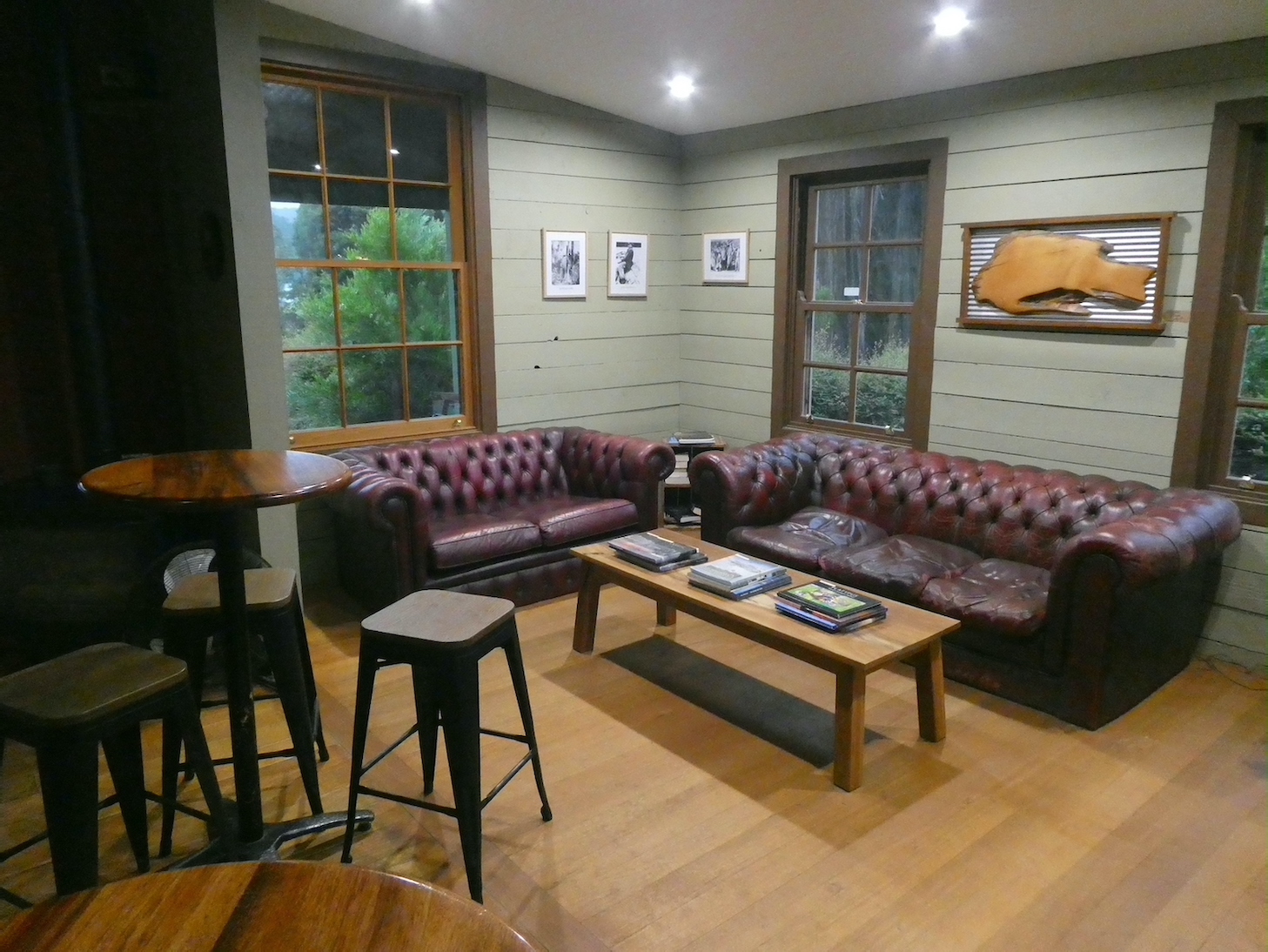
After a days adventure we would amble to the Ahrberg Bar and take up residence on the squidgy Chesterfield with a pre dinner beverage.

Moving on to the dining area, the meals were superb, all prepared using fresh Tasmanian produce. The only down side was, I didn’t have any room for the desserts on offer.

With no TV or Wi-fi (a blessing) it was back to the cottage for board games and bed.

Johnson’s Beach

At the end of another winter, thoughts turn to warmer days, sunshine and walks along the beach. Just a 10 minute drive from us is the peaceful Johnson’s Beach at Penguin. Apparently, it is named after a certain Mr. Johnson who lived at the end of Clerke Street near the beach but he remains a mystery.

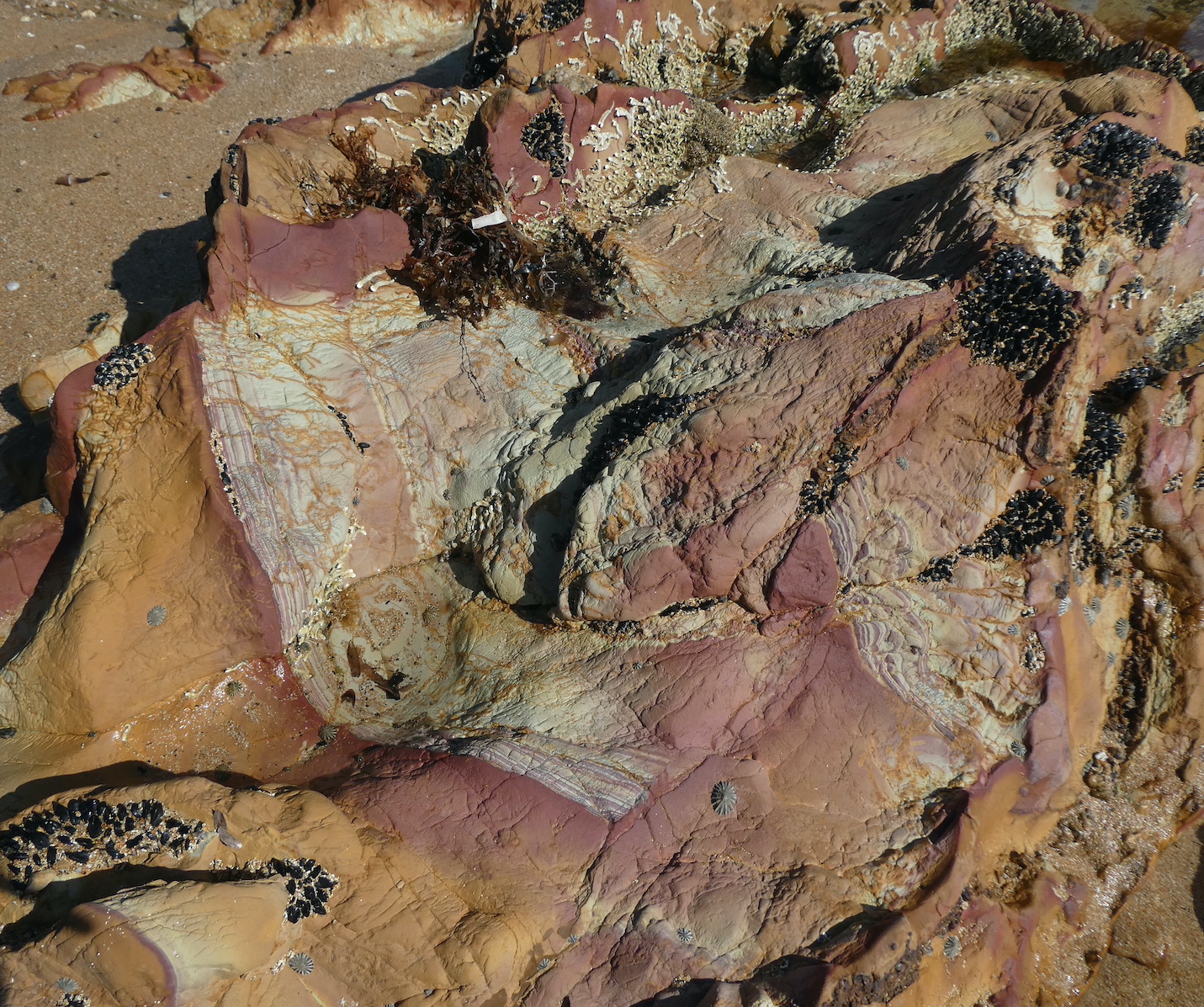
A stroll along the shore reveals art installations with a difference, courtesy of the artist in residence, Mother Nature. Magnificent rocks of all shapes and sizes are coloured with myriad earthy hues.

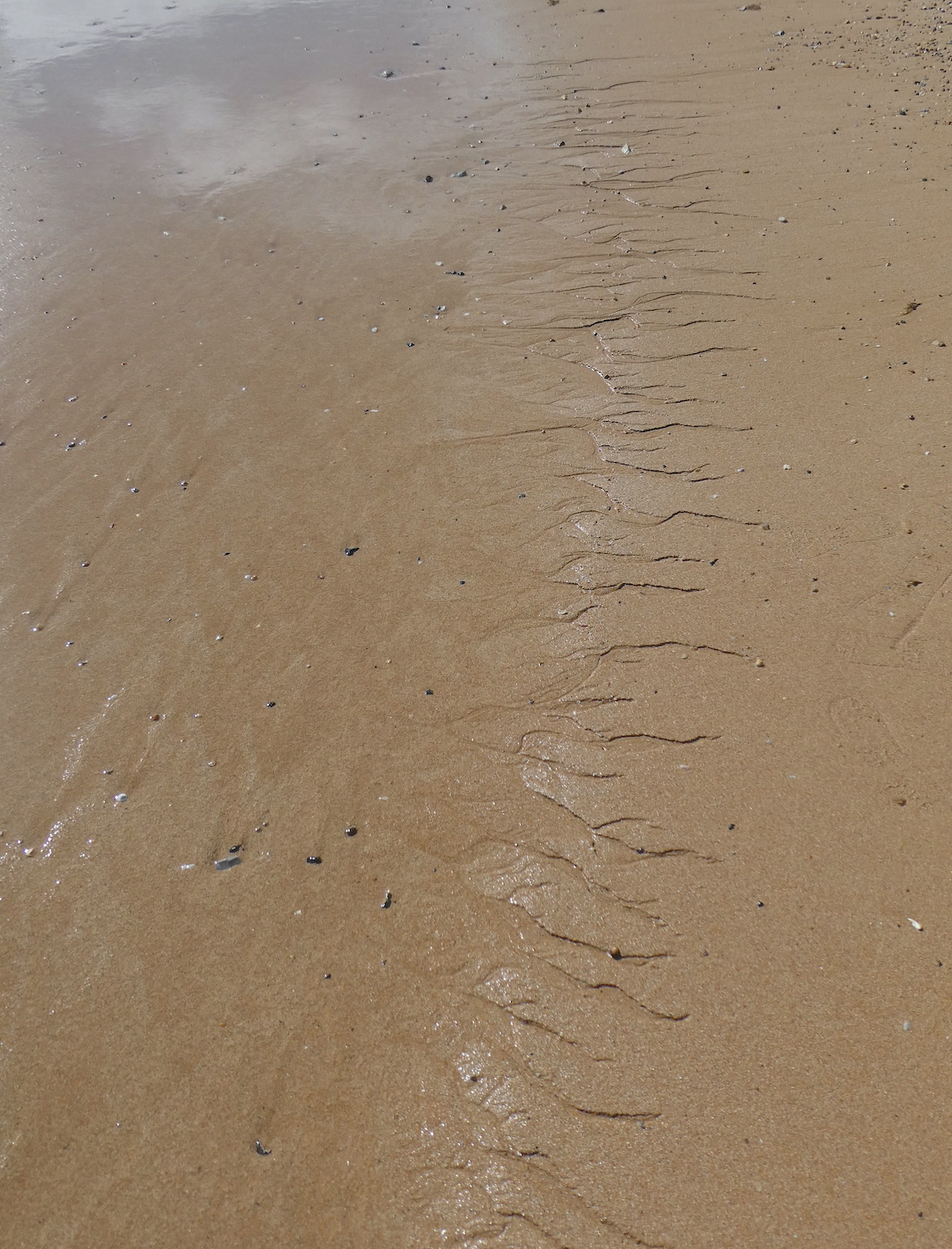
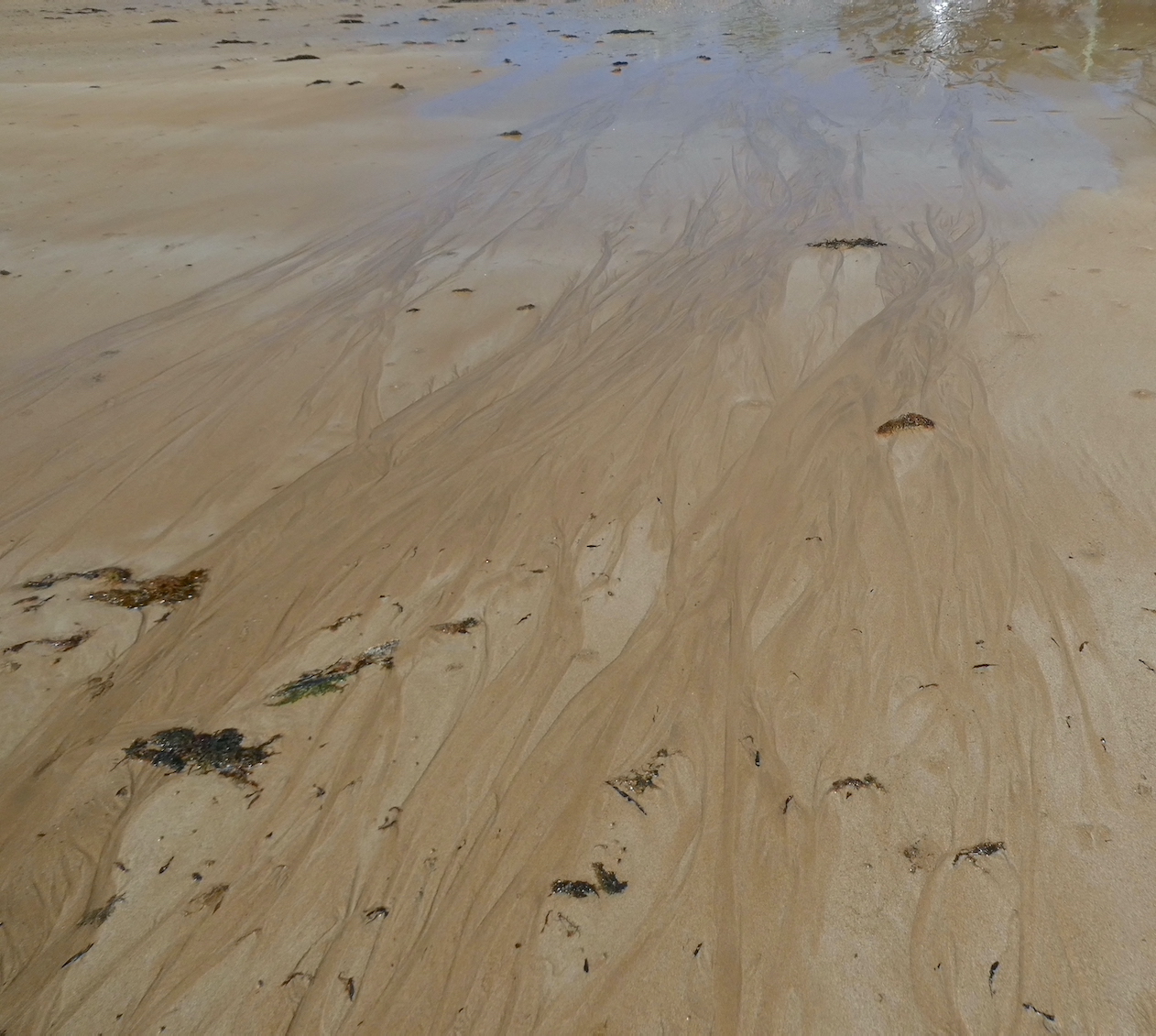
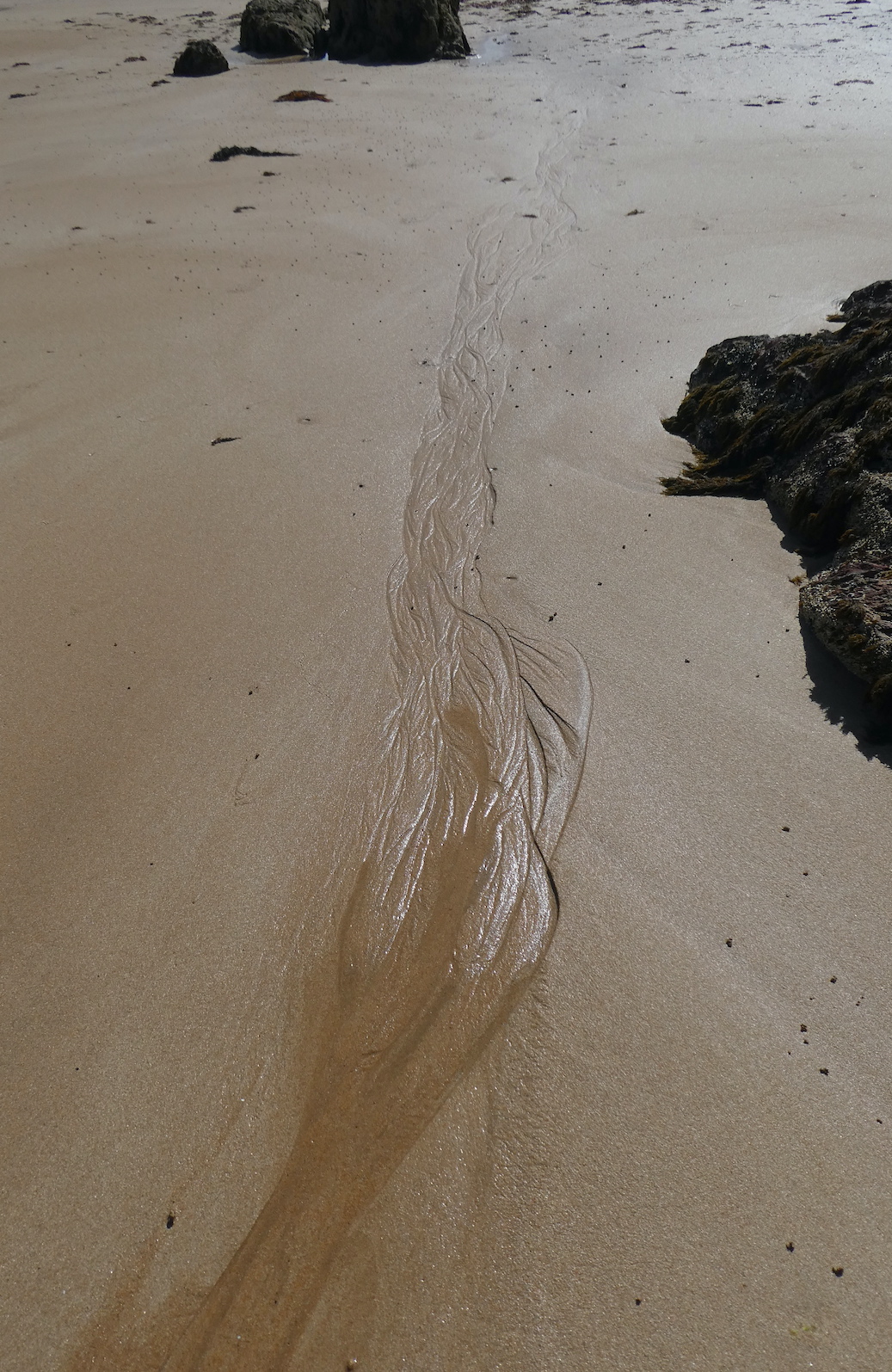
Subtle brush strokes and feathering etch the sand, following the retreating tide.

Smooth vanilla mounds are drizzled with raspberry coulis

and diamonds sparkle on a watercolour background.

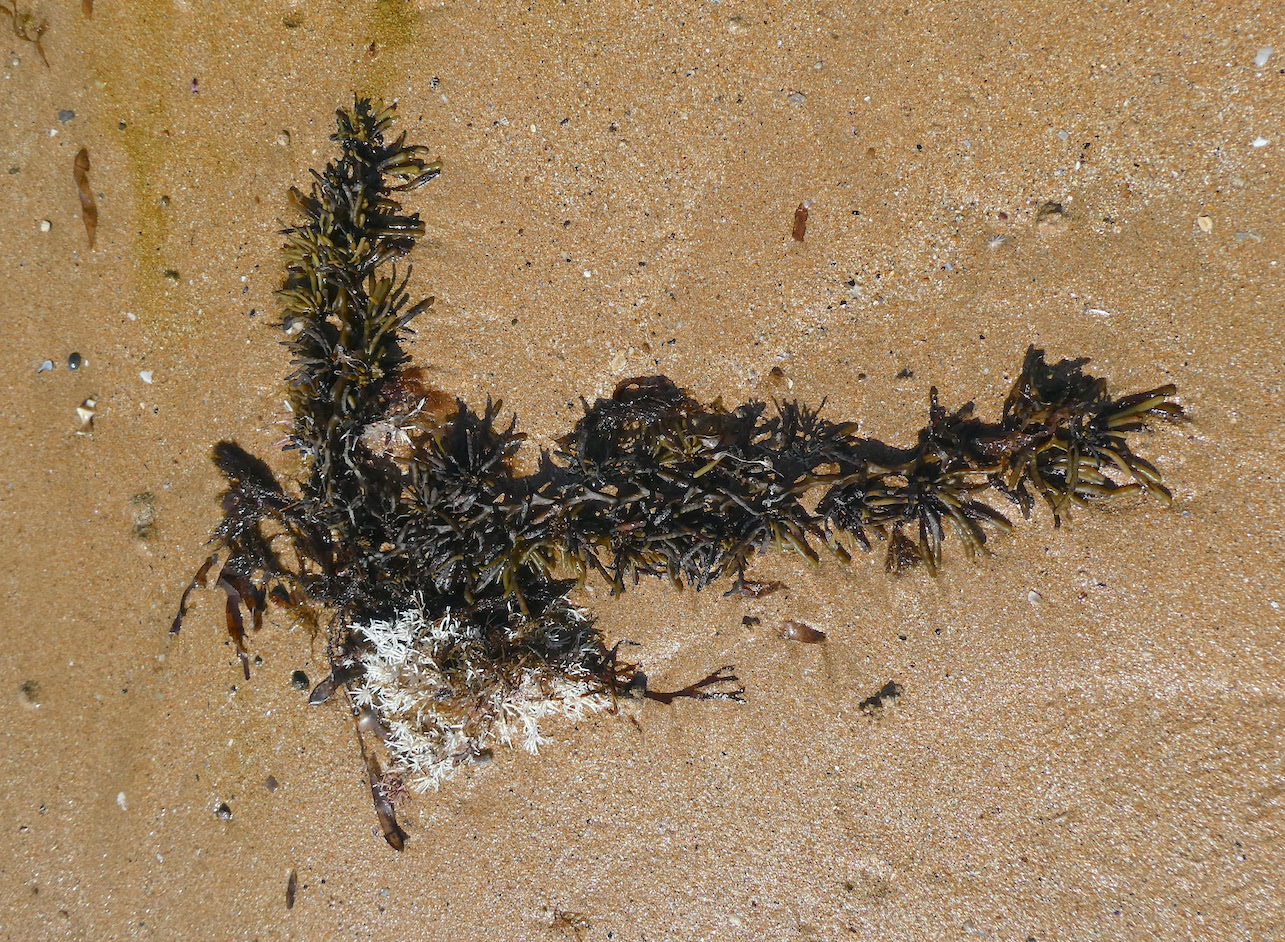
Elegant accessories have been discarded flippantly, awaiting a seat at the next salty soiree .

Returning to reality…. Spring isn’t far away and a drive to Penguin for a meander along Johnson’s Beach followed by a leisurely lunch is high on the agenda.

Fossil Bluff

My first visit to Fossil Bluff at Wynyard in 2009 was a little disappointing. The tide was in and, although the sandstone cliff was spectacular and scenery stunning, I didn’t see any evidence of fossils.

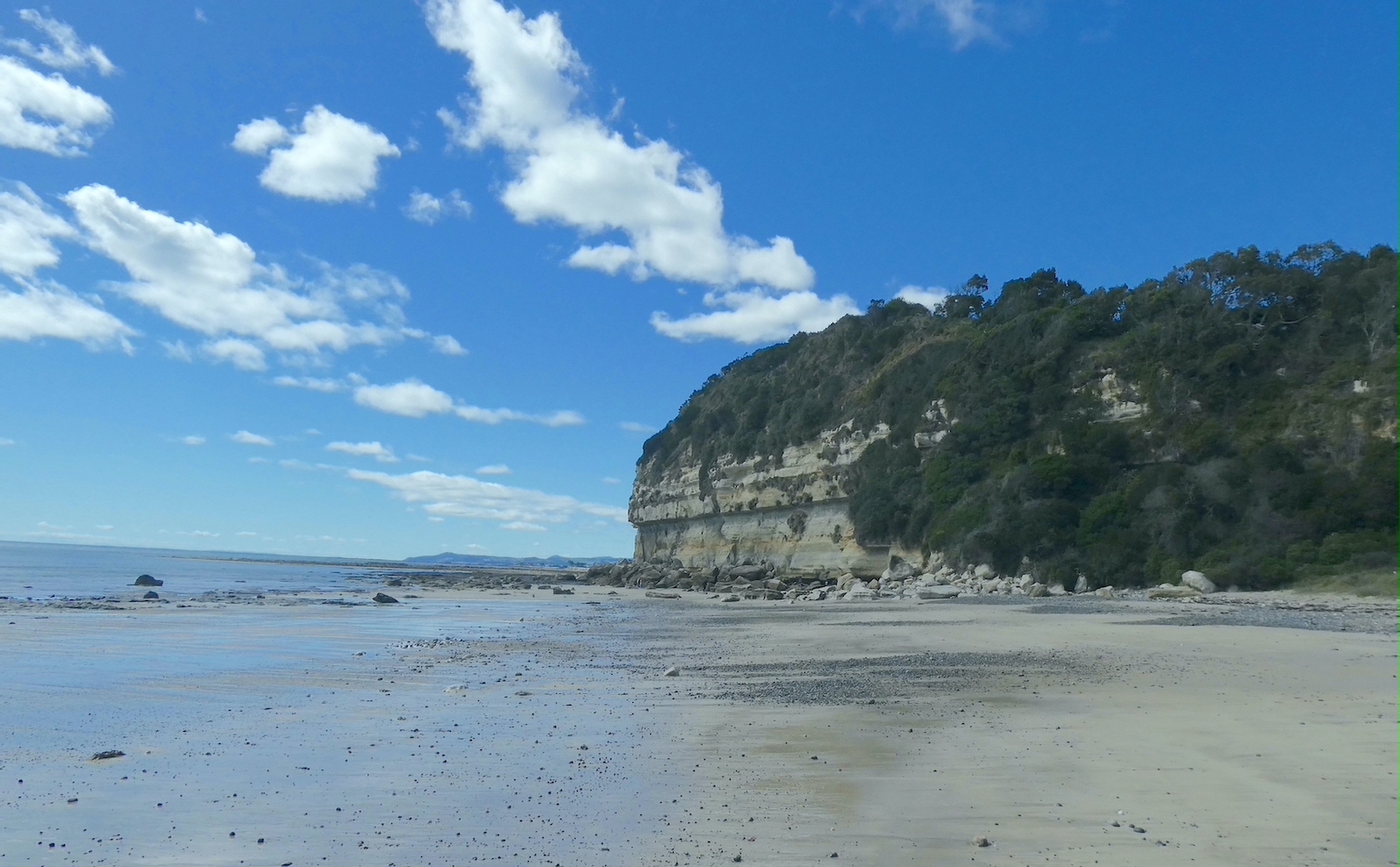
More recently, we arrived at low tide to find the expansive beach of Freestone Cove with Fossil Bluff looming to the east

and Table Cape to the west.

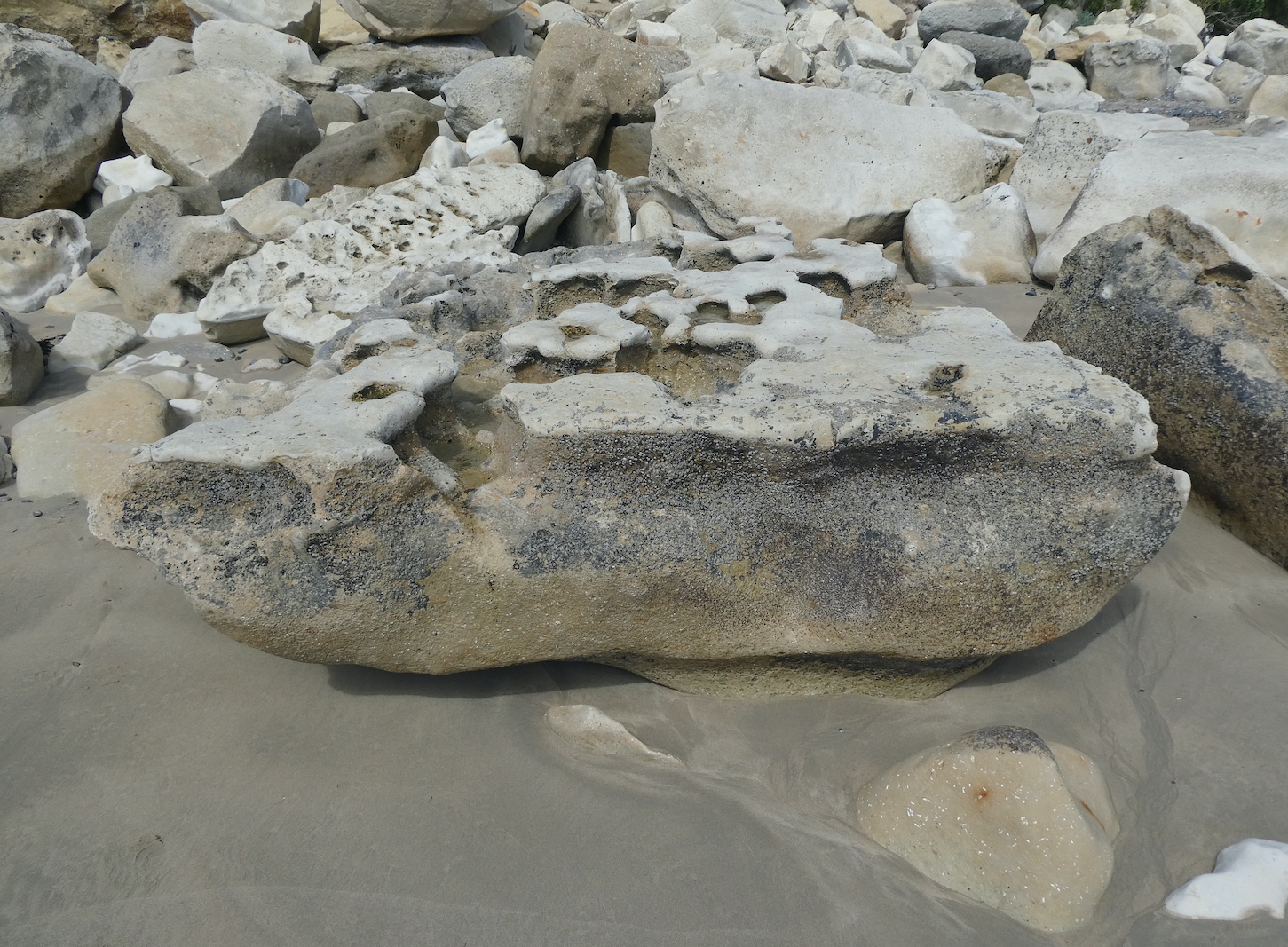
We wandered among rocks, weathered and worn smooth by the incessant ebb and flow of the tide.

Fossil Bluff was created 275 million years ago by a tidewater glacier. The 25 metre sandstone cliffs are strewn with fossils, including the remains of the oldest marsupial found in Australia named Wynyardia bassiana in honour of the town.

The grey rock at the base of the cliff is Wynyard Tillite, deposited by the glacier between 303 and 293 million years ago while Australia was part of the super continent called Gondwana. Fossil Bluff sits on top of the tillite and it is clear to see where the sandstone and tillite meet.

It wasn’t long before I spied a plethora of trilobites emerging from rock. One of the earliest known groups of arthropods, trilobites became extinct about 252 million years ago after existing in oceans for 270 million years.

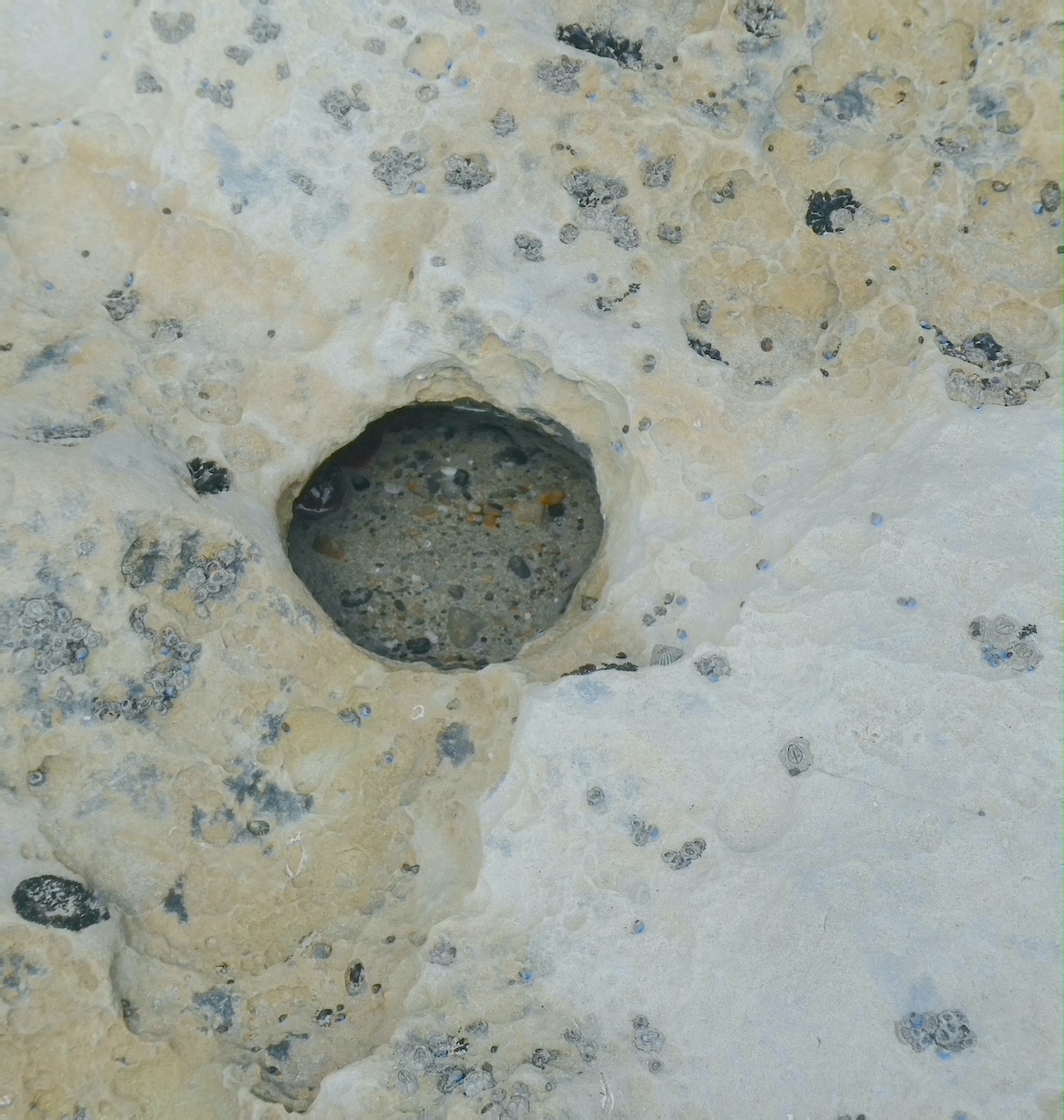
Myriad shells of varying shapes and sizes decorate every surface

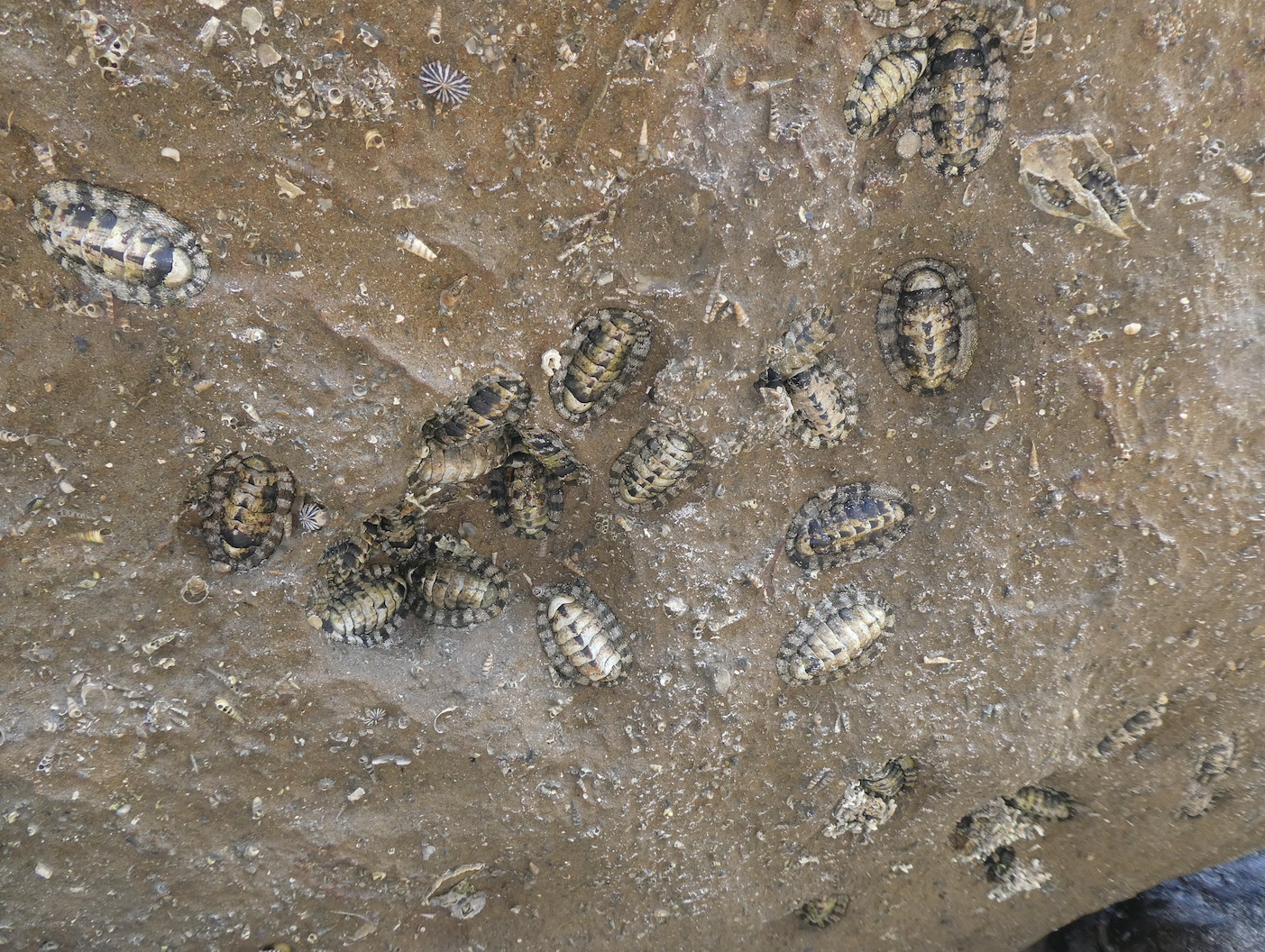
along with ancient ancestors of the turritella sea snails.

Nature’s artwork surrounded us,

and with a little imagination, an ossified whale and porpoise.

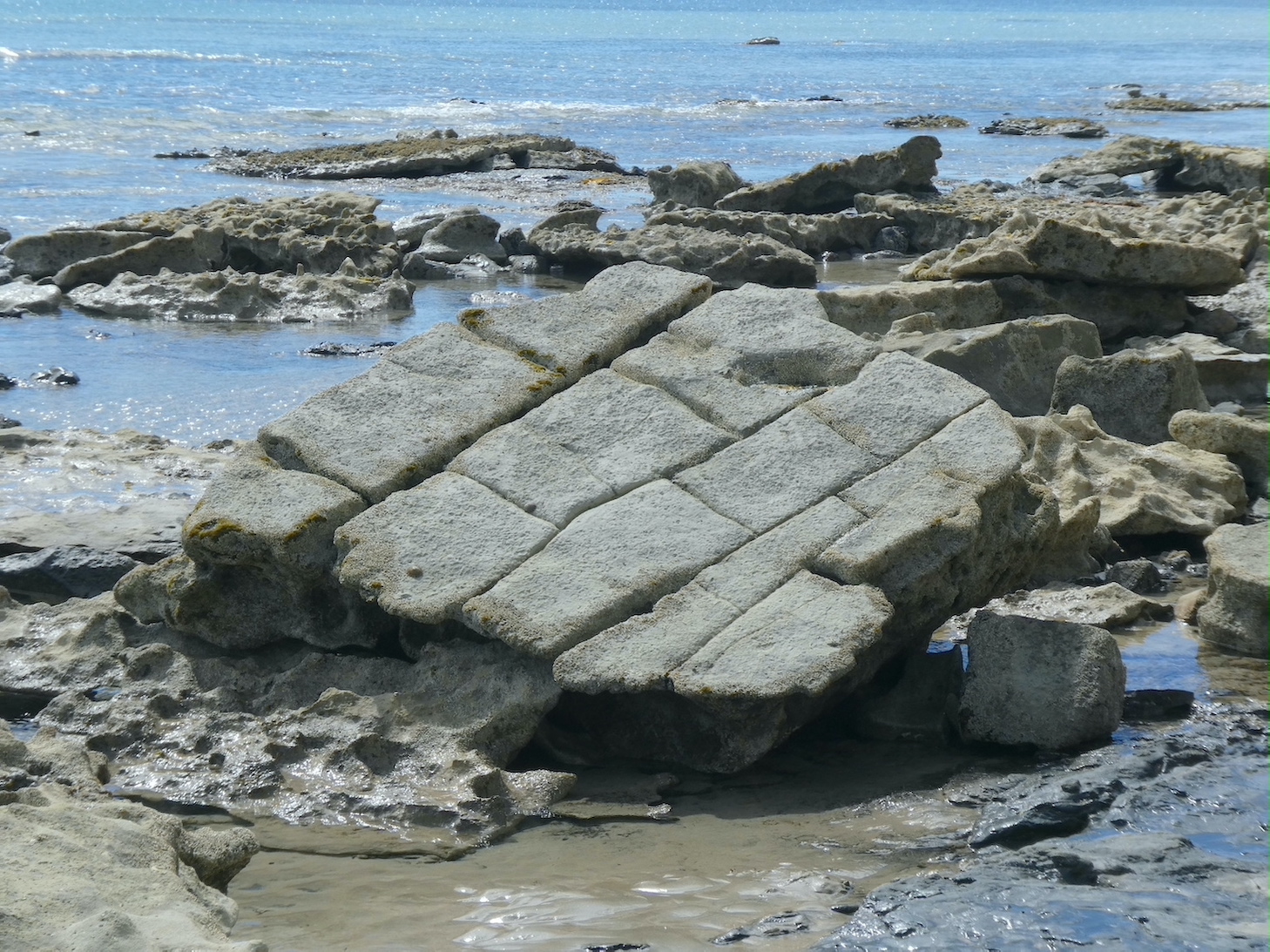
A lone slab of tessellated rock seemed out of place among its gnarly neighbours.

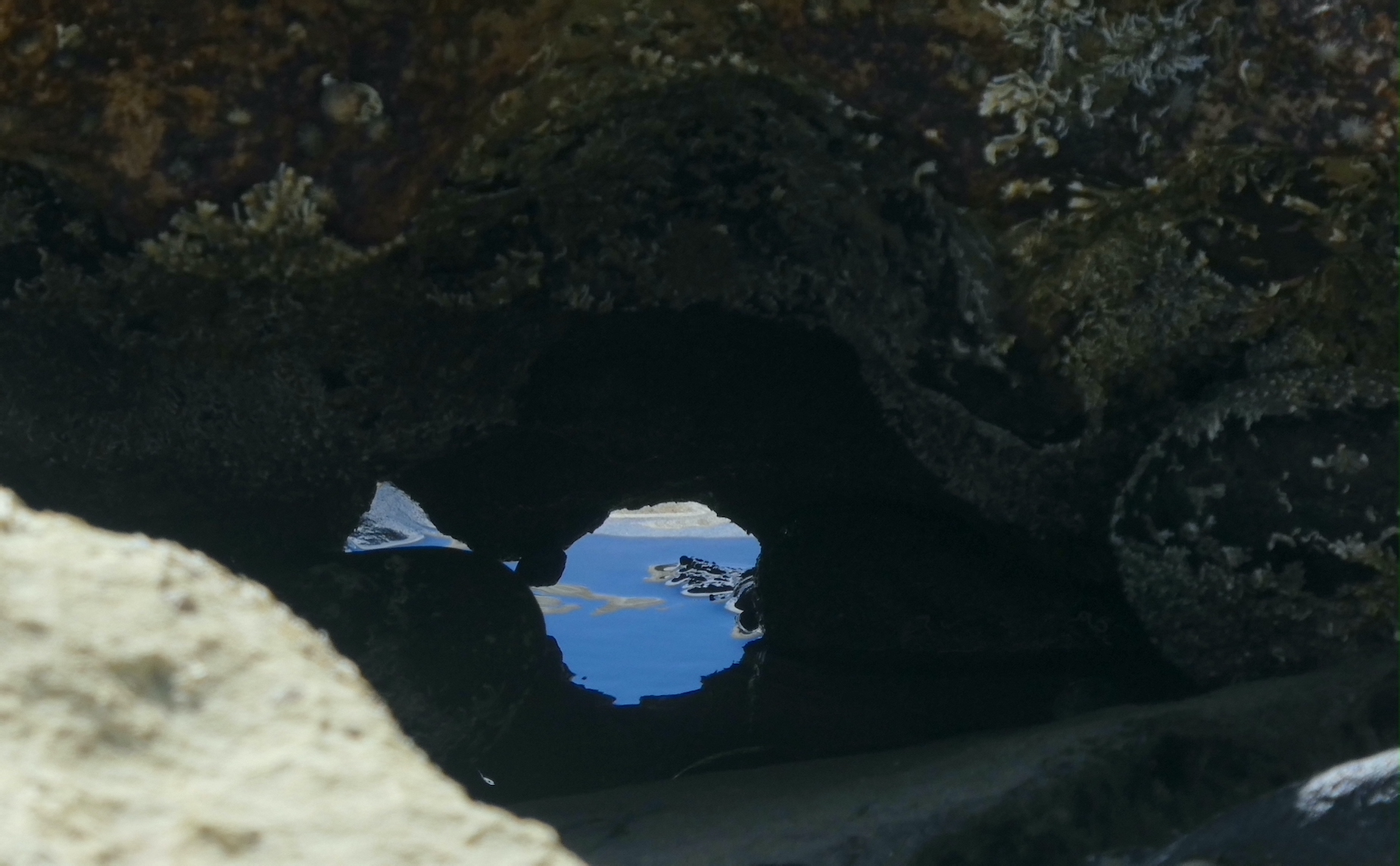
I was wondering why my niece was so interested in photographing this particular rock formation

until she showed me what she had captured. I stole her idea.
Ginza Miyako

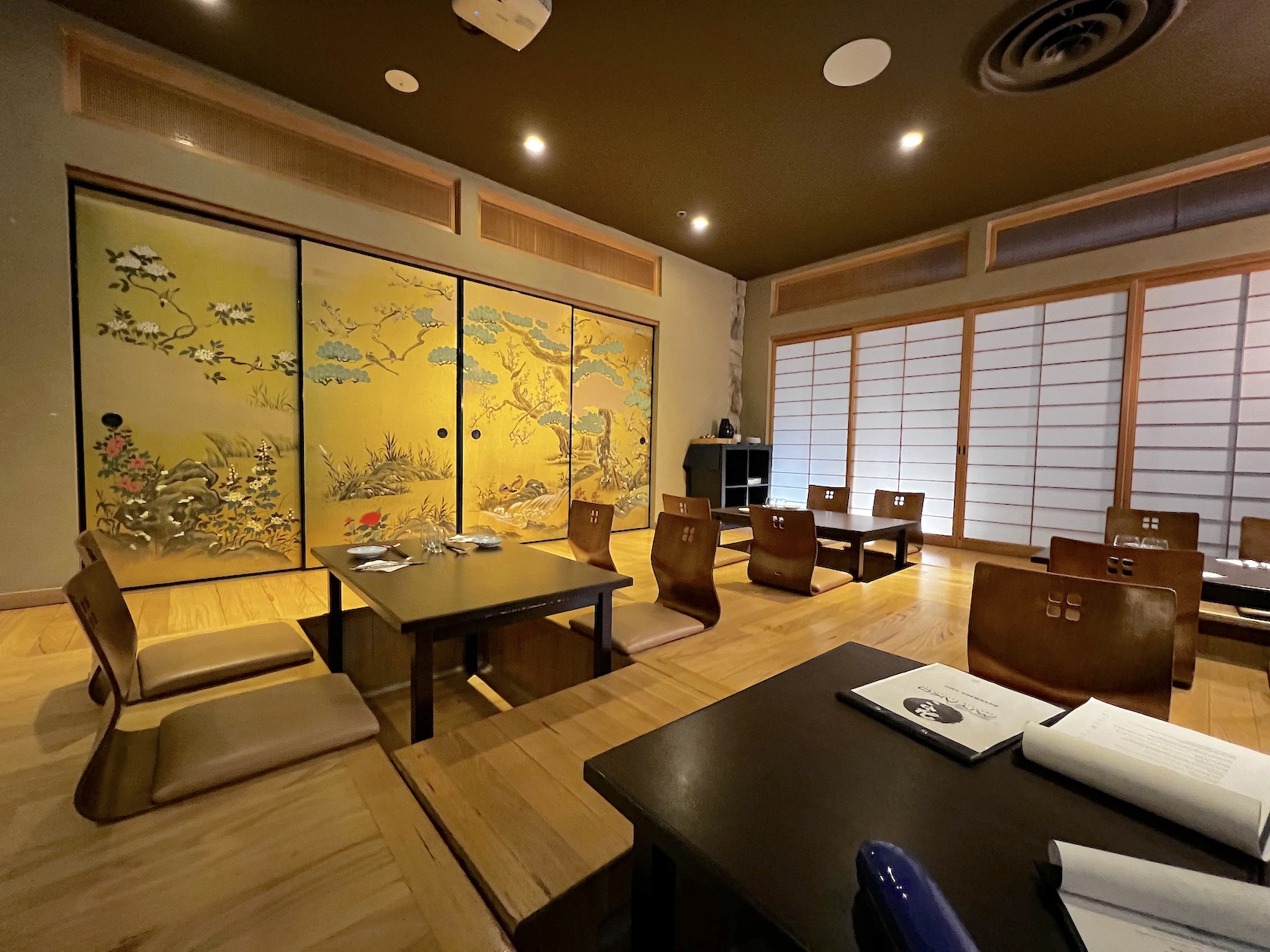
Japanese food is one of Michael’s favourites, unfortunately it is something of a rarity in Tasmania and so, we relished the opportunity to dine at the highly recommended Ginza Miyako while in Adelaide. The menu is described as a blend of Japanese cuisine with French influence, using fresh South Australian produce to highlight the flavours of Japan with French cooking techniques. For those unable or unwilling to sit on the floor, there is a generous western style seating area. We opted for the traditional style seating, separated from two private function areas by elegant Shoji screens.
We abandoned our shoes at the door where  a row of ‘slip-ons’ awaited to wear for the inevitable trip to the bathroom. The attentive ladies, dressed in delicate traditional garb, advised us on our selection of dishes and promptly delivered two flasks of Sake, one warm and one cold.

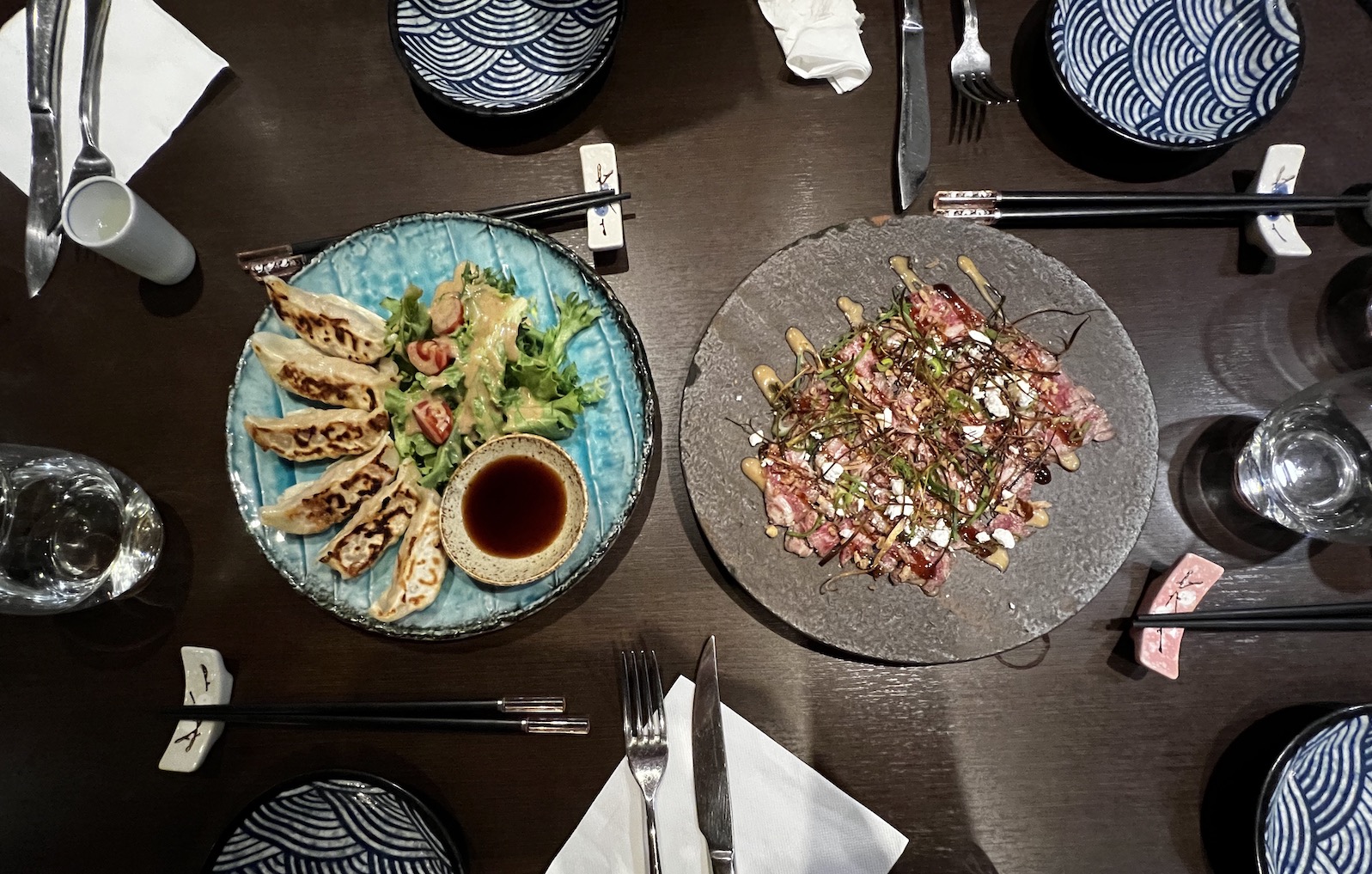
Beautifully presented entrées arrived on shared platters. Pork Gyoza and Wagyu Beef Carpaccio with citrusy homemade ponzu dressing and umami sesame aioli.

Chicken Karaage, deep fried Japanese style

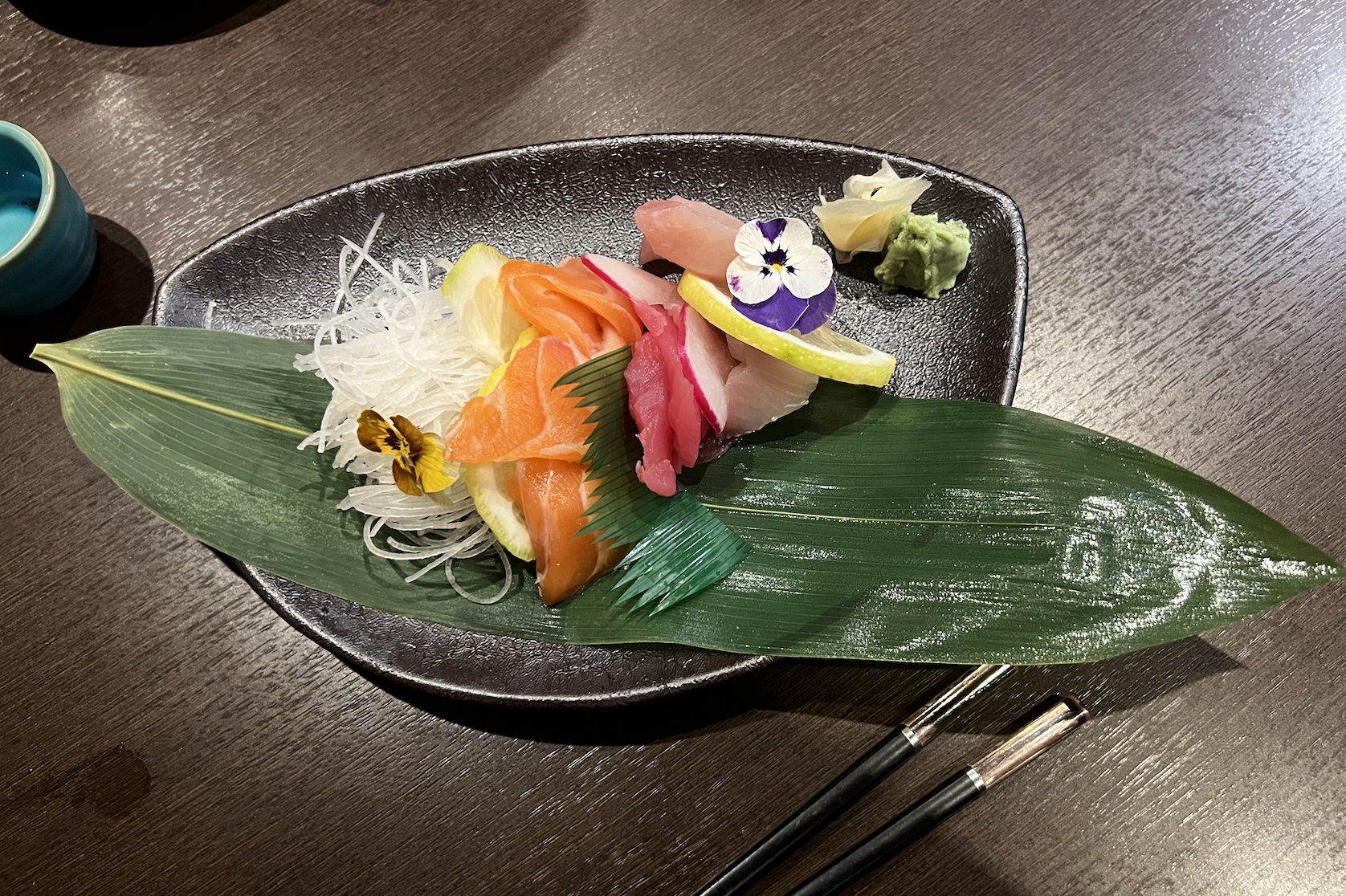
and a stunningly vibrant Sashimi Platter.

Nearly thirty years ago, I first tasted eel at another Japanese restaurant in Adelaide and was instantly smitten. For main course, I couldn’t resist Unagi Don – grilled eel with yakiniku sauce and delicious accompaniments.

The 300g Wagyu Beef Scotch Fillet satisfied our steak loving friend

while the Teriyaki King Salmon Bento with Miso Soup was equally as colourful as it was delectable.

None of us had room for dessert, maybe next time.