Lake Claremont

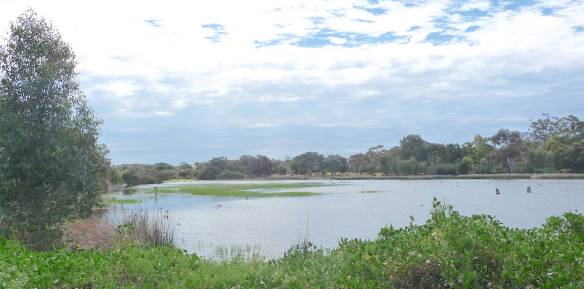
The last thing I expected in the middle of suburban Perth was the beautiful conservation area that is Lake Claremont. The reserve covers 70ha and hosts a variety of flora and fauna, including over 87 species of birds. Prior to 1831, the wetland area provided food for the Mooro people. With pressure from European settlement and rising waters, the last of the Aborigines moved away in the 1940s. It is now a recognised site of Aboriginal heritage.

1.Lake Claremont

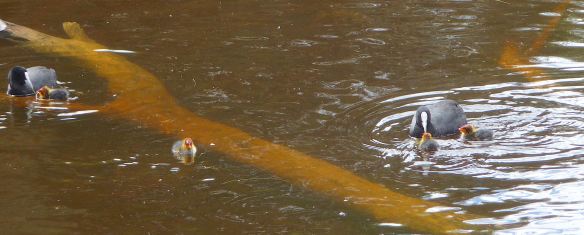
Although spring had not yet sprung, the birdlife was busy with family raising duties. The Eurasian coot, though attractive, is not particularly colourful. The bright, fluffy chicks are absolutely gorgeous.

2.Eurasian Coot

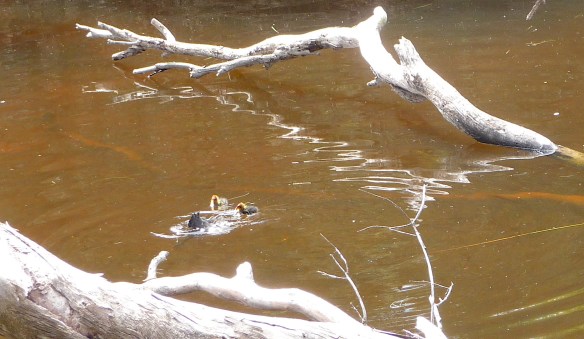
Both parents share the rearing responsibilities, including teaching them how to dive for food.

5.Eurasian Coot chicks

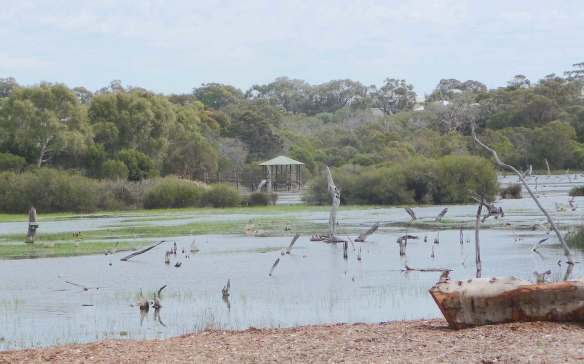
The Aborigines weren’t the only victims of the rising waters. The once majestic paperbarks that dominated the central area couldn’t survive the permanent submergence.

6.Lake Claremont

The remnants provide nesting grounds for the waterbirds

7.nesting Black Swan

and add another dimension to the landscape.

8.Lake Claremont

The black swan is the official bird emblem of Western Australia, this majestic mother comfortable on her nest mound.

9.nesting Black Swan

Another swan family were out with their youngsters while the Australian shelducks seemed to walk on water.

10.Black Swan with cygnets & shelducks

Pink-eared ducks were resting nearby, they feed by filtering water and soft mud with their specially shaped bills.

11.pink-eared duck

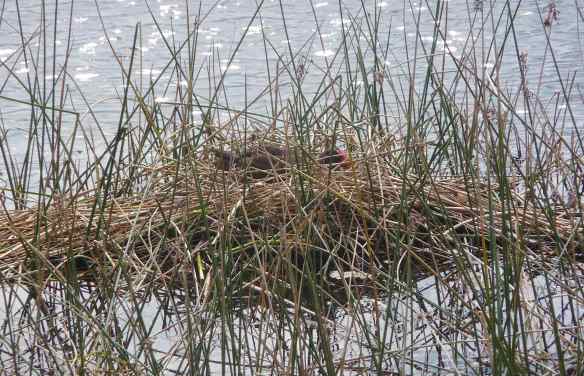
Purple swamphens build nesting mounds among the reeds at the lakes edge,

12.nesting Purple Swamphen

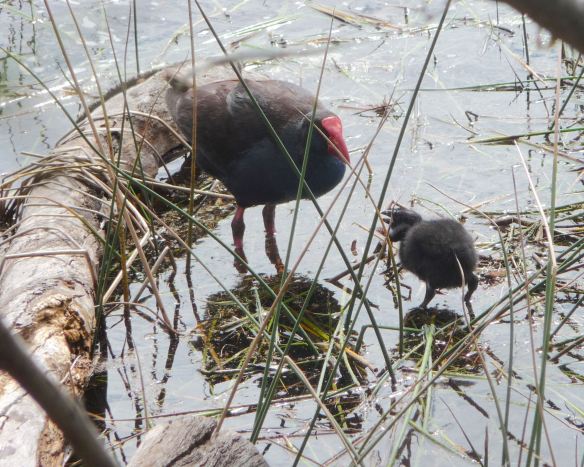
the chicks have feeding lessons in the shallows.

13.Purple Swamphen with chick

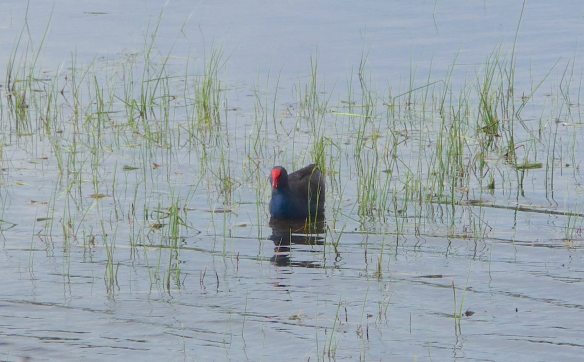
The swamphens are mostly vegetarian but will also eat eggs and very young birds.

14.Purple Swamphen

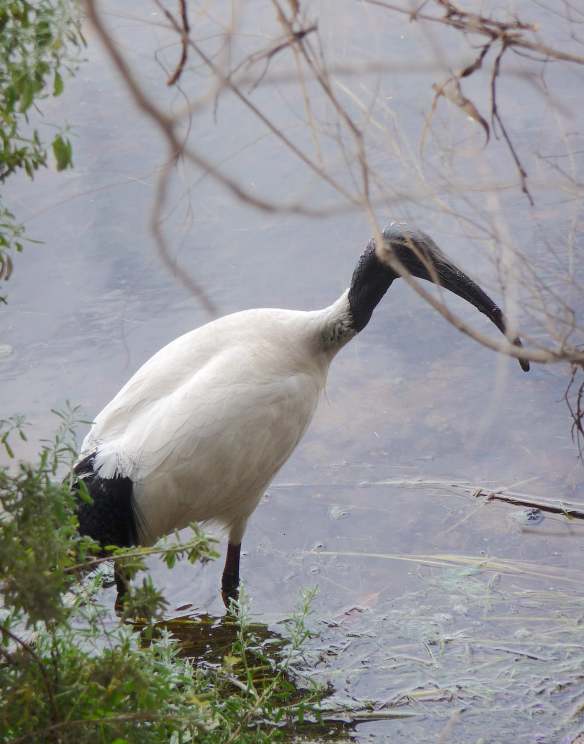
The Australian white ibis is one of two ibis species at the lake. They forage for aquatic animals and are known to eat snakes.

16.Australian white ibis

As we continued our circuit of the lake,

17.Lake Claremont

we found some paperbarks still thriving on the shore.

18.paperbark

This lone Pacific black duck was taking some time out.

19.Pacific black duck

Another family of purple swamphens were enjoying breakfast

24.Purple Swamphen & chick

as we returned to our starting point.

25.Lake Claremont

What a wonderful way to start the day, thank you Jude.

renovation ruminations: part 6

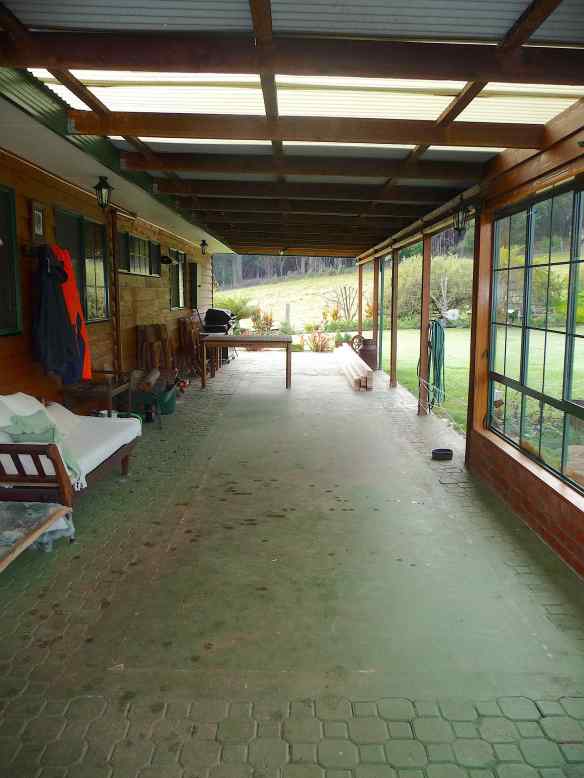
Our latest renovation project has been a few years in the making. When we moved in, the back verandah was partly enclosed and there were café blinds further along (the first storm took care of those). Apart from being immensely unattractive, condensation would drip from the ridges of the corrugated ceiling, creating puddles on the floor.

1.before

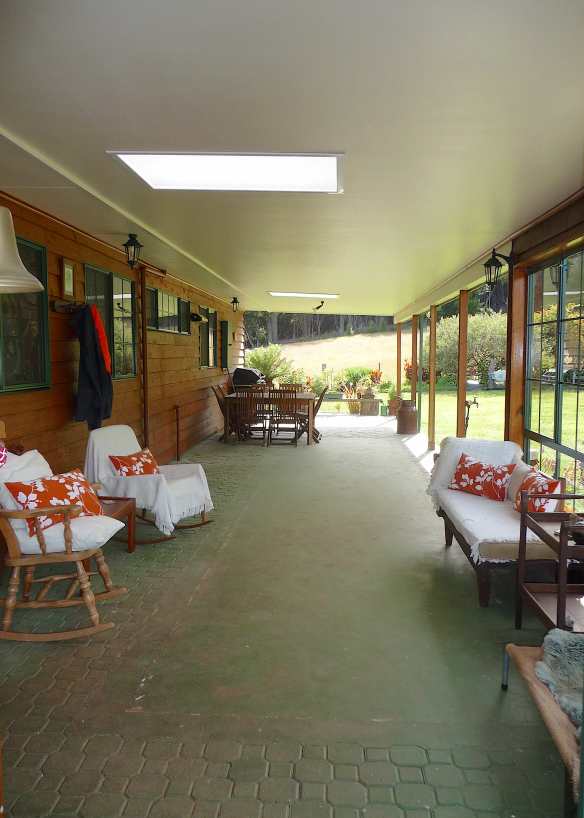
We solved that problem with a new ceiling in 2011, adding skylights to allow light into the house.

2.new ceiling Dec 2011

We had often talked about how nice it would be to enclose the room but other things got in the way. Forward to spring 2016 when a pair of welcome swallows moved in. Each time they started to build a new nest, we would remove it. They were so persistent, we attached plastic to the cedar cladding and cardboard ‘lids’ to the coach lights. They finally got the message – and so did we. In March this year, we started by removing the existing window and sliding door in readiness for a concrete slab.

A few days later, the builders started on the formwork, under the guidance of Poppy.

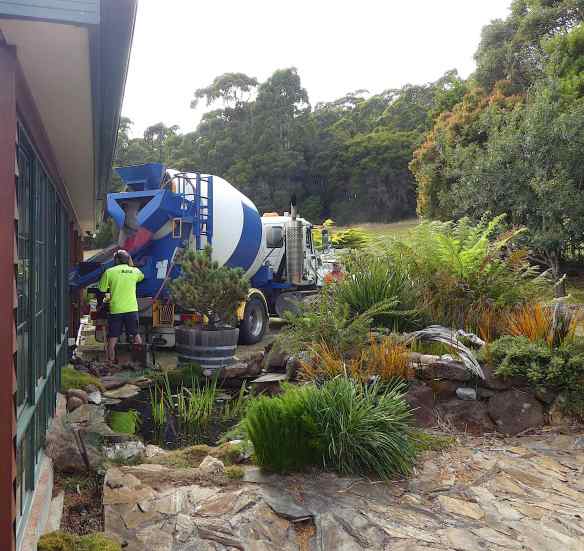
The driver manoeuvred the truck past the pond

8.concrete truck

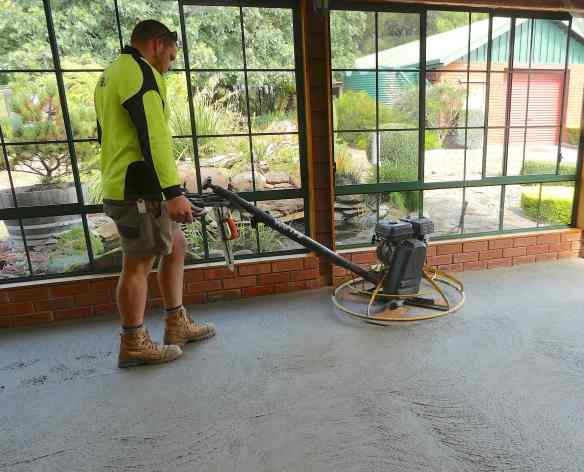
and the lads got to work.

A few turns with the whirly-gig

14.whirly-gig

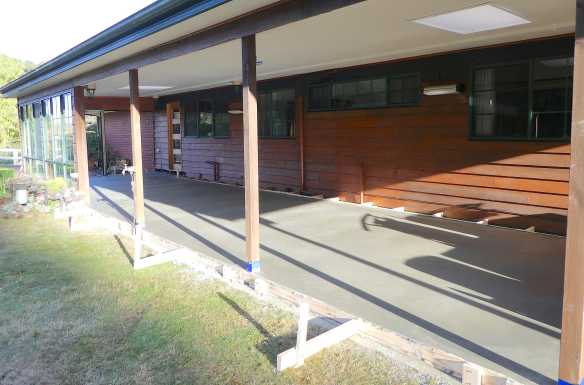
and next morning we had the beginnings of our new room.

15.slab

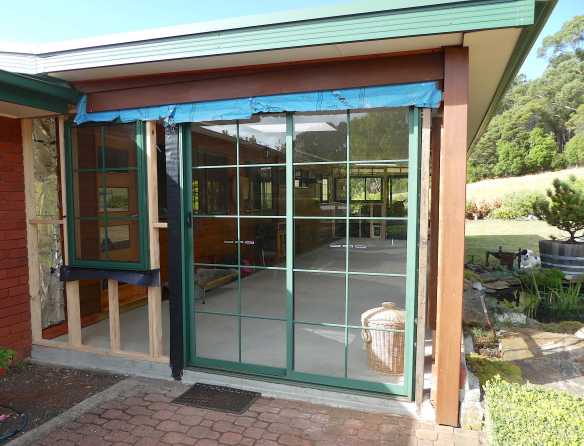
The old sliding door was repositioned at the entrance and a smaller window installed next to it.

16.new window, old sliding door

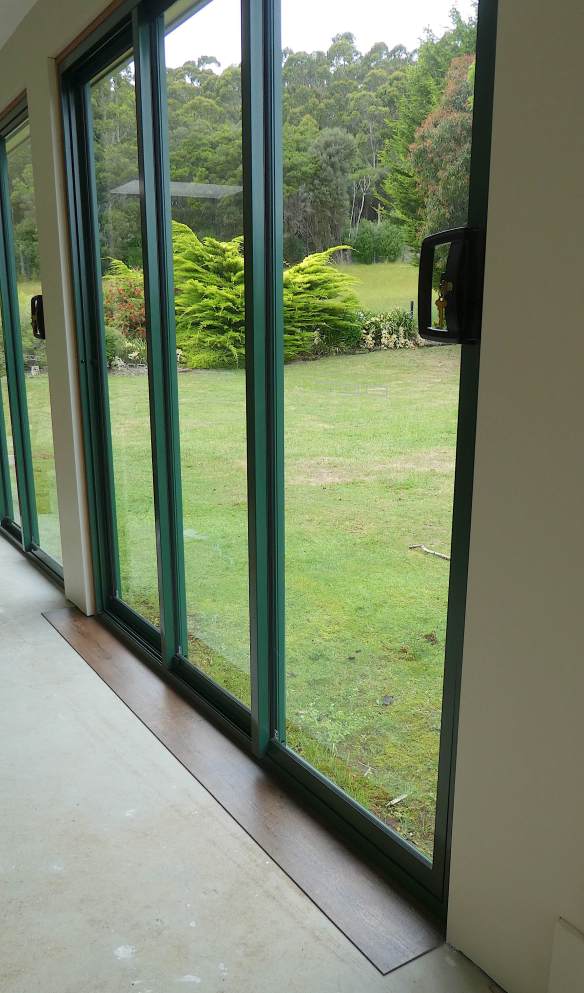
Three large stacker doors and a slider at the other end followed. The small stacker windows at the far end will sit above the bar and will open into the BBQ area. Poppy has a new doggy door which she thinks is great fun.

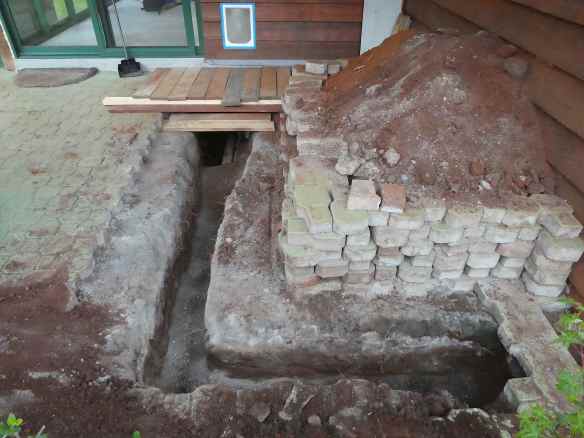
We left a channel open along the old exterior wall to allow access to pipes. The plan was to build timber frames so we could cover them with the flooring but remove if we have plumbing problems. Michael’s mammoth trench-digging effort unearthed the pipes but they weren’t where we thought, they were more central in the room.

19.trench for plumber

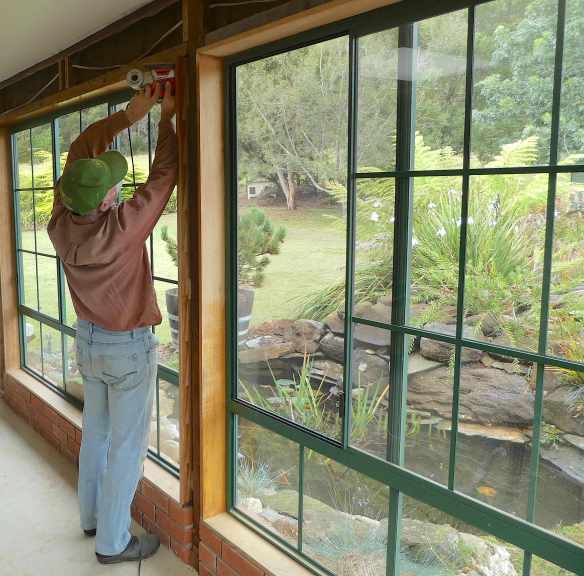
The old coach lights were removed and down lights installed, with power points to follow. We sanded the existing window frames so they would match the new ones.

20.sanding

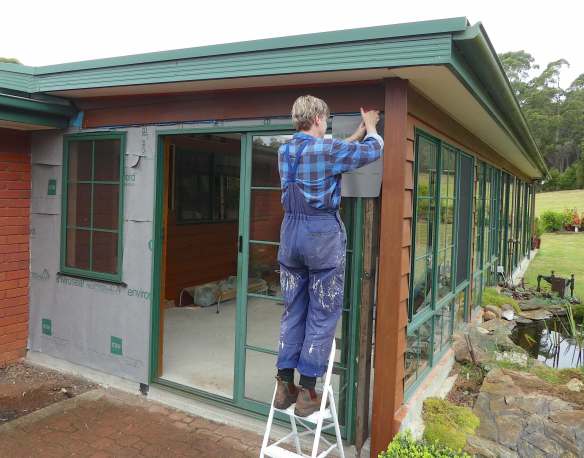
We carefully extricated the cladding from the old exterior wall

and after attaching the moisture proof membrane,

23.waterproofing

re-used it on the new exterior.

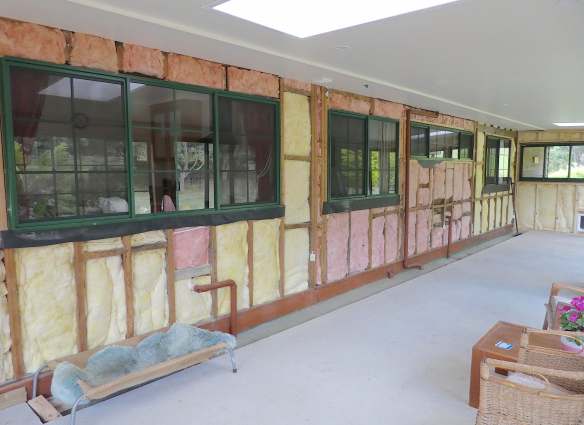
Insulation came next

27.insulation

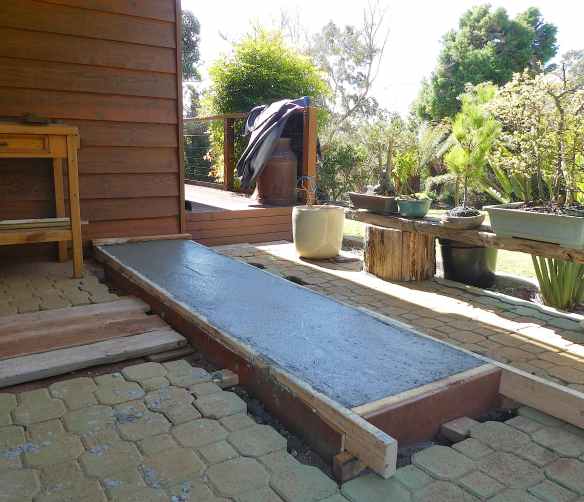
and then the plumber removed the old exterior pipes, re-directed them outside and installed fixtures for a bar sink. Now that we didn’t need the channel to access the pipes, we had another concrete delivery to fill it in

and laid a slab for the BBQ and pizza oven at the same time.

30.BBQ slab

Plastering and painting made it all seem a reality.

31.almost there

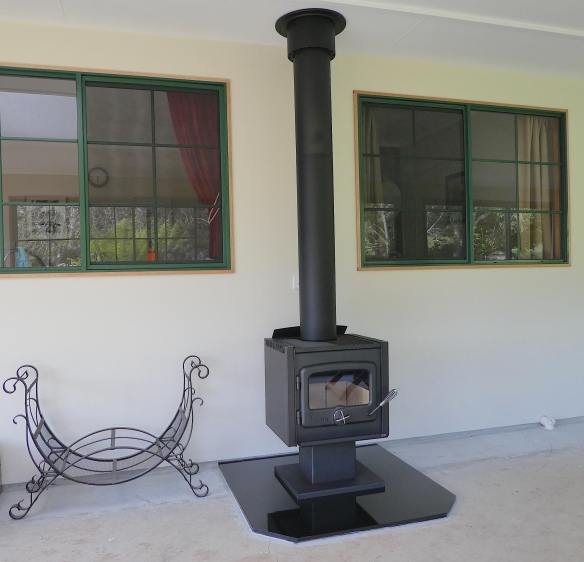
We decided on a small wood heater for those cold winter evenings,

32.wood heater

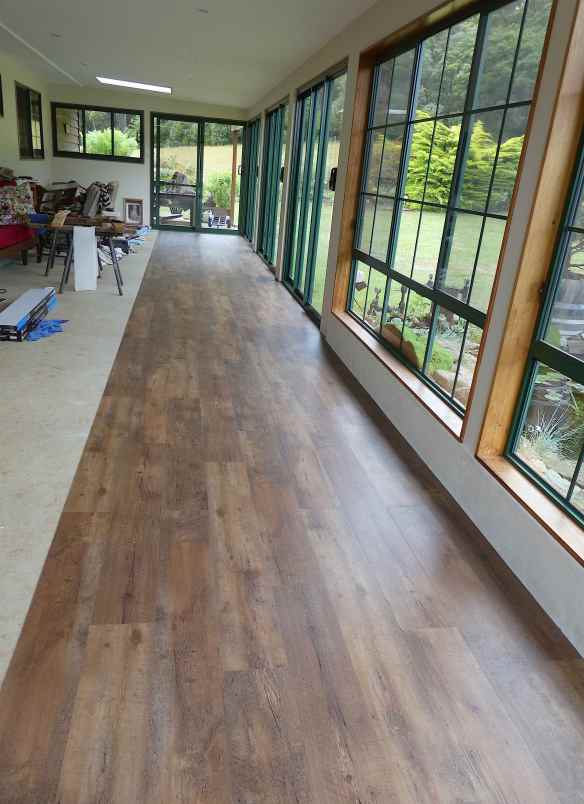
and vinyl planks for the floor. The excitement of laying the first plank

33.first plank

had quelled somewhat after the second day.

34.halfway

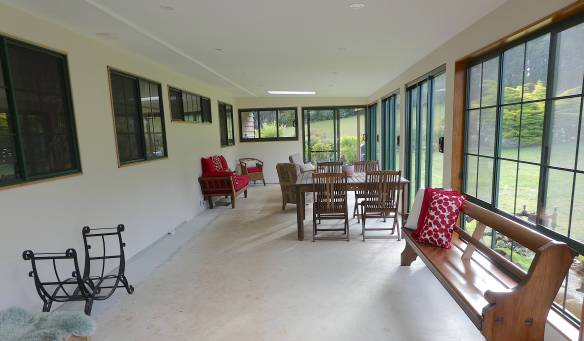
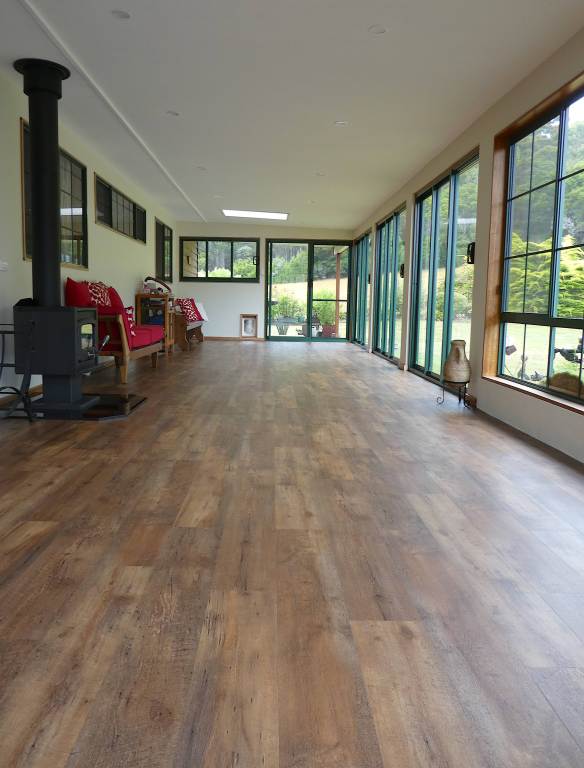
With skirtings fitted and varnished, we are very happy with the result.

35.finished

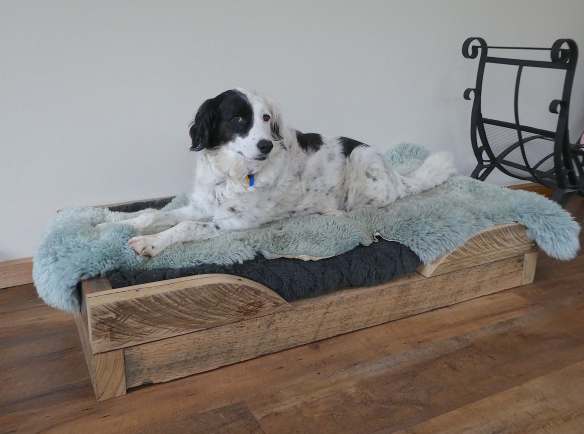
Poppy has a new bed (she refused to smile for the camera) made from reclaimed timber.

36.Poppy's bed

We couldn’t make up our minds on furnishings so decided to refurbish the items we already had.

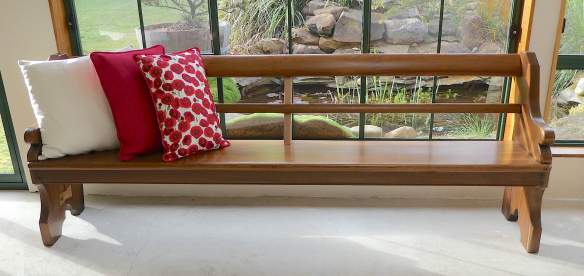
We bought an old pew for our dining area, it revived beautifully with some TLC.

45.pew

The dining table and coffee table – well, that’s another story. Now we just have to build the bar, a couple of cupboards, the decking, the BBQ………

snooping snake

After a long cold winter, our resident reptiles have been enjoying the summer sunshine. Once the weather warms up, we become more vigilant around the garden and when walking Poppy in the forest. We recently had a visitor waiting at the door when I returned from work. She moved off as I approached and I encouraged her direction of retreat to the other side of the house. We met again about an hour later on my way back from the veggie patch, she promptly sought sanctuary under the box hedge by the front door. Poppy and I went inside but I kept an eye out at to see where our guest would go next. Expecting to see her at ground level as she emerged from the hedge, I was surprised to see something atop a bush four metres away.

1.snake atop bush

Once my heart restarted, I snapped a couple of pics with my phone. Usually, the small birds alert us to the presence of a snake, staying well out of the way and making lots of noise. The blue wren next to the bush didn’t seem to be aware at all.

2.waiting for the birds

I raced inside to grab the camera and when I returned, the snake was no longer on the bush. Scanning the garden, a blasphemous expletive escaped my lips as I saw her on the box hedge right outside the window.

3.on box hedge

I don’t know if she was admiring our new renovations but she obviously wanted a closer look because she crossed open space, mid-air, to a pot plant nearer the window.

4.on box hedge5.crossing to pot plant6.crossing to pot plant

At this point, the camera peeked outside – I didn’t.

7.in pot plant

She then dropped to the ground and headed toward the pond, possibly in search of a tasty frog or two.

8.still searching

I don’t think she found any, she came back to the window.

9.coming back10.coming back

She may have seen her reflection as a mate or rival,

11.up close

or maybe she could see me and the glint off the camera.

12.can she see me?

I’m referring to her as a female because she wasn’t as big as some and her head isn’t that distinctive diamond shape of the males with the wide jaw.

13.can she see her reflection?

I could be wrong. It’s easy to see from the markings why they are called tiger snakes.

14.fabulous markings

Is that a smile?

15.is that a smile?

She finally got bored and moved off, hopefully to find what she was looking for.

If you would like to watch the video of this encounter, here is the link https://www.youtube.com/watch?v=R9PSWwWqijw&feature=youtu.be

By the way, in our experience, this is not the usual behaviour of tiger snakes. They are timid creatures and will retreat very quickly in human presence. Yes, they are deadly but only if they bite. People get bitten when they are trying to kill, catch or corner them. We prefer to live and let live and anyway,  they are protected in Tasmania.

La Lucciola

If there is one thing you can rely on in Bali, it’s the fabulous food. Coupled with a stunning location, you have La Lucciola at Seminyak. After a stroll along the main street accompanied by the cacophony of traffic and populace, reaching La Lucciola was nirvana.

1.La Lucciola2.La Lucciola

Seated on the upstairs balcony, the gentle sea breeze mingled with that of the overhead fans and the tranquil view perfected the scene.

3.La Lucciola

The undrinkable water forced us to order cocktails instead, anything to quench the thirst.

The flower arrangements were quite spectacular, even in the bathrooms.

The meals disappeared too quickly for photographs but I caught a couple of the desserts.

After lunch, we walked onto the sands, soft and golden on this part of the island.

11.Seminyak Beach

Seminyak Beach comprises three adjoining coastal strips, the southernmost bordering Legian Beach.

12.Seminyak Beach

This little squirrel has certainly chosen a lovely spot to call home.

Avon amble

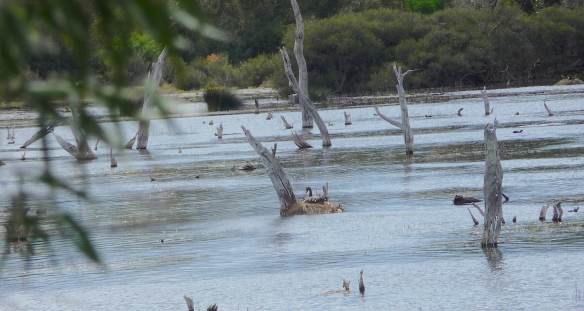
Having explored Shakespeare’s birthplace and home town, it was only right we would visit his place of rest. On the banks of the River Avon, Holy Trinity Church is the oldest building in Stratford. Dating back to 1210, much rebuilding was undertaken between 1465 and 1491. The original wooden spire was replaced in 1763.
1.Holy Trinity Church

There were many fascinating gravestones, these two seemed to be connected in some way.

2.gravestones

I could find no information about Catharine Gill who died in 1868 at the age of 71 (on the right of the photo). However, I found that Abigail Insall, (on the left), who was buried in 1869 at 80 years of age, had lived in this gorgeous semi-detched early Georgian Town House at 4 Tyler Street. I liberated this photo from Google maps.

3.4 Tyler Street

The interior of the church was breathtaking

4.the nave and font

with several huge stained glass windows.

5.stained glass windows

William Shakespeare was buried in 1616 in the chancel alongside other members of his family.

6.the chancel

During services, priests had to stand, which was particularly hard on the older ones. Small hinged seats, called misericords, were installed in the 15th century so the priests could rest, yet appear to be standing up. There are 26 of these misericords and each one has three carvings on the underside, only visible when the seat is folded up. There are no religious scenes but an interesting array of bawdy, theatrical faces – a reminder of the devil’s presence and his search for wayward souls.

7.carvings on misericord seats

The impressive pipe organ dates from 1841 and has undergone several restorations.

8.the organ

Leaving the church, we wandered along the banks of the River Avon enjoying a different perspective of Holy Trinity along the way.

9.Holy Trinity Church10.Holy Trinity Church

The magnificent stained glass window in the chancel was more subdued from the outside.

11.Holy Trinity Church from the east

Autumn leaves littered the path

12.River Walk

and the geese were out for an afternoon walk.

The Tramway Bridge was built in 1822 to carry the horse tramway and is now a footbridge across the river.

15.Tramway Bridge

100 metres to the east, road traffic crosses the river via Clopton Bridge. Built in the 15th century to replace an earlier timber bridge, the reflections from the 14 pointed arches on a clear day would be amazing.

16.Clopton Bridge