York

Being the largest county in the UK, there were so many places we wanted to see in Yorkshire. Aware of our limited time, we had to make some difficult decisions. The town of York was an obvious choice. We entered the historic walled city, founded by the Romans in 71AD, along Micklegate. Once the most important of York’s four medieval gateways, we passed beautiful old buildings

1.Shops on Micklegate

on our way to the river.

2.River Ouse

There are nine bridges across the River Ouse within the city of York, the oldest being at the site of the present Ouse Bridge as early as the 9th century. The history behind the Ouse bridge is quite interesting. In 1154, the stone bridge collapsed when a large crowd gathered to welcome Archbishop William to York. It was considered a miracle that no-one drowned and the Archbishop was later canonised and had a chapel named after him. The replacement bridge was supported by six arches and was lined with houses, shops, a toll booth, a courthouse, a prison and the chapel dedicated to St William. In 1367, the first public toilets in England were installed on the bridge. In 1564, the river flooded and the bridge collapsed, the buildings were swept away. The next new bridge was built much higher and houses and public buildings were again built along its length. After 250 years or so, in need of repairs, the bridge was replaced. Started in 1810, the present day bridge took 11 years to complete.
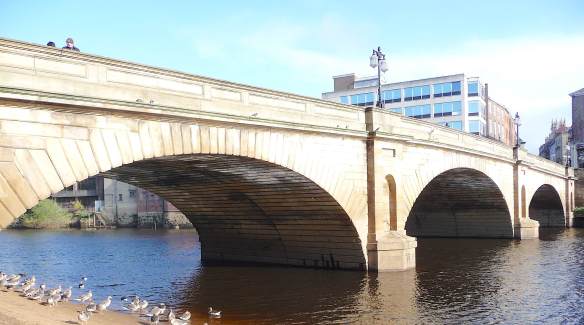
3.Ouse Bridge

Across the river, we made our way to The Shambles. Dating back to the 14th century, York’s oldest street has some fascinating architecture.

4.The Shambles

Historically a street of butchers shops and houses, the name is thought to come from the medieval word Shamel, meaning booth or bench. Livestock were slaughtered at the back of the premises and the meat laid out on what are now the shop window bottoms.

5.The Shambles

The overhanging fronts of the timber-framed buildings almost touch each other in some parts of the street. This was deliberate to shelter the wattle and daub walls and protect the meat from direct sunlight.

6.The Shambles

The butchers shops of old have been replaced by quaint businesses more appealing to the tourists that flock to The Shambles.

7.The Shambles

There isn’t much left to see of York Castle. Built in 1068, there were originally two circular castles, this one known as Clifford’s Tower. The wooden structure was replaced in the 13th century with stone, suffered some damage during the Civil War and was then gutted by fire after a major explosion in 1684. It wasn’t restored until the 19th century and was then used as a jail until 1929.

8.York Castle Clifford's Tower

It would have been wonderful to have had two hours to spare to walk the 3.4 kilometres of beautifully preserved town walls. We had to be satisfied with the short section that took us back to Micklegate and our next exciting destination.

9.Town walls approaching Micklegate

Harrogate

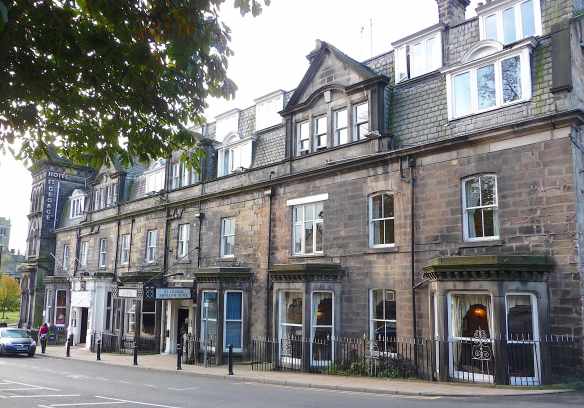
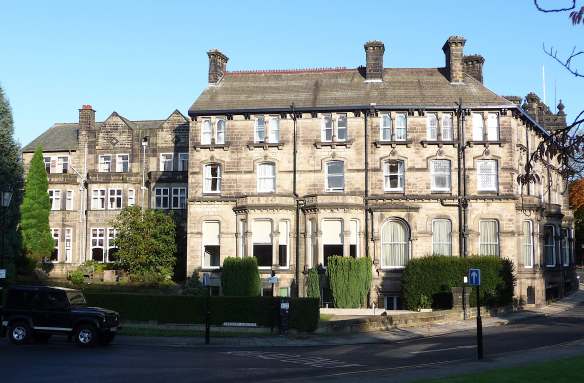
One of the advantages of travelling off season is the availability of accommodation. We stayed at the St. George Hotel, a magnificent Edwardian building right in the heart of Harrogate.
1.St. George Hotel2.St. George Hotel

It was like stepping back in time, with elegant furnishings in the lobby

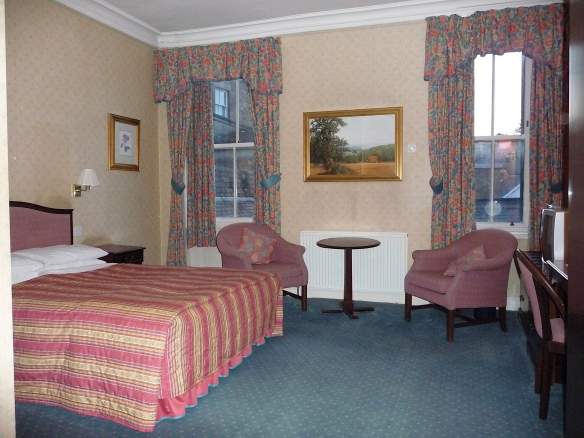
and a very welcoming, comfortable room.

5.St. George Hotel

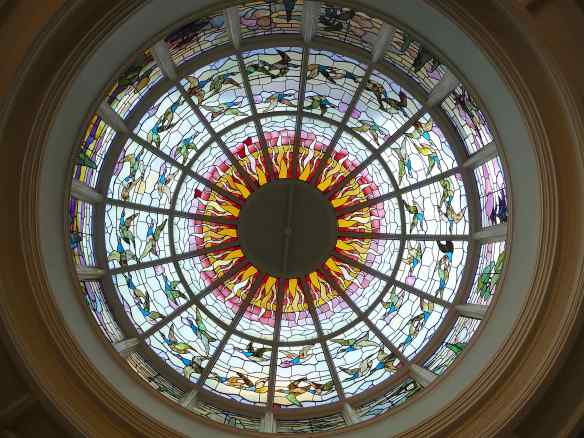
Not only had we found a fabulous place to stay, a three-course dinner each night was included in the price. The dining room had a huge central dome with stunning leadlight.

6.cupola in dining room

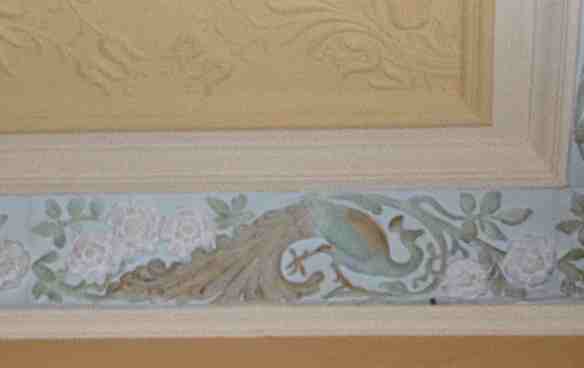
This pic isn’t very clear but it shows the intricate detail in the ceiling and cornices.

7.dining room detail

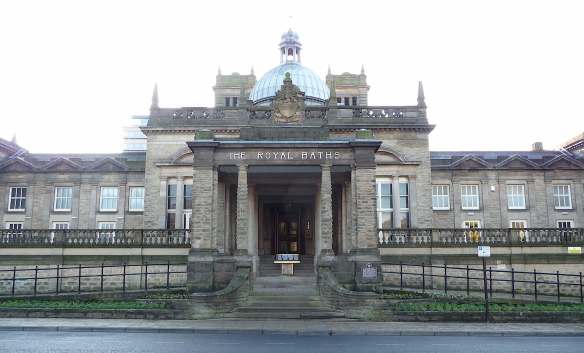
On a sunny autumn morning, we strolled the streets of Harrogate and soaked up the history of this beautiful North Yorkshire town. Known as ‘The English Spa’ after healing waters were discovered in the 16th century, the wealthy flocked to the town for treatments. The Royal Baths, considered to be the most advanced centre for hydrotherapy in the world, opened in 1897.

8.The Royal Baths

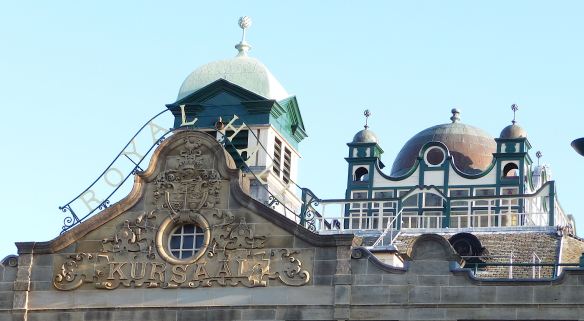
The Kursaal opened six years later, the German word translates as ‘Cure Hall’. At the beginning of World War I, the theatre was renamed the Royal Hall and is now a venue for events and entertainment.

9.Royal Hall Kursaal10.Royal Hall Kursaal

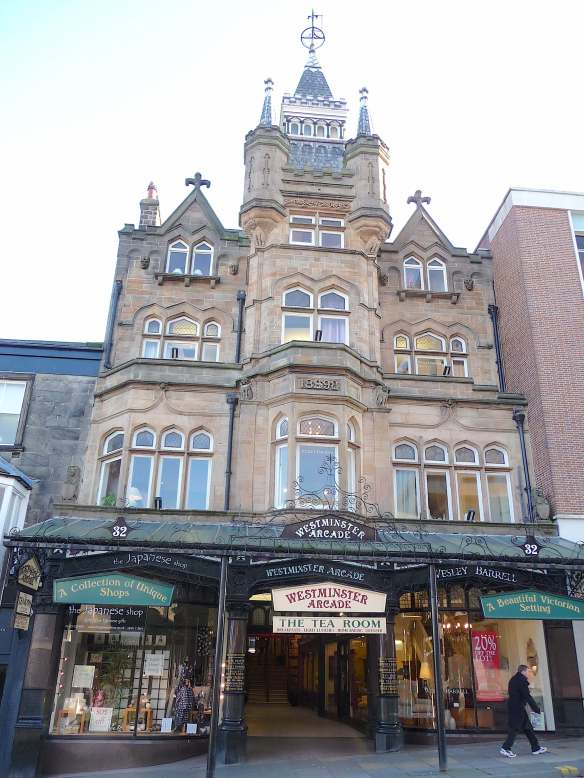
The architecture throughout the town was spectacular and the multitude of shops were housed in fantastic buildings.

11.Westminster Arcade12.Harrogate

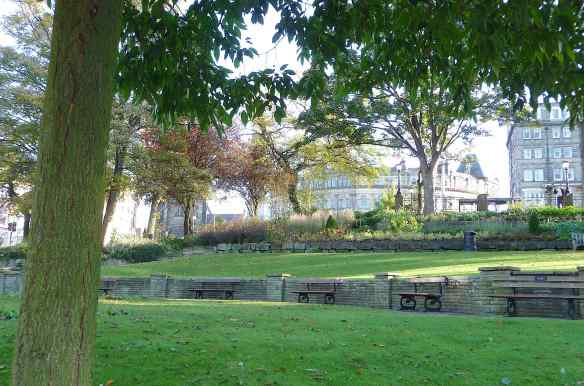
A walk through the park

13.Montpellier Hill14.Montpellier Hill

brought us to the Montpellier Quarter, home to exclusive shops, cafés and art galleries.

15.Montpellier Quarter

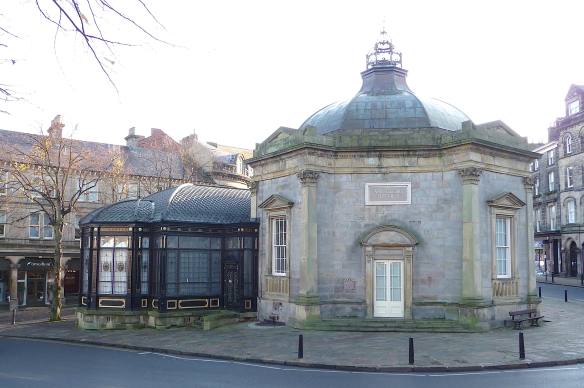
Too early in the day to visit the Royal Pump Room Museum, it sounded like a fascinating journey into the bygone era of weird and wonderful spa treatments. Built in 1842, the octagonal structure is quite distinctive.

21.Royal Pump Room Museum20.Royal Pump Room Museum

The Majestic Hotel certainly lives up to its name. Set in eight acres of landscaped gardens, the palatial Victorian hotel sits on a hill overlooking the town. Built in 1899, it has an interesting past with many celebrity guests, a fire in 1924, three bombings in 1940 and the subsequent loss of the massive glass Winter Garden that earned it the nickname the ‘Yorkshire Crystal Palace’.

22.The Majestic Hotel

Next time, I would like to stay at the Majestic Hotel.

Edinburgh

After leaving Inverness, we drove over the Grampian Mountains, with the intention of visiting Balmoral Castle. The snow became heavier

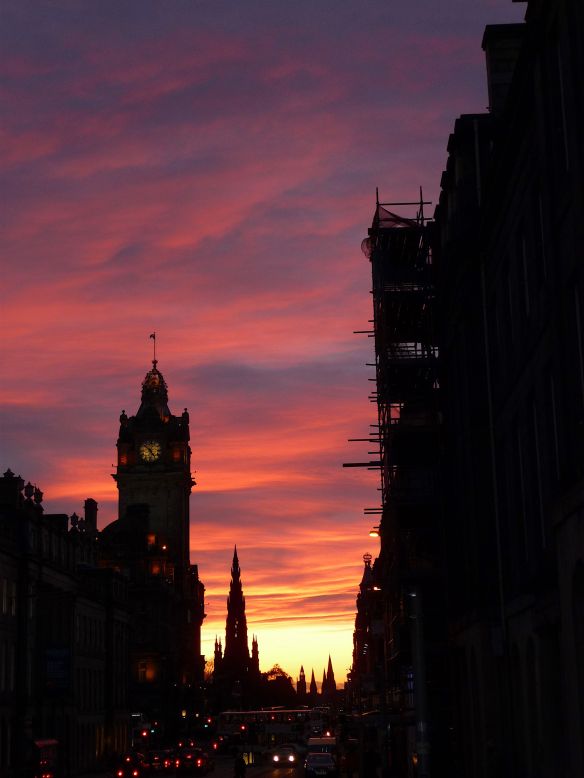
and as the temperature plummeted to -5ºC, we decided to head straight for Edinburgh instead. We arrived as the sun was setting

4.Edinburgh

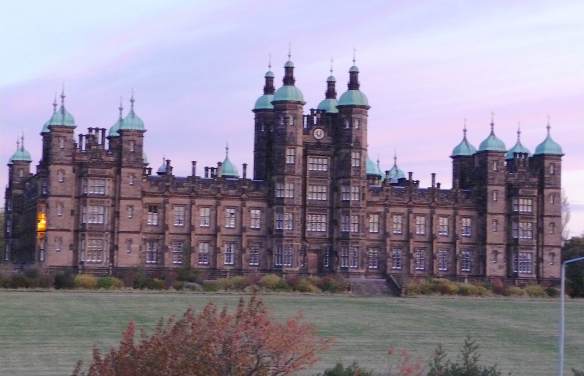
and found a hotel we liked the look of. Unfortunately, they only had a room for one night but recommended another place for us. We were told it was opposite a big building, we couldn’t miss it. After driving past three times, we finally found Ashgrove House, but couldn’t see anything across the road in the dark. After a marvelous curry and a good night’s sleep, I opened the curtains and, sure enough, the Donaldson’s School, a residential and day school for the deaf, was certainly a big building across the road.

5.Edinburgh

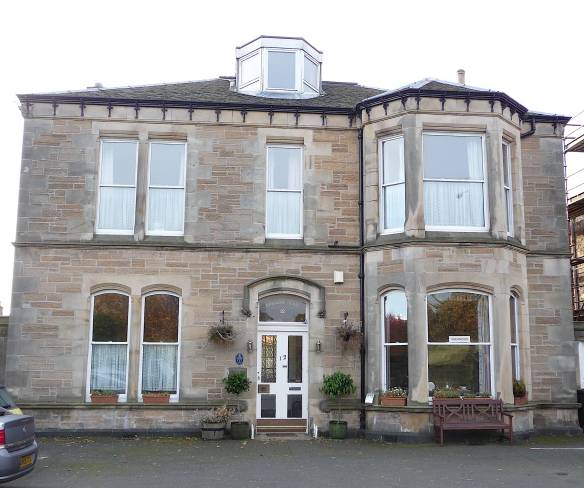
Our accommodation was lovely, in the attic room of this beautiful Victorian villa built in 1868.

6.Ashgrove House

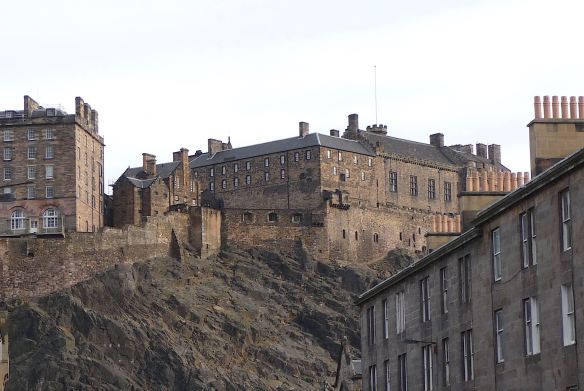
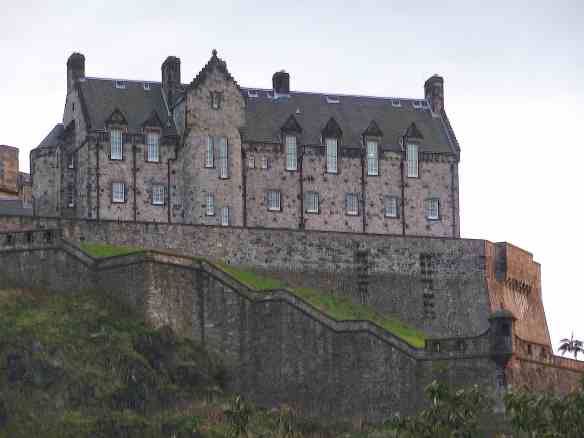
A short walk away, Edinburgh Castle loomed magnificently over the town.

7.Edinburgh Castle

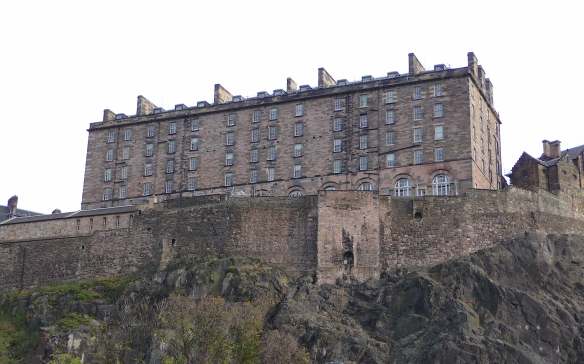
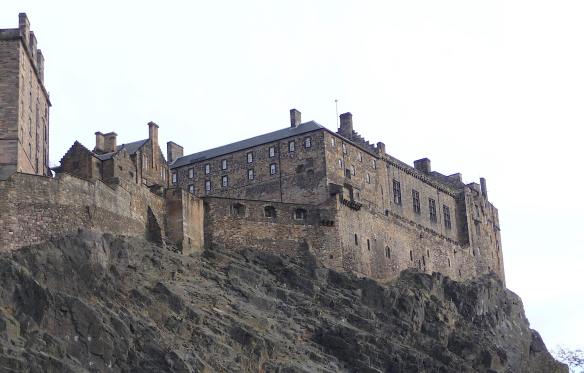
Built on volcanic rock, there has been a royal castle on this site since the 12th century,

8.Edinburgh Castle9.Edinburgh Castle

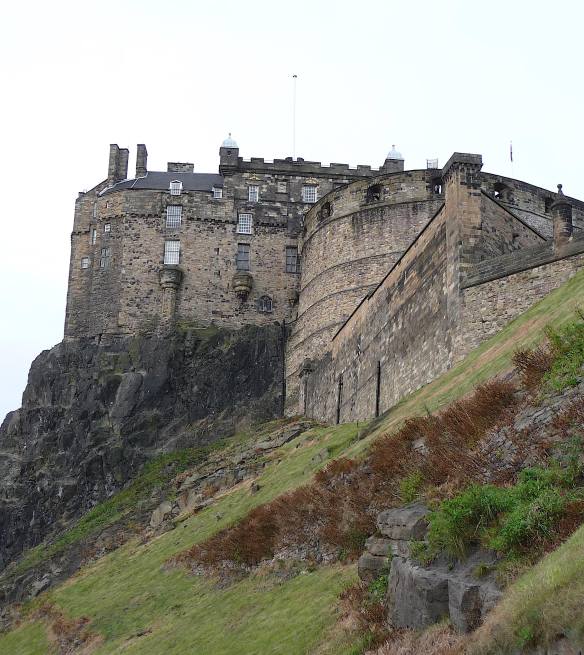
with royals in residence up until 1633.

10.Edinburgh Castle,Half Moon Battery and Palace Block

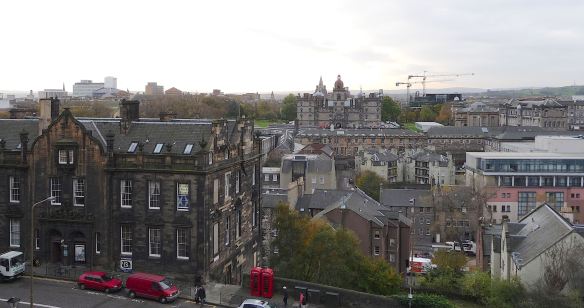
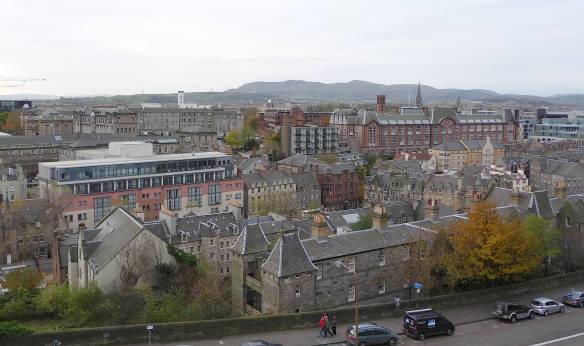
The view from the castle over Edinburgh and beyond was stunning.

11.Edinburgh12.Edinburgh

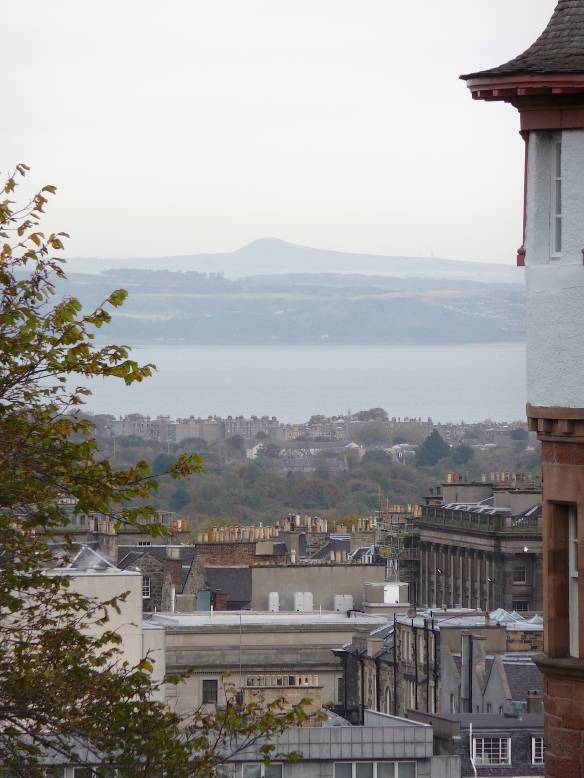
As we left the castle, we caught a glimpse of the Firth of Forth between the buildings,

13.Firth of Forth

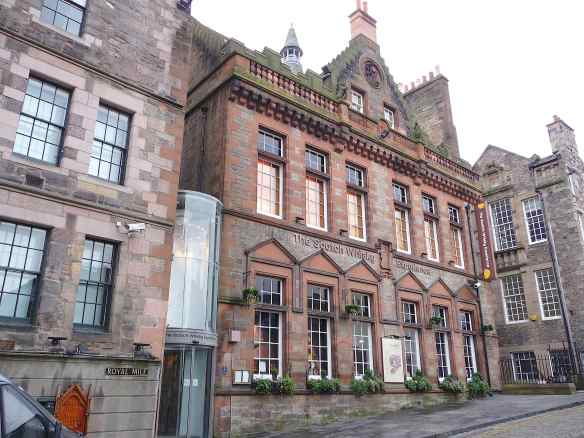
before setting off down the Royal Mile.

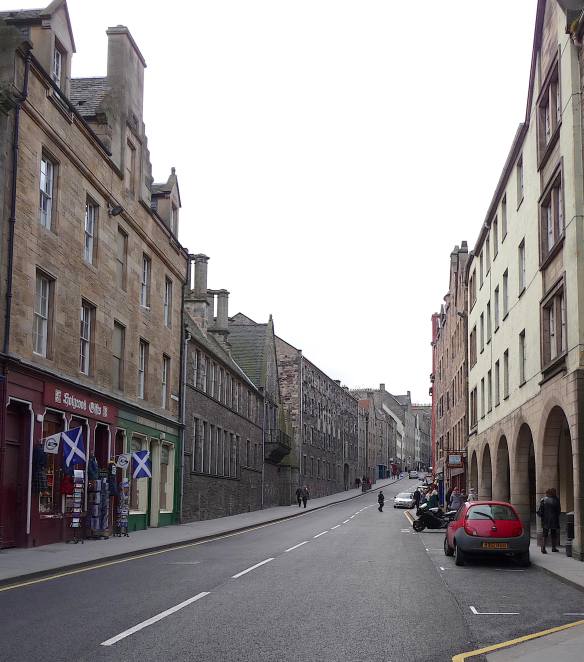
14.Royal Mile

The Scotch Whisky Experience was tempting but, as Michael isn’t keen on whisky, we opted for the 3D Loch Ness Experience instead.

15.Royal Mile16.Royal Mile

After treating ourselves to a pair of gold celtic rings, our keepsake from Scotland, we celebrated with a pint and bacon sandwich at the Royal Mile Tavern. I have seen condom machines in women’s toilets before, but never scotch whisky flavoured, nor with the advice to refrain from driving while using the product!

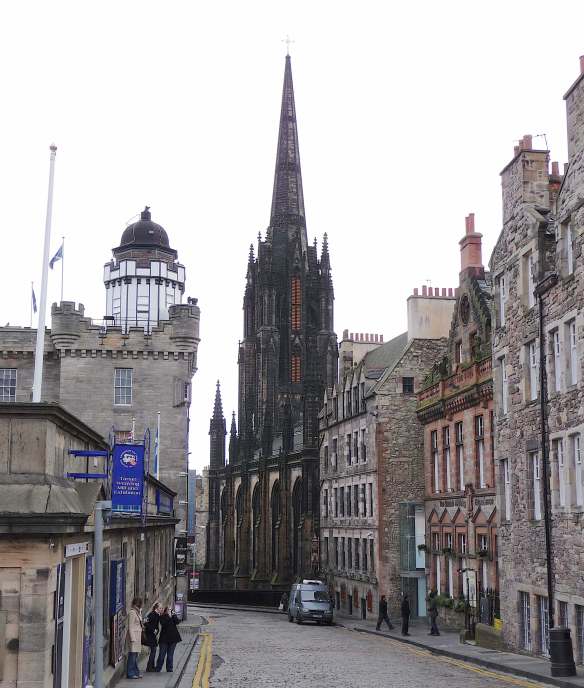
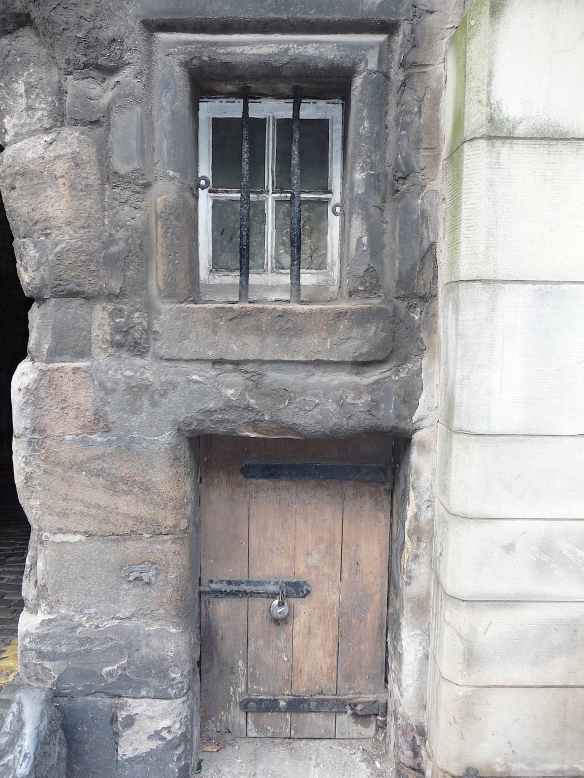
The old tenements and alleyways were fascinating

19.Edinburgh

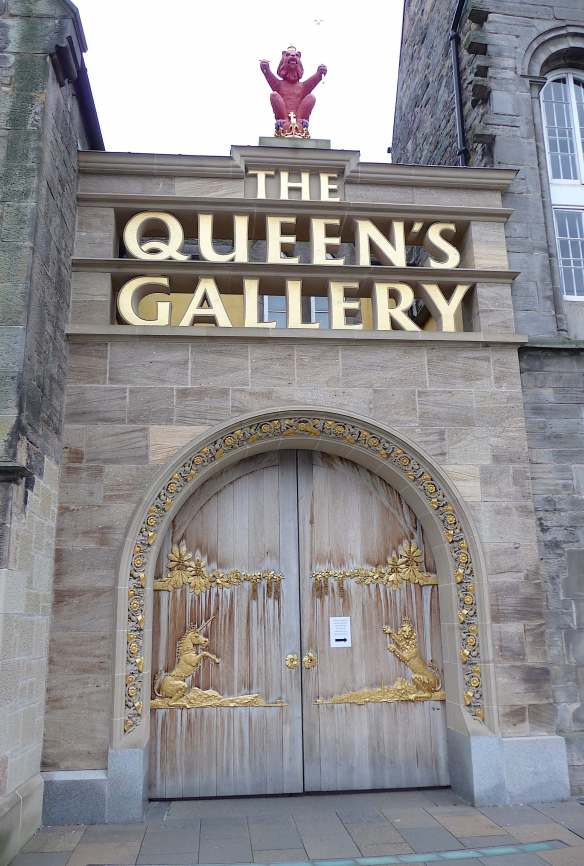
as we made our way to the far end of the mile and the Palace of Holyroodhouse. The Queen’s Gallery is an art gallery that forms part of the palace and exhibits works from the Royal Collection.
20.Edinburgh

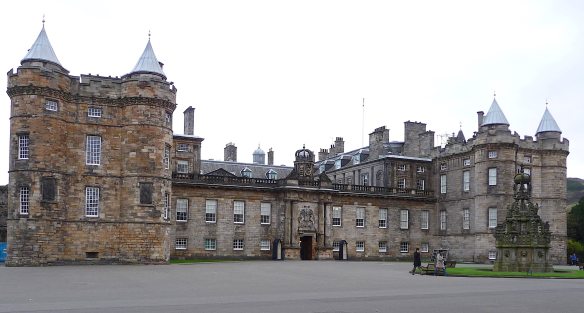
The palace as it stands today was built between 1671-1678 and is the official residence of the Queen when she is in Scotland.

21.Palace of Holyroodhouse

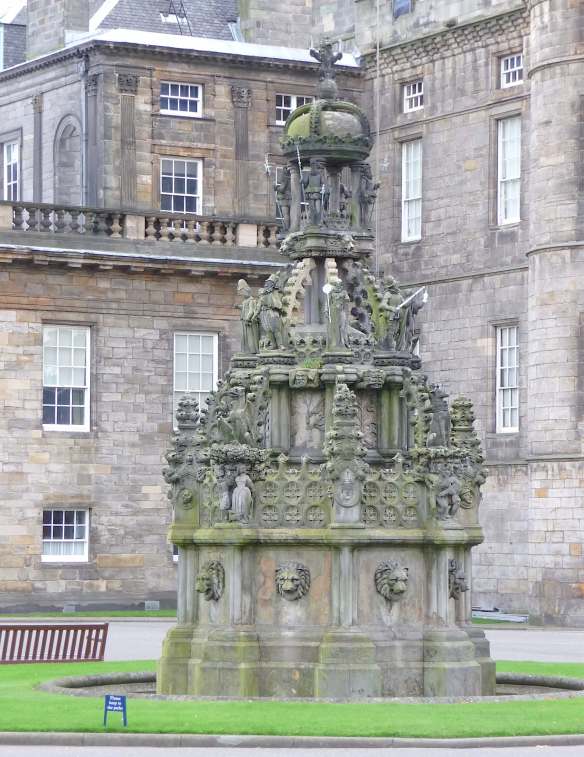
The fountain is a 19th century replica of the 16th century fountain at Linlithgow Palace, just 15 miles away.

22.Palace of Holyroodhouse fountain

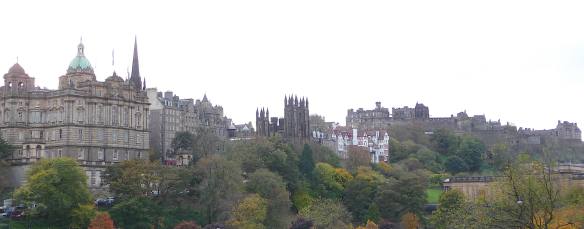
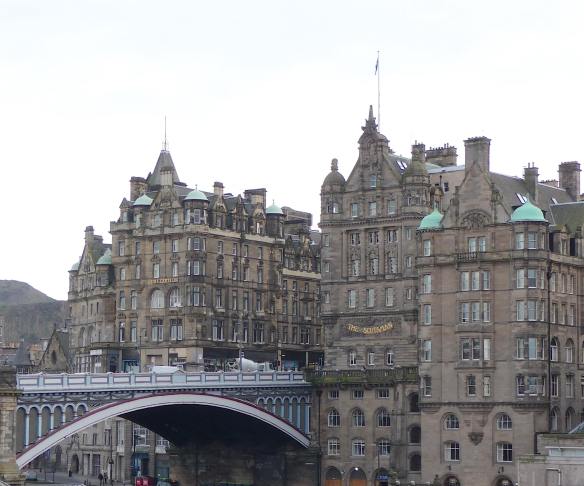
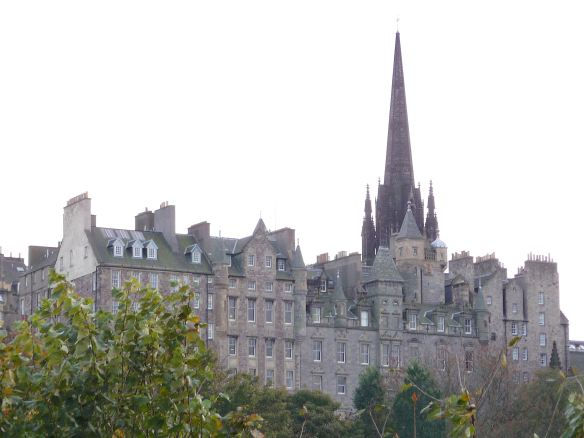
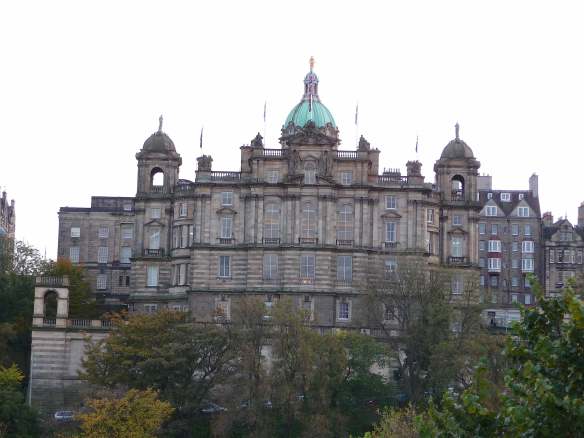
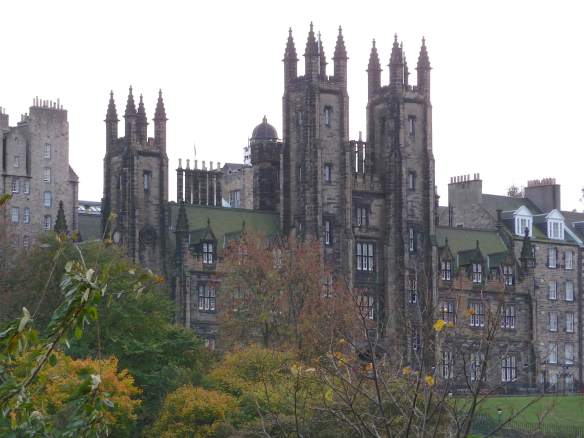
We wandered back to the new town, absorbing the spectacular architecture of the Edinburgh skyline

23.Edinburgh24.Edinburgh25.Edinburgh26.Edinburgh27.Edinburgh28.Edinburgh

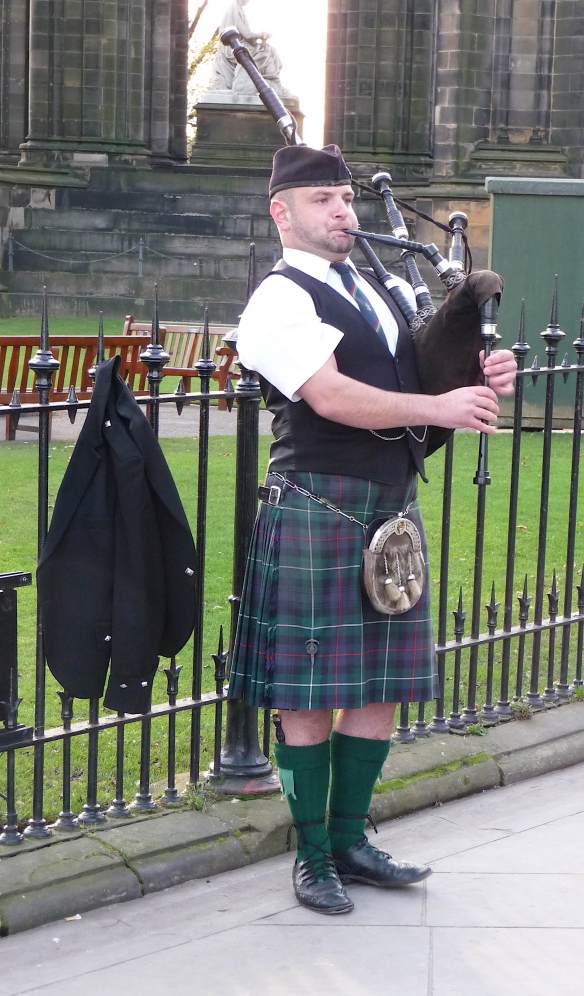
and the undying traditions of Scotland.

29.piper

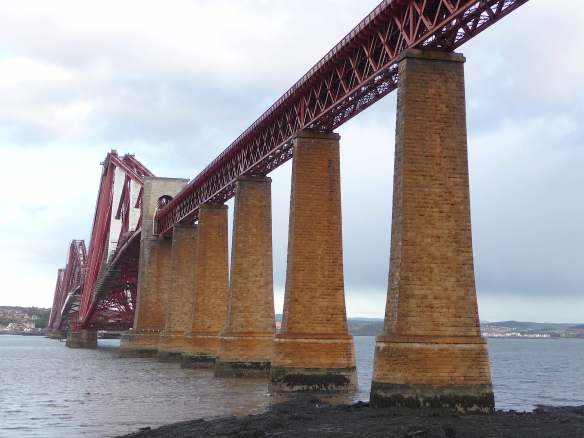
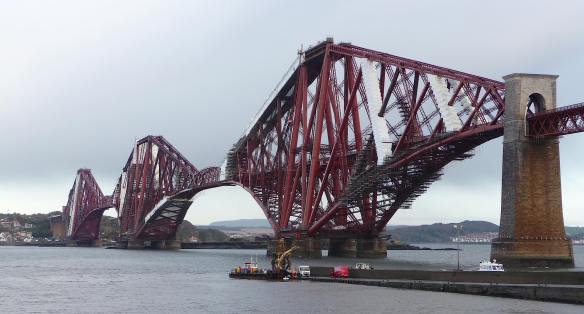
The next morning, we detoured to Dalmeny to see the Forth Bridges before leaving Edinburgh. The magnificent railway bridge was opened in 1890 and is the second-longest single cantilever bridge span in the world.

30.Forth Railway Bridge31.Forth Railway Bridge

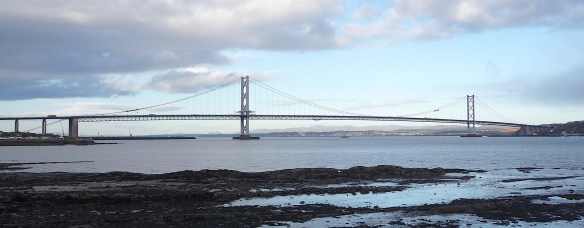
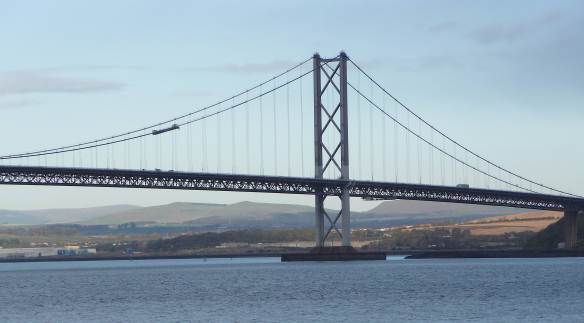
The 2.5km suspension road bridge was opened in 1964, six years after work began.

32.Forth Road Bridge33.Forth Road Bridge

We didn’t drive across it, instead heading in the opposite direction.
Assisi

Following our wonderful morning exploring Spello, we drove to Assisi, another ancient town dating back to 1000BC. Sometimes it is difficult to discern where the roads end and pedestrian ways begin when entering these old towns. I was more than a little alarmed to find myself driving into the main piazza. I hastily retreated down the first apparent exit and sought a car park outside the town walls. We re-enacted the initial entry, sans vehicle, and proceeded with our Assisi adventure.

1.Piazza del Comune2.Piazza del Comune

In 238AD, Assisi was converted to Christianity by Bishop Rufino, his remains rest in Assisi Cathedral. Built in the 12th century and dedicated to San Rufino, it was in this church that Saint Francis of Assisi was baptized in 1182.

We wandered the streets of this beautiful town

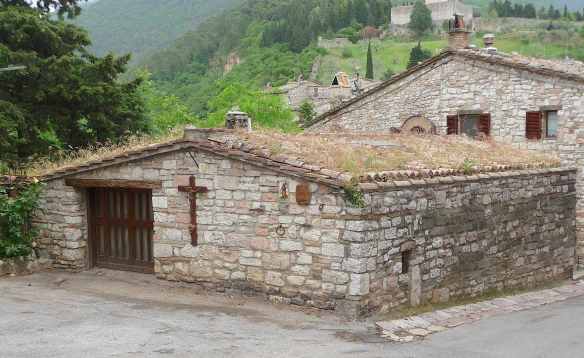
6.Assisi

10.Assisi

17.Assisi

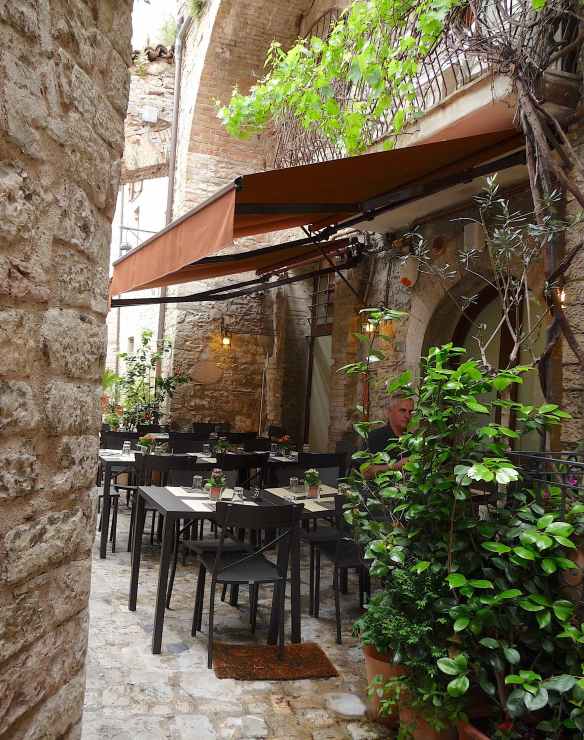
before enjoying a delicious lunch at La Lanterna. I finally got the chance to try cinghiale (wild boar) in a sensational stew and Michael had superbly cooked maialino (suckling pig).

18.La Laterna

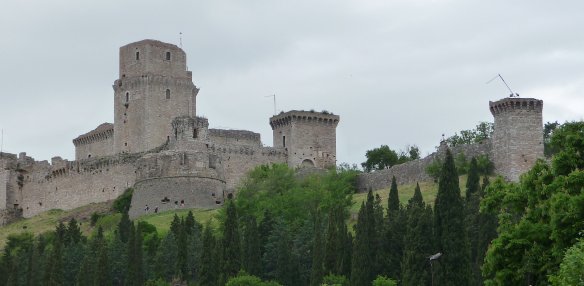
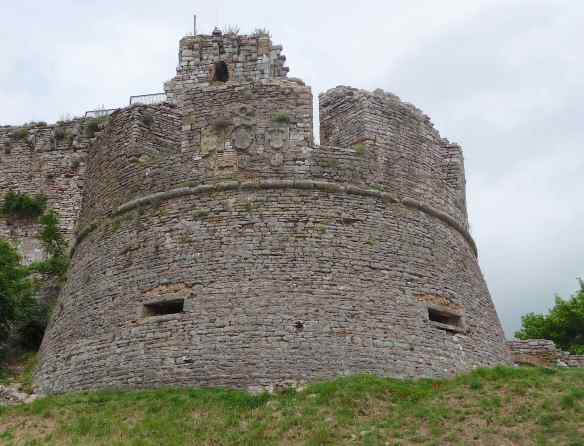
We walked off our lunch climbing to Rocca Maggiore,

19.Rocca Maggiore

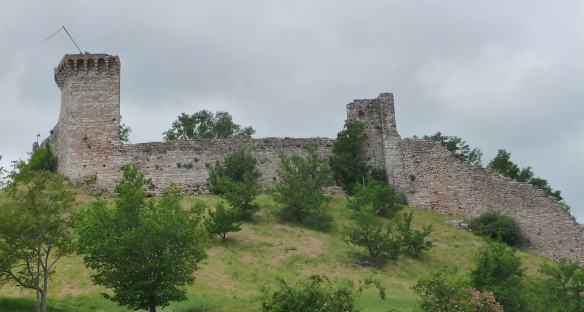
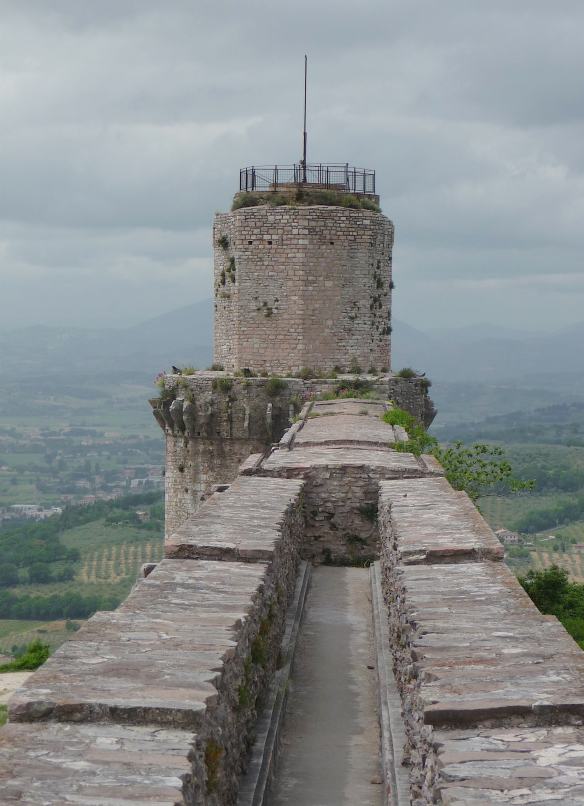
a huge medieval castle built as a military fortress around 1174 on the summit of the hill.

20.Rocca Maggiore22.Rocca Maggiore23.Rocca Maggiore

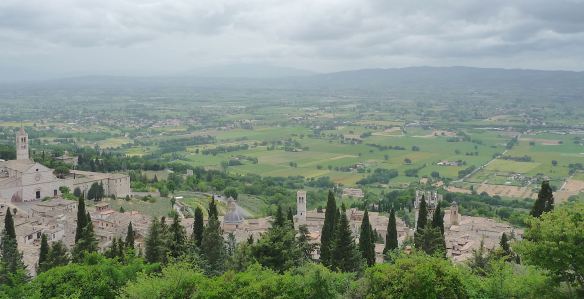
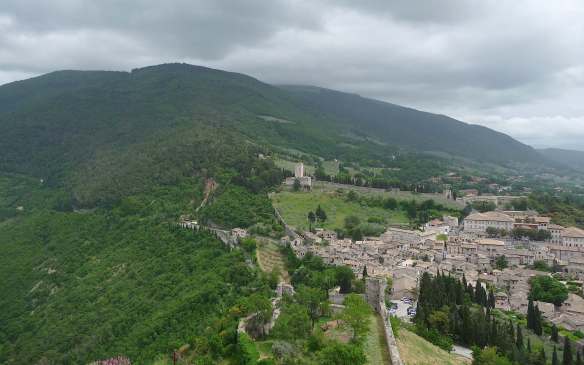
Stopping to catch our breath, we were rewarded with spectacular views of Assisi.

24.Assisi

The 13th century Basilica of Saint Clare featured majestically in the landscape.

25.Basilica of St Clare26.Spoleto Valley

There was much to explore at Rocca Maggiore.

35.Rocca Maggiore

41.Rocca Maggiore

47.Rocca Maggiore

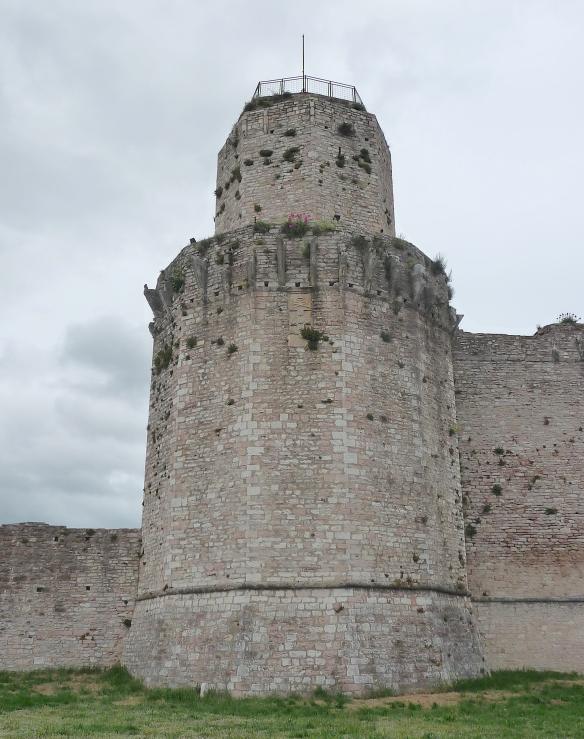
This inscription commemorates Pope Pius II

48.Rocca Maggiore polygonal tower

who completed the polygonal tower in 1460,

49.Rocca Maggiore polygonal tower

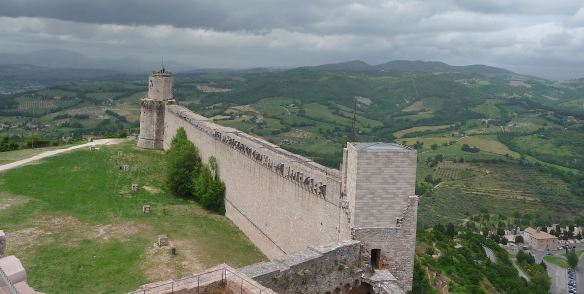
as well as the passages linking it to the main fortifications.

50.Rocca Maggiore51.Rocca Maggiore

The castle was extensively renovated in 2002 and there are fantastic exhibitions of medieval life, weaponry and musical instruments.

From the top, the 360° views across the Spoleto Valley and Assisi were breathtaking.

69.view from Rocca Maggiore65.view from Rocca Maggiore66.view from Rocca Maggiore67.view from Rocca Maggiore70.view from Rocca Maggiore71.view from Rocca Maggiore

We ambled down the hill to town, had one last gelato for the road,

72.gelato

and returned for our final night at Il Castagno.

Inverness

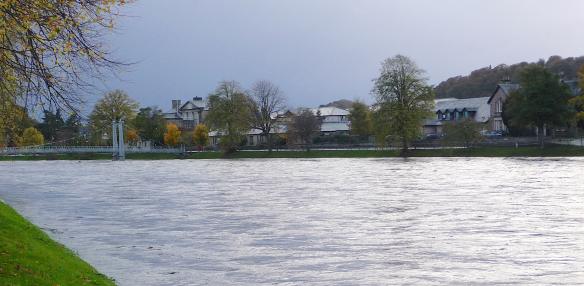
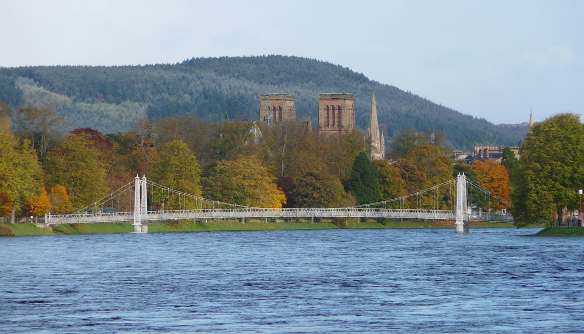
We were hoping to find accommodation on the banks of Loch Ness but it seemed there was none to be had. We were very happy with the compromise of a lovely hotel overlooking the River Ness, only a short walk into town.
1.River Ness2.River Ness

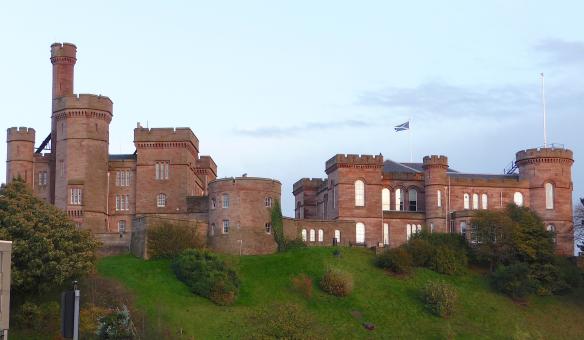
A succession of castles has stood guard over the river since 1057. Built in 1836, the magnificent red sandstone of Inverness Castle shone in the afternoon sunshine. It is now the Court house and not open to the public.
3.Inverness Castle

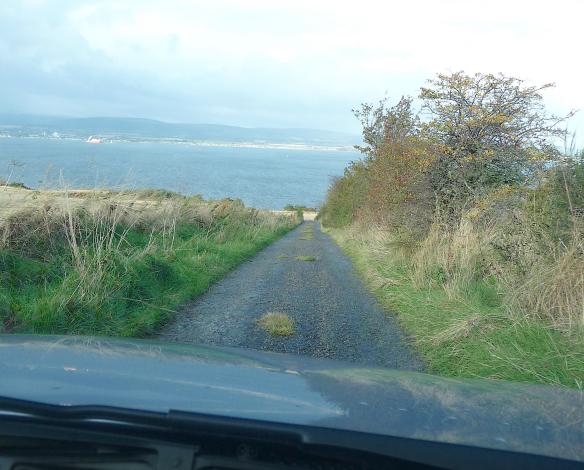
We had planned on a Loch Ness cruise for the next day but the weather was threatening inclemency so we decided to explore the Black Isle instead. Not far from Inverness, it is not actually an island, but a peninsula, surrounded on three sides by water. As well as gorgeous villages and towns, the highland scenery was spectacular.

4.Black Isle

We had many issues with our satnav throughout our trip, we named her Holly (if you have ever seen Red Dwarf, you will understand why). She was adamant that this was a major road!

5.Black Isle

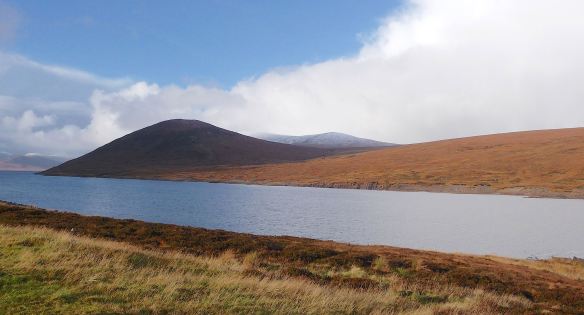
We had our sights set on snow-capped Ben Wyvis.

6.Black Isle7.Ben Wyvis

Unfortunately, Holly was not in the mood to co-operate and after negotiating a multitude of narrow mountain roads, we returned to Inverness.

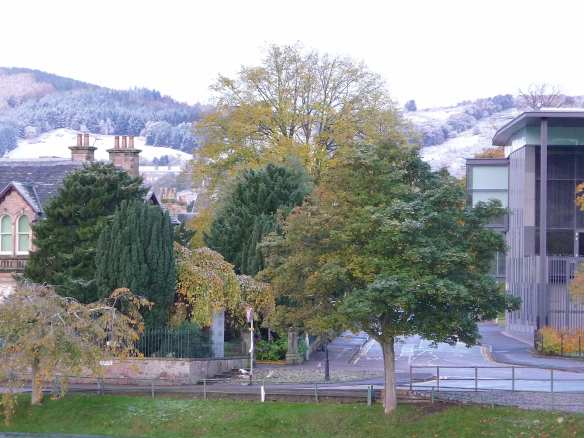
We awoke the following morning to a beautiful winter wonderland, an early snowfall.

11.Inverness

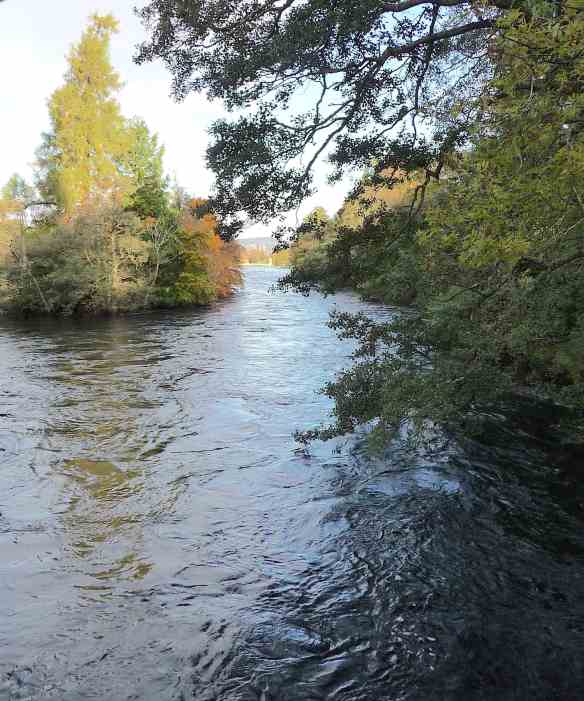
After breakfast, we wandered through the Ness Islands.

12.Ness Islands

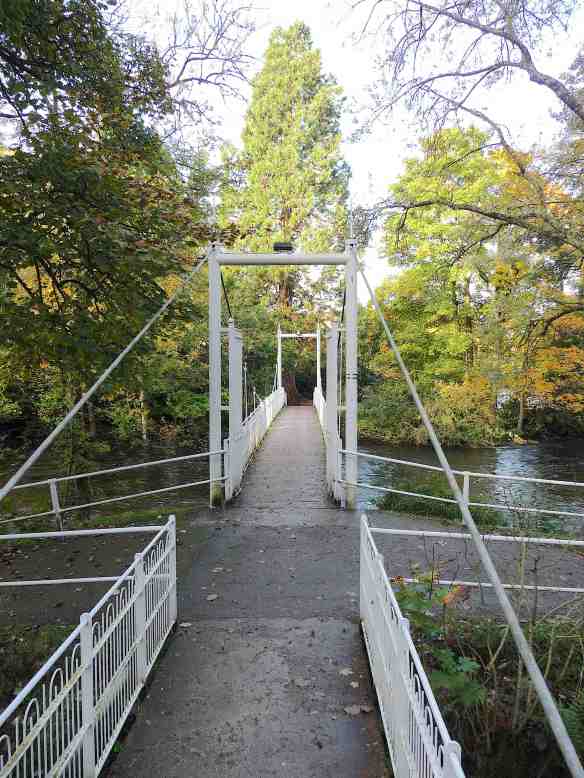
The two wooded islands are connected by footbridges

13.Ness Islands

and have been used as a public park since the 1840s.

14.Ness Islands

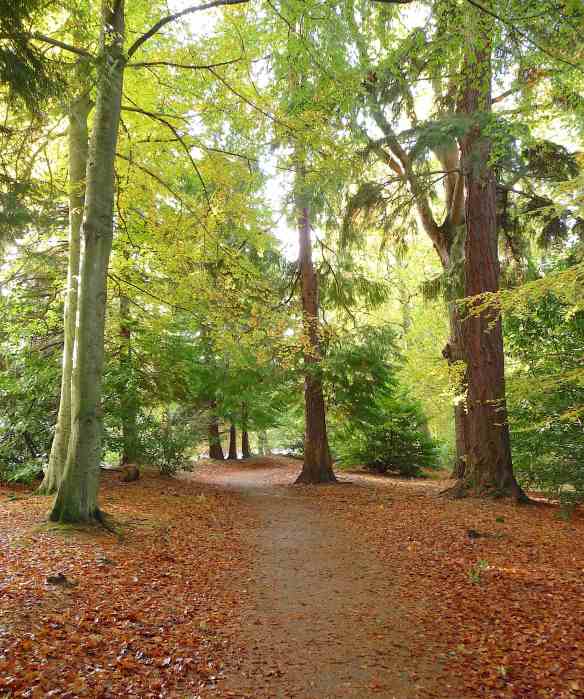
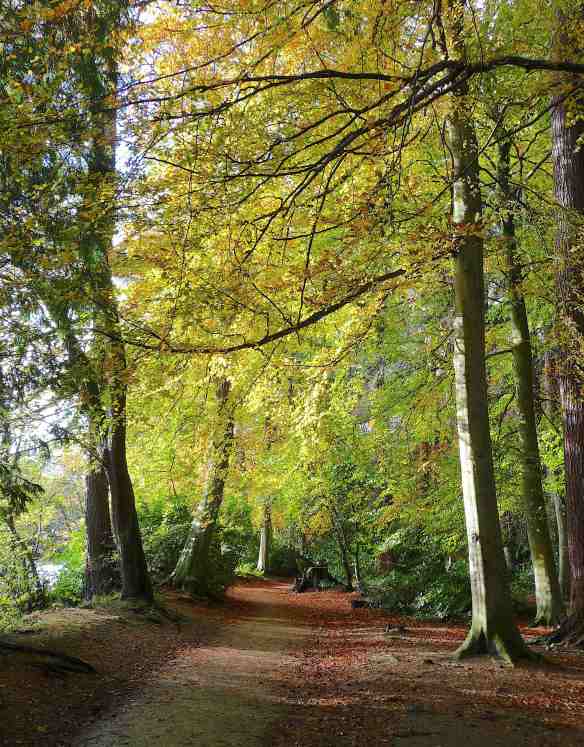
The walk in the crisp, fresh air amidst the stunning autumn foliage was a perfect start to the day.

15.Ness Islands16.Ness Islands17.Ness Islands18.Ness Islands

Reluctantly leaving Inverness, we continued our southward journey.

19.River Ness