Lyme Park

Leaving the beautiful county of Yorkshire, we made our way south to the equally stunning county of Cheshire. We couldn’t resist a visit to Lyme Park estate. The largest house in the county, surrounded by 6 hectares of formal gardens, is set in a deer park of 550 hectares in the Peak District National Park. The entrance gate was impressive, I love the mysterious padlocked door.

1.entrance gate Lyme Park

The house dates from the late 16th century and has been gradually developed since then, with modifications made by Italian architect, Giacomo Leoni, in the 1720s. The sweeping circular drive approaches the north front of the house.
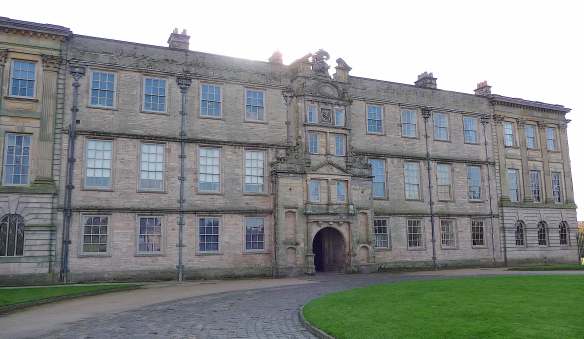
2.north facade

The west front dates from the 18th century

3.west facade

as does the magnificent south front.

4.south facade

You may recognise this as Pemberley from the TV production of Pride & Prejudice. Who can forget the scene where, after taking a bath (fully clothed) in the lake, Colin Firth as Mr. Darcy encounters Miss Bennet, attired in his soaking wet, white shirt?
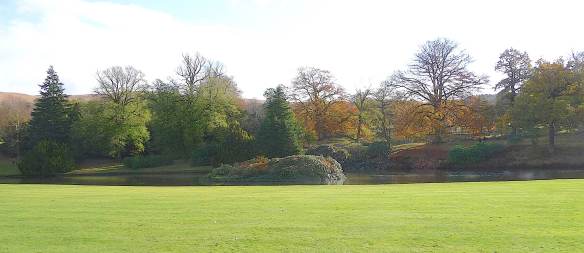
5.Lyme Park

Sorry, where was I? Oh yes, the gardens. The formal gardens were created in the late 19th century,

6.Lyme Park

the intricate Dutch garden was initially laid out as an Italian garden and is usually bursting with colour. Unfortunately, the summer bedding plants had finished in late autumn. The four cherub statues represent the elements of Earth, Fire, Air and Water.

7.Dutch garden

The Huntress, Diana,

8.statue of Diana

overlooks the Orangery Terrace

9. Orangery terrace

and an aged stone eagle majestically stands guard.

10.stone eagle

The Timber Yard is a cluster of buildings where we found a cosy café and quaint shops. Created in 1904, the café was once the joiner’s workshop and the ice cream parlour was the boiler house. During the war years, it was used as living quarters for the RAF. Some of the buildings are now residential cottages.

11.The Timber Yard

I can think of worse places to live.

York

Being the largest county in the UK, there were so many places we wanted to see in Yorkshire. Aware of our limited time, we had to make some difficult decisions. The town of York was an obvious choice. We entered the historic walled city, founded by the Romans in 71AD, along Micklegate. Once the most important of York’s four medieval gateways, we passed beautiful old buildings

1.Shops on Micklegate

on our way to the river.

2.River Ouse

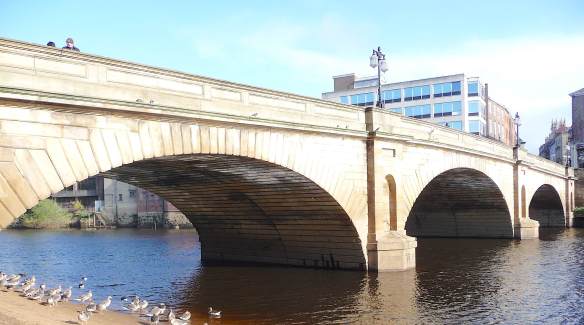
There are nine bridges across the River Ouse within the city of York, the oldest being at the site of the present Ouse Bridge as early as the 9th century. The history behind the Ouse bridge is quite interesting. In 1154, the stone bridge collapsed when a large crowd gathered to welcome Archbishop William to York. It was considered a miracle that no-one drowned and the Archbishop was later canonised and had a chapel named after him. The replacement bridge was supported by six arches and was lined with houses, shops, a toll booth, a courthouse, a prison and the chapel dedicated to St William. In 1367, the first public toilets in England were installed on the bridge. In 1564, the river flooded and the bridge collapsed, the buildings were swept away. The next new bridge was built much higher and houses and public buildings were again built along its length. After 250 years or so, in need of repairs, the bridge was replaced. Started in 1810, the present day bridge took 11 years to complete.

3.Ouse Bridge

Across the river, we made our way to The Shambles. Dating back to the 14th century, York’s oldest street has some fascinating architecture.

4.The Shambles

Historically a street of butchers shops and houses, the name is thought to come from the medieval word Shamel, meaning booth or bench. Livestock were slaughtered at the back of the premises and the meat laid out on what are now the shop window bottoms.

5.The Shambles

The overhanging fronts of the timber-framed buildings almost touch each other in some parts of the street. This was deliberate to shelter the wattle and daub walls and protect the meat from direct sunlight.

6.The Shambles

The butchers shops of old have been replaced by quaint businesses more appealing to the tourists that flock to The Shambles.

7.The Shambles

There isn’t much left to see of York Castle. Built in 1068, there were originally two circular castles, this one known as Clifford’s Tower. The wooden structure was replaced in the 13th century with stone, suffered some damage during the Civil War and was then gutted by fire after a major explosion in 1684. It wasn’t restored until the 19th century and was then used as a jail until 1929.

8.York Castle Clifford's Tower

It would have been wonderful to have had two hours to spare to walk the 3.4 kilometres of beautifully preserved town walls. We had to be satisfied with the short section that took us back to Micklegate and our next exciting destination.

9.Town walls approaching Micklegate

Harrogate

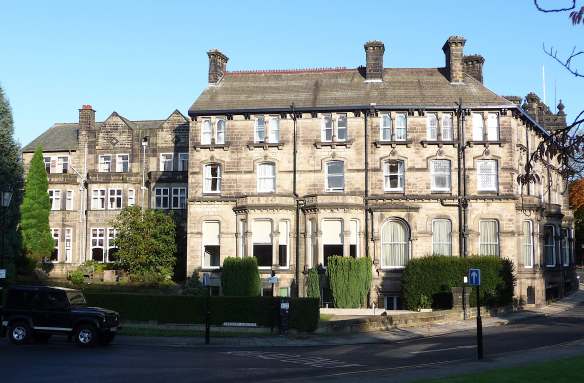
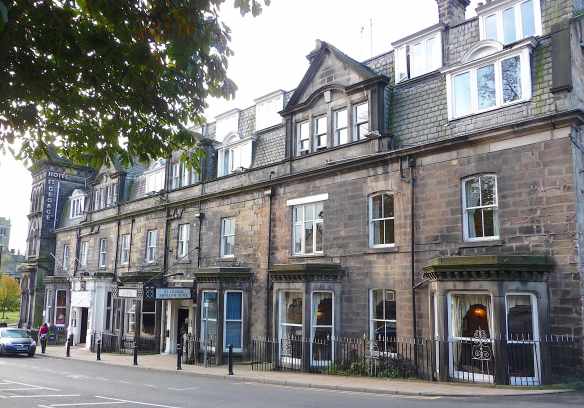
One of the advantages of travelling off season is the availability of accommodation. We stayed at the St. George Hotel, a magnificent Edwardian building right in the heart of Harrogate.

1.St. George Hotel2.St. George Hotel

It was like stepping back in time, with elegant furnishings in the lobby

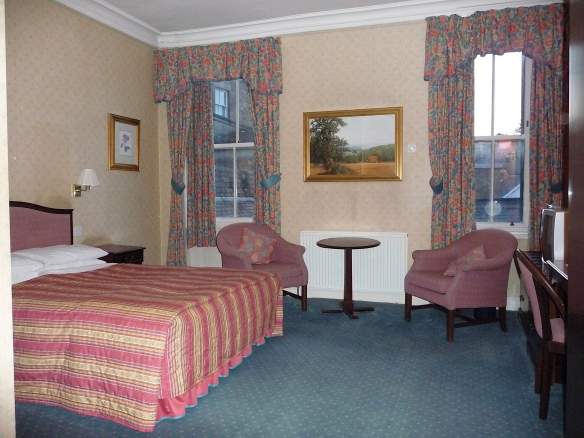
and a very welcoming, comfortable room.

5.St. George Hotel

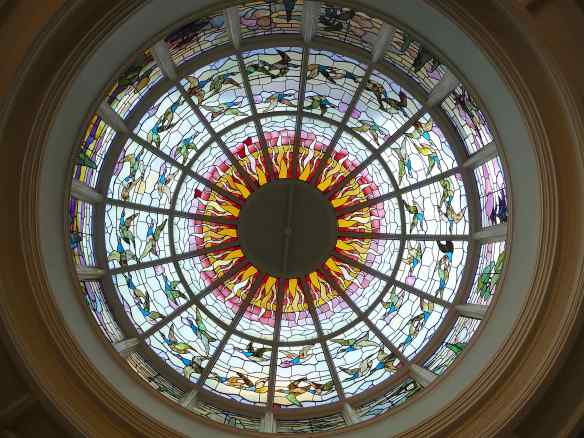
Not only had we found a fabulous place to stay, a three-course dinner each night was included in the price. The dining room had a huge central dome with stunning leadlight.

6.cupola in dining room

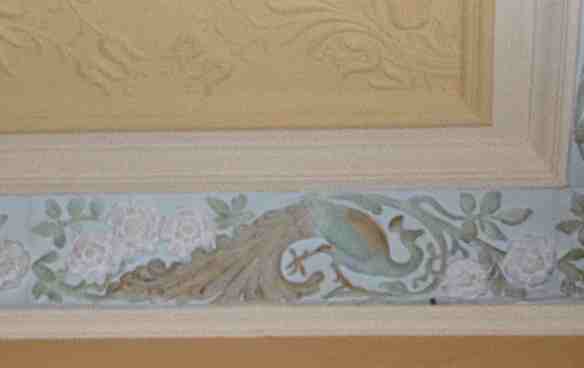
This pic isn’t very clear but it shows the intricate detail in the ceiling and cornices.

7.dining room detail

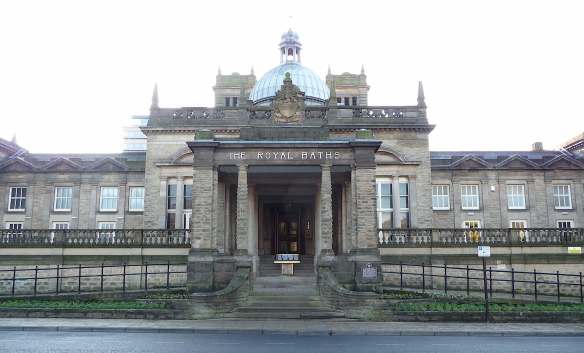
On a sunny autumn morning, we strolled the streets of Harrogate and soaked up the history of this beautiful North Yorkshire town. Known as ‘The English Spa’ after healing waters were discovered in the 16th century, the wealthy flocked to the town for treatments. The Royal Baths, considered to be the most advanced centre for hydrotherapy in the world, opened in 1897.

8.The Royal Baths

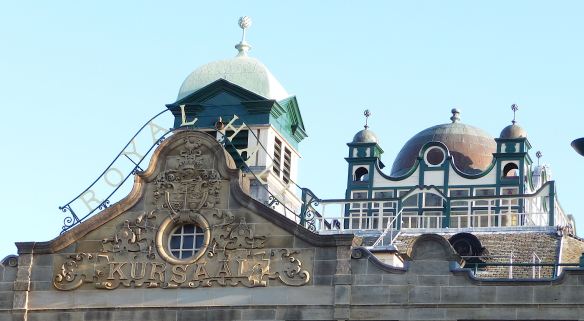
The Kursaal opened six years later, the German word translates as ‘Cure Hall’. At the beginning of World War I, the theatre was renamed the Royal Hall and is now a venue for events and entertainment.

9.Royal Hall Kursaal10.Royal Hall Kursaal

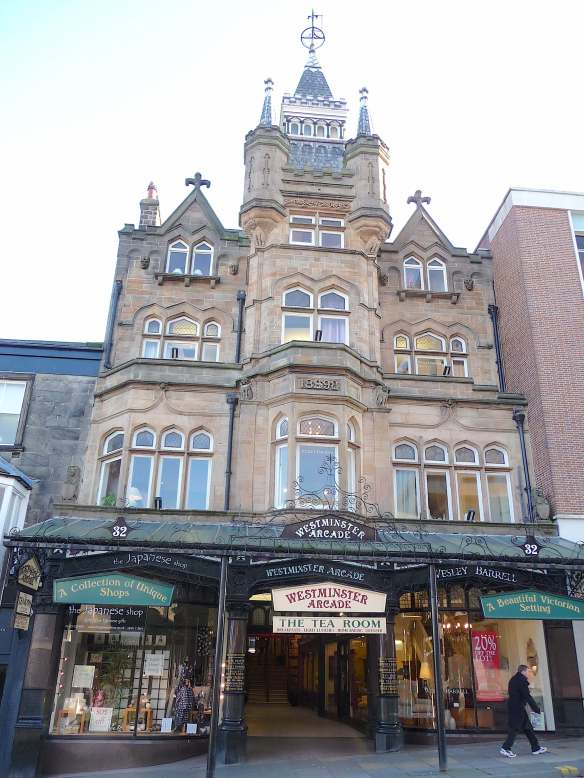
The architecture throughout the town was spectacular and the multitude of shops were housed in fantastic buildings.

11.Westminster Arcade12.Harrogate

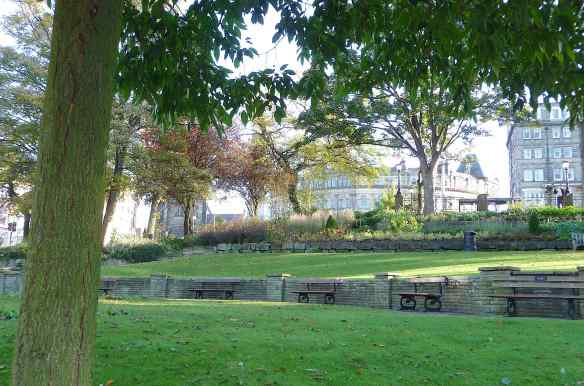
A walk through the park

13.Montpellier Hill14.Montpellier Hill

brought us to the Montpellier Quarter, home to exclusive shops, cafés and art galleries.

15.Montpellier Quarter

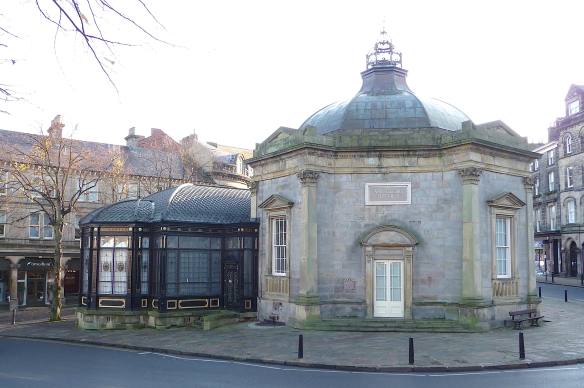
Too early in the day to visit the Royal Pump Room Museum, it sounded like a fascinating journey into the bygone era of weird and wonderful spa treatments. Built in 1842, the octagonal structure is quite distinctive.

21.Royal Pump Room Museum20.Royal Pump Room Museum

The Majestic Hotel certainly lives up to its name. Set in eight acres of landscaped gardens, the palatial Victorian hotel sits on a hill overlooking the town. Built in 1899, it has an interesting past with many celebrity guests, a fire in 1924, three bombings in 1940 and the subsequent loss of the massive glass Winter Garden that earned it the nickname the ‘Yorkshire Crystal Palace’.

22.The Majestic Hotel

Next time, I would like to stay at the Majestic Hotel.

Spello

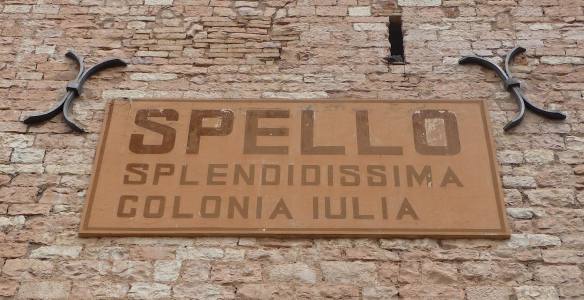
After consulting the map to plan another day trip from Il Castagno, we ventured across the border into Umbria. The warm day was overcast as we reached Spello, an ancient walled town that became a Roman colony, Hispellum, in the 1st century BC.

1.Portonaccio

The town walls and arched entrance gates are remarkably intact, we began our walk at Porta Consolare.
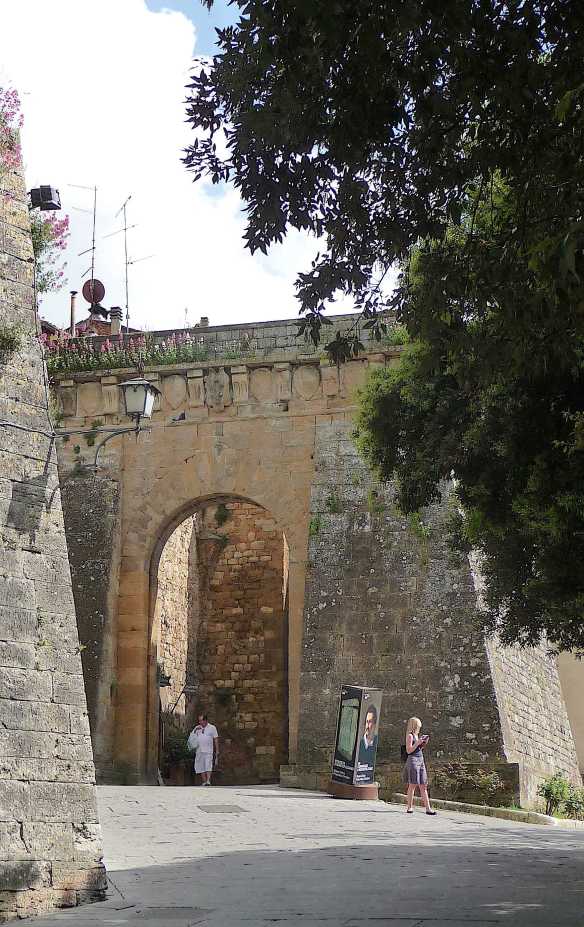
2.Porta Consolare

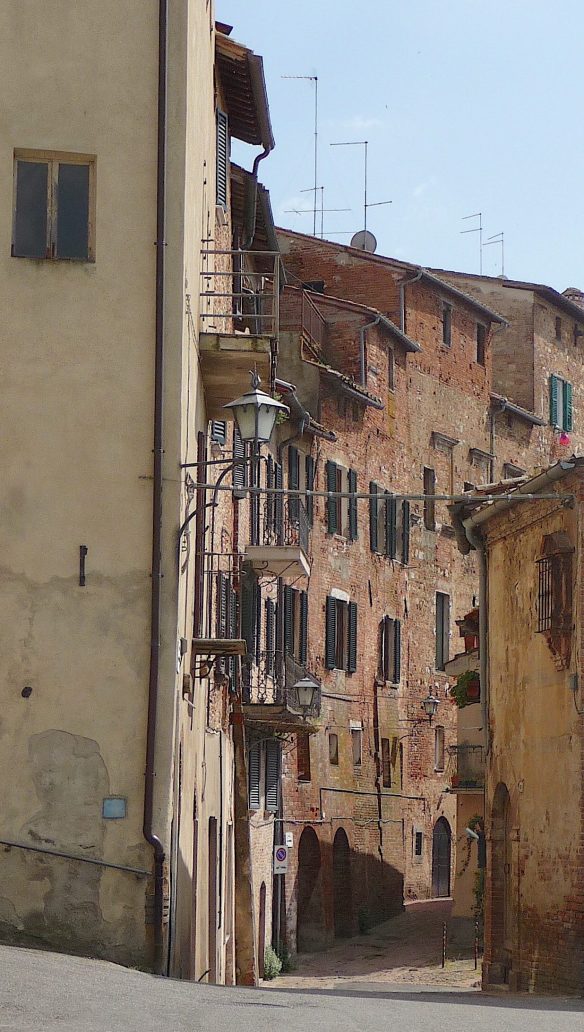
We were instantly enchanted by this place, with its beautiful architecture

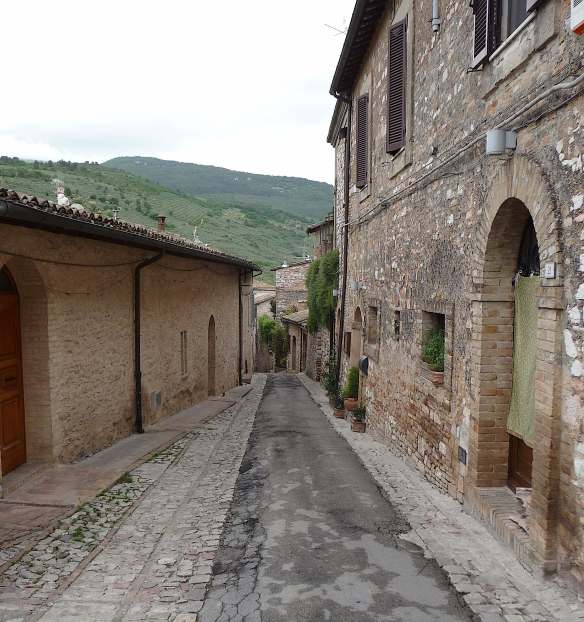
and narrow, stone streets.

12.street

13.street

Magnificent arches led down intriguing alleyways.

We ambled our way to the top of the town, admiring the homes with more than a little envy.

Some windows had better views than others,

and, of course, those fabulous Italian doors were countless.

The most impressive doorway was that of the Baglioni Chapel, part of the Church of Santa Maria Maggiore.

44.Baglioni Chapel

The chapel is adorned with well preserved frescoes, painted by Pinturicchio in 1500AD, none of which I photographed.

45.Baglioni Chapel

There was so much to admire in this wonderful, ancient town.

Porta dell’ Arce, a double limestone arc, was the original northern entrance to the Roman city.

We made our way back to the lower end of town, not forgetting to investigate the shops

59.Spello

and admire the spectacular scenery along the way.

66.view

Montepulciano

It was after siesta before we reached Montepulciano, another town I had longed to visit. Renowned for Vino Nobile di Montepulciano, a red wine produced in the surrounding vineyards, it is also a major producer of cheese, pork, lentils and honey. Entering at Porta al Prato,

1-town-wall2-porta-al-prato

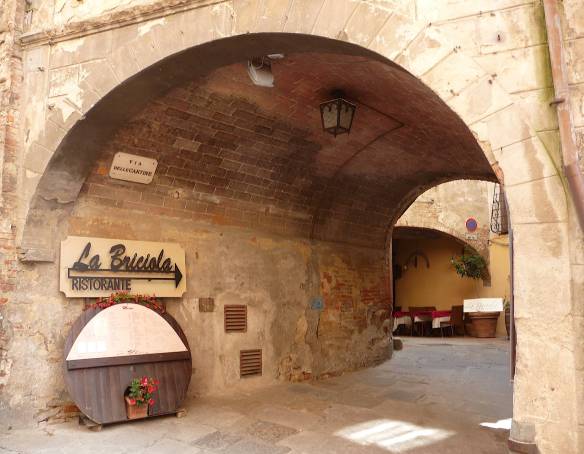
it wasn’t long before the magic of this ancient town revealed itself.

3-belltower4-montepulciano5-montepulciano

The 16th century Palazzo Avignonesi has a handsome smiling lions head either side of the entrance.

The intricate façade of Palazzo Bucelli is made up of sculptures, added in the early 1700s. Etruscan tombstone fragments, funerary urns and frieze plaques combine to create a magnificent feature.

8-palazzo-bucelli

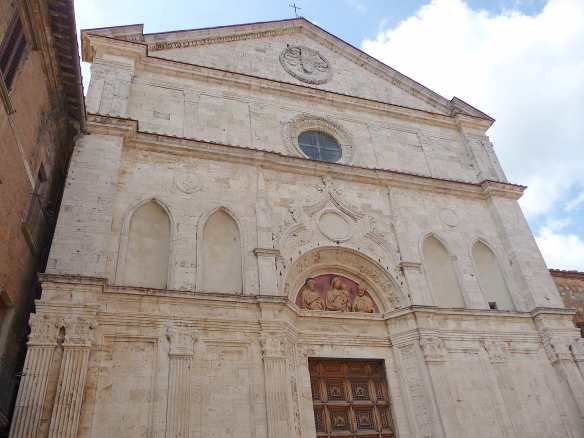
Chiesa di Sant’ Agostino was built in 1285AD and was completely renovated in the 15th century.

11-chiesa-di-sant-agostino

Above the imposing doorway is a beautiful carved portal featuring the Virgin and Child flanked by St. John and St. Augustine.

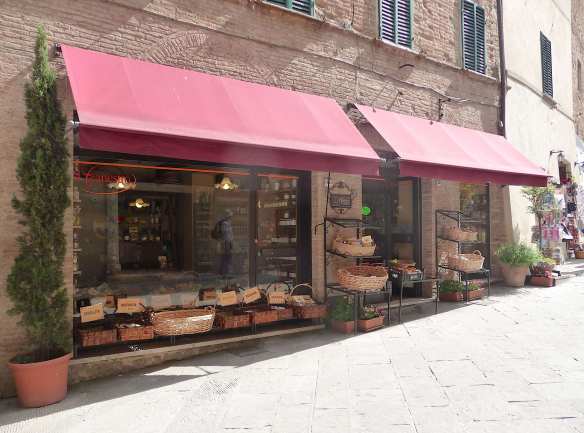
The shops were enticing

15-il-canestro16-shops

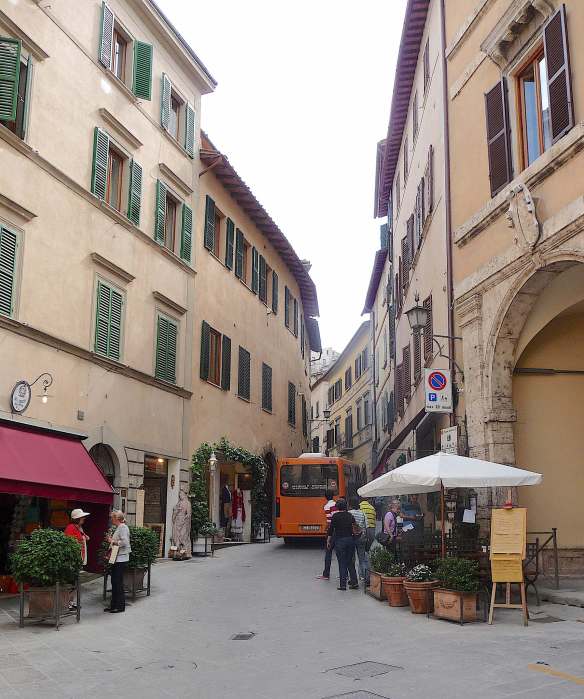
and the sight of a bus traversing the narrow streets seemed out of place.

17-bus

We explored as much as we could in the time we had

19-street

20-steps

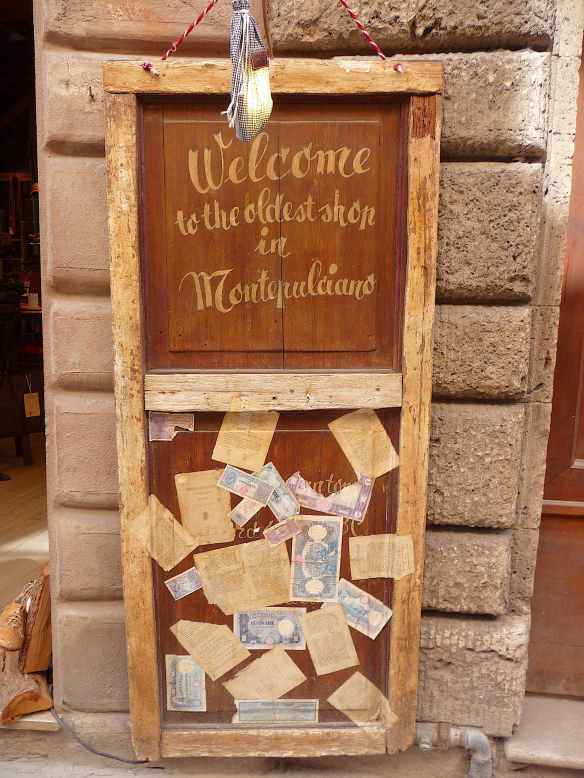
and our final discovery was the oldest shop in Montepulciano.

21-oldest-shop

It was superbly rustic with fabulous leather goods beckoning from every nook.

22-oldest-shop23-oldest-shop

The clock had beaten us and after a last gelati indugence, we made our way back to Il Castagno.