Makers’ Workshop

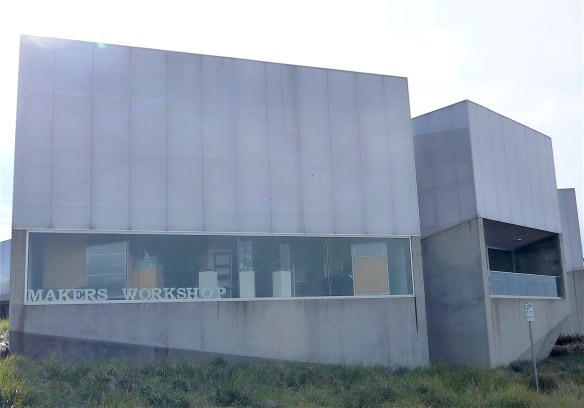
Makers’ Workshop opened in Burnie in 2009 as a place to honour the history, makers, innovators and artists of northwest Tasmania. The building, although criticized by some, won the Tasmanian Architectural Award in May 2010.

1-makers-workshop

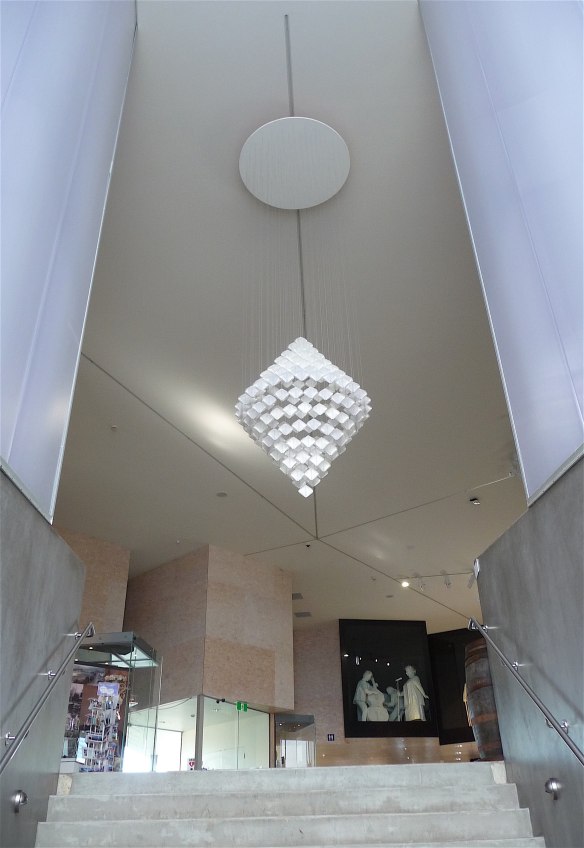
5-entrance

It is a marvellous place to wander and absorb the myriad resident artists and their creations. From hats and jewellery

to glassware

14-glassware

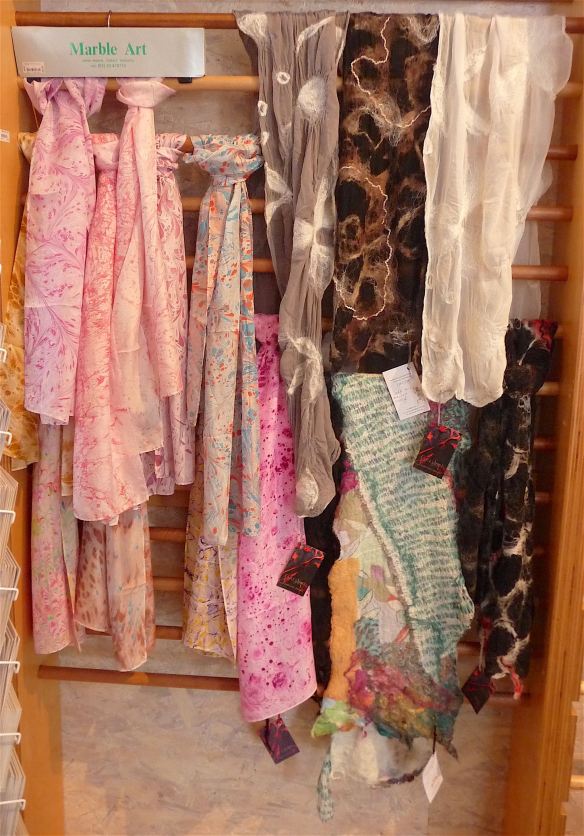
and hand-painted silk scarves.

16-scarves

There is an area set out to watch the artisans at work.

17-leatherworker

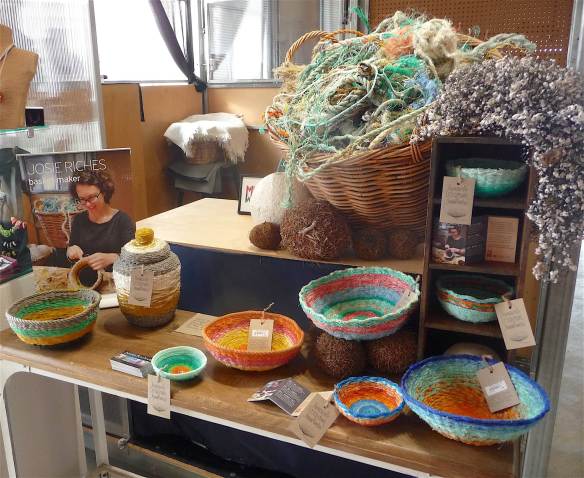
18-basketmaker22-ripping-yarns

The fantastic retail space showcases the work beautifully and makes it very hard to resist a purchase.

After all that hard spending, you can relax in the café with something delicious

26-cafe

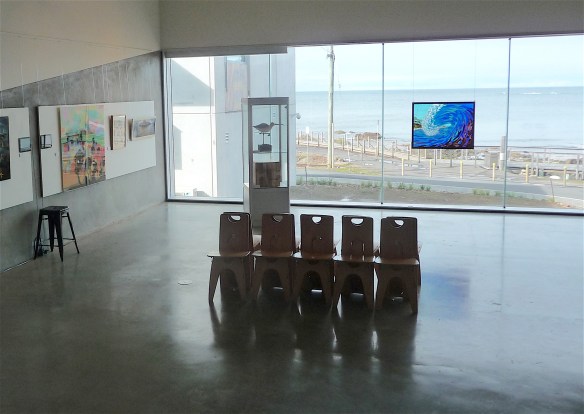
or take in the latest exhibition in the gallery.

29-gallery

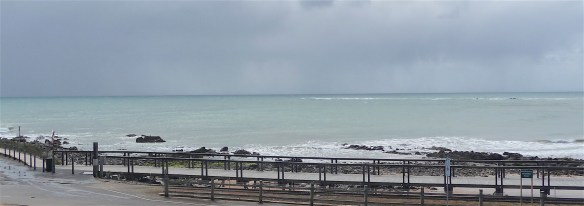
Both offer a panoramic view of West Beach, moody on an overcast day.

30-view-day

The diverse produce of the northwest coast is proudly promoted, our world famous cheeses are irresistible.

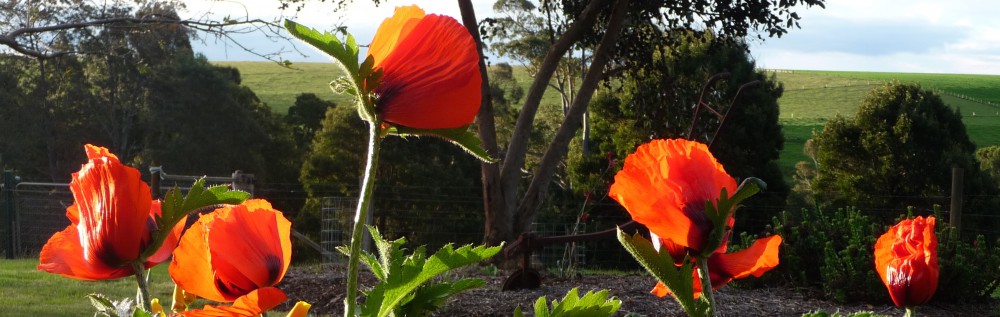
We can learn about the local potato and poppy farming

33-poppies

and see the exquisite workmanship of talented luthier, Maria Perez-Pulido.

34-luthier

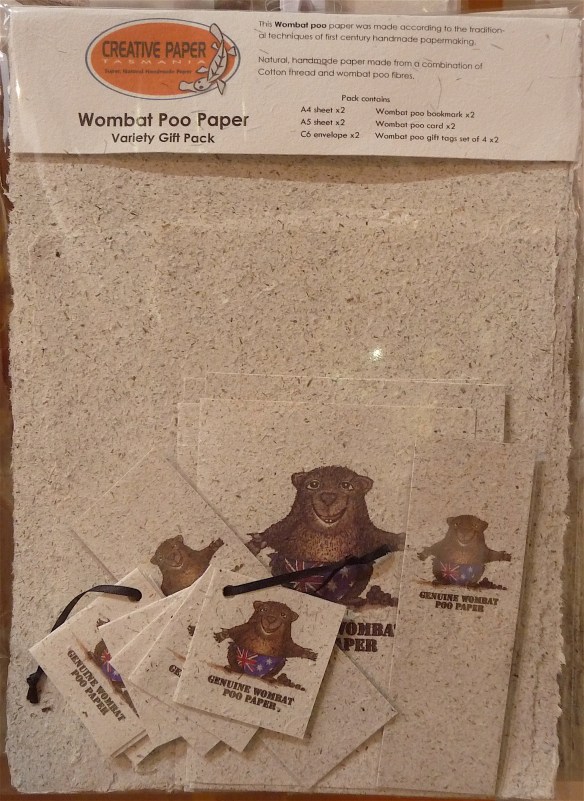
You can try your hand at making paper under the guidance of experienced paper makers. Many different fibres are used, including roo poo and wombat poo, apple pulp, lavender and rainforest leaves.

35-wombat-poo-paper

The beautiful folios, journals, cards and paper products can be purchased.

There are numerous large papier mâché characters in various poses, created by artists Pam Thorne and Ruth Rees between 1996 and 2007.

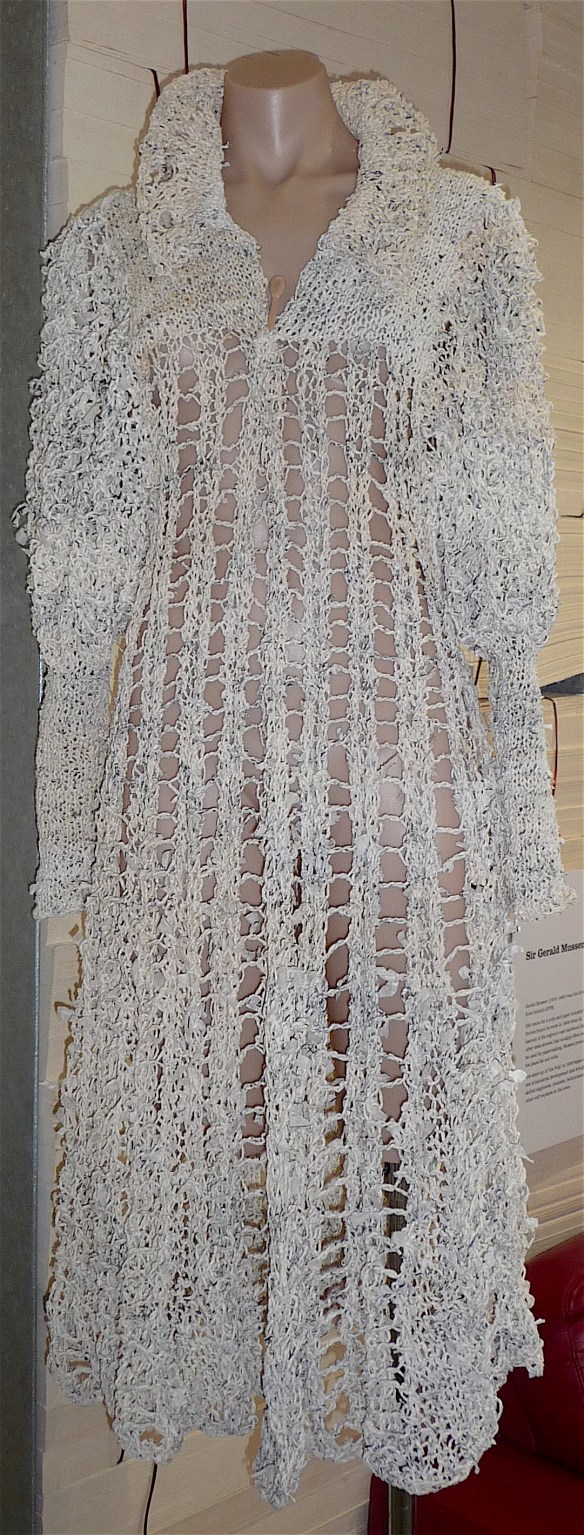
This magnificent garment was made by Pam, patiently twisting sewing pattern paper into lengths of ‘yarn’ to then carefully knit a gorgeous jacket.

45-paper-fashion

The northwest coast of Tasmania has so much to offer. If you are passing, do drop in.

46-makers

West Wales

Following our exploration of Cilgerran castle, we found a lovely place for lunch in nearby Cardigan.

1-castle-kitchen-restaurant

I thought it would be nice to buy a cardigan in Cardigan, but I didn’t. Instead, we strolled along the River Teifi

2-river-teifi3-river-teifi

before continuing our drive north. Not far from Aberystwyth was our inviting B&B, Awel-Deg, at Capel Bangor.

4-awel-deg

The views were stunning across the gorgeous Rheidol Valley.

5-rheidol-valley6-rheidol-valley

We walked to the Tynllidiart Arms for dinner

7-tynllidiart-arms

and sampled ales brewed at the smallest commercial brewery in the world. Bragdy Gwynant is a five foot square former men’s toilet where, since 2004, beers have been brewed for the Tynllidiart Arms.

8-bragdy-gwynant

The next morning, we detoured to Devil’s Bridge. There are actually three bridges built on top of each other, the oldest dating back to the 11th century. The stone bridge was then built in 1753 when the original became unstable and the most recent iron bridge was constructed in 1901.

9-devils-bridge

The bridge is at a point where, before reaching the River Rheidol, the River Mynach drops 90 metres down a steep and narrow ravine.

10-devils-bridge

As we descended the steps

the bridge rose above us.

13-devils-bridge

At the bottom, the water created wonderful waterfalls as it cascaded through the confines of the gorge.

14-devils-bridge15-devils-bridge16-devils-bridge

According to legend, the original bridge was built by the Devil. He was visiting Wales and came across a lady whose cow had wandered across the river and she couldn’t get her back. He offered to build a bridge in return for the soul of the first living thing to cross the bridge. The next morning, the lady returned but she tricked the Devil by throwing bread so her dog went across first. The Devil wasn’t happy and was never seen in Wales again.

17-devils-bridge

We continued our drive north through Snowdonia National Park, 823 square miles of stunning landscapes,

18-snowdonia19-snowdonia

as we headed for the coast.

Alice Springs

We didn’t spend much time in Alice Springs, just one night on the way to Uluru and two nights at the end of the holiday before returning home. Alice Springs is nearly equidistant from Darwin and Adelaide, about 1500km in each direction. At the top of Anzac Hill,

1-anzac-hill

is a memorial to the soldiers killed in World War I.

There’s not a lot to see in Alice Springs but the panoramic view of the town and surrounding ranges was quite spectacular.

Known as Mparntwe to its original inhabitants, the Arrernte, Alice Springs was named in 1872 after the wife of Sir Charles Todd, the former Postmaster General of South Australia. The Todd River, which is dry for most of the year, was named after Sir Charles.

The prominent ridge to the west is Mt Gillen, a popular destination for hikers.

7-mt-gillen8-mt-gillen

I had never seen Sturt’s Desert Pea in the wild and there they were, masses of them growing on the median strips around town. Absolutely stunning.

We had excellent accommodation, choosing to stay on the edge of town at the Quest Apartments.

14-quest-apartments

18-quest-apartments

The end of the holiday was nigh, only one more day left.

Villa Reale di Marlia

After a morning strolling around the grounds of Villa Grabeau, followed by another delicious Tuscan lunch, we found our way to Villa Reale.

1-entrance-copy

In 1806, the sister of Napoleon, Elisa Bonaparte Baciocchi, purchased the 16th century villa for her country residence.

2-villa-reale-di-marlia3-villa-reale-di-marlia

She also acquired other neighbouring properties, including Villa del Vescovo.

4-villa-del-vescovo5-villa-del-vescovo

The sweeping lawns and lake were breathtaking.

As we walked around the villa

9-villa-del-vescovo13-villa-del-vescovo

we discovered the Italian Renaissance garden

10-italian-garden

and the abandoned inner courtyard.

14-inner-courtyard15-inner-courtyard

There were some surprising smaller buildings like the summer house

and chapel.

The nymphaeum (sacred place of the nymphs), is dedicated to the god Pan.

Built around 1580, the circular grotto has a domed roof with a single opening at the top.

25-grotta-del-dio-pan

Nestling within niches in the interior limestone wall are the statue of Pan

26-grotta-del-dio-pan

along with disturbing sea figures and gargoyles.

The art deco influenced Spanish Garden was created in 1924 when the park underwent restoration.

34-giardino-spagnolo

The Palazzina dell’Orologio waited majestically at the end of the avenue

40-palazzina-dellorologio

as we made our way to the 17th century Lemon Garden where more than two hundred citrus trees surround four magnificent magnolias

41-giardino-dei-limoni

At one end, the fountain of the Three Graces is set in a semicircle of rustic mosaics.

42-giardino-dei-limoni

At the opposite end is a large fishpond bordered by a marble balustrade.

43-giardino-dei-limoni44-giardino-dei-limoni

Two statues of giants, representing the Arno and Serchio rivers, spill urns into the pond

45-giardino-dei-limoni

while Leda and the Swan keep watch from their niche.

We continued on to the atrium of the Green Theatre with it’s beautiful fountain

49-atrio-del-teatro-della-verzura

and statues.

50-atrio-del-teatro-della-verzura

A natural theatre formed by yew hedges, the Teatro di Verzura was created in 1652. The semi-circular stage has a series of wings 5.5m high and the spherical bushes at the front imitate footlights.

51-teatro-di-verzura

Surrounding the grass stage are terracotta statues of Columbine, Pantaloon and Punchinello.

After a closer look at the 17th century Clock Palace,

54-palazzini-dellorologio55-palazzini-dellorologio

we descended the steps

56-teatro-dacqua

to the spectacular Teatro d’Acqua. Water pours from the mouths of five masks around the semi-circular pool,

57-teatro-dacqua58-teatro-dacqua

the Grotto fountain is a marvellous centrepiece.

59-teatro-dacqua

Statues of Jupiter, Saturn, Adonis and Pomona

overlook the pool and immaculate gardens beyond.

63-teatro-dacqua64-teatro-dacqua

In 2015 the Villa Reale Di Marlia was sold to a couple from Switzerland. The 18,000sq m building on 19ha of land is going to be turned in a luxury hotel.

twelve months

It is just over a year since the creation of cannonhill chronicles. I have had so much enjoyment sharing our lives and re-living our experiences and it never ceases to amaze me how many corners of the world this simple little blog reaches. Thank you to everyone who has stopped by, you are my inspiration.

One of my early posts introduced you to my spring garden. After a long, cold, wet winter, I had forgotten how beautiful and renewing spring can be. The days are warming, the sun is shining and the evenings are longer. The daffodils are in decline

1-daffodil

but there’s no stopping the lilies

2-lilies

and irises.

The crocuses are appearing in places new

as are the clivea

9-clivea

and Queens tears.

10-queens-tears

The orchids haven’t disappointed this year.

The bees are enjoying the diosma

13-diosma

and the waratah is in full bloom.

The first rhododendron has flowered

17-rhododendron

and nearby was my greatest surprise. The previous owners had planted a camellia in a very narrow bed against a shed wall. Rather than risk transplanting, I espaliered it a few years ago. Although it has thrived, it has never blossomed….until now.

18-white-camellia

Just the one so far but it is perfect.