Monterosso

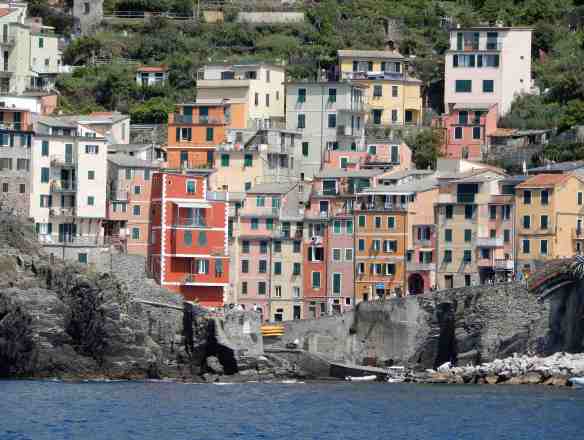
A short boat trip along the coast from Vernazza brought us to the next village of the Cinque Terre, Monterosso.

1.Monterosso

Dating back to Roman times, the oldest and most populated of the Cinque Terre villages is divided into two parts. The old, medieval village

2.Monterosso Vecchio

and the new, modern area known as Fegina

3.Fegina

are separated by San Cristoforo hill.

4.San Cristoforo hill

A strong defence system was built on the hill in the 16th century with only three of the thirteen towers still standing. One of those is the Aurora Tower, with pride of place on the promontory it is now a private residence.
5.Torre Aurora

Ancient lookout turrets and fortress walls adorn the hillside.
Dominating the headland, the Convent of the Capuchin Friars has had a turbulent history since construction in 1619. Closed for the Napoleonic laws in 1816 and again for the Savoy laws in 1867, it has been used as a hospital and warehouse and eventually returned to the friars in 2006.

8.Convento Frati Cappuccini

Across the bay on the other side of the old town, the Hotel Porto Roca clings to the rocky foundations of Punta Corone.

9.Hotel Porto Roca

In 1960, Giacinto Jacazzi, a fashion creator from Milan, fell in love with the village and bought the land. Rather than a family home, he decided to build a hotel so more people could enjoy it. Workers had to construct roads to the isolated site and fearless excavator drivers manoeuvred their machines on the edge of sheer cliffs.

10.Hotel Porto Roca

Three years later, the dream came true. I will definitely be staying here if we are lucky enough to return one day.

11.Hotel Porto Roca

The boat tied up in the harbour of Monterosso Vecchio,

12.Monterosso vecchio

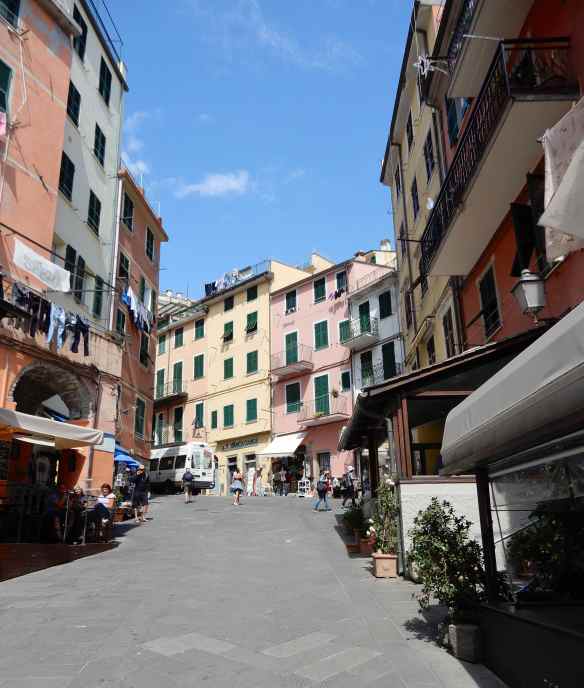
we climbed some stairs and walked along the path to the new part of town. Fegina Beach is the biggest sand covered beach in the Cinque Terre and is a popular destination for tourists.

15.Fegina Beach14.Fegina Beach13.Fegina Beach

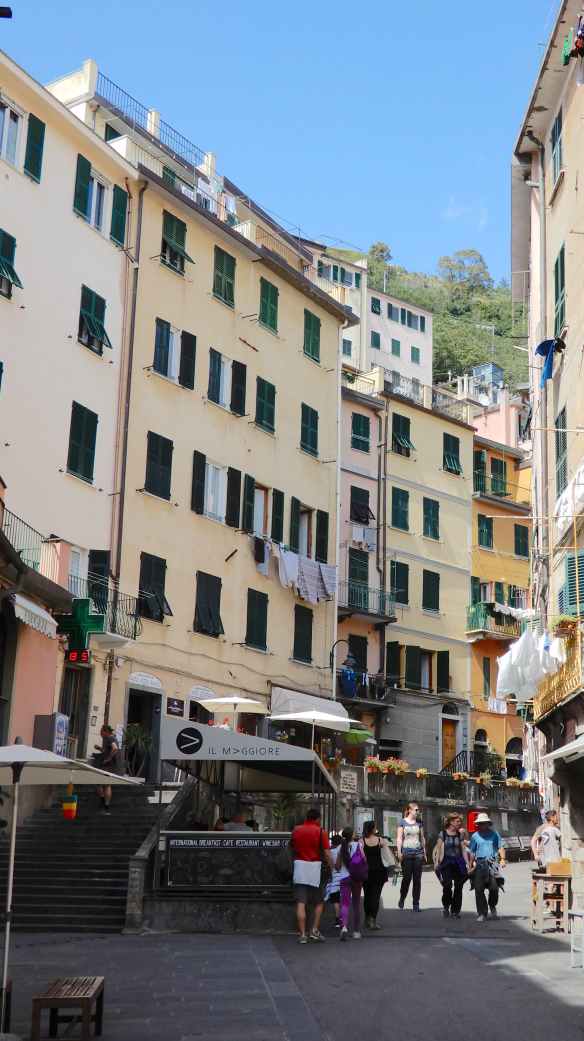
We enjoyed a seafood lunch overlooking the bay and then, armed with gelati, wandered along Via Fegina where majestic hotels and apartments afforded uninterrupted views of the coastline.

16.Via Fegina

Returning to the boat, we farewelled Monterosso for a sedate cruise back to Riomaggiore in time for aperitivo.

17.Monterosso Vecchio

Kangaroo Ground

On a crisp, clear winters morning, we left Healesville after another delicious breakfast at Cherry Tree Cafe to fortify us for the drive to Werribee. We had only been driving for half an hour when we passed a sign announcing Kangaroo Ground Memorial Lookout Tower. Executing a U-turn, we went to investigate. Kangaroo Ground is a tiny town about 26km from Melbourne and the tower is located on the highest hill in the area. Unveiled on 11th November 1926, the 12 metre tall edifice was erected in memory of local men killed in action in World War I.

1.memorial tower

The memorial now commemorates those who also lost their lives in World War II. A large bronze plaque above the doorway lists 107 names of the fallen. In 1974, the rather unattractive box on top was added for the purpose of fire watching and is still in use during the summer months.

2.memorial tower

We didn’t climb the tower to take in the 360 degree views across Melbourne, the north eastern suburbs and the Dandenong and Kinglake Ranges. We were quite happy with the ones we had from ground level.

3.panorama4.panorama5.Melbourne city6.panorama7.panorama

A single pine tree near the tower, succumbing slightly to the prevailing winds, drew our attention. Planted as a sapling on 11th November 2005, it is a direct descendent of the original Lone Pine from Gallipoli.

8.lone pine9.lone pine plaque

Christmas creativity

Whether we like it or not, there is a certain obligation to decorate our workplace for Christmas. Each year, the boxes of tinsel and baubles are dragged out of storage along with the increasingly dilapidated tree. To add a new dimension this year, we were each issued a challenge to decorate a door in the department. Everyone dug deep into their creative souls with astounding results. There are a few elves

3.elf

and a couple of Santas, one of which has decided to go for a swim.

6.Santa's gone to the beach

An enthusiastic llama

7.fa la la llama

is inspired by the mischievous and musical reindeer down the hall.

8.reindeer stable

There is a happy snowman, a couple of Olafs and a penguin that looks as though he has had one too many egg nogs.

I think this wins first prize for imagination.

15.Frosty's first photo

A chocolate advent calendar is a must for counting down the days.

16.advent calendar

Some excelled with colourful creations.

17.gingerbread house18.fireplace

Christmas trees and gifts featured

21.gift

along with baubles

and a quirky, original night sky (sorry about the quality, looks like I had one too many egg nogs!)

24.night sky

Of course, not everyone feels the joy of Christmas.

25.grumpy cat26.Grinch

Wishing you all a very happy and safe Christmas and everything you hope for in 2020.

Vernazza

The village of Vernazza was our first onshore experience of the Cinque Terre, arriving late morning with a plan for coffee and pastries.

1.Vernazza

Dating back to the early 11th century, the fortified military base defended the coast from Saracen pirates. In the middle ages, the water went right up to the buildings and the boats would tie up there, as they do in Venice.

2.Vernazza

These days, they remain on buoys in the harbour unless rough weather is forecast, then they can be found in the main piazza.

3.Piazza Guglielmo Marconi4.boats outside Albergo Barbara

Seated on a base of rocks at the entrance to the inlet, the parish church of Santa Margherita d’Antiochia was built in 1318.

5.Chiesa di Santa Margherita d'Antiochia

The views would be spectacular from the tower, almost as rewarding as those from the cemetery on top of the hill where, rather than being buried in the ground, the coffin is slid into something like a drawer in a wall, known as a loculo.

6.Chiesa di Santa Margherita d'Antiochia

In October 2011, Vernazza was devastated when torrential rains, resulting in flooding and mudslides, buried her under four metres of mud and debris. For months the village was uninhabitable and years later, restoration work still continues. It is hard to imagine the peaceful harbour

7.harbour8.harbour

and beautiful pastel shades of Liguria under siege from nature.

9.Vernazza

We wandered up the main thoroughfare, Via Roma, my aversion to crowds and having people in my photographs meant my eye was drawn to the upper level of the streetscape.

10.Via Roma

Returning to the harbour, houses seemed to be suspended above a cave entrance

11.cliff houses

which, it turned out, led to another beach.

12.beach beyond

From this side of the harbour we could see the next town, Monterosso, in the distance.

13.view to Monterosso

The remains of Doria Castle and its lookout tower stand proudly on the rocky promontory

14.Doria Castle

while below, on the terraces of the medieval watchtower, Ristorante Belforte has been serving quintessential Ligurian cuisine for the past fifty years.

15.Doria Castle & restaurant16.Ristorante Belforte

We had time to admire the stunning rock formations

while waiting for the boat to take us to our next destination, Monterosso.

21.Monterosso

The Great Divide

The Lyell Highway traverses Tasmania from Strahan on the west coast to the capital city, Hobart, in the south. Driving the 300km through the West Coast Range and Franklin-Gordon Wild Rivers National Park along the tortuous route is both tiring and exhilarating. On an unusually straight stretch of road, about 75km past Queenstown, we noticed a couple of cyclists taking a break at a small roadside rest area and stopped to investigate. We learned from the information board that this was the point of The Great Divide. Tasmania is divided into two distinct regions when it comes to climate, geology and vegetation and this divide is known as Tyler’s Line (named after Peter Tyler, a Tasmanian limnologist). The west has higher rainfall, poor acidic soil and the strong westerly winds of the Roaring Forties. The vegetation comprises rainforest, moorland and wet sclerophyll along with rugged mountain ranges.

1.westward2.westward

Frenchmans Cap is the highest peak in the West Coast Range, named because of the similarity to the shape of the Liberty Cap worn during the French Revolution.

3.Frenchmans Cap

To the east of the divide, conditions are much drier and warmer with lower rainfall and more fertile soil. From our vantage point, the King William Range rose majestically on the horizon, similar in shape and geology to the more famous Cradle Mountain.

4.King William Range

Made up of three separate peaks, named Mount King William I, II and III,

5.Mt King William I6.Mount King William II7.Mount King William III

the King William Saddle is equidistant from Tasmania’s three major cities – Hobart (190km), Launceston (186km) and Devonport (193km), each one a three hour drive. Fortunately, we were only 10km from our destination of Pumphouse Point.