Kilmainham Gaol

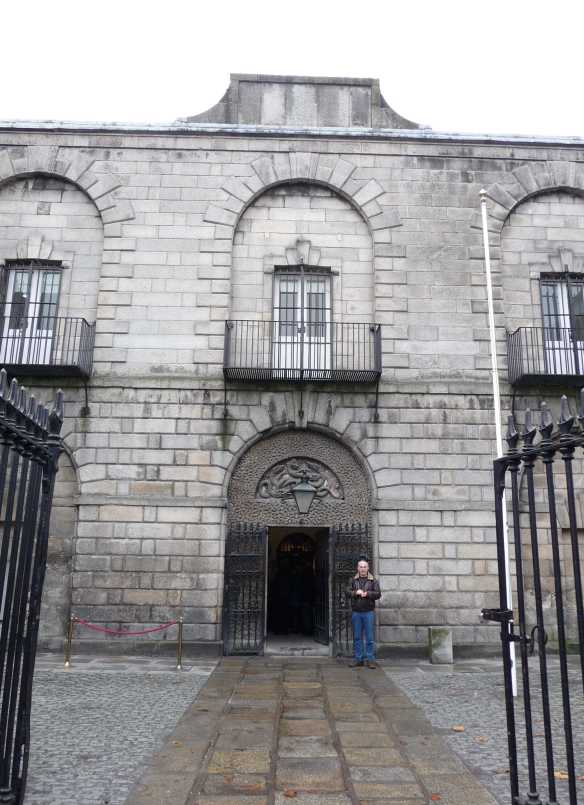
A suitably gloomy Dublin day accompanied our visit to Kilmainham Gaol, a prison built in 1796 and remembered for the incarceration and executions of the leaders of the 1916 Easter Rising. Decommissioned in 1924, the property was left deserted and neglected until 1960 when volunteers set about restoring the site to preserve it as a museum.

1.Kilmainham Gaol entrance

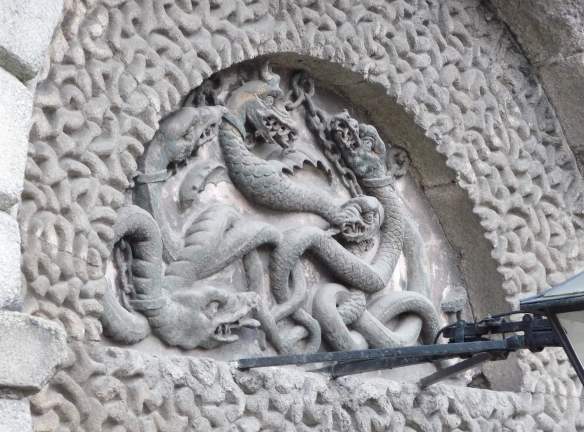
Above the entrance, a carving of five serpents in chains represents the five most heinous crimes: rape, murder, theft, piracy and treason.

2.Five serpents in chains above entrance

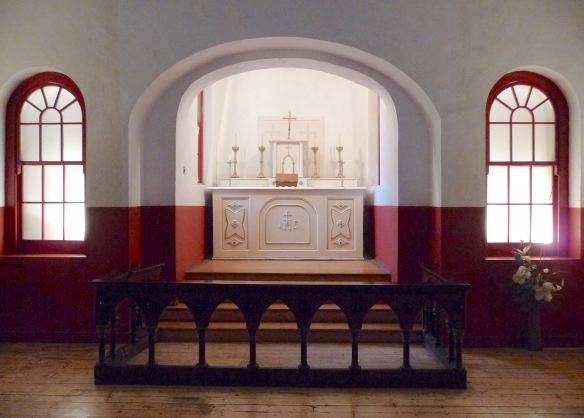
The restoration was completed in 1971 with the re-opening of the chapel after reconstruction of the altar. One of the leaders of the Easter Rising, Joseph Plunkett, married his fiancé Grace Gifford in the chapel just hours before he was executed.

3.Chapel

The West Wing is the oldest part of the gaol, the corridors are long, dark and cold.

4.West Wing5.West Wing

The limestone walls gave no insulation and the windows had no panes, an attempt to reduce the incidence of disease with the flow of fresh air.

Poor health and hygiene was inevitable with five prisoners sharing a cell built for one. There was no segregation between men, women and children and a single candle provided the only light and had to last two weeks.

9.cell

An inscription has been scratched by a former prisoner over a doorway , “beware of the risen people that have harried and held, Ye that have bullied and bribed”. The quote is from the poem, The Rebel by Patrick Pearse, one of the authors of the Irish Proclamation of Freedom and a leader of the Easter Rising.

10.Padraig Pearse quote

The Great Famine contributed immensely to the problem of overcrowding in the West Wing with more people found guilty of stealing food and those committing crimes deliberately so they would at least be fed regularly. Adding to the numbers were convicts awaiting transportation to Australia and people with mental illnesses.

11.West Wing

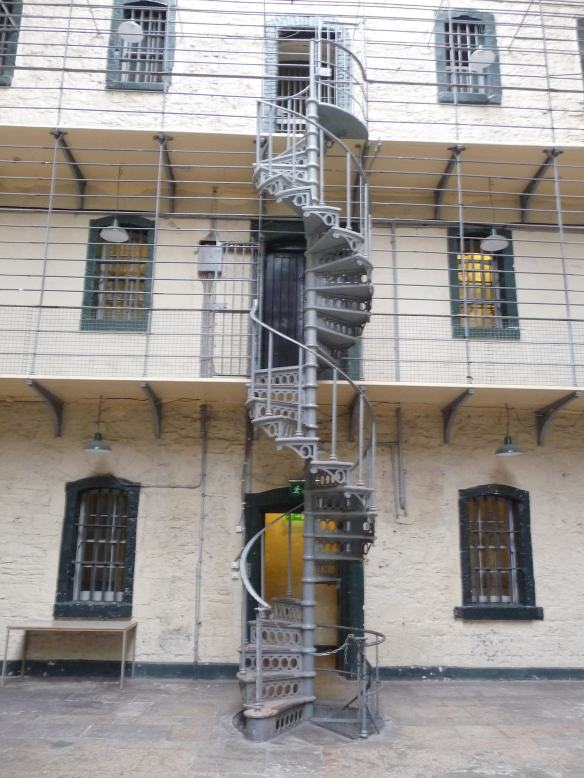
The situation was alleviated somewhat in 1862 with the opening of an additional ninety six cells in the new East Wing. The Victorian era brought different ideas on the reform of inmates and the new addition was more open and much lighter.

12.East Wing Main Hall13.East Wing16.East Wing

The cells didn’t seem to be any bigger but definitely less draughty, a bonus for the men who were moved to the East Wing. The women stayed behind in the dark, cold cells of the West.

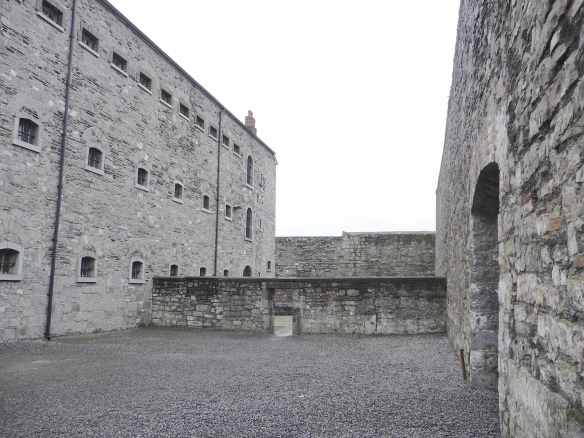
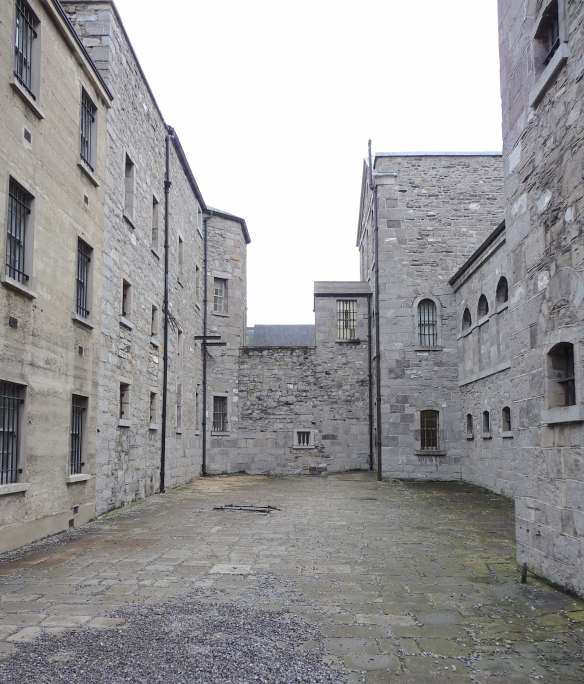
With the new wing came exercise yards where the prisoners spent one hour a day, silently walking in a circle. Another hour was spent in church and the remaining 22 hours confined to their cells.

19.exercise yard East Wing20.exercise yard East Wing21.exercise yard East Wing

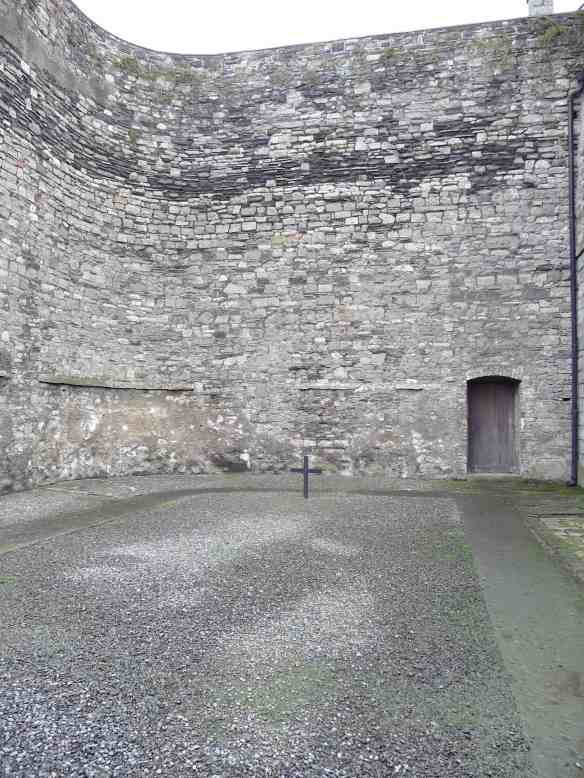
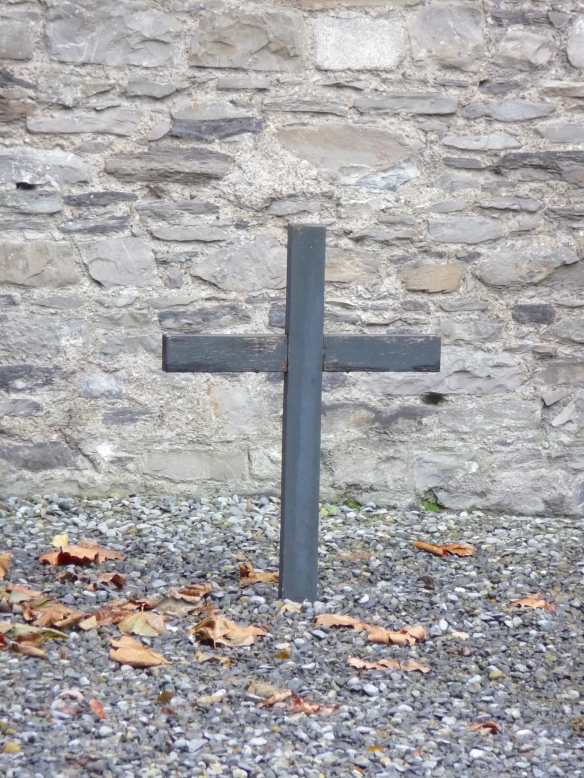
The Stonebreakers’ Yard was stunningly silent, a palpable ominosity hung in the air. Between May 3rd and May 12th 1916, fourteen men, leaders of the Easter Rising, were executed by a British firing squad. The first was Patrick Pearse, a cross marks the ground where he and the next twelve died.

22.Cross marking the place of execution of the leaders of the 1916 Rising

James Connolly was the last. He had been badly wounded in the uprising and, even though he only had a day or two to live, was brought to the courtyard on a stretcher, through the gate.

23.Stonebreakers' Yard gate where ambulance brought James Connolly

Unable to stand, instead of being marched to the other end of the yard for execution, he was tied to a chair and shot. A second cross marks the spot where he died.

24.Cross marking the place of execution of James Connolly

It seems fitting that the Irish tricolour flies between these two crosses, a symbol of the independence these men fought so hard for.

25.Irish tricolour between crosses in Stonebreakers' Yard

Barga

On a perfect sunny spring day, we drove to the medieval walled town of Barga, an easy 45 minute drive from Lucca. We had learned it was easier to park outside these ancient towns and walk in rather than risk inadvertently driving into a pedestrian zone or the wrong way down a one way street. Crossing the bridge, we passed Parco Fratelli Kennedy, named in honour of American President John F. Kennedy and his brother Robert, both of whom were assassinated.

1.Parco Kennedy

The old stone aqueduct was built in the 15th century to supply clean water for the fountains and crosses the original moat of the old village.

1a.aqueduct Parco Kennedy

Narrow streets and steep steps hinted at what was to come once we were inside the walls.

Beautiful buildings lined the main thoroughfare

4.beautiful building

as we made our way to Porta Reale, one of the three gates in the medieval city walls. Below the observation tower, the gate still displays the ancient coat of arms of the city.

5.Porta Reale

The layout of the town has remained virtually unchanged since the 8th century, buildings at impossible angles hug narrow lanes, mysterious alleyways and stone steps.

We set off through the web of streets with no real destination in mind, happy to amble randomly in the sunshine. An interesting sculpture caught our eye

10.sculpture

outside the Teatro dei Differenti, Barga’s main theatre. Constructed in 1668 it was deemed too small at the end of the 18th century, a new structure was built on top of the old one.

11.Teatro dei Differenti

Along with the theatre, the adjacent buildings have been beautifully restored.

We decided to head to the highest point in the town once we spotted the bell tower of the Duomo di San Cristoforo.

14.Duomo di San Cristoforo

Our quest took us past the immaculate garden of the Palazzo Salvi,

15.Palazzo Salvi16.Giardino di Palazzo Salvi

less opulent but equally interesting plots

17.garden

and the myriad doorways we had come to expect.

We finally reached the cathedral, a spectacular edifice that I will need to cover in a separate post.

30.Duomo di San Cristoforo

The views across the rooftops to the Apuan Alps and the shrouded peak of Pania della Croce were stunning.

31.view

33a.view

Tearing ourselves away, we meandered back to town in search of sustenance, discovering a memorial garden in Piazza Garibaldi, adjacent to the Museum of Memory. A large sculpture entitled La Vedette (in military terms meaning the forward observer) was unveiled in 2009 on the 4th November, a day celebrated in Italy as the anniversary of the end of  World War I.

We reached Piazza Angelio at lunch time, a popular place in summer for exhibitions and entertainment. The particular shape and almost perfect acoustics of the piazza make an ideal setting for international festivals such as “Opera Barga” and “Barga Jazz”.

16th century poet Pietro Angeli, nicknamed Bargeo, watches over the piazza from the corner of Palazzo Angeli.

The offerings on the blackboard at L’Osteria enticed us in, we weren’t disappointed.

41.L'Osteria

With much of the town still to see, we continued our wanderings in a different direction.

45.narrow street

Colourful homes lined the street

48.colourful houses

and some clung precariously to the edge of the cliff.

49.fabulous homes

All had magnificent views of neighbouring hilltop towns and verdant countryside.

50.hilltop town51.views

The aqueduct and Kennedy Park were behind us

52.aqueduct

as the outskirts of town stretched in front.

53.Villa Buenos Aires

The 17th century Chiesa di San Felice, was quite small and understated when compared to others we had seen on our travels.

54.Chiesa di San Felice55.Chiesa di San Felice

Outside the church was this memorial plaque, apparently dedicated to a Scotsman with an Italian name. It seems Barga has a strong connection to Scotland, with many residents emigrating there in the 19th century in search of work when industry in Tuscany suffered a decline. They won the Scots over with their gelato making skills and, coupled with a knack for cooking fish and chips, made great success out of their cafés and restaurants. Over the generations, some returned to Barga and now sixty percent of the town’s 10,000 residents have Scottish relations. The annual Festival of Fish and Chips, Sagra del Pesce e Patate, celebrates this connection for three weeks each July/August. I can’t find any clues as to the life of Mario Moscardini but I assume he made a considerable contribution to Barga.

61.memorial

Working our way along Via di Mezzo, we found an interesting little face peering out from the wall of a restaurant. It is known as a scacciaguai, a folk magic figure that protects from trouble and harm. Hopefully, the charm has worked for the restaurant of the same name.

62.scacciaguai

Three doors along, we paid a visit to Casa Cordati, a 17th century palazzo that was once the studio of local artist Bruno Cordati.

63.Casa Cordati

It is now owned by his grandson, Giordano, and offers rather sumptuous accommodation as well as an extensive gallery on the first floor. The rooms on this floor have been preserved as they were during Bruno Cordati’s creative years, the views were nothing short of inspirational.

Our exploration of this magical town had come to an end as we reached the Piazza della Santissima Annunziata and the 16th century church of the same name. The 19th century façade was badly damaged by artillery shells in World War II and was later restored.

72.Piazza della Santissima Annunziata

There was only one thing left to do to make the day complete.

73.gelati

Queenstown

Queenstown has always been one of those places we passed through on our way to somewhere else. The first time was on holiday in 1998, the barren terrain and torrential deluge didn’t entice us to linger. The largest town on Tasmania’s west coast has changed considerably since then. The early 1900s saw mass logging as the mining town boomed and the expansion of the copper mines left an eerie, lunar landscape bereft of vegetation. The main street is reminiscent of a wild west movie set with Mount Owen towering above re-forested hillsides.

1.Orr Street

We made our way to Spion Kopf Lookout for a different perspective of the town. Tasmania was one of the first British colonies to send volunteers when the second Boer War broke out in 1899. The British suffered a humiliating defeat on a hill in Natal called Spion Kopf, meaning ‘Spy Hill’, and on returning home, the British survivors named stands at their local football grounds ‘the Kop’ to commemorate the fallen. I don’t know if Queenstown had a football ground, but this hill was named for the same reason. There is a poppet head made from materials from the old mine

2.poppet head

as well as a restored cannon, one of two cast at the Queenstown smelters in 1898.

3.cannon

The second cannon was transported to Victoria in 1910 where it was used to fire the royal salute on the coronation of King George V. It was used again in 1918 to celebrate the end of World War I but, unfortunately, it was overloaded with powder and exploded when it was fired.

4.lookout

From our perch, we had a fabulous view of the rather impressive Penghana, built in 1898 for Mr. Robert Sticht, the General Manager of the Mount Lyell Mining & Railway Company. The home certainly reflects the power of a man in his position  and the wealth in the town at the time. Robert Sticht died in 1922 and ten more general managers and their families lived at Penghana until 1995 when the title was transferred to the National Trust. The house is now run as a unique bed & breakfast, I think we need to find an excuse to stay at Penghana.

5.Penghana Bed & Breakfast

The hills surrounding the town still have some regenerating to do and the isolation is evident from this outlook.

6.lookout view7.lookout view8.Mt. Owen

We returned to ground level for lunch at the Empire Hotel, a beautiful, heritage listed building dating back to 1901.

The lobby is dominated by a stunning hand-carved Tasmanian Blackwood staircase. The raw timber was shipped to England, carved and shipped back to Queenstown.

13.Empire Hotel lobby

The tasteful furnishings echoed the era

15.Empire Hotel lobby

and the traditional dining room had a cosy ambience

16.Dining Room

with a beautifully restored ceiling rose.

17.ceiling rose

The menu was extensive but who can go past fish ‘n’ chips on a Friday?

18.fish & chips

Fortified, we were ready to tackle the ’99 bends’, the infamous road between Queenstown and Gormanston that makes us appreciate the innovation of power steering. As the road straightened, we turned off to Iron Blow Lookout, an extended viewing platform over the former open-cut mine.

19.Iron Blow Lookout

Miners flocked to the area when gold was discovered in 1883 but they found the plentiful copper deposits more profitable. The colours were striking on this sunny day.

20.Iron Blow Lookout

The view across the Linda Valley to Lake Burbury was spectacular,

21.Iron Blow Lookout22.Lake Burbury

while the denuded landscape remains as a legacy from the past.

23.Iron Blow Lookout24.Iron Blow Lookout25.Iron Blow Lookout

The nearby settlements of Gormanston and Linda were built for workers of the Iron Blow but both are now ghost towns. The only evidence of former lives in Linda is the haunting remnants of the Royal Hotel. The original structure burnt down in January 1910 and T Kelly rebuilt using concrete to avert any future disasters. The hotel finally closed in the 1950s and the shell still stands despite more recent flames.

26.Royal Hotel, Linda27.Royal Hotel, Linda

We left the west coast behind as we crossed the bridge over Lake Burbury, uplifted by the afternoon sun glistening on the pristine water.

28.Lake Burbury

TarraWarra

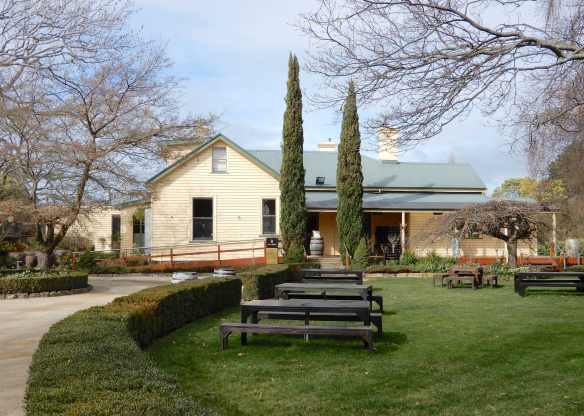
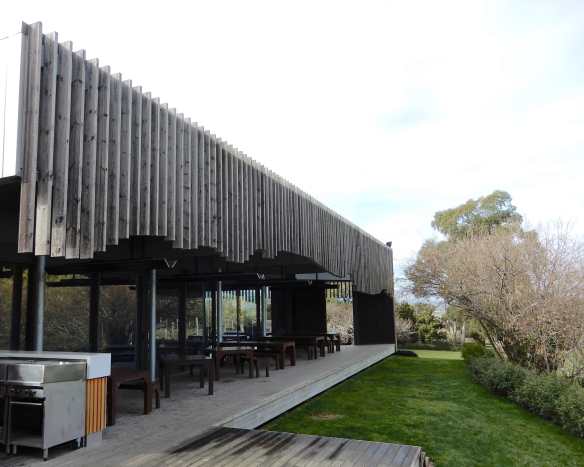
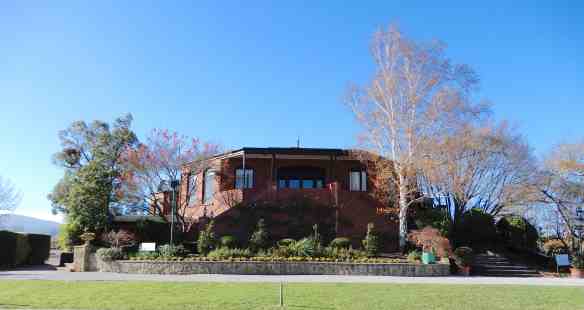
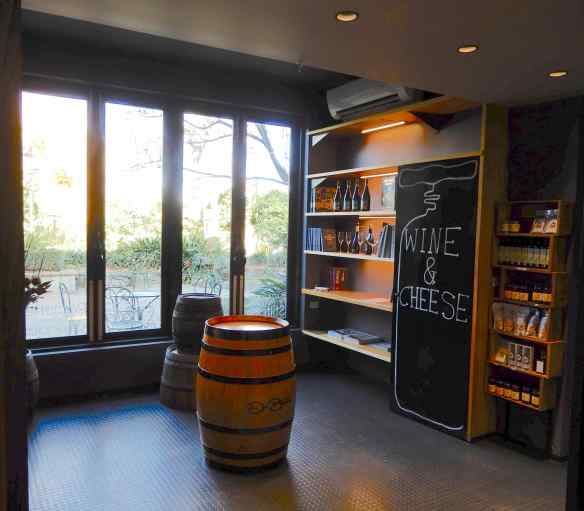
I recently spent a wonderful week in Victoria with my very special friend who I met many years ago in high school (she now lives too far away in Darwin). We arrived on flights within an hour of each other (quite a feat from opposite ends of the continent), collected a hire car and drove a circuitous route to our destination, Healesville. After a short visit to a couple of wineries (a little too early in the day for tasting, even for me), we stopped by for a look at TarraWarra Museum of Art. Philanthropists Eva and Marc Besen began collecting works of art in the 1950s and realised their vision of establishing their privately funded museum with the opening of TarraWarra in 2003. The elegant building is the result of a competition between five of Melbourne’s outstanding architects. Allan Powell’s winning design hugs the contours, complementing rather than imposing on the landscape.

1.Tarrawarra Museum of Art2.TarraWarra Museum of Art3.TarraWarra Museum of Art

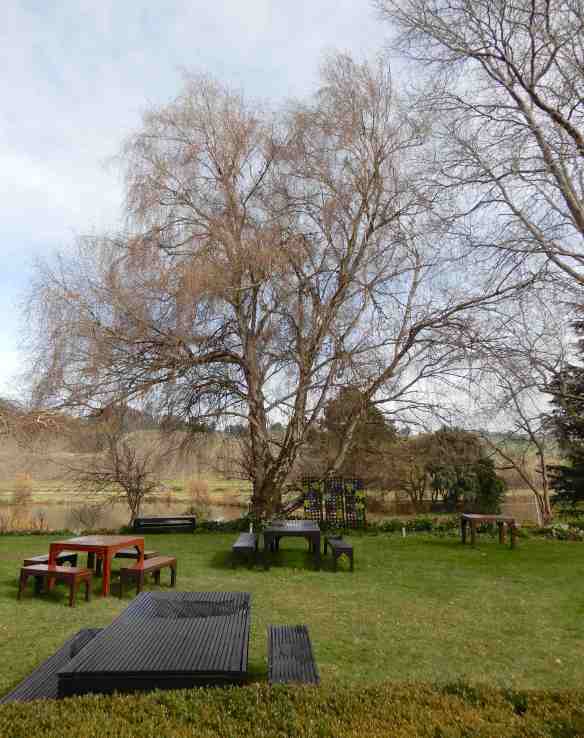
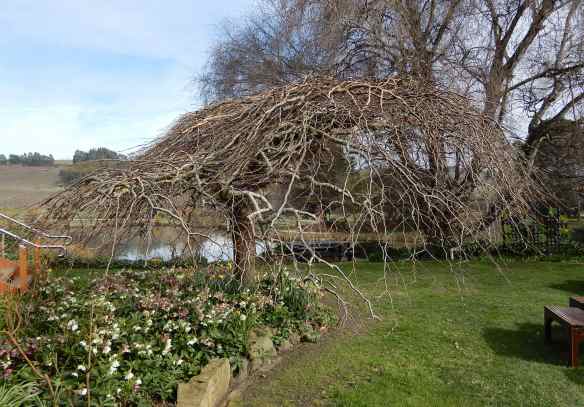
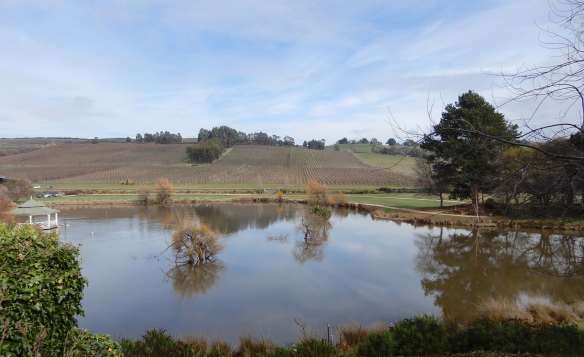
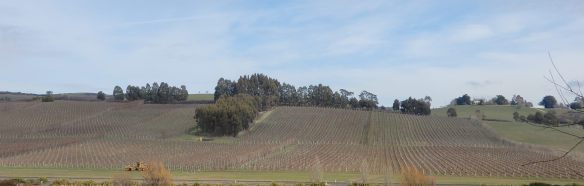
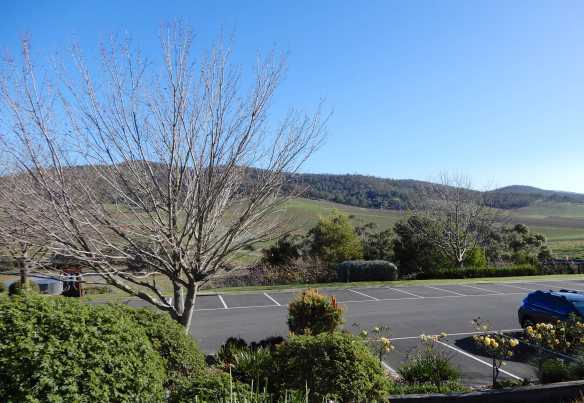
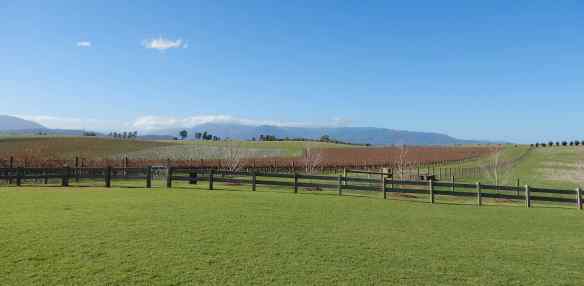
The scenery is sublime, adjacent to the TarraWarra Estate vineyards

4.TarraWarra Museum of Art5.TarraWarra Museum of Art6.estate

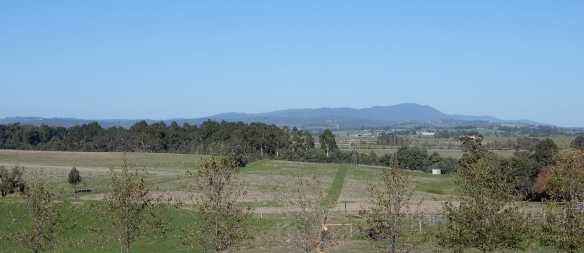
and further afield to the ranges.

7.view

We wandered into the current exhibition, The Tangible Trace, immediately awestruck by the light and magnitude of the gallery. There were numerous glass display cabinets (I now know they are called vitrines) containing stones, tiles, bits of brick and cubes of termite clay.

8.Domino Theory, Simryn Gill

The materials have been collected by artist Simryn Gill from around her studio in Port Dickson, Malaysia, near one of the world’s busiest trade routes, the Strait of Malacca. The pieces are traces of the movement of capital and power and the title, Domino Theory, refers to the Cold War concept that if one country fell to communism, others in the region would follow like dominoes, a policy used by the U.S. to justify its involvement in the Vietnam War.

An abandoned seaside motel in Port Dickson was Simryn Gills inspiration for Passing Through. The series of monotypes were created by placing coloured inks on the small white tiles of the former dance floor and imprinting onto paper.

14.Passing Through, Simryn Gill

The distorted, partially collapsed outline of Australia, Shilpa Guptas Map Tracing #7 – AU, was somewhat disturbing. The copper pipe has been manipulated to change the shape of the border, inviting us to consider the, “porous relationship between inside and out”.

16.Map Tracing #7 - AU, Shilpa Gupta

The large concrete slab covering the floor nearby, another of Shilpa Guptas creations, is engraved with the phrase, “The markings we have made on this land have increased the distance so much” in English, Hindi, Arabic and Chinese. The slab was smashed into fragments on site with the intention that the audience will each take away a piece and at the end of the exhibition, only a trace will remain.

17.engraving on concrete, Shilpa Gupta

The huge paintings of Carlos Capeláns Implosions series filled the walls of the next gallery.

21.Implosion series, Carlos Capelán

Upon entering the gallery, we were asked not to touch the curtains in the hallway as they were, in fact, an art installation. Sangeeta Sandrasegar has created five panels of Indian khadi cotton over-hung with silk organza, hand-dyed with indigo and Australian native cherry. What falls from view covers the windows in the Vista Walk gallery, changing the Yarra Valley landscape outside as the material wafted gently in the breeze.

22.What falls from view, Sangeeta Sandrasegar

The picture framed at the end of the hallway showed nature at her best.

23.view

What could be more beautiful than autumn hues in the morning sunlight?

24.autumn colours

Tramonte Trails

On an overcast morning, we set off to explore the walking trails around the Villa Boccella estate. The Old Tramonte walk follows part of the old road from Ponte a Moriano to the village of Tramonte.

We passed the main villa

3.Villa Boccella

and as we continued up the hill, the views would have been spectacular on a clear day.

4.Old Tramonte walk

I don’t know what was in the cute stone shed but it looked as though the firewood was well seasoned.

We stayed on the main path with an Acacia forest to our right

7.Acacia forest

and pine walk to our left.

8.Pine walk

Sporadic wildflowers added colour to the verdant setting.

The last thing we expected to find in the Tuscan countryside was bamboo.

15.Bamboo walk

We followed Bamboo Walk until, eventually, the woodland changed as we descended along Valley Walk.

16.Bamboo walk

20.Valley walk

Beautiful irises bloomed sporadically in the sheltered lowland.

The track led to the road, Via Tramonte, at the edge of the estate

and we could see the main villa

25.Villa Boccella

and Limonaia Piccola through the gates.

26.Limonaia Piccola

We followed the stone walled boundary of the grounds,

27.stone wall

past a patch of magnificent wild poppies,

28.poppies

to the entrance that would return us to the limonaie.

31.Via Tramonte

There was another walk that would have taken us across the river

32.River walk33.bridge34.river35.bridge

but lunch time was approaching, it would have to wait for another day.