grand greenhouse

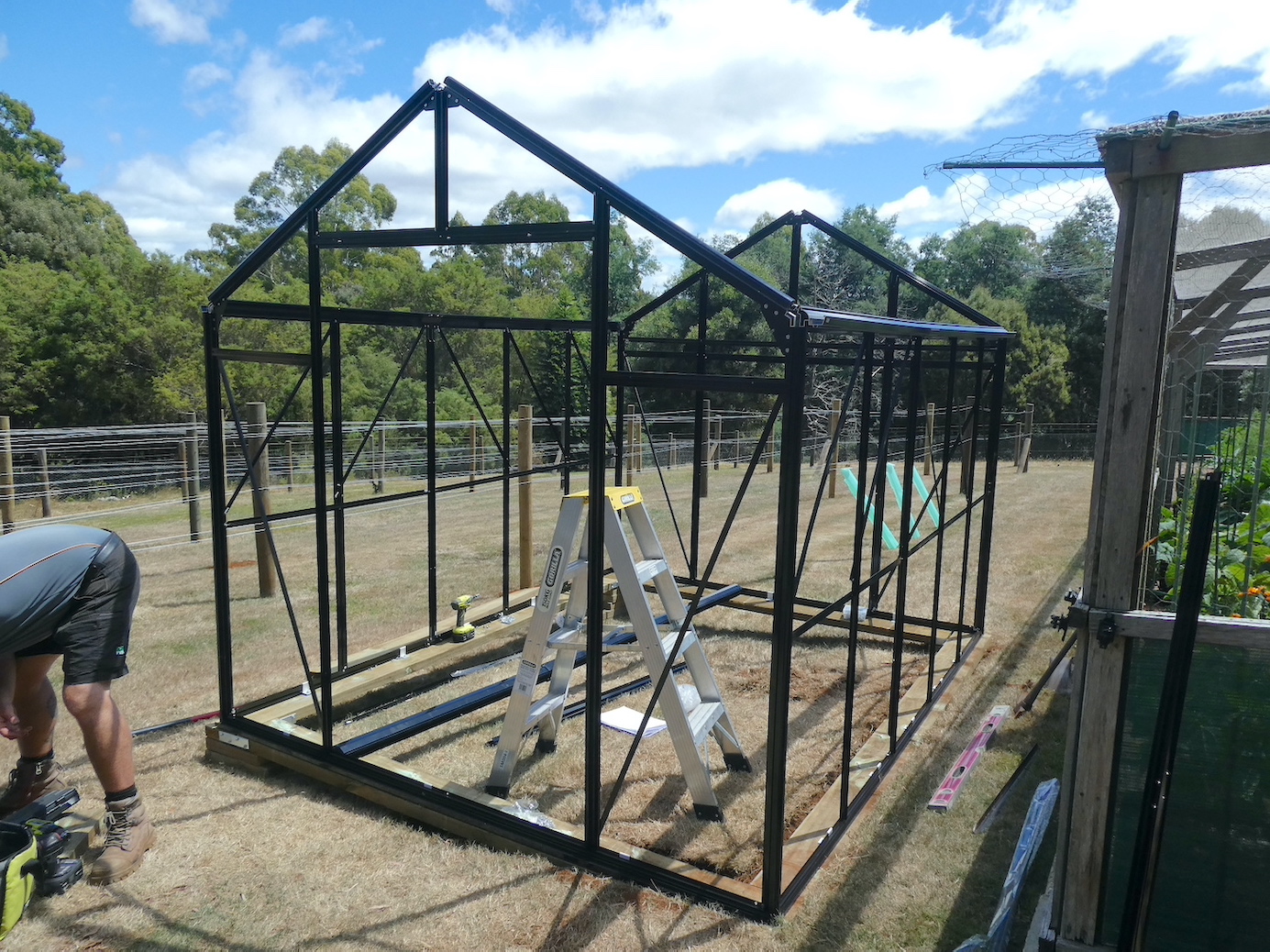
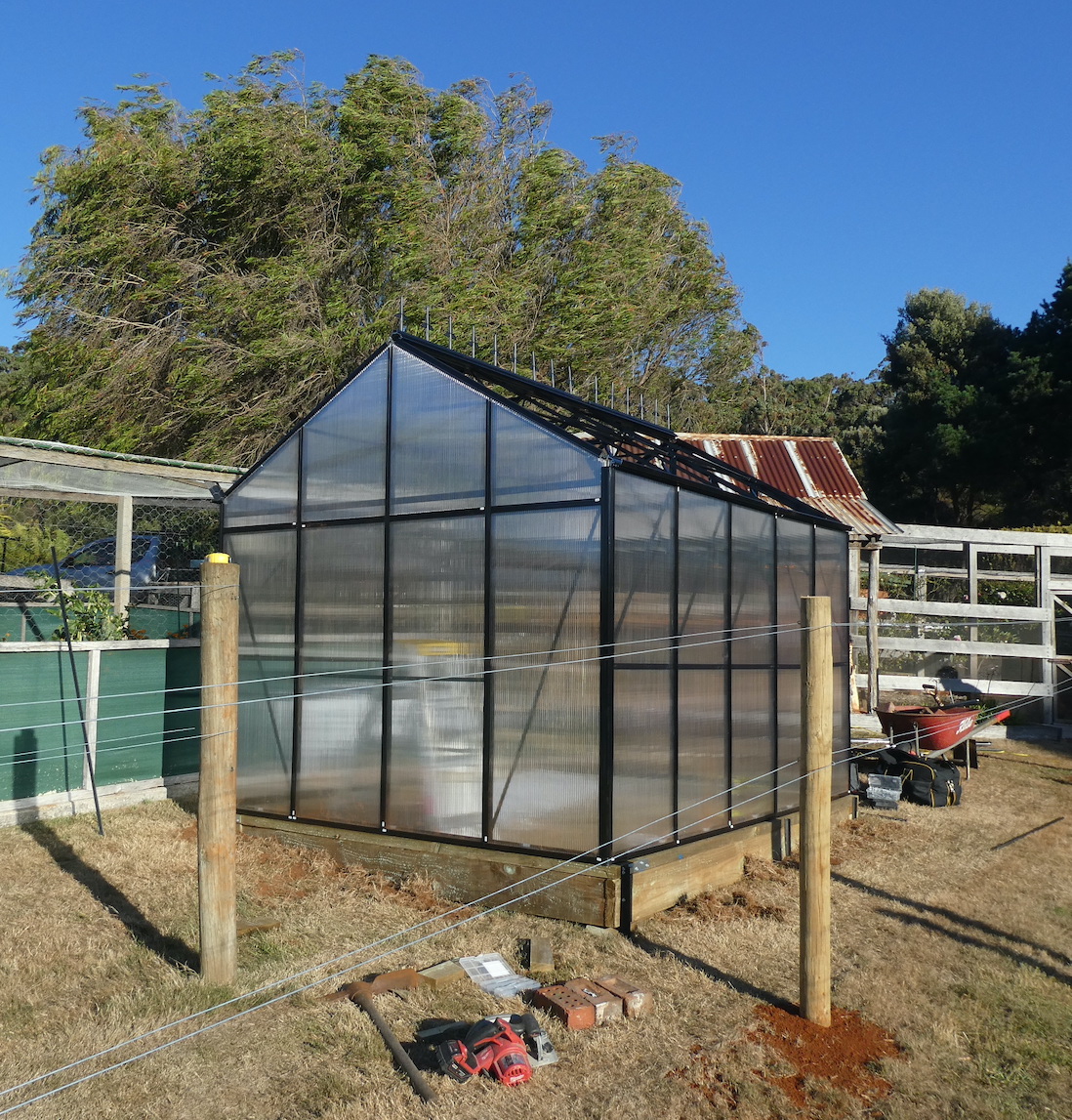
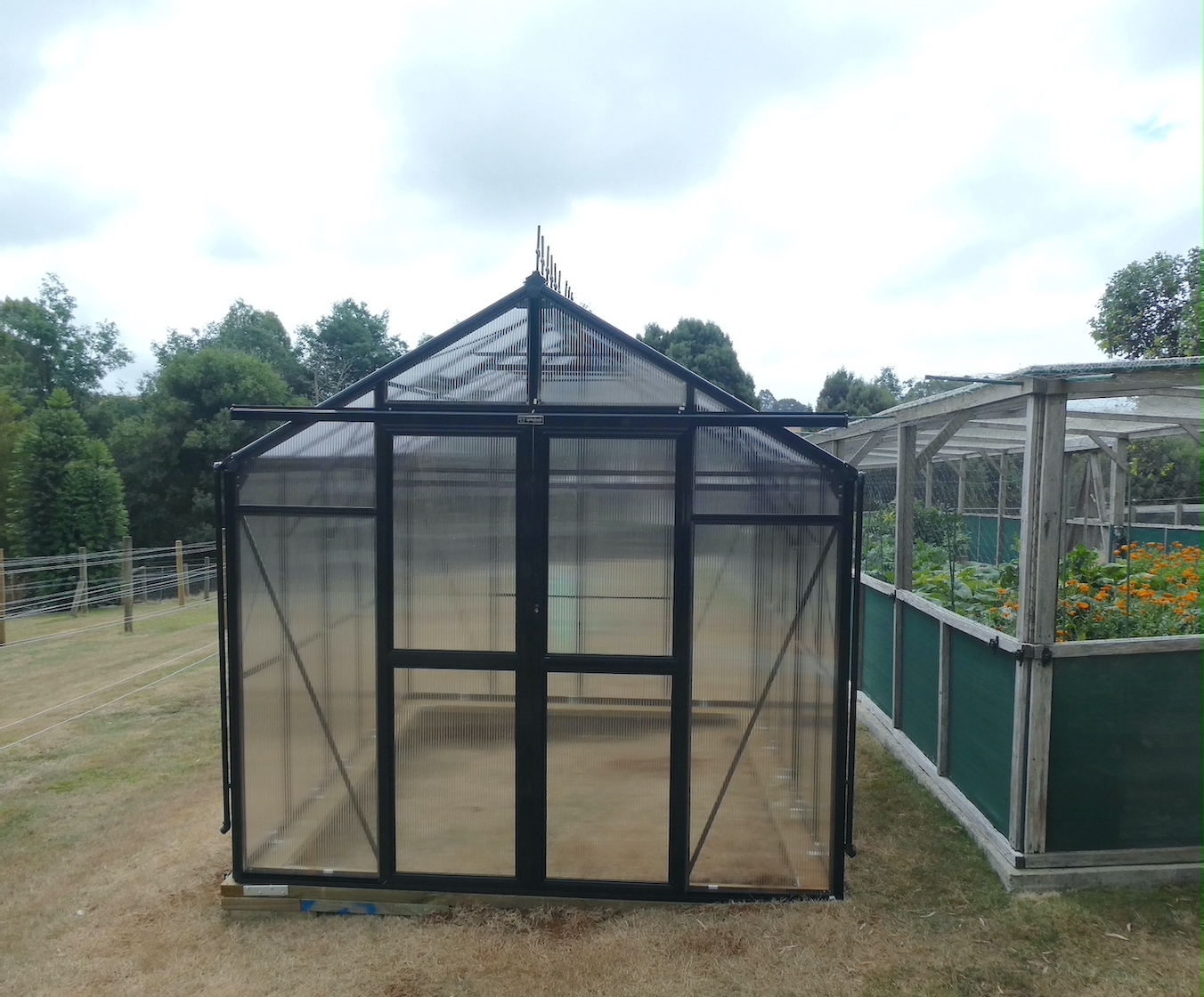
Although our veggie patch is prolific through summer, it tends to be somewhat limited once the colder months descend. After much contemplation, we took the plunge and ordered a greenhouse last February.

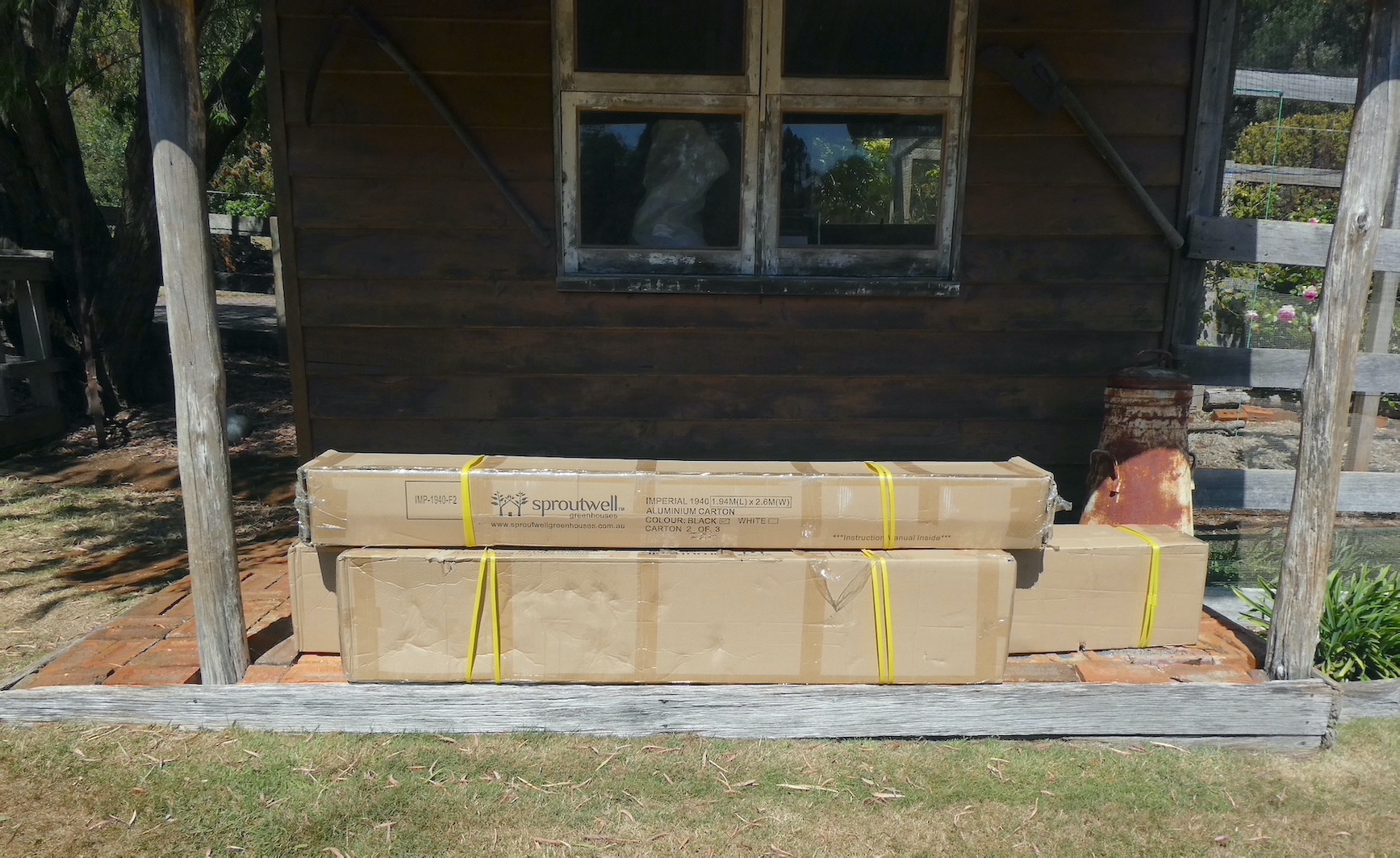
We chose a site adjacent to the vegetable enclosure with the potting shed and running water close by.
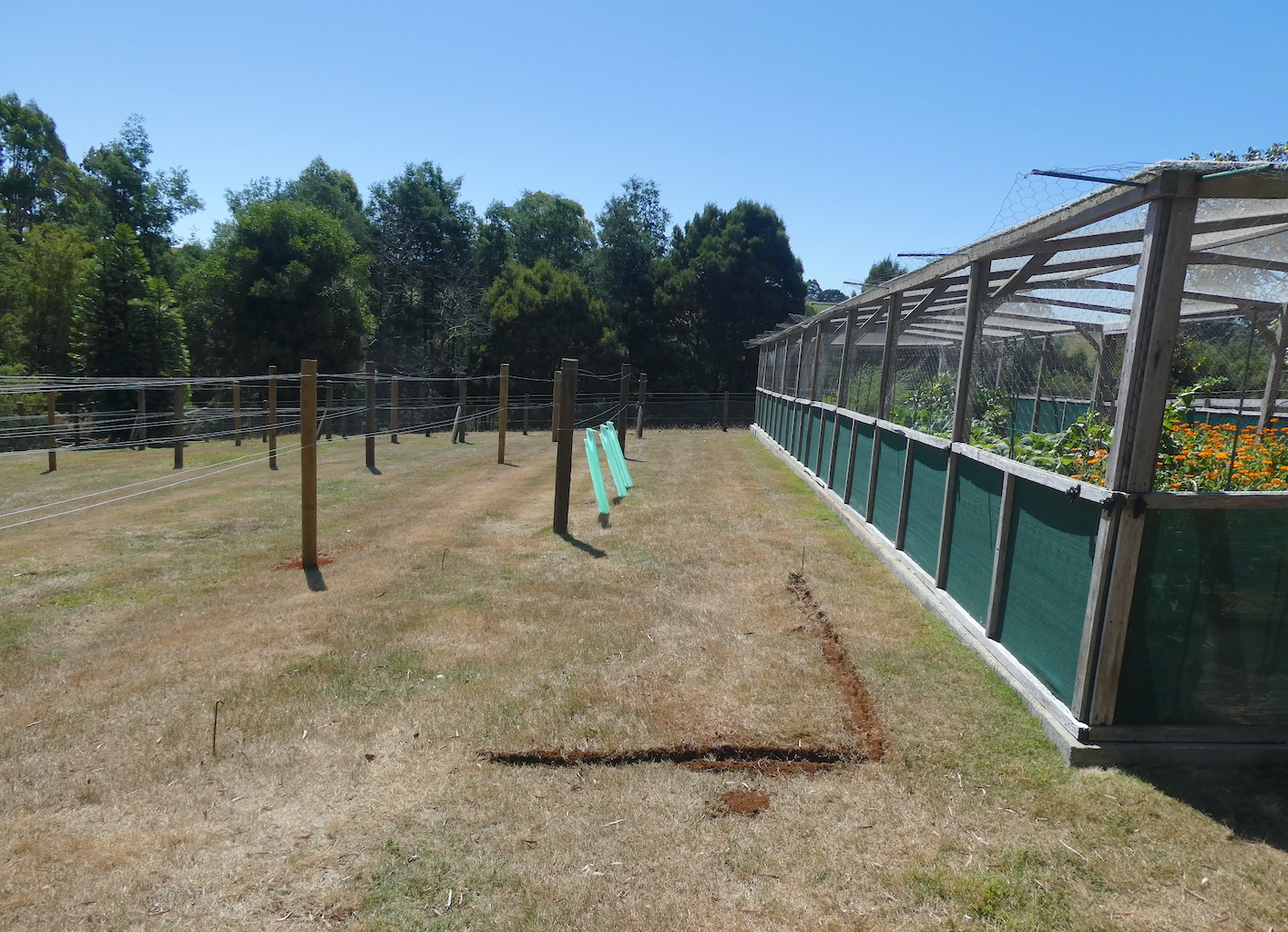
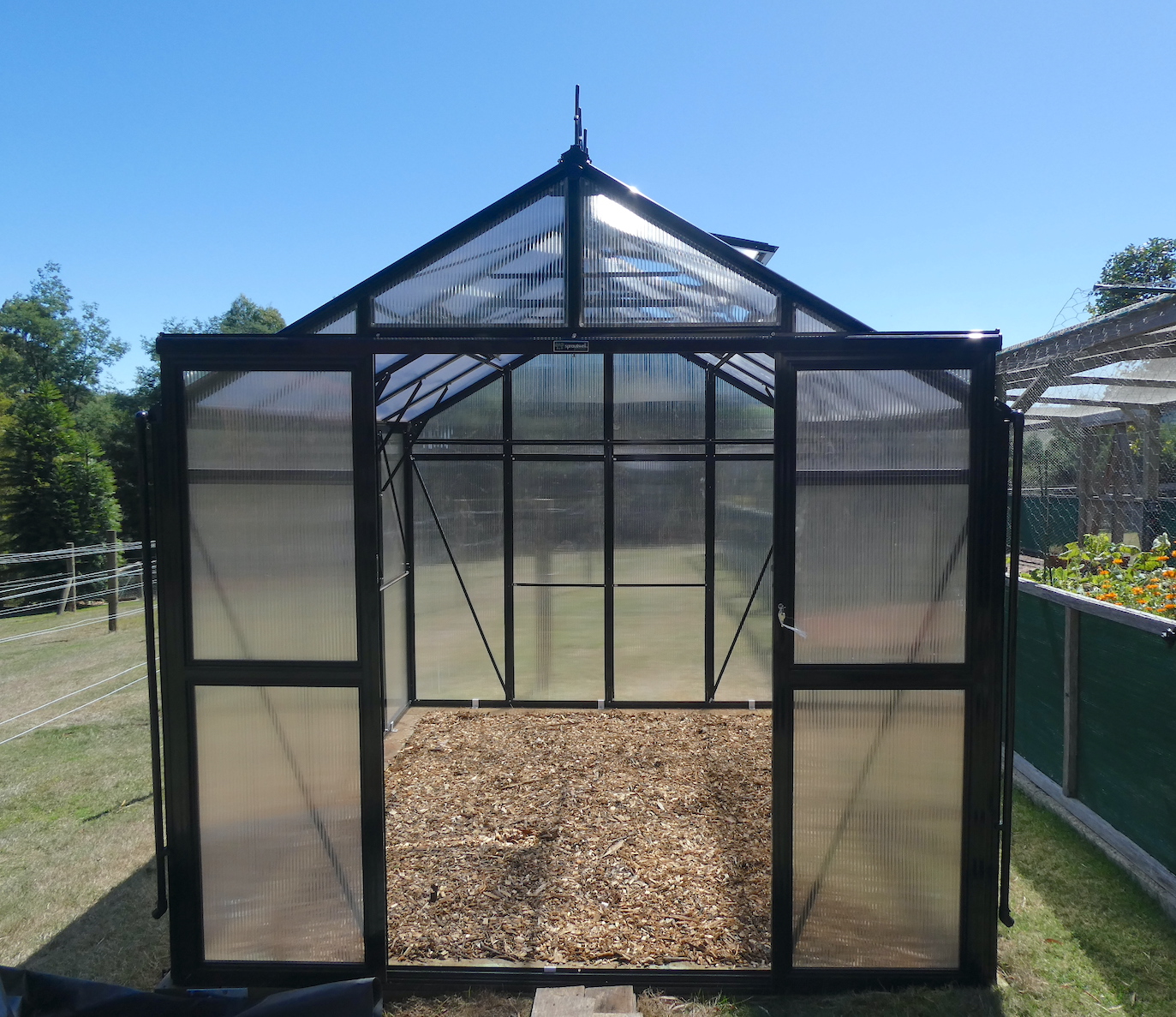
We have found that self-build is not always the easy option, with dubious instructions and missing pieces and so, we relied on those with prior experience. Even so, it took a little longer than the one day allocated to finish but the result was worth it.

We brought in a couple of scoops of earth for the base followed by a layer of blue metal to assist with drainage and a topping of mulch that can be watered down to increase humidity.

Michael constructed a staging shelf out of reclaimed timbers
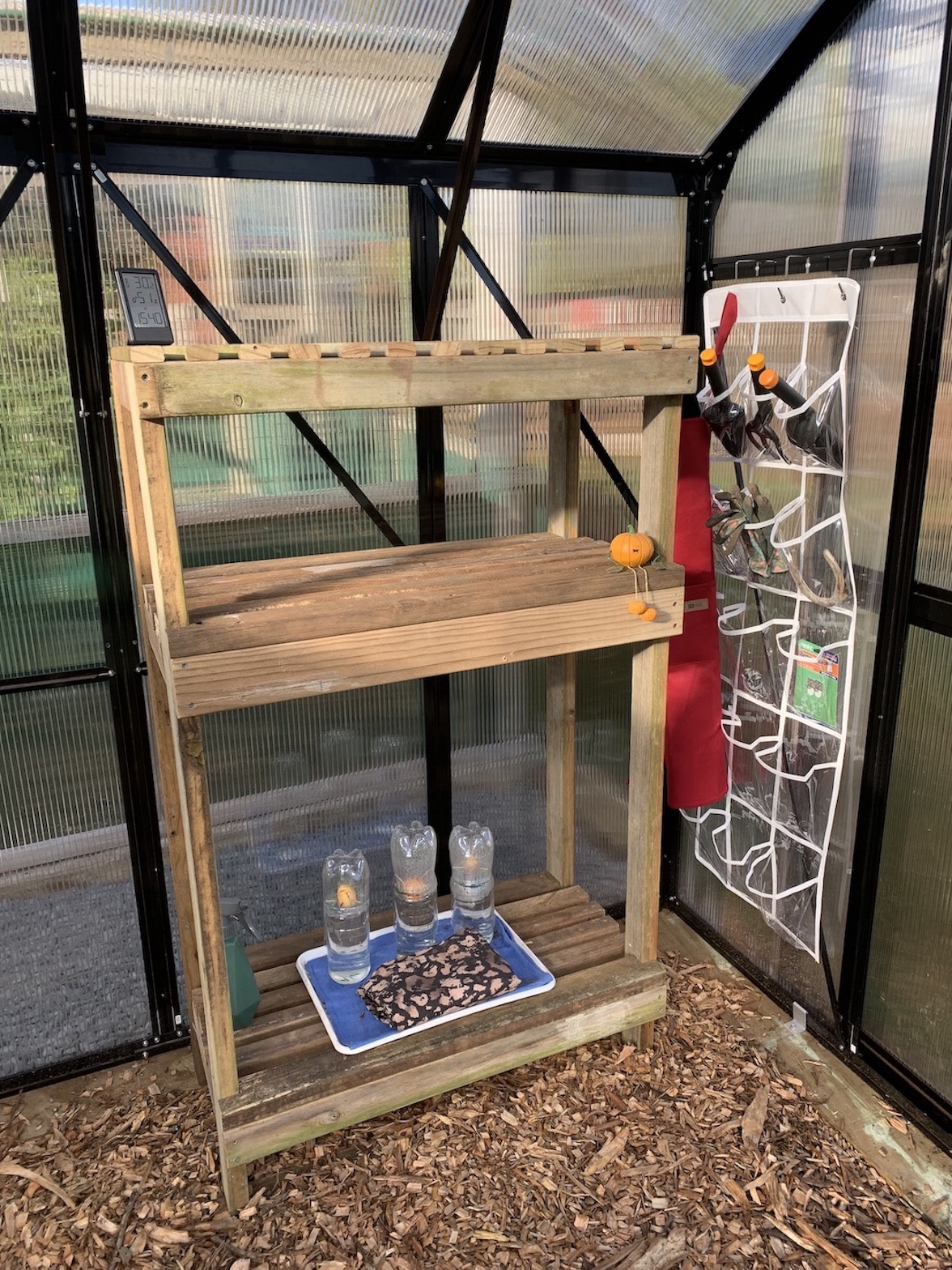
and we bought raised beds to fill the rest of the space. Once we realised how high the temperature reaches, we installed a sunshade on the northern side.

A temporary trestle provided the perfect environment to cure the butternuts in May. I then store them on a shelf high in the  potting shed where they last for a good six months.

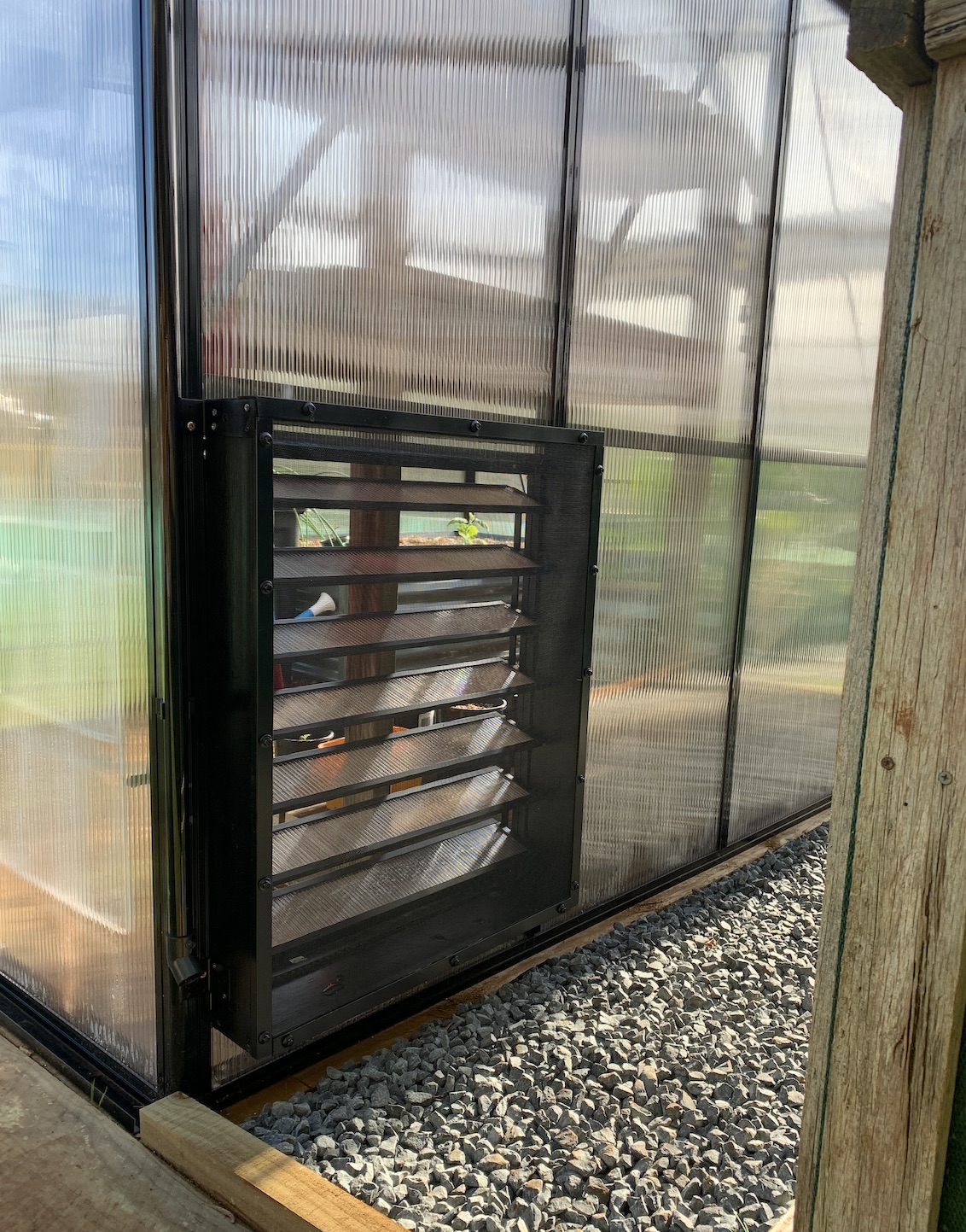
To help with temperature control, we added louvres to one of the panels and Michael cunningly created a screen to keep out creepy crawlies and resident reptiles.

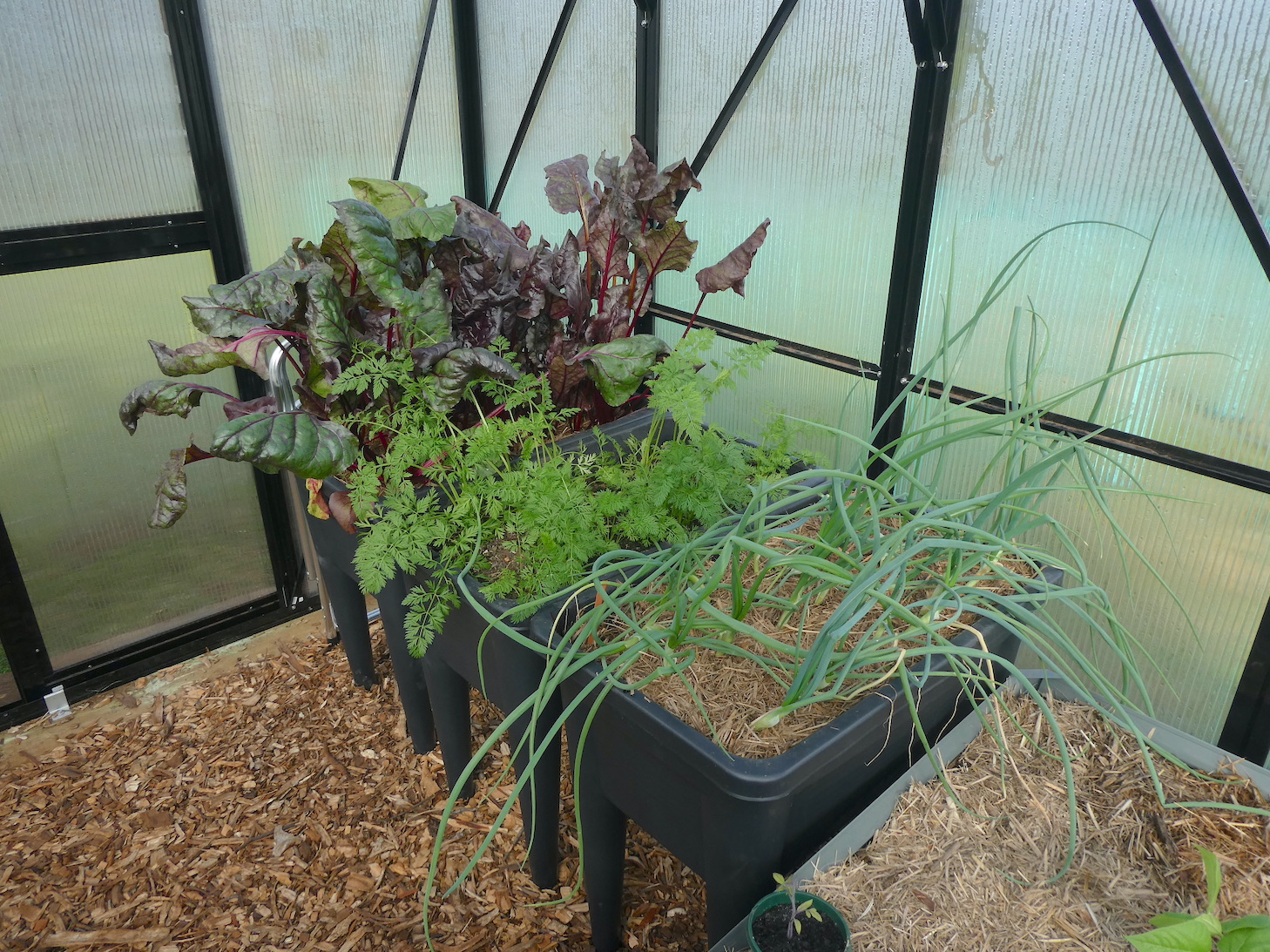
Being in the apprentice stage of greenhouse gardening, we weren’t sure which plants would be successful. We started with brassicas, beetroot, carrot, onion, capsicum, butternut and bush bean.

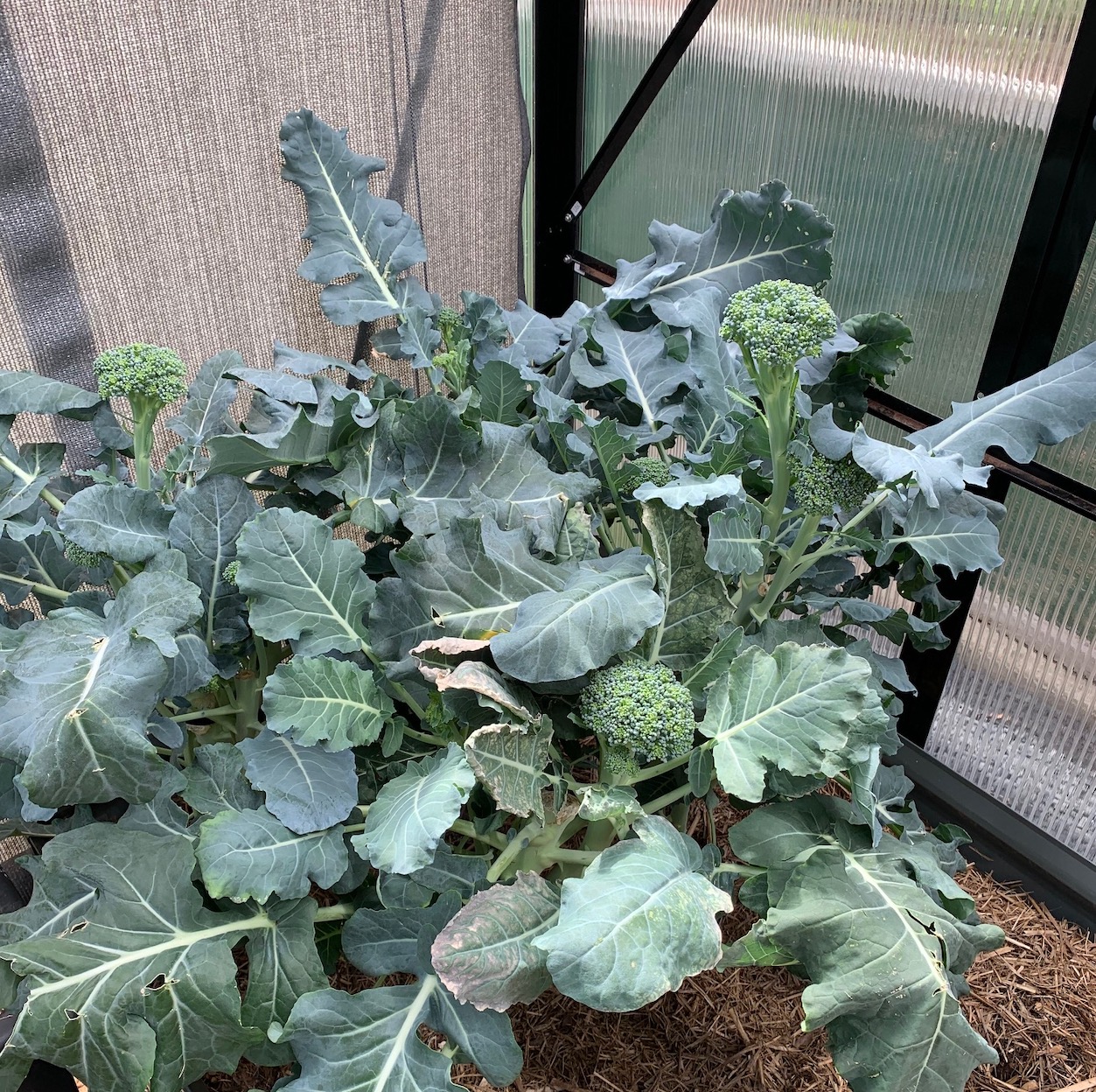
The first broccoli was very impressive and, three months on, we are still harvesting smaller florets.

The capsicum are thriving but yet to bear fruit.

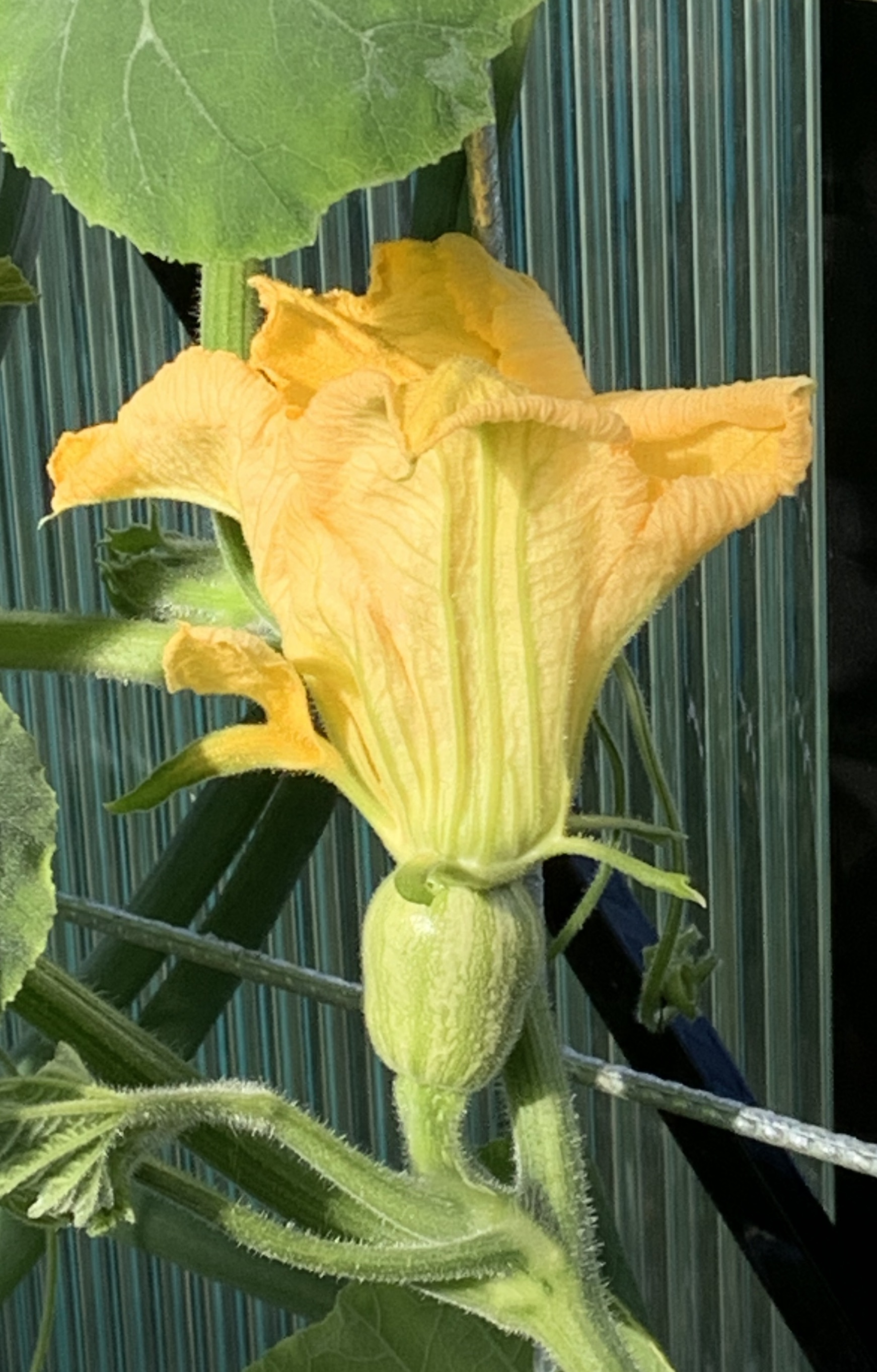
The bush bean and butternut are happy companions, we have harvested some beans but will have to be patient for the butternuts.

We have a plethora of seedlings ready to plant in another week or so, once the night time temperatures are a little more moderate.
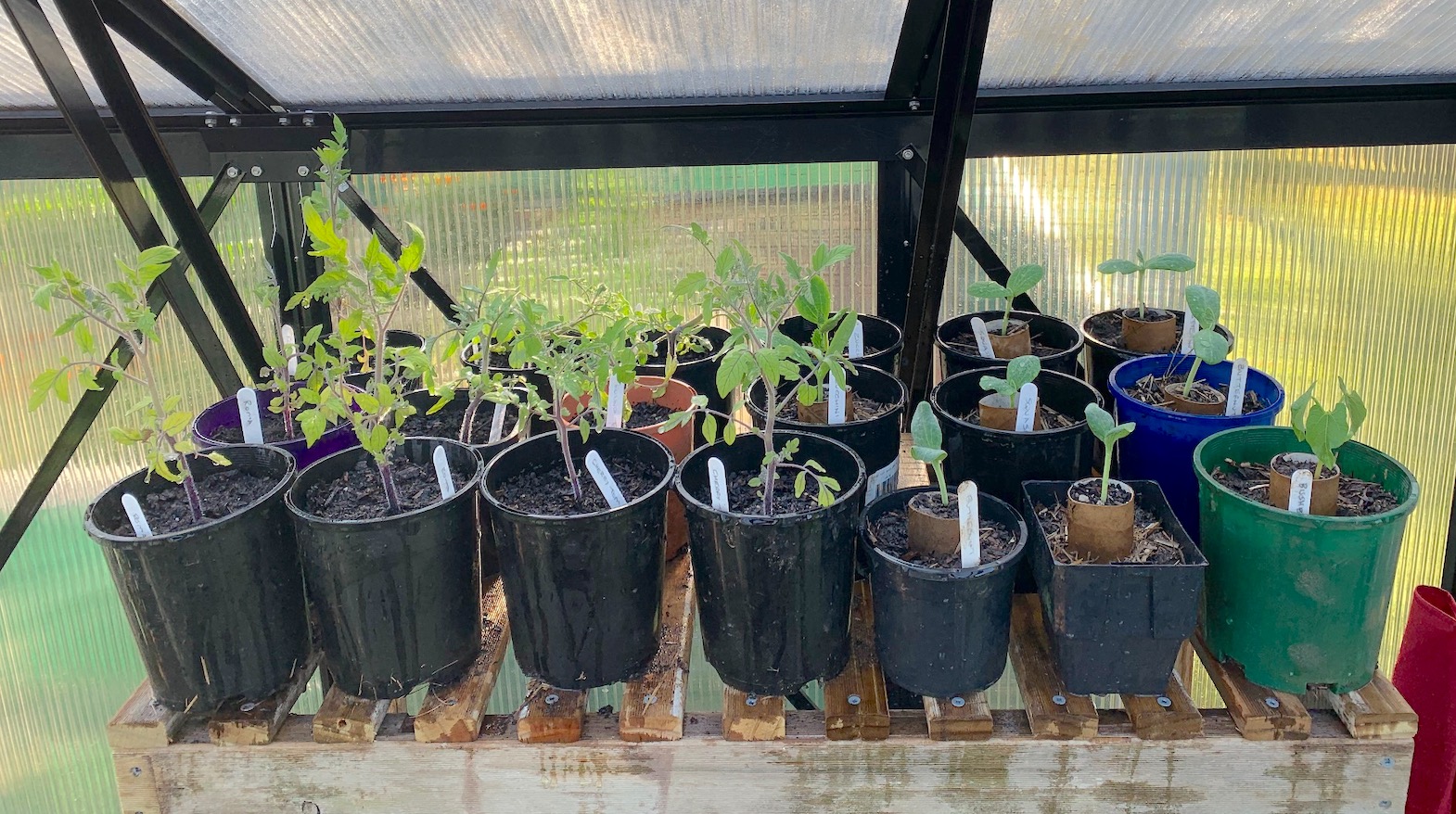
My first attempt at striking Grevilleas from cuttings seems to be successful,

and after many months of coddling, the avocado stones have finally sprouted.

Michael has turned on the tap of creative juices once again and presented me with a stylish trug to collect the harvest

as well as a bespoke egg collecting box (the girls are giving us 5 to 6 eggs a day).

Of course, I needed a keyring befitting a fine greenhouse.

arboreal abscission

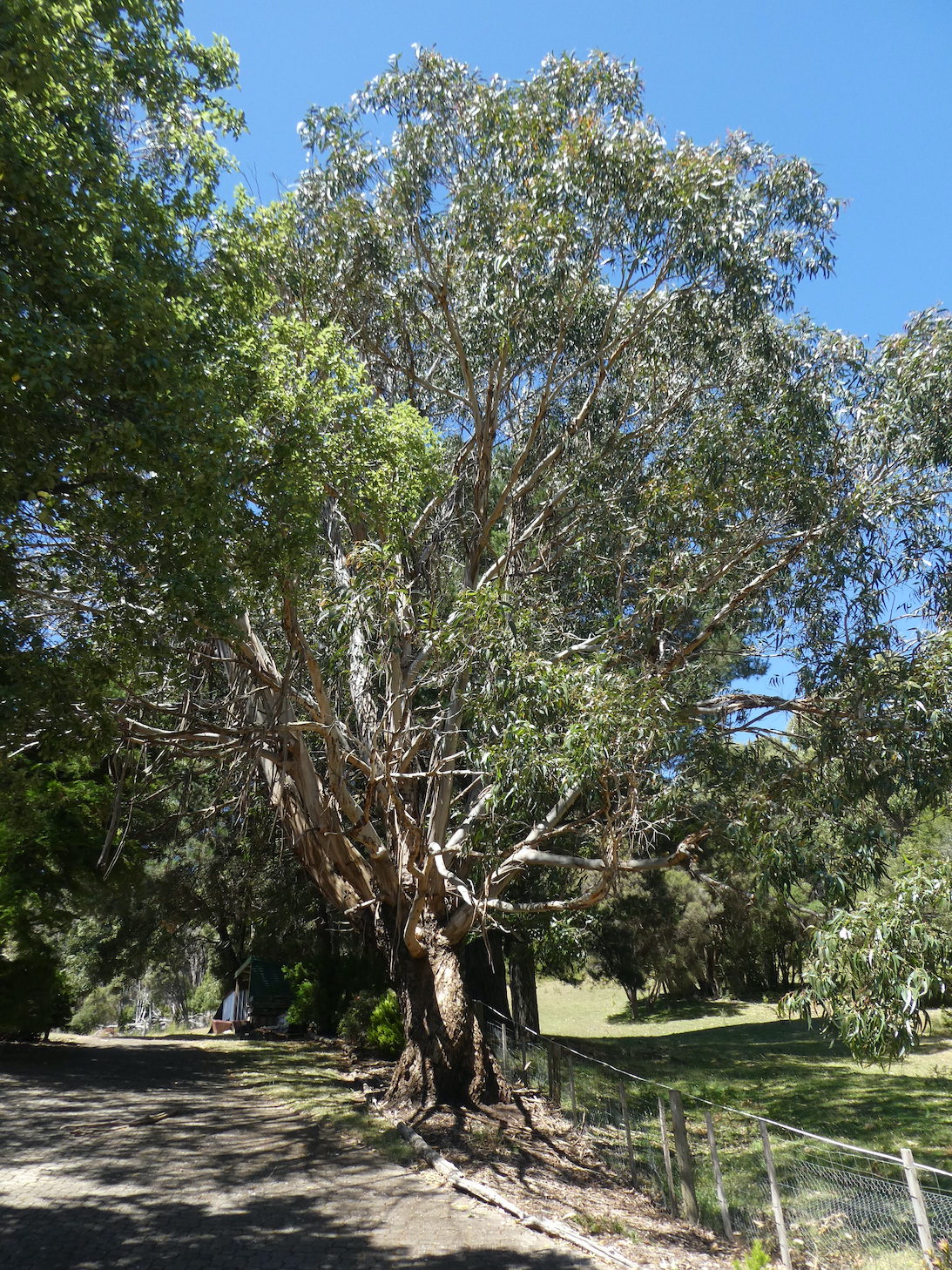
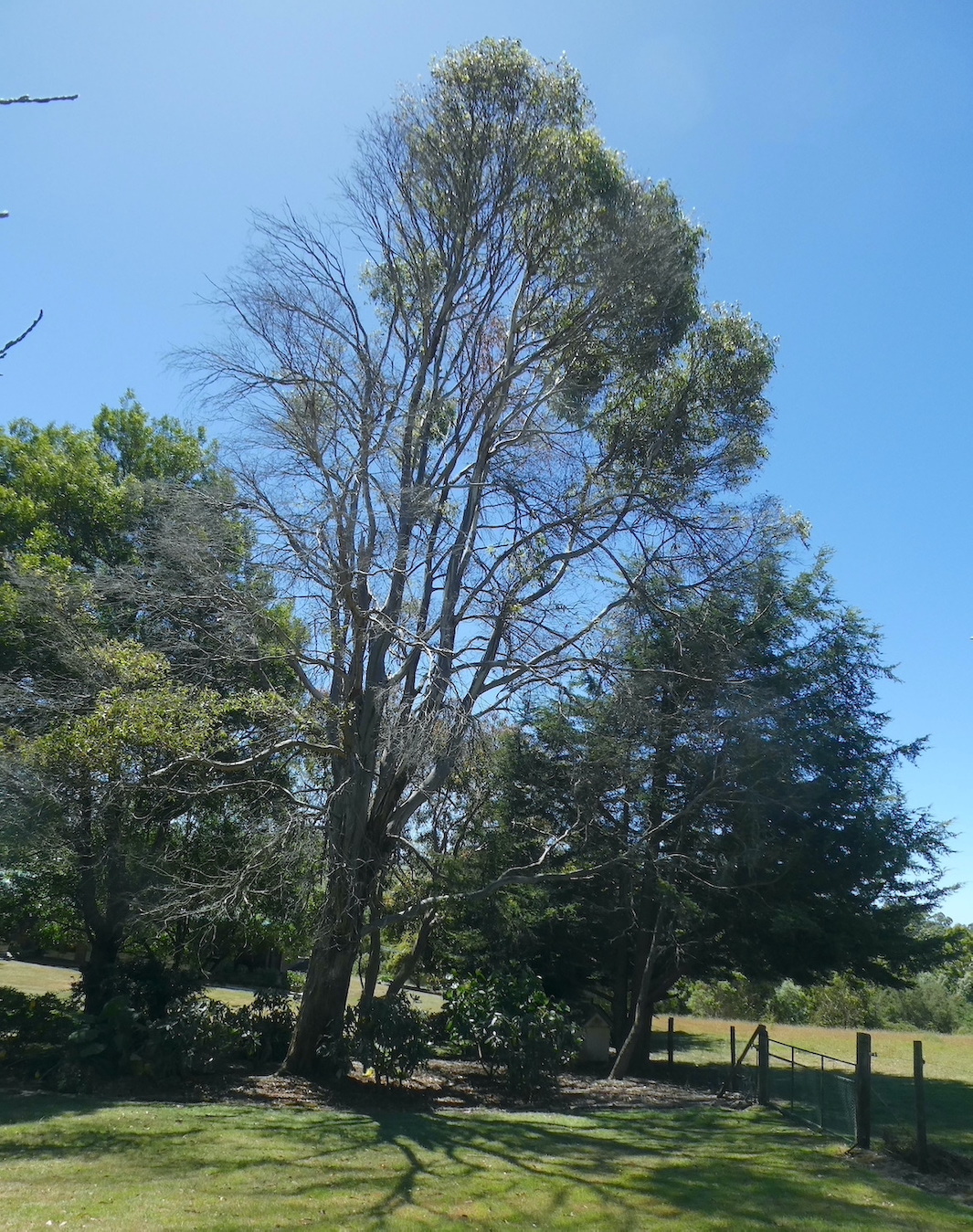
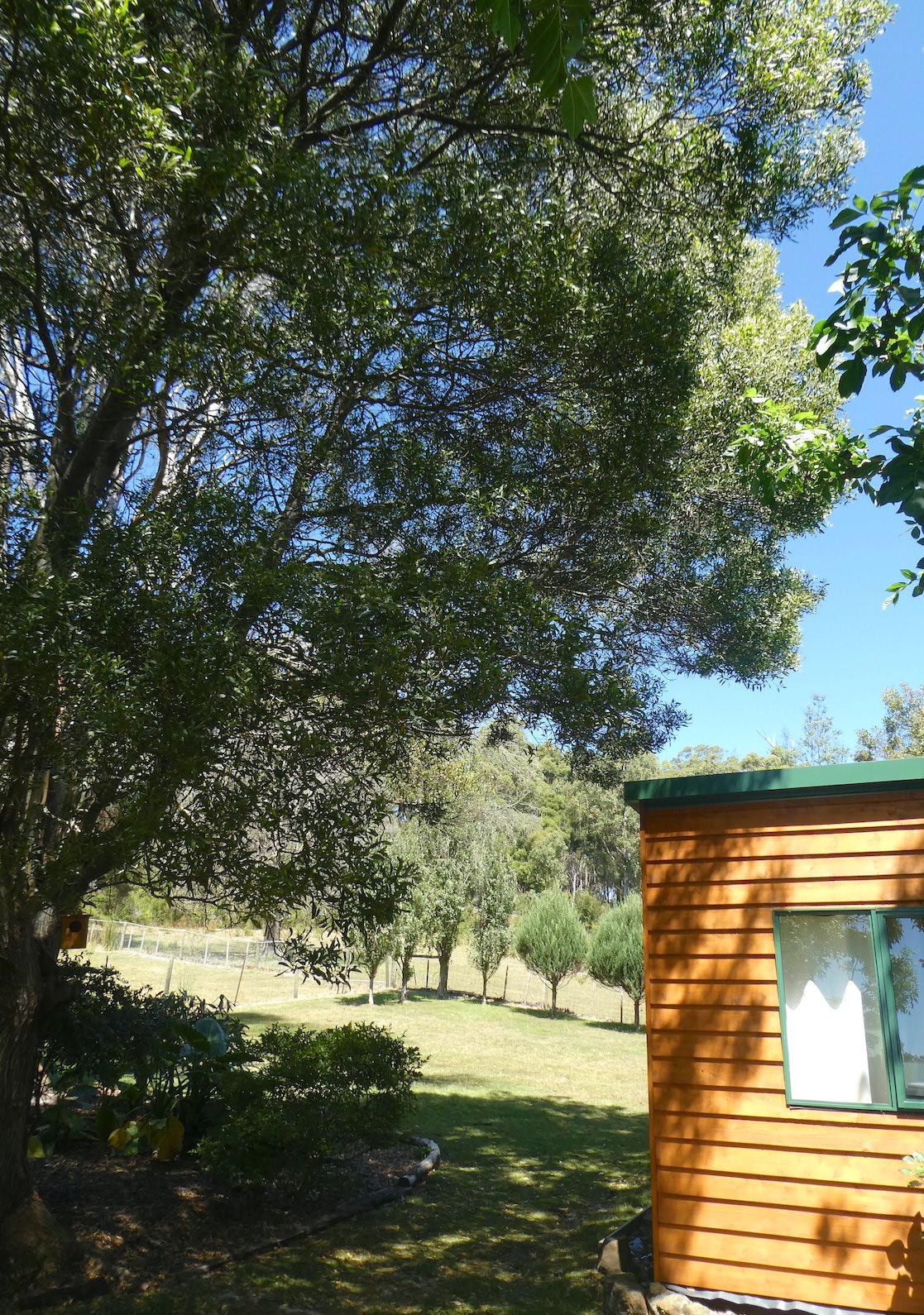
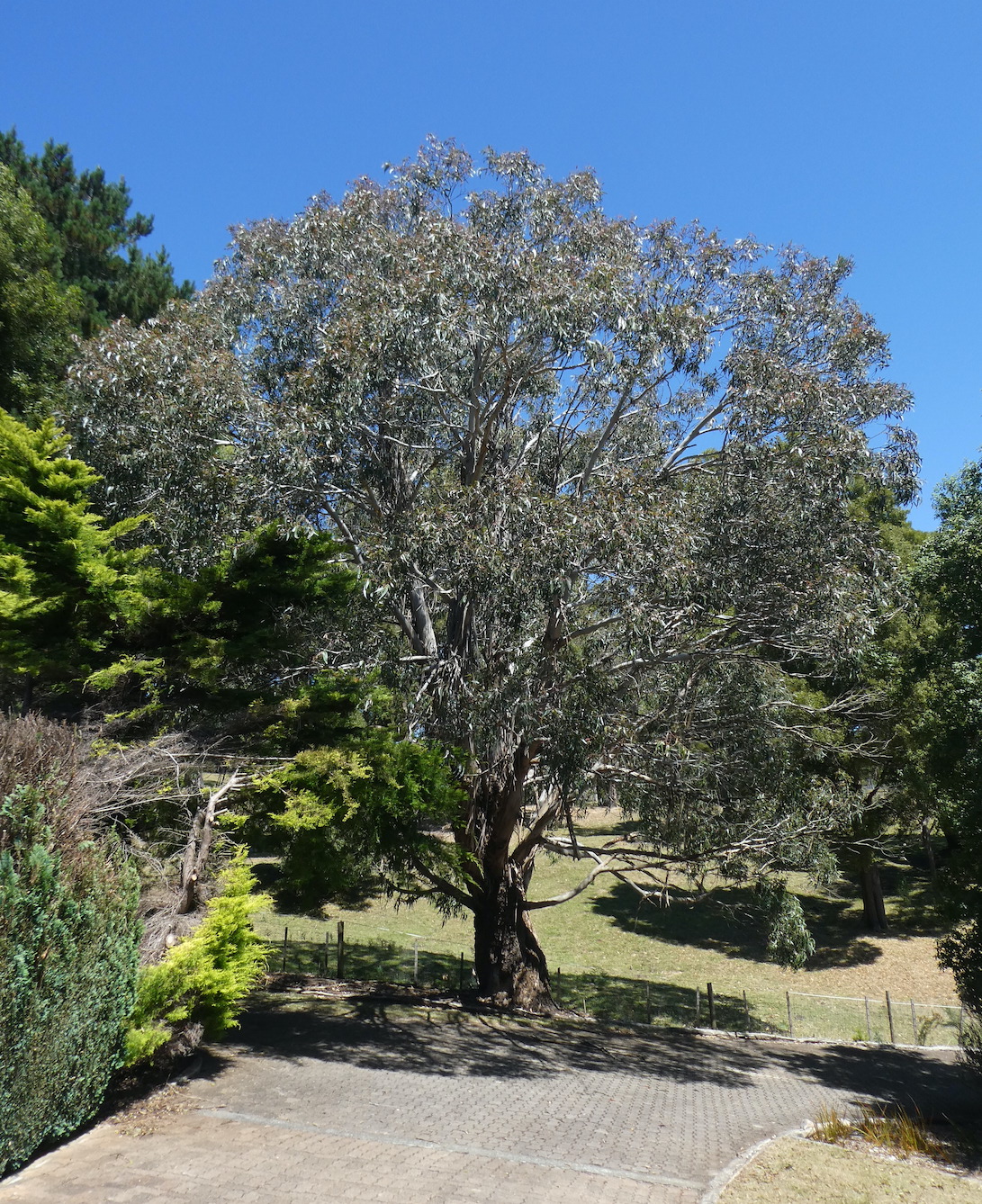
Being surrounded by forest makes for a wonderful peaceful setting, with verdant vistas and myriad birdlife. However, having these larger tree species within the garden can pose a bit of a problem. Like any living being, they have a life span and some had been shedding bark and limbs at an increasing rate with the potential to damage outbuildings. We called in the Tree Doctor to diagnose diseased, dying and dangerous specimens. A huge Eucalypt was deemed to be failing (I don’t miss cleaning up the frequent sheets of bark on the driveway).
A second Eucalypt, with a distinct lean away from the prevailing westerlies, was displaying the same symptoms and awarded the same fate.

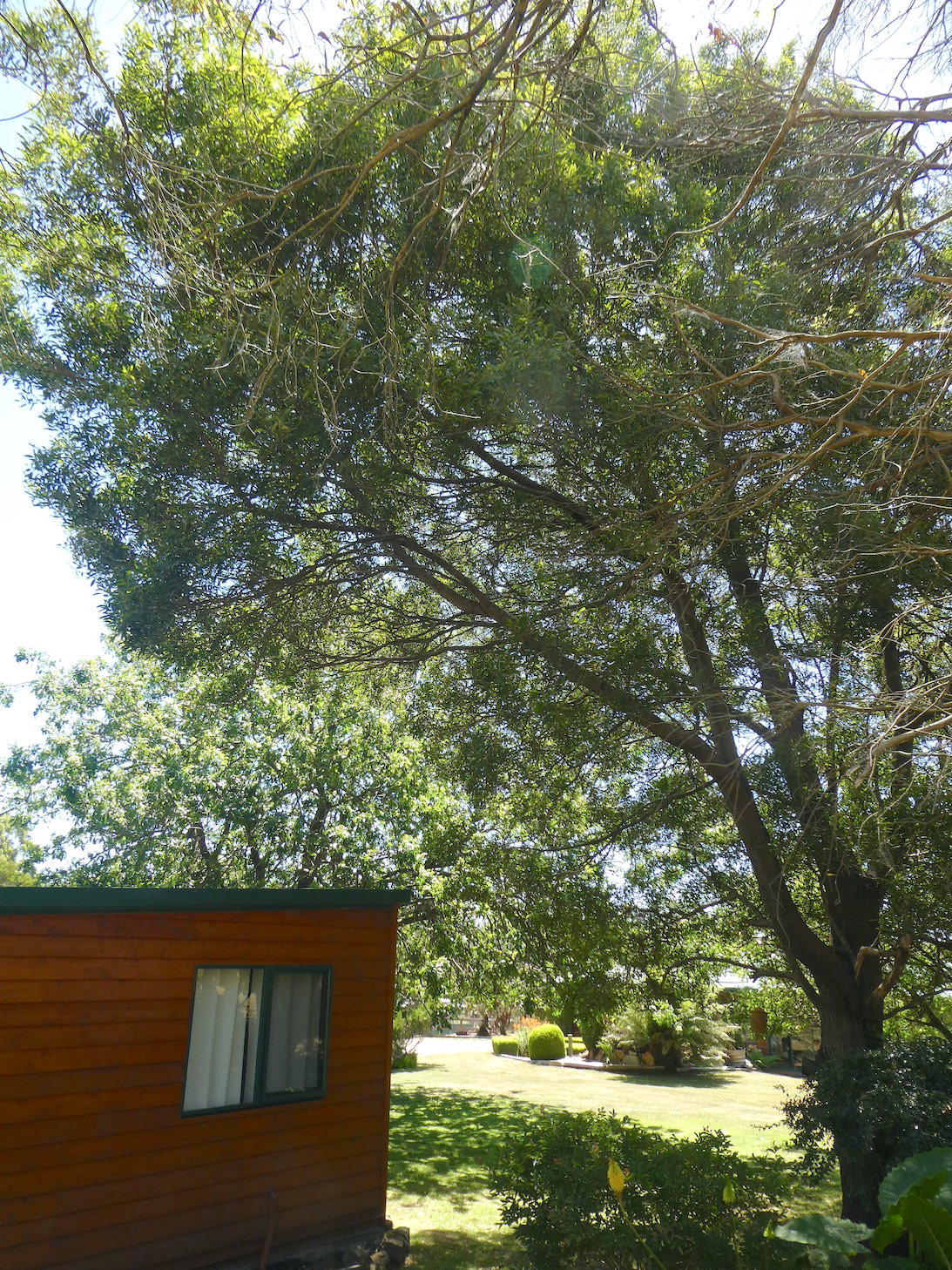
A healthy Tasmanian blackwood just needed an amputation of a rather large limb overhanging the studio

but another blackwood we thought in need of a trim was actually slowly dying.

A few weeks later the team arrived and wasted no time tackling the first blackwood.

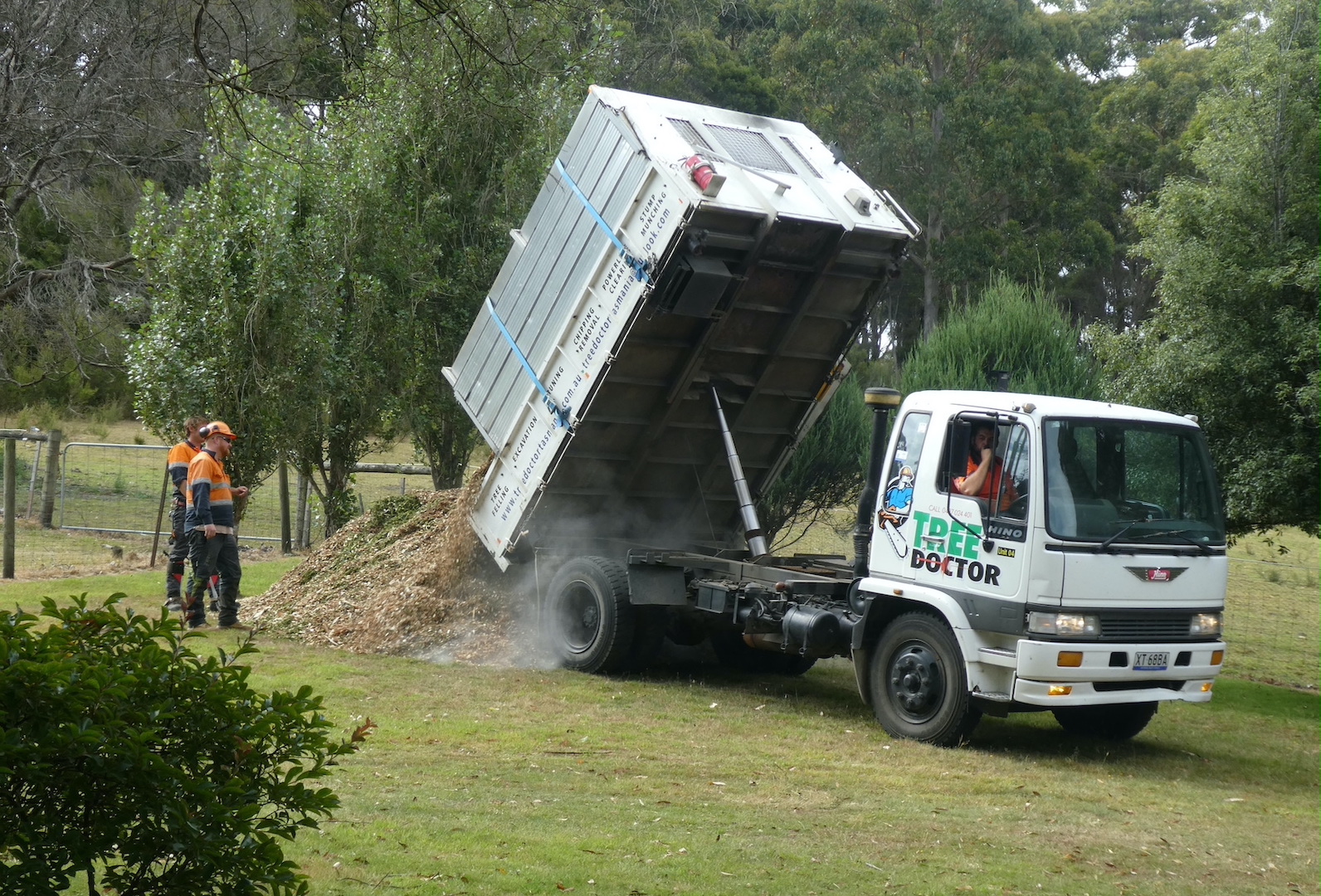
The smaller branches were picked up and fed into the chipper

which was then emptied into an ever increasing mulch pile.

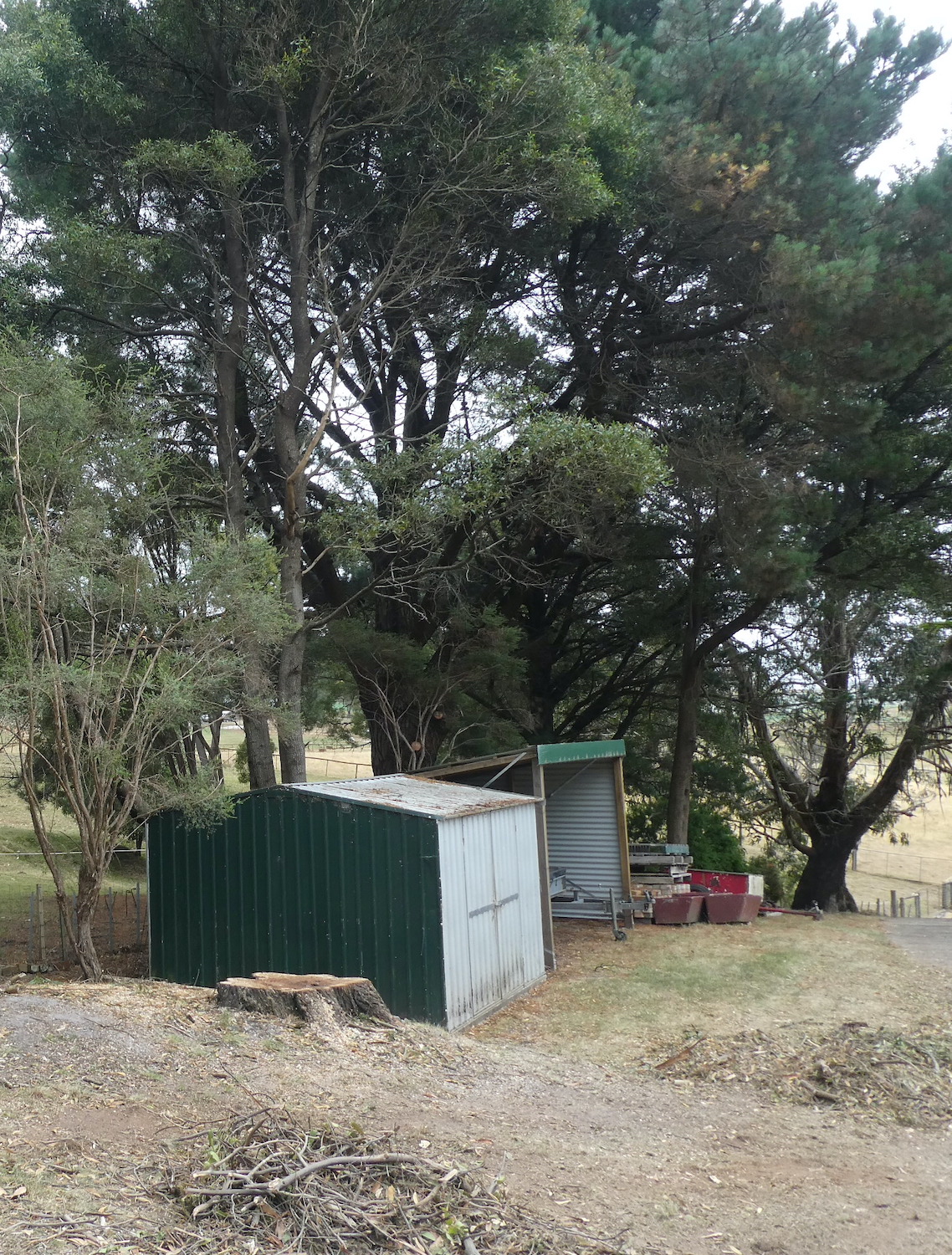
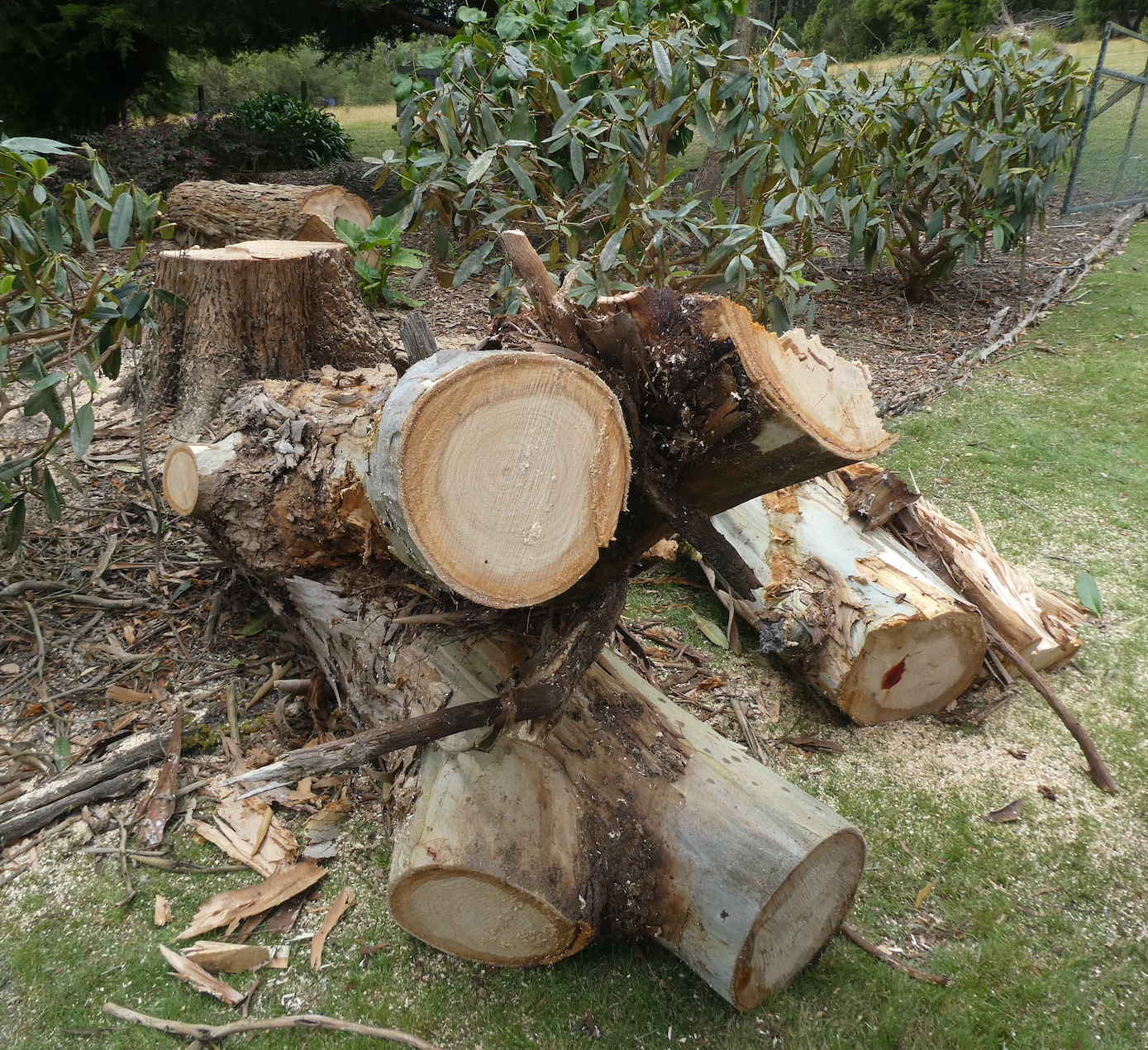
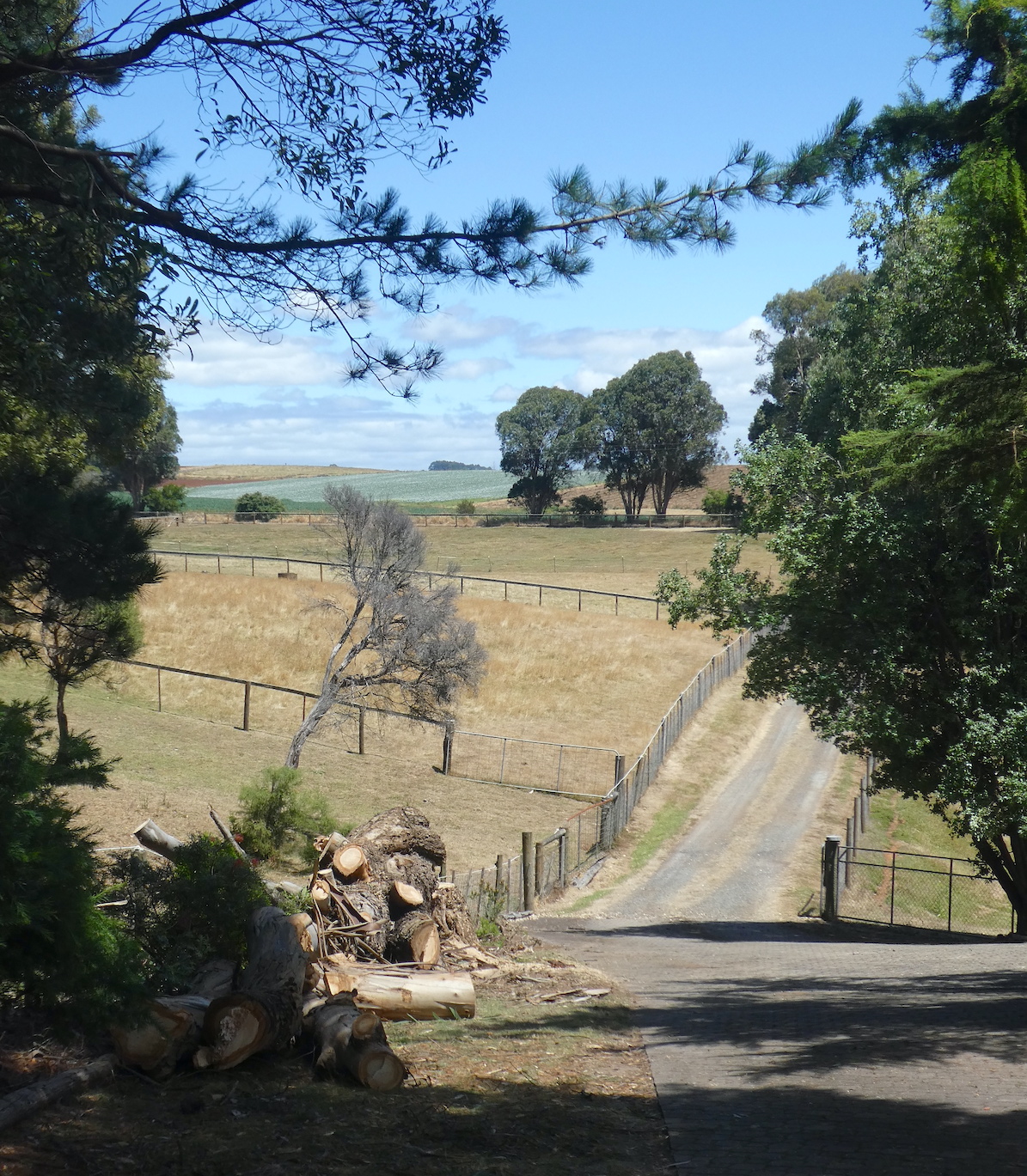
Before long, only a stump remained and a substantial stack of timber for future firewood.

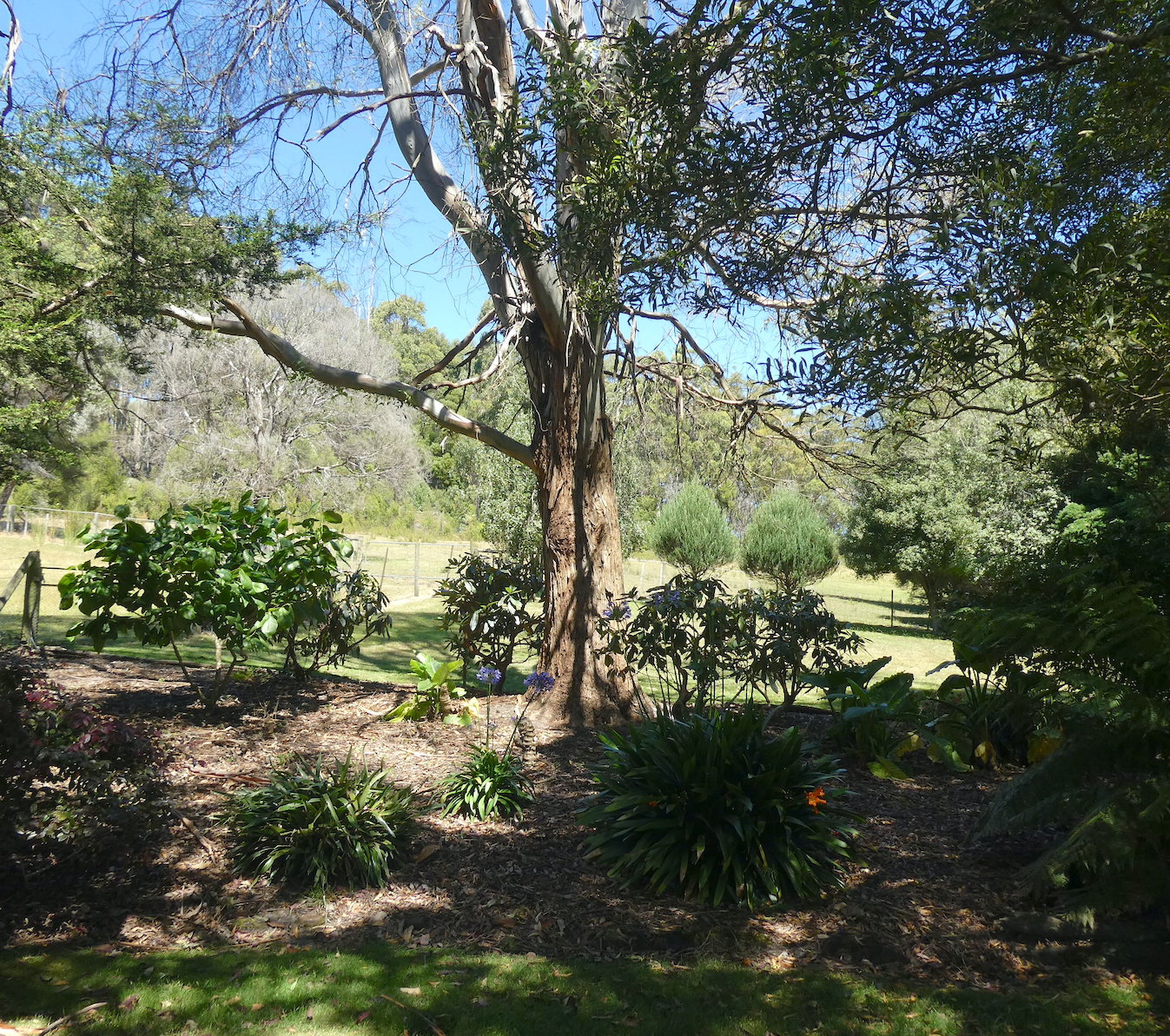
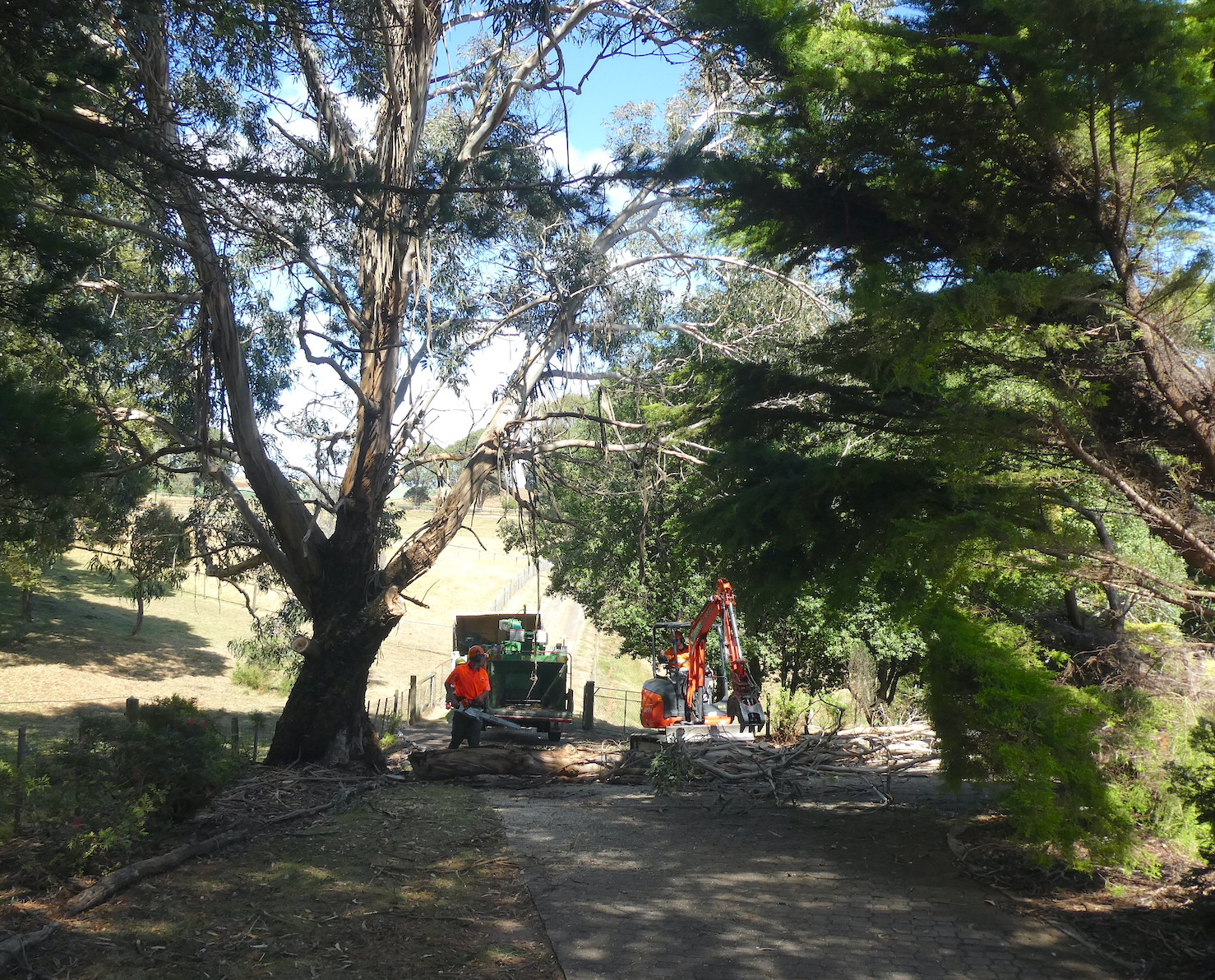
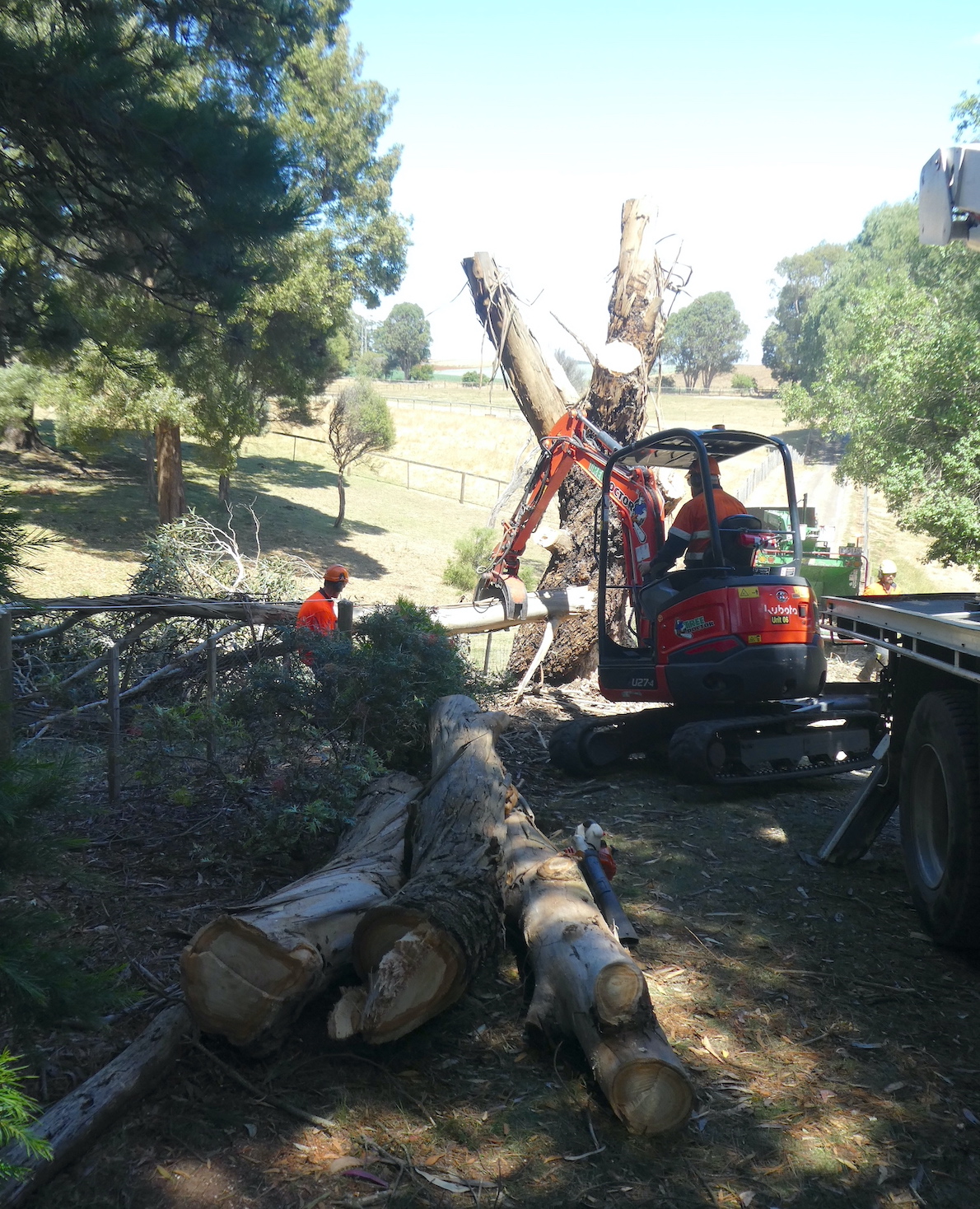
The razing of the leaning Eucalypt was a little more involved. A precise landing was in order to prevent damage to buildings, fences and established plants in the garden beneath. With ropes attached to guide the downward trajectory,

a hefty chainsaw took care of the rest and the giant was felled.

I was pleased to see the rhododendrons still upright on either side of the enormous trunk.

The mulch pile continued to grow, along with the firewood supply for the next few years.

A quick trim of a wayward branch from a pine tree on the neighbouring property

and the final Eucalypt was tackled.

Proximity to the fence was problematic but the skill of the experienced team overcame the hurdles for another successful outcome.

Now, where is that chainsaw……..

Charles Darwin National Park

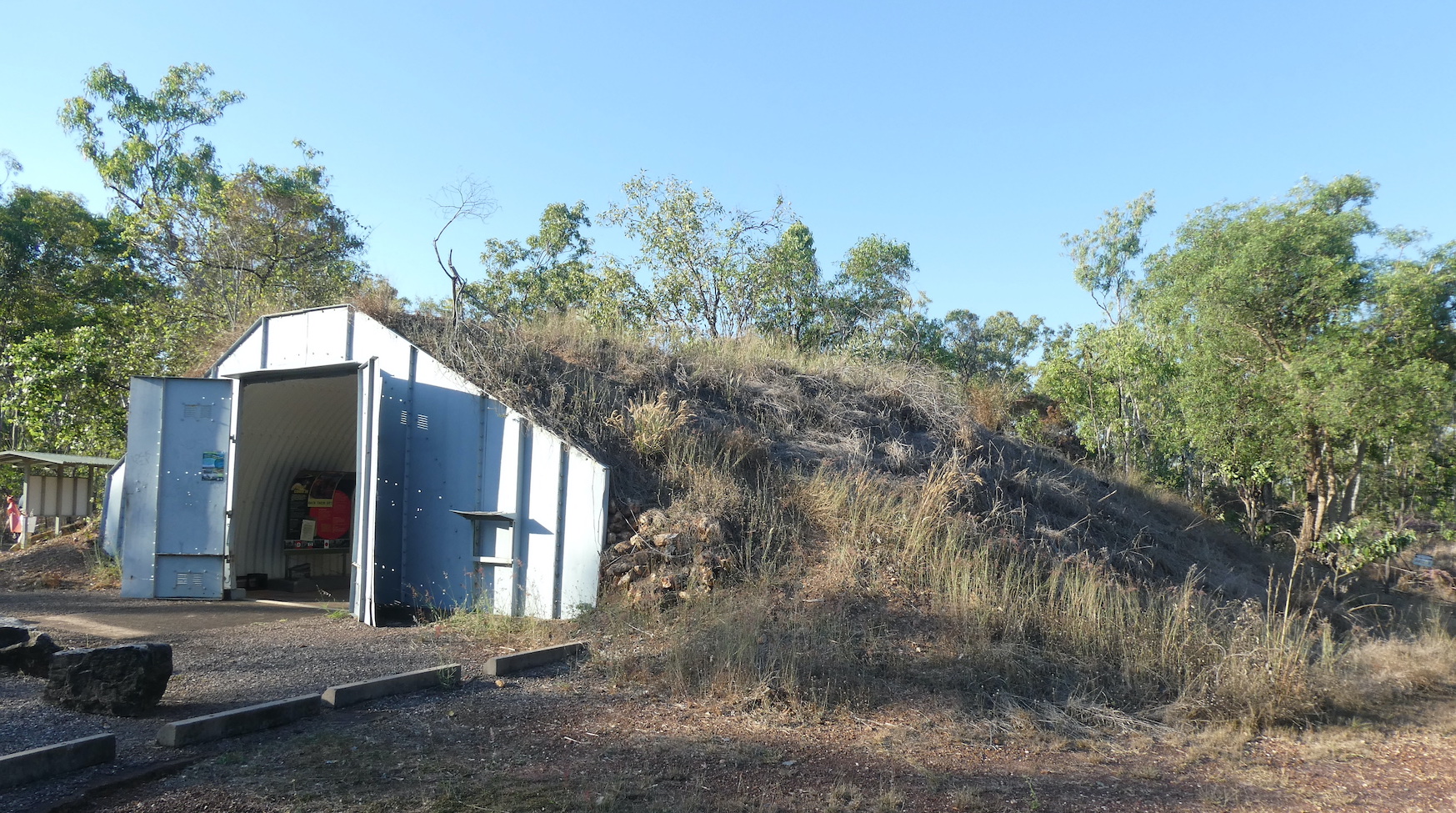
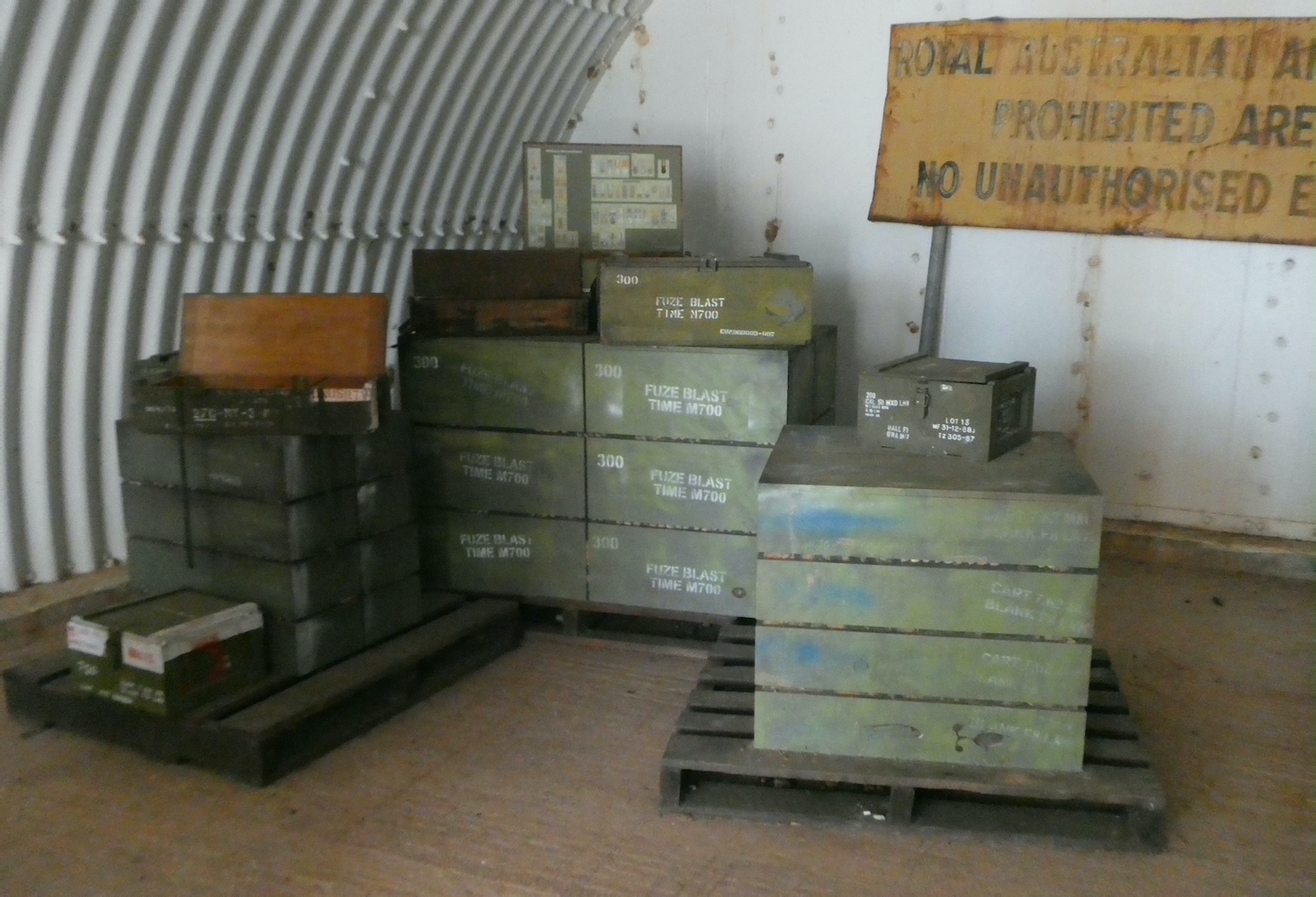
On the outskirts of the city named after the great scientist and naturalist, Charles Darwin National Park is full of surprises. Created in 1997, the five square miles provide a natural recreation area as well as protection for significant vegetation, Aboriginal and World War II history. Developed as an Explosive Ordnance Storage Area during World War II, eleven of the bunkers that housed the explosives during the war are still standing. Nine were set into the contours of the hills, the barrel vault constructions are covered with vegetated earth.

There is a display of memorabilia in one of the bunkers and a fascinating insight into Darwin’s role in the Pacific War.

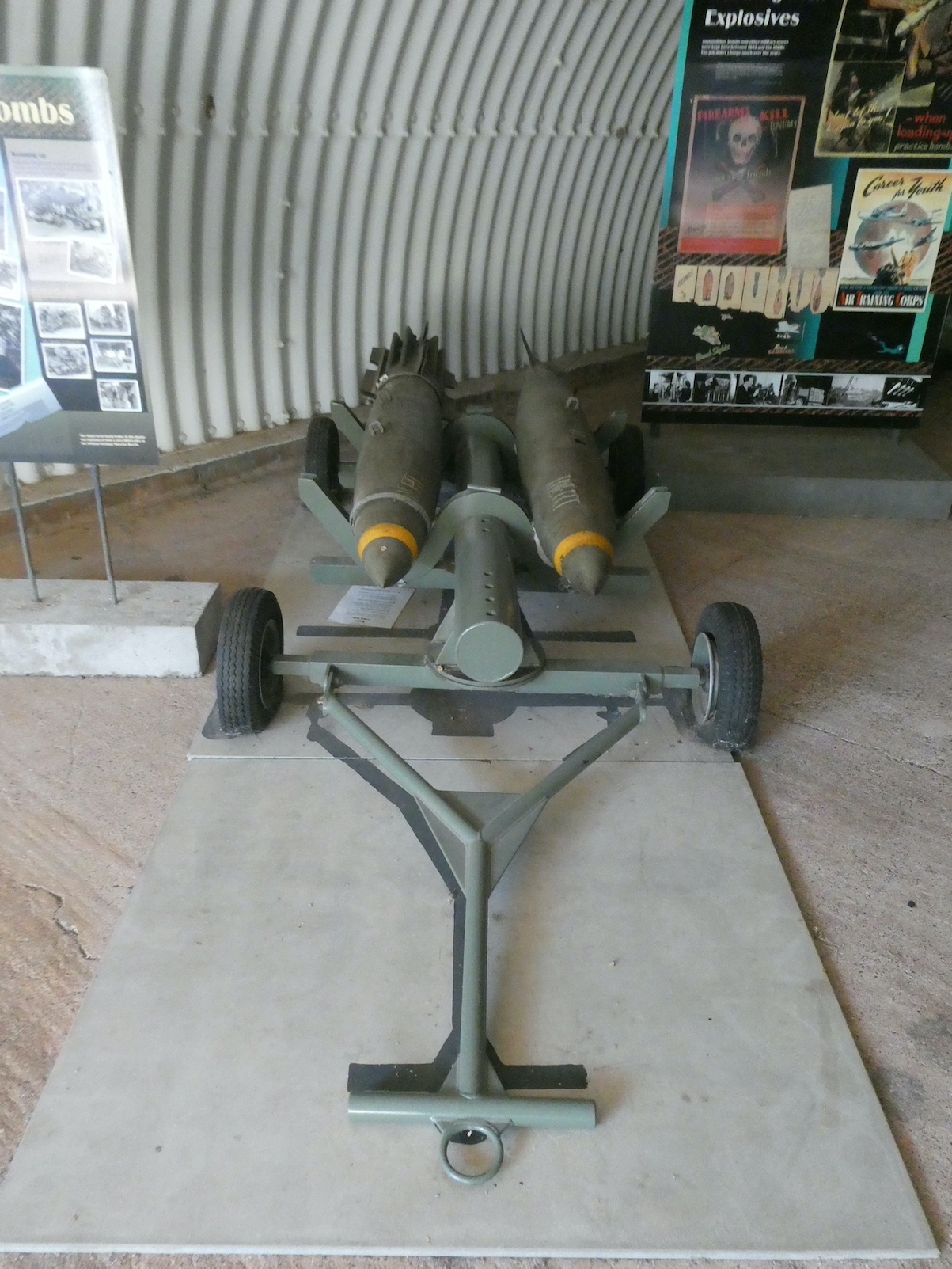
Bomb trolleys were used to move bombs weighing up to 1,000 lb (that’s about 450kg) to be loaded into aircraft and were common at bomber bases in the 1940s.

There are two free-standing storage sheds, one of which is now adorned with a magnificent work of art.

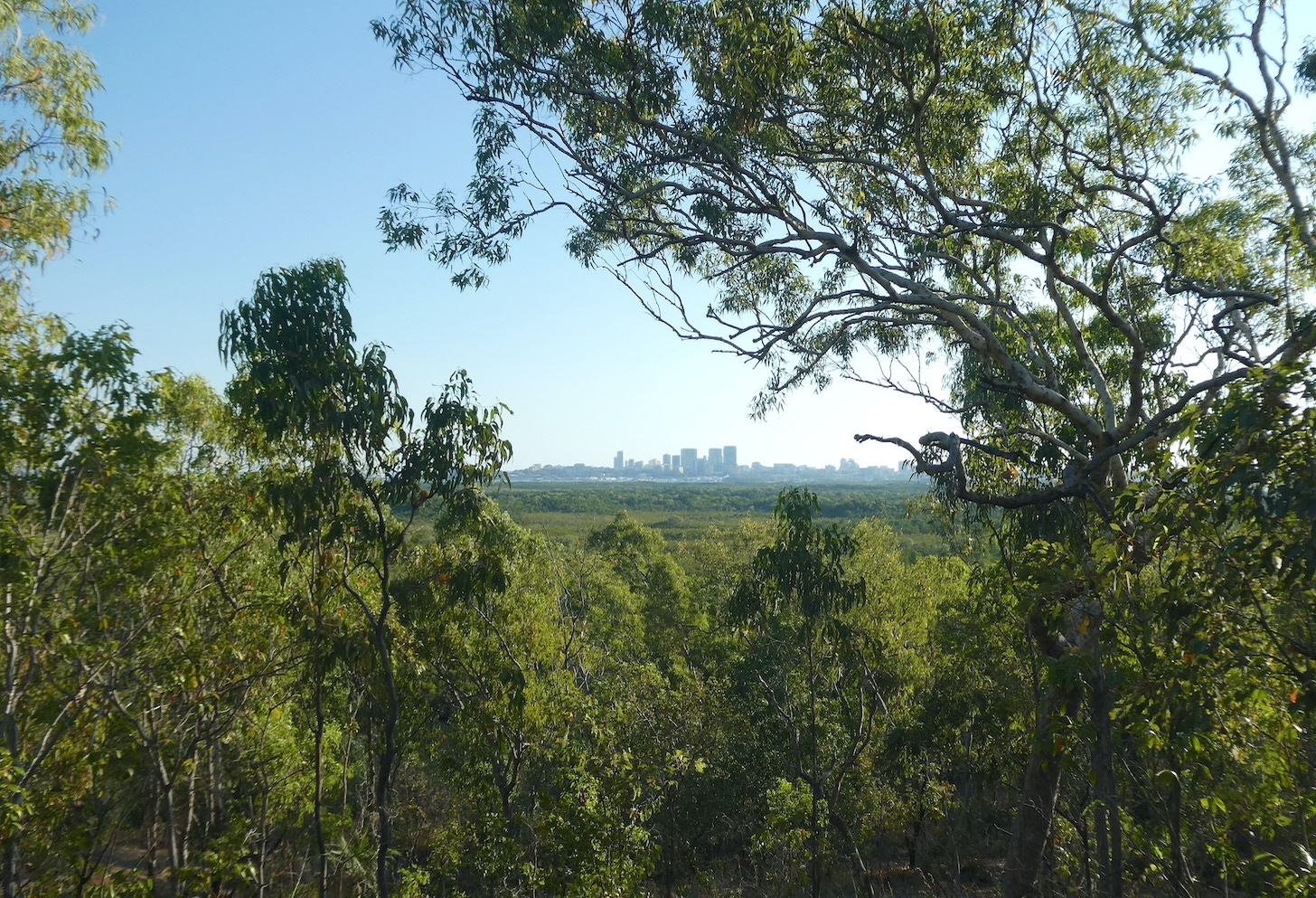
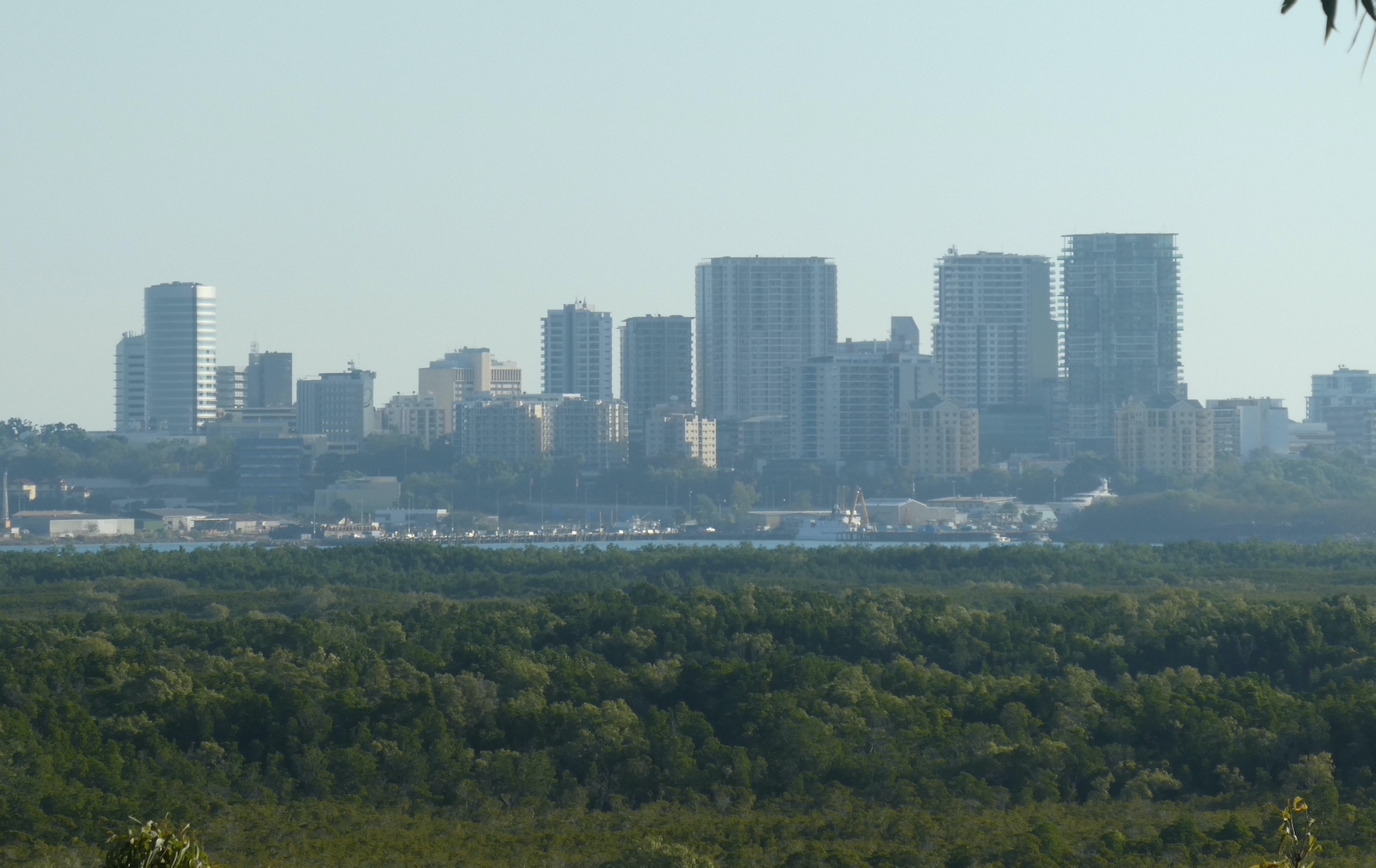
One of Australia’s most important wetlands is also protected by the park. The Port Darwin wetland comprises undisturbed mangrove forests, with 36 of the Northern Territory’s 51 mangrove species within its system of inlets, islands and bays. The vista from Charles Darwin Lookout is spectacular.

neighbourly Notechis

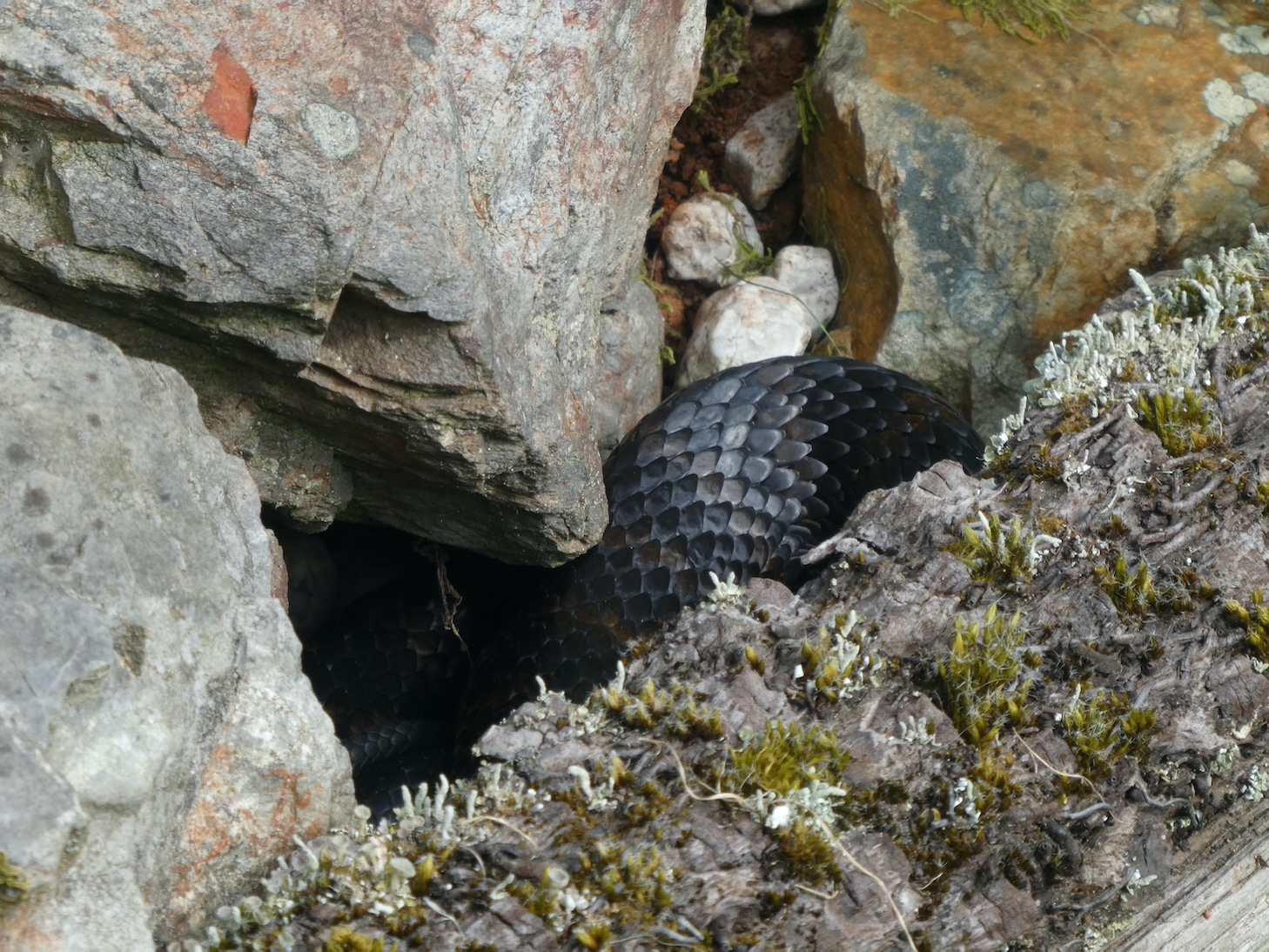
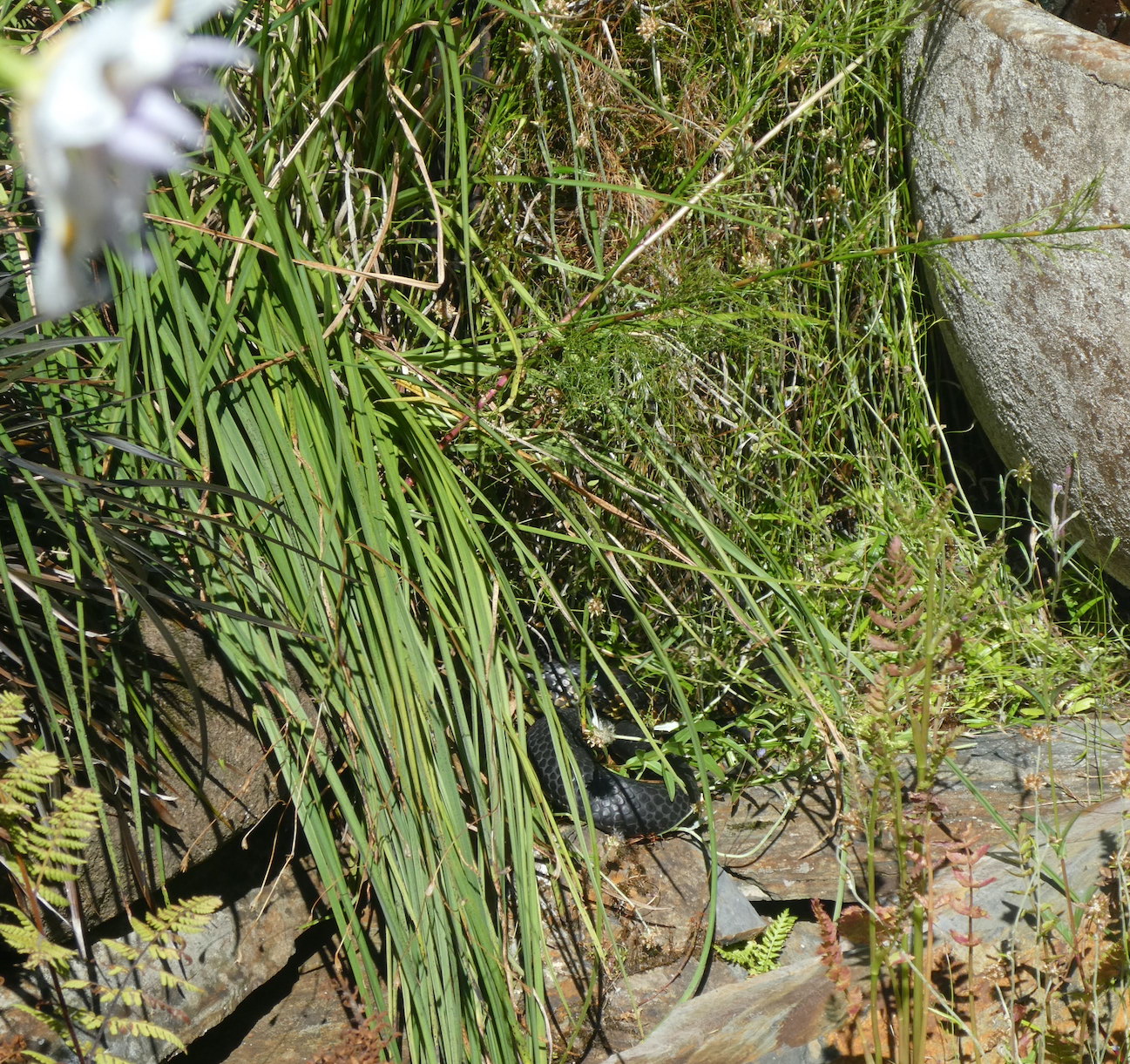
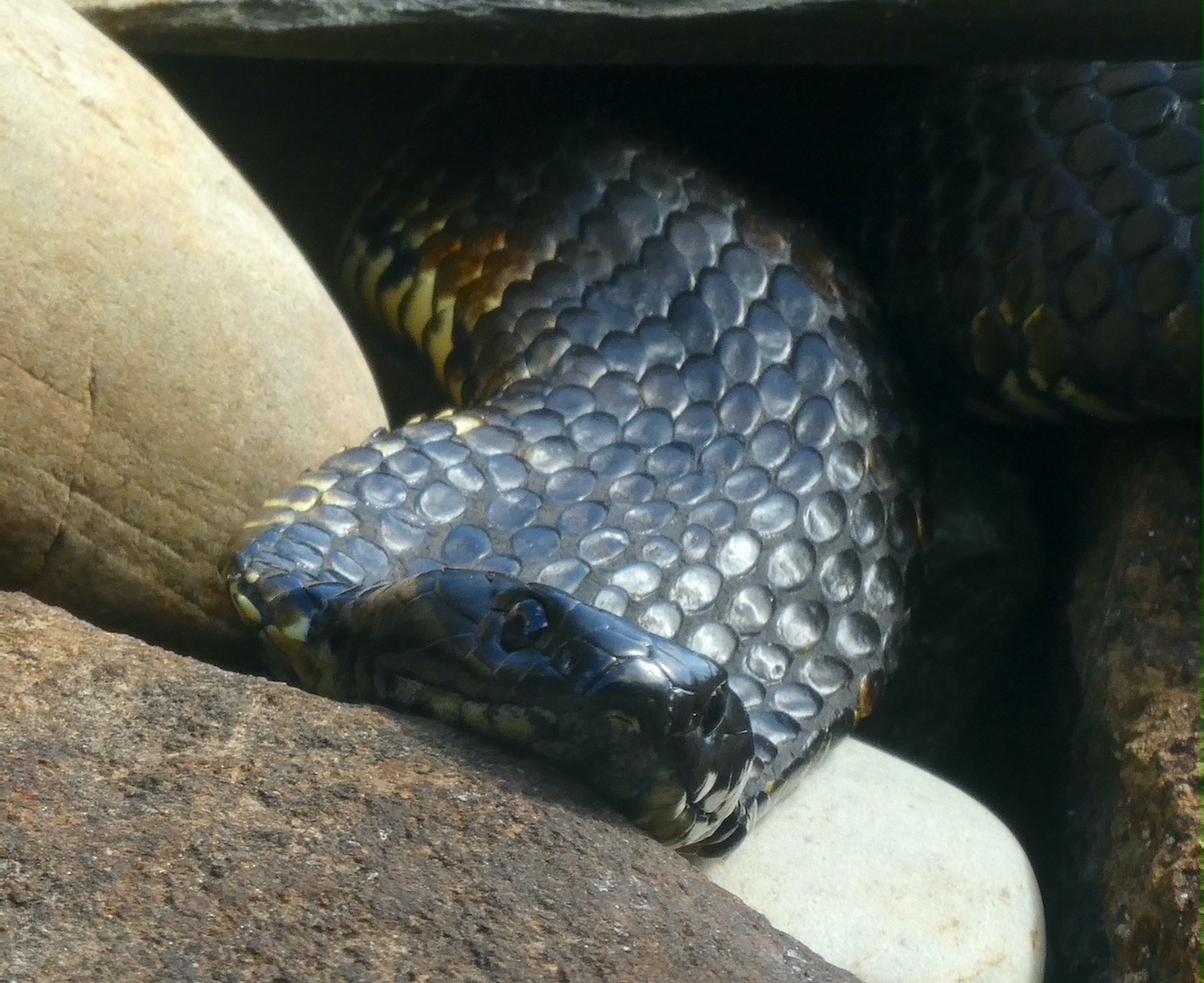
We weren’t sure whether we would be hosting a slithering summer squatter this year, considering the absence in 2021. Our question was answered one evening in early December when we spied the familiar form from the kitchen window.

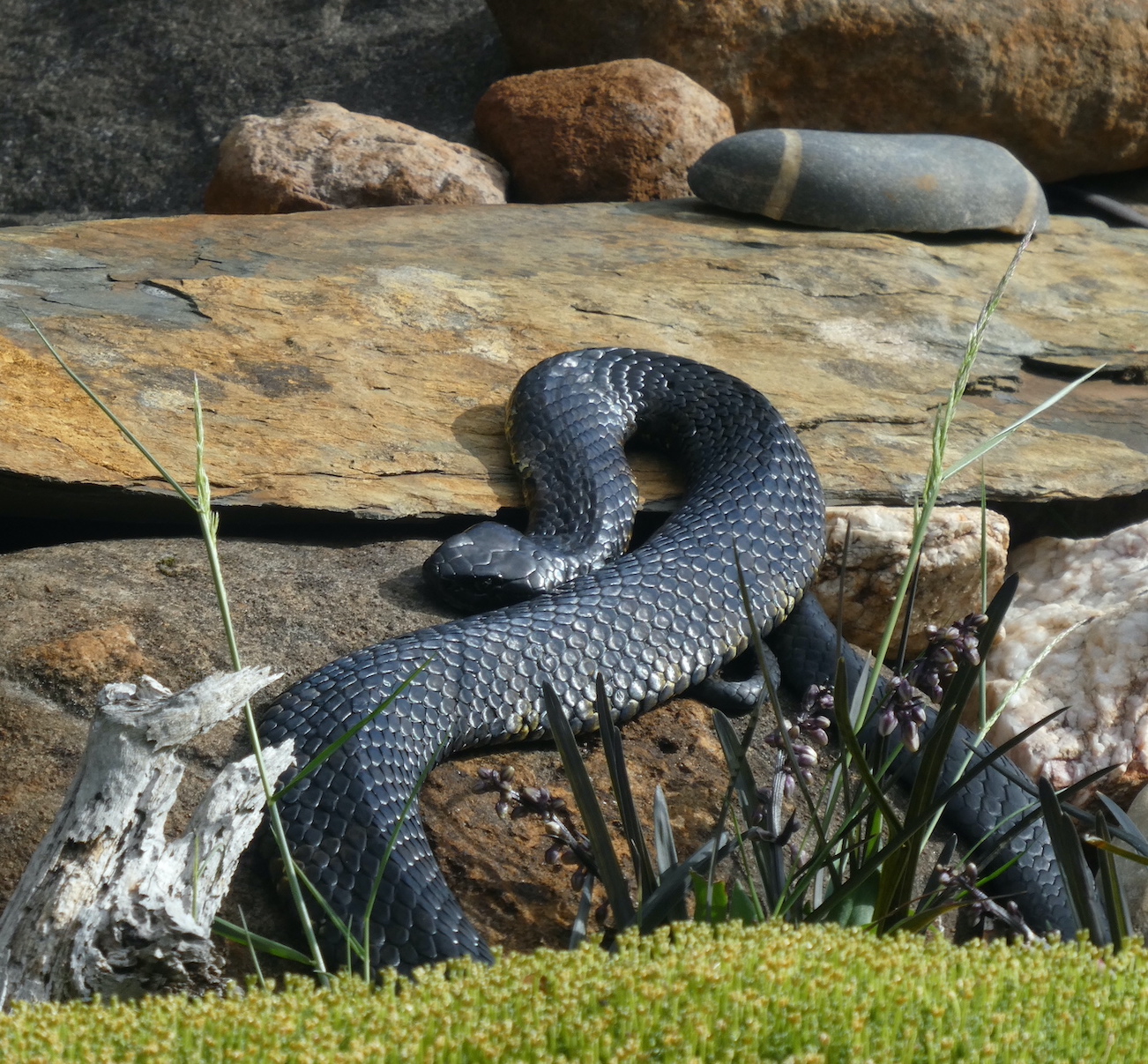
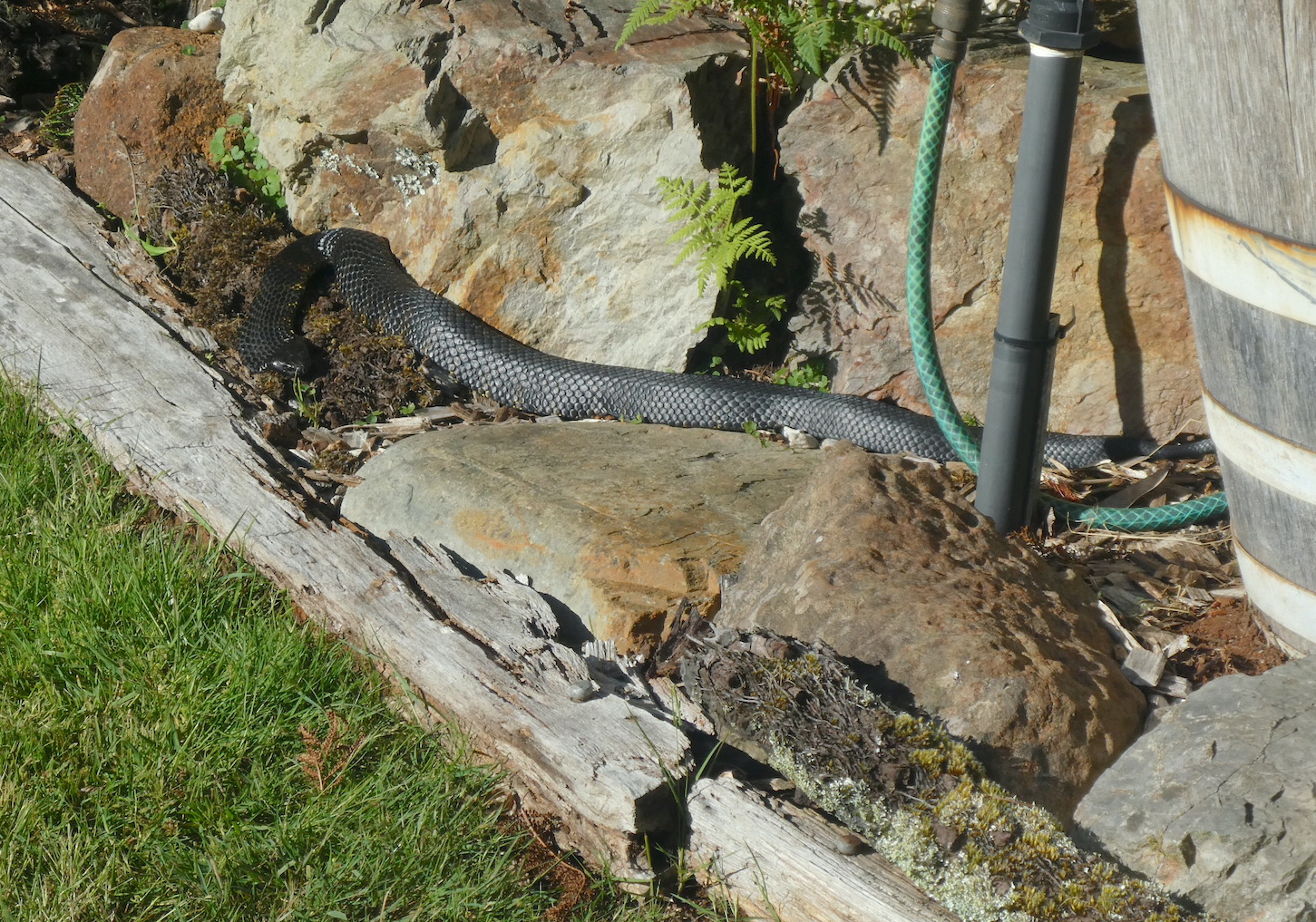
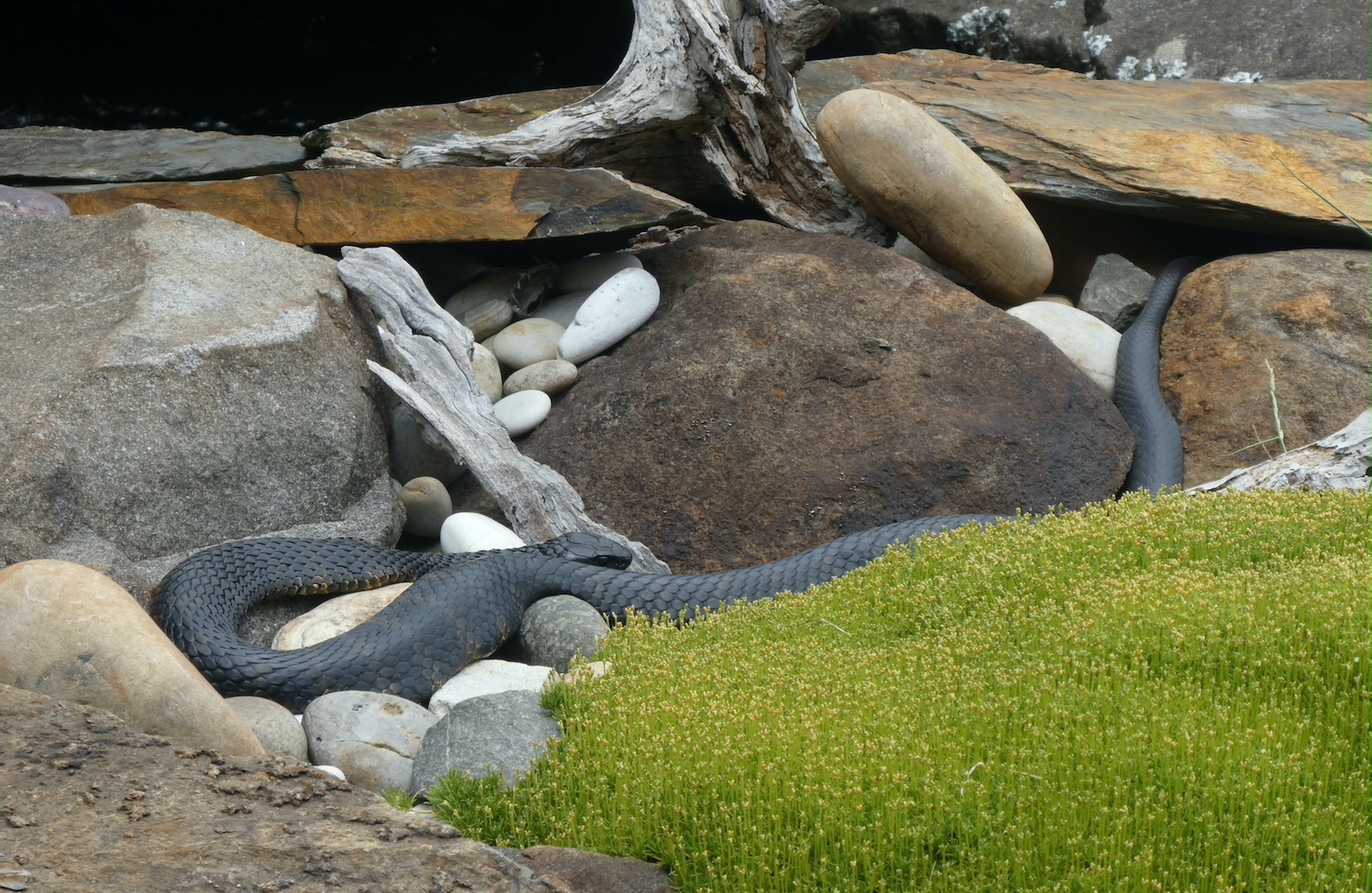
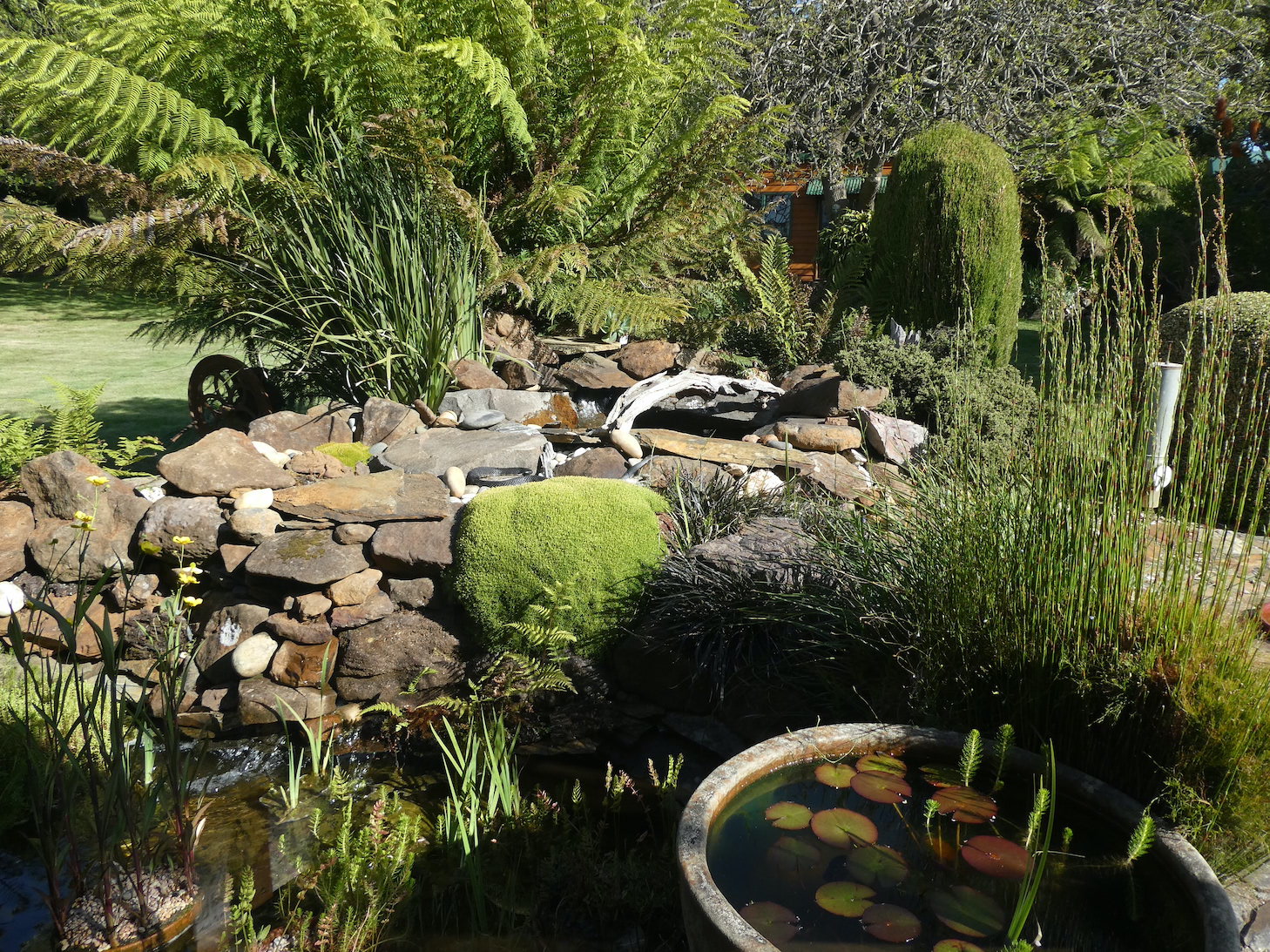
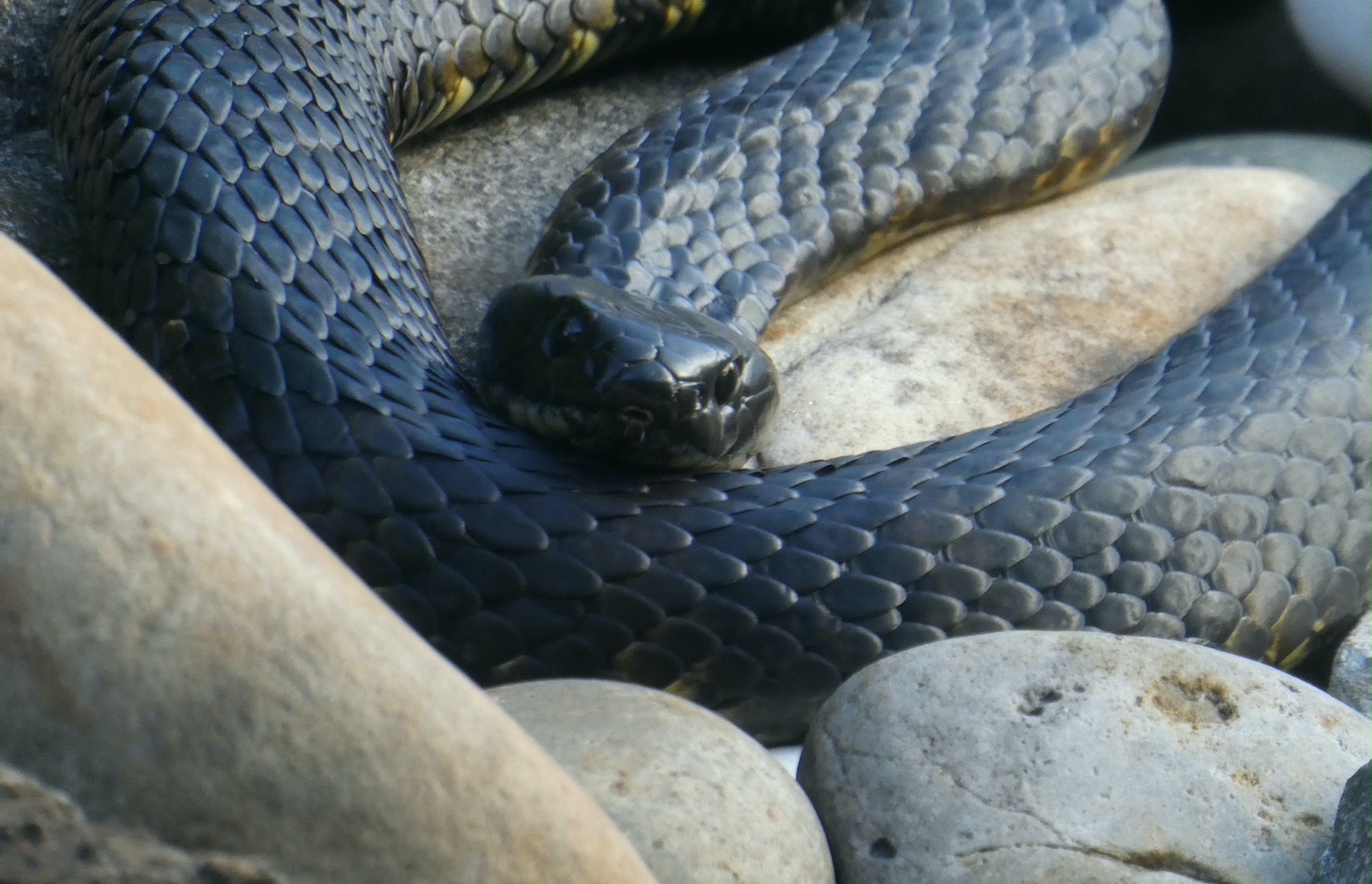
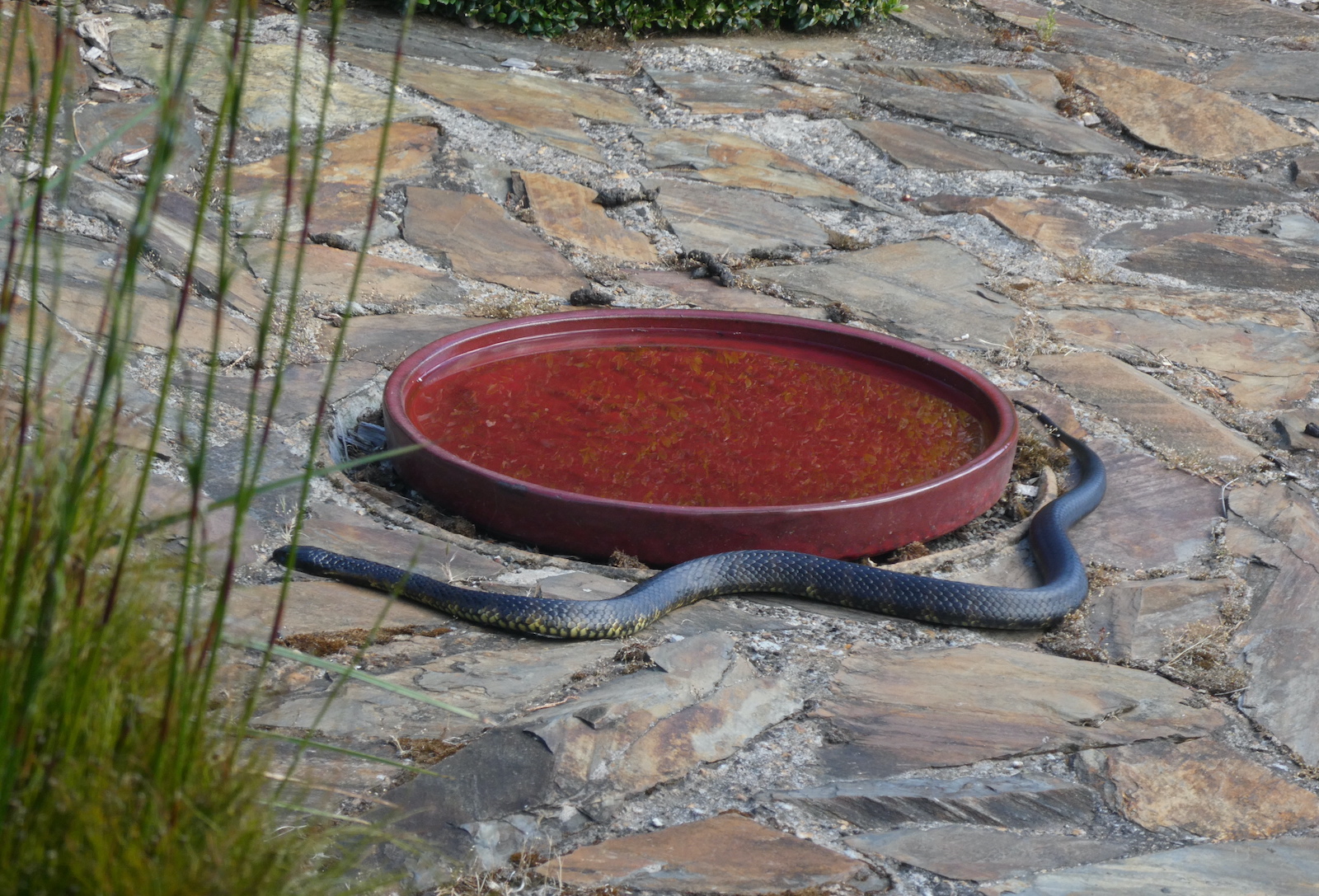
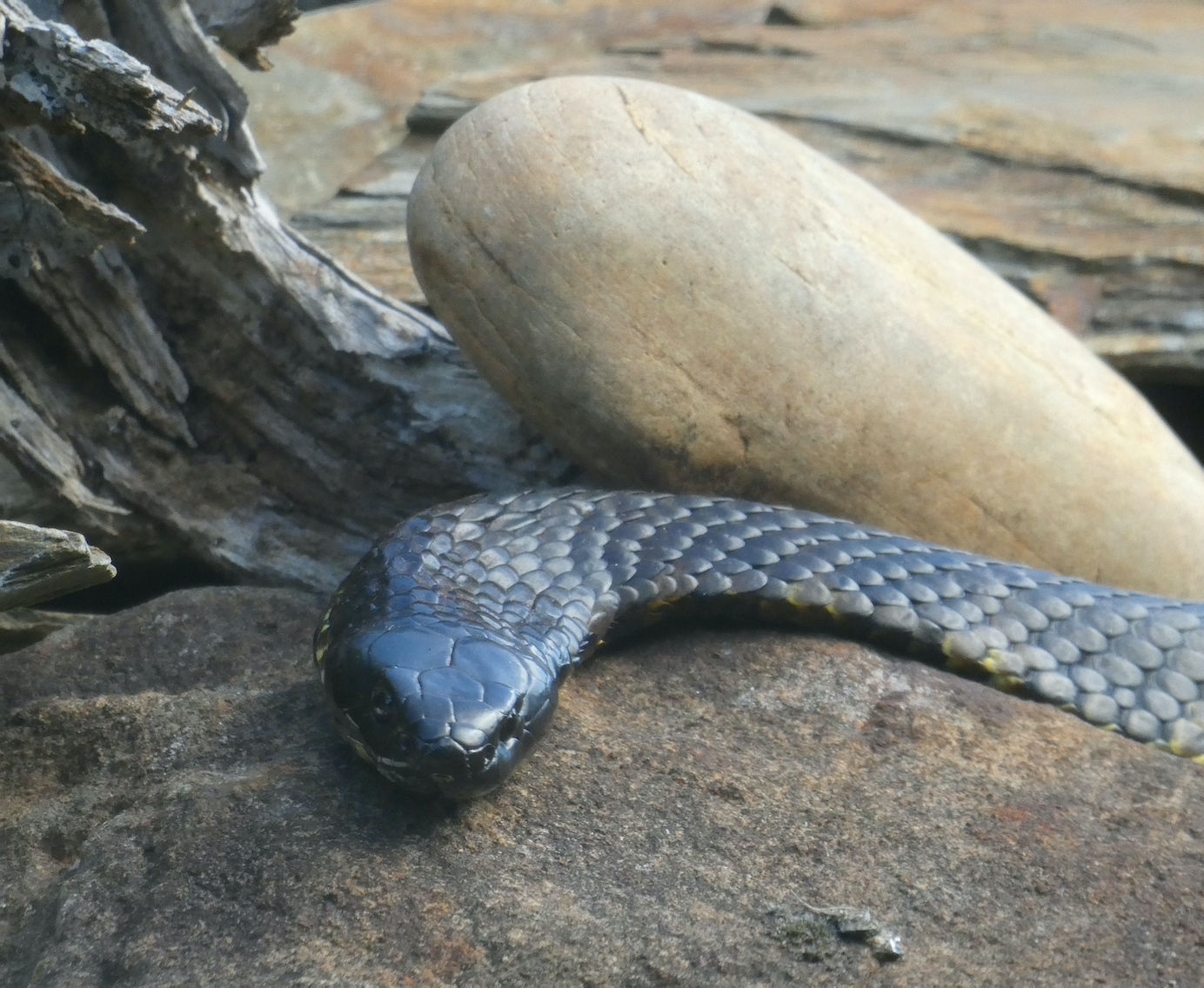
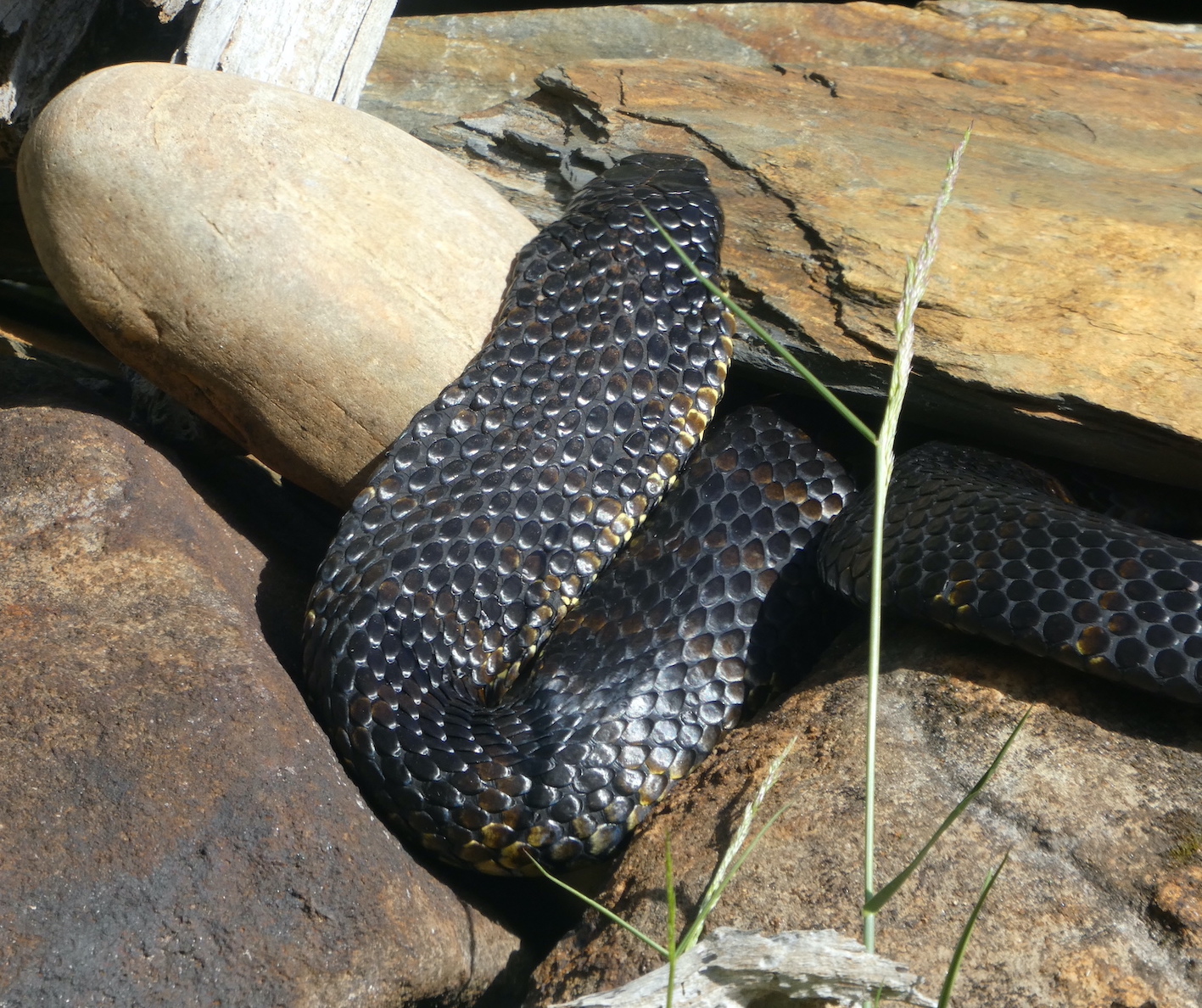
The Tasmanian tiger snake (Notechis scutatus humphreysi) has an unfounded reputation for being aggressive. Although one of the world’s most venomous snakes, they are actually very shy creatures and would rather retreat than attack, saving their venom for important things like their next meal. This may not be the same snake as previous years but she certainly had the same habits and was very comfortable with our presence. Mornings were spent warming up on the eastern side of the pond,

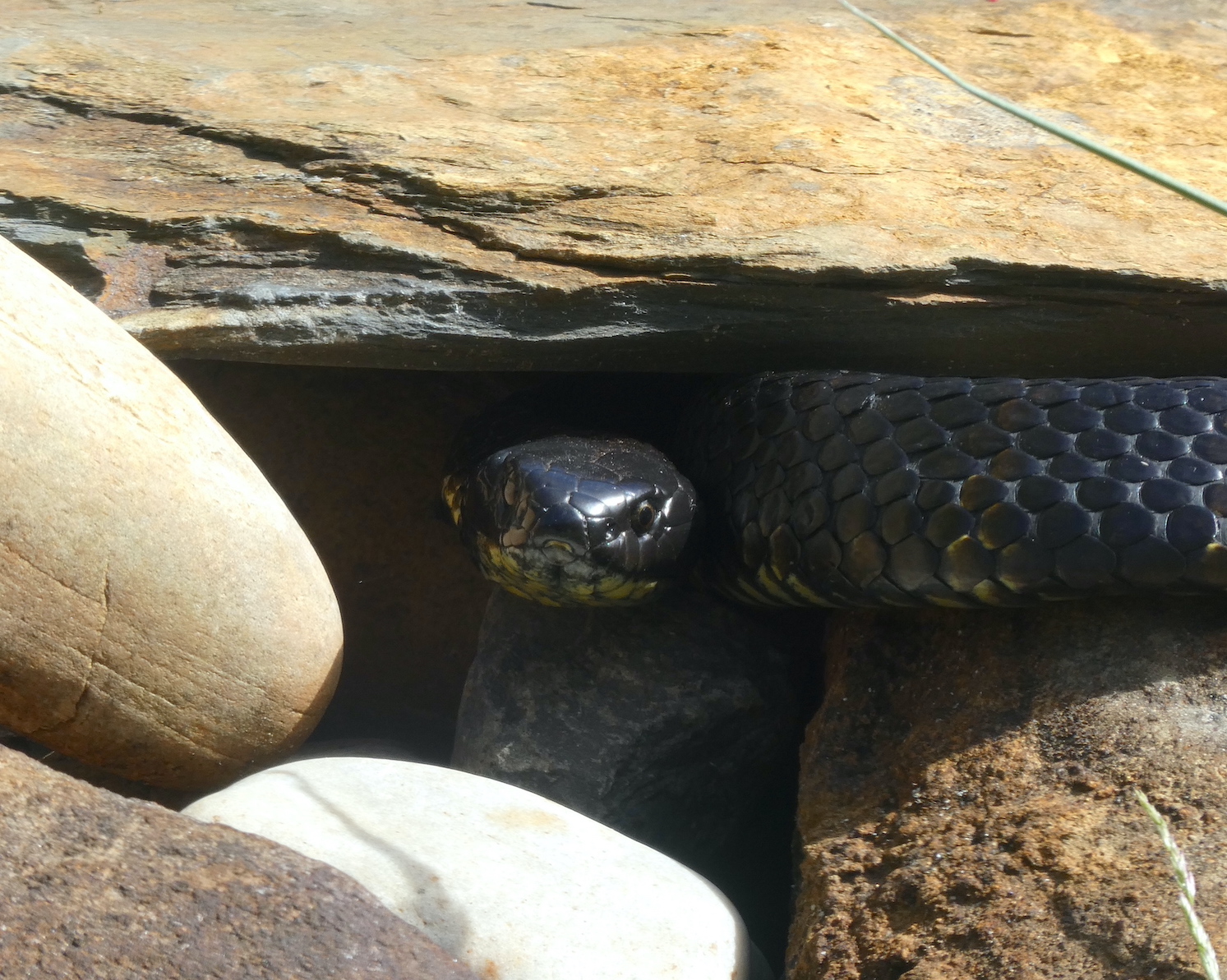
seeking shade when too hot

and stretching out when cool ,

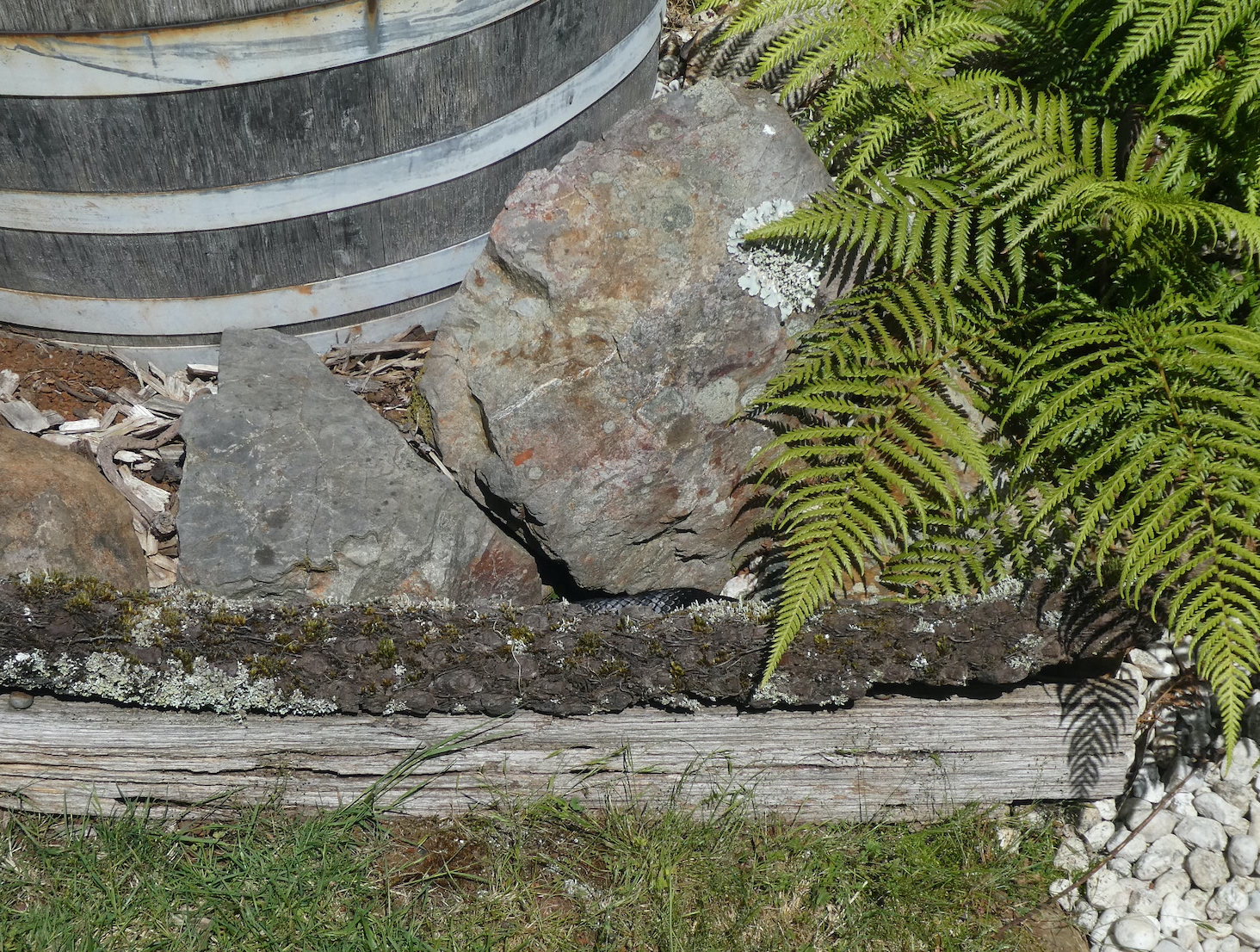
then back to shelter.

Tasmanian climate isn’t the easiest for temperature regulation, even for humans. Sometimes a little creativity is needed to warm up,

but usually a good stretch against the rocks is the best way.

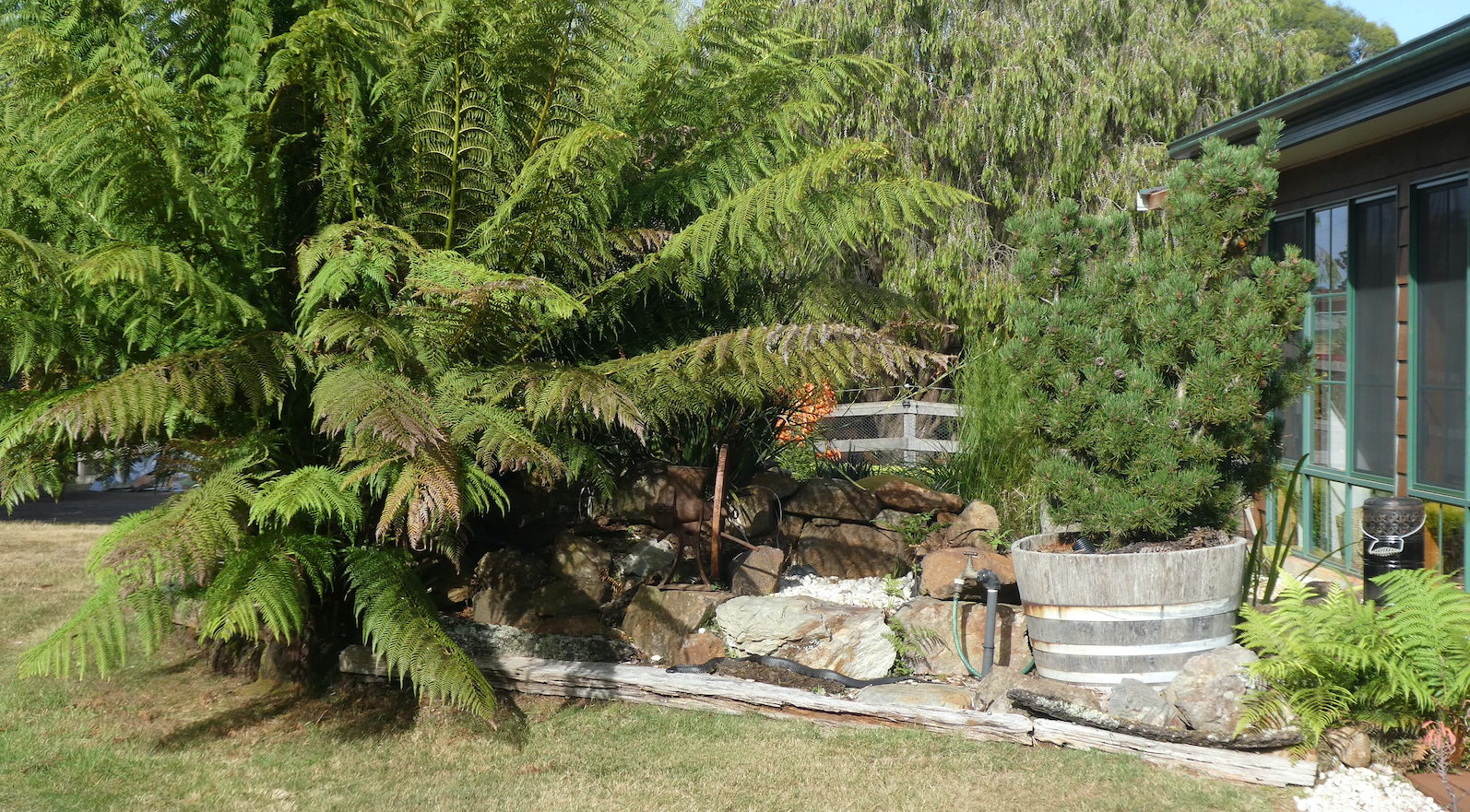
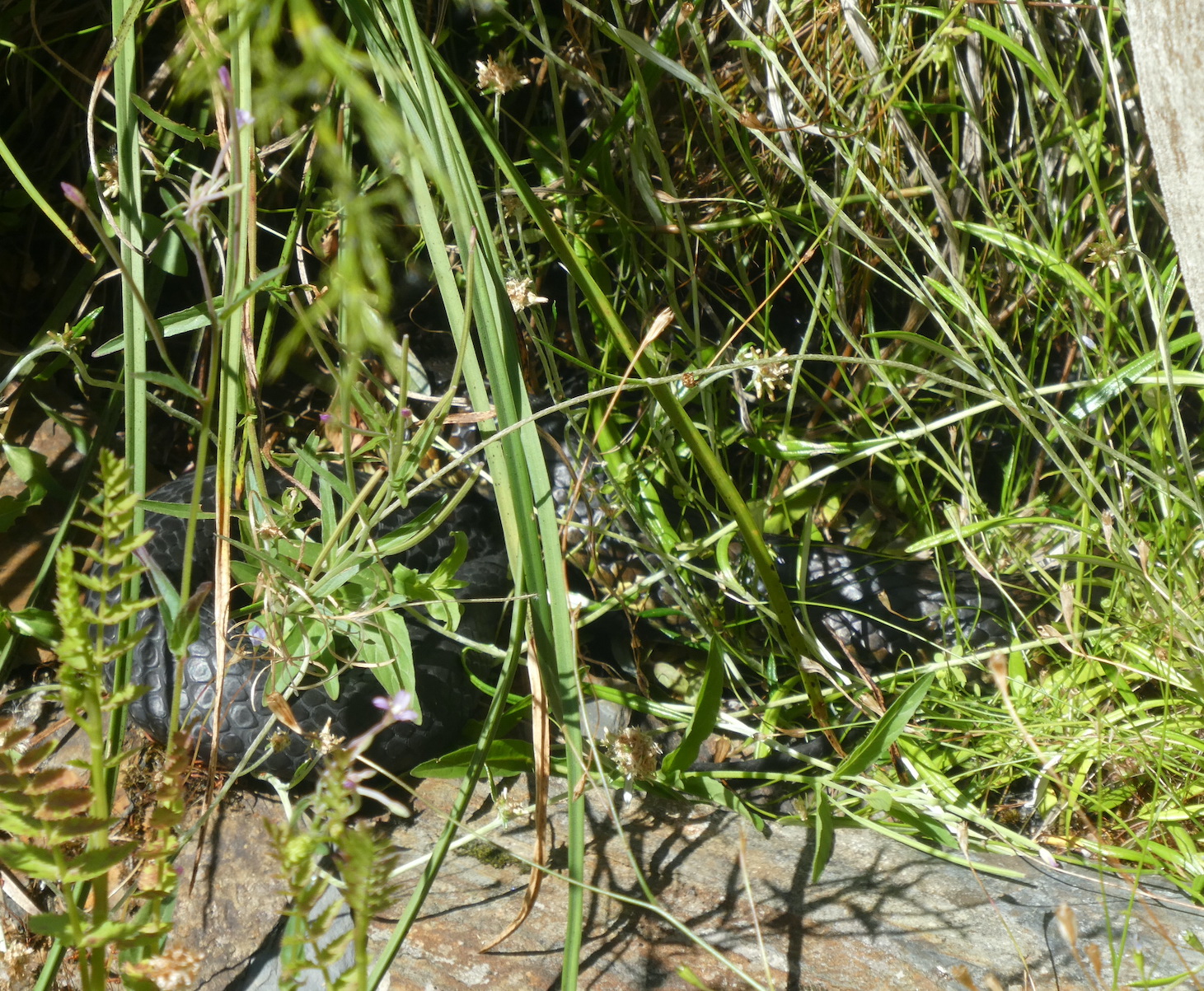
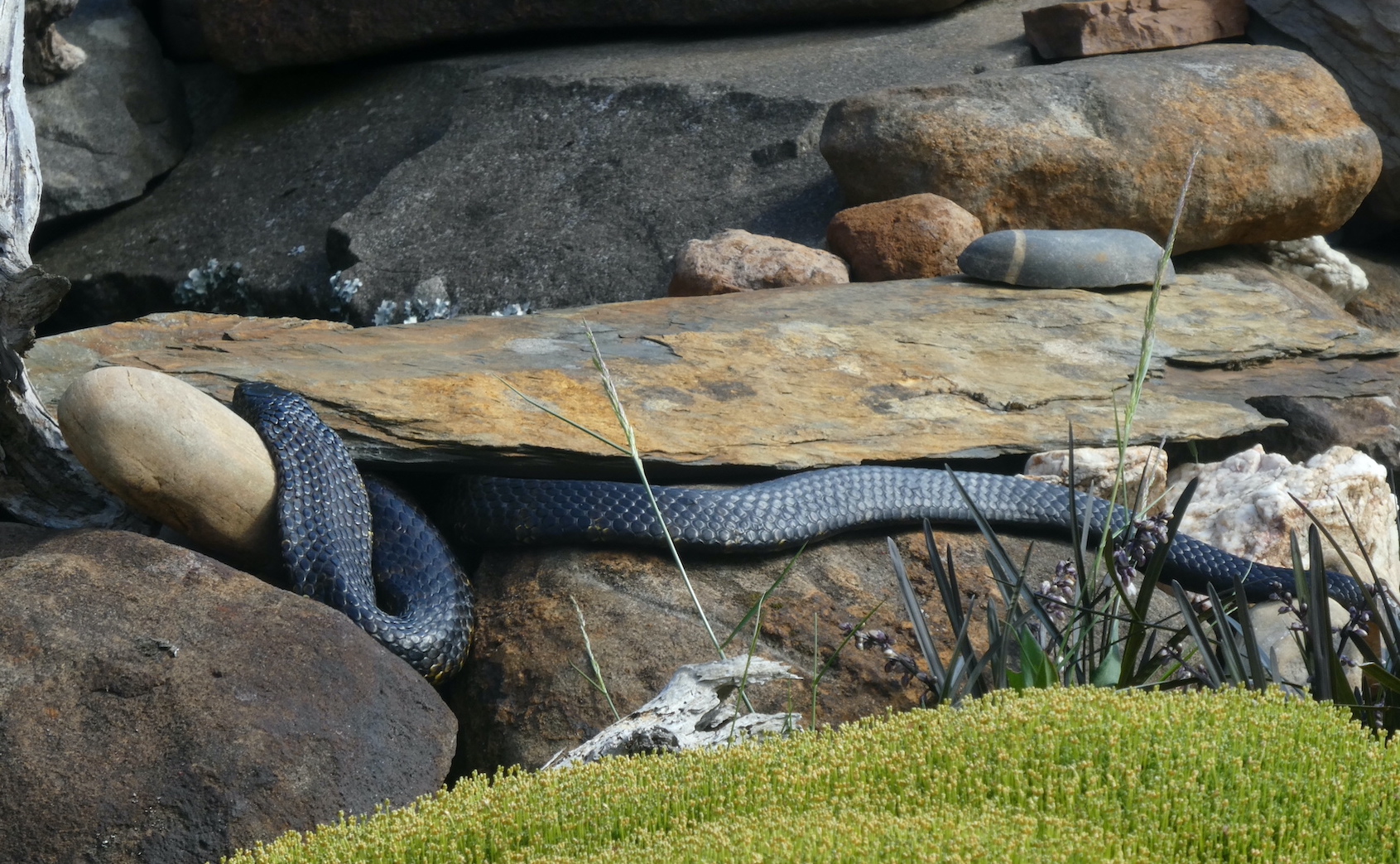
There were some mornings we couldn’t see Snakey (as she is affectionately known) and assumed she had gone off hunting for the day. Complacency is not recommended as she can turn up where least expected.

I much prefer her presence to be obvious.

In the afternoon, she would often be lounging on the rocks above the pond

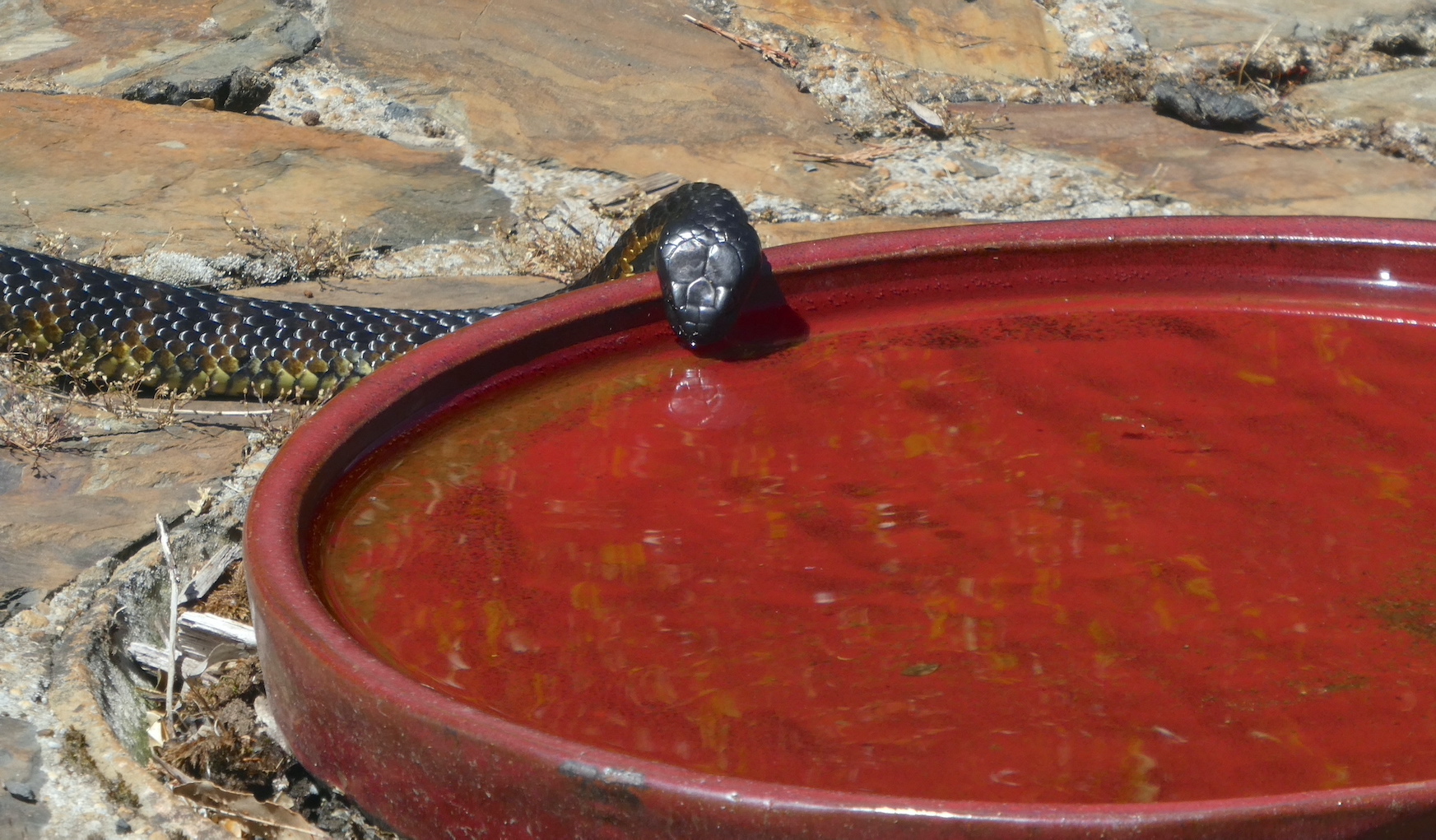
or returning from adventures for refreshment

before relaxing in contented contemplation.

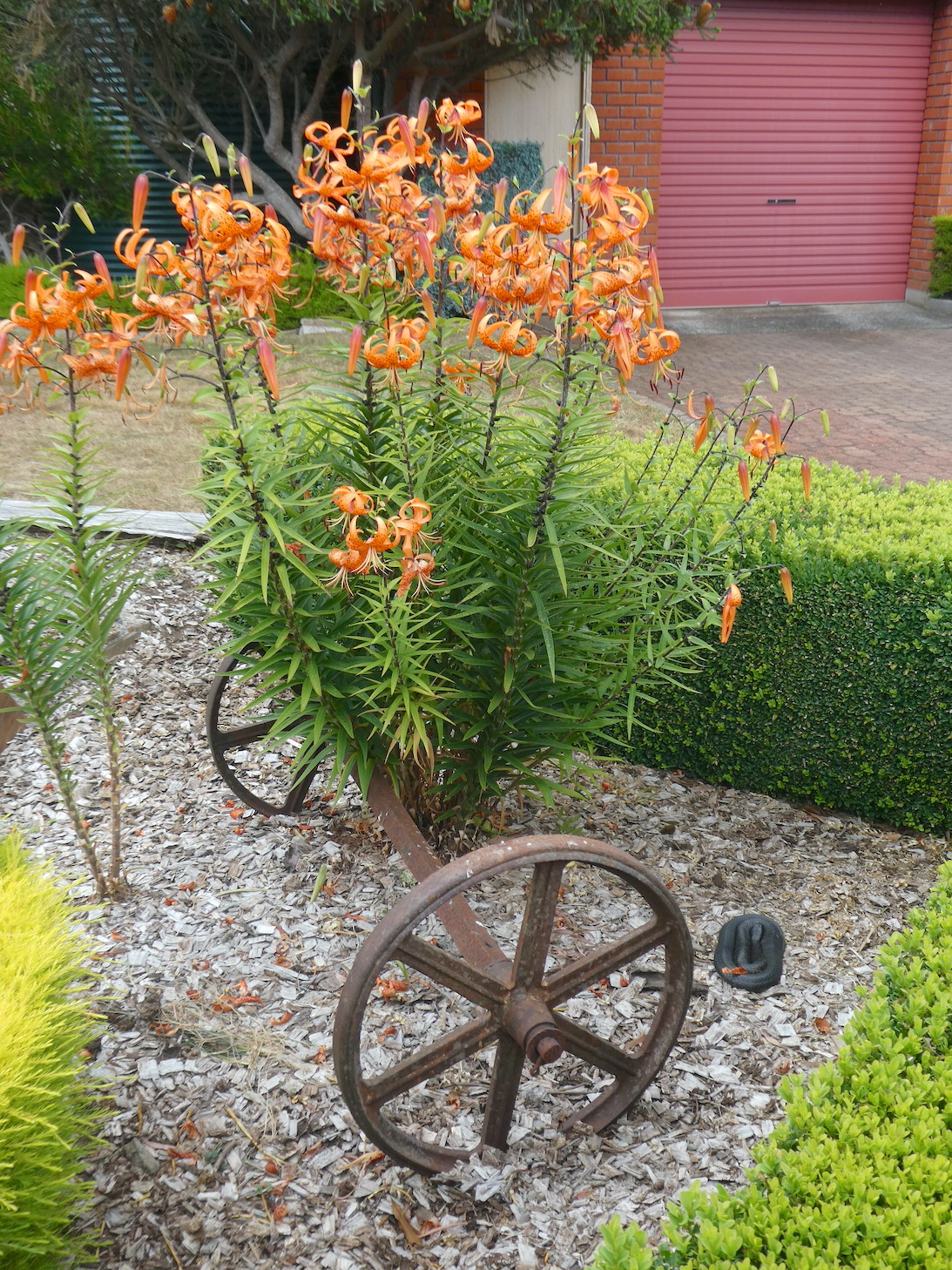
I like to think there is a subliminal connection between the tiger snake and tiger lilies, they seem to complement each other.

swallow summer

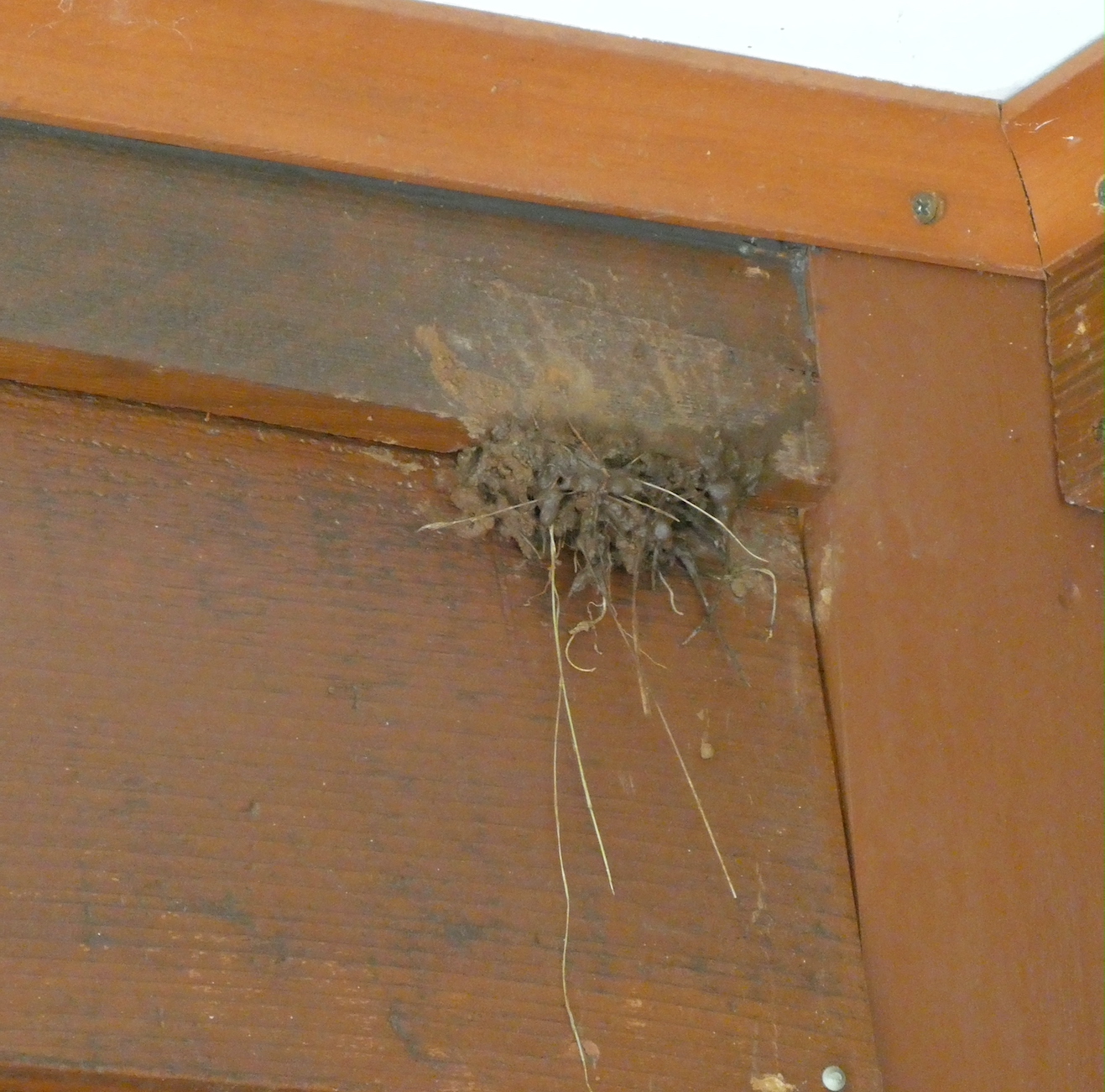
Over the years, there have been a few attempts by swallows to set up home on our cedar cladding. We resorted to inventive ways to deter them with success. In early January, a determined pair began construction in a cosy corner of the back deck.

We decided to allow them to share our space and made allowances for the anticipated mess that would ensue. The little birds worked tirelessly, collecting mud and grass

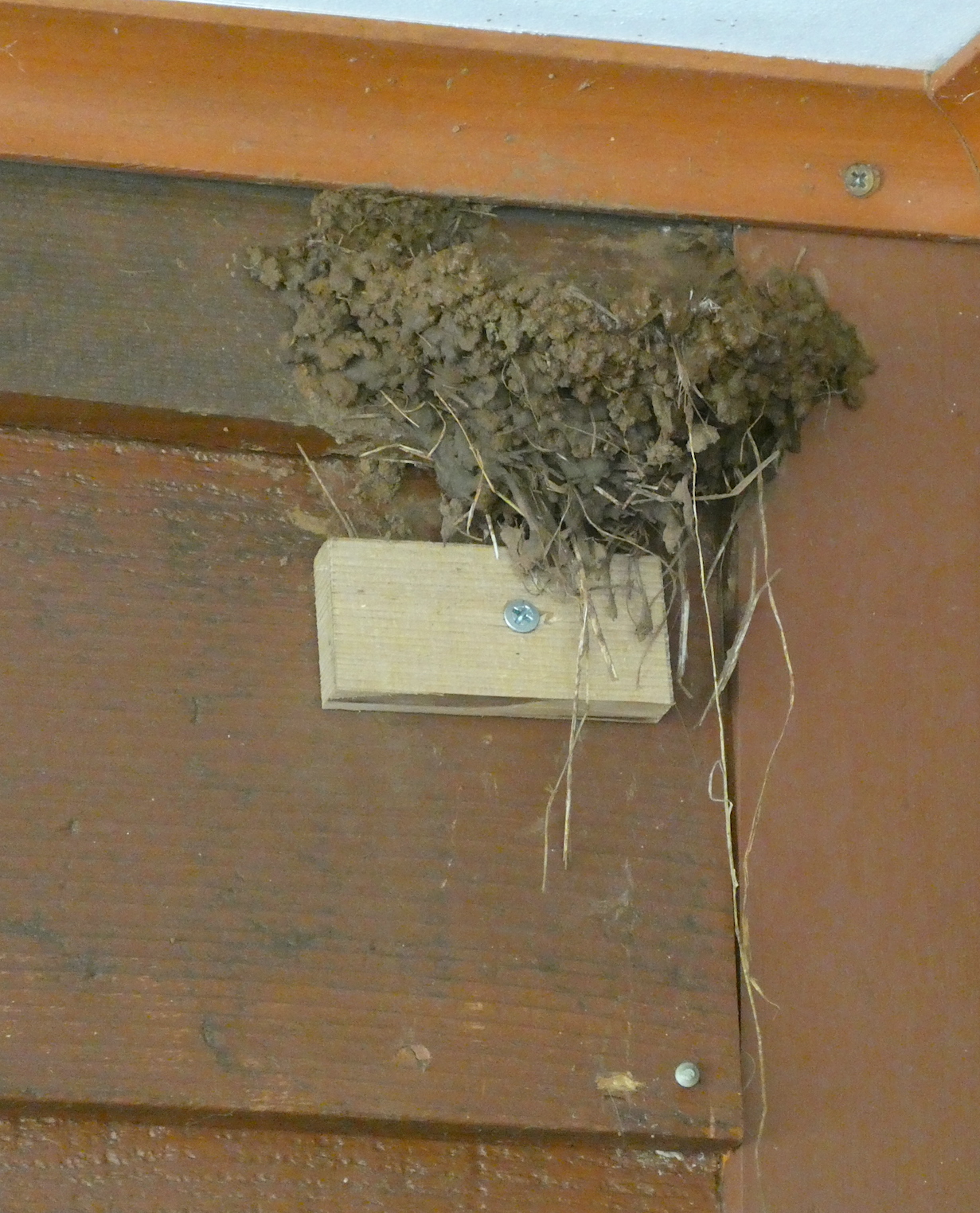
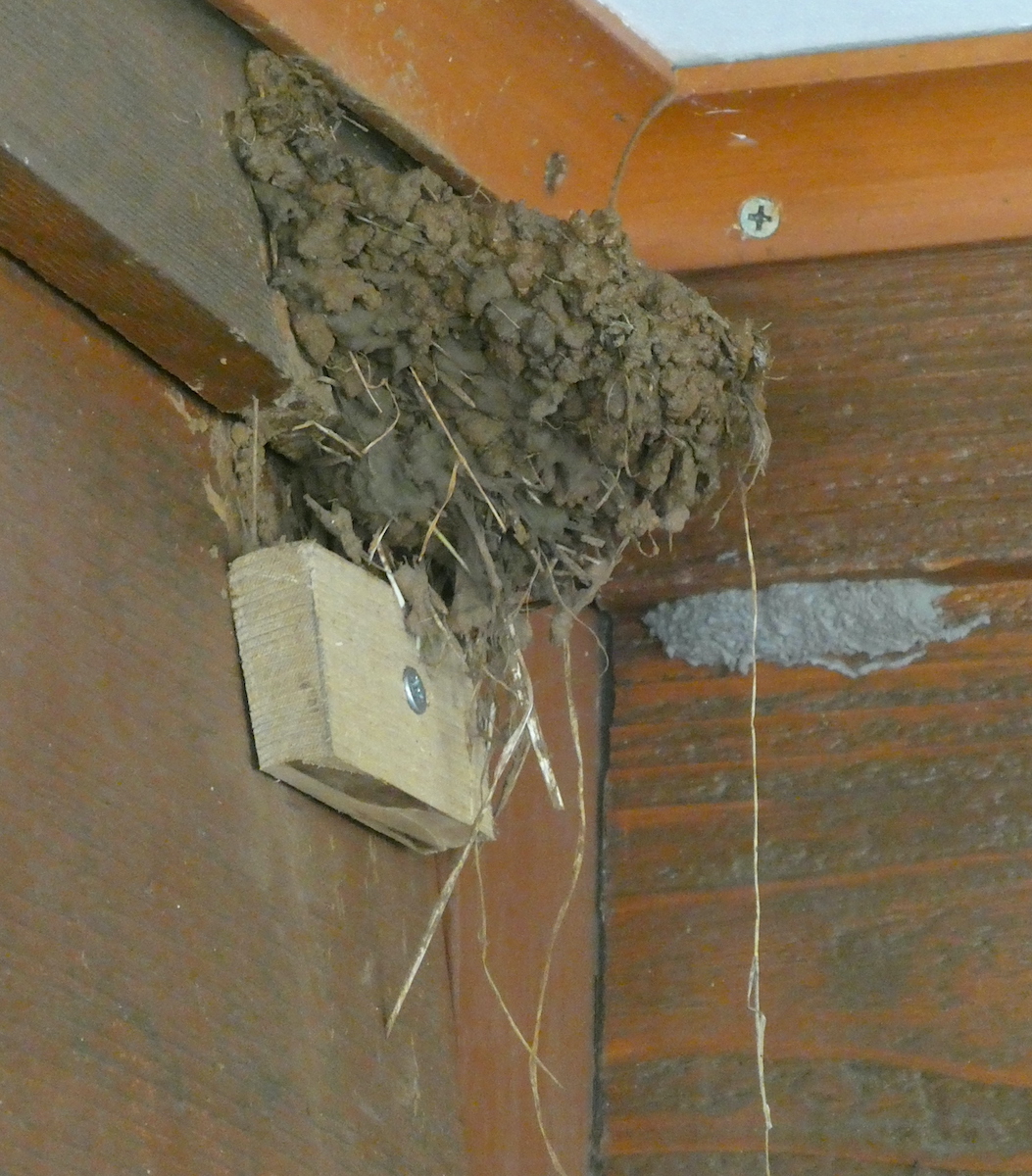
and three days later, the nest was complete.

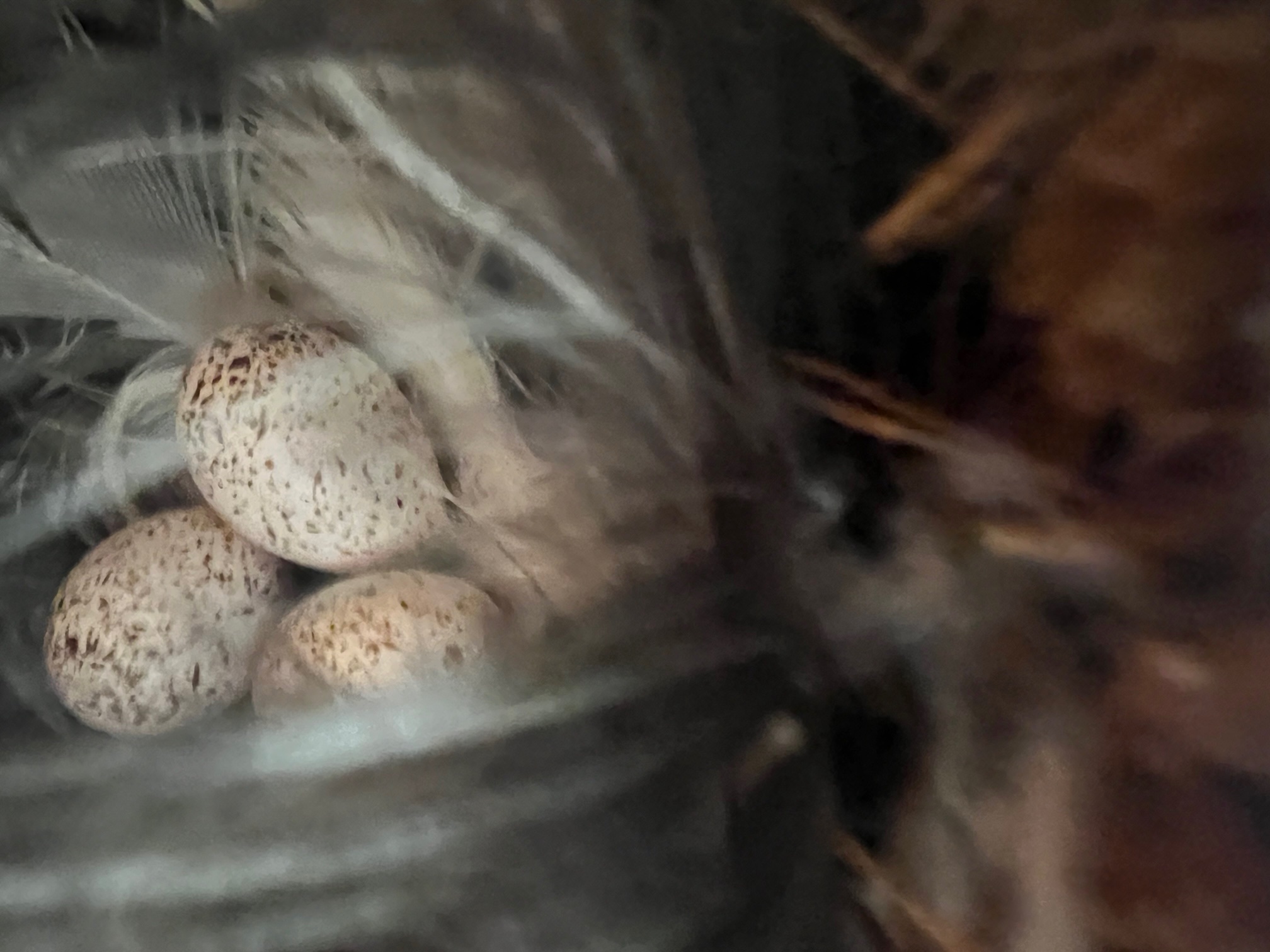
Welcome Swallow couples stay together for life, they both build the nest and feed the young, although the female alone incubates the eggs. Two and a half weeks went by and the parents seemed to be spending a lot of time away from the nest, so Michael reached up and took a photo.

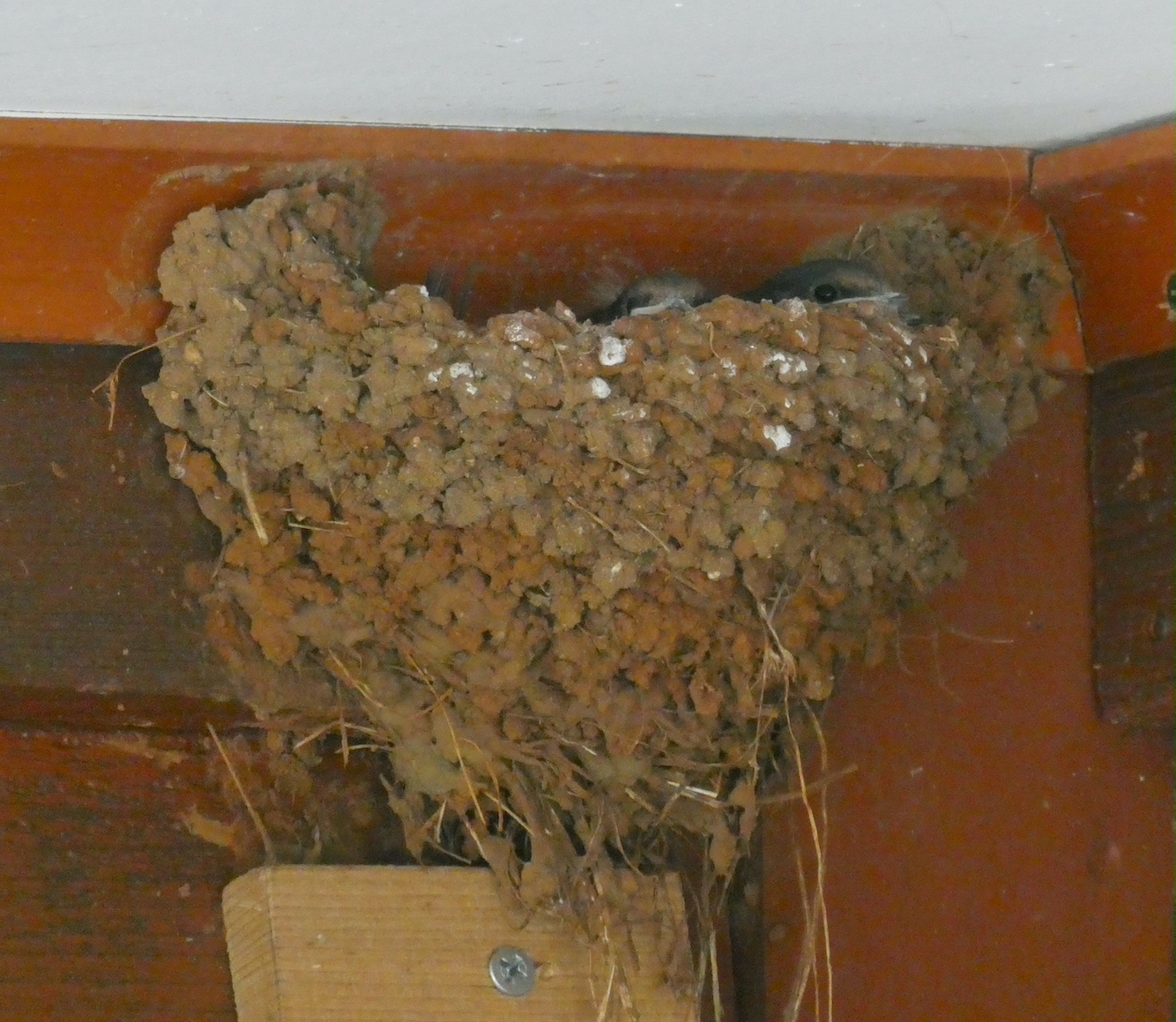
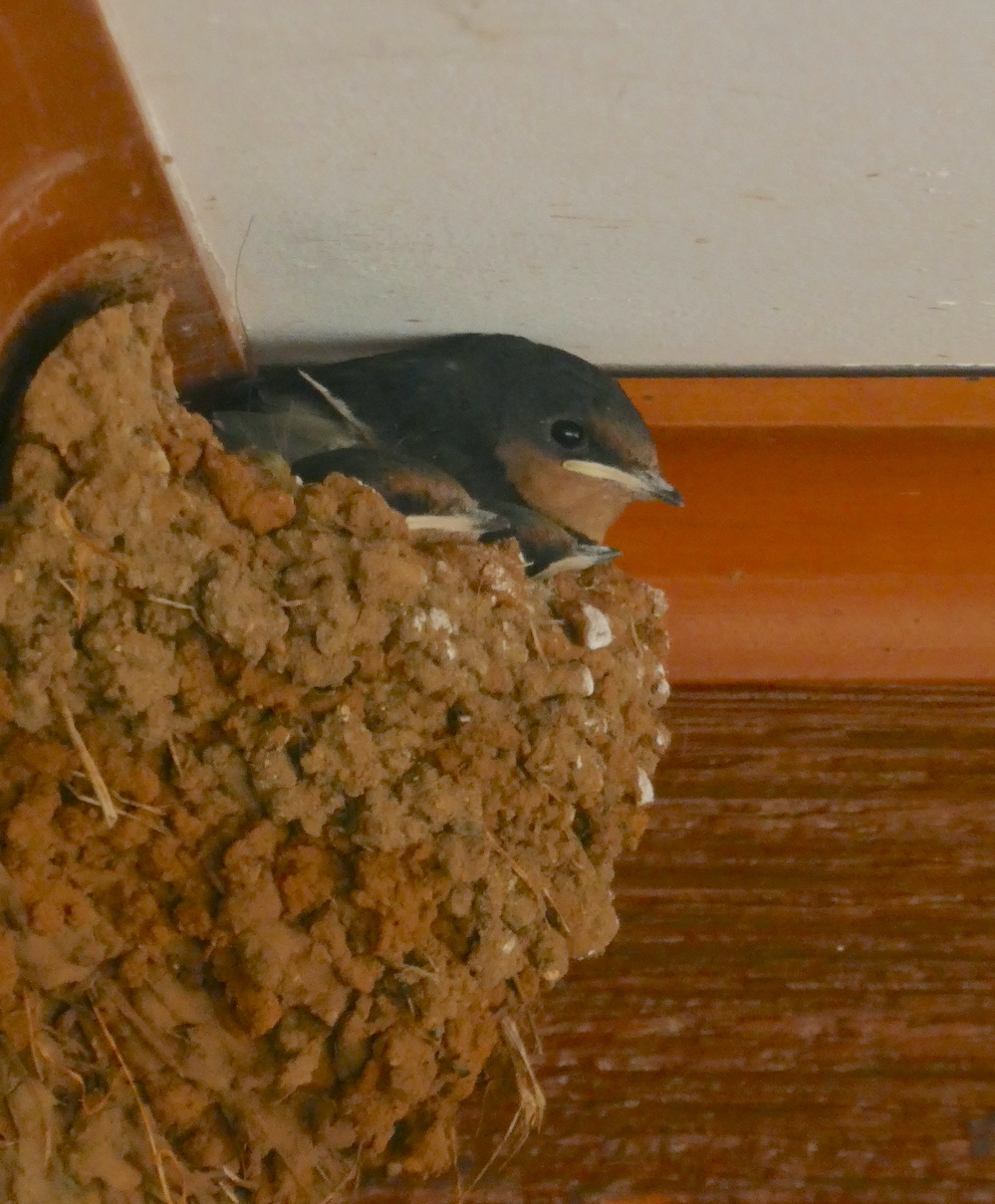
Another three weeks went by and we hadn’t heard any baby bird noises or calling for food, although the parents were still attentive. Time for another photo, there was no mistaking two tiny heads.

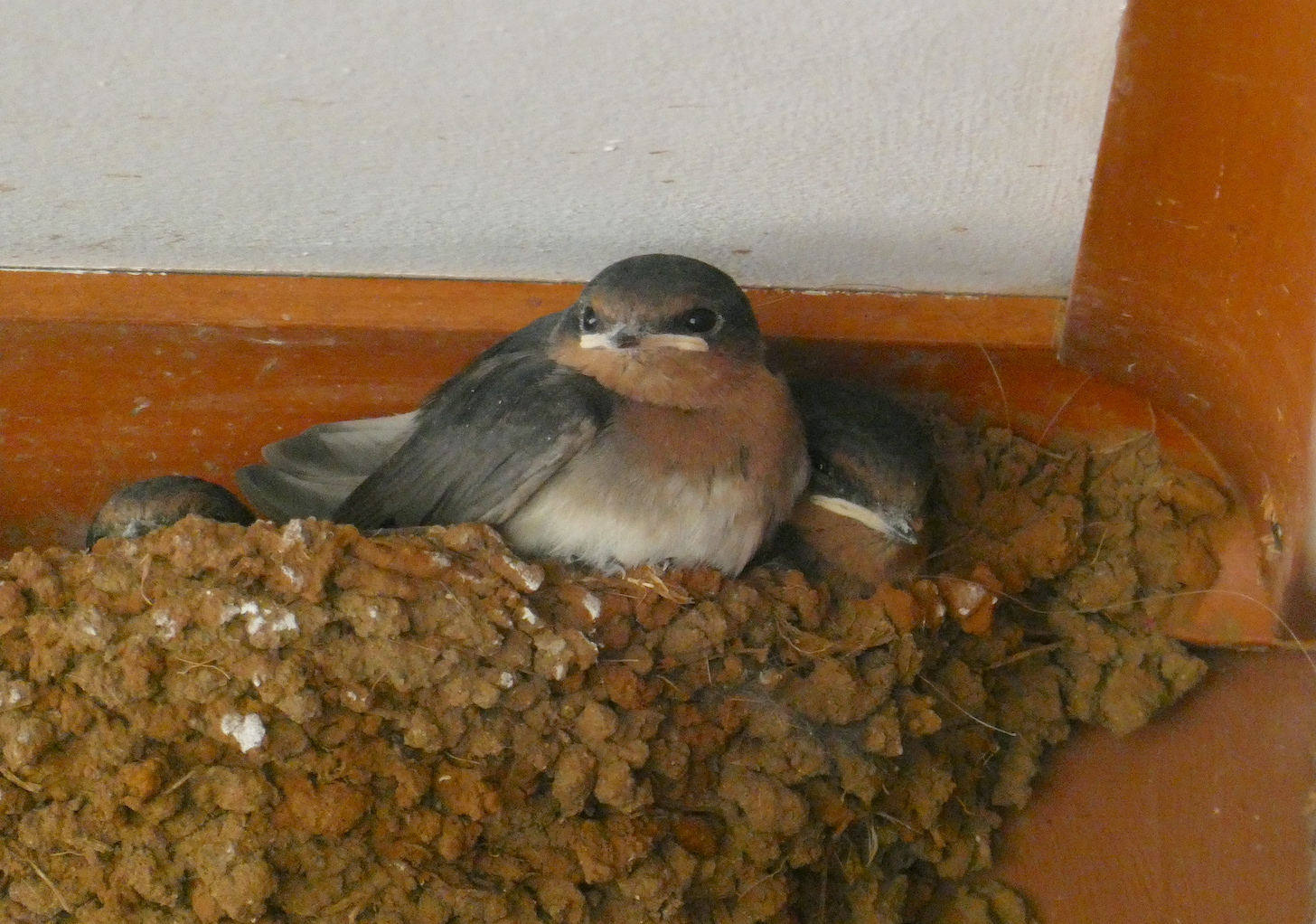
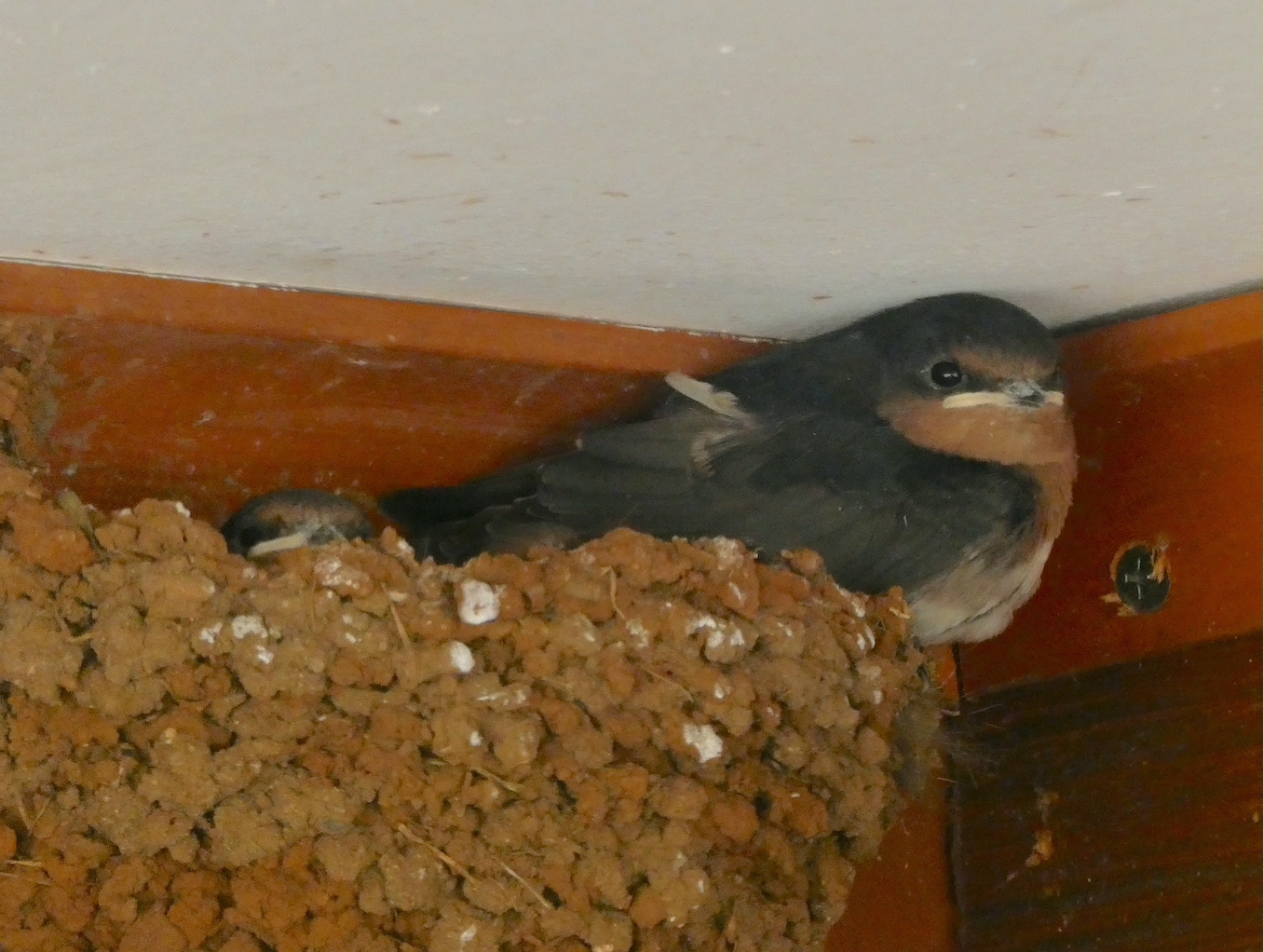
Of course, I became obsessed with trying to capture some special moments and three days later, two little heads popped up.

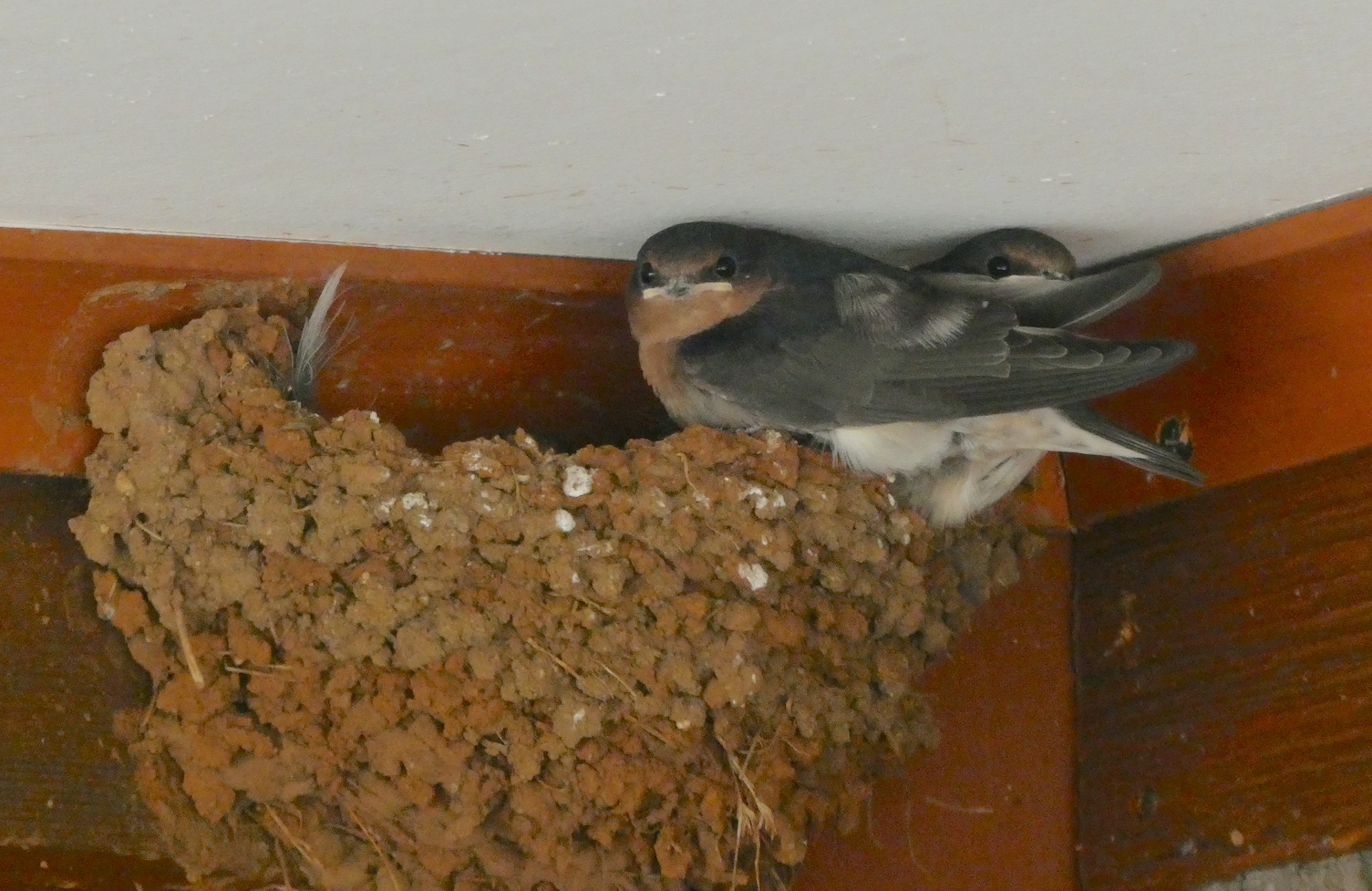
A third soon joined them

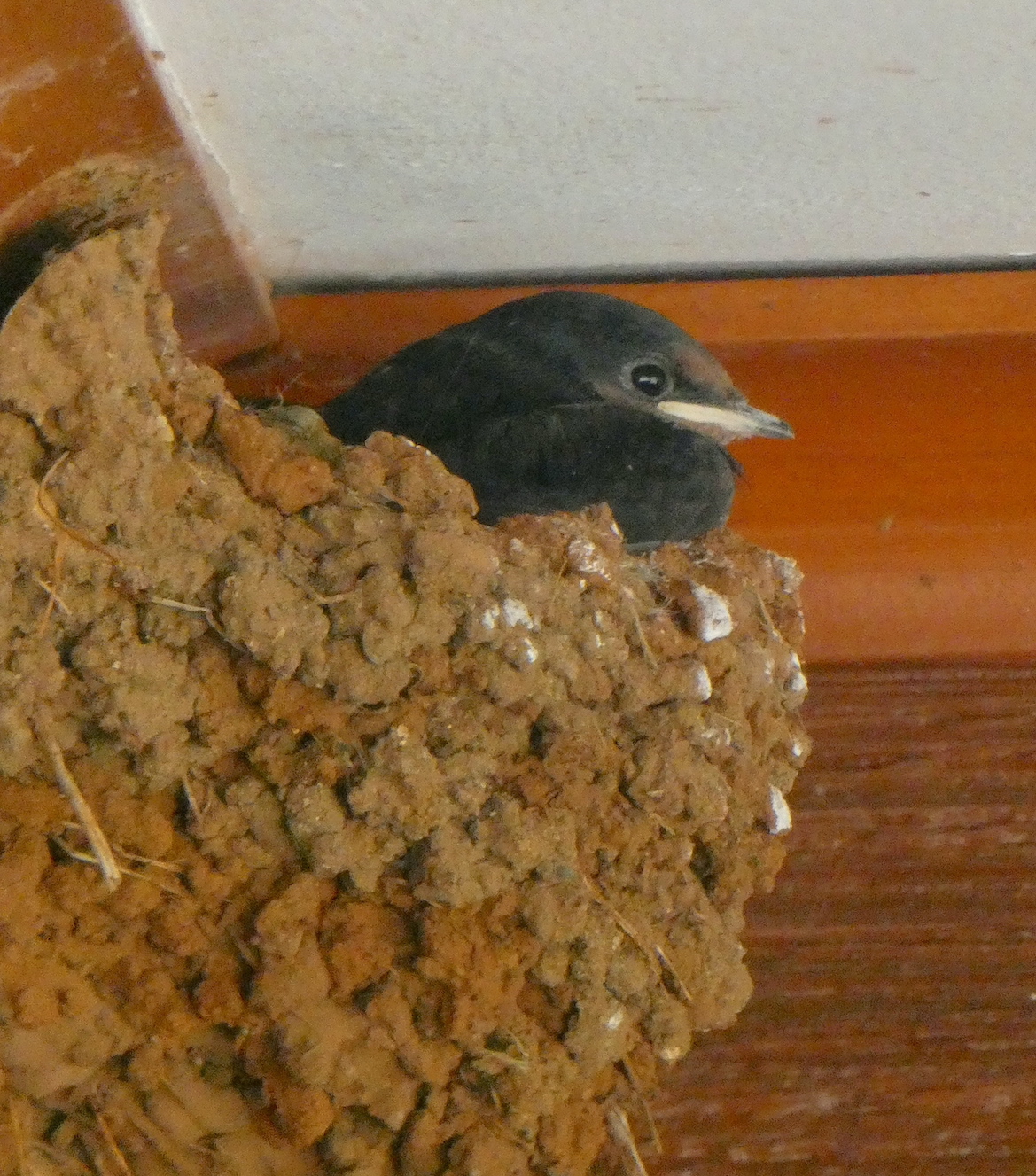
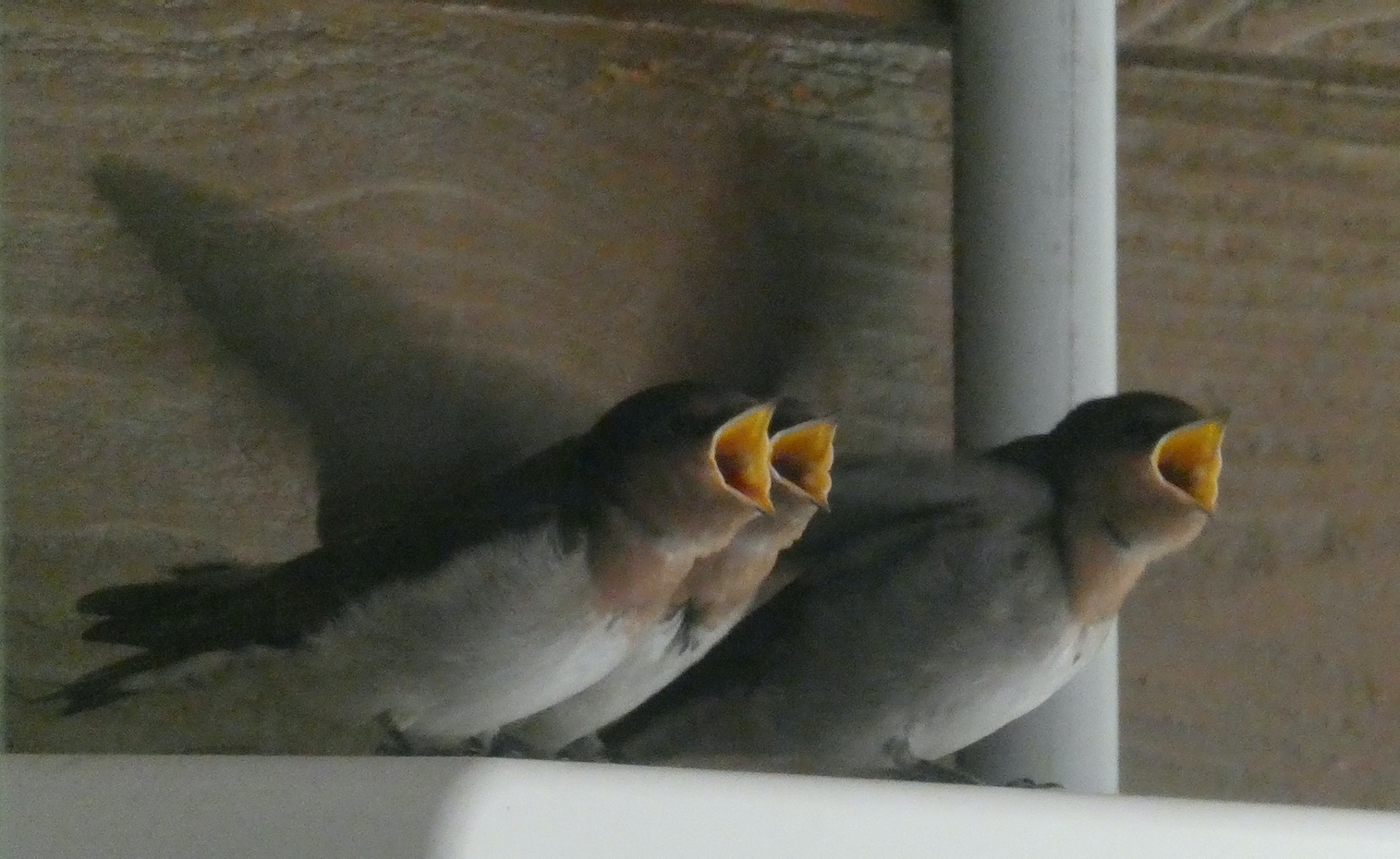
and within a couple of days they were starting to explore beyond their comfort zone.

I was surprised by the lack of chirping, even when food was approaching.

They gradually ventured further each day and after a couple of weeks, no longer returned to the nest at night. We haven’t seen them for a few days now, hopefully they will return next year.