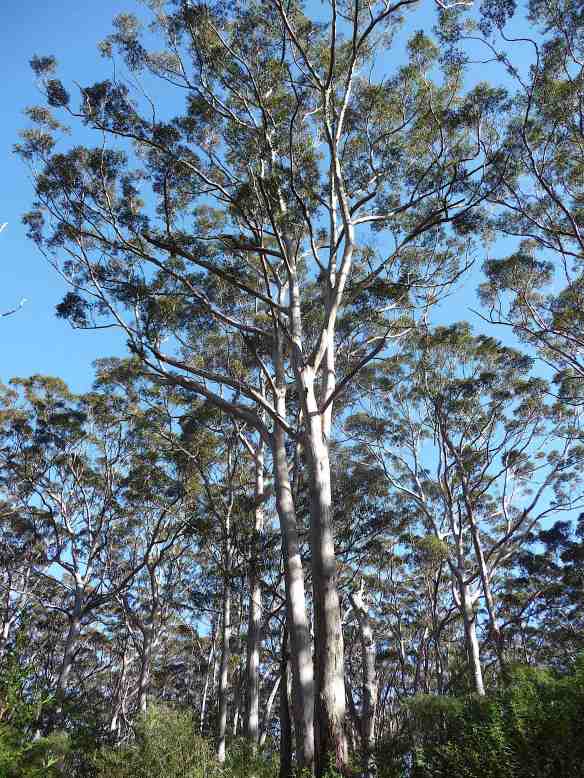
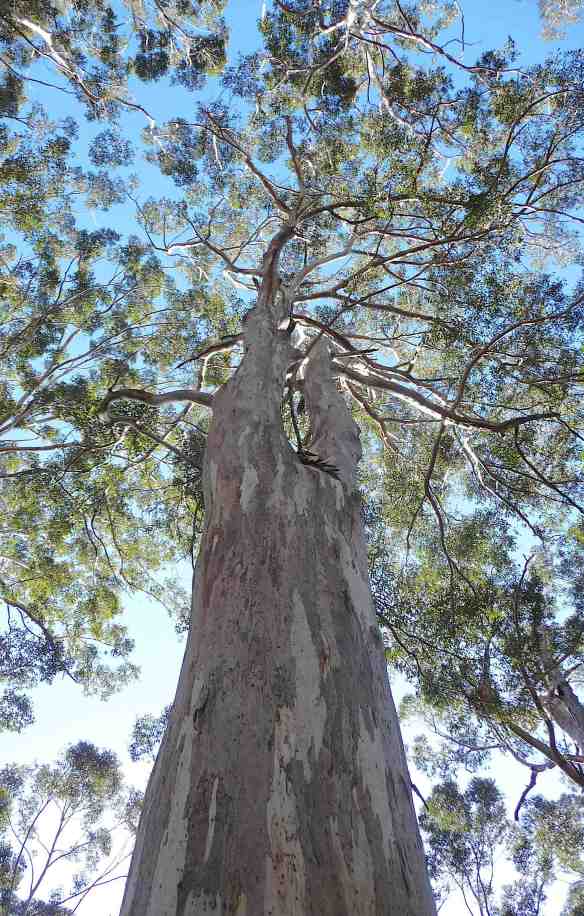
Lillico Beach

There is one of those, “I must go there one day” places along the Bass Highway between Ulverstone and Devonport. I am ashamed to say it took me eight years in Tasmania before I pulled off the highway to explore Lillico Beach Conservation Area. The reserve is home to a colony of the world’s smallest penguins, aptly named the Little Penguin or Fairy Penguin. I entered the walkway and immediately spotted little concrete shelters scattered through the vegetation.

1.penguin burrow2.penguin burrow

The artificial burrows are used when there is a lack of natural burrow habitat and offer protection from predators such as feral cats.

3.penguin burrows

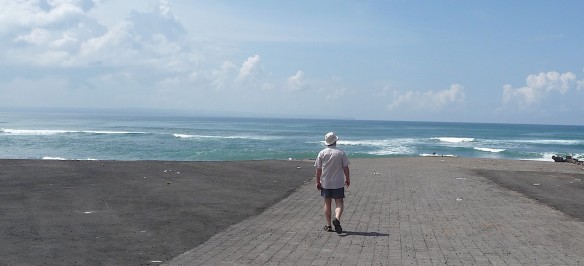
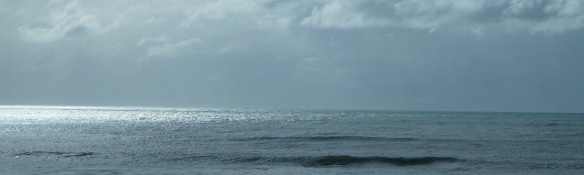
I wandered along the viewing platform, distracted by the spectacular panorama of Bass Strait at low tide.

4.looking west5.looking north6.looking east

The burrow designs are quite innovative and seem perfectly sized for a penguin who is only 30cm high and weighs around one kilogram.

7.penguin burrow

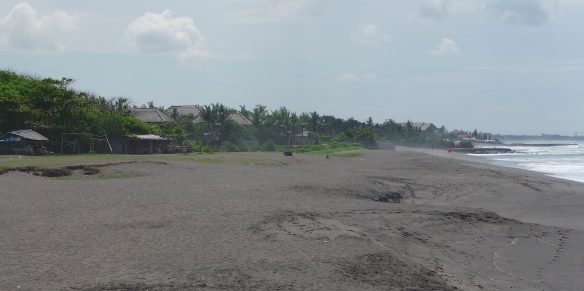
This important wildlife corridor hugs the coast for 2.5kms,

8.Bass Strait

the shingle beach and rock pools make for stunning scenery.

9.on the beach

If I were living at Lillico Beach, this would be my choice of home,

10.penguin burrow

if only for the location.

11.penguin burrow

There were no penguins to be seen on this day, they were all out fishing in the beautiful blue ocean. We will visit one summer evening to watch them waddling back to their burrows. I won’t wait another eight years.

Scarborough

Although I was quite young when I left England, I have fond memories of holidays to the seaside. I think Scarborough Beach is where I first fell in love with donkeys.

1.me & Sally the donkey

I just had to re-visit while we were in Yorkshire, although the donkeys were keeping warm elsewhere until summertime came around again. Tourists have been flocking to Scarborough since the 17th century when healing waters were discovered and a spa was opened. The beautiful sandy beaches are divided into two bays, the north bay being the more peaceful end of the resort.

2.North Bay, Scarborough

The colourful beach huts have stood the test of time, with 166 being the largest collection in the North of England. The pyramid shaped structure in the distance is the Sea Life Sanctuary. More than simply an aquarium, it is a centre for rescuing and breeding creatures of the sea as well as being an important educational facility. The huge apartment complex is The Sands, five-star luxury that certainly wasn’t there in the 1960s. Personally, I prefer the character of the gorgeous guesthouses on Queen’s Parade.

3.Queen's Parade Scarborough

A high rocky promontory separates the north and south bays

4.Headland between North & South Bay

upon which are the ruins of the 11th century Scarborough Castle. The castle has been developed into a fascinating tourist attraction but, unfortunately, at the end of October most of these national monuments are closed for the winter.

5.Scarborough Castle

We didn’t visit south bay and the old town, it is the main tourist area with a long, sandy beach, cafés, amusement arcades and theatres. Instead, we drove to Whitby and then across the Yorkshire Moors back to Harrogate.

6.Yorkshire Moors

We watched the steam train of the North Yorkshire Moors heritage railway as it carried passengers through twenty four miles of Yorkshire’s stunning scenery. Maybe next time we’ll hop on board.

7.Yorkshire Moors

Voyager Estate

After visiting some of the boutique wineries in the Margaret River region, we thought it only fair to experience one of the more substantial enterprises.

1.entrance

The word that springs to mind when I recall our visit to Voyager Estate is ‘immaculate’.

2.Voyager Estate

Established in 1978, the regimented vines were patiently awaiting their spring foliage.

3.Vineyard

At the end of the long driveway, we parked the car

4.Voyager Estate

and made our way along the perfectly paved paths edging manicured lawns.

5.Voyager Estate6.Voyager Estate

The gardens and buildings were inspired by the Cape Dutch farmsteads of South Africa. The colourful plantings complemented the stark white buildings beautifully.


As we neared our objective, the flawless approach

10.Voyager Estate11.Voyager Estate

was lined with some intricate examples of topiary.

12.topiary hedges

We finally reached the Cellar Door

13.Cellar Door

and entered the inner sanctum.

14.entrance

The hallway leading to the restaurant was pristine (as were the bathrooms).

15.hallway

Private tasting sessions are offered in ‘Michael’s Room’, named after the late mining magnate, Michael Wright, who bought the estate in 1991.

16.Michael's Room

We settled for a few samples at the tasting counter and, of course, a purchase or two.

17.departing

Taronga Zoo

On a warm December day in Sydney, we caught the ferry from Circular Quay to spend the day at Taronga Zoo. Officially opened in 1916, the zoo was based on the bar-less exhibits seen at Hamburg Zoo on a visit to Germany by the Secretary of the zoo in 1908. The 69 acre site is home to over 4,000 animals of 350 species and is a wonderful place to spend a leisurely day. The first animal we encountered was the gorgeous red panda. The deep rust-red colour contrasts beautifully with cream facial markings, the large claws a bonus when it comes to tree climbing.

These two were enjoying a nap in the humid heat, dreaming of their ancestors in south-east Asia. Binturongs have been described as a bear-cat and as tree dwellers with long bushy tails, it’s hard to believe they are distantly related to meerkats. Apparently, they have a strong odour of a cross between burnt popcorn and corn chips. We didn’t get close enough to find out.

The Java Finch seemed to be enjoying the steamy atmosphere in the waterbird exhibit.

Usually a white bird, the Cattle Egret is seen on the backs of cattle making a meal of ticks and flies. The orange brown breeding plumage becomes bright red at the height of the season. Interestingly, a group of egrets is known as a “skewer”.

9.cattle egret

The smallest known ibis in Australia, the Glossy Ibis was showing the magnificent colours of breeding plumage.

10.glossy ibis

The Asian elephant breeding program has been very successful at Taronga. The keepers led them out for their daily exercise, giving them wooden “toys” to play with.

11.Asian elephants

15.Asian elephants

The Sumatran Tiger and Snow Leopard were on alert

16.Sumatran Tiger17.Snow Leopard

but there were others who had given in to the somnolent, steamy atmosphere.

18.lioness19.bear20.tapir

I have always had a soft spot for hippos and the baby pygmy hippo stole my heart.

The meerkats were entertaining, as usual, I could watch them for hours. The dark patches around their eyes act as sunglasses to lessen the glare of the desert.

Mum and baby gorilla were enjoying a nap, dad doesn’t look too impressed at being left out.

We passed the colourful cassowary and opulent ostrich

on the way to the giraffes. The meal didn’t look very appetizing but he was tall enough to catch glimpses of the Harbour Bridge.

The world’s largest lizard at 3 metres long, the Komoda Dragon was magnificent.

38.Komodo Dragon

Unfortunately, Tuka, as he was named, died two years ago at the age of 33.

There were many fascinating lizards and snakes, I won’t even attempt to identify them.

The Indian Star tortoise was heading for lunch

50.Indian star tortoise

while the eastern snake-necked turtle cooled off in the pool.

51.Eastern snake-necked turtle

The handsome countenance of the Rhinoceros Iguana reveals the sheer pleasure of basking in the sunshine.

There was a fabulous view from the Sky Safari cable car. The lush verdancy  below

contrasted perfectly with the harbour and city beyond.

58.gondola view

Watching the chimpanzees brought us back to earth. It’s not hard to believe they are our closest living relatives, sharing nearly 99% of our DNA.

Nearing the end of our visit, we stopped by the farmyard where children can get close to the animals. The piglets were adorable

and the acrobatic goat had us wondering how she would get down from there.

68.goat

We enjoyed every minute of our day at Taronga, and with a final hint from the crocodile on how to stay cool,

69.crocodile

we returned to our apartment to do just that.

70.cooling off

midwinter morning

Winter is well and truly upon us. After a very mild autumn, we are having one of the coldest winters in Tasmania I can remember. Maybe it’s just that the bones are getting older? One morning last week, I awoke early and, after turning off the alarm on my phone, I checked the weather forecast. Currently 1ºC, feels like -3ºC. Fortunately, it was considerably warmer inside as the wood fire was still burning. Just before I left for work, I became aware of the subtle hues in the sky, promising a spectacular sunrise.

1.pre sunrise2.pre sunrise

Making my way to the garage, I noticed the bird bath had frozen. The nocturnal creatures had left their calling cards as usual.

3.birdbath

The frost was beautiful

4.frosty garden

and crisp underfoot as Michael and Poppy headed off for their morning walk.

7.frosty paddock

Driving along the dirt road toward the bitumen, this vision had me reaching for my camera.

8.almost sunrise

As I drove, I kept watch from every angle, intermittently testing the brakes as I stopped to capture the spectacle.

9.almost sunrise

The newly ploughed chocolate paddock had a delicious topping of vanilla ice.

10.chocolate field

Travelling north, the fire in the east simmered,

11.sky on fire

the roofline silhouettes a captivating contrast.

12.silhouette

In the valley, the frost lingered

13.rolling frost

before the road climbed again. One last glimpse of nature’s wonder.

14.sunrise at last

The moon was still high in the sky over the suburbs of Burnie.

15.moon over Burnie

I really had to get to work.