Grotte di Castro

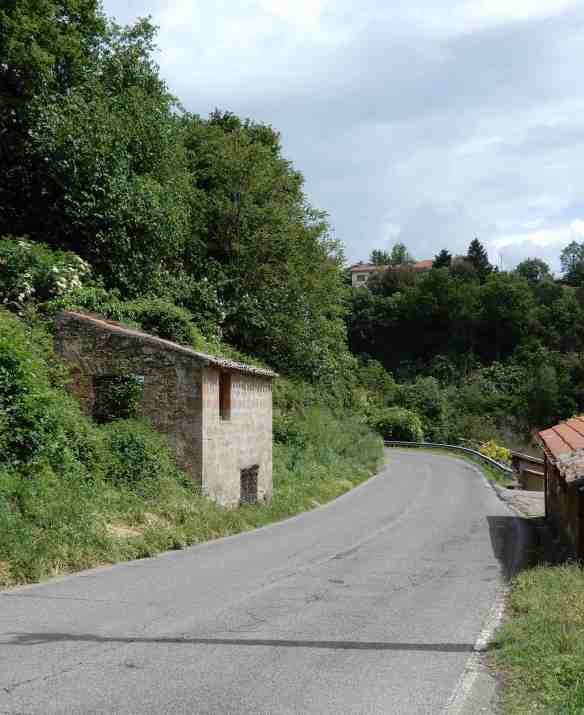
On our way to Bolsena for a lakeside lunch, we stopped to explore the town of Grotte di Castro. The Etruscans lived here quite happily, even after the Romans conquered in the 3rd century BC. That all changed when the Lombards invaded in the 8th century and the inhabitants, deprived of all their possessions, were forced to live in the many caves around the cliffs. Fast forward to 1537 when the town was bought by the Farnese family and became part of the Duchy of Castro. Hence the name, meaning Caves of Castro. We parked on the outskirts and wandered along Via Vittorio Veneto

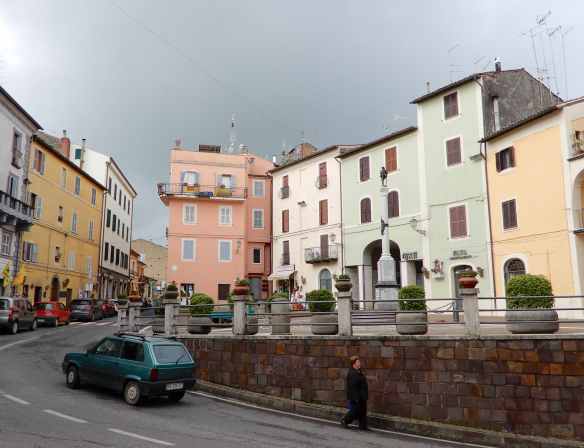
to the main square, Piazza Cavour. The colourful buildings added some brightness to the overcast day and the war memorial stands proudly as a centrepiece.

5.Piazza Cavour6.Piazza Cavour

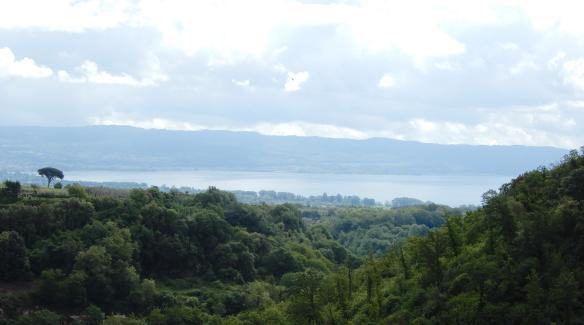
We caught glimpses of Lake Bolsena between the houses,

10.Lake Bolsena

some of which must have magnificent views.

11.Grotte di Castro12.Grotte di Castro13.Grotte di Castro

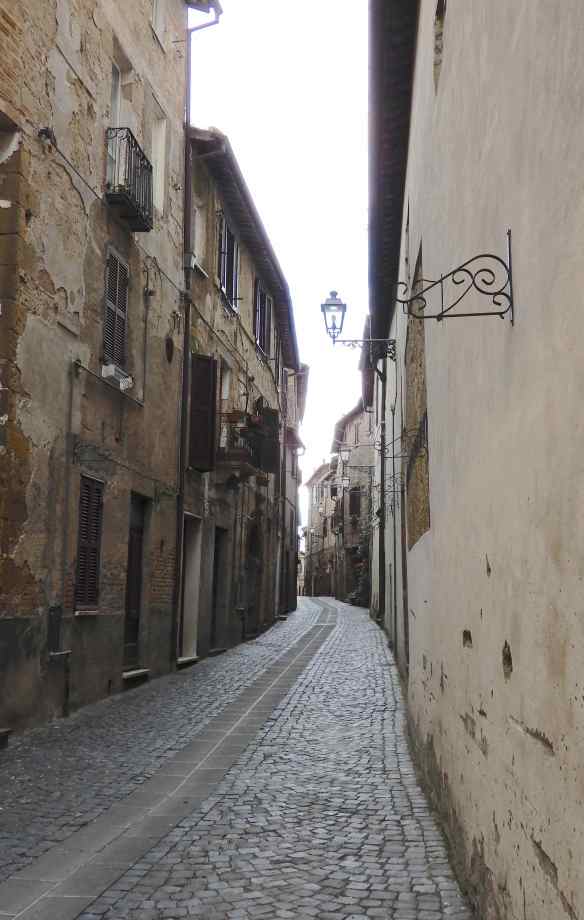
This is the best way to traverse the narrow, cobbled streets.

We continued on foot through the older part of town

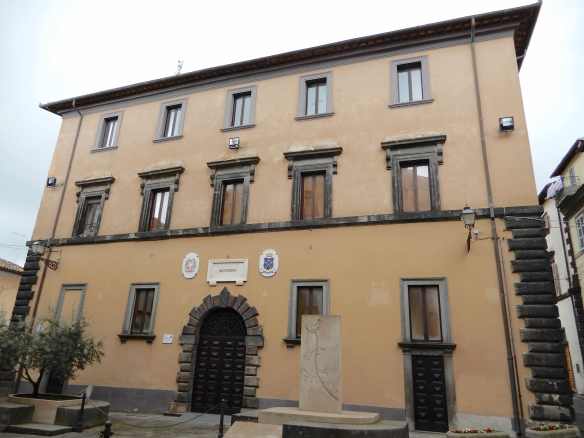
20.Town Hall

21.Grotte di Castro

before returning to the car for the short drive to Bolsena.

22.Grotte di Castro

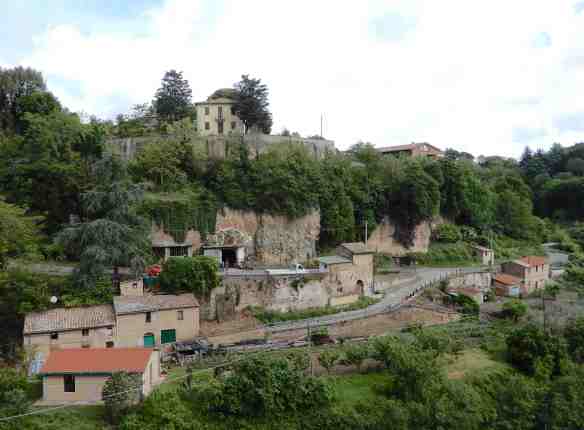
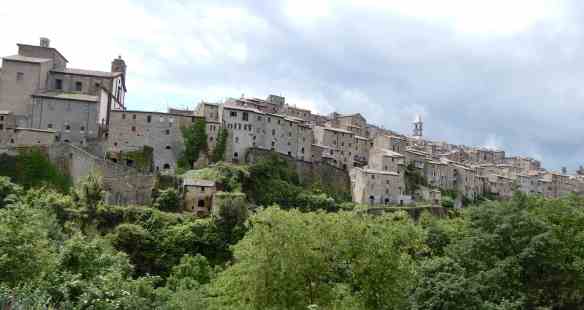
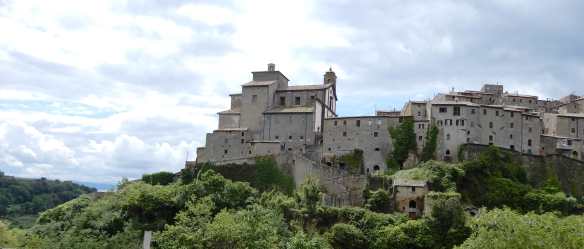
The vision of Grotte di Castro from the road as we left was stunning

23.Grotte di Castro24.Grotte di Castro25.Grotte di Castro26.Grotte di Castro27.Grotte di Castro

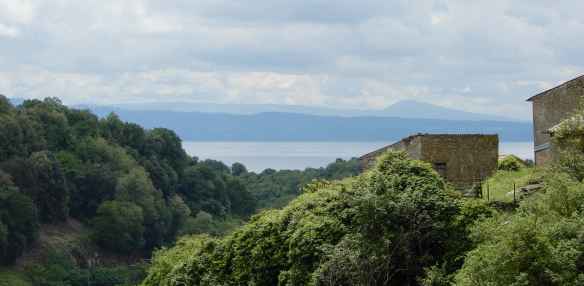
along with another enticing scene of Lake Bolsena.

28.Lake Bolsena

Liquid Light

While in Melbourne last year, we were fortunate to see the Liquid Light: 500 years of Venetian Glass exhibition at the NGV. The island of Murano in Venice has been home for hundreds of years to local artisans who have created the world famous Venetian glass. Evidence of glassmaking in Venice has been found as early as the 7th century but it wasn’t until the mid 15th century that Murano glassmaker Angelo Barovier produced a new glass formula, named cristallo, for its resemblance to rock crystal. The elaborate designs and vibrant colours have changed over the years but the exquisiteness is a constant.

1.installation

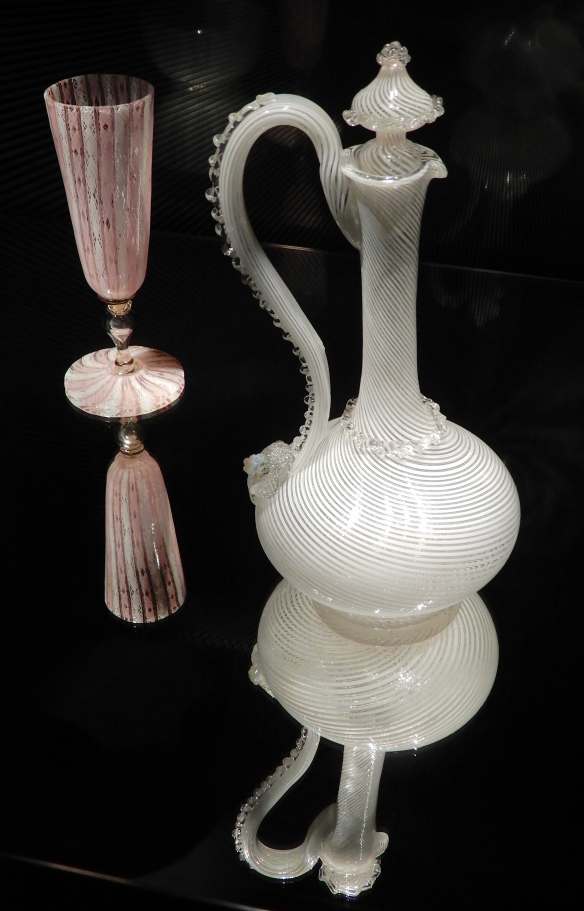
A new form of decoration called vetro a filigrana (filigree glass) emerged in the mid 16th century. Canes of white glass are embedded into the cristallo, the result is stunning.

4.wine glass & decanter 1880

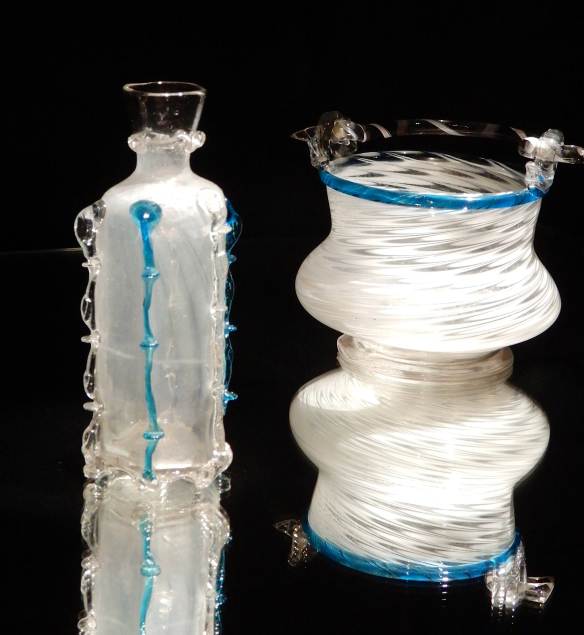
Another process that was developed around this time produced an opaque white glass, known as lattimo. It became popular in the 18th century when it was used to imitate porcelain.

5.bottle & bowl

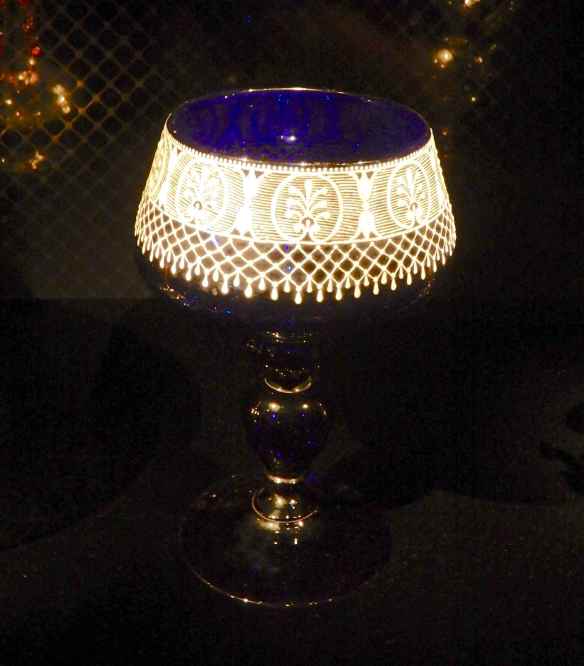
The earlier wine glasses weren’t a lot different to those we use today,

8.goblet 1880

except for the goblets with the ornately embellished stems. I would be very nervous drinking my wine from one of these.

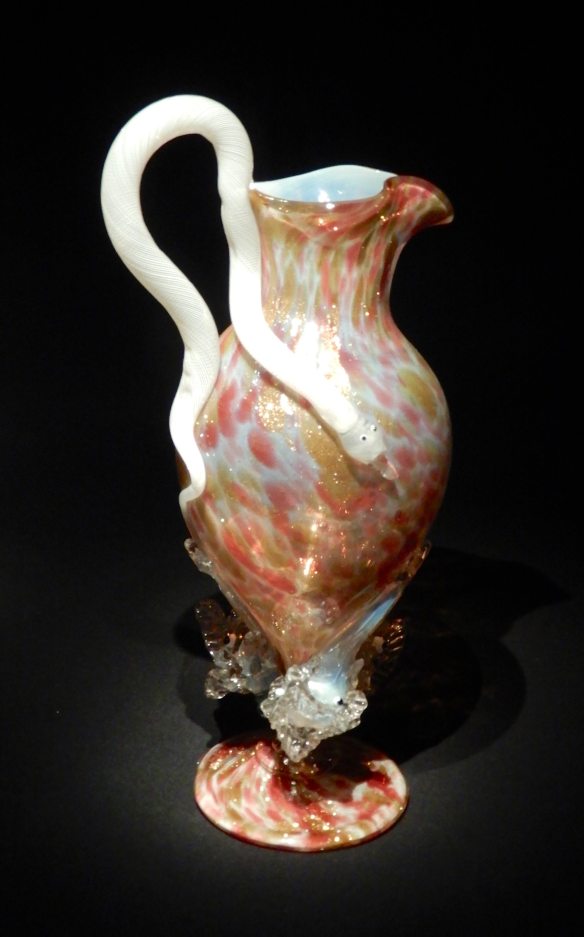
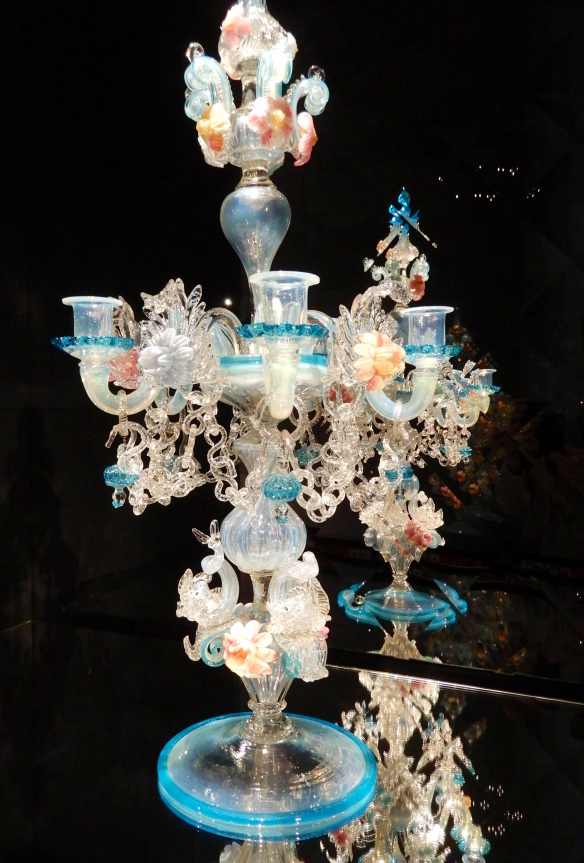
The Venetian glass industry suffered a decline in the 17th century in the wake of a financial crisis following the Italian plague of 1629-1631. A less expensive version of Venetian-style glass emerged and undercut the market for the authentic cristallo. Things went from bad to worse with the Napoleonic Wars and the industry all but collapsed by the mid 19th century. Fortunately, in 1866, The Venice and Murano Glass and Mosaic Company Ltd. was established and the glass making techniques of the 16th and 17th centuries were revived. It seemed that vases and jugs took on a simpler form

16.ewer 1880

although the same can’t be said for this candelabrum.

17.Candelabrum 1880

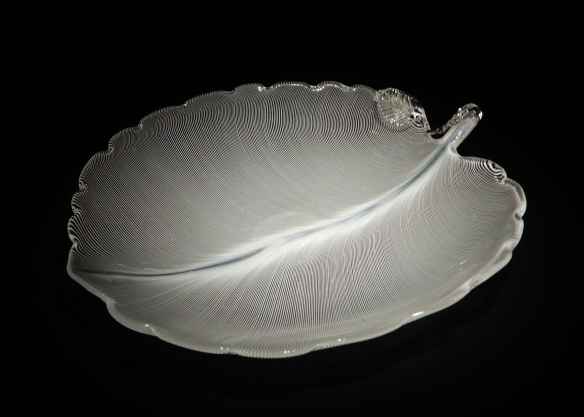
Moving into the 20th century, the same techniques were used to produce some beautiful, elegant pieces. Designed by Swedish Tyra Lundgren in 1938, this leaf dish is made with very fine vetro a fili decoration (white glass threads).

18.Venini & Co leaf dish 1950

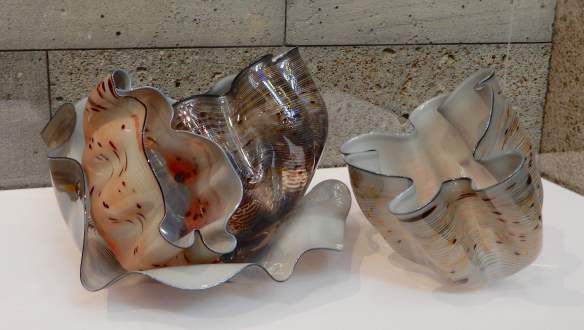
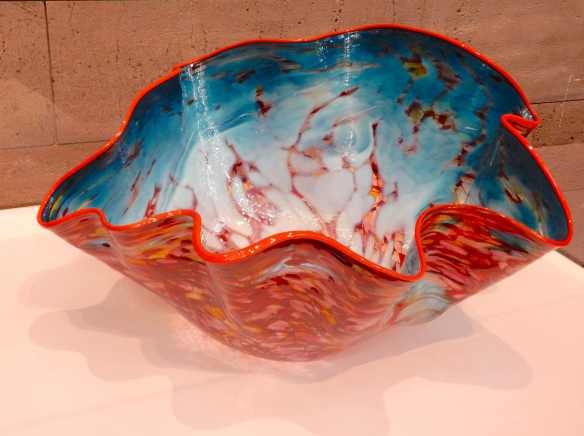
In the 1960s, Dale Chihuly was one of the first Americans to study glassmaking in Venice and in 1969, established the Pilchuk Glass School in Washington where he worked with Toots Zynsky and Richard Marquis. Chihuly began his Macchia series in the 1980s, named for the speckled effect of colours in the shell-like forms (macchia is Italian for spot).

19.Macchia series 198220.Macchia, Dale Chihuly 1993

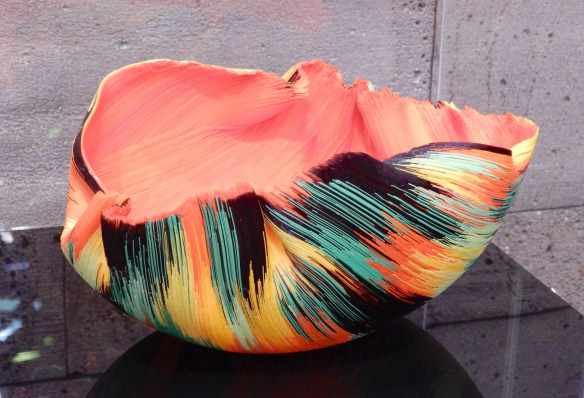
The vivid colours of the fine glass canes in this fascinating piece by Toots Zynsky were inspired by the plumage of exotic African birds.

21.Toots Zynsky 1990

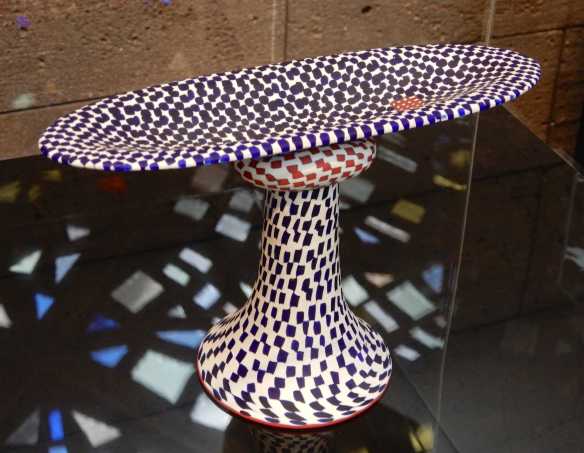
The name of the Marquiscarpa series is a combination of Richard’s surname and that of Carlo Scarpa to pay homage to the Italian architect. The footed platters have an intriguing mosaic appearance, created using glass canes sliced into cross sections.

22.Marquiscarpa #9, 1991

In the 21st century, the Venetian glass industry has to compete with the incursion of cheaper imports. Hopefully, ongoing collaborations between Muranese workshops and outside artists will secure its future.

avian interlopers

Our garden has no shortage of birdlife. The wrens bob around happily keeping the insect population down and the honeyeaters commingle with the bumble bees around the flowering plants. Sometimes, all is not so peaceful. In summer the swallows appear, desperately seeking out their ideal position for the new seasons arrivals. This year, they built a cosy nest under the eaves at the southwestern end of house, not anticipating the unseasonal gale force winds that ensued. Plan B was in the more sheltered northeastern corner but they must have found a Plan C because there was no evidence of them using the nest. I’m sure they will be back next summer.

3.swallow

Kookaburras are one of my favourites, they are so handsome and their distinctive calls that sound like anything from a chainsaw starting to a raucous belly laugh always make me smile.

4.kookaburra

Our relationship was tested when our goldfish started disappearing and one day, Michael observed the kookie culprit. We really didn’t want to put a net over the pond and, knowing kookaburras are territorial, installed a metal facsimile to guard the pond.

5.metalbird

It seemed to work for a while but, long story short, there is now a net over the pond and our new fish are safe.

6.pond

We often have visits from the yellow-tailed black cockatoos, usually for water from the stock troughs. I like their mournful, wailing call and they work together as a team with one keeping lookout while the others have a drink. They, too, have recently tested our hospitality. We have a beautiful banksia that has finally reached the perfect dimensions to disguise a rainwater tank – the very reason it was planted.

7.banksia

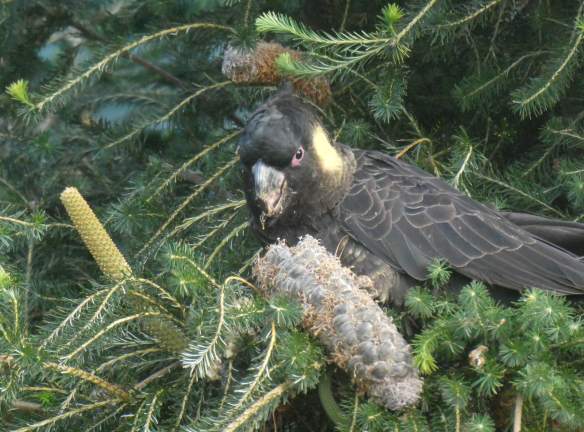
One afternoon, the cockatoos decided to bring the family and feast on the seed pods.

8.yellow tailed black cockatoo

About a dozen birds created havoc, breaking branchlets and flinging debris in all directions. They have returned numerous times, hopefully the tree will survive the onslaught.
11.yellow tailed black cockatoo

The lounge window has always attracted birdlife, the double-glazing provides a flawless reflection. Most of them just look at themselves, some will tap and flutter against the glass while others will stand there and call incessantly. Tasmania is the only place you will find the Yellow Wattlebird, Australia’s largest honeyeater. It has a range of distinctive calls, all of which are very loud and not of the soothing variety, more like a soprano cough. One recently became completely enamoured with his own reflection, I took a closer look.
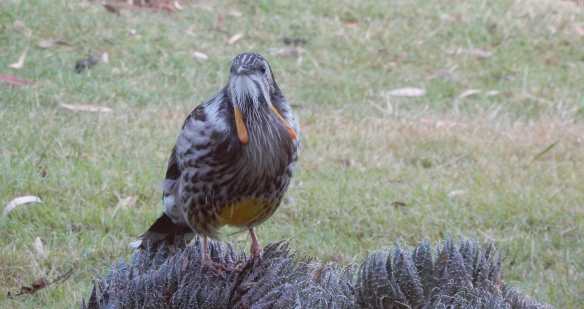
12.yellow wattlebird

He retreated to the safety of the nearby birdbath and scanned the area

before returning to his mirror. In the meantime, I had adjusted my perch for a bird’s eye view.

17.yellow wattlebird

Back to the bath for a quick dip

and he seemed satisfied with the result.
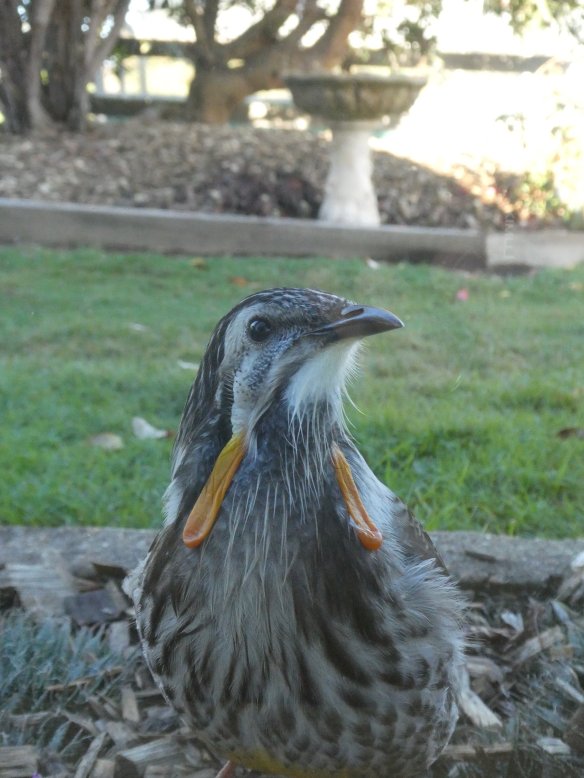
20.yellow wattlebird

It is lovely to have so many birds around. Despite my grumbling, I wouldn’t want it any other way.
Sky Tower

Arising 328 metres from the Auckland cityscape, Sky Tower is the tallest free-standing structure in the Southern Hemisphere. Not only is it a telecommunication tower, there are observation decks offering 360° views and the opportunity for thrill seekers to walk outside on a platform 192 metres above ground or, if you are so inclined, to jump off said platform.

1.Sky Tower

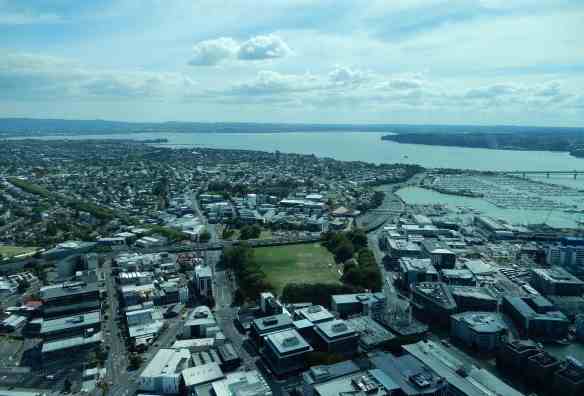
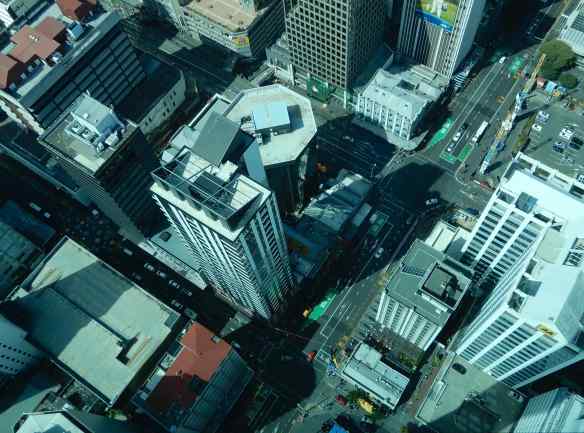
We took the more sedate approach and rode the glass bottomed elevator to level 51 to take in the panorama. We could see for miles beyond the suburb of Devonport and Rangitoto Island to the Hauraki Gulf.

2.Devonport & Rangitoto Island

Looking down Victoria Street to Albert Park, you can see a black cable running vertically outside, I’ll get to that.

3.Victoria Street to Albert Park

Another gorgeous view toward Bastion Point, a perfect day for a spot of sailing (and that cable again).

4.container terminal & Bastion Point

Looking over Auckland Domain with the hospital just right of centre and the War Memorial Museum on the far side of the gardens.

5.Auckland Domain

I will mention here that the tower is designed to sway up to one metre in excessively high winds and to withstand an 8.0 magnitude earthquake. All very reassuring. Puketutu Island is in the southerly distance with Eden Park, New Zealand’s largest sports stadium, centre of photo.

6.south to Puketutu Island

Back on the northern side, Westhaven Marina is home to over 2,000 boats, the biggest marina in the Southern Hemisphere. Auckland Harbour Bridge connects the city with the North Shore across Waitemata Harbour.

7.Waitemata Harbour8.Westhaven Marina & Auckland Harbour Bridge

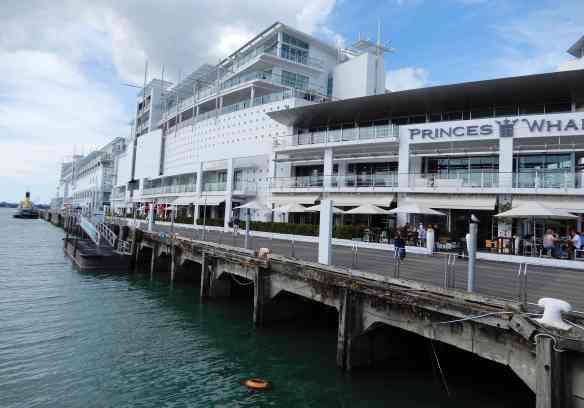
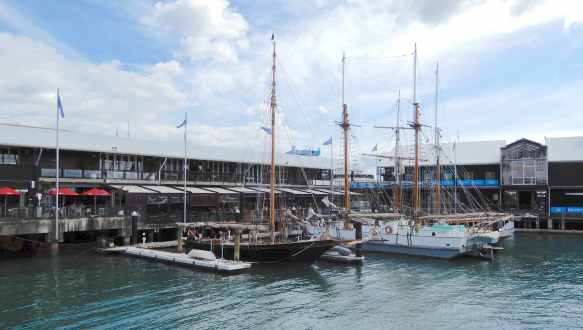
Coming full circle, Princes Wharf and the cruise ship terminals are below us.

9.Waitemata Harbour & Princes Wharf

Now, about that cable. As I mentioned, those who feel the need can experience SkyJump, a 192 metre vertical fall reaching 85km/h. The jump is controlled by guide cables so the jumper doesn’t collide with the tower in a gust of wind. Two young men, suitably attired for the plunge, accompanied us in the lift on the way up. A video screen shows live footage of the preparations to those on the observation deck and with an element of luck, I snapped one as he sped past the window.

10.Sky Jump

His descent was certainly rapid, presumably he was still conscious when he reached the ground.

11.Sky Jump

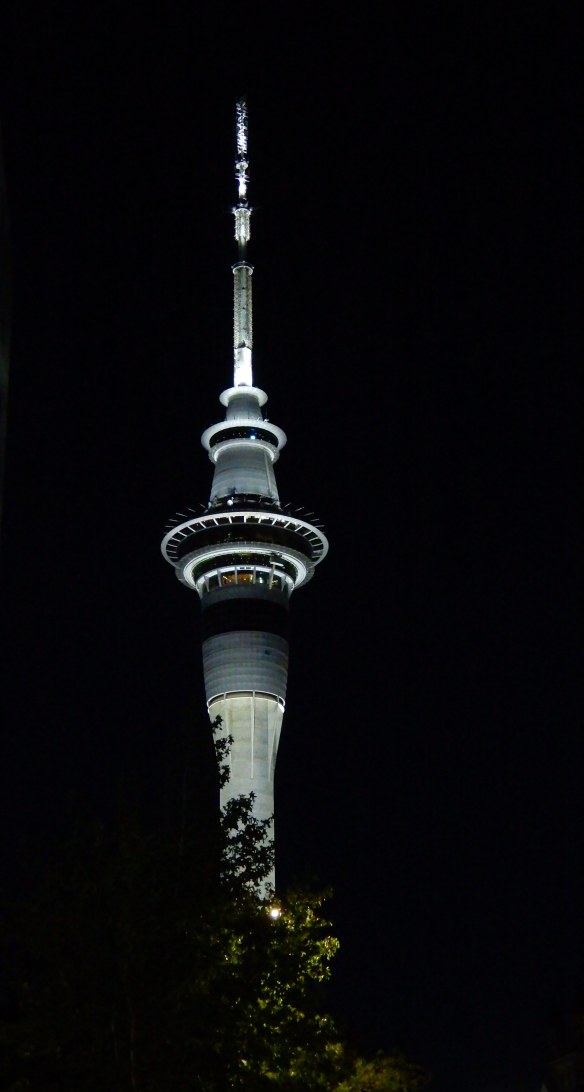
The tower is eerily majestic at night, lit with over a hundred LED lights that are sometimes coloured to show support for various celebrations and events.

12.Sky Tower at night

We had already made plans for dinner, otherwise the revolving restaurant on level 52 would have been a fitting end to another wonderful day in Auckland.

Orvieto

A scenic thirty minute drive from Montepozzo, the Etruscan hilltop town of Orvieto was the perfect destination for a day trip. Vertical tufa cliffs support the ancient buildings in spectacular fashion and the remains of original defensive walls are still standing.

1.Orvieto

After parking the car in Piazza Marconi, we walked a short distance to Piazza del Duomo, a huge square dominated by the magnificent Orvieto Cathedral. Not surprisingly, the construction lasted three centuries from the laying of the flagstone in November 1290.

2.Duomo di Orvieto

The design and style evolved from Romanesque to Gothic as it progressed, the side walls are a striking contrast of white travertine and grey basalt stone.

3.Duomo di Orvieto

The golden façade is stunning with intricate designs and detail and four bronze statues of the Angel, the Lion, the Eagle and the Ox symbolise the Evangelists. The three bronze doors, depicting mercies from the life of Christ, replaced the original wooden doors in 1970. Above the middle door, the sculpture of the Madonna and Child was created in 1347.

4.Duomo di Orvieto

13.Duomo di Orvieto12.Duomo di Orvieto

We didn’t go inside the cathedral, we had tickets for a tour underground instead but that’s another story. Orvieto has a strong papal history with five popes taking refuge there during the 13th century. Palazzo Soliano was built in 1297 and once a papal residence, is now home to the Museo Emilio Greco, dedicated to the artist who designed the cathedral doors and showing 100 of his works.
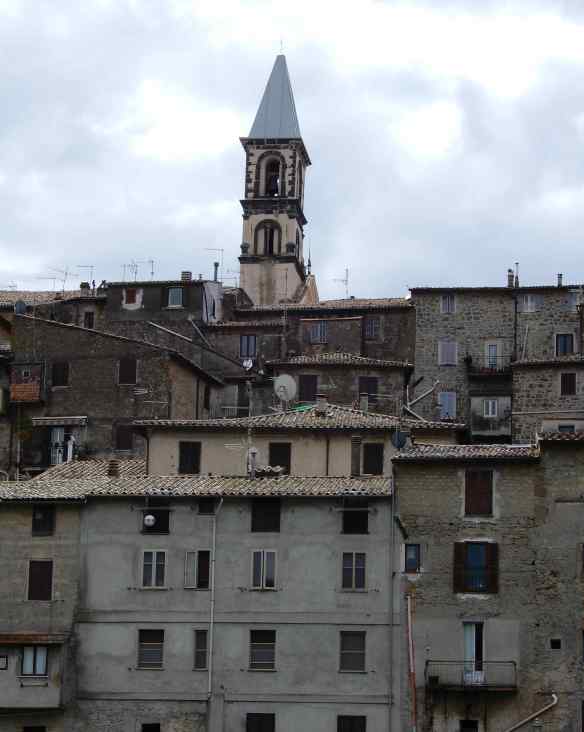
14.Palazzo Soliano

The small Church of San Giacomo all’Ospedale is now used as a venue for exhibitions. The building behind the church was a hospice for poor people and pilgrims established in 1187.

15.Chiesa di San Giacomo Maggiore

On the opposite side of the piazza are a row of houses where priests used to reside

16.Piazza del Duomo

and a fascinating clock tower. Built as a time clock for the cathedral construction site, it was originally a sundial in 1347 because there was no mechanical clock available. The bronze automaton on top, the earliest documented clock in Europe, was added two years later. The figure swings its body and strikes the bell with its hammer on the hour to let the workers know when it is time to knock off. The medieval word for a construction site was muriccio, hence it is now known as Maurizio Tower.

17.Maurizio Tower

We left the piazza and wandered along Via del Duomo past vibrant shops and intriguing alleys.

23.vicolo

27.vicolo31.Via del Duomo

After quenching our thirst

we ventured on. Torre del Moro stands 47 metres high exactly in the city centre. Built by the Della Terza family at the end of the 13th century, we would certainly have climbed the 250 steps for a 360° view had we known.

35.Torre del Moro

The Church of Sant’Andrea on the Piazza della Repubblica dates back to the 12th century and has a unique dodecagonal bell tower.

Adjacent to the church, the Town Hall is from the same era but has been enlarged and restored up until 1600.

38.Palazzo Comunale

We walked through the central arch onto Via Garibaldi, it seems no road is too narrow for the local buses.

On the other side of the arch

42.rear of Palazzo Comunale

we couldn’t resist lunch at Ristorante Il Cocco and the opportunity to sample one of Orvieto’s specialties, pigeon.

43.Ristorante Il Cocco

Deliciously sated, we continued along Via Garibaldi

47.Via Garibaldi

and wended our way down narrow, stone streets

48.Orvieto

to the ancient church of San Giovanni and the piazza of the same name.

49.Chiesa di San Giovanni50.Piazza San Giovanni

Just past the church, we followed the Vicolo Malcorini,

51.Vicolo Malcorini

rewarded with stunning vistas to the left

57.Orvieto58.Orvieto

and a tumble of homes to the right.

59.Medieval Quarter

The Medieval Quarter is a maze of steep, narrow streets and houses seem to defy gravity atop rocky cliffs.

61.Medieval Quarter

65.Medieval Quarter

We explored further with the feeling we had stepped back in time, having both fallen in love with Orvieto.