Villa Reale di Marlia

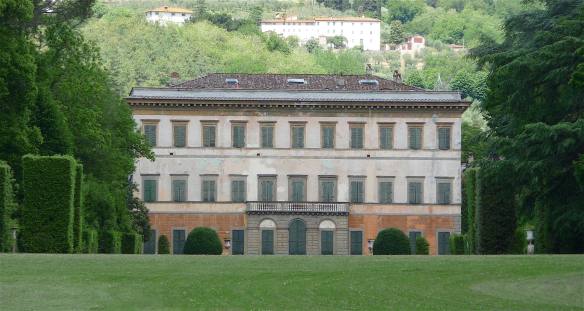
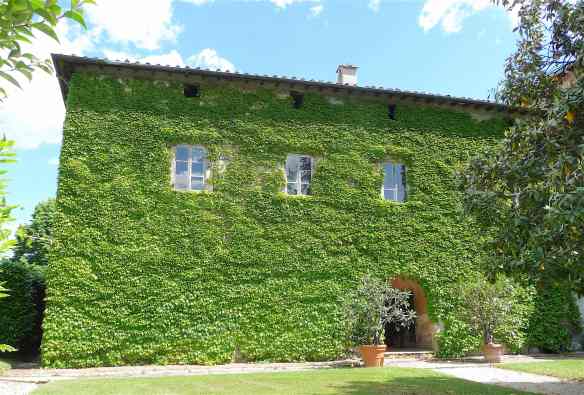
After a morning strolling around the grounds of Villa Grabeau, followed by another delicious Tuscan lunch, we found our way to Villa Reale.

1-entrance-copy

In 1806, the sister of Napoleon, Elisa Bonaparte Baciocchi, purchased the 16th century villa for her country residence.

2-villa-reale-di-marlia3-villa-reale-di-marlia

She also acquired other neighbouring properties, including Villa del Vescovo.

4-villa-del-vescovo5-villa-del-vescovo

The sweeping lawns and lake were breathtaking.

As we walked around the villa

9-villa-del-vescovo13-villa-del-vescovo

we discovered the Italian Renaissance garden

10-italian-garden

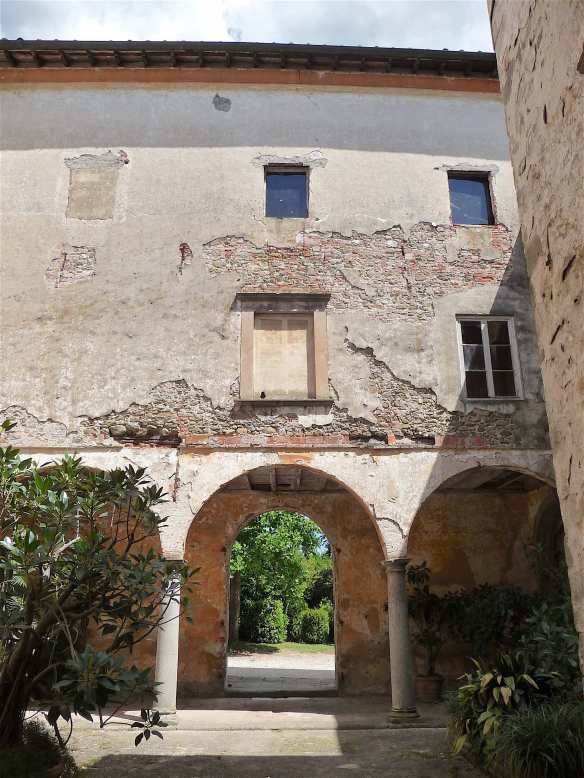
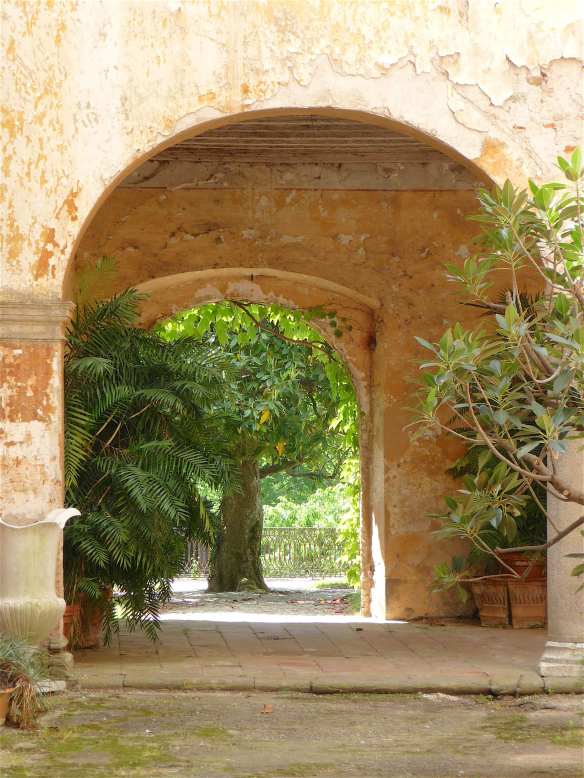
and the abandoned inner courtyard.

14-inner-courtyard15-inner-courtyard

There were some surprising smaller buildings like the summer house

and chapel.

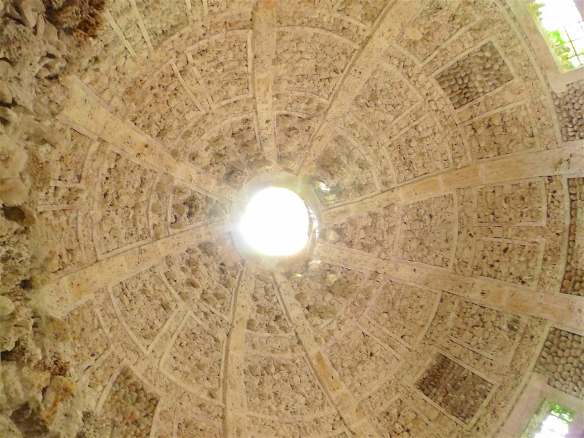
The nymphaeum (sacred place of the nymphs), is dedicated to the god Pan.

Built around 1580, the circular grotto has a domed roof with a single opening at the top.

25-grotta-del-dio-pan

Nestling within niches in the interior limestone wall are the statue of Pan

26-grotta-del-dio-pan

along with disturbing sea figures and gargoyles.

The art deco influenced Spanish Garden was created in 1924 when the park underwent restoration.

34-giardino-spagnolo

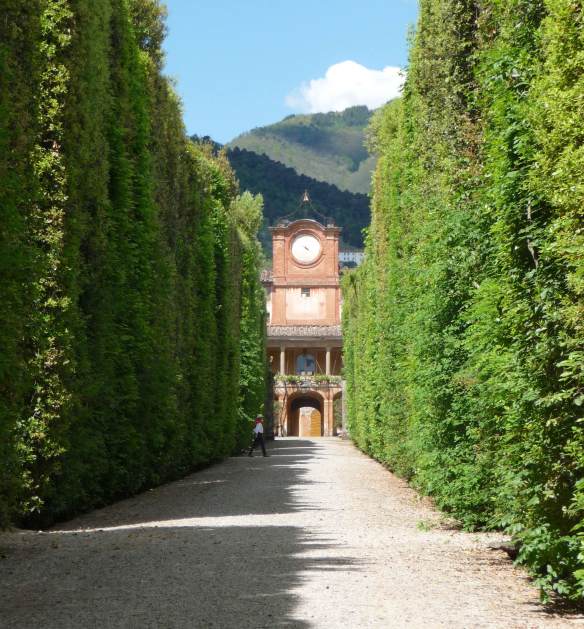
The Palazzina dell’Orologio waited majestically at the end of the avenue

40-palazzina-dellorologio

as we made our way to the 17th century Lemon Garden where more than two hundred citrus trees surround four magnificent magnolias

41-giardino-dei-limoni

At one end, the fountain of the Three Graces is set in a semicircle of rustic mosaics.

42-giardino-dei-limoni

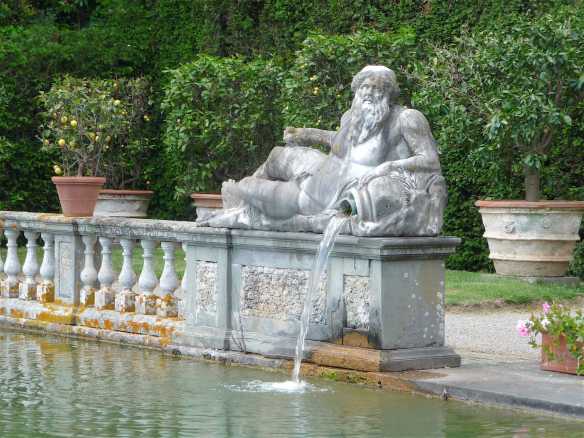
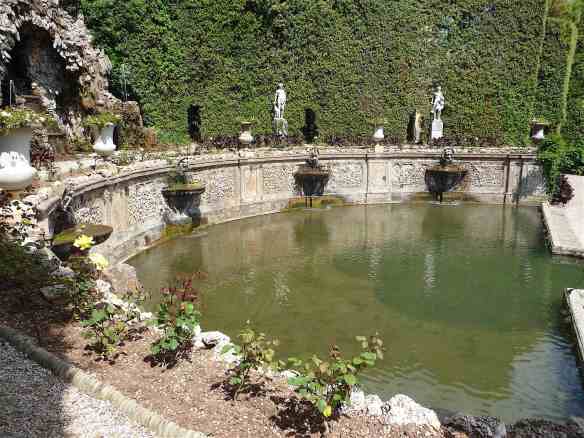
At the opposite end is a large fishpond bordered by a marble balustrade.

43-giardino-dei-limoni44-giardino-dei-limoni

Two statues of giants, representing the Arno and Serchio rivers, spill urns into the pond

45-giardino-dei-limoni

while Leda and the Swan keep watch from their niche.

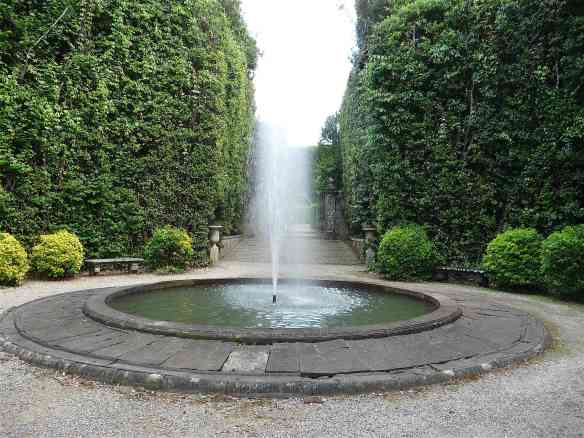
We continued on to the atrium of the Green Theatre with it’s beautiful fountain

49-atrio-del-teatro-della-verzura

and statues.

50-atrio-del-teatro-della-verzura

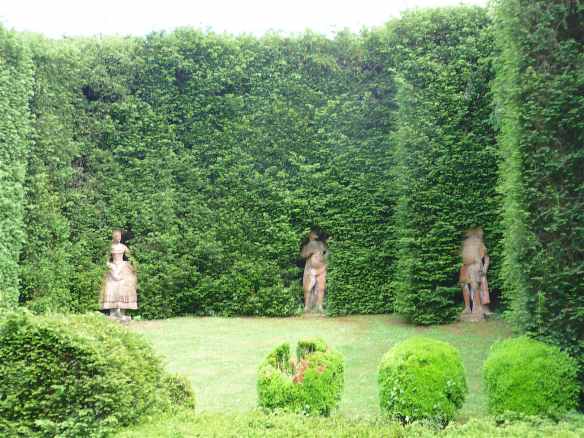
A natural theatre formed by yew hedges, the Teatro di Verzura was created in 1652. The semi-circular stage has a series of wings 5.5m high and the spherical bushes at the front imitate footlights.

51-teatro-di-verzura

Surrounding the grass stage are terracotta statues of Columbine, Pantaloon and Punchinello.

After a closer look at the 17th century Clock Palace,

54-palazzini-dellorologio55-palazzini-dellorologio

we descended the steps

56-teatro-dacqua

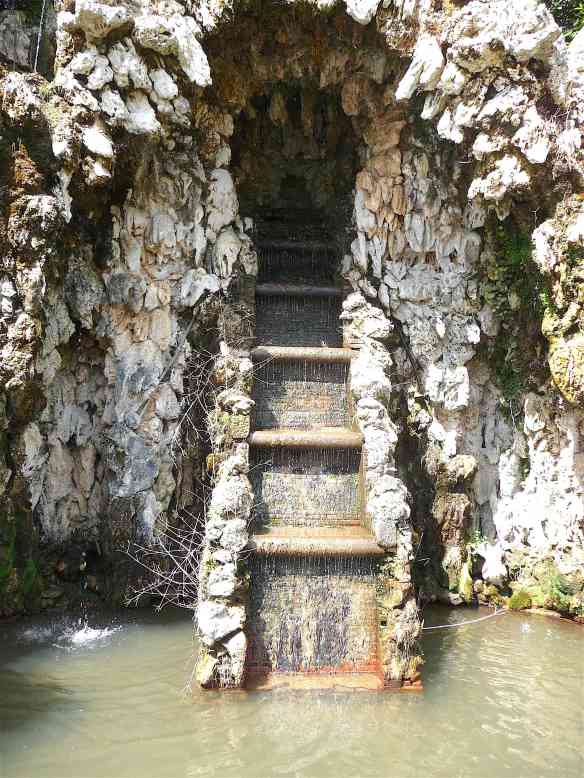
to the spectacular Teatro d’Acqua. Water pours from the mouths of five masks around the semi-circular pool,

57-teatro-dacqua58-teatro-dacqua

the Grotto fountain is a marvellous centrepiece.

59-teatro-dacqua

Statues of Jupiter, Saturn, Adonis and Pomona

overlook the pool and immaculate gardens beyond.

63-teatro-dacqua64-teatro-dacqua

In 2015 the Villa Reale Di Marlia was sold to a couple from Switzerland. The 18,000sq m building on 19ha of land is going to be turned in a luxury hotel.

Cilgerran Castle

There are many medieval castles throughout Britain but Cilgerran Castle is unusual in that it was built with one side directly onto a cliff face.

1-cilgerran-castle2-cilgerran-castle

The existing ruin dates back to the 13th century, although there was first mention of a structure on this site as early as 1165.

3-cilgerran-castle

Having withstood many battles and changes of ownership, the castle was left to ruin in 1400.

4-cilgerran-castle5-cilgerran-castle

The castle is in a stunning position high above the Teifi Gorge.

6-cilgerran-castle

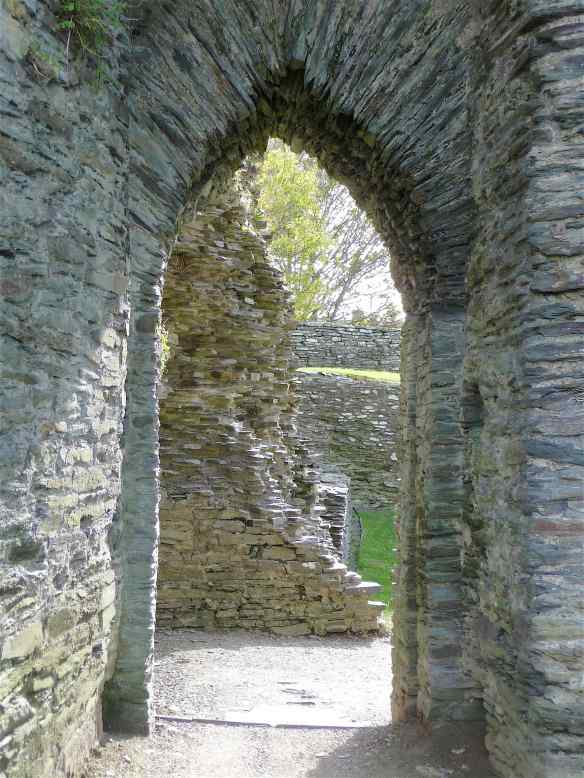
We spent some time wandering around, admiring the workmanship of a past age.

9-cilgerran-castle

14-cilgerran-castle

We could almost hear the clamour of chain mail echoing from the stairwell.

15-cilgerran-castle

The views over the Pembrokeshire countryside were spectacular.

16-pembrokeshire

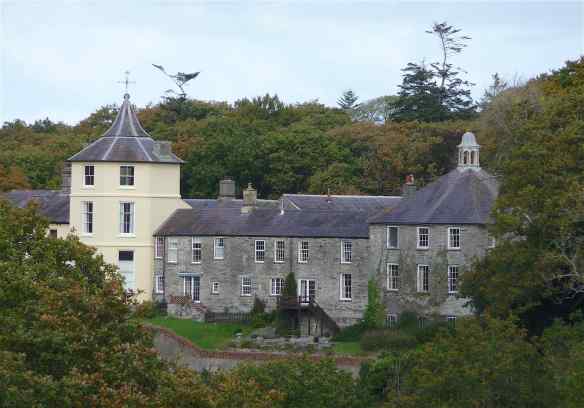
Across the gorge, Coedmore Mansion rested peacefully within the woodland.

17-coedmore-mansion

The gorgeous early 19th century country house was, sadly, divided into flats in 1990.

Standley Chasm

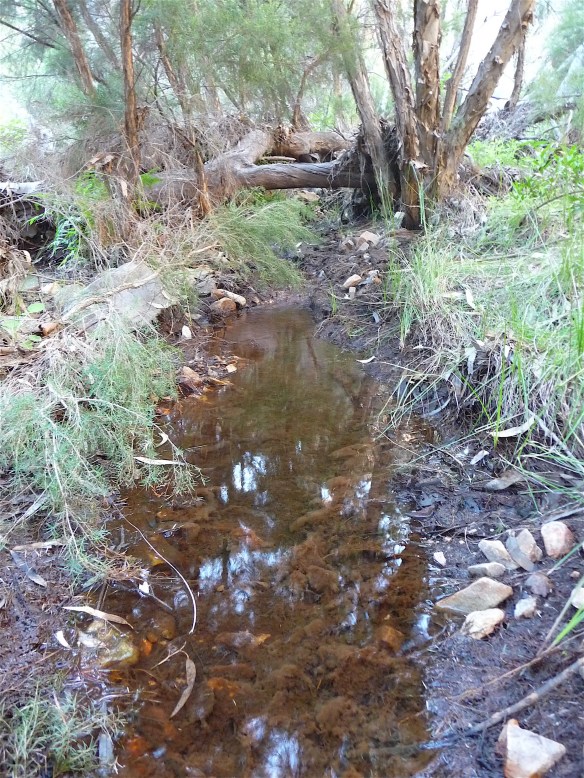
A short drive from Simpsons Gap, in the West MacDonnell Ranges, is Angkerle Atwatye, as it is known by the local Aborigines. The European name was given in honour of the first school teacher in Alice Springs in 1914, Mrs. Ida Standley. The walking track follows a creek

1-walk

dotted with spring fed pools.

2-stream

Ferns and cycad palms are a reminder that this arid region was once lush

3-cycad

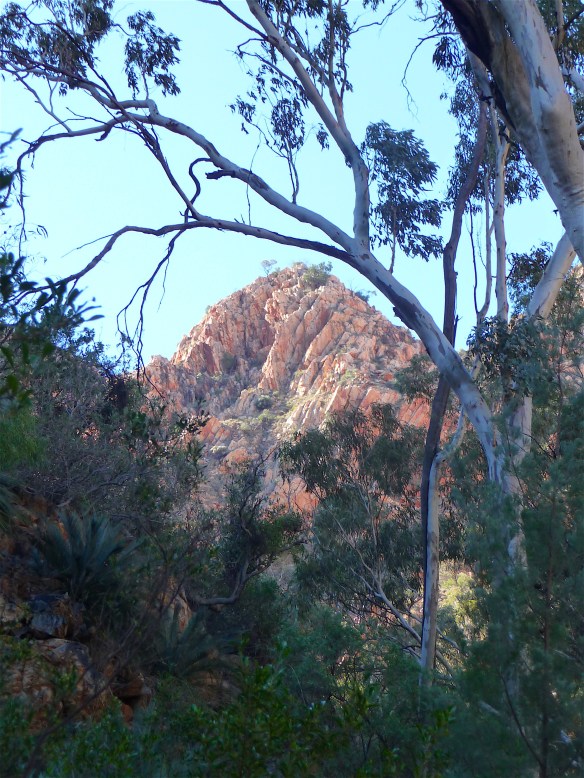
and the gum trees thrive in the moist gully floor.

4-cycad-gums

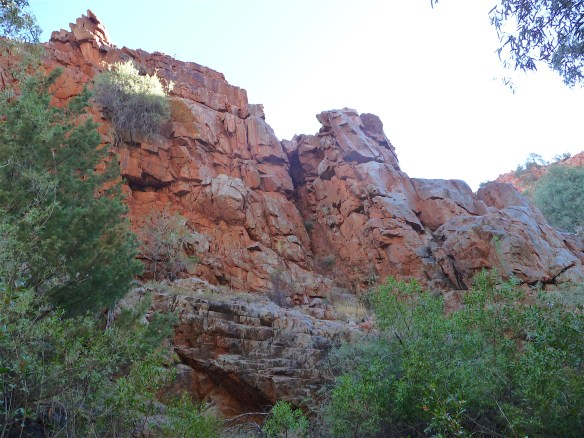
The red quartzite cliffs are magnificent,

5-cliffs6-cliffs7-cliffs

formed over millions of years as flood waters have cut their way through the Chewings Range.

8-cliffs

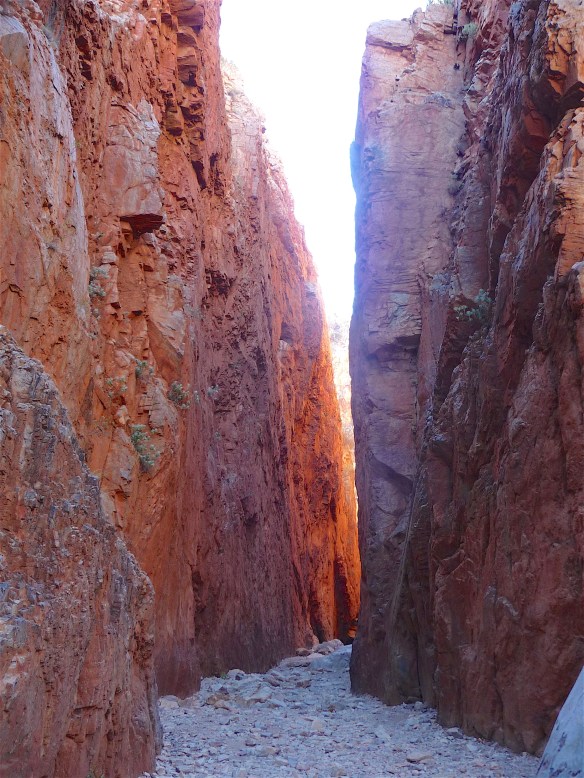
We finally reached the spectacle that is Standley Chasm,

9-chasm

the 80 metre high walls guarding the natural alleyway.

11-chasm

As we moved closer, the majesty beyond was revealed.

Benabbio church

The Benabbio church, Chiesa di Santa Maria Assunta, was first opened in the year 1336.

2-bell-tower

The beautiful stone buildings grace the piazza of the same name.

8-piazza

There is a monument commemorating a thousand years from 983 to 1983.

10-monument

Behind the church is a former chapel which has been converted to a museum

11-museum

housing religious objects hundreds of years old. One evening before dinner, we were privileged to have a guided tour of the museum, not normally open to the public.

This statue was carved out of a hollow tree trunk in the 13th century

16-statue

and the back of this one is an old wooden door.

These two wooden statues, representing the annunciation, were carved in 1394 and are in surprisingly good condition.

19-the-annunciation

Some of the expressions on the faces within this altar were quite disturbing.

20-altar

I like the floor tiles with reference to brothers and sisters.

The church was beautiful with the late afternoon sun creating a peaceful ambience.

28-chiesa29-chiesa

The carved and painted triptych hanging over the altar was made in 1469.

30-chiesa

The church is floodlit at night, a tradition in Italy even out in the countryside and mountains.

Talley Abbey

As we continued our exploration of Wales, we travelled through the stunning countryside

1-brecon-beacons

of the Brecon Beacons.

3-brecon-beacons2-brecon-beacons

The view from this bridge in the morning light was gorgeous.

4-brecon-beacons5-brecon-beacons6-brecon-beacons7-brecon-beacons

We even found our dream renovation project.

8-brecon-beacons

Llwyn-On reservoir is the largest of the three reservoirs in the Taf Farw Valley. Completed in 1926, the 150 acre reservoir is a popular fishing spot.
9-llwyn-0n-reservoir

Our route took us past Talley Abbey, a ruined former monastery in the village of Talley.

10-talley-abbey11-talley-abbey

Founded in 1184 by Lord Rhys for the monks of the Premonstratensian order (White Canons), the abbey was dissolved by Henry VIII.

12-talley-abbey13-talley-abbey14-talley-abbey

The villagers used the stone to build the present village and the Parish church of St. Michael, next door to the ruins.

15-talley-parish-church

The surrounding countryside was beautiful.

16-talley-abbey17-talley-abbey

The nearby lakes were used for fish farming to support the monks.

18-talley-abbey19-talley-abbey

There was such an air of tranquility, I wouldn’t mind living in Talley.