arboreal abscission

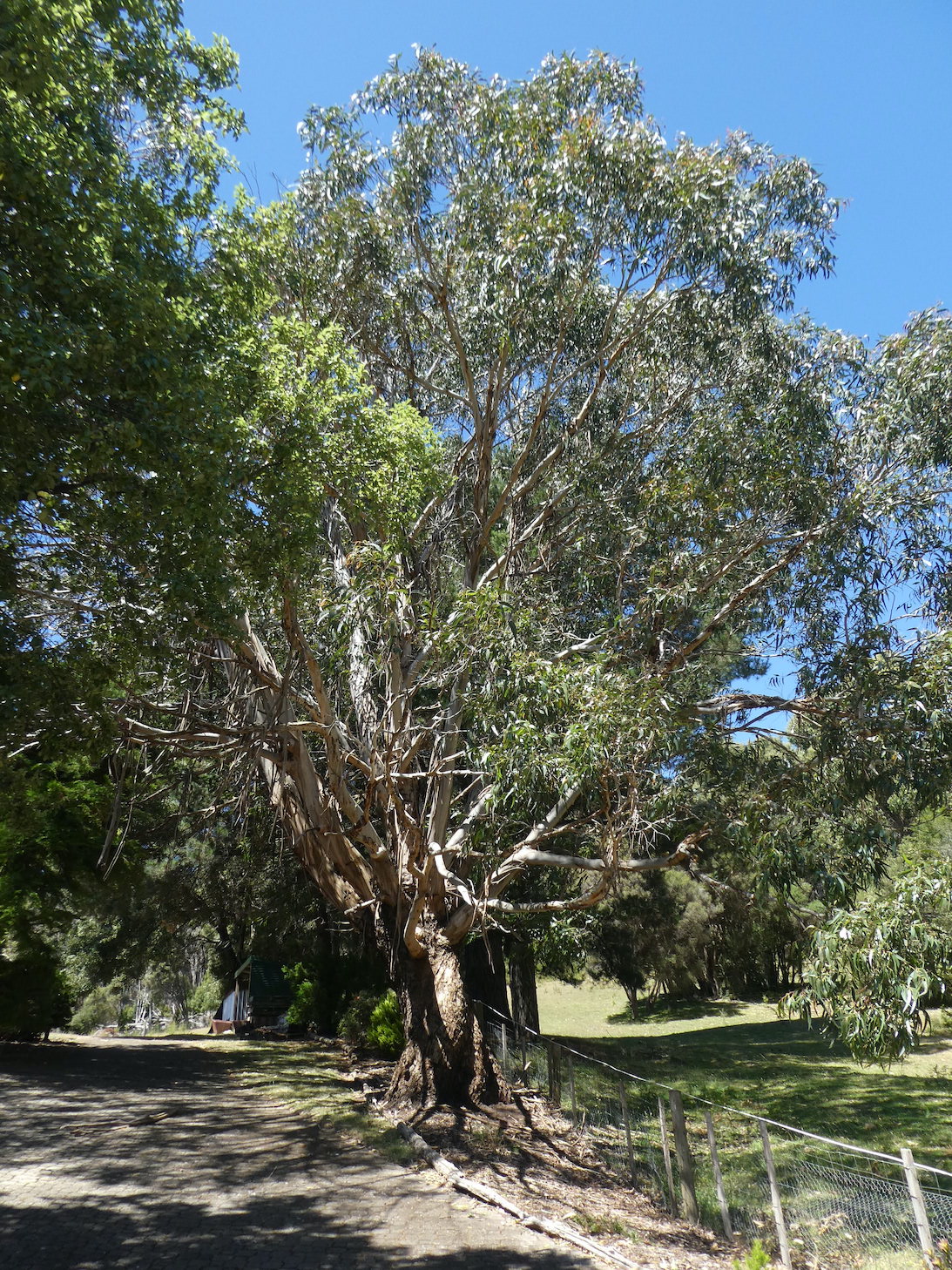
Being surrounded by forest makes for a wonderful peaceful setting, with verdant vistas and myriad birdlife. However, having these larger tree species within the garden can pose a bit of a problem. Like any living being, they have a life span and some had been shedding bark and limbs at an increasing rate with the potential to damage outbuildings. We called in the Tree Doctor to diagnose diseased, dying and dangerous specimens. A huge Eucalypt was deemed to be failing (I don’t miss cleaning up the frequent sheets of bark on the driveway).
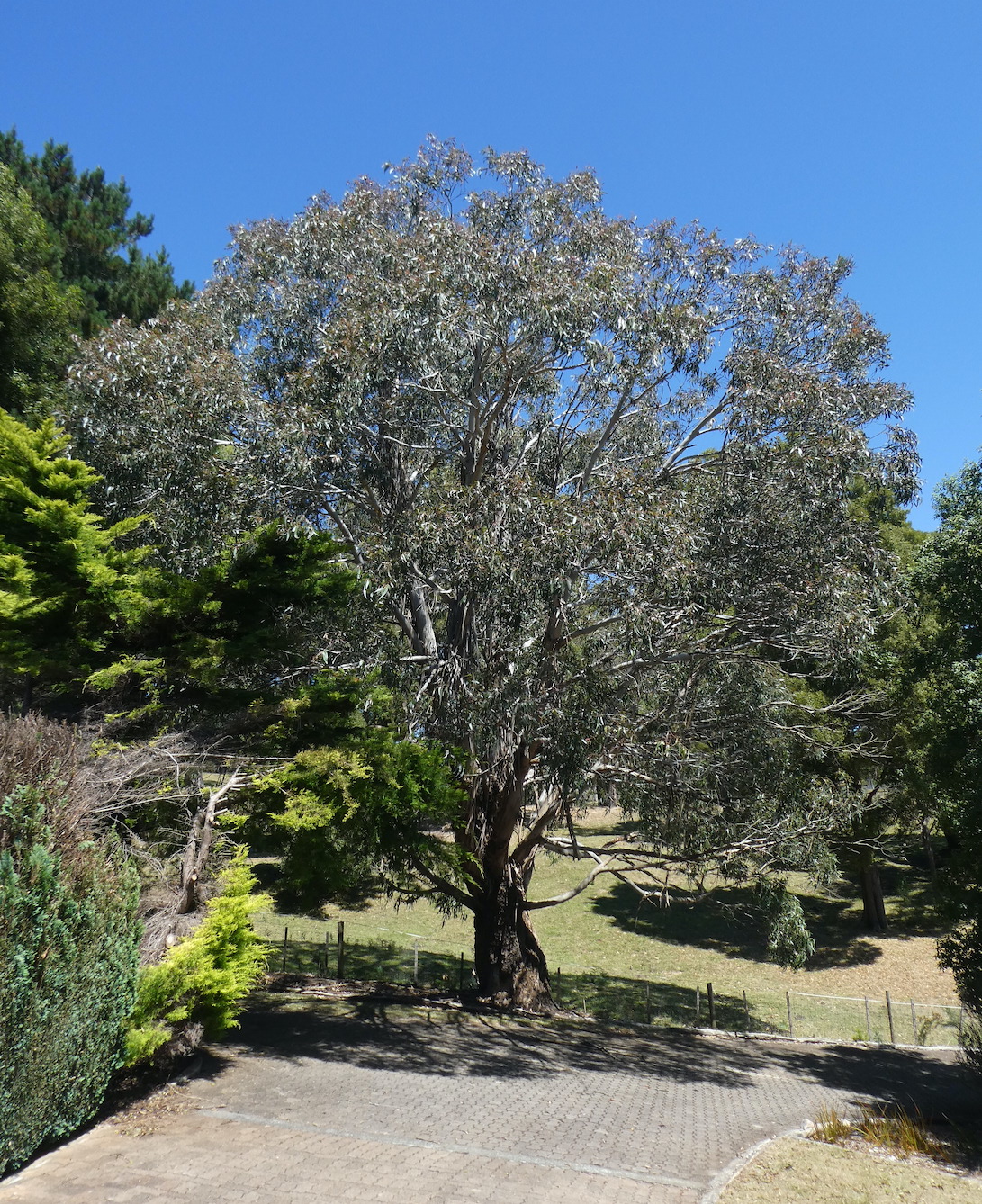
A second Eucalypt, with a distinct lean away from the prevailing westerlies, was displaying the same symptoms and awarded the same fate.
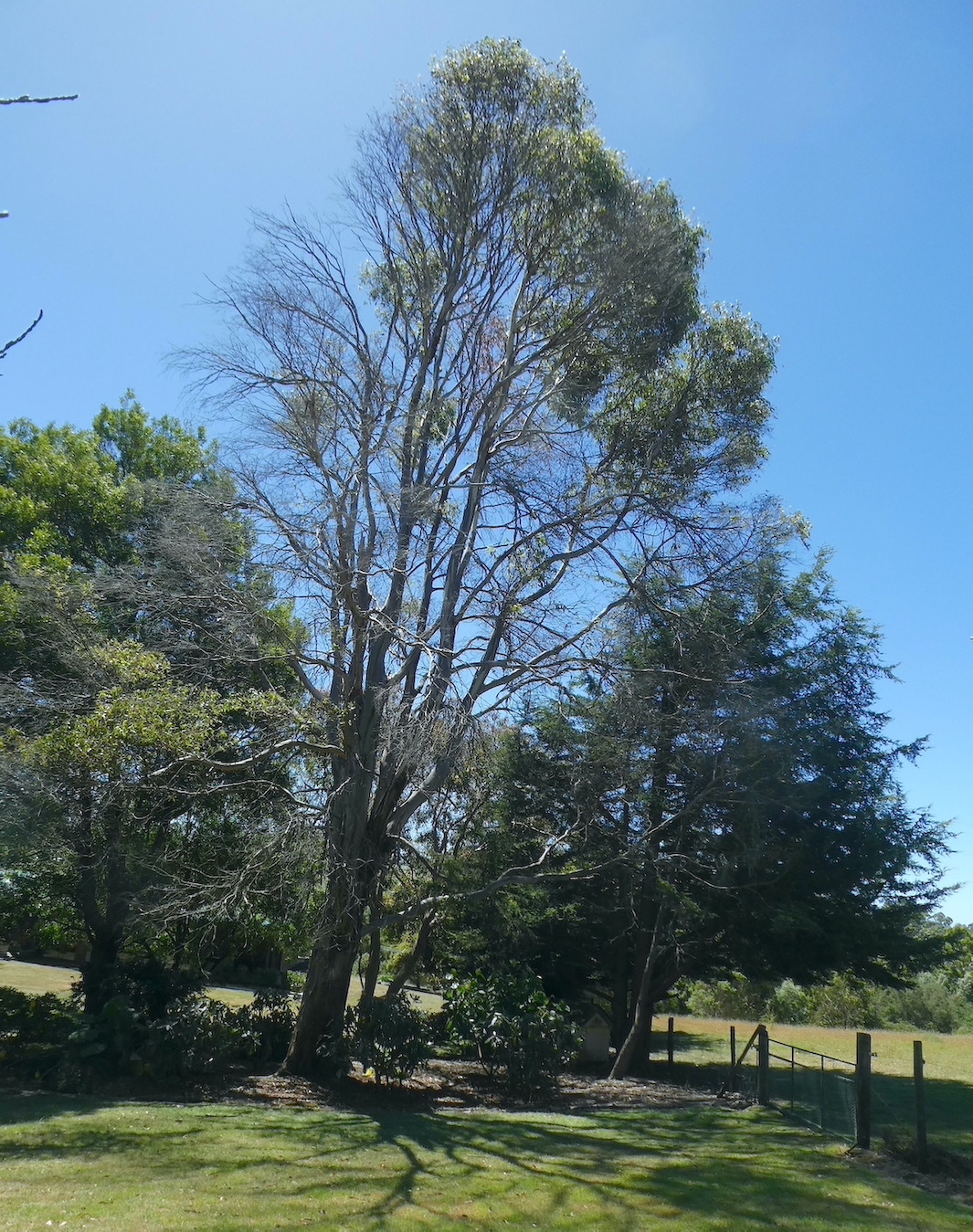
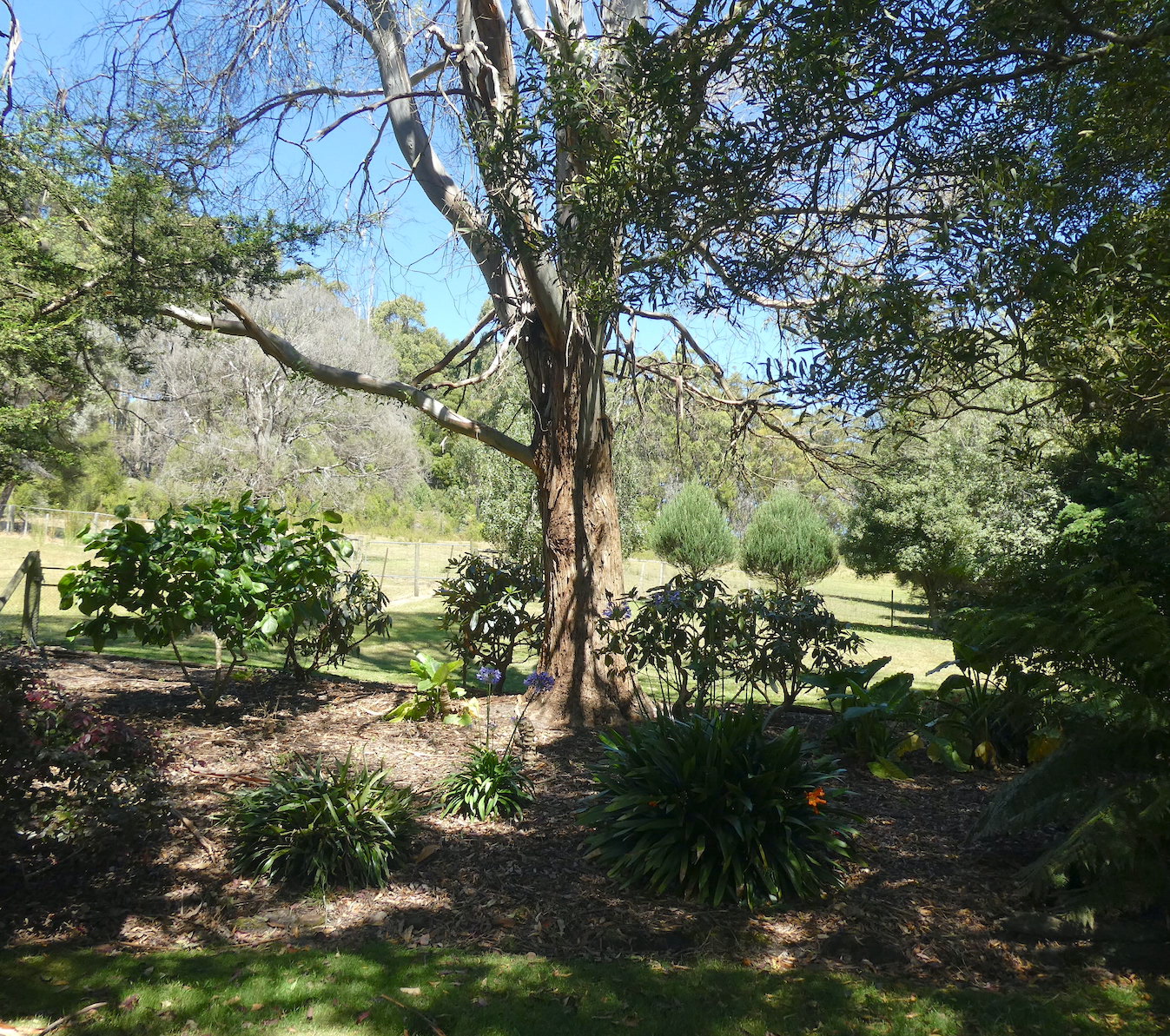
A healthy Tasmanian blackwood just needed an amputation of a rather large limb overhanging the studio
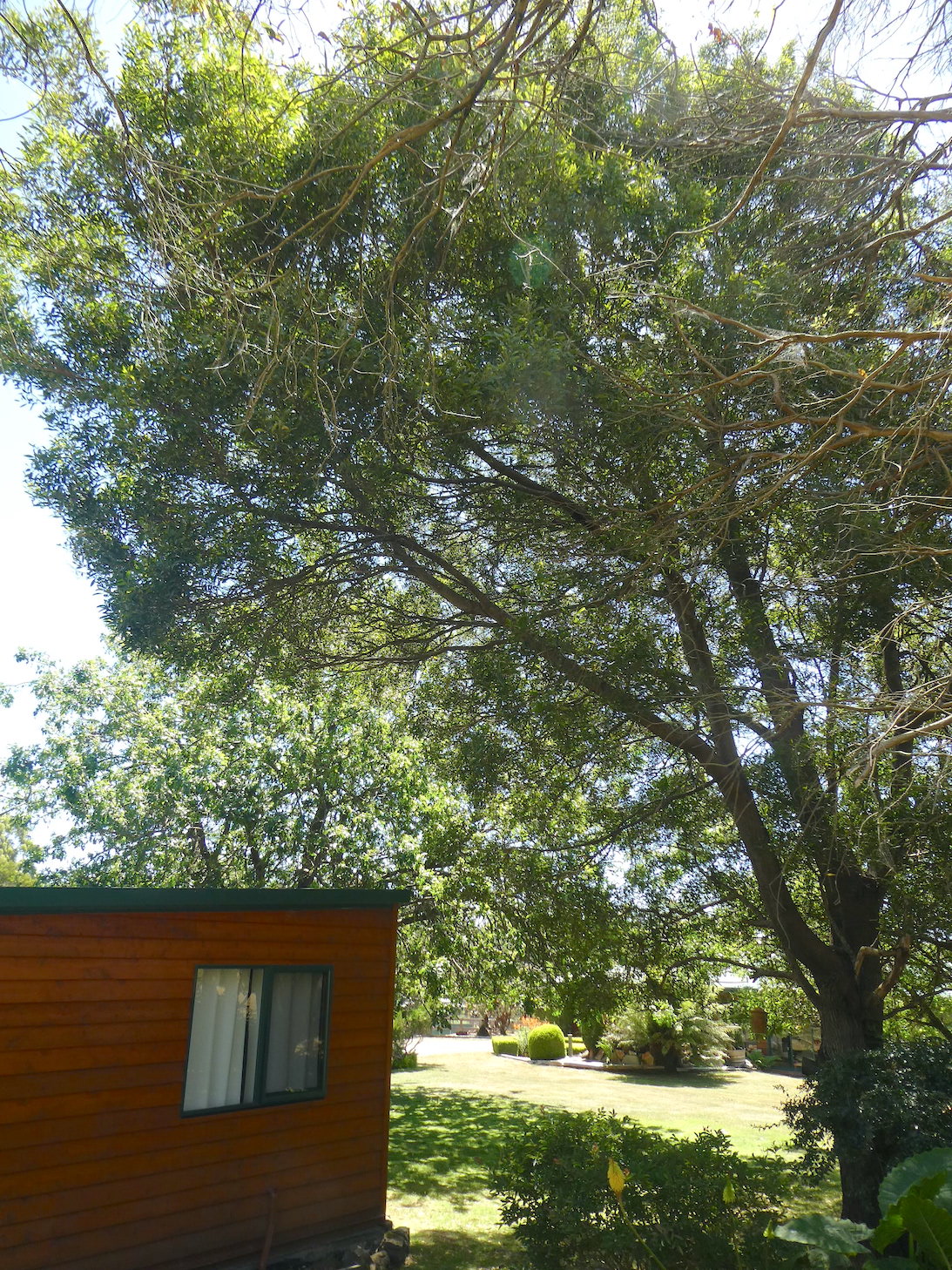
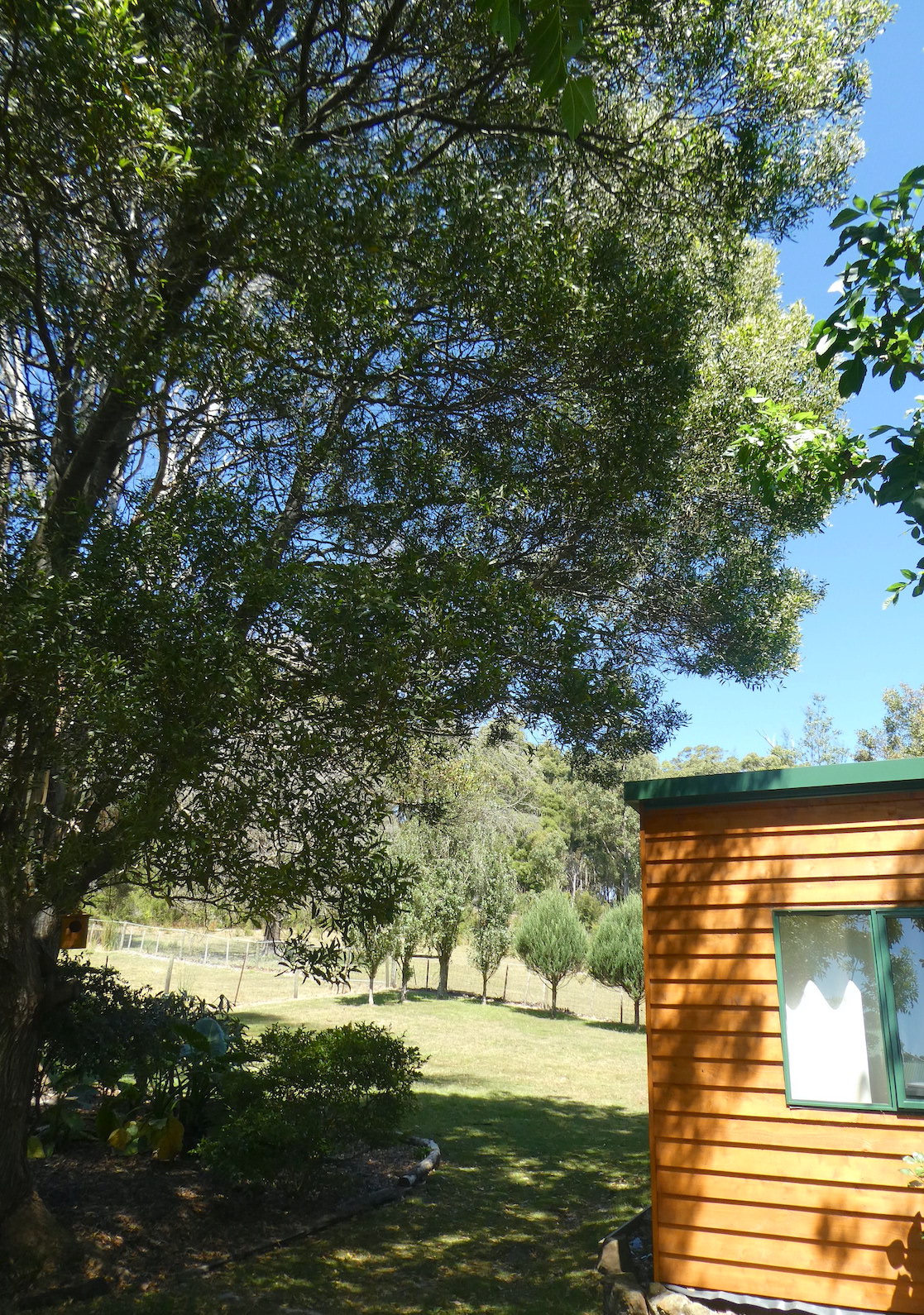
but another blackwood we thought in need of a trim was actually slowly dying.

A few weeks later the team arrived and wasted no time tackling the first blackwood.

The smaller branches were picked up and fed into the chipper

which was then emptied into an ever increasing mulch pile.
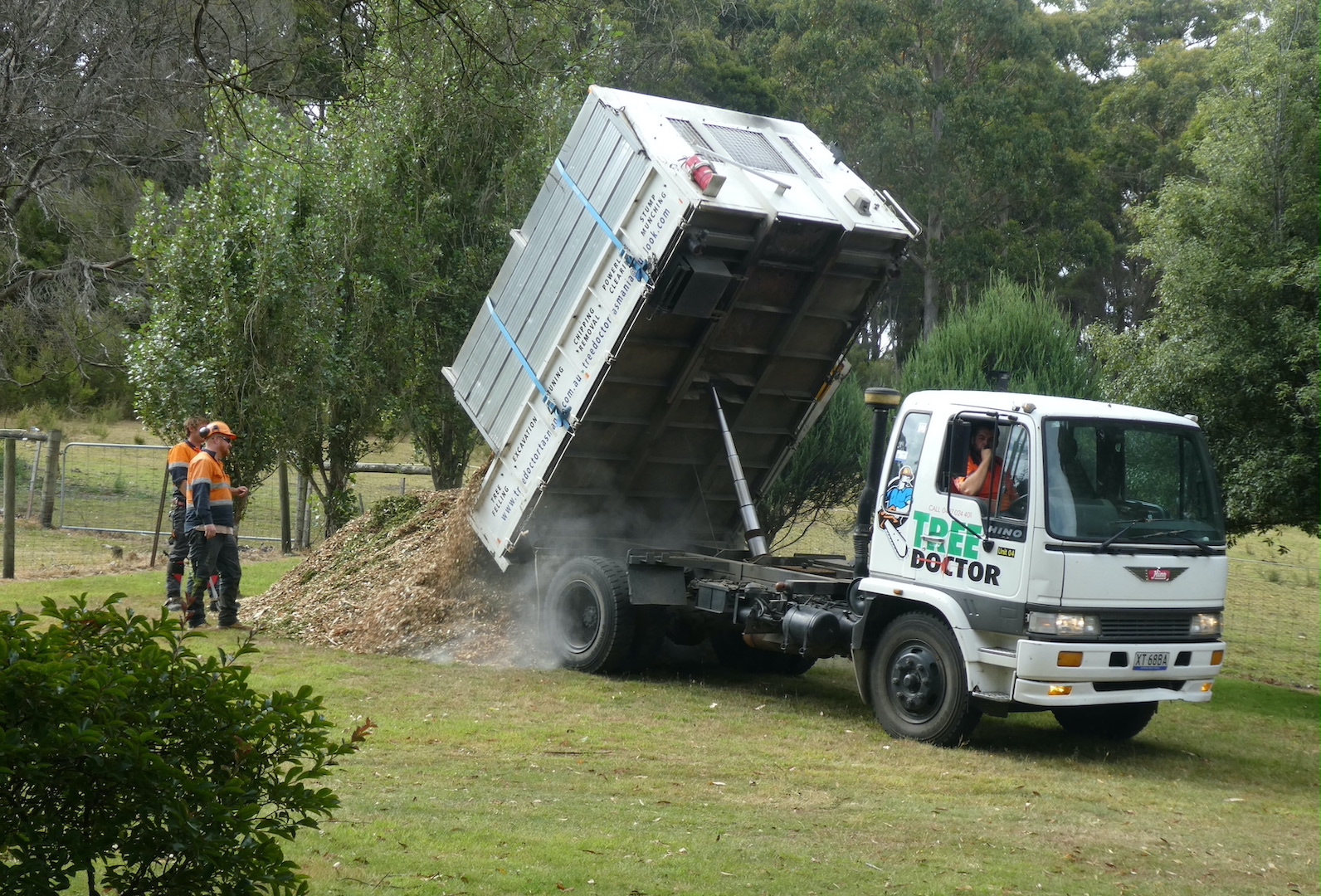
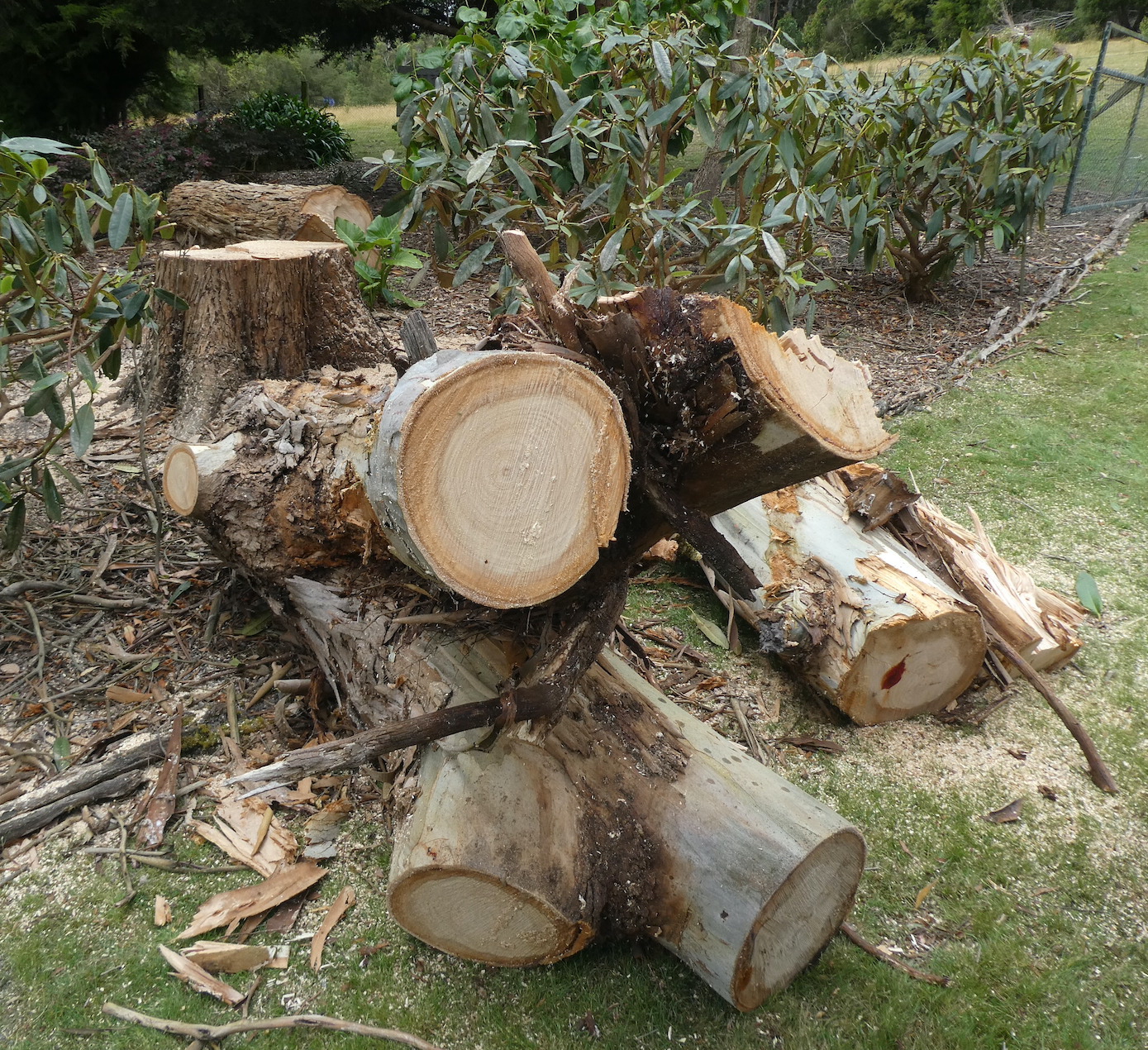
Before long, only a stump remained and a substantial stack of timber for future firewood.
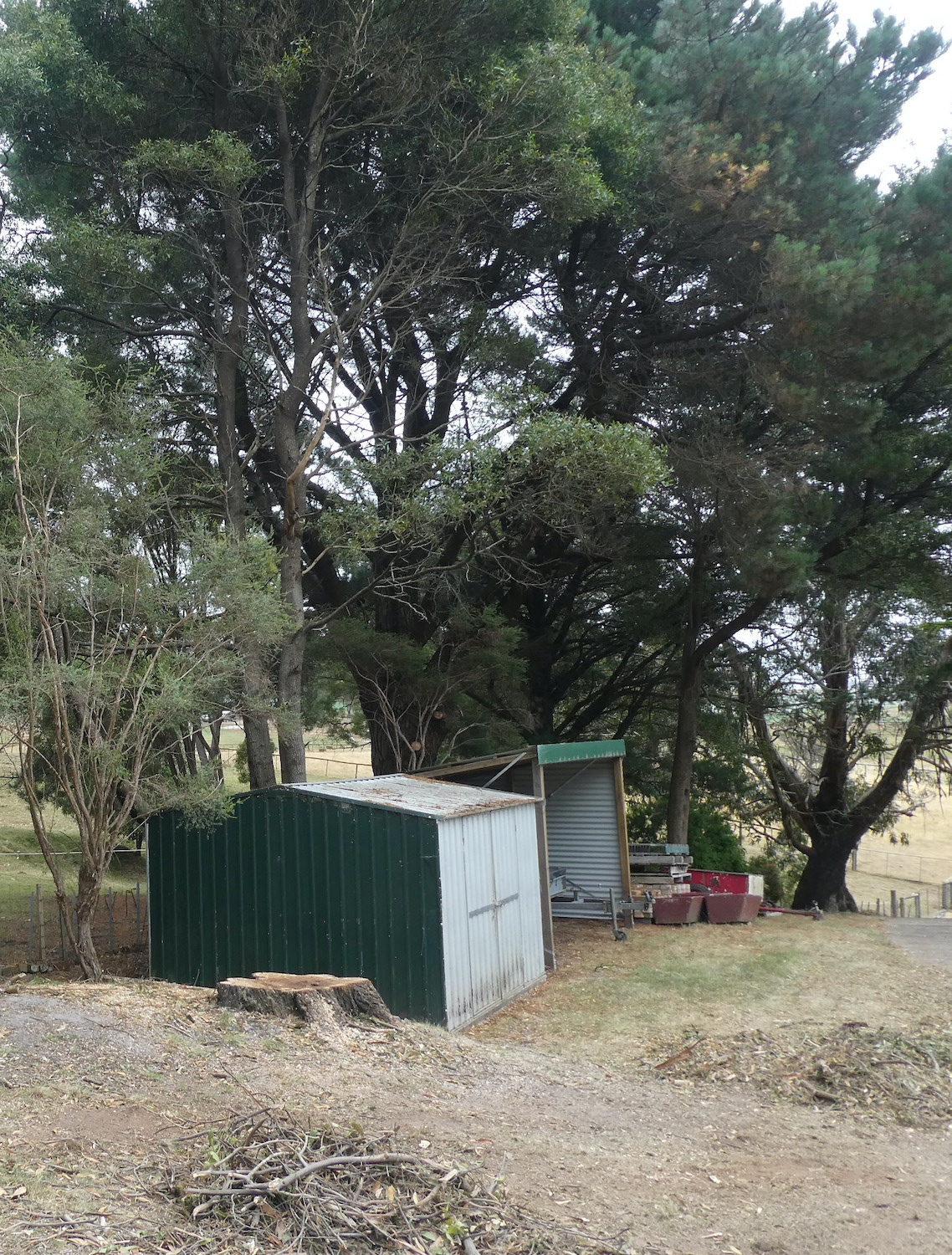
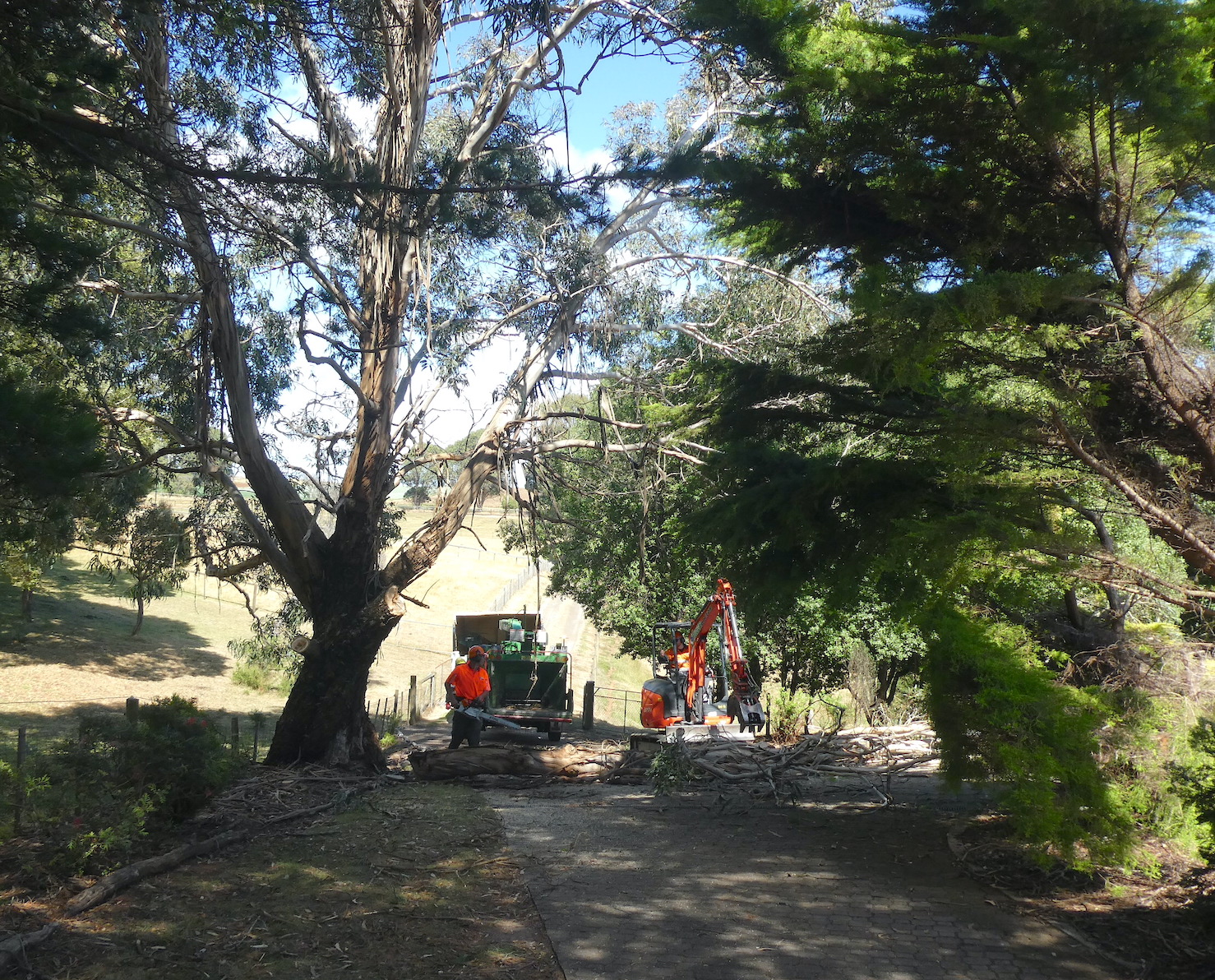
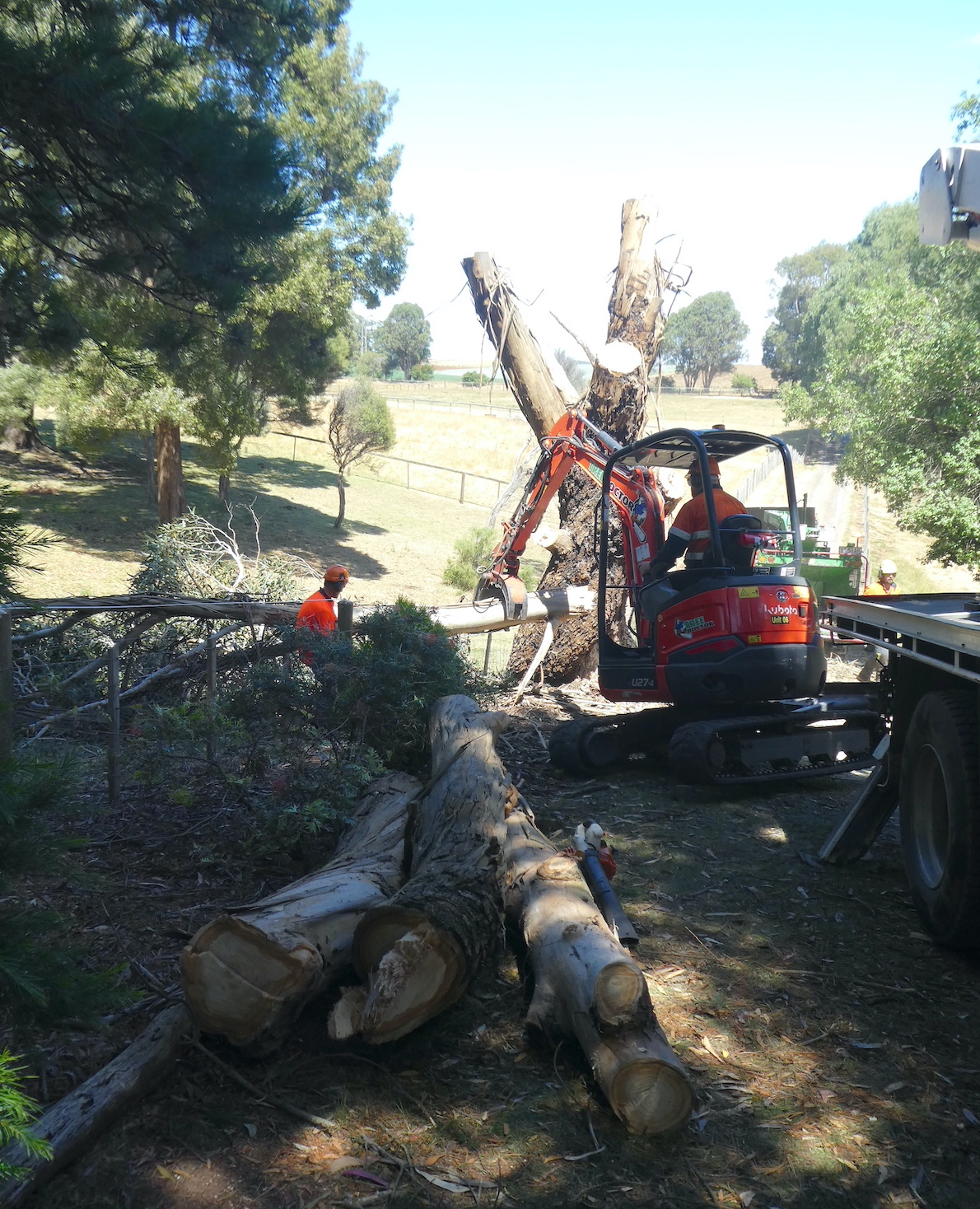
The razing of the leaning Eucalypt was a little more involved. A precise landing was in order to prevent damage to buildings, fences and established plants in the garden beneath. With ropes attached to guide the downward trajectory,

a hefty chainsaw took care of the rest and the giant was felled.

I was pleased to see the rhododendrons still upright on either side of the enormous trunk.

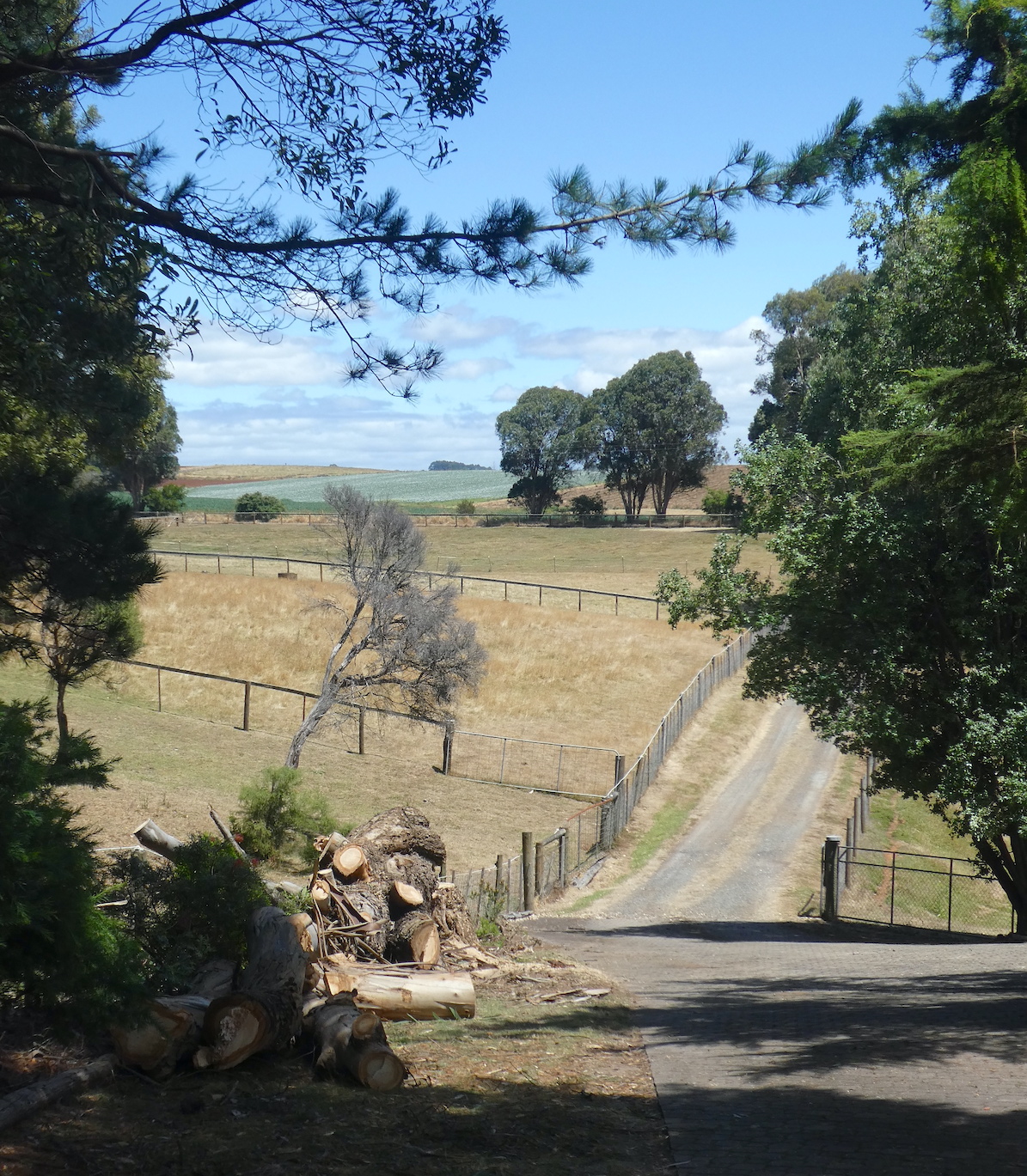
The mulch pile continued to grow, along with the firewood supply for the next few years.

A quick trim of a wayward branch from a pine tree on the neighbouring property

and the final Eucalypt was tackled.

Proximity to the fence was problematic but the skill of the experienced team overcame the hurdles for another successful outcome.
Now, where is that chainsaw……..

neighbourly Notechis

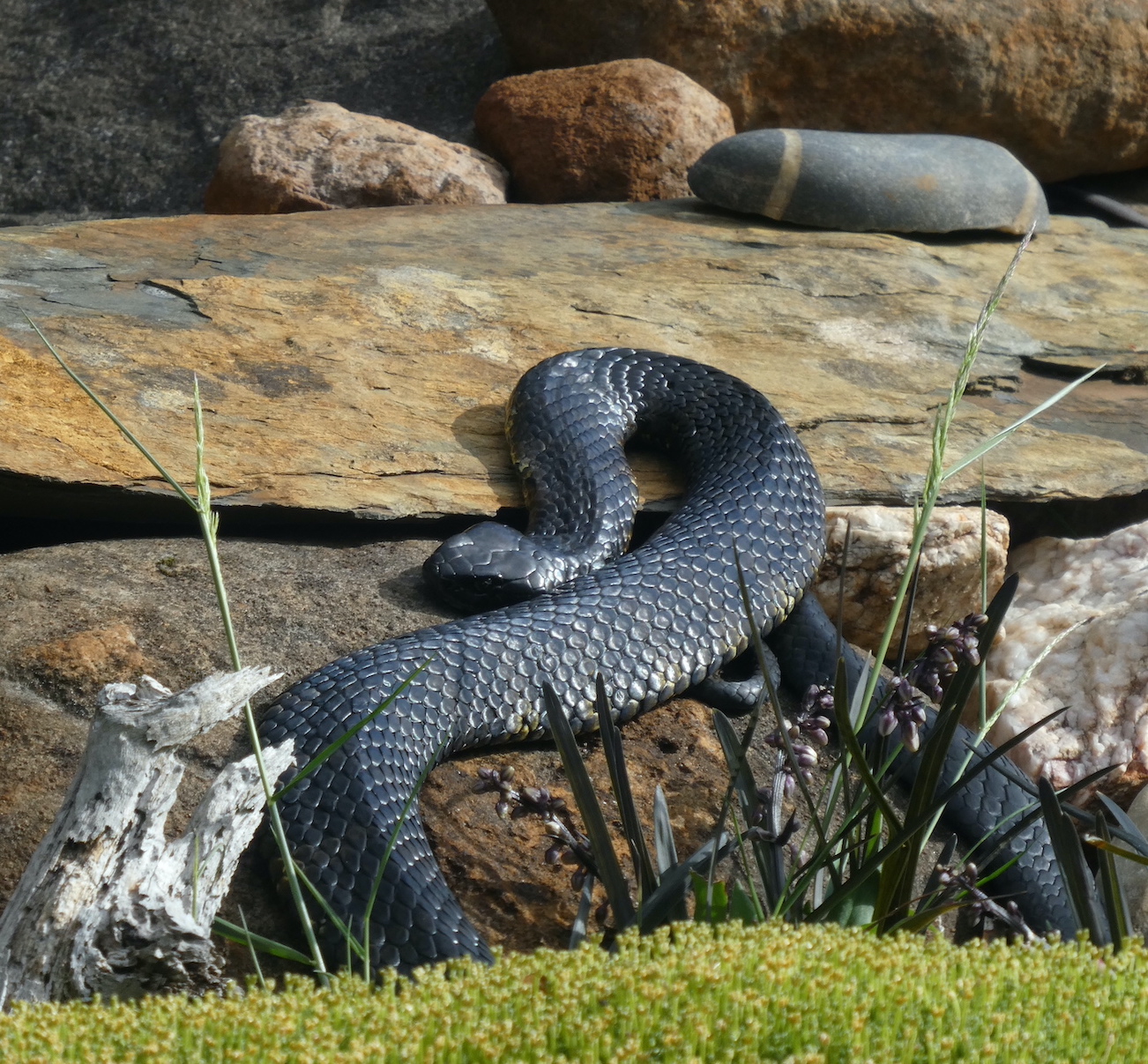
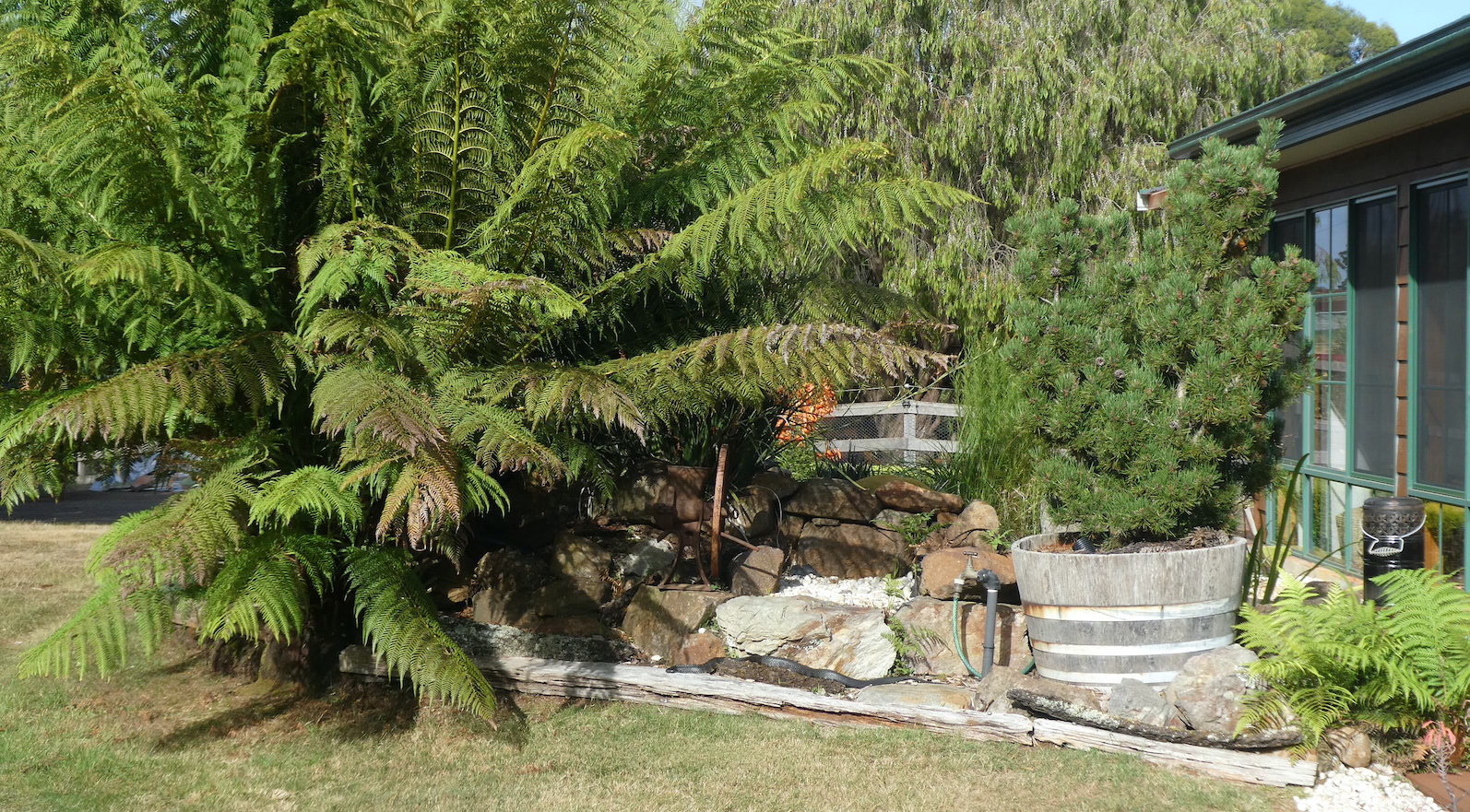
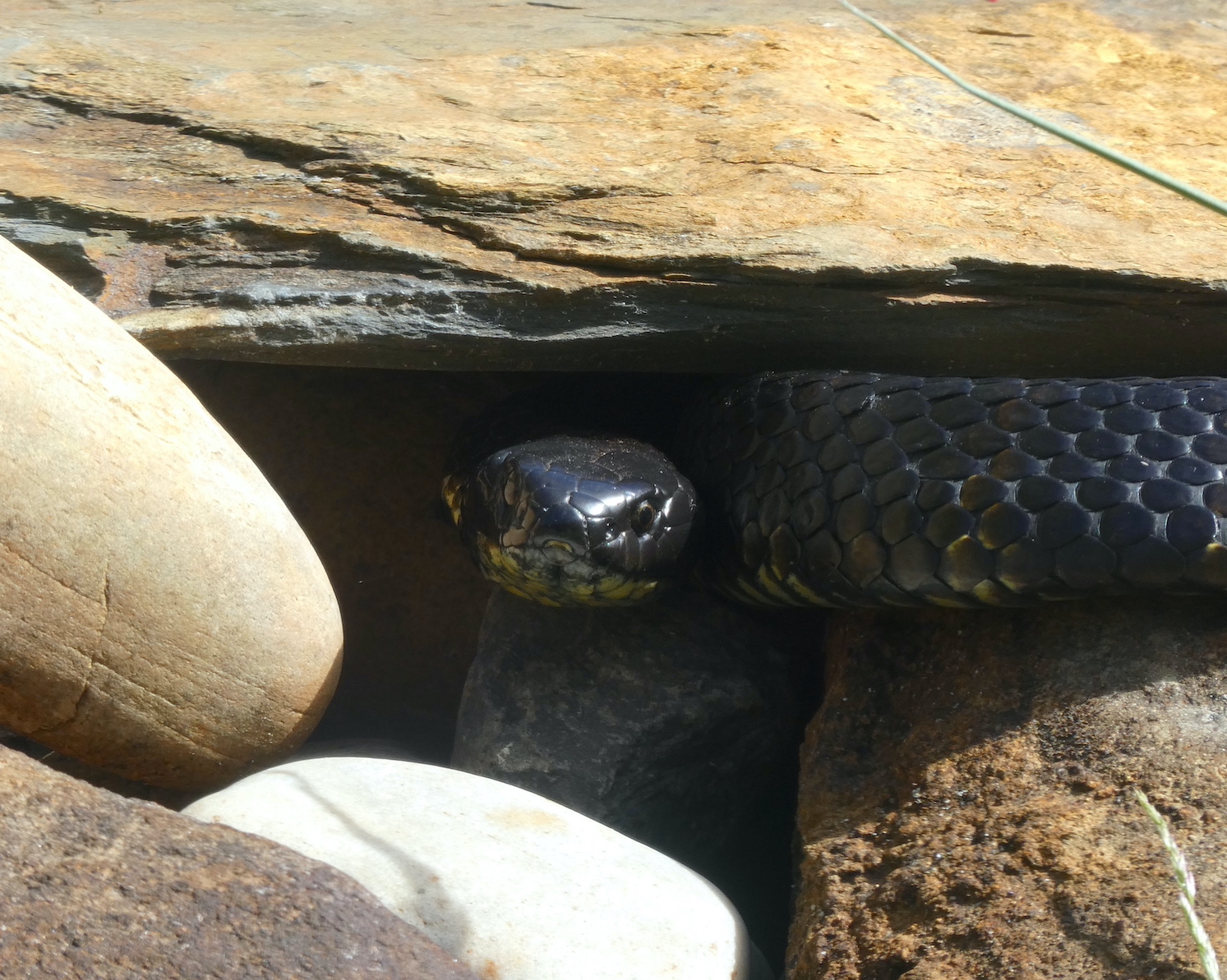
We weren’t sure whether we would be hosting a slithering summer squatter this year, considering the absence in 2021. Our question was answered one evening in early December when we spied the familiar form from the kitchen window.
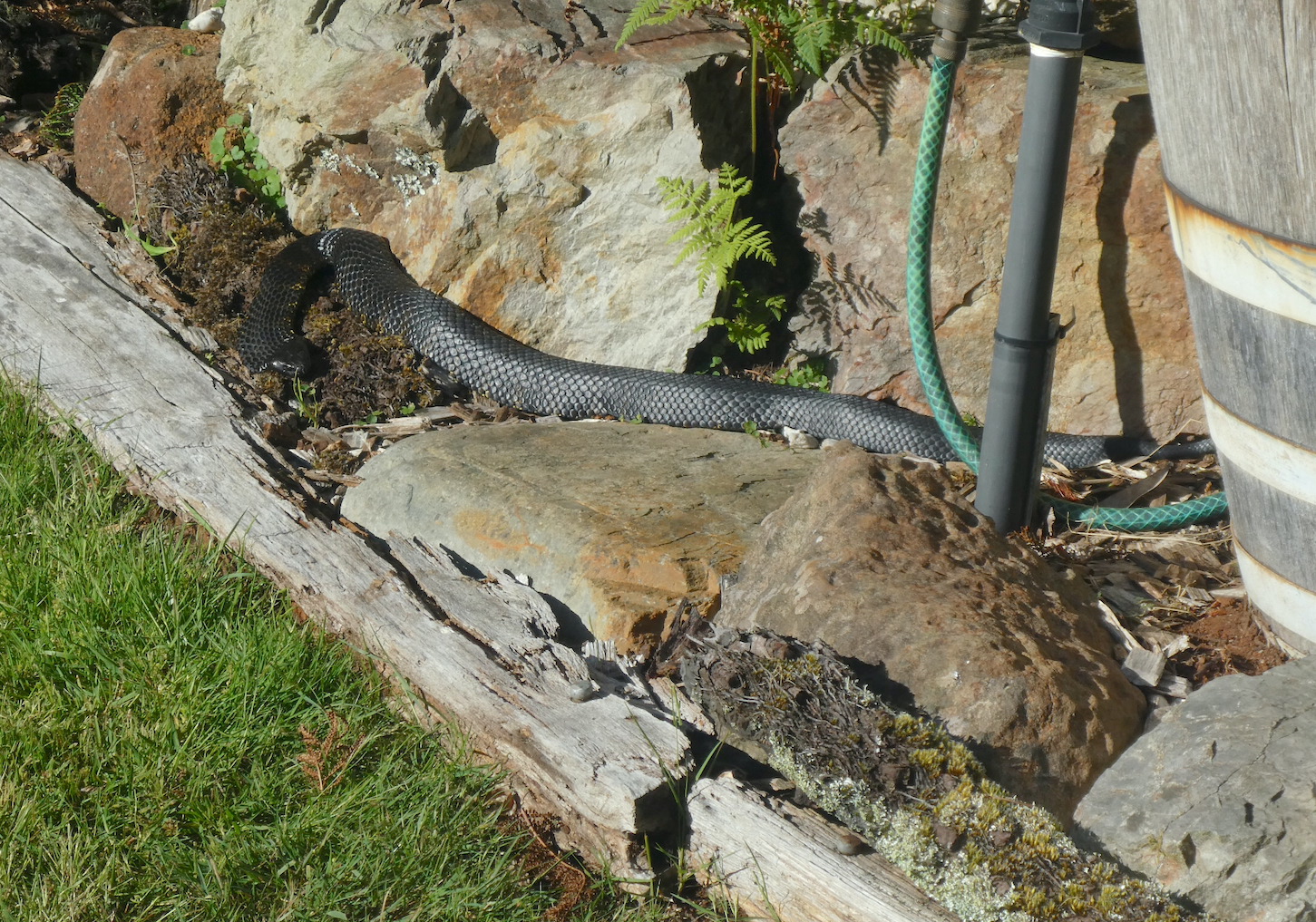
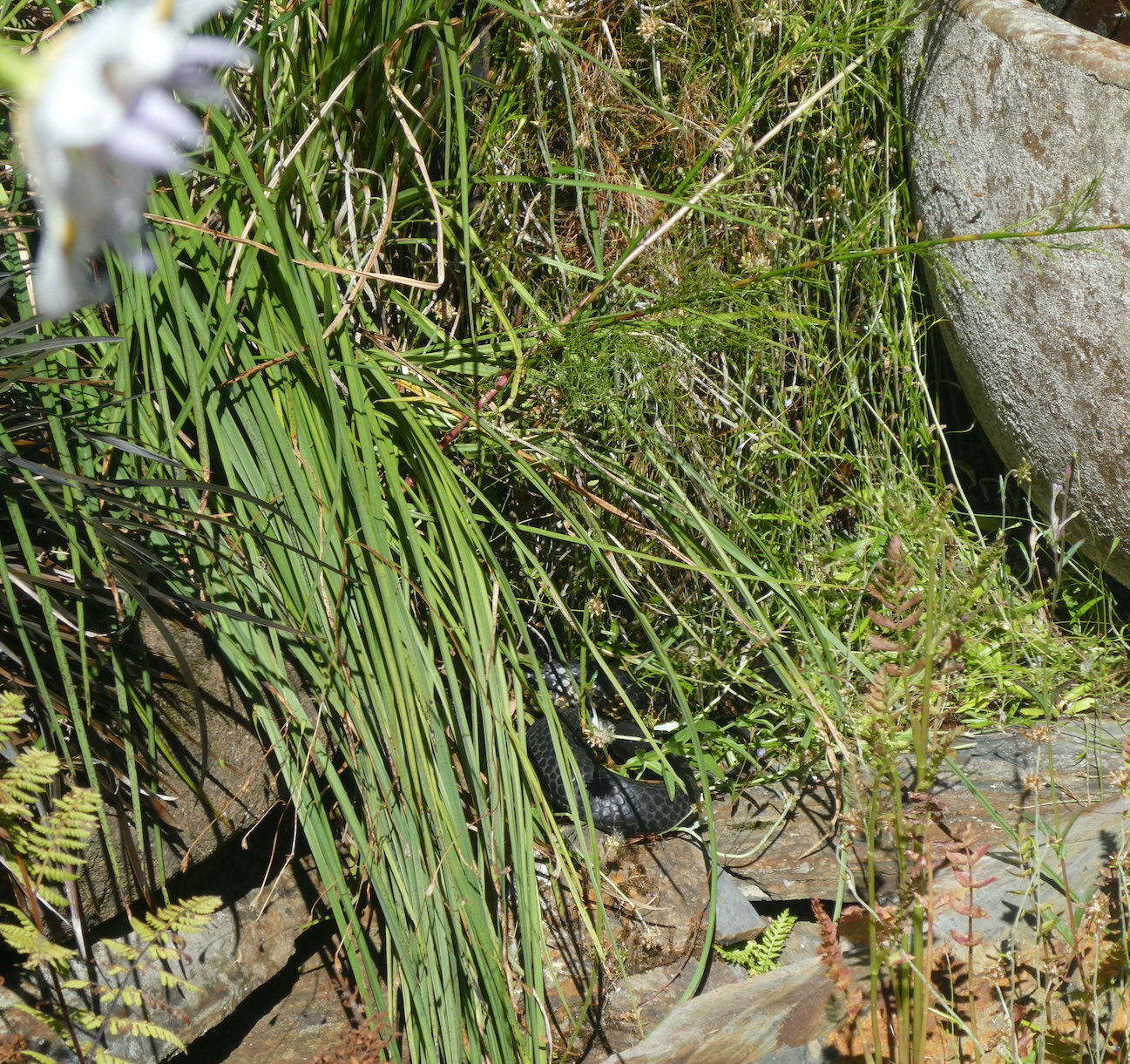
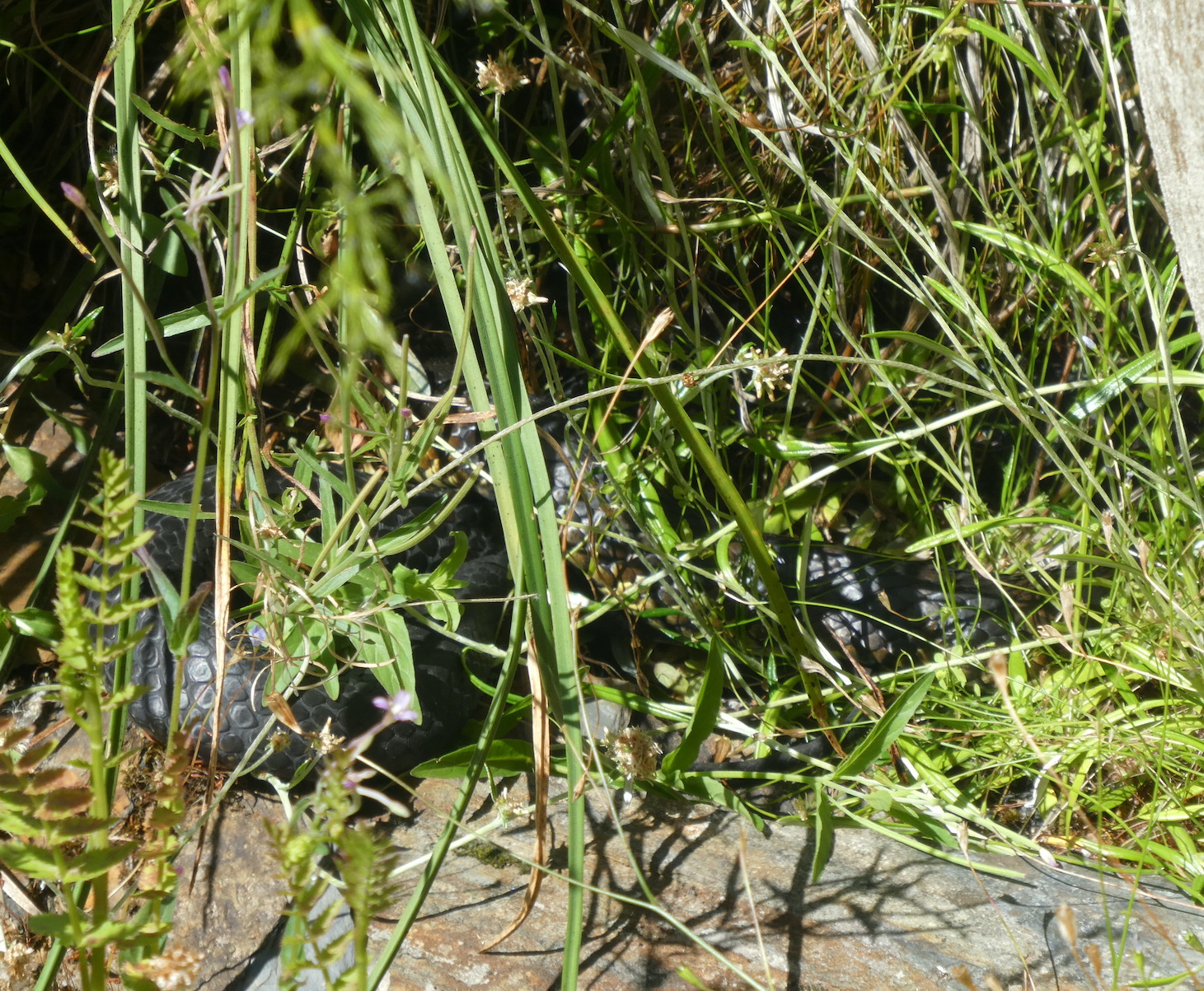
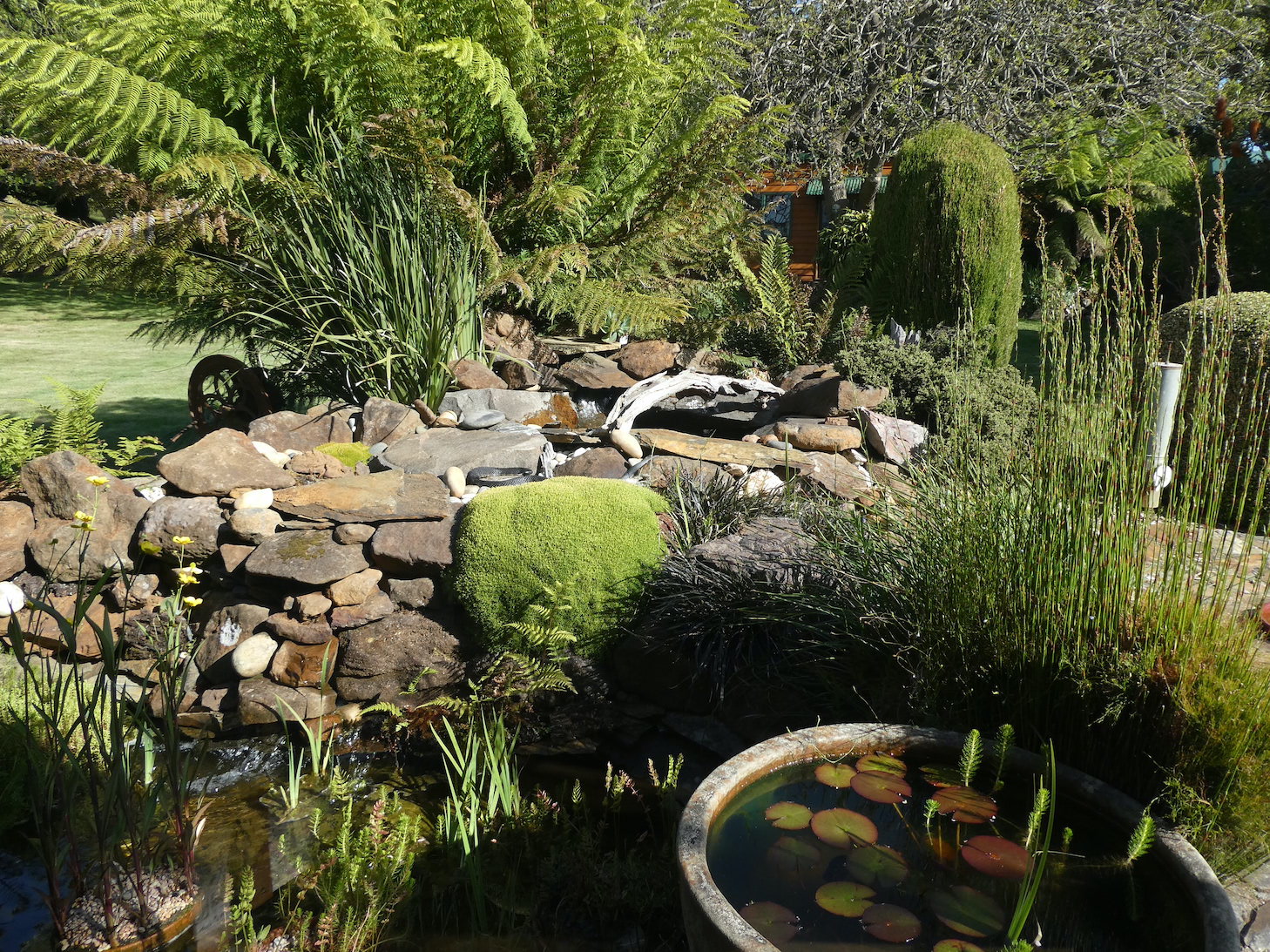
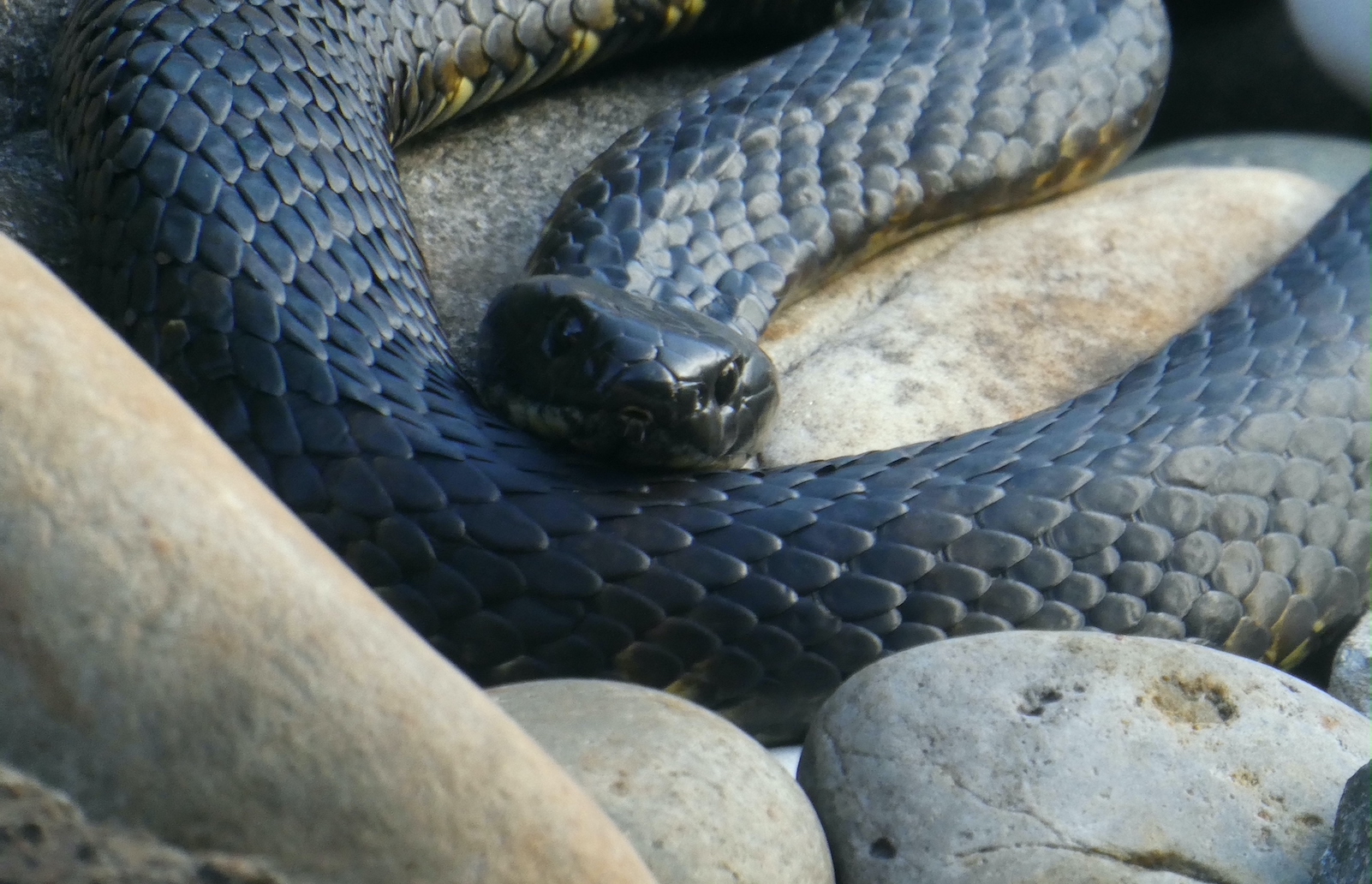
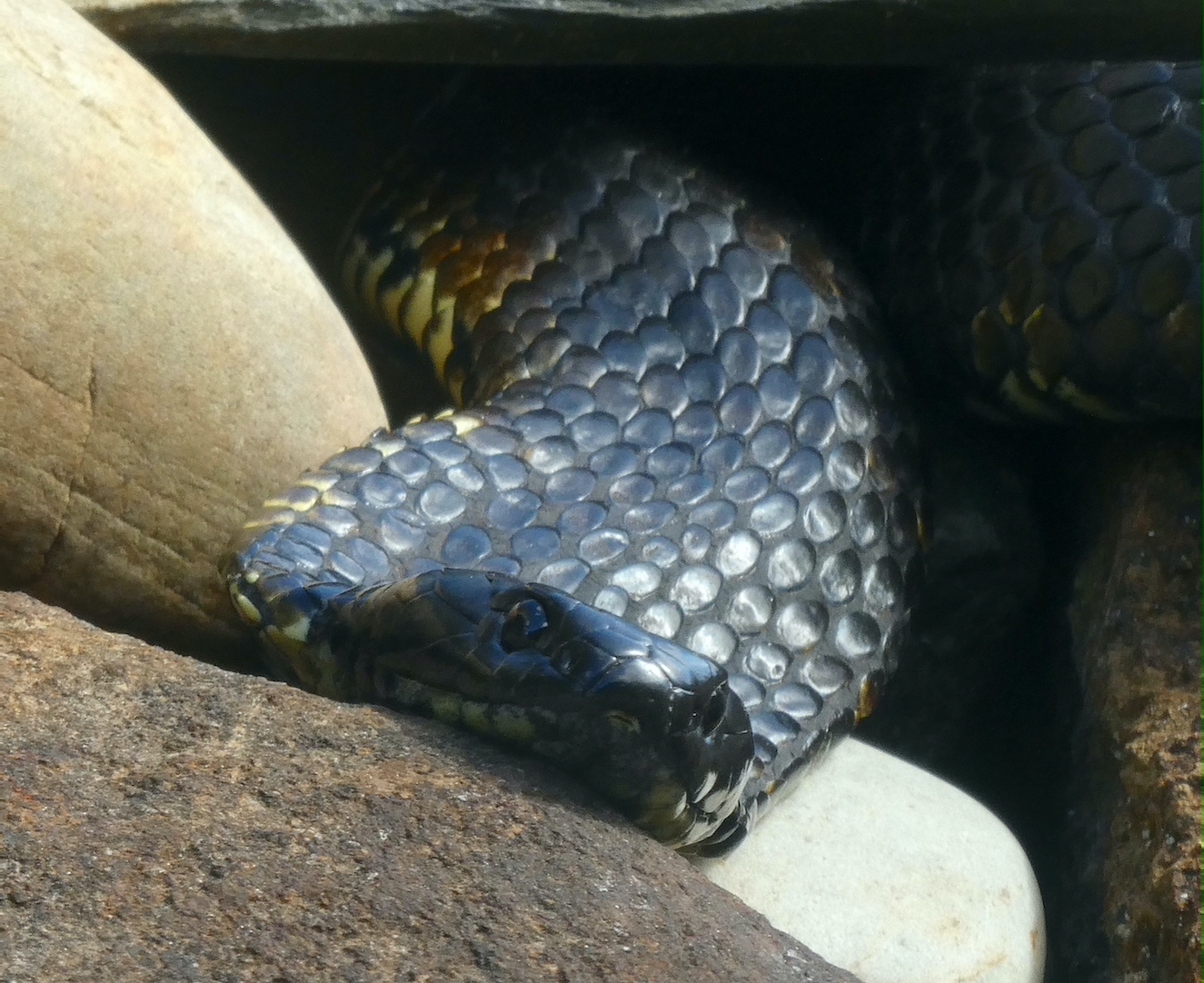
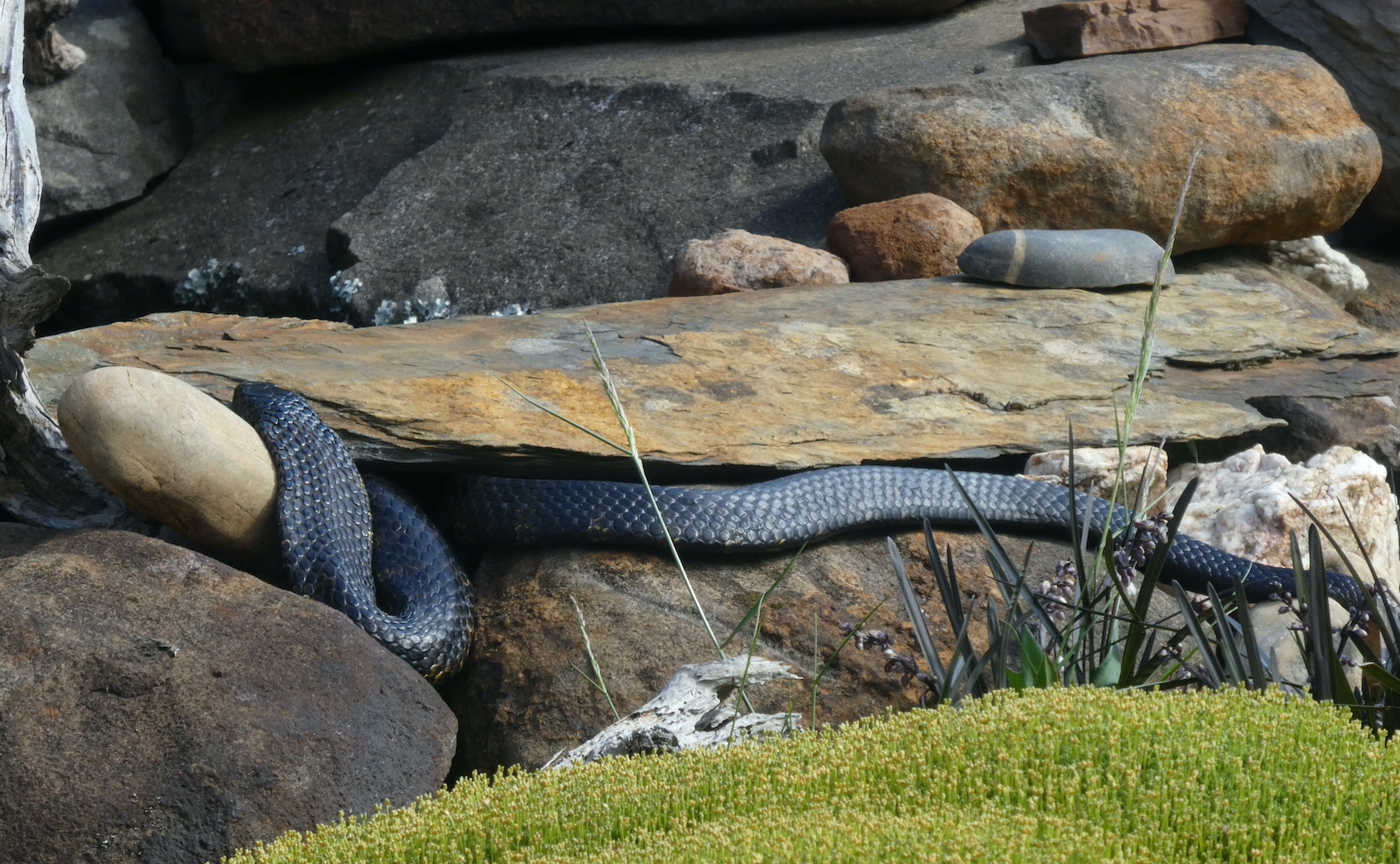
The Tasmanian tiger snake (Notechis scutatus humphreysi) has an unfounded reputation for being aggressive. Although one of the world’s most venomous snakes, they are actually very shy creatures and would rather retreat than attack, saving their venom for important things like their next meal. This may not be the same snake as previous years but she certainly had the same habits and was very comfortable with our presence. Mornings were spent warming up on the eastern side of the pond,

seeking shade when too hot

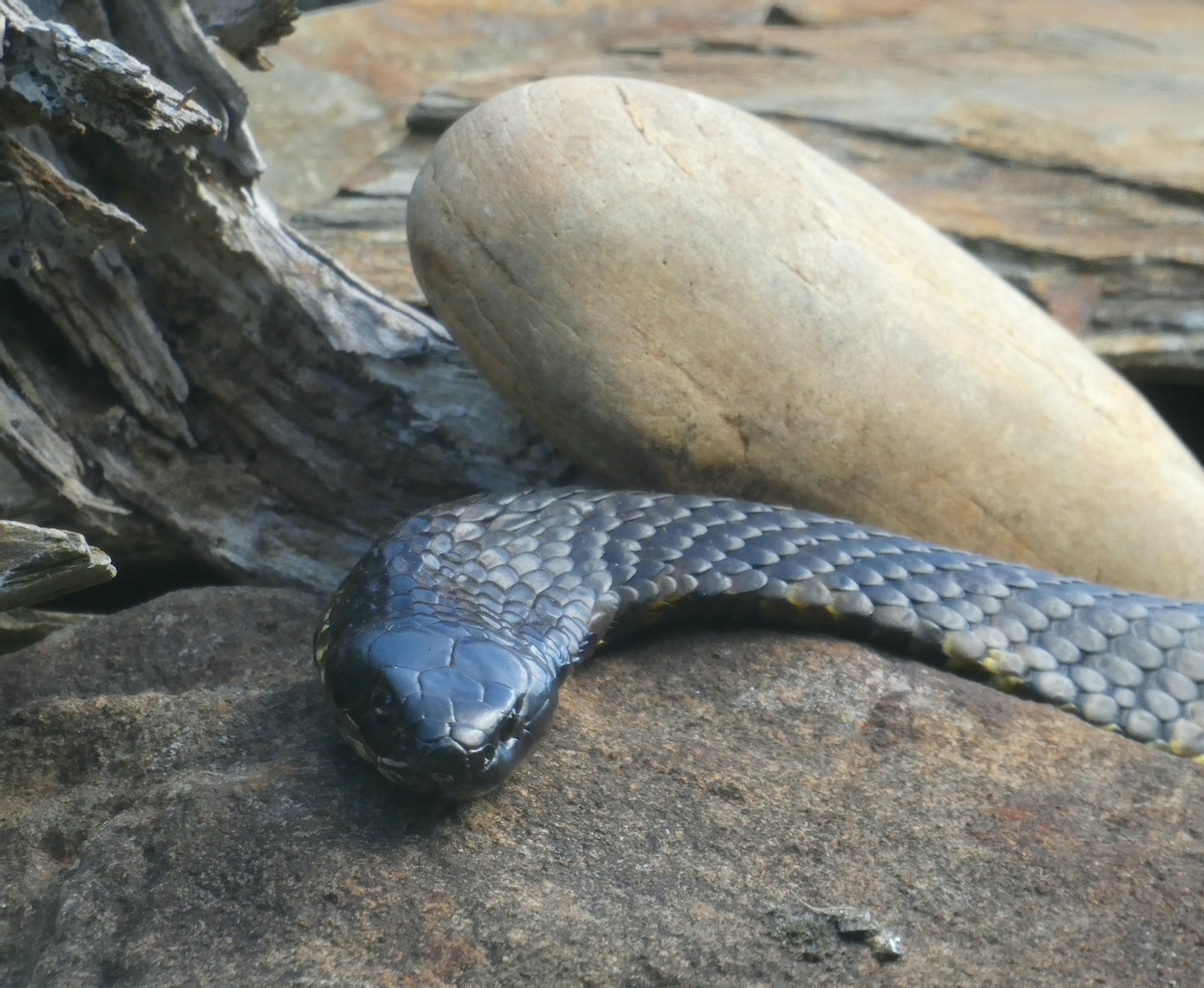
and stretching out when cool ,

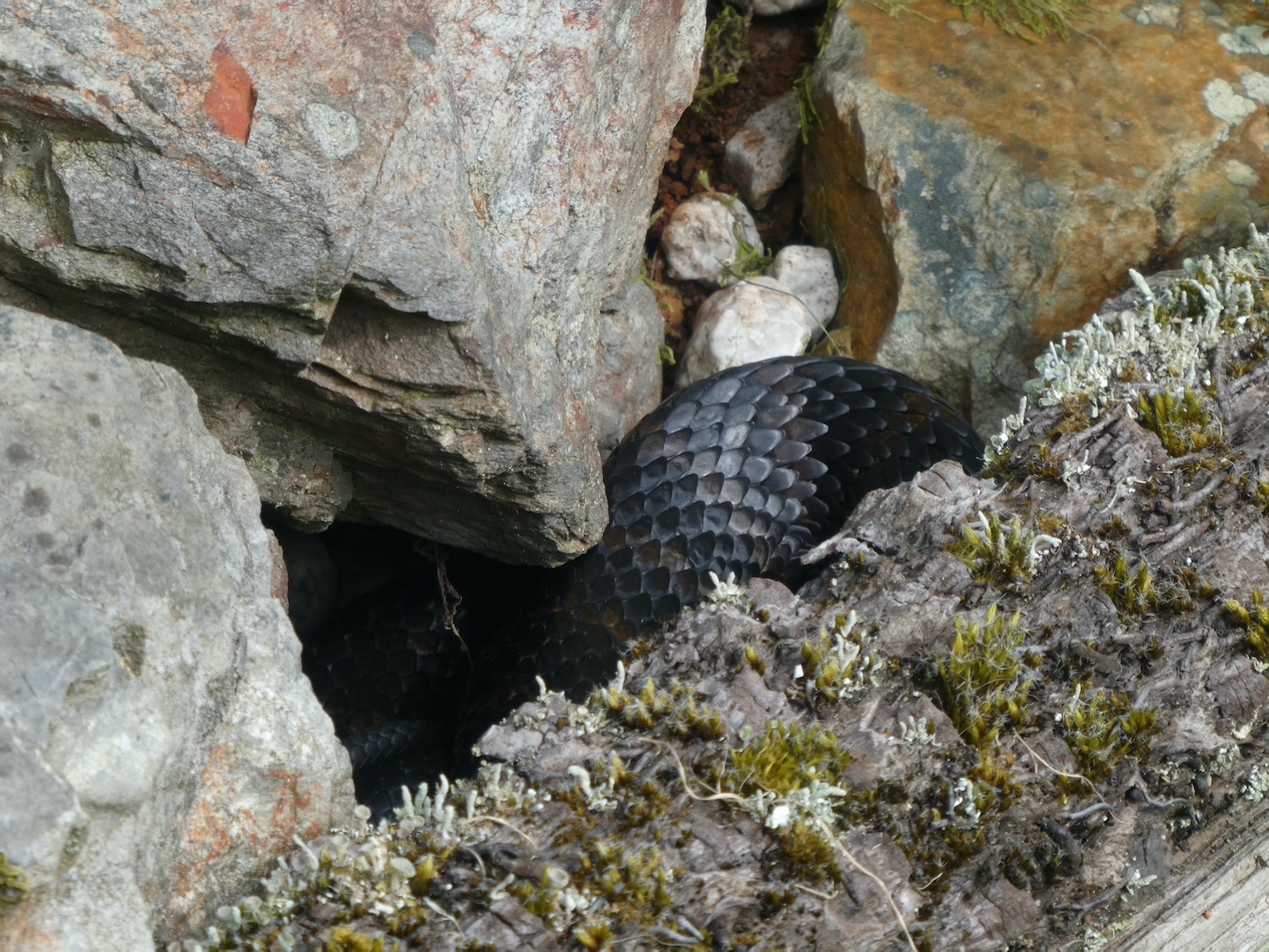
then back to shelter.

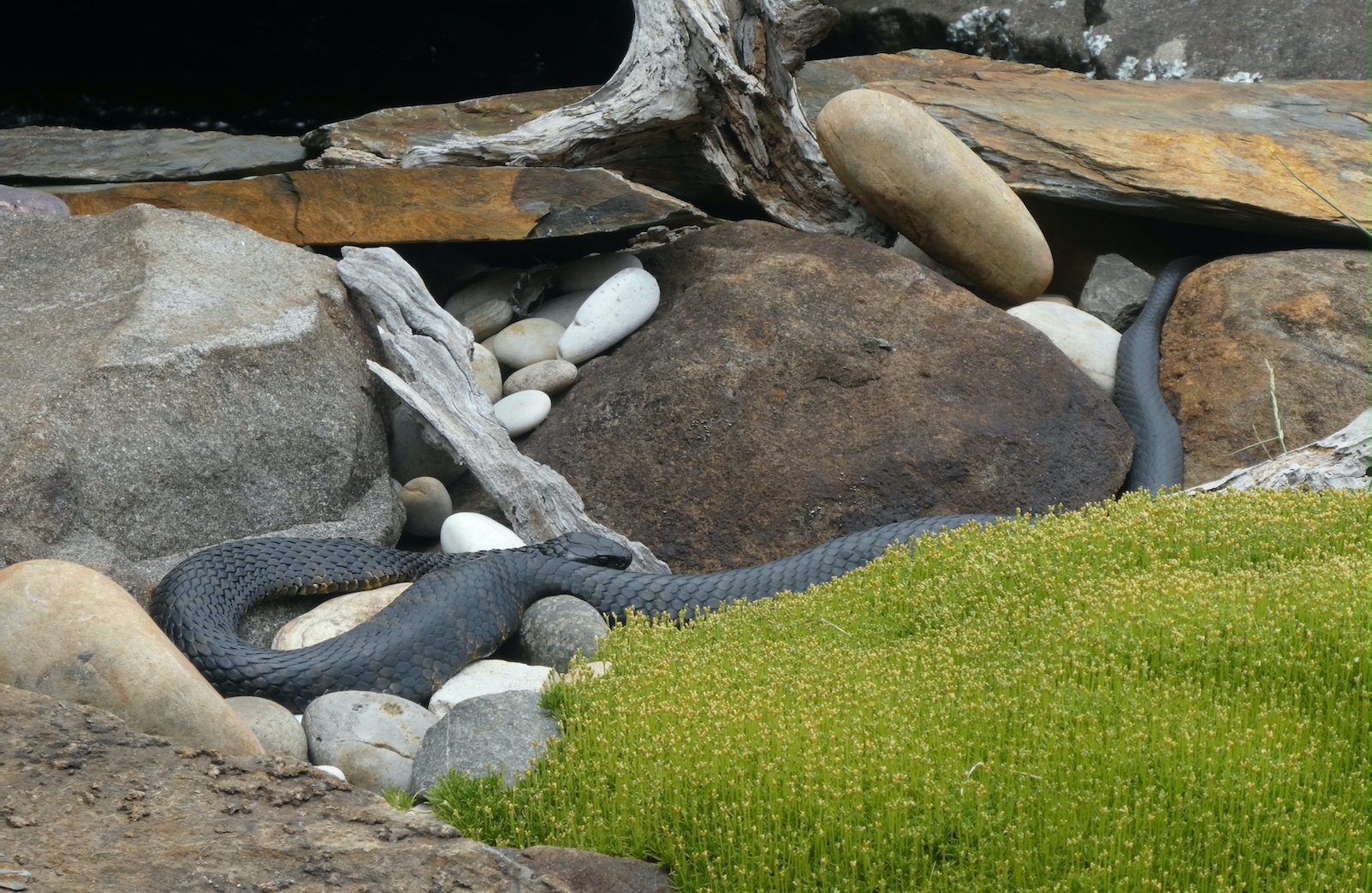
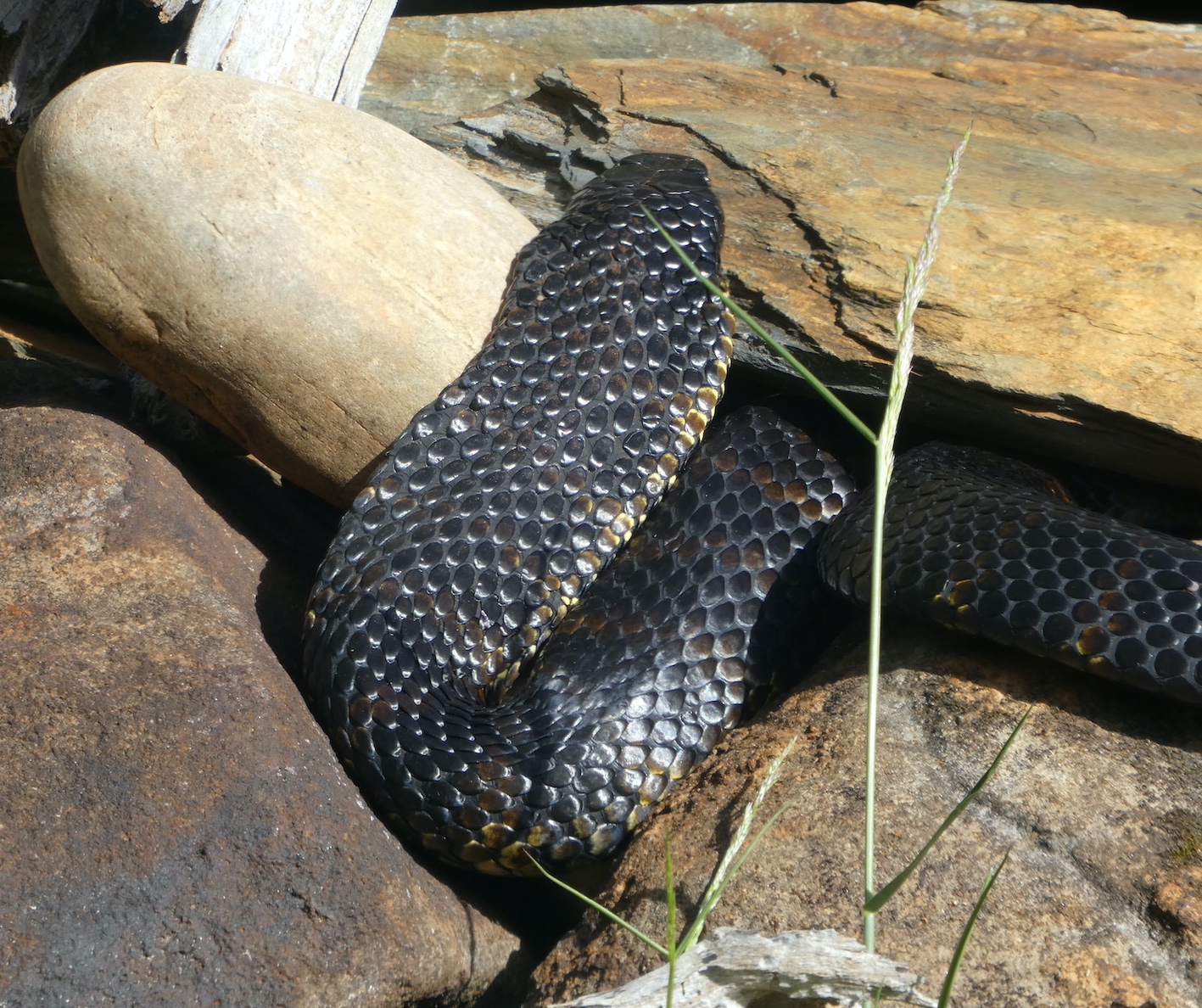
Tasmanian climate isn’t the easiest for temperature regulation, even for humans. Sometimes a little creativity is needed to warm up,

but usually a good stretch against the rocks is the best way.

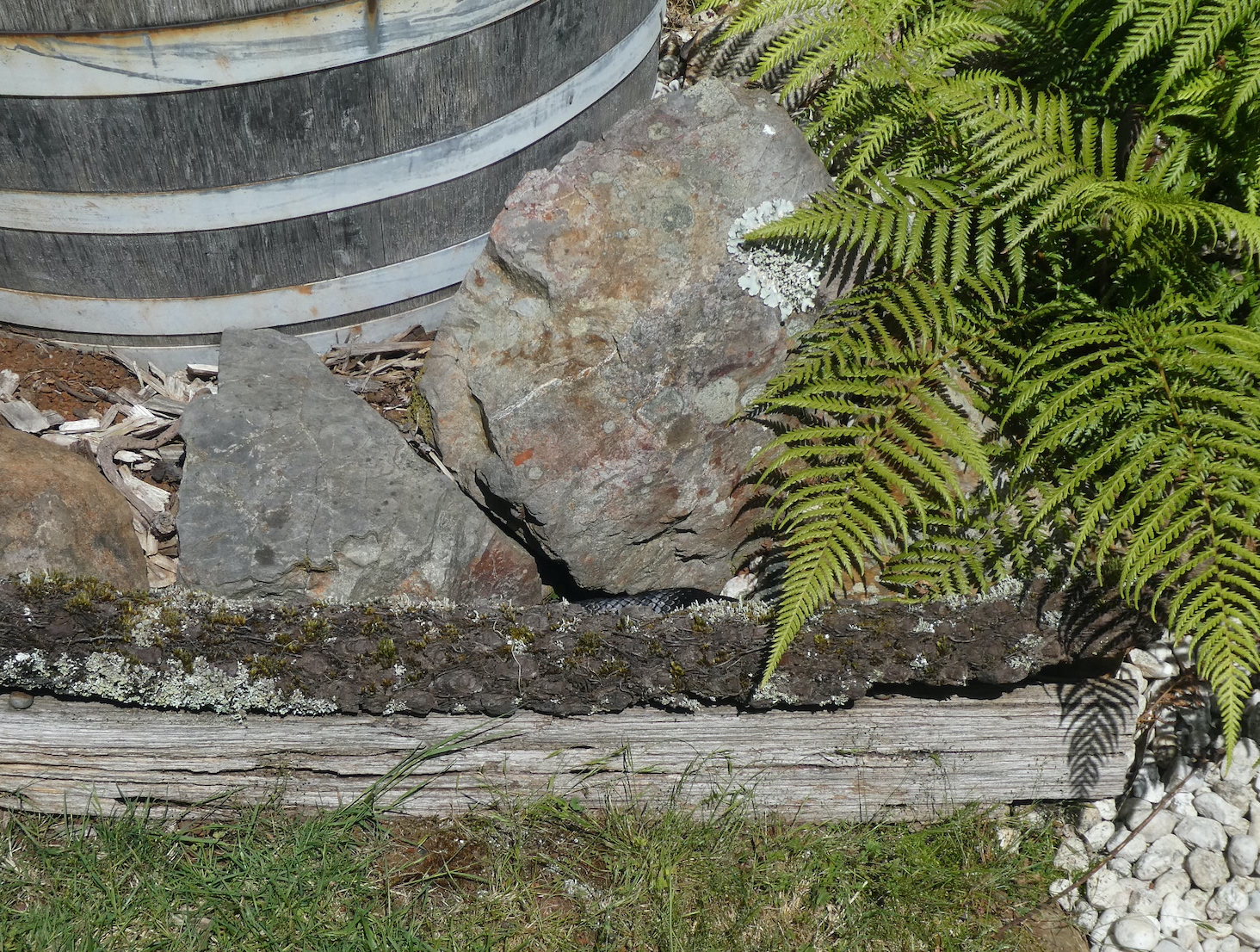
There were some mornings we couldn’t see Snakey (as she is affectionately known) and assumed she had gone off hunting for the day. Complacency is not recommended as she can turn up where least expected.

I much prefer her presence to be obvious.

In the afternoon, she would often be lounging on the rocks above the pond

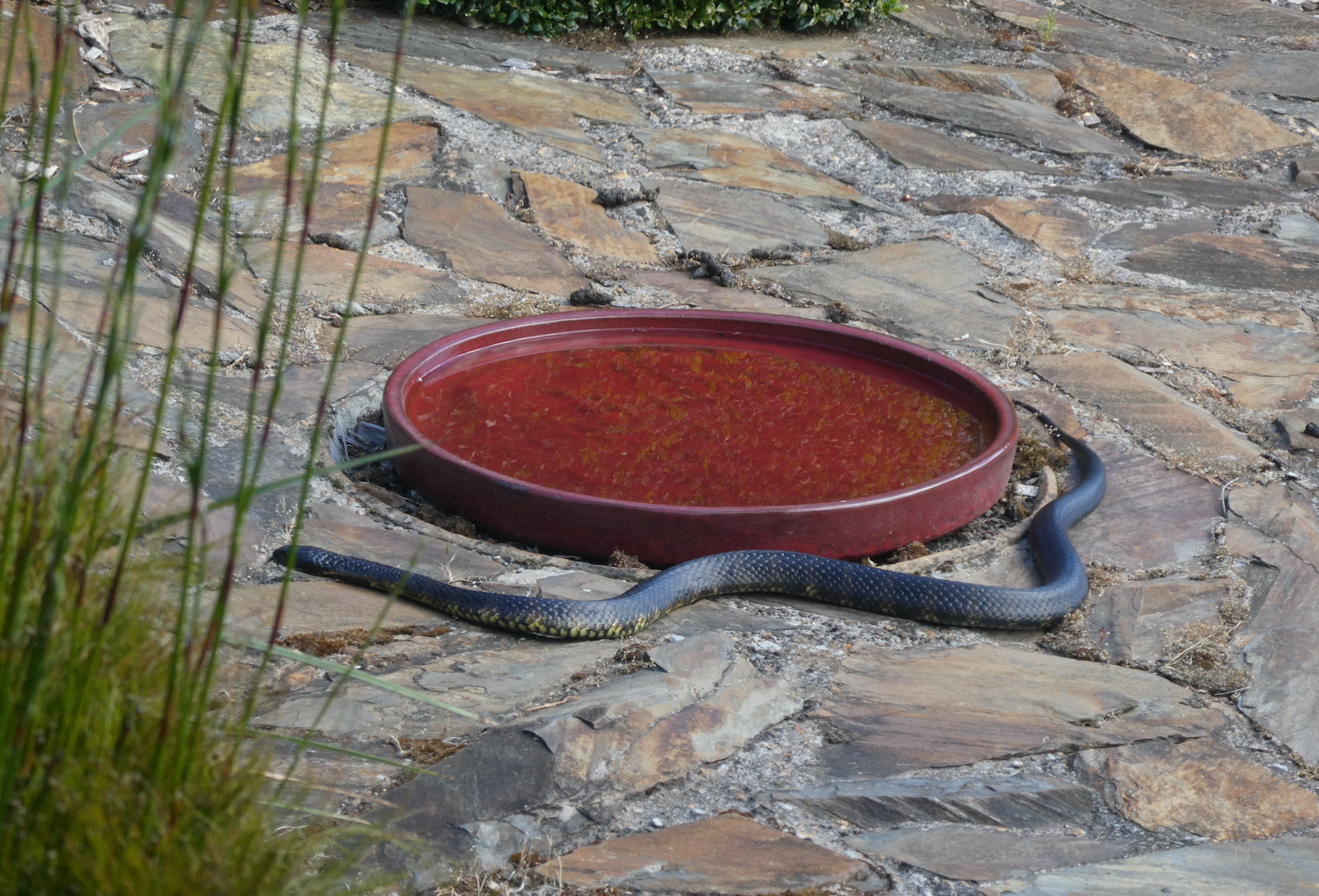
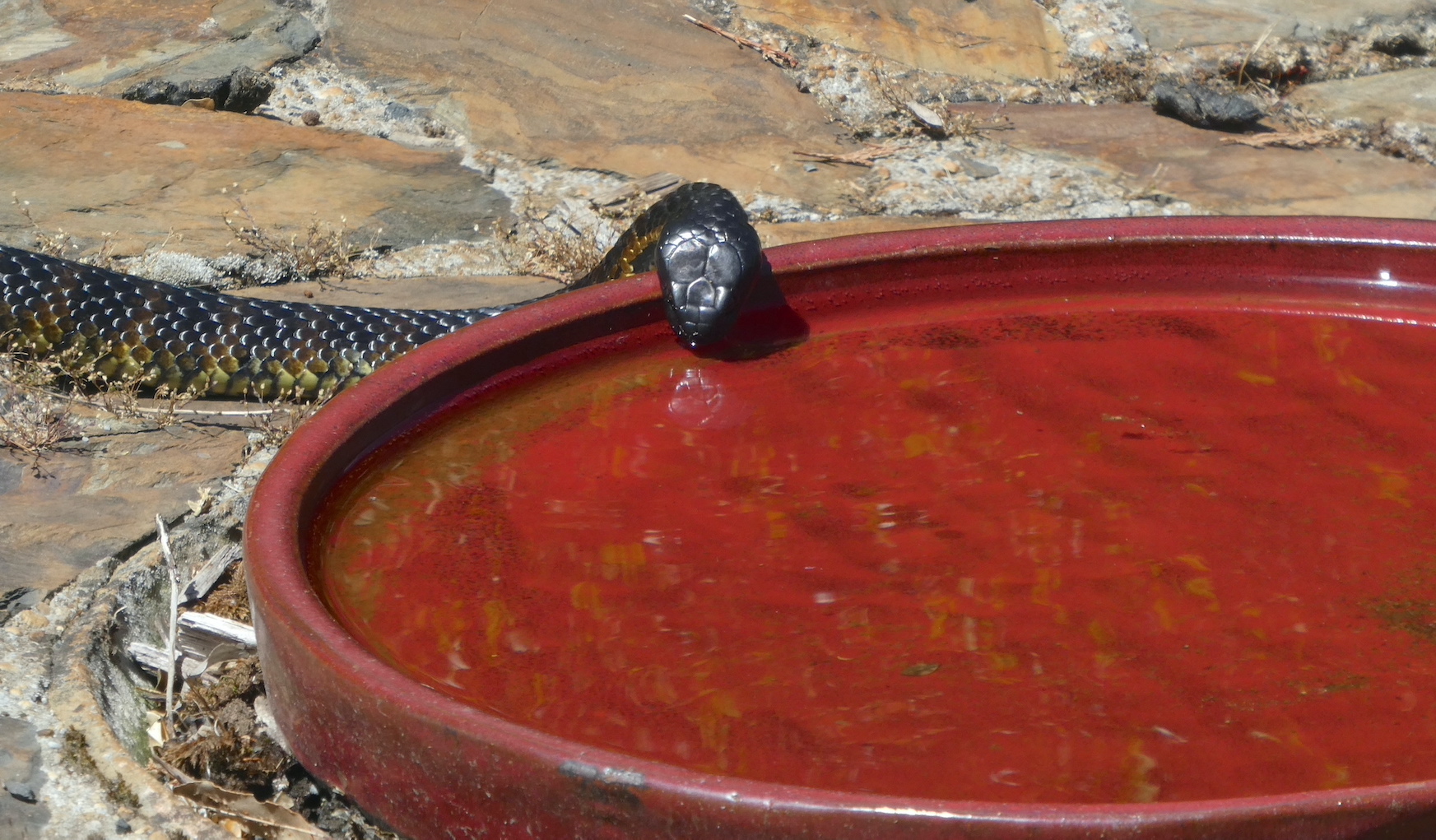
or returning from adventures for refreshment

before relaxing in contented contemplation.

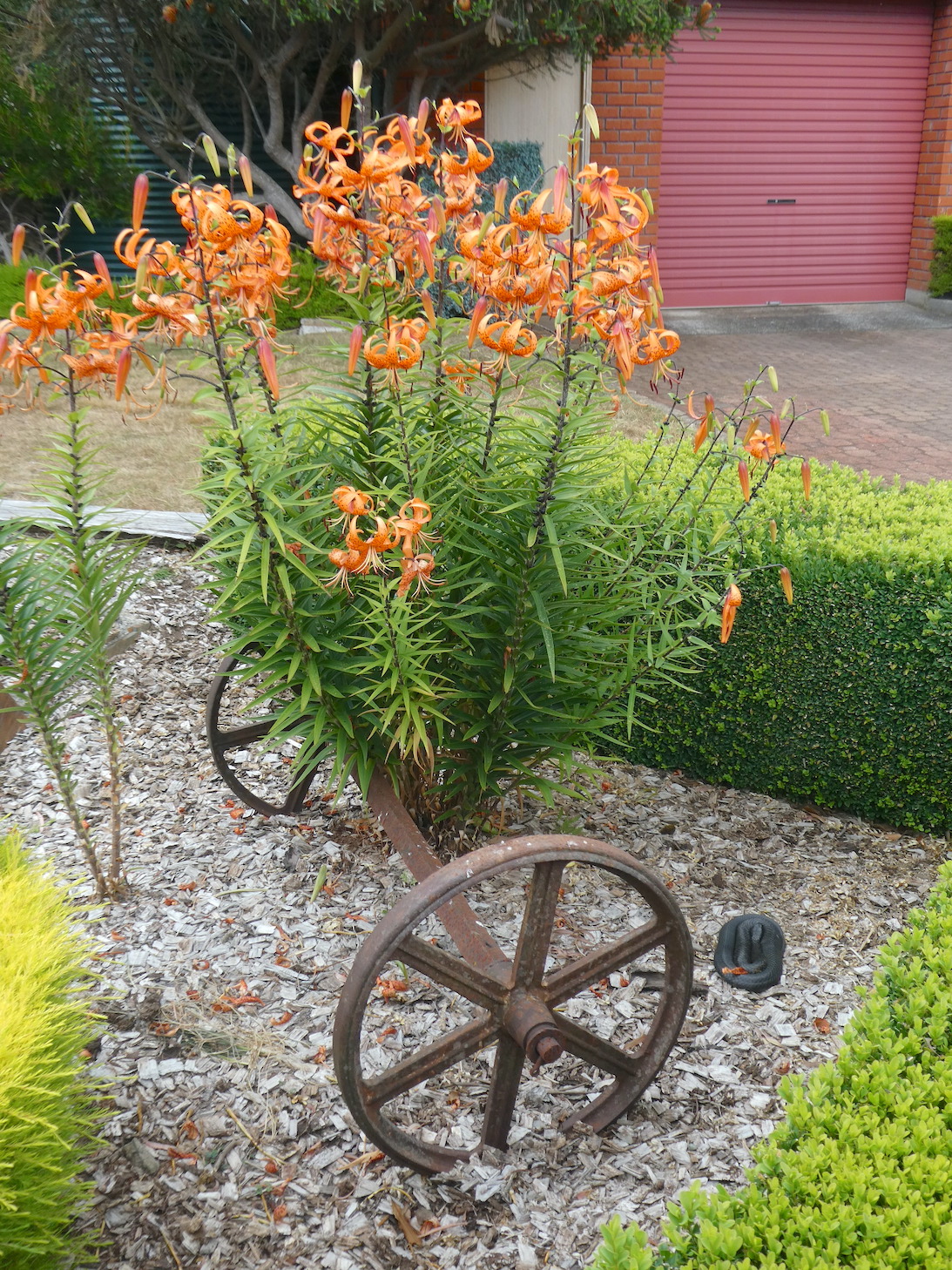
I like to think there is a subliminal connection between the tiger snake and tiger lilies, they seem to complement each other.

Pumphouse perfection

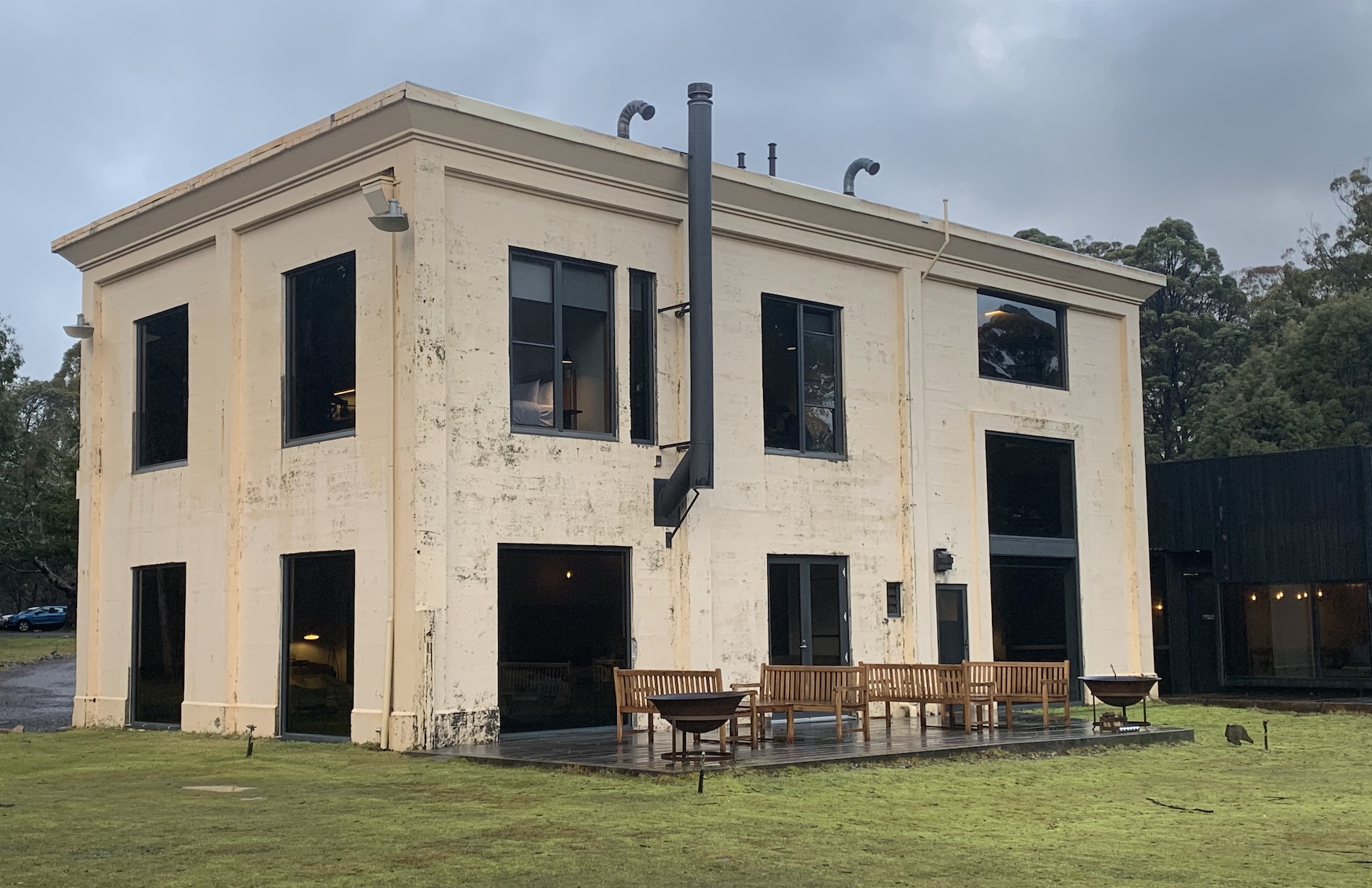
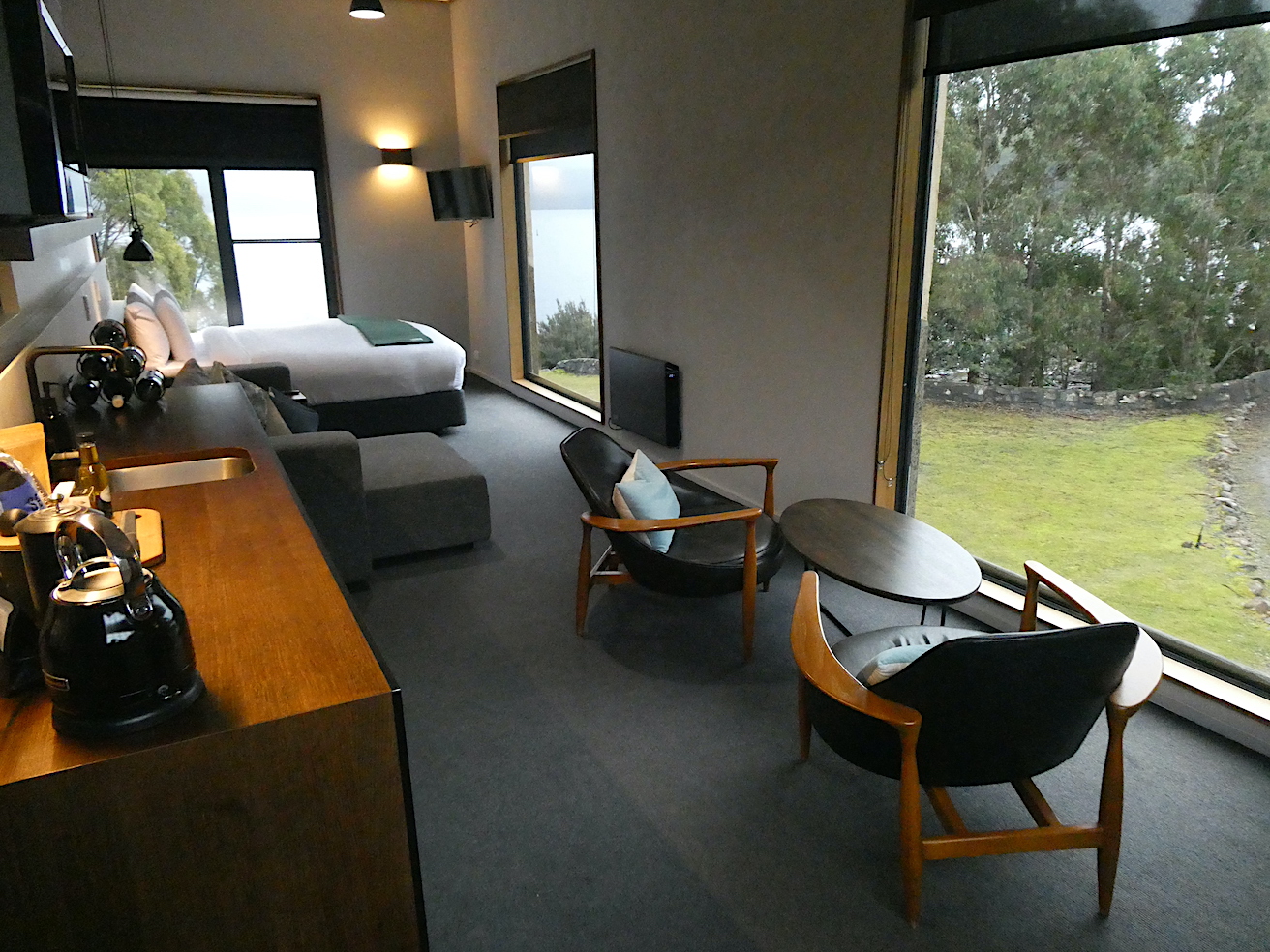
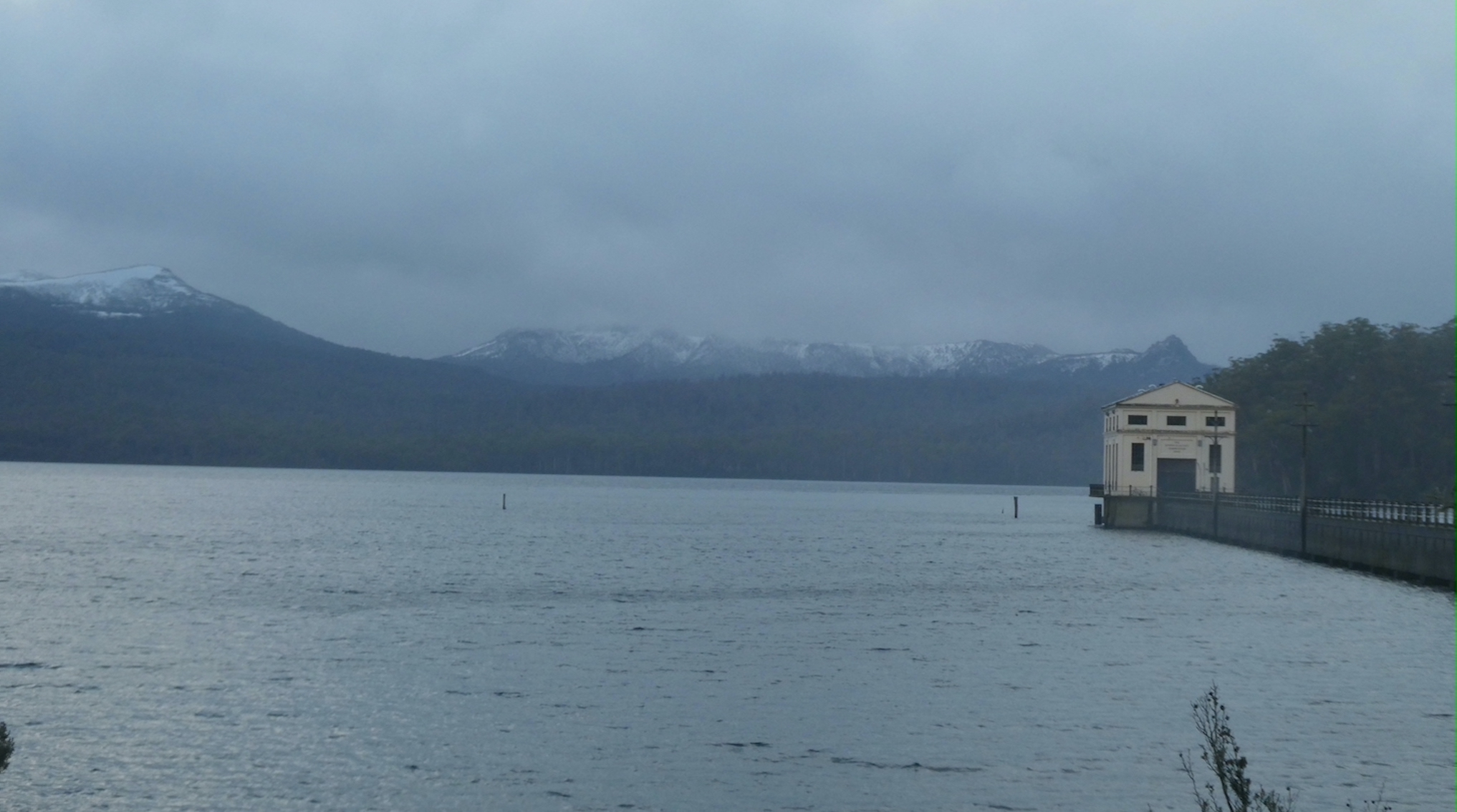
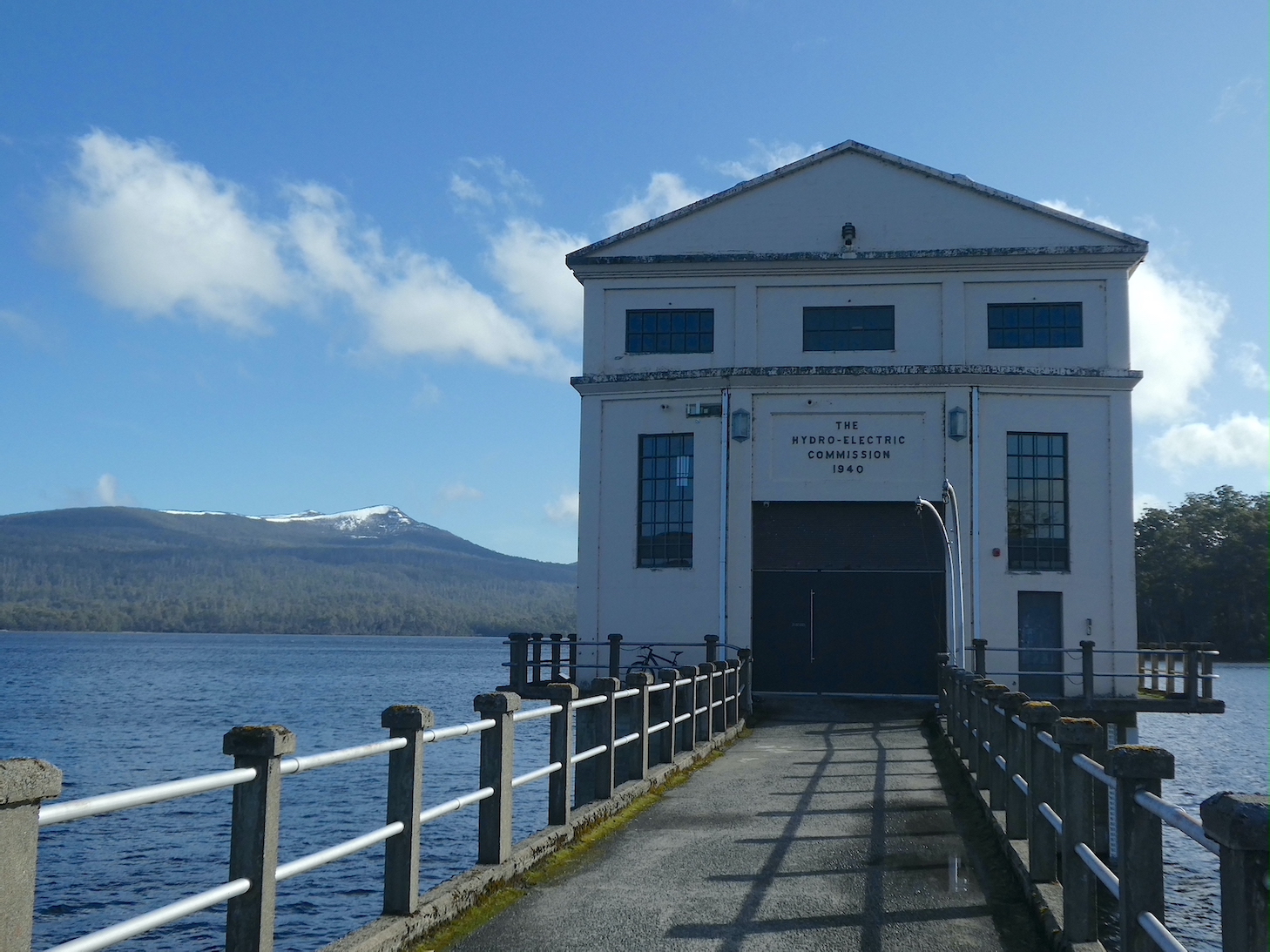
As we left Pumphouse Point at the end of a wonderful sojourn in March 2019, we vowed to return for a winter experience. With one thing and another, it has taken three and a half years to realise the promise but we finally made it earlier this month. We had stayed in a room on the middle floor of The Pumphouse that first time, a wonderful feeling to wake up surrounded by water and endless nature. For a different perspective, we booked the Panorama Room in The Shorehouse, considered to be the best room on the property.

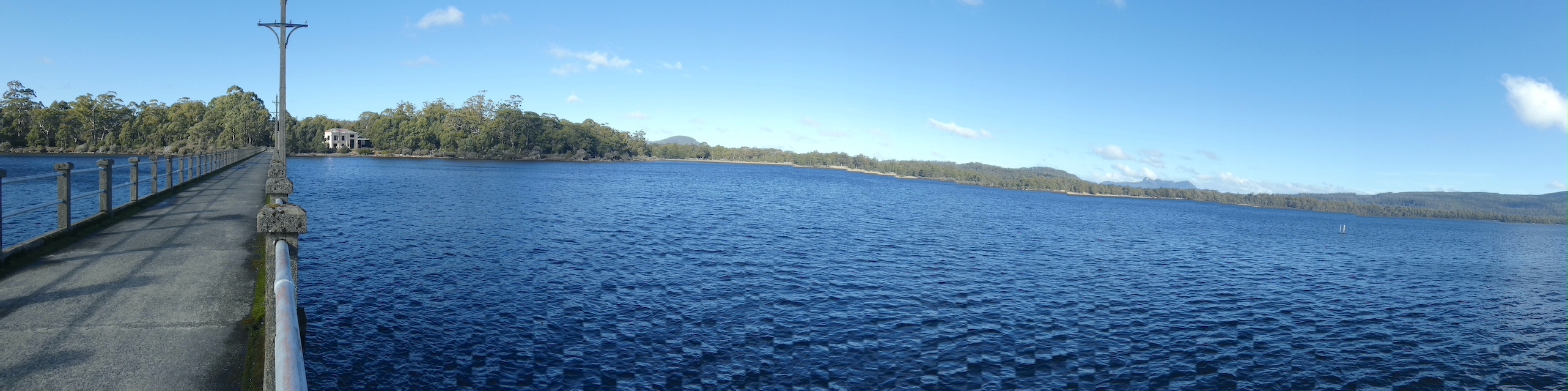
Living up to its name, the spacious room spans the entire side of The Shorehouse on the first floor and the huge windows embrace panoramic views across the lake and mountains beyond.

The larder was stocked with tempting goodies to enjoy for a picnic lunch or midnight snack and a hot sourdough loaf was only a phone call away.

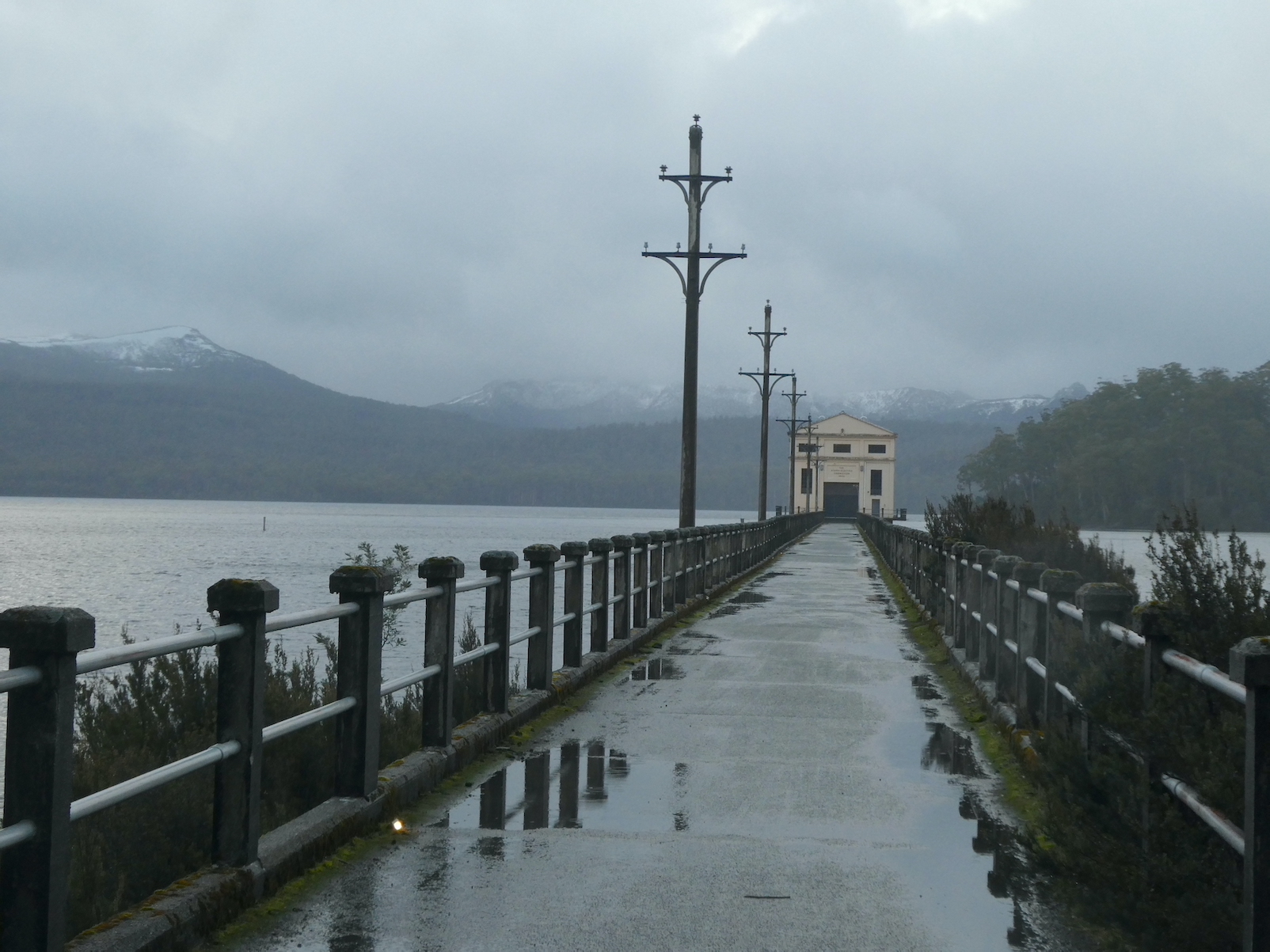
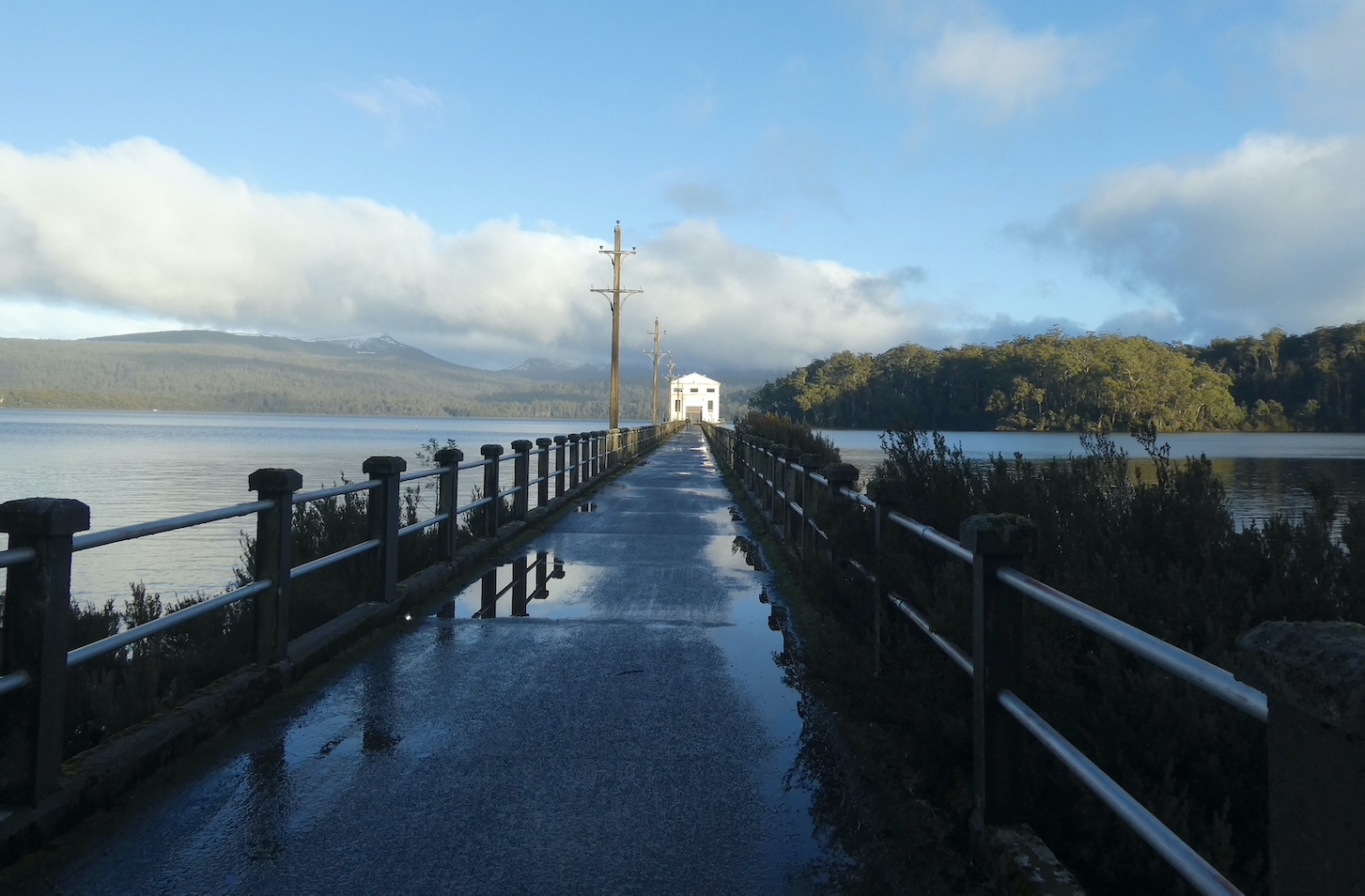
Another reason we opted to stay on dry land is, we didn’t relish the idea of walking the 240m flume in rain, wind, ice, snow or any combination of these, to return to our bed in the evening. The inclement conditions that had accompanied our four hour drive abated for our arrival, we could just discern the snow-capped peaks beyond The Pumphouse.

All guests are invited to partake of pre-dinner drinks at 6pm in The Shorehouse lounge before randomly seating in the adjacent dining room. Three courses of fresh, locally sourced fare are served, complemented by your own choice of beverage from the honesty bar. The shared table occasion may not appeal to everyone but it makes for new acquaintances and lively conversation. We awoke the next morning to blue skies and a crispness of air that can only be breathed in the middle of nowhere in Tasmania.

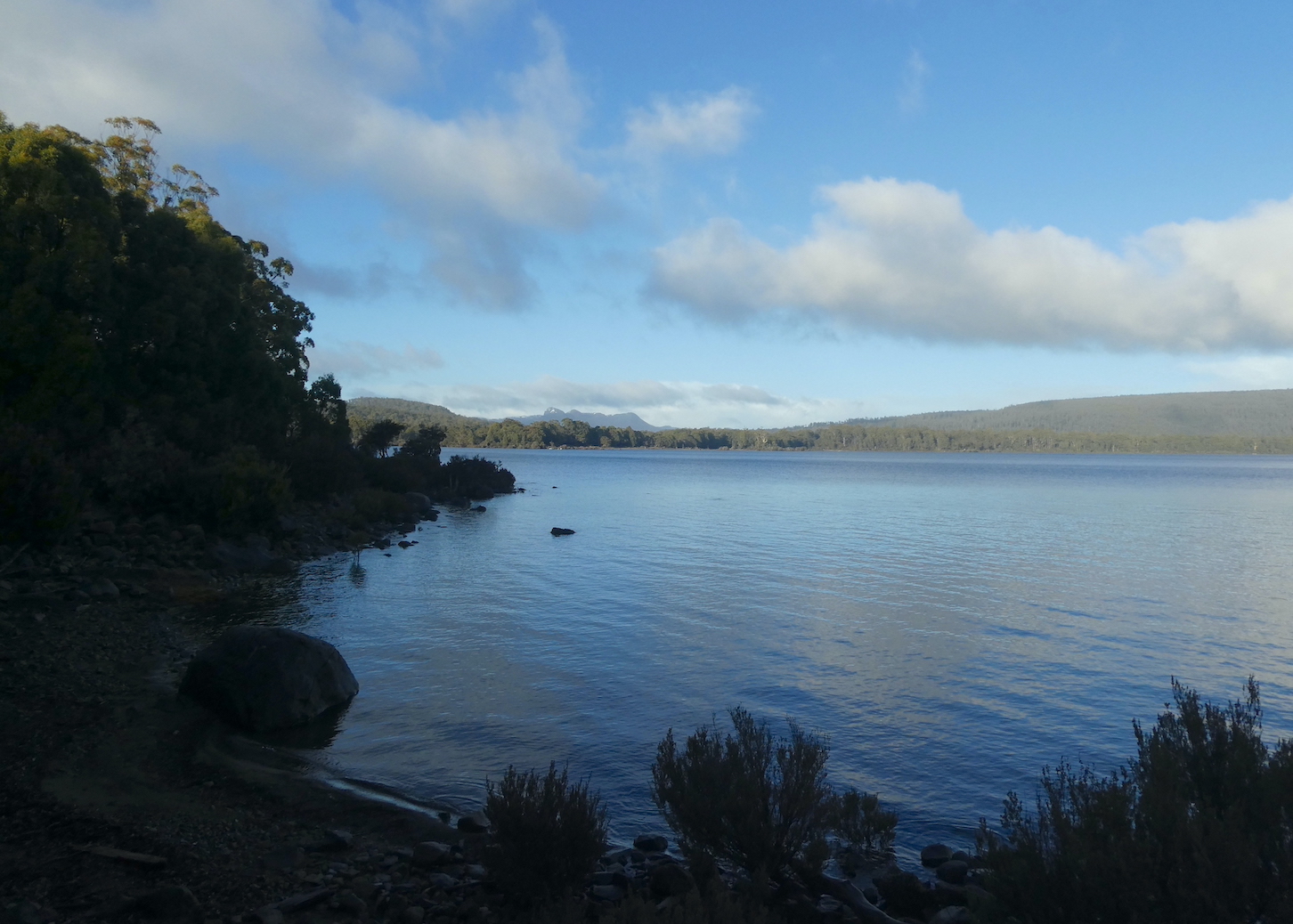
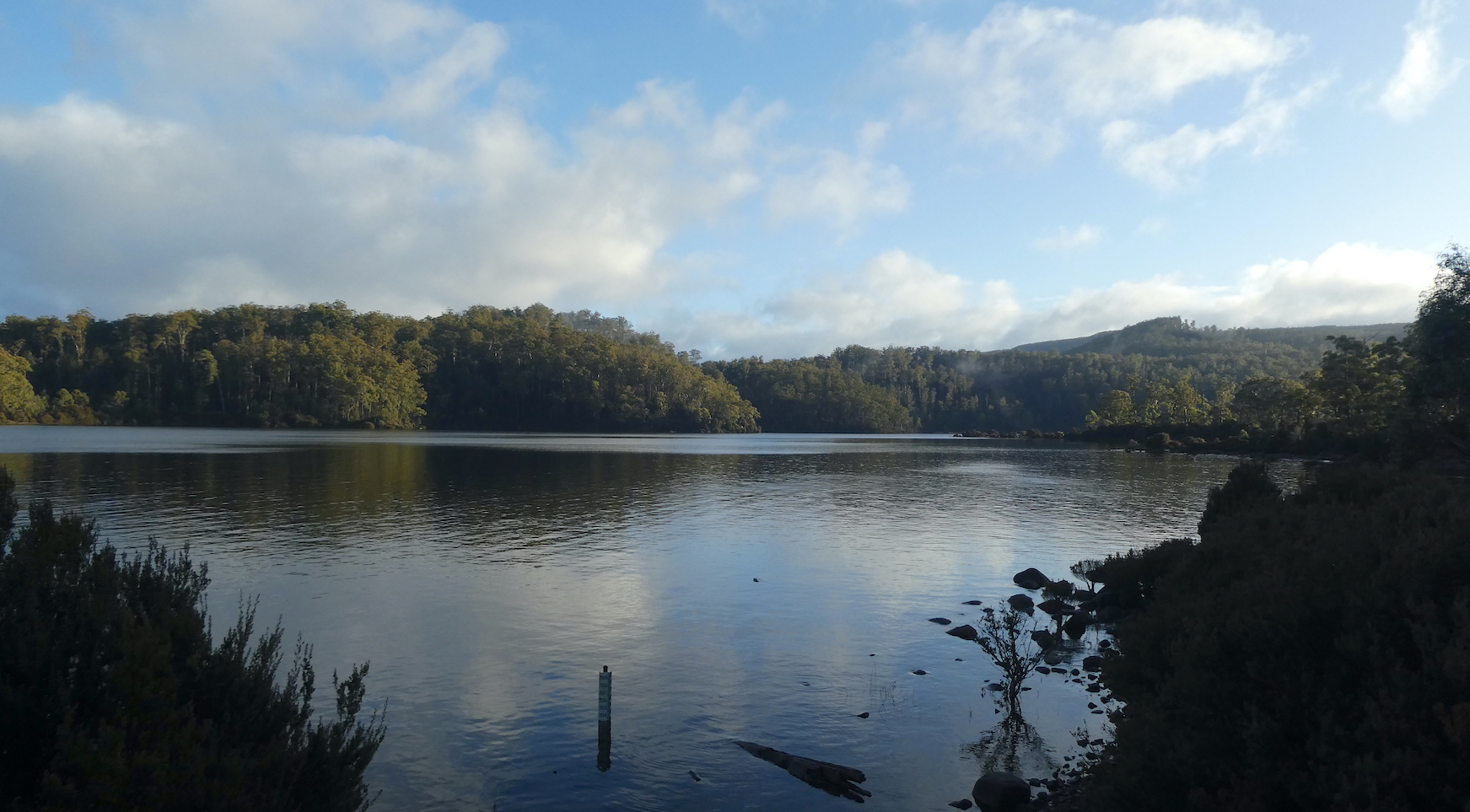
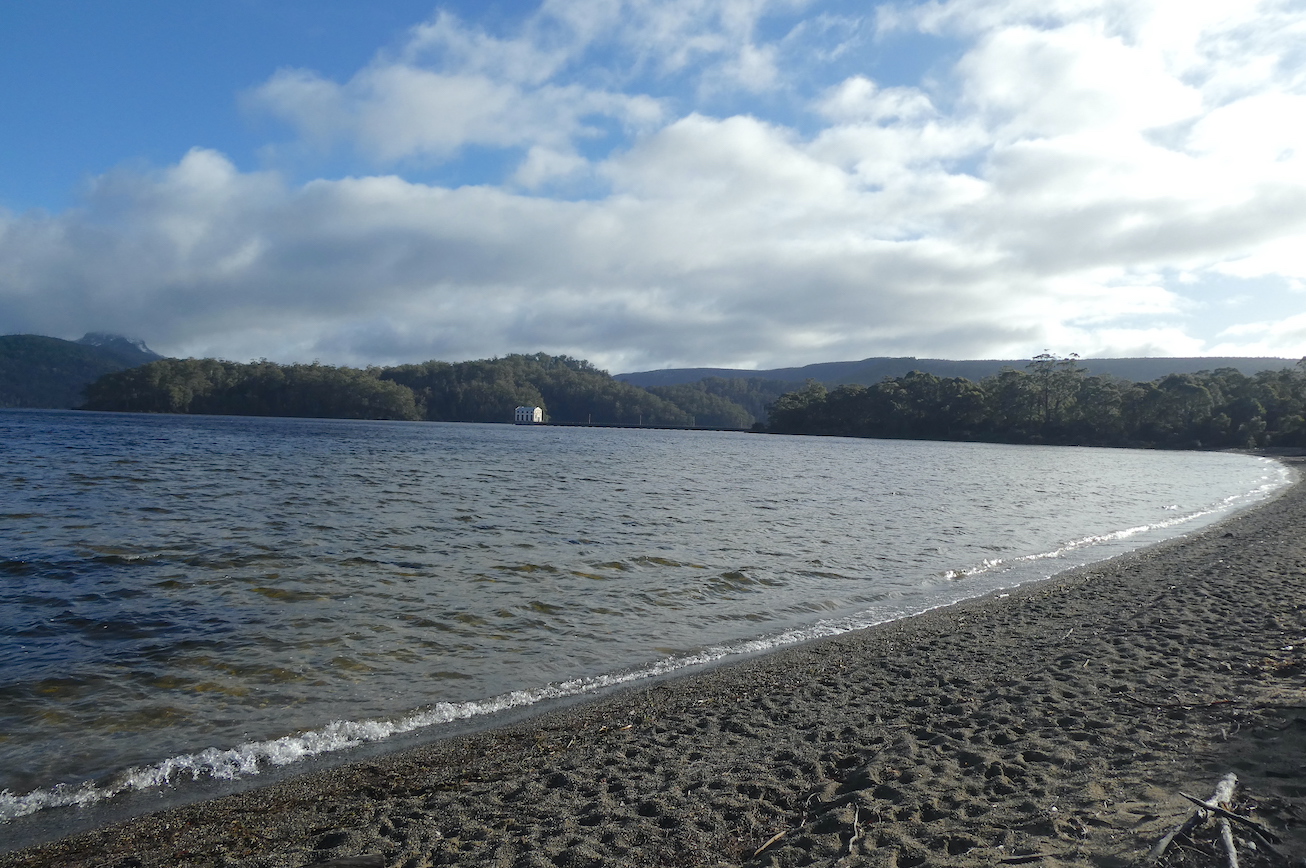
Fuelled for some exercise by a hearty breakfast, we embarked on the Frankland Beaches walk. The 3km track meanders along beaches and glacial moraines as it  follows the shoreline of Lake St Clair, Australia’s deepest fresh water lake.

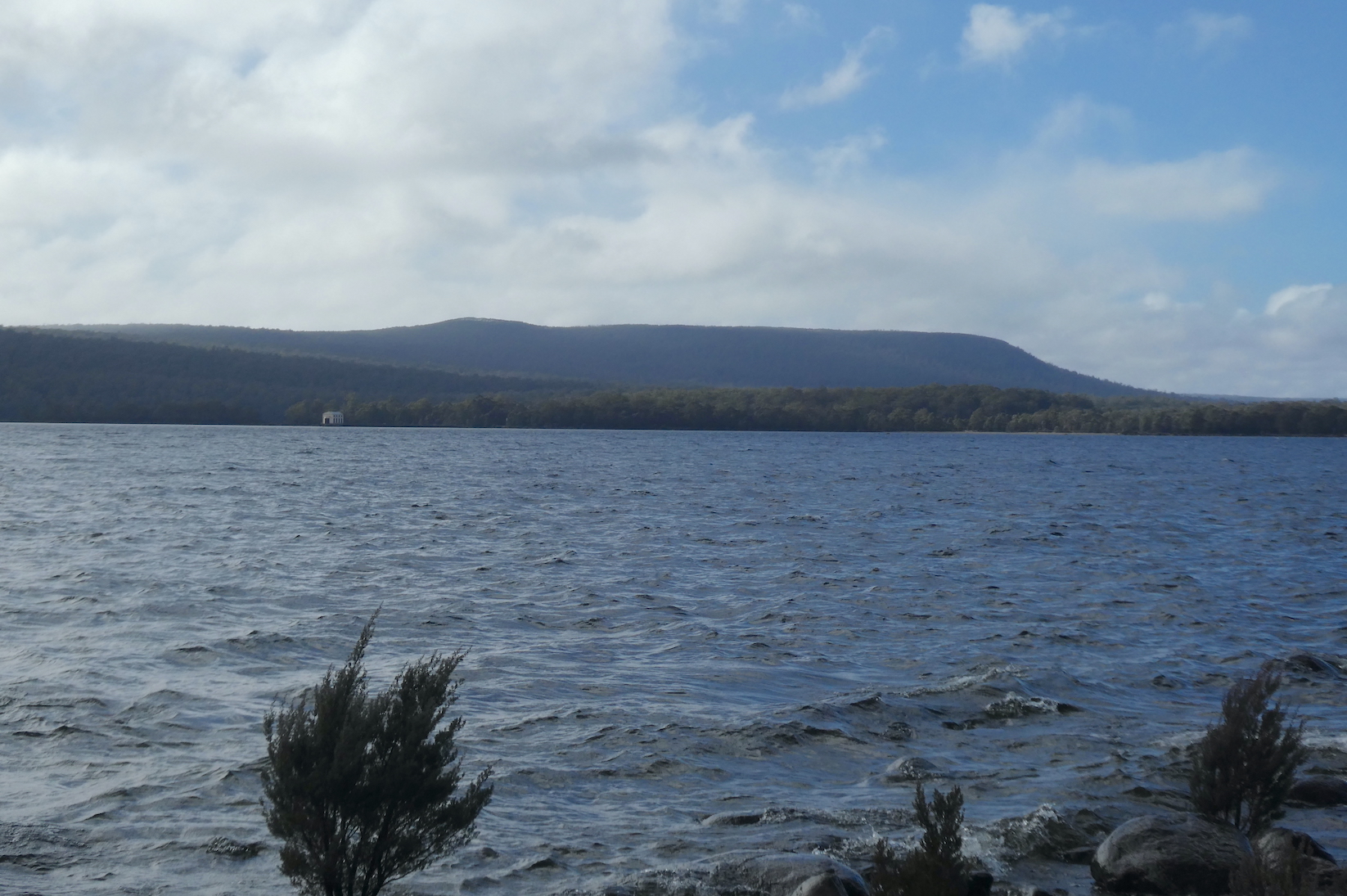
We warmed up with a hot chocolate and Drambuie chaser at Lake St Clair Visitor Centre before our return trek. Viewed from Cynthia Bay jetty, our destination was a mere speck in the wilderness.

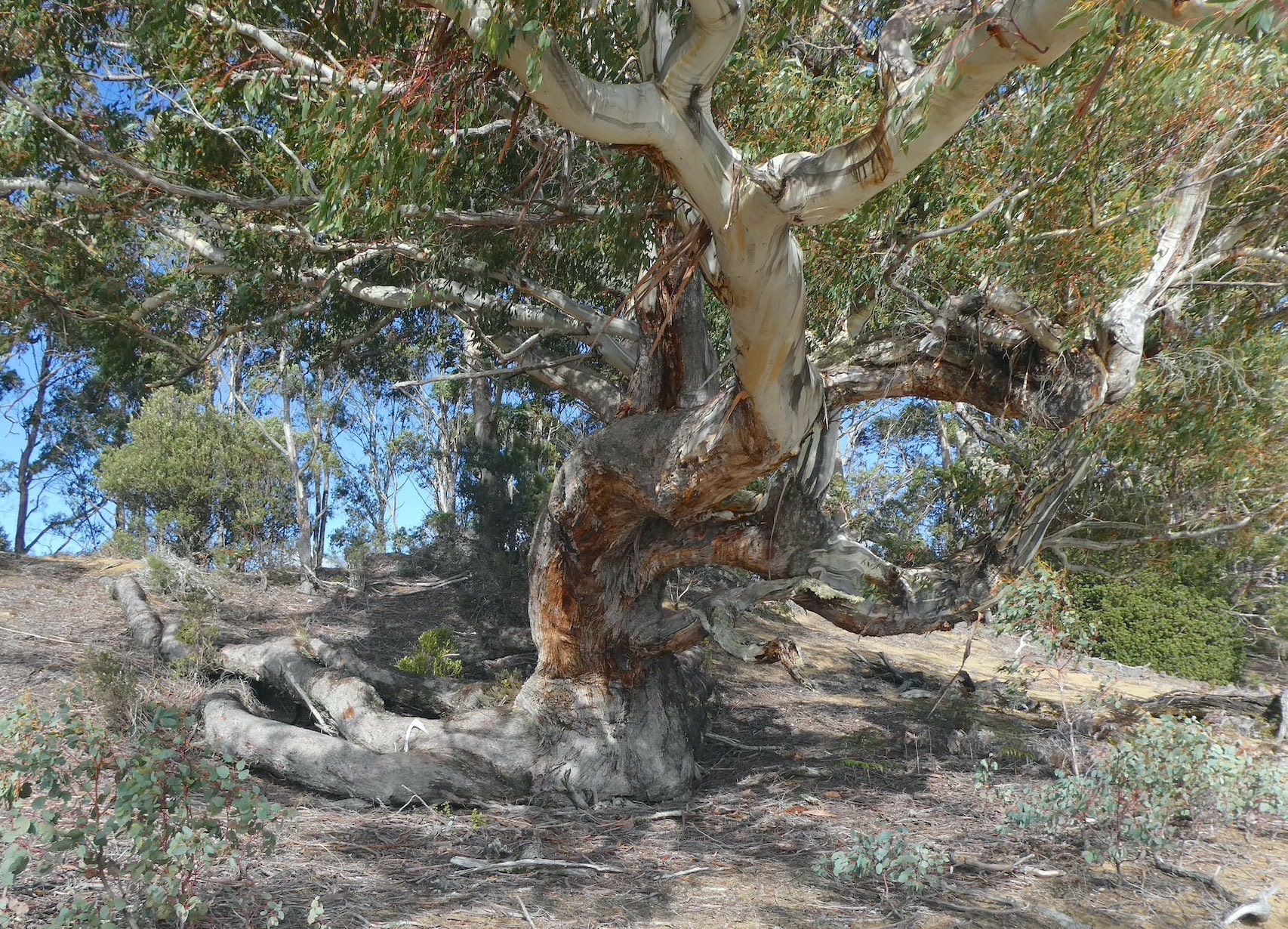
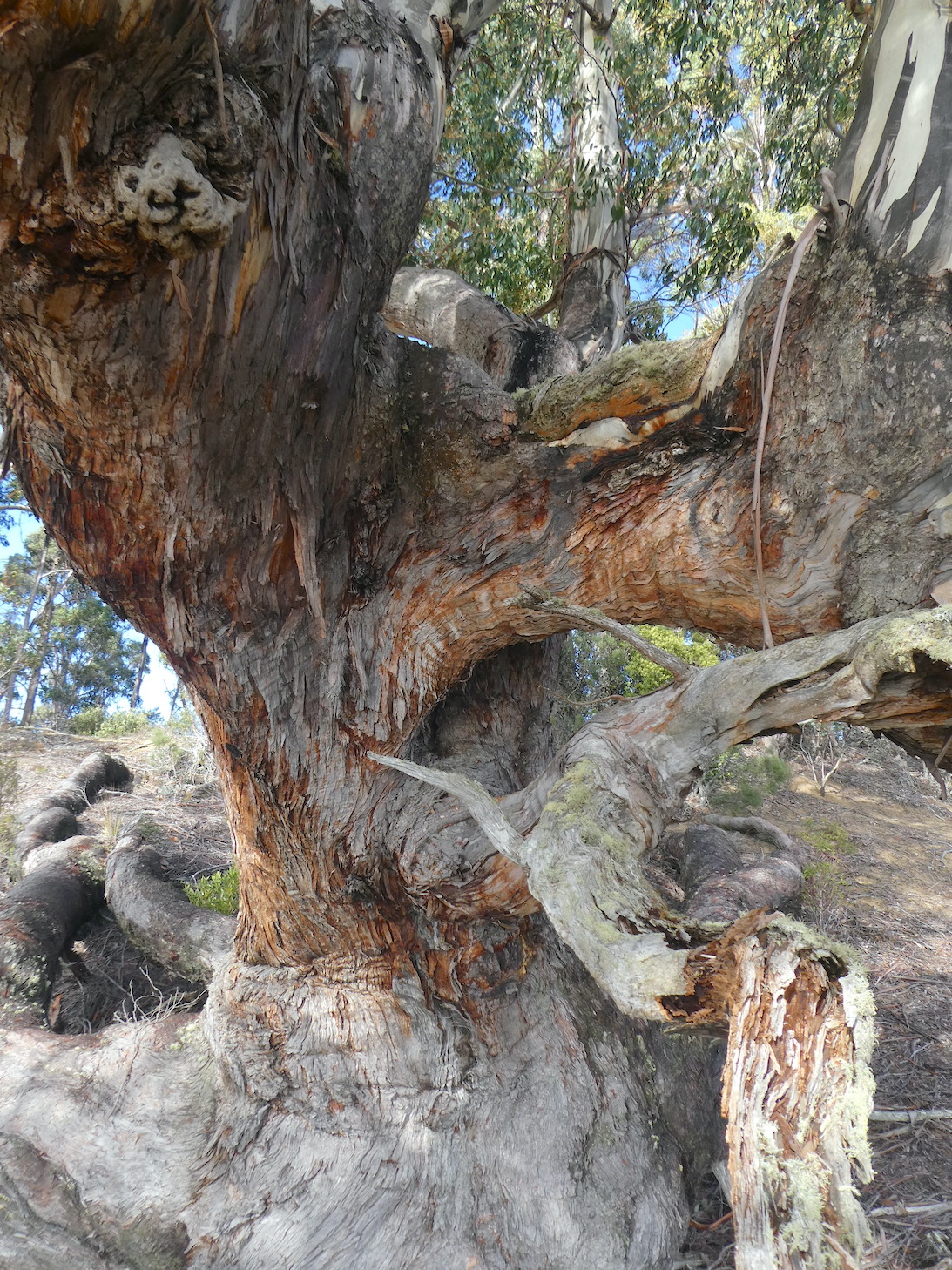
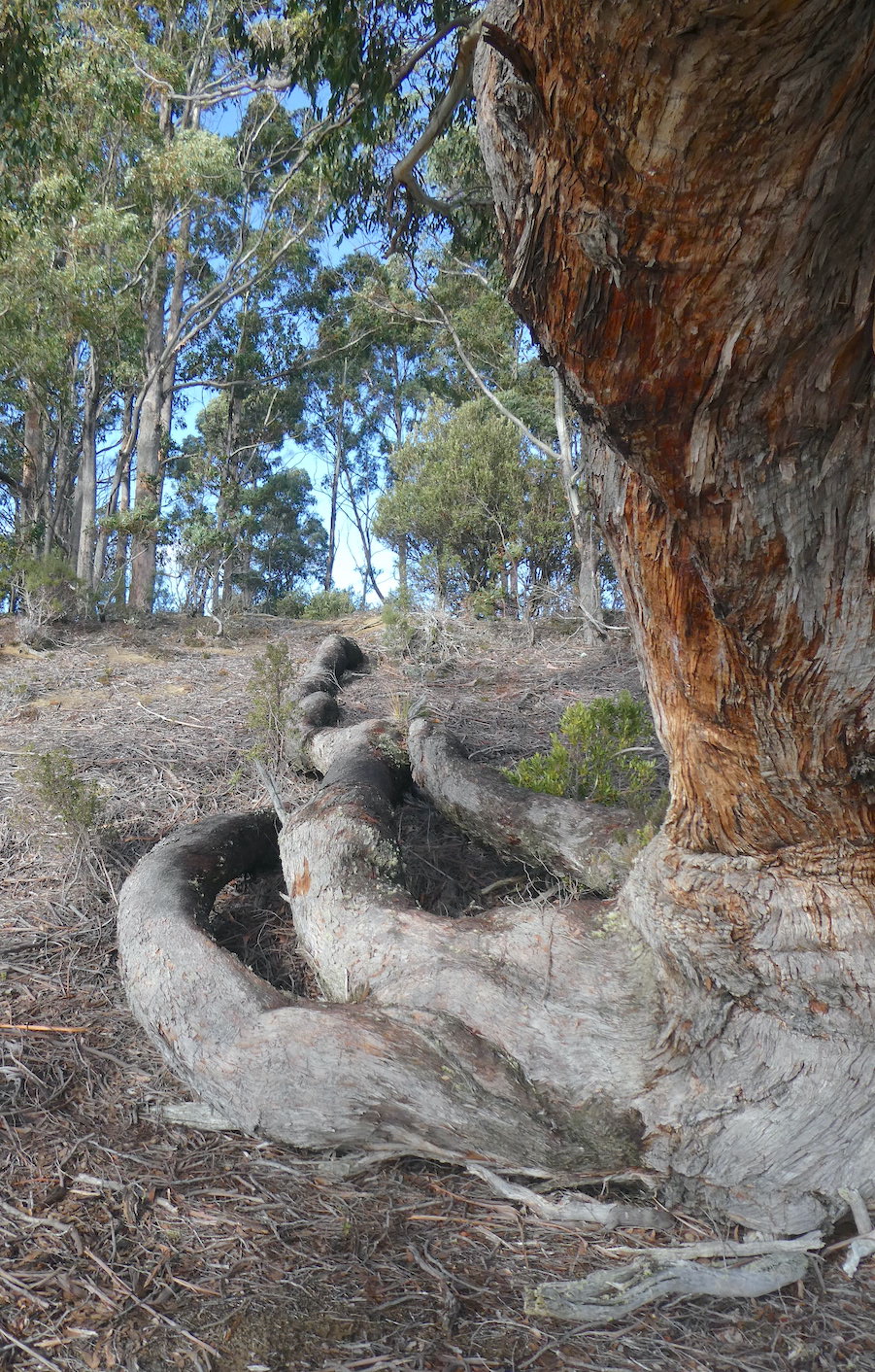
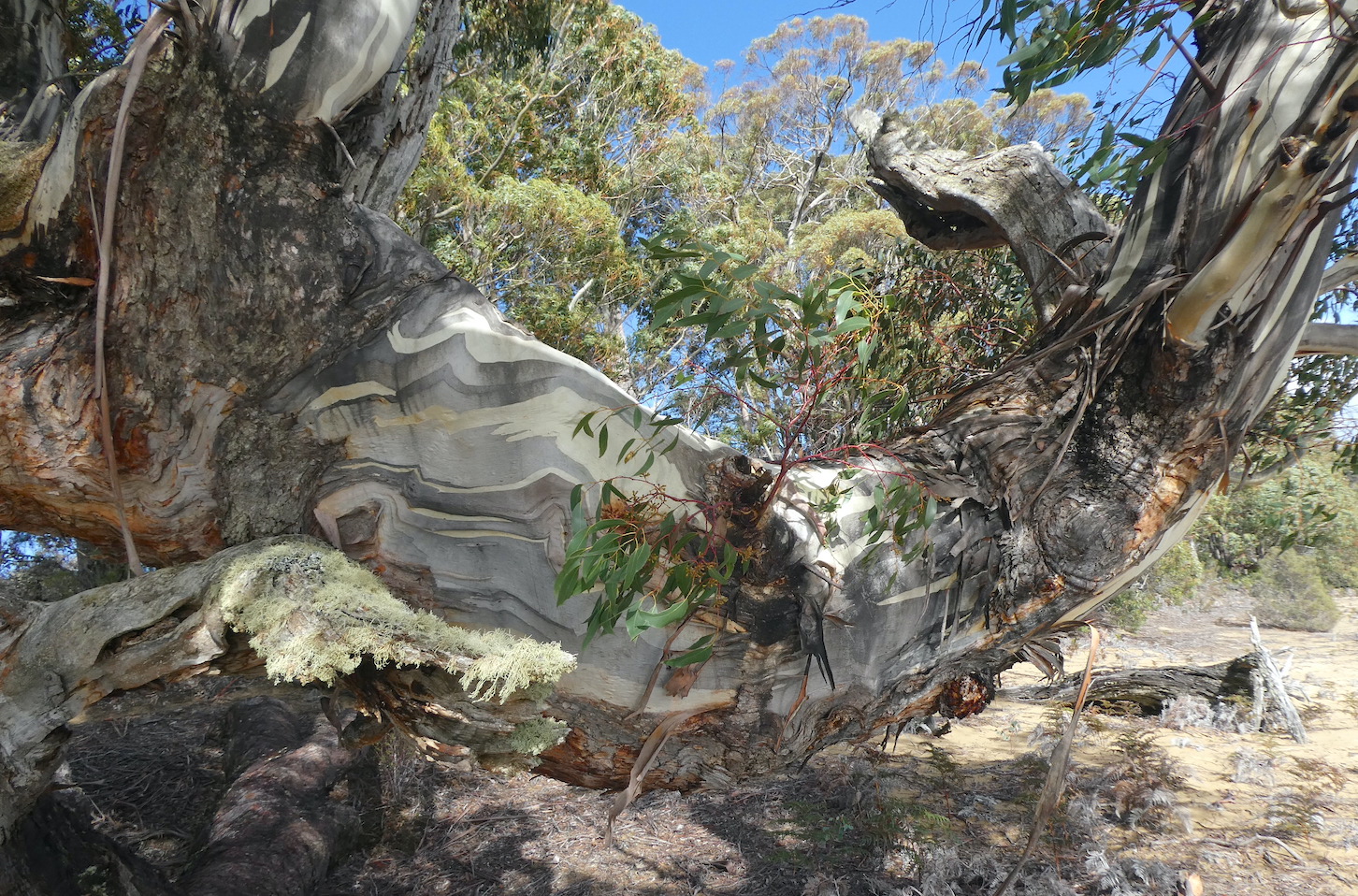
Along the way, nature exhibited her artistic talents,

this tree is a sculptural masterpiece.

We assembled a picnic lunch from the larder and settled into the lounge to savour the surroundings as much as the food.

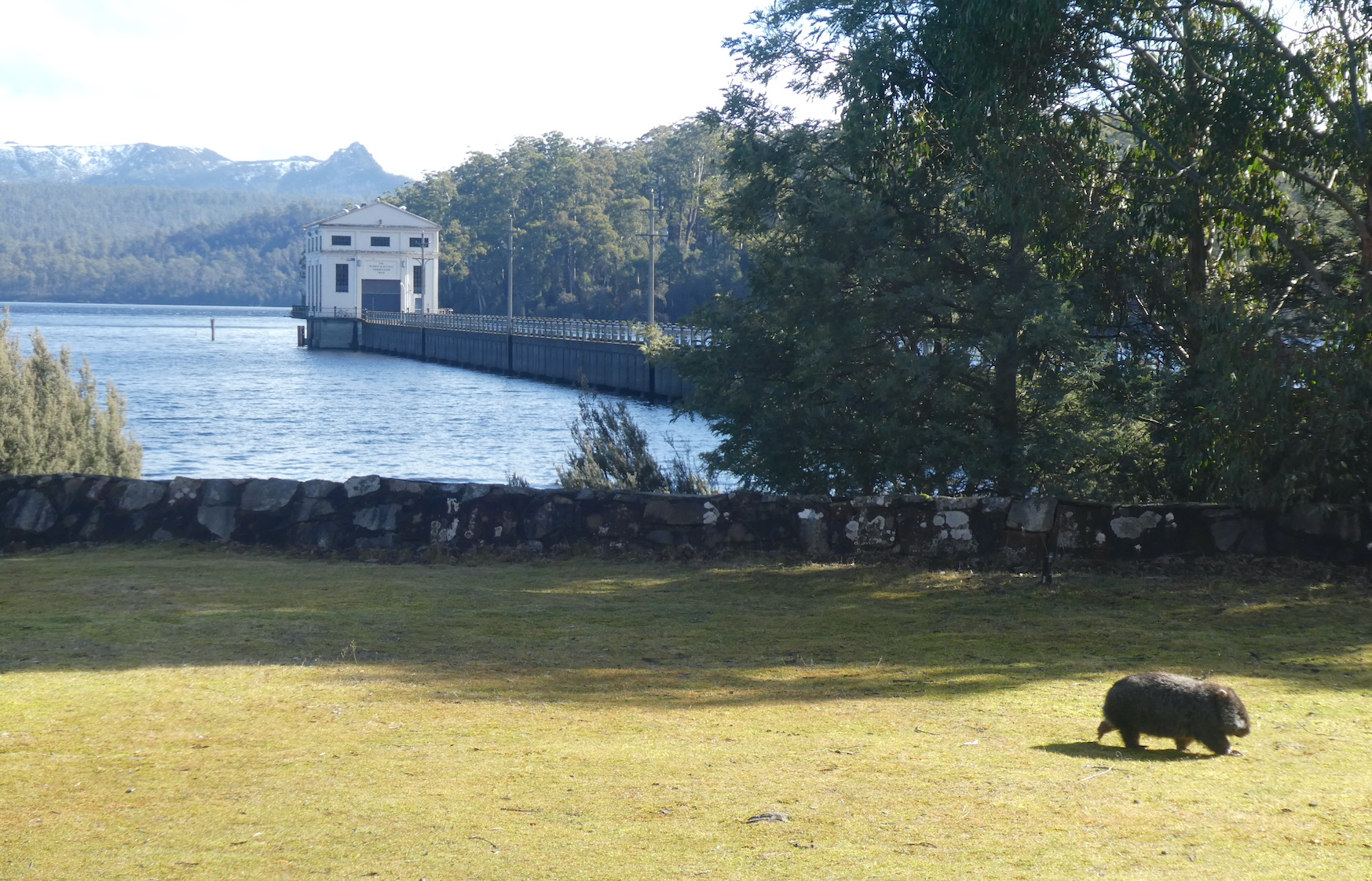
Michael insisted I endure an hour long massage, a relaxing indulgence that wasn’t on the menu when we last stayed. Once I had recovered, we wandered across the flume to The Pumphouse for a nostalgic reminiscence

before returning to freshen up for another evening of delicious food and interesting repartee with a different group of travellers. Our adventure was over far too soon and, even though the gloomy skies had returned, another day or two would have been very welcome. A three night weekend stay is next on the list.

Low Head

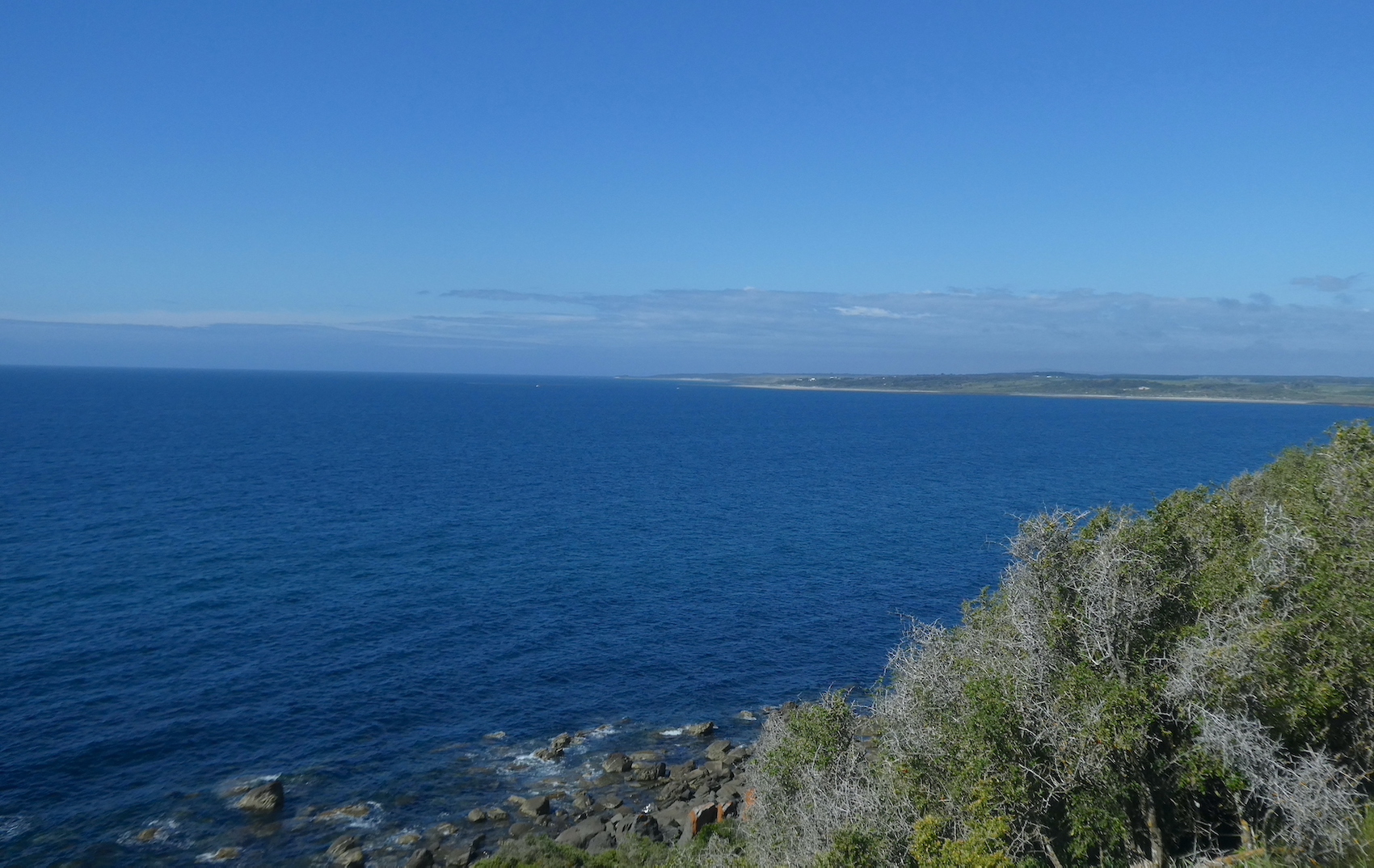
There are so many beautiful places to visit along the Tamar River, and a scenic forty minute drive from Launceston, the most sublime can be found as the waters empty into Bass Strait. It is impossible to feel anything other than calm when arriving at Low Head, surrounded by the blues and greens that only nature can bestow. This fabulous old Queenslander can be rented as holiday accommodation, with a view like that I don’t think I would ever want to leave.

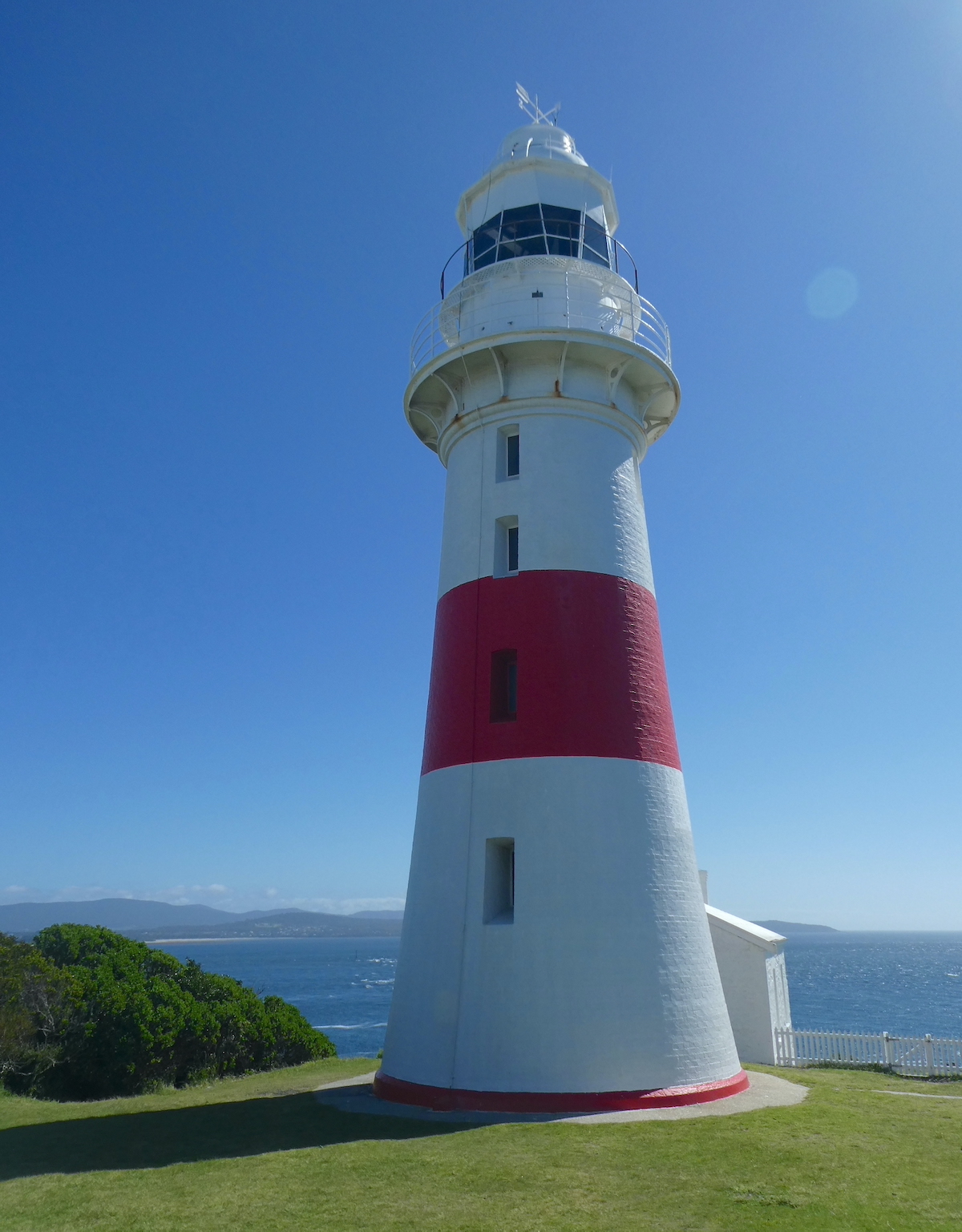
In 1798, explorers George Bass and Matthew Flinders circumnavigated Tasmania in their vessel, Norfolk and proved the existence of a strait separating the island from Australia (apparently, it took a long time to dig that ditch). With much difficulty, they located the mouth of the Tamar River and made landfall seven kilometres up river at Port Dalrymple, now called Georgetown. Ten years later, the crew of Hebe found the entrance more than ‘difficult’ and came to grief on the treacherous reef, the first of nine shipwrecks to come. Consequently, convict labour set to work to construct Tasmania’s second (Australia’s third) lighthouse from local rubble with a coat of stucco to help with durability and a lantern room built of timber.

First lit in December 1833, the structure slowly deteriorated and was replaced in 1888 with the double brick version still standing today. Originally painted solid white, the red band was added in 1926 to improve visibility during daylight.

The initial four-roomed lighthouse keeper’s quarters were attached to the base of the tower, as seen in this illustration that is exhibited at the site.

A new Head Keeper’s quarters was built in 1890 (now available as holiday rental) and an Assistant Keeper’s quarters followed in 1916.

Tasmania’s only foghorn was installed at Low Head in 1929. For those who might understand, it is one of the largest Type G diaphones ever constructed and is one of only two of the type functioning in the world today. Decommissioned in 1973, it was restored by a group of volunteers and became operational again in April 2001.

The foghorn is sounded at noon each Sunday and can be heard up to thirty kilometres out to sea.

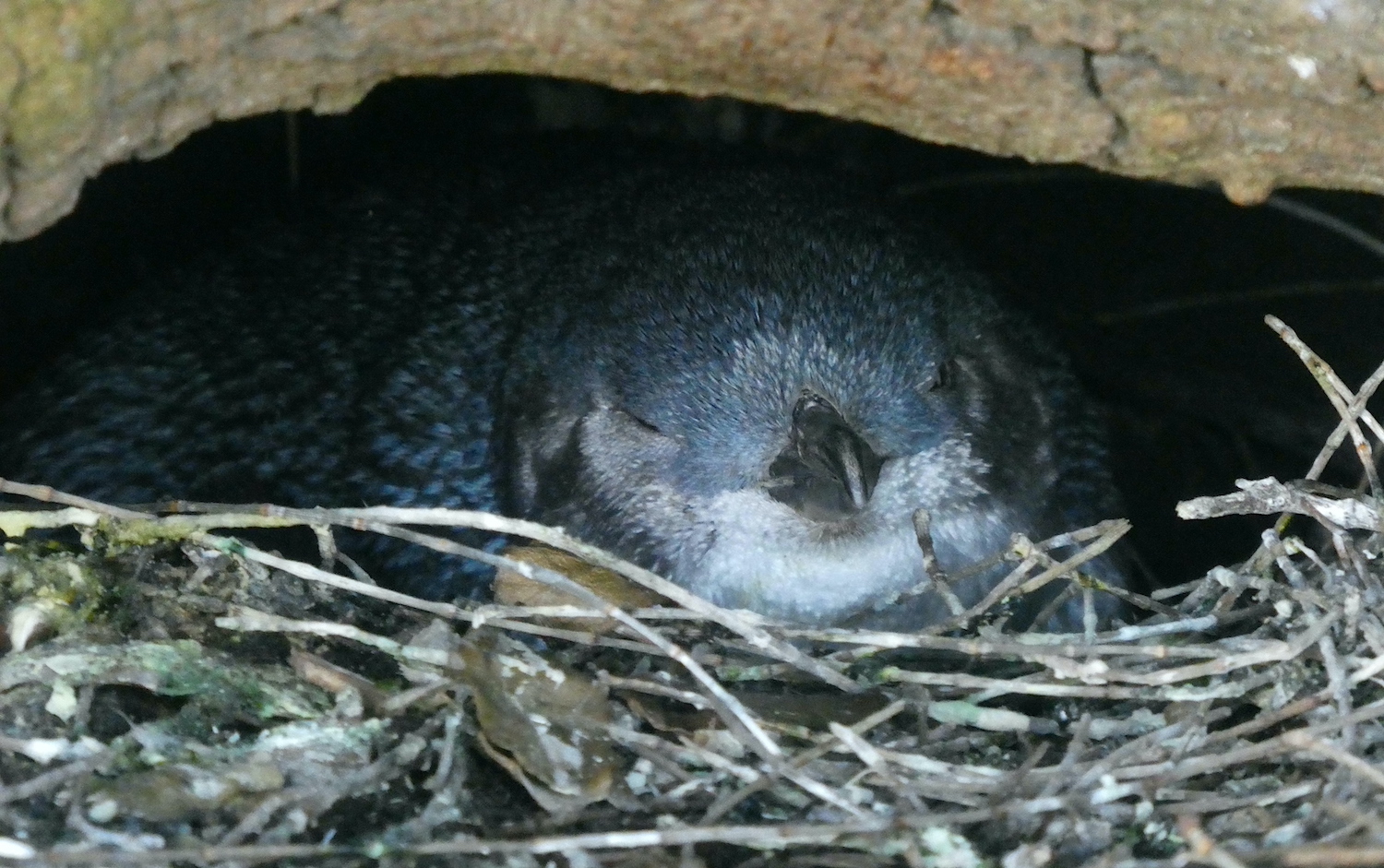
The area around the lighthouse encompasses Low Head Coastal Reserve, home to little penguins, the smallest of all penguin species. Also known as fairy penguins, they are the only species of penguin that are dark blue and white rather than black and white. The Penguin Tour experience sees them waddling back to their burrows after a day in the sea under cover of darkness. We were fortunate to spy this lovely creature settled on the nest, apparently accustomed to human presence.

forest walk

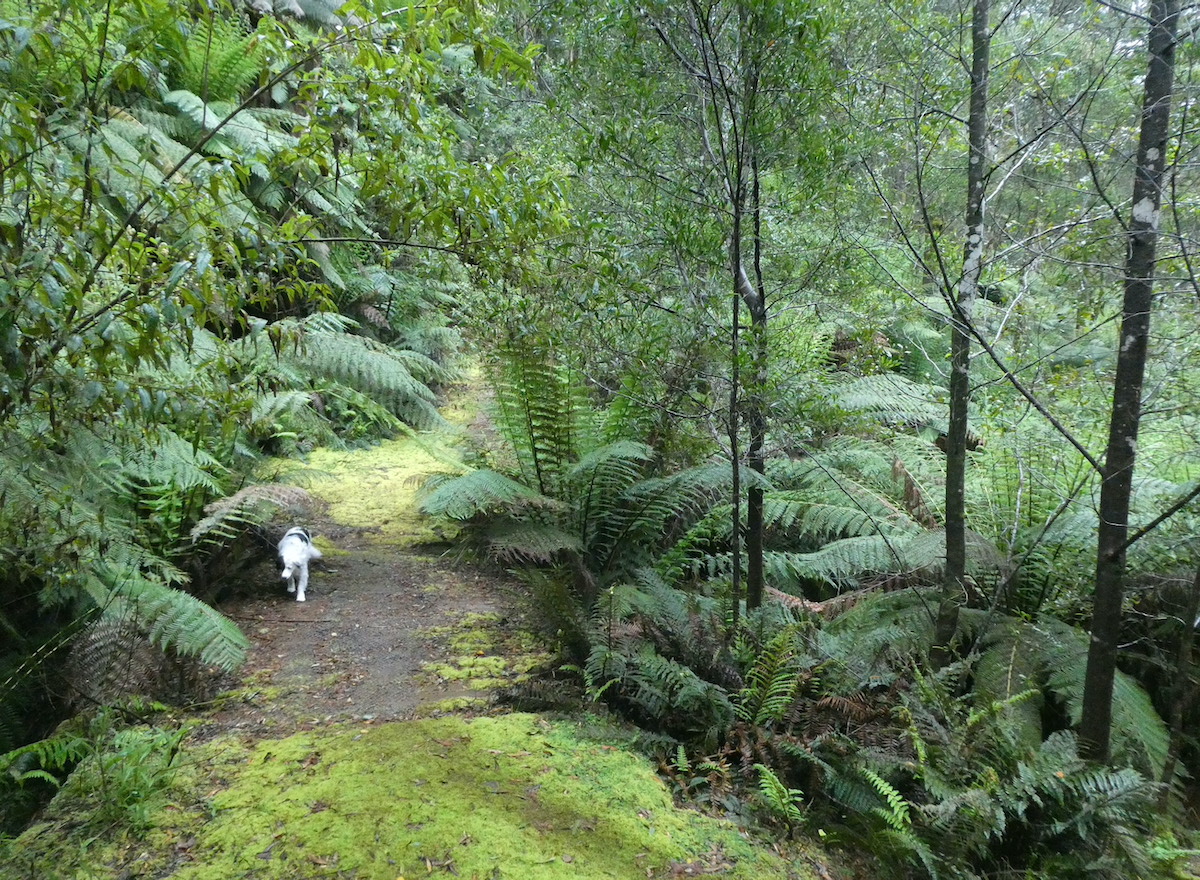
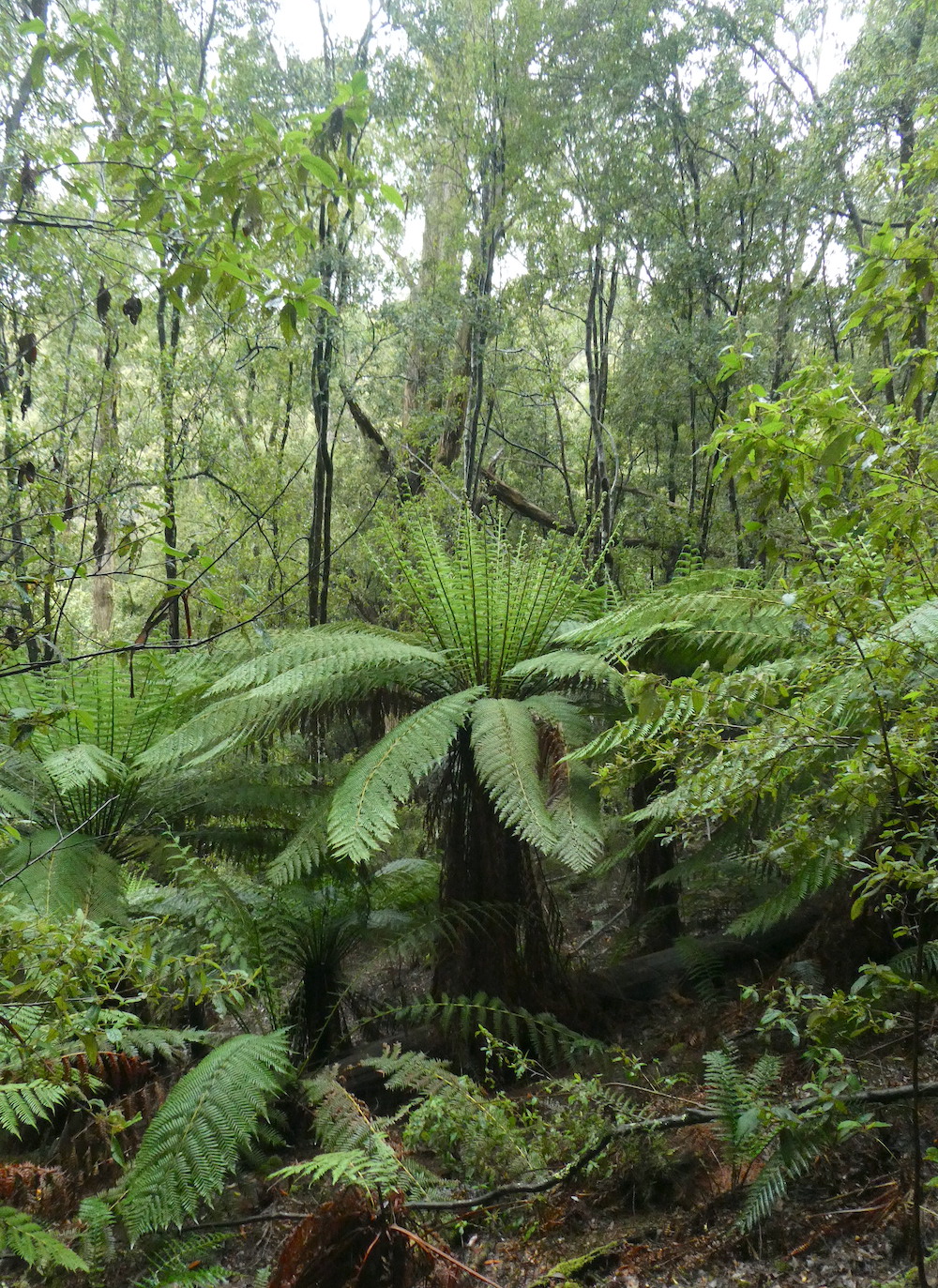
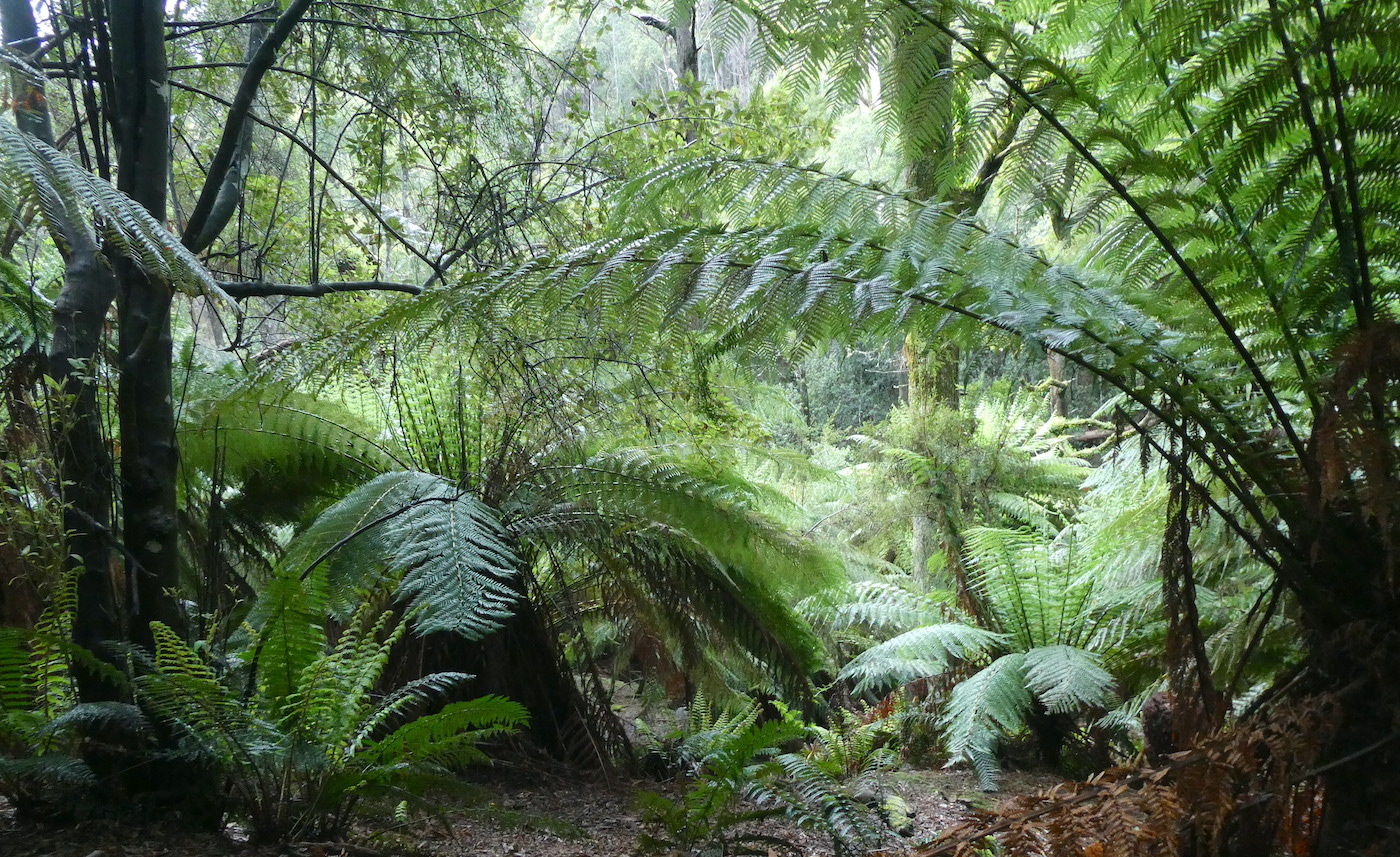
With Michael recently sidelined sporting a badly sprained ankle, I stepped in for Poppy-walking duty. Saturday is always the long walk down the steep hill into our forest. It had been quite a while since my last venture this way and I was amazed how much had changed. The tree ferns are enormous and every shade of green.

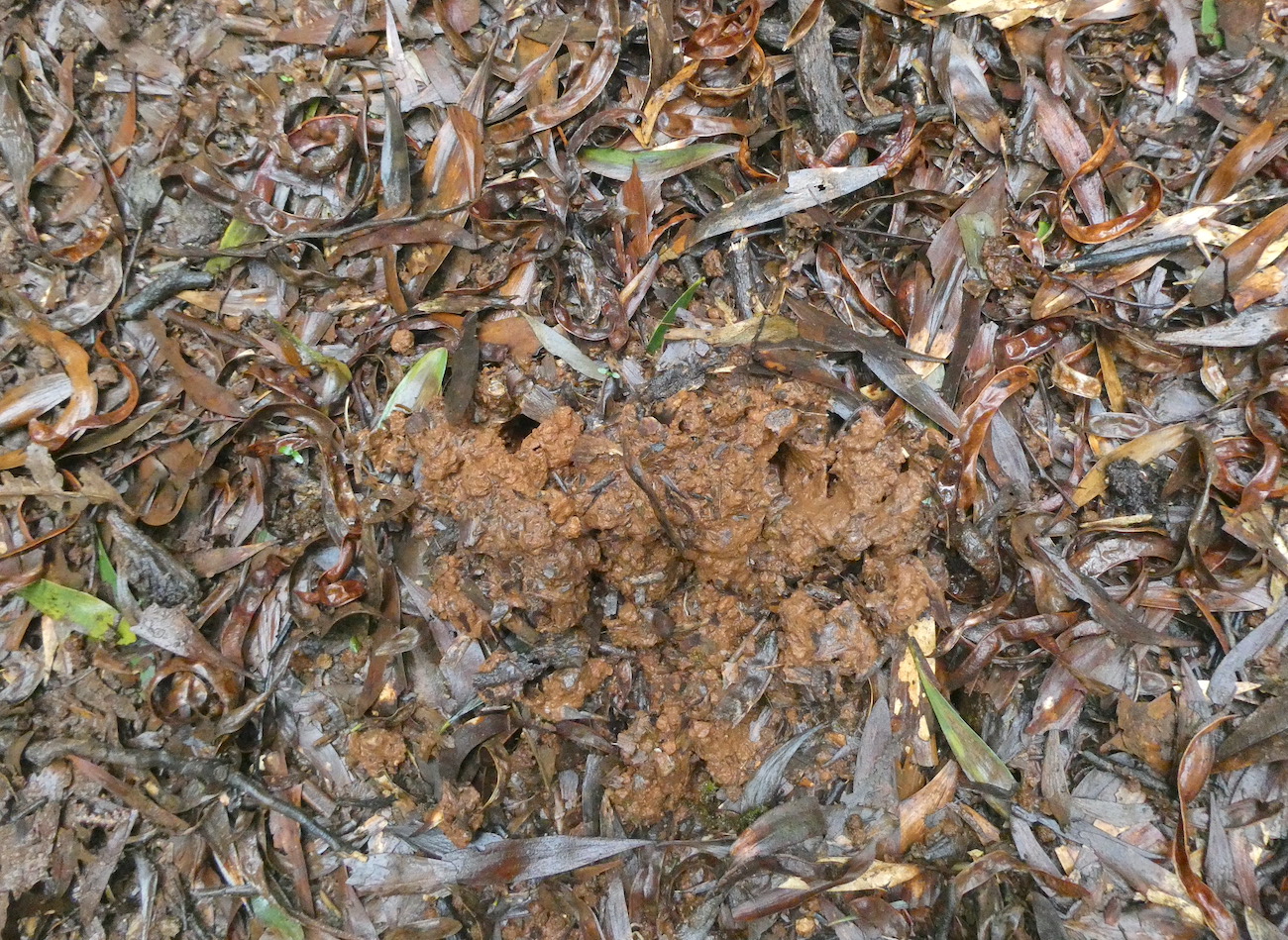
If Michael hadn’t pre-warned me about the crayfish burrows on the path, I probably would have stepped on them. Freshwater burrowing crayfish live in tunnel systems in muddy banks, only venturing out at night or in damp, overcast conditions. The Tasmanian genera has claws that open vertically to the body rather than horizontally to allow for larger claws in narrow tunnels. Characteristic ‘chimneys’, some as high as 40cm, announce the entrance to the burrow.

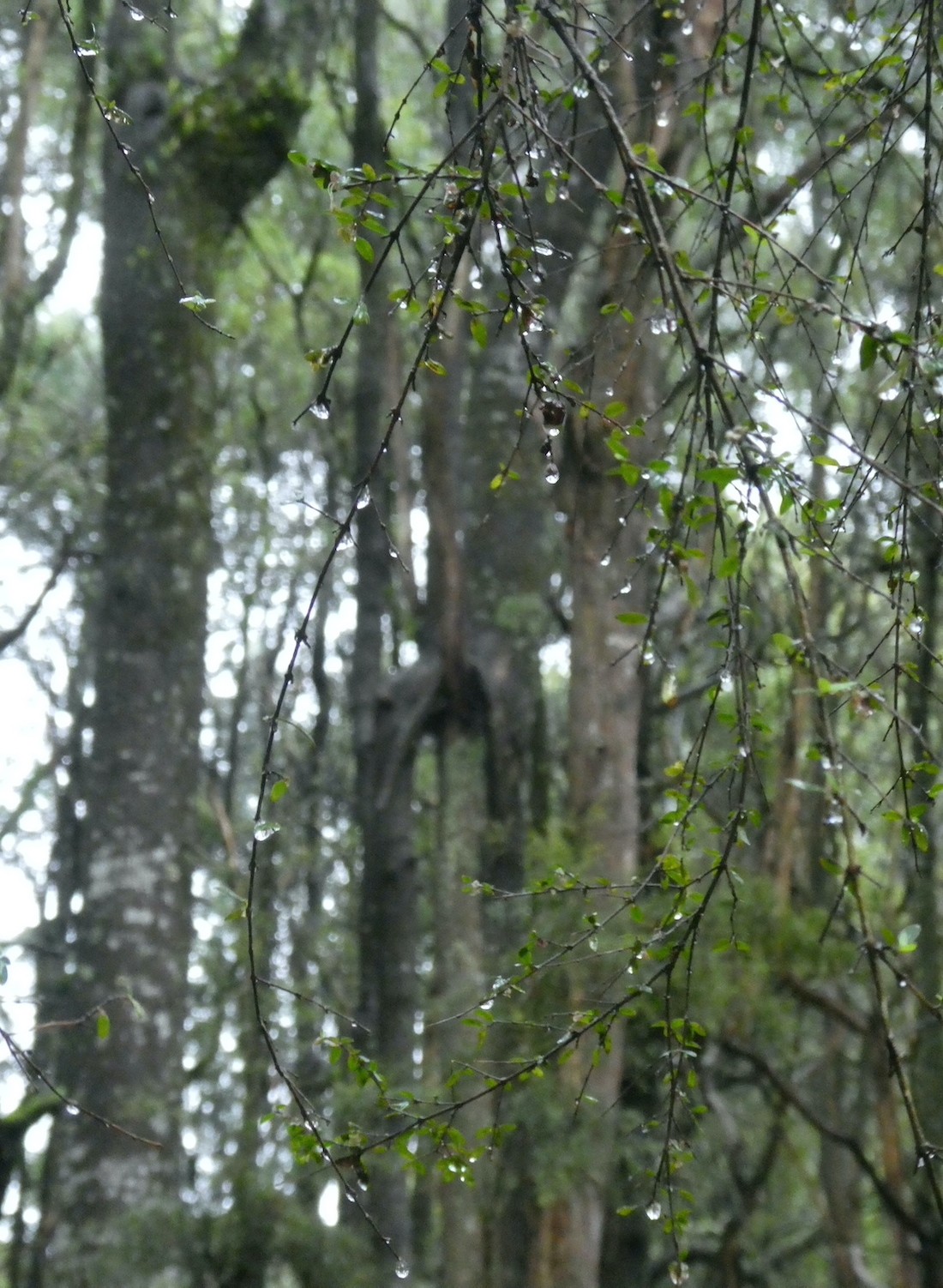
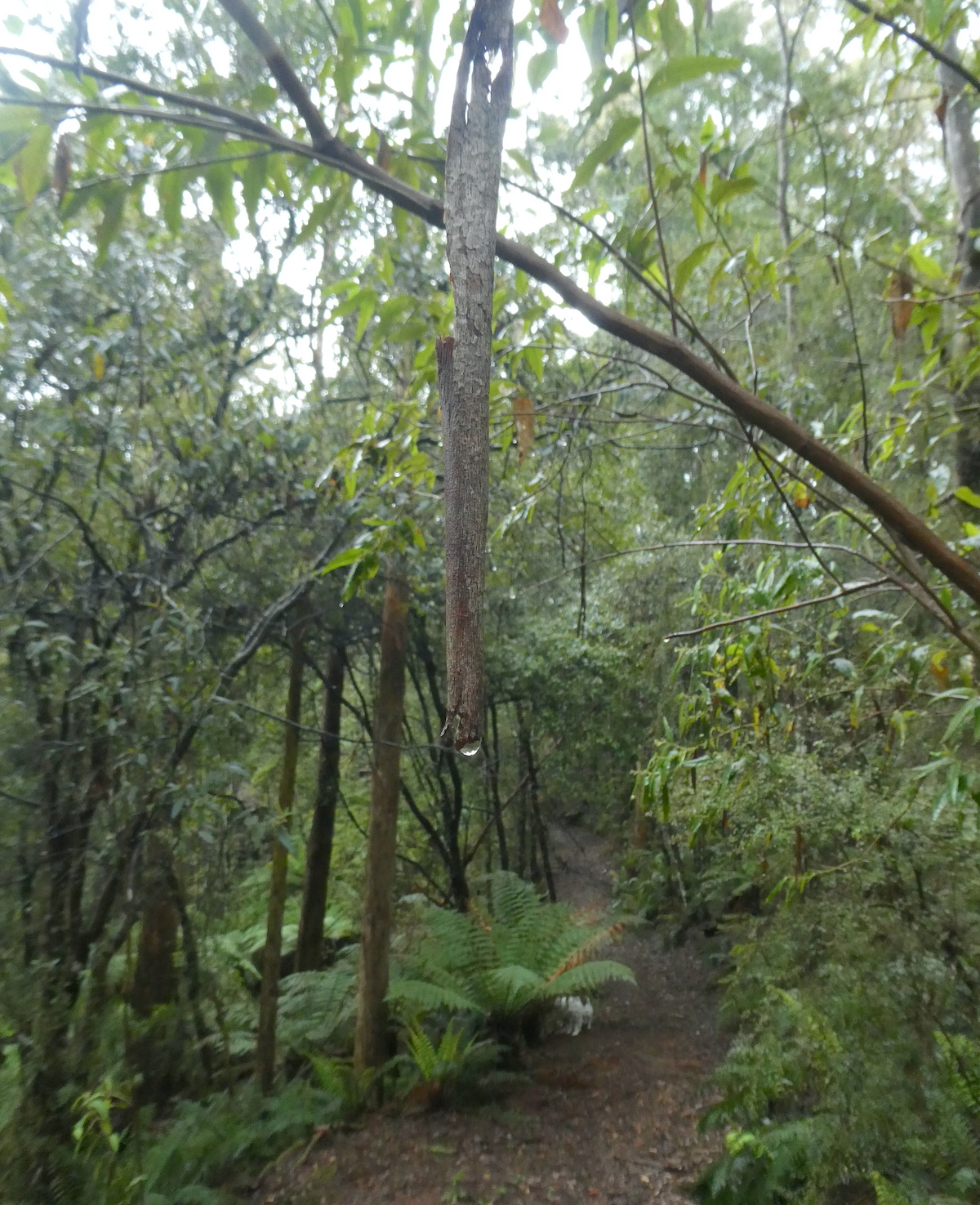
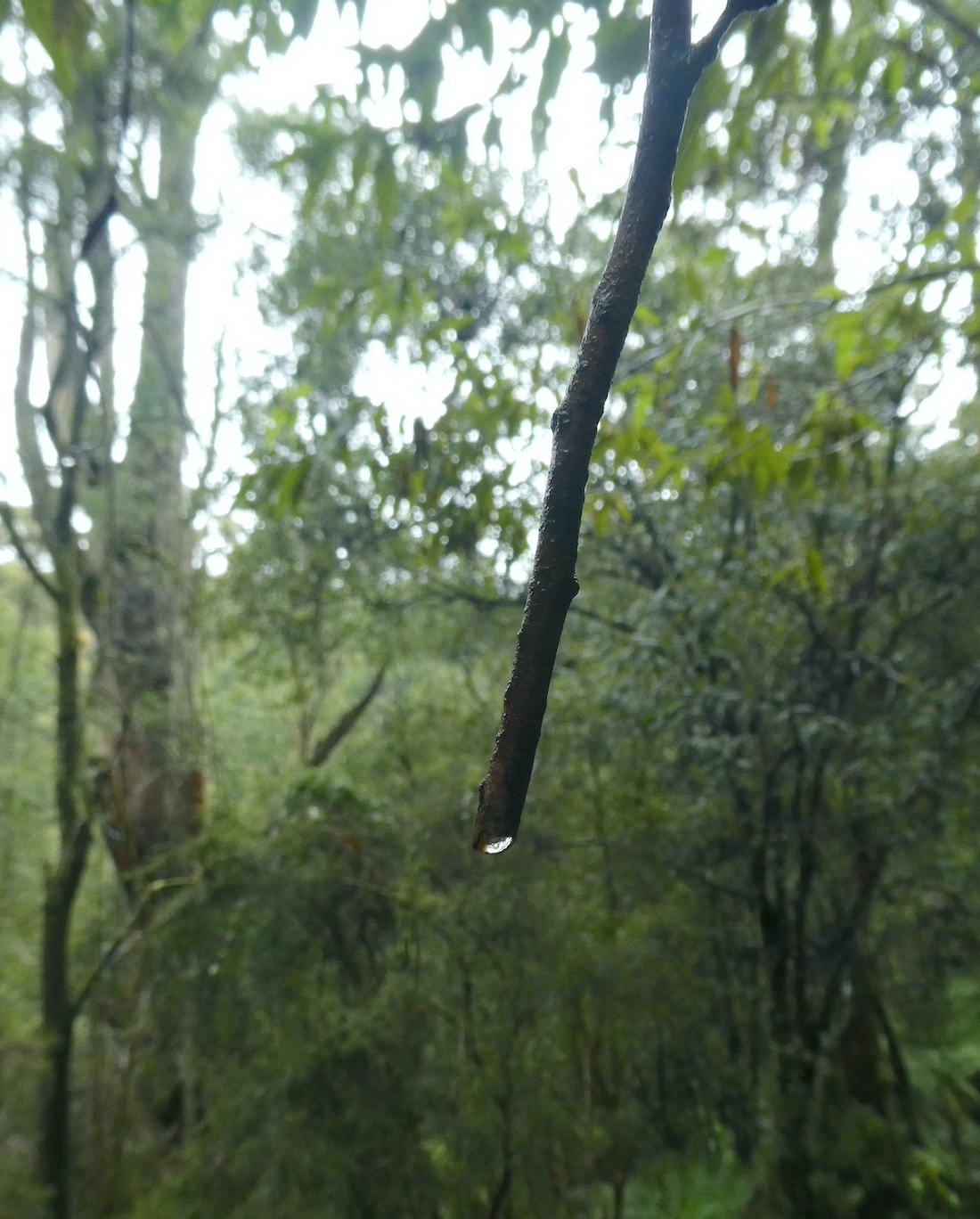
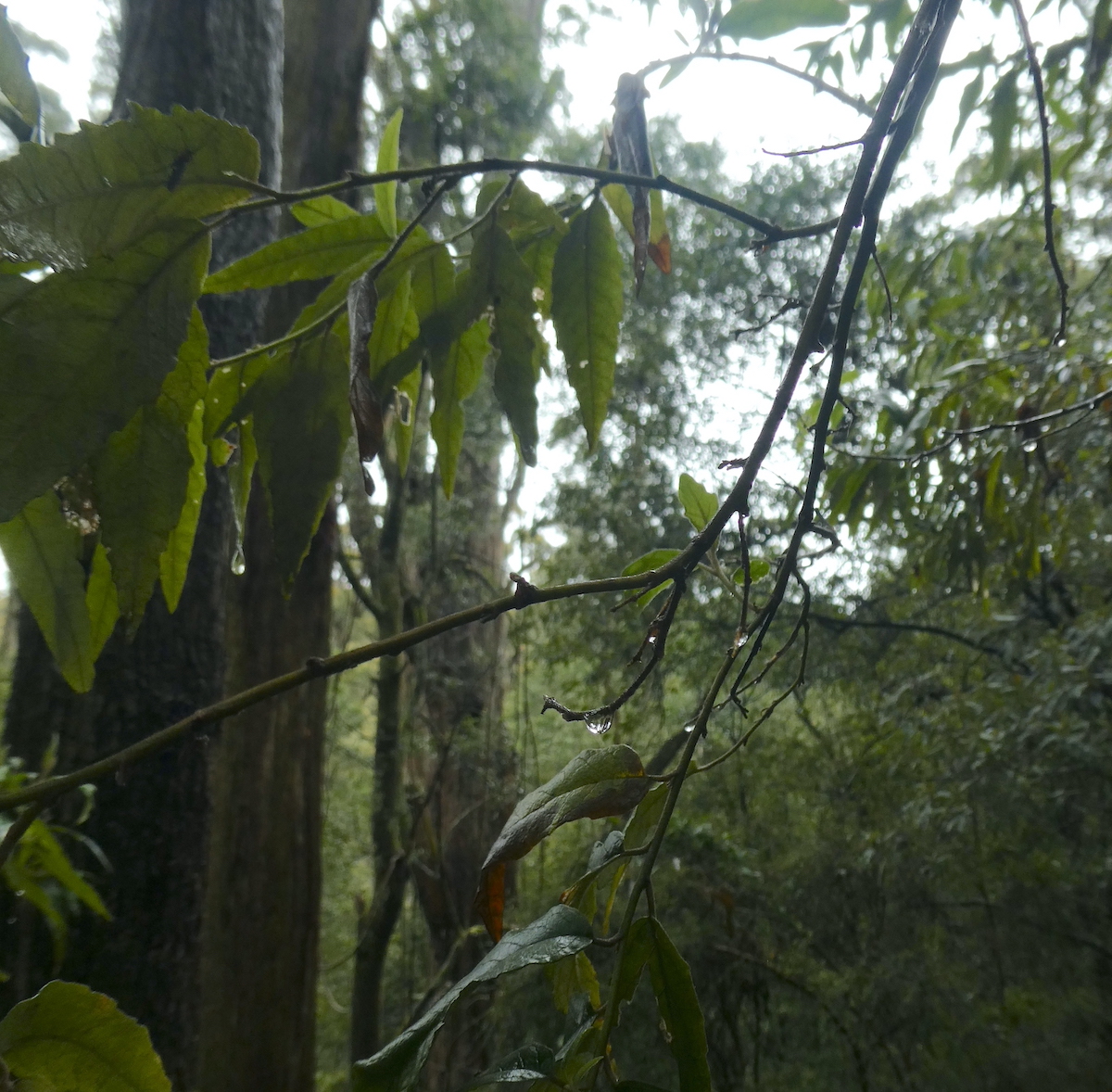
Remnants of an overnight rain shower sparkled on foliage

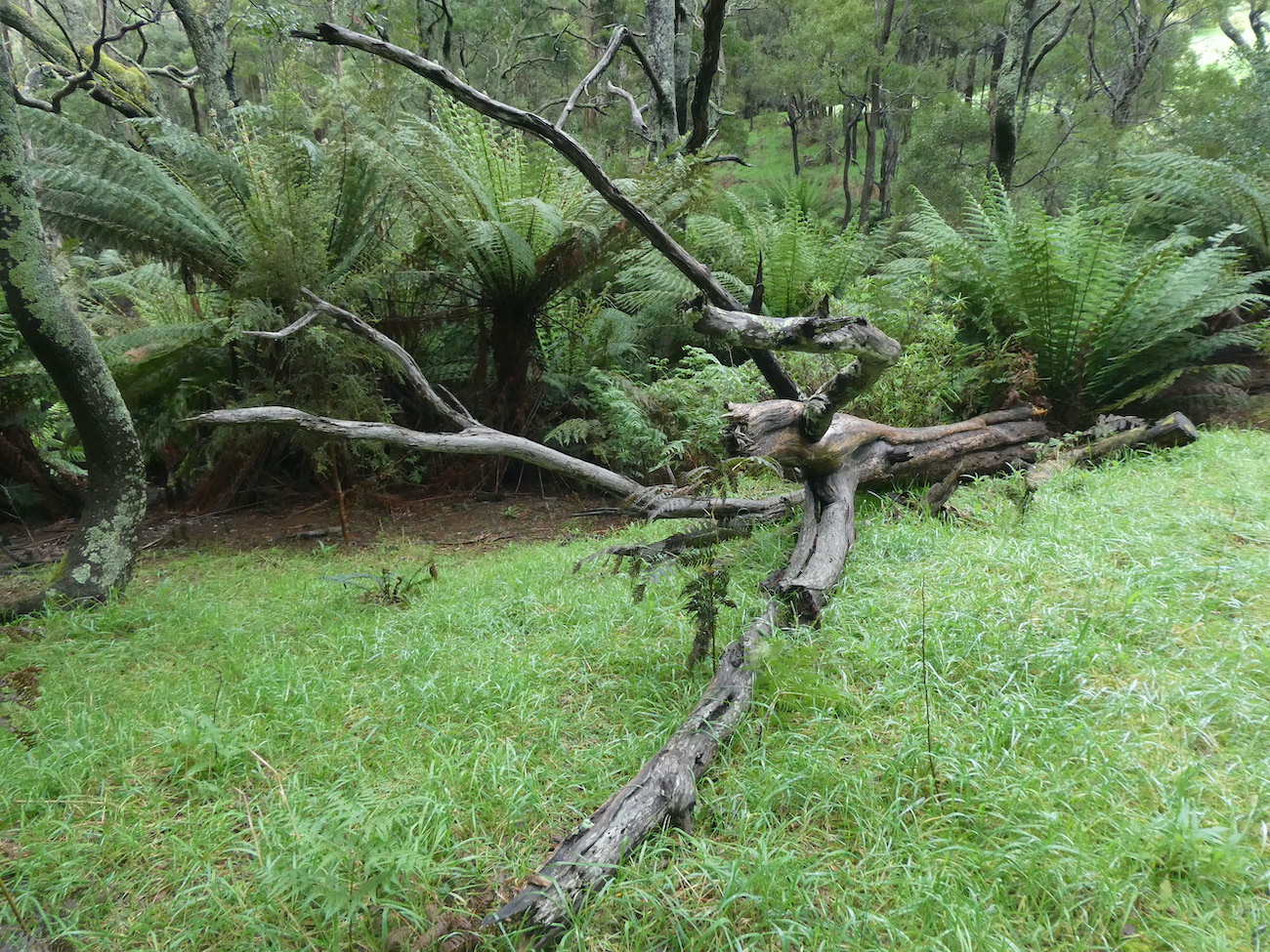
while contorted trees danced amongst their lofty companions.

I dutifully followed Poppy along the boundary of adjoining farmland

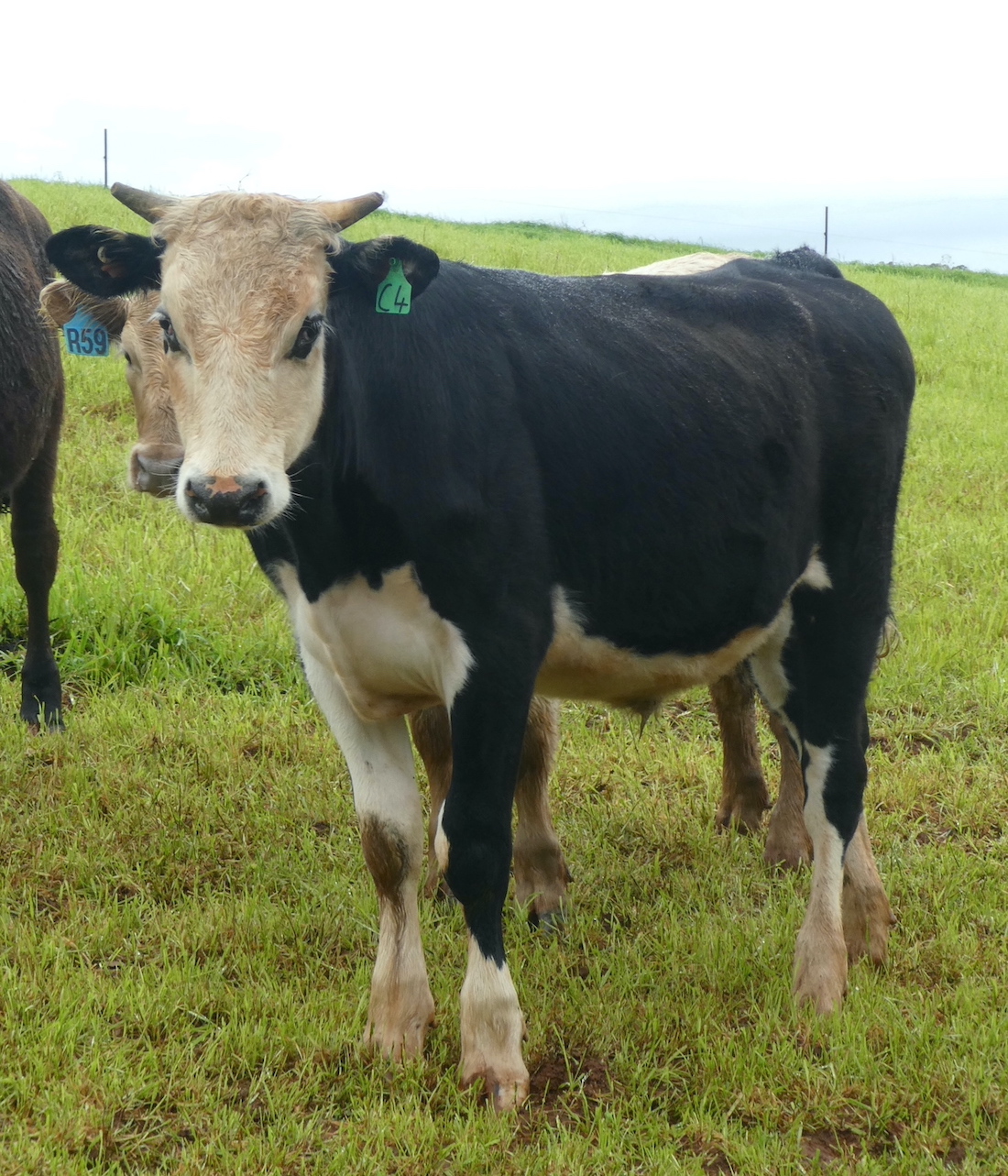
where we attracted the interest of neighbouring cattle who didn’t hesitate to take a closer look.

Our circuit returned us to the forest, the winter season has delivered more firewood from nature,

the manferns are thriving

and the stream is bubbling its way to the Blythe River.

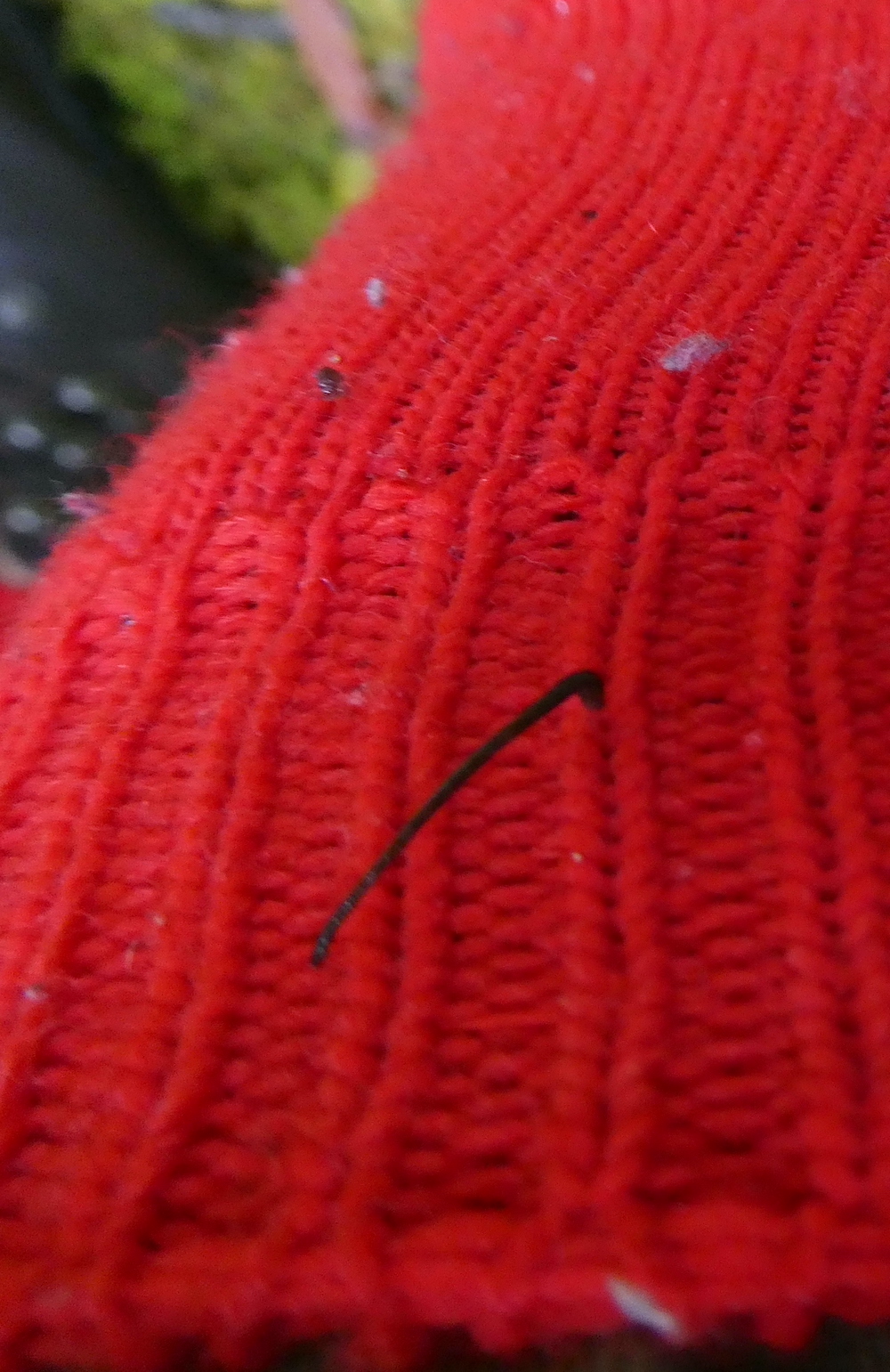
I wisely chose bright red socks for my pilgrimage, all the better to see the leeches that abound in the damp conditions.