angels and martyrs

If I hadn’t been told about this amazing church by a work colleague before leaving for Italy, I’m sure we would have missed it. The façade is somewhat disguised amidst the opulence of the Piazza della Repubblica.

1.facade

The Basilica di Santa Maria degli Angeli e dei Martiri (St. Mary of the Angels and the Martyrs) was built in part of the remains of the Baths of Diocletian, the largest public baths in ancient Rome.

2.facade

It absolutely boggles me that this massive structure was completed in the year 306. It took them seven years but where is that talent and temerity in this technological age? I digress! The siege of Rome brought an end to the baths in 537 when the water supply from the aqueducts was cut off. A priest, wandering through the ruins in 1541, had a vision of angels which Pope Pius IV interpreted as a message from God. He thus ordered the building of the church on the site, dedicated to the Virgin Mary, the angels and the Christians who died during the construction of the baths. The old wooden doors were replaced in 2006 with a very impressive bronze pair by Polish sculptor Igor Mitoraj. The right hand one depicts the Archangel Gabriel and the Virgin Mary, while a risen Christ emerges from the left hand door.

In 1563, Michelangelo was commissioned to design the church but, unfortunately, he died the following year and the work was completed by his student, Jacopo Lo Duca. Stepping through the doors, the sheer magnitude and beauty of the interior was breathtaking.

5.transept

There was so much to take in, around as well as above.

6.dome

The dome originally had an opening in the top to allow rain to fall into the bath waters below but is now filled with a fabulous work of stained glass by Italian artist Narcissus Quagliata.

8.Light and Time

The church is built in the shape of a cross, a magnificent altar at the end of each section.

9.altar10.altar

One of these is the Chapel of St. Bruno,

11.Chapel of St Bruno

the left hand wall filled with a spectacular cherry, walnut and chestnut organ built by Bartélémy Formentelli. Inaugurated in the year 2000, the organ has 5,400 hand-made pipes and is often used for concerts.

12.organ

I can imagine listening to the incredible sounds while slowly dissolving into the ceiling.

13.ceiling Chapel of St Bruno

There was so much to absorb, from stunning stained glass windows

to statues, frescoes, ceilings and the 3D design of the marble floor.

23.marble floor

Following directions to the sacristy, we passed through a room with exhibits displaying the history of the baths before entering a tranquil courtyard. We were greeted by an imposing bronze statue of Galileo Galilei, a gift from China designed by Professor Tsung Dao Lee, winner of the 1957 Nobel prize in Physics.
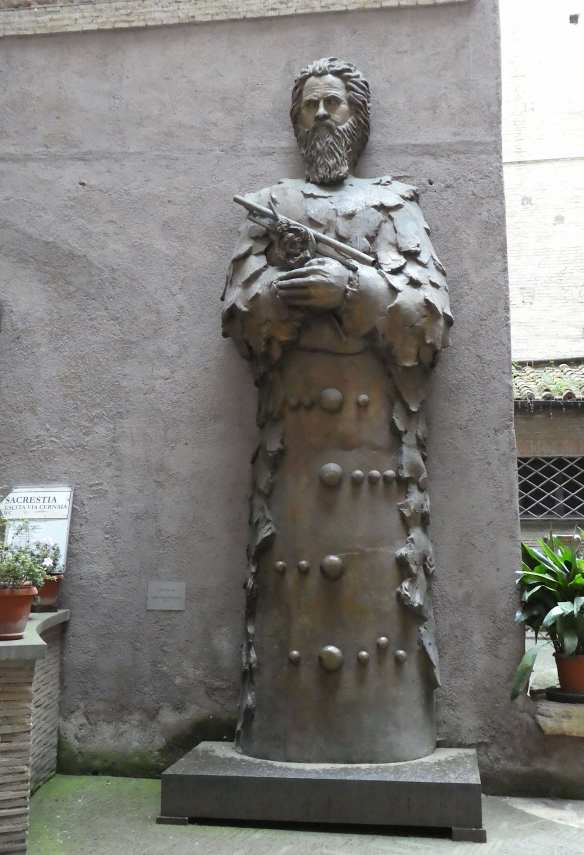
24.Galileo Galilei

On completion of the church, it was given to the Carthusian monks who built a monastery next door. It is thought that this courtyard may have been the garden and the back of their cells.

We were very happy to avoid the crowds and queues at the more well-known sites in Rome, very few tourists seem to be aware of Santa Maria degli Angeli.
Carrickfergus

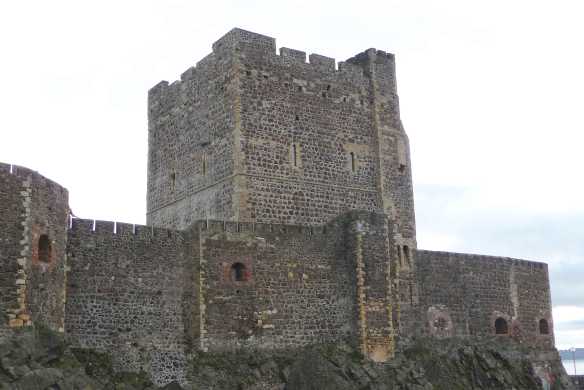
Travelling north from Belfast, we followed the coast to Carrickfergus, hoping to explore the magnificent Norman castle perched on the northern edge of Belfast Lough.
1.east side & keep

We were once again disappointed to find, not only was it closed for the winter season, the imposing entrance was covered, undergoing restoration.

2.entrance under repair3.west side

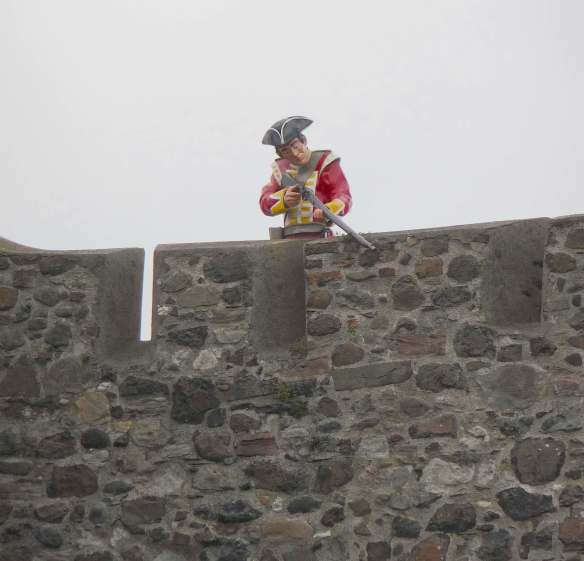
In 1177, Sir John de Courcy, an Anglo-Norman knight, decided he wanted some lands for himself. He gathered a small army and headed to northern Ireland. After a few battles along the way, he conquered eastern Ulster and built the castle as his headquarters. Strategically placed, surrounded almost entirely by water, the fortress has withstood invasion by the Scottish, Irish, English and French over the centuries. No wonder there is always someone on guard.

4.soldier

We would have liked to wander around the castle and the historical displays that are housed within. We had to settle for a glimpse of the 17th century cannons just visible along the battlements.

5.cannons6.cannon

Belfast

We had a lot of ground to cover after leaving Newcastle, and so spent only a brief time in Belfast. The inclement weather didn’t encourage us to explore too far but what we did see was extraordinary. Founded in 1868, this fabulous wedge-shaped building was originally called the Shakespeare, the clientele mostly from the theatre. We should have ventured inside Bittles Bar but it was a bit early for a pint, even for us. The traditional Victorian Bar is apparently adorned with interesting artwork and portraits of Ireland’s literary and sporting heroes.

1.Bittles Bar

Adjacent to Bittles Bar was a rather ornate bright yellow drinking fountain. The Jaffe Memorial fountain was erected in 1874 by Otto Jaffe, Belfast’s first and only Jewish Lord Mayor, to commemorate his father. Daniel Joseph Jaffe was a merchant from Hamburg who came to Belfast in 1850 and set up a linen export business. He was quite the philanthropist, funding the building of Belfast’s first synagogue and Otto followed in his footsteps, giving much to the community. This is without doubt the most spectacular drinking fountain I have ever seen.

2.Jaffe Memorial fountain

I did not expect to see a giant Ferris wheel in the centre of the city. Belfast’s answer to the London Eye, the Belfast Wheel opened in 2007. There was much controversy over the location of the wheel, it had been built around and on top of the Titanic Memorial on the grounds of Belfast City Hall. Following objections from the Belfast Titanic Society and the Environmental Agency, the Belfast Wheel closed for business in April 2010.

3.The Belfast Wheel

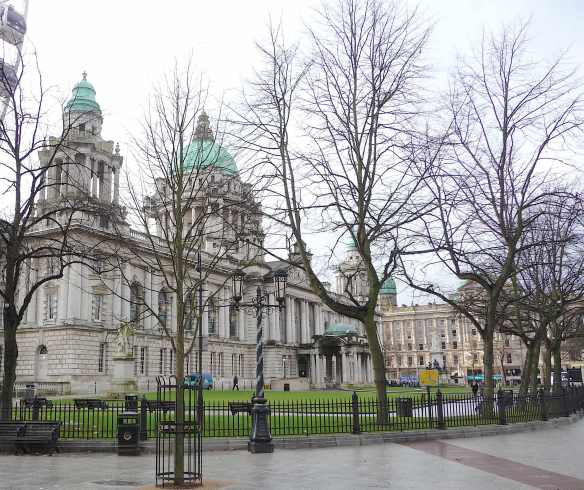
The criticism was based on the location, not the wheel itself, it had proved to be a great tourist attraction. It did seem out of place next to the majestic City Hall for which planning began in 1888 after Belfast was awarded city status by Queen Victoria and construction was completed in 1906. Built mainly from Portland stone, it covers an area of one and a half acres. The four copper-coated corner towers and central dome are the distinctive green seen on other Victorian buildings.

4.Belfast City Hall

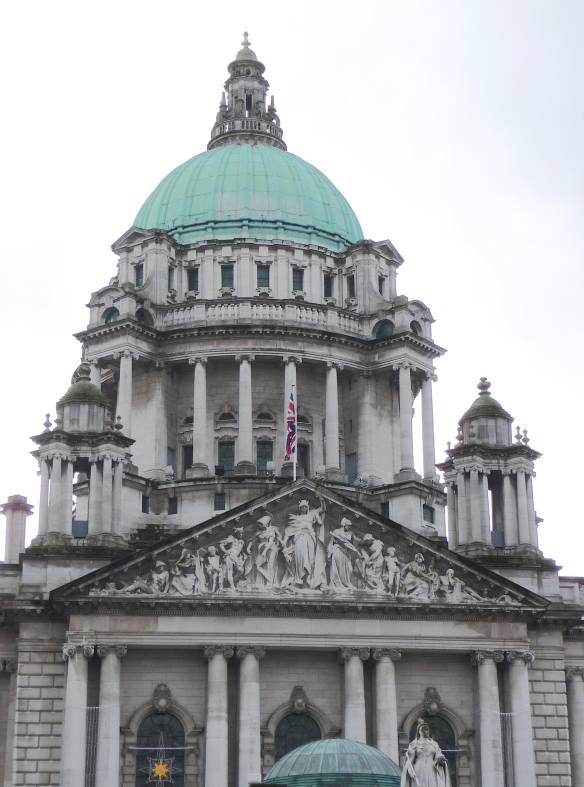
The 53 metre lantern-crowned central dome dominates the city skyline.

5.Belfast City Hall

There was so much more to see in Belfast, we may have to return one day.

Southern Swan

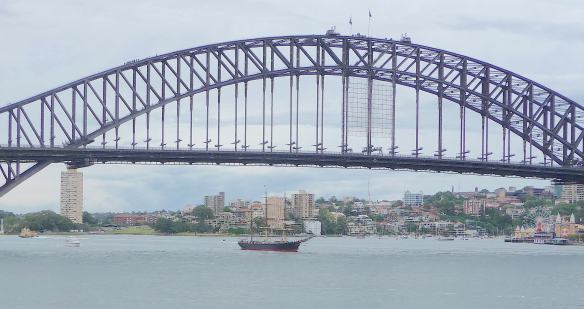
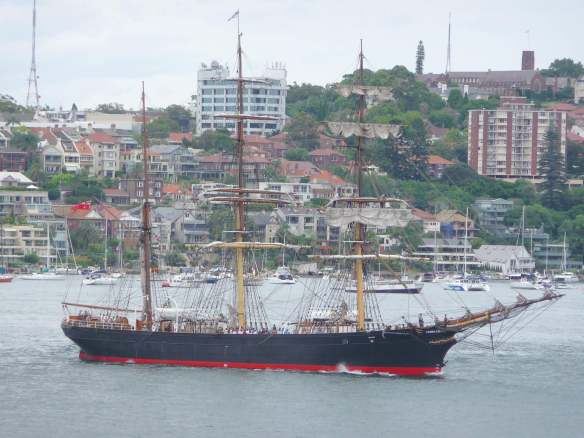
Strolling around The Rocks in Sydney one morning, we noticed a magnificent tall ship sailing in the harbour.

1.James Craig

The James Craig, a 19th century barque, was rescued in 1972 from Recherche Bay in Tasmania where she had been purposely sunk in 1932. Restoration began in Hobart before she was towed to Sydney in 1981 where the work was completed and she returned to the sea in 2001.

2.James Craig

Watching her gracefully glide across the water, we knew we wanted the experience and promptly signed up for a twilight dinner cruise on the Southern Swan, berthed at Campbell’s Cove, The Rocks.

3.Southern Swan

Originally named Our Svanen, the three-masted barquentine was built in Denmark in 1922 and traded as a grain carrier through the cold waters of the North Atlantic. She then sailed Baltic trade routes as a cargo vessel for Tuborg brewery until she was purchased as a private vessel in 1969. Since then, she has served as a training ship with the Canadian Sea Cadets, travelled to Vancouver for the 1986 World Expo, sailed to England for the First Fleet Re-enactment and returned to Australia for the Bicentennial First Fleet Re-enactment. She now has a lovely home with stunning harbour views.

4.Southern Swan

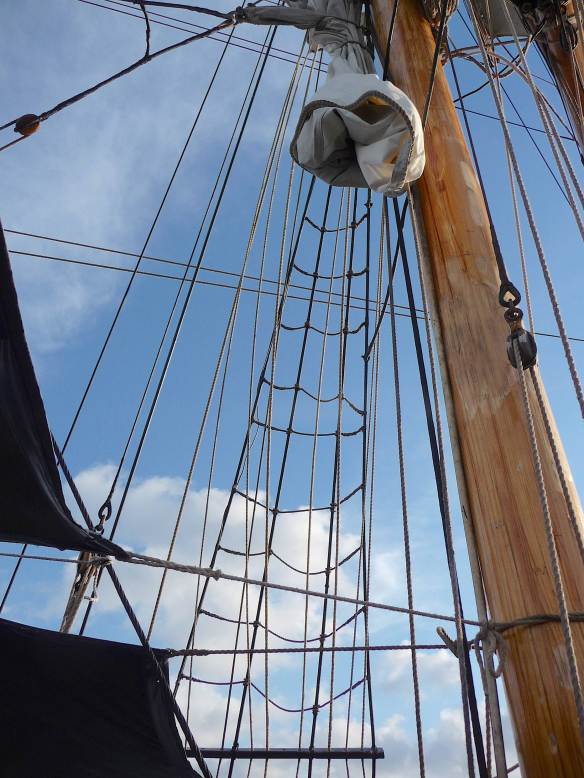
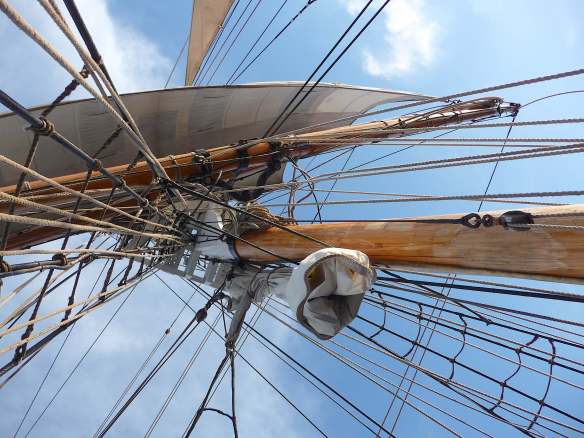
For two hours, we sipped champagne and enjoyed a delicious three course meal surrounded by the most beautiful harbour in the world (in my humble opinion). I was fascinated by the ropes and pulleys, works of art with a purpose.

As we neared the magnificent Sydney Heads, Bradleys Head lighthouse, built in 1905, warned of treacherous waters. The mast mounted on the point is from HMAS Sydney, renowned for her battle with the German cruiser Emden in 1914.

15.toward the heads

The tall ships cruise offers the chance of a mast climb challenge. There were no takers this time, possibly because alcohol is not to be consumed prior to a climb and, after all, it was a dinner cruise. Looking up at the mast was enough of a thrill for me.

16.mast17.mast

Our time on the water went by too soon and, as the sun sank in the west, we returned to Campbell’s Cove, another wonderful experience tucked away as memories.

18.mast

Sandridge Bridge

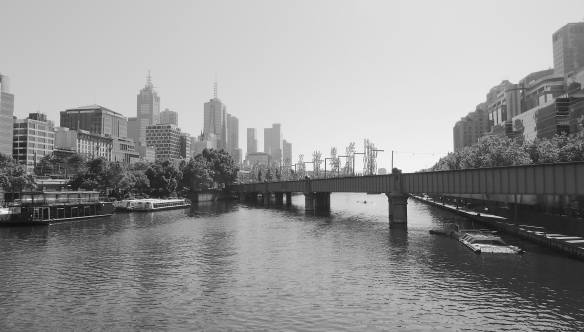
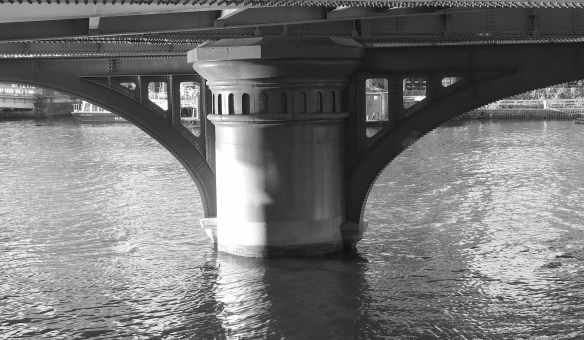
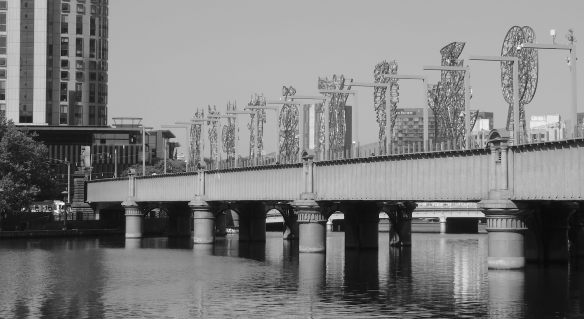
I have never really taken an interest in the unattractive steel footbridge with the unusual sculptures that crosses the Yarra River, until our last visit to Melbourne.

1.Sandridge Bridge

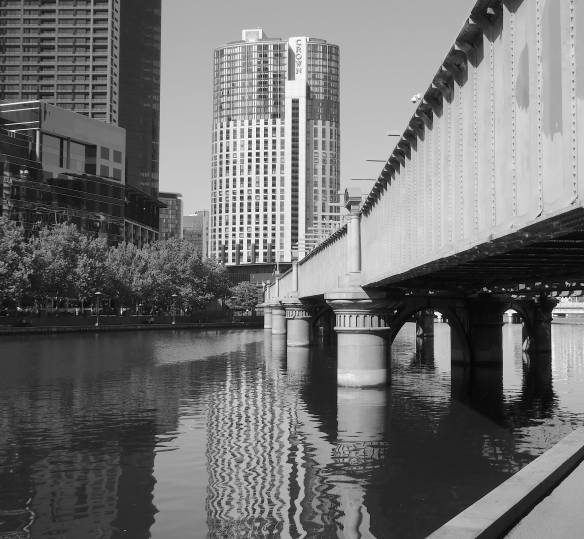
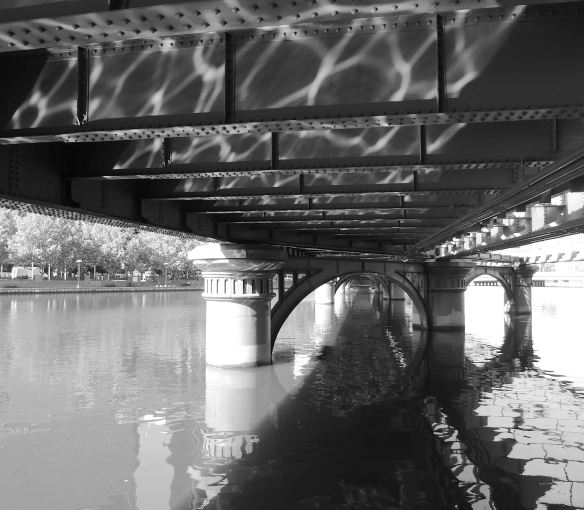
Enjoying a late afternoon beverage at Southbank, I was captivated by the light and reflections on the water and started to appreciate the obscure beauty of the structure.

2.Sandridge Bridge p.m.

I have since delved further. The original bridge and railway line was built in 1853 when Port Melbourne, then known as Sandridge, became a thriving hub thanks to the Victorian gold rush. It was also the first passenger rail service in Australia. The bridge was replaced in 1857 with a timber trestle bridge, built at the oblique angle to redress the issue of the existing tight curve. The current bridge opened in 1888, one of the first in Melbourne to use steel girders rather than iron. The support columns are hollow iron filled with concrete, set parallel to the flow of the river, in groups of three. On closer inspection, each rivet seemed a work of art.

3.Sandridge Bridge p.m.

Even the ornamental pediments are made from cast iron.

The morning light of the new day offered fresh reflective images.

6.Sandridge Bridge a.m.7.Sandridge Bridge

The railway bridge was last used in 1987 and remained, as something of an eyesore, until Melbourne City Council committed $15.5 million for its restoration in 2003. Sandridge Bridge was relaunched in 2006 as a celebration of the indigenous and immigrant history of Victoria, a tribute to those who made the journey by train from Station Pier to Flinders Street Station. Artist Nadim Karam created ten abstract sculptures, representing the different periods of immigration, using more than 3.7km of stainless steel. The artwork is titled The Travellers and the figures move slowly across the bridge in a 15 minute sequence. I must admit, I have never noticed them moving.

8.Sandridge Bridge sculptures

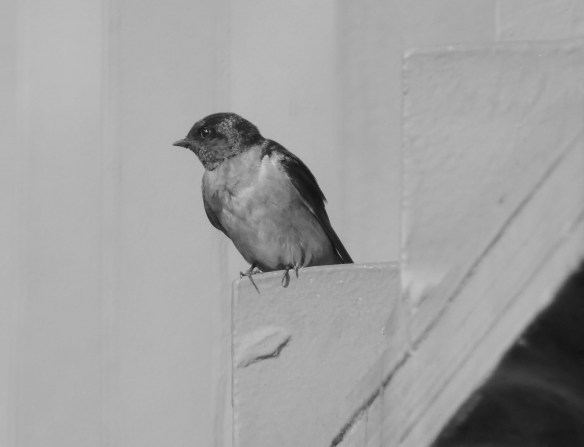
A series of 128 glass panels line the walkway, each one offering information about the origin of the immigrants, in alphabetical order, from Afghanistan to Zimbabwe. It can take quite a while to cross the bridge, a rest along the way is sometimes in order.

9.welcome swallow

From the north side, nature’s reflections resemble graffiti

10.Sandridge Bridge

and the intricate angles are more evident.

11.Sandridge Bridge

Unlike nature’s graffiti, that of lesser mortals is unsightly and unwelcome.

12.painting over graffiti

Sandridge Bridge may not be the most appealing landmark in Melbourne but it is certainly a great memorial to those who contributed so much, not only to the state of Victoria, but to the nation of Australia.

13.Sandridge Bridge