hen haven

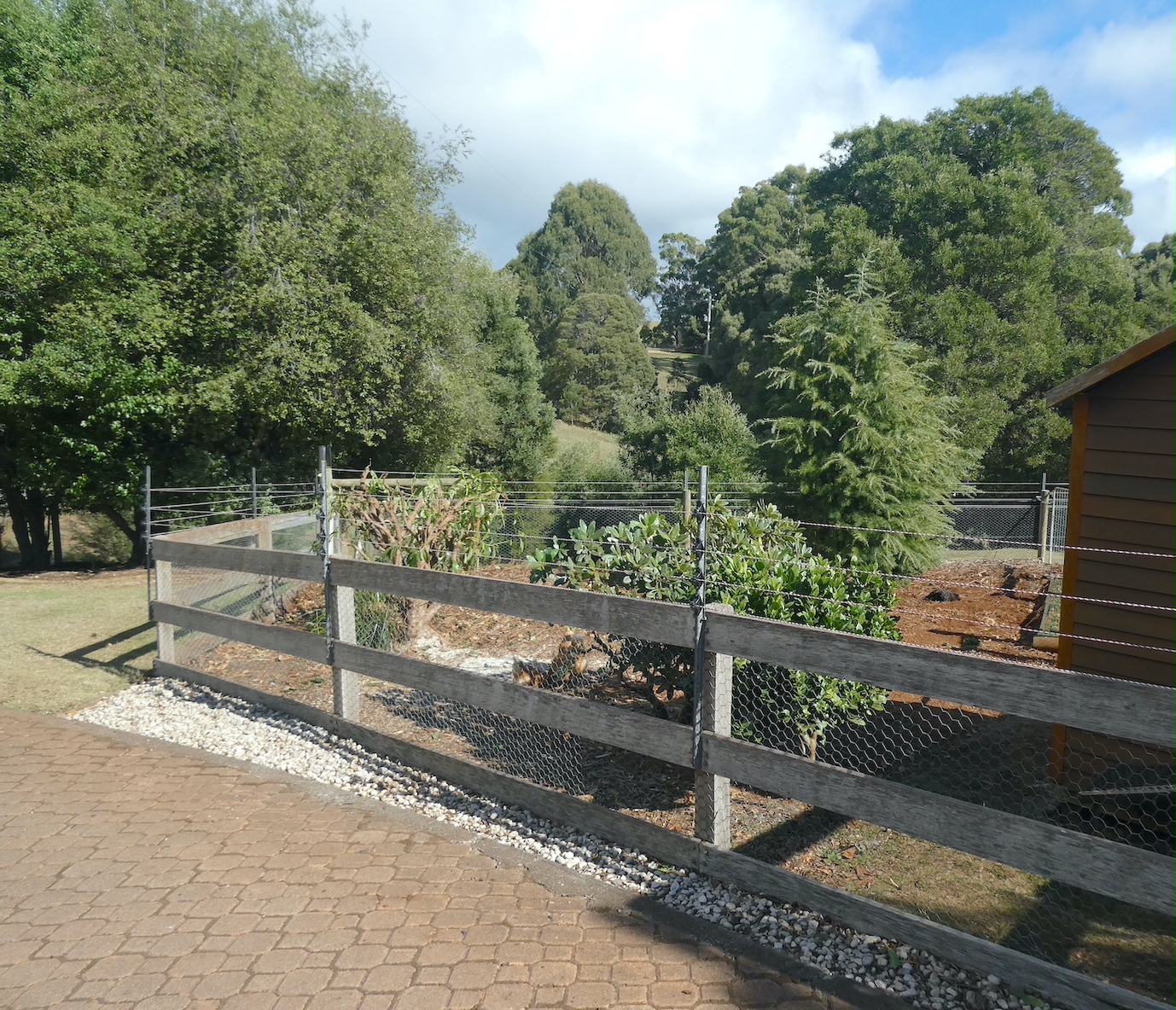
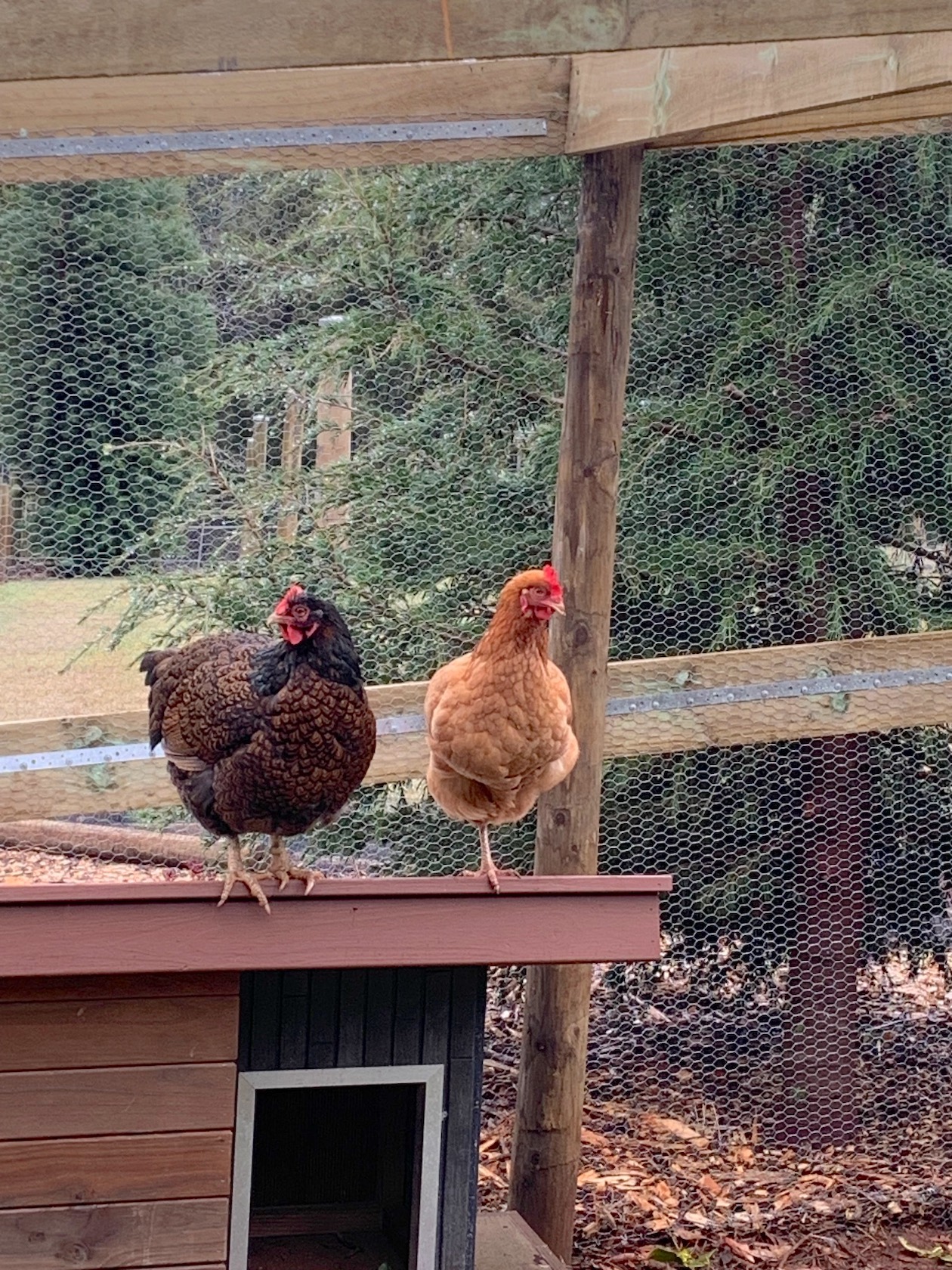
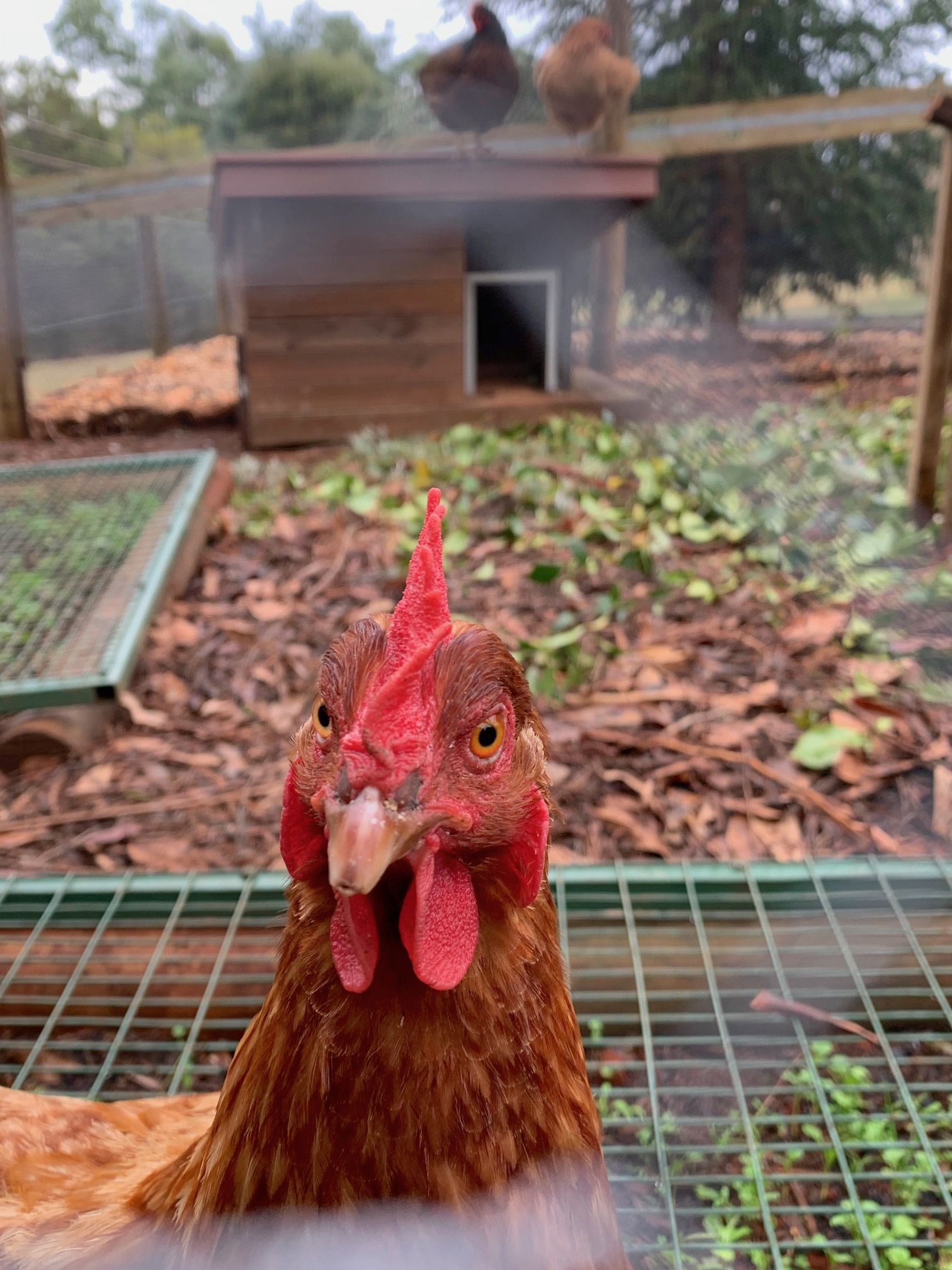
Our chooks have always had plenty of room to forage and scratch and play and, well, do what chooks do. Part of their run was completely enclosed and safe from predators and a larger area was fenced but otherwise open.

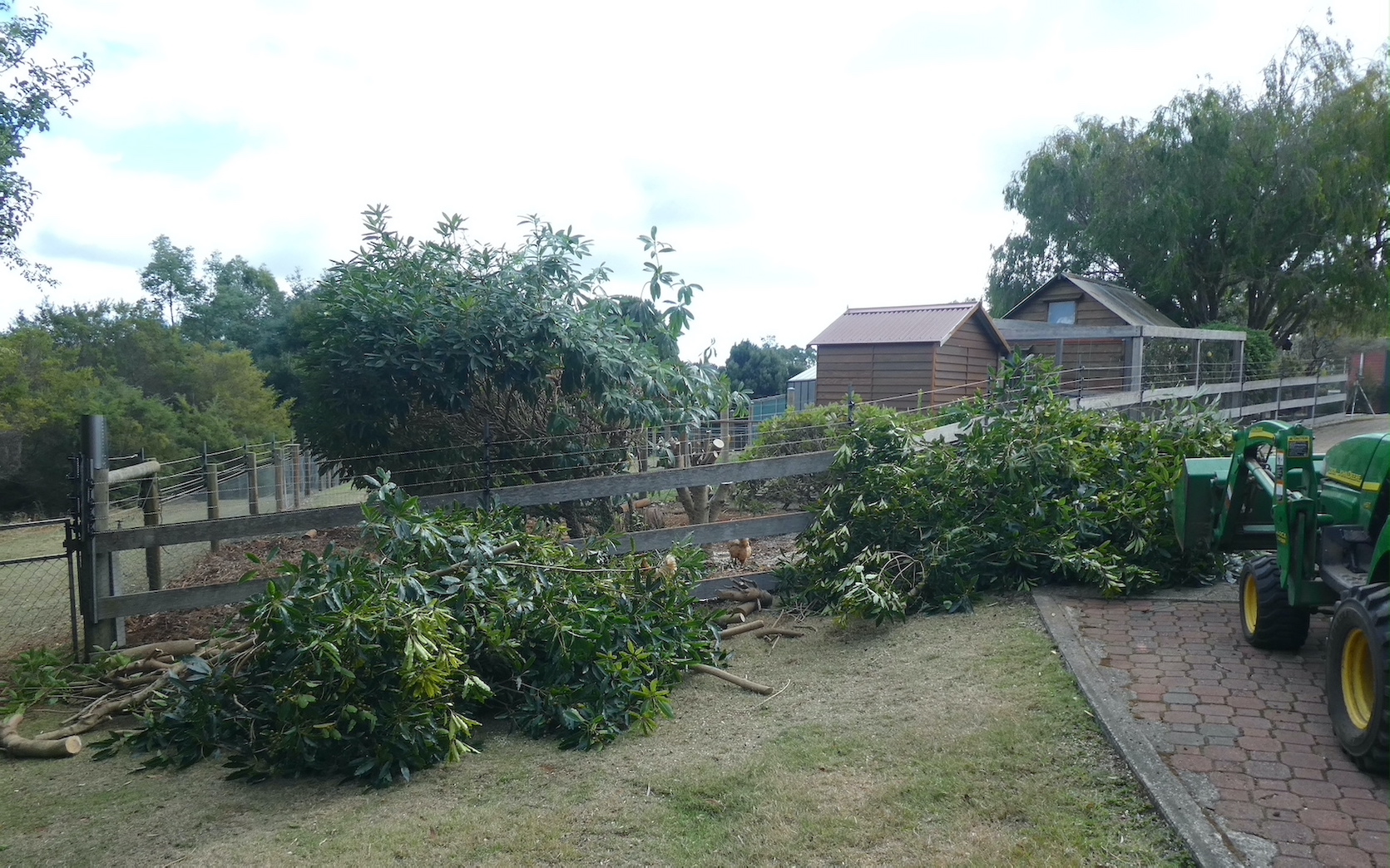
We had thought about enclosing the whole area for a while, mainly to keep the ornery sparrows from stealing the chook food, and finally tackled the mammoth project after visitations from raptors with eyes on our girls. The first task was to remove the huge native pittosporum, a favourite hotel for the sparrows and far too big to retain within the new run.

We proceeded with hole digging and post erecting,

and it wasn’t long before we realised the need to allow the girls to roam and shut them out of the work space. They were just a little too helpful.

Unfortunately, they make a terrible mess of any tidy garden space, something I had to ignore until the end of our mission.

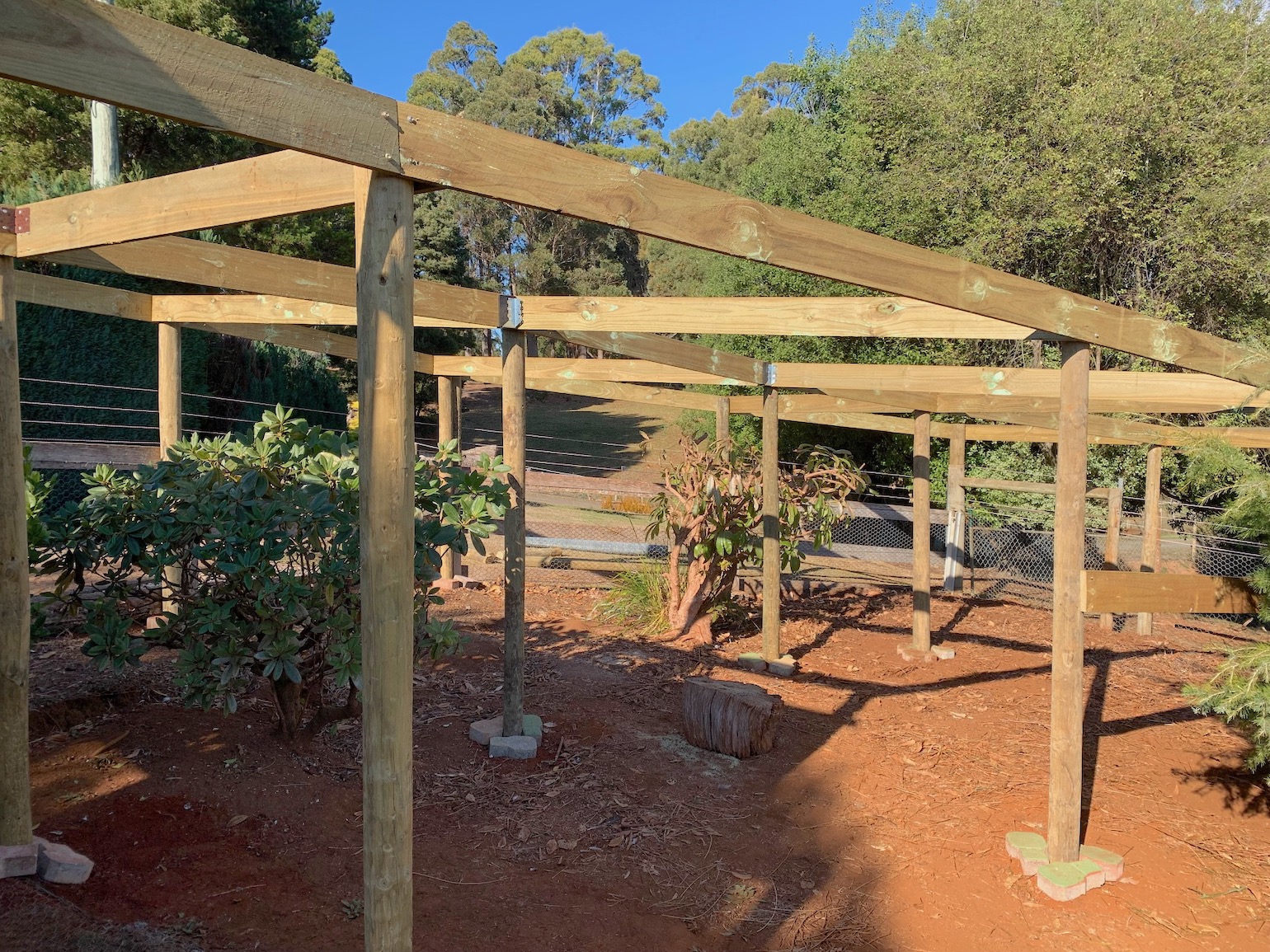
Once the boundary posts were in, we added the support beams

before continuing with the central posts and beams.
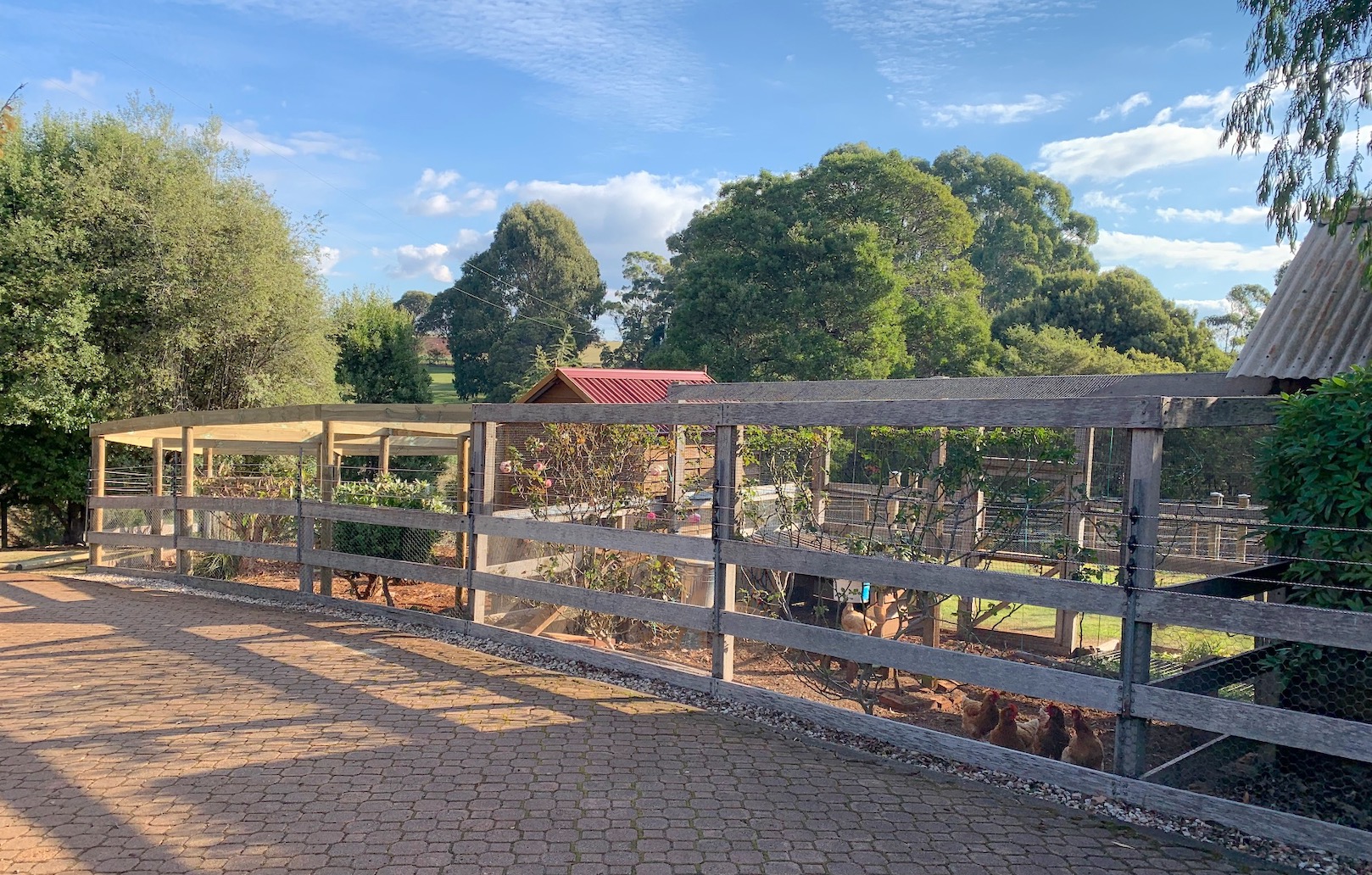
Next came the tricky part – the roof.

Accompanied by minor swearage, we manhandled the first section of wire into place and secured it, feeling inspired to carry on.

We soon finished the roof and used netting clips to join the sections.
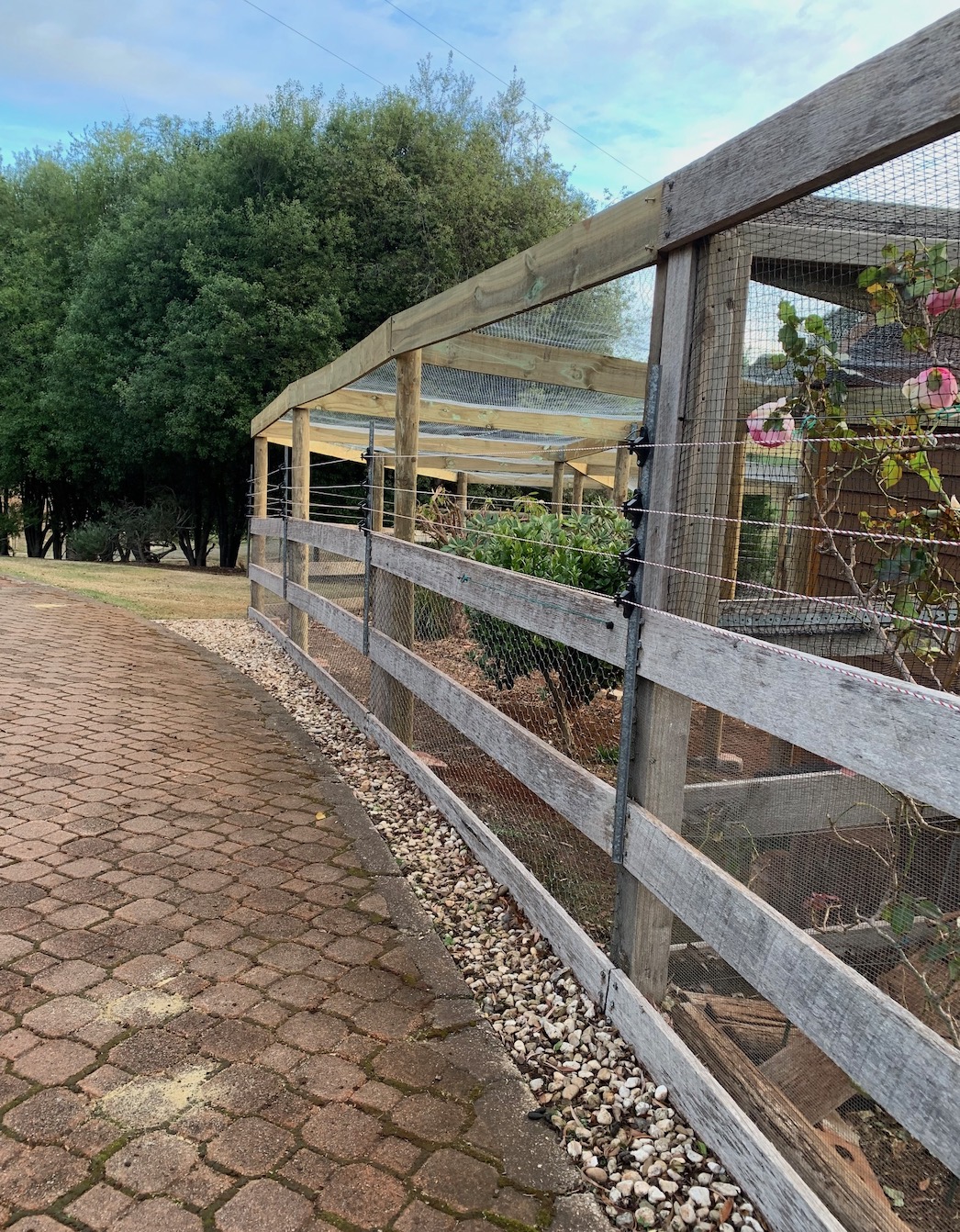
Rather than purchase a lightweight aluminium screen door from a local retailer, we sourced a solid steel model from the salvage yard at a quarter of the price. By the time we sprayed a coat of primer, spent hours painting two coats of colorbond and fixed the bird wire, I’m not sure the effort:reward ratio was favourable but it serves its purpose.

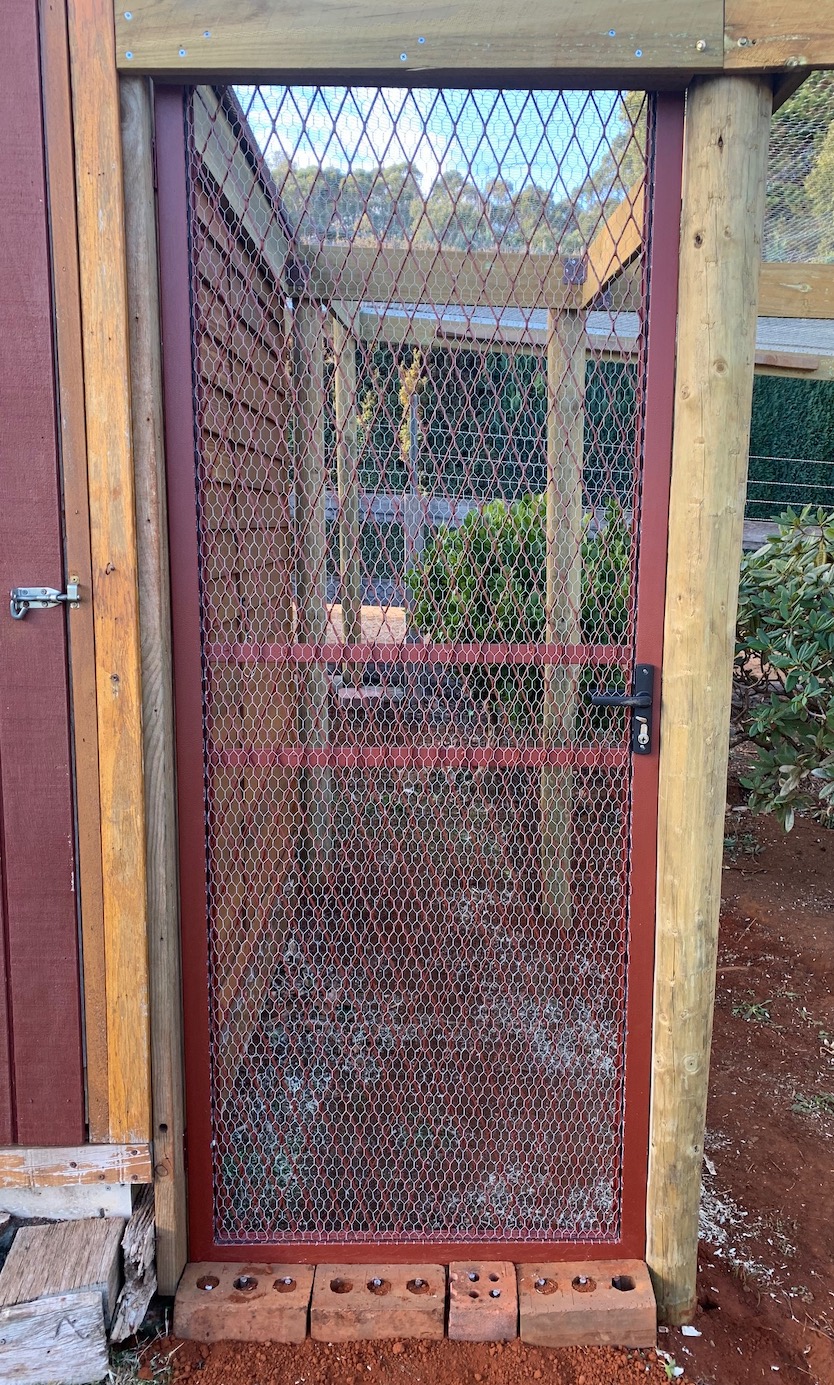
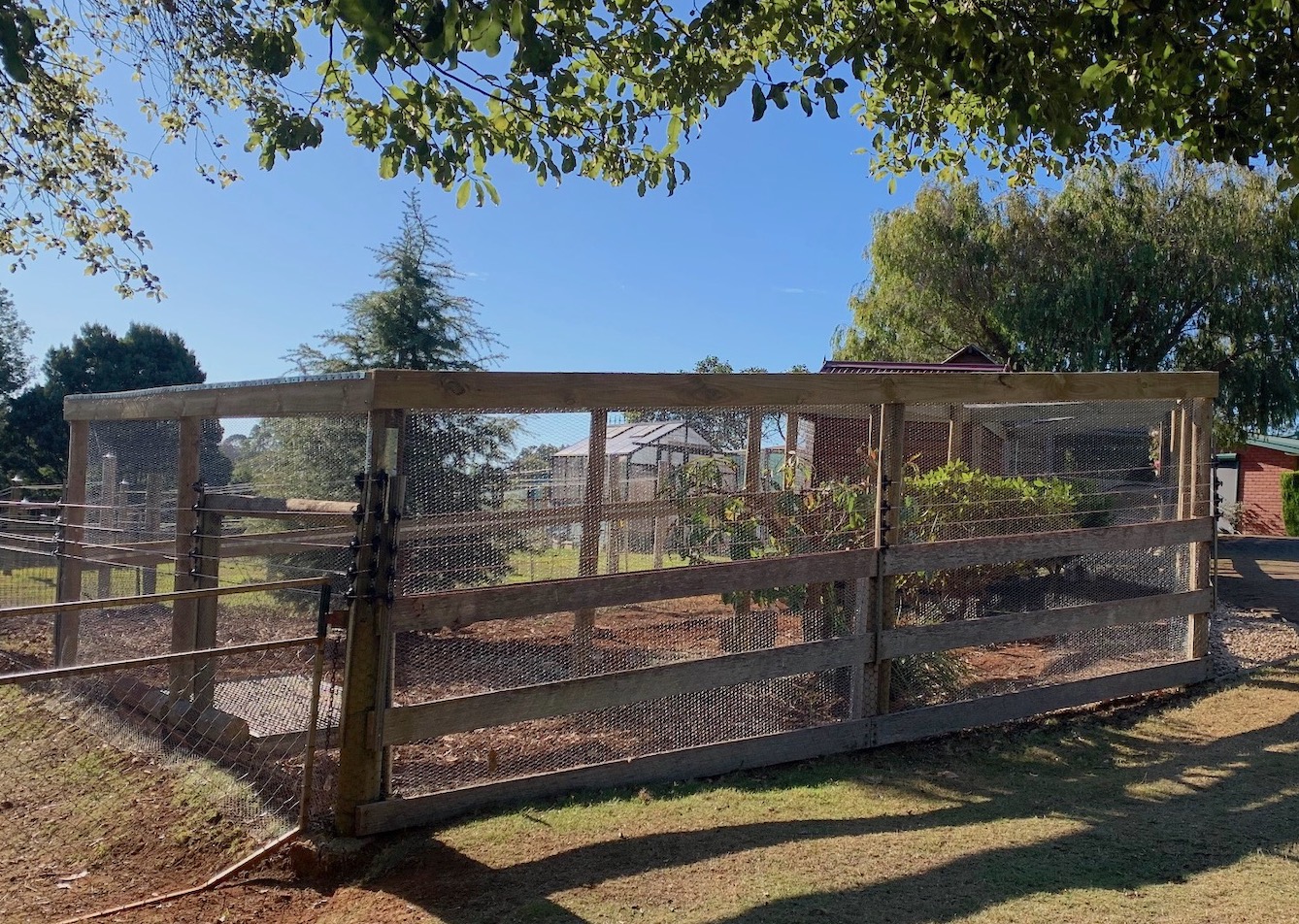
Once the wire sides were completed,
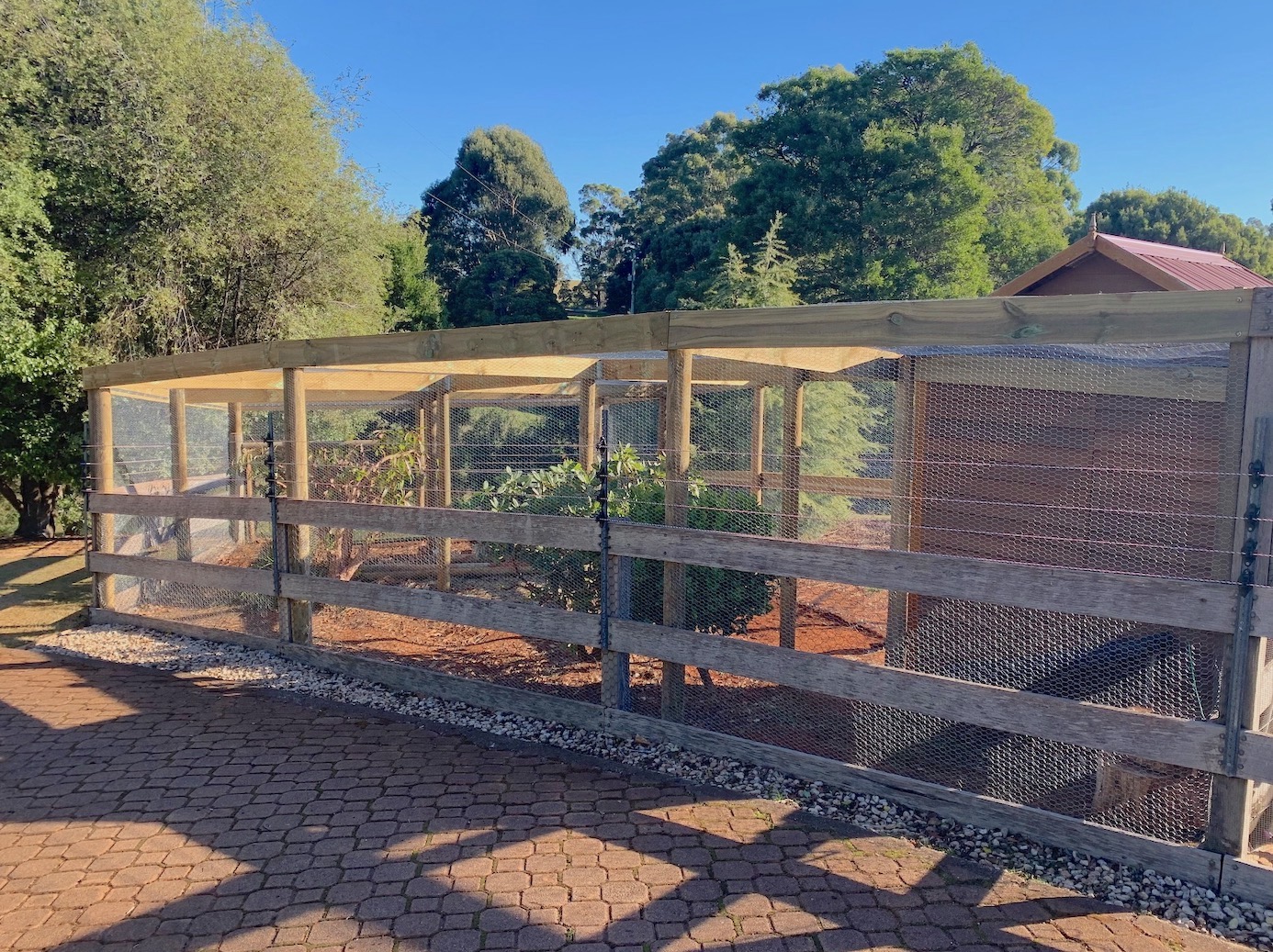
we removed the original boundary fence line and relocated the grazing cages inside the new run.

A place to shelter from inclement weather,

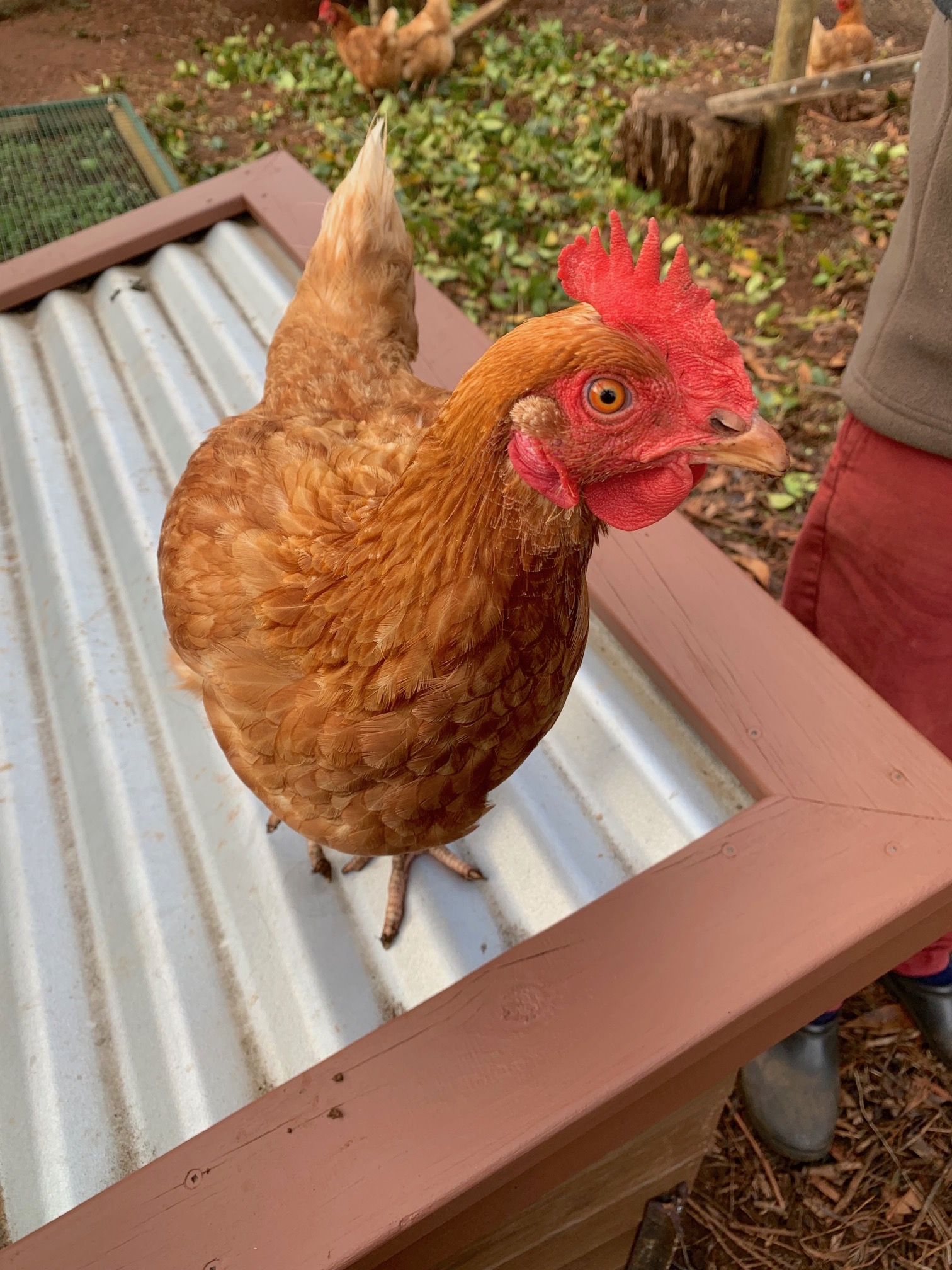
climbing frame
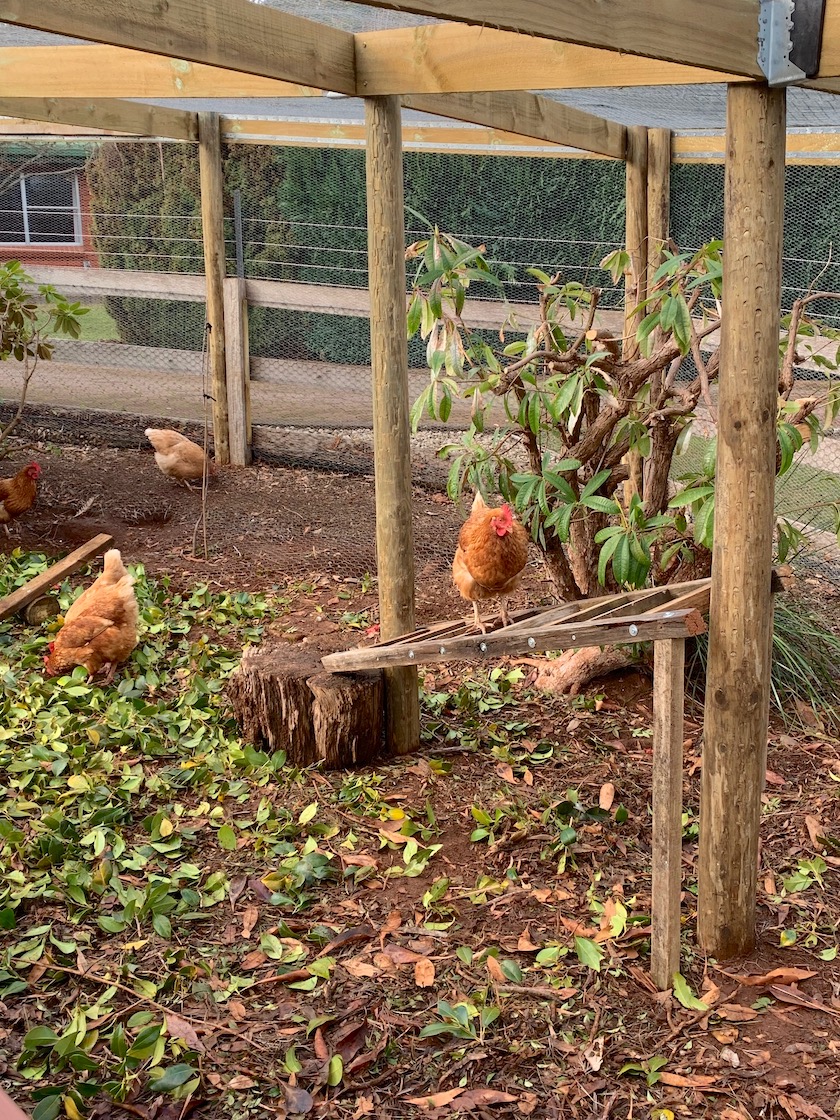
and seesaw completed the new enclosure.

We created a new border where the original fence line came down, added mulch, planted a few Kangaroo Paws and re-seeded the lawn area.

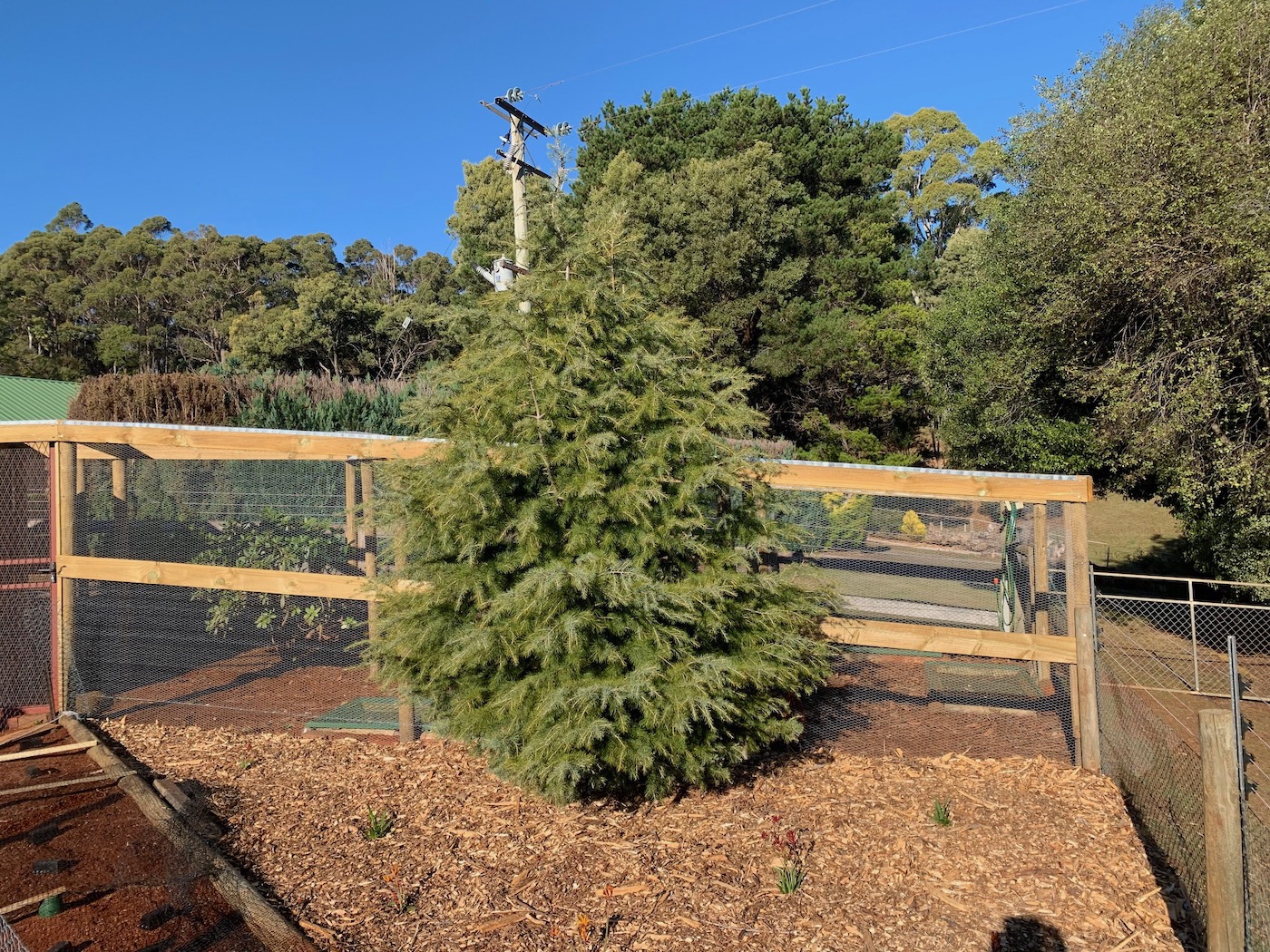
And planted two apple trees in the new yard. The chooks are wondering – what’s next?
cockatoo chaos

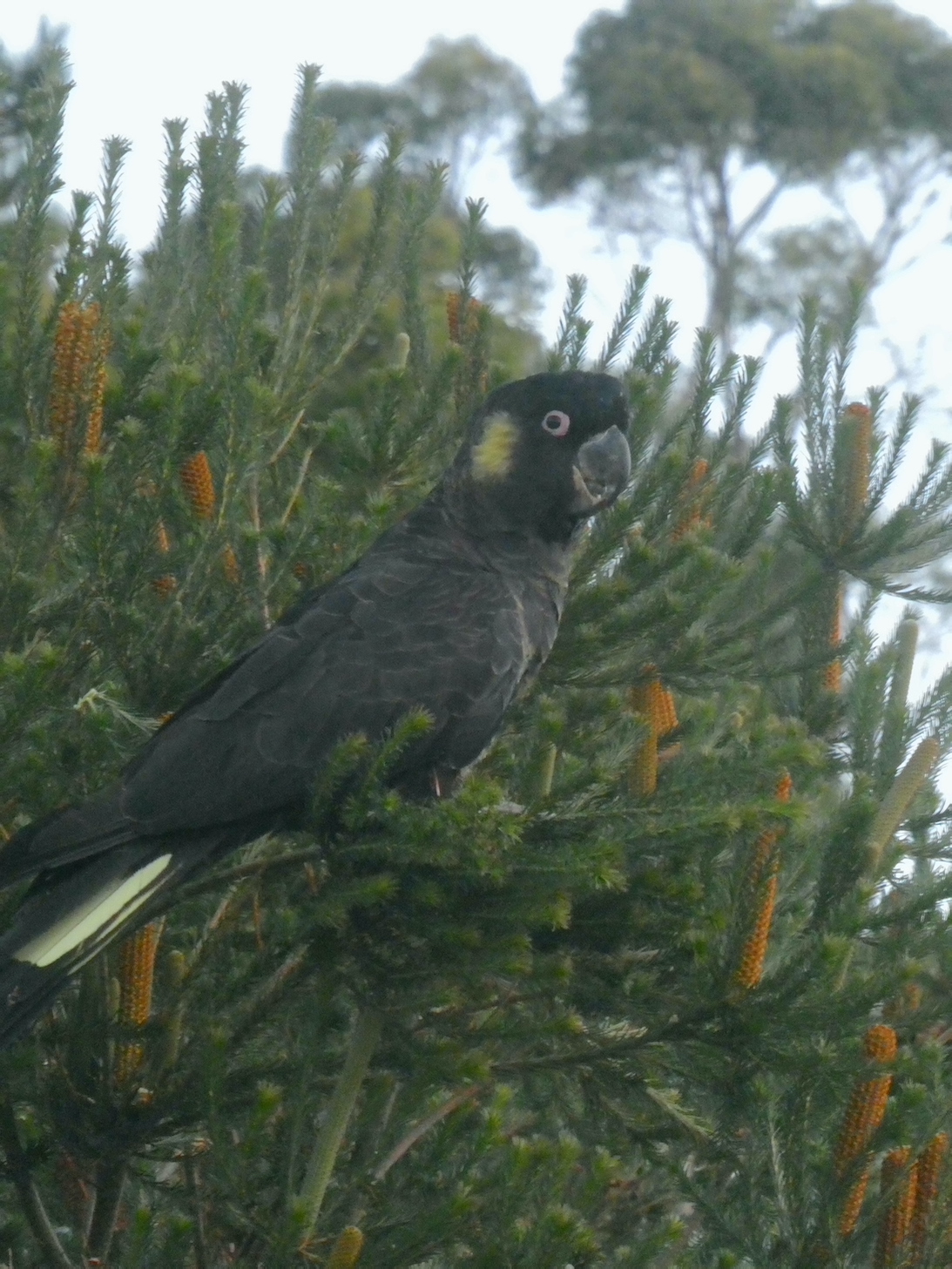
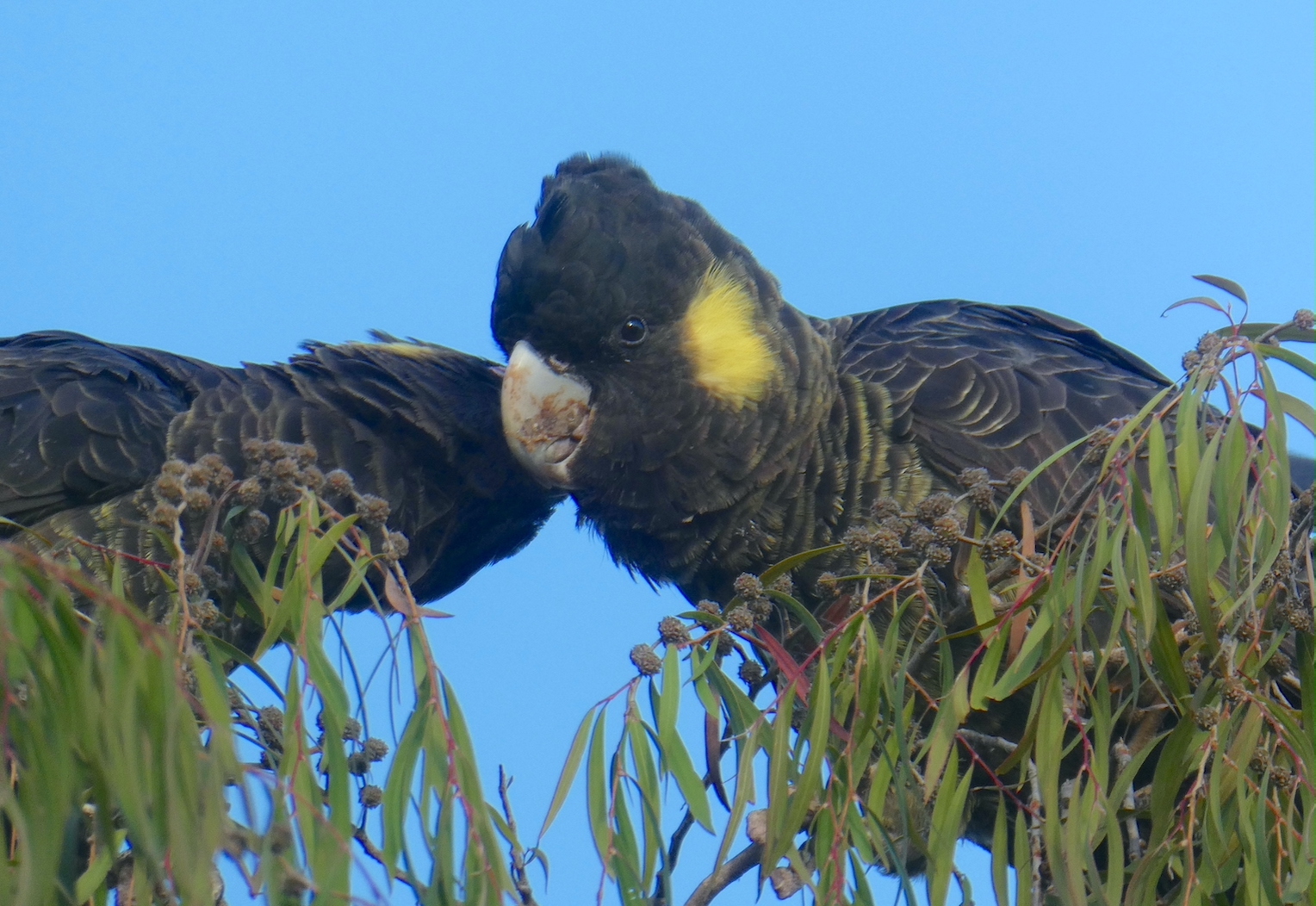
We have so many bird species in our garden I couldn’t even begin to name them. The biggest by far are the yellow-tailed black cockatoos. They are often in pairs quenching their thirst at the stock troughs, one will keep lookout in a nearby tree while the other sups and then they swap places. Then there are times when a whole flock will descend on the Banksia tree for a feast.

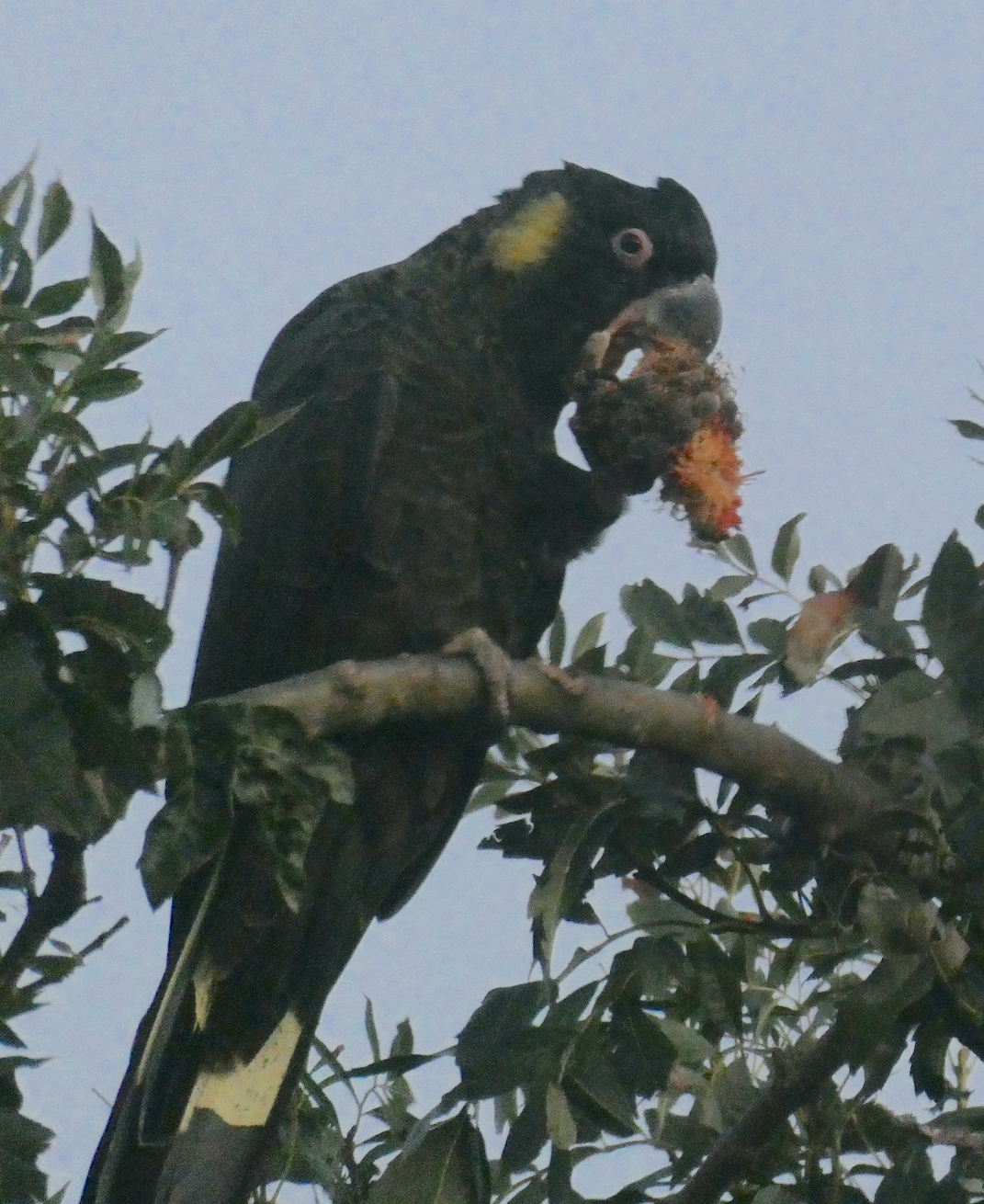
We hear them coming as they call to each other in their distinctive raucous, yet delightful, manner. They nibble the cones and break them open to eat the seeds.

I don’t begrudge their much needed nutrition but I wish they wouldn’t leave such a trail of destruction.

These stunning birds were first described in 1794 by the English naturalist George Shaw as Psittacus funereus, relating to the dark, sombre plumage as if dressed for a funeral. He seems to have missed the bright yellow cheek patches and tail band. Our magnificent peppermint tree is a popular spot to survey the surrounds before indulging in another Banskia banquet.

The body feathers are edged in yellow and those of the subspecies found in Tasmania have a more prominent scalloped appearance.

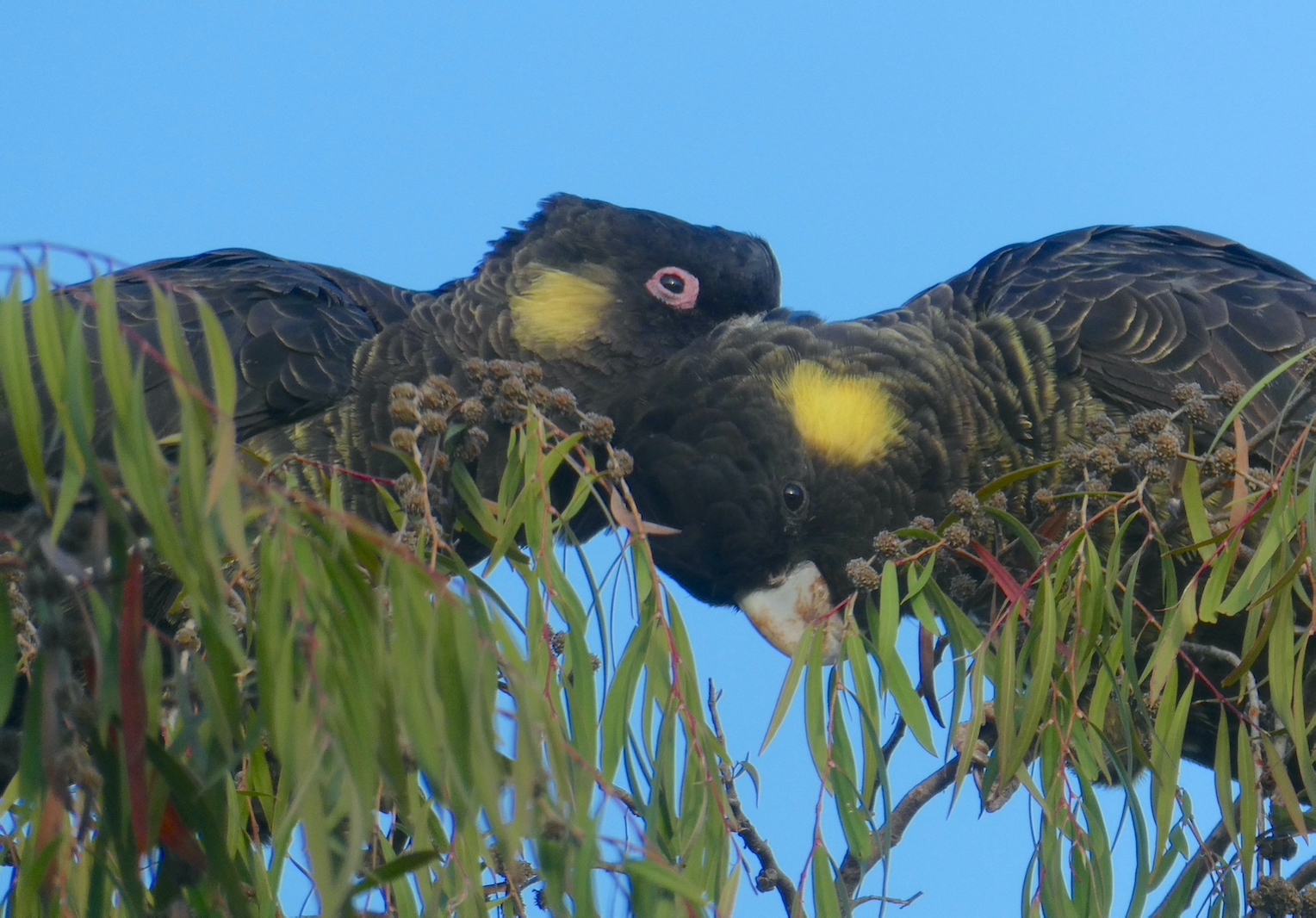
Adult males have pinkish red eye rings and black beaks

while females have grey eye rings, a bone coloured beak and brighter, more clearly defined yellow cheek patches.

The monogamous couples raise a single chick each year which will remain with them for 12 to 18 months. The constant ‘begging’ squawk of the young is enough to test any parental patience. One particular pair at Rotterdam Zoo stopped breeding when they were 41 and 37 years of age, though continued to bond closely. I suspect these two will be bringing offspring to dine before long.

With warmer weather around the corner, we look forward to seeing more of these beautiful creatures.

ponderous project

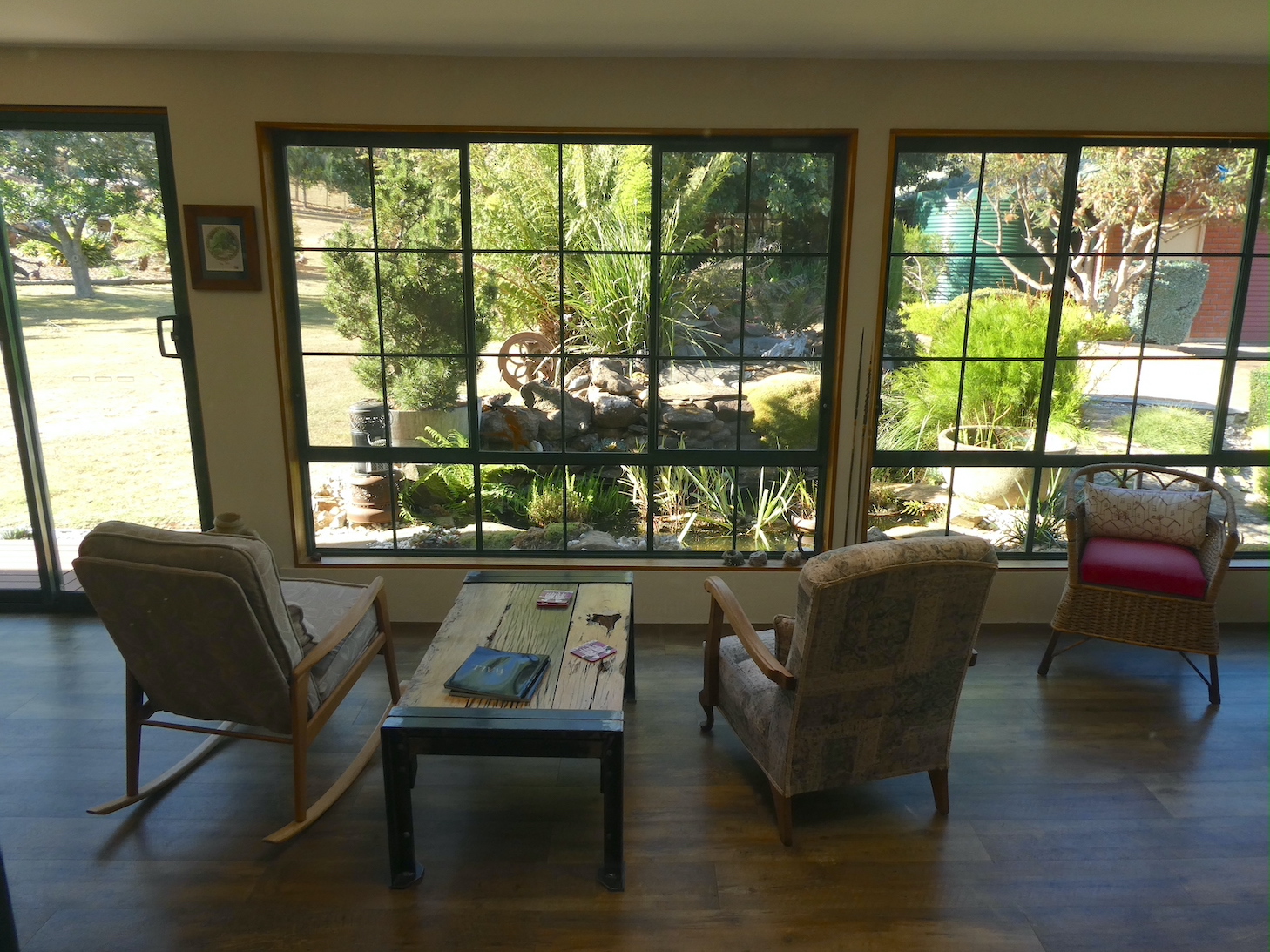
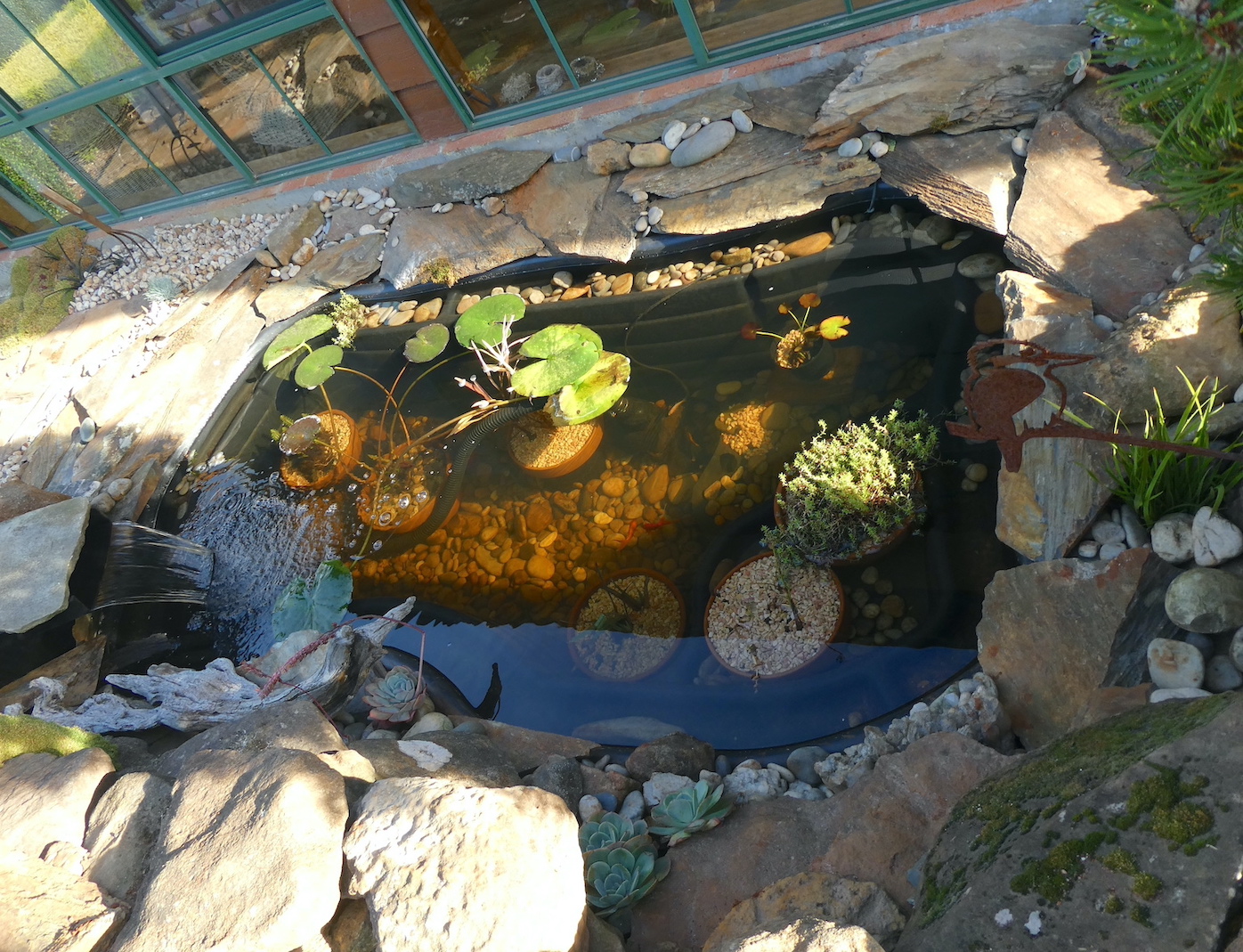
When we first viewed our property (fifteen years ago), we were impressed with the pond and the rather large goldfish inhabitants. Michael landscaped the area with rocks and plants and created a smaller top pond, adding a cascade for completion. It is a lovely, peaceful setting to gaze upon from the kitchen window

but Michael has lamented the ever present algae due, in part, to the lack of water depth and more recently the obvious presence of a leak in the liner.

Deciding on a pre-formed pond rather than replacing the liner, we set about the project we had been procrastinating on for months. The first job was to create easy access by relocating the pot pond and trimming plants.

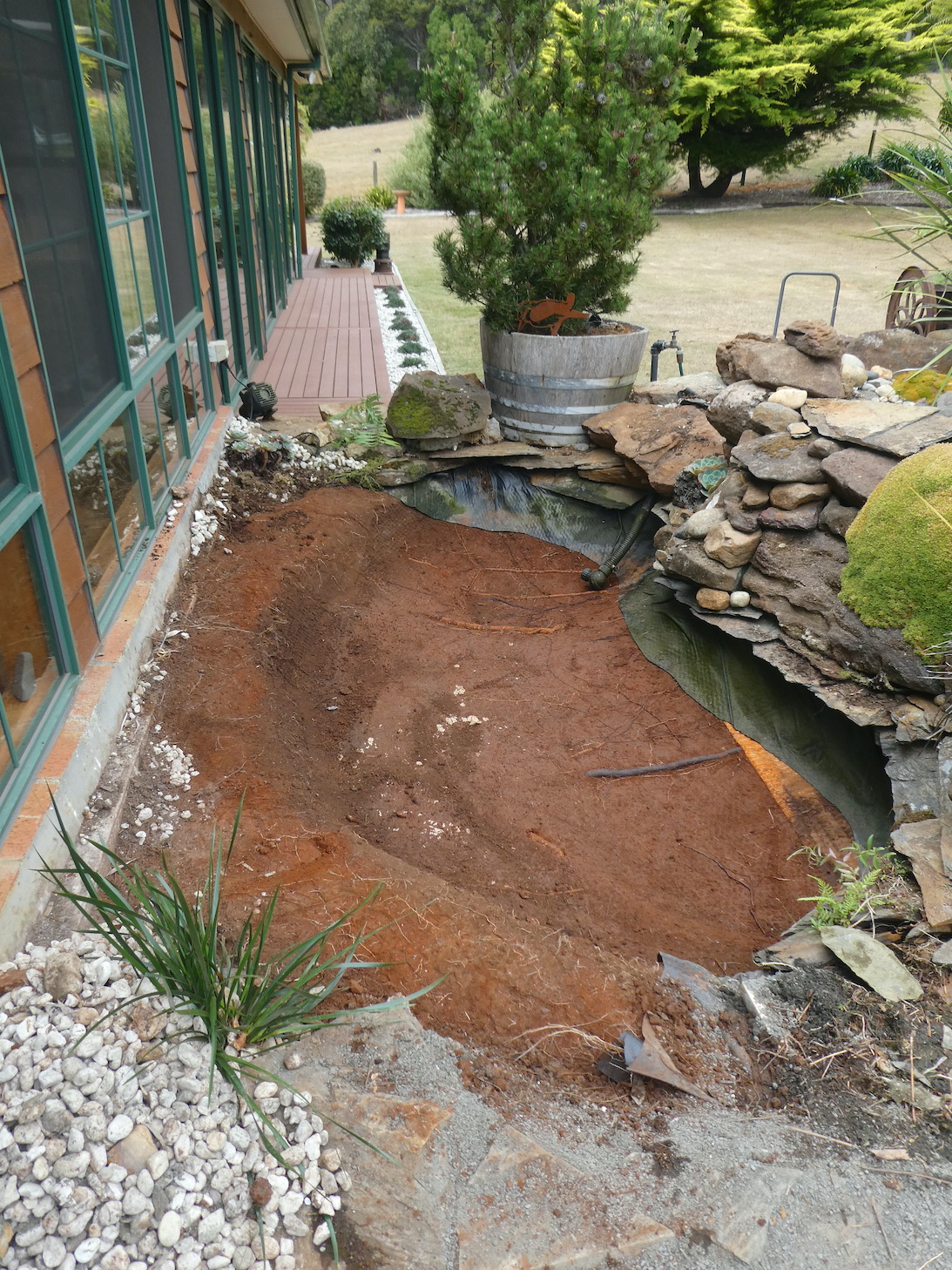
The pond plants and surrounding rocks were removed to expose the liner

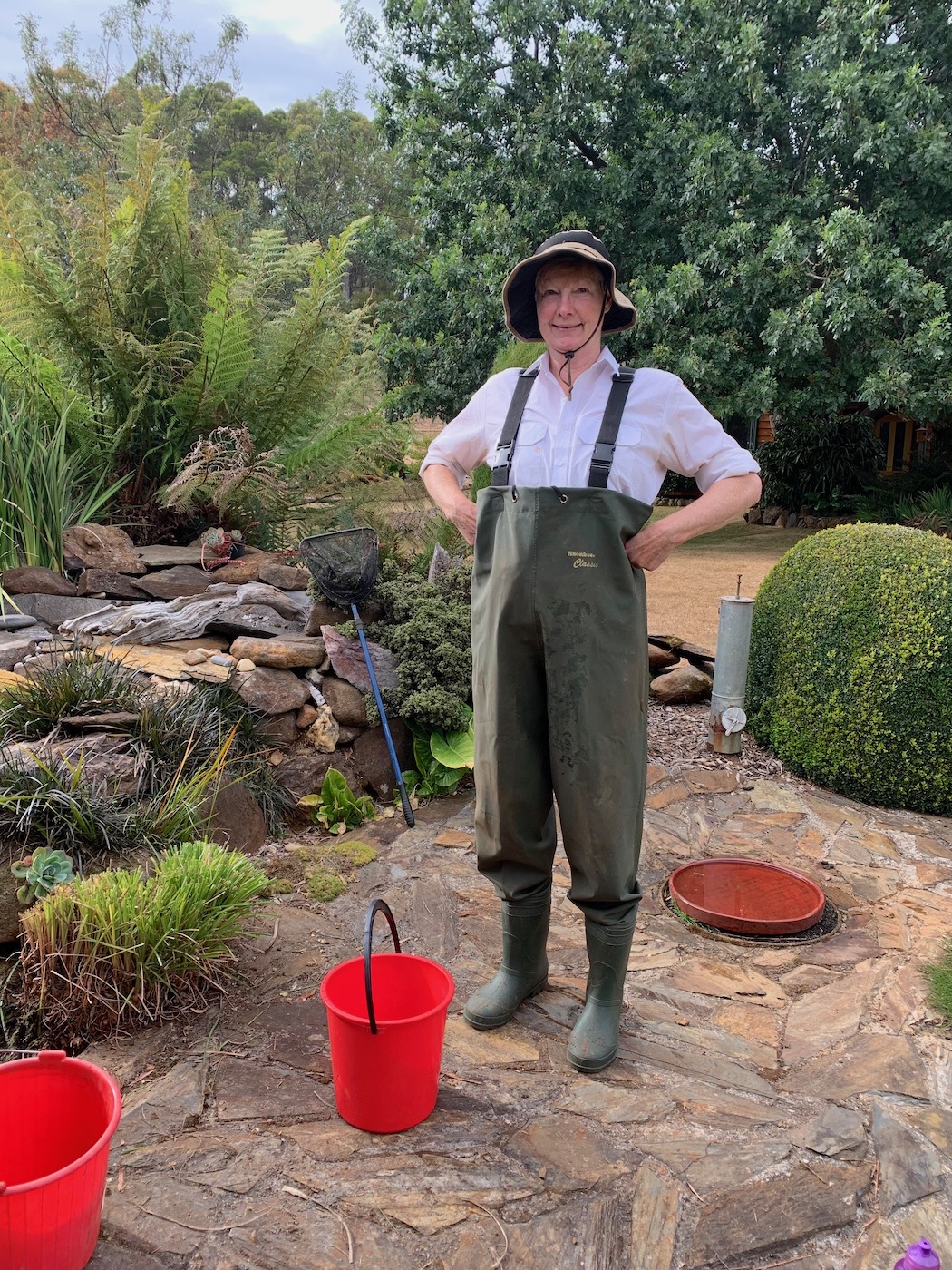
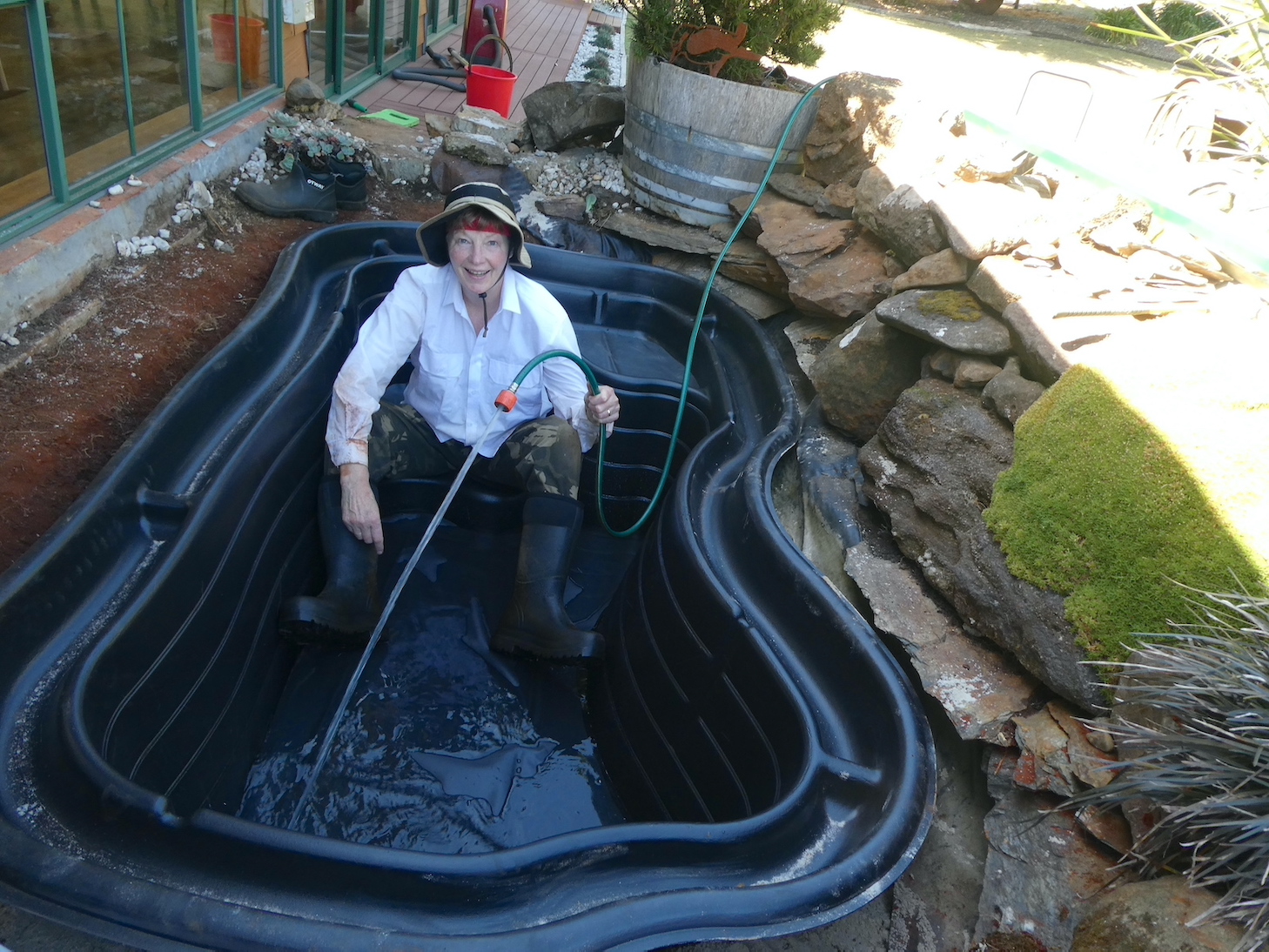
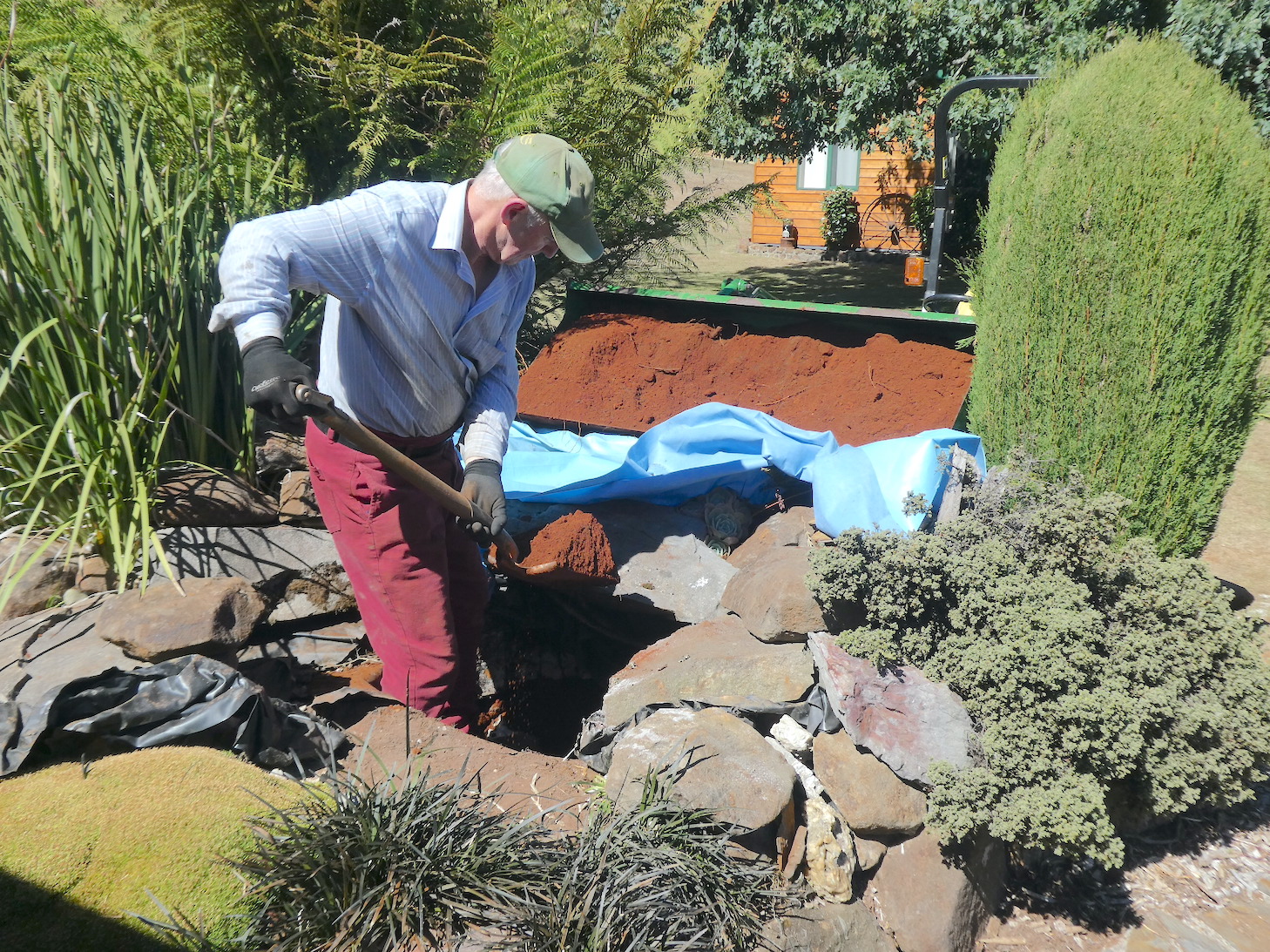
before I donned the appropriate outfit to bucket out the water which Michael diligently distributed around the garden (we were having a very dry summer).

We pulled the old liner out (which did, indeed, have an obvious split)

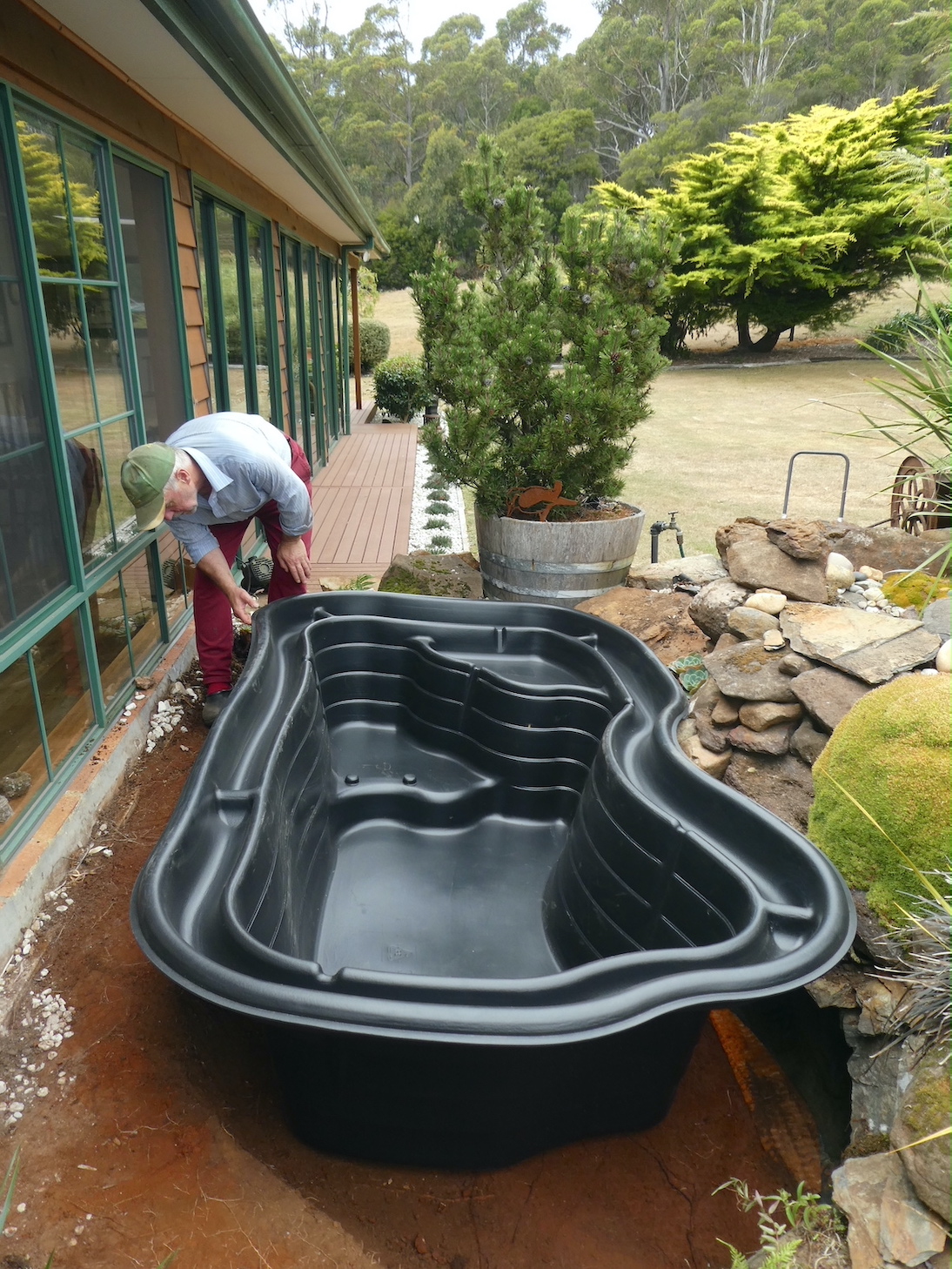
and tried the new pond for size.

Hoping to not encounter tree roots, the digging commenced.

With periodic fittings, and no underground impediments, the site was ready.

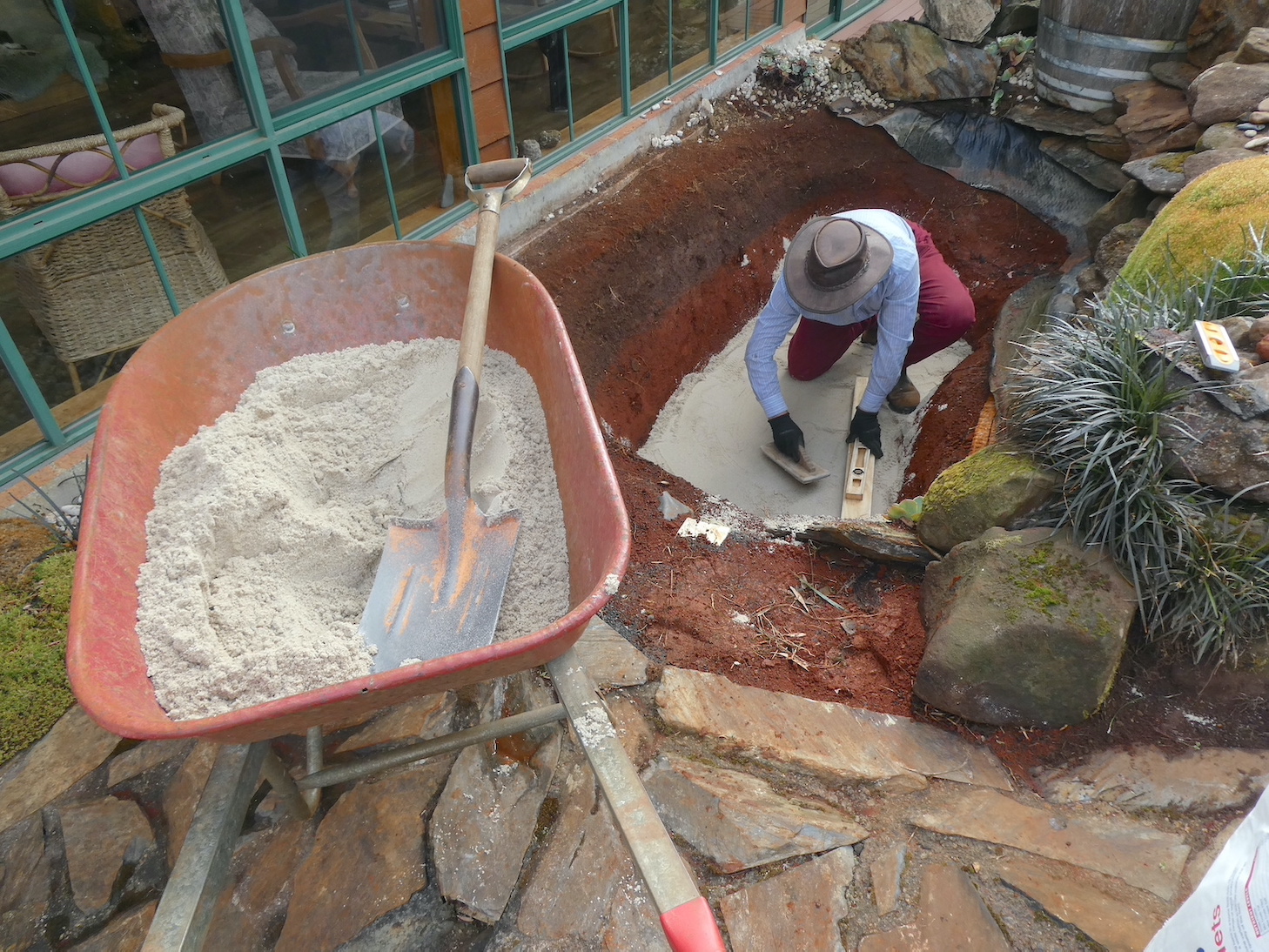
With a trailer load of sand on standby, the base was prepared

and the pond lined with plastic to protect it from the river stones.

Once levelled,

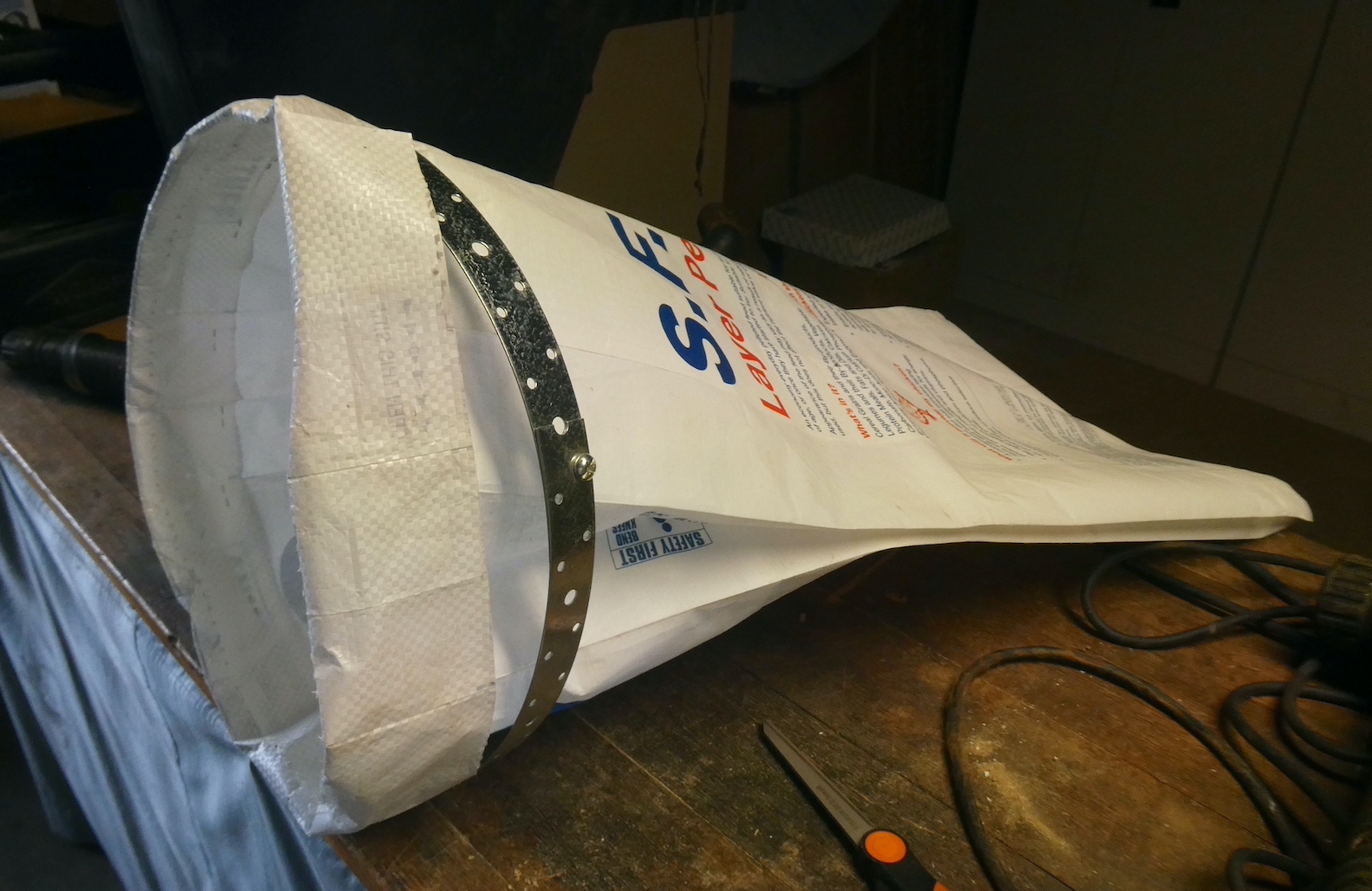
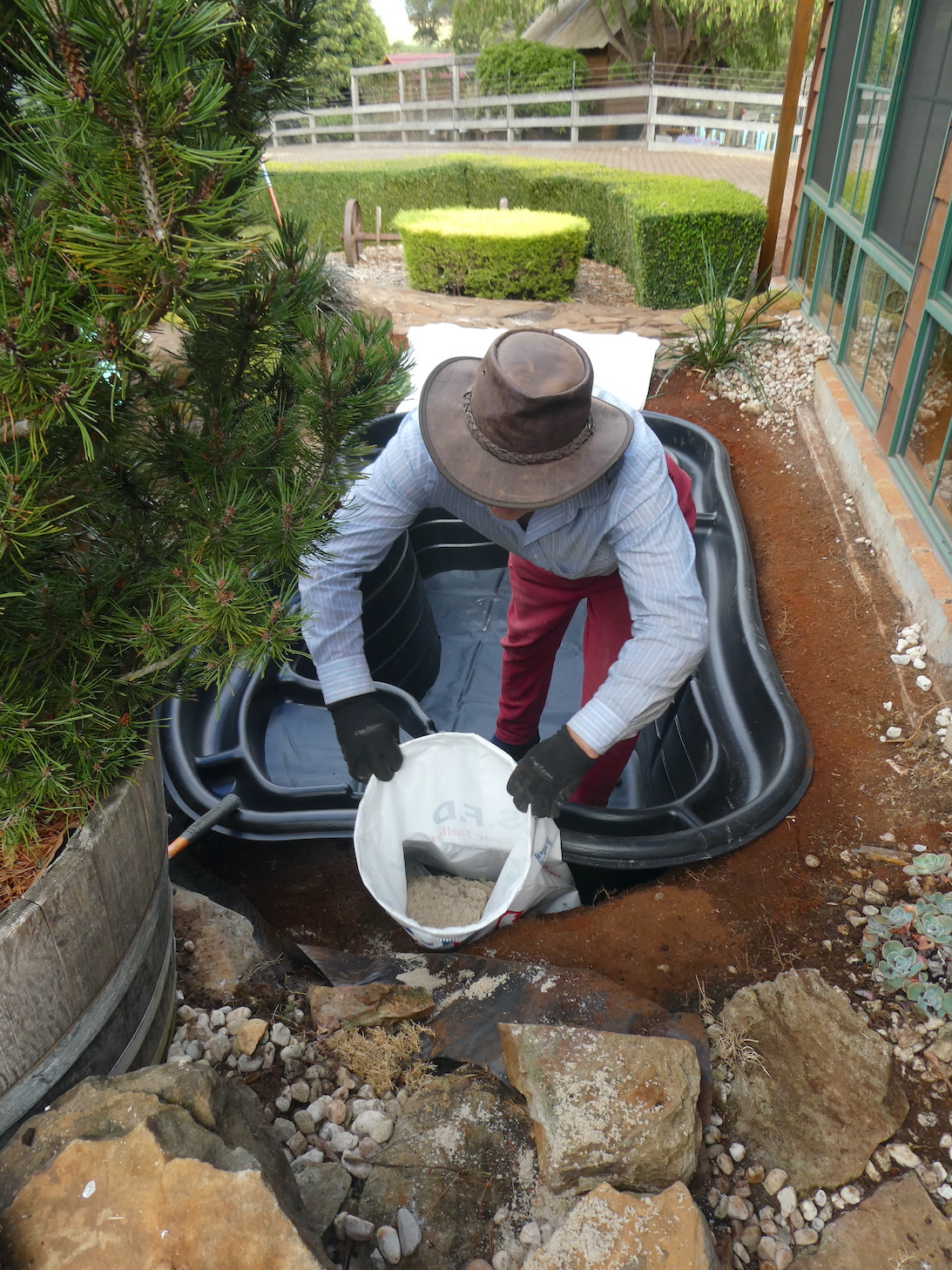
the task of packing the sand around the outside began. Between us, we came up with an ingenious plan to convey the sand into the tight spaces – a funnel made from a chook feed bag and a ring of builders strapping.

It worked brilliantly.

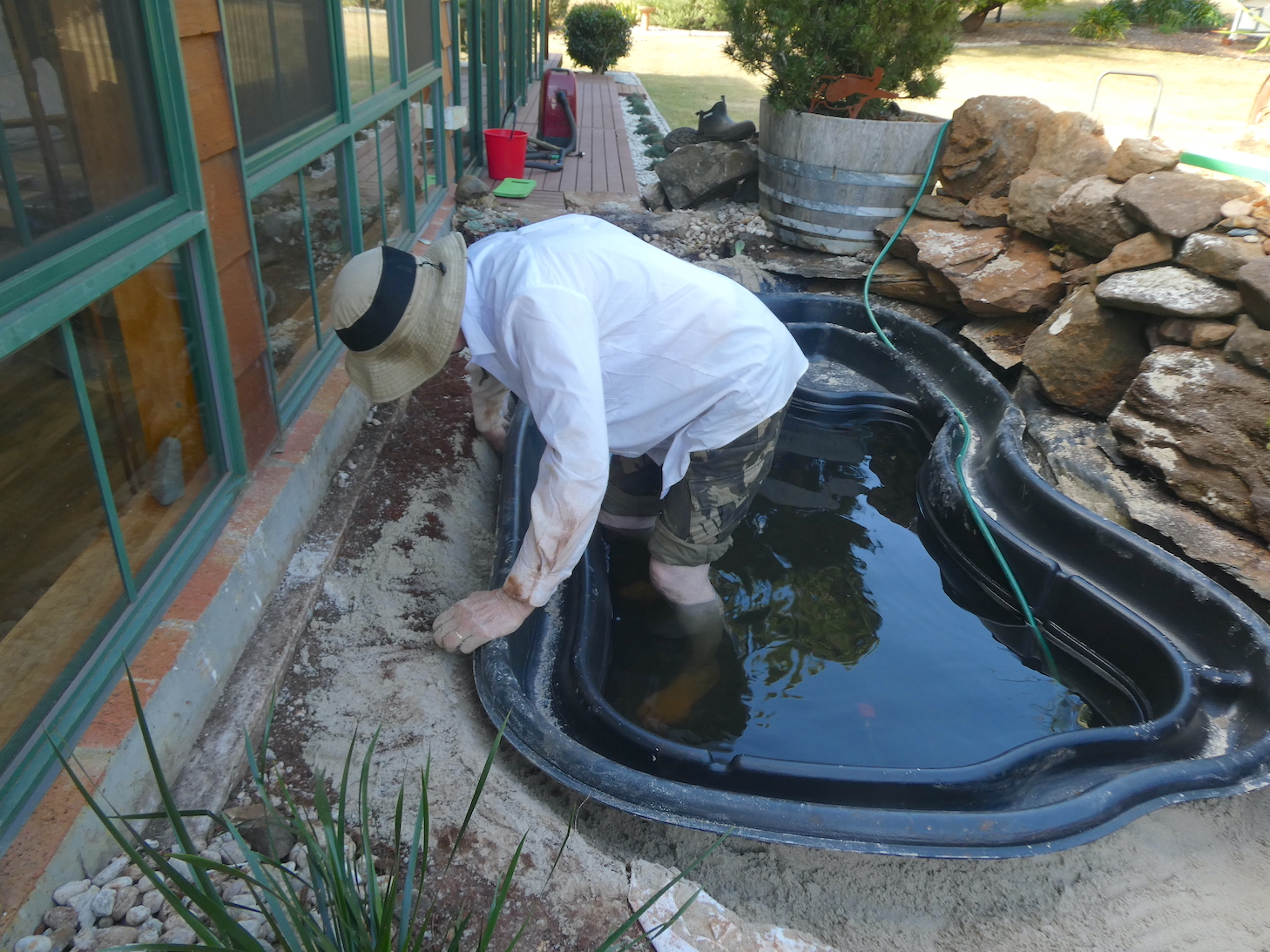
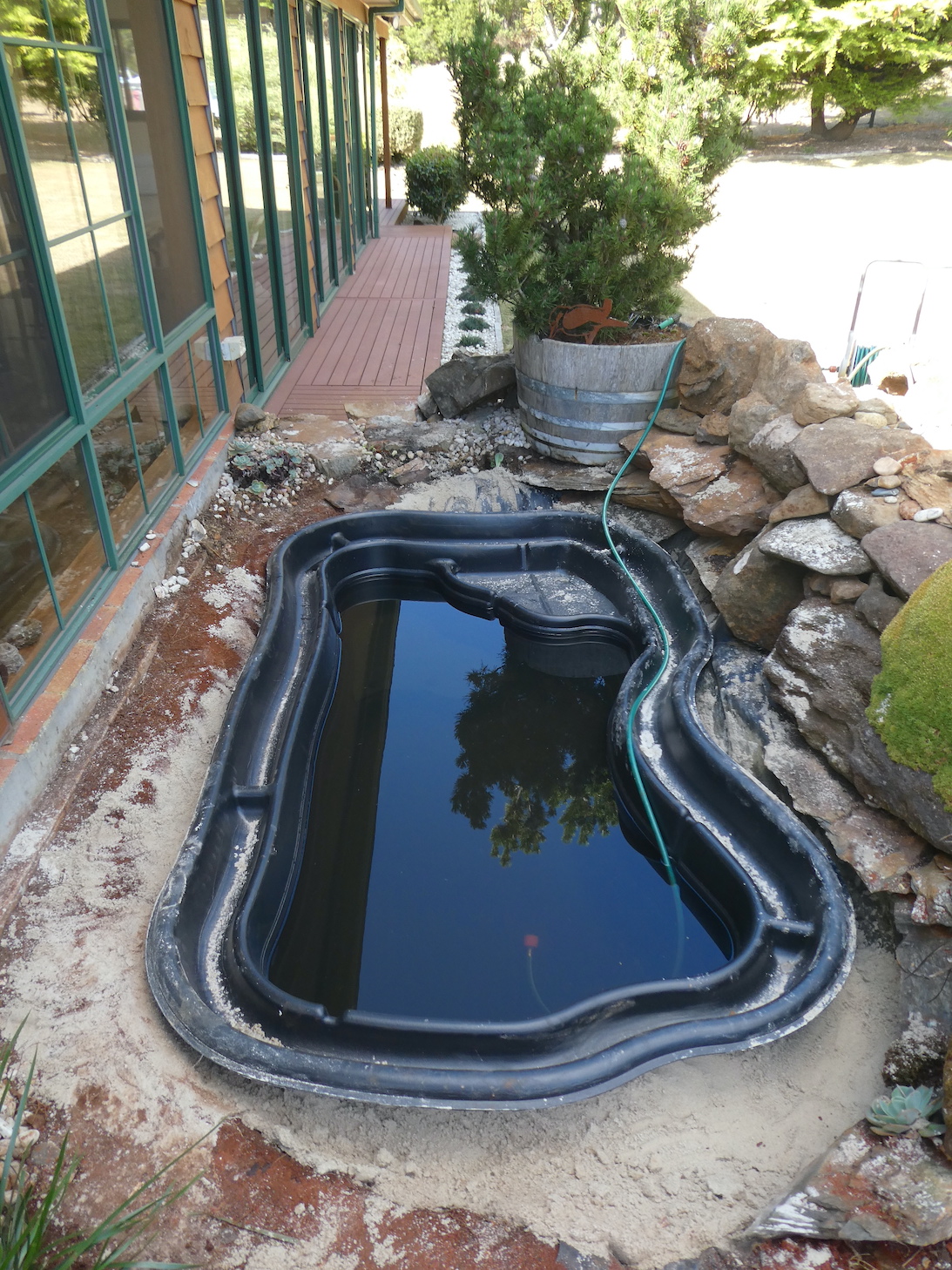
We had been advised to pack some sand, then fill some water and repeat in stages to avoid distortion of the pond shell.

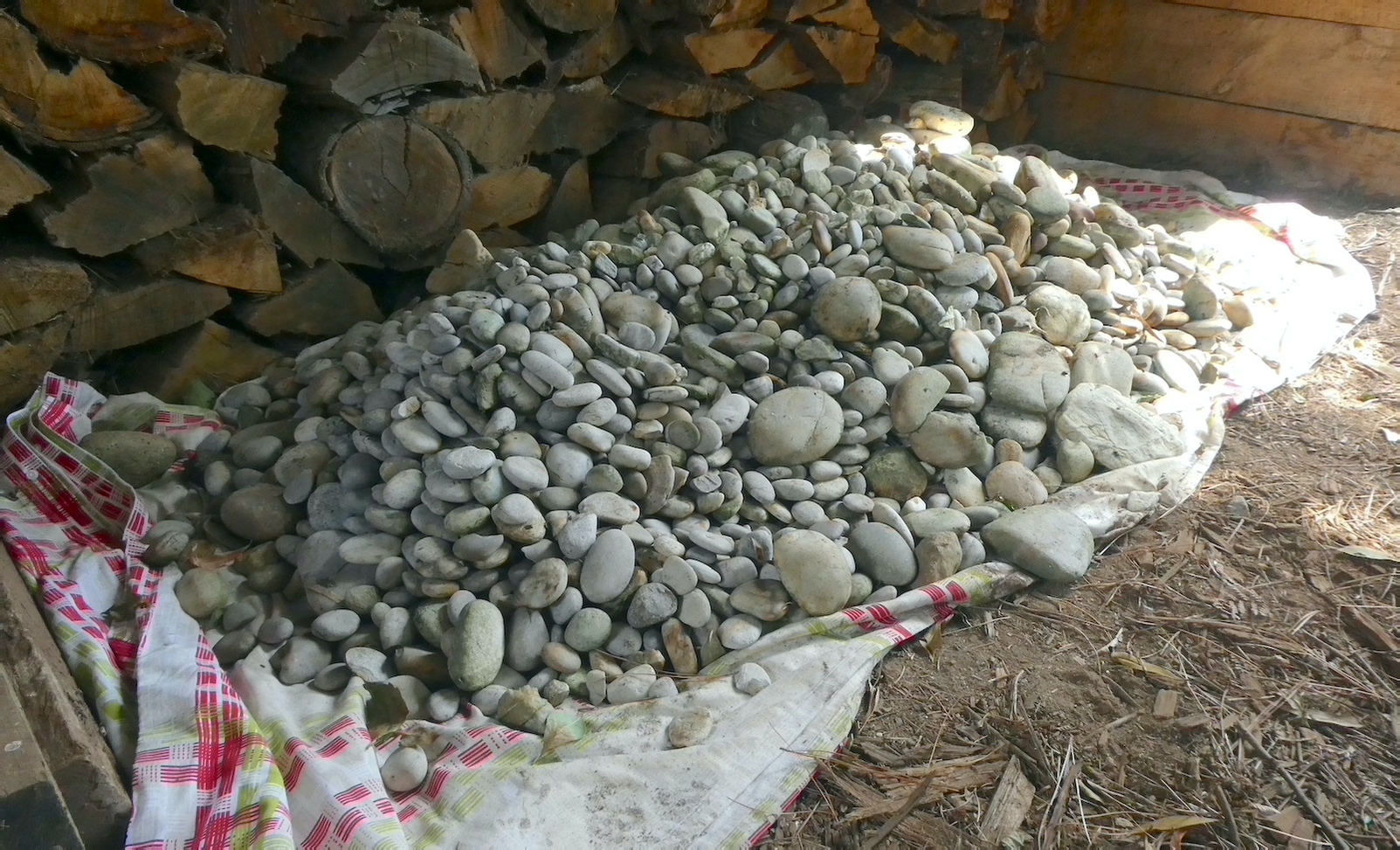
The river stones from the old pond had been saved and I spent some time sorting them

while Michael repotted the plants.

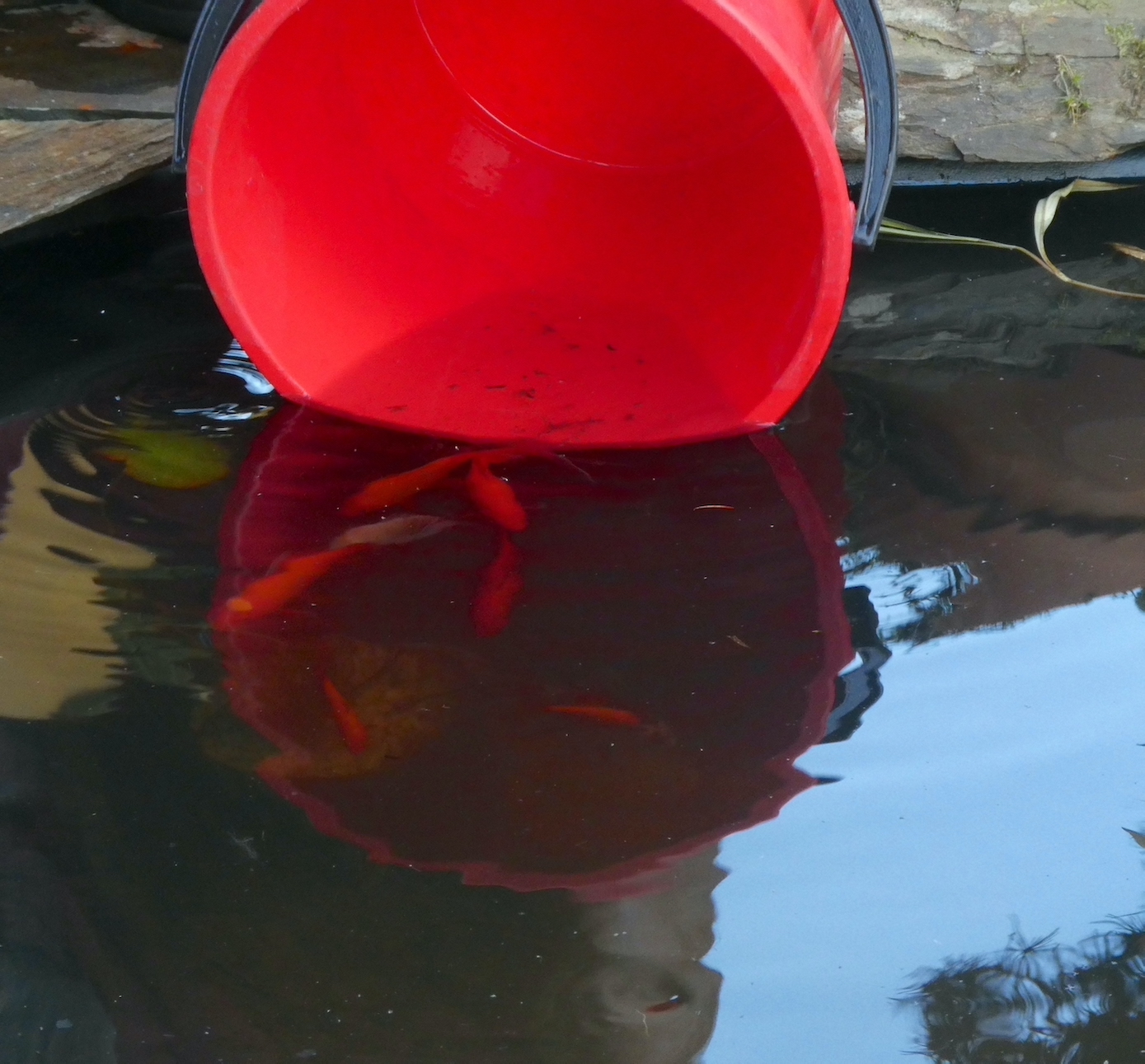
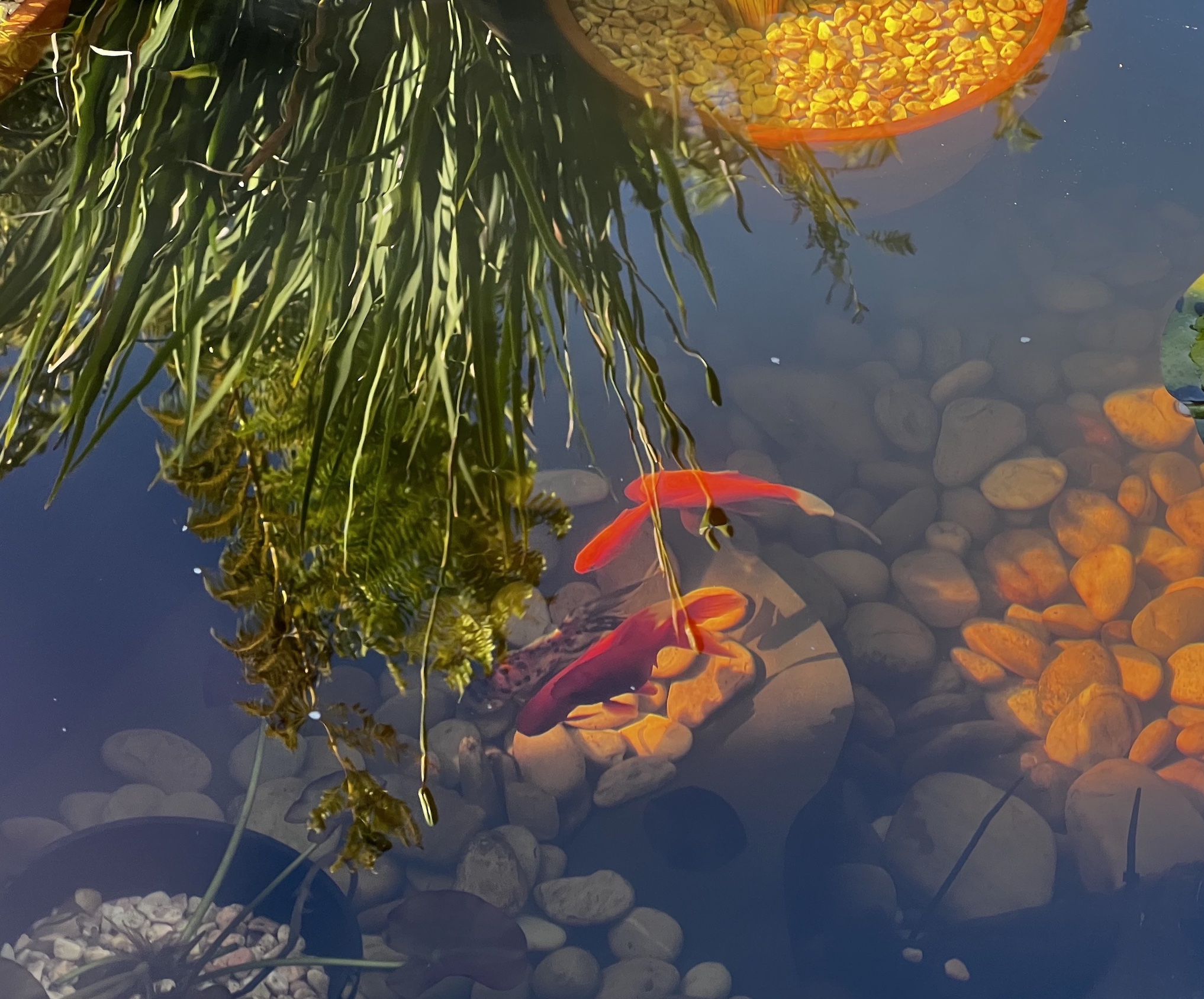
The fish were returned to their new home, along with the plants

and a new cascade perfected the picture.

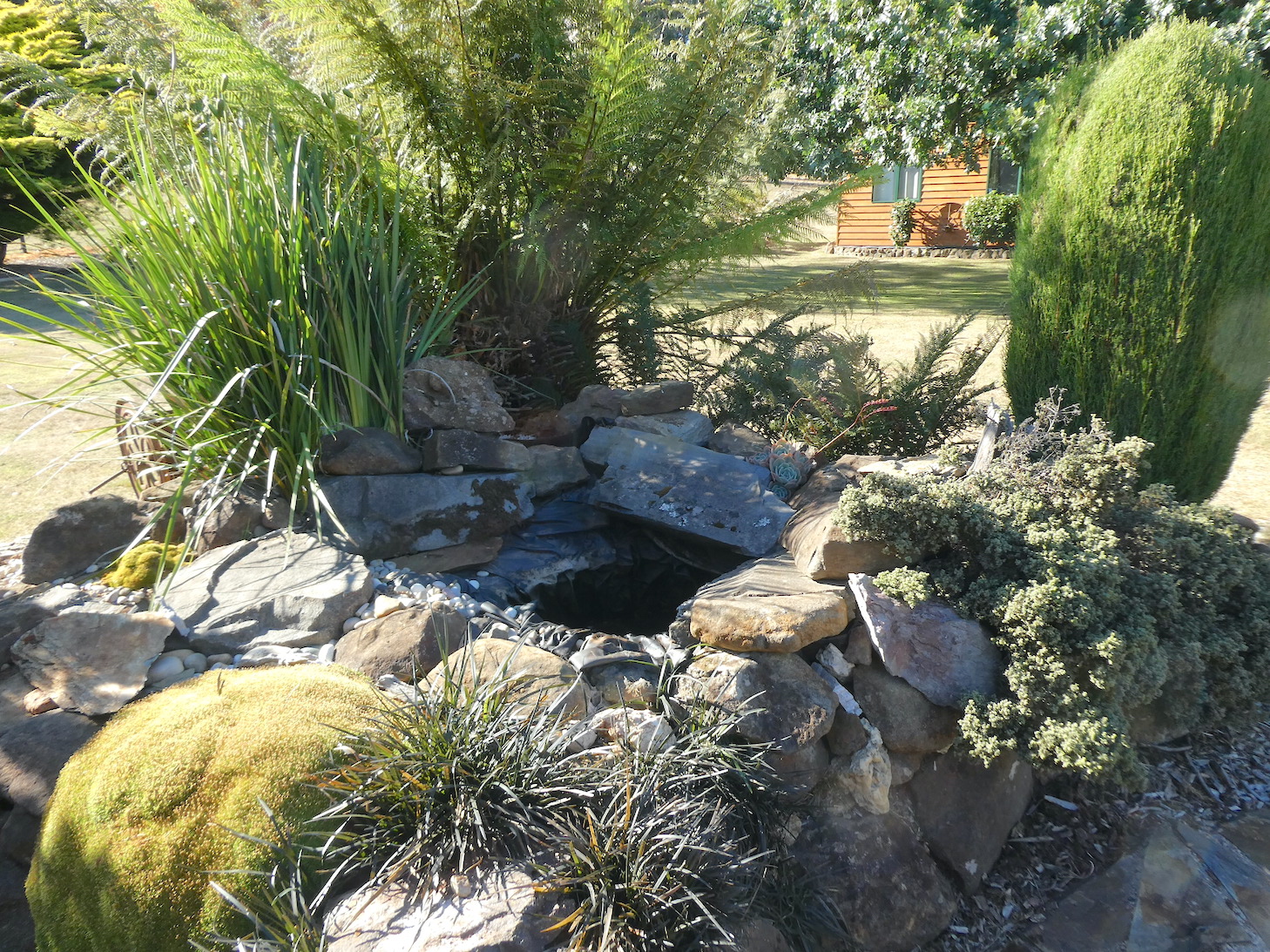
We then set about filling in the top pond,

and after some further landscaping,

declared the project finished.

strenuous summer

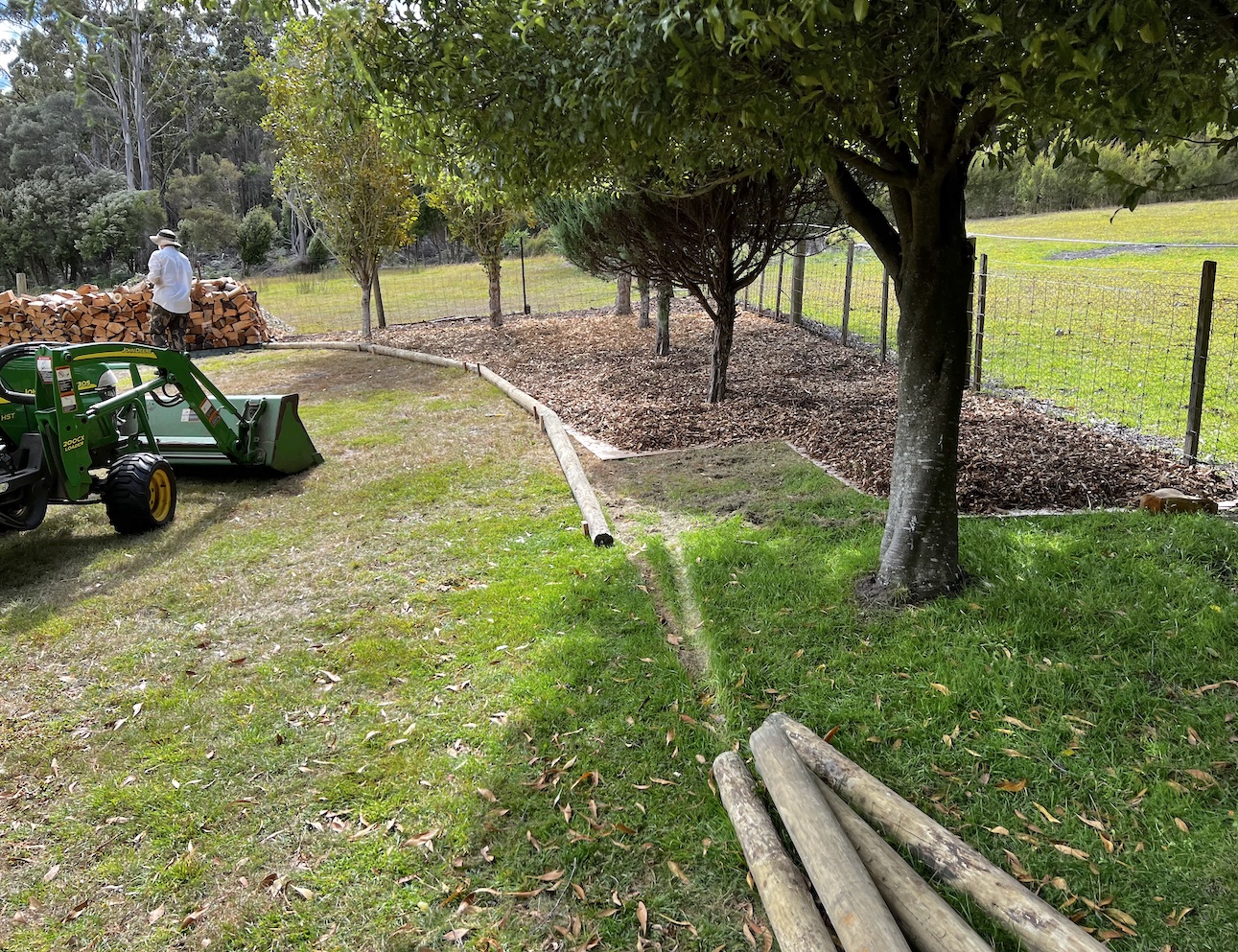
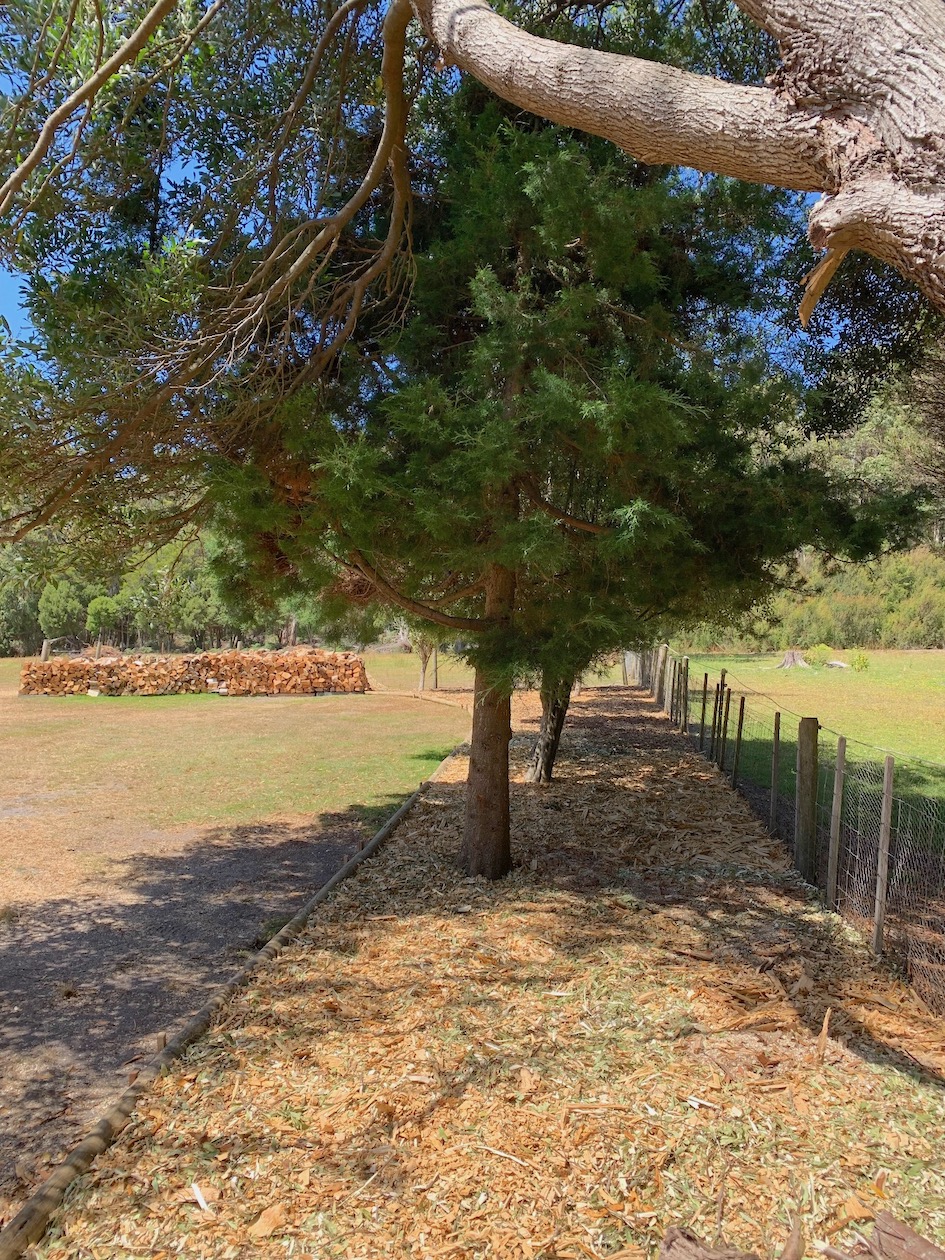
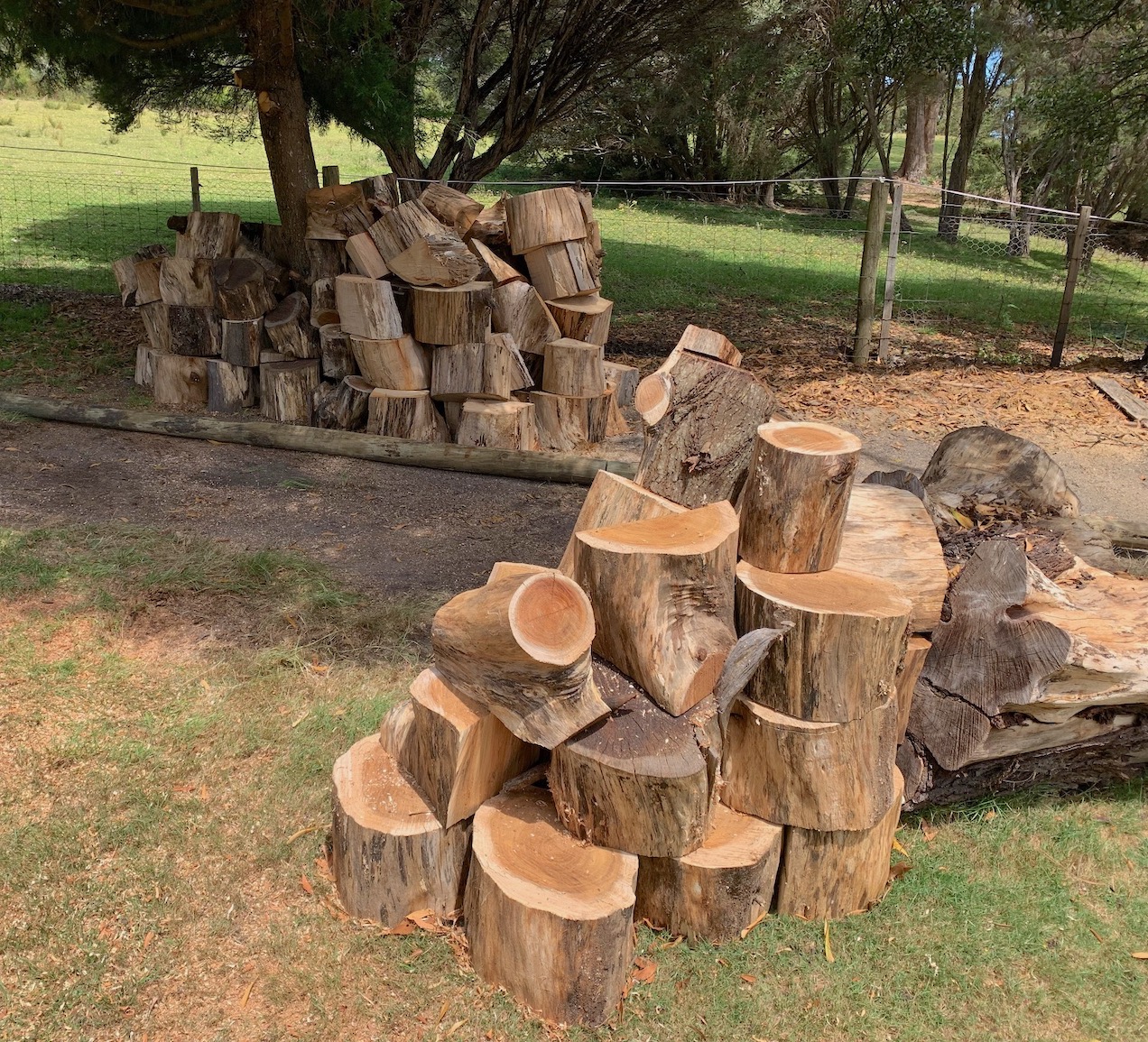
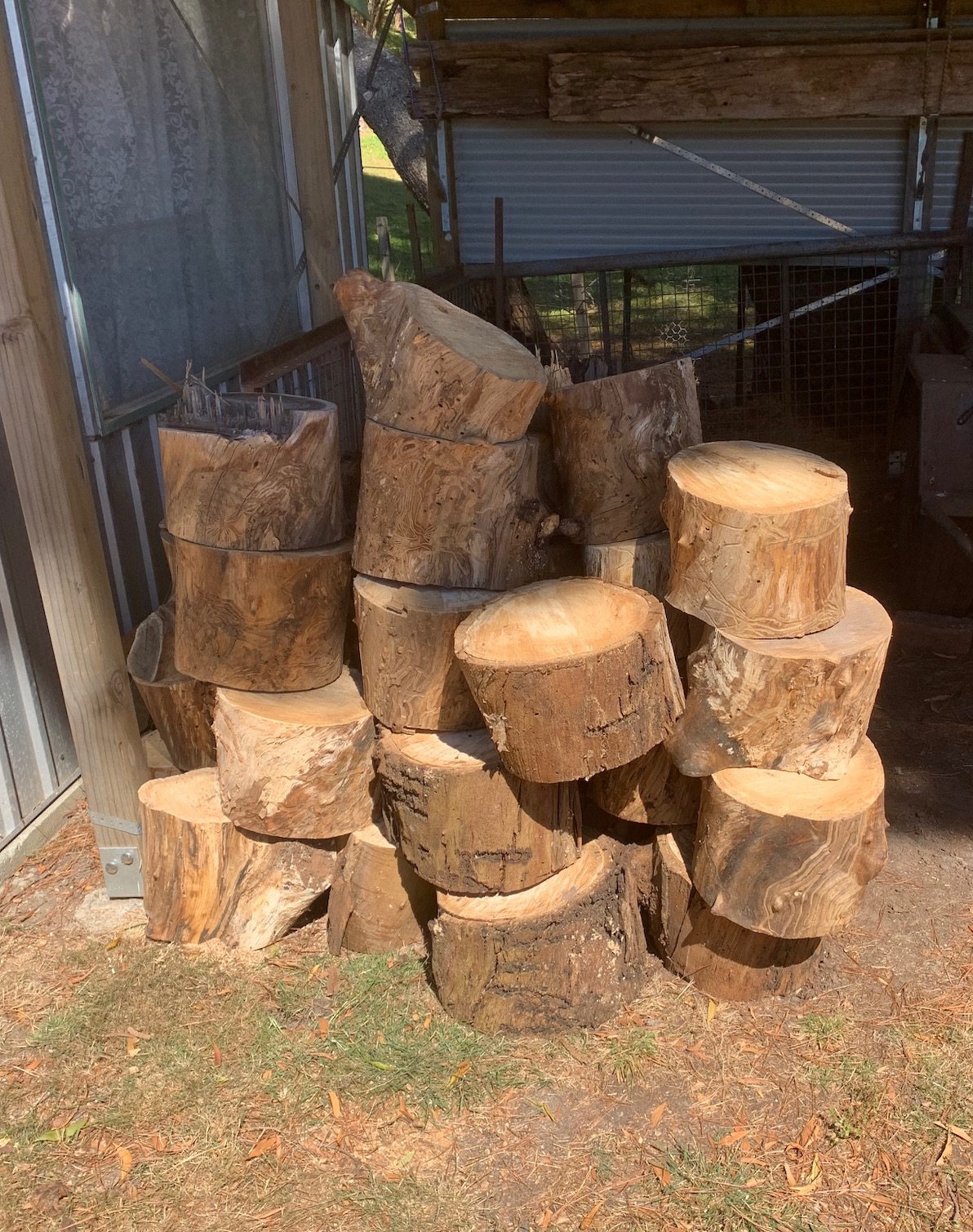
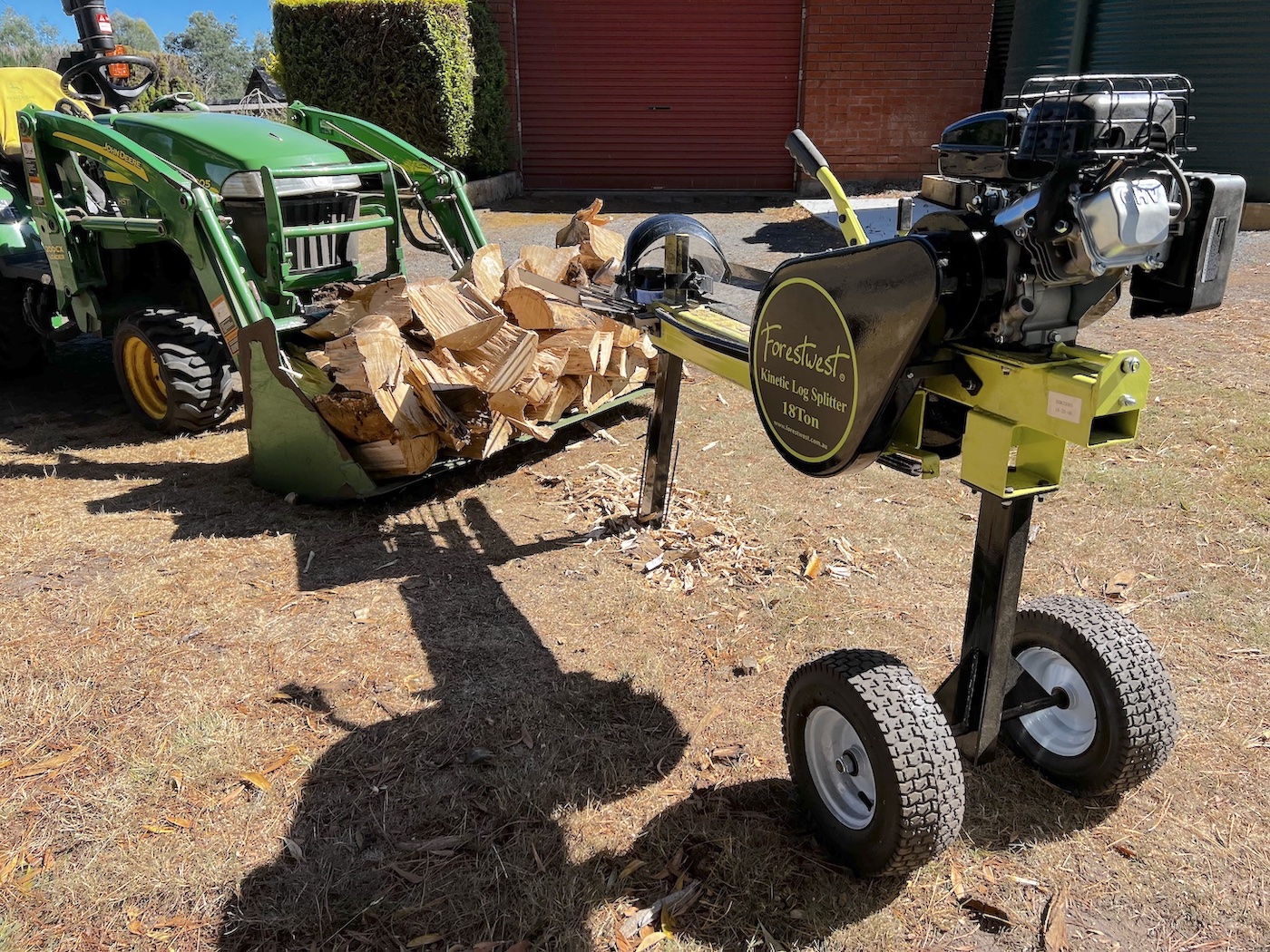
Early last year we had a few large trees removed and the timber was left in piles for us to turn into firewood. We finally got around to dealing with it this summer with many hours of chainsawing, splitting and stacking (not to mention swearing). Realising there were a further two trees that needed felling, we came up with yet another project to use the enormous pile of mulch that would ensue. The row of trees along the south-eastern boundary of the garden has always been difficult to traverse with the ride-on mower. We mapped out the area to mulch and laid 3-metre pine posts for the edging.

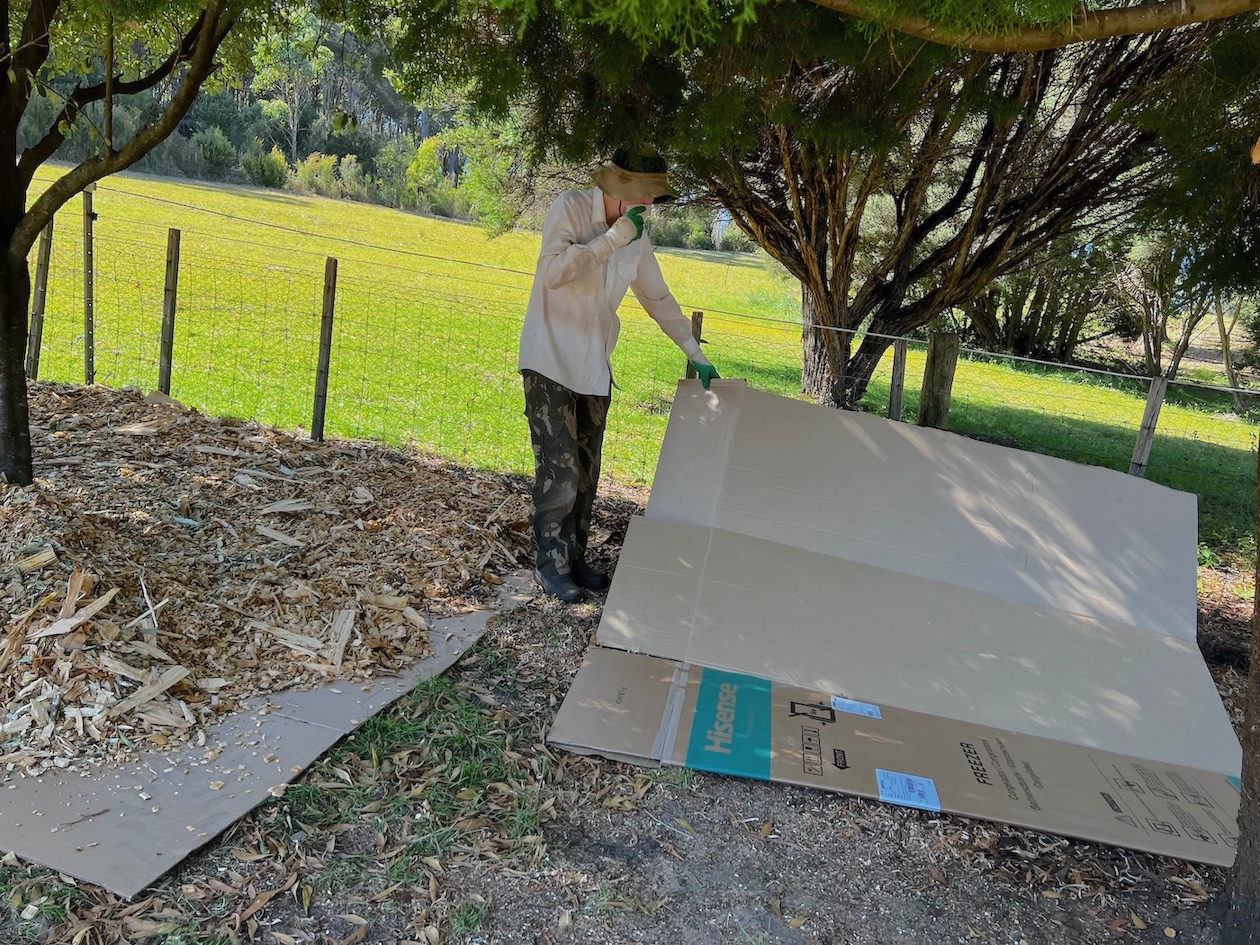
Procuring huge cardboard boxes from the dumpsters at local electrical stores, we laid them flat to repel the weeds. The remaining mulch from last year’s felling was used up first

before more cardboard and a hefty layer from the new pile.

We interspersed our weekend activities with more cutting

and splitting

to clear the way for the new border. The Tree Doctor returned to decimate the final specimen

and we returned to mulching the new border with great fervour.

Alas, the piles of timber waiting for splitting seemed to be never ending

and with one monster left,

a massive effort saw the completion of our odyssey.

It is very rewarding to see the firewood stacked in preparation for coming winters.

A feature has been made of the remaining stump of the once majestic blackwood tree

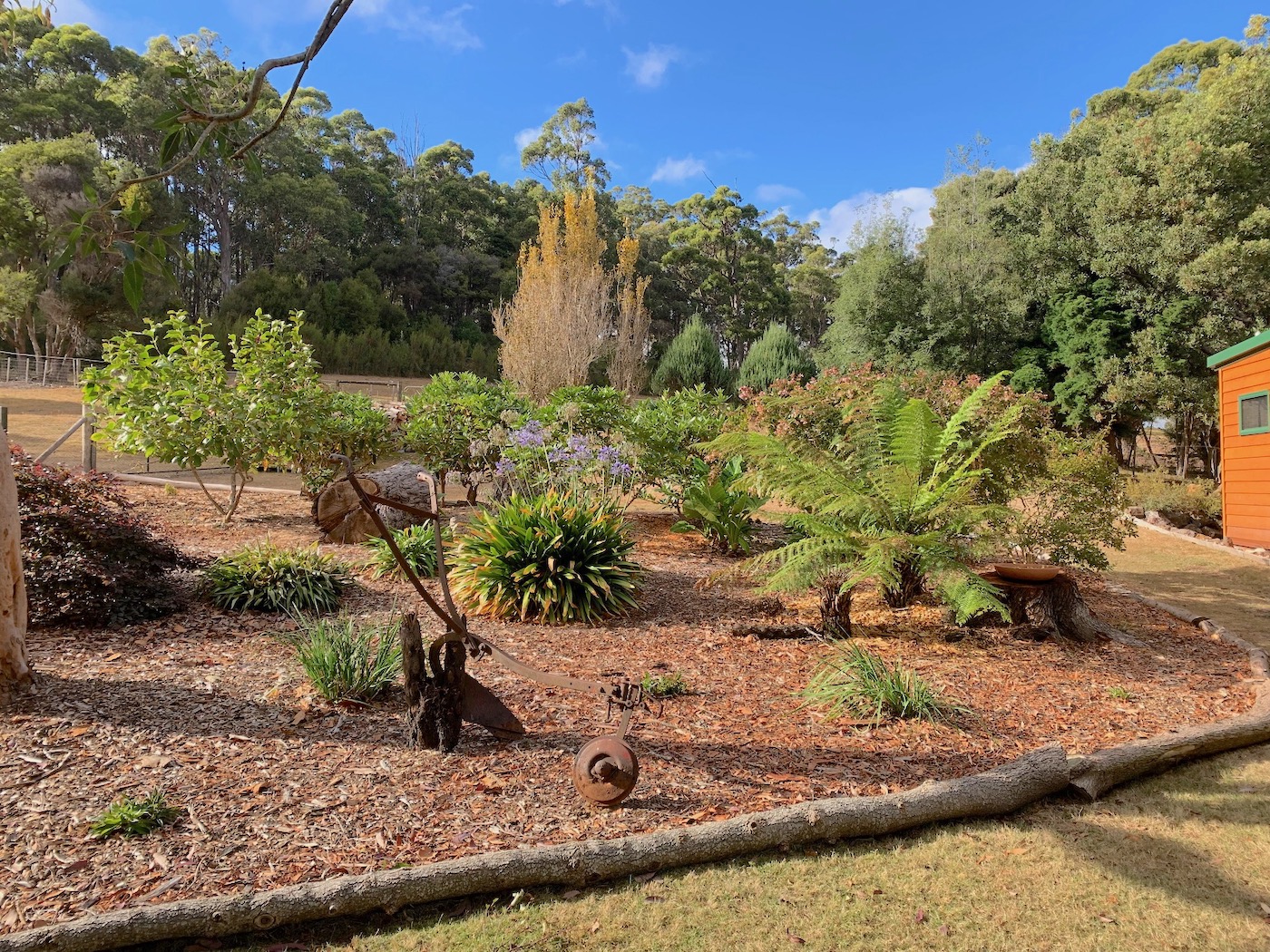
and the old plough has a new position front and centre.

precious Pinot

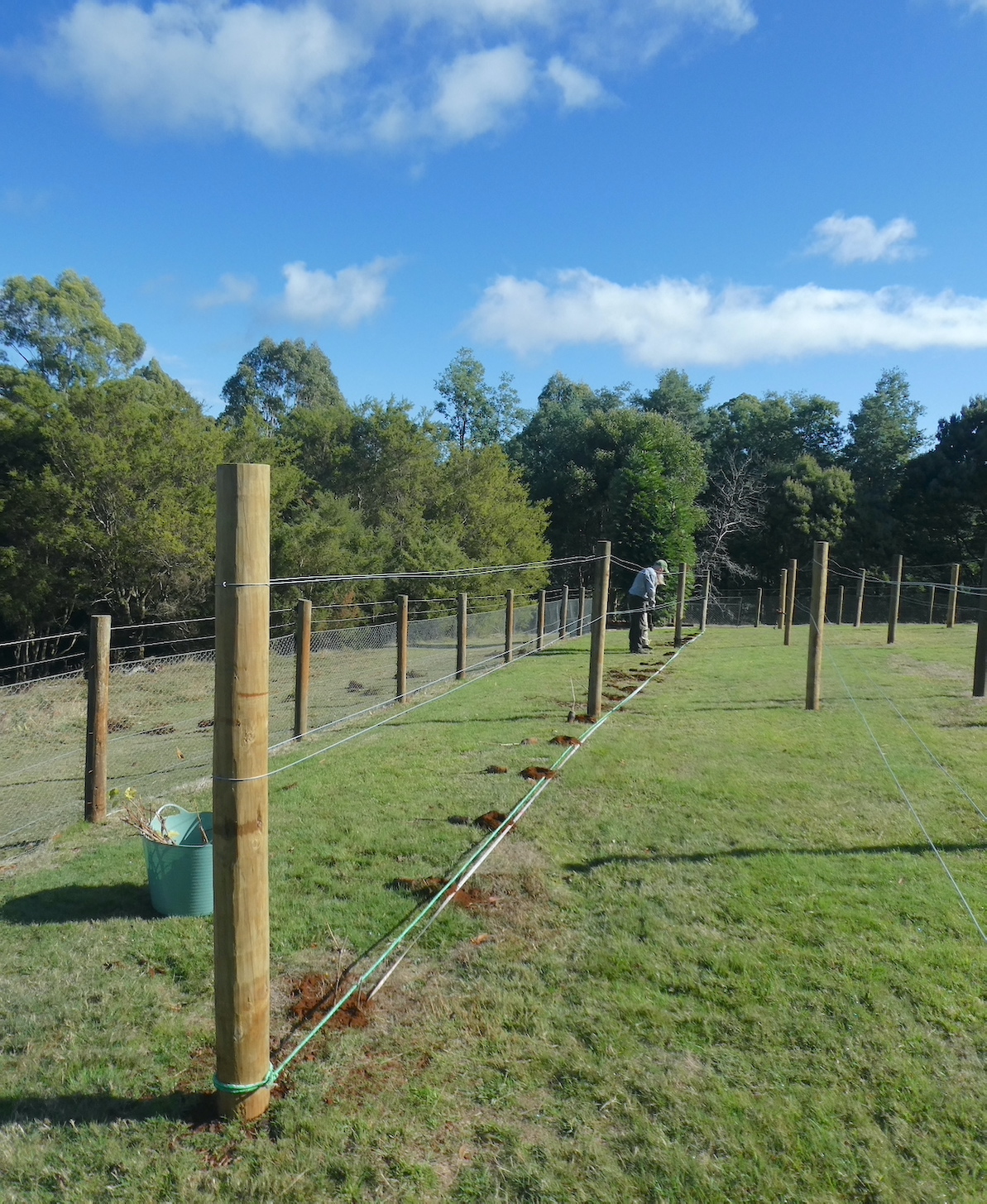
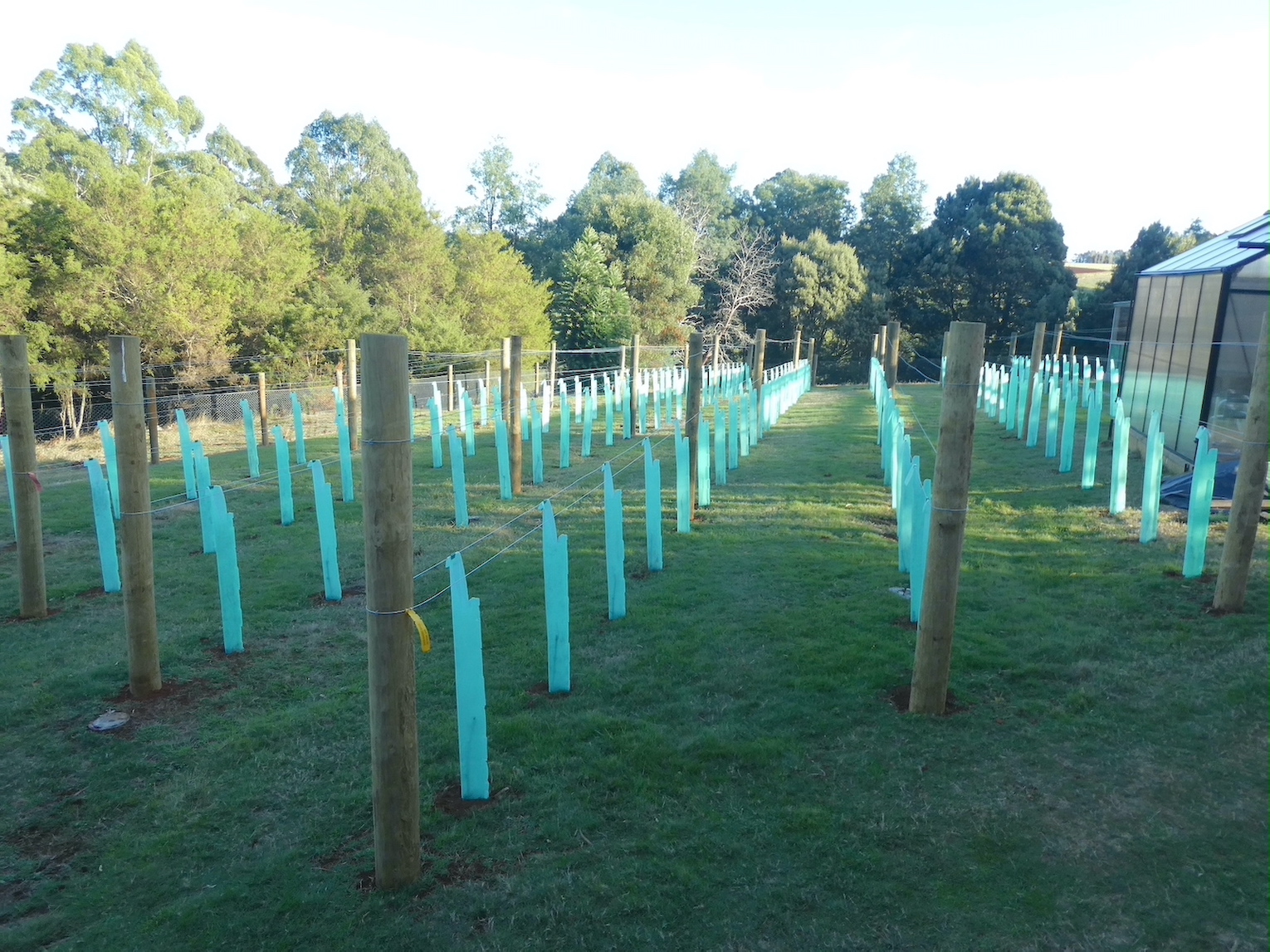
Last summer, a conversation over lunch with a friend revealed her desire to establish a micro-vineyard. However, finding the right parcel of land was proving difficult, at which point we offered a few options on our property. The area designated as ‘orchard’ when we moved here has, over the years, seen the demise of the aged fruit trees and we had intended moving the remaining plants. This plot was deemed perfect for the project. Posts were added to our already existing few just before the new year

and support wires were strung soon after.

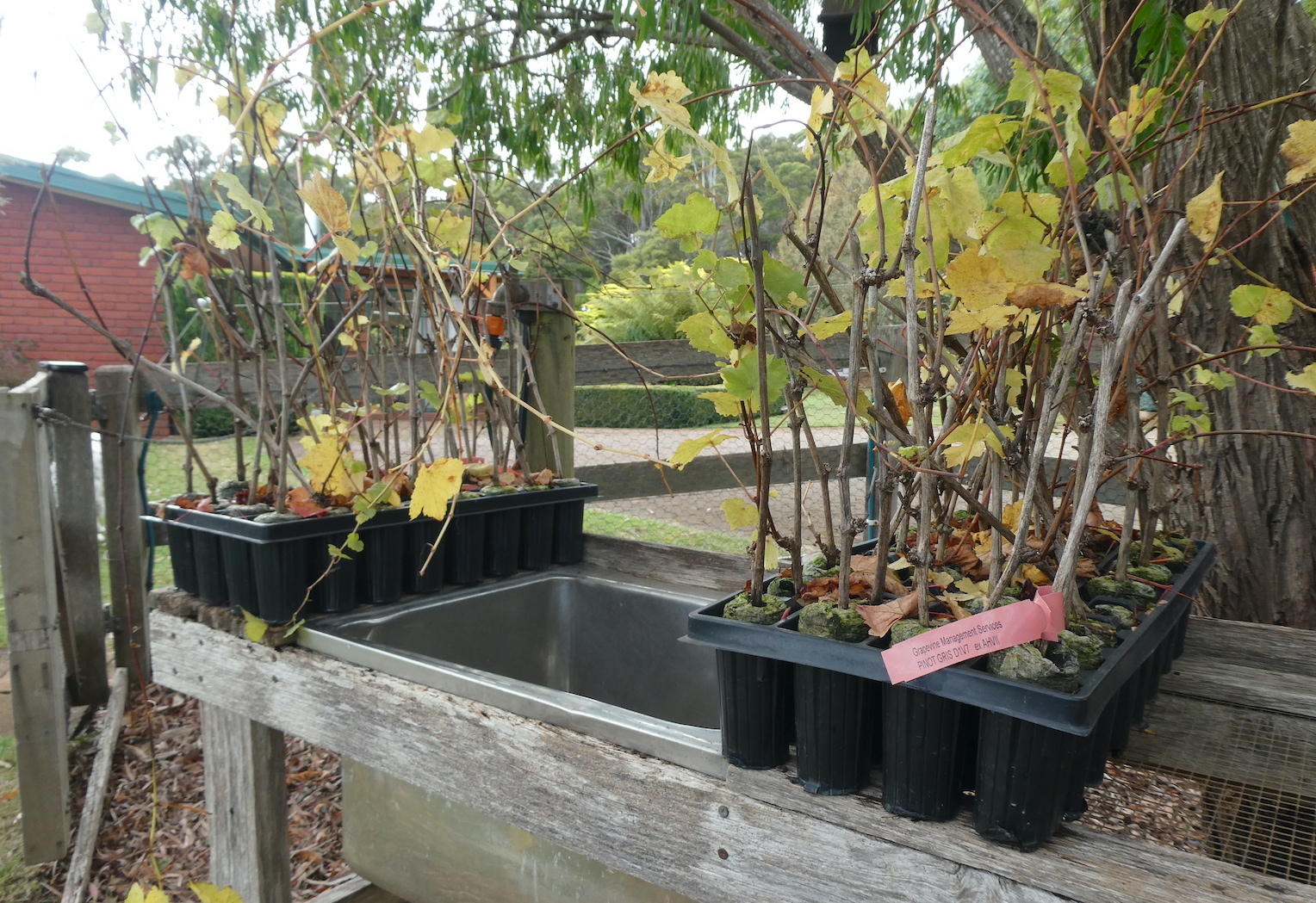
The vines were secured within the veggie enclosure through summer

until ready for planting in autumn.

Each vine was trimmed to the first two or three buds

while Michael took up the auger and embraced the arduous task of hole digging.

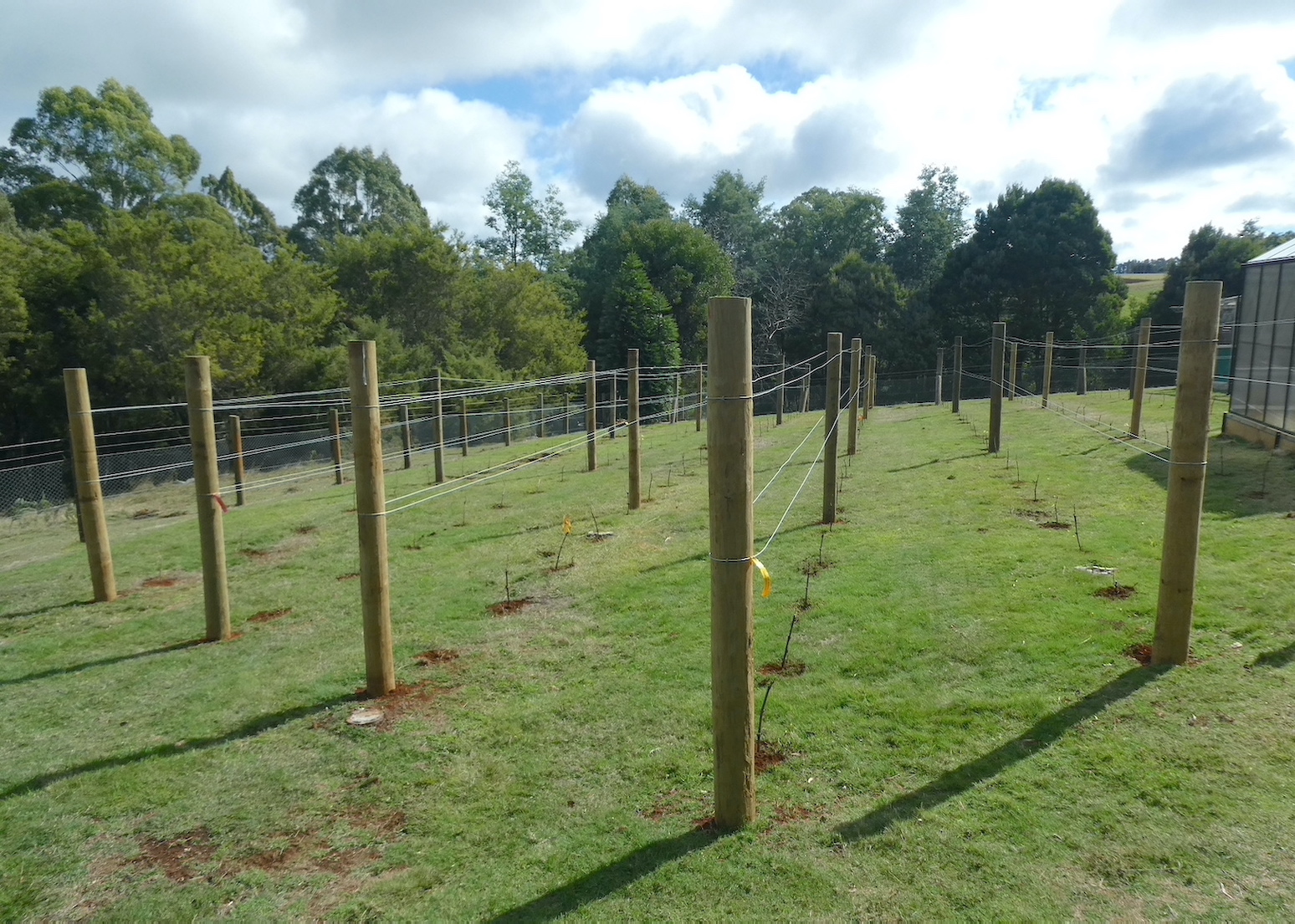
Each plant was placed into the precisely drilled holes, backfilled and watered

until 158 vines nestled in their new home.

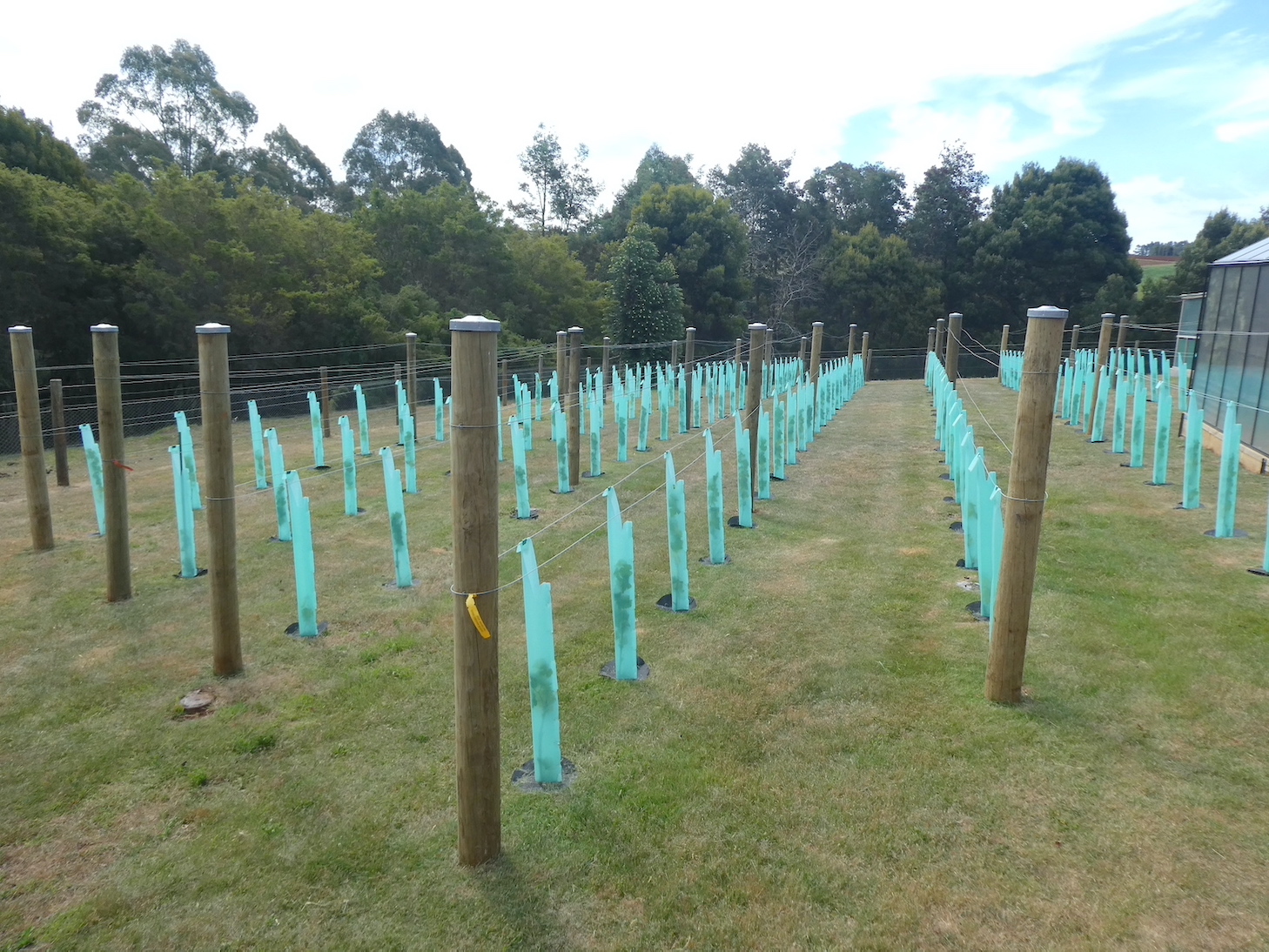
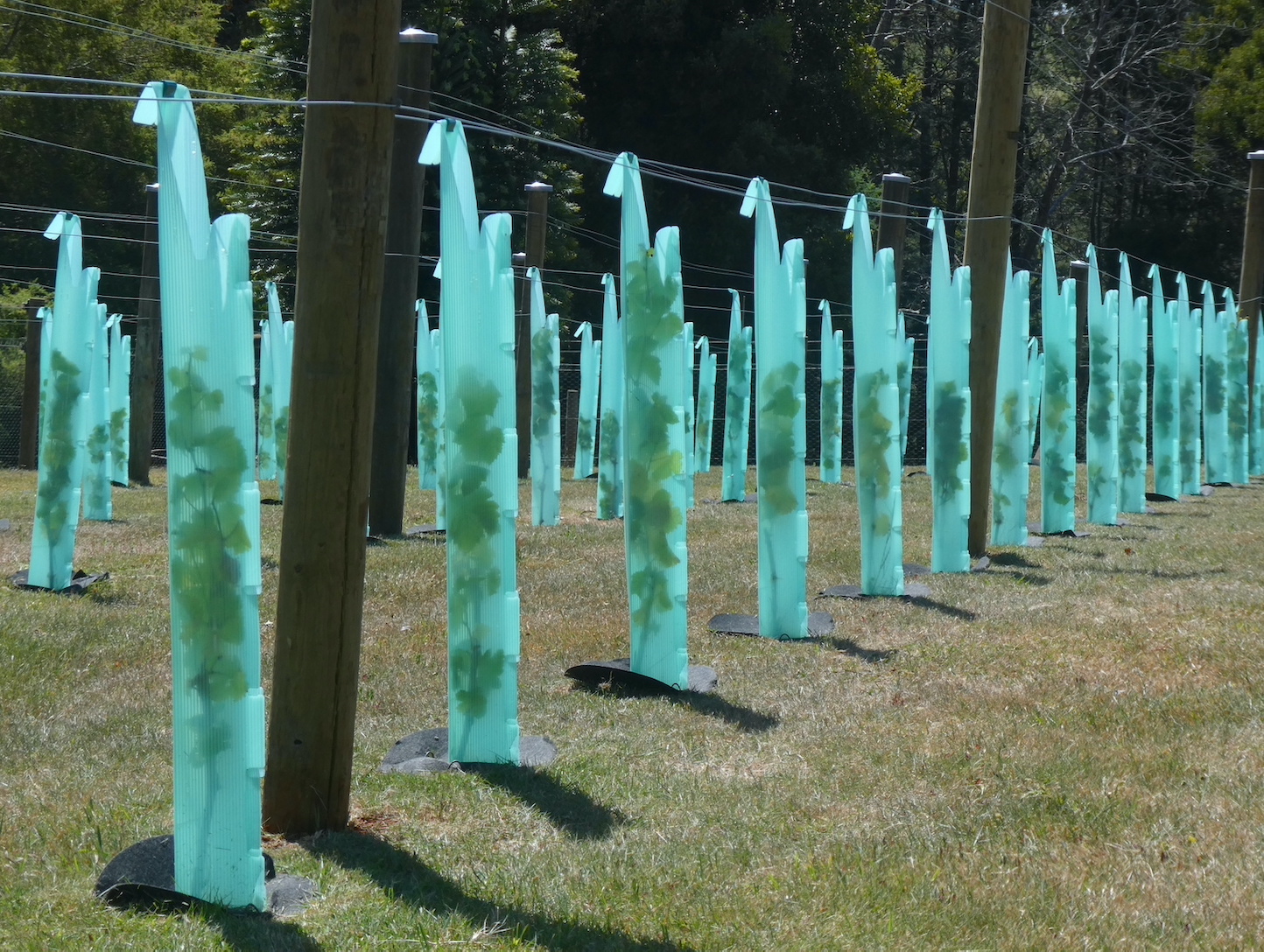
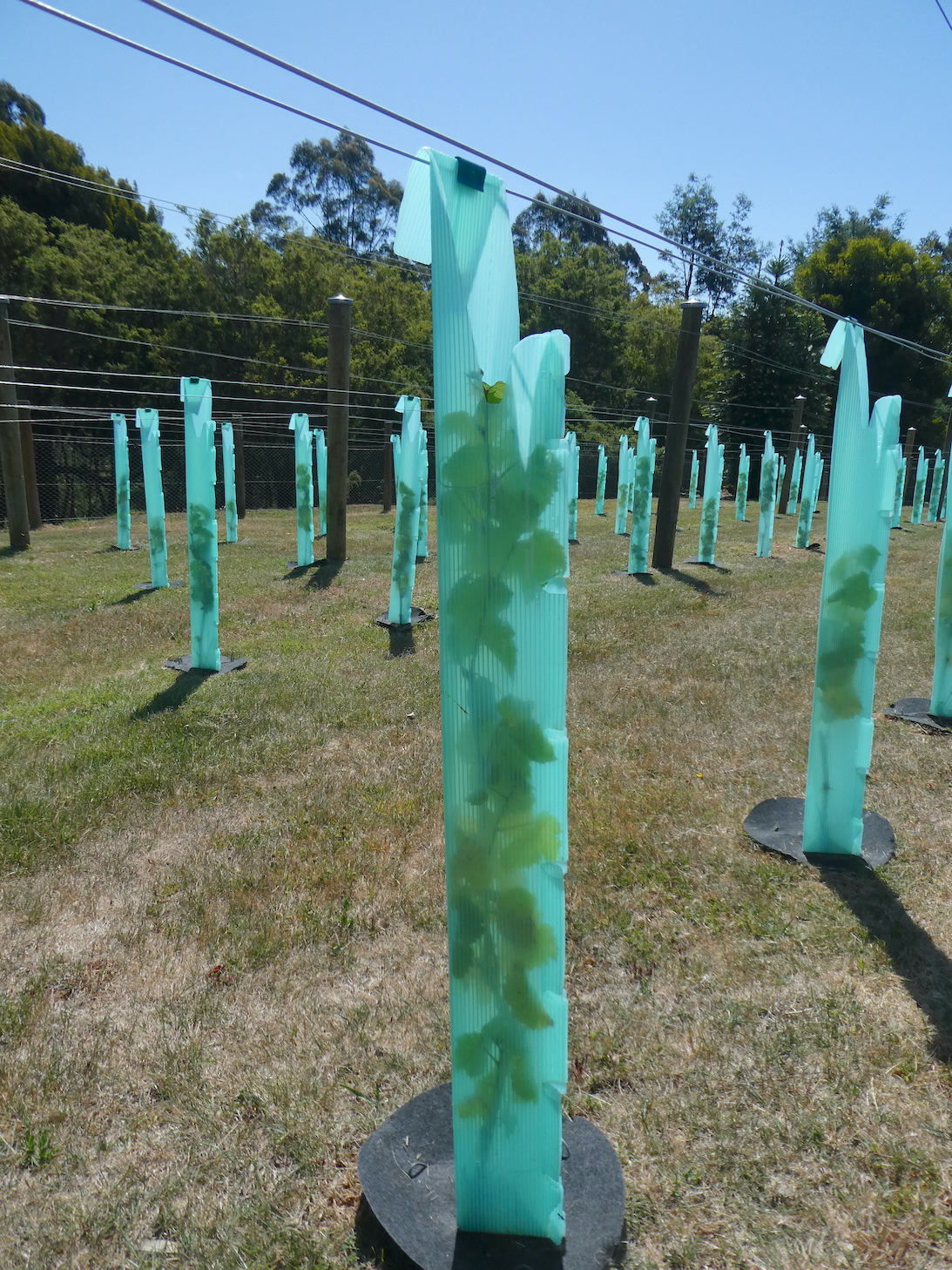
Tree guards would protect the youngsters through the winter months and stave off attacks by marauding wildlife.

There was nothing left to do but wait and let nature work her magic. Seven months later, they are thriving, safe from the dreaded spring winds within their corflute cocoons.

There are two rows of Pinot Gris and the rest are Pinot Noir, a few years away from the bottle yet but an exciting journey lies ahead.