grand greenhouse

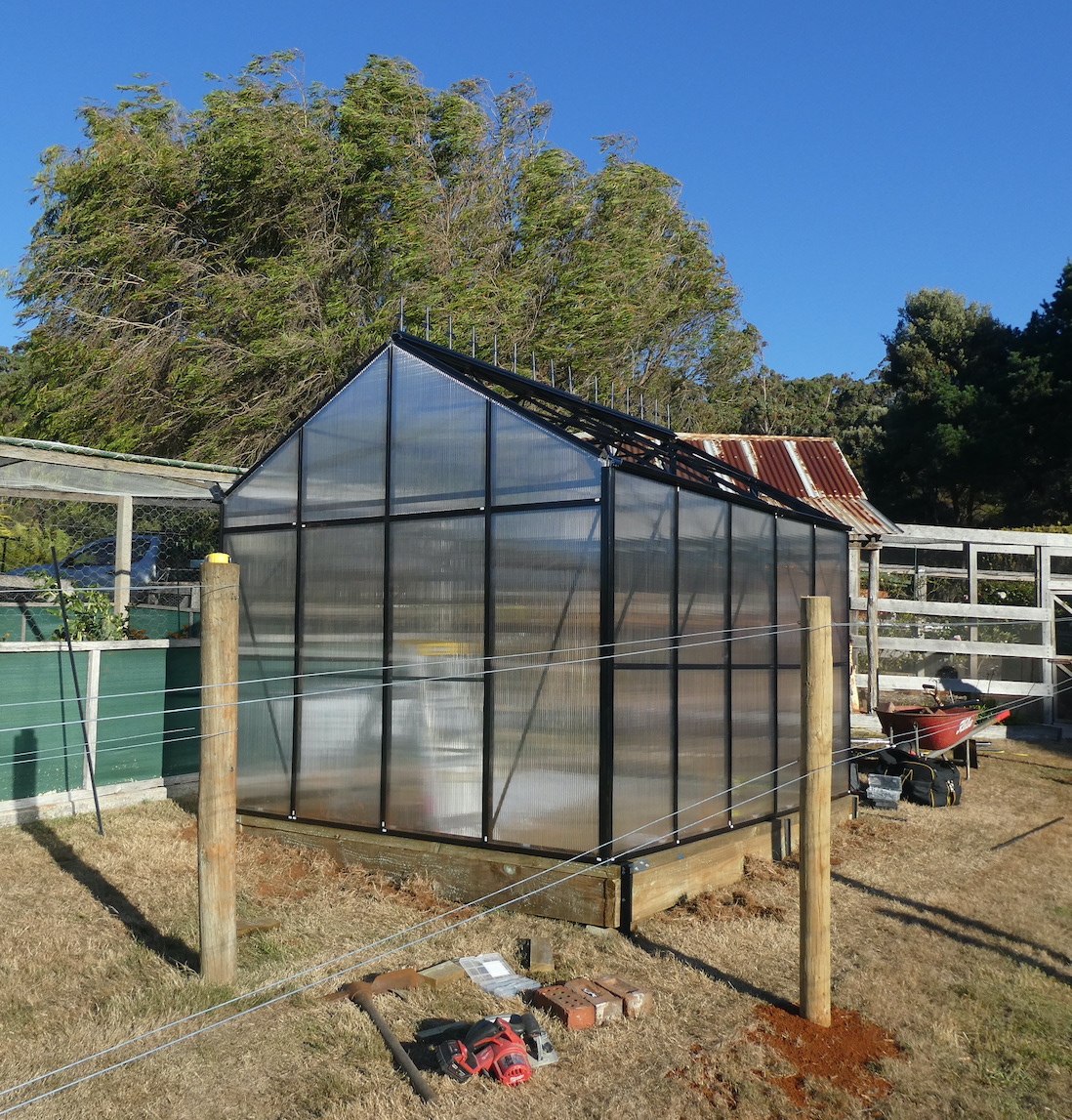
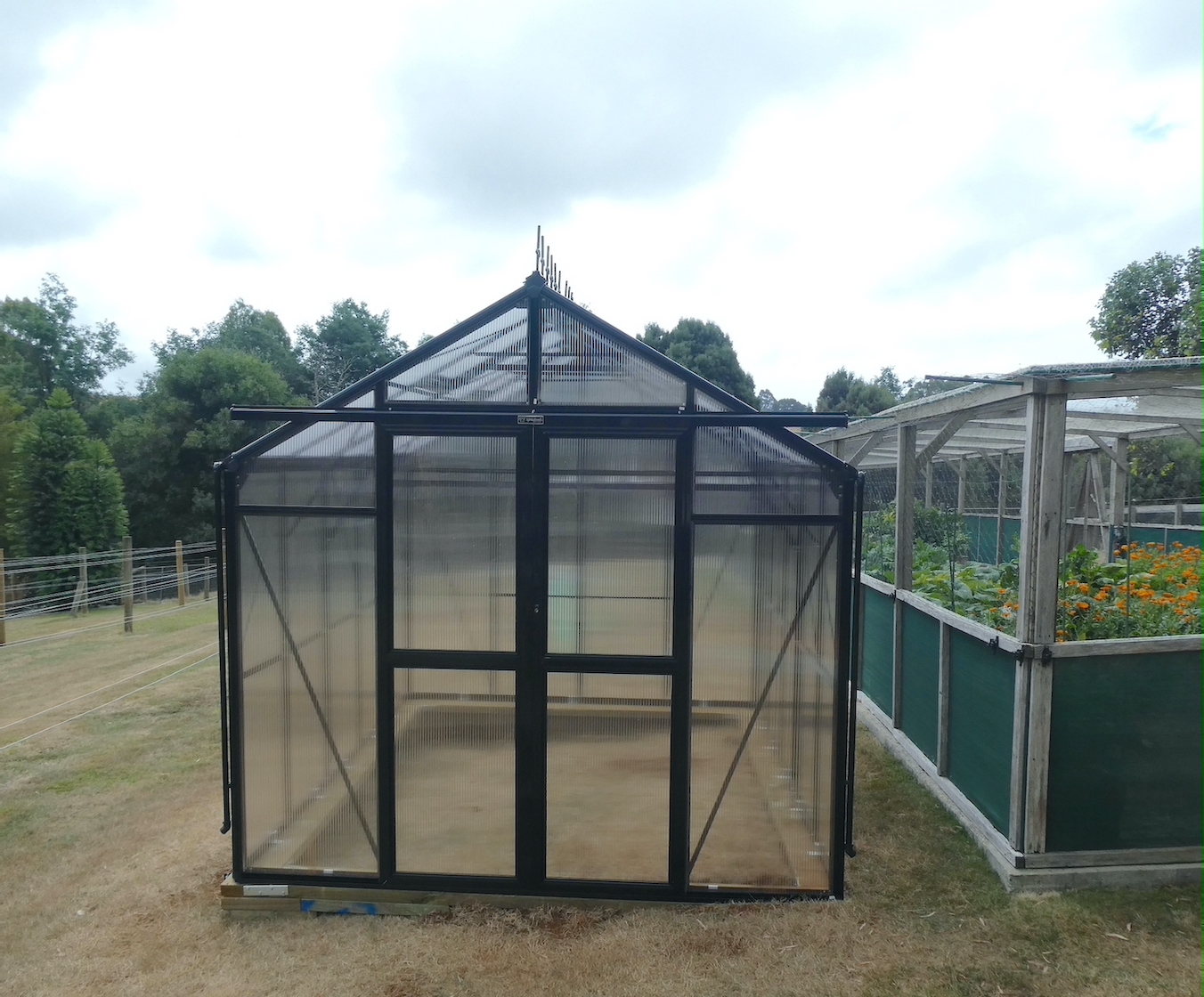
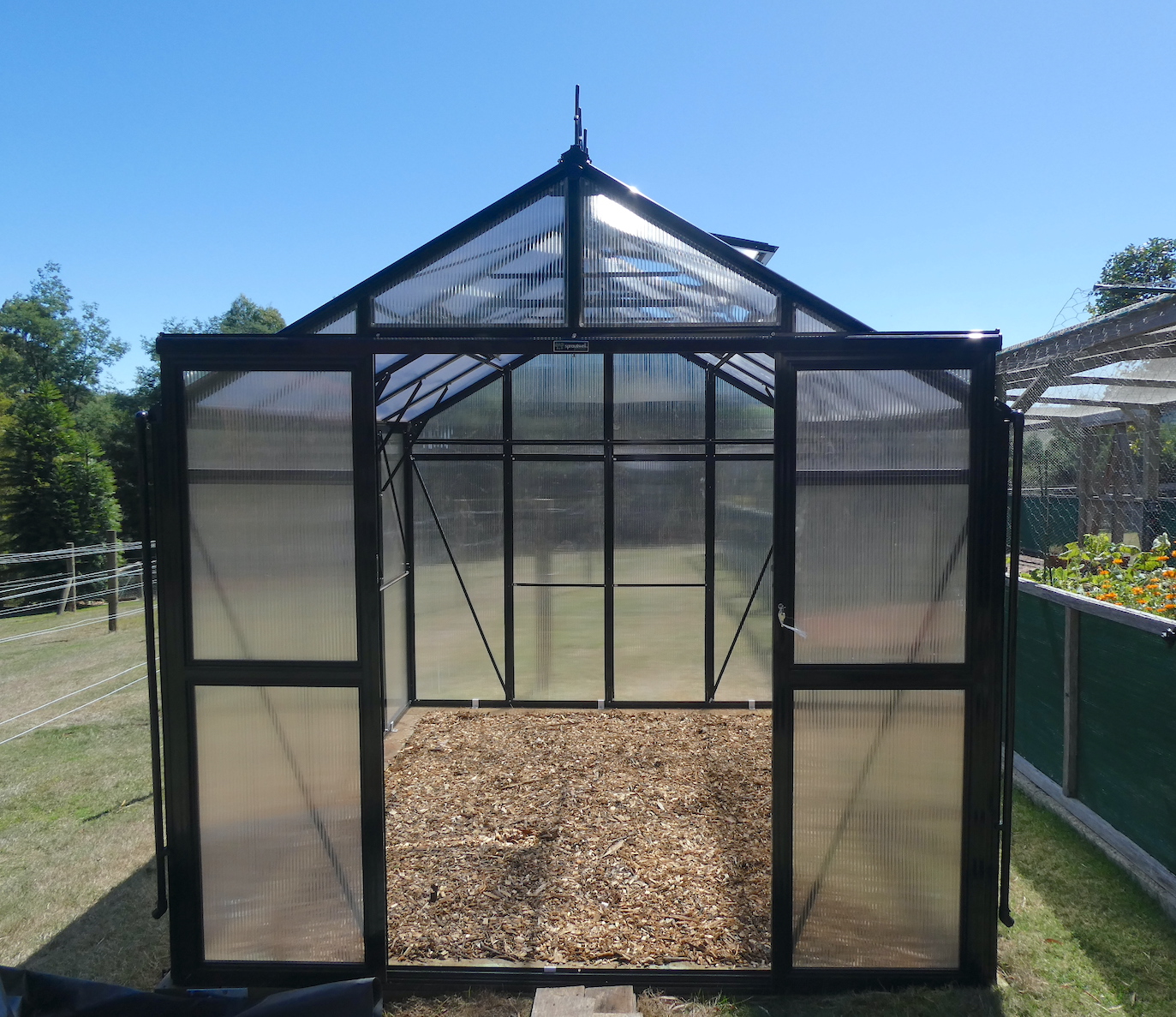
Although our veggie patch is prolific through summer, it tends to be somewhat limited once the colder months descend. After much contemplation, we took the plunge and ordered a greenhouse last February.

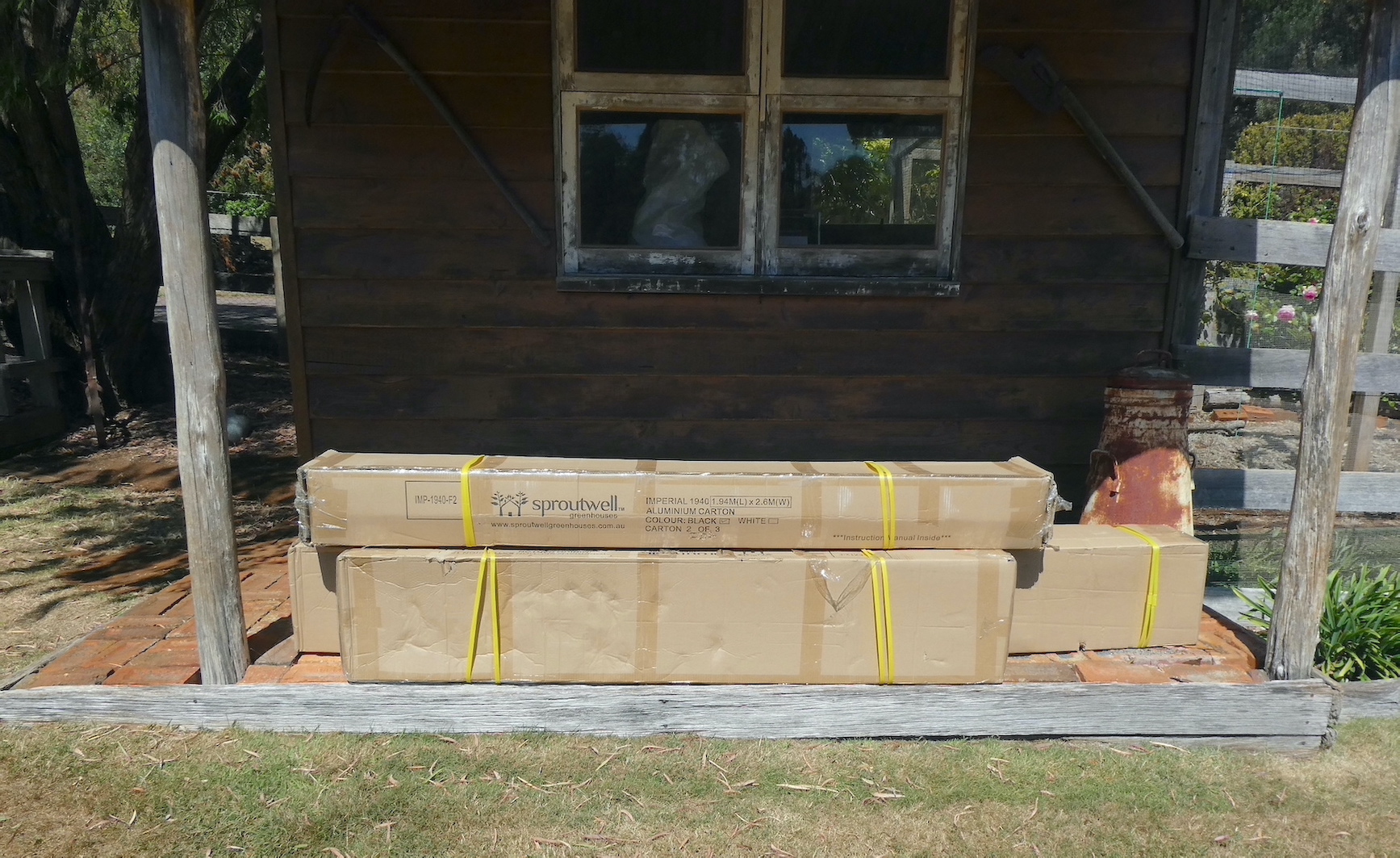
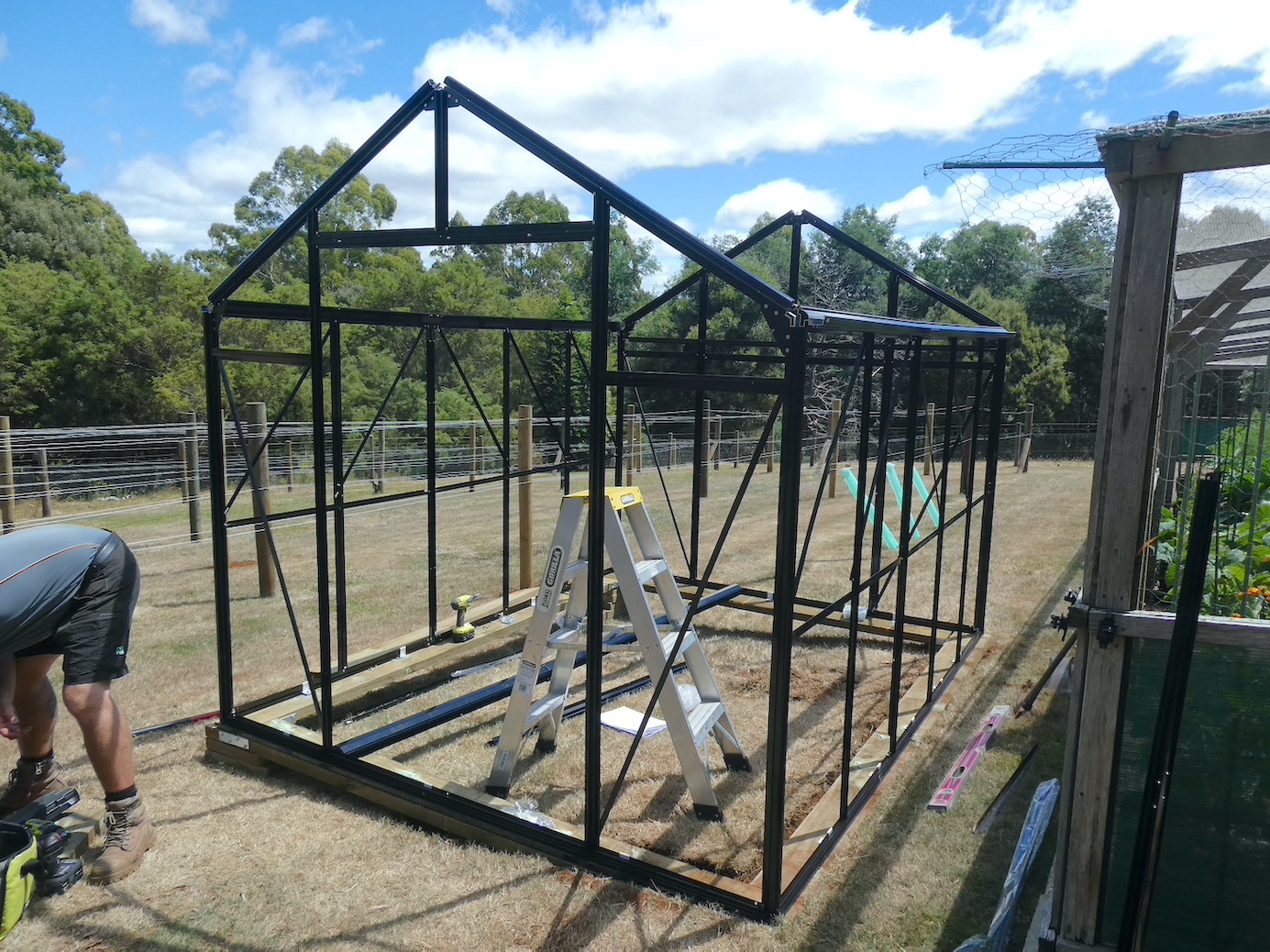
We chose a site adjacent to the vegetable enclosure with the potting shed and running water close by.
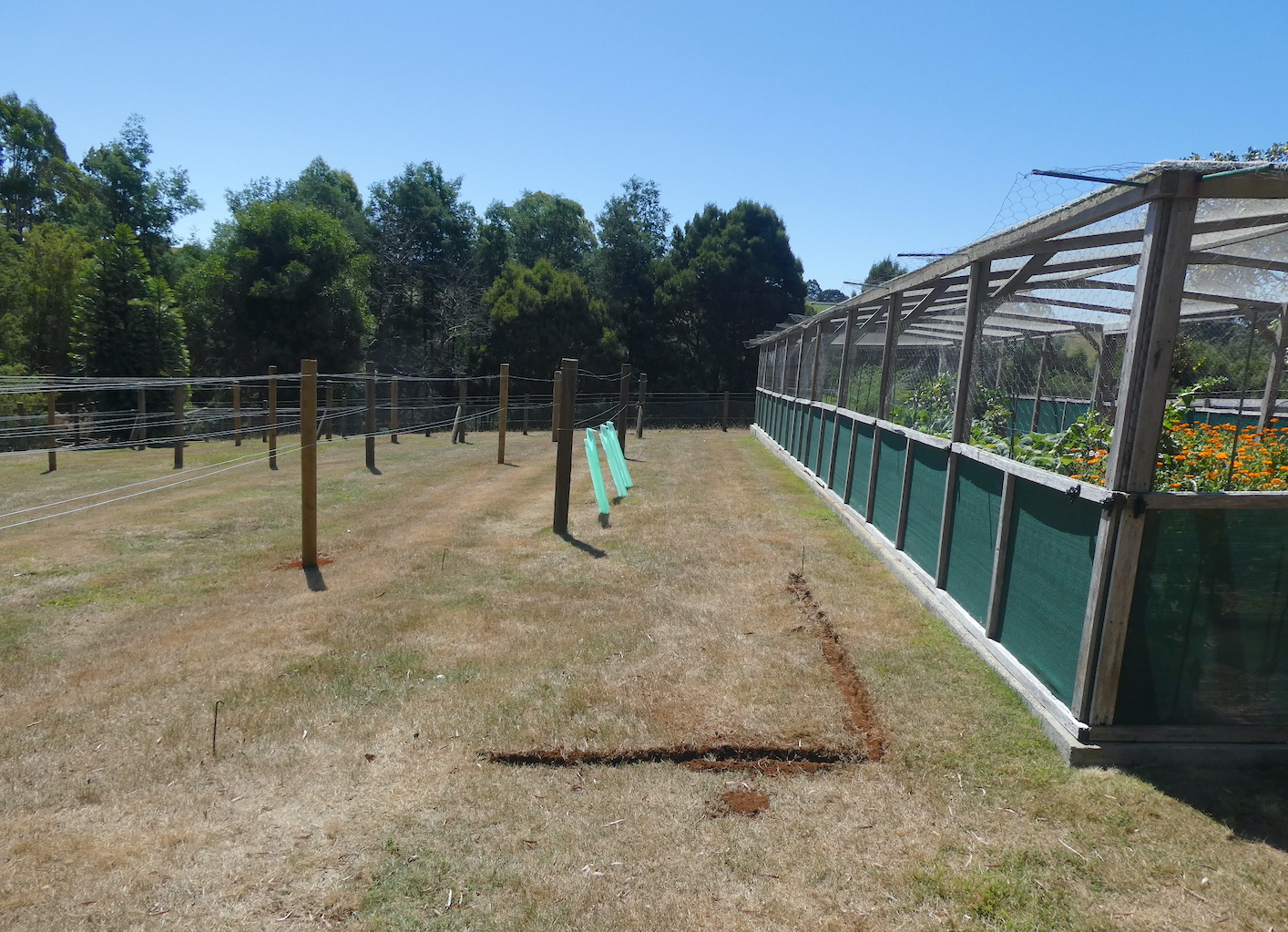
We have found that self-build is not always the easy option, with dubious instructions and missing pieces and so, we relied on those with prior experience. Even so, it took a little longer than the one day allocated to finish but the result was worth it.

We brought in a couple of scoops of earth for the base followed by a layer of blue metal to assist with drainage and a topping of mulch that can be watered down to increase humidity.

Michael constructed a staging shelf out of reclaimed timbers
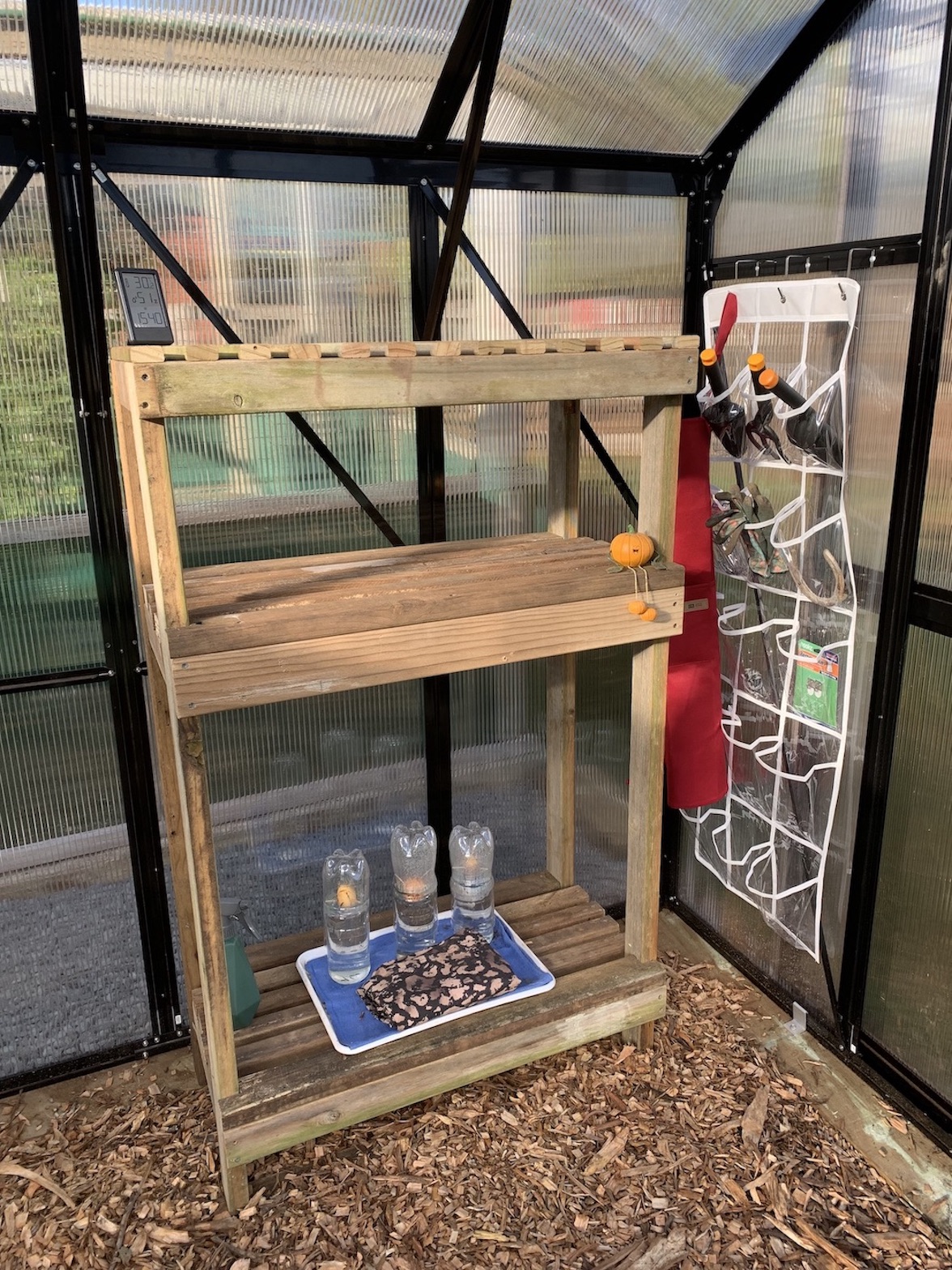
and we bought raised beds to fill the rest of the space. Once we realised how high the temperature reaches, we installed a sunshade on the northern side.

A temporary trestle provided the perfect environment to cure the butternuts in May. I then store them on a shelf high in the  potting shed where they last for a good six months.

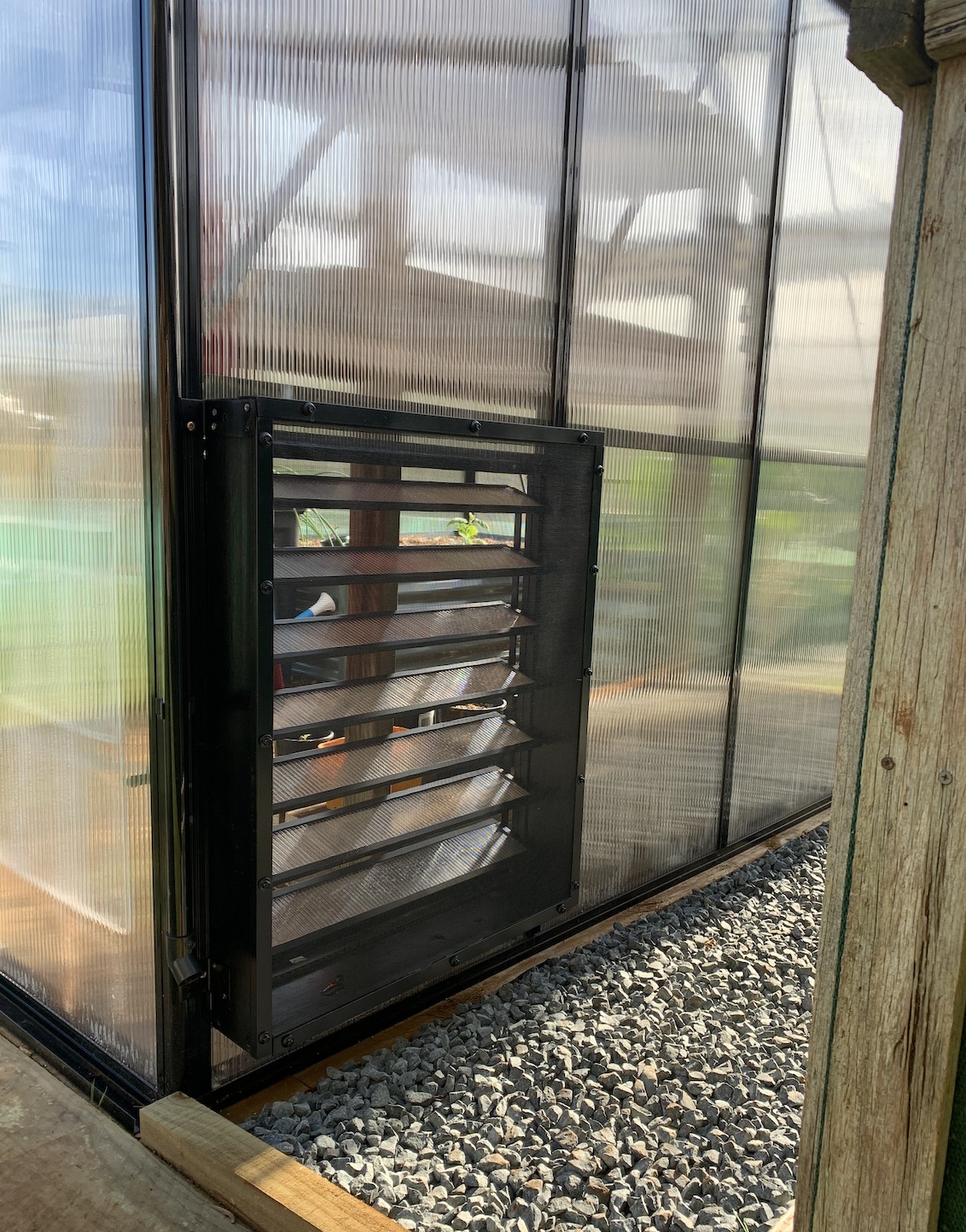
To help with temperature control, we added louvres to one of the panels and Michael cunningly created a screen to keep out creepy crawlies and resident reptiles.

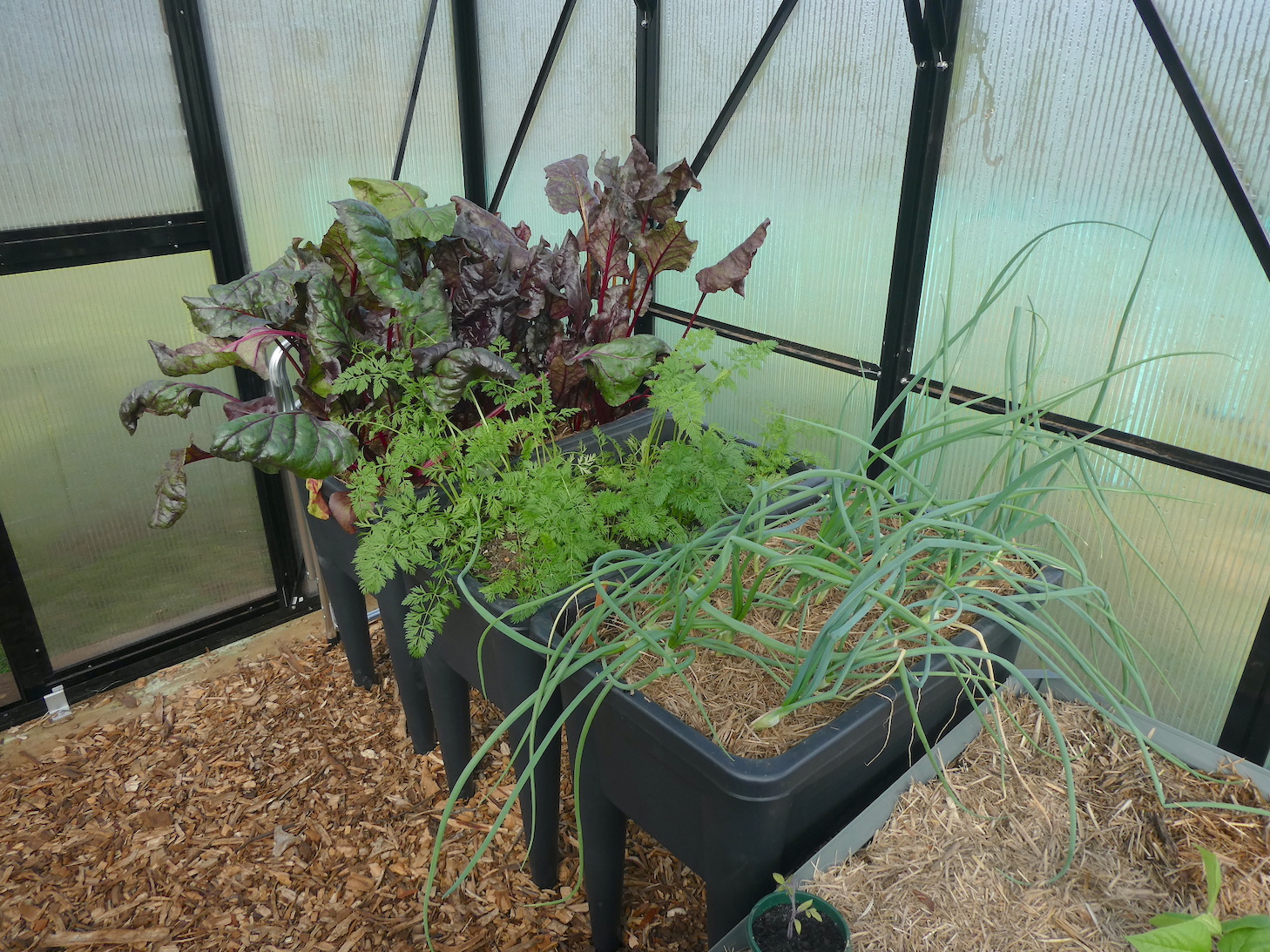
Being in the apprentice stage of greenhouse gardening, we weren’t sure which plants would be successful. We started with brassicas, beetroot, carrot, onion, capsicum, butternut and bush bean.

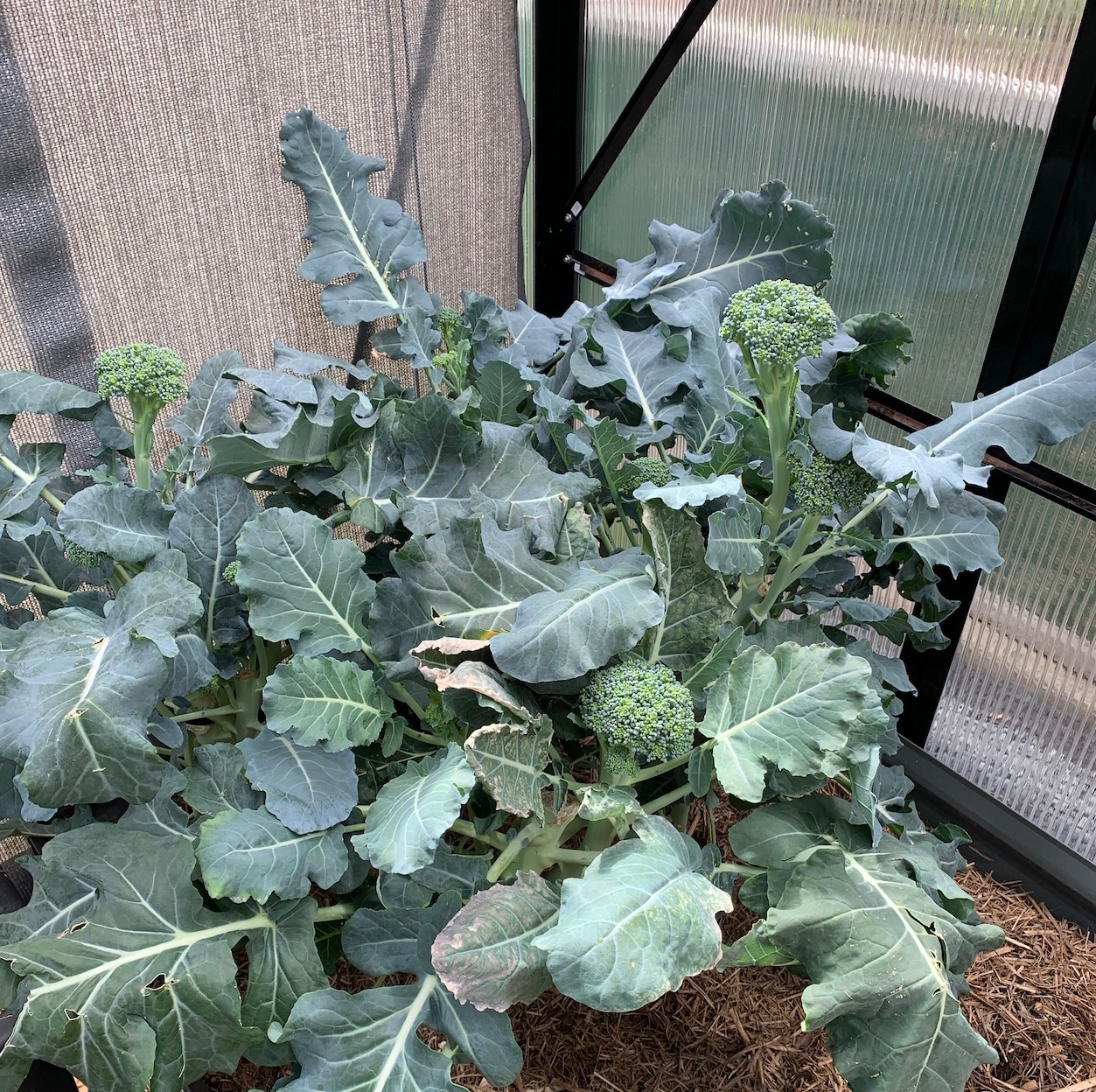
The first broccoli was very impressive and, three months on, we are still harvesting smaller florets.

The capsicum are thriving but yet to bear fruit.

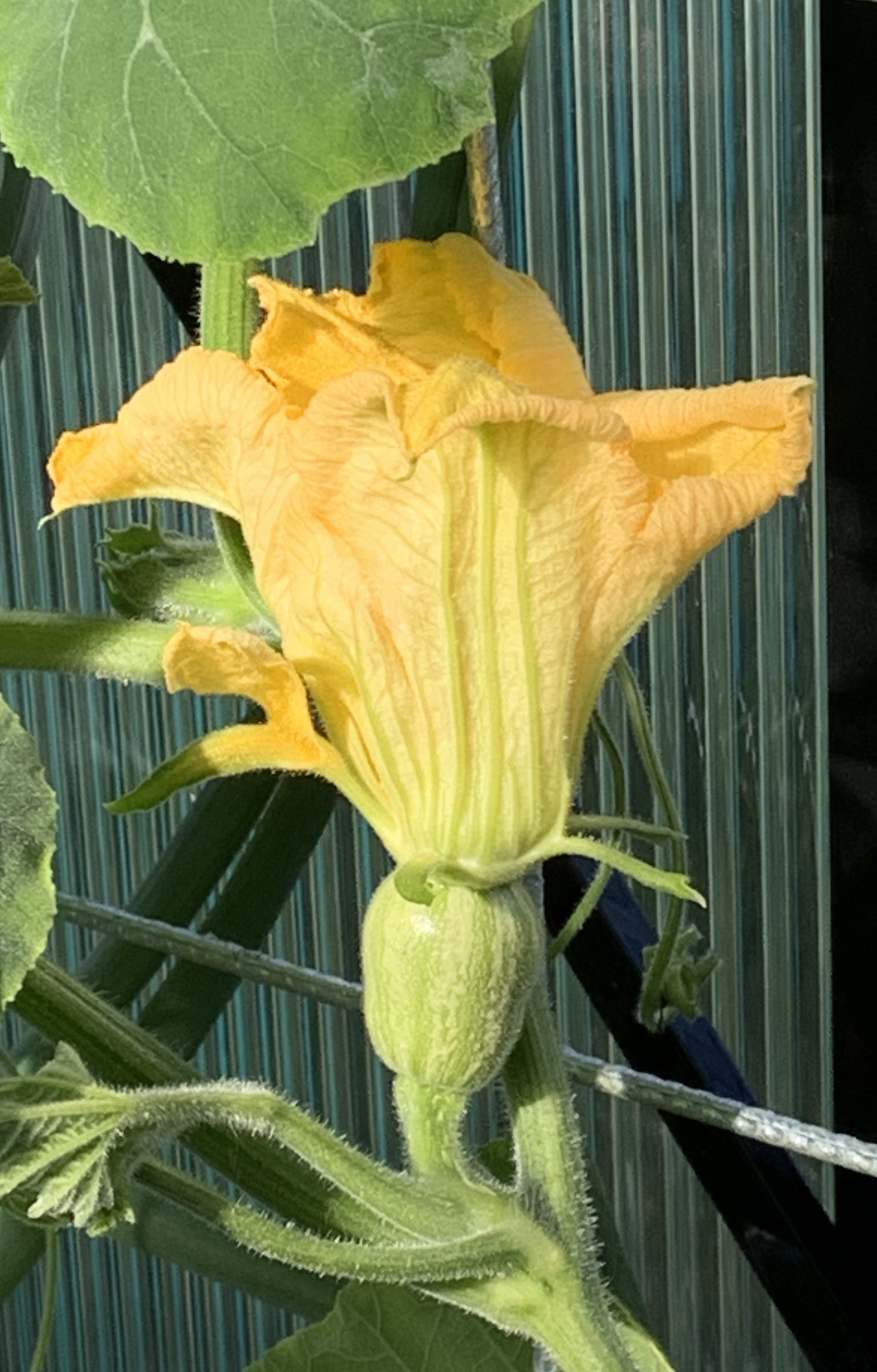
The bush bean and butternut are happy companions, we have harvested some beans but will have to be patient for the butternuts.

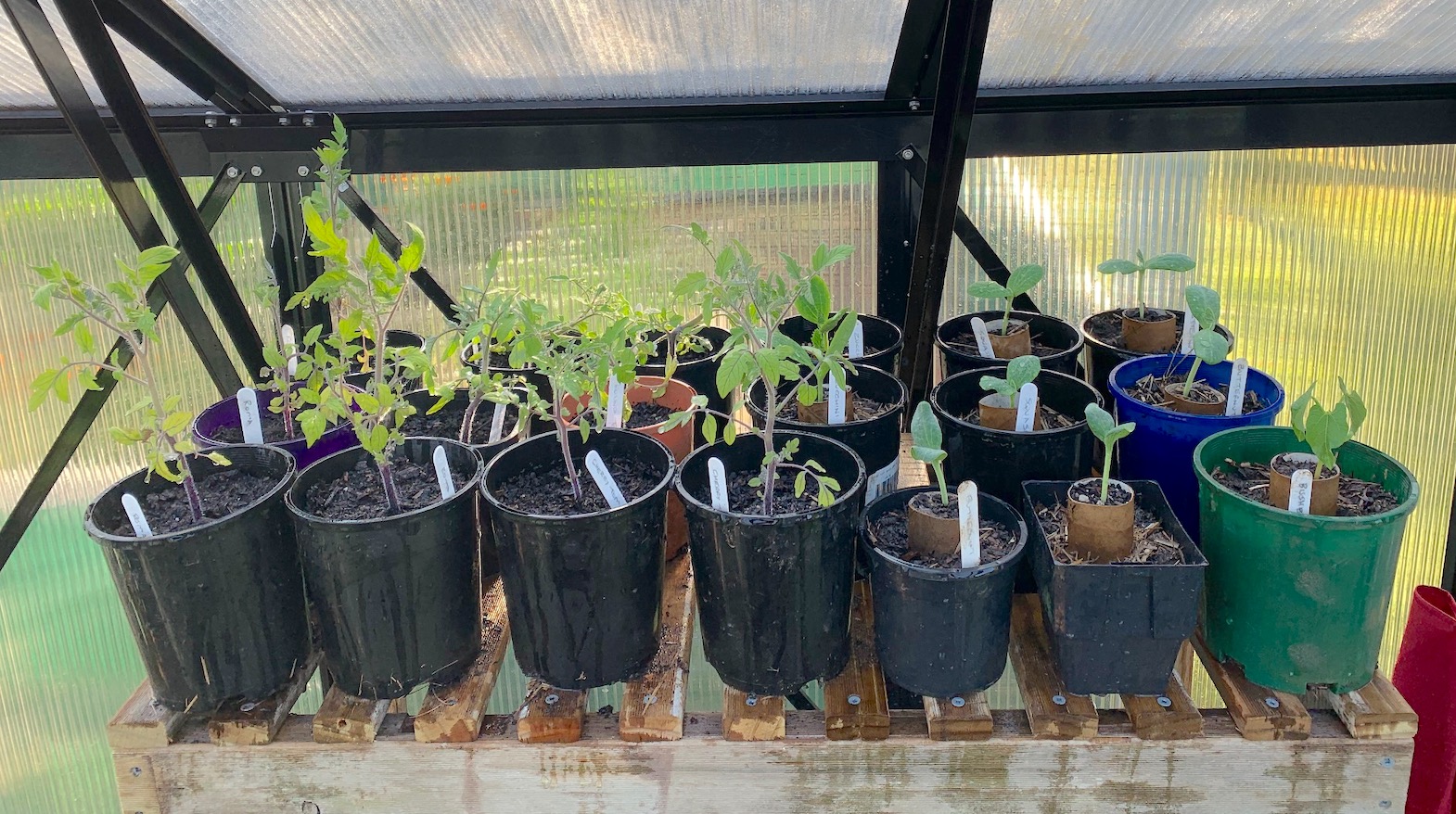
We have a plethora of seedlings ready to plant in another week or so, once the night time temperatures are a little more moderate.
My first attempt at striking Grevilleas from cuttings seems to be successful,

and after many months of coddling, the avocado stones have finally sprouted.

Michael has turned on the tap of creative juices once again and presented me with a stylish trug to collect the harvest

as well as a bespoke egg collecting box (the girls are giving us 5 to 6 eggs a day).

Of course, I needed a keyring befitting a fine greenhouse.

mulching mania

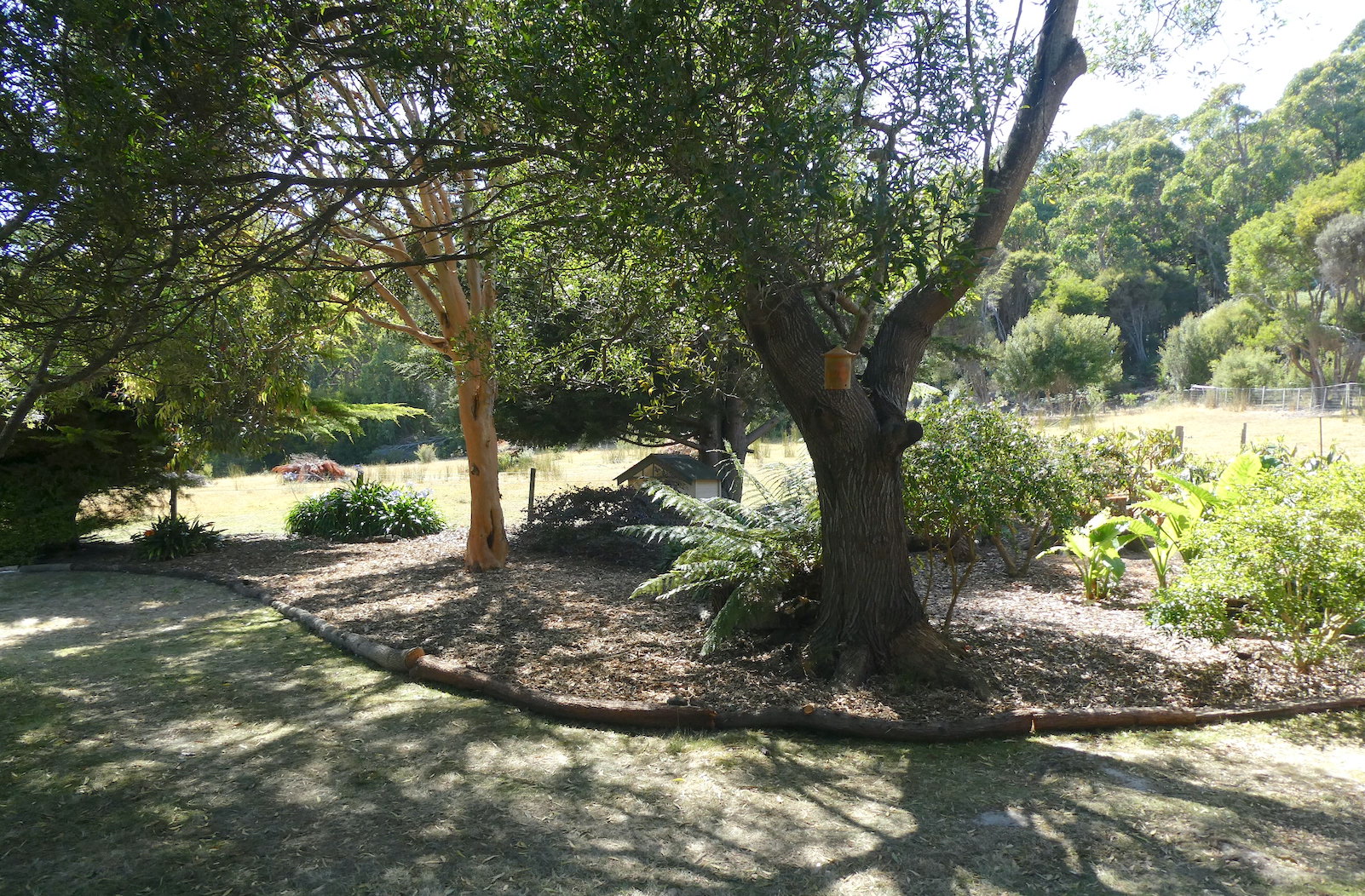
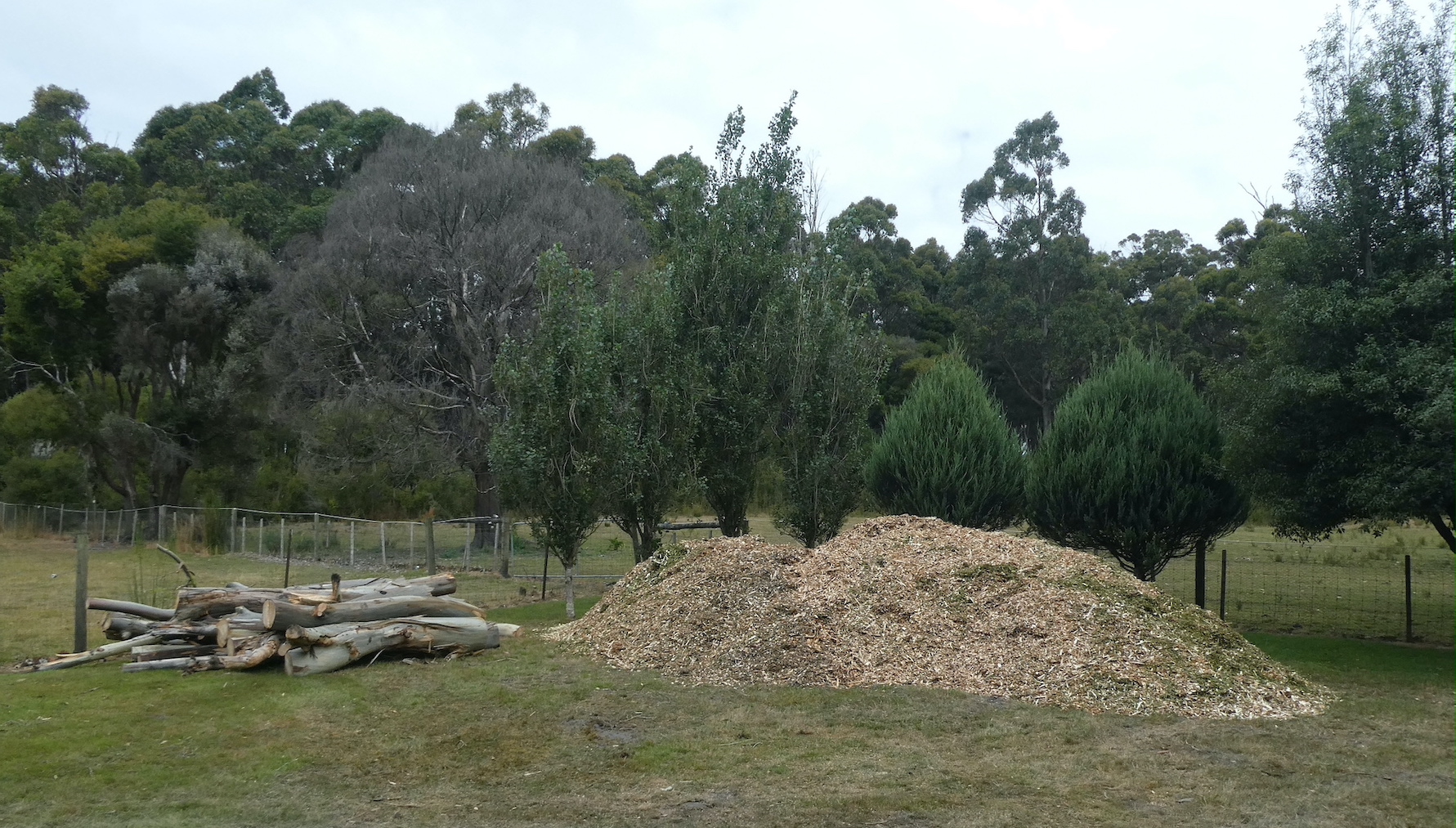
The arboreal aftermath left us with a monstrous mulch pile to deal with and so, I made it my mission to replenish every garden bed before the onset of winter.

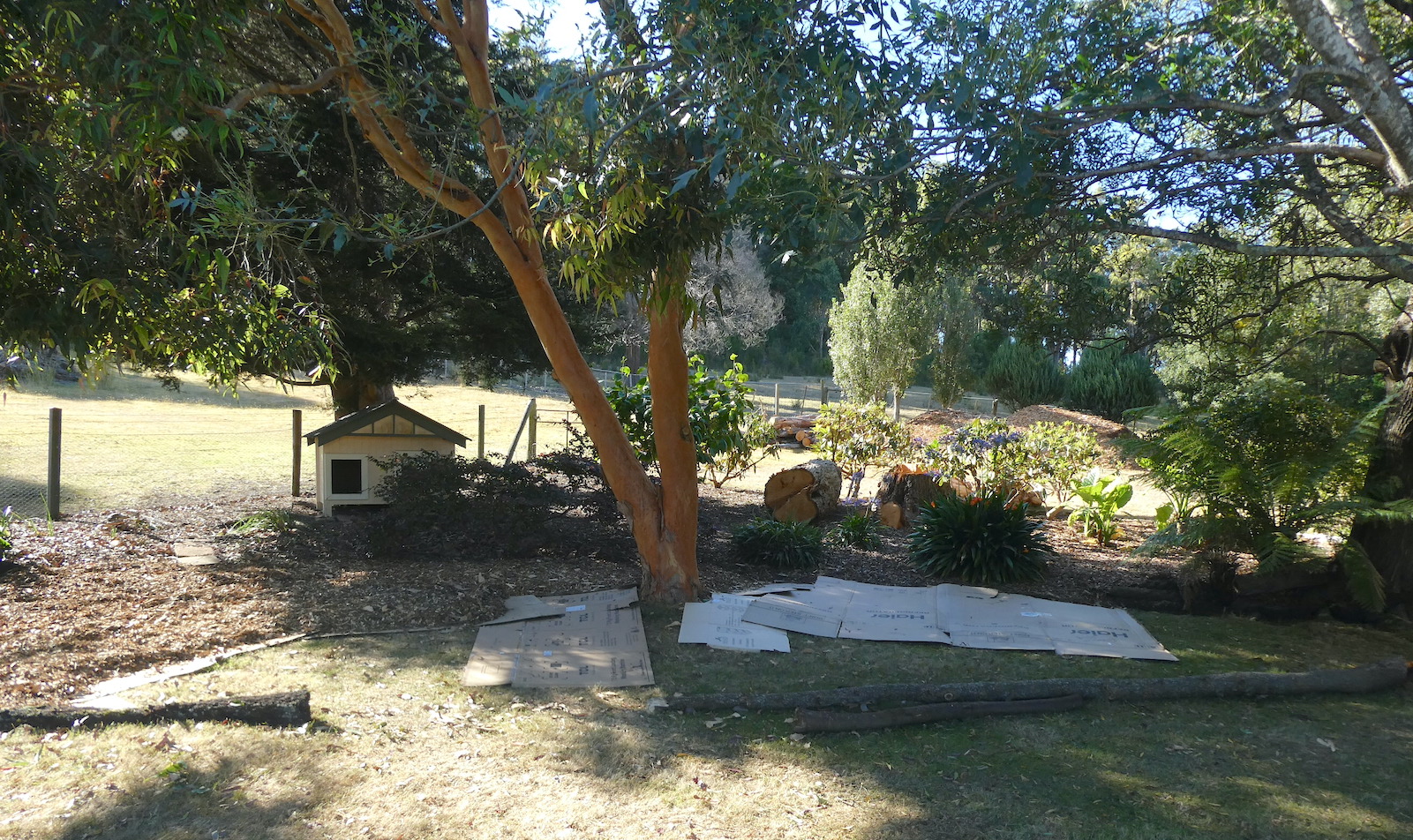
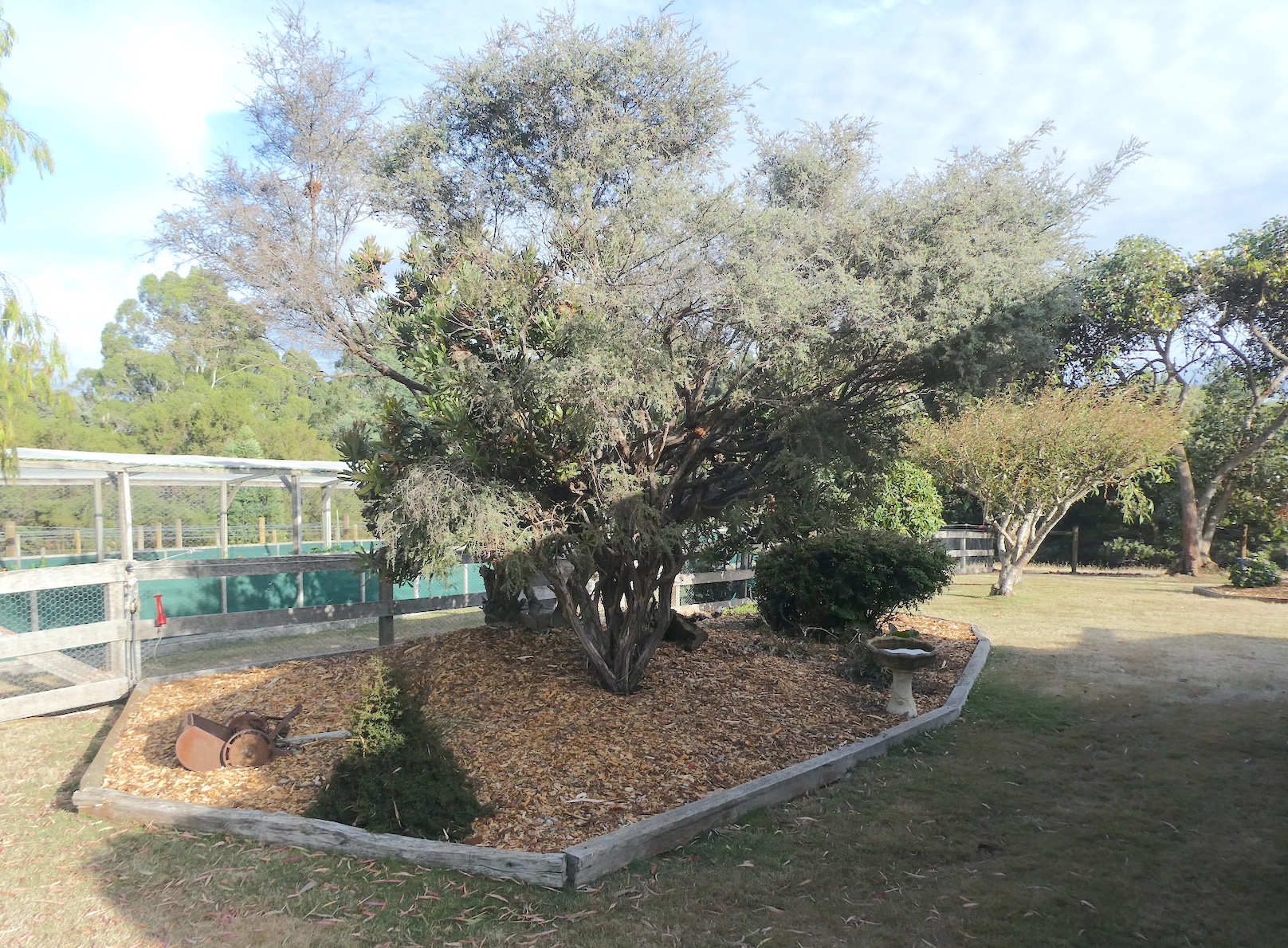
The Tree Doctor advised us to cover the exposed roots of a couple of large trees or they would certainly suffer. We moved the existing edging to extend the mulched area and procured some huge cardboard boxes from a local electrical store. After placing the cardboard as a weed mat, I dumped a hefty layer of mulch

and am very pleased with the result.

Come and have a look at the refreshed garden.

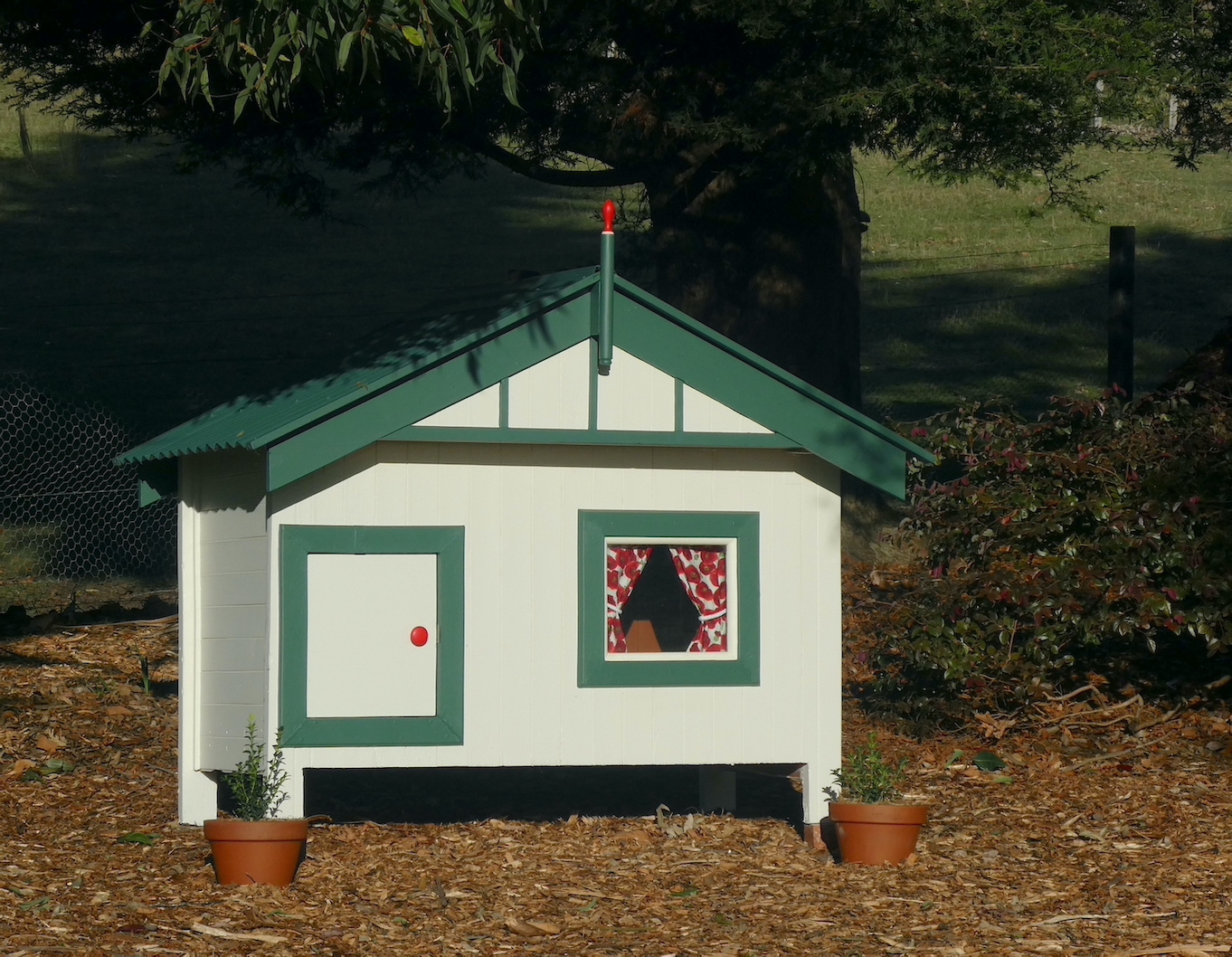
We then decided to rejuvenate the old dog kennel (that none of our dogs have actually used) and move it to a more prominent position.

With a fresh coat of paint, new bright curtains and the addition of a door and gable finial, she is flanked by a pair of potted English Box.

arboreal abscission

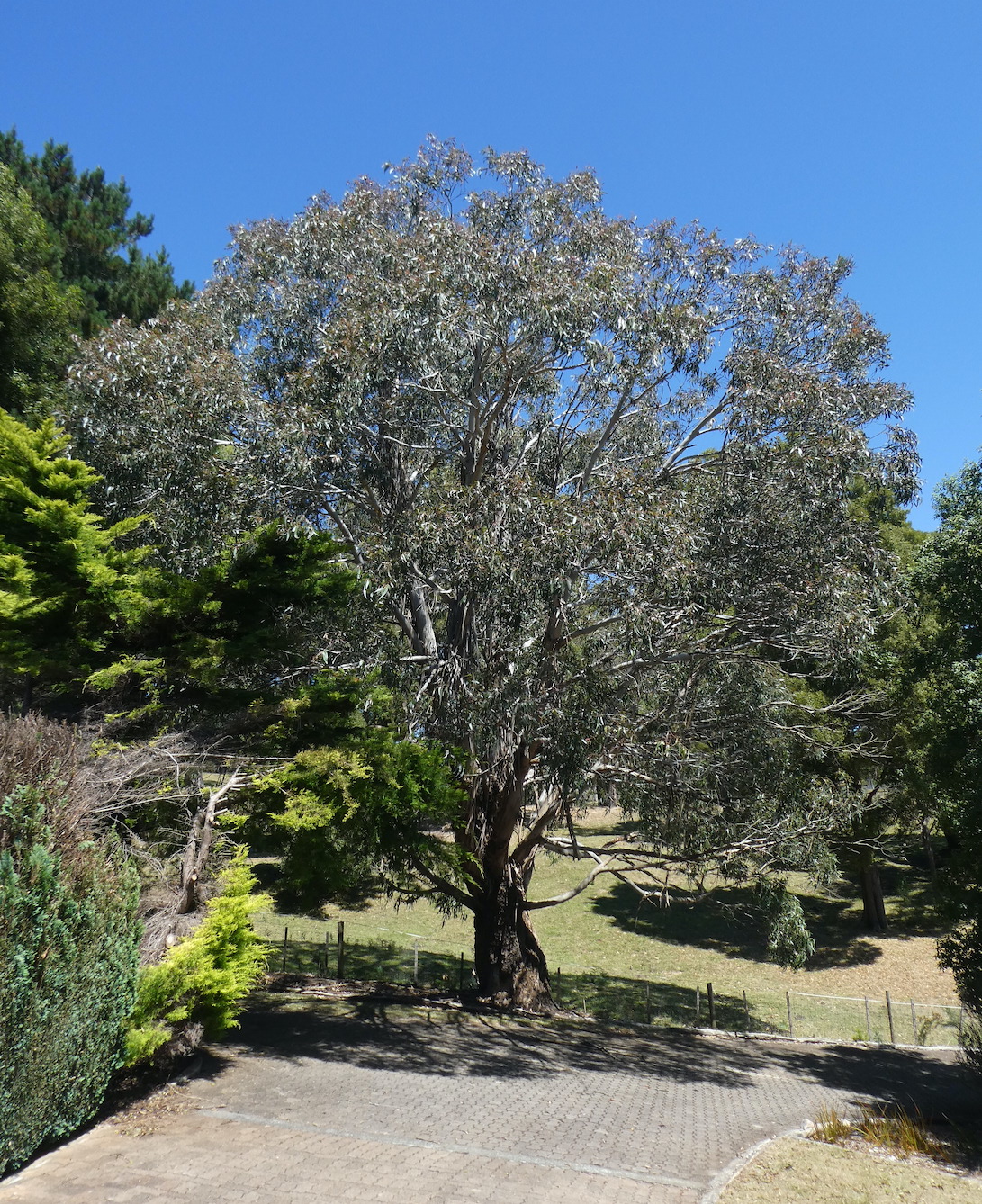
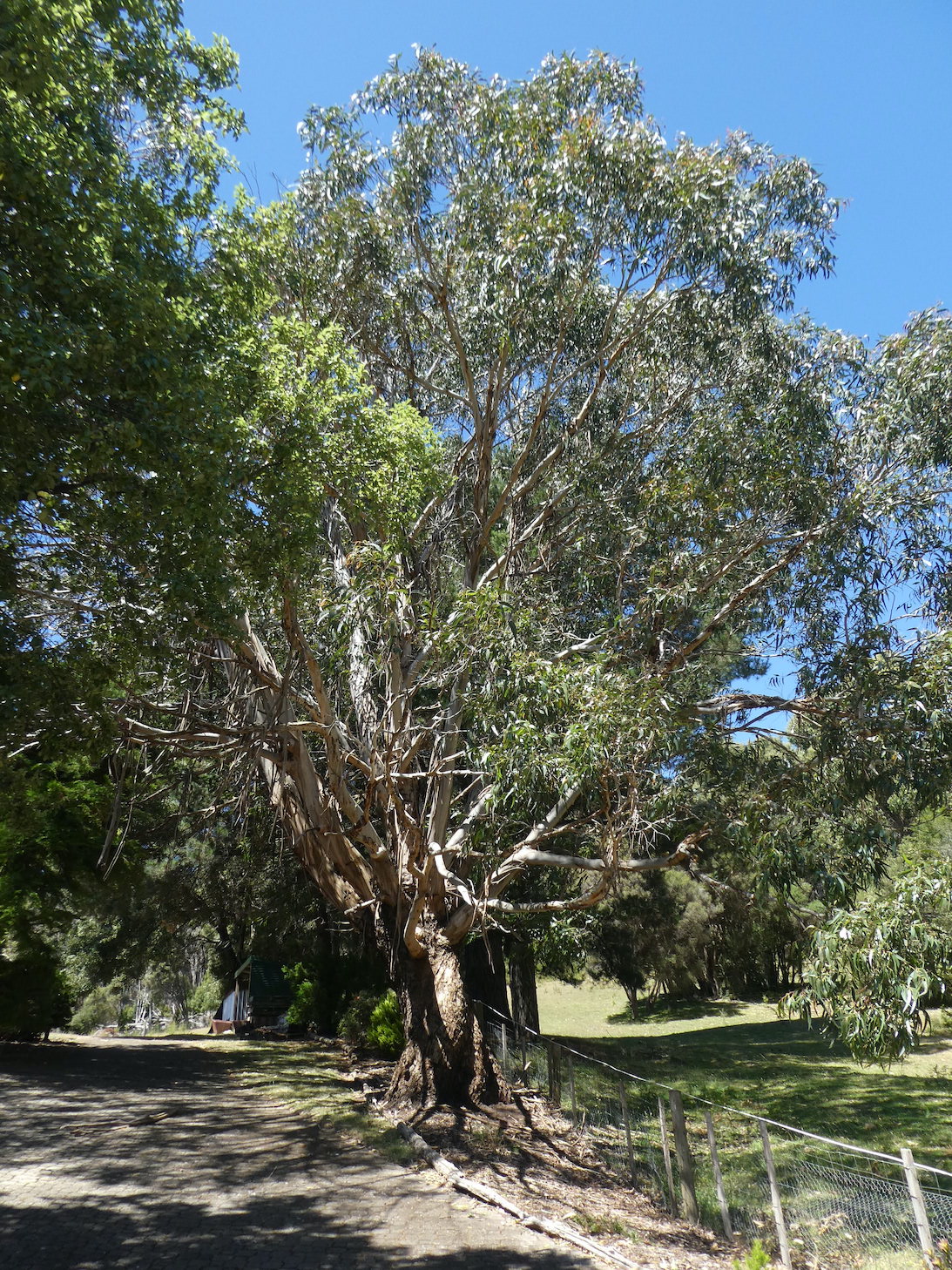
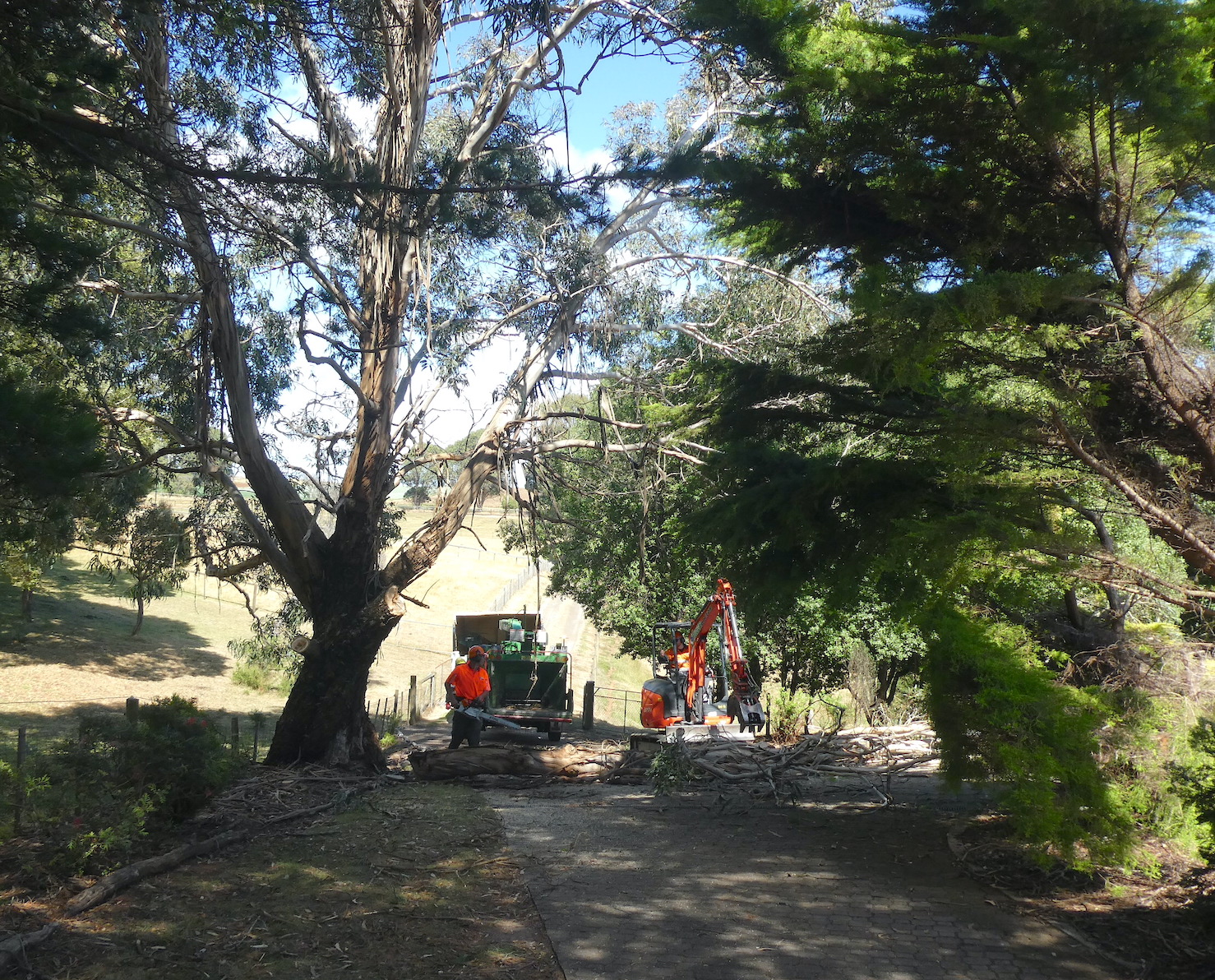
Being surrounded by forest makes for a wonderful peaceful setting, with verdant vistas and myriad birdlife. However, having these larger tree species within the garden can pose a bit of a problem. Like any living being, they have a life span and some had been shedding bark and limbs at an increasing rate with the potential to damage outbuildings. We called in the Tree Doctor to diagnose diseased, dying and dangerous specimens. A huge Eucalypt was deemed to be failing (I don’t miss cleaning up the frequent sheets of bark on the driveway).
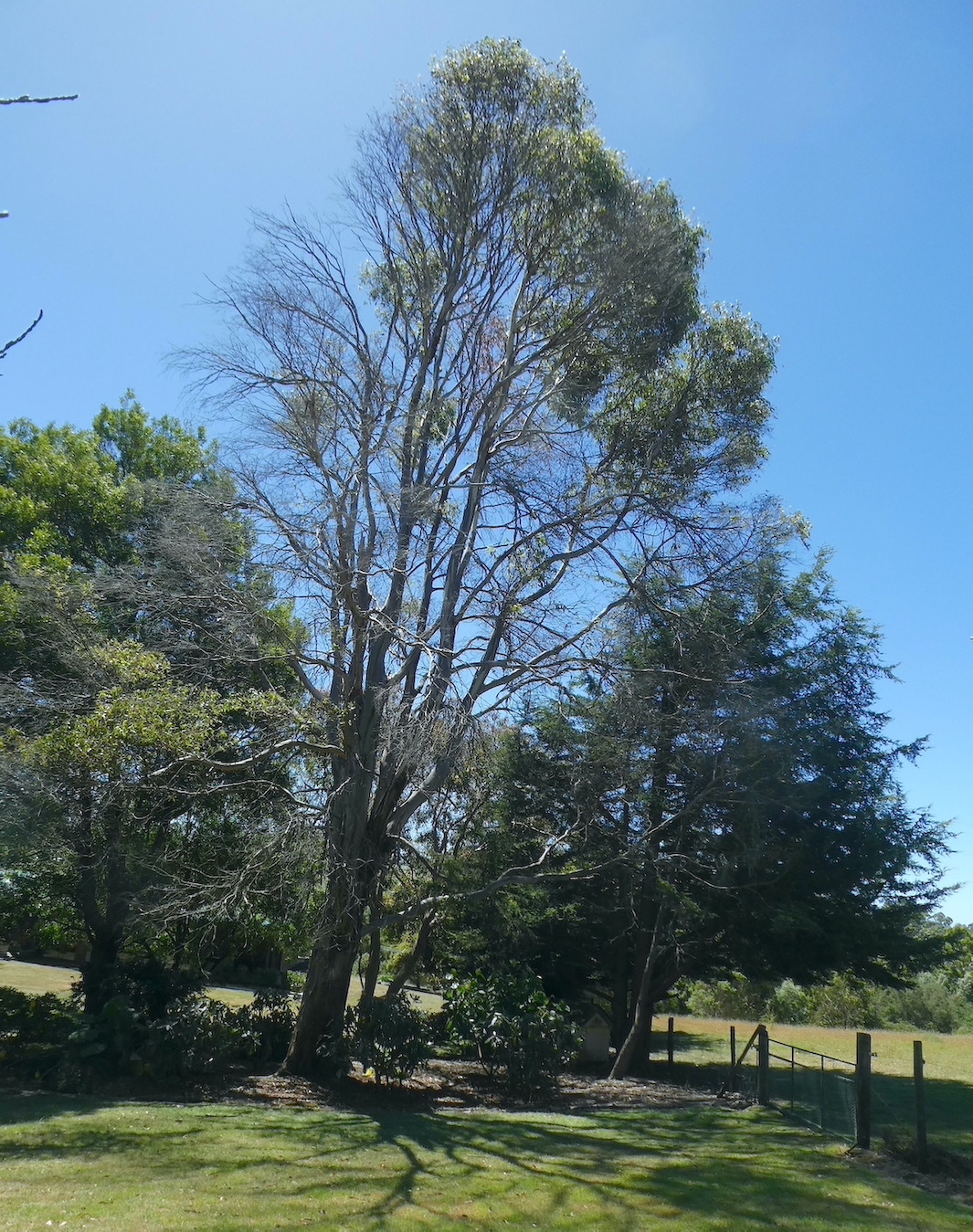
A second Eucalypt, with a distinct lean away from the prevailing westerlies, was displaying the same symptoms and awarded the same fate.

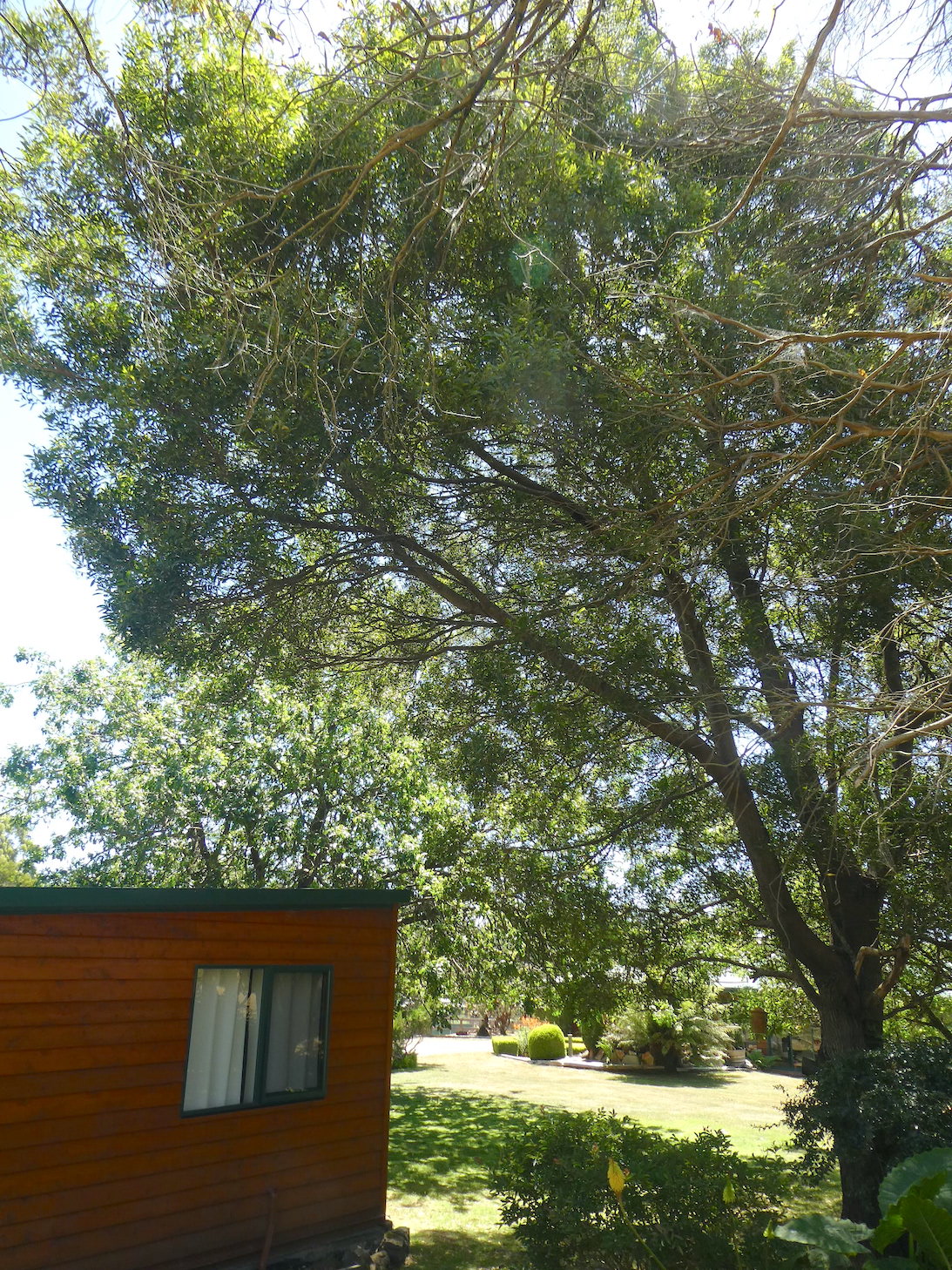
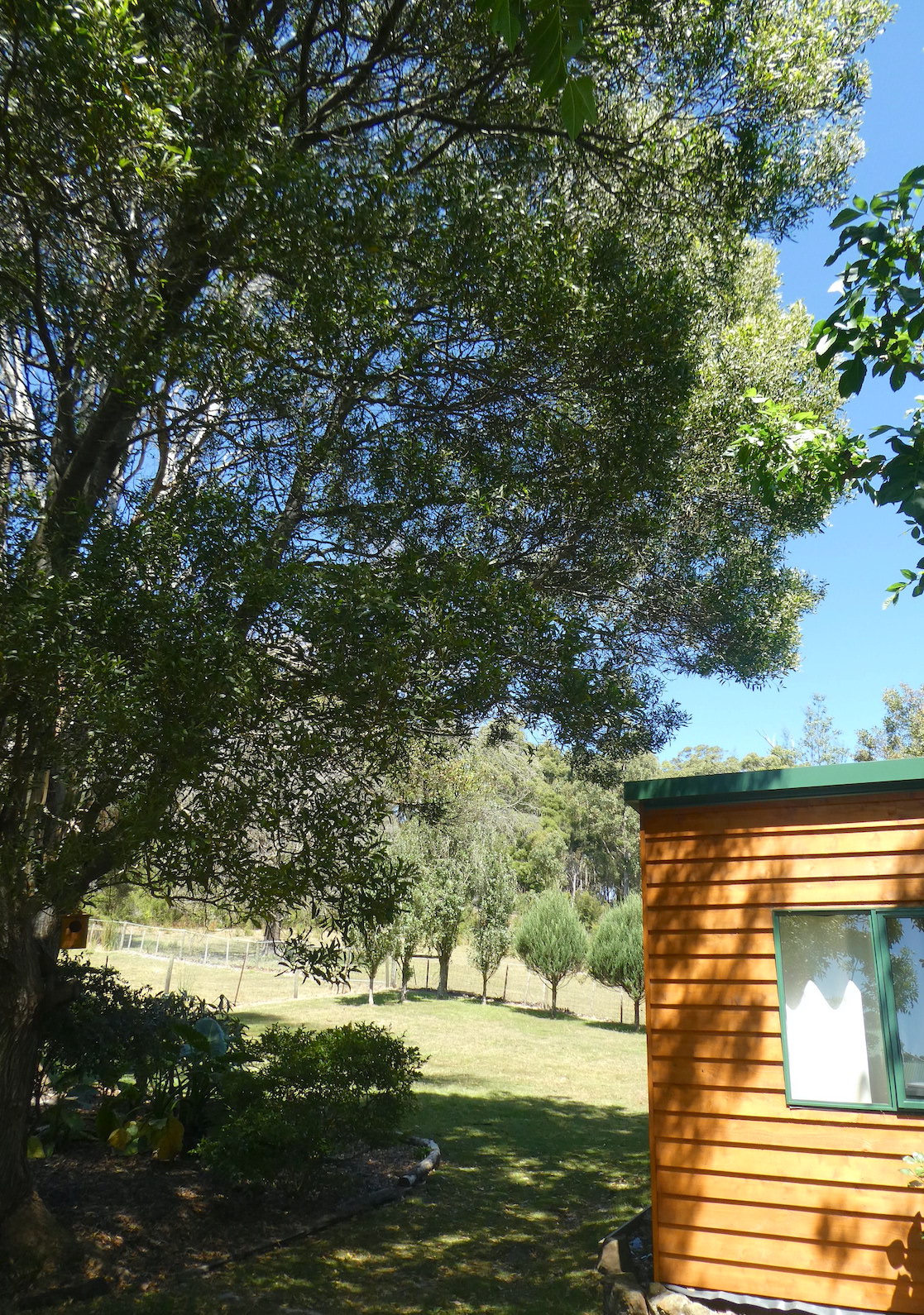
A healthy Tasmanian blackwood just needed an amputation of a rather large limb overhanging the studio

but another blackwood we thought in need of a trim was actually slowly dying.

A few weeks later the team arrived and wasted no time tackling the first blackwood.

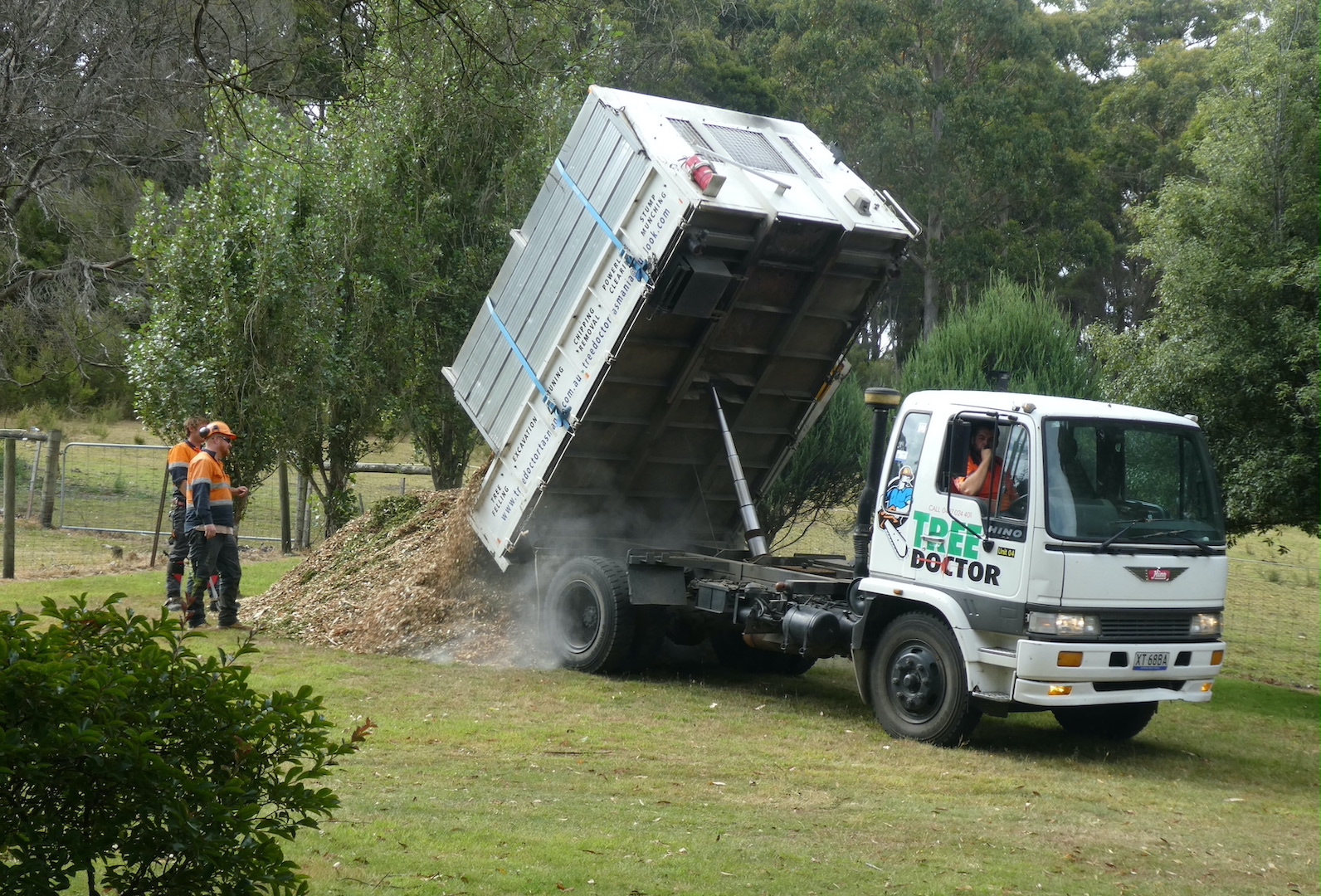
The smaller branches were picked up and fed into the chipper

which was then emptied into an ever increasing mulch pile.

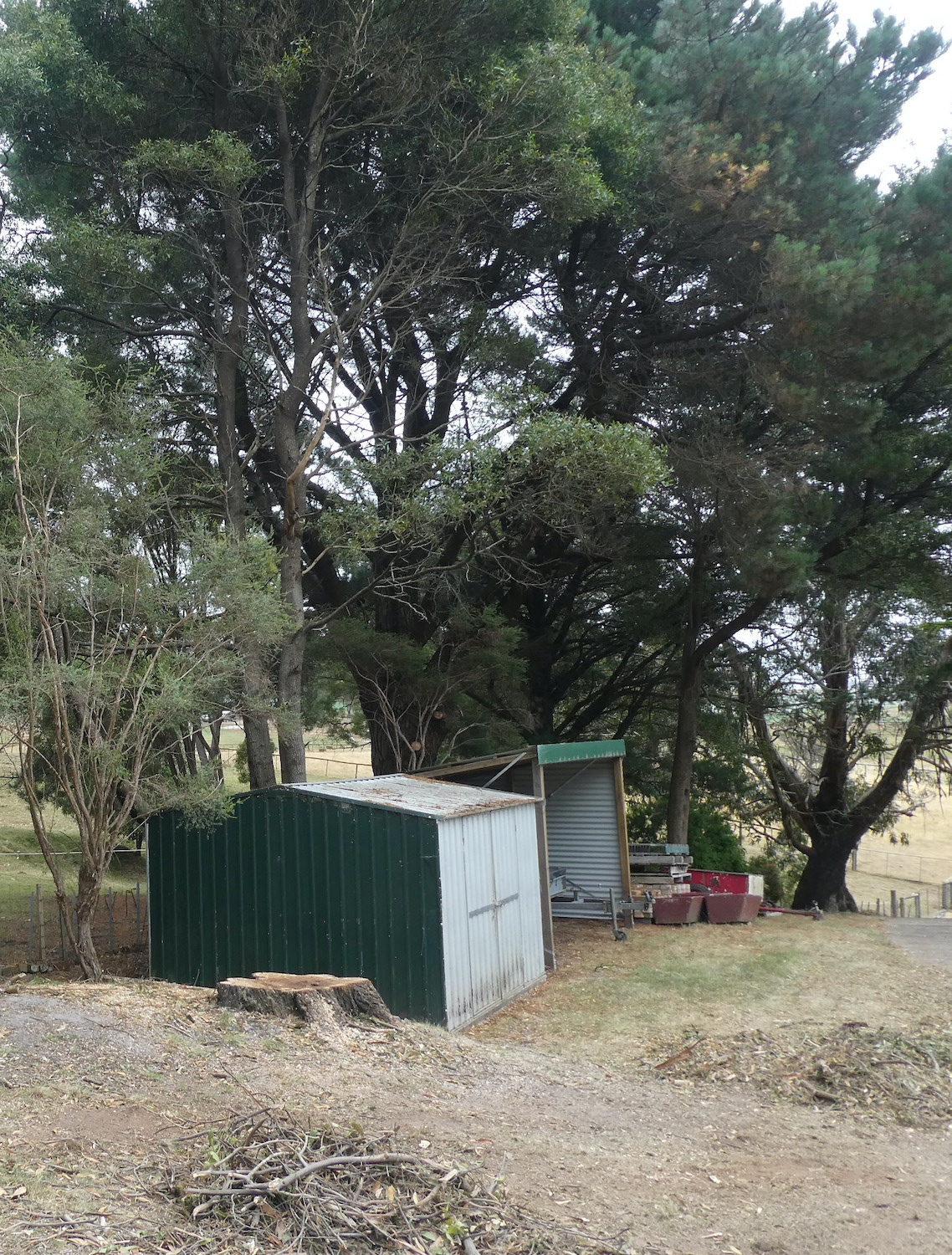
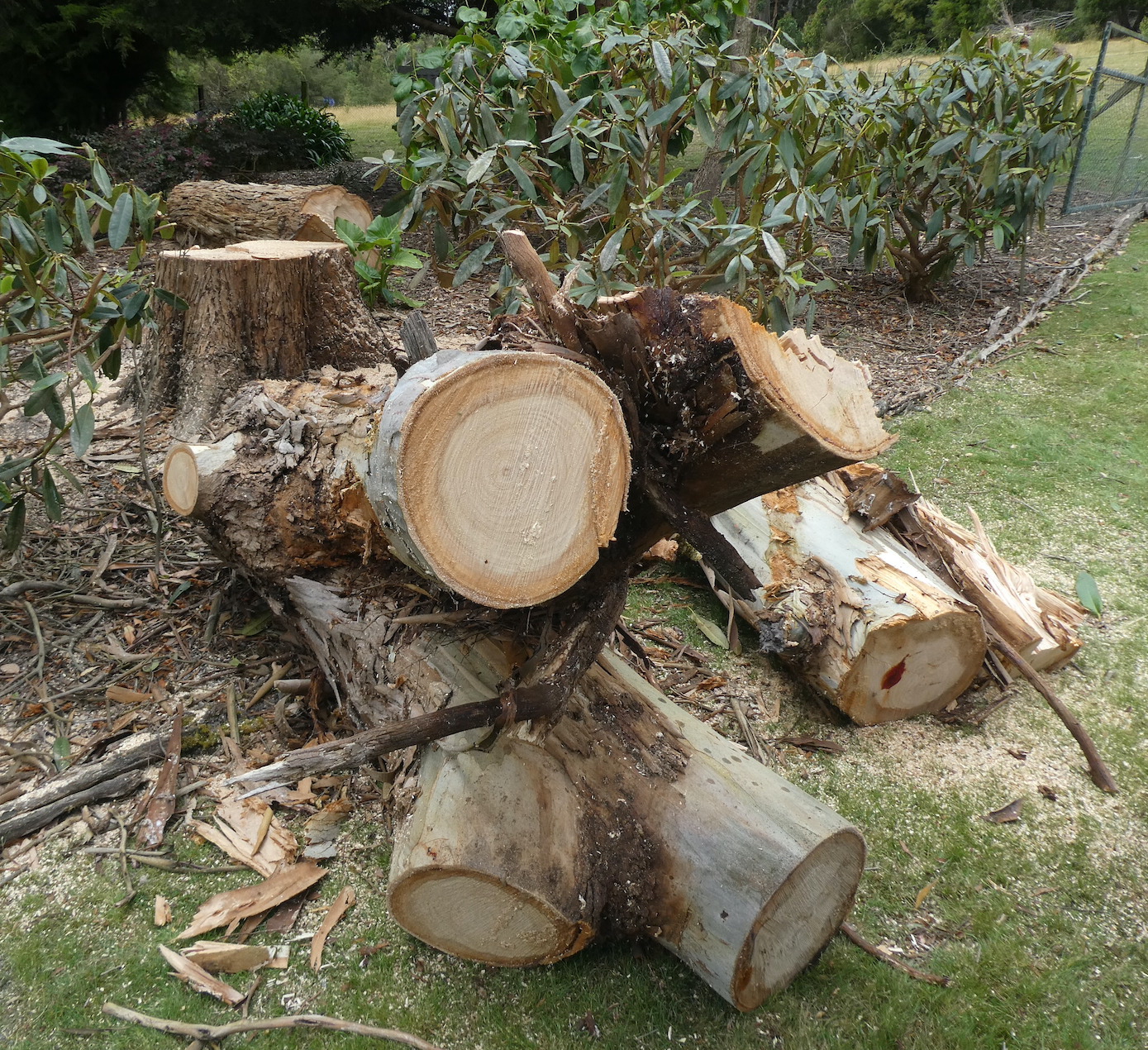
Before long, only a stump remained and a substantial stack of timber for future firewood.

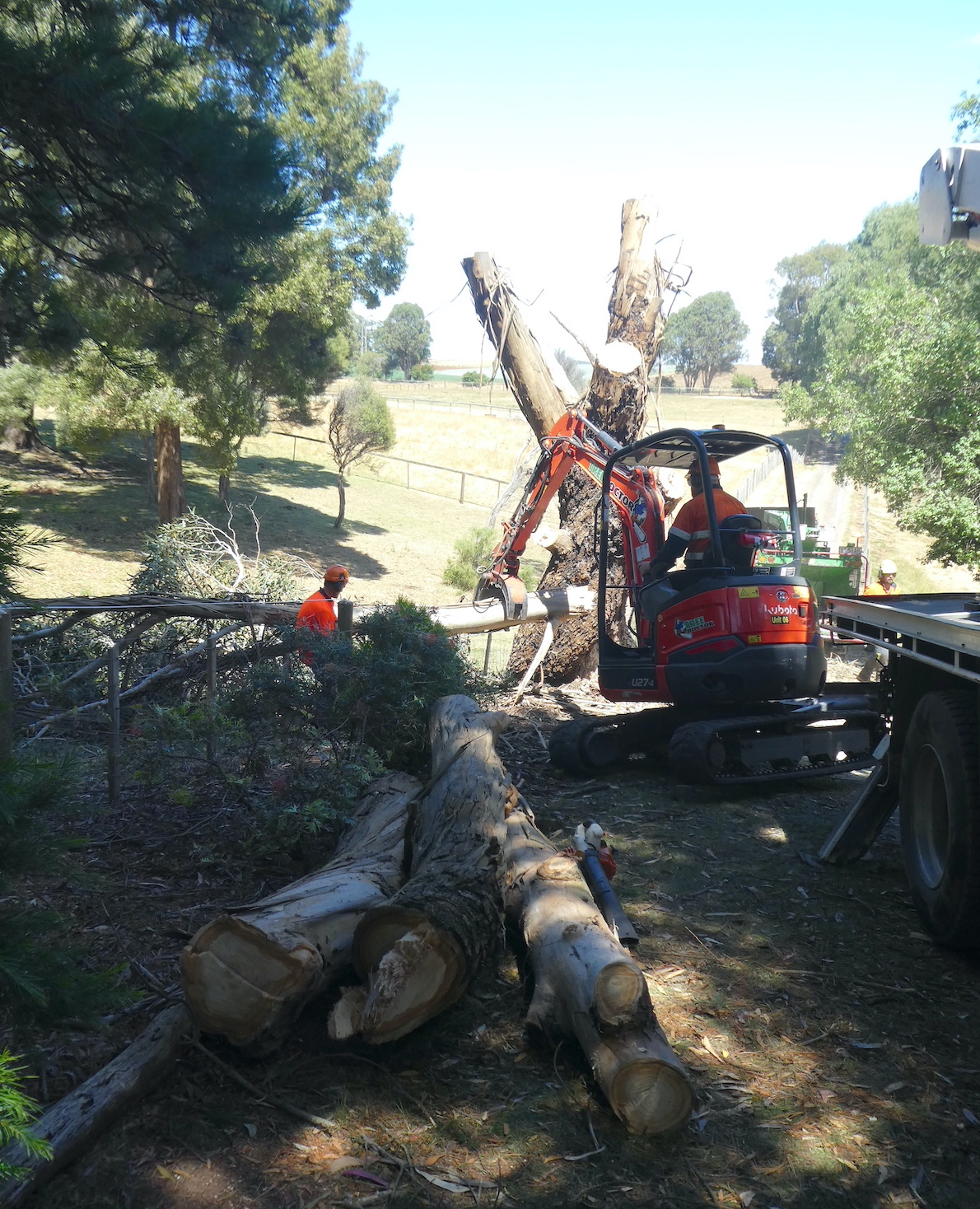
The razing of the leaning Eucalypt was a little more involved. A precise landing was in order to prevent damage to buildings, fences and established plants in the garden beneath. With ropes attached to guide the downward trajectory,

a hefty chainsaw took care of the rest and the giant was felled.

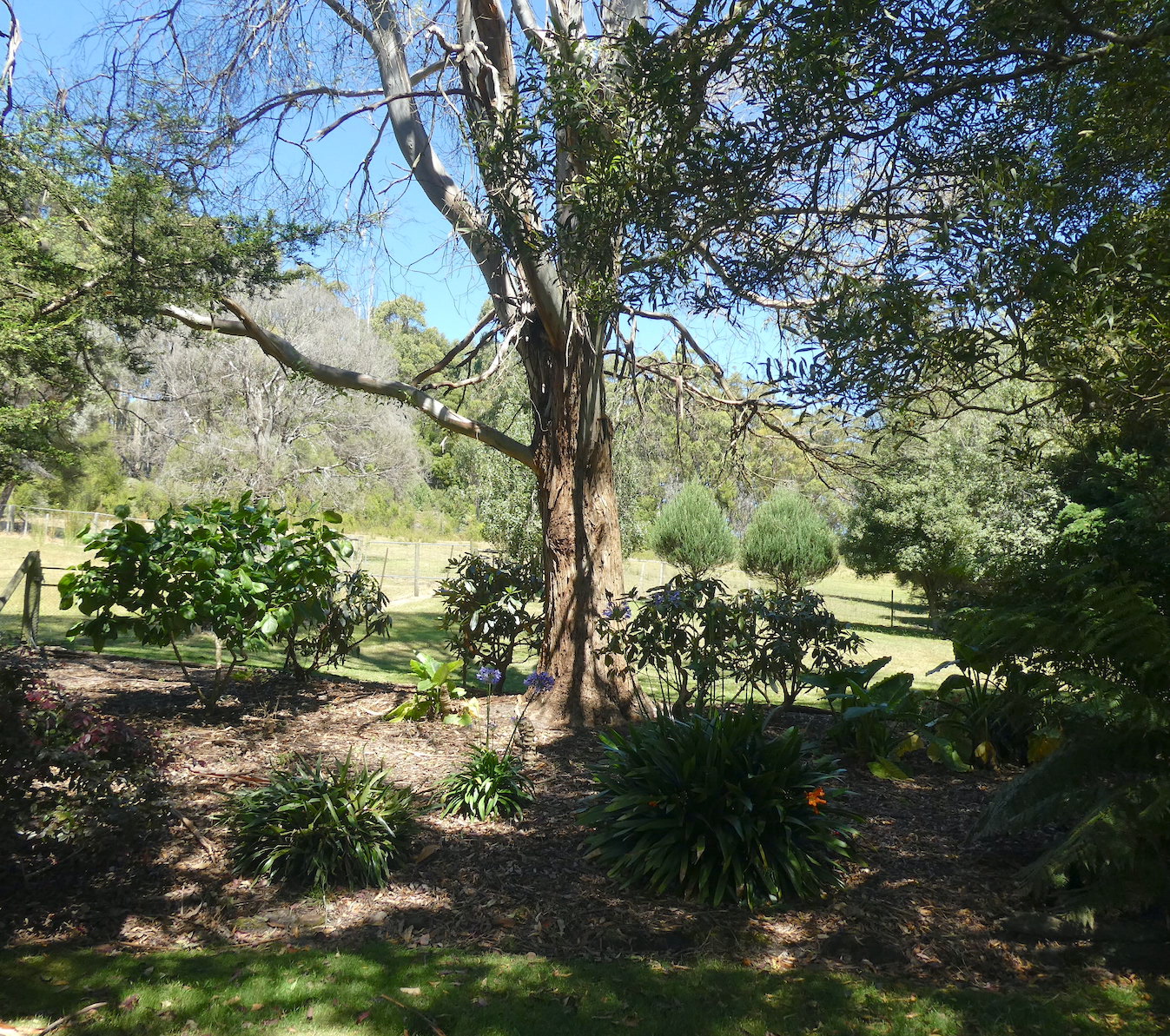
I was pleased to see the rhododendrons still upright on either side of the enormous trunk.

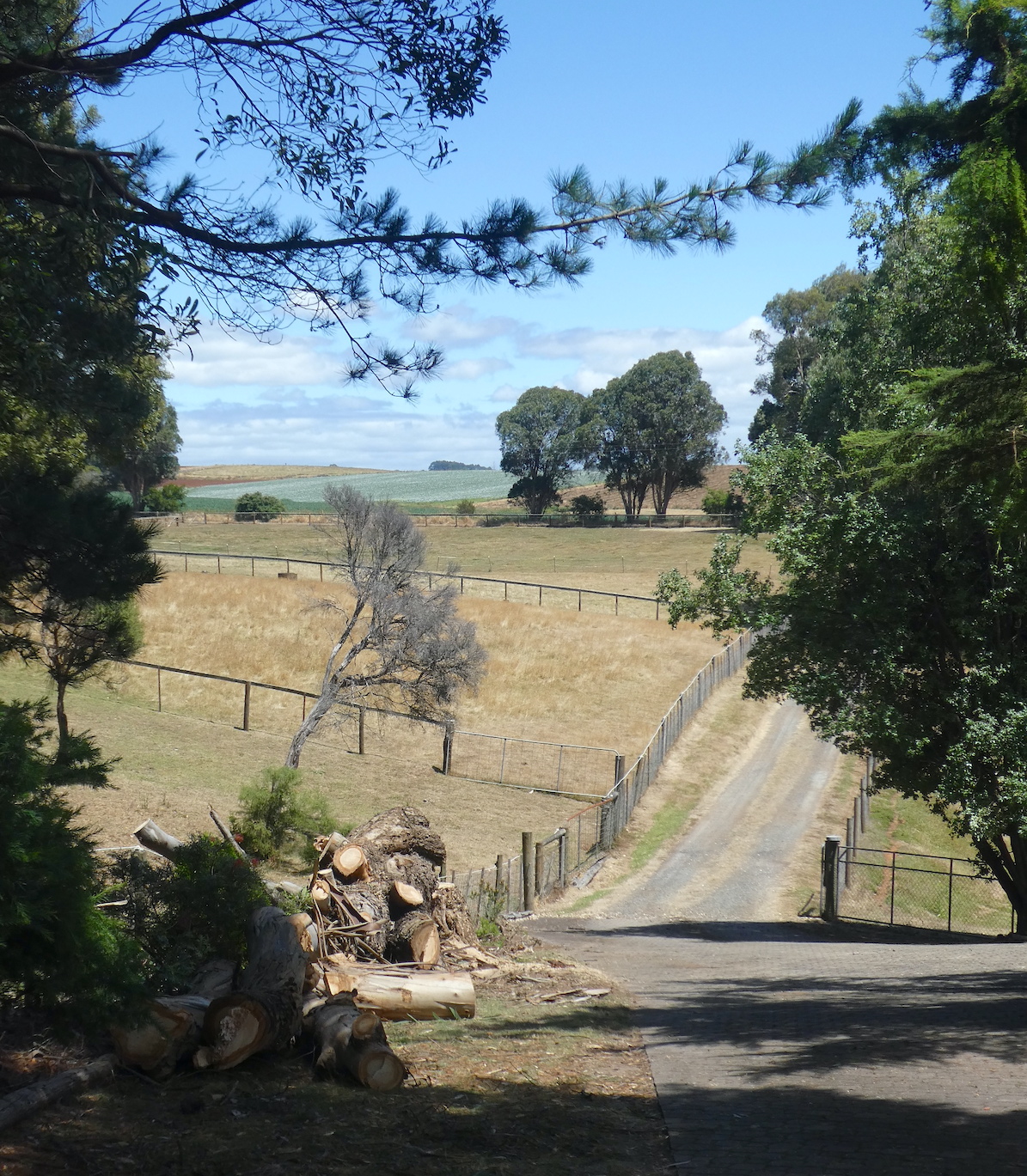
The mulch pile continued to grow, along with the firewood supply for the next few years.

A quick trim of a wayward branch from a pine tree on the neighbouring property

and the final Eucalypt was tackled.

Proximity to the fence was problematic but the skill of the experienced team overcame the hurdles for another successful outcome.

Now, where is that chainsaw……..

neighbourly Notechis

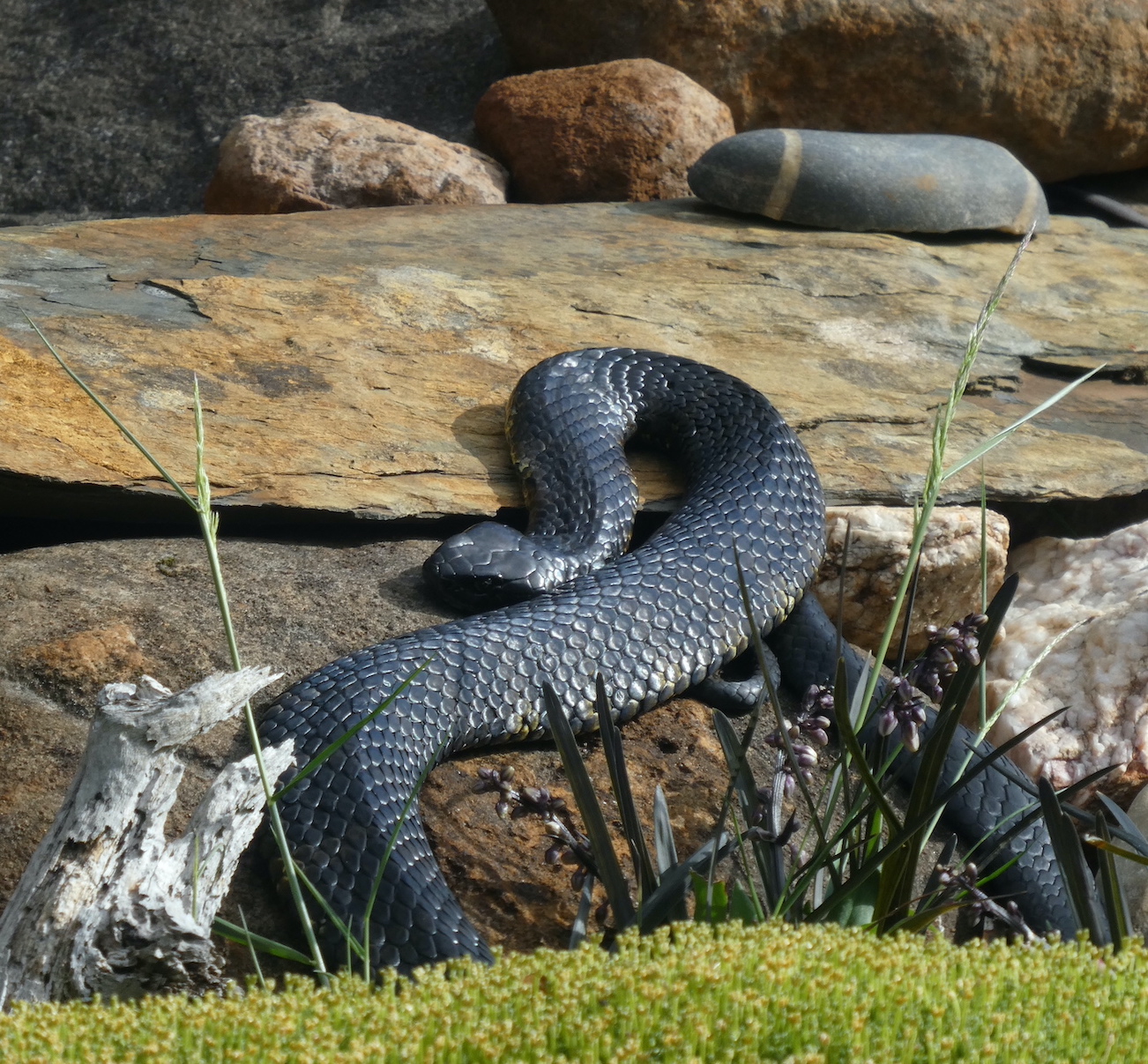
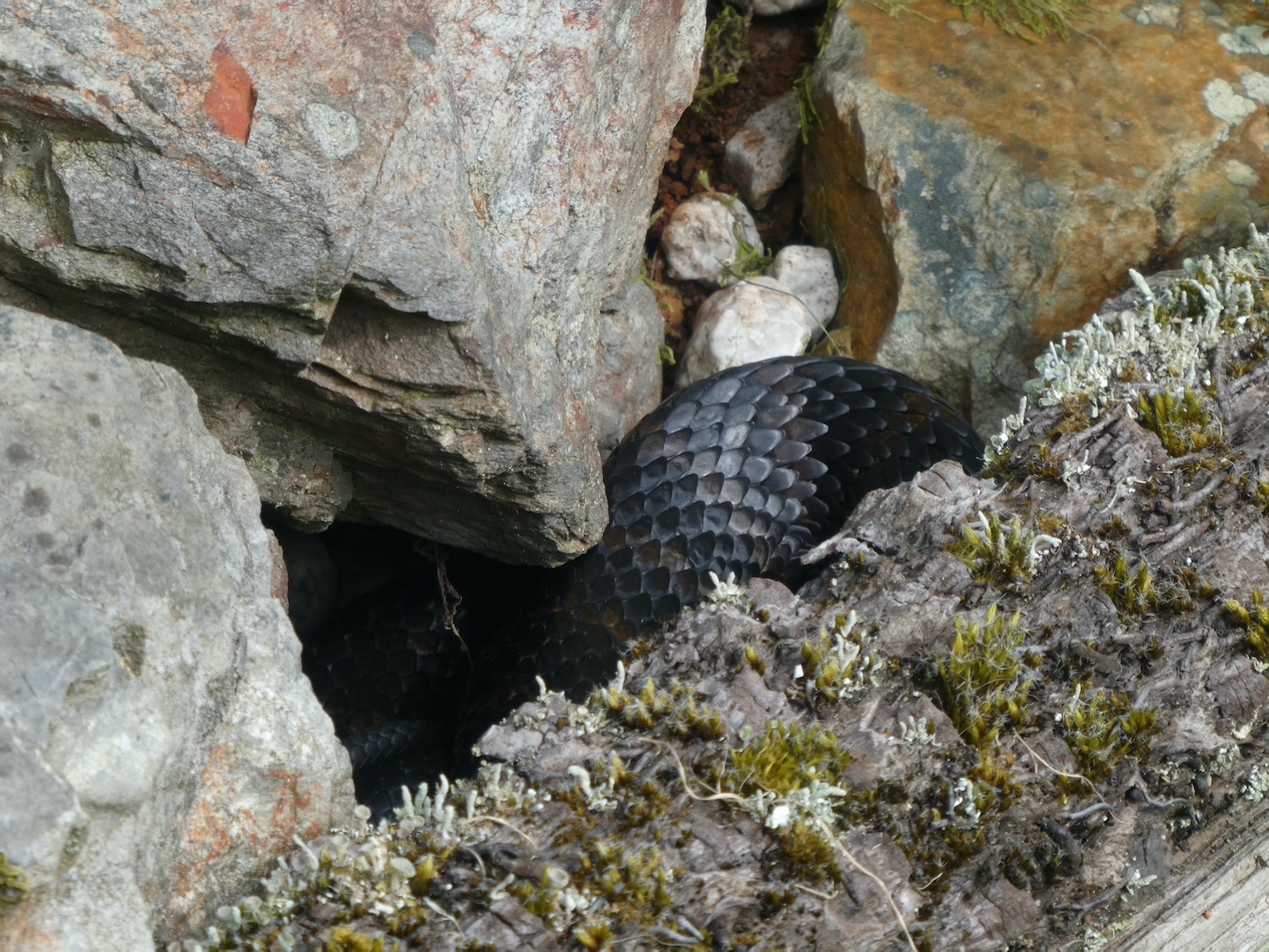
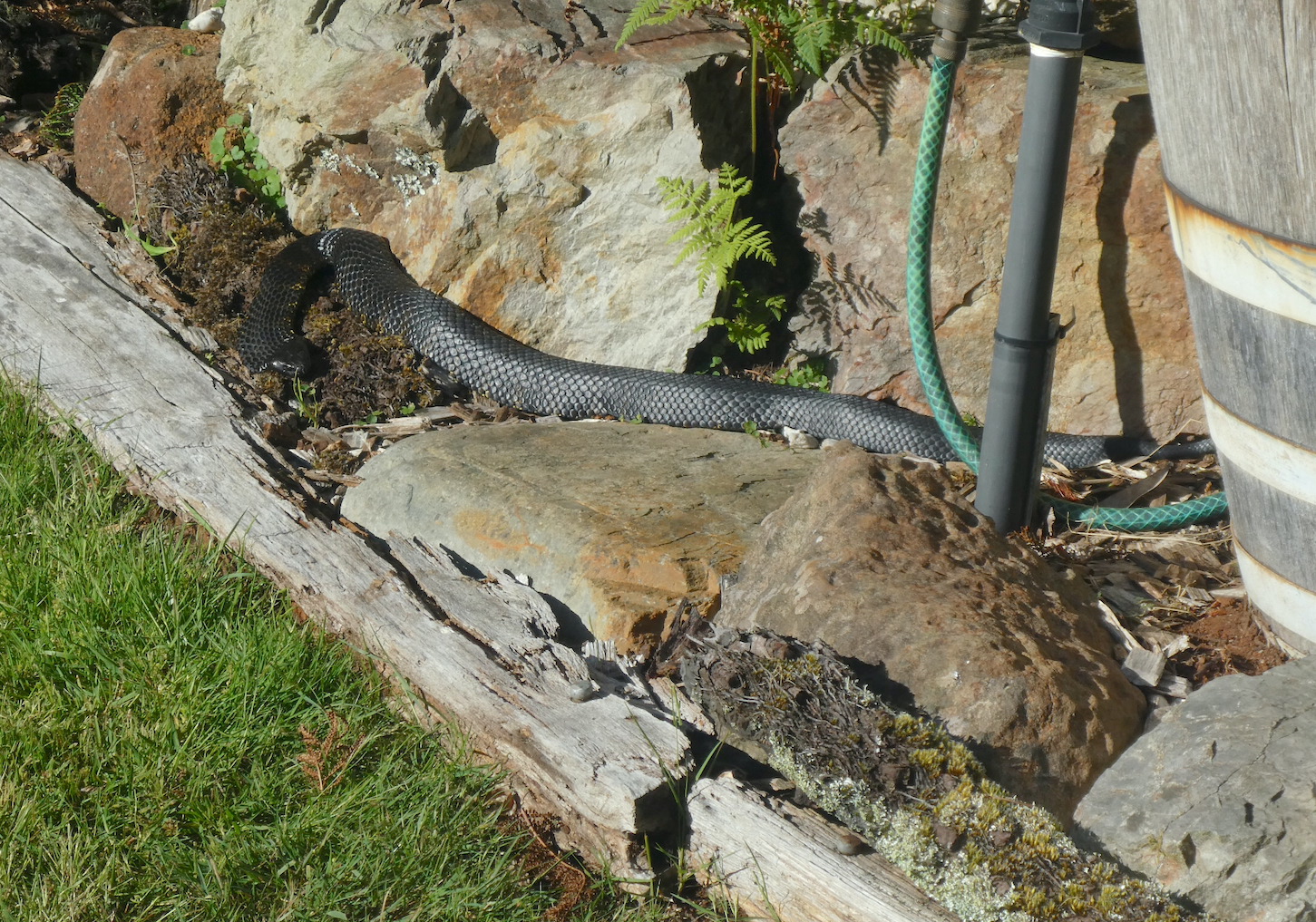
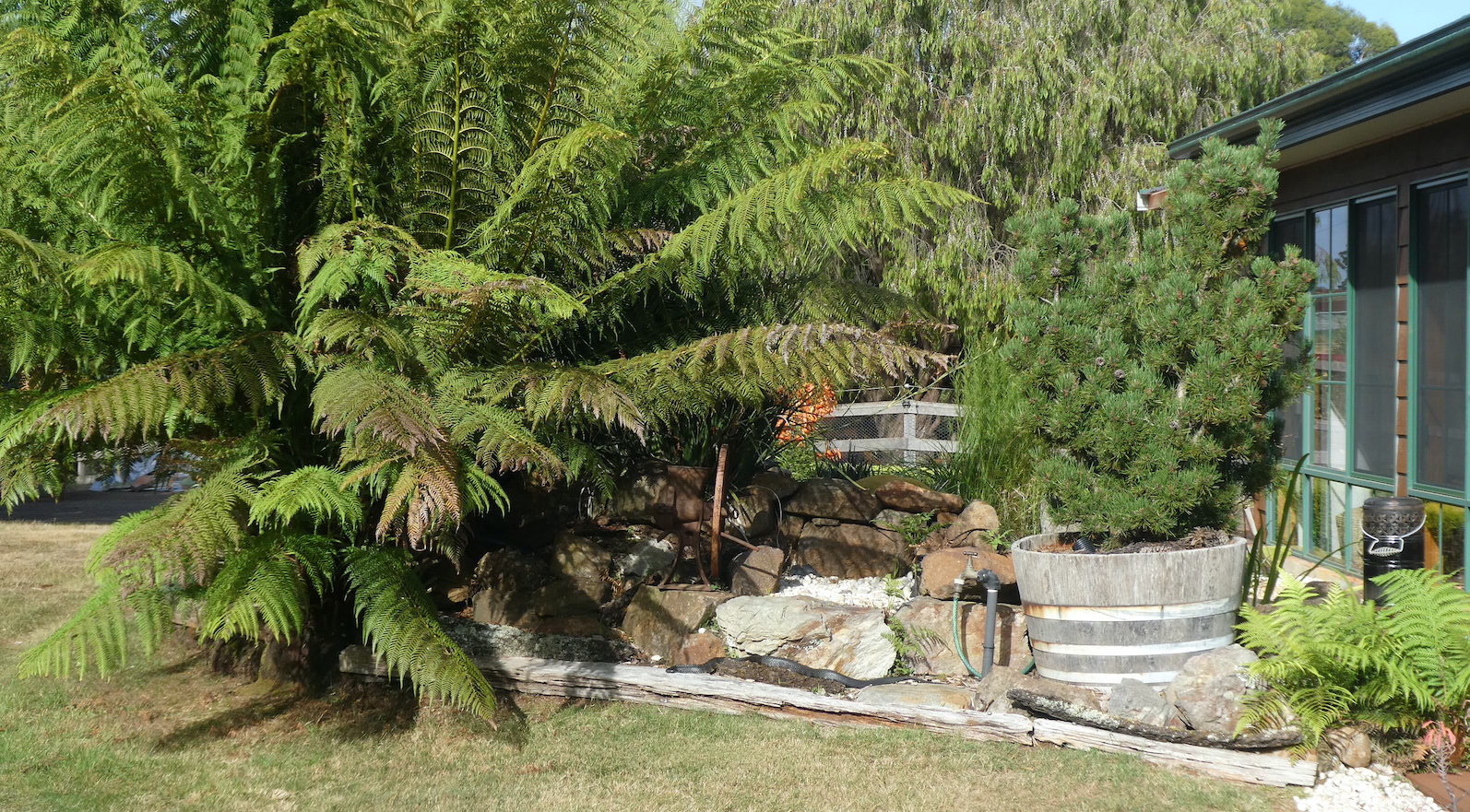
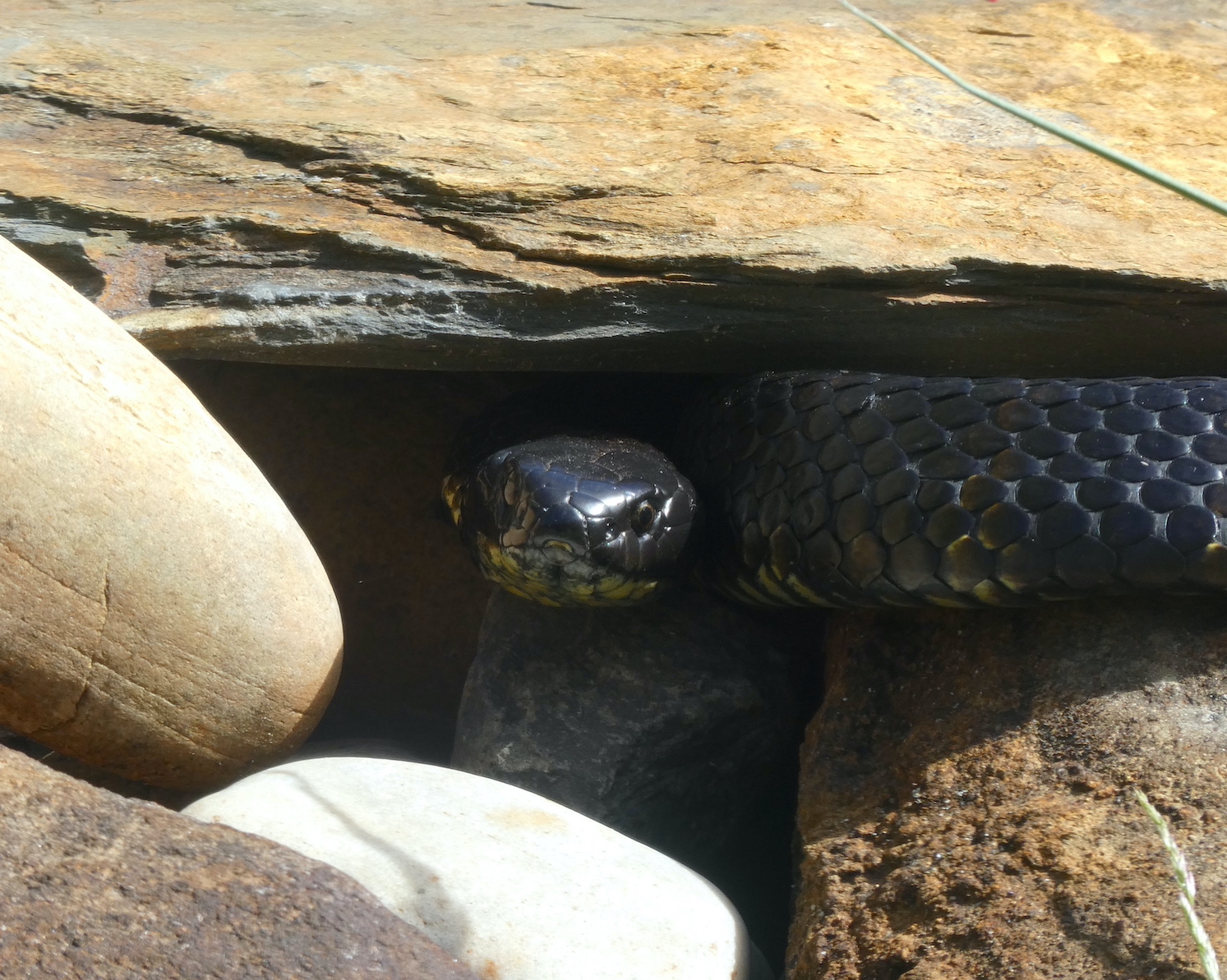
We weren’t sure whether we would be hosting a slithering summer squatter this year, considering the absence in 2021. Our question was answered one evening in early December when we spied the familiar form from the kitchen window.

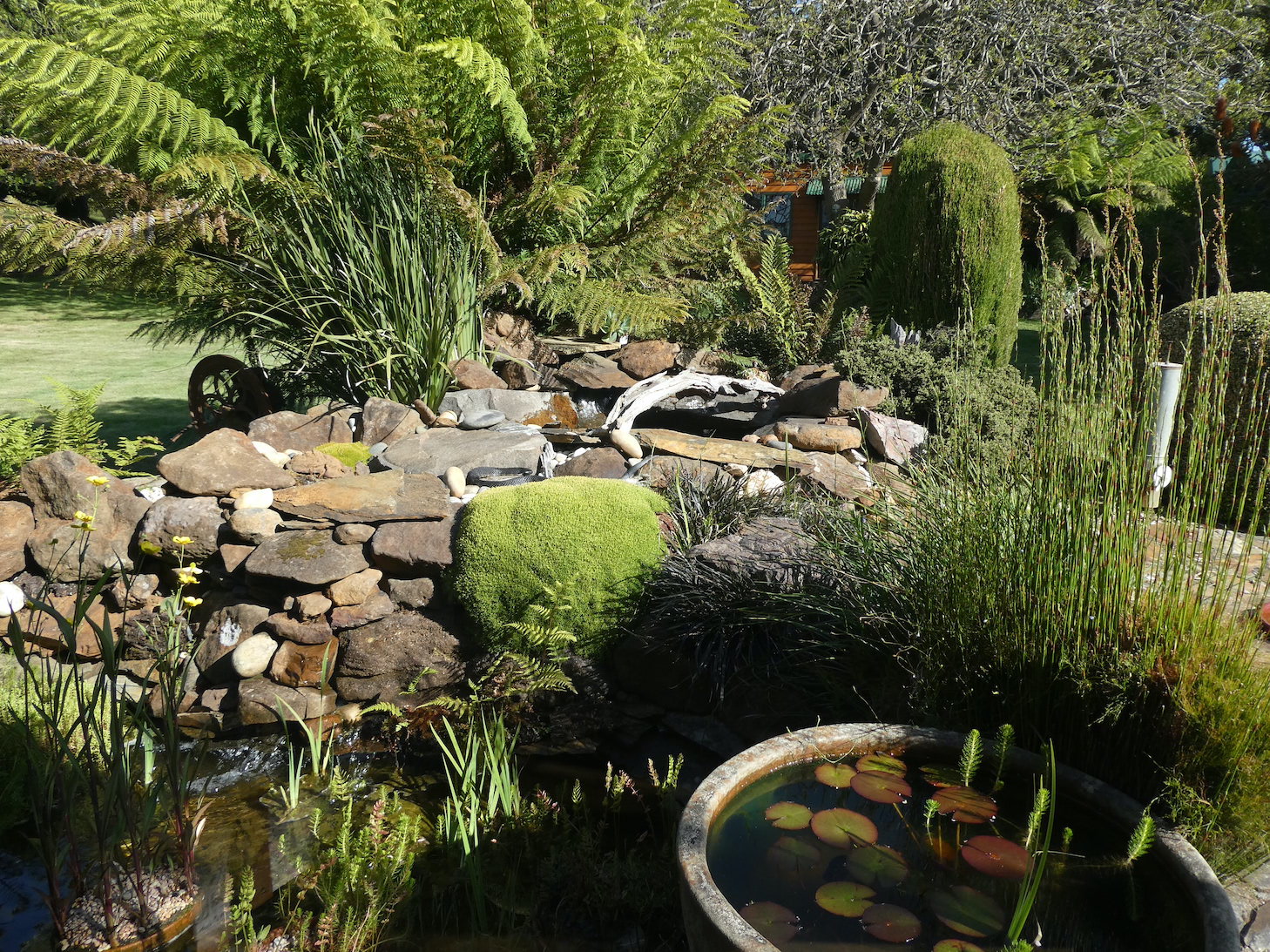
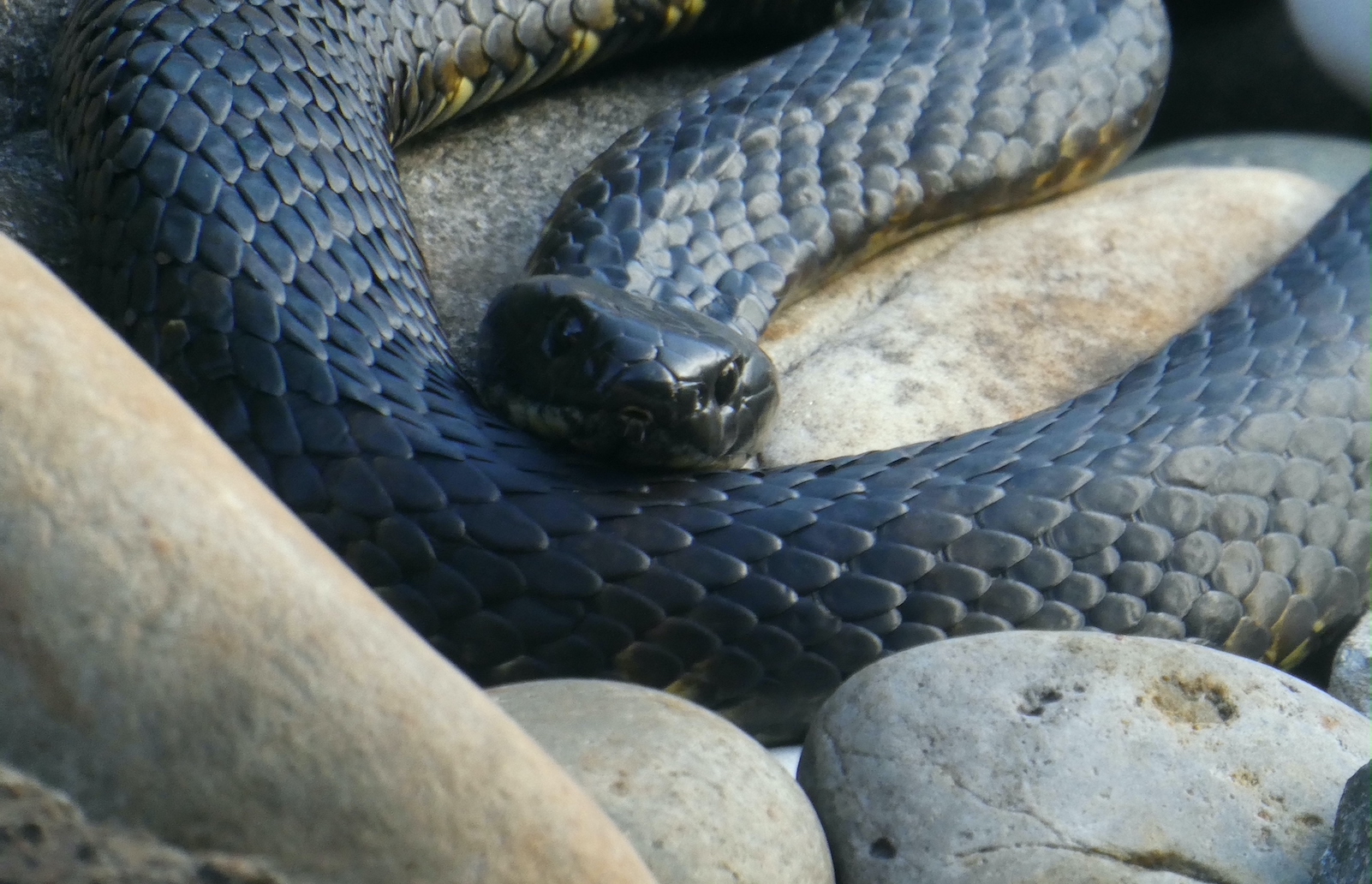
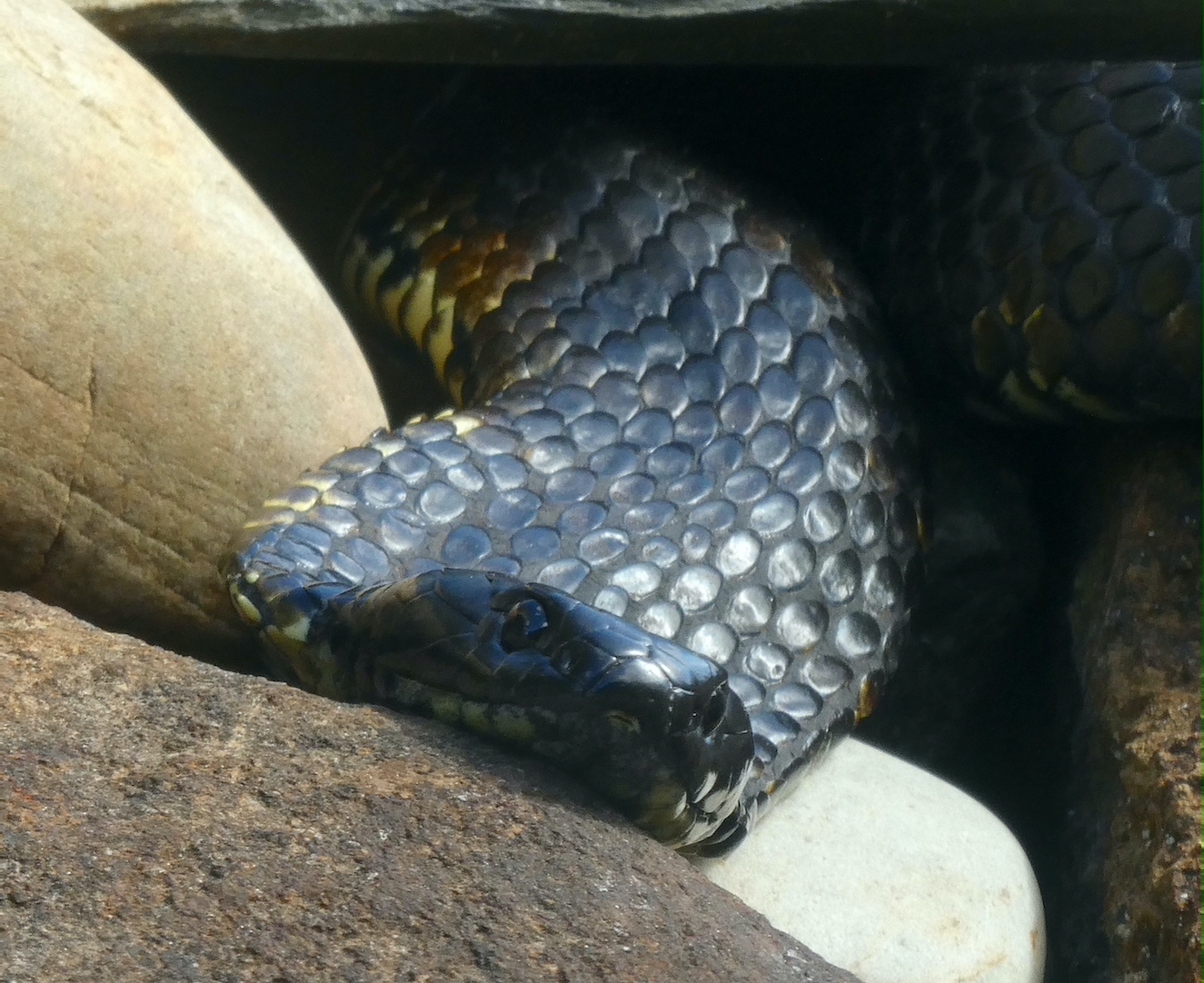
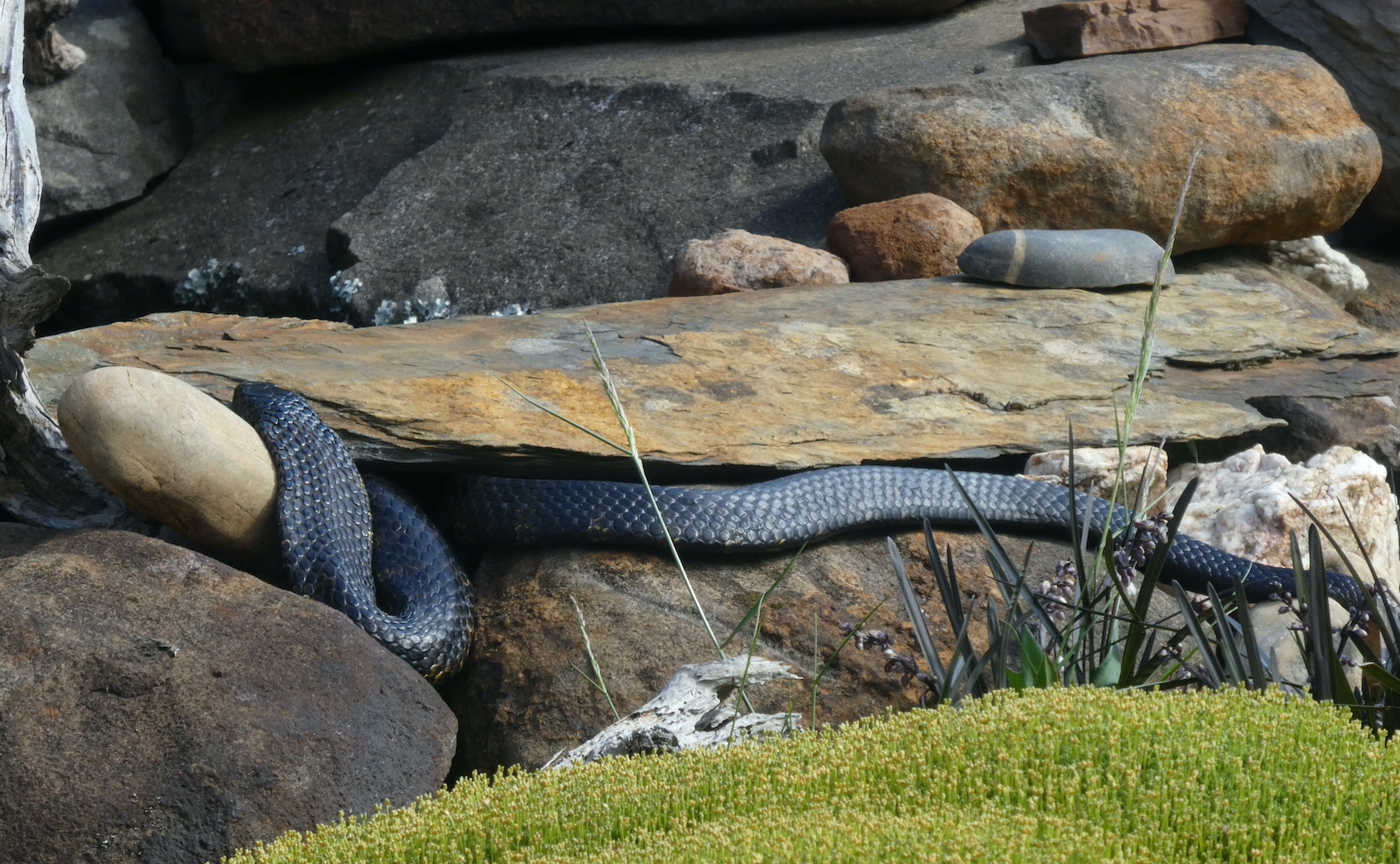
The Tasmanian tiger snake (Notechis scutatus humphreysi) has an unfounded reputation for being aggressive. Although one of the world’s most venomous snakes, they are actually very shy creatures and would rather retreat than attack, saving their venom for important things like their next meal. This may not be the same snake as previous years but she certainly had the same habits and was very comfortable with our presence. Mornings were spent warming up on the eastern side of the pond,

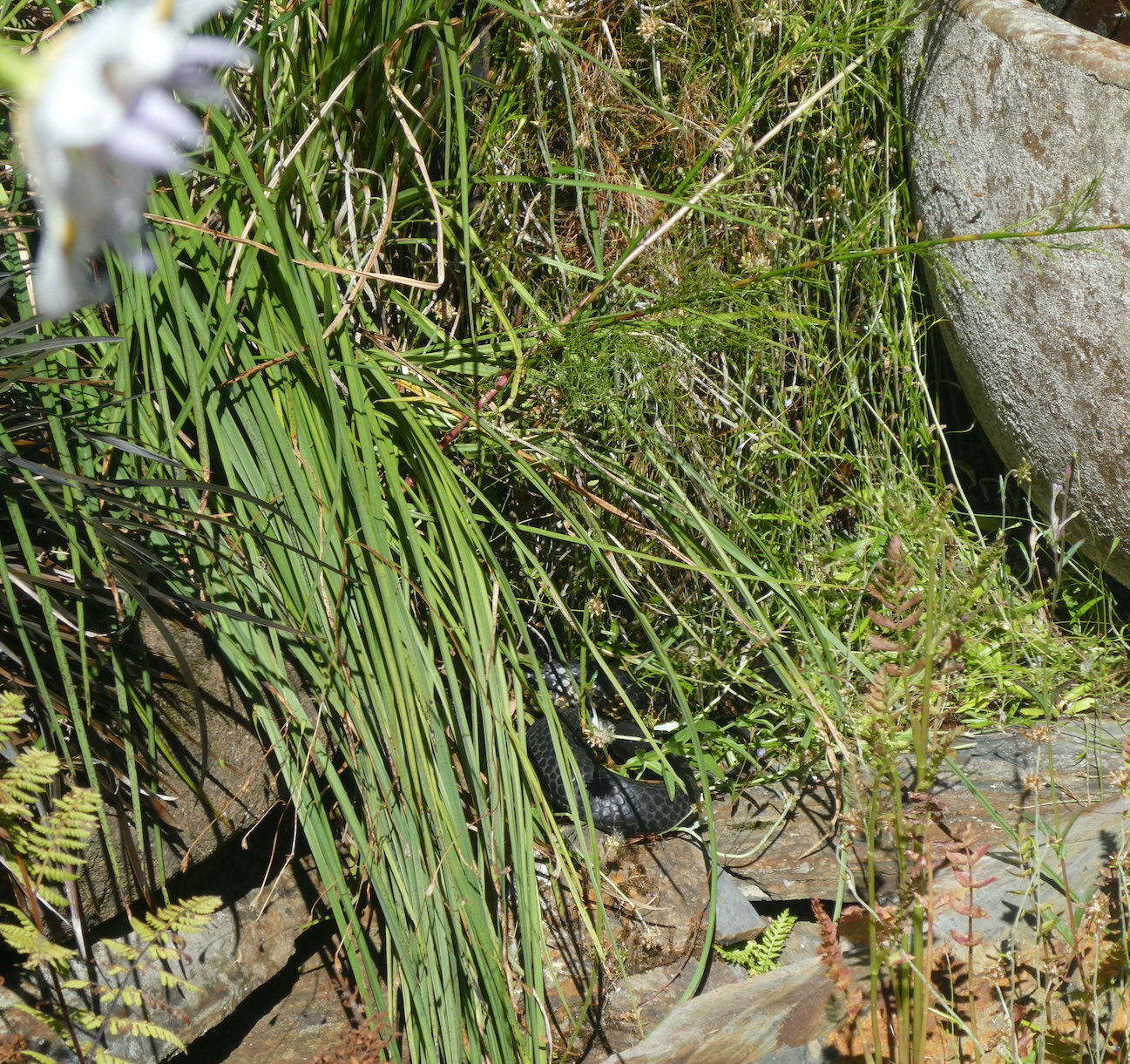
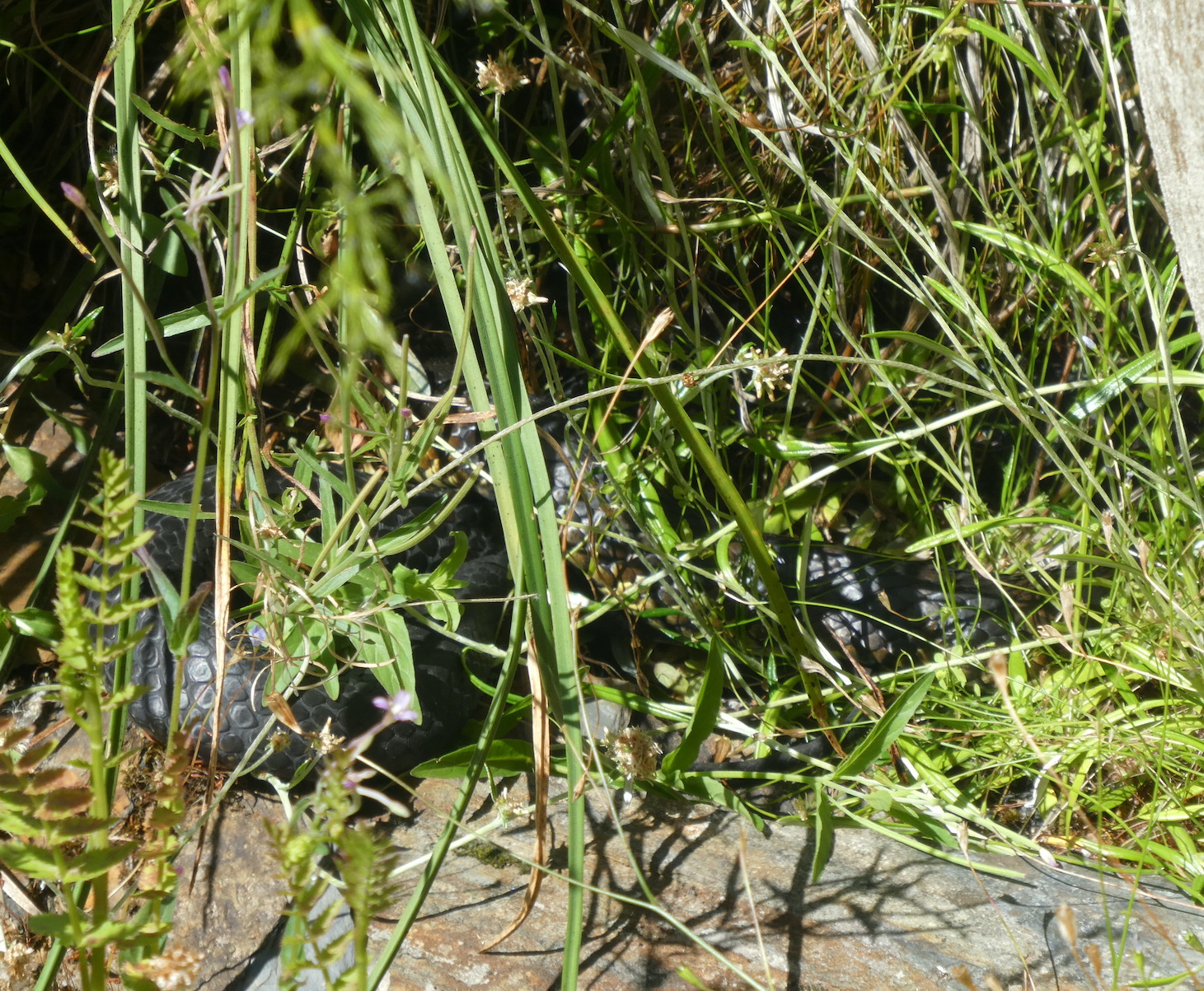
seeking shade when too hot

and stretching out when cool ,

then back to shelter.

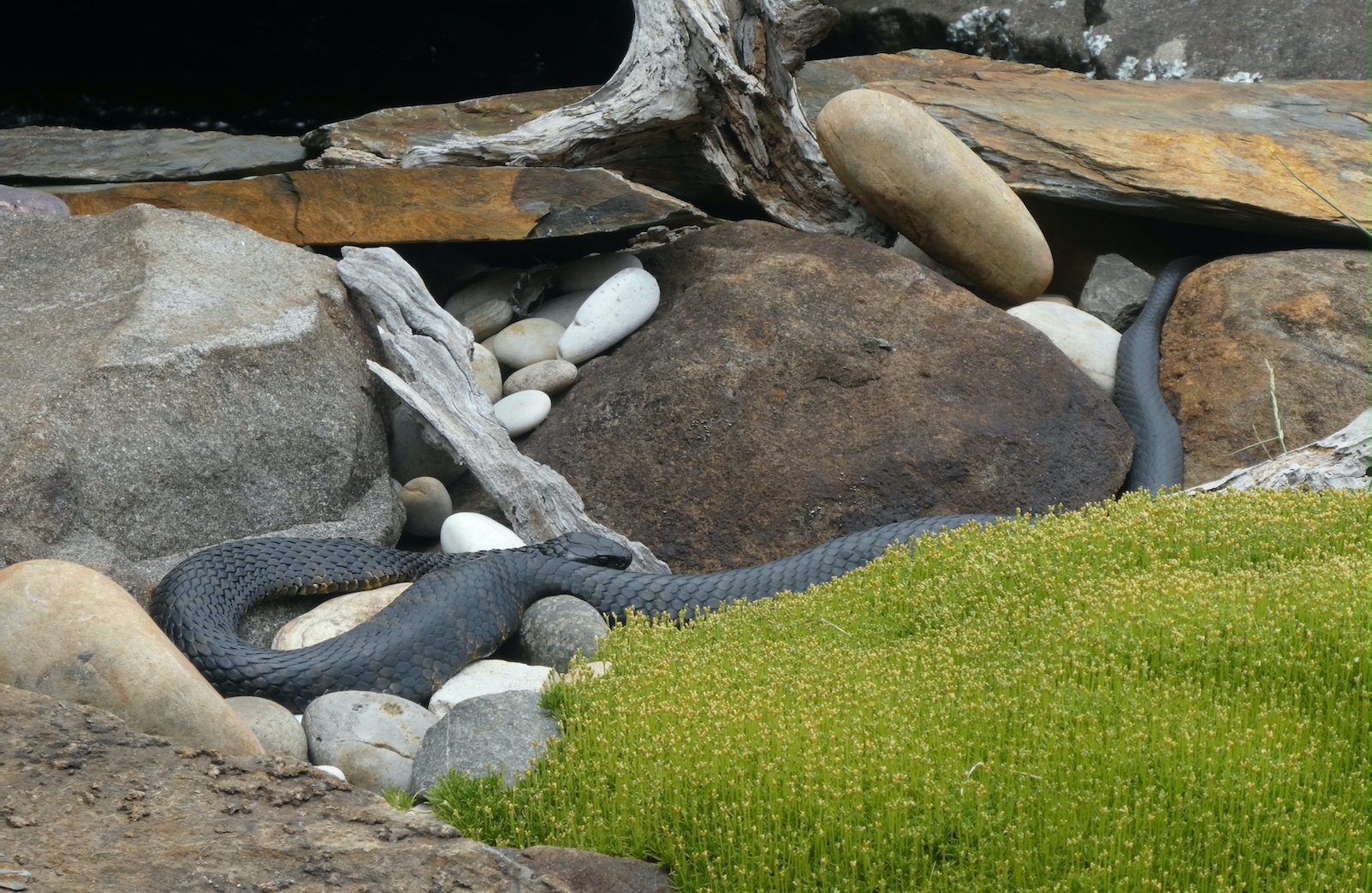
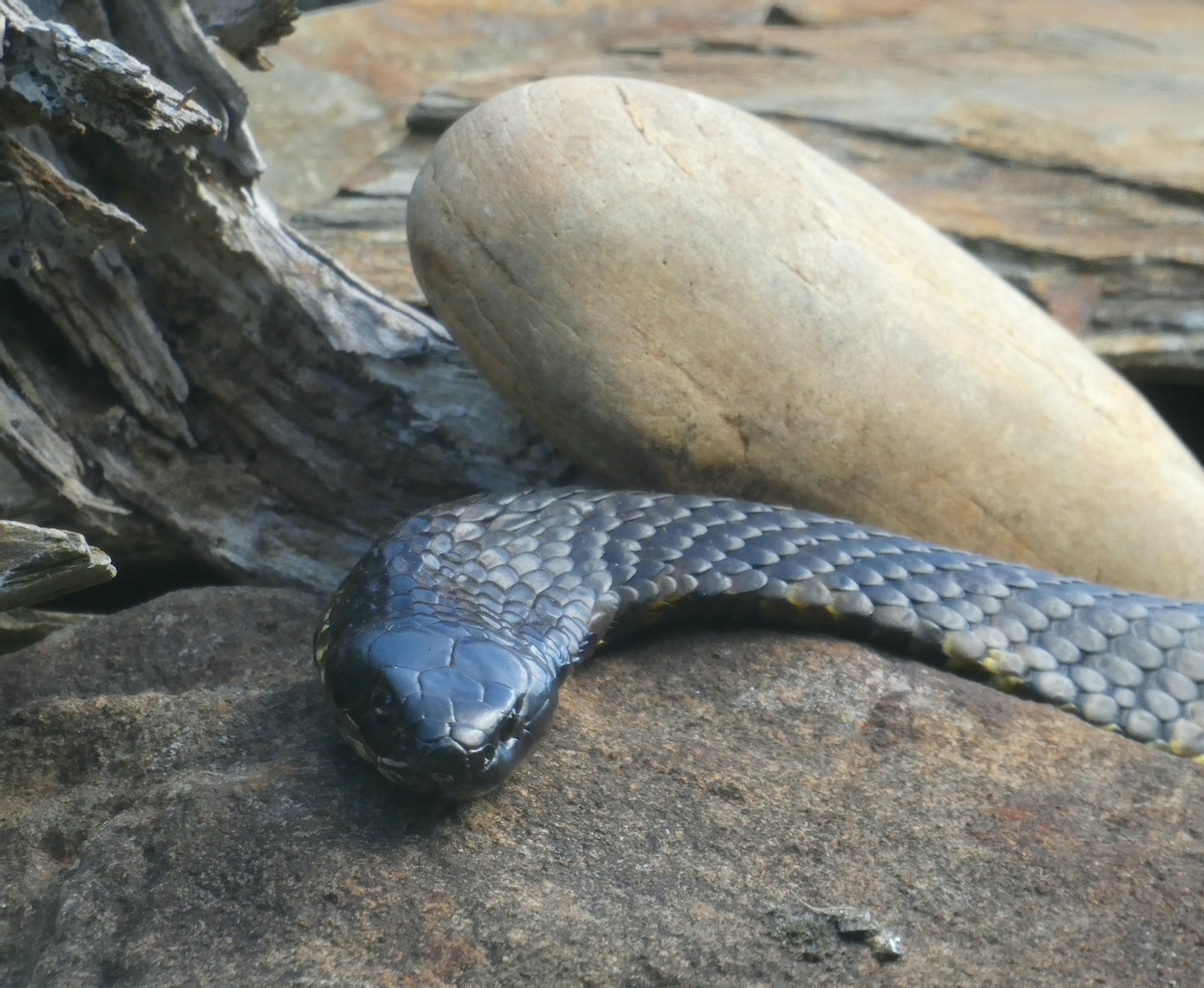
Tasmanian climate isn’t the easiest for temperature regulation, even for humans. Sometimes a little creativity is needed to warm up,

but usually a good stretch against the rocks is the best way.

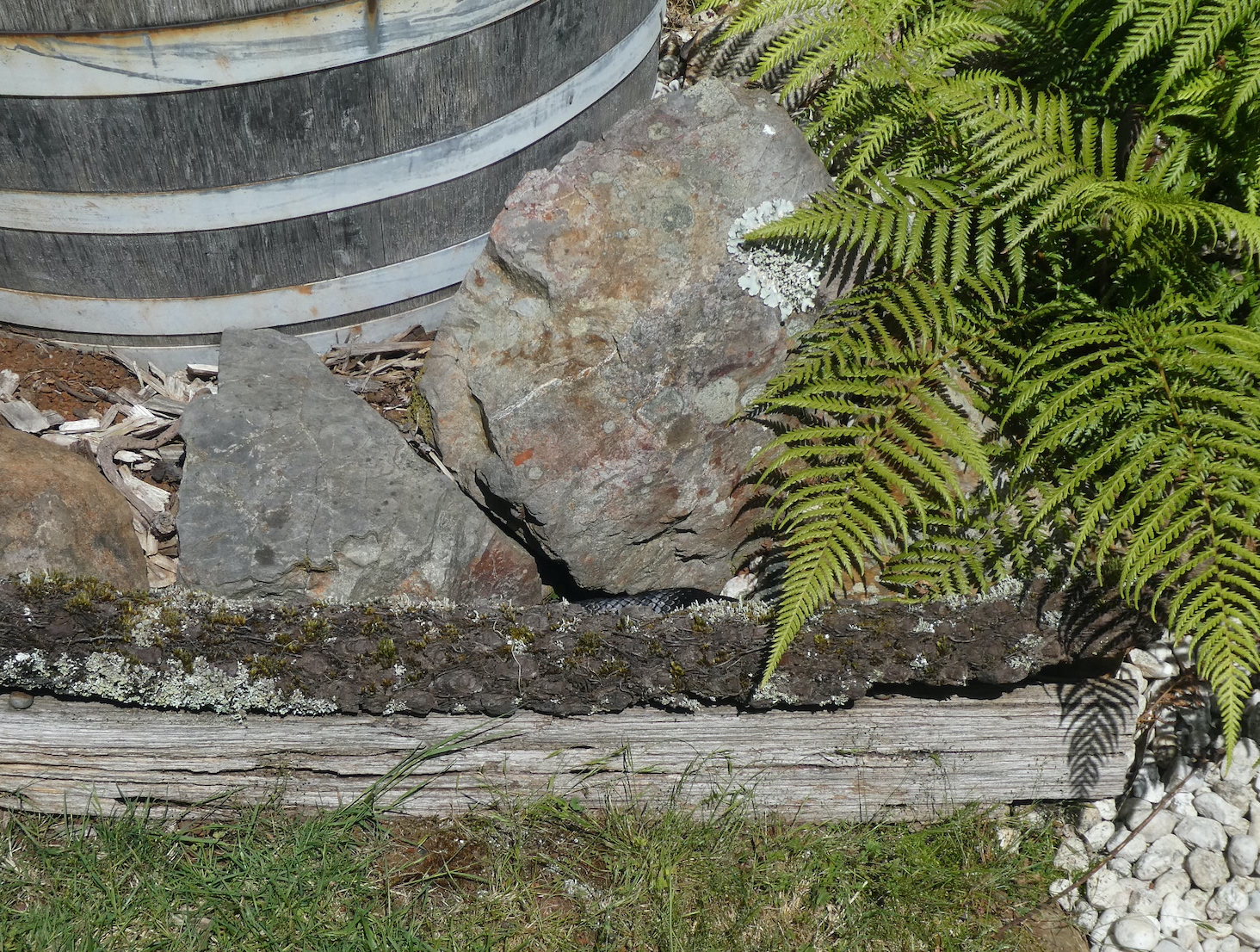
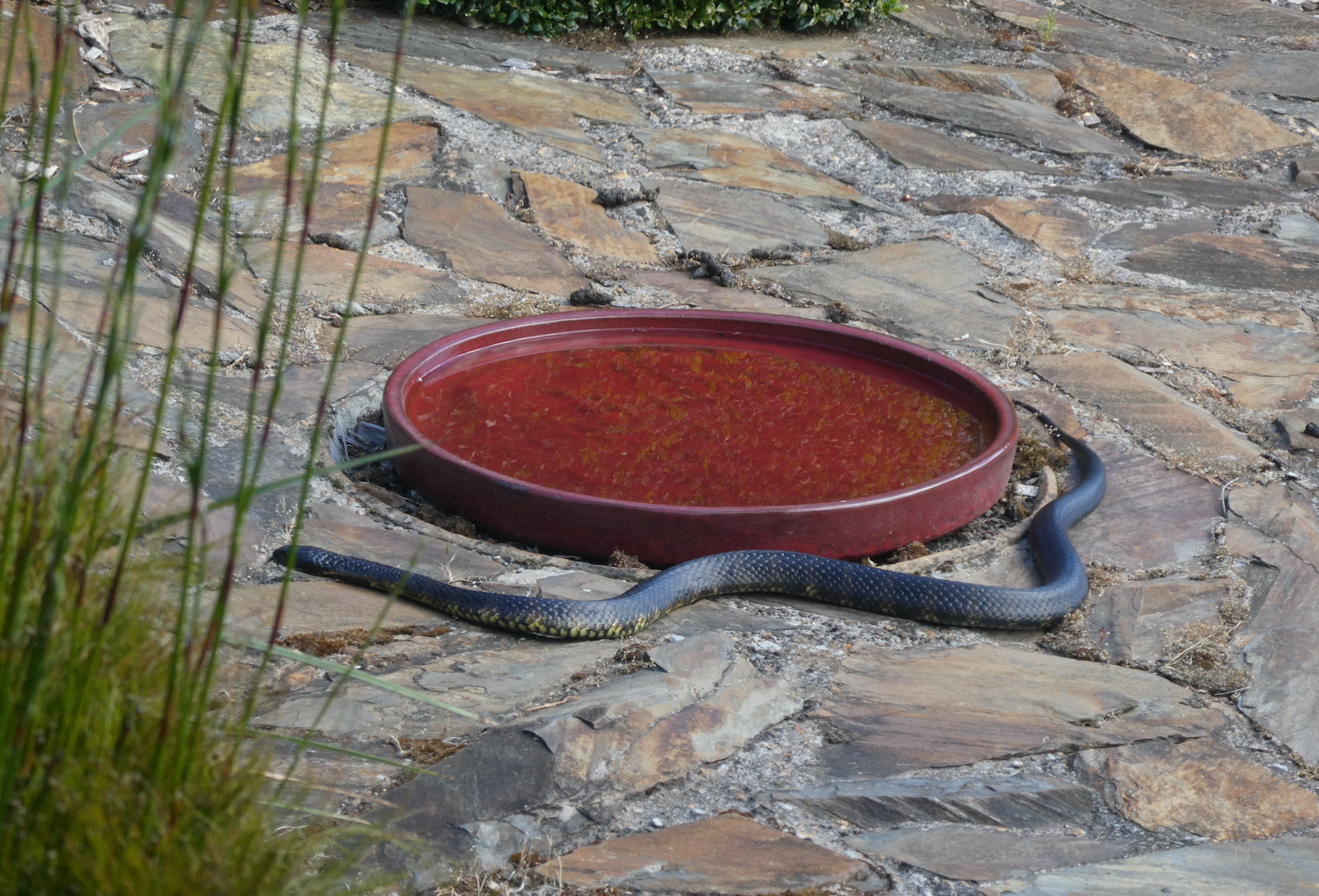
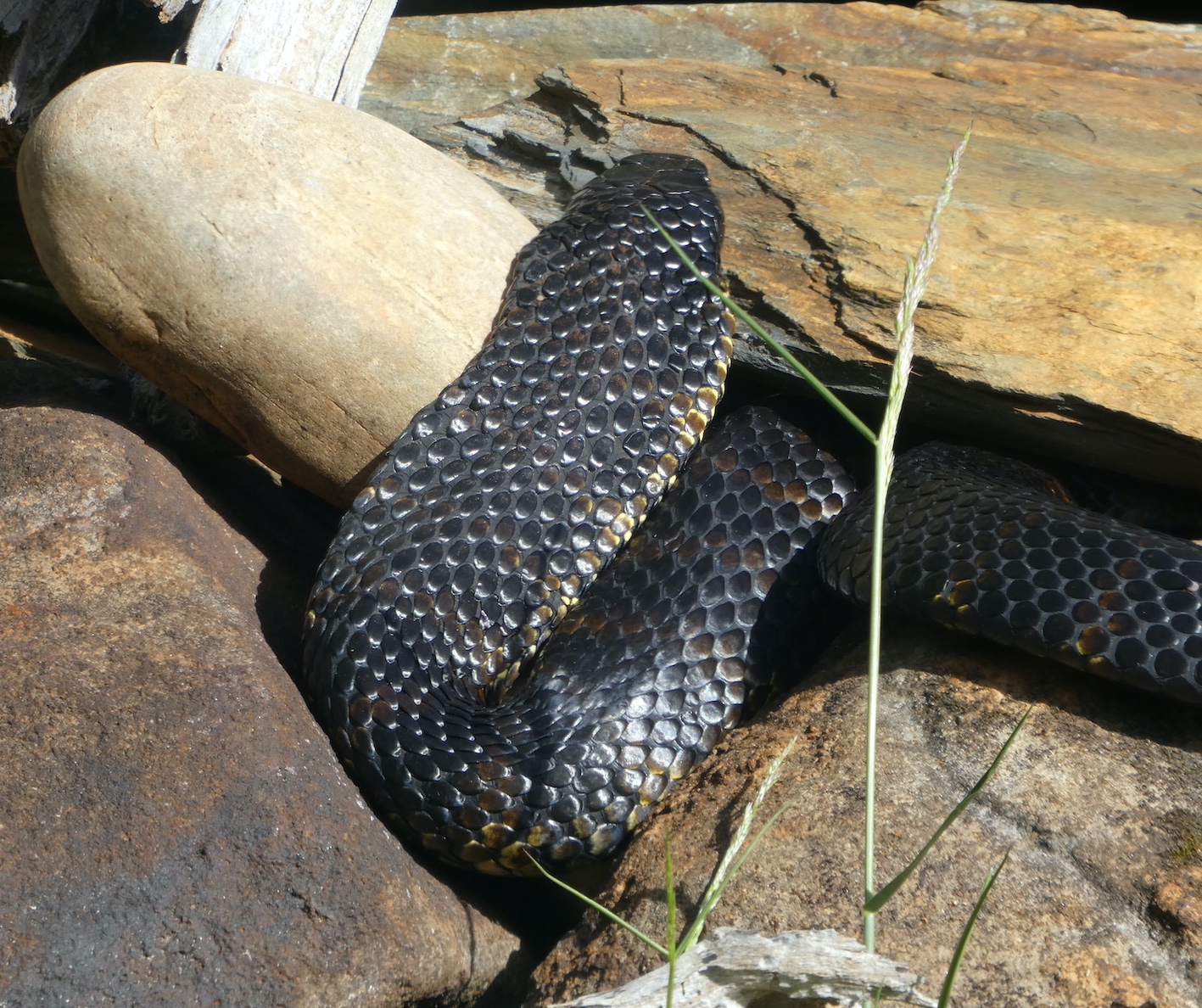
There were some mornings we couldn’t see Snakey (as she is affectionately known) and assumed she had gone off hunting for the day. Complacency is not recommended as she can turn up where least expected.

I much prefer her presence to be obvious.

In the afternoon, she would often be lounging on the rocks above the pond

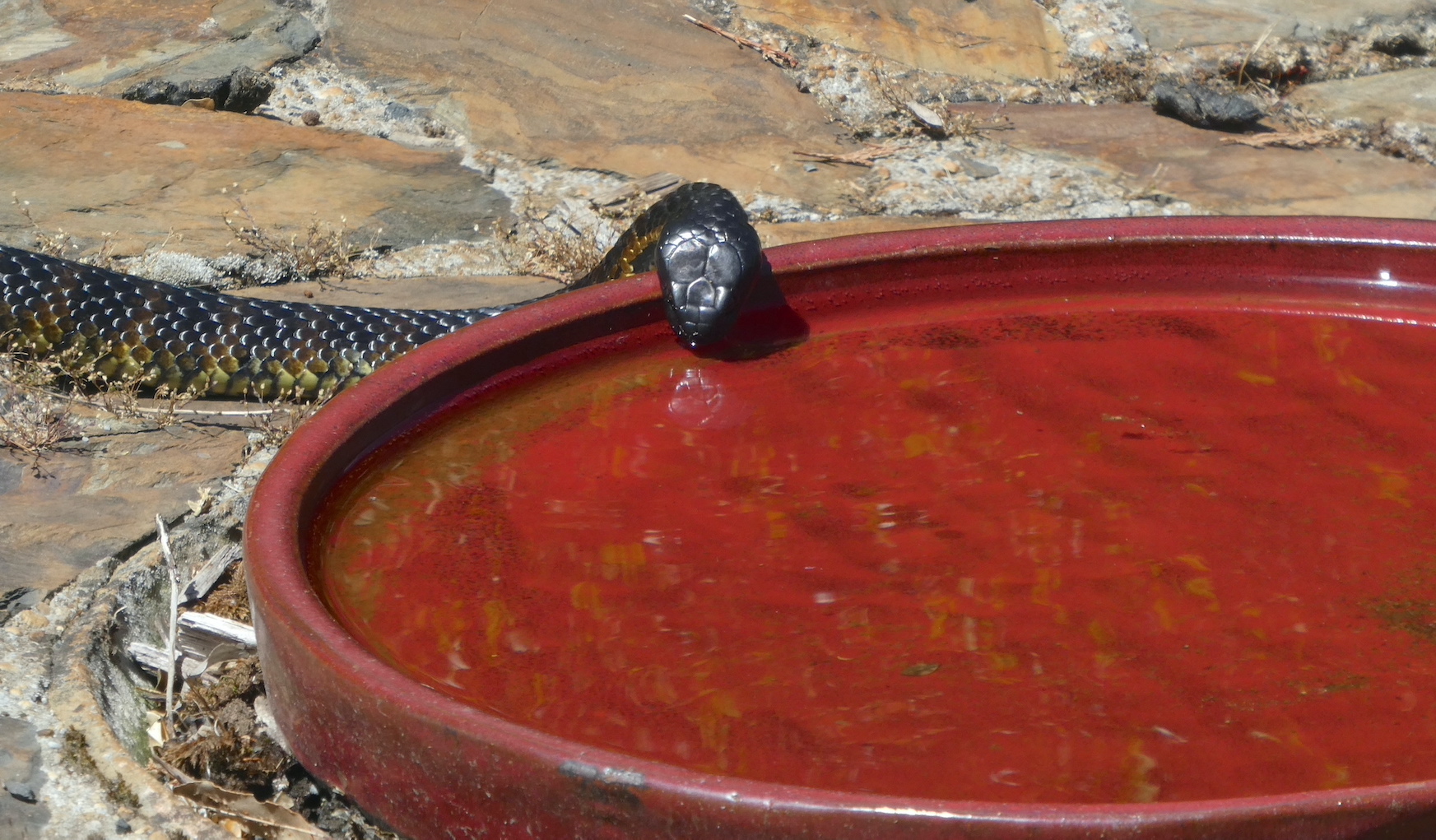
or returning from adventures for refreshment

before relaxing in contented contemplation.

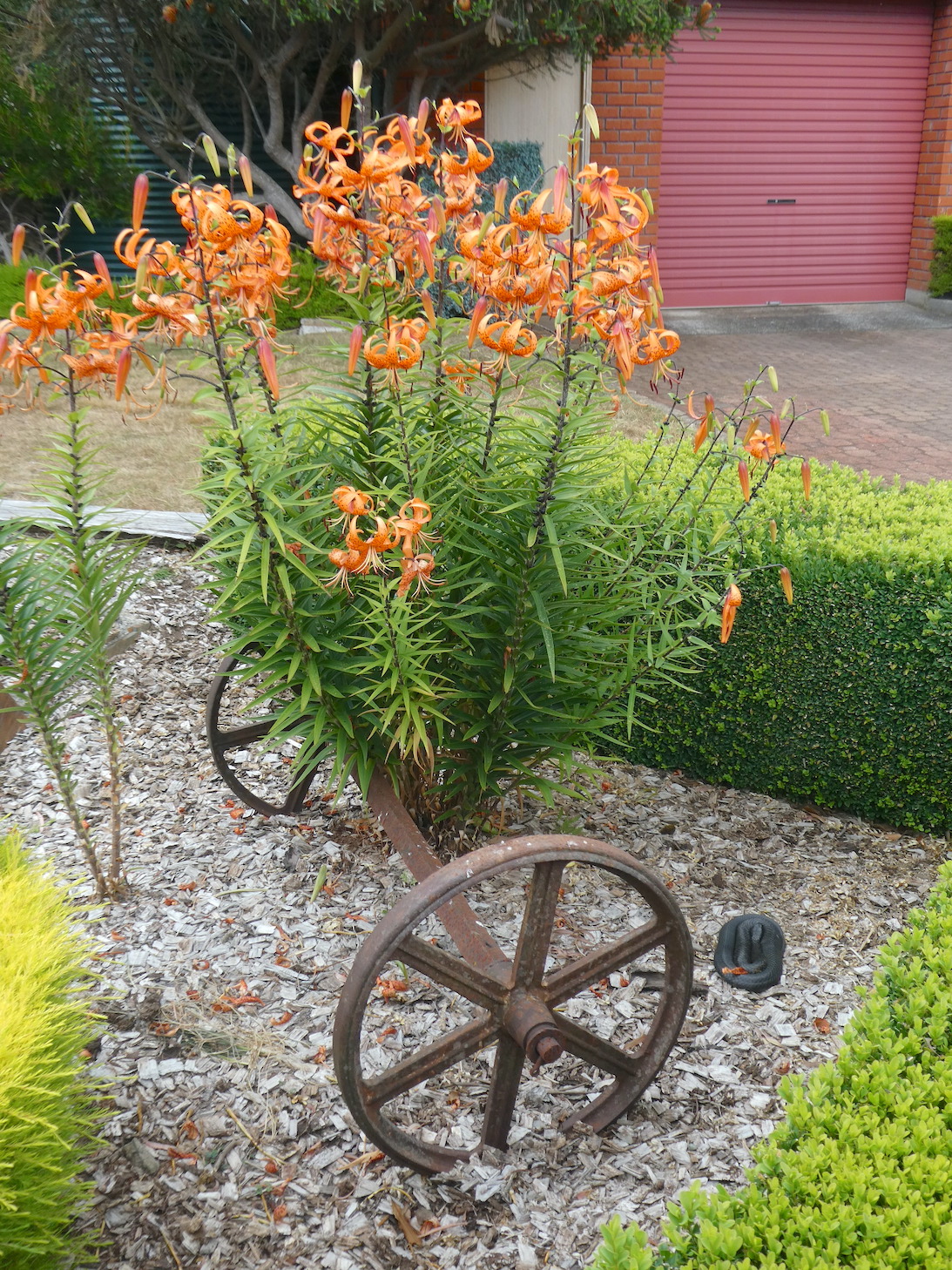
I like to think there is a subliminal connection between the tiger snake and tiger lilies, they seem to complement each other.

veggie patch revamp

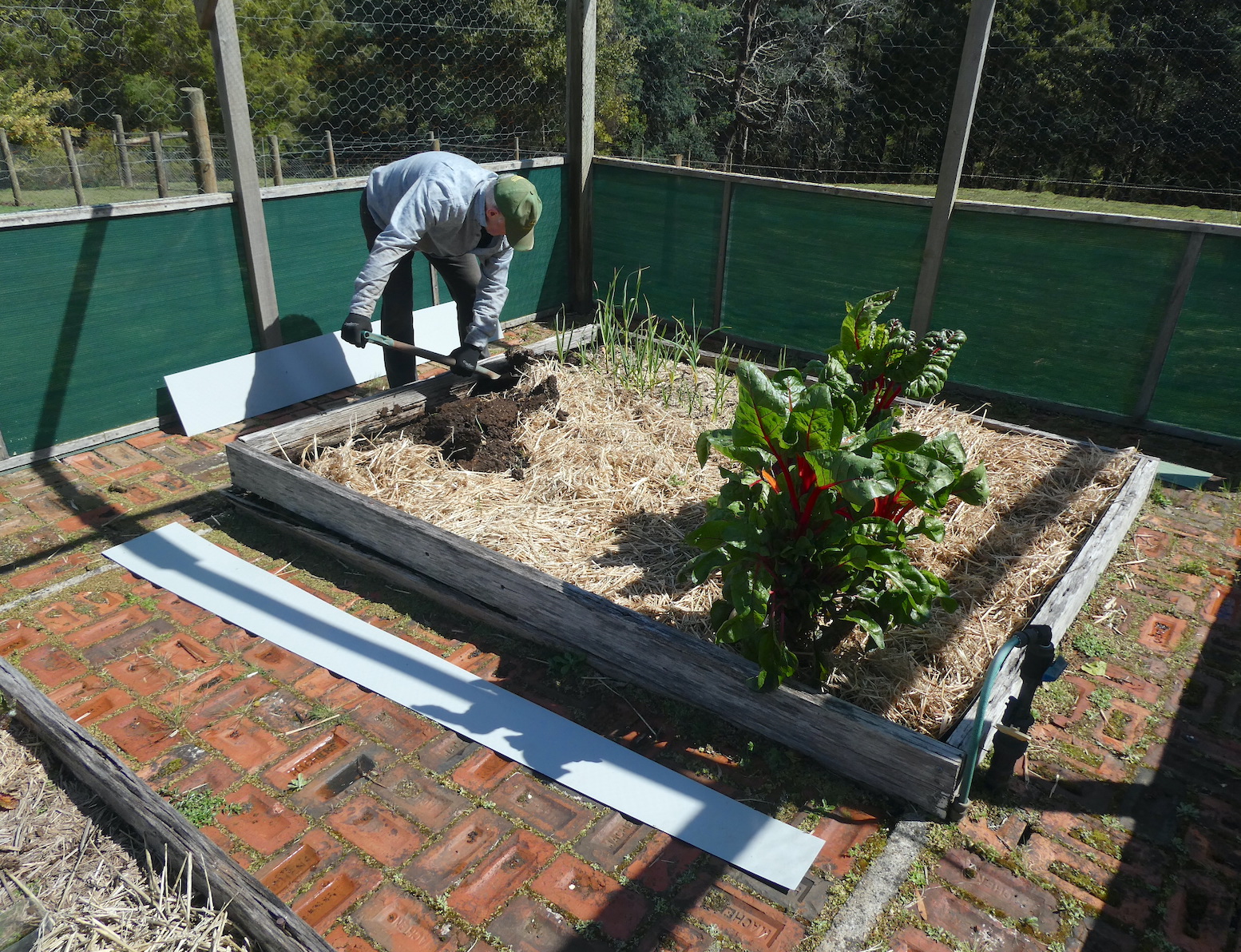
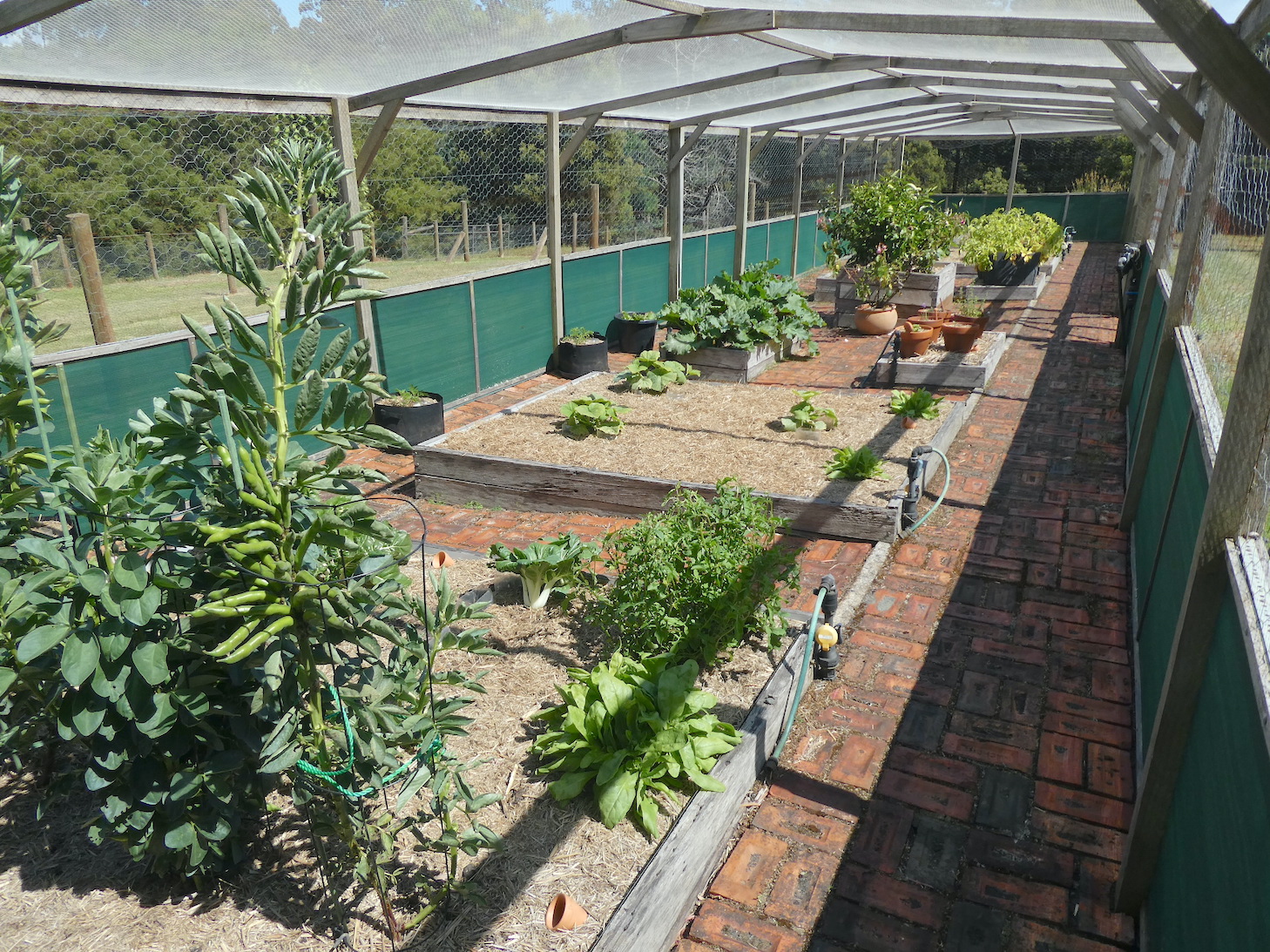
When we created our veggie patch, we used reclaimed hardwood roof trusses to make the raised beds, thinking they would outlast our time here. Eleven years of Tasmanian weather proved us wrong and the timber was starting to rot, the screws were no longer holding and the boxes developed all sorts of twists and turns.

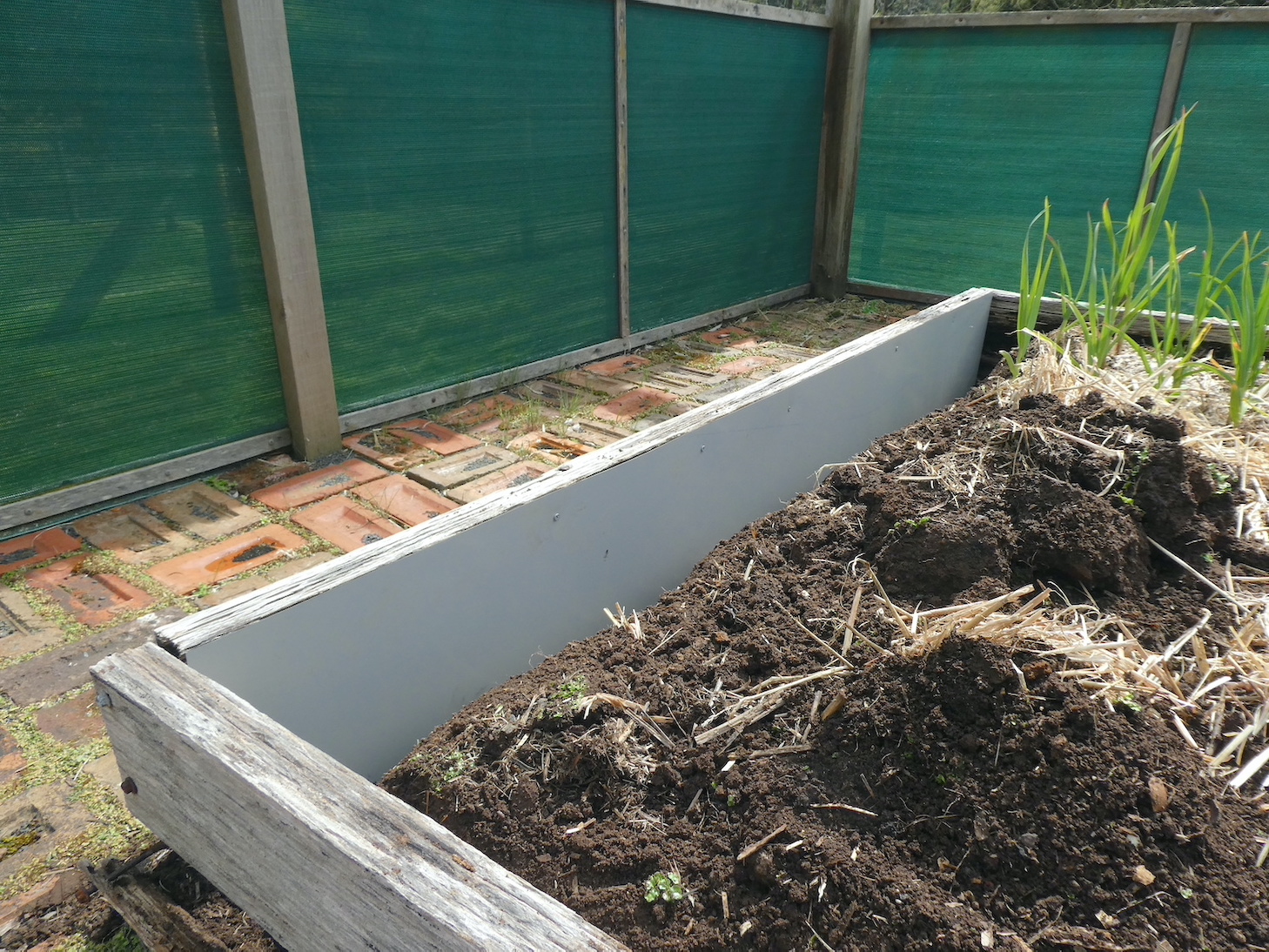
After weeks of mulling over possible solutions, we came up with the idea of reinforcing each box using metal sheeting on the inside. Our local Colorbond supplier was very helpful. We gave them the measurements of each piece required and they cut them from ends of rolls that would otherwise have been discarded (at a reasonable price). After digging away the soil at the edges,

the strips of steel were screwed to the timber with pond liner at the corners to avoid water seepage.

We were happy with the tidy result.

The rhubarb box was a bit of a challenge, just as well it needed thinning out.

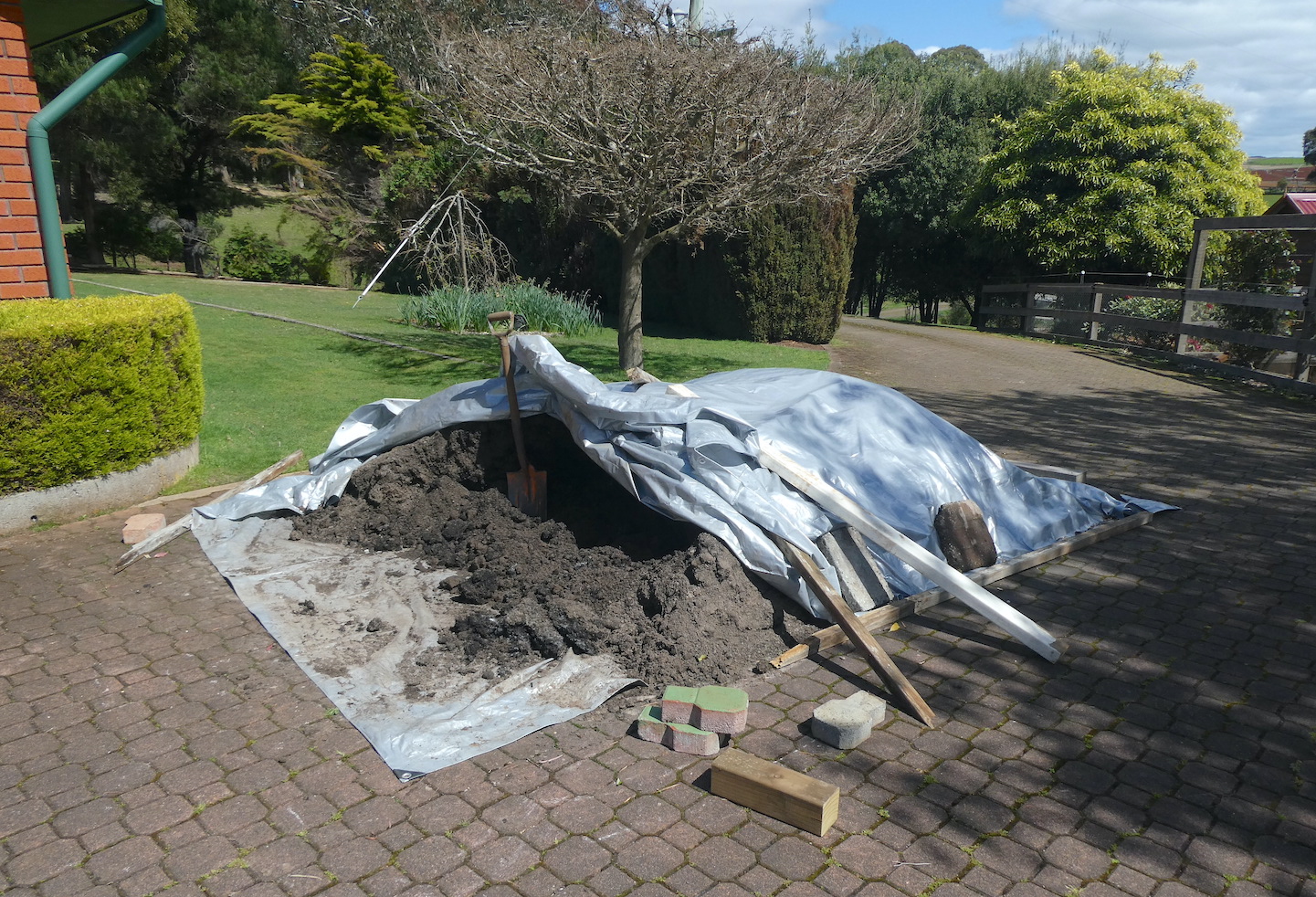
We had a truck load of loam/ compost mix delivered and topped up all the beds

just in time for spring planting.

The fruit salad tree box had to be completely demolished and rebuilt (I was too distracted to take photos of the process).

Our unpredictable spring weather meant I was constantly chasing sunlight and warmth for the seedlings

but I finally had success and planted out in summer.

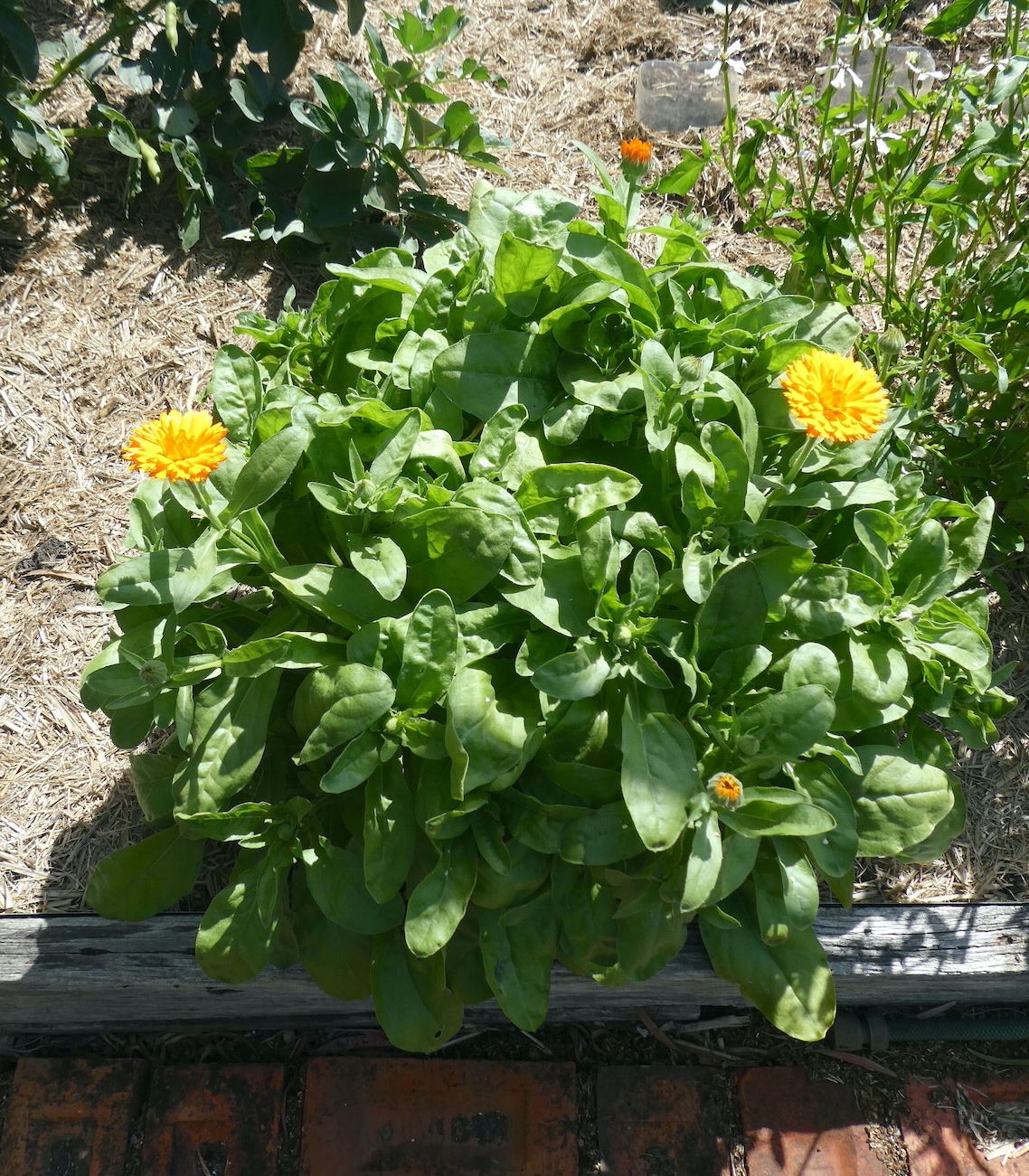
I threw some marigold seeds in for the first time, they supposedly deter pests as well as looking pretty.

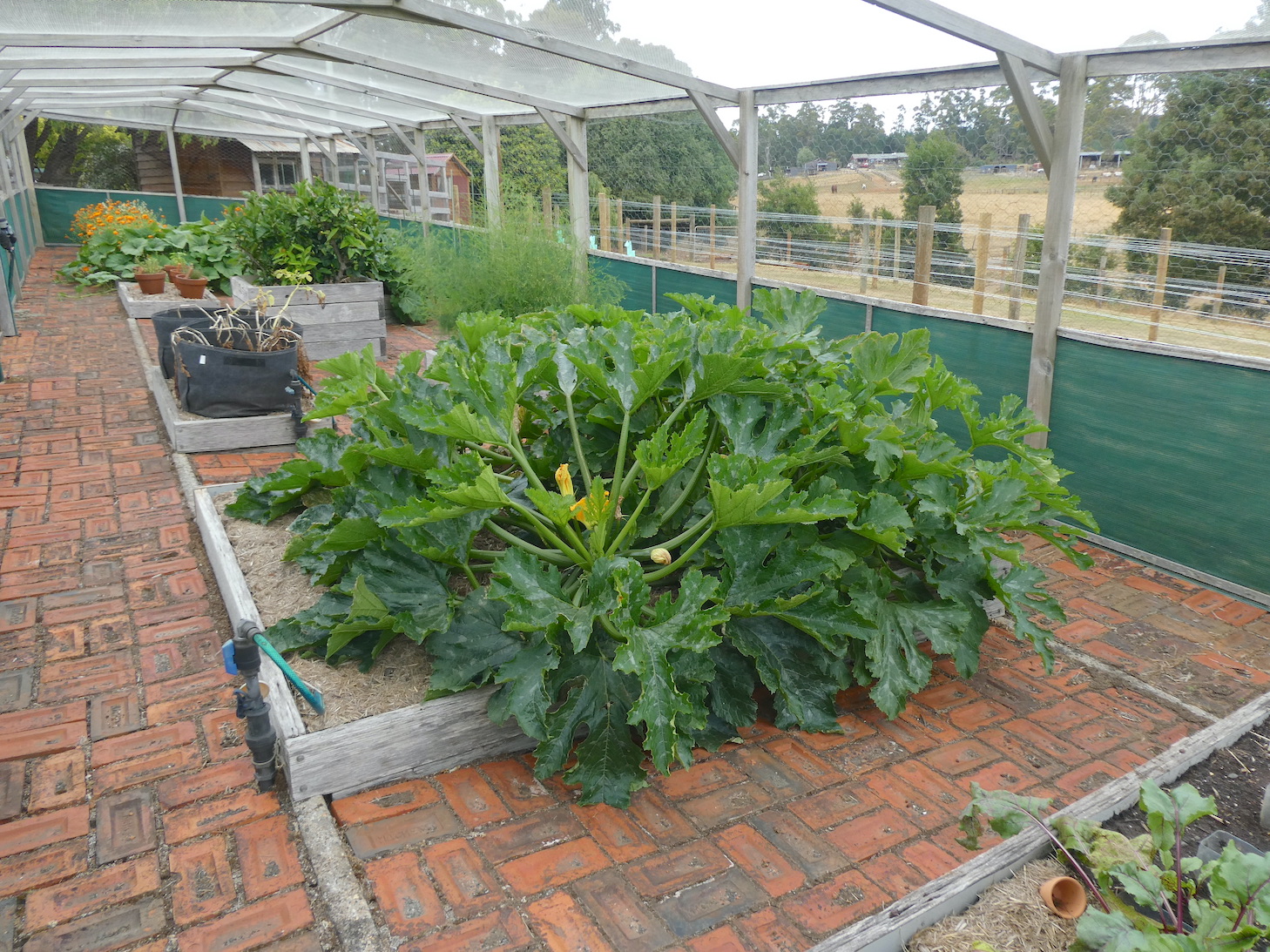
By the end of January, there was no stopping the flow of produce.

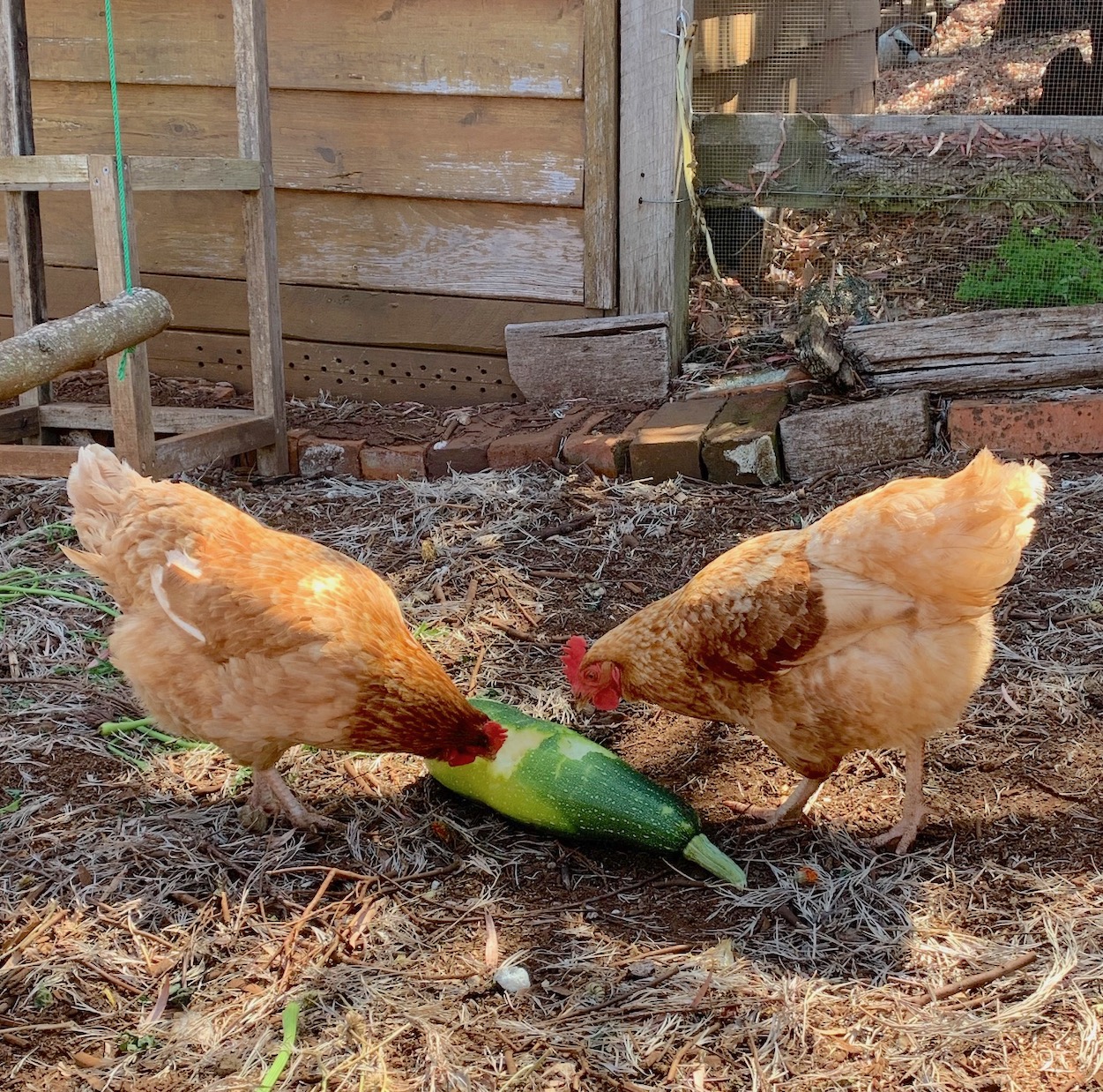
Thankfully, we found some willing recipients for the monster zucchini.