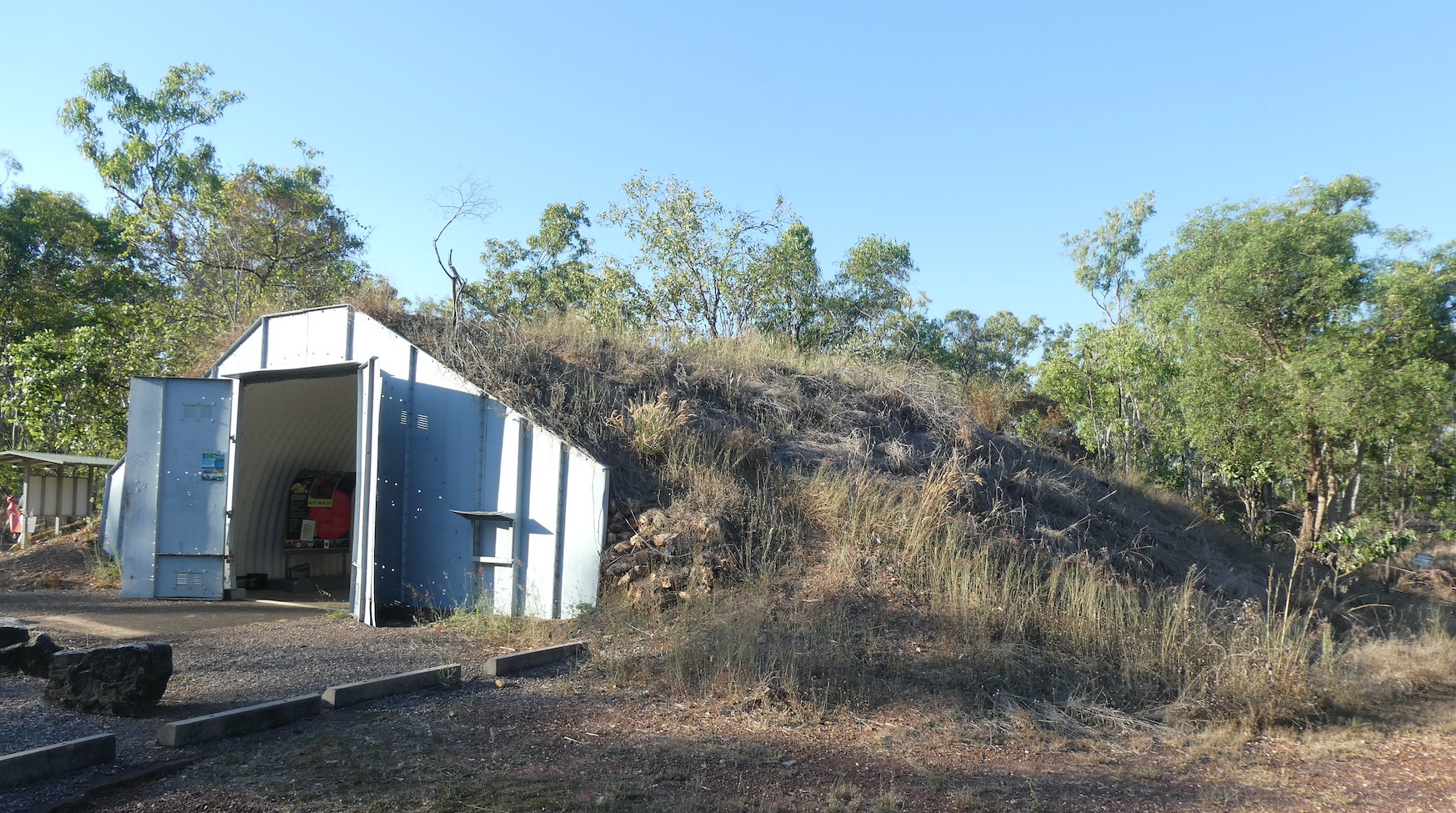
On the outskirts of the city named after the great scientist and naturalist, Charles Darwin National Park is full of surprises. Created in 1997, the five square miles provide a natural recreation area as well as protection for significant vegetation, Aboriginal and World War II history. Developed as an Explosive Ordnance Storage Area during World War II,eleven of the bunkers that housed the explosives during the war are still standing. Nine were set into the contours of the hills, the barrel vault constructions are covered with vegetated earth.
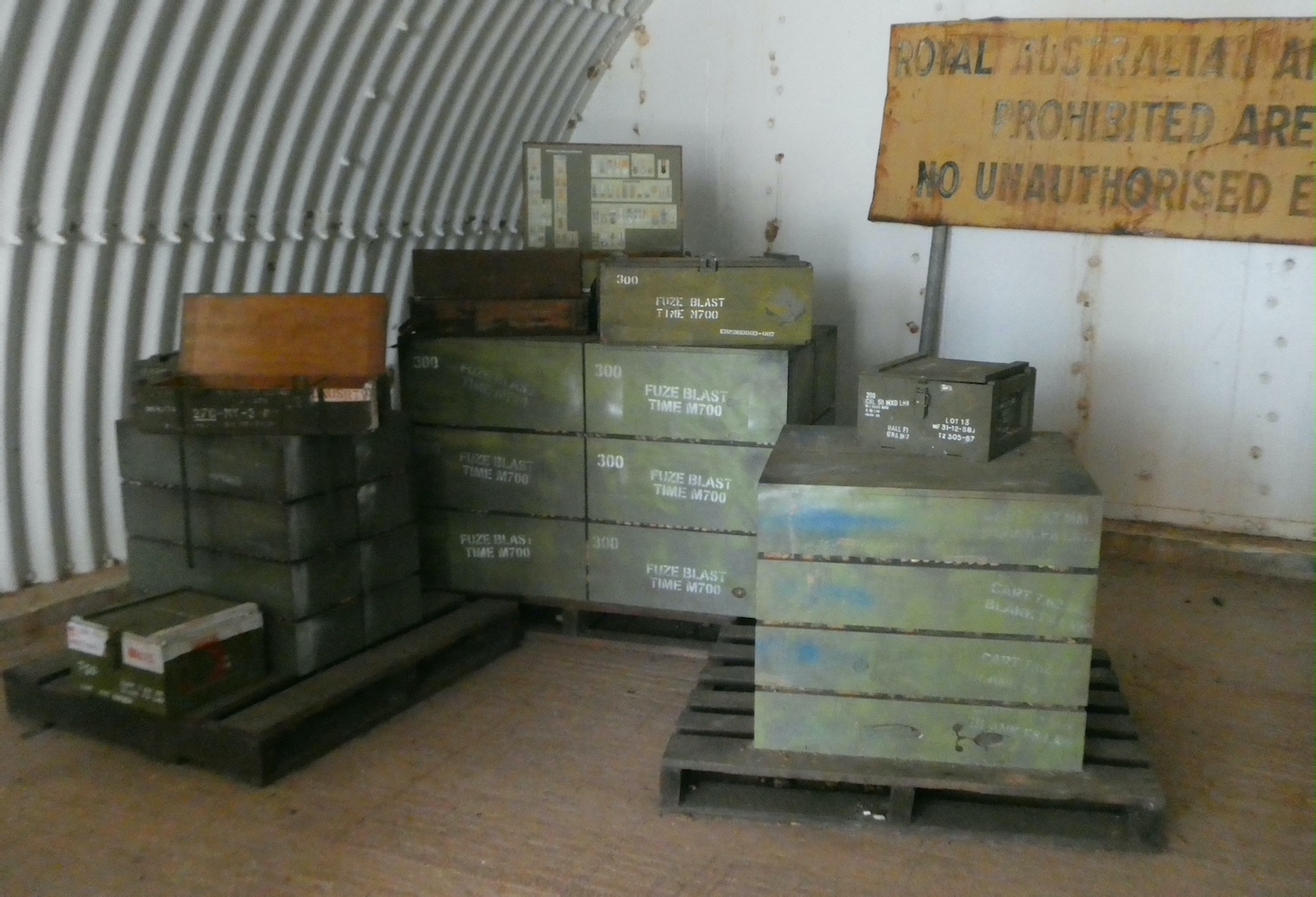
There is a display of memorabilia in one of the bunkers and a fascinating insight into Darwin’s role in the Pacific War.
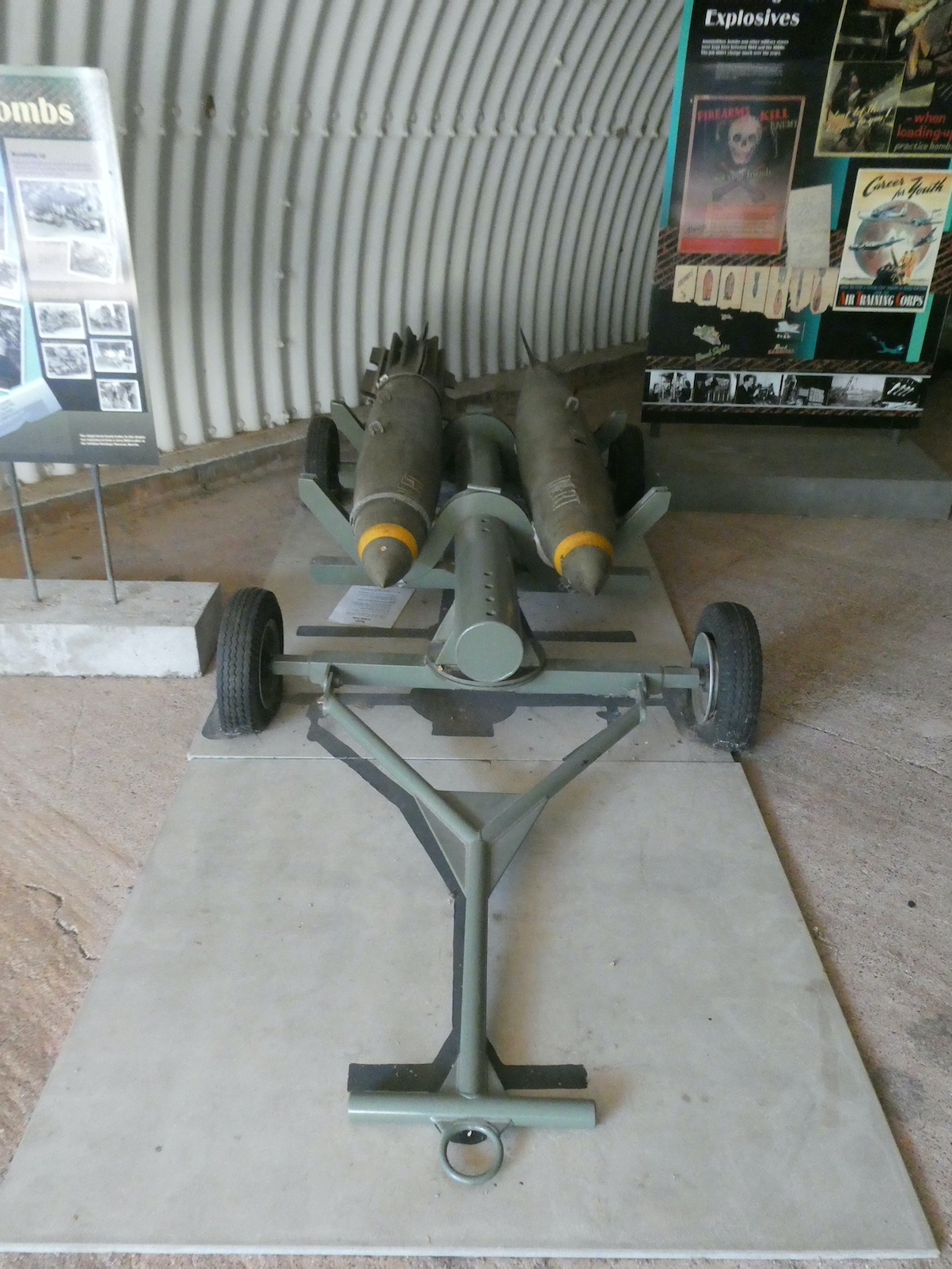
Bomb trolleys were used to move bombs weighing up to 1,000 lb (that’s about 450kg) to be loaded into aircraft and were common at bomber bases in the 1940s.
There are two free-standing storage sheds, one of which is now adorned with a magnificent work of art.
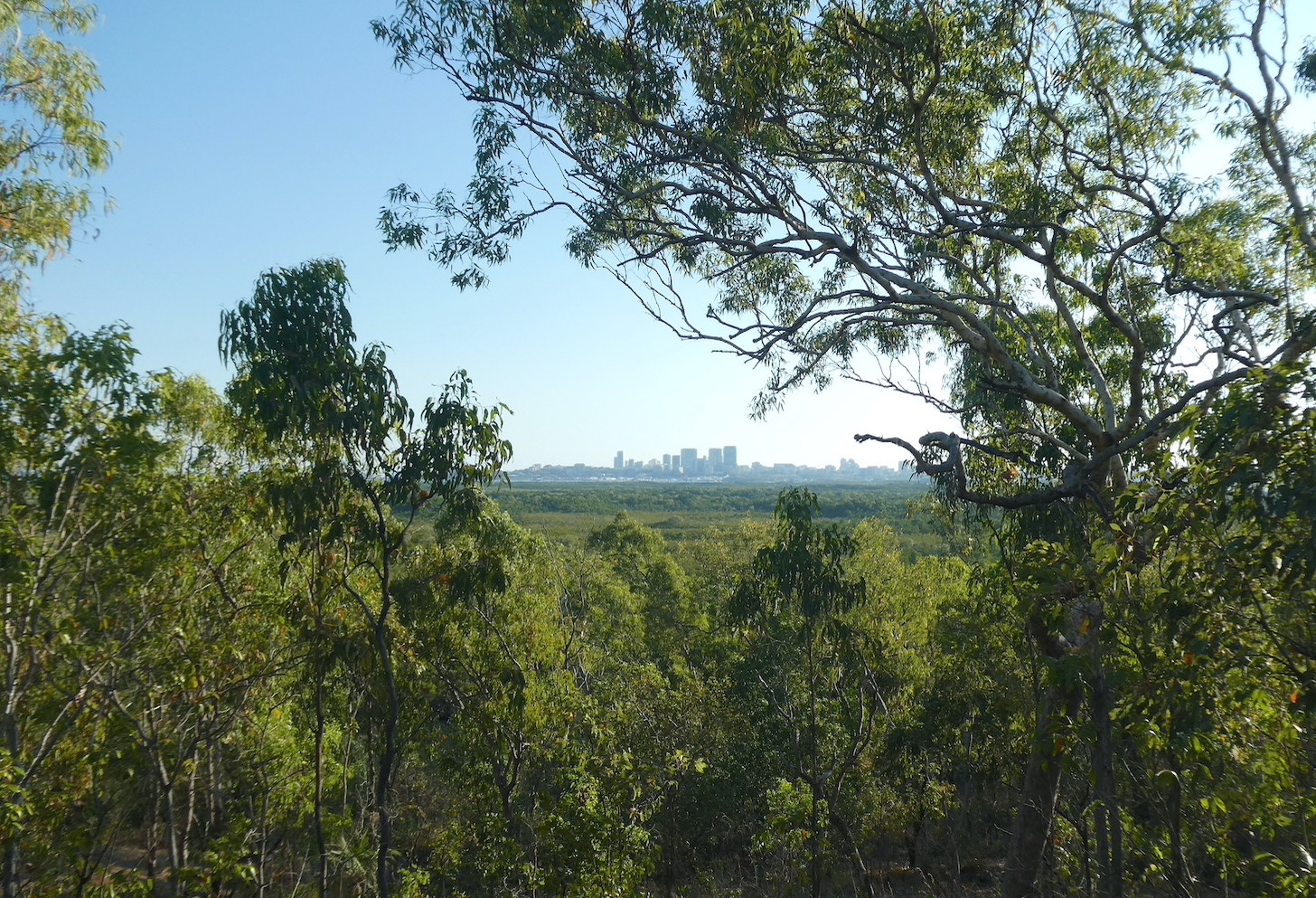
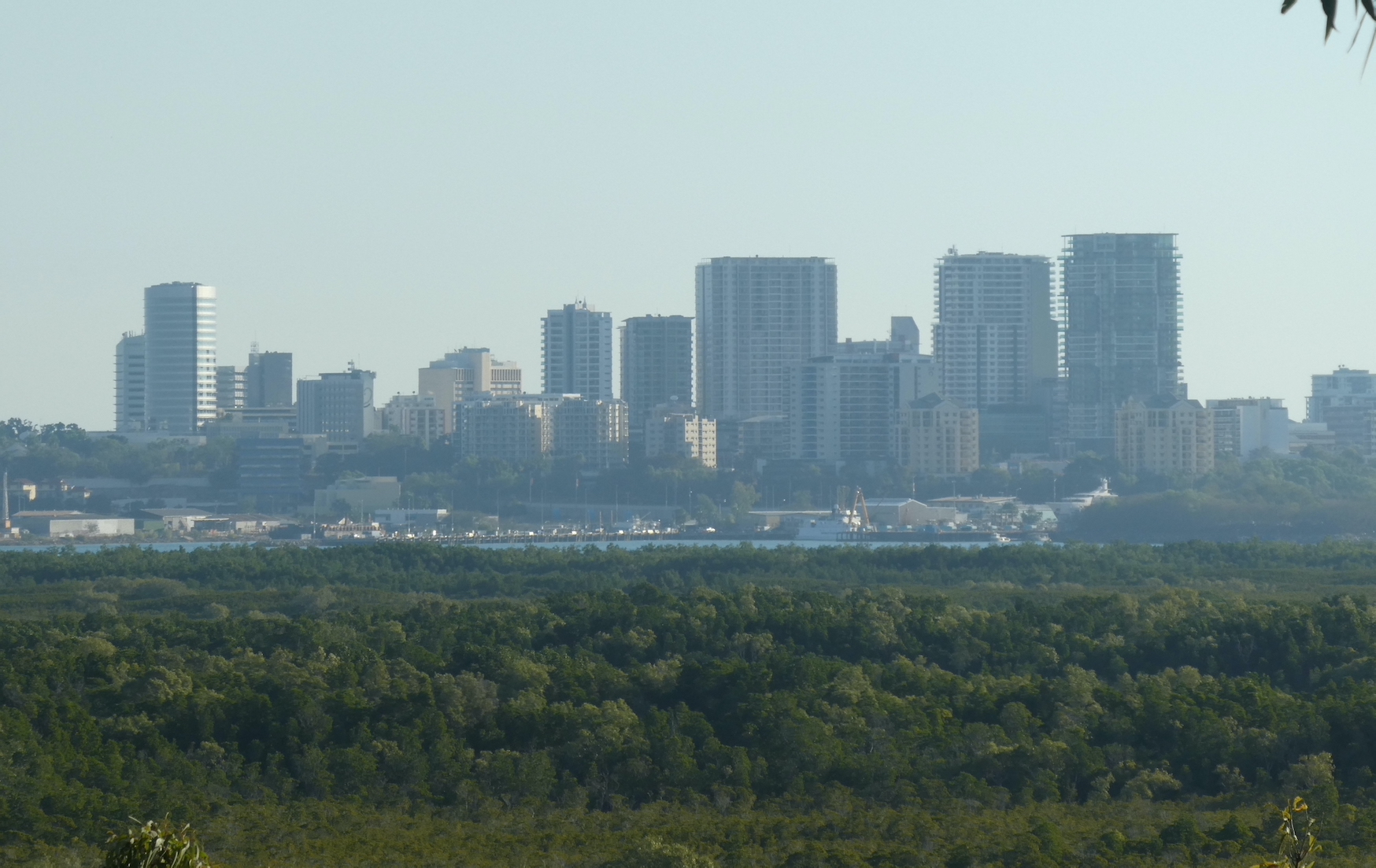
One of Australia’s most important wetlands is also protected by the park. The Port Darwin wetland comprises undisturbed mangrove forests, with 36 of the Northern Territory’s 51 mangrove species within its system of inlets, islands and bays. The vista from Charles Darwin Lookout is spectacular.
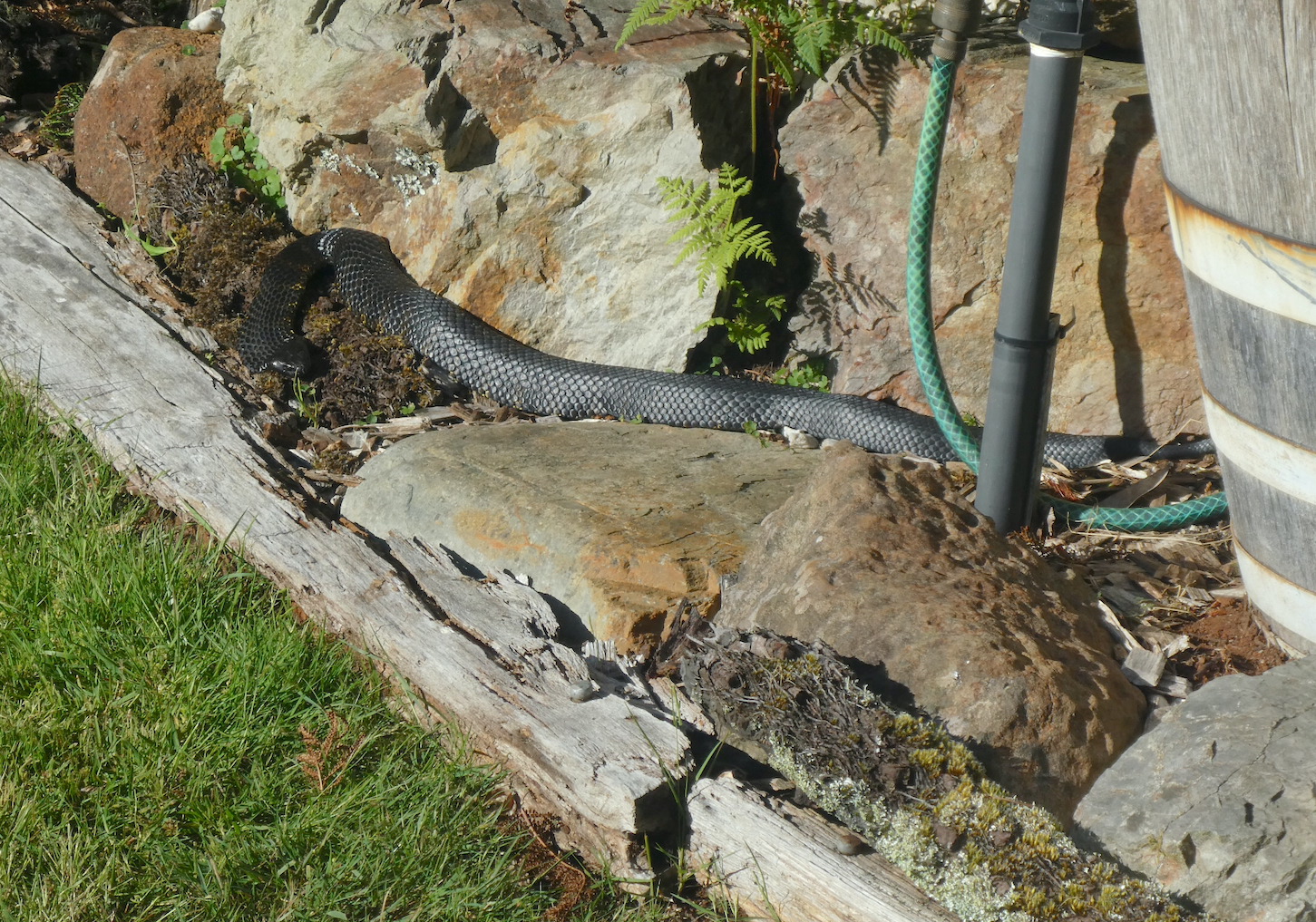
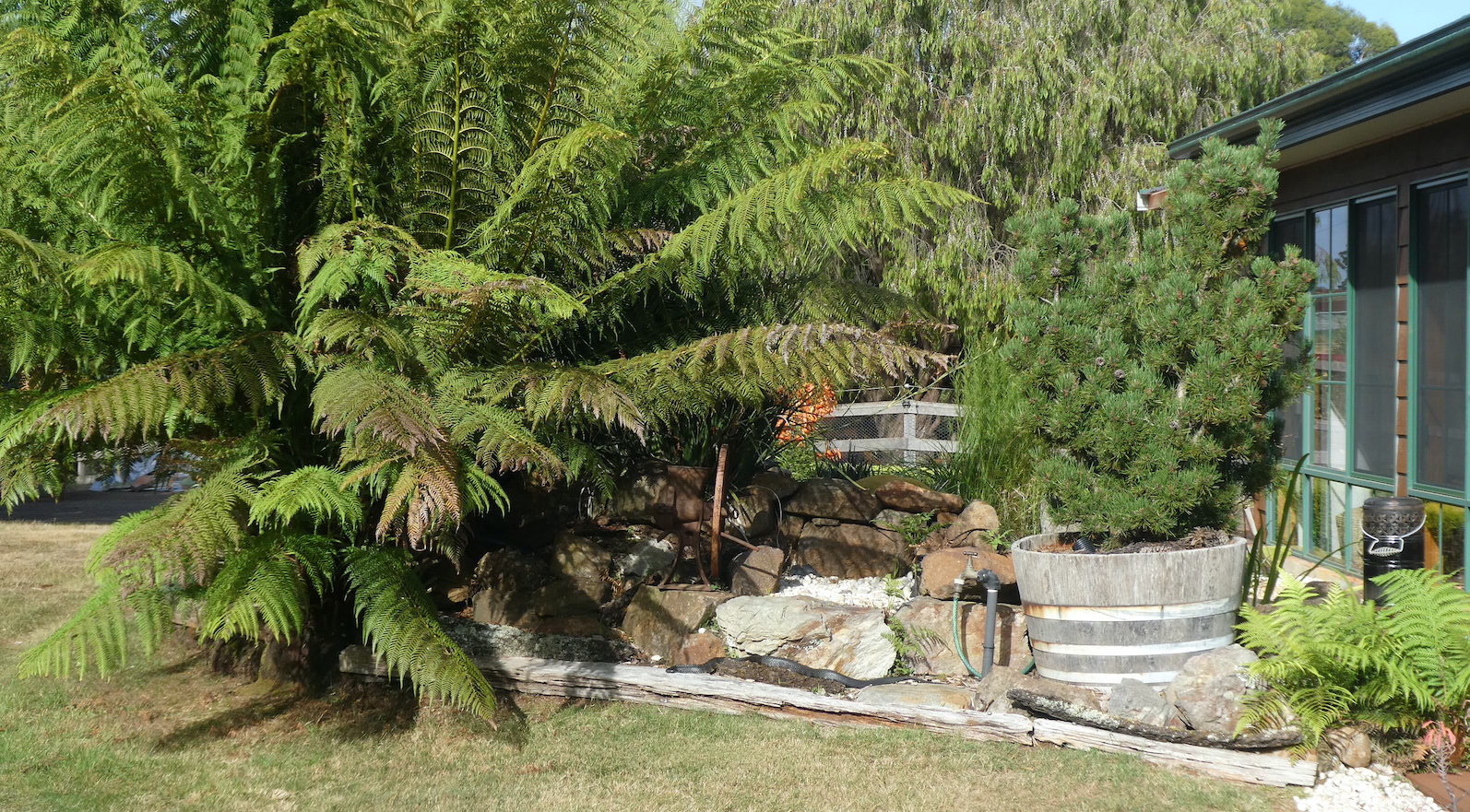
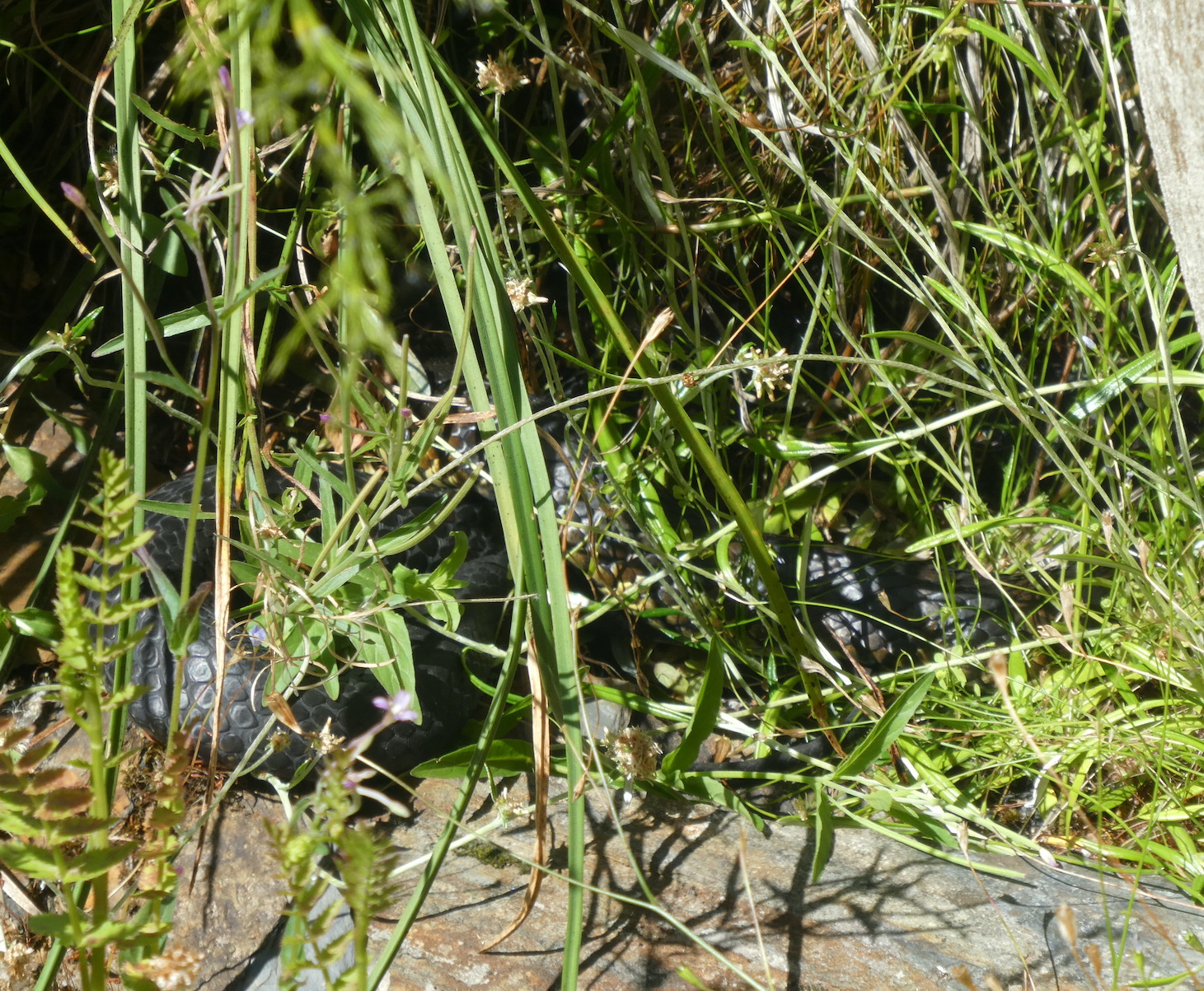
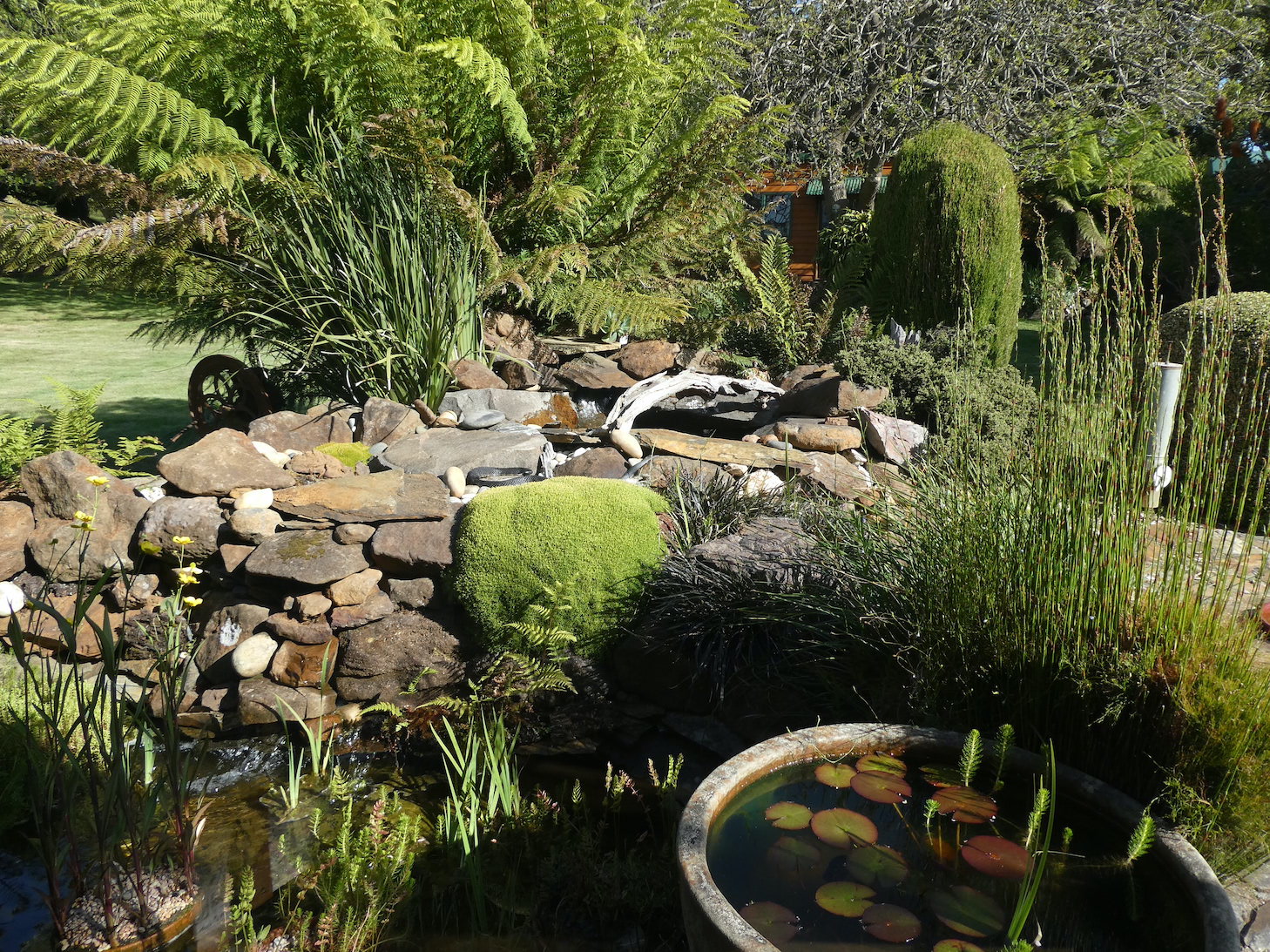
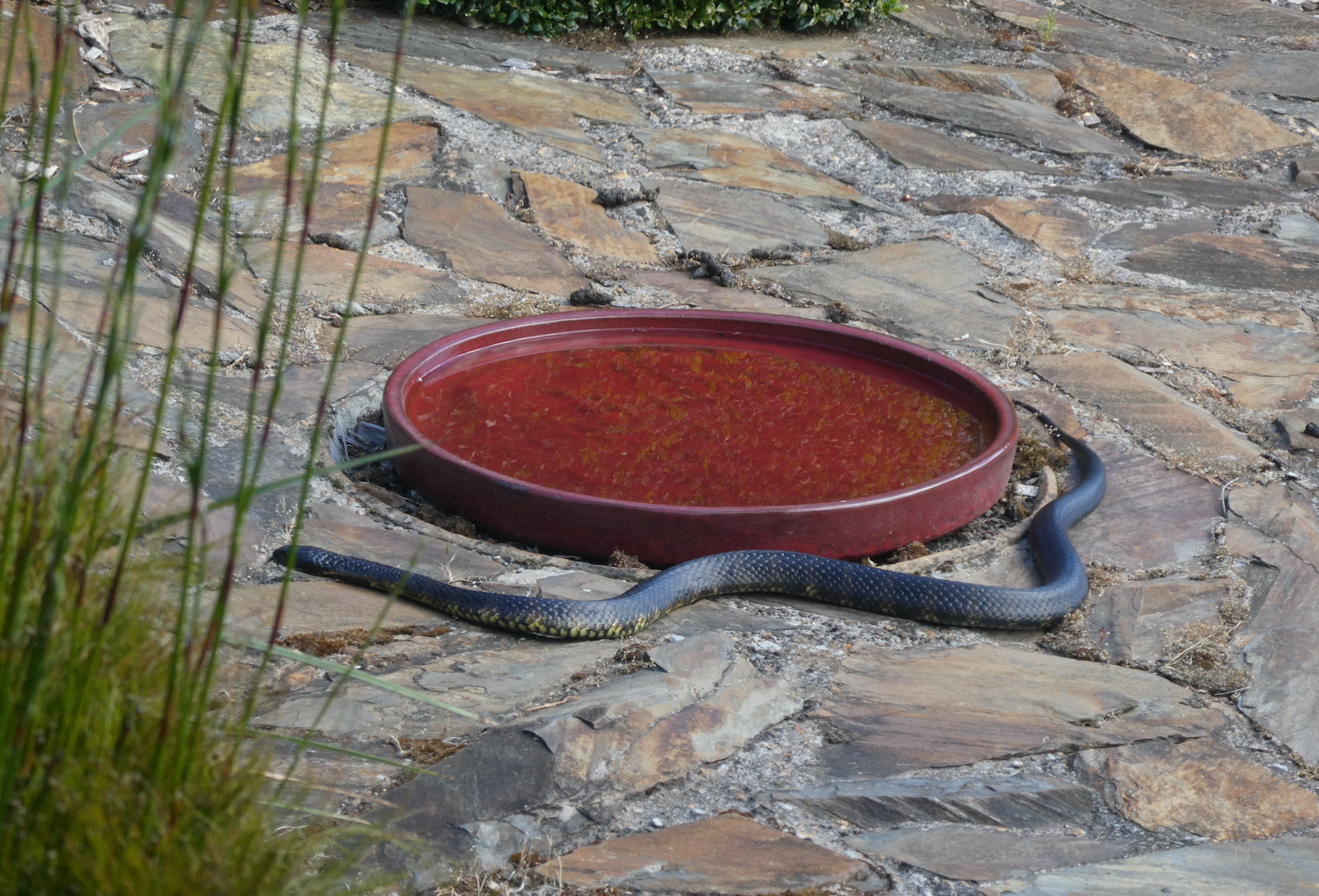
We weren’t sure whether we would be hosting a slithering summer squatter this year, considering the absence in 2021. Our question was answered one evening in early December when we spied the familiar form from the kitchen window.
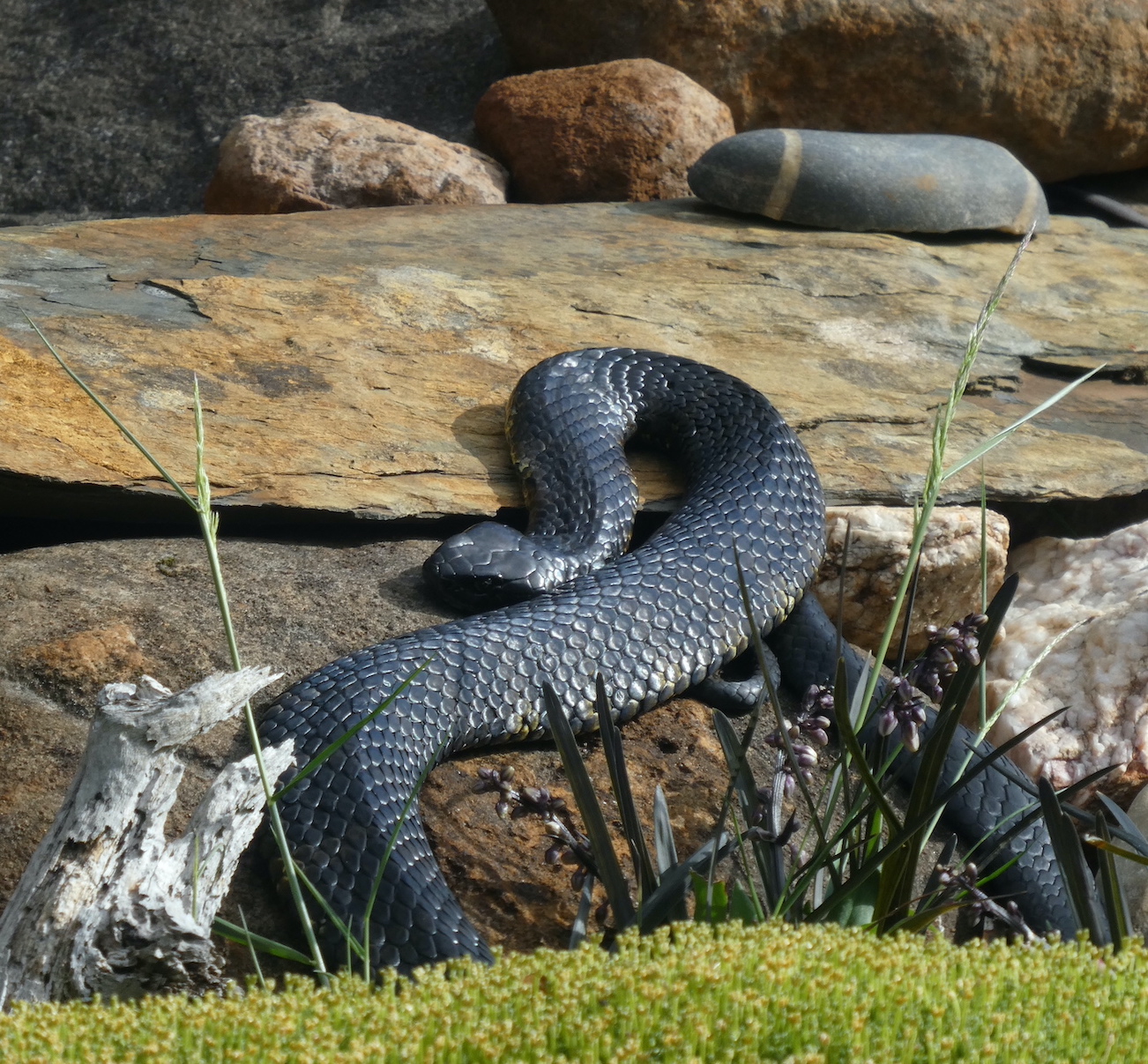
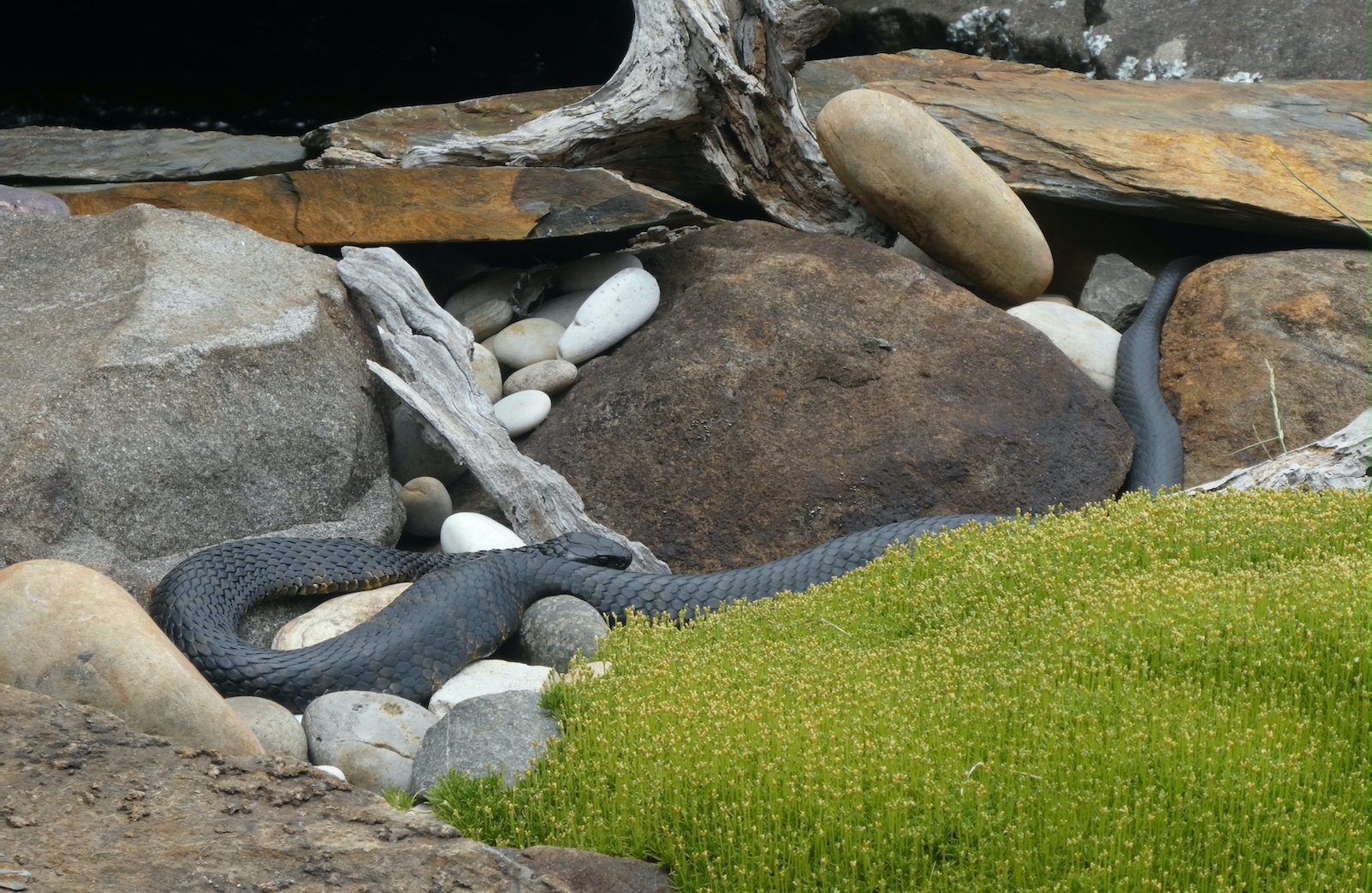
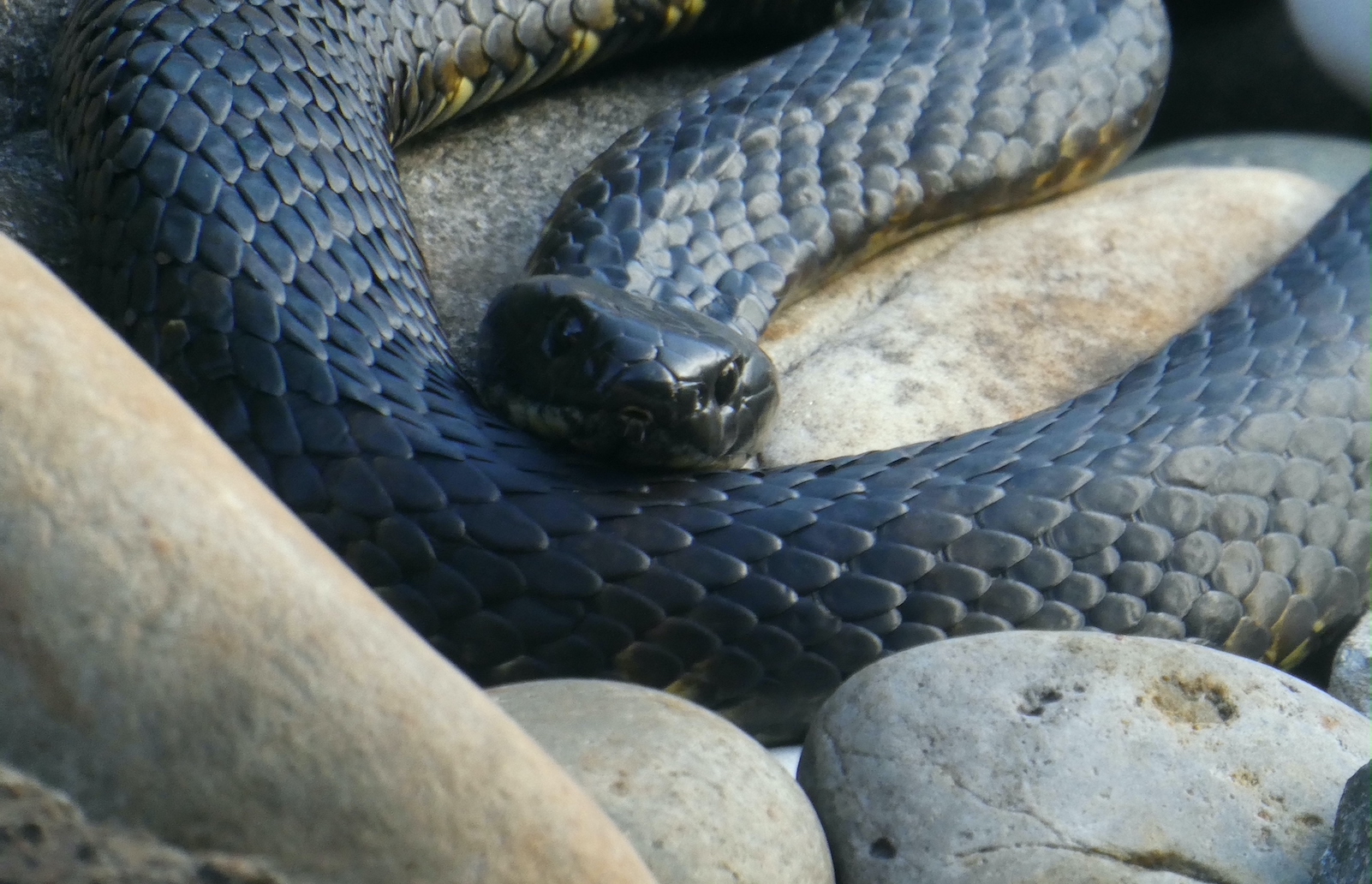
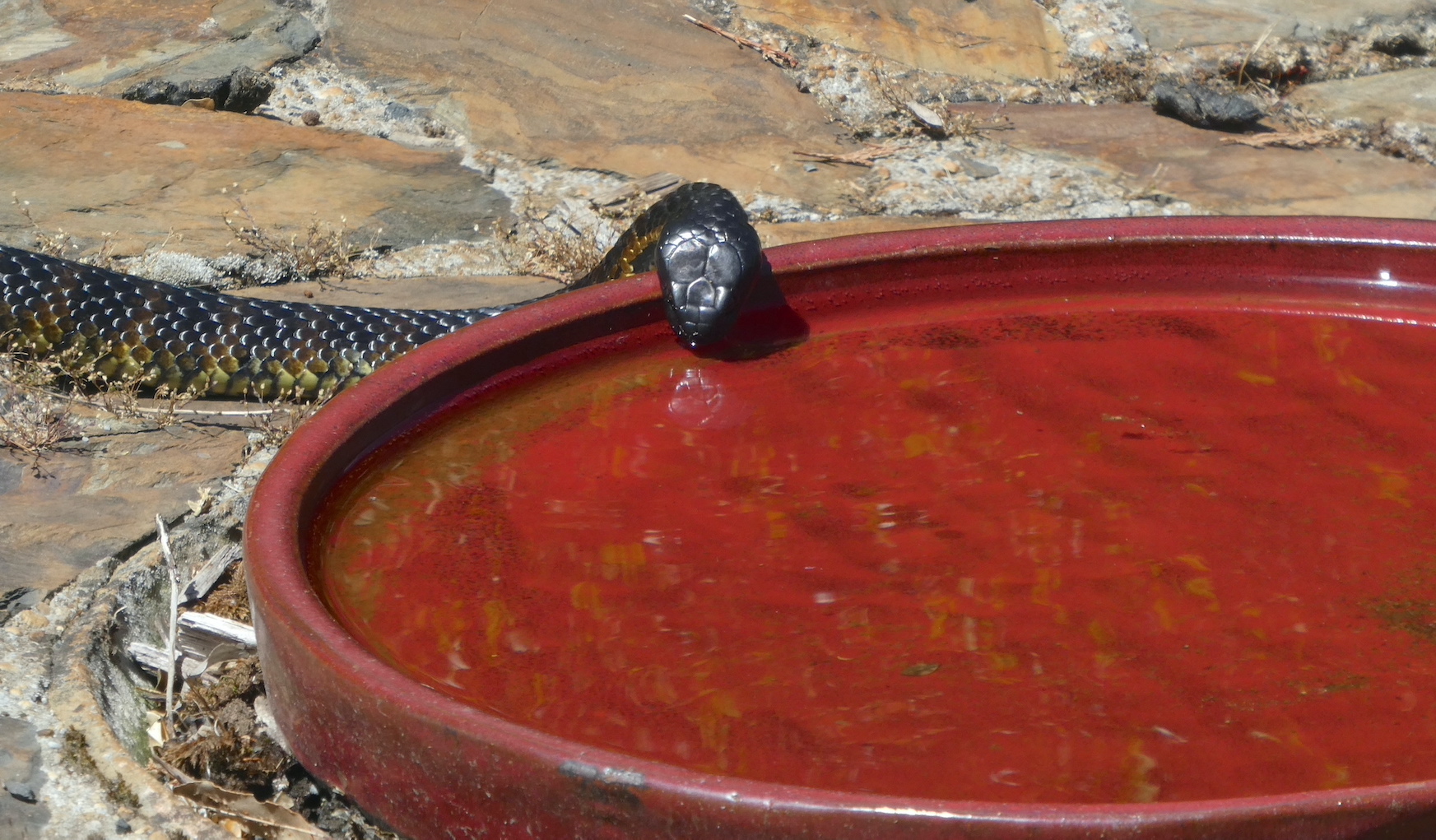
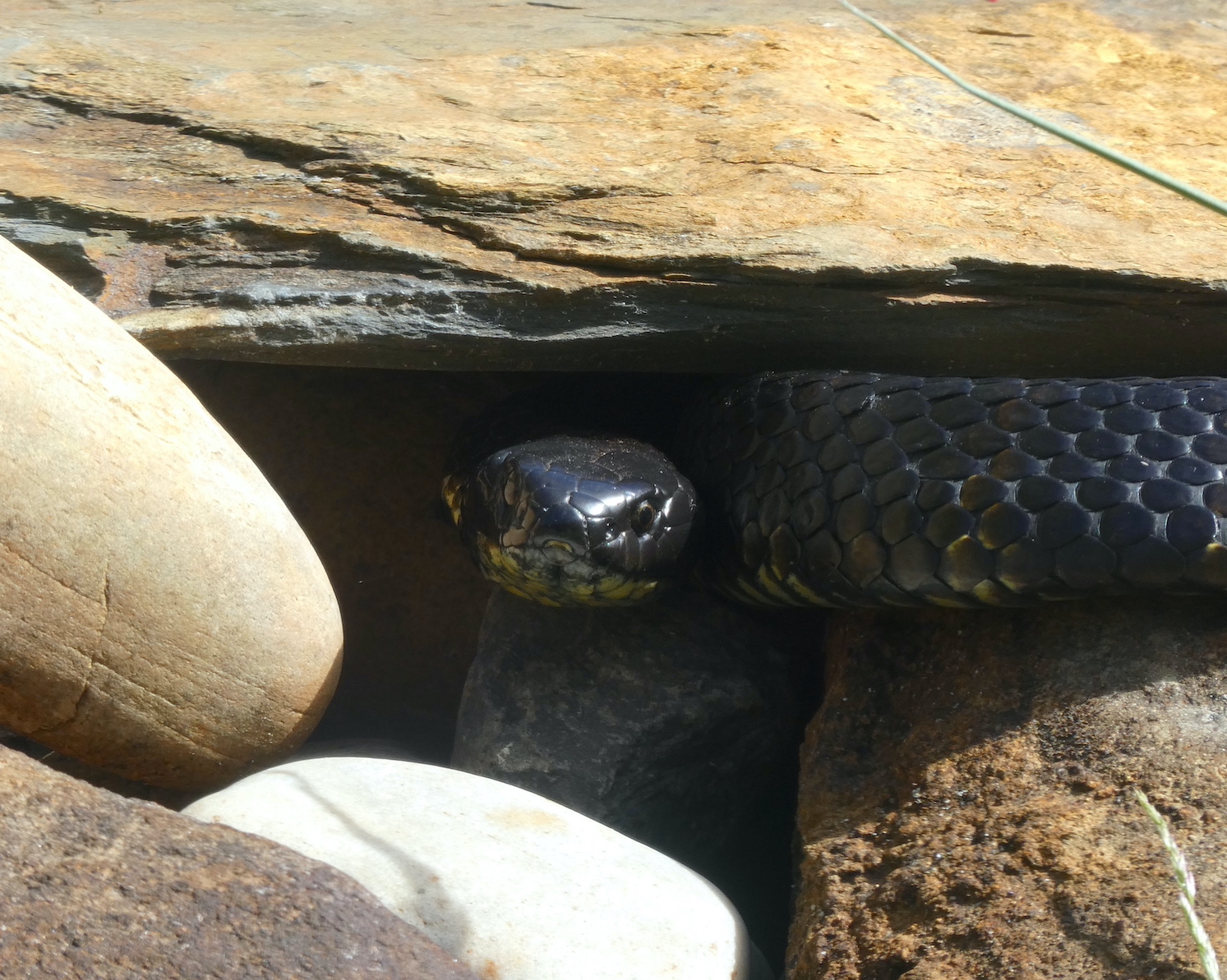
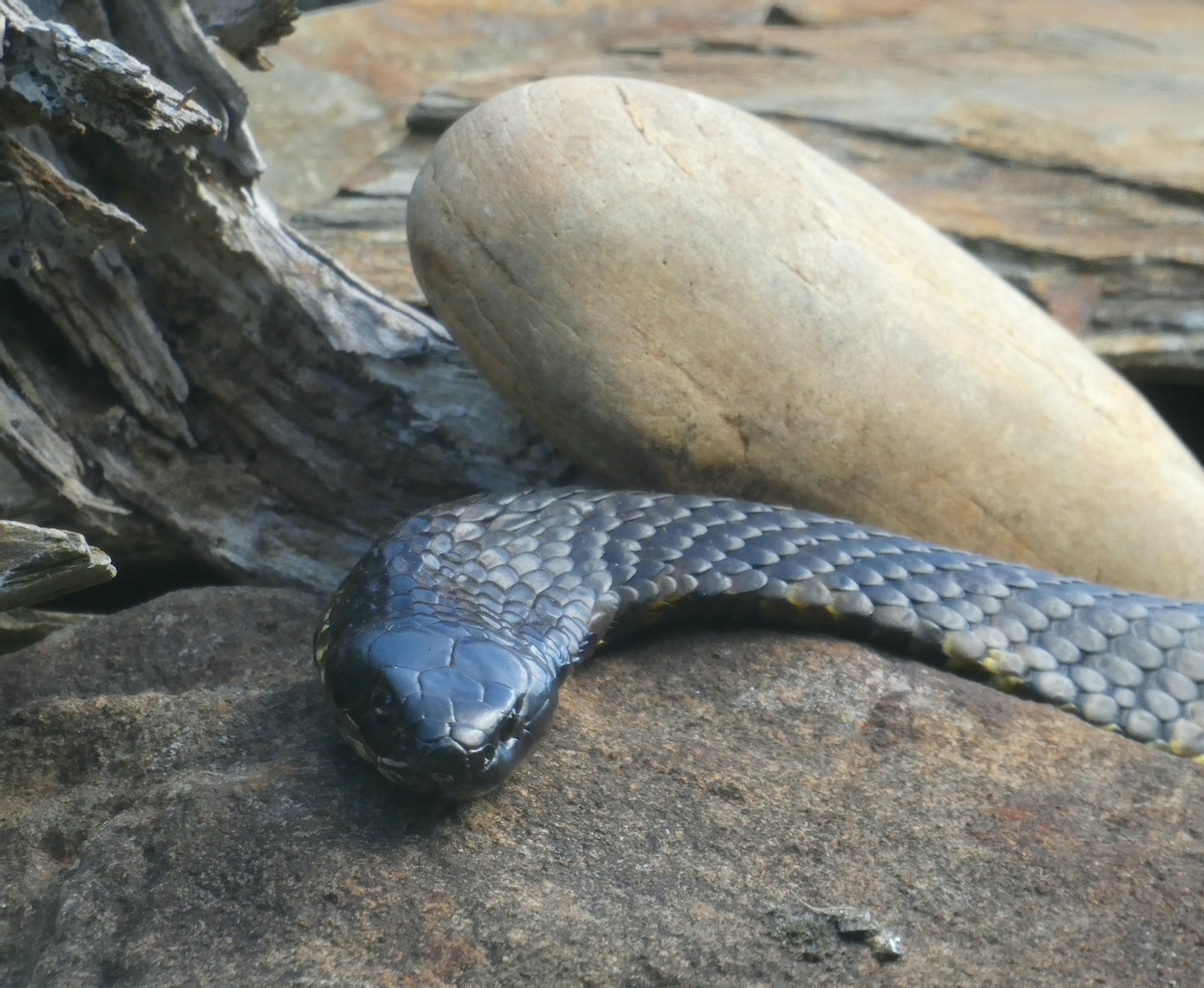
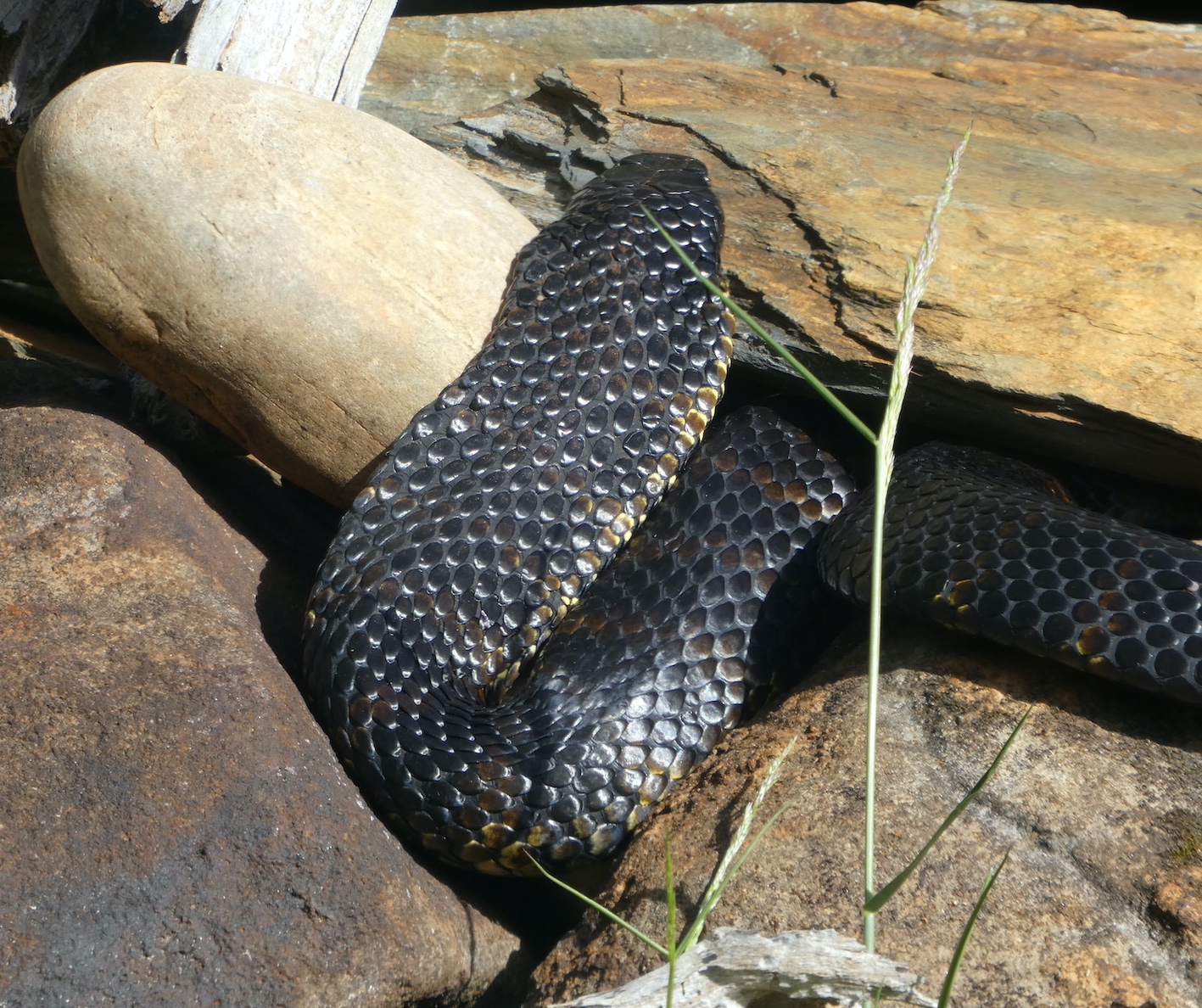
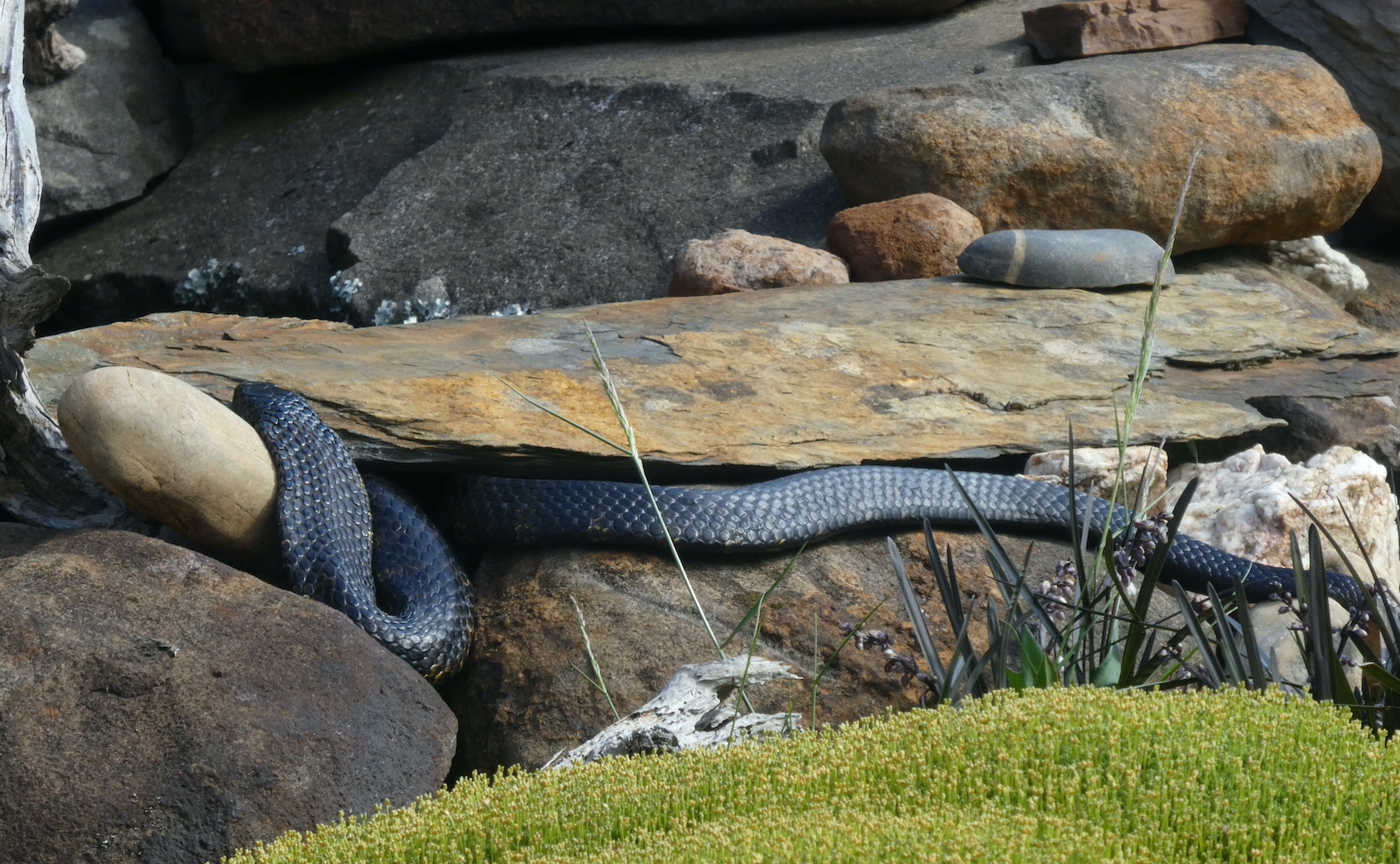
The Tasmanian tiger snake (Notechis scutatus humphreysi) has an unfounded reputation for being aggressive. Although one of the world’s most venomous snakes, they are actually very shy creatures and would rather retreat than attack, saving their venom for important things like their next meal. This may not be the same snake as previous years but she certainly had the same habits and was very comfortable with our presence. Mornings were spent warming up on the eastern side of the pond,
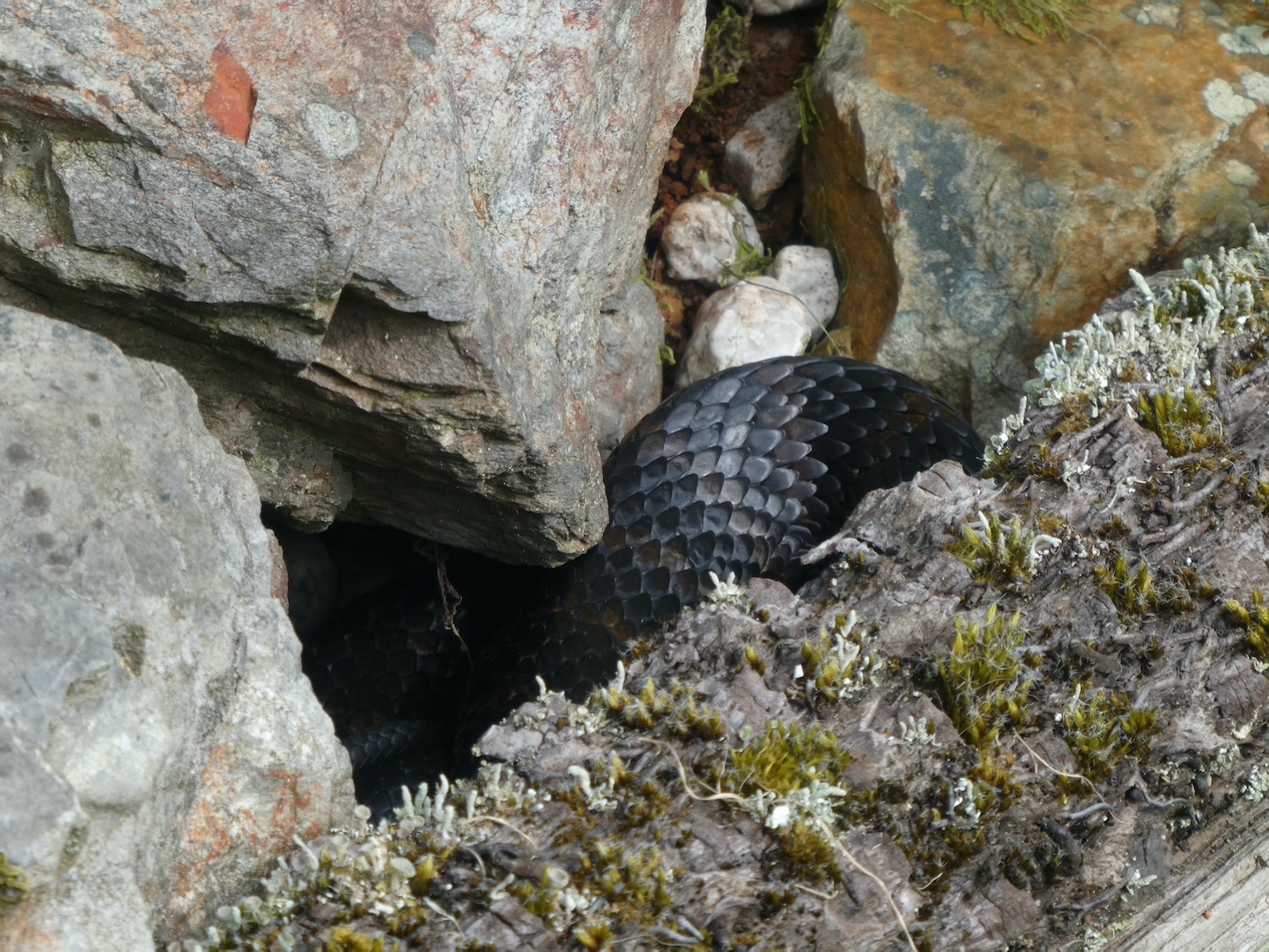
seeking shade when too hot
and stretching out when cool ,
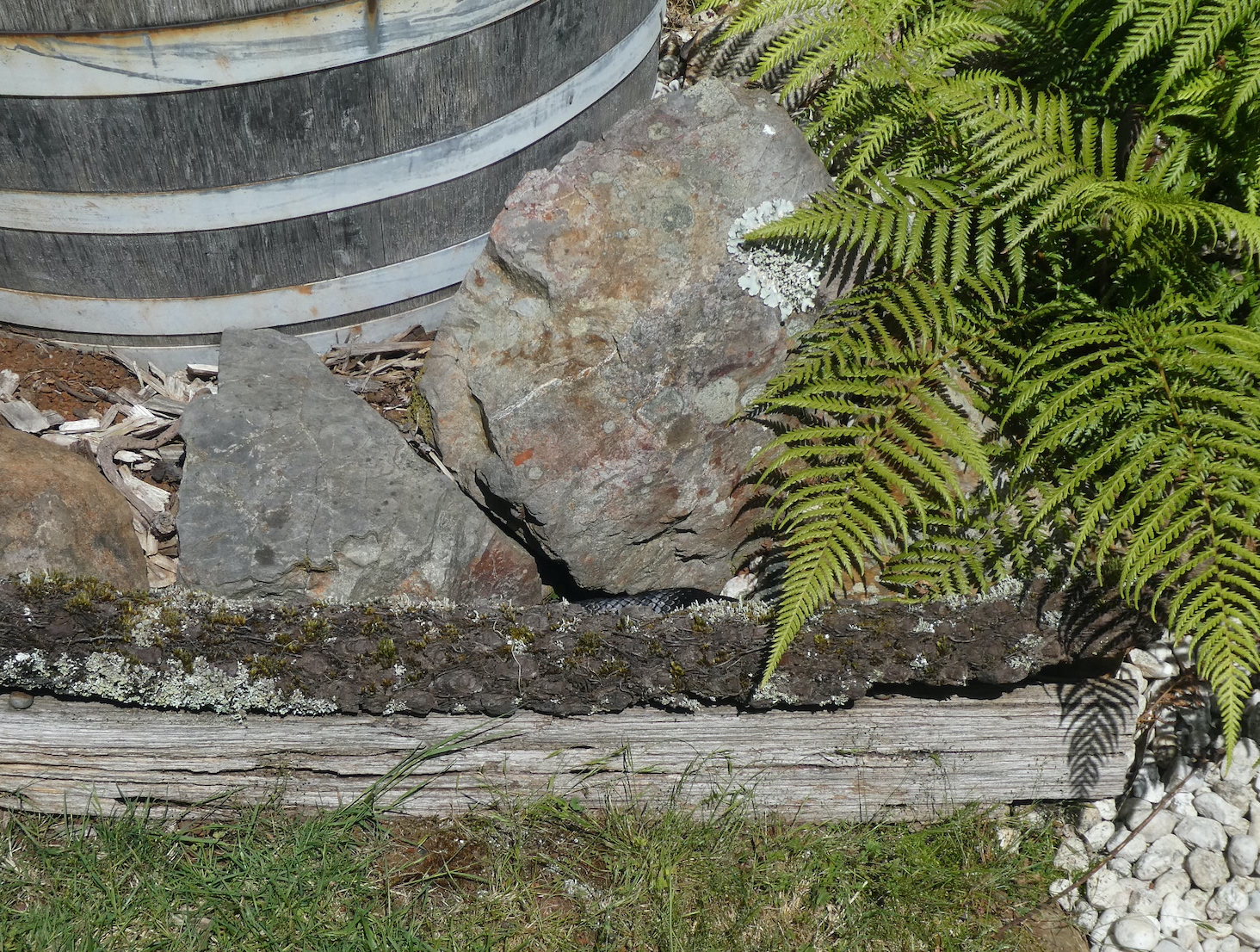
then back to shelter.
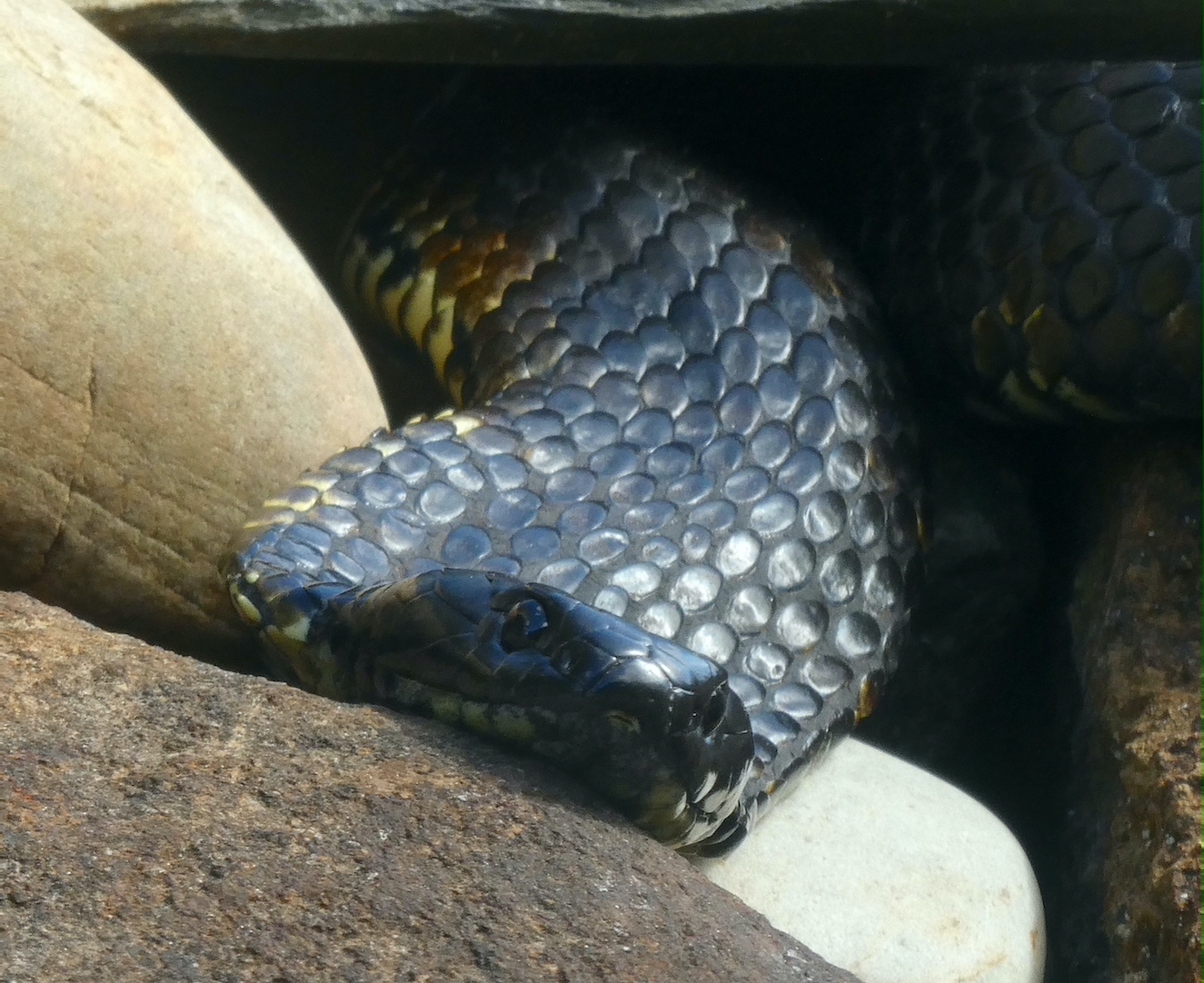
Tasmanian climate isn’t the easiest for temperature regulation, even for humans. Sometimes a little creativity is needed to warm up,
but usually a good stretch against the rocks is the best way.
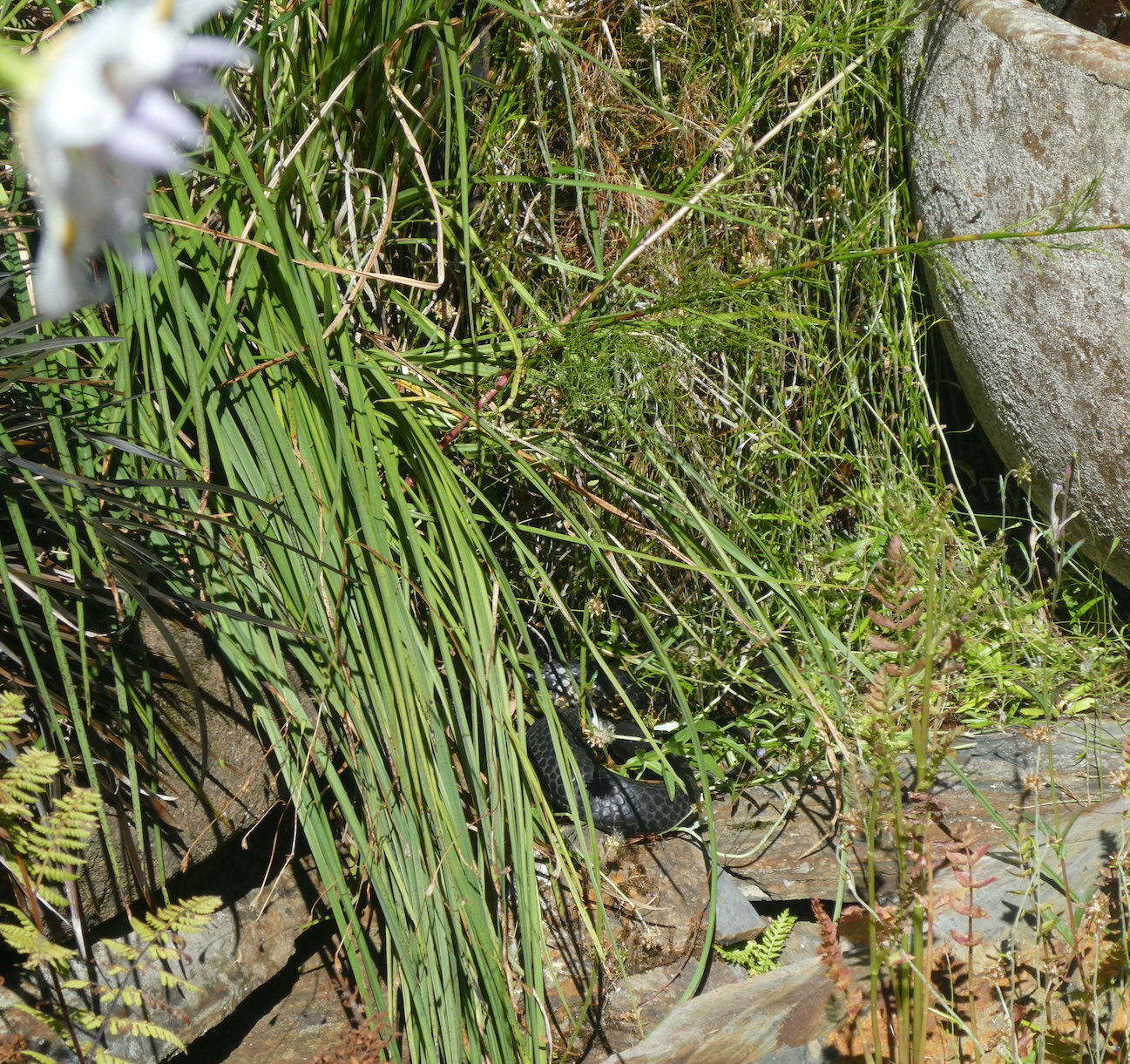
There were some mornings we couldn’t see Snakey (as she is affectionately known) and assumed she had gone off hunting for the day. Complacency is not recommended as she can turn up where least expected.
I much prefer her presence to be obvious.
In the afternoon, she would often be lounging on the rocks above the pond
or returning from adventures for refreshment
before relaxing in contented contemplation.
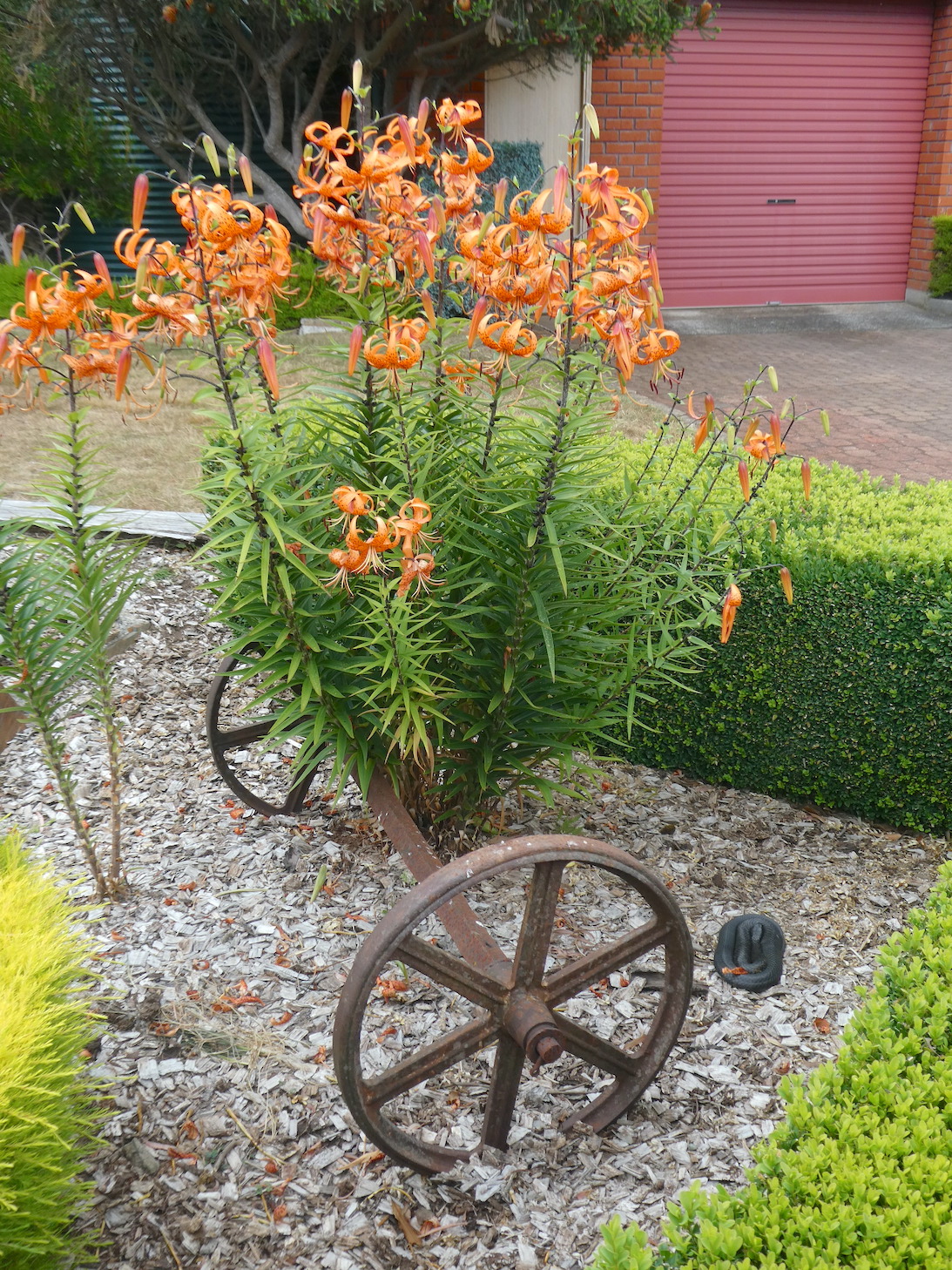
I like to think there is a subliminal connection between the tiger snake and tiger lilies, they seem to complement each other.
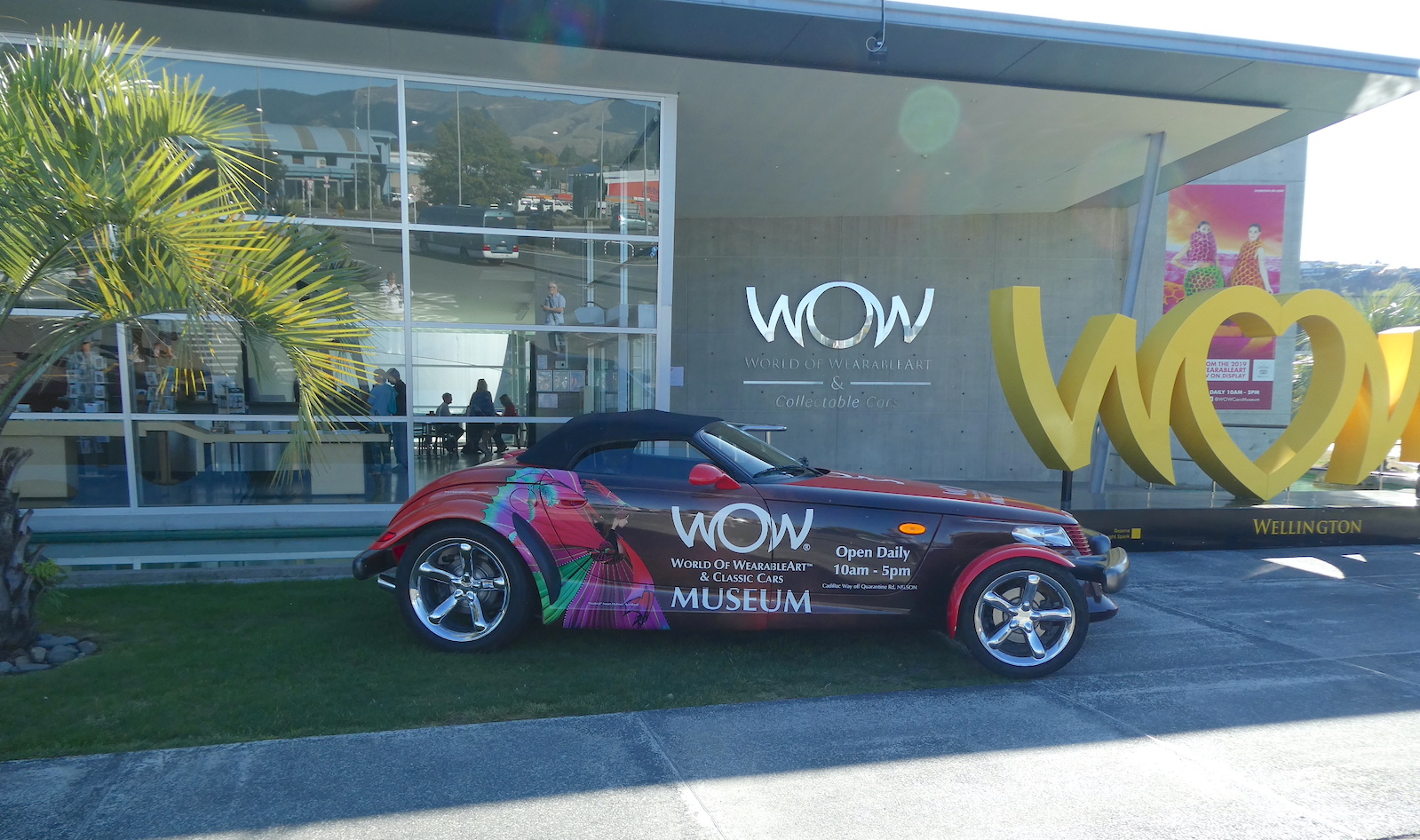
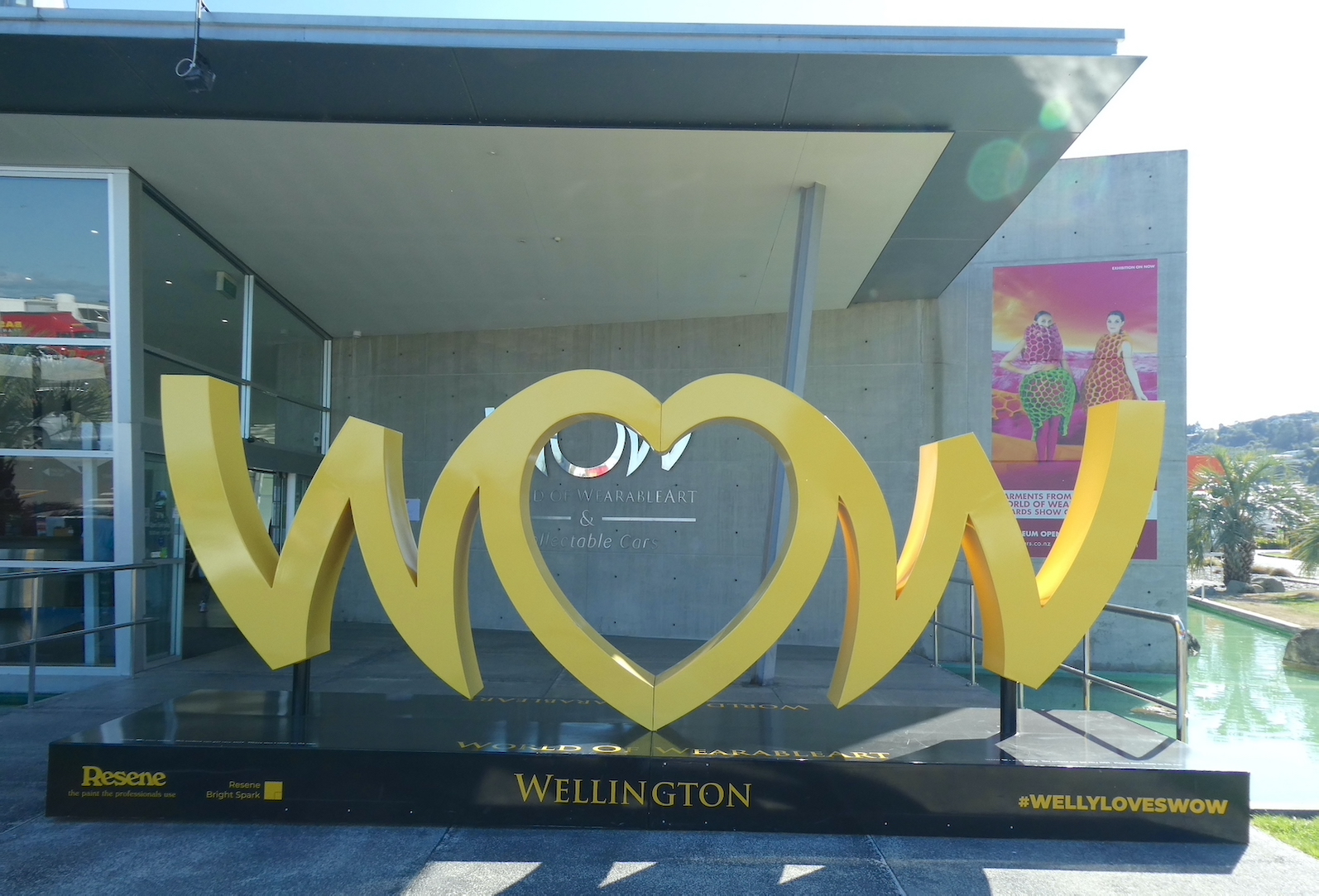
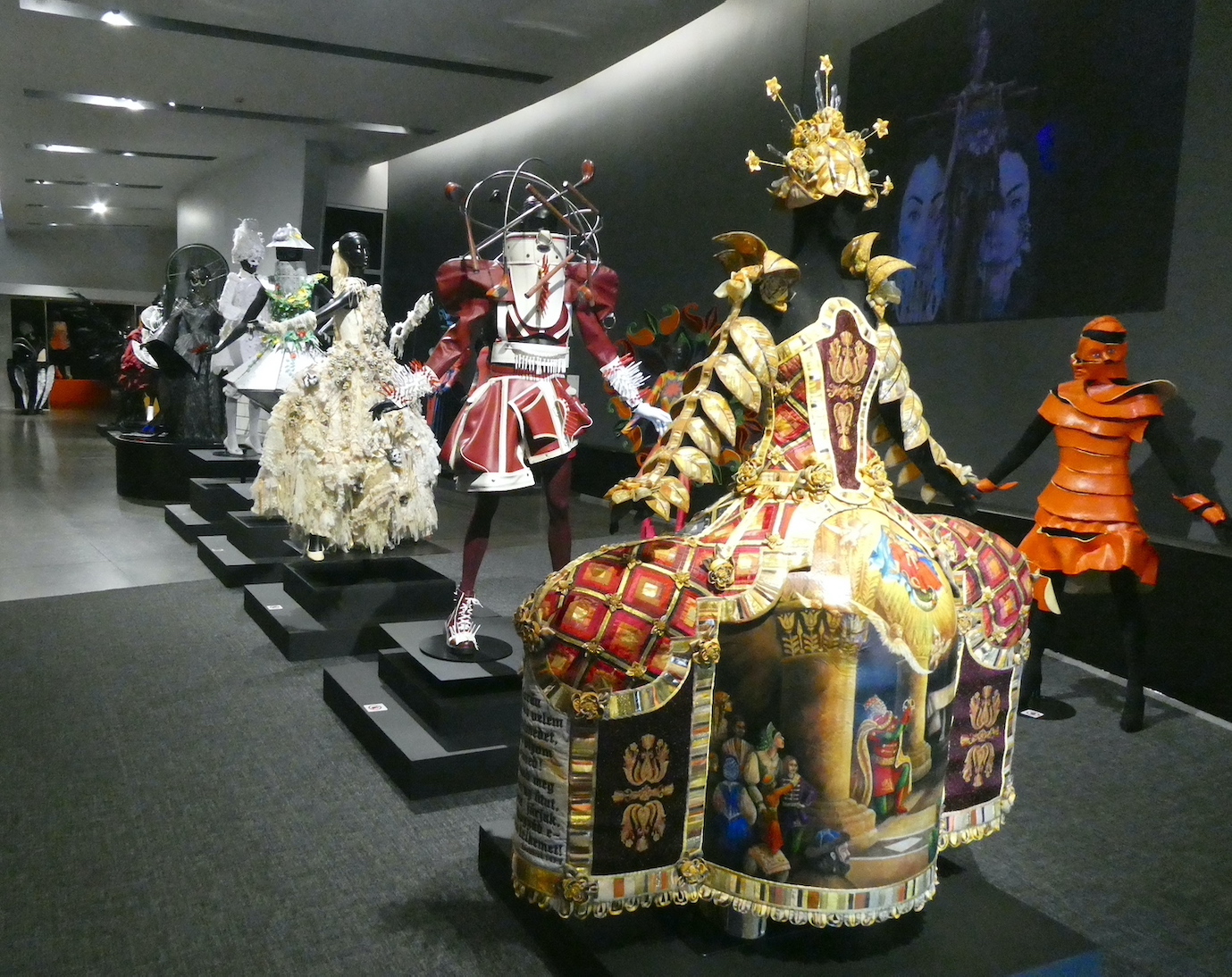
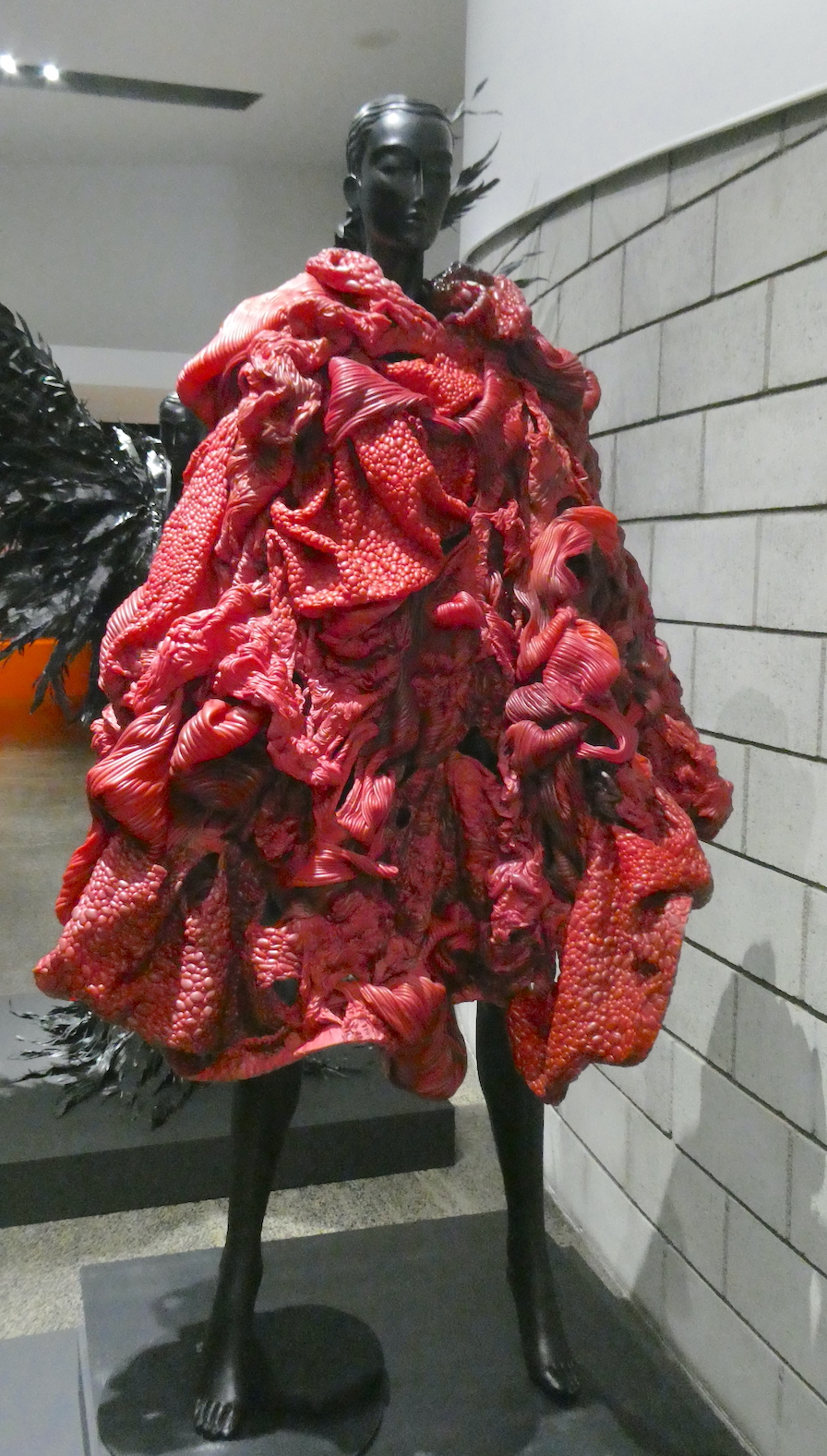
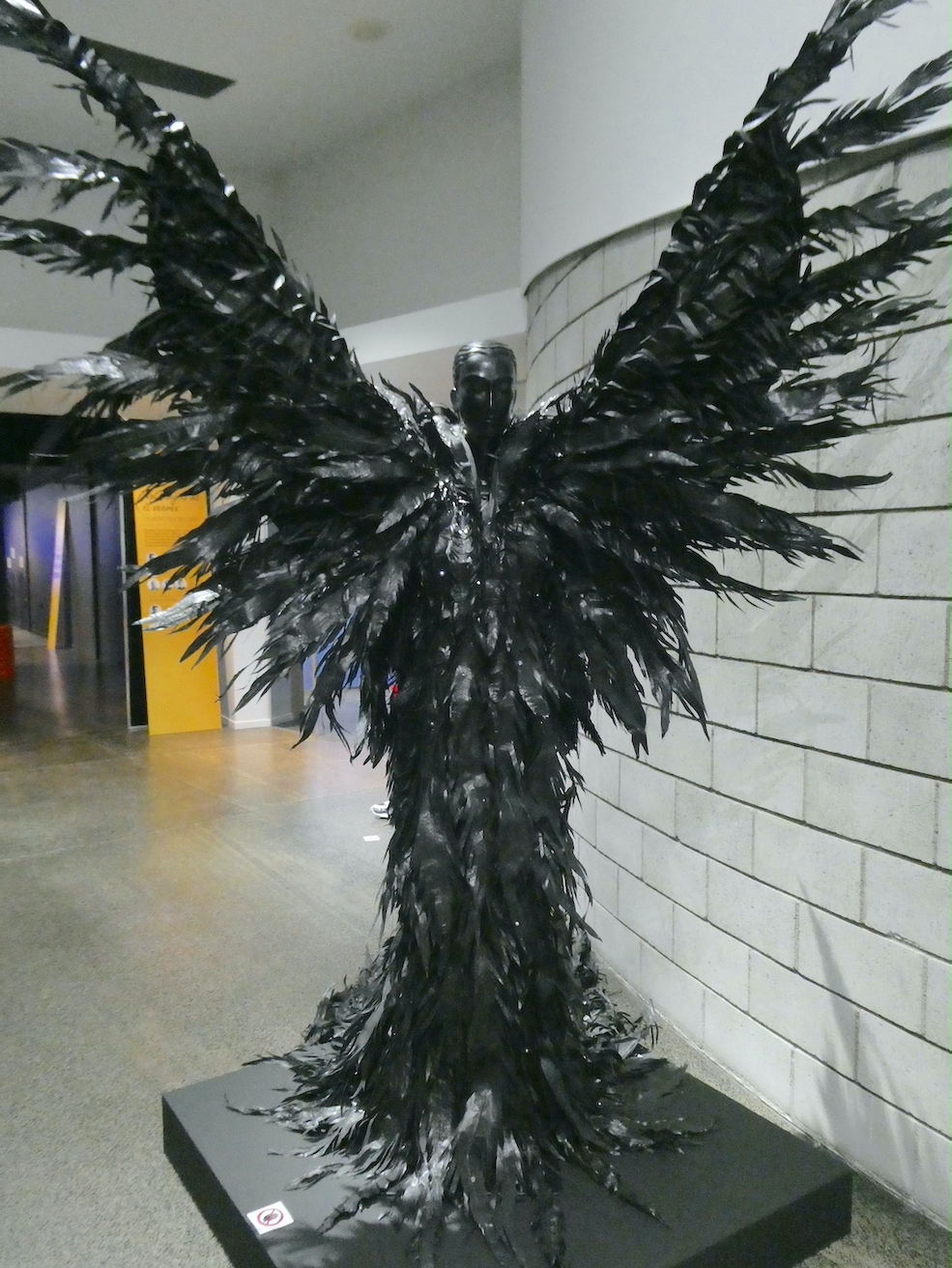
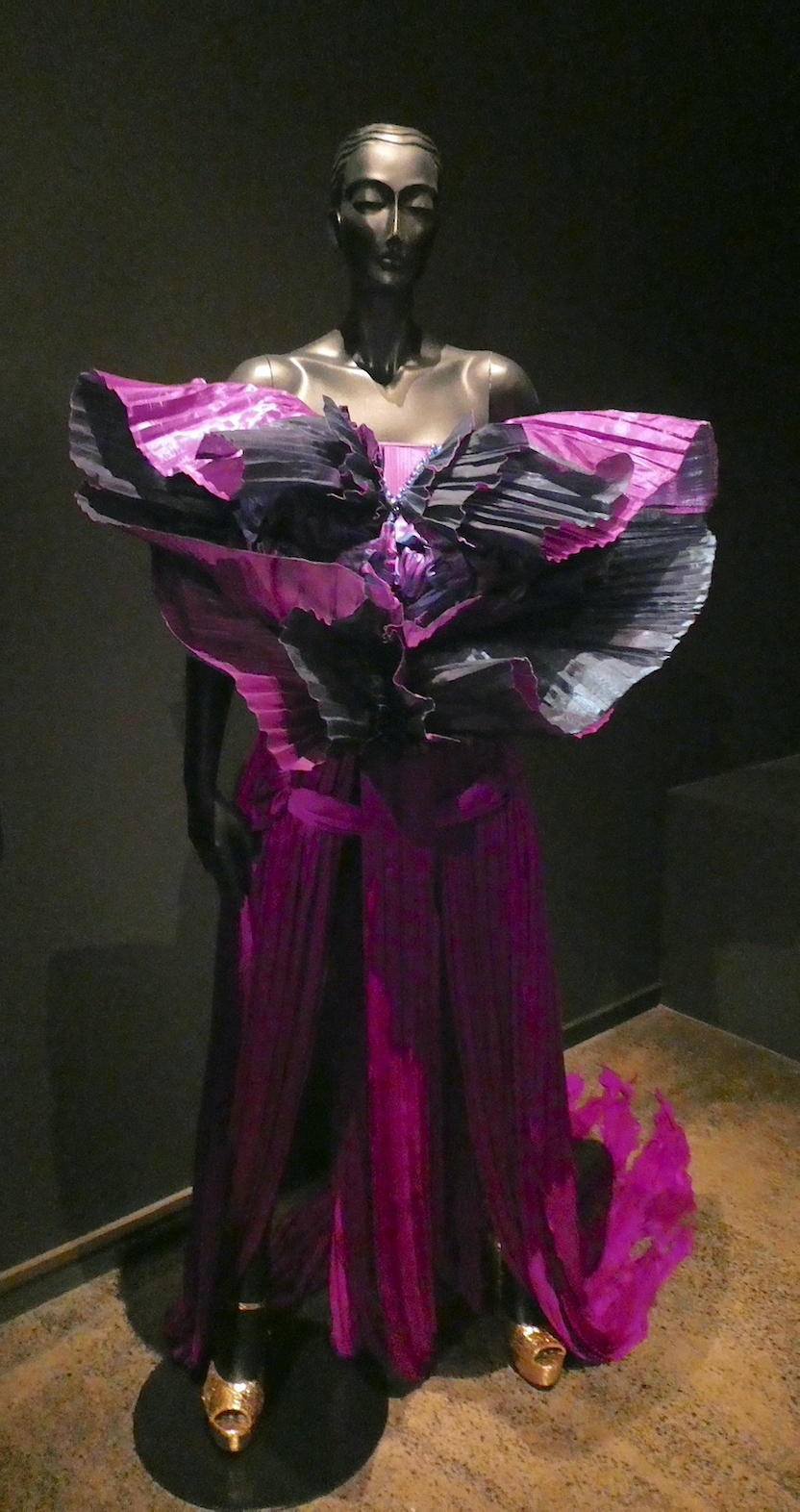
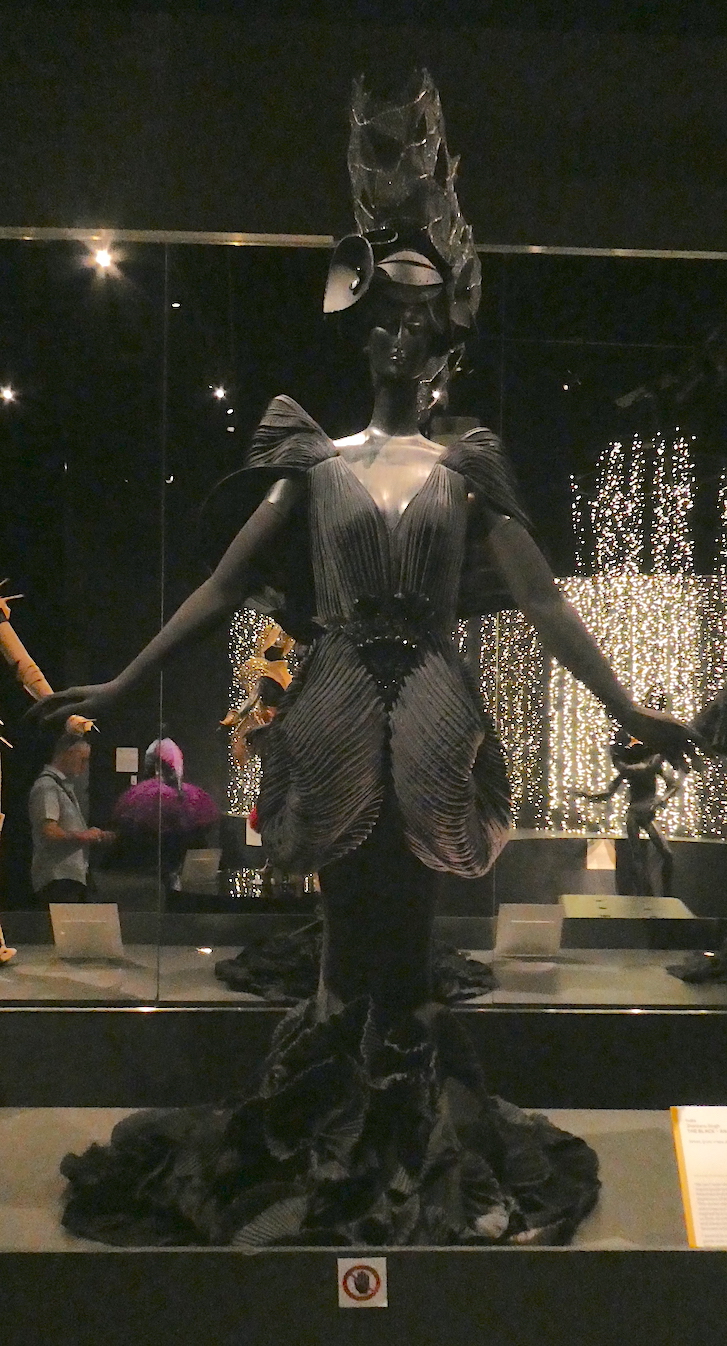
While staying inNelson, we relished the opportunity to visit the World of WearableArt (WOW) museum. Local sculptor, Dame Suzie Moncrieff, instigated the World of WearableArt as a means of promoting a local co-operative art gallery; by taking art off the wall and displaying it on the moving body. Each year, the competition culminates with a spectacular show where the works are brought to life on stage. Since the inaugural show in 1987, the competition now attracts entrants from around the world. The museum dishes up a visual feast of which I will share a tasty portion.
The adventure begins just after the ticket counter, with the vibrant colours of Escaped Pods delivering a promise of things to come. Lynn Christiansen (USA) used felt and fabric for her depiction of Castilleja seed pods that have escaped captivity at the seed bank to live for today.
The displays are separated into different sections with each representing a theme. The Open Section is unique in that it has no thematic boundaries, giving designers complete freedom to create, limited only by their imagination.
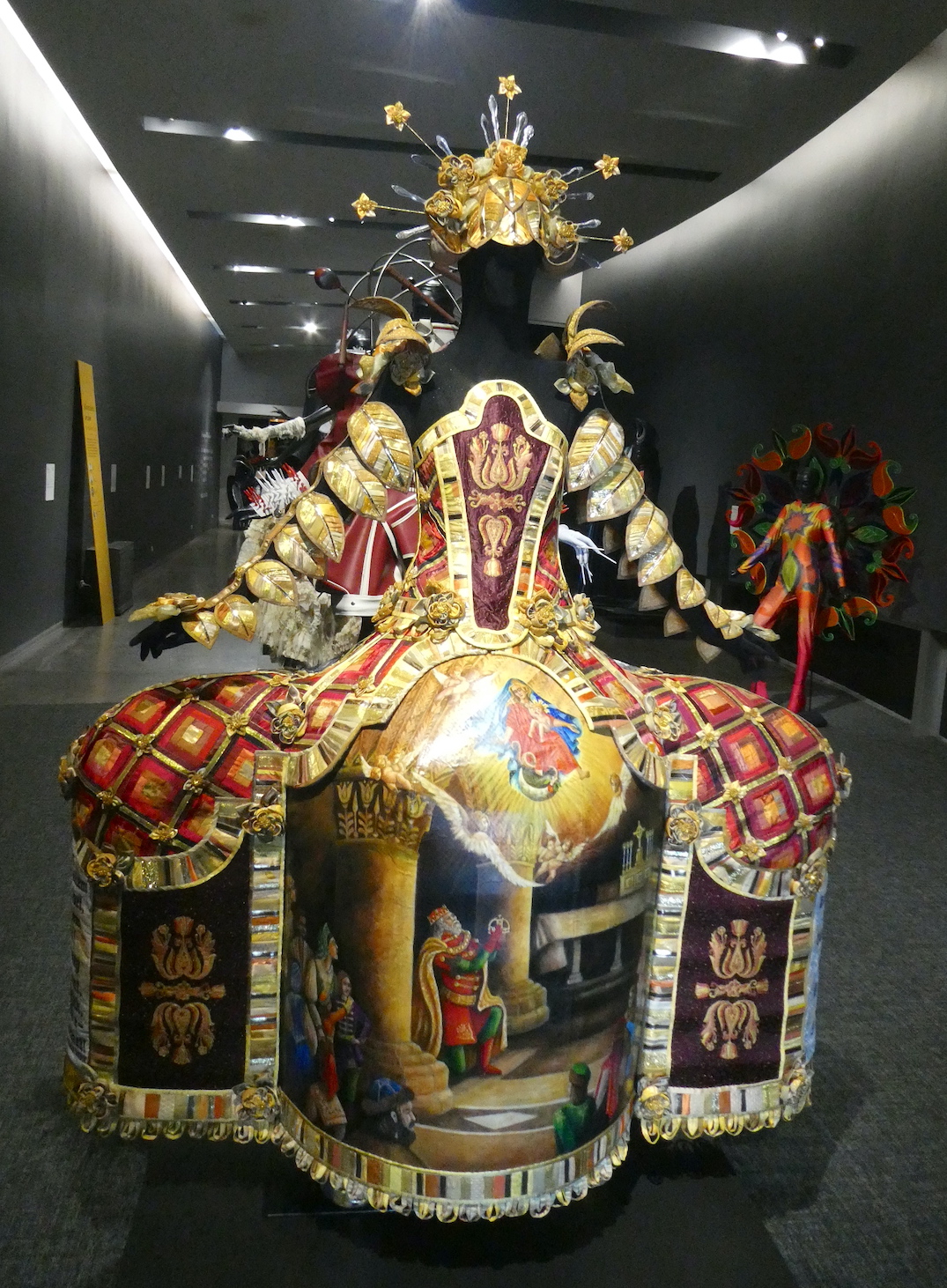
Synthetic scraps, Fimo (a clay developed in the mid-20th century that could be hardened in the oven) and floor insulation were used by Daniella Sasvári and Aaron La Roche (NZ) to create the monarchial Regnum Dei.
Peeling back the layers to reveal the real you, Mary Turner’s (NZ) Appeeling is made from Worbla (a thermoplastic resin), foam, fabric and paint.
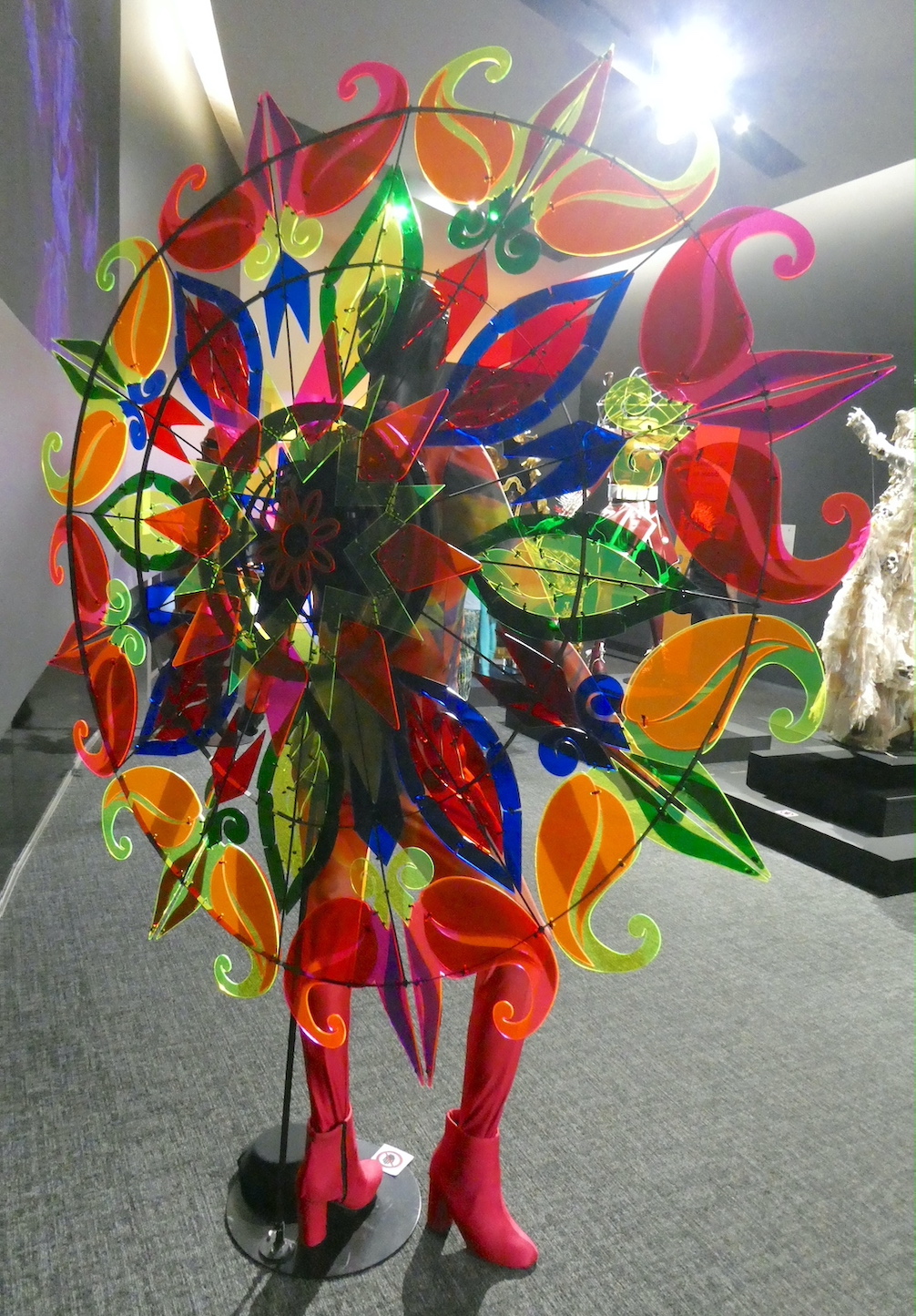
Striking and hypnotic, the changing patterns and colours of Collide-o-Scope were composed from neon acrylic, lycra, aluminium and Worbla by Vicky Robertson (NZ).
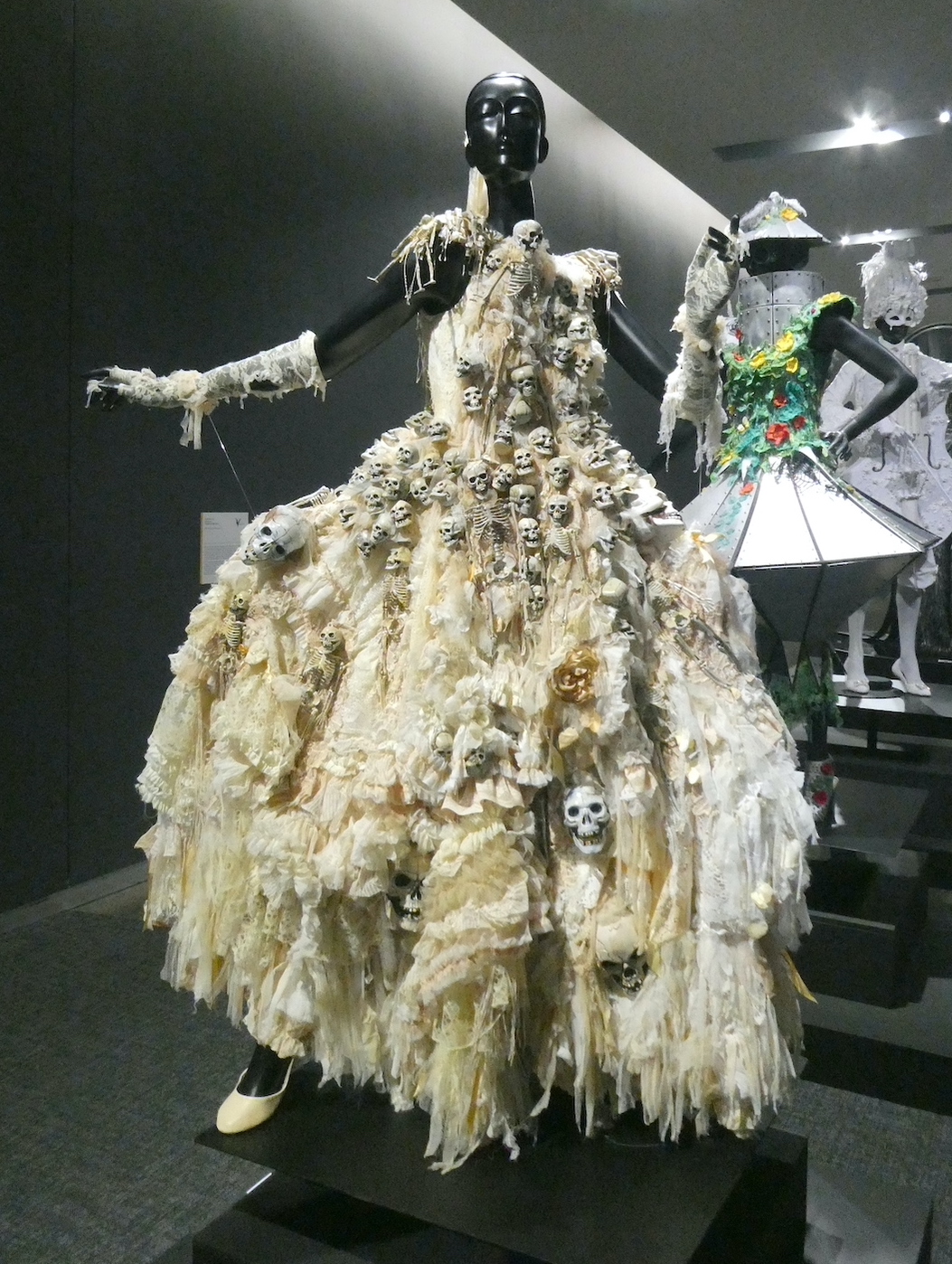
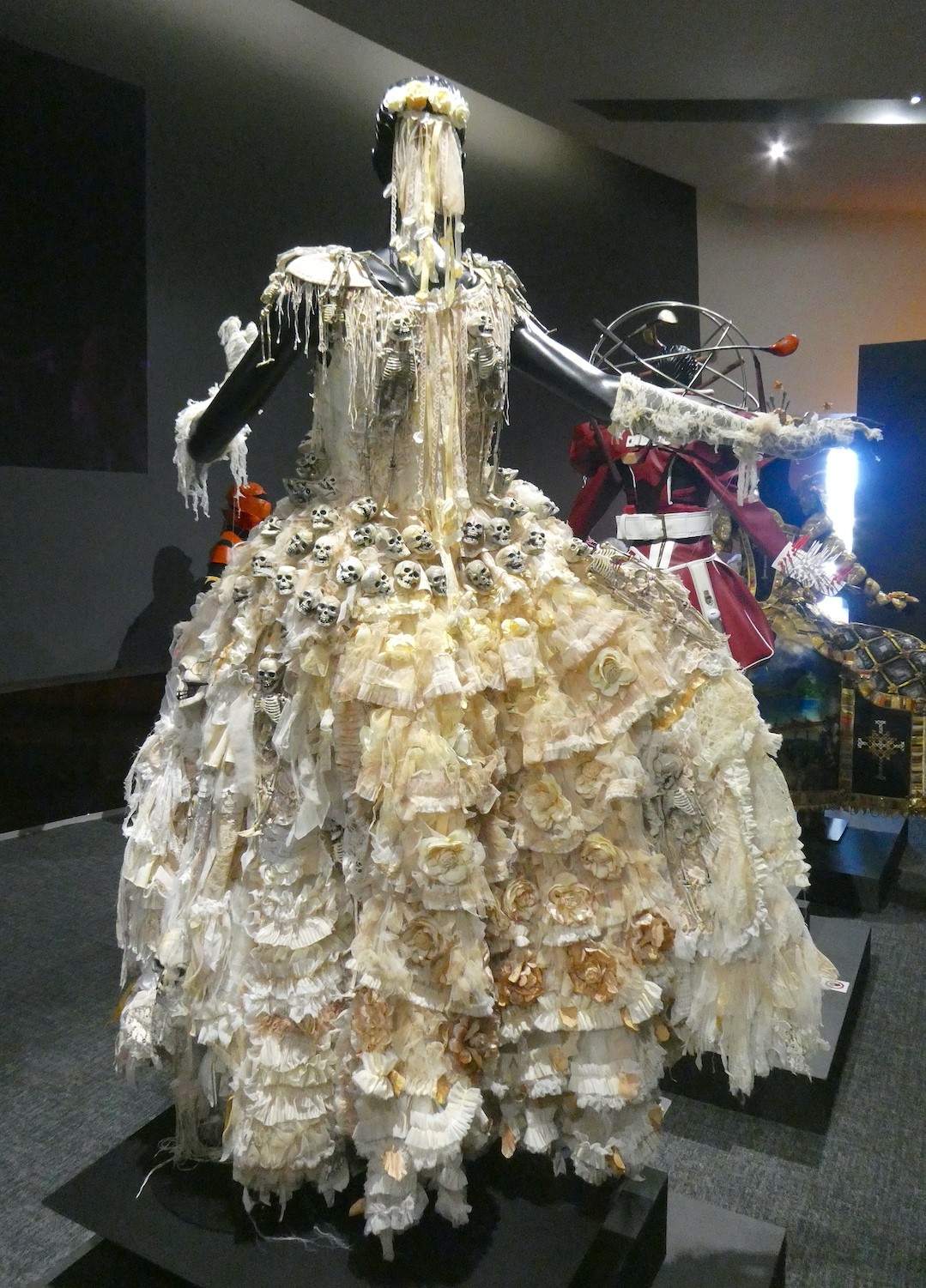
Fabrics, hand-painted skulls and skeletons were used by Sheela Stoneman (NZ) for Memento Mori to illustrate that life is short, death is long, so we need to live life to the fullest while we can.
‘Nature, the hero warrior, transfigures forsaken giants of industry into works of inspiring beauty’. Jill Benson (NZ) used PVC foam board, brass and cotton to construct Derelict Beauty.
Wolfgang Amadeus Mozart was obviously the inspiration for Carolyn Gibson’s (NZ) Rock Me Amadeus. Few materials are more fitting than velvet, leather, pearls and lace for a man who declared that love is the soul of genius.
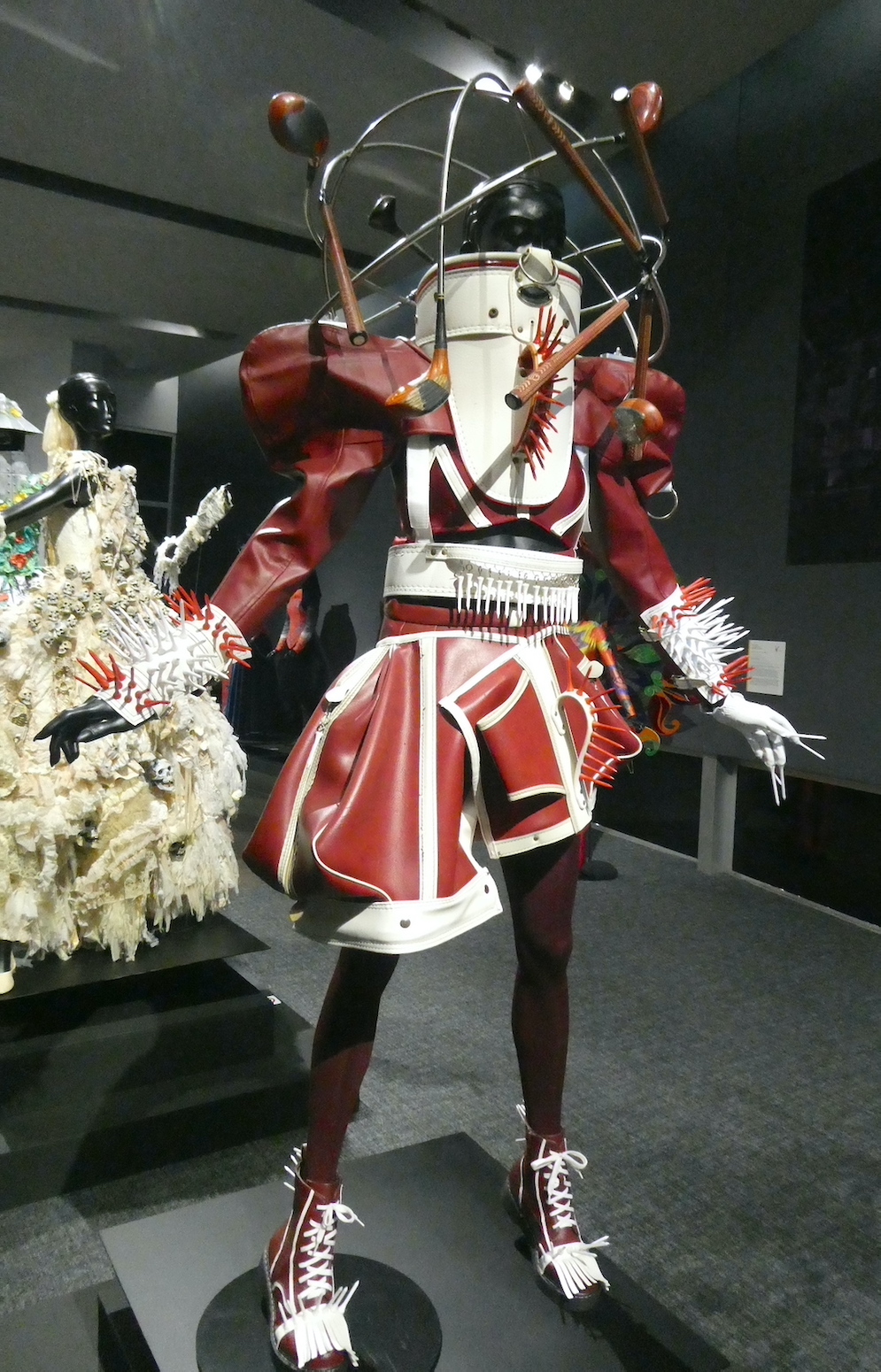
Golf bags, clubs, tees and vinyl were used by Leanne Day (NZ) to relate the overwhelming feeling of having more ideas than time with Engolfed.
The Mythology Section features fantastical designs influenced by dark tales from other dimensions; monsters and creatures, gods and goddesses. Banshee of the Bike Lane shrieks her mourning of the senseless deaths of fallen cyclists. This howling spectre is assembled from bicycle inner tubes, chains, cogs and a wheel by Grace DuVal (USA).
The story of the thread of life – the beginning, middle and end – is told through shape and colour by Tina Hutchison-Thomas (NZ). Velvet, hand-dyed chiffon and embroidery were used to create the garments of The Moirai – the Shape of Us.
Feathers, silk taffeta, paint and crystals combine in the colourful Eden by Ian Bernhard (NZ), a portrayal of a creature of paradise, lost.
Xu Ran’s (China) 3D printed resin, nylon, rope and plastic, Feathers of theRoc, tells the story of giant fish that grow wings and turn into big birds to pursue freedom.
Based on the ancient theory of female hysteria, Louise Byford (UK) has melded latex sheeting, liquid latex and leather to present The Wandering Womb.
Although Nyx, goddess of the night, has the appearance of a multitude of feathers, it was actually created with plastic bags, metal wire and polyester by Dinh Hai Yen (Singapore).
A fascinating fusion of patent leather, beads and non-woven cloth form the convolutions of Chang-Yi-Wei’s (Taiwan) Soul Guardian, the god who guards the soul.
Wrath of Medusa was inspired by the Greek mythological creature Medusa, as sculpted by Italian artist Bernini. Edyta Jermacz (Poland) opted for vinyl latex, neoprene, jacquard and polypropylene padding for her concept.
Experimental, radical and unorthodox, the Avant-garde Section challenges designers to defy the boundaries of fashion and rebel against the norm.
Buddhist altar cloths and kimono obi lining merge to form Shinka (‘Evolution’ in Japanese). Christopher Davis (NZ) poses the question, ‘in a world of change and rapid evolution, will tradition still remain?’
With the stunning use of steel, silk and silk georgette, Thingamla Adrianne Keishing (India) conceived Oracles of Life, influenced by the aquatic world, especially the rhinopias and coral reefs.
The Lady Warrior embodies the toughest warriors in life – women – in their role of daughter, wife and mother. Rinaldy Yunardi (Indonesia) has brought his vision to life using metal and recycled paper.
Edyta Jermacz (Poland) features once again in this section, using latex, neoprene, fringing and buckles to produce Big Lips, inspired by a range of romantic emotions: desire, obsession, sex, love, intensity.
Silk, foil, foam and wire form the bold concept by Anna von Hartitzsch (UK), Clotho – the Goddess of Fate. According to Greek mythology, the youngest of the three Fates spins the threads of human life.
Baroque style and religion inspired Lam Hoi Man Kinki (Hong Kong) to create Holy Light using non-woven fabric, metal and satin.
Silk satin, taffeta and stone beads adorn Joan, Ian Bernhard’s (NZ) ‘armoured figure in liquid splendour’.
This armour is an interpretation of ‘power dressing’ and the illusory power of the stiletto. Louise Dyhrfort (UK) chose vegetable-tanned leather and plastic heels for Walk All Over Me.
Shantanu Singh (India) surmises, ‘we can’t even imagine the world or universe without black’. Velvet, lycra, crepe, pleated taffeta and cords compose Black – an Inner Strength.
The faceless, menacing Dearth Exterm represents a strong, powerful female version of the Knave of Hearts. Nicola Rule (NSW) has combined leather and taffeta for her mysterious character.
With a few more sections to share, I am planning a second instalment. Stay tuned…..
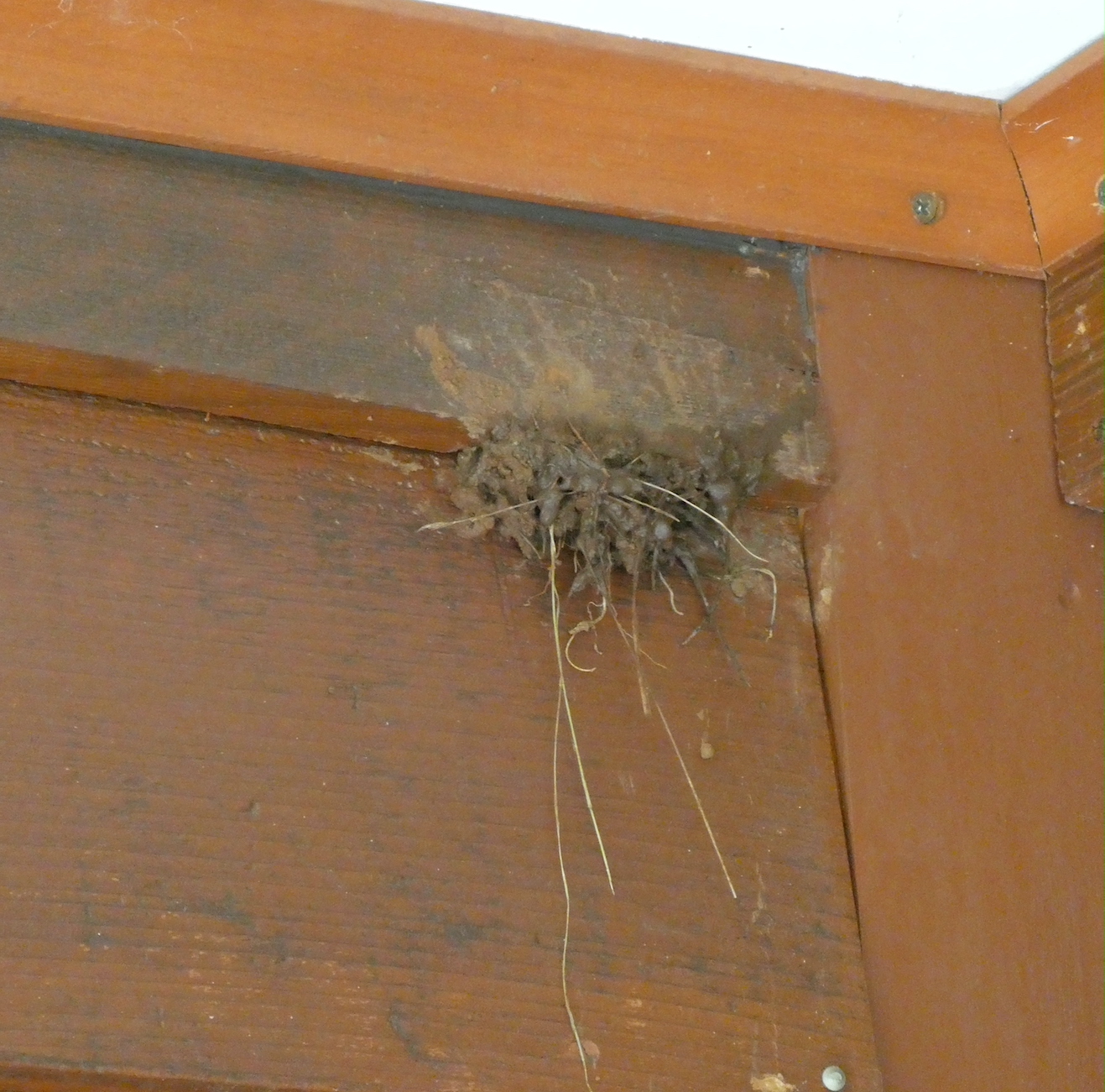
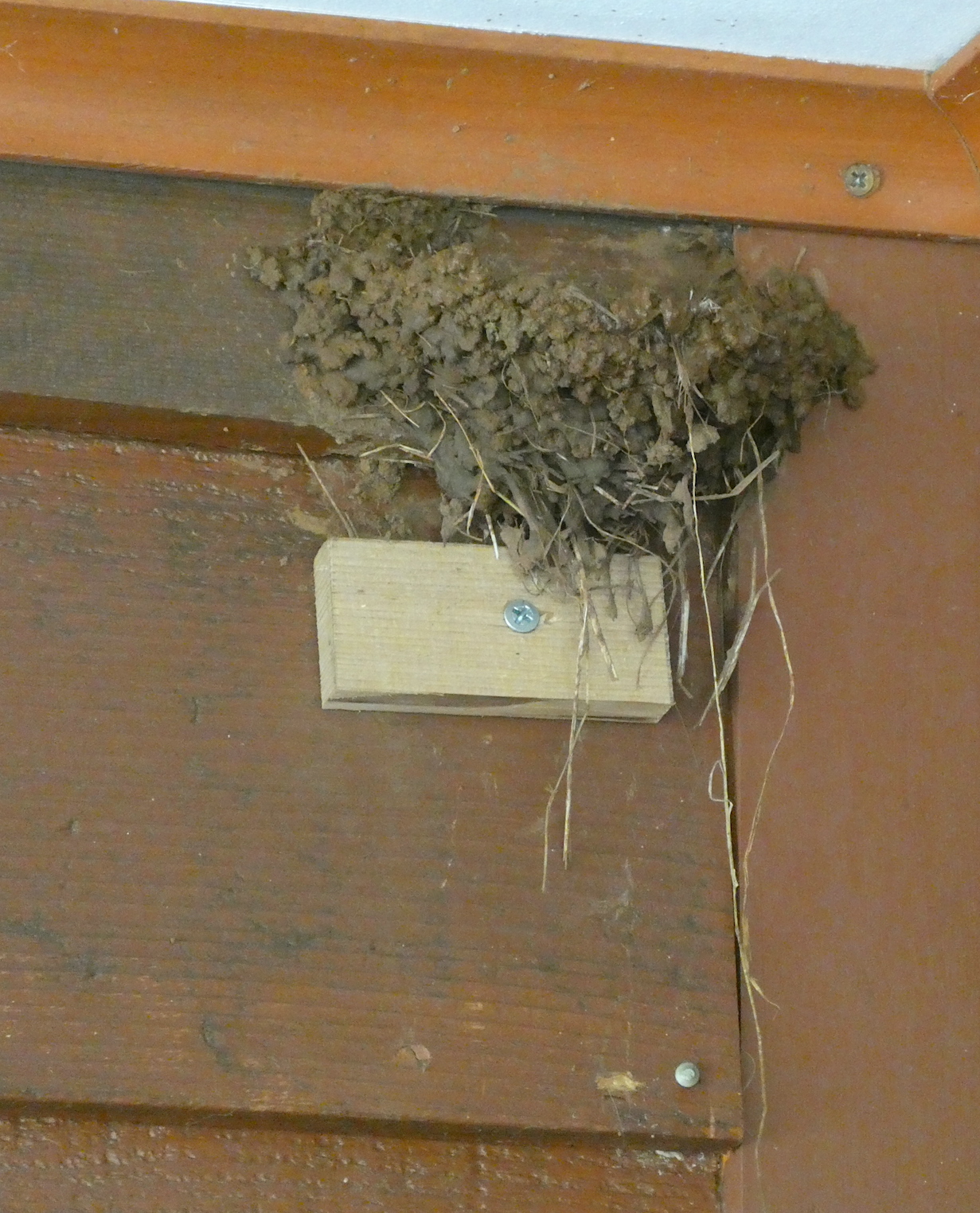
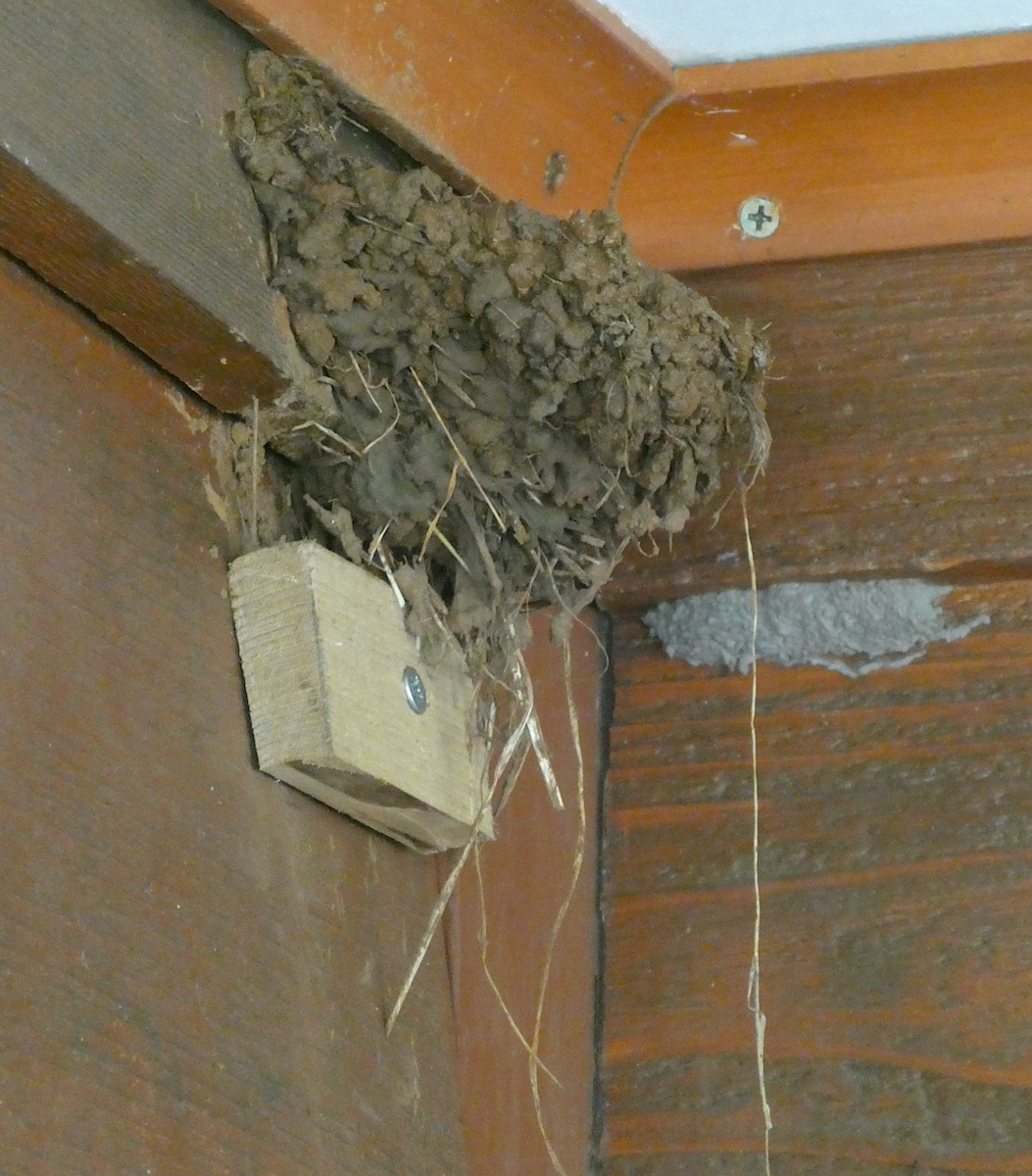
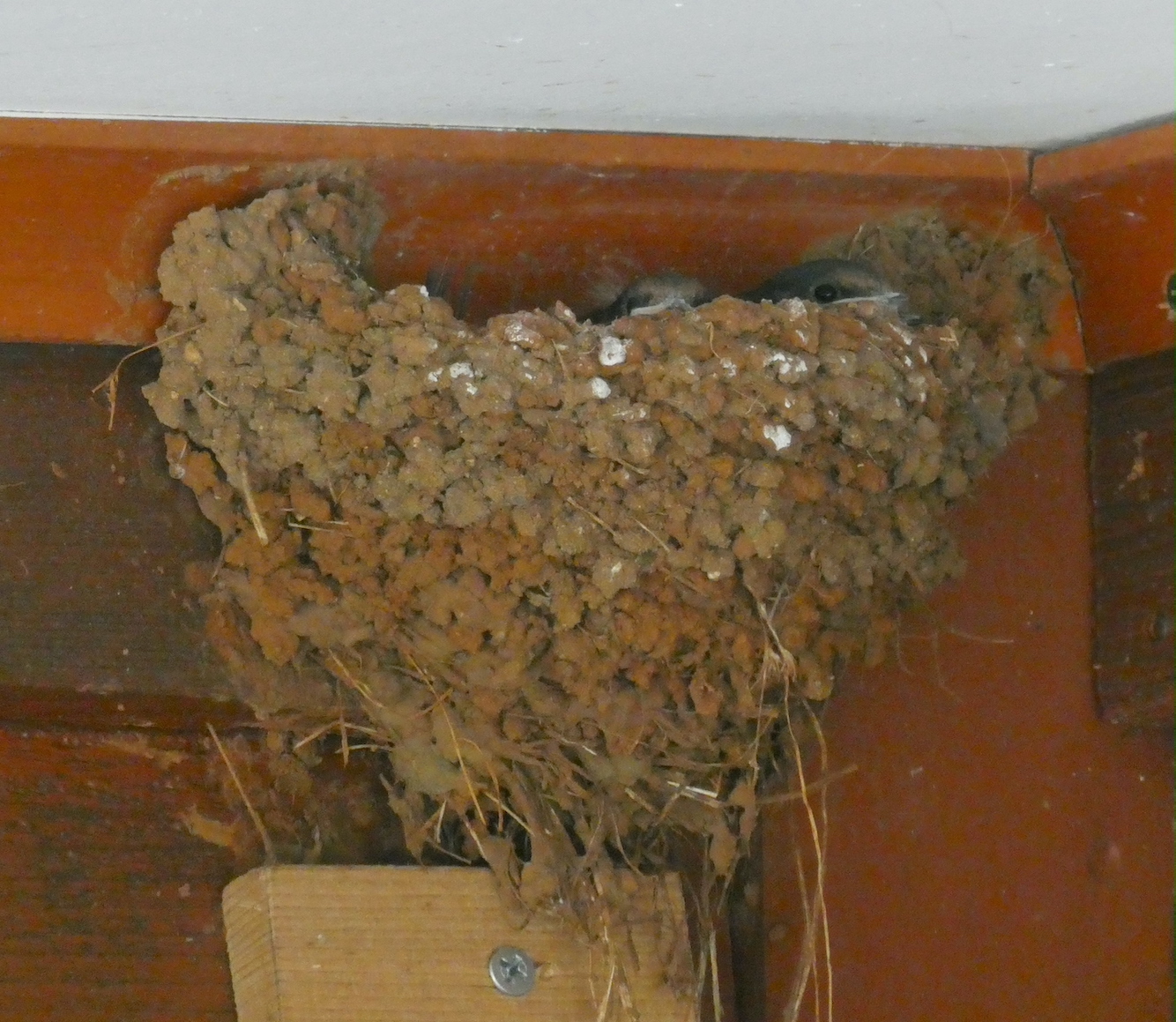
Over the years, there have been a few attempts by swallows to set up home on our cedar cladding. We resorted to inventive ways to deter them with success. In early January, a determined pair began construction in a cosy corner of the back deck.
We decided to allow them to share our space and made allowances for the anticipated mess that would ensue. The little birds worked tirelessly, collecting mud and grass
and three days later, the nest was complete.
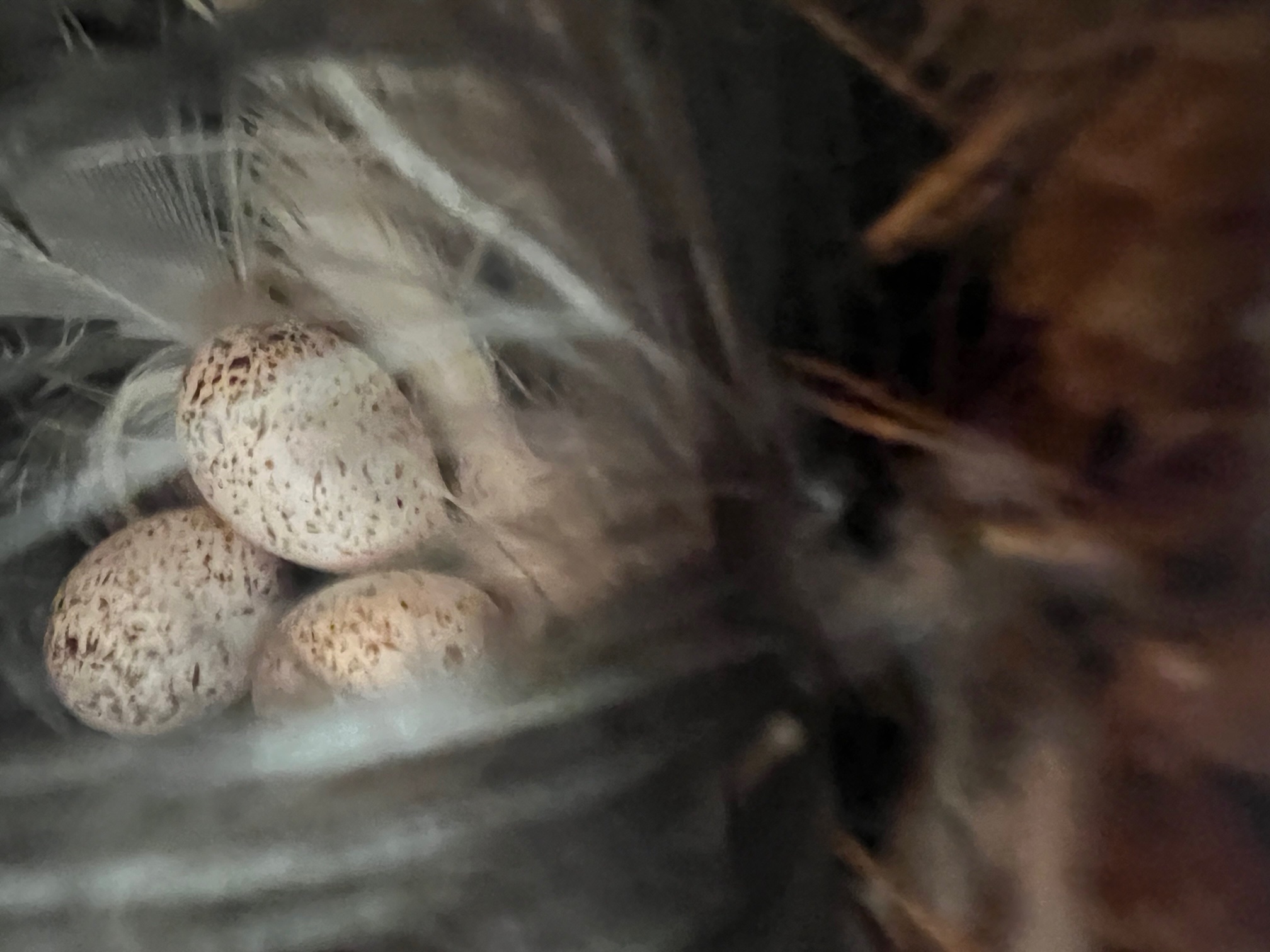
Welcome Swallow couples stay together for life, they both build the nest and feed the young, although the female alone incubates the eggs. Two and a half weeks went by and the parents seemed to be spending a lot of time away from the nest, so Michael reached up and took a photo.
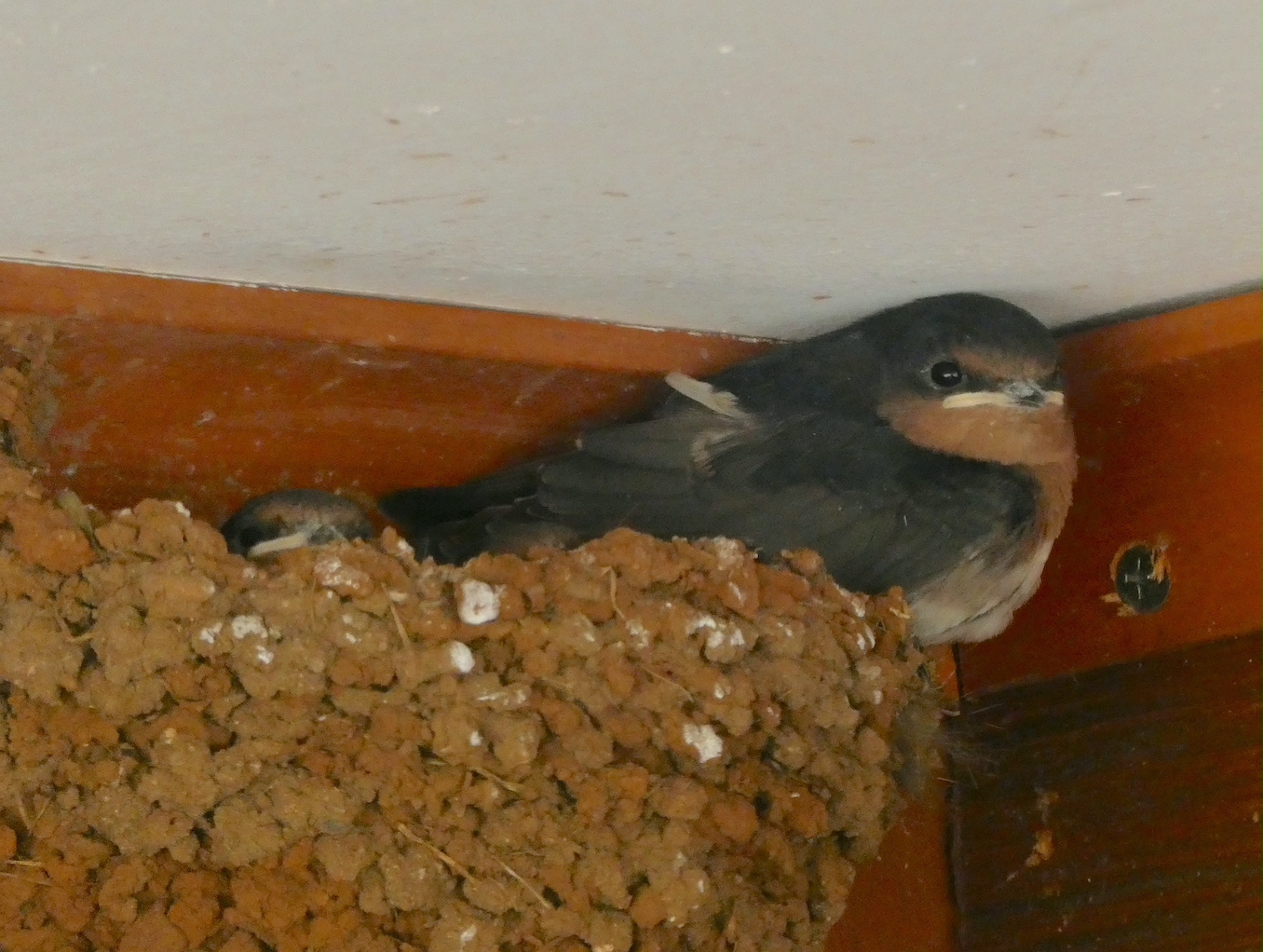
Another three weeks went by and we hadn’t heard any baby bird noises or calling for food, although the parents were still attentive. Time for another photo, there was no mistaking two tiny heads.
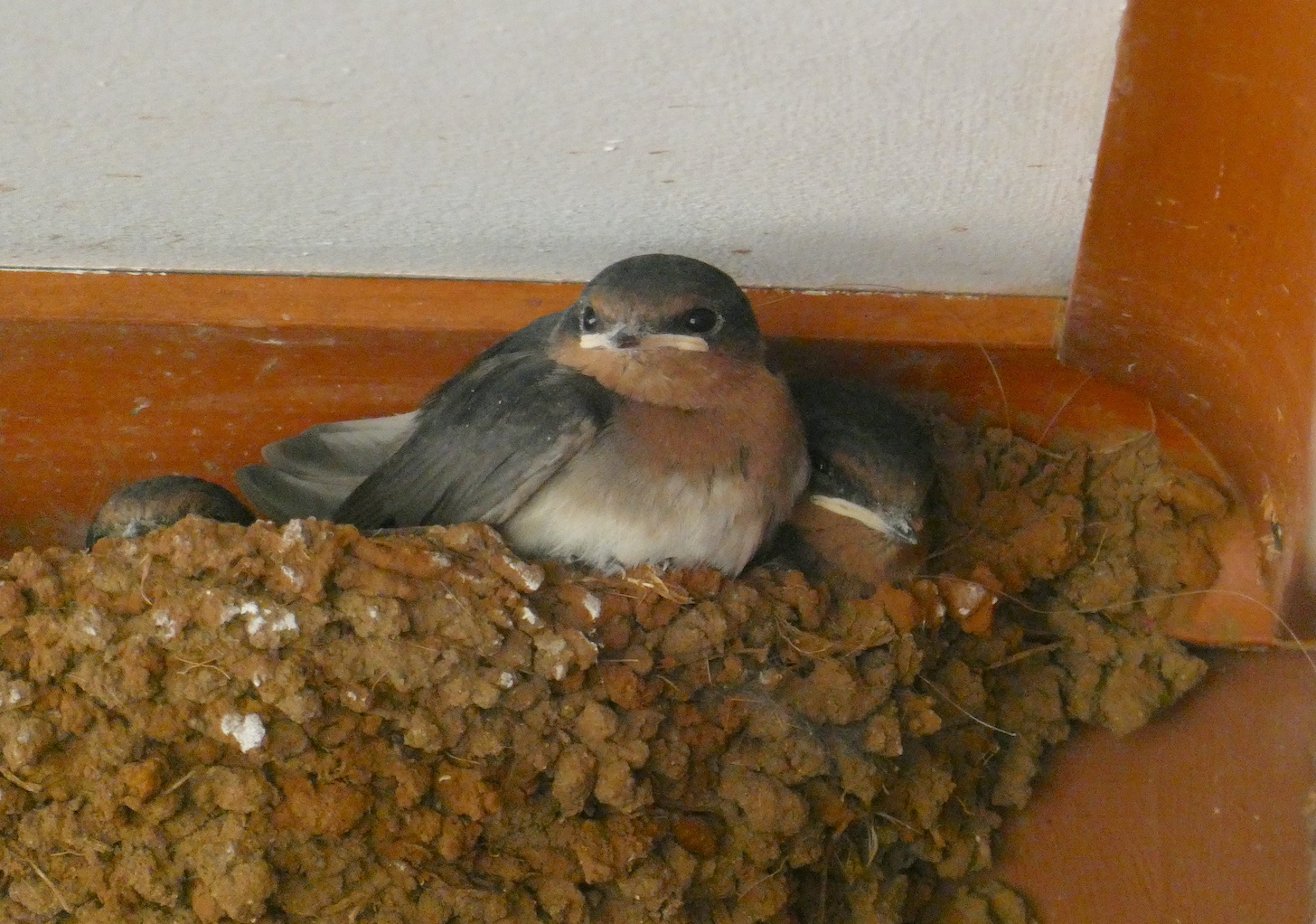
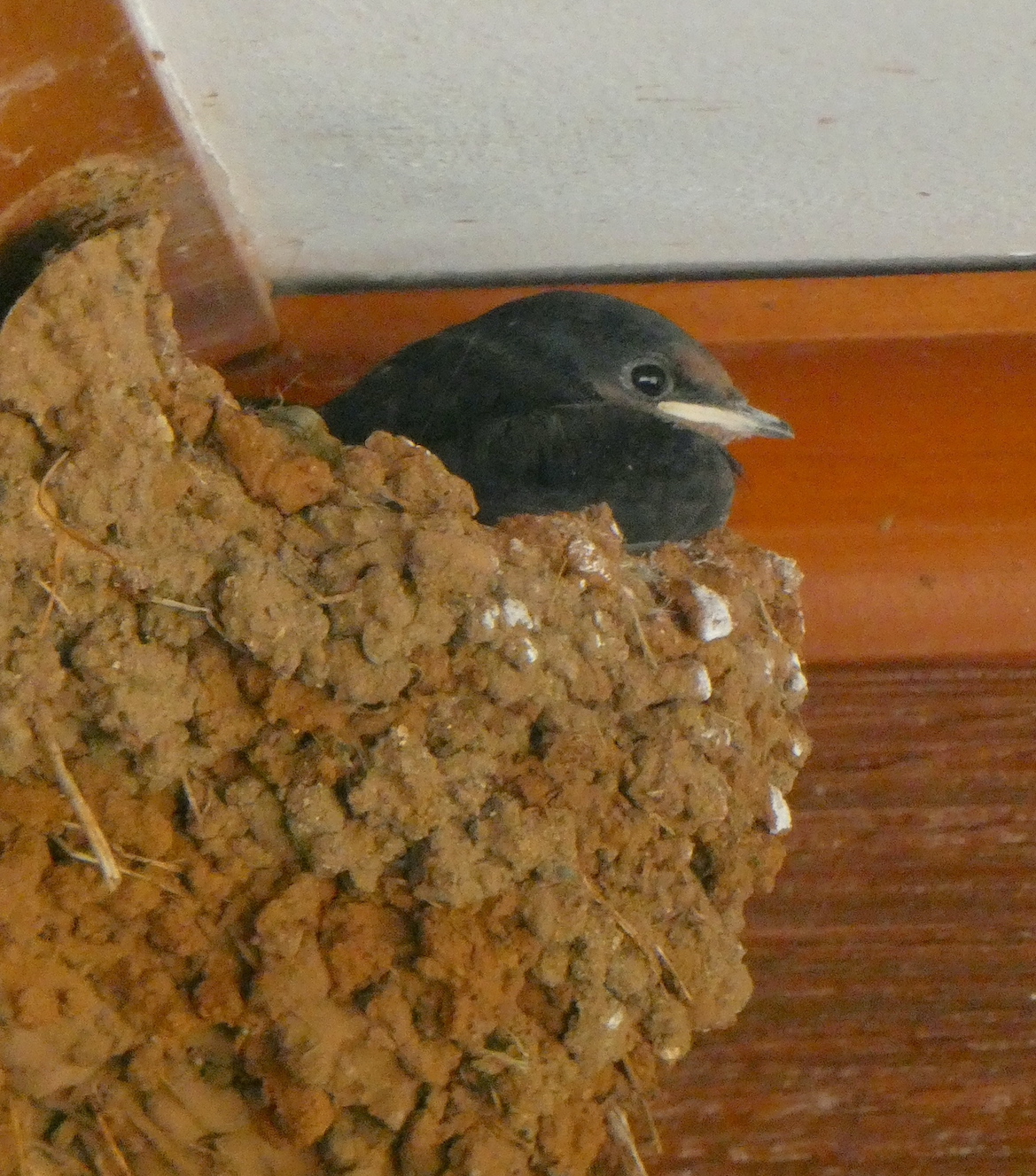
Of course, I became obsessed with trying to capture some special moments and three days later, two little heads popped up.
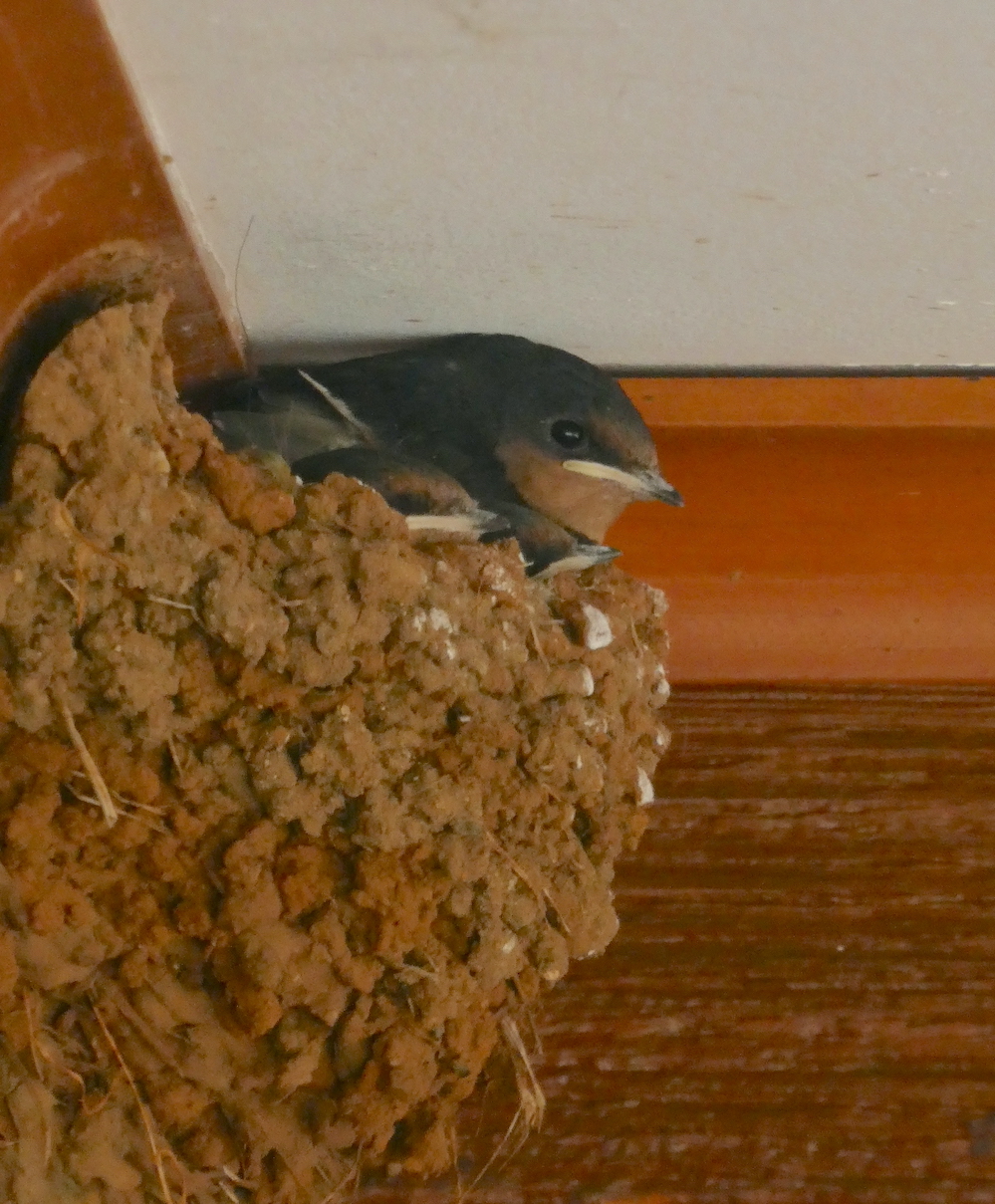
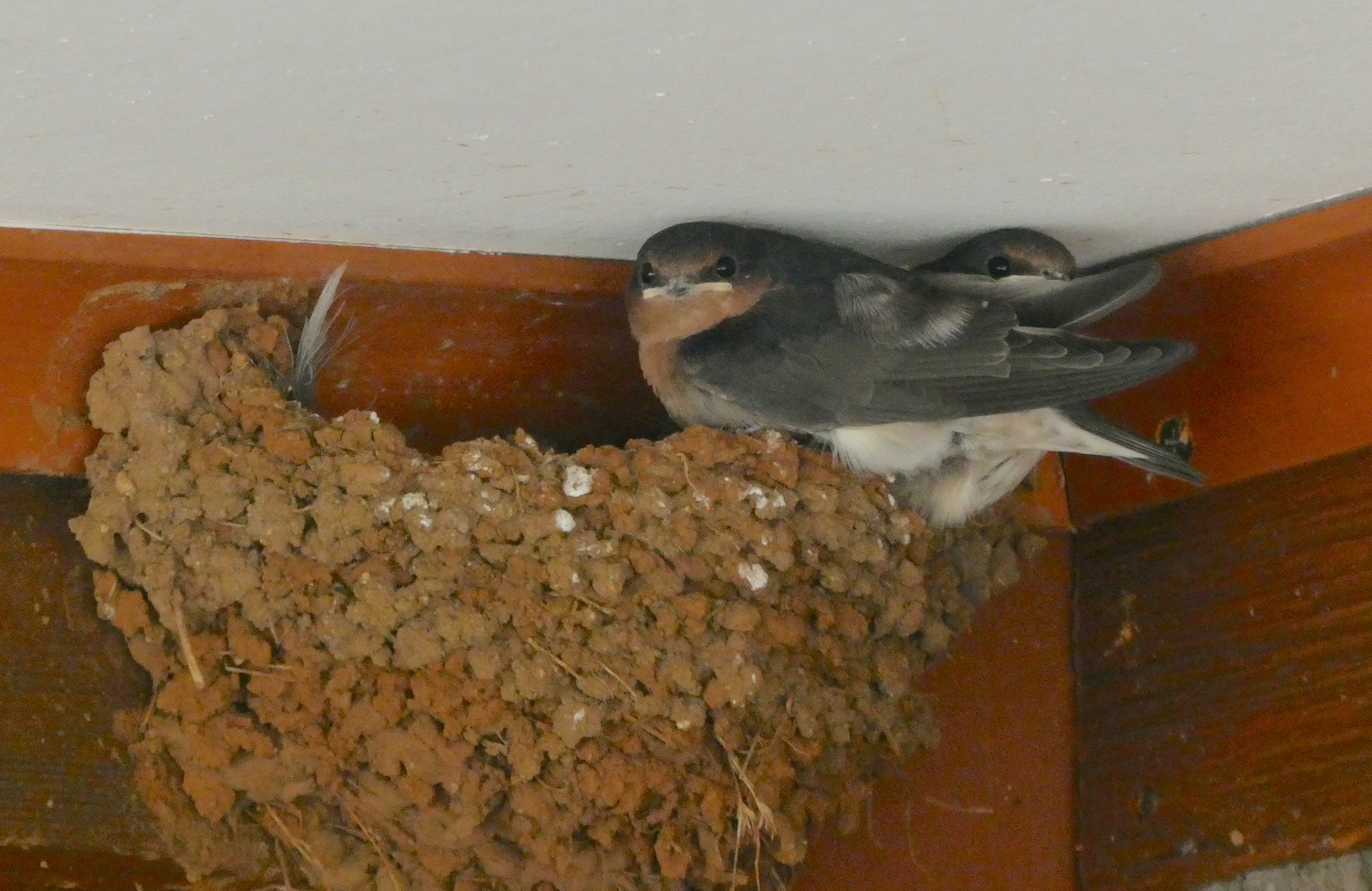
A third soon joined them
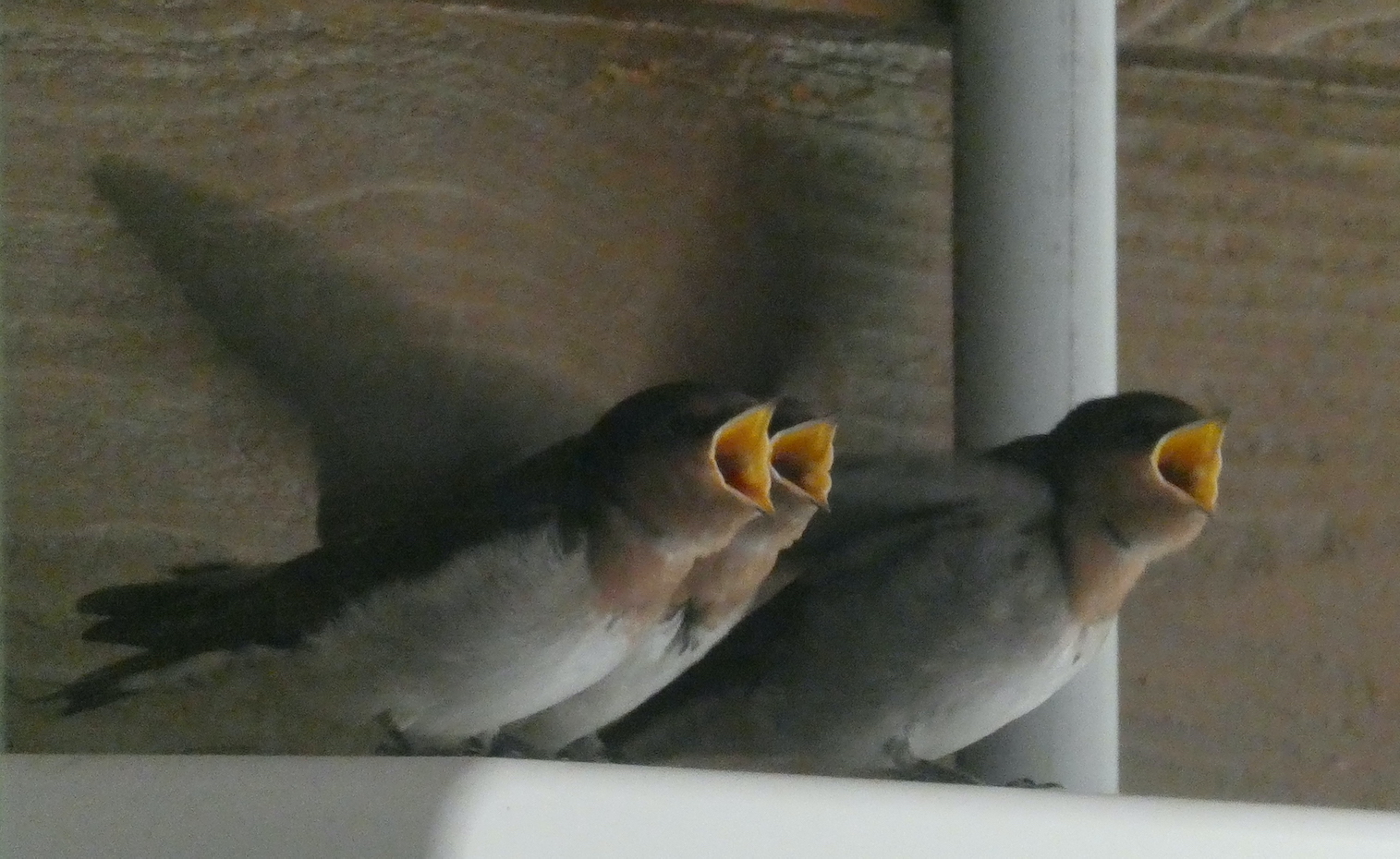
and within a couple of days they were starting to explore beyond their comfort zone.
I was surprised by the lack of chirping, even when food was approaching.
They gradually ventured further each day and after a couple of weeks, no longer returned to the nest at night. We haven’t seen them for a few days now, hopefully they will return next year.
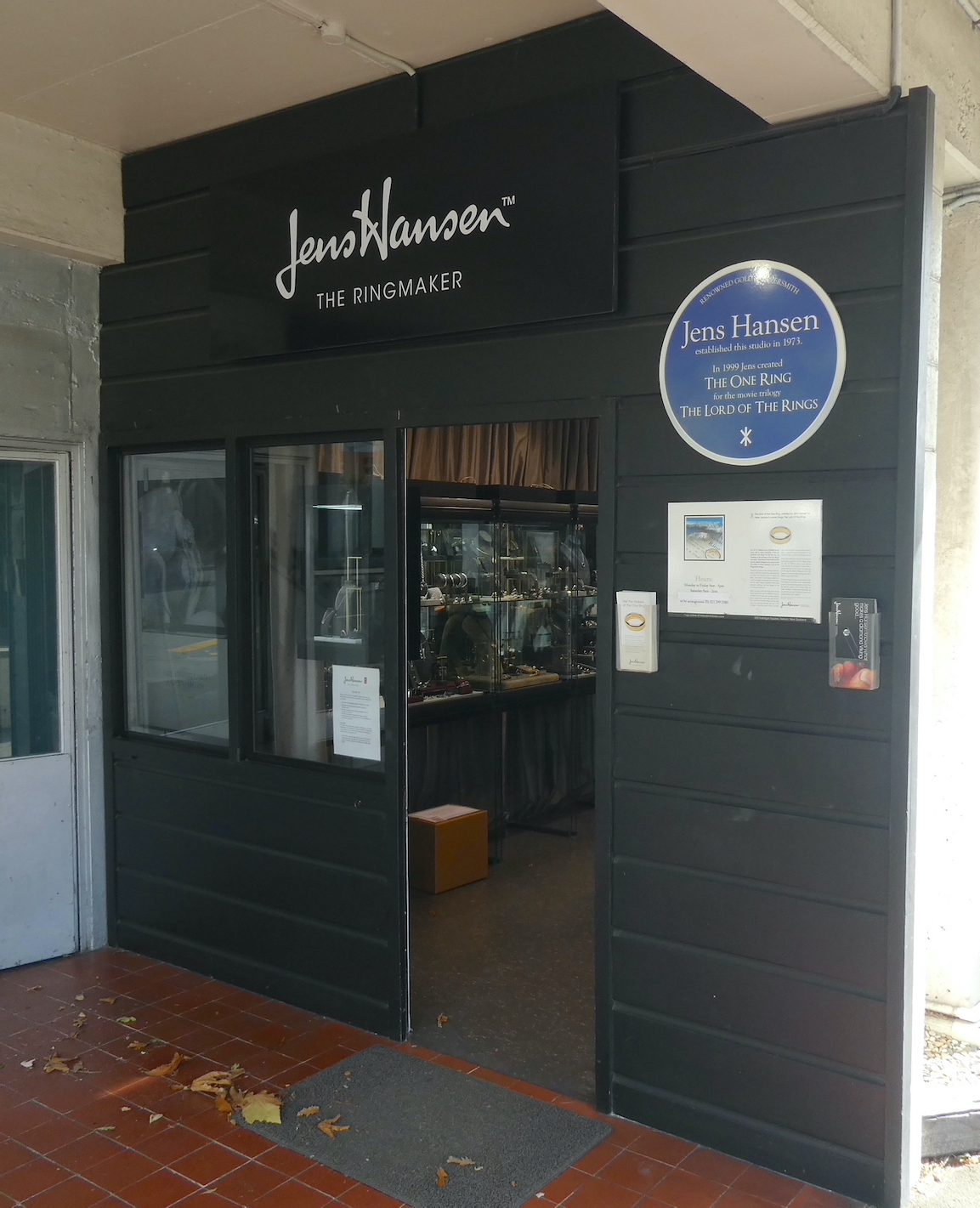
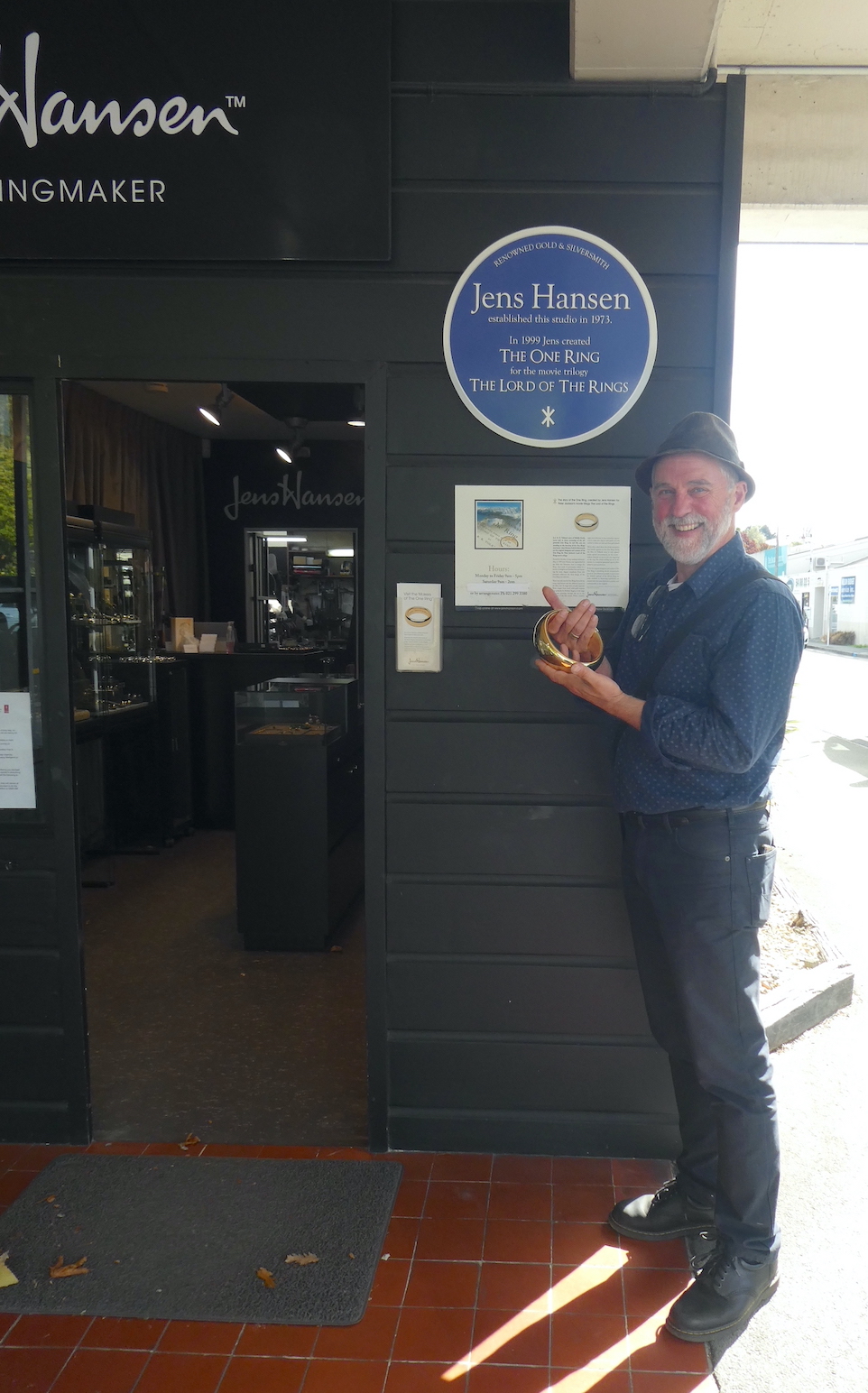
One of the reasons we included Nelson on our New Zealand itinerary was to visit the workshop of Jens Hansen, a must for any true fan of The Lord of the Rings.
Danish-born Jens moved to Auckland in 1952 and, after completing a jewellers apprenticeship, settled in Nelson with his wife and young son in 1968. He knew and loved The Lord of the Rings and was thrilled when approached, in March 1999, to design the fabled ring. Fifteen prototypes were submitted from which the final ‘movie ring’ was chosen. Forty variations of The One Ring were made for the filming, scaled for different scenes and sized to fit Hobbit or human fingers. Then there is the 8” version seen spinning and turning through the air in the prologue of the first film.
Sadly, Jens was diagnosed with cancer in 1999 and died in August the same year at the age of 59, never seeing his rings on screen. His legacy continues under the guidance of his sons and a remarkable team at the workshop.
Having made a very special purchase, we drove a few minutes out of town to the Grand Mercure Monaco Resort, our home for the next two nights.
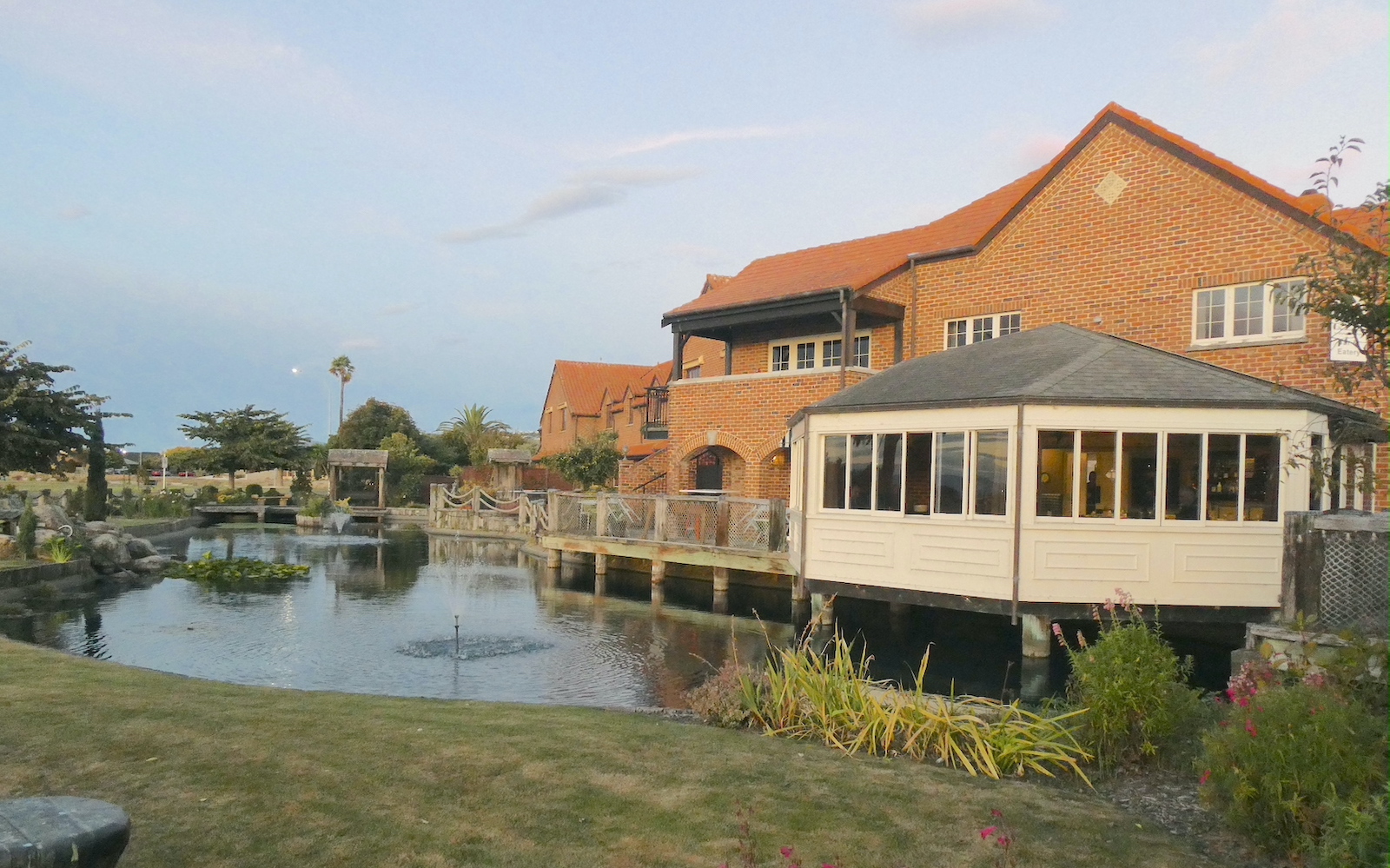
Reminiscent of an English countryside village, the resort offers a range of accommodation from self-contained two bedroom cottages
to boutique hotel rooms. We had a stunning view of the Monaco Peninsula.
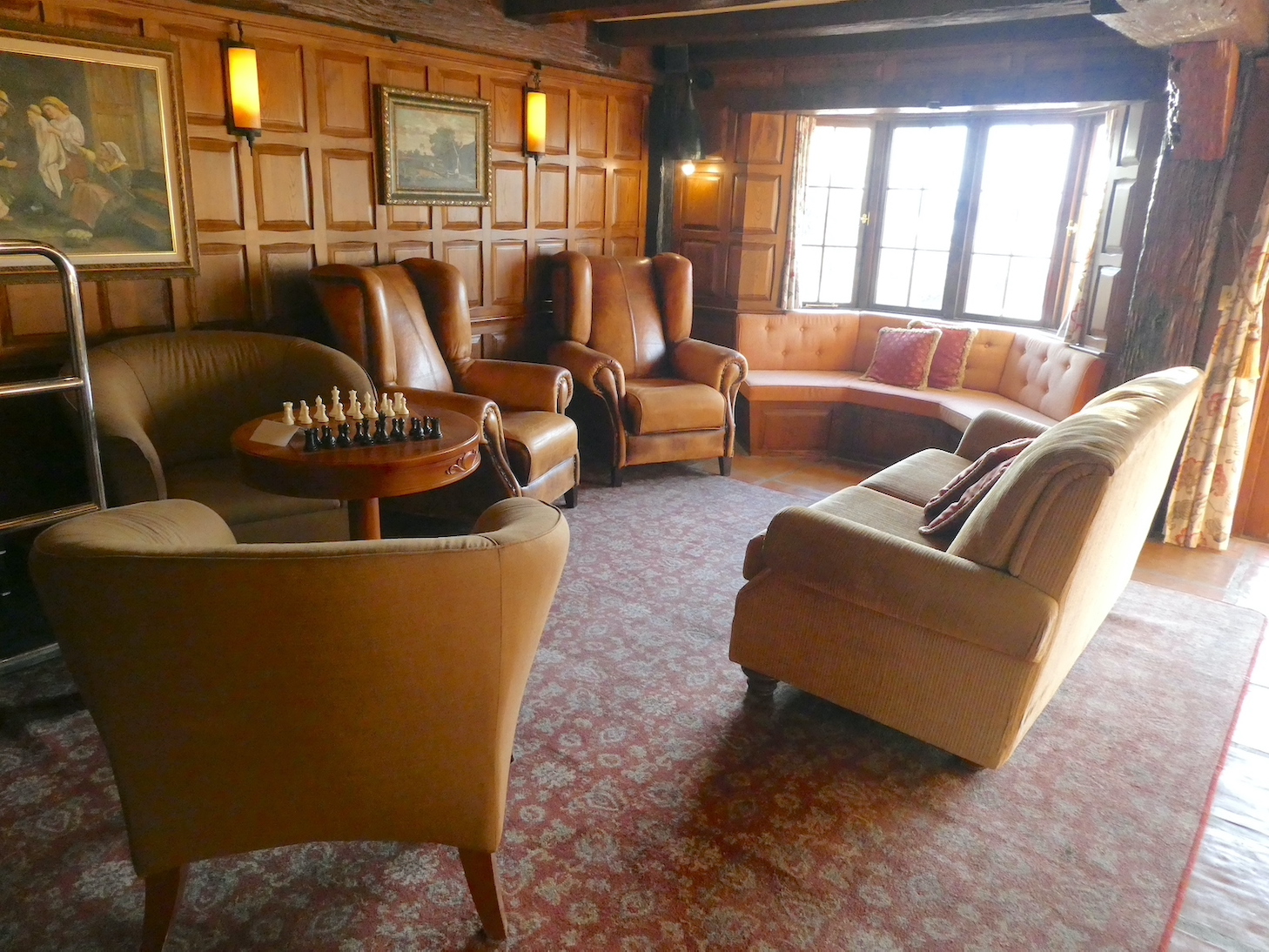
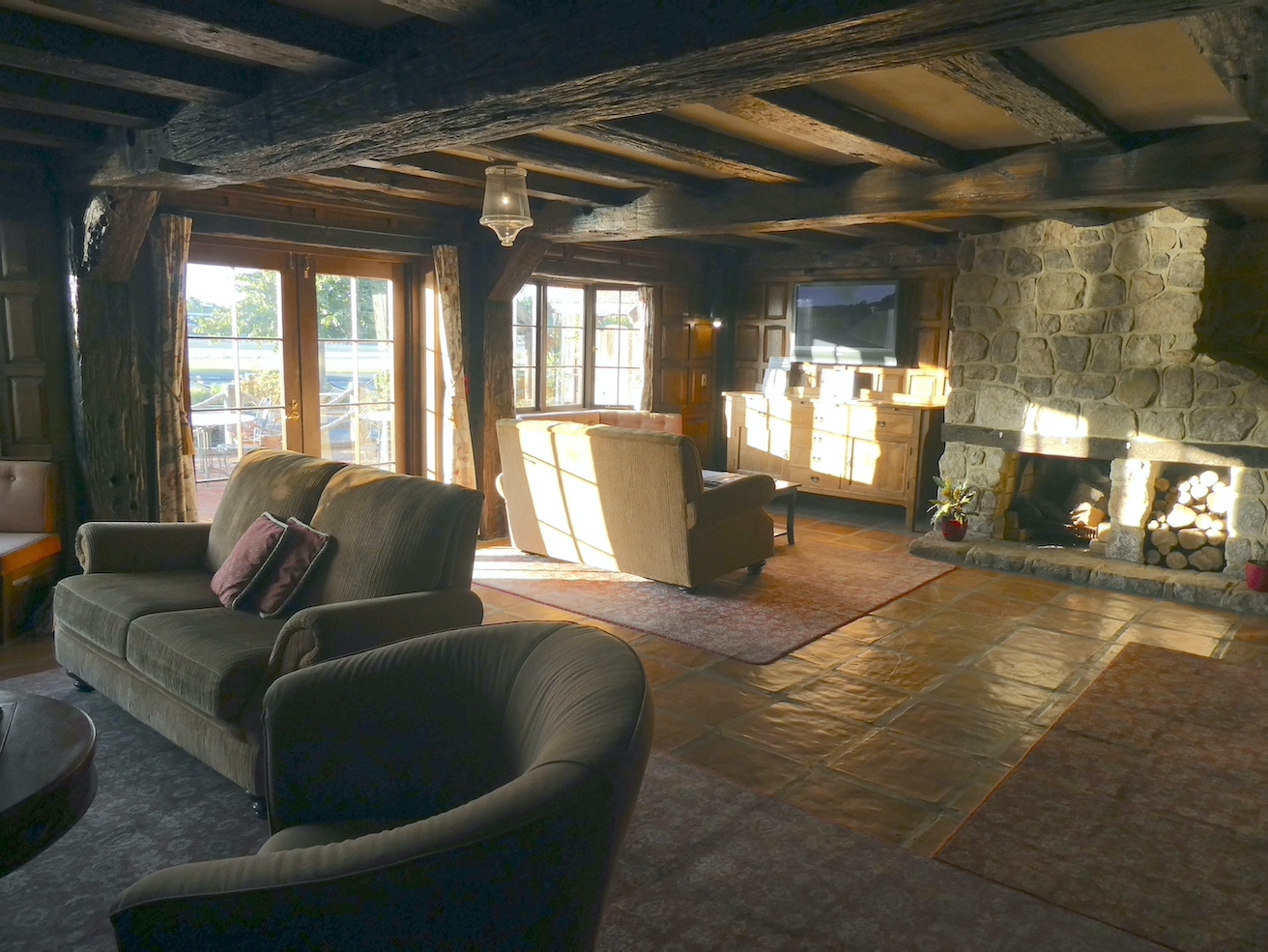
The guest lounge was cosy and comfortable
and we enjoyed a delicious dinner, as well as breakfasts, at the restaurant.
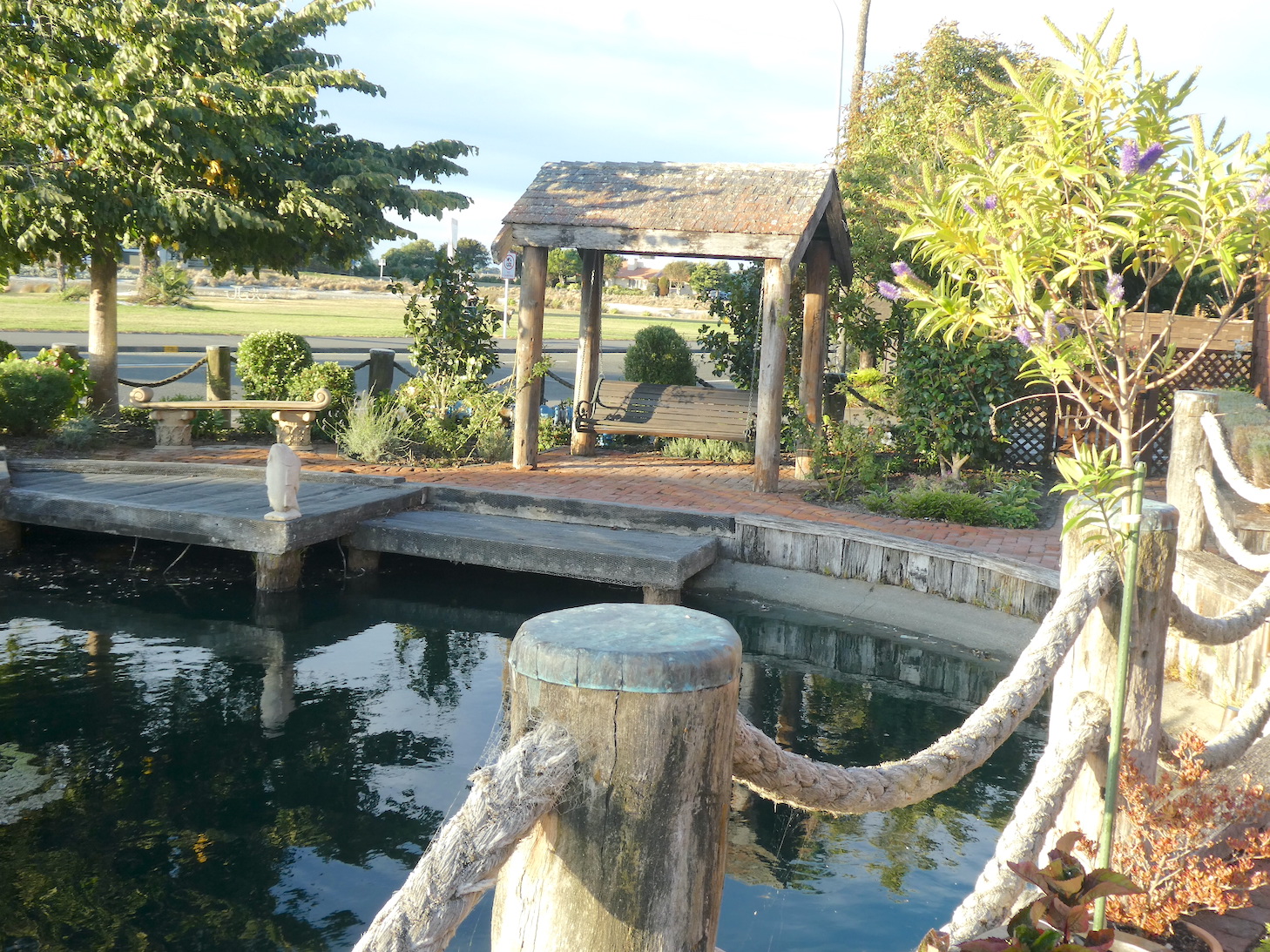
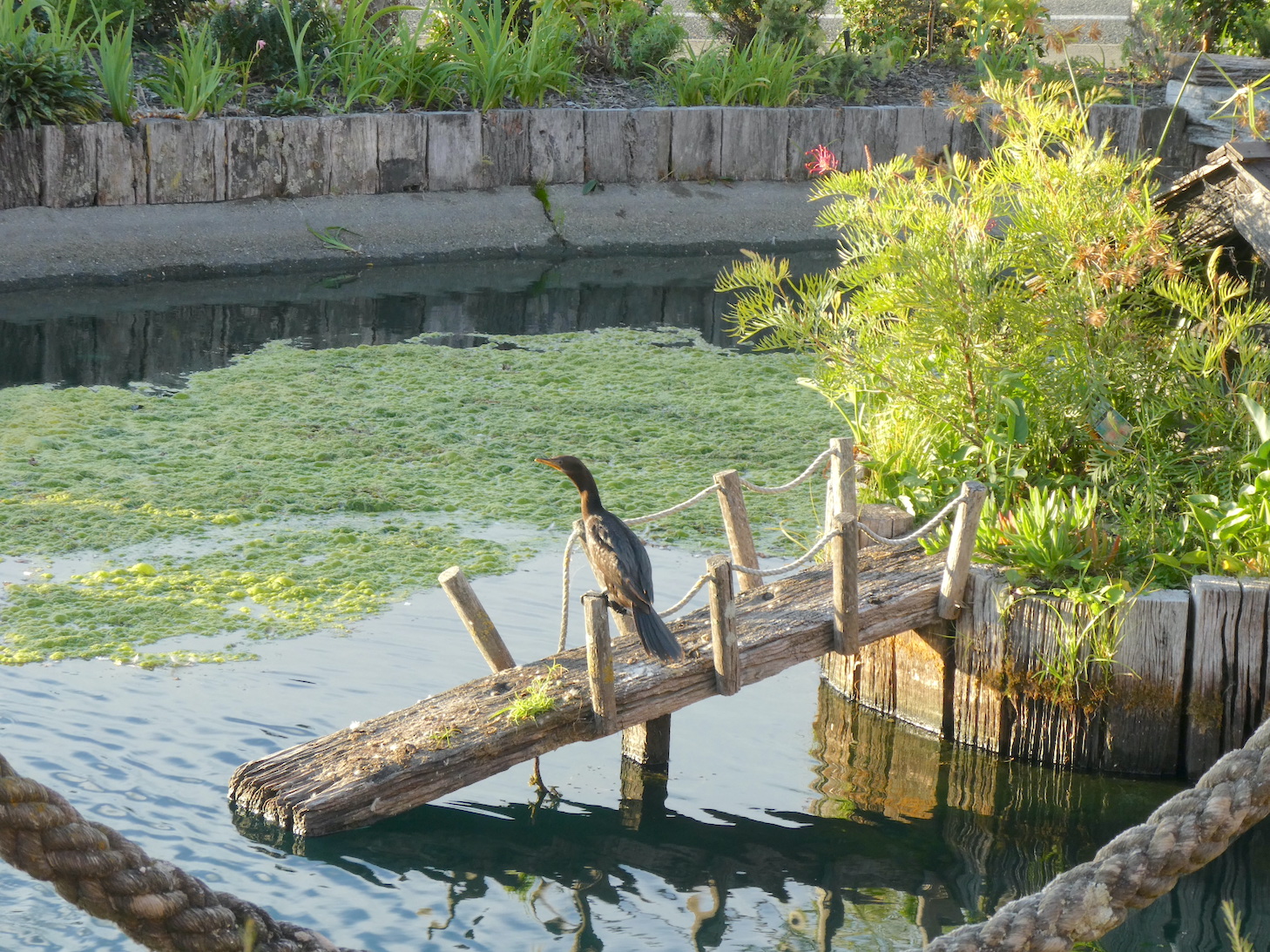
The grounds have been set up beautifully, with a peaceful lake enticing a variety of birdlife.
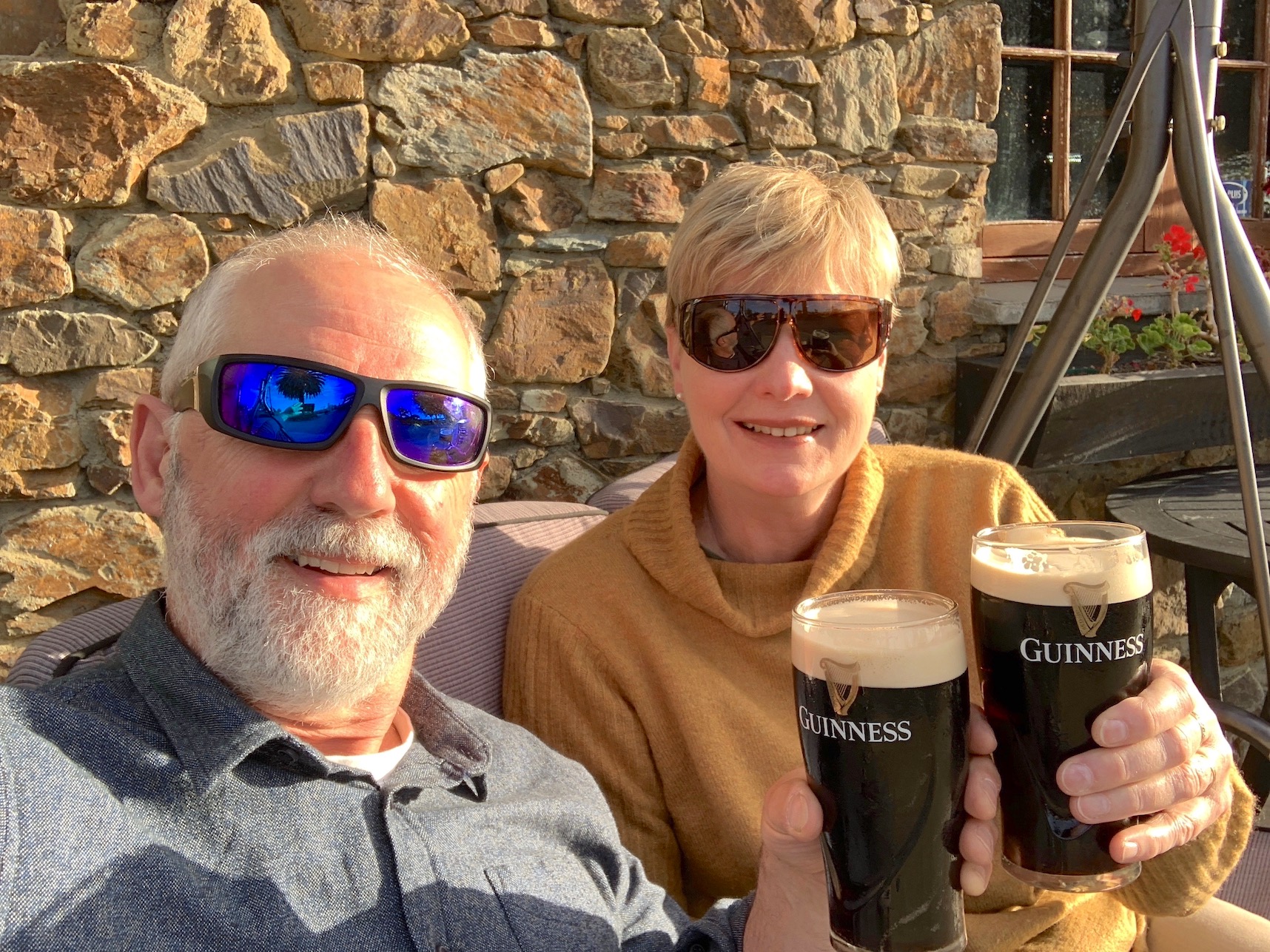
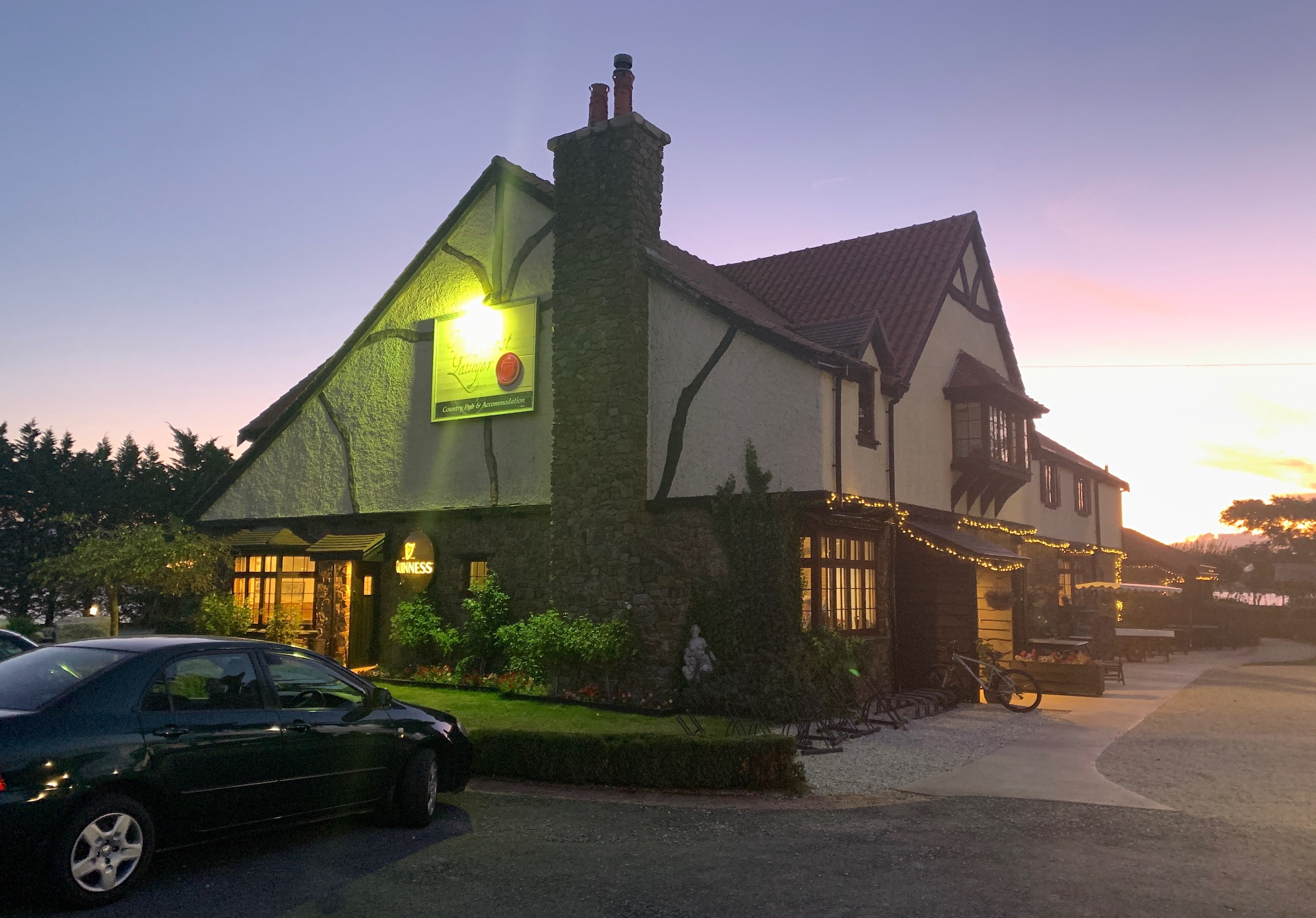
A short stroll down the road, The Honest Lawyer, exuding the charm of an English country pub, was the perfect spot to imbibe a pint of Guinness in the afternoon sun.
Perusing the menu, we decided to stay for dinner before a slow walk home as the sun was setting in spectacular fashion.
The next morning dawned crisp and clear, another day of adventures awaited.



















































 cannonhillchronicles