Winter is the perfect time of year to visit friends in Darwin, especially when they own a boat.
No, not that one….this one.
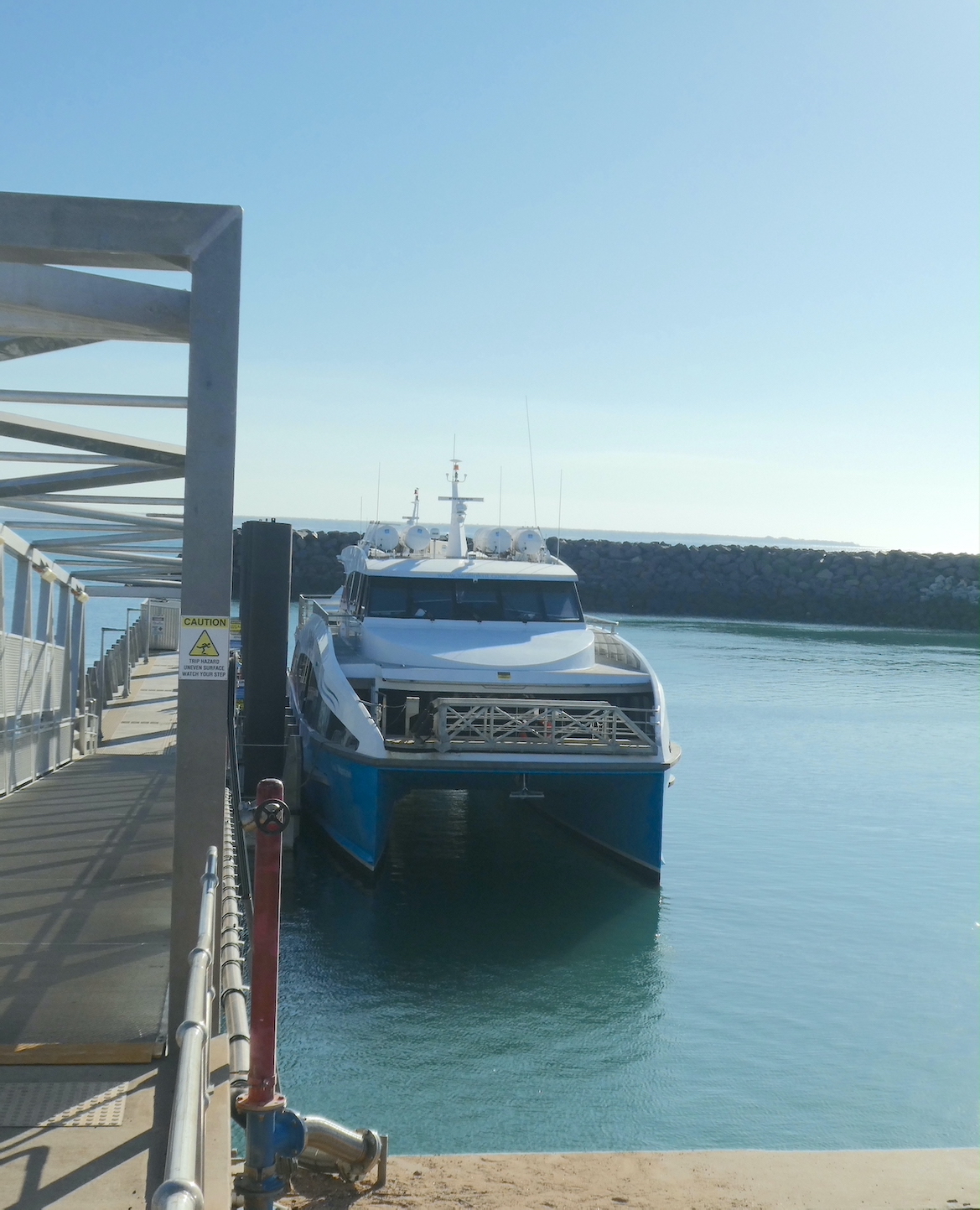
We set off on a sea of glass from Cullen Bay Ferry Wharf
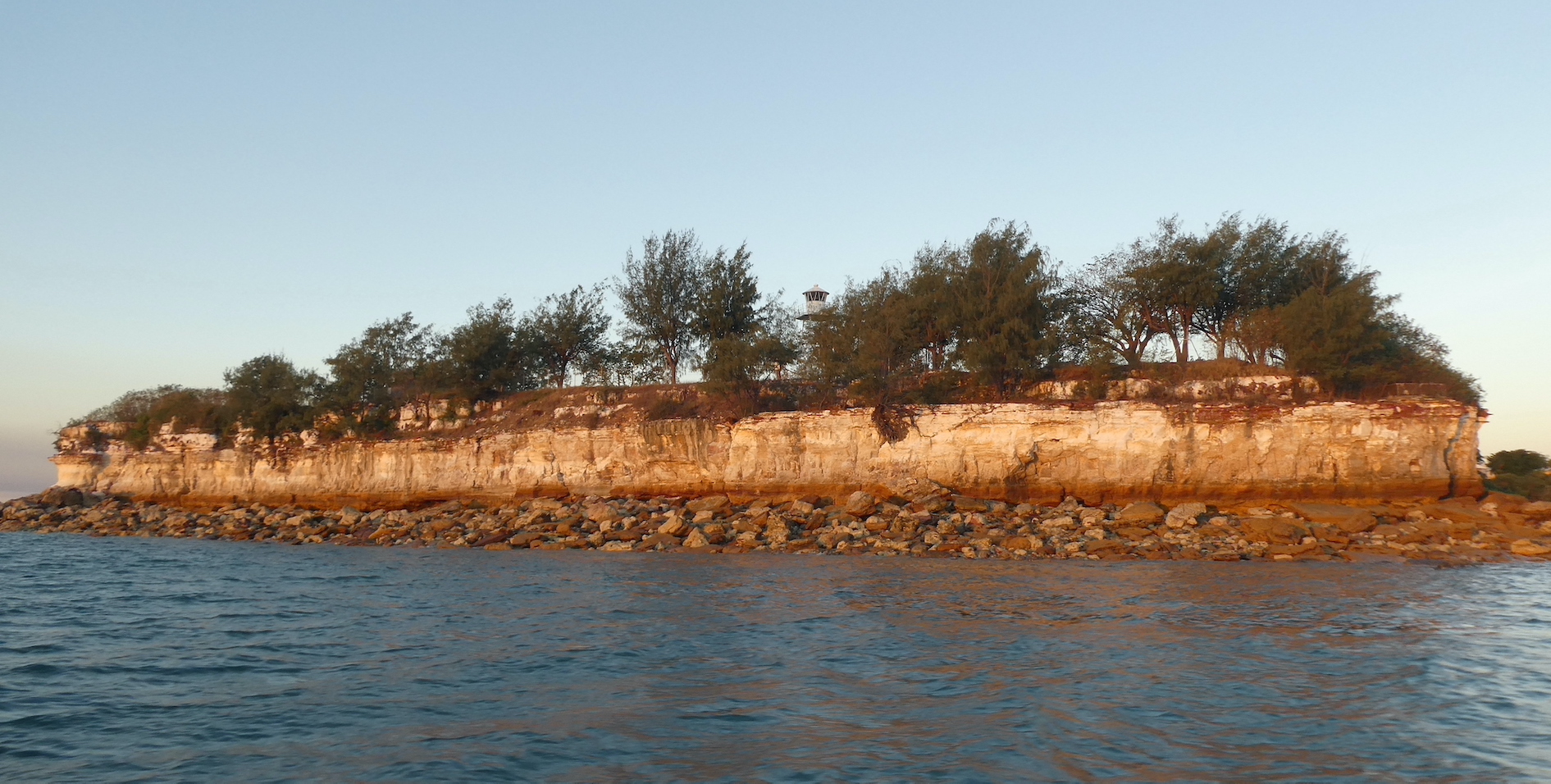
and rounded the headland,
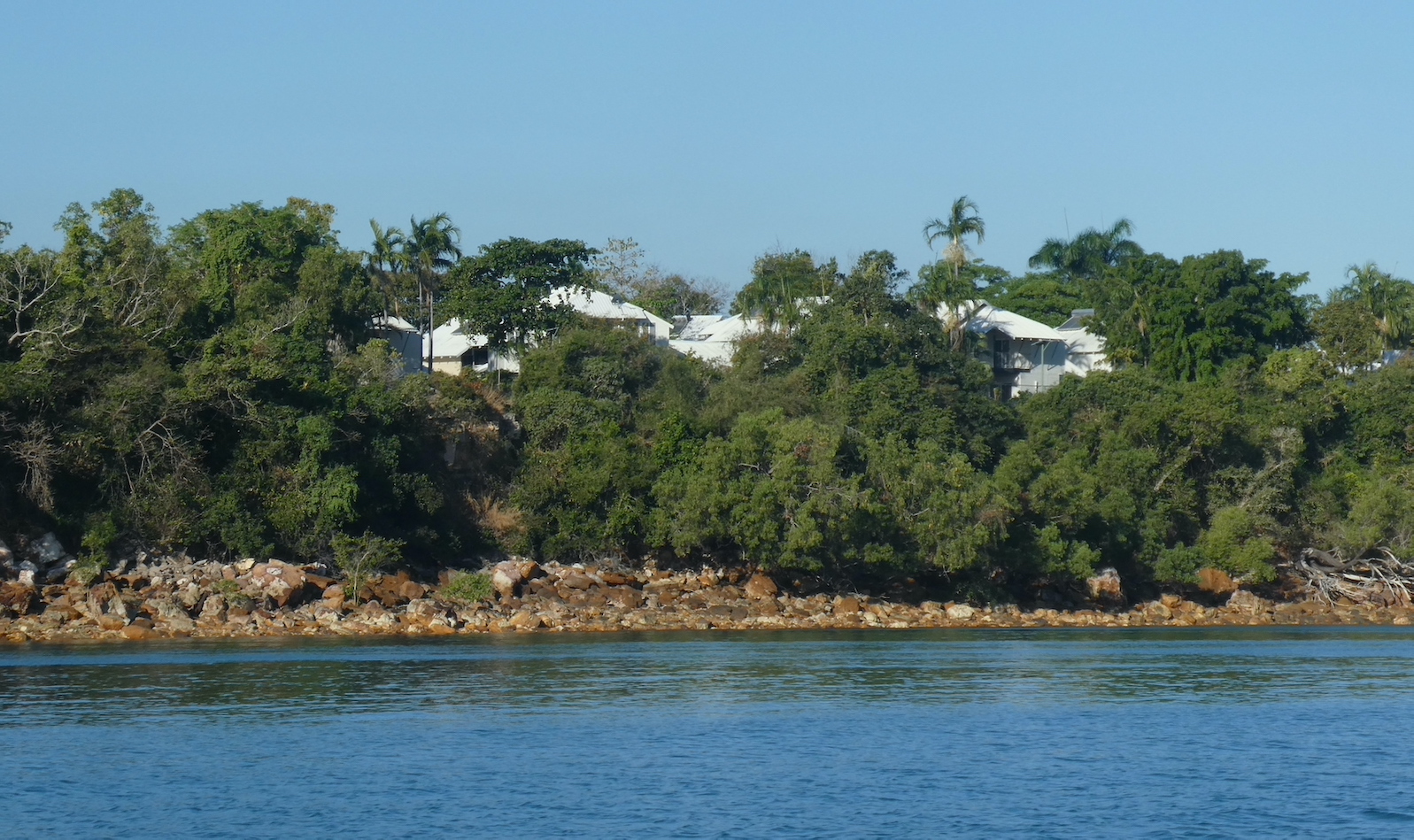
before the hint of tropical houses in the suburb of Larrakeyah peeked at us through the trees.
In the distance, Darwin city cut the colour blue with a swathe of silver and green.
Larrakeyah was one of the first parts of the city to be developed, with the colony’s first hospital built in 1874. It is named after the Larrakia people, the traditional custodians of the land.
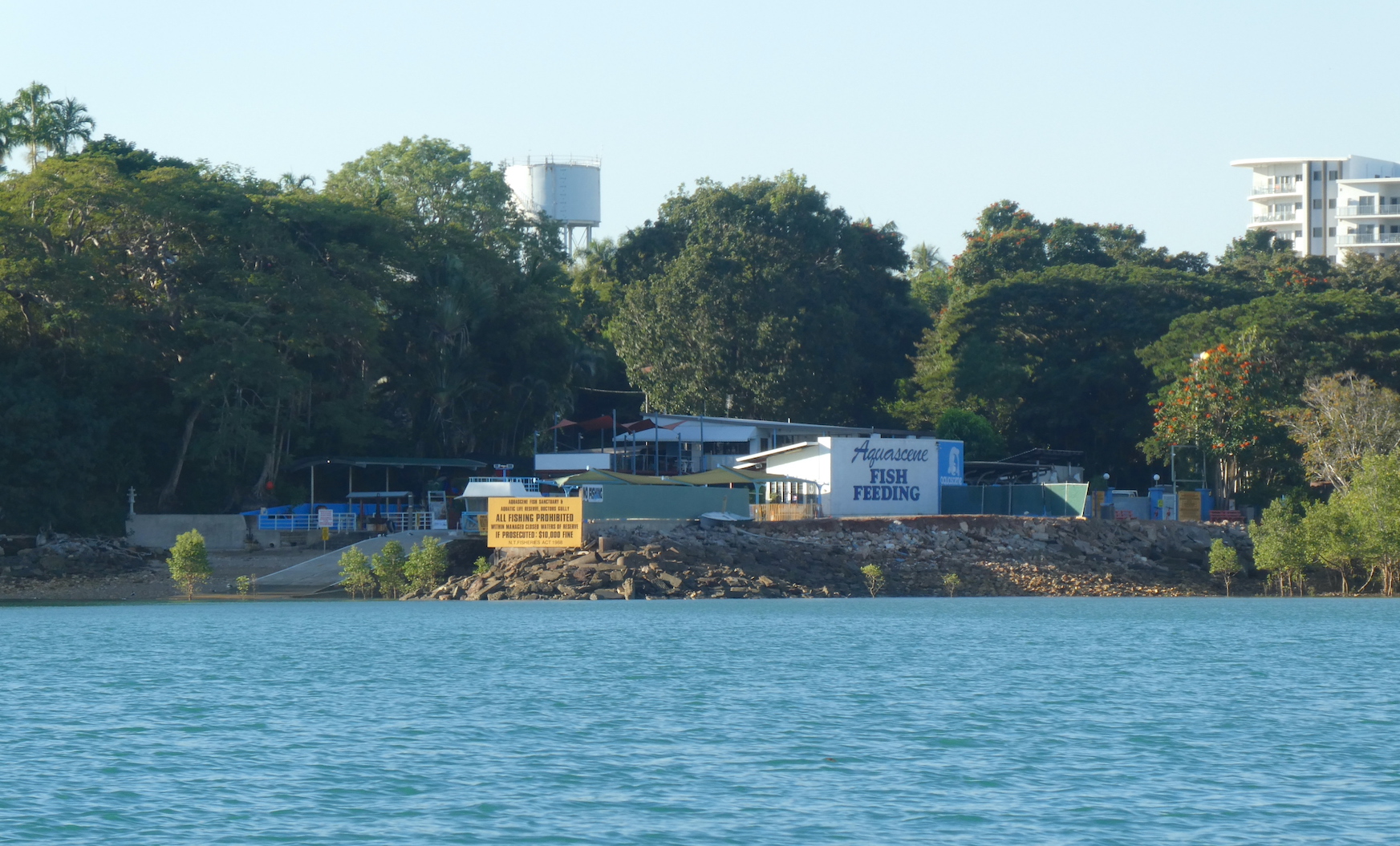
In 1869, Dr. Robert Peel, a surgeon with the first survey team, found water ‘…in a gully between Fort Point and Point Emery’. Aptly named Doctors Gully, it soon became a landing point. In the early 1950s, a nearby resident started throwing bread scraps to the fish that would gather at high tide and in 1981, Aquascene Fish Feeding was established. Visitors can now stand in the shallows and hand feed the fish in the waters of this official marine sanctuary.
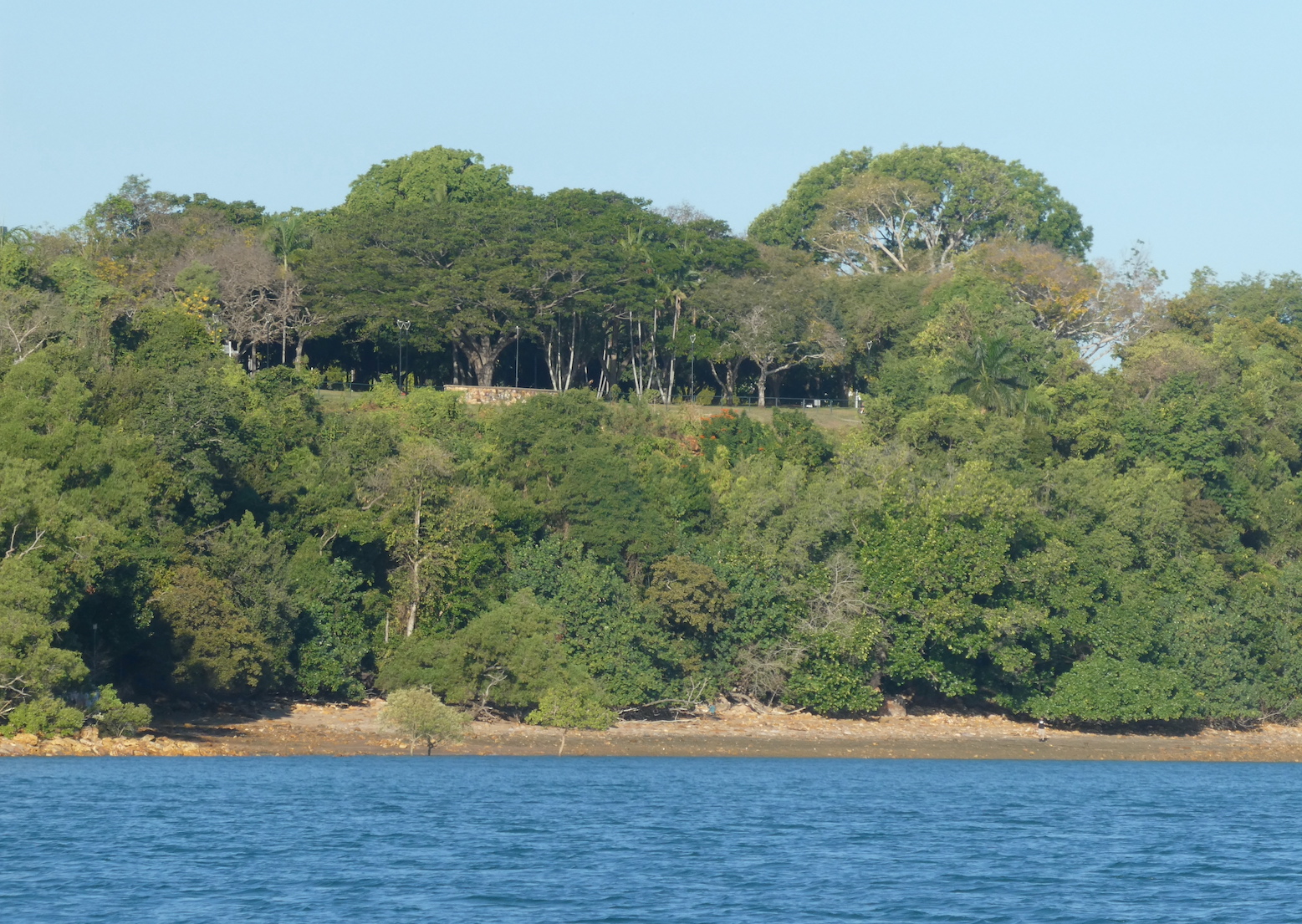
The Esplanade runs the length of the waterfront overlooking Darwin Harbour and alongside, Bicentennial Park is home to monuments and memorials as part of the WWII walking trail. Lookout Point is a good place to start.
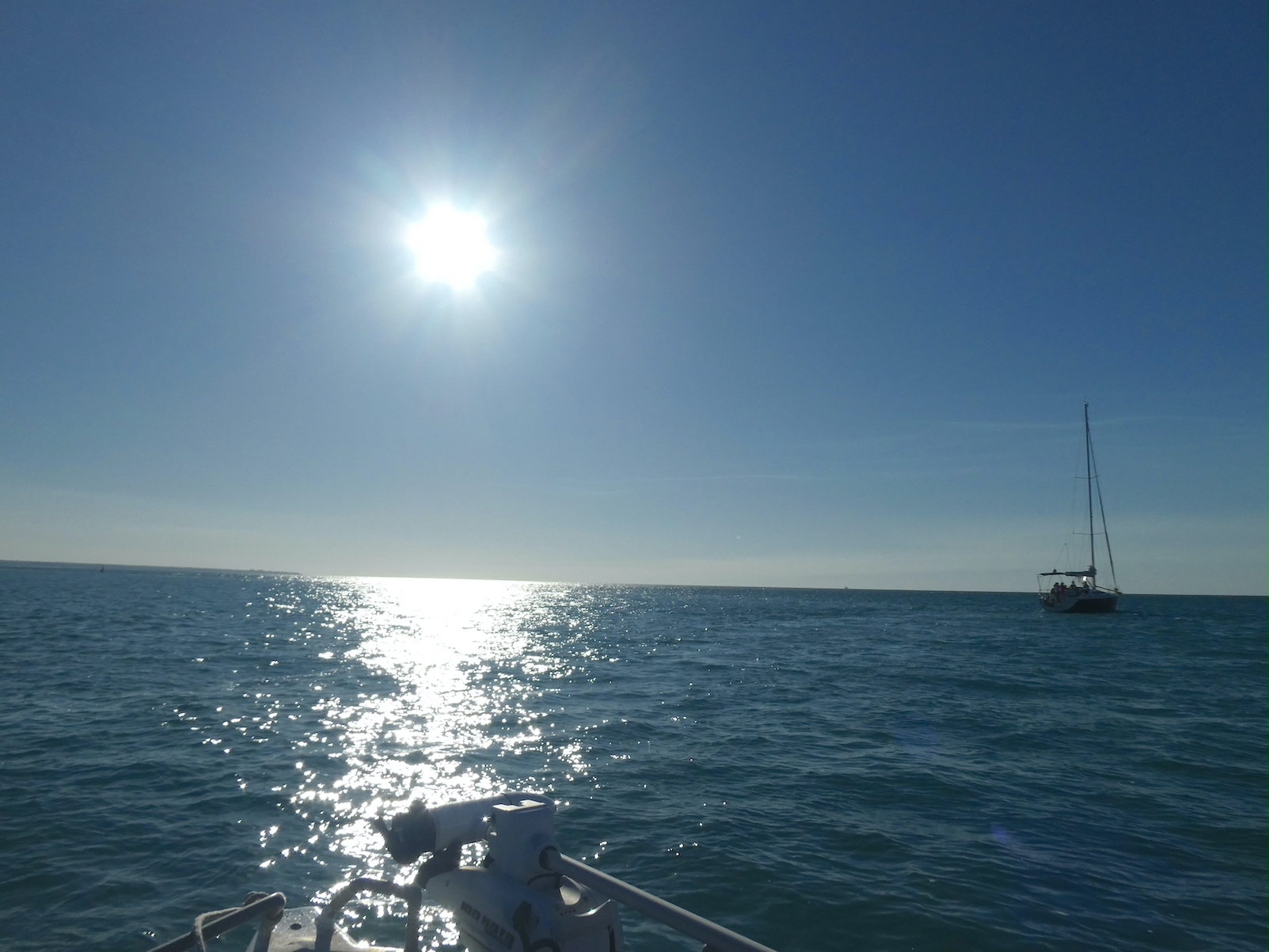
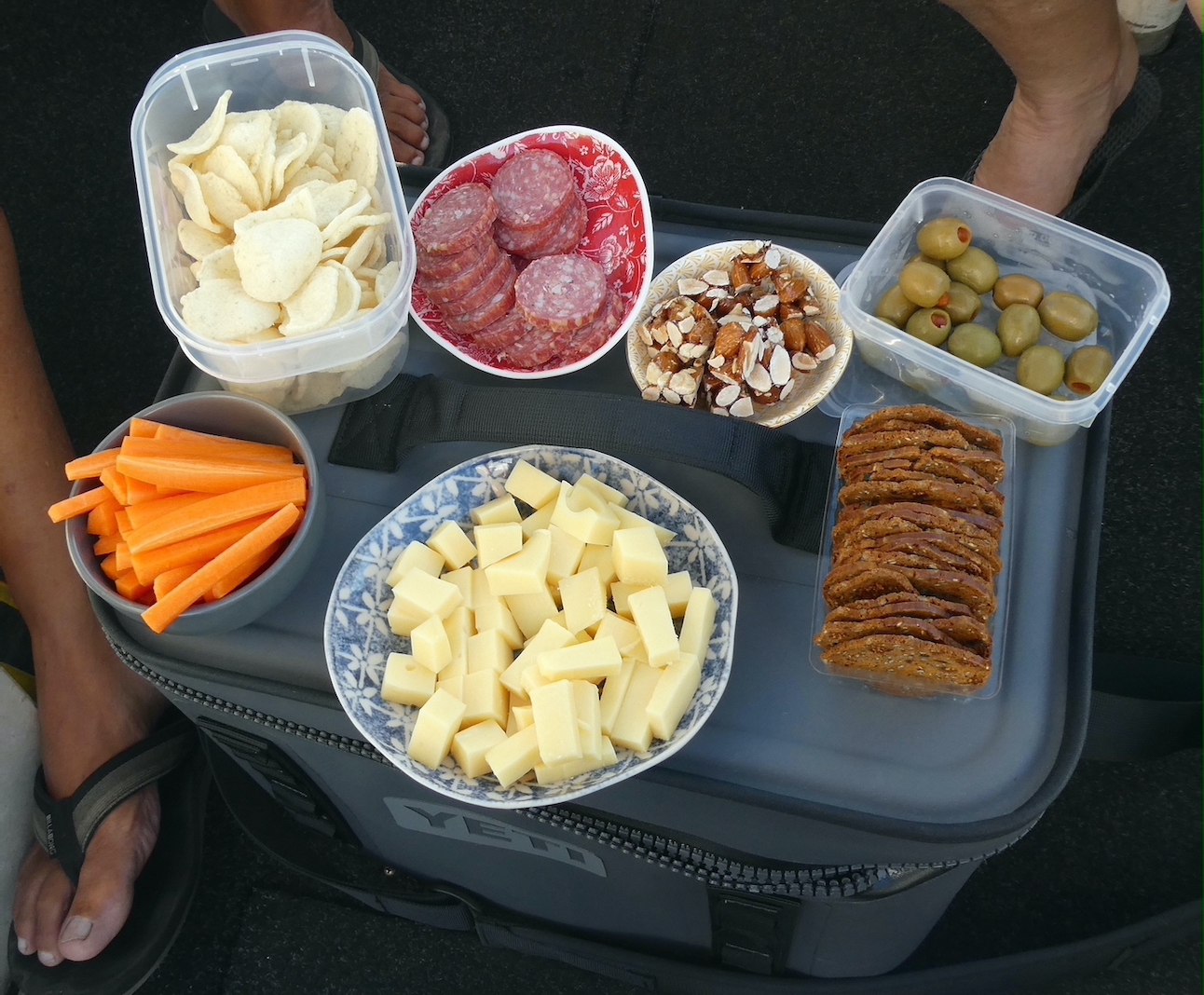
With calm waters and stupendous scenery, it was time to serve drinks and nibbles.
Continuing down the coast toward the end of the park,
the Deckchair Cinema operates seven nights a week in the dry season. Established in 1954, Darwin’s only independent cinema gives audiences the chance to watch a diverse range of movies that would otherwise go unseen on the big screen.
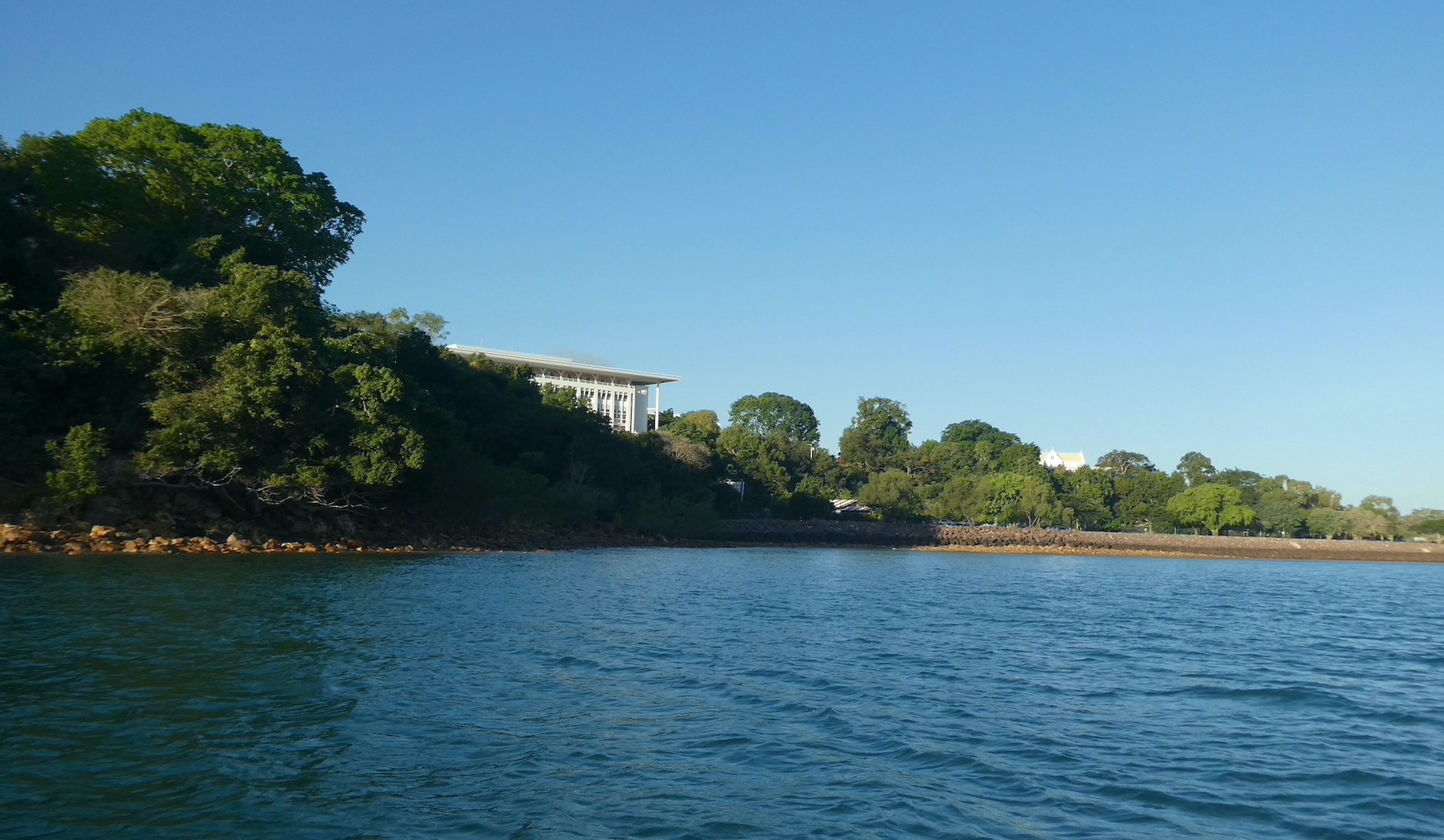
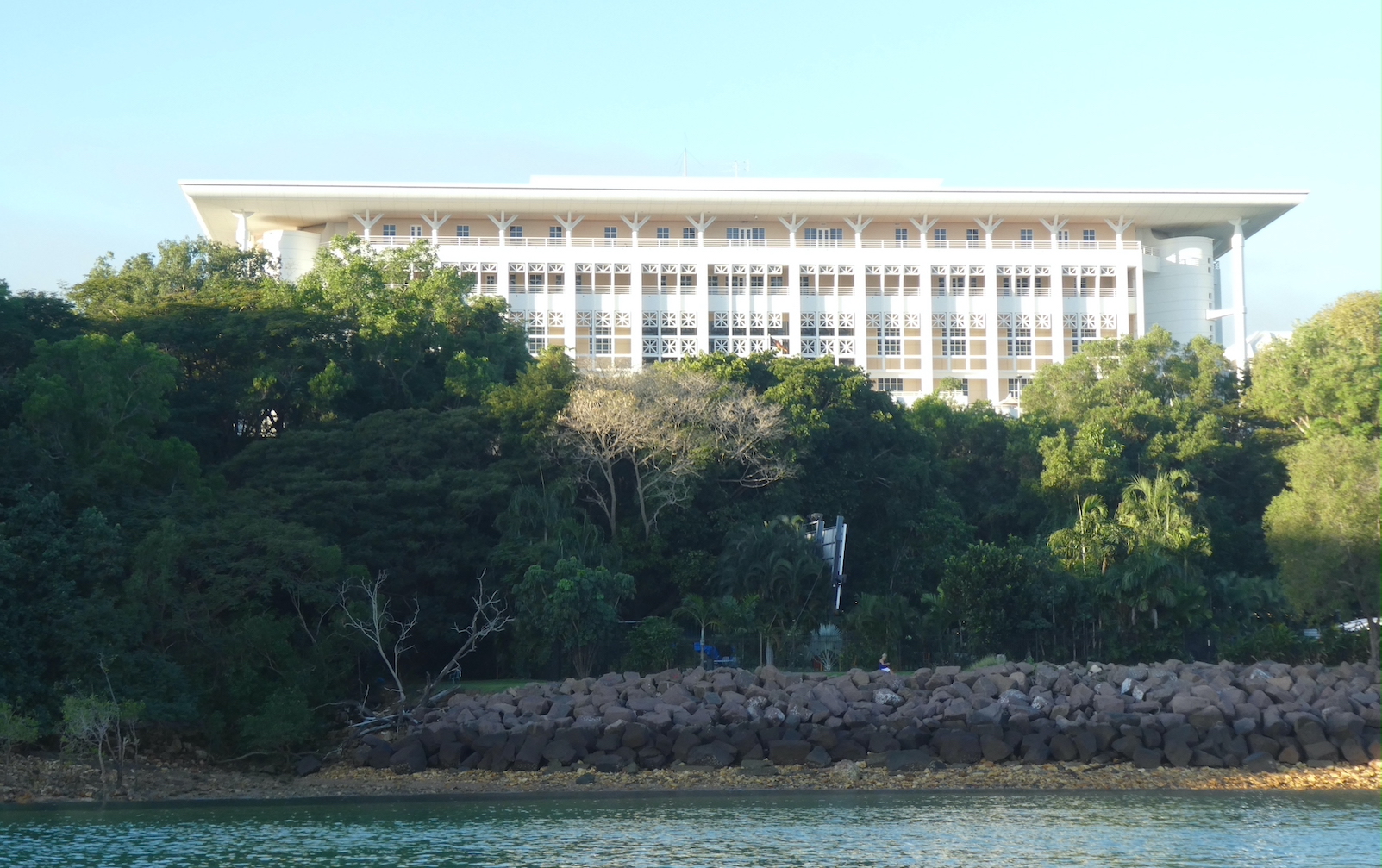
Adjacent to the cinema, Parliament House was opened in 1994 on the site of the Darwin Post Office that was bombed in February 1942.
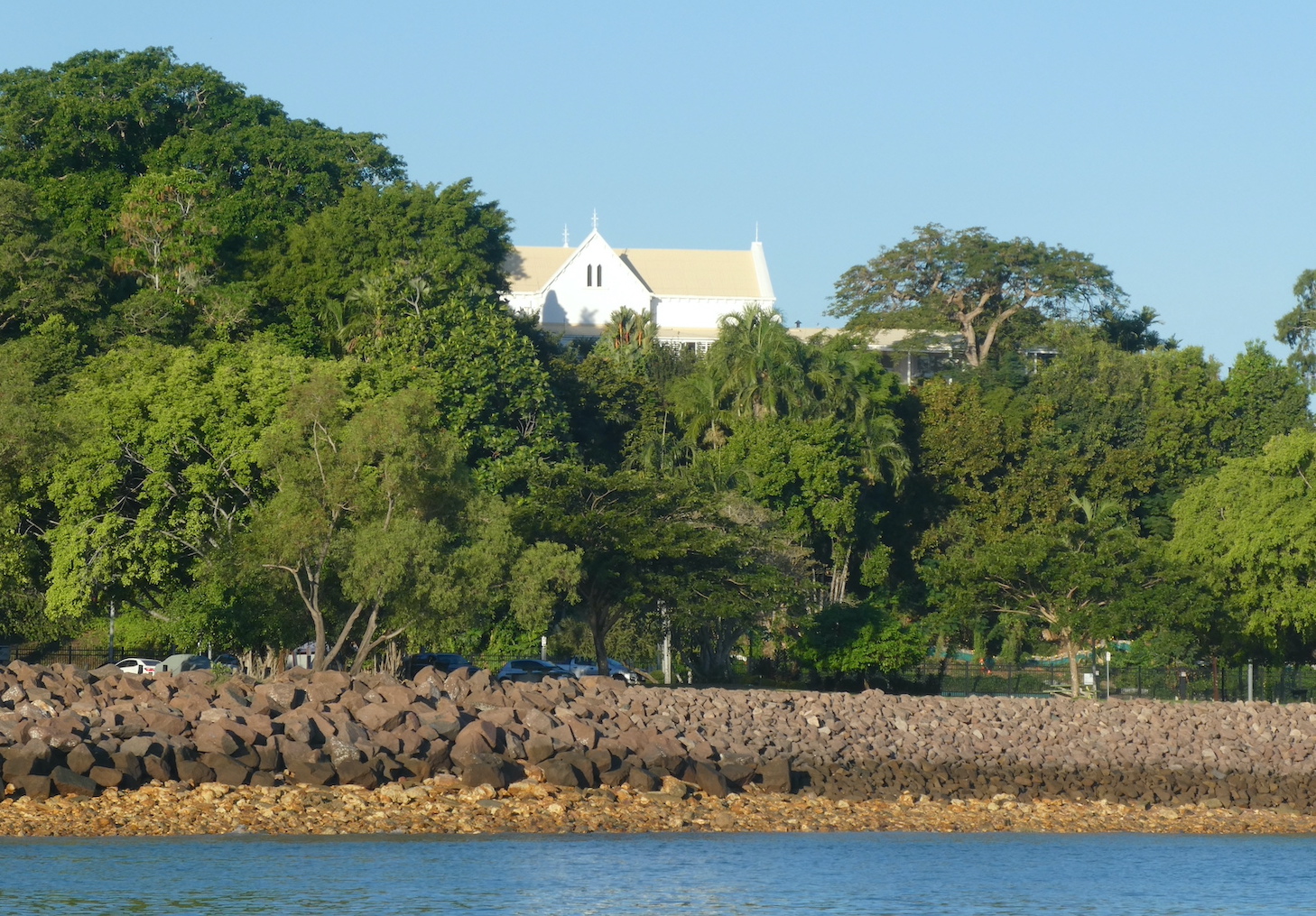
On the other side of the cinema, Government House is well hidden from view. It is the oldest European building in the Northern Territory and has been home to Government Residents and Administrators since 1871.
At the end of the Esplanade, Jervois Park marked our point of return
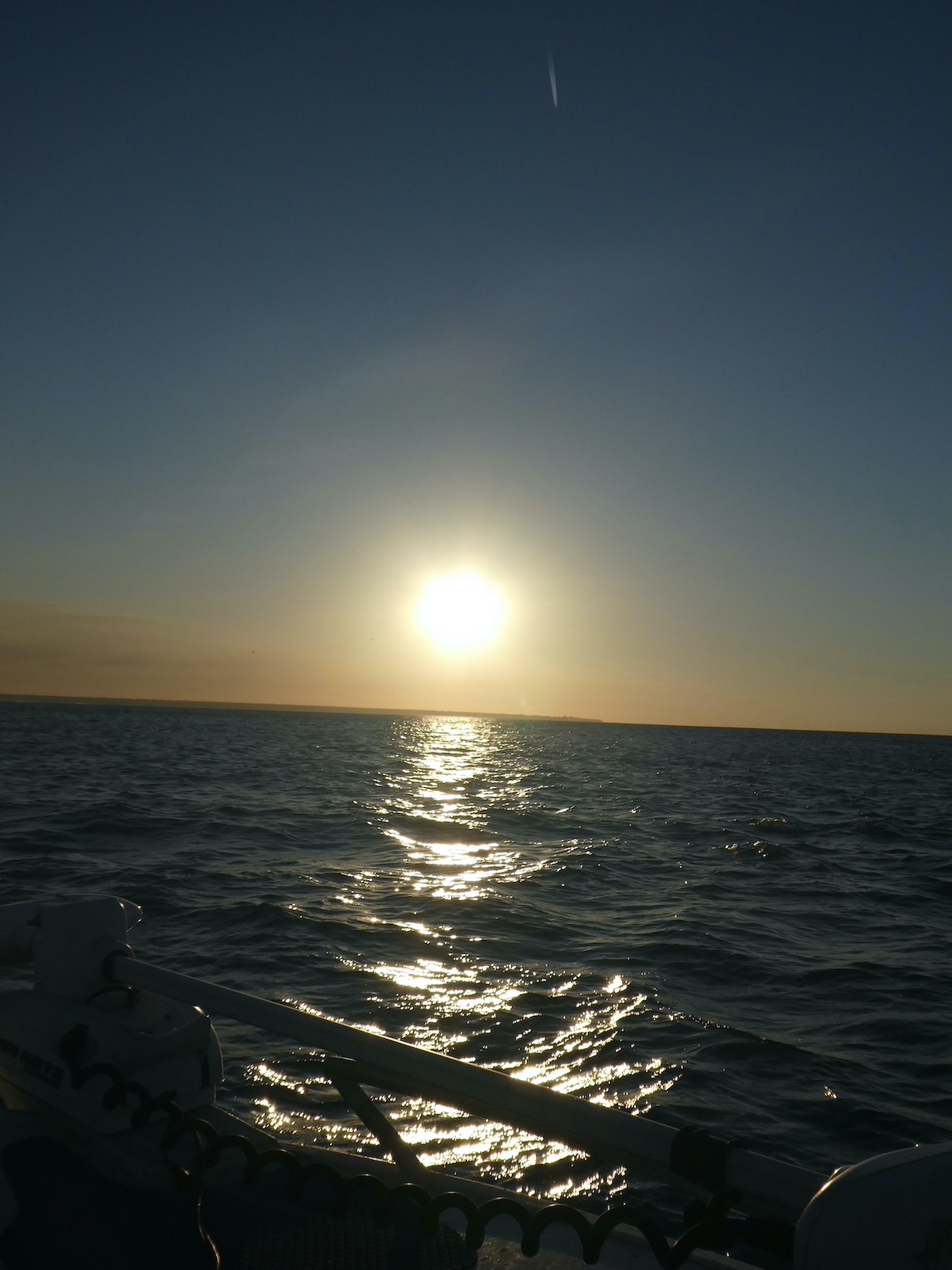
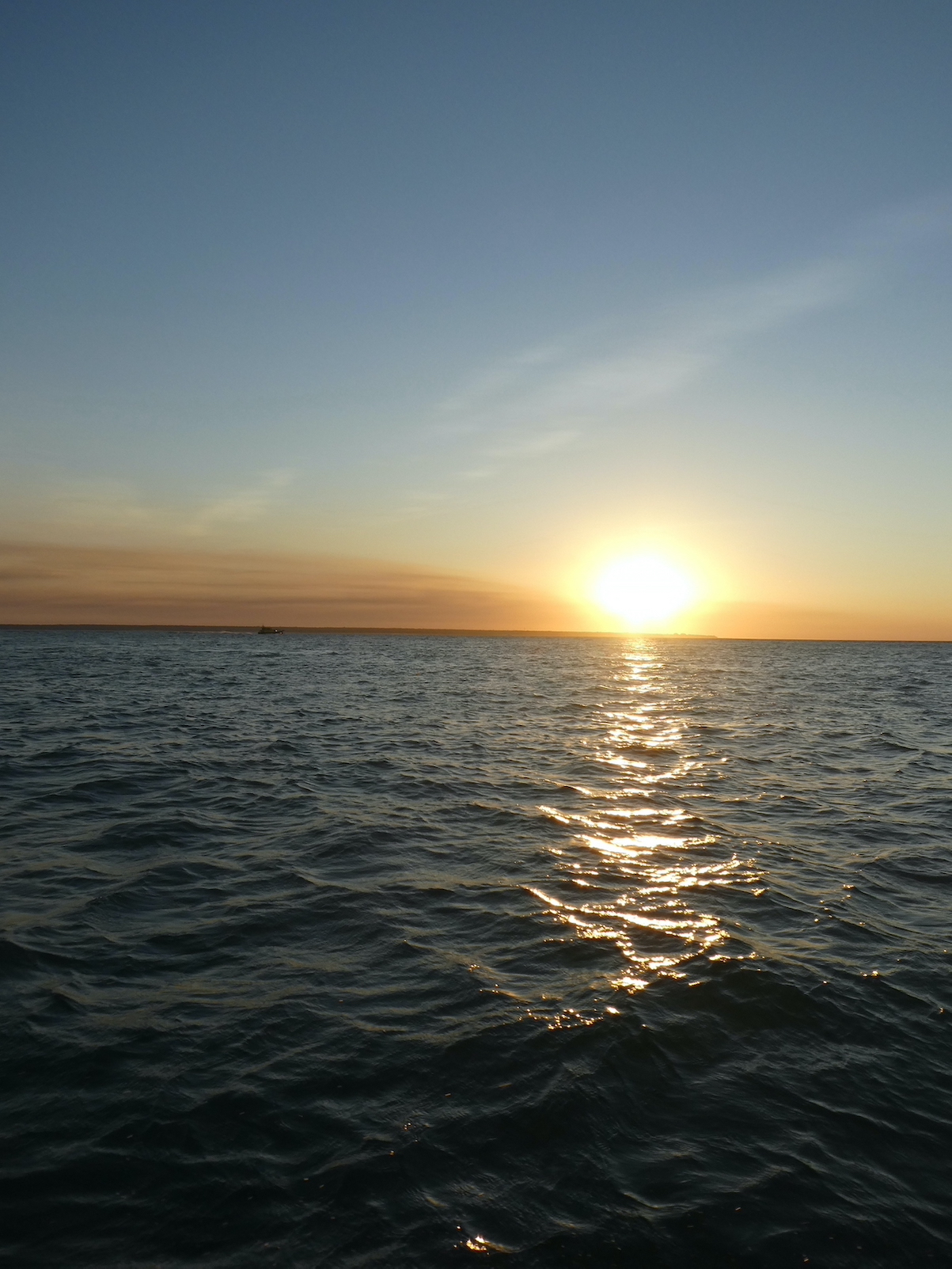
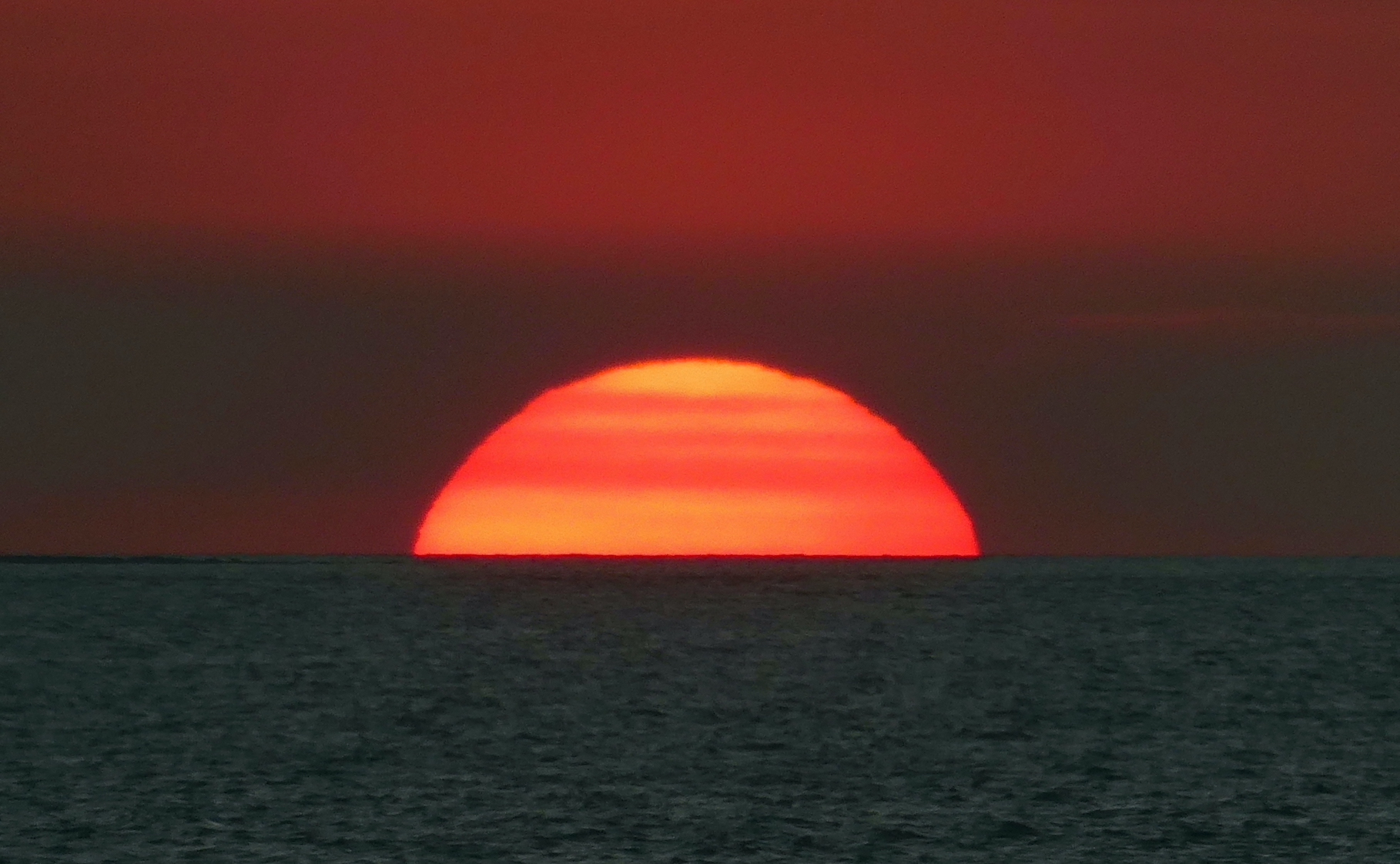
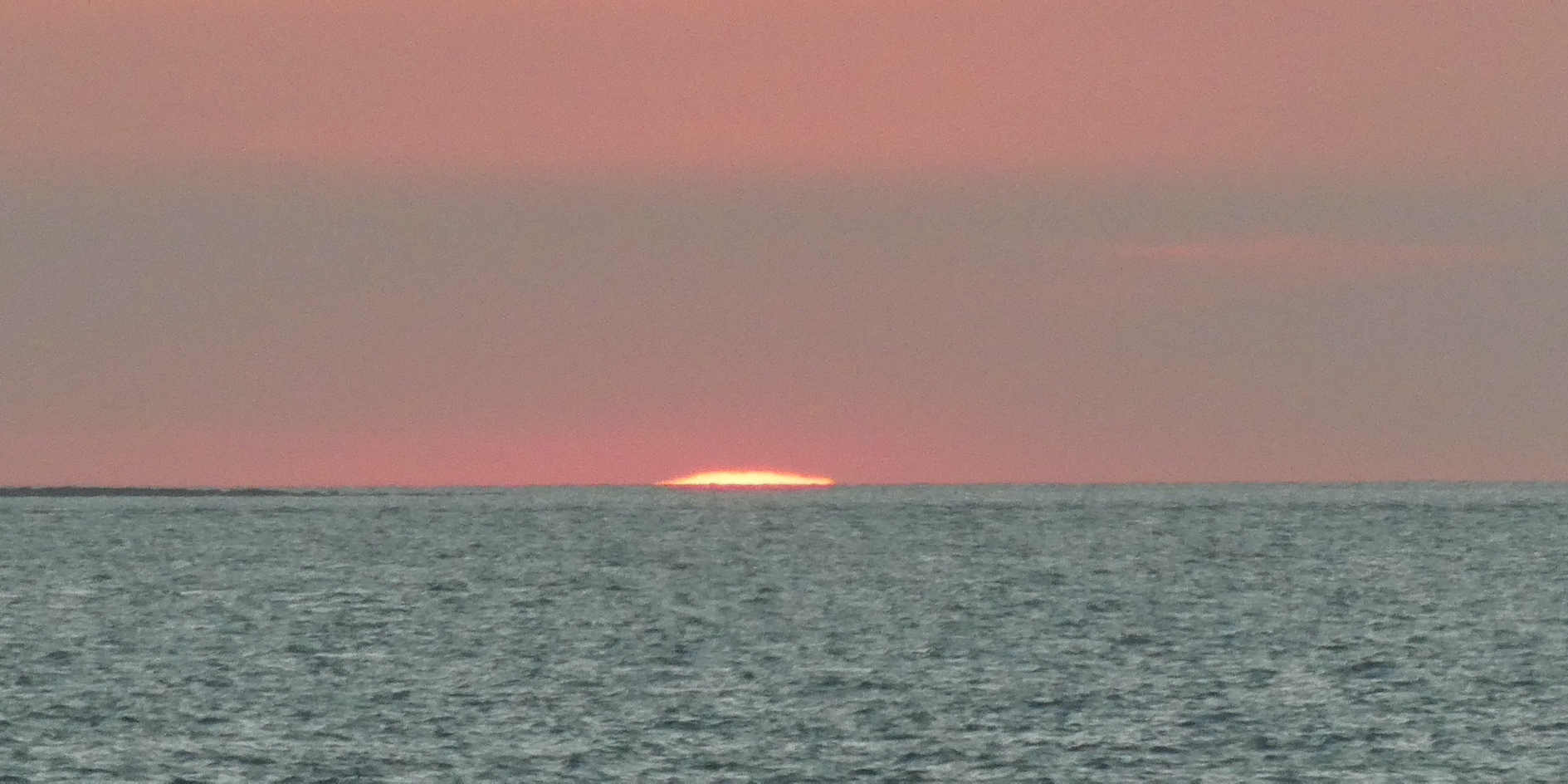
as the evening sun cast the cityscape in a new light.
The occupants of this fishing boat should probably have looked behind them.
On the horizon, eight jet skiers resembled the riders of the Apocolypse, fortunately not close enough to shatter the serenity.
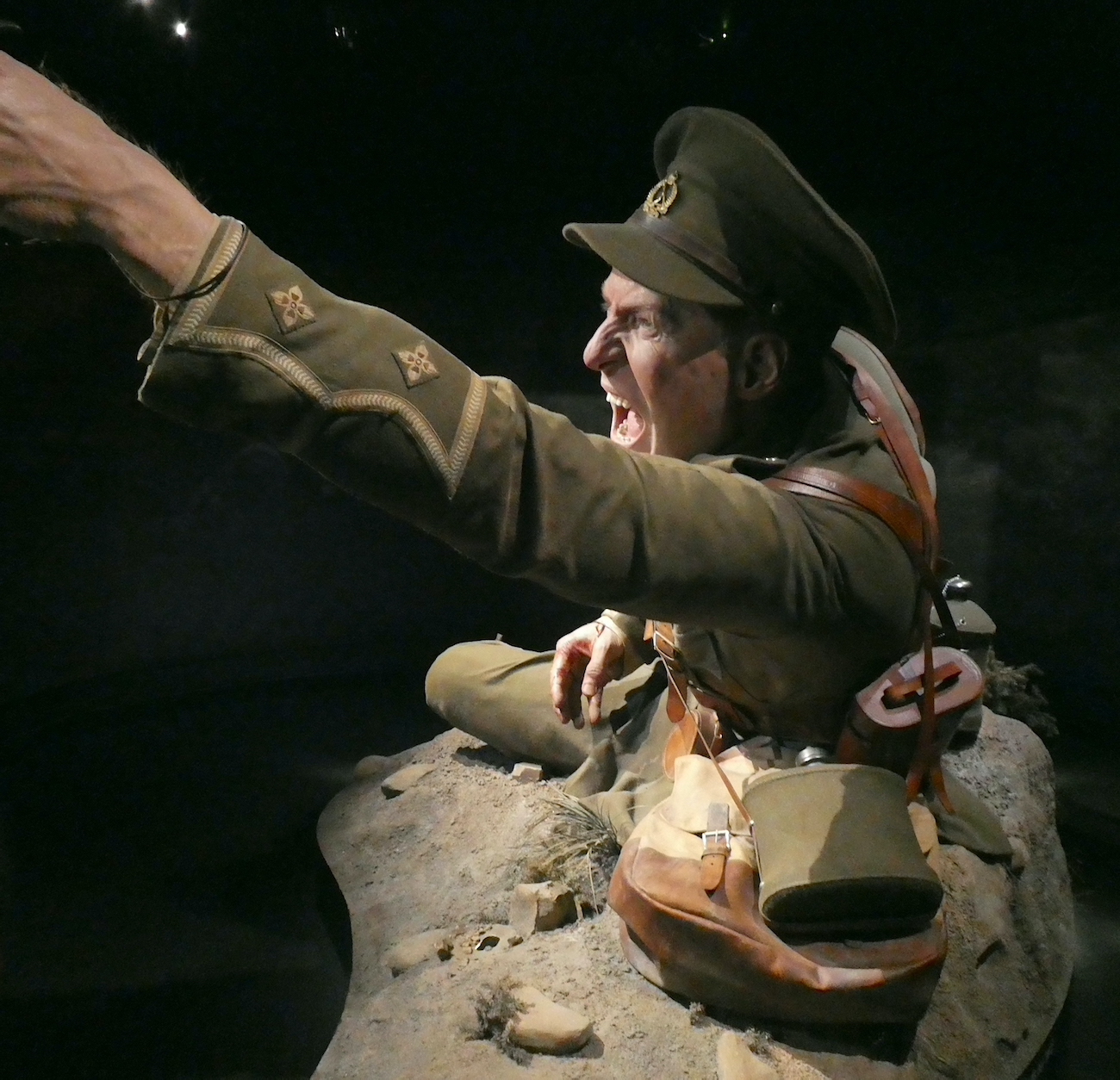
Following our experience at Wētā Workshop the plan was to visit New Zealand’s national museum, Te Papa (Māori for ‘the treasure box’). We were intrigued to see the ‘Gallipoli: The Scale of Our War’ exhibition after learning at Wētā that they were responsible for creating the life-like figures on display.
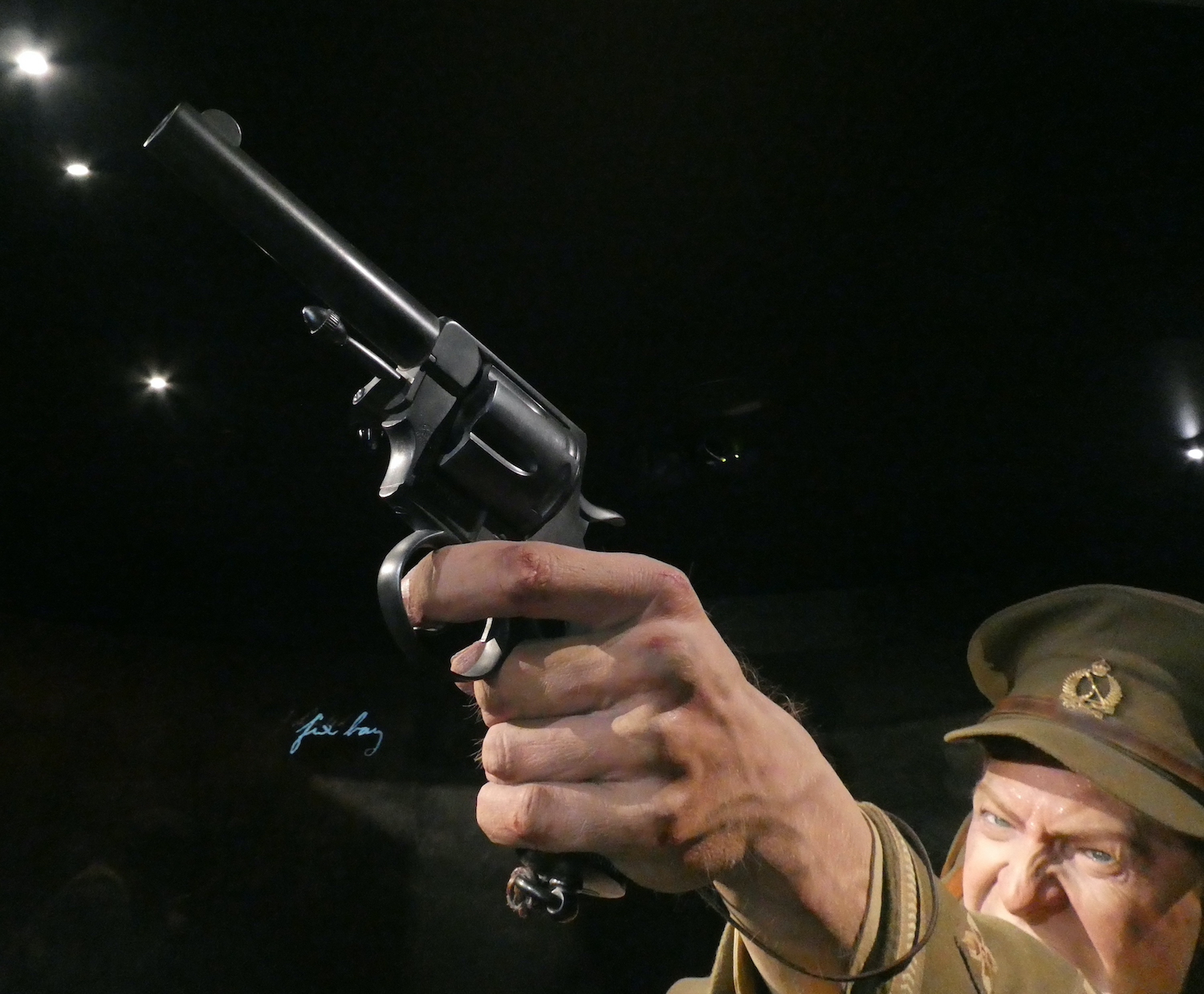
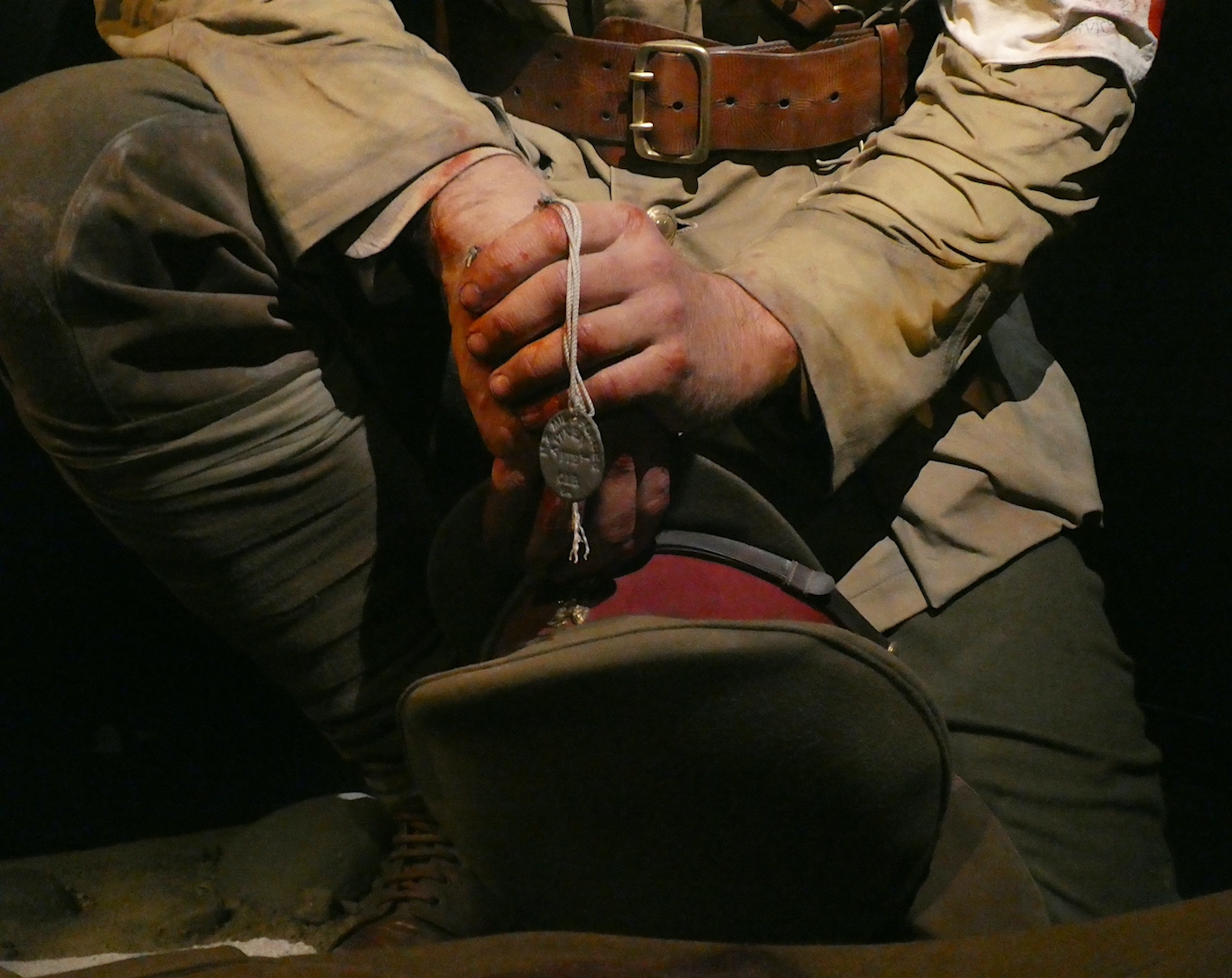
The giant sculptures, 2.4 times human size, took 24,000 hours to complete, not surprising considering the incredible detail and emotion on the faces. The exhibition opened on 18th April 2015 to commemorate the centenary of the ANZAC campaign and will remain until 25th April 2025. The diaries of seven soldiers and a nurse were selected to share the stories through the eyes of ordinary New Zealanders in diabolical circumstances. Stepping into the darkened room, the effect of a huge, spotlighted figure aiming a gun in apparent terror was startling.
Lieutenant Spencer Westmacott was one of the first New Zealanders to climb the steep hills to join the Australians. By nightfall, he had been evacuated with severe wounds to his right arm which was later amputated at a military hospital in Egypt.
A cut-through model of a soldiers’ kit shows the little protection they had from external armoury.
The despair is palpable on the face of Lieutenant Colonel Percival Fenwick as he leans over the fatally wounded Canterbury infantryman, Jack Aitken.
The 45 year old surgeon, a veteran of the South African war, recorded the hellish conditions and his disillusionment with the inept direction of the senior commanders in his diary.
The lonely figure of Private Jack Dunn, eating hard biscuits covered with flies, tells a tragic story.
Malnourished by bad food, he was hospitalised with dysentery but returned to duty while still sick. He fell asleep at his post and was sentenced to death by firing squad. Although his sentence was rescinded, he was killed in action a few days later.
The exhibition is also comprised of 3-D maps and projections, miniatures, models and interactive modules. The daily life activity station hosts a realm of surprises in drawers and cupboards.
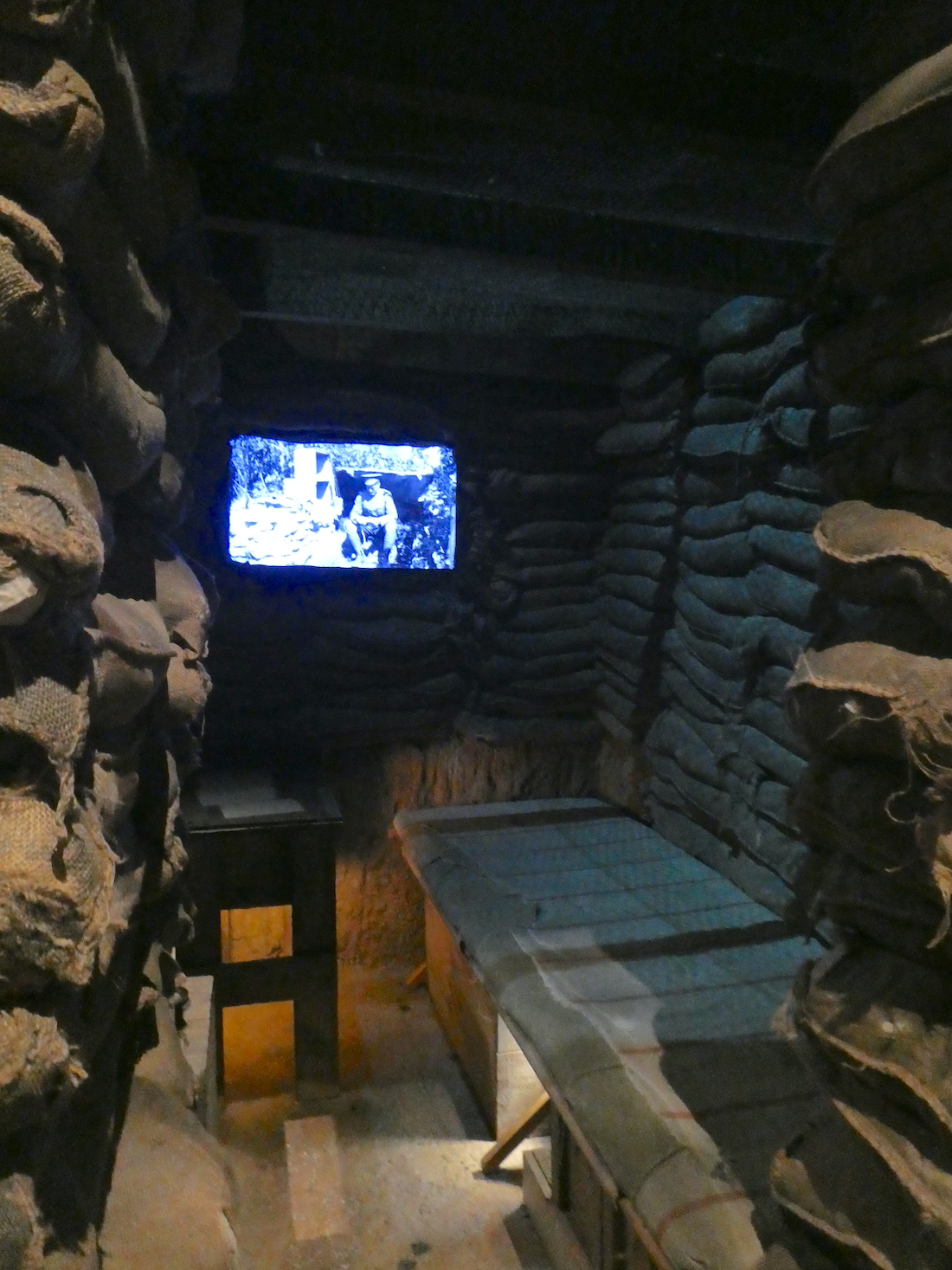
Lieutenant Colonel William Malone’s detailed diary entries echoed Percival Fenwick’s disenchantment with his superiors and the conduct of the campaign. Inside a replica of his dugout, built according to a sketch made by Malone, an actors voice reads the last letter he wrote to his wife, Ida. The moving epistle suggests Malone was certain he would die in the August attack the following day. His intuition proved correct, he was accidentally killed by supporting artillery fire.
The ‘machine gunners trio’ was recreated based on a paragraph in the diary of Private Rikihana Carkeek.
He and fellow Māori soldier, Friday Hawkins found themselves on the same machine gun team under the command of Lieutenant Colin Warden who was unfortunately shot through the heart just after giving the gunners their range.
Almost immediately, gun Corporal Donald Ferris was shot through the head and killed instantly. As the scene depicts, Private Hawkins took charge of the gun while Private Carkeek moved into position to feed the belt. Shortly afterwards, Friday was shot through the wrist and Rikihana took over the gun before being shot through the base of the neck (yes, he survived). It seems all subsequent gunners were shot and badly wounded.
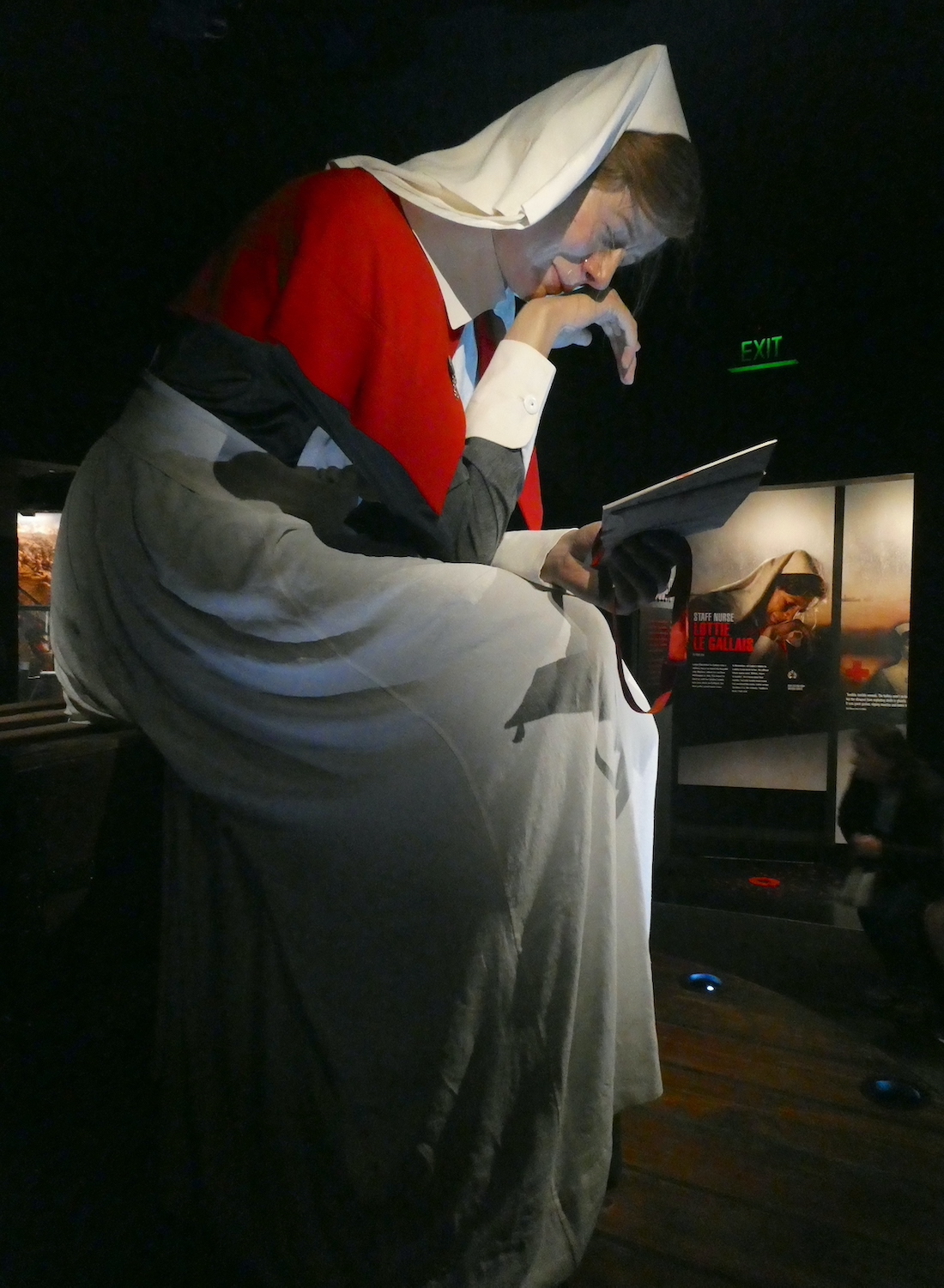
Auckland nurse Charlotte (Lottie) Le Gallais planned to meet up with her brother, Leddie, in Gallipoli. She was selected for the first voyage on the hospital ship Maheno, bound for Egypt but by the time she arrived, Leddie had been killed in action. She is portrayed having just learnt of his death, four months previously, when her letters to Leddie were returned unopened.
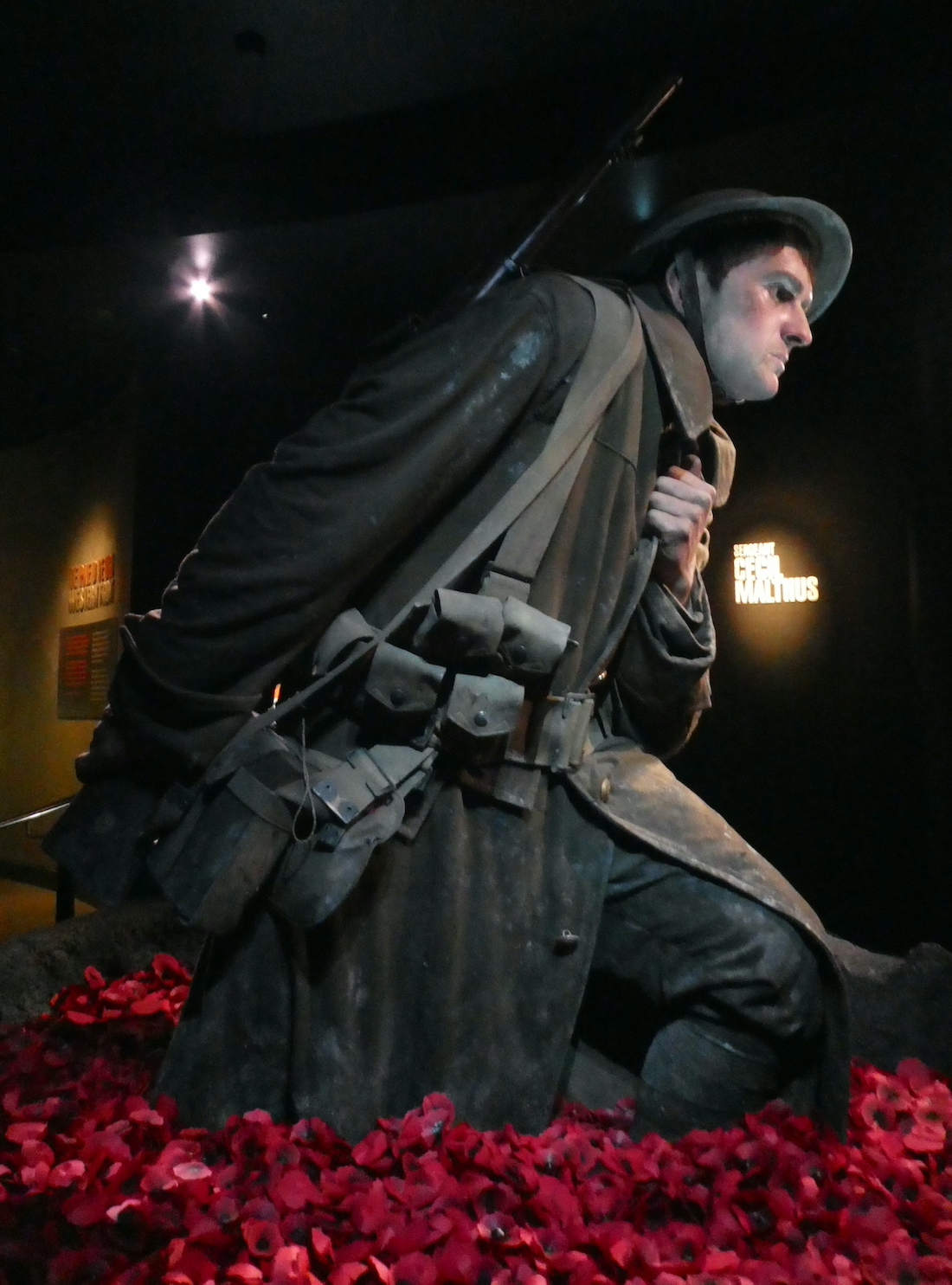
Having survived Gallipoli, Private Cecil Malthus then fought on the Western Front where he was promoted to sergeant and was then wounded in action at the First Battle of the Somme. He is the final figure in the exhibition, positioned in a muddy crater which has been filled with poppies by visitors, some bearing handwritten notes.
Having run out of time on our first reconnaissance, we returned a few days later to continue our discovery of the artistic embellishments adorning the lanes of Darwin. As well as the annual Darwin Street Art Festival, the ‘Art to Street’ project in July 2019 invited local and emerging artists to create murals on seven public spaces across Darwin. Two of these colour the walls of West Lane Car Park.
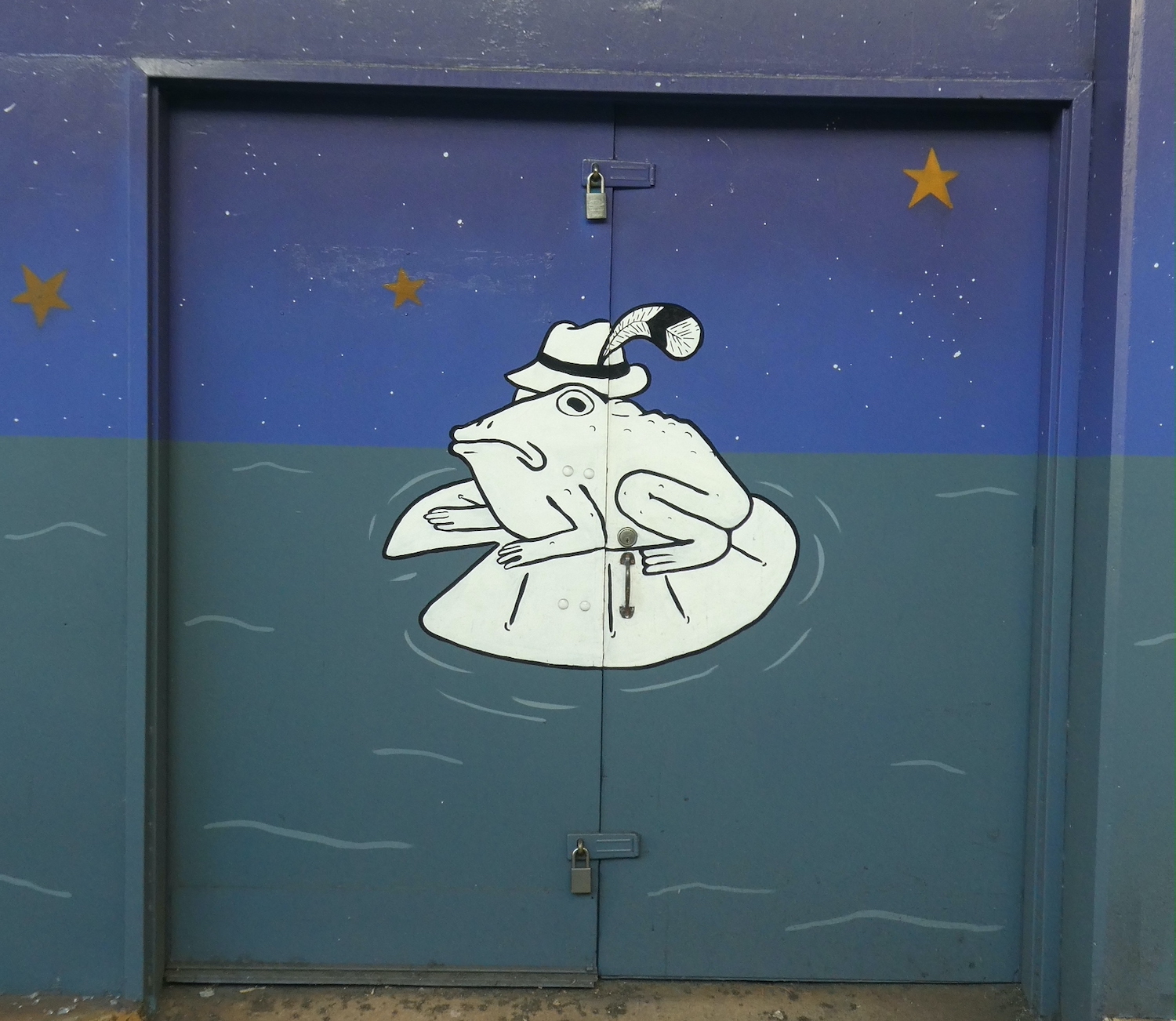
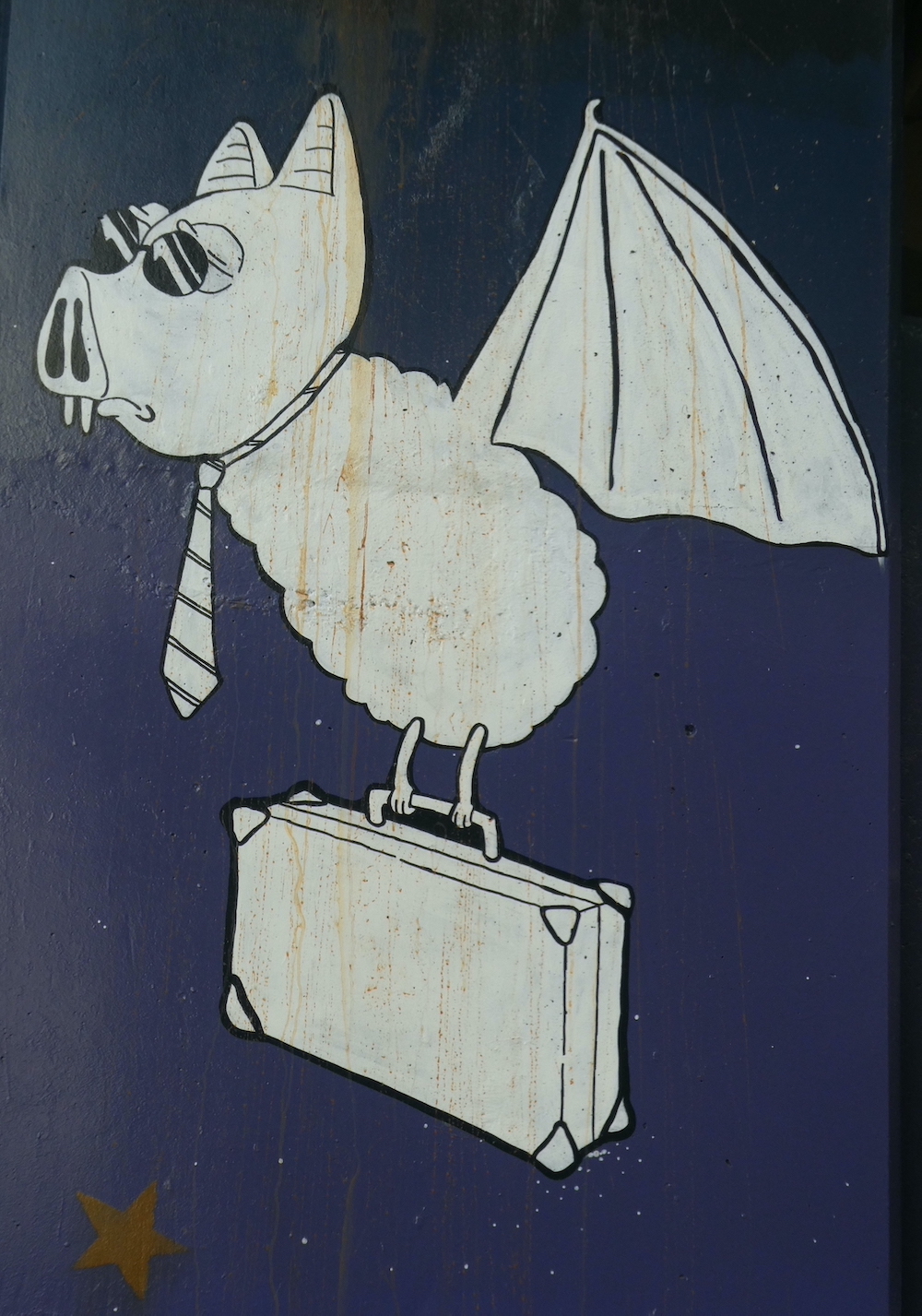
Talented mural artist Lara Connor collaborated with local school student Caleb Schatz (aka Mr Calebdude) to fill the space with subtle colour and quirky characters.
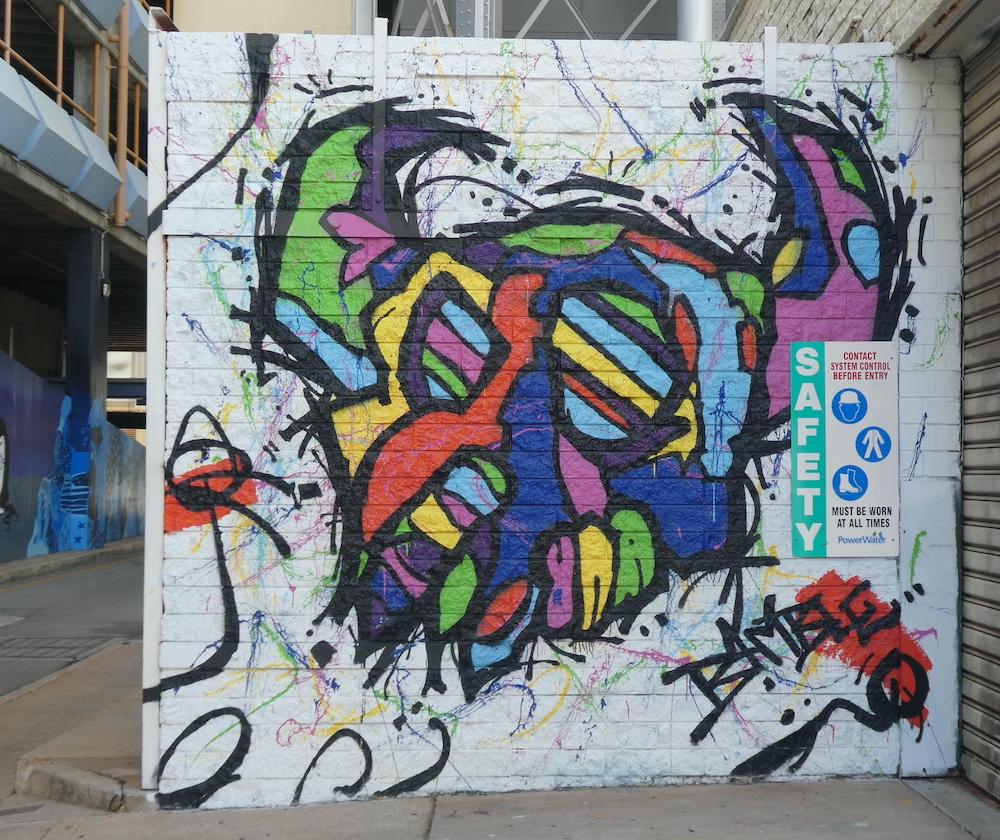
Back to the festival…..a buffalo skull was the inspiration for Darwin contemporary artist Jimmy B4mble’s contribution, Rukus in 2019.
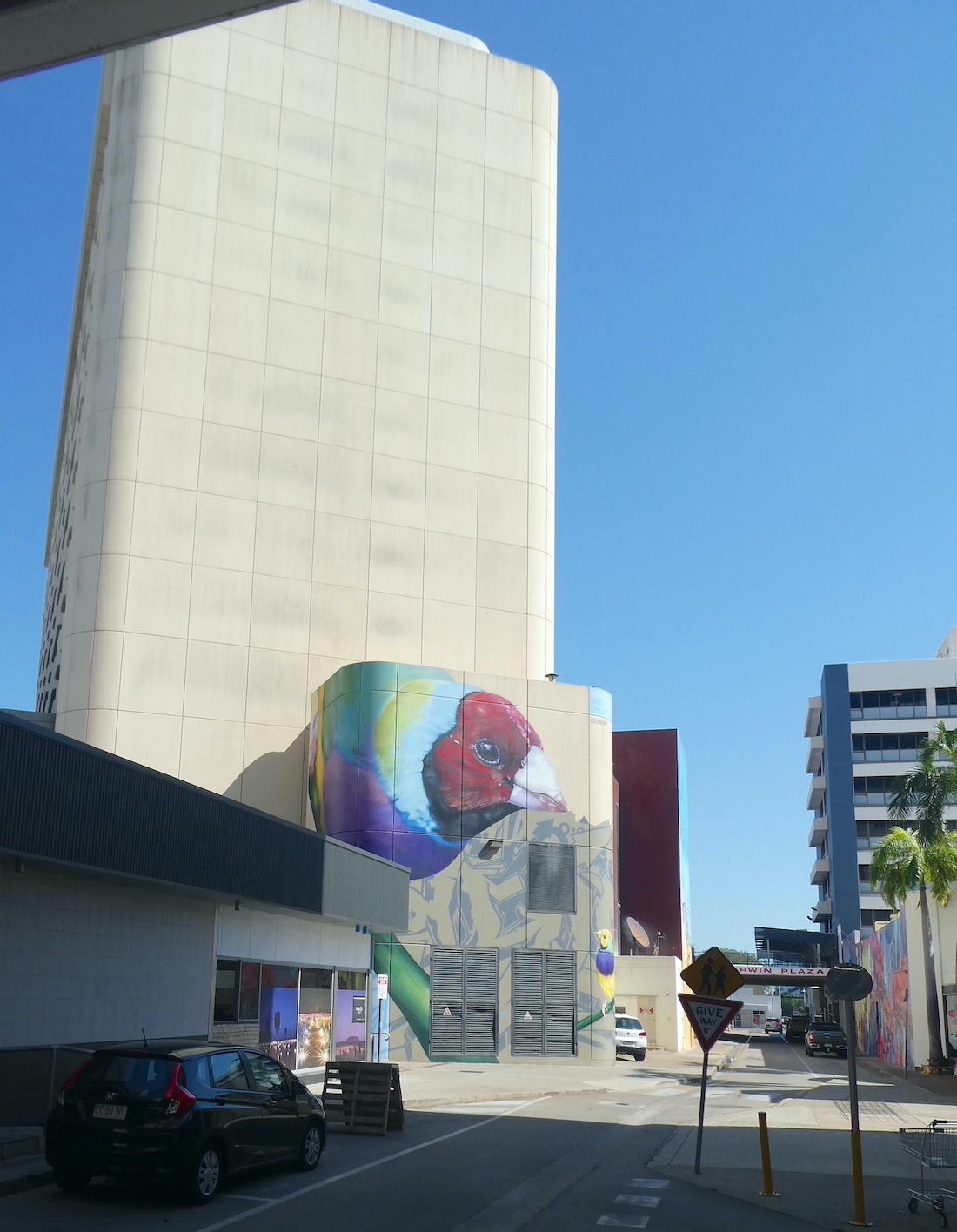
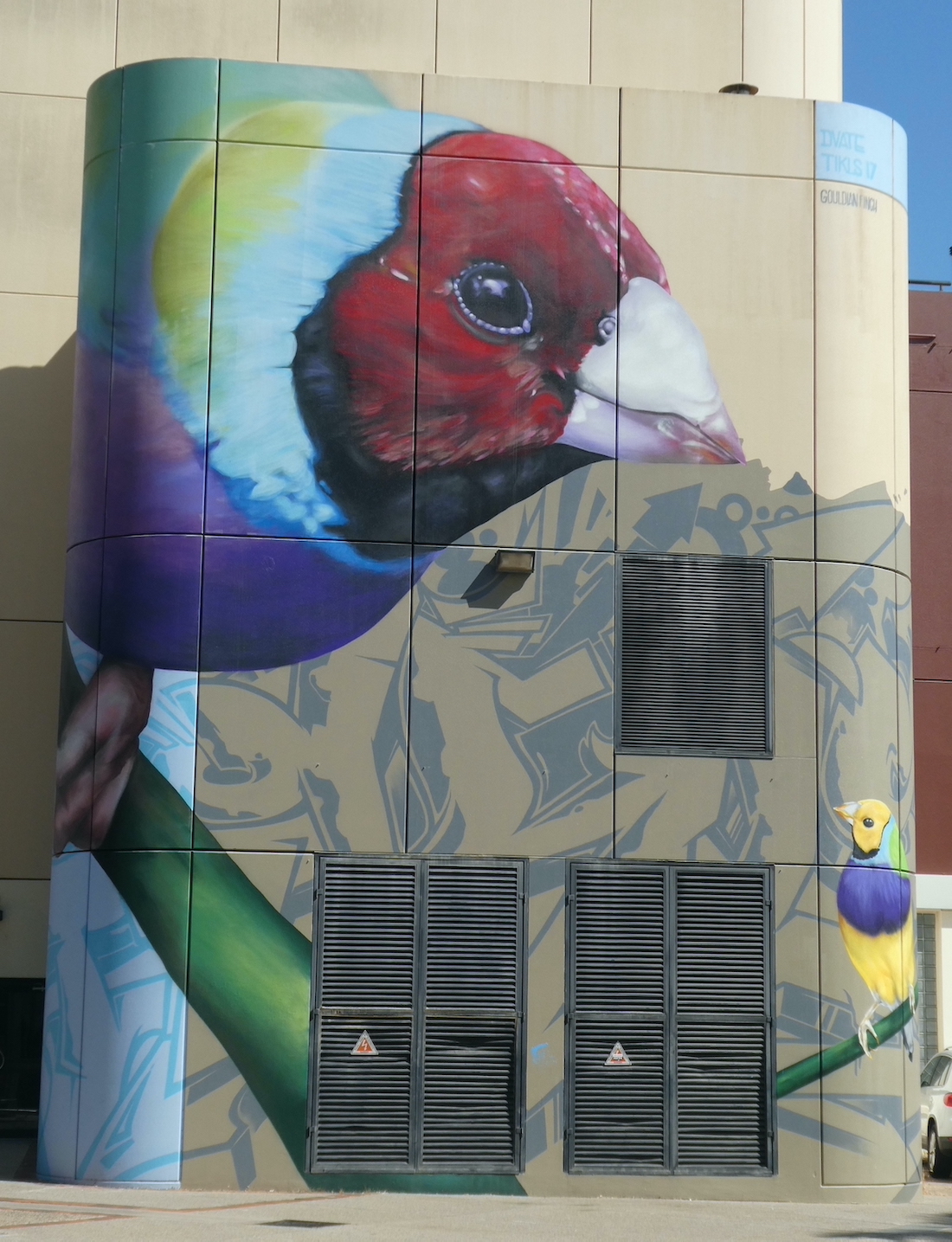
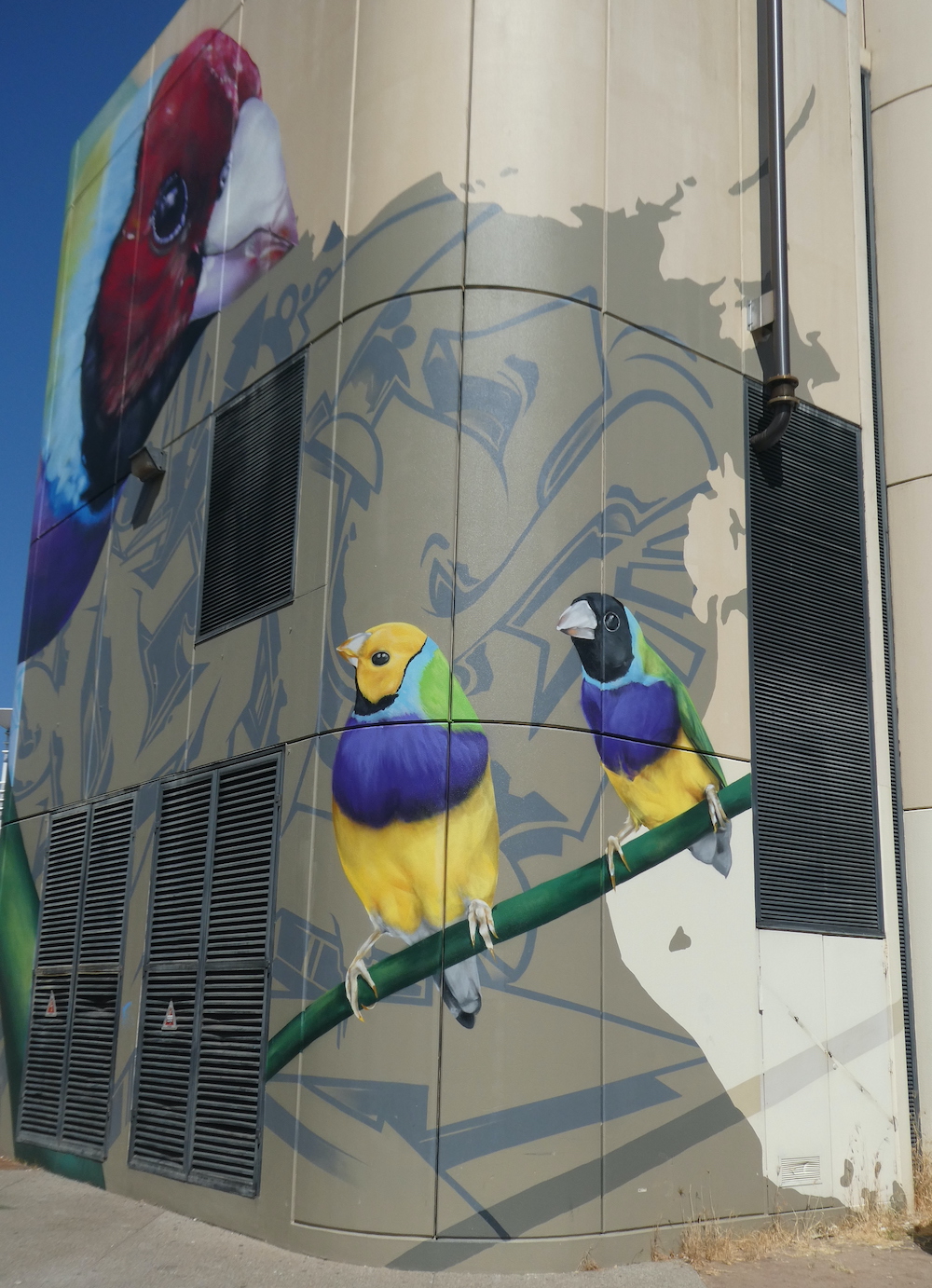
A little further down the lane, the enormous Gouldian Finch was painted for the inaugural festival in 2017 on a wall at the rear of the Darwin Hilton. Melbourne artist James Beattie (aka Jimmy Dvate) teamed with local Jesse Bell to present the three colour variations of the birds; the most common black-faced, the lesser known red-faced and the very rare yellow-faced. There are now fewer than 2500 Gouldian finch in the wild, their existence threatened by changing fire practices that reduce the availability of food and the aviary trade that saw thousands of birds trapped until it was banned in 1981.
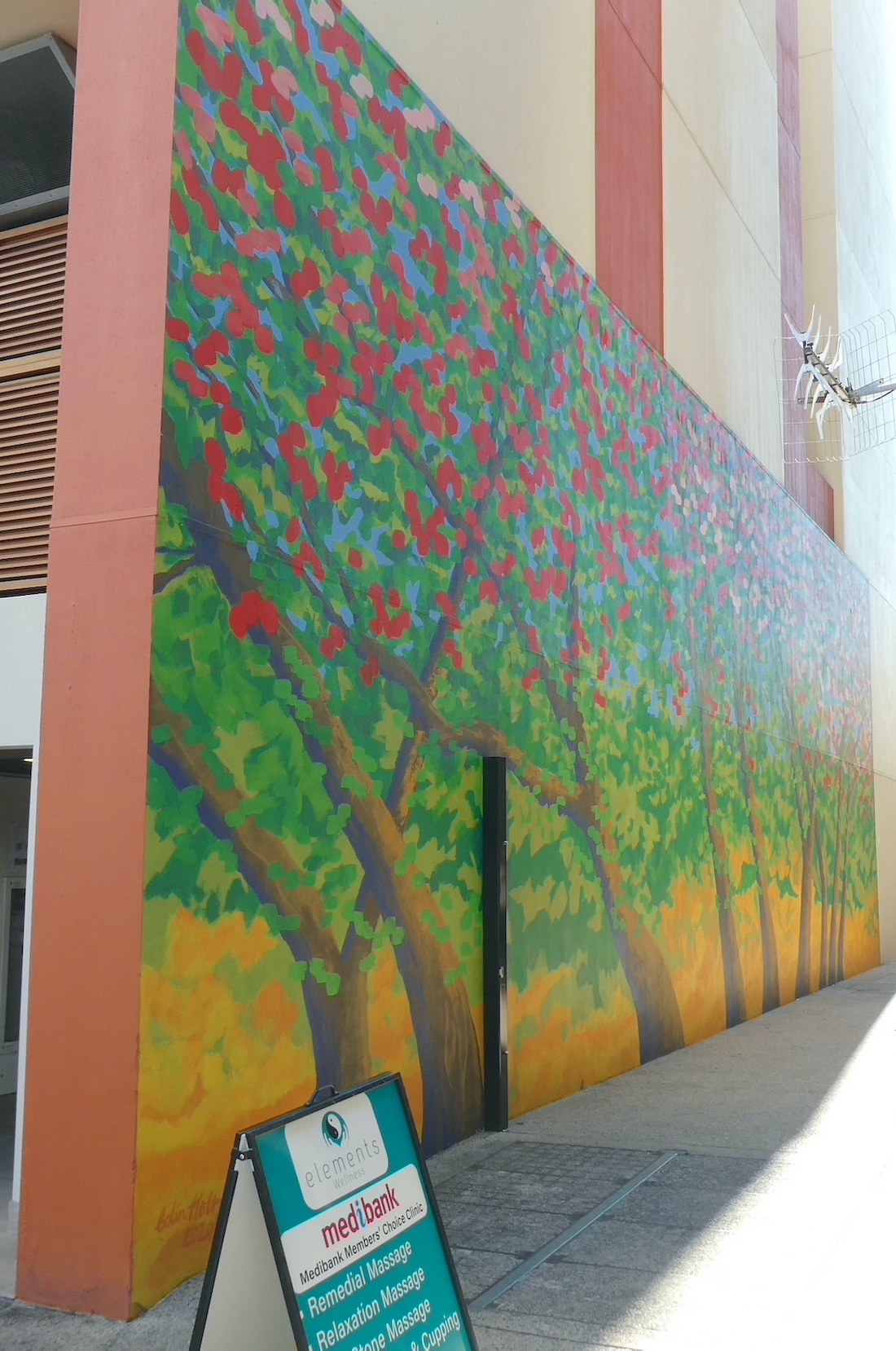
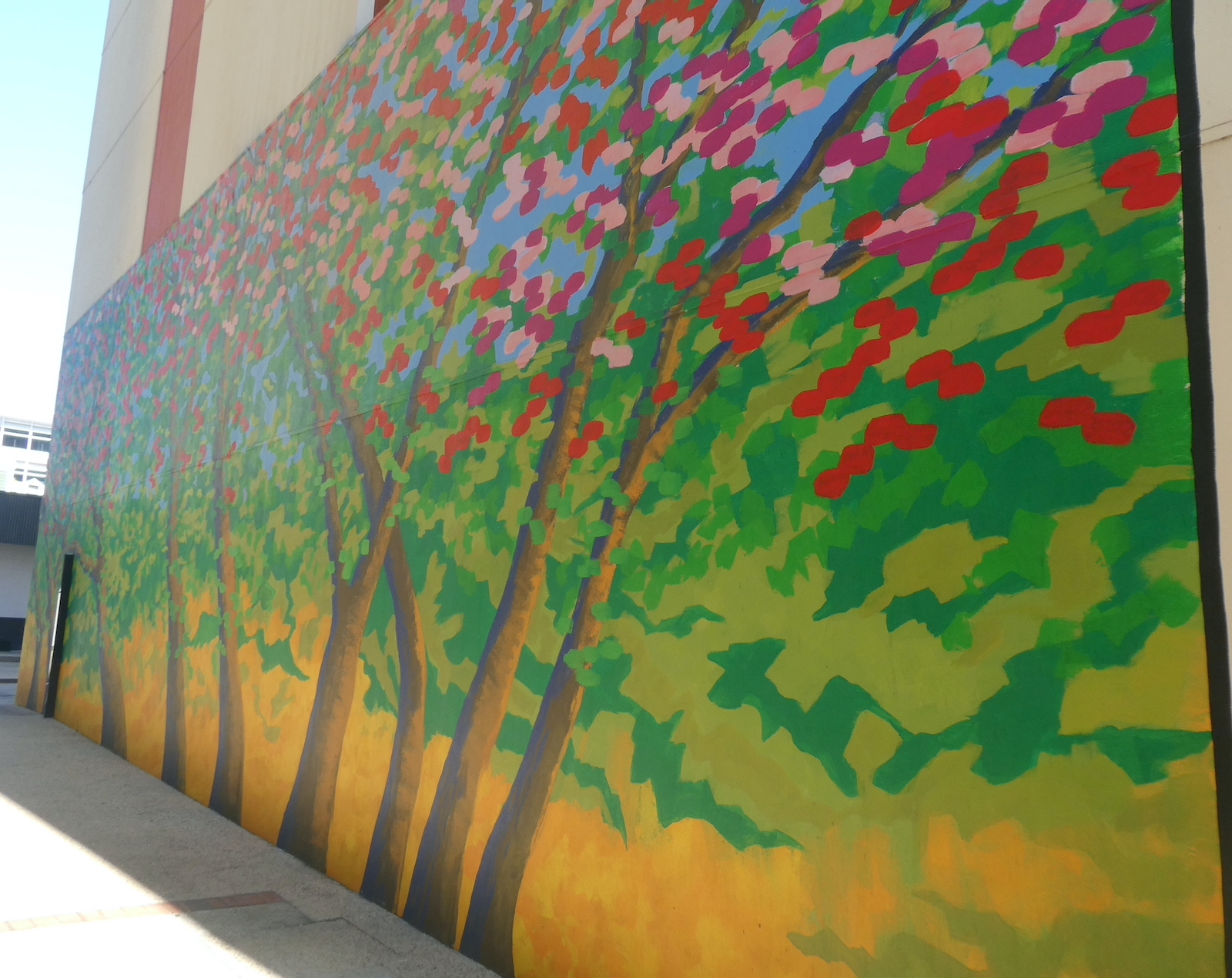
With a career spanning four decades, celebrated Darwin artist Colin Holt contributed a vibrant treescape in 2020.
Larrakia, Wardaman and Karajarri artist Jason Lee (aka Choplee) painted the seven main seasons of the Gulumoerrgin (Larrakia) calendar in 2018: Dalirrgang (build-up, September to October) – flying fox, cocky apple and cycad nuts; Balnba (rainy season, November to December) – long bums, black plum and bush potatoes; Dalay (monsoon season, January to March) – crocodile laying eggs and big red apple fruiting; Mayilema (March to April) – dragonflies and bush cherry; Damibila (April to June) – black cockatoo and bush peanut; Dinidjanggama (heavy dew time, June to August) – Dugong and water lillies; Gurrulwa (big wind time, July to September) – stingray and yellow kapok.
There is no denying the overwhelming talent on display throughout this exposition and I was absolutely boggled by the image that emerged from this inconspicuous nook.
Portuguese artist, Odeith, has a special interest in perspective and shading, calling his style “sombre 3D”. On his first trip to Darwin in 2019, he wanted to create a truly Australian artwork, the spectacular result being a kangaroo standing atop a transit van.
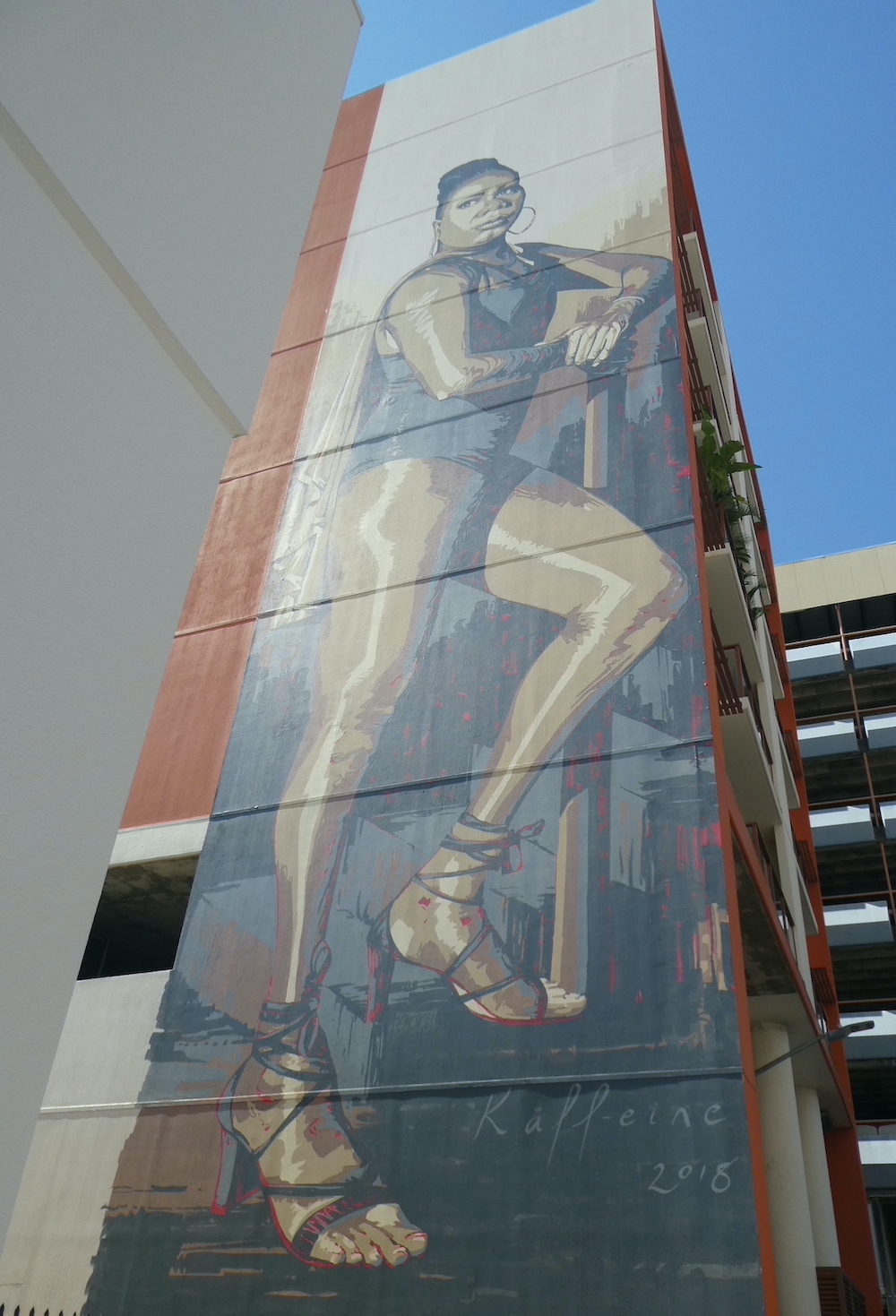
Sistagirls are transgender Aboriginal Australians traditionally known in the Tiwi Islands, north of Darwin, as yimpininni. Melburnian artist, Kaff-eine, met with the sistagirls and, in 2018 painted an elegant portrait of Shaniquá to celebrate the strength, power, character & beauty of the sistagirl community.
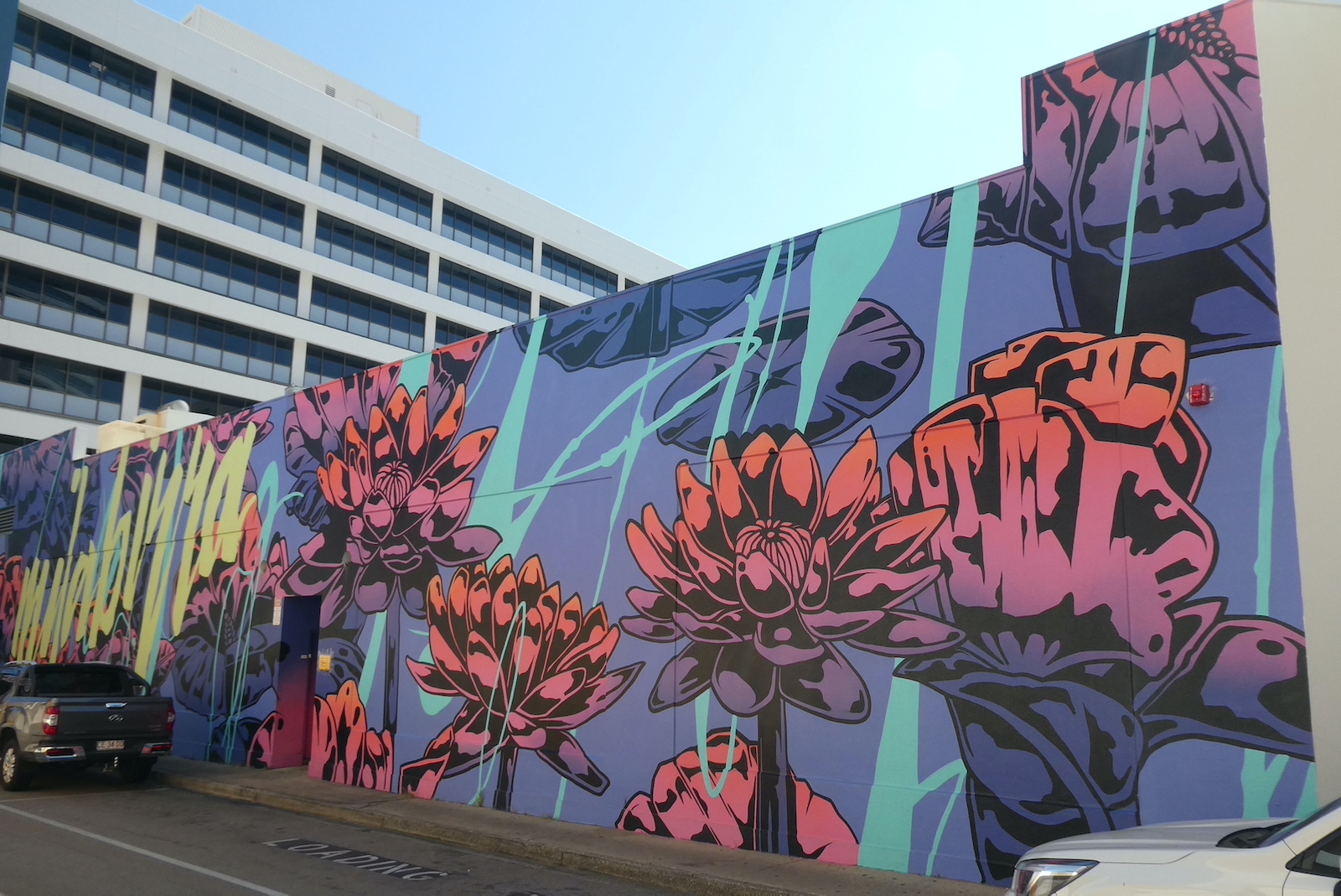
Also in 2018, Melbourne-based artist, George Rose, drew on her appreciation of the Australian landscape for her colourful work featuring Sturt Desert rose, Hibiscus brennanii and Nymphaea violacea.
Born and raised in Darwin, Larrakia man Shaun Lee (aka Hafleg) combined traditional and contemporary designs to create a beautiful turtle and jellyfish mural in 2018.
Nearby, he collaborated with Trent Lee two years later on a stunning piece featuring barramundi.
Known as the ‘build up’ in the Northern Territory, the weather cycle where heat and humidity increase leads up to the wet season. Build Up/Melt Down by local artist Vincent Poke in 2018 is a depiction of what it is like to live through this experience in the Top End.
In 2017, NT artist Polly Johnstone completed a mural, For the Love of Reading, featuring the image of Darwin local Artia Ratahi. She returned the following year and once again chose Artia, with her Indigenous and Maori heritage, to represent the diverse backgrounds of the community. The vibrant colours reflect the Top End soil, the crystal blue waters and the pinks and purples of the sunsets.
The wall of Monsoons nightclub provided the canvas for a collaboration between Melburnian Cam Scale and NT artist Les Huddleston in 2017. The painting, entitled Monsoon, represents the new life brought to the billabongs after monsoonal rains. Brolgas descend on the billabongs to breed and feed on turtles and fish, depicted swirling amongst the water plants at the feet of the dancing brolgas.
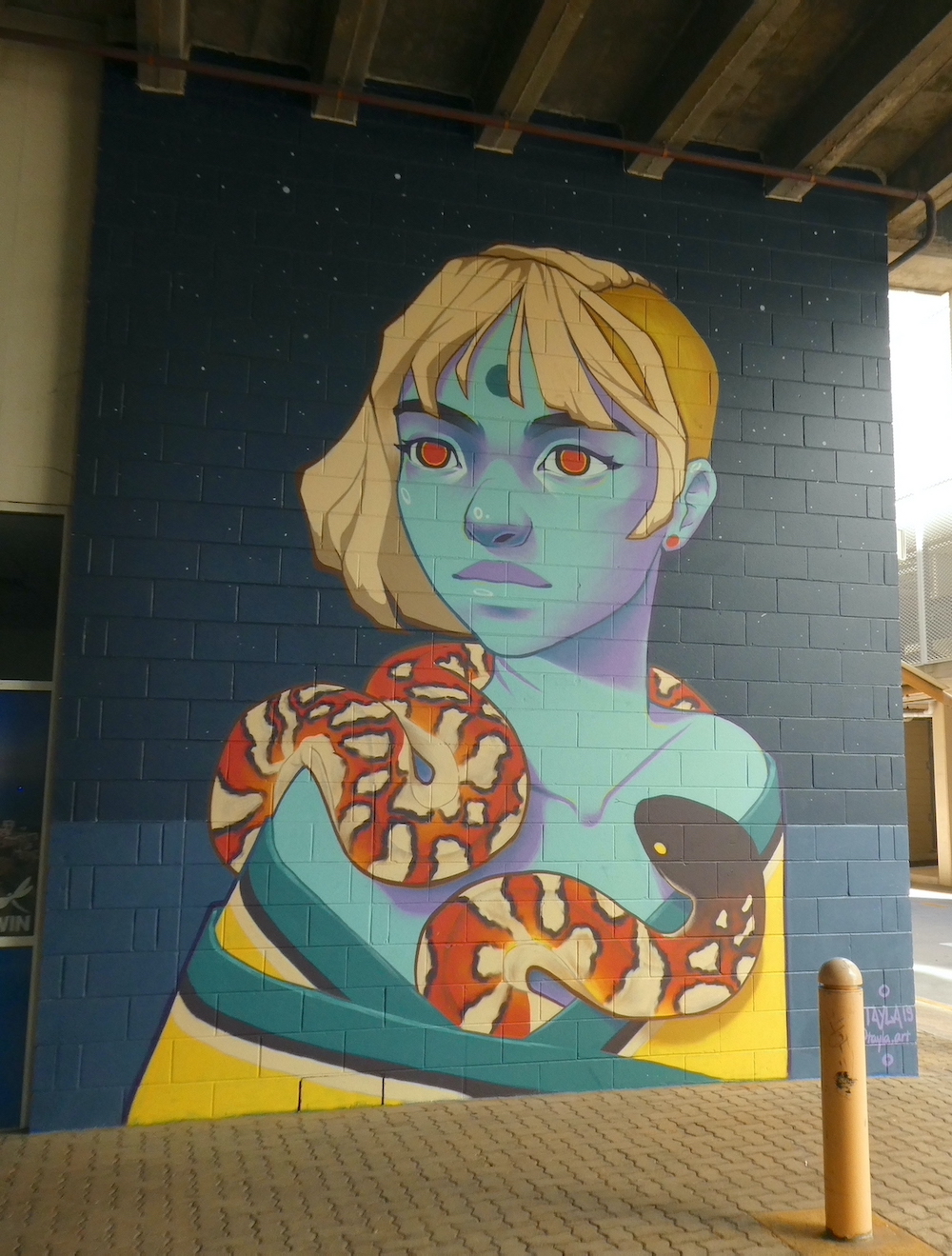
Our connection to animals and the need to preserve our wildlife and their habitats inspired a striking piece by Melbourne- based Tayla Broekman in 2019. The White-Bellied mangrove snake is found in the mangroves of northern Australia, the bright colours are enhanced by the dark background illustrating the sky and vast, flat landscape of the NT desert.
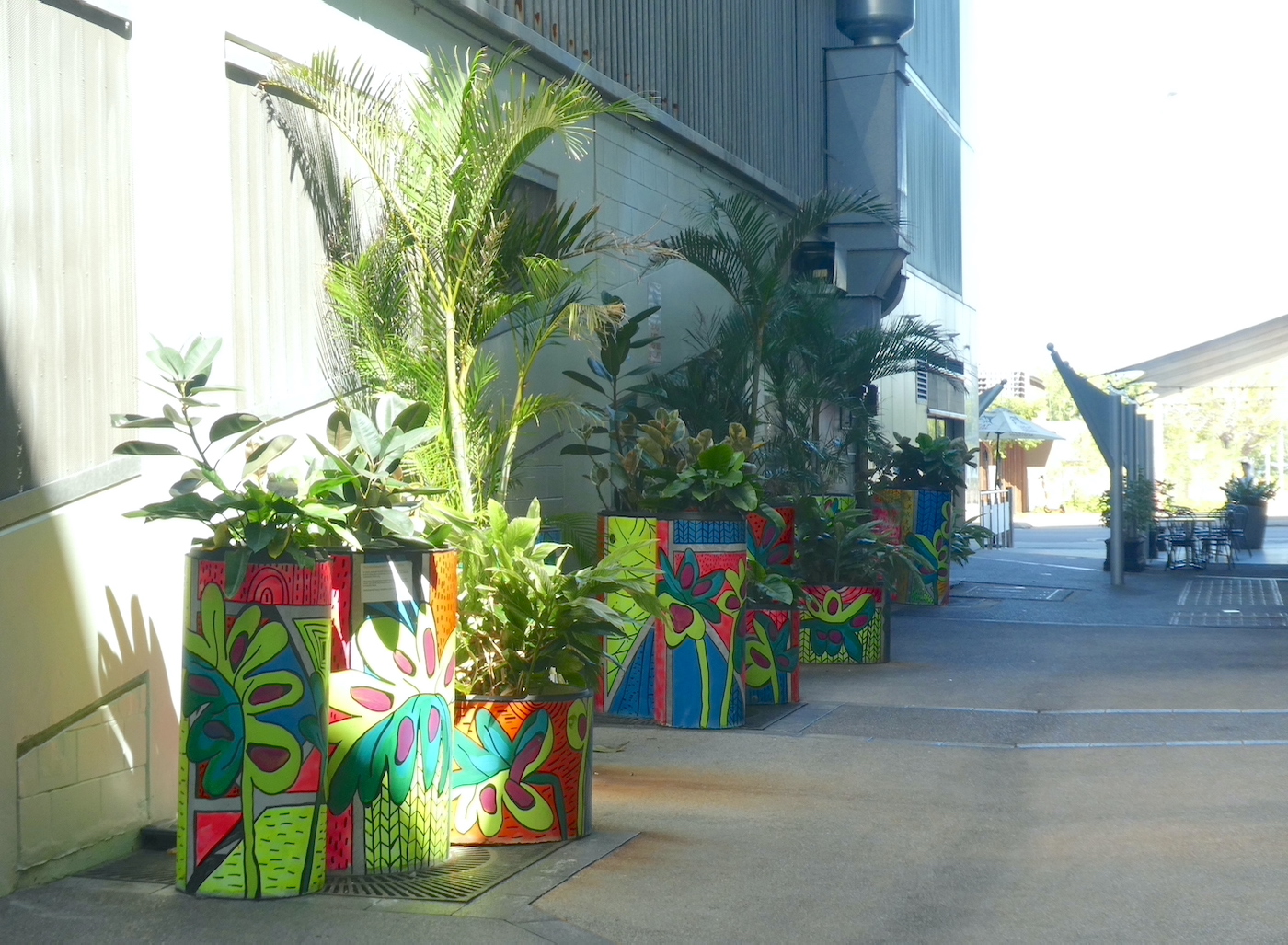
I don’t think these planter boxes are part of the festival but they certainly brighten up the streetscape.
The Street Art Festival has now expanded from the CBD all the way to Alice Spring with more than 18 new murals painted in 2021. I might need a bit more time on my next visit.
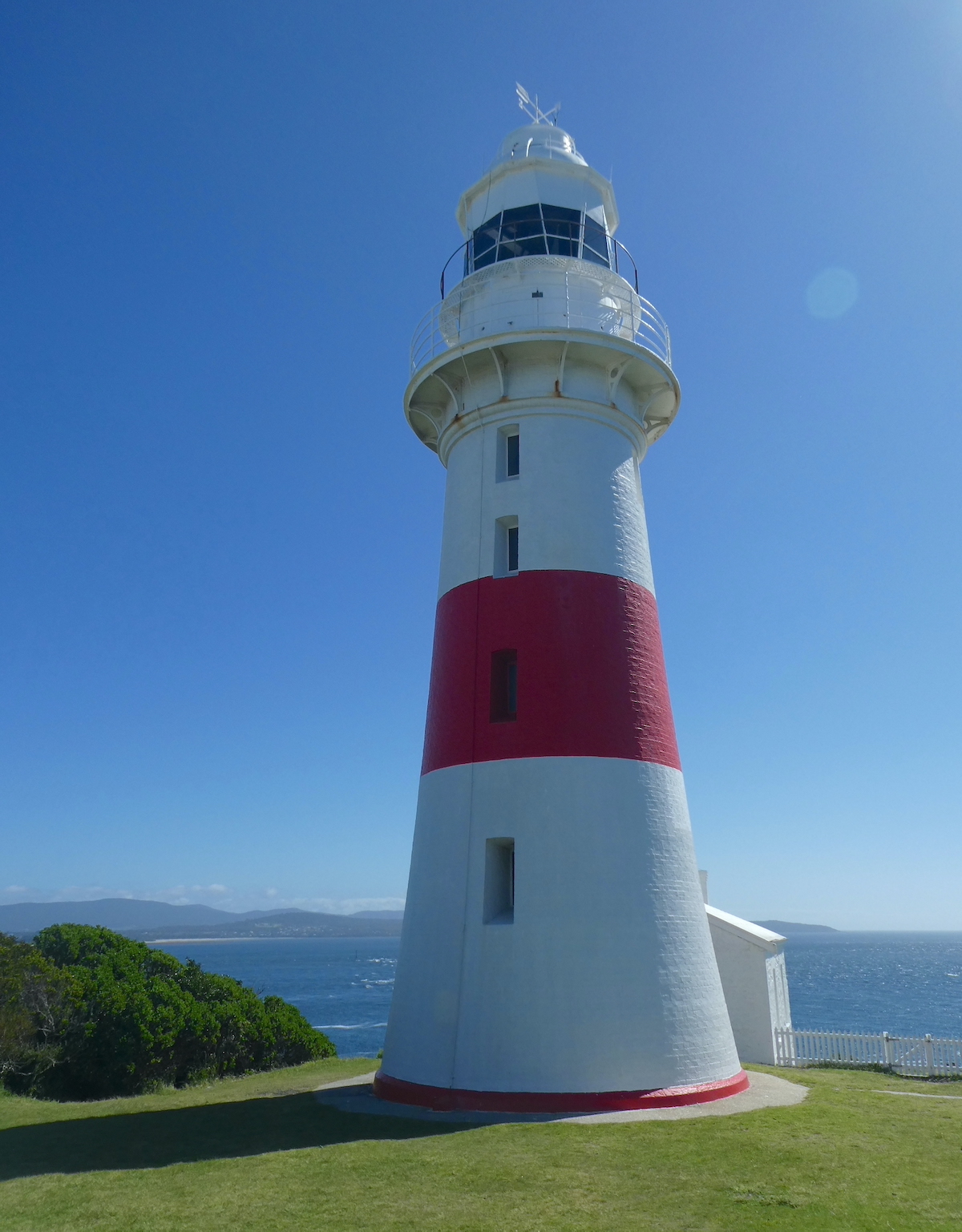
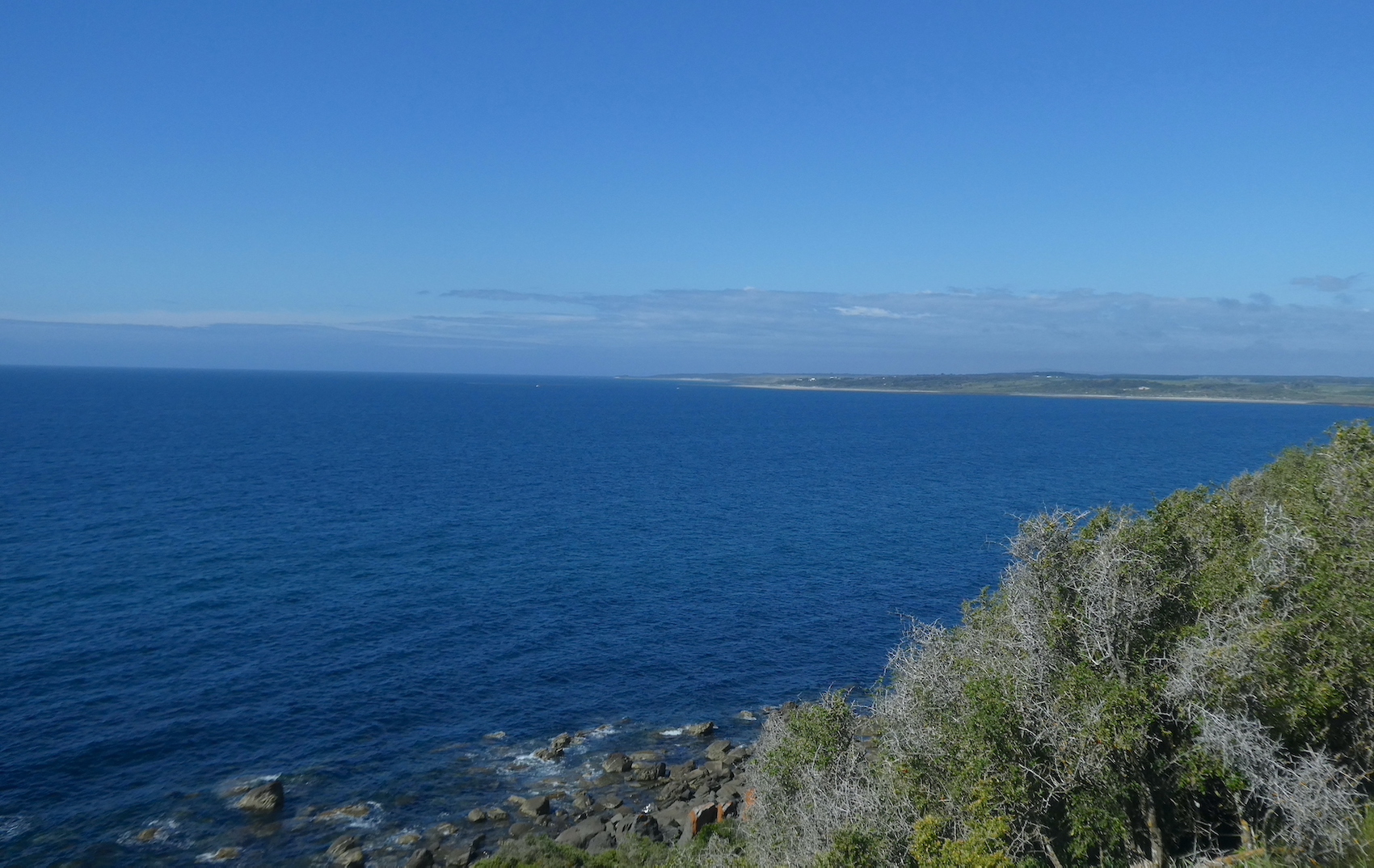
There are so many beautiful places to visit along the Tamar River, and a scenic forty minute drive from Launceston, the most sublime can be found as the waters empty into Bass Strait. It is impossible to feel anything other than calm when arriving at Low Head, surrounded by the blues and greens that only nature can bestow. This fabulous old Queenslander can be rented as holiday accommodation, with a view like that I don’t think I would ever want to leave.
In 1798, explorers George Bass and Matthew Flinders circumnavigated Tasmania in their vessel, Norfolk and proved the existence of a strait separating the island from Australia (apparently, it took a long time to dig that ditch). With much difficulty, they located the mouth of the Tamar River and made landfall seven kilometres up river at Port Dalrymple, now called Georgetown. Ten years later, the crew of Hebe found the entrance more than ‘difficult’ and came to grief on the treacherous reef, the first of nine shipwrecks to come. Consequently, convict labour set to work to construct Tasmania’s second (Australia’s third) lighthouse from local rubble with a coat of stucco to help with durability and a lantern room built of timber.
First lit in December 1833, the structure slowly deteriorated and was replaced in 1888 with the double brick version still standing today. Originally painted solid white, the red band was added in 1926 to improve visibility during daylight.
The initial four-roomed lighthouse keeper’s quarters were attached to the base of the tower, as seen in this illustration that is exhibited at the site.
A new Head Keeper’s quarters was built in 1890 (now available as holiday rental) and an Assistant Keeper’s quarters followed in 1916.
Tasmania’s only foghorn was installed at Low Head in 1929. For those who might understand, it is one of the largest Type G diaphones ever constructed and is one of only two of the type functioning in the world today. Decommissioned in 1973, it was restored by a group of volunteers and became operational again in April 2001.
The foghorn is sounded at noon each Sunday and can be heard up to thirty kilometres out to sea.
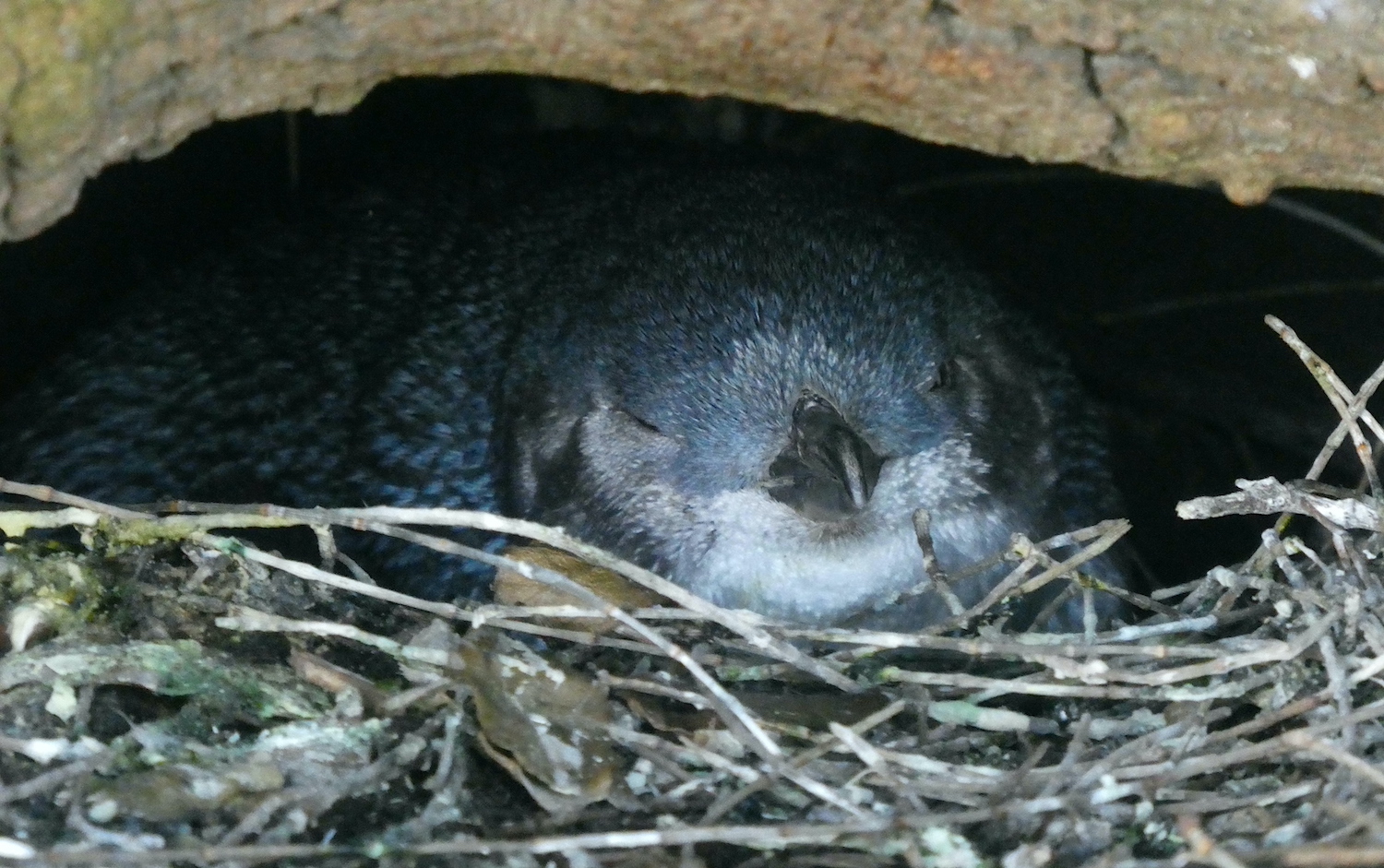
The area around the lighthouse encompasses Low Head Coastal Reserve, home to little penguins, the smallest of all penguin species. Also known as fairy penguins, they are the only species of penguin that are dark blue and white rather than black and white. The Penguin Tour experience sees them waddling back to their burrows after a day in the sea under cover of darkness. We were fortunate to spy this lovely creature settled on the nest, apparently accustomed to human presence.
Having experienced the spectacle of Hobbiton, as well as myriad locations featured in The Lord of the Rings movie, our trip to new Zealand wouldn’t have been complete without a tour of Wētā Workshop. The company, based in Wellington, is the creative home of special effects and props, and they have been producing sets, costumes, armour, weapons and creatures for television and film since 1987. Sneaking past the huge stone trolls cavorting on the lawns
we made it through the Hobbit door entrance.
There was no shortage of memorabilia in the gift shop
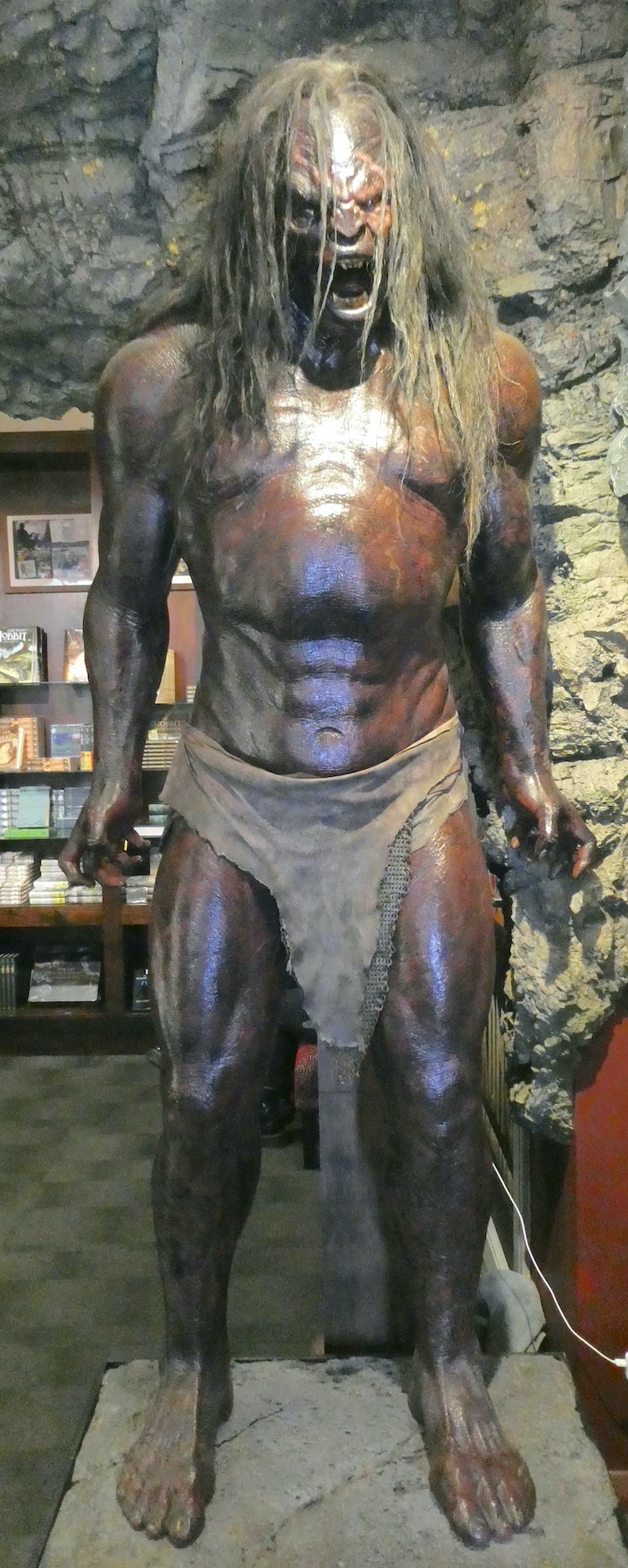
and I wondered what was lurking under the loincloth of Lurtz.
The first part of the tour led us on a discovery of miniature effects including real television shooting stages for Thunderbirds Are Go! I remember the original TV series in the 1960s and couldn’t pass up the chance to ride up front with Virgil Tracy in Thunderbird 2.
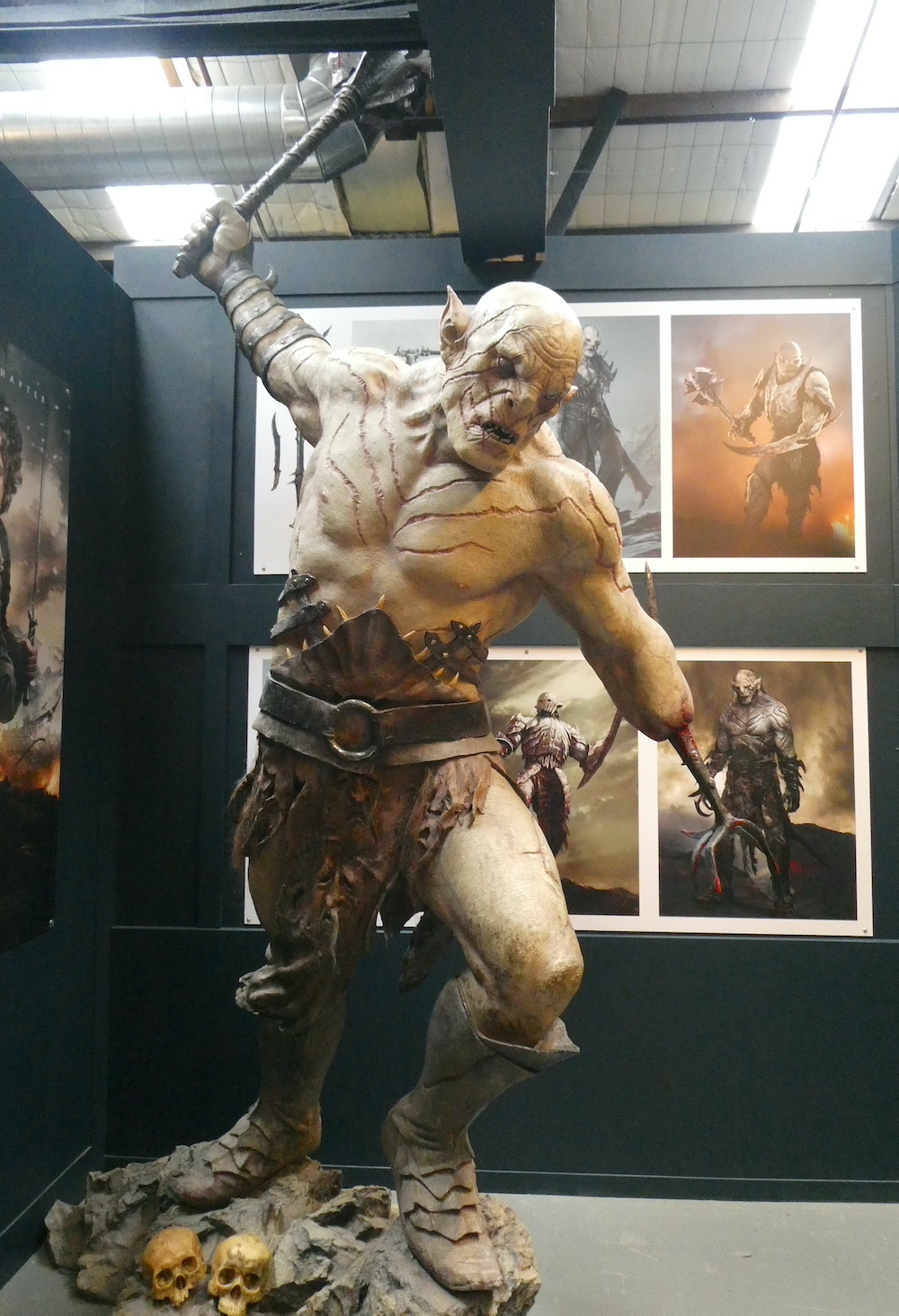
We were then taken on a fascinating journey through the creation of props, costumes and creatures for The Lord of the Rings and The Hobbit. Photography was only allowed in designated areas throughout the tour, hence the absence thereof. At the end of the tour, we were ushered into a room, seemingly guarded by a life size figure of Orc-lord, Azog.
Here we met special effects artist, Warren Beaton, his appearance the epitome of a mad professor.
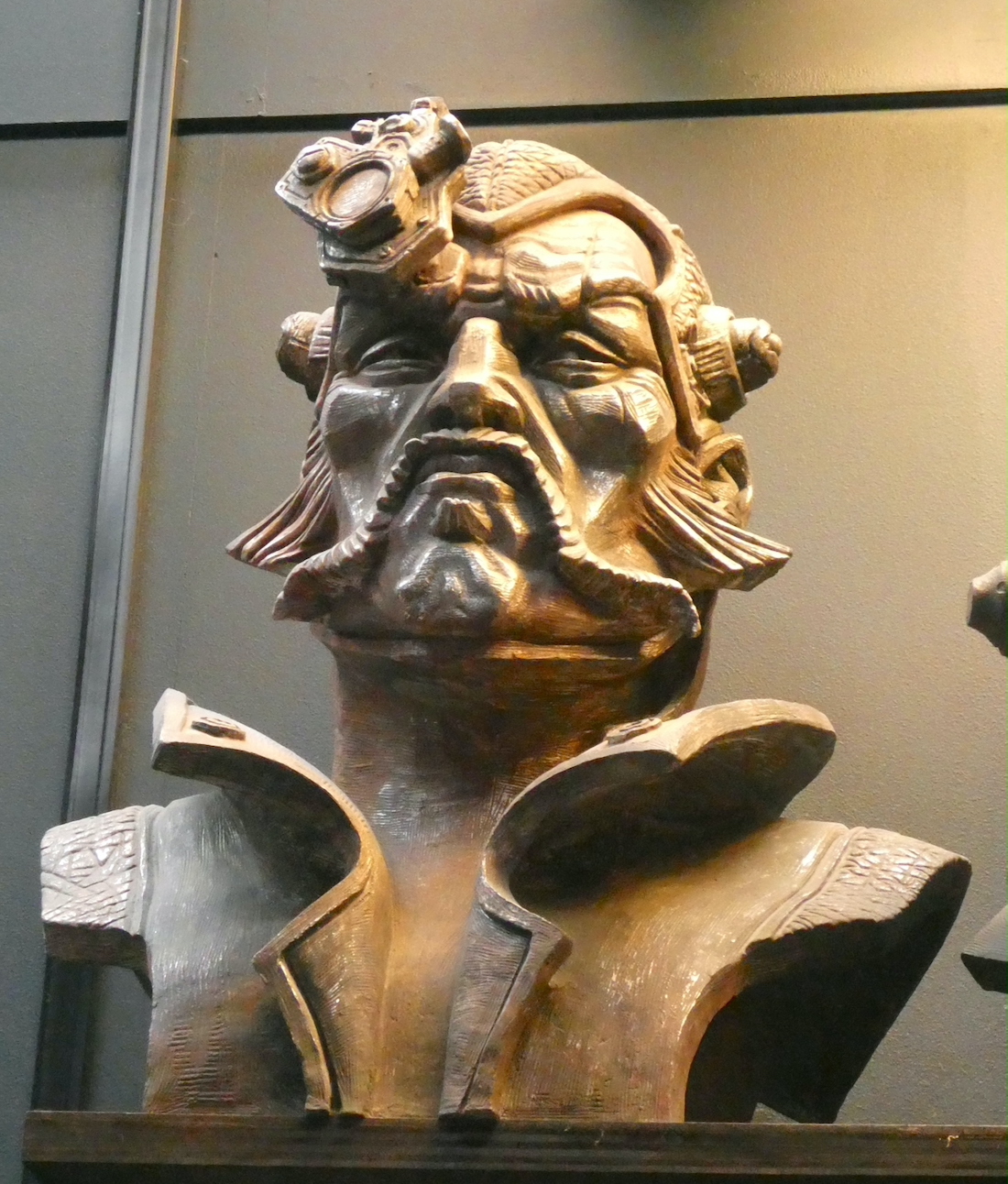
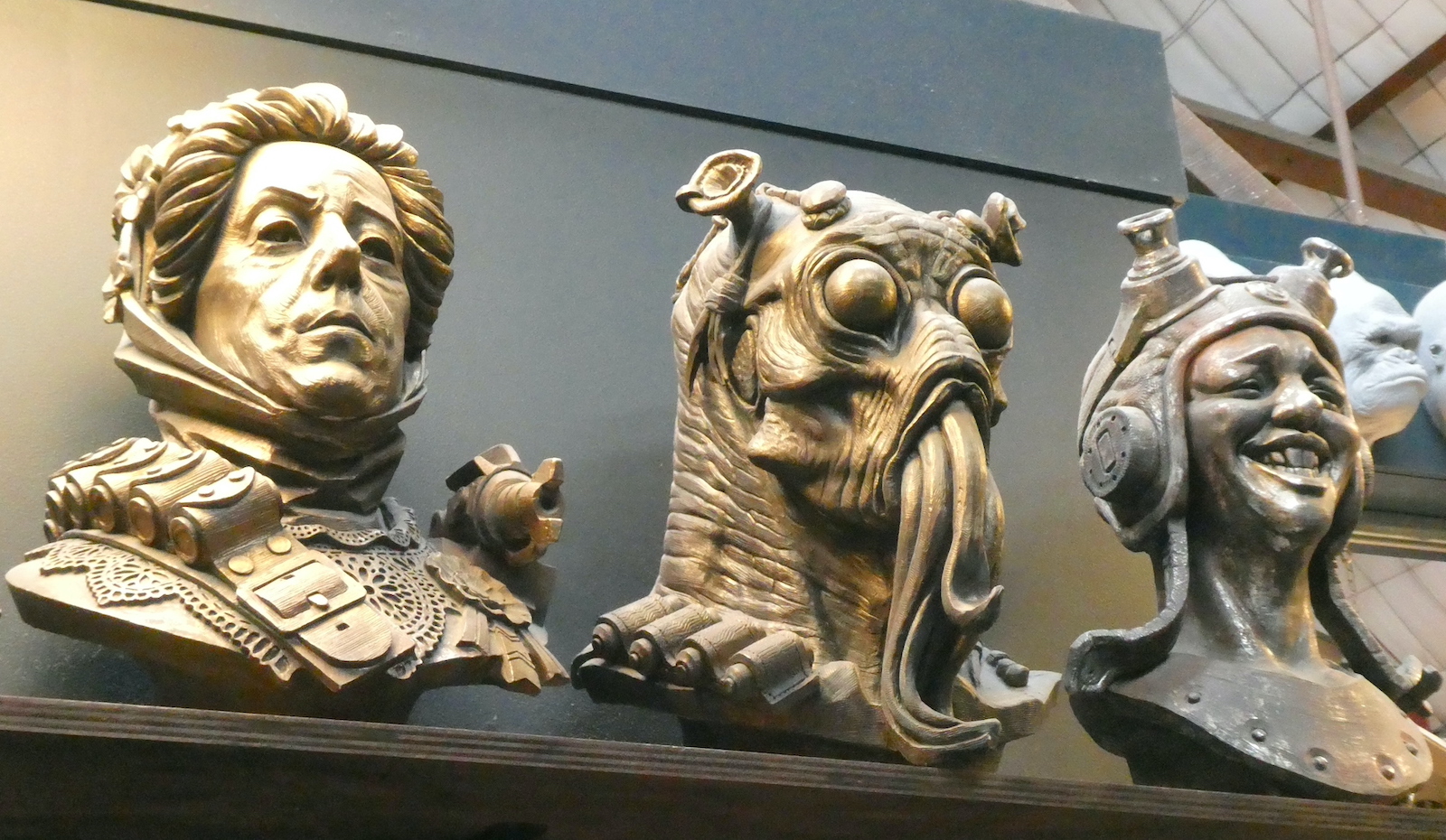
Various heads kept watch from above
as he demonstrated his expertise of making prototypes using tin foil and a spoon.
I’m sure it’s not as easy as he made it look, the results are remarkable.
With a fond farewell to Bert (stone trolls need love, too) we headed off in search of sustenance before our next adventure.