There are so many great reasons to visit Darwin, especially in the dry season. During my visit last year, I discovered another. The Darwin Street Art Festival invites local, national and international artists to transform the streets and laneways of the CBD into a giant art gallery. Eight murals were painted in the first year, 2017, followed by sixteen in 2018. A further fifteen were added each year in 2019 and 2020. We embarked on a wondrous voyage of discovery one morning, not realising the magnitude of the undertaking. Our introduction was a colourful graphic work by Melburnian urban artist Andrew Bourke (more about him later).
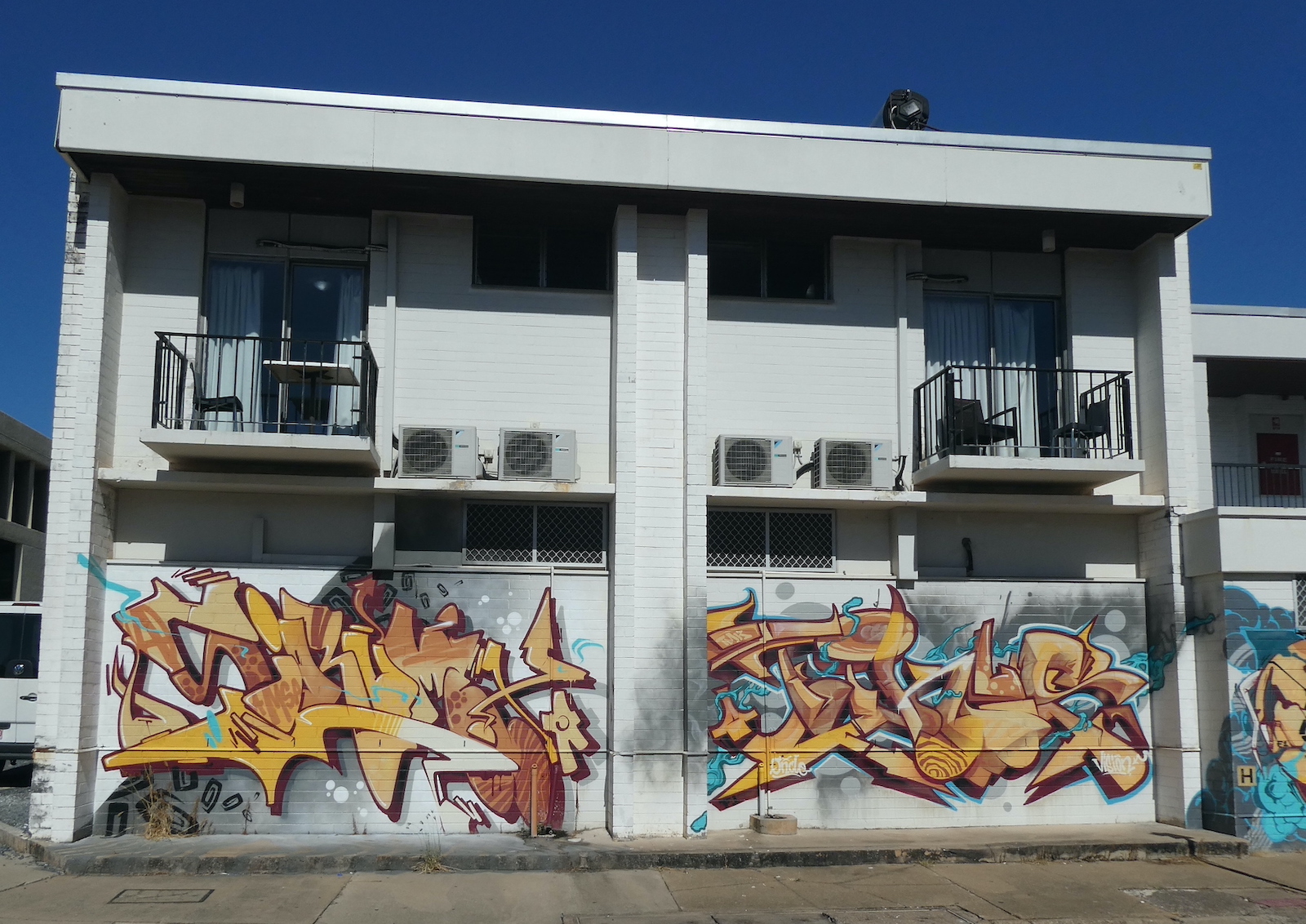

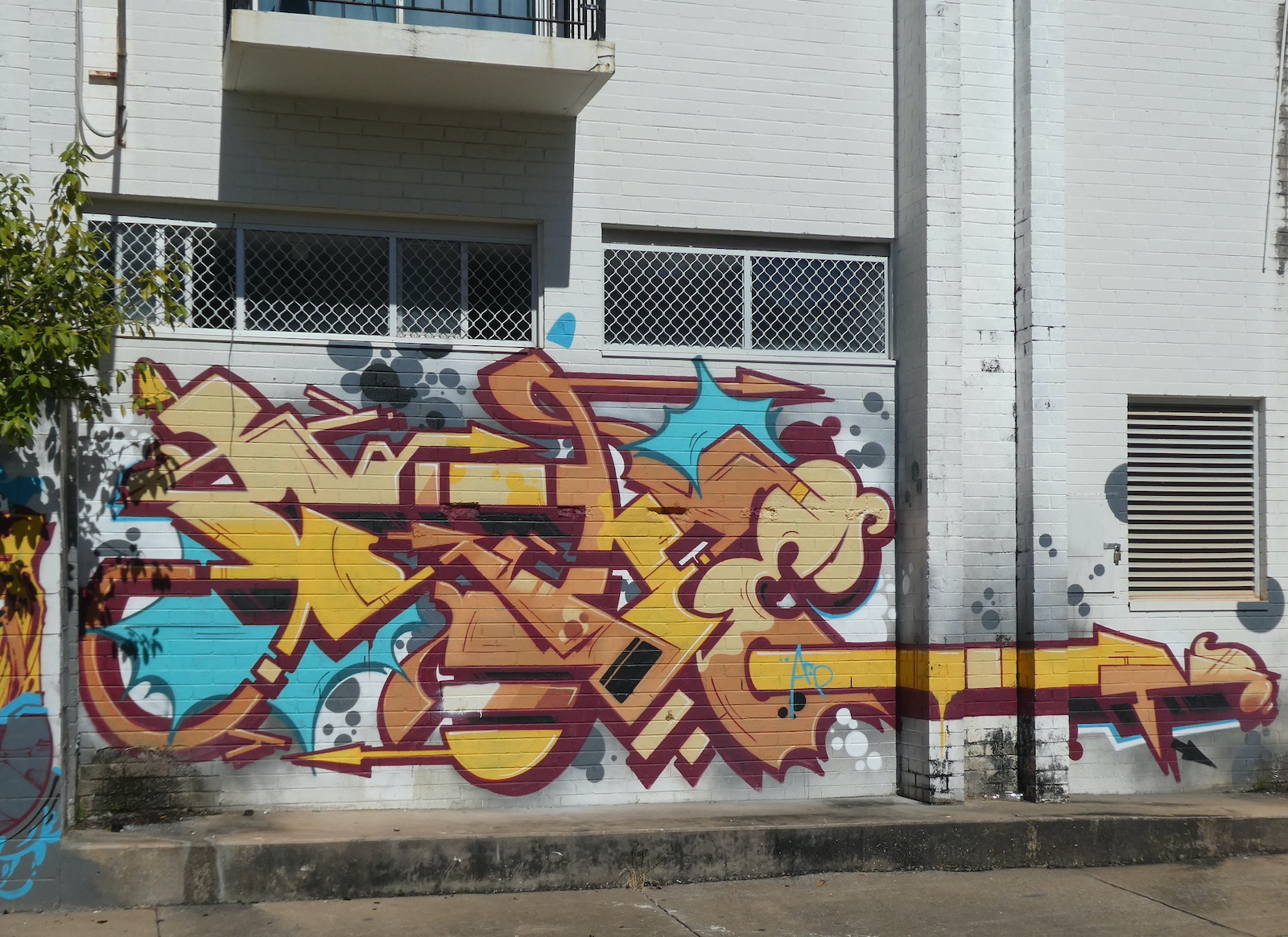
Riece Ranson started as a graffiti writer in London before moving on to murals. He has paid homage to his love of the coastline and fishing in the Northern Territory with his painting of a Queensland Groper.

Belgian artist, Vexx, incorporated his signature colourful ‘doodles’ to put his own twist on Darwin’s deadly animal, the crocodile.

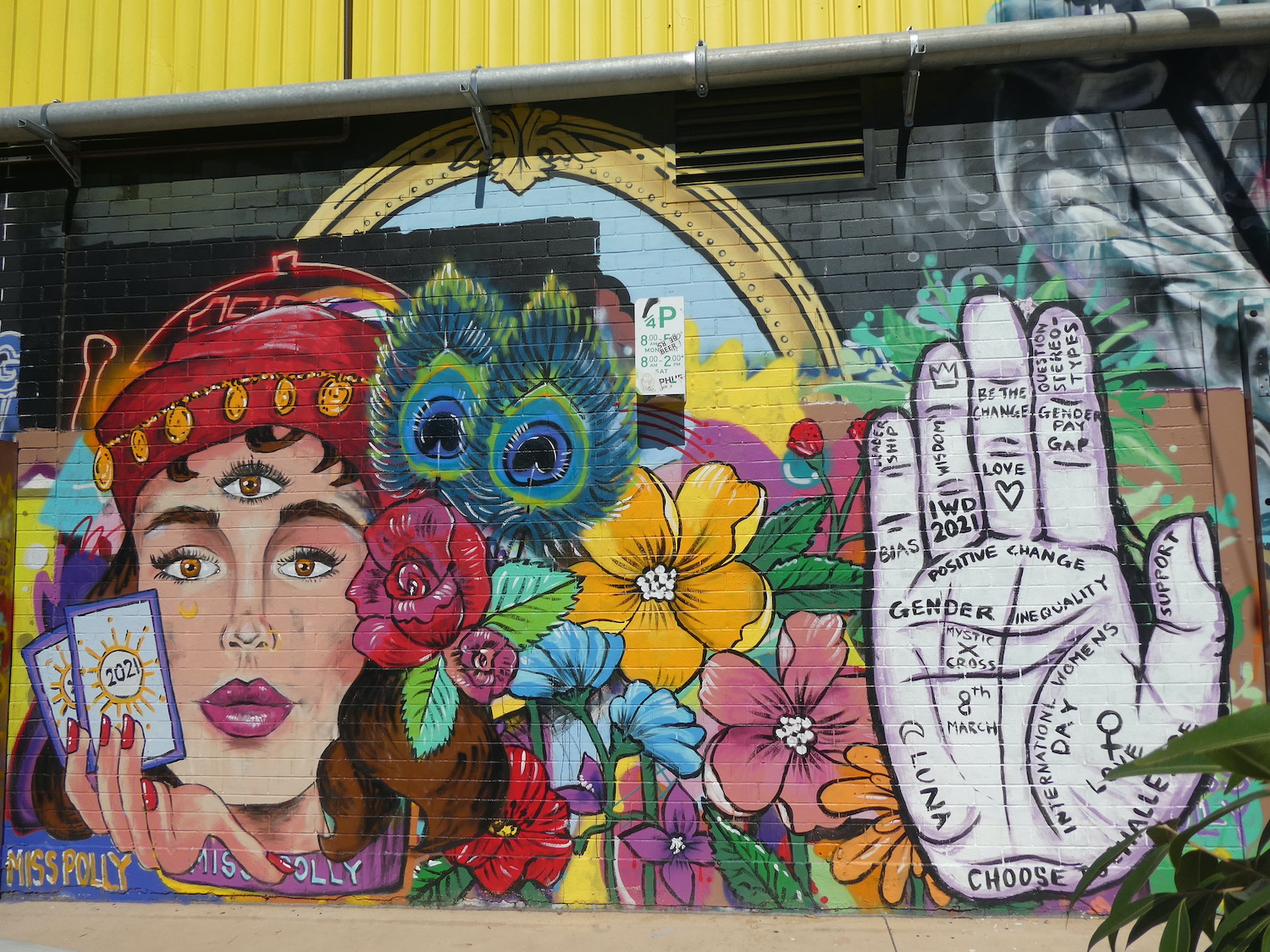
Beneath the crocodile, in 2020 Northern Territory based visual artist, Polly Johnstone (Miss Polly), raised the question of what the future will bring.
Vibrant graphics burst forth from drab walls and a more subtle illustration emerged from the pavement.


Roller doors provided an alternative canvas for a nature-inspired triptych.

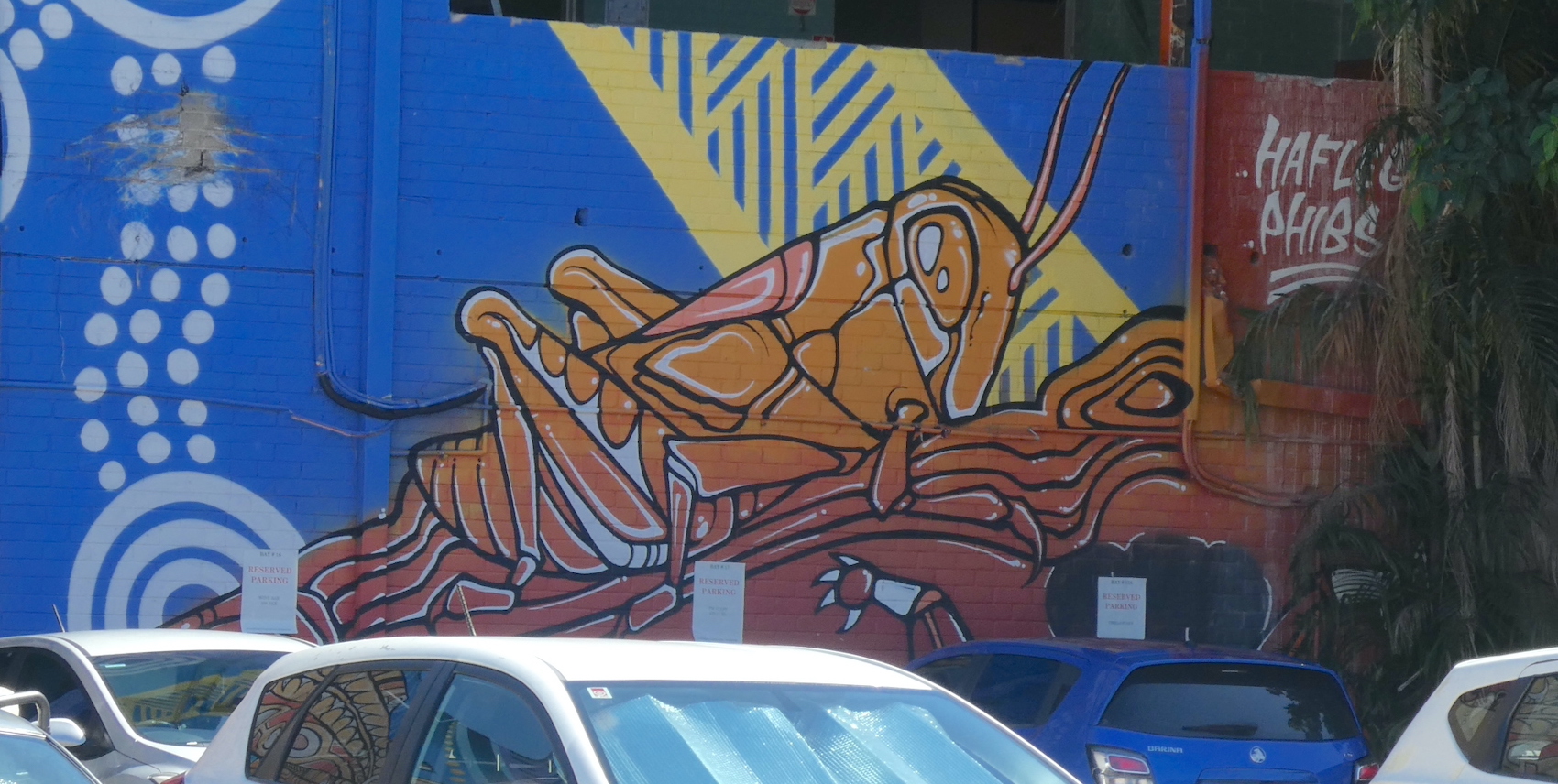
Saltwater Home was a collaboration between Sydneysider Tim De Haan (Phibs) and Darwin-born Larrakia man, Shaun Lee (Hafleg) in 2017. Both men grew up by the ocean and have blended elements of saltwater life with a Larrakia design presented in stunning colours of the outback .

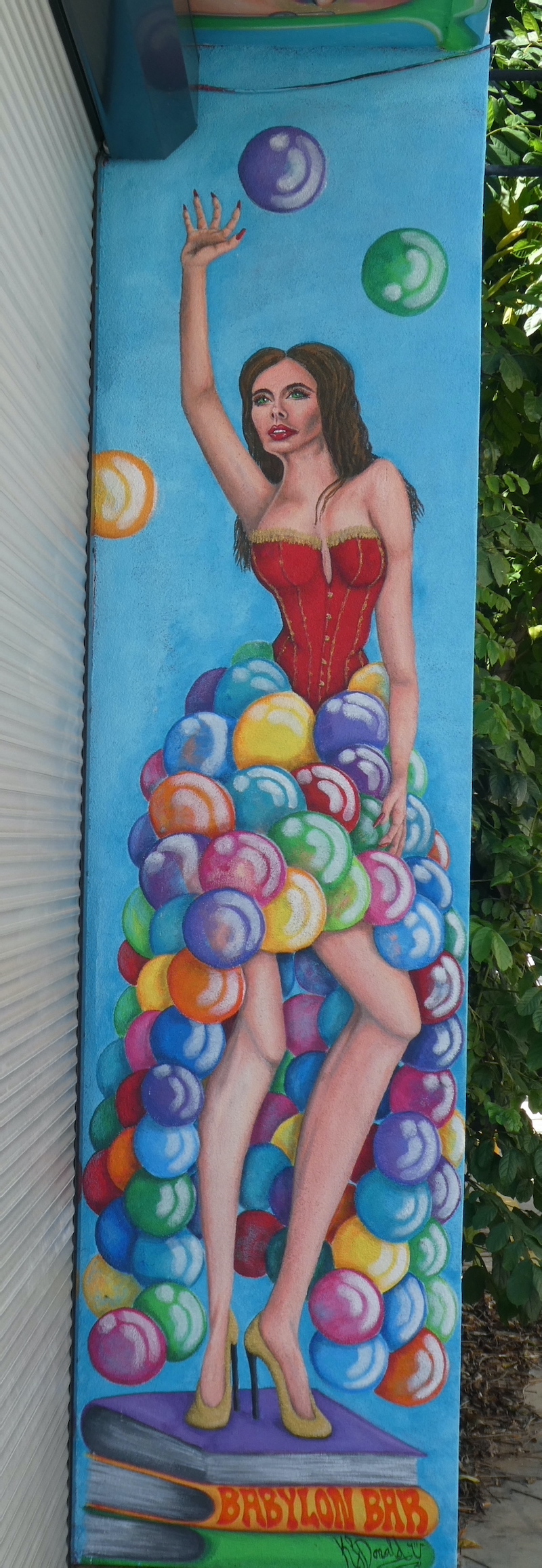
Although not part of the Street Art Festival, some quirky animation graced the walls of the Babylon Bar at the Austin Lane end of Air Raid Arcade.

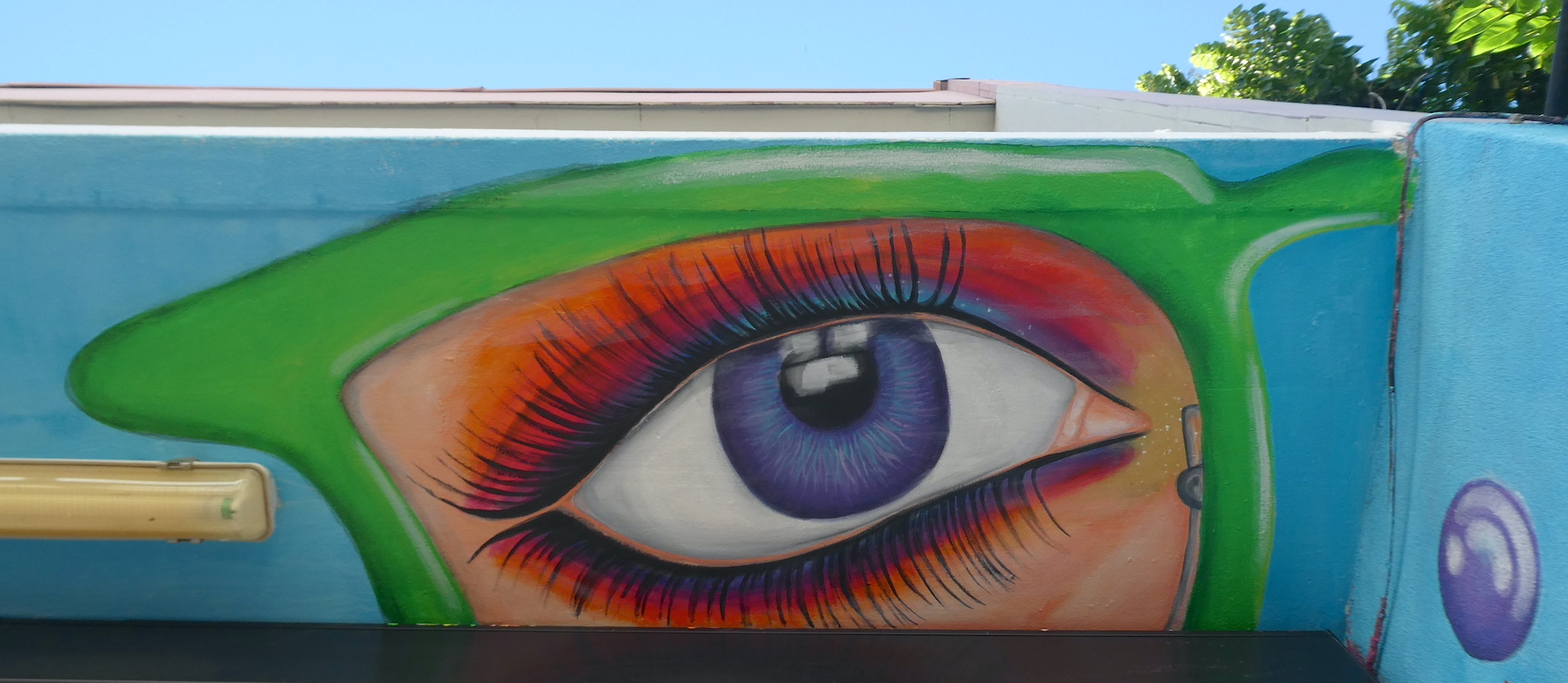

At the other end of the arcade on Cavenagh Street, the recently opened Birth of Venus Bar was similarly embellished.


Melburnian Mike Maka’s (Makatron) 2017 creation, Poppies for the People, was inspired by the location adjacent to the Darwin RSL Club. The mural links and contrasts the iconic red poppies of the World War I battlefield of France to the green of the tropical vegetation in the Top End.

Explorer John McDouall Stuart was the subject of local NT artist Ryan Medlicott’s portrait in 2018.

House of Darwin is a clothing company that reinvests its profits into social programs in remote Indigenous communities. Graphic designer and illustrator Liam Milner (Luna Tunes) painted a huge building in support of the project in 2019.


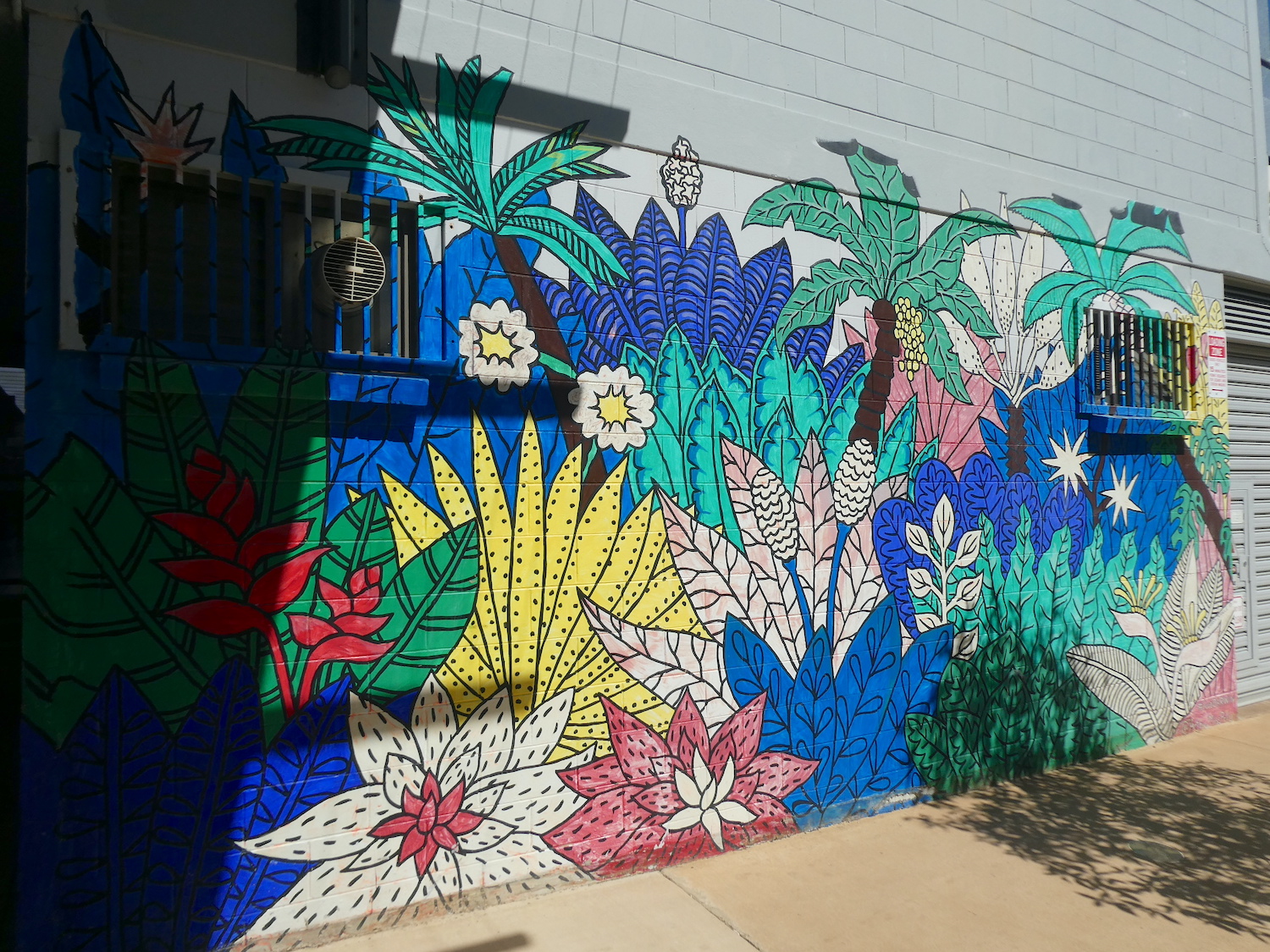
Native flora of the Northern Territory feature in the vibrant 2019 work by self-taught local artist, Jason Lee.

Once an illegal graffiti artist in New York, ELLE created a collage style painting in 2018 to tell the history of Darwin. The central image of an Aboriginal woman’s face has one Chinese eye, representing the influx of Chinese during the Goldrush. ELLE was fascinated by the accounts of lightning starting fires in the bush and the Black Kite picking up twigs from the fire and dropping them to spread the fires further in order to burn out food. She has used this creature as well as local flora to symbolise resilience, beauty, strength and pride.

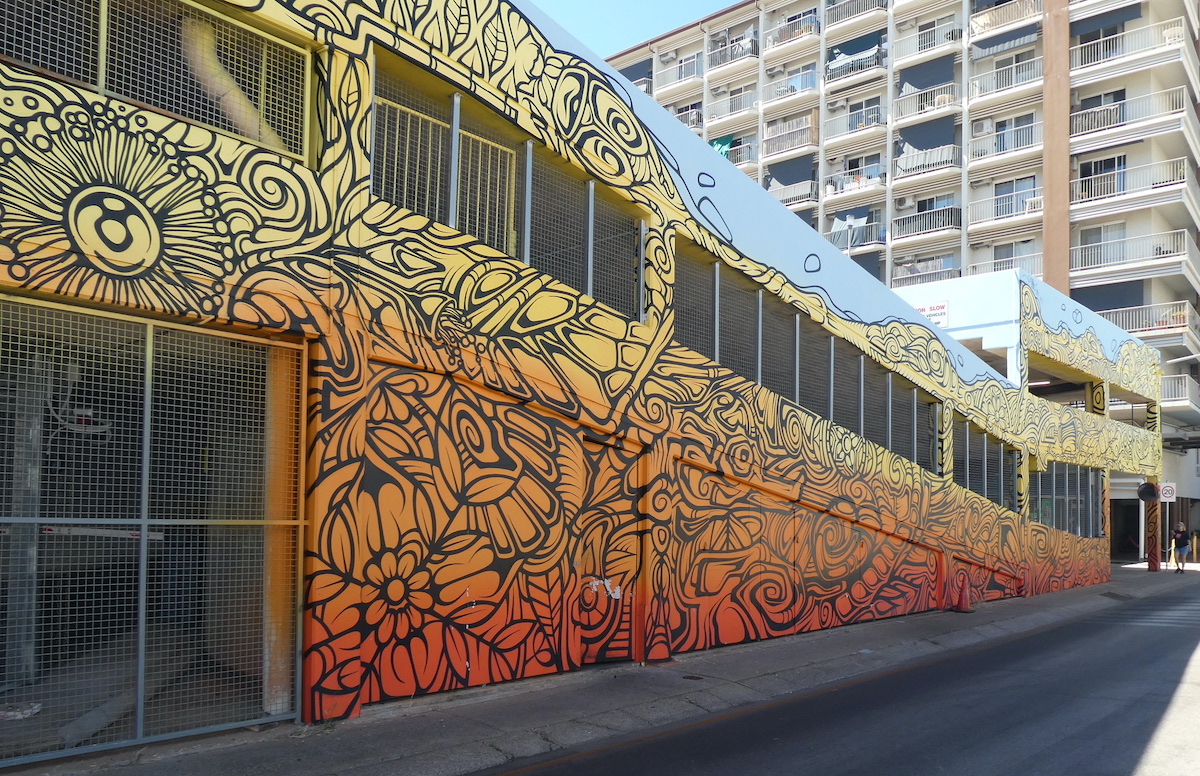
Phibs, once again, contributed in 2018 with an abstract impression of the diverse flora and fauna found in the Northern Territory using a colour palette as seen in Darwin sunsets.
Tom Gerrard (Aeon) has a passion for finding shapes that shape a city and in 2017, the Melbourne-based artist teamed up with locals David Collins and Les Huddleston to capture some of the Top End’s most iconic structures. Gerrard has used his distinctive minimalist colour palette of red, black and white for the work entitled Darwin.

In 2018, Andrew Bourke combined his talents with NT artist Jesse Bell to honour the memory of Geoffrey Gurrumul Yunupingu. The talented Aboriginal musician passed away in July 2017 and, with blessings from his family, the artists have immortalised his image with the lyrics from his song Baru (The Saltwater Crocodile) in the background.
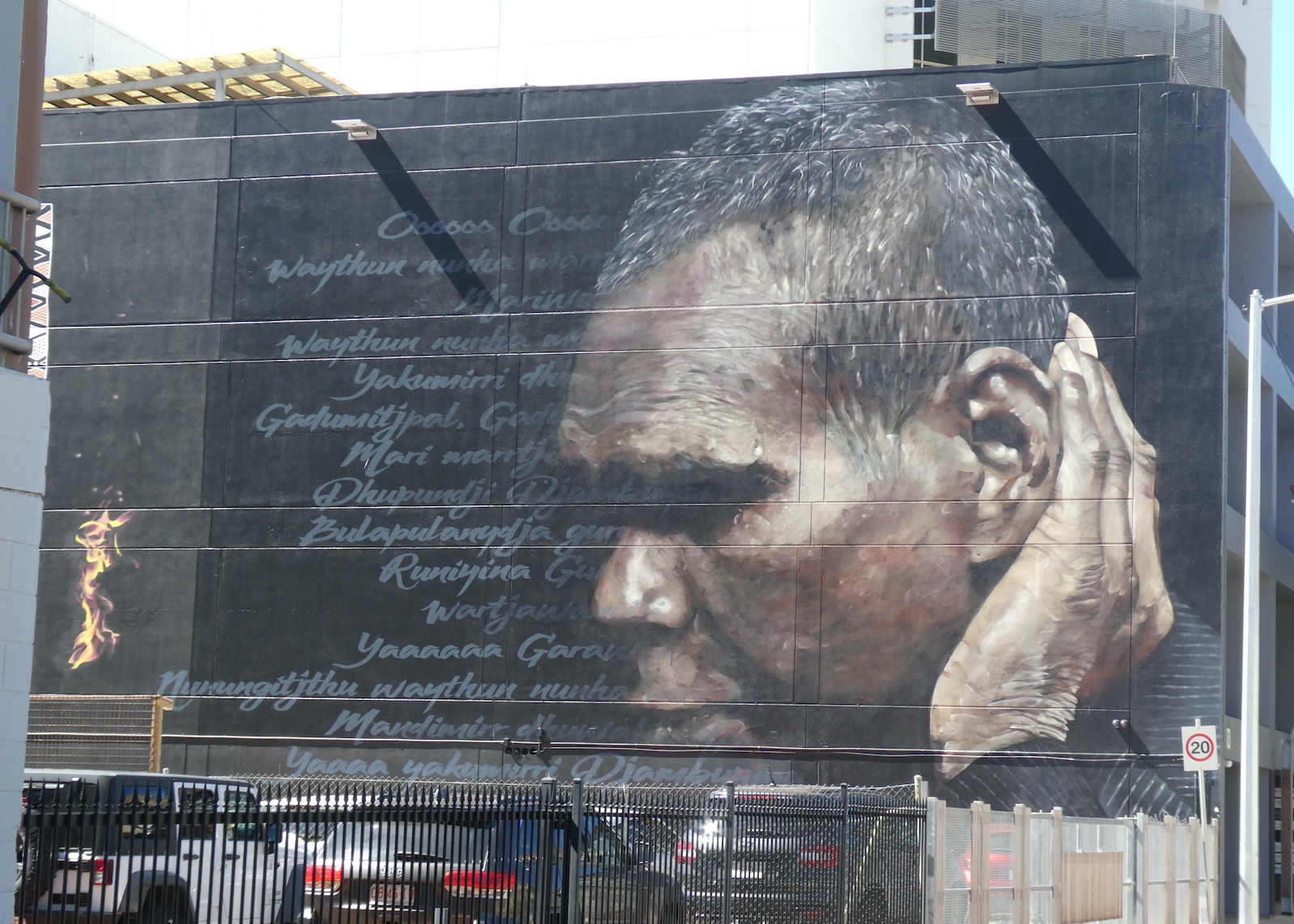
The following year, a piece of traditional Aboriginal design by Nyanpanyapa (Wendy) Yunupingu accompanied her late brother, Gurrumul.


On the opposite wall of the car park are two more magnificent pieces that complement each other. Multidimensional Man, painted by Melburnian Peter Seaton (CTO) in 2018, is a portrait of Hilton Garnarradj an Aboriginal guide from Arnhem Land.

A year later, Brisbane based artist Russell Orrie Fenn (Sofles) added the Interdimensional Space Crab alongside using the same tones as the Aboriginal man.


Polly Johnstone’s 2017 work, For the Love of Reading, features an image of Darwin local Artia Ratahi, representing the diverse culture of the community. The background is inspired by the colours of the Top End from the soil and crystal blue waters to the pinks and purples of the sunsets.

Another Darwin resident, Emma Murphy, combined fashion and nature for her bold creation in 2019. Models faces morph into birds, inspired by the Kookaburra, Hooded Parrot and the Rainbow Bee-eater bird.

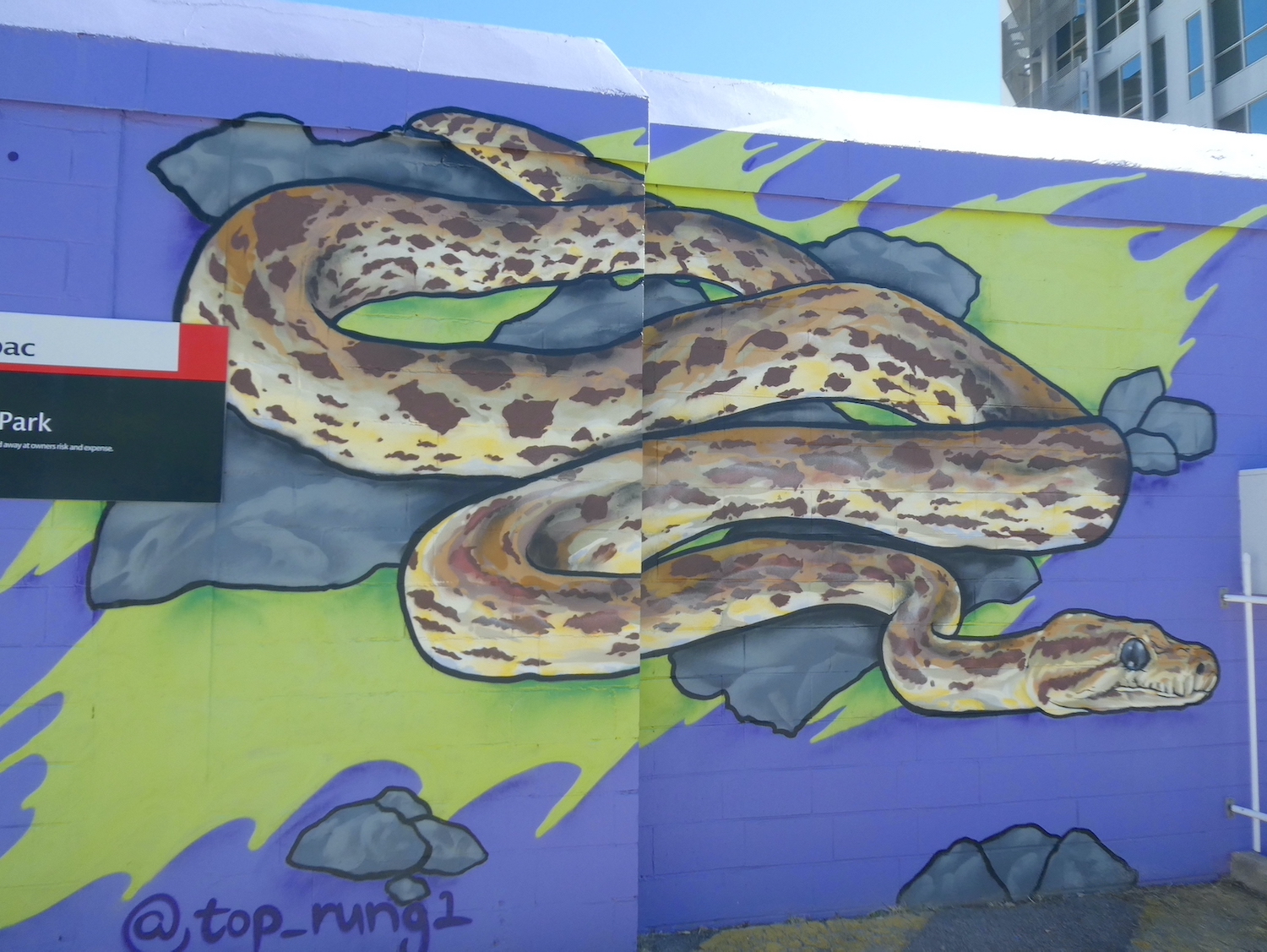
Ryan Medlicott’s 2019 mural depicts the rare Oenpelli Python, the longest snake in the NT found only in the sandstone massif of western Arnhem Land.
With a lunch date looming, we ran out of time to complete our mission and returned a few days later but that will be another post. I could find no information on these last two paintings except the second one is titled Winner.




















 cannonhillchronicles