It is many years since I have been to Litchfield National Park and on my recent sojourn to Darwin, a visit was included on the agenda. Named after Frederick Henry Litchfield who explored the Northern Territory in the mid 1800s, the 1,500 square kilometre park is a comfortable 90 minute drive south of Darwin. The park has several stunning waterfalls and crystal clear swimming holes, the largest being Wangi Falls.
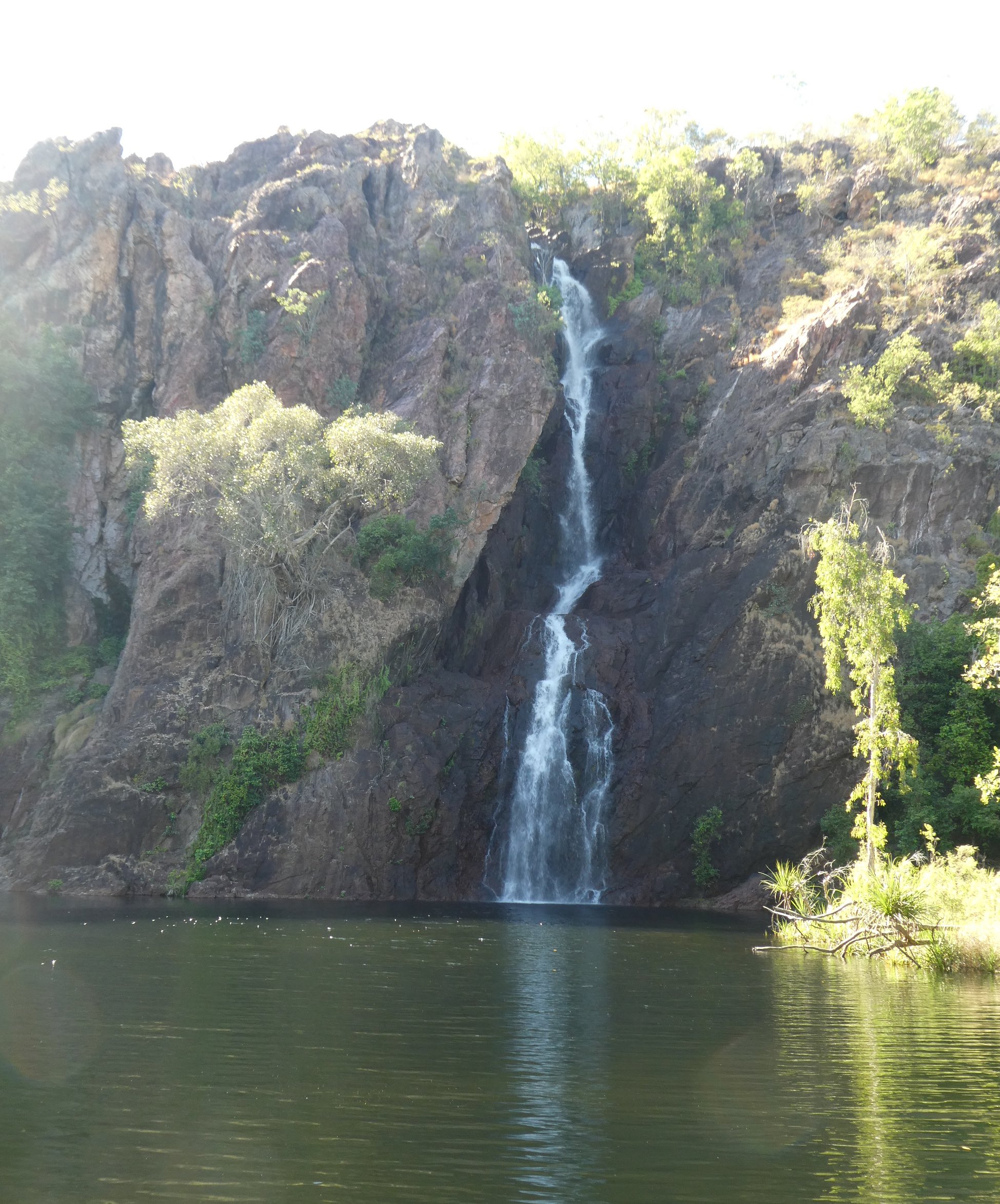
In 1883, surveyor David Lindsay named the falls after his youngest daughter, Gwendoline. Forty years later, Max Sargent took up the pastoral lease over the area and renamed the falls after his second daughter, Kathleen, who was born in 1954. The Townsend family took over the lease in 1961, built an outstation nearby and called it Wangi, the local aboriginal name for the area. Consequently, the falls became known as Wangi Falls. There are actually two cascades at Wangi, the morning sun wasn’t conducive to photographing the narrower stream flowing to the left of the main falls.
We set off on the Wangi Loop Walk, a 1.6 kilometre circuitous trail that climbs the escarpment to the top of the falls and returns on the other side of the pool. Colonies of flying foxes roosted above us, not bothering to seek shade for their morning slumber.
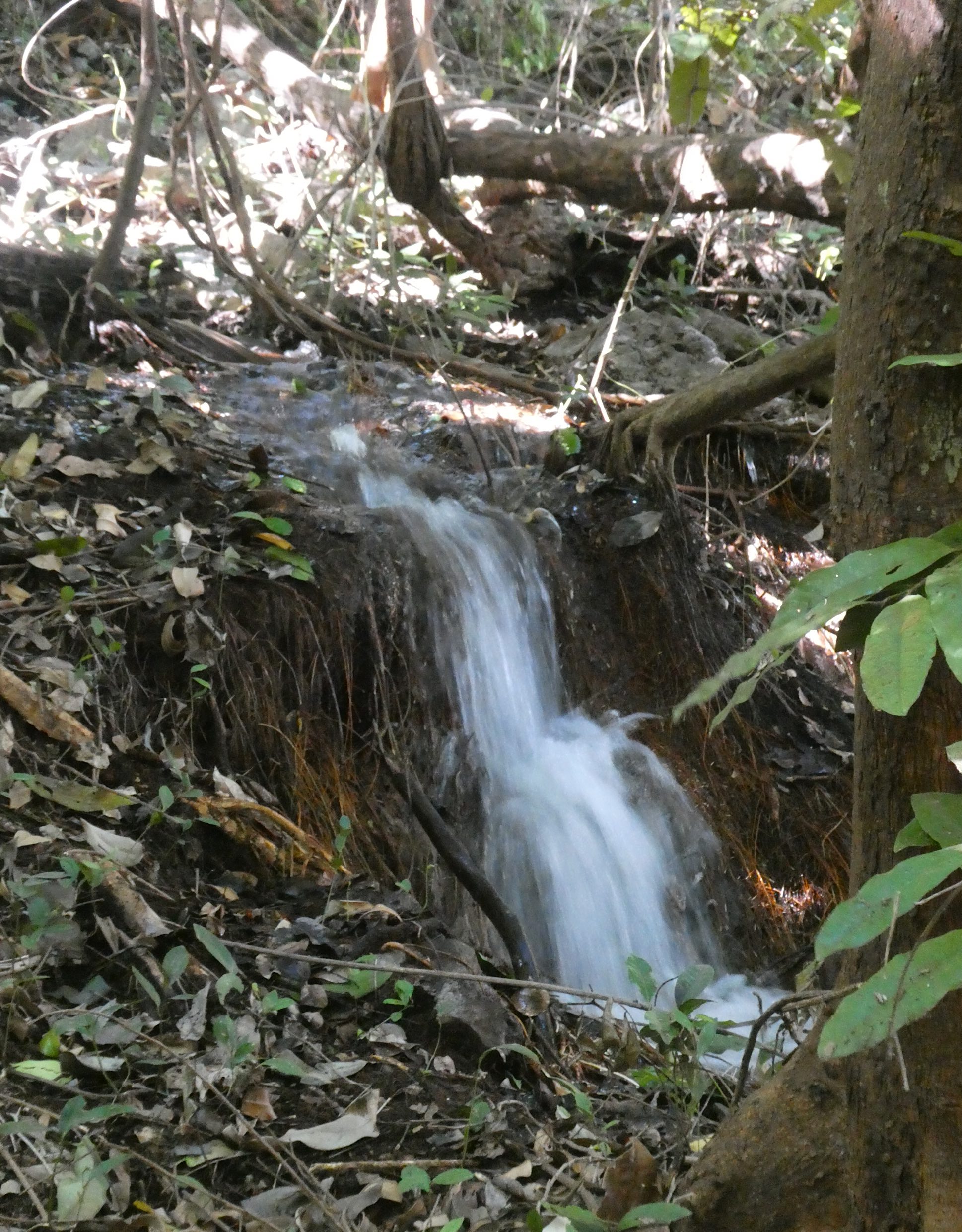
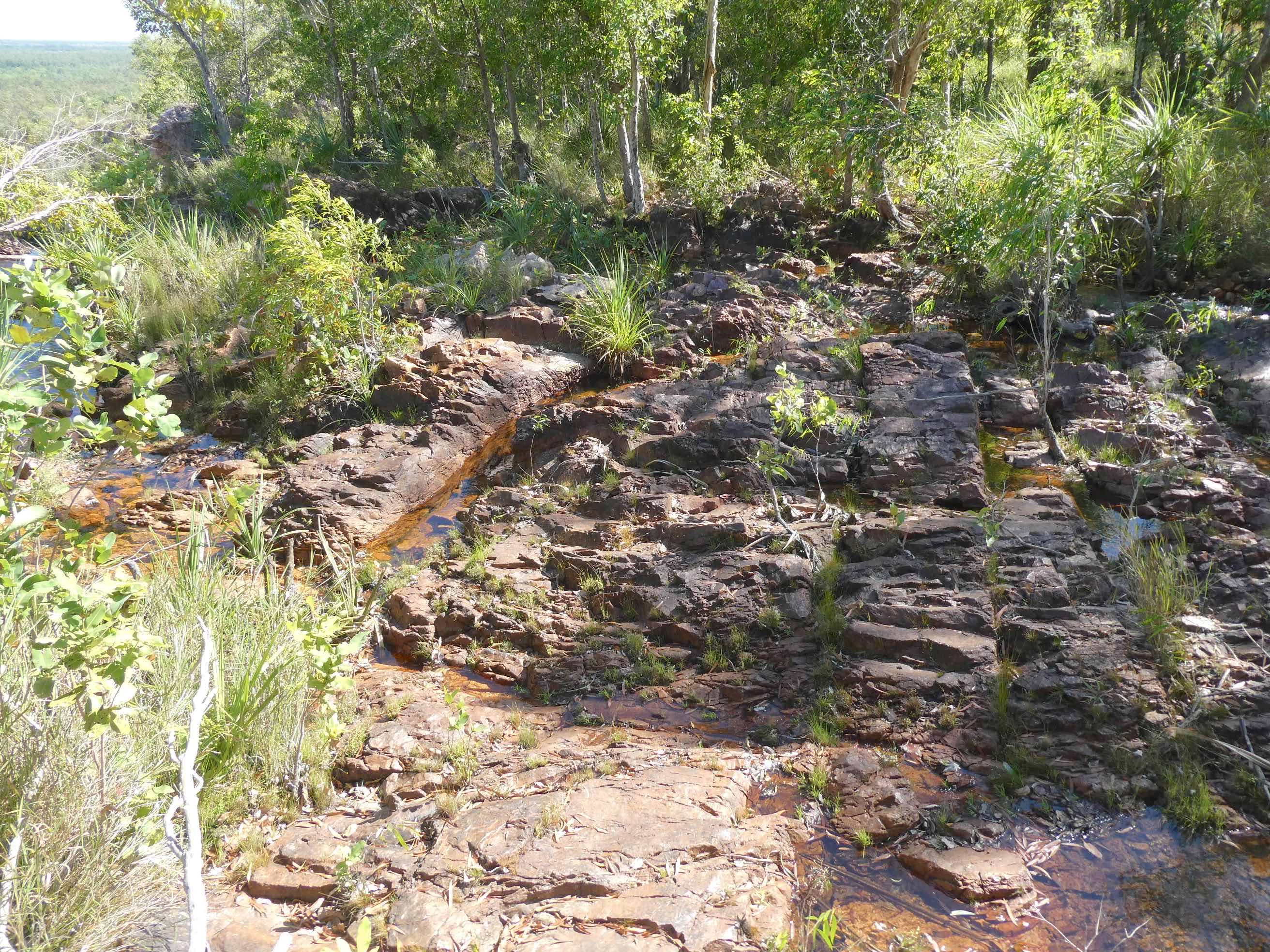
Meandering streams tumbled their way through the lush forest,
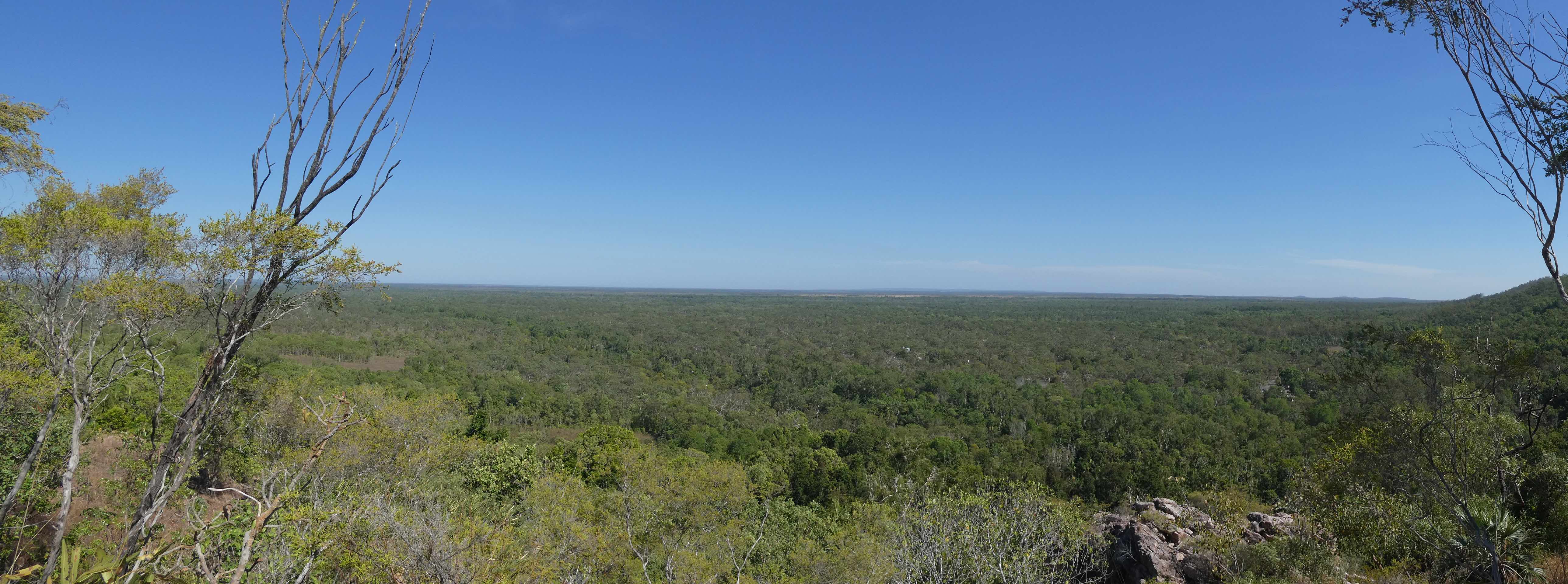
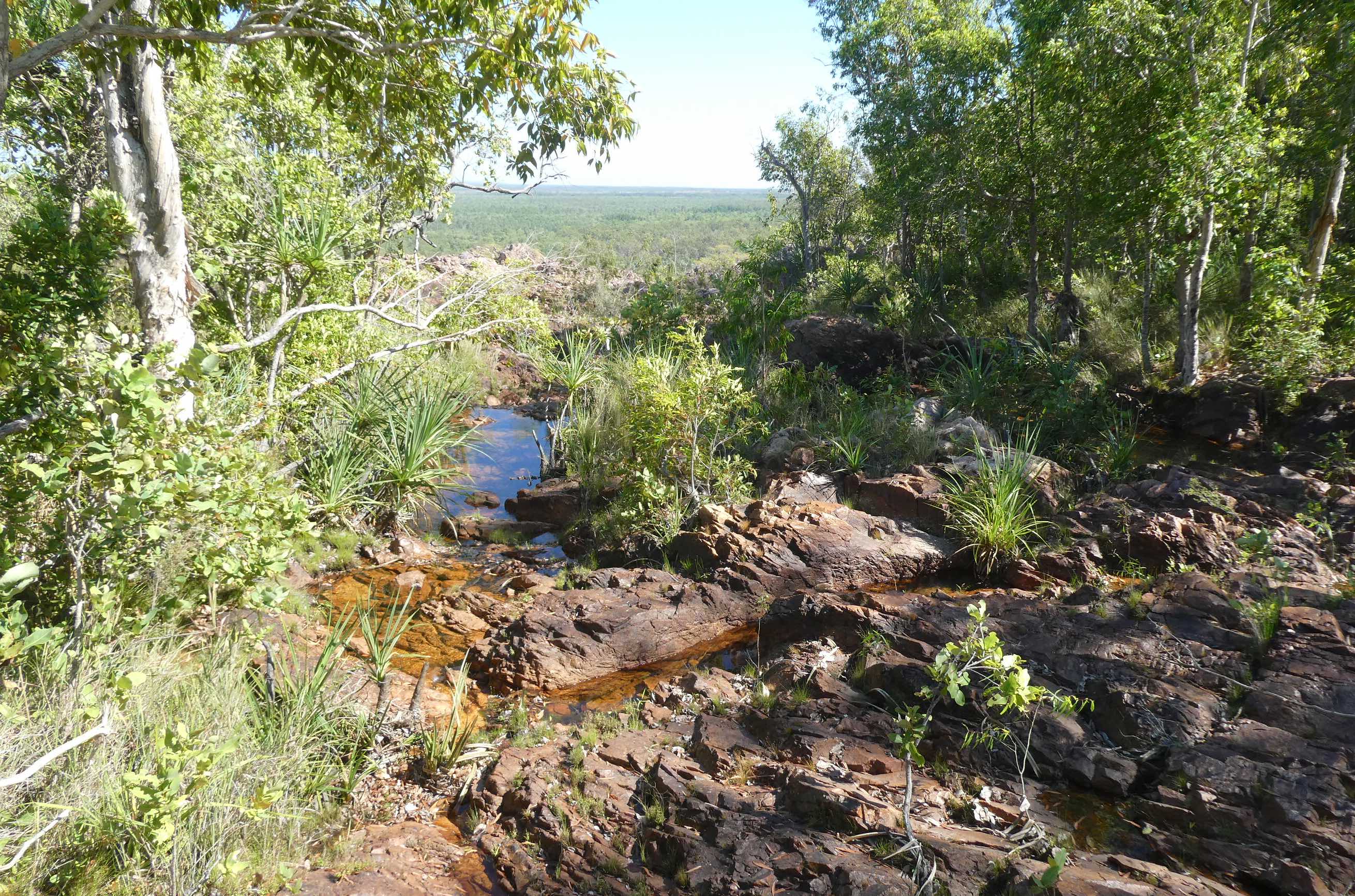
the canopy opened up to reveal a breathtaking vista as we neared the summit.
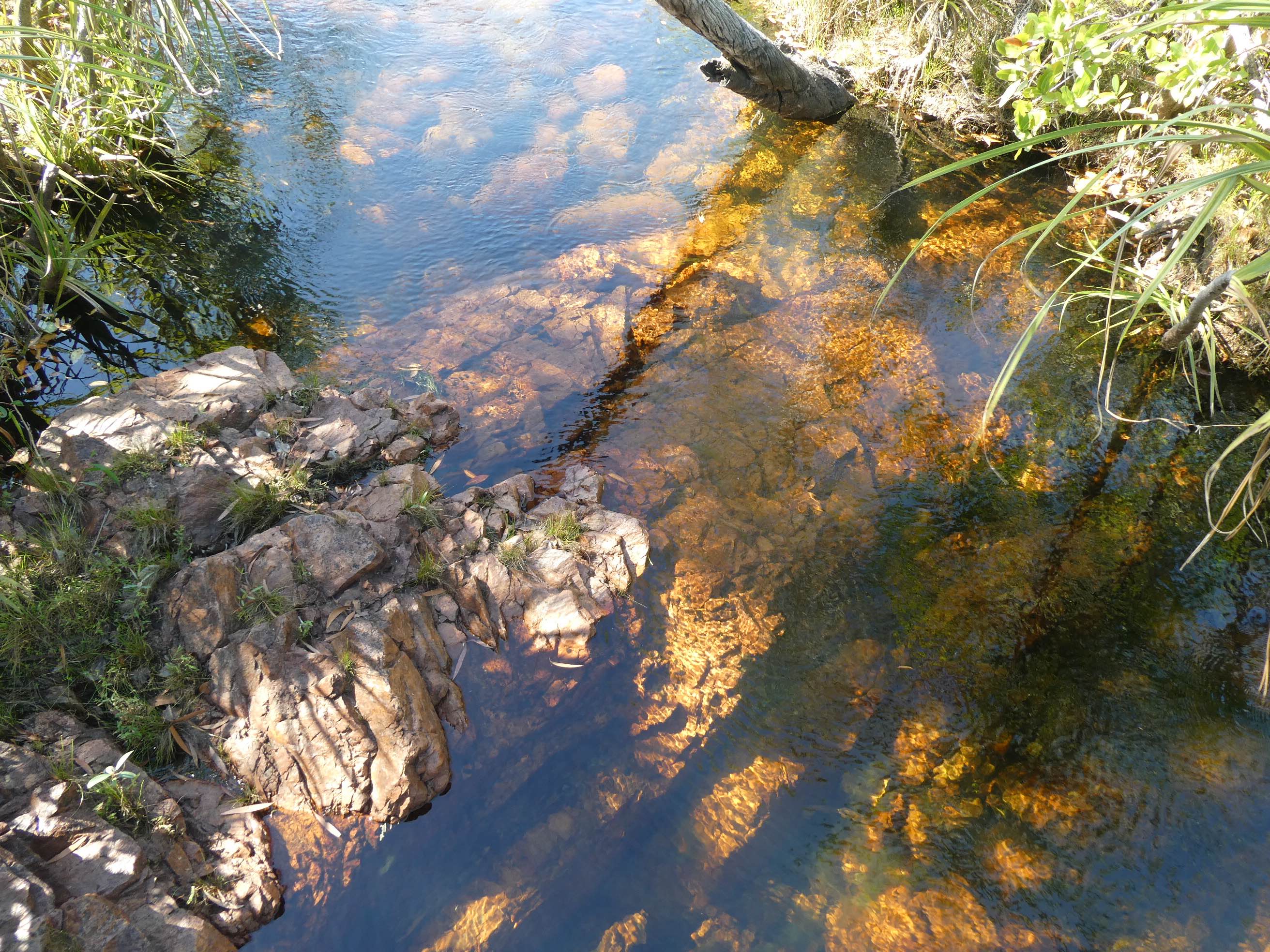
There is no view of the actual falls from the top and it is surprising that these trickling water courses create such a spectacle as they plummet over the cliff.
Smaller waterfalls accompanied us as we twisted and turned our way down a series of stone steps
to return to the pool for one last look at the majestic Wangi Falls.
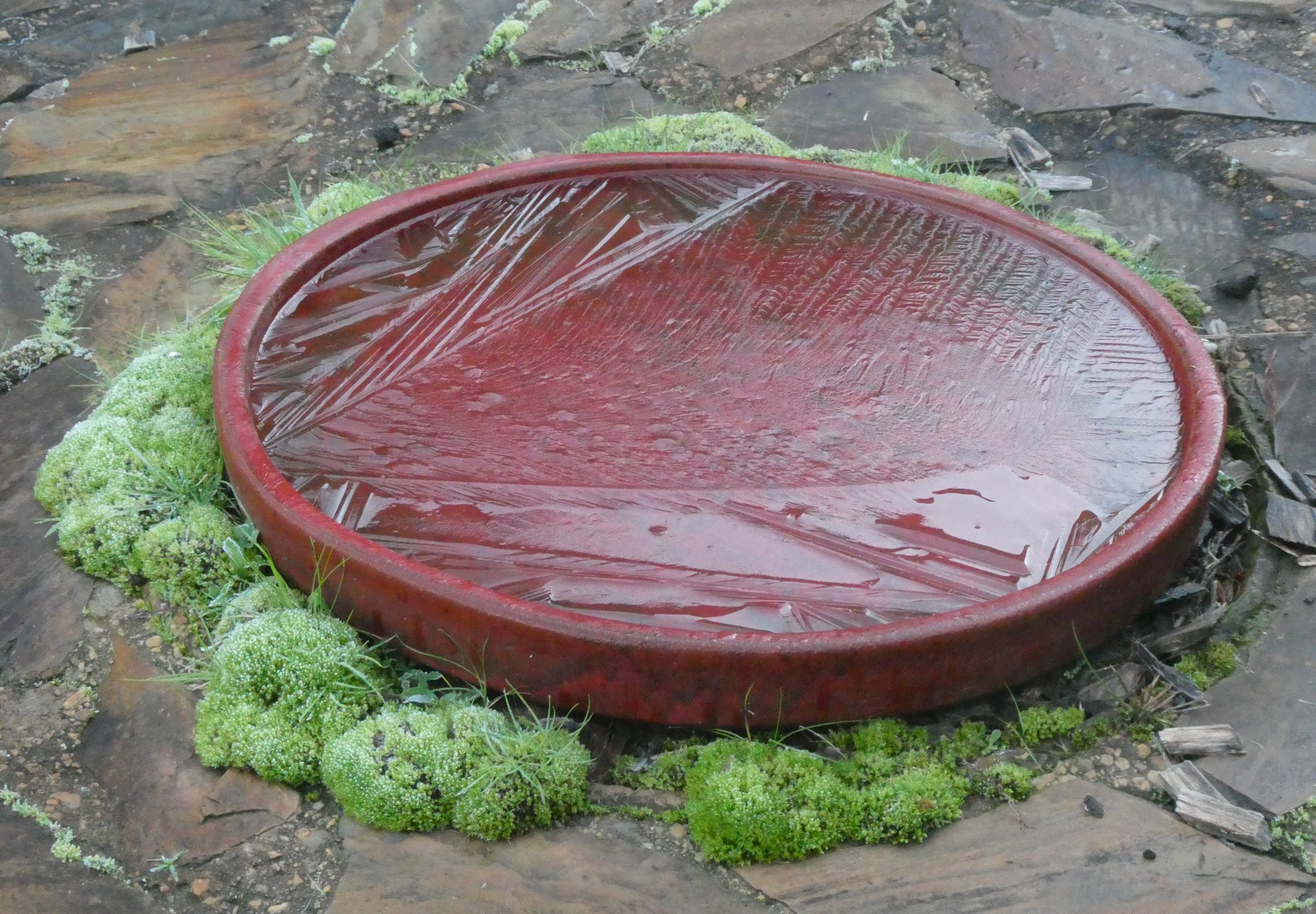
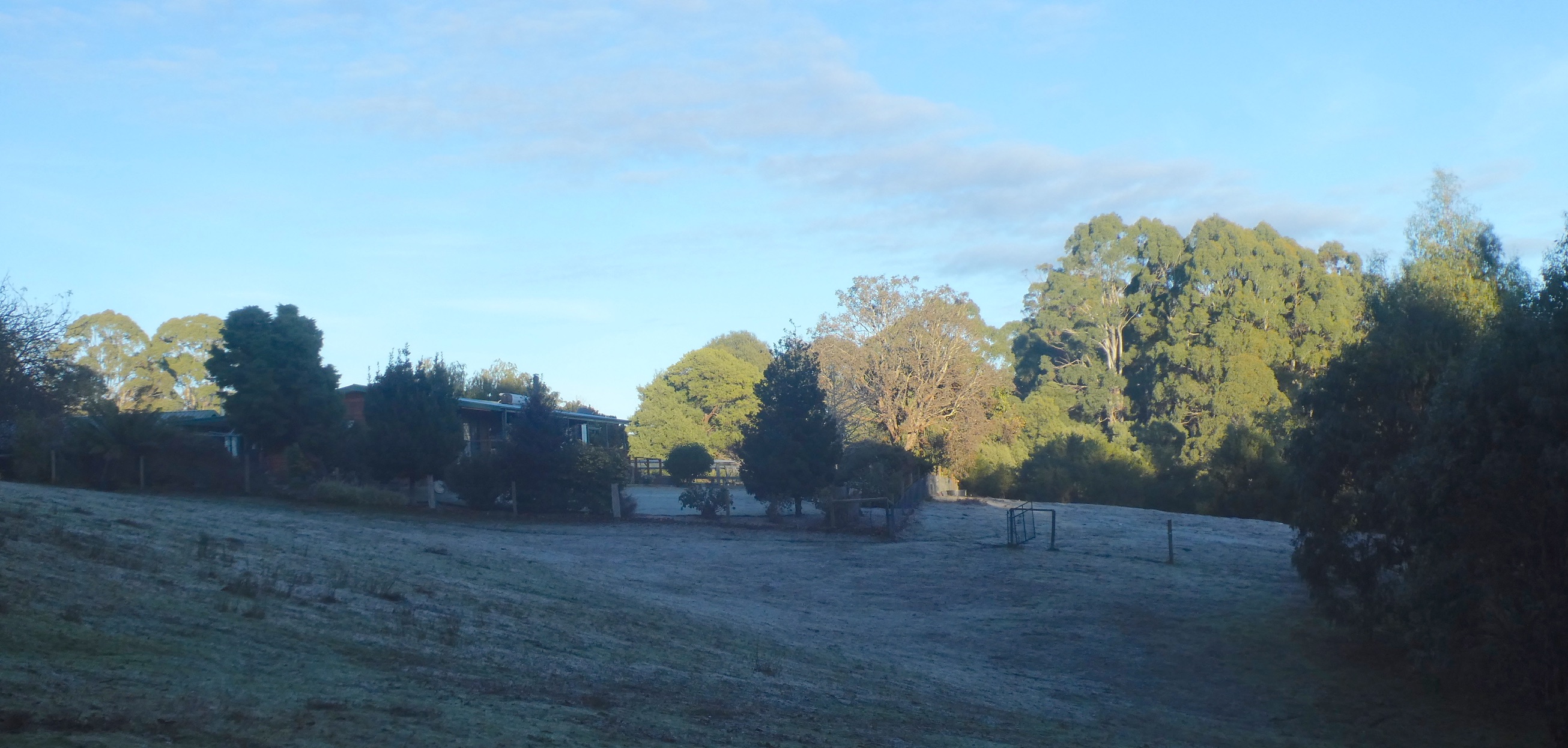
Having just returned from ten days in Darwin, I am struggling to adapt to the climate shock. Tasmanians are used to the four seasons and we enjoy the positive in each of them. Not long before my recent sojourn, I took Poppy for her morning walk into the Blythe Conservation Area that adjoins our property. There is no need to consult the BOM website to know the temperature has dipped into the minus, the frozen birdbaths are evident enough.
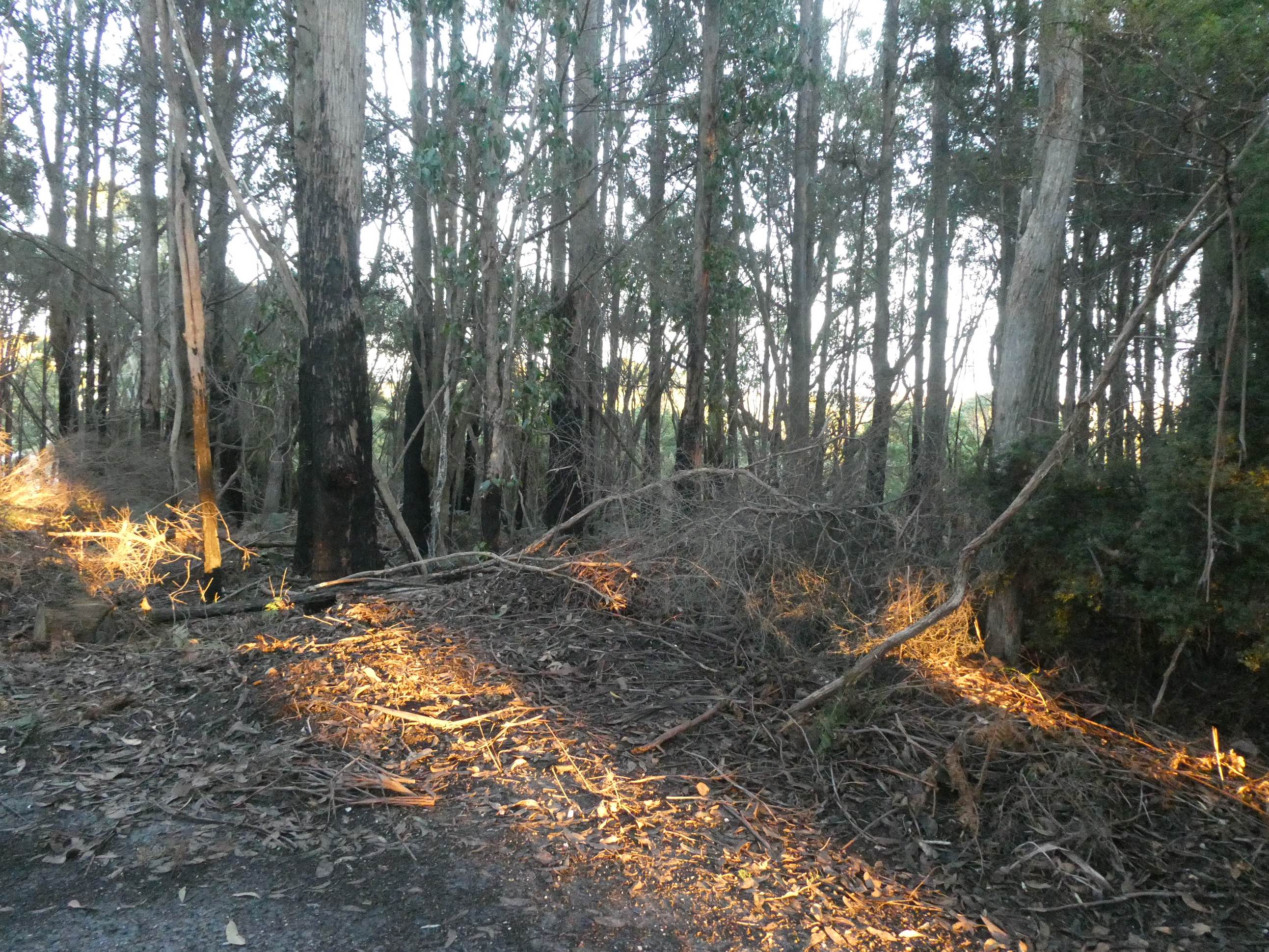
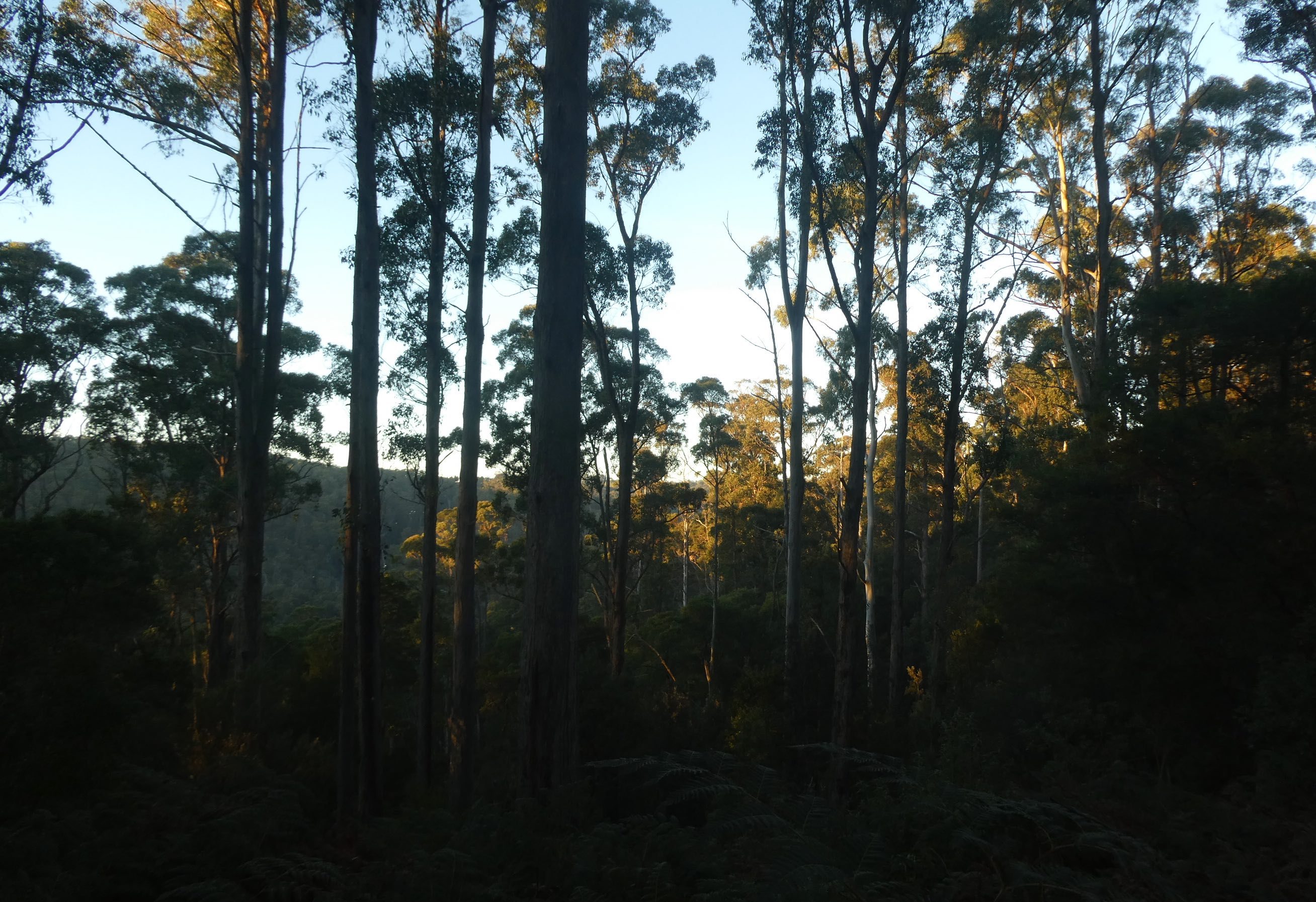
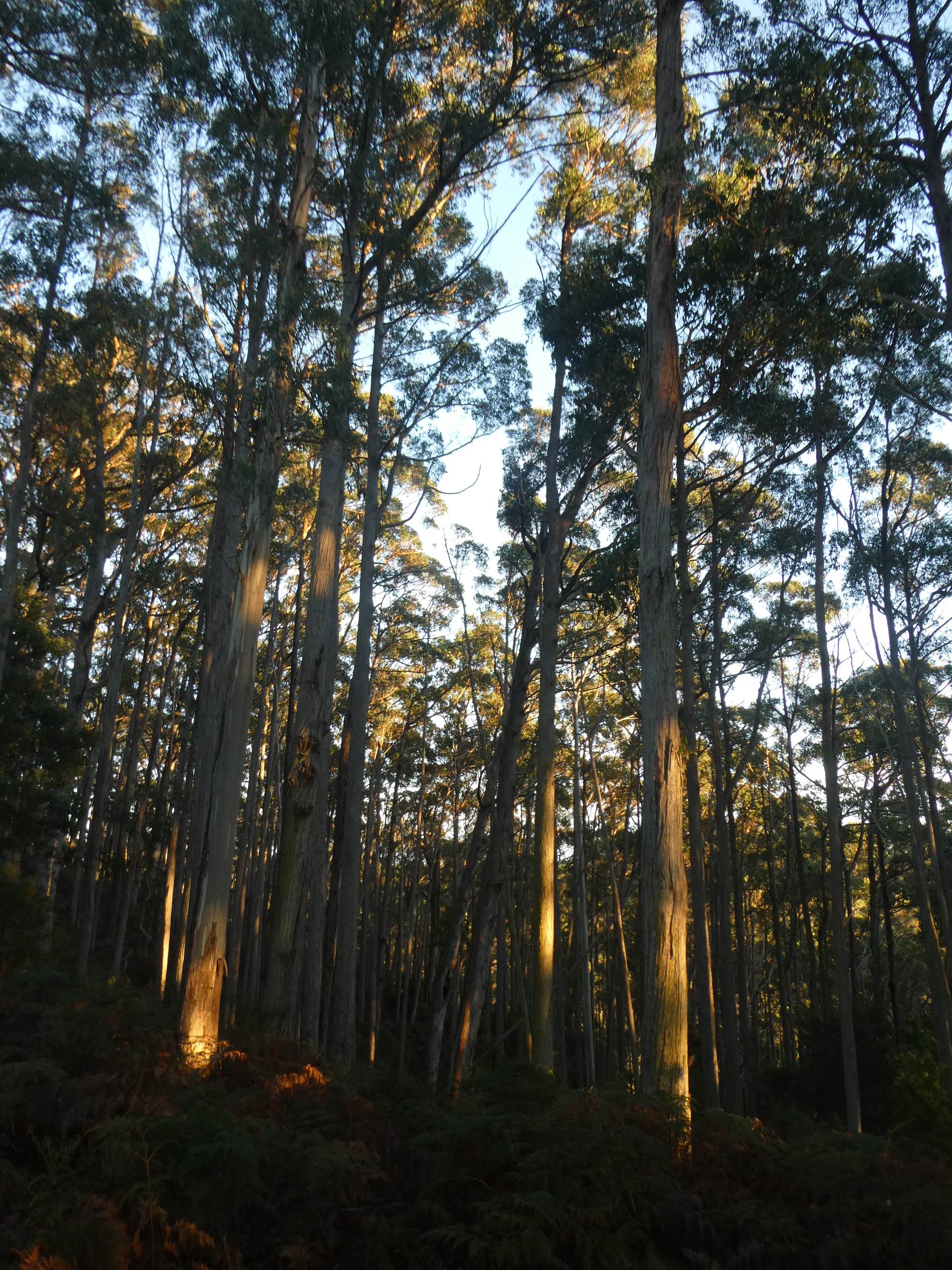
Risking frostbite to my digits, I transformed my thermal mittens to fingerless gloves (an ingenious design purchased at Cradle Mountain some years ago). Crossing the paddock, it seemed the forest was on fire with the trees reflecting the glow of early sunlight.
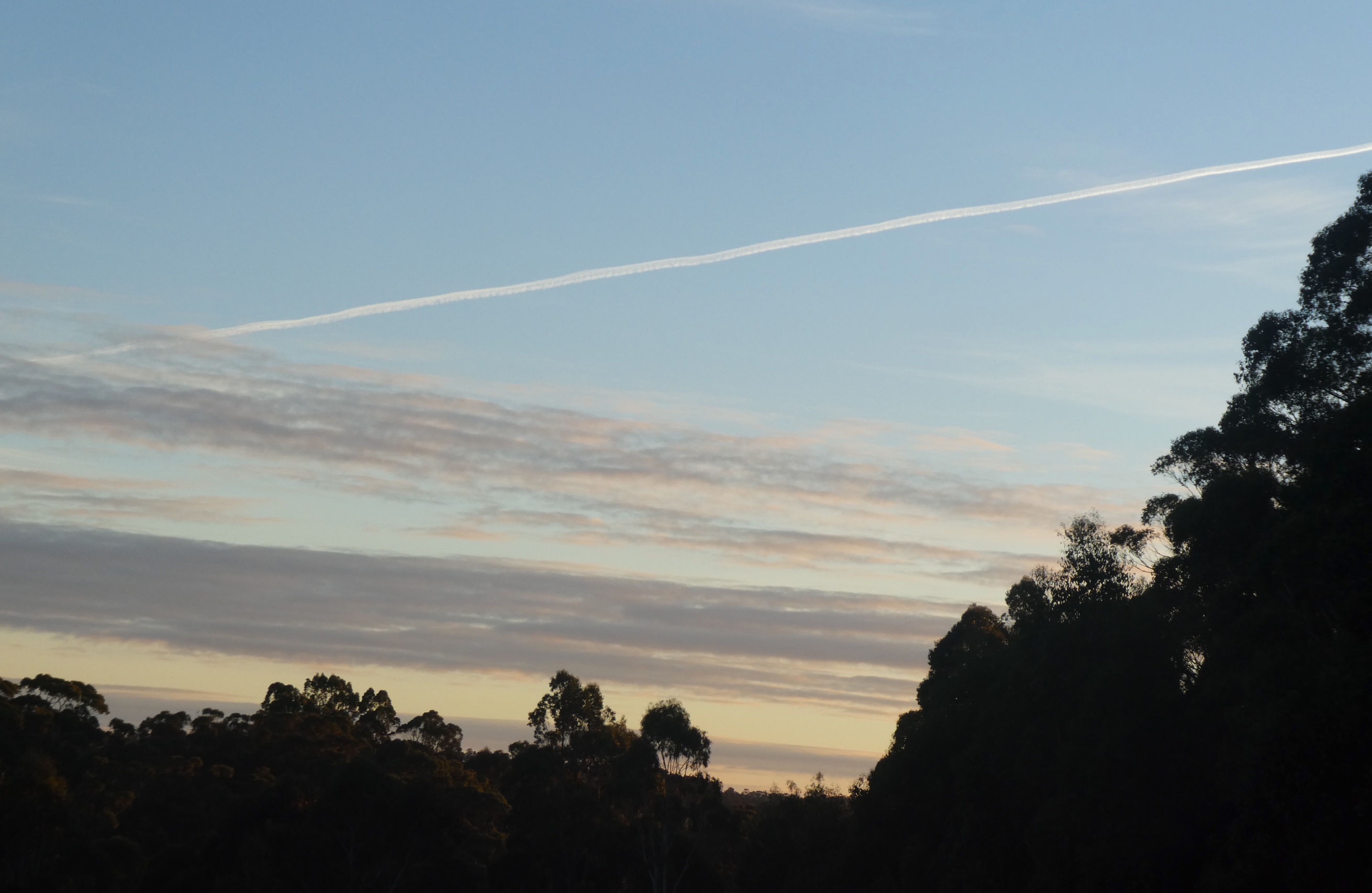
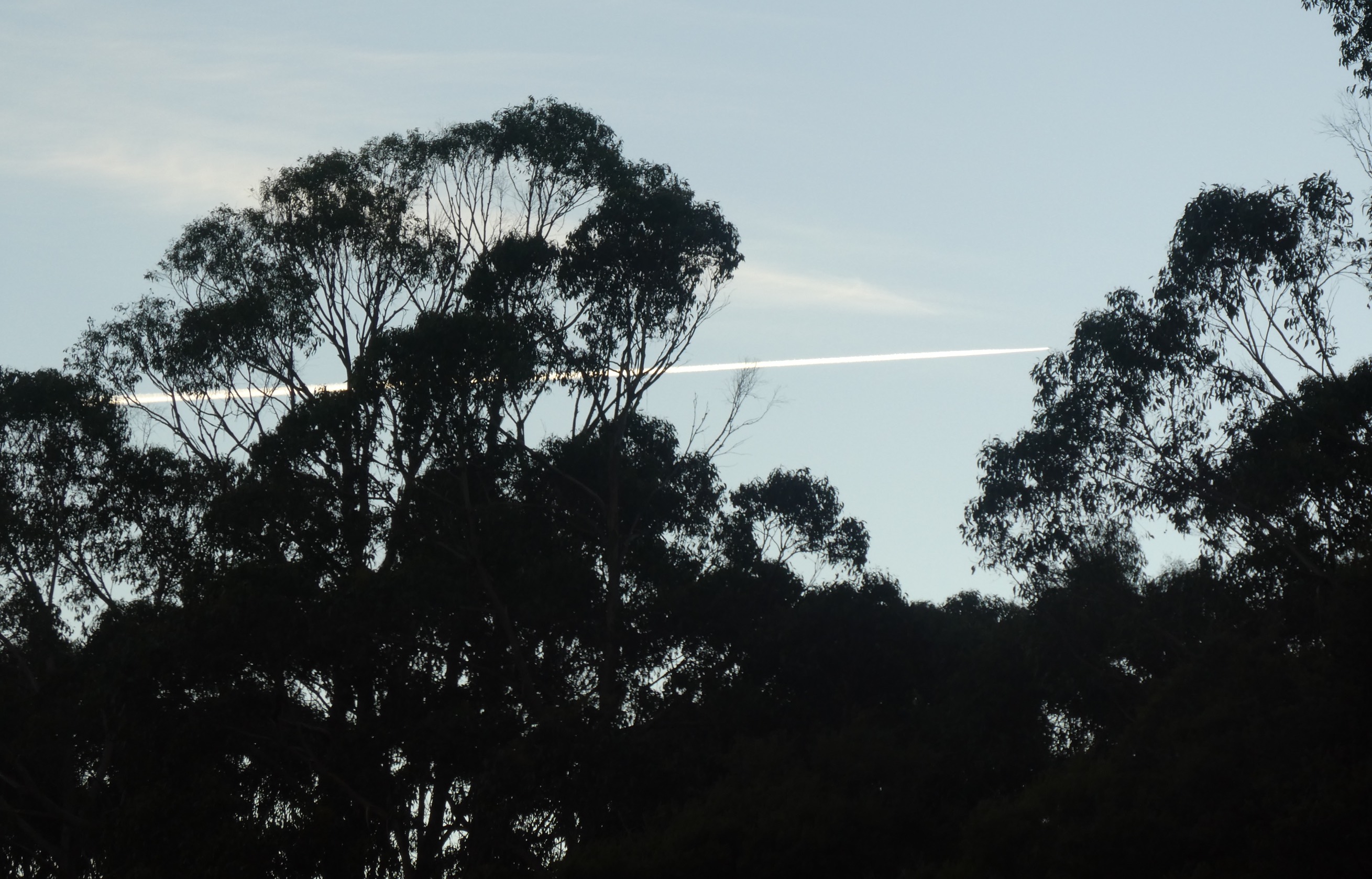
To the north, an aircraft’s vapour trail draws a line across the pale blue sky.
Looking back, the frost is heavy on our house roof
and the neighbour’s horses are rugged up against the cold.
Once into the forest, brushfires of rising sun create autumnal hues
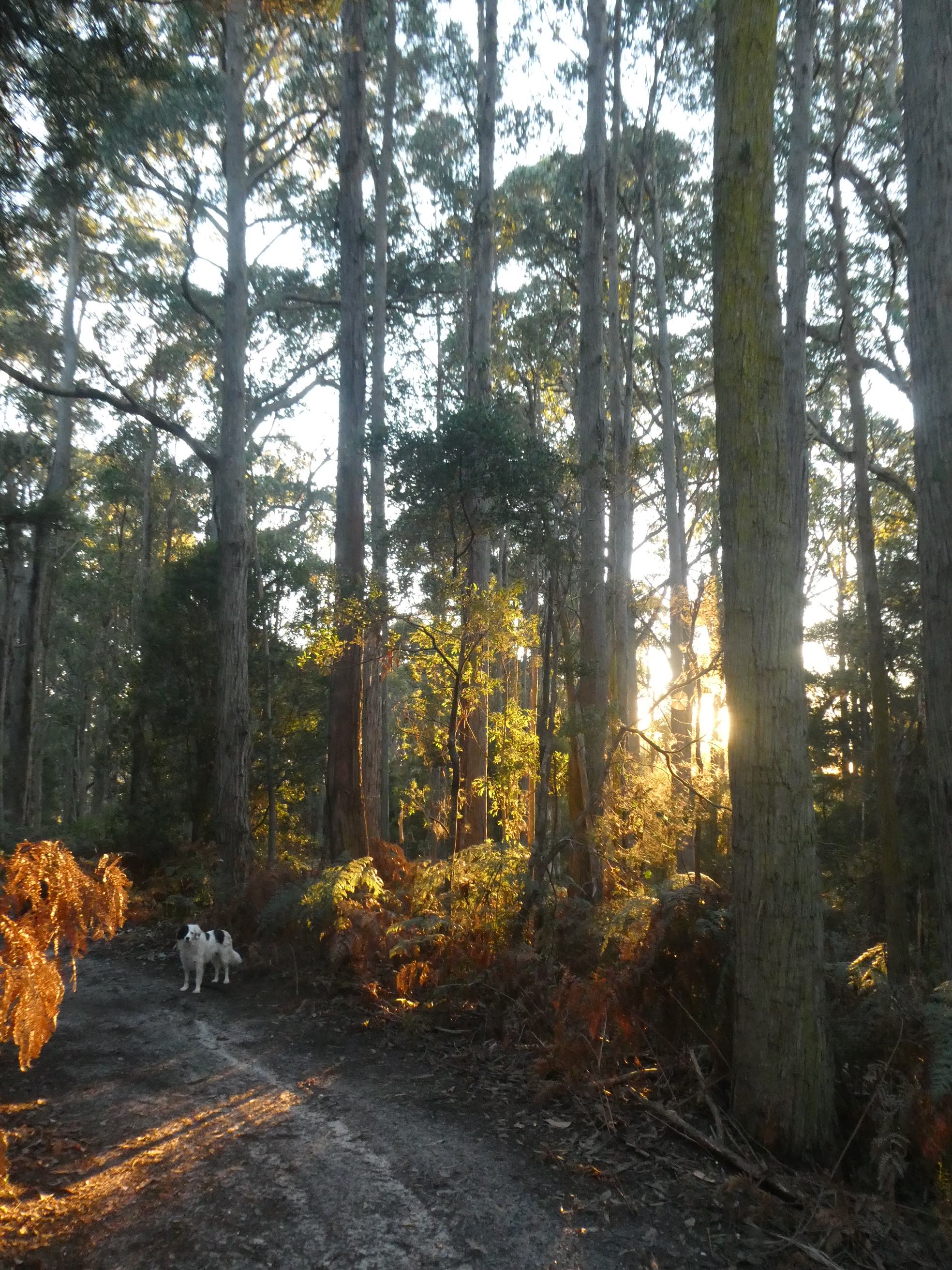
and someone is patiently waiting for me to catch up.
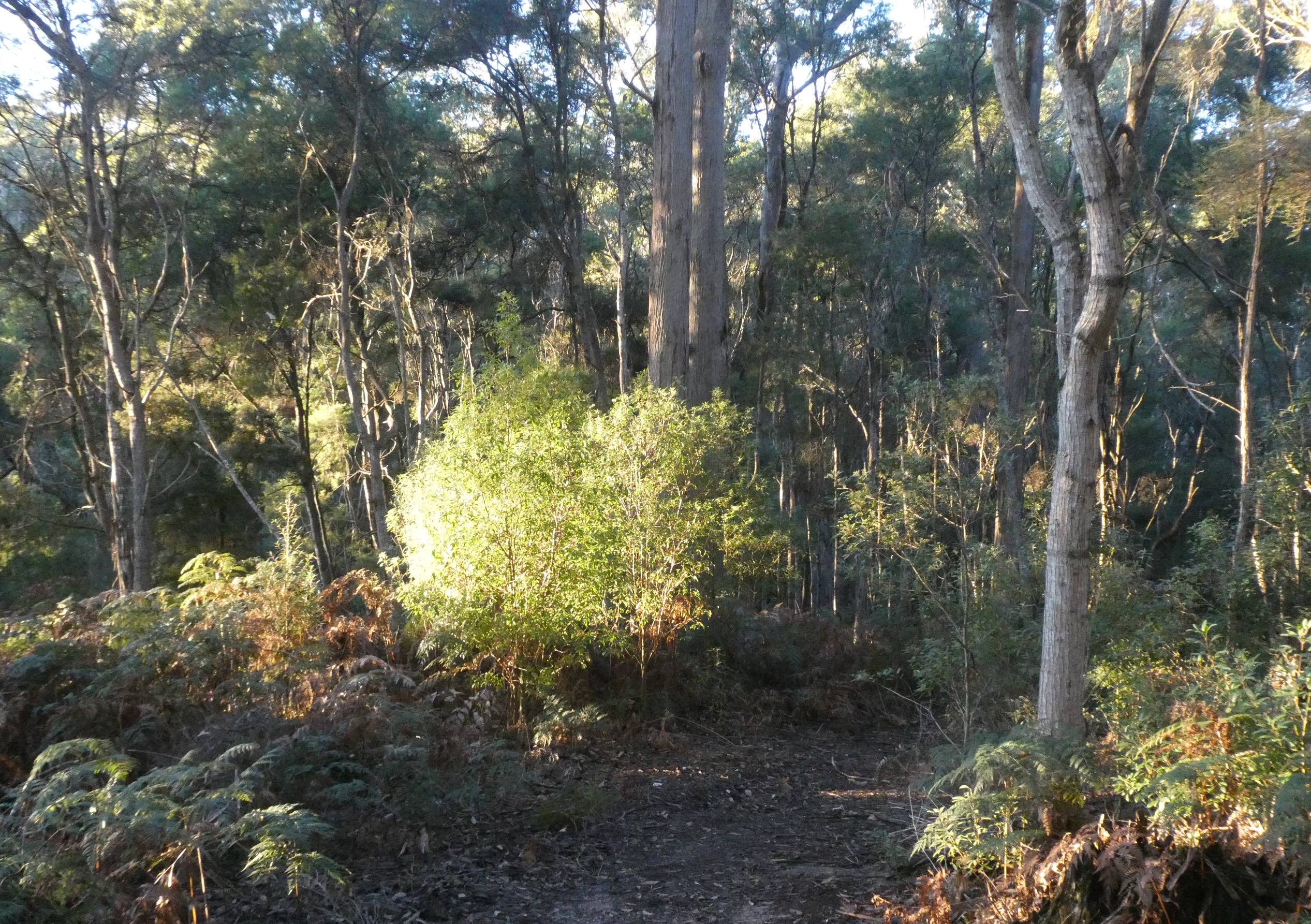
Further into the woodland, I have stumbled into paradise,
even Poppy takes a moment to appreciate the spectacle.
We may have trespassed into sacred sulphur-crested cockatoo territory at the end of the trail, the ear-piercing screeches from on high warned others of our presence.
Retracing our steps, highlights from ascending Sol lingered
and the frosty paddocks would soon warm to the glow.
Reclaimed garden edging and fallen leaves hold onto the frost
but the daffodils are promise of the coming spring.
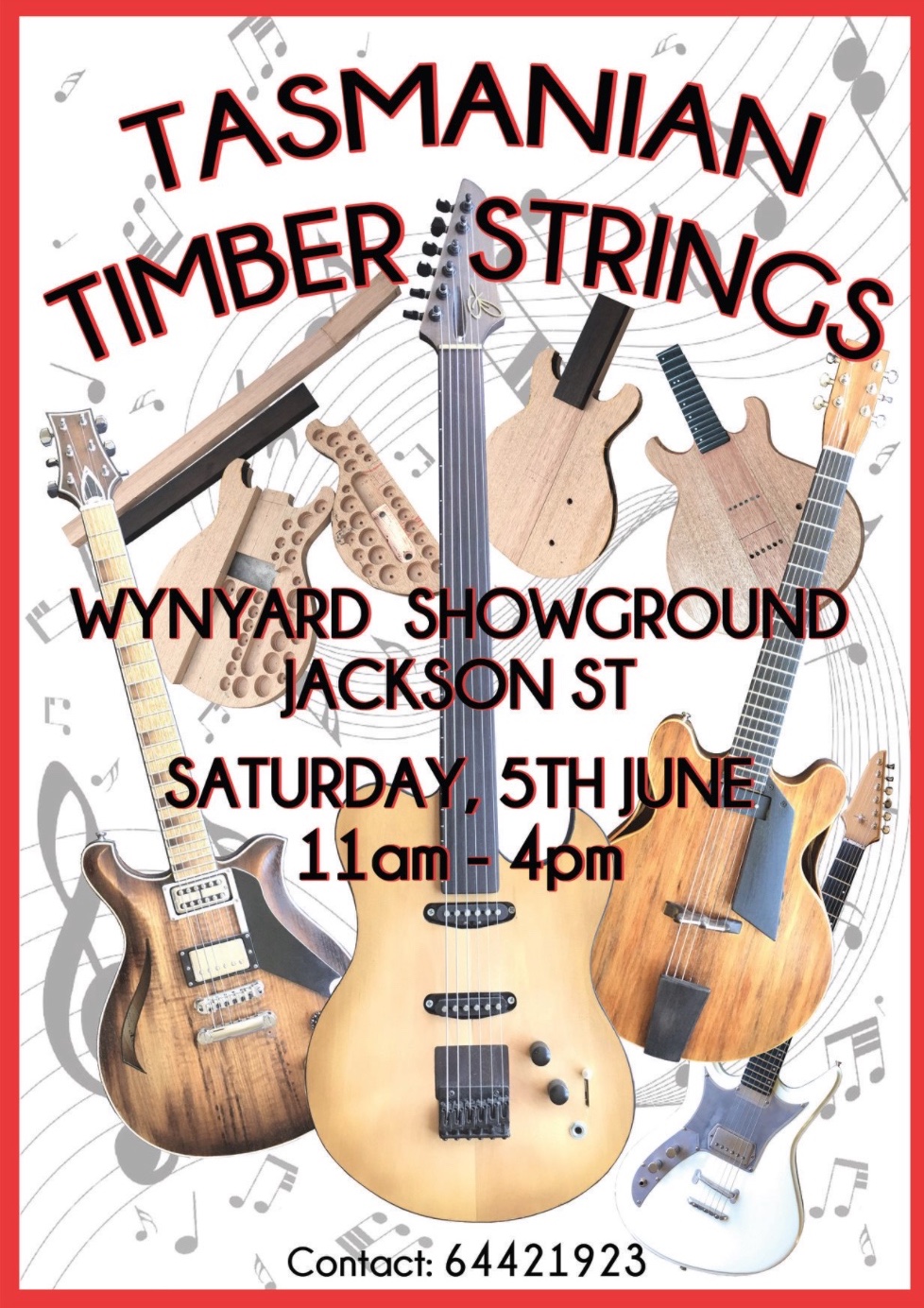
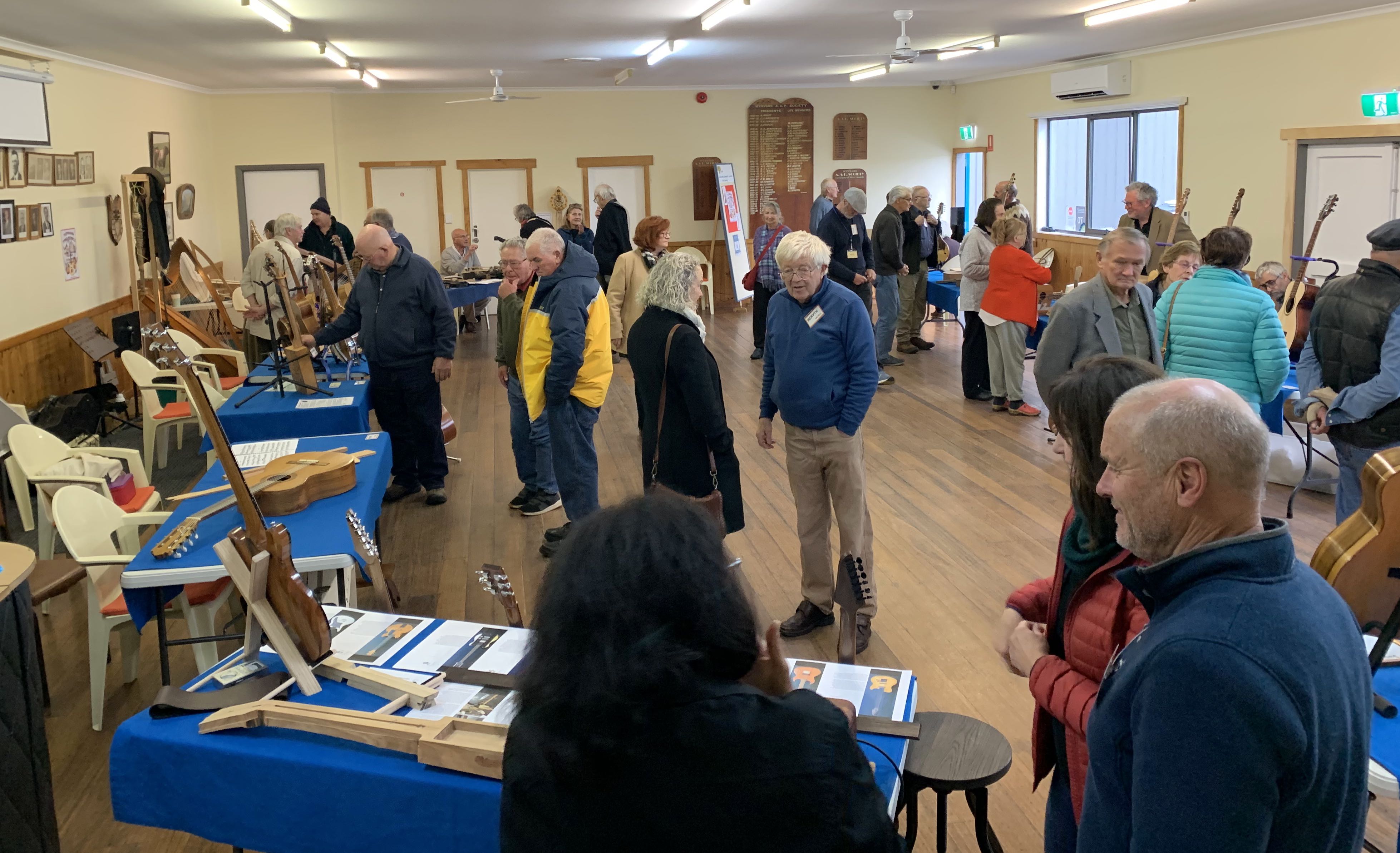
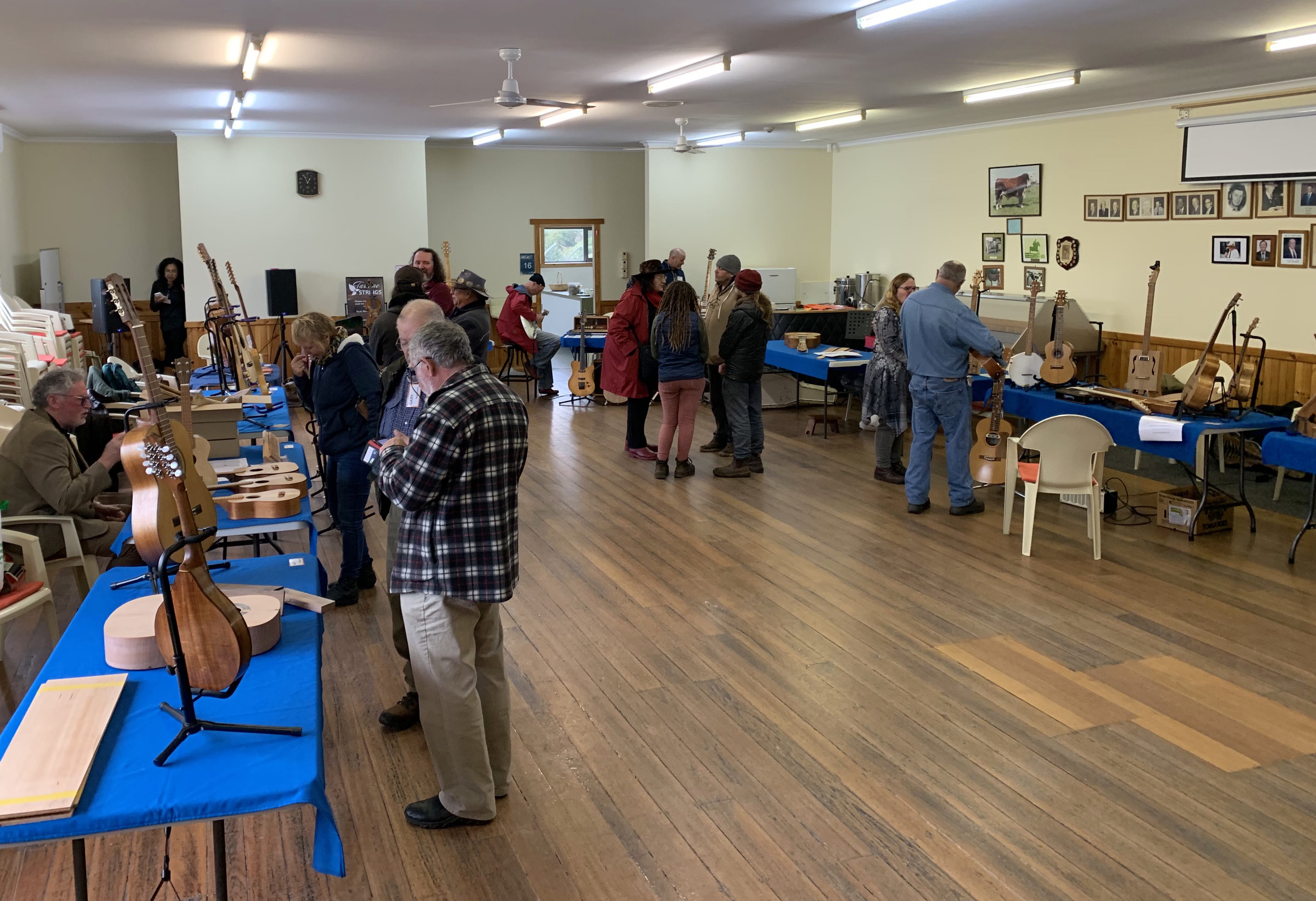
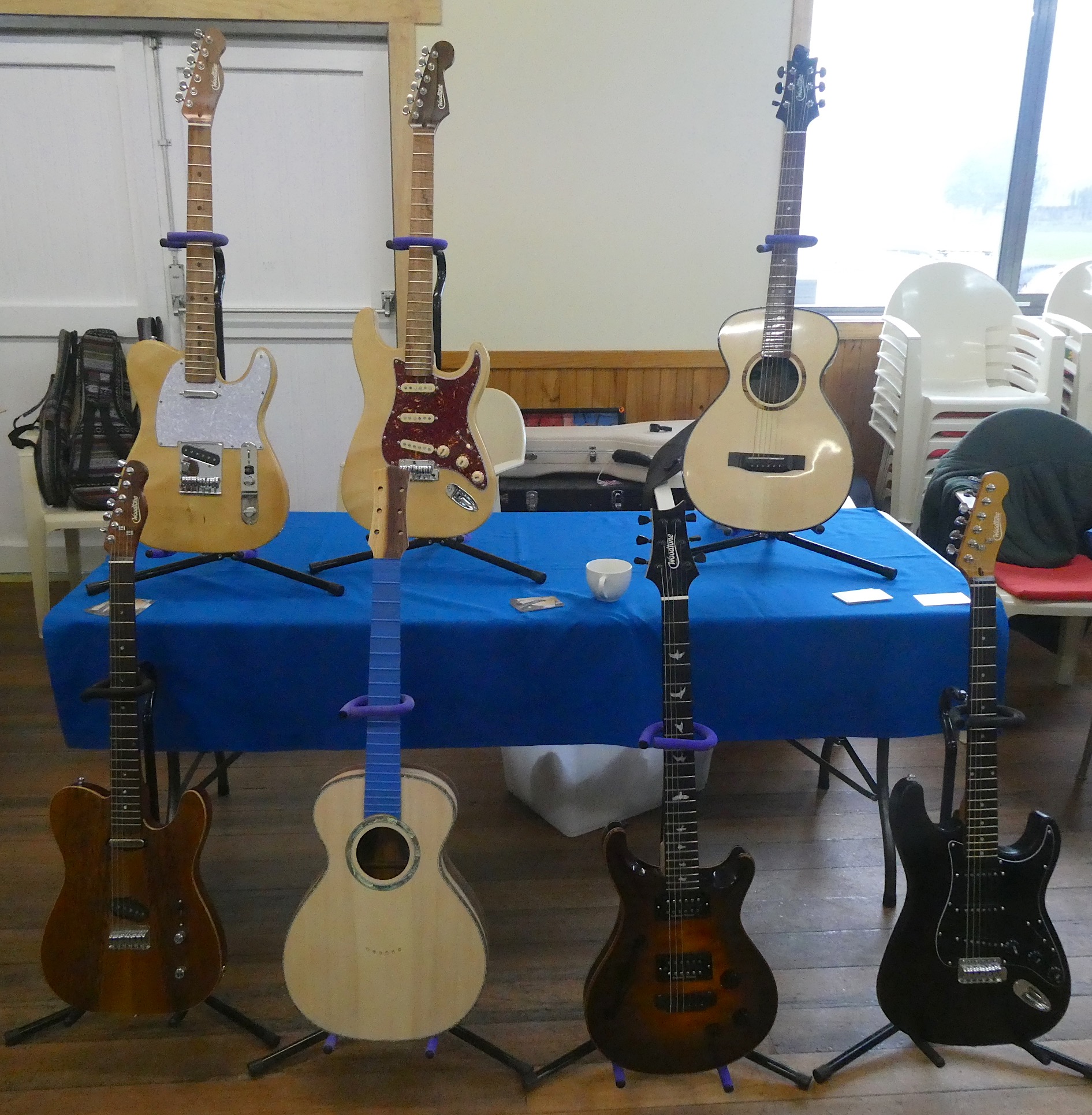
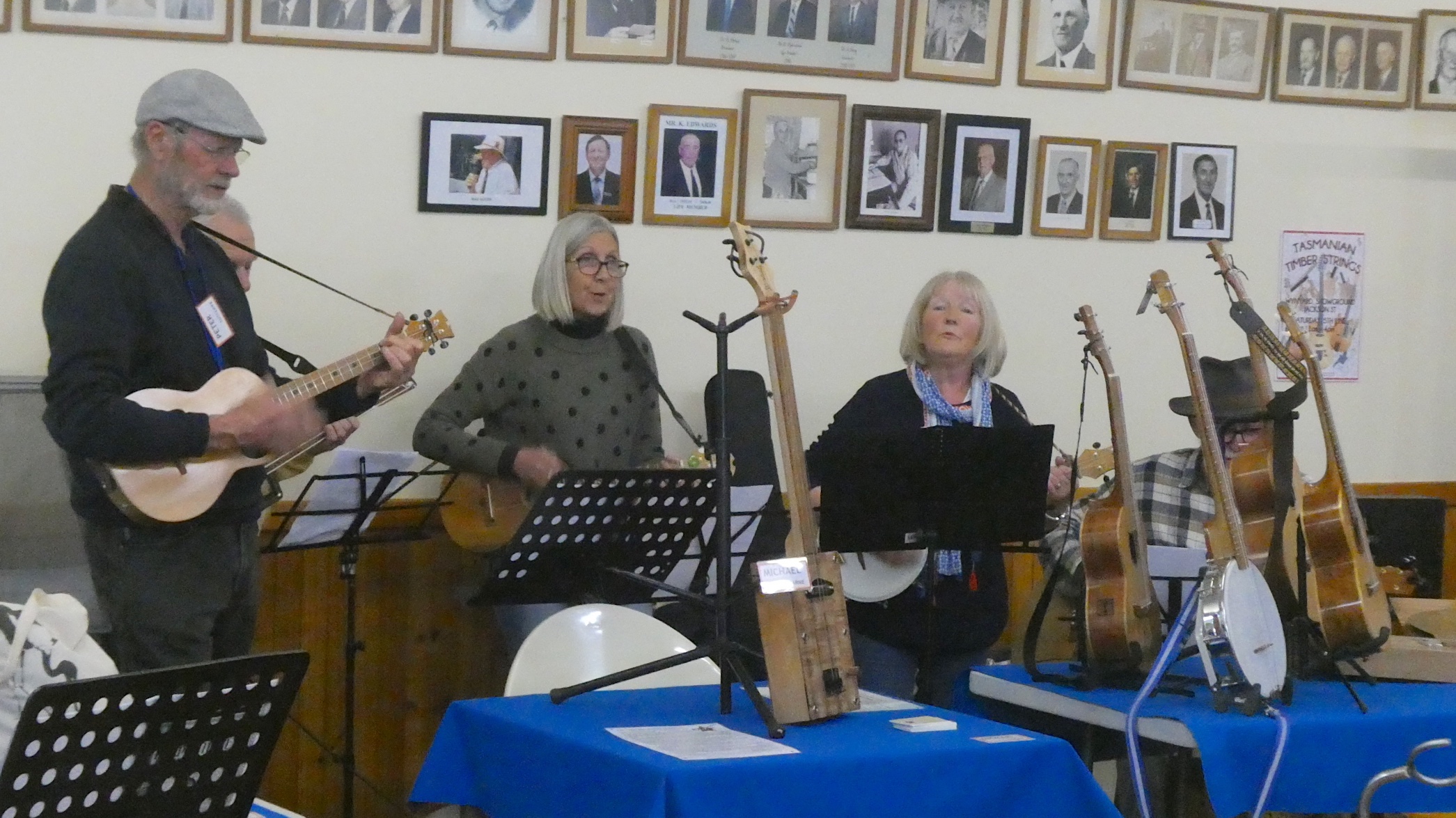
There are many artistic folk here in the northwest of our island and last weekend saw the opportunity for local luthiers to showcase their creations. Fourteen music makers presented their unique musical instruments at the Tasmanian Timber Strings exhibition at Wynyard.
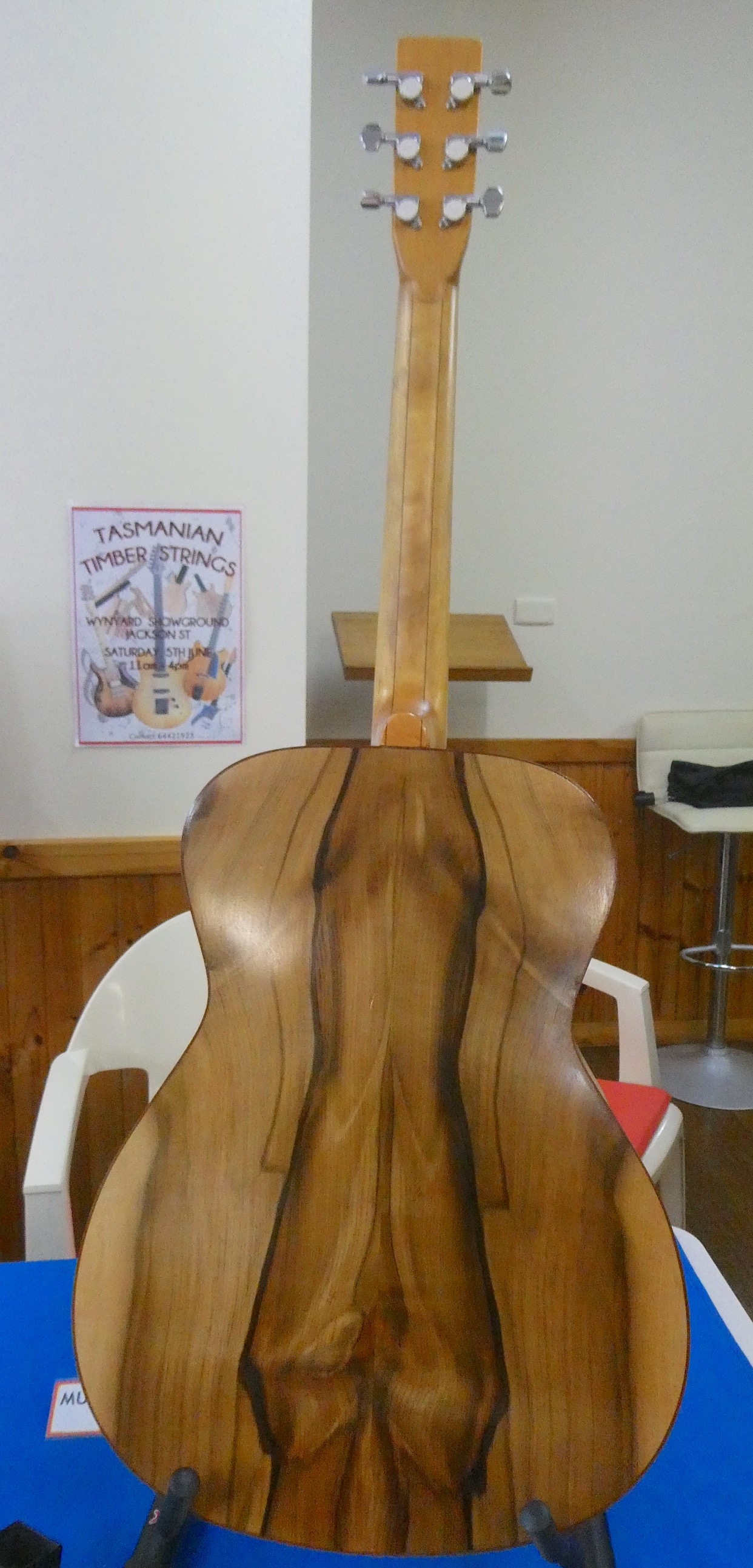
The drawcard for me, even though I can admire them at any time, were the two gorgeous guitars made by my talented husband. Michael attended his first guitar-making course at Highfield House, Stanley, in October 2012, led by Chris Wynne of Thomas Lloyd guitars. Benjamin is named after the last captive thylacine who died at Beaumaris Zoo, Hobart on 7th September 1936.
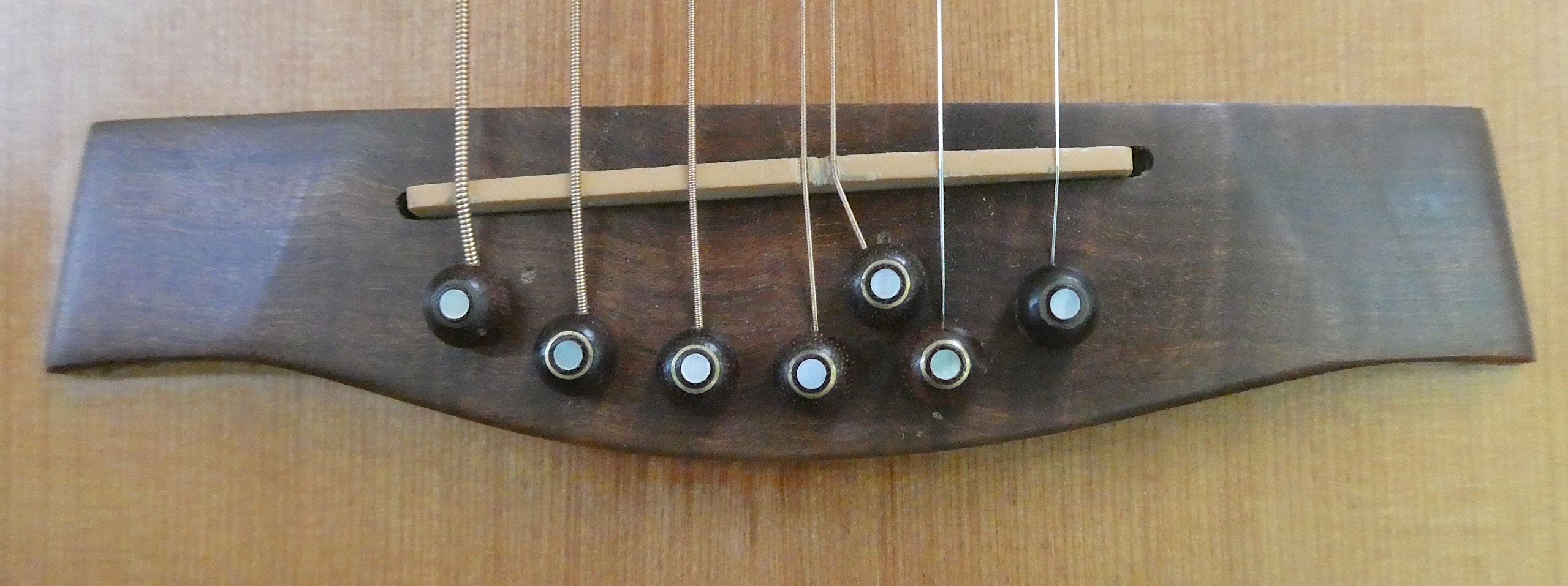
The 7-string dreadnaught has a magnificent tiger myrtle backboard, sides & headstock along with celery top pine soundboard, blackwood double-rosette & body bindings, Tasmanian oak neck and Queensland gidgee fretboard & bridge .
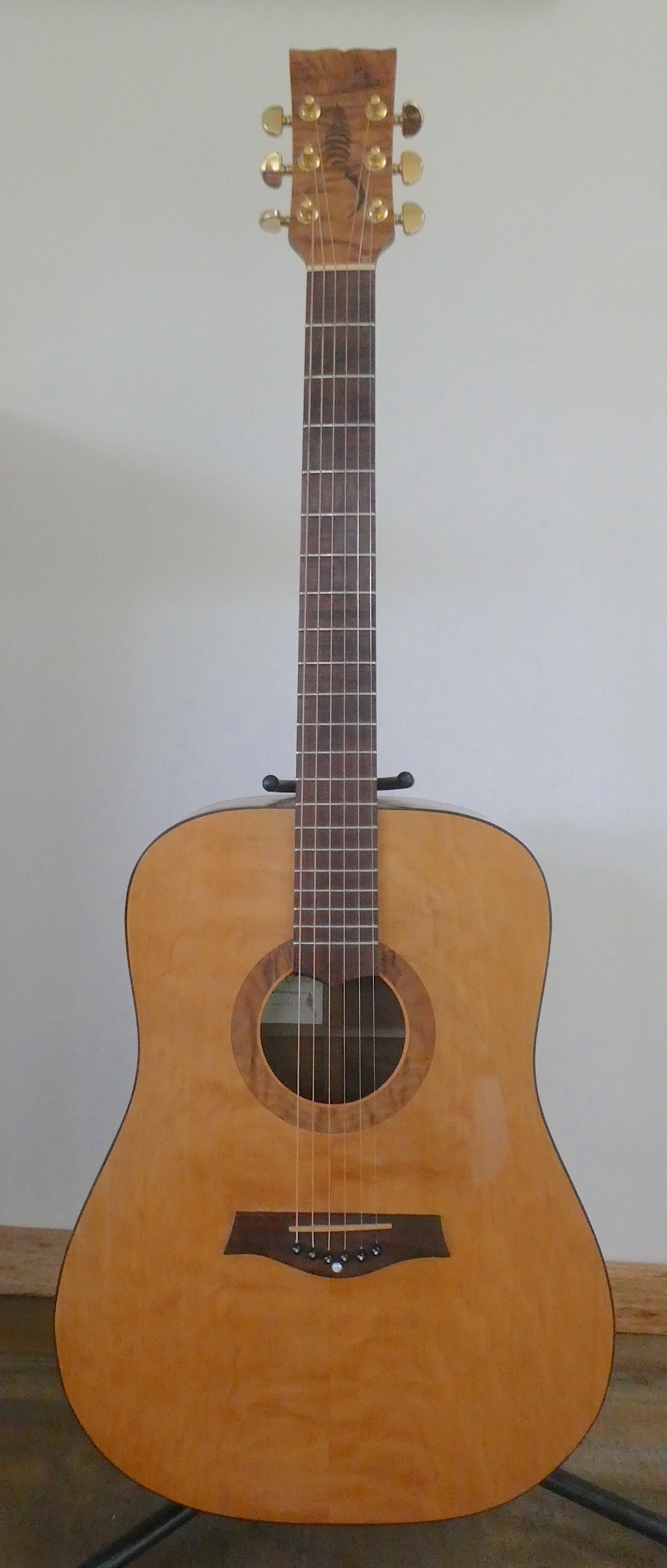
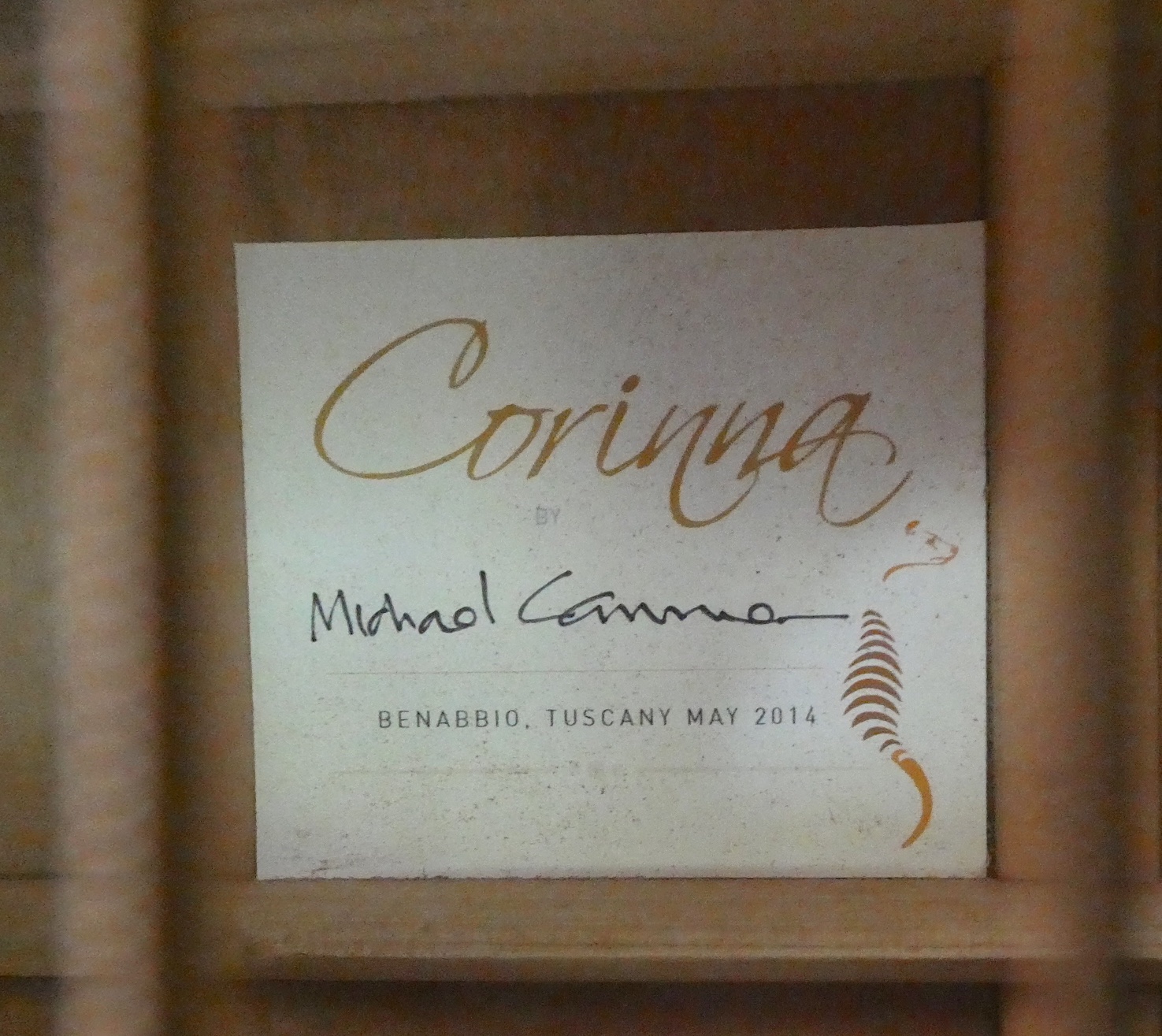
In May 2014, a second guitar-making course in Italy, again with Chris Wynne, produced the beautiful 6-string dreadnaught, Corinna.
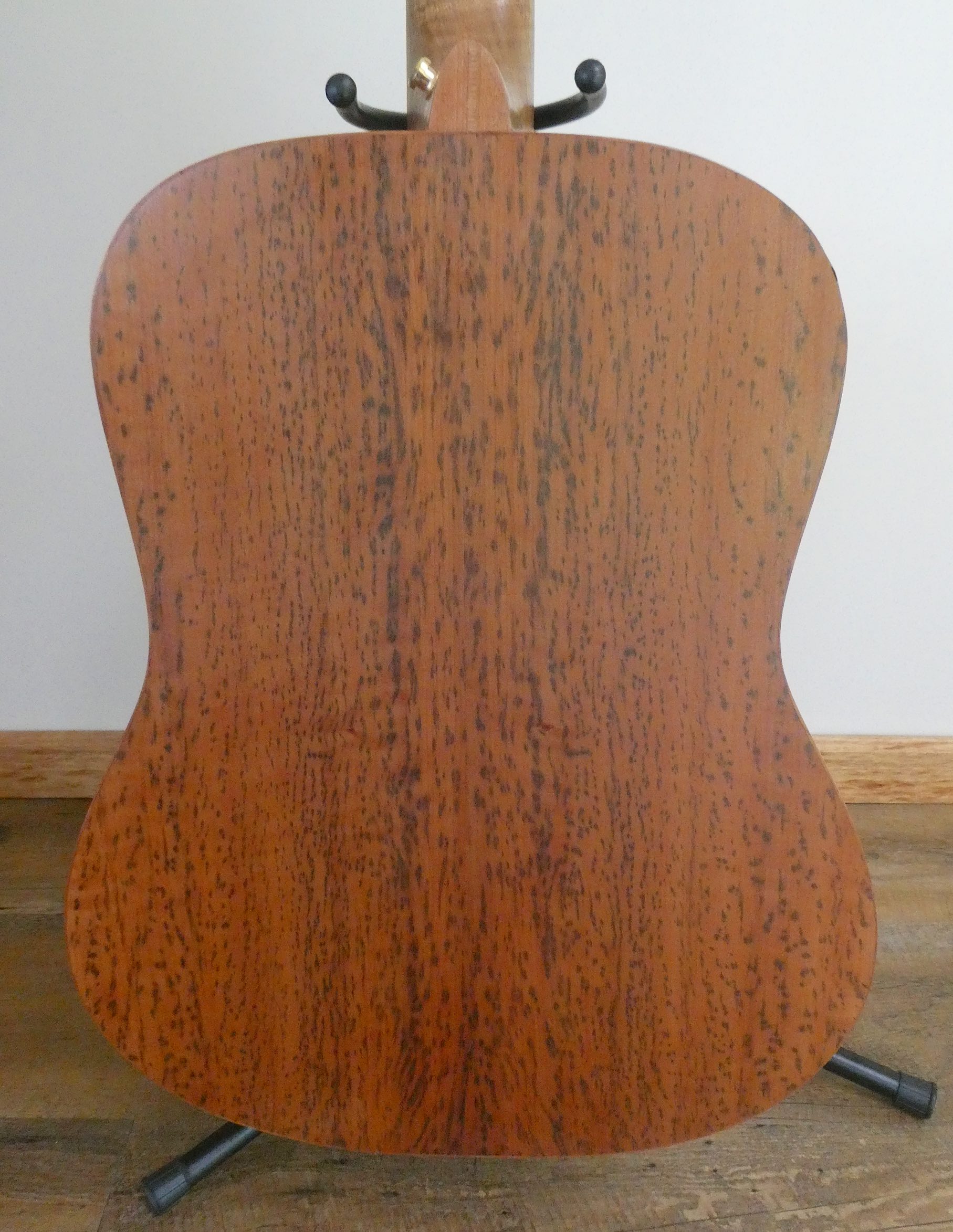
This time, the soundboard is Huon pine with a musk rosette, figured blackwood backboard & sides, gidgee fretboard, bridge & bindings and Tasmanian oak neck. The musk headstock is inlaid with a blackwood thylacine graphic, designed by Michael to reflect the name of the instrument, the Aboriginal word for a young thylacine.
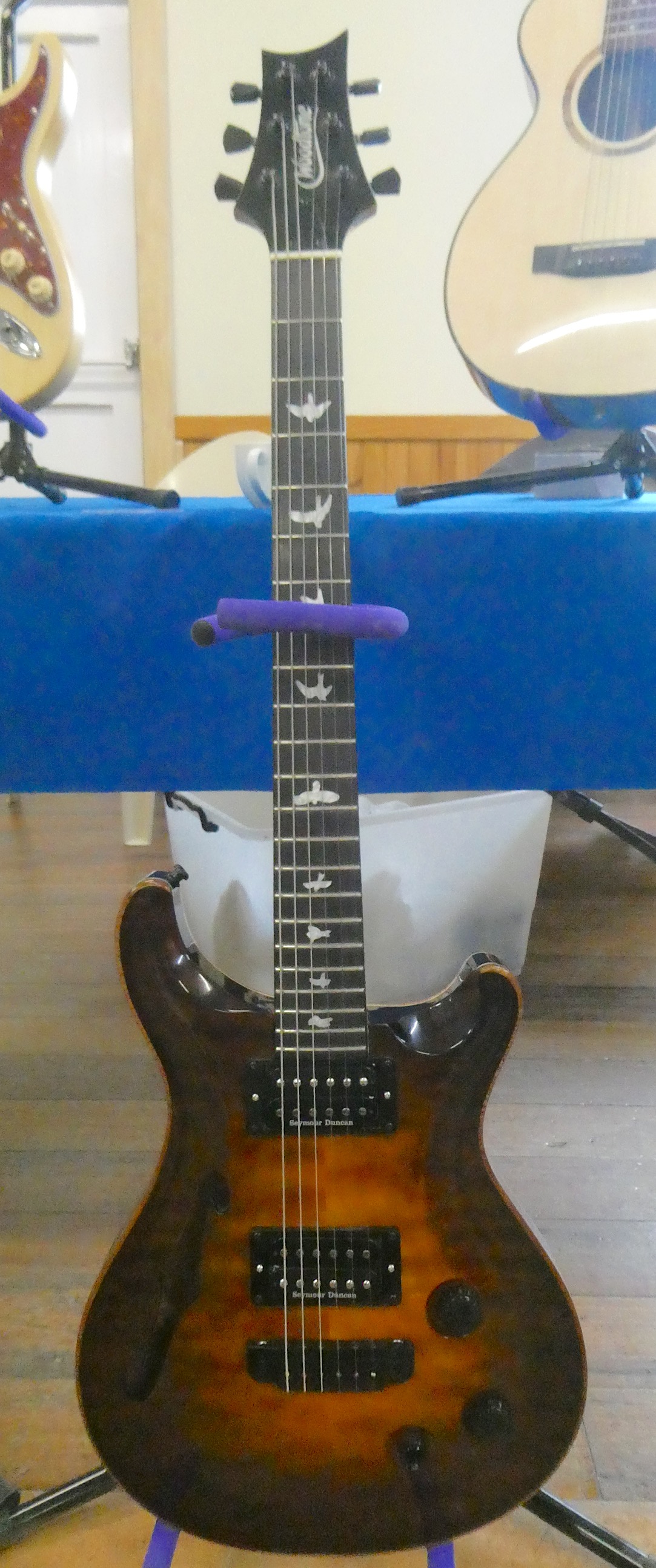
Michael O’Donnell also started making guitars after attending a workshop in Italy under the tutelage of Chris Wynne and took over the business Woodtone Guitars in Penguin in early 2018. As well as creating customised acoustic and electric guitars, he conducts guitar making courses, sourcing specialty timbers for you to build your own.
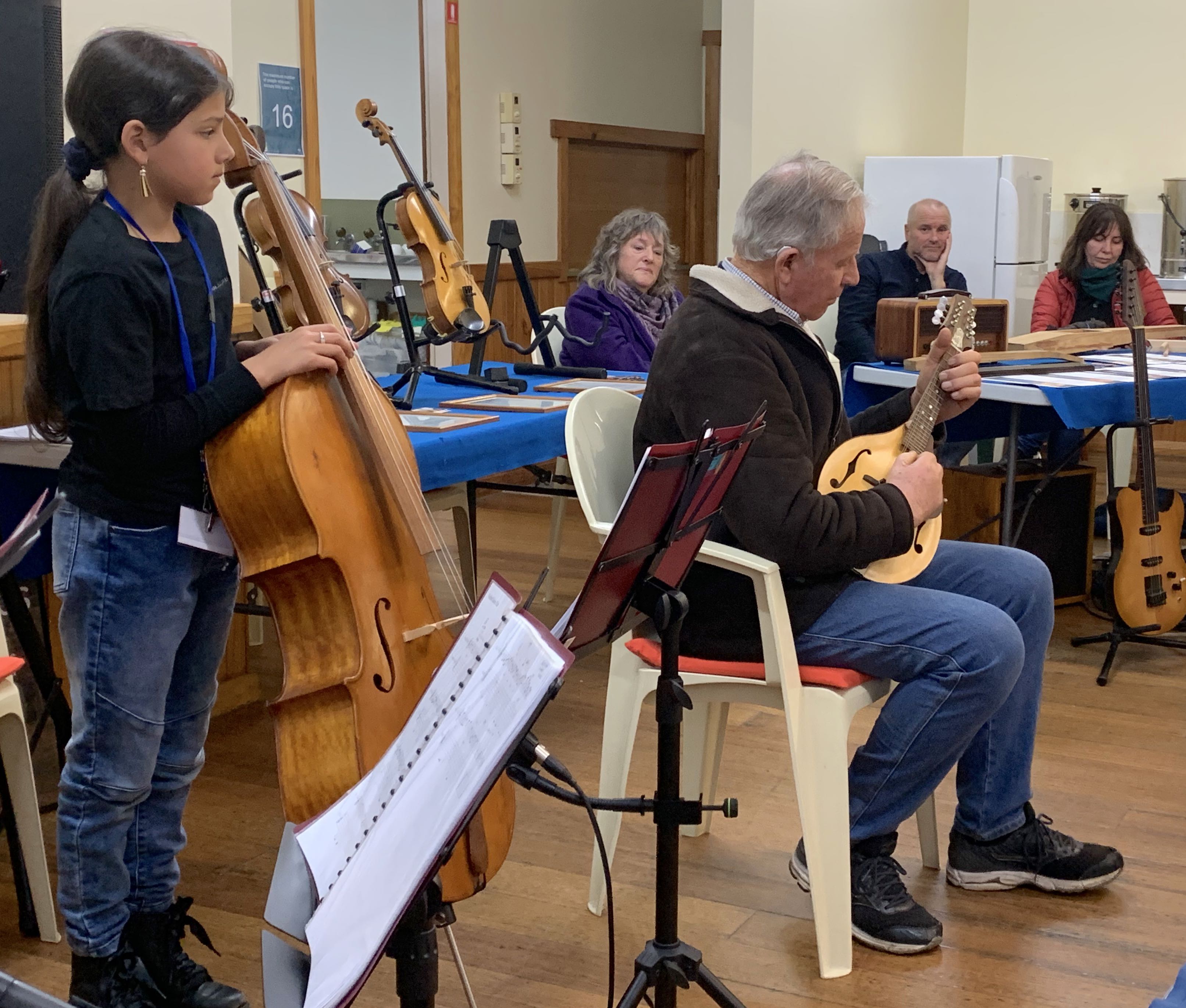
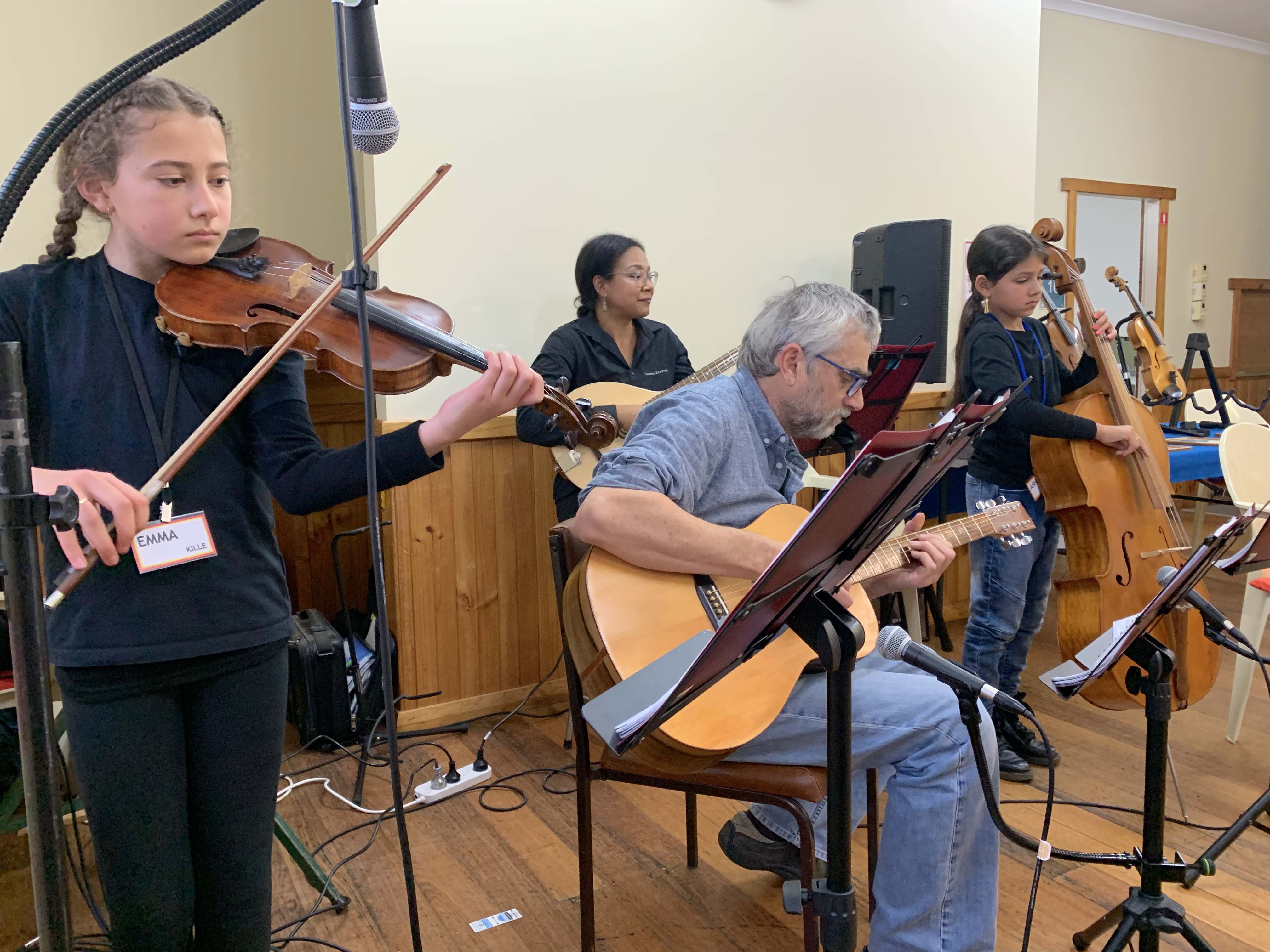
The gifted Kille family of Tarkine Strings are best known for their beautiful string ensemble music. Murray has another string to his bow (pardon the pun), making a striking guitar with sassafras back & sides under the guidance of Michael O’Donnell in 2018. The soundboard & neck are Huon pine and the fretboard is figured Tasmanian blackwood with a myrtle headstock.
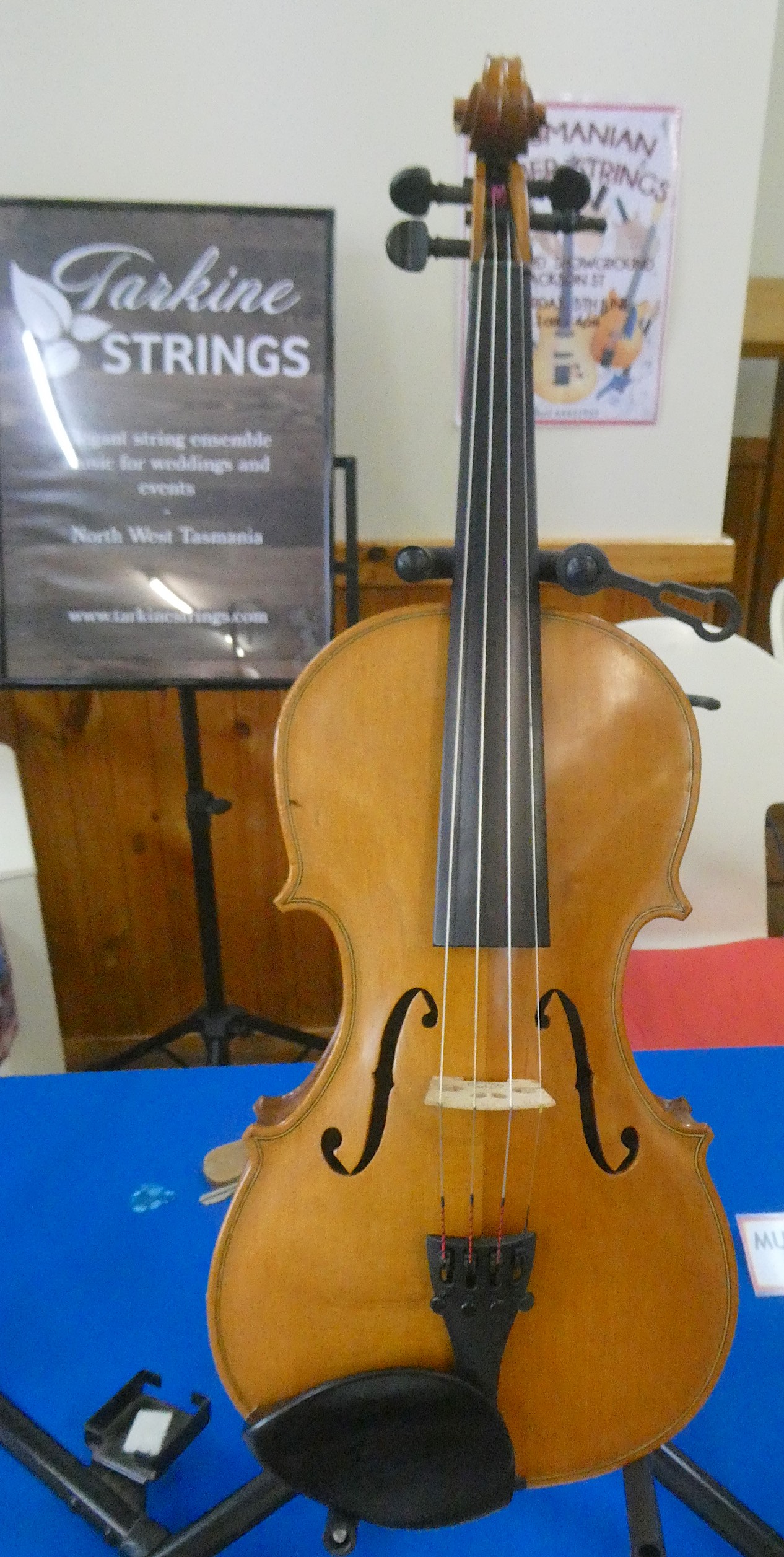
Alongside was an elegant violin made by luthier Cecil Bynon in 1983 with King Billy pine top, Tasmanian blackwood back, sides & neck and ebony fingerboard.
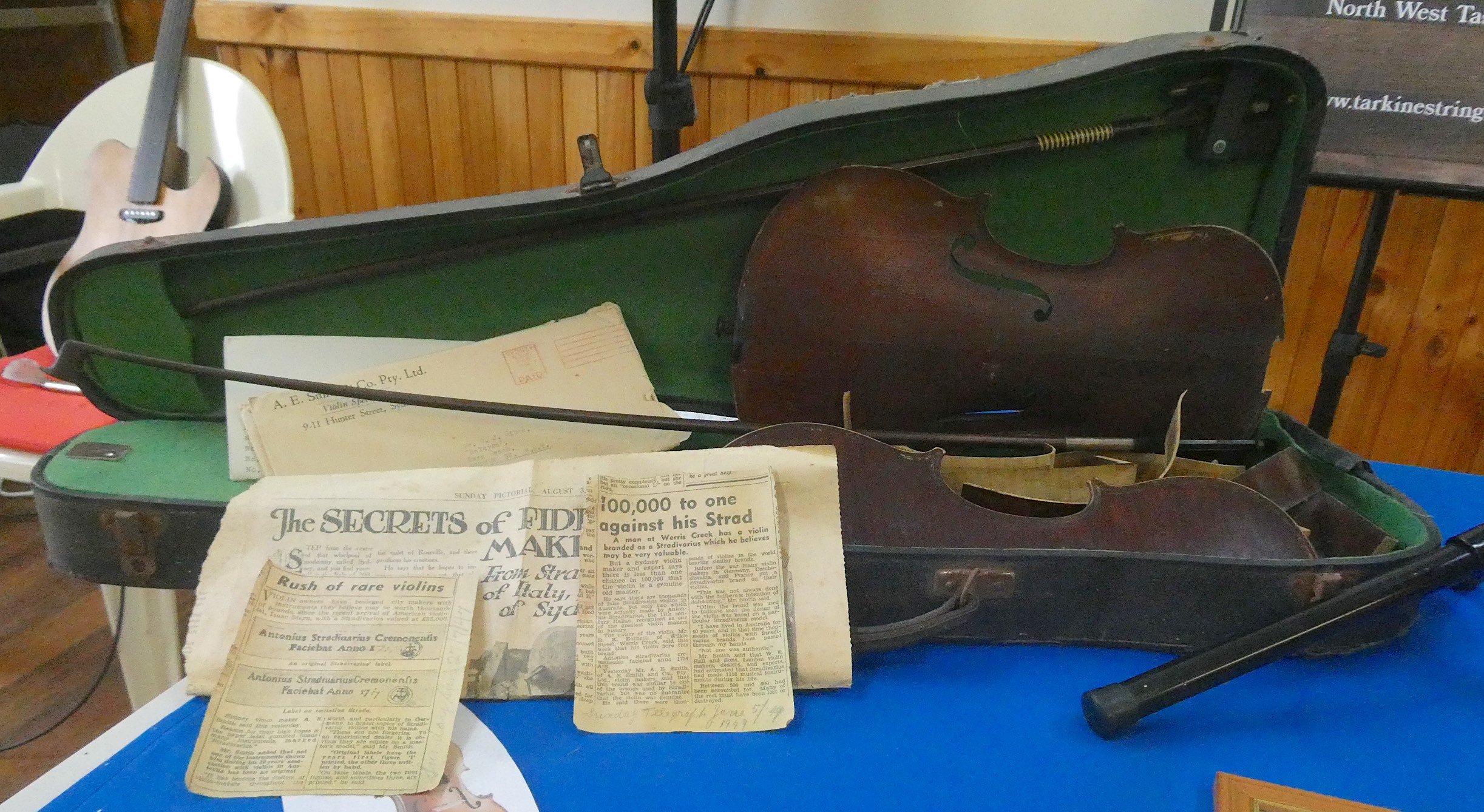
Murray also repairs classical string instruments including violins, violas and cellos, though I think this one is beyond redemption.
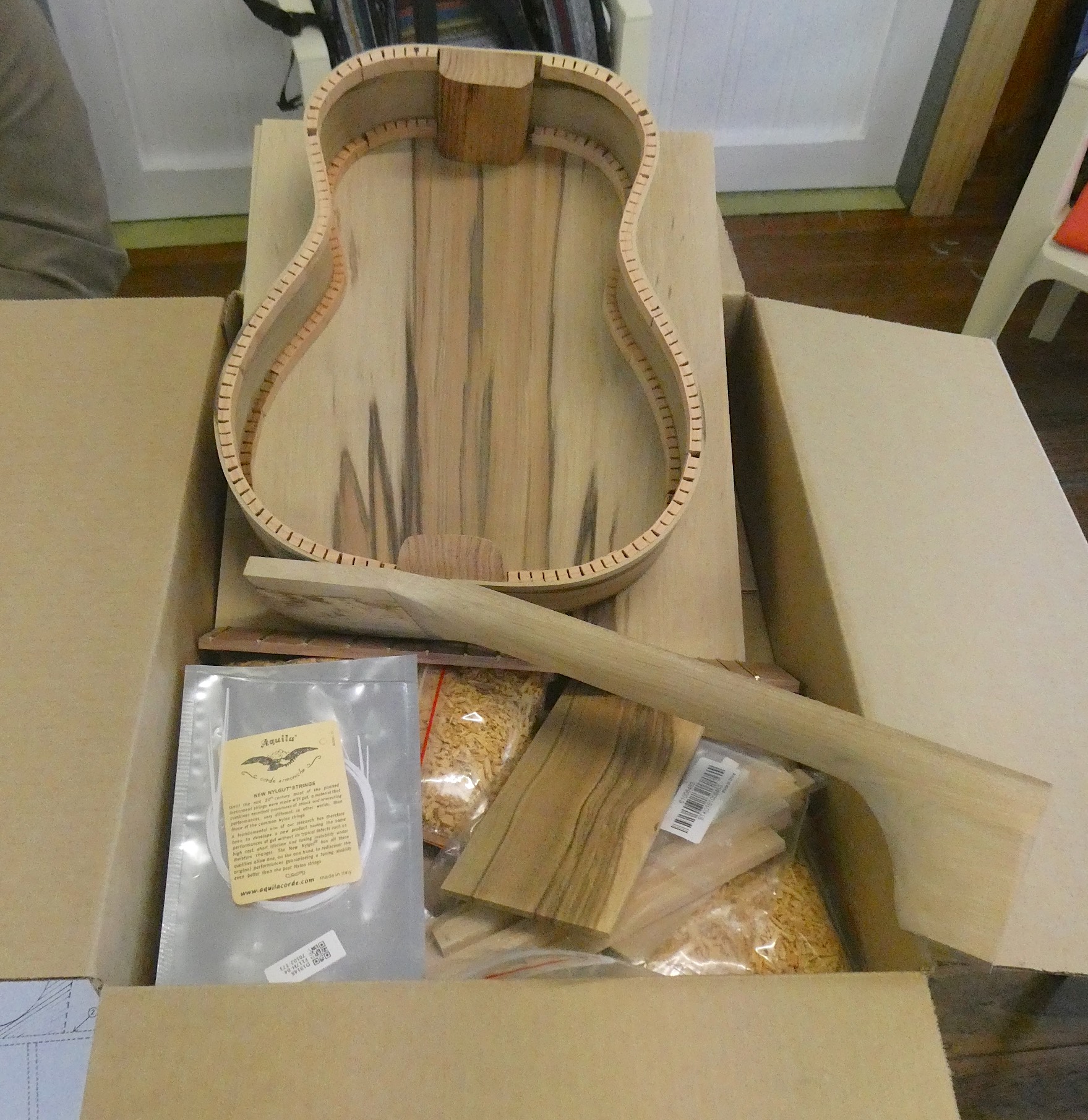
The Australian Ukelele Company specialise in unique Tasmanian timber and offer the choice of a custom made instrument or a kit to make your own.
Gary Fleming has always been fascinated with making things since spending many hours in his Dad’s shed when he was growing up. He made his first guitar as a challenge, to see if he could do it and went on to make electric guitars from locally sourced material. On his two most recent guitars, he has experimented with custom bridge and tail pieces as well as asymmetrical neck carve and scalloped fretboards.
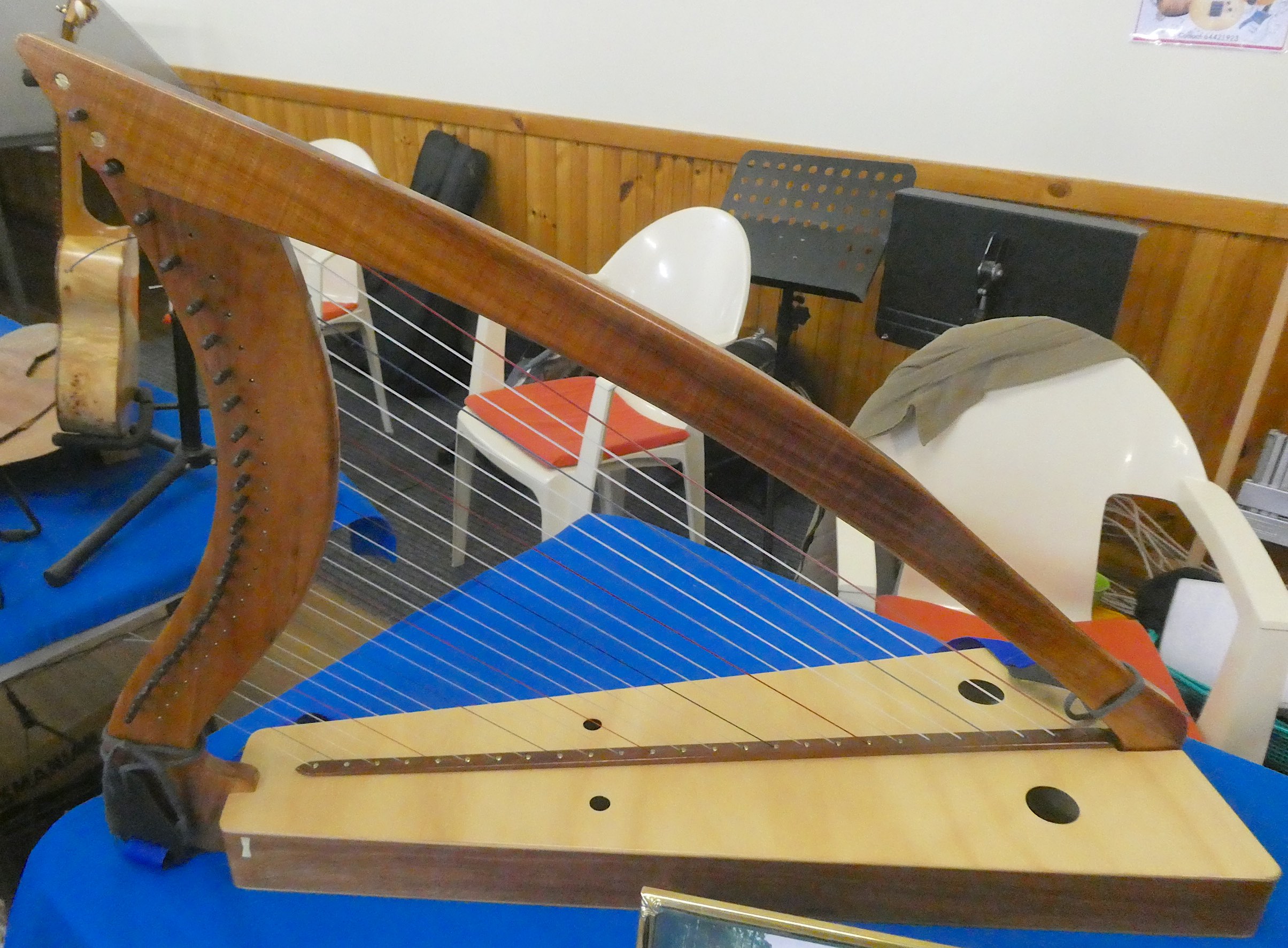
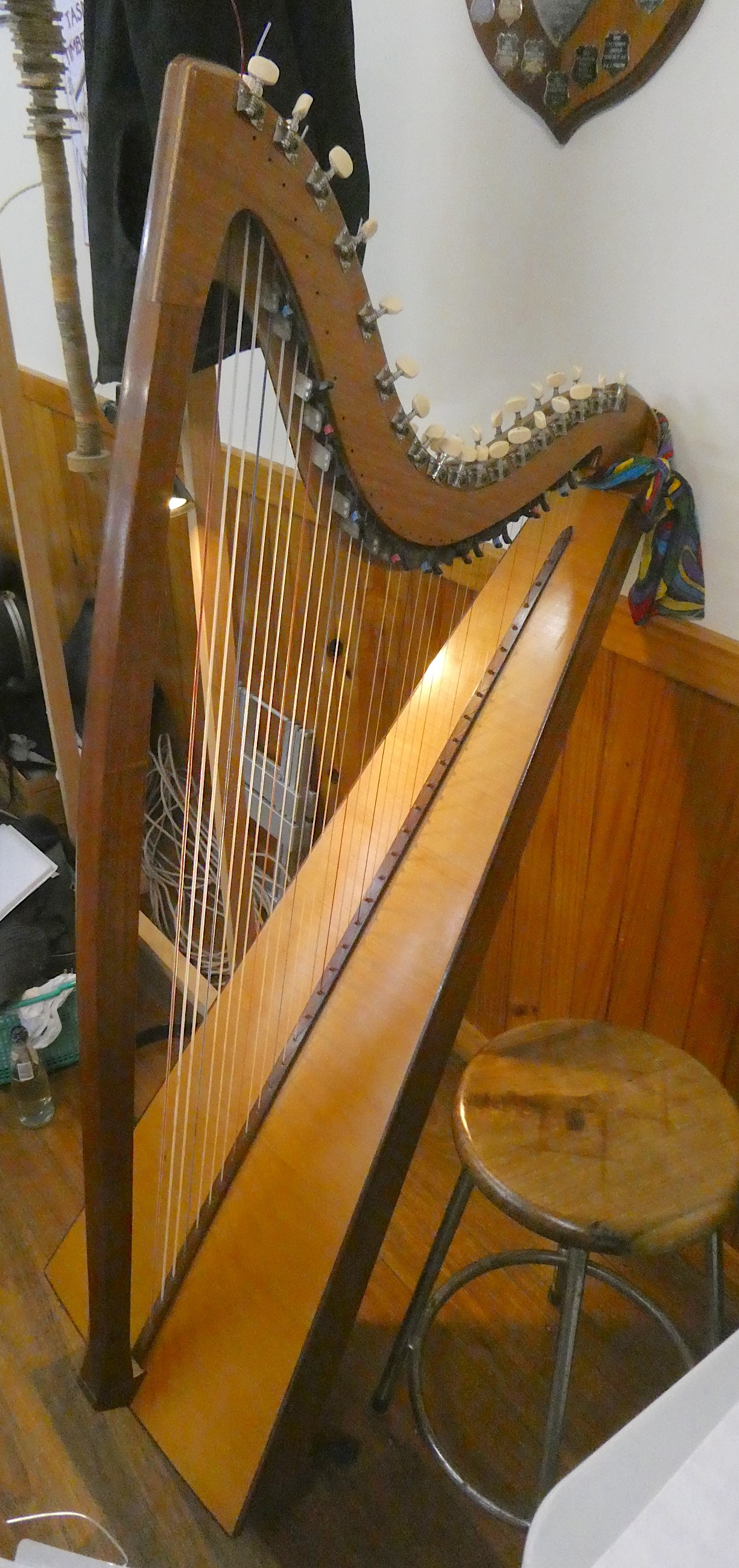
Already a talented fine furniture maker, Stephen Oram added harp making to his repertoire in 2002. It started when a friend of his partner needed an extra pair of hands. Now furniture has taken a back seat as he creates seven or eight harps a year.
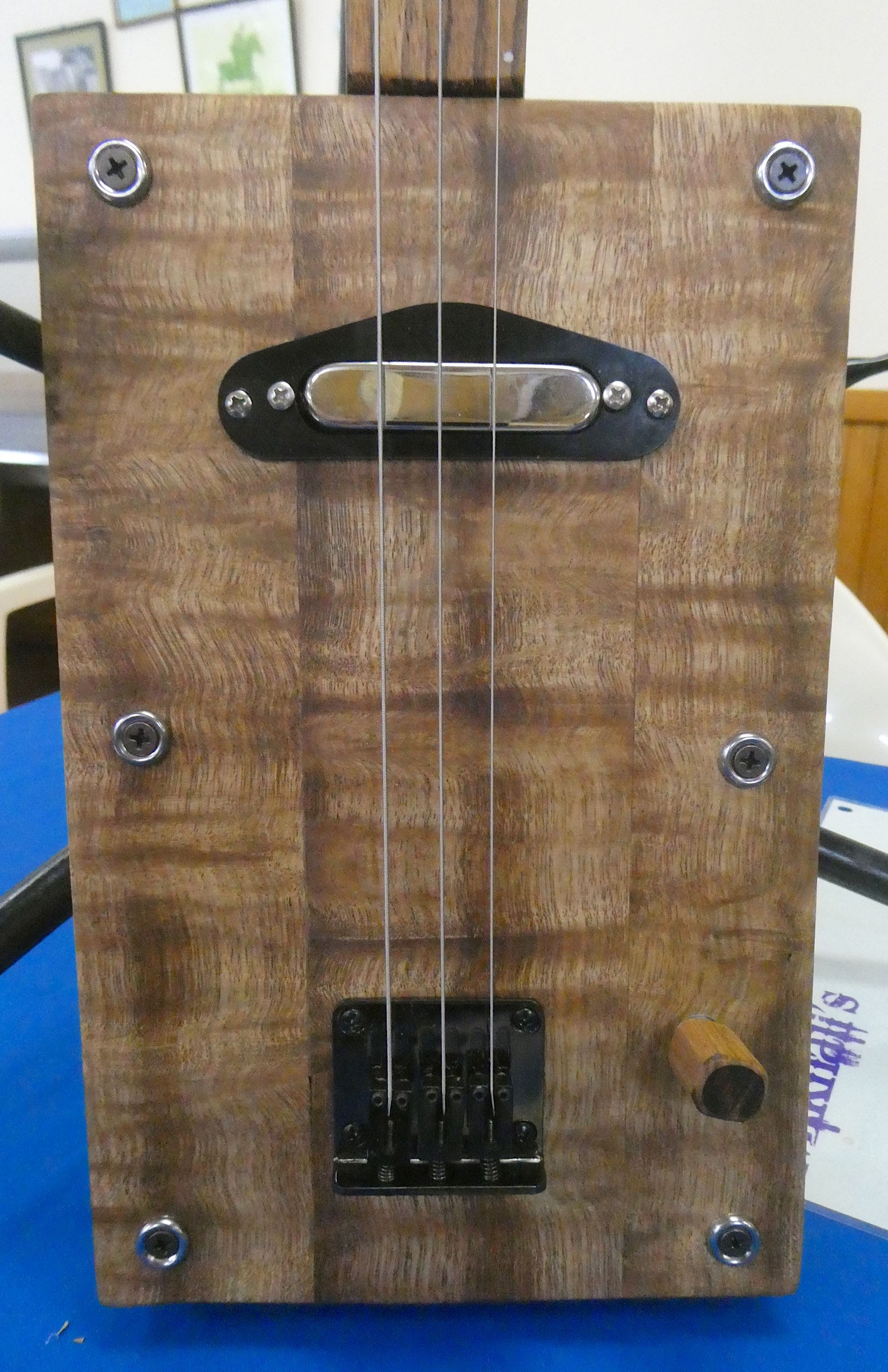
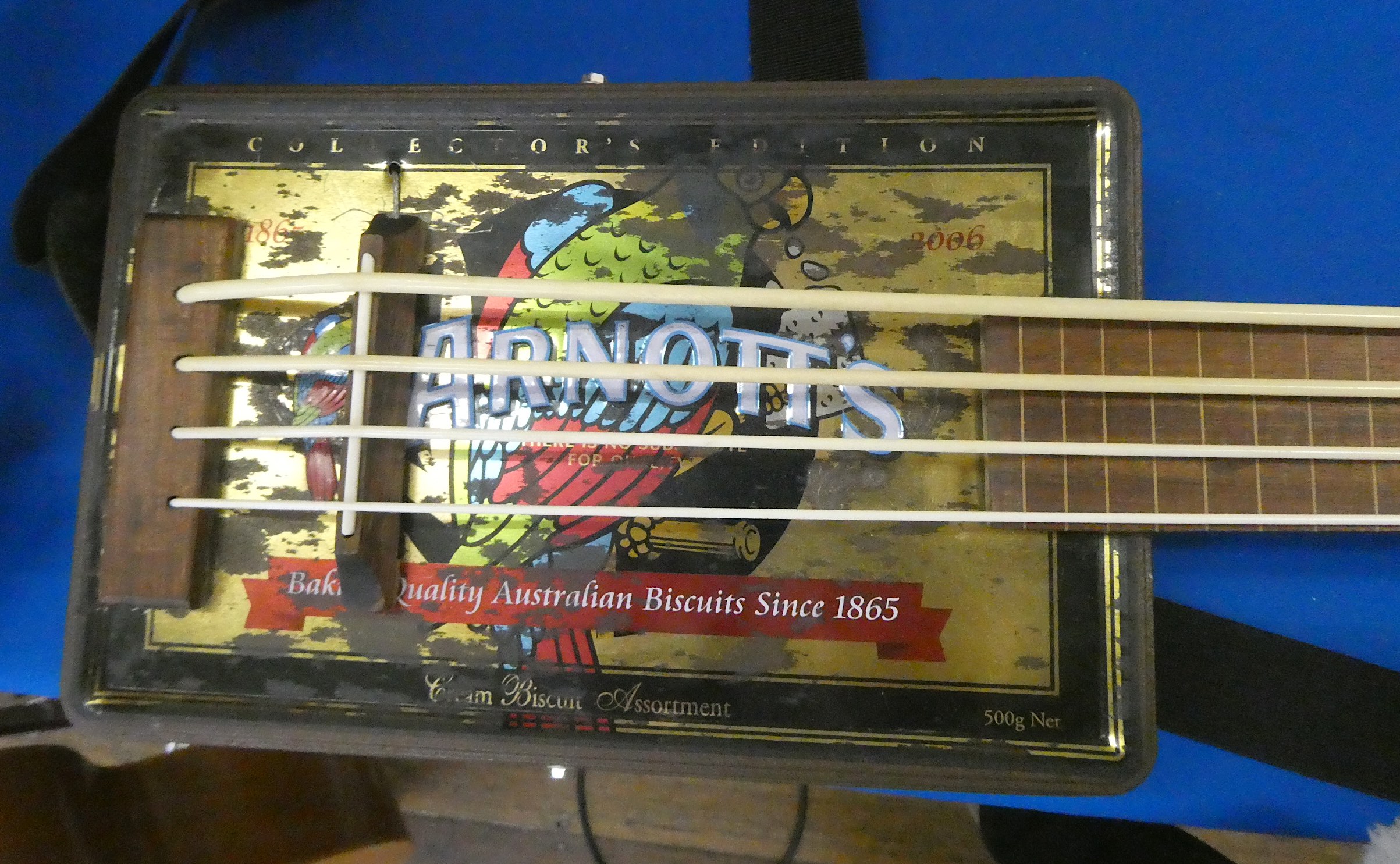
Michael Tharme couldn’t be present on the day but his cigar box guitars, branded Mikhail, offered a very different and colourful alternative. Michael has been building instruments since 2016 based on the original Cuban cigar box guitar but uses all kinds of material such as biscuit tins, number plates and anything else he might find in an old shed or antique shop. They are one of a kind, hand made in Tasmania from local and reclaimed timbers whenever possible.
Local luthier, Peter Sutcliffe, had a diverse display of his handmade instruments.
The delicate inlay in the neck of this guitar is exquisite.
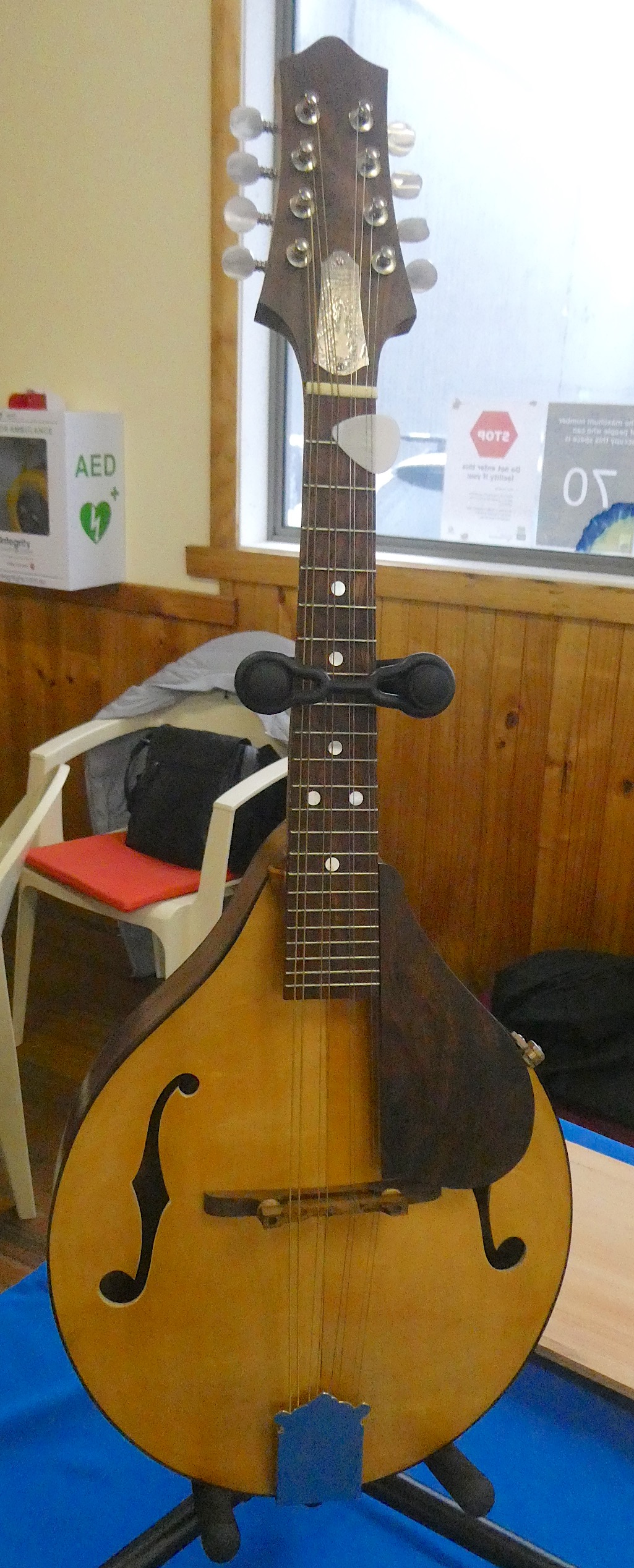
There were fine examples of handcrafted guitars and mandolins from another local, Gary Radcliffe, including an unfinished soundboard with an intricate rosette.
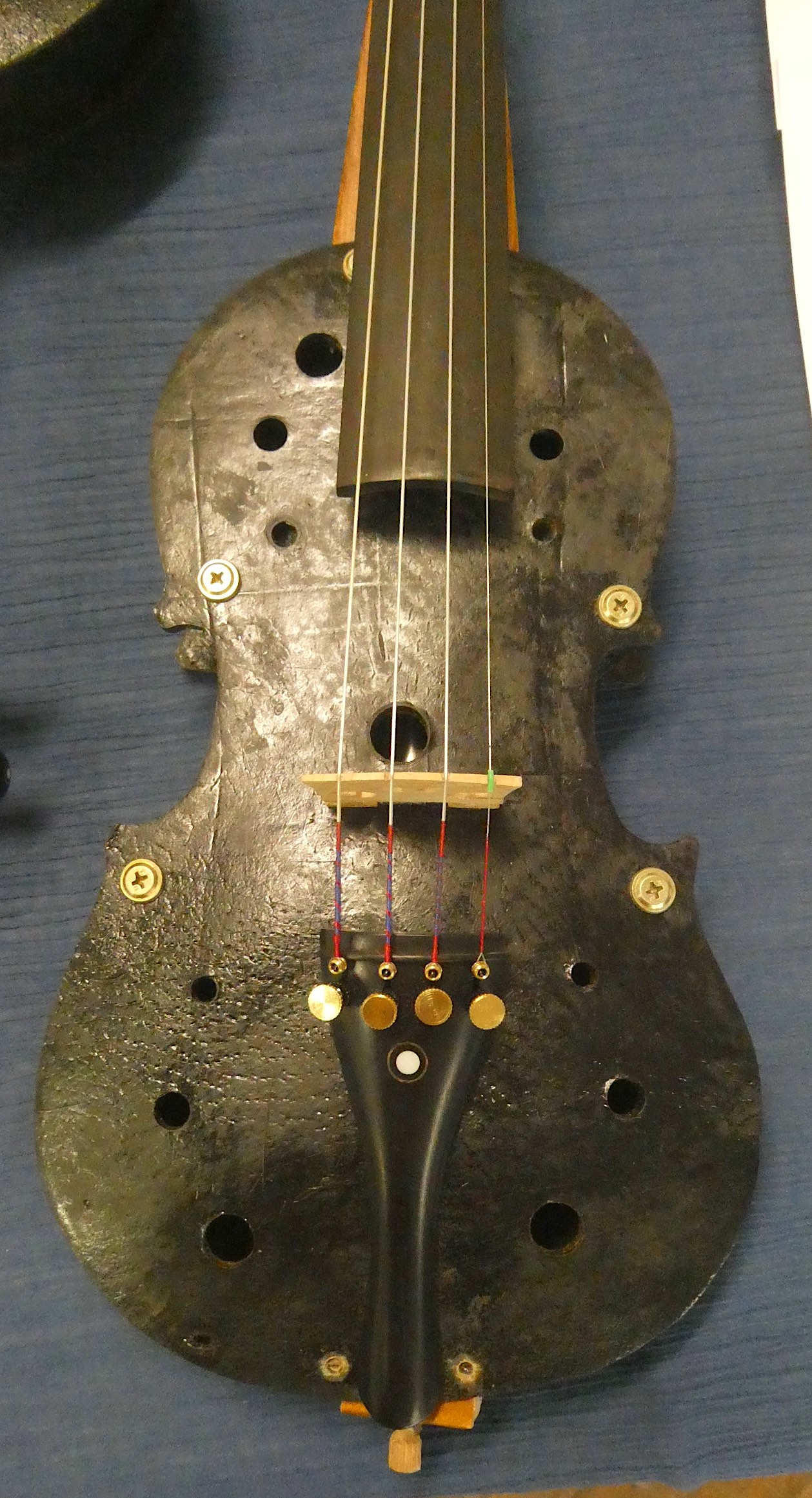
Just when I thought I’d seen it all, I discovered a very unusual violin made from kelp. Yes, kelp! Chris Henderson has been working tirelessly to perfect the process of turning giant kelp, gathered from the west coast near Marrawah, into a musical instrument. It is not an easy material to work with. Kelp shrinks about ¼ to ½ in size and about ¾ by weight. Because it doesn’t shrink evenly and curls up, it is dried for four days sandwiched in a metal grid. The cured kelp is more like hard plastic than wood and will not stick with any glues or take varnishes. It can be bent and cut after 15 minutes in a 50°C oven but, if it were not clamped in a fibreglass mould, it would slowly reform its original shape. If it weren’t for carbon fibre tubes and wooden blocks, the seaweed would sink at the bridge under the load of strings and distort with changes in humidity. So, why make a musical instrument from kelp? Michael summed it up in one word – bonkers!
Later in the afternoon, we were entertained by the various exhibitors. Peter Sutcliffe and his associates opened the session with an upbeat jazz number, followed by ‘I Can See Clearly Now’, a little optimistic considering the deluge outside that was predicted to continue for the next few days.
Philip Nicholas has been teaching strings and performing since 1980, he shared his rendition of three works by Bach on a guitar he made in 1984.
The afternoon concluded with a number of pieces from Tarkine Strings along with guest musicians.
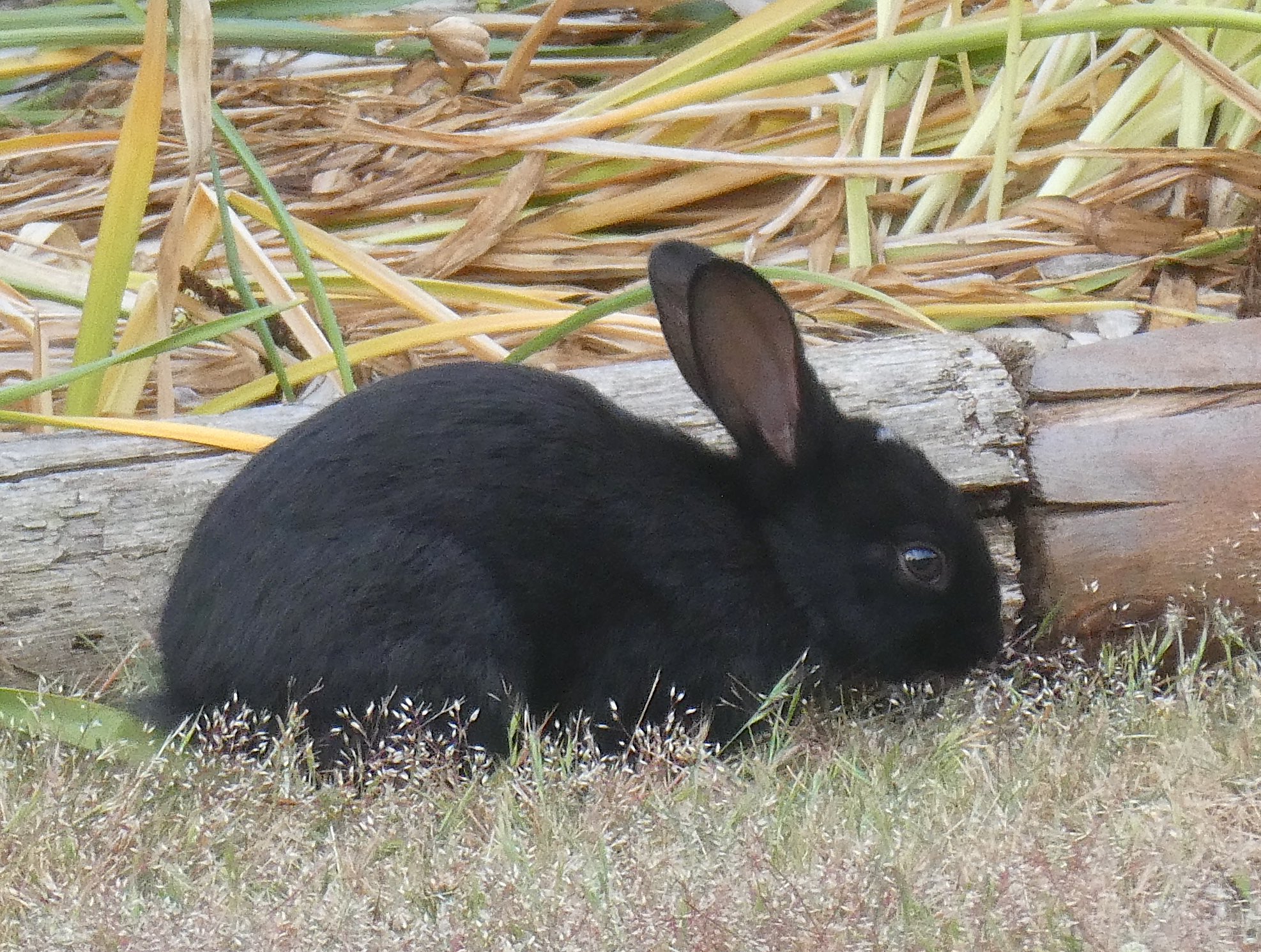
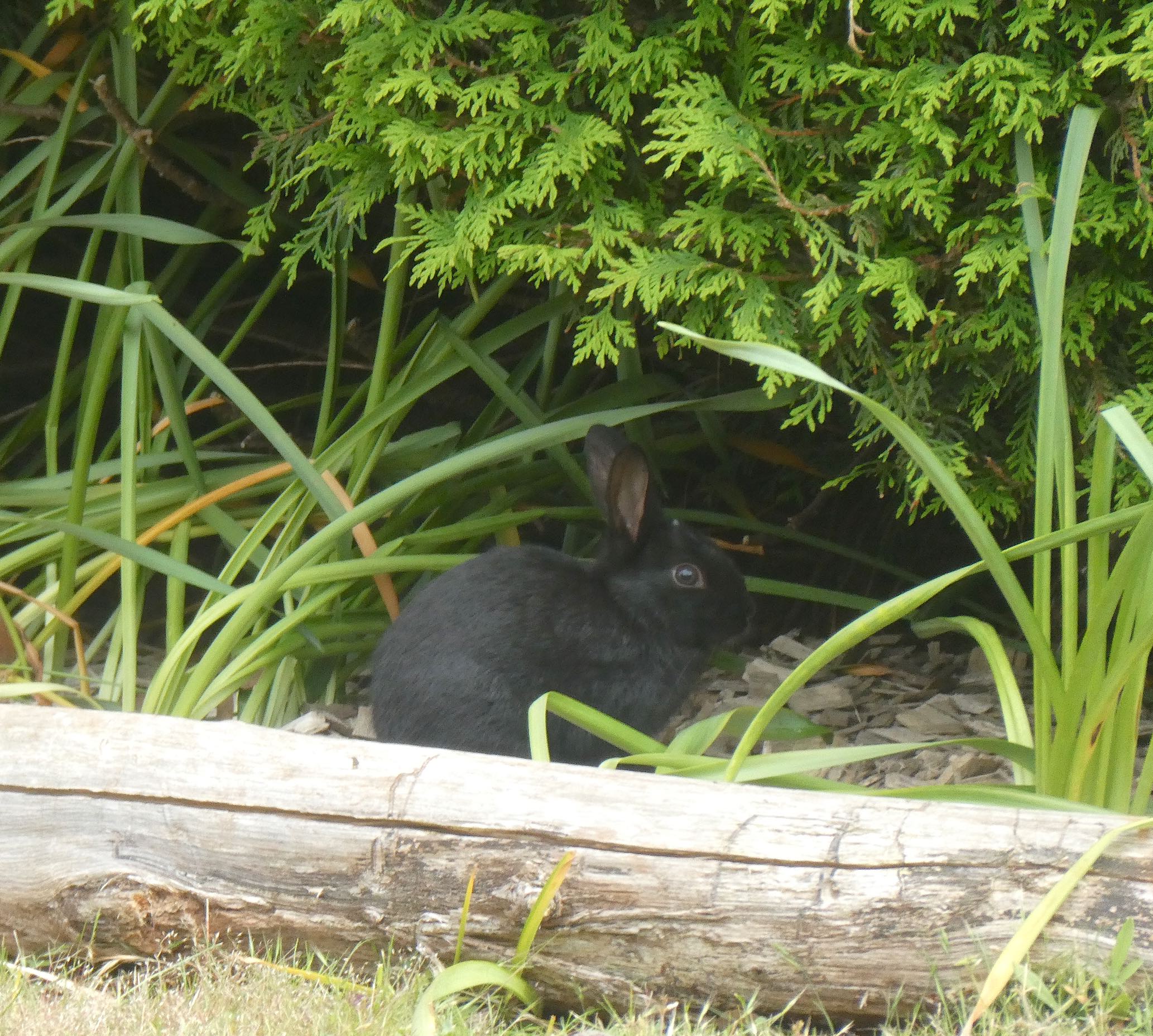
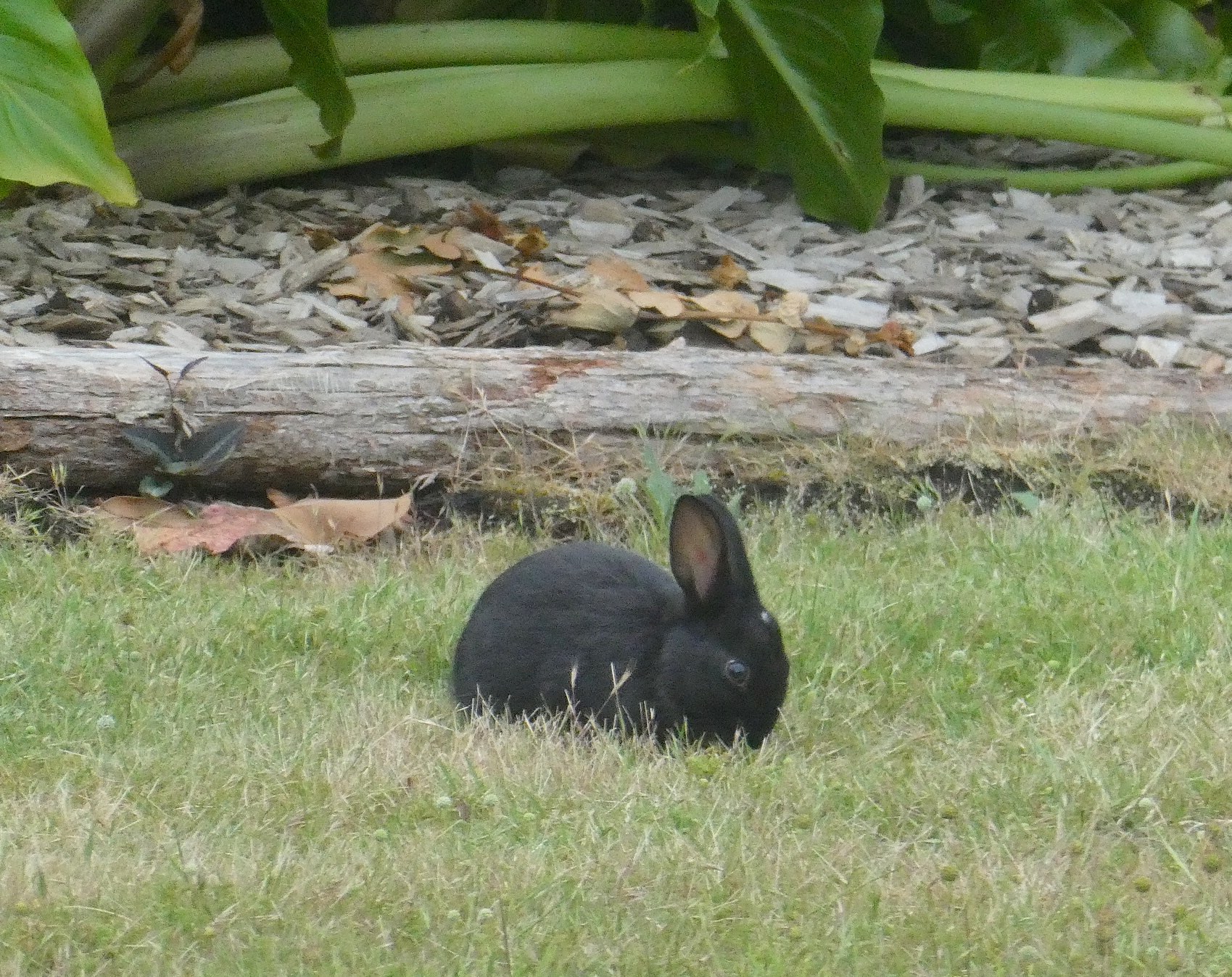
A couple of years ago, a solitary bunny appeared in the garden and stayed for a few weeks. Last spring, the same thing happened but this time it was a little black one.
I assume he occupied the same burrow as the previous tenant under the safety of a dense, spiky grevillea.
We would see him out on the lawn each day, nibbling contentedly but never too far from his home.
I like to think he has found a new home and family out in the forest and not become a meal for a passing hawk.
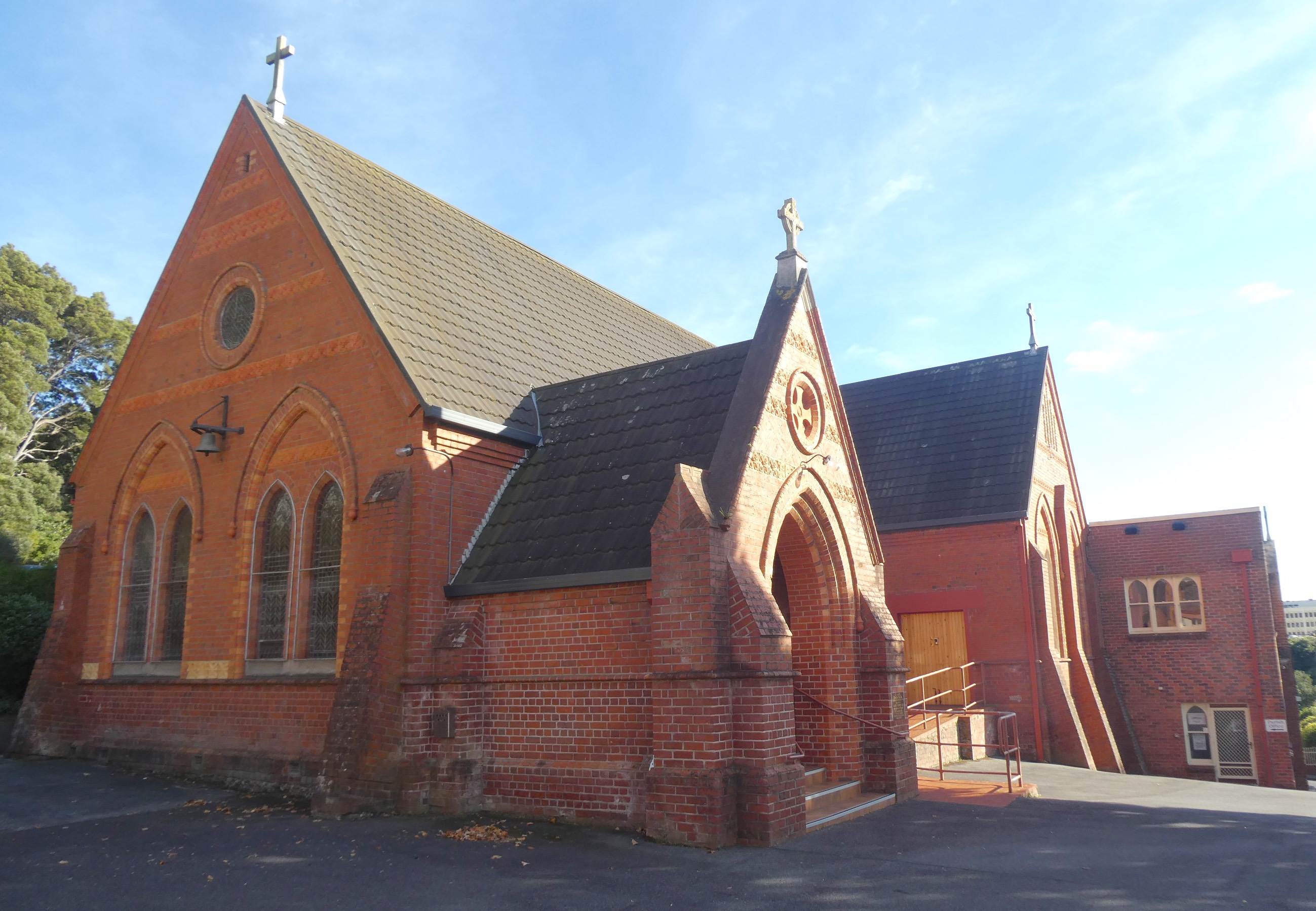
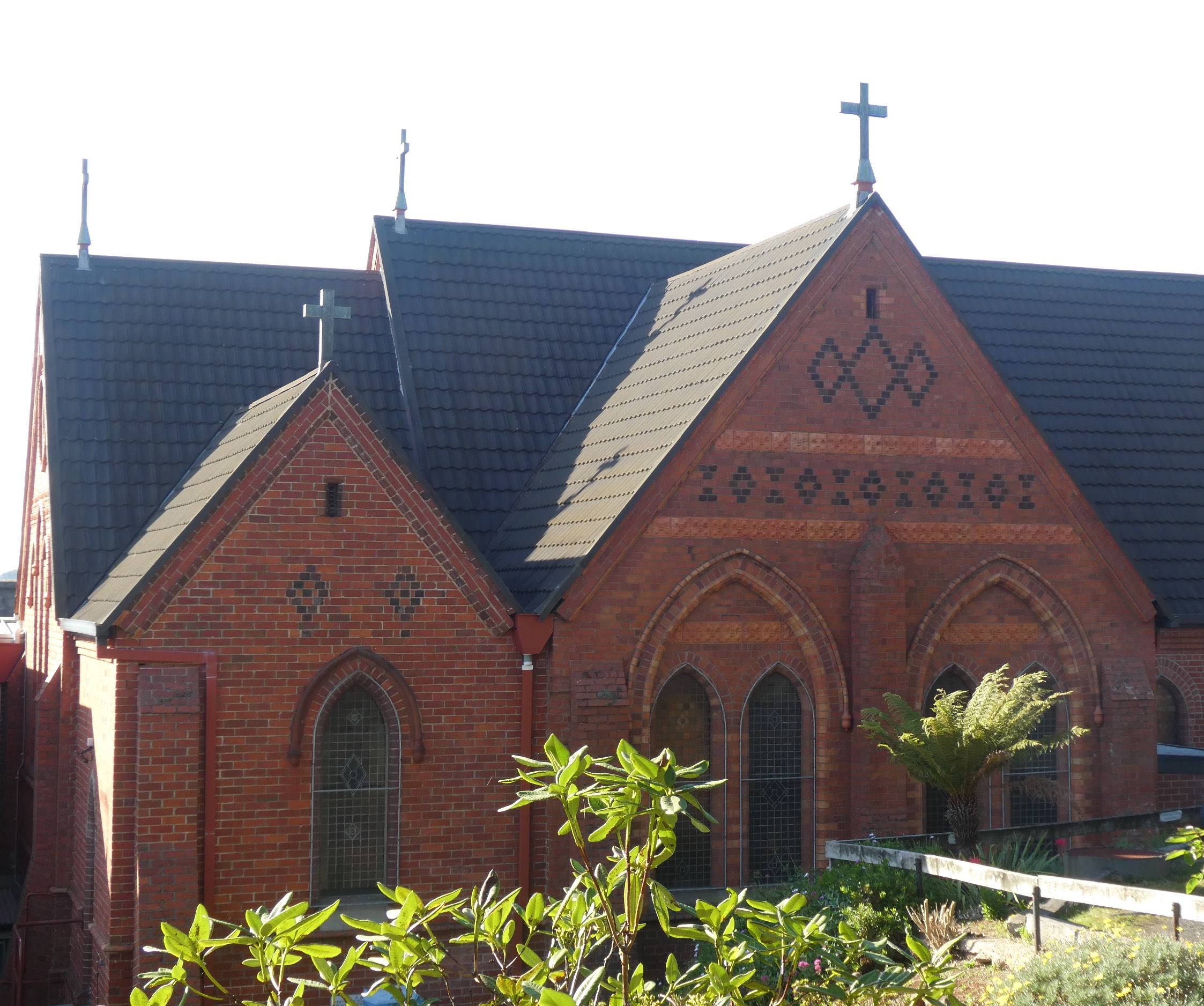
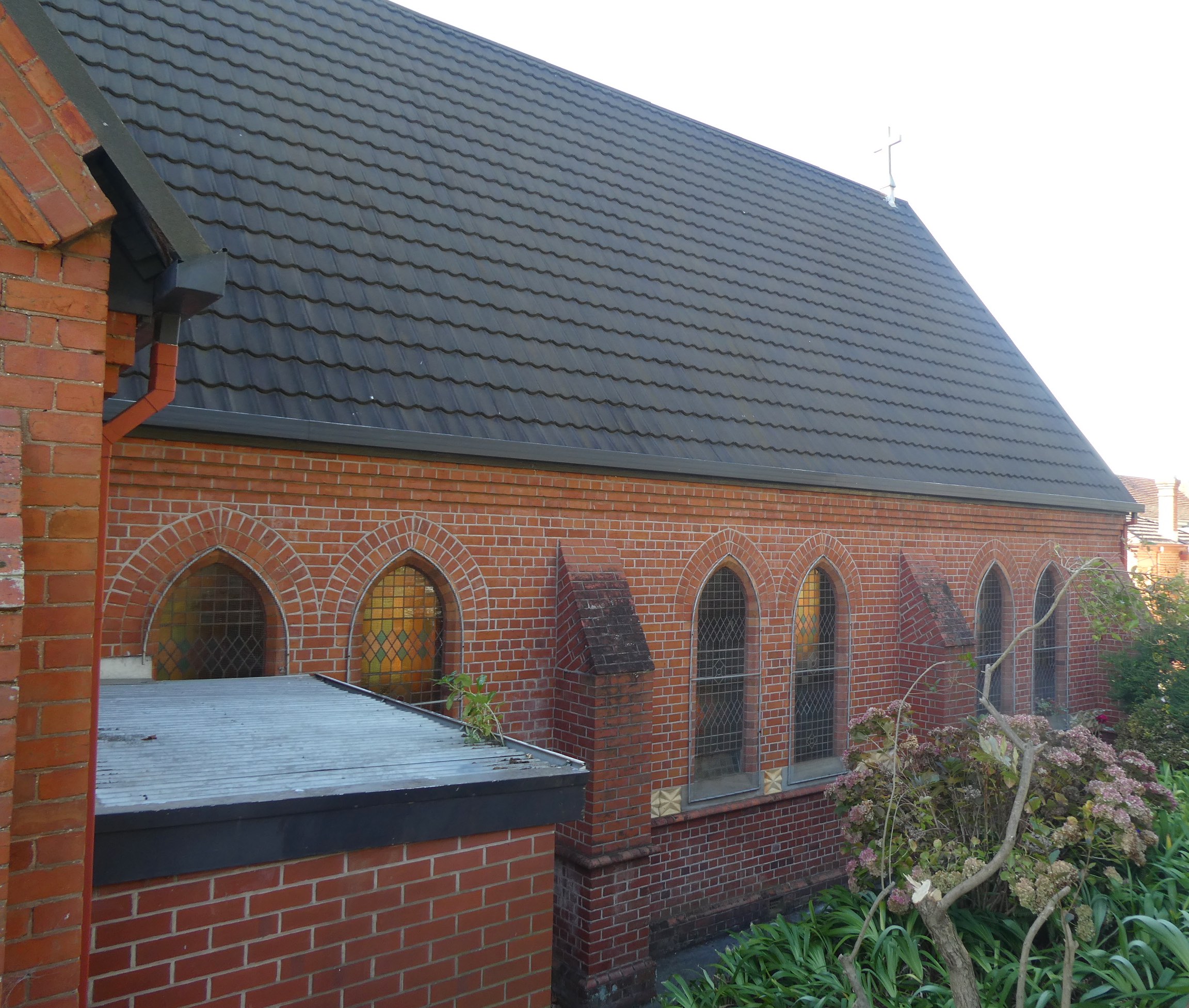
For many years, I have been fascinated by a beautiful red brick church perched on a hill at one of the main intersections on the highway here in Burnie. Beside it are other similarly constructed edifices, one of which appears to be a school with the year 1912 above the doorway. To satisfy my curiosity, I recently took a closer look. The Catholic Church of St. Mary’s Star of the Sea opened in January 1891.
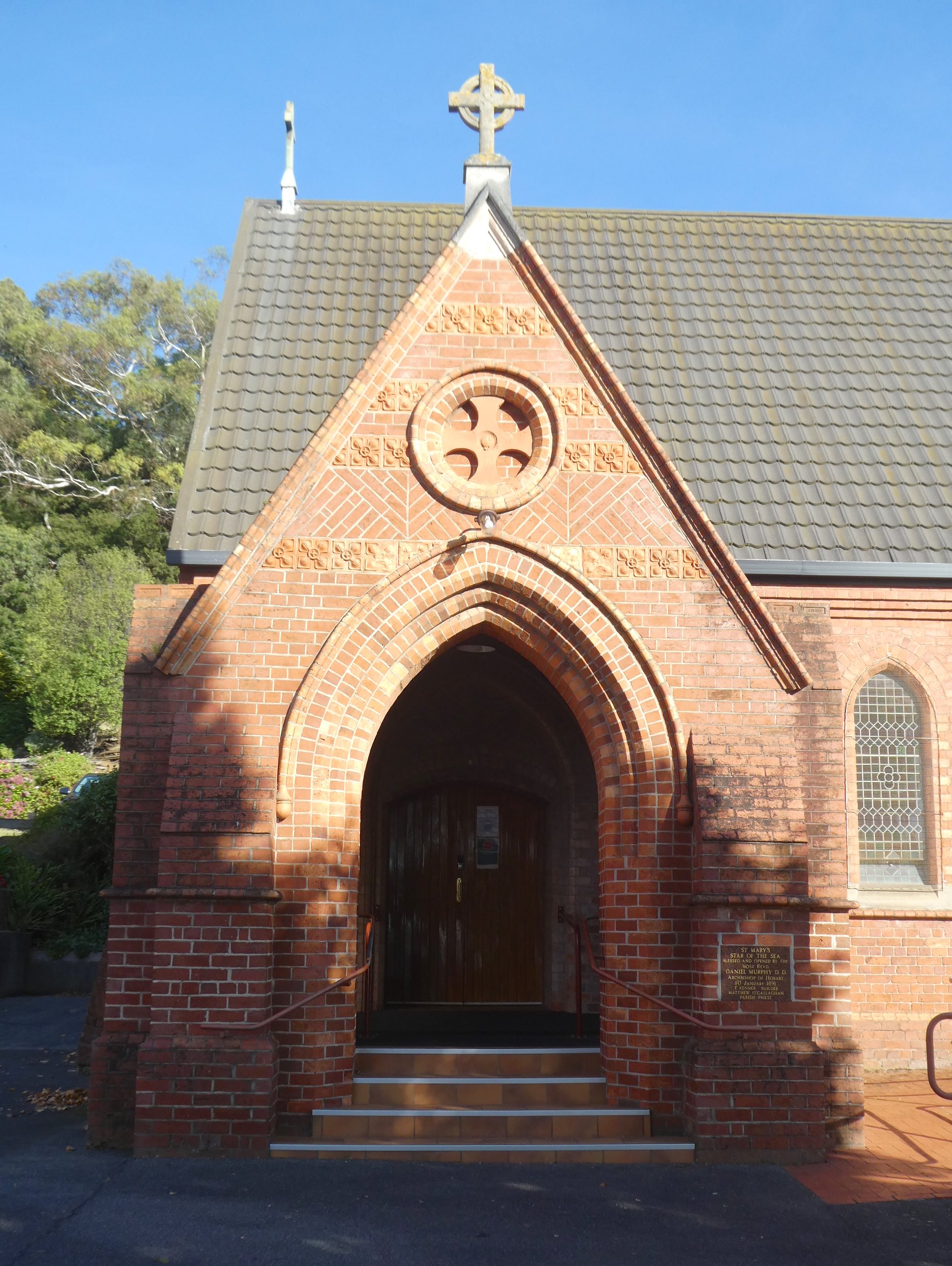
Designed by respected architect Alexander North, whose work includes Holy Trinity in Launceston, the church is an excellent example of the High Victorian Gothic style. There is no door at the front of the church, the entrance is via a porch on the eastern side wall above which is an elaborately carved white cross imported from New Zealand.
The red bricks were manufactured locally in Burnie while specially moulded bricks and terracotta tiles with a stylised flower design came from Launceston. The finest quality sandstone from Ross quarry in Tasmania’s midlands was used for the window frames.
The use of black bricks amongst the red ones to create geometric patterns, known as structural polychromy, was one of the features of High Victorian Gothic buildings.
The Welsh slates on the pitched roof have stood the test of time.
The interior is welcoming and warm with red brick walls and a pine lined roof.
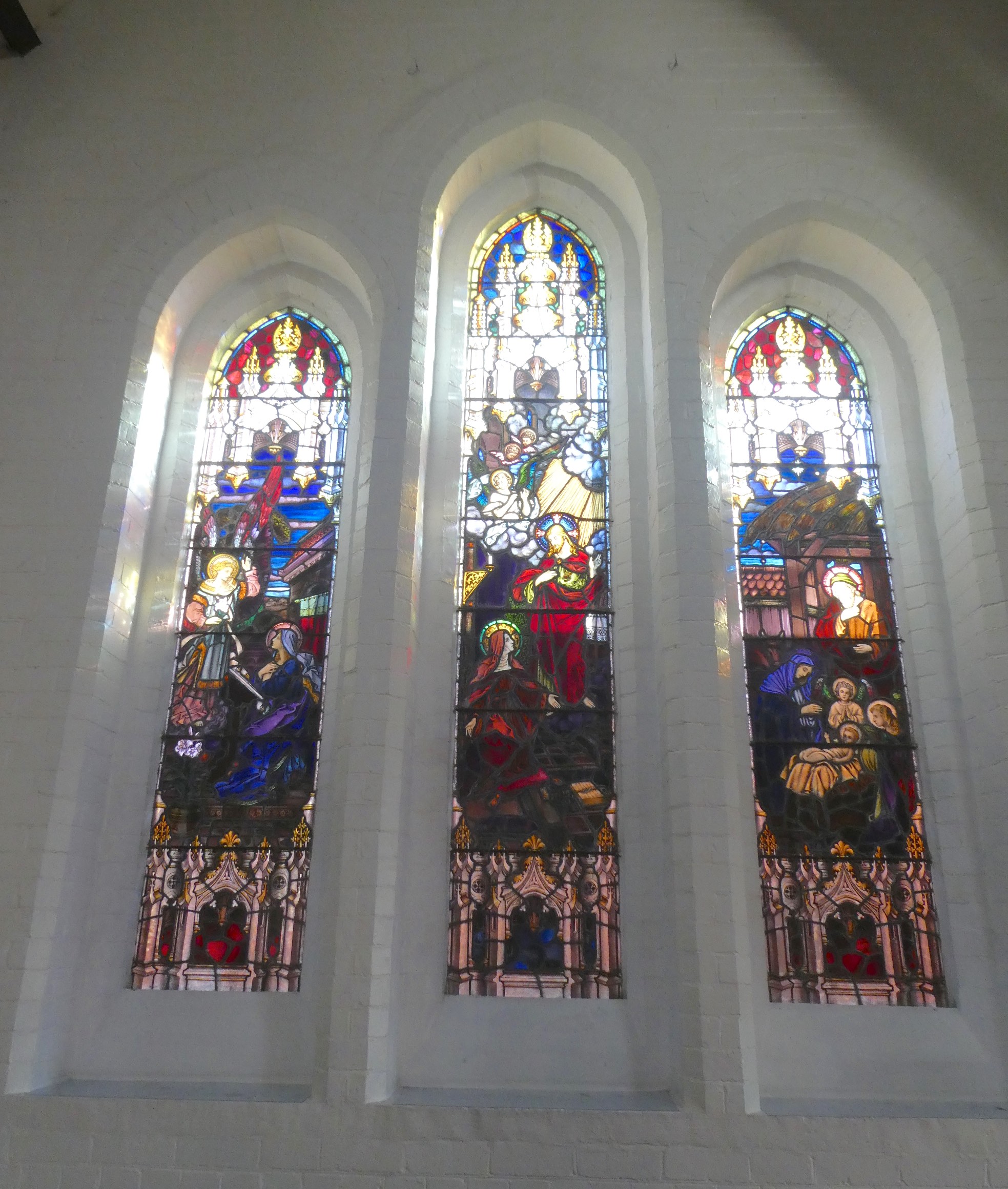
I made my way to the chancel
where a trinity of colourful stained glass windows depict the Annunciation, the Sacred Heart appearing to St. Margaret Mary Alacoque and the Nativity.
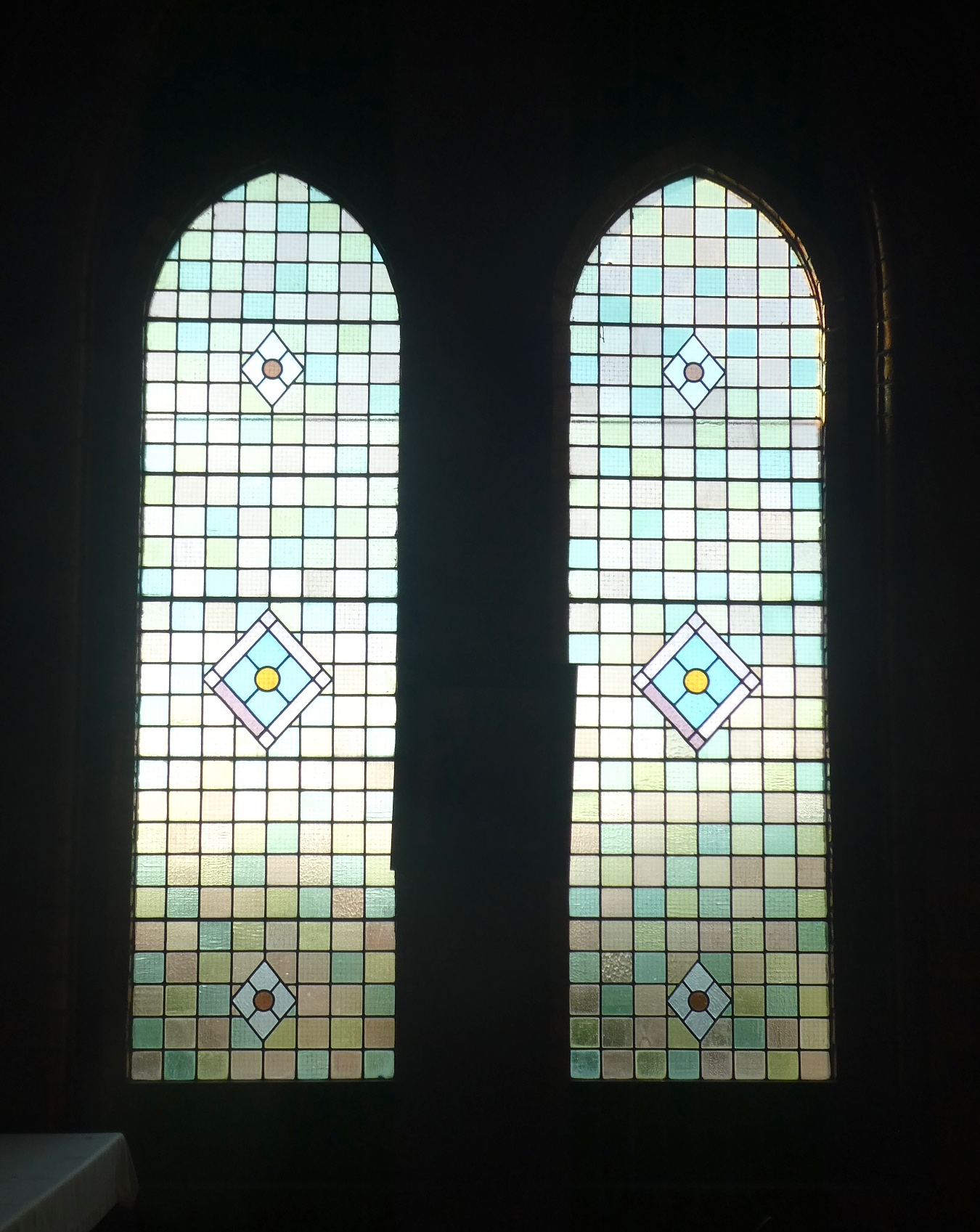
All the windows are of stained glass, the bold geometric patterns throughout the nave were designed by North himself.
A small side chapel in the east transept beatifically captured the morning sun
while the votive candles in the west transept awaited the congregation for Holy Thursday.
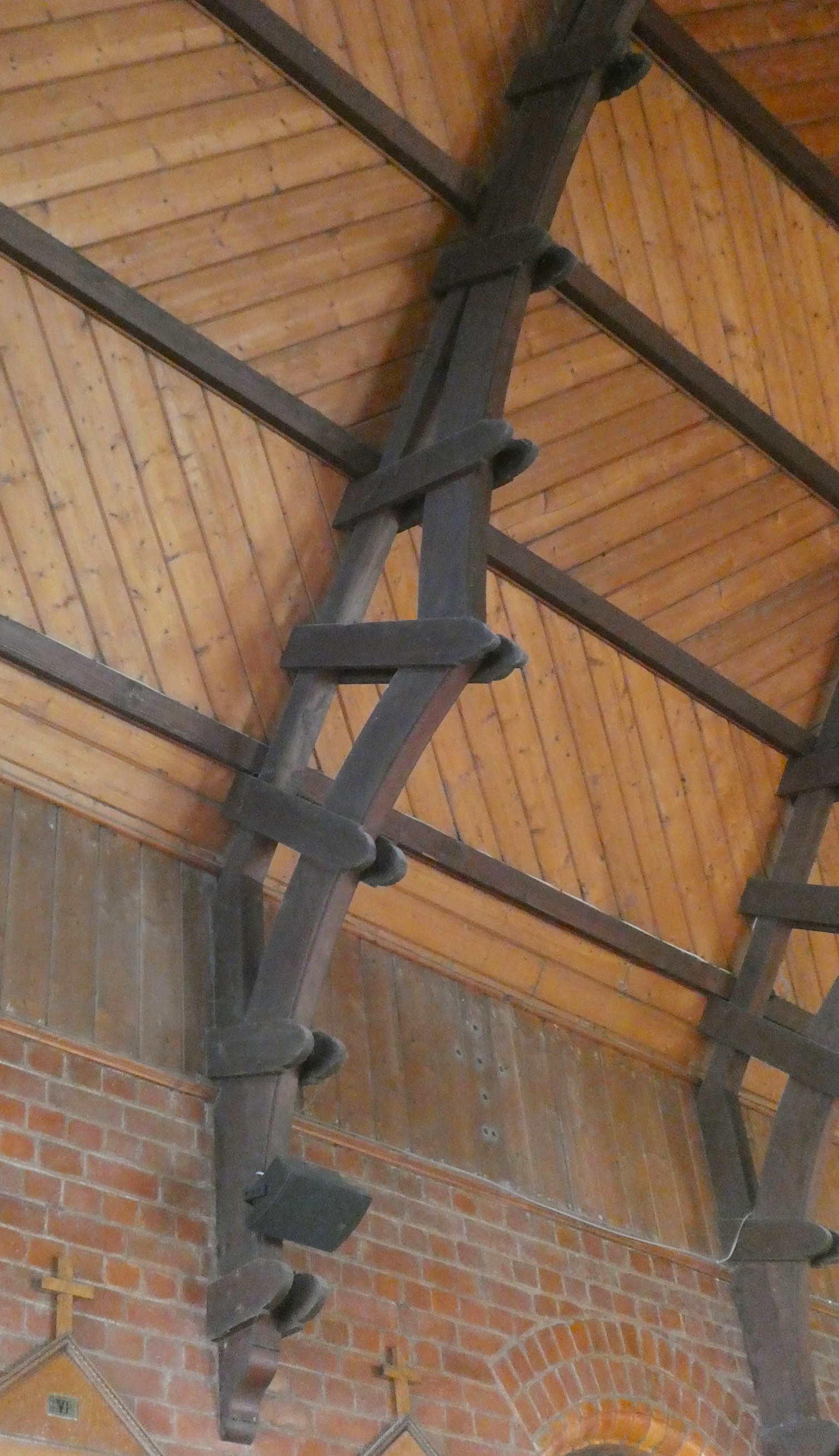
The ceiling is a work of art, the spiky elaborate roof trusses are another example of High Victorian Gothic style.
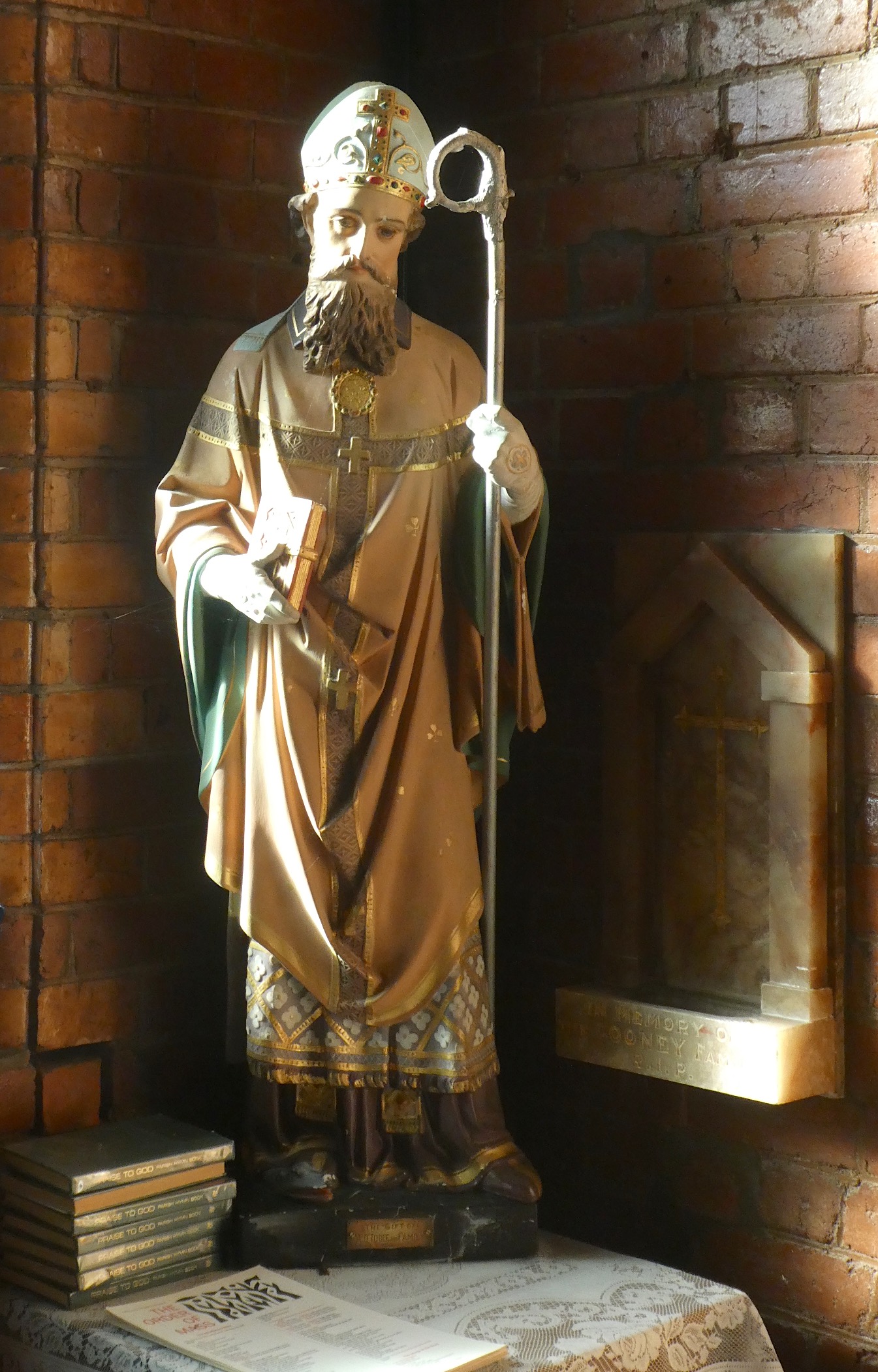
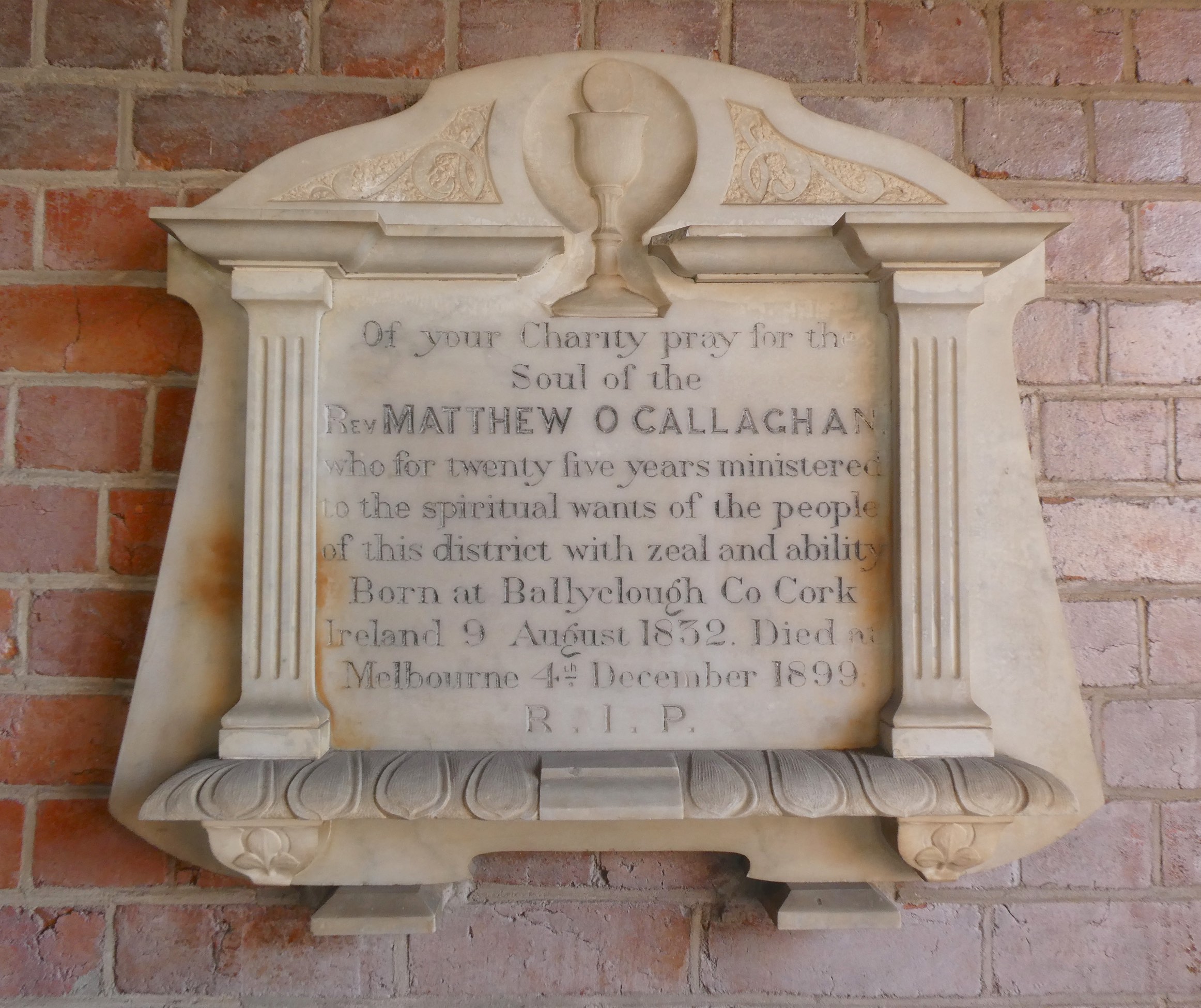
The porch is adorned with memorials of many people associated with the church. St. Mary’s by the Sea was originally a small wooden church on the corner of Cattley Street and Marine Terrace in town. When Irishman Father Matthew O’Callaghan became parish priest, he was instrumental in selling that property and purchasing the land on which the new church was built. He was transferred to Queenstown in 1897 and died two years later. His remains were returned to Burnie for burial in the parish he had served for twenty five years.
The memorials to the Dunphy and Cooney families have piqued my interest. I have found they are buried in the Wivenhoe cemetery a short drive from our house, I shall investigate further.
Another Irishman, Father Patrick Hayes, was appointed to the parish in 1889 and was responsible for building a Catholic school in 1912 and adding a presbytery in 1928. He retired in 1947 and, passing away in 1954, was also buried at Wivenhoe.
A historic plaque was discovered by current parish priest, Father John Girdauskas, beneath the Star of the Sea church, commemorating the opening of St. Anne’s Catholic church and primary school in 1961.
The gardens on the two acre site have been established and are tended by volunteers.
A tidy section by the steps from the car park is dedicated to Father Terry McCosker, whose arrival in 1988 was sadly cut short due to illness.
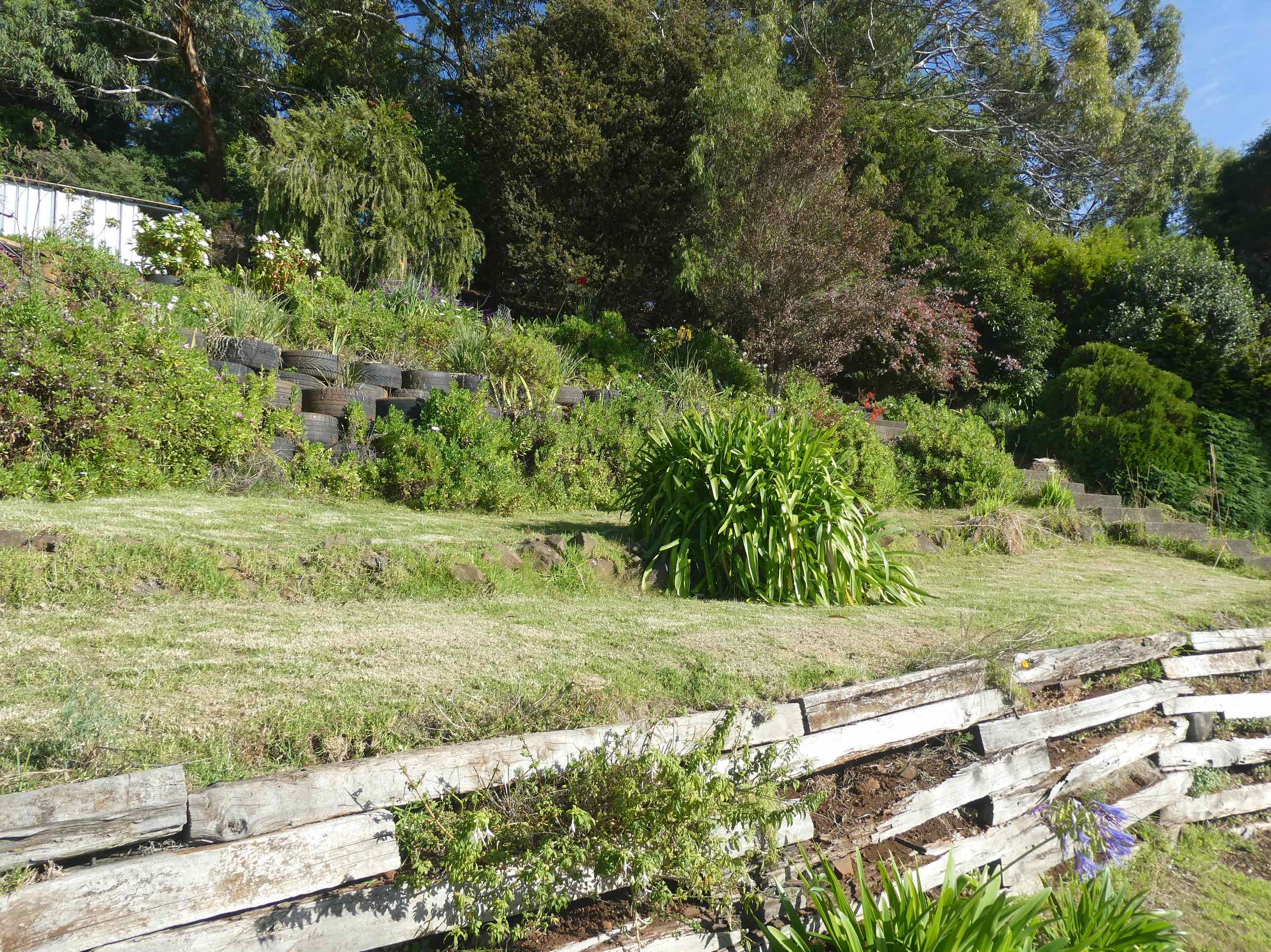
The steeply sloping land behind the church has been landscaped with care and many hours of hard work have resulted in some very impressive retaining walls.
The path continues from the more formal gardens to a natural reserve, dedicated to the Fraser family.
St. Mary’s Star of the Sea has escaped the threat of removal twice. Firstly with the relocation of the Burnie Highway in 1979 and again just before Fr Girdauskas took over when the Marist priests intended building a replacement church near Marist College. The church is now heritage listed, as it should be.

































































 cannonhillchronicles