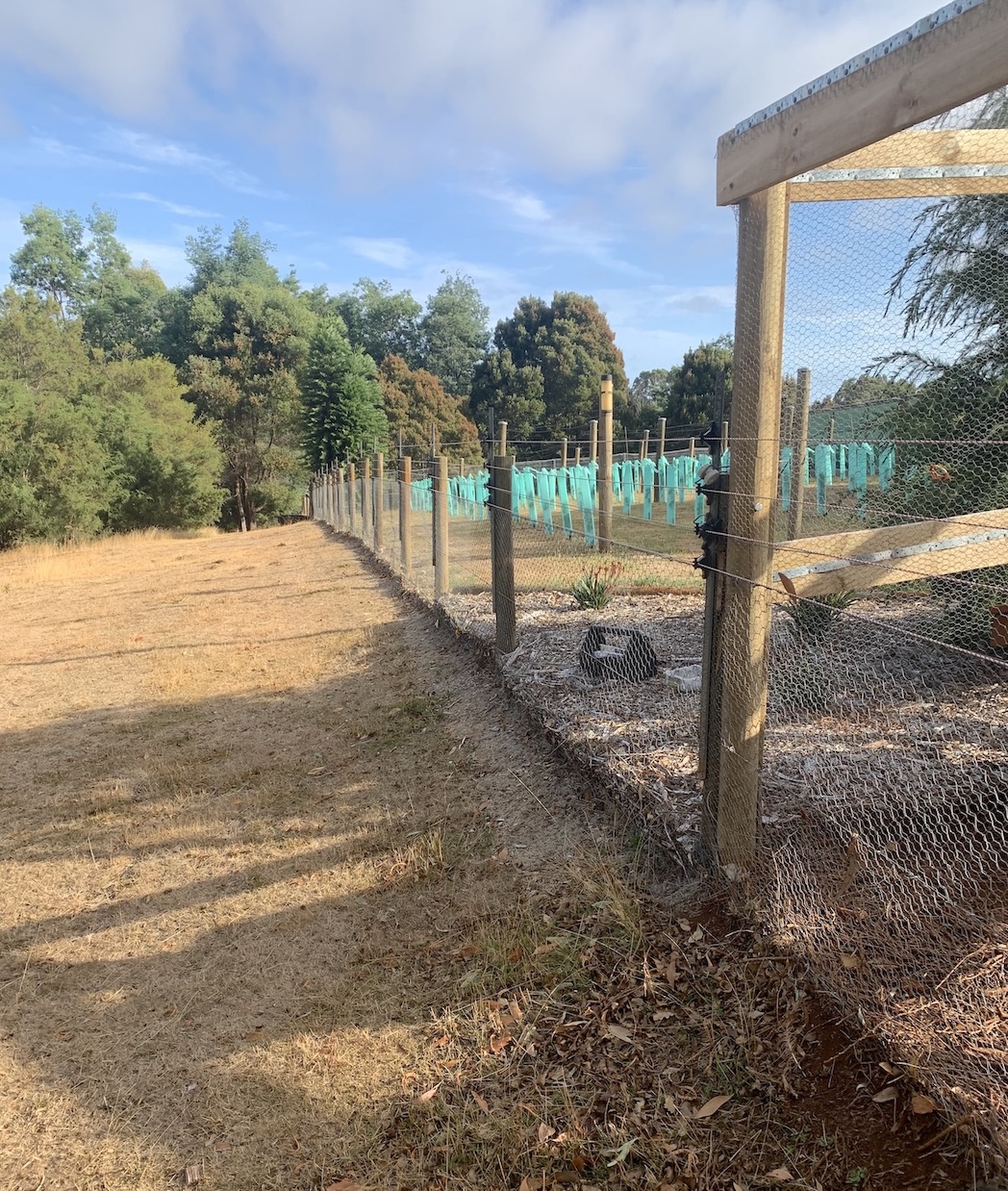
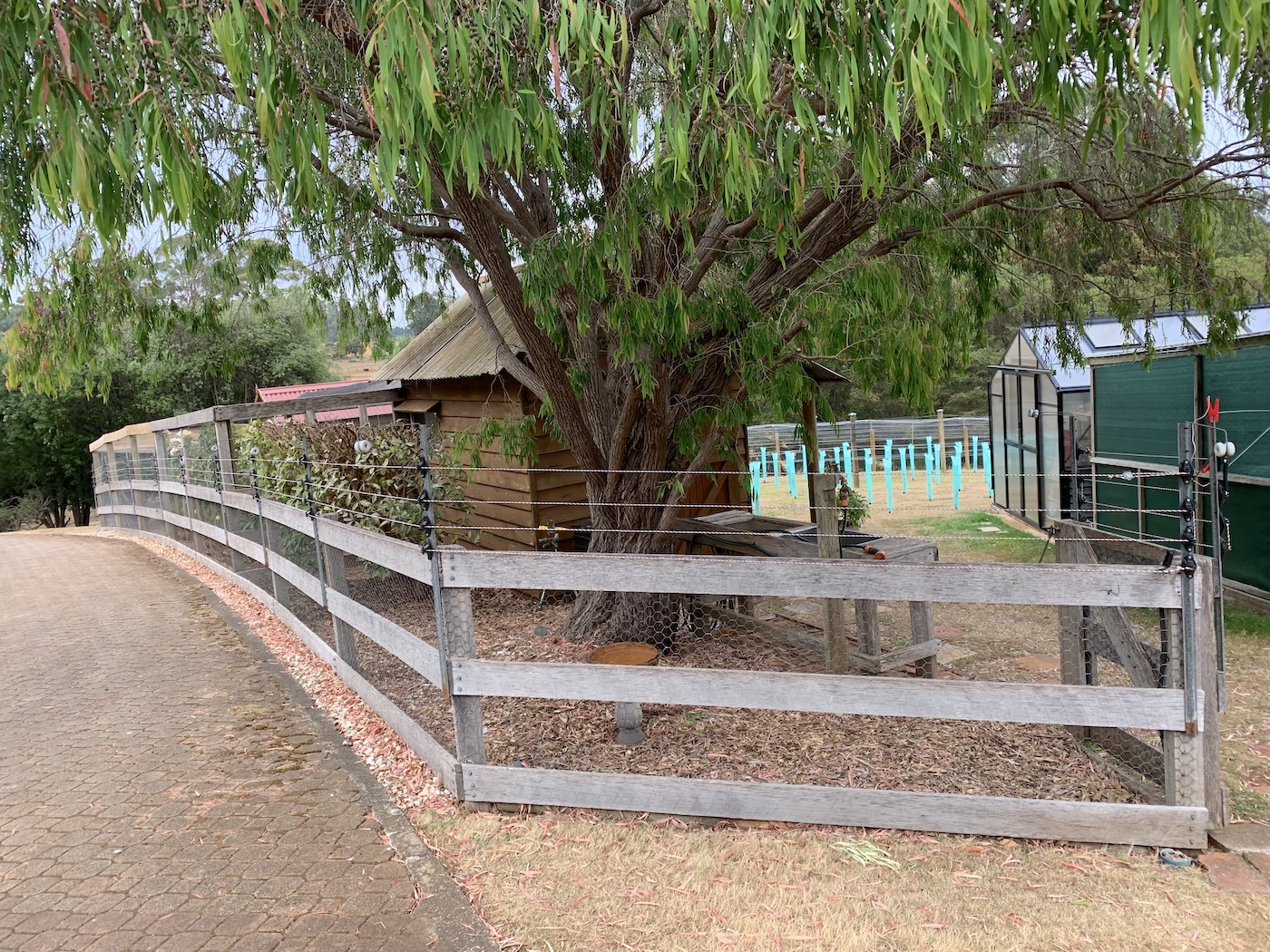
When we decided to plant a micro vineyard two years ago, we didn’t really anticipate the devious, destructive determination of the local possum population. Despite four lines of electric fence, to a height of 1.4 metres, delivering 5,000 volts to any unsuspecting creature coming into contact with it, the pesky possums continued to make ingress. They managed to elude the motion detection cameras we set up, denying us any hope of targeting their entry points. We tried using bird spikes without success and finally conceded the only solution was to create a ‘floppy fence’ around the whole perimeter. I had my reservations about this due to the aesthetics, especially on the garden side but we had no choice. We started on the fence line along the paddock so we could modify our system, depending on the outcome, before getting to the garden line.
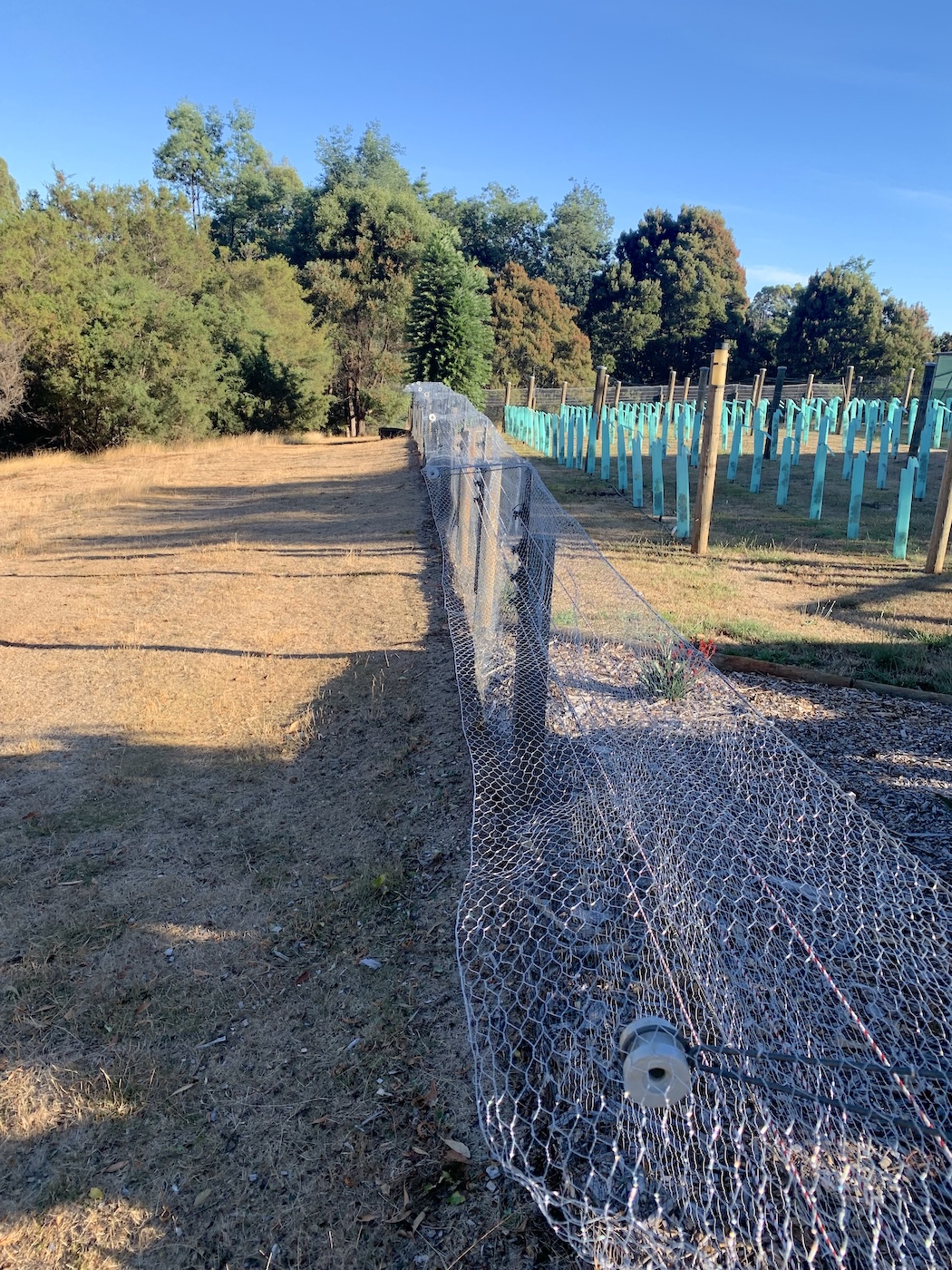
We came up with the idea of using the electric fence outriggers we had stashed in the shed to support the wire.
The usual level of swearage ensued as we fought with the wire and wind but the result is actually quite neat.
The second paddock line followed
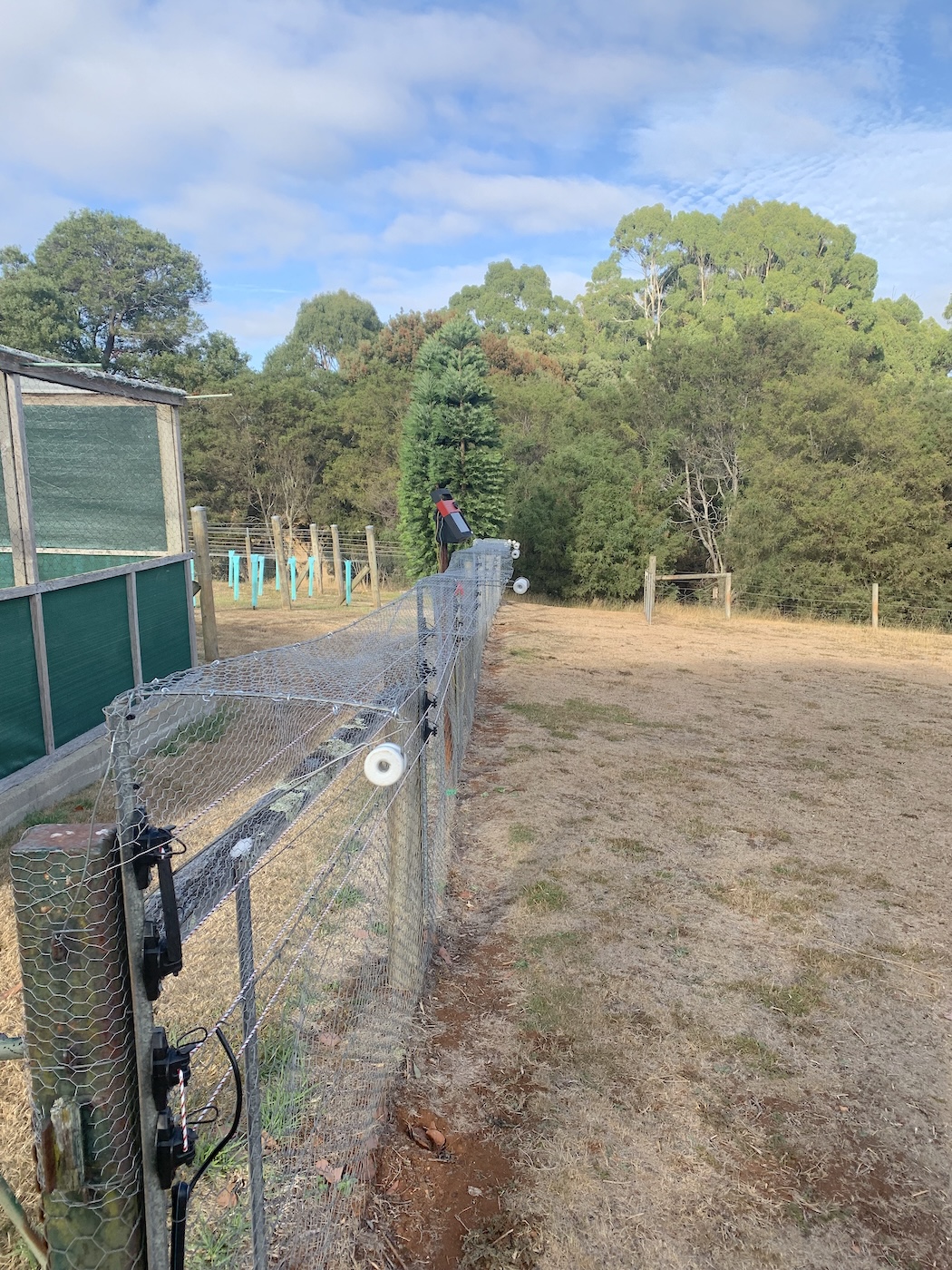
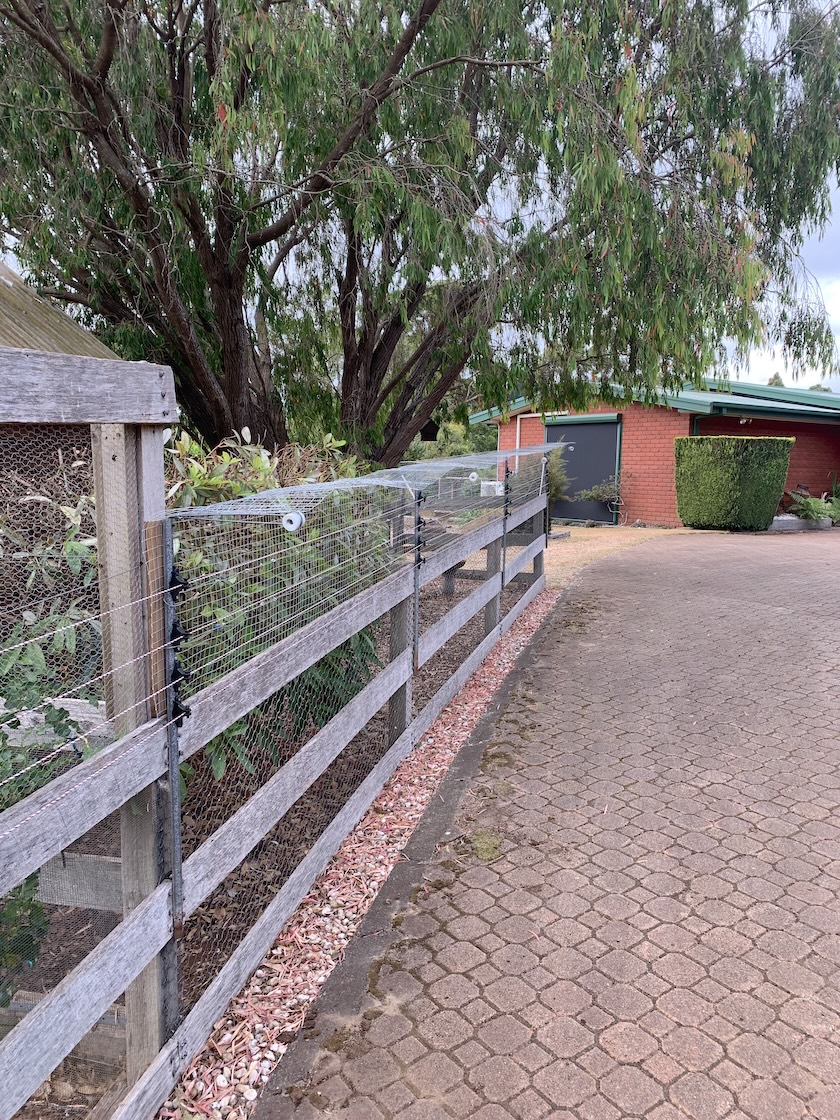
and we turned our attention to the garden side. We opted for a firmer wire for the sake of neatness but stayed with our method using the outriggers.
I have to admit, it doesn’t look as ugly as I thought it would.
We did the same for the line along the driveway,
joined them at the corner and then finished the gates in the same way.
I am very pleased to report there has been no evidence of possum pandemonium since completion and hopefully, after pruning the vines this winter, we will see substantial growth in spring.
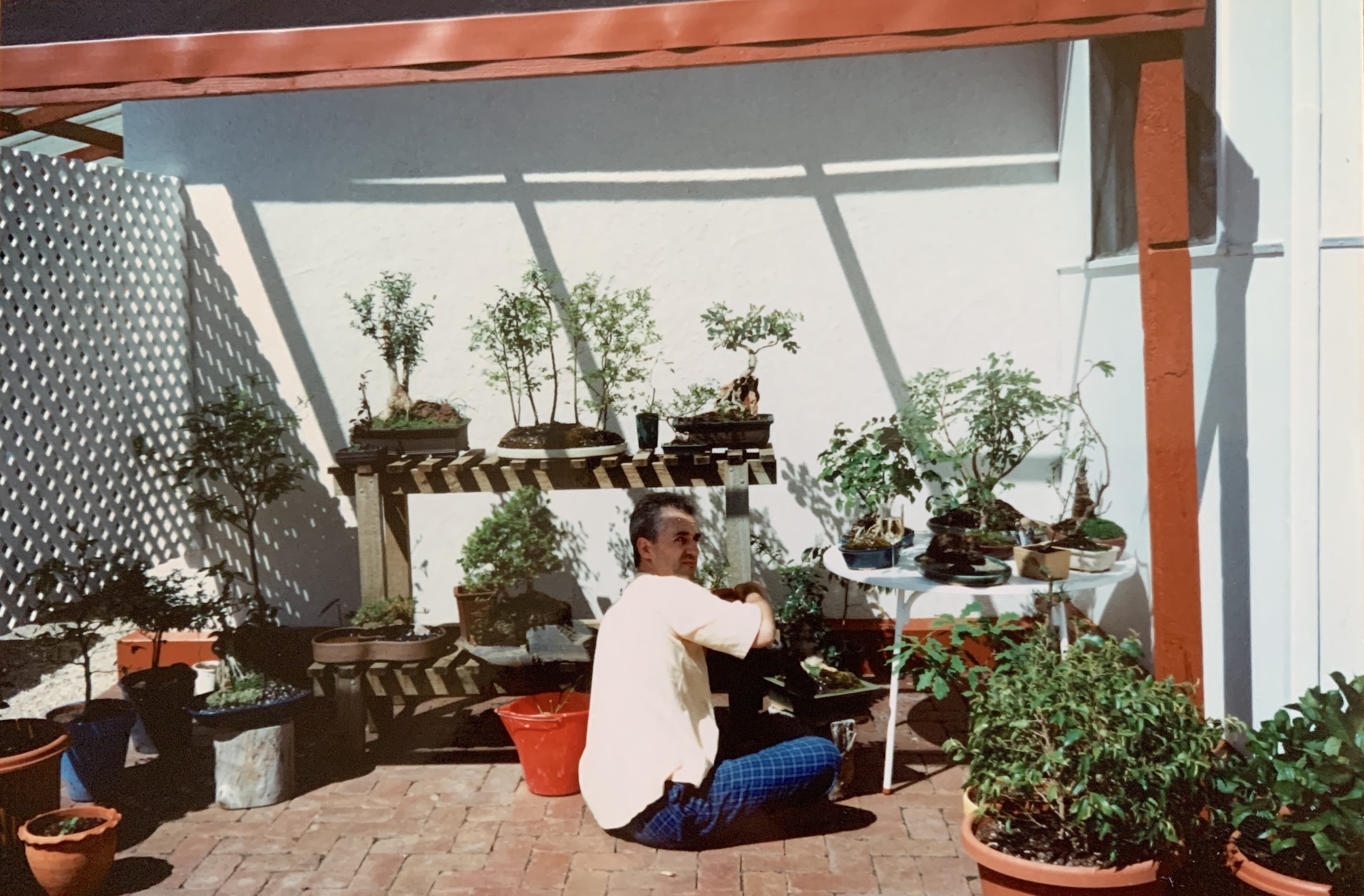
Michael developed a fascination with all things Japanese in his mid twenties and so began his interest in the art of bonsai. When we met, fifteen years later, he came as a package deal and his beloved bonsai found a home in a sunny spot under the pergola of our suburban backyard.
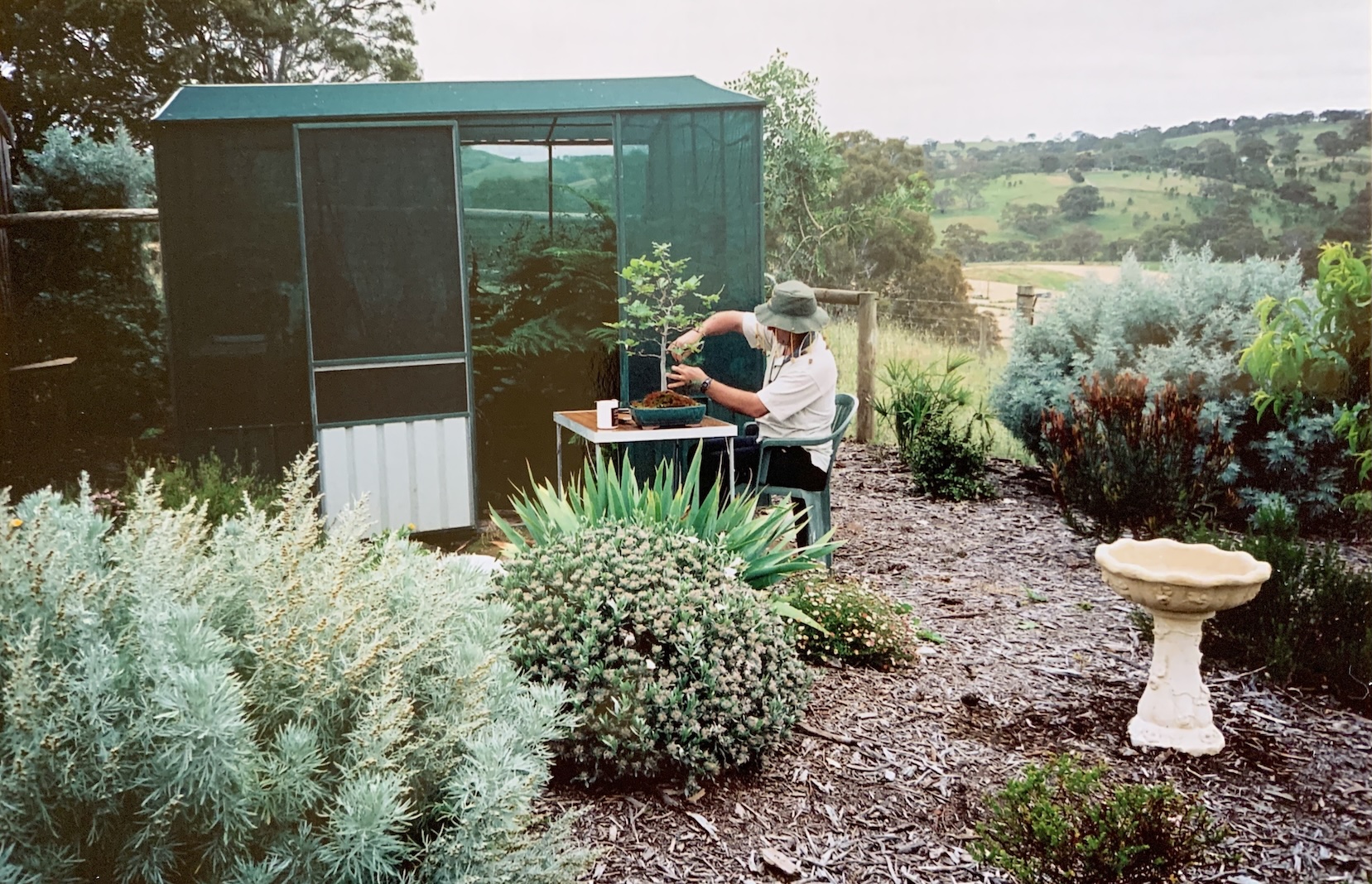
Five years on, we moved to a property in the Adelaide Hills and one of the first items we added to the garden was a shade house to protect the bonsai from unpredictable weather. (It did become airborne in one particular storm but, fortunately, no bonsai were harmed. We then concreted the corner posts into the ground.)
Fast forward another seven years and we made the bold decision to relocate to Tasmania. By this stage, there were over forty bonsai to consider in varying stages of evolution. There were strict biosecurity rules for entry into Tasmania, any potted plants had to be fumigated by a registered authority and sealed until arrival across the creek. Sadly, all but four were sold or given away and the remaining plants travelled with us on the Spirit of Tasmania to their new abode. More specimens have been procured and nurtured since our arrival but they have been somewhat “out of sight” in various spots around the garden.
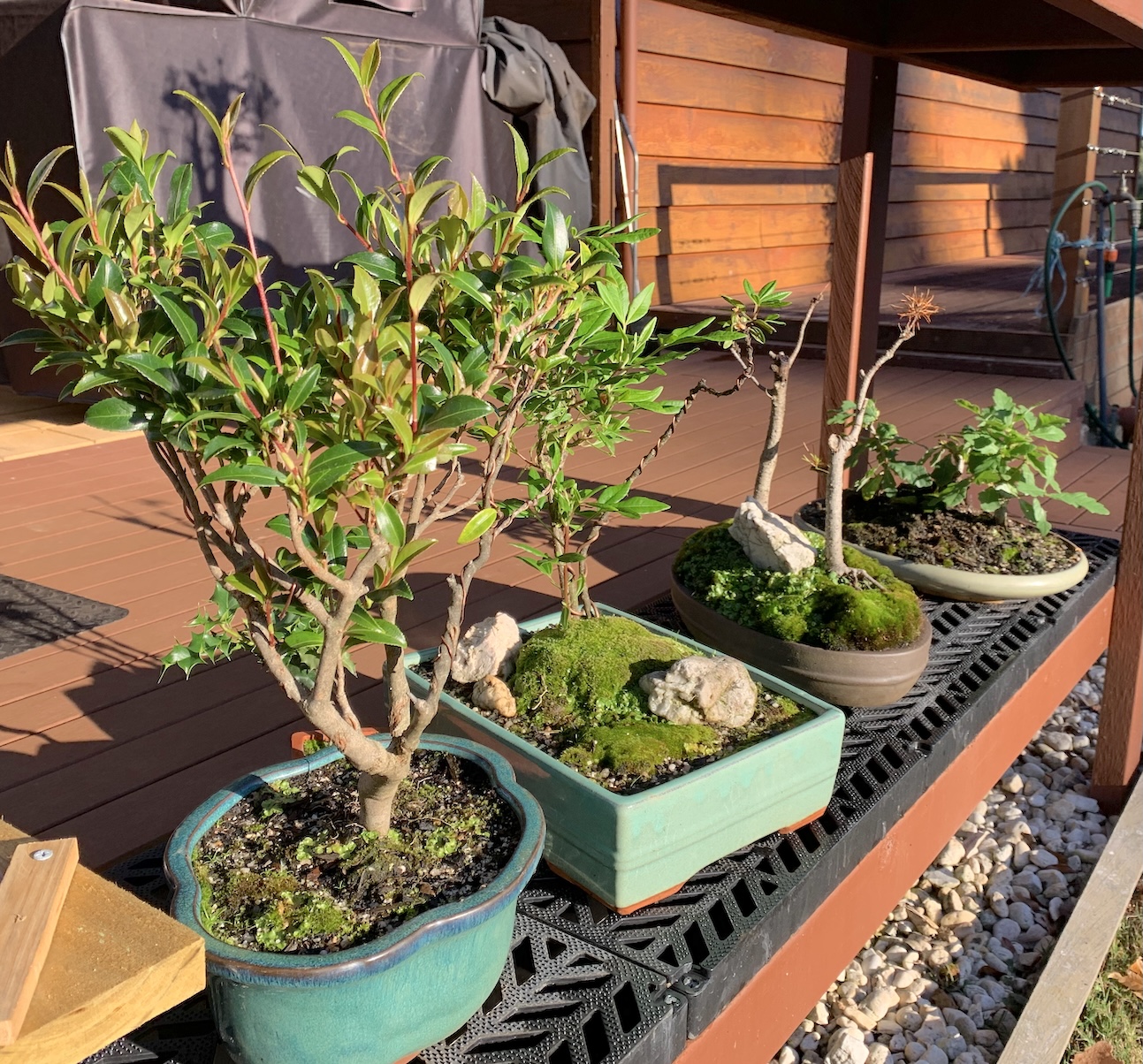
After years of planning and procrastinating, the new bonsai stand was finally created last winter.
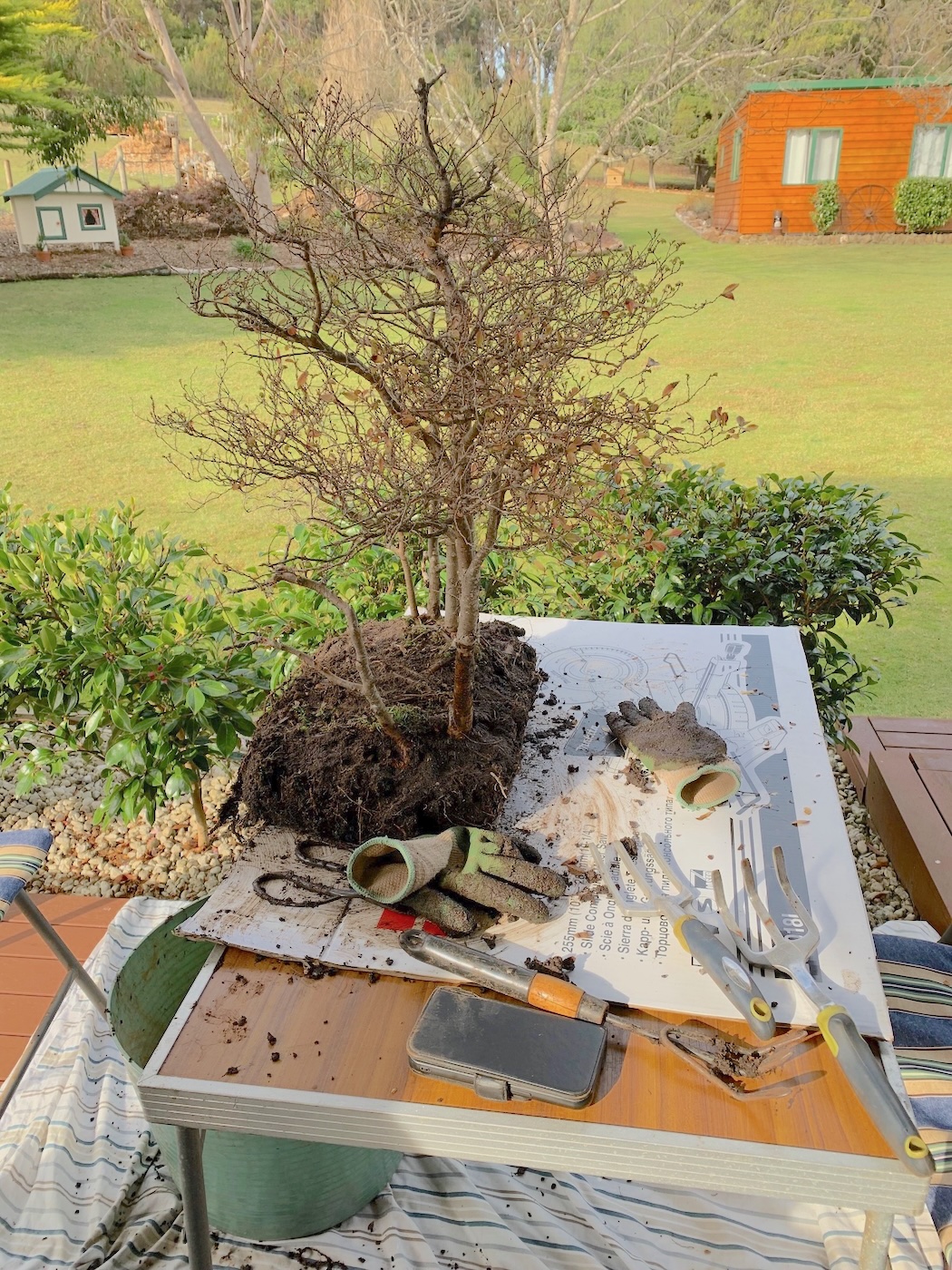
The little trees received some long overdue attention with pruning, root trimming and re-potting.
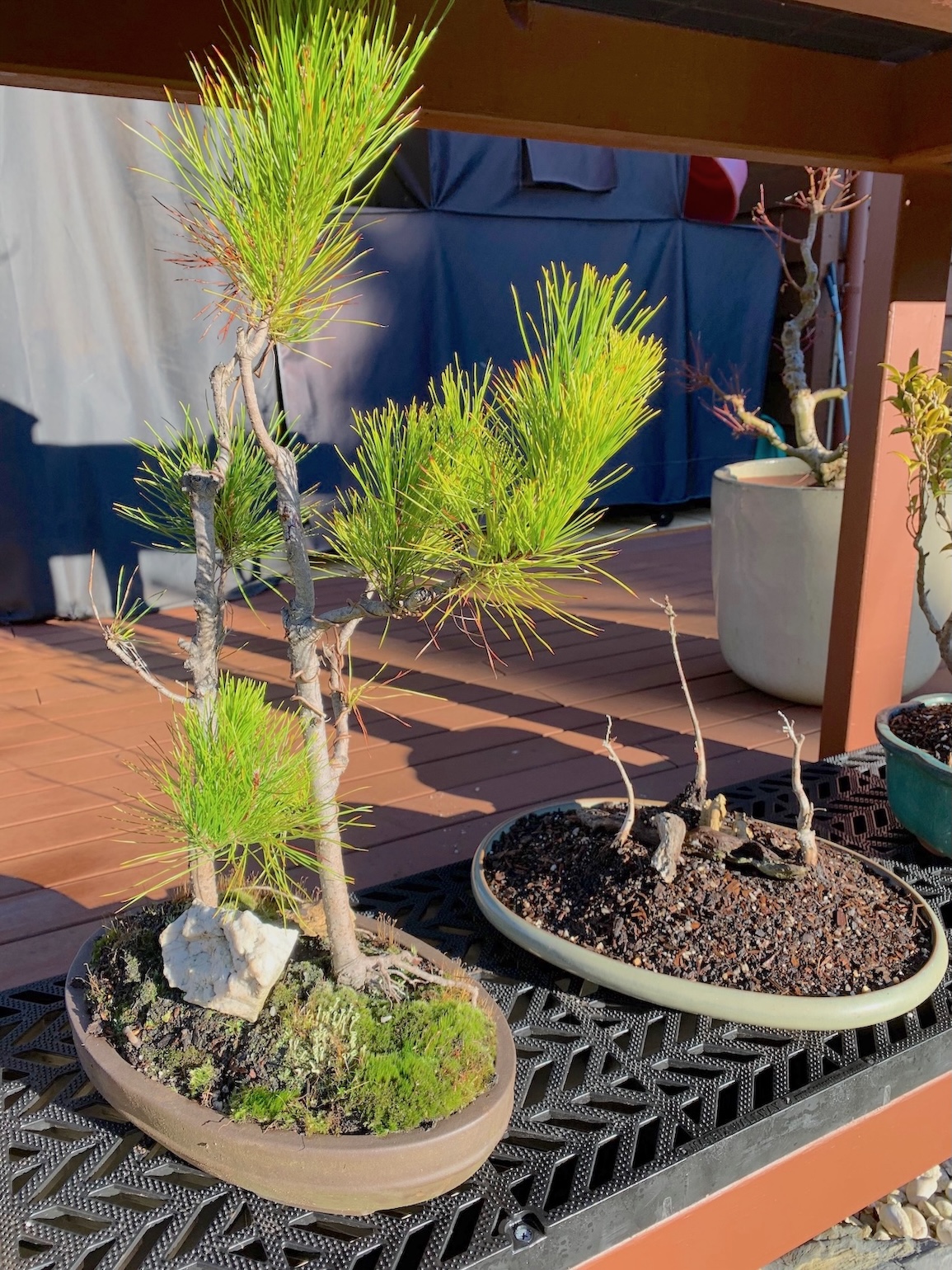
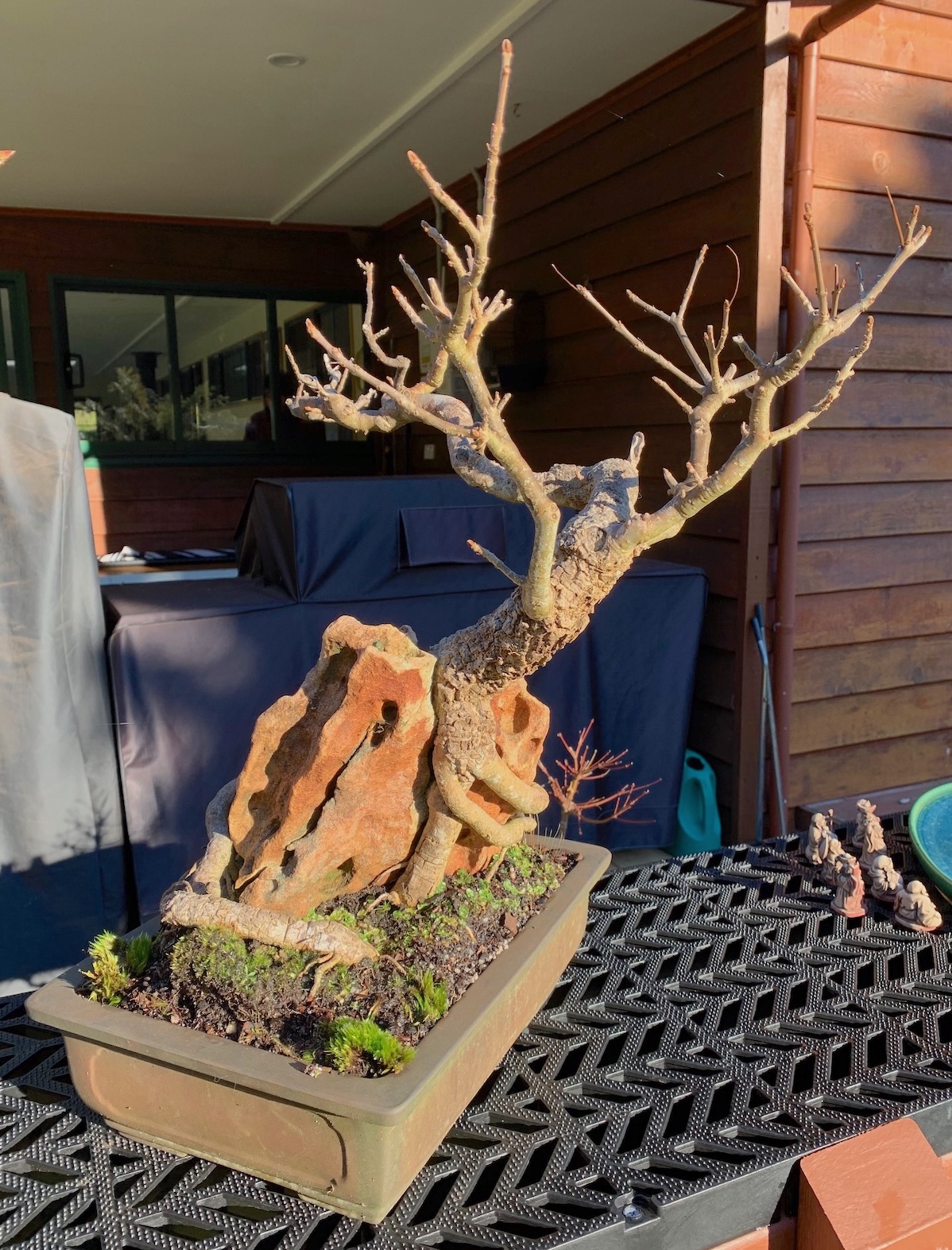
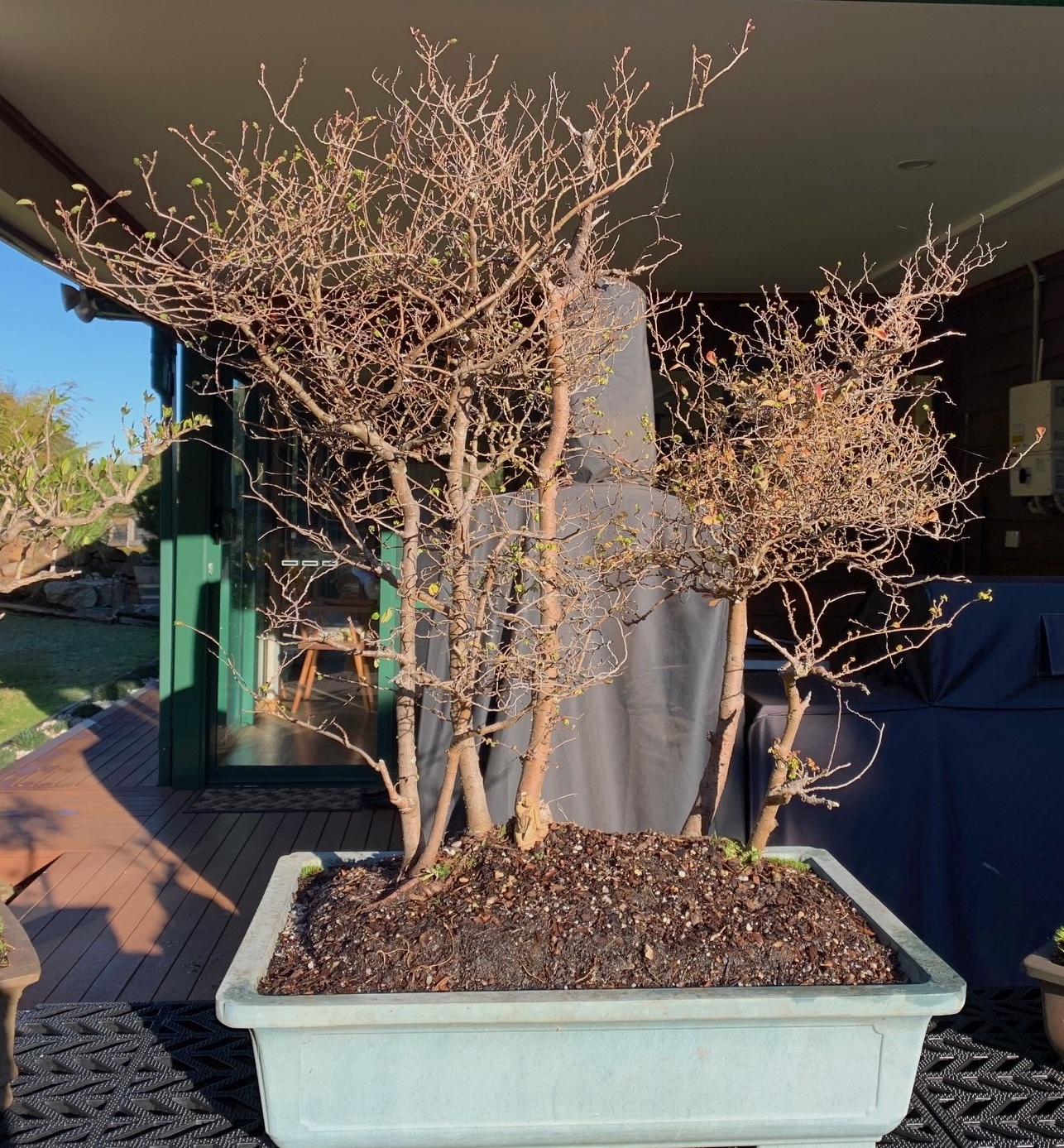
Let me introduce you to the collection. The radiata pine was given to Michael by someone who no longer wanted to continue with bonsai, and the three sticks on the right are English oaks that had self-seeded on a friends property at Table Cape.
Spring brought verdancy to the oaks but, regrettably, the radiata failed to thrive.
The origin of this liquidambar is uncertain (meaning forgotten) but, despite resembling a twig in winter, it perked up once the warmer weather arrived.
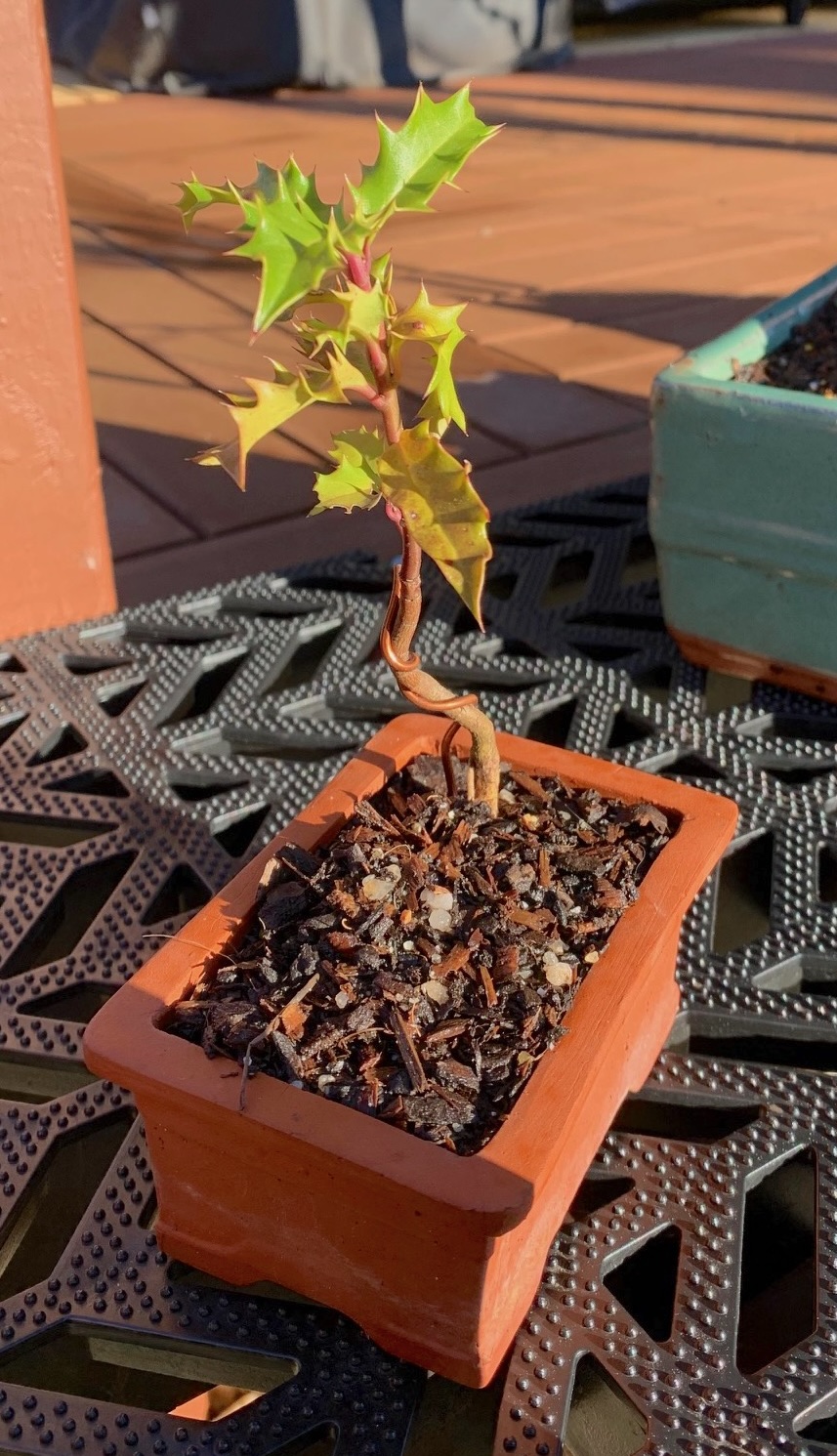
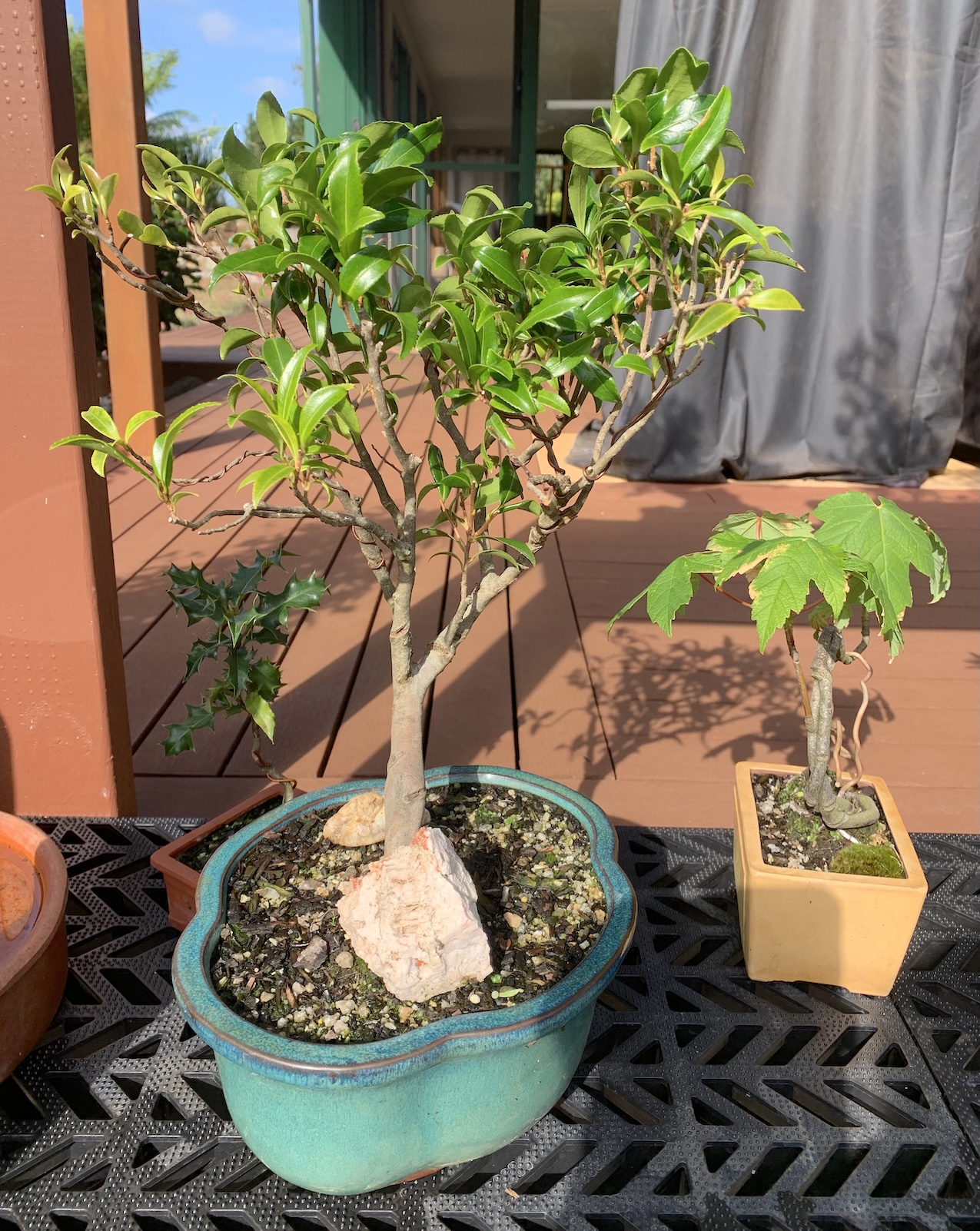
We have a huge holly tree in the garden from which we occasionally find young saplings, the perfect source to experiment with bonsai. So far, this one is a success.
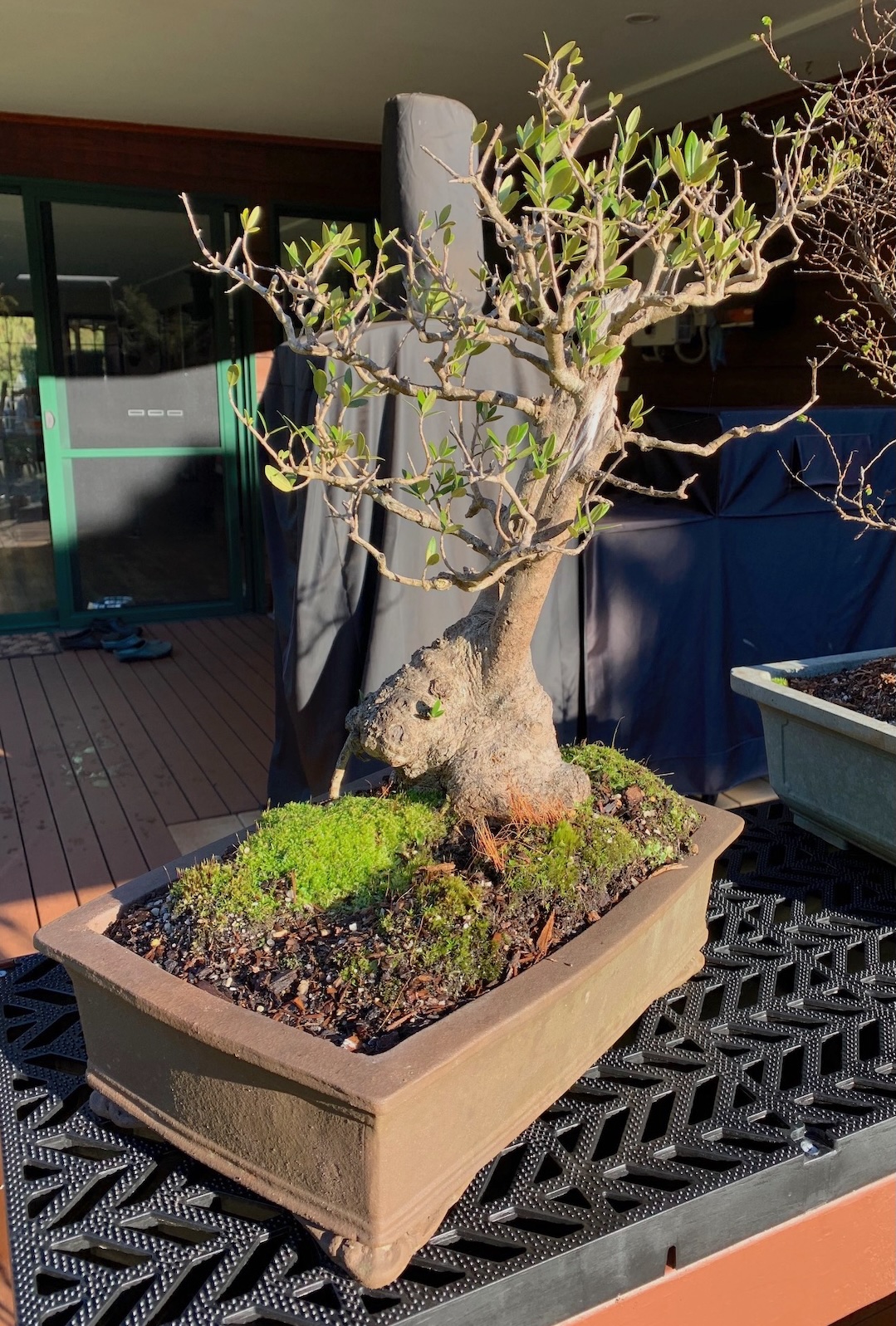
I bought Michael this olive as a gift nearly thirty years ago. He re-trained it and it is one of the chosen few who came from South Australia with us.
The ash tree is quite spectacular. Liberated from between two pavers on a suburban footpath in the mid 80s, Michael trained the roots around a rock before planting in a deep pot. The roots were then gradually exposed and this is the result.
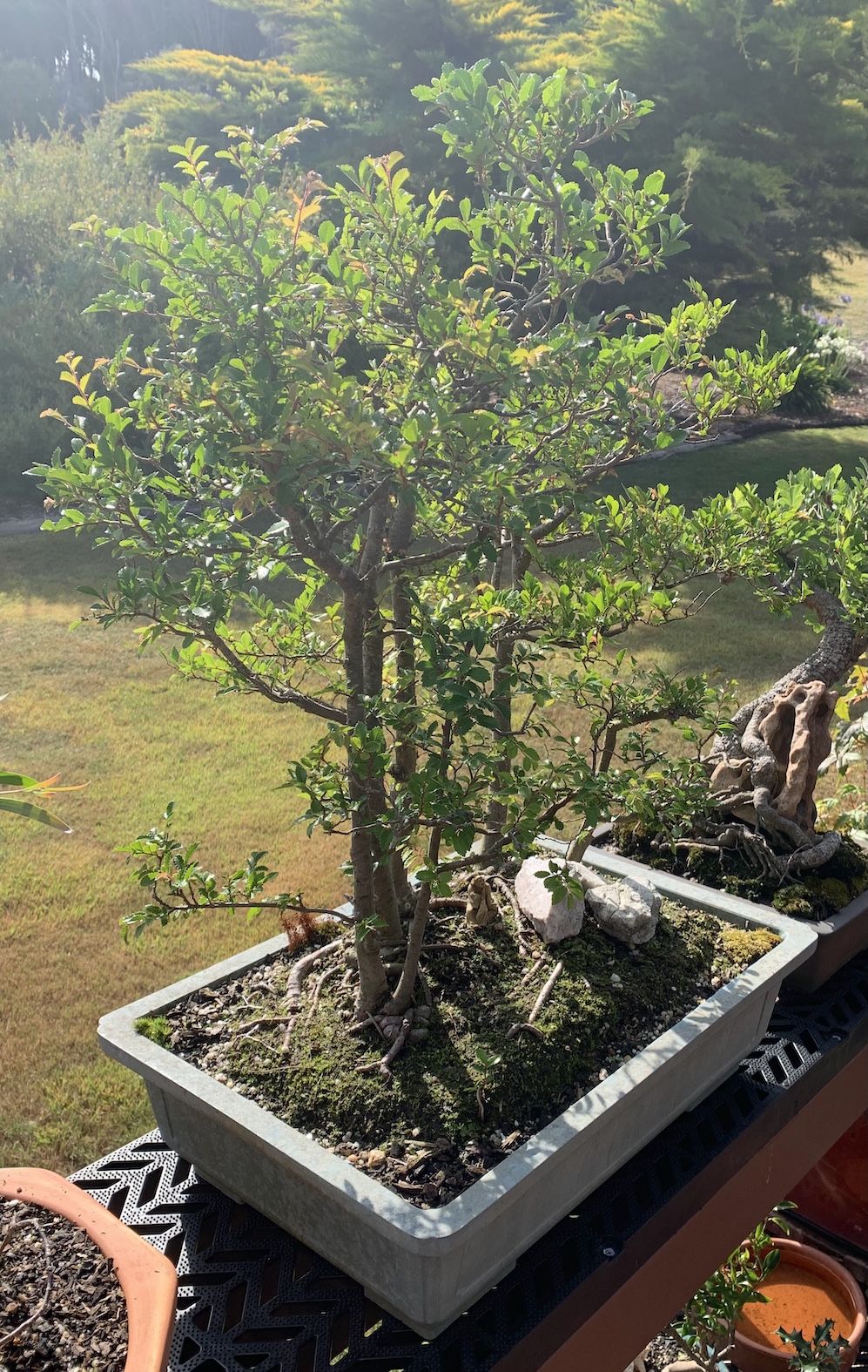
The oldest exhibit in the collection is a copse of English elms. One of the original seven died in transport to Tasmania but there are two new saplings growing in the grove and one will be nurtured to reinstate the preferred uneven number.
The dwarf camellia has done well and produced a beautiful pink flower last year.
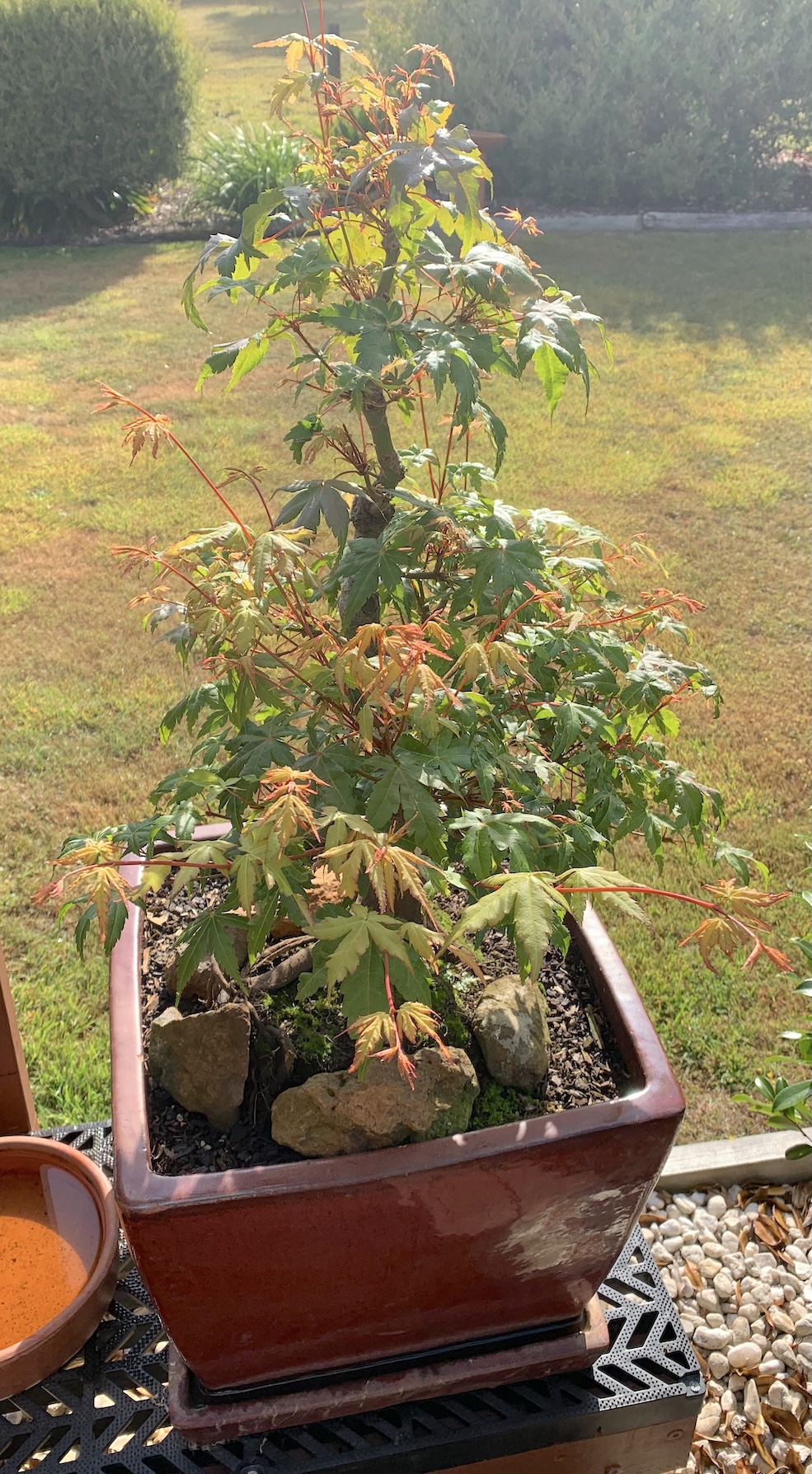
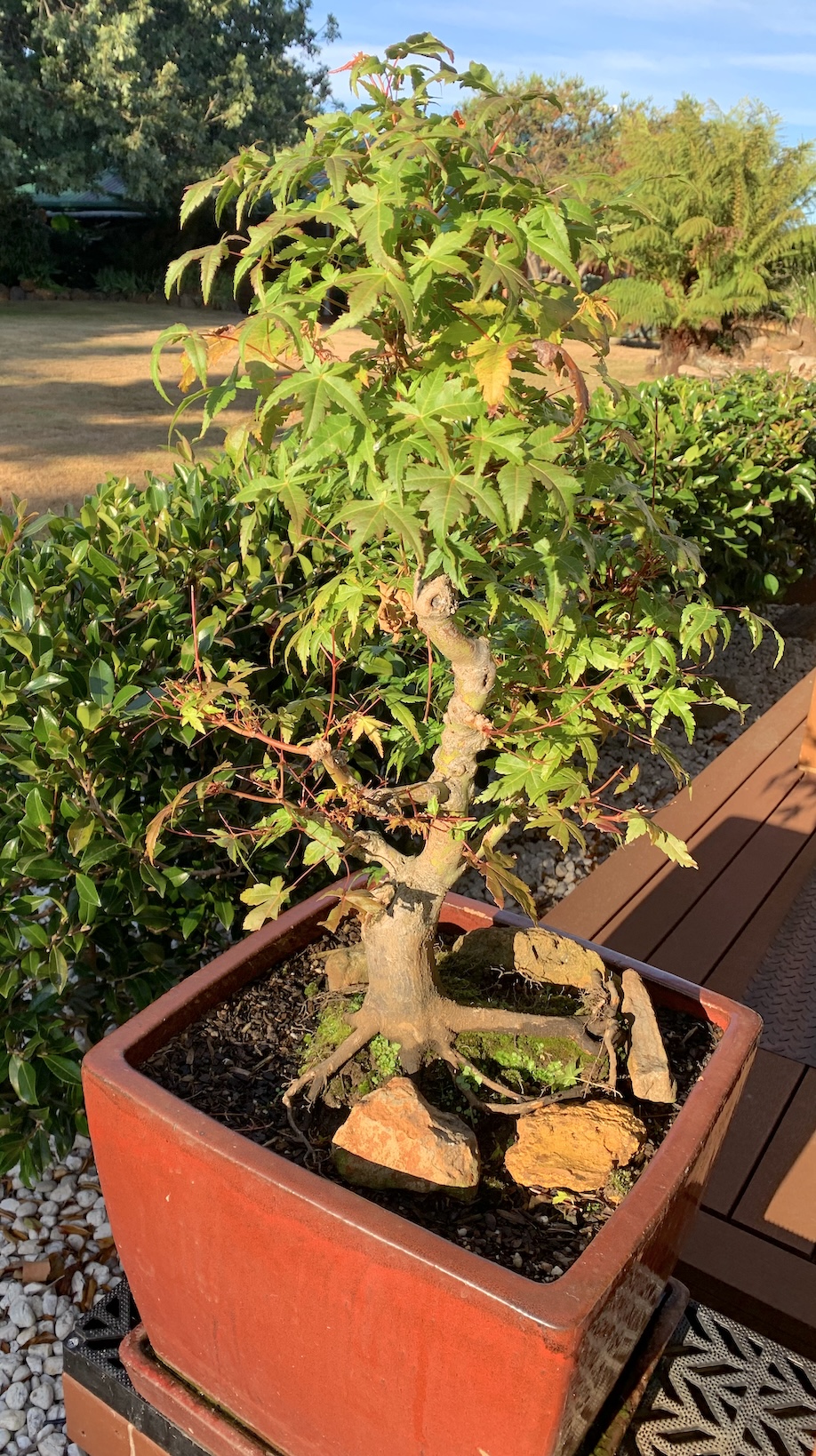
Perhaps the hardiest of them all is the Japanese maple. Firstly created as a bonsai, it was then planted in the garden to enable it to reach its full potential. That wasn’t to be when the neighbours horses reached over the fence and ate most of it. Reclaiming it into a pot seemed the kindest thing to do, now we just need to find a way to stop the nocturnal wildlife having a nibble.
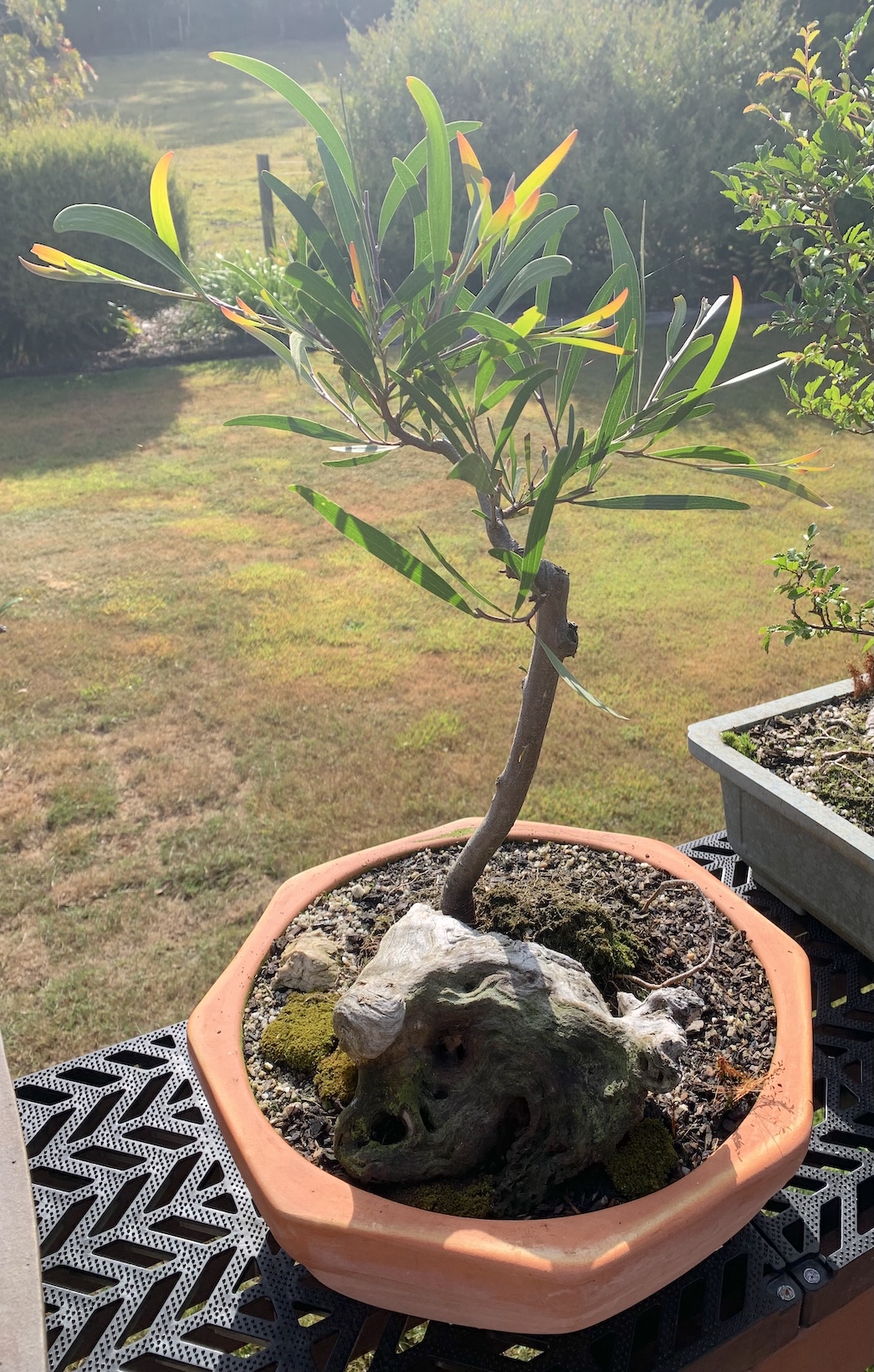
The Australian blackwood was gifted at the same time as the radiata but has fared considerably better. Several root suckers have emerged and will hopefully result in a miniature blackwood forest.
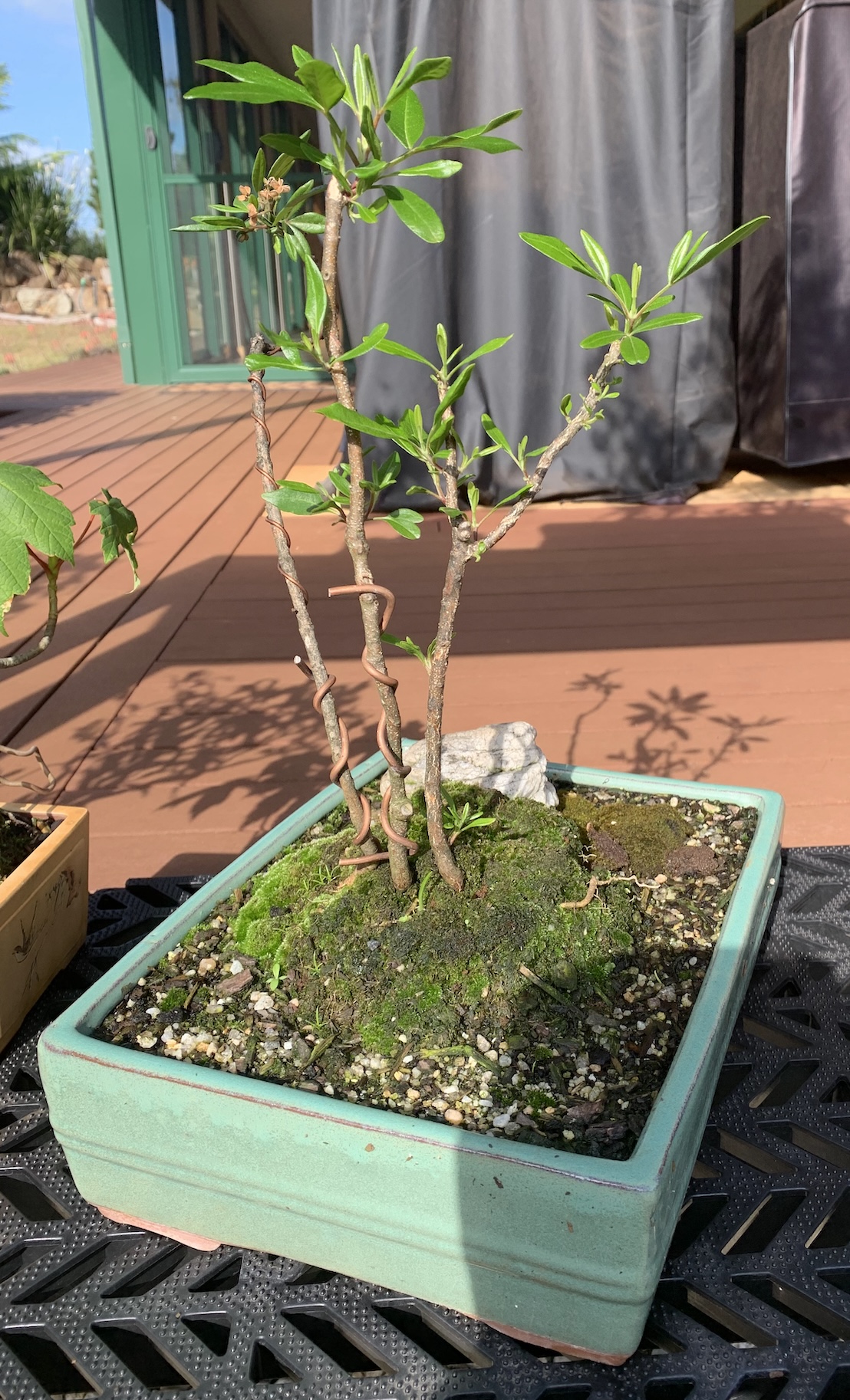
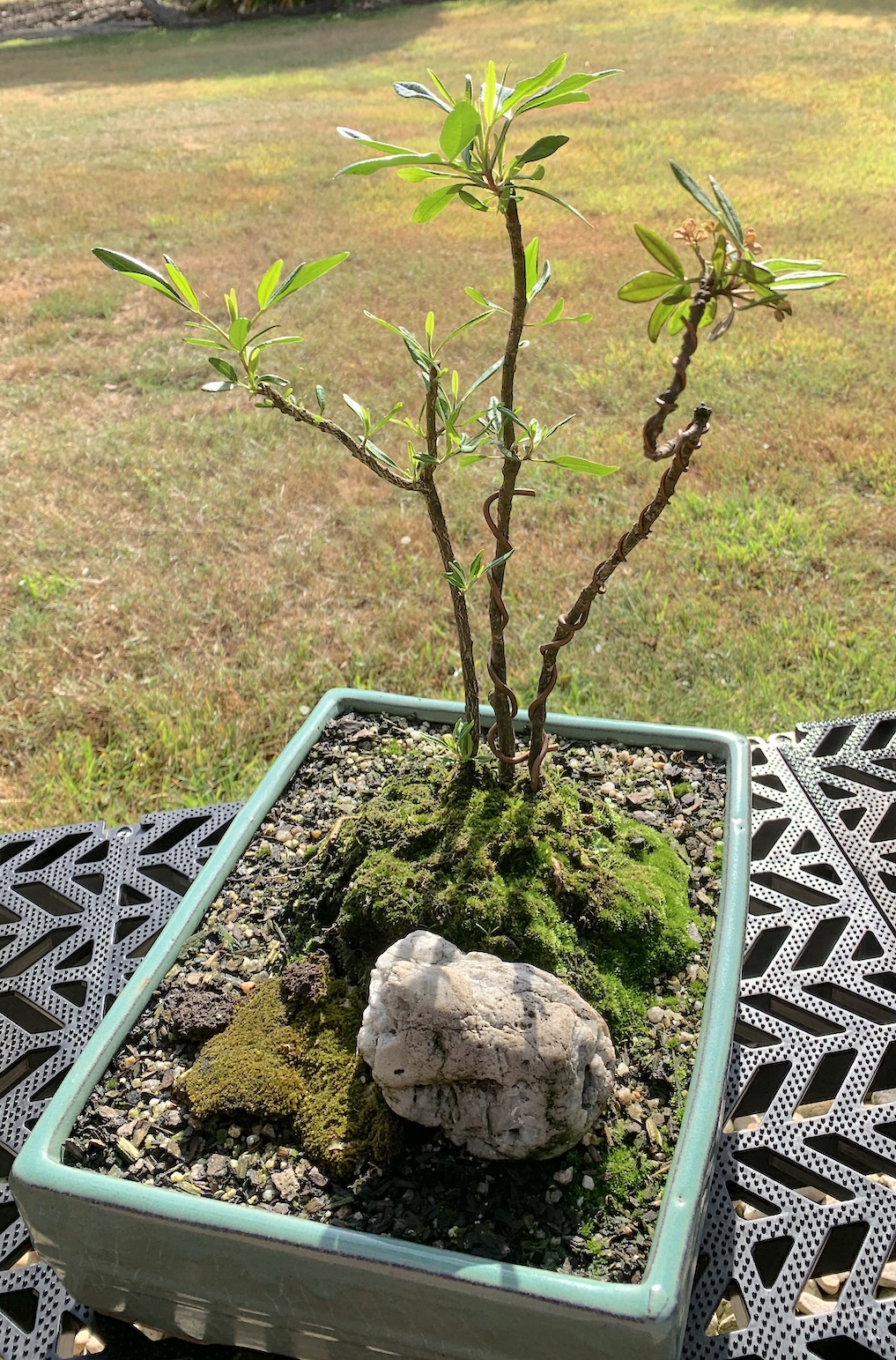
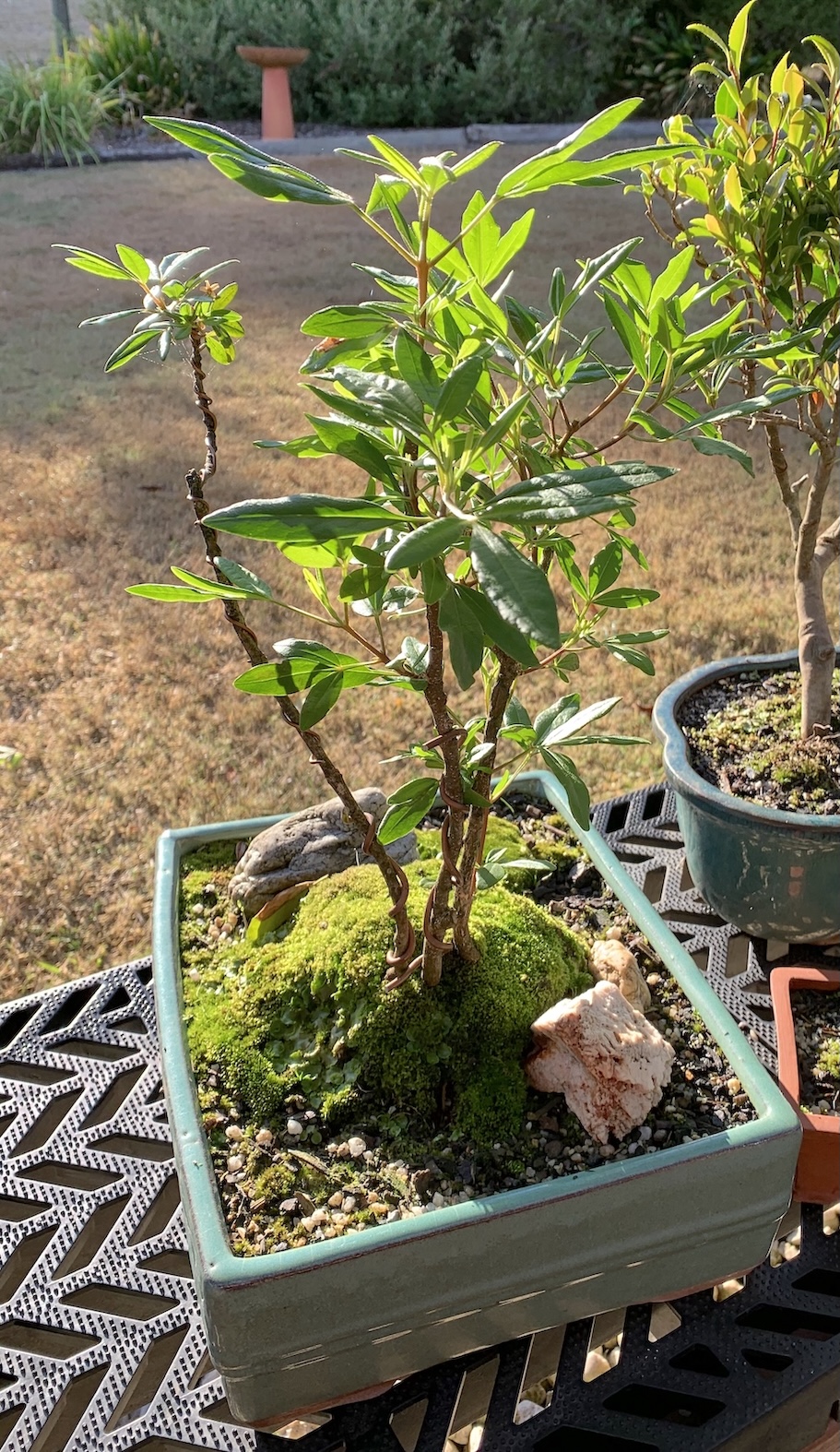
Dogwood trees are prolific in our forest and Michael took these three from the path to see if they could become bonsai. I’d say it was a successful experiment.
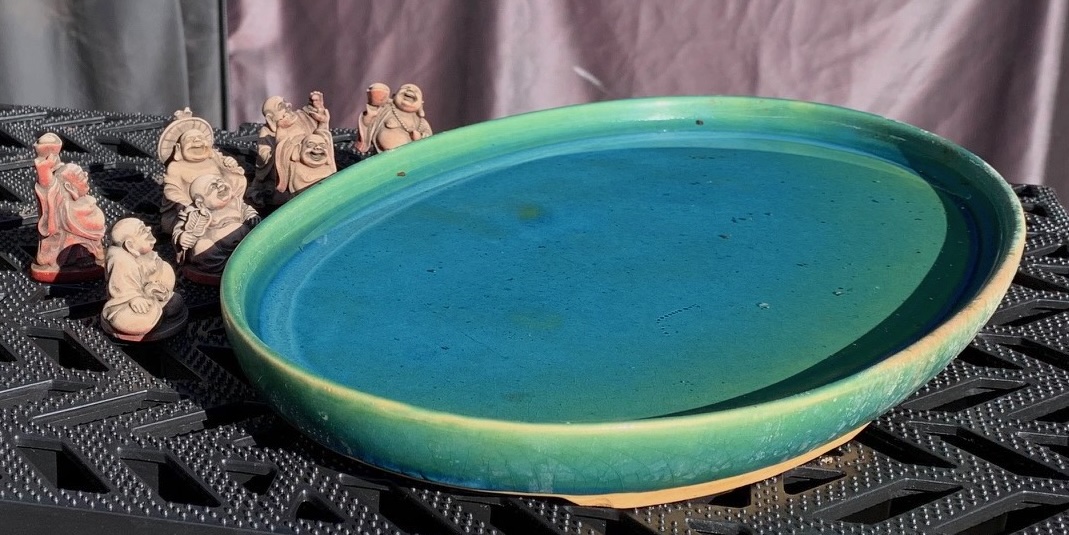
With the Japanese Buddhas enjoying themselves at the watering hole,
The compost bays we constructed when we created the veggie patch have slowly suffered the same fate as the raised beds. Two years ago we resurrected the beds to prevent further deterioration of the timbers and now it was time to do the same for these bays.
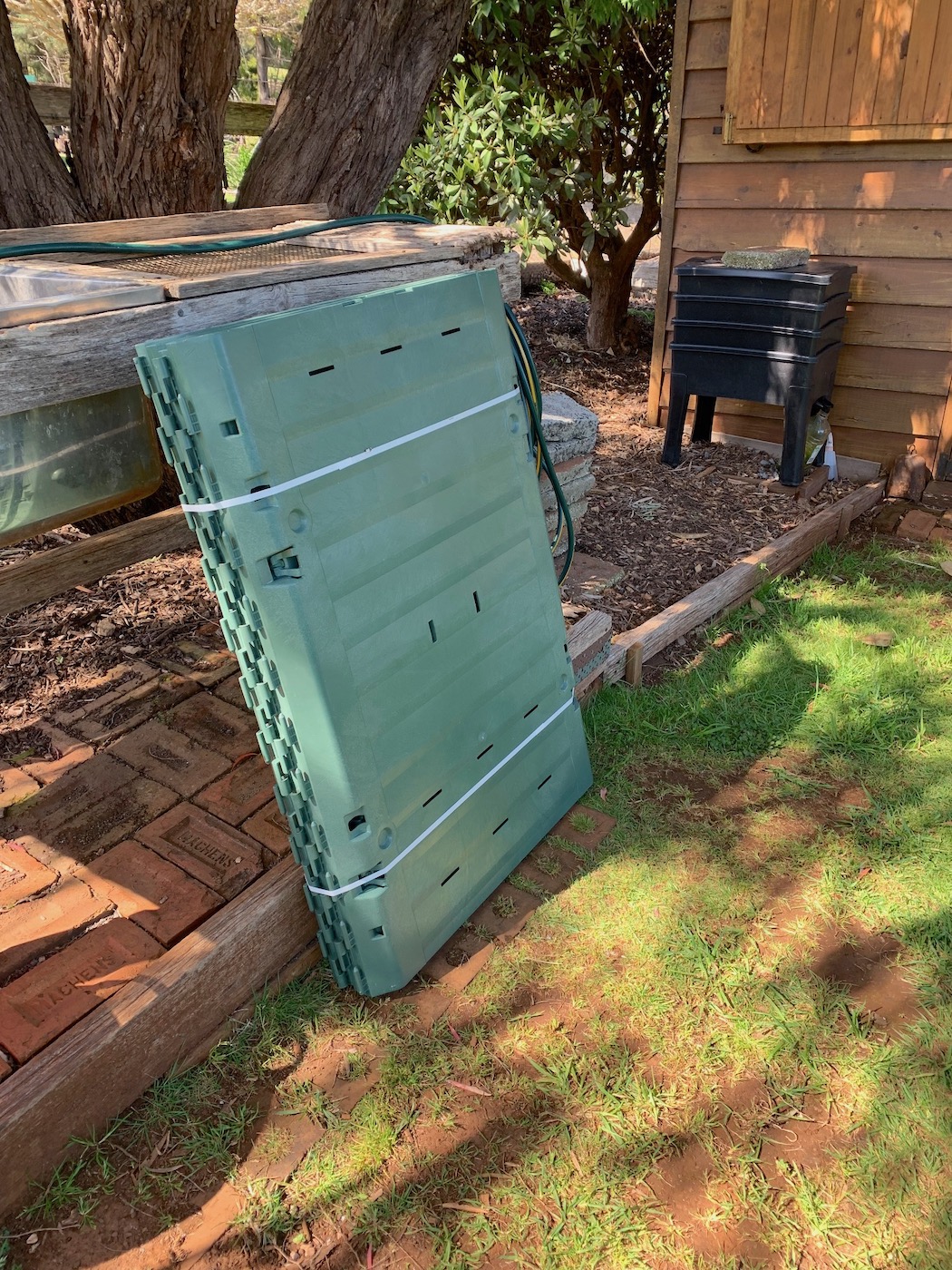
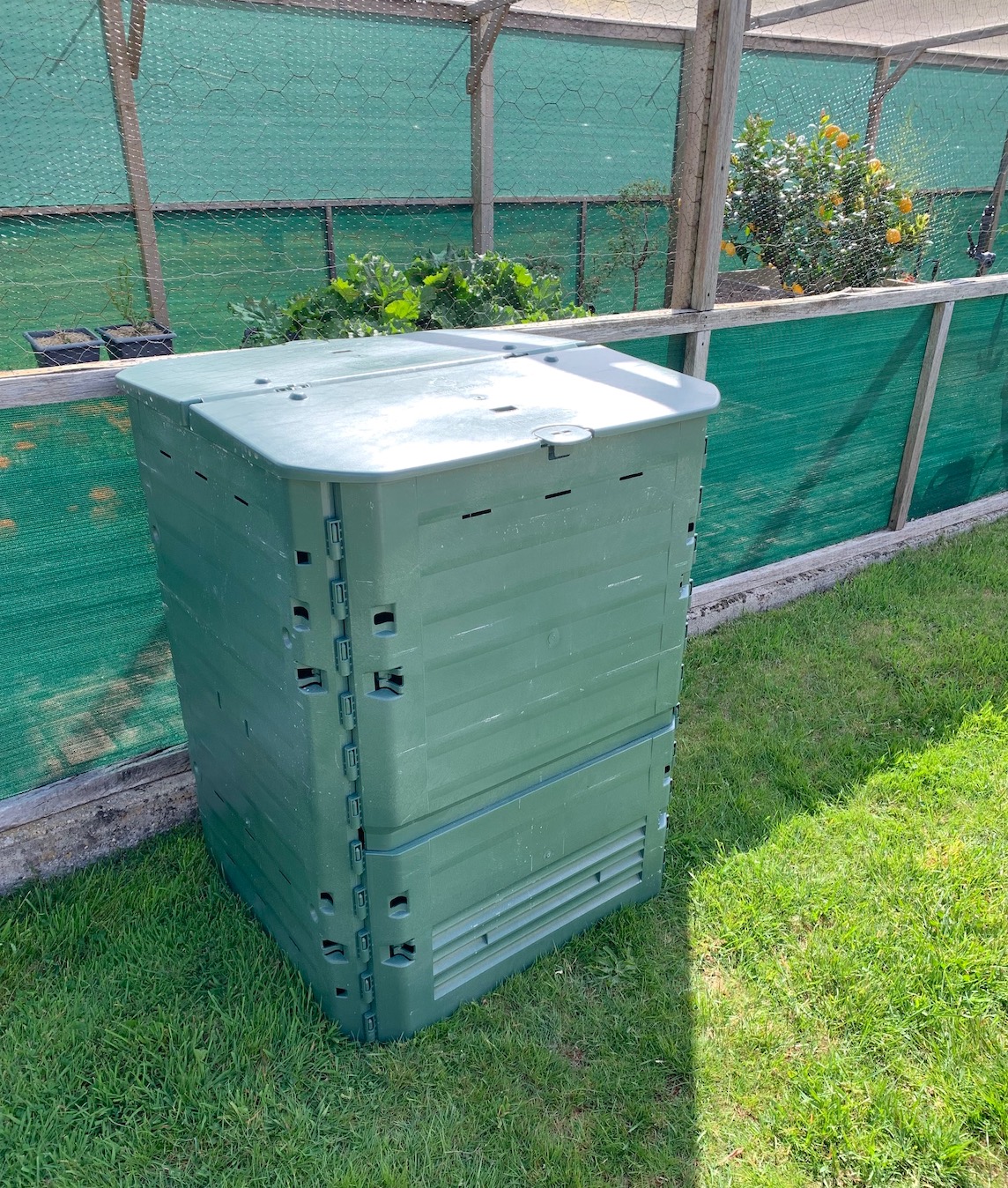
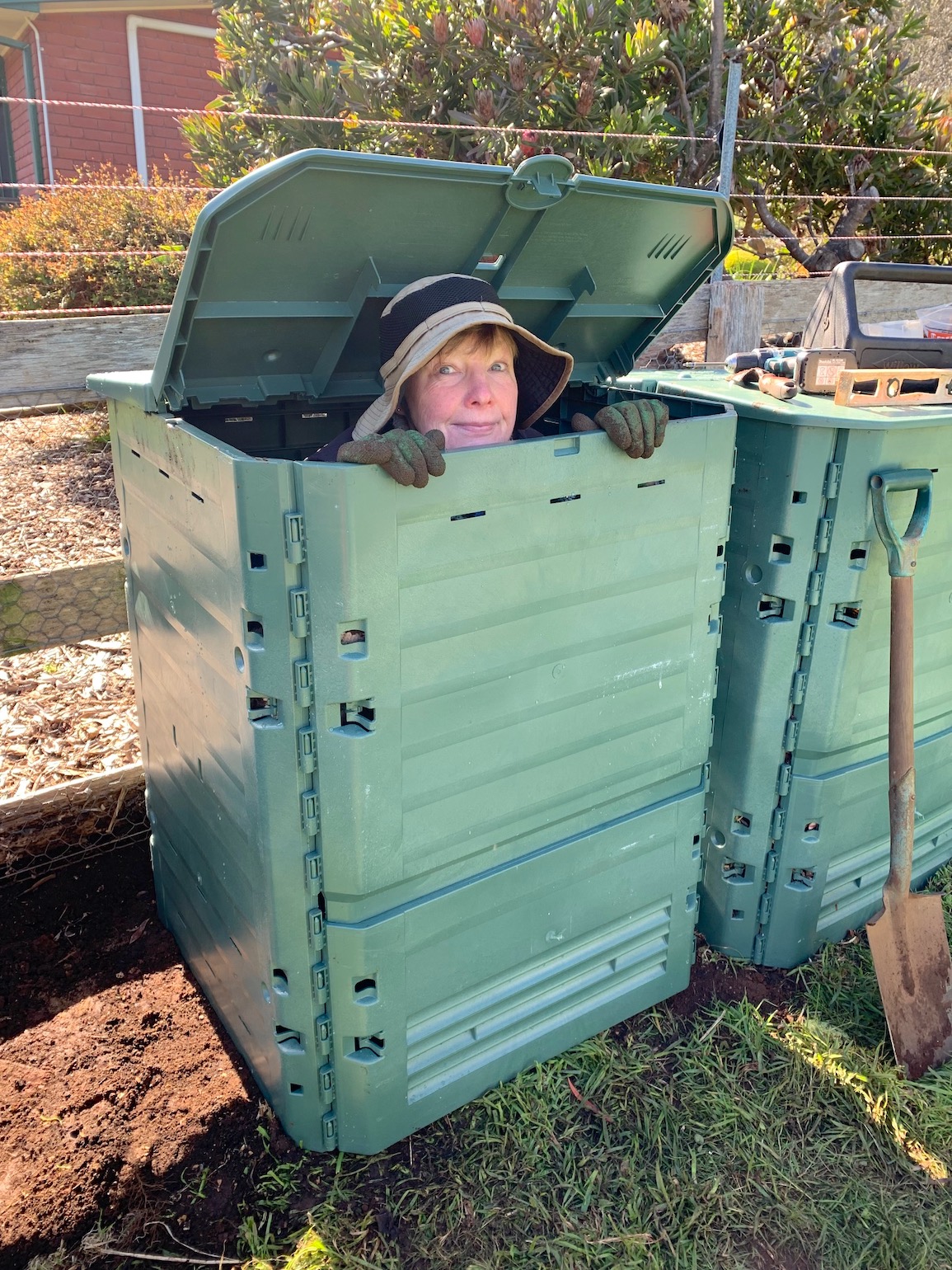
After much brainstorming, we decided the sensible thing was to buy ready made compost bins that would out live and look better than anything we could build. The three 600 litre bins were delivered and we wasted no time unpacking them.
Assembly was ridiculously easy,
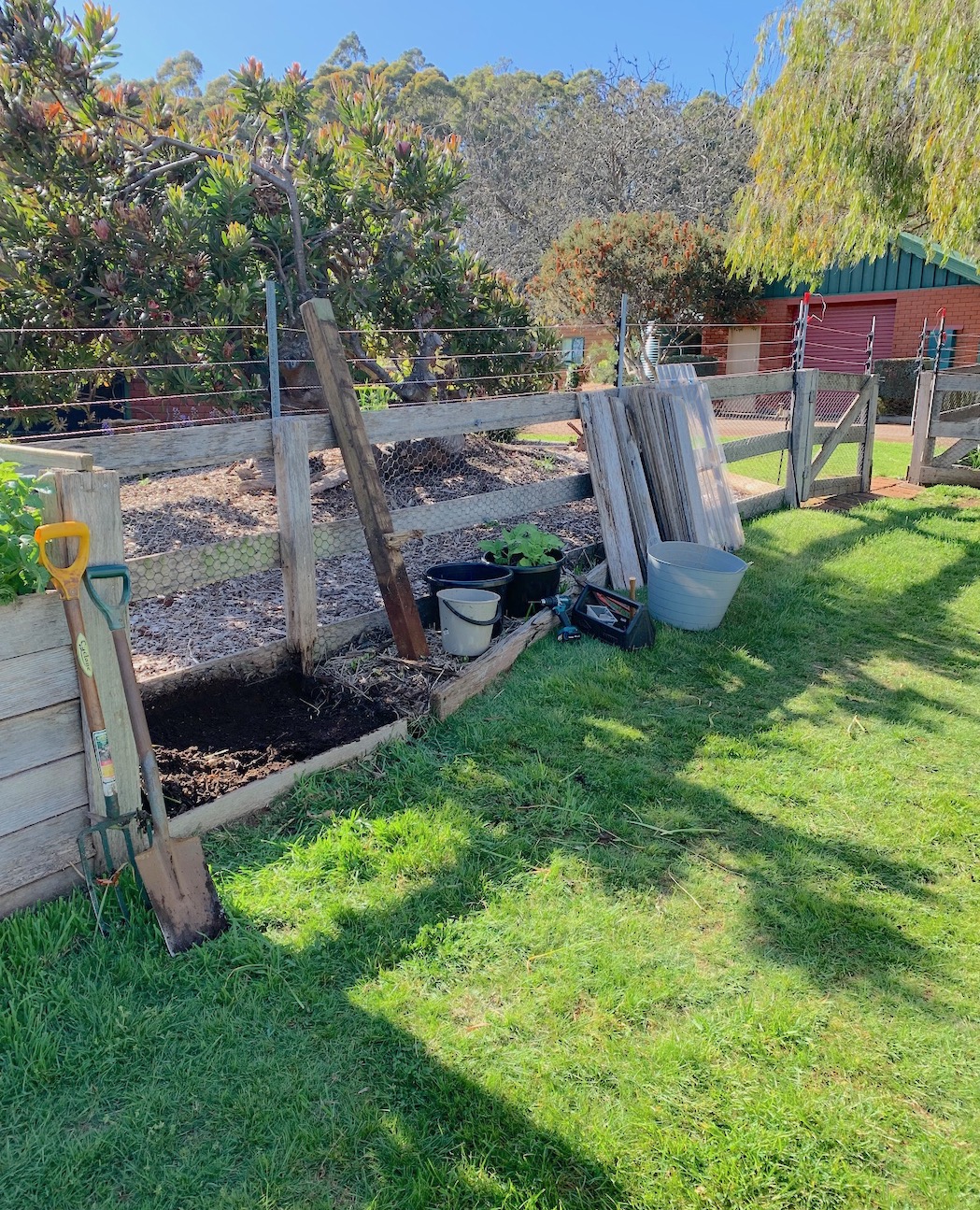
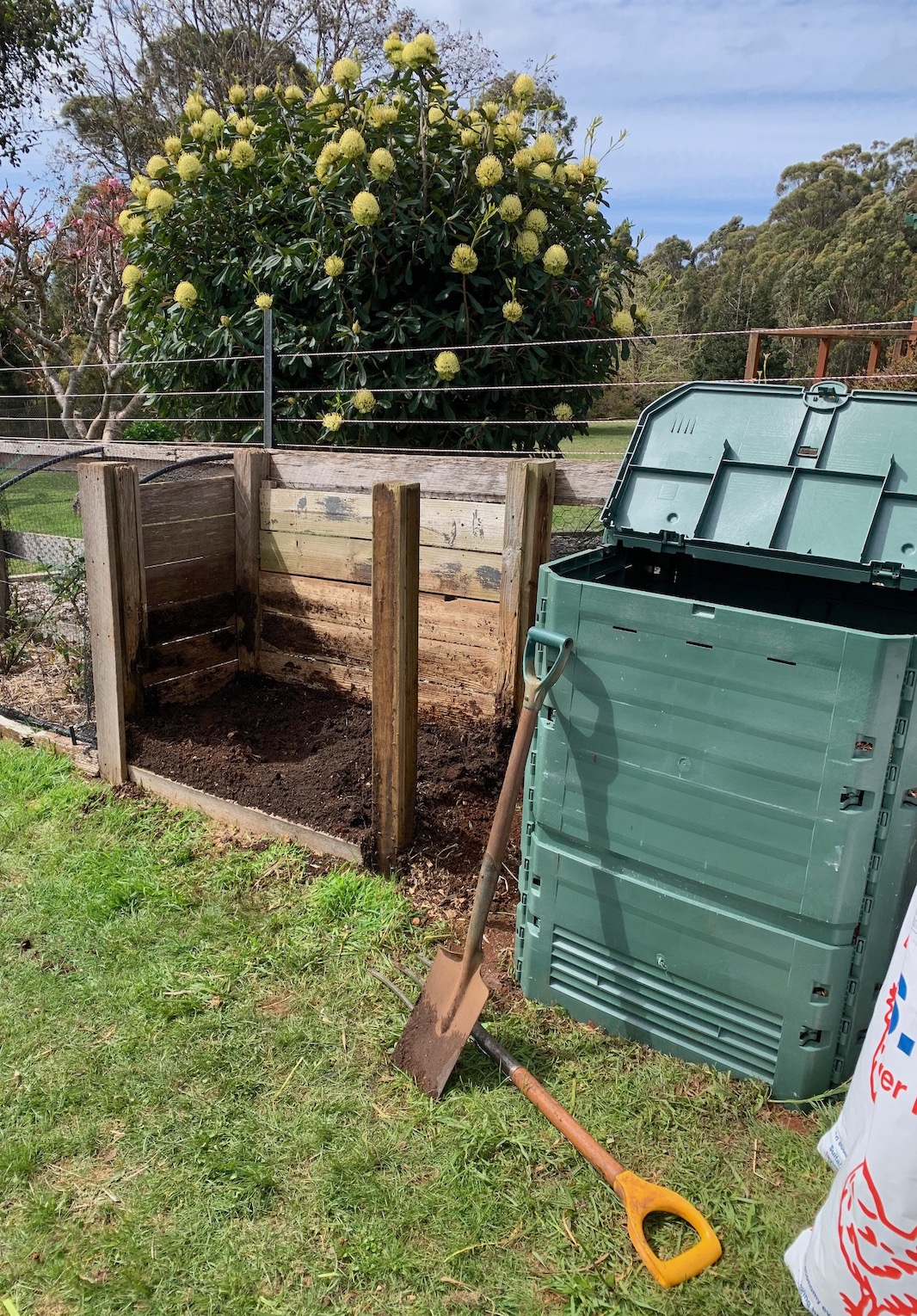
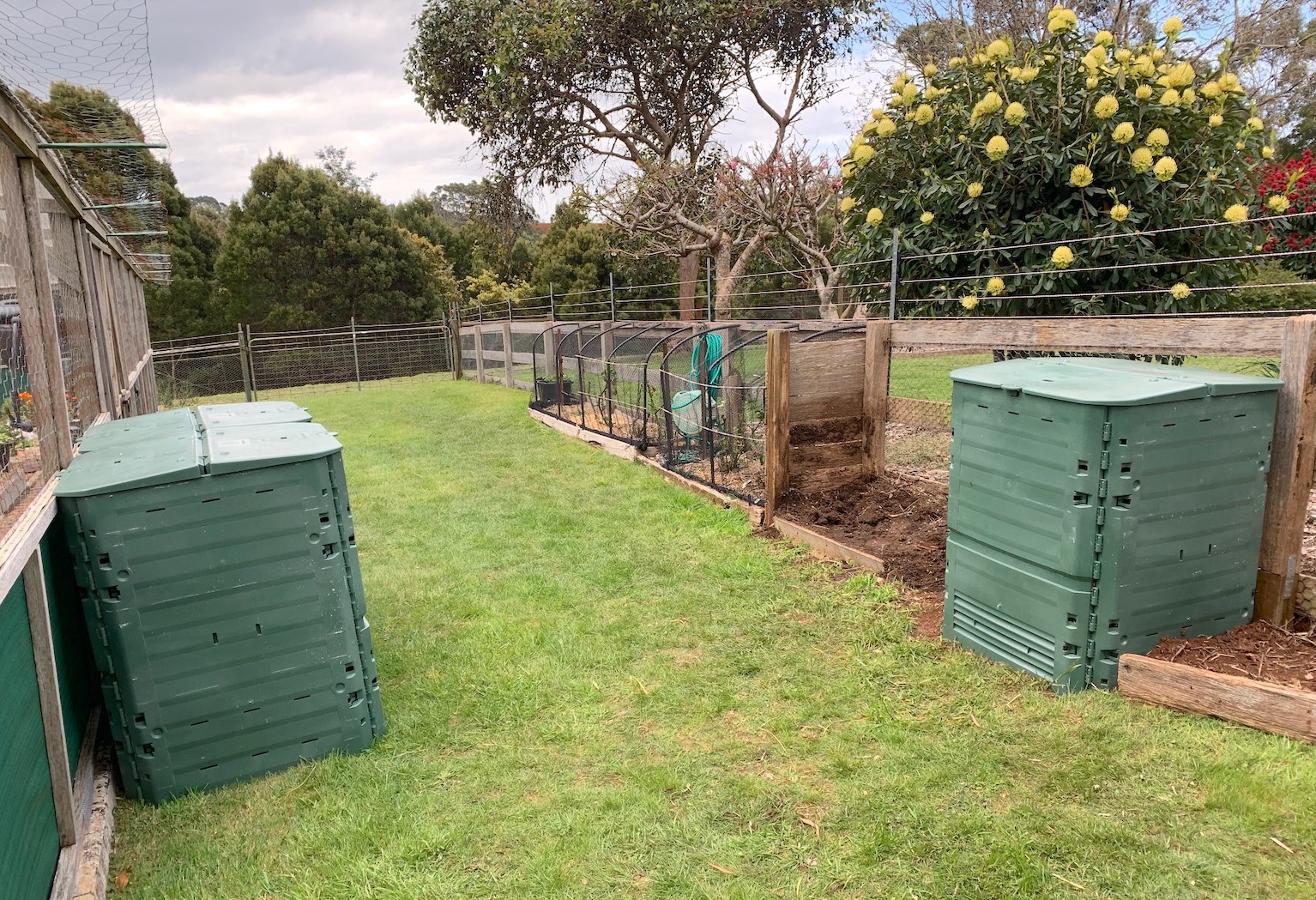
site preparation took a little longer. We emptied the contents of the first bay into wheel barrows and demolished the structure, saving any timbers worthy for future use.
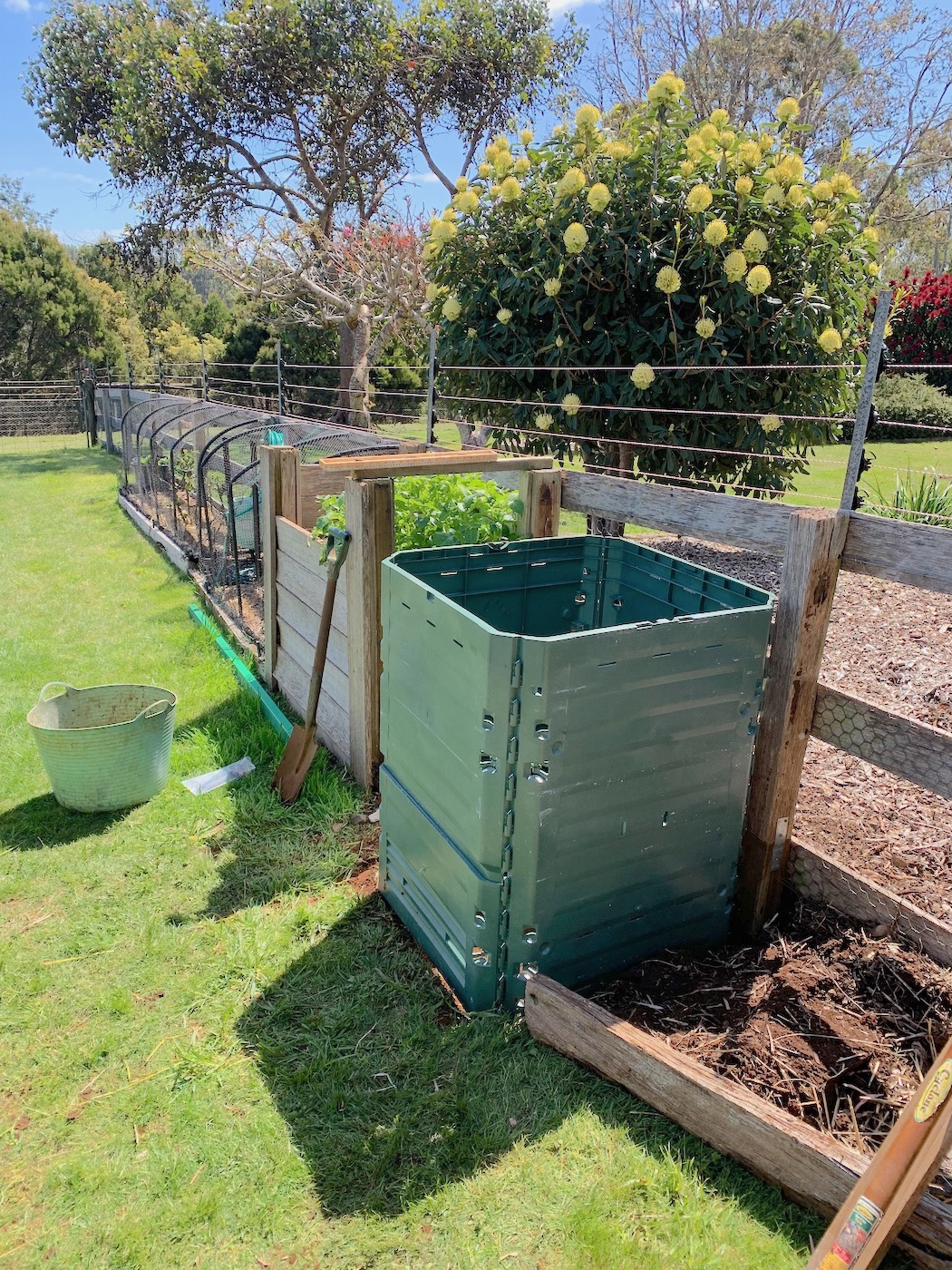
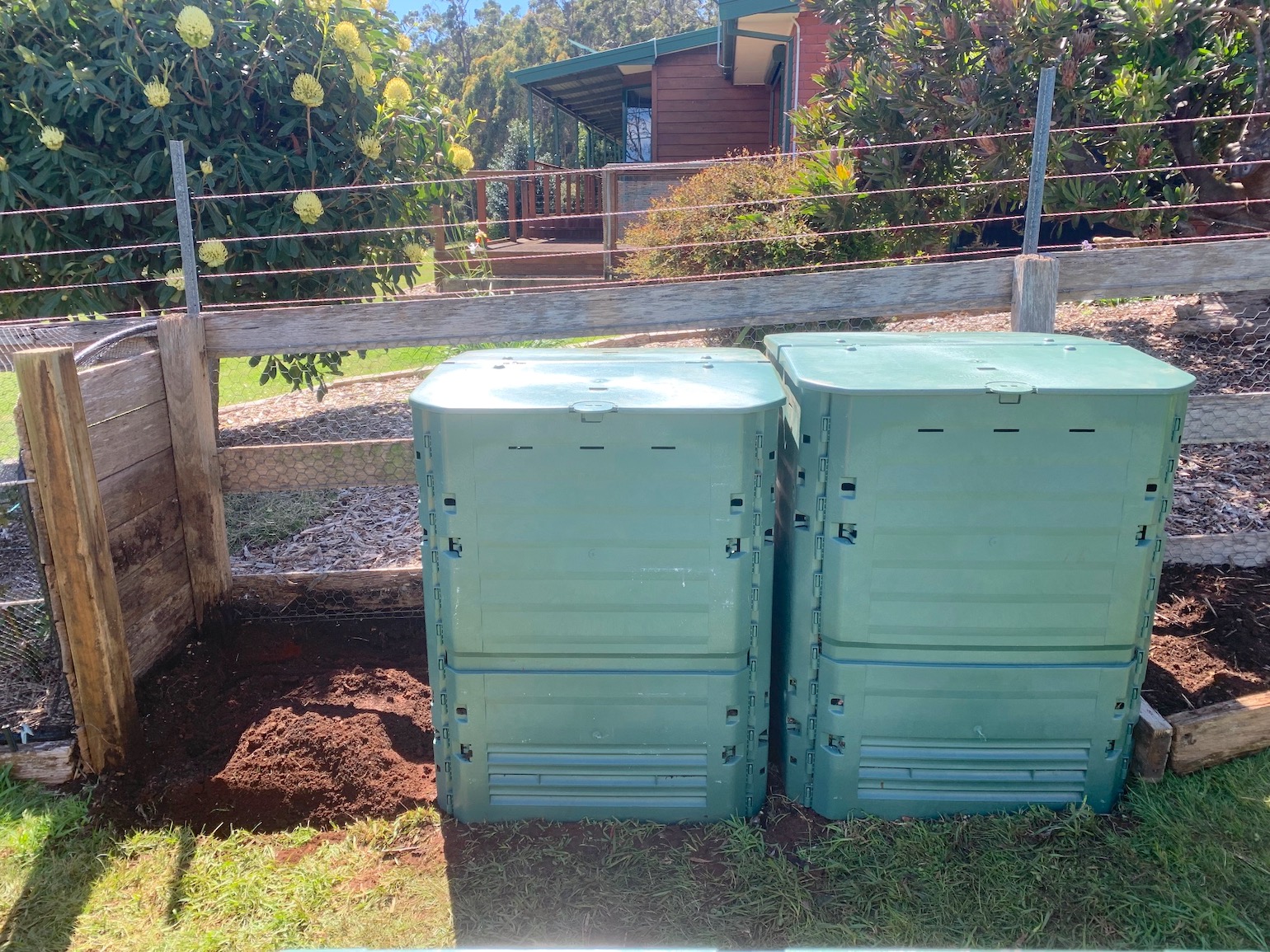
The new bin fit the space perfectly and the half-composted material was shovelled in.
Potatoes were harvested from the random growth in the second bay before that, too, was emptied and demolished.
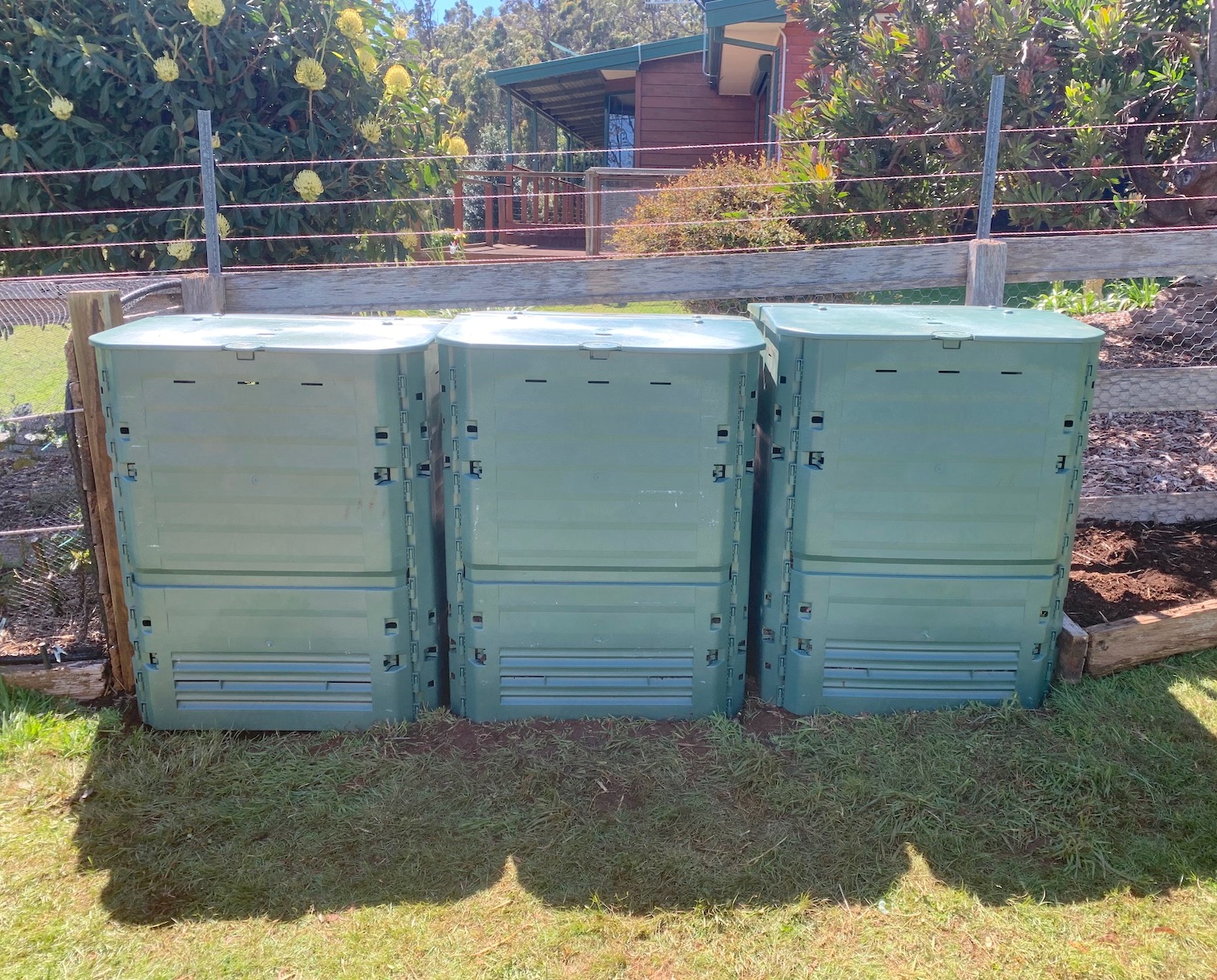
It didn’t take long to position the remaining two bins, replace the contents and admire our work.
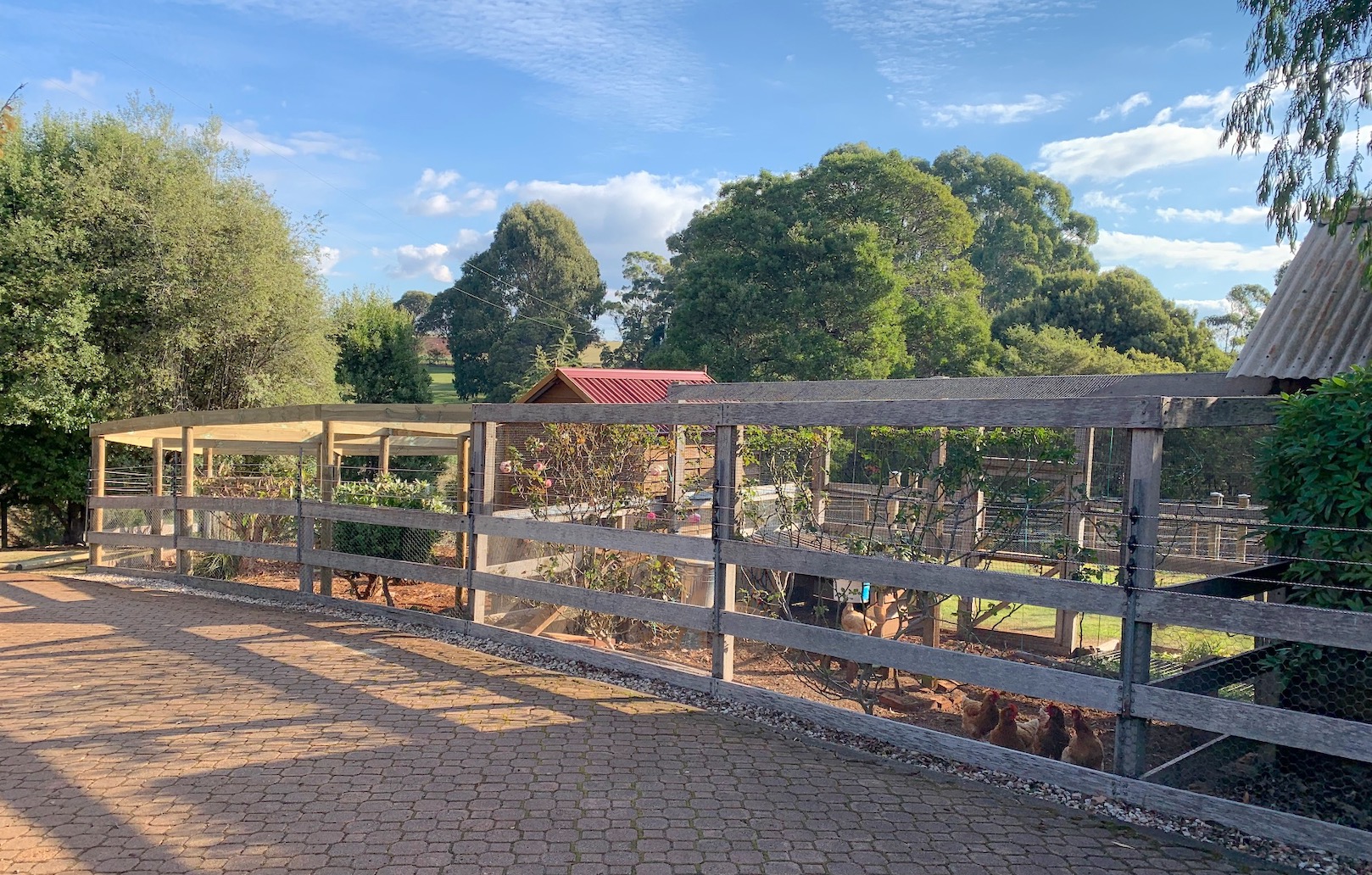
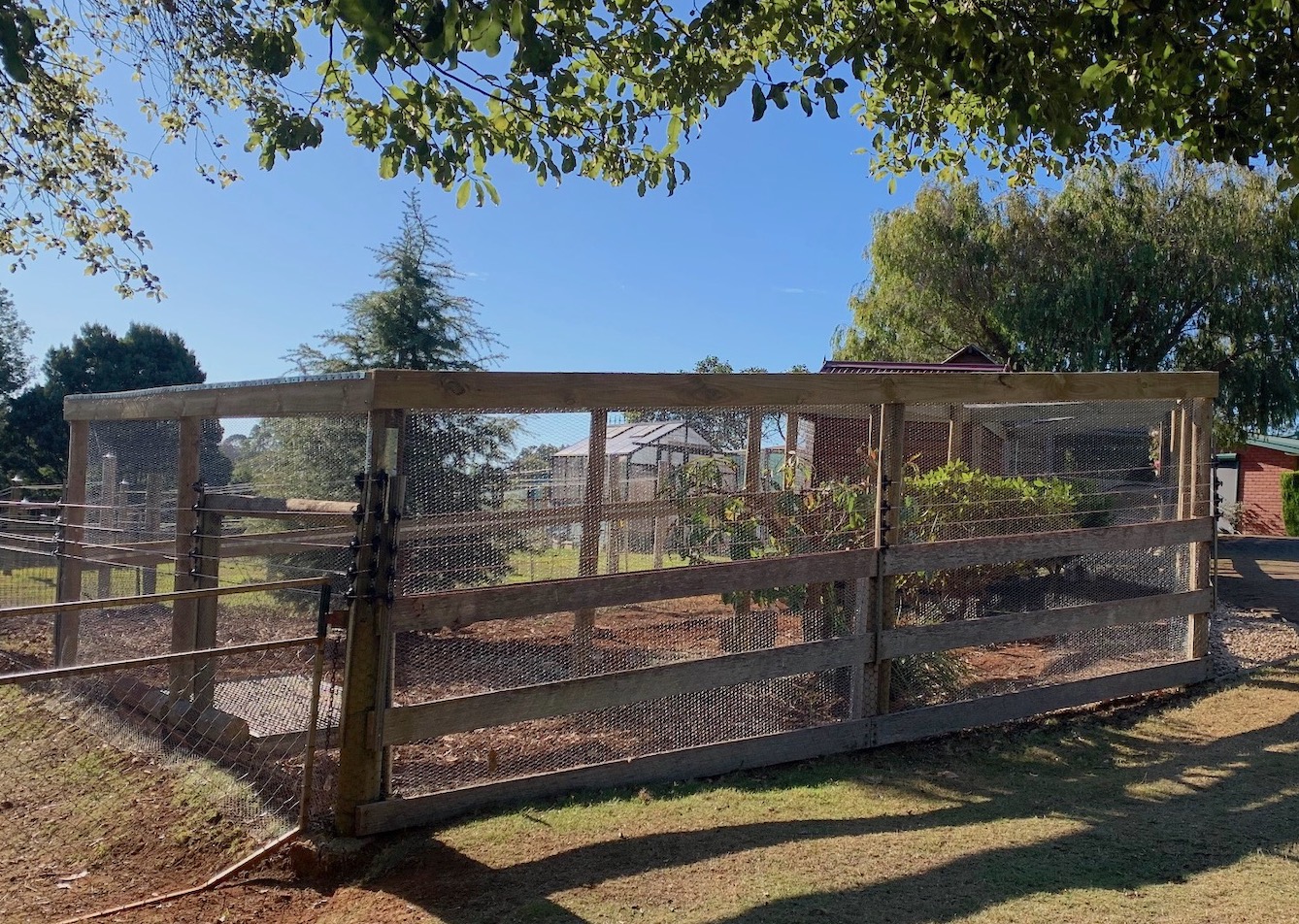
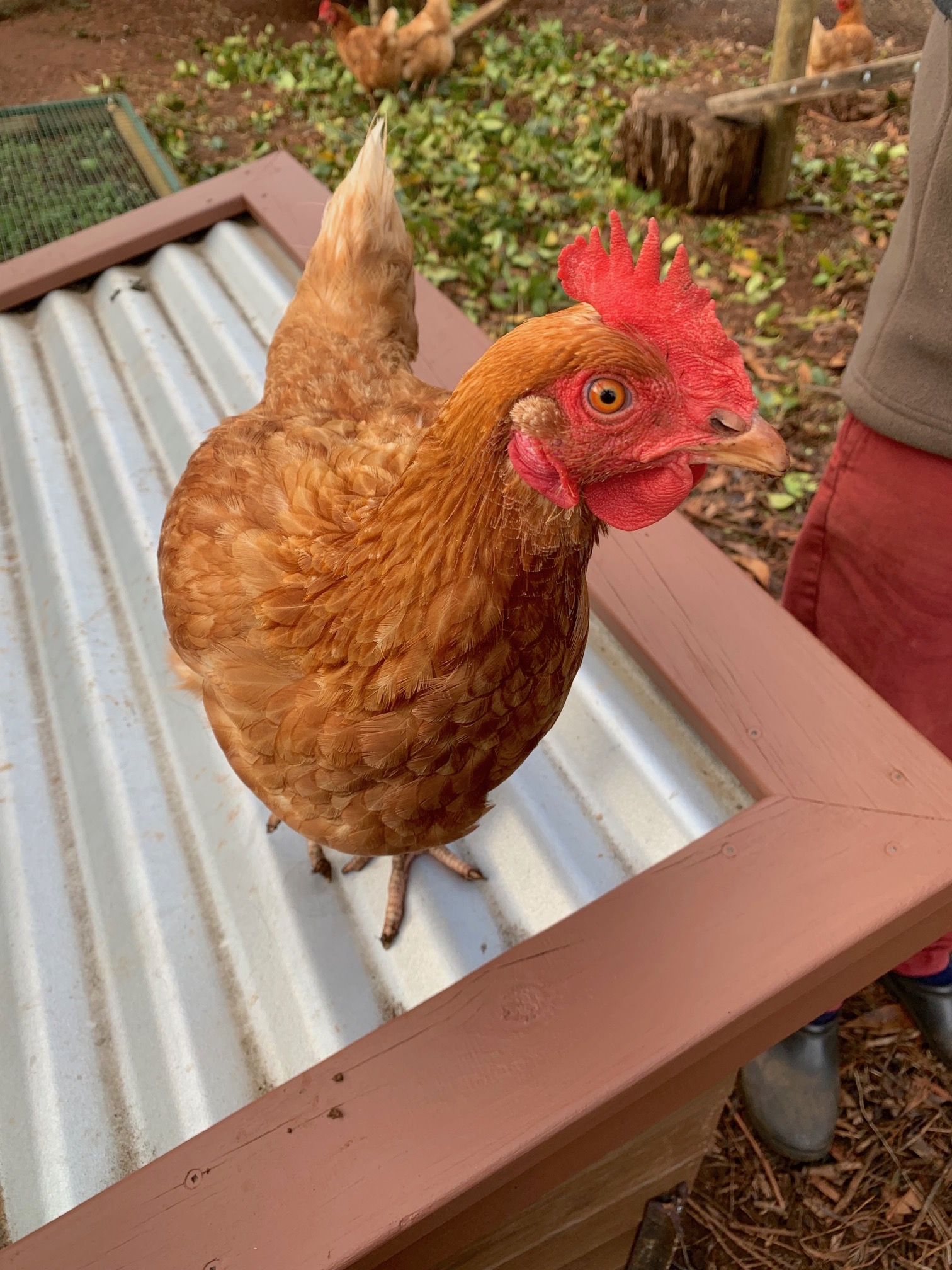
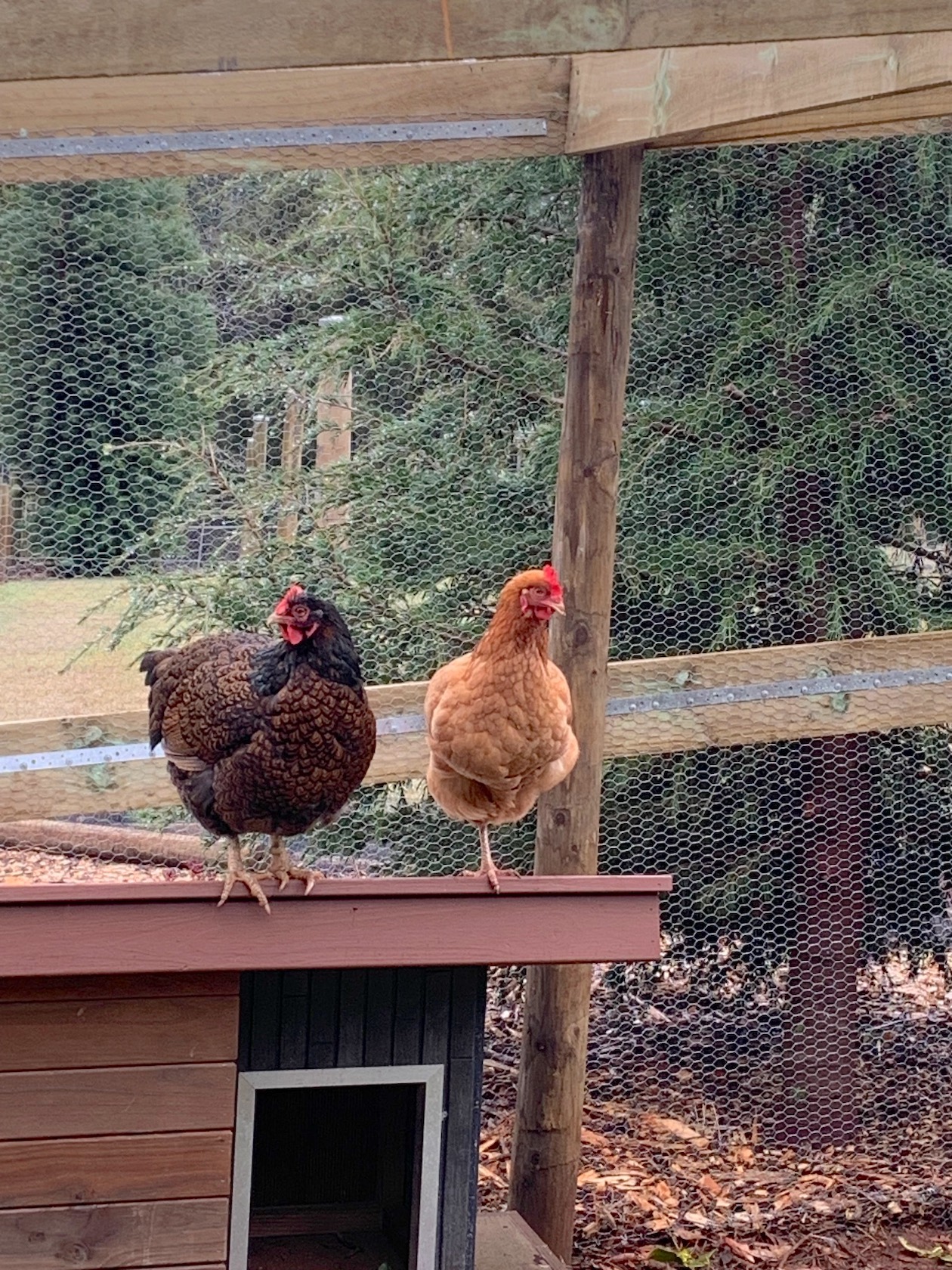
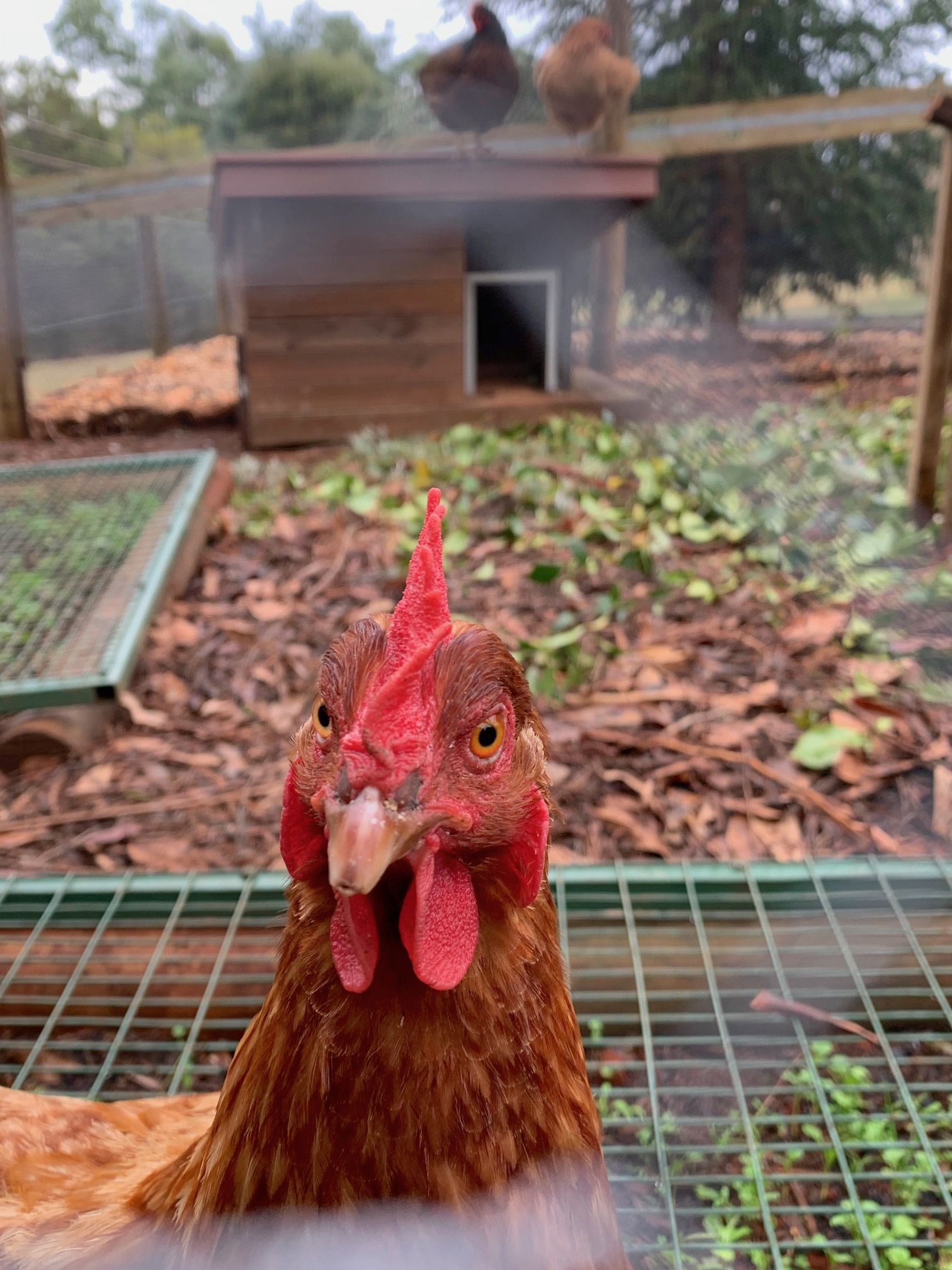
Our chooks have always had plenty of room to forage and scratch and play and, well, do what chooks do. Part of their run was completely enclosed and safe from predators and a larger area was fenced but otherwise open.
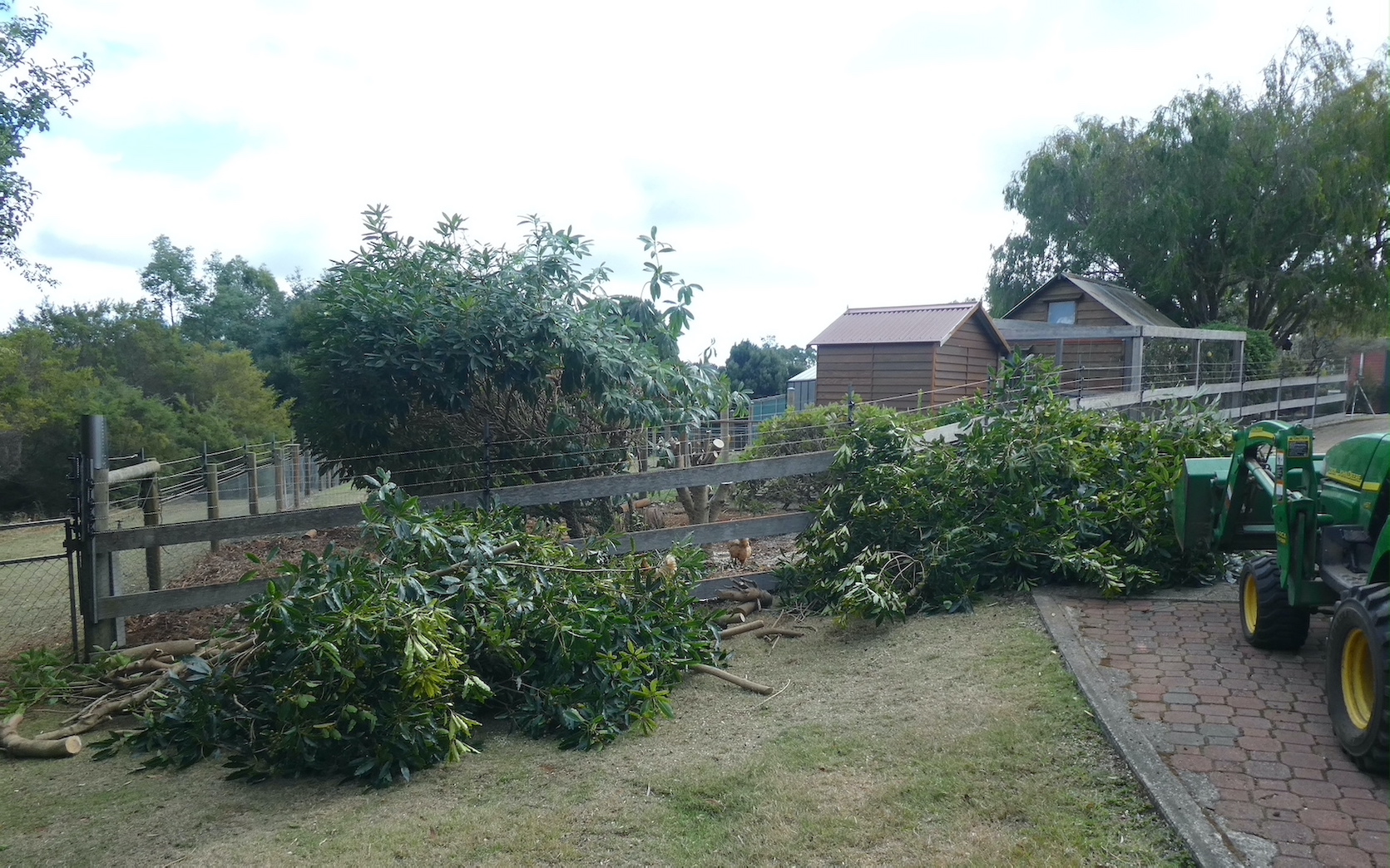
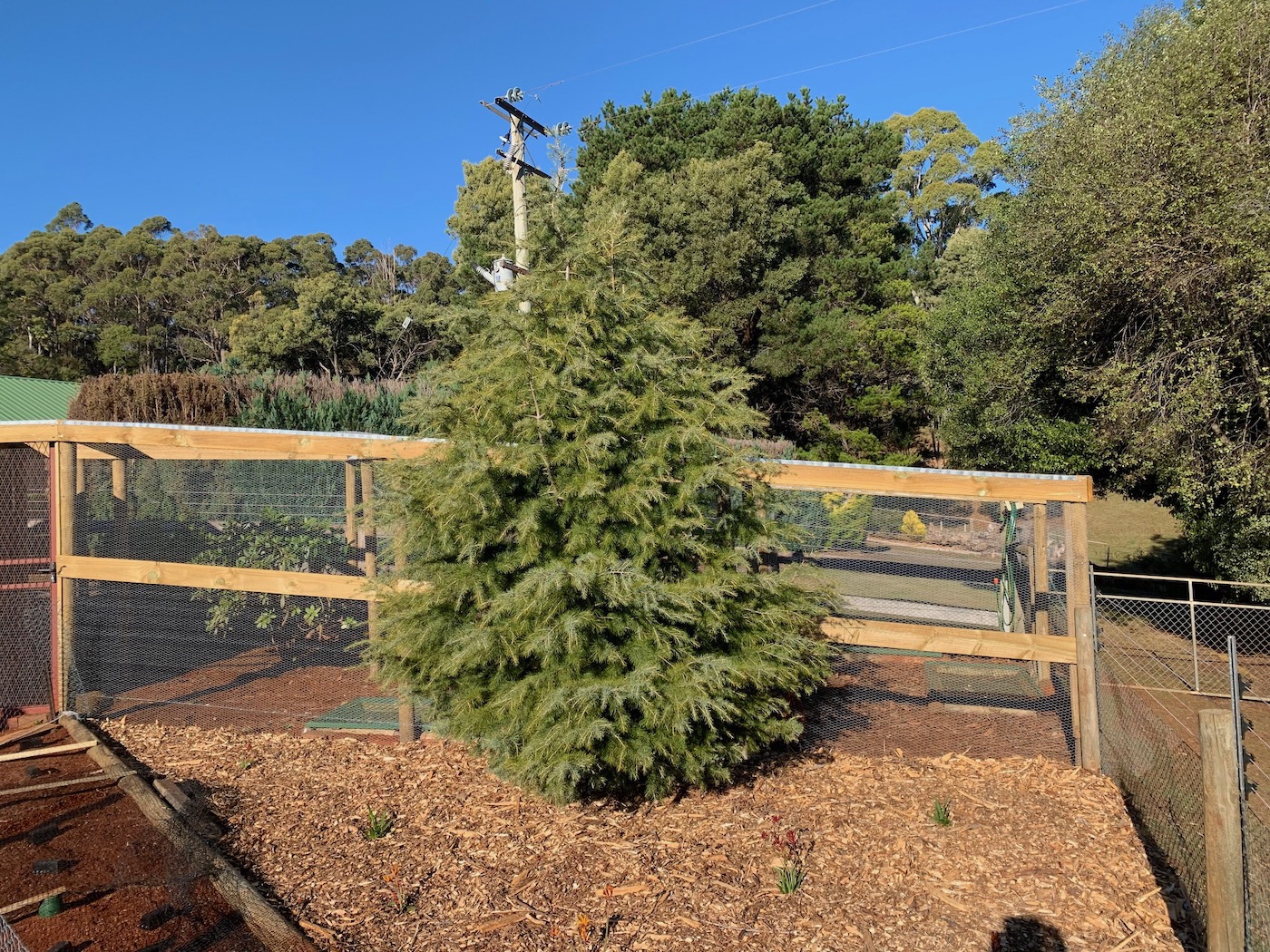
We had thought about enclosing the whole area for a while, mainly to keep the ornery sparrows from stealing the chook food, and finally tackled the mammoth project after visitations from raptors with eyes on our girls. The first task was to remove the huge native pittosporum, a favourite hotel for the sparrows and far too big to retain within the new run.
We proceeded with hole digging and post erecting,
and it wasn’t long before we realised the need to allow the girls to roam and shut them out of the work space. They were just a little too helpful.
Unfortunately, they make a terrible mess of any tidy garden space, something I had to ignore until the end of our mission.
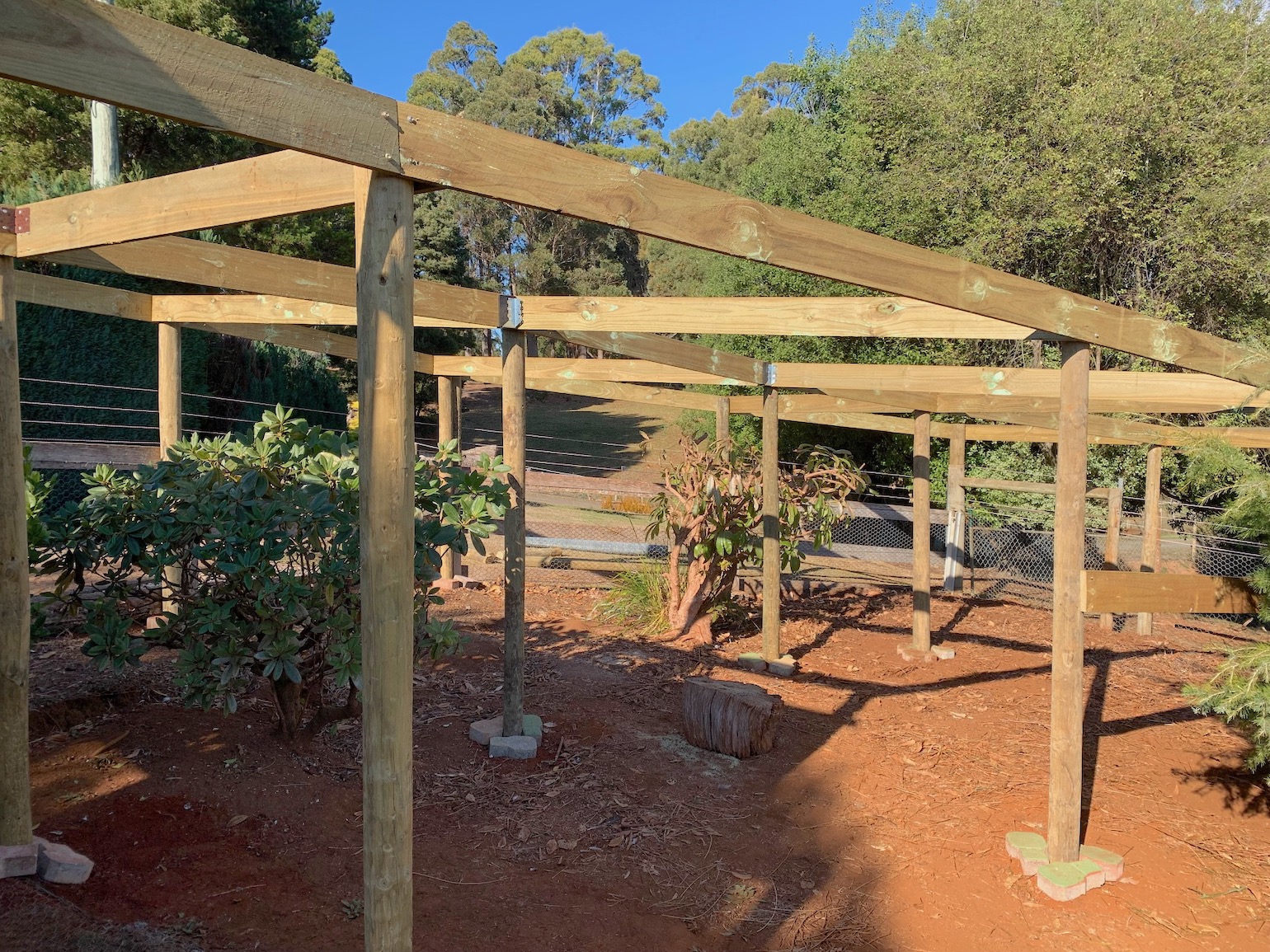
Once the boundary posts were in, we added the support beams
before continuing with the central posts and beams.
Next came the tricky part – the roof.
Accompanied by minor swearage, we manhandled the first section of wire into place and secured it, feeling inspired to carry on.
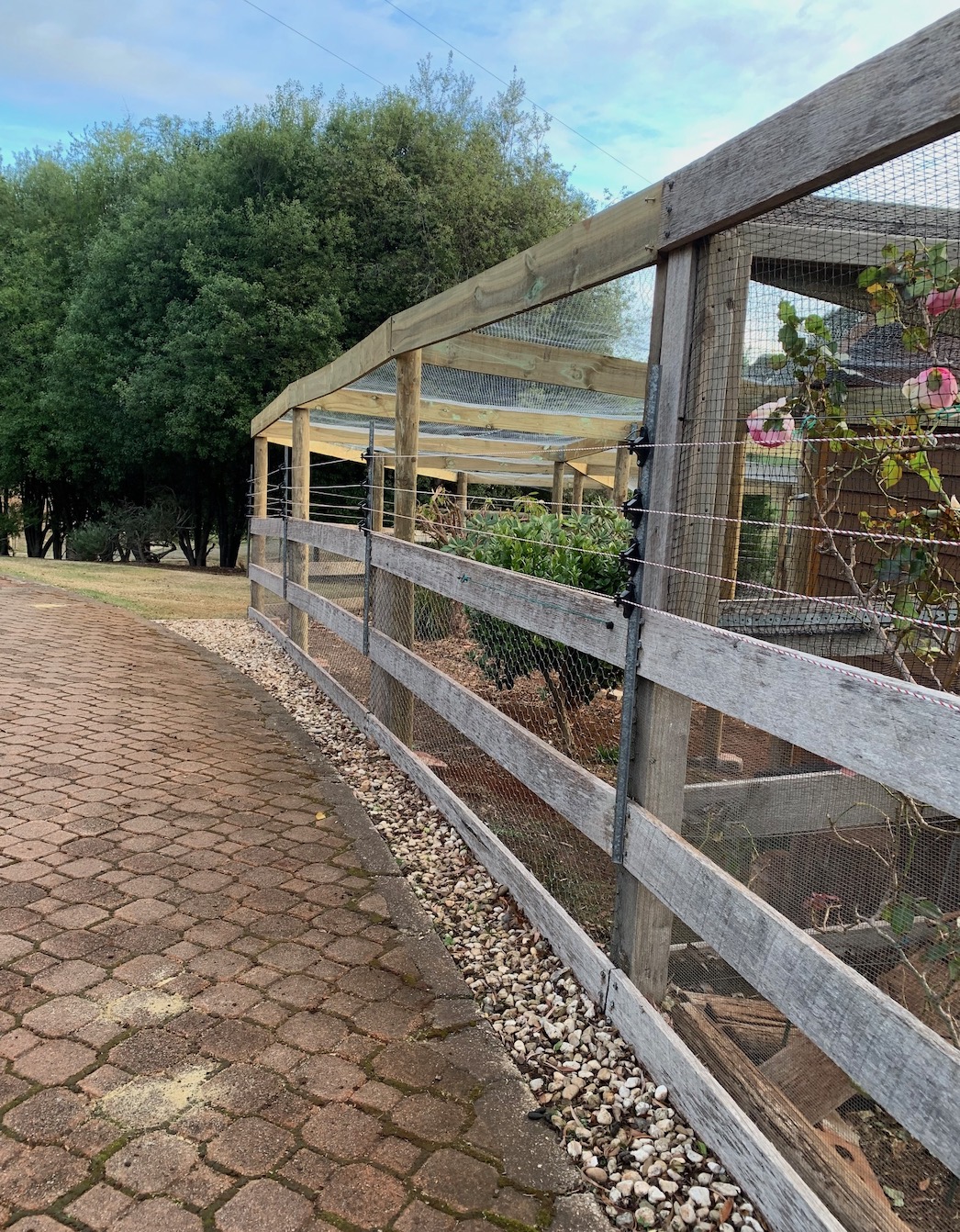
We soon finished the roof and used netting clips to join the sections.
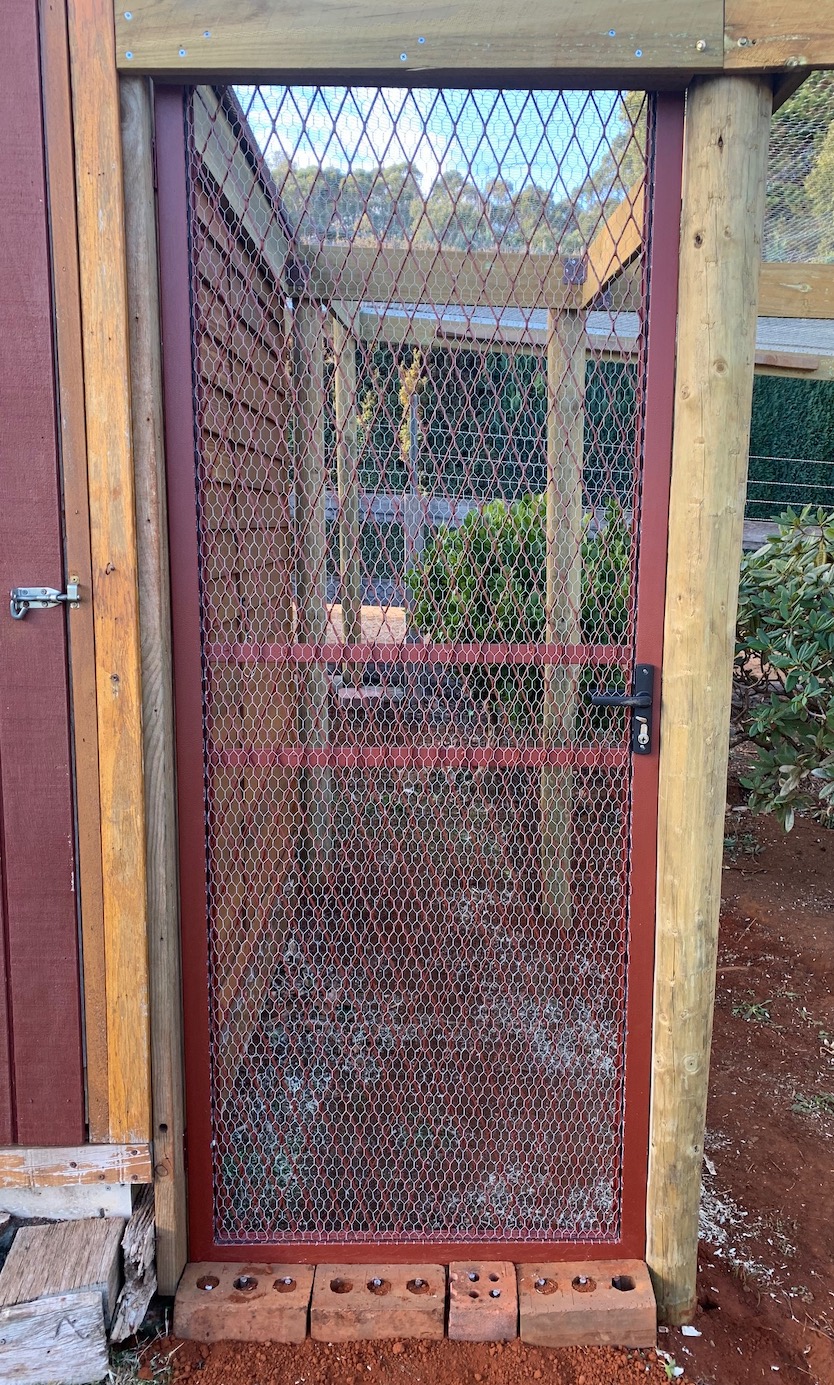
Rather than purchase a lightweight aluminium screen door from a local retailer, we sourced a solid steel model from the salvage yard at a quarter of the price. By the time we sprayed a coat of primer, spent hours painting two coats of colorbond and fixed the bird wire, I’m not sure the effort:reward ratio was favourable but it serves its purpose.
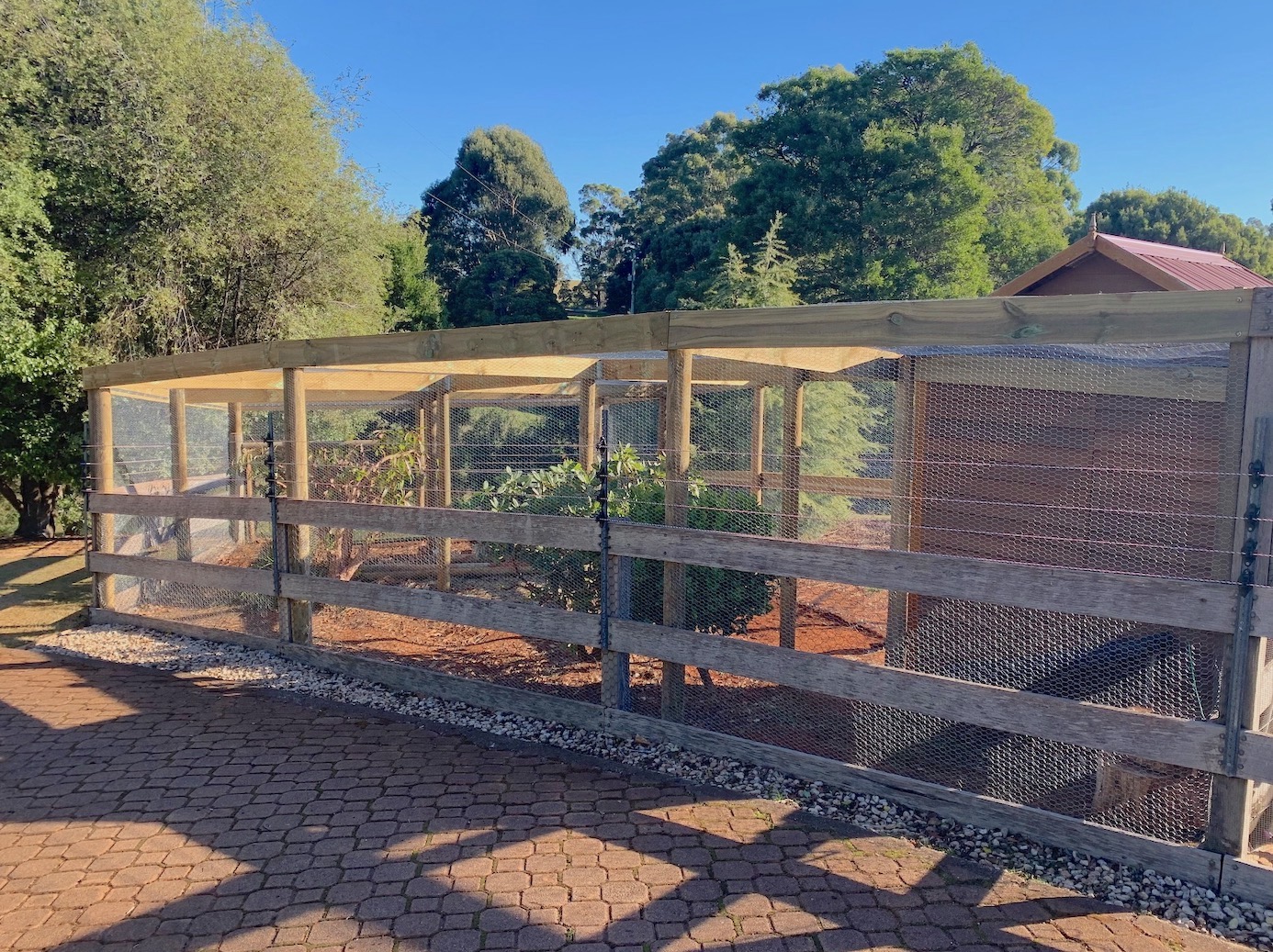
Once the wire sides were completed,
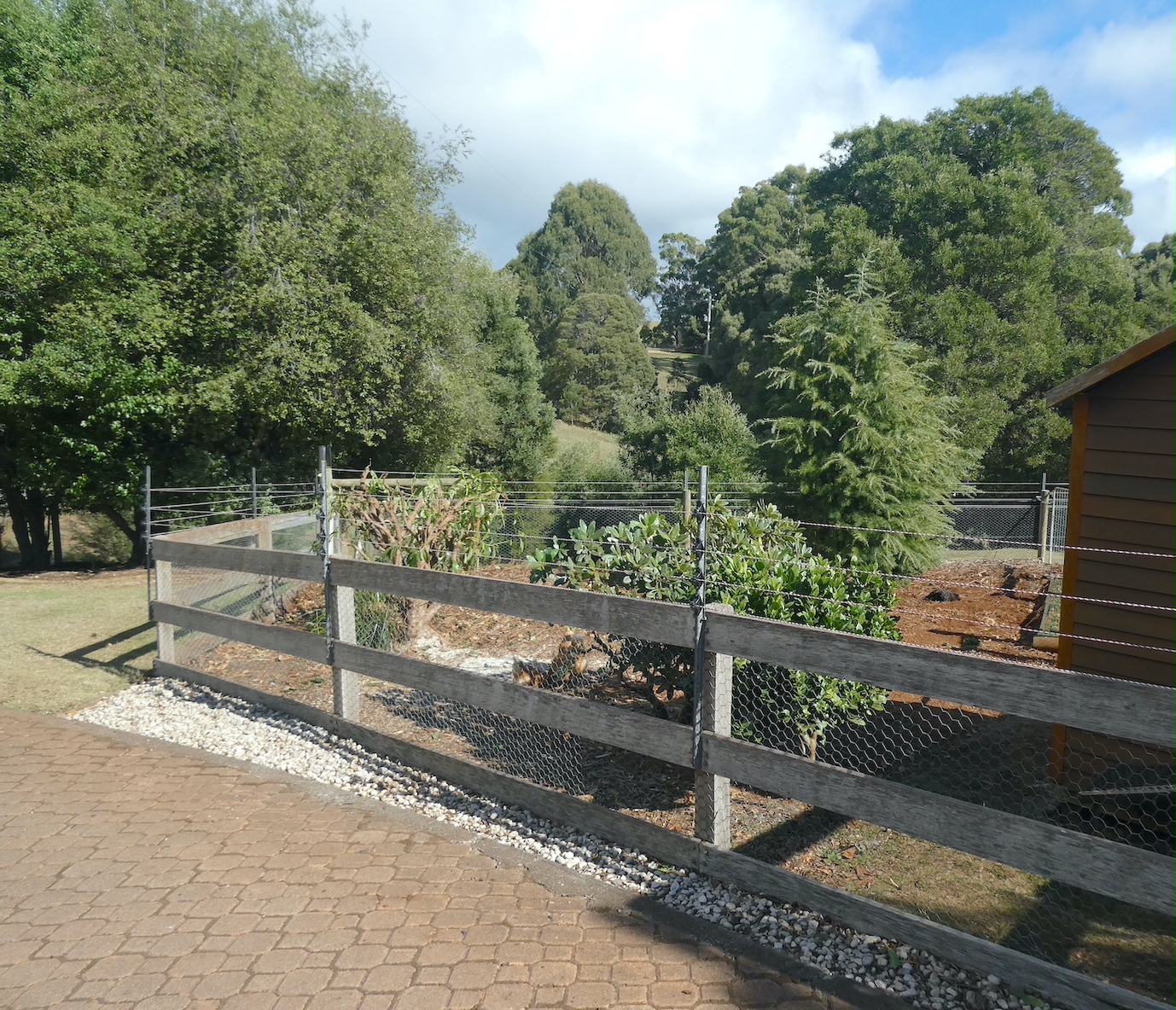
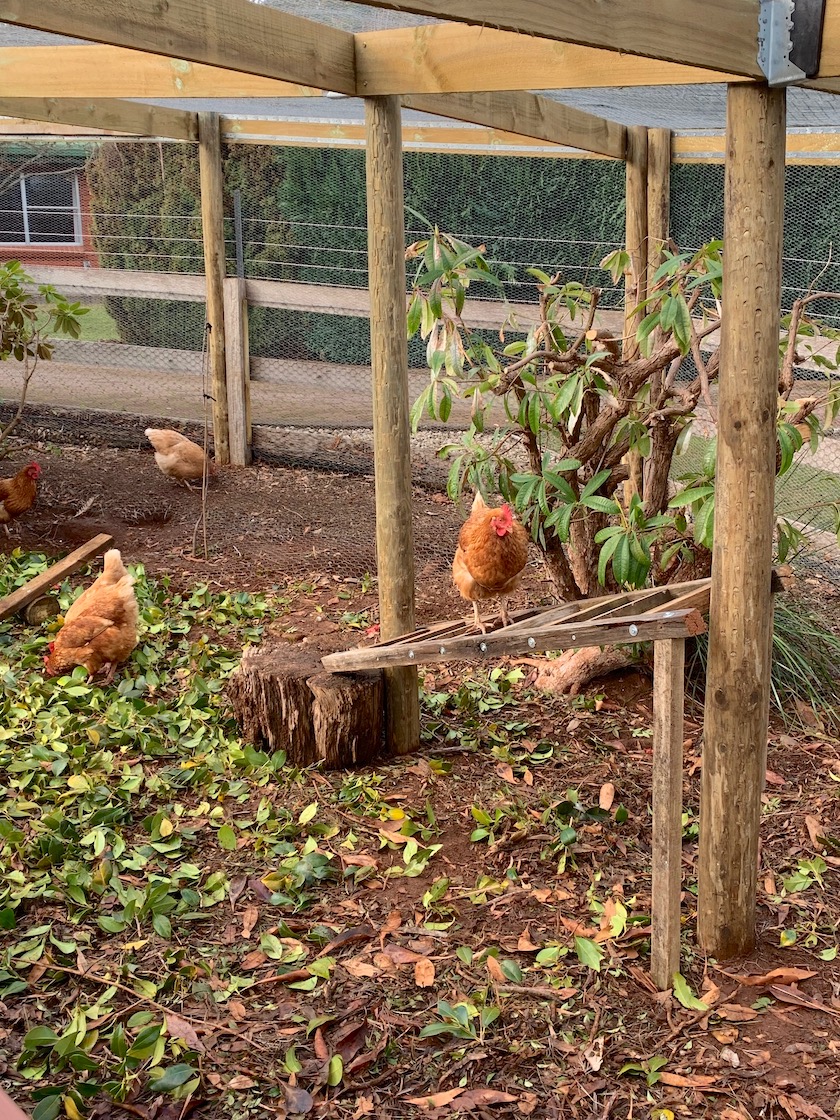
we removed the original boundary fence line and relocated the grazing cages inside the new run.
A place to shelter from inclement weather,
climbing frame
and seesaw completed the new enclosure.
We created a new border where the original fence line came down, added mulch, planted a few Kangaroo Paws and re-seeded the lawn area.
And planted two apple trees in the new yard. The chooks are wondering – what’s next?
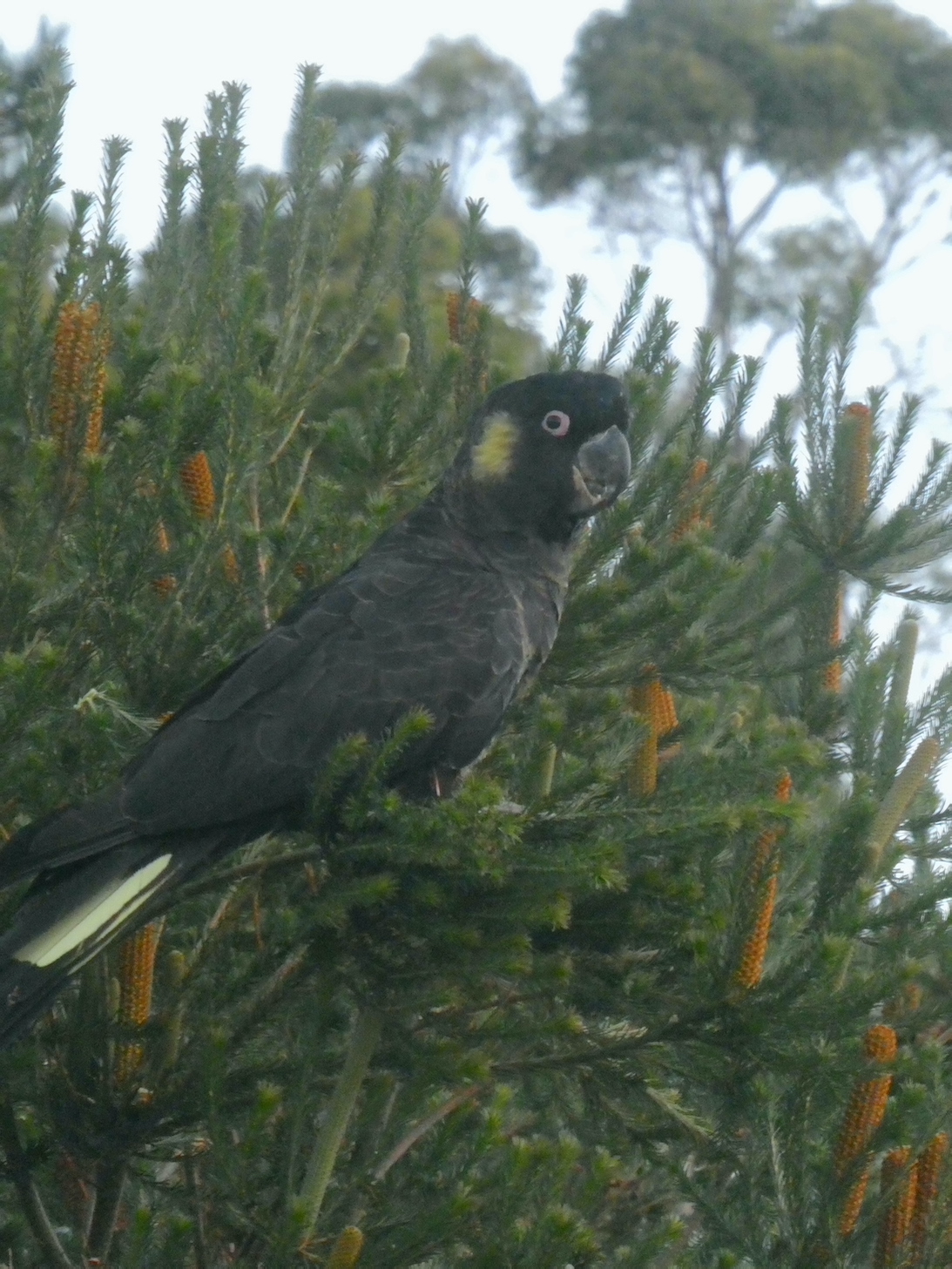
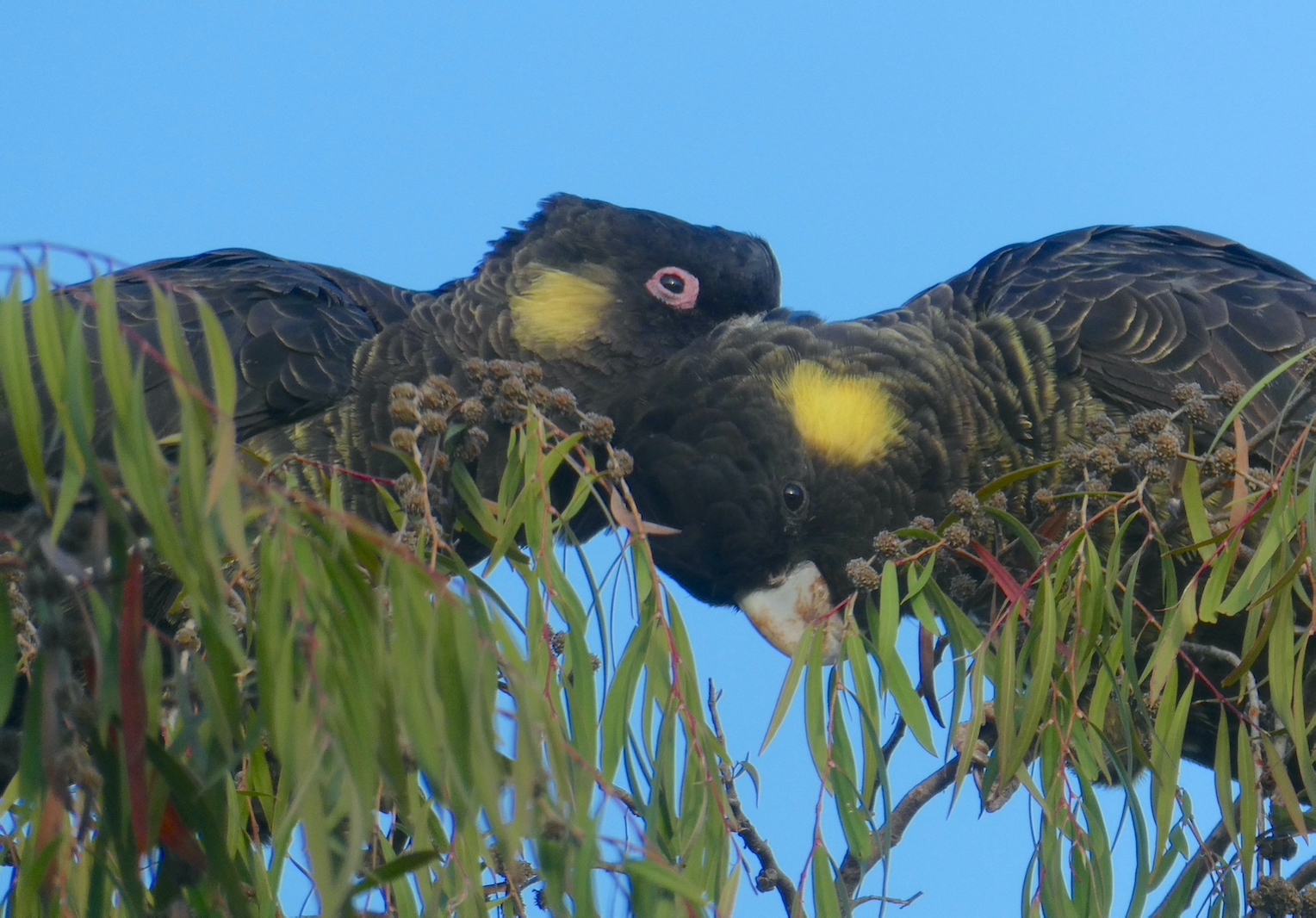
We have so many bird species in our garden I couldn’t even begin to name them. The biggest by far are the yellow-tailed black cockatoos. They are often in pairs quenching their thirst at the stock troughs, one will keep lookout in a nearby tree while the other sups and then they swap places. Then there are times when a whole flock will descend on the Banksia tree for a feast.
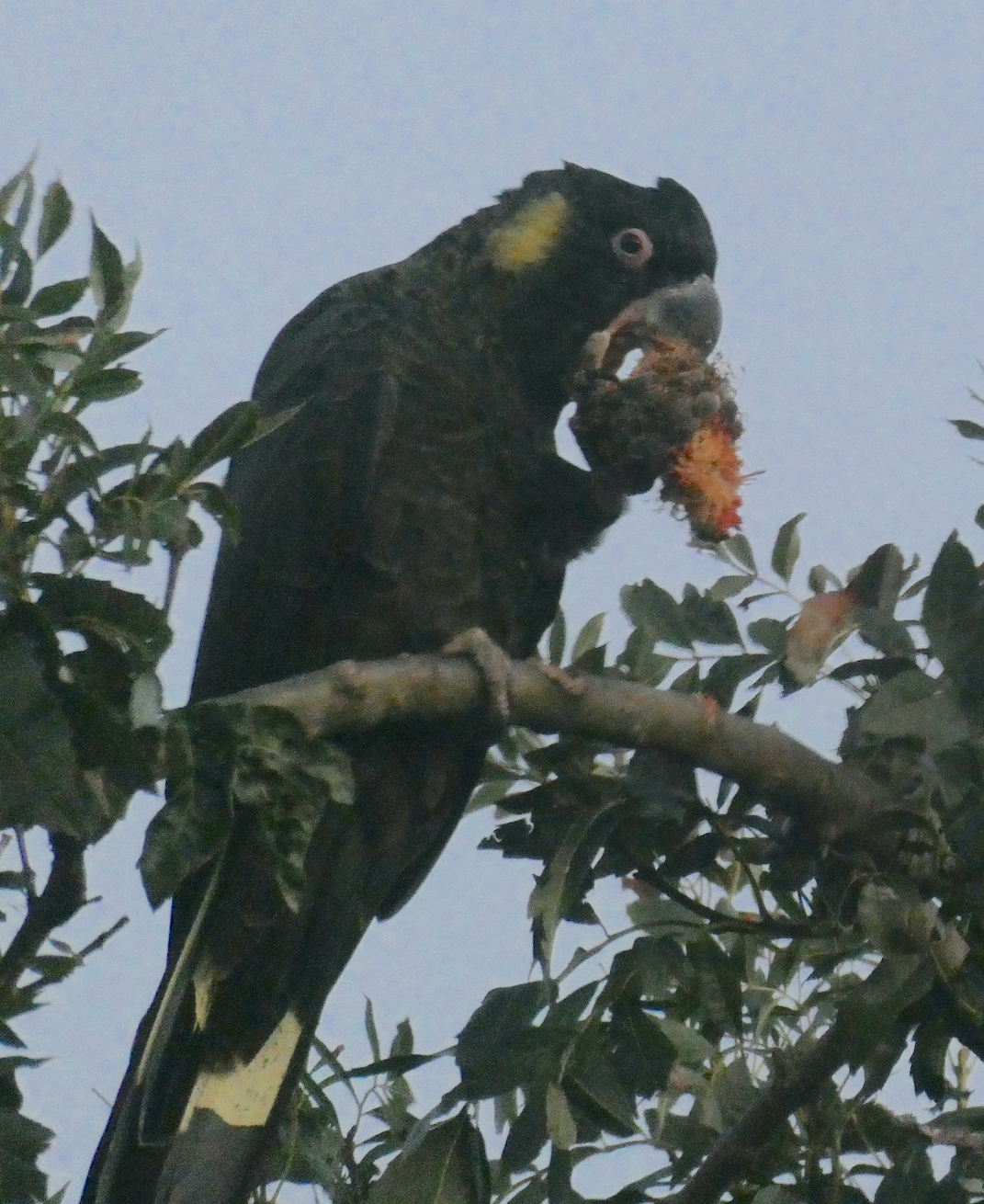
We hear them coming as they call to each other in their distinctive raucous, yet delightful, manner. They nibble the cones and break them open to eat the seeds.
I don’t begrudge their much needed nutrition but I wish they wouldn’t leave such a trail of destruction.
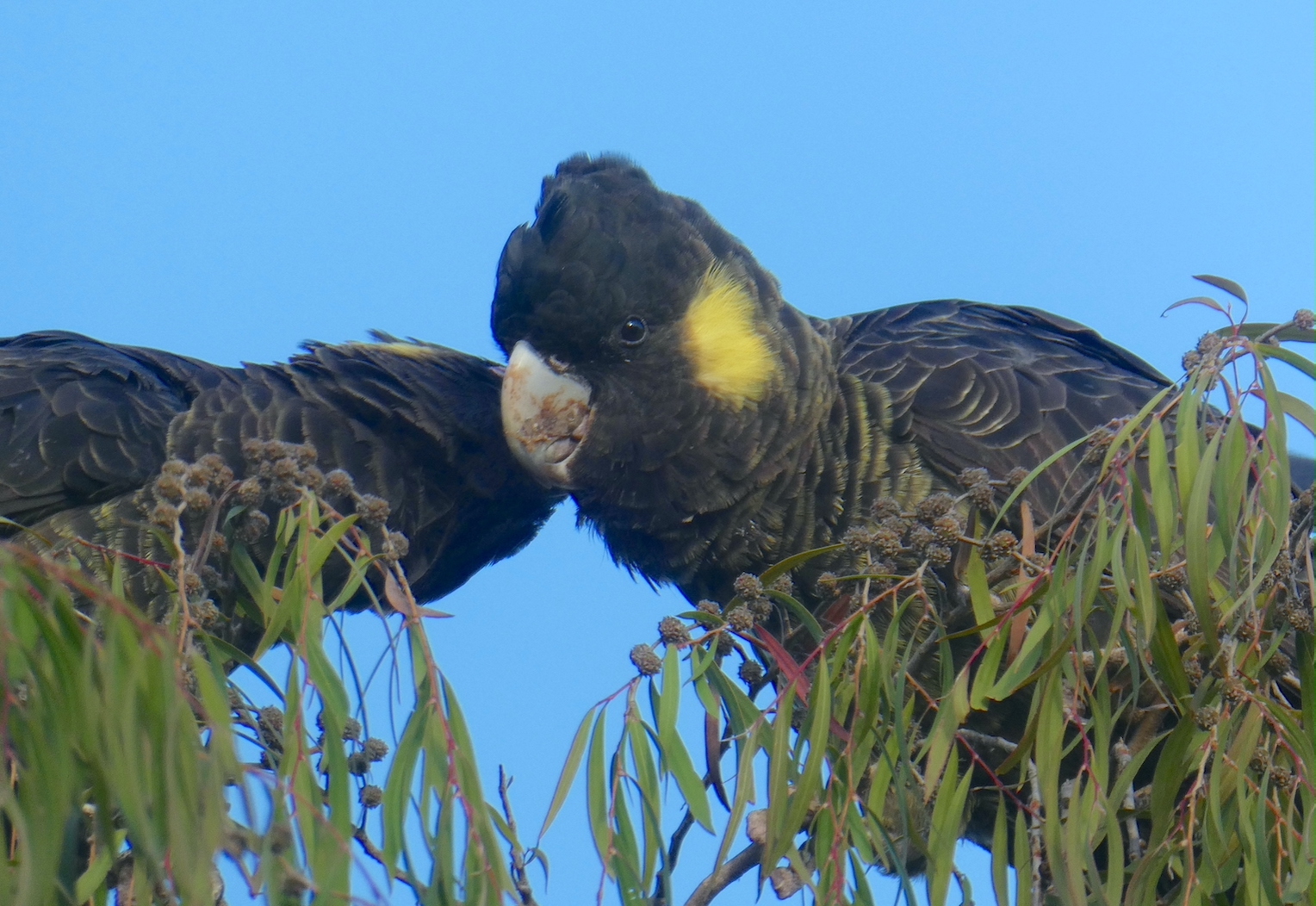
These stunning birds were first described in 1794 by the English naturalist George Shaw as Psittacus funereus, relating to the dark, sombre plumage as if dressed for a funeral. He seems to have missed the bright yellow cheek patches and tail band. Our magnificent peppermint tree is a popular spot to survey the surrounds before indulging in another Banskia banquet.
The body feathers are edged in yellow and those of the subspecies found in Tasmania have a more prominent scalloped appearance.
Adult males have pinkish red eye rings and black beaks
while females have grey eye rings, a bone coloured beak and brighter, more clearly defined yellow cheek patches.
The monogamous couples raise a single chick each year which will remain with them for 12 to 18 months. The constant ‘begging’ squawk of the young is enough to test any parental patience. One particular pair at Rotterdam Zoo stopped breeding when they were 41 and 37 years of age, though continued to bond closely. I suspect these two will be bringing offspring to dine before long.
With warmer weather around the corner, we look forward to seeing more of these beautiful creatures.






















































 cannonhillchronicles