Villa Boccella

When we returned from our first trip to Italy, we couldn’t help sharing our experiences and our fascination with this wonderful country. Our friends’ daughter was starting to think about her future wedding and the seed was set for a Tuscan location. Of course, we made it quite clear that we would be attending, what better excuse for a return visit? Nevertheless, we were very excited and honoured to receive the invitation, not only to the wedding, but to stay for a week in a villa with the bridal party and other guests. After our two nights in Lucca, we collected the hire car and drove the ten kilometres to Villa Boccella.

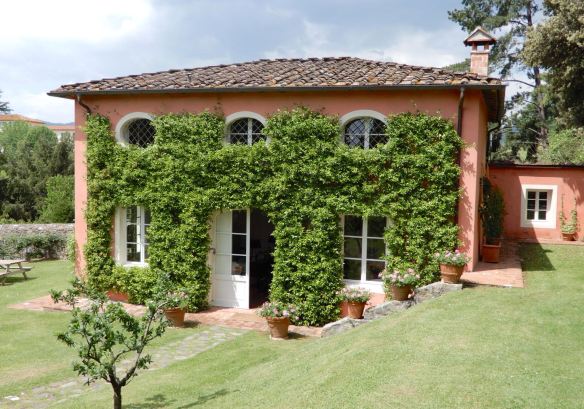
1.Villa Boccella

It sounds simple but we had great difficulty finding the entrance gate and, finally asking directions from a local, we were the last of the party to arrive.

2.arrival

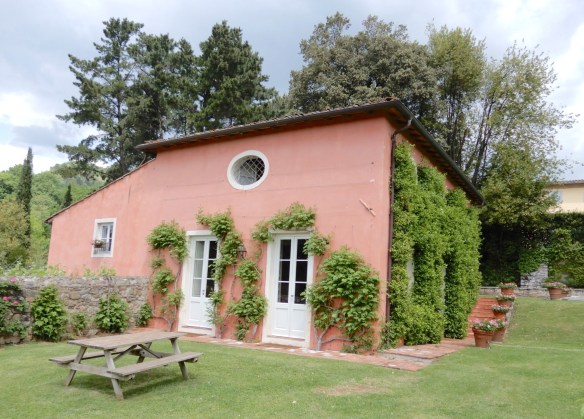
There are six properties on the estate and our accommodation was to be in the two limonaie where, originally, lemon trees in pots were moved to in winter to avoid damage from the frosts. Limonaia Grande is the larger of the two

3.Limonaia Grande4.Limonaia Grande

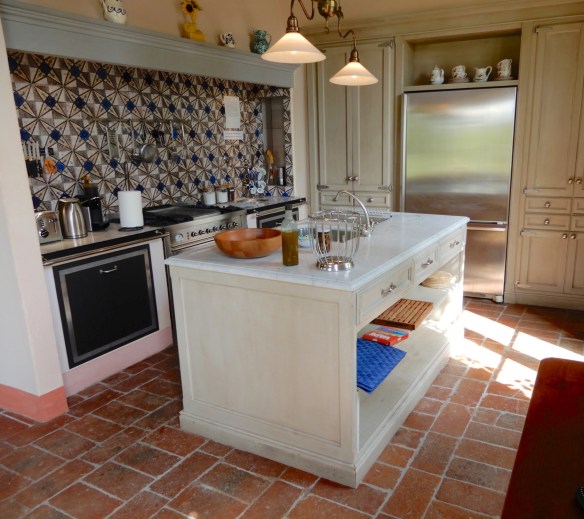
and became the hub of activity with its fabulous kitchen

5.kitchen

and dining room,

perfect for a wedding feast.

11.wedding table

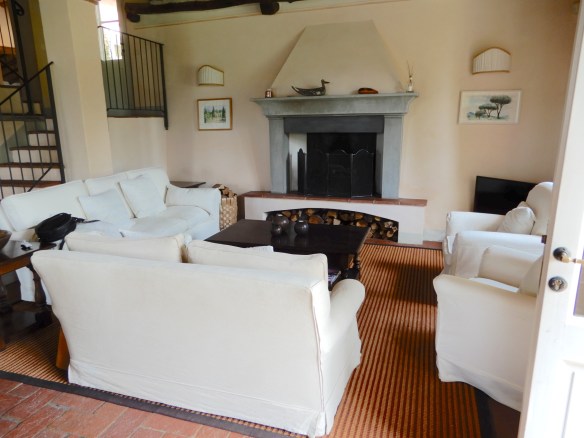
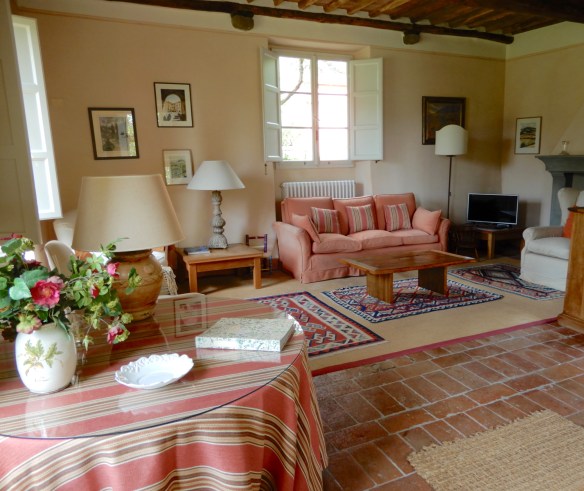
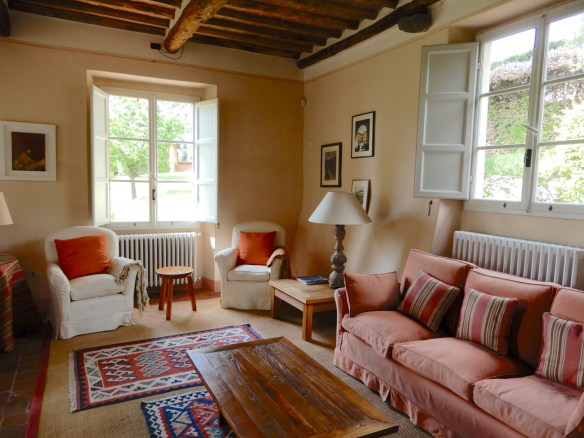
The enticing sofas in the sitting room

12.sitting room

were bathed in the light flooding through the French windows.

13.sitting room

The ample bookshelves were well stocked and quirky ornaments adorned every surface.

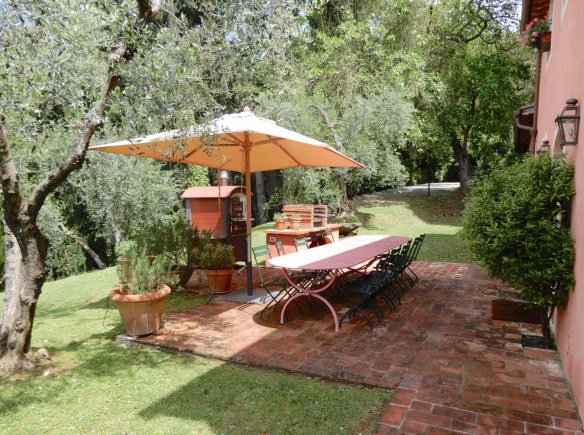
There were two options for al fresco dining, one with barbecue and pizza oven

22.al fresco

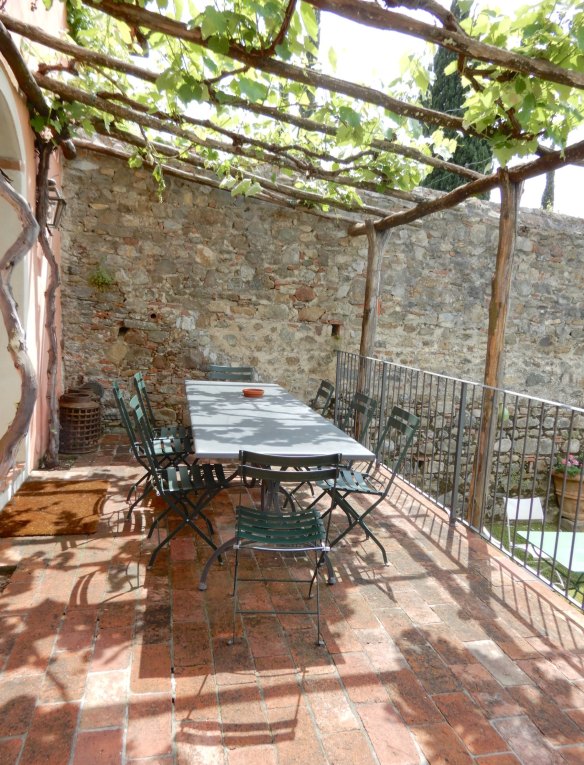
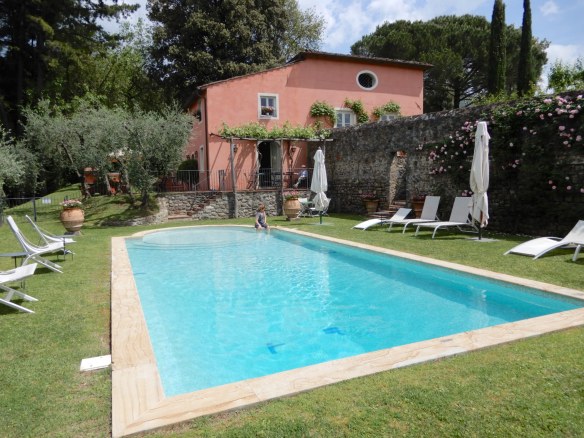
and the other overlooking the swimming pool.

23.al fresco24.pool

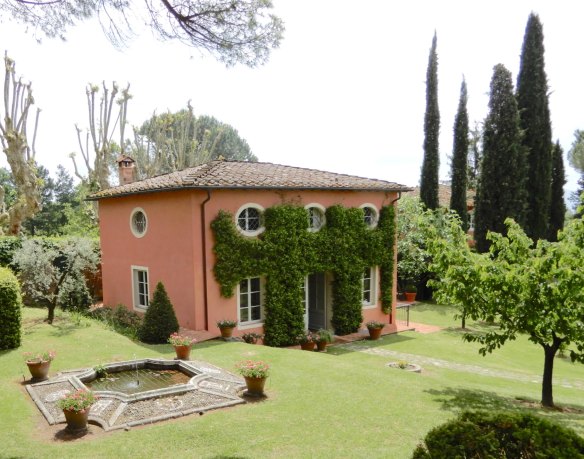
Across an orchard of peaches, plums, figs and cherries, Limonaia Piccola faced Limonaia Grande and was equally as opulent as her big sister.

25.Limonaia Piccola

The large windows downstairs captured the light no matter what the time of day.

26.sitting room27.sitting room28.dining area29.kitchen

Our upstairs bedroom was gorgeous

30.our bedroom

with a magnificent view across the orchard to the mountains beyond.

32.view from bedroom

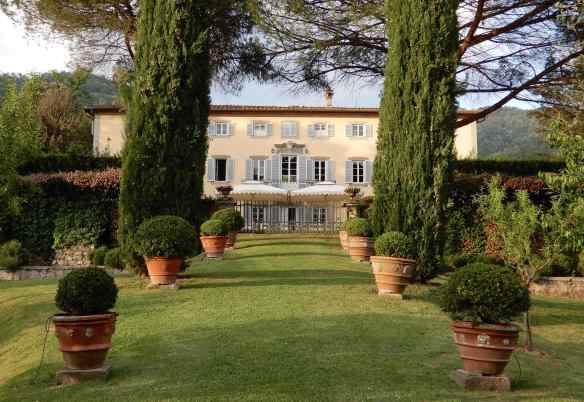
Between the two limonaie, we could see the 17th century main villa in all her glory

33.main villa

and a glimpse of Boccellina, the original gatehouse to the estate.

34.Boccellina

For outdoor relaxation there were several settings to choose from.

35.garden chairs

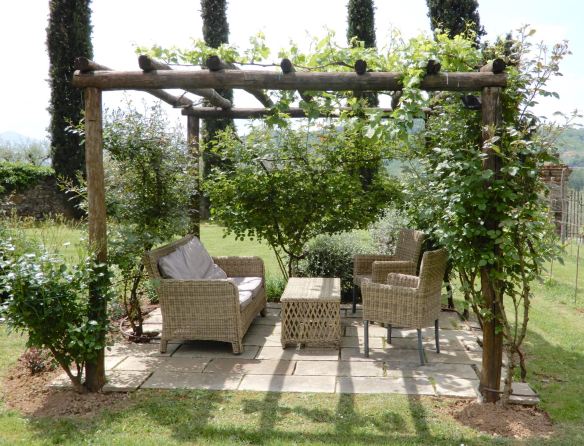
The rose covered pergolas were in full bloom.

37.outdoor seating38.outdoor seating

Terracotta planters scattered colour around the garden

50.planter

51.planter

and the orchard still held some surprises.

56.garden

A pair of blackbirds were lucky to have such a beautiful home.

As well as our wonderful memories, we have a special gift to remind us of our time at Villa Boccella. The bride & groom had commissioned an artist in Darwin to create an illustration of Limonaia Grande as a memento for the guests.

62.illustration

Thank you all for an unforgettable week.

Nire Valley Drive

Our time in Ireland was rapidly coming to an end and we had decided to give Dublin another try after being disappointed with our initial, albeit brief, visit. We had booked accommodation at Curracloe on the southeast coast for our last night before returning to Dublin. Leaving Blarney, we set the satnav, Holly, who again seemed to have problems identifying a highway.

1.Holly

Ignoring her instructions, we followed signs to the Nire Valley scenic drive and, as long as we were heading east, we couldn’t go wrong. The scenery was spectacular with the Knockmealdown Mountains running east and west along the border of counties Tipperary and Waterford.

2.Scenic Drive3.Knockmealdown

Knockmealdown is the highest peak in the range, with other peaks named Knocknagnauv, Knockmeal, Knocknafallia, Knocknanask, Knockshane and Knocknasculloge. I can’t help thinking of the knockwurst sausage containing the painting of ‘The Fallen Madonna with the Big Boobies’ in TV series ‘Allo ‘Allo! I digress. I don’t know why anyone would want to drive along a motorway when they can be surrounded by such magnificent countryside.

4.Knockmealdown5.Nire Valley Drive6.Nire Valley Drive7.Nire Valley Drive8.Nire Valley Drive9.Nire Valley Drive10.Nire Valley Drive

The road may be a little more narrow and winding but so much more rewarding

11.Nire Valley Drive

and from the high points, there were breathtaking views across forty shades of green.

12.Comeragh Mts13.Comeragh Mts

Further east, we followed the mist shrouded Comeragh Mountains

14.Comeragh Mts15.Comeragh Mts

to Waterford where we encountered a monumental traffic jam, it took an hour to travel 24 kilometres. We arrived in Curracloe after dark, our only ambition a beverage, meal and bed. The next morning, we wandered down to Curracloe Beach, eleven majestic kilometres of Blue Flag bathing.

16.Curracloe Beach17.Curracloe Beach

We savoured our last taste of salty air before returning to the car for our final destination – Dublin.

Vergemoli

When we first visited Italy in 2014, we were invited to lunch at the home of friends, Deb and Jim, in the mountains of the Garfagnana. We recalled the drive as being somewhat hair-raising but, when invited again this time, we couldn’t resist. With much trepidation, we ventured forth, stopping in Gallicano for a heart starter coffee and pastry.

The road out of the village certainly fits the description of ‘narrow’,

6.Gallicano

as we passed beneath the ancient aqueduct.

7.aqueduct, Gallicano

It almost made the road to Vergemoli look like a highway,

8.road to Vergemoli

excepting when there is more rock than road.

9.road to Vergemoli

Clouds gathered as we climbed into the mountains,

10.road to Vergemoli

looking back the way we had come, the view was spectacular.

11.road to Vergemoli

The mountains loomed closer and before long we had reached Vergemoli.

12.road to Vergemoli

Turning left at the small piazza, we parked at the top end of the village by the 17th century church of Sant’Antonio.
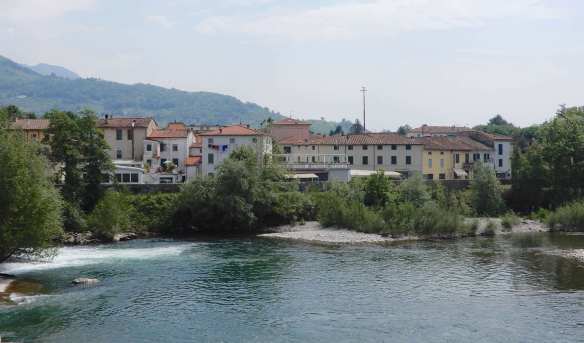
13.Vergemoli14.Vergemoli15.Chiesa Sant'Antonio

We had allowed time for a stroll through the village before lunch, our first discovery was an outdoor theatre, a lovely spot to watch a play in the summer months.

16.outdoor theatre

We could see for miles across the valley,

17.Vergemoli view

a stone bench perfectly placed to catch your breath after walking up the hill.

18.Vergemoli

The houses were neat and colourful,

some seemed to end suddenly at the edge of the cliff.

23.Vergemoli

There was no shortage of intriguing doorways.

The parish church of San Quirico and Santa Giulitta, in the middle of town, dates back to the 10th century.

27.Chiesa dei Santi Quirico e Giulitta

I’m not sure what this stone monument represents but it is dated 1637AD

28.Vergemoli

and another close by is unidentified.

29.Vergemoli

Alleyways veered in all directions filled with dwellings built at impossible angles.

Some had room for a garden shed

37.garden shed

or a beautifully maintained shrine.

38.Vergemoli

We didn’t see many locals but the four-legged inhabitants were very friendly.

We could see our destination, Casa Debbio, waiting comfortably on the hillside as we returned to the car and drove the track to the house.

44.Casa Debbio45.Casa Debbio

Although the weather was too inclement to dine on the terrace,

46.terrace, Casa Debbio

the vista across to Vergemoli was stunning.

47.Vergemoli

The drizzle didn’t deter us from exploring the garden with its quirky residents

and some of the most fabulous flowers I have ever seen.

From the terrace at the back of the house, there is a lovely view of the wisteria on the pergola

57.pergola

and of new plantings as the garden blends with the wilderness.

58.garden

A few more flowers and treasures

59.garden

and we returned to the house

66.Casa Debbio

with that amazing view

67.Vergemoli

to enjoy a slice of Angela’s hat.

68.Angela

We farewelled Deb and Jim and made our way back down the mountain. If only Australia wasn’t so far away.

69.geraniums

Casa Debbio is the perfect place to escape and unwind for a few days or weeks and is available for holiday rental, take a look.

Pumphouse Point

We recently ticked another item off the bucket list with a much anticipated weekend at Pumphouse Point. Here is a bit of history; Tasmania has relied on hydro-electricity since the early 1900s. In the 1930s, Lake St. Clair, the deepest freshwater lake in Australia, became the focus of a new pumping station. The water would be pumped from the lake and stored, to be fed to nearby Tarraleah Power Station as needed. Construction began on a 5-storey pumphouse, 900 feet out in the lake, to house four huge water pumping turbines and was completed in 1940. Sadly, after all this effort, the site was never used and after being decommissioned in the 1990s, was placed on the Tasmanian Heritage Register for its significant industrial heritage. Parks & Wildlife Service were appointed caretaker and thoughts turned to tourism opportunities. After unsuccessful tenders by two different developers, Simon Currant, a man with great vision, secured the lease in 2004 and a decade of hard work saw Pumphouse Point brought back to life in 2015. Our first glimpse of the pumphouse was thrilling, the imposing edifice was minified by the expanse of nature.

1.the pumphouse2.the pumphouse

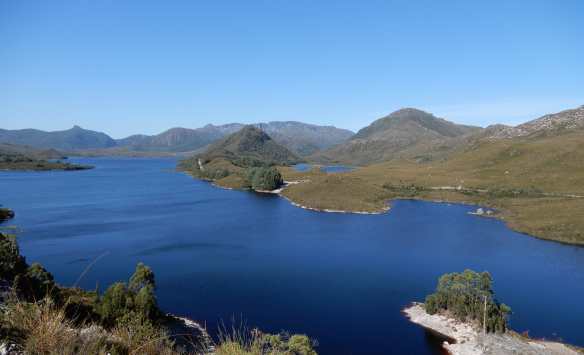
Lake St. Clair is as pristine today as it was when Europeans first arrived in 1832. The original inhabitants, known as the Big River Tribe, called the lake Leeawuleena, meaning ‘Sleeping Water’.

3.Lake St.Clair

We were greeted at the reception lounge with the question, “would you like a glass of Tasmanian sparkling wine?” Not a difficult decision to make. Our bags were then loaded onto a ‘flume buggy’, similar to a golf cart, and we were driven the 240 metres along the flume to the pumphouse. The drivers reverse all the way along (there is nowhere to turn around at the end) and we sat on the back with a perfect view of the approach.

4.the pumphouse

Our room on the middle floor captured the afternoon sunlight

and had everything we could possibly need. The kitchenette (with two fridges and a coffee machine) was laden with sumptuous Tasmanian produce, beer, wine and cider, all at very reasonable prices.

Hidden behind what at first appeared to be a mirrored wardrobe was the ensuite with industrial tapwear, all natural Australian products and the biggest shower head I have ever seen. We discovered when we turned on the light, the mirror wasn’t a mirror at all.

10.ensuite

The three floors of the pumphouse have four rooms on each, as well as options for lounging. The ground floor lounge has a bar and wood heater, one of the original turbines is visible through a glass panel in the floor. For some reason I didn’t take a photo so have procured one from the website.

13a.ground floor lounge, pumphouse

The lounge on the middle floor was right next door to our room, almost an extension of our private domain. The walls of rough sawn Tasmanian Oak boards added to the cosy ambience,

14.lounge, middle floor pumphouse

it was difficult to concentrate on reading with so much beauty just outside the window.

15.view from middle floor lounge

On the landing between the middle and top floors, there is a small library of books and board games.

16.library

There are another six rooms in the Shorehouse.

17.The Shorehouse

Formerly used as the substation for the facility, the art deco exterior has been preserved

18.The Shorehouse

and some of the original features have been blended with the contemporary furnishings.

There is no shortage of seating in the ground floor lounge, all with stunning views across the lake. A perfect place to relax with a purchase from the bar.

21.The Shorehouse22.The Shorehouse23.The Pumphouse

There are no bar staff, it works on an honesty system. You select your preferred tipple, write it on the list and settle the bill on departure. Once again, we found the prices surprisingly reasonable, certainly not the over-inflated dollars you find in a hotel mini-bar. A stylish extension to the Shorehouse sets the scene for a superb evening dining experience

26.dining room, The Shorehouse

and, of course, another view of the Pumphouse.

27.the pumphouse

Dinner is a wonderful opportunity to meet fellow travellers, tables of six or eight are filled at random and conversation never wanes. The menu differs each day but always fresh Tasmanian produce from Coal River Farm. We started our Friday feast with pumpkin, roast capsicum & paprika soup with thyme & parmesan flatbread. Soup and dessert are served individually, main course is a shared table experience. I was otherwise occupied, choosing another bottle of wine, when main course was served so you will have to imagine braised Cape Grim beef shin with rosemary & orange jus, confit baby potatoes, broccoli gratin and Tasmanian hot-smoked salmon with crème fraiche & capers. My apple & brandy cake with salted caramel walnuts came with a special embellishment and a rousing chorus of ‘Happy Birthday to You’.

Relaxed and replete, we strolled back to the Pumphouse under a clear, star-filled sky.

31.The Pumphouse at bedtime

I could happily have stayed in bed and watched as the rising sun created an ever changing palette across the water

32.morning view from room

but breakfast beckoned. A self-serve affair, there was plenty to choose from including home-made baked beans, crispy bacon and a range of cheeses to make your own toastie. Or you can cook your eggs just the way you like them.

On the subject of food, you can order fresh crusty bread any time of day. We had a loaf delivered to our room for lunch which we devoured with cheese and olives while watching the world go by from the lounge.

36.house made fresh sourdough

After lunch, we set off to discover some of the walking tracks around the property. Why walk when you can ride a bike?

37.bikes38.view from Frankland Beach

Across the bridge near reception,

39.bridge

the trail leads to Sunset Seat, a secluded spot with a rustic bench to sit and enjoy the sunset.

40.Sunset Seat

We were a little early for that but had a great view of the Pumphouse from a different angle.

41.the pumphouse42.the pumphouse

Further along the trail, we found Basin Seats, another lovely spot to sit and contemplate,

43.Basin Seats

overlooking Derwent Basin to Manganinni Island.

44.Derwent Basin & Manganinni Island

On the eastern side of the basin, a pontoon sits at the end of the track in St. Clair Lagoon. We had intended taking a dinghy out on the water but the wind had picked up and we weren’t too confident of our rowing prowess.

45.dinghies, lagoon

It would have been the perfect way to spend an hour or two, drifting around in the peace and quiet.

46.lagoon47.lagoon48.lagoon

Back in our room, we realised we could see Sunset Seat across the water.

49.sunset seat from pumphouse

We returned to the Shorehouse for a beverage before dinner where we were, once again, presented with fabulous fare. Starting with chickpea & swede soup with parsley oil and thyme & parmesan flatbread. We shared plates of Coal River Farm pork belly with spiced apple puree & cider reduction, baked cauliflower with caramelised onion, tahini & sesame seeds, green beans & Coal River Farm feta and pressed Cape Grim beef terrine with green peppercorns & crème fraiche. Finishing with dark chocolate, raspberry & cocoanib crunch with raspberry ice cream.

We farewelled Pumphouse Point after breakfast the next day, vowing to return and experience the wonder in winter snow.

53.the pumphouse

Blarney Castle

After spending the night in Cork, we fortified ourselves with a substantial breakfast and headed for Blarney Castle.

1.Blarney Castle

The walk from the car park, crossing the River Martin, warmed us up a bit.

2.Blarney Castle

The castle presented a stunning backdrop for the burnished autumn foliage.

3.Blarney Castle

Across a bridge over the river,

4.Blarney Castle5.Blarney Castle

we stood looking up at the north wall. The original Blarney Castle, a timber hunting lodge, was built in the 10th century and replaced by a stone construction in 1210. The existing castle, built on the edge of a cliff, was completed in 1446 by the King of Munster, Dermot McCarthy. The castle changed hands over the centuries, to Oliver Cromwell in 1646, back to the McCarthys fifteen years later before they lost it again in 1690, then sold to the Governor of Cork in 1703.

6.North Wall,Blarney Castle

The rather elaborate windows, halfway up the wall on the right, are not the romantic bedchamber embellishments one might imagine. They are, in fact, garderobes, the medieval answer to the ensuite.

7.garderobes

We followed the path past the guard tower

8.guard tower

and well-worn steps that led to the dungeons

9.dungeon stairs

before starting our climb to the top of the castle. Our ascent was frequently interrupted to take in the spectacular panorama through the windows.

10.Blarney Castle

13.view

There wasn’t a lot of breathing space in the passages, I can’t imagine running along them dressed in a suit of armour.

14.Blarney Castle

The narrow, spiral stone steps finally ended at the top of the castle. Looking down, we could see where the three floors would have been in the main living area.

15.standing over the main room

The pigeons are the only ones on lookout these days.

17.pigeon lookout

At the top of the tower is the infamous Blarney Stone, believed to give anyone that kisses it the gift of eloquence. At one time, anyone wishing to kiss the stone would be at risk of plunging from a great height but there are now railings to hold on to and some underneath to break the fall.

18.Blarney Stone

Even so, we didn’t join the queue to bend over backwards from the parapet, there is only so much blarney one needs in life. Besides, the Blarney Stone has been named the most unhygienic tourist attraction in the world.

19.Blarney Stone

The magnificent view from the battlements was well worth the climb.

20.view from the battlements

Once back on terra firma, we discovered Rock Close, a garden landscaped in the 18th century around existing stone monuments.

21.Rock Close22.Rock Close

It’s easy to believe the tales of Druids and Fairies in this mystical place, the senior Druid Priest was reputed to have lived in the Druid’s Cave.

23.Druid's Cave Rock Close

We would have liked to spend more time in this enchanted garden but time was ticking on.

Legend has it that there is a witch who will grant wishes to those who can walk up and back down the wishing steps with eyes closed (I didn’t get a photo of the steps, nor did I try this). In exchange for this gift, she is provided with firewood for her kitchen. I didn’t get a photo of the kitchen either, but we did see the witch stone. Some believe it was the Blarney Witch who told McCarthy about the power of the Blarney Stone but it remains a mystery how she became entrapped in the rock.

27.The Witch Stone