We were looking forward to experiencing some Māori culture while in New Zealand and Rotorua is the place to do just that. There are a few options available but we chose Whakarewarewa because it is the only one that is an actual living village. The full name is Whakarewarewa-tanga-o-te-ope-taua-a-Wāhiao (The Uprising of the Army of Wāhiao) and was first occupied in 1325. The full name was adopted when, 300 years ago, a Warrior Chief named Wāhiao, gathered an army to avenge the killing of his father. They waited, hidden by geothermal steam and then performed a Haka before charging into battle.
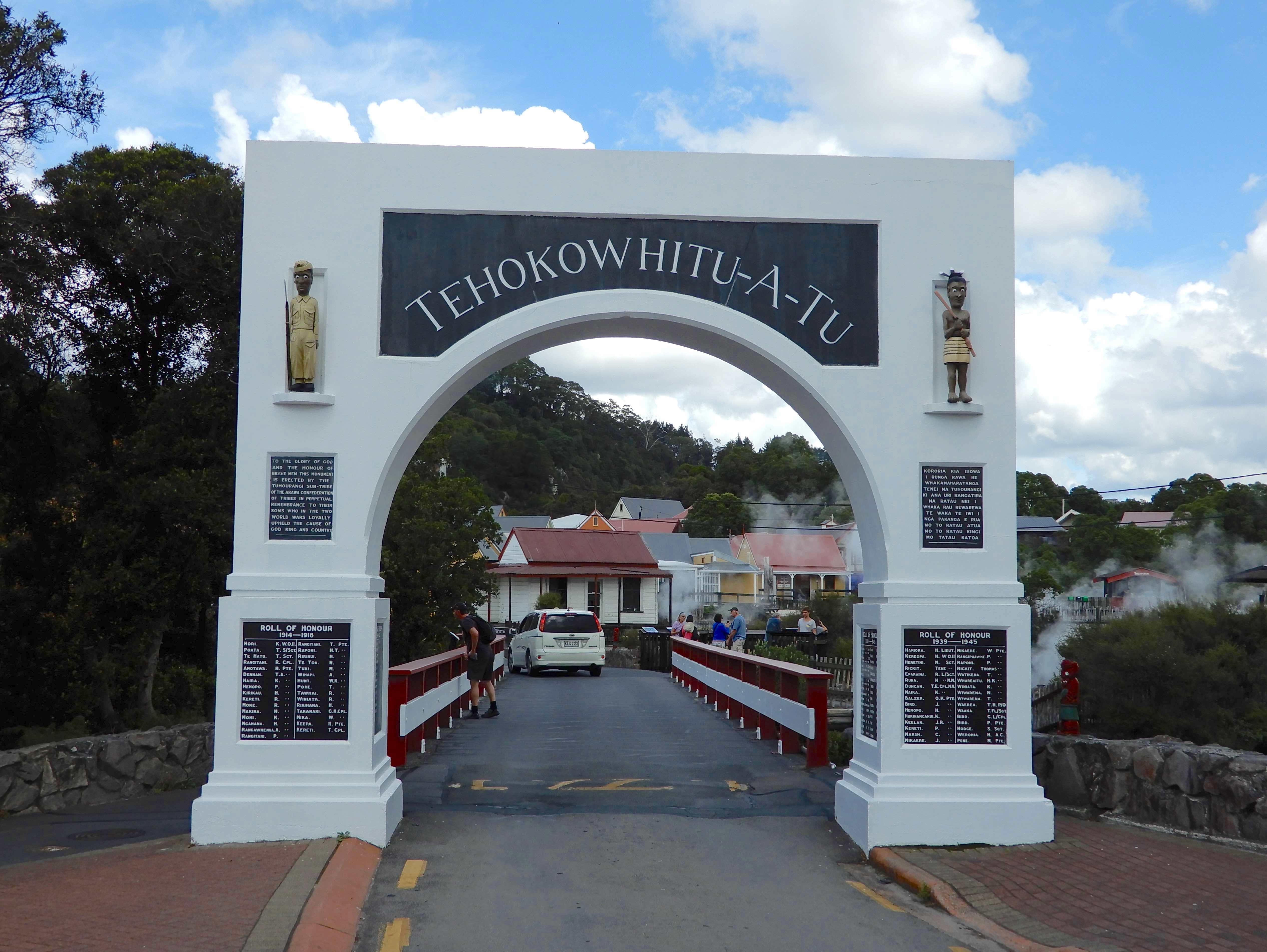
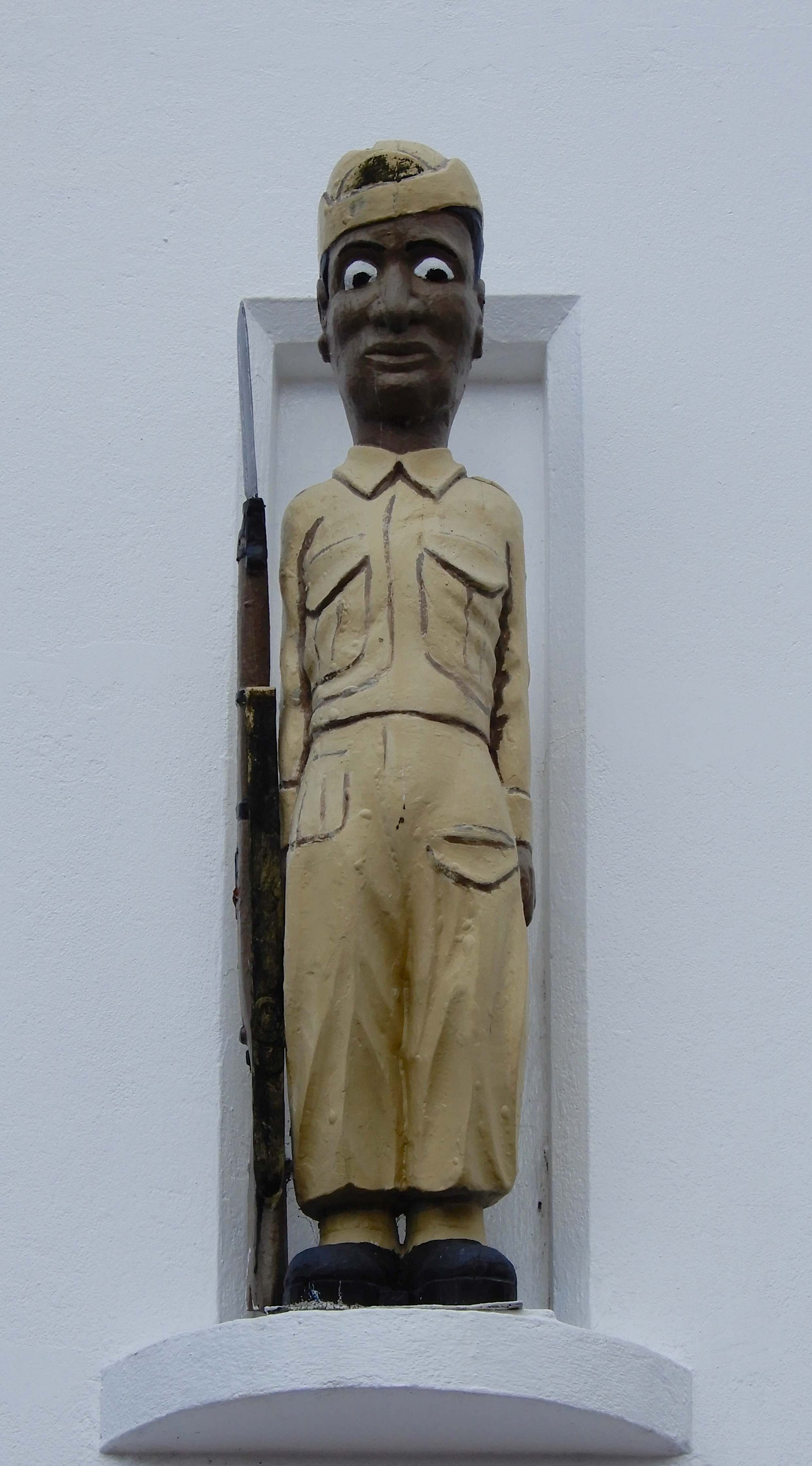
After lunching on a tasty Hangi Pie at the Geyser Café, we entered the village through the memorial archway. Commemorating the fallen soldiers and tribal members who served in the two World Wars, the inscription, Te Hokowhitu a Tū, acknowledges the war god Tūmatauenga and was the motto of the Māori contingent.

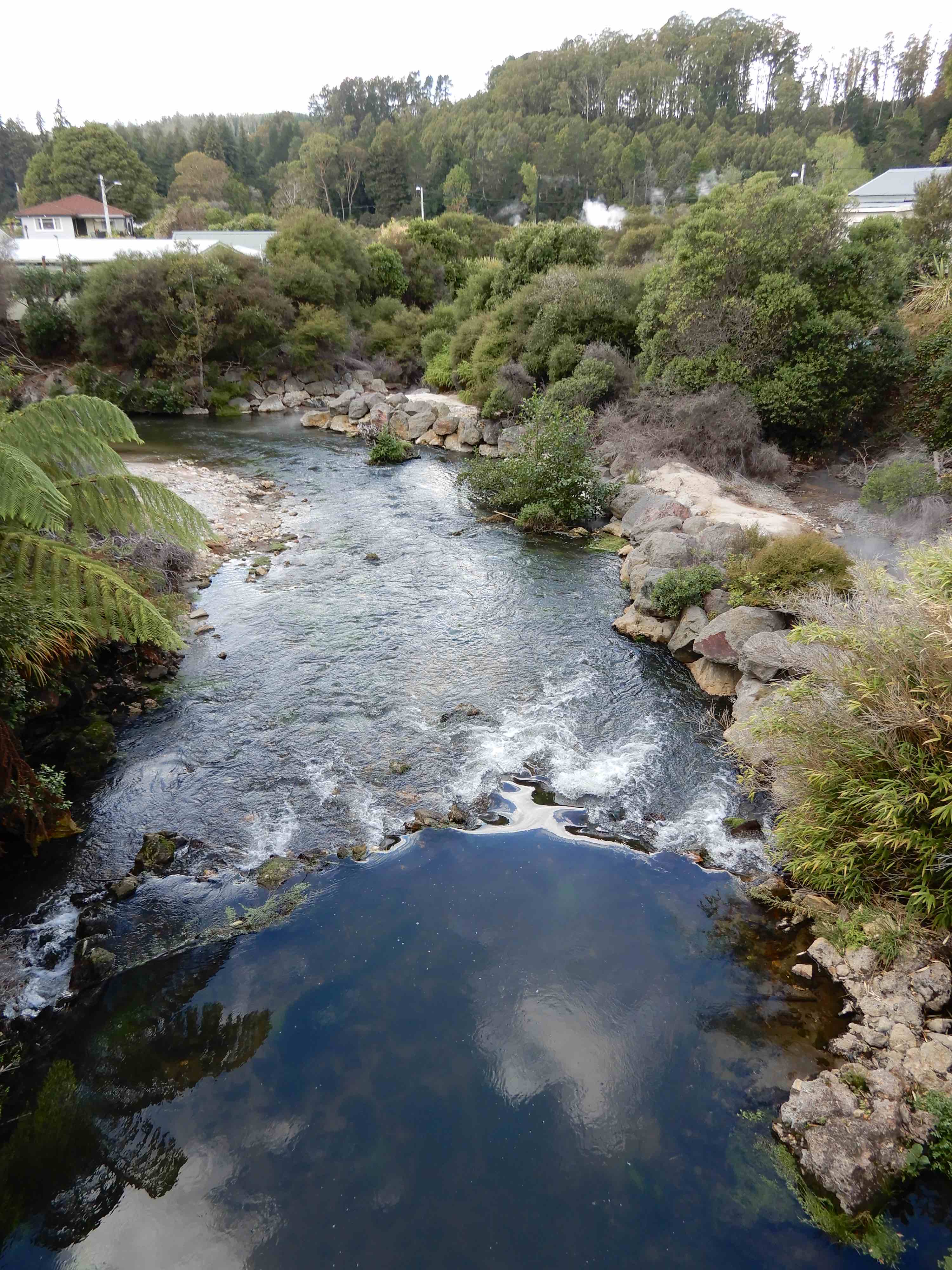
Tourism came to the village in the 1800s when the Europeans began arriving in New Zealand. They were fascinated by the geothermal activity and local way of life. Before the bridge was built in 1885, the only way visitors could enter the village was to be carried across the river by the men, often in return for a penny. For generations, local village children have jumped from the bridge to retrieve the coins tossed in by visitors, earning them the nickname ‘Penny Divers’.

The Te Puarenga is also known as ‘Floating Blossom’ due to the yellow sulphur deposits that float on the surface as they make their way downstream.
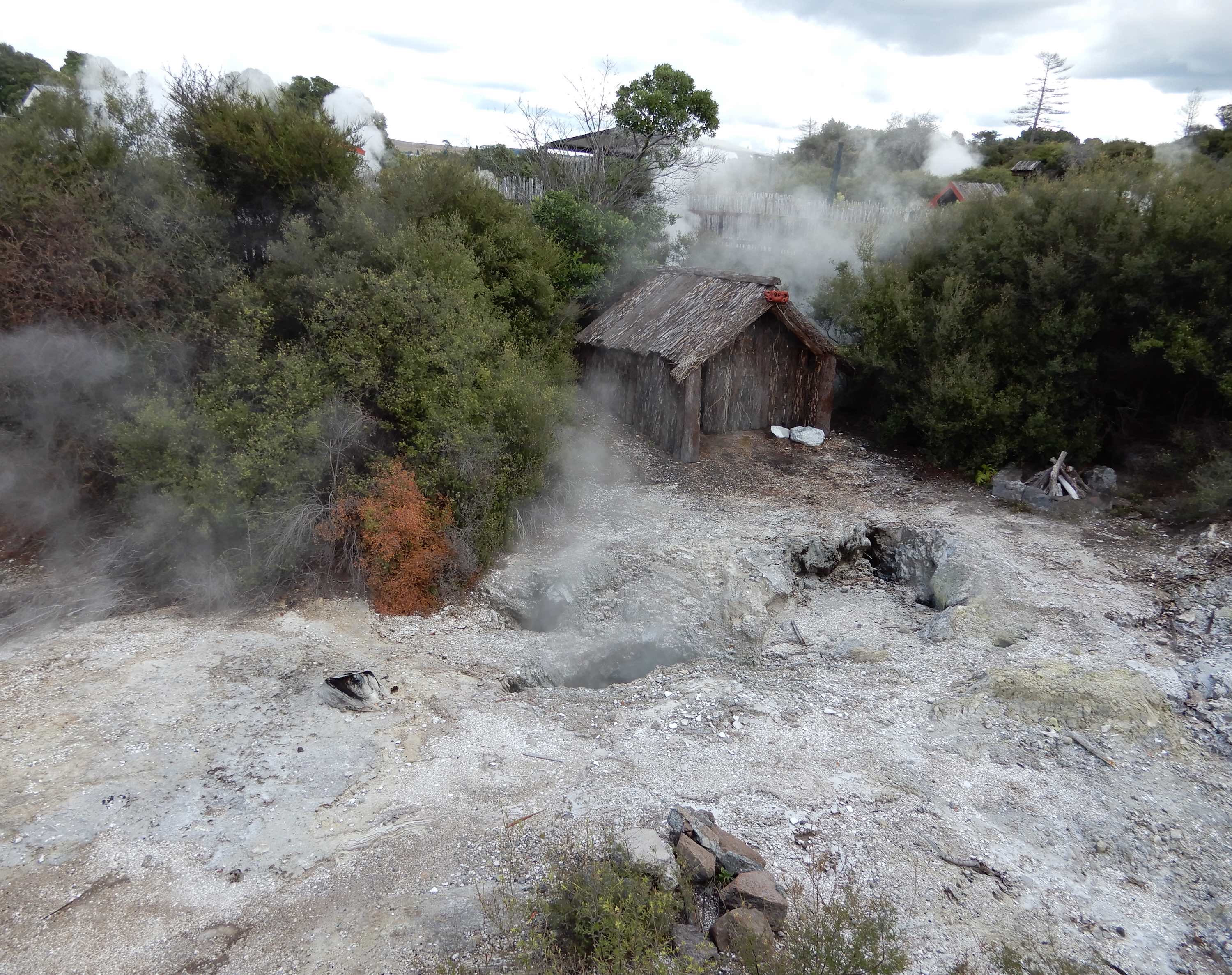
Just over the bridge is a wharepuni, or sleeping house, traditionally built with natural materials such as tree ferns. A bit too close to the hot springs for my liking but apparently handy to make use of the heat.
The Ancestral Meeting House is named after Wāhaio, the traditional carvings tell stories and legends of his people and their tribal connections.


With time to spare before the afternoon cultural performance, we wandered past thermal lakes, mud pools and steam vents

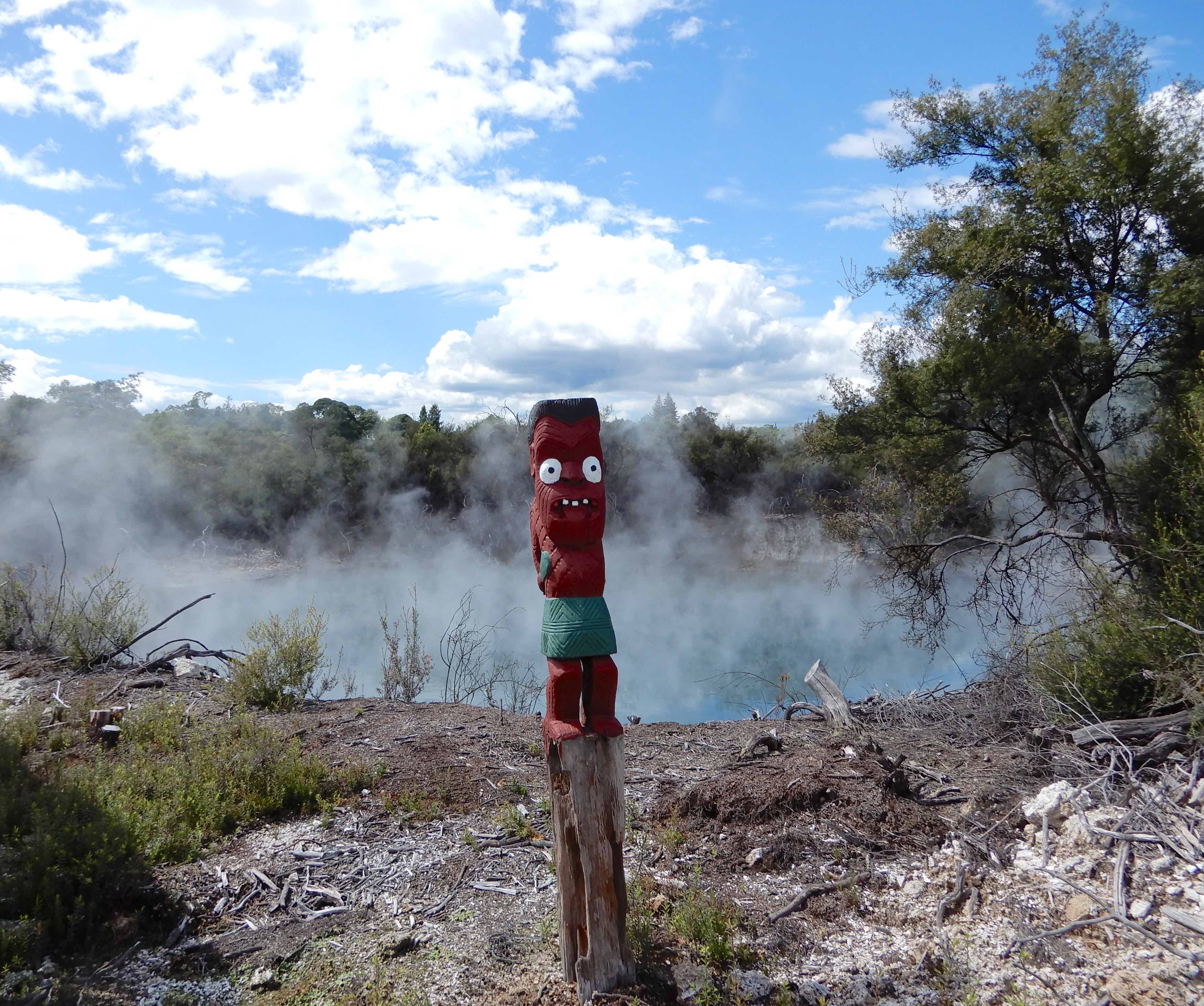


to the bubbling waters of Te Roto a Tamaheke. Named after a chief living in the area many years ago, the lake has a number of hot springs that heat it above boiling point.

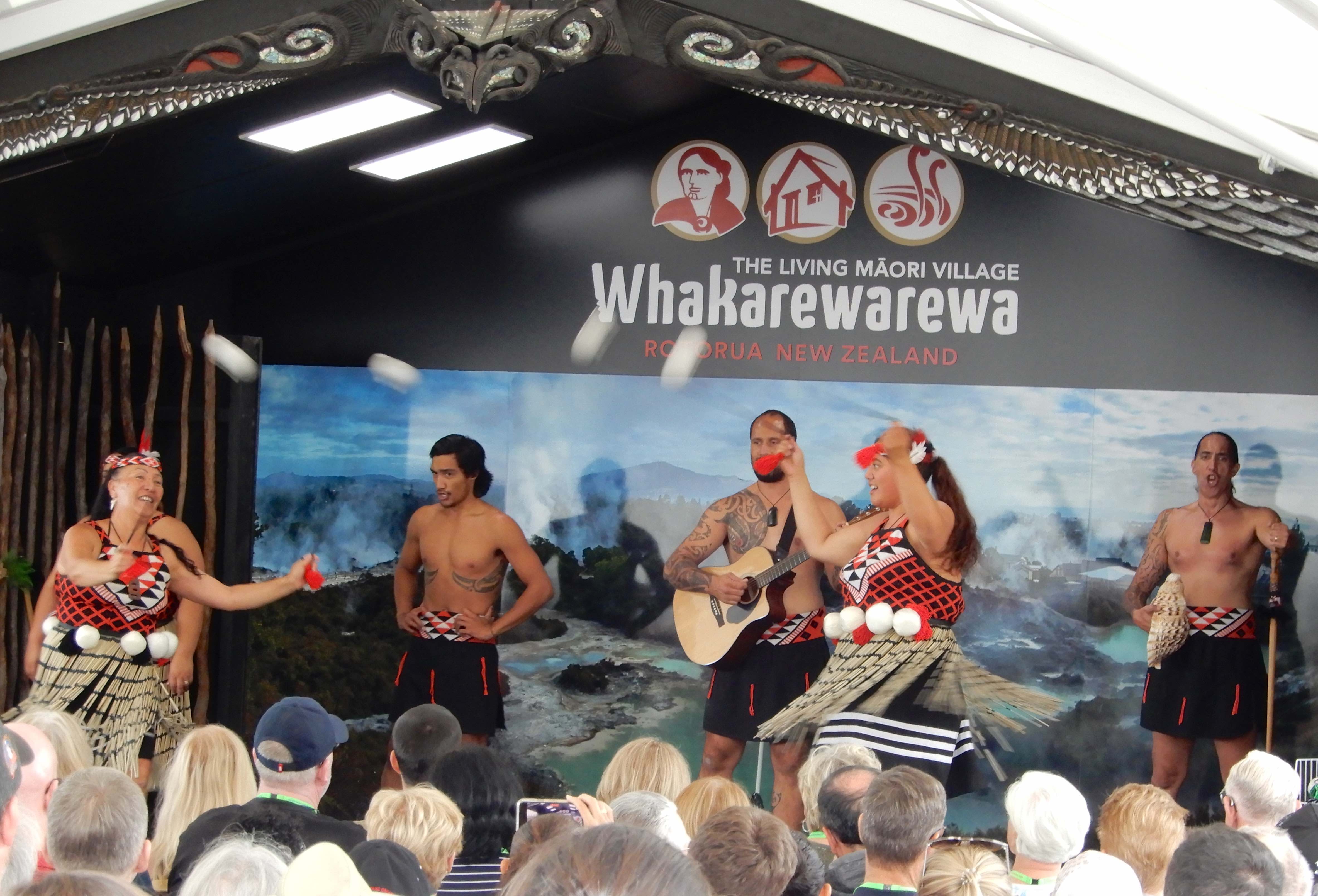
Before the entertainment began, we were introduced to some of the quirks of the Māori language. The explanation of the vowel sounds, none of which are pronounced the same as in the English language, was highly amusing. We were surprised to learn that ‘Wh’ is vocalised as an ‘f’ sound, an interesting concept when the name of the village is shortened to Whaka. The local performing group, Te Pakira, opened the show with a waiata-ā-ringa, an action song where the use of fluttering hand movements support the lyrics, symbolising shimmering waters, heat waves and such like.
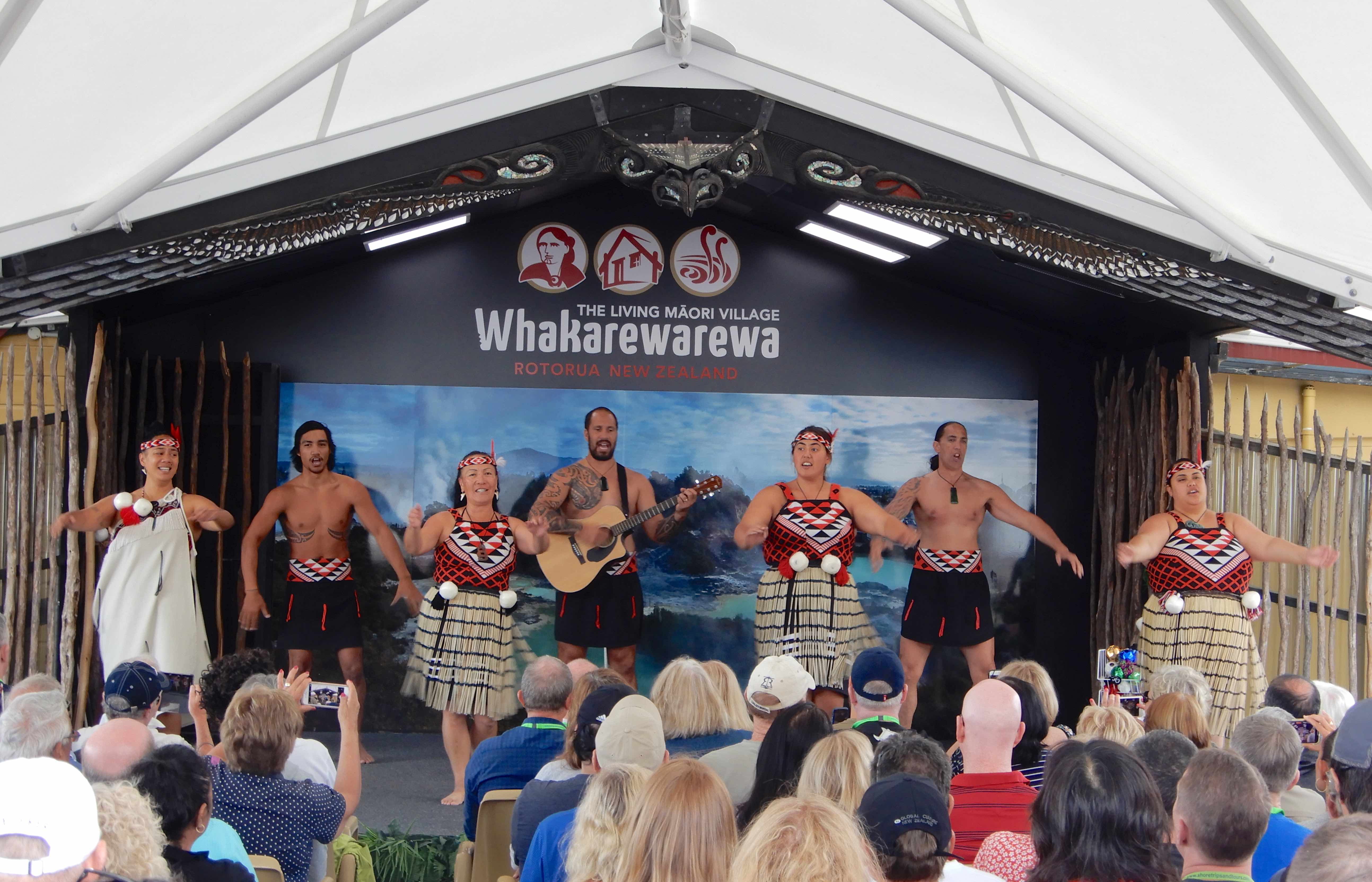
A beautiful rendition of the love song, Pokarekare Ana, brought a tear to the eye. First sung at an army camp at Auckland in 1914, the song tells of Paraire Tomoana’s courtship of Kuini Raerena.

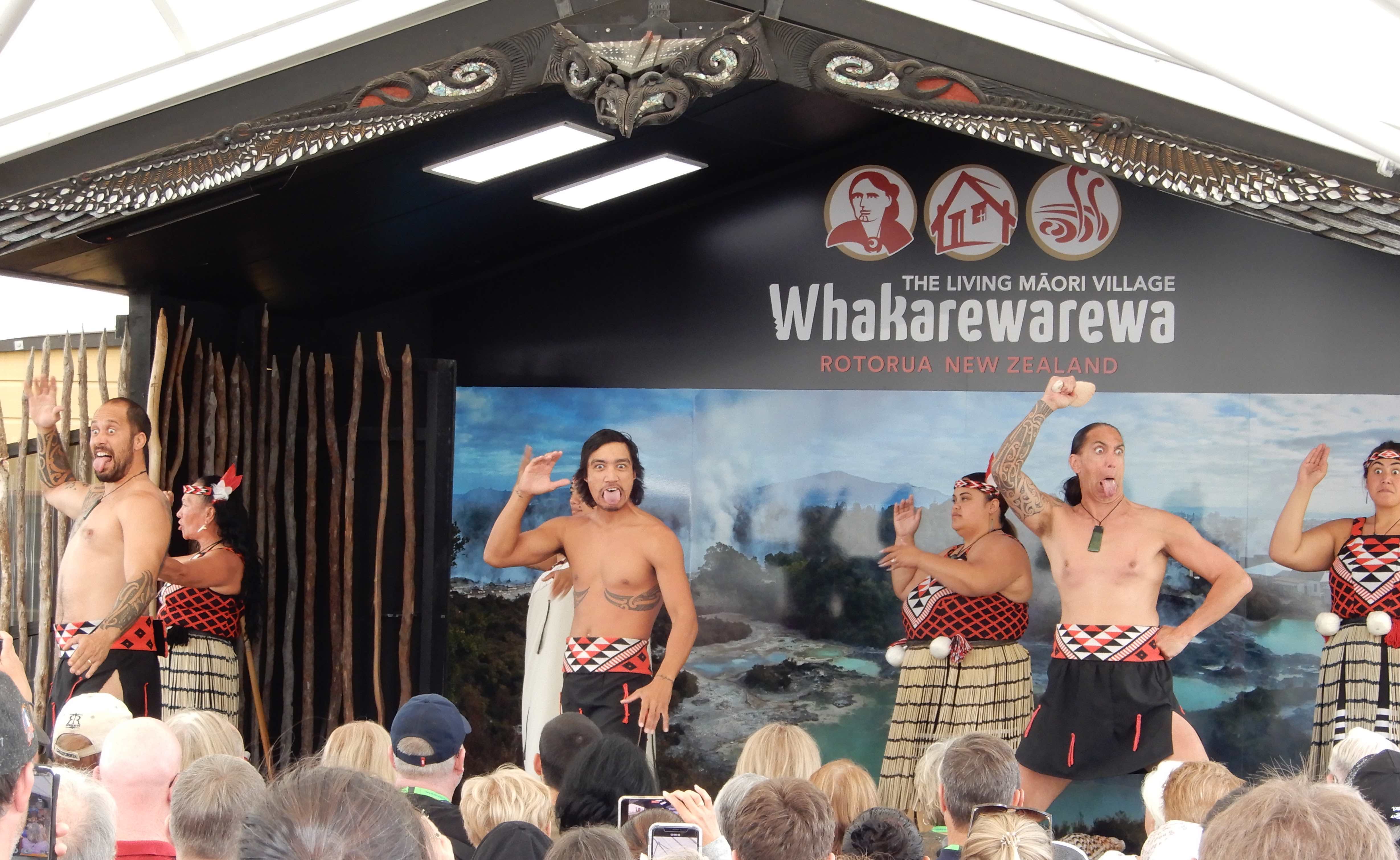
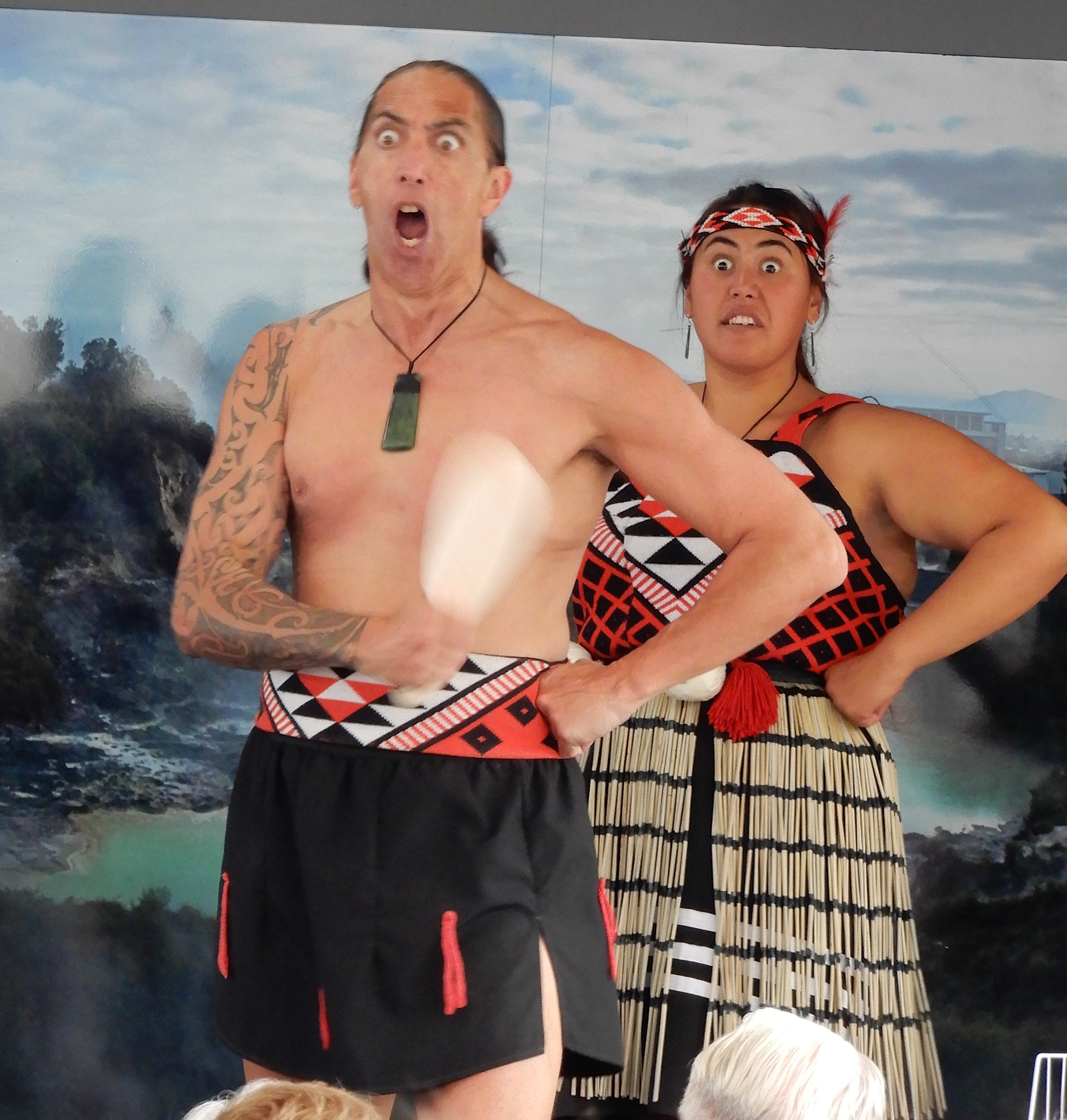
Next came the moment we had been waiting for – the Haka. The loud chanting, foot stomping, thigh-slapping war dance accompanied by poking tongues and staring eyes certainly stirred the blood. For me, it is the highlight of any All Blacks rugby game.

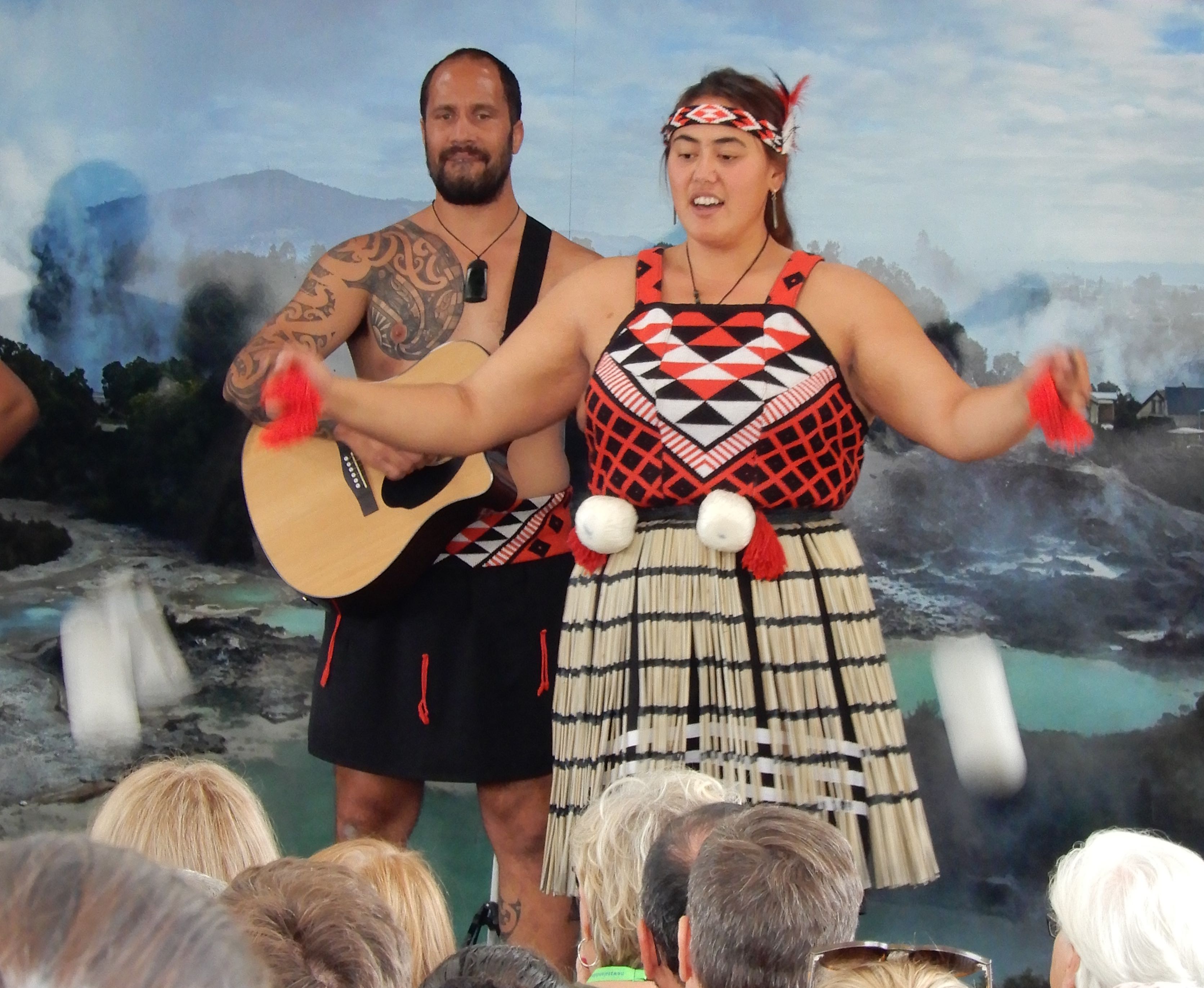
The skill and accuracy displayed in the stick games and Poi dances was boggling. The poi is a ball (or two) on a chord that is twirled in perfect unison with others and the direction can be changed by striking the ball on a part of the body, creating a percussive rhythm.

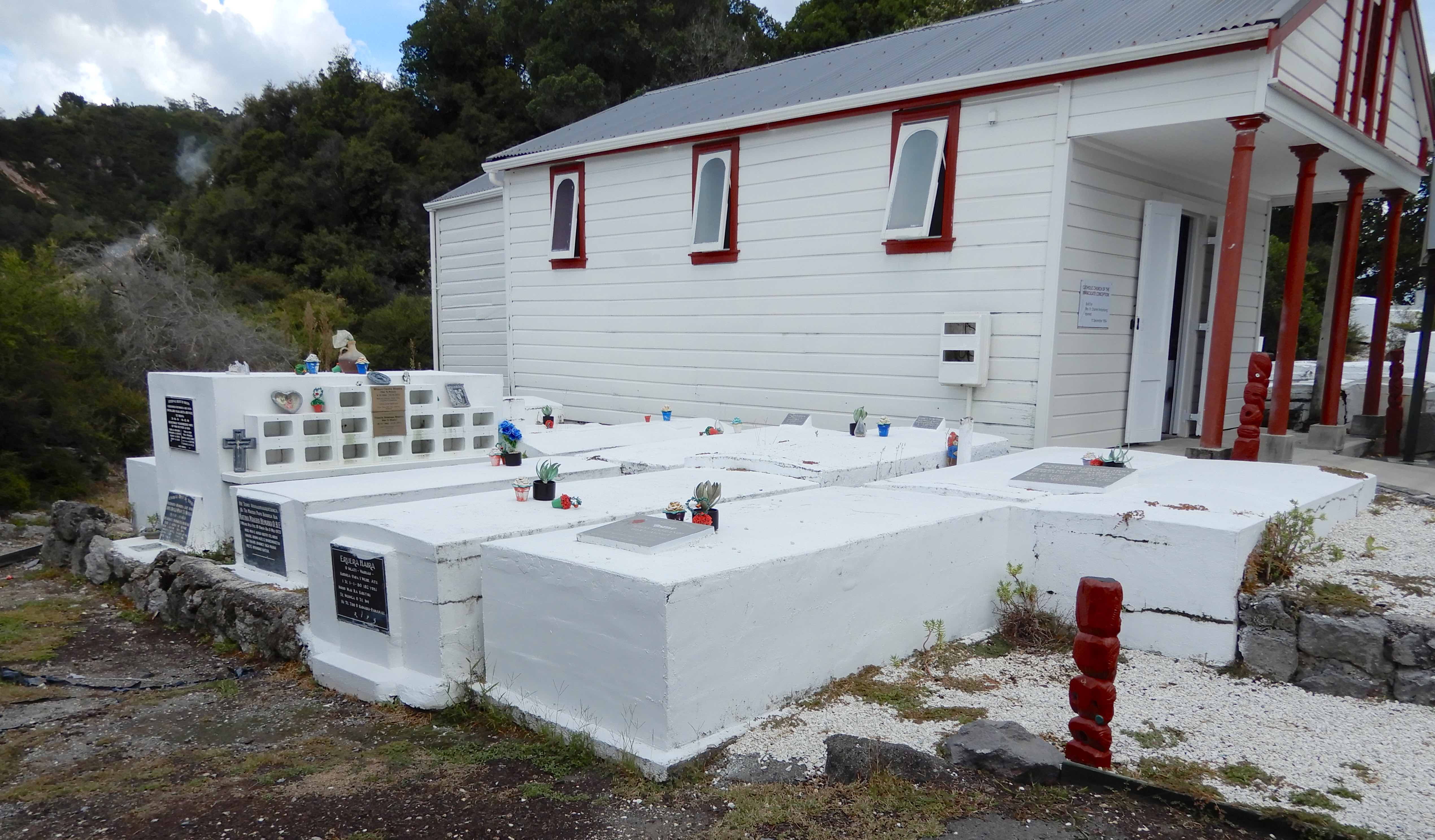
The performance over, we joined our guide for a tour of the village. The guiding tradition began over 200 years ago as tourism developed in the area and became a formalised profession for local Māori guides. The Catholic Church was built in 1905 and, due to the ongoing geothermal activity, in the cemetery the deceased are placed in tombs above the ground.


Retracing our steps down Tukiterangi Street

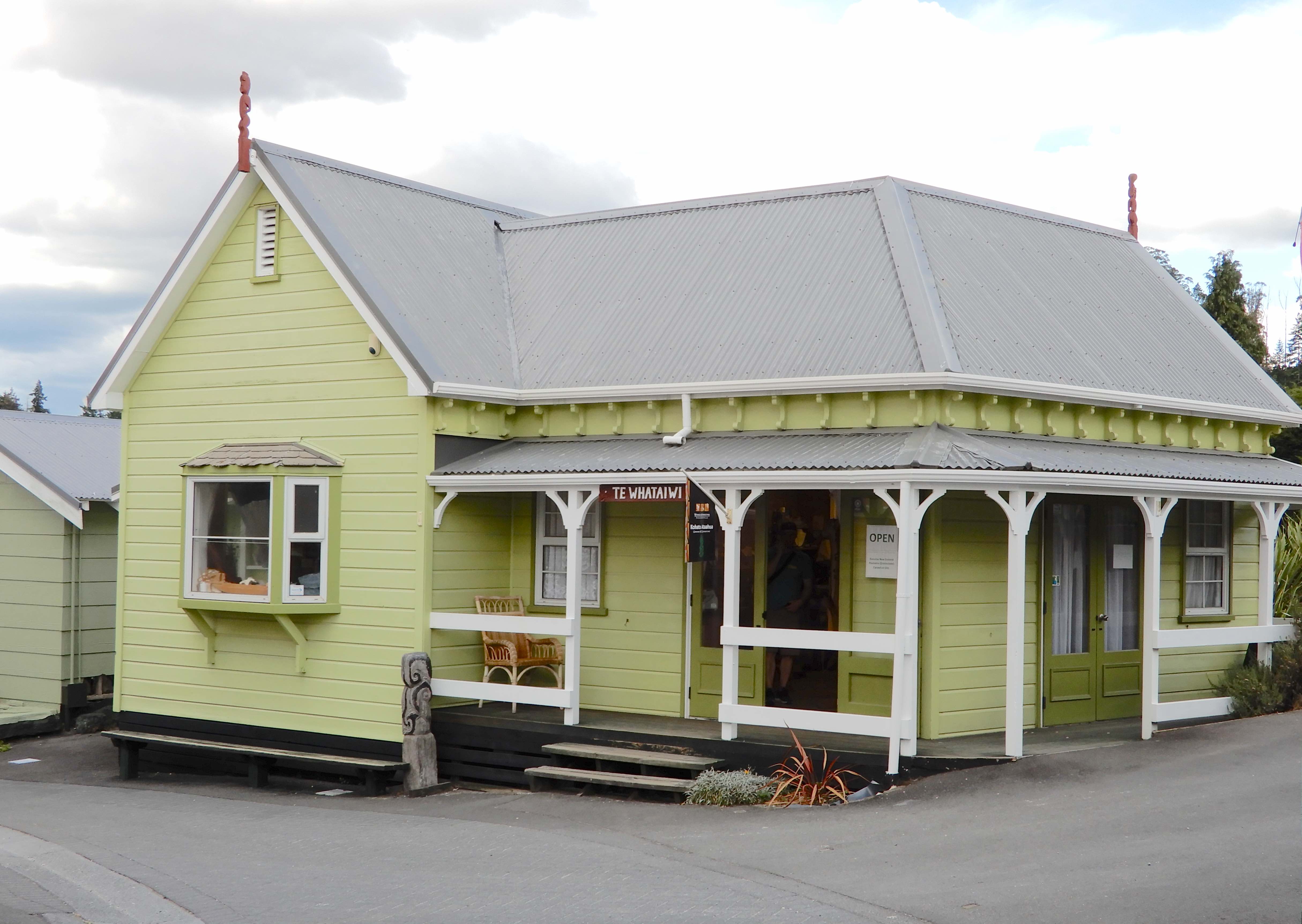
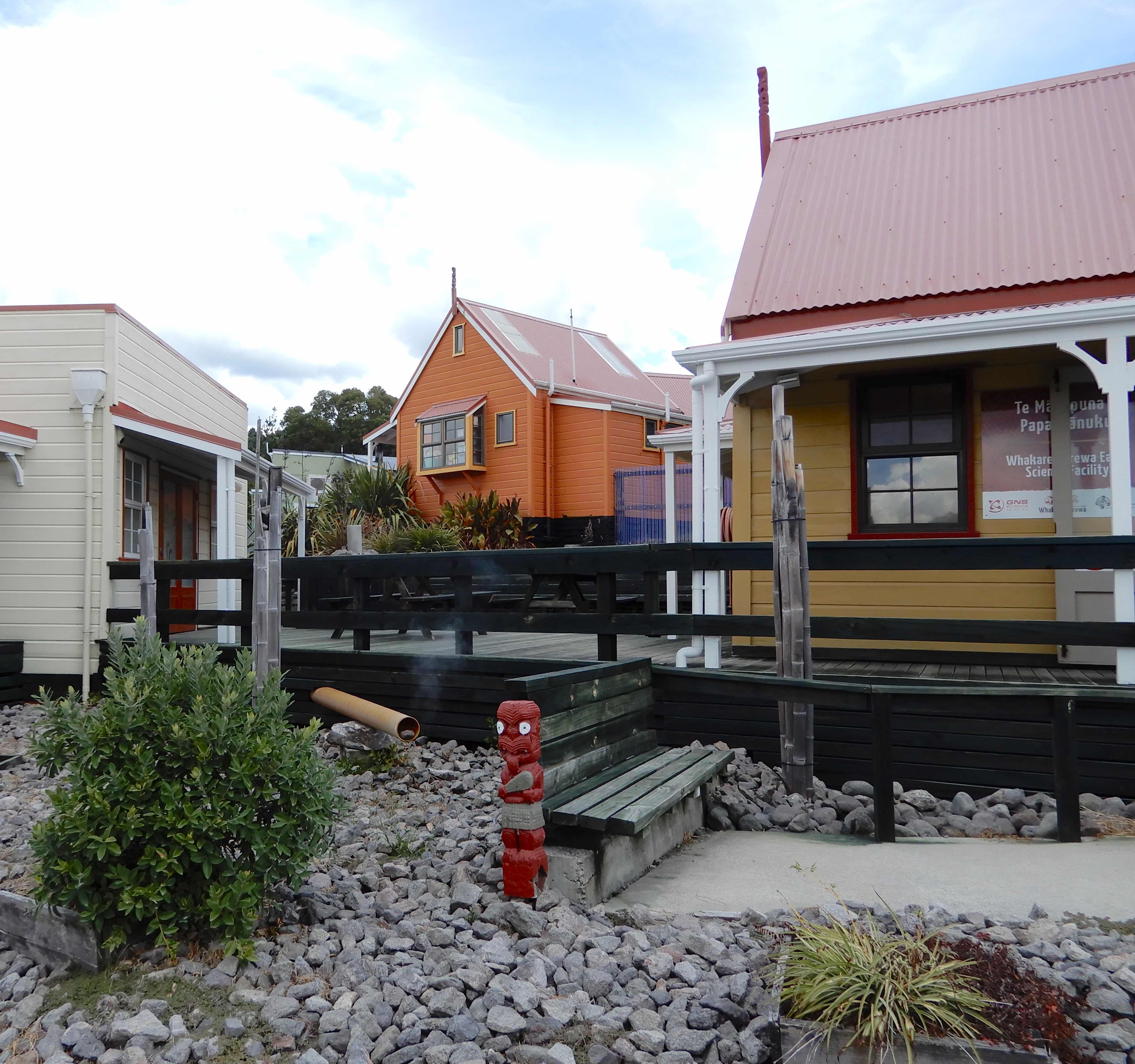
we turned left at Tuhoromatakaka, the family house built by master carver Tene Waitere in 1909 for guide Maggie Papakura.


The first inhabitants of the village discovered that food can be cooked by harnessing the heat from the ground and the steam box hangi is still used by the twenty one families living in Whakarewarewa.

The largest hot spring in the village, Parekohuru, is used for cooking leaf & root vegetables and seafood. Every 45 minutes or so, the pool pulsates and the water rises. The water level then drops and bubbles rise to the surface, hence the name ‘Champagne Pool’. I must say, I prefer my champagne on the cooler side.

At this point, I was distracted by the spectacular cloud formations.


Storms weren’t forecast but the nearby pools, Purerehua, told a different story. They are affected by the change in atmospheric pressure and when the water level drops, it means a change in the weather is imminent.
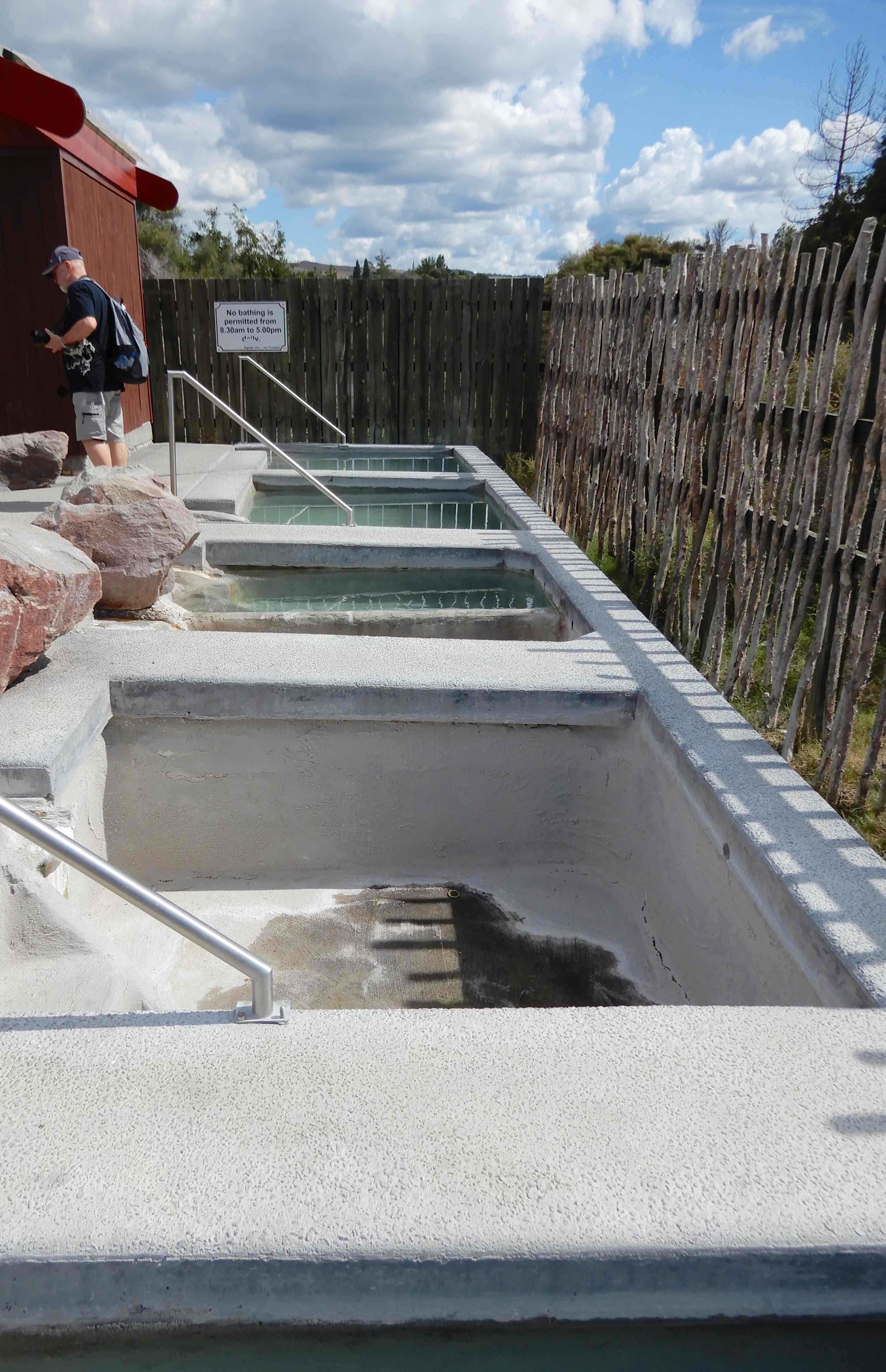
Many families in the village bathe in the communal baths known as oil baths because of the oily texture and mineral deposits in the water. It is very good for the skin as well as treating the aches and pains of arthritis and rheumatism.
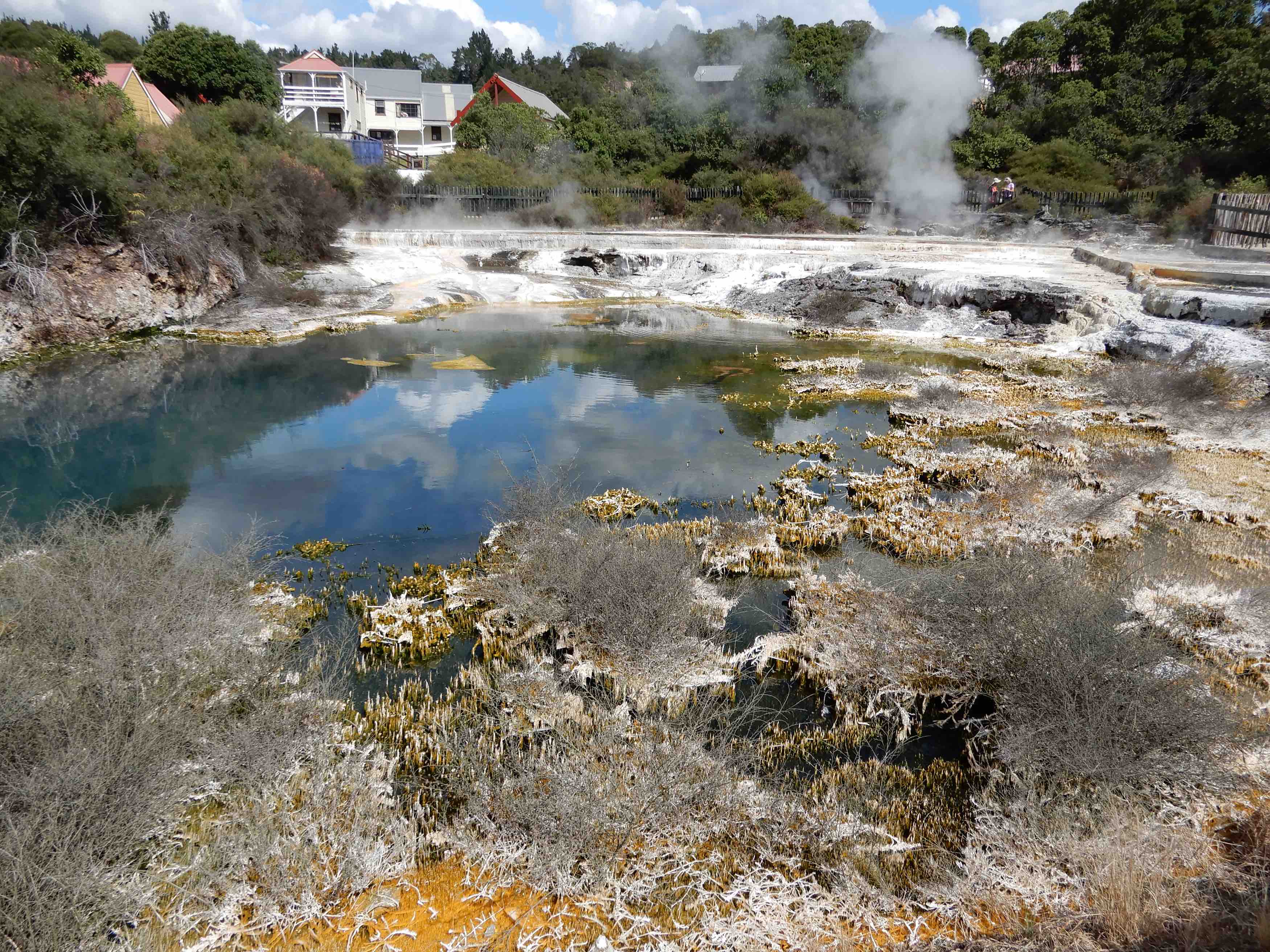
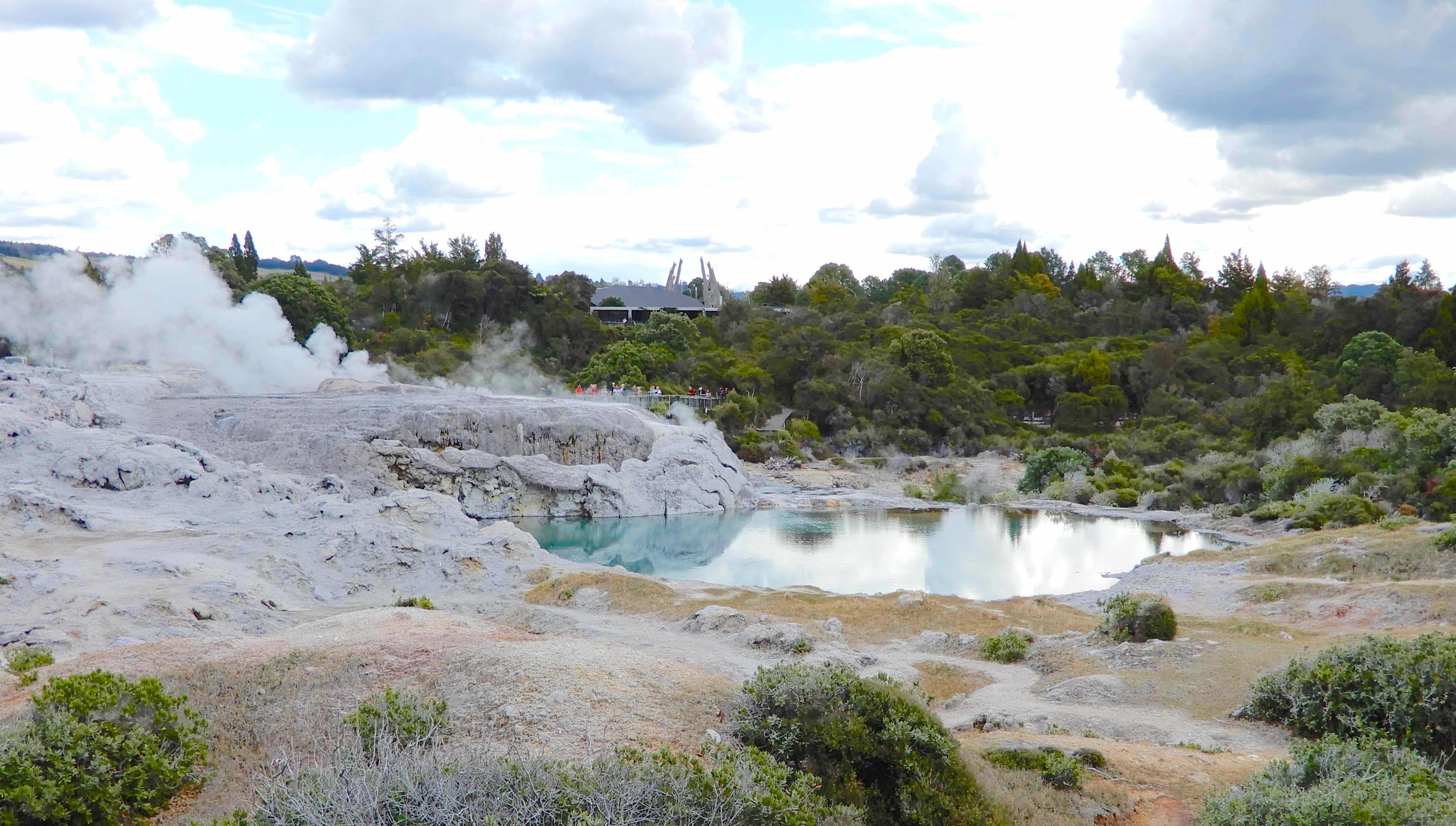
The view from the Pōhutu Geyser lookout was quite ethereal. There are three active geysers aligned on the sinter terrace, a rock made of very fine-grained silica formed from the waters of the hot springs. The blue pool in front of the terrace is not fed by its own hot spring but collects water from the geysers.
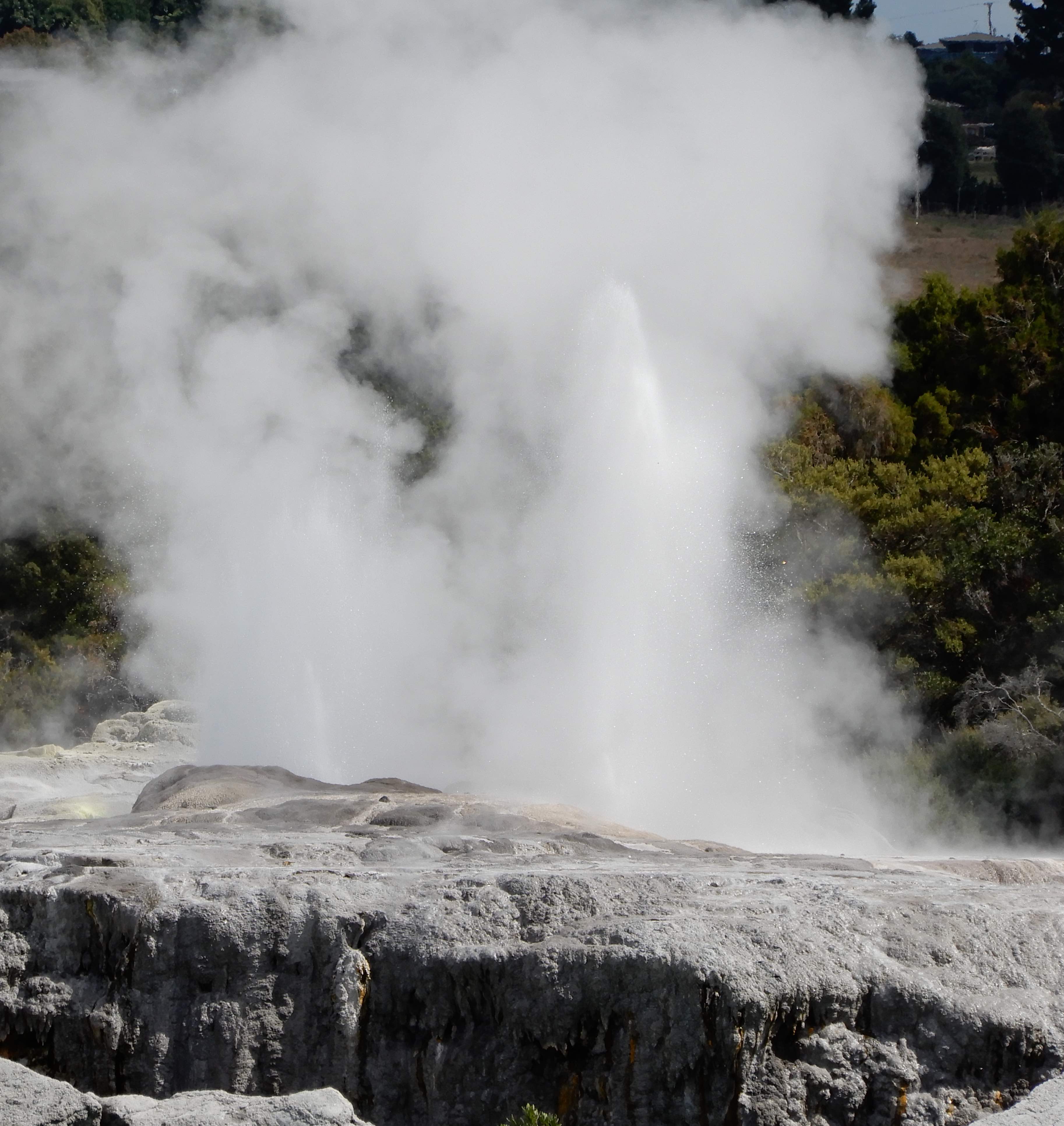
The activity of each geyser affects the others with the largest, Pōhutu, erupting hourly up to a height of 30 metres. Its closest neighbour, Prince of Wales Feathers, always precedes Pōhutu but only to a height of 9 metres. The original name was Te Tohu (The Indicator) but it was renamed in 1901 on the occasion of a visit from the Prince of Wales because the geyser’s plume resembled the feathers on his coat of arms. The third geyser, Kererū, is named after an endemic New Zealand pigeon because the behaviour is as erratic as that of the bird. Unfortunately, we didn’t witness the full spectacle but were most impressed by the display we observed.


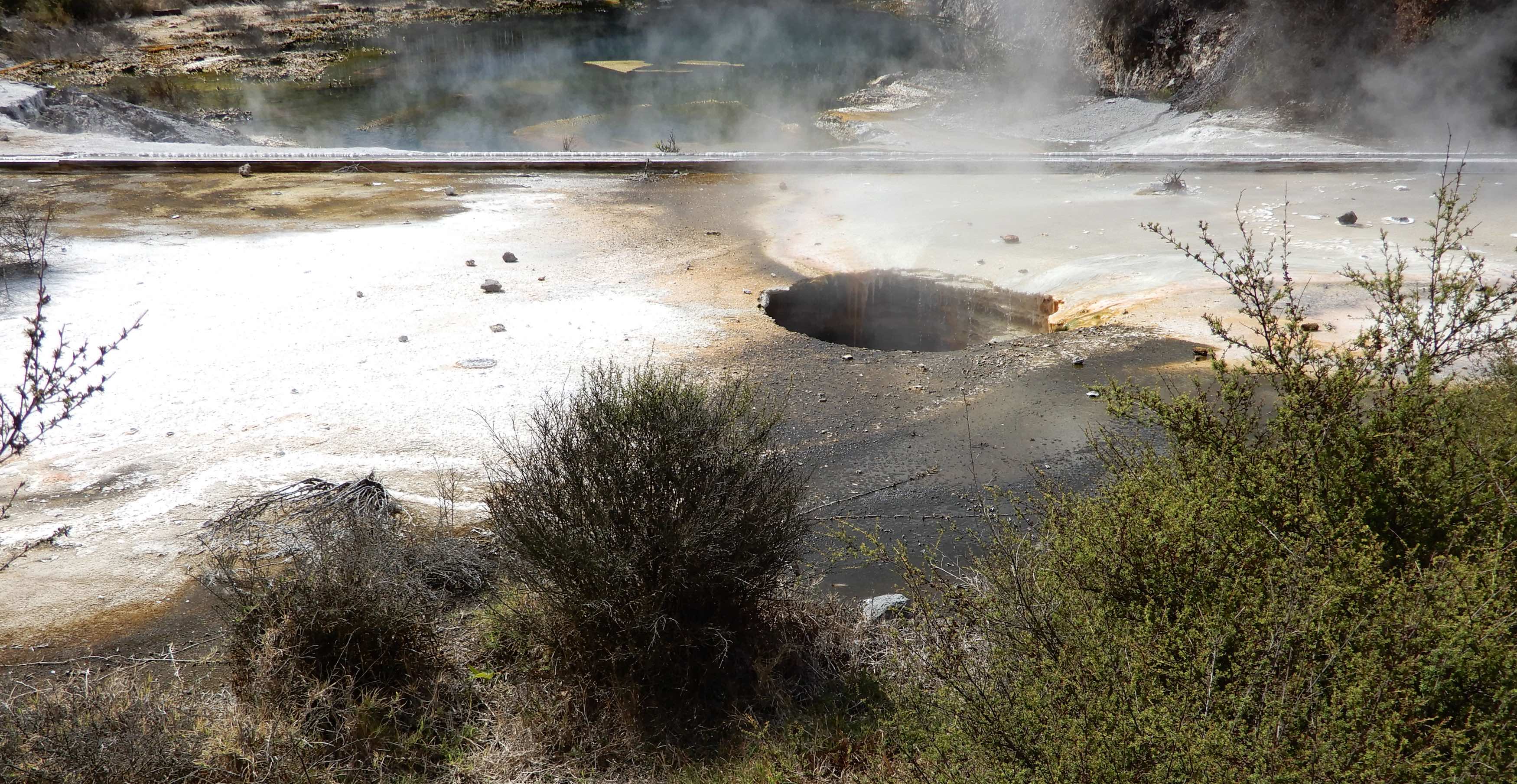
According to Māori myths and legends, the Whakarewarewa thermal area was created when Te Hoata and Te Pupu (Goddesses of Fire) travelled from Hawaiki in the form of fire to relieve their brother’s chills. Along the way, they created New Zealand’s volcanoes, mud pools, geysers and hot springs. I think they excelled themselves.
We meandered back through the village, reflecting on the lifestyle in this amazing part of the world

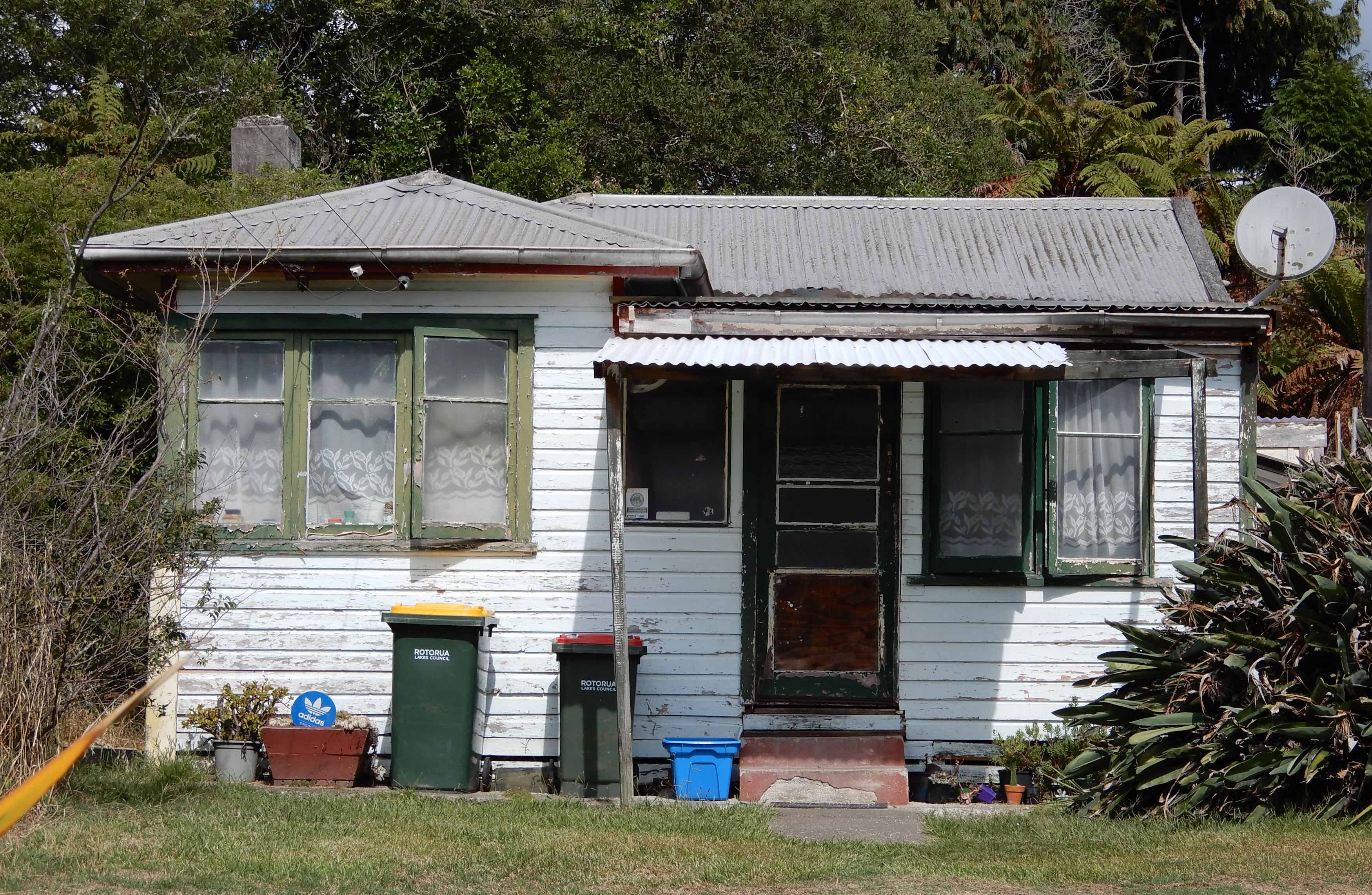
and the stunning landscape beyond.