renovation ruminations: part 7

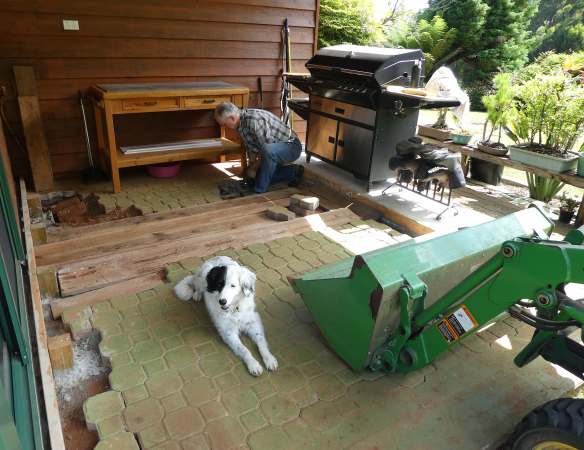
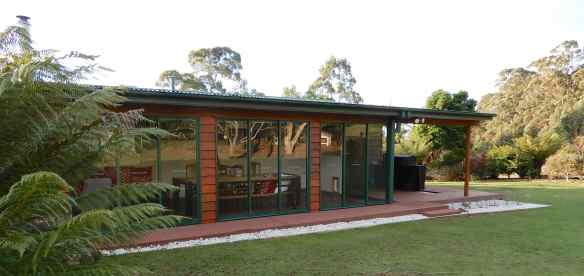
Once we finished the renovation of the back room, we moved straight on to the decking of the outdoor space. We removed the old pavers

1.removing pavers2.pavers gone

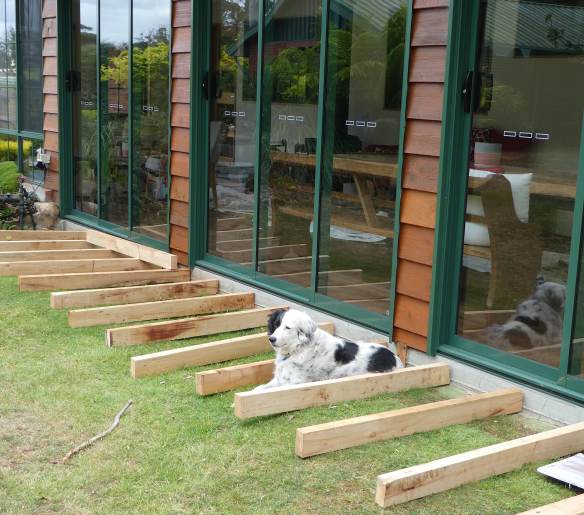
and, under the watchful eye of the foreman,

3.the foreman

built the frame while working around existing obstacles as best we could.

4.framework

After much research, we decided to use Ekodeck, a composite material that (this is the best bit) requires no oiling, painting or maintenance.

5.Ekodeck

It didn’t take long to cut and lay the planks, we used the CAMO hidden screw system so there are no screws visible on top of the boards.

6.decking7.decking

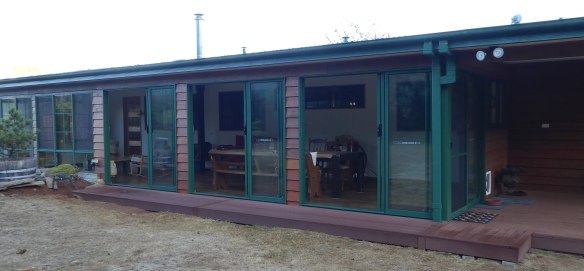
We laid a metre wide strip to connect the doors with the garden

8.framework11.decking

and then added the edges.

12.deck13.decking done

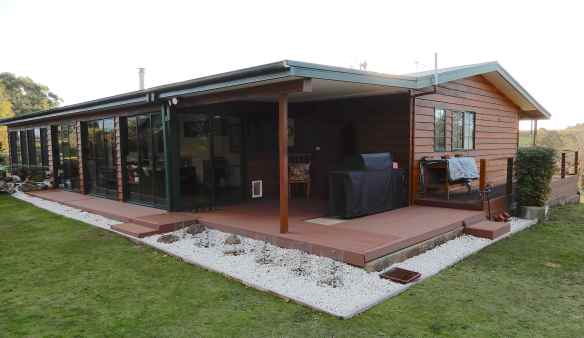
For completeness, we laid a border of white pebbles

14.deck finished

and planted six dwarf camellias at the barbecue end.

15.deck finished16.deck finished

Next is the outdoor kitchen area….

autumn colours

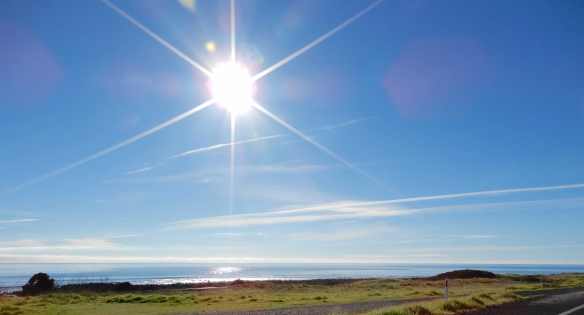
We have had some perfect winter days this year. Clear, blue skies; crisp, clean air; nothing but the slightest whiff of a breeze. One such Sunday, we put Cooper’s top down and took her for a spin along our favourite coast road.

1.Old Coast Road

Preservation Bay looked particularly stunning.

2.Preservation Bay

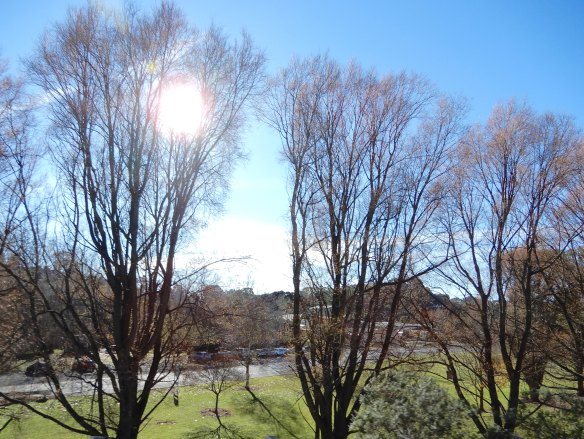
We joined the highway at Ulverstone and continued east. There is a park, just before the first exit at Devonport, that we have been meaning to investigate for years. The trees are beautiful any time of year but especially when showing their autumn colours.

3.Forth Road

This was the day for a closer look.

4.autumn colours5.autumn trees

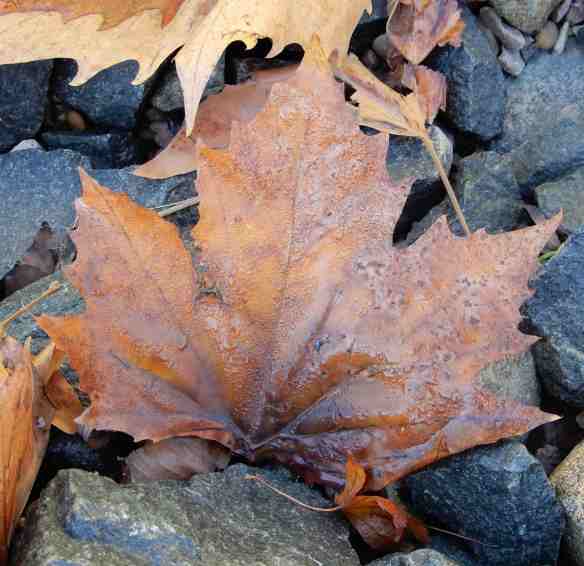
Fallen leaves, still damp from the morning dew, confirmed nature’s artistic talent.

11.autumn leaves

Straggly Eucalypts portrayed an elegant appeal in the morning sunlight,

12.swamp gums

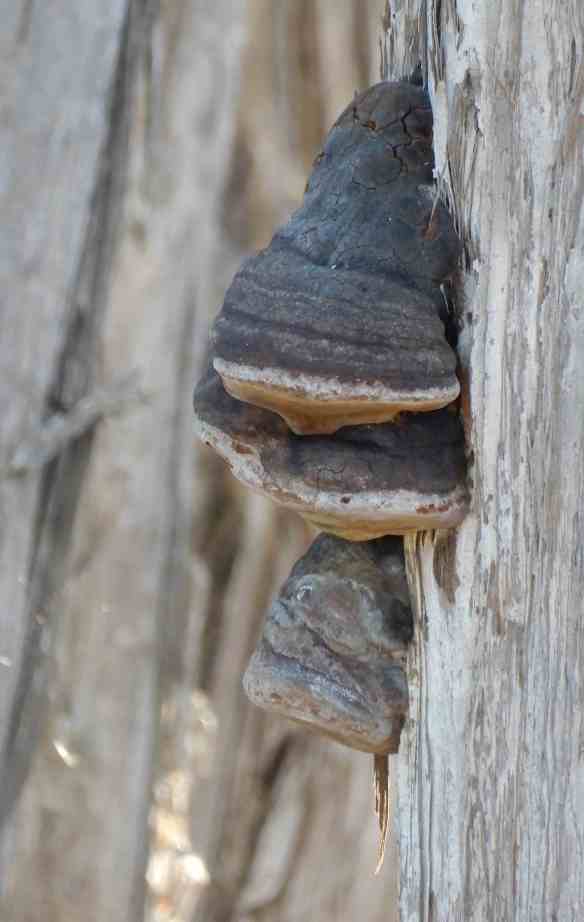
some fascinating fungi camouflaged in the shadows.

13.fungus

Our day out didn’t end there, but that’s another story.

resplendent robin

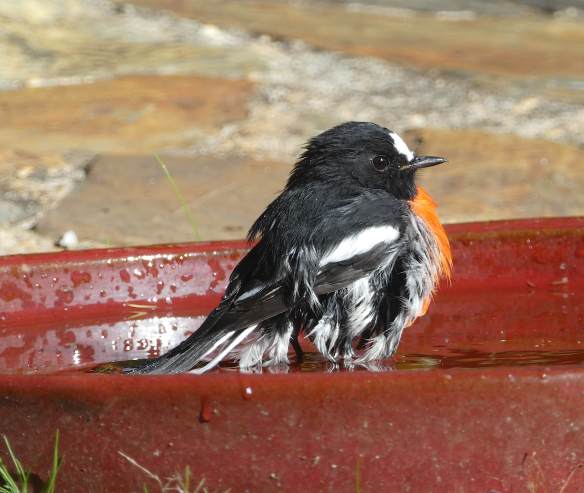
Winter has arrived and our gorgeous scarlet robins have returned. They form permanent monogamous pairs and move to the open forests during the warmer months, returning to nest in our garden as the days shorten. The male makes quite a show once he is back, letting everyone know this is his territory again. Late one afternoon, he spent quite some time admiring himself in the window. Unfortunately, he was in shade and I didn’t capture him in all his glory.

The next day, Michael sat patiently while the sun shone on the same perch, in the hope of catching the perfect image.

5.no robin

Initially disappointed, he was soon rewarded with a prolonged robin lavation.

The black headed honeyeater seems bemused by the aquatic antics, reluctant to take the plunge.

10.robin & friend

I haven’t seen the female recently and assume she is busy building the nest while he makes himself irresistible.

I’m pleased to say he is not totally narcissistic. While his partner incubates the eggs, he will feed her and both parents share responsibility for feeding the young.

13.robin

lunar landscape

One of the wondrous elements of living in the backwoods is the presence of a clear night sky. Many times, the night is never really dark, the light of the moon and stars filter through the closed curtains. Our last full moon was no exception. One evening, I had tucked myself into bed while Michael accompanied Poppy outside for her bedtime ablution. He promptly returned to retrieve my camera with the message that the moon was amazing. The first photo showed the bright, waning moon shrouded mysteriously in cloud.

1.moon

What followed was nothing less than spectacular. The countless craters, produced by meteor impacts are clearly visible. The dark regions are the seas, though they don’t contain water but are remnants of lava flows on the moon’s surface. Curiously, almost all the moon’s seas are on the side of the moon facing Earth. The light areas are the highlands and the bright rays shooting outward are impact craters. I wonder what is on the dark side of the moon?

2.moon

the humble bumble

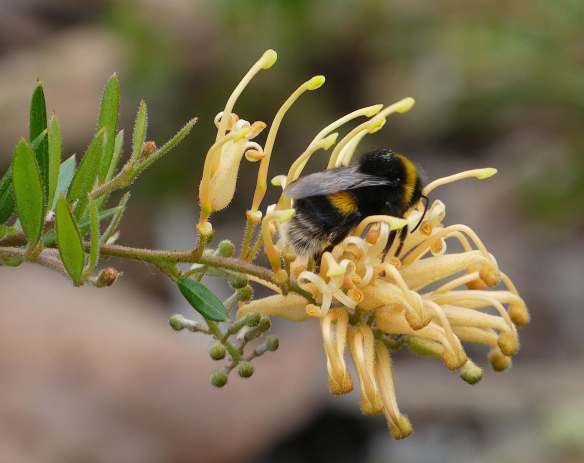
One of the things we noticed on our earlier visits to Tasmania was the presence of the bumblebee, something we had only seen in Britain. I was distracted from my gardening recently by the frenzied activity around the Grevillea.
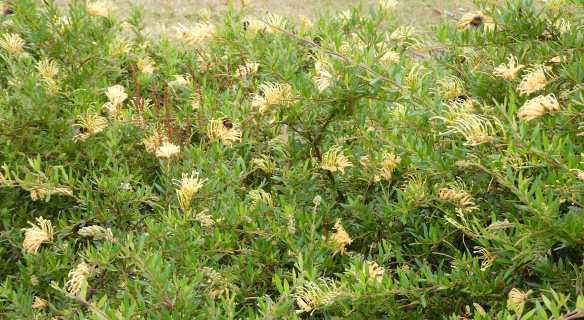
1.Grevillea

I sat with my camera, trying to capture these gorgeous little creatures at work. Bombus terrestris have round, furry bodies with a yellow band across the thorax and abdomen and a buff coloured tail end.
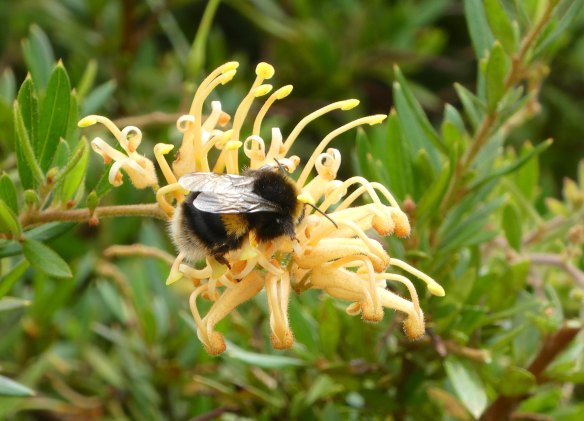
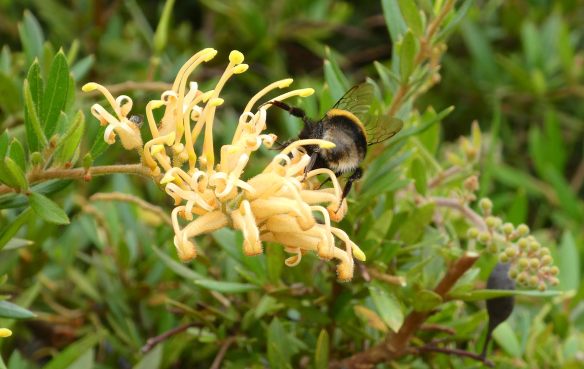
2.bumble bee3.bumble bee

They were first found in Tasmania in 1992, presumably introduced from New Zealand. Like their honey bee relatives, the bumbles feed on nectar. They lap up the liquid with their long, hairy tongues, sometimes making a hole in the base of the flower to access the nectar.
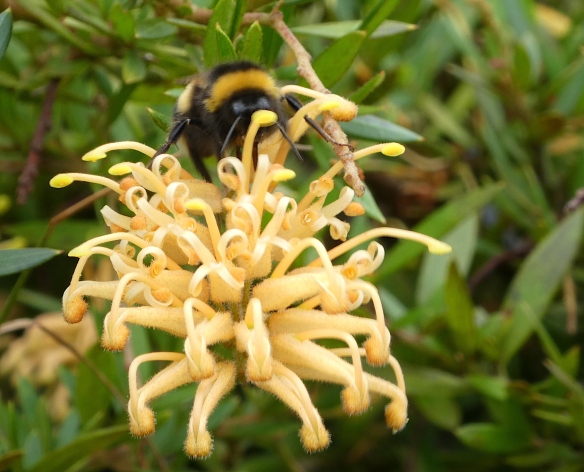
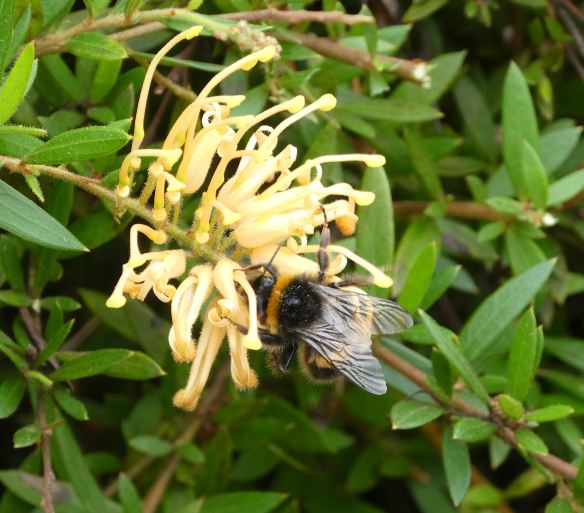
4.bumble bee5.bumble bee

Our cooler climate doesn’t bother these bees, they can absorb heat from even weak sunshine and are well insulated under their thick coats.
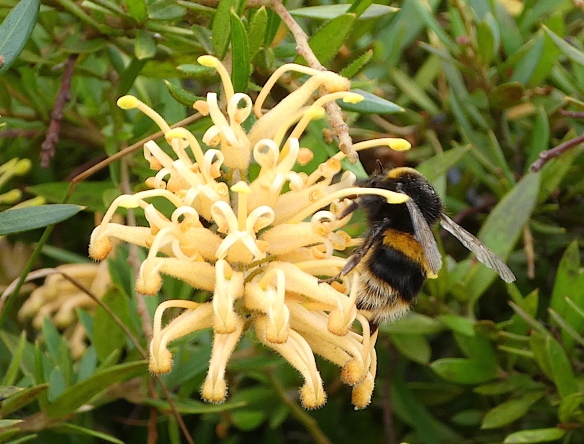
6.bumble bee

Bumblebees are very social insects and, apparently, very smart. There have been many studies on the behaviour of bumbles, I like the idea that they can play football

https://www.nature.com/news/bees-learn-football-from-their-buddies-1.21540

7.bumble bee

Unfortunately, in Australia the bumblebees are considered feral, with some concern that, being such efficient pollinators, they will increase the spread of environmental weeds. However, their decline in Europe, North America and Asia is causing concern as they are important agricultural pollinators. Tomato growers in Tasmanian have fought for years to change the laws to allow them to use bumblebees as pollinators but their applications have been rejected on environmental grounds.
8.bumble bee