ponderous project

When we first viewed our property (fifteen years ago), we were impressed with the pond and the rather large goldfish inhabitants. Michael landscaped the area with rocks and plants and created a smaller top pond, adding a cascade for completion. It is a lovely, peaceful setting to gaze upon from the kitchen window
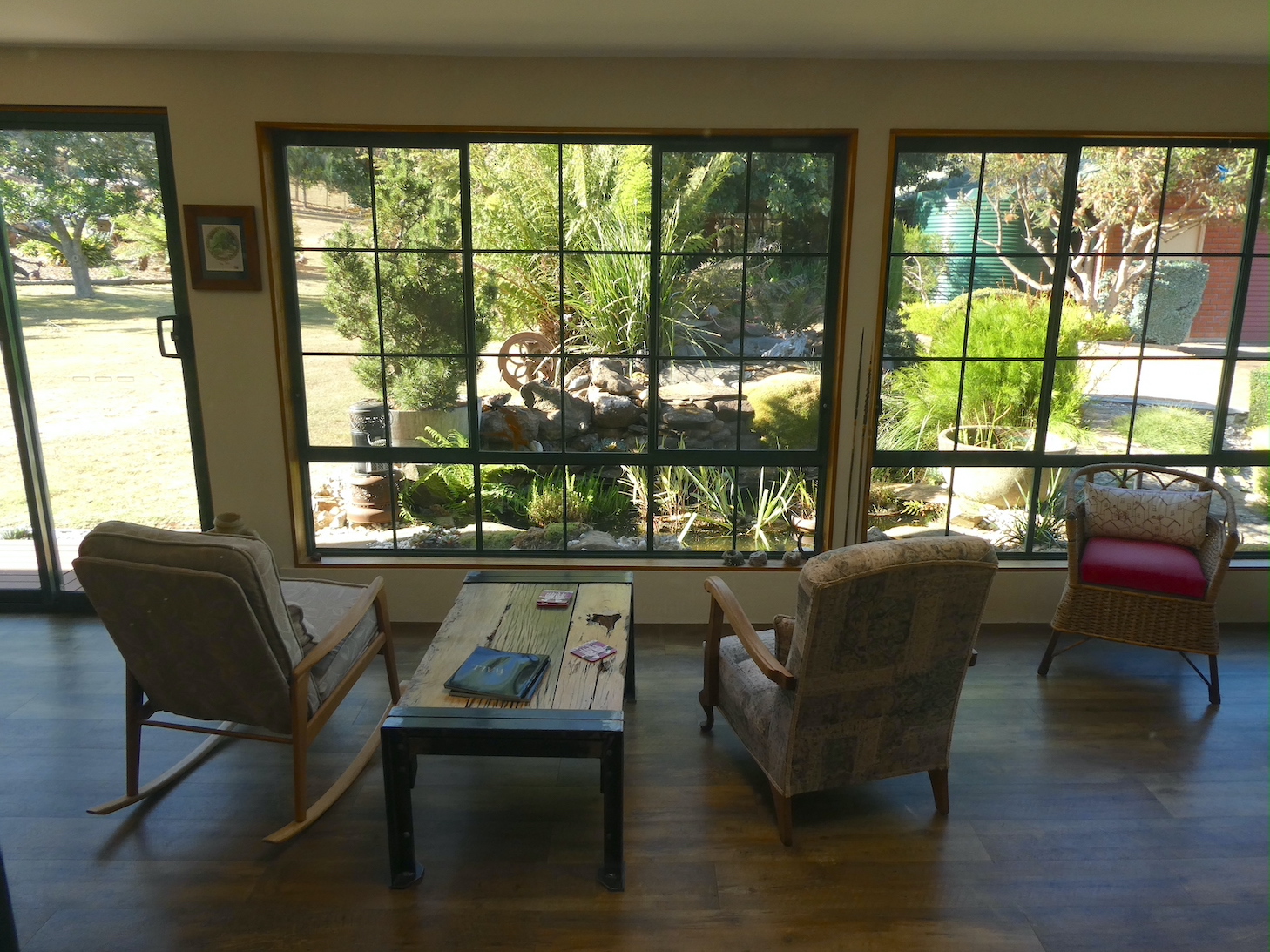
but Michael has lamented the ever present algae due, in part, to the lack of water depth and more recently the obvious presence of a leak in the liner.

Deciding on a pre-formed pond rather than replacing the liner, we set about the project we had been procrastinating on for months. The first job was to create easy access by relocating the pot pond and trimming plants.

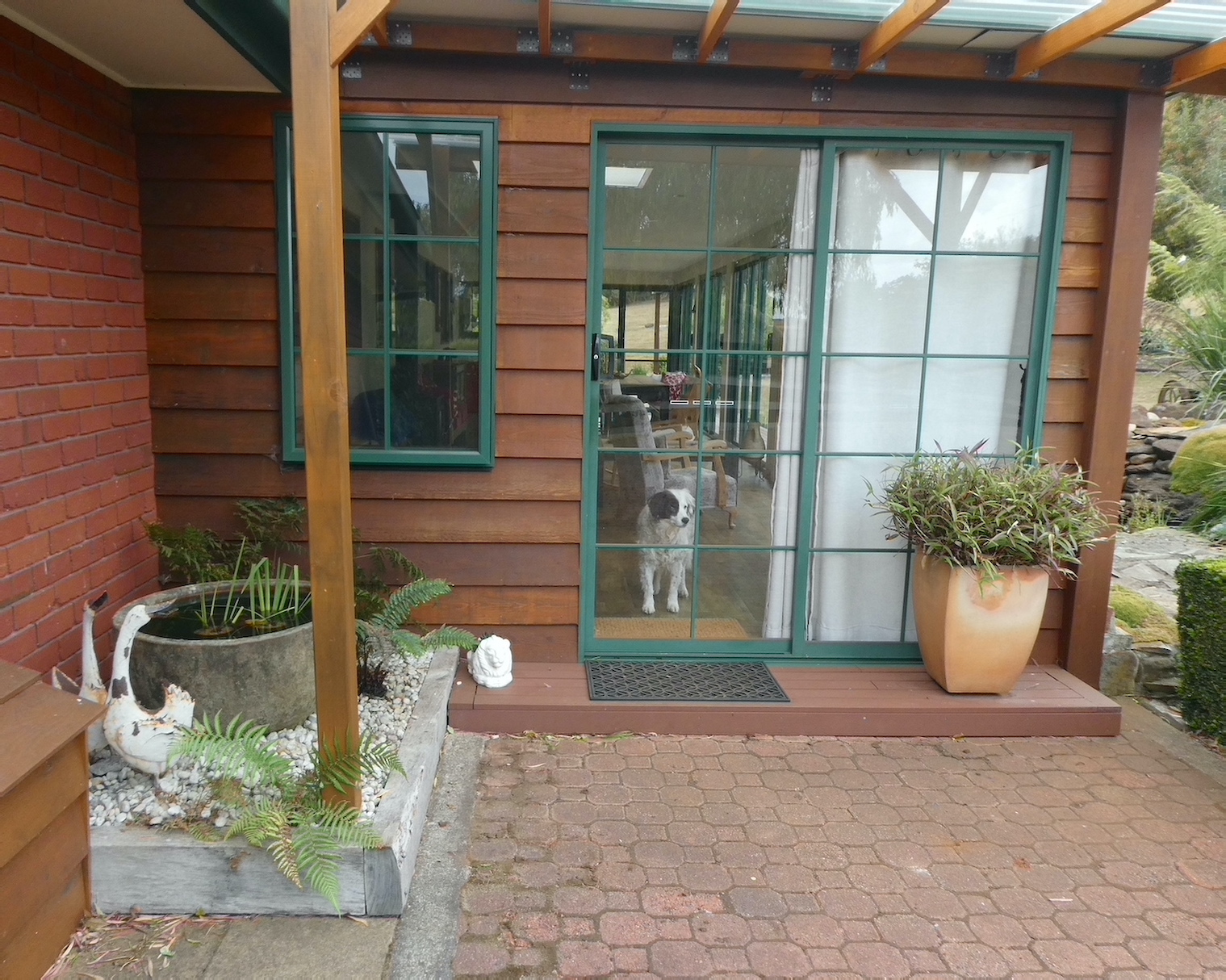
The pond plants and surrounding rocks were removed to expose the liner

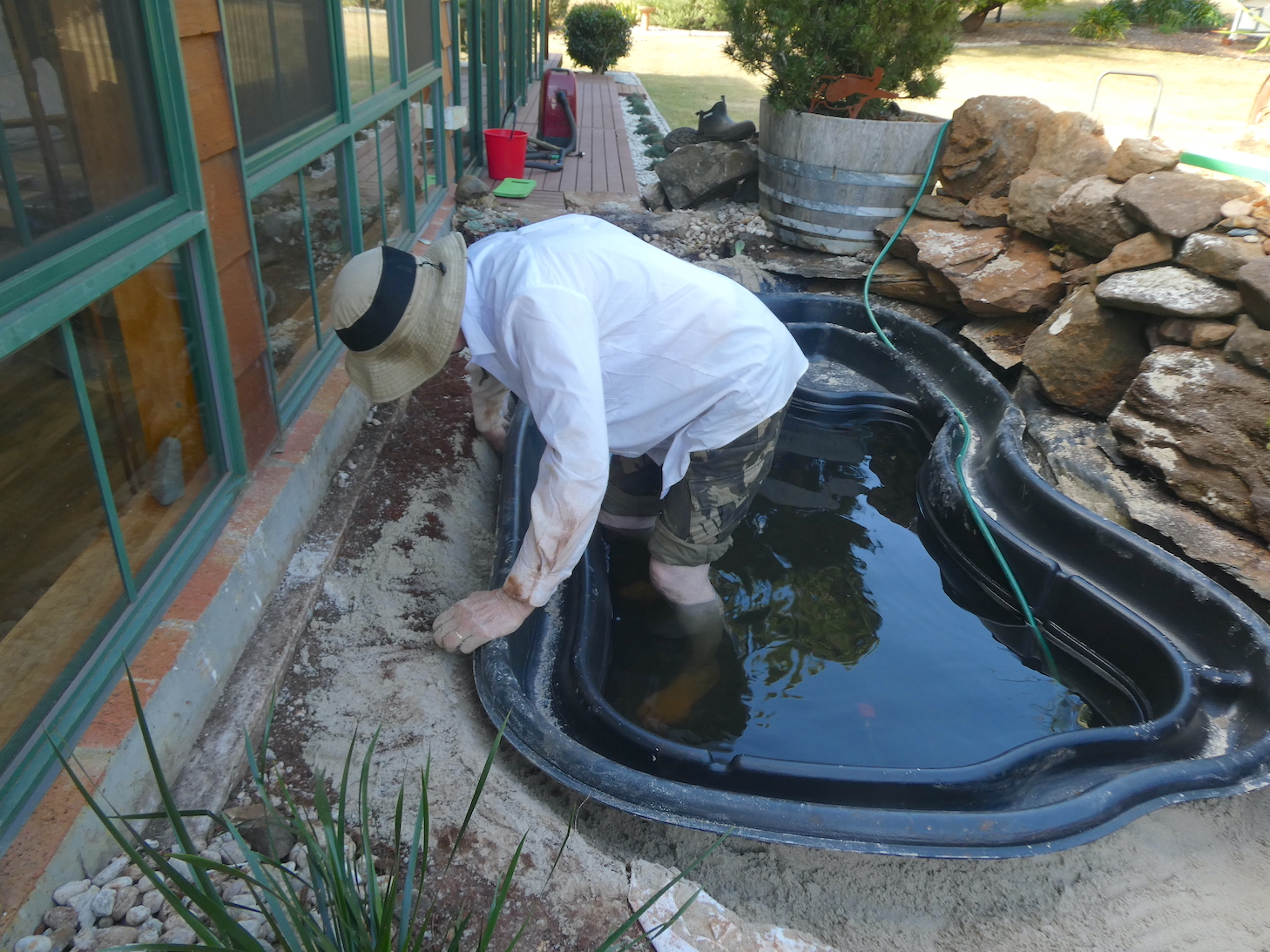
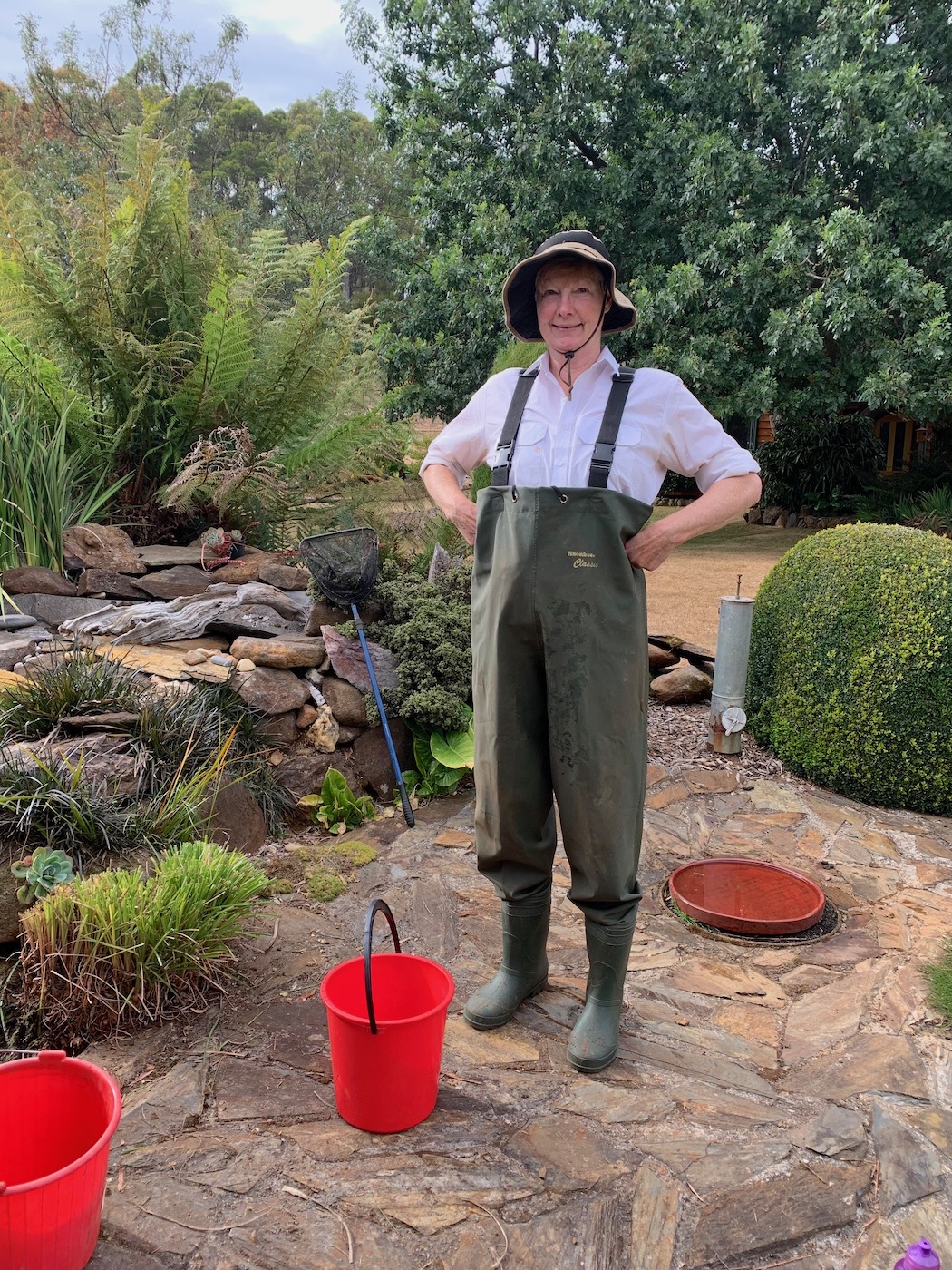
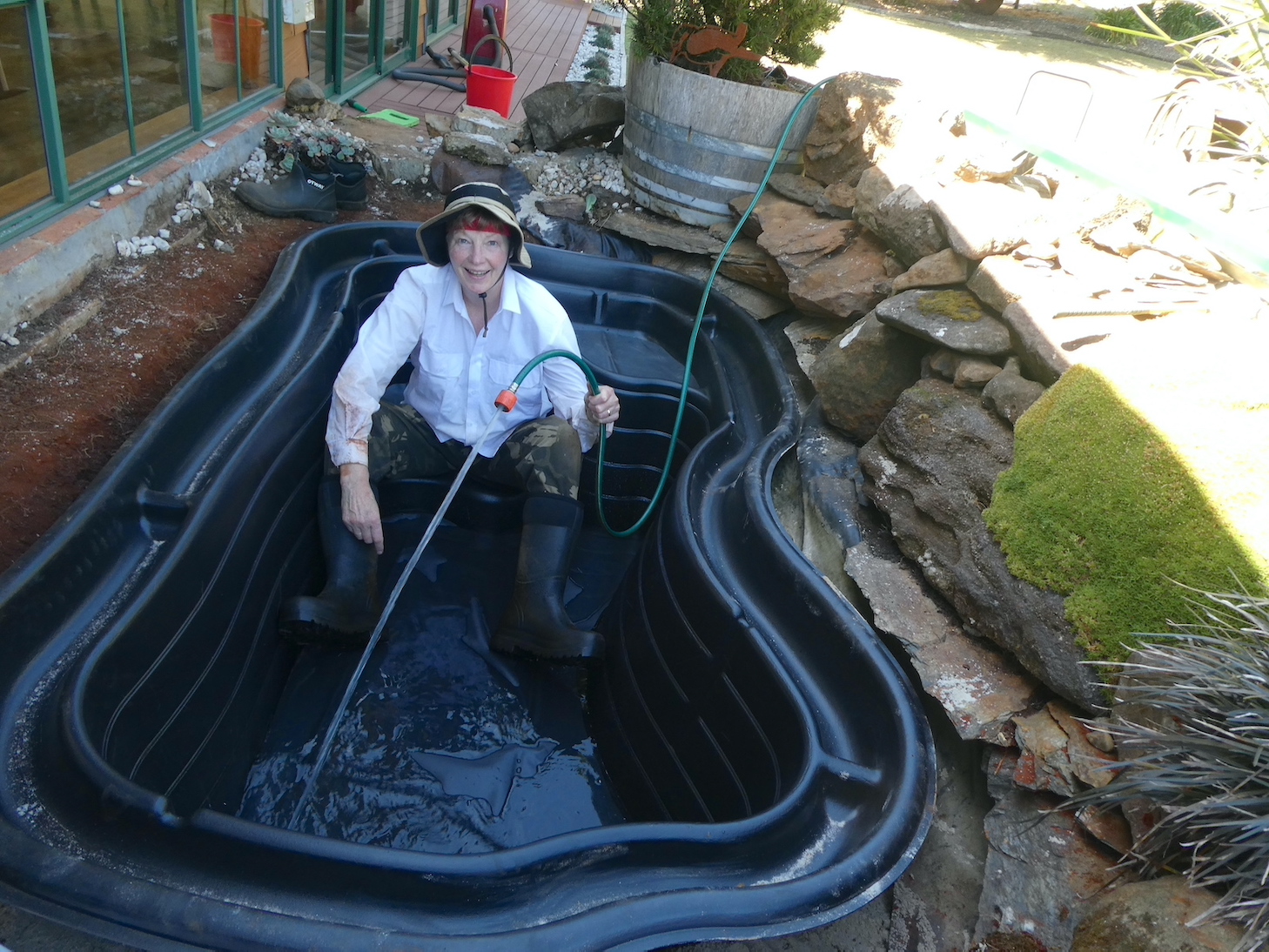
before I donned the appropriate outfit to bucket out the water which Michael diligently distributed around the garden (we were having a very dry summer).
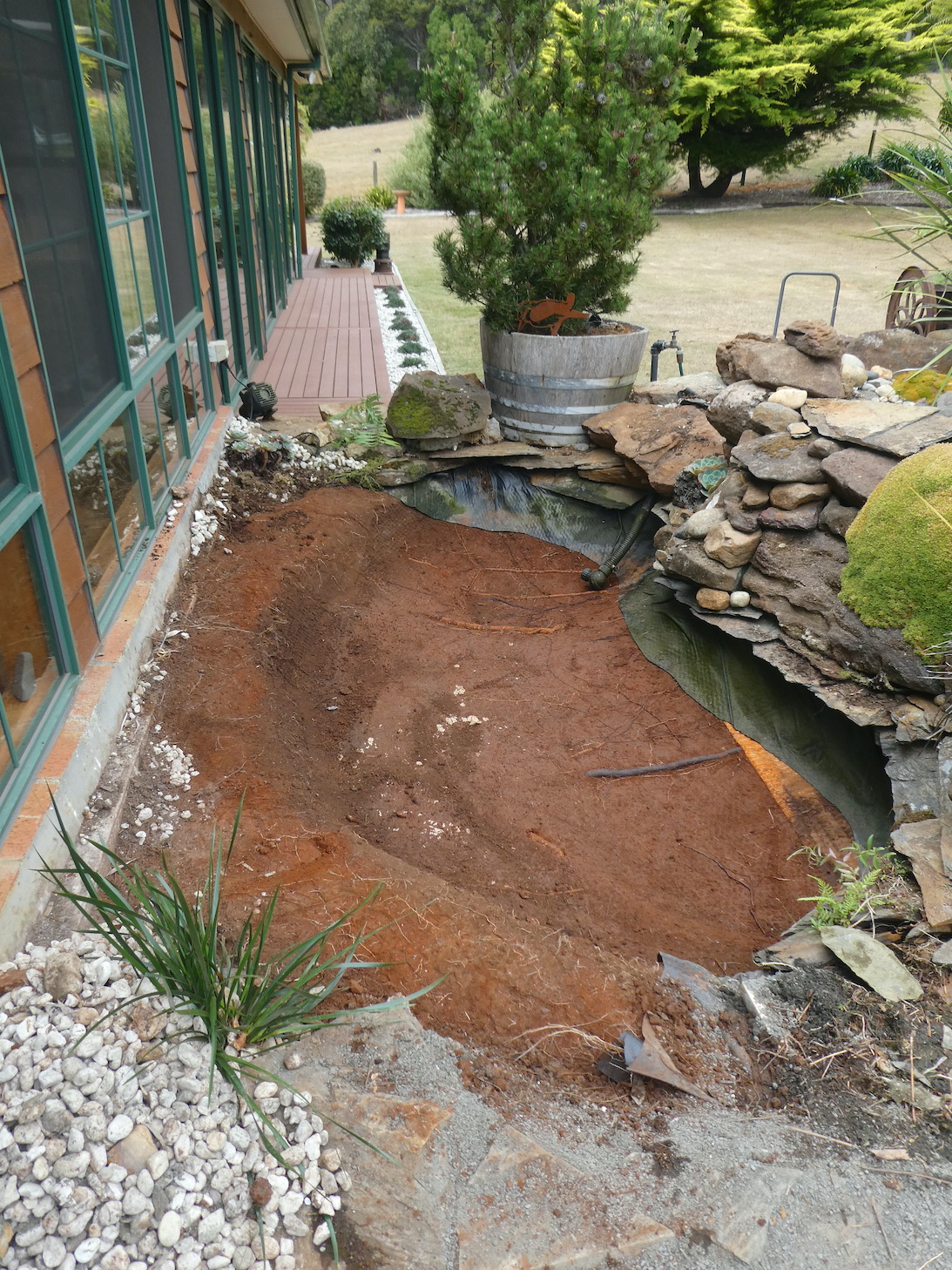
We pulled the old liner out (which did, indeed, have an obvious split)
and tried the new pond for size.
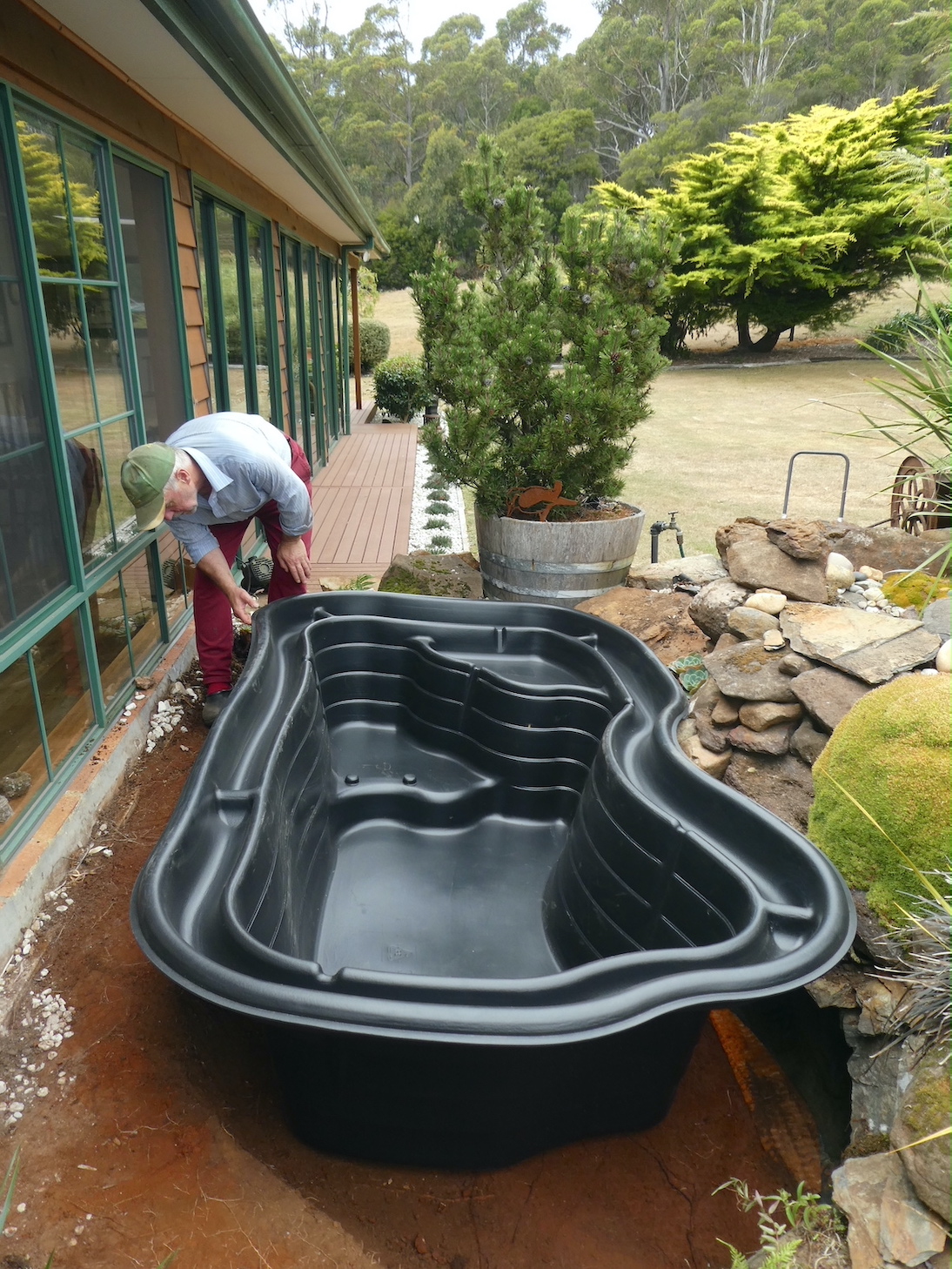
Hoping to not encounter tree roots, the digging commenced.

With periodic fittings, and no underground impediments, the site was ready.

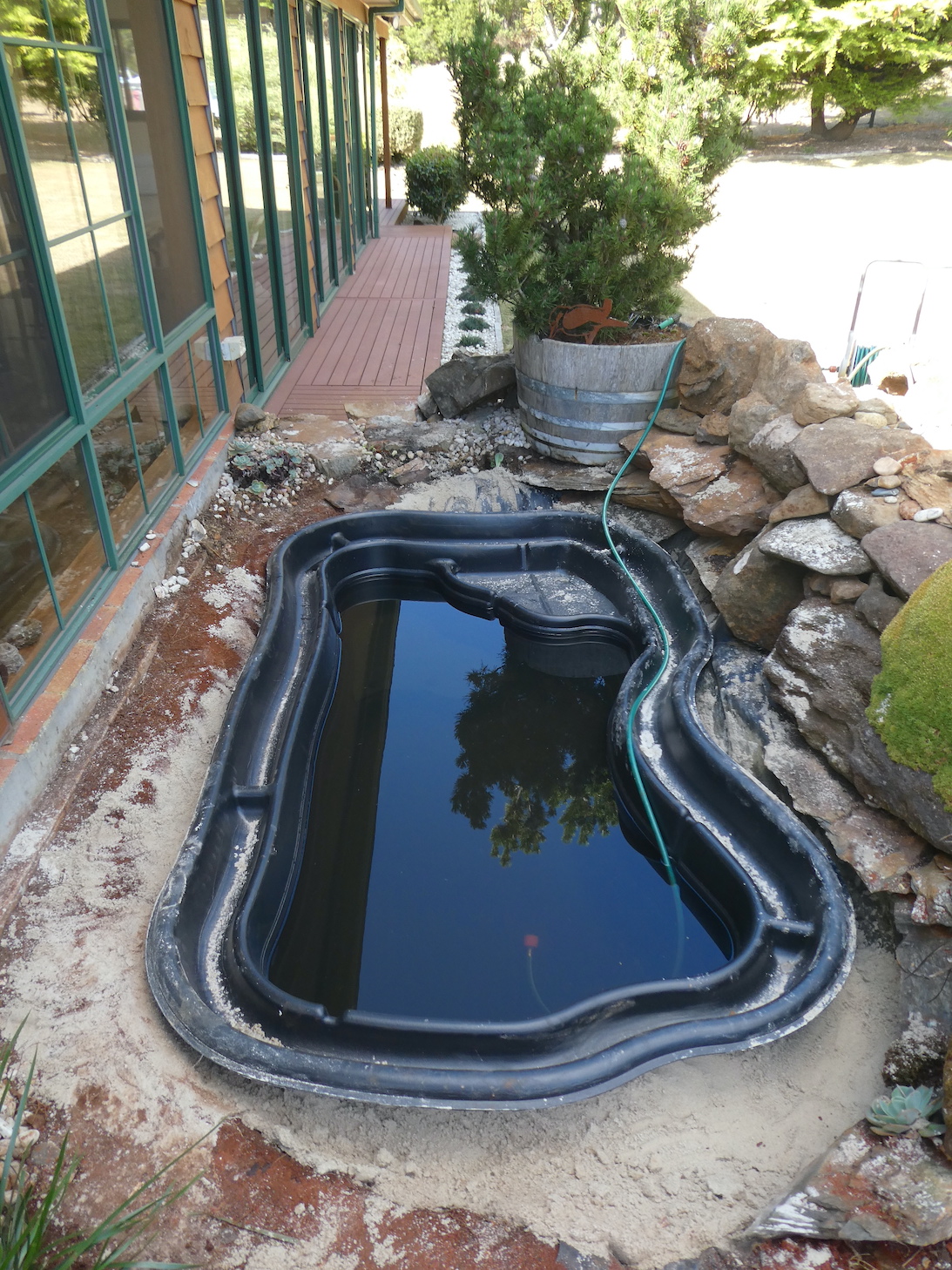
With a trailer load of sand on standby, the base was prepared

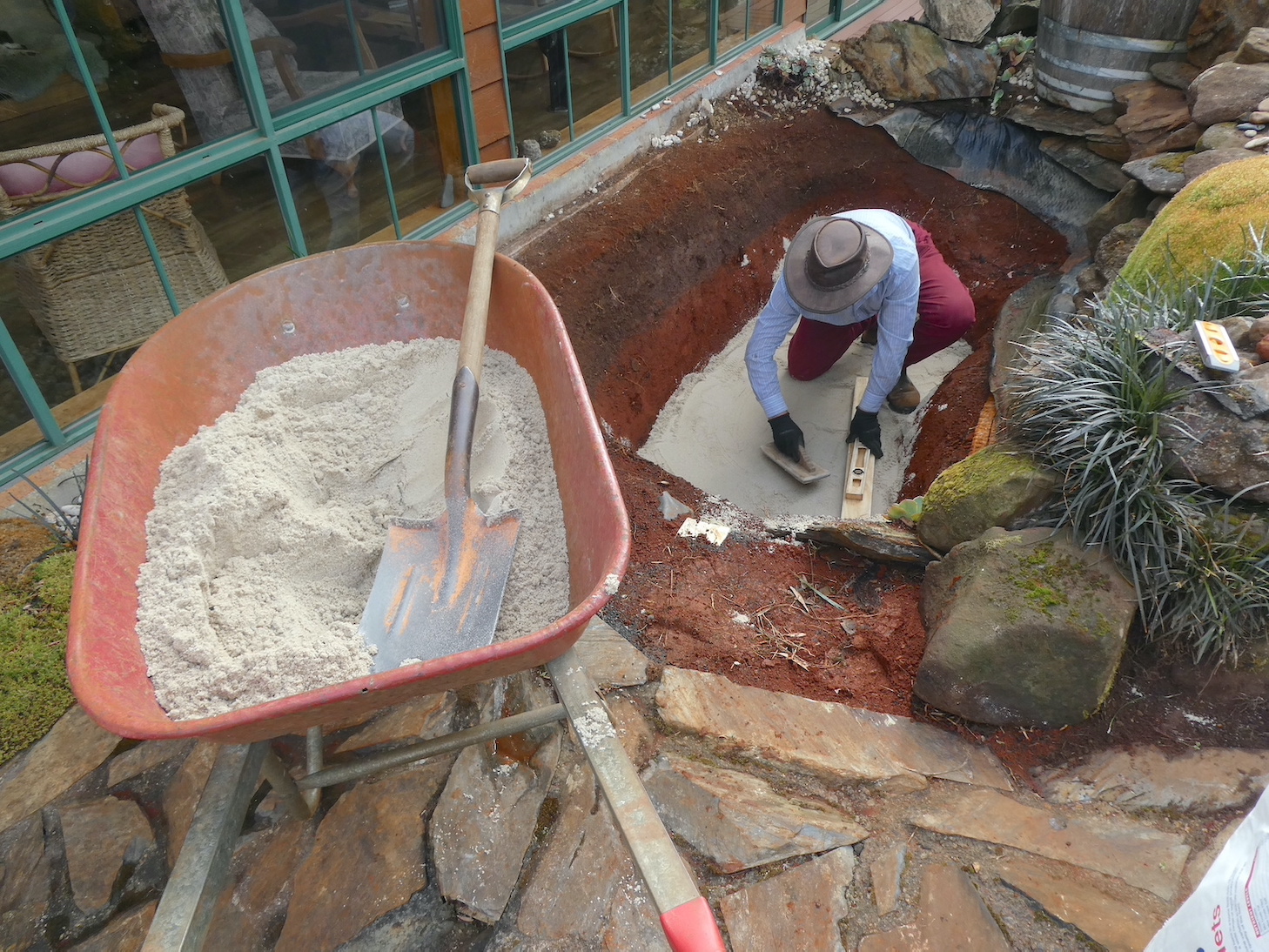
and the pond lined with plastic to protect it from the river stones.

Once levelled,

the task of packing the sand around the outside began. Between us, we came up with an ingenious plan to convey the sand into the tight spaces – a funnel made from a chook feed bag and a ring of builders strapping.
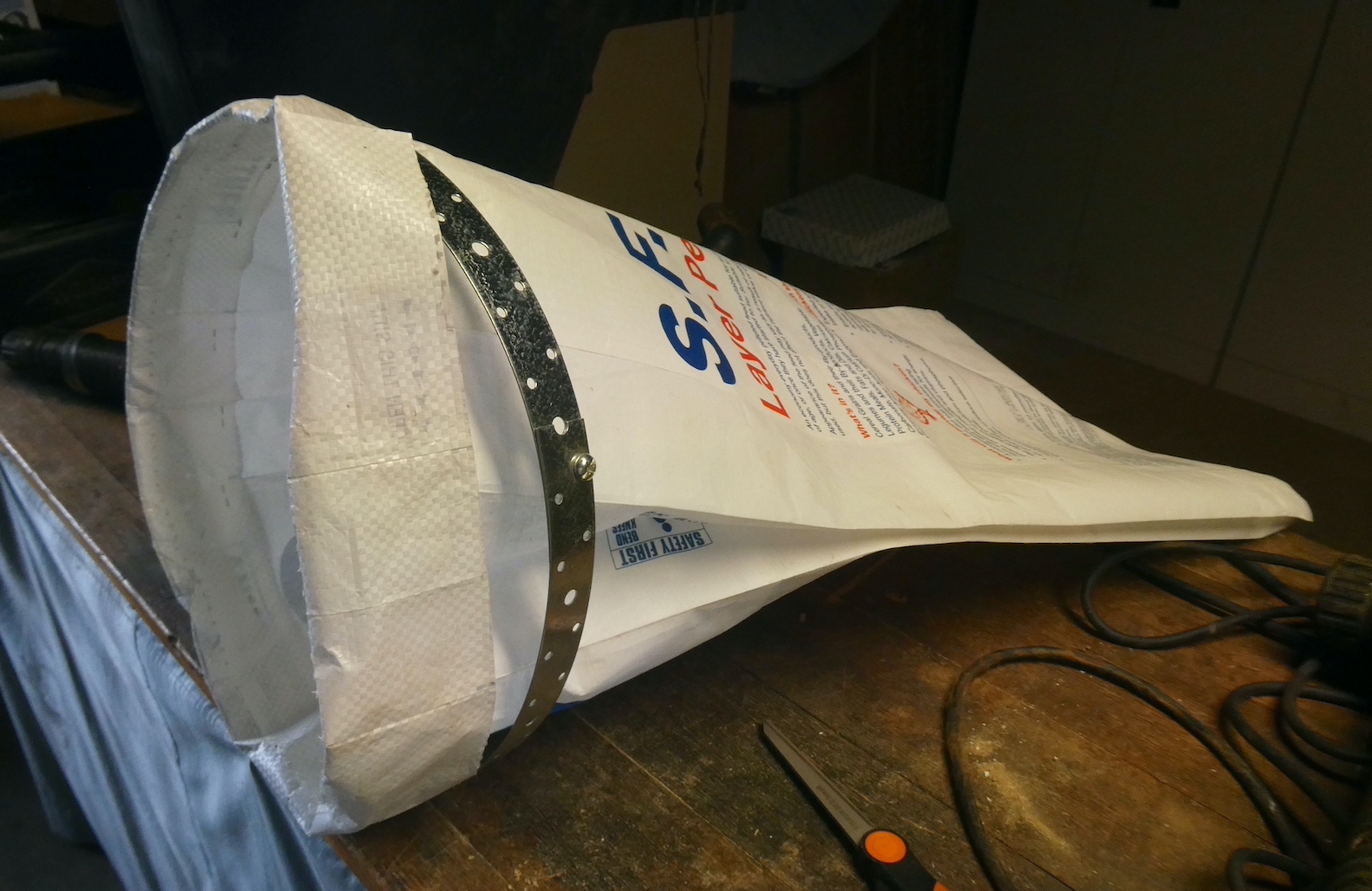
It worked brilliantly.

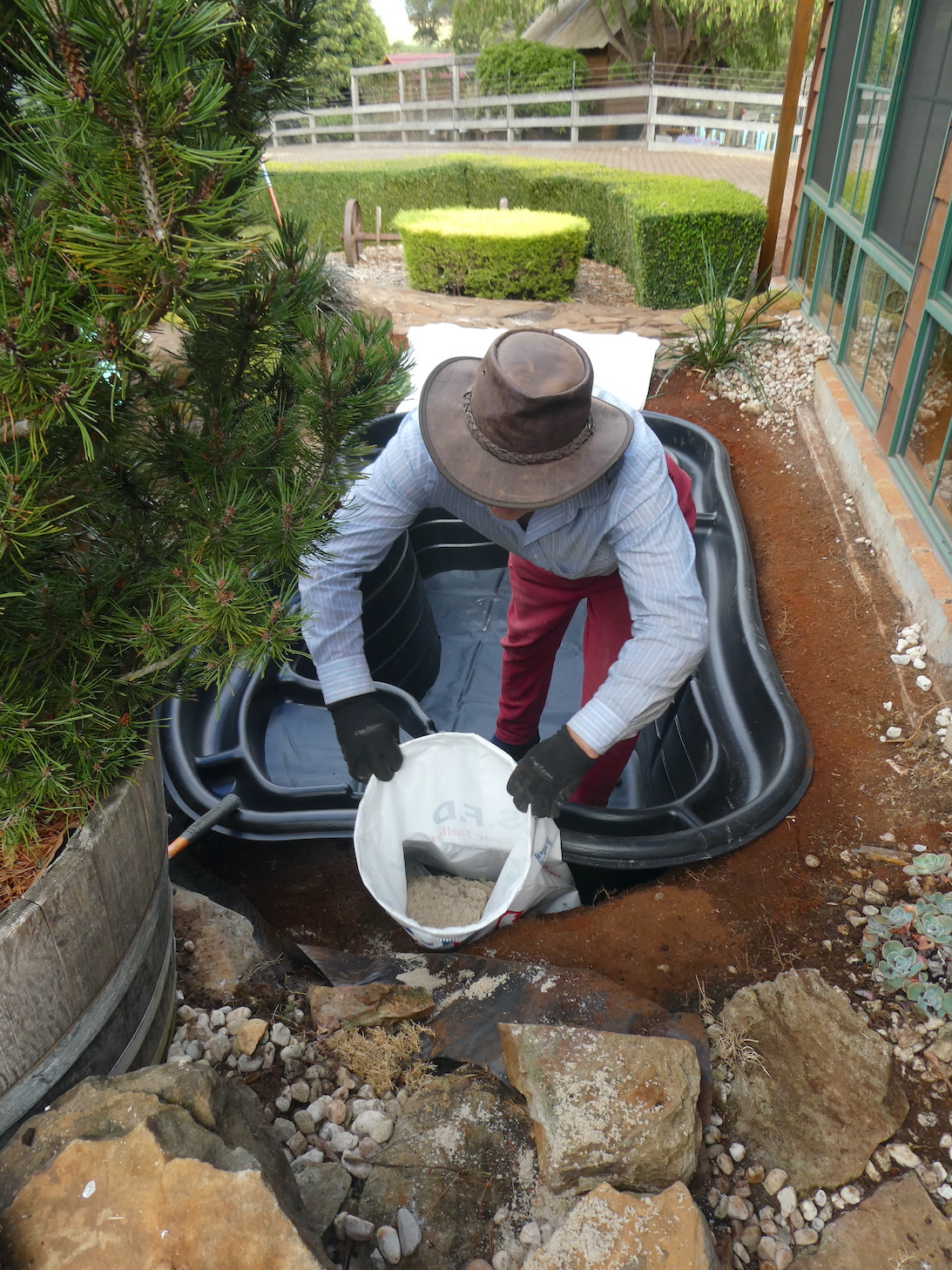
We had been advised to pack some sand, then fill some water and repeat in stages to avoid distortion of the pond shell.

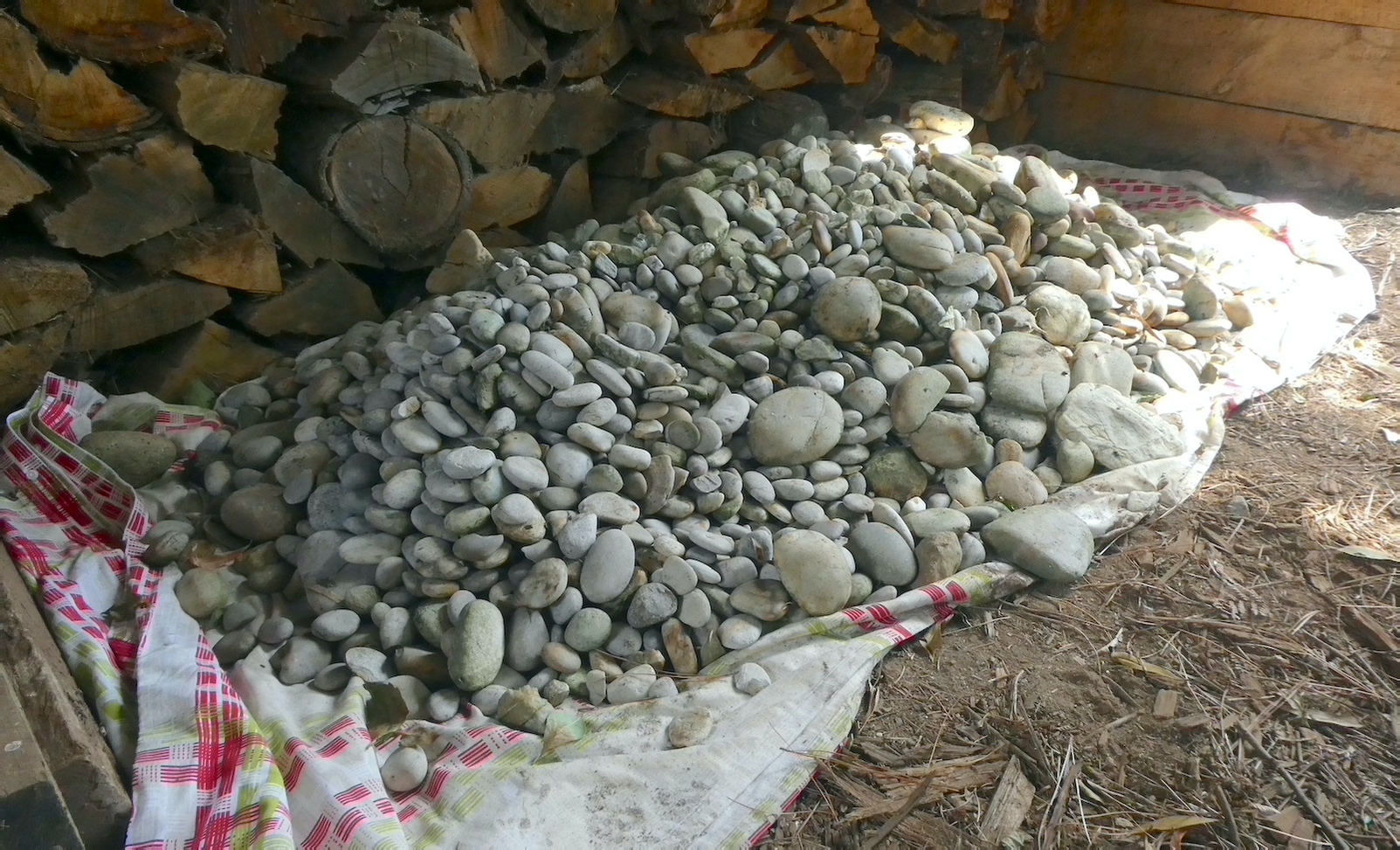
The river stones from the old pond had been saved and I spent some time sorting them
while Michael repotted the plants.

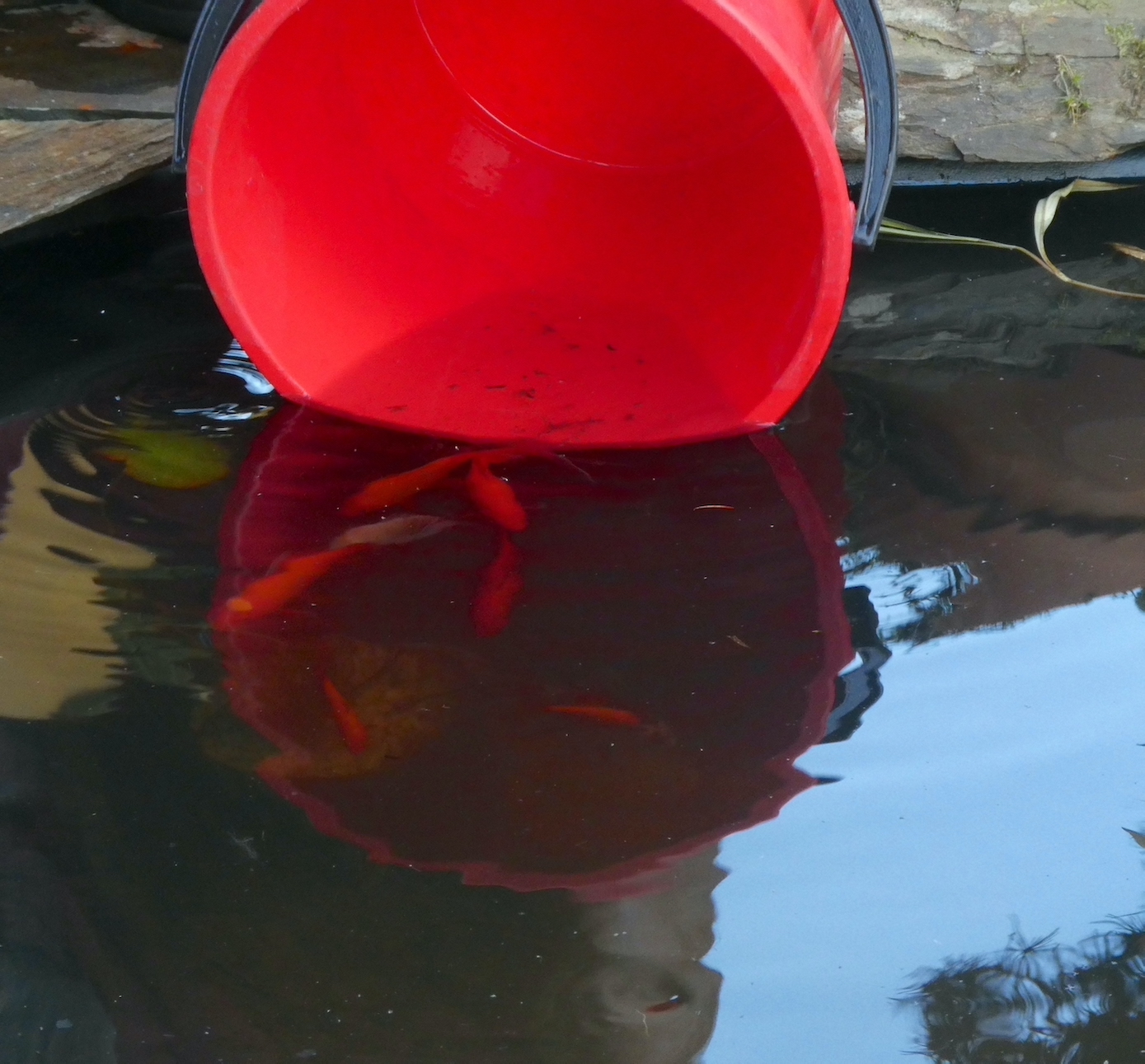
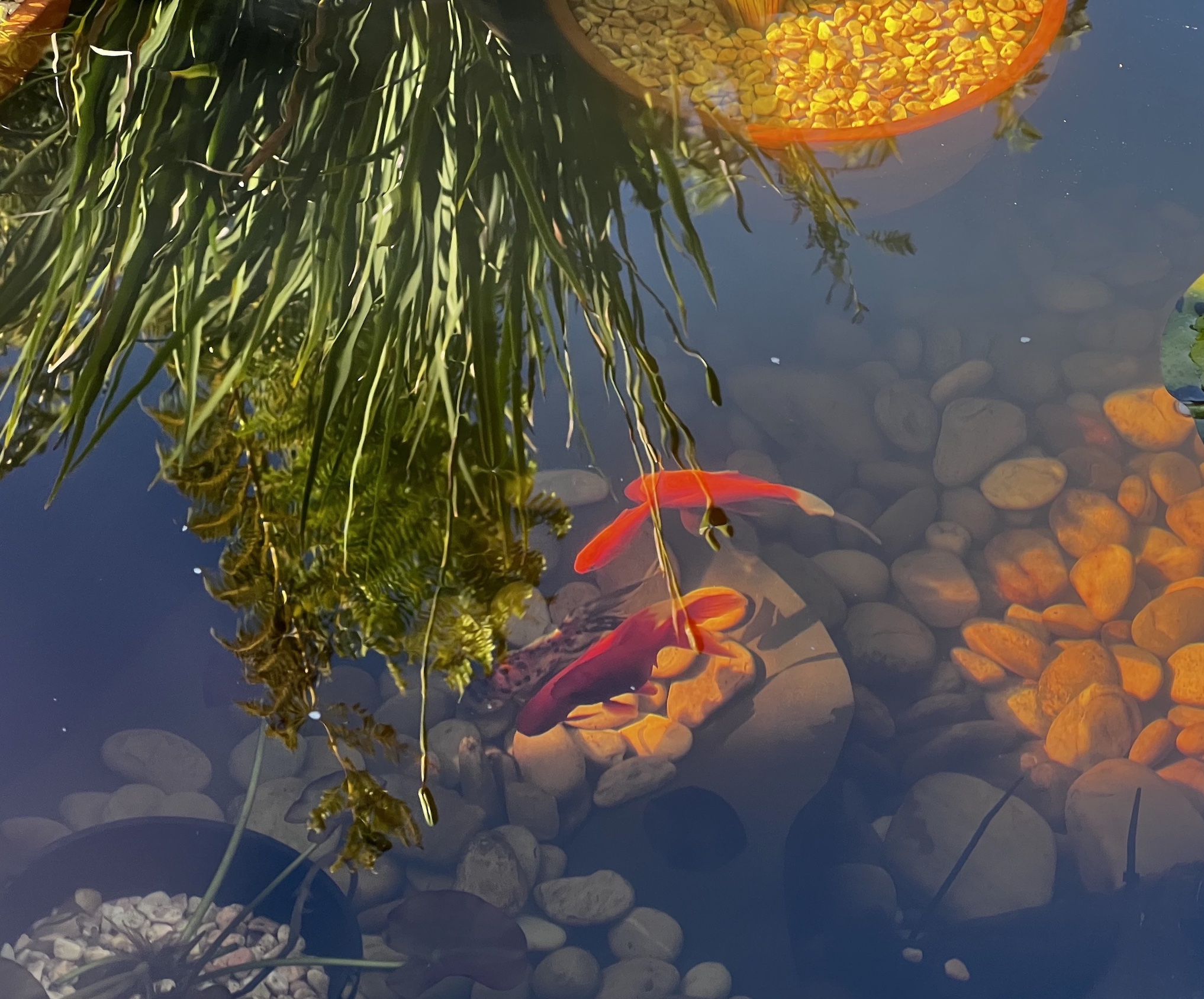
The fish were returned to their new home, along with the plants
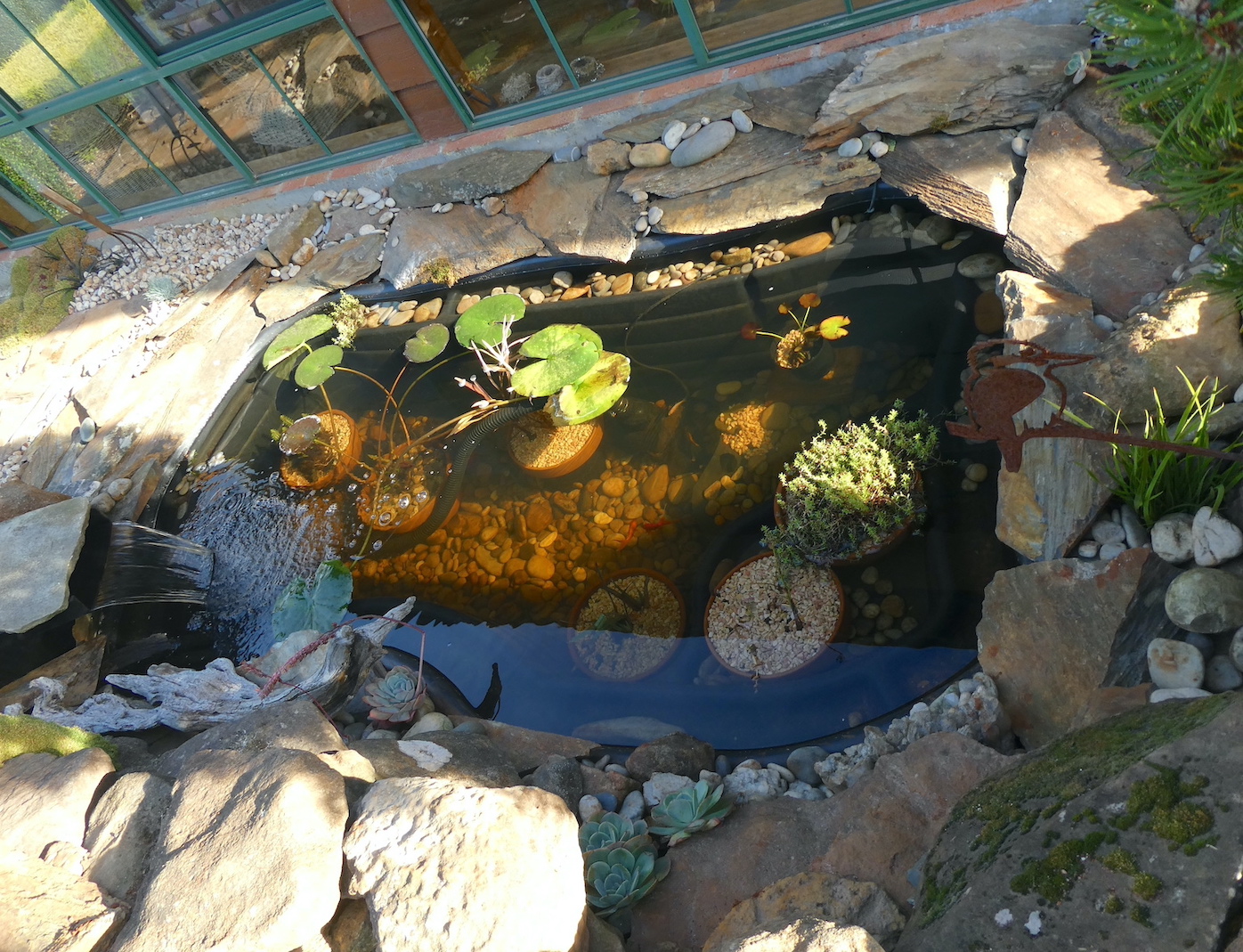
and a new cascade perfected the picture.

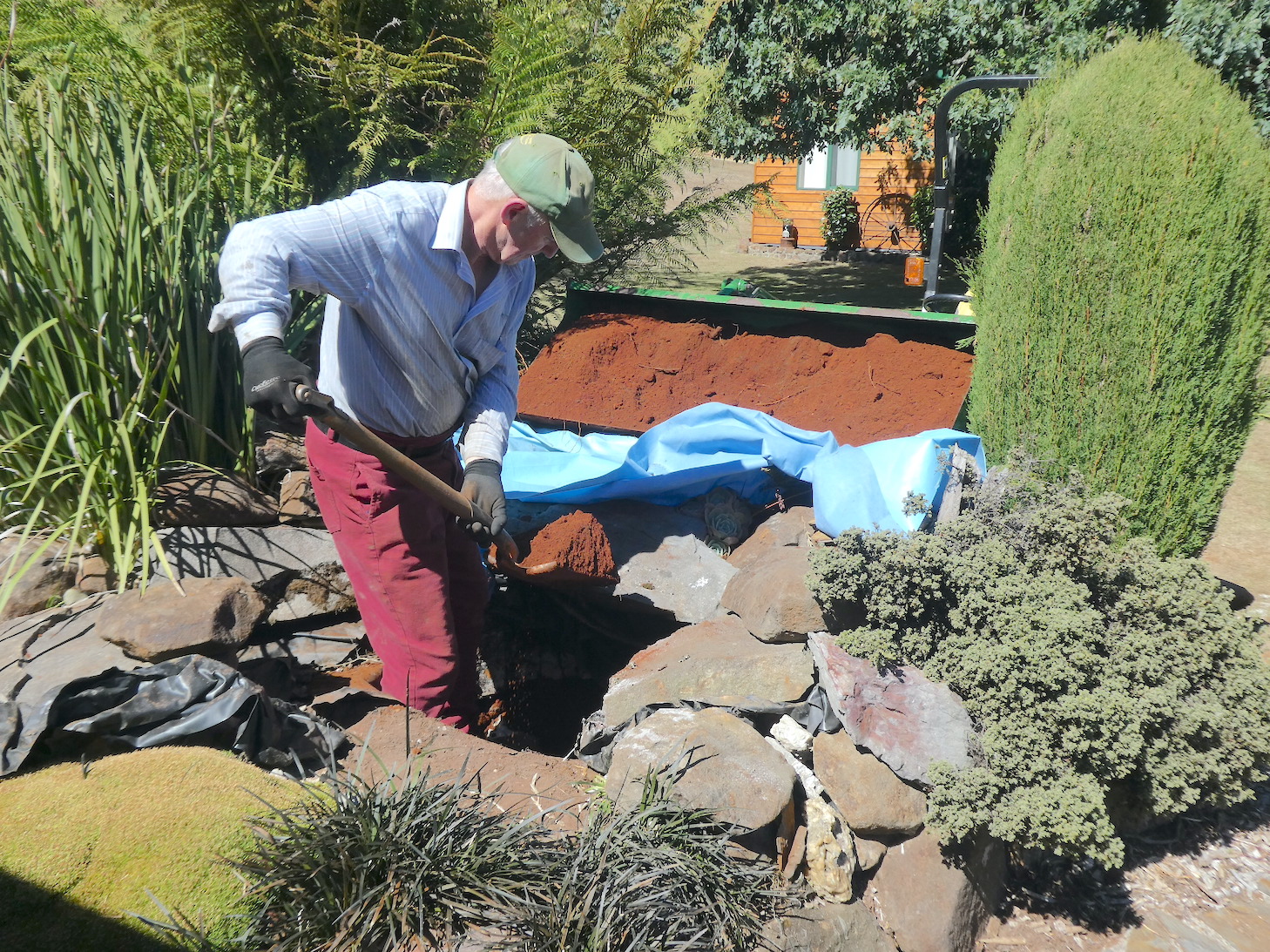
We then set about filling in the top pond,
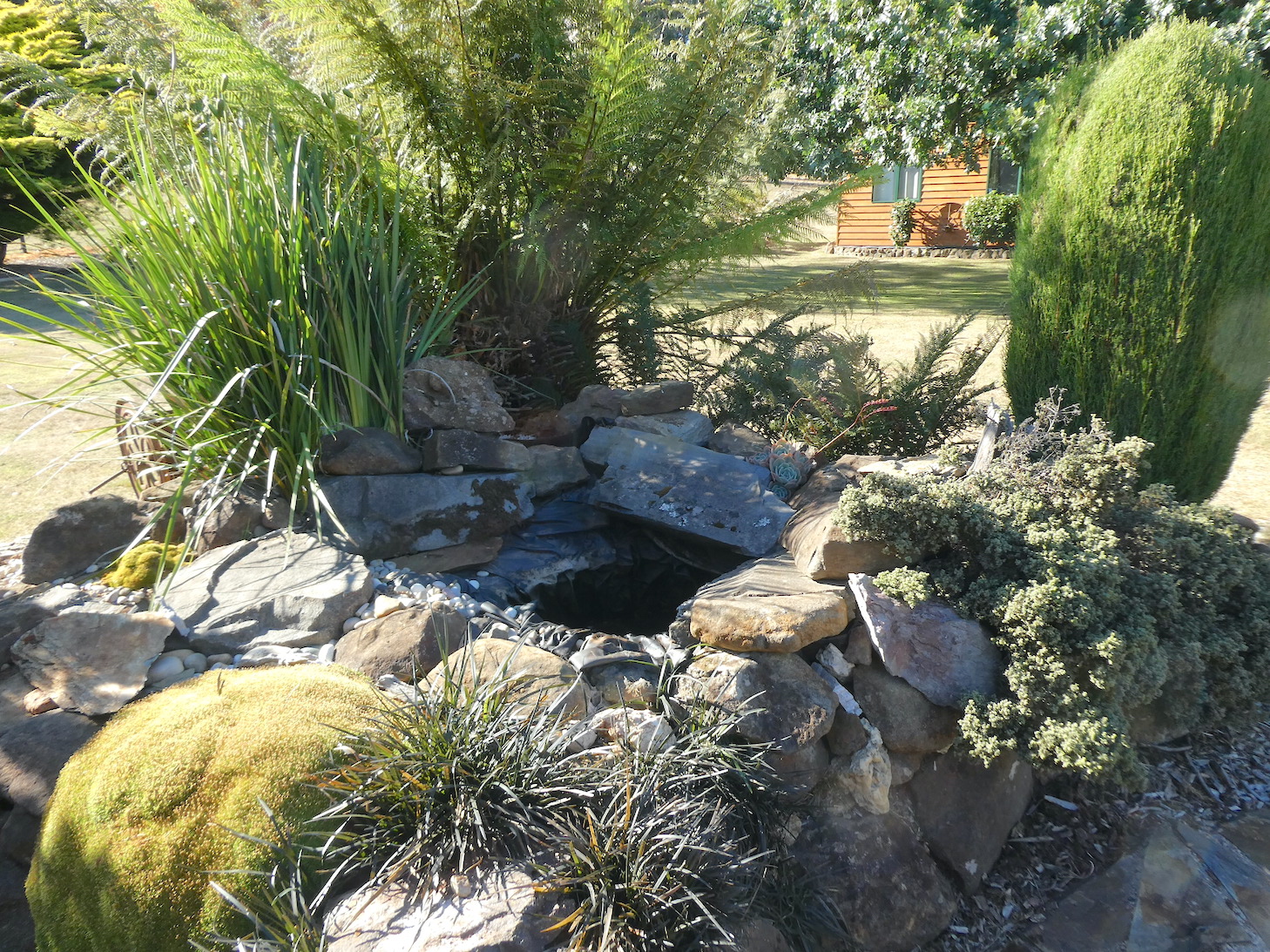
and after some further landscaping,

declared the project finished.
grand greenhouse

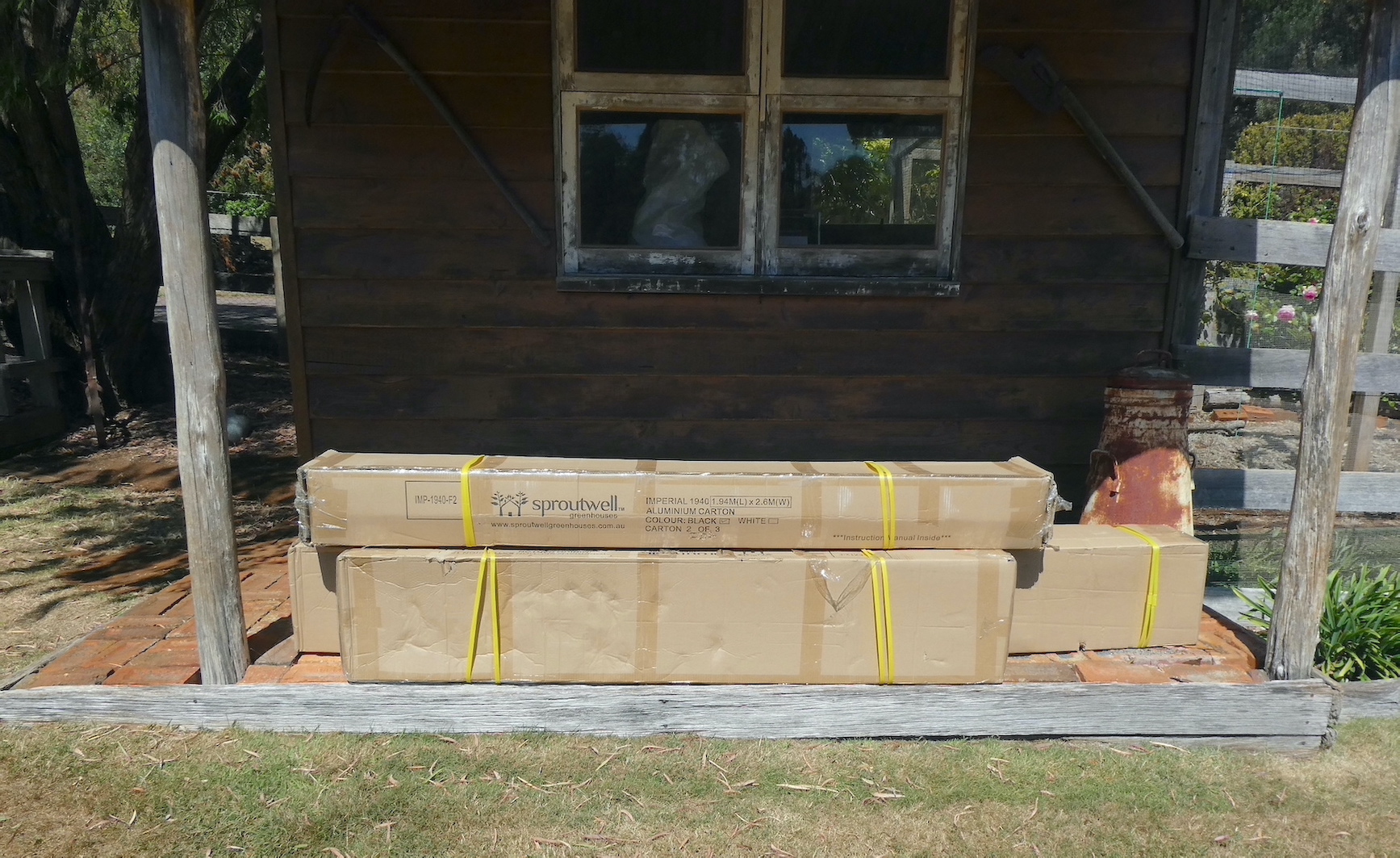
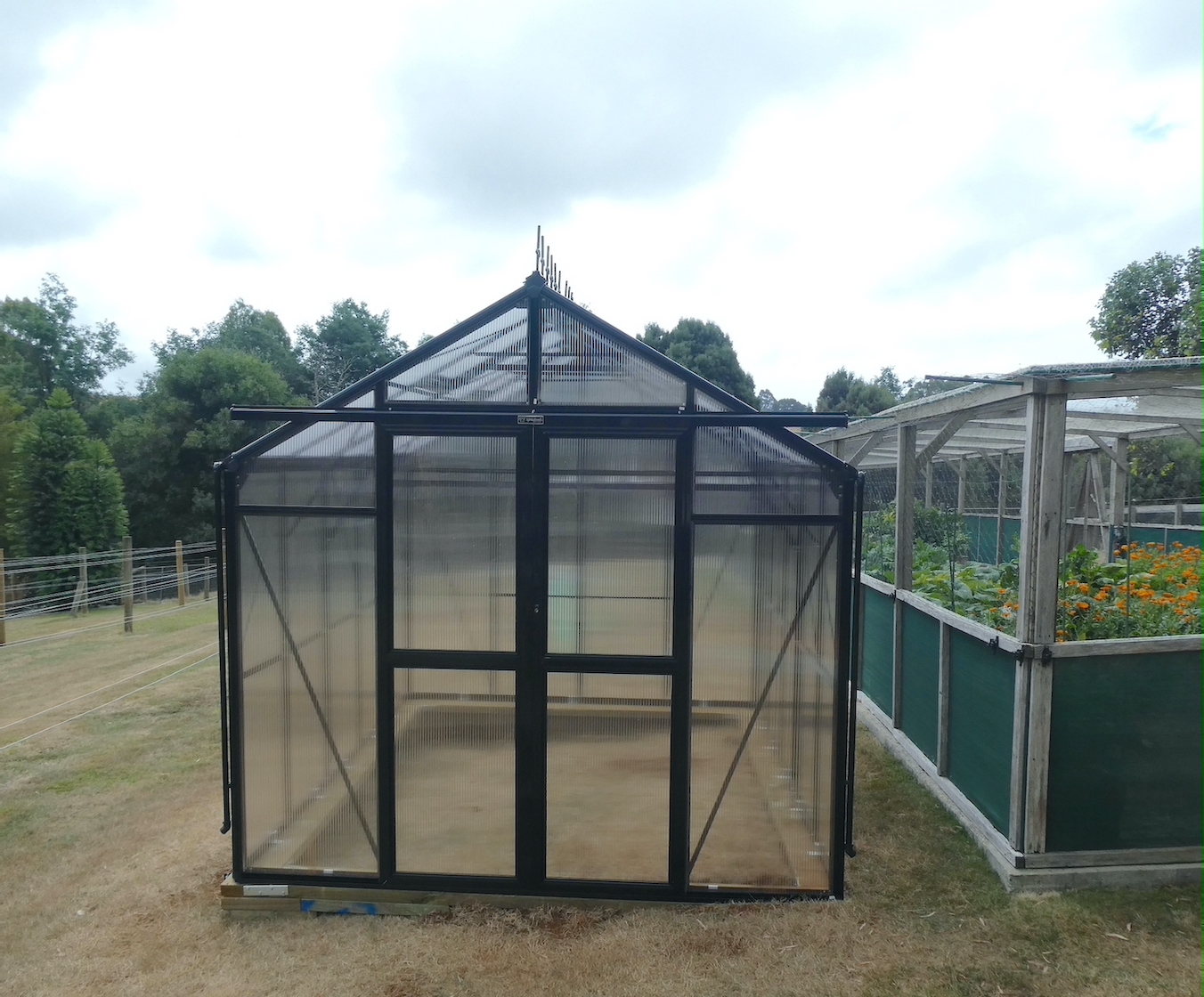
Although our veggie patch is prolific through summer, it tends to be somewhat limited once the colder months descend. After much contemplation, we took the plunge and ordered a greenhouse last February.

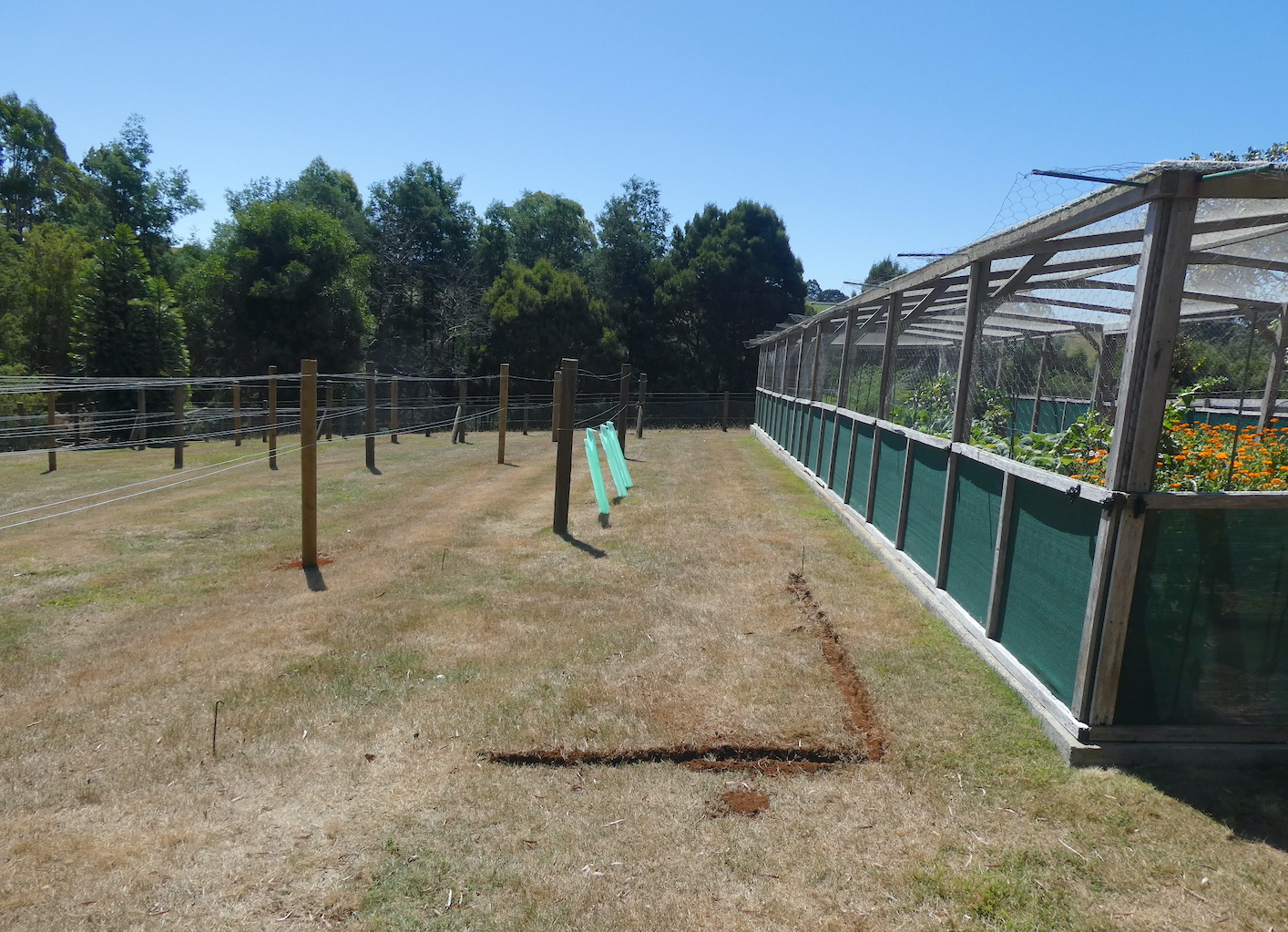
We chose a site adjacent to the vegetable enclosure with the potting shed and running water close by.

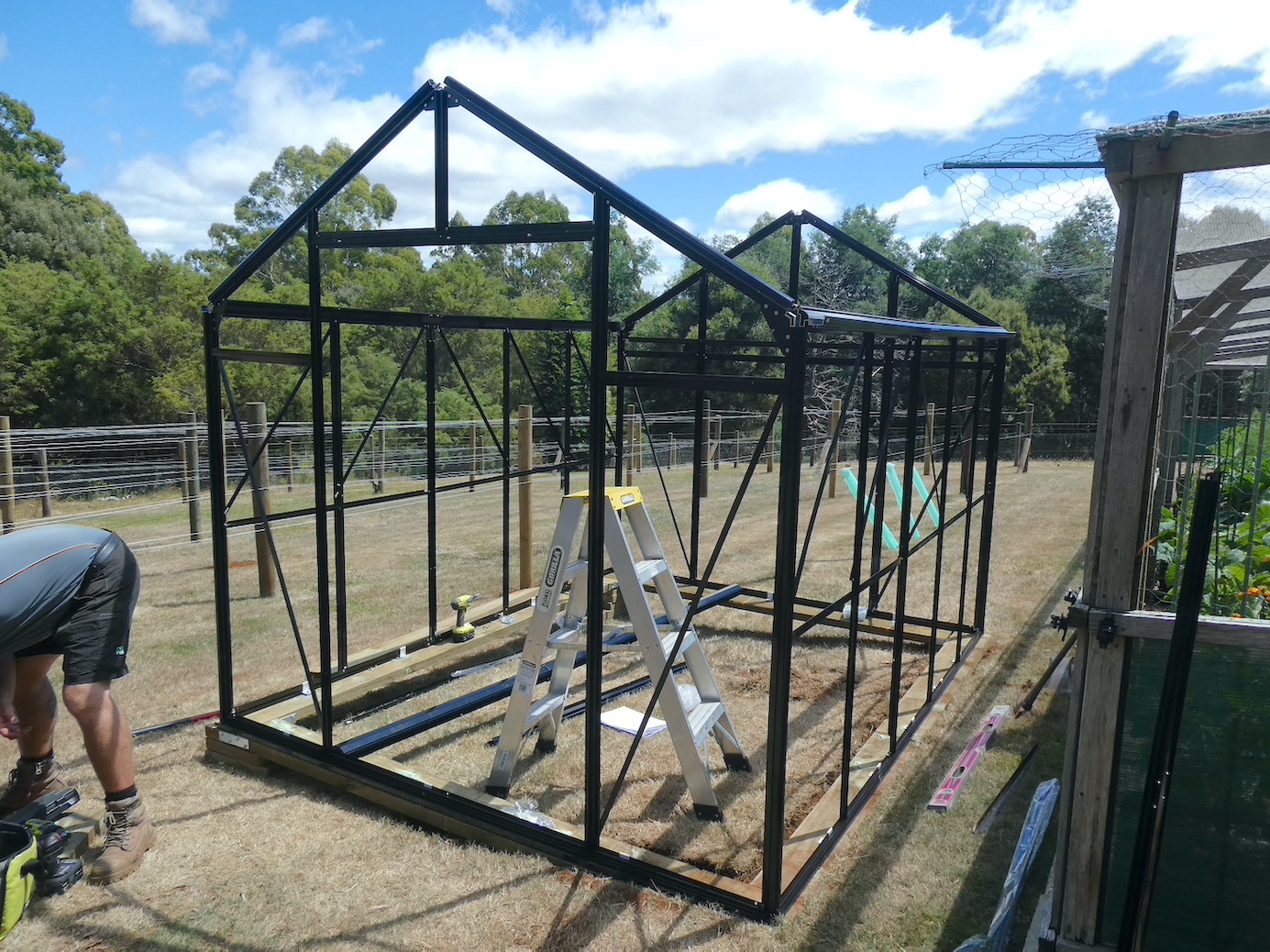
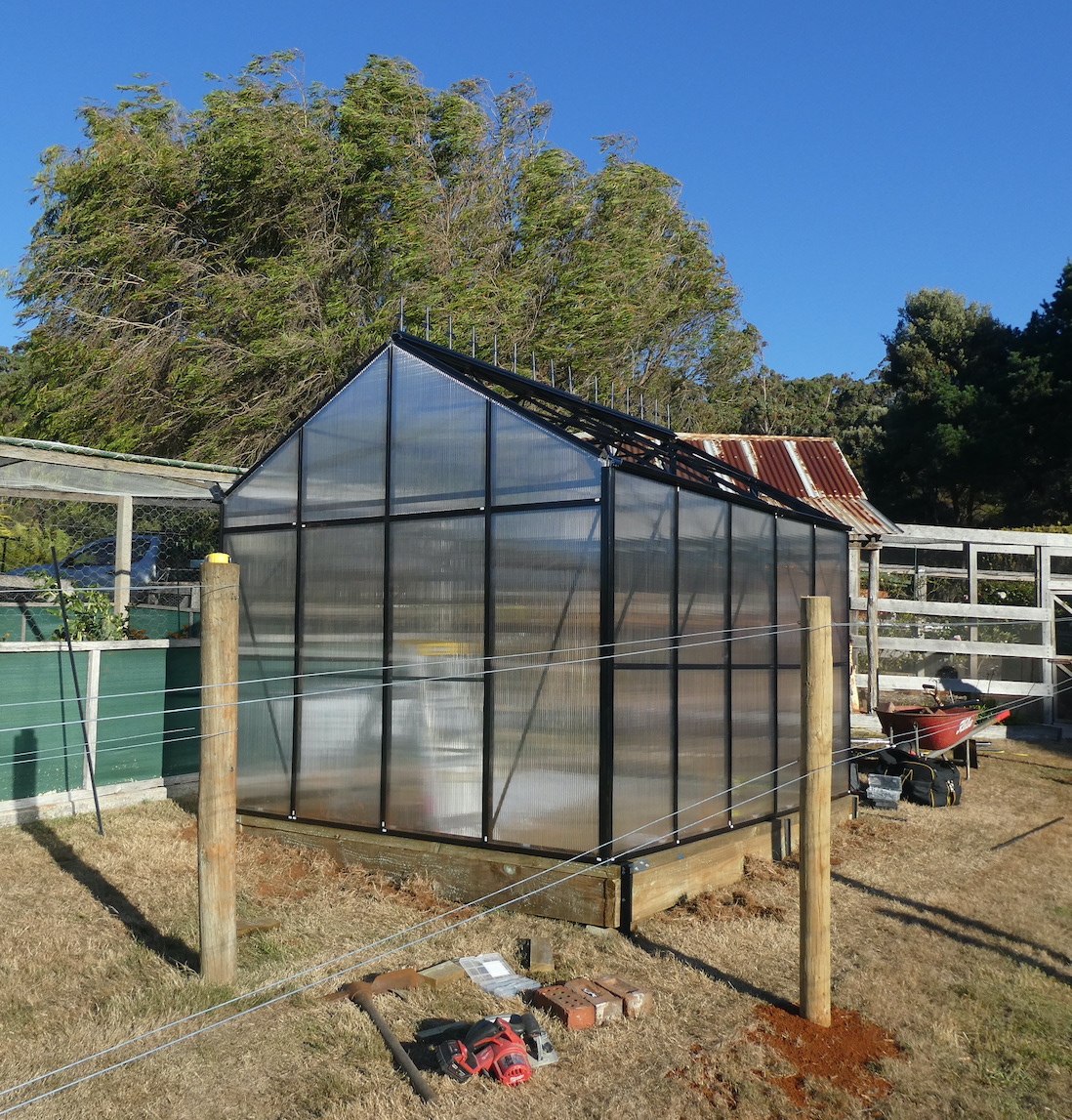
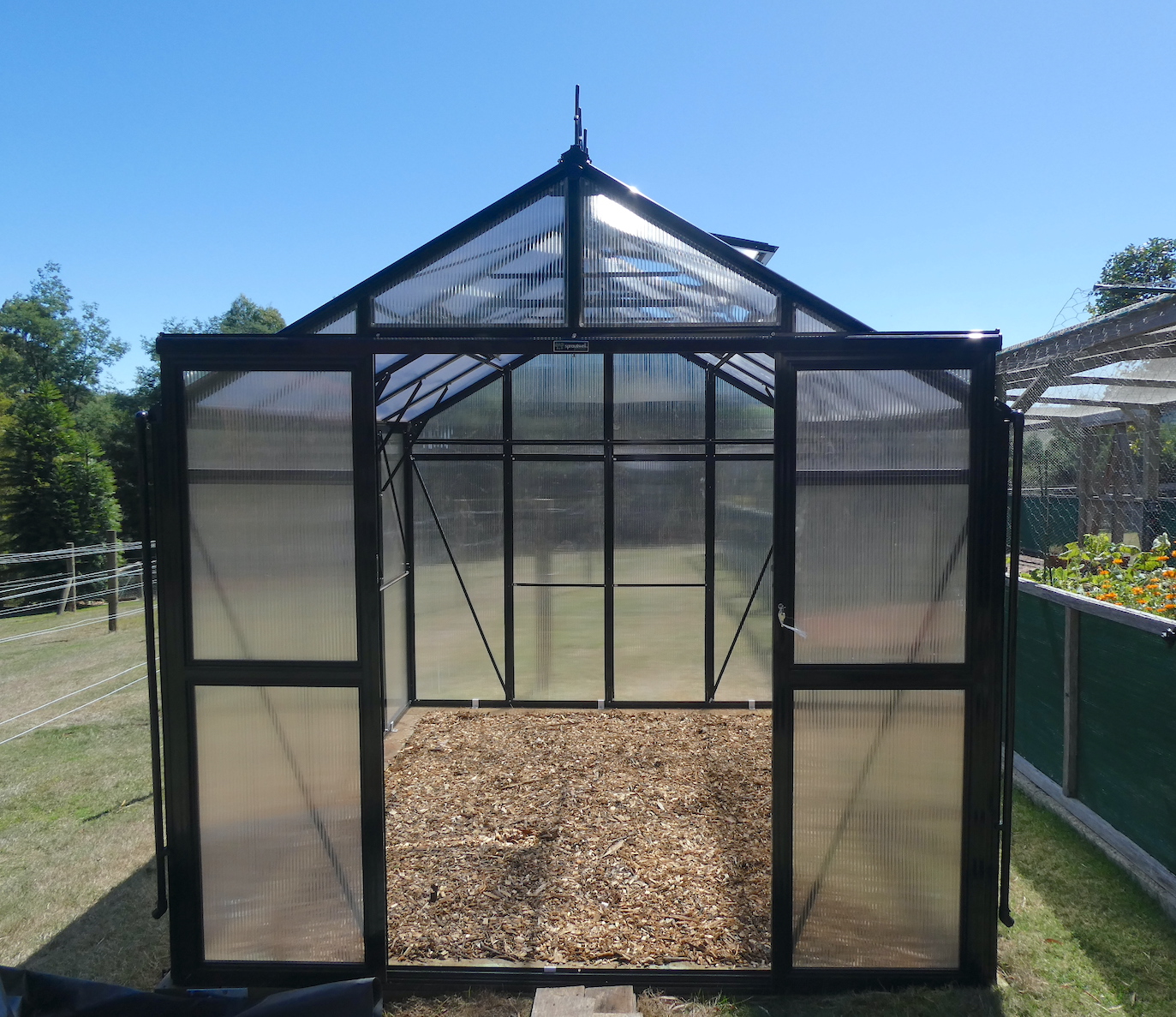
We have found that self-build is not always the easy option, with dubious instructions and missing pieces and so, we relied on those with prior experience. Even so, it took a little longer than the one day allocated to finish but the result was worth it.

We brought in a couple of scoops of earth for the base followed by a layer of blue metal to assist with drainage and a topping of mulch that can be watered down to increase humidity.

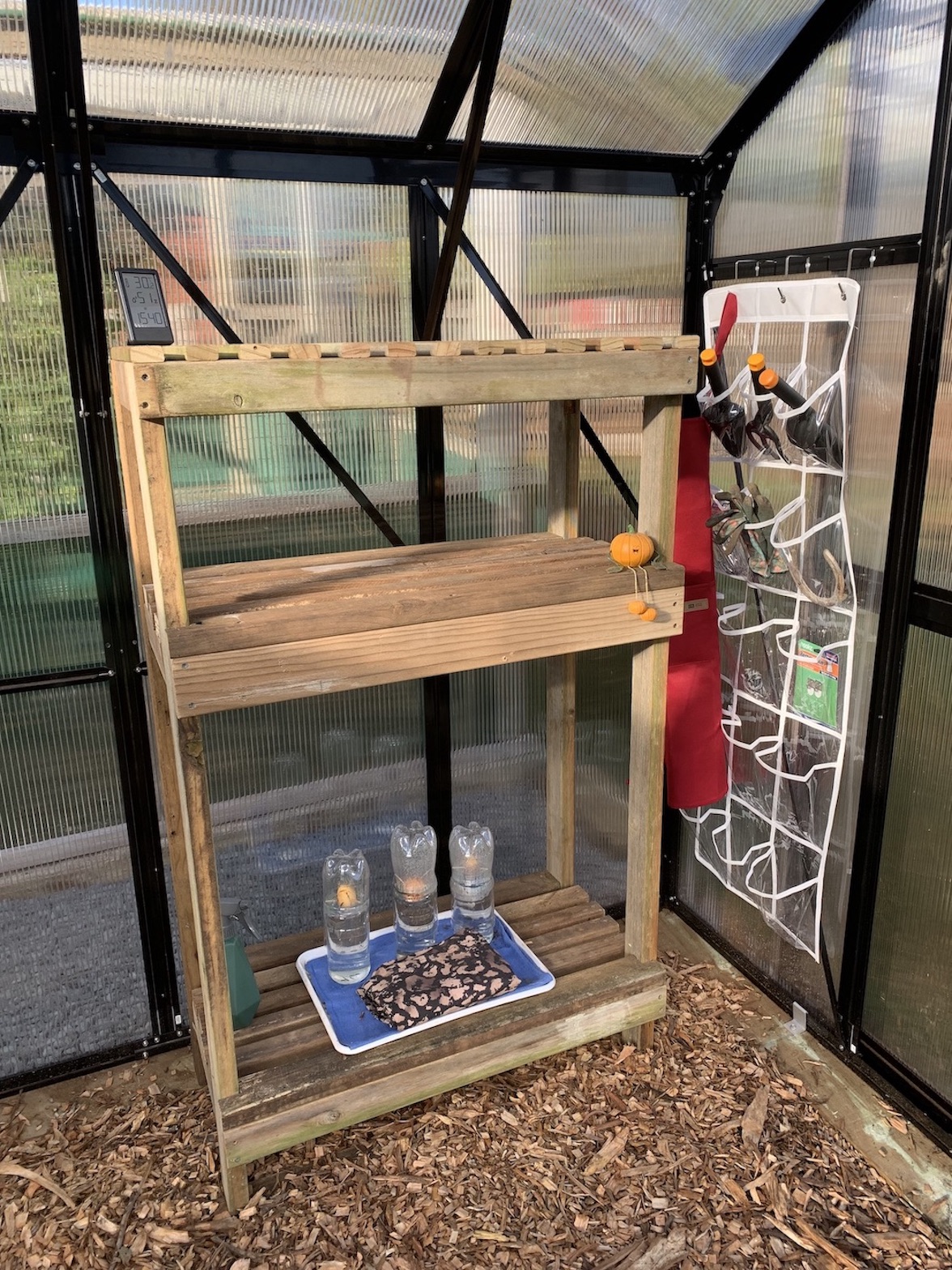
Michael constructed a staging shelf out of reclaimed timbers

and we bought raised beds to fill the rest of the space. Once we realised how high the temperature reaches, we installed a sunshade on the northern side.

A temporary trestle provided the perfect environment to cure the butternuts in May. I then store them on a shelf high in the  potting shed where they last for a good six months.

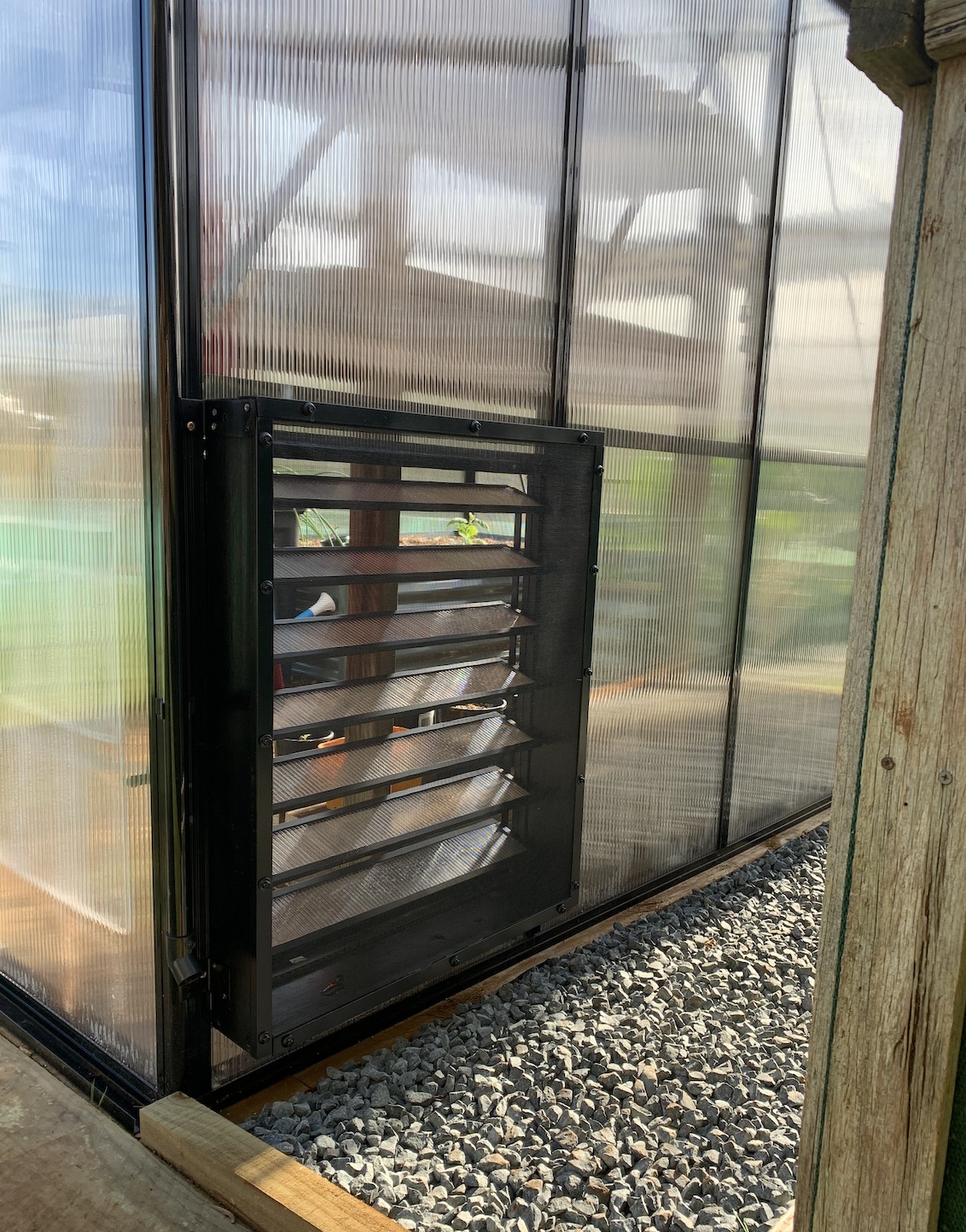
To help with temperature control, we added louvres to one of the panels and Michael cunningly created a screen to keep out creepy crawlies and resident reptiles.

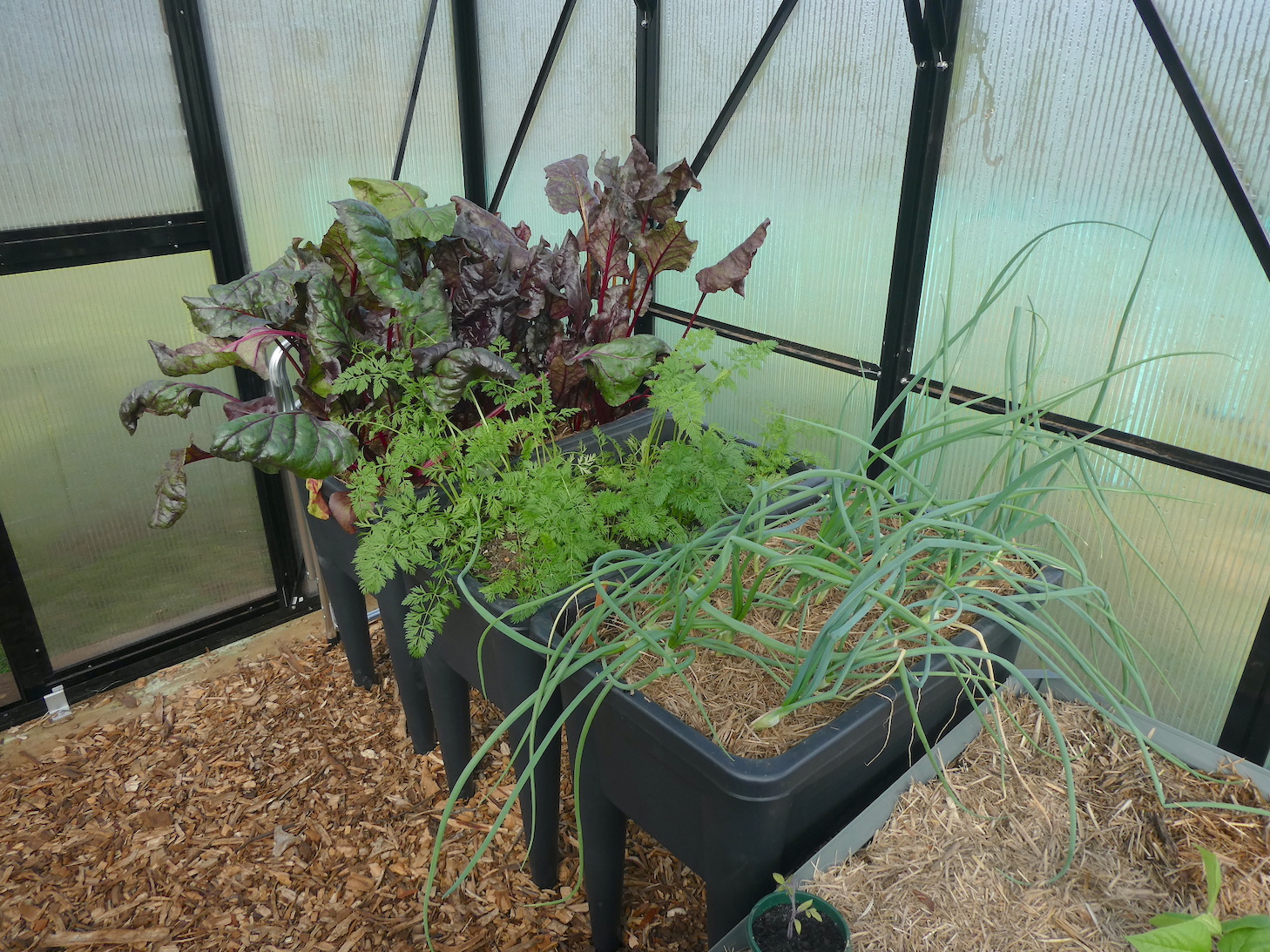
Being in the apprentice stage of greenhouse gardening, we weren’t sure which plants would be successful. We started with brassicas, beetroot, carrot, onion, capsicum, butternut and bush bean.

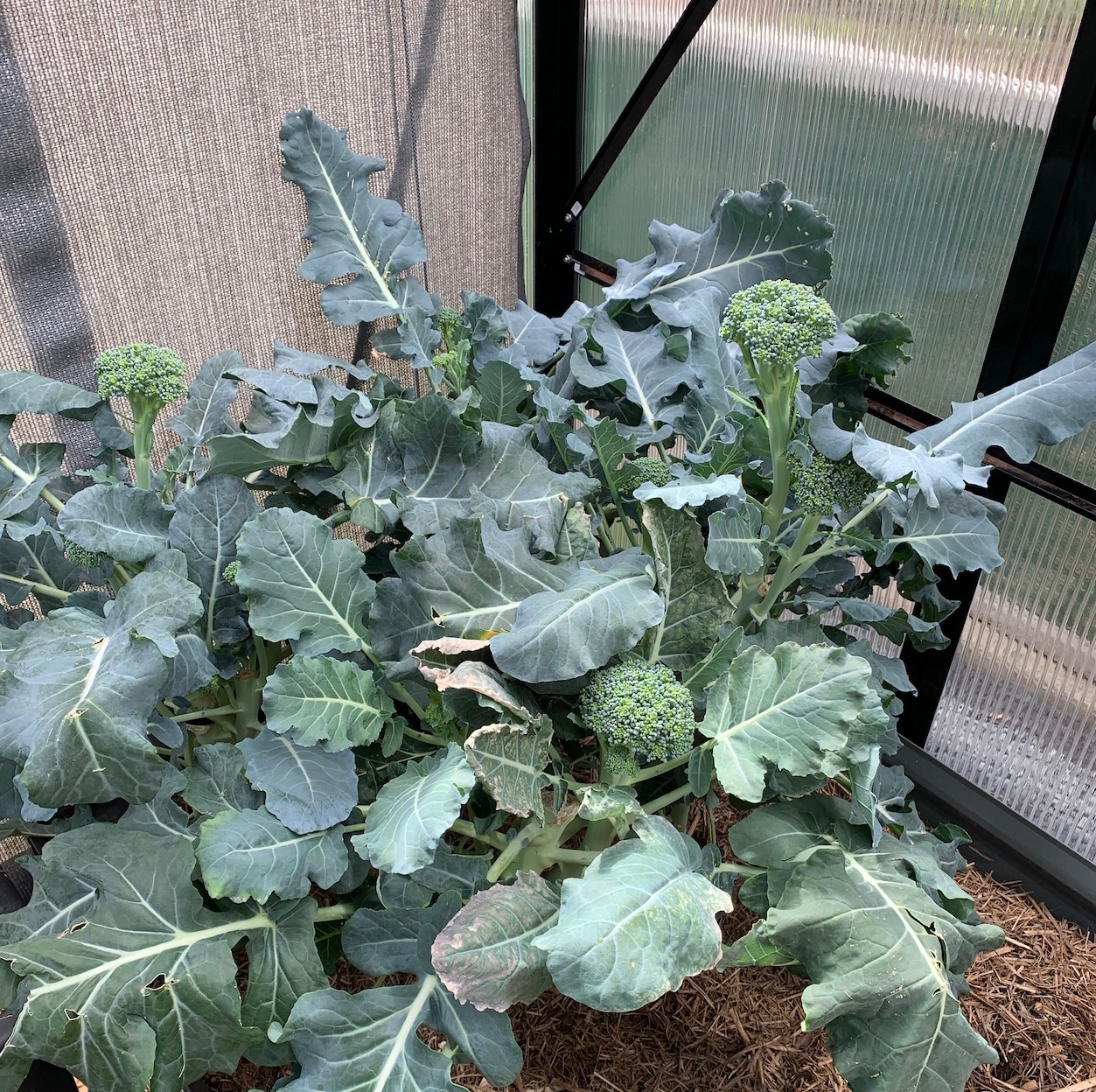
The first broccoli was very impressive and, three months on, we are still harvesting smaller florets.

The capsicum are thriving but yet to bear fruit.

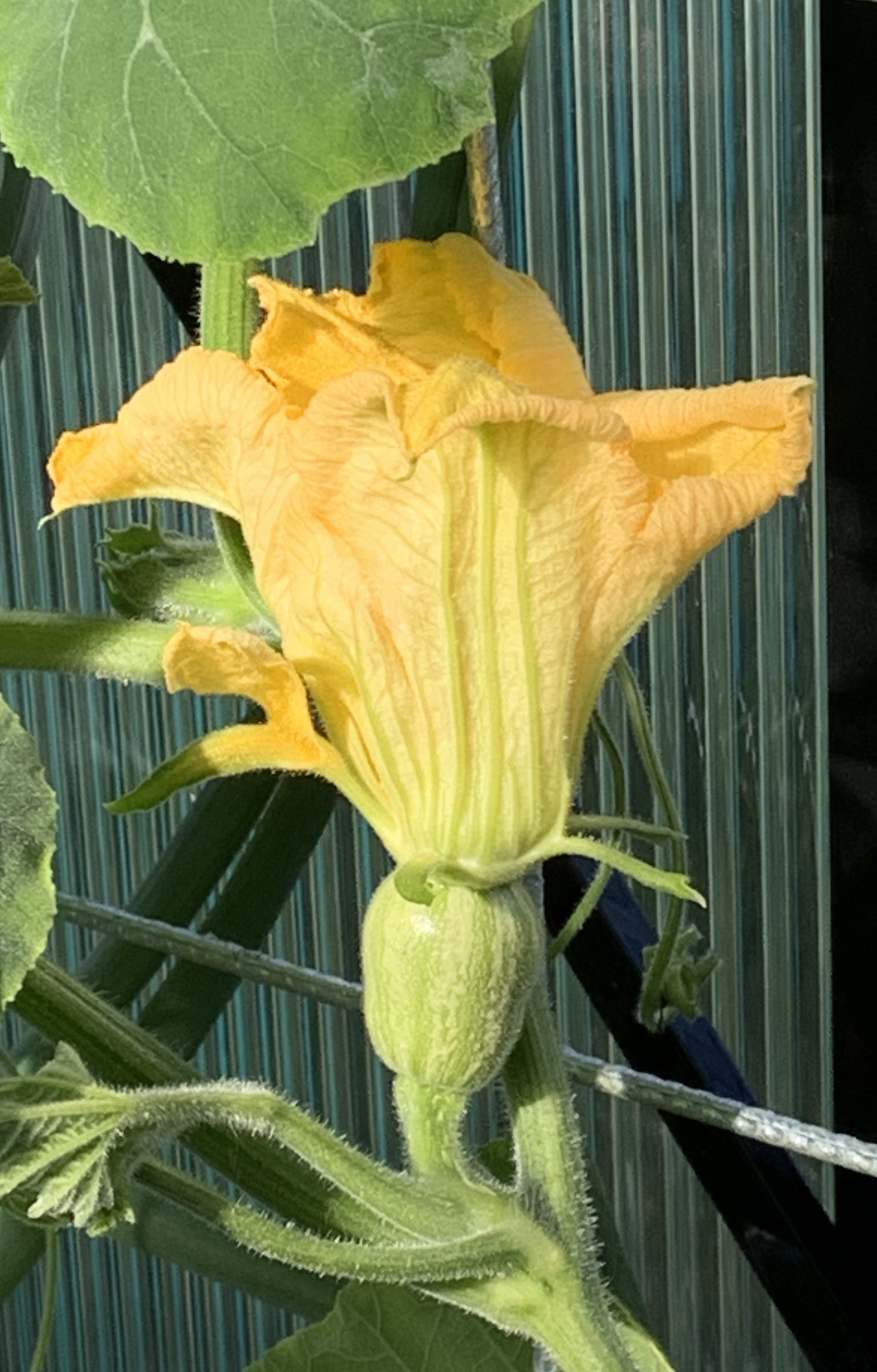
The bush bean and butternut are happy companions, we have harvested some beans but will have to be patient for the butternuts.

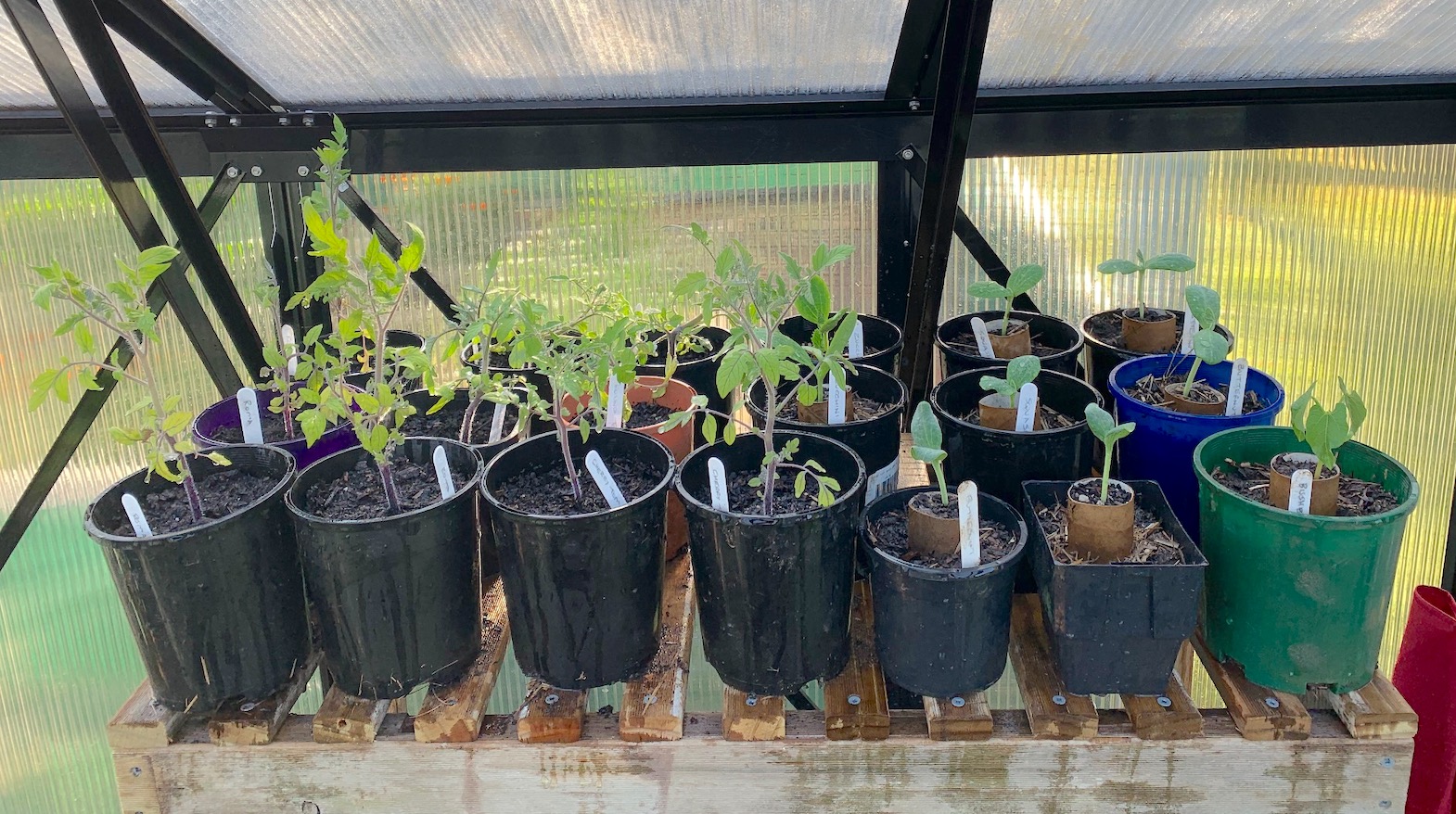
We have a plethora of seedlings ready to plant in another week or so, once the night time temperatures are a little more moderate.

My first attempt at striking Grevilleas from cuttings seems to be successful,

and after many months of coddling, the avocado stones have finally sprouted.

Michael has turned on the tap of creative juices once again and presented me with a stylish trug to collect the harvest

as well as a bespoke egg collecting box (the girls are giving us 5 to 6 eggs a day).

Of course, I needed a keyring befitting a fine greenhouse.

renewable rain

There is a belief that it rains all the time in Tasmania. This is a myth. We have four distinct seasons and hot, dry summers just like any other city on the 41st parallel (Rome, for example). Our rural paradise is reliant on rain for water supply, although we have a spring fed dam that services the garden. We soon realised the original 13,500 litre tank would not suffice and replaced it with a 15,000 litre

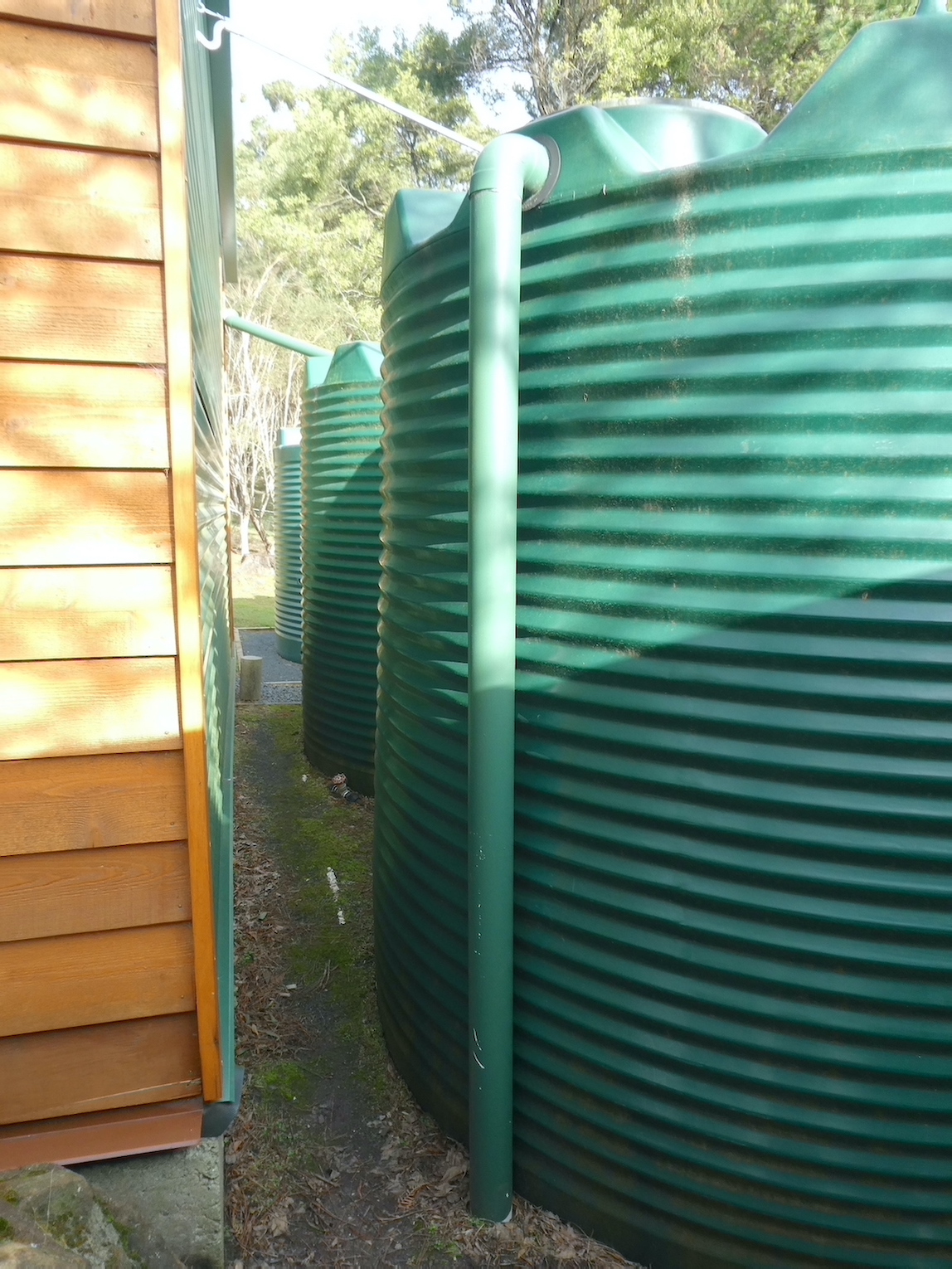
and two 10,000 litre tanks cunningly concealed between two sheds.

Last summer was particularly dry and the tank levels were worryingly low (we actually had to buy water to fill the tanks in 2020). We decided to add another 15,000 litre tank to the arsenal before the winter rains. After receiving two very prompt quotes, we set about preparing the base. As the tanks are linked to fill in unison, the trick was to have the level precise so all would reach capacity together. We started with a frame

and filled it with earth.

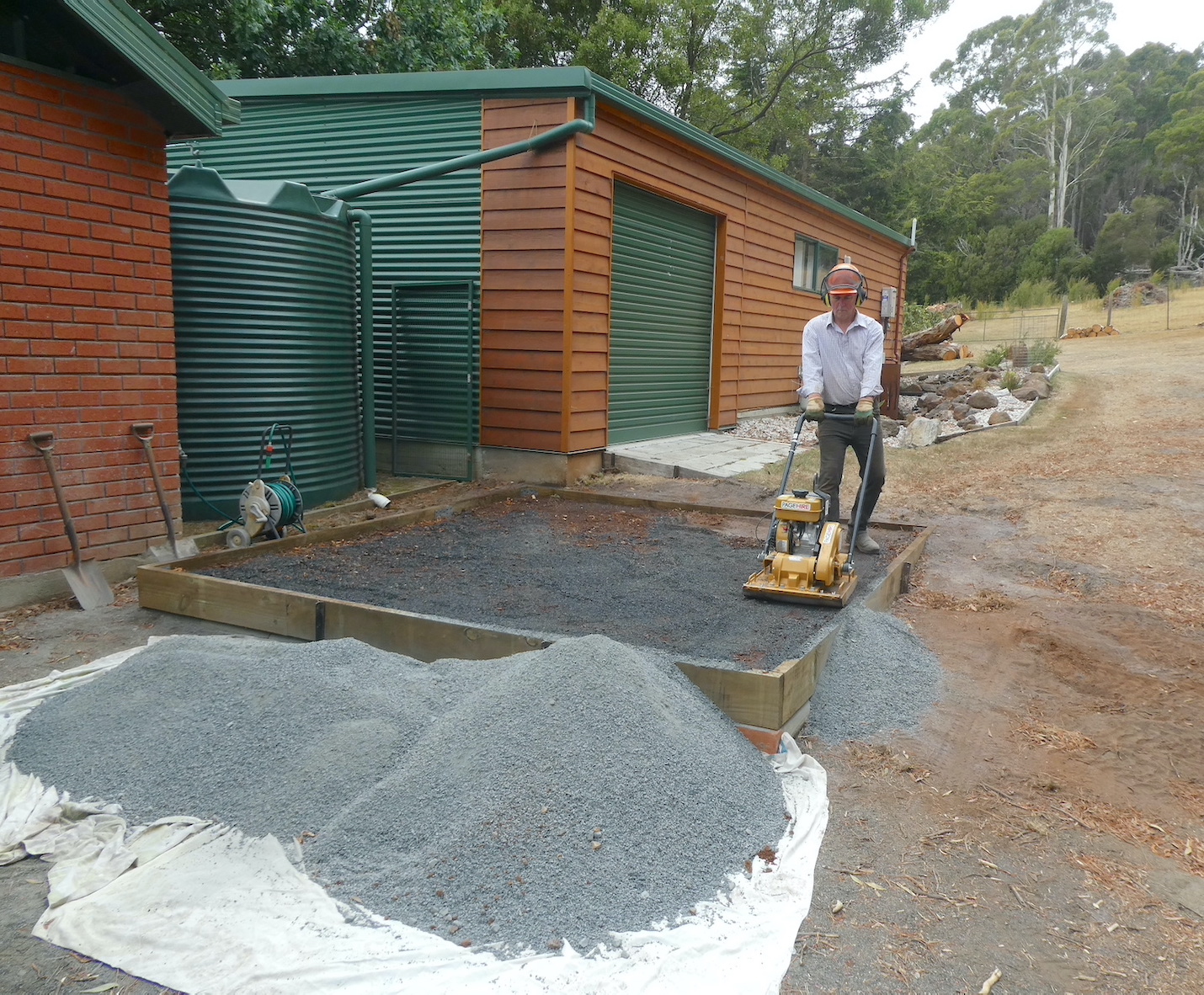
In came a couple of cubic metres of crusher dust

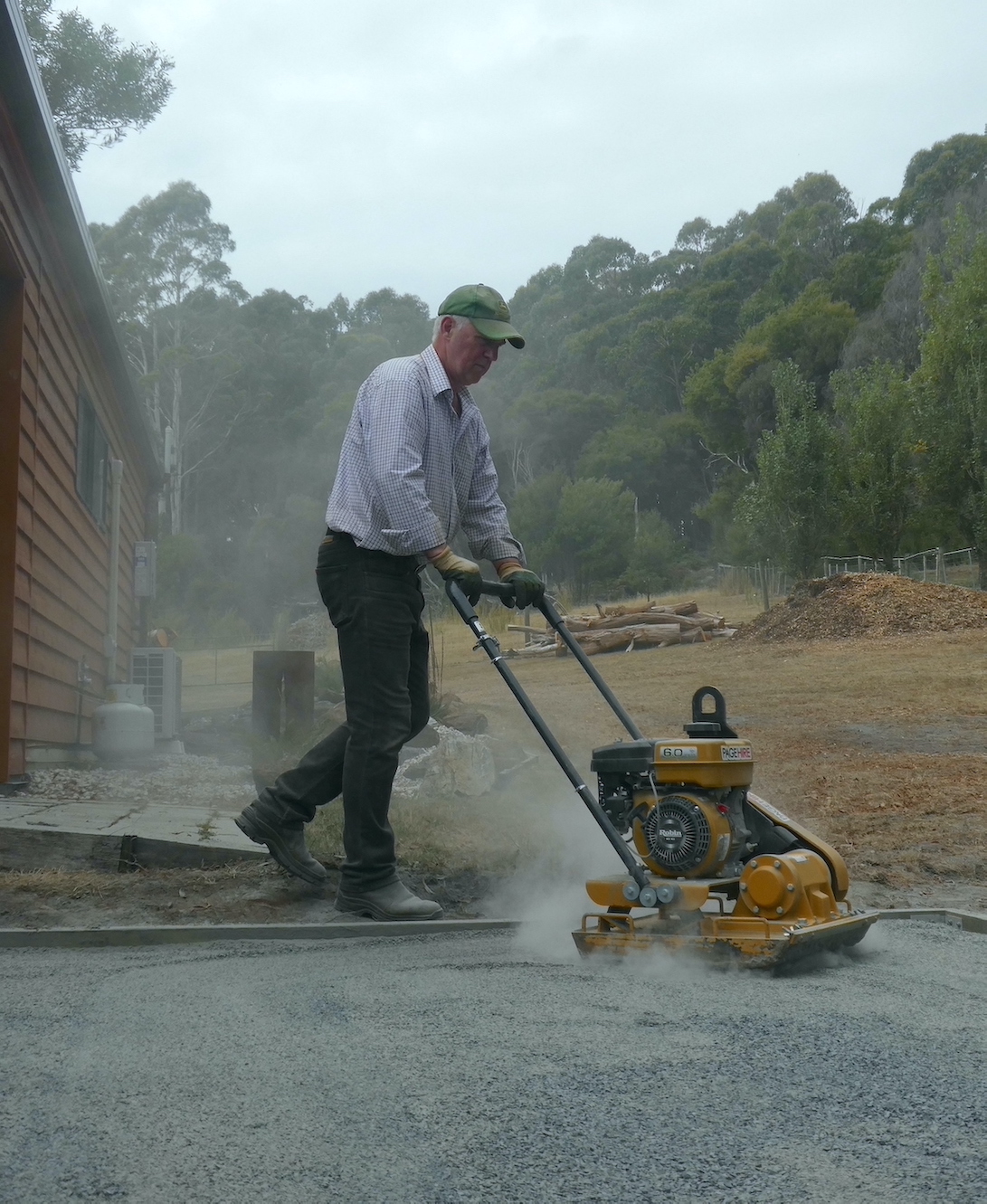
followed by a trip to the hire shop for some fun with a wacker packer.

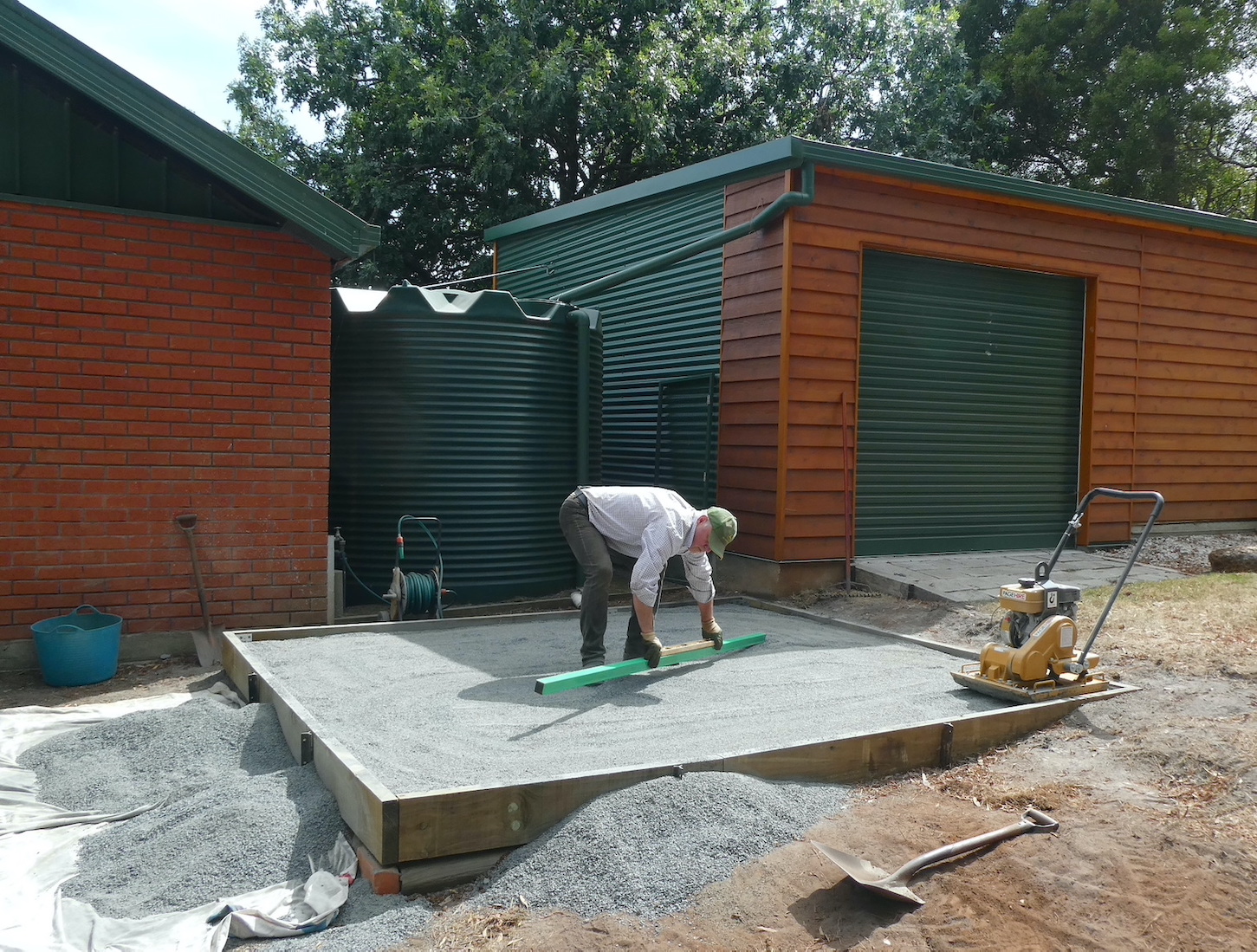
We filled and packed in increments, making sure the base was level after each addition.

Of course, Poppy was on hand to oversee the project.

A soaking to settle the dust

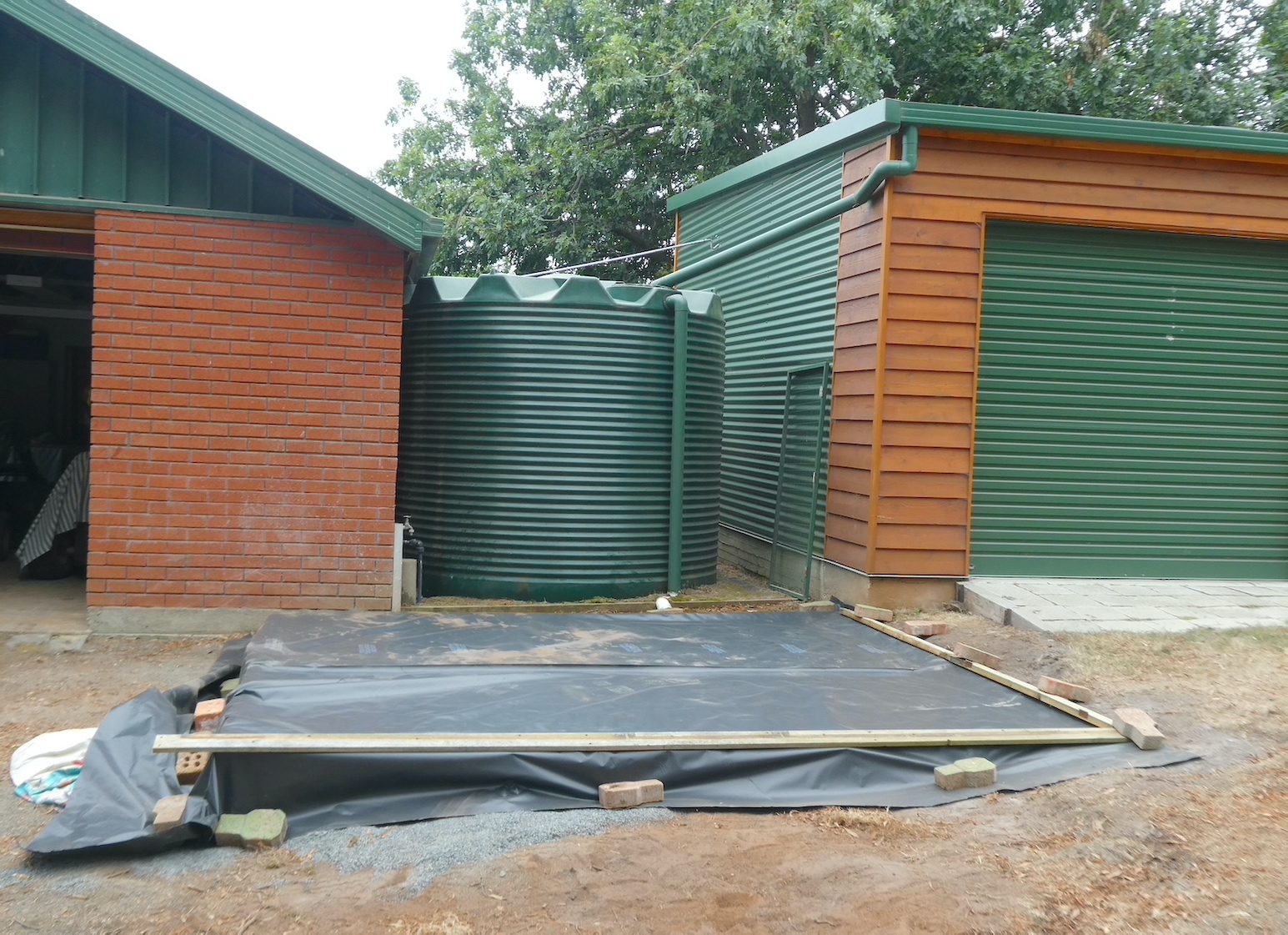
and we covered our masterpiece to protect it from tree detritus and big-footed nocturnal creatures.

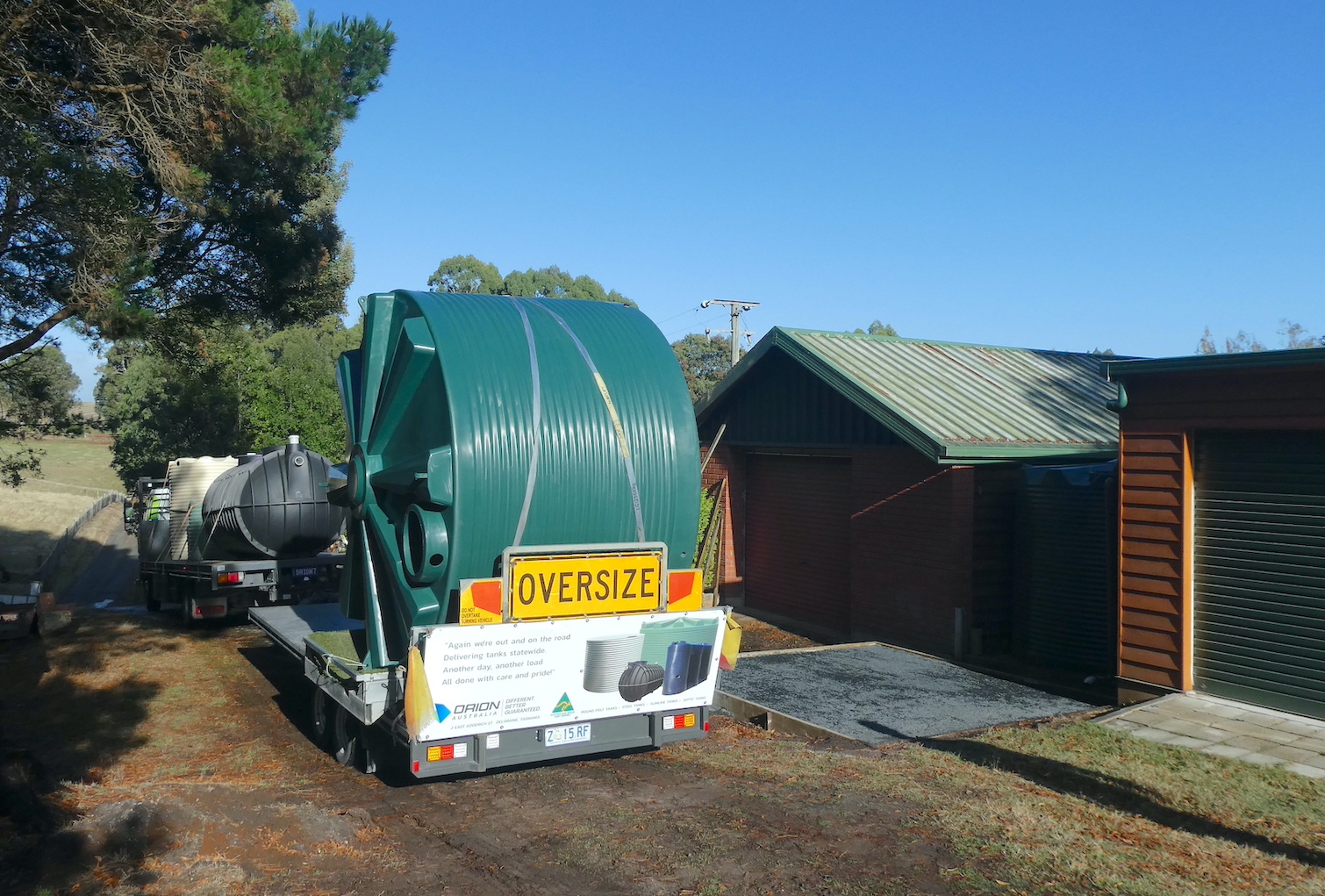
I would like to point out that I did participate in the physical labour, not just lounge around drinking beer and taking photos. Two weeks later, our tank arrived right on schedule.

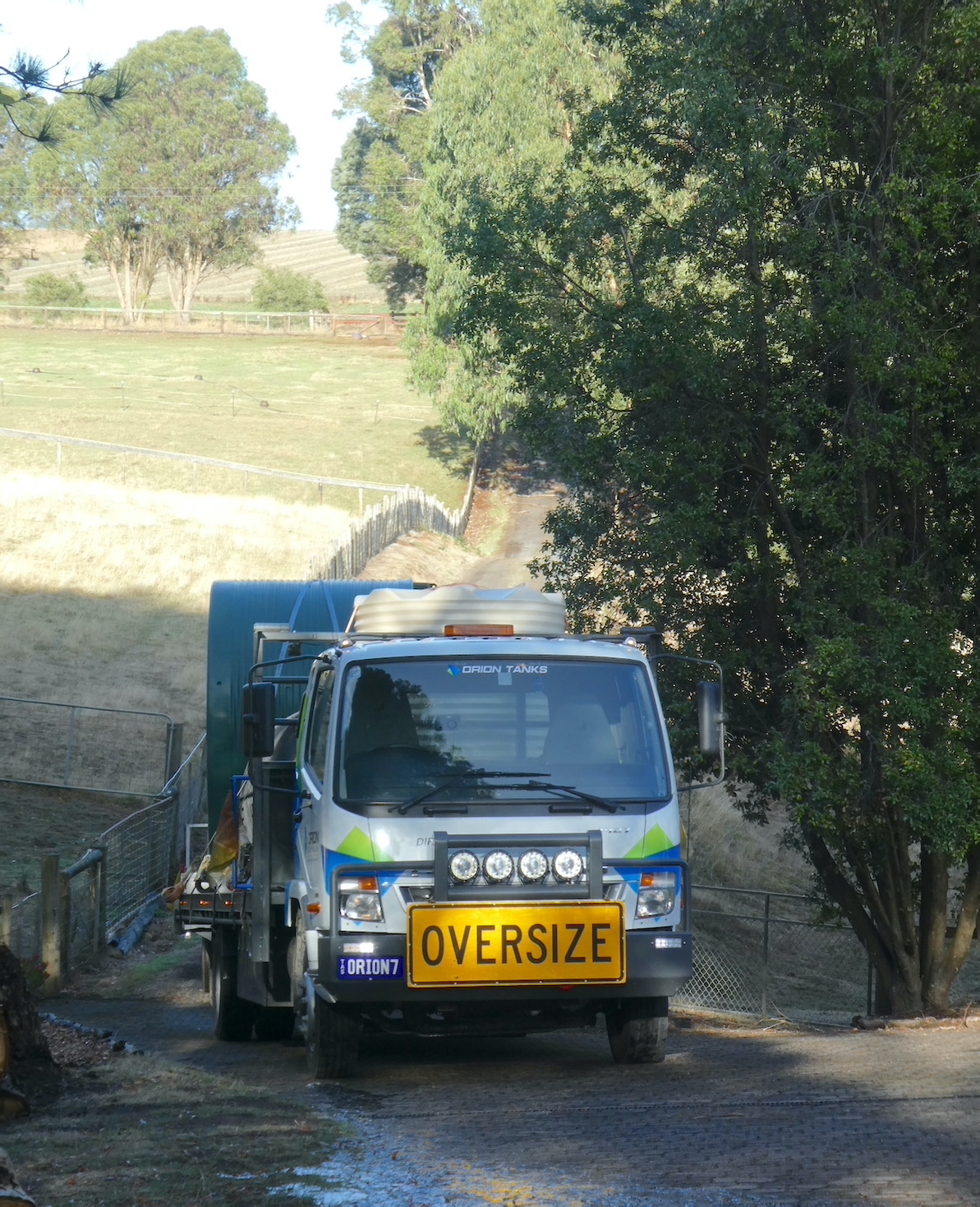
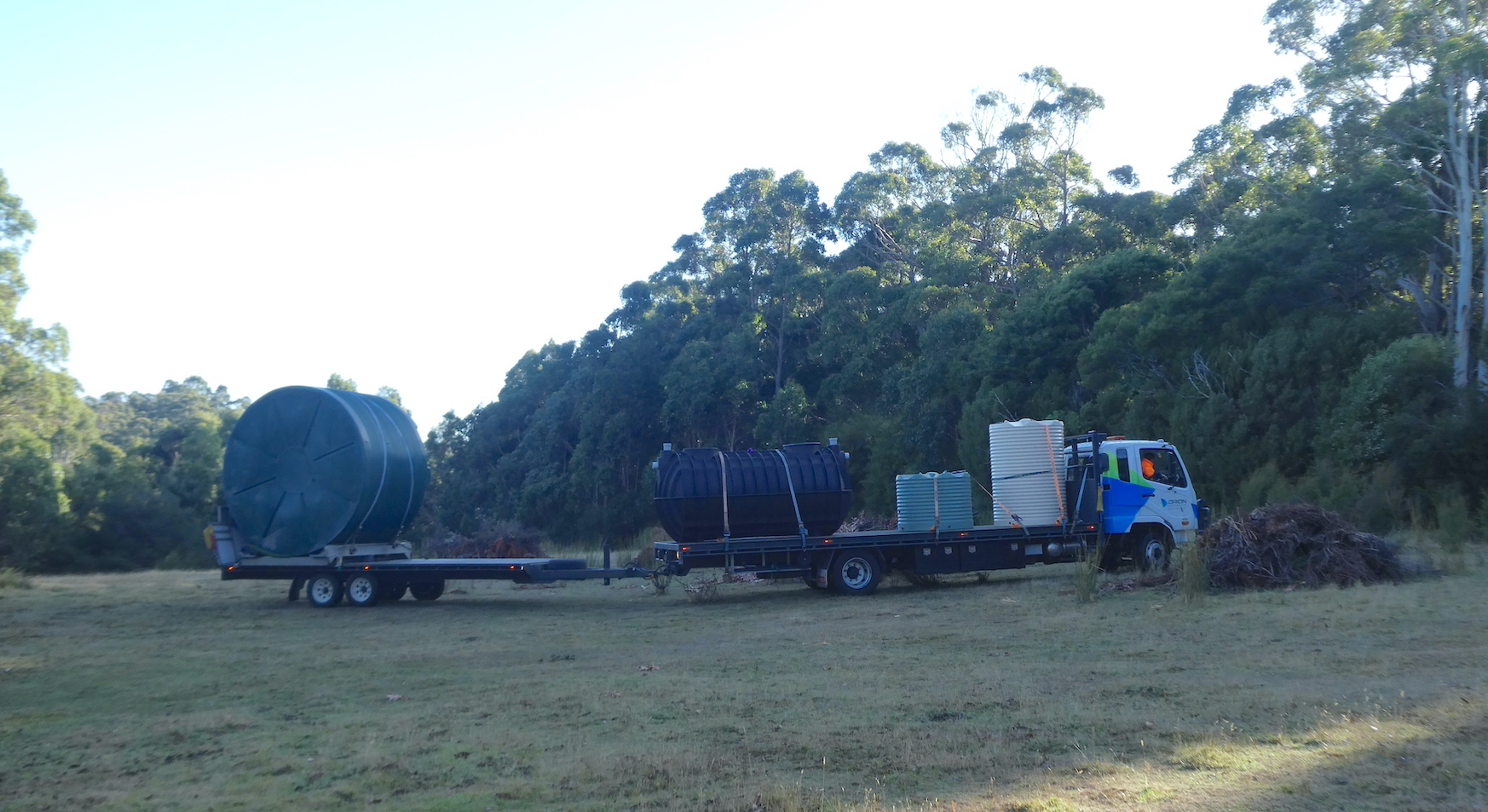
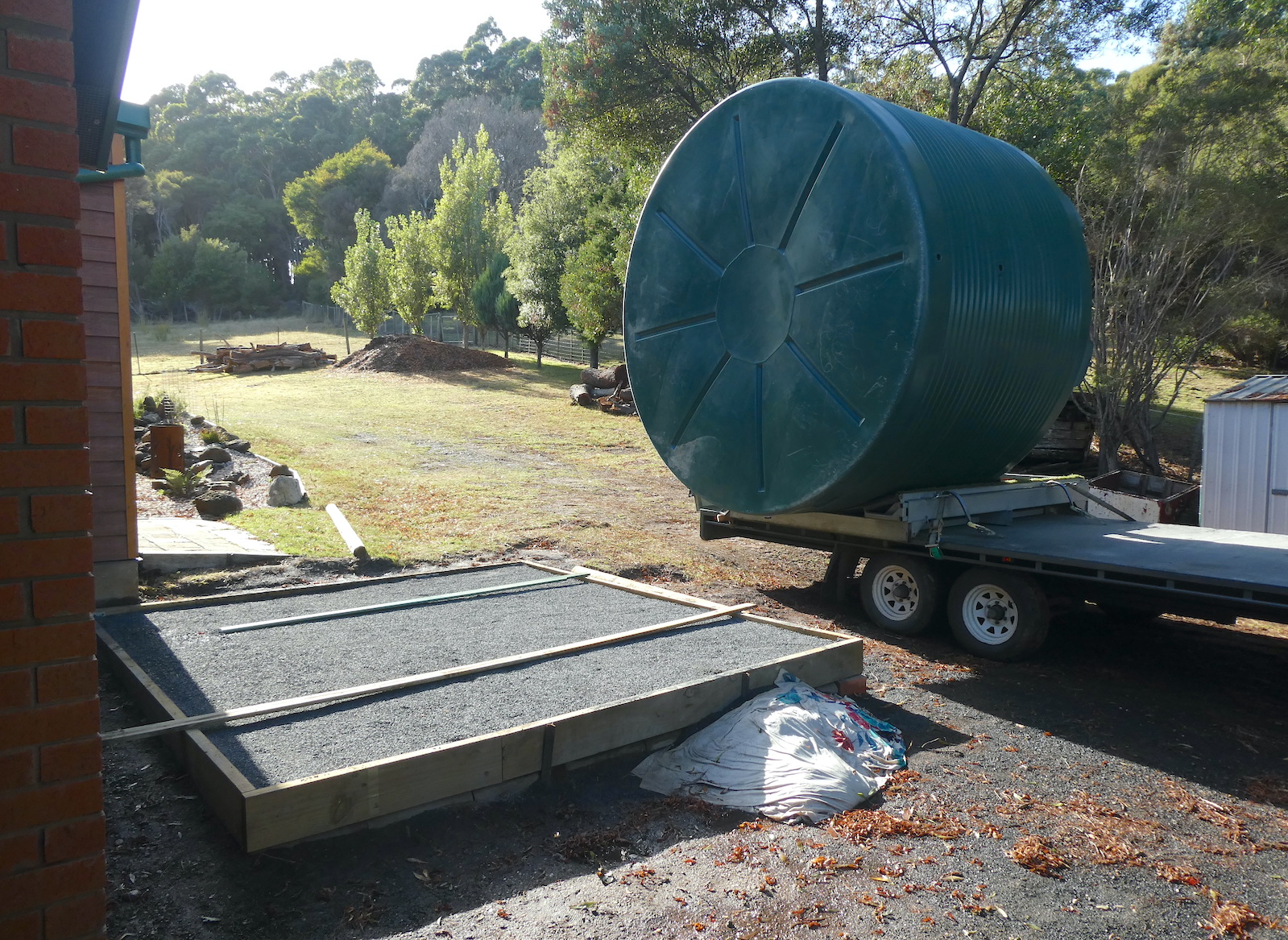
Fortunately, the driver had access to a paddock for a very proficient three-point turn of the 19 metre truck and trailer.

He parked alongside the prepared base

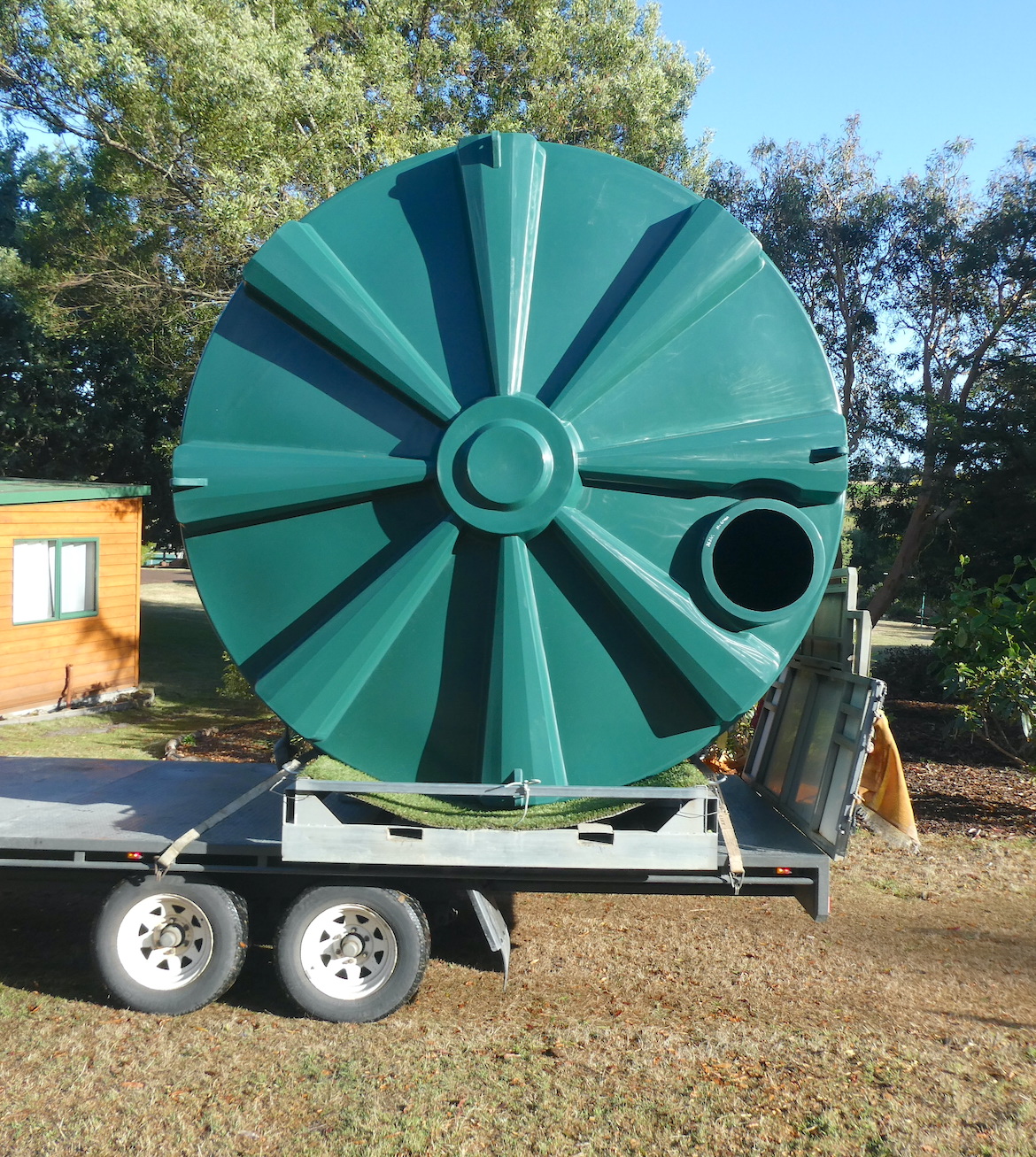
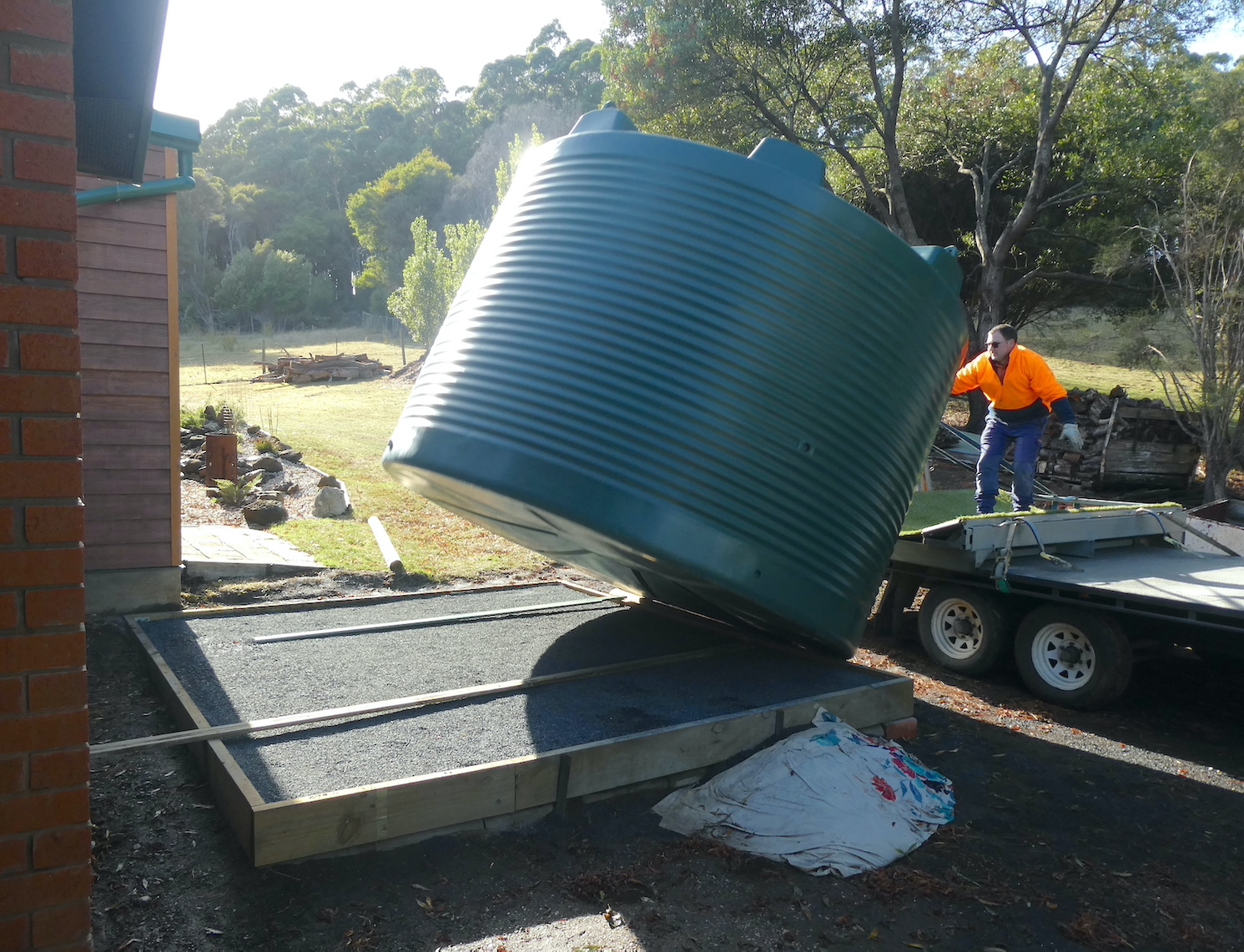
and assured us it would just take a push to land it in place.

He was right!

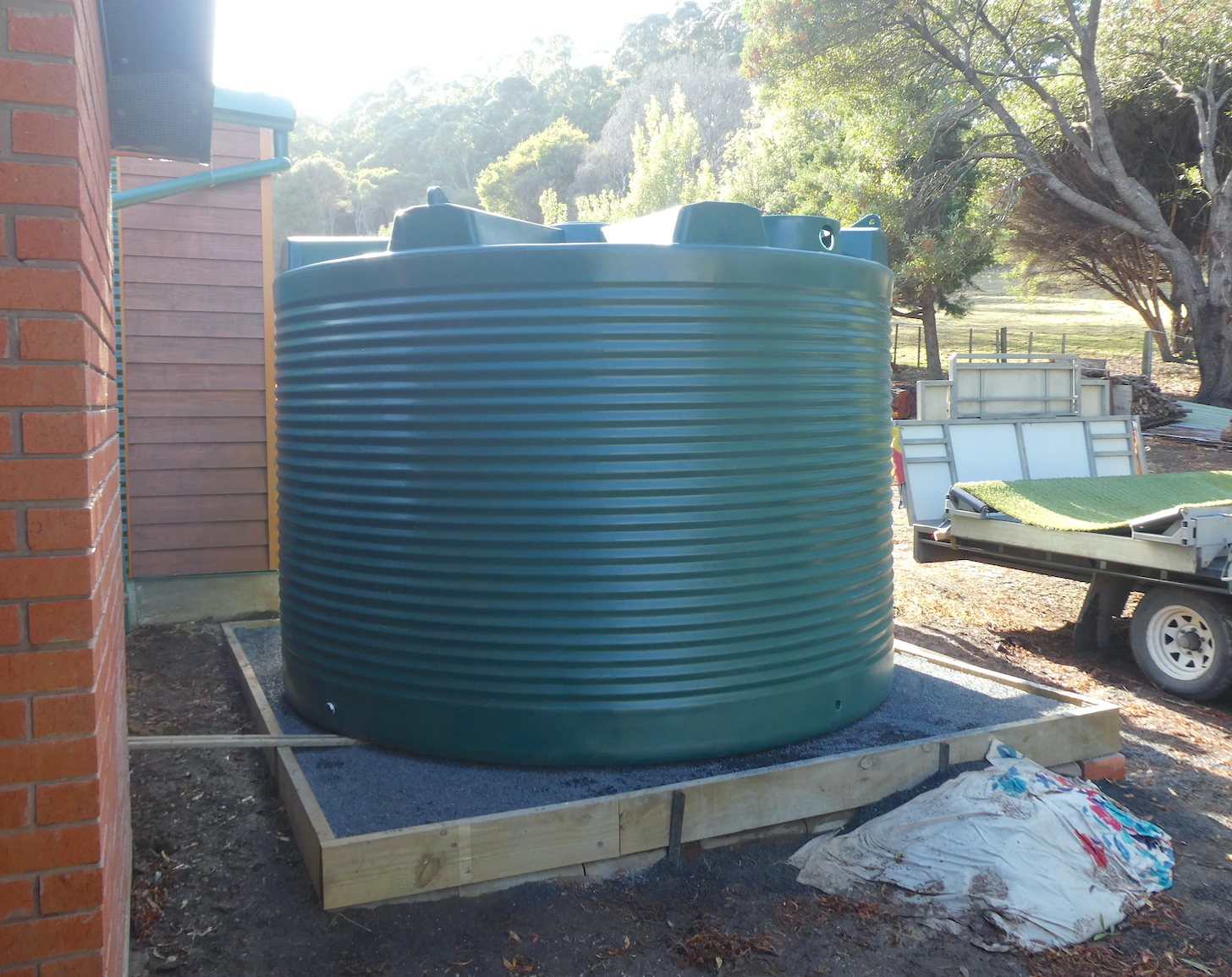
Some minor manhandling positioned it perfectly.

The driver went on his way to the next delivery

and, with strong winds forecast, we took the precaution of securing the tank with ropes.

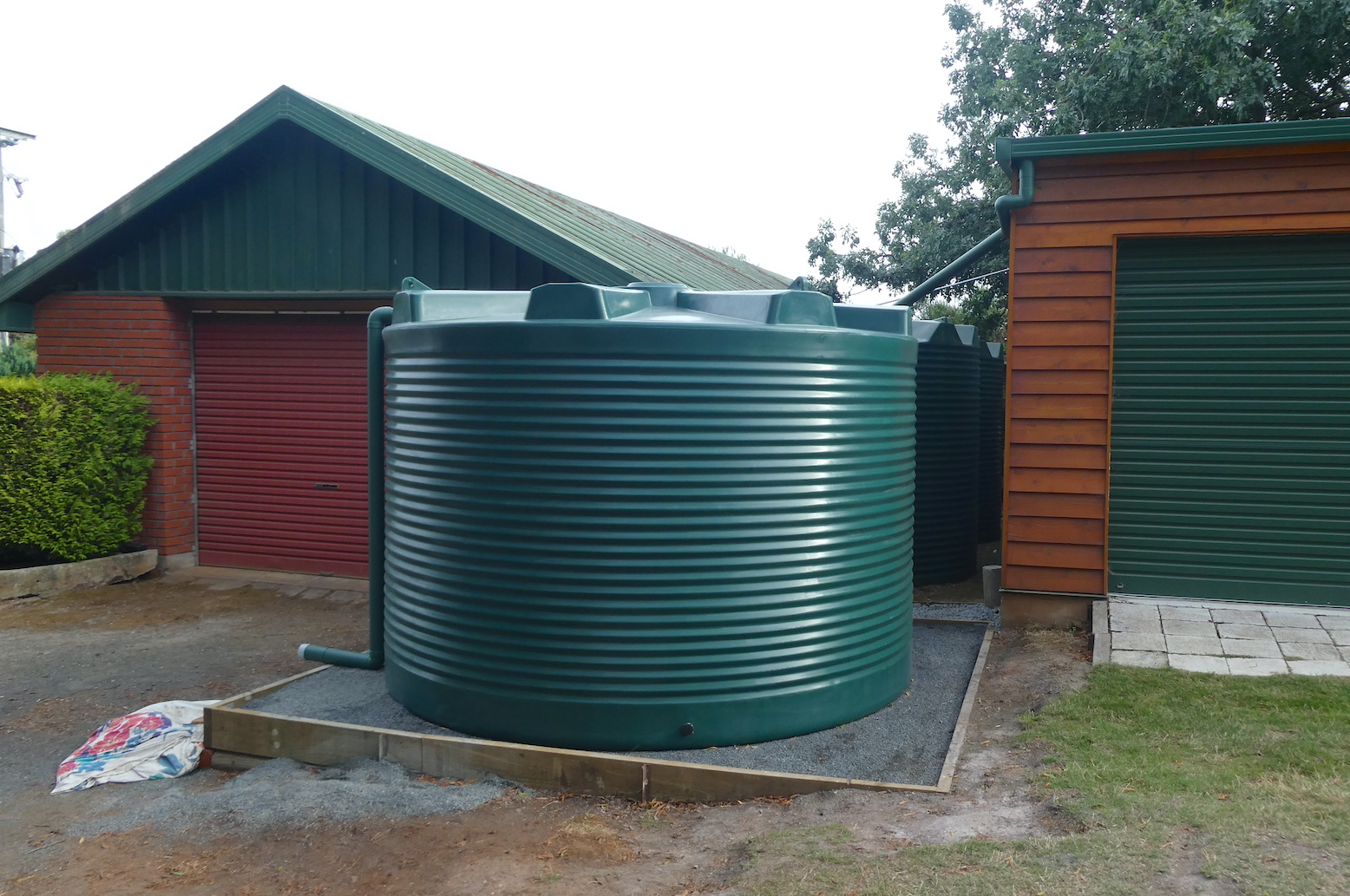
A few days later, the plumber completed the installation

and we are now confident that 50,000 litres will see us through summer.

I can’t recommend Orion Tanks highly enough. From the timely response to my initial enquiry through the website to the seamless delivery that went without a hitch. The driver was amazing, very professional and instilled great confidence and ability. If you’re in the market for a rainwater tank, be sure to contact Orion.

veggie patch revamp

When we created our veggie patch, we used reclaimed hardwood roof trusses to make the raised beds, thinking they would outlast our time here. Eleven years of Tasmanian weather proved us wrong and the timber was starting to rot, the screws were no longer holding and the boxes developed all sorts of twists and turns.

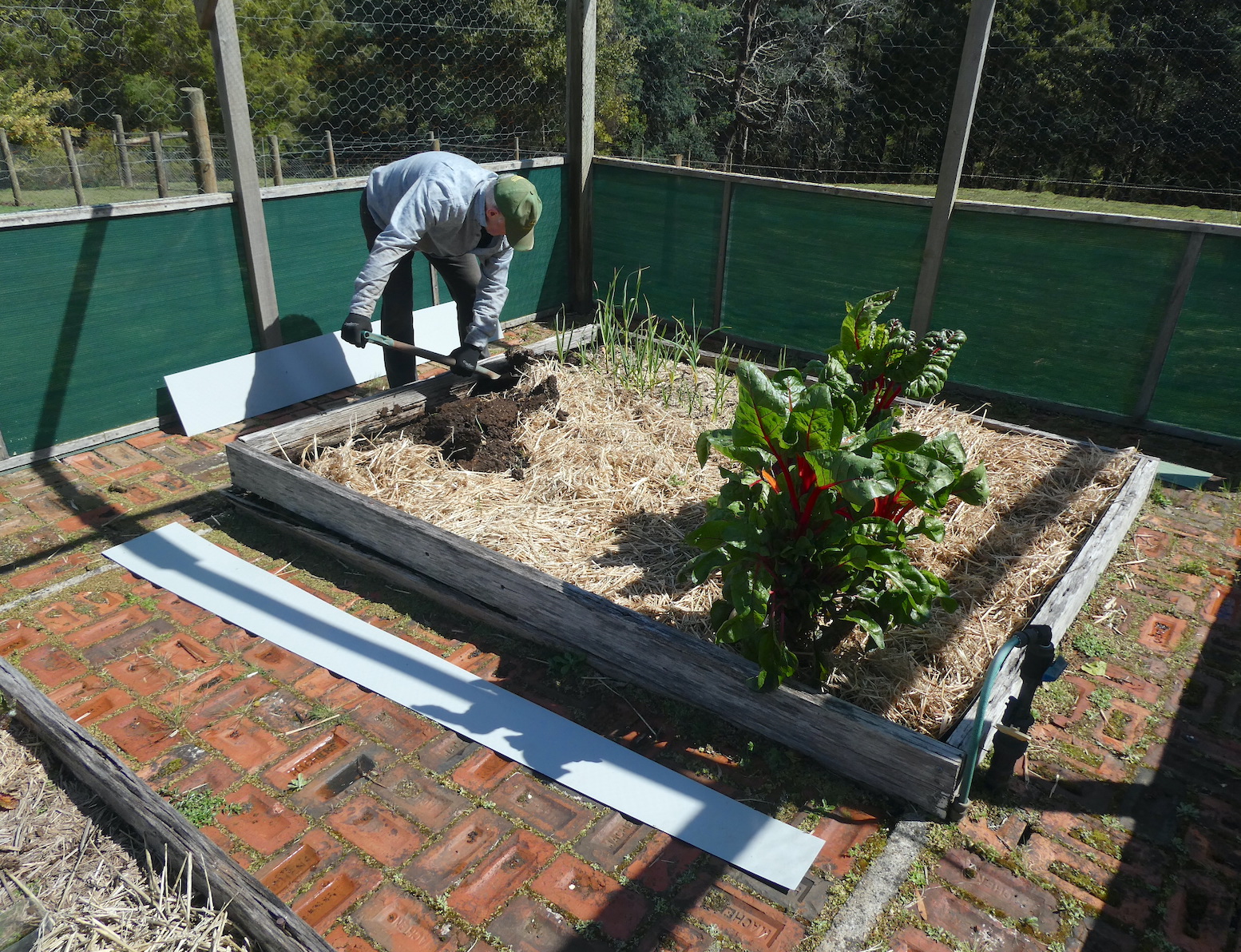
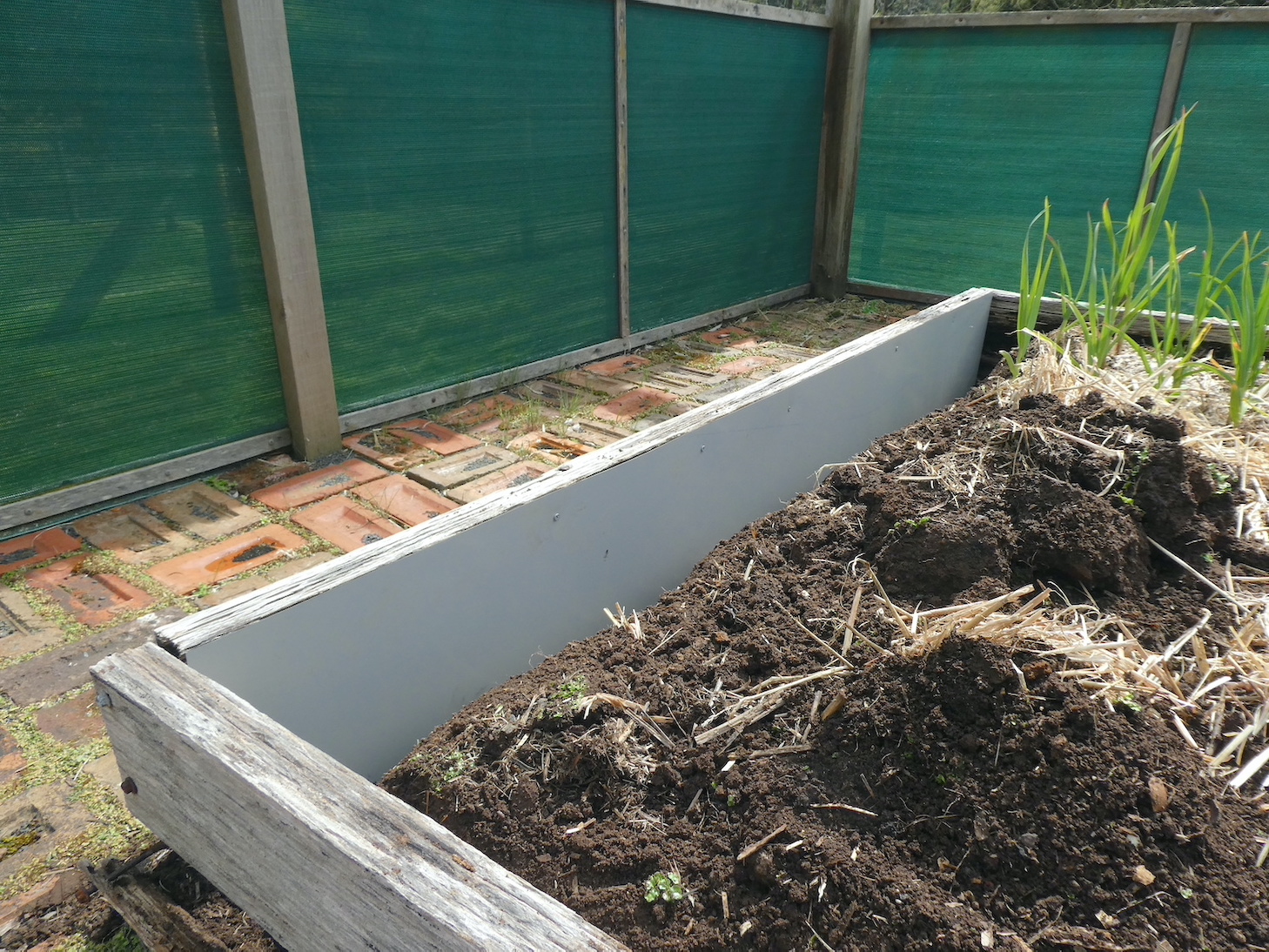
After weeks of mulling over possible solutions, we came up with the idea of reinforcing each box using metal sheeting on the inside. Our local Colorbond supplier was very helpful. We gave them the measurements of each piece required and they cut them from ends of rolls that would otherwise have been discarded (at a reasonable price). After digging away the soil at the edges,

the strips of steel were screwed to the timber with pond liner at the corners to avoid water seepage.

We were happy with the tidy result.

The rhubarb box was a bit of a challenge, just as well it needed thinning out.

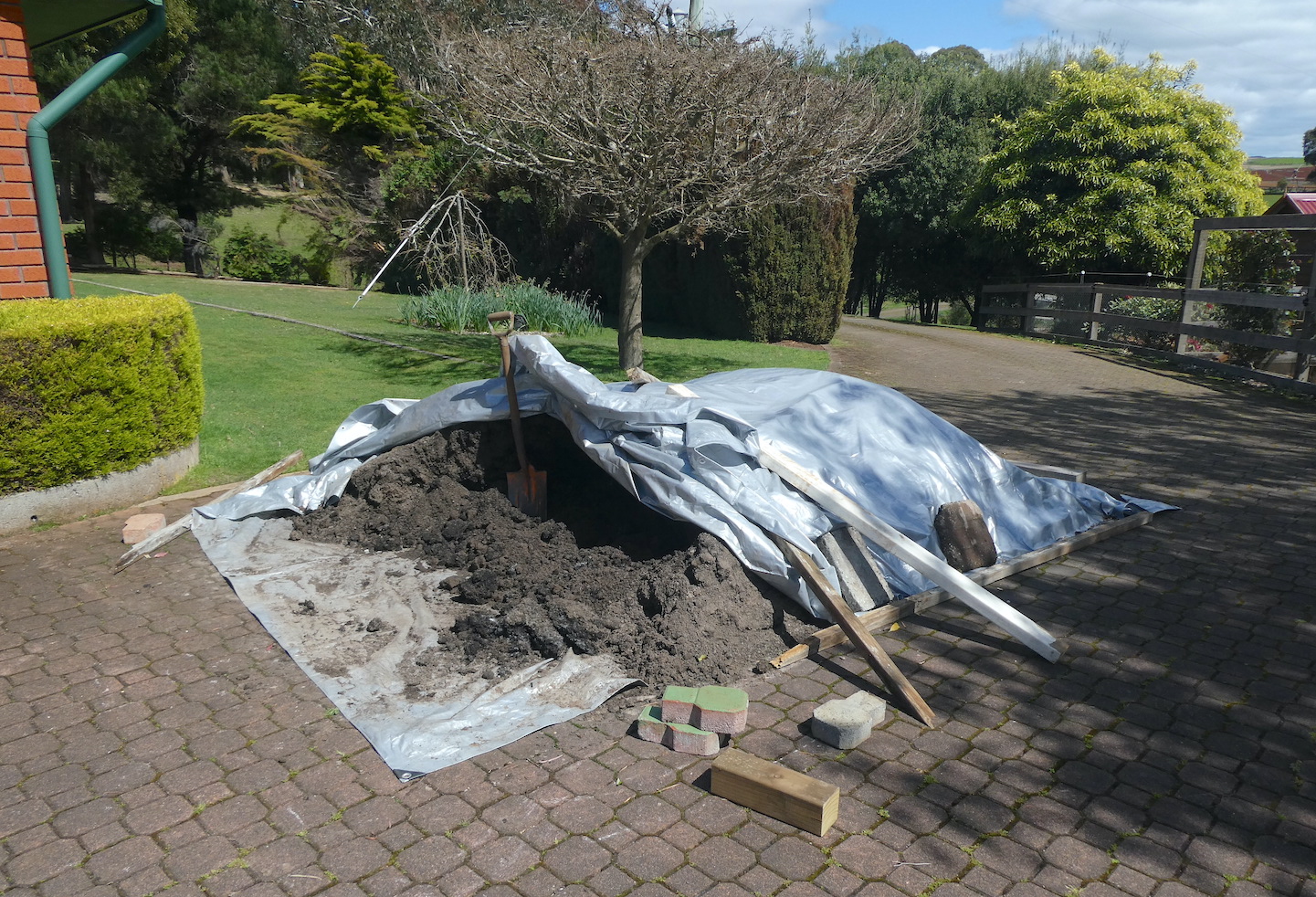
We had a truck load of loam/ compost mix delivered and topped up all the beds

just in time for spring planting.

The fruit salad tree box had to be completely demolished and rebuilt (I was too distracted to take photos of the process).

Our unpredictable spring weather meant I was constantly chasing sunlight and warmth for the seedlings

but I finally had success and planted out in summer.

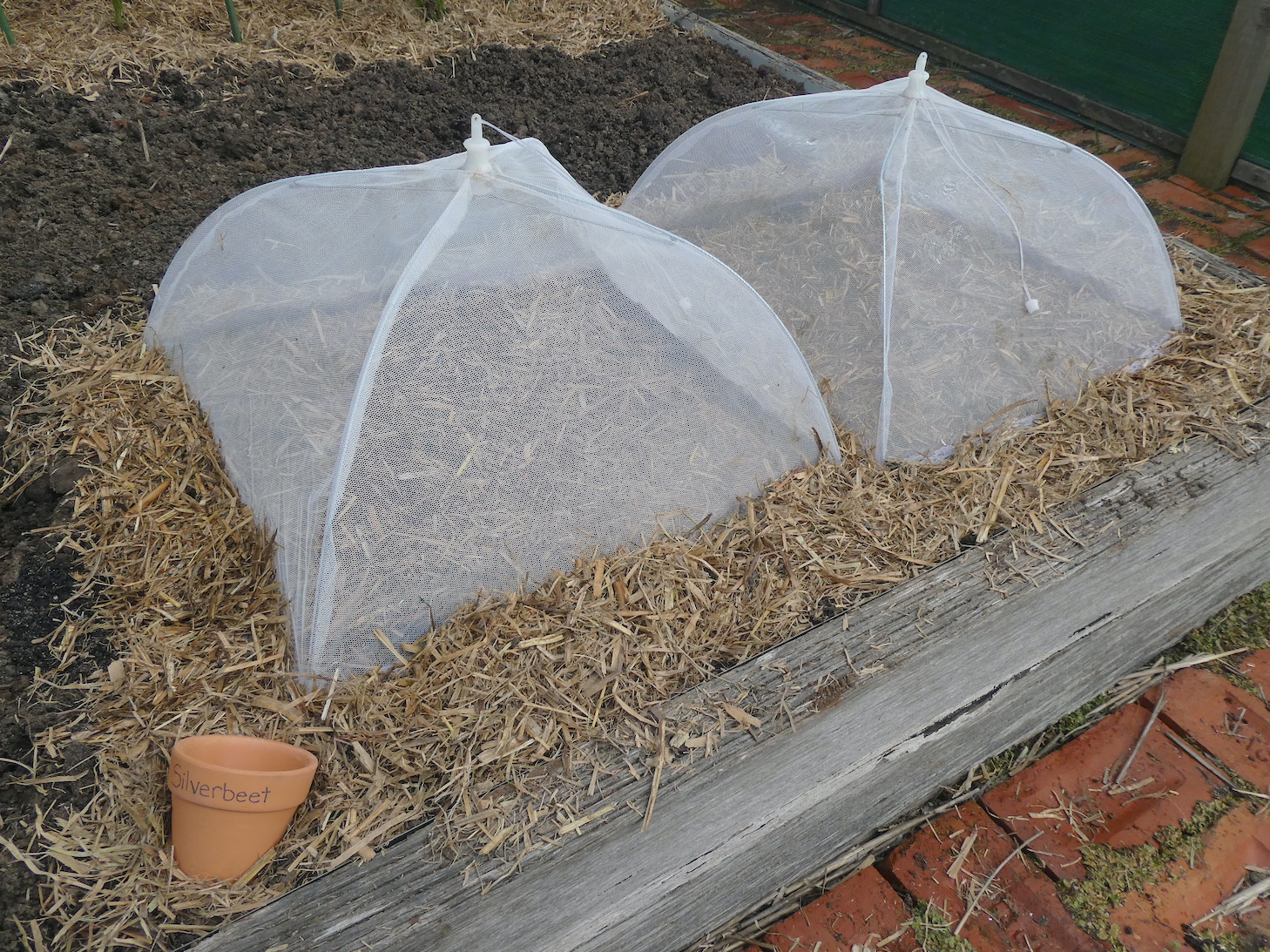
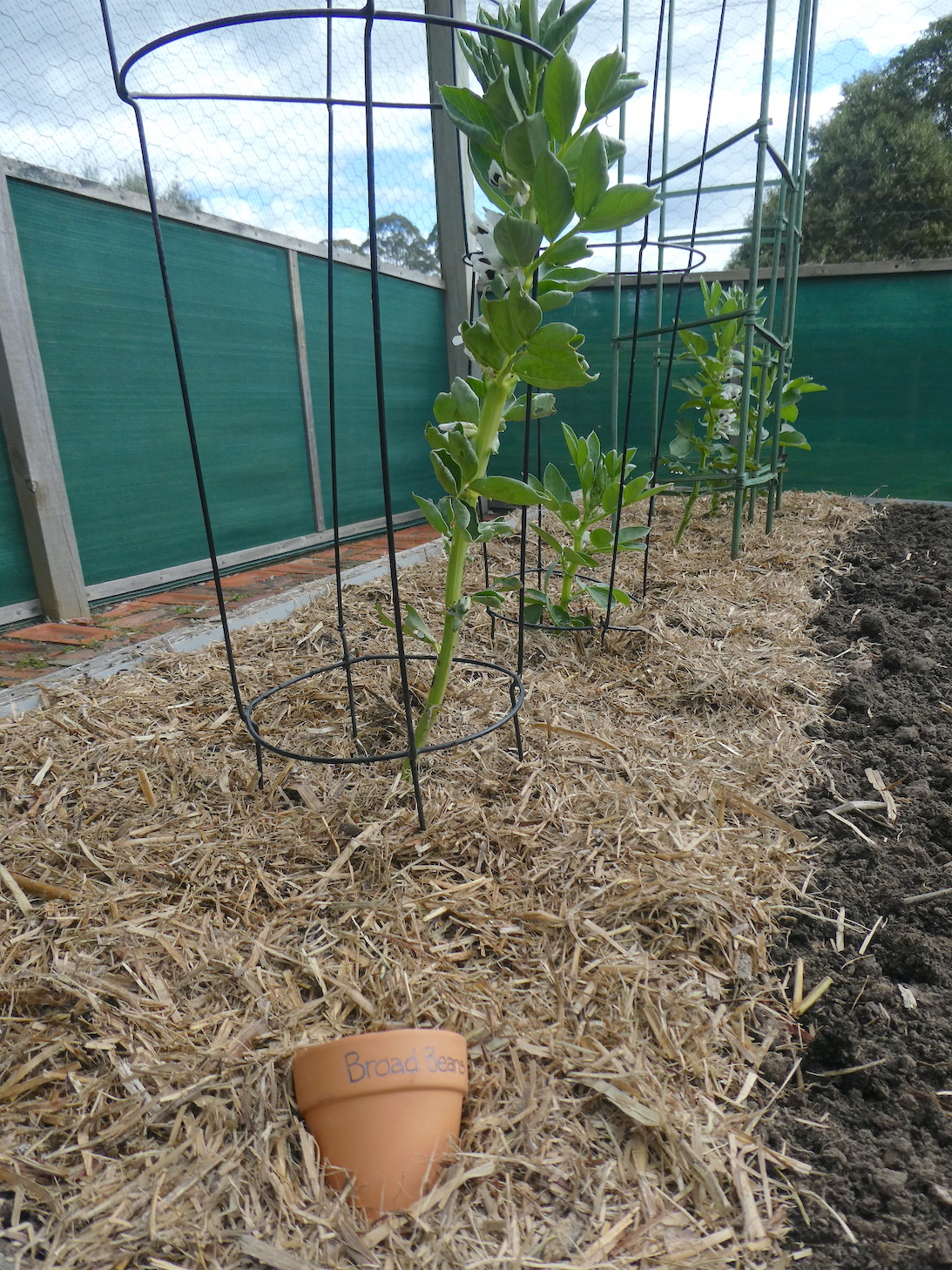
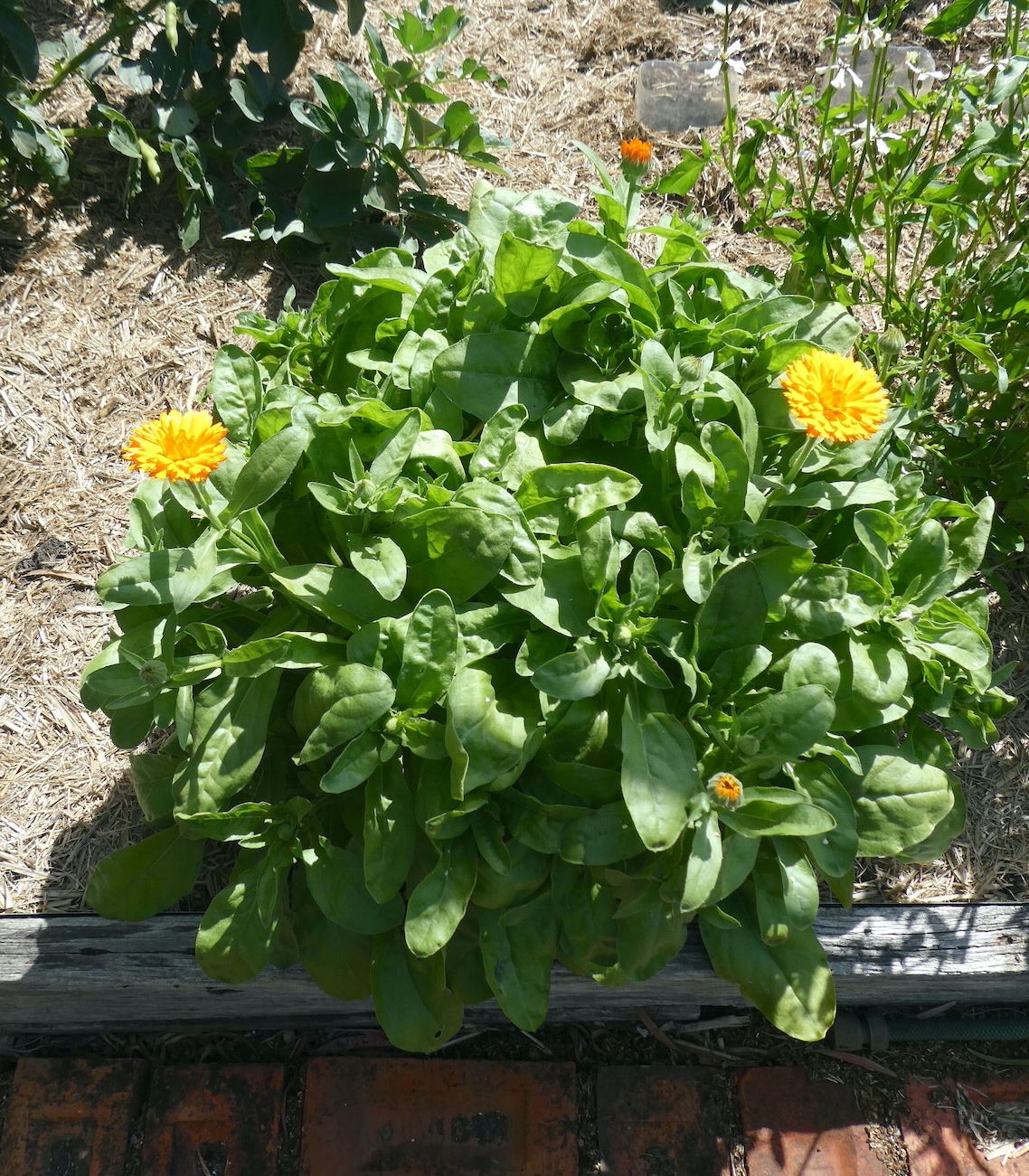
I threw some marigold seeds in for the first time, they supposedly deter pests as well as looking pretty.

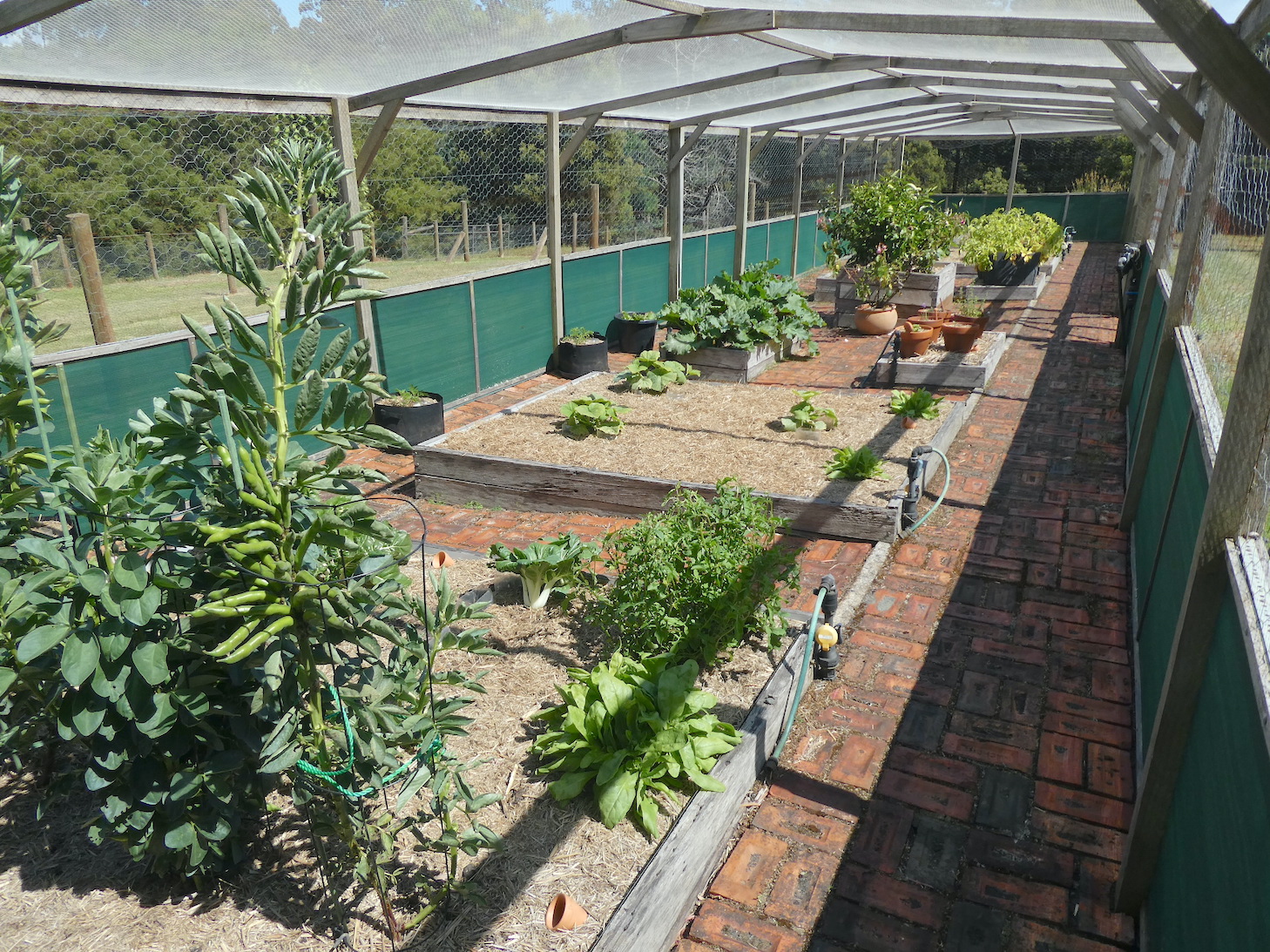
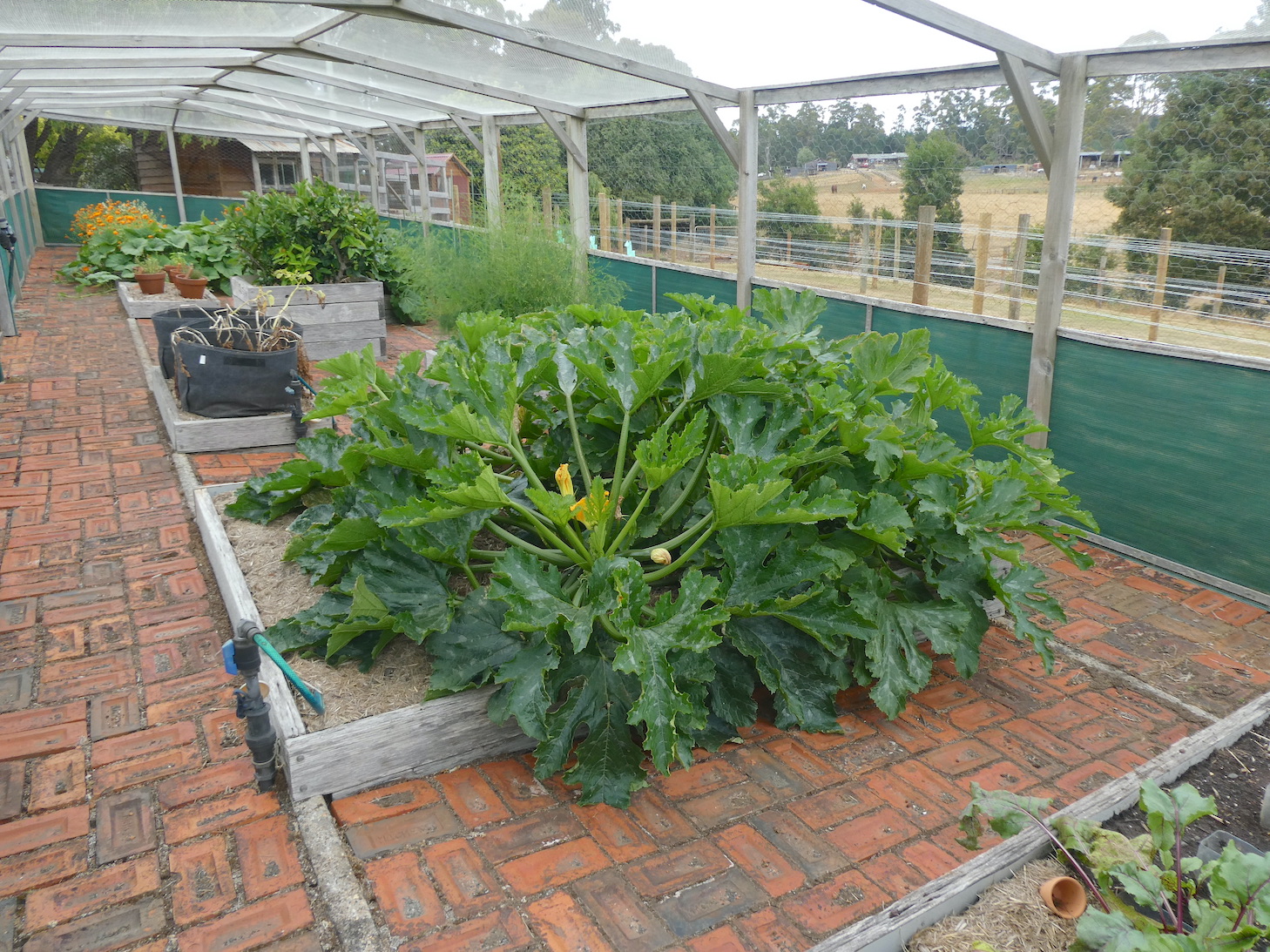
By the end of January, there was no stopping the flow of produce.

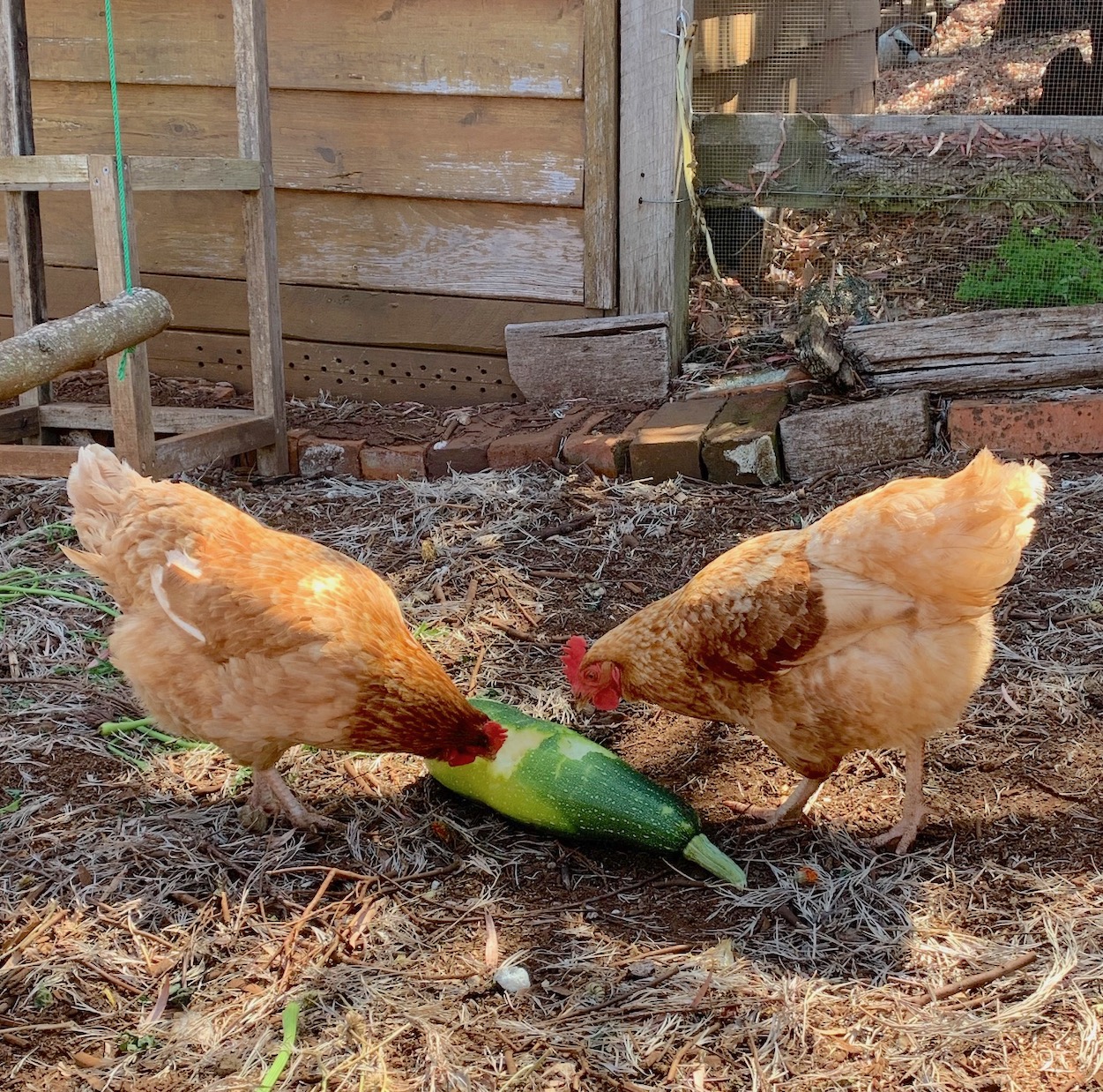
Thankfully, we found some willing recipients for the monster zucchini.

renovation ruminations: part 8

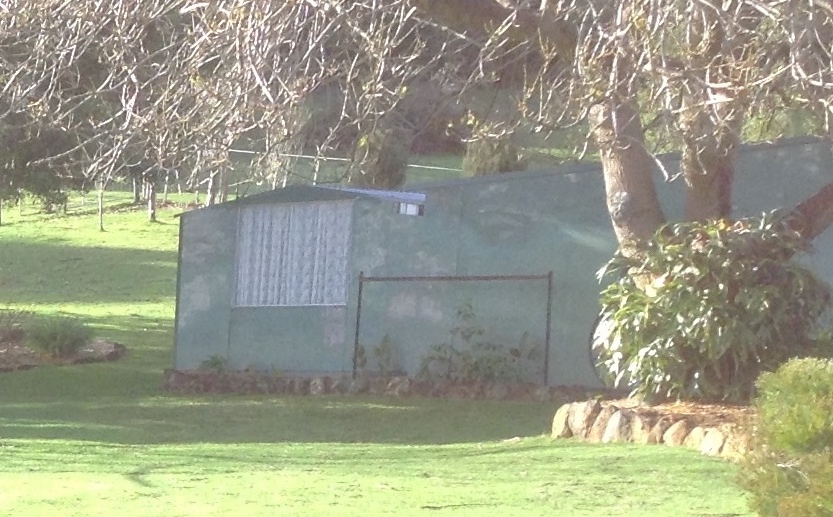
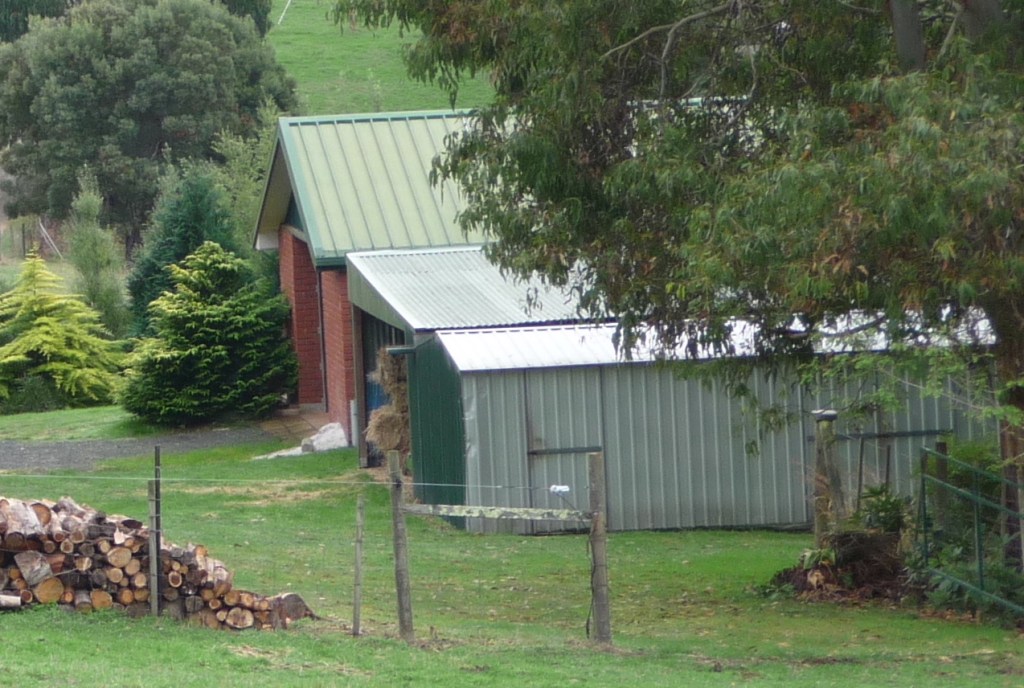
After ten years lamenting the eyesore across the garden, the time had come to do something about it. It was so horrible, this is the only photo I could find.

A few bits of timber and tin had been thrown together to resemble sheds by the previous owners, handy storage but not pretty.

Demolition began in November 2018, a very satisfying exercise.

The initial plan to ‘use & re-use’ as much as possible with timber framed windows and doors from the salvage yard. I set to with a scraper, sander and heat gun, hoping to have them prepared before the builders needed them.

The new slab was poured in February (Poppy made her mark) as well as a smaller
3m x 3m and we possum-proofed them for a few days.

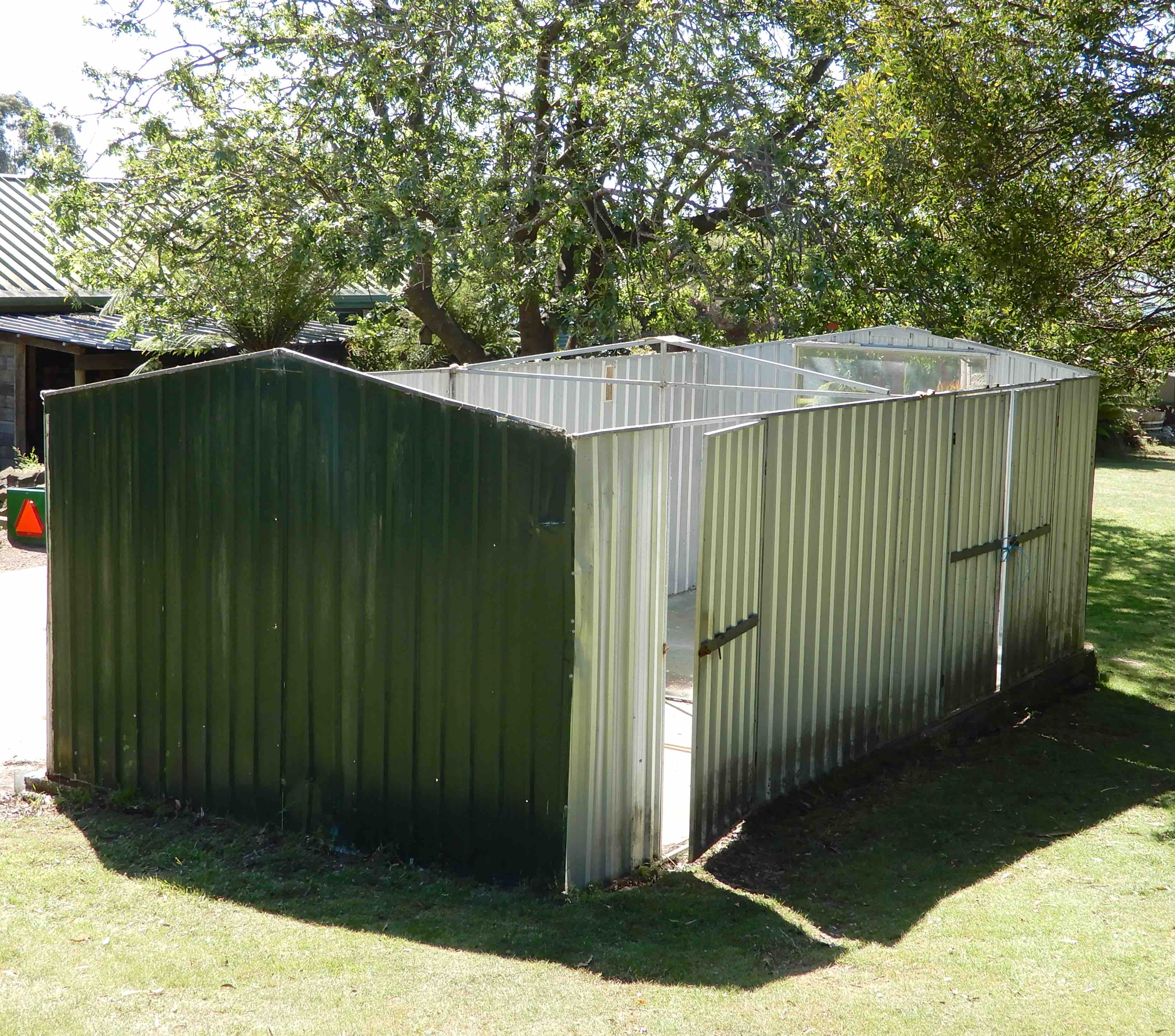
When we demolished the 6m x 3m tin shed we resurrected the best panels and turned it into a 3m x 3m shed, hence the smaller slab.

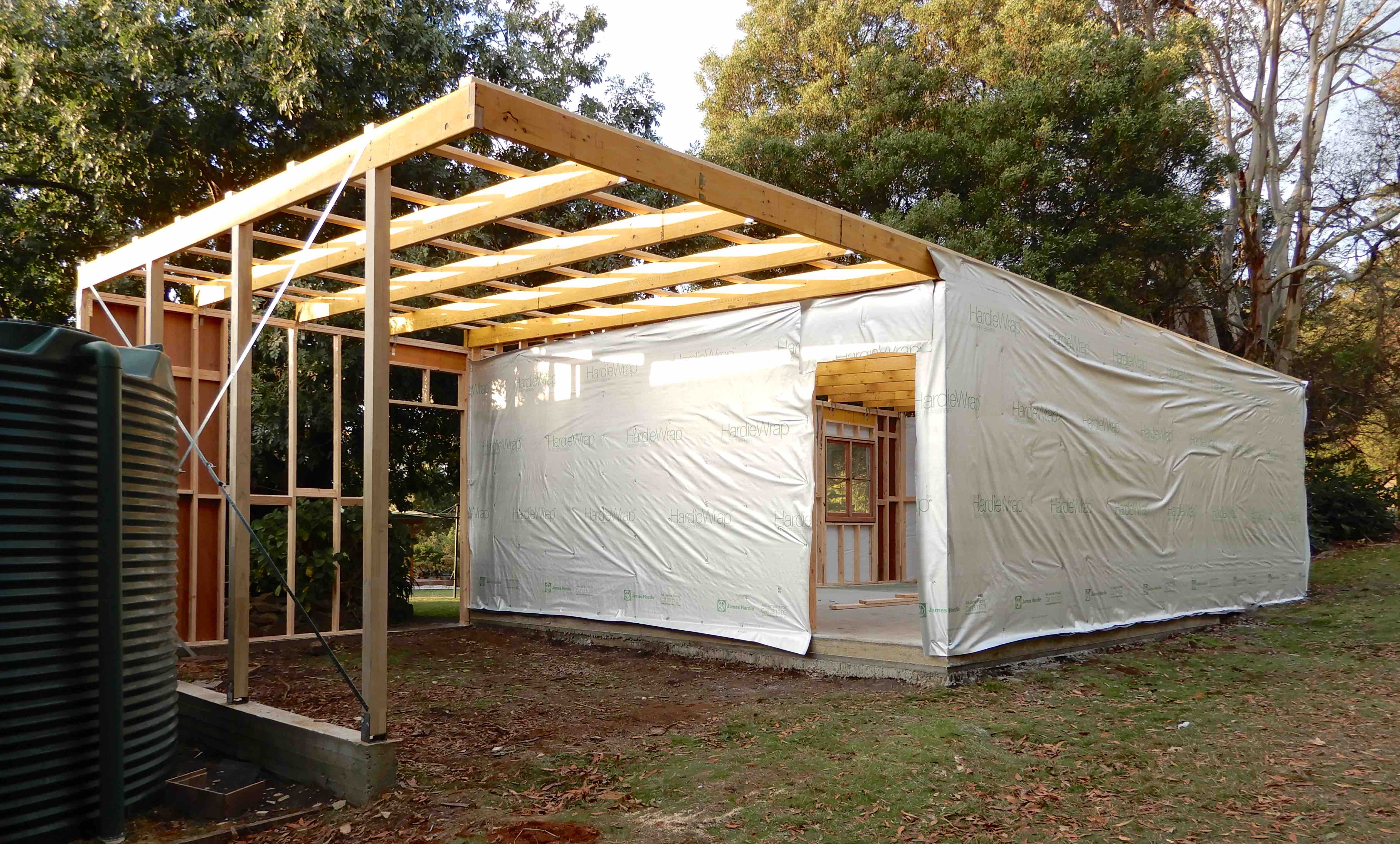
We finally pinned down the builder to do the frame in April, a hasty job that was left largely unfinished.

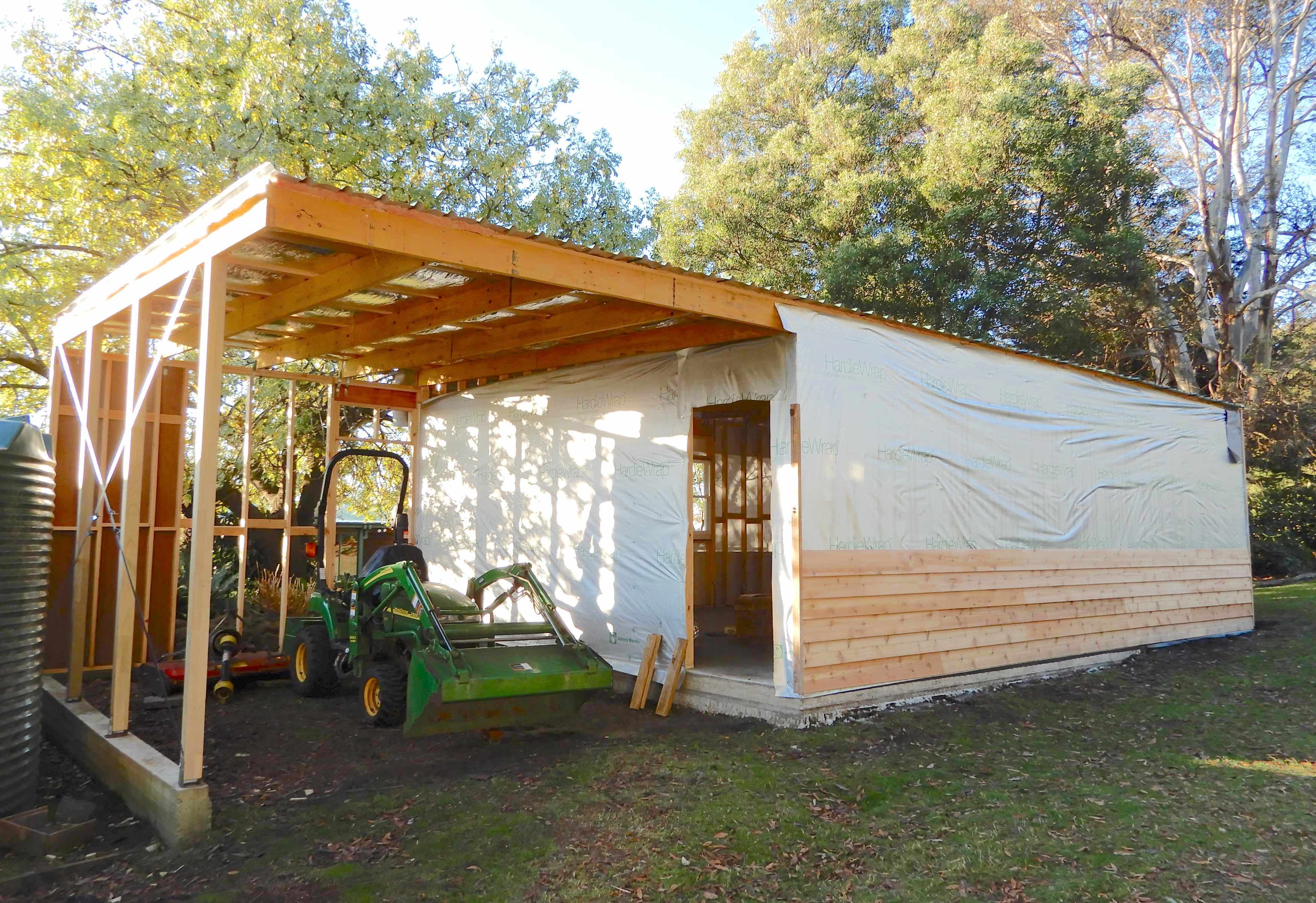
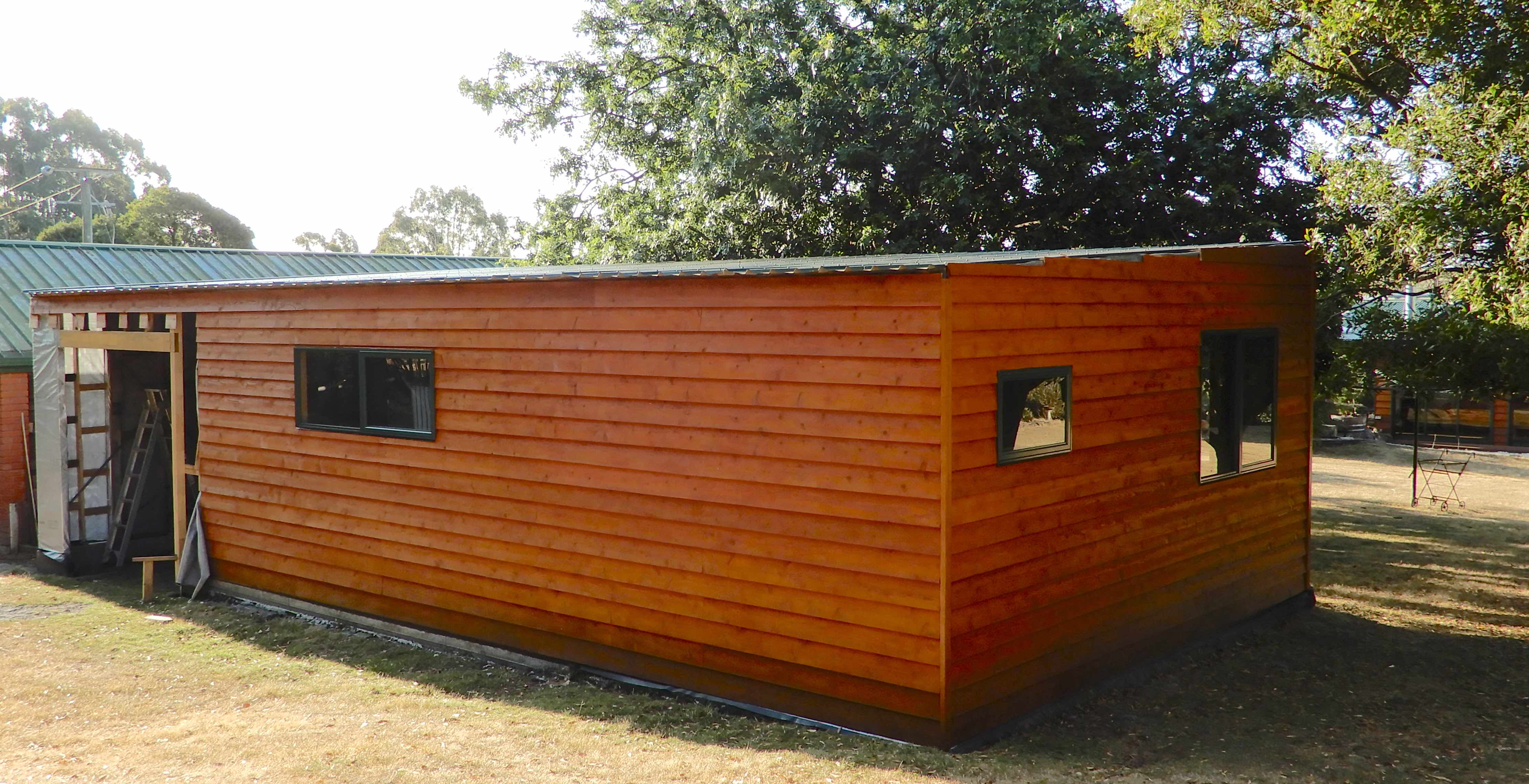
We completed the structural work with advice from a building surveyor and got on with the cedar cladding in the hope of being weatherproof before winter. The builders had put the colorbond on the roof but hadn’t finished the edges so we temporarily fixed some old flashings until we could find a roofer willing to finish the job. We had since realised the windows were a step too far, it would take far too long to restore them and the end result wouldn’t be as we pictured. We ordered new windows to match those on the house, another six week wait and we halted cladding until they arrived.

There was plenty more to keep us occupied. We finished wrapping the carport area and, with a few acrobatics involved, applied the colorbond to the outside.

A bit more cladding,

fitting the back door

and the new windows arrived two weeks early. We replaced the old ones and finished the cladding

but the season had changed and it was too cold to apply protection until summer.

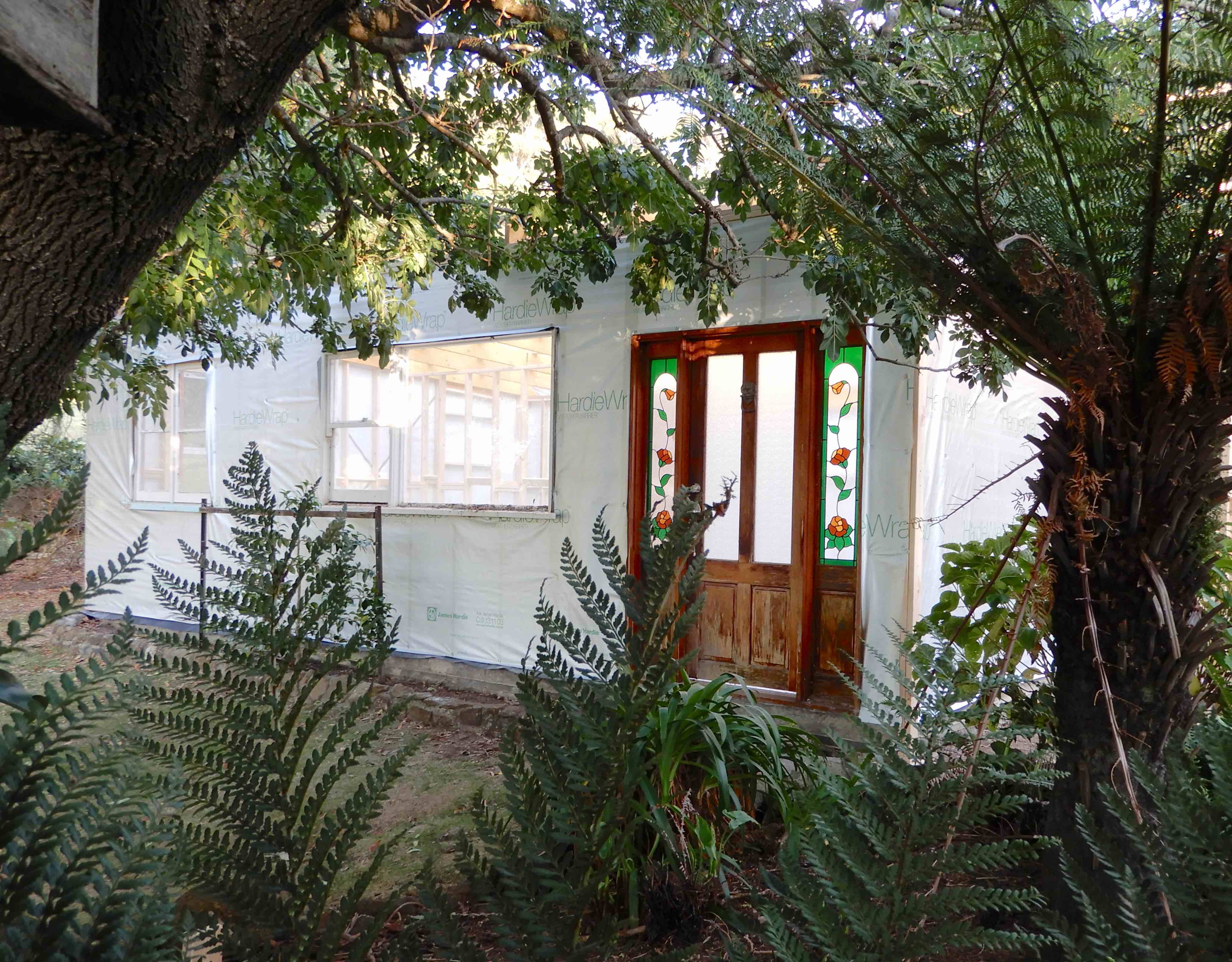
Many years ago, Michael found an old door at the salvage yard that was too nice to leave there. It has rested in the garage for eight years and now has pride of place as the front door. With the warmer weather, I could finally attempt to restore it to its former glory.

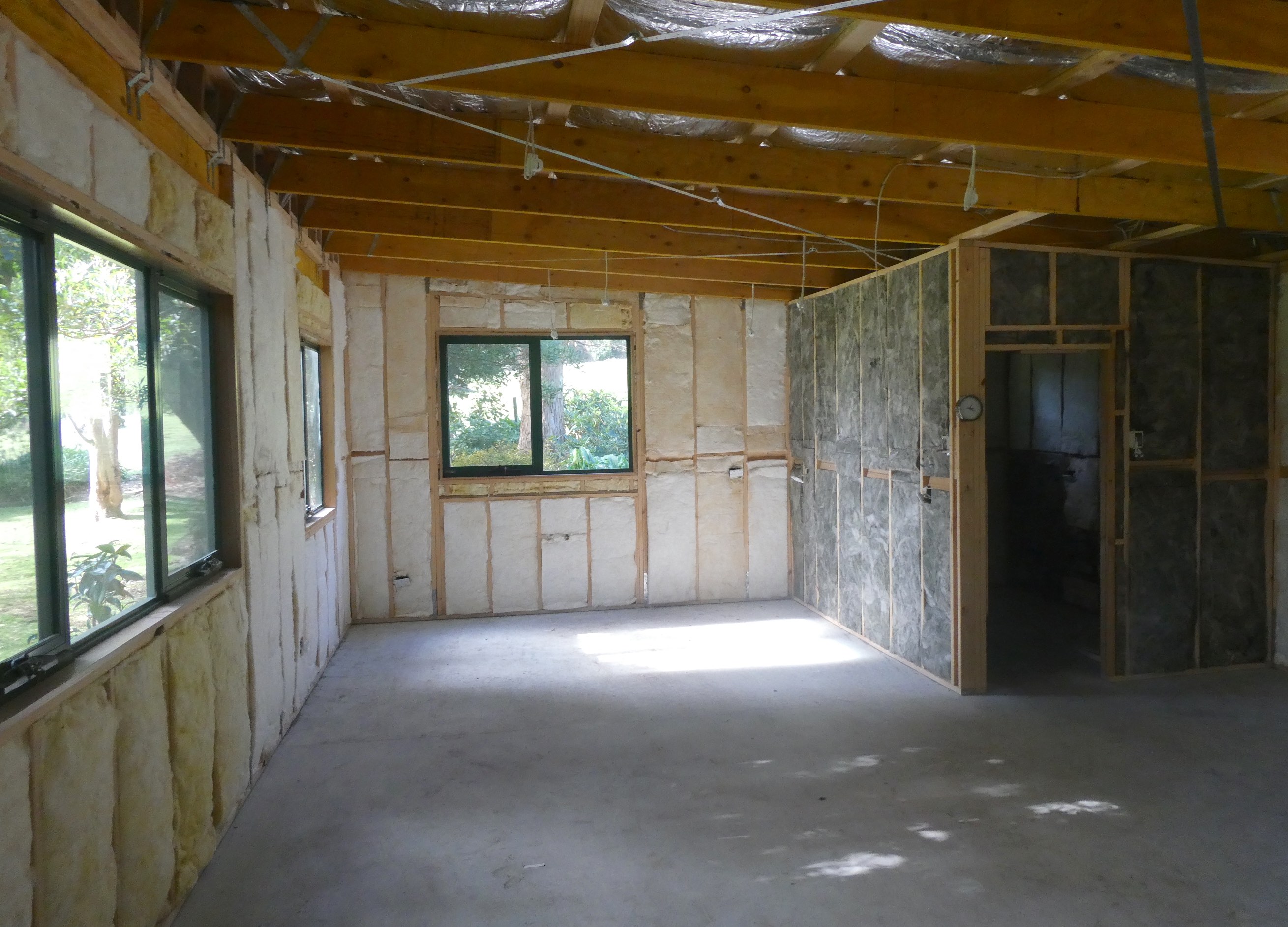
More delays ensued waiting for the electrician and we were now into May 2020. Once his cabling was in, we fitted the insulation batts

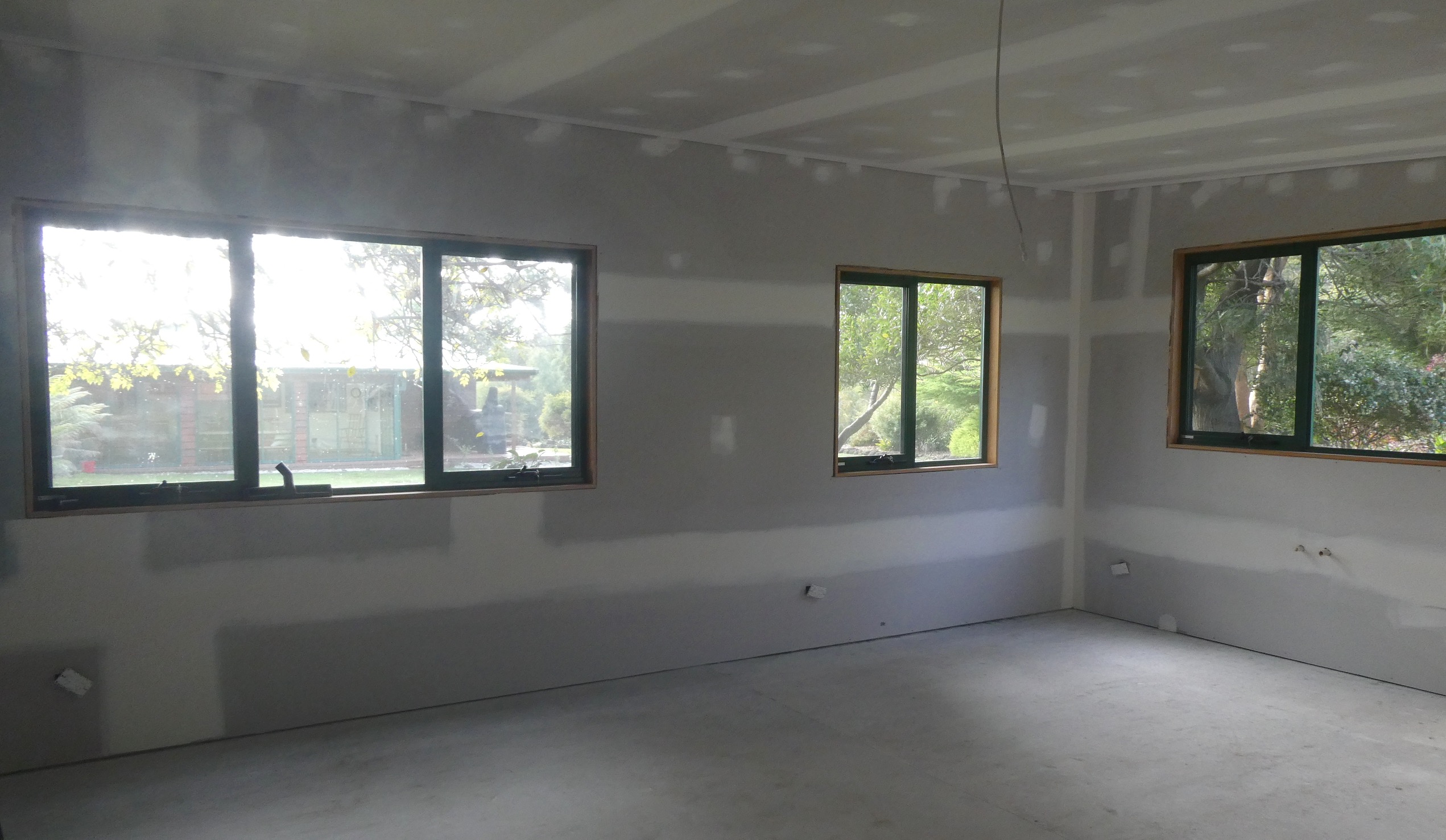
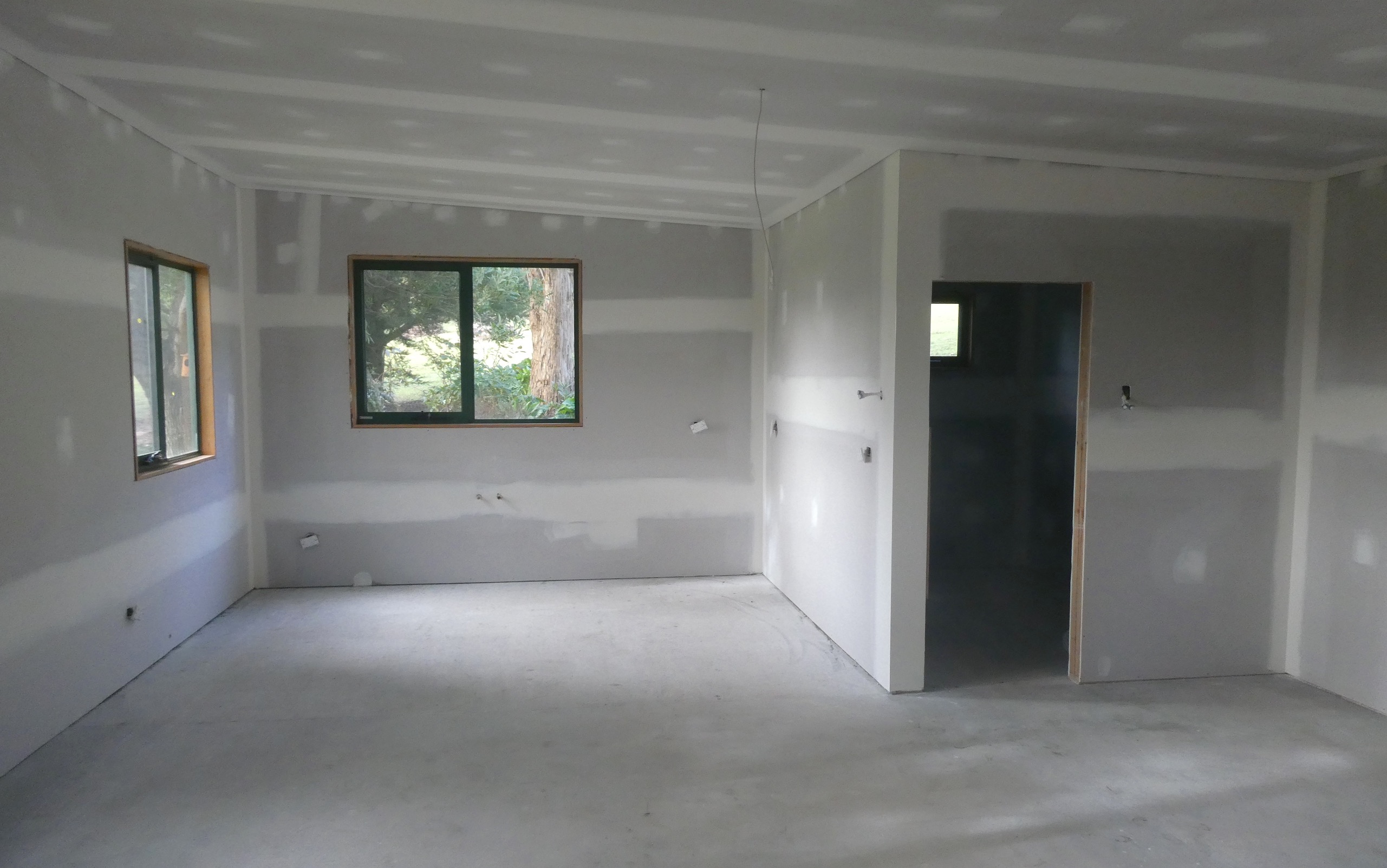
and the plasterers were able to work their magic.

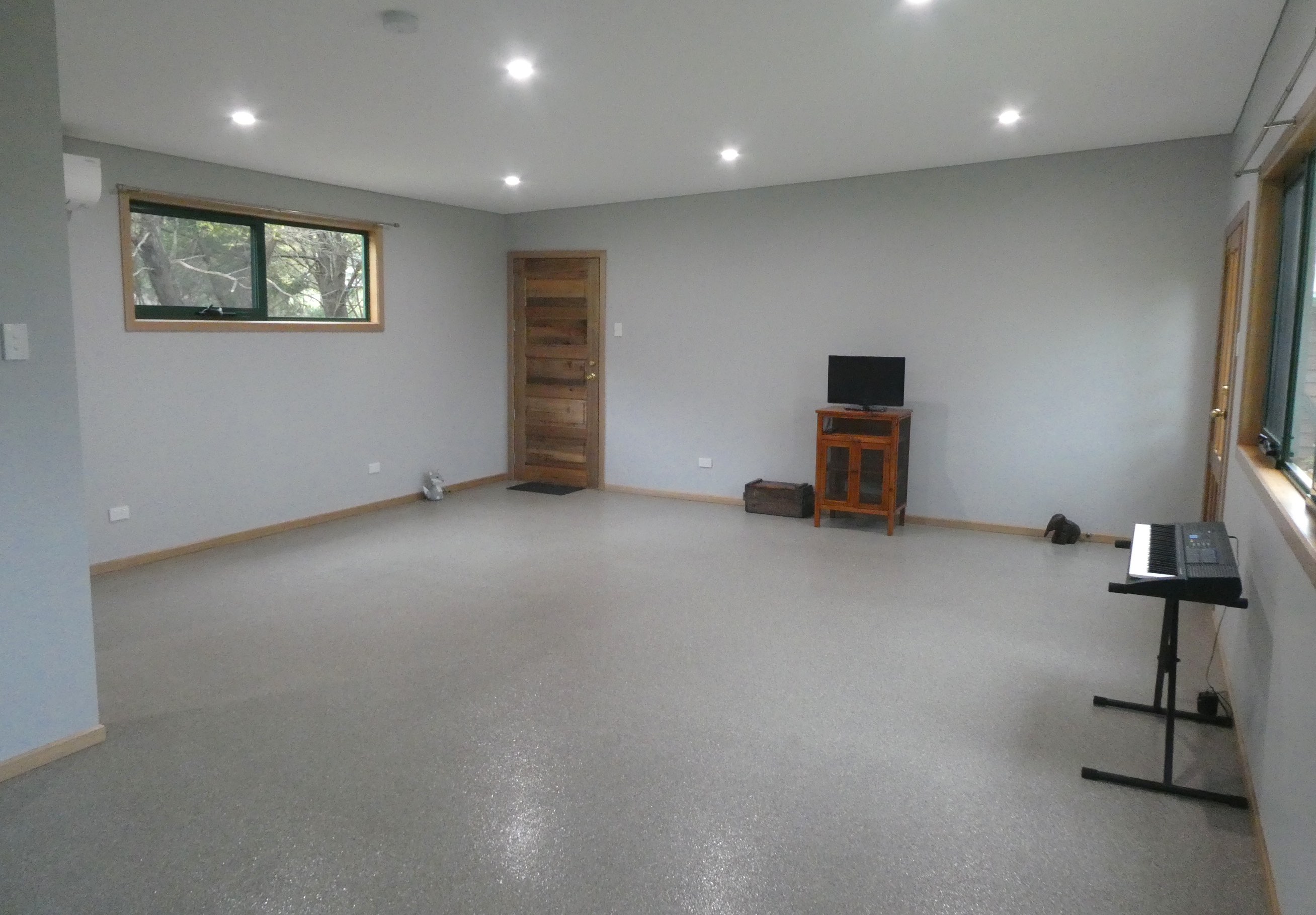
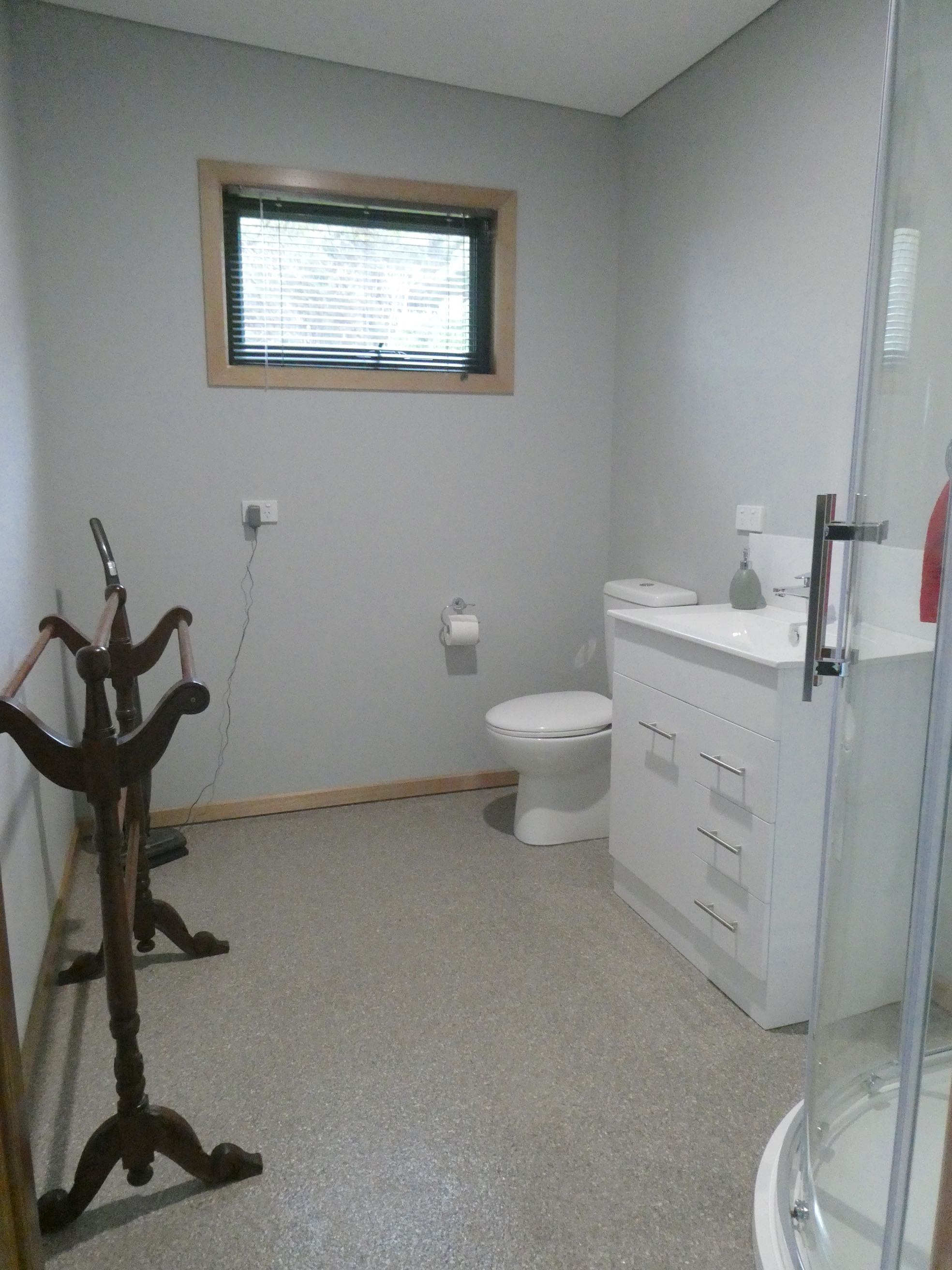
We had decided on epoxy resin with vinyl flakes for the floor and the next few weeks were a juggling act between the plumbers and the flooring contractor. With the heat pump installed we could paint through the cold months and apply architraves and skirtings.

A kitchenette is next and some comfy couches and we have a lovely music studio to relax in as well as a more pleasing vision across the garden.