hen haven

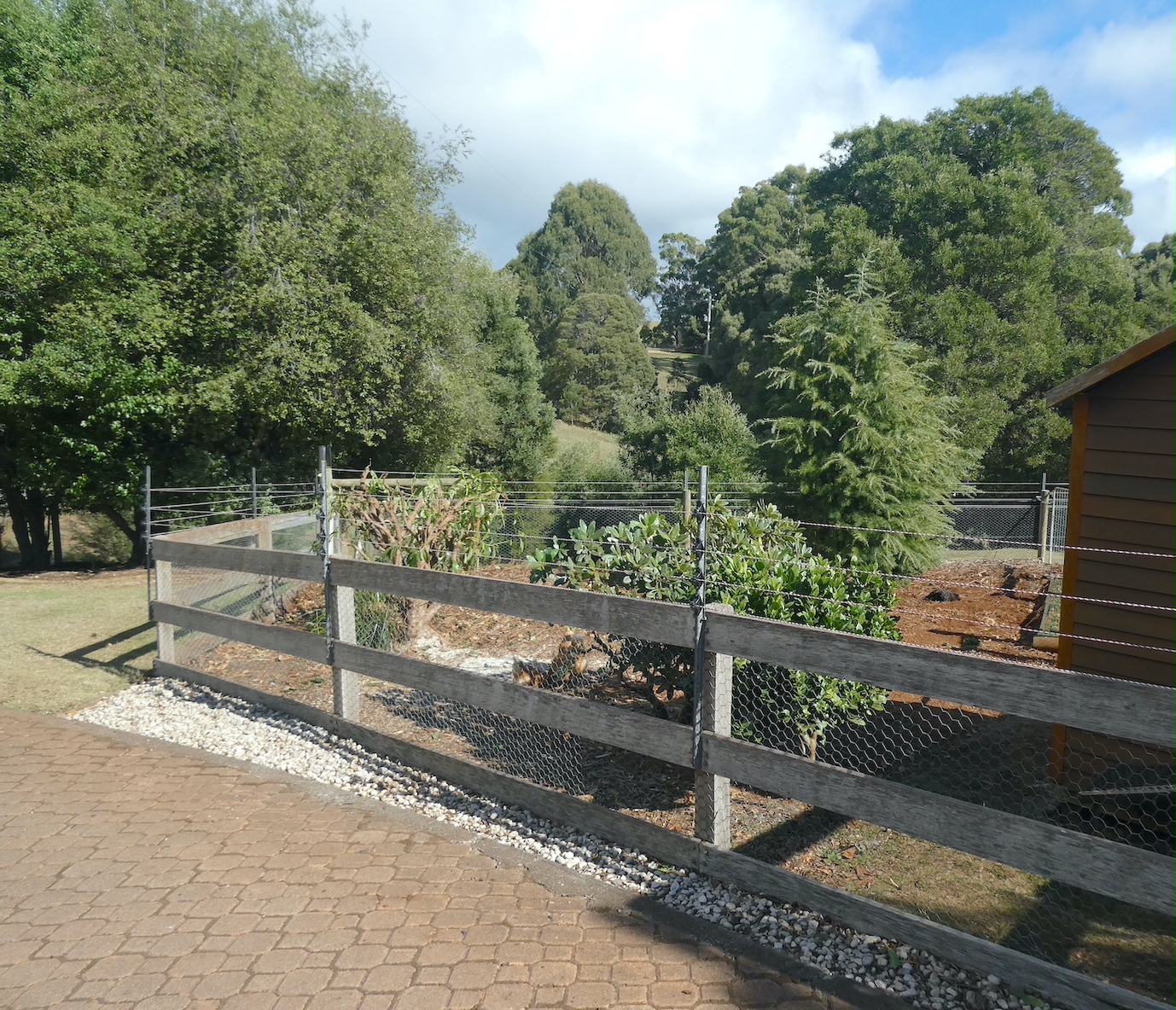
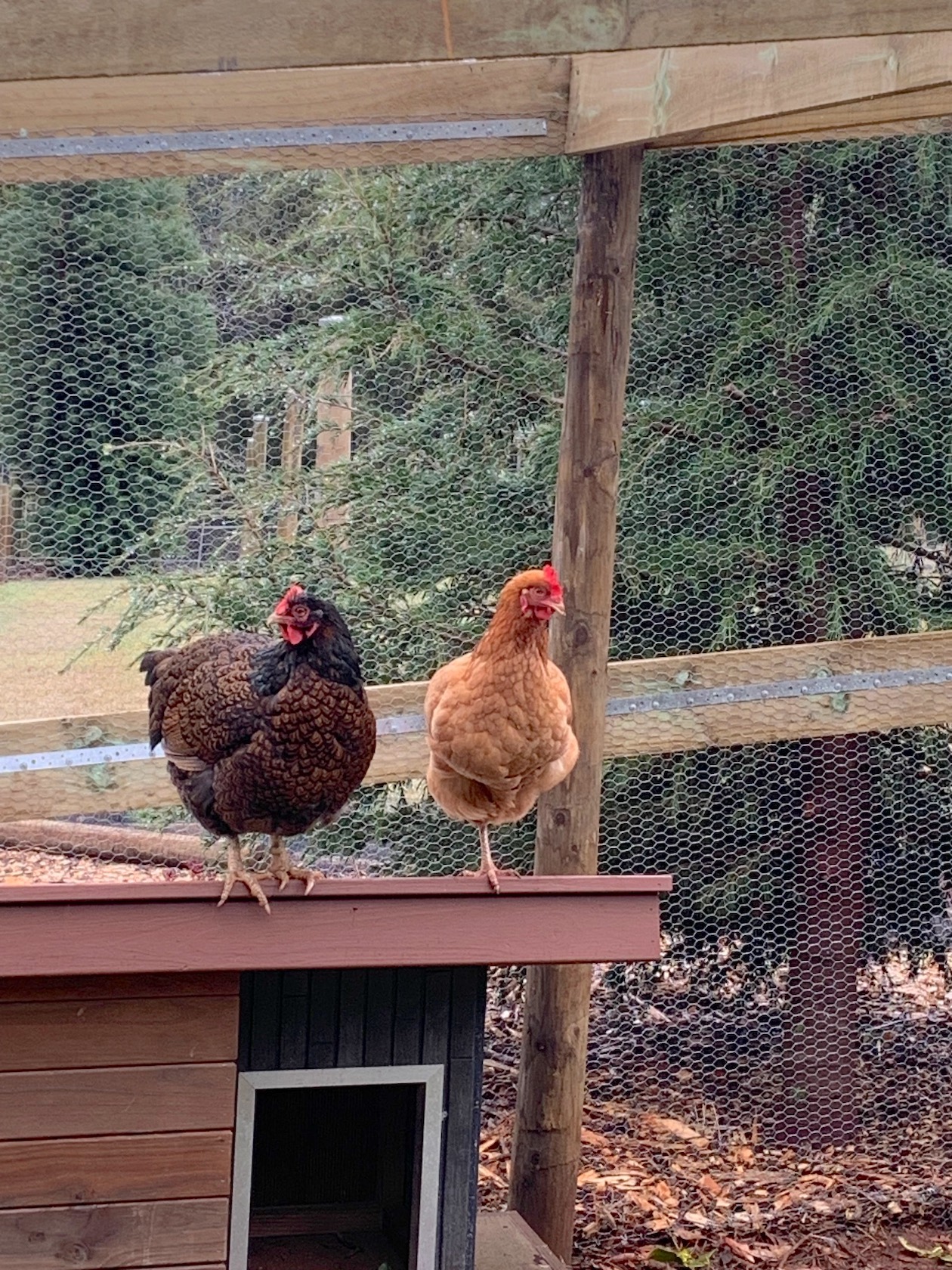
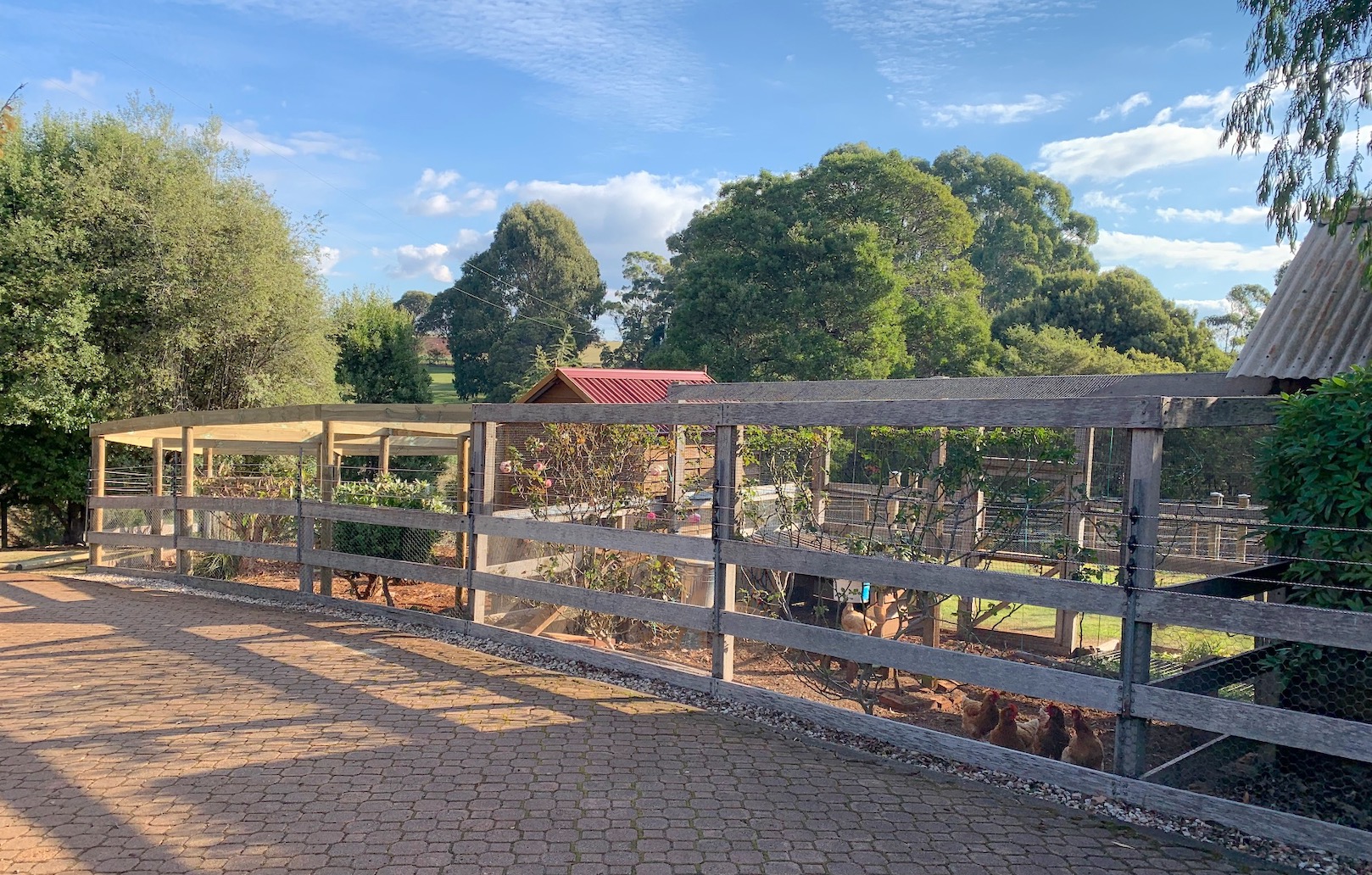
Our chooks have always had plenty of room to forage and scratch and play and, well, do what chooks do. Part of their run was completely enclosed and safe from predators and a larger area was fenced but otherwise open.

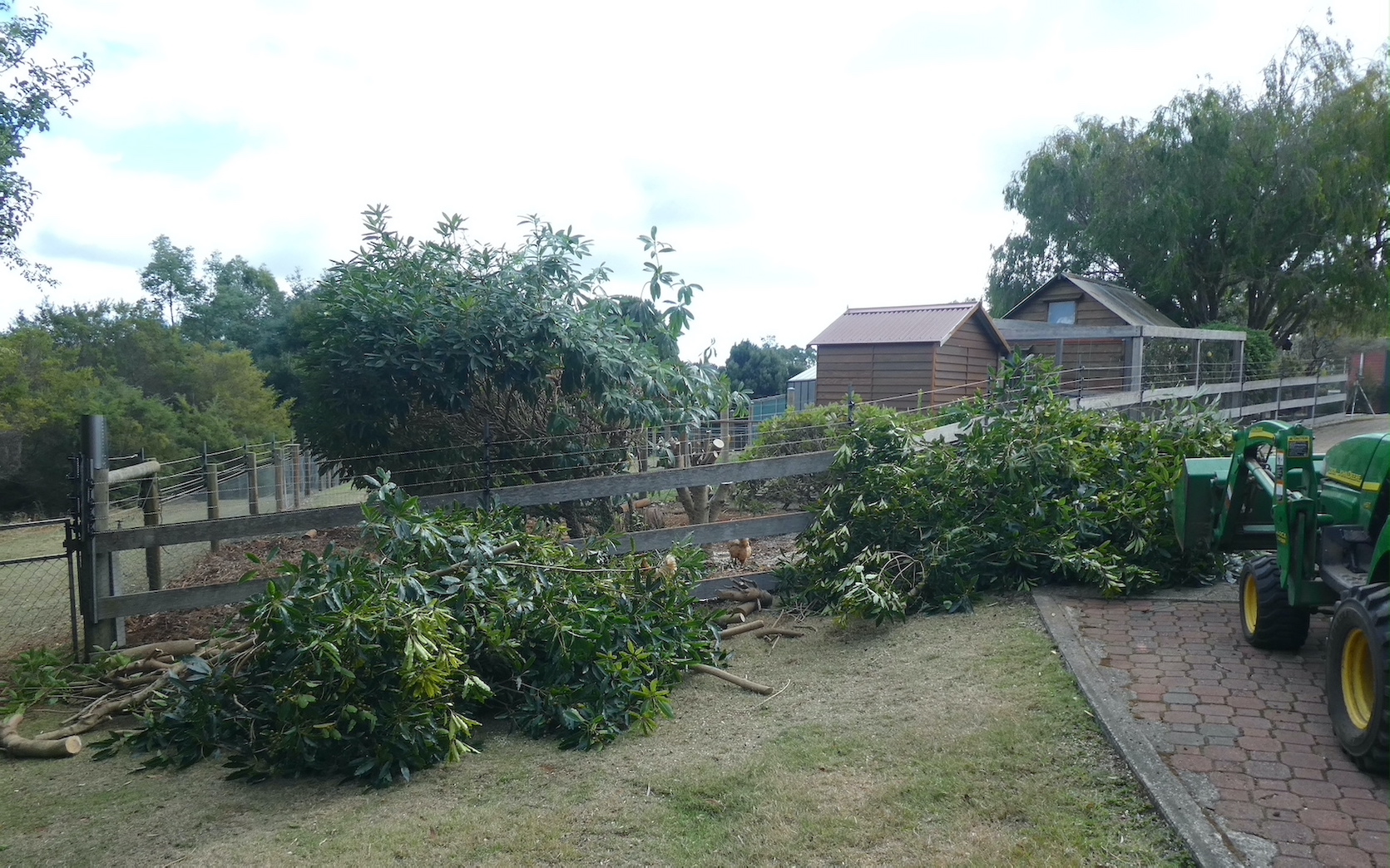
We had thought about enclosing the whole area for a while, mainly to keep the ornery sparrows from stealing the chook food, and finally tackled the mammoth project after visitations from raptors with eyes on our girls. The first task was to remove the huge native pittosporum, a favourite hotel for the sparrows and far too big to retain within the new run.

We proceeded with hole digging and post erecting,

and it wasn’t long before we realised the need to allow the girls to roam and shut them out of the work space. They were just a little too helpful.

Unfortunately, they make a terrible mess of any tidy garden space, something I had to ignore until the end of our mission.

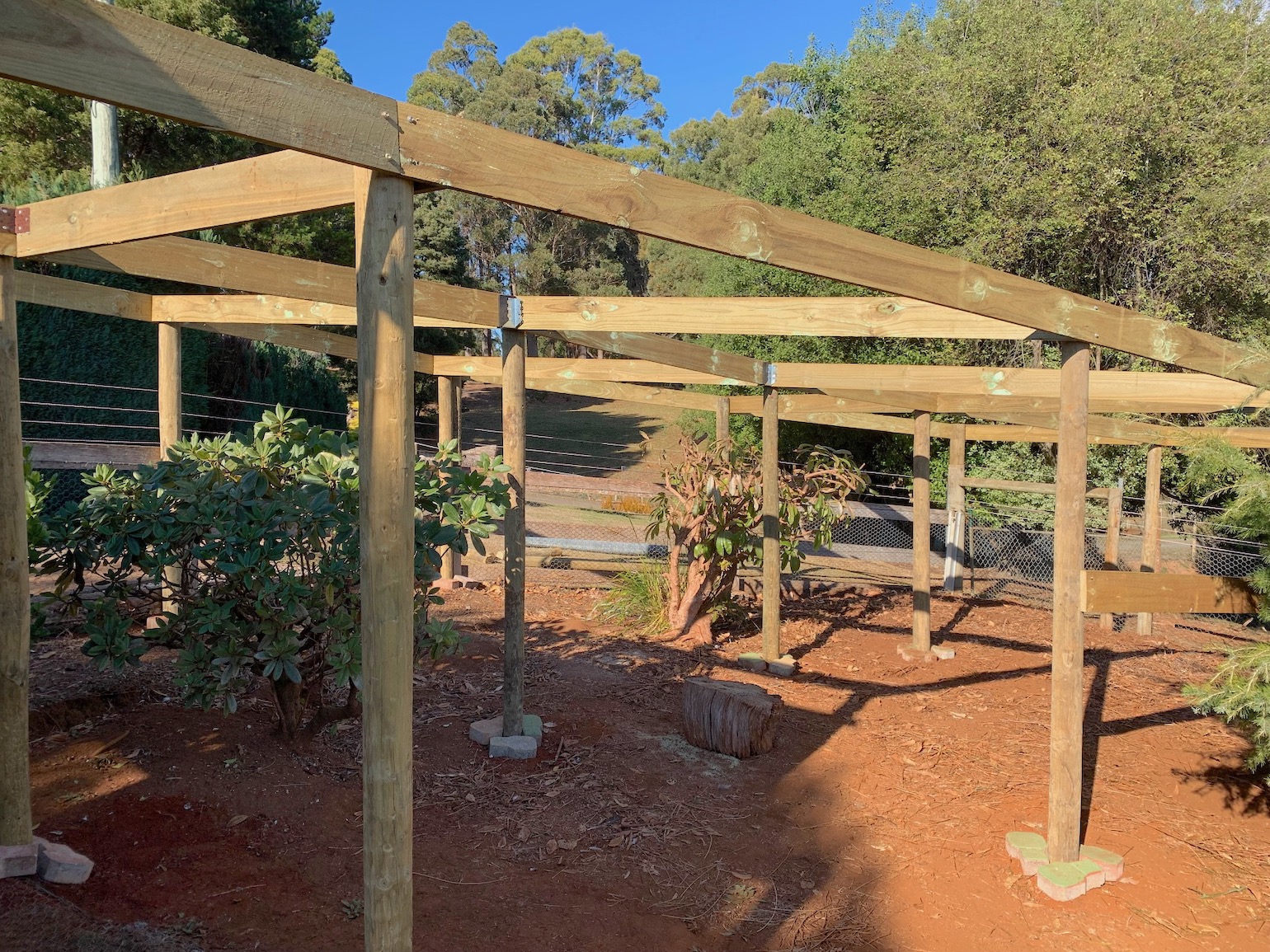
Once the boundary posts were in, we added the support beams

before continuing with the central posts and beams.
Next came the tricky part – the roof.

Accompanied by minor swearage, we manhandled the first section of wire into place and secured it, feeling inspired to carry on.

We soon finished the roof and used netting clips to join the sections.
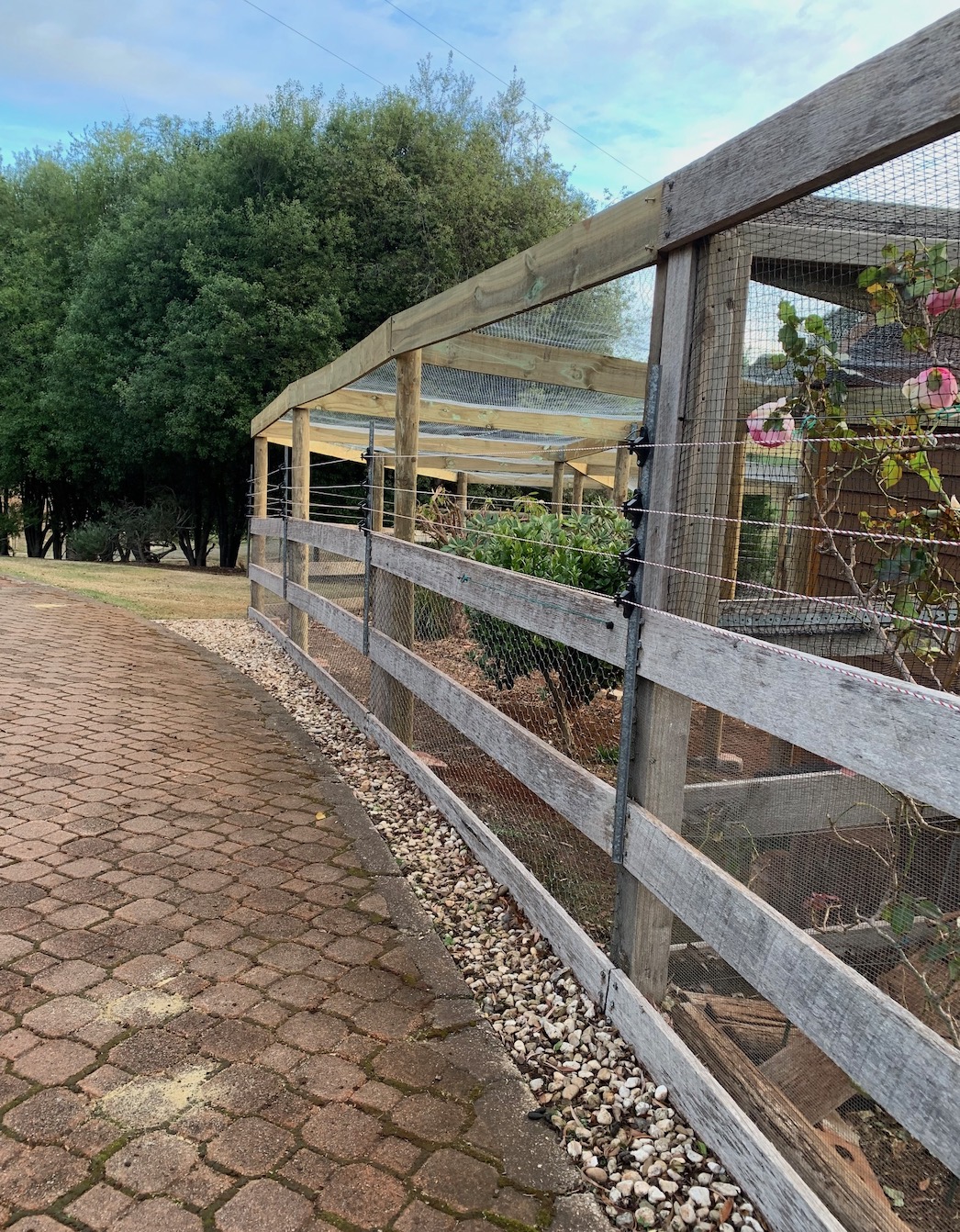
Rather than purchase a lightweight aluminium screen door from a local retailer, we sourced a solid steel model from the salvage yard at a quarter of the price. By the time we sprayed a coat of primer, spent hours painting two coats of colorbond and fixed the bird wire, I’m not sure the effort:reward ratio was favourable but it serves its purpose.

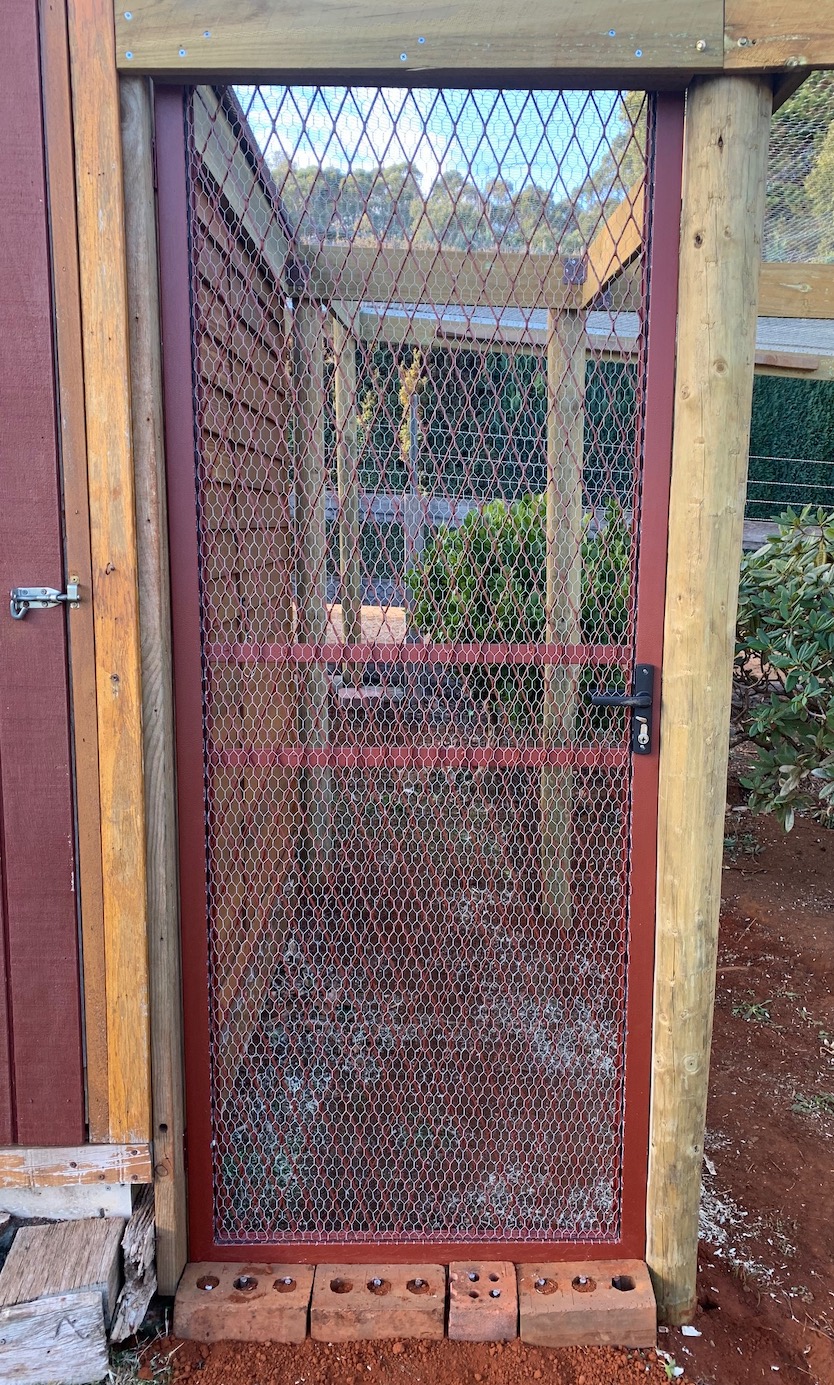
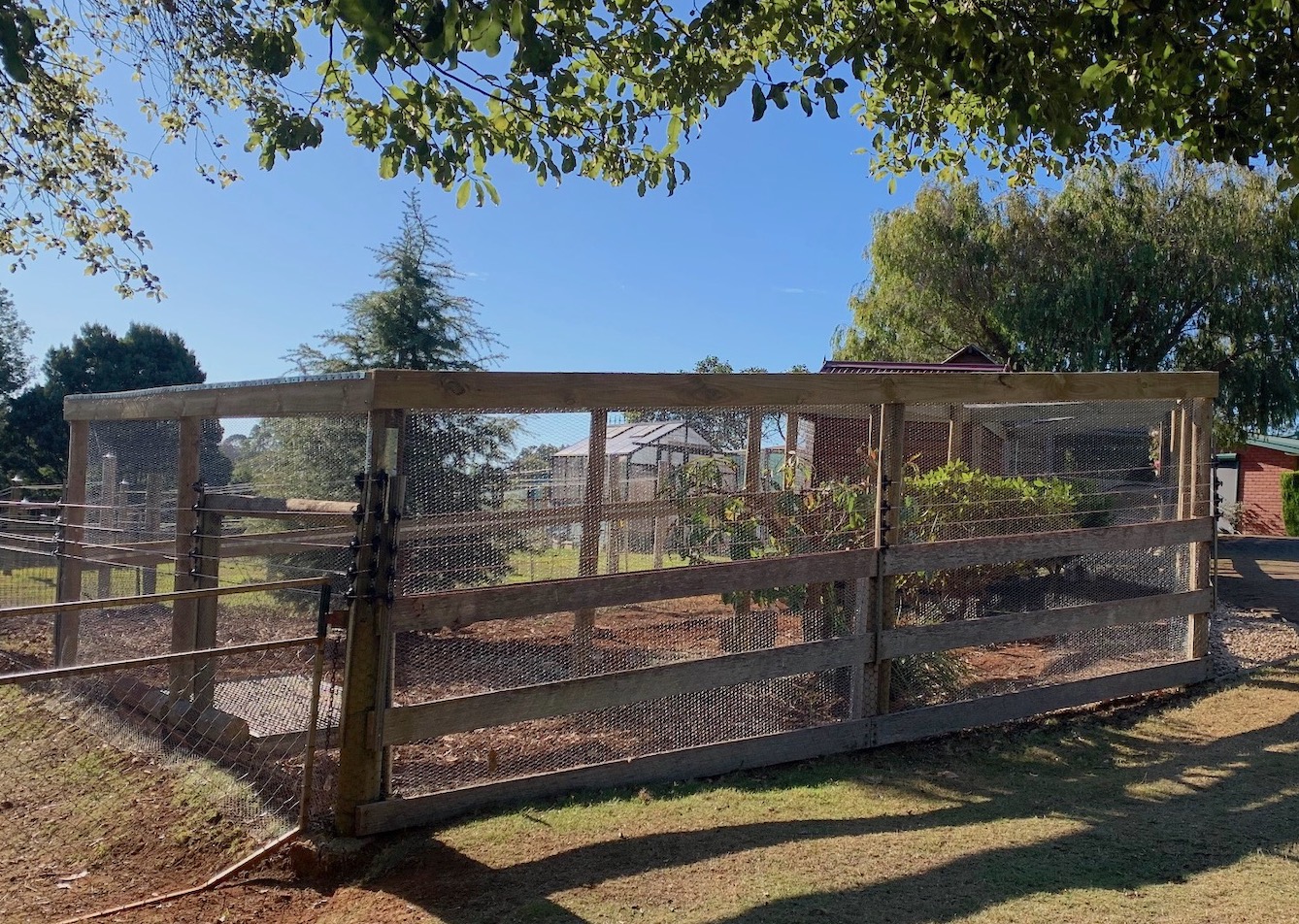
Once the wire sides were completed,
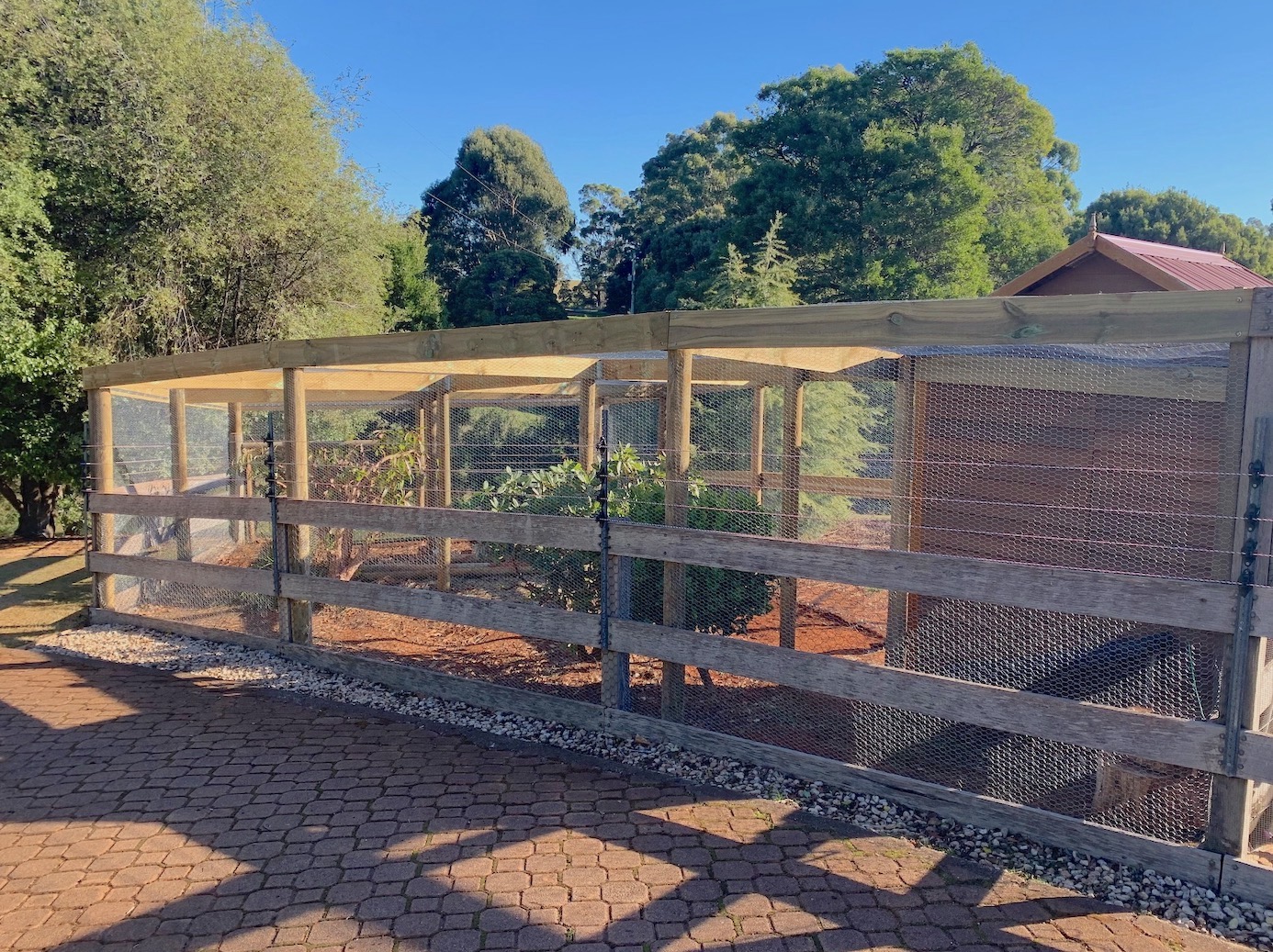
we removed the original boundary fence line and relocated the grazing cages inside the new run.

A place to shelter from inclement weather,

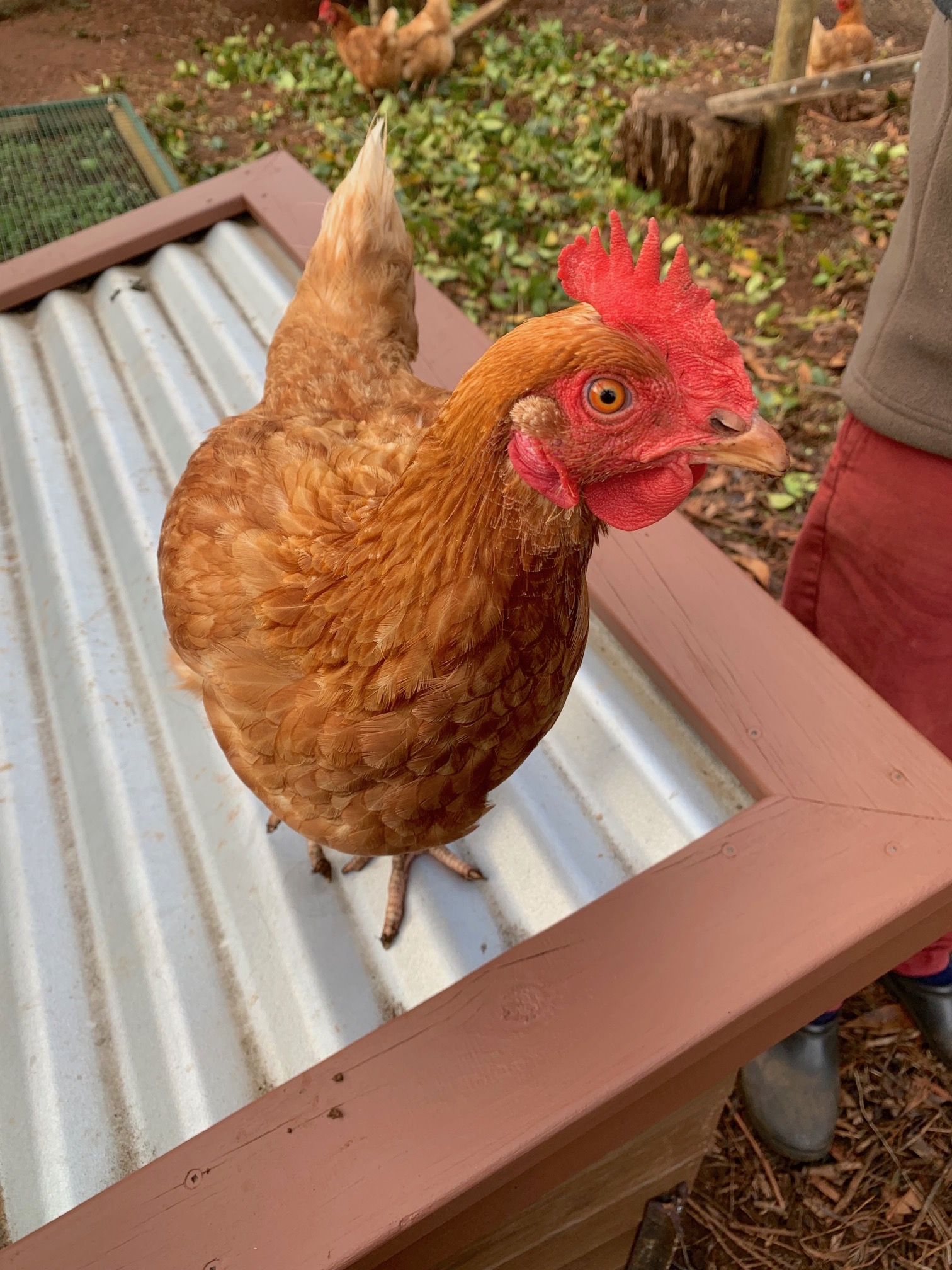
climbing frame
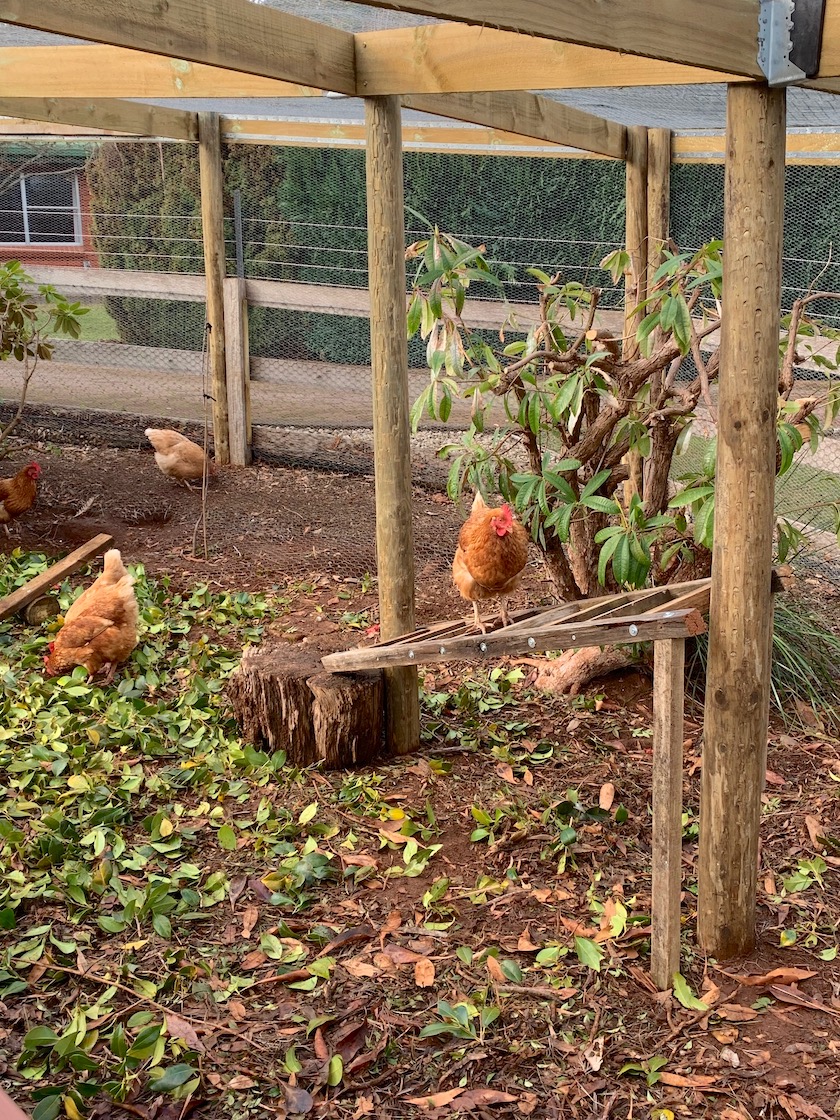
and seesaw completed the new enclosure.

We created a new border where the original fence line came down, added mulch, planted a few Kangaroo Paws and re-seeded the lawn area.

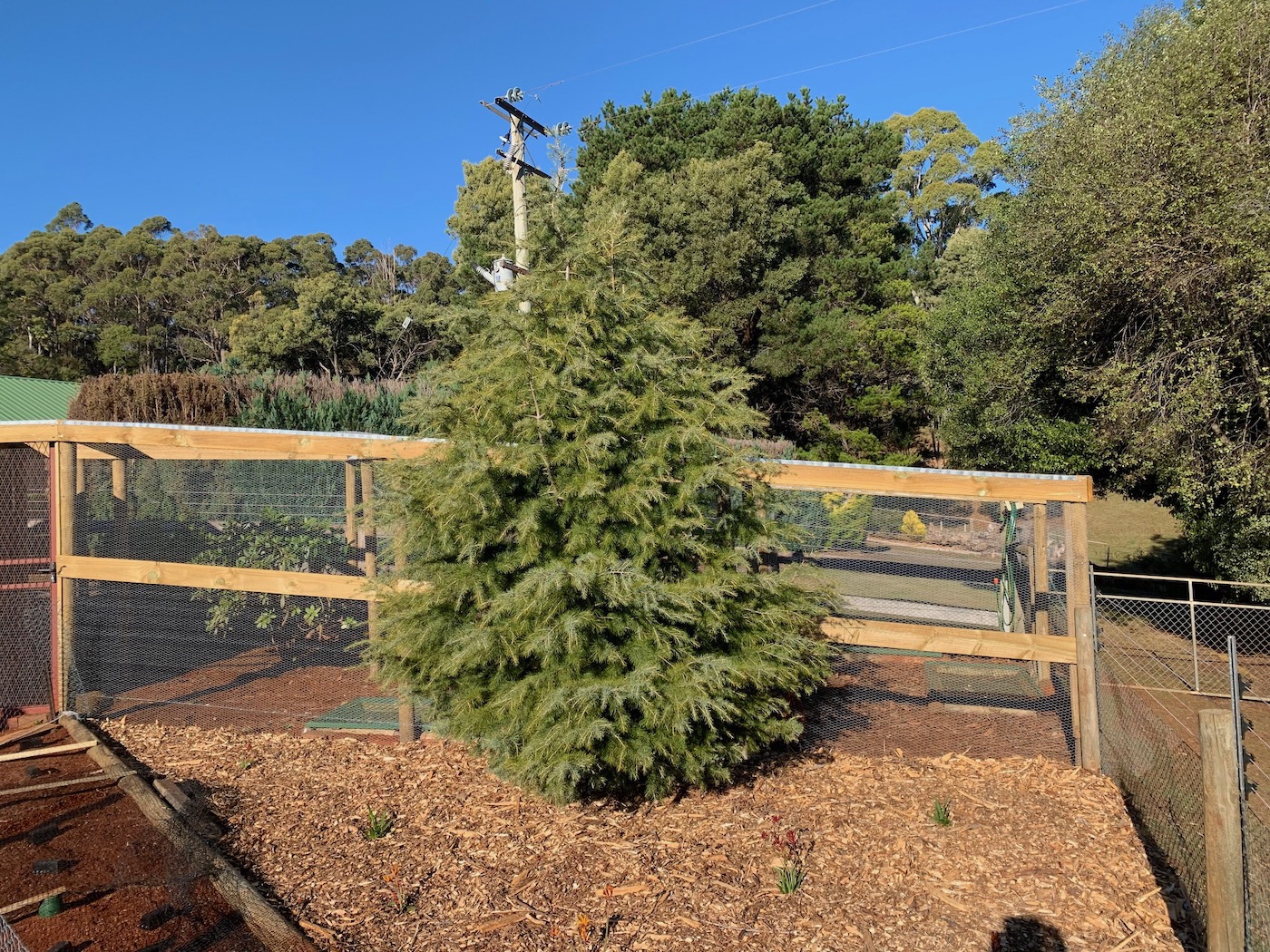
And planted two apple trees in the new yard. The chooks are wondering – what’s next?
cockatoo chaos

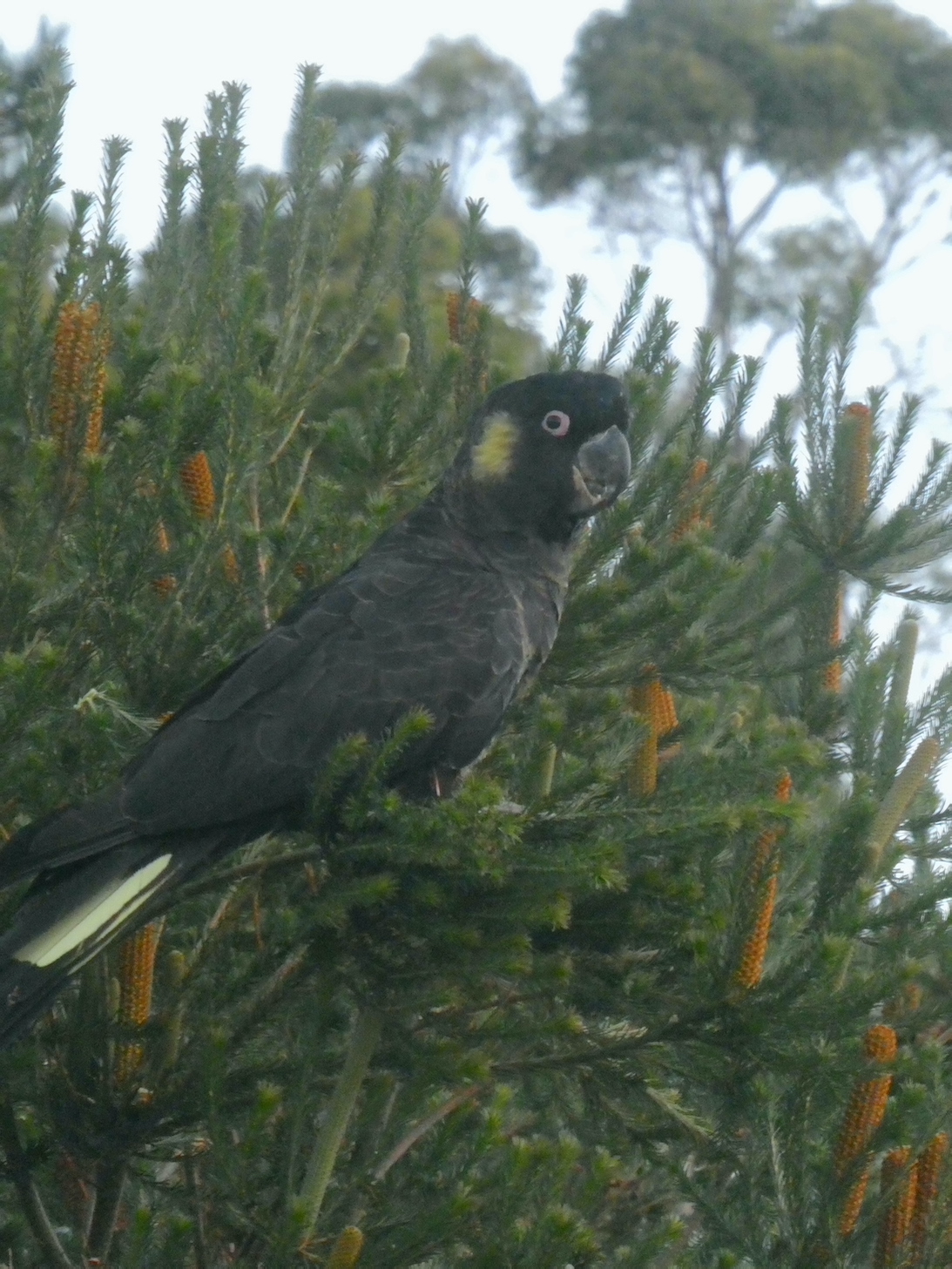
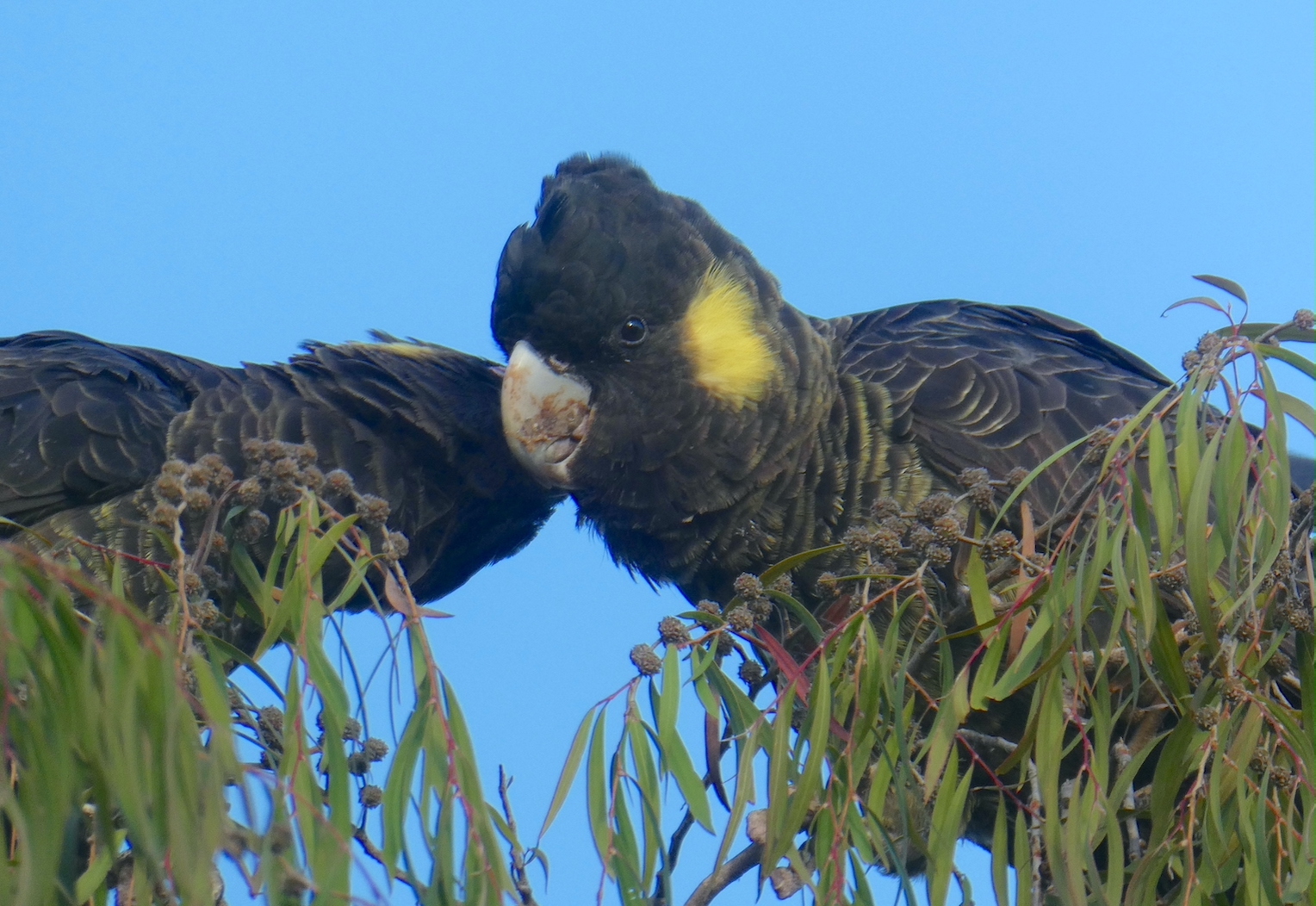
We have so many bird species in our garden I couldn’t even begin to name them. The biggest by far are the yellow-tailed black cockatoos. They are often in pairs quenching their thirst at the stock troughs, one will keep lookout in a nearby tree while the other sups and then they swap places. Then there are times when a whole flock will descend on the Banksia tree for a feast.

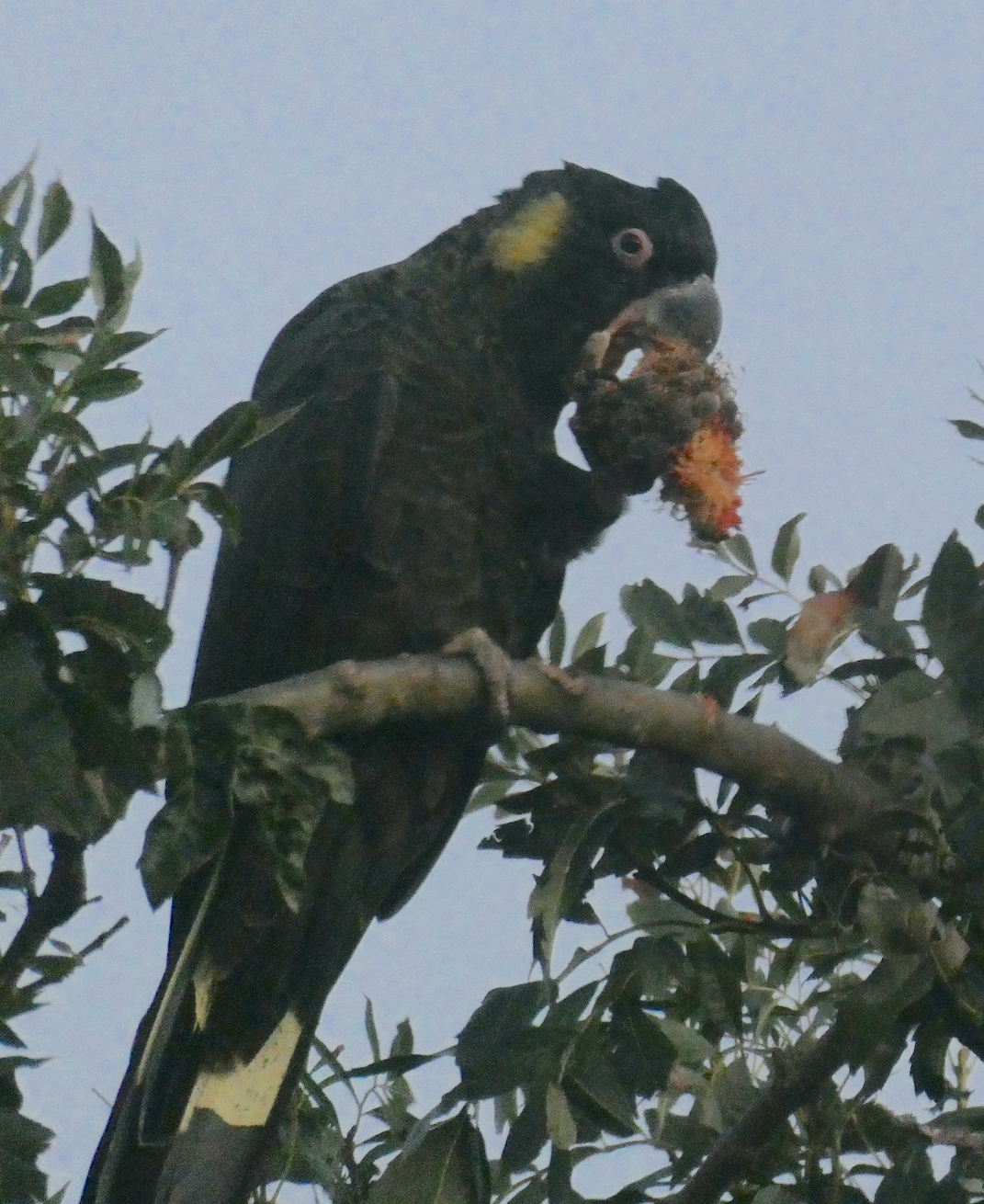
We hear them coming as they call to each other in their distinctive raucous, yet delightful, manner. They nibble the cones and break them open to eat the seeds.

I don’t begrudge their much needed nutrition but I wish they wouldn’t leave such a trail of destruction.

These stunning birds were first described in 1794 by the English naturalist George Shaw as Psittacus funereus, relating to the dark, sombre plumage as if dressed for a funeral. He seems to have missed the bright yellow cheek patches and tail band. Our magnificent peppermint tree is a popular spot to survey the surrounds before indulging in another Banskia banquet.

The body feathers are edged in yellow and those of the subspecies found in Tasmania have a more prominent scalloped appearance.

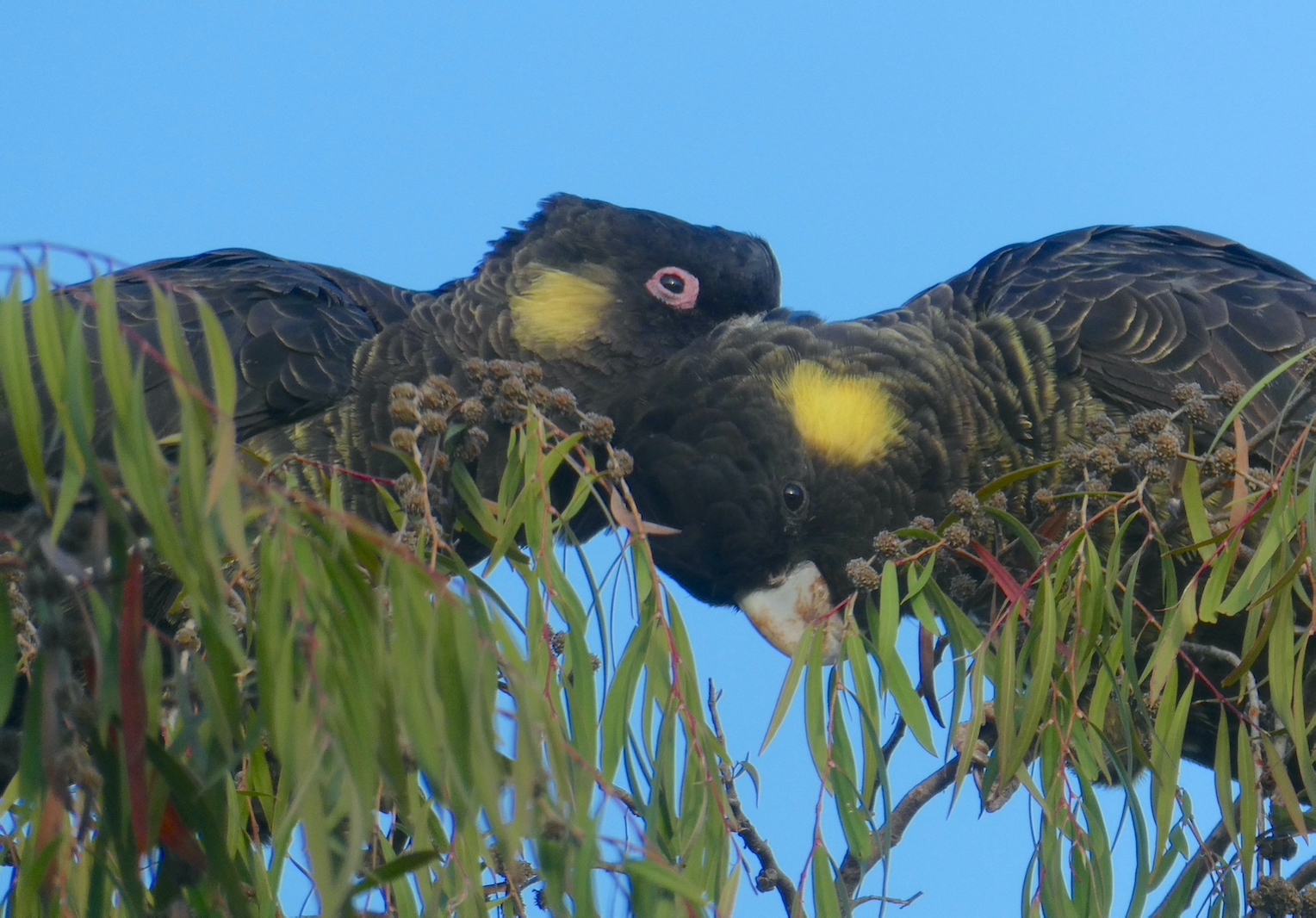
Adult males have pinkish red eye rings and black beaks

while females have grey eye rings, a bone coloured beak and brighter, more clearly defined yellow cheek patches.

The monogamous couples raise a single chick each year which will remain with them for 12 to 18 months. The constant ‘begging’ squawk of the young is enough to test any parental patience. One particular pair at Rotterdam Zoo stopped breeding when they were 41 and 37 years of age, though continued to bond closely. I suspect these two will be bringing offspring to dine before long.

With warmer weather around the corner, we look forward to seeing more of these beautiful creatures.

Johnson’s Beach

At the end of another winter, thoughts turn to warmer days, sunshine and walks along the beach. Just a 10 minute drive from us is the peaceful Johnson’s Beach at Penguin. Apparently, it is named after a certain Mr. Johnson who lived at the end of Clerke Street near the beach but he remains a mystery.

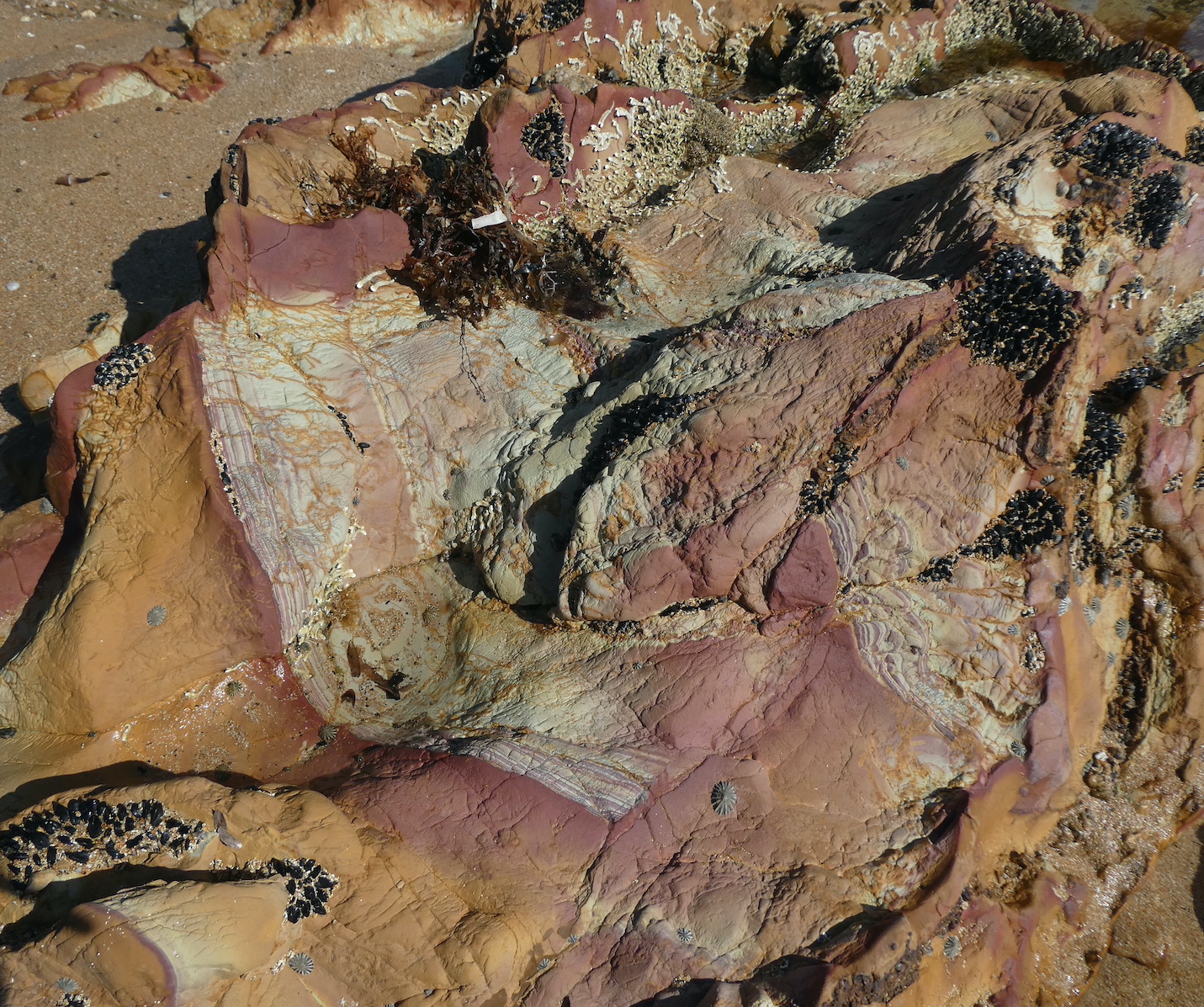
A stroll along the shore reveals art installations with a difference, courtesy of the artist in residence, Mother Nature. Magnificent rocks of all shapes and sizes are coloured with myriad earthy hues.

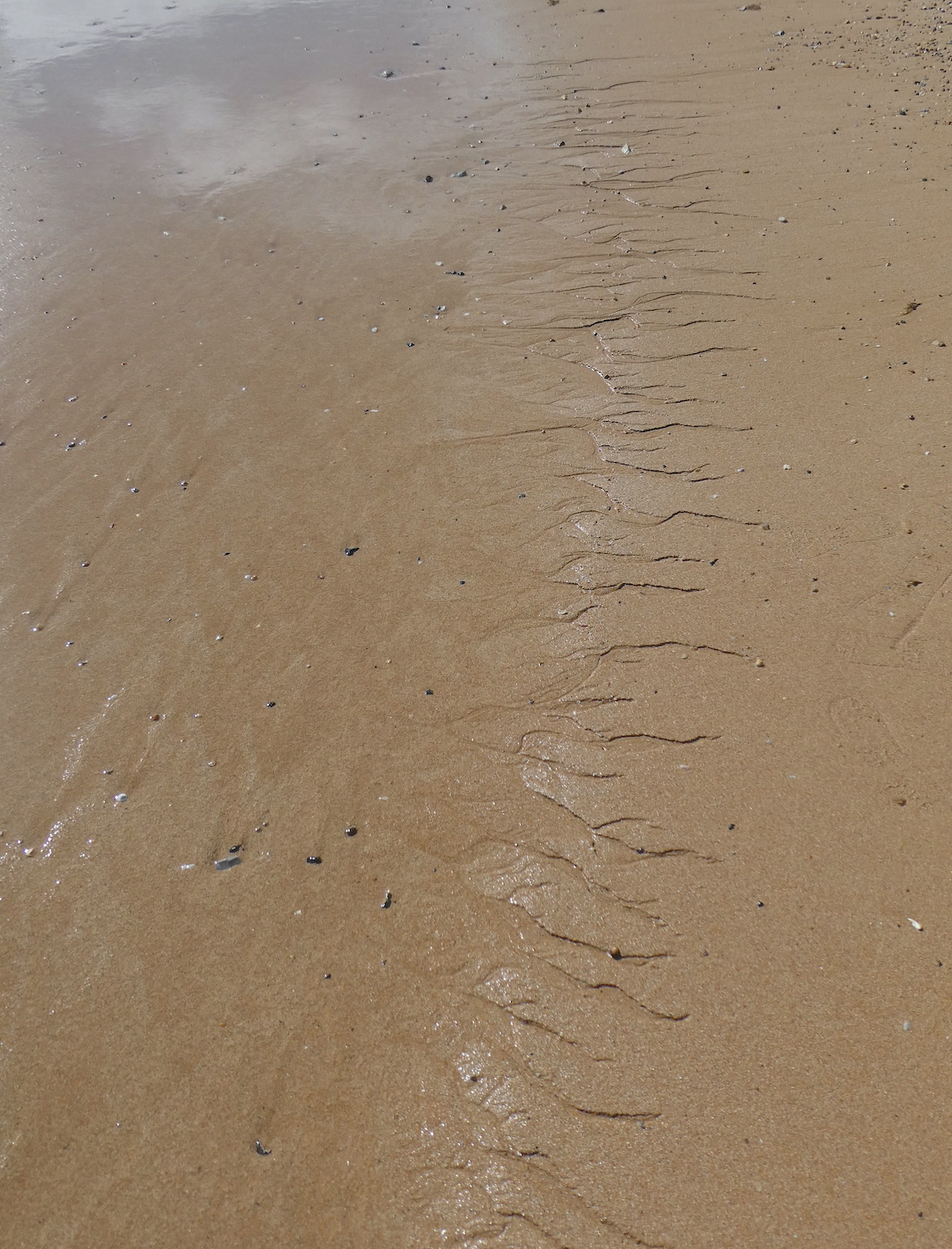
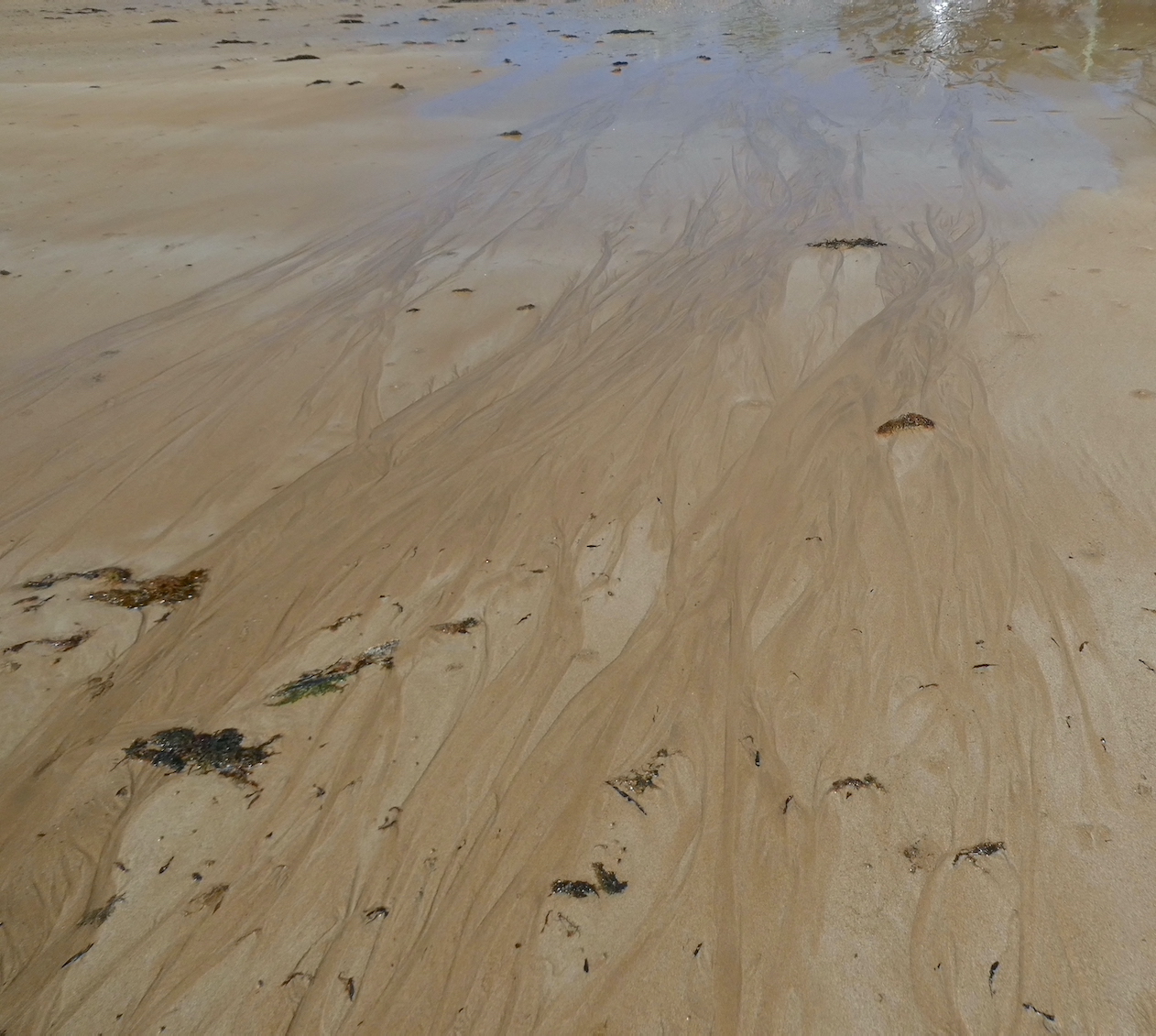
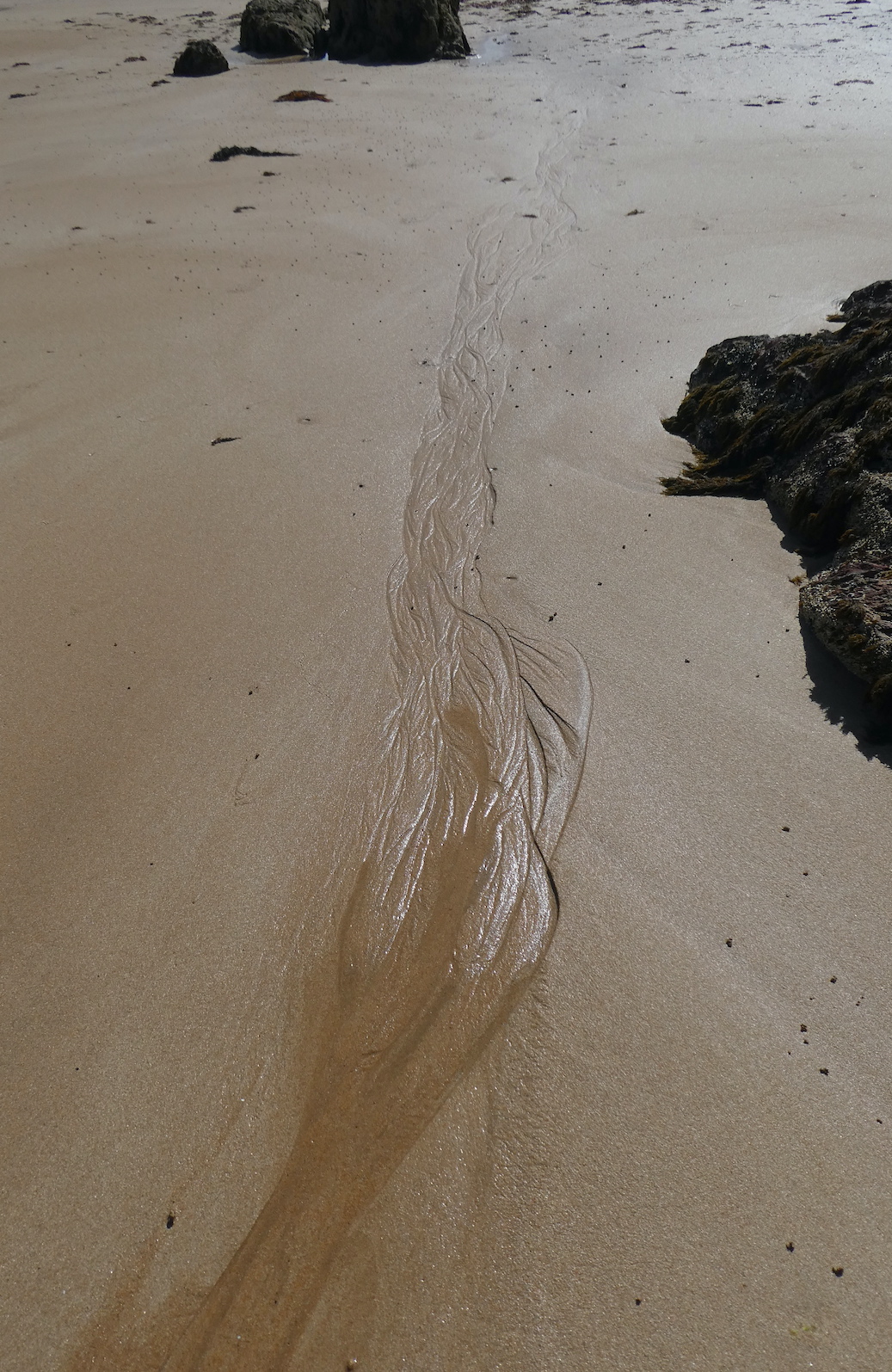
Subtle brush strokes and feathering etch the sand, following the retreating tide.

Smooth vanilla mounds are drizzled with raspberry coulis

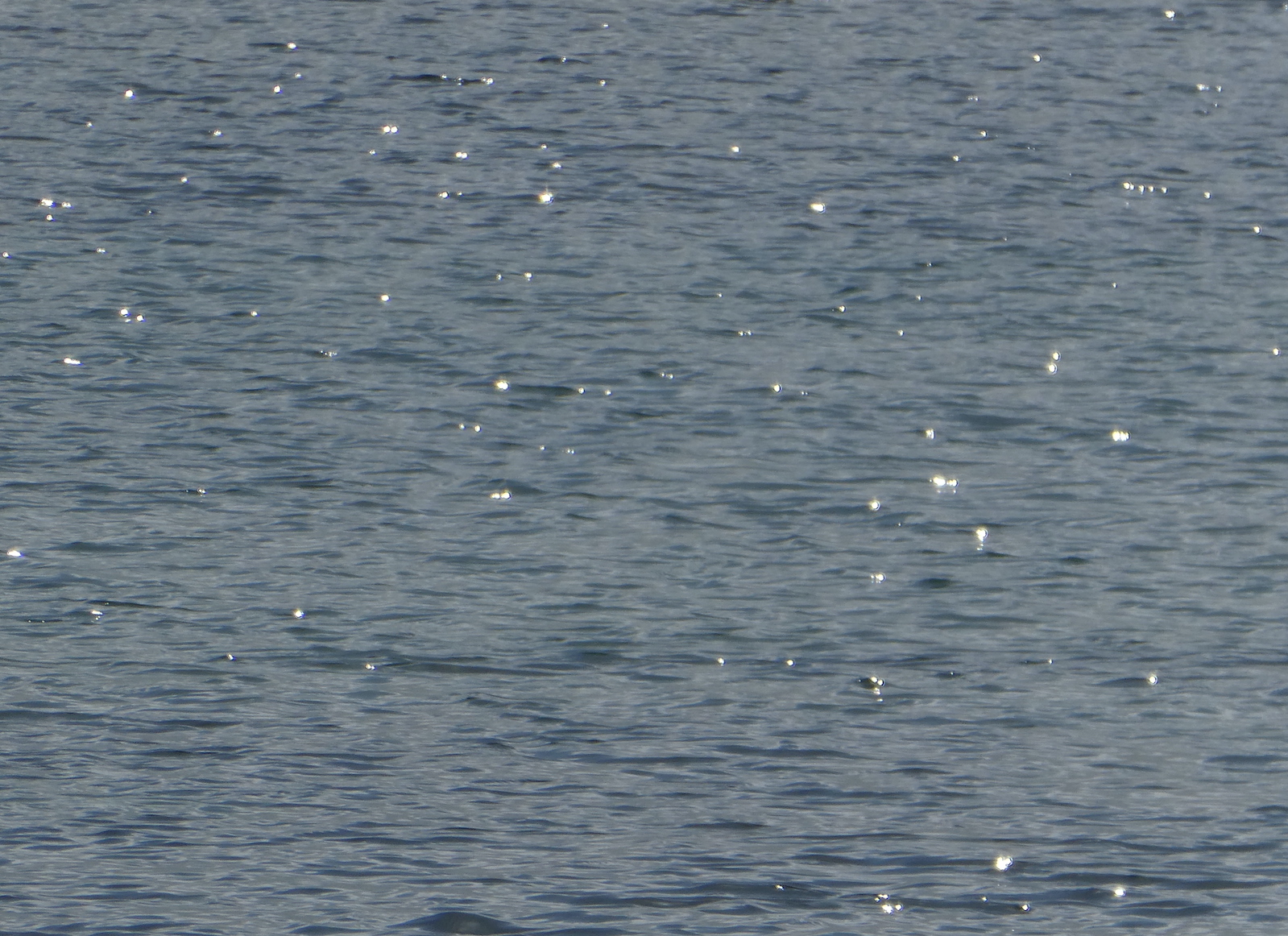
and diamonds sparkle on a watercolour background.

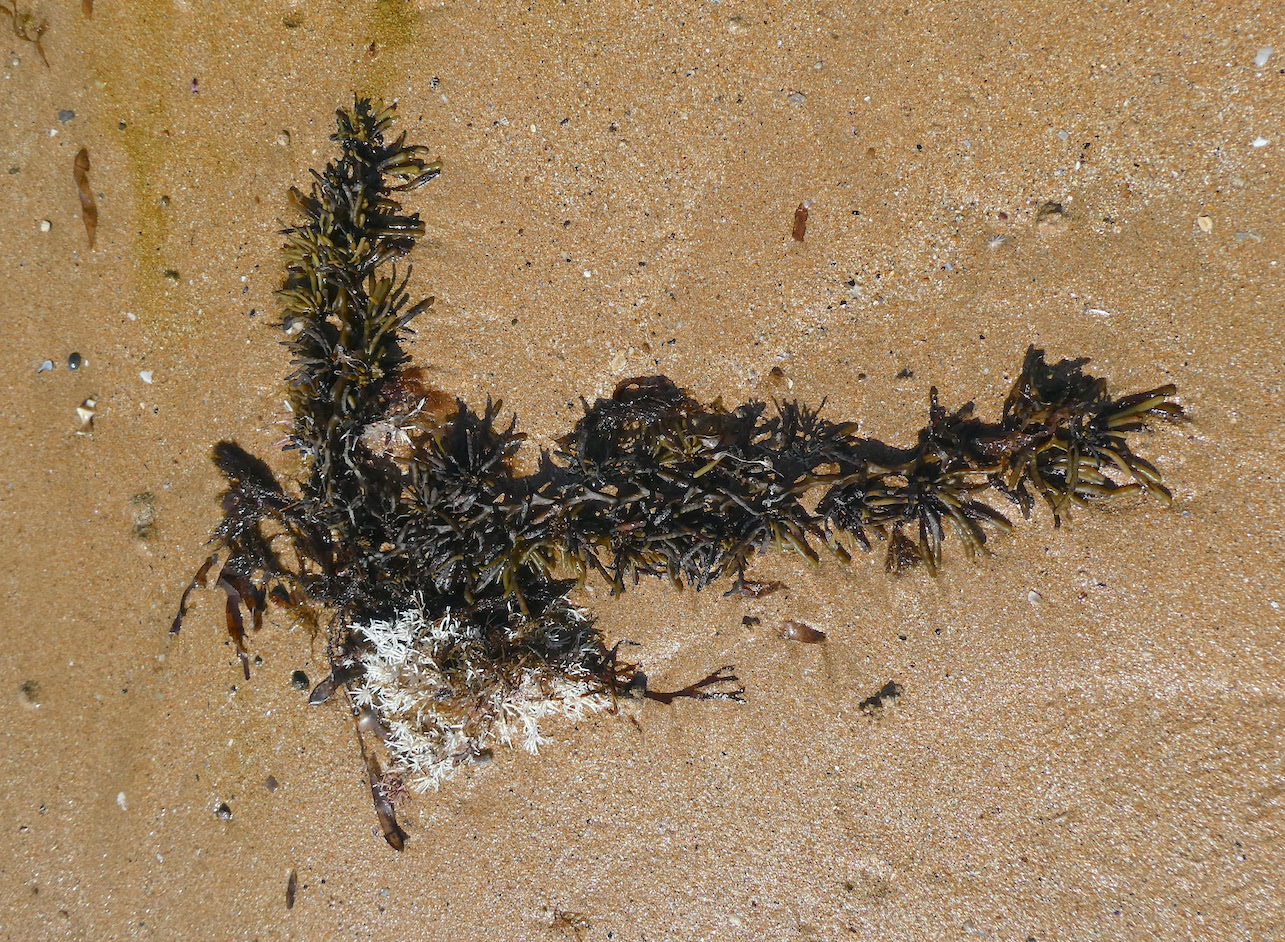
Elegant accessories have been discarded flippantly, awaiting a seat at the next salty soiree .

Returning to reality…. Spring isn’t far away and a drive to Penguin for a meander along Johnson’s Beach followed by a leisurely lunch is high on the agenda.

ponderous project

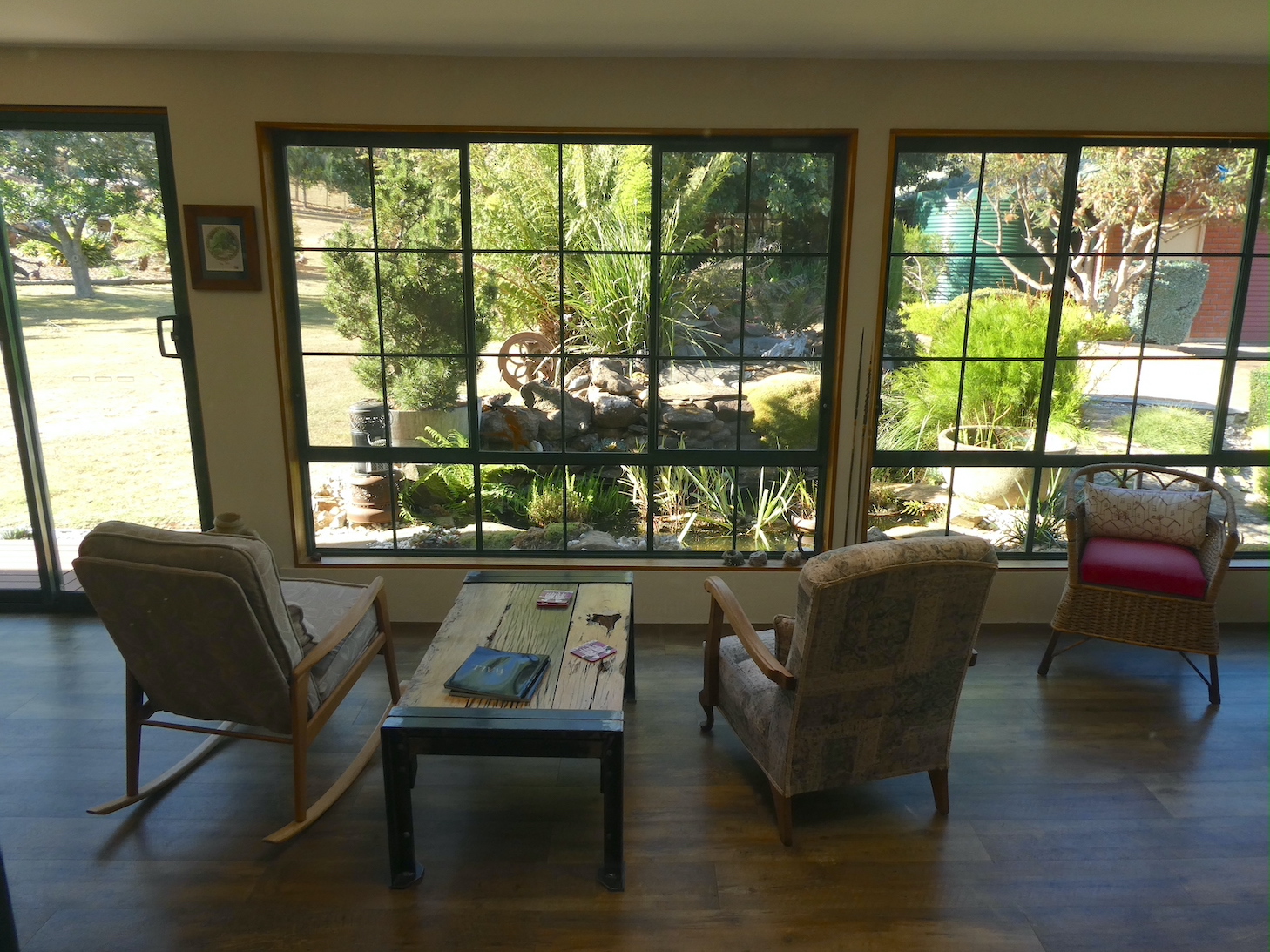
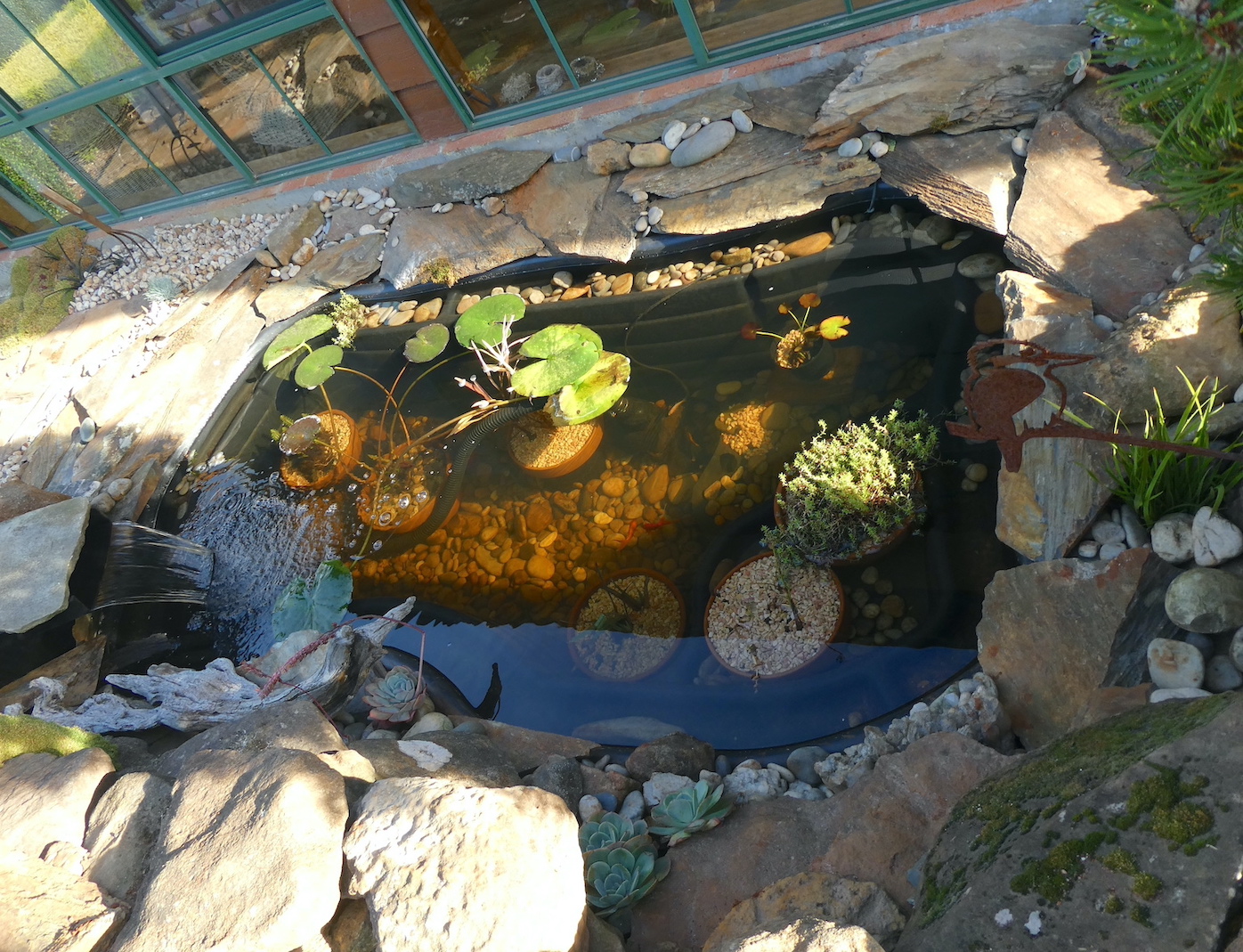
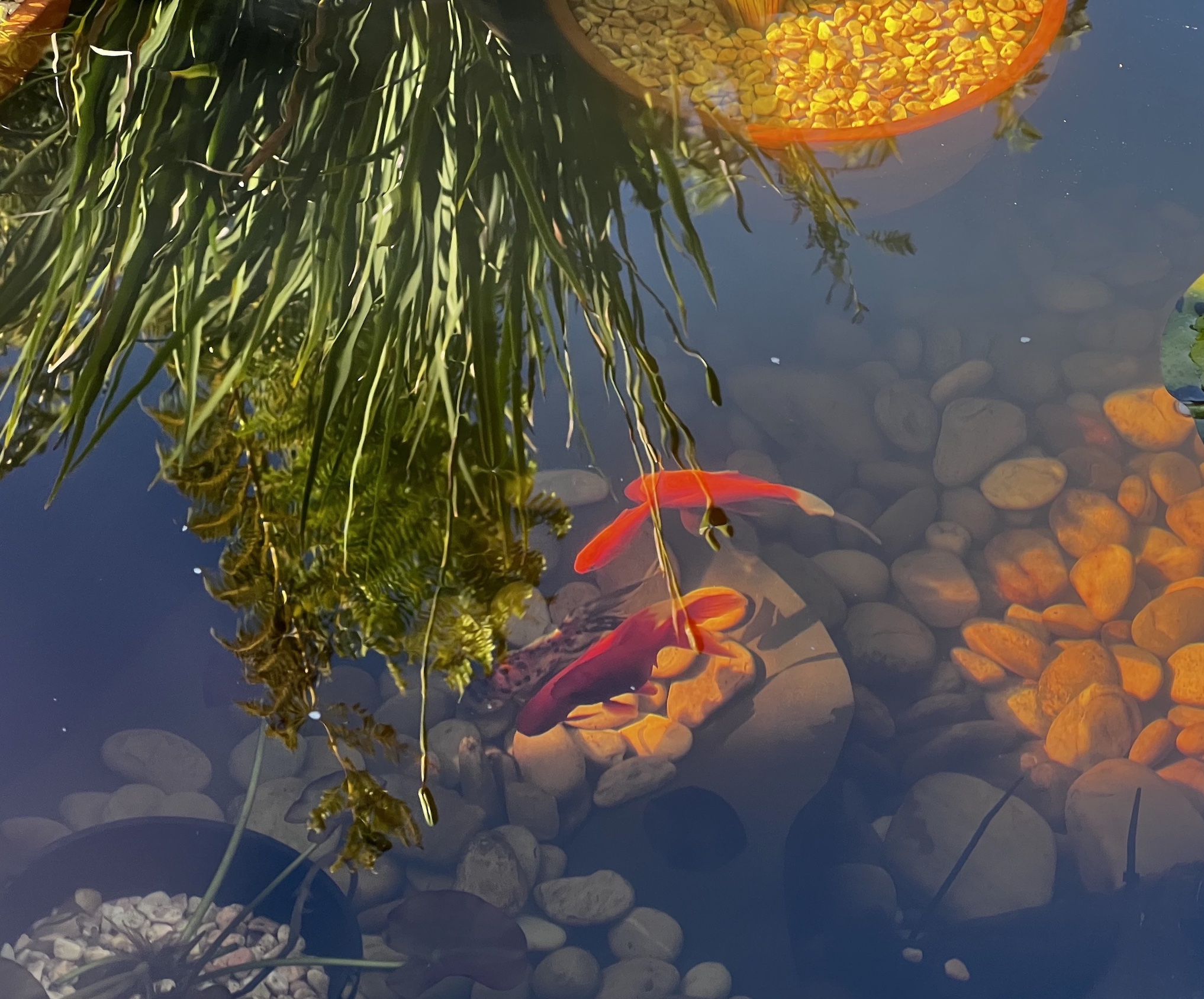
When we first viewed our property (fifteen years ago), we were impressed with the pond and the rather large goldfish inhabitants. Michael landscaped the area with rocks and plants and created a smaller top pond, adding a cascade for completion. It is a lovely, peaceful setting to gaze upon from the kitchen window

but Michael has lamented the ever present algae due, in part, to the lack of water depth and more recently the obvious presence of a leak in the liner.

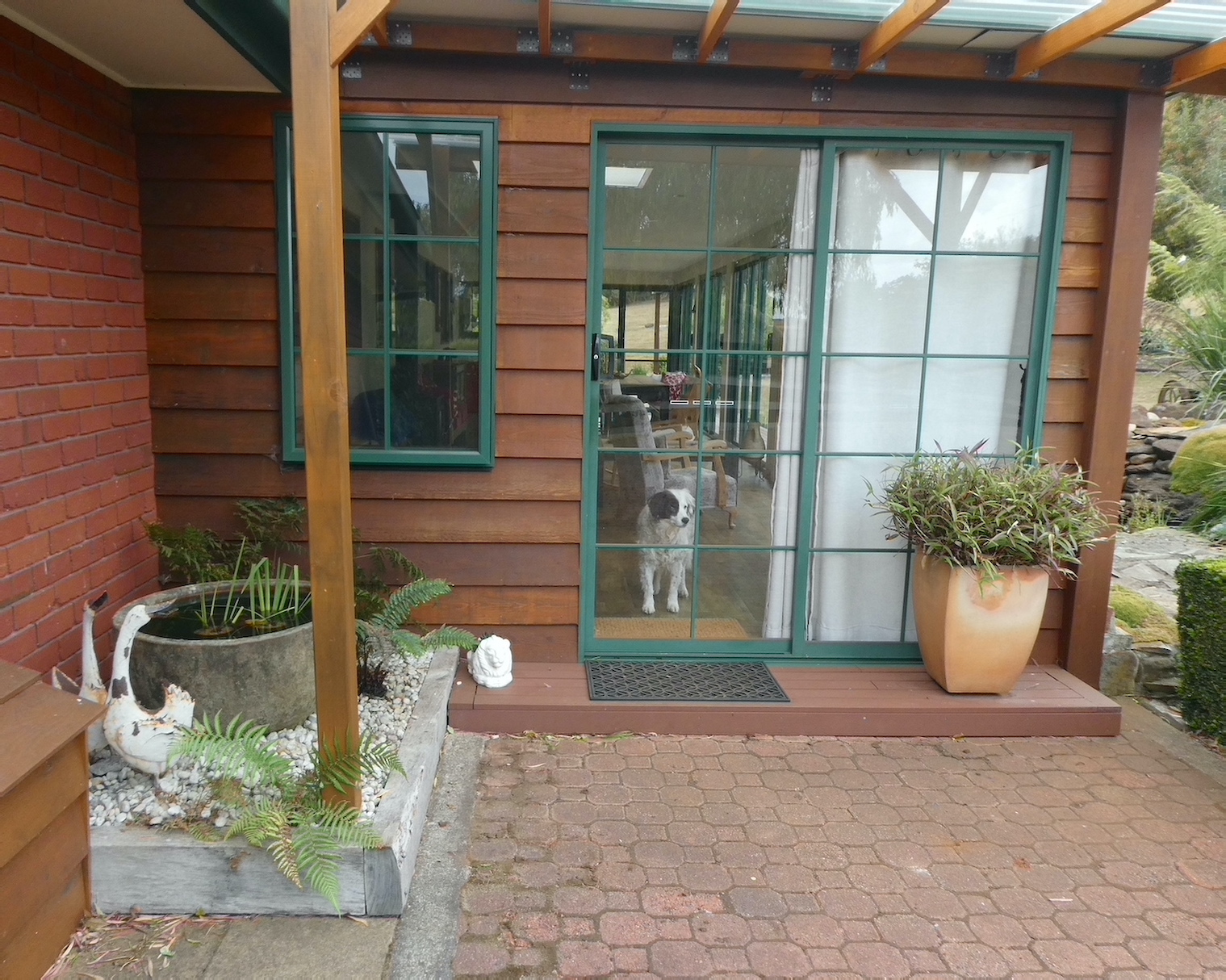
Deciding on a pre-formed pond rather than replacing the liner, we set about the project we had been procrastinating on for months. The first job was to create easy access by relocating the pot pond and trimming plants.

The pond plants and surrounding rocks were removed to expose the liner

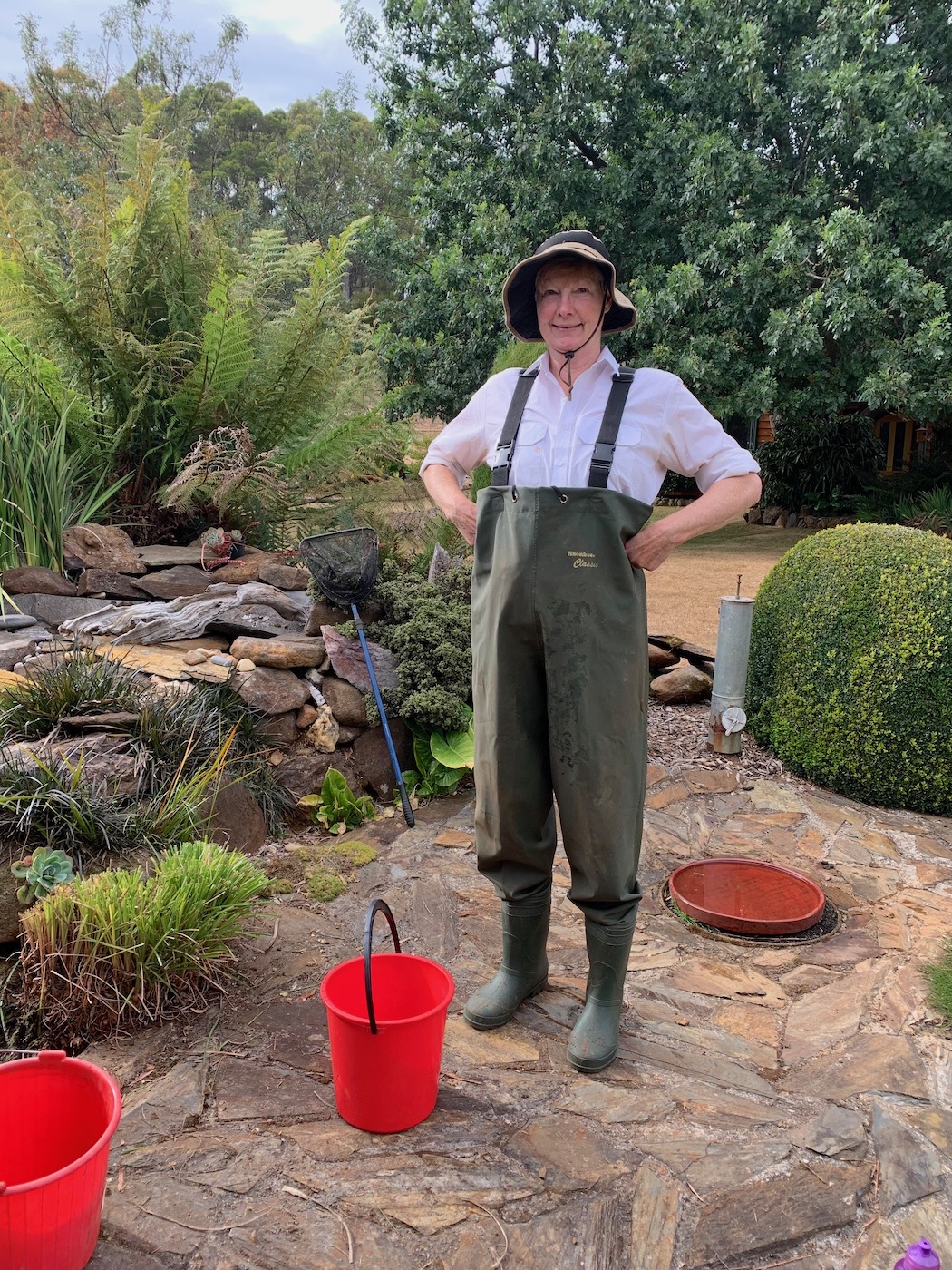
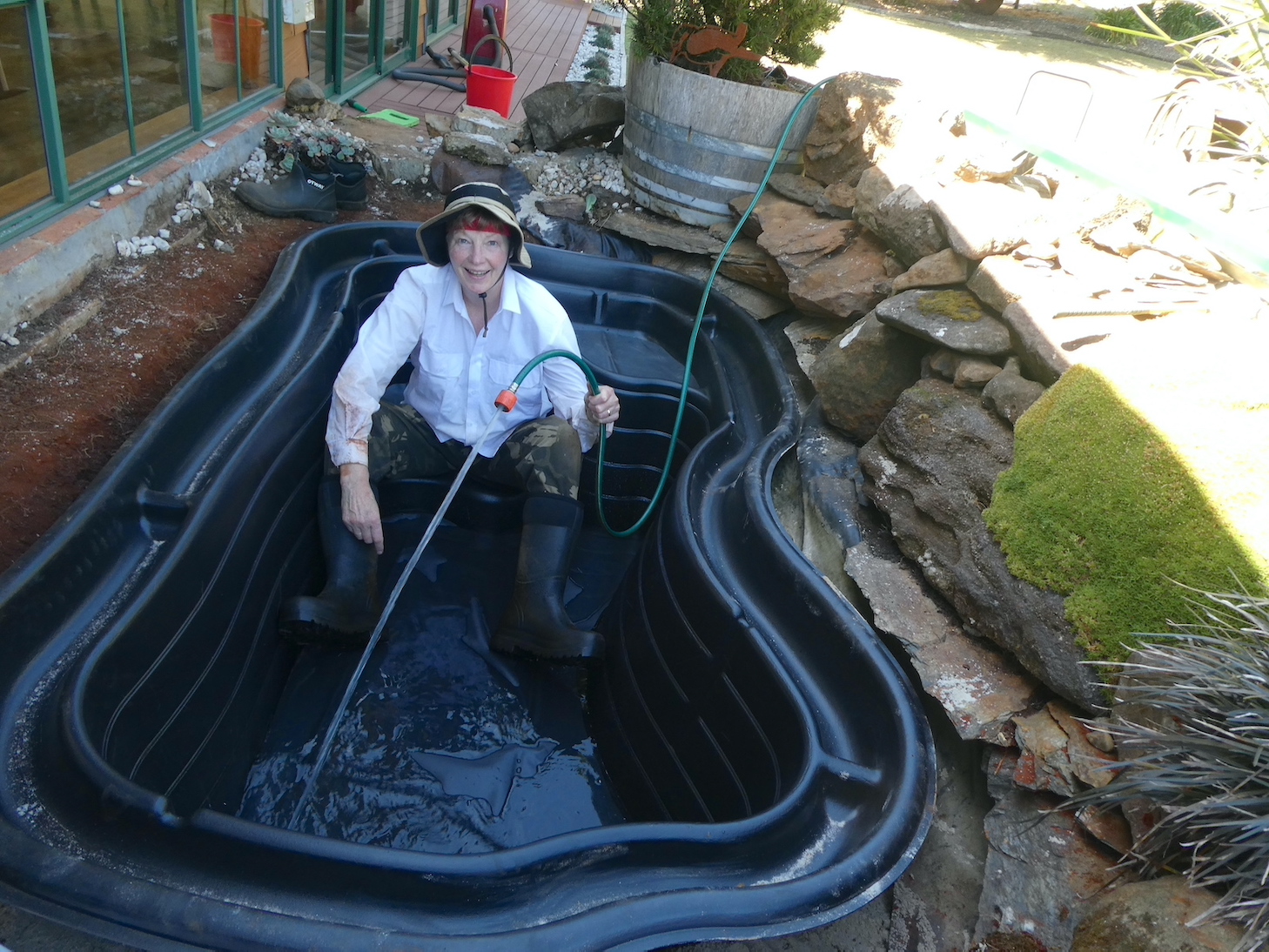
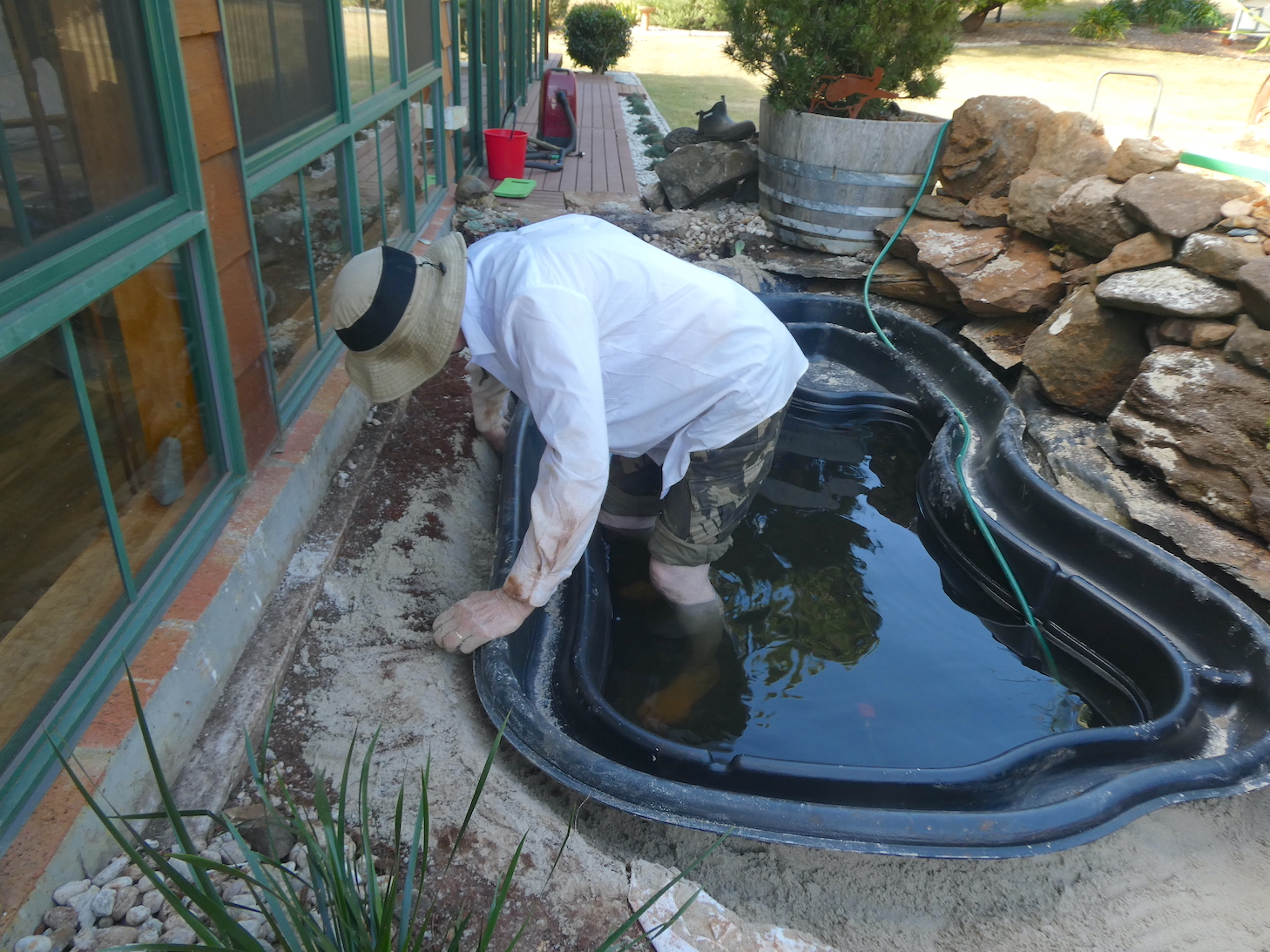
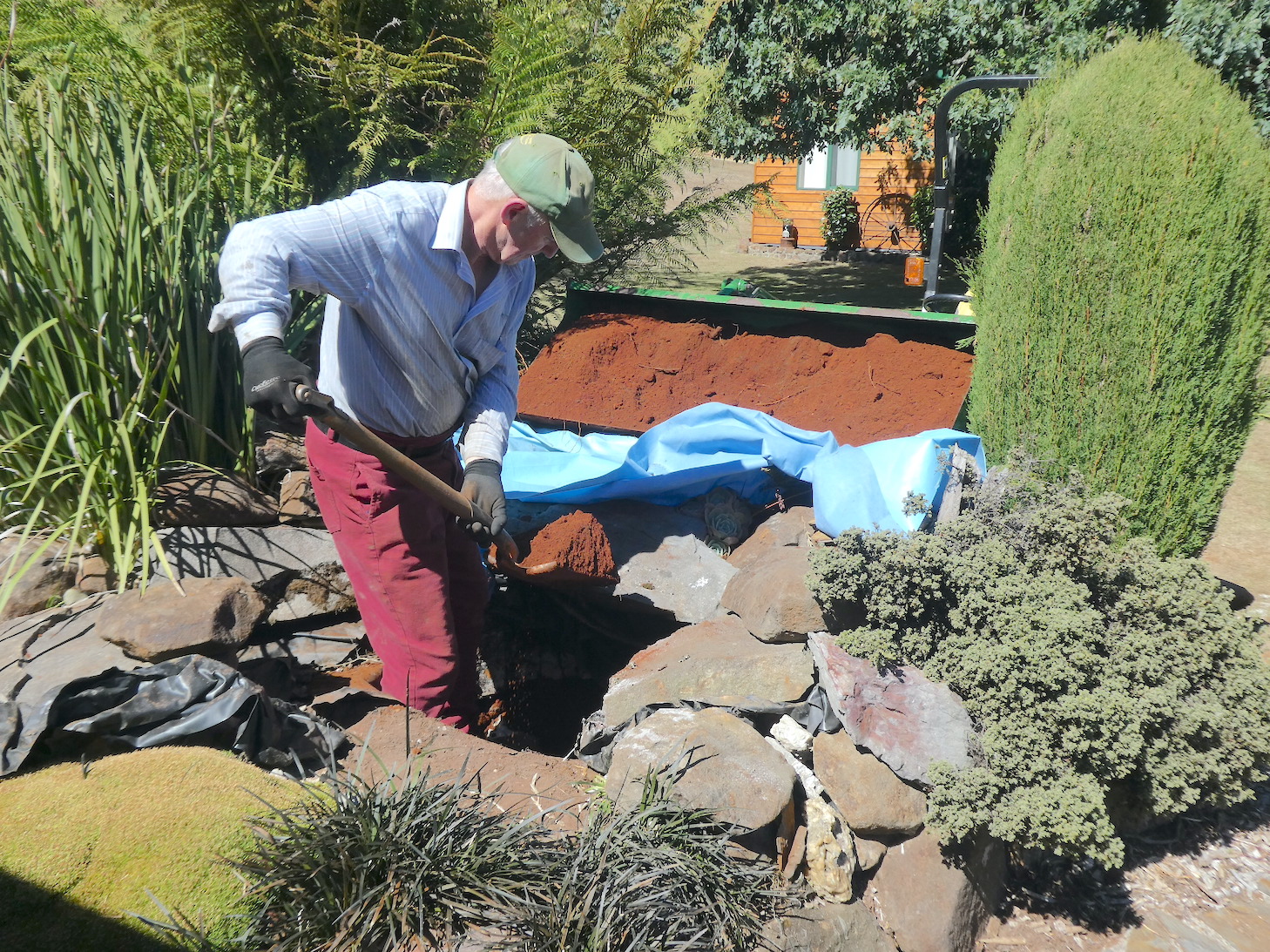
before I donned the appropriate outfit to bucket out the water which Michael diligently distributed around the garden (we were having a very dry summer).

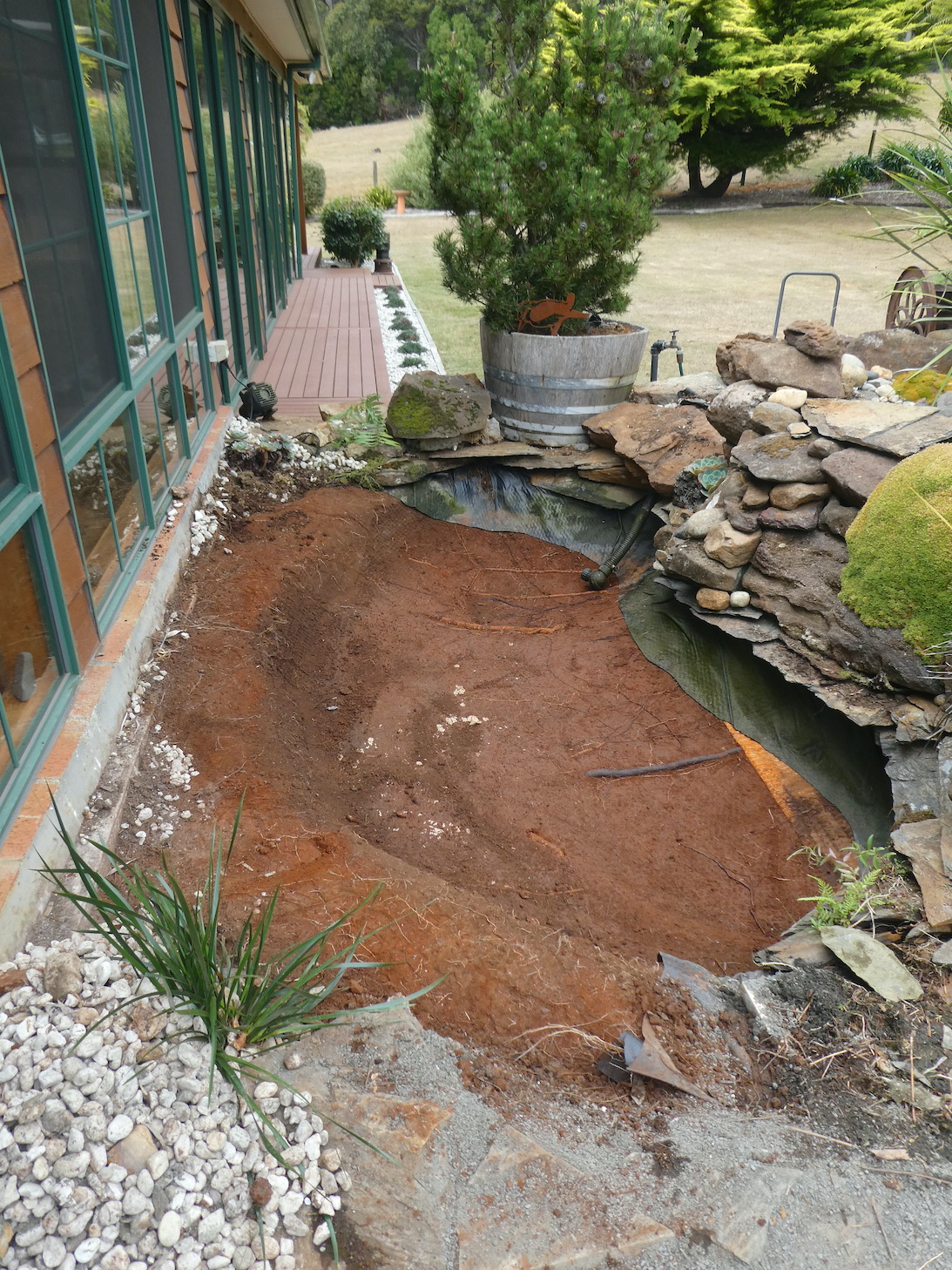
We pulled the old liner out (which did, indeed, have an obvious split)

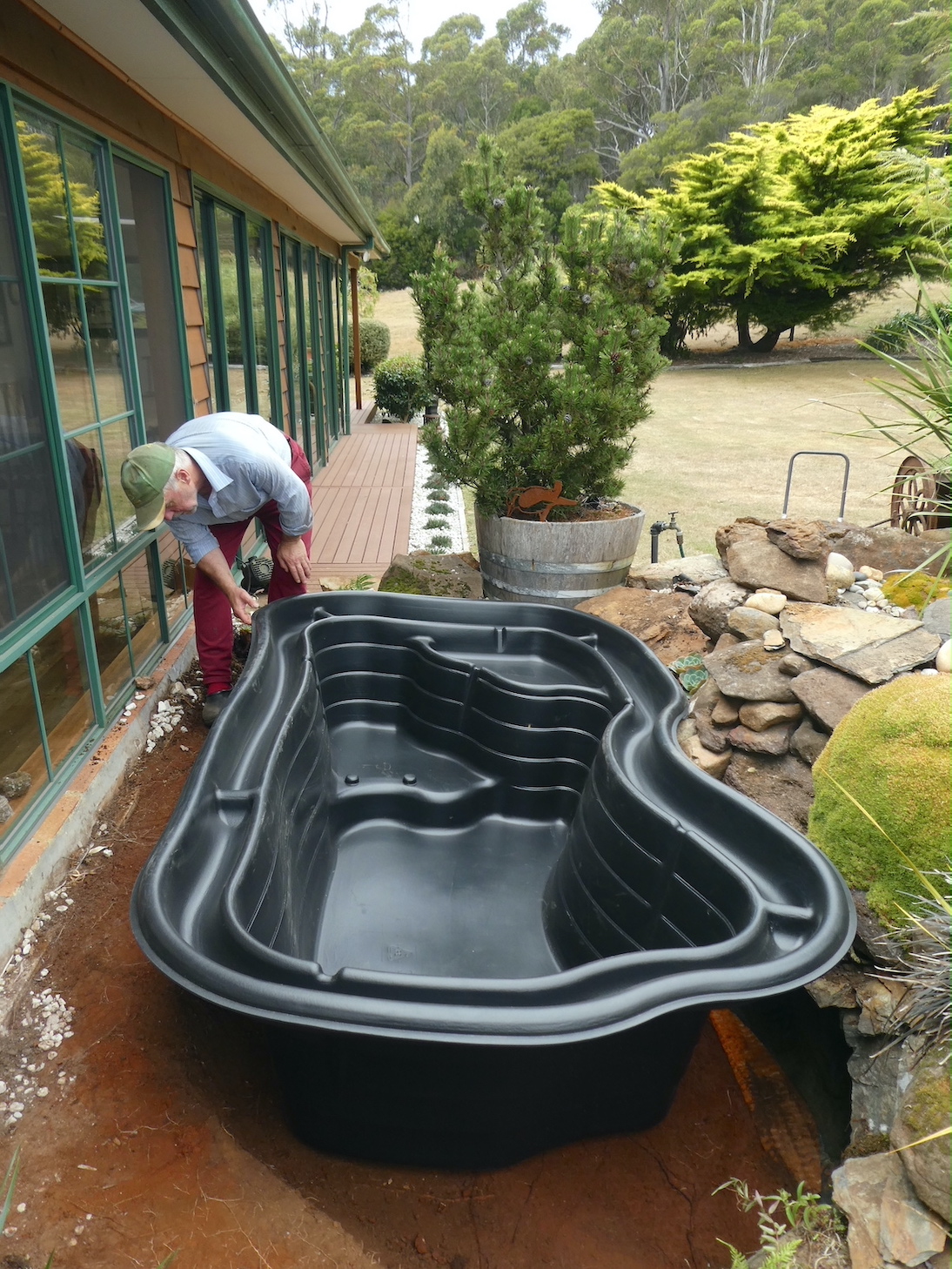
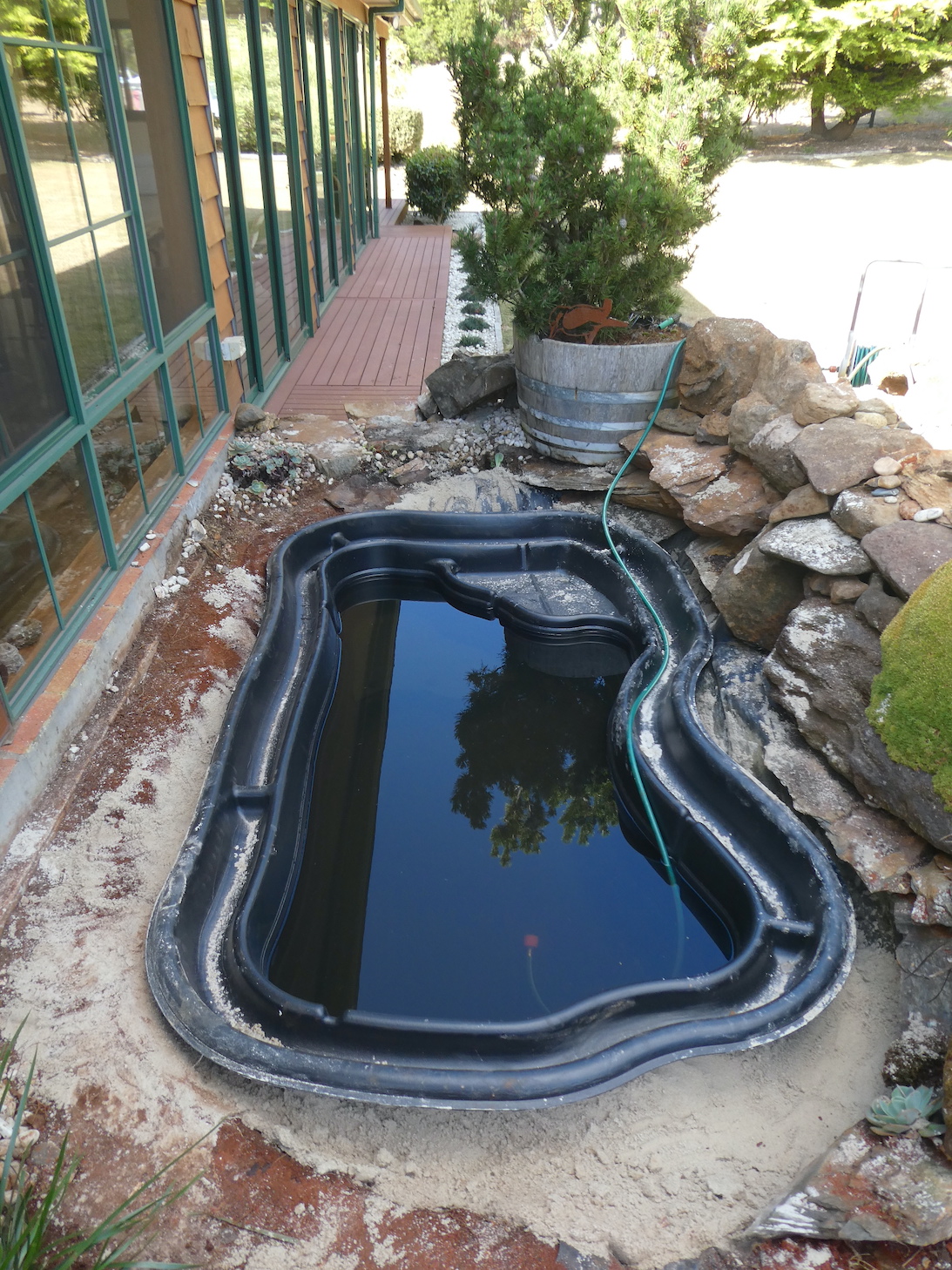
and tried the new pond for size.

Hoping to not encounter tree roots, the digging commenced.

With periodic fittings, and no underground impediments, the site was ready.

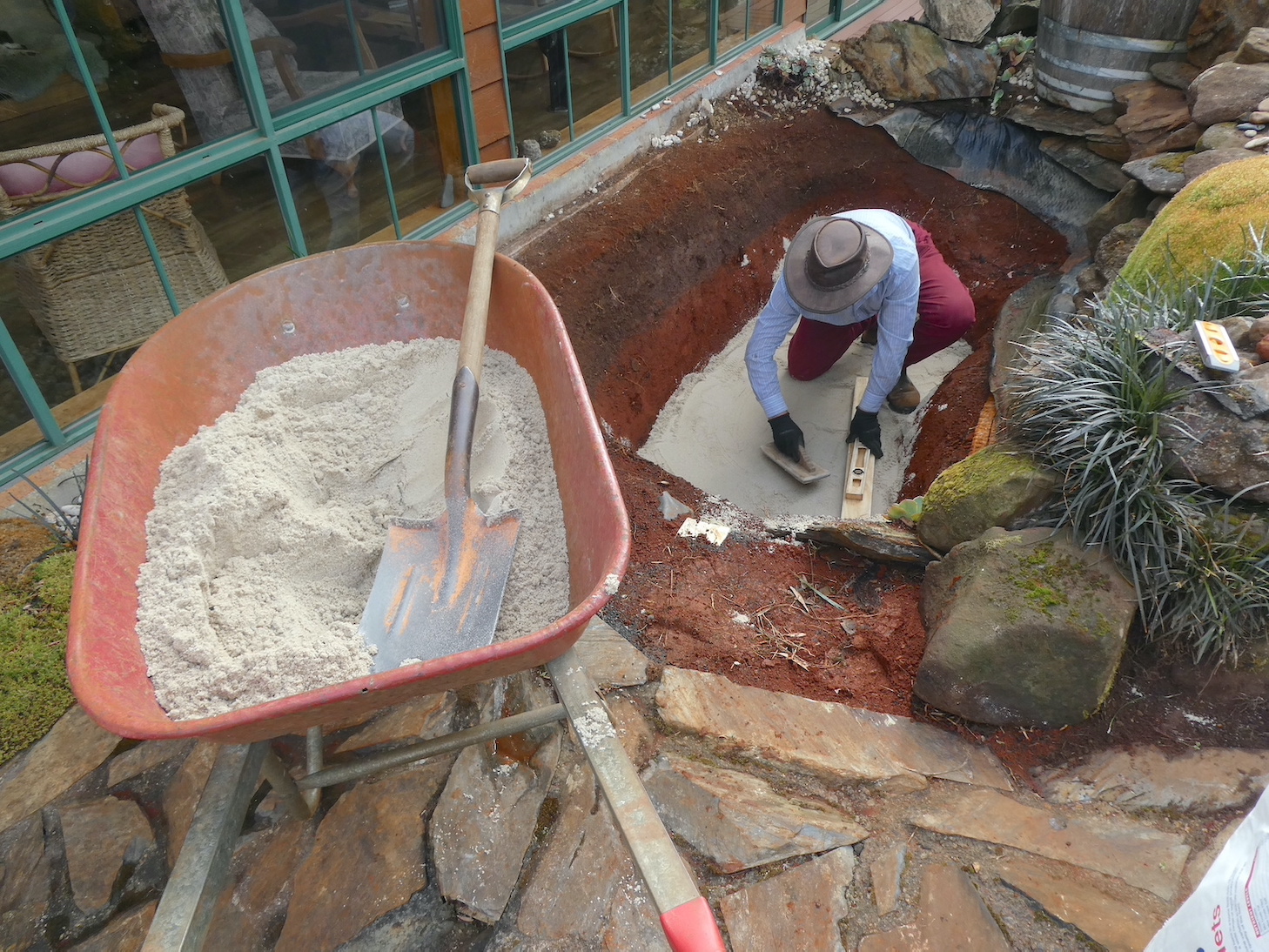
With a trailer load of sand on standby, the base was prepared

and the pond lined with plastic to protect it from the river stones.

Once levelled,

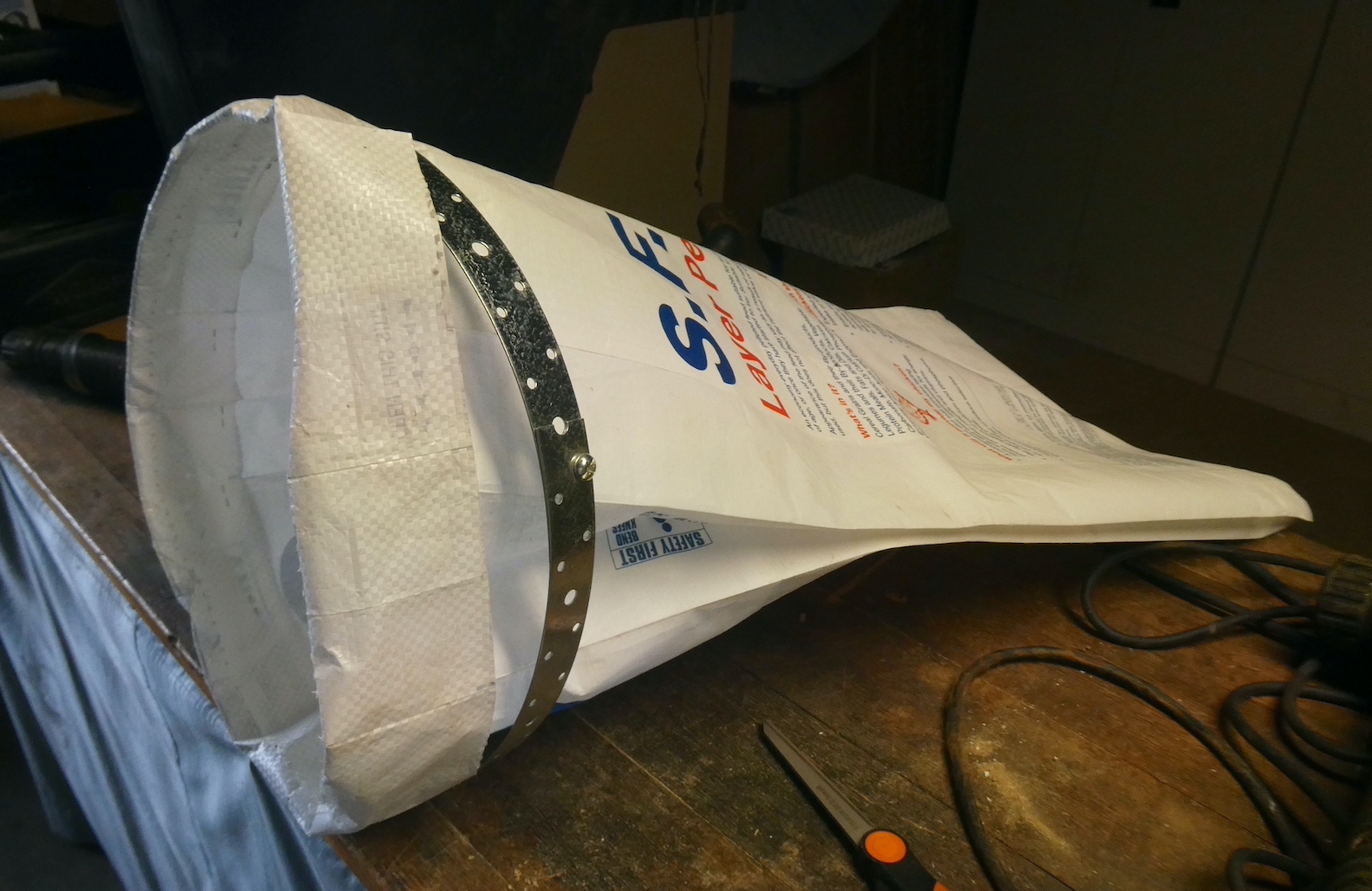
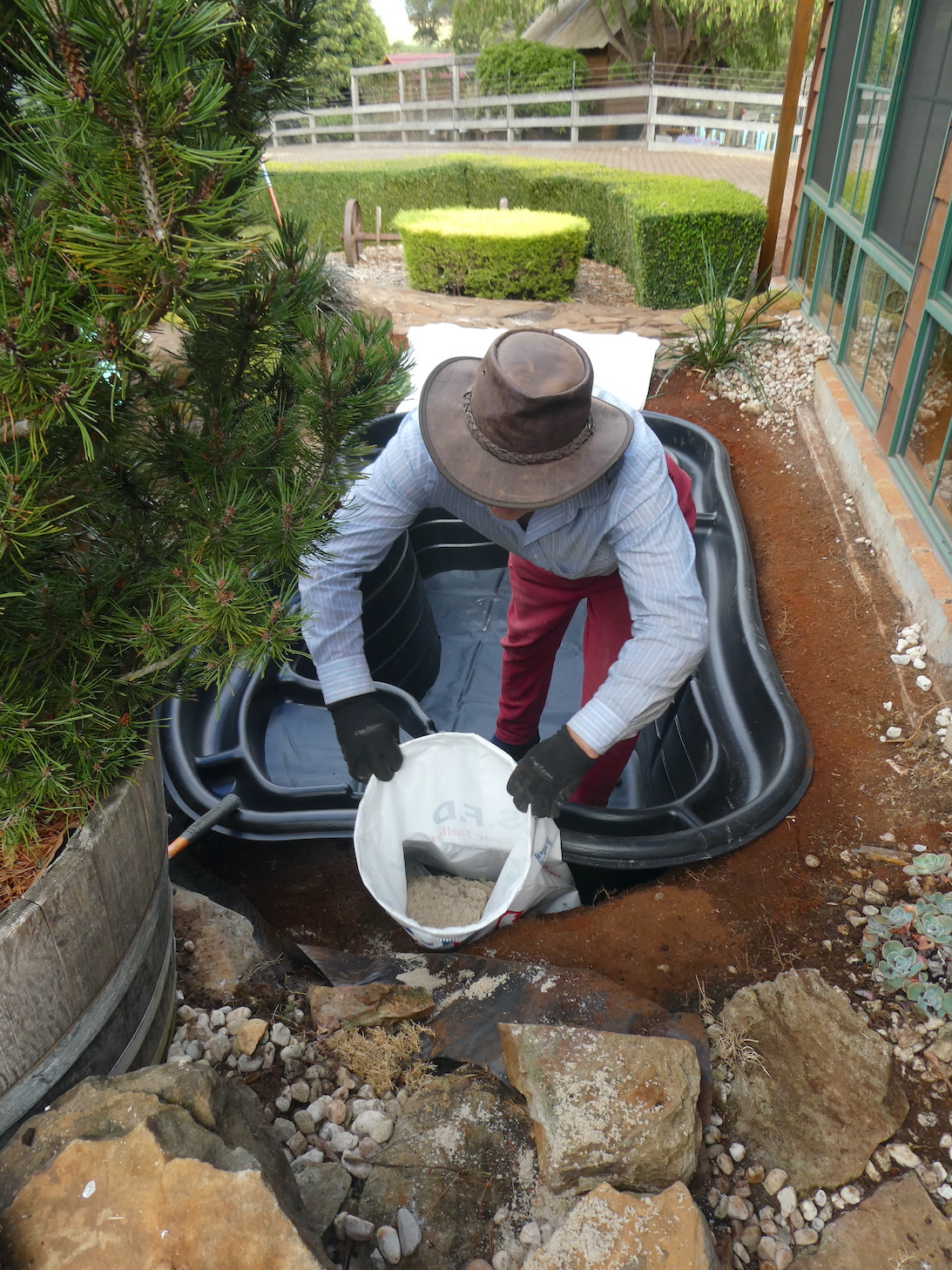
the task of packing the sand around the outside began. Between us, we came up with an ingenious plan to convey the sand into the tight spaces – a funnel made from a chook feed bag and a ring of builders strapping.

It worked brilliantly.

We had been advised to pack some sand, then fill some water and repeat in stages to avoid distortion of the pond shell.

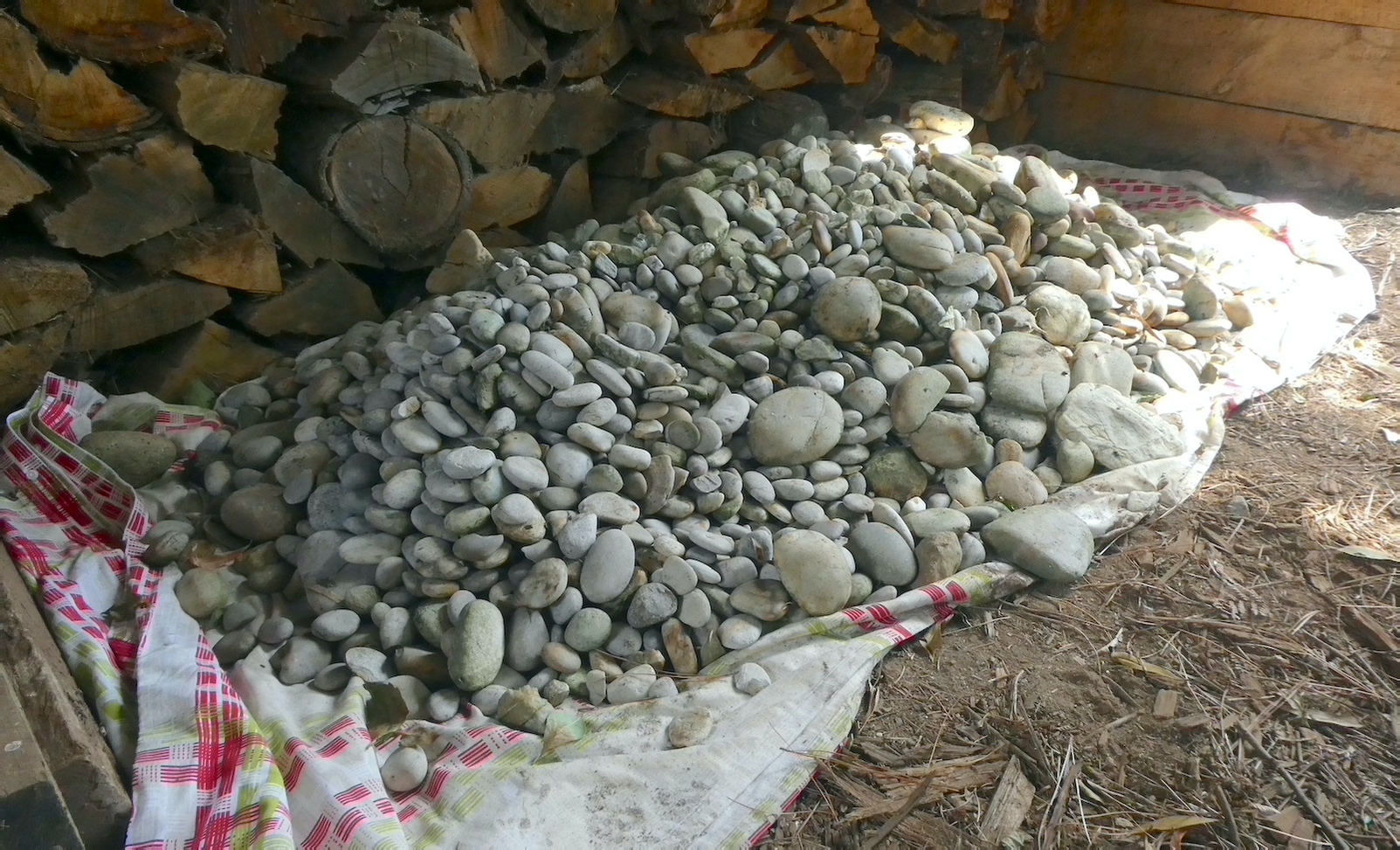
The river stones from the old pond had been saved and I spent some time sorting them

while Michael repotted the plants.

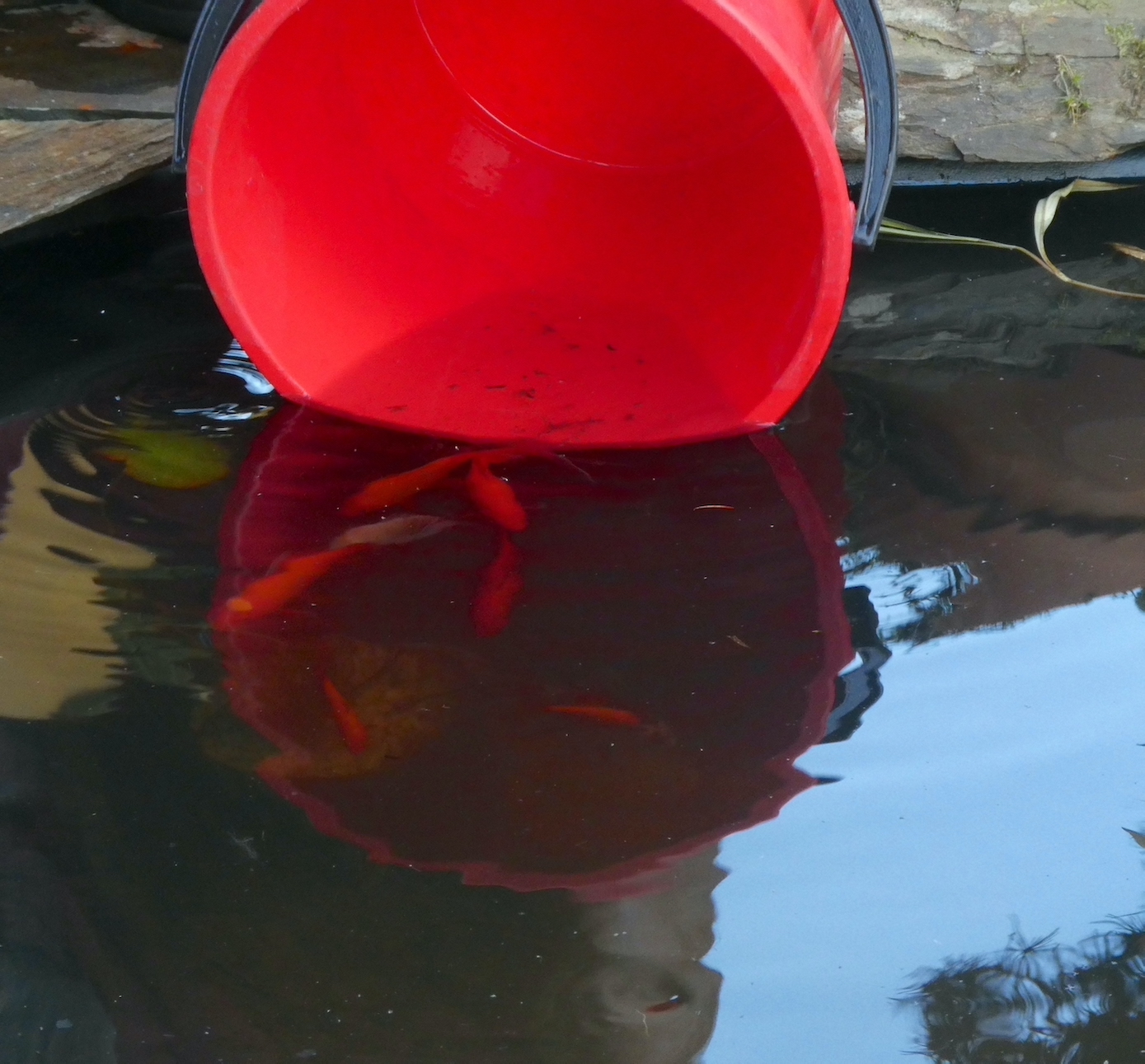
The fish were returned to their new home, along with the plants

and a new cascade perfected the picture.

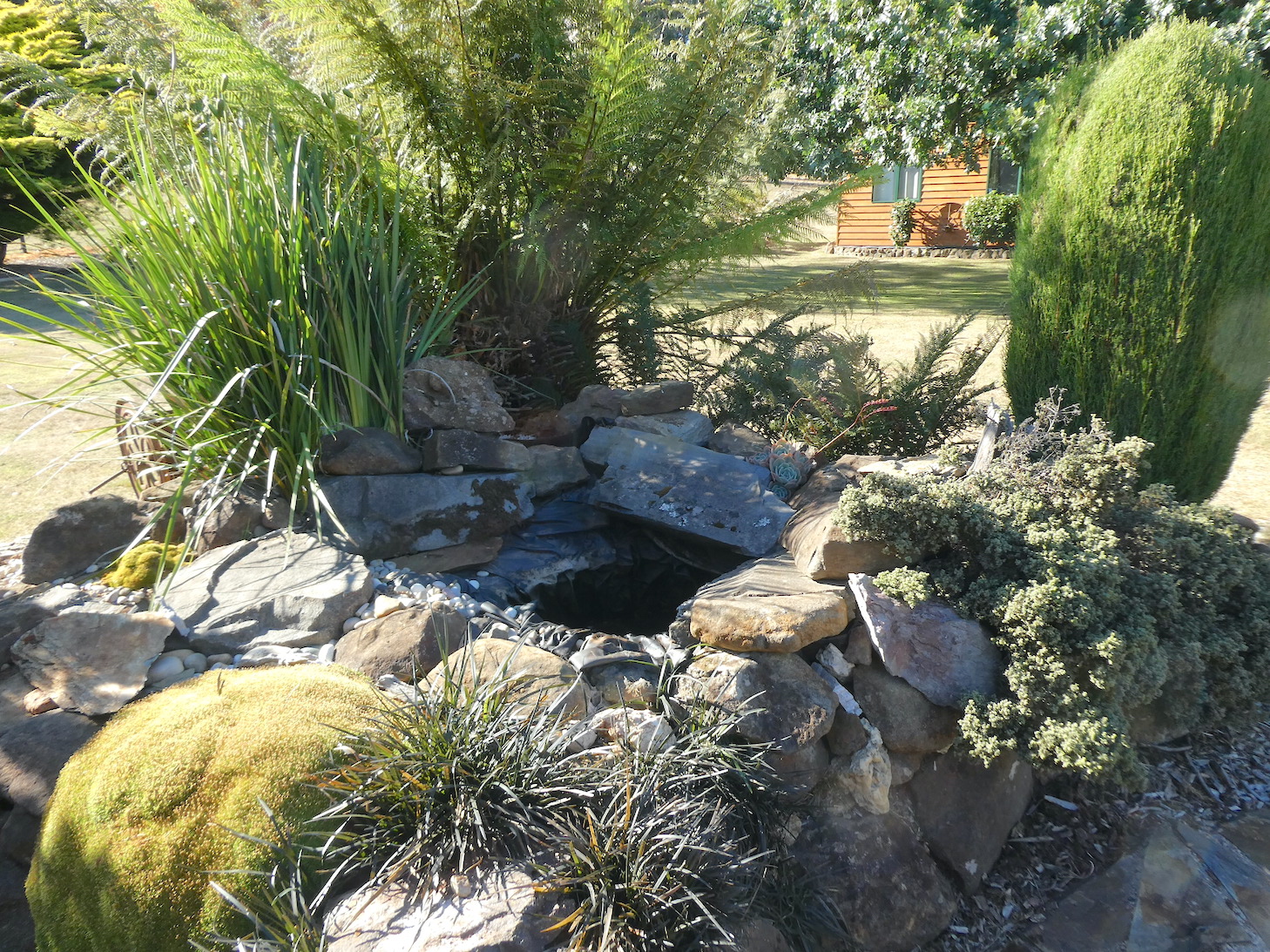
We then set about filling in the top pond,

and after some further landscaping,

declared the project finished.

Fossil Bluff

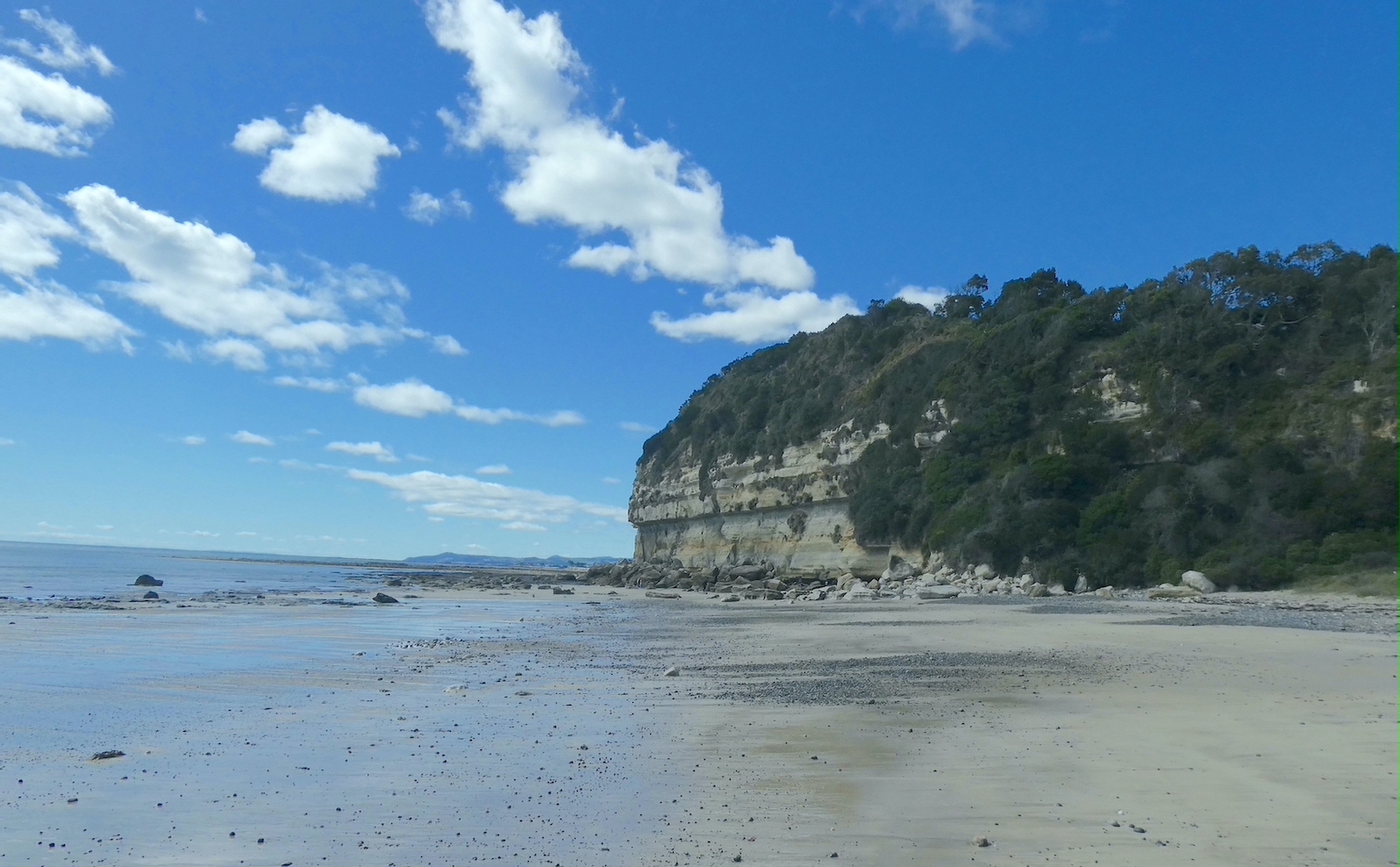
My first visit to Fossil Bluff at Wynyard in 2009 was a little disappointing. The tide was in and, although the sandstone cliff was spectacular and scenery stunning, I didn’t see any evidence of fossils.

More recently, we arrived at low tide to find the expansive beach of Freestone Cove with Fossil Bluff looming to the east

and Table Cape to the west.

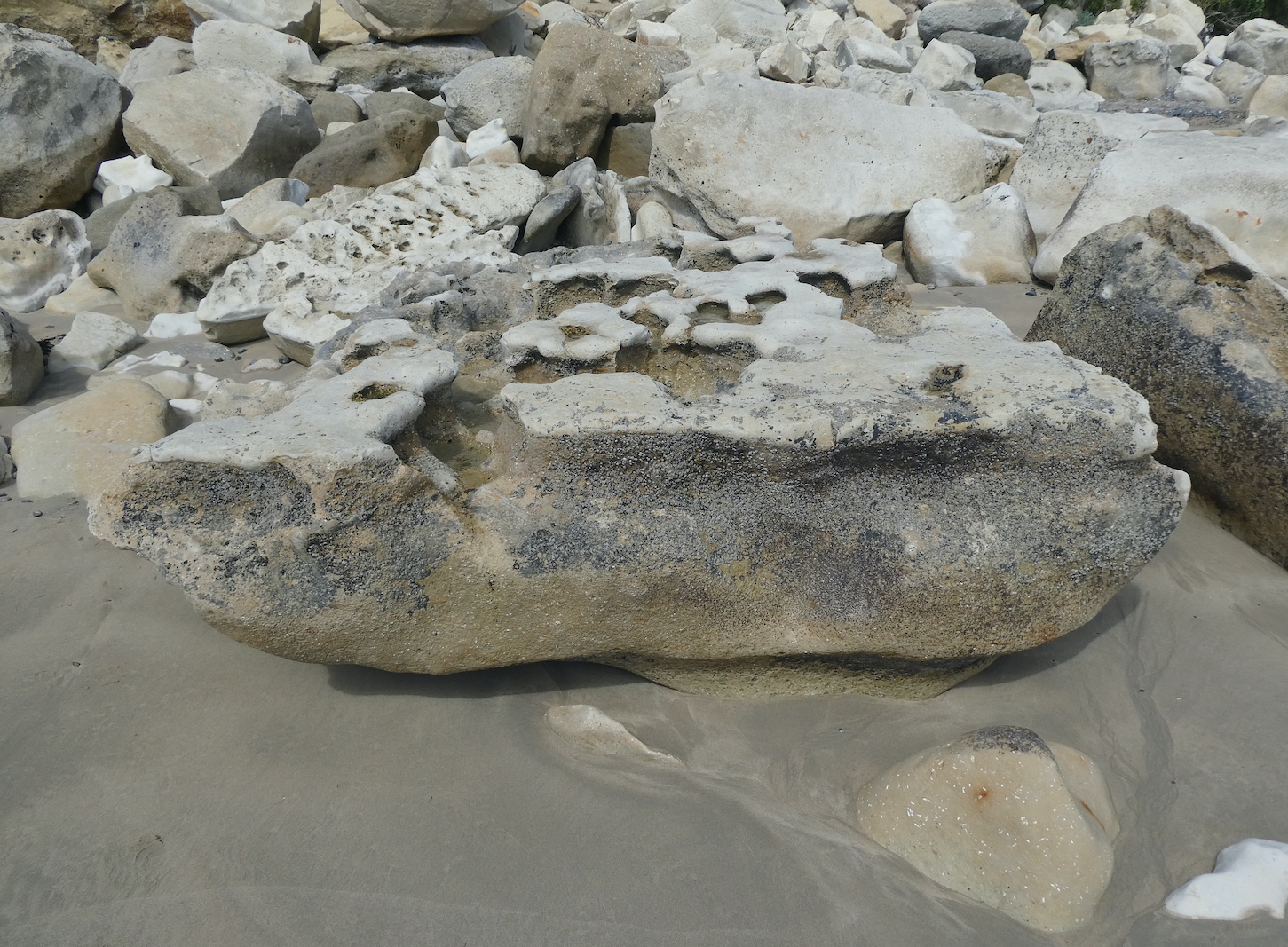
We wandered among rocks, weathered and worn smooth by the incessant ebb and flow of the tide.

Fossil Bluff was created 275 million years ago by a tidewater glacier. The 25 metre sandstone cliffs are strewn with fossils, including the remains of the oldest marsupial found in Australia named Wynyardia bassiana in honour of the town.

The grey rock at the base of the cliff is Wynyard Tillite, deposited by the glacier between 303 and 293 million years ago while Australia was part of the super continent called Gondwana. Fossil Bluff sits on top of the tillite and it is clear to see where the sandstone and tillite meet.

It wasn’t long before I spied a plethora of trilobites emerging from rock. One of the earliest known groups of arthropods, trilobites became extinct about 252 million years ago after existing in oceans for 270 million years.

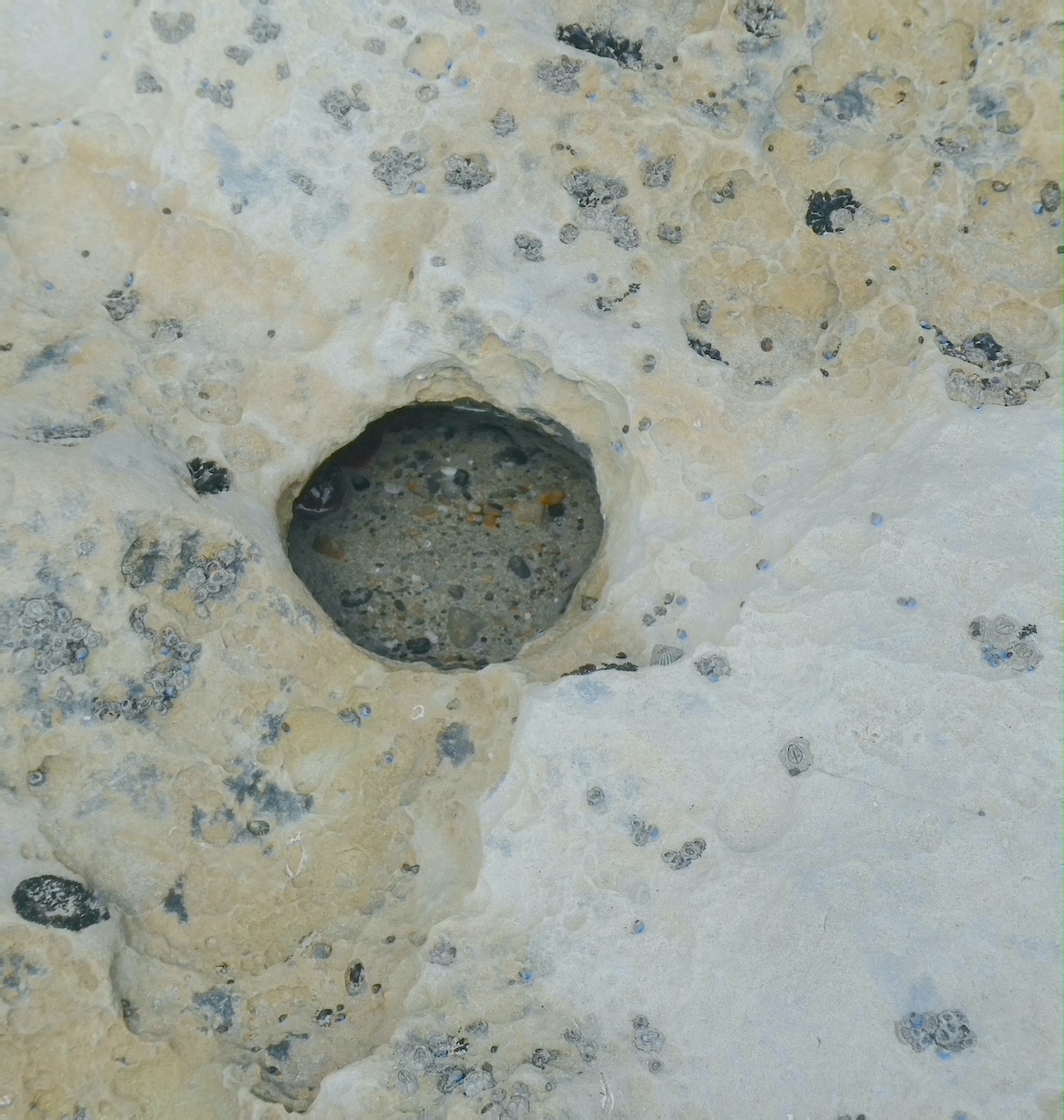
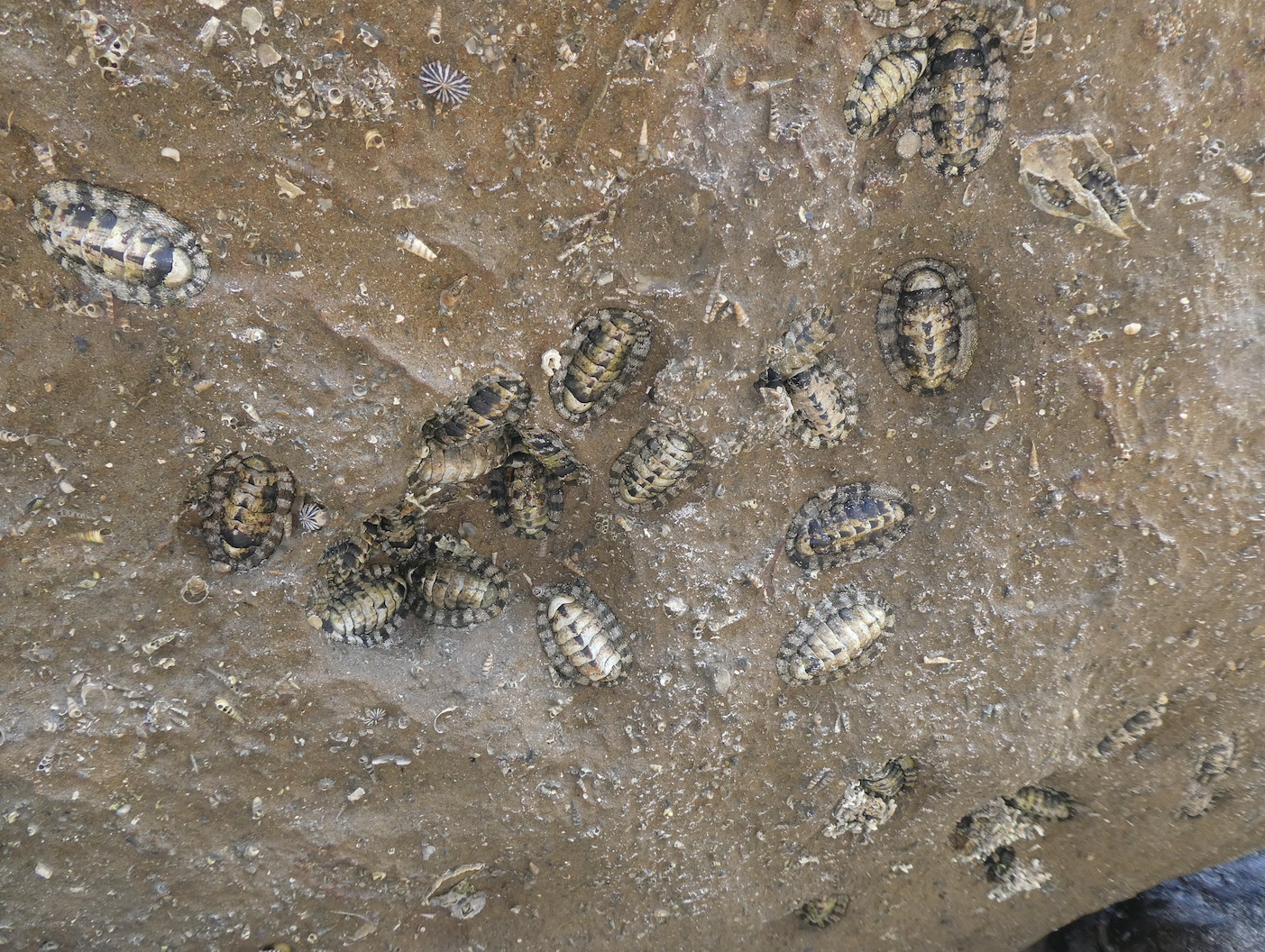
Myriad shells of varying shapes and sizes decorate every surface

along with ancient ancestors of the turritella sea snails.

Nature’s artwork surrounded us,

and with a little imagination, an ossified whale and porpoise.

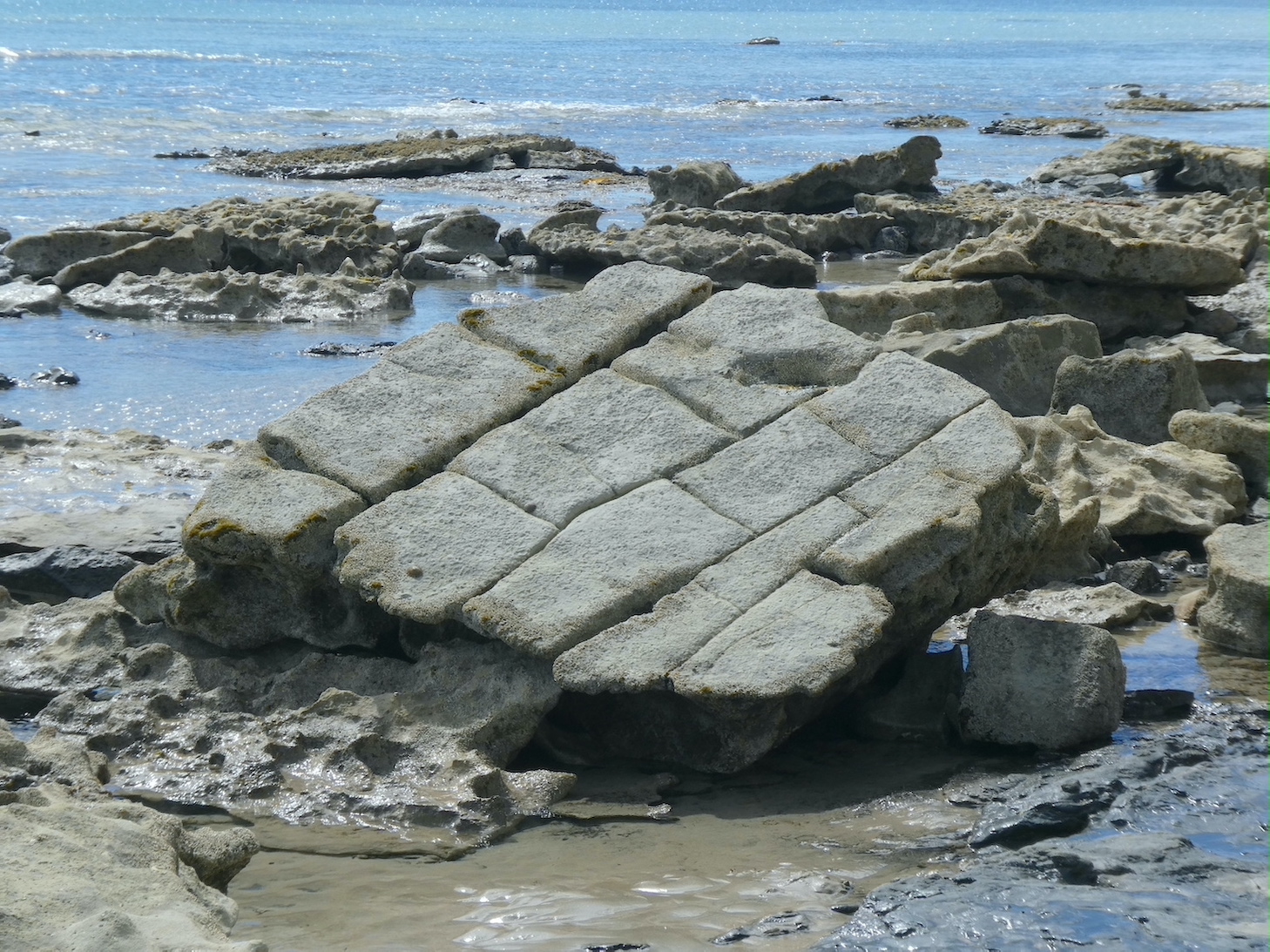
A lone slab of tessellated rock seemed out of place among its gnarly neighbours.

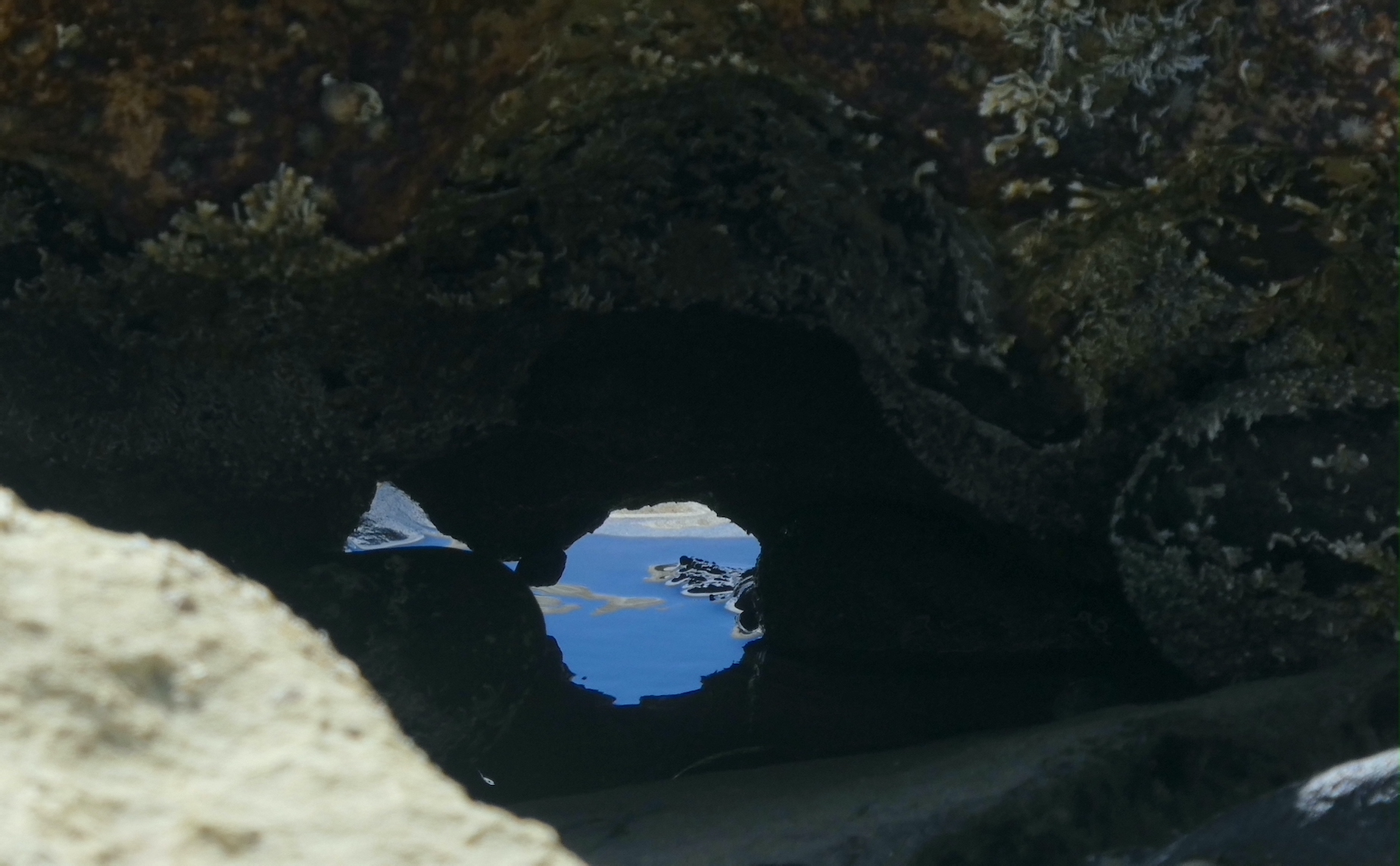
I was wondering why my niece was so interested in photographing this particular rock formation

until she showed me what she had captured. I stole her idea.