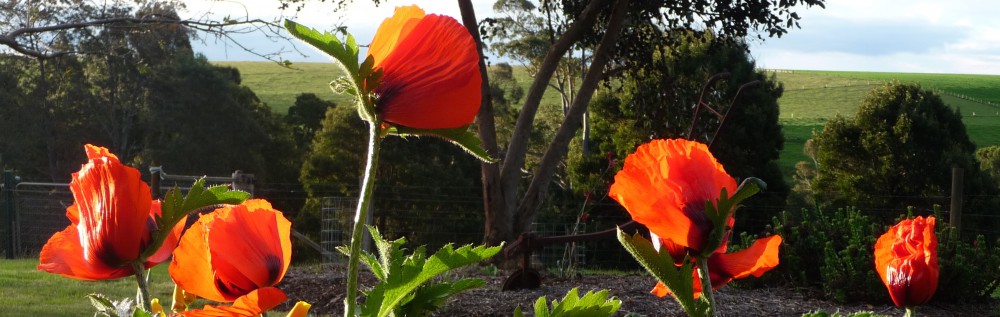
Soon after starting our walk along Geelong waterfront, we spied a group of likely lads dressed in vintage bathing costumes and later learned they are part of the Bollard Trail. Over a hundred reclaimed timber pier pylons were transformed into quirky art installations in 1995 by artist Jan Mitchell. The bollards represent notable characters who played a part in Geelong’s history and culture. Not realising the significance at the time, I didn’t photograph many but have delved into the history of the few I captured.
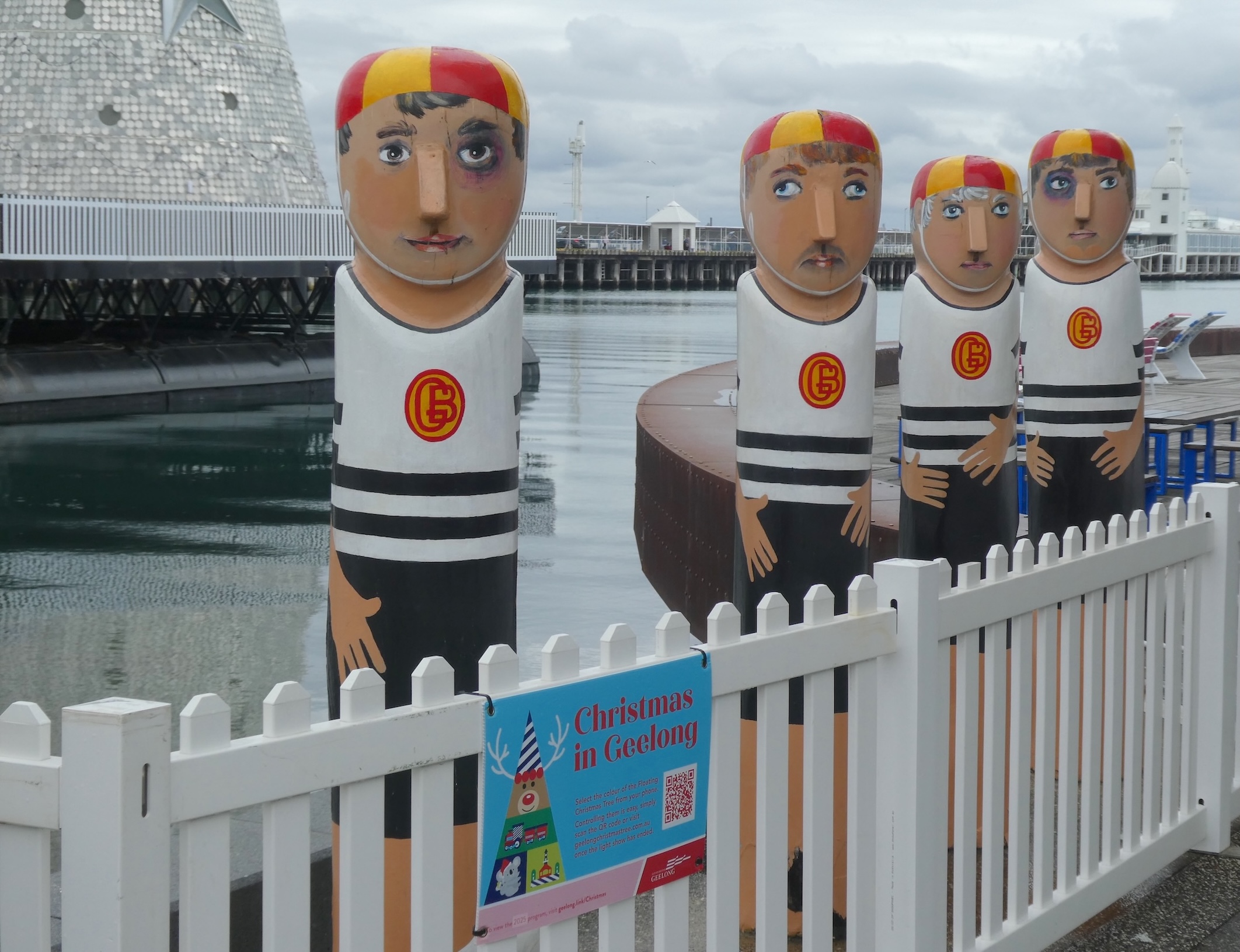
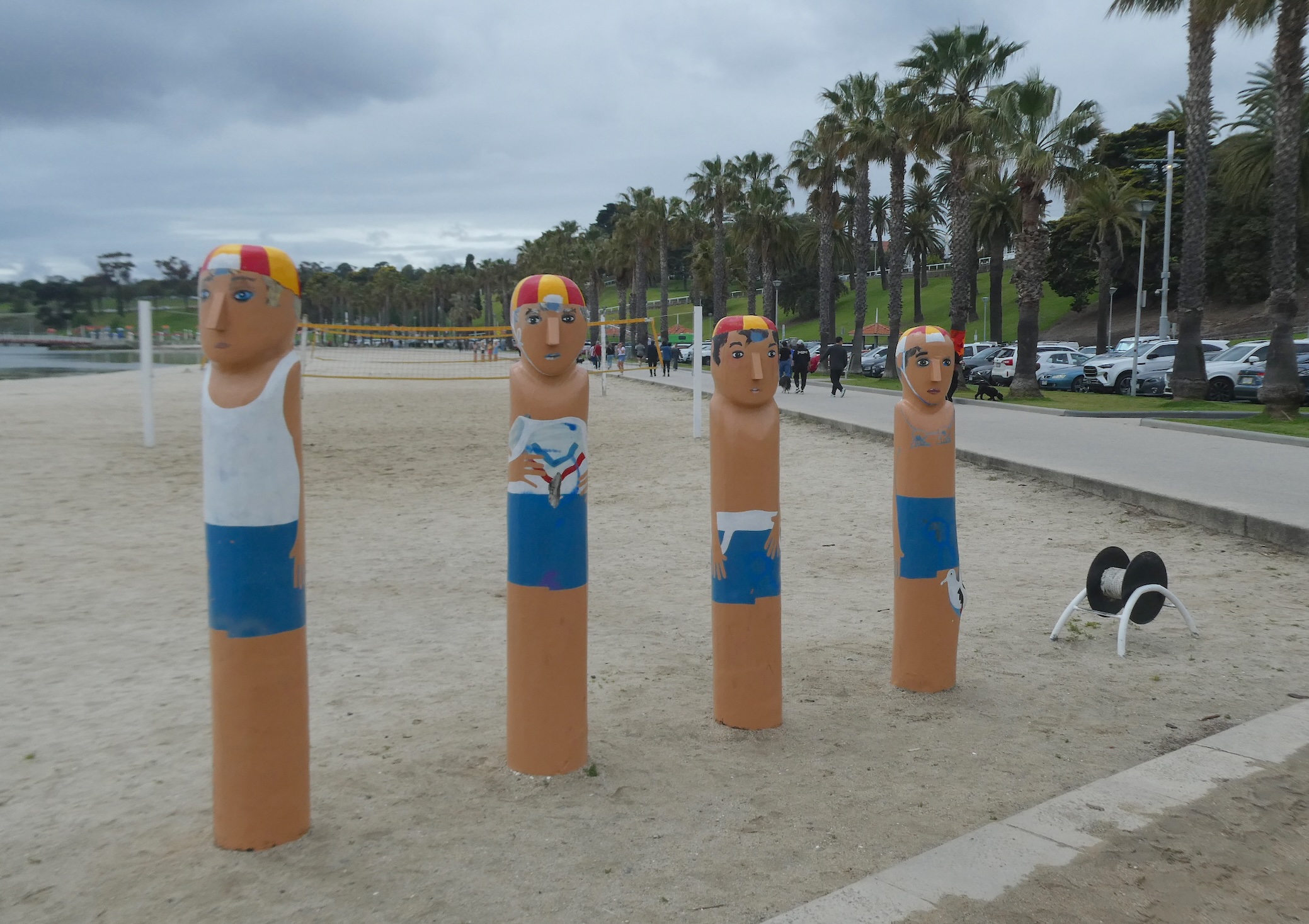
The Geelong Baths Swimming Club were an integral part of the community during the Victorian and Edwardian eras. Well known for their colourful caps and club initials on their costumes, they helped bring a carnival atmosphere to the early Geelong regattas with such contests as greasy pole climbing, bun eating and tub races.
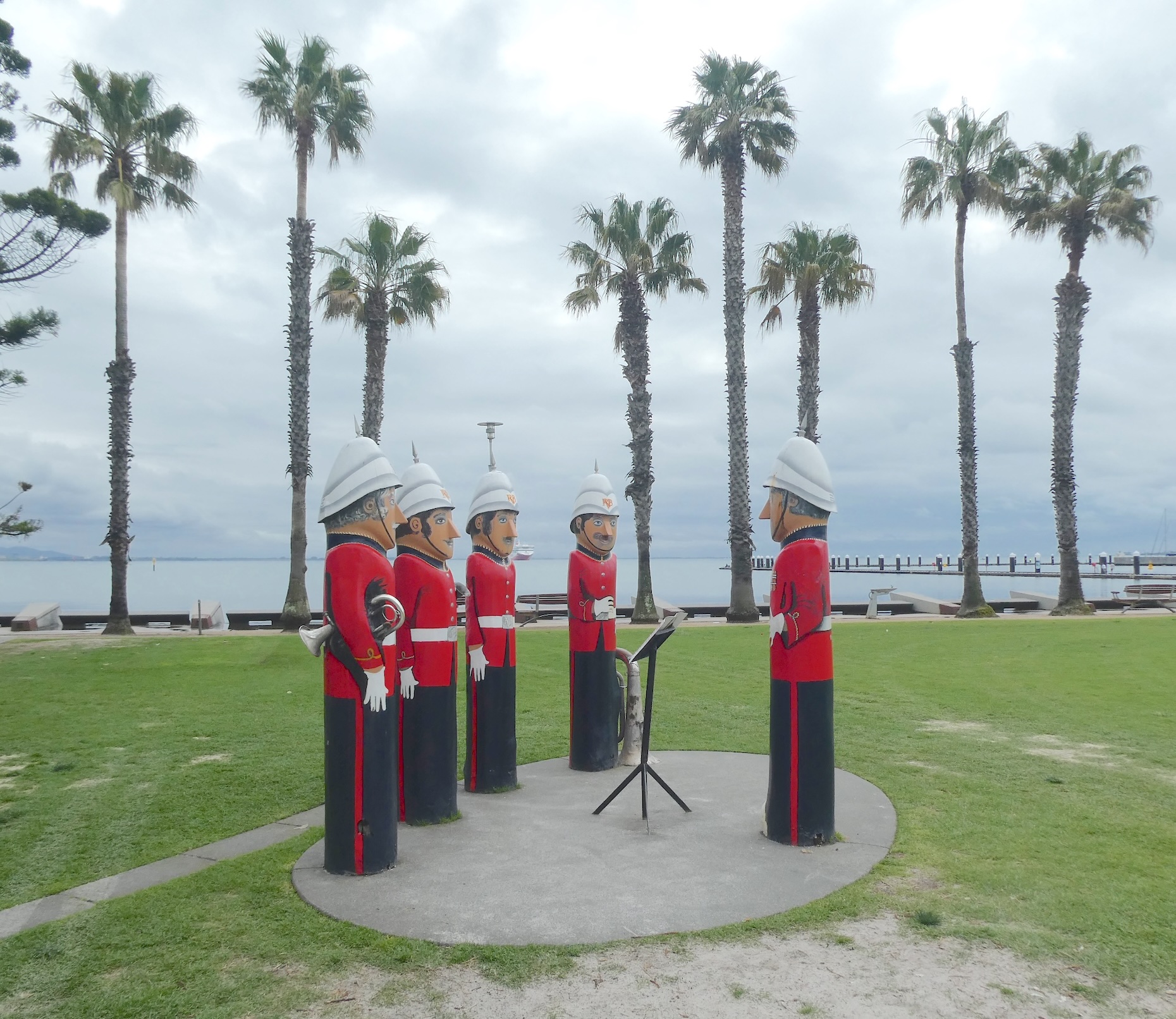
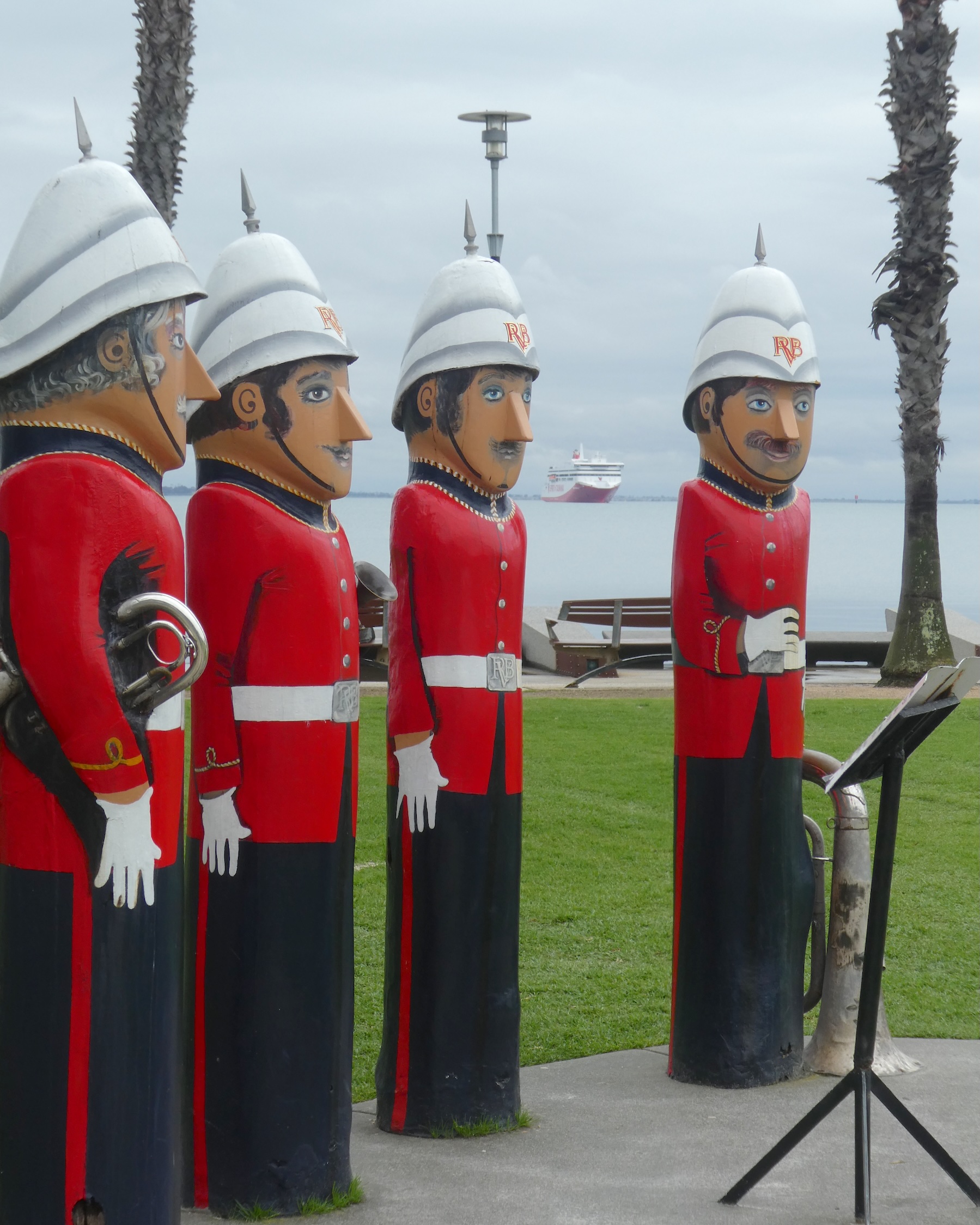
First formed in 1854, Geelong’s Volunteer Rifle Corps is the oldest Victorian Militia unit. The Volunteer Rifle Band played its first recital in the Botanic Gardens in 1861, promoting the popular dance music of the day with the ‘The Geelong Polka’.
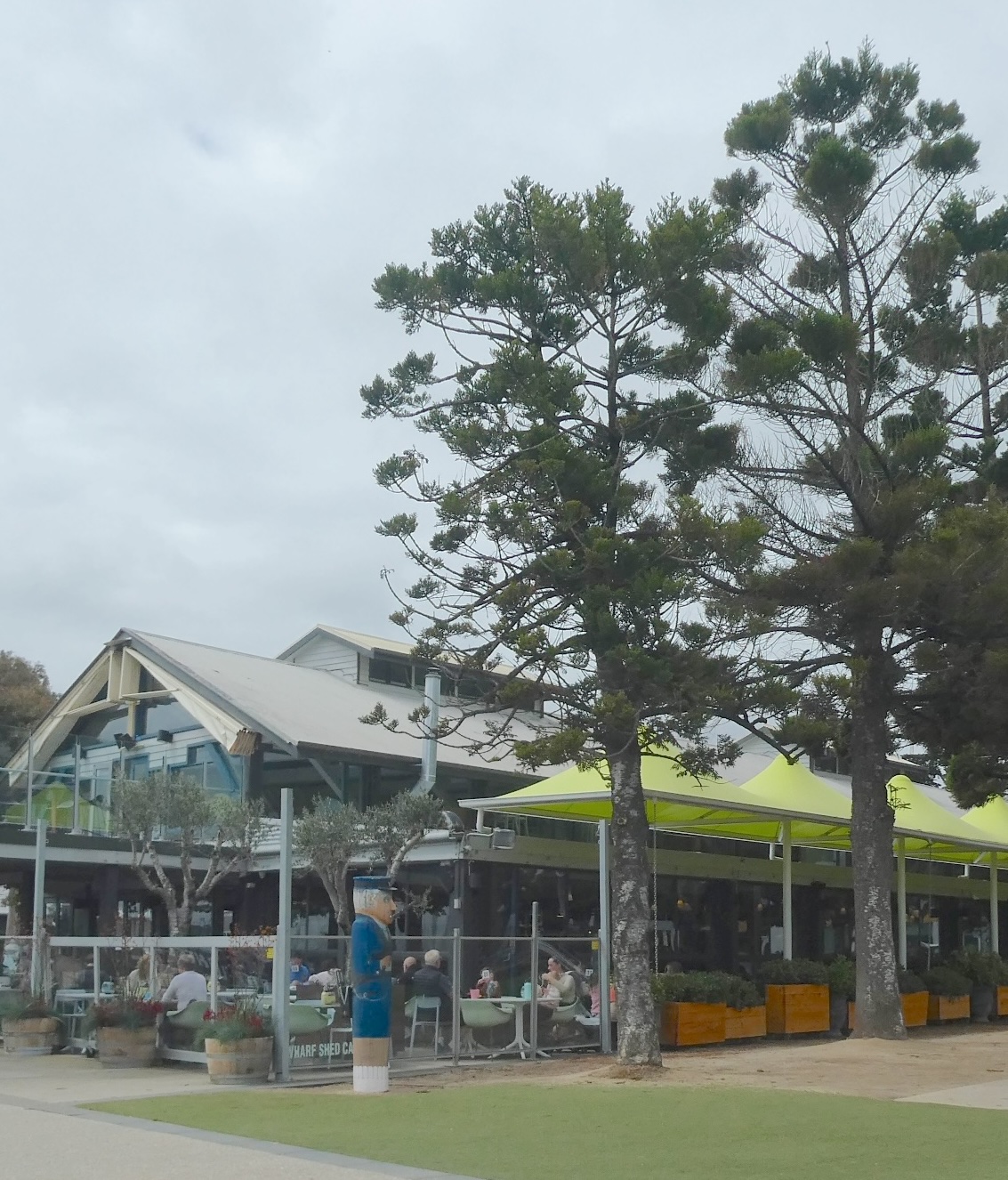
I was actually photographing the Wharf Shed cafe (unfortunately booked out for lunch) and noticed the Tram Conductress on her smoko break. She is a bit of an enigma from the 1940s being a smoker, not wearing a wedding ring and knitting a bootee for a baby.
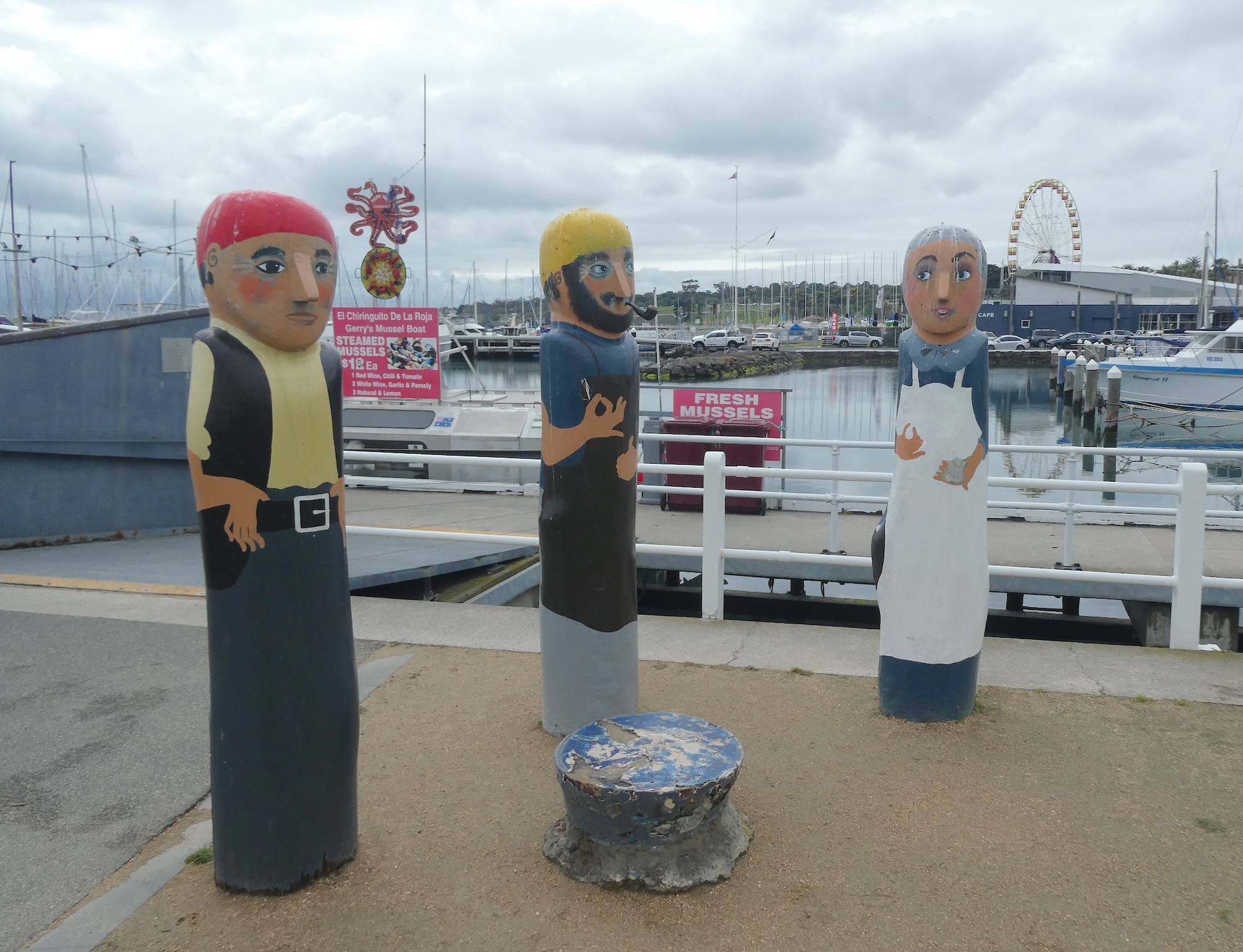
From the early 1800s, scallop fishermen sold their produce as far afield as Melbourne. Many boats dredged for scallops in Corio Bay until recently when it was stopped to prevent further damage to the seabed and other species of fish.
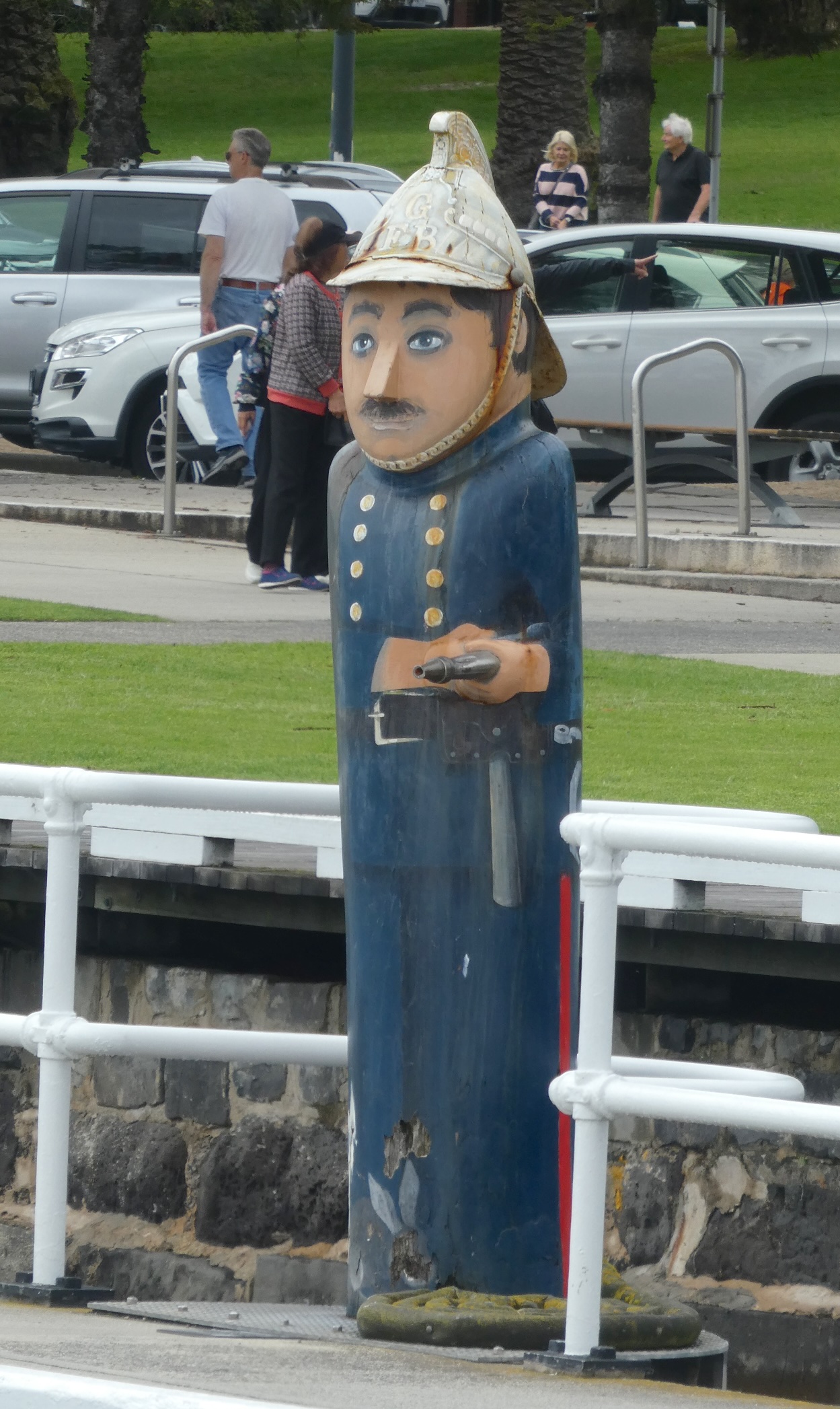
The Geelong Volunteer Fire Brigade was established in 1854 (it seems there was a lot of volunteering going on that year), coincidentally the same year the clipper ship ‘Lightning’ was built in the USA for a British firm. One of the fastest wooden ships ever built, it carried cargo and immigrants from England to Australia for the next fifteen years until it earned the accolade of being the worst shipping disaster in Geelong’s history. The ‘Lightning’ caught fire while docked and loading wool in the early hours of 31st October 1869 and the efforts of the volunteer firemen were in vain. The blazing ship was towed away from the wharf and eventually sunk with explosives, losing all cargo but no lives.
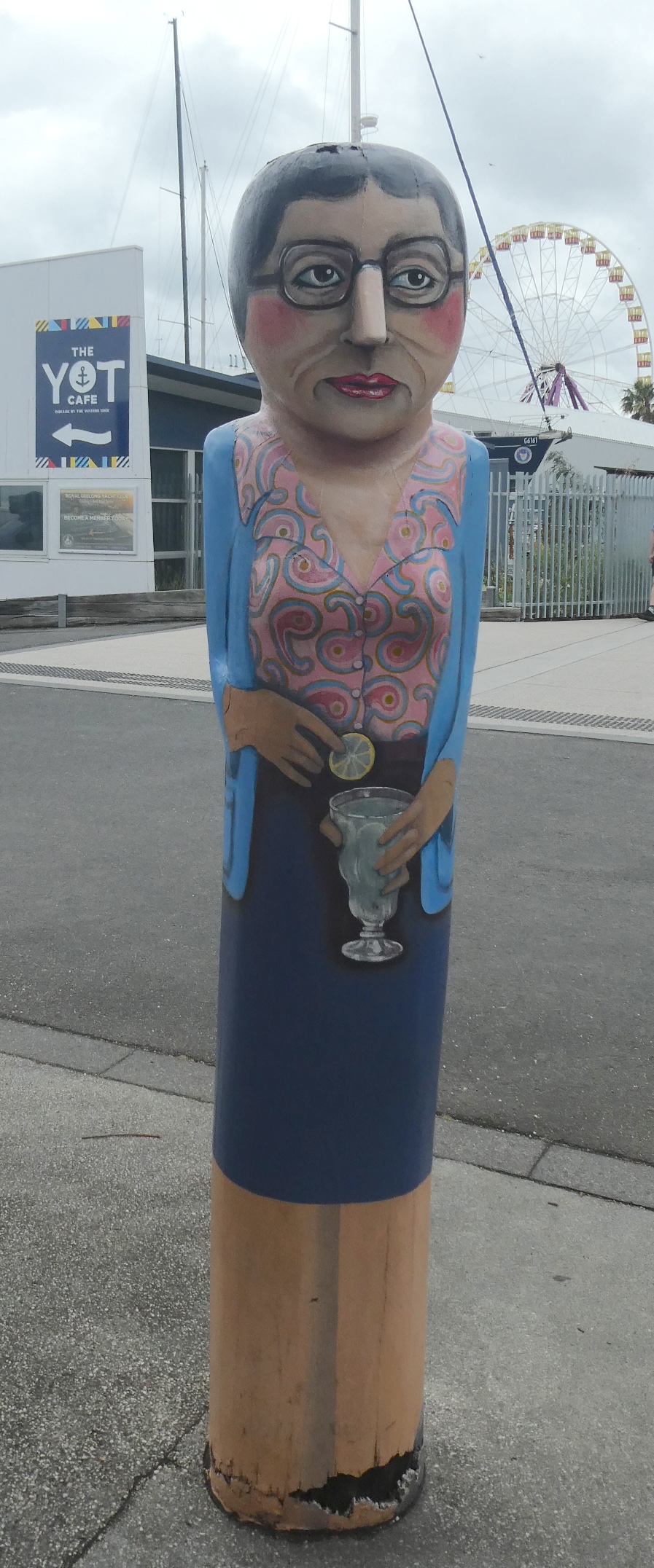
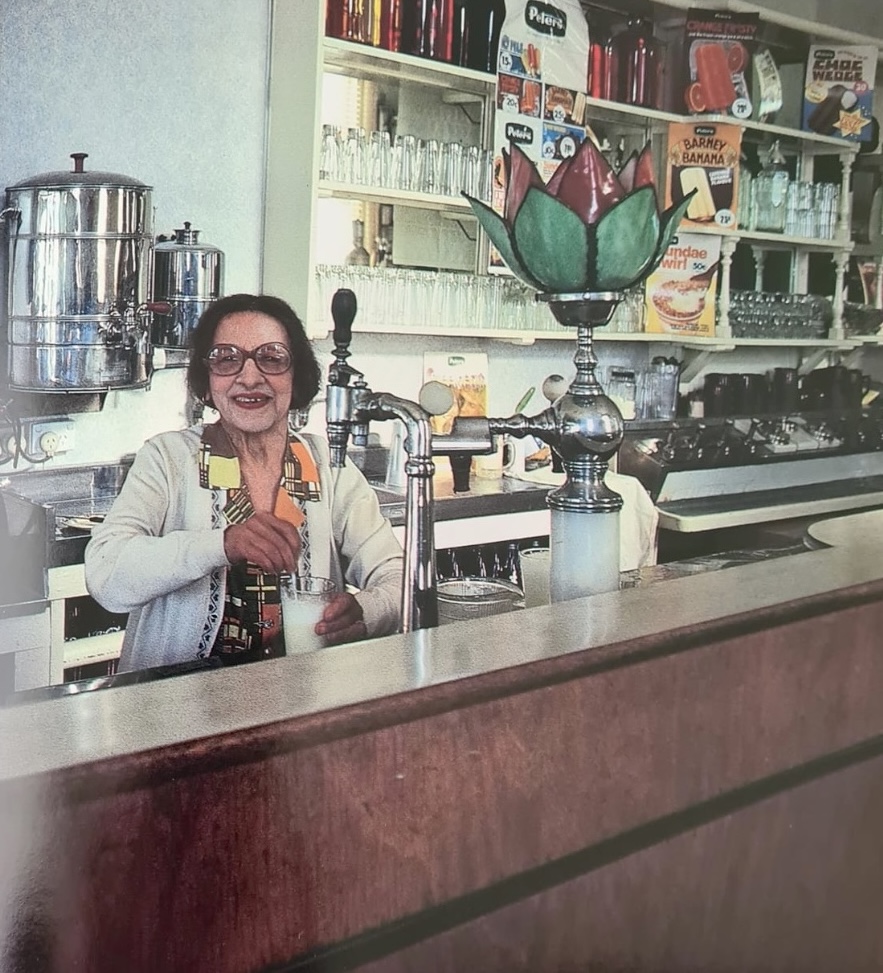
One of the much adored personalities of the town was Mrs De Carteret. Kitty was born in 1910 and was the proprietor of ‘La Cabine’ for thirty years where she was renowned for her fresh lemon squash. Apparently, the cafe did a roaring trade on Sunday mornings, refreshing those who had over imbibed the night before. The cafe closed after much popularity in the 1960s and 1970s and is now an office block. I found a photo of Kitty de Carteret whipping up a lemon drink behind the counter, I wonder if she would be flattered by her timber transformation.
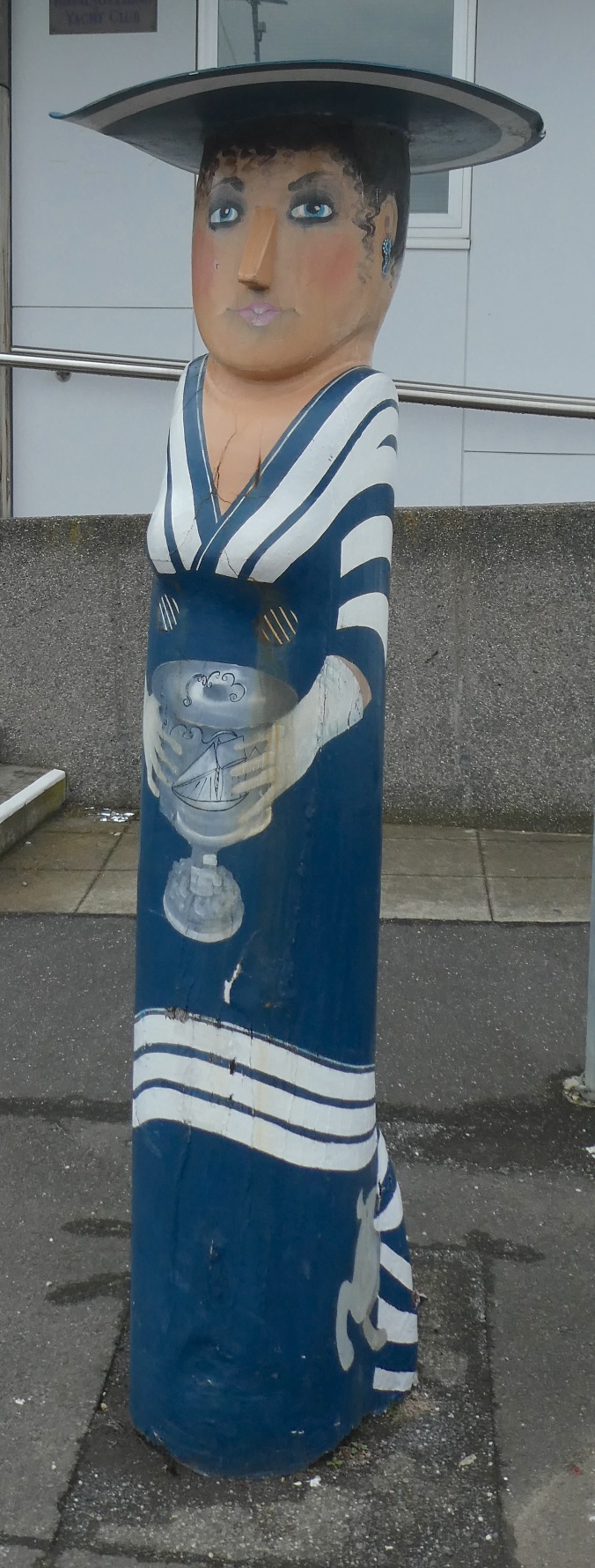
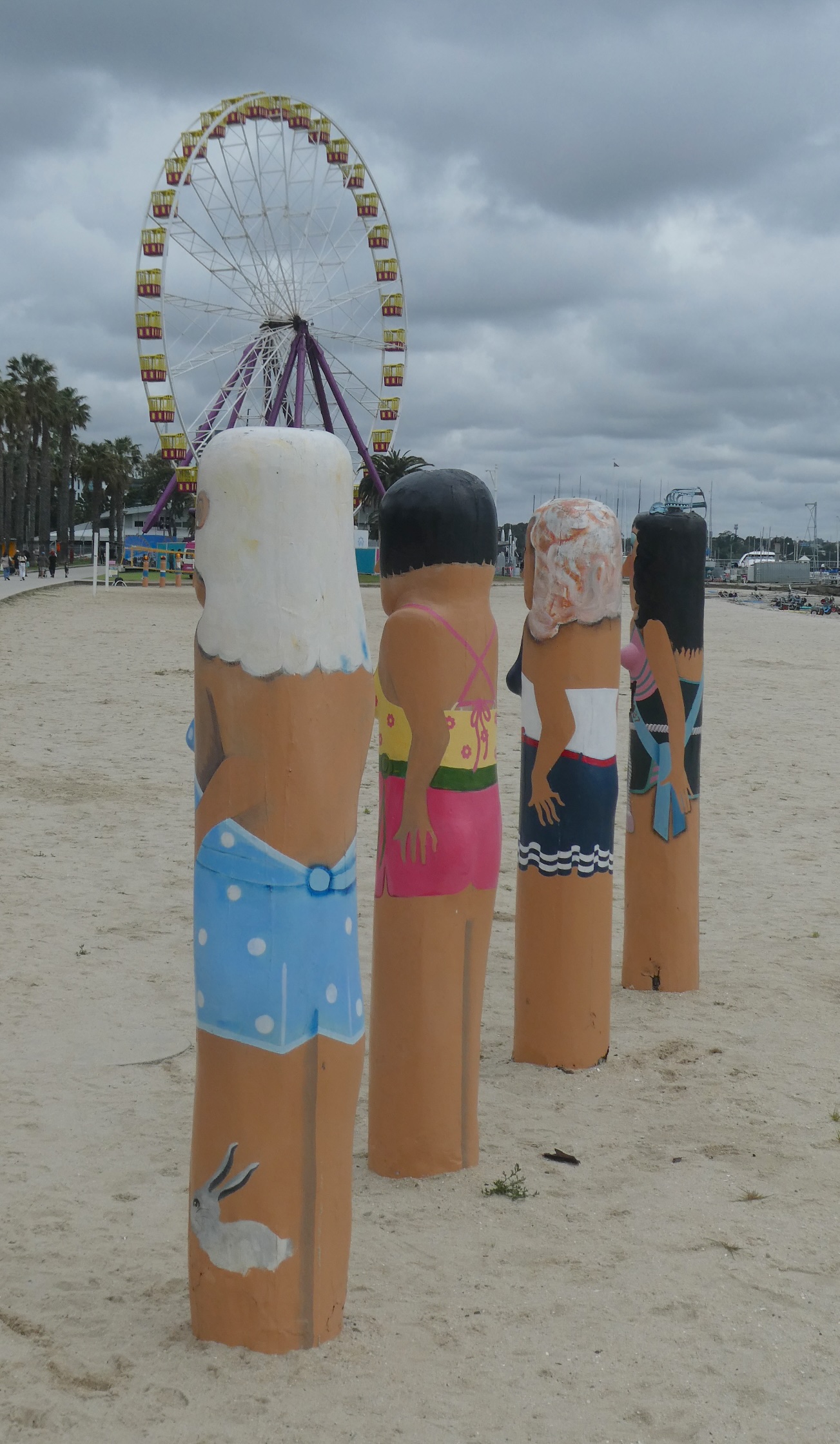
Outside the Yacht Club, a lovely lady holds the trophy awarded to the winner of the first Geelong Regatta in 1858, an Irish chap called ‘Paddy from Cork’ in his boat ‘Fair Kiss of Fand’. Regattas had actually been held since 1844 but it was only after a conversation over a few drinks that money was put up for a trophy and it is now recognised as Victoria’s oldest sporting event. You may notice a rabbit clinging to the bottom of her frock. Ten pairs of rabbits are depicted lurking around the base of some of the bollards, representing the introduction of wild rabbits to Australia. They arrived on the aforementioned ‘Lightning’, courtesy of farmer Thomas Austin from England,
on Christmas Day 1859.
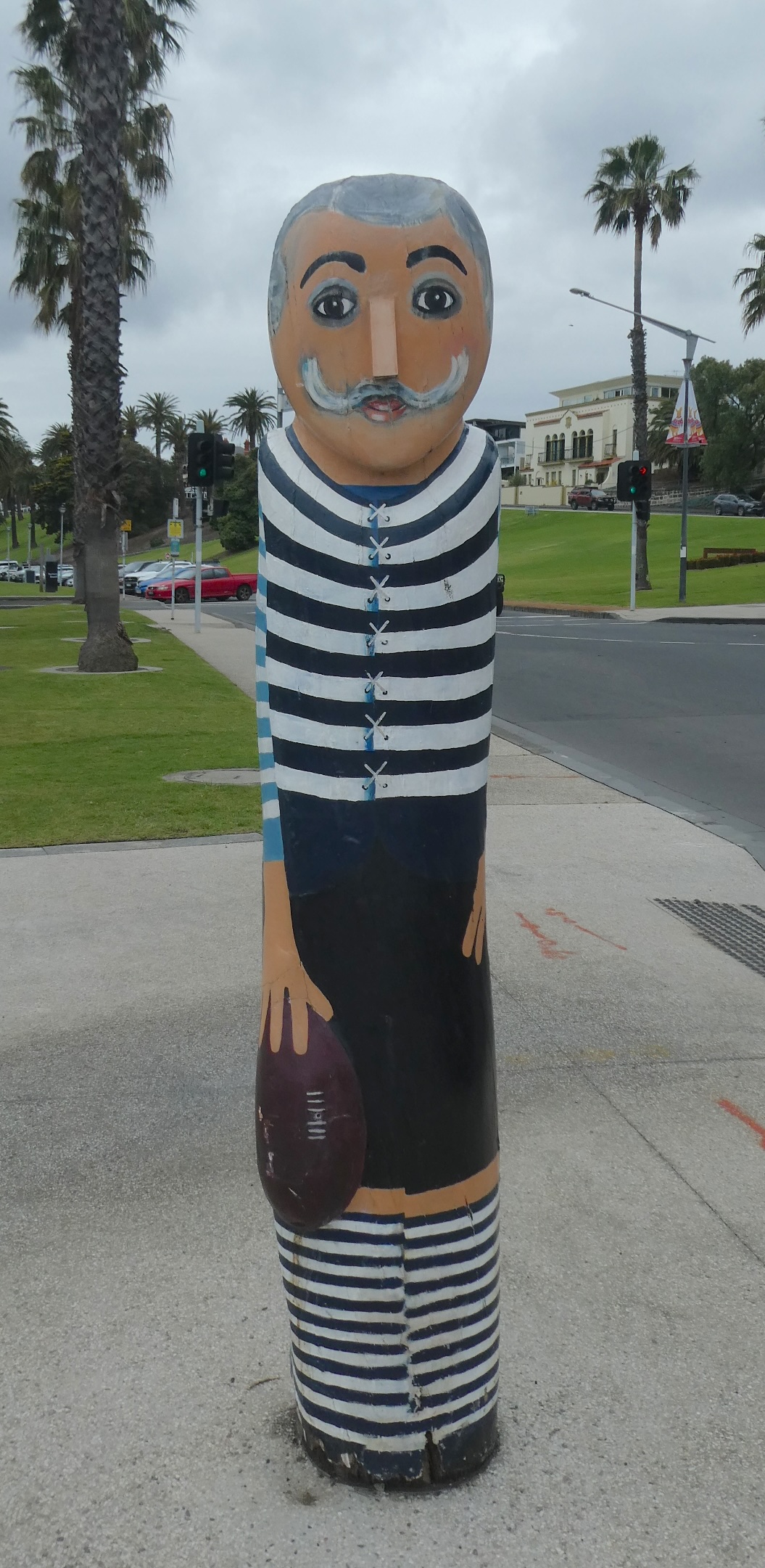
Earlier that same year, the Geelong Football Club was formed, making it the second oldest AFL side after Melbourne and one of the oldest football clubs in the world. The navy blue and white kit hasn’t changed much in the last 165 years, although the shorts are noticeably shorter these days.
The Joy Ark Sandwich Board Man advertises the Joy Ark but he has lost his board. I found a photo with Board intact on waymarking.com
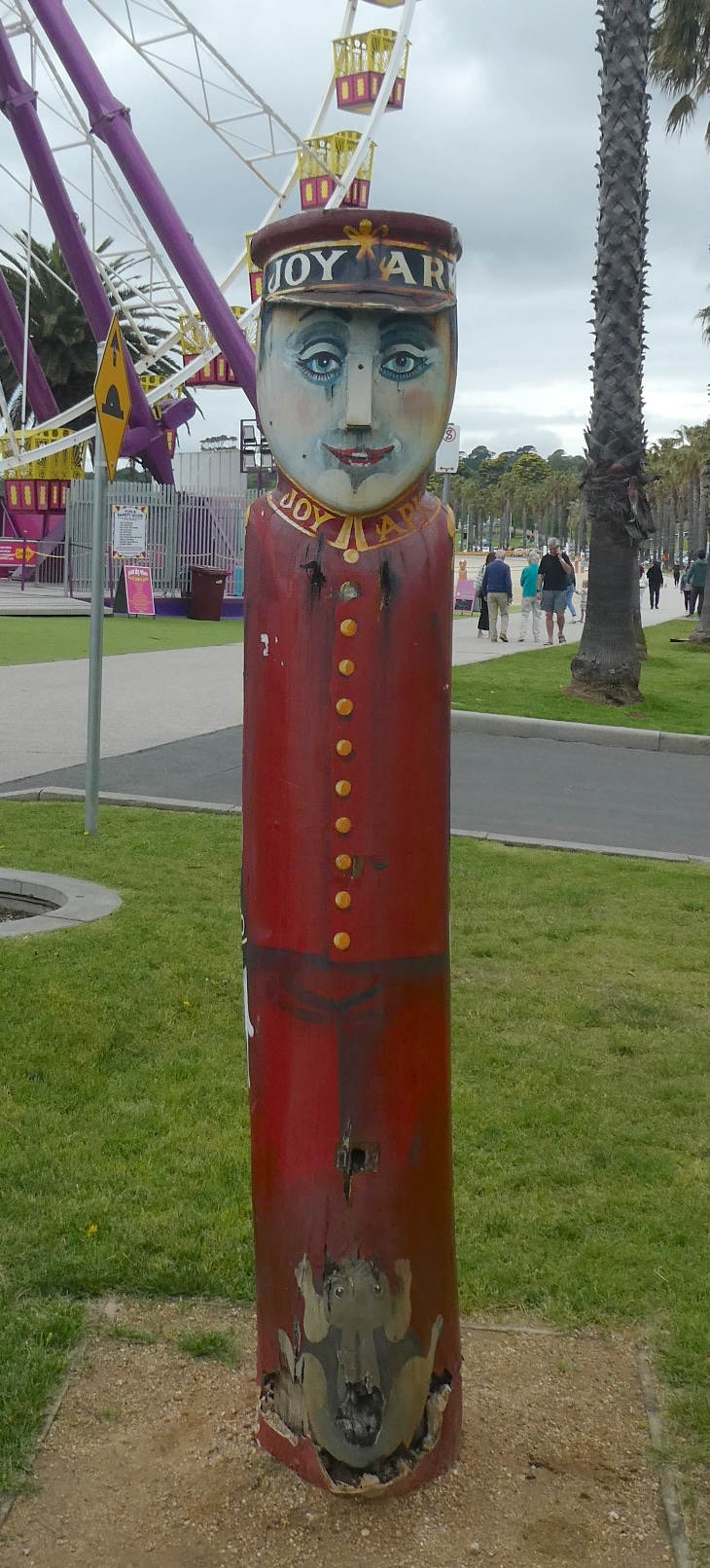
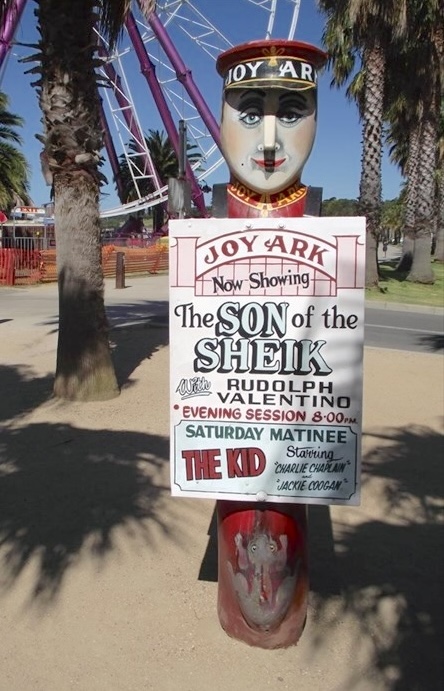
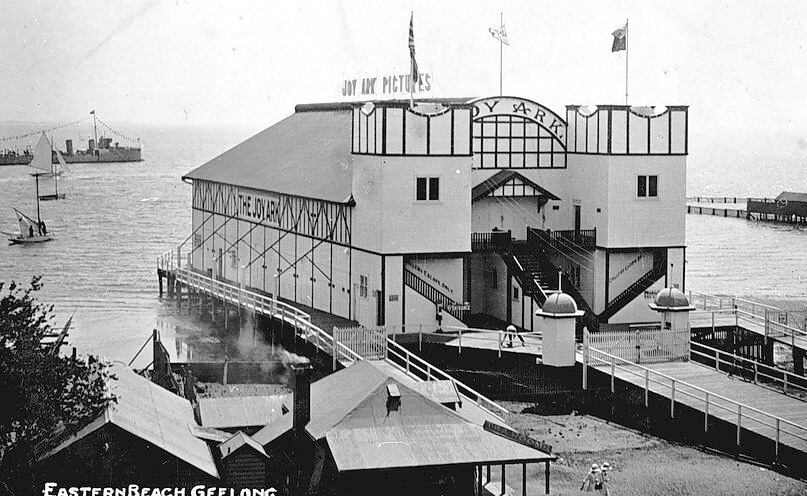
The Joy Ark was a silent picture theatre built in 1912 by two early Greek-Australian pioneers who already operated a cinema in Geelong. The construction extended over the water at Eastern Beach and was considered the most grandiose and unique movie theatre for its time in the British Commonwealth. Unfortunately, by early 1914, the owners were in financial trouble and filed for bankruptcy. The Joy Ark became a popular venue for dances and roller skating until it was demolished in the mid 1920s. The unusual name resulted from a competition run by the Geelong Advertiser asking readers to submit suggestions, the winner was rewarded with a ‘significant sum of money’. The site of the Joy Ark is now filled by a giant ferris wheel, it’s a shame the original building has been lost.
Modelling the changing styles of men’s swimming trunks over the years is the Town Baths Swimmers Club. Not a budgie smuggler in sight.
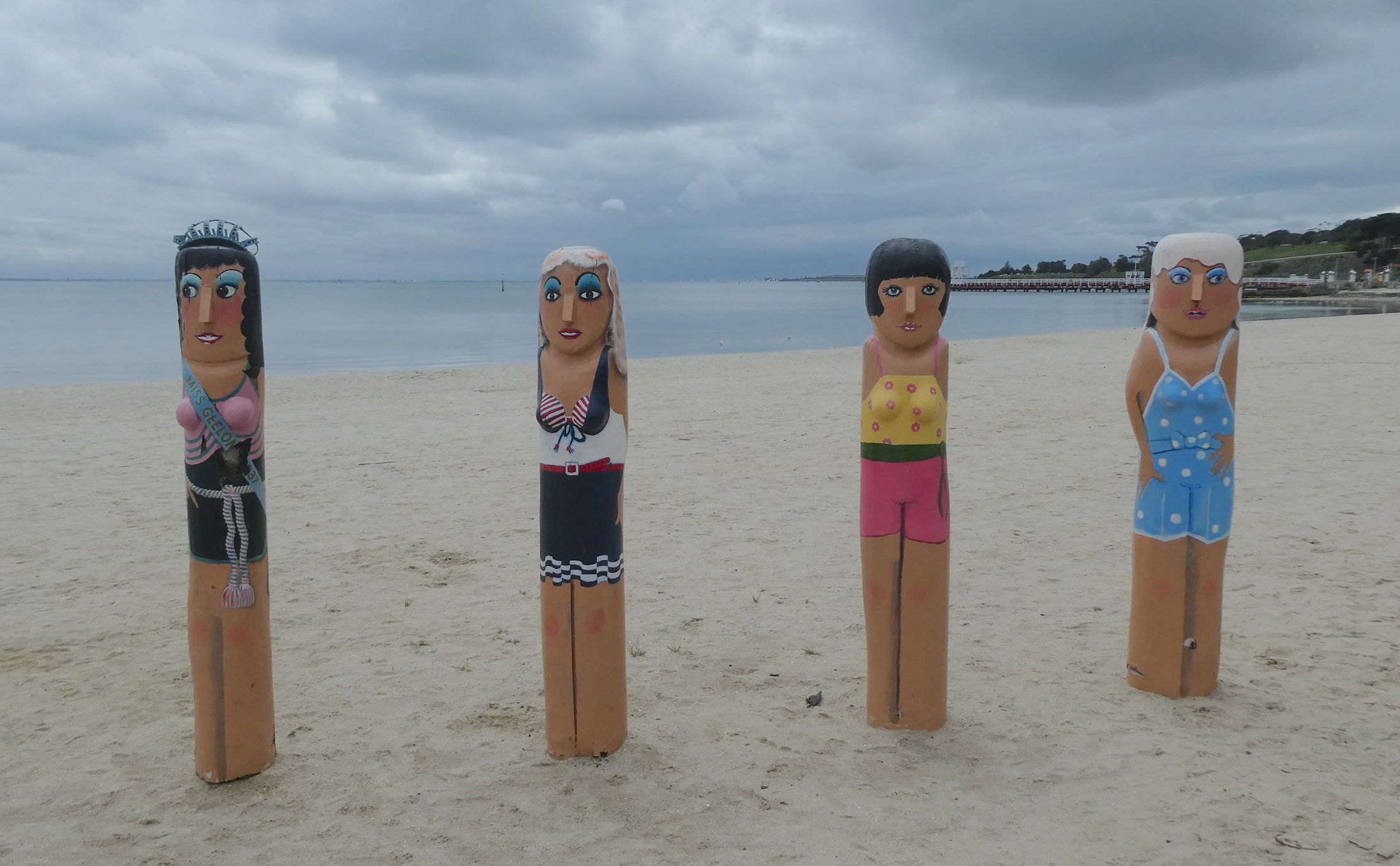
Although frowned upon these days, bathing beauty competitions were a popular attraction from the 1930s. These lovely ladies are braving all weather – and the rascally rabbits.
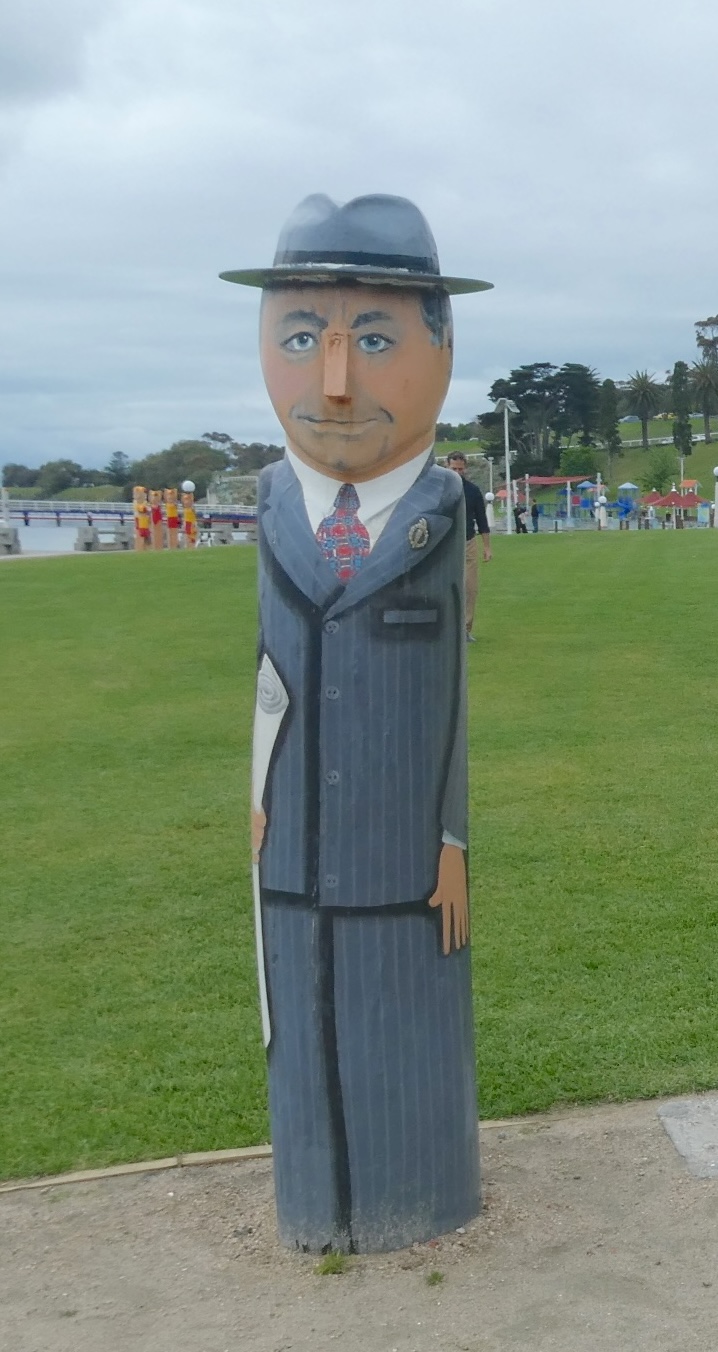
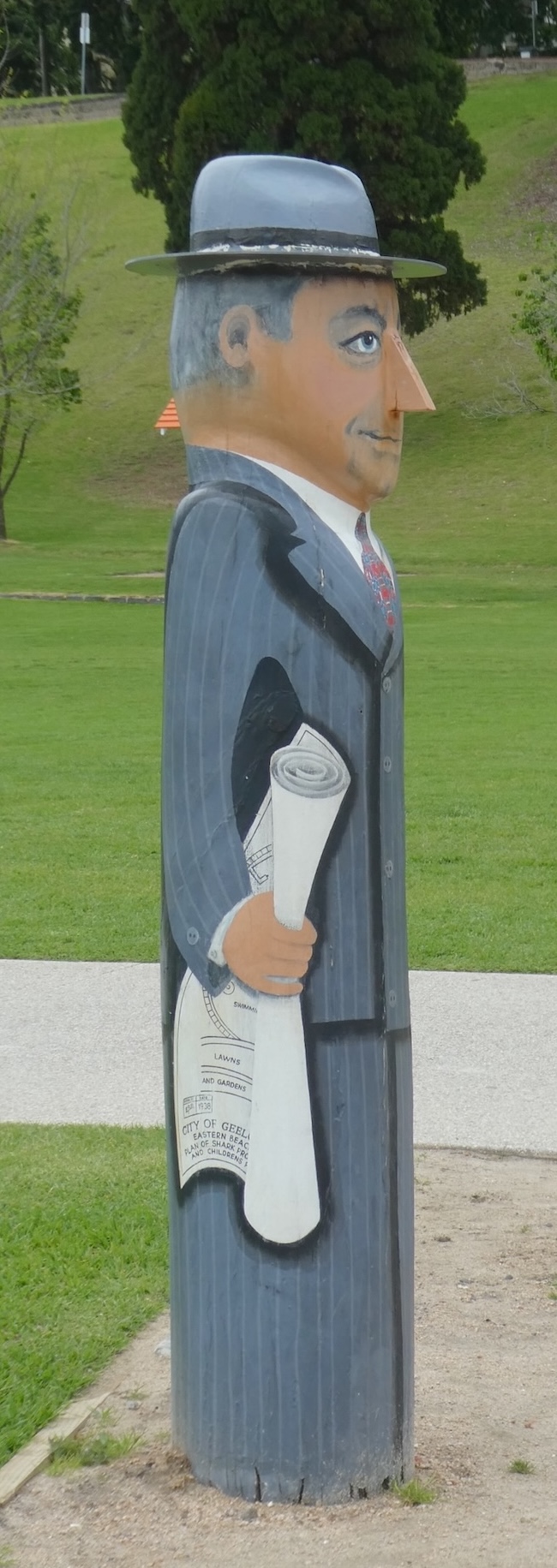
Ian McDonald was the Engineer and Surveyor of Geelong City in 1936. He saw a need to promote Geelong by beautifying the bay waterfront area and, hence, designed the Eastern Beach complex which was completed in 1939. He is proudly holding the plans in his hand.
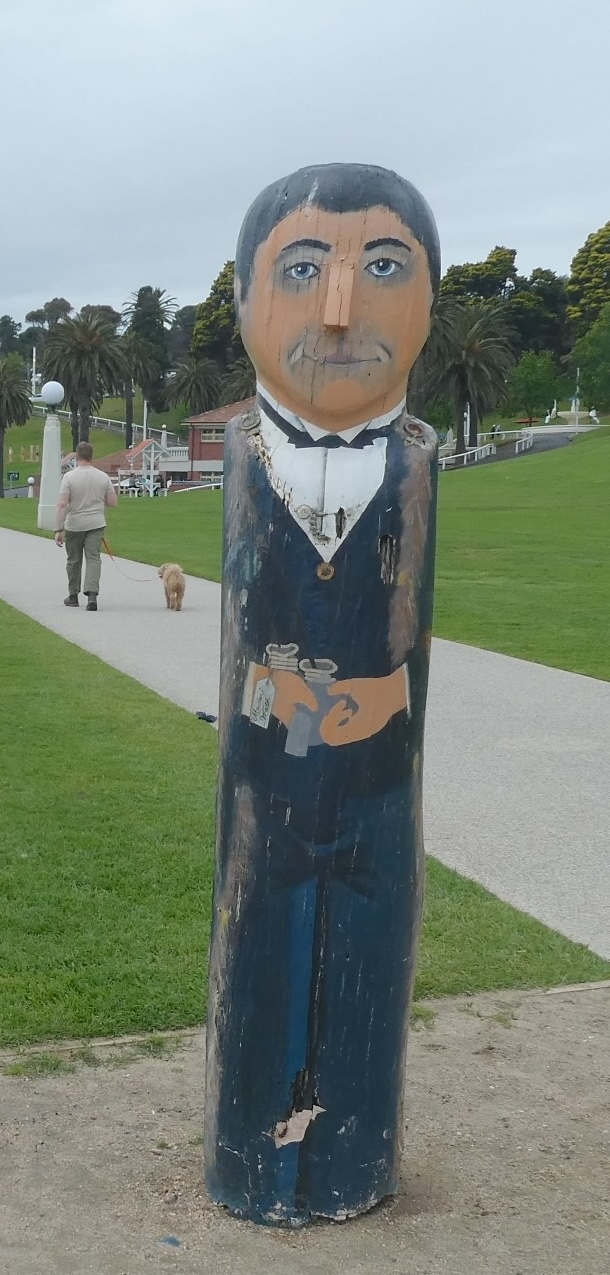
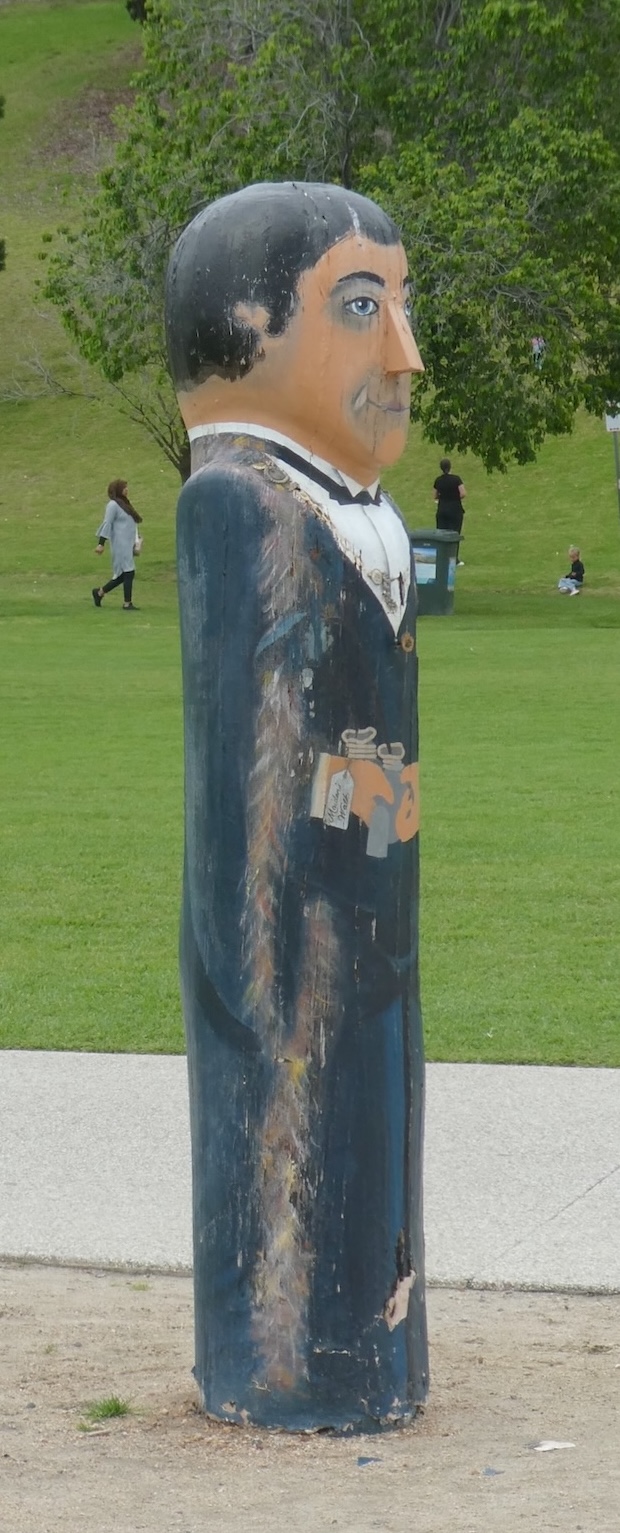
Another man with great vision for Geelong, Robert de Bruce Johnstone became a member of Geelong Town Council in 1859. He was elected mayor from 1865 to 1867 and became known as ‘the parks and gardens’ mayor for his lifetime support of the Geelong Botanic Gardens. His robes and chain of office are looking a little worse for wear and he has lost his pendant.
The chap second from the right in the line of Eastern Beach Lifesavers is a local icon called Bill Coyte. He is well remembered for giving his time to teach life saving and swimming to many generations of children.
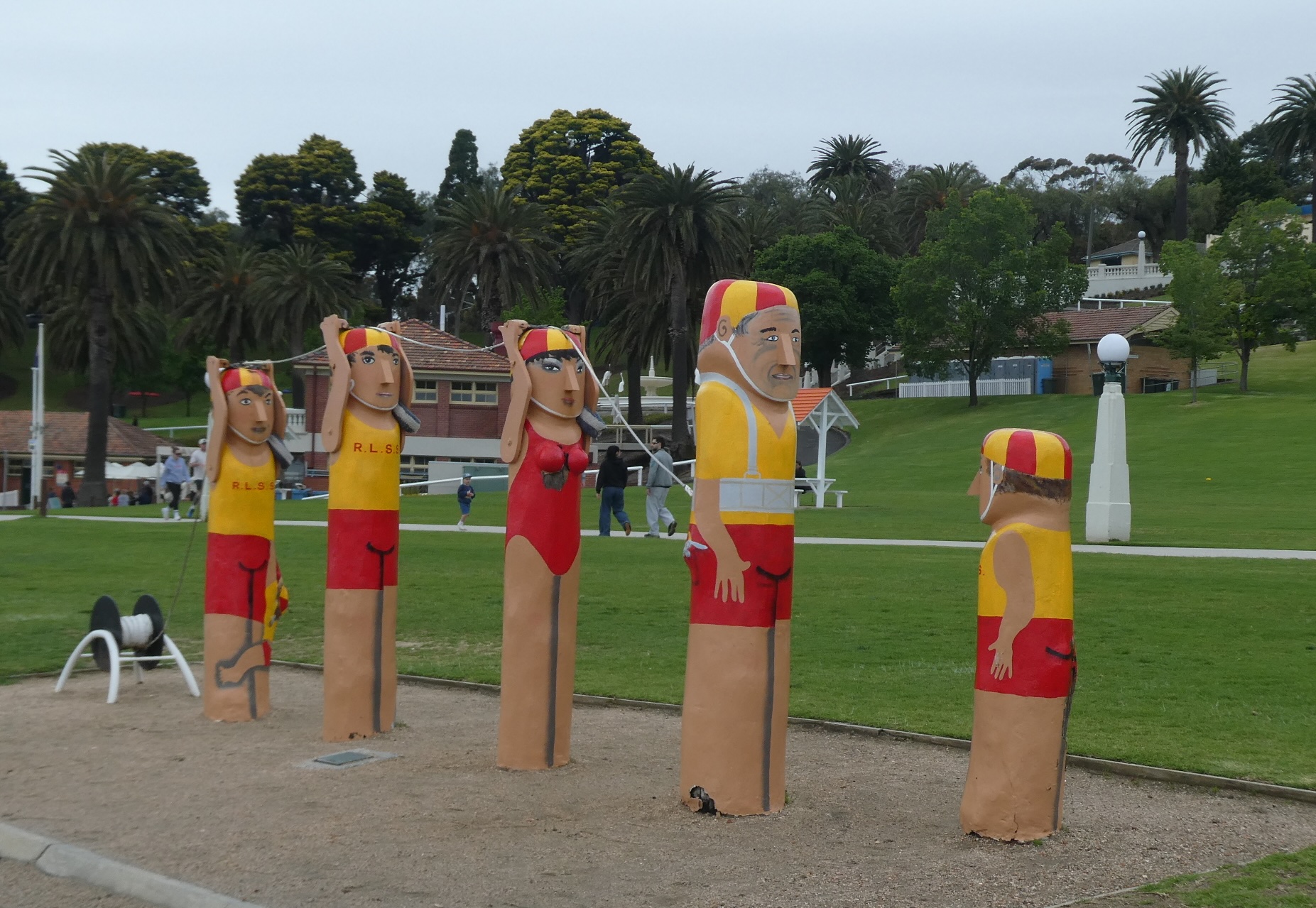
I am pleased to report that the bollards are in the process of being restored. Those beyond repair are being reproduced using 3D printing and all are being re-painted by local artist Vicki Clissold who will replicate Jan Mitchell’s original work.


I remember these bollards well from our stays in Geelong in the early 2000’s, I think they are just as lovely now as I thought they were then. Good to see they are being restored and not just removed. The photo of Kitty was very nostalgic – seeing the ads on the shelves for Choc Wedge, Barney Banana and Sundae Swirl, takes me back to childhood treats!
LikeLike
The original plan was to remove them but the Mayor stepped in to stop it and the public joined in with a “Save Our Bollards” campaign. I just had to include the photo of Kitty and yes, I remember when we only had half a dozen treats to choose from – much simpler times 😊
LikeLike