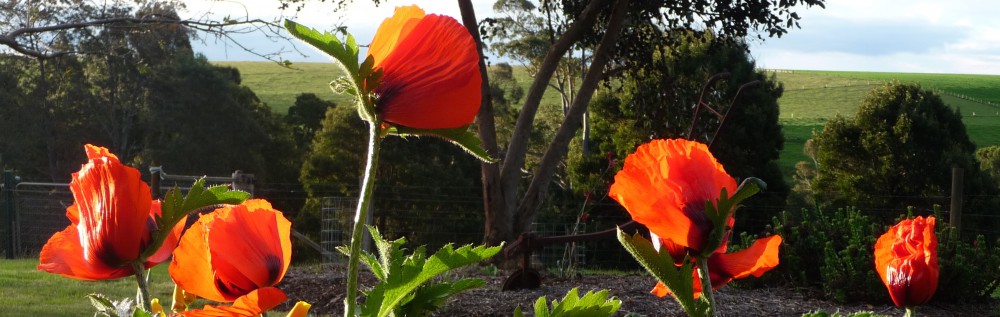
We have so many bird species in our garden I couldn’t even begin to name them. The biggest by far are the yellow-tailed black cockatoos. They are often in pairs quenching their thirst at the stock troughs, one will keep lookout in a nearby tree while the other sups and then they swap places. Then there are times when a whole flock will descend on the Banksia tree for a feast.
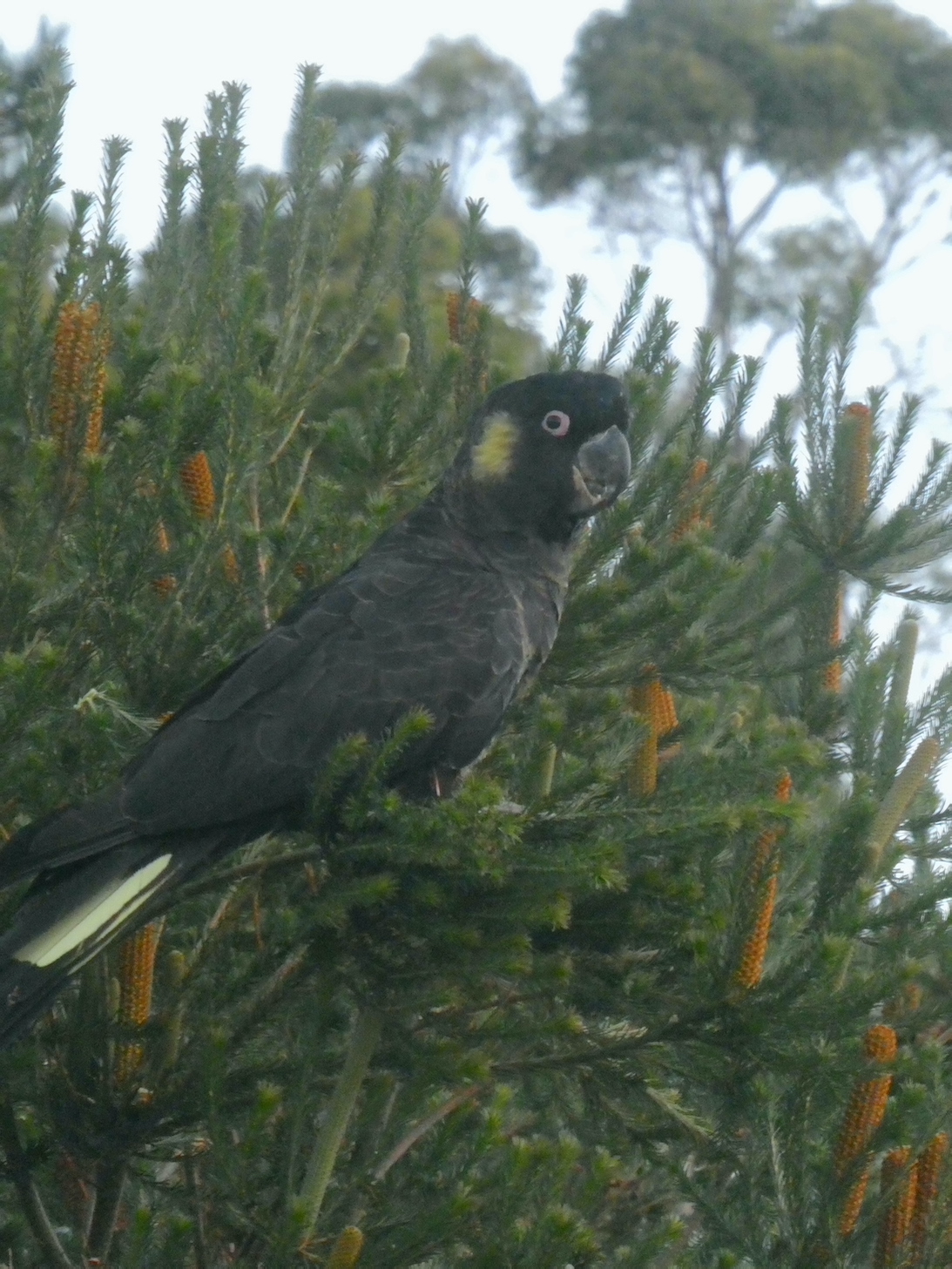
We hear them coming as they call to each other in their distinctive raucous, yet delightful, manner. They nibble the cones and break them open to eat the seeds.


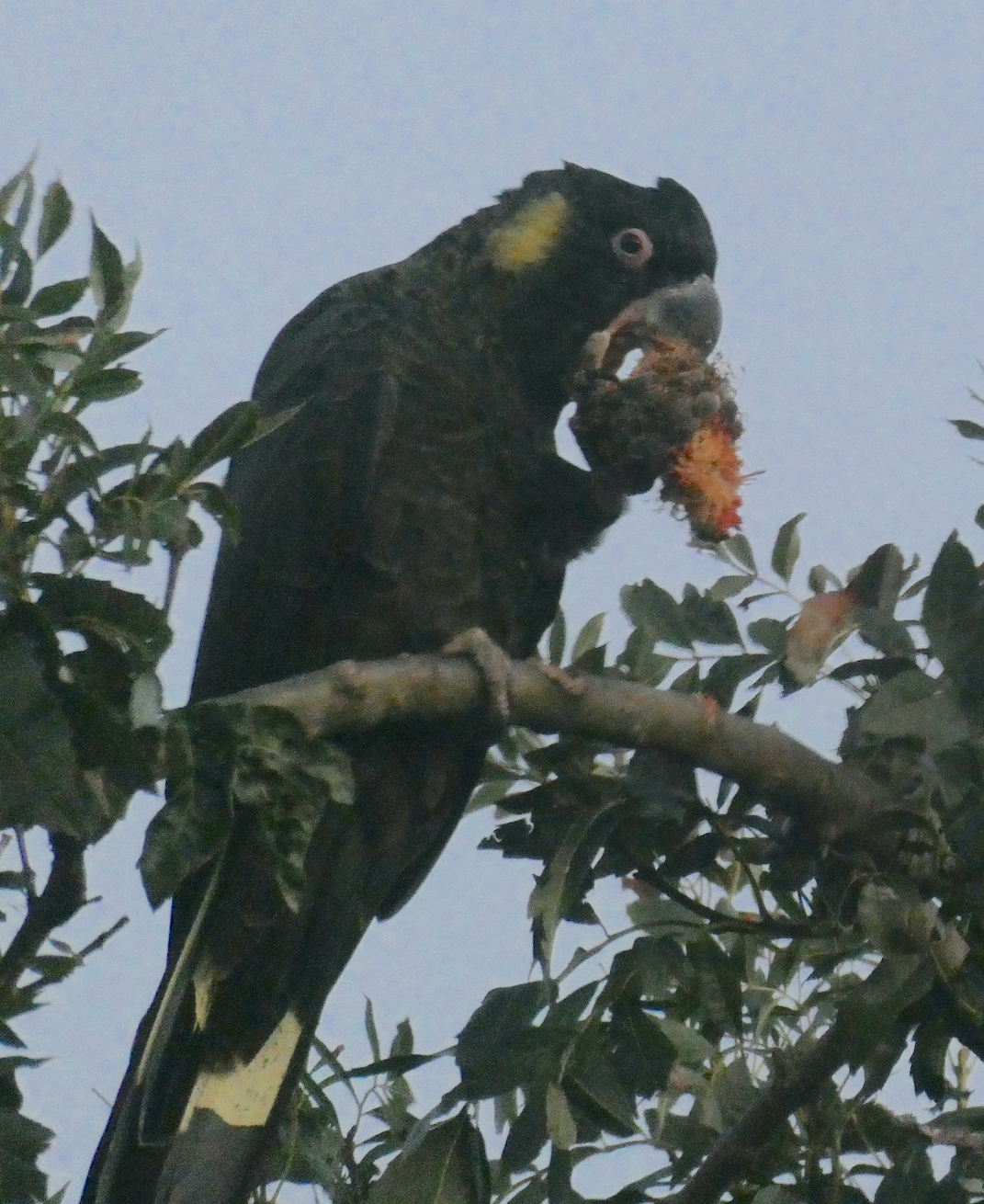


I don’t begrudge their much needed nutrition but I wish they wouldn’t leave such a trail of destruction.


These stunning birds were first described in 1794 by the English naturalist George Shaw as Psittacus funereus, relating to the dark, sombre plumage as if dressed for a funeral. He seems to have missed the bright yellow cheek patches and tail band. Our magnificent peppermint tree is a popular spot to survey the surrounds before indulging in another Banskia banquet.


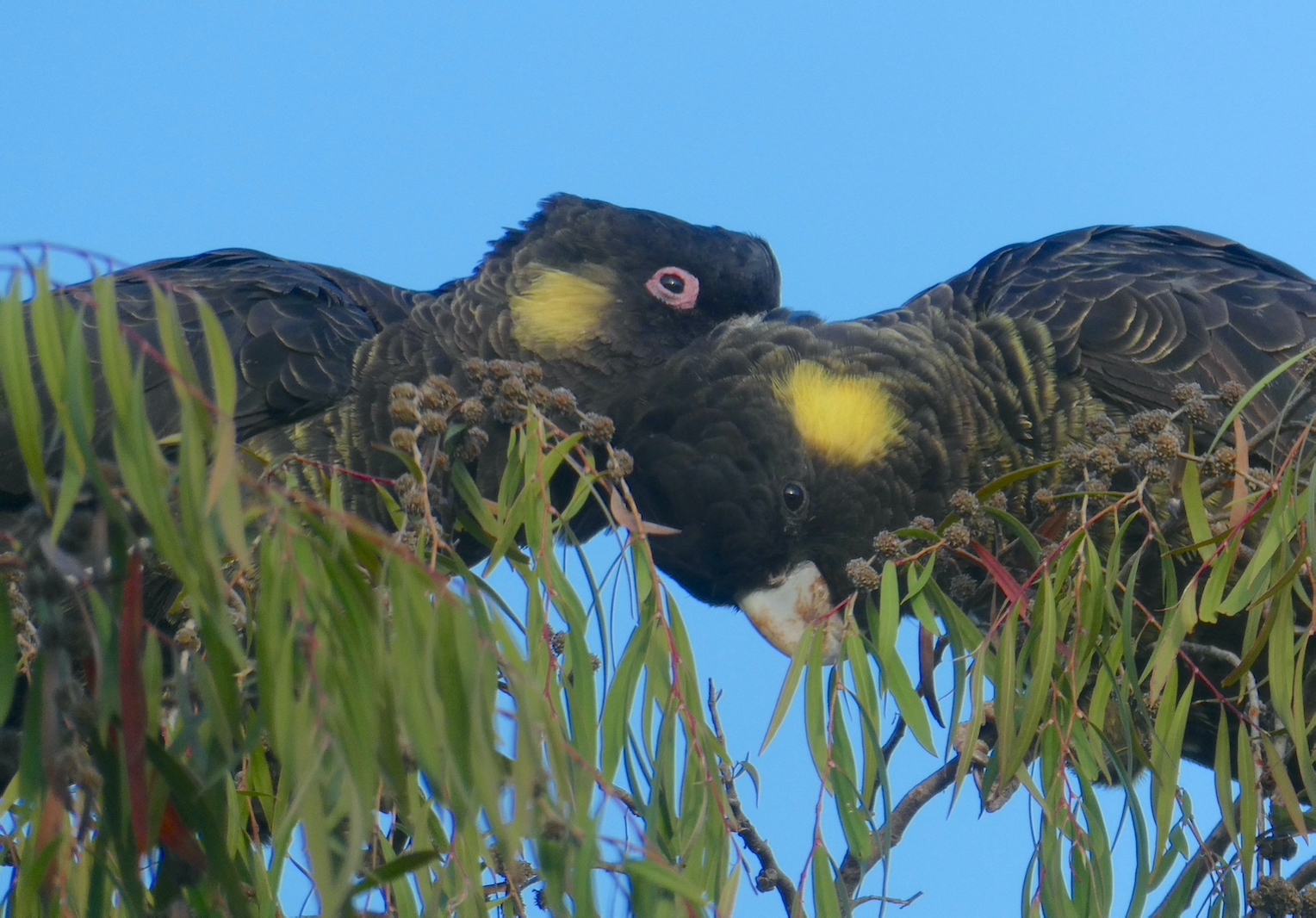
The body feathers are edged in yellow and those of the subspecies found in Tasmania have a more prominent scalloped appearance.


Adult males have pinkish red eye rings and black beaks

while females have grey eye rings, a bone coloured beak and brighter, more clearly defined yellow cheek patches.


The monogamous couples raise a single chick each year which will remain with them for 12 to 18 months. The constant ‘begging’ squawk of the young is enough to test any parental patience. One particular pair at Rotterdam Zoo stopped breeding when they were 41 and 37 years of age, though continued to bond closely. I suspect these two will be bringing offspring to dine before long.



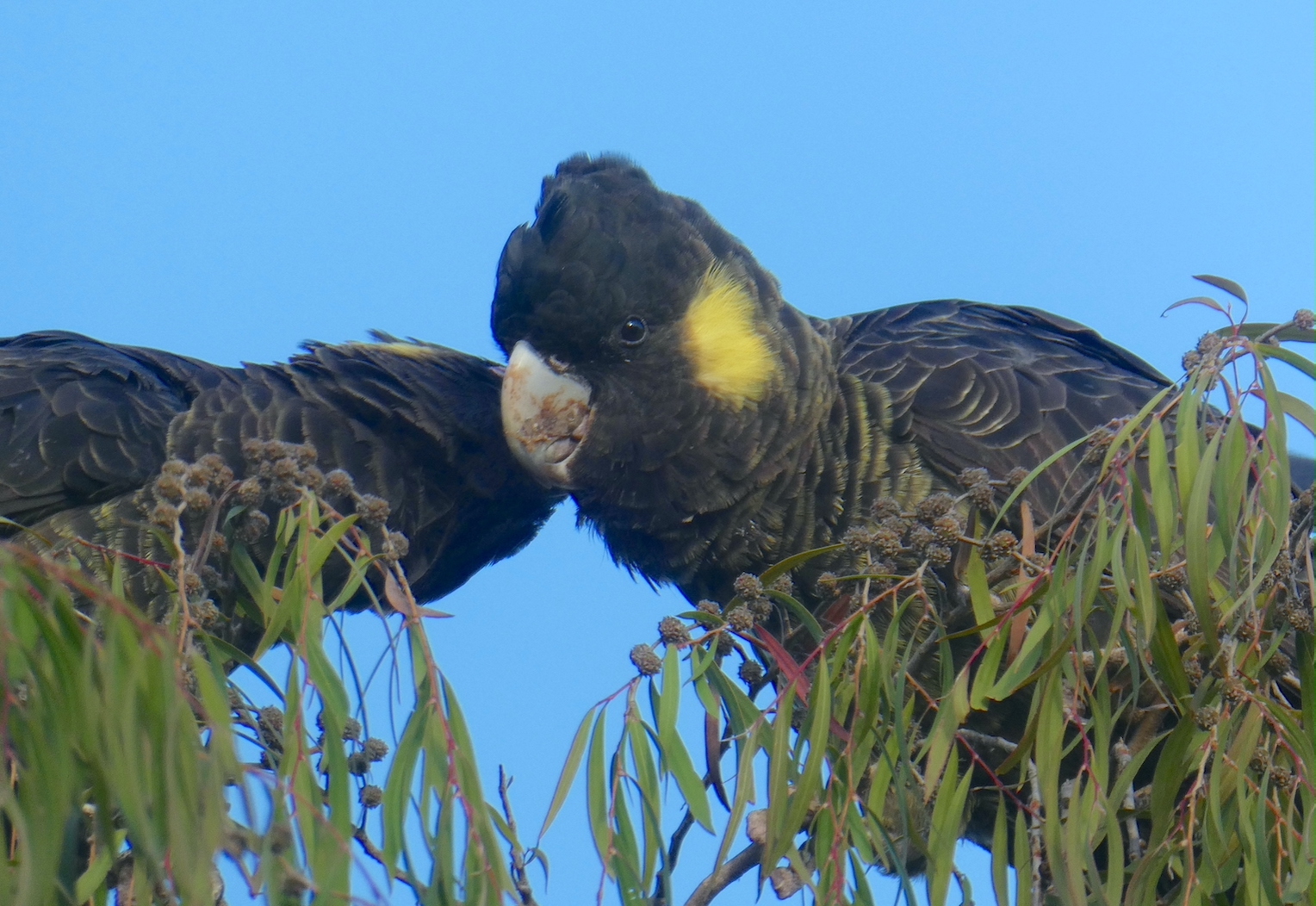


With warmer weather around the corner, we look forward to seeing more of these beautiful creatures.

 cannonhillchronicles
Beautiful…they would have a lovely feast in your trees. ❤️
LikeLike
I do wonder how many more incursions the banksia can take!
LikeLike
great photos, I love those birds 🐦 😊
LikeLike
They are beautiful and very entertaining.
LikeLiked by 1 person
Stunning birds.
LikeLike
Yes, it’s worth the devastation to watch them in the garden.
LikeLiked by 1 person
They are such stunning birds, one of my favourites. Our Black Cockatoos in the Top End have brilliant red accents instead of yellow. Did you happen to see the ABC news article about the rare all yellow Black Cockatoo found on the side of the road in Tasmania? He was in a bad way, but now fighting fit after being taken in by a wildlife sanctuary.
LikeLike
I did see that story. Lucky he was found, I don’t think he would have
survived long in the wild.
LikeLike